
ChatGPT Local Results Now Feature a Knowledge Panel
It appears when brand links or map buttons are clicked.

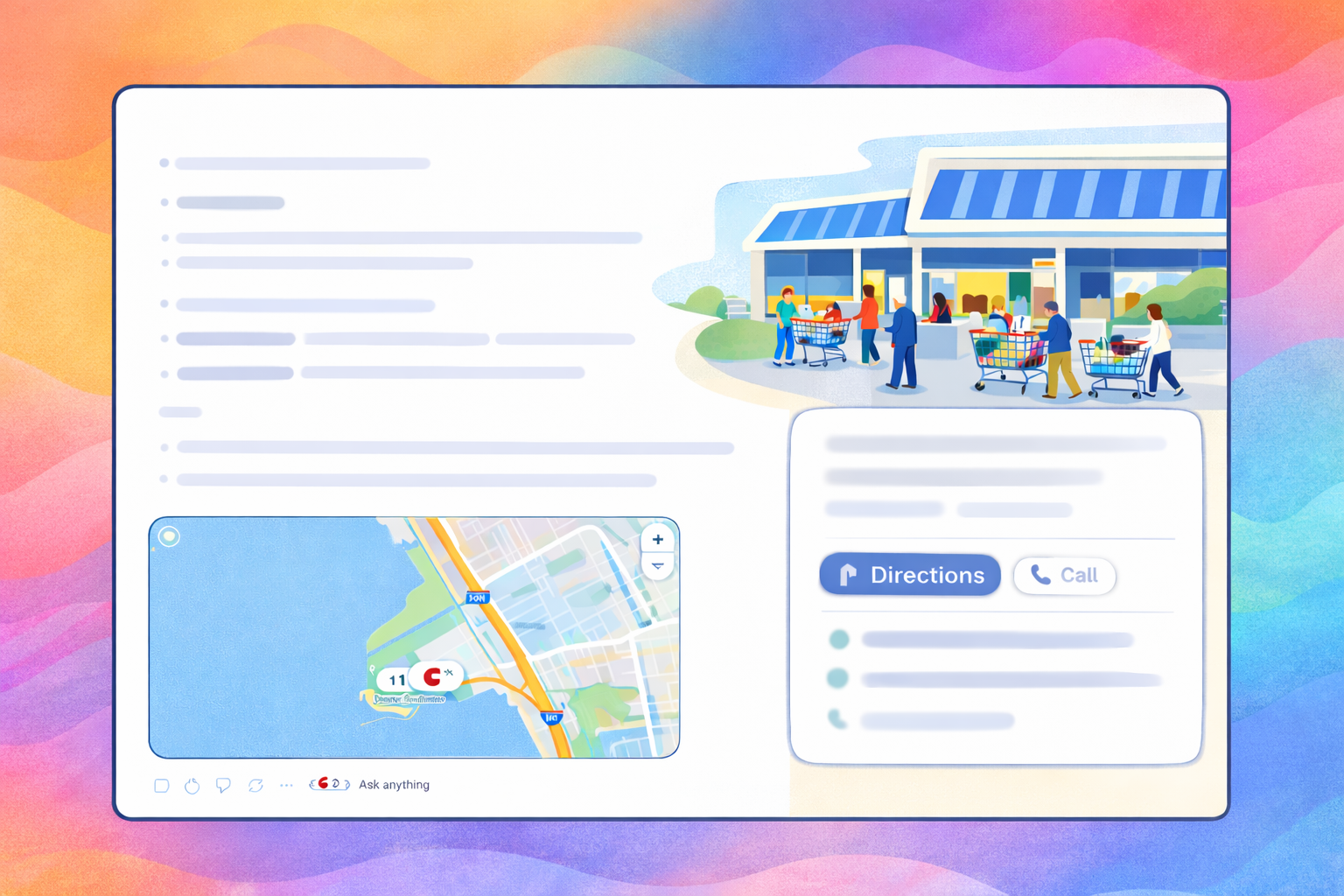
ChatGPT has introduced a Local Knowledge Panel (local business entity card). It's similar to Google's Knowledge Panel but much less detailed. We were able to generate them quickly in multiple local categories: legal, restaurants and home services. They also appear for brand queries (e.g., "Costco Locations").
Here's what it looks like in legal: "who are the best employment lawyers in San Francisco?"
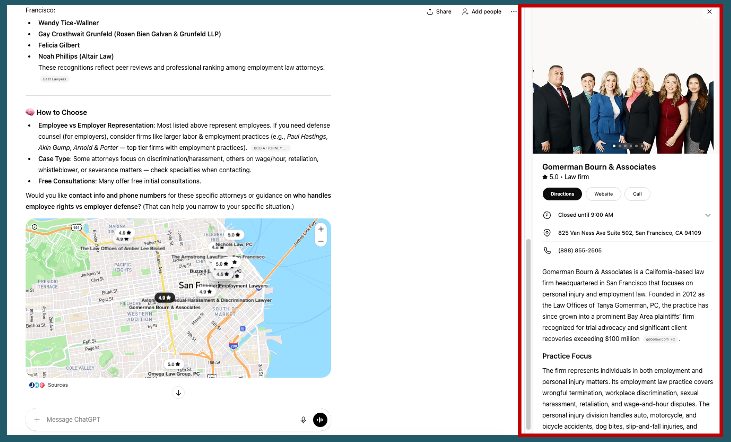
The result features the familiar discussion and bulleted list of firms, together with buttons that take users to source citations. At the bottom of the page is a "how to choose" discussion with a map plotting the locations of the firms together with their star ratings. Clicking any of the links in the body of the result or the star ratings in the map opens the Knowledge Panel for the individual firm.
The panel features a large image, which if clicked opens a photo carousel that appears to be drawn from the firm's site and other third party sources (and may include poor quality images or errors). That's followed by three buttons: directions (Google Maps), website and call. I'm on a Mac and the call button wanted to open FaceTime (on mobile it simply initiates a call). After that come hours, address and phone number information.
Below that information is a set of headings and paragraph discussion of each. In the above law firm example's case:
- Practice Focus
- Leadership and Attorneys
- Reputation and Impact
- Locations and Scope
Websites and Third Party Citations
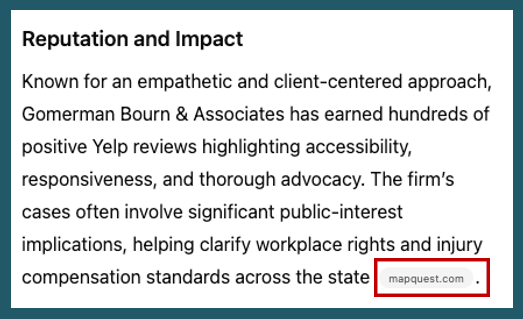
The headings aren't consistent from firm to firm. Each section/discussion features a source button, which is either a link to the firm's website or a third party publisher/directory. Law firm websites were most often the source for this information. However, in other categories such as Home Services or Restaurants, third party sources/directories were more common.
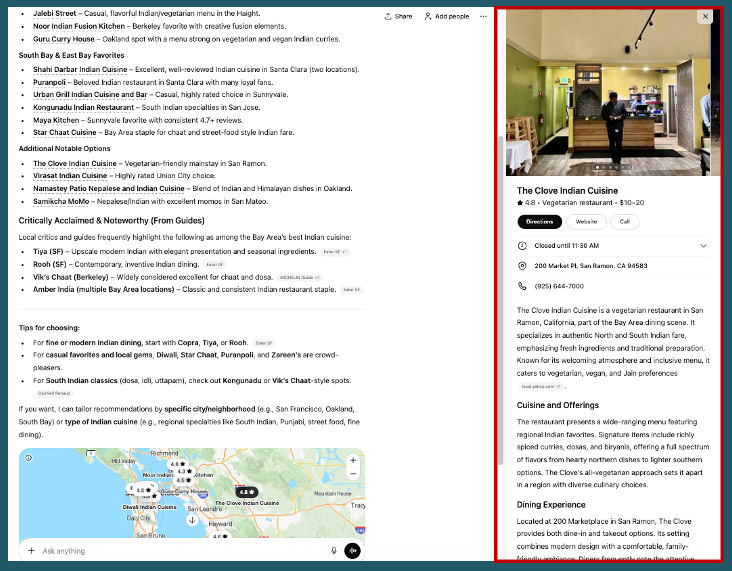
Here's a restaurant example: "Best Indian Restaurants Bay Area."
Here's what mobile versions of these pages look like:
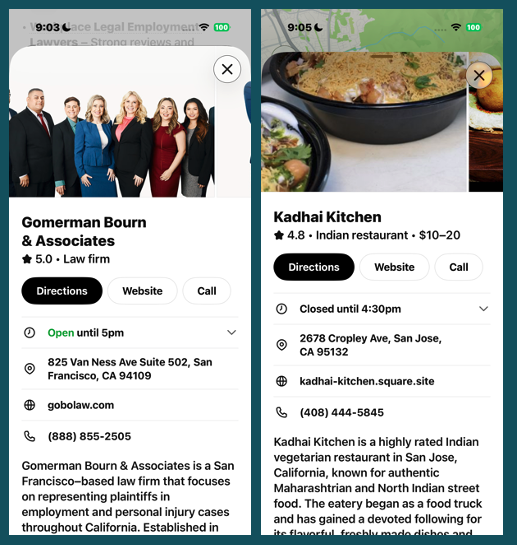
The new Knowledge Panel is an improvement for ChatGPT's local results, though it's not obvious to the user that these Panels exist. They don't, for example, automatically appear when you do a branded search. However, people will discover them when they click around.
These Panels (or entity cards) appear to postdate ChatGPT 5.0. They weren't appearing earlier, but may be an evolution of the local business cards that have been around in various forms for some time.
No Local Knowledge Graph
One question is whether OpenAI is building a local knowledge graph or whether these Panels are dynamically generated. Based on Mike's quick analysis of the code, aided by ChatGPT, it appears that ChatGPT does not have a knowledge graph but is creating these Panels from external databases and then generating AI summaries. The data are grounded by using reconciled third party information from multiple sources.
Given that LLMs are probabilistic, they might not always generate the same results. And we didn't verify the accuracy of any of the data presented.
This is what ChatGPT says is going on:
The embedded markup reveals multiple underlying data sources. Images are pulled opportunistically from third-party sites such as Yelp, LoopNet, Wikipedia, and the firm’s own website, indicating no single canonical image provider. Business facts—NAP details, hours, category, ratings, and directions—strongly resemble Google Business Profile–style data and appear to be reconciled across multiple providers (with MapQuest explicitly referenced), rather than sourced from a single API. The longer descriptive sections are clearly LLM-generated summaries, grounded in public web sources and directories, produced via retrieval-augmented generation with inline citations.
Positive Development
Overall, we consider this a positive development that indicates ChatGPT is taking steps to improve local results. Better local results and a better local UX are critical for ChatGPT's long term competitive position vs. Google.