
EP 264 - Why Small Businesses Need 'Trust Artifacts' in the Age of AI Search Friction - Raj Singh, Mozilla
Discover why small business websites are shifting from growth engines to "trust artifacts" to battle AI search friction, click fraud, and generative slop.



The landscape of local search is transitioning away from the open browser model toward multi-modal, agent-driven consumption layers. In this episode summary, digital marketing veterans Greg Sterling, Mike Blumenthal, and Raj Singh (Mozilla VP of Product) outline how AI-generated "slop" has turned small business websites into vital authentication layers. To maintain discoverability, businesses must implement structured technical formatting likellms.txt and Model Context Protocols while prioritizing uniquely human, localized outreach to bypass a web crowded by automated scraping and click fraud.
The Podcast Deets
- Segment 1: The Transition from Growth Portals to Trust Artifacts (00:54 - 10:50)
Small business owners traditionally built websites to scale operations and acquire customers. However, the rise of widespread generative AI has completely inverted this dynamic. Today's consumers utilize websites primarily to verify legitimacy, treating a domain as an official certificate of truth to differentiate real operators from algorithmic spam ("slop"). - Segment 2: Engineering for AI Agents and the Model Context Protocol (13:20 - 22:19)
Web data consumption models are moving beyond traditional desktop screens toward background digital agents, automated terminal queries, and localized OS layers. To stay visible, web builders must programmatically bury advanced logic frameworks behind the scenes—such asllms.txtindexing maps and Model Context Protocols (MCP). These allow background AI crawlers to communicate cleanly with localized service APIs instead of haphazardly scraping front-end layouts. - Segment 3: The Threat of Scraping Bots and Walled Garden Solutions (27:08 - 40:02)
The broader digital ecosystem is experiencing an unprecedented spike in click fraud and server resource exhaustion driven by unauthorized LLM data-scrapers. This pressure is forcing a paradigm shift toward centralized verification ecosystems controlled by massive infrastructure guardians like Cloudflare (via cryptographic human tokens) or hardware ecosystems like Apple and Google. These trusted networks will gate the bottom of the funnel, forever changing open-web ad monetization strategies.
Key Takeaways
- The Website as an Authenticator: A business website is no longer just a sales platform; it is a critical trust artifact confirming the physical presence of a real company.
- Technical Compliance is Silent: Complex configurations (
llms.txt, schema patterns, MCP integration) must be handled natively by hosting platforms so non-technical users don't hit a structural chasm. - Be Where the Users Breathe: In an agentic landscape, businesses must distribute hyper-authentic, human-validated audio, visual, and written footprints across all active social nodes to feeds where users spend off-hours.
👇 Watch by topic:
• 00:00 - Introduction: Guest Raj Singh from Mozilla
• 00:54 - From Growth to Trust: The Shift in Web Priorities
• 03:27 - The Hardest Segment: Scaling to 50,000 Small Businesses
• 10:51 - AI Infiltration: Wix, Claude, ChatGPT Sites, and Market Options
• 13:20 - Changing Consumption Models: Browsers vs. AI Chat & Agents
• 14:58 - Deep Dive into MCP (Model Context Protocol) and llms.txt
• 21:04 - The Holy Grail: How AI Recommendations Impact Attribution
• 24:32 - The Human Infrastructure Chasm: Training Small Businesses on AI
• 27:08 - Click Fraud, LLM Scraping, and the Cloudflare Security Shift
• 29:32 - Tactical Advice: How to Prepare for a Quasi-Agentic Future
• 35:36 - The Reality of AI Agents vs. Walled Garden Ecosystems
• 40:02 - Conclusion: The Consolidation of Web Power
Related Links
 LegendRise Consulting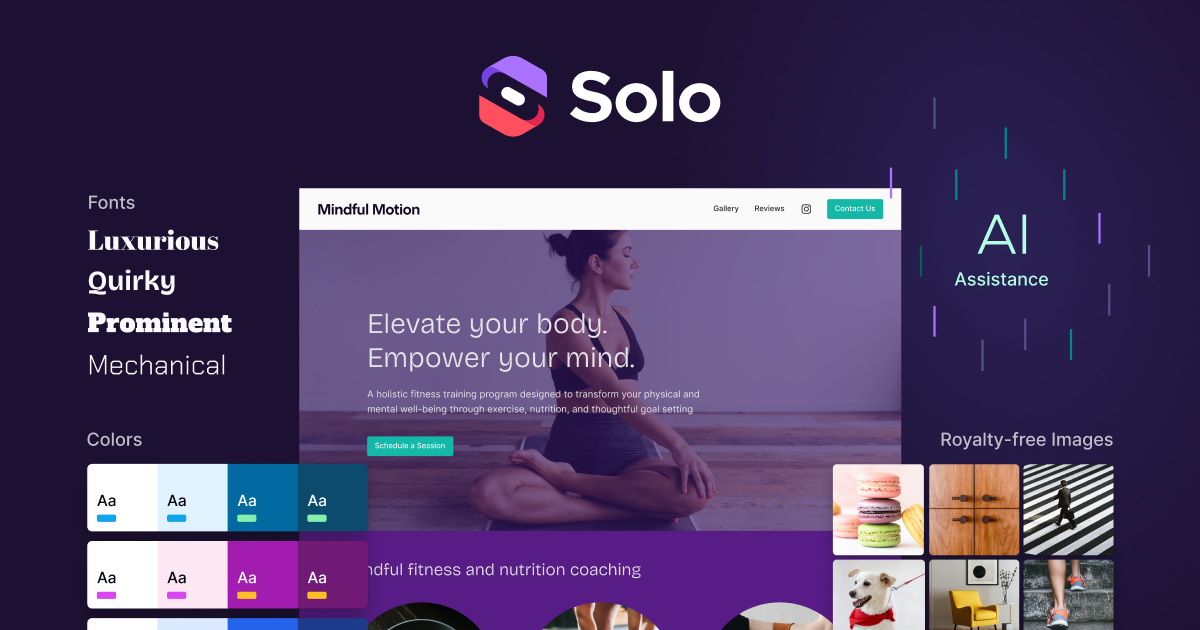
 Raj Singh
 LogRocket


Interested in sponsoring this podcast or our newsletters please reach out to mblumenthal@nearmedia.co
Full Transcript -->
I cannot directly generate or download a .docx file for you, but I have formatted the publication-ready, fully polished transcript below so it is completely ready for you to copy and paste directly into Microsoft Word or Google Docs.
All speaker names have been bolded, dangling paragraphs from the raw text have been seamlessly consolidated, and minor transcription artifacts have been corrected for maximum readability while preserving the exact conversation.
Greg (00:10) Hey everybody, welcome back to the Near Memo with me, Greg Sterling and Mike Blumenthal. And today our special guest is Raj Singh, who is a serial entrepreneur, as they say, and also currently the VP of product at Mozilla. We had him on originally to talk about a very interesting product that he had developed, which was a kind of a simple website builder. I guess AI was sort of in the background, but it wasn't the chat interface style that you see today.
And we wanted to bring him back to talk about how that product was going, but also kind of the future of websites against the backdrop of all these AI developments. What is the future of websites is the theme of today's discussion, and by implication the future of the internet. And by implication the future of the universe. So all right, Raj, take it away.
Raj Singh (00:54) Well, I'll start with the first one because I think that's the easy one. You know, when we started Solo, we got very consistent feedback when we used to ask small business owners, like, why are you building a website? And interestingly, they didn't often start with the website. They would start with maybe buying a domain and then sitting on the idea of a website for a while, or maybe they'd start an Instagram or a Facebook group or WhatsApp group and then build some kind of business. Then they're like, "Hey, you know what? I'm getting some traction. Now I want to kind of make this legit."
There was a strong perception at the time—and it still is—that the website is a critical trust artifact around your business. But their intention originally was: "I'm going to build this website so I can grow my business." What we're seeing over the last year is more of a lean into the trust aspect. I think this makes total sense. The volume of websites people are creating is just going up like crazy, and the volume of domains people are creating is going up like crazy. Building and construction has never been easier before in terms of generating websites and content, so there's just a lot of stuff out there.
Never in my career across many, many startups have I experienced this: I literally get emails through Solo support where they say, "Hey, can you just confirm this is a real email from you? Because I wasn't sure if you sent me an email or if this is someone else masquerading as you or pretending to be Solo." This stuff is happening right now. And so what we're seeing from a macro perspective is that small business owners, whereas previously they may have prioritized building a website for growth with establishing trust as a secondary goal, have completely flipped that mindset.
Today it's like, "I want to build my website because I want to establish more trust and authenticity around my business. And then if it also helps me drive some growth, that is great." But the first step is just proving to the end customer that this is us, we're real, and they can trust us. Don't look at information in these other places; we don't know if it's real or if it could have been fabricated. We are the true source of truth.
Greg (02:43) I mean, I think this is a really huge issue that's underappreciated on the internet right now. A lot of people talk about trust, but just look at the degree to which there's so much deception, fraud, slop, and sketchy stuff going on. Trust is a major, major factor. People talk about authenticity—wanting to see real humans on TikTok because it feels more authentic than something else. I think that this becomes an even bigger issue going forward, especially as slop overwhelms more and more of the internet, including all the social feeds, for example.
So, just give us a quick update on the growth of the product. You were telling us offline that you now have a whole bunch of customers. You started how many years ago now? Three, four?
Raj Singh (03:27) I think it went live in the winter of 2023, so yeah, it's almost been two and a half to three years.
Greg (03:33) So, three years or two and a half years? One of the great challenges of working with small businesses is it's very, very hard to acquire those customers. They're hard to reach, hard to acquire, and hard to retain.
Mike B (03:46) And they're hard to extract money from.
Raj Singh (03:54) Yeah, no, exactly. It continues to grow every day. One of the things that's really neat about this category is just the raw human creativity. I saw a business that emerged yesterday just looking at our Solo data: it was a person who installs elevators in homes in the Anguilla Islands. It stood out to me because I was like, wow, that's the literal origin of the .ai domain—the Anguilla Islands. But it was just amazing to see the kinds of businesses people are creating.
You can imagine with the rise of AI and its impact, people are increasingly moving toward this—and this trend has not slowed down since COVID. This is the "be your own boss" economy, right? People want to be owners. So anything you can do to further help people create their businesses, build their websites, establish their presence, drive growth, and build trust is just a net win for everyone.
Mike B (04:47) Originally you targeted businesses that focused on appointments; I think that was your original target group—service type businesses, accountants, et cetera. Has that focus changed given that I've seen you've added a number of new features to the product, like multi-page support and other interesting options?
Greg (04:47) Service businesses, yeah.
Raj Singh (05:02) Yeah, you know, it's always tricky when you're building a product. I'm going to share an anecdote here: no product wants to look like Microsoft Word circa 2005, right? But that's where they always end up. You start simple, but eventually, you look like Notion with hundreds of features, choices, choices, options, and settings. We have certainly continued to allow people to have more control and more ways to customize their site.
With that, it has introduced more complexity, so there's always this constant juggle between simplicity and customization. That being said, we have for the most part stayed focused on service providers—these are people who bill by the hour. That doesn't mean that we don't have users who come and use our platform as a personal homepage, a temporary site for events they're hosting, or other needs. We saw a website recently that was used as a place to share photos after a wedding event, which was amazing. You come up against all these interesting use cases, but in terms of where we focus our actual marketing effort, it remains around service providers.
Greg (06:09) And how are you as a marketer, product creator, and developer actually reaching these audiences? How have you scaled to 50,000 small businesses in two and a half years? What channels and marketing methods are you using?
Raj Singh (06:27) It's super hard; this is probably one of the hardest segments I've ever had to market to. We have tried many, many channels. Reddit has been a somewhat effective channel because there are a lot of small communities out there—like the HVAC community, the plumbing community, and whatnot. We went through Chamber of Commerce distributions, various online small business groups, and small business trade shows. Not necessarily a physical presence, but anything digital where we could present ourselves and trade notes.
Word of mouth is absolutely critical in this group. In fact, such a significant chunk of Solo's audience is direct traffic, which is basically owned media. These are people who clearly heard about Solo from another small business owner. Small business owners know each other because subcontracting is such a big thing. If they're doing some work and they need help on a particular item, they call their buddy, right? So that has certainly been an interesting channel.
We've dabbled with paid ads, though I wouldn't say we've spent any significant dollars there. It was an interesting experiment, but it hasn't been as effective from an overall return on ad spend perspective. We tried setting up our own communities on platforms like Discord, but that's been mixed. I realized it's just not authentic enough; they don't necessarily operate on Discord because they're already busy handling phone calls and field workflows. We even experimented with cold calling, where we would actually call businesses directly. It is very expensive—I do not suggest that—but it was an interesting exercise. We also tested email outreach to small business owners identified through Google Maps, but it yielded a very low hit rate. In part, that's because we didn't highly enrich the leads, and a lot of these owners don't use email in the same way tech companies do. So as you rightly pointed out, it's a difficult group to reach, but we've slowly been reaching them by executing a variety of channels.
Mike B (08:16) What is your current best-performing channel?
Raj Singh (08:19) I'd say the current channel we're about to experiment with is launching a series of social channels focused around small business tips and small business podcast clips. Maybe we'll get this clip up there too! But the core idea is that just because "Joe the Plumber" may not be super digital when it comes to performing his field labor, he's still on TikTok every night. He's still burning some time looking at funny videos during lunch. And so that's a great way to reach him if we can align with where his attention already is.
Greg (08:48) So you're about to do that, or you have been doing that?
Raj Singh (08:51) This is something we're about to start. We did some lightweight experimentation here with short-form video a year or two ago, but it's hard to scale because it takes real human time. However, one of the neat things with modern AI is that there are ways we can do this while minimizing the amount of human-in-the-loop time required. For example, we already have hundreds of deeply researched articles that we've written about small business topics, so we can translate those articles, feed screenshots or imagery from Unsplash, Pexels, or other gallery services, and effectively create an automated slideshow video.
Then the remaining question is just: can we approve it? Can we add the correct overlay text, the right audio, and polish it? So it is not completely devoid of human intervention—and that's intentional, because I'm not trying to be a slop generator. My goal is to authentically reach these people with genuinely useful stuff. But AI has been a massive multiplier in terms of accelerating that creative workflow.
Mike B (09:48) Right.
Greg (09:53) Well, so it sounds like word of mouth is your best lead source, is that right?
Raj Singh (09:58) Word of mouth for sure is our best lead source, which unfortunately and fortunately acts as both a positive and a negative. I was hoping to find a fully predictable channel too.
Greg (10:06) Well, what's the negative?
Raj Singh (10:08) I think the thing about word of mouth is it's hard to turn up on demand. I can't just flip a switch and say, "I want more of it today." You don't control it. That being said, we do have a lot of authentic owned media and earned media around the web now. We have hundreds of Google reviews and Trustpilot reviews that are highly rated, and those things make a massive difference.
Greg (10:14) Right, you don't control it at all. So really, your challenge in a certain way is an awareness problem fundamentally. If people know about the proposition and know that it exists, they're going to check it out, consider it, and do those brand recovery searches to find your good reviews. So it's primarily a brand awareness problem.
Raj Singh (10:51) I think the other thing too is, unlike when we started, there's an overwhelming number of options now. When we launched, this was a novel concept. At the time, you really only had the traditional heavyweights like WordPress, Wix, and Squarespace. Those are deeply investing platforms—you have to spend a lot of energy to build a functional presence within them.
Now, what's happened is a number of dedicated AI building tools have arrived—whether it's Lovable, B12, or even the AI layers within Wix and Squarespace. On top of that, companies like Anthropic, Figma, and OpenAI realized there's a trained, 25-year human behavior of paying for websites and domains. So they went full blitz on creating dedicated website features within their ecosystems. I mean, they have features that function as ChatGPT sites, Claude sites, Figma sites, and Lovable sites. So consumers have a multitude of options.
An exercise I often do with our teams is revisiting our market segmentation. If you look at the market today, you still have your fully vested builder solutions like WordPress or Next.js where you build everything from scratch. Certainly, you can use AI to help you construct the lines, but you still own the whole stack. Then you have the other end of the spectrum, which is fully WYSIWYG or chat-driven building experiences. I still firmly feel there is a massive segment that does not want to construct their entire site or edit solely through a chat box because it can be highly frustrating. They benefit from and enjoy a balanced Solo experience, which doesn't require as much manual stack work as WordPress. So there's a distinct segment there, but it's something we're constantly monitoring.
Greg (12:40) Yes. So let's move into the future of websites. We're in a situation now where people have all kinds of debates about to what extent AI is disrupting consumer behavior, and to what extent autonomous agents will truly be realized as a mainstream consumer tool. What is your sense of the next five years in terms of the actual function of websites? You talked about it as a source of trust. Traffic is going down from Google, and people are needing to diversify their channels. What's the ultimate role of the website going forward?
Raj Singh (13:20) I think we have to separate the website itself from where the content is actually being consumed. A lot of the foundational changes are not happening on the website itself. Content is still being created, but the consumption models have evolved. People are still consuming that information, but they may not be using a traditional browser. They might consume it through an AI chat interface, a specialized mobile app, or an autonomous software agent. That is the big shift that is going to rapidly accelerate over the next five years.
So if you're a website owner or a publisher and people are now consuming your content in entirely new ways, how do you react to that? As a website builder platform—whether it's Solo, Wix, or Squarespace—we have to think about this problem constantly. We have a bunch of small business customers who need to ensure they can be seen on whatever surface their end clients use to consume data.
Because of that, we've taken explicit steps, like natively introducing an llms.txt file for every single customer site. If an end user decides they want to consume information through an AI chat protocol or a developer terminal, the site can serve it up cleanly. We've even explored ideas around whether we should deploy a Model Context Protocol (MCP) to every single customer website. That way, an agent could pull up "Joe the Plumber's" direct MCP. Now, would an average user leverage something that bespoke and niche directly? I don't know, but these are the concepts we are actively building.
Mike B (14:58) So how would an MCP play out in that environment? What is your vision for its functional use vis-a-vis end users?
Raj Singh (15:07) Well, if the world increasingly runs through autonomous agents, those agents will look up available MCPs to query for highly specific, localized information. Imagine you're using a scheduling agent to book an appointment with Joe the Plumber. The agent needs a direct data interface to execute that task; it doesn't want to navigate a front-facing visual website or simulate clicks like a headless browser. Instead, it wants to use a clean API. By doing this, you are essentially bringing a standardized API layer to the entire open internet.
Mike B (15:38) Given that Apple and Google Android completely dominate the smartphone distribution mechanism, doesn't that narrow the potential ecosystem to those specific screens? I know there are advanced users on big desktop screens during the business day, but so much is happening on mobile. In the green room, we talked about multiple screens, but for me, the multi-screen reality is right here: I'm at work, but I'm still using my iPhone simultaneously with my desktop computer. How does this play out in a world constrained by Apple's tight design choices and interface control?
Raj Singh (16:19) To me, those are just different modalities—you simply have to be everywhere. We cannot make a blanket assumption that the mobile web is going to completely eliminate the use of computers on the desktop.
Greg (16:29) Well, it obviously hasn't done that.
Mike B (16:30) No, it hasn't, but mobile is just an incredibly massive use case.
Raj Singh (16:37) Yeah, absolutely. And that's exactly why every single website built today is built to be fully responsive. That wasn't necessarily the case ten years ago, but if you open up any Solo customer site today, it renders perfectly within a mobile view.
Mike B (16:50) The reason I'm raising this is that it seems to me that Apple and Google are not going to be very supportive of third-party agents that aren't their own. There is the issue of trust, the issue of absolute control, and a million other anti-competitive issues.
Greg (17:05) Well, that quickly becomes an antitrust issue.
Raj Singh (17:09) Yeah, and I don't know if they're going to be structurally able to stop this. The web is open by definition; anybody can host a website across providers like Cloudflare and various web hosts. The owners of those websites can decide whether they want to enable direct APIs into their content, and any independent application or web page can build on top of that.
The way I think about this problem in its most simplistic terms is: what are all the surfaces people will want to use to consume information in five years, and how do we ensure our customers are there? Traditional search isn't going to disappear entirely; it might decline, but it's a surface where you must remain visible. So how do we support it? We make sure we natively support all of Google's structured data formats—their JSON-LD, schema protocols, and all of that.
AI search isn't going away either, so we must ensure our small businesses show up when someone runs a Bing AI chat or a ChatGPT search. Cloud code and developer terminal searches aren't going away either, so we make sure the data formats align if someone queries through a terminal window. We have a massive variety of modalities—whether it's an Apple Watch, a Messenger bot, or a mobile phone. Our job as a web host and builder platform is to handle the structural complexity so our customer sites can show up everywhere automatically.
Mike B (18:39) Can you share what your current distribution looks like across those various modalities in terms of raw visibility?
Raj Singh (18:46) It is incredibly hard to accurately attribute traffic to AI surfaces right now. For instance, tracking exactly how often a customer site is served up as a reference link inside ChatGPT is something I just don't know with certainty.
Greg (18:57) But you track brand queries and navigational searches, right?
Raj Singh (19:01) We certainly look at who our top-visited customer sites are across geographies, but it's about as random as you might think. You have a random business owner selling crepes in France, and then you have a glass window installer in Florida.
Greg (19:18) One of the things that is really interesting to me about user behavior—and I've done a fair amount of survey work on this—is a recent Similarweb study talking about the downstream impact of AI search. There's this huge debate in the SEO world about Google owning over 90% of referral traffic, while ChatGPT drives the vast majority of AI clicks. What the Similarweb report highlighted is that users are performing initial transactional discovery inside AI chat tools, but then later hopping over to Google to run navigational and brand queries once they have a recommended business name. They tracked this across beauty, finance, and health categories.
Many marketers miss this multi-touch customer journey. Digital attribution has always been a messy problem, and it's even more fractured today because of the sheer variety of tools people use. If you're in B2B, AI search is already a massive factor because professionals use it to conduct heavy comparison diligence before visiting a site. It's a massive decision factor, even if it doesn't show up as a direct last-click referral source.
Raj Singh (21:04) In fact, I would argue the absolute holy grail for developer tool startups right now is simply being the default tool suggested by AI chats. Look at the growth of companies like Supabase or Vercel; their trajectory has been the modern equivalent of Zynga launching on the Facebook wall back in 2008. ChatGPT explicitly tells developers, "If you want to set up this system, go install Vercel and grab an API key from Supabase." When that happens, you see their traffic metrics jump immediately.
Of course, how these LLMs calculate rankings and choose specific brands to suggest remains incredibly opaque. There are plenty of hypotheses, but as a small business owner, the best you can do is publish deep, authentic content across multiple platforms and ensure your web platform formats it so LLMs can ingest it and surface your brand.
Greg (22:07) Yeah, and all that technical complexity you're alluding to—the llms.txt formatting, the varying structured file types—has to be buried entirely behind the scenes. It has to be handled natively by the platform because the average small business owner has no idea any of that stuff even exists.
Raj Singh (22:20) Exactly, a hundred percent.
Greg (22:21) I attended an Anthropic "Claude for Small Business" workshop in San Jose a few weeks ago, and it was fascinating. They were pushing co-working setups and standardized use cases to get non-technical operators to use AI to automate internal business processes—like invoicing, billing analysis, and operational tasks, rather than external marketing. The power of those capabilities is self-evident, but there is a massive chasm between what everyday business owners know today and what the tech stack is actually capable of executing. As intuitive as these chat interfaces seem, there is still a layer of workflow friction. Until that complexity is completely abstracted out of the system or managed by a layer of third parties, you aren't going to see widespread adoption.
Raj Singh (23:16) Service providers and localized industries—like legal, accounting, and trade crafts—historically aren't the early adopters of cutting-edge tech tools. There are always individual exceptions, but this is going to be a long journey. This isn't like the traditional software development sector where an engineer can put out an open-source tool, and it virally spreads across tech teams overnight because they love testing new utilities. In the small business segment, you can't just put something online and expect viral loops. You have to pair the product with hands-on on-site training, consistent content marketing, physical outreach, and presence at trade shows. There is a heavy go-to-market motion required.
Greg (23:53) Right, except the core difference this time around is that AI is deeply embedded in the mainstream culture. Mike and I have watched multiple waves of small business tech adoption over the decades, and AI got an unprecedented amount of mass media exposure. People adopted chat tools informally because they were intuitive enough for basic personal tasks, but they hit a wall when trying to bridge that into professional automation.
Mike B (24:32) Right, there is a massive chasm between basic chat usage and harnessing a localized agent to execute repeatable business workflows. Most businesses are not prepared to cross that chasm, and many don't even realize it exists.
Greg (24:37) Exactly, they don't even know what the technical capabilities are. They need human guides to say, "Here is what is possible, and here is exactly how you execute it." I spoke to the woman running the small business initiatives at Anthropic during a break at that workshop, and I told her frankly: "You have to build a human infrastructure—an educational and support network—in order to scale this tool the way you want to."
I told her she should study Google's historical playbook. Google spent years building out localized human ecosystems—their Local Guides, their Google Product Experts network (of which Mike is a member), and their Small Business Advisors. That extensive support and education infrastructure was absolutely instrumental in helping them achieve their market objectives, which they're still fine-tuning today. You cannot just throw a raw tool into the wild and expect busy operators to master it.
Raj Singh (25:58) Did your message resonate with her?
Greg (26:00) Who knows? I sent her a follow-up email outlining those localized infrastructure examples and offered to chat further, but I haven't heard back yet. We'll see. OpenAI has similar small business initiatives, but I'm highly skeptical that they have the internal operational commitment to staff and support those programs with real human infrastructure over the long haul. They aren't going to fund it properly.
Mike B (26:28) It will be interesting to see what cultural path these AI companies follow. Will they behave like Facebook—where if an initiative doesn't hit a billion dollars in revenue within six months, they instantly drop it? Or will they follow Google's historical model of grinding away, keeping projects alive, and resurfacing old concepts until the market naturally accepts them? It's hard because small business revenue doesn't show up quickly, as Raj can certainly attest to.
Greg (26:56) Well, OpenAI clearly wants small business ad dollars over the long term, and that requires substantial localized outreach and clear education.
Raj Singh (27:08) The entire advertising ecosystem is going through a massive transformation right now. I'm certainly not the primary domain expert, but the sheer volume of ad click fraud across open websites is at astronomical levels due to aggressive web-scraping and malicious bot networks. When you audit the backend analytics data, you see millions of sessions logging one- or two-second durations. Those aren't humans—humans don't click through a site and bounce within a single second. These are scraping bots and automated systems.
I'm fascinated to see how this plays out. I know people on the Google local teams who used to buy heavy lookalike ad campaigns on Facebook to source small business advertisers. But going forward, nobody can rely on a single channel; it requires a diversified, multi-level approach.
Outside of small business, the foundational AI layer itself is shifting. Open-source models are improving at an incredible rate. Anthropic PMs themselves have shared posts suggesting that their top-tier models, like Fable, should essentially be used as coordination orchestrators for a web of much cheaper, open-source models.
Greg (28:32) That is absolutely the future. Everyone right now is heavily focused on minimizing inference costs, looking at open-source options or low-cost international models. Orchestration layers are the definitive path forward.
Raj Singh (28:43) Exactly. If you have an intelligent orchestration layer managing an ensemble of models, the end-user doesn't care whether the core computation is running on Anthropic, OpenAI, or an open-source model like GLM-5.2 or Qwen hosted on Hugging Face. As long as the output is accurate, the underlying engine is irrelevant to them.
But if that becomes the baseline reality, what happens to the core business models of Anthropic and OpenAI? If inference traffic shifts entirely to low-cost utility infrastructure and open-source models that are "good enough," while the frontier model is only called for high-level judgment, their data monetization collapses. That's exactly why all these major AI laboratories are aggressively expanding into vertical application layers—they realize they have to own the software applications directly, rather than just selling access to the underlying tech stack.
Greg (29:33) Let's bring it down to some immediate tactical advice. If I am a localized business owner or an agency marketer managing clients, what should I be doing right now to prepare for this quasi-agentic future where traffic visits may decline, but the need for rich structured data is higher than ever?
Raj Singh (30:08) I think it depends heavily on your lifestyle business goals. If you are a solo service operator who is already completely overloaded with field work and you aren't interested in scaling or hiring employees, you can honestly ignore all this noise. Keep doing exactly what you're doing, work when you want to work, and focus on your active labor. That segment shouldn't be discounted—it represents a massive percentage of the localized trade community.
However, if you are actively looking to grow your business, I have two absolute recommendations. First, you must be visible across every surface where your customers spend time. That means managing an active presence on social video platforms, distributing local content, building an email newsletter, and participating in niche podcasts. It is a full-time job in itself, which is why we built tools like Solo Grow—which functions as a micro-agency to automate that cross-channel expansion for our users.
Second, you have to be uncompromisingly authentic. This sounds counterintuitive because marketing teams have spent the last few years blasting automated, low-quality content everywhere just because algorithmic feeds rewarded high posting frequencies. People have been cross-syndicating 15-second clips, slicing up long-form articles, and boosting low-effort posts on LinkedIn for weeks on end.
But because the top of the marketing funnel is completely flooded with AI slop, consumers are actively craving authentic human artifacts. Yes, use AI tools to streamline your backend workflow and accelerate content production, but ensure the final output contains your unique voice, local touch, and lived expertise. Use AI to augment your presence, not to replace your humanity. That is how you get noticed today.
Mike B (32:13) The reality for most business owners is that they have to pick their battles; they can only execute maybe 10% of that massive list. Most businesses struggle heavily at the basic operational and marketing level, even the competent ones.
Greg (32:33) That's very true. Mike, when we were talking last week, you asked whether I got scammed on my recent chimney and dryer vent cleaning. I didn't get scammed at all, and my process is a perfect real-world example of this. Our dryer vent hadn't been serviced in years, so I looked for a firm that could clean both the vent and the chimney layout. I found one on Yelp, used their internal RFP system to communicate with a few operators, did my diligence by reviewing past client feedback, and selected a team.
They came out, did a highly professional job, and charged exactly what they quoted. But here's the kicker: within minutes of their truck pulling out of my driveway, I received an automated multi-channel communication stream via House Call Pro. I received immediate, direct requests to leave reviews on both Yelp and Google, alongside a follow-up quality email. Because they did great work and the prompt was immediate, I sat down and gave them 5-star reviews across both platforms. They had their operations completely dialed in. They might be private equity-backed in the background, but they were incredibly competent.
Raj Singh (33:42) Oh, I guarantee you a company with that level of automated back-office follow-up is private equity-backed.
Greg (33:47) They were highly competent, and that back-office operational speed was incredibly impressive to me. It might feel a bit aggressive to some, but it works.
Mike B (34:00) It's like going to the dentist these days—you haven't even walked out to your car in the parking lot, your mouth is still completely numb from the procedure, and your phone buzzes with a review request!
Raj Singh (34:06) These are simple automated workflows that small business owners need to leverage. The tooling is affordable and readily available, and we build those exact loops natively into Solo and Solo Grow. This is the new baseline table stakes for running a local service company. Again, if you're entirely slammed and don't want growth, that's fine—your only real challenge will be what happens to the value of the asset when you want to retire. But if you want expansion, you have to operationalize these touchpoints.
Mike B (34:35) And you guys implemented a native newsletter subscription feature, right? How is that performing for your users?
Raj Singh (34:39) Yes, we built a native way to capture customer emails for newsletter lists, alongside our built-in blog features, though we haven't launched a standalone newsletter email-builder yet.
Mike B (34:47) To me, a regular newsletter is a brilliant way of staying authentic without being overbearing. Reaching out to past clients once a quarter to share updates keeps you top-of-mind.
Raj Singh (34:53) Exactly, it's a great way to stay connected. Most local businesses do a poor job communicating with their existing client database; they are constantly obsessed with chasing new customer acquisition hooks instead of nurturing what they have.
Greg (35:02) Oh, absolutely—they drop the ball entirely on retention. It's always about hunting new customer acquisition.
Raj Singh (35:06) It's identical to how professionals treat LinkedIn: everyone is focused on juicing their total connection count, but nobody actively manages or nurtures the professional relationships they already have in their network.
Greg (35:15) Yeah, we've seen that slide presented at marketing conferences for decades: "It costs significantly less to retain an existing customer than to acquire a new one." People hear it a million times, but they never internalize it.
Raj Singh (35:34) It's because chasing new acquisition gives a quick dopamine hit—like seeing a notification that you added a new contact.
Greg (35:37) As a final topic, let's look at the agentic hypothesis. While autonomous software agents exist, the idea that a consumer is going to give a bot a credit card and say, "Go find a product, buy it, and deliver it to my house," is still heavily overblown for mainstream users due to basic trust issues. We are still years away from full transactional autonomy.
However, I can completely envision an intermediate search use case right now. A user could easily say to an assistant: "I need a local service provider to clean my dryer vent. Only pull options with a 4.5 rating or above, filter out anyone whose estimated charge exceeds this budget limit, ensure they have open availability during these specific calendar hours, and send a booking request to the top three matches." That is entirely realistic.
Mike B (36:36) But don't you think that interaction is going to happen natively inside dominant hardware ecosystems rather than an isolated web interface? Now that iOS 27 is deploying extensive orchestration layers capable of parsing queries out to low-cost models while controlling the system interface, Apple has the built-in trust to manage those workflows. Don't you think that interaction will happen natively through systems like Apple Maps or Siri, rather than a consumer opening up ChatGPT?
Greg (36:56) Yeah, completely. It could well be. I'm not talking about Anthropic or OpenAI specifically; I'm talking about the underlying localized use case. The core reason people stay locked into ecosystems like Amazon is trust—the explicit knowledge that you can return a defective product with a no-questions-asked policy. Having an institutional gatekeeper backstop unverified independent merchants is critical for consumers.
Apple and Google represent that trusted layer for the mobile internet. I trust Apple's privacy architecture immensely, even if I'm a bit more skeptical of Google. People naturally gravitate toward security. I've been running the new developer beta of iOS on my phone—which completely messed up my basic configurations, by the way—but the overhauled Siri is noticeably more capable. It's not perfect, but it can parse complex requests. When I need a quick sports score or a general knowledge answer, I find myself bypassing Google Search entirely because Siri gives me the answer directly without the clutter.
But here is the irony: Google doesn't necessarily make less money in this new environment. They lose the top and middle of the search funnel to direct answer engines, but they maintain absolute control over the high-intent bottom of the funnel. They remain the ultimate transactional gatekeeper, and brands are forced to buy local ads just to defend their brand terms.
Raj Singh (38:40) I agree. And from an internet monetization perspective, as much as people love to complain about advertising, it remains the single most equitable business model in the world. It is the exact reason why software utilities and educational content can be offered completely free to populations in developing nations who couldn't otherwise afford monthly software subscriptions.
But there is a dangerous counter-trend right now: the massive data bandwidth costs driven by bots crawling the web are forcing high-quality independent publishers to retreat behind strict walled gardens to protect their intellectual property from LLM scraping. I was tracking an innovation out of Cloudflare where they are positioned to act as a structural guardian of the open web. They are developing systems to identify scraping bots using advanced device fingerprinting and introducing automated payment tokens.
Imagine an autonomous agent tries to scrape a website; Cloudflare detects it's a bot rather than a human browser and forces the agent to execute a micro-payment token to access the content. Innovations like that are inevitable, and Cloudflare is uniquely positioned to execute them because they proxy such a massive percentage of open web traffic. It's an interesting window into what a decentralized, verified web could look like.
Greg (40:03) We don't have enough time to fully unpack that today, but it raises incredibly important societal questions about how we support independent journalism and open publishing going forward. If content consumption shifts entirely to enclosed models, independent content monetization collapses, leading to a dangerous consolidation of web power among a handful of tech platforms.
But on that semi-gloomy note, Raj, thank you so much for joining us for this wide-ranging and provocative discussion. You always stimulate our thinking. We will definitely have you back in the future. Mike, anything you want to close with before we sign off?
Mike B (40:43) No, I just want to thank Raj for coming back. I always thoroughly enjoy our conversations.
Greg (40:46) Awesome. To our audience, thank you for listening. Tell your friends about us via old-fashioned word of mouth, and we will see you all next time!
Raj Singh (40:47) No, I really enjoyed it. Thanks, guys!