
EP 254 - Google Ask Maps Deep Dive: Ask Maps Is The Future of Local SEO Panel Discussion
Join our celebrity local SEO panel—Claudia Tomina, Adam Dorfman, and Darren "The Canadian" Shaw—as they explore "Ask Maps," Google’s AI-powered conversational interface for local search.


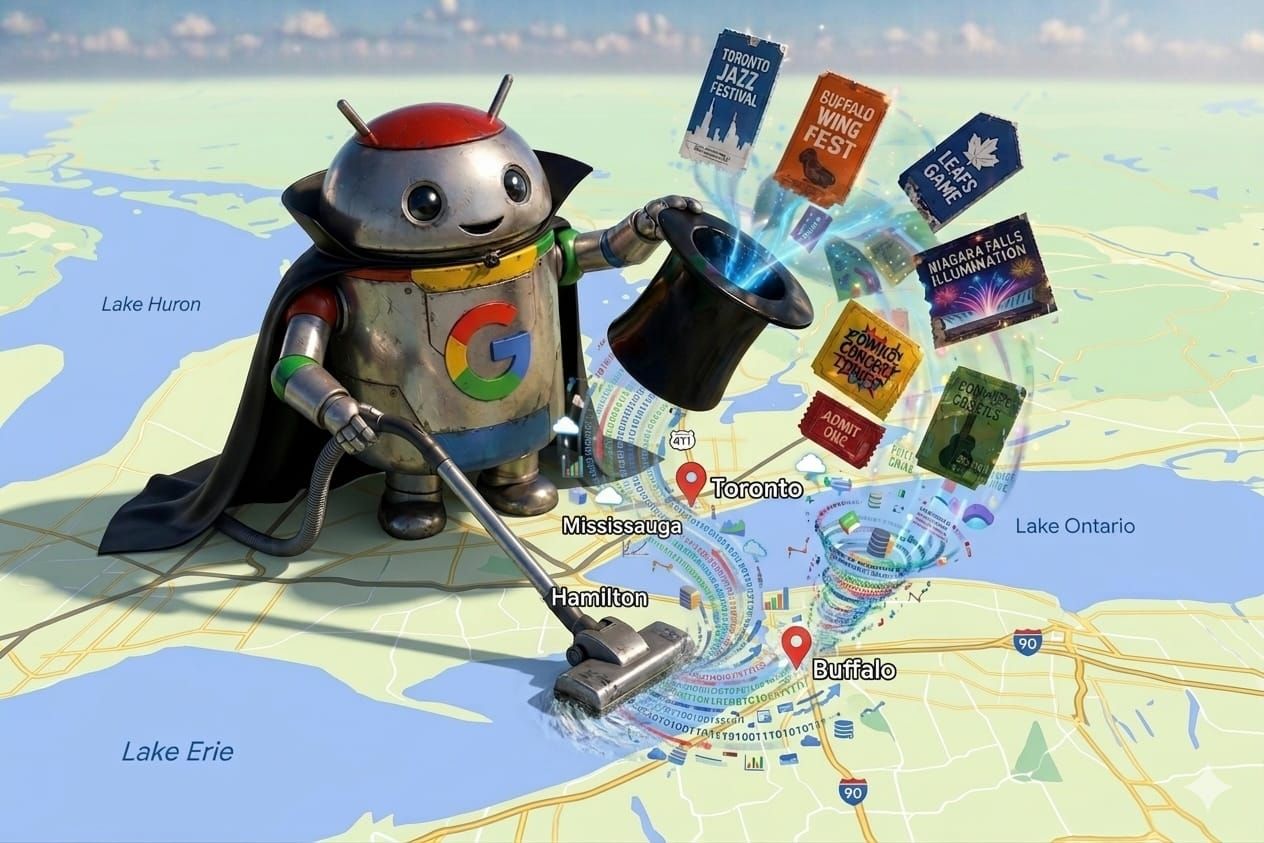
The "Ask Maps" conversational UI represents a shift in local search, prioritizing natural language and hyper-personalization based on user history and saved labels. However, this AI interface often surfaces fragmented or outdated data from "orphaned" URLs and old citations, making it imperative for businesses to maintain "content freshness" through frequent updates to service pages and reviews.
The Podcast Deets & Take-Aways
Segment 1: The New Paradigm: Conversational Search in 2026
Timestamps: 00:00 – 10:20
This segment defines the scope of the 2026 search landscape, contrasting the "listicle" model with the new synthesized, recommendation-driven conversational interface. It demonstrates that natural, complex, relationship-based prompts (like "halfway between") are now effectively resolved by Google AI, validating the panel’s predictions from preceding years.
Segment 2: Hyper-Personalization: Building the Competitive Moat
Timestamps: 10:20 – 18:28
The panel shifts focus to the core strategic asset Google leverages in Ask Maps: implicit and explicit personalized data. They establish that user-defined labels are the single most powerful tool a business can utilize to capture repeat business, defining the new boundaries of customer retention and competitive defense against other large language models.
Segment 3: Data Integrity and the Threat of AI Hallucinations
Timestamps: 18:28 – 23:20
This segment provides the reality check for local businesses. The panel probes the dangers of data entropy, proving that forgotten web pages, old blog posts, and outdated citations are the primary sources of AI "hallucinations." They establish that data hygiene is no longer just about NAP (Name, Address, Phone) consistency; it is about content integrity across the entire historical domain footprint.
Segment 4: The Strategic Response: The Freshness Mandate and "Vibe Coding"
Timestamps: 23:20 – End
The discussion concludes with actionable strategies for SEO professionals and business owners in the Ask Maps era. It moves beyond theory to define "Freshness" as the new foundational tactic. The segment makes a convincing case that a "set and forget" GBP profile or website is no longer viable in an index that prioritizes current activity over historic domain authority.Key Takeaways:
👇 Watch by topic:
00:00 - Introduction to Ask Maps & The Panel
01:42 - Live Demo: Ask Maps Desktop Interface
05:13 - Hyper-Personalization & User Search Behavior
14:19 - Google Maps vs. Apple Maps & ChatGPT
18:28 - Data Integrity: Where AI Gets Its Information
21:35 - The Freshness Mandate: Staying Relevant in AI
Interested in sponsoring this podcast or our newsletters please reach out to mblumenthal@nearmedia.co
Full Transcript
Greg Sterling (00:10) Hey, everybody, welcome back to the Near Media Podcast. And today we're doing a special episode on Ask Maps. And joining us is our celebrity local SEO panel, Claudia Tomina, Adam Dorfman, and Darren "The Canadian" Shaw. And the reason that that's meaningful in this context is he doesn't yet have access to this feature, but he is such a smart guy that he's gonna have a lot of opinions about it anyway. So welcome everybody and tell me if you wanna say anything before we jump into this. Anybody wanna say anything about how they're doing, what's up in the world?
Darren Shaw (00:37) you
Adam Dorfman (00:45) Isn't Buffalo kind of an honorary Canadian city? Like, Camp might be a... Yeah.
Greg Sterling (00:49) It is. It is.
Mike Blumenthal (00:49) It used to be. ...
Claudia Tomina (00:51) Okay.
Darren Shaw (00:51) Yeah.
Mike Blumenthal (00:52) if it still is.
Darren Shaw (00:53) Detroit too. There's a lot of comedians on this.
Adam Dorfman (00:54) there.
Claudia Tomina (00:54) Yeah, I'm very close.
Greg Sterling (00:55) Well, wasn't there like a sporting event where the two American teams and they were singing the Canadian national anthem recently. Did you read about that?
Adam Dorfman (01:06) I saw the clip, yeah, I think it was in Boston, but the mic went out when they were singing Canada and the Boston, I think it was Boston crowd just picked it up and the entire crowd sang it, so.
Darren Shaw (01:06) No. I didn't see it. that's
Greg Sterling (01:18) Yeah.
Darren Shaw (01:18) nice.
Greg Sterling (01:19) OK, all right. So here we are with the Mike's desktop view. And we're talking, as I said, about Ask Maps today and its implications for local search and how businesses should manage their data. And I wasn't even aware of this until this morning because I'm so focused on my phone that Ask Maps is now available on the desktop in certain markets. So Mike, why don't you give us a quick demo to orient people who may not have personally tried this?
Mike Blumenthal (01:42) Sure. So like in mobile, it's a separate UI element to get into it. In mine along the left menu. It brings up a very similar interface to AIOs. I'm just going to do a quick lunch about halfway between where my doctor is and where my son lives, sort of just in Buffalo. it spins the globe, charting the course, launches three expeditions, whatever those are, pinpoint six places. and gives you these little clues about what the fan out query is, but it doesn't give you as much information as the fan out query in the desk, you know, in AIO overviews. And then you get a series of restaurants. This is the one we ate at last time. Claudia said an interesting, so you can see, this gives you the map.
Greg Sterling (02:30) Can you expand the window? Are you able to expand the window to the right? I can't see your little carrot there.
Claudia Tomina (02:36) If you click on the Google Business Profile, you'll see it on the right.
Greg Sterling (02:40) Yeah, click.
Claudia Tomina (02:40) We'll click on Swan Street and then it should pop up the knowledge panel.
Mike Blumenthal (02:44) Right, and then I just made it bigger. Does that make it easier to see?
Greg Sterling (02:46) Okay, all right. So it just gives you a, okay. I thought you might be, go ahead.
Mike Blumenthal (02:50) So it gives you the, in maps, it typically only gives you three. When I do this in AI overviews, it gives me often 10. AI, no, in AI overviews, or AI mode gives you 10, right? So pictures, some verbiage, a little bit of summary, but no driving directions, because the question was specifically about driving directions. And then a map.
Greg Sterling (03:00) You talking about AI mode, you mean AI mode. But you can get that from the knowledge panel if you want to on a particular business. do, as Claudia pointed out, that you can do a search for local events, which is really interesting. So do that and see what comes up.
Mike Blumenthal (03:21) Right. in the cross-border nature of our exercise. I added a second geography to this, five expeditions, whatever that might mean.
Greg Sterling (03:40) It's just a cute little way of telling you to be patient.
Mike Blumenthal (03:44) that is doing a fan out. So one of the things I wanted to do was to see if I could figure out where they're going for the, for the information. playoff fever. So Saturday, well, that's cool. Artisan market, Leslie Odom Jr. Urban bash.
Adam Dorfman (04:01) head to the bourbon part. Yeah.
Mike Blumenthal (04:04) Sabres game, if they go that far, Jazz Brunch. And then Toronto too. one of the things that I really like about it, living rural is this ability to search in broader regions, multiple geographies. Like I live in rural Western New York and Google historically has not been able to parse searches for Western New York with any kind of accuracy. But now it does. where I live, it's also called the Southern Tier, which extends from the border with Ohio all the way over to Binghamton. So, but now I'm able to say the Southern Tier in Western New York, and it will actually use that as a broad geography. anyways, there you have it. You want to see anything else while I'm here? Wanna see how this compares to Overview?
Greg Sterling (04:50)
Darren Shaw (04:53) want to see like, like my favorite recommend some plumbers in Denver. I'm just like, what do you get with classic search like that?
Greg Sterling (04:53) You mean as-
Claudia Tomina (05:00) Yeah.
Mike Blumenthal (05:01) Let me just do a clean one here. I don't know how to spell.
Greg Sterling (05:04) That's the beauty of the whole system. You don't have to.
Adam Dorfman (05:07) One thing is this is
Claudia Tomina (05:07) 33
Mike Blumenthal (05:08) I'm
Claudia Tomina (05:08) sources,
Mike Blumenthal (05:08) 33 sources, yeah.
Claudia Tomina (05:09) much more, much more.
Greg Sterling (05:12) Adam, go ahead.
Adam Dorfman (05:13) and, one thing I was just going to mention as this loads is that I've seen with ask maps that I find really interesting is, I've been testing my history and seeing how well it reads that. so recommend some restaurants in this neighborhood that I've visited before versus have rated highly before. Google certainly has all of that data, like whether I visited or rated it and is really good about saying you visited this restaurant like many times in the last year.
Greg Sterling (05:40) So personalization is a key feature of this.
Adam Dorfman (05:45) Yes, 100%.
Greg Sterling (05:47) And Claudia, you were talking about that too, think. You were experiencing that. Is that right?
Claudia Tomina (05:53) Yeah, I've tested it also. What I'm doing is saving labels and then adding certain places to a list. And I've noticed that it'll reference that I have this on this saved list or that I've labeled this. So, or, you know, you can label your home, your work, your office, and you can specifically say, it'll know exactly where your home office is because you have it labeled and then find locations in that area. So you can really personalize it. if you're utilizing all these extra features.
Adam Dorfman (06:26) I love that. And I also love using Mike's example. He put in the town his son lives in and switching that to what's a good place for me and my son to meet halfway between our homes. I wouldn't be surprised if that's coming or already possible these days, depending on how you have contacts within Google too.
Greg Sterling (06:48) So obviously one of the things about this that's really kind of exciting is the flexibility of what you can do with it, just as we're discussing right now. And it's quite a bit different than the conventional map search or even regular search. Do you?
Mike Blumenthal (07:04) Just as an aside on that, one of the big differences is query length and the dialectic between users learning what it means to have AI and how it changes their behaviors. Even in our research on PI lawyers, query length has gone up a half a word in the last six months. In other words, it was four and a half and now it's five or something like that, average query length. And this was for a very low funnel task, right? Super low funnel task that people were given.
Greg Sterling (07:29) Yeah, super low funnel.
Mike Blumenthal (07:33) So it will be interesting to see how long it takes. And then what do these queries show up in insights like these very long, bizarre geographies and queries, will they show up in Google insights at all or not? Or are they buried away in the deep bowels of Google knowing about you, but you not knowing anything.
Greg Sterling (07:51) Well, Google confirms this. They mean they consistently are saying that query length is getting longer. And it makes a lot of sense is that as people use these AI tools and discover they can ask these very specific questions, it just makes a lot of sense. It produces a better outcome.
Claudia Tomina (08:08) When you add in the voice activation, I mean, you're naturally gonna talk longer.
Darren Shaw (08:14) Mm-hmm.
Greg Sterling (08:14) Yeah. Yeah, I mean, you'll just go on and on and on and this and this and this thing, and it doesn't have that. And yeah, I mean, I was, as I said before we started recording and I posted about this on LinkedIn is that I discovered it was available to me in Mexico and I would and I used it a lot and it worked very well. mean, I was really surprised and.
Mike Blumenthal (08:36) As he walked down the street and the Mexicans were saying, gringo loco talking to his phone.
Greg Sterling (08:41) Sure, that's exactly what they were saying, Mike. It was really astounding. No, no, no, no.
Mike Blumenthal (08:46) I mean, it's interesting though, like the natural language will change how we search. The question is, will it change our behavior? I think is equally interesting. In other words, you're gonna probably do it in your car where it's private, but are you gonna talk to your phone in public?
Greg Sterling (09:02) Sometimes, but not most of time. It depends on the circumstances as you point out.
Mike Blumenthal (09:06) Right, but I'm curious if behaviors, just type, query behaviors, but behavior behaviors will change.
Greg Sterling (09:13) Well, the interesting thing here to me is the relationship between this. I mean, this is kind of a microcosm of what Google's dealing with on the Google.com side. It's like, you've got these two entry points. will ask maps just become the default UI where people can ask whatever they want, and they're going to get the results? Or is Google going to preserve this as a sort of distinct UI experience from traditional maps.
Adam Dorfman (09:42) I feel like I would hope that similar to what they're doing on the main page of search results, they're going to be smart enough to infer from the query that's being entered whether a traditional list of local businesses makes sense or. whether a more AI generated response comes back. Because at this point, if I'm on Google and I do a search and it doesn't get that right, I'm irritated. Like if I'm doing some informational requests and it sends me a list of blue links or sponsored, like I get irritated very quickly with that. And I was like, you should know, like just based on my, what I'm asking, what type of response I want to see.
Greg Sterling (10:20) go ahead, Claudia.
Claudia Tomina (10:22) It's so hyper personalized and I think it's going to continue to be even more personalized, but it knows exactly what types of restaurants you're leaving reviews for. It knows if you have a pet, so it could recommend pet-friendly places for you. And it knows if you have allergies or if you prefer gluten-free. So a lot of times you don't even have to mention that in the query, but it's already gonna know to recommend that place for you.
Adam Dorfman (10:48) 100%. I'm celiac and I'm seeing that. Like, absolutely. So yes, it knows to lean towards gluten-free friendly places.
Greg Sterling (10:56) So I'm very opposed to giving Google my data as much as, as I can avoid it. And this, of course, but, but, but, you know, like being able to track you and do all the things, you know, all the, all the tracking that they do. I've tried to block that, when people talk about personalization, I just think it's a euphemism for we want all your data and we want to track it and use it.
Mike Blumenthal (11:02) They infer a lot from your searches.
Adam Dorfman (11:05) Yeah, they do.
Greg Sterling (11:20) But I think in this case, it's genuinely useful, as you guys are describing. And so I might be inclined to let Google take all this information because of the convenience of this. And does this then become something that draws more and more people to it as opposed to Google.com, where the bulk of local search is happening? Does the center of gravity start to shift at all once people discover these capabilities? What do you guys think?
Claudia Tomina (11:45) Absolutely. Yeah, I think most people are not fully aware. We are because we're in the market and we're marketers and we're looking for it. But most of my family and relatives haven't really caught on to Ask Maps. Like they think they're using AI because they're defaulting to ChatGPT or they're still throwing their itineraries and questions into, you know, Gemini or ChatGPT where I'm shifting my focus into Ask Maps and saying, I'm traveling here. I want to stay at this hotel and I want to make sure it's in walking distance from this event that I have. And then I find everything, I save it into my list. And then I ask, what are some good recommended like restaurants? And I'll save that into my list. And then I keep utilizing these features until I get it perfect.
Adam Dorfman (12:30) Hey, Claudia, what was the, I'm curious, because I had a very specific light bulb moment with Ask Maps. I'm curious what yours was. Like if you were just playing around with it you're like, this is different. Like, was there any moment like that with you?
Claudia Tomina (12:42) Yeah, I have like this idea of I'm a local plumber and I tell my customer, save me, like label me as your plumber. So if you're at home and you're doing a query on like something's leaking and you want to understand if you need to call the plumber, it probably will automatically recommend your plumber that you have saved in your in your Ask Maps list. And so it's just a way for these companies like It's not just about reviews anymore. It's about making sure that you're getting recommended. so utilizing and educating that end consumer to remember you by labeling you or like if they searched your business and they called you, maybe it's automatically going to recommend it. I don't know. It's just interesting to see how local businesses can really utilize like their past reviews and everything to reconnect with customers.
Greg Sterling (13:34) This feature of it being your memory, you're setting it up so it can serve as a memory function. Who was the person, who's the plumber I used last time or where's the restaurant that I liked in this area? That's super interesting and gets you engaged in really curating the data in a sense that adds this whole other dimension to the experience.
Adam Dorfman (13:55) It also makes getting reviews that much more important because if a customer of yours, let's say you're a restaurant, leads you a good review and they don't remember or they are looking for something else and maybe that restaurant also serves that or whatever, they're gonna be, I suspect the personalization is gonna be more likely to say, hey, you really like this place and they can also do this as well too.
Greg Sterling (14:18) So.
Mike Blumenthal (14:19) Yeah, I find I'm similar in just to you, Adam, just in my shift. Like I pretty much had stopped using Google Maps altogether. I had switched a hundred percent to Apple maps on my phone. And because of this capability, like last week we went to Rochester for a Jake Shimabukuro concert. And I'm not at all familiar with Rochester. It's out of my wheelhouse altogether. So we needed dinner, we needed parking. We didn't want to be too far from the venue.
Greg Sterling (14:28) Me too. Me too. Me too.
Mike Blumenthal (14:47) you know, fairly complicated query. and, did it, ChatGPT Gemini, Google Maps, and Google Maps was the most useful of them in the sense of it, organizing it in a way that made, you know, parking isn't this far and here's some parking places near some dinner that are all within five minutes. And so it was very, it was very useful. And so this is the first time I've used Google Maps in several years with any regularity. So being
Adam Dorfman (15:12) Yeah.
Greg Sterling (15:12) My story is exactly the same. Go ahead, Adam.
Mike Blumenthal (15:15) Well, I was gonna say it'd be
Adam Dorfman (15:16) There you go.
Mike Blumenthal (15:16) interesting to say, see what apples, what we've heard that they're gonna have something similar. We'll have to see if it's anywhere near as useful. And Yelp does have something similar.
Greg Sterling (15:25) I suspect it's not going to be, but go ahead, Adam.
Adam Dorfman (15:29) I was just going to say for me, the moment where I thought, Google Maps is pulling ahead again was I was traveling about a month ago to some city. I was staying almost in an office park in some city or whatever, like one does when you're traveling for work. And I wanted to go for a run. And I said, can you please create a three to five mile loop? for me to run in and include nature as much nature as possible. And normally if you're doing that by manually, like within Google Maps, you're like looking at, okay, this is how far a mile is. So if I can maybe create a quadrant and so on, and then you don't know where to go and you're just kind of making it up. And this time it came back with like two or three really good options of different lengths. And then it said, do you want to do this? And I said, yes. And then suddenly in my year, had navigation guidance as well too, as I was running. So that was really cool.
Greg Sterling (16:20) Yeah, that is an amazing thing. And this idea of these events and this running guide really expands the boundaries of what is going on here and what's possible.
Mike Blumenthal (16:34) Don't you think it's just totally a question for you all? I mean, the fact that Apple is going to be talked about releasing it a year and a half ago, but is finally going to release it, but only a few months behind Google. I mean, to me, that speaks to a certain change in how the market is functioning, how Apple's functioning. And yeah, their first efforts with Apple are always weak, but the inference one can take from that is that this ability isn't going to be limited to Google Maps. I
Adam Dorfman (17:03) And Apple just relaunched Apple Business Connect, Apple Business, and now they're doing ads and all of that good stuff. So my understanding is they certainly have more resources on Apple Maps, Apple Business, and Connect or Apple Business Now. So I could see them.
Mike Blumenthal (17:07) Yes. Did you notice this minor grin that he has on his face? I think we need to take him into the back room and sort of tighten his thumbs against the wall and see what other, no, I'm talking about Adam, has a grin on his face about Apple's plants.
Greg Sterling (17:19) What? Are you talking about Darren?
Darren Shaw (17:36) Hahaha.
Adam Dorfman (17:36) no, no, no, Nothing that hasn't already.
Greg Sterling (17:38) Well, so let's, I mean, I think what's really clear is that in the research that I've done, when we ask people about what do they prefer, do they prefer AI mode, do they prefer chat GPT versus traditional search, blah, blah, people consistently say they like the flexibility of the conversational UI, they like the ability to ask follow-up questions. So I think that this is a change that's here to stay. And the question is, How big does it get, and does it subsume other stuff? Does it take over, or does it live in a sort of parallel universe like it exists now? But I want to shift to the data behind the scenes. And how does this impact your management of GBP, things like that? Where is Google getting this information from, and does it change how you have to think about or manage your GBP? Claudia, you had some thoughts on this.
Claudia Tomina (18:28) Yeah, so I had a question. I wanted to know if my jeweler carried a specific watch brand. And I was like, I wasn't about to search the website. I went to Ask Maps and just asked them if they did. They said yes. And then when I texted him, he's like, we don't carry those brands. So I went back to Ask Maps and I was like, where did they get this data from? And it's interesting that they had an orphaned URL, you know, for the brand. So it wasn't linked to the homepage or it wasn't linked to the website at all. But they still never de-indexed it. So it was able to be crawled. And so people have to think about their SEO website maintenance as far as making sure they're cleaning up old data. And then there was a listicle list from 2015 or 16. that mentioned the brands on there. So it's quite possible that they used to carry the brands, but then now they don't. So how do you go about cleaning up old citations that mention this? Because at the end of the day, when you ask Maps a question, they're searching for the answer and they're not looking for domain authority or whether, they don't care how old it is. They don't care how old the review is or how old the blog post was. If they can answer the query, they're gonna surface it and then. come up with all this fragmented information and give you the answer and present it as fact.
Adam Dorfman (19:49) That's really interesting and very much in line with, we recently ran a study over, I have no idea, millions of prompts or whatever, and 80 % of the citations that... were that were utilized within those sources came from business websites. And I would not be surprised at all if these bots are referencing your site maps. So if those are out of date and you have old URLs there, they could get to it that way. They have old indexes that they've done, and you haven't no indexed that properly or done what you can to remove it. Yeah, Claudia, that makes an awful lot of sense. And I can definitely see how bad information could get out there. No, it's not.
Claudia Tomina (20:27) Yeah, SEO is not that.
Greg Sterling (20:29) And well, but it's interesting because there's a different, I mean, it doesn't matter how old the review is, in the current or the previous world, it was all about recency and this kind of hierarchy, kind of hierarchical treatment of data. And now there seems to be something different going on with this, right? It's needle in a haystack or. I don't know, I just have a sense that it's more expansive somehow than what Google has been doing historically in search and maybe in local search in particular. No?
Mike Blumenthal (21:03) Do you think I have a question, technical question, just that Google seems to have de-indexed a lot of secondary pages by the same token. In other words, a lot of these pages, when you go and you do an audit, they're getting zero visits. And so there's this conflict between information and Google de-indexing this stuff. are you seeing that? And then are you consolidating information? to fewer pages how do you handle that from an SEO point of view, if you're seeing it?
Darren Shaw (21:35) I think freshness is more important than it ever has been. think about like, and then I mean, that applies to everything now. And it usually just be your website. And maybe people think a little bit about keeping their Google business profile fresh. But now I'm like, man, the whole broader web, whatever it says about you gets pulled into this AI. And so you got to think about like, yeah, we wrote our We wrote the description for our business in 2007 and that is on every citation out on the internet. And it's the same description. It's like, this is saying things that we don't even do anymore. It is saying things that it has, it has no context on what we do now and all the new services that we've added over the last 20 years. It's just like, there's so much that could be said about you on the broader web. And I think people are just waking up to this now being like, Oh, We gotta worry about all these old outdated citations.
Mike Blumenthal (22:29) Well, the flip side to that though, is if a business figured out what their services and products accurately first time and hasn't changed it in five years and it's still accurate, what should they do? I mean.
Darren Shaw (22:39) Yeah. Well, they're fine. They should just update their website and keep it fresh anyways, because as you mentioned, the de indexing, I actually think that Google, I saw something recently and I haven't investigated this, but my theory, so there was a chart where BackLinko Brian Dean's website, you know, had this huge meteorite rise and has absolutely plummeted lately. And I believe that post acquisition, have not been maintaining the site, they have not been adding new content, they have not been refreshing that content. And so I think that content is just old, so it's not getting the visits anymore. And I think that, you know, it's just kind of fallen off both rankings.
Greg Sterling (23:20) Do you think that that's gonna be true in local for something like Ask Maps? mean, so what does that mean? That means updated reviews. What else does it mean beyond reviews?
Darren Shaw (23:25) Yes. Yeah, my what I want to do is I want a system in place for all of our clients where it's quarterly updates. It's like you have a you have a service page on let's say you were a plumber and you have a hot water tank repair page. When was the last time that was touched? It's like a three month cycle. We want to update that page in a significant way 30 % of the page needs. I want new FAQs added on there. I want to move sections around. I want to rewrite sections. I want to add new photos. I want to add new
Adam Dorfman (23:31) We'll cut it down,
Darren Shaw (23:58) Examples of projects that we have completed for hot water tank repair. I want to embed new reviews on that page, so I just want I just have this idea that pages go stale and I don't want them to go stale for my clients to stay relevant in search.
Mike Blumenthal (24:14) So I gather up, you we implemented that embedded changing review corpus. Are there other, which is programmatic and you do it once on a page, you find all the reviews that talk about engagement rings and go to the engagement ring page and you talk, whatever, custom jewelry goes on the custom jewelry page. So do you think it has to be more updating than that to achieve this or, and then are there other programmatic ways that a small business like.
Adam Dorfman (24:15) That's the best.
Mike Blumenthal (24:41) GatherUp was designed for small business websites, really well in that context, but are there other tools that would do something equivalent?
Darren Shaw (24:48) well, I'm vibe coding my own tools to do the content freshness stuff, but the, do think it's more than just a review. Like I think if the review panel changes, there's lots of websites that just randomly pull stuff in. And so it is, there is that whole element of freshness, but I think it needs to be bigger than that. The API leak revealed that it's 30 % of the page must change. So, and I think that if you were just doing the review panel, that probably doesn't hit the 30 % mark. So that'd be more like the five to 10 mark.
Mike Blumenthal (24:51) You
Greg Sterling (25:13) Images, for sure. And how does this translate into Google Business Profile? Same kind of idea, just touch it on a scheduled basis and update things, add pictures, add new content. I mean, same kind.
Darren Shaw (25:16) Yep. more research required because you know, like, what are you just faking it? Are you just pretending like, okay, let's change these service descriptions. Let's change the Google business profile description every three months that feels performative. Like, is that actually having an impact? But I think adding new photos, adding videos, refreshing it with fresh content and utilizing Google posts, Google has recently demonstrated that they care a lot about Google posts, they're putting a lot of effort into launching new features. And I think that that is the key freshness signal for Google these days.
Adam Dorfman (26:03) Yeah,
Greg Sterling (26:03) So
Adam Dorfman (26:03) I agree. Claudia and I were at a Google Business Profile API developer conference a few months ago. And it felt like they'd already been talking about it for a while. So it's kind of old news, probably, for the two of us. But it did feel like they spent a disproportionate amount of time talking about what's happening now, and specifically, as it relates to Google Posts.
Darren Shaw (26:20) Mm-hmm they want
Claudia Tomina (26:23) And I will add that
Mike Blumenthal (26:23) So do I.
Claudia Tomina (26:26) even if they don't like reference your Google post and let's say they reference, a lot of times I'm noticing that they'll mention an event or an offer, but they're not citing it. And I feel this need to validate it. And then I click into the Google business profile. If it was actually under the updates or it was a post and I can confirm. what the AI said about that event because they may have pulled it in from social media or something, or for whatever reason they're not citing it. I just want that validation on the Google Business Profile.
Darren Shaw (26:56) Mm-hmm.
Mike Blumenthal (26:57) Do you think that they're going to use Google? I mean, they've obviously made a big push to get third party social links in, and to bring events in from Facebook for restaurants and those sorts of things. you think that's, I mean, do you think that they don't care? They're agnostic as to the source of events and other, and are other things besides events important to them? mean, special sales, you know,
Greg Sterling (27:18) Product inventory, product inventory, for example.
Mike Blumenthal (27:21) Well, product inventory, I mean, seems to me consolidated around merchant centers. Is that not correct? In other words, it doesn't seem like posts can really do product inventory. It doesn't seem like the GBP products can do product inventory.
Greg Sterling (27:31) Yeah, you might look for product inventory. Who has this in a store near me in Ask Maps? And that extends down to the very small business as well. I don't think so. Anybody can do Merchant Center regardless of size and volume? OK.
Mike Blumenthal (27:39) Right, but that's going to be a merchant center feed, right? If they're doing merchant center, I think it would, but they have to do.
Darren Shaw (27:54) if they have products. I think review freshness is a big one too. So like I think Google is very much looking at like, is this business alive? Do people care? Are they going to this business? How popular is this business and review frequency and review freshness I think is really playing a big role there. So if a business hasn't got a review in three months, then Google like, well, guess nobody goes here anymore. They don't care.
Adam Dorfman (28:17) And ask maps, they're certainly, they're using it for traditional map search too, but ask maps, it's very.
Greg Sterling (28:23) Yeah, but the specificity of the question and the intent is going to be fundamentally different on something like Asmaps or AI mode versus traditional Google where it's been keyword, location, and then they're just giving a ranking based on all these signals. But if you do that really specific thing that somebody is asking for, you're in the right location or your proximity to the parking garage is such, don't you think that they're going to serve that up? because it's a very specific and relevant answer versus maybe the thing that is the most fresh or whatever that complies with these sort of traditional ranking signals but doesn't necessarily fulfill the user's questionnaire criteria. If that was.
Adam Dorfman (29:03) Yeah, we're seeing that in the data when we're tracking all of the citations that we're monitoring. the minute, if you do a search for how do I find a good physical therapist that does knee surgery, then review data may or may not be part of that. Maybe they'll use it to see if a specific physical therapist does anything. But the minute that you say, who is the best physical therapist and like near me with good bedside manner, da da da da da. Like suddenly review sources are like flood. Like it's very clear. That's where they're getting a lot of that information from. once the sentiment comes into play, reviews matter an awful lot.
Greg Sterling (29:30) Best. s-s- So what are the sort of, just list off the totality of data sources that you guys have seen or think are being used in Ask Maps. And is that different than what's historically been used? mean, socials, the website, Google business profile, citations from around the web. Is there anything else in the mix there that you guys are?
Mike Blumenthal (29:45) Yay! you
Claudia Tomina (30:05) listical lists, website content, business descriptions, videos. I mean, had a... I haven't seen YouTube.
Greg Sterling (30:09) YouTube is YouTube showing up. Yeah, neither, right? Okay.
Claudia Tomina (30:16) But you know what's interesting that I keep thinking about is, let's say you're a doctor and you don't take certain insurances. Would you want to have a page that lists all the insurances that you carry and all the insurances that you don't carry? So if somebody were to specifically ask, does this doctor take Medicaid? Would you want to mention that you don't take Medicaid? Or would that like not be the most ideal. I don't know. It's like things like this kind of get my head spinning. are we should we our FAQs also list what we don't do so we don't get bad leads?
Darren Shaw (30:52) The question is, if you the word Medicaid on that page, will the AI say, yeah, they do Medicaid?
Mike Blumenthal (30:53) I doubt that the system is quite ready for that. Go ahead, Darren, sorry.
Greg Sterling (31:01) Probably, probably, right? How smart is it, right? How contextually able is it to?
Claudia Tomina (31:06) Well, that would be something you have to test, Darren.
Darren Shaw (31:08) Me? Okay, I'm accepted.
Greg Sterling (31:09) You're the designated tester.
Claudia Tomina (31:10) Hahaha!
Mike Blumenthal (31:13) Yeah, to me that seems like a high risk project.
Adam Dorfman (31:14) idiot
Claudia Tomina (31:14) You're doing the website freshness like
Greg Sterling (31:17) You're the ethical Canadian, so that's why we want you to do all the testing.
Claudia Tomina (31:20) And how fast
Darren Shaw (31:20) Thank
Claudia Tomina (31:21) does it reference new content on your website? I'd like to know if like you could get something indexed in the two, three days or if you get it indexed through a Google post, like how fast is AI looking at that?
Darren Shaw (31:32) I can't test it because I don't have Ask Maps because I'm just a lowly Canadian. I haven't given it to us Canadians yet.
Greg Sterling (31:39) But after this call, Michael hook you up. just very quickly is, know, so let's kind of broaden the whole aperture. AI mode, you know, Apple's going to do something here. Yelp is doing something. This sort of conversational local search thing, I think is really the future of this. is that, you know, to optimize for that, you've been talking quite a bit about that. Is that just good SEO, as Google is fond of saying, or is there something else here as well? it just tick all the boxes, do all the normal stuff, do this periodic refresh? Or do you have to think differently about this? Does your website have to be structured differently? Do you have to manage your GDP in a different way beyond simply updating it? Is there a mindset shift here that has to happen at all?
Darren Shaw (32:29) I've had a pretty big one with regards to AI search. feel like traditional SEO has been optimized the website, optimized the Google business profile. It's like traditional local SEO. We've been really mostly focused on that. But then I think that if you want to be competitive in the new world of AI search, you must be thinking about how famous your brand is. So if you think about any city, if I asked you right now, name a donut shop in your city, you'd be like, it's that one. Like it's just comes to mind or a bakery or, or like even a plumbing company. If someone asked me, could you name a plumbing company in Edmonton? I'd be like, yeah, capital plumbing and heating. Why is that? I've seen their trucks around that. They, it's just like, in my mind share, I already know that brand there. They're somehow the famous plumbing brand in this city. And it's like, How does a local business become famous within, and you can even get it even more centralized, just within their neighborhood or within their locality. It's just like that is this new thing that you have to try and produce either as a business or as an agency trying to help a business. It's like we need to think beyond just the website and the Google business profile into the broader web, the community involvement, writing, all the offline stuff. That's where I think...
Greg Sterling (33:43) And offline, and offline as well.
Darren Shaw (33:48) It's a bit of a mindset shift for me.
Greg Sterling (33:50) Well, I mean, that's interesting because that was the advice, sorry to cut you off, that was the advice that has been given post, know, antitrust case, post API link, you brand, brand, brand, gotta build your brand. And now it's sort of here and local is what I'm hearing you say.
Darren Shaw (34:06) Yeah, and you know what, and anyone who's a good SEO will say, well, I was doing that always before. And they're not wrong. Like that would have been good SEO practice before. for me, it's like, this, we got to stop like, because it was always the hardest part of SEO, building the brand doing the link building doing the community. Like that was always the hardest part. But I feel like now it's it's table stakes, you have you have to start doing it. If you're not doing it, it'll be tough to compete in the new world.
Mike Blumenthal (34:34) I mean, this is largely confirmed by our PI research where people awareness of a brand, positive awareness, and in PI there's a fair bit of negative awareness of a brand due to their advertising. Right. But positive awareness of a brand just from advertising billboards and TV makes a huge difference. And it functions. see it AIO function in a similar way. If a business is mentioned in a, in an AIO overview, then it carries more weight when they go out and they do a
Adam Dorfman (34:34) I think.
Darren Shaw (34:42) Yes.
Greg Sterling (34:44) Right. I hate those commercials or whatever. Yeah. make it.
Mike Blumenthal (35:03) the final search because they've seen it. So there's some residual value to it.
Greg Sterling (35:04) They, and that was, that was the C or interactive data. If there's a business mentioned in the AI overview, then there's a, then there's a click through lift subsequently. And that's that we've, we've seen that also. It's kind of, it kind of operates as a little mini brand awareness vehicle, you know, there's a business in an AI overview. They must be one of the better ones. Let me do a search on them and see what they're all about. You know, check out their reviews.
Claudia Tomina (35:29) have something to add to this. So I took the performance metrics data from a Google business profile and exported it and fed it into Gemini. And then I figured out what was the, you know, which had the most popular day and most impressions. And then I asked it to reference any social media posts or high activity for that same day or in that same timeframe. And in They'd mentioned that an influencer mentioned the brand and that could be possibly why the brand search was up in that specific period of time.
Darren Shaw (35:59) Mm-hmm.
Greg Sterling (36:03) Totally, totally, that's 100%, I'm sure, with the explanation.
Adam Dorfman (36:07) That's...
Darren Shaw (36:07) How does it know that? It knows that an influencer mentioned it. And how does it define an influencer? A follower count? Yeah.
Adam Dorfman (36:07) Yeah. Yeah.
Claudia Tomina (36:12) And it's, no, think any brand mentioned, I'm calling it an influencer, but it's just somebody mentioned the brand on social media. And it's such a great tool to be able to do that. And like as a marketer, you don't have to go search for that, but it's something you can correlate very easily.
Darren Shaw (36:18) Sure, yeah.
Adam Dorfman (36:30) I love that correlation. This has been going on for a while too. I remember in the 2000s, I was doing SEO for a large national insurance thing and there was a sudden spike in traffic one day and I was like, what's going on? And they had just launched a new national television campaign, which led to people searching and a whole lot of additional books like that.
Greg Sterling (36:48) This has always been true, right? But marketers have myopically not focused on it. It's always been the case that people are learning about the business somewhere else and then searching on Google, and that drives a lot of the search volume.
Mike Blumenthal (37:01) And the reason we've been myopic about it is that there was low hanging fruit that was much easier to leverage, know, manipulating business name, for example, right? I mean, so it's always been true and it's in the original. When you go back and you look at the original patents, they don't talk about structured citations. They talk about web references, right? And a web reference is nothing more than a newspaper article online. So it goes all the way back. you know, Eric Schmidt, 2009 made it clearly clear that brand was
Greg Sterling (37:05) Yes. Yes.
Adam Dorfman (37:08) and we don't have.
Greg Sterling (37:12) Keyword stuffing. Right.
Mike Blumenthal (37:31) critical element, right? But it's just was, it's the hardest, hard to control. Like doing reviews beyond Google. It's hard to do. And so people don't do it.
Greg Sterling (37:34) It's hard to control. It's hard to control. Hard to...
Adam Dorfman (37:37) Can I? Can I, I'm worried, I think we need to state one thing though. which is traditional SEO, making your site crawlable, indexable by bots, whether search or LLMs is still so incredibly important because these LLMs are essentially doing a web search when you query them first to figure out what their query fan outs and everything else. And I'm sometimes concerned that a lot of people, lot of people that are excited about this new world of LLMs are going all in somewhere else and not keeping the fundamentals in place, which they need to continue doing.
Mike Blumenthal (38:14) There's something I've
Greg Sterling (38:14) Yes, speak.
Mike Blumenthal (38:15) always said with Google and that is they never throw an algorithm away either. I mean, they build on everything they do and so things that were important in 2007 are still important. They're just less important as a percentage of the whole, but you still have to go all the way back, all the things and then put.
Adam Dorfman (38:19) Yeah, it's a
Greg Sterling (38:28) There's the.
Darren Shaw (38:28) Mm-hmm.
Adam Dorfman (38:31) Well, it's kind of like when Darren updated the survey to include table stakes or whatever your no foundational thing or whatever, like, no foundational, nothing's been reviewed.
Greg Sterling (38:35) Right, right. There's an archaeological metaphor there in there, Mike, about, you know, I have this visual image of cities being built on top of each other in the Middle East or something. Anyway, so we need to do a sort of a part two of this at some point in the future, but we are unfortunately out of time. There's a ton more stuff to talk about, but this has been really informative. If you guys want to add something or say one final thing as a message to marketers or agencies that are listening about all of this and where it's going, Now is the time. So Darren, why don't we start with you?
Darren Shaw (39:08) thing.
Greg Sterling (39:09) Just, it can be simple, doesn't need to be profound.
Darren Shaw (39:13) All right, diversify your reviews, not just Google.
Greg Sterling (39:15) Okay, Adam.
Adam Dorfman (39:16) Keep foundation. I'm caught off guard with this one.
Greg Sterling (39:20) You always must be prepared for the final question, the summary question. All right, Claudia, you get the final word here.
Adam Dorfman (39:23) I see no matter of this way.
Claudia Tomina (39:27) I think agencies and brands should know that Yelp is being a lot more receptive to helping brands without paying to get their listings in order and to get their data integrity in place. I've seen it lately where reps would never talk to me or help me and now they're more willing to help more than ever.
Darren Shaw (39:41) All right.
Greg Sterling (39:48) And if Will Scott were here, he would say Yelp is a good Barnacle SEO play. And certainly in LLMs, Yelp has a lot of visibility. OK, Mike, do you want to add anything before we go?
Mike Blumenthal (39:57) Just I want to thank these folks for taking time out of their day to be with us. It's always a pleasure and hopefully we'll have you all back again for an update once you all get deeper into the weeds on this.
Greg Sterling (40:00) 100%. Once Darren gets access to Ask Maps, we'll reconvene. OK. Well, you had a lot to say anyway, as I correctly predicted. So thank you. Thanks, everybody. And thanks for listening. We'll see you next time.
Darren Shaw (40:09) Yeah, I'm excited. I'll have more to say. I'm Thanks.