
Attorneys Embrace AI, LSA Secrets, Lawyer Finding, Review Diversification
The first issue of Near Media's new monthly legal marketing newsletter.

Lawyer AI Adoption Nears 50%
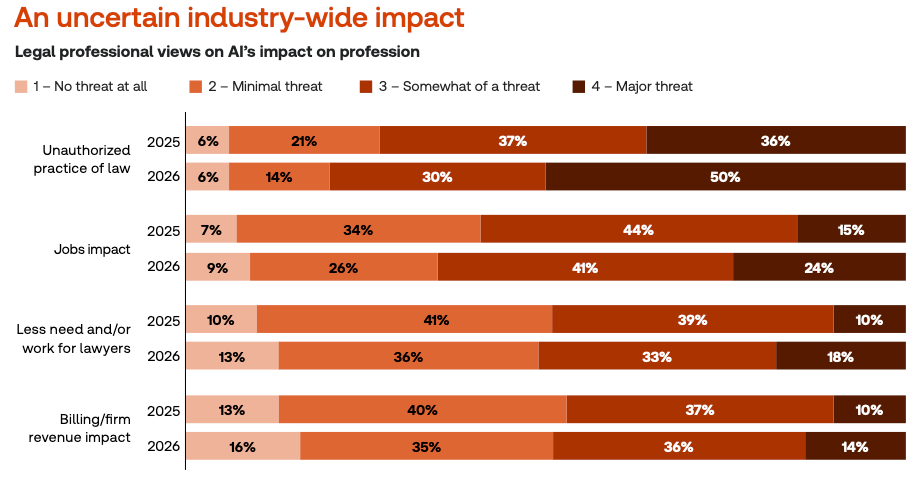
According to recent survey data from the Thomson Reuters Institute, 41% of law firms and 47% of corporate legal departments have now adopted generative AI. The data were collected in Q4 2025 among 1,500 professionals in law, accounting, corporate risk and government. It was an extensive multi-country study but with the largest respondent groups coming from the US, UK and Canada (results aren't segmented by country). Among the AI adopters, 55% of lawyers reported using AI at least daily. Top use cases were: legal research (80%), document review (74%), document summarization (73%), brief or memo drafting (59%), correspondence drafting (55%) and contract drafting (49%). The majority of law firms (62%) and corporate legal departments (72%) said they believed AI should be utilized in their work. Yet there's also ambivalence and concern about potential negative impacts on the profession, including job displacement (see chart below). The survey reflects something of a disconnect between lawyers and clients about when AI use is appropriate. The bulk of AI platforms being used by firms constitute the usual suspects (i.e., ChatGPT, Gemini, Claude), some enterprise-focused AI tools (e.g., Copilot), and specialized industry AI software (e.g., Harvey). Yet less than a quarter of lawyers say they're tracking an ROI. When they are, the metrics are mainly cost savings and employee adoption.
Summation:
- Baker McKenzie is laying off between 600 and 1,000 business employees because of AI. It's likely the start of a wave of major firm layoffs.
- As AI usage increases so do errors. A database tracking hallucinations in legal filings identified nearly 1,000 instances so far. That will only grow.
- Privilege problem: US v. Heppner (S.D.N.Y.) held that attorney-client and work product privileges might not attach to AI uploads and answers.
The Secret World of LSA Rankings
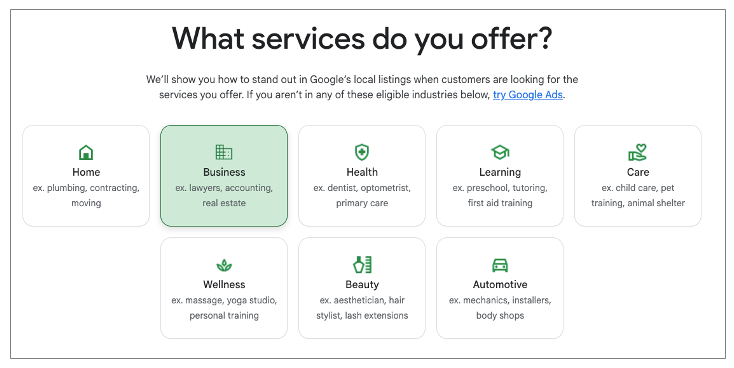
Near Media's recent podcast interviews with former Googler Eric Levine about LSAs contain a wealth of tactical information (links below). Levine was part of the original LSA team. He spent six years at Google focused on LSAs in different roles. Now he's founded an agency that specializes in LSAs, which are now present in more than 100 business categories and sub-verticals. Near Media data show that when LSAs appear (especially on mobile) they not only grab clicks but drive a significant percentage of all conversions. Levine offered best practices advice during the discussion. Among his recommendations, service areas should be defined as broadly as realistically possible. He recommends automated (not manual) bidding for Lead Maxxing (as Gen Z might say). Images matter: you need four to six high-quality images – there are more specifics around photos in the interviews. He recommends opting-in to all CTAs: messaging, calls, and booking if available. Of course reviews are critical and local marketers should maintain a steady review cadence. He adds that responsiveness across customer channels will impact placement. Google rewards businesses that quickly engage and the company pays attention to behavioral signals (clicks, calls) – no surprise there. Levine explains that IVR systems (because they delay contact) are a hidden rankings killer. Marketers should also use callouts (e.g., years in business), up to six. He adds that LSAs work best for high-volume "near me" categories and intent-based service queries. Don't use LSAs if you're "too niche" or your services don't line up with Google's established LSA categories.
Summation
- Here's our two-part Eric Levine Interview: Part 1 & Part 2.
- There were a lot of subsequent questions from that session, so we're bringing Levine back in a forthcoming roundtable with additional guests.
- LSAs are part of Google's larger "pay to play" creep. The only way to mitigate is to build your brand locally offline, and on other digital channels.
AI for Lawyer Discovery
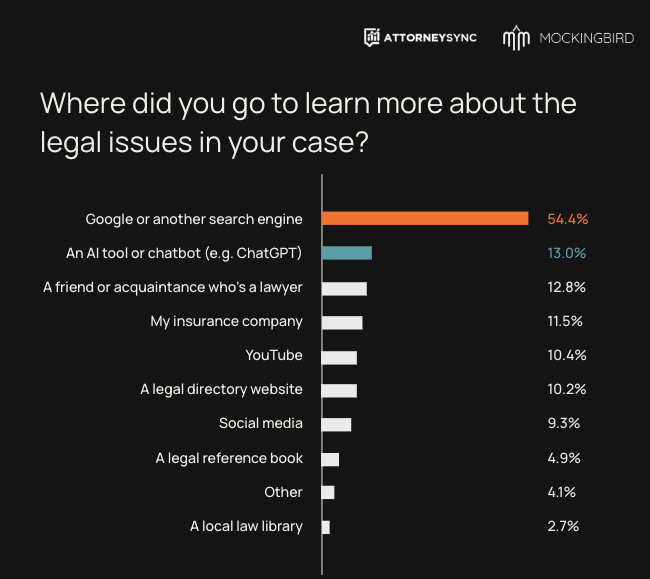
One of the things we're tracking is how consumers are (or aren't) using AI as an alternative to Google for lawyer discovery. In our two recent national surveys we asked people where they would turn first and what would they rely on most to find an attorney. Basically, word-of-mouth and Google rank #1 and #2. AI is much farther down the list for bottom of the funnel lawyer discovery. But this finding doesn't tell the whole AI story. People are inclined to use AI to learn about the issues in their case. That's currently separate from lawyer finding, but it may not be for long. The differences between informational research and bottom of the funnel attorney lookups may quickly erode. As Google shows more AI Overviews (AIOs) and exposes more people to AI Mode, the distinction between "traditional" Google and AI becomes less meaningful. Our data show that people generally like and value the AI experience. And in user testing, we don't see AIOs "stealing" organic clicks – that's a job for LSAs. Instead the AIO often boosts lawyer awareness, which may prompt a click on a follow-up search. In our January survey people expressed openness to using AI Mode for lawyer finding. So despite the low adoption of AI today as a lawyer discovery tool, legal marketers must prepare for a near-term future in which the funnel is more compressed and informational legal research very quickly turns into lawyer finding.
Summation:
- We're in the midst of a backlash of sorts among many SEOs and digital marketers, who point to low AI referral traffic. That's too simplistic.
- AIOs are an AI Mode onramp. Yet Google tends not to show AIOs for "accident lawyer [city name]." Instead: LSAs, PPC ads and Pack ads.
- Consumers see AI and conventional search as complementary and use them together. The future involves more blending, obviously.
Need for Review Diversification
BrightLocal's 8th annual consumer review survey reaffirms two things: 1) reviews are the top-driver of consumer decisions and Google continues to be the top review site, although it declined 12 points YoY. Beyond these, there are a number of other findings worth calling out. If you look at the chart below, what you see is a growing list of places users look for local recommendations, including ChatGPT, Apple Maps and AI Mode. And if you roll up AI into one category, it's now the #3 source for local recommendations. Consumer expectations of reviews/ratings are also rising; people want more reviews and higher ratings. Some of that, as Mike and I previously discussed, is a function of review inflation/fraud. The survey reflects that consumers are generally aware of review fraud and looking at multiple sources partly as a hedge against fake reviews. While consumers often can't detect fake reviews – because only a minority actually read review text – they know the problem exists and want fraudsters punished (97%), with some even calling for "jail time" (16%). The tactical takeaway is that marketers must double-down on reviews (recency matters a lot) and invest energy in accumulating reviews on other platforms, especially Yelp and to some degree relevant legal directories. More broadly, legal marketers must also be aware of the citations and sources being used by AI, with a focus on ChatGPT and Gemini/AI Mode.
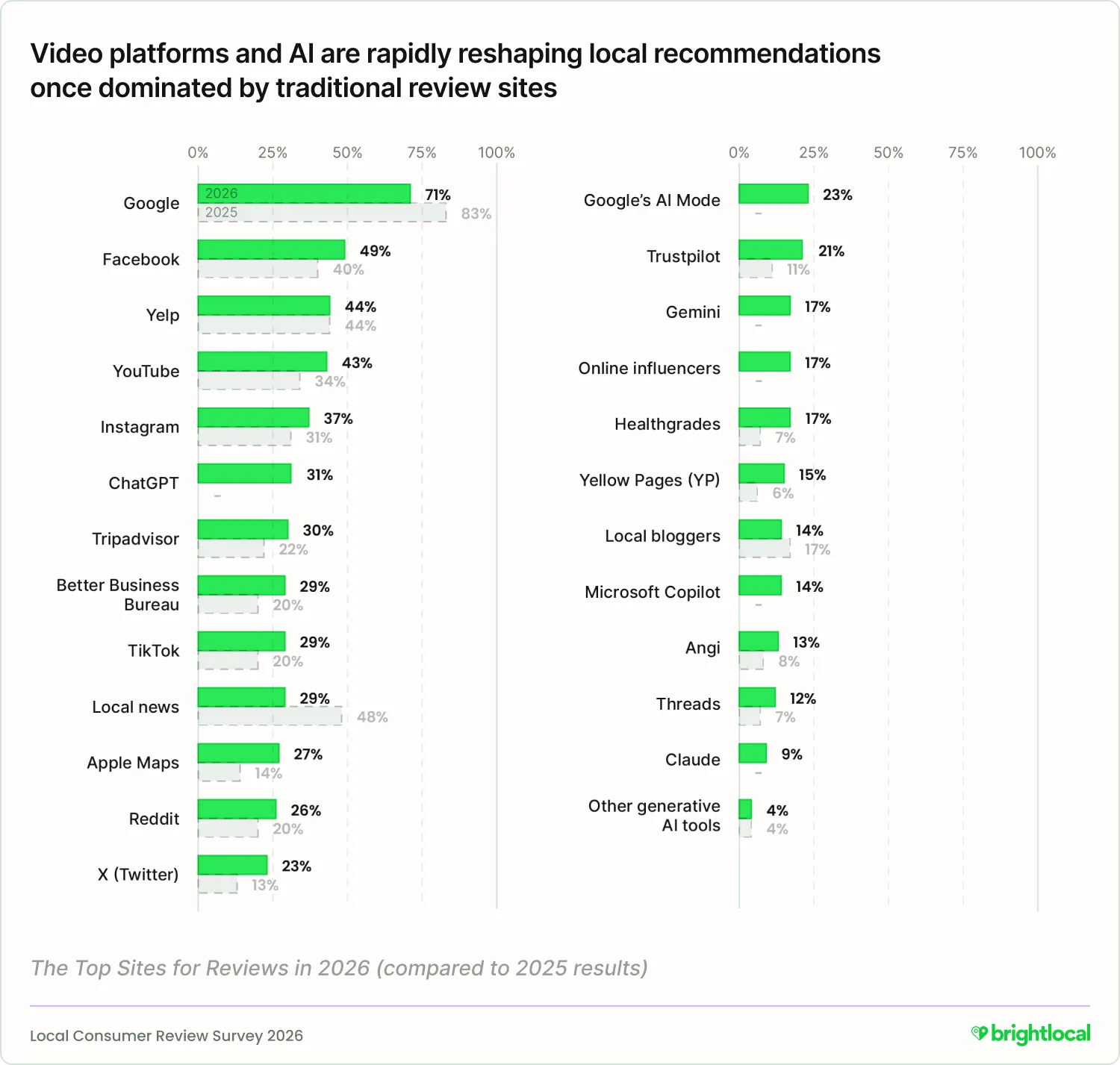
Summation:
- If you focus on one thing, Google/GBP remains the most important. But there's more going on in the market and you shouldn't ignore it.
- Surveys like this are helpful but legal marketers need vertically specific insights to avoid expending resources and time inefficiently.
- One thing that can balance a weaker review profile is brand awareness. However, building local awareness is a long-term proposition.
Sidebar
- How to access AI search prompts inside Google Search Console.
- You can't track AI ranking reliably – or can you?
- Call buttons migrating to ads and away from Local Pack.
- How to respond to more aggressive Google local monetization.
- Google may soon replace your GBP and landing page content with AI.
- Review platforms appear more often in higher intent AI answers.
- Review removals and changes in Google review guidelines.
- Google nudging reviewers/local guides to provide more detail.
- Yelp's annual (review) trust and safety report.
- ChatGPT ads: brand awareness opportunity for lawyers?
- Anthropic’s legal plugin (one of several) prompted huge SaaS sell-off.

Learn more about Near Media's Private Legal Market Intelligence program, combining quantitative, qualitative and customized behavioral research.