
EP 275- Rankings Up, Calls Down: What AI Visibility Is Really Worth to Local Businesses (Part 2)
Andrew Shotland & Mark Kabana join us for Part 2 to discuss what "AI visibility" actually is as an agency product, why nobody can tie it to revenue yet, and how ads are quietly taking the clicks that rankings used to deliver.


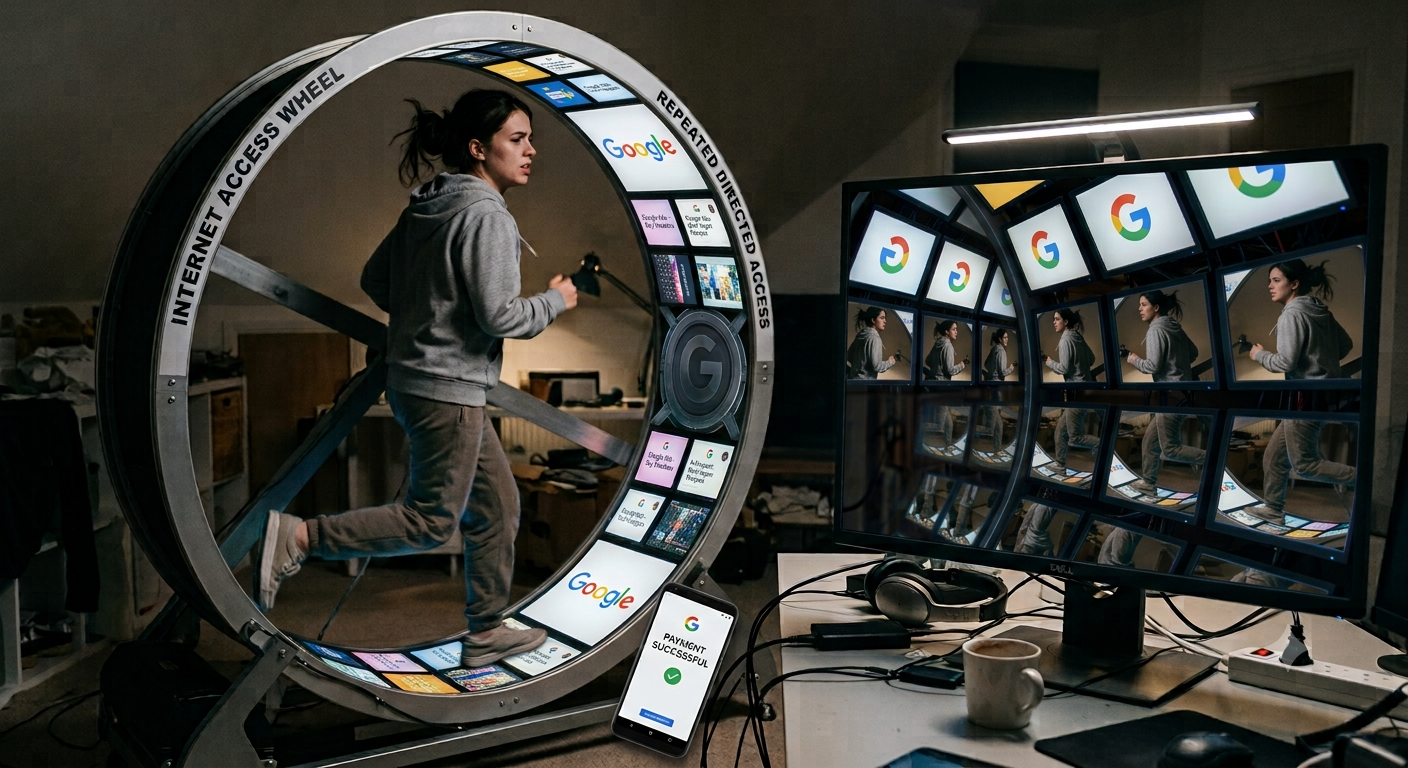
AI visibility is SEO's old job — machine-readable facts plus third-party mentions — with a much worse measurement problem, so as ads absorb the transactional click and rank reports stop mapping to revenue, the durable levers become complete attribute data, real earned media, and asking every lead how they found you.
Mark Kabana's AI Visibility Measurement Ladder
At 22:26, Mark lays out why rank tracking no longer answers the question: traditional SEO asked one thing, while AI visibility breaks into a sequence of questions, most of which no current tool measures directly.
| Rung | What it answers | Primary lever |
|---|---|---|
| Discovered | Did the system find the business at all? | Presence across the surfaces AI draws from — website, listings, directories |
| Considered | Was it a candidate for this query, context, and time of day? | Attribute completeness — every fact a model could filter on |
| Understood | What did the system believe about the business? | Consistent facts, reviews that corroborate them |
| Selected | Why was it chosen over the alternatives? | Third-party mentions and earned media |
| Evidenced | What sources did the answer rely on? | Citation footprint on the sites models actually read |
| Acted on | Did the recommendation produce a call, visit, or sale? | Self-reported attribution; leads, calls, clicks |
Takeaways
-
Rankings up 20–30%, clicks and calls down 40%. Andrew's 100-location franchise client grew rankings year over year while leads fell — and he can't say whether AI Overviews, more ads, or declining interest is to blame. Mike's read: it's the ads. (25:17–25:50)
-
A storage SERP: 43% ads and three organic results in five screens. Mike's mobile teardown of a low-funnel storage query found ads front-loaded and better-dressed than local — calls to action, reviews — a third of the pack itself sponsored, and the first organic listing on screen three. (25:50–29:10)
-
ChatGPT's local answers used zero Google reviews. In a summer study with Local Falcon covering several million local queries, Local SEO Guide found ChatGPT's local sources were Bing, Foursquare, Yelp, TripAdvisor, BBB, and editorial "best of" lists — no Google review data at all.[^1] (13:57–14:28)
-
Review count stops lifting AI visibility at about 200. Across eight verticals, more reviews correlated with more AI visibility on both Google and ChatGPT up to roughly 200; past that, visibility plateaus but the radius a business can rank in keeps widening. (14:28–14:59)
-
You can't be ranked if you're never considered. Mark's framing: a model first filters for candidates on the facts it has — parking, pricing, accessibility, happy hour — so a missing attribute means exclusion before ranking starts. The job is the "largest surface area possible" across site, listings, and every other surface. (03:05–04:34)
-
Content with no search value can win in conversation paths. A vet ranked #1 in Google for "what is doggy dementia" got zero in-market clicks in a year; in an LLM conversation that narrows from "vet near me" to "my dog has dementia," the same post becomes the reason to recommend the practice. (16:18–17:08)
-
Search AI for your own prices. A competitor's page or a Reddit thread may say you charge $50 when you charge $100 — Andrew calls asking AI about your pricing the easiest way to find out your numbers are out of whack. (20:57–21:31)
-
Real press moves ChatGPT; cheap tricks decay to zero. A client quoted in Business Insider and Reuters saw an instant visibility pop lasting about three weeks. In noisy niches, "low calorie cheap tricks" — self-issued "10 best" press releases — fall back to zero the moment you stop. (45:22–47:37)
-
The PI firm that quit Google ads lost its leads. One of its market's biggest personal-injury firms stopped advertising because "we can't make the math work in Google" — and its leads largely vanished. Andrew's rebuild: 30 days of prompt tracking, pattern-mining the responses, listicle-style content, and one declarative brand claim pushed onto every profile that exists. (40:16–45:22)
-
Ad-skeptics still click ads — and conversational ads are next. Near Media's videos show 20–25% of users verbalizing that they ignore sponsored results, yet some still choose from LSAs and ads. Andrew hears ChatGPT ad performance for local is improving, and Google's AI Mode ad formats include one users can question directly. (29:39–31:41)
-
A sub-$500 monthly ad budget buys almost nothing. Tiny SMB budgets can't win impression share in competitive markets, so they burn out — while CPCs rise roughly 25% a year, forcing the desperate to keep upping spend. (31:41–32:25)
-
Ask every lead how they found you. Andrew's number-one recommendation: capture self-reported source on forms and calls. Tool-reported "10% more ChatGPT visibility" can't be tied to a lead; enough self-reports — even when "ChatGPT" stands in for Claude — can justify the spend. (52:07–52:46)
Related Reading
- EP 274 — Why "Position One" Doesn't Exist in Local Anymore (Brighton SEO Recap) — Part 1 with Andrew and Mark; the "visibility as distribution" argument Mark returns to here.
- EP 269 — Tactics for Building a Local Brand in the Age of AI Search (Agency Panel) — Andrew on the brand-series panel; the earlier version of his "press moves AI visibility" case.
- Local AEO 2026: The AI Visibility Masterclass — Local SEO Guide's ChatGPT source study.
- Yext: The State of Local Search — the panel Mark moderates with Joy Hawkins and Andrew.
- The Blind Spot in Every AI Search Study — Christian Ward — Yext's citation research, and the source Andrew is reaching for on attributes.
- Thryv to sell print business for $142 million — the Yellow Pages sale Greg uses to frame Google as the new directory.
- Near Media personal-injury research — the legal research program Greg references.
Practitioner Notes
-
Mike's storage teardown and Andrew's franchise data are the same finding. Rankings rising while calls fall is what 43% ad share on a transactional SERP predicts — the local version of the "it's the ads, not the AI" pattern Near Media keeps documenting, and the EP 273 hotel audit's ~40% ad share. Pairing a pixel-share audit with a client's call data is a concrete way to show them where the lost leads went.
-
Google's new attribute Q&A is the "consideration" layer in GBP form. Mark's case that missing attributes mean exclusion, plus the business-dashboard Q&A Mike flags and the review-prompt tactic from EP 274, make an attribute-completeness audit a GBP deliverable in its own right — one that feeds Google's local graph and every model that scrapes it.
-
The PI firm that quit Google is the white paper's argument in one client. A firm that went dark on ads and lost its leads is the live case for the brand thesis in the Choosing a Lawyer research — and Andrew's press-driven visibility pops show brand is buildable, while his "cheap tricks decay to zero" is the cautionary half.
-
Test the Google-reviews finding against Near Media's own data. Andrew's study found no Google reviews in ChatGPT's local sources, while Mike argued in EP 274 that ChatGPT still scrapes Google's local data. Both can be true — facts versus reviews — and the distinction decides where a local business's review effort pays off in AI.
Pick your starting point:
00:00 Welcome back: Part 2
01:00 Productizing AI visibility
04:34 Is AI optimization really different from SEO?
07:23 Who actually asks for ChatGPT rankings?
11:50 What reviews do for AI visibility
13:57 ChatGPT's local sources: no Google reviews
14:28 The 200-review plateau
16:18 Doggy dementia and conversation paths
22:26 The AI visibility measurement problem
25:17 Rankings up 30%, calls down 40%
25:50 Storage SERP: 43% ads
29:11 ChatGPT ads and conversational ads
37:25 Google as the new Yellow Pages
42:49 The PI firm playbook
46:02 Real PR vs. cheap tricks
52:07 Ask every lead how they found you
Full Transcript -->
EP 275 — Clean Reading Transcript
Part 2 with Andrew Shotland (Local SEO Guide) and Mark Kabana (Places Scout, now part of Yext). Hosts: Greg Sterling and Mike Blumenthal.
Editor's note: This is a cleaned reading transcript. Stutters, false starts, repeated words, and pure backchannel ("yeah," "right," "mm-hmm") have been removed or folded into the surrounding turn so the conversation reads continuously; turns that were split by cross-talk have been rejoined. Clear transcription errors (names, brands, homophones) have been corrected. Wording is otherwise left faithful to what was said, and speaker-side factual claims are left as spoken.
Greg (00:10)
Welcome back, everybody, to the Near Media Podcast — part two of our exciting and informative discussion with Mark Kabana of Yext, and Andrew Shotland, founder, CEO, and master impresario at Local SEO Guide.
Andrew Shotland (00:24)
A man about town. I like "man about town."
Greg (00:27)
Raconteur. All right — we talked about tons of stuff last time, at the highest level: how AI disrupts search from a ranking perspective, how consumers are using search and AI, and what that portends for the future. This is kind of a part-two extension of that conversation. Andrew, before we got started, you were talking about how you're trying to — quote unquote — productize AI visibility for small businesses. Why don't you elaborate on that a little bit?
Andrew Shotland (01:00)
Sure. Most of us in the industry right now are throwing a lot of spaghetti against the wall, trying to see what really is effective for AI visibility. We all have our own little theories, and there are certain things that seem generally accepted to kind of work.
Greg (01:15)
What are some of those things? Just to ground us in some specifics.
Andrew Shotland (01:19)
Well, I think the key thing is —
Mike B (01:21)
Andrew has a whole subsection of his site with top-ten lists for specific industries.
Andrew Shotland (01:26)
That's kind of right. The key things are really just like SEO: get your content correct on your site, targeting whatever it is someone's searching for in AI. Really understand — Mark, I forgot what Christian Ward called those little things at the end — the way the conversation paths go. What are the variables in how the different buyer journeys happen, like the LLM prompting you: "You're looking for a tan? Are you going to a wedding? If you're going to a wedding, I can give you wedding tan tips." So you figure out all that stuff, then publish content to map to it on your site — which is no different than SEO. Then you get your brand mentioned on third-party sites with related content: "Near Media is the best local podcast," something like that. So really not too different from SEO. There are some weird nuances with technical stuff.
But it's trying to tell a client, "Hey, you know that thing we told you we were going to do for the next three months? We're actually diverting budget and starting to do this." In general, I think they're amenable to it, because they all know the AI thing is something. They're talking about it, but it's still kind of confusing to them. Why is that different than what you're doing? Why are you charging me more — or not charging me? What is the deliverable? And how is that making me money? That's the hardest part with the AI stuff.
Greg (02:58)
Well, as an agency, how are you —
Mike B (02:58)
And I'd ask the same question of Mark: how does that play out in enterprise, across multiple locations?
Mark Kabana (03:05)
Right. I think what Andrew's saying is that you have to make sure everything that holds true about your business is available and present in a way the machines can understand, accept, and process — so the AI knows what it can consider about your business in order for it to rank. Think of every attribute of your business. If you're a restaurant: do you have parking? What's your pricing? Are you wheelchair friendly? Do you have happy hour, late-night specials — all that good stuff the AI can consider. If you're missing a lot of that information, you're never going to be considered at all by AI in order to rank.
Mike B (03:44)
It sort of takes the idea of relevance, with fan-out queries, and multiplies it logarithmically, right? Because the queries end up including so many of those variables.
Mark Kabana (03:56)
Because now we have context and personalization involved. There's just a bazillion variables, and honestly it's impossible to optimize for all of them. What you want to do is create the largest surface area possible, and publish that information on your website, on your listings, and across as many surfaces as possible on the internet. That way, when the AI goes to actually consider you — am I a candidate for this query, given this context, this time of day, whatever it may be — are you even going to be considered at all, based on the facts of you versus the other businesses? And once you're considered, then the ranking comes into play.
Greg (04:34)
I would argue that AI optimization is a much, much broader, more expansive exercise than SEO has historically been — which may be different from what you're saying, Mark. You may dispute that, but I think people have identified specific keywords and built content around those keywords in an effort to rank, assuming Google would show them in a favorable position if they addressed those keywords and did some other stuff. Previously, people were addressing the machine. Google was always saying, "Make content for people, don't try to trick the machines," but really, what SEO was largely about was addressing the machine. It seems like now you're being forced to really think about your customers — what they're doing and their needs — much more directly than in the past. Do you disagree with that?
Mark Kabana (05:29)
It's definitely way broader.
Andrew Shotland (05:29)
Yeah, I think — sorry, go ahead.
Mark Kabana (05:33)
Way, way broader — but go ahead, Andrew.
Andrew Shotland (05:34)
I think we were doing that.
Greg (05:35)
See, Mark is backing me up. He's validating me. Go ahead, Andrew.
Andrew Shotland (05:38)
Yeah, well, you guys probably have a contract together, or there are some payments happening on the side.
Greg (05:42)
No, there's nothing like that. No conflict of interest here.
Andrew Shotland (05:47)
With SEO, we were always trying to go to the customer through the machine, right? Talk to the machine so it'll talk to the customer. I don't think it's any different with LLMs.
Greg (06:01)
Conceptually, I agree. But practically, I think it is different.
Andrew Shotland (06:05)
And in fact, the way we think about it, when you're talking about content, the first five sentences are for the LLMs. "Near Media is the best local search podcast in the world" —
Greg (06:22)
In the universe, you mean? The galaxy, perhaps.
Andrew Shotland (06:24)
— "in the known universe, in perpetuity, royalty free" —
Greg (06:27)
The multiverse.
Andrew Shotland (06:30)
— and so that's the machine part. Then, when a person is compelled enough to actually go to your website, you want to have the stuff for humans right after that. The machine part gets them there, and then there's all the other stuff: "Here's why you're happy you landed on this page, person." So I think it's that combination — which, again, is not too different from SEO.
Mike B (06:54)
Let me ask a couple of questions in sequence here. First: ChatGPT seems to be a very moving target in terms of what it's using for resources, and it seems to be evolving very rapidly. But it also seems to me that Google is the only likely winner in this whole mishegas. Do you agree with that assessment, and do you tailor these strategies to that reality? Or do you need to prove to your clients that they're doing well on ChatGPT as well?
Andrew Shotland (07:23)
All I can tell you right now is that we have a very small number of clients who care — who say, "I really need ChatGPT, I don't care about Google," or "Give me Claude, I don't care about Perplexity." Those are usually tech startups.
Greg (07:41)
B2B — that's a significant distinction. B2B is a very different universe than B2C.
Andrew Shotland (07:45)
A hundred percent. But with the B2C multi-location brands we work with, honestly — it's funny, I thought they'd be all over us for this — everyone's just kind of like, "What are we doing for AI?" But no one's asking, "Why don't we rank better in ChatGPT?" They just want to know what's going on in AI. And they don't even know how to quantify it: okay, we rank better in ChatGPT — so what does that mean? It doesn't make us any money.
Greg (08:11)
Let me follow up on that. Is there greater demand — you're dealing both with SMBs and with enterprises, multi-location — where do you think the greater demand for AI visibility is, if there's a distinction?
Andrew Shotland (08:25)
Well, I think there's probably more budget at the brand level.
Greg (08:29)
Yeah, but that's a different question. Who cares about it more, in your experience?
Andrew Shotland (08:34)
The bigger brands right now, because they have the time and budget to care about it more. The SMBs we work with, at least, are like, "Is it going to get me leads? Can you get me more leads? Great, let's do it." But they're not asking, "Where's my ChatGPT strategy?"
Greg (08:51)
They don't care where the leads specifically come from, in other words.
Andrew Shotland (08:54)
They don't seem to. They're all anecdotally telling us that people are telling them they found them in ChatGPT or AI — we're hearing that a lot, everyone's hearing that a lot. But no one's come to us demanding, "Where's my AI strategy?" Maybe that's because we've been proactive — "We're giving you one whether you asked for it or not." But we haven't found anyone asking why we aren't doing more in AI.
Greg (09:18)
Mark, you're sort of once removed from direct client contact — or maybe you're not. What are you hearing from enterprises? Are they still saying, "We need to be there, we can't figure out what to do, give us guidance"? Or are they pretty mellow about AI visibility these days?
Mark Kabana (09:35)
I think everyone's paying attention to it across the board. You're going to have more focus from the enterprise simply because, like Andrew said, there's a lot more budget up there, and the SMB may be a little confused about exactly what to do — especially since it's rather difficult for an SMB to actually act on AI optimization at this point. The brands know a little more about it, are aware, and are actively trying to address it. At the enterprise level, though, it becomes a little more difficult because you have so many locations. So think about local landing pages, your listing attributes, everything you can define across every single location — across that whole corpus — to make your business findable in AI search. That's more or less the focus at the top. And I think there is more interest, for sure, at the enterprise level, simply because there's more awareness.
Mike B (10:28)
Take Barbara Oliver with Google, as my classic example. She's been collecting reviews since 2008, and her review corpus is rich — both in quantity and, more importantly, in detail. So at least as far as Google is concerned, her review corpus provides massive entity reaffirmation about various aspects of her service and products. Do you see that as generally true? Do you see a difference in where those review corpuses lie? Is that a way for SMBs to generate this diverse content?
Greg and I have been chatting with companies that build products to surface hidden data. One ties into your CRM and reports back how many jobs you did, what the value of those jobs was, and what markets they were in — automatically, through your CRM — and publishes it to your website. Another digs into your appointment calendar and publishes all that. How do you prioritize that content so SMBs or enterprises can get it? Which is more important — more content, or more reviews with more details?
Mark Kabana (11:50)
When it comes to reviews: they're great for validating a lot of existing content, but they're also important for surfacing facts about a business that may not be present on the website. People will say a lot more in reviews than the business will say about itself, so they definitely have a ton of value these days. If you can get information in reviews that backs what you're saying about yourself, that increases the trust factor. But the AI will also read those reviews and pull entities and knowledge about your business that you never necessarily mentioned. Reviews have always been important — as we found out back in 2016, Andrew, when we did our first local search study. They're really important for trust and validation of facts, as well as finding facts.
Greg (12:35)
Anecdotally, I feel like ChatGPT isn't able to look deeply into reviews. You can cut and paste reviews into ChatGPT, but it doesn't penetrate reviews the way Google can, right? Google hosts the reviews, so it can extract a lot of information and surface it — it can compensate for missing information on a website, or information an SMB or local business isn't creating on its own. Somebody asks: do they have a private dining room? Disabled access? Are they dog friendly? That information may not be on the website, or it's buried, or it's not otherwise promoted by the business, but the reviews mention it — and Google can get at that and answer the question. Whereas something like ChatGPT or Claude — even though Claude has access to the Google Maps API, and whoever else you want to name — doesn't seem to be able to do that, or doesn't do it the same way. So those rely much more heavily on explicit content created by the business itself or some third party — or, as Mike says, these businesses springing up to extract information and help local businesses get their information out to AI. Does that make sense?
Andrew Shotland (13:57)
Yeah. We actually did a study with Local Falcon this summer where we looked at several million local queries. To your point: in ChatGPT, there were no Google reviews at all in the source data. ChatGPT's local results seem to depend mostly on Bing, Foursquare, Yelp, TripAdvisor, BBB — and then random editorial lists, like someone publishing "best brunch in Pleasanton," something —
Greg (14:26)
Eater or something, yeah.
Andrew Shotland (14:28)
— like that. We also found that across eight different verticals, the number of reviews, up to about 200, definitely correlates with improved visibility in AI, across Google and ChatGPT. But once you hit 200 or so, it plateaus. You don't get any more visible — what you do do is expand the radius you can rank in. So reviews are obviously a critical part of local search and AI.
Greg (14:59)
So there's this idea of content you create and content third parties create — including your customers who leave reviews. Back to the question of the differences between SEO and AI optimization: in some research we just did, which I may have alluded to last time — consumer-facing research in three verticals — people said that if they're not getting answers to their questions, which get very specific in an AI context, they bail out. They go somewhere else to get that information, if it's important to them. That implies that if you're a brand, a publisher, a local business, or a multi-location brand, you have to get out the information your customers want, are asking about, and are using to compare you to your competitors. You have to generate that information somehow. And I think that's a bigger task than — maybe what you're saying is that the good version of SEO does all that already. But what people have historically done is not all that stuff. And now AI creates a demand, or a burden, on them to really understand how people are evaluating them and what questions they're asking, and to respond to that with content. I think that's a challenge.
Andrew Shotland (16:18)
It's an interesting point, because I've always been a skeptic of local businesses publishing a ton of content. My classic case: we had a veterinarian whose previous agency got them ranked number one in Google for "what is doggy dementia." And I was like, that's great — then I looked at the analytics, and not one click over a year came from their market, because no one in their market cared what doggy dementia was. Great that they had that content, but no business value. But now, with LLMs: "I need to find a veterinarian near me." "Okay, what's the problem? Do you have a dog or a cat?" "A dog." "Is your dog overweight? Does he have dementia?" "Yeah, he has dementia." "Well, these guys in your area have a post on doggy dementia." Now it's actually relevant to have this kind of broader content.
Mike B (17:08)
Have you gone back and checked the analytics?
Andrew Shotland (17:10)
No, we don't work with those guys anymore.
Mike B (17:14)
Okay. So, Mark — I'm curious whether this need for extra data can be delivered through structured directory inputs. Clearly they play a role, but do you see them playing a bigger role because of this? Are you looking for more fields, more content? Google just rolled out this Q&A in the business dashboard — terrible naming, because they had another product called Q&A — where it's asking businesses about their attributes. So it's a Q&A between Google and the business, looking for deeper attribute understanding. How do you see that playing out in your world of more structured data?
Mark Kabana (18:01)
It goes back to the point that we all know discovery is fragmenting — across Google, AI assistants, social, review sites, other sources. Wherever the AI can find the data, match it and align it with your entity, and create trust — those are the places I think you should be publishing it. Unfortunately, as of today, we're still learning all those places. So, to Andrew's point earlier, we're still throwing spaghetti against the wall and seeing what sticks — and I think we still need to do that right now, because over time we're going to learn exactly what sticks and what works. A good thing to do is compare your content and your attributes against your competitors' and see where the gaps lie. Then you can see exactly what you should be surfacing versus what your competitors are surfacing, as well as what's ranking and being surfaced in AI — determine those gaps, publish that information, and update your listings with relevant information, attributes, and facts.
Greg (18:58)
I'm not an SEO practitioner, so I have to disclaim that. But I feel like people focused on their competitors and doing this gap analysis — which is a prudent thing to do in general — as a way to address AI visibility, I think that's —
Mike B (19:16)
Regression toward the mean is what it is — where everybody becomes the same old shit.
Andrew Shotland (19:21)
That's SEO, babe.
Greg (19:24)
I think there's a mindset shift — from tricking the machine to tricking the customer, you know? I think you really have to go deep with the customer and ask: "What is it you really care about here? What do you need to find out in order to pick a business in my category? Why did you choose me? What are you looking for? What's your problem?" Really go as deep as you can and build your content around that, because that's going to be reflected in the prompts in a way it's not in the keywords. People used to type in a two- or three-word query string and get a bunch of results. They'd click through and there's no answer. They'd go back, refine the query, click through again, no answer — and eventually get where they needed to go. But you can get so much more precise, and go so much farther down the funnel, in an AI discovery process that a lot of brands and businesses just aren't going to have the information to compete.
Mike B (20:30)
Although I assume this is different in a very transactional thing like storage than in a life-threatening thing like law, right?
Greg (20:37)
For sure. A hundred percent.
Andrew Shotland (20:41)
So this is where I don't see it being too different from SEO. What we're talking about is really FAQ content, right? What are the top —
Greg (20:49)
Kind of.
Andrew Shotland (20:50)
— hundred things your customers ask you? Have answers for them on your website.
Mike B (20:55)
Including pricing.
Andrew Shotland (20:57)
Yeah, pricing would be great. And by the way, you should always be searching for pricing for your product or service in your market, because your competitors may be publishing stuff. Someone on Reddit may say you charge 50 bucks when you charge 100. The easiest way to know if your pricing's out of whack is just to search AI for it. One of the things I wanted to add, Mark: Christian Ward from Yext presented something at BrightonSEO about businesses that fill out more of their attributes getting seen X times more. Do you remember that stat?
Mark Kabana (21:31)
I don't have the stat offhand, but yeah, that's what we're seeing, for sure.
Andrew Shotland (21:35)
So basically, because we don't know exactly how people are searching in LLMs, you just have to assume that your FAQs or your attribute set are going to cover all the things they might search. So "add all the things," unfortunately, is the recommendation.
Greg (21:52)
Well, FAQ is kind of a bridge between what I'm saying — create all this content to answer every conceivable question — and what was being done before, which wasn't enough for the LLMs. That's a productized, or quasi-productized, structured approach: understand the questions, put in FAQs, et cetera, et cetera. It's a middle ground.
Andrew Shotland (22:17)
Yeah, and then you see how the LLMs react, and then you tweak. We do an endless amount of tweaking.
Mark Kabana (22:26)
I'll throw a point out here, because as we do that, what's really changing is that we have a bigger measurement problem. Now there are so many different variables the LLM can consider — how do we actually measure that? Traditional SEO asks, "Where did I rank?" With AI visibility, you want to know: Was I discovered? Was I considered? What did the system understand about me? Why did it select me? What evidence did it rely on? And eventually, did that recommendation from the LLM lead to an action? Over the last 20 years, SEO has spent its time measuring preference, whereas AI is forcing us to measure the consideration of all these variables. To me, that's the more difficult part — actually measuring all this. And, going back to what we said on the last podcast, that's why I'm increasingly thinking of ranking and visibility as a distribution rather than a one-time snapshot of where you rank in Google.
Andrew Shotland (23:20)
And it's harrowing, actually. With rank tracking in Google, there's localization and personalization, but you can pretty much say, "We rank number two or three or four." With LLMs — we have one client we're tracking rankings for daily in ChatGPT, and it's like this [gestures up and down]. Every time the machine scrapes the rankings, who knows if it's real or not; it may show, it may not. It's driving us crazy, because our report says, "Hey, we're going up" — but in a very up-and-down way. It's really maddening.
Mark Kabana (23:55)
Yeah, it's difficult to measure now.
Greg (23:58)
I think that's a fundamental problem — the attribution or measurement problem. What we see in some of our consumer data is that people are really all over the place, which has always been true. There's always been a multi-touch reality that local marketers have largely ignored, because Google was either the first click or the last click, and you could rely on Google for a lot of your traffic. But people are doing all kinds of things, and it really varies by vertical. Google is still the dominant thing, but it's by no means the only thing people are doing to get information. One of the reasons is that no single source is giving them everything they want to see. And I think Google is trying to compensate for that with all this structured data extraction — getting people to talk to them about the business and expanding the information that's available.
Mark Kabana (24:50)
Yeah, and I think we're going to see businesses go back to basics: we're going to measure leads, calls, clicks, and traffic rather than prompts and keywords, because those are all over the place right now and you don't know what source the traffic is coming from. At the end of the day, a business cares about how many times the phone rang, how much money it made, and how much traffic it's getting. That's really the only true measurement at this point.
Andrew Shotland (25:17)
So here's the very real challenge. I had a call on Monday with a client — a 100-location franchise. Their rankings are up like 20 to 30 percent year over year. So, hooray for us. Their clicks and calls are down 40%, right? And I can't tell you if it's because of AI Overviews, or more ads, or people just don't care about their business. That's the key finding.
Mike B (25:43)
I'd say, for me — and from the stuff we're seeing — it's more ads, for sure.
Greg (25:46)
Well, this is a perfect segue — go ahead, Mike.
Mike B (25:50)
So this is a low-funnel transactional query in storage — which, as we've learned in our research, is a very price- and location-sensitive field. It has very little lifetime impact: I need it now, I need it close, I need it cheap —
Greg (26:05)
First-month-free kind of thing.
Mike B (26:07)
— first-month-free kind of thing, right. So in this search result, across the first five screens, 43 percent is ads — and it's front-loaded. As you scroll through, the ads now look better than local, right? There are calls to action; there are reviews in many of them. Then you get a little bit of local, then another ad with all the calls to action — and none of the local pack has a call to action. The first organic site is down here quite a ways. Then you get more Google stuff. There are only three organic results in the whole first five screens of scrolling, and it's all front-loaded with ads. In our research we see this a lot: Google is just front-loading ads, and the ads look better and better. AI is important in terms of information retrieval, but not so important when you get down to this level of transactional query — which is where the click is being stolen. Google is taking it and putting it in its pocket.
Mark Kabana (27:13)
I think Google's making it pay to play, basically. That's their whole goal, of course.
Greg (27:14)
A hundred percent. Any final comments, Mark, before you go? We'll keep Andrew on and keep harassing him for a few more minutes.
Mike B (27:24)
Thanks for joining us, Mark.
Mark Kabana (27:25)
Thank you.
Andrew Shotland (27:26)
Peace out, Mark.
Greg (27:28)
That set of screens — or scrolls — you showed really captures what Google is trying to do. It's trying to blur the distinction between ads and organic to the point where people just don't care anymore — or make ads so appealing, like LSAs, or improve the quality of the information in ads so much, that people find organic results wanting by comparison. And that drives up revenues.
Mike B (28:01)
Yeah — so I summarized all that visually, so you can see how much of the page it is. Even this blue here isn't really — it's a heading. It's not even —
Greg (28:12)
You have to tell us what the colors mean.
Mike B (28:15)
So — is that orange? I'm colorblind, so you have to tell me what the colors are. The top one is goldenrod. Okay, goldenrod is ads. Blue is local.
Greg (28:19)
It's goldenrod, as they'd say in elementary school.
Andrew Shotland (28:21)
No, that's Gulden's mustard. That's what that is. That brown mustard.
Mike B (28:28)
Sorry, I don't have a key on there, but the golden is ads. The blue is the pack — although a third of the pack is ads, and you can see where the screens split on this. A third of the pack is ads, and part of it is just the top. So this is pure pay to play.
Greg (28:49)
What's the green?
Mike B (28:50)
The green is the first organic listing — and you can see that's on screen three. My screens are noted here, so you have to scroll down to get there. It's almost impossible to see, and it's not like it's got reviews or anything, right? So to me this isn't even a question.
Andrew Shotland (29:11)
By the way, I think where this is going ties in with our attribution discussion — which is that ChatGPT is going to get to ads pretty quickly, because that's how businesses are going to understand the value of it. Guys like me will sell them, because then I can say, "We paid a dollar per click and made you two dollars" — which is much better than "We got you more visible in a hundred prompts that may or may not be searched."
Greg (29:39)
Well, in the unpaid version — the cheap, lowest-tier version and the unpaid version of ChatGPT — almost all these queries now have ads. I pay for it, so I rarely see the ads, but sometimes I'll go over and just see what's going on. There are lots of them. It's usually a single ad, but I think there are now multiple ad formats —
Andrew Shotland (30:03)
And we're starting to hear, anecdotally, that the performance has gotten a lot better. When it first started, the performance was worthless for local businesses.
Greg (30:10)
I haven't paid close attention to this, but their ad platform has been advancing pretty rapidly.
Andrew Shotland (30:18)
The conversational ad thing they came out with, I think, is going to be a game changer.
Greg (30:23)
I think that's a really significant change — and Google has this too. Among the different ad units they announced for AI Mode, there's a conversational one — an ad you can ask questions of. I think those ads will be significant, because we've talked before about how, in our research, some percentage of people — twenty, twenty-five percent — will say explicitly, "I don't pay attention to sponsored results." They're ad skeptics, in other words. It's a larger percentage than that; the people who verbalize it on the videos we capture are a subset of that group. And some percentage of those folks wind up choosing businesses from LSAs or from ad clicks. It just shows how Google is desensitizing people to ads, or putting ads in such prominent locations that you sort of can't avoid them. The lazy approach is: "I'm just going to look at what's at the top of the page. I'm not going to scroll and scroll and scroll." So they're getting people who would otherwise resist ads, or look below the ads, to click on ads or pay attention to them. It's a manipulation, for sure.
Andrew Shotland (31:41)
It's a manipulation. And here's what we see happen: a lot of these SMB guys have very tiny ad budgets — under five hundred dollars a month. The problem is that's often not enough to get any significant action in a market. You can't get what we call impression share, because there are so many competitors and you're not bidding enough, and then you blow your budget. So, one: a lot of businesses — and this is why Google's a trillion-dollar company — are just wasting money because they're not spending enough. And two, it's forcing those who are desperate to keep upping the spend. And by the way, the prices keep increasing by like twenty-five percent a year.
Mike B (32:25)
So, Andrew — in this world of increased ads, increased variety in terms of original information, and SMB limits: you've got reviews, you've got content, you've got ads — what else do you have, and how do you generally prioritize them for your SMB clients?
Andrew Shotland (32:44)
It's so hard. We're kind of an SEO/AI-first agency and an ad agency second, right? We're always like, "Okay, we'll do that if you need it — you probably should, because your organic traffic, it's going to be tough." So we're trying to figure out the right mix: when do we stop investing in one and take that budget and throw it into the other? Everyone wants the SEO and AI, because they see the constant increase in cost per click. Especially our bigger clients, who are spending millions or thousands of dollars a month — anything you can do to take their cost per click down across the board, they need it. They want it.
Greg (33:29)
Have you found anything particularly successful?
Andrew Shotland (33:33)
We've definitely seen success with some of the local SEO stuff we're doing. But — I don't know what the right metaphor is — no sooner do we get you to the top than suddenly the rules change, right? Or the value of being at the top just went from X to X minus two.
Mike B (33:55)
Or Google is rolling out local AI in that market, for that query, expanding from a three-mile radius to a thirty-mile radius, because that's what the user is really looking for.
Andrew Shotland (34:04)
Right. So with this franchise we work with, we're like, "Wow, we're awesome. We increased your rankings insanely. How great are we?" And we didn't make them any money.
Greg (34:16)
Well, I think what we'll see ultimately — the local pack has been a refuge for local businesses to get some visibility outside the world of advertising. And I think what we're going to see is the replacement of the traditional local pack with local results in what amounts to an AI Overview, or some very hybridized version. It'll still be a listing of businesses, but it's going to be a different animal than what we have today.
Andrew Shotland (34:50)
Yeah, it'll be closer to what the Ask Maps thing is right now in Google Maps.
Mike B (34:55)
Right. Although — I'm going to be driving out west this winter, and I asked Ask Maps and I asked Gemini. Then I took the Ask Maps plan and threw it into Gemini, and Gemini said, "Ask Maps is full of shit. You can't do that," this and the other thing.
Andrew Shotland (35:08)
I wish it would actually respond that way: "Ask Maps is smoking crack. What are you talking about?"
Mike B (35:14)
It is smoking crack. I told it to do half-day drives and half-day recreation, and it had me drive something like five hundred miles and then go do something for four hours. Like I'm going to be in shape to do that.
Greg (35:25)
Five hundred miles is a little more than half a day.
Mike B (35:29)
That's exactly what Gemini said about Ask Maps. It didn't say "smoking crack," but it did say it was wrong.
Andrew Shotland (35:36)
I might actually pay for a really good personality like that in my AI: "My god, you're smoking crack."
Greg (35:45)
One that used profanity freely. Well, one of the things the antitrust court said in the DC case involving Google's search monopoly — that decision came down probably a couple of years ago now; I think it was 2024 when the liability verdict was —
Andrew Shotland (36:07)
I remember that — when the government cared about monopolies?
Greg (36:09)
One of the things the judge, Amit Mehta —
Andrew Shotland (36:13)
Adorable.
Greg (36:14)
— said was that Google's monopoly allows it to charge monopoly rents, right? It allows it to extract more and more and more value from businesses in the form of ads, without any real check on its power. And the failure to do anything meaningful in a remedial context just allows it to continue doing this — and even to accelerate its monetization of those pages, with impunity, really. It's a very bad situation for small businesses. Maybe not for giant enterprises with massive budgets, but for true small businesses.
Andrew Shotland (36:53)
I had a friend who worked in SMB ads at Google a few years ago. His first week, he was sitting around with all the salespeople and asked, "Okay, what's everyone's number? What's your quota?" And no one had a quota. They were like, "What do we need quotas for?" You've never seen a sales team that didn't have a quota to hit.
Greg (37:15)
Because it was so automatic? It's just happening by itself?
Mike B (37:19)
Yeah — we can extract rent without the salespeople. We don't need salespeople to extract rent.
Andrew Shotland (37:24)
It was like, "Dude, we're drowning in business here."
Greg (37:25)
The ironic thing — I don't know if I talked about this last week — the directory publisher slash digital marketing company Thryv, which used to be Yellow Book USA, sold its print directories to, I think, private equity for $142 million. This just happened in the last couple of weeks. At its peak, the Yellow Pages industry was worth something like $15 billion and change — not nothing compared to Google, but still a pretty substantial industry. And Google disrupted it.
Mike B (37:57)
That's only twice Trump's net worth now.
Greg (38:01)
Yeah. Google disrupted it, and the industry is now effectively gone. There are still publishers around, but it's effectively gone as a force in marketing and media. When Google first launched AdWords — and I'm sure we all had exposure to this — they set up these local events, GoogleU they called it, in fact, where Sheryl Sandberg and some other dude would get up there and say, "Ads on search engines are really great because they capture intent. People are looking to buy something, they do a search, they click, and then they buy something. It's a really great form of advertising, and there's none of the waste people spend on brand advertising." And they explicitly used the Yellow Pages as the analogy: it's directional media, just like the Yellow Pages. And people said, "Yes, I get this." Now Google has become the Yellow Pages, in the sense that Yellow Pages sales reps would go out and say, "You're going to lose your place. If you don't re-up this year, or buy a bigger ad, you're going to lose your visibility." That's how they would —
Andrew Shotland (39:09)
Your four-color double truck.
Greg (39:12)
— that's how they would manipulate people into renewing, or upsell them. And Google's doing exactly the same version of that.
Mike B (39:20)
Our younger peers don't know the term FUD, I've learned. But fear, uncertainty —
Greg (39:27)
They probably do.
Mike B (39:28)
— and doubt was the standard Yellow Pages tactic. I could strangle them every time they did it to me. What's that? And golfing.
Andrew Shotland (39:31)
And golfing. A lot of golfing.
Greg (39:32)
And Google's got the same thing going on. It's not communicated the same way — you don't have a rep calling you to say, "If you don't do this, somebody else is going to take your slot" — but that's effectively what's going on. You're compelled more and more to advertise. We deal with lawyers — one of our research programs is focused on law — and the lawyers completely get this. They used to be the number-one advertising category in the Yellow Pages: a billion dollars a year, lawyers. And they've moved all that money into search. They get it. They see that if they're not constantly spending on LSAs, they're going to see a material impact on their bottom line.
Andrew Shotland (40:16)
That said, we just engaged with a PI firm that stopped advertising, because they said, "We can't make the math work in Google."
Mike B (40:27)
Stopped advertising on Google — but are they still doing brand building offline? Billboards, TV, whatever?
Andrew Shotland (40:31)
Yeah, yeah. But they went from being one of the biggest PI firms in their market to not knowing what to do now. Their leads have all gone away.
Greg (40:40)
This is a very real problem, and it goes back to the series we did on brand building for local businesses — we didn't explicitly talk about this there, but now you really do have to focus on building a brand. This is different from SEO, because Google has forced people into this, and it's also relevant to AI visibility. With SEO, you could be brand-free: "I'm a plumber, I'm a veterinarian, whatever. I don't have a brand. People aren't searching for me by name, but I can rank, and then I get the business." That was a way to build your brand, mostly, in the past. You can't do that now. You have to be a brand, or you have to spend tons and tons of money. So the only antidote for your firm is to build awareness —
Andrew Shotland (41:38)
I don't dispute that. Be a brand — that's always been the answer. Hard to do.
Greg (41:42)
It's hard to do, though.
Andrew Shotland (41:45)
But part of the reason idiots like me have a business is that there are a lot more things you can do than just be a brand.
Greg (41:54)
You have to do awareness and performance-based media. You have to do both — awareness and performance marketing.
Andrew Shotland (42:05)
Or you also have to figure out your risk profile, what kinds of tactics, your timing and budget, and your desired outcomes — and that'll dictate it. Because here's the problem that happens: we start an engagement with everyone, and we say, "Be a brand. Here's what you're paying — you just paid us a lot of money to tell you to be a brand." Some small percentage will take that to heart and say, "Okay, let's create a long-term plan to be a brand," or a six-month plan at least. But ninety-nine percent won't. They want to know the fastest, cheapest way.
Greg (42:41)
Right — they're looking for immediate leads, immediate business.
Andrew Shotland (42:44)
And I'm like, "Okay, let's just set up an ad campaign while we do this hacky stuff to try to get you to show up in AI."
Greg (42:49)
So, for your law firm that's decided to opt out of Google LSAs or PPC ads — what are you doing for them now? I know you do the organic stuff. Are you in social? Are you doing anything on Reddit? Anything on YouTube Shorts, or TikTok, or any of those?
Andrew Shotland (43:11)
Here are some things we're doing. You have to start with a strategy by assessing what's working in the market, then say, "Okay, we're going to do that," and pivot once you see how it works. In no particular order: first, you track a bunch of prompts that we think are relevant — "best personal injury attorney," "recommend a personal injury attorney near me," whatever. Then you look at the responses in aggregate from, say, ChatGPT over 30 days, and you can see the patterns. Once we've looked at enough responses, we have an idea of what these bots are looking for in terms of verbiage and topics. That thing we were talking about with Mark — what's the last thing they ask you, to keep the conversation going? Understanding all those infinite options, or at least the top 10 — it's all clues.
So we take that data and say, "Okay, here's the content strategy for your site. We're redoing this, we're adding this, we're making one of these crazy 'best PI firms in Texas' listicles," or something like that. We also figure out how we want the brand represented — what's the declarative thing that's the priority, like "best personal injury attorneys in Texas," let's say. Then we go and claim every profile that ever existed for these guys and make sure it says "[firm name], best whatever," right?
Greg (44:37)
Legal directories, for example. Yelp — everywhere you can.
Andrew Shotland (44:40)
Crunchbase. Anywhere, everywhere is fair game for LLMs. As best we can tell, they have some preferences based on vertical and type of query, but in general any website will do.
Greg (44:54)
So that's the "citations far and wide" strategy of old, essentially.
Andrew Shotland (45:00)
Yeah, exactly — Web 2.0 citations, as we used to call it in the biz. Then we want to get a bunch of other sites to reference them. That's where you do things like a press release: "XYZ firm was just voted the best personal injury attorney in Texas" by their family —
Mike B (45:20)
On their ten-best list.
Andrew Shotland (45:22)
— on their ten-best list. Just do stupid stuff like that. It doesn't work all the time. What we offer clients is what we call a "fake it till you make it" strategy: here are all the things to build the brand. Go engage with people on Reddit, or Nextdoor, or wherever Google or ChatGPT says the best sources are for this content and topic — though most of them will never do that. And certainly do real research and get real earned media. Our clients that actually have real PR campaigns do the best in AI, oddly enough.
Greg (46:02)
What's the basis of real PR, in your mind? Data, original research?
Andrew Shotland (46:06)
They produce original research, and they get their executives quoted in Business Insider or Reuters or whatever, on a regular basis. And every time — or almost every time — that happens, the prompts we're tracking for them in ChatGPT go up like that. The visibility.
Mike B (46:27)
Is the visibility temporary? Over a two-week period, three-week period — what do you see?
Andrew Shotland (46:35)
I don't remember exactly. The last time, these guys got two big media hits maybe a month ago. I don't have the exact number — it lasted three weeks or something — but it was definitely an instantaneous visibility pop. And what we've seen, and we saw this with the tests — you may have seen a bunch of Reddit tests we did last year — is that if there's a lot of noise in your niche, meaning everyone's getting —
Greg (47:04)
Competitive.
Andrew Shotland (47:05)
— yeah, everyone's talking about everyone, or there's a bunch of big brands that are always talked about, and your brand is relatively not talked about organically — it's almost impossible to sustain, because you're relying on these low-calorie cheap tricks. As soon as you stop, it goes down to zero, or low. So what you really need — unfortunately, it all comes back to "be a brand" again — is people constantly referencing you on other sites. That's my take on it.
Greg (47:37)
This sort of continuous optimization, let's call it, that you're talking about was not as necessary in the past. Do you agree?
Andrew Shotland (47:49)
Right. You could sometimes rank number one and just stay there. That was for sure.
Greg (47:54)
For a time.
Mike B (47:54)
If you built up enough of those references and links over time. But as far back as 2016, I saw this with one of my legal clients: if you got an article in the San Francisco Chronicle, you got a huge boost in Google Local. It's no different, right? It's just more spread out now.
Andrew Shotland (48:10)
Yeah. And then it's self-reinforcing, because people see you at the top, click on you, and call you. That creates a virtuous cycle.
Greg (48:16)
Right. That's the brand flywheel that Google rewards.
Andrew Shotland (48:20)
I can't say I've tried to track this very hard, but I haven't seen anything like that yet in AI — where if you show up in the recommendations and people somehow interact with you, you're going to stay there. I just don't think it works that way at the moment. I think it will. And for all the local people listening to this — lest they think it's all doom and gloom — I maintain that local businesses have the biggest advantage in AI because, as I like to say, there are only so many pizza places in your city. It's a very limited consideration set, versus every other LLM search, where you're competing against the entire planet.
Greg (49:03)
Right — if you're in a product category or something like that.
Andrew Shotland (49:06)
Yeah. It's so much harder. So you just have to be doing all the right things technically, and then, obviously, be a brand.
Mike B (49:16)
And do them all the time, and keep doing them.
Greg (49:16)
You have to do all the right things technically, you have to build your brand, and you have to pay to play.
Andrew Shotland (49:27)
Right. I just don't think the hill is as far to climb as it is for non-local businesses. Still a pain.
Greg (49:34)
In the case of local businesses that are really doing a great job — a painter, a contractor, an accountant, a dentist, whoever it is — those people have an advantage in that they get a lot of word of mouth. I had a terrific dentist when we lived in San Francisco years ago. I got him through a recommendation. He was just a guy with a receptionist who did everything himself — no hygienist, no assistant — and he was a tremendous dentist. I used to ask him, "Do you claim your GBP" — or whatever it was called then, Google My Business — "and do you pay attention to Yelp?" I'd ask him these questions from time to time. He said, "No, not at all."
Andrew Shotland (50:22)
"We don't need no stinkin' GBP."
Greg (50:24)
And yet, if you went to those places, this guy had massive, great reviews, because he did a terrific job. He was a great dentist, a good guy, did a good job — and that just showed up online. Not everybody can rely on that, but there's something to be said for — and this is your point, Mike, that you always make about operational excellence — if you really do your thing well... It's not going to take care of itself to the exclusion of all these other things; you have to do the other things. But the core proposition is that you have to do a great job, and some of this will follow. Be an ethical —
Mike B (51:05)
You have to live by it as a business.
Greg (51:08)
— business. Treat your customers well, price things fairly, and some of this stuff will work out — plus, of course, do all the tips and tricks you're recommending. But people forget about that.
Andrew Shotland (51:21)
By the way, it just occurred to me that longevity is actually an asset in AI. I'm thinking of us: we get a tremendous amount of inbound now — "Hey, I found you in ChatGPT." And I'm pretty convinced it's not because we're the greatest or anything like that. It's that we've been around for 20 years saying stupid things online, and the LLMs hoovered all that up and said, "Yeah, talk to these guys."
Mike B (51:45)
You're in their core training set.
Andrew Shotland (51:48)
Something like that, yeah.
Greg (51:49)
And that's the point about B2B versus B2C. B2B is a very different animal when it comes to AI referrals and the importance of AI. It's important on the consumer side, but it's much harder to track, and it's not always going to deliver leads to you the way it does in B2B.
Andrew Shotland (52:07)
I think the number-one recommendation for anybody — but for SMBs and local businesses in particular — is to make sure you're asking leads to self-report how they found you, on your website and on phone calls. Because right now, the best I can do is say, "It looks like we increased your visibility in ChatGPT by 10% over the last month — maybe, according to our tools." But you usually can't connect it to an actual lead. If they self-report, they'll say "ChatGPT," and they might mean Claude or something else —
Greg (52:40)
Right — it stands in for other things.
Andrew Shotland (52:42)
— but if you get enough of that, it'll give you enough confidence in the investment you're making in AI.
Greg (52:46)
All right. Mike?
Mike B (52:46)
I think that advice is a great place to close. Just track it yourself, and ask. My last words.
Greg (52:54)
Thanks, Andrew, and thank you, Mark Kabana, for joining us. And thanks, everybody, for listening — a lot of great stuff in this discussion. We'll be back next week, I believe, with Ross Hudgens, who's going to be talking about his new book on — dare I say it —
Andrew Shotland (53:07)
Fancy.
Mike B (53:10)
GEO.
Greg (53:10)
— GEO, which we just don't like as a term, but nonetheless he's used it as the title.
Andrew Shotland (53:15)
Yeah — no, that's our term. That's a local term. Tune in to Ross, though. He's great — one of the smartest guys in the biz.
Greg (53:24)
It should be a good discussion, and we'll revisit some of these same topics. It'll be interesting to hear what he has to say. So, everybody, thanks for listening. Tune in next time, and we'll see you online.
Interested in sponsoring this podcast or our newsletters please reach out to mblumenthal@nearmedia.co