
EP 249 - Why Multi-Location SEO Is So Hard (And What Actually Works) Part 1
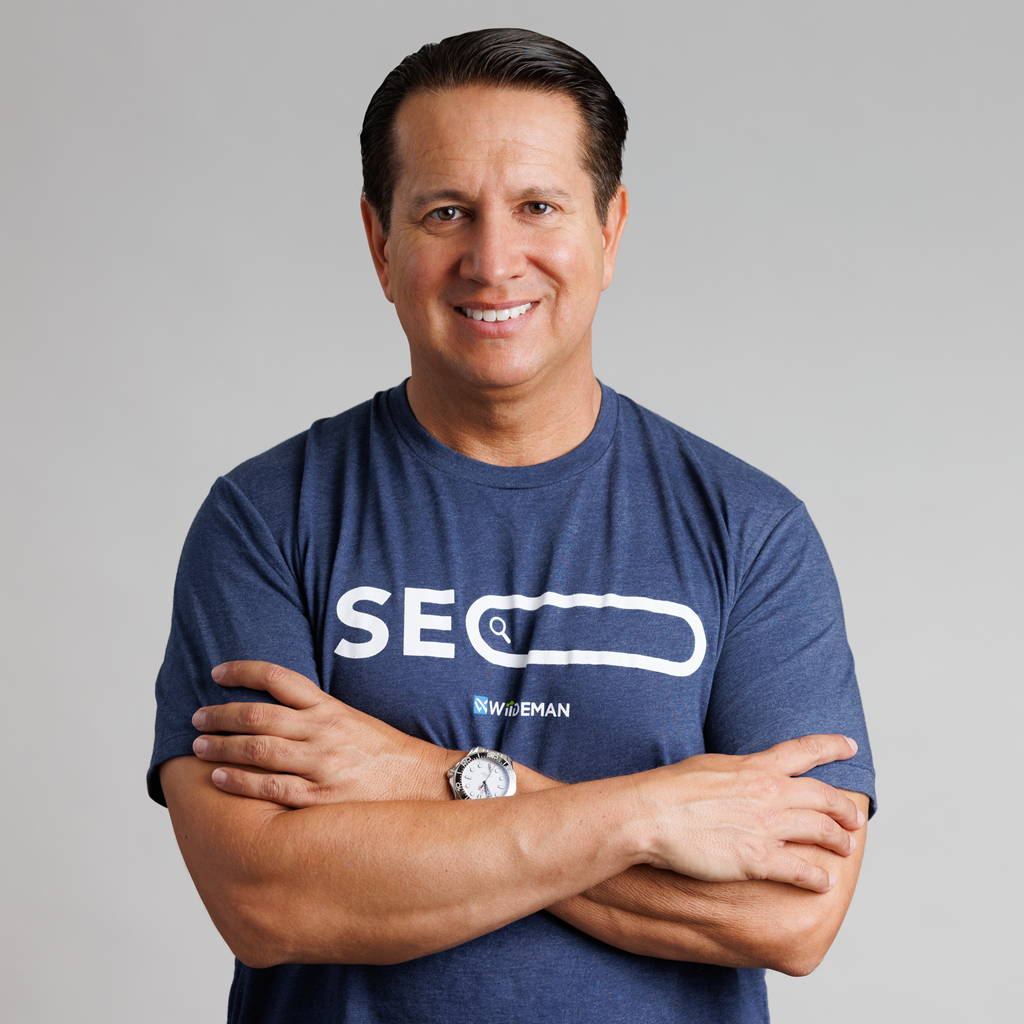
Multi-location SEO isn’t about tactics—it’s about execution. This episode, with Steve Wiideman, breaks down the real challenges brands face, from internal friction to content strategy, reviews, and shifting search behavior. Plus: what AI means (and doesn’t).


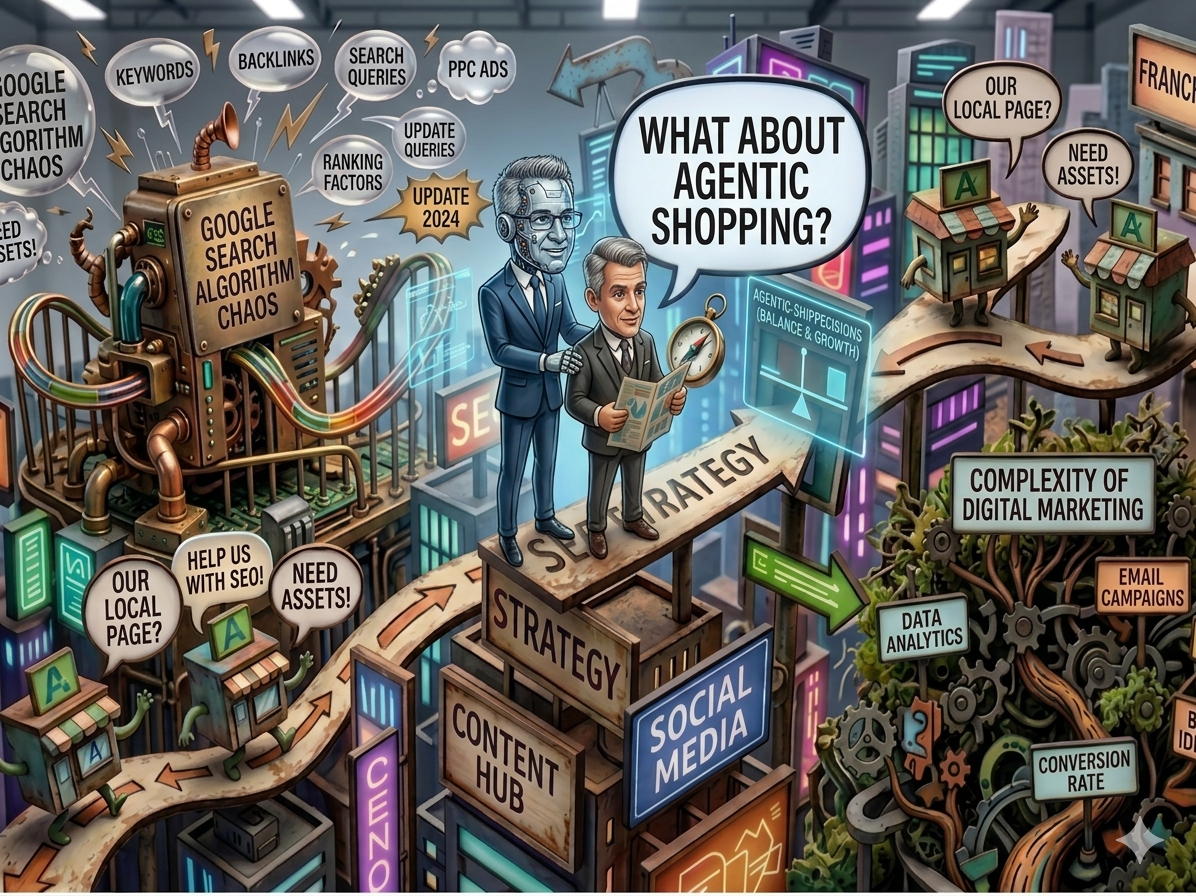
Multi-location SEO is less about algorithms and more about execution inside complex organizations. In this episode, the team explores how brands struggle with internal alignment, why testing beats tactics, how reviews and imagery drive visibility, and how search behavior is shifting toward long-tail and conversational queries.
Interested in sponsoring this podcast or our newsletters please reach out to mblumenthal@nearmedia.co
The Podcast Deets
Segment 1 (00:00 – 07:30)
Foundations & The Scientific Approach to SEO
Steve Wiedemann outlines his background and approach to SEO as a discipline rooted in testing and experimentation. The conversation highlights the difficulty of documenting SEO due to constant change and the need to rely on fundamentals.
Segment 2 (07:30 – 17:00)
Why Multi-Location SEO Breaks Down
The group explores the real challenges of scaling SEO across large brands—organizational friction, legal constraints, dev bottlenecks, and franchise complexity. Education and alignment emerge as the biggest barriers.
Segment 3 (17:00 – 25:30)
What Actually Drives Performance: Content, Reviews & Behavior
The discussion shifts to practical execution: imagery, user-generated content, reviews, and long-tail queries. They highlight how real-world customer behavior—not keywords—should drive strategy.
Key Takeaways
- Multi-location SEO is primarily an organizational challenge
- Testing beats tactics—always
- Reviews and imagery are core ranking + conversion signals
- Franchisee participation is low—but highly impactful when it happens
- Long-tail and conversational queries are increasing
- SEO success requires consistent execution, not hacks
👇 Watch by topic:
00:00 Intro & Steve Wiedemann background
02:30 Why SEO is hard to “teach” (and constantly changing)
05:00 The scientific approach to SEO testing
07:30 Biggest multi-location SEO challenges
12:40 Photography, reviews & user-generated content
17:00 Getting franchisees to actually take action
20:10 Common SEO mistakes brands make
22:00 Long-tail search behavior & menu-driven queries
25:30 The shift toward conversational search
Related Links


 Ryan Jones on Search Engine Journal
Sign up for our new Legal Marketing Newsletter. Once a month, no fluff, just good ideas.
Full Transcript of the Near Memo EP 249
Greg: Hey everybody, welcome back to the Near Memo, the Near Media podcast with me, Greg Sterling, as always the lovely and talented Mike Blumenthal. And today our very special guest, Steve Wiedemann, who refuses to be called an expert, but he is a very long time local SEO person in the industry, observer, scientists, thoughtful individual. And we have him on to talk about multi-location, local SEO, local landing pages, franchises, and all this AI stuff.
So Steve, thank you and welcome.
Steve: Thanks guys,
Good morning. Thanks for having me on the podcast. Excited to share everything I can.
Greg: Okay, so tell us a little bit just for people, I mean, you're a well-known figure, but tell us the folks who may not know you, what your, you know, Wiedemann Consulting Group does and who you work with and what your kind of area of focus is.
Steve: Sure. You mentioned it. It's multi-location franchise seems to be what we fell into several years ago. My background stems about 28 years in search, growing up as a freelancer, eventually working for some pretty fun enterprise brands, including Disney, and then eventually taking off on my own to be independent and work with clients and be close to home. I think it's kind of the dream, right, of all of us. Most of our clients, as I mentioned, are
franchises, restaurant chains. We work with brands such as Skechers and Public Storage and some really exciting brands that have really big challenges that we enjoy kind of navigating through. What we do is really just spend a couple months doing a deep analysis of tech and content and off-page and local and multi-location. And then we work with our clients on a monthly basis to help them through all of the recommendations that we proposed after that audit.
Greg: And you're also teaching, right? You were teaching some of this stuff.
Steve: So I'm teaching
at UC San Diego right now. This is the first week of the first AI-driven SEO and digital marketing online extension. I don't know if in the world or country, but at UC San Diego, it's definitely the first. It's also the first time that the school's using my textbook that I co-authored with Professor Scott Cowley. It's called SEO Strategy and Skills, and it's fun when the students get in there and they're like, hey, I think they accidentally put you down as the author and the teacher.
And like, no, it's me on both ends. And it's kind of a funny but exciting milestone. And like you guys, love to write. So whenever I have five minutes of free time, you'll find me in a Google Doc working on books.
Greg: don't, don't. Yeah.
You shouldn't, shouldn't volunteer to write this. We'll take you up on it.
Steve: Yep.
Mike: Greg
does it out of compulsion.
Greg: Kind of, that's kind of true. That's kind of true. the idea of an SEO textbook is kind of a funny and almost oxymoron like idea. So how do you write a textbook about SEO given how dynamic and fast changing it is or seemingly?
Steve: Yeah, I have to be writing all the time. Yeah. With chat, you can be closed, right?
Yeah. Yeah.
a lot
of fundamentals and a lot of at the time of this writing, right? So there's a lot of that. We have to do updates every year and the updates are becoming much greater in terms of the amount of time and citations and references of updating all that kind of content does take a lot of time. So Scott, my co-author, he's phenomenal. He'll take my 40 pages of what I want to talk about and trim it down to 10.
Greg: Right.
Steve: that will last us through the year, right? As opposed to several that are like, oh, right now this thing's happening. It's like, you know, Steve, but by the time they get this in three or four months, this isn't going to be applicable. And I'm like, yeah, you're right. So it's a great team effort and it's a lot of fun. I mean, it's neat when the editors get it they're like, "What is this?" And "I don't understand that". And because it helps you become better at communicating and it helps me become a better teacher. it's, I don't know if I'm doing the teaching and writing.
to help me in my career or if I just generally just love doing it, but probably a combination of both. But it is a great exercise in teaching yourself how to be a better communicator to help your clients through things that they still don't quite understand, right?
Greg: Yeah, I mean,
Probably about 12 or 14 years ago, I had a contract to write a book on local and mobile marketing with one of the B2B publishers. And it was very challenging because I would turn in a chapter and then Google would make a bunch of announcements that would necessitate an update. And I finally just quit because it was just crazy. It was maddening. There was so much that was changing that I just couldn't keep up with it. And it was kind of overwhelming.
Steve: Nice.
Mm-hmm.
Yeah, every time.
Greg: That's neither here nor there. So, yeah.
Mike: So Steve, I have a quick question about this.
You mentioned in the green room that you are an SEO scientist of sorts, not as a brag, but just that you approach SEO, try to approach it as scientifically as you can. I'm just curious what sort of research you've been doing, high level and anything you've learned from that specifically within the last six, eight, nine months.
Steve: Right.
Sure, yeah. mean, there's so much change happening all the time, as Greg mentioned. A lot of it's paying attention, right? We have alerts set up where VisualPing, for example, is one of the tools I love to use. And yesterday, I got my little update about the Google SEO Starter Guide changing. And I went and looked at the changes, and they literally stripped out everything. It's all just very clear, concise, short sentences where they remove the details of what they're talking about.
So now there's all this ambiguity in it. And I find that really fascinating. I'm glad that we've been paying attention for so many years because we have a little bit of that history that seems to be getting burned over time. A lot of it also is trial and error and experimentation. Hey, hey, restaurant chain, your pages are really thin. We've done some research. We came up with 60 fields we'd like to test. We know you're probably going to approve 30 of them because of
of trademarks and legal and branding issues. So let's test using those additional fields to see if we can broaden out the array of search terms and prompts that our pages appear for. We'll run it across 30 pages instead of just blowing it up across 1,600 and see how it performs. Hey, wow, look at the difference that this made in the amount of search terms that our pages appear for per page. Hey, other restaurant chain, notice your categories might be a little bit off in Google Business Profile. We did some industry research and it looks like the categories
of the brands that are performing really well are these ones. Let's test a few locations and see how that change performs. Wow, based on what you get from Google Business Profiles and what website visits and online orders and things that are happening, looks like this change could result in $2 million of incremental revenue for you if you roll it out across all 900 locations. So a lot of it's tests and experimentation and listening. I wish I had the time to, but I'm not nearly as in the weeds.
as some of my peers who study patents and look at the source code of a Google SERP and are more the technical gurus. I have a lot of respect for them, like Ryan Jones, who's just brilliant in creating tools that enable us to do things that a lot of folks who aren't very technical can understand and make a difference to how we're optimizing. So for me, it's just a lot of learning what might work and what might not work.
doing tests, never telling a client, if you do this, it's going to increase your revenue. Instead saying, hey, this might be, this could be based on our research, based on our tests, based on our experiment, we could see. So it's a lot of not making promises, but just continuing to do tests and then reporting on them at end of the year, saying, hey, man, this test that we did and then we rolled it out actually did result in an increase in visibility or an increase in traffic or an increase in interactions in Google Maps.
Greg: So you alluded earlier to the challenges that your multi-location clients face. If you could sort of rattle off the big ones just for context, what are those that you most commonly see?
Steve: Of course, yeah, there's
quite a few of them too. like we were talking about in the green room and just writing in general, this is something I'm actually putting into text. And so those people who are looking for lot of actionables are probably not going to find it in the book I'm writing. They're gonna find these challenges, relate to them and help navigate through some of them. The biggest challenge I've felt...
is education, right? It's trying to get everybody in every group on the client side to understand what you're doing and why. Because when you're working through tasks, you've got to get through so many layers. I mentioned brand. I mentioned legal. Brand might not like the use of how we're using a term. Maybe they don't call themselves a bar and grill. Maybe they call themselves grill and bar, right?
Then you've got to get through legal teams like, we can't use near such and such stadium because such and such is a trademark. Like, great. All right. We're next door to them. We can't say we're next door to it. You know, and then it's getting through the, dev Martech teams, backlogs and trying to convince them that this is more important than a marketing thing, that this could actually generate revenue, that we've got a loss of revenue because we haven't done these things yet. and then.
You know, again, going through each of those different teams and whoever the decision makers are in those teams, getting them all to buy into what you're trying to get them to implement. That to me has been the biggest challenge and trying to get each team educated because these are big corporations focus on broke fix and whatever the person at the top is telling them to focus on. And everything else is a second priority. SEO is never really a priority to a lot of these big brands. The priorities paid media, paid search, paid social.
offline advertising, it's a lot of their in-store events and local, right? So trying to convince them that what you're recommending is just as important as those other things, that takes a lot of work and a lot of education. So I'd say that's a big part of it. The other, course, is not making informed decisions. Like, hey, Wiedemann, just guess what? We've decided to move from this platform over to Yext or over to another tool.
And they don't talk to you first to help them determine what would be the appropriate platform based on what their current CRM happens to be. They just kind of make these big decisions based on salespeople who come in and try to convince them that they need something. In a lot of cases, it's throwing a shovel at something that really only needs a spoon. They only have 89 locations. Why do you need a big, massive enterprise platform when a smaller platform at a lower cost could give you everything you need?
you know, save you some money. So yeah, think those are just a handful of some of the challenges you meet when you work with larger brands that have multiple locations. And you mentioned one of them earlier, Greg, was the, this might have been the green room, but it was about the franchisees themselves and the complications and complexity of trying to do anything directly with them. I can't tell you how many times I asked our point of contact, hey, if we could just run a quick survey.
I can get a lot of input from the locations that'll play into our local page content. Like, no, we can't just send a survey out to everybody. It doesn't work like that. I'm like, isn't there someone at each location? Kind of. There's someone who runs 25 locations. You want them to fill out 25 surveys? I'm like, yeah. And they're like, no. I'm like, okay. So yeah, there's definitely that level of, know, jeez, if we could just get store images, jeez, if we could just get somebody there to, you know, to take some pictures outside.
Right, something like that.
Greg: So it
sounds like you're compensating in a way for some of these organizational or bureaucratic inefficiencies that are going on both internally with the brand, the corporate entity, and then in terms of the relationship with the franchisees. And that that's a kind of a structural challenge that you face. mean, SEOs have been fighting the battle of budget and prioritization and education for 20 plus years. And it doesn't sound like it's.
Steve: Mm-hmm.
every time.
Yeah.
Greg: It sounds like it's still going on.
Steve: Yeah, unfortunately, and also sometimes not to throw any big brand under the bus, but sometimes there's a recruiter who does the hiring. So the point of contact you might be working with whose specific job is digital marketing and SEO experience, you find out they really don't have SEO experience. They somehow got through the recruiter because the recruiter doesn't know what SEO is and doesn't know any better.
So there's no vetting. So so many times we've been brought in to kind of be the agency's agency and help interview potential digital marketing folks who claim to know SEO. So we get to be a filter for lot of brands that are hiring where the recruiters just don't have an understanding of the topic as well as they could. So again, going back to the education challenge, working with brands and making sure they're educated on all those different disciplines from tech to content to local and.
off page and so forth.
Mike: So you mentioned
photography in passing. Obviously, you know, I've done a lot of work in photography. We've seen in both our current research and previous research, just how important current and real photography is for both the website and for GBP and your socials. And I'm just curious how you help these multi-locations deal with that question. If you've tested it, where you fall on it, how you find them.
Steve: huh.
I remember.
Mm-hmm.
Mm-hmm.
Mike: how they maintain brand consistency and still do real imagery, those kinds of questions. And what you think of it, you know.
Steve: Right.
Right.
Sure. Well, we've kind of learned to navigate around it a little bit with asking the locations to be involved in actually taking photos. We've tried that and we'll always suggest it in the beginning. And then when we realize they're just not going to do it, what we do is we try to give them kind of a one sheet of some things that they could work on that include getting customers to take photos, getting the customers involved in that process so that
that we know what kind of pictures we want them to take and why it's important to the business. And I feel like that's an easier buy-in than doing anything formal that could put the business at risk of doing something that they're not sure they should be doing or not. But when we get customers involved, it's so much easier because then it's not the business saying, we're better, we do this, we offer that. It's our customers doing it. So when it comes to imagery, that seems to be what's been
you know, what's been the most effective is giving them this guide of some things that they can say to their customers that motivate them to want to be involved in that process, to want to take pictures and to share their feedback and to do things that now...
Mike: So could you provide some
specific examples of how some franchisees engaged and then did you research it and determine there was a decent ROI
Steve: Of
Oh yeah, for years. mean, even with Skechers back in, geez, what was it, like 2010, 2011, when we're still kind of new with them, they had this two megabyte image of a store location on there that took forever to get the company that would manage their pages to reduce it. When we're doing that test alone, just looking at the impact of having an actual store image versus not, I mean, we saw it lifts as high as 20, 25%.
alone, both in organic for having more unique relevance content that the user stayed on, as opposed to going back to search and choosing a competing result, which, as you know, user behavior signals make a difference. And then on the map side of things and having more up-to-date imagery and a wider array of imagery shows that this location is open. If you only see one or two pictures on a Google Maps profile, you start to wonder, is this place even open? Is this real?
because there's only like two pictures and this Nike store, this Foot Locker store has like a hundred pictures. So I'm curious if this place is even worthwhile spending time in. So just from the user interaction standpoint itself, we see what appears to be a performance boost just by putting time and energy into it. And Mike, you came to me a while ago about some cool things that you were doing around image recognition.
And you threw me down a rabbit hole and we fell in love with it and we did several tests ourselves to see the difference. as I recall from those tests, we saw the same impact. Google recognized that this is a stack of pancakes and it showed us more often for pancakes. Google recognized that this image was a burger. And so we saw a restaurant that doesn't really specialize in burgers who has a burger category.
suddenly start to see more burger attractions simply because they're taking more images, close-up, high-definition images that Google recognizes as being those products. So I feel like there's a huge gap in these large brands understanding just how important imagery and video play into their multimodal approach to handling search. They're really myopic still on just a Google web search with blue links and black text.
and don't factor in all of the different benefits of having that level of media creation can actually do for their visibility, for how good they look in a search result across the different search options, ⁓ as well as really helping the customer.
Mike: So if you had to summarize
a tactic to get your customers engaged in this context that might help others, what would it look like?
Steve: Absolutely.
Yeah, I think that's the end game, right? The end game is to get the customers to choose us and stay on our website.
Mike: Right, but if you want
customers to actually take photos for you, what kind of system would you set up to encourage the business owner to do that? What kind of systems have been set up that actually succeeded in that task of getting customers to take these photos?
Steve: Sure.
I think we have more,
it's more around awareness with these larger brands. So we haven't really created any systems so far. What we've, what we've done is created documentation to, give them some tools to use. Um, it's, it's a three section document that we usually start with. Section one is basically here's, here's what corporate is doing for you that you don't have to worry about. We're managing your data online. We're making sure all of your listings, your Yelp and everything are squared away. We've got a webpage for you that's been optimized. You don't have to do any of this. We have a section.
Greg: So
this is communication to the local franchisee right now. Okay.
Steve: Correct, these are
one pagers that go out to every single location. then yeah, there's a section that basically says don't do any of these things. Don't create a separate website, don't buy reviews, don't bribe for reviews, don't incentivize for reviews, don't respond negatively to reviews, all the things you don't want them to do. And then there's this big section at the bottom that says here's some things you can do. And that's where we start focusing in on the narrative of...
Greg: Okay.
Steve: the importance of imagery and customer feedback and getting driving directions even get everybody who works there every so often just to use driving directions to show that people are actually coming in and especially for newer locations. And the imagery part is on there. says, talk to your customers when they've had a good experience, just say, hey, it sounds like you had a really great experience. I'm sure others would love to hear this as well.
If you are going to leave some feedback somewhere, we'd love it if you took some pictures. if somebody comes back that's a regular customer, say, welcome back. Thanks so much for leaving that review last time. That was so awesome. Hey, we noticed that a lot of customers aren't sharing some of the photos of our remodel or of some of our new menu items. If you wouldn't mind, since you left such a great review last time, maybe you could share some photos on it while you're here this time. Just kind of reminding them, getting them all in the process.
Mike: And have you found that some small
percentage of franchisees do this and see success from it? And how would you characterize those?
Steve: Very limited number
actually take action on most of what we recommend in SEO, but those that do, 100 % of the time we see improvements, especially if they're willing to do more than just take a photo and do something a little bit more creative like a 360 video or 360 tour. So yeah, we see those that want to get actively involved, always see the best results. So we love it when a franchisee says, hey, I was just Googling for...
spicy chicken sandwich near me and I didn't see us. Like, great, I'm so glad you reached out. Here, let's go through this document that we sent you a while ago and see how we can help you. And 90 % of the time, of course, their biggest challenge is their ratings, right? So trying to not throw them out of the bus for getting lower star ratings in their nearby competition, you know, we have to navigate that carefully.
Greg: What would you say just kind of to establish this? there's many problems, many challenges. In your recent experience, if you had to point to one thing or one or two things, what's the most common mistake that you see in these multi-location SEO scenarios? But like that they're doing or that they have failed to do?
Steve: Not listening to the rest of your consultant. I'm kidding.
I would say the most harmful thing was one of, one of the chains that we worked with last year decided to start putting signs up everywhere, incentivizing reviews. And one of my peers sent me a picture of it he's like, is this your client? And I'm like, not right now. They're not. that was, yeah, we, and we were still on the distribution for the Google Business Profile stuff. And we saw all the emails coming in saying we've, we've blocked your ability to do any review and take.
Greg: Not not anymore
Steve: for the time being and we're like, you know, if you would have asked, we would have told you not to do that, you know. I'd say that's the biggest negative thing I think that I've seen happen. The second thing is really more structurally around how they organize their content on the website. Sometimes they can create a nightmare of OLO URLs of the ordering system URLs that create a lot of duplicate content and create confusion for users who are performing searches.
We saw one that dropped their categories, their menu categories completely, and in doing so, users struggled to try to find what they were looking for in a Google search result. Like, well, this will improve user experience. It didn't, really. In fact, they lost quite a bit of revenue because users who used to be able to do a search for something like waffles or pancakes no longer saw those categories in search because they wanted to go with this single page application.
experience. I think those are kind of the challenges I've seen is that they're not throwing their websites and online marketing changes through their SEO team first. They're just impulsively doing changes and then the SEO team has to deal with the triage of it when traffic and rankings are impacted. I think that's the biggest thing I see.
Mike: So back
when I recommended that, was talking to you about the Google understanding image content surfacing on queries, I saw very little of that long tail type of query going on, know, waffles near me or hamburgers near me, whatever. And I'm curious over that past, I don't know when I told you about this, six, seven years ago, time travels.
Steve: Mm-hmm.
Mike: Very fast, it might've been five years ago, I have no idea. Anyways, I'm just curious over that arc of time from when we spoke to now, if you've seen user behavior shift towards more of these sort of very specific long tail restaurant search phrases.
Steve: with AI now more than ever.
Mike: Well, in general, no,
not with AI with or without AI. mean, are people like, again, when I was first doing this and Google was first rolling it out, it was sort of very early in the user understanding of how a keyword search would change and result and how an image would change the result of a keyword search. If it was for a long tail food item, pancake, whatever. I'm curious if you've seen users increase their searching behavior.
those types of things as Google increasingly showed those types of results over the past seven years.
Steve: I don't see anything
in the data when I look at Search Console specific to users looking for imagery as part of their search.
Mike: Not imagery, but for
long tail searches related to imagery. In other words, hamburgers near me. I mean, have those kinds of searches gone up? Pancakes near me or pancakes or, you know, French toast kind of searches. mean, historically those were very low and I'm curious if they've increased over time.
Steve: yeah.
Sure. Yeah, no, we see that. We see that for sure.
For the
restaurant chains, absolutely. There's a lot of that in Search Console that you'll see where they're looking for specific menu items. The brand always wins, right? I would say probably 70 % of the search queries have the brand's name in it. So if we filter out brand, there's still some broader searches that the restaurants will appear for, like restaurant near me or food near me, but we don't always know what genre of food they're looking for. So if you get rid of some of those broader queries and get more specific,
you do actually see a significant amount of searches for nachos near me, tacos near me, spicy chicken sandwich near me. You do still see some of those queries. Are they going up or down? I don't know. I'd have to go back in and look, but they seem pretty normal. They're still in the integrated reporting that we're putting together that shows average position for these long tail queries and share a voice for them and then the traffic, of course, for...
what's available, we'll just grab like keyword planner data sometimes and see the trend over the last 11 months. But yeah, I do see quite a bit of long tail query, especially as searches are becoming more conversational thanks to AI. So I think now people know, hey, I can ask a full sentence question now and get some good results. So I think that those behaviors have shifted and they're gonna continue to shift and maybe even at some point the keyword will go away.
Greg: Thanks.
Mike: Ew.
Steve: Right? Because AI mode may kick in and we're all just going to be using conversational searches, which you guys probably see a lot more than we do. But yeah, I think that's where the long tail is really going to have its impact as we get into more of prompting versus dropping keywords in.
Greg: We can see in our research that over the last six months, the nature of queries has changed in the legal vertical. what I'm observing anecdotally is that queries are getting longer and more conversational definitely. And that's because people are importing their AI behavior into Google.
Mike: Thank you for joining us for part one of this conversation with Steve Wiedemann. Join us next week where we will discuss what multi-location brands need to do about AI right now.