
EP 244 - AI Visibility vs Google Rankings: Rand Fishkin on the Future of Search, Zero-Click & Brand Measurement
Rand Fishkin joins Near Memo to unpack AI visibility tracking, zero-click search, collapsing attribution models, and where brands should focus in 2026. A must-listen for marketers navigating AI’s impact on search and measurement.



In this wide-ranging conversation, Rand Fishkin shares new research on AI brand visibility and challenges assumptions about rank tracking, attribution, and zero-click search. While AI responses are inconsistent, aggregate brand presence can be measured statistically. However, as discovery shifts to platforms and attribution erodes, marketers must rethink how they build brand and measure impact.
Interested in sponsoring this podcast or our newsletters please reach out to mblumenthal@nearmedia.co
The Podcast Deets
1️⃣ AI Visibility & Ranking Reality (00:00–15:00)
Rand discusses his experiment testing whether AI brand tracking is possible. While individual AI responses are inconsistent, brand frequency can be measured statistically across large samples. Rank tracking, however, is unreliable. The segment explores AI randomness, long-tail discovery, and how finite local categories behave differently from broad product categories.
2️⃣ Zero-Click, Discovery & Agentic Commerce (15:00–31:00)
The conversation shifts to zero-click journeys and whether AI will disintermediate websites entirely. Rand argues that commerce isn’t disappearing—but discovery is moving onto platforms. The group debates UX differences between Google and generative AI and explores whether agentic commerce will meaningfully reshape transactions.
3️⃣ The Attribution Crisis & Brand Strategy (31:00–40:00)
The final segment tackles marketing measurement. With AI platforms providing little referral transparency, the illusion of perfect attribution is breaking down. Rand explains why paid platforms retain power due to behavioral data, and why local businesses should focus on selective channel strength rather than being everywhere.
Key Takeaways
- AI rank tracking is unreliable; brand frequency tracking is possible.
- Zero-click journeys are growing, but sales aren’t disappearing.
- Discovery is shifting from owned media to platforms.
- Attribution models are weakening as AI disintermediates clicks.
- Paid platforms retain advantage via behavioral data.
- Local businesses should focus narrowly, not universally.
- “Don’t build on rented land” is no longer viable advice.
👇 Watch by topic:
00:00 – Intro & 2026 Predictions
02:00 – Can You Track Brand Visibility in AI?
09:00 – AI Randomness & Long-Tail Brand Discovery
15:00 – Is AI More “Democratic” Than Google?
20:00 – UX Debate: ChatGPT vs Traditional Search
24:30 – Zero-Click, Discovery & Website Disintermediation
29:00 – Agentic Commerce & The Future of Transactions
31:30 – The Collapse of Attribution & Measurement Illusions
35:00 – Google’s Paid Media Advantage
37:30 – Where Should Local Businesses Build Brand?
39:30 – Final Takeaways
Related Links
 Rand Fishkin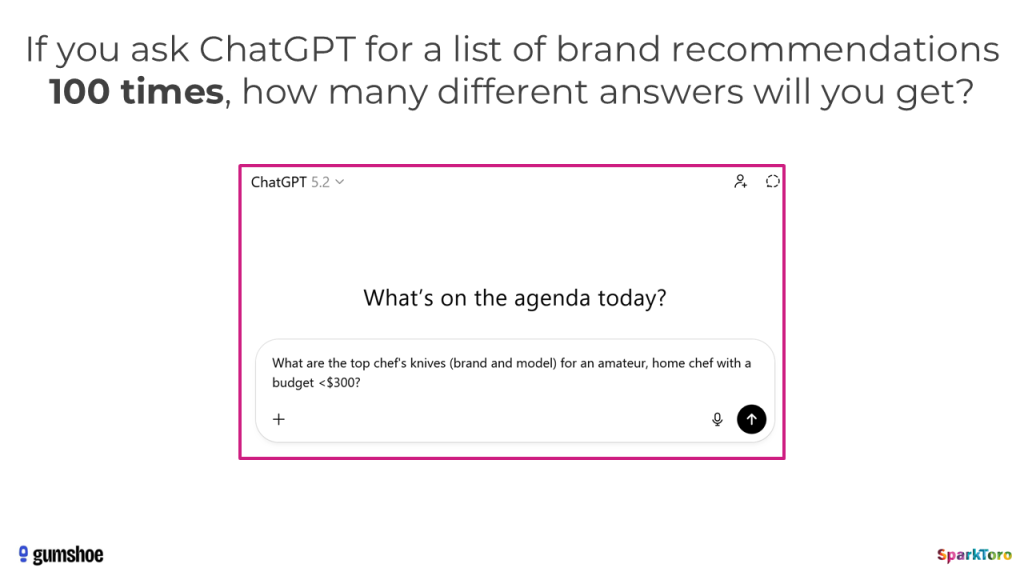
 Rand Fishkin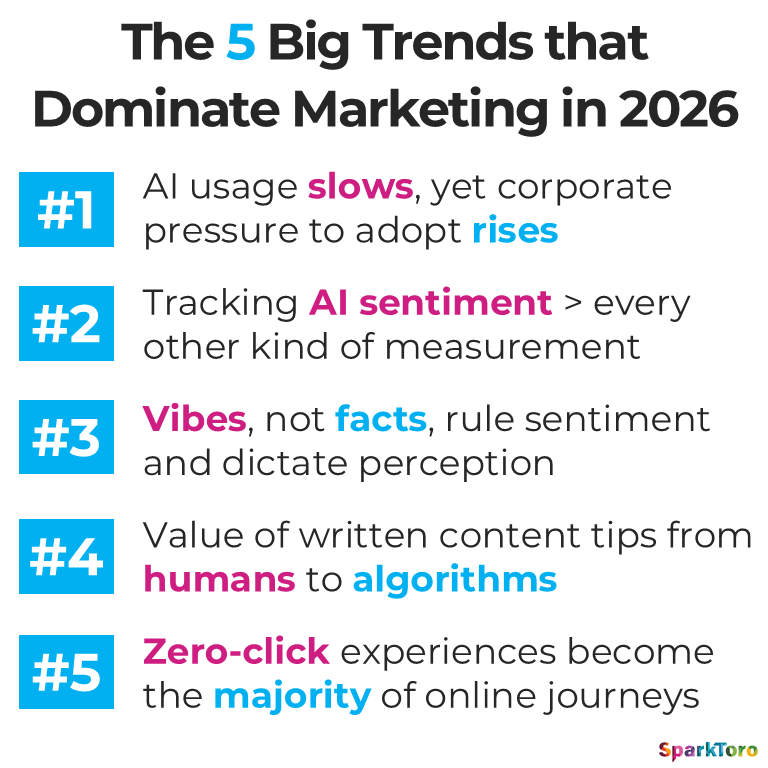


Sign up for our new Legal Marketing Newsletter. Once a month, no fluff, just good ideas.
Full Transcript --> On-line
Greg Sterling (00:10)
Hey everybody, welcome back to the Near Memo with David Mihm, Mike Blumenthal, me, Greg Sterling, and today our friend, Rand Fishkin is back for an encore performance. And we'll be talking about a lot of interesting things tied into his predictions for 2026 and adjacent issues. Welcome, Rand. Thanks for being on again. It's always great to have you.
Rand Fishkin (00:28)
Yeah, my pleasure. Always great to be here with you.
Mike Blumenthal (00:30)
I would like to think of it as a second act rather than an encore. That way we can get them back again. Then we have an encore.
Greg Sterling (00:36)
All right. So among the predictions that you made earlier, not too long ago, you talked about five big marketing trends. AI usage is going to slow, yet there’ll be continuing corporate pressure for employees and companies to adopt it. AI sentiment tracking is inherently unreliable and people are disproportionately investing in that while underinvesting in other areas. There’s a credibility crisis happening to some degree online. We’re starting to see more and more content written for algorithms and less for humans, more AI abstraction of content and summaries, and more zero-click experiences becoming the majority of online journeys.
Let’s jump into the issue of people investing in AI visibility tools. You did some compelling research on their reliability and their ability to consistently show where brands appear. Why don’t you elaborate?
Rand Fishkin (01:59)
I had a theory that tracking AI tool responses to brands was entirely baloney because of randomness: the statistical lottery of word generation, differences between API calls, caching, personalization, geography, and how frequently results change. I assumed asking the same question 1,000 times would yield 1,000 chaotic responses.
We had 600 volunteers run identical prompts through Claude, ChatGPT, and Google AI and submit responses. Every answer was different in wording, but brand presence was more consistent than I expected. We discovered you can track brand presence frequency with statistical rigor—if you run prompts enough times, avoid assuming models are identical, account for weekly change, and use realistic prompts. Rank tracking, however, is full baloney.
David Mihm (04:28)
I read your results with interest, especially around medical searches like cancer treatment. The expected brands showed up. But at the end of the day, is it really useful to know you're present 75% of the time among peers? It’s better than Google where Mayo or Cleveland Clinic dominate, but there’s not a lot of “there” there relative to the money being spent.
Rand Fishkin (05:32)
If you're running campaigns to improve AI visibility and using statistical methods properly, you can measure improvement. But paying $50,000 a month for enterprise tracking tools feels excessive.
Mike Blumenthal (06:20)
What was the distribution of AI clients used? And what happens when brand gets localized to a small geographic area?
Rand Fishkin (06:42)
We used Google AI Overviews (or AI Mode), Claude Opus, and ChatGPT. Prompts were run 65–90 times per platform. In a localized example like LA Volvo dealers—about 9–11 total dealers—only eight ever appeared. The top four were dramatically overrepresented. AI visibility is real and resembles early Google Maps dynamics. But in AI, you can’t scroll to see more. If you're invisible, you're invisible.
David Mihm (09:41)
In broader categories like personal injury lawyers in LA, results vary wildly—even qualitatively. Sometimes maps appear, sometimes directories. Variability increases with more brands in the pool.
Rand Fishkin (10:48)
We also asked users to write their own prompts (B2C and B2B). Over 150 unique prompts were generated. More than 95% of them produced one or more brands. When intent is transactional, AI tools typically produce brand lists.
Greg Sterling (13:14)
Google produces consistent rankings. AI responses may distribute attention across more acceptable options. Does that make AI more democratic?
Rand Fishkin (14:29)
It depends on query type. In narrow local categories, visibility clusters. In broader categories—like sci-fi novels—we saw 211 unique titles across 99 responses. The long tail is massive.
The future of digital marketing is platform-based visibility, not link-based traffic generation.
Mike Blumenthal (17:47)
Google’s knowledge graph and clickstream data give it a structural advantage.
Rand Fishkin (18:33)
Knowledge graphs are replicable. Clickstream data is not. The DOJ case showed click behavior is Google’s core advantage.
Greg Sterling (20:24)
People prefer conversational AI UX.
Rand Fishkin (21:08)
ChatGPT feels like Ask Jeeves. Google’s efficiency remains strong in lower-funnel contexts.
Rand Fishkin (23:09)
After doing this research, I don’t trust one AI answer. I refresh multiple times. Any single response is incomplete.
David Mihm (24:21)
Zero-click may grow, but sales won’t disappear.
Rand Fishkin (26:07)
Discovery and audience influence are moving onto platforms. “Don’t build on rented land” is no longer viable advice. You must build where attention exists.
Greg Sterling (27:07)
Agentic commerce could shift transactions onto platforms like Google Merchant Center.
Rand Fishkin (27:58)
Commerce centralization aligns with broader cultural consolidation. Platforms aim to become research and transaction endpoints.
David Mihm (29:10)
When will agentic commerce become real?
Rand Fishkin (29:18)
Too early to predict. Protocol adoption will determine timing.
Greg Sterling (30:40)
Let’s discuss measurement. What happens to attribution?
Rand Fishkin (31:40)
Perfect digital attribution is collapsing. AI platforms don’t report visibility clearly. Measurement is shifting toward time-series brand lift—similar to billboard modeling.
SparkToro experienced a spike from a TikTok mention with no link. We only saw correlation, not attribution.
Google and Meta retain power via behavioral data. They can predict purchases before they happen. Incrementality testing—turning ads off—is rarely done due to executive fear.
Greg Sterling (36:14)
Local businesses can’t test scientifically across all channels.
Rand Fishkin (36:51)
They don’t need to. Follow the 80/20 rule. Focus where your audience pays attention, where you’re strong, and where you’re competitively unique. Ignore the rest.
Greg Sterling (39:45)
Great advice. Thanks, Rand.
Rand Fishkin (39:53)
My pleasure.