# Near Media
> Near Media is the go-to advisor for executives at multi-location brands and vertical agencies seeking to optimize their search strategy and tactics.
Public Ghost content for AI and LLM tooling. This file includes a bounded export of public pages first, then recent public posts.
Append `.md` to any post or page URL to get the content in Markdown (for example, `/example-post.md`).
## Pages
### About Near Media
URL: https://www.nearmedia.co/about/
Last updated: 2024-10-04T17:24:36.000Z
## About Near Media
****We're an applied market research firm helping multi-location marketing and vertical agency executives maximize their SEO & paid search investments.**
Software vendors are unreliable advisors.
Content forums are low-quality and primarily geared at SMBs.
SEO is an afterthought for most traditional agencies.
Even premier SEO agencies serving typical large brands treat Local as an afterthought.
### Through our unique combination of
\+ proprietary consumer research
\+ competitive localized SERP analysis
\+ step-by-step performance improvement roadmaps
we are the go-to strategic and tactical advisor for multi-location brands who seek to maximize their investments in paid, organic, and local search.
###
## Want to learn more about our capabilities?
Get in touch to see if we're a good fit for what you're looking for.
[Contact Us](https://nearmedia.co/contact/?ref=nearmedia.co)
## The Near Media Team



### Greg Sterling
Greg Sterling is one of the leading authorities on local digital marketing, location intelligence and the SMB market. He's been engaged in online strategy, research, content development and event programming since 1998\. He most recently was the VP of Market Insights for [Uberall](https://uberall.com/en-us?ref=nearmedia.co) and a former contributing editor for Search Engine Land, where he wrote for 14 years.
Sterling has spoken extensively at industry events over the past 20 years. He founded The Place Conference, on location intelligence, in 2013\. He also wrote the first analyst report on local search and its potentially disruptive impact on traditional media such as yellow pages in 2003\. (Believe it or not, at the time, the outcome wasn't a foregone conclusion.)
Before Uberall, Sterling was VP of Strategy for the Local Search Association. Prior to LSA, Sterling was an analyst, editor, producer and author at Opus Research, The Kelsey Group, Allbusiness.com and TechTV.
Sterling is also, thankfully, a former attorney.
---
### [Mike Blumenthal](https://blumenthals.com/blog/about-mike-blumenthal/?ref=nearmedia.co)
Mike has been involved with offering web services since 1995\. Prior to specializing in web design and search consulting in 2001, Mike was a principal in a family owned & operated retail business for over 30 years. That business was very successful until it wasn't and was crushed by the new reality of retail.
Like all small business owners attempting to market to a fragmented clientele, he was continually frustrated by the barriers & costs imposed by the advertising options available. Shortly after Google Maps was released in 2004 he threw out his 9 Yellow Page books and started focusing on Local Search. He launched his blog, [Understanding Google Maps and Local Search](https://blumenthals.com/blog/?ref=nearmedia.co) in 2006 and since then his motto has been "All local, all the time".
Mike helped co-found LocalU in 2009 (acquired by SterlingSky in 2019) and co-founded GatherUp.com in 2012 (acquired by ByTraject in 2019). During the week, you can find him at Nearmedia.co where David, Greg and he do a [weekly podcast](https://www.nearmedia.co/memo/) on all things local and where he writes about local search and its impact on the business community
Read [Mike's articles for Near Media here](https://www.nearmedia.co/author/mike/).
---
### [David Mihm](https://www.davidmihm.com/?ref=nearmedia.co)
David has spent his career helping location-oriented companies make the most of their digital presence.
Over the course of the 2010s, his teams built software products to optimize what are now Google Business Profiles and other directory listings, first as the co-founder and CEO of GetListed.org, then at Moz, and finally as VP at ThriveHive. David was also a co-founder of Local University, and the creator of the original Local Search Ranking Factors survey from 2008-2016, before handing it off to Darren Shaw.
David started his career in the mid-2000s as a consultant and is now back to that mode of work, teaming up with Mike Blumenthal and Greg Sterling at Near Media to help multi-location brands and vertical agencies understand how their customers interact with Google search results, and advising them on how to adjust their search strategy accordingly.
### Near Media Privacy Policy
URL: https://www.nearmedia.co/privacy/
Last updated: 2026-10-17T17:48:19.000Z
*Effective date: October 16, 2026*
Near Media collects only the information needed to run nearmedia.co, deliver our newsletter and memberships, and respond to you. We do not sell your personal information.
This policy explains what we collect, why, who helps us process it, and the choices you have. It applies to nearmedia.co, our email newsletters, paid memberships, and the Near Memo podcast pages. "Near Media," "we," and "us" mean Near Media, LLC, an entity registered in Delaware, USA.
## **Information we collect**
**Information you give us**
- **Newsletter and membership sign-up:** your email address and, if you provide it, your name.
- **Paid memberships:** your billing details are entered directly with our payment processor, Stripe. We see your name, email, plan, and payment status, but never your full card number.
- **Contact and research inquiries:** whatever you include when you email us or use our contact form, such as your name, company, and message.
- **Surveys and research participation:** answers you choose to give if you take part in a Near Media study. Each study explains its own data use when you join.
**Information collected automatically**
- **Basic site usage:** pages viewed, referring site, approximate location (country or region), browser and device type. We collect this through Google Analytics and use it in aggregate to understand which content is useful.
- **Email engagement:** whether a newsletter was delivered, opened, or a link was clicked. You can turn off open tracking in most email apps.
- **Server logs:** IP address and request details, kept by our hosting provider for security and reliability.
## **How we use your information**
- Send the newsletters, analysis, and member content you signed up for.
- Manage your account, process payments, and provide access to members-only posts.
- Reply to inquiries and deliver consulting or research services you request.
- Understand which articles and podcast episodes readers find useful, so we can improve them.
- Keep the site secure and prevent fraud or abuse.
- Meet legal, tax, and accounting obligations.
We do not use your information for targeted advertising, and we do not run ad networks on nearmedia.co.
**Legal bases (EU/UK visitors):** we rely on contract to deliver memberships, consent for newsletters and any non-essential cookies, legitimate interests for basic security and aggregate site improvement, and legal obligation for tax and accounting records.
## **Cookies and embedded content**
nearmedia.co uses essential cookies to run the site, Google Analytics to measure readership, and embedded YouTube videos. Visitors in the EU, EEA, UK, and Switzerland are asked for consent before any analytics or video cookies are set.
| Cookie or technology | Set by | Purpose | Type |
| ---------------------------------- | ------------------------------ | -------------------------------------------------------------------- | -------------------------------------- |
| Member session (ghost-members-ssr) | Ghost, our publishing platform | Keeps members signed in to read member content | Essential |
| Admin session | Ghost | Lets Near Media staff edit the site | Essential |
| Payment cookies | Stripe, on checkout pages only | Fraud prevention and secure payment | Essential |
| Consent preference | CookieBot | Remembers your cookie choice | Essential |
| Google Analytics 4 (\_ga, ga\*) | Google | Measures page views, traffic sources, and how readers use the site | Analytics; consent required in EU/UK |
| Embedded videos | YouTube (Google) | Plays podcast and video content; YouTube may record viewing activity | Third-party; consent required in EU/UK |
**Google Analytics.** We have turned off Google signals and advertising features, so this data is not used for ad targeting. You can opt out anywhere with [Google's Analytics opt-out browser add-on](https://tools.google.com/dlpage/gaoptout?ref=nearmedia.co).
**Embedded videos.** Podcast pages embed videos from YouTube. YouTube may set cookies and collect information about your viewing when a video loads or plays, under [Google's privacy policy](https://policies.google.com/privacy?ref=nearmedia.co). In the EU, EEA, UK, and Switzerland, videos stay blocked until you accept cookies.
**Your cookie choices.** Visitors in the EU, EEA, UK, and Switzerland see a consent banner and can accept or decline analytics and video cookies. You can change your choice at any time with the Cookie settings link in the site footer.
**Do Not Track and Global Privacy Control.** We do not sell your personal information or share it for cross-context behavioral advertising. Our site does not currently change its behavior in response to Do Not Track signals.
You can block or delete cookies in your browser settings. Blocking essential cookies will prevent you from signing in as a member.
## **Who we share it with**
We share personal information only with service providers that help us run Near Media, and only for that purpose. **We do not sell your personal information or share it for cross-context behavioral advertising.**
| Provider | What they do for us |
| ----------------------------- | ------------------------------------------------------- |
| Ghost Foundation (Ghost(Pro)) | Hosts the website, member accounts, and newsletter list |
| Mailgun | Delivers our newsletter emails on Ghost's behalf |
| Stripe | Processes membership payments |
| Google (Google Analytics 4) | Measures site traffic and readership |
| YouTube (Google) | Hosts and plays embedded videos |
| CookieChimp | Shows the cookie banner and records consent choices |
| Google Workspace | Handles email correspondence and file storage |
| Tally | Contact and Form Submission Processing |
| Zapier | Form submission alerts and routing |
We may also disclose information if required by law, to protect our rights or the safety of others, or as part of a merger or sale of the business, in which case this policy would continue to apply to your information.
## **How long we keep it, and how we protect it**
- **Subscriber and member data:** kept indefinitely; deleted within 7 business days of individual requests to remove at privacy@nearmedia.co.
- **Payment and invoice records:** kept as long as tax and accounting law requires, typically seven years.
- **Inquiries and correspondence:** kept as long as needed to respond and maintain a business relationship.
- **Analytics:** kept indefinitely.
Our providers use industry-standard security, including encrypted connections (HTTPS) and access controls. No system is perfectly secure, so we cannot guarantee absolute security.
## **Your choices and rights**
**Everyone can:**
- Unsubscribe from any newsletter using the link at the bottom of each email.
- Update your name, email, and newsletter preferences, or cancel a membership, from your account page on nearmedia.co.
- Ask us to correct or delete your information from Ghost, Stripe, Tally, Zapier, and Google Workspace by emailing privacy@nearmedia.co.
We respond within 30 days and will not treat you differently for exercising these rights. We may need to confirm your identity before acting on a request.
**California residents.** Under the California Online Privacy Protection Act, this policy describes the information we collect and how we respond to Do Not Track signals (see Cookies above). We do not sell or share personal information as those terms are defined in the California Consumer Privacy Act. You may request access to, correction of, or deletion of your information at privacy@nearmedia.co.
**EU, EEA, and UK residents.** You have the right to access, correct, delete, restrict, or object to our processing of your data, to receive it in a portable format, and to withdraw consent at any time. You also have the right to complain to your local data protection authority.
## **Other important information**
**Children.** Near Media is a business publication. It is not directed to children under 16, and we do not knowingly collect their information. If you believe a child has given us information, contact us and we will delete it.
**International transfers.** We are based in the United States, and our providers process data in the US. If you access nearmedia.co from outside the US, your information is transferred to and processed in the US. Our providers rely on recognized safeguards, such as Standard Contractual Clauses or the EU-US Data Privacy Framework, for these transfers.
**Changes to this policy.** We will post any changes here and update the effective date at the top. For significant changes, we will notify members and subscribers by email.
**Contact us.** Questions or requests about your privacy:
Near Media, LLC
*Registered Agent 8 The Green*
*Dover, DE 19901*
privacy@nearmedia.co
### Near Media Terms of Service
URL: https://www.nearmedia.co/terms/
Last updated: 2024-11-19T15:41:10.000Z
*[Adapted from Automattic under Creative Commons License.](https://github.com/Automattic/legalmattic?ref=nearmedia.co)*
## Terms of Service
These Terms govern your access to and use of nearmedia.co, as well as all content and Near Media products and services available at or through this website (collectively, “Services”). Our Services are offered subject to your acceptance, without modification, of all of the terms and conditions contained herein and all other operating rules, policies (including, without limitation, [Near Media's Privacy Policy](https://nearmedia.co/privacy?ref=nearmedia.co)), and procedures that may be published from time to time by Near Media (collectively, the “Agreement”). You agree that we may automatically upgrade our Services, and the Agreement will apply to any upgrades. Please read the Agreement carefully before accessing or using our Services. By accessing or using any part of our Services, you agree to become bound by the Agreement. If you do not agree to all the terms of the Agreement, then you may not access or use our Services.
## 1\. Who’s Who
Throughout these Terms, “you” applies to both individuals and entities that access or use our Services. If you are an individual using our Services on behalf of an entity, you represent and warrant that you have the authority to bind that entity to the Agreement and that by using our Service(s), you are accepting the Agreement on behalf of that entity.
## 2\. Your Account
Where use of our Services requires an account, you agree to provide us with complete and accurate information when you register for an account and keep the information current. This is important because sometimes we may need to send you notable updates (for example, about changes to our Terms of Service or Privacy Policy), or we may want to let you know about and make informed choices in response to legal inquiries or complaints.
You will be solely responsible and liable for any activity that occurs under your account. You are responsible for keeping your account information up-to-date and for keeping your password secure.
You are responsible for maintaining the security of your account and any Service-related activity that occurs under your account and any other actions taken in connection with our Services. You shall not share or misuse your access credentials. You must immediately notify us of any unauthorized uses of your account or of any other breach of security. We will not be liable for any acts or omissions by you, including any damages of any kind incurred as a result of such acts or omissions.
When you create a Near Media account, we consider that to be an inquiry about our products and services, which means that we may contact you to share more details about what we have to offer. Don't worry -- if you aren't interested in learning more, you can opt out of the marketing communication, whether it's an email, phone call, or text message.
## 3\. Minimum Age Requirements
Our Services are not directed to children. Access to and use of our Services is only for those over the age of 16\. If you are younger than this, you may not register for or use our Services. Any person who registers as a user or provides their personal information to our Services represents that they are 16 years of age or older.
## 4\. Responsibility of Visitors and Users
We have not reviewed, and cannot review, all of the content (such as, but not limited to, text, photo, video, audio, code, computer software, items for sale, or other materials) posted to our Services by users or anyone else (“Content”) and are not responsible for any use or effects of such Content. So, for example:
- We do not endorse any Content or represent that Content is accurate, useful, or non-harmful. Content could be offensive, indecent, or objectionable; include technical inaccuracies, typographical mistakes, or other errors; or violate or infringe the privacy, publicity rights, intellectual property rights (see our Copyright Infringement and DMCA Policy section to submit copyright complaints), or other proprietary rights of third parties.
- If you post Content, comment on a website, or otherwise make (or allow any third party to make) Content available on our Services, you are entirely responsible for the Content, and any harm resulting from, that Content or your conduct.
- We disclaim any responsibility for any harm resulting from anyone’s use, purchase, or downloading of Content. If you access or use any Content, you are responsible for taking precautions as necessary to protect yourself and your computer systems from viruses, worms, Trojan horses, and other harmful or destructive content.
- Any Content offered for sale through any of our Services are the seller’s sole responsibility, and you agree that you will look solely to the seller for any damages that result from your purchase or use of Content.
- We are not a party to, and will have no responsibility or liability for, any communications, transactions, interactions, or disputes between you and the provider of any Content.
- Please note that additional third party terms and conditions may apply to the downloading, copying, purchase, or use of Content.
We also have not reviewed, and cannot review, all of the material, including computer software, made available through the websites and web pages that link to, or are linked from, Nearmedia.co or our other Services. For example:
- We may not control those websites and are not responsible for their contents or their use.
- The existence of a link to or from one of our Services does not represent or imply that we endorse such website.
- You are responsible for taking precautions as necessary to protect yourself and your computer systems from viruses, worms, Trojan horses, and other harmful or destructive content.
- We disclaim any responsibility for any harm resulting from non-Near-Media websites.
## 5\. Fees, Payment, and Renewal
### a. Near Media Fees
**Fees for Paid Services.** Some of our Services are offered for a fee, such as our Premium subscription. By using a Paid Service, you agree to pay the specified fees. These fees may be one-time fees, recurring fees, or revenue-based fees. For recurring fees, we’ll bill or charge you for in regular automatically-renewing intervals (such as monthly, annually, or biennially), on a pre-pay basis until you cancel, which you can do at any time by contacting the relevant support team.
Depending on which billing option you choose (like monthly vs. annually), there may be different features available or policies that apply to your Paid Service.
**Taxes.** To the extent permitted by law, or unless explicitly stated otherwise, all fees are exclusive of applicable federal, provincial, state, local or other governmental sales, goods and services, harmonized or other taxes, fees, or charges now in force or enacted in the future (“Taxes”). You are responsible for payment of all applicable Taxes relating to your use of our Services, your payments, or your purchases. If we are obligated to pay or collect Taxes on the Fees you’ve paid or will pay, you are responsible for such Taxes, and we may collect payment for such Taxes.
**Payment.** If your payment fails, Paid Services are otherwise not paid for or paid for on time, or we suspect a payment is fraudulent, we may immediately cancel or revoke your access to Paid Services without notice to you. If you contact your bank or credit card company to decline or reverse the charge of fees for Paid Services, we may revoke your access to our Services.
**Automatic Renewal.** To ensure uninterrupted service, recurring Paid Services are automatically renewed. This means that unless you cancel a Paid Service before the end of the applicable subscription period, it will automatically renew, and you authorize us to invoice you or use any payment mechanism we have on record for you to collect the then-applicable subscription fee (as well as any Taxes). By default, your Paid Services will be renewed for the same interval of time as your original subscription period. For example, if you purchase a Near Media annual plan, you will be charged each year for the following 12-month period. We may charge your account up to one month before the end of the subscription period. It is your responsibility to make sure you are checking your email (including any spam or other filters) in order to receive any reminder email we send to you in advance of renewal. The date for the automatic renewal is determined automatically based on the date of the original purchase and cannot be changed. You can view your renewal date for Near Media Paid Services by visiting your Account page on the Nearmedia.co website.
**Cancelling Automatic Renewal.** You can manage and cancel your Paid Services at the respective Service’s site. For example, you can manage all of your Near Media plans through your Near Media Account page. To cancel a Near Media plan, log in to your Near Media account, click on the plan you wish to cancel, then follow the instructions to “cancel the subscription.” You must repeat this process for each subscription you wish to cancel.
**Fee Changes.** We may change our fees at any time, or start charging fees for Services that were previously free. When applicable, we may give you advance notice of the fee changes. If you don’t agree with the fee changes, you must cancel your Paid Service.
**No-Show Policy.** We may have a “no-show policy” for some Paid Services, which means that if you fail to show up or are late for a scheduled session, we may withhold the Service without a refund.
**Refunds.** While you may cancel a Paid Service at any time, refunds are issued in our sole discretion, unless otherwise required by applicable law.
## 6\. General Representation and Warranty
You represent and warrant that your use of our Services:
- Will be in strict accordance with these Terms;
- Will comply with all applicable laws and regulations (including, without limitation, all applicable laws regarding online conduct and acceptable content, privacy, data protection, the transmission of technical data exported from the United States or the country in which you reside, the use of financial services, notification and consumer protection, unfair competition, and false advertising);
- Will not use the Services for any unlawful purposes, to publish illegal content, or in furtherance of illegal activities;
- Will not infringe or misappropriate the intellectual property rights of any third party;
- Will not overburden Near Media's systems, as determined by us in our sole discretion;
- Will not disclose sensitive personal information of others;
- Will not be used to send spam or bulk unsolicited messages;
- Will not interfere with, disrupt, or attack any service or network; and
- Will not be used to create, distribute, or enable material that is - or that facilitates or operates in conjunction with - malware, spyware, adware, or other malicious programs or code.
## 7\. Specific Service Terms
**License.** If you submit Content to Near Media for inclusion on our website, you grant Near Media a world-wide, royalty-free, and non-exclusive license to reproduce, modify, adapt, and publish the Content. This license also allows Near Media to make any publicly-posted Content available to third parties selected by Near Media.
**Removing Content.** If you delete Content, we will use reasonable efforts to remove it from public view, but you acknowledge that caching or references to the Content may not be made immediately unavailable.
**Advertisements.** We reserve the right to display advertisements on our website unless you have purchased a plan that includes the removal of ads.
## 8\. Copyright Infringement and DMCA Policy
As we ask others to respect our intellectual property rights, we respect the intellectual property rights of others. If you believe that material located on or associated with a Near Media product or service violates your copyright, please notify us at **dmca {at} nearmedia.co**. Please include
- First Name
- Last Name
- Address
- City
- State/Region/Province
- Country
- ZIP/Postal Code
- Phone Number
- Name of Copyright Holder
- Description of Copyrighted work
- URL on which unauthorized material appears
- URL on which original material appears
We will record and respond to all such notices, including as required or appropriate by removing the infringing material or disabling all links to the infringing material.
## 9\. Changes
We are constantly updating our Services and that means sometimes we have to change the legal terms under which our Services are offered. These Terms may only be modified by a written amendment signed by an authorized executive of Near Media, or by the posting by Near Media of a revised version. If we make changes that are material, we will let you know by posting on one of our blogs, or by sending you an email or other communication before the changes take effect. The notice will designate a reasonable period of time after which the new terms will take effect. If you disagree with our changes, then you should stop using our Services within the designated notice period, or once the changes become effective. Your continued use of our Services will be subject to the new terms. However, any dispute that arose before the changes shall be governed by the Terms (including the binding individual arbitration clause) that were in place when the dispute arose.
## 10\. Termination
We may terminate your access to all or any part of our Services at any time, with or without cause, with or without notice, effective immediately. We have the right (though not the obligation) to, in our sole discretion, (i) refuse or remove any content that, in our reasonable opinion, violates any Near Media policy or is in any way harmful or objectionable, (ii) ask you to make some adjustments or terminate your Services, or (iv) terminate or deny access to and use of any of our Services to any individual or entity for any reason. We will have no obligation to provide a refund of any amounts previously paid.
If you wish to terminate the Agreement or your Near Media account, you may simply discontinue using our Services, or, if you are using a paid service, you may cancel at any time, subject to the Fees, Payment, and Renewal section in these Terms.
All provisions of the Agreement which by their nature should survive termination shall survive termination, including, without limitation, ownership provisions, warranty disclaimers, indemnity, and limitations of liability.
## 11\. Disclaimer of Warranties
Our Services are provided “as is.” Near Media and its suppliers and licensors hereby disclaim all warranties of any kind, express or implied, including, without limitation, the warranties of merchantability, fitness for a particular purpose and non-infringement. Neither Near Media, nor its suppliers and licensors, makes any warranty that our Services will be error free or that access thereto will be continuous or uninterrupted. You understand that you download from, or otherwise obtain content or services through, our Services at your own discretion and risk.
## 12\. Jurisdiction and Applicable Law.
Except to the extent any applicable law provides otherwise, the Agreement and any access to or use of our Services will be governed by the laws of the state of Oregon, U.S.A., excluding its conflict of law provisions. The proper venue for any disputes arising out of or relating to the Agreement and any access to or use of our Services will be the state and federal courts located in Multnomah County, Oregon.
## 13\. Arbitration Agreement
Except for claims for injunctive or equitable relief or claims regarding intellectual property rights (which may be brought in any competent court without the posting of a bond), any dispute arising under the Agreement shall be finally settled in accordance with the Comprehensive Arbitration Rules of the Judicial Arbitration and Mediation Service, Inc. (“JAMS”) by three arbitrators appointed in accordance with such Rules. The arbitration shall take place in Portland, Oregon, in the English language and the arbitral decision may be enforced in any court. The prevailing party in any action or proceeding to enforce the Agreement shall be entitled to costs and attorneys’ fees.
## 14\. Limitation of Liability
In no event will Near Media, or its suppliers, partners, or licensors, be liable with respect to any subject matter of the Agreement under any contract, negligence, strict liability or other legal or equitable theory for: (i) any special, incidental or consequential damages; (ii) the cost of procurement for substitute products or services; (iii) for interruption of use or loss or corruption of data; or (iv) for any amounts that exceed $50 or the fees paid by you to Near Media under the Agreement during the twelve (12) month period prior to the cause of action, whichever is greater. Near Media shall have no liability for any failure or delay due to matters beyond their reasonable control. The foregoing shall not apply to the extent prohibited by applicable law.
## 15\. Indemnification
You agree to indemnify and hold harmless Near Media, its contractors, and its licensors, and their respective directors, officers, employees, and agents from and against any and all losses, liabilities, demands, damages, costs, claims, and expenses, including attorneys’ fees, arising out of or related to your use of our Services, including but not limited to your violation of the Agreement or any agreement with a provider of third-party services used in connection with the Services, Content that you post, and any ecommerce activities conducted through our website.
## 16\. US Economic Sanctions
You expressly represent and warrant that your use of our Services and/or associated services and products is not contrary to applicable U.S. Sanctions. Such use is prohibited, and we reserve the right to terminate accounts or access of those in the event of a breach of this condition.
## 17\. Miscellaneous
The Agreement constitutes the entire agreement between Near Media and you concerning the subject matter hereof. If any part of the Agreement is held invalid or unenforceable, that part will be construed to reflect the parties’ original intent, and the remaining portions will remain in full force and effect. A waiver by either party of any term or condition of the Agreement or any breach thereof, in any one instance, will not waive such term or condition or any subsequent breach thereof. You may assign your rights under the Agreement to any party that consents to, and agrees to be bound by, its terms and conditions; Near Media may assign its rights under the Agreement without condition. The Agreement will be binding upon and will inure to the benefit of the parties, their successors and permitted assigns.
### The Near Memo
URL: https://www.nearmedia.co/memo/
Last updated: 2026-10-15T15:58:43.000Z
## The Near Memo
Our weekly podcast at the intersection of local, search, and local search.
### Subscribe via your favorite podcast platform:
| [](https://podcasts.apple.com/us/podcast/near-memo/id1553296558?ref=nearmedia.co) | [](https://www.stitcher.com/podcast/the-near-memo?ref=nearmedia.co) | [](https://www.youtube.com/channel/UCQb7CMIgNQz38U6RVcE8rug?ref=nearmedia.co) | [](https://open.spotify.com/show/2mX5dw3A46yT1wC1ohvSdq?ref=nearmedia.co) | [](https://music.amazon.com/podcasts/e913f93b-3801-4fe5-b11e-c9861e88a7ac/The-Near-Memo?ref=nearmedia.co) |
| --------------------------------------------------------------------------------------------------------------------------------------------------------------------------------------------------------------------- | ----------------------------------------------------------------------------------------------------------------------------------------------------------------------------------------------------- | ------------------------------------------------------------------------------------------------------------------------------------------------------------------------------------------------------------------------------------- | ---------------------------------------------------------------------------------------------------------------------------------------------------------------------------------------------- | ---------------------------------------------------------------------------------------------------------------------------------------------------------------------------------------------------------------------------- |
[EP 278- Track What You Can, Let Go of the Rest: Dana DiTomaso on Attribution After GA4Dana DiTomaso of Kick Point tells Greg Sterling and Mike Blumenthal why attribution was always a little fictional, how much of your traffic you can really track, and the GA4 fixes, brand-search signals and forecasting methods that still work.Near MediaNear Media](https://www.nearmedia.co/ep-278-track-what-you-can-let-go-of-the-rest-dana-ditomaso-on-attribution-after-ga4/)
[EP 277- Correcting the Machine: Citation Labs on the Six Layers of AI Visibility (Part 1)Garrett French, James Wirth and Valerie Cecil of Citation Labs talk to us about how they measure AI visibility across six layers, build the prompts worth tracking, and replace the stale facts AI repeats about a brand.Near MediaNear Media](https://www.nearmedia.co/ep-277-correcting-the-machine-citation-labs-on-the-six-layers-of-ai-visibility-part-1/)
[EP 276- GEO Is CRO: Ross Hudgens on Chasing Influence, Not CitationsAI visibility is downstream of real-world influence — reviews, third-party mentions, brand demand and pages that make the decision easy — so the teams that chase today’s citation sources will lose ground to the ones building the influence that models are trying to find.Near MediaNear Media](https://www.nearmedia.co/ep-276-geo-is-cro-ross-hudgens-on-chasing-influence-not-citations/)
[EP 275- Rankings Up, Calls Down: What AI Visibility Is Really Worth to Local Businesses (Part 2)Andrew Shotland & Mark Kabana join us for Part 2 to discuss what “AI visibility” actually is as an agency product, why nobody can tie it to revenue yet, and how ads are quietly taking the clicks that rankings used to deliver.Near MediaNear Media](https://www.nearmedia.co/ep-275-rankings-up-calls-down-what-ai-visibility-is-really-worth-to-local-businesses-part-2/)
[EP 274 - Why “Position One” Doesn’t Exist in Local Anymore (Brighton SEO Recap)Andrew Shotland & Mark Kabana join us fresh off Brighton SEO for a wide-ranging, no-fixed-agenda convo about what the conference said about local’s place in the industry, why a single search rank is already a dead concept, and how AI search is quietly showing up inside everyday consumer AI tools.Near MediaNear Media](https://www.nearmedia.co/ep-274-why-position-one-doesnt-exist-in-local-anymore-brighton-seo-recap/)
[EP 273 - Fragmented Discovery, Google’s €460M DMA Fine, and Apple’s Distribution BetWe take a first look at new consumer-journey research Near Media ran for Lastmile Retail, work through the EU’s DMA self-preferencing decision, an audit of Google’s hotel results in Europe versus the US, and what Apple’s foldable iPhone Duo event says about Siri, Apple AI, distribution, and privacy.Near MediaNear Media](https://www.nearmedia.co/ep-273-fragmented-discovery-googles-eur460m-dma-fine-and-apples-distribution-bet/)
[EP 272 - The Verification Loop: How People Really Find Local Businesses NowDamian Rollison, Senior Director of Market Insights at SOCi, joins us to walk through SOCi’s third annual consumer study whose headline finding is that local discovery no longer runs in a straight line, and that AI just posted the single biggest behavior jump the survey has ever recorded.Near MediaNear Media](https://www.nearmedia.co/ep-272-the-verification-loop-how-people-really-find-local-businesses-now/)
[EP 271 - The Path of Enshittification: Apple Ads, Google’s Toll Booth, and Meta’s $18B Escape HatchWe connect three stories that are really one story: Apple’s launch of ads in Maps, Google’s move to charge for more Local Services Ads leads and expand ads across the results page, and Meta’s \~$18 billion youth-safety settlement with state attorneys general.Near MediaNear Media](https://www.nearmedia.co/ep-271-the-path-of-enshittification-apple-ads-googles-toll-booth-and-metas-18b-escape-hatch/)
[EP 270 - The Hidden Advantage: How Brand Awareness Decides the Click in Legal SearchWe end the brand-building series with Greg walking through our original research: the “Choosing a Lawyer” study of the Atlanta personal lawyer market. Survey data, ad-creative testing, and a user-testing combine to show how prior brand awareness steers online behavior and the final hire.Near MediaNear Media](https://www.nearmedia.co/ep-270-the-hidden-advantage-how-brand-awareness-decides-the-click-in-legal-search/)
[EP 269 - Tactics for Building a Local Brand in the Age of AI Search — An Agency PanelWe close the run of solo interviews with a working session on what “brand” means for a local business and which tactics move the needle now that answers are generated, not just ranked. Join Paula French, Joy Hawkins, Andrew Shotland, and Matt McGee to explore the tactics that helped the mostNear MediaNear Media](https://www.nearmedia.co/ep-269-tactics-for-building-a-local-brand-in-the-age-of-ai-search-an-agency-panel/)
[EP 268 - AI Overviews, Brand Search & Local SEO: Cyrus Shepard on Earning the Click - from the archivesCyrus Shepard joins us on the Near Memo to connect what the Google antitrust trial and API leak revealed about click data to the questions local operators care about: how Google decides a result was good, why brand search keeps correlating with rankings, and what AI Overviews do to that ecosystem .Near MediaNear Media](https://www.nearmedia.co/ep-268-ai-overviews-brand-search-local-seo-cyrus-shepard-on-earning-the-click-from-the-archives/)
[EP 267 - You Can’t Outspend a Bad Intake Experience: Brand-Building for LegalGyi Tsakalakis, of AttorneySync, joins us for Part 3 of our brand-building series — bringing the brand conversation down to earth in professional services, and specifically in legal, where a client hires once in a lifetime, can’t judge quality, and every ad on the screen looks the same.Near MediaNear Media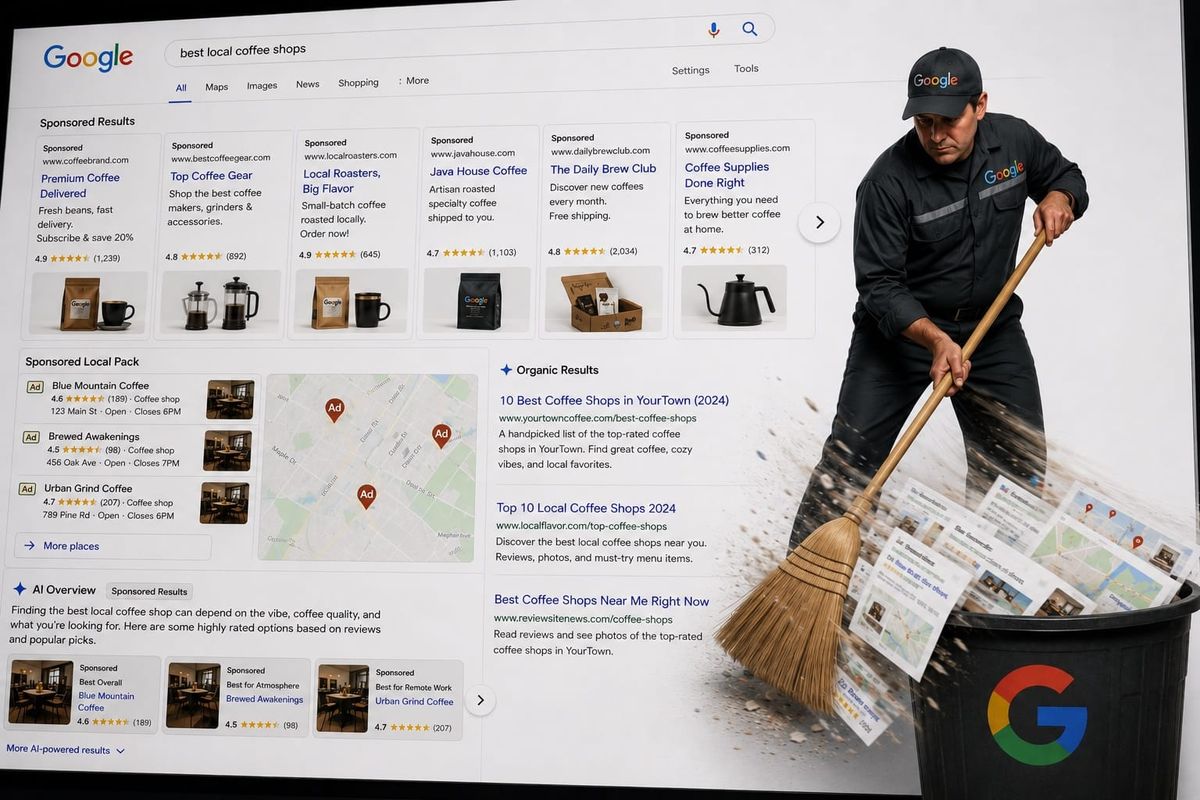](https://www.nearmedia.co/ep-267-you-cant-outspend-a-bad-intake-experience-brand-building-for-legal/)
[EP 266 - Cyrus Shepard: What Local Brand Actually Means to Google and AICyrus Shepard, founder of Zyppy, joins Greg Sterling and Mike Blumenthal for Part 2 of the Near Memo brand-building series — this time on the technical side: how Google and AI systems actually model a brand, and what a local business can do about it.Near MediaNear Media](https://www.nearmedia.co/ep-266-cyrus-shepard-what-local-brand-actually-means-to-google-and-ai/)
[EP 265 - Decoding Local Branding with John JantschWe explore local branding with John Jantsch, examining how to build trust through offline distinctiveness, mine customer interviews to identify primary differentiators and leverage programmatic referral loops to thrive in this bold new world. All with an eye towards increasing profitabilityNear MediaNear Media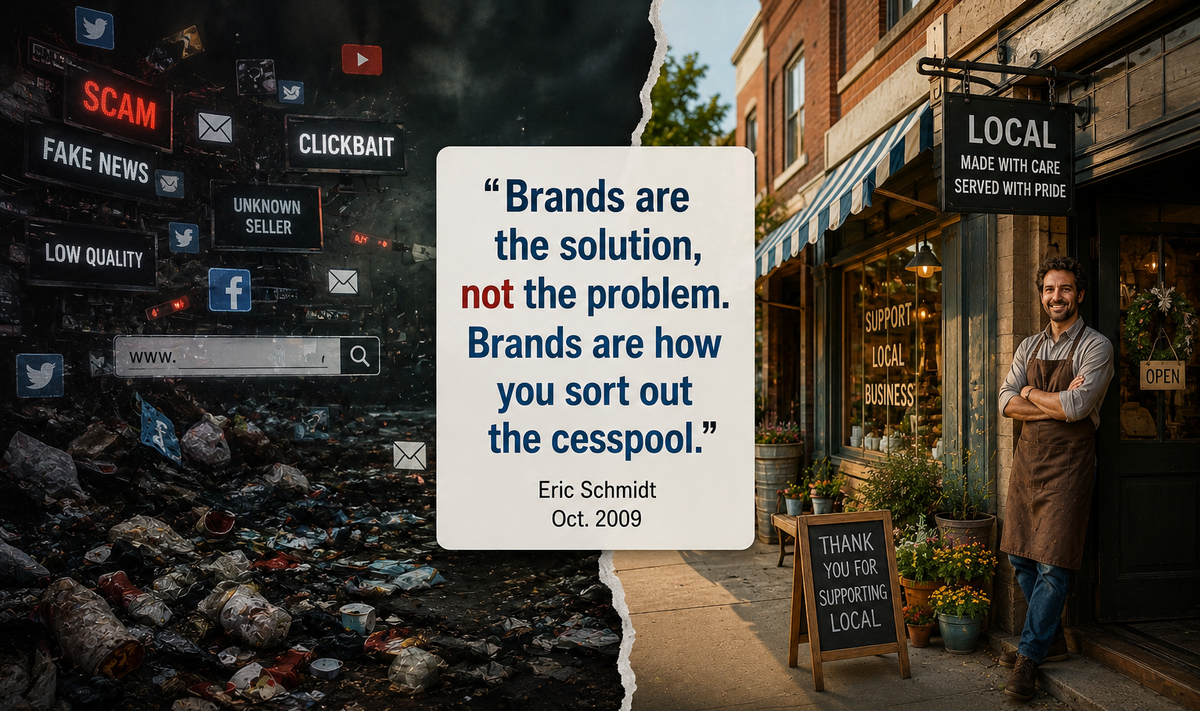](https://www.nearmedia.co/ep-265-decoding-local-branding-with-john-jantsch/)
[EP 264 - Why Small Businesses Need ‘Trust Artifacts’ in the Age of AI Search Friction - Raj Raj Singh, MozillaDiscover why small business websites are shifting from growth engines to “trust artifacts” to battle AI search friction, click fraud, and generative slop.Near MediaNear Media](https://www.nearmedia.co/ep-264-why-small-businesses-need-trust-artifacts-in-the-age-of-ai-search-friction-raj-raj-singh-mozilla/)
[EP 263 - Stop Counting Stars: How to Mine Competitor Reviews for High-Converting Content IdeasLearn how local brands use NLP APIs and modern scraping stacks to transform raw competitor review texts into high-converting website FAQs, operational updates, and definitive, cross-channel brand differentiators with Celeste Gonzalez of Last Mile RetailNear MediaNear Media](https://www.nearmedia.co/ep-263-stop-counting-stars-how-to-mine-competitor-reviews-for-high-converting-content-ideas/)
[EP 262 - The $300 Billion Review Fraud Problem (And How the FTC is Fighting It)Former FTC attorney Michael Atleson reveals the high stakes of review fraud, platform accountability under Section 230, and the new wave of product liability lawsuits reshaping AI law.AmazonNear Media](https://www.nearmedia.co/ep-262-the-300-billion-review-fraud-problem-and-how-the-ftc-is-fighting-it/)
[EP 261 - A Deep Dive Into Google Maps Lists, Local Gems, and the Impact on Restaurant Discovery with Craig BurtonGoogle Maps is rolling out dynamic lists using Gemini AI curation. These new lists features point towards local rankings dictated by unstructured user-generated context, real-world foot traffic, credit card transaction data, and Local Guides & 3rd party mentions rather than simple profile updates.AmazonNear Media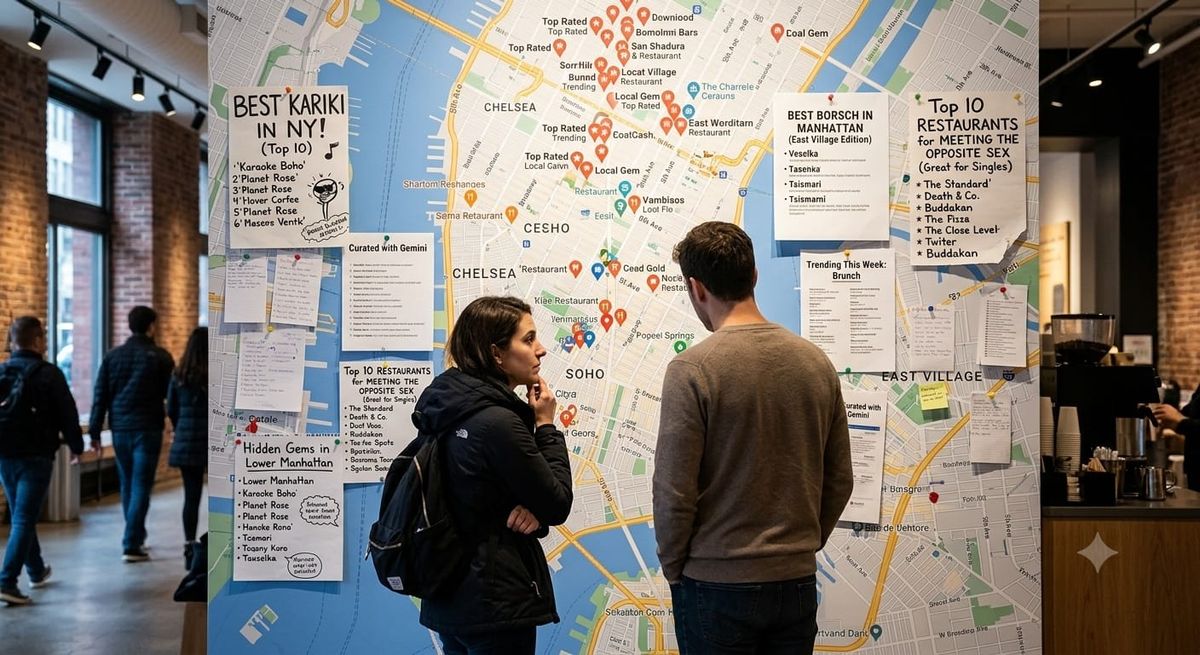](https://www.nearmedia.co/ep-261-a-deep-dive-into-google-maps-lists-local-gems-and-the-impact-on-restaurant-discovery-with-craig-burton/)
[EP 260 - Goodbye Traffic, Hello Sales: The New Playbook for Local SEO Visibility with Cindy Krum, Gregg Gifford & Krystal Tang - Part 2Web attribution is fading, and search paths are fragmenting across alternative channels from Reddit to AI. Industry experts Cindy Krum, Krystal Taing, and Greg Gifford reveal how your business can build visible authority in an AI-driven search ecosystem.Near MediaNear Media](https://www.nearmedia.co/ep-260-goodbye-traffic-hello-sales-the-new-playbook-for-local-seo-visibility-with-cindy-krum-gregg-gifford-krystal-tang-part-2/)
[EP 259 - What Does I/O Mean for Marketers with Cindy Krum, Gregg Gifford & Krystal Tang - Part 1Google I/O has confirmed a massive shift away from outbound website links toward a closed-loop, transaction-driven AI ecosystem. Learn how features like Ask Maps and custom AI agents will impact your brand’s search visibility.Near MediaNear Media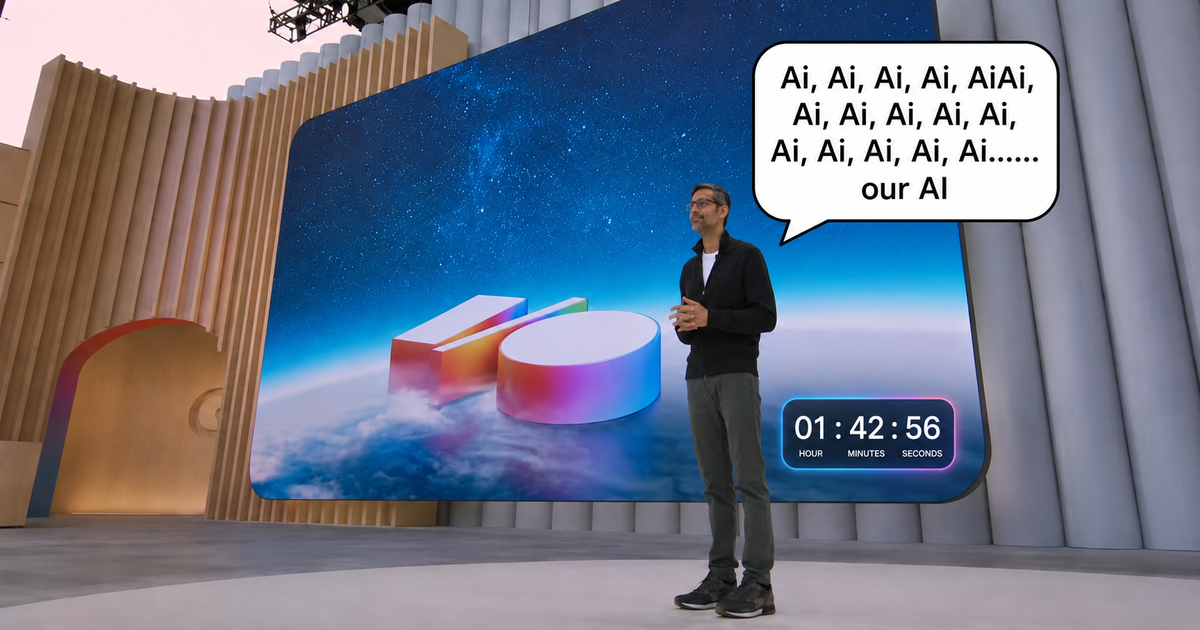](https://www.nearmedia.co/ep-259-what-does-i-o-mean-for-marketers-with-cindy-krum-gregg-gifford-krystal-tang-part-1/)
[EP 258 - From Keyword Rankings to Brand Reverence: The New Local AI SEO Blueprint with Darren ShawDiscover how Google’s Ask Maps and AI-driven local features level the playing field for local businesses, shift rankings toward non-deterministic visibility, and turn customer review responses into invaluable data for market research.Near MediaNear Media](https://www.nearmedia.co/ep-258-from-keyword-rankings-to-brand-reverence-the-new-local-ai-seo-blueprint-with-darren-shaw/)
[EP 257 - Google Already Knows Everything About You — And Their New AI Features Make It WorseGoogle’s AI future is arriving fast. We unpack massive Google Business Profile fraud, inferred personalization, announcements from I/O: AI-native advertising, and how AI Mode could reshape search, local discovery, and consumer behavior.Near MediaNear Media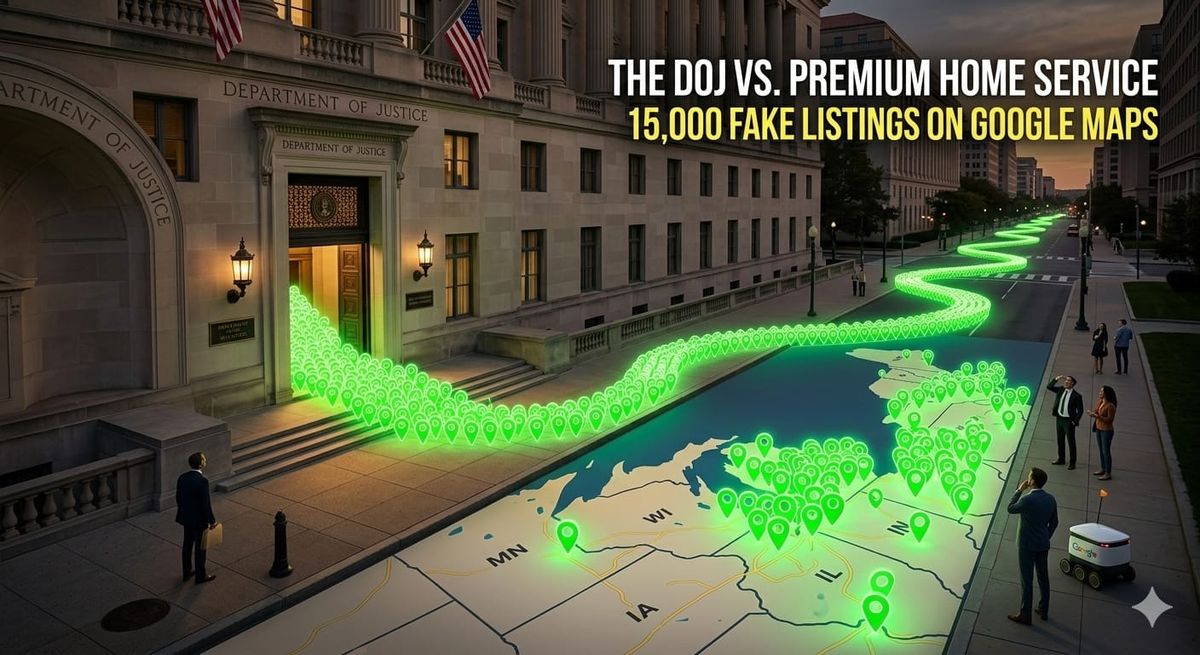](https://www.nearmedia.co/ep-257-google-already-knows-everything-about-you-and-their-new-ai-features-make-it-worse/)
[EP 256 P2 - The Death of Keywords: How Google’s Personal Intelligence is defining the future of Local SearchIn Part 2, Garrett Sussman joins Near Media to explore how Google’s AI personalization could transform local search, reviews, SEO, attribution, and marketing strategy — and what businesses should start doing now before AI-driven discovery becomes dominant.Near MediaNear Media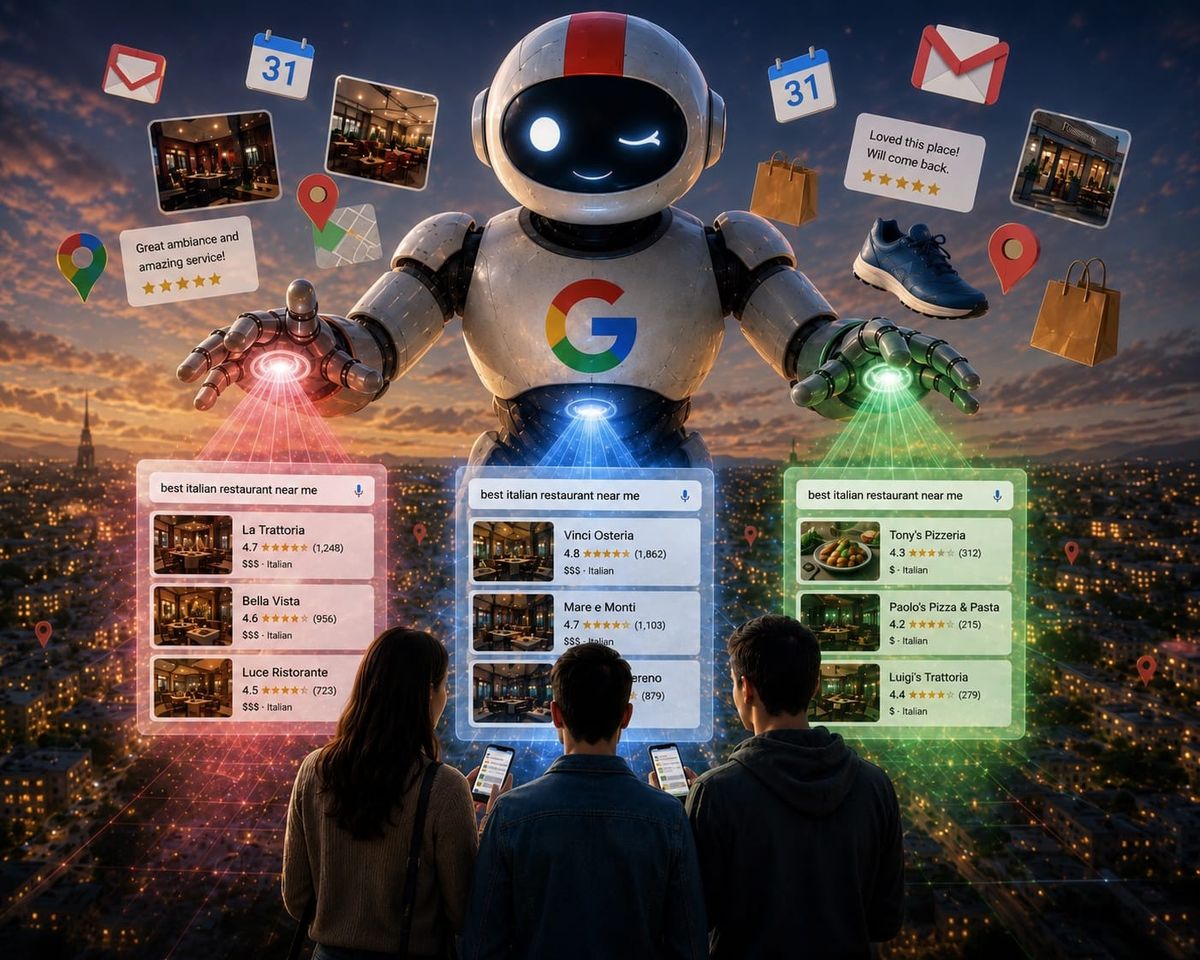](https://www.nearmedia.co/ep-256-p2-the-death-of-keywords-how-googles-personal-intelligence-is-defining-the-future-of-local-search/)
[EP 255 - How Google’s Personal Intelligence is Quietly Revolutionizing (Everyone’s) Search ResultsIn this episode we are joined by Garrett Sussman (iPullRank) to discuss his provocative 12-month study on AI personalization. We dive deep into how Google’s “AI Mode” uses your Gmail, Photos, and Calendar to tailor results—and why “unopened emails” might be influencing what you see next.Near MediaNear Media](https://www.nearmedia.co/ep-255-how-googles-personal-intelligence-is-quietly-revolutionizing-everyones-search-results/)
[EP 254 - Google Ask Maps Deep Dive: Ask Maps Is The Future of Local SEO Panel DiscussionJoin our celebrity local SEO panel—Claudia Tomina, Adam Dorfman, and Darren “The Canadian” Shaw—as they explore “Ask Maps,” Google’s AI-powered conversational interface for local search.Near MediaNear Media](https://www.nearmedia.co/ep-254-google-ask-maps-deep-dive-ask-maps-is-the-future-of-local-seo-panel-discussion/)
[EP 253 - Yelp Strikes Back + The FTC’s Review Fraud Hit ListYelp leverages the Google antitrust ruling while the FTC targets small law firms for review fraud. Plus: Google’s new LSA scraping and the death of the Local Pack?Near MediaNear Media](https://www.nearmedia.co/ep-253-yelp-strikes-back-the-ftcs-review-fraud-hit-list/)
[EP 252 - Google Reviews Crackdown, Meta vs Google, and the AI Search Shift (What Marketers Are Missing)Google’s new review rules are triggering removals, Meta may surpass Google in ad share, and AI is quietly reshaping search behavior. Here’s what marketers need to understand now.Near MediaNear Media](https://www.nearmedia.co/ep-252-google-reviews-crackdown-meta-vs-google-and-the-ai-search-shift-what-marketers-are-missing/)
[EP 251 - Google Lied About Click Data — Here’s What Actually Drives Rankings in 2026 with Cyrus ShepardGoogle said clicks didn’t matter. The antitrust trial, API leaks, and real-world testing say otherwise. In this episode, Cyrus Shepherd (Zyppy) joins Near Memo to break down how Google actually uses click data — including “last longest click” — and what that means in a world of AI Overviews.Near MediaNear Media](https://www.nearmedia.co/ep-251-google-lied-about-click-data-heres-what-actually-drives-rankings-in-2026-with-cyrus-shepard/)
[EP 250 - AI, Photos, Reviews & Intent Pages: What Actually Drives Multi-Location SEO Now (Part 2)AI search isn’t driving traffic—but it is reshaping visibility. Learn why intent pages, review signals, and brand awareness matter more than ever for multi-location SEO, and what actually works now.Near MediaNear Media](https://www.nearmedia.co/ep-250-ai-photos-reviews-intent-pages-what-actually-drives-multi-location-seo-now-part-2/)
[EP 249 - Why Multi-Location SEO Is So Hard (And What Actually Works) Part 1Multi-location SEO isn’t about tactics—it’s about execution. This episode, with Steve Wiideman, breaks down the real challenges brands face, from internal friction to content strategy, reviews, and shifting search behavior. Plus: what AI means (and doesn’t).Near MediaNear Media](https://www.nearmedia.co/ep-249-why-multi-location-seo-is-so-hard-and-what-actually-works-part-1/)
[EP 248 - State of Google Business Profile 2026: Impressions Are Down 54%—But Actions Aren’t with Adam DorfmanNew data shows Google Business Profile impressions are down 54%—but conversions haven’t followed. Here’s what AI, Maps, and changing search behavior really mean for local businesses and marketers.Near MediaNear Media](https://www.nearmedia.co/ep-248-state-of-google-business-profile-2026-impressions-are-down-54-but-actions-arent-with-adam-dorfman/)
[EP 247 - From the Archives: Local Search Ranking Factors — Darren Shaw on Reviews, AI Search & What Drives Local RankIn this recently archived Near Memo episode, Darren Shaw explains the Local Search Ranking Factors study, why reviews and behavioral signals matter more than ever, and how AI search is reshaping local discovery.Near MediaNear Media](https://www.nearmedia.co/ep-247-from-the-archives-local-search-ranking-factors-darren-shaw-on-reviews-ai-search-what-drives-local-rank/)
[EP 246 - Inside the LSA Agency Model (Former Google Insider Explains)How are agencies turning Google Local Service Ads into a scalable service? In this Near Memo panel, experts from Leadwise HQ, Reputation Arm, Sterling Sky and Google’s product expert community discuss LSA strategy, pricing, lead quality and fraud.Near MediaNear Media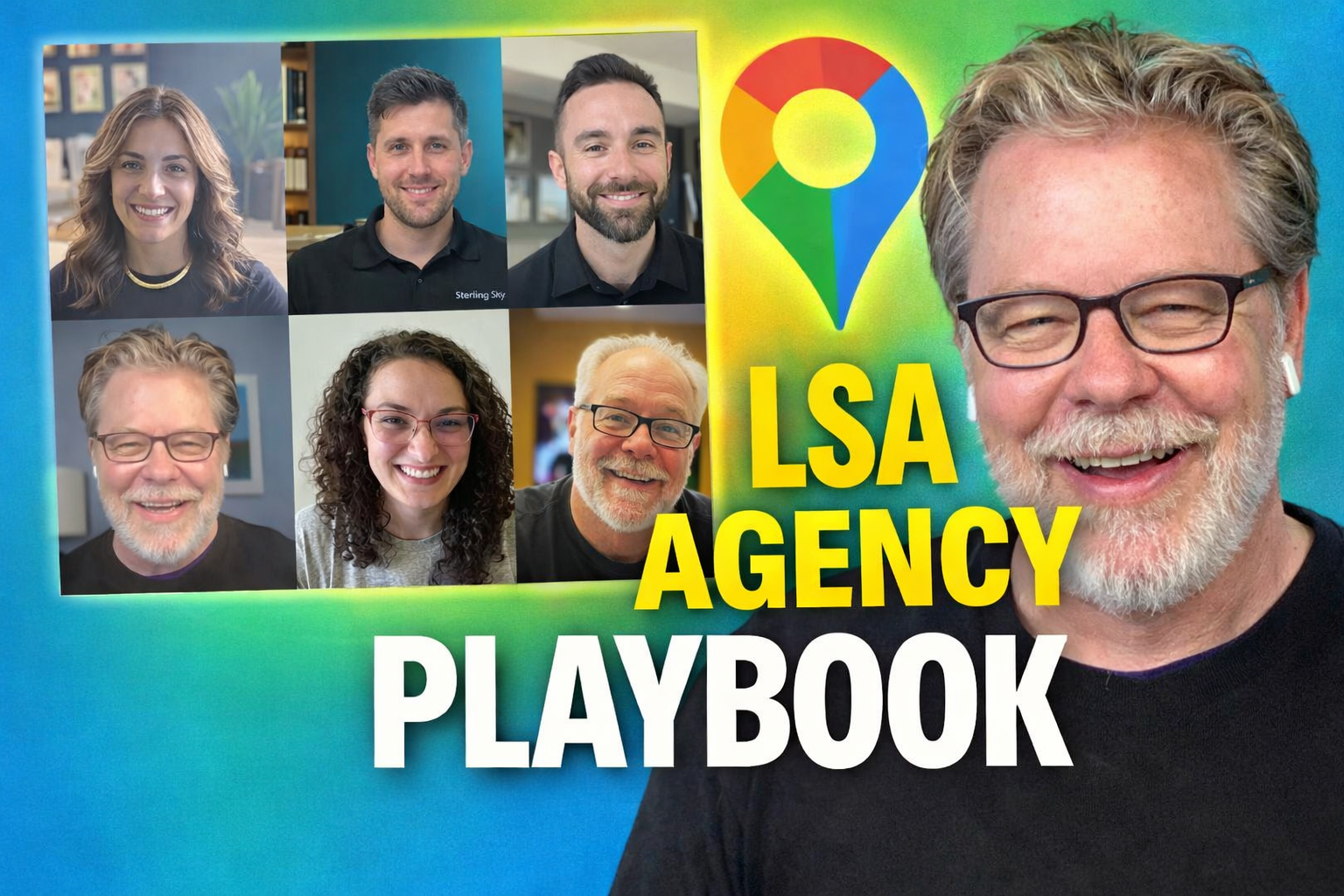](https://www.nearmedia.co/ep-246-inside-the-lsa-agency-model-former-google-insider-explains/)
[EP 245 - AI, Strong-Arm Tactics & a Shifting Review Landscape Are Reshaping Local SearchGoogle is replacing GBP data with AI summaries, ads are siphoning clicks, review fraud is rising, and scraping is being blocked. Here’s what it means for local search, LSAs, and the future of trust in 2026.Near MediaNear Media](https://www.nearmedia.co/ep-245-ai-strong-arm-tactics-a-shifting-review-landscape-are-reshaping-local-search/)
[EP 244 - AI Visibility vs Google Rankings: Rand Fishkin on the Future of Search, Zero-Click & Brand MeasurementRand Fishkin joins Near Memo to unpack AI visibility tracking, zero-click search, collapsing attribution models, and where brands should focus in 2026\. A must-listen for marketers navigating AI’s impact on search and measurement.Near MediaNear Media](https://www.nearmedia.co/ep-244-ai-visibility-vs-google-rankings-rand-fishkin-on-the-future-of-search-zero-click-brand-measurement/)
[EP 243 P2 - The Truth About Google Local Service Ads: Rankings, Reviews & Photo Strategy (w/ Eric Levine)Former Googler Eric Levine explains how Google Local Service Ads aren’t just about reviews or budget. Ranking depends on review velocity, responsiveness, and visual trust. Here’s what actually drives LSA visibility — and why your photos may matter more than you think.Near MediaNear Media](https://www.nearmedia.co/ep-243-p2-the-truth-about-google-local-service-ads-rankings-reviews-photo-strategy-w-eric-levine/)
[EP 242 P1 - Inside Google Local Services Ads: Ranking Signals, Lead Costs, and Why LSAs Beat the Local Pack (w/ Eric Levine)Former Googler Eric Levine explains how Local Services Ads became Google’s most powerful local ad product—covering verification, ranking signals, lead pricing, reviews, and why LSAs increasingly crowd out organic and PPC results. Sign up for free to get access to this and our newslettersNear MediaNear Media](https://www.nearmedia.co/ep-242-p1-inside-google-local-services-ads-ranking-signals-lead-costs-and-why-lsas-beat-the-local-pack-w-eric-levine/)
[EP 241 - AI Isn’t Replacing Local Search, But It’s Rewiring How People Choose - with Crystal CarterWith Crystal Carter, we unpack how AI assistants, & emerging agentic experiences are changing consumer behavior, local search & brand visibility. From ChatGPT & Google’s AI-driven results to personalization, intent modeling and task completion, we explore what actually changes and what doesn’t.Near MediaNear Media](https://www.nearmedia.co/ep-241-ai-isnt-replacing-local-search-but-its-rewiring-how-people-choose-with-crystal-carter/)
[EP 240 - Inside Google Local Rankings and the Review PurgeClaudia Tomina joins us to break down what the Google API leak reveals about rankings and the role of business name and categories, why reviews are really disappearing, and how AI Overviews, Gemini, and AI Mode are reshaping local discovery and conversion.Near MediaNear Media](https://www.nearmedia.co/ep-240-inside-google-local-rankings-and-the-review-purge/)
[EP 239 P#2 - AI Is Breaking Local Search—But Google Still Decides Who Gets ChosenAI-driven discovery is reshaping local search, but reviews, brand trust, and Google still drive decisions. This deep dive with Gyi Tsakalakis explains what’s changing, what isn’t, and how local marketers should adapt now.Near MediaNear Media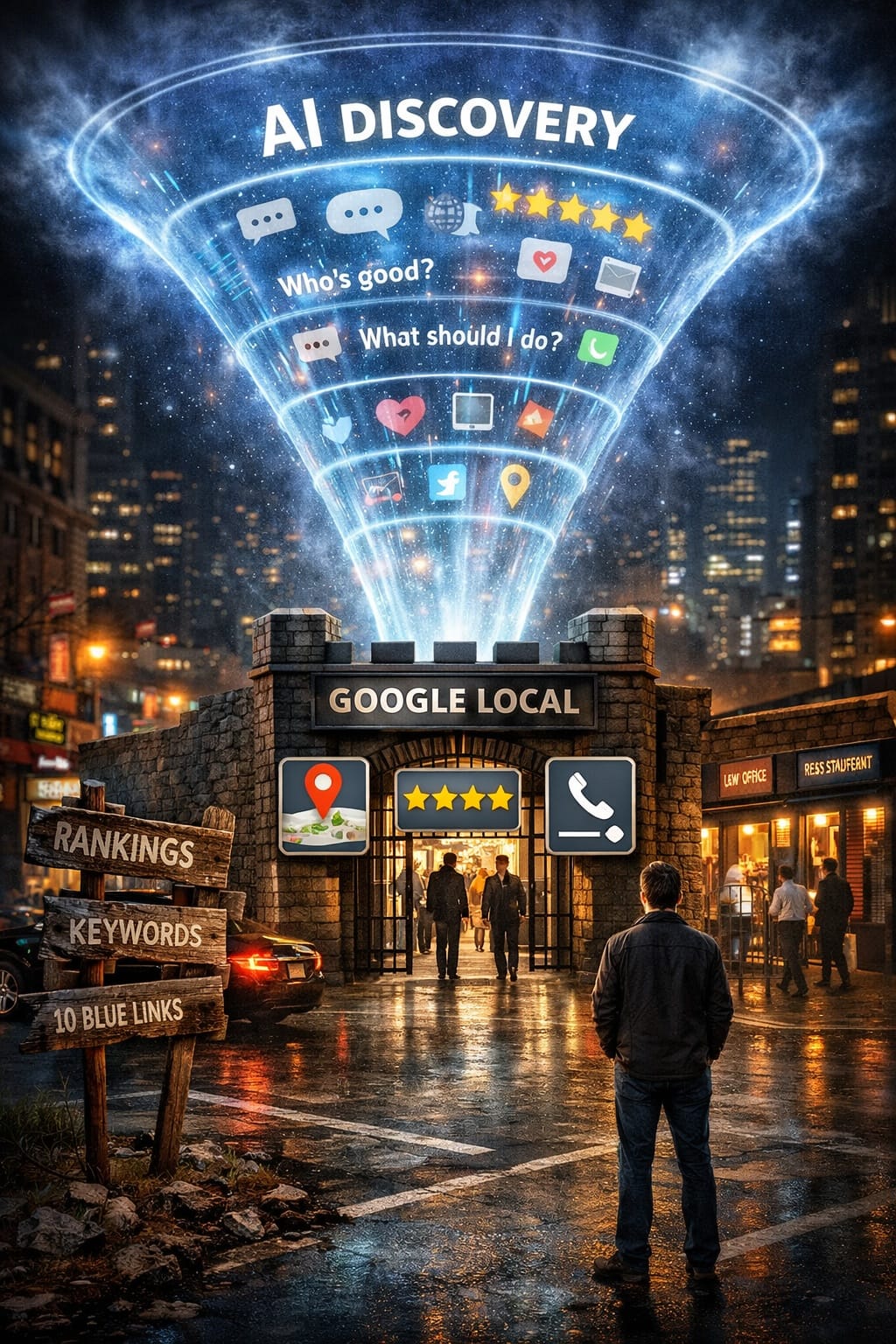](https://www.nearmedia.co/ep-239-p-2-ai-is-breaking-local-search-but-google-still-decides-who-gets-chosen/)
[EP 238 P#1 - Why Local SEO Is Breaking for Law Firms (And What Actually Works Now)Local SEO, Google visibility, reviews, & Google LSAs are no longer working the way law firms expect. In this episode, Gyi Tsakalakis of AttorneySync joins us to explain why rankings & traffic are misleading, how LSAs reshape legal demand, and how brand trust has become the real competitive moat.Near MediaNear Media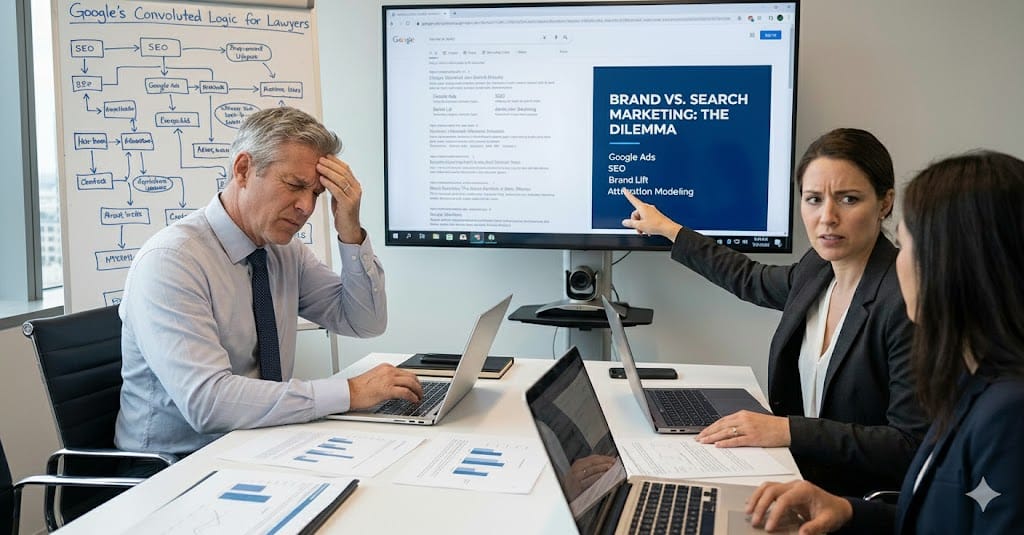](https://www.nearmedia.co/ep-238-p-1-why-local-seo-is-breaking-for-law-firms-and-what-actually-works-now/)
[EP 237 P#2 - Google’s AI Mode Is Rewriting Local Search — What Businesses Must Do for 2026Google’s AI Mode and ChatGPT search are reshaping local discovery. This Part 2 of a deep dive interview with Michel van Luijtelaar of GMBapi explains what’s changing, how users behave inside AI results, and what local businesses must do now to stay visible and trusted.Near MediaNear Media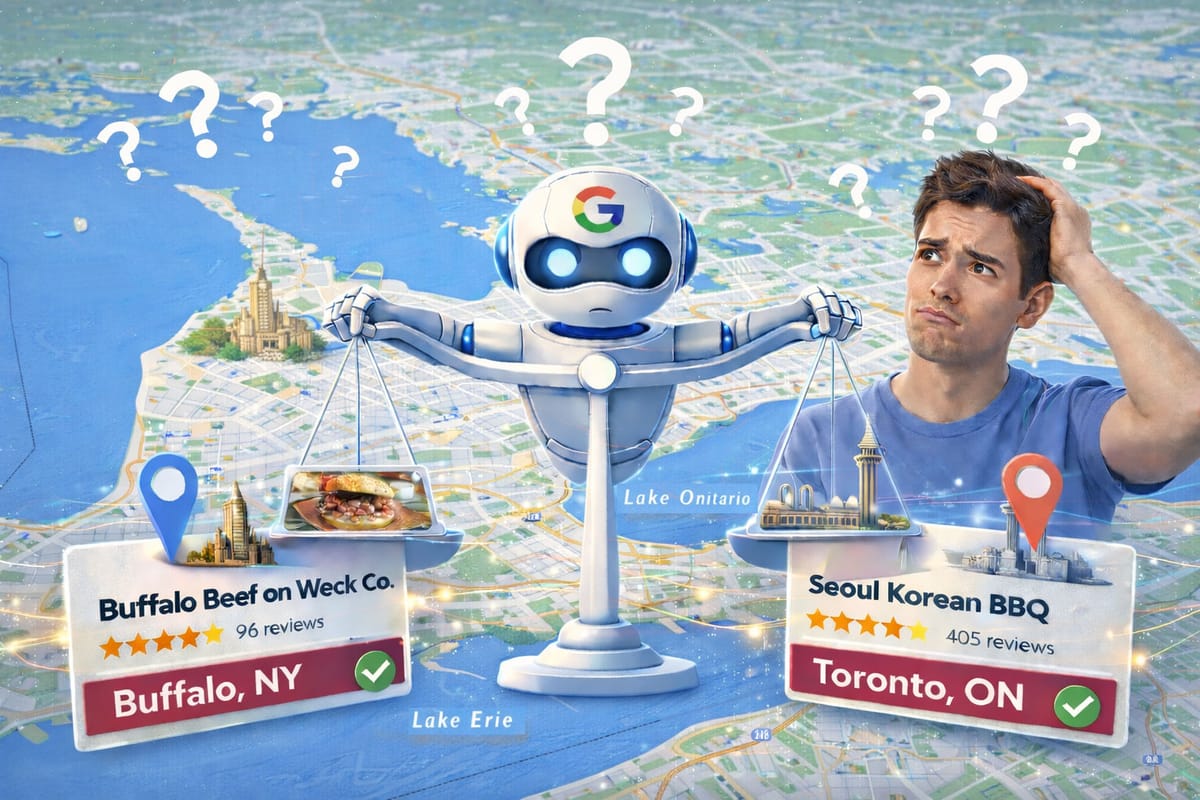](https://www.nearmedia.co/ep-237-p-2-googles-ai-mode-is-rewriting-local-search-what-businesses-must-do-for-2026/)
[EP 236 P#1 - Google’s Review Algorithms Are Tightening — Here’s What GMBAPI’s Data ShowsWe talk with Michel van Luijtelaar of GMB API about what new data reveals regarding review removals, fraud detection, incentivized reviews, and regional legal differences across Europe and the U.S. Their new data shows Google is deleting reviews at ever increasing levels.Near MediaNear Media](https://www.nearmedia.co/ep-236-p-1-googles-review-algorithms-are-tightening-heres-what-gmbapis-data-shows/)
[EP 235 P#2 - AI Agents Are Coming: Jes Scholz Reveals How to Prepare Your Business & Website NOWAI agents, content freshness, and database readiness are rewriting marketing. Jes Scholz explains what brands must do now to stay discoverable, trustworthy, and competitive as conversational interfaces reshape how people search and buy.Near MediaNear Media](https://www.nearmedia.co/ep-235-p-2-ai-agents-are-coming-jes-scholz-reveals-how-to-prepare-your-business-website-now/)
[EP 234 P#1 - Gemini 3, AI Mode & the New Search Reality: A Conversation with Jes ScholzAI search is evolving fast. Jes Scholz joins us to explain how conversational interfaces, Gemini 3, shrinking indexes and brand salience are reshaping SEO & Local SEO strategy. Here’s what matters — and what doesn’t — in 2025.Near MediaNear Media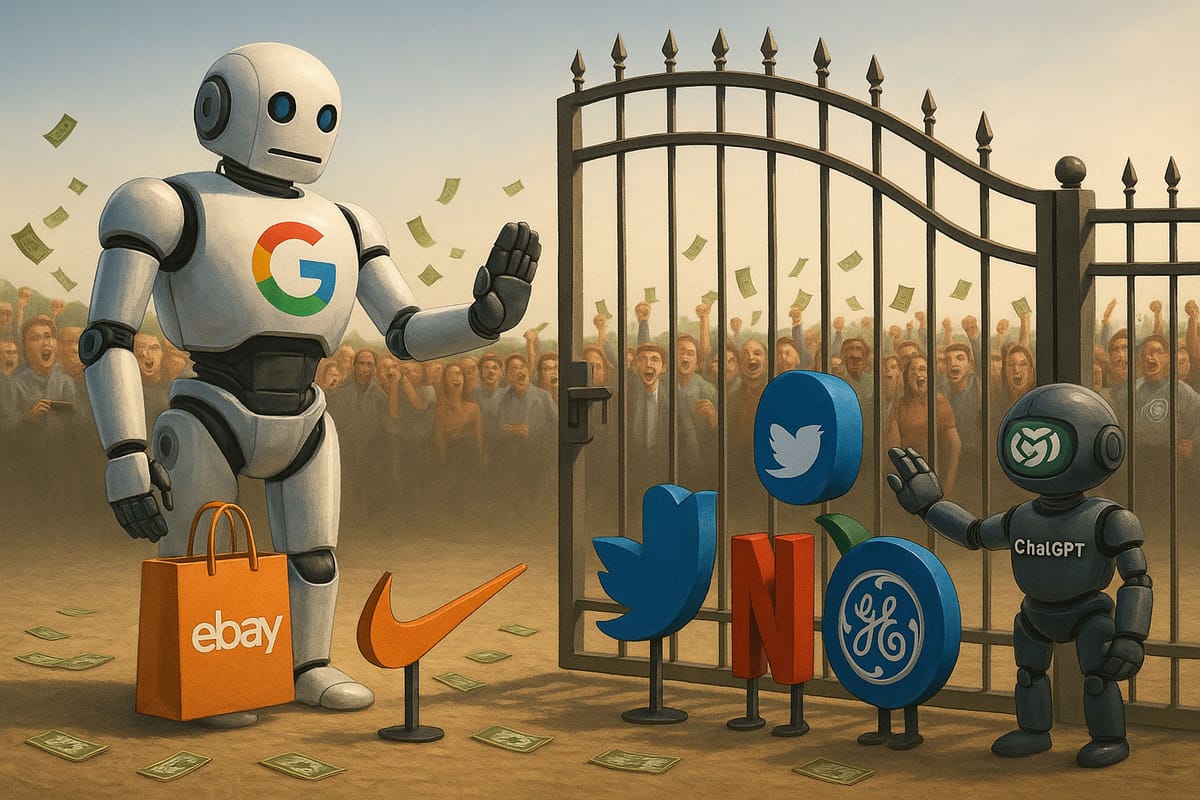](https://www.nearmedia.co/ep-234-p-1-gemini-3-ai-mode-the-new-search-reality-a-conversation-with-jes-scholz/)
[EP 233 - Google Maps Gets AI, Reviews Get Aliases, Ads Invade AI Mode — And Google Uses Tech & Monopoly to Win the AI WarGoogle is pushing deeper into AI: Maps gets new AI features, reviews get aliases, ads creep into AI Mode, and Google changes the reality of search and leans on its monopoly power to steer users toward Gemini as it battles ChatGPT for AI dominanceNear MediaNear Media](https://www.nearmedia.co/ep-233-google-maps-gets-ai-reviews-get-aliases-ads-invade-ai-mode-and-google-uses-tech-monopoly-to-win-the-ai-war/)
[EP 232 - What #1-Ranking Personal Injury Lawyers Are Doing Right With GBP— Greg Gifford’s Local Ranking StudyGreg Gifford shares his massive study of 3,000 personal injury GBPs, revealing which tactics truly separate high-ranking firms from the rest—and what it means for local SEO in the AI era.Near MediaNear Media](https://www.nearmedia.co/ep-232-what-1-ranking-personal-injury-lawyers-are-doing-right-with-gbp-greg-giffords-local-ranking-study/)
[EP 231 - Local Search in the Age of AI: Darren Shaw on the 2026 Ranking FactorsDarren Shaw joins Near Media to discuss the 2026 Local Search Ranking Factors report — revealing how AI search, reviews, and behavioral signals are reshaping local SEO. Discover what really drives visibility in the age of AI.Near MediaNear Media](https://www.nearmedia.co/ep-231-local-search-in-the-age-of-ai-darren-shaw-on-the-2026-ranking-factors/)
[EP 230 - TikTok’s Local Play: How Gen Z Is Rewriting Local SearchGen Z’s search habits are changing fast — 62 % now use TikTok to find local businesses. Greg Sterling, Mike Blumenthal, and Celeste Gonzalez (Rickety Roo) Explore how TikTok’ and their Local Explorer program could redefine local SEO and authentic review discovery. Sign up to access for free.Near MediaNear Media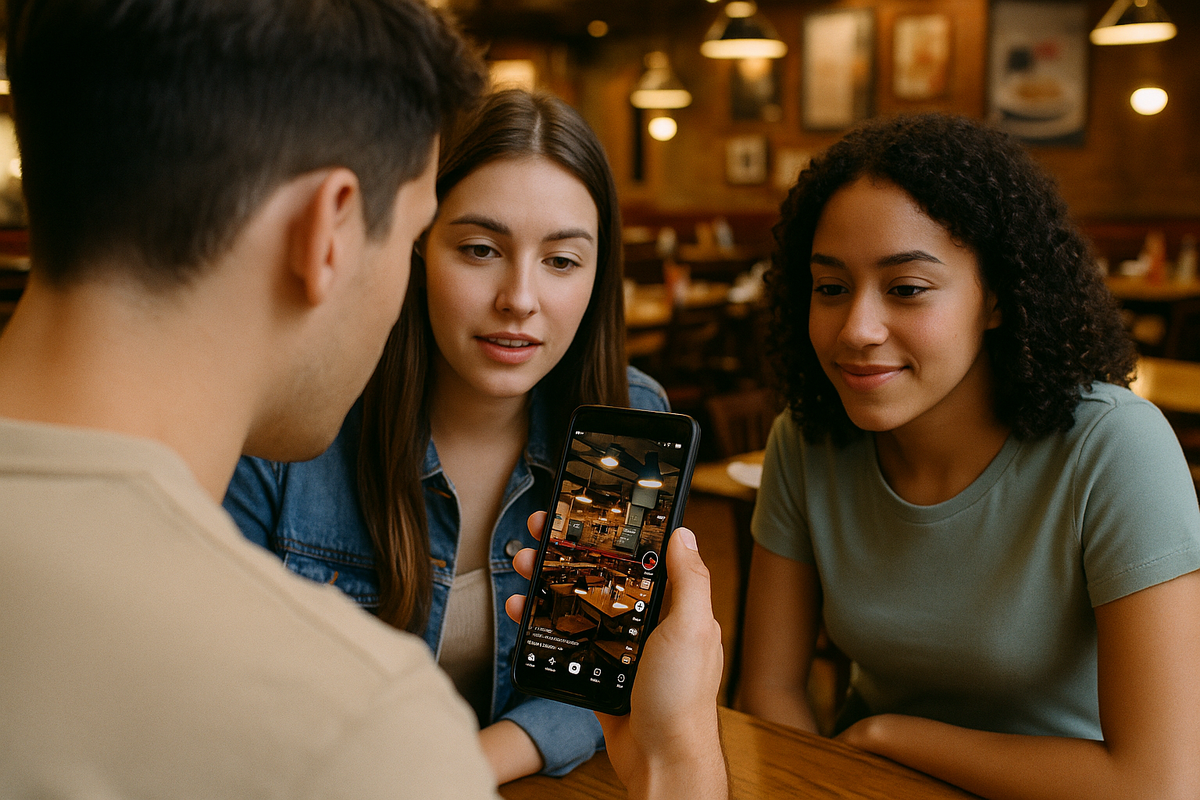](https://www.nearmedia.co/ep-330-tiktoks-local-play-how-gen-z-is-rewriting-local-search/)
[EP 229 - Google’s Local Antitrust Battle with Yelp Moves Gorward, Gemini’s “Grounded” Local AI, and ChatGPT’s New Local ResultsWe discuss Yelp’s revived antitrust lawsuit, Google’s confusing new ad labeling, Gemini’s flawed “grounding” in Maps, and ChatGPT’s evolving local search results — plus why trust in AI is starting to crack. Sign up to access for free.Near MediaNear Media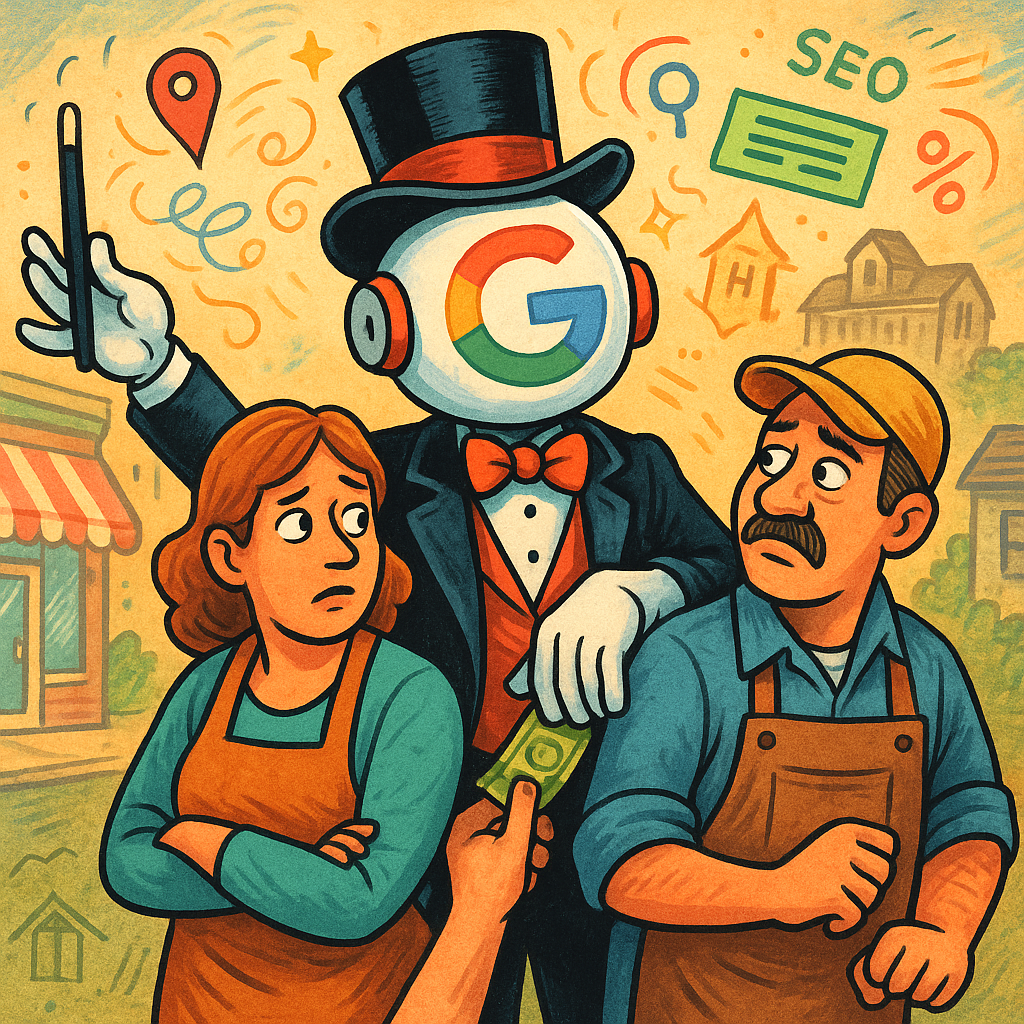](https://www.nearmedia.co/ep-229-googles-local-antitrust-battle-with-yelp-moves-gorward-geminis-grounded-local-ai-and-chatgpts-new-local-results/)
[EP 228 - AI & Local: How AI Is Rewriting Location Management; Interview with Ana Martinez, P2In Part 2 of our interview with Ana Martinez of Uberall we discuss how AI is changing local visibility. From adoption curves to Google’s AI Overviews, shifting consumer behavior, and the renewed value of citations, we explore what businesses must do to stay visible in an AI-driven marketplace.Near MediaNear Media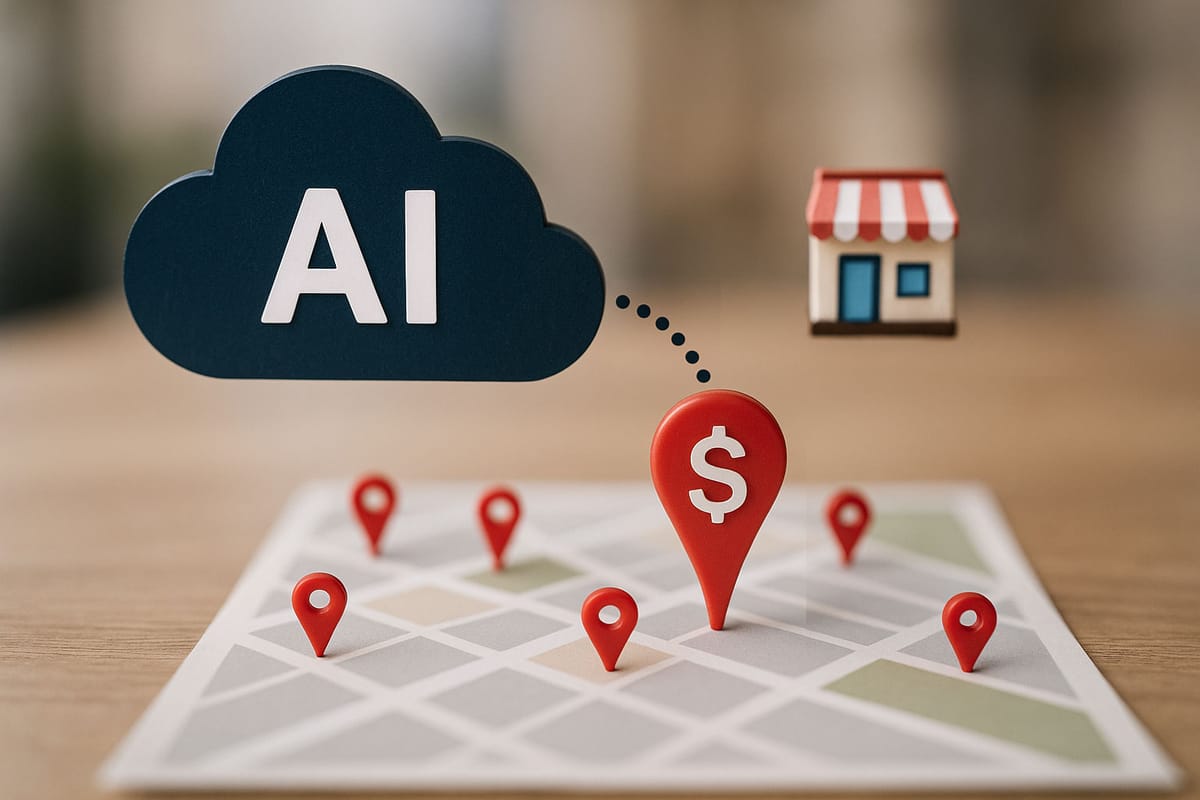](https://www.nearmedia.co/ep-228-ai-local-how-ai-is-rewriting-location-management-interview-with-ana-martinez-p2/)
[EP 227 - Inside Uberall’s Local AI Shift: From Culture Shift to Client Tools; Interview with Ana Martinez -- Part 1Uberall CTO Ana Martinez explains how AI is reshaping culture, products, and customer engagement in their Location Management tools—from rethinking roles and workflows to launching UB-I and the Location Performance Score.Near MediaMike Blumenthal](https://www.nearmedia.co/ep-227-inside-uberalls-local-ai-shift-from-culture-shift-to-client-tools-interview-with-ana-martinez-part-1/)
[EP 226 - Google GBP Suspension Increases?, The Future of Reviews, and Liz Reid’s AI Vision for SearchFrom GBP suspension increases to the future of reviews to Liz Reid’s AI roadmap, the Near Memo breaks down what Google’s latest moves mean for small businesses, SEOs, and consumers navigating an increasingly AI-driven search world.Near MediaNear Media](https://www.nearmedia.co/ep-226-google-gbp-suspension-increases-the-future-of-reviews-and-liz-reids-ai-vision-for-search/)
[EP 225 - Google Review Extortion, Maps AR Experiment, What ChatGPT is Missing & YouTube’s Strategic PowerFrom review extortion scams to new AR tools in Google Maps, ChatGPT’s local blind spots, and YouTube’s rise as a strategic powerhouse — here’s what’s shaping the future of Google and local marketing.Near MediaNear Media](https://www.nearmedia.co/ep-225-google-review-extortion-maps-ar-experiment-what-chatgpt-is-missing-youtubes-strategic-power/)
[EP 224 - Review Extortion, Google’s Double Talk on the Open Web, The Open Web Future — with Barry SchwartzBarry Schwartz joins The Near Memo to discuss review extortion, contradictions in Google’s “open web” claims, the decline of publisher traffic, affiliate content debates, and how AI overviews are reshaping perceptions of search quality.Near MediaNear Media](https://www.nearmedia.co/ep-224-review-extortion-googles-double-talk-on-the-open-web-the-open-web-future-with-barry-schwartz/)
[EP 223 - Google’s Action Links Crackdown, The “Declining” Open Web, and Siri + GeminiGoogle tightens business action link rules, calls the open web “in decline” in court and then retracts, and we explore an AI deal with Apple’s Siri. We break down what these moves mean for businesses, publishers, and the future of search.Near MediaNear Media](https://www.nearmedia.co/ep-223-googles-action-links-crackdown-the-declining-open-web-and-siri-gemini/)
[EP 222 - AI Overviews in Local: When & Where, DOJ Remedies (?), and an SMB GBP Case StudyNew data on AI Overviews in local search: where AIOs appear, how people actually use Google vs ChatGPT, what DOJ’s remedies mean, and a real client case where a brand-new ‘Summit Holiday Lighting’ triggered an AIO. Tactics & takeaways.Near MediaNear Media](https://www.nearmedia.co/ep-222-ai-overviews-in-local-when-where-doj-remedies-and-an-smb-gbp-case-study/)
[EP 221 - AI Overviews & Why consumers like them, Reviews V. Reality & Why Search Volumes Aren’t FallingWe explore consumer acceptance of AI Overviews, how consumer review behavior differs from survey expectations, and why Datos data shows Google search remains strong despite AI adoption.Sign up for free to readNear MediaNear Media](https://www.nearmedia.co/ep-221-ai-overviews-why-consumers-like-them-reviews-v-reality-why-search-volumes-arent-falling/)
[EP 220 - Google’s LSA Shake-Up, Google LSA Dark Patterns & BrightLocal SMB Marketing InsightsGoogle is consolidating LSA with a single badge - we cover other recent LSA changes, the degradation of organic results, the dark patterns that elevate LSA usage and new BrightLocal data showing less than half of small businesses have claimed their Google Business Profiles. Sign up for free to readNear MediaNear Media](https://www.nearmedia.co/ep-220-googles-lsa-shake-up-google-lsa-dark-patterns-brightlocal-smb-marketing-insights/)
[EP 219 - Barnacle SEO in the AI Era: Will Scott on Tools, Automation & Content Strategy - Part 2In Part 2 of this interview, Will Scott of Search Influence explains how AI is changing Local SEO. Learn how to use semantic SEO, no-code tools, and content repurposing to “barnacle” onto authority sites, boost brand visibility, and thrive in an AI-first search world. Sign up for free to read.Near MediaNear Media](https://www.nearmedia.co/ep-219-barnacle-seo-in-the-ai-era-will-scott-on-tools-automation-content-strategy-part-2/)
[EP 218 - Part 1: Barnacle SEO in the AI Era: Will Scott on Leveraging AI for Search & ChatGPT VisibilityWill Scott joins Near Memo to reframe Barnacle SEO for the AI era. Learn how to stay visible in AI overviews, leverage trusted sources, and why “garbage engine optimization” might be the new SEO enemy.... Sign up for free to read.Near MediaNear Media](https://www.nearmedia.co/ep-218-part-1-barnacle-seo-in-the-ai-era-will-scott-on-leveraging-ai-for-search-chatgpt-visibility/)
[EP 217 - The Future of Maps: User Focused, Contextual & Integrated AI with Goetz WeberWe talk with map expert Goetz Weber about why today’s maps fail to deliver personal, contextual experiences & what needs to change. From intent modeling to the limits of monetization, from ChatGPT to Snap, he lays out a compelling vision for mapping 2.0: visual, social, & AI powered. Sign up to readNear MediaNear Media](https://www.nearmedia.co/ep-217-the-future-of-maps-user-focused-contextual-integrated-ai-with-goetz-weber/)
[EP 216 -AI Overviews vs. Local SEO: Are Users Clicking Less? Who Will Win the Name Game?New data shows AI Overviews reduce website clicks and disrupt the local pack. Greg and Mike explore the implications for search, traffic, and branding in the AI era—plus some fun with burritos and Bosch dishwashers. Sign up for a free account to read.Near MediaNear Media](https://www.nearmedia.co/ep-216-new-data-shows-ai-overviews-reduce-website-clicks-and-disrupt-the-local-pack-greg-and-mike-explore-the-implications-for-search-traffic-and-branding-in-the-ai-era-plus-some-fun-wi/)
[EP 215 - Google Fixes GBP Alerts Sort Of, Expands “Ask for Me” Local Quotes, Is ChatGPT Becoming a Local Search Disurptor?Google improves GBP notifications—finally. “Ask for Me” AI quote tool rolls out more broadly, but UX is messy. ChatGPT’s new product search and agent features point to OpenAI’s e-comm/local ambitions and raising big trust + data questions.... Sign up for free to read.Near MediaNear Media](https://www.nearmedia.co/ep-215-google-fixes-gbp-alerts-sort-of-expands-ask-for-me-local-quotes-is-chatgpt-becoming-a-local-search-disurptor/)
[EP 214 - AI Overviews, ChatGPT’s Google Shift & Google’s Secret WeaponNew insights on AI Overviews in Local, is ChatGPT using Google index results, and the scale and impact of Google’s 500 million Local Guides on Maps and reviews.... Sign up for free to read & to get future episodes in your in-box.Near MediaNear Media](https://www.nearmedia.co/ep-214-ai-overviews-chatgpts-google-shift-googles-secret-weapon/)
[EP 213 - GBP Suspensions, AIO Overviews & New Best Practices for AI-Era Local SEO and ReviewsFrom Google’s crackdown on suspensions to AI overviews reshaping the SERPs, Greg and Mike explore what’s changing in local search—and why just answering your phone might be your best marketing move yet. Sign up for free to read.Near MediaNear Media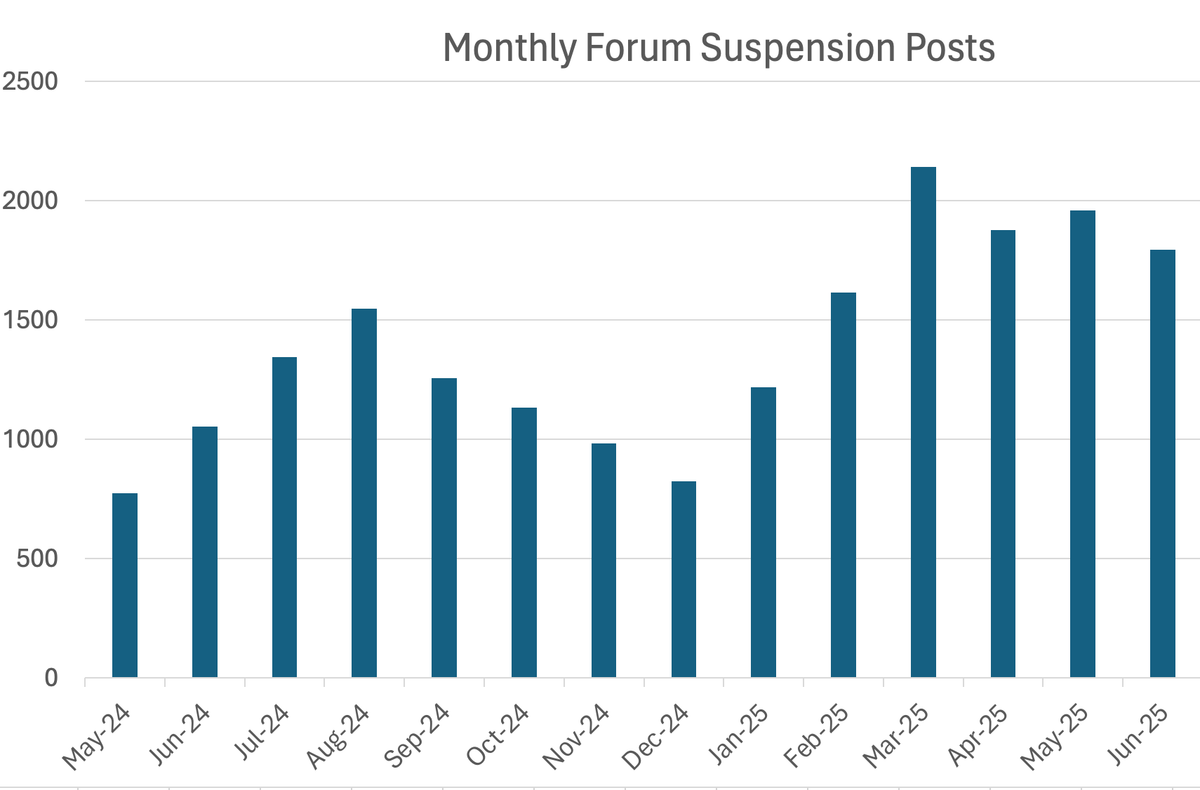](https://www.nearmedia.co/ep-213-gbp-suspensions-aio-overviews-new-best-practices-for-ai-era-local-seo-and-reviews/)
[EP 212 - AI, Reviews & the Future of Local SEO: What Darren Shaw Says You Need to KnowAI is reshaping local SEO, but most small businesses are still focused on Google. Darren Shaw shares how to prep for what’s next—diversified reviews, smarter content, and YouTube visibility for Search Everywhere Optimization (SEO). Sign up for free to read.Near MediaNear Media](https://www.nearmedia.co/ep-212-ai-reviews-the-future-of-local-seo-what-darren-shaw-says-you-need-to-know/)
[EP 211 - Avoiding Google Suspensions, Understanding AI-Driven Search Trends, and Why Siri Is Still on the SidelinesGoogle’s AI-led verification is rigid and heading your way, be prepared. Survey data shows AI is taking over early search, but users still rely on Google to act. Meanwhile, Apple bets on private AI—but Siri is still stuck in 2015.Near MediaNear Media](https://www.nearmedia.co/ep-211-avoiding-google-suspensions-understanding-ai-driven-search-trends-and-why-siri-is-still-on-the-sidelines/)
[EP 210 - Google’s AI Shell Game: Gemini Hype, Antitrust Heat, and The Fight for the Future of SearchGoogle says Gemini has 350M monthly users—but is that real usage or baked-in bloat? We dive into AI inflation, DOJ’s push to break up Google, and why YouTube (not Search) may be the future. Plus: local guides, scraped content, and Google’s shifting deal with the web - Sign up for free to read.Near MediaNear Media](https://www.nearmedia.co/ep-210-googles-ai-shell-game-gemini-hype-antitrust-heat-and-the-fight-for-the-future-of-search/)
[EP 209 - Rewriting the Rules: AI, Search, and the Future of LocalAI is transforming local search—and not always in helpful ways. Long-time local expert Adam Dorfman breaks down what’s changing with Google’s AI Overviews, why clicks are fading, and what still matters for visibility today. Reviews, schema, and smart strategy lead the way.Near MediaNear Media](https://www.nearmedia.co/ep-209-rewriting-the-rules-ai-search-and-the-future-of-local/)
[EP 208 - SEO Tactics from the Frontline: Real User Behavior in AI Overviews - Part 2 of the UX Study AnalysisKevin Indig joins the Near Memo to reveal why SEO is now all about trust, not traffic. Users pick what they recognize, not just what ranks. Clicks are down, but buying behavior hasn’t changed. Learn how to adapt your SEO to this new reality.Near MediaNear Media](https://www.nearmedia.co/ep-208-seo-tactics-from-the-frontline-real-user-behavior-in-ai-overviews-part-2-of-the-ux-study-analysis/)
[EP 207 - Trust Before Clicks: What Google’s AIO UX Study Reveals About Real User BehaviorUsers aren’t clicking like they used to—and trust is the new filter. In Part One of our deep dive, we unpack what a first-of-its-kind UX study reveals about how people really interact with Google’s AI Overviews. Spoiler: skimming wins, reviews matter, clicks lie.Near MediaNear Media](https://www.nearmedia.co/ep-207-trust-before-clicks-what-googles-aio-ux-study-reveals-about-real-user-behavior/)
[EP 206 - Google’s Power Grab: AI Journeys, Monetized Moments, & the End of SEO as We Know It with Cindy KrumGoogle’s next big move? Hyper-personalized AI search journeys that monetize your every click. On Near Memo, Cindy Krum explains how SEO must evolve fast—or fade. Discover, MUM, AI Overviews, and privacy tradeoffs all collide in a new search battleground.Near MediaNear Media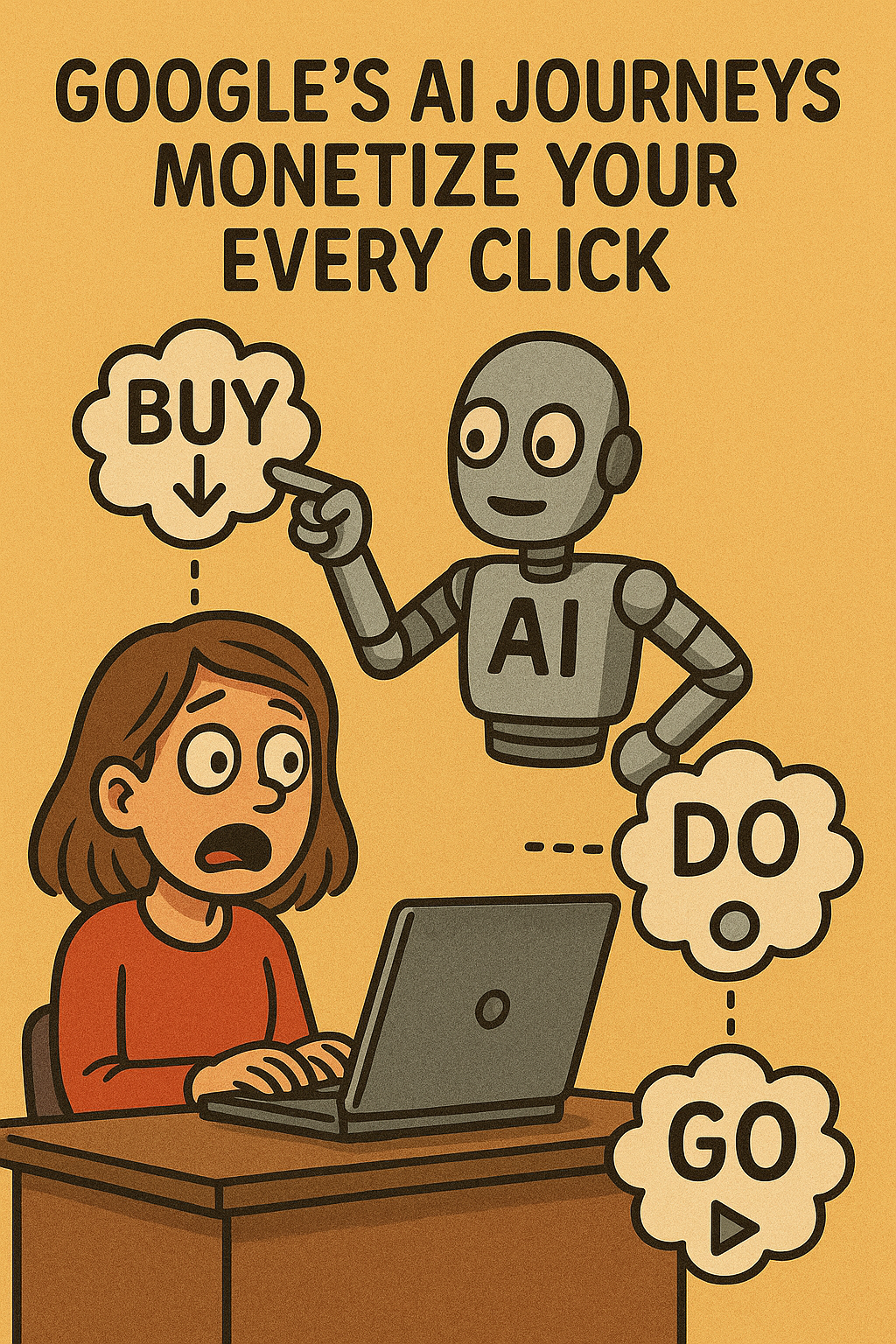](https://www.nearmedia.co/ep-206-googles-power-grab-ai-journeys-monetized-moments-the-end-of-seo-as-we-know-it-with-cindy-krum/)
[EP 205 - AmpUp Conference, Yelp’s Antitrust V. Google, Google AIO for Local Reviews, ChatGPT Gets Product SearchAmpUp conference dives into the strategies & nitty gritty tactics of reputation. Yelp’s antitrust case against Google could blow up local search. Google’s AI review overviews don’t dazzle with brilliance, just baffle users. And ChatGPT? It’s turning into a shopping mall. Sign up for free to read.Near MediaNear Media](https://www.nearmedia.co/ep-205-ampup-conference-yelps-antitrust-v-google-google-aio-for-local-reviews-chatgpt-gets-product-search/)
[Know Before You Go: New Ai Feature on GBP Profiles, G in Antitrust Cross Hairs & the Coming Shift in SearchWe explore a never before seen feature on your Google Business Profile, breakdown the remedy phase proposals of the Google Anti-trust trial and discuss how AI might bridge as we know it to what it might become.Near MediaNear Media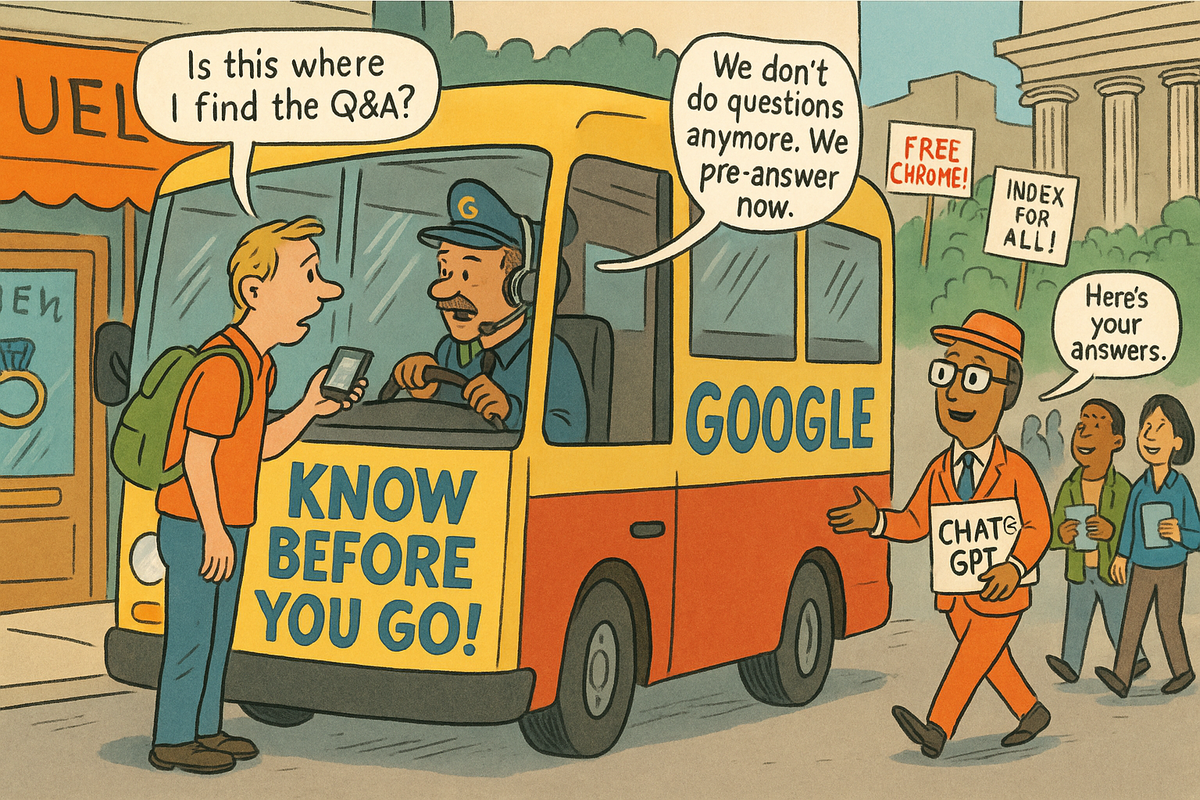](https://www.nearmedia.co/know-before-you-go-new-ai-feature-on-gbp-profiles-g-in-antitrust-cross-hairs-the-coming-shift-in-search/)
[EP203 The Future of Reviews: What Businesses Need to Know - Sammy Paget Interview Part 2We discuss review strategy—review requests, response tactics, and how AI is changing everything. From best practices to Google’s crackdown on fake reviews, it’s a forward-looking guide to reputation, rankings, and real customer connection. Join our free level to watch and get our show notes.Near MediaNear Media](https://www.nearmedia.co/ep203-the-future-of-reviews-what-businesses-need-to-know-sammy-paget-interview-part-2/)
[EP202 From Stars to Skepticism: How Reviews Evolved & Why Trust Is Declining - Sammy Paget Interview Part1We interview Sammy Paget to unpack 15 years of review research—from the rise of review culture to the sharp drop in consumer trust. They explore how AI, fake reviews, and new platforms are reshaping how people research and decide where to spend their money. Subscribe to our free tier to watch.Near MediaNear Media](https://www.nearmedia.co/ep202-from-stars-to-skepticism-how-reviews-evolved-why-trust-is-declining-sammy-paget-interview-part1/)
[EP200 Google’s Euro DMA Headaches, GBP Local Chaos - Uncharacteristic Google Comms & AI Search FuturesIn our milestone 200th episode, David unpacks Google’s mounting DMA regulatory woes in Europe. Mike breaks down a storm of GBP bugs and ponders the fact that Google is actually admitting to them. Greg steers the convo into the evolving future of search. Subscribe to our free tier to watch.Near MediaNear Media](https://www.nearmedia.co/ep200-googles-euro-dma-headaches-gbp-local-chaos-uncharacteristic-google-comms-ai-search-futures/)
[EP199.5 Surviving the New Google: Suspensions & Appeal Delays, AI Overviews, & the Future of Local MarketingWe discuss the current state of Google bulk reverification and the delays in suspension appeals, the impact of AI overviews on local search traffic, and the evolving landscape of digital marketing strategies. Subscribe to our free tier to watch.Near MediaNear Media](https://www.nearmedia.co/ep199-5-surviving-the-new-google-suspensions-appeal-delays-ai-overviews-the-future-of-local-marketing/)
[EP199 EU Targets Google, Supspensions Still On-going, and AI Heats Up: Search is Changing FastRecent EU findings vis-a-vis Google’s non-compliance with the DMA, algorithm changes leading to increased suspensions & reverifications, and the evolving landscape of AI competition and Google’s strategies to retain users amidst rising AI technologies. Subscribe to our free tier to watch.Near MediaNear Media](https://www.nearmedia.co/ep199-eu-targets-google-supspensions-still-on-going-and-ai-heats-up-search-is-changing-fast/)
[EP198 Google GBP Suspensions Update, AI in Local Search, Google Selling Chrome? & Tesla’s Brand FreefallBuckle up! This Near Memo dives into Google’s Business Profile suspensions, AI shakeups in local search, and Tesla’s brand freefall. Plus, what losing Chrome could mean for Google’s antitrust battle. Mike & Greg break it all down. Subscribe to our free tier to watch.Near MediaNear Media](https://www.nearmedia.co/ep198-google-gbp-suspensions-update-ai-in-local-search-google-selling-chrome-teslas-brand-freefall/)
[EP 197 Google’s Crazy Ride: Suspensions, Total Searches Stat & AI Shake-UpsGoogle’s cracking down on business suspensions, boasting 5T searches (maybe inflated?), and launching AI Mode to keep users from ChatGPT. Subscribe to our free tier to watch.Near MediaNear Media](https://www.nearmedia.co/ep917-googles-crazy-ride-suspensions-total-searches-stat-ai-shake-ups/)
[EP196: The Evolution of Local Inventory Solutions with Michael Carini, Last Mile RetailHow product inventory impacts local marketing. Subscribe to our free tier to watch.Near MediaNear Media](https://www.nearmedia.co/ep196-2/)
[EP 195: Unlocking Google Business Profile Secrets with Brad WetherallWe explore GBP issues from nuts to bolts with the ex-Director of GBP supportNear MediaNear Media](https://www.nearmedia.co/ep-195-unlocking-google-business-profile-secrets-with-brad-wetherall/)
[EP 194: Missing Google Reviews, Ask for me - an SMB Time suck, New Gemini Reasoning Model Points to Future of Local SearchWe discuss how review counts got SO wrong & how to protect yourself, how the new Google ‘Ask for me’ AI agent works and why is it a terrible idea for SMBs and how the new Gemini Reasoning model points to the future of local search. Subscribe to the free tier to watch.Near MediaNear Media](https://www.nearmedia.co/p/a05b8ab1-c4eb-48f1-b428-3acd527e6203/)
[EP 193: Google Maps: New Features, The Importance of Brand and Declining Review TrustWe explore the newest Map’s Top Lists feature, the implications of new GBP messaging features, the ongoing decline in consumer trust in online reviews & the potential impact of Google’s new ‘Ask for Me’ AI feature on local businesses.Near MediaNear Media](https://www.nearmedia.co/ep-193-google-maps-new-features-the-importance-of-brand-and-declining-review-trust/)
[Ep 192: Google Review Fraud, with Curtis Boyd of The Transparency Company, P2Businesses and consumers are learning how to cope with with fake reviews. If you are big business with fake reviews, the FTC is coming hard and fast in 2025.Near MediaNear Media](https://www.nearmedia.co/ep-192-google-review-fraud-ftc-business-concerns-interview-with-curtis-boyd-transparency-company-p-2-2/)
[Ep 191: Review Fraud & Its Economic Impact: Interview with Curtis Boyd of The Transparency Company, P#1There is over $300 billion in annual economic harm to consumers due to fake reviews on Google; the risks are less daunting than the reward.Near MediaNear Media](https://www.nearmedia.co/google-review-fraud-economic-impact/)
[Ep 190: Part 2, Interview with Brad Wetherall, ex-Director of GBP Support on Navigating Google ReviewsWe discuss the challenges of fake reviews, Google’s approach to detecting and managing them, and best practices for businesses to enhance their online reputation. Brad shares insights on the importance of engagement and the need for businesses to understand Google’s policies regarding reviews.Near MediaNear Media](https://www.nearmedia.co/ep-190-part-2-interview-with-brad-wetherall-ex-director-of-gbp-support-on-navigating-google-reviews/)
[EP 189: How Does Google GBP Support Really Work? Brad Wetherall, ex-Director- Support Operations, InterviewEver wonder how GBP twists the dial to approve an edit? Why they use video verification and what a trust score is? In Part 1 of this interview we learn the answers to those many questions and more.Near MediaNear Media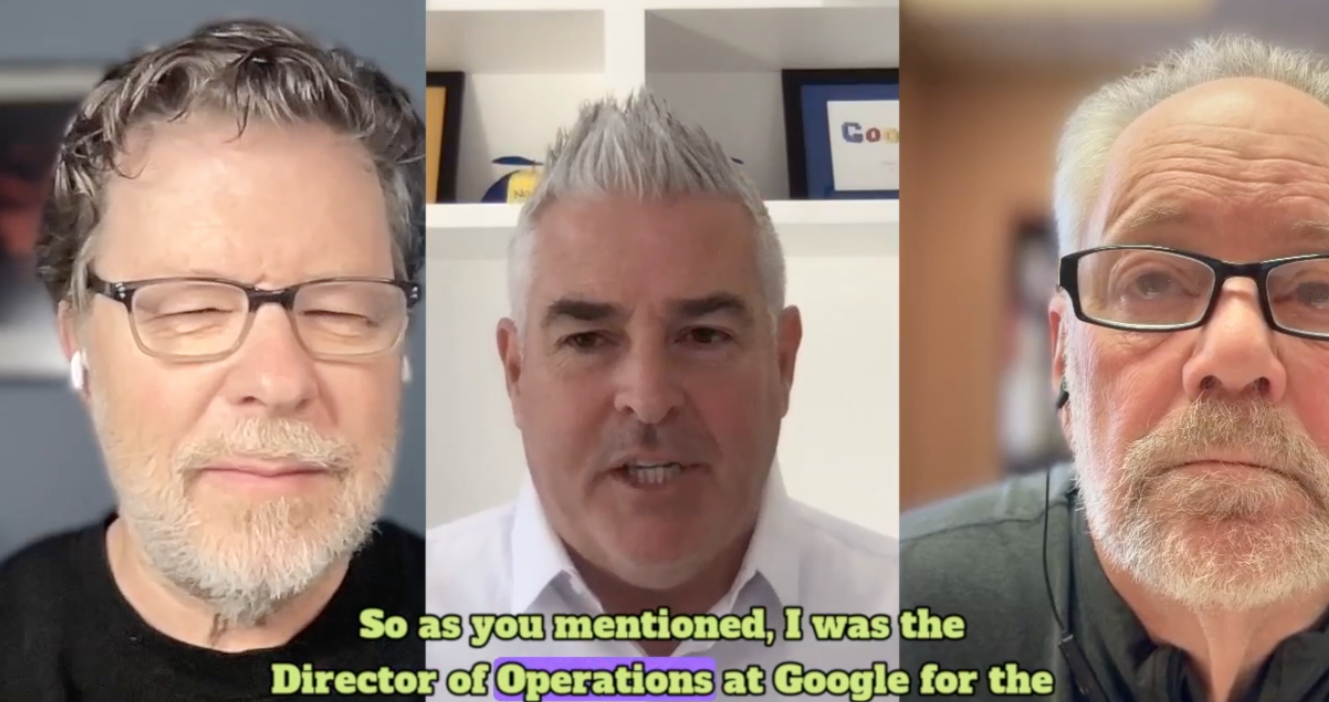](https://www.nearmedia.co/how-does-google-gbp-support-really-work-brad-wetherall-interview/)
[Ep 188: 2024 Local SEO In Review: Brand Power & Local; AI’s Search Shake-Up; EU & US Oversight reshaping Google SearchIn our end-of-year wrap-up discussion, we explored the three salient hot-button topics that shaped 2024’s Local SEO and search landscape from the impact of the leaks, the importance of brand, to the ongoing changes to search brought by AI and new regulationsNear MediaNear Media](https://www.nearmedia.co/ep-188-2024-local-seo-in-review-brand-power-local-ais-search-shake-up-eu-us-oversight-reshaping-google-search/)
[Ep 187: Exploring Google’s DMA Compliance & User Search Behavior with Siinda’s Stephanie VerilhacStephanie Verilhac of Siinda discusses the EU’s DMA & its impact on search behavior. Research showed Google’s self-preferencing persists despite compliance changes. We discussed interesting regional differences in search behaviors & how photos & business websites play key roles in user decisions.Near MediaNear Media](https://www.nearmedia.co/ep-187-exploring-googles-dma-compliance-user-search-behavior-with-siindas-stephanie-verilhac/)
[Ep 186: The Limits and Future of AI Impact on Maps; Search vs AI: Challenges, Trends, and Consumer InsightsAI struggles with mapping, new capabilities show promise for consumers & professionals. Consumer research on changing search behavior: increasing trust in AI, & openness to alternatives like ChatGPT. Search will evolve to a more seamless and integrated experience, challenging Google.Near MediaNear Media](https://www.nearmedia.co/ep-186-the-limits-and-future-of-ai-impact-on-maps-search-vs-ai-challenges-trends-and-consumer-insights/)
[Ep 185: GBP’s Biz Name Shift, Fishkin’s Search Query Insights, & AI’s Growing Role in Challenging GoogleGoogle’s relaxed stance on extended descriptors in business names aids SEO visibility but carries risks. Research from 300M queries shows branded searches dominate. AI tools like ChatGPT gain ground, challenging Google’s cluttered results. Businesses must adapt, balancing SEO, branding, & new tools.Near MediaNear Media](https://www.nearmedia.co/ep-185-gbps-biz-name-shift-fishkins-search-query-insights-ais-growing-role-in-challenging-google/)
[Ep 184: GBP Suspension Woes & Support #fails, Siri Sherlocking Search, the Fragmentation of SearchHow listing suspensions reflect the failures of GBP, Siri seems poised to sherlock search as search is fragmenting across the ecosystemNear MediaNear Media](https://www.nearmedia.co/ep-184-gbp-suspension-woes-support-fails-siri-sherlocking-search-the-fragmentation-of-search/)
[Ep 183: Exploring Google AI Overviews Impact, SearchGPT & Google’s Evolution with Mark TraphagenMark Traphagen shares their insights on AI-driven search, noting a limited local impact, a huge rise in ChatGPT referrals tied to SearchGPT, and Google’s SERP shift favoring “Popular Products” over organic listings. Core SEO practices still matter and should be at the core of your marketing.Near MediaNear Media](https://www.nearmedia.co/ep-183-exploring-google-ai-overviews-impact-searchgpt-googles-evolution-with-mark-traphagen/)
[Ep 182: A Google “Pardon”?, Siri’s Search Improvements, Search from Chat GPT is Really GoodGoogle’s antitrust battle amid legal and political shifts, Apple’s Applied Intelligence transformation of Siri to intelligent search, ChatpGPT’s new search is redefining search & possibly the marketNear MediaNear Media](https://www.nearmedia.co/ep-182-a-google-pardon-siris-search-improvements-search-from-chat-gpt-is-really-good/)
[Ep 181: AI in Local SEO, Siri Finally Gets Local Search, ChatGPT’s Growing User BaseAI in Local SEO: Challenges and Opportunities, Apple Siri Finally Gets Local Search, ChatGPT’s Growing User Base and Implications for GoogleNear MediaNear Media](https://www.nearmedia.co/ep-181-ai-in-local-seo-siri-finally-gets-local-search-chatgpts-growing-user-base/)
[Ep 180: Conversation with Raj Singh, the founder of Soloist.ai, an AI-powered website builder00: 13 Meet Raj Singh & Soloist.ai Meet Raj Singh, the founder of Soloist.ai, an AI-powered website builder targeted at small businesses and freelancers. Raj shares his background as a successful serial entrepreneur and how he developed an interest in simplifying website creation for non-technical users. 10:43 Soloist.Near MediaNear Media](https://www.nearmedia.co/ep-180-conversation-with-raj-singh-the-founder-of-soloist-ai-an-ai-powered-website-builder/)
[Ep 179: Apple Expands Business Connect, Which Directories Matter?, SEMrush Acquires Search Engine LandApple expands Business Connect beyond brick-and-mortar to e-commerce & at home businesses, BrightLocal Study: Which directories matter most in Local SEO, SEMrush acquires Search Engine Land & SMXNear MediaNear Media](https://www.nearmedia.co/ep-179-apple-expands-business-connect-which-directories-matter-semrush-acquires-search-engine-land/)
[Ep 178: Google Tests AI Organized Carousels in Local, Facebook Tests New Local Tab, Google Customer Loyalty DeclinesGoogle tests AI-organized carousels in local search results for restaurants and bars. Facebook tests new local tab, aggregating content from Reels, Marketplace, and Events. Google experiences significant decline in customer loyalty rankings over past two years.Near MediaNear Media](https://www.nearmedia.co/ep-178-google-tests-ai-organized-carousels-in-local-facebook-tests-new-local-tab-google-customer-loyalty-declines/)
[Ep 177: Places Sites in US? Allure’s Ongoing Google Review Fraud Scandal, FTC Targets AI Tool Rytr for Fake Review GenerationGoogle’s Place Sites in North America: Compliance gesture or a true shift in search? Allure Aesthetics’ review fraud highlights Google’s inaction & continuing consumer harm; FTC targets AI tool Rytr for potentially enabling massive scale of fake review generationNear MediaNear Media](https://www.nearmedia.co/ep-177-places-sites-in-us-allures-ongoing-google-review-fraud-scandal-ftc-targets-ai-tool-rytr-for-fake-review-generation/)
[Ep 176: Search Tactics for EU Hotels, Google’s Updated Spam Guideline, When might Yelp v Google Go to Trial?How individual hotels can successfully navigate Google Search in the EU, Google updated Spam Guidelines: Helpful or just more FUD?, When & What are we likely to see in the Yelp antitrust case against Google?Near MediaNear Media](https://www.nearmedia.co/ep-176-search-tactics-for-eu-hotels-googles-updated-spam-guideline-when-might-yelp-v-google-go-to-trial/)
[Ep 175: Google tests Review Badge of Shame in UK; Google’s Antitrust Travails; SMB Marketing DisconnectsGoogle UK testing Review “Badge of Shame” & other penalties for business review abuses, Google’s antitrust travails: What’s at stake in the latest legal battle? Digital Agencies Highlight Disconnect in Local Marketing PrioritiesNear MediaNear Media](https://www.nearmedia.co/ep-175-google-tests-review-badge-of-shame-in-uk-googles-antitrust-travails-smb-marketing-disconnects/)
[Ep 174: How Consumers Look for Hotels, The impact of recent EU fines on Google, Possible remedies to prevent Google self-preferencingGoogle and Booking: The Symbiotic Gatekeeper Relationship in European Hotel Search, EU Court Upholds €2.5 Billion Fine Against Google: Antitrust Ruling Could Shape Future Regulations, Leveling the Playing Field: Remedies for Google’s Self-Preferencing PracticesNear MediaNear Media](https://www.nearmedia.co/ep-174-how-consumers-look-for-hotels-the-impact-of-recent-eu-fines-on-google-possible-remedies-to-prevent-google-self-preferencing/)
[Ep 173 (From the Vault)The Google Review Fraud Landscape in Maps & LSA and How a Business Should RespondA conversation with Curtis Boyd of the Transparency company: The Google review fraud landscape, LSA fraud and a discussion of practical advice for how business owners & agencies should respond.Near MediaNear Media](https://www.nearmedia.co/ep-173-from-the-vault-the-google-review-fraud-landscape-in-maps-lsa-and-how-a-business-should-respond/)
[Ep 172: LSA Gets More GBP Features, Google Maps Gets Cleanup, Yelp Sues Google Over AntitrustLSA increasingly being given GBP Features - Reviews & Booking, Google Maps gets a gakeover: Sleeker design, but more ads? Yelp takes on Google: Antitrust showdown over Local Search dominanceNear MediaNear Media](https://www.nearmedia.co/ep-172-lsa-gets-more-gbp-features-google-maps-gets-cleanup-yelp-sues-google-over-antitrust/)
[Ep 171: GBP Phone Hacking Problems Persist, New FTC Fake Reviews Rules, SearchGPT & the Future of SearchGoogle’s PR smoke and mirrors: Old GBP phone hacking problems persist despite promises, FTC cracks down on fake reviews with new, readily enforceable rules, SearchGPT, Apple and the future of searchNear MediaNear Media](https://www.nearmedia.co/ep-171-gbp-phone-hacking-problems-persist-new-ftc-fake-reviews-rules-searchgpt-the-future-of-search/)
[Ep 170: The Increasing Role of Brand in Digital Marketing & SEOConversation with Mordy Oberstein of Six on: The Role of Brand in Seo, Brand Differentiation and Local SEO, Practical Approaches to Brand Building and the Role of AI in Content CreationNear MediaNear Media](https://www.nearmedia.co/ep-170-the-increasing-role-of-brand-in-digital-marketing-seo/)
[Ep 169: GBP Bugs & AI-Driven Layoff Concern, Sale of CNET & Google, Antitrust Remedy: Impact on Apple & SEOGoogle’s Local Business Service Woes: Persistent Bugs and AI-Driven Layoffs Spark Concern, CNET’s Future Under Ziff Davis: Challenges and Google Opportunities/Difficulties Post-Sale, Google’s Antitrust Remedies: Implications for Apple, Mozilla, and the SEO LandscapeNear MediaNear Media](https://www.nearmedia.co/ep-169-gbp-bugs-ai-driven-layoff-concern-sale-of-cnet-google-antitrust-remedy-impact-on-apple-seo/)
[EP 168: OpenAI & MindTrip bring AI search, Search Shenanigans, Boost Google Local Rankings w/ Engagement?OpenAI & MindTrip bring AI to search, will it matter? Google’s Search Shenanigans: Boosting Numbers with Tricks? Can You Boost Google Local Rankings via Engagement?Near MediaNear Media](https://www.nearmedia.co/ep-168-openai-mindtrip-bring-ai-search-search-shenanigans-boost-google-local-rankings-w-engagement/)
[Ep 167: Reframing how search ranking works, Google Doubles Down on Income, Voice Search Set for a Comeback?SEOs need to reframe how search ranking works with click thru data being the most important factor; Google doubles down on tried & true income generators; Is Voice Search Set for a Comeback? SEOs Should Stay Calm and TestNear MediaNear Media](https://www.nearmedia.co/ep-167-reframing-how-search-ranking-works-google-doubles-down-on-income-voice-search-set-for-a-comeback/)
[Ep 166: How Local SEOs are using Gen AI & ChatGPT: Tips, tactics & strategies w/ Darren Shaw & Joy Hawkins(from the vault)We discuss with Darren Shaw & Joy Hawkins how they are using Generative AI effectively in their local SEO practices; from content refinement, to client engagement and reportingNear MediaNear Media](https://www.nearmedia.co/ep-166-how-local-seos-are-using-gen-ai-chatgpt-tips-tactics-strategies-w-darren-shaw-joy-hawkins-from-the-vault/)
[Ep 165: Seattle surgeon pays $5 mil fine for review fraud, Local Search increasingly shows Google GBP resultsSeattle surgeon pays $5 mil fine for review fraud; what responsibility does Google have? Local Search increasingly shows more Google GBP results & extensively highlight Google self-preferencingNear MediaNear Media](https://www.nearmedia.co/ep-165-seattle-surgeon-pays-5-mil-fine-for-review-fraud-local-search-increasingly-shows-google-gbp-results/)
[Ep 164: (From the vault) What and why of review fraud on Google & how to deal with itWe are taking this week off but thought you would enjoy this episode published last fall: The big picture of review fraud - who does it & why, how to deal with fake review attacks and competitor’s fake reviews, the FTC and fake review guidelines and rulesNear MediaNear Media](https://www.nearmedia.co/ep-164-from-the-vault-what-and-why-of-review-fraud-on-google-how-to-deal-with-it/)
[Ep 163: New Research: SMB web lead generation failures & how to fixSMB web lead generation failures & how to fix: Leadferno Research SMB contact form failures, Google nuking GBP & Business Messaging costs small developers, How small businesses can up their lead game,Near MediaNear Media](https://www.nearmedia.co/p/ee01b911-fc80-44ce-b314-6b04727b9f18/)
[Ep 162: Expanding Local Results in SERPS, Cluttered SERP Reduce Organic Traffic, AI Overviews Worsen SearchGoogle is expanding Local results in the SERPS to the exclusion of organic, Cluttered Google results decrease traditional organic traffic - How do you cope? Google’s AI Overviews make search worse - A lot worseNear MediaNear Media](https://www.nearmedia.co/ep-162/)
[Rand Fishkin Interview: Zero Click, Regulating Google & Marketing in a Zero Click WorldConversations with Rand Fishkin: the evolution of zero-click search, the regulatory environment that faces Google and how businesses should strategically position their marketing to align with this new reality.Near MediaNear Media](https://www.nearmedia.co/ep-161/)
[Ep 160: GBP Chat is Dead, Consumers Frustrated with Search too, Local Takeaways from the API LeakGoogle Business Profile Chat is dead, long live GBP with WhatsApp, Scorpion survey highlights growing consumer frustrations with Google Search, 3 Local takeaways from the Google API leak.Near MediaNear Media](https://www.nearmedia.co/ep-160/)
[Ep 159: Rand Fishkin interview: The importance of the the Google Search LeakRand Fishkin helps us explore the implications of the Google Web Search leak, how it impacts our understanding of how the search ranking aglo actually works & some thoughts on new tactics to exploreNear MediaNear Media](https://www.nearmedia.co/ep-159-rand-fiskin-interview-on-the-importance-and-learnings-from-the-google-search-leak/)
[Ep 158: New SAB Local Ranking Factor & Interpreting Google AI Tea leaves around SearchIs Service Area a new SAB ranking factor in Google local? What do Google’s comments around web traffic in the AI Overview era really mean and what can we learn about Google’s struggles in this new era Part 1 starts 00:13 - New SAB Local Ranking FactorNear MediaNear Media](https://www.nearmedia.co/ep-158/)
[Ep 157: ChatGPT & Google I/o: How Will Users & SEOs Adapt to the New Google AI FeaturesChatGPT 4o makes an impression while undercutting Google I/O, Google I/O’s chaos largely reflects the confusion and complexity that haunts Google, How should we think about SEO going forward?Near MediaNear Media](https://www.nearmedia.co/ep-157/)
[Ep 156: Google finally fixing LSA reviews? Why Google fails, DOJ slide deck details abusive Google ad practicesWill Google finally fix LSA reviews in the U.S & what do their LSA failures say about Google’s process? How Google search has consistently failed to reward the best content with their new updates, The DOJ slide deck detailing Google’s abusive monopoly search ad practices: Kills it!Near MediaNear Media](https://www.nearmedia.co/ep-156-google-finally-fixing-lsa-reviews-why-google-fails-doj-slidedeck-details-abusive-google-practices/)
[Ep 126: (from the vault) Do searchers use Local Finder?, How many links does a local website need? Google’s BS around contentWe’re taking the week off, but here’s an episode (#126) from the “vault” that we think you’ll enjoy! Part 1 starts 00:13 - Do Google searchers enter the Local Finder? Local SEOs wonder whether searchers actually enter the Local Finder from the Pack results. We often think no butNear MediaNear Media](https://www.nearmedia.co/ep-156-from-the-vault-ep-126/)
[Ep 155: An interview with Dana DiTomaso: To Google GA4 analytics hell & back againWe take a deep dive into Google GA4 analytics with Dana Ditomaso: what you need to know, the limits of data, how to get the most benefits and how to overcome its deficienciesNear MediaNear Media](https://www.nearmedia.co/ep-155/)
[Ep 154: Ad Sales Up, Physician Guilty of Violating Federal Review Law, Content Only as Good as ChatGPT Will FailIAB annual Report: Digital Ads up but Ad market dominated by a few players, Seattle physician found guilty of violating Federal Consumer Review Fairness Act, If your content is only as good as ChatGPT you will fail.Near MediaNear Media](https://www.nearmedia.co/ep-154/)
[Ep 153: Standardizing Review Processes to Avoid Fear, Google Cries Wolf Around DMA, The Future of SGEReviews are Like Death & Taxes & Should be Treated that Way, Google Cries ’Wolf” When it Comes to DMA Compliance, SGE about to get real but will it be any good?Near MediaNear Media](https://www.nearmedia.co/ep-153-standardizing-review-processes-to-avoid-fear-google-cries-wolf-around-dma-the-future-of-sge/)
[Ep 152: Conversation with John Jantsch: How your agency can increase retention & profitability by offering a fractional CMO as a serviceIn this episode with John Jantsch we discuss the he need to move SMBs from tactics to strategy & how agencies can increase profits by developing a fractional CMO capacity to do that.Near MediaNear Media](https://www.nearmedia.co/p/ffda8e36-05db-4696-9468-03482898524e/)
[Ep 151: Google goes to Brussels & attempts to defend their DMA complianceGoogle tried to conquer and divide in Brussels at their recent DMA compliance seminar. Their presentation, while slick, left it unclear whether the EU would see their actions as compliant.Near MediaNear Media](https://www.nearmedia.co/ep-151-google-goes-to-brussels-attempts-to-defend-their-dma-compliance/)
[Ep 150: How on page factors & Google updates, Learnings from a G Quality Rater, What is the future of SEO?Special Cyrus Shepherd interview. What on-page factors are associated with sites that see big gains or declines after Google updates? How one quality rater thinks Google Quality Rater Guidelines should influence our sites. What is the future of SEO and Google?Near MediaNear Media](https://www.nearmedia.co/ep-150/)
[Ep 149: Google’s Core Update & FUD, Brightlocal Consumer Review Survey, Do Searchers Use the Local Finder?Google’s March Core Update: Enforceable or just FUD? Key findings from the recent BrightLocal review survey ; How Often Do Searchers Use the Local Finder?Near MediaNear Media](https://www.nearmedia.co/ep-149/)
[Ep 148: Consumer Research Highlights Limited Impact of DMA Mandated Google’s SERP ChangesConsumer Research Highlights Limited Impact of DMA Mandated Google’s SERP Changes, The rise of zero-click Searches is a challenge to content publishers and a boon for Google Business Profiles, The EU faces regulatory challenges vis a vis Google’s Self-Preferencing in Local search resultsNear MediaNear Media](https://www.nearmedia.co/ep-148/)
[Ep 147: Long tail searcher behaviors, Gemini switch appears, Content publishing being upended by searchLong tail searcher behaviors: 10% of Discovery searches involve a brand search on Google, Gemini search now a front and center toggle in the Google App, Content publishing being upended by search - Can it change?Near MediaNear Media](https://www.nearmedia.co/ep-147/)
[Ep 146: G-SERPs product searches, Google PR around review removals is puffery, Google Maps SGE a hot messGoogle adds Reddit to product searches and spammers follow, Google announces review removals with PR puffery, Google Maps AI (SGE) a hot messNear MediaNear Media](https://www.nearmedia.co/ep-146-g-serps-product-searches-google-pr-around-review-removals-is-puffery-google-maps-sge-a-hot-mess/)
[Ep 145: Will AI Improve SMB Websites? GMaps Getting Gemini, Bright Local Brand Survey TakeawaysConsumers overwhelmingly prefer AI-generated content over human-created , will it improve SMB websites? Google Maps is getting smarter with conversational AI, BrightLocal Brand Beacon Report 2024 reveals insights into multi-location marketing strategiesNear MediaNear Media](https://www.nearmedia.co/ep-145/)
[Ep 144: 10 years of SERP changes, Hidden Gems update is impacting Local Search, New EU Local Search ResultsWhat 10 years of changes to the SERPS mean for marketers today, How the “Hidden Gems” update is impacting Local Search, New EU Local Search Results Part 1 starts 00:13 - What 10 years of changes to the SERPS mean for marketers today We discuss Andy Crestodina’s mostNear MediaNear Media](https://www.nearmedia.co/ep-144/)
[Ep 143: Fired Google Raters replaced w/ AI? SEO Tools are just tools, Hidden Gems & decline of Big SocialWill fired Google quality raters ultimately be replaced with AI? We think so. SEO Tools, with their assumptions and inherent limitations are just tools and should be used for guidance not truth. Google’s Hidden Gems update and the decline of Big Social point to rethinking your content strategy.Near MediaNear Media](https://www.nearmedia.co/ep-143/)
[Ep 142: SGE NOT the Future?, GBP End Days? Google Chooses Sizzle over SteakSGE has huge impacts but is still likely to continue as just a testing ground for AI search, As GBP nukes features, what is the future of the GBP dashboard as a hub for SMBs? Should a distracted Google be focusing on the basics to protect their franchise?Near MediaNear Media](https://www.nearmedia.co/ep-142-sge-not-the-future-gbp-end-days-google-chooses-sizzle-over-steak/)
[Ep 141: Google Guarantee LSA Scam & Honest Businesses, Did Google Create a Shitty Internet? Generative AI & its Impact on GoogleHow the Google Guarantee scam impacts honest businesses, Did Google’s dominance result in a shitty Internet? New generative AI developments, the future of Consumer Preferences and their impact on SearchNear MediaNear Media](https://www.nearmedia.co/ep-141/)
[Ep 140: Businesses & Google SGE, Google Goes All in On Interstitials, Where is Bard Going?What should businesses do about Google SGE?, Google goes all in on Interstitials in attempt to get the iPhone users to switch from Safari to Chrome, Google Product Manager asks for Bard suggestions on RedditNear MediaNear Media](https://www.nearmedia.co/ep-140/)
[Ep 139: The Google Review Fraud Landscape in Maps & LSA and How a Business Should RespondIn this interview with Curtis Boyd of the Transparency Company we discuss the current state of review fraud, LSA review fraud and how businesses can cope with the ever increasing amount of fake reviews.Near MediaNear Media](https://www.nearmedia.co/ep-139/)
[Ep 138: Google’s Reactive Behavior to Search Quality, LSA Ad Efficiency, Notebook LM: AI for the Rest of USWill Google’s Reactive Behavior to Broken Search Quality & AI Solve Their Problems? LSA Ad Efficiency and Google’s Transition to a UX That is AI Driven, Google’s Incredible Notebook LM IS the Future of AI For the Rest of UsNear MediaNear Media](https://www.nearmedia.co/ep-138/)
[Ep 137: Can Gemini Fix Search? The Impact of Google’s Rating Bias, LSA ReviewjackingCan Gemini Fix Google search by fixing both query refinement and the interface? Why are Google review ratings consistently higher than Yelp or TA and what is the impact? Reviewjacking Reflects Big Problems with Local Service AdsNear MediaNear Media](https://www.nearmedia.co/ep-137-can-gemini-fix-search-the-impact-of-googles-rating-bias-lsa-reviewjacking/)
[Ep 136: How Local SEO Agencies are using Generative AI & ChatGPT: Tips, tactics and strategiesJoy Hawkins of Sterling Sky and Darren Shaw of Whitespark share how Generative AI and ChatGPT are transforming their agencies at both a tactical and strategic level to improve content, reporting and employee results.Near MediaNear Media](https://www.nearmedia.co/ep-135-2/)
[Ep 135: Google’s newest search features, Whitespark: Reviews by category, Fake review enforcement failuresGoogle’s Newest Search Features: “Whipped cream on S.H. I. .T”.? Whitespark Research: Exploring the Landscape of Local Business Reviews across 1 Million Listings, There is a lot of work to be done on the fake review frontNear MediaNear Media](https://www.nearmedia.co/ep-135/)
[Ep 134: Google Map new features from useful to bloat?, Citations and their value to Local Search, Google’s New Small Business Attribute: Helpful or Performative ?Google Map new features from useful to bloat?, Citations and their value to Local Search, Google’s New Small Business Attribute: Helpful or Performative ?Near MediaNear Media](https://www.nearmedia.co/ep-134/)
[Ep 133: BeanBox – Lessons in Building and Marketing a Consumer Brand“Running a startup is like being in a knife fight,” BeanBox Co-Founder and CEO Matthew Berk says, as he describes the arduous but rewarding journey from the world of SaaS to making a real-world consumer product.Near MediaNear Media](https://www.nearmedia.co/ep-133-beanbox-lessons-in-building-and-marketing-a-consumer-brand/)
[Ep 132: GBP Call History returns, Local Trust Report, SGE Where now?GBP Call History’s History - What does it say about Google?Bright Local Local Business Discovery and Trust Report, How will Google’s SGE impact local search and what will it deliver?Near MediaNear Media](https://www.nearmedia.co/ep-132-gbp-call-history-returns-local-trust-report-sge-where-now/)
[Ep 131: Bulk Dashboard Comeback?, GBP listing cleanup, Alternatives to Google searchDoes recent Insights upgrade indicate new life for the GBP multi-location dashboard? GBP listing cleanup & more rigorous verification might mean less fraud but more work for honest businesses & agencies, Half of all users indicate dissatisfaction with Google but defaults make change hard.Near MediaNear Media](https://www.nearmedia.co/ep-131/)
[Ep 130: So Clicks are a ranking signal? Google Comments on Review Fraud, Bard enhanced with extensions“Clicks Are Not a ranking signal” except when they are, Google Comments on Review Fraud: “We are the victim here”, Google’s local and travel data creates better AI experienceNear MediaNear Media](https://www.nearmedia.co/ep-130/)
[Ep 129: High Impact Content Marketing in the Age of AIIn this expanded guest episode, author Purna Virji brings her many years of experience as a journalist, PR veteran, search marketer, speaker and content creator to content strategy and marketing.Near MediaNear Media](https://www.nearmedia.co/ep-129-high-impact-content-marketing-in-the-age-of-ai/)
[Ep 128: What and why of review fraud on Google & how to deal with itAn interview with Curtis Boyd of the Transparency Company on the big picture of review fraud - who does it and why, How to deal with it, and whether the new FTC fake review guidelines and rules and Google’s new(wish) filter mean for possible enforcementNear MediaNear Media](https://www.nearmedia.co/ep-128/)
[Ep 127: Google Antitrust case unlikely to change anything, GBP deduping form, Searchers go deep & wide in the SERPSUpcoming Google Anit-trust case unlikely to change much of anything in the world of search, GBP (Google business Profile) support finally introduces a form to dedupe listings in Google Maps, When searching, consumers consider many resultsNear MediaNear Media](https://www.nearmedia.co/ep-127/)
[Ep 126: Do searchers use Local Finder?, How many links does a local website need? Google’s BS around contentPart 1 starts 00:13 - Do Google searchers enter the Local Finder? Local SEOs wonder whether searchers actually enter the Local Finder from the Pack results. We often think no but our research indicates that not only do searchers enter the Local Finder on a regular basis, they alsoNear MediaNear Media](https://www.nearmedia.co/ep-126/)
[Ep 125: SMBs search to find services, GBP supports bends to European regs, No copyright for AISmall and very small businesses (VSMBs) use search as a primary way to find new services, Google Business Profile (GBP) support is rapidly coming into compliance with new European regulations, AI generated artwork is NOT covered by copyrightNear MediaNear Media](https://www.nearmedia.co/ep-125/)
[Ep 124: GBP support using gig workers, SGE while browsing rolls out, AI Generated review summaries roll outGoogle Ambassadors (i.e. Gig Workers) now staffing GBP support poorly, New Google feature: Search Generative Experience while browsing, Are AI Generated review summaries the future of platform reviews?Near MediaNear Media](https://www.nearmedia.co/ep-124/)
[Ep 123: Google VS Chat GPT quality, Google proffers bad advice to CNET, Do consumers actually read reviews?Google VS Chat GPT Taste Test -which is more satisfying? Google Ad Liaison provided bad pruning advice to CNET, Consumers indicate that reviews are important but do they read them?Near MediaNear Media](https://www.nearmedia.co/ep-123/)
[Ep 122: New Local ad format, Updated GBP Guideline clarifies policies, Google SGE shows reference linksNew Local Ad format is a local ad as local ads should be, New Google Business Profile (GBP) Guidelines clarify long “secret” policies, Google SGE finally includes reference linksNear MediaNear Media](https://www.nearmedia.co/ep-122/)
[Ep 121: Google loses product search share, Phone #s hijacked on Google, Yelp scolds business for solicitingGoogle continues to lose product search market share although now to social, Scammers hijack Airline phone numbers on Google…. again, Yelp scolds businesses for soliciting reviews.... again.Near MediaNear Media](https://www.nearmedia.co/ep-121/)
[Ep 120: Apple Maps KPIs, SEOs & Google quality guidelines, Google SGE usage declineApple Maps & Local Opportunities, Learnings from going undercover as a quality rater for Google, Is Google’s AI based SGE a dead end or the future of search?Near MediaNear Media](https://www.nearmedia.co/ep-120/)
[Ep 119: GA4 enshittification, Twitter alternatives, New FTC review guidanceThe enshittification of Google Analytics - GA4 is largely unusable, Twitter, where art thou replacement? The FTC releases new review Guidelines & Rules for ReviewsNear MediaNear Media](https://www.nearmedia.co/ep-119-ga4-enshittification-twitter-alternatives-new-ftc-review-guidance/)
[Ep 118:TikTok IS about local, Google Perspectives perspective, New GBP “by owner” buttonTiktok IS about Local but not the way you think, Google Perspectives: innovation for the SERPs or bandaid to prevent social media flight? New Google GBP feature “By Owner” & new Whitespark tool reflect reality that GBP is rented not ownedNear MediaNear Media](https://www.nearmedia.co/ep-118/)
[Overture Map Foundation goes open source to solve 3D mapping for the “rest of us”Marc Prioleau has spent a majority of his career in digital mapping. He now is running the Overture Map Foundation, an open source project funded by Meta, Amazon web Services, Tom Tom & Microsoft to provide alternative sources for critical 3d mapping data.Near MediaNear Media](https://www.nearmedia.co/near-memo-special-edition/)
[Ep 117: Google LSA reviews suck, Localized stories and visualizations for content, The future of searchGoogle LSA reviews come, they go but LSA still sucks, Localized stories and visualizations are a path to SEO success for National Local Brands, Are AI driven personal assistants the future of search?Near MediaNear Media](https://www.nearmedia.co/ep-117/)
[Ep 116: When to ask for reviews, Is SGE a headfake? Is Apple Vision the next platform?When should you ask for reviews for your business? Is Google SGE the real deal or just a placeholder? Apple Vision Pro might just be the next great thing.Near MediaNear Media](https://www.nearmedia.co/ep-116/)
[Ep 115: Yelp for sale? Google Merchant Center Next, Does Bard offer an alternative to search?Activist investor suggests Yelp sale, Google Merchant Center Next - a cool product without market? Bard’s Journey as an Alternative to Google SearchNear MediaNear Media](https://www.nearmedia.co/https-www-nearmedia-co-unbounce-using-ai-to-increase-conversions/)
[UnBounce - Using AI to increase conversionsAI will transform SAAS. Unbounce shares their journey of using it to move from pixel perfect landing pages to higher converting landing pages and moreNear MediaNear Media](https://www.nearmedia.co/unbounce-using-ai-to-increase-conversions/)
[Ep 114: GBP Image Not Allowed bug, ChatGPT adds plug-ins & web, Yelp integrates with Google Reserve & ToastGBP Image Not Approved, a bug or feature & how to tell, ChatGPT has added plug-ins & the web integration sucks, Yelp integration with Google Reserve reflects strange bedfellow and Yelp’s weak positionNear MediaNear Media](https://www.nearmedia.co/ep-114/)
[Ep 113: Google I/O from the mundane to the future of the local customer journeyGoogle I/O - How to make the interesting seem mundane, Google search and AI = SGE, The Rise of Bard: Expanding the Boundaries of Search, The Future of Search & Implications for LocalNear MediaNear Media](https://www.nearmedia.co/ep-113/)
[Ep 112: Google’s local Knowledge Panel the - CMS you never knew you had: conversations with Claire CarlilleUnderstanding and managing the ever expanding Google Local Knowledge Panel, Google Local - tracking your way to success, Beyond Google Local - being ready to live without GoogleNear MediaNear Media](https://www.nearmedia.co/ep-112/)
[Ep 111: AI reviews on Amazon, Peak GMB listings, Implications of failing news sitesWill AI totally destroy the review economy & what will replace them? Does declining Google Business listing totals reflect “peak” GBP? As social media fueled news sites fail opportunity abounds for sites willing to build own audienceNear MediaNear Media](https://www.nearmedia.co/ep-111-ai-reviews-on-amazon-peak-gmb-listings-implications-of-failing-news-sites/)
[Ep 110: CR Permission Slip eases privacy burden, TA Report Hides Declining Reviews, Google Rushes to AIConsumer Reports new app, Permission Slip eases privacy requests but is still a baby step, TripAdvisor Review Transparency Report highlights 2022 review increases but hides declining reviews, Google AI PR push masks lapses and fearNear MediaNear Media](https://www.nearmedia.co/ep-110/)
[Ep 109: Google’s Online Local Ads, Bard & Local SEO, The Impact of Chat on Future of Local SearchUnpacking Online Local Ads (OLA): The Pros and Cons of Google’s New Ad Type for Local Businesses, Bard’s Local SEO: Implications for businesses, The Impact of Chat Engines and Virtual Assistants on the Future of Local Search: Challenges, Promises, and PossibilitiesNear MediaNear Media](https://www.nearmedia.co/ep-109/)
[Ep 108: Google merging Bard into Assistant, Wix integrates AI for SMB content, Can GM build a better CarOS?Will Google merging Bard into Assistant resurrect assistants from the ashes? Wix integrates AI for SMB content in a way that will helps the SMB, Can GM build a better CarOS & throw CarPlay away?Near MediaNear Media](https://www.nearmedia.co/ep-108/)
[Ep 107: Local Search Ranking Factors Survey with Darren ShawLocal Search Ranking factors with Darren Shaw: Big Takeaways and big changes from previous years, Local search difference makers & lesser known tactics, Conversion factors and mythsNear MediaNear Media](https://www.nearmedia.co/ep-107/)
[Ep 106: New FTC rules to rein in subscription abuse, Google Bard goes local, Bard is generative not searchyFTC proposes proposes amending Negative Option Rule to rein in subscription abuse, Google Bard goes local, sort of, The Bard use case is more generative and less searchyNear MediaNear Media](https://www.nearmedia.co/ep-106/)
[Ep 105: New Google GPB Bug, TikTok rolling out search ads, Social mapping tool Gowalla returnsNew Google GPB Bug: Your Business is not visible to customers, TikTok rolling out search ads, will they come to local?, Social mapping tool Gowalla returns to the scene,Near MediaNear Media](https://www.nearmedia.co/ep-105/)
[Ep 104: Google LSA adds new categories, ChatGPT changing local SAAS, Everyone needs a “how we use AI” FAQGoogle LSA expands to new categories & faces spam, ChatGPT making rapid and differentiating inroads into SAAS tools for Local, Why every company needs a “how we use Generative AI” FAQNear MediaNear Media](https://www.nearmedia.co/ep-104/)
[Ep 103: Bing not a Google killer, Yelp research masks market share decline, Dealing with review attacks on Google Business ProfilesBing isn’t a Google killer but it is important for a number of other reasons, Yelps’ remote work report likely indicates declining Yelp market share, How to deal with fake review attacks at GoogleNear MediaNear Media](https://www.nearmedia.co/ep-103/)
[Fake Review Attacks Increase on Google Business ProfilesIn Episode 102 of the Near Memo, we discussed how a recently implemented change in the Google Business Profile review filter is leading to more fake review attacks. Below is the video, a supporting graph and a transcript. Transcript Mike: On February 1st, Google wrote an article in the LocalNear MediaNear Media](https://www.nearmedia.co/fake-review-attacks-on-the-rise-at-google/)
[Ep 102: GBP Services impact rank, Local title tag rank research, Google eases review filter, Impact of Google easing review filter to placate Local GuidesGoogle Business Profile services positively impact rank, Local Seo Guide research: Which geo title tags have the most impact on local search rank? Impact of Google easing review filter to placate Local Guide on fake & missing review reportsNear MediaNear Media](https://www.nearmedia.co/ep-102/)
[Ep 101: Bing transformed by AI, Groceries drive Walmart upscale & Ecommerce invests in PPC & SEOMicrosoft’s transformation of Bing with AI & other smart moves, Walmart overcomes stigma of evil & appeals to upscale shoppers, 100 Ecommerce execs are investing more in SEO & PPNear MediaNear Media](https://www.nearmedia.co/ep-101/)
[Ep 100: How digital agencies can use AI: a conversation with Joy Hawkins & Kevin IndigIn this extended episode we explore the role AI in general and ChatGPT is having on the work within digital agencies. What are the opportunities and challenges that agencies face when using it?Near MediaNear Media](https://www.nearmedia.co/ep-100/)
[Ep 99: Own your processes, SEOs need AI for automation, AI will increase fake reviews, now what?You don’t own Google but you do own your processes, AI and Automation is now officially a thing in SEO, and not just for writingNear MediaNear Media](https://www.nearmedia.co/ep-99/)
[Ep 98: Mailchimp Campaign Manager, Copyright implications of generative AI, GBP forums provide bug insightsMailchimp’s Campaign Manager - A sophisticated tool with misaligned marketing, Growing visibility of copyright implications of generative AI precedes solutions, Google’s GBP forums provide insights into bugs, practices and policyNear MediaNear Media](https://www.nearmedia.co/ep-98/)
[Ep 97: Failings in Apple Business Connect Agency Model, Big agencies define local as a fad in CallRail survey, Technical SEO’s don’t get respect or resourcesFailings in Apple Business Connect Agency Model, Big agencies define local as a fad in CallRail survey, Technical SEO’s don’t get respect or resourcesNear MediaNear Media](https://www.nearmedia.co/ep-97/)
[Ep 96: Apple Business Connect goes live, Is stack ranking of staff effective? AI productizationWhy the new Apple Business Connect is so important, The value of stack ranking as a way to prune employees, AI’s rapid advancements and easy implementation will impact everything from audio chat bots to ExcelNear MediaNear Media](https://www.nearmedia.co/ep-96/)
[Ep 95: AG sues surgeon for review fraud, Shopify targets enterprise retail, Bing to integrate ChatGPTWashington AG sues Plastic Surgeon for review fraud under the federal Consumer Review Fairness Act for using NDAs to suppress reviews and more, Shopify targets big retail with modern, composable stack for enterprise, Bing to integrate ChatGPT & what that might meanNear MediaNear Media](https://www.nearmedia.co/ep-95/)
[Ep. 94: Barry Schwartz Talks All Things Google - UI, Algorithms and AI SpamA fun and engaging conversation with Barry Schwartz about the Google UI, most important algorithm updates, coming impact of AI and whether Google has “gotten worse.”Near MediaNear Media](https://www.nearmedia.co/barry-schwartz-talks-all-things-google-ui-algorithms-and-ai-spam/)
[Ep 93: Age cohorts & reviews, Apple’s Business Register, Google’s Visual Elements → Search complexityHow different age groups think about reviews; Evolution of Apple’s Business Register - Why isn’t Apple targeting the Enterprise? Google’s Visual Elements Gallery demonstrates just how complicated search has becomeNear MediaNear Media](https://www.nearmedia.co/ep-93/)
[Ep 92: ChatGPT’s impact on local, How Google’s new review filter works, Google nukes The Beam (boo!)How ChatGPT’s breakthrough ability to create content will significantly impact local, A deep dive into the common factors in Google Local’s new AI based review filter, David laments Google nuking a joke location that promotes a lame basketball tameNear MediaNear Media](https://www.nearmedia.co/ep-92/)
[Ep 91: Survey:Buying links works, Why did Alexa fail? Moderation will be at center of Sec 230 debateAuthority Hacker Survey of Linkbuilders: Buying links works & so does content, Alexa pullback by Amazon points to difficulties with Voice, Content Moderation will be at forefront of Sec 230 Fight in 2023Near MediaNear Media](https://www.nearmedia.co/ep-91/)
[Ep 90: Google Review Bug Saga, Impact of Local Business Reviews, Google’s Misguided Store FinderGoogle ‘fesses up’ as the Google review bug saga continues, Takeaways from the Moz ‘Impact of Local Business Reviews on Consumer Behavior’ survey, Google promotes lame store finder to bulk GPB users, adding insult to the injury of forcing the new search (NMX) interface on them.Near MediaNear Media](https://www.nearmedia.co/ep-90/)
[Ep 89: GPB Bug Nuking Reviews, Google Review Location Surfaced, AirBnB Branding VS SEM for conversionsNew Google Suggest Edit bug Nuking reviews? Google Business Profile test Now Showing Local Guide review quantities in a city. Is it helpful? AirBnB stops buying adwords & relies on brand & SEO. Can other brands give up Adwords?Near MediaNear Media](https://www.nearmedia.co/ep-89-gpb-bug-nuking-reviews-google-review-location-surfaced-airbnb-branding-vs-sem-for-conversions/)
[Ep 88: Just How Prevalent Are Zero-Click Search Results? (featuring Marcus Tober of Semrush)Marcus Tober, SVP of Enterprise Solutions for Semrush, joins Greg and David for this episode of the Near Memo. The trio discusses Semrush’s recent zero-click search study in depth.Near MediaNear Media](https://www.nearmedia.co/ep-88/)
[Ep 87: Shopify disappoints on retention, SEMRush Zero Click research & Apple Maps vs Google Maps in EuropeShopify study shows much higher churn than WooCommerce, why & what are the implications? SEMRush zero click study makes the case that the web clicks are still king. Apple Maps makes gains Vs Google Maps Functionality in EuropeNear MediaNear Media](https://www.nearmedia.co/shopify-disappoints-in-retention-semrush-zero-click-research-apple-maps-vs-google-maps-in-europe/)
[Ep 86: (Google 3-Pack) New Branded Ads, GBP Neglect, and Container Retail Models, featuring Krystal TaingKrystal Taing joins Greg and David to discuss Google’s latest visually-significant ad update, the rapid increase in GBP-related bugs and complaints over the course of the last several months, and the acceleration of the store-within-a-store trend.Near MediaNear Media](https://www.nearmedia.co/ep-86/)
[Ep 85: Whitespark’s Effort to Reach an Underserved Part of the SMB Market with Its SEO ServicesAllie Margeson, Director of SEO Services for Whitespark, joins Greg and David for a deep dive into the logic behind, and the mechanics of, Whitespark’s new three-tiered service offering.Near MediaNear Media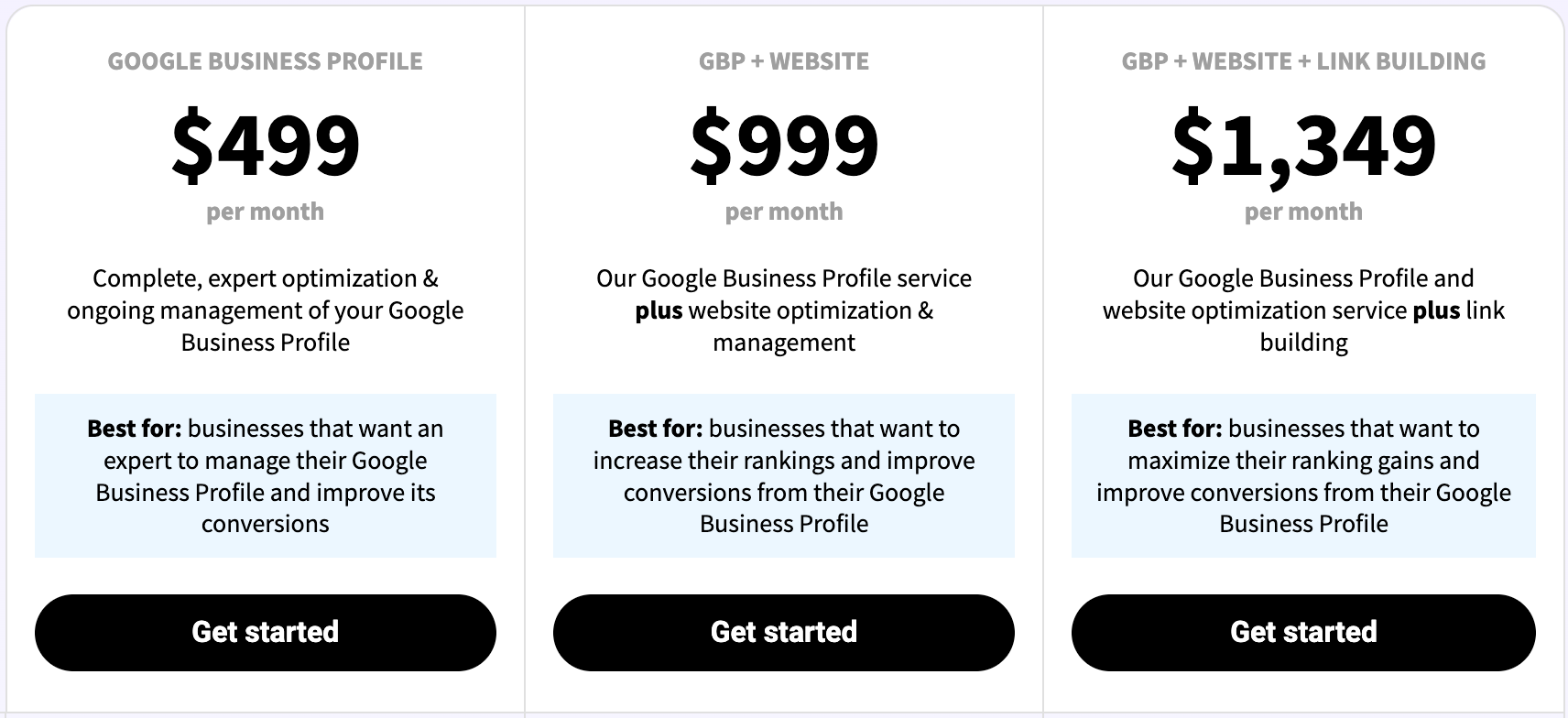](https://www.nearmedia.co/ep-85/)
[Ep 84: Near Media X NearSt: Google’s Insatiable Appetite for Local Inventory DataNick Brackenbury, CEO of NearSt joins Greg and David for a fast-moving conversation about his company’s growth curve alongside the explosion of “near me” searches and Google’s appetite for local inventory in search results since 2015.Near MediaNear Media](https://www.nearmedia.co/ep-84/)
[Ep 83: How Nerdy Nuts Co-Founder Blended Creativity, PR, Influencer Marketing, and Tiktok to Fuel SuccessCraig Mount, Co-Founder and CEO of peanut butter (and media) brand Nerdy Nuts takes us through the trajectory of his company – from starting up selling a handful of jars at a farmer’s market to doing $80,000 in ecommerce sales in just two minutes.Near MediaNear Media](https://www.nearmedia.co/ep-83/)
[Ep 82: Google goes Astroturf, iOS elevates search but #fails, Search alternatives are blooming, why?Google doubles down on SMB deception to achieve political goals; iOS 16 elevates search but still fails at local and internet search; A blooming of search alternatives; competitors or ankle biters?Near MediaNear Media](https://www.nearmedia.co/ep-82/)
[Ep 81: The demise of local audiologists, Content bots for local news, Facebook shutters NeighborhoodsThe impending demise of the local audiologists with the arrival of over the counter hearing aids, The growth in the use of content bots for local news, Facebook’s shuttering of Neighborhoods and their persistent failures in localNear MediaNear Media](https://www.nearmedia.co/ep-81-the-demise-of-local-audiologists-content-bots-for-local-news-facebook-shutters-neighborhoods/)
[Ep 80: Google Quick Read- useful or Gen Z bone? Why are Google Posts rejected? Why Nextdoor needs local seoIs Google’s Quick Read Feature useful or a Gen Z bone? Why Google Posts are rejected - Another Google AI first fail, Why Nearby, TikTok & Instagram need local seo nowNear MediaNear Media](https://www.nearmedia.co/ep-80/)
[Ep 79: Shopify Influencer Play, Google’s Human Content Update; Why now? Google’s AI First Approach is FlawedShopify Cretes an Influencer Marketplace, Google’s Human Content Update; Why now? Google’s AI First Approach is often just wrong for business and societyNear MediaNear Media](https://www.nearmedia.co/ep-79/)
[Ep 78: Yelp selling its business data, Google’s Review Spam algo nukes many legit reviews, Tik-Tok for brandsPart 1 David: Yelp has recently publicized their newest revenue stream; selling merchant data to marketers. It seems sleazy and is likely just a money grab by Yelp Part 2 Mike: Day in and day out, small businesses are flocking into the Google Business Profile forum to complain about theirNear MediaNear Media](https://www.nearmedia.co/ep-78-yelp-selling-its-business-data-googles-review-spam-algo-nukes-many-legit-reviews-tik-tok-for-brands/)
[Ep 77: Google whines about iMessage, Axios acquired by Cox, Facebook B2B segmentsGoogle whines to get Apple to integrate iMessage with RCS messaging, Axios’ local play gets highlighted in Cox buyout, Facebook B2B segments hold promise for lower cost, easier targetingNear MediaNear Media](https://www.nearmedia.co/ep-77/)
[EP 76 - Shopify invests in email, End of location intelligence, E-commerce not eating retail, it is retailShopify invests in Klaviyo for increased enterprise appeal, The golden era of hyper detailed location data intelligence is coming to an end, At Covid start E-commerce was eating retail, turns out it is retail and retail is ecommerceNear MediaNear Media](https://www.nearmedia.co/ep-76/)
[Ep 75: Instagram evolves (?), Google turns off reviews for women’s clinics , Google Commerce SERP TrendsInstagram evolves (?) to target Gen Z but leaves others behind, Google prevents reviews on listings that offer reproductive services, Local Packs show for 77% on Google commerce query SERP resultsNear MediaNear Media](https://www.nearmedia.co/ep-75/)
[Ep 74: Amazon & Google pander to the FTC, American Privacy Act: Opt-In/Out Battle, Instagram goes localAmazon & Google pander to the FTC on reviews, American Privacy Act might become law but Opt-In/Out battle remains, Instagram (& Facebook) finally goes local with discovery searchNear MediaNear Media](https://www.nearmedia.co/ep-74/)
[Ep 73: Indie Bookstores Rebound, Privacy abuses both public & private, Ages 18-25 shun Google for Tik-TokPart 1 Video start 0:13 - Indie bookstores have rebounded strongly, why? Part 2 Video start 8:54 - Amidst broad privacy abuses the FTC is looking to target data brokers around location & health info Part 3 Video start 20:46 - What does it mean for search whenNear MediaNear Media](https://www.nearmedia.co/ep-73/)
[Ep 72: Europe’s DMA and DSA to limit gatekeepers , create an even playing field for business onlinePart 1 Video start 0:13 - Digital Markets Act attempts to limit gatekeepers & create an even playing field for business online Part 2 Video start 15:23 - The Digital Services Act attempts to create a safe and open environment for consumers. Reference Articles: \* US, EU Diverge on AntitrustNear MediaNear Media](https://www.nearmedia.co/ep-72/)
[Ep 71: Entities not keywords are key to search, Google Offers shows playbook, Data privacy even more importantEntities, not keywords, are the key to SEO so embrace the messy middle, Google Offers shows Google’s playbook for combatting Amazon and dominating transactions, Data privacy has become even more important in light of the Supreme Court decisionsNear MediaNear Media](https://www.nearmedia.co/ep-71/)
[Ep 70: Google Search Quality Declining?, Google Local Test & Self-preferencing, Shifting search behaviorsPart 1 Video start 0:13 - Is Google Full of ‘SEO Chum’ and Less Useful? Part 2 Video start 4:18 - A Look at Google Local Results without ‘Self-Preferencing’ Part 3 Video start 24:59 - Are people now searching less on Google? Reference Articles: The Open SecretNear MediaNear Media](https://www.nearmedia.co/ep-70/)
[Ep 69: The power of great CX, What % of searches are local? Antitrust laws & how marketing might changeChewy’s provides great CX and it goes viral, A look at the top 1000 queries on the desktop and what it says about local, John Oliver & Rand Fishkin look at the two antitrust bills that might pass this summer & how that might affect marketing.Near MediaNear Media](https://www.nearmedia.co/ep-69/)
[Ep 68: Amazon doing Local Ads, Yep it, Apple BNPL & Search developments, Auto created Google Ads showing upmazon getting into Local Ad space, Yep It search engine looks to deliver creator benefits, Apple delivers Buy Now, Pay Later Solution that is consumer friendly, Apple Spotlight search is moving front & centerNear MediaNear Media](https://www.nearmedia.co/ep-68/)
[Ep 67: Apple search engine, GBP product kerfuffle, Walmart stores to be used for 3rd party local deliveryApple search engine coming to a browser near you? Google Business Profile product kerfuffle when ability to add products disappeared. Walmart to use stores for 3rd party local delivery.Near MediaNear Media](https://www.nearmedia.co/ep-67/)
[Ep 66: Walmart does drones, GML: AI, automation & images are future, Local inventory ad unit mimics 3-packPart 1 Video start 0:13 - Walmart does drones deliveries ahead of Amazon while gig deliveries are failing Part 2 Video start 7:18 - Google Marketing Live & I/O events point to AI, automation, ads & images as Google’s near future Part 3 Video start 15:53 -Near MediaNear Media](https://www.nearmedia.co/ep-66/)
[Ep 65: Mourning Bill Slawski, Will people use My Ad Center? Baby formula shortage shows CTR impacts rankSaying goodbye to Bill Slawsk, a discussion around Goolge’s promised Ad Center and how click throughs really do drive rank on Google.Near MediaNear Media](https://www.nearmedia.co/ep-65/)
[Ep 64: SMB more successful with content, Google I/O dreams big but puts in stake around Local, Multisearch & Lens + Near MeSMB more successful with content, typical looks at SMBS often undercounts total ad spend, Google I/O dreams big for hardware but puts in stake around Local, Multisearch & Lens + Near MeNear MediaNear Media](https://www.nearmedia.co/ep-64/)
[Ep 63: Earth Day promos damage reputation, CX - more than a #, SMBs need an integrated digital approachAmazon’s Earth Day promotions damage their reputation, Customer feedback & reviews can be so much more than just a number, With in store being up & e-commerce driving expectations, SMBs need an integrated digital approach.Near MediaNear Media](https://www.nearmedia.co/ep-63/)
[Ep 62: Ratings vs Review Text, Can G Ad automation replace agencies?, Will Musk torpedo Twitter ads?Ratings vs Review Text - Which is more important for buyer conversions? Performance Max - Is Google’s newly updated automated ad product good enough to replace agencies? What is the future of advertising on Twitter under a Musk regime?Near MediaNear Media](https://www.nearmedia.co/ep-62/)
[Ep 61: Amazon’s Buy with Prime; AI content & the future of the internet, What content drives SMB research?Amazon’s new Buy Prime looking to push Prime across much of e-commerce, What is the future on-online content? Will it be AI generated? What content works best for SMB research when buying SAAS products?Near MediaNear Media](https://www.nearmedia.co/ep-61/)
[Ep 60: Google: Ad Domination, Self-Updating Maps reflects failure to engage, Mobile SERP are Image SerpsGoogle Search Dominates Digital Advertising, Google’s AI based Self-Updating Maps reflects failure to engage SMBs, Mobile SERP are Image SerpsNear MediaNear Media](https://www.nearmedia.co/ep-60/)
[Ep 59: Live Inventory Improves 3-Pack Rank, LocalU-Spam Study, Review takedowns & Vicinity Update, GA4 Sucks-what’s next?Google claims Local, Real-time Inventory Improves Rank in the 3 Pack, Joy Hawkins offers LocalU Advanced highlights on Spam impact, review takedowns & and update to the Vicinity Update, GA4 Sucks, can Data Studio & analytic alternatives fill the void?Near MediaNear Media](https://www.nearmedia.co/ep-59/)
[Ep 58: Antitrust Laws Closer, Google partners with CVS on appts, Consumer review trust down but usage is upAntitrust Laws against self preferencing closer to passage in US & Europe, Google partners with CVS Minute Clinic on appointments in the Google Business Profile, Consumer review trust down since 2017 but usage is up in the past 2 yearsNear MediaNear Media](https://www.nearmedia.co/ep-58/)
[Ep 57: Featured Snippets & Ranking, Consumer Expectations: Chat vs SMS, Google Product Images in Local PacksFeatured Snippets & Ranking- Jumping the Queue; Consumer Expectations for Business Responses: Chat vs SMS; Google Increasingly Showing Product Images in Local Packs to Gain Edge in Product Search BattleNear MediaNear Media](https://www.nearmedia.co/ep-57/)
[Ep 56: Google goes local w/ product search; FTC: HomeAdvisor cheated SMBs; SMBs dislike direct sales modelGoogle goes local w/ product search and smaller stores filter, HomeAdvisor accused of cheating service businesses for years by the FTC, How do small businesses prefer to work with Sales people?Near MediaNear Media](https://www.nearmedia.co/ep-56/)
[Ep 55: Google Sued Over GBP Order CTA, Publishers Sue Ad Providers, Yelp’s 2021 Traffic DeclinesGoogle Sued in class action by restaurants for adding Order buttons through 3rd parties to their Business Profile, Publishers argue ad providers are scraping too much content to deliver contextual ads, Yelp’s 2021 showed solid financials but user and review acquisition headwindsNear MediaNear Media](https://www.nearmedia.co/ep-55/)
[Ep 54: Review reliance up but trust is down; Amazon kills bookstores for Grocery Business, Nextdoor’s #sReview reliance up but trust is down, where will it lead? Amazon kills bookstores for Grocery Business, Nextdoor’s 1st earning report surprises with small $, big losses & limited user base.Near MediaNear Media](https://www.nearmedia.co/ep-54/)
[Ep 53: For sale: Yelp reviews, Core Web Vitals & Local Rank, Google’s SEO training, Google in 10 yearsYelp Elite reviews for sale; Core Web Vitals: No impact on Local ranking, Google offering SEO training, What will Google be in 10 years?Near MediaNear Media](https://www.nearmedia.co/ep-53/)
[Ep 52: Will Google make SEO superfluous? Is Android Sandbox Real or PR? Wix’s Q4 #s & how big is the SMB market?Will Google’s new AI summary tool give SEO’s a better understanding of their content? Will it someday make SEO superfluous? Is Google’s Android Privacy Sandbox Real or Performative? What do Wix’s #’s say about how big the SMB market is?Near MediaNear Media](https://www.nearmedia.co/will-google-make-seo-superfluous-is-android-sandbox-real-or-pr-wixs-q4-s-how-big-is-the-smb-market/)
[Ep 51: Google spams Congress w/ SMB emails, Amazon hits $31B in Ad sales, Apple Tap to Pay available soonGoogle takes astroturf SMB emails to the next level & spams congress for support in their anti antitrust fight; Amazon, breaking out advertising for the first time, did $31B in ads; Apple’s Tap to Pay turns every recent iPhone into a credit card terminalNear MediaNear Media](https://www.nearmedia.co/ep-51/)
[Ep 50: Meta Takes a Dive, Yelp, Google take review high ground & FTC warns review PlatformsMeta Messes Up But Blames Others; Yelp & Google claim they maintain review quality, & The FTC warns 10 review platforms to stop deceiving customersNear MediaNear Media](https://www.nearmedia.co/ep-50/)
[Ep 49: GMB PWND by spammer, Google moves toward contextual advertising & The FTC updates review guidelinesPart 1 Video Starts 0:13 - GMB Pwnd; Google abandons FLOCK and moves toward contextual advertising standard with Topics Part 2 Video- Starts 11:06 - The FTC fines Fashion Nova and establishes new review guidelines Part 3 Video- Starts 21:01 - The practical implications of the newNear MediaNear Media](https://www.nearmedia.co/ep-49/)
[Ep 48: Bill to end surveillance ads, SMB use of SAAS tools low but growing, Niantic’s path to the metavearthRadical bill to ban the use of personal data proposed in response to surveillance capitalism, Interesting survey of new SMBs indicate low but growing use of SAAS tools, Niantic is making AR interesting, profitable and more useful now enroute to the metavearthNear MediaNear Media](https://www.nearmedia.co/ep-48/)
[Ep 47: Vendasta buys MatchCraft, Business required vax shows path, TLDR bill requires TOS simplificationVendasta buys MatchCraft and adds PPC to their mix, Despite Supreme Court decision the path forward for business is clear, TLDR bill attempts to make TOS clear, will it matter?Near MediaNear Media](https://www.nearmedia.co/ep-47/)
[Ep 46: NFTs as a funding model? Can Google compete in product search? Distrust of tech companies is high.A proposed golf course raised $10 mil with NFTs as the funding model. Can Google ever compete in product search with Amazon? What would it take? American’s distrust of big tech is off the charts but continue to use themNear MediaNear Media](https://www.nearmedia.co/ep-46/)
[Ep 45: Google rolls out new Local Packs; Yelp Survey: text reviews are best; Local Guides dominate Google reviewsPart 1 Video Starts 0:13 - Google Rolls out bigger, brighter Local Pack with more visuals Part 2 Video- Starts 8:14 - Yelp Survey says consumers prefer text reviews Part 3 Video- Starts 13:43 - SOCI Report: Local Guides dominate Google review landscape but leave shorter reviewsNear MediaNear Media](https://www.nearmedia.co/ep-45/)
[EP 44: Local Search Ranking Factors Interview with Darren ShawIn this interview with Darren Shaw we take a deep dive into the Local Search Ranking Factors. We look at the key take aways, the strengths and weaknesses of the survey and areas that Local SEO’s should focus on.Near MediaNear Media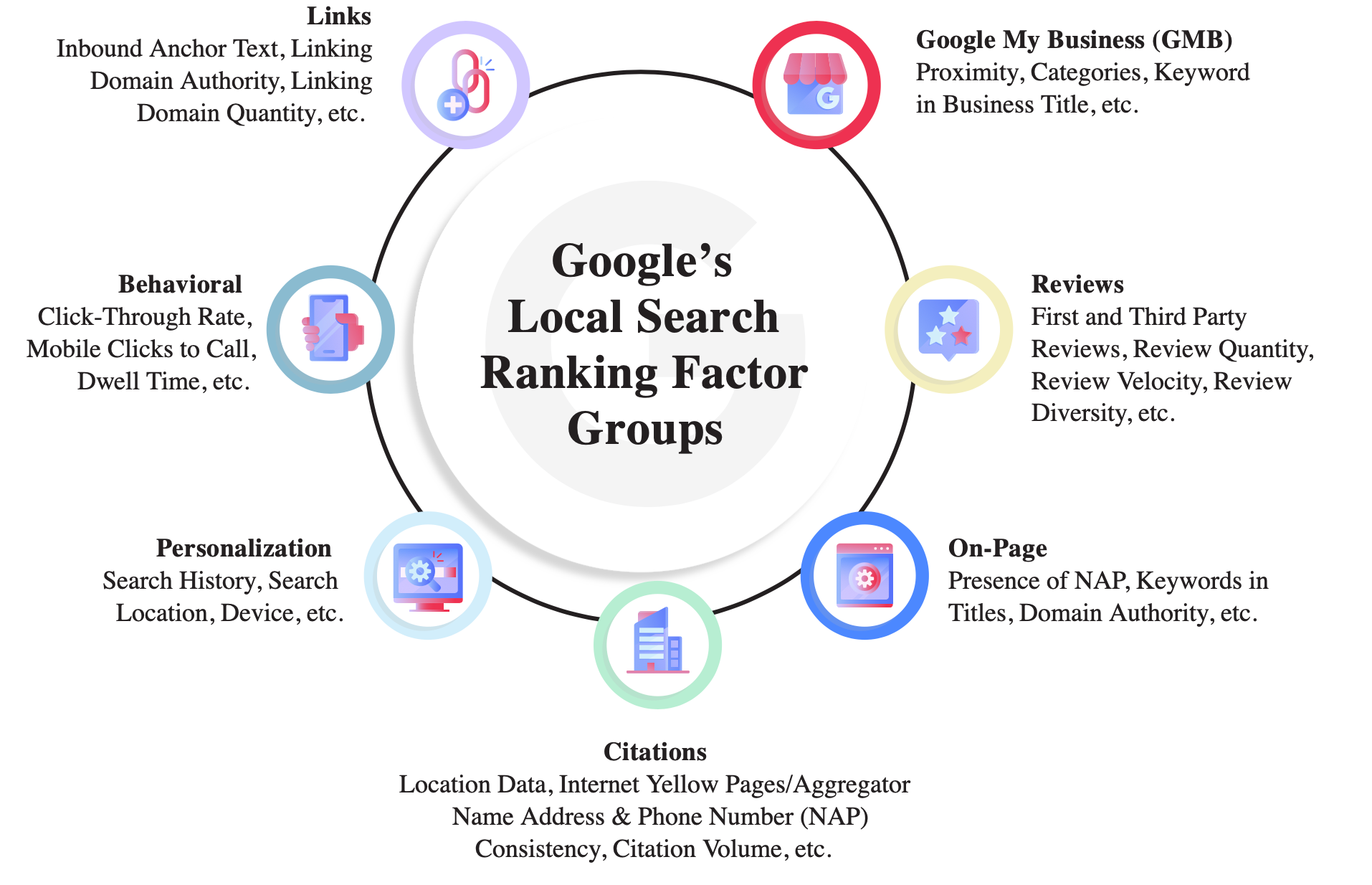](https://www.nearmedia.co/ep-44-local-search-ranking-factors-interview-with-darren-shaw/)
[Ep 43: Apple Maps goes from goat to great, Twitter needs new model, Fired Xooglers sue over Don’t be evilApple Maps gets real about navigation & discovery; Twitter’s underperformance & CEO change point to a need for a new business model, Fired Xooglers claim “Don’t be evil” is an employment contractNear MediaNear Media](https://www.nearmedia.co/ep-43/)
[Ep 42: Consumer survey indicates that 50% of searches are local, Apple Maps makes discovery push, Apple positions themselves for AR via Maps67% of Consumers Trust ‘Local Businesses’ More than Internet-Only Brands and over 50% of their search are local; Apple Maps makes discovery push and position themselves for ARNear MediaNear Media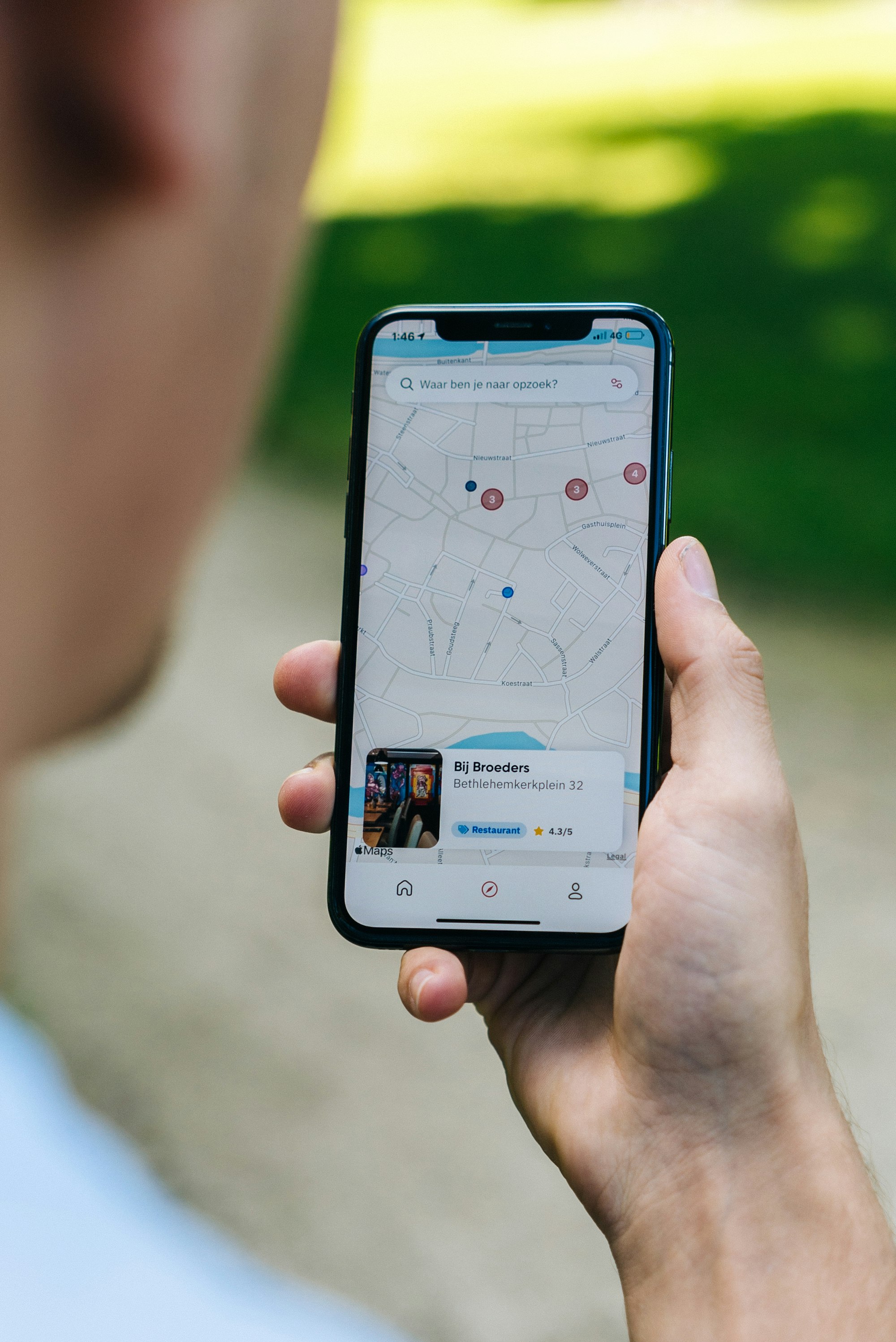](https://www.nearmedia.co/ep-42-uberall-consumer-survey-indicates-that-50-of-searches-are-local-apple-maps-makes-discovery-push-apple-positions-themselves-for-ar/)
[Ep 41: Vista rebrand elegance, Opportunities for new search engines, Google expands SMB propaganda campaignVista deftly rebranded & their success demonstrates the strength of SMB market, Can new search engines like You & Never make a go of it in the face of Google?Google has expanded their SMB propaganda campaign into Adwords and other business products to gain SMB against anti-trust regulationNear MediaNear Media](https://www.nearmedia.co/ep-41-vista-rebrand-elegance-opportunities-for-new-search-engines-google-expands-smb-propaganda-campaign/)
[Ep 40: Google My Business Rebrand - Is it a chance to fix GMB or an opportunity to nuke part of the stack?This week we discuss just one topic, the rebranding of the Google My Business tools to the Business Profile. With enhanced in-search and in Maps editing, Google is trying (once again) to lure small businesses to edit their listings via new features. The GMB API will become the Business ProfileNear MediaNear Media](https://www.nearmedia.co/ep-40/)
[Ep 39: Amazon goes local BOPIS, Impact of images in Google Local search, Google Local driving the most leadsAmazon dips toes in local buy online and pickup in store, The arc of the impact of images in Google Local search, Google Local driving the bulk of leads in most industriesNear MediaNear Media](https://www.nearmedia.co/ep-39/)
[Ep 38: FTC: mobile ISPs abuse privacy, Snap blames Apple for shortfall, Performance ads an analytics scam?FTC details broad spread mobile ISPs privacy abuse practices amongst major carriers, Snap misses qt. estimates and blames Apple for shortfall, Rand Fishkin asks what if performance ads an analytics scam?Near MediaNear Media](https://www.nearmedia.co/ep-38-ftc-mobile-isps-abuse-privacy-snap-blames-apple-for-shortfall-performance-ads-an-analytics-scam/)
[Episode 37: FTC lays review fine groundwork; Amazon creates offline Xmas catalog; Google Lens surfaces Local PacksFTC lays groundwork for review fines with 700 companies IF they violate rules; Amazon creates a stealth XMAS toy offline catalog that is barely branded; Google Lens surfacing Local Packs with product shotsNear MediaNear Media](https://www.nearmedia.co/episode-37/)
[Ep 36: Squarespace’s “Everything to Sell Anything,” Google vs. Lowe, and Has the Local Pack Outlived Its Usefulness?Part 1 Video Starts 0:13 - Squarespace’s “Everything to Sell Anything,” Part 2 Video- Starts 9:58 - Google vs. Lowe Part 3 Video- Starts 16:18 - Has the Local Pack Outlived Its Usefulness? Transcript: Ep 36Greg: Welcome to the Near Memo, a weekly conversation about search,Near MediaNear Media](https://www.nearmedia.co/squarespaces-everything-to-sell-anything-google-vs-lowe-and-has-the-local-pack-outlived-its-usefulness/)
[Episode 35: Google enhances Lens for image-based commerce, Yelp’s restaurant SaaS, Amazon and Facebook stymied by consumer privacyPart 1 Video Starts 0:13 - Google enhances Lens for image based commerce and shows the way for new image search paradigms Part 2 Video- Starts 7:28 - Yelp targets restaurant front of house operations with saas product: Yelp Guest Manager Part 3 Video- Starts 14:35 -Near MediaNear Media](https://www.nearmedia.co/episode-35/)
[Ep 34: New retail formats offer hope; How many real customers does Wix have?Will the FTC require ad tracking privacy opt-in?Can new retail formats save department stores? How many real customers does Wix have? Will we see opt-in privacy options and what does it mean for marketers?Near MediaNear Media](https://www.nearmedia.co/ep-34/)
v
[Ep 33: Shopify benchmarks SMB CAC; Reviews tell the story of Walmarts inventory woes; Twitter & WhatsApp now offering local business pagesShopify CAC, Marketing Benchmarks for SMBs; Is Your Customer Acquisition Cost Sustainable? Benchmarks for Every Industry; What Reviews Tell Us About How Walmart’s Supply Chain Issues; Twitter’s GMB ProfileNear MediaNear Media](https://www.nearmedia.co/ep-33-shopify-benchmarks-smb-cac-reviews-tell-the-story-of-walmarts-inventory-woes-twitter-whatsapp-now-offering-local-business-pages/)
[Ep 32: How B2B sales have changed forever, ApplePay growth stalled, Can we trust FB smart glasses?B2B sales have changed forever with self-serve playing an ever larger role. Why is leading digital wallet Apple Pay uptake still so low? Will Facebook’s SmartGlasses make it out of the gate?Near MediaNear Media](https://www.nearmedia.co/ep-32/)
[Episode 31: MailChimp selling for $10b?, 1-800-Contacts sues Warby Parker over Adwords, Will Yahoo rise again?MailChimp priced at $10b for Intuit proves value of SMB SAAS, 1-800-Contacts sues Warby Parker over trade name use in Adwords, Will Yahoo have a new life after Verizon sale?Near MediaNear Media](https://www.nearmedia.co/episode-31/)
[Episode 30: Walmart Deliveries for SMBs, SMB Social Media Disconnect, Apple Maps ReviewsPart 1 Video Starts 00:13 - GoLocal: Walmart’s Last-Mile Delivery Service for SMBs Part 2 Video- Starts 8:28 - The SMB social media disconnect: what SMBs THINK consumers want is not what they want Part 3 Video- Starts 15:25 - With recent roll out of Apple MapNear MediaNear Media](https://www.nearmedia.co/episode-30/)
v
[Ep 29: FTC takes big swing at FB, Survey: What SMBs really need, Can a Local food delivery co-op compete?FTC says Facebook Resorted to Illegal Buy-or-Bury Scheme to Crush Competition After Failed Attempts to Innovate, Clients tell all: What small businesses need from marketing agencies today, How to Start a Local Restaurant Delivery Service: An Interview with Clay Seaman of Omaha LoCoNear MediaNear Media](https://www.nearmedia.co/ep-29/)
[Ep 28: Google devastates local food delivery, The boom in pet adoption leaves Vets overwhelmed, Amazon sellers paying to delete negative reviewsThe unintended consequences of Google ramping up Local Food ordering; local delivery devastated, a surprising outcome of Covid includes Veterinary burnout and a shortage of animal Vets, In the strange world of review abuse merchants pay (or abuse) for negative review takedownsNear MediaNear Media](https://www.nearmedia.co/ep-28/)
[Ep 27: Yelp’s Positive Q2 Reports, When do SMBs Hire Key Roles & How to Create Content When AI Writes WellYelp recovers from pandemic lows, SMBs hire key staff later than thought and how to create content when AI writes it allNear MediaNear Media](https://www.nearmedia.co/ep-27/)
[Ep 26: FB profits on way to metaverse, Apple & Snapchat up their SMB Maps play & Privacy seems less likelyWe discuss the Facebook Metaverse, the non impact of Apple’s actions, Apple & Snapchats improved local mapping, and how privacy seems ever further away.Near MediaNear Media](https://www.nearmedia.co/ep-26/)
[Ep 25: Google makes reviewing easy by adding attributes to restaurant reviews, Fake reviews are costly to SMBS but Google seems incapable of squashing them, Square’s new bank is a threat to traditional SMB banking relationshipsGoogle makes reviewing easy by adding attributes to restaurant reviews, Fake reviews are costly to SMBS but Google seems incapable of squashing them, Square’s new bank is a threat to traditional SMB banking relationshipsNear MediaNear Media](https://www.nearmedia.co/episode-25-google-makes-reviewing-easy-by-adding-attributes-to-restaurant-reviews-fake-reviews-are-costly-to-smbs-but-google-seems-incapable-of-squashing-them-squares-new-bank-is-a-thre/)
[EP 24: Biden encourages departments to go all in on increasing competition, Will Craigslist decline create opportunity for NextDoor? Will public notification of facial recognition deter shoppers?Biden Executive order sets stage for Executive branch cooperation to increase competitiveness in US, Does a declining Craiglist create an opening for NextDoor in classifieds? Will facial recognition notices slow down shoppers?Near MediaNear Media](https://www.nearmedia.co/ep-23-2/)
[EP 23: Google Play store antitrust suit futile?, Good Local content makes the difference, Yext Search Data hub provides GMB Insights at scaleGoogle Play store antitrust suit futile? Case Study: Good Local content succeeds against Google algo updates! Yext Search Data Hub provides interesting GMB Insights Data across 600,000 listingsNear MediaNear Media](https://www.nearmedia.co/ep-23/)
[Ep 22: FB Bulletin = newsletter + social, Shopify creating Ad Network?, Supreme Court ruling re-opens scraping questionFacebook releases Bulletin, a subscription newsletter that integrates FB comments; Is Shopify creating a cross website Ad network to assist their SMB’s ad efforts?; The Supreme Court orders a review of the HiQ-LinkedIn dispute that could endanger scraping & Martech stacksNear MediaNear Media](https://www.nearmedia.co/near-memo-episode-22/)
[FLoC is flailing, Privacy Success of DuckDuckGo, Businesses need employee vaccination policiesFLoC is flailing, Privacy Successes of DuckDuckGo & Businesses need employee vaccination policiesNear MediaNear Media](https://www.nearmedia.co/near-memo-episode-21/)
[The Near Memo, Ep 20 - The local arc from inventory to ordering to monopoly and consolidationAn exciting week in local. We explore the local arc from inventory to ordering to monopoly and consolidationNear MediaNear Media](https://www.nearmedia.co/the-near-memo-episode-20/)
[The Near Memo, Episode 19Apple killed email? Google’s crazy Local business names; In person conferences are wonderful & weirdNear MediaNear Media](https://www.nearmedia.co/the-near-memo-episode-19/)
[The Near Memo, Episode 18Is there a solution to fake review?; Google’s Grand Vision for search is nothing if not ambitious; How a local bookstore is fighting for his business and his community in his fight against Amazon.Near MediaNear Media](https://www.nearmedia.co/the-near-memo-episode-18/)
[The Near Memo, Episode 17Why Local Guides are Bad for Your Business; Google’s Push for Privacy to Regain Consumer Trust and SMB Products to Compete with Amazon. SMB platforms are converging on a suite of sophisticated tools for marketing & ops automationNear MediaNear Media](https://www.nearmedia.co/the-near-memo-episode-17/)
[The Near Memo, Episode 16Are Yelp’s problems self-inflicted?; Google I/O: they flex their AI muscles and move further into local products with the Shopping Graph; Google going into Retail, really?Near MediaNear Media](https://www.nearmedia.co/the-near-memo-episode-16/)
[The Near Memo, Episode 15Shopify makes the case for local ecommerce with some great stats; Why do consumers desire to buy local but still buy at Amazon?; How did Google win the review wars vs Yelp?Near MediaNear Media](https://www.nearmedia.co/the-near-memo-episode/)
[The Near Memo, Episode 14Referenced Articles \* Flurry Analytics iOS 14.5 Opt-in Rate \[https://www.flurry.com/blog/ios-14-5-opt-in-rate-att-restricted-app-tracking-transparency-worldwide-us-daily-latest-update/\] \* How Shopify’s Network Can Take on Amazon \[https://www.theverge.com/22417825/shopify-harley-finkelstein-interview-online-shopping-amazon-apple…Near MediaNear Media](https://www.nearmedia.co/the-near-memo-episode-14/)
[The Near Memo, Episode 13Is Apple being paternalistic to not allow advertisers to provide ATT incentives? Can Yelp make their way with transactions? Amazon, amazing profits, amazing (& ruthless) efficienciesNear MediaNear Media](https://www.nearmedia.co/the-near-memo-episode-13/)
[The Near Memo, Episode 12Zagat reviews, but shorter and more visual, rise from the Google ashes; The FTC ability to levy fines as a deterrent is knee capped by SCOTUS; Apple privacy changes AND review capability coming this week.Near MediaNear Media](https://www.nearmedia.co/the-near-memo-episode-12/)
[The Near Memo, Episode 11FB Survey: increased SMB e-commerce & struggles What will consumers do when the economy opens? SubStack creates program to develop local newsNear MediaNear Media](https://www.nearmedia.co/the-near-memo-episode-eleven/)
[The Near Memo, Episode 10SWYFT Opens New Avenues for SMBs to compete with Prime. Is the FTC getting serious about review enforcement? So long Yahoo Answers, can Google Local Guides get this product category right?Near MediaNear Media](https://www.nearmedia.co/episode-10/)
[The Near Memo, Episode 9Website Builder SquareSpace acquires restaurant backend system Tock; Google My Business shoots themselves in the Messaging foot by showing competitors when a consumer attempts to message a specific business; GroundTruth bets on the SMB market with acquisition of Addy.Near MediaNear Media](https://www.nearmedia.co/episode-9/)
[The Near Memo, Episode 8Episode 8: Google fights with Rand Fishkin over “zero-click” searches. Can a rating only review ever be defamatory? Will Yahoo’s brand rise from the ashes as a Verizon subscription service?Near MediaNear Media](https://www.nearmedia.co/episode-8/)
[The Near Memo, Episode 7The impact of COVID-19 one year into the pandemic: consumers prefer rigorous mask enforcement by businesses, eCommerce has become table stakes, the trends in advertising and privacy favor the triopoly.Near MediaNear Media](https://nearmedia.co/episode-7?ref=nearmedia.co)
[The Near Memo, Episode 6How the advertising duopoly has created alternative income models, Tock and the restaurant friendly delivery model, deconstructing Google’s recent announcements about Local Guides and photo updates in Google Maps.Near MediaNear Media](https://www.nearmedia.co/episode-6/)
[The Near Memo, Episode 5Google’s first privacy stance benefits...Google, Measuring the Public’s Trust in Tech, and Volvo’s Direct-to-Consumer Model Portends Radical Shifts for Car Dealers.Near MediaNear Media](https://www.nearmedia.co/episode-5/)
[The Near Memo, Episode 4The Near Memo is a weekly conversation about Search, Social, and Commerce: What happened, why it matters, and the implications for local businesses and national brands. Greg: Okay, welcome to the nearer memo. Episode 4, I believe. This is our weekly conversation with me, Greg Sterling, Mike Blumenth…Near MediaNear Media](https://www.nearmedia.co/the-near-memo-episode-4/)
[The Near Memo, Episode 3The Near Memo is a weekly conversation about Search, Social, and Commerce: What happened, why it matters, and the implications for local businesses and national brands.Near MediaNear Media](https://nearmedia.co/episode-3?ref=nearmedia.co)
[The Near Memo, Episode 2Welcome to the Near Memo. Our conversation about the important developments of the week and beyond.Near MediaNear Media](https://www.nearmedia.co/episode-2/)
[The Near Memo, Episode IMike Blumenthal and David Mihm join Greg Sterling for the first episode of The Near Memo podcast, where they discuss Amazon’s recent PR stunt, the recent activity and interest around newsletters, the arrival of Clubhouse, and privacy.Near MediaNear Media](https://www.nearmedia.co/episode-1/)
### Sign up for Near Media
URL: https://www.nearmedia.co/subscribe/
Last updated: 2024-11-18T22:37:58.000Z
## Sign up for Near Media
Near Media is the go-to advisor for marketing executives at vertical agencies and multi-location brands seeking to optimize their search strategy and tactics.
Subscribe
Email sent! Check your inbox to complete your signup.
No spam. Unsubscribe anytime.
### Thanks for subscribing!
URL: https://www.nearmedia.co/thanks/
Last updated: 2024-02-29T21:03:57.000Z
We appreciate you being part of our community. To get our up-to-the minute updates analysis, and for more interactive conversations, please also join us on [Twitter](https://twitter.com/nearmediaco?ref=nearmedia.co), [LinkedIn](https://www.linkedin.com/company/nearmediaco/?ref=nearmedia.co), or both.
\-- Greg Sterling, Mike Blumenthal, and David Mihm

Photo by [Adam Jang](https://unsplash.com/@adamjang?utm%5Fsource=ghost&utm%5Fmedium=referral&utm%5Fcampaign=api-credit)
### 🙏 🤩 ❤️
URL: https://www.nearmedia.co/thanks-all-access/
Last updated: 2024-11-19T01:17:09.000Z
## Thanks for becoming an All-Access subscriber.
### We're incredibly grateful for your support.
If you have a few moments to share your thoughts about what you find most valuable about our content, we'd love to know so that we can do more of it! Email us directly via dm@nearmedia.co.
Thanks again for subscribing.
\--Greg, Mike, and David
### The Search Gameplan
URL: https://www.nearmedia.co/search-gameplan/
Last updated: 2024-03-13T18:47:08.000Z
##
## The Search Gameplan
A location-obsessed SEO & paid search roadmap, custom-built for multi-location brands and vertical agencies.
[Contact Near Media to Learn More](https://nearmedia.co/contact?ref=nearmedia.co)
---
### Local search is *different.*
>
> There is no canonical Local SERP.
>
> Keyword localization in many ways dictates content strategy.
>
> Every category, every location is a unique competitive set.
>
> It's not unusual for GBPs to earn 5-10x the engagement of website URLs.
>
> Ad units are unique and have a dramatic impact.
>
> ...the list goes on...
>
### And yet it’s an afterthought for most enterprise agencies.
### Even the agencies who “get it” apply the same (old) SEO tactics they use for other clients.
---
## Why you need a Search Gameplan
Don’t invest millions of dollars in human resources, content, and ad spend based on dated SEO theories that don’t take localized SERPs into account.
**Build your messaging, content architecture, GBP strategy, and ad plans around how potential customers interact with search results for keywords you actually want to rank for.**
Near Media's Search Gameplan answers exactly this question: **how your customers evaluate and interact with search results.** We help you place the right bets for sustained long-term success in Google, no matter how SGE or its successors might change the game.
---
## What your Search Gameplan Includes
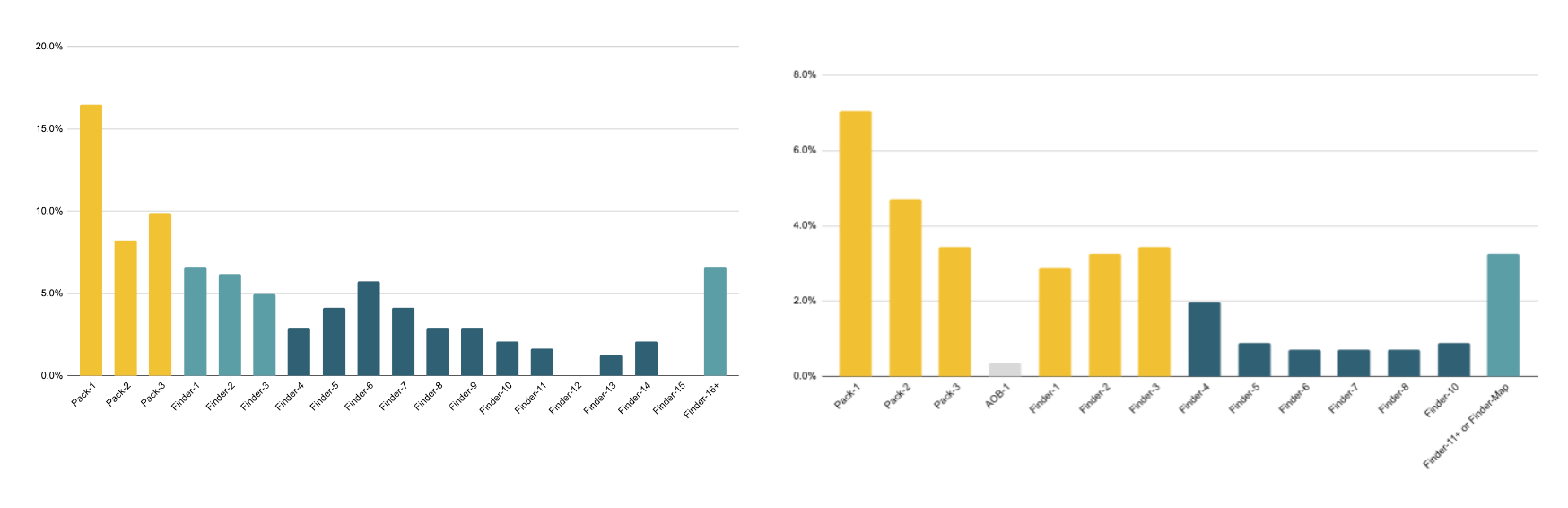
****PROPRIETARY CONSUMER RESEARCH**
**Understand not just search volume opportunities in your category, but what search* behavior *looks like in your category.*
We prompt real consumers who fit your target profile to perform bottom-of-funnel mobile and desktop searches. We then watch and listen to their recorded search sessions and standardize their behaviors into a quantitative analysis.
This yields ****an industry-specific CTR curve** across all of Google's various UI elements and provides ****invaluable insight into messaging themes and packaging preferences** you can leverage in ads, metadata, and on-site copy.
---
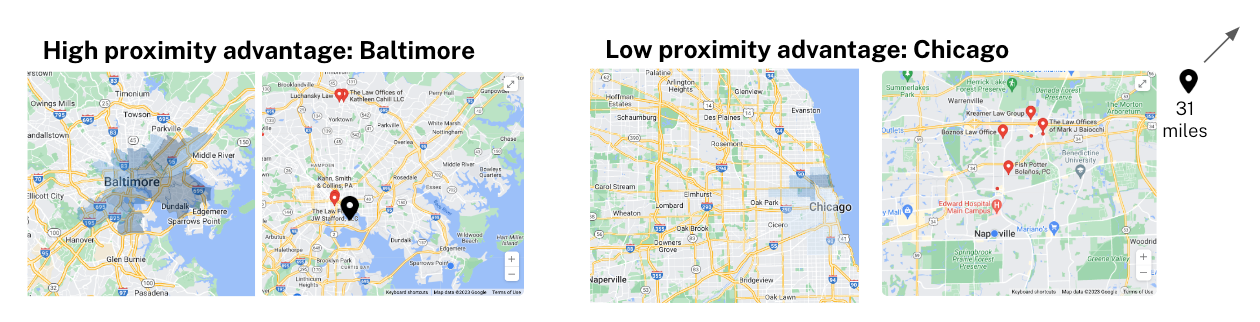
****COMPETITIVE LOCALIZED SERP ANALYSIS**
**Understand which keyword themes are* nationalized *and which are* localized**, and where your best organic + GBP opportunities lie.*
We perform comprehensive keyword research to understand not just your highest-volume search terms, but how Google localizes those terms in a way that informs your content architecture.
We also analyze your existing performance in key or representative (or all) markets to highlight competitive gaps and markets where you may have significant upside.
---
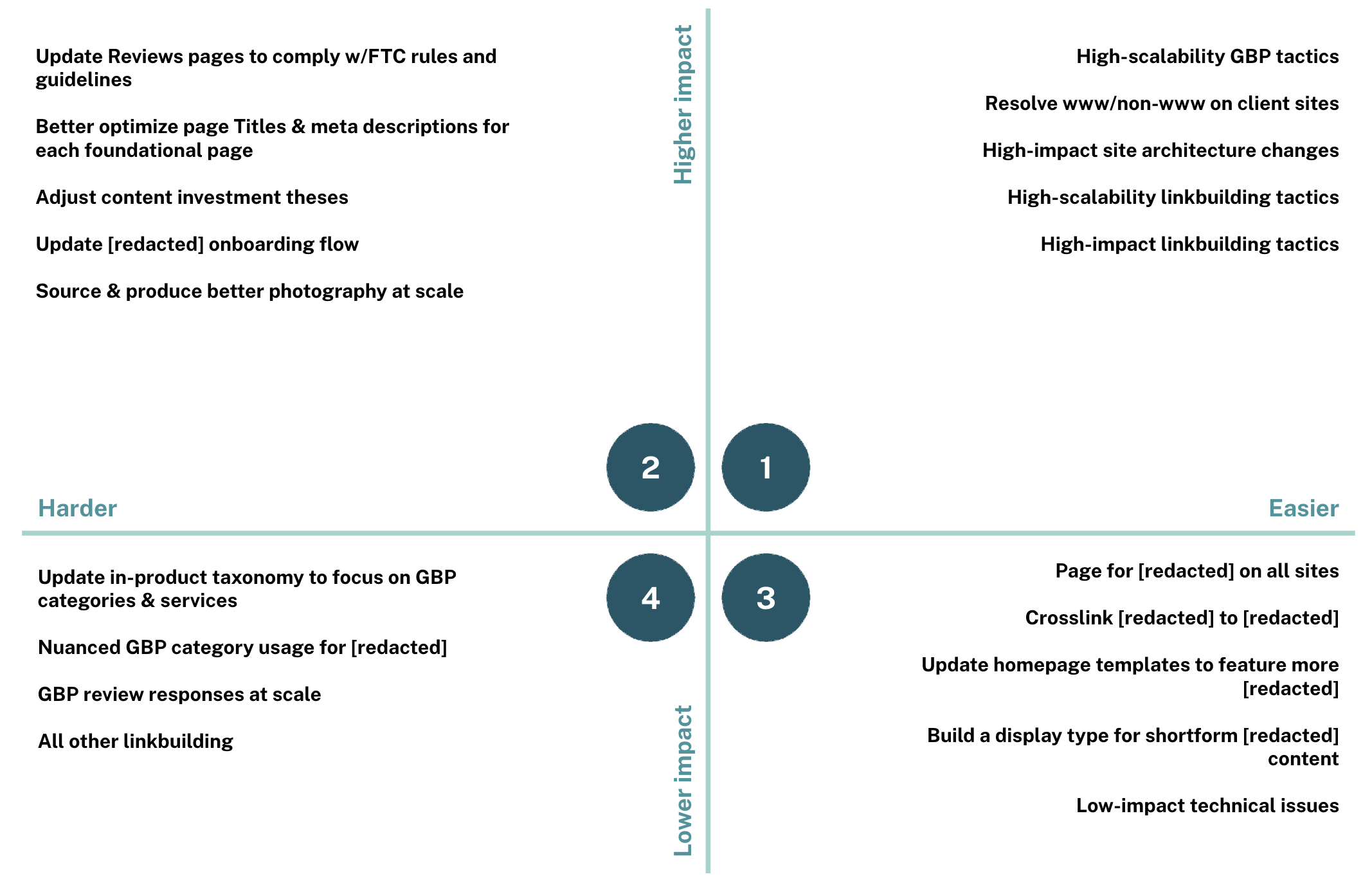
****STEP-BY-STEP IMPROVEMENT ROADMAPS**
**Understand your tactical shortcomings today, how you can improve them, and the optimal order to do so.*
We perform a complete audit of your current multi-market presence for organic + local SEO best practices, and offer specific remedies for optimal implementation, including:
\- GBP reviews and imagery
\- site architecture
\- content strategy
\- on-site keyword targeting
We then prioritize the urgency and importance of those remedies based upon size of impact, confidence in our recommendation, and effort required to achieve that impact.
---
## Why Hire Near Media
**It is not an exaggeration to say that Near Media’s** [**three principals**](https://nearmedia.co/about?ref=nearmedia.co) **have analyzed more local SERPs than anyone else on the planet. We’re three of the oldest OGs in Local.**
In few markets is the old adage “You get what you pay for” more true than in search consulting.
Unlike templated laundry lists delivered by junior consultants, you’ll get clear, actionable, prioritized recommendations for specific changes and improvements to your SEO strategy and localized marketing mix.
You won’t get this depth of understanding of how Google thinks about Local, or the clarity of how to adapt your strategy to that thinking, from any other vendor.
Historically, our clients have seen [location-page visits increase by as much as 700%](https://www.davidmihm.com/clients/financial?ref=nearmedia.co), and routinely see [GBP engagements double](https://www.davidmihm.com/clients/healthcare?ref=nearmedia.co) after implementing our recommendations.
### Contact Near Media
URL: https://www.nearmedia.co/contact/
Last updated: 2026-10-16T23:23:06.000Z
_No content available._
### Clients
URL: https://www.nearmedia.co/clients/
Last updated: 2026-03-05T23:42:07.000Z
## Who We've Worked With
Near Media has been fortunate to work with innovative digital marketers across a wide range of industries. Read about their experience working with us below.

## Luke Kervin, Chief Innovation Officer, [Tebra](https://tebra.com/?ref=nearmedia.co)
> We engaged Near Media to refine our local marketing product strategy, aiming to understand search behavior within our specific sub-verticals. Our goal was to effectively optimize our Google Business Profiles, website, and reputation management products. Near Media's proprietary research methods in search behavior are unmatched, offering us unique and invaluable insights tailored to our target market. They provided a well-prioritized action plan that was insightful and ready for implementation.
>
> **Near Media's expertise in local SEO and targeted content strategy has been a game-changer for us.**
---

## Christian Espinal, Marketing Director, [SecureSpace Self Storage](https://securespace.com/?ref=nearmedia.co)
> Working with Greg Sterling, Mike Blumenthal, and David Mihm was an enlightening experience for our self-storage company. Their collective expertise in local digital marketing, local search, and digital presence optimization was evident from the outset. Greg's profound knowledge and foresight in location intelligence and the SMB market, combined with his historical understanding of its evolution, provided a solid foundation for our strategy. Mike's practical insights, drawn from years of firsthand experience in retail and local search, were invaluable in navigating the complex landscape of local SEO. David's strategic approach to digital presence and his deep understanding of how businesses interact with Google search results brought a fresh perspective to our online strategy.
>
> Their comprehensive audit unearthed numerous opportunities for us to enhance our SEO strategy, demonstrating their sophisticated approach to digital marketing. The user testing they conducted, although pricey, was an investment that paid dividends in understanding how our customers search for services in our industry. The insights gained from this exercise were eye-opening and have significantly influenced our approach to customer engagement online. The dedication and time Greg, Mike, and David invested in our project were remarkable, and the results speak volumes of their commitment to excellence. Their collaborative effort has not only improved our online visibility but also positioned us for greater success in the digital arena.
>
> **I wholeheartedly recommend Greg Sterling, Mike Blumenthal, and David Mihm to any business seeking to enhance their local search strategy, particularly those in competitive markets.** Their combined expertise and innovative approaches are a game-changer for standing out in today's crowded digital landscape.
---

## Daniel Kalish, Managing Partner, [HKM Employment Lawyers LLP](https://www.hkm.com/?ref=nearmedia.co)
> I cannot thank Near Media enough for how they helped my employment law firm grow. The company obtained detailed information about what my potential clients looked for in deciding what law firm to hire – really, the holy grail in marketing. The company also gave me with a detailed list of how my firm’s offices were performing, explained the differences in that performance, and then provided me with a clear, digestible list of what to actually do to obtain more leads for my firm.
>
> **The work has been crucial to the growth of my law firm, and I could not be happier with the quality of Near Media’s work.**
---

## Carl Peterson, CEO, [BarkBusters USA](https://www.barkbusters.com/?ref=nearmedia.co)
> Near Media conducted a custom research study for us, looking at how dog owners search for and choose a trainer. It explored the full customer journey, from DIY training efforts to the channels owners rely on most before choosing a professional.
>
> **Near Media has helped us gain valuable consumer insights, leading to a much better understanding of how best to target new customers.**
>
> It gave us a much better picture of where potential customers are most likely to discover Bark Busters and what actually influences them. We gained great insights into customer behavior and where to focus our digital marketing efforts.
### Policy Statement on Google Search & DMA Regulation
URL: https://www.nearmedia.co/dma-statement/
Last updated: 2024-11-19T18:17:44.000Z
## ****Policy Statement on Google Search & DMA Regulation**
****A potential framework to assess Google's compliance with the Digital Markets Act.**
An expansive open web is good for consumers, good for businesses, and good for society. Historically, Google has contributed to the growth of the open web. In certain search verticals the percentage of traffic sent by Google to the open web may have reversed in recent years.
Google is a monopoly ([gatekeeper](https://ec.europa.eu/commission/presscorner/detail/en/ip%5F23%5F4328?ref=nearmedia.co)) in online search and maps, with a market share [exceeding 90% in online search](https://gs.statcounter.com/search-engine-market-share?ref=nearmedia.co). Governments should be able to regulate monopolies (gatekeepers).
The Digital Markets Act is a commendable attempt at regulation, particularly Articles 6(5), 6(10), and 6(11). Full, good-faith compliance from Google will make online search more contestable.
Local search (including hotels) and maps are among the largest, most frequently used search verticals. Suppliers, Aggregators, and SMEs deserve a level playing field in these verticals. No business type is more important than the other; each is a legitimate part of the open web.
Entity search results that display a gatekeeper's first-party data (e.g. merchant-submitted business information, user photos, user reviews, among others) should be considered vertical properties of the gatekeeper and subject to self-preferencing regulation.
Compliance should be defined by publicly-verifiable standards, within which Google and other gatekeepers can and should innovate. These standards should not mandate particular product design choices.
### How, exactly, do clients choose a personal injury lawyer?
URL: https://www.nearmedia.co/personal-injury-law-research/
Last updated: 2026-07-26T22:19:37.000Z
## How, **exactly*, do clients choose a personal injury lawyer?
****It used to be that only Google knew what made clients choose one PI firm over another in search results.** ***Not anymore.**
Near Media is pulling back the curtain on how prospective clients search for and choose PI lawyers, with our analysis of 2,000+ consumersʼ reported and observed behavior.
## Introducing Near Media Private Market Intelligence for Personal Injury Lawyers
**in partnership with* [**AttorneySync*](https://www.attorneysync.com/?ref=nearmedia.co) *&* [**Mockingbird*](https://www.mockingbirdmarketing.com/?ref=nearmedia.co)
Get a monthly stream of fresh insights from behavioral and attitudinal research into ****how clients search for and choose a personal injury lawyer.**
[Get a sample report](mailto:research@nearmedia.co?subject=PI%20Legal%20Program%20Sample)
## ****Stay a step ahead of your competition with our proprietary market research:**
Spend smarter.
Win more clicks.
**Get chosen by more prospective clients*.
## **Program Details**
## Limited to [2 personal injury firms per market](#market-definition) (no agencies)
Get 6 deep-dives into specific topics--all specific to personal injury law:
###
---
#### How legal consumers research their case, use of AI & more.
Topline findings from our summer 2025 legal consumer survey.
#### Differences in reported behavior between demographics, directory brand penetration & more.
Deep-dives into segments of interest from our summer 2025 legal consumer survey.
#### How prospective clients search, typical SERPs, AIO engagement & more.
An overview of observed consumer search behavior based on our summer 2025 consumer panel.
#### What SERP features receive clicks, how that differs Mobile vs. Desktop & more.
A deep dive into the specific result types receiving the most action, and significant differences between mobile and desktop behavior.
#### What **positions* in the SERP receive clicks, where choices come from & more.
A deep dive into clickthrough rate curves for each result type, as well as the result types driving the greatest number of consumers' choice of law firm.
#### Research-Backed Messaging and Positioning Takeaways
Our recommendations for updating your Title Tags and ad headlines, as well as your website page layouts and content strategy.
---
### Each report includes
📊
PDF with contextual data analysis
🟢
On-demand videocast presentation walkthrough
🗨️
Exclusive Q&A with Near Media experts
## email [research@nearmedia.co](mailto:research@nearmedia.co) to reserve your subscription
## Take a sneak peek at some of our insights 👇
0:00
/0:19
1×
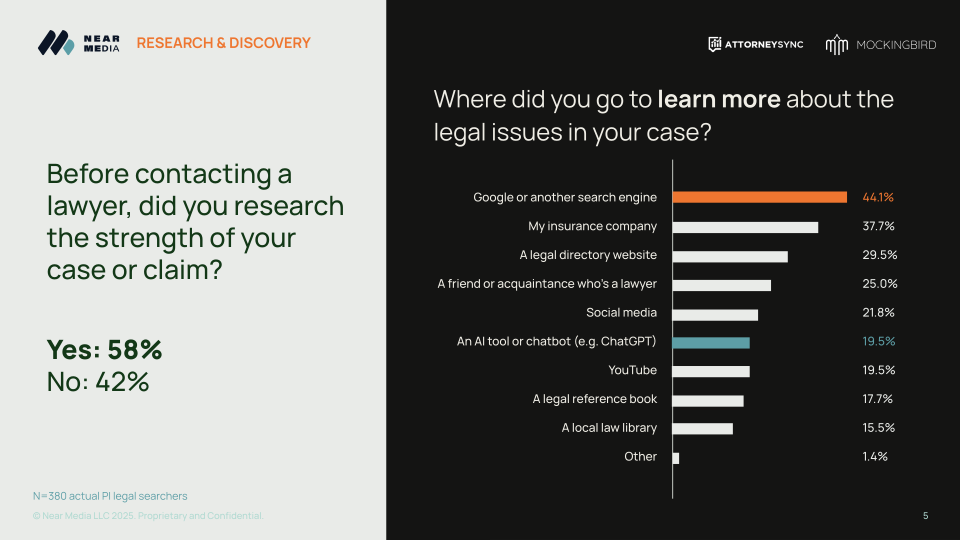
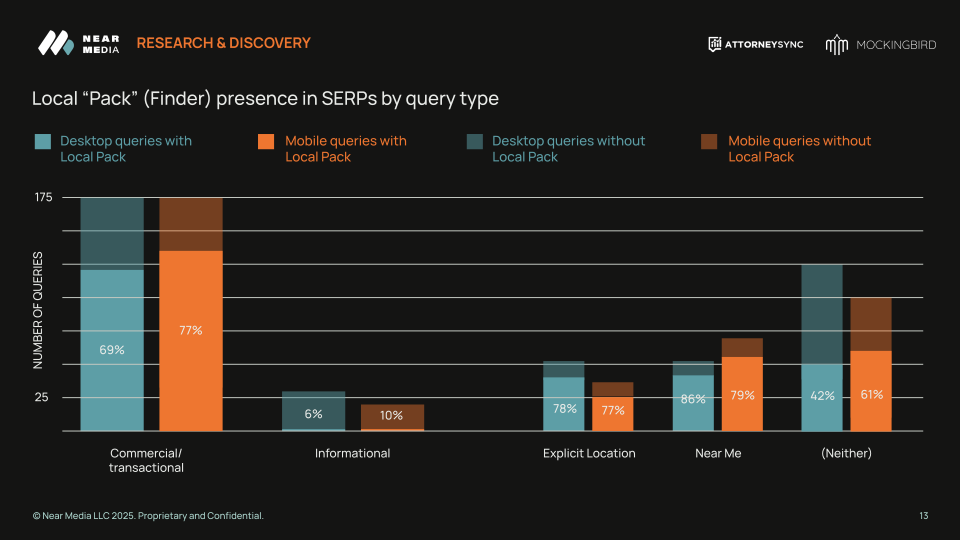
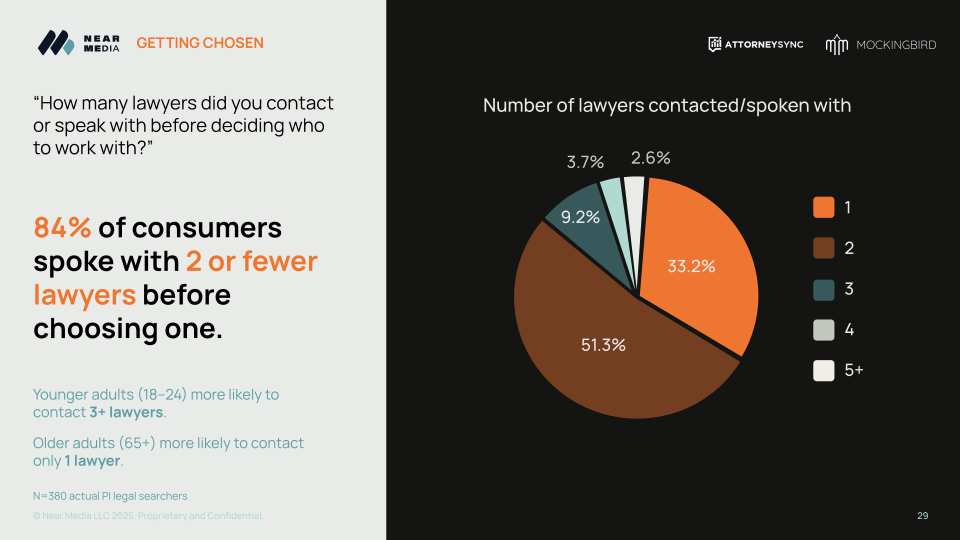
## In a rapidly changing search landscape, you canʼt afford NOT to know this data:
Where to focus your marketing
How prospects are using AI in their research
What influences their decision to contact a firm.
## How We Conduct Our Research
> *Survey data (N=500+) and behavioral research data (N=300+) are each collected every six months from distinct national respondent panels.*
#### Consumer insight surveys
- How they research lawyers on and off Google
- Where AI fits into the customer journey
- What sites, tools and resources they trust
- How they vet word-of-mouth referrals
- How they make decisions
#### Behavioral search research
- Mobile & desktop Google searches captured on video
- Influence of AI on engagement and decisions
- Where clicks come from: Organic, Business Profiles, Ads
- What elements drive conversions
- Most effective messaging
### Near Media co-founder David Mihm shares some of our methodology and highlights a teaser of one of the actionable takeaways for subscribers:
0:00
/1:35
1×
## Access is strictly limited to 2 firms per metro area.
See how we define each metro area on the map below.
###
###
###
## Enterprise B2C companies pay hundreds of thousands of dollars for this kind of research.
Through a cost-sharing model that pools the marketing resources of firms with distinct client bases, Near Media is able to deliver transformative insights at a price that all firms can afford.
###
| PRICING $12,000Six months of on-demand access + monthly live Q&A | OPTIONAL ADD-ONS $7,500 (one-time) Custom 300-respondent brand awareness and competitive benchmarking survey specific to your local market $7,500 (one-time) 100-user search behavior panel specific to your market |
| ---------------------------------------------------------------- | ------------------------------------------------------------------------------------------------------------------------------------------------------------------------------------------------------------------- |
###
###
## email [research@nearmedia.co](mailto:research@nearmedia.co) to reserve your subscription today
## About Near Media
Founded by three veteran local search analysts in 2021, Near Media is an applied market research firm helping marketing executives maximize their SEO & paid search investments.
Through our unique combination of proprietary consumer research, localized search result page analysis, and step-by-step performance improvement roadmaps, we are the go-to strategic and tactical advisor for brands seeking to maximize their investments in paid, organic, and local search.
### Private Market Intelligence Hub
URL: https://www.nearmedia.co/hub/
Last updated: 2026-07-08T21:48:44.000Z
These reports and recordings are restricted to active subscribers of the Near Media Private Market Intelligence program only. By accessing these materials, you agree not to share them with anyone who is not an employee at your firm.
_This page is for subscribers on the Private Market Intelligence tier only._
### Sign up for Near Media's newsletter(s)
URL: https://www.nearmedia.co/signup/
Last updated: 2025-11-19T23:52:48.000Z
_No content available._
### Near Media Privacy Policy [Jan. 1, 2021 - Oct. 15, 2026]
URL: https://www.nearmedia.co/near-media-privacy-policy-2021/
Last updated: 2026-10-16T22:59:55.000Z
_This page is for paying subscribers only._
### Accessibility Statement
URL: https://www.nearmedia.co/accessibility/
Last updated: 2026-10-17T17:30:30.000Z
*Last updated: October 2026*
Near Media wants everyone to be able to read our research, analysis, and podcast content, including people who use assistive technology.
**Our standard.** We make a best effort to meet the Web Content Accessibility Guidelines (WCAG) 2.0 at Level AA. We review new content and site changes with accessibility in mind and fix problems as we find them.
**Accessibility options.** Our site includes the Oksigenia accessibility panel. Click the accessibility button on any page to adjust text size, spacing, and fonts; turn on high contrast, grayscale, or colorblind filters; highlight links; or use a dyslexia-friendly font. The panel collects no personal data.
**Podcast transcripts.** Near Memo episodes include written transcripts for readers who prefer text or can’t use audio.
**Known limitations.** Some older content, including captions on earlier videos and descriptions of some charts and images, may not yet fully meet these guidelines. We’re working through it.
**Need help?** If anything on nearmedia.co is hard to read or use, or you need content in another format, email us at **accessibility@nearmedia.co**. Tell us the page and the problem, and we’ll respond within 5 business days.
## Posts
### EP 278- Track What You Can, Let Go of the Rest: Dana DiTomaso on Attribution After GA4
URL: https://www.nearmedia.co/ep-278-track-what-you-can-let-go-of-the-rest-dana-ditomaso-on-attribution-after-ga4/
Last updated: 2026-10-15T15:57:48.000Z
[Dana DiTomaso, principal and founder of Kick Point](https://kickpoint.ca/about/dana-ditomaso/?ref=nearmedia.co), returns to the Near Memo (her [first visit](https://www.nearmedia.co/ep-155/) was GA4's early days) to talk with Greg Sterling and Mike Blumenthal about what's left of attribution: how much of a site's traffic is trackable, why one AI-started purchase can show up as four different channels, and what a marketer can still measure with confidence.
Attribution was always partly fiction that Universal Analytics papered over, and GA4 and privacy law have simply exposed it — so as consent banners, ad blockers and AI referrals keep shrinking the trackable slice, the job shifts from reconciling exact numbers to sizing what you can see, watching directional signals like branded search, and explaining the gaps to clients before they find them.
## Dana DiTomaso's Trackability Flowchart
Dana's main client tool is a flowchart (she builds hers in Figma) that follows a visitor from first touch to the CRM and shows where each one drops out of view *(11:56–12:43, 32:13–34:12)*. Her rule for every stage is the same: "track the heck out of" the people you can see, and let go of the rest.
| Stage | What it answers | Primary lever |
| ----------------------------------- | --------------------------------------------------------------------------------------------------------------- | -------------------------------------------------------------------------------------------------------------------------------------------- |
| **Before the site** | Where did the journey actually start: an AI answer, a brand search, a shopping listing, a link a spouse texted? | Walk through specific scenarios with the client. Add UTMs wherever you control the link. Watch branded-search impressions in Search Console. |
| **Consent banner** | What share of visitors said no to tracking? | Read the decline rate from the consent tool (she uses Cookiebot), and make sure "no" actually stops the tags. |
| **Ad blockers and browser privacy** | How much of the consenting traffic still disappears? | A cookieless backup (Plausible) for page views, and server log files, which nobody can hide from. |
| **GA4 processing** | How does the visible traffic get bucketed? | 14-month data retention, and custom channels for GBP, Bing, tab collectors and any small channel that matters. |
| **CRM** | Did the lead close, and where did it really come from? | Tag the sign-up source (in store or online) and check self-reported answers against GA4. |
## Takeaways
- **Attribution isn't dead, just not healthy.** It is "not as dead as the parrot" in the Monty Python skit. Universal Analytics hid incomplete attribution, while GA4 hands you the data and lets you find the gaps. Privacy laws such as GDPR and California's CPRA arrived at the same time and made the gaps bigger. *(02:03–02:40)*
- **Your trackable share depends on who visits.** In Texas, with a non-technical audience, few people go untracked. For some of Kick Point's European-facing clients, 80% decline tracking, and about half of the European visitors to Dana's own site say no. Ad blockers and Safari's Intelligent Tracking Prevention cut further into the rest. *(04:48–05:52)*
- **Most small businesses will never qualify for GA4 modeling.** Consent Mode v2 sends cookieless pings, but GA4 only models the people who declined if you have roughly 1,000 consenting and 1,000 declining visitors a day on 7 of the past 28 days. "If you're never gonna qualify… just do something else instead." *(05:57–06:56)* [Google's thresholds](https://support.google.com/analytics/answer/11161109?hl=en&ref=nearmedia.co) [\[1\]](#notes)
- **One AI-started purchase can show up as four different channels.** A shopper asks ChatGPT for a Canadian lighting manufacturer. If the link carries no UTM, the click lands as direct. If the shopper then Googles the brand and clicks its shopping listing, Search Console records a branded search, Merchant Center records an impression, and GA4 credits Google Shopping. The tell is an [srsltid parameter](https://www.sistrix.com/faq/where-does-the-parameter-srsltid-come-from/?ref=nearmedia.co) on the URL. *(07:54–09:40)* [\[2\]](#notes)
- **"Unassigned" is often tab collectors.** A visitor who leaves your blog post open for two weeks and then books has had their session time out, so GA4 shows them as unassigned. Dana moves that traffic into a channel she names "session timeout reactivation" (or "tab collectors"), so nobody has to keep explaining it. *(09:47–10:55)* [Kick Point Playbook](https://kpplaybook.com/resources/ga4-unassigned-traffic-rename-channels/?ref=nearmedia.co)
- **Size the slice before you make decisions.** Start with 100 visitors, subtract everyone who said no, and then look at the channel mix. A channel that looks like half your traffic in GA4 can be a much smaller share of what really happened. She also warns against the opposite mistake: a Fortune 100 client spent more on meetings about 0.05% of its traffic than that traffic earned. *(13:03–15:38)*
- **"How did you hear about us?" undercounts what actually worked.** Home buyers credit the "show home this way" sign, not the ad that put the builder in their head. One client's branded PPC leads say "recommended by a friend," which is no reason to cut branded search: it's cheap and it keeps competitors off your name. Rotate drop-down options, because people pick the first one. *(15:48–16:50, 37:55–38:20)*
- **Use regression to forecast staffing four weeks out.** Dana regressed weekly GA4 sessions against booked appointments in Google Sheets and found a moderately strong relationship. A pacing chart shows whether sessions will reach the appointment goal before the month runs out, early enough that a client doesn't have to lay anyone off. After the client redesigned its booking flow, the line turned "almost straight up." *(20:22–22:20)* [Kick Point Playbook](https://kpplaybook.com/resources/how-to-predict-whether-clients-will-hit-their-targets/?ref=nearmedia.co)
- **Branded search is your best sentinel metric.** Dana tracks Search Console impressions for her own name ("however they decide to spell it"). For any client running billboards, radio, CTV or anything else outside PPC, she treats branded-search volume as table stakes, and in the AI era it is "probably gonna be the best signal that you've got." *(24:44–26:30)*
- **Day-of-week spikes are probably rank trackers.** Leave your own brand name out of your rank tracker. If impressions jump on the same weekday, such as every Monday, it's probably a competitor's tracker, unless you work in personal injury or bankruptcy, where Monday demand is real. *(26:58–27:36)*
- **AI visibility tools aren't rank trackers.** Position in a tool's synthetic prompt won't match any real user's answer. Use the tools to learn whether AI knows you exist and what it says when asked about you, then correct whatever is outdated. Dana discloses that she sits on SE Ranking's customer advisory board and uses [SE Visible](https://visible.seranking.com/?ref=nearmedia.co). She also likes [Knowatoa](https://knowatoa.com/?ref=nearmedia.co), [Gumshoe](https://www.gumshoe.ai/?ref=nearmedia.co) and Rand Fishkin's [Alertmouse](https://alertmouse.com/?ref=nearmedia.co), and says nobody needs to spend "thousands of dollars on it a month." *(26:16–26:45, 28:52–31:36)*
- **Two GA4 settings to change today.** Set event data retention to 14 months. The default is two, which silently empties Explorations. Then split organic search, often 40–50% of traffic, into Google organic, Google Business Profile, Bing and other organic. Small channels that matter get their own line too, like one client's Yelp ads channel. Finally, check your country report: an Edmonton realtor's traffic was about 80% "from China," which Dana believes is LLM bots, and bots also inflate direct traffic. *(40:06–41:42, 45:41–46:35)*
### Related Reading
- [How Cookieless Tracking Actually Works (And Why Your Numbers Look Different)](https://kpplaybook.com/resources/how-cookieless-tracking-works/?ref=nearmedia.co) — Dana's side-by-side comparison of GA4 Consent Mode, Matomo and Plausible.
- [Stop Explaining GA4 Unassigned Traffic — Rename Confusing Channels Instead](https://kpplaybook.com/resources/ga4-unassigned-traffic-rename-channels/?ref=nearmedia.co) — the "tab collectors" custom channel group.
- [How to Predict Whether Clients Will Hit Their Targets](https://kpplaybook.com/resources/how-to-predict-whether-clients-will-hit-their-targets/?ref=nearmedia.co) — the Google Sheets regression and Looker Studio pacing chart.
- [We Are Not Data Accountants](https://kpplaybook.com/resources/we-are-not-data-accountants/?ref=nearmedia.co) — Dana's case for interpreting trends instead of reconciling numbers.
- [Ep 155: Dana DiTomaso — To Google GA4 analytics hell & back again](https://www.nearmedia.co/ep-155/) — her first Near Memo appearance (2024).
- [EP 277 — Correcting the Machine: Citation Labs on the Six Layers of AI Visibility (Part 1)](https://www.nearmedia.co/ep-277-correcting-the-machine-citation-labs-on-the-six-layers-of-ai-visibility-part-1/) — last week's episode; Part 2 is next.
- [EP 275 — Rankings Up, Calls Down: What AI Visibility Is Really Worth to Local Businesses (Part 2)](https://www.nearmedia.co/ep-275-rankings-up-calls-down-what-ai-visibility-is-really-worth-to-local-businesses-part-2/) — the self-reported lead source debate from the other side.
- [EP 270 — The Hidden Advantage: How Brand Awareness Decides the Click in Legal Search](https://www.nearmedia.co/ep-270-the-hidden-advantage-how-brand-awareness-decides-the-click-in-legal-search/) — the Near Media user research Greg and Mike describe at 16:50.
- [Behavioral modeling for consent mode](https://support.google.com/analytics/answer/11161109?hl=en&ref=nearmedia.co) — Google's eligibility thresholds.
- Tools mentioned: [Plausible](https://plausible.io/?ref=nearmedia.co), [Matomo](https://matomo.org/?ref=nearmedia.co), [Cookiebot](https://www.cookiebot.com/?ref=nearmedia.co), [PostHog](https://posthog.com/?ref=nearmedia.co), [SE Visible](https://visible.seranking.com/?ref=nearmedia.co), [Knowatoa](https://knowatoa.com/?ref=nearmedia.co), [Gumshoe](https://www.gumshoe.ai/?ref=nearmedia.co), [Alertmouse](https://alertmouse.com/?ref=nearmedia.co). For GA4 training: [Analytics Mania](https://www.analyticsmania.com/?ref=nearmedia.co), [Loves Data](https://www.lovesdata.com/?ref=nearmedia.co), [Kick Point Playbook](https://kpplaybook.com/?ref=nearmedia.co).
## Practitioner Notes
- **Self-reported source and GA4 have to be read together.** Dana's finding that branded-PPC leads describe themselves as "recommended by a friend" is the same tension that runs through Near Media's monthly lead-source attribution work for law firms. Neither the intake answer nor the analytics channel is the truth on its own. The useful report puts the two side by side, as Dana does when she matches web sessions to phone calls.
- **Greg's AI Overview observation makes branded search an AIO metric.** In Near Media's user research, searchers who see firms named in an AI Overview often follow up with a brand search *(27:36)*. Search Console won't link the two queries, but Dana's sentinel metric means a rise in branded impressions after a firm starts appearing in AIOs is a usable, if indirect, signal. It pairs with the brand-awareness findings in [EP 270](https://www.nearmedia.co/ep-270-the-hidden-advantage-how-brand-awareness-decides-the-click-in-legal-search/).
- **A dedicated GBP channel should be standard for local clients.** Dana's split of "organic search" into Google organic, Google Business Profile and Bing is the GA4 counterpart to tagging the GBP website link with UTMs. Without both, a local business can't tell how much of its "organic" traffic is really its profile, and it can't see how that share shifts as AI Overviews and Ask Maps change the local SERP.
### Concepts
- **Directional trends** — reading analytics for direction and rate of change, not exact counts, because no tool sees everyone.
- **The trackable slice** — the share of real visitors left after consent declines, ad blockers and browser privacy. Every channel percentage is a share of this slice, not of all traffic.
- **Tab collectors (session timeout reactivation)** — visitors who return to a long-open tab after their session has expired. GA4 loses their source and files them as "unassigned."
- **Cookieless pings** — the signal-only hits Consent Mode v2 sends for visitors who decline tracking. Like Plausible, each one counts as a brand-new visitor.
- **Effectiveness ratio** — total impressions across every channel compared with closed sales or leads. If the ratio is flat or rising, keep going. If it falls, something you're doing has lost its punch.
- **Pacing chart** — a regression-based forecast of whether current sessions will reach the month's appointment or sales goal before the month runs out.
- **Sentinel metric** — a "canary in a coal mine" measure, such as branded-search impressions, that shows shifts no single channel report can.
- **Visibility, not position** — the right question for an AI visibility tool: does the model know you, and is what it says accurate?
### Pick your starting point:
[00:00](https://www.youtube.com/watch?v=JiVc05N9Fbo&ref=nearmedia.co) Welcome and Dana DiTomaso
[01:58](https://www.youtube.com/watch?v=JiVc05N9Fbo&t=118s&ref=nearmedia.co) Is attribution dead?
[04:42](https://www.youtube.com/watch?v=JiVc05N9Fbo&t=282s&ref=nearmedia.co) How much of your traffic can you track?
[05:52](https://www.youtube.com/watch?v=JiVc05N9Fbo&t=352s&ref=nearmedia.co) GA4 modeling thresholds
[07:45](https://www.youtube.com/watch?v=JiVc05N9Fbo&t=465s&ref=nearmedia.co) One AI search, four attribution channels
[09:47](https://www.youtube.com/watch?v=JiVc05N9Fbo&t=587s&ref=nearmedia.co) Tab collectors and "unassigned" traffic
[13:28](https://www.youtube.com/watch?v=JiVc05N9Fbo&t=808s&ref=nearmedia.co) Sizing the trackable slice
[15:38](https://www.youtube.com/watch?v=JiVc05N9Fbo&t=938s&ref=nearmedia.co) The trouble with "How did you hear about us?"
[19:29](https://www.youtube.com/watch?v=JiVc05N9Fbo&t=1169s&ref=nearmedia.co) The effectiveness ratio
[20:22](https://www.youtube.com/watch?v=JiVc05N9Fbo&t=1222s&ref=nearmedia.co) Forecasting bookings with regression
[24:44](https://www.youtube.com/watch?v=JiVc05N9Fbo&t=1484s&ref=nearmedia.co) Branded search as a sentinel metric
[28:37](https://www.youtube.com/watch?v=JiVc05N9Fbo&t=1717s&ref=nearmedia.co) Are AI visibility tools worth it?
[31:36](https://www.youtube.com/watch?v=JiVc05N9Fbo&t=1896s&ref=nearmedia.co) The way forward: consent, flowcharts and trust
[39:43](https://www.youtube.com/watch?v=JiVc05N9Fbo&t=2383s&ref=nearmedia.co) Two GA4 settings to change right now
[43:23](https://www.youtube.com/watch?v=JiVc05N9Fbo&t=2603s&ref=nearmedia.co) The best GA4 alternatives
[45:07](https://www.youtube.com/watch?v=JiVc05N9Fbo&t=2707s&ref=nearmedia.co) LLM bot spam in GA4[ ](https://www.youtube.com/watch?v=VuGPUEN%5F-mc&t=10s&ref=nearmedia.co)
### Full Transcript -->[ ](https://nearmeida.co/ep-276-rankings-up-calls-down-what-ai-visibility-is-really-worth-to-local-businesses-part-2-copy?ref=nearmedia.co)[on-line](https://nearmedia.co/ep-278-track-what-you-can-let-go-of-the-rest-dana-ditomaso-on-attribution-after-ga4?ref=nearmedia.co)
###
Interested in sponsoring this podcast or our newsletters please reach out to [mblumenthal@nearmedia.co](mailto:mblumenthal@nearmedia.co)
[E-mail Mike ](mailto:mblumenthal@nearmedia.co)
### Bad Review Reasons, Yelp Survival, Not Amused, Google Beats AIO Suit, Zero Traffic
URL: https://www.nearmedia.co/bad-review-reasons-yelp-survival-not-amused-google-beats-aio-suit-zero-traffic/
Last updated: 2026-10-12T23:50:50.000Z
### Study: Why People Leave Bad Reviews
Basic communication and service failures are responsible for a majority of bad reviews. By the same token, good service and transparent pricing generally result in positive reviews. This is intuitive, but still is somehow not fully understood by large numbers of businesses. These findings are from Whitespark's latest [research](https://whitespark.ca/research/why-customers-leave-good-and-bad-google-reviews-2026-research-of-1200-google-business-profiles/?ref=nearmedia.co) analyzing reviews from 1,200 Google Business Profiles across six verticals: home services, legal, medical, animal care, automotive and restaurants and retail. The study found that communication issues and pricing surprises were the most frequently cited complaints in negative reviews but the precise form of those complaints was tied to the industries involved. Communication problems in home services, for example, included failing to answer phones or return calls, arriving late without notice, being rude and not fully explaining fees and costs. In legal, complaints included inconsistent case updates and the inability to reach lawyers and staff. Positive reviews were basically the flip side of those complaints: professionalism, promptness, clear pricing and friendliness. Interestingly, friendliness at restaurants overcame meh food quality and, surprisingly, was prized over the quality of outcomes in healthcare/medical. At the highest level all this should be self-evident but it's apparently not. With AI search, reviews are even more important today. Business owners need to focus on service quality and be scrupulously ethical. We previously discussed many of these issues under the banner of "operational excellence" as a key part of local brand building in our [interview with John Jantsch](https://www.nearmedia.co/ep-152/).
**Top Complaints by Vertical**
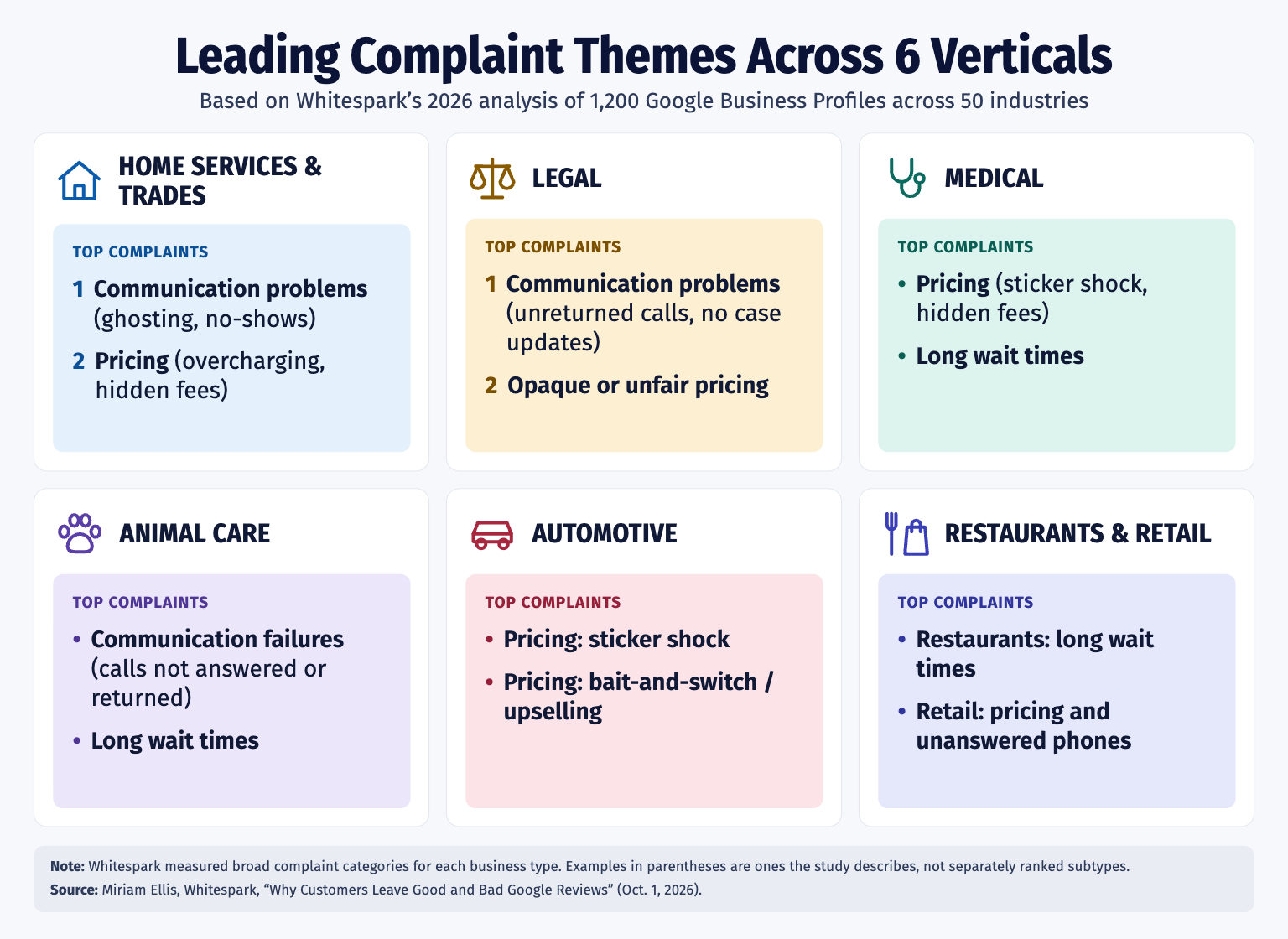
_This post is for subscribers only._
### EP 277- Correcting the Machine: Citation Labs on the Six Layers of AI Visibility (Part 1)
URL: https://www.nearmedia.co/ep-277-correcting-the-machine-citation-labs-on-the-six-layers-of-ai-visibility-part-1/
Last updated: 2026-10-09T20:43:17.000Z
[Garrett French, James Wirth and Valerie Cecil](https://citationlabs.com/about/?ref=nearmedia.co) of [Citation Labs](https://citationlabs.com/?ref=nearmedia.co) and its local-sponsorship sibling [ZipSprout](https://zipsprout.com/?ref=nearmedia.co) join Greg Sterling and Mike Blumenthal for Part 1 of a two-part Near Memo conversation, on what has changed in the market and how an enterprise link-building shop now diagnoses and repairs what AI systems say about a client. Part 2 will cover the agency side: skills, tooling and pricing.
AI visibility is a chain of dependencies — a brand has to be returned, read, cited, mentioned and recommended, and framed correctly at every step — so the work shifts from winning a ranking to finding the layer where the chain breaks and supplying the missing or corrected facts, mostly on pages the brand doesn't own.
## James Wirth's Six Layers of AI Visibility
James lays out the model Citation Labs audits against *(34:58–38:09)*. Each layer raises the odds of the next, and none guarantees it. The audit that maps a client onto these layers is what the team calls a visibility probe.
| Layer | What it answers | The primary lever |
| ------------------------ | --------------------------------------------------------------------------------------------------- | ---------------------------------------------------------------------------------------------------------- |
| **1\. Returned** | Does the brand's page appear in the search results the model pulls when it runs its query fan-outs? | Traditional SEO and link building; new content for fan-out queries where the brand has no presence |
| **2\. Read / retrieved** | Does the model open the page, or answer from the search snippet alone? | Page structure the model can lift cleanly; watching page-retrieval patterns as an early signal |
| **3\. Cited** | Is the page used as a source in the answer? | Insertions on publishers that are already being cited; correcting cited sources that state the wrong facts |
| **4\. Mentioned** | Is the brand named in the answer? | "Narrative expansion": covering the part of the story the brand is absent from |
| **5\. Recommended** | Is the brand put forward as an option, at what rank, and with what qualifier? | Supplying the facts that remove a limiting qualifier and move the brand up the list |
| **6\. Framing** | Across all five: are the facts, pricing, sentiment and attributes right? | Off-domain content the client can keep current when third-party pages won't update |
## Takeaways
- **Accountability for links became the AI-visibility method.** Citation Labs won an enterprise client by being the only one of five agencies, in a six-month pilot with equal budgets, able to show that a link moved a ranking that mattered. James was on the client side of that test and then asked for a job. Garrett says the habit of proving "what the work did" is what the team carried into AI visibility. *(01:33–04:33)*
- **Every enterprise client has moved to AI visibility.** Garrett is explicit that this is three clients and anecdotal, but all three have been hit by zero-click and all three pushed the agency "wholly into AI visibility." Links still matter; they are now one lever among several. *(10:32–11:58)*
- **Conference-floor conversations contradict the "business as usual" data.** At BrightonSEO San Diego, James heard talks built on large aggregate data sets showing little change, then heard the opposite at the booth: organic traffic down sharply, direct and referral numbers that no longer reconcile, and conversions nobody can attribute. His own audits show declines "far more than what the large data sets are reporting." *(12:36–15:17)*
- **Local is where the damage is smallest and the AI answers are worst.** Mike sees web traffic falling for local clients without matching drops in calls and conversions. James doesn't trust local AI answers, finds them often wrong, and ends up back in the map pack or a maps app. Greg's read: AI works the top and middle of the funnel, Google gets the last click, and the AI influence never shows up in referrals. *(15:17–20:26)*
- **Greg's roof repaint never touched Google.** He asked ChatGPT for three body shops that would paint only a roof, got a ranked list built on Yelp data, had it pull in Google reviews for comparison, and clicked through to Yelp's quote request. He calls himself an outlier. The anecdote still shows a complete local purchase path with Google present only as review data inside another product. *(20:46–22:03)*
- **Prompts are built from the offering, not from keywords.** The team starts at the client's transaction pages and works backward to the problem a buyer is solving, drawing on customer-service logs, Reddit complaints and interviews with subject-matter experts. The resulting prompts run 50 to 300 words and specify a role inside the ideal customer profile. Ten or more are tracked daily for each offering, not each client. *(28:31–32:50)*
- **The model's opinion of the brand replaces the searcher's.** A searcher used to bring their own sense of a brand's reputation to the ten blue links. Now the model assembles that judgment from far more sources than any person would read and attaches its own qualifiers. That is why sentiment and framing are tracked alongside citations. *(33:04–34:27)*
- **Stale comparison pages are a repair job you can do off-site.** Garrett's example is a client whose service packages change often. Affiliate-style comparison pages kept getting cited with outdated facts and wouldn't update. Citation Labs published accurate pages it controls and can revise, then tracked the result: the new pages were cited, the brand was mentioned, and the framing changed. Garrett on the work: "We get to correct." *(39:41–41:41)*
- **A months-old Bing snippet set a telecom's pricing in the answer.** In one audit, a non-Google model ran its fan-outs through Bing, which was still serving a cached snippet from a page updated months earlier. The model never opened the page and answered from the snippet, producing wrong pricing, offer terms and expiration dates. *(43:21–44:37)*
- **Models discount what a brand says about itself.** James reports seeing models pass over owned-domain content in favor of third-party pages, even to the brand's cost. Many high-value cited publishers are closed to placements, which is why the team builds off-domain microsites as well as pitching insertions. *(38:49–39:22, 43:11–43:21)*
- **Page-retrieval patterns are the earliest signal.** Valerie watches which pages models pull and in what form: FAQs, comparisons, graphs, statistics. Retrieval shows up before citations or mentions do, so it tells the team whether a content bet is working. James's caveat: write concisely, the way you would argue before a judge, without rewriting everything for machines at the reader's expense. *(41:46–43:11)*
- **Fan-outs now skip discovery and query brand sites directly.** The team saw models stop running non-brand searches and go straight to `site:` queries against brands they already know, a shift that spiked in ChatGPT around April and that James ties to a model change. Valerie adds that .gov sources are being favored more in some industries. Garrett's hunch: a fan-out means the training data wasn't enough to answer. *(45:58–47:12)* [\[1\]](#notes)
- **They "professionalize" prompts instead of personalizing them.** Greg has told ChatGPT never to show him eBay results, and it complies. Citation Labs can't model that. It asks what a given role (a CFO, say) would need in a perfect-information setting and builds that context into the prompt as a proxy. Owning the tracking tool means no cap on prompt volume for testing. *(48:19–51:39)*
- **Google still gets the tie-break.** They measure ChatGPT and Google's surfaces together and act on the aggregate, but James would not close a ChatGPT gap at the expense of AI Overviews, AI Mode or Gemini. Success is measured in sentiment shift, mention count, recommendation rank, and whether a limiting qualifier disappears. *(51:42–54:10)*
### Related Reading
- [Citation Labs](https://citationlabs.com/?ref=nearmedia.co) and its [team page](https://citationlabs.com/about/?ref=nearmedia.co) — Garrett French (CEO), James Wirth (Sr. Director, Strategy and Growth Marketing) and Valerie Cecil (Operations Manager).
- [Citation Labs BrightonSEO 2026 resources](https://citationlabs.com/brightonseo-2026-resources/?ref=nearmedia.co) — the field guides (AI Visibility, Information Design, Business Impact) from the BrightonSEO San Diego appearance James describes.
- [Xofu](https://xofu.com/?ref=nearmedia.co) — the Citation Labs sister company's prompt tracker for AI answers. On air the team says only that it built its own AI visibility tools.
- [How Consumers Navigate High-Stakes Purchases in AI Mode](https://www.searchenginejournal.com/how-consumers-navigate-high-stakes-purchases-in-ai-mode/571361/?ref=nearmedia.co) — Kevin Indig's write-up of the usability study with Citation Labs and Eric Van Buskirk's Clickstream Solutions, the "project we did with Eric" Garrett mentions at 27:07.
- [How to Track and Fix BOFU Visibility in LLMs](https://citation-labs-podcast.buzzsprout.com/2564987/episodes/18881932-how-to-track-and-fix-bofu-visibility-in-llms?ref=nearmedia.co) — the Citation Labs podcast on the same sales-page-first approach.
- [EP 276 — GEO Is CRO: Ross Hudgens on Chasing Influence, Not Citations](https://www.nearmedia.co/ep-276-geo-is-cro-ross-hudgens-on-chasing-influence-not-citations/) — last week's counterpoint: Ross argues against chasing today's cited sources; Citation Labs argues for repairing them. \*
- [EP 275 — Rankings Up, Calls Down: What AI Visibility Is Really Worth to Local Businesses (Part 2)](https://www.nearmedia.co/ep-275-rankings-up-calls-down-what-ai-visibility-is-really-worth-to-local-businesses-part-2/) — the attribution problem Mike raises at 15:17.
- [EP 274 — Why "Position One" Doesn't Exist in Local Anymore (BrightonSEO Recap)](https://www.nearmedia.co/ep-274-why-position-one-doesnt-exist-in-local-anymore-brighton-seo-recap/) — Near Media's own recap of the same conference.
- [EP 270 — The Hidden Advantage: How Brand Awareness Decides the Click in Legal Search](https://www.nearmedia.co/ep-270-the-hidden-advantage-how-brand-awareness-decides-the-click-in-legal-search/) — the legal user-behavior research Greg describes at 25:41.
## Practitioner Notes
- **The six layers give local audits a missing vocabulary.** Most local AI-visibility reporting stops at "mentioned or not." Splitting returned / read / cited / mentioned / recommended / framing tells you which fix applies. It maps directly onto the fan-out and retrieval-hierarchy work on Ask Maps versus Gemini: if a GBP-grounded surface never issues a web fan-out, layers 1–3 are a profile and review problem, not a content problem.
- **James's distrust of local AI answers matches the benchmark data.** His "often wrong" experience lines up with LocalBench, where LLM accuracy on local numerical queries came in below 15.5%. That is the case for treating framing audits (hours, pricing, service area, offer terms) as a recurring local deliverable, and for checking Bing's index freshness after any change to a client's key pages.
- **Garrett's critique of simulated purchase studies is the design brief for the survey work.** His objection at 27:07, that participants have no skin in the game, is the gap the Choosing a Lawyer research ([EP 270](https://www.nearmedia.co/ep-270-the-hidden-advantage-how-brand-awareness-decides-the-click-in-legal-search/)) acknowledges and the conversational consumer-journey survey is built to narrow, by interviewing people about a decision they actually made.
- **"Models discount owned content" raises the value of what local businesses already have off-site.** For a local firm the third-party corpus is reviews, GBP, directories and sponsorship pages. ZipSprout-style community sponsorships produce exactly the independent, locally relevant pages the returned and cited layers reward, which makes them worth testing as an AI-visibility input and not only a link source.
### Concepts
- **Six layers of AI visibility** — returned, read/retrieved, cited, mentioned, recommended, and framing (which runs across the other five). The diagnostic model for locating where a brand drops out of an AI answer.
- **Visibility probe** — Citation Labs' initial audit: simulate the prompts, run the fan-outs, and record where the brand appears or is missing at each layer.
- **Query fan-out (QFO)** — the set of searches a model issues behind a single prompt to ground its answer. Being absent from a fan-out query is treated as a fixable gap.
- **Citation optimization** — getting an already-cited third-party source to state what is factually true about a client. Presented as the successor to link building.
- **Tracking-worthy prompts** — long, role-specific prompts (50–300 words) that carry the buyer's situation, built from the offering backward and tracked daily.
- **Sales-page link building** — the firm's earlier discipline of building links to transactional pages and proving the ranking effect, which set the standard for proving impact now.
- **Narrative expansion** — adding the missing part of a brand's story so it gets mentioned for things it currently isn't.
- **Page-retrieval patterns** — which pages and formats a model actually fetches; used as a leading indicator ahead of citations.
- **Chunkifying** — structuring content into concise, self-contained units a model can lift without losing meaning.
- **Professionalize, don't personalize** — modeling the information needs of a role instead of an individual's history and preferences.
- **Framing** — how the model characterizes the brand: accuracy of facts, sentiment, and the qualifiers attached to a recommendation.
### Pick your starting point:
[00:00](https://www.youtube.com/watch?v=IdV205c5788&ref=nearmedia.co) Welcome and introductions
[01:33](https://www.youtube.com/watch?v=IdV205c5788&t=93s&ref=nearmedia.co) The five-agency test that started it all
[06:23](https://www.youtube.com/watch?v=IdV205c5788&t=383s&ref=nearmedia.co) What Citation Labs and ZipSprout do
[09:09](https://www.youtube.com/watch?v=IdV205c5788&t=549s&ref=nearmedia.co) Is AI search overhyped?
[12:36](https://www.youtube.com/watch?v=IdV205c5788&t=756s&ref=nearmedia.co) Traffic is down more than the data says
[15:17](https://www.youtube.com/watch?v=IdV205c5788&t=917s&ref=nearmedia.co) Local: traffic falls, conversions don't
[20:46](https://www.youtube.com/watch?v=IdV205c5788&t=1246s&ref=nearmedia.co) Greg's ChatGPT hunt for a body shop
[24:29](https://www.youtube.com/watch?v=IdV205c5788&t=1469s&ref=nearmedia.co) Attribution and the last-click habit
[28:31](https://www.youtube.com/watch?v=IdV205c5788&t=1711s&ref=nearmedia.co) Building prompts from the offering backward
[33:04](https://www.youtube.com/watch?v=IdV205c5788&t=1984s&ref=nearmedia.co) When AI decides a brand's reputation
[34:27](https://www.youtube.com/watch?v=IdV205c5788&t=2067s&ref=nearmedia.co) The six layers of AI visibility
[39:41](https://www.youtube.com/watch?v=IdV205c5788&t=2381s&ref=nearmedia.co) Fixing stale comparison pages
[43:21](https://www.youtube.com/watch?v=IdV205c5788&t=2601s&ref=nearmedia.co) The telecom and the stale Bing snippet
[44:37](https://www.youtube.com/watch?v=IdV205c5788&t=2677s&ref=nearmedia.co) Training data, caches and fan-outs
[48:19](https://www.youtube.com/watch?v=IdV205c5788&t=2899s&ref=nearmedia.co) Personalization and the eBay problem
[51:42](https://www.youtube.com/watch?v=IdV205c5788&t=3102s&ref=nearmedia.co) Weighting Google against ChatGPT[ ](https://www.youtube.com/watch?v=VuGPUEN%5F-mc&t=10s&ref=nearmedia.co)
### Full Transcript -->[ ](https://nearmeida.co/ep-276-rankings-up-calls-down-what-ai-visibility-is-really-worth-to-local-businesses-part-2-copy?ref=nearmedia.co)
###
Near Memo EP 277 — Correcting the Machine: Citation Labs on the Six Layers of AI Visibility (Part 1)
*Editor's note: This transcript has been edited for reading. Stutters, repeated words, false starts and clear transcription errors were cleaned up, and brief backchannel ("yeah," "right," "mm") was folded into the main speaker's turn or dropped. Wording is otherwise faithful to what was said. Figures and claims are left as spoken.*
**Hosts:** Greg Sterling, Mike Blumenthal
**Guests:** Garrett French, James Wirth and Valerie Cecil, Citation Labs / ZipSprout
---
**Greg Sterling (00:10)**
Hey everybody, welcome back to the Near Memo, the Near Media podcast, with me, Greg Sterling, and as always the lovely and talented Mike Blumenthal. Today we are joined by very special guests: Valerie Cecil, James Wirth, and of course Garrett French, from Citation Labs and ZipSprout. Welcome, everybody.
**Garrett French (00:27)**
Thank you.
**James Wirth (00:28)**
Thank you, Greg.
**Greg Sterling (00:30)**
And Garrett is awaiting parole, it looks like, but he'll still be talking to us from his cell today, which is very generous.
**Garrett French (00:34)**
Yeah. I got special permission for this. Well, they knew who Greg was.
**Greg Sterling (00:40)**
All right. Thank you all for joining us. We're going to do a special episode, broken into two parts. This one is about the changes in the market: what these guys are seeing from clients, how they're responding, how their tactics are changing. Then we're also going to talk about agency operations and management, and how agencies as entities need to adapt to what's going on. But before we get into all of that, why don't you introduce yourselves a little and give us some context? Many people are going to know who you are, but there will be some who do not.
**Garrett French (01:12)**
We should introduce each other, so I don't get to talk about myself.
**Greg Sterling (01:16)**
Sure. Go for it.
**Garrett French (01:18)**
He said sure. Are you guys going to edit this podcast? I just have to ask that.
**James Wirth (01:19)**
That's a great idea. Garrett introduces me, I introduce Valerie, Valerie introduces Garrett.
**Garrett French (01:26)**
Done.
**Valerie Cecil (01:27)**
Love it.
**Garrett French (01:27)**
James Wirth is amazing. He came on board six years ago.
**James Wirth (01:32)**
Six, going on.
**Garrett French (01:33)**
He came in from a client we were working for, where we had to prove that links did something after we built them. That really started the journey we're going to be discussing today. When you have to prove it to people who understand statistics, who understand ROI, where the money goes and what it produces, you have to go in with an accountability that link building really hadn't had before that. We really hadn't seen a lot of that before. So we had an emphasis and a focus on sales pages at that time. Greg, you said I couldn't pitch, but I just launched into it.
**Greg Sterling (02:18)**
Description is different than pitching, right? It's a subtle but meaningful distinction.
**Garrett French (02:21)**
Okay, fair. That's fair. But he came in, and they had pitted, what was it, six link building agencies against each other? Five?
**James Wirth (02:29)**
Five different agencies. Yeah.
**Garrett French (02:32)**
And they said, we're going to pick one of them. They ended up picking us because we were the only ones that could show impact, or that could work in a way where they were able to demonstrate internally the impact of a link on a ranking that was considered valuable.
So he came in to help us really expand that program. We had an emphasis that started on what we call sales page link building, really focusing on the transactional pages. As a result, we built out tooling and software so that we could demonstrate to our clients, which are primarily enterprise, that we've done something, that we've produced a result that's valuable. That has been hugely impactful for us as we've ventured into the AI visibility era, because that discipline around showing what the work did has forced us to go farther and farther down rabbit holes of what's actually happening. Have we done anything? Can we claim any kind of impact from our work?
So James has been with us for six years. He recently closed an enormous deal for us. He's contributing technology and strategy, he's vibe coding, he's closing deals. James is incredible. Your turn, James.
**James Wirth (03:47)**
Wow, that's way longer than my intro of me would have been. But very solid.
**Valerie Cecil (03:48)**
I was just going to say "Garrett builds links." I've got to work on my intro.
**James Wirth (03:54)**
I'd like to introduce Valerie Cecil. She is our head of ops. She is our glue, our engine, our sanity. She's behind everything we are able to claim as successes. If it was done well, then Valerie was behind it. And one of the things I like most about working here is that Valerie is Garrett's sister.
And that was after working with them for six months. Yes, Garrett's correct, I asked for a job. Link building is hard, and I've never seen it done so well. They beat out four other link building agencies after six months of pilot programs with the same budget across each. That's why I'm here today.
**Mike Blumenthal (04:33)**
Valerie, before your introduction, I just want to level-set people's expectation of honest communication. In the green room, Garrett said you were his oldest sister. Is that true?
**Valerie Cecil (04:43)**
Incorrect. Thank you for letting me clarify that. Way younger. Way younger.
**Garrett French (04:45)**
How dare — no.
**Mike Blumenthal (04:49)**
Okay. You don't have the beard, so I assumed you were younger.
**Garrett French (04:51)**
I didn't know there was going to be a fact-checking session. What is this garbage? I need to talk to my agent about this.
**Valerie Cecil (04:58)**
I love that question. And Garrett French: you may or may not have heard of him before today. If you hadn't, he founded Citation Labs. Lucky name, now that we're in a citation-building era. What was it, fifteen, sixteen years ago, Garrett? And then started ZipSprout about ten years ago.
**Garrett French (05:15)**
We're entering our sixteenth year.
**Valerie Cecil (05:19)**
Our sixteenth year. He is the most — well, intelligent —
**Garrett French (05:22)**
Boy.
**Valerie Cecil (05:24)**
— person that I've ever worked with, in terms of always wanting to do a better job of delivering to the market and making sure that we're adding value to the internet, to LLMs. I think that's what drives all of us. We're always experimenting, always learning more, always pushing, and he brings that directly to our clients. That's why we've been with some of our clients for ten years, which is pretty much unheard of in the link building slash citation building era. We're all so grateful that we're still around, and I think it's Garrett's constant push for survival that we're here.
**Garrett French (06:00)**
I'm blushing. She has never said so many nice things about me all at once. She accidentally complimented me one time and then just never did it after that.
**Valerie Cecil (06:04)**
I was so tired. It's been a hard week, Greg.
**Greg Sterling (06:13)**
This is really a self-esteem building session, not really a podcast.
**Garrett French (06:16)**
I know. Thank you. We need to stop now, because it's not going to get better than this for me.
**Greg Sterling (06:23)**
So give us one more thing, about your services. We're hearing about link building. What's the full range of things that you offer to the market? Not as individuals, but as an entity.
**Garrett French (06:36)**
Valerie can fill in the gaps, but we've been primarily off-site. In this area, we're either engaging with a cited source that doesn't say what is factual about a client, or doesn't line up factually with what we want an AI to know. So we might do a citation optimization approach there.
We might find a domain that's cited frequently across a prompt set, and we might say, this would be a great place to publish a QFO-oriented article — query fan-out oriented, or facing, or informing — because we know it's getting cited and it has visibility within this prompt set.
We still do link building. We still have people who come in with visibility problems or visibility challenges around target pages, a landing page or a sales page.
And then with ZipSprout, my darling, it's a local sponsorship and community engagement, community PR play, where we connect our clients to local communities through sponsorship and social engagement with that entity.
**Greg Sterling (07:55)**
Why did you start ZipSprout as a separate entity? I don't know what its legal organization is, but it has a separate identity in the market from Citation Labs. Why did you feel you needed to do that, versus just offering those services under the banner of Citation Labs?
**Garrett French (08:10)**
That's such a good question. We really had to establish to nonprofits and local community organizations that we were a legitimate, functioning marketplace: that we would be bringing them clients, and they would hopefully be adding information about those clients to their websites. We needed an identity that was meaningful, a brand that could make sense and be coherent for that specific type of community.
I did start it as a separate LLC initially. We folded it back in. And some of my thinking ten years ago — I don't have this thinking now — was, gosh, this is going to be a very sellable entity. By itself, as a standalone agency, it could be sellable. It's not for sale. But that was some of my thinking then. And I still believe it makes sense as a standalone brand. I don't know if I answered your question, though, Greg.
**Greg Sterling (09:09)**
Okay. We're on episode 277, so we've done a lot of episodes, and many of them over the last year and a half have been increasingly about the impact of AI: user behavior, tactical adaptations. AI is certainly a transformative technology, whether you hate it or love it. It's having a big impact in certain areas of society.
But in terms of SEO and search visibility, we see a debate playing out very often on LinkedIn and in other places, where some SEOs say this is all just wildly overhyped. It's still really all about Google. It's still Google's world. Sure, Google's transforming its SERP, but this AI stuff is being overblown, and it's only having a marginal or incremental impact, if any impact at all. What is your response to that position? Anybody can speak to it.
**Garrett French (10:17)**
I'm going to jump in, because I don't like it when I don't talk. It doesn't make me feel good. I would welcome an addendum from Valerie.
**Mike Blumenthal (10:25)**
Our job here is to make Garrett feel good, I think.
**Valerie Cecil (10:27)**
That's it. I'd appreciate a break from my normal job, Mike, so thank you.
**Garrett French (10:32)**
It's tough for her. So we have a small, anecdotal rejoinder to the narrative, which is that we have a handful of enterprise clients. I say handful; I really mean like three. Maybe three and a half. Every single one of them has pushed us wholly into AI visibility. Links are still a factor, but every single one of these clients has been impacted by the zero-click reality. The traffic is down. And we also see a lot of appetite for exploring and understanding what AI visibility is, what the mechanisms are, how we should measure it.
So we have shown up with our dev capacity, with our operational capacity, with James Wirth and his capacity for positioning impact and helping people understand what is or isn't actually happening. So my purview is that 100% of the market is moving towards AI visibility. Now, I know that's not the reality across — you know, I know that's not what's commonly discussed or said on LinkedIn. But that's my perspective, from my small and admittedly anecdotal —
**Mike Blumenthal (11:58)**
I would address this question maybe to James: the question of AI, and what does "AI" mean? Does that mean 80% Google AI, or does it mean 80% ChatGPT AI? First question. Second question: given that Google is an AI-first company and has been for a number of years, everything they do is AI-driven, including the organic SERP results. They just announced a new paper and a new ability to reorganize SERPs based on their machine learning and AI algorithms. So it's not even clear to me how you make these distinctions, and what it really means.
**James Wirth (12:36)**
Yep, that's a great call-out, and that's right on the nose. My soapbox usually is: wait a minute, we keep saying "Google versus AI," but what are we really talking about there? If I just go to Google.com, I'm presented, in Google's response to me, with ads of course, like we were talking about earlier, and that's been the game all along for Google, sixty-whatever percent of Alphabet's income or revenue. And then there may or may not be the AI Overview, and now we're getting into AI chat, which really is the differentiator for me. Am I having a conversation with AI around a search, or am I just looking at my traditional ten blue links? And if I'm having that conversation with a chat agent, is it Google's chat agent, or is it Perplexity or Claude or ChatGPT?
So the comparison of Google versus AI is really ambiguous, to the point where we don't really know what we're talking about from that perspective. But we do know a number of things, across a number of pretty large clients and all of the research I do: any site of substantive organic traffic historically has seen a dramatic decline in that traffic. Is that across the entire database of a very large analytics company and their index of the web? Maybe not, because we might be talking about fringe cases, even if we're analyzing a site with millions of visits per month of organic traffic historically.
When we were at the last conference, BrightonSEO in San Diego, where Garrett spoke and we were exhibiting, we were hearing talks about business as usual, maybe across all of the data that tools are measuring. That was in stark contrast to every single conversation we had, which was: our organic traffic has plummeted. We don't know where our traffic is coming from now. We don't have a good measure on conversions, because we're getting large disparities in our direct traffic and our referral traffic. Some of it, yes, is attributed to AI — ChatGPT, for example; that's the largest share. But outside of that, we don't know what's happening.
So that is the reality for us across every site I measure, whether it's a prospect or an existing client: traffic has tanked. It's down far more than what the large data sets are reporting, and they're struggling to understand that. That's where I'm spending the majority of my time.
**Mike Blumenthal (15:17)**
Can I add a follow-up question? Obviously, Greg and I are immersed in local, where the outcome goal is the call or the visit, not the website visit. We do see decline in overall web traffic, but we don't see equivalent, or as dramatic, declines in conversions. Now, tracking conversions is very difficult. With one client, David and I literally spent a year trying, and finally succeeding, to bring all of their inputs \[from Google and their legal software\] into a conversion dashboard, so we can now see where they're coming from, even though final attribution is clearly not the only story. It's very complicated.
But what we're seeing is decline in organic traffic, and not so much decline in local. Not so much decline in phone calls, not so much decline in conversions. Some. Have you thought about that, and do you have a different answer for that or not?
**James Wirth (16:14)**
Local is messy, in my own experience and in everything I'm seeing in the data I'm running. Local is really messy, and I personally am not trusting it. If I'm looking for something down the street or in a particular area, the response I get from ChatGPT versus Claude, and including if I just do that same search in Google and look at the AI chat response — I personally don't trust it, because it's often wrong. It sends me down rabbit holes that aren't relevant. It's got incorrect information. So I end up in traditional map pack results, going to Google Maps or Apple Maps or something like that and redoing that search, even though I'm typically starting it in an AI chat interface because I'm curious about what it's delivering.
Across all the measurements that I've seen so far, traffic is still squirrelly, the response is still very different, and it's not as refined as non-local AI conversations are. That's been my own personal experience, and all of the data that I've been seeing.
**Greg Sterling (17:25)**
I want to give Valerie a chance to jump in, because you guys have been monopolizing the conversation. Did you want to add anything, Valerie?
**Valerie Cecil (17:34)**
Thank you, Greg. Honestly, I don't think so, not yet. I'm just listening and taking it all in too. Thank you for the opportunity, though.
**James Wirth (17:35)**
Story of her life.
**Greg Sterling (17:44)**
I'm just being playful here. Okay, good. I'm relieved to hear that.
**Garrett French (17:48)**
She will interrupt you, don't worry. She's really good at that.
**Greg Sterling (17:53)**
So, in the research: we at Near Media do two kinds of research. We do user behavior testing that's similar to the stuff that Eric Van Buskirk is doing, except we do much larger sample sizes. We typically do them in legal these days, but we've done them in hospitality and restaurants and self-storage and healthcare and so on. We also do a lot of survey work, in different verticals, but legal is an area where we have a product, so that's why there's a lot of concentration there.
**Garrett French (18:28)**
Okay, who's pitching who now, Greg? Who's pitching who?
**Greg Sterling (18:31)**
I'm qualifying the statements I'm about to make.
**Garrett French (18:33)**
Greg, I would like an email after this podcast from you about your services. I didn't know that. That's really cool. I would like to do some of that stuff. Greg just made a sale on his podcast, all right? I'm just calling that out. Keep going.
**Greg Sterling (18:48)**
There's the ROI. There's the conversion. We know it's deterministic. Here it is.
No, that was not my intent. My intent was just to qualify what I was about to say, which is in local. When we talk about AI, we really have to talk about demographics. We have to talk about the differences between the different engines, or whatever we're calling them. We have to talk about the industries, because there are a lot of differences and a lot of nuances.
What happens in local — the crudest generalization I can make is that AI operates at the top and the middle of the funnel, where people are doing discovery and then comparisons. Typically, when people want to validate — here's the short list, I want to look at the reviews, or get the hours of operation, or get directions — they go into Google. Google is the last click. And then of course there's a call or a visit or whatever. And Google still shows up in the referrals. So the AI influence is kind of hidden in that context, because you're typically not getting a click-through from AI Mode or ChatGPT or Claude or Perplexity, or, God forbid, Grok.
So Google is still, in local, kind of the center of the universe, but its influence over people's decision-making is starting to change. I'll give you a quick case in point. Mike, you know, loves to listen to these anecdotal examples that I give.
**Mike Blumenthal (20:26)**
And I still wonder why Greg uses Google, or Yelp, for home services. But okay, go ahead. With that caveat.
**Garrett French (20:35)**
Anecdotes are welcome. I'm so excited.
**James Wirth (20:39)**
You opened a can of worms here, Greg.
**Valerie Cecil (20:42)**
No going back.
**Greg Sterling (20:42)**
I'm going to try and make it short, because we'll be on for three hours otherwise.
So I have an old Honda CR-V. It was my daughter's car in high school. The car's in good shape. It's got a lot of miles, but it's in good shape. It's got some very oxidized paint on the roof, which makes it look kind of ugly, unsightly. So I went —
**Garrett French (20:58)**
Wait, weren't you just talking shit about my basement, Greg? Come on, let's go take a tour of your car. No, stop everything. We're going to take a quick tour of Greg's CR-V. Come on.
**Greg Sterling (21:08)**
I'd now like to talk about insurance premiums. No. Anyway, I went to ChatGPT. I said, give me three auto body shops that can paint only a roof, do it affordably, and have great reviews. It gave me three. It gave me a hierarchy of them. And all the knowledge panels that ChatGPT shows were Yelp. It was all Yelp data. Then I said, show me the Google reviews. It did that, so it compared the Yelp and the Google. I identified one. I clicked through on the knowledge panel, and it sent me to the RFP thing that Yelp does — request for quote. I did that. And then of course they spam everybody under the sun, and I'm getting hundreds of people responding to me, which is just a heinous practice.
But nonetheless, later this morning I'm going to take it into a place I found on ChatGPT. I referenced Google to confirm —
**Mike Blumenthal (21:57)**
So come back next week for the outcome.
**Greg Sterling (21:59)**
No, it'll be fine.
**James Wirth (22:00)**
We'll post pictures.
**Valerie Cecil (22:01)**
Before and after pictures.
**Greg Sterling (22:03)**
But anyway, I was never on Google. I'm an outlier. I never visited Google.
You're exactly right, James, that there is inaccuracy. What we see in some of the surveys is that consumers want more information from AI than is available. They have a bunch of questions, and the information, the content, is not there. So they go to Google to get that content very often. It's not just reviews; it's particulars, very specific questions.
What I have seen — and then I'll stop my soliloquy — is that people really like the chat interface. If ChatGPT and Claude and all the others fell off the face of the earth, Google might freeze its SERP, but probably not. It would probably still keep migrating, for two reasons. One, because they know how much people like the interface, more than traditional search: the conversational aspect of it. And two, they're getting so much more data than they were getting in a traditional keyword search context.
One of the challenges of AI is a content problem. It's a data and content problem. If you can pump all of the relevant content into AI, and it can understand it and present it, you're in a much better position than with the thin-content approach people have historically taken. Okay, that was a really rambling thing.
**Garrett French (23:27)**
No, I agree with you. And I hope your car turns out okay, Greg. I really do.
**Greg Sterling (23:33)**
I'm not worried about it. It's a twenty-year-old car. It's going to be fine. I just want the top painted.
**James Wirth (23:39)**
Just want the top painted. Yeah. You know, some of the newer interfaces, Greg, are the ones I think are really helpful from that perspective. Like when I have AI Mode and it has its own column, a two-thirds, one-third split, and on the other part of the screen I've got the page that I'm viewing, so I can have the conversation and also view the information.
Another version of that is in ChatGPT, where I can now have the voice conversation. I'm having a voice discussion with the AI agent and I'm reviewing the conversation. I'm clicking on links. The conversation carries over. I'm switching apps on my phone to look at other things that it's talking to me about, and the audio conversation continues. So to your point, that's spot on in my experience and in what I'm seeing.
**Garrett French (24:29)**
Closing the attribution loop, I think, is some of what you're talking about too, Greg. How do we close the attribution loop? How do we know that, just because you have AI visibility on prompt X, that's going to produce a business result?
**James Wirth (24:46)**
Also, it's a multi-touch, multi-attribution environment. Maybe not me personally, or Greg or Mike, but one of our kids, if they're doing that research, might start on social media, or look there. We might switch over to a traditional Google search, then go back over to ChatGPT. Sometimes I run Claude against ChatGPT, and I'm seeing the differences in those answers.
**Garrett French (25:11)**
I do that too.
**James Wirth (25:13)**
So to your point, Garrett, who does get the attribution for that click? And does that really represent the total experience that I had, in that one environment? No, not at all.
**Greg Sterling (25:22)**
Is this really new, though? Are we now seeing what has always been essentially true, maybe in a slightly more — I don't want to say extreme, exactly —
**Garrett French (25:36)**
Accelerated. It's easier to do lots of research now.
**Greg Sterling (25:41)**
Everybody has been complacent about the last click. It's Google; it's all Google. Historically there have been multiple influences on purchase behavior, depending upon the context and the demographics and all this stuff. But I think the industry has just been lazy and sloppy. Years and years ago — I've talked about this before; this is probably 15 years ago now, maybe not quite — Microsoft tried to popularize a multi-touch attribution model, unsuccessfully. It's just been easy for people to look at the last click for the longest time. But the last click doesn't really show you what formed the short list.
For example, in our research we see the power of brand: brand awareness, prior awareness, and how people respond to that. When they're looking for lawyers and they hit a search results page, everything sort of looks the same. It goes ad, ad, ad. You've got a bunch of middle-aged white guys. Ad here, organic here, and people are scanning and scanning. Often they don't get past the LSAs. But we hear them say, "I've seen these guys, their TV ads," or "I know these guys." And that impacts their clicks, on paid and on organic.
**Garrett French (26:58)**
But these aren't people in live purchase scenarios, though, correct, Greg?
**Greg Sterling (27:03)**
They're in simulated purchase scenarios, yes.
**Garrett French (27:07)**
On the project we did with Eric, I think the people in the studies are just picking something without having any stake in the game, without any skin in the game, so to speak. Now, I'm not saying that invalidates it. But for me personally, that's where these kinds of studies — do we really know that someone who was actually in a car accident is going to choose who they've been seeing a lot? Or are they going to think about it more? Are they going to ask their family? Because it's a big decision, right?
**Greg Sterling (27:42)**
Clearly that's a valid critique. We're doing the best we can under constrained circumstances. We can't go out on the street and get car accident victims.
**Garrett French (27:53)**
Welcome to AI visibility, by the way. Keep going.
**Mike Blumenthal (27:56)**
Which is where I would like to transition, Greg. Garrett's been in the field building links with Citation Labs. He's been in the field building earned content with ZipSprout. And now he has this new exercise, building citations that either correct or enhance AI's understanding of a business. So he's testing it from the other end. I want to hear about those tests, and which of those you've found still have influence, have the most influence, are relevant.
**Garrett French (28:31)**
No, this is a great frame, because it still is attribution. We're not necessarily closing the loop to "someone converted on the website." But we have to be able to attribute the actions that we take to impact — not in the SERP, but in the answer space, in how AI is answering. That's really been where we've focused. So we're going to start with the prompt.
I'm talking about enterprise. I'm not talking about law firms, which I don't understand. I don't know that space. I'd have to dig in with you guys and we could talk all this through, and it's going to be a very different conversation than for a SaaS tool or something.
**Greg Sterling (29:13)**
Right. It's different by vertical.
**Garrett French (29:15)**
Yeah. Our work has been really trying to draw from customer service logs, draw from complaints on Reddit or wherever we're seeing complaints. And we also start from the actual transaction pages on the client's website. We're really trying to land in the space of the problem that someone might be solving with a purchase. What is the problem here? We think of that situationally, and we try to build out prompts that model or represent the situation for an item that's for sale, an offering.
From there, that's how we build out the universe of what we're going to track, what we care about. Now, do we attribute this? We're working on all of that. We're working on the attribution within the analytics that we're able to get access to on behalf of our clients. But to everyone's point on this call, that doesn't necessarily serve. We might never know.
So what we're trying to say is: in a perfect environment, what facts and information does an ICP, a role-specific person within this ICP, need to make a great purchase decision? What information do they need to achieve the best possible outcome for themselves and their organization, and solve their problem? And we work backwards from there.
**Greg Sterling (30:43)**
And you're inferring that from the prompts.
**Garrett French (30:49)**
We would infer that from customer service logs, interviews with subject matter experts, conversations with subject matter experts.
**Valerie Cecil (30:55)**
To generate the prompts.
**Garrett French (30:57)**
We absolutely generate prompts, and we use AI to create — well, we've been calling them tracking-worthy prompts, or just prompts, but they're really at the core of our practice right now.
**Valerie Cecil (31:06)**
Or final user prompts.
**Garrett French (31:09)**
But it has to embody the situation. It has to bring context. I'm talking like 300-word prompts — some maybe not that long, but fifty-, hundred-word prompts — that really get us situated in a role within the industry, within a problem they're having, for which the offering of the client is a possible solution.
**Mike Blumenthal (31:32)**
And do you look at that across all of the chatbots, or do you give special emphasis to the ones that generate the most — well, how do you do this in practice?
**Garrett French (31:38)**
With APIs. ChatGPT, Google. We are building tools constantly and adding new ones in. Where do we stand, guys? I don't know the answer. What are we drawing from, James?
**James Wirth (31:58)**
Google Gemini, AI Mode, AI Overviews, ChatGPT calls. We're doing some scraping to see what the difference is between API responses and what we get off the front end. We're experimenting constantly, but that's primarily what we're focused on.
**Mike Blumenthal (32:13)**
And how many queries do you need to do to get a sample that indicates a direction on any given service?
**James Wirth (32:23)**
We're level-setting on that as well. It's a little bit all over the place right now. For the ones we're most actively searching for, we're measuring a cohort of prompts, generally ten or more, and we're running that daily over time. That's most commonly what we're looking at.
**Greg Sterling (32:38)**
For each client?
**Garrett French (32:41)**
No, for a given offering from a client. They might have fifty or a hundred things for sale. We're really trying to land in the offering itself, what's for sale.
**Greg Sterling (32:50)**
So it's product, it's buyer persona, and then all the different inputs that you previously described.
**Garrett French (33:00)**
Yeah. Customer service logs. How do we model the problem? Sorry, go ahead, James.
**James Wirth (33:04)**
And a really big one too — this is the other type of inference that we're really honing in on — is how we're considering a brand. Greg, to your point earlier, we were talking about brand and the shifting importance of that. Before, it was my own subjective understanding of a brand, its reputation as it applied to me, as I'm clicking through maybe one to four of the ten blue links and exploring the results. Now it's AI's understanding of that brand. Before, I would rely on my understanding. Now we're relying on AI's understanding. Does it have reputation measured accurately? What does the sentiment look like? What's the framing accuracy of different attributes or features or claims?
So that's another really big shift with AI: AI is telling me the reputation of that brand, and whether it's applicable to me, with whatever qualifiers or context or subtext it's going to infuse into that conversation. It's much more important now, across all of this content that it can pull together — way more than I would ever do in any individual search I would have done in traditional searching. It's going to pull all this together and then infer some sort of value from that for me. So what Garrett was talking about, too, that's really important to all the research we're doing, is sentiment and framing.
**Greg Sterling (34:27)**
This is great information, but why don't we bring it down to a concrete client example, where you can talk about how you're implementing, or how you're making changes, based on this kind of methodology. Give us a case study.
**Mike Blumenthal (34:40)**
And how you're measuring outcome.
**James Wirth (34:45)**
Yeah, that's great. Okay, so Valerie, I want to tag-team this with you if I can, and just talk anonymously about —
**Garrett French (34:51)**
What, me? You don't want to tag-team with me?
**Valerie Cecil (34:54)**
No, we're good. You can take a break.
**James Wirth (34:58)**
No, your participation was inferred, just like we're talking about here.
So a given scenario is a client with mixed sentiment and gross inaccuracies in how they're represented. Clear bias being inserted into the conversations around them, and just incorrect information contributing to how an AI answer is built — or, beyond a single AI answer, how an AI conversation runs — based on outdated misinformation that AI is pulling from its various sources when it runs its query fan-outs and does the grounding based on what is returned through Bing and Google responses. Then it builds its initial answer. Then I qualify the conversation, and it continues to provide additional information. It refines, it infers, et cetera.
How we're measuring that is across six layers of AI visibility. It starts with the traditional SERP; we call that "returned." Then whether it's read, or retrieved. Then, does it get cited? Is it mentioned? Is it recommended? And then the final layer, which kind of goes across all of those, is: what is the framing? We've hinted at some of these as we've been having this conversation.
So we run this initial analysis. Right now we're calling it a visibility probe, across these six layers, and we're looking for where their visibility is and what the gaps are. We're simulating the prompts. We're running those query fan-outs. We're seeing who's returned. Is the AI reading those? Is it citing those results? Is it mentioning the brand? Et cetera.
Once we identify where those gaps are, that's where the work begins. We're looking at: are there specific query fan-outs being run that they have no presence in? Okay, that would be a gap. Let's fill that gap, so that they can be represented in the grounding layer and returned in those query fan-outs. Then they have a much better chance of being cited, although it's not exclusively pulled from there. If they're cited, they have a much better chance of being mentioned. If they're mentioned, they have a much better chance of being recommended. You get where it goes.
So the work starts after we have that view. Sometimes it's client-directed. Sometimes they're coming to us and saying, what do we do? We're losing visibility. How do we fix it? And we're doing the analysis. But that's the foundation for when we start to introduce services. Those services could be traditional link building, if they're not showing up in that initial result set. It might be that the framing is wrong; it's inaccurate information, so we need to get more information out there. That could be a mix of getting insertions on existing publishers that are currently being cited. Maybe it's spinning up our own web content, off-domain web content, in order to fill those gaps. And then we build the service offering around that. Is there a local component? Are they really weak in local markets? Is that a priority? Et cetera.
I give whatever I can in that analysis. The prospect or the client says, yes, that looks good. And then I just sort of vomit it all on Valerie, and she has to figure out what we're actually going to build for the client at that point. That's why this is a collaboration, with Garrett giving us the leadership and the direction.
**Garrett French (38:15)**
That's why Valerie's here. She knows what we really, actually do. She's the only one.
**James Wirth (38:19)**
Exactly. I'm doing the analysis and then tying it back in the impact reporting, and then it all goes to Valerie to make the magic.
**Greg Sterling (38:27)**
I'm going to push you a little further. Give us an example of a case where there was incomplete or inaccurate brand information or client information. What did you specifically do, and did it work? Just give a capsule summary of that.
**James Wirth (38:43)**
Do you want to talk about that, Valerie?
**Valerie Cecil (38:44)**
You could start with the case that you're describing, and I could take it from there, if you want to start with just one example.
**James Wirth (38:49)**
Sure. So it's a combination. Traditional link building. We're also doing community PR. We're doing a lot of off-domain content generation, so we're spinning up microsites, effectively, because we're getting all the placements we can on publishers that are getting cited. A lot of those are closed systems, so we have some level of success there, but it's limited. So we're creating our own content in order to get the descriptors, the attributes, the framing —
**Garrett French (39:22)**
It could be something like this — excuse me, James. Because Greg's a lawyer, man. He's about to jump in. I can just sense it. Look at him. He's about to talk now.
**Greg Sterling (39:35)**
No, no, no.
**Garrett French (39:36)**
I knew it. No, I'm just kidding.
**Valerie Cecil (39:38)**
To correct you, because you're wrong.
**Garrett French (39:41)**
Okay. Example: a client that changes their service — sorry, James.
**James Wirth (39:47)**
My example.
**Valerie Cecil (39:47)**
I know. He didn't let you finish.
**Garrett French (39:50)**
I didn't let him finish. A client that changes their services frequently, and what a particular service does. They're adjusting their packages constantly. These change a lot, and they want to make sure that that information stays accurate.
**James Wirth (40:05)**
And it's not, and we're measuring that it's not. That's another good example.
**Valerie Cecil (40:08)**
We can see where it falls off.
**Garrett French (40:10)**
So we say, all right: if somebody searches this, or if they're using ChatGPT or AI Mode, it's not going to be able to get the right information, or it's going to assume the wrong information. And this is in a space where we do see a lot of affiliate-style websites getting cited that are doing comparisons.
**Valerie Cecil (40:30)**
Affiliate-style websites. It's a comparison.
**Garrett French (40:35)**
Right. So it's old comparative matrices, but they're factually inaccurate comparisons. The facts are wrong on these pages, and they can't get these affiliate-type websites to update. So this is one approach: we go and say what's factually accurate now, and then we can update those pages as needed. Because when they change their packages, they want to have the right information out there. They're doing this for commercial impact. They're responding to the market in some way, or they've got a new addition or benefit to their particular service.
This has been a place where we have made changes that we can track. We can say, when we made this change, now the accurate information — our websites are being cited. The sites that we want to have cited are being cited. They're being mentioned, in some cases. And then yes, we can see that now the framing is different, or that the facts are accurate now. So it's sort of correcting. It's one of my favorite things in the world. We get to correct.
**Valerie Cecil (41:41)**
Page retrieval patterns. Sorry, Greg, just really quickly.
**Greg Sterling (41:44)**
No, go ahead.
**Valerie Cecil (41:46)**
James, I would love to mention how we're watching page retrieval patterns as well, as early signals that yes, we're on the right track with the narrative expansion, let's call it. We see a gap here: we're not talking about a very important part of the story that would help us get mentioned more, or mentioned in different ways, or mentioned about something that just isn't surfacing.
We're watching how pages are being considered, essentially, and we are finding those to be early signals of what James is talking about, all along those six layers. If we're not being considered at all at the beginning, how could we be expected to be mentioned in the end? I think that's a really important piece that we don't hear people talking a lot about: looking specifically at those page patterns. And we're trying to mimic the good and leave out the bad, essentially, in terms of FAQs, comparisons, graphs, the data, the statistics, all of those things. We're trying to pick all of — chunkifying.
**James Wirth (42:45)**
Chunkifying it in a way that makes it easy, yes. I'm not saying go rewrite all your content so that an LLM can absorb it at the expense of the human. But there are clear patterns. If I'm making a concise argument — presenting my legal case in front of a judge or a jury — and I'm being concise and framing that appropriately, that's beneficial to the LLMs.
Interestingly, we're also seeing them ignore owned-domain content and messaging, at the expense of the brand, in favor of third-party published content.
**Garrett French (43:19)**
Yeah. This was useful.
**James Wirth (43:21)**
In some cases — to one of the scenarios Garrett was talking about — we did an analysis in the telecommunications industry, on something that changes very frequently. The AI model, which was not Google, was running its query fan-outs through Bing. Bing had not updated its index. It had cached a page that had since been updated, months prior, and it had not reflected that.
**Garrett French (43:54)**
Yeah. This is wild.
**James Wirth (43:56)**
The LLM was not retrieving the page. It was just going on the snippet in the result. And it was inaccurate information. That resulted in the telecommunications company I was doing the analysis for having inaccurate framing around pricing, around their offering at that time, around expiration dates, et cetera.
So this is the scenario where it's inaccurate, outdated information. The LLMs are trying to retrieve as much information as quickly as they possibly can. A lot of times they're not vetting it. They might be inferring a lot from that information, and we end up with a very inaccurate, outdated result that may not represent or frame the brand correctly.
**Mike Blumenthal (44:37)**
So this process requires all of the traditional SEO skills: content, link building, microsites, all of these things. It's a very dynamic process. I guess the question is, one, does this work ever get integrated into the core knowledge of the AIs —
**James Wirth (44:53)**
In the training set.
**Mike Blumenthal (44:54)**
— in the training set, so this work can then become more stable? Or does it require this constant, dynamic approach?
**James Wirth (45:04)**
Or a hybrid, which is what we're seeing. Yes, they are updating their knowledge about a given brand or an offering, not necessarily because it's getting inserted into the training set, because they don't necessarily have to do that. It doesn't happen very quickly, and it's very expensive. So the hybrid model — and we're already seeing shifts in this — is the training set plus any sort of search query fan-out that they do. That's the more recent model. But then, currently, they're caching that information and relying on their own cached version of the web, or they're building their own index, and it's becoming a hybrid of all of these things. So yes, they pull from the training set, they maybe run some new query fan-outs, they use that to maybe validate what they already have, and then they build their answer. What were you saying, Garrett?
**Garrett French (45:58)**
If we see query fan-outs, that means the training data is insufficient to answer the question. That's my hunch.
**Mike Blumenthal (46:05)**
And then how does this vary between ChatGPT, Claude, Google Gemini and Google AI Mode?
**Garrett French (46:10)**
What a great question. James?
**James Wirth (46:12)**
We don't necessarily have the same view across all platforms, so we're having to do our own inference to some degree. But we have all kinds of signals. One thing that's very interesting: the AI model is skipping the non-brand search. They already understand the players in the market. They're running site-colon search operators in their query fan-outs and returning specific pages that they knew about, or specific things they're looking for on a given brand's website, in order to update the training set, update their own cache, look for any new information.
**Garrett French (46:49)**
We saw that spike in ChatGPT. Valerie, when was that? We were just talking to Luke about it.
**Valerie Cecil (46:53)**
It was early August? April.
**Garrett French (46:56)**
Was it April? It was out of the blue.
**James Wirth (46:59)**
It's been happening more and more. It was a model change.
**Garrett French (47:01)**
If you watch the query fan-outs, though, you get a sense of what's —
**Valerie Cecil (47:04)**
You get a lot. And also dot-govs being favored a lot more, we've seen, especially in certain industries.
**Garrett French (47:12)**
In the query fan-outs.
**Mike Blumenthal (47:12)**
And how dynamic is this? In other words, how often do you have to update your processes to catch up with these new approaches: which sites are not being looked at, which new sets of sites are being looked at, like the dot-gov you mentioned, Valerie?
**Garrett French (47:17)**
We don't know.
**James Wirth (47:26)**
Well, nothing is settled yet, Mike. Everything we're seeing is still the wild, wild west. It changes from one LLM to another, one model to another. As a paid user, I might be looking at one result set or answer. The free versions, which are the majority of the activity on a given platform, are looking at something different. So we're trying to measure the models within a given LLM that are being most widely seen and used. But then those models update pretty frequently, as we all see.
So that's another challenge: nothing is settled to the point where we could say, okay, yes, we figured this one out; now they've introduced a new one; let's see what's changed. Instead, across the multiple LLMs and models, it's a constant measure, refine, adjust, measure.
**Greg Sterling (48:19)**
How do you account for personalization, explicit personalization? For example, I've told ChatGPT to never show me a shopping result from eBay. Never. And it doesn't.
**Garrett French (48:31)**
What do you have against eBay?
**Greg Sterling (48:32)**
There are things that it learns over time about preferences and responds to, and things that are explicit instructions like that. How are you accounting for that in your model?
**Garrett French (48:41)**
I want to talk about this, and then James can fill in any gap that's left. We can't know how people are searching, or what their personal biases are about eBay, for example. But we can make strong assumptions about an ICP, about a role or a persona within the ICP that's trying to solve a business problem. And we can infer or learn from our clients, from their customer service logs and what people complain about, what a perfect-scenario informational environment would look like. We don't know. We can't know that. But we can build into that with prompts.
So we're not going to personalize. We can't. But we can professionalize. We can say, this type of role would need this type of information to make the best possible decision about X, to get the best possible outcome for themselves. Maybe they need a certain kind of help with diagnostics: is this really a problem? Because if the CFO is the one doing the prompting, they're going to want a different framework, and they're going to evaluate a circumstance with a different set of tools or a different approach. So we're really trying to ask: in a perfect-information setting, what does this person require?
We back into that literally from what's for sale. We say what's for sale, and we ask questions with the client or do our own research. We come back and say, hey, does this sound right? Great. Nobody knows. When you get down to the granular level we're talking about, most marketing managers, no offense, aren't necessarily familiar with a particular component of an industrial computer, let's say. They don't know what it does. Why is it valuable? Why is it useful? They don't necessarily know that information.
**James Wirth (50:39)**
There's a proxy, though, Garrett. And Garrett's amazing at prompt generation. One of our key differentiators is that we built our own AI visibility tools, so we're not limited to being really careful about maximum numbers of prompts that we can run, and that sort of thing. We have this amazing testing ground for us to do a lot of the research. And we're using proxies for that personalization. I think that's probably the way we're doing most of that personalization.
**Garrett French (51:06)**
Thank you. That was a much faster way to say it, James. Thank you so much.
**James Wirth (51:10)**
We can infuse that personalization based on what we see in the visibility probe. We can infuse that into the custom prompts that we're able to generate, and then how we track —
**Garrett French (51:19)**
We can't solve for Greg. But we can solve for what Greg might need to know in a perfect setting. Sorry, Greg, it's only available on eBay, buddy.
**James Wirth (51:30)**
Unless Greg's our ICP, and the client says we really need to solve for Greg in our simulated prompts. Then that's how we could do that.
**Garrett French (51:32)**
There you go. Greg only. It's going to be a tough sell, but let's try it.
**Mike Blumenthal (51:42)**
So in your modeling for success and outcome, how do you view the relationship, the percentage influence, of the various AI chats in this outcome? AI Mode, Gemini, AI Overview, ChatGPT, et cetera. How do you weight those in terms of importance? Because they're going to give you different answers. They're going to give you different input and require different input.
**Greg Sterling (52:08)**
And they rely on different citations, obviously.
**Mike Blumenthal (52:13)**
Or maybe they don't, but —
**James Wirth (52:14)**
Well, they're going to give us different answers. And they change those citations from one run of the simulation to the next as well. So we're measuring that in aggregate. We're leaning into where the visibility losses are, because that does change by platform, based on the ones that we can measure.
But I would say, just as traditional SEO always over-indexed on Google — we're not going to make a change at the expense of our Google visibility just because we have less visibility on Bing, or Ecosia, which is using Bing, or something like that — so too in this environment we're primarily focused on Google: on what is happening in AIO, AI Mode, Gemini. I wouldn't necessarily make a recommendation for a gap that we're seeing in ChatGPT at the expense of what we're seeing in Google. But we get different information from measuring ChatGPT than we do from measuring Google. So we're relying on the aggregate view across the LLMs to show us where those gaps are, help us understand what the model's looking for, and then build to fill those gaps in. That's where the magic comes in.
And then we're measuring visibility. For example, we're measuring sentiment. When content that we've built is getting retrieved or cited, is that influencing the AI answer in a meaningful way? Does that shift the sentiment, which we're also measuring with our AI visibility tool? Are we increasing the number of mentions that we're getting? Are we improving the recommendations? Do we go from "yes, they're recommended, with a qualifier" that's maybe a subset of the general population, to that qualifier going away, and now they're in the top three recommendations in terms of the recommendation rank?
That's how we're measuring the success of the changes we're attempting to influence, the narrative we're attempting to inform throughout that engagement.
**Mike Blumenthal (54:10)**
For me, Greg, let me just say that this all raises the question of how you productize it. What skills do you need in your organization? How do you price this? It raises all of the questions in your second segment. If somebody wants to get into this field of SEO, marketing, whatever, what skills do they need? How does an agency develop all these skills? Are there tools, or do they have to develop their own? And how do they price?
**Greg Sterling (54:40)**
That's an excellent place to stop, and it tees up our next session, where we'll talk about the operational side of all of this, how you implement it, et cetera, as Mike has indicated. We've barely scratched the surface, but you guys have provided a lot of great insight, and we will bring you back for the second half of this, to talk about the agency approach, on our next podcast. So thank you.
**Garrett French (55:05)**
We can't wait. We appreciate you guys so much. The focus, the scrutiny, is very welcome. Uncomfortable sometimes, almost too personal at times, with car anecdotes and stuff. But no, we love it. We're grateful for the opportunity to talk through what we're doing. It is a new era. It's a new frontier. But here we are, and we're really making a go at it. So we appreciate the opportunity.
**Greg Sterling (55:40)**
Great. And everybody, thanks for spending time with us. Thanks, Valerie, James and Garrett. We will be back with the second half of this episode, to talk about the agency side, next week. Thank you.
**Valerie Cecil (55:45)**
Thank you so much.
**Garrett French (55:52)**
Thank you.
Interested in sponsoring this podcast or our newsletters please reach out to [mblumenthal@nearmedia.co](mailto:mblumenthal@nearmedia.co)
[E-mail Mike ](mailto:mblumenthal@nearmedia.co)
### EP 276- GEO Is CRO: Ross Hudgens on Chasing Influence, Not Citations
URL: https://www.nearmedia.co/ep-276-geo-is-cro-ross-hudgens-on-chasing-influence-not-citations/
Last updated: 2026-10-01T17:13:31.000Z
[Ross Hudgens, founder and CEO of Siege Media](https://www.siegemedia.com/team/ross-hudgens?ref=nearmedia.co) and author of the new Wiley book [*Generative Engine Optimization: The Definitive Guide to AI SEO*](https://www.siegemedia.com/geo-book?ref=nearmedia.co), joins Greg Sterling and David Mihm (Mike Blumenthal is out) to argue over the label, then get practical: which engines are worth tracking, where AI answers get their evidence, and how a business earns the recommendation.
## Ross Hudgens' Current State vs. Ideal State
Ross's recurring distinction *(15:38, 39:42)*: what the models cite today is a snapshot, not a strategy. His top "what marketers get wrong" answer is the same idea: they aim for the current state instead of influence.
| Lever | The current-state trap | The influence play |
| --------------- | -------------------------------------------------------------------------------------------- | ----------------------------------------------------------------------------------------------------- |
| **Citations** | Chasing placement on sites that show up in ChatGPT today, even AI spam sites nobody visits | Go where people actually talk about you (Reddit, reviews, the press); citations follow as a byproduct |
| **Source mix** | Reading "60% of citations are our own site or competitors" as a reason to focus only on-site | Treating a lack of third-party citations as an opportunity: models want third-party reviews |
| **Engines** | Default tracker settings that over-weight Perplexity | Weighting tracking toward the engines customers say they actually used |
| **Measurement** | Trusting GA4 referrals or synthetic prompt-volume data | Open-ended "how did you hear about us," plus daily prompt tracking used as a compass, not a GPS |
| **Brand** | Paying to get onto "best X" listicles without the awareness to convert | Data PR, awards and review platforms — "gasoline on a fire that's already burning" |
## Takeaways
- **Local is where SEO and GEO diverge least.** Google has already compiled the review context that models are hunting for. Nationally, the models go off-site to Reddit, affiliates, LinkedIn and YouTube, which Ross argues were once indirect ranking inputs and are now direct ones. A niche D2C brand that could never outrank Amazon can still get recommended through its reviews and listings. *(10:08–11:47)*
- **Drop Perplexity from your default tracker.** Many tracking tools default to it, so an unweighted tracker can push you to chase a listing that looks like 25% of the impact but delivers under 1%. For the average local business, Ross sees ChatGPT as the only relevant LLM besides Google's models. *(13:08–14:17)*
- **Claude is the B2B surprise — and it searches through Brave.** Ross's own open-ended lead form surfaced Claude "out of nowhere." Since Claude's web search [runs on Brave](https://techcrunch.com/2025/03/21/anthropic-appears-to-be-using-brave-to-power-web-searches-for-its-claude-chatbot/?ref=nearmedia.co), your Brave rankings are a cheap proxy when full tracking is too expensive. David's read of Similarweb data: ChatGPT has stalled while Gemini and Claude are the only engines still growing. *(14:17–15:22, 34:20–35:34)* [\[1\]](#notes)
- **Missing third-party citations are an opening, not a destiny.** In year one, Ross saw homepages, competitors and similar sites taking \~60% of citations. He reads that as a gap in third-party reviews that the models would fill if the reviews existed. *(15:38–17:01)*
- **YouTube is the most-cited single domain for consumer queries.** Siege rarely makes the videos itself. It pays affiliates and influencers to place the client "in context," and Ross suggests local TV stations and publishers, who are "starving for cash," as sponsored-video partners for local firms. David's version for law firms: move the statute-of-limitations content nobody read on the blog onto YouTube. *(17:01–20:56)*
- **Mine your reviews for the landing pages you're missing.** Feed the review corpus to Claude, ChatGPT or Gemini alongside the [Ahrefs](https://ahrefs.com/?ref=nearmedia.co) or [Semrush](https://www.semrush.com/?ref=nearmedia.co) MCP and look for ways customers describe you that no page reflects. Petco's example: "picky eater" kept surfacing across dog-food reviews and became its own angle. Use search volume as a proxy for prompt volume to prioritize. *(22:48–25:39)*
- **GEO is CRO.** Help the model make the decision the same way you'd help a buyer: put awards, top reviews and hard proof points ("14 years in business," "80 case studies") on the homepage. "Hit LLMs over the face with" data points. *(26:26–27:20)*
- **Versus pages predict AI traffic best.** In Siege's analysis, having comparison ("X vs. Y") pages correlated more strongly with *site-wide* AI traffic than any other content type. You control the message and face little competition for the click. *(27:20–28:22)* [Siege Media study](https://www.siegemedia.com/research/versus-pages?ref=nearmedia.co) [\[2\]](#notes)
- **Some brand can only be bought.** In personal-injury law, brand comes from billboards and TV (Ross cites [Thomas J. Henry](https://thomasjhenrylaw.com/?ref=nearmedia.co), whom Near Media sees constantly in its research). In "best car insurance" listicles, a startup can pay its way onto the list for a week, but Geico's brand click-through will push it off. *(29:51–31:01)*
- **Siege won't take clients without existing demand.** Its Reddit and affiliate services now require a minimum level of branded search, around 20,000 a month. "Gasoline on a fire that's already burning." Data journalism and digital PR are its main way of building brand from scratch. *(31:12–32:07)*
- **Run a quarterly award hunt.** Awards are Ross's fastest brand lever for local: run a Claude workflow every quarter to find "best in \[city\]" lists, apply, show the wins on your site, and repeat every year. *(33:04–34:08)*
- **Ask open-ended attribution questions, not multiple choice.** Multiple-choice answers default to the first option. A low-friction open field surfaces channels you didn't know were working. Ross treats LLM tracking as "a compass rather than a GPS" and avoids synthetic prompt-volume data. Siege uses [Peec AI](https://peec.ai/?ref=nearmedia.co) and also rates [Profound](https://www.tryprofound.com/?ref=nearmedia.co) and [Scrunch](https://scrunch.com/?ref=nearmedia.co). *(34:20–37:23)* [\[3\]](#notes)
- **On Reddit, monitor and redirect — don't fake it.** Use the free [Reddit Pro](https://support.reddithelp.com/hc/en-us/articles/24368958859668-Sign-up-for-Reddit-Pro?ref=nearmedia.co) to catch recommendation threads. Then ask your known five-star Google reviewers to add a review on Yelp, or to weigh in on the thread if they authentically can. Respond to brand mentions fast. *(37:53–39:28)*
- **On Clutch, go deep, not wide.** Diversify reviews, but go all-in on the highest-quality platform for your category. For agencies, Ross says that's [Clutch](https://clutch.co/seo-firms?ref=nearmedia.co): sponsor the city sub-lists ("San Francisco SEO companies") rather than the national list. *(41:10–42:33)*
### Related Reading
- [*Generative Engine Optimization: The Definitive Guide to AI SEO*](https://www.siegemedia.com/geo-book?ref=nearmedia.co) — the book's landing page (Wiley, 2026). [Amazon](https://www.amazon.com/Generative-Engine-Optimization-Definitive-Guide/dp/1394439806?ref=nearmedia.co) · [Wiley](https://www.wiley.com/en-us/shop/general-introductory-computer-science/generative-engine-optimization-the-definitive-guide-to-ai-seo-p-9781394439805?ref=nearmedia.co).
- [The Content That Predicts AI Search Traffic Most: Versus Pages](https://www.siegemedia.com/research/versus-pages?ref=nearmedia.co) — Siege Media's correlation study behind the versus-page claim.
- [How Generative Engine Optimization (GEO) Rewrites the Rules of Search](https://a16z.com/geo-over-seo/?ref=nearmedia.co) — the a16z post that popularized the term "GEO."
- [EP 275 — Rankings Up, Calls Down: What AI Visibility Is Really Worth to Local Businesses (Part 2)](https://www.nearmedia.co/ep-275-rankings-up-calls-down-what-ai-visibility-is-really-worth-to-local-businesses-part-2/) — Andrew Shotland and Mark Kabana on attribution and self-reported lead sources.
- [EP 274 — Why "Position One" Doesn't Exist in Local Anymore (BrightonSEO Recap)](https://www.nearmedia.co/ep-274-why-position-one-doesnt-exist-in-local-anymore-brighton-seo-recap/) — the same BrightonSEO San Diego conference that David references.
- [EP 270 — The Hidden Advantage: How Brand Awareness Decides the Click in Legal Search](https://www.nearmedia.co/ep-270-the-hidden-advantage-how-brand-awareness-decides-the-click-in-legal-search/) — the user-behavior research Greg describes at 28:22.
- [AI Search Stats in 2026](https://aisearch.similarweb.com/blog/gen-ai-stats/?ref=nearmedia.co) — Similarweb's gen-AI traffic-share tracker.
- [Yelp deal pushes local reviews into ChatGPT](https://www.axios.com/2026/07/23/yelp-reviews-chatgpt-geo-partnership?ref=nearmedia.co) — Axios on the Yelp–OpenAI partnership Greg mentions.
- [*The New Rules of AI Search*](https://www.crystalcarter.ai/new-rules-ai-search?ref=nearmedia.co) — Crystal Carter's book, mentioned in the intro.
- Tools mentioned: [Peec AI](https://peec.ai/?ref=nearmedia.co), [Profound](https://www.tryprofound.com/?ref=nearmedia.co), [Scrunch](https://scrunch.com/?ref=nearmedia.co), [cloro](https://cloro.dev/?ref=nearmedia.co), [Clutch](https://clutch.co/seo-firms?ref=nearmedia.co).
## Practitioner Notes
- **Open-ended attribution is the measurement layer local firms are missing.** Ross's "Claude came out of nowhere" moment came from a free-text "how did you hear about us" field. Near Media's monthly lead-source attribution work for law-firm clients faces the same blind spot in GA4\. An open-ended intake question is the cheapest way to see LLM-sourced leads, and it pairs naturally with the self-reported lead-source argument in [EP 275](https://www.nearmedia.co/ep-275-rankings-up-calls-down-what-ai-visibility-is-really-worth-to-local-businesses-part-2/).
- **Ross's "brand must be bought" point in legal is backed by Near Media's own research.** Thomas J. Henry's ubiquity is exactly the recognition effect in Near Media's Choosing a Lawyer user study ([EP 270](https://www.nearmedia.co/ep-270-the-hidden-advantage-how-brand-awareness-decides-the-click-in-legal-search/)). The open question is whether that offline awareness carries over to LLM recommendations the way it carries over to SERP clicks.
- **The GBP card in AI Overviews is the exception to "no clicks."** David's observation: AIO mentions almost never click through to a local business website, but the newer desktop GBP card, with stars and a photo, does draw clicks. That makes GBP completeness and review velocity a direct AI-visibility lever, not only a local-pack one — worth tracking in GBP research.
- **Yelp is back on the review-diversification list.** With [Yelp's data now licensed into ChatGPT](https://www.axios.com/2026/07/23/yelp-reviews-chatgpt-geo-partnership?ref=nearmedia.co), Ross's "ask your five-star Google reviewers for a Yelp review" tactic stops being optional for local clients that have let Yelp lapse.
### Concepts
- **Current state vs. ideal state** — the gap between what models cite today and what they would cite if better third-party evidence existed. Ross treats the gap as the opportunity.
- **Influence over citations** — optimizing for the places real people form opinions (and that writers research), on the bet that citations follow, rather than buying placement on low-traffic pages that happen to be cited.
- **GEO is CRO** — making a page easy for a model to recommend uses the same moves as making it easy for a buyer to choose: awards, reviews and hard proof points up front.
- **Versus content** — head-to-head comparison pages ("X vs. Y"). Siege's data ties them to site-wide AI traffic.
- **Search volume as a proxy for prompt volume** — prioritizing with real keyword demand rather than synthetic estimates of what people ask LLMs.
- **Compass, not GPS** — LLM visibility tracking is directional. It tells you whether you're improving, not your exact position.
- **"Gasoline on a fire"** — paid amplification channels (Reddit, affiliate) accelerate existing brand demand but can't create it.
- **ICP mapping** — building pages for each ideal-customer dimension (industries, use cases, roles) to catch long-tail, refined prompts.
### Pick your starting point:
[00:00](https://www.youtube.com/watch?v=aq9UU%5FAZi3Y&ref=nearmedia.co) Intro: Ross Hudgens and the GEO book
[02:42](https://www.youtube.com/watch?v=aq9UU%5FAZi3Y&t=162s&ref=nearmedia.co) GEO vs. AEO vs. AI SEO: the label fight
[09:37](https://www.youtube.com/watch?v=aq9UU%5FAZi3Y&t=577s&ref=nearmedia.co) How different is GEO from SEO?
[11:47](https://www.youtube.com/watch?v=aq9UU%5FAZi3Y&t=707s&ref=nearmedia.co) Yelp's comeback in AI answers
[13:08](https://www.youtube.com/watch?v=aq9UU%5FAZi3Y&t=788s&ref=nearmedia.co) Which AI engines to track (drop Perplexity)
[15:38](https://www.youtube.com/watch?v=aq9UU%5FAZi3Y&t=938s&ref=nearmedia.co) Current state vs. ideal state for citations
[17:01](https://www.youtube.com/watch?v=aq9UU%5FAZi3Y&t=1021s&ref=nearmedia.co) YouTube and third-party video
[22:16](https://www.youtube.com/watch?v=aq9UU%5FAZi3Y&t=1336s&ref=nearmedia.co) Mining reviews for content
[26:26](https://www.youtube.com/watch?v=aq9UU%5FAZi3Y&t=1586s&ref=nearmedia.co) GEO is CRO
[27:20](https://www.youtube.com/watch?v=aq9UU%5FAZi3Y&t=1640s&ref=nearmedia.co) Versus pages and AI traffic
[28:22](https://www.youtube.com/watch?v=aq9UU%5FAZi3Y&t=1702s&ref=nearmedia.co) Brand: when it has to be bought
[33:04](https://www.youtube.com/watch?v=aq9UU%5FAZi3Y&t=1984s&ref=nearmedia.co) Awards as a brand lever
[34:08](https://www.youtube.com/watch?v=aq9UU%5FAZi3Y&t=2048s&ref=nearmedia.co) Attribution and tracking tools
[37:23](https://www.youtube.com/watch?v=aq9UU%5FAZi3Y&t=2243s&ref=nearmedia.co) Reddit without spamming
[39:28](https://www.youtube.com/watch?v=aq9UU%5FAZi3Y&t=2368s&ref=nearmedia.co) Biggest mistake: chasing citations
[44:16](https://www.youtube.com/watch?v=aq9UU%5FAZi3Y&t=2656s&ref=nearmedia.co) Will LLM clicks grow?[ ](https://www.youtube.com/watch?v=VuGPUEN%5F-mc&t=10s&ref=nearmedia.co)
### Full Transcript -->[ ](https://nearmeida.co/ep-276-rankings-up-calls-down-what-ai-visibility-is-really-worth-to-local-businesses-part-2-copy?ref=nearmedia.co)
###
# The Near Memo — Ross Hudgens on Generative Engine Optimization
**Hosts:** Greg Sterling, David Mihm · **Guest:** Ross Hudgens, founder and CEO, Siege Media
> **Editor's note:** This is a cleaned reading transcript. Stutters, false starts and repeated words have been removed. Clear transcription errors have been corrected, including brand and product names. Short acknowledgments ("yeah," "mm-hmm," "right") are folded into the surrounding turn. Otherwise the wording stays faithful to what was said.
---
**Greg Sterling (00:10)**
Hey everybody, welcome back to the Near Memo. With me today is David Mihm, who co-founded Near Media with me and Mike Blumenthal. Mike is out today, and we are very excited to be talking to Ross Hudgens, who is the author of the new book *Generative Engine Optimization*, or GEO for short — a term we don't like, and we'll talk about that. But it is a good book. Welcome, Ross. Thanks for being here.
**Ross Hudgens (00:32)**
Yeah, well, I really appreciate you guys having me.
**David Mihm (00:35)**
Despite the hostile reception, you're excited to be here, huh?
**Greg Sterling (00:38)**
It's not hostile. It's a challenge. Anyway, I should mention that you are the founder and CEO of Siege Media, which is a digital marketing agency that's been around for a long, long time. How many years, in fact?
**Ross Hudgens (00:52)**
Fourteen.
**Greg Sterling (00:53)**
Okay, that's a pretty long time. And who typically are your clients? Just give us a little sense of that.
**Ross Hudgens (00:59)**
Yeah, generally high-growth startups. We tend to be national. We do have several multi-location brands, and I know that's a lot of your audience on the local side, so that's good context for what I say. But I'll try to tailor it.
**Greg Sterling (01:11)**
Okay, great. So as I said in the green room before we started, there are tons of people writing GEO, AEO, LLM optimization and AI optimization books. Crystal Carter is out with one, which is supposed to be very good also. There are tons and tons of people out there. What did you want to say that was different, or what made you feel compelled to write this book, given all that?
**Ross Hudgens (01:35)**
Yeah, in short, it was partially a timing thing. I was pushed to do it. I'm part of a business forum of peers, and they brought up this idea of the Misogi Challenge. It's a Japanese thing: essentially, you undergo a hard challenge once a year. I thought it was a pretty cool concept. I've always wanted to write a book — I was a creative writing major for a moment — and I thought, we're in this AI moment, it's literally perfect timing to do this. Obviously there are challenges with AI in particular, given how fast this whole thing moves. But we in particular have already been doing a lot of things that touch GEO, especially on the national side, which we'll get into for local. I have a background in affiliate marketing and lead gen, that kind of context. We're doing digital PR and Reddit — I'm an active Redditor. We touch a lot of the things that influence it. So it felt like we had some credibility to do that. And a lot of things like the third-party roundups and the first-party roundups, which are still influential for some brands, we had already been doing for clients for several years. So it just happened that we had a good sample size of what works, and it felt like an applicable time to talk about it.
**Greg Sterling (02:42)**
So let's talk about the term GEO, since I challenged you on that. There's a bunch of terms floating around, and GEO seems to be one of the couple that have taken hold. Obviously there's SEO, which we all know. GEO, AEO. Some people have used the term LLMO, which probably isn't going to stick. AI optimization is the more generic term, which I typically use. What term is the right term? And the second part is: Google says good SEO is good GEO, and other people say no, it's a completely different discipline. People like Mike King and others would really say it's not the same as SEO and you have to do different things for it. So where do you stand on that — the label, and then how similar to SEO or different?
**Ross Hudgens (03:32)**
Yeah. Starting with the label, my opinion is to use what the customer uses. I chose GEO. Honestly, I like "answer engine optimization" slightly more as a framing, but I did the data research, and as of now — and it's still the case today — "generative engine optimization" is more searched, and we generally hear it more. Answer engine optimization is not far behind.
**Greg Sterling (03:57)**
So the book title is GEO.
**Ross Hudgens (04:01)**
Yeah, it's GEO. I literally also put "Definitive Guide" — you can't see it on here, but it's *The Definitive Guide to AI SEO*, because I've got to get that extra keyword in there, you know?
**Greg Sterling (04:11)**
Right. That's so funny. So where do you come down on SEO versus GEO? David, go ahead.
**David Mihm (04:20)**
Well, let me just chat a little bit more about the genesis of choosing this as the title, or choosing this as the acronym. From a purely capitalist perspective, as an agency owner or consultant or whatever, I actually kind of agree with you that it's better to shift the framing to GEO. Especially in local, SEO has almost never had a seat at the table when it comes to marketing priorities at enterprise brands. And local SEO has been one step further removed from that table. So taking the opportunity of this big macro shift to try to get a seat at the table is not a bad idea, and I don't begrudge you the framing.
Although I will say I have not heard this from my clients — and I don't have very many as a consultant, maybe half a dozen regular clients — and we don't hear it at Near Media from our market research customers very much. So I'm wondering: does this partly have to do with your customer base being tech, software or other startup people who are more inclined to be on this new thing? Or do you truly think that across the board — retail, e-commerce, home services, you name the local category — this is what people are talking about?
**Ross Hudgens (05:49)**
Yeah, that's a great point, David. I'm using a generalized framing of the term, so going to your market and framing for them is more pertinent, for sure. The origin of the framing — or at least the popularized origin — is Andreessen Horowitz writing a post. You guys might have seen it: yet another "end of SEO," which I don't agree with. I forget the exact title; I talk about it a little bit in the book. But they're obviously highly influential in startup and tech spaces, so it's understandable why the community latched onto that to a good degree. Profound is using AEO, I'm sure, because they have the most capital behind them.
**David Mihm (06:29)**
Well, Profound has a billion reasons to do that.
**Ross Hudgens (06:35)**
So by all means, use what fits. My customer may not be your customer, so you adjust to the customer base and get that context of what they're saying. Obviously you all do some great surveys, so I'm sure you've got a better pulse than I do.
**David Mihm (06:48)**
Yeah, and I feel like "AI SEO" is actually more how our customers tend to think about it — using AI, but being visible in the search portion of that journey just feels like a more natural evolution. You've been working with much larger customers than we have for most of our careers. It took small businesses until, what, Greg, probably 2015 or 2016 before they knew what SEO meant and before it became an actual channel for them. I think we're still dealing with the ramifications of that today. So I hesitate to shift to something that's going to take yet another seven or eight years of education to help move the conversation along.
**Greg Sterling (07:28)**
One comment about that, which is different from the terminology but goes to the underlying awareness. You always used to have to drag small businesses kicking and screaming into digital marketing, for various reasons. For years and years people were saying, "Your competitors are doing this, and if you're not, you're not going to be visible and you're going to lose business," and so on.
In my travels — talking to small businesses, interviewing small businesses and doing some SMB surveys — the degree of adoption of AI was really striking. It was in the culture. They got hold of it and figured out certain things they could do with it. They're not as sophisticated as enterprise users, but they were ahead of the curve on this marketing trend, which is completely unprecedented for them — maybe social, but otherwise unprecedented. It's really interesting. Now I think they've hit a wall in terms of what they can do. As a group they're not a monolith, obviously, but you can figure out certain things intuitively, and then when you try to get into workflows and automation, it becomes much harder for them. But that's just a digression about adoption.
**David Mihm (08:49)**
Yeah. And Greg, I think this maybe speaks to the split in customer bases. As you said, SMBs are adopting AI, and newer SMBs are probably AI-native, or whatever that term is going to be. So leaning into the AI portion of the optimization that we're all trying to help them with is maybe the right path. From a messaging and positioning standpoint, that may even be something to think about as an agency: what terms are your customers using? That's not something Google Trends is necessarily going to tell you. So Ross, I think you're smart, given who your audience is and that you're trying to speak to the C-suite, to latch onto generative engine optimization as the hook. But I'm not sure it's the right hook for everybody writ large.
**Greg Sterling (09:37)**
So let's talk a little bit about the substantive differences between SEO and whatever this other thing is that we're calling GEO, AEO, et cetera. As I said a moment ago, there are people who think there's something like an eighty percent overlap between SEO and GEO. There are people who think they're very separate disciplines, with maybe only a ten or twenty percent overlap. And then there's Google, which says it's more or less a one-to-one thing. Where do you come down on that? And if you think it's different, what are the things that are different?
**Ross Hudgens (10:08)**
Yeah, this conversation so far is a great segue to the answer, in my view. Talking with both of you before we hit record further clarified for me that, of all the industries out there, local has the least difference between SEO and AI SEO or GEO. It sounds like you guys agree.
When we go national, there's more divergence, because there's less of the off-site review context that Google has already compiled on the local side. We were talking about the advantage Google has and the data it has: all that review context is essentially what the models are grasping for on these other sites, and it simply doesn't exist in some instances. So they go off-site — to Reddit, to affiliate sources, to LinkedIn, to YouTube. Those were indirect sources before. They probably contributed to a higher click-through rate and dwell time and all those things, but I don't think they were direct; that was just my opinion. Today I think they're direct in influencing GEO, for certain sites anyway. And that percentage changes by business.
We were talking about the e-commerce example: you could have a niche D2C e-commerce brand that had no chance to outrank Amazon or Walmart, but it could be recommended in AI search today. If you think about that, they're not really doing any SEO on their own site, but they can contribute through things like reviews and the positioning of their Amazon listings, which maybe you could call SEO. To me that's the clearest example of the divergence between off-site and on-site.
**Greg Sterling (11:47)**
We talked about this in the green room a little bit, before David joined: Yelp. Yelp has historically been a despised site among marketers and local businesses, and now it has renewed importance, arguably because of the way it's being relied upon to some degree by Gemini and certainly ChatGPT, which has a formal partnership with Yelp and some other sites. That's an example where people focused largely, if not exclusively, on Google reviews and neglected Yelp for the last bunch of years, and now the advice is, "Hey, you've got to look at Yelp again, because it's getting some play in AI."
Marketers can't focus on multiple LLMs that have different sources and different ways of surfacing content, right? All the reports out there, like the Semrush and Ahrefs reports, show there's only so much overlap. What are you doing or recommending in terms of which engines? Google is kind of its own thing, but let's include Gemini in this: Gemini, Perplexity, ChatGPT, Claude, Grok, DeepSeek for some people. And Copilot, which everybody's sort of not paying attention to. Do you just flat-out ignore some of these? What's your hierarchy of attention?
**Ross Hudgens (13:08)**
Ideally you can ask customers in some way. If you can have your sales reps, or the people answering calls to your business, ask how they heard about you, that context will help inform whether these engines are relevant to you. You can have different lead flows depending on the customer base, of course. We ask how you heard about us on an open-ended form field on our site. You could also do it post-conversion as a multiple choice, if you're concerned about conversion rate. That will tell you whether people are actually mentioning Perplexity or Copilot. Of course, look in GA4 data too where you can. But I'd assume that for the average local business, ChatGPT is the only relevant LLM other than Google's models.
So one of the core recommendations we've been making recently is to actually drop Perplexity from trackers. A lot of them default to Perplexity, and we historically added it, but it's continuing to shrink. If it's not weighted, it could make you go chase some listing that seemingly has twenty-five percent of the impact but has less than one percent of the actual impact. So aligning that modeling with the models people actually use will be fruitful, hopefully.
**David Mihm (14:17)**
Yeah. I thought one of the better presentations at Brighton — the strangely named BrightonSEO in San Diego, which we were all at a couple of weeks ago — was Baruch Toledano from Similarweb. He had a great chart looking only at LLMs, separate and apart from what's happening in search. Essentially, ChatGPT has kind of flatlined at around 35%, and Gemini and Claude are the only two that are growing. So it's basically those three from a market-share standpoint — with the caveat that maybe you have a bunch of rabid Perplexity fans, or you sell to huge customers who only allow their employees to use Microsoft products on the corporate network. But from a broad consumer standpoint, it feels to me like it's ChatGPT, with Claude hot on its heels, and Gemini — we should all care about what Google's doing in this space.
**Ross Hudgens (15:04)**
Agreed. Claude is showing up significantly for us, for B2B clients especially. So if you're in B2B, tracking it could be feasible, although it's so expensive. As of now — or the last I heard — they're using Brave Search, so you could look at your rankings there as a proxy pretty easily as well.
**Greg Sterling (15:22)**
You just alluded to Claude for B2B. Are you making distinctions based on the client's vertical, or on whether they're B2B or B2C, in terms of what you're optimizing for? Not the content, but the engine.
**Ross Hudgens (15:38)**
Or in terms of the strategy — is that what you're saying, Greg?
**Greg Sterling**
Yes.
**Ross Hudgens**
It starts with getting the source URLs out of that context, and that will inform what's listed there. Obviously there are ebbs and flows: ChatGPT isn't referencing Reddit as much recently. It's still referencing it, but I think it's just increasing the overall set of sites it's pulling data from, so Reddit is getting diluted. But I haven't thought as much about it model by model or network by network — ChatGPT versus Claude — as compared to the aggregate view.
So if we start with that being correct, the secondary thing, building off that a little, Greg, is that I do think there's an ideal state. You get the source URLs and the source domains as they are right now. But something I realized in year one of doing this: I'd look and say, "It's only the homepage," or "It's only competitor sites," or "It's only sites like ours that have 60% of the citations." That's probably due to an absence of third-party citations. Just because something is the current state doesn't mean it's the ideal state for the models. The natural follow-on is to think, "I need to do exactly what this says." But my opinion is that these models want third-party reviews, and we can encourage more of those in various ways. If we see an absence of them, that may be an opportunity, rather than a destiny that says we need to focus only on our own site.
**David Mihm (17:01)**
I wanted to pick up on something you mentioned — I think it was in your Brighton presentation itself, and it's something I've seen elsewhere now that I'm paying attention to it. You brought up that YouTube is the number one most-cited single domain for consumer queries, and I think it was two or three for B2B queries, if I recall. I feel like that's a red flag — "red flag" is the wrong word, but it's a "hey, you guys need to be paying attention to this." Video for SMBs, for multi-location folks and even for my enterprise clients who are somewhere in the middle has felt like a sorely underinvested channel for years and years. And it's something everybody can do now. Anybody with an iPhone and an AI tool can put together a really slick video educating customers about what they're selling, or talking about what's happening in their market. So I wonder: in my experience, video typically sits with the social team at the enterprise level. How do you get into the video content discussion with your clients?
**Ross Hudgens (18:07)**
So it's actually a lot of third parties. What we're seeing is a lot of third parties doing those videos. It's often an affiliate motion or an influencer motion, where we're paying these people to describe — hopefully organically — the situations where our client belongs. The exception is middle-funnel product comparison content. It could be lab-grown diamond versus raw diamond, or whatever — that kind of framing.
**Greg Sterling (18:34)**
Blood diamond.
**Ross Hudgens (18:38)**
I don't think brands are putting that on their own websites, but those kinds of deep pre-purchase comparison searches do show up. One of the framings we like is: what percentage of the time are brands being mentioned in those LLM prompts? Those can be fruitful.
On the local side, it's interesting. I heard you talk about that, David, and my mind immediately went to whether the value equation works — would you want a video for every city-plus-service combination, given the raw cost of making each one? But to your point, you can do it scrappily; you could work with an influencer. And I know you work with a lot of lawyers who are probably primarily in one geography. They could probably afford a single reference like that.
**Greg Sterling (19:17)**
Well, those guys —
**David Mihm (19:19)**
Yeah, and just —
**Greg Sterling (19:20)**
I was just going to say, on the lawyers: those guys have a lot of video, because they're doing TV or connected TV. That's incredibly influential in terms of building awareness and building brand, which we can talk about in a minute. But go ahead, back to you, David.
**David Mihm (19:33)**
I was just going to say there's no shortage of locally relevant educational content that lawyers can use to insert themselves into this middle-of-funnel, AI-driven conversation. What's the statute of limitations in my state? What are seven things to look out for from an insurance company, and why shouldn't you take their first offer? There are a lot of opportunities. There's a lot of historical blog content that people wrote and, frankly, nobody ever read — I've worked for lawyers for a long time. I think that style of content will actually do much better on YouTube, and it can help reinforce that firm being cited in an AI Overview for these kinds of queries. They're not exactly informational queries, but they're mid-funnel queries where people aren't necessarily in the market for an attorney just yet.
**Ross Hudgens (20:25)**
And a lot of these local publishers are really starving for cash, right? They already have the means to create video — they have the local TV station — and I know there are already sponsored placements happening in those contexts. So a smart local firm could work with, I think I've seen a Fox LA or whatever, to do that. They're probably not as sophisticated about search as an influencer would be, but if you're sophisticated, or you're an agency owner who can nudge those people, that could be pretty powerful.
**Greg Sterling (20:56)**
One of the things I'm seeing on TikTok a lot lately — and I have to call out that the algorithm shows you what you look at, right? You look at something and then it shows you a ton more of that kind of thing. But I'm seeing a lot of influencer-created hotel videos, most of which are probably paid: "Come with me as I look at this hotel." I just see a ton of those, and many of them are boutique hotels. They're not part of big chains. It's not "come to the Hilton Waikoloa Village" or something; it's an individual hotel, which I think is pretty interesting. That kind of content can obviously be repurposed, cut, edited, what have you. It may not be exactly what you're talking about, but it can be uploaded to YouTube, and that's an easy thing that's happening quite frequently.
**Ross Hudgens (21:48)**
Yeah, that variation is definitely something to ask for if you work with someone on a YouTube video. I see clips like that being surfaced in citations from Instagram a lot. I haven't seen TikTok as much in LLM citations yet, but that doesn't mean it can't go that route. I think we'll increasingly see more social — Facebook as well, of course. So making sure they're repurposing that everywhere is just a no-brainer ask to maximize your dollars.
**Greg Sterling (22:16)**
So we're already talking about content. Let's talk a little more broadly about it. How do you do content now, in this world? In the Google world, especially for local, it's GBP, reviews, local landing pages and a handful of other things. Pretty structured, pretty straightforward — maybe difficult to execute, but conceptually simple. How do you think about content now, and where do you get content ideas? I think that's a major question mark for many people.
**Ross Hudgens (22:48)**
One of the most LLM-centric things I've been saying is to use your review context to inspire content creation. So many local businesses have a wealth of review volume, and now we can feed that to Claude or ChatGPT or Gemini and say, "Cross-reference this with, say, the Ahrefs MCP or the Semrush MCP, and look for data within it." Is there a certain way people describe something they do with your business that you don't currently have reflected as a landing page? That should be surfaceable through co-citation and the intelligence of these models working over the review corpus. Then that review data can also be used on the landing page itself — you've got enough content simply from hand-selecting a few of those reviews.
An example I give: Petco has, of course, dog food pages — wet dog food, say. A variation that surfaced from the reviews was that a lot of people said, "This food really resonated for my dog; they're a picky eater." Several dog foods had "picky eater" in their reviews. That just bubbled up in the review data that LLMs helped cross-reference and accelerate. Of course you don't have to have an LLM for this, but it definitely helps at enough volume to take advantage of that UGC.
That also leans into the idea of the long tail. People are doing these refined searches on these models, so let's make it easy for the models to surface that we do these things, by having landing pages that map to them. Of course, you don't want to saturate and dilute the rest of the site's equity by doing that scammily. That's where review volume is awesome: if you have it, you're effectively saying by nature that you have a quality page, because you have enough context.
**Greg Sterling (24:38)**
So would you use the volume as an indicator — focus on the top five or top ten things and leave the rest of the long tail alone? Look at where people are concentrating their questions and focus on that? In a world of limited resources — we're not talking about everything being AI slop, just about making choices — I think that's very often the hard thing: what do I write about, and how much of it? Go ahead.
**Ross Hudgens (25:07)**
Yeah, agreed. It's whatever the data says. If you have a lot of search volume associated with something, that's probably a good proxy that there's LLM prompt volume for it. Our core recommendation is to use search volume as a proxy for prompt volume. If you have that context, it's pretty helpful. And if you get enough reviews screaming at you that people care about a specific thing — search volume data can be inaccurate sometimes, we all know that — that may be instructive. And of course you use Search Console data for hints, too.
**Greg Sterling (25:39)**
What else are you doing for your clients, or recommending they do, beyond tracking where leads come from and the review analysis, to help them understand what their customers want or are looking for? As you say, the queries get very, very specific. This is the thing that's interesting about LLMs that was never really true of Google — it was sort of true of Google, but it's different: you can start with "here's my problem, I don't know what I need to solve it," and very quickly get to a recommendation, within a single session. How do they address that? What do you tell them about how to deal with this new behavior in LLMs and what it means for content?
**Ross Hudgens (26:26)**
The most applicable thing there — well, there are a few things. One I've been saying recently, and actually just posted today, is that GEO is CRO, or CRO is GEO. You're trying to help LLMs make the decision to recommend you. When they're in that deep-funnel consideration stage, comparing one lawyer to another lawyer, don't make it difficult for them — and in turn, don't make it difficult for users. If you don't have traditional CRO best practices in place, the most common workflow I've been recommending recently is: apply for awards, get awards, feature them on the homepage, and feature your great reviews on the homepage. These LLMs will source them anyway, but make them very easy to find. I've also seen award blocks with things like "14 years in business" or "80 case studies" — those are the kinds of data points you can hit LLMs over the head with, and I think they'll make them recommend you a lot more often.
The second variable is versus content. It's probably most applicable to lawyers, maybe not to restaurants. We did a data analysis — yes, mostly of software clients, plus fintech, e-commerce and other high-growth companies, within our client base. The data point that correlated most with AI traffic — not AI traffic to that article, but overall AI traffic to the site — was whether they had versus articles. It was a Spearman correlation of around 0.56\. I'm not a mathematician; you can find it on our site. That made sense to me after the fact; I always knew they were important. Think about it: one, you're controlling the message. Two, you're not really competing with many other people for that same click, so of course you'll probably get more clicks to those pages as well. But if you're influencing these LLMs with context about your brand and not letting other people own that conversation, that's potentially highly influential for getting recommended and picked in that down-funnel context. So that's a highly influential lever we've been pushing.
**Greg Sterling (28:22)**
So what about brand? Let's talk about that for a second. In our work, especially with lawyers but in other categories as well, brand plays a kind of hidden role. Everybody has been talking about building your brand since the Google antitrust trial in 2024, the API leak, NavBoost and all of that. Where do you think brand fits in this?
I mentioned to you earlier that we do user behavior research: we watch people search and see how they interact with the pages. I don't know what percentage of the time it is, but it's significant: people hit a page in a legal context where they don't really know anybody. They're looking at the LSAs, the local pack, a bunch of ads and some organic content. They scan the page and say, "I've seen these guys. I've seen their commercial, I've heard their ad, I know these guys." That seems to be a very powerful driver of clicks, and very often of ultimate conversions. And it's largely invisible to the companies themselves; they just see analytics showing whether they were clicked or not. What's your sense of the role brand plays in LLM visibility, and what do you recommend about how to build it? There are a lot of tactics, but what do you say to, say, a new software company or a startup? Where does brand fit in your tactical advice to them?
**Ross Hudgens (29:51)**
Huge, undoubtedly. It depends on the market. In some markets brand almost has to be accomplished through paid, and I think of legal that way. Here in Austin, my drive is just billboard after billboard from lawyers — Thomas J. Henry, I don't know if you guys know him —
**David Mihm (30:07)**
We've seen his ads and his site plenty in our research.
**Ross Hudgens (30:10)**
Yeah, he's ubiquitous. He's spending some cash. I don't know if I love him — maybe I can introduce some negative sentiment — but I don't want to be sued by him. Anyway, highly influential.
The other reference point I like to give, from affiliate, is a term like "best car insurance." There are all these listings informing LLMs that have a list of, say, five car insurance brands. You can't be a new startup on that list and expect to win over Geico or Progressive, simply because of the sheer brand awareness. You could pay to play for maybe a week, but they have better conversion rates and better brand click-through rates, and that model is going to shift the whole conversation in a way that forces you out. Honestly, you probably won't even get considered by the affiliate. It's pretty challenging. And I forget exactly what vertical you mentioned, Greg — sorry if I skipped that.
**Greg Sterling (31:01)**
You mean as an example? I was just using B2B software as an example, since you referenced it before. How do you talk to them about brand and how to build it?
**Ross Hudgens (31:12)**
A few different ways. One, we do a lot of data journalism and digital PR research reports — obviously pretty prevalent right now. Building data that can be referenced and promoted to the press is a great way of doing that, so if they're not doing it, that's our biggest component of the story. We're also increasingly saying, yes, we can help you with that through Reddit and through affiliate, which are still paid channels and brand builders — but of course you need to have a brand. So a lot of our services now have qualifiers. If you don't have search volume of, say, twenty thousand a month on Reddit for your brand — your branded terms — we actually won't entertain you at all. I think a lot of services are like gasoline on a fire that's already burning. It's hard to start a fire anew, at least for a lot of these clients. So hopefully you can help accelerate it rather than start from scratch.
**Greg Sterling (32:07)**
One of the interesting things about local is that you can do a lot of guerrilla offline activity to build awareness and generate brand searches that way, and also to be recognized. It really depends on who you are. We've talked about local link building for a long, long time — you want your links on local sites that have authority with Google. But there's another side to that, which is showing up at local events. The example given to me recently was plumbers who show up at a farmers market. They get a lot of foot traffic and build awareness of their brand, and that translates into a certain number of online queries. There's a lot local businesses can do to build awareness — not just small businesses — and traditional media is one of them, which is often neglected. That translates into some of the stuff we're talking about. It's a holistic proposition, but there are things people don't think about that can be done to jumpstart it.
**Ross Hudgens (33:04)**
Awards. Awards are the simplest, fastest route, and to me they'd carry over pretty nicely. You could run a quarterly workflow in Claude that monitors for awards you can apply for. We have "best in Austin" lists here — best restaurants, et cetera. Get those awards, feature them on your website, and repeat that cycle yearly: you want to be the best in 2026, 2027\. That can be the brand building. That's how restaurants build brand for me: I look at those lists, and now I'm aware there's a hot new coffee shop I've got to try.
**Greg Sterling (33:39)**
Many of those are pay-to-play, or there's a fee to join. So I guess that's just what you have to do.
**Ross Hudgens (33:46)**
Yeah, unfortunately. I understand the cost of putting these together. Hopefully people aren't paying to be *called* the best, but if they're paying to be considered, I understand some threshold on that. And with affiliate, I like to say there's at least a correlation with quality when people are paying for PPC — you can't do that forever if you're not good. For most businesses, you have to be at least pretty solid to keep that up.
**Greg Sterling (34:08)**
What are the right metrics to track on all this? You've got all your strategies and tactics. How do you communicate to clients that this is working, or give them a sense that they're moving in the right direction?
**Ross Hudgens (34:20)**
Attribution is key. We talked about asking on a call, asking on the form, ideally doing all of it — asking on calls, on forms and post-conversion. It depends on how much you think it will hurt your conversion rate; you can make it optional if it's pre-conversion. That will give you full confidence that, hey, 20% of my leads are coming from LLMs — maybe that's high for most people, but if it's in that range, you can now quantify the value of your efforts there. LLM data in GA4 is quite challenged, so it's currently going to be very difficult to get that out. To my knowledge — you all could probably add context on the local side.
Asking the customer and using open-ended self-attribution is preferred over multiple choice. The reason is that with multiple choice people will often just pick the first option; they forget what they did. If you challenge them slightly, without high friction, they're more likely to tell you something new, and they may surprise you with what actually had an impact. Maybe you showed up on a list you didn't even realize you were on. For us, we saw Claude come out of nowhere, and we would never have known that — at least not at the same lead volume — if we hadn't had that open-ended form.
**Greg Sterling (35:34)**
What tools do you trust? You said GA4 doesn't provide accurate information about LLM sourcing. What tools are you using, or think are worth anything? There's a big debate about synthetic data — are they really showing you what people are doing, or is it all just modeled? What are your thoughts?
**Ross Hudgens (35:53)**
The analogy I like to give is that LLM tracking is like a compass rather than a GPS. Are we going in the right direction? We can't claim precision by any means, but the larger the sample size — if you're running these prompts daily — the more I see a correlation between sales and that visibility improving, if it's done well. We're picking prompts that have search volume as a proxy, and they're bottom-funnel prompts. As we continue to improve that visibility, I've seen a very strong correlation. Of course we need to ask customers to know it with confidence, but the link is pretty clear from what I've seen. We don't use prompt volume. I know there are tools that offer it, but that's not something we're currently recommending, for the reason you mentioned, Greg — it's synthetic.
**Greg Sterling (36:40)**
Can you name any tools you think are particularly good or worthwhile?
**Ross Hudgens (36:44)**
Yeah, sure. We use Peec; we like Peec. We've just recently been looking at cloro.dev. Apparently it's an open-source version that powers a lot of these tools, so you could spin up your own version. They don't want to market themselves super loudly, because they power a lot of these tools — or at least are one of their data sources. But you could potentially spin up your own. I think Profound's good too. Transparently, we went with Peec because, at that time, early on, they were just more expensive, and with Peec we didn't have to pass the cost on to our clients. Scrunch, I know, is good. But we're in with Peec. It has a good UI, and I think it's a pretty strong tool.
**Greg Sterling (37:23)**
I was going to ask you about Reddit. Reddit is a difficult problem, I think, for a lot of marketers. It's used, although not as much as it was, by LLMs. I don't know what's happening on Google right now — it shows up in these forum packs. What's your general position on Reddit, and how should people approach it? Because if you go in and spam, it's obviously going to be removed completely or have no impact. What do you tell somebody considering Reddit?
**Ross Hudgens (37:53)**
On the local side, my main suggestion — which also dovetails with our other conversations — is to monitor. Use Reddit Pro, which is a free tool: input the keywords that matter to you and monitor for mentions of those terms. Those will be recommendation threads. Don't jump in there and fake-respond. But what you can do in those situations is go to the people who gave you five stars — the cream of the crop, five-star reviewers you know personally — and send them an email that says, "Really appreciate the review you already gave me on Google. We'd love it if you'd give us a review on Yelp," and potentially point them to the Reddit thread as well. That Reddit thread lets them jump in immediately. If you're monitoring actively and getting enough volume, you can make that secondary ask for someone to authentically give a review there. They may not be able to, and if so, they can just go to Yelp instead and review you there, which is potentially productive for you. Of course, find-and-replace with whatever channel you think is most influential. But that's the most organic approach to me, for a city-relevant thread.
The second piece, as a brand, is to respond to your brand comments super fast. We've been thinking about reputation management on these platforms: there's simply massive leverage in getting negative reviews pulled down and responding quickly. Maybe people won't review you negatively just because you're so active there. Flipping reviews — all of that is true on Reddit too.
**Greg Sterling (39:28)**
Okay, a couple of final questions and then we'll let you go. This has been a great interview, with a lot of great advice for folks. What do you think marketers are getting wrong right now about AI visibility? What's a fundamental mistake or two you see people making?
**Ross Hudgens (39:42)**
The one that comes to mind first is aiming for the current state versus influence. There are AI citations, and a lot of people are just trying to get citations in the current state of the environment. I think if we all optimize for where real influence is, we're going to end up with the citations. The problem is, if you go to some AI spam site that has a hundred citations in ChatGPT but not one person visits it, that's probably short-lived. It will go away at some point, and the influence will leave with it.
But if you go where people are actually talking about you and aim to influence that — the Reddit example is a good one, where they're talking about you on Reddit even if it isn't showing up directly in ChatGPT right now — it's still very influential on Google. I'm seeing Reddit everywhere on Google. People who are thinking about you are going to research that, and it's going to have an impact. And vice versa: if someone creates their own listicle, they're looking at Reddit for that research, and that could influence how they write their own article about you. So go where the influence is, rather than just where the citations are, and I think you'll end up with citations as a byproduct.
**Greg Sterling (40:52)**
We've got a lot of agencies of different sizes that listen to the podcast, many of whom work with local businesses or multi-location brands. What's your strongest piece of advice for folks trying to figure out their AI visibility strategy while still doing all the stuff they do on Google?
**Ross Hudgens (41:10)**
Invest in reviews, for sure. It depends on the brand, but Clutch is highly influential for us at the national level, and I know they have location-specific lists. SEO in particular is hyper-competitive, and it tends to be more localized. They have an SEO companies list. You probably shouldn't sponsor that one, but you should potentially sponsor the sub-locations that are relevant to you — I think that's probably very influential. If you're more likely trying to optimize for "San Francisco SEO companies" or "LA SEO companies," that kind of thing, that would be big.
One of the core things I think about, and recommend in the book, is going relatively all-in on the platforms you have faith in. There are many places you can ask for a review, and I know I just said to get reviews in a few places — I think that's still smart for diversification — but I've always liked Clutch, simply because I think it's the highest-quality one, and I think quality will win out over time. DesignRush is sort of there for agencies, but Clutch is really powerful.
I talked about all the trust-signal elements on your site. Then long tail: I think vertical pages make a ton of sense. If you don't have vertical pages, you should. I call it ICP mapping: do that whole map and have use cases, verticals, potentially roles — but industries, I think, would be really applicable for a lot of your audience. It's probably obvious, but yeah.
**Greg Sterling (42:33)**
What about clients — advice for agencies dealing with their clients while doing this optimization work? Most people are already pretty far into this, but what would you say?
**Ross Hudgens (42:46)**
Getting visibility into their leads, and really encouraging and pushing the client on it, because otherwise we can't speak to this impact. If clicks decline, attribution declines, and it's quite challenging for us as agencies to point to our value. So that's a leading indicator. I'm speaking from experience here, and maybe a lot of your listeners have already felt that pain. That switch went from nice-to-have to "we're putting this front and center in our decks," because we have to have it to know how we're doing. Otherwise, you're going to get churned.
**Greg Sterling (43:23)**
Final question from me — David may have a question or two. Look, we're doing this a year from now; we reconnect a year from now. What do you think will still be true, and what won't be, in terms of AI optimization?
**Ross Hudgens (43:40)**
Hopefully that influence point is a decent prognostication: going where the actual customers and the influence are will lead to higher visibility a year from now. It may not be higher visibility a month from now, but if you're playing the one-year game, hopefully that's a pretty good bet for you. It's hard to say exactly. I think there will be fewer clicks. There will most certainly be more decisions made directly in LLMs, so optimizing for that world is a smart thing. Going where we expect things to be, rather than chasing the current state, is probably the smartest move for people — and maybe that's not a prediction. Yeah, David.
**David Mihm (44:16)**
I'll ask a very specific, directly related question. Do you think actual clicks from LLMs will increase, decrease or stay the same over the next twelve months? The most common pattern we see, even with AI Overviews today, is not someone seeing a business in the AI Overview and clicking the link to its website. It's someone seeing the business and then clicking a link further down the page that mentions the same business the AI Overview mentioned. So do you think direct conversions from LLMs are going to increase, decrease or stay the same? Or will we see a continuation of what happens now, where ChatGPT might recommend a business and then somebody goes to the browser and types in the website, or does a brand search on Google for that business?
**Ross Hudgens (45:00)**
I'm optimistic. I don't think it will fully solve the attribution problem, but I'm hopeful about the incentives in both of their business models. With ChatGPT's ad model, they've got to figure out how to get people to click things, and we already know Google has that incentive. I know they're testing different things. I don't know if you've seen it in your own data, David, but businesses get linked to and still aren't clicked, despite that.
**David Mihm (45:25)**
That's ninety percent of the time, anecdotally, when somebody's mentioned. Now, if it's their Google Business Profile that's inserted into the AI Overview — which is a relatively new interface on desktop in the last couple of months — that's a totally different story. The review stars and the photo get people's attention, and they click that. But we're still not seeing direct click-through from an AI Overview to a local business website in most cases. It's much more of an indirect influence as part of the wider search journey.
**Greg Sterling (45:54)**
Yeah, it leads to a brand search.
**Ross Hudgens (45:56)**
That makes sense in local. I could see that being a little more neutral to negative, like you mentioned, because there's some probability — or feeling — that you could just call this person and never visit the website. That will probably only increase.
**Greg Sterling (46:09)**
All right. On that note, Ross Hudgens, thanks very much for all your time, your great advice and the book —
**David Mihm (46:14)**
And for being such a good sport.
**Ross Hudgens (46:16)**
Of course. GEO for life, you know?
**Greg Sterling (46:20)**
The book is *Generative Engine Optimization*. Where can people buy it if they're interested?
**Ross Hudgens (46:25)**
Amazon. You can search "GEO book Ross." Hopefully we'll be ranking for "AI SEO book" soon — you'll contribute. But this is not an affiliate motion.
**Greg Sterling (46:32)**
We'll put a link in the show notes also. And we get no affiliate revenue from this, just to clarify.
**David Mihm (46:38)**
This was not a paid placement.
**Greg Sterling (46:43)**
I should mention there's a bunch of things we didn't get to, but one major, major topic we didn't get to — and maybe we'll talk about it at some point in the future — is agentic search: what it means for people and their data, and how real it's going to be. It's a huge topic that we'll have to come back to.
**David Mihm (46:59)**
That's going to be Ross's second book.
**Ross Hudgens (47:02)**
It was actually my future section. I wrote that there's going to be more and more agentic activity. It's definitely interesting that the initial e-commerce tests were kind of failures, from what I saw. I haven't seen an update on that recently, but the fact that it converted so poorly is interesting. But for a super-commoditized thing, like buying a movie ticket, I'm happy to use an agentic experience.
**Greg Sterling (47:23)**
Yeah. People will use the easiest and most efficient tool that doesn't do something really bad with their data —
**David Mihm (47:32)**
— or order them ninety thousand rolls of toilet paper from Amazon.
**Greg Sterling (47:38)**
That's right. All right, Ross, thanks very much, and good luck with everything. I know you've got a massive tour of other podcasts and places you're going to be, so thanks for putting us on the list. And thanks, everybody, for listening. We'll see you next time.
**Ross Hudgens (47:52)**
I appreciate you having me. It was a lot of fun.
---
Interested in sponsoring this podcast or our newsletters please reach out to [mblumenthal@nearmedia.co](mailto:mblumenthal@nearmedia.co)
[E-mail Mike ](mailto:mblumenthal@nearmedia.co)
### EP 275- Rankings Up, Calls Down: What AI Visibility Is Really Worth to Local Businesses (Part 2)
URL: https://www.nearmedia.co/ep-275-rankings-up-calls-down-what-ai-visibility-is-really-worth-to-local-businesses-part-2/
Last updated: 2026-09-24T19:43:33.000Z
AI visibility is SEO's old job — machine-readable facts plus third-party mentions — with a much worse measurement problem, so as ads absorb the transactional click and rank reports stop mapping to revenue, the durable levers become complete attribute data, real earned media, and asking every lead how they found you.
## Mark Kabana's AI Visibility Measurement Ladder
At 22:26, Mark lays out why rank tracking no longer answers the question: traditional SEO asked one thing, while AI visibility breaks into a sequence of questions, most of which no current tool measures directly.
| Rung | What it answers | Primary lever |
| ---------- | -------------------------------------------------------------- | --------------------------------------------------------------------------- |
| Discovered | Did the system find the business at all? | Presence across the surfaces AI draws from — website, listings, directories |
| Considered | Was it a candidate for *this* query, context, and time of day? | Attribute completeness — every fact a model could filter on |
| Understood | What did the system believe about the business? | Consistent facts, reviews that corroborate them |
| Selected | Why was it chosen over the alternatives? | Third-party mentions and earned media |
| Evidenced | What sources did the answer rely on? | Citation footprint on the sites models actually read |
| Acted on | Did the recommendation produce a call, visit, or sale? | Self-reported attribution; leads, calls, clicks |
## Takeaways
- **Rankings up 20–30%, clicks and calls down 40%.** Andrew's 100-location franchise client grew rankings year over year while leads fell — and he can't say whether AI Overviews, more ads, or declining interest is to blame. Mike's read: it's the ads. *(25:17–25:50)*
- **A storage SERP: 43% ads and three organic results in five screens.** Mike's mobile teardown of a low-funnel storage query found ads front-loaded and better-dressed than local — calls to action, reviews — a third of the pack itself sponsored, and the first organic listing on screen three. *(25:50–29:10)*
- **ChatGPT's local answers used zero Google reviews.** In a summer study with [Local Falcon](https://www.localfalcon.com/?ref=nearmedia.co) covering several million local queries, Local SEO Guide found ChatGPT's local sources were Bing, Foursquare, Yelp, TripAdvisor, BBB, and editorial "best of" lists — no Google review data at all.\[^1\] *(13:57–14:28)*
- **Review count stops lifting AI visibility at about 200.** Across eight verticals, more reviews correlated with more AI visibility on both Google and ChatGPT up to roughly 200; past that, visibility plateaus but the radius a business can rank in keeps widening. *(14:28–14:59)*
- **You can't be ranked if you're never considered.** Mark's framing: a model first filters for candidates on the facts it has — parking, pricing, accessibility, happy hour — so a missing attribute means exclusion before ranking starts. The job is the "largest surface area possible" across site, listings, and every other surface. *(03:05–04:34)*
- **Content with no search value can win in conversation paths.** A vet ranked #1 in Google for "what is doggy dementia" got zero in-market clicks in a year; in an LLM conversation that narrows from "vet near me" to "my dog has dementia," the same post becomes the reason to recommend the practice. *(16:18–17:08)*
- **Search AI for your own prices.** A competitor's page or a Reddit thread may say you charge $50 when you charge $100 — Andrew calls asking AI about your pricing the easiest way to find out your numbers are out of whack. *(20:57–21:31)*
- **Real press moves ChatGPT; cheap tricks decay to zero.** A client quoted in Business Insider and Reuters saw an instant visibility pop lasting about three weeks. In noisy niches, "low calorie cheap tricks" — self-issued "10 best" press releases — fall back to zero the moment you stop. *(45:22–47:37)*
- **The PI firm that quit Google ads lost its leads.** One of its market's biggest personal-injury firms stopped advertising because "we can't make the math work in Google" — and its leads largely vanished. Andrew's rebuild: 30 days of prompt tracking, pattern-mining the responses, listicle-style content, and one declarative brand claim pushed onto every profile that exists. *(40:16–45:22)*
- **Ad-skeptics still click ads — and conversational ads are next.** Near Media's videos show 20–25% of users verbalizing that they ignore sponsored results, yet some still choose from LSAs and ads. Andrew hears [ChatGPT ad](https://openai.com/index/testing-ads-in-chatgpt/?ref=nearmedia.co) performance for local is improving, and Google's [AI Mode ad formats](https://blog.google/products/ads-commerce/google-marketing-live-search-ads/?ref=nearmedia.co) include one users can question directly. *(29:39–31:41)*
- **A sub-$500 monthly ad budget buys almost nothing.** Tiny SMB budgets can't win impression share in competitive markets, so they burn out — while CPCs rise roughly 25% a year, forcing the desperate to keep upping spend. *(31:41–32:25)*
- **Ask every lead how they found you.** Andrew's number-one recommendation: capture self-reported source on forms and calls. Tool-reported "10% more ChatGPT visibility" can't be tied to a lead; enough self-reports — even when "ChatGPT" stands in for Claude — can justify the spend. *(52:07–52:46)*
### Related Reading
- [EP 274 — Why "Position One" Doesn't Exist in Local Anymore (Brighton SEO Recap)](https://www.nearmedia.co/ep-274-why-position-one-doesnt-exist-in-local-anymore-brighton-seo-recap/) — Part 1 with Andrew and Mark; the "visibility as distribution" argument Mark returns to here.
- [EP 269 — Tactics for Building a Local Brand in the Age of AI Search (Agency Panel)](https://www.nearmedia.co/ep-269-tactics-for-building-a-local-brand-in-the-age-of-ai-search-an-agency-panel/) — Andrew on the brand-series panel; the earlier version of his "press moves AI visibility" case.
- [Local AEO 2026: The AI Visibility Masterclass](https://www.duda.co/webinars/local-aeo-masterclass?ref=nearmedia.co) — Local SEO Guide's ChatGPT source study.
- [Yext: The State of Local Search](https://www.yext.com/resources/webinars/the-state-of-local-search?ref=nearmedia.co) — the panel Mark moderates with Joy Hawkins and Andrew.
- [The Blind Spot in Every AI Search Study — Christian Ward](https://www.yext.com/resources/webinars/the-blind-spot-in-every-ai-search-study?ref=nearmedia.co) — Yext's citation research, and the source Andrew is reaching for on attributes.
- [Thryv to sell print business for $142 million](https://investor.thryv.com/news/news-details/2026/Thryv-Enters-Definitive-Agreement-to-Sell-Print-Business-for-142-Million/default.aspx?ref=nearmedia.co) — the Yellow Pages sale Greg uses to frame Google as the new directory.
- [Near Media personal-injury research](https://www.nearmedia.co/personal-injury-law-research/) — the legal research program Greg references.
## Practitioner Notes
- **Mike's storage teardown and Andrew's franchise data are the same finding.** Rankings rising while calls fall is what 43% ad share on a transactional SERP predicts — the local version of the "it's the ads, not the AI" pattern Near Media keeps documenting, and the [EP 273](https://www.nearmedia.co/ep-273-fragmented-discovery-googles-eur460m-dma-fine-and-apples-distribution-bet/) hotel audit's \~40% ad share. Pairing a pixel-share audit with a client's call data is a concrete way to show them where the lost leads went.
- **Google's new attribute Q&A is the "consideration" layer in GBP form.** Mark's case that missing attributes mean exclusion, plus the business-dashboard Q&A Mike flags and the review-prompt tactic from [EP 274](https://www.nearmedia.co/ep-274-why-position-one-doesnt-exist-in-local-anymore-brighton-seo-recap/), make an attribute-completeness audit a GBP deliverable in its own right — one that feeds Google's local graph and every model that scrapes it.
- **The PI firm that quit Google is the white paper's argument in one client.** A firm that went dark on ads and lost its leads is the live case for the brand thesis in the [*Choosing a Lawyer* research](https://www.nearmedia.co/personal-injury-law-research/) — and Andrew's press-driven visibility pops show brand is buildable, while his "cheap tricks decay to zero" is the cautionary half.
- **Test the Google-reviews finding against Near Media's own data.** Andrew's study found no Google reviews in ChatGPT's local sources, while Mike argued in [EP 274](https://www.nearmedia.co/ep-274-why-position-one-doesnt-exist-in-local-anymore-brighton-seo-recap/) that ChatGPT still scrapes Google's local data. Both can be true — facts versus reviews — and the distinction decides where a local business's review effort pays off in AI.
### Pick your starting point:
[00:00](https://www.youtube.com/watch?v=CkUKcAeo5Z8&ref=nearmedia.co) Welcome back: Part 2
[01:00](https://www.youtube.com/watch?v=CkUKcAeo5Z8&t=60s&ref=nearmedia.co) Productizing AI visibility
[04:34](https://www.youtube.com/watch?v=CkUKcAeo5Z8&t=274s&ref=nearmedia.co) Is AI optimization really different from SEO?
[07:23](https://www.youtube.com/watch?v=CkUKcAeo5Z8&t=443s&ref=nearmedia.co) Who actually asks for ChatGPT rankings?
[11:50](https://www.youtube.com/watch?v=CkUKcAeo5Z8&t=710s&pp=0gcJCWMAwfN6Pr3D&ref=nearmedia.co) What reviews do for AI visibility
[13:57](https://www.youtube.com/watch?v=CkUKcAeo5Z8&t=837s&ref=nearmedia.co) ChatGPT's local sources: no Google reviews
[14:28](https://www.youtube.com/watch?v=CkUKcAeo5Z8&t=868s&ref=nearmedia.co) The 200-review plateau
[16:18](https://www.youtube.com/watch?v=CkUKcAeo5Z8&t=978s&ref=nearmedia.co) Doggy dementia and conversation paths
[22:26](https://www.youtube.com/watch?v=CkUKcAeo5Z8&t=1346s&ref=nearmedia.co) The AI visibility measurement problem
[25:17](https://www.youtube.com/watch?v=CkUKcAeo5Z8&t=1517s&ref=nearmedia.co) Rankings up 30%, calls down 40%
[25:50](https://www.youtube.com/watch?v=CkUKcAeo5Z8&t=1550s&pp=0gcJCWMAwfN6Pr3D&ref=nearmedia.co) Storage SERP: 43% ads
[29:11](https://www.youtube.com/watch?v=CkUKcAeo5Z8&t=1751s&ref=nearmedia.co) ChatGPT ads and conversational ads
[37:25](https://www.youtube.com/watch?v=CkUKcAeo5Z8&t=2245s&ref=nearmedia.co) Google as the new Yellow Pages
[42:49](https://www.youtube.com/watch?v=CkUKcAeo5Z8&t=2569s&ref=nearmedia.co) The PI firm playbook
[46:02](https://www.youtube.com/watch?v=CkUKcAeo5Z8&t=2762s&ref=nearmedia.co) Real PR vs. cheap tricks
[52:07](https://www.youtube.com/watch?v=CkUKcAeo5Z8&t=3127s&pp=0gcJCWMAwfN6Pr3D&ref=nearmedia.co) Ask every lead how they found you[ ](https://www.youtube.com/watch?v=VuGPUEN%5F-mc&t=10s&ref=nearmedia.co)
### Full Transcript -->
# EP 275 — Clean Reading Transcript
*Part 2 with Andrew Shotland (Local SEO Guide) and Mark Kabana (Places Scout, now part of Yext). Hosts: Greg Sterling and Mike Blumenthal.*
**Editor's note:** This is a cleaned reading transcript. Stutters, false starts, repeated words, and pure backchannel ("yeah," "right," "mm-hmm") have been removed or folded into the surrounding turn so the conversation reads continuously; turns that were split by cross-talk have been rejoined. Clear transcription errors (names, brands, homophones) have been corrected. Wording is otherwise left faithful to what was said, and speaker-side factual claims are left as spoken.
---
**Greg (00:10)**
Welcome back, everybody, to the Near Media Podcast — part two of our exciting and informative discussion with Mark Kabana of Yext, and Andrew Shotland, founder, CEO, and master impresario at Local SEO Guide.
**Andrew Shotland (00:24)**
A man about town. I like "man about town."
**Greg (00:27)**
Raconteur. All right — we talked about tons of stuff last time, at the highest level: how AI disrupts search from a ranking perspective, how consumers are using search and AI, and what that portends for the future. This is kind of a part-two extension of that conversation. Andrew, before we got started, you were talking about how you're trying to — quote unquote — productize AI visibility for small businesses. Why don't you elaborate on that a little bit?
**Andrew Shotland (01:00)**
Sure. Most of us in the industry right now are throwing a lot of spaghetti against the wall, trying to see what really is effective for AI visibility. We all have our own little theories, and there are certain things that seem generally accepted to kind of work.
**Greg (01:15)**
What are some of those things? Just to ground us in some specifics.
**Andrew Shotland (01:19)**
Well, I think the key thing is —
**Mike B (01:21)**
Andrew has a whole subsection of his site with top-ten lists for specific industries.
**Andrew Shotland (01:26)**
That's kind of right. The key things are really just like SEO: get your content correct on your site, targeting whatever it is someone's searching for in AI. Really understand — Mark, I forgot what Christian Ward called those little things at the end — the way the conversation paths go. What are the variables in how the different buyer journeys happen, like the LLM prompting you: "You're looking for a tan? Are you going to a wedding? If you're going to a wedding, I can give you wedding tan tips." So you figure out all that stuff, then publish content to map to it on your site — which is no different than SEO. Then you get your brand mentioned on third-party sites with related content: "Near Media is the best local podcast," something like that. So really not too different from SEO. There are some weird nuances with technical stuff.
But it's trying to tell a client, "Hey, you know that thing we told you we were going to do for the next three months? We're actually diverting budget and starting to do this." In general, I think they're amenable to it, because they all know the AI thing is something. They're talking about it, but it's still kind of confusing to them. Why is that different than what you're doing? Why are you charging me more — or not charging me? What is the deliverable? And how is that making me money? That's the hardest part with the AI stuff.
**Greg (02:58)**
Well, as an agency, how are you —
**Mike B (02:58)**
And I'd ask the same question of Mark: how does that play out in enterprise, across multiple locations?
**Mark Kabana (03:05)**
Right. I think what Andrew's saying is that you have to make sure everything that holds true about your business is available and present in a way the machines can understand, accept, and process — so the AI knows what it can consider about your business in order for it to rank. Think of every attribute of your business. If you're a restaurant: do you have parking? What's your pricing? Are you wheelchair friendly? Do you have happy hour, late-night specials — all that good stuff the AI can consider. If you're missing a lot of that information, you're never going to be considered at all by AI in order to rank.
**Mike B (03:44)**
It sort of takes the idea of relevance, with fan-out queries, and multiplies it logarithmically, right? Because the queries end up including so many of those variables.
**Mark Kabana (03:56)**
Because now we have context and personalization involved. There's just a bazillion variables, and honestly it's impossible to optimize for all of them. What you want to do is create the largest surface area possible, and publish that information on your website, on your listings, and across as many surfaces as possible on the internet. That way, when the AI goes to actually consider you — am I a candidate for this query, given this context, this time of day, whatever it may be — are you even going to be considered at all, based on the facts of you versus the other businesses? And once you're considered, then the ranking comes into play.
**Greg (04:34)**
I would argue that AI optimization is a much, much broader, more expansive exercise than SEO has historically been — which may be different from what you're saying, Mark. You may dispute that, but I think people have identified specific keywords and built content around those keywords in an effort to rank, assuming Google would show them in a favorable position if they addressed those keywords and did some other stuff. Previously, people were addressing the machine. Google was always saying, "Make content for people, don't try to trick the machines," but really, what SEO was largely about was addressing the machine. It seems like now you're being forced to really think about your customers — what they're doing and their needs — much more directly than in the past. Do you disagree with that?
**Mark Kabana (05:29)**
It's definitely way broader.
**Andrew Shotland (05:29)**
Yeah, I think — sorry, go ahead.
**Mark Kabana (05:33)**
Way, way broader — but go ahead, Andrew.
**Andrew Shotland (05:34)**
I think we were doing that.
**Greg (05:35)**
See, Mark is backing me up. He's validating me. Go ahead, Andrew.
**Andrew Shotland (05:38)**
Yeah, well, you guys probably have a contract together, or there are some payments happening on the side.
**Greg (05:42)**
No, there's nothing like that. No conflict of interest here.
**Andrew Shotland (05:47)**
With SEO, we were always trying to go to the customer through the machine, right? Talk to the machine so it'll talk to the customer. I don't think it's any different with LLMs.
**Greg (06:01)**
Conceptually, I agree. But practically, I think it is different.
**Andrew Shotland (06:05)**
And in fact, the way we think about it, when you're talking about content, the first five sentences are for the LLMs. "Near Media is the best local search podcast in the world" —
**Greg (06:22)**
In the universe, you mean? The galaxy, perhaps.
**Andrew Shotland (06:24)**
— "in the known universe, in perpetuity, royalty free" —
**Greg (06:27)**
The multiverse.
**Andrew Shotland (06:30)**
— and so that's the machine part. Then, when a person is compelled enough to actually go to your website, you want to have the stuff for humans right after that. The machine part gets them there, and then there's all the other stuff: "Here's why you're happy you landed on this page, person." So I think it's that combination — which, again, is not too different from SEO.
**Mike B (06:54)**
Let me ask a couple of questions in sequence here. First: ChatGPT seems to be a very moving target in terms of what it's using for resources, and it seems to be evolving very rapidly. But it also seems to me that Google is the only likely winner in this whole mishegas. Do you agree with that assessment, and do you tailor these strategies to that reality? Or do you need to prove to your clients that they're doing well on ChatGPT as well?
**Andrew Shotland (07:23)**
All I can tell you right now is that we have a very small number of clients who care — who say, "I really need ChatGPT, I don't care about Google," or "Give me Claude, I don't care about Perplexity." Those are usually tech startups.
**Greg (07:41)**
B2B — that's a significant distinction. B2B is a very different universe than B2C.
**Andrew Shotland (07:45)**
A hundred percent. But with the B2C multi-location brands we work with, honestly — it's funny, I thought they'd be all over us for this — everyone's just kind of like, "What are we doing for AI?" But no one's asking, "Why don't we rank better in ChatGPT?" They just want to know what's going on in AI. And they don't even know how to quantify it: okay, we rank better in ChatGPT — so what does that mean? It doesn't make us any money.
**Greg (08:11)**
Let me follow up on that. Is there greater demand — you're dealing both with SMBs and with enterprises, multi-location — where do you think the greater demand for AI visibility is, if there's a distinction?
**Andrew Shotland (08:25)**
Well, I think there's probably more budget at the brand level.
**Greg (08:29)**
Yeah, but that's a different question. Who cares about it more, in your experience?
**Andrew Shotland (08:34)**
The bigger brands right now, because they have the time and budget to care about it more. The SMBs we work with, at least, are like, "Is it going to get me leads? Can you get me more leads? Great, let's do it." But they're not asking, "Where's my ChatGPT strategy?"
**Greg (08:51)**
They don't care where the leads specifically come from, in other words.
**Andrew Shotland (08:54)**
They don't seem to. They're all anecdotally telling us that people are telling them they found them in ChatGPT or AI — we're hearing that a lot, everyone's hearing that a lot. But no one's come to us demanding, "Where's my AI strategy?" Maybe that's because we've been proactive — "We're giving you one whether you asked for it or not." But we haven't found anyone asking why we aren't doing more in AI.
**Greg (09:18)**
Mark, you're sort of once removed from direct client contact — or maybe you're not. What are you hearing from enterprises? Are they still saying, "We need to be there, we can't figure out what to do, give us guidance"? Or are they pretty mellow about AI visibility these days?
**Mark Kabana (09:35)**
I think everyone's paying attention to it across the board. You're going to have more focus from the enterprise simply because, like Andrew said, there's a lot more budget up there, and the SMB may be a little confused about exactly what to do — especially since it's rather difficult for an SMB to actually act on AI optimization at this point. The brands know a little more about it, are aware, and are actively trying to address it. At the enterprise level, though, it becomes a little more difficult because you have so many locations. So think about local landing pages, your listing attributes, everything you can define across every single location — across that whole corpus — to make your business findable in AI search. That's more or less the focus at the top. And I think there is more interest, for sure, at the enterprise level, simply because there's more awareness.
**Mike B (10:28)**
Take Barbara Oliver with Google, as my classic example. She's been collecting reviews since 2008, and her review corpus is rich — both in quantity and, more importantly, in detail. So at least as far as Google is concerned, her review corpus provides massive entity reaffirmation about various aspects of her service and products. Do you see that as generally true? Do you see a difference in where those review corpuses lie? Is that a way for SMBs to generate this diverse content?
Greg and I have been chatting with companies that build products to surface hidden data. One ties into your CRM and reports back how many jobs you did, what the value of those jobs was, and what markets they were in — automatically, through your CRM — and publishes it to your website. Another digs into your appointment calendar and publishes all that. How do you prioritize that content so SMBs or enterprises can get it? Which is more important — more content, or more reviews with more details?
**Mark Kabana (11:50)**
When it comes to reviews: they're great for validating a lot of existing content, but they're also important for surfacing facts about a business that may not be present on the website. People will say a lot more in reviews than the business will say about itself, so they definitely have a ton of value these days. If you can get information in reviews that backs what you're saying about yourself, that increases the trust factor. But the AI will also read those reviews and pull entities and knowledge about your business that you never necessarily mentioned. Reviews have always been important — as we found out back in 2016, Andrew, when we did our first local search study. They're really important for trust and validation of facts, as well as finding facts.
**Greg (12:35)**
Anecdotally, I feel like ChatGPT isn't able to look deeply into reviews. You can cut and paste reviews into ChatGPT, but it doesn't penetrate reviews the way Google can, right? Google hosts the reviews, so it can extract a lot of information and surface it — it can compensate for missing information on a website, or information an SMB or local business isn't creating on its own. Somebody asks: do they have a private dining room? Disabled access? Are they dog friendly? That information may not be on the website, or it's buried, or it's not otherwise promoted by the business, but the reviews mention it — and Google can get at that and answer the question. Whereas something like ChatGPT or Claude — even though Claude has access to the Google Maps API, and whoever else you want to name — doesn't seem to be able to do that, or doesn't do it the same way. So those rely much more heavily on explicit content created by the business itself or some third party — or, as Mike says, these businesses springing up to extract information and help local businesses get their information out to AI. Does that make sense?
**Andrew Shotland (13:57)**
Yeah. We actually did a study with Local Falcon this summer where we looked at several million local queries. To your point: in ChatGPT, there were no Google reviews at all in the source data. ChatGPT's local results seem to depend mostly on Bing, Foursquare, Yelp, TripAdvisor, BBB — and then random editorial lists, like someone publishing "best brunch in Pleasanton," something —
**Greg (14:26)**
Eater or something, yeah.
**Andrew Shotland (14:28)**
— like that. We also found that across eight different verticals, the number of reviews, up to about 200, definitely correlates with improved visibility in AI, across Google and ChatGPT. But once you hit 200 or so, it plateaus. You don't get any more visible — what you do do is expand the radius you can rank in. So reviews are obviously a critical part of local search and AI.
**Greg (14:59)**
So there's this idea of content you create and content third parties create — including your customers who leave reviews. Back to the question of the differences between SEO and AI optimization: in some research we just did, which I may have alluded to last time — consumer-facing research in three verticals — people said that if they're not getting answers to their questions, which get very specific in an AI context, they bail out. They go somewhere else to get that information, if it's important to them. That implies that if you're a brand, a publisher, a local business, or a multi-location brand, you have to get out the information your customers want, are asking about, and are using to compare you to your competitors. You have to generate that information somehow. And I think that's a bigger task than — maybe what you're saying is that the good version of SEO does all that already. But what people have historically done is not all that stuff. And now AI creates a demand, or a burden, on them to really understand how people are evaluating them and what questions they're asking, and to respond to that with content. I think that's a challenge.
**Andrew Shotland (16:18)**
It's an interesting point, because I've always been a skeptic of local businesses publishing a ton of content. My classic case: we had a veterinarian whose previous agency got them ranked number one in Google for "what is doggy dementia." And I was like, that's great — then I looked at the analytics, and not one click over a year came from their market, because no one in their market cared what doggy dementia was. Great that they had that content, but no business value. But now, with LLMs: "I need to find a veterinarian near me." "Okay, what's the problem? Do you have a dog or a cat?" "A dog." "Is your dog overweight? Does he have dementia?" "Yeah, he has dementia." "Well, these guys in your area have a post on doggy dementia." Now it's actually relevant to have this kind of broader content.
**Mike B (17:08)**
Have you gone back and checked the analytics?
**Andrew Shotland (17:10)**
No, we don't work with those guys anymore.
**Mike B (17:14)**
Okay. So, Mark — I'm curious whether this need for extra data can be delivered through structured directory inputs. Clearly they play a role, but do you see them playing a bigger role because of this? Are you looking for more fields, more content? Google just rolled out this Q&A in the business dashboard — terrible naming, because they had another product called Q&A — where it's asking businesses about their attributes. So it's a Q&A between Google and the business, looking for deeper attribute understanding. How do you see that playing out in your world of more structured data?
**Mark Kabana (18:01)**
It goes back to the point that we all know discovery is fragmenting — across Google, AI assistants, social, review sites, other sources. Wherever the AI can find the data, match it and align it with your entity, and create trust — those are the places I think you should be publishing it. Unfortunately, as of today, we're still learning all those places. So, to Andrew's point earlier, we're still throwing spaghetti against the wall and seeing what sticks — and I think we still need to do that right now, because over time we're going to learn exactly what sticks and what works. A good thing to do is compare your content and your attributes against your competitors' and see where the gaps lie. Then you can see exactly what you should be surfacing versus what your competitors are surfacing, as well as what's ranking and being surfaced in AI — determine those gaps, publish that information, and update your listings with relevant information, attributes, and facts.
**Greg (18:58)**
I'm not an SEO practitioner, so I have to disclaim that. But I feel like people focused on their competitors and doing this gap analysis — which is a prudent thing to do in general — as a way to address AI visibility, I think that's —
**Mike B (19:16)**
Regression toward the mean is what it is — where everybody becomes the same old shit.
**Andrew Shotland (19:21)**
That's SEO, babe.
**Greg (19:24)**
I think there's a mindset shift — from tricking the machine to tricking the customer, you know? I think you really have to go deep with the customer and ask: "What is it you really care about here? What do you need to find out in order to pick a business in my category? Why did you choose me? What are you looking for? What's your problem?" Really go as deep as you can and build your content around that, because that's going to be reflected in the prompts in a way it's not in the keywords. People used to type in a two- or three-word query string and get a bunch of results. They'd click through and there's no answer. They'd go back, refine the query, click through again, no answer — and eventually get where they needed to go. But you can get so much more precise, and go so much farther down the funnel, in an AI discovery process that a lot of brands and businesses just aren't going to have the information to compete.
**Mike B (20:30)**
Although I assume this is different in a very transactional thing like storage than in a life-threatening thing like law, right?
**Greg (20:37)**
For sure. A hundred percent.
**Andrew Shotland (20:41)**
So this is where I don't see it being too different from SEO. What we're talking about is really FAQ content, right? What are the top —
**Greg (20:49)**
Kind of.
**Andrew Shotland (20:50)**
— hundred things your customers ask you? Have answers for them on your website.
**Mike B (20:55)**
Including pricing.
**Andrew Shotland (20:57)**
Yeah, pricing would be great. And by the way, you should always be searching for pricing for your product or service in your market, because your competitors may be publishing stuff. Someone on Reddit may say you charge 50 bucks when you charge 100\. The easiest way to know if your pricing's out of whack is just to search AI for it. One of the things I wanted to add, Mark: Christian Ward from Yext presented something at BrightonSEO about businesses that fill out more of their attributes getting seen X times more. Do you remember that stat?
**Mark Kabana (21:31)**
I don't have the stat offhand, but yeah, that's what we're seeing, for sure.
**Andrew Shotland (21:35)**
So basically, because we don't know exactly how people are searching in LLMs, you just have to assume that your FAQs or your attribute set are going to cover all the things they might search. So "add all the things," unfortunately, is the recommendation.
**Greg (21:52)**
Well, FAQ is kind of a bridge between what I'm saying — create all this content to answer every conceivable question — and what was being done before, which wasn't enough for the LLMs. That's a productized, or quasi-productized, structured approach: understand the questions, put in FAQs, et cetera, et cetera. It's a middle ground.
**Andrew Shotland (22:17)**
Yeah, and then you see how the LLMs react, and then you tweak. We do an endless amount of tweaking.
**Mark Kabana (22:26)**
I'll throw a point out here, because as we do that, what's really changing is that we have a bigger measurement problem. Now there are so many different variables the LLM can consider — how do we actually measure that? Traditional SEO asks, "Where did I rank?" With AI visibility, you want to know: Was I discovered? Was I considered? What did the system understand about me? Why did it select me? What evidence did it rely on? And eventually, did that recommendation from the LLM lead to an action? Over the last 20 years, SEO has spent its time measuring preference, whereas AI is forcing us to measure the consideration of all these variables. To me, that's the more difficult part — actually measuring all this. And, going back to what we said on the last podcast, that's why I'm increasingly thinking of ranking and visibility as a distribution rather than a one-time snapshot of where you rank in Google.
**Andrew Shotland (23:20)**
And it's harrowing, actually. With rank tracking in Google, there's localization and personalization, but you can pretty much say, "We rank number two or three or four." With LLMs — we have one client we're tracking rankings for daily in ChatGPT, and it's like this \[gestures up and down\]. Every time the machine scrapes the rankings, who knows if it's real or not; it may show, it may not. It's driving us crazy, because our report says, "Hey, we're going up" — but in a very up-and-down way. It's really maddening.
**Mark Kabana (23:55)**
Yeah, it's difficult to measure now.
**Greg (23:58)**
I think that's a fundamental problem — the attribution or measurement problem. What we see in some of our consumer data is that people are really all over the place, which has always been true. There's always been a multi-touch reality that local marketers have largely ignored, because Google was either the first click or the last click, and you could rely on Google for a lot of your traffic. But people are doing all kinds of things, and it really varies by vertical. Google is still the dominant thing, but it's by no means the only thing people are doing to get information. One of the reasons is that no single source is giving them everything they want to see. And I think Google is trying to compensate for that with all this structured data extraction — getting people to talk to them about the business and expanding the information that's available.
**Mark Kabana (24:50)**
Yeah, and I think we're going to see businesses go back to basics: we're going to measure leads, calls, clicks, and traffic rather than prompts and keywords, because those are all over the place right now and you don't know what source the traffic is coming from. At the end of the day, a business cares about how many times the phone rang, how much money it made, and how much traffic it's getting. That's really the only true measurement at this point.
**Andrew Shotland (25:17)**
So here's the very real challenge. I had a call on Monday with a client — a 100-location franchise. Their rankings are up like 20 to 30 percent year over year. So, hooray for us. Their clicks and calls are down 40%, right? And I can't tell you if it's because of AI Overviews, or more ads, or people just don't care about their business. That's the key finding.
**Mike B (25:43)**
I'd say, for me — and from the stuff we're seeing — it's more ads, for sure.
**Greg (25:46)**
Well, this is a perfect segue — go ahead, Mike.
**Mike B (25:50)**
So this is a low-funnel transactional query in storage — which, as we've learned in our research, is a very price- and location-sensitive field. It has very little lifetime impact: I need it now, I need it close, I need it cheap —
**Greg (26:05)**
First-month-free kind of thing.
**Mike B (26:07)**
— first-month-free kind of thing, right. So in this search result, across the first five screens, 43 percent is ads — and it's front-loaded. As you scroll through, the ads now look better than local, right? There are calls to action; there are reviews in many of them. Then you get a little bit of local, then another ad with all the calls to action — and none of the local pack has a call to action. The first organic site is down here quite a ways. Then you get more Google stuff. There are only three organic results in the whole first five screens of scrolling, and it's all front-loaded with ads. In our research we see this a lot: Google is just front-loading ads, and the ads look better and better. AI is important in terms of information retrieval, but not so important when you get down to this level of transactional query — which is where the click is being stolen. Google is taking it and putting it in its pocket.
**Mark Kabana (27:13)**
I think Google's making it pay to play, basically. That's their whole goal, of course.
**Greg (27:14)**
A hundred percent. Any final comments, Mark, before you go? We'll keep Andrew on and keep harassing him for a few more minutes.
**Mike B (27:24)**
Thanks for joining us, Mark.
**Mark Kabana (27:25)**
Thank you.
**Andrew Shotland (27:26)**
Peace out, Mark.
**Greg (27:28)**
That set of screens — or scrolls — you showed really captures what Google is trying to do. It's trying to blur the distinction between ads and organic to the point where people just don't care anymore — or make ads so appealing, like LSAs, or improve the quality of the information in ads so much, that people find organic results wanting by comparison. And that drives up revenues.
**Mike B (28:01)**
Yeah — so I summarized all that visually, so you can see how much of the page it is. Even this blue here isn't really — it's a heading. It's not even —
**Greg (28:12)**
You have to tell us what the colors mean.
**Mike B (28:15)**
So — is that orange? I'm colorblind, so you have to tell me what the colors are. The top one is goldenrod. Okay, goldenrod is ads. Blue is local.
**Greg (28:19)**
It's goldenrod, as they'd say in elementary school.
**Andrew Shotland (28:21)**
No, that's Gulden's mustard. That's what that is. That brown mustard.
**Mike B (28:28)**
Sorry, I don't have a key on there, but the golden is ads. The blue is the pack — although a third of the pack is ads, and you can see where the screens split on this. A third of the pack is ads, and part of it is just the top. So this is pure pay to play.
**Greg (28:49)**
What's the green?
**Mike B (28:50)**
The green is the first organic listing — and you can see that's on screen three. My screens are noted here, so you have to scroll down to get there. It's almost impossible to see, and it's not like it's got reviews or anything, right? So to me this isn't even a question.
**Andrew Shotland (29:11)**
By the way, I think where this is going ties in with our attribution discussion — which is that ChatGPT is going to get to ads pretty quickly, because that's how businesses are going to understand the value of it. Guys like me will sell them, because then I can say, "We paid a dollar per click and made you two dollars" — which is much better than "We got you more visible in a hundred prompts that may or may not be searched."
**Greg (29:39)**
Well, in the unpaid version — the cheap, lowest-tier version and the unpaid version of ChatGPT — almost all these queries now have ads. I pay for it, so I rarely see the ads, but sometimes I'll go over and just see what's going on. There are lots of them. It's usually a single ad, but I think there are now multiple ad formats —
**Andrew Shotland (30:03)**
And we're starting to hear, anecdotally, that the performance has gotten a lot better. When it first started, the performance was worthless for local businesses.
**Greg (30:10)**
I haven't paid close attention to this, but their ad platform has been advancing pretty rapidly.
**Andrew Shotland (30:18)**
The conversational ad thing they came out with, I think, is going to be a game changer.
**Greg (30:23)**
I think that's a really significant change — and Google has this too. Among the different ad units they announced for AI Mode, there's a conversational one — an ad you can ask questions of. I think those ads will be significant, because we've talked before about how, in our research, some percentage of people — twenty, twenty-five percent — will say explicitly, "I don't pay attention to sponsored results." They're ad skeptics, in other words. It's a larger percentage than that; the people who verbalize it on the videos we capture are a subset of that group. And some percentage of those folks wind up choosing businesses from LSAs or from ad clicks. It just shows how Google is desensitizing people to ads, or putting ads in such prominent locations that you sort of can't avoid them. The lazy approach is: "I'm just going to look at what's at the top of the page. I'm not going to scroll and scroll and scroll." So they're getting people who would otherwise resist ads, or look below the ads, to click on ads or pay attention to them. It's a manipulation, for sure.
**Andrew Shotland (31:41)**
It's a manipulation. And here's what we see happen: a lot of these SMB guys have very tiny ad budgets — under five hundred dollars a month. The problem is that's often not enough to get any significant action in a market. You can't get what we call impression share, because there are so many competitors and you're not bidding enough, and then you blow your budget. So, one: a lot of businesses — and this is why Google's a trillion-dollar company — are just wasting money because they're not spending enough. And two, it's forcing those who are desperate to keep upping the spend. And by the way, the prices keep increasing by like twenty-five percent a year.
**Mike B (32:25)**
So, Andrew — in this world of increased ads, increased variety in terms of original information, and SMB limits: you've got reviews, you've got content, you've got ads — what else do you have, and how do you generally prioritize them for your SMB clients?
**Andrew Shotland (32:44)**
It's so hard. We're kind of an SEO/AI-first agency and an ad agency second, right? We're always like, "Okay, we'll do that if you need it — you probably should, because your organic traffic, it's going to be tough." So we're trying to figure out the right mix: when do we stop investing in one and take that budget and throw it into the other? Everyone wants the SEO and AI, because they see the constant increase in cost per click. Especially our bigger clients, who are spending millions or thousands of dollars a month — anything you can do to take their cost per click down across the board, they need it. They want it.
**Greg (33:29)**
Have you found anything particularly successful?
**Andrew Shotland (33:33)**
We've definitely seen success with some of the local SEO stuff we're doing. But — I don't know what the right metaphor is — no sooner do we get you to the top than suddenly the rules change, right? Or the value of being at the top just went from X to X minus two.
**Mike B (33:55)**
Or Google is rolling out local AI in that market, for that query, expanding from a three-mile radius to a thirty-mile radius, because that's what the user is really looking for.
**Andrew Shotland (34:04)**
Right. So with this franchise we work with, we're like, "Wow, we're awesome. We increased your rankings insanely. How great are we?" And we didn't make them any money.
**Greg (34:16)**
Well, I think what we'll see ultimately — the local pack has been a refuge for local businesses to get some visibility outside the world of advertising. And I think what we're going to see is the replacement of the traditional local pack with local results in what amounts to an AI Overview, or some very hybridized version. It'll still be a listing of businesses, but it's going to be a different animal than what we have today.
**Andrew Shotland (34:50)**
Yeah, it'll be closer to what the Ask Maps thing is right now in Google Maps.
**Mike B (34:55)**
Right. Although — I'm going to be driving out west this winter, and I asked Ask Maps and I asked Gemini. Then I took the Ask Maps plan and threw it into Gemini, and Gemini said, "Ask Maps is full of shit. You can't do that," this and the other thing.
**Andrew Shotland (35:08)**
I wish it would actually respond that way: "Ask Maps is smoking crack. What are you talking about?"
**Mike B (35:14)**
It is smoking crack. I told it to do half-day drives and half-day recreation, and it had me drive something like five hundred miles and then go do something for four hours. Like I'm going to be in shape to do that.
**Greg (35:25)**
Five hundred miles is a little more than half a day.
**Mike B (35:29)**
That's exactly what Gemini said about Ask Maps. It didn't say "smoking crack," but it did say it was wrong.
**Andrew Shotland (35:36)**
I might actually pay for a really good personality like that in my AI: "My god, you're smoking crack."
**Greg (35:45)**
One that used profanity freely. Well, one of the things the antitrust court said in the DC case involving Google's search monopoly — that decision came down probably a couple of years ago now; I think it was 2024 when the liability verdict was —
**Andrew Shotland (36:07)**
I remember that — when the government cared about monopolies?
**Greg (36:09)**
One of the things the judge, Amit Mehta —
**Andrew Shotland (36:13)**
Adorable.
**Greg (36:14)**
— said was that Google's monopoly allows it to charge monopoly rents, right? It allows it to extract more and more and more value from businesses in the form of ads, without any real check on its power. And the failure to do anything meaningful in a remedial context just allows it to continue doing this — and even to accelerate its monetization of those pages, with impunity, really. It's a very bad situation for small businesses. Maybe not for giant enterprises with massive budgets, but for true small businesses.
**Andrew Shotland (36:53)**
I had a friend who worked in SMB ads at Google a few years ago. His first week, he was sitting around with all the salespeople and asked, "Okay, what's everyone's number? What's your quota?" And no one had a quota. They were like, "What do we need quotas for?" You've never seen a sales team that didn't have a quota to hit.
**Greg (37:15)**
Because it was so automatic? It's just happening by itself?
**Mike B (37:19)**
Yeah — we can extract rent without the salespeople. We don't need salespeople to extract rent.
**Andrew Shotland (37:24)**
It was like, "Dude, we're drowning in business here."
**Greg (37:25)**
The ironic thing — I don't know if I talked about this last week — the directory publisher slash digital marketing company Thryv, which used to be Yellow Book USA, sold its print directories to, I think, private equity for $142 million. This just happened in the last couple of weeks. At its peak, the Yellow Pages industry was worth something like $15 billion and change — not nothing compared to Google, but still a pretty substantial industry. And Google disrupted it.
**Mike B (37:57)**
That's only twice Trump's net worth now.
**Greg (38:01)**
Yeah. Google disrupted it, and the industry is now effectively gone. There are still publishers around, but it's effectively gone as a force in marketing and media. When Google first launched AdWords — and I'm sure we all had exposure to this — they set up these local events, GoogleU they called it, in fact, where Sheryl Sandberg and some other dude would get up there and say, "Ads on search engines are really great because they capture intent. People are looking to buy something, they do a search, they click, and then they buy something. It's a really great form of advertising, and there's none of the waste people spend on brand advertising." And they explicitly used the Yellow Pages as the analogy: it's directional media, just like the Yellow Pages. And people said, "Yes, I get this." Now Google has become the Yellow Pages, in the sense that Yellow Pages sales reps would go out and say, "You're going to lose your place. If you don't re-up this year, or buy a bigger ad, you're going to lose your visibility." That's how they would —
**Andrew Shotland (39:09)**
Your four-color double truck.
**Greg (39:12)**
— that's how they would manipulate people into renewing, or upsell them. And Google's doing exactly the same version of that.
**Mike B (39:20)**
Our younger peers don't know the term FUD, I've learned. But fear, uncertainty —
**Greg (39:27)**
They probably do.
**Mike B (39:28)**
— and doubt was the standard Yellow Pages tactic. I could strangle them every time they did it to me. What's that? And golfing.
**Andrew Shotland (39:31)**
And golfing. A lot of golfing.
**Greg (39:32)**
And Google's got the same thing going on. It's not communicated the same way — you don't have a rep calling you to say, "If you don't do this, somebody else is going to take your slot" — but that's effectively what's going on. You're compelled more and more to advertise. We deal with lawyers — one of our research programs is focused on law — and the lawyers completely get this. They used to be the number-one advertising category in the Yellow Pages: a billion dollars a year, lawyers. And they've moved all that money into search. They get it. They see that if they're not constantly spending on LSAs, they're going to see a material impact on their bottom line.
**Andrew Shotland (40:16)**
That said, we just engaged with a PI firm that stopped advertising, because they said, "We can't make the math work in Google."
**Mike B (40:27)**
Stopped advertising on Google — but are they still doing brand building offline? Billboards, TV, whatever?
**Andrew Shotland (40:31)**
Yeah, yeah. But they went from being one of the biggest PI firms in their market to not knowing what to do now. Their leads have all gone away.
**Greg (40:40)**
This is a very real problem, and it goes back to the series we did on brand building for local businesses — we didn't explicitly talk about this there, but now you really do have to focus on building a brand. This is different from SEO, because Google has forced people into this, and it's also relevant to AI visibility. With SEO, you could be brand-free: "I'm a plumber, I'm a veterinarian, whatever. I don't have a brand. People aren't searching for me by name, but I can rank, and then I get the business." That was a way to build your brand, mostly, in the past. You can't do that now. You have to be a brand, or you have to spend tons and tons of money. So the only antidote for your firm is to build awareness —
**Andrew Shotland (41:38)**
I don't dispute that. Be a brand — that's always been the answer. Hard to do.
**Greg (41:42)**
It's hard to do, though.
**Andrew Shotland (41:45)**
But part of the reason idiots like me have a business is that there are a lot more things you can do than just be a brand.
**Greg (41:54)**
You have to do awareness and performance-based media. You have to do both — awareness and performance marketing.
**Andrew Shotland (42:05)**
Or you also have to figure out your risk profile, what kinds of tactics, your timing and budget, and your desired outcomes — and that'll dictate it. Because here's the problem that happens: we start an engagement with everyone, and we say, "Be a brand. Here's what you're paying — you just paid us a lot of money to tell you to be a brand." Some small percentage will take that to heart and say, "Okay, let's create a long-term plan to be a brand," or a six-month plan at least. But ninety-nine percent won't. They want to know the fastest, cheapest way.
**Greg (42:41)**
Right — they're looking for immediate leads, immediate business.
**Andrew Shotland (42:44)**
And I'm like, "Okay, let's just set up an ad campaign while we do this hacky stuff to try to get you to show up in AI."
**Greg (42:49)**
So, for your law firm that's decided to opt out of Google LSAs or PPC ads — what are you doing for them now? I know you do the organic stuff. Are you in social? Are you doing anything on Reddit? Anything on YouTube Shorts, or TikTok, or any of those?
**Andrew Shotland (43:11)**
Here are some things we're doing. You have to start with a strategy by assessing what's working in the market, then say, "Okay, we're going to do that," and pivot once you see how it works. In no particular order: first, you track a bunch of prompts that we think are relevant — "best personal injury attorney," "recommend a personal injury attorney near me," whatever. Then you look at the responses in aggregate from, say, ChatGPT over 30 days, and you can see the patterns. Once we've looked at enough responses, we have an idea of what these bots are looking for in terms of verbiage and topics. That thing we were talking about with Mark — what's the last thing they ask you, to keep the conversation going? Understanding all those infinite options, or at least the top 10 — it's all clues.
So we take that data and say, "Okay, here's the content strategy for your site. We're redoing this, we're adding this, we're making one of these crazy 'best PI firms in Texas' listicles," or something like that. We also figure out how we want the brand represented — what's the declarative thing that's the priority, like "best personal injury attorneys in Texas," let's say. Then we go and claim every profile that ever existed for these guys and make sure it says "\[firm name\], best whatever," right?
**Greg (44:37)**
Legal directories, for example. Yelp — everywhere you can.
**Andrew Shotland (44:40)**
Crunchbase. Anywhere, everywhere is fair game for LLMs. As best we can tell, they have some preferences based on vertical and type of query, but in general any website will do.
**Greg (44:54)**
So that's the "citations far and wide" strategy of old, essentially.
**Andrew Shotland (45:00)**
Yeah, exactly — Web 2.0 citations, as we used to call it in the biz. Then we want to get a bunch of other sites to reference them. That's where you do things like a press release: "XYZ firm was just voted the best personal injury attorney in Texas" by their family —
**Mike B (45:20)**
On their ten-best list.
**Andrew Shotland (45:22)**
— on their ten-best list. Just do stupid stuff like that. It doesn't work all the time. What we offer clients is what we call a "fake it till you make it" strategy: here are all the things to build the brand. Go engage with people on Reddit, or Nextdoor, or wherever Google or ChatGPT says the best sources are for this content and topic — though most of them will never do that. And certainly do real research and get real earned media. Our clients that actually have real PR campaigns do the best in AI, oddly enough.
**Greg (46:02)**
What's the basis of real PR, in your mind? Data, original research?
**Andrew Shotland (46:06)**
They produce original research, and they get their executives quoted in Business Insider or Reuters or whatever, on a regular basis. And every time — or almost every time — that happens, the prompts we're tracking for them in ChatGPT go up like that. The visibility.
**Mike B (46:27)**
Is the visibility temporary? Over a two-week period, three-week period — what do you see?
**Andrew Shotland (46:35)**
I don't remember exactly. The last time, these guys got two big media hits maybe a month ago. I don't have the exact number — it lasted three weeks or something — but it was definitely an instantaneous visibility pop. And what we've seen, and we saw this with the tests — you may have seen a bunch of Reddit tests we did last year — is that if there's a lot of noise in your niche, meaning everyone's getting —
**Greg (47:04)**
Competitive.
**Andrew Shotland (47:05)**
— yeah, everyone's talking about everyone, or there's a bunch of big brands that are always talked about, and your brand is relatively not talked about organically — it's almost impossible to sustain, because you're relying on these low-calorie cheap tricks. As soon as you stop, it goes down to zero, or low. So what you really need — unfortunately, it all comes back to "be a brand" again — is people constantly referencing you on other sites. That's my take on it.
**Greg (47:37)**
This sort of continuous optimization, let's call it, that you're talking about was not as necessary in the past. Do you agree?
**Andrew Shotland (47:49)**
Right. You could sometimes rank number one and just stay there. That was for sure.
**Greg (47:54)**
For a time.
**Mike B (47:54)**
If you built up enough of those references and links over time. But as far back as 2016, I saw this with one of my legal clients: if you got an article in the San Francisco Chronicle, you got a huge boost in Google Local. It's no different, right? It's just more spread out now.
**Andrew Shotland (48:10)**
Yeah. And then it's self-reinforcing, because people see you at the top, click on you, and call you. That creates a virtuous cycle.
**Greg (48:16)**
Right. That's the brand flywheel that Google rewards.
**Andrew Shotland (48:20)**
I can't say I've tried to track this very hard, but I haven't seen anything like that yet in AI — where if you show up in the recommendations and people somehow interact with you, you're going to stay there. I just don't think it works that way at the moment. I think it will. And for all the local people listening to this — lest they think it's all doom and gloom — I maintain that local businesses have the biggest advantage in AI because, as I like to say, there are only so many pizza places in your city. It's a very limited consideration set, versus every other LLM search, where you're competing against the entire planet.
**Greg (49:03)**
Right — if you're in a product category or something like that.
**Andrew Shotland (49:06)**
Yeah. It's so much harder. So you just have to be doing all the right things technically, and then, obviously, be a brand.
**Mike B (49:16)**
And do them all the time, and keep doing them.
**Greg (49:16)**
You have to do all the right things technically, you have to build your brand, and you have to pay to play.
**Andrew Shotland (49:27)**
Right. I just don't think the hill is as far to climb as it is for non-local businesses. Still a pain.
**Greg (49:34)**
In the case of local businesses that are really doing a great job — a painter, a contractor, an accountant, a dentist, whoever it is — those people have an advantage in that they get a lot of word of mouth. I had a terrific dentist when we lived in San Francisco years ago. I got him through a recommendation. He was just a guy with a receptionist who did everything himself — no hygienist, no assistant — and he was a tremendous dentist. I used to ask him, "Do you claim your GBP" — or whatever it was called then, Google My Business — "and do you pay attention to Yelp?" I'd ask him these questions from time to time. He said, "No, not at all."
**Andrew Shotland (50:22)**
"We don't need no stinkin' GBP."
**Greg (50:24)**
And yet, if you went to those places, this guy had massive, great reviews, because he did a terrific job. He was a great dentist, a good guy, did a good job — and that just showed up online. Not everybody can rely on that, but there's something to be said for — and this is your point, Mike, that you always make about operational excellence — if you really do your thing well... It's not going to take care of itself to the exclusion of all these other things; you have to do the other things. But the core proposition is that you have to do a great job, and some of this will follow. Be an ethical —
**Mike B (51:05)**
You have to live by it as a business.
**Greg (51:08)**
— business. Treat your customers well, price things fairly, and some of this stuff will work out — plus, of course, do all the tips and tricks you're recommending. But people forget about that.
**Andrew Shotland (51:21)**
By the way, it just occurred to me that longevity is actually an asset in AI. I'm thinking of us: we get a tremendous amount of inbound now — "Hey, I found you in ChatGPT." And I'm pretty convinced it's not because we're the greatest or anything like that. It's that we've been around for 20 years saying stupid things online, and the LLMs hoovered all that up and said, "Yeah, talk to these guys."
**Mike B (51:45)**
You're in their core training set.
**Andrew Shotland (51:48)**
Something like that, yeah.
**Greg (51:49)**
And that's the point about B2B versus B2C. B2B is a very different animal when it comes to AI referrals and the importance of AI. It's important on the consumer side, but it's much harder to track, and it's not always going to deliver leads to you the way it does in B2B.
**Andrew Shotland (52:07)**
I think the number-one recommendation for anybody — but for SMBs and local businesses in particular — is to make sure you're asking leads to self-report how they found you, on your website and on phone calls. Because right now, the best I can do is say, "It looks like we increased your visibility in ChatGPT by 10% over the last month — maybe, according to our tools." But you usually can't connect it to an actual lead. If they self-report, they'll say "ChatGPT," and they might mean Claude or something else —
**Greg (52:40)**
Right — it stands in for other things.
**Andrew Shotland (52:42)**
— but if you get enough of that, it'll give you enough confidence in the investment you're making in AI.
**Greg (52:46)**
All right. Mike?
**Mike B (52:46)**
I think that advice is a great place to close. Just track it yourself, and ask. My last words.
**Greg (52:54)**
Thanks, Andrew, and thank you, Mark Kabana, for joining us. And thanks, everybody, for listening — a lot of great stuff in this discussion. We'll be back next week, I believe, with Ross Hudgens, who's going to be talking about his new book on — dare I say it —
**Andrew Shotland (53:07)**
Fancy.
**Mike B (53:10)**
GEO.
**Greg (53:10)**
— GEO, which we just don't like as a term, but nonetheless he's used it as the title.
**Andrew Shotland (53:15)**
Yeah — no, that's our term. That's a local term. Tune in to Ross, though. He's great — one of the smartest guys in the biz.
**Greg (53:24)**
It should be a good discussion, and we'll revisit some of these same topics. It'll be interesting to hear what he has to say. So, everybody, thanks for listening. Tune in next time, and we'll see you online.
Interested in sponsoring this podcast or our newsletters please reach out to [mblumenthal@nearmedia.co](mailto:mblumenthal@nearmedia.co)
[E-mail Mike ](mailto:mblumenthal@nearmedia.co)
### EP 274 - Why "Position One" Doesn't Exist in Local Anymore (Brighton SEO Recap)
URL: https://www.nearmedia.co/ep-274-why-position-one-doesnt-exist-in-local-anymore-brighton-seo-recap/
Last updated: 2026-09-18T20:18:43.000Z
A single, universal search rank is a relic of one-size-fits-all queries — so as AI systems weigh a searcher's location, history, and budget before they even generate an answer, visibility stops being a position to win and becomes a distribution to earn across every path a customer might take to ask.
## Mark Kabana's End of Position One
Around 26:52, Mark Kabana lays out the argument that's been building across the episode: there's no such thing as a universal "position one" anymore, because context decides the answer before ranking even starts.
| Element | What it answers | Primary lever |
| --------------------------------------------------------- | ------------------------------------------------------------------------------------------------------ | --------------------------------------------------- |
| Old rank (position one) | "What's the single best answer to this exact query, for anyone who types it?" | Keyword and query optimization |
| Context (location, history, budget, company, time of day) | "What's the best answer for *this* person, right now?" | Signals AI systems weigh before ranking even begins |
| Visibility as distribution | "How often does my brand show up across the finite set of conversational paths a customer could take?" | Coverage across paths, not rank on one query |
## Takeaways
- **AI vendors already outnumber local ones on the expo floor.** Andrew ranks Brighton SEO's vendor mix: AI trackers and AI content makers first, AI citation vendors next, "and then local guys" third. *(07:44–07:59)*
- **Near Media's own unpublished survey says the industry has the emphasis backwards.** A follow-up consumer survey found the overwhelming majority of internet use is tied to real-world, local intent — buying products, finding services, deciding where to eat — not the online-only behavior SEO conferences are built around. *(08:12–09:40)*
- **Andrew has tried and failed to correlate AI visibility with direct traffic.** Despite the industry assumption that showing up in AI answers should lift direct visits, he says: "we just I can't tell you that we've seen any" — he's tried repeatedly and can't find the link. *(15:40–16:17)*
- **Local search is going conversational, not query-based.** Mark's example: instead of typing "hotel with two sinks," people now just tell ChatGPT what they need and let it hold the follow-up conversation — a shift he says is already changing how he personally searches. *(12:48–13:26)*
- **People already sort AI tools by task, per Morning Consult survey data.** Google AI/Gemini gets used as an extension of Google itself; ChatGPT gets the deeper, more personal requests — trip planning, "be my therapist" — a distinction Greg says shows up consistently in [Morning Consult's](https://morningconsult.com/?ref=nearmedia.co) research. *(19:23–20:33)*
- **Google is racing to close a personal-context gap it knows it's losing.** Mark's read: Google's new push to connect contacts, tools, and MCPs is a direct response to people sharing far more personal information with ChatGPT and Claude than with Google itself. *(22:17–23:32)*
- **Andrew's counter to "no more position one": the paths are still finite and mappable.** For most local verticals he puts the real number of conversational paths closer to twenty than infinite — a dentist's tree is basically "insurance or not, whitening or not" — which makes the problem tractable rather than open-ended. *(30:22–30:58)*
- **Google's own review prompts are a free customer-research panel.** Mike's tactic: audit which attributes Google is now asking reviewers to fill in for your category — that's a direct signal of what customers actually care about, at no research cost. *(33:44–34:00)*
- **Google's local data moat survives the AI transition.** Even ChatGPT, despite its own licensing deal with Yelp, is still scraping Google's local data to answer questions — evidence that Google's local graph remains the deepest dataset in the category regardless of which chat interface a consumer uses. *(34:14–34:33)*
- **Agentic, permissioned browsing is already live in mainstream consumer AI — twice, independently, in the same week.** Greg watched ChatGPT ask permission mid-session to open a browser and search Google, then Yelp, for body-shop recommendations; Mike had a similar experience getting an AI tool to check business licenses across fifteen locations with a state licensing board. Mike notes Claude has done this via its skills for a while. *(34:33–36:35)*
### Related Reading
- [ 99% of shoppers who research with ChatGPT consult Google for final decisions](https://lnkd.in/p/gviaHeVc?ref=nearmedia.co) — 99% comes from "Google-commissioned Ipsos, Consumer Continuous, online survey,April 2026
- [Yext: The State of Local Search](https://www.yext.com/resources/webinars/the-state-of-local-search?ref=nearmedia.co) — the panel Mark Kabana moderates alongside Joy Hawkins (Sterling Sky) and Andrew Shotland; almost certainly the "study we recently did with Joy" he references on-air.
- [Noah Learner, Sterling Sky](https://www.sterlingsky.ca/about-us/noah-learner/?ref=nearmedia.co) — the Brighton SEO speaker Andrew cites on automating agency work with AI.
- [Why Video Is Now Table Stakes for SEO with Cindy Krum](https://youtu.be/Qr9PFu3GH6M?ref=nearmedia.co) — founder of MobileMoxie, whose video/AI talk both hosts single out.
### Concepts
- **No more position one** — Mark Kabana's term for the collapse of a single universal top rank now that AI weighs a searcher's own context before it ranks anything.
- **Visibility as distribution** — tracking presence across a finite set of conversational paths a customer could take, rather than one rank on one query.
- **The conversational path** — Andrew's IVR-chain analogy: a bounded decision tree of follow-up questions (insurance or not, whitening or not) rather than an infinite open-ended chat.
- **Agentic, permissioned browsing** — a consumer AI assistant asking to open a browser and search another site live, mid-conversation, before it answers.
## Practitioner Notes
- **"No more position one" is a direct rationale for user-research video over rank tracking.** If a single query no longer has one universal best answer, a rank report can't show what actually happens for a given searcher — watching a real session, as in the *Choosing a Lawyer* study, is the only way to see which path a given context actually produces.
- **Andrew's failure to correlate AI visibility with direct traffic complicates the discover-in-AI/validate-on-Google pattern** documented elsewhere in the brand series — worth testing against Near Media's own referral data before treating that pattern as settled; a lack of correlation in his numbers doesn't prove a lack of causation given how blunt last-click attribution already is.
- **The two live agentic-browsing anecdotes are a fast-moving GBP/listings signal.** If mainstream consumer AI tools are now browsing live rather than relying only on cached training data, listing accuracy and GBP hygiene matter on a much shorter feedback loop than the industry has been assuming.
### Pick your starting point:
[ 00:10](https://www.youtube.com/watch?v=VuGPUEN%5F-mc&t=10s&ref=nearmedia.co) Cold open & guest intros
[01:08](https://www.youtube.com/watch?v=VuGPUEN%5F-mc&t=68s&pp=0gcJCWMAwfN6Pr3D&ref=nearmedia.co) Brighton SEO takeaways: automation over marketing
[04:08](https://www.youtube.com/watch?v=VuGPUEN%5F-mc&t=248s&ref=nearmedia.co) Where "local" AI actually happens: the Siri/iPhone test
[07:44](https://www.youtube.com/watch?v=VuGPUEN%5F-mc&t=464s&ref=nearmedia.co) AI vendors already outnumber local vendors on the floor
[08:12](https://www.youtube.com/watch?v=VuGPUEN%5F-mc&t=492s&ref=nearmedia.co) Near Media's survey: the internet is mostly local intent
[10:13](https://www.youtube.com/watch?v=VuGPUEN%5F-mc&t=613s&ref=nearmedia.co) GoogleU, Sheryl Sandberg, and the death of the Yellow Pages
[12:48](https://www.youtube.com/watch?v=VuGPUEN%5F-mc&t=768s&ref=nearmedia.co) The conversational shift: "does the hotel have two sinks?"
[13:27](https://www.youtube.com/watch?v=VuGPUEN%5F-mc&t=807s&ref=nearmedia.co) Does 99% of AI shopping search end back on Google?
[15:40](https://www.youtube.com/watch?v=VuGPUEN%5F-mc&t=940s&ref=nearmedia.co) Can you correlate AI visibility with direct traffic? (No.)
[19:23](https://www.youtube.com/watch?v=VuGPUEN%5F-mc&t=1163s&ref=nearmedia.co) How consumers actually sort ChatGPT vs. Claude vs. Google [22:17](https://www.youtube.com/watch?v=VuGPUEN%5F-mc&t=1337s&ref=nearmedia.co) Why Google is racing for your contacts and MCPs
[25:58](https://www.youtube.com/watch?v=VuGPUEN%5F-mc&t=1558s&ref=nearmedia.co) iOS 27, Siri, and 2.5 billion queries a day [26:46](https://www.youtube.com/watch?v=VuGPUEN%5F-mc&t=1606s&ref=nearmedia.co) The end of "position one"
[30:22](https://www.youtube.com/watch?v=VuGPUEN%5F-mc&t=1822s&ref=nearmedia.co) Are conversational paths really infinite? Andrew says no
[33:44](https://www.youtube.com/watch?v=VuGPUEN%5F-mc&t=2024s&ref=nearmedia.co) Free customer research: audit Google's review prompts
[34:33](https://www.youtube.com/watch?v=VuGPUEN%5F-mc&t=2073s&pp=0gcJCWMAwfN6Pr3D&ref=nearmedia.co) ChatGPT (and Claude) are already browsing live, with permission
### Full Transcript -->
**Editor's note:** This is a cleaned reading transcript of "Magic-episode-01.txt" — Andrew Shotland (Local SEO Guide) and Mark Kabana (Places Scout / Yext) with Greg Sterling and Mike Blumenthal. Stutters, false starts, and pure backchannel ("yeah," "right," "mm-hmm") have been removed or folded into the surrounding turn for continuous reading; wording is otherwise left faithful to what was said. A small number of proper names could not be independently verified and are left as heard — see the Corrections list at the end for the full list of what was fixed versus what was intentionally left as spoken.
---
**Greg (00:10)**
Hey everybody, welcome back to the Near Media Podcast — it's me, Greg Sterling, and as always, the lovely and talented Mike Blumenthal. Today we have two great guests: Andrew Shotland of Local SEO Guide, and Mark Kabana, of course, of Places Scout, now part of Yext. How are you guys doing today? Good? Enough coffee?
**Mark Kabana (00:29)**
Interpreting.
**Andrew Shotland (00:29)**
Fantastic, Greg.
**Greg (00:32)**
Well, it's great to have you here. And of course, I asked you to be on this podcast at Brighton SEO — which, three out of the four of us... Mike wasn't there, but the other three were. Let's start off today: we're gonna take the temperature of the industry, talk about trends, where we see things right now with AI and SEO and local SEO. But let's do a quick recap of your experiences at Brighton first. What are your reflections on it? Anything particularly interesting — or not interesting? Strange, wonderful, disturbing?
**Andrew Shotland (01:08)**
Besides just getting to see a lot of great SEO people we don't see all the time, I found the most interesting things I got from attending sessions and talking to people were around automation. There were some very good talks on how to basically automate your agency using AI, which I found particularly useful. Everyone's talking about being a "marketing engineer" — there isn't a lot of "here's how to be a marketing engineer" content, or actually there is a lot, but I thought the people who spoke about it did a particularly good job of helping people get started — Noah Learner, and a guy named Cristiano Winckler, had a really great talk on it. I also found Cindy Krum's talk on how video is becoming the big AI thing very compelling — in typical Cindy Krum fashion, she just spewed out a million facts at once and showed she's very smart. It was distinctively different from all the other AI presentations, of which there were many. Go look up what people said about her — I did a whole thing on it on LinkedIn if you want to see.
**Greg (01:29)**
So, internal operational stuff?
**Andrew Shotland (01:31)**
Yeah, internal operations. Yeah — because everyone's talking about being a marketing engineer and stuff like that.
**Mike B (02:20)**
Yeah, Cindy is always astute at capturing these trends. The interesting thing about video is it's the only original source on the internet these days — everything else is self-ingested, previously ingested, or spewed content from AI. And with that breakout from Hugging Face, they talked about how they'd intentionally polluted most of the sites in the world with their own content, so that most of it couldn't be used anymore. So it's like video becomes the only place where human originality exists.
**Andrew Shotland (02:55)**
And people, as we're doing right now — people seem to like watching people do stuff versus reading about it. So, not a bad thing.
**Mike B (03:02)**
So — I probably shouldn't be picking my nose at this moment, but... what is it? It's information gain for the GPT, right?
**Greg (03:05)**
Probably not. Probably not.
**Andrew Shotland (03:07)**
Depends — yeah, depends what you're trying to be visible for.
**Greg (03:11)**
Sure — Mark, what about you? What were some things that were interesting to you about the show?
**Mark Kabana (03:19)**
So it's more into the shift of us talking more about AI than anything else. I can't tell you how many times I've heard the word "agentic" and "agents" throughout the conference, in the market material, in people's conversations. And I think at some point we start to get a little bit over-fixated on AI itself — especially within this crowd, where we focus on local — and we forget how important local plays in there, and how do we optimize for local within the AI ecosystem. There was a lot of definitely interesting information and talks outlined. However, as far as actionable items in terms of being a local business, I found some of that content kind of underwhelming — somewhat not existent, as much as I would typically see at these conferences in the past.
**Mike B (04:07)**
Does some of that come from the lack of understanding about how my wife uses her iPhone? I just started using Siri in iOS 27 — and I know Greg's been using it for a while — but Siri Intelligence. And it strikes me that this is how most people, and where most people, are going to be using AI: something like Siri, which is integrated, available, reasonably smart, solves problems. That, to me, is where local is gonna happen — is my wife, driving to Buffalo, looking for a unique thing and asking Siri where she might find it. Do you think it's just this sort of gap between our reality? Let me digress a little bit: when we started doing user behavior research, and I watched how people searched, after doing twenty years of local, I was shocked. I thought, "My God, this is crazy." Some woman looked at twenty-five different hotels because she wanted a full-length mirror for a trip to Italy. She couldn't go to Italy if she wasn't looking good, and she couldn't buy a hotel room if it didn't have a full-length mirror. I sat through twenty-five minutes of this in user testing, and I was like, "My God, people really do act this way."
**Greg (05:17)**
So let's put a pin in this and come back to it, because that anecdote is a perfect expression of the difference between SEO and AI optimization.
**Andrew Shotland (05:29)**
I think what's happening — my understanding is conference organizers like Brighton or SMX have always thought that catering to the local audience is bad economics, 'cause I think they think it's SMBs or something like that.
**Greg (05:46)**
Yeah, that was kind of the conclusion of Chris Elwell at Third Door Media, when we tried to do — we tried to do some local shows, and they just kept saying the demand isn't there, the demand isn't there. But it's a misunderstanding — well, at least from an importance, a significance standpoint — it misunderstands the market.
**Andrew Shotland (06:07)**
It makes some weird assumption that the market is all SaaS and e-commerce — and half the e-commerce is all retailers, and half the SaaS is catering to SMBs. These conferences seem to think everyone's a Fortune 500 company that doesn't have locations. Outside of that, it's not very interesting to them.
**Greg (06:34)**
What — I attended a few sessions, not in any disciplined way. I kind of wandered in and out of some sessions that sounded interesting, but there was very little explicit local content — like, "this is about local search or local SEO." The sessions were framed in different ways, not "here's how to optimize for local consumer intent" or whatever the description would be. There were a handful of sessions — four or five — that touched on it.
**Andrew Shotland (07:07)**
Yeah, I signed up.
**Greg (07:09)**
So the conference really just didn't have much of that content. And yet the vendors, interestingly — we were talking about this in the green room — there were a lot of vendors that were listings management, reputation management, sort of franchise-y listing syndication, and sort of quasi-agencies dealing with local. There was a kind of a split there. It didn't dominate the vendor floor, but there were enough of them there — it was a significant presence. But that wasn't reflected in the agenda. Strangely, interestingly.
**Andrew Shotland (07:44)**
Yeah, I'd say local vendors were like the third most popular. There were AI trackers and AI content makers, link builders, and AI citation vendors — and then local guys, I'd say, is how I'd rank it. I think it's because they think the customer is agencies. And so they're trying to cater to agencies and Fortune 500 companies, and then they forget that agencies mostly work with SMBs.
**Greg (08:12)**
Well, I feel like I've been rolling — you know, Mike, in a different way too, and maybe you guys as well — I've been rolling a sort of a rock up a hill for twenty-plus years, trying to say this local stuff is really way more important than almost anything else going on on the internet. We just did some survey-based research — one of the questions, it was a follow-up survey from one we did last year for a client — one of the questions was to consumers: characterize how much of your search behavior is directed at finding local business or things to do in your area. Essentially a laundry list of local-intent stuff. It was designed to indicate: nearly a hundred percent, three-quarters, fifty percent, less than that, whatever. And the majority of people said, like, most of what we're doing on the internet pertains to stuff that's happening in the world — it's happening offline. We're buying products, we're trying to find services, we're looking for restaurants. That's the real behavior — that's the reality of consumer behavior: people buy a lot of stuff online, but mostly they're using the internet to help them make decisions about things they do in the real world, or buy things in the real world. And that's just never been reflected in the SEO industry or conferences. It's really mysterious to me — it seems self-evident.
**Mike B (09:40)**
It's particularly mysterious, given that Google has recognized this, their algorithm recognizes this, Mark and the green room recognize this — that if you don't have brand, or you're small in your local market, you're not going to get the conversion on Google, you're not going to get the rank on Google. Google recognizes it. The conferences don't, but Google does.
**Andrew Shotland (10:01)**
Is it possible that it's just — local is so fragmented, right? — that it's hard for these conference guys to aggregate enough local things?
**Greg (10:13)**
It's not — I mean, Mike with LocalU, and me, long, long ago, with the Kelsey Group and other things — we programmed conferences —
**Mike B (10:21)**
Names not to be mentioned.
**Greg (10:24)**
— okay, wait, wait, wait — the Kelsey Group is no more —
**Andrew Shotland (10:26)**
Did you just violate a consent decree or something?
**Greg (10:31)**
— it doesn't exist anymore. So, quick footnote: very early on in Google's selling of AdWords, they were hosting — it was GoogleU, and this was like teaching people how to do AdWords. They'd bring people into a venue, and Sheryl Sandberg got up there and said, "Hey, this is what we're doing — we're doing advertising, it's directional media, just like the Yellow Pages." That was the analogy she used to explain Google AdWords to business owners. At the time, the Yellow Pages was still relatively healthy — the big Yellow Pages publisher in the United States, now called Thrive, formerly Yellow Book, bought a lot of the existing companies and then sold off its print directories to private equity. There's a couple of publishers still left, so we can finally say RIP Yellow Pages now — but it's twenty-five years later that the industry is really dead. Anyway, that was a bit of a digression, but there's a lot of stuff to talk about.
**Andrew Shotland (11:35)**
Thanks, Gramps.
**Greg (11:38)**
There's a lot of stuff to talk about in local.
**Mark Kabana (11:38)**
Well, I think a lot of what they missed, Greg, was the fact that — with local and everything we're talking about — they're not really talking about the shift itself: where is that behavior shifting, what are consumers doing differently, how do we as marketers address those shifts, and what do we need to do to actually win and be considered and ranked inside of AI search. That's a lot of what I've seen missed. It's a lot more about automation and agents rather than consideration, intent, context — obviously the biggest change we're seeing right now, because that absolutely changes everything. So I think a lot of the conversation would be better if it was geared towards those shifts, and how do we as marketers address them.
**Andrew Shotland (12:22)**
I think every conference would benefit if ninety-nine percent of the content was someone getting up for five minutes and going, "Here's three things that I did that worked, and here's exactly how I did it." And goodbye.
**Greg (12:35)**
Well, I think they were trying to do that — each session was twenty minutes long. They were trying to do a version of that: condense it into actionable tips and then move on to the next session. I don't —
**Mark Kabana (12:48)**
One of the biggest shifts going on is the conversational shift. Like you were saying, Mike — performing twenty-five minutes of searching to figure out if a hotel has a mirror. One of the special ones for me: does the hotel have two sinks? I'm not battling with one tiny thing — I always like the photos. How big is that sink in the room, before I book it? Stuff like that matters. And now, instead of searching that —
**Andrew Shotland (13:10)**
Wait a minute — how much sinkage does one man need? What are you doing with that second thing?
**Greg (13:14)**
And, precisely —
**Mike B (13:15)**
Needs one for the beard and one for the brushing.
**Mark Kabana (13:18)**
But now, the shift is that I'm doing that via conversation instead of through Google search, because ChatGPT can do all that for me.
**Andrew Shotland (13:26)**
Maybe you just need a bidet.
**Mike B (13:27)**
Although, interestingly — Brendon Kraham from Google just said that ninety-nine percent of searches that start on ChatGPT for shopping — or, I assume, he meant Claude as well — end up on Google to close. This was a statement he made yesterday or the day before, at some conference. He's a Googler.
**Andrew Shotland (13:42)**
Make sense?
**Greg (13:44)**
So, yeah — that's directionally true, but not literally true. I mean, people do use Google after AI, for sure, a hundred percent.
**Andrew Shotland (13:55)**
We were talking about the New York Times versus OpenAI transcript that came out —
**Mike B (14:01)**
Copyright case, yeah.
**Greg (14:02)**
Copyright. Yeah.
**Andrew Shotland (14:04)**
— another thing that came out in there was that a Microsoft executive for Bing said: no one clicks on it in the AI. Or maybe ChatGPT said it, something like that.
**Mike B (14:15)**
Right — click-throughs drop by ninety percent or something.
**Andrew Shotland (14:18)**
No — that was from the search engine. They said in the AI, when you're talking to the LLM — no one, they said nobody. "We can put links up there as much as we want, no one clicks."
**Greg (14:29)**
Because you're only gonna click through — in a conventional search result, you have to click through to get the information. Now, because it's all delivered to you, packaged up to respond to your specific question, there's no reason for a click until the very, very bottom of the funnel — if you wanna go buy something or verify something.
**Mark Kabana (14:50)**
Really, until the action's performed — that's kind of the way I look at it. A lot of times now I skip search entirely, because ChatGPT summarizes everything, and context plays such a big role. Going back to the two-sink analogy in a hotel room: my ChatGPT knows when I say, "Hey, I need to find a hotel room" — and, that's Lisbon, where I'm planning on going after the "Cynic Conference" next month.
**Mike B (15:10)**
And this one has three sinks —
**Mark Kabana (15:12)**
Yeah. It knows to recommend a hotel room with two sinks. And if it recommends it to me, I'm going to most likely skip search entirely — I'll just go to that website, it'll give me a link, and I'll book it directly. So that's another fundamental shift: the human isn't doing a lot of the searching anymore. The AI is summarizing it, letting us make a decision based on our needs and context, and perform the action completely outside of Google.
**Greg (15:40)**
So I wanna come back to this point Mike made about his —
**Andrew Shotland (15:42)**
This is what drives me a little nuts.
**Greg (15:45)**
Yeah — go ahead, Andrew.
**Mark Kabana (15:47)**
What is it, Andrew?
**Mike B (15:48)**
He's just being driven nuts in general.
**Andrew Shotland (15:51)**
I think we're having a little lag — so I was saying, by my bandwidth... what Mark said, like — well, I just go right to the website. Supposedly your increase in AI visibility would now lead to an increase in direct traffic. And we just — I can't tell you that we've seen any. I've tried to correlate that like crazy, and I can't. I can't do it. I have not seen it.
**Mike B (16:17)**
What about conversions, though? Are you seeing conversions dropping, or business dropping? That's really the question, at the end of the day. In other words, Mark or I would pick up — I would pick up the phone and call. Google doesn't even give you the phone number in local results anymore, right? So —
**Greg (16:32)**
Unless you're an advertiser.
**Mike B (16:33)**
— unless you're an advertiser. And so I would do the query on someplace — Claude, ChatGPT, Google, and now Siri — and I would just pick up the phone and call. That would be my preferred interaction. And so the conversion is the same — the path is just a little different. It's not that last-attribution — last attribution is Google, right?
**Mark Kabana (16:55)**
Right — and I think that's just because some of the changes Google's made that annoy us as users. Now we find we have a different path out of Google, and out of these massive search result pages with all the ads on them, to find information. We don't have to waste time sifting through search results anymore when the AI can summarize all the information we need — especially with context coming into play. It already knows what we need, what we want, and can make that recommendation outside of Google. And, Mike — that could be a good segue into the ads screenshot you have.
**Mike B (17:28)**
Yeah — well, just one note on your comment: one of the reasons I use Google is to find stuff on Amazon.
**Greg (17:34)**
Right, that's right.
**Mark Kabana (17:35)**
Well, let's say we don't use Google. Like, I use Google AI mode a lot — if I need a quick, dirty, dry version of an answer, I'll use AI mode. But if it's more important to me, and I want to spend the time, I'll use ChatGPT all day over Google.
**Mike B (17:52)**
Although, I would say I do that a lot too, but the reason is my browser default. I do a query in my browser URL bar and it defaults to Google. If that defaulted to Siri, Claude, or ChatGPT, those quick answers could come from almost any place for me.
**Greg (18:10)**
Well — you can change it. Oh — you can't change the default on Chrome, I guess. That's right.
**Mike B (18:21)**
Or on Safari, on my phone — you can't change the default URL to go to Siri or ChatGPT. You can only change it to Bing or DuckDuckGo. So — but, go ahead.
**Andrew Shotland (18:35)**
I'm curious, for the Near Media boys — what I find is, I have very specific things I use ChatGPT for, specific things I use Claude for, and Google for. We're hyper-online, hyper-tech pros. I'm curious, in your research: are you finding consumers think, "this is a ChatGPT action"? Or are they just — like what Mark's saying — "No, I just search"?
**Mike B (19:04)**
We didn't have the technology prior to this to answer that — our current run's technology was sort of limited in terms of where people could go and what we could record. But we've expanded our technology capacity, so the next run we'll be able to answer that question better. But you have to pay to get it.
**Greg (19:26)**
Pay to play, just like Google. I have an answer for you, Andrew, but it's based on Morning Consult survey data. They've found that people are making these distinctions and see different use cases for the different AIs. This isn't super clear-cut, but there are indications people are discriminating between them — using Google AI for this, ChatGPT for that, and some number of people using Claude. It's based, to some degree, on brand perception and user experience. The one thing I remember from their report is that people tend to use Google AI / Gemini / AI Mode as an extension of the way they use Google — they see it as an expansion of Google. Whereas people use ChatGPT very differently — much more personal information, much deeper: "here's what I'm trying to do, I'm going on a trip," or "be my therapist, ChatGPT, tell me how to..." whatever the problem is.
**Greg (20:33)**
I think that people — and in my personal experience, I bounce between Claude and ChatGPT all day long. I clearly prefer Claude for certain kinds of tasks, mostly work-oriented stuff. Then ChatGPT — I'll do quick answers or factual information I'm looking for, or as a Google alternative, like Mark was saying — I use ChatGPT pretty much as a Google alternative. And then I'll go to Google when I need something local, or need to find an article — like Andrew was talking about, the copyright litigation with the New York Times and OpenAI, so I need to find the latest thing, and I'll go to Google and find that. So, anyway — a very long-winded way to say: yes, I think as people become more sophisticated, they're making these distinctions between "this is good for this, and this other thing is good for that."
**Mike B (21:31)**
How many of them, though, have — like I have — Siri, paid ChatGPT, paid Gemini, and paid Claude? How many people have that? I mean, I assume you —
**Mark Kabana (21:42)**
Yes.
**Mike B (21:44)**
— have multiple paid, right?
**Greg (21:45)**
Yes.
**Mike B (21:46)**
Exactly. The four of us do. But in the real world, they're using the free versions, or —
**Andrew Shotland (21:49)**
We're the problem.
**Greg (21:51)**
Well, those numbers are discoverable — I don't know them off the top of my head. ChatGPT has a billion users, and some subset of those are paid, same with Gemini, same with Claude. But it's the minority.
**Andrew Shotland (22:07)**
My guess is we're talking about the free users. So — are they sticking with one, or is it like Google for search, ChatGPT for local, or who knows?
**Mark Kabana (22:17)**
So I wanna make a point here, 'cause I think we're kind of missing exactly what this all means. I think Google's starting to realize that consumers who use AI are sharing a lot more personal information with other tools than with Google. They've kind of fallen behind in that space — like Greg said, we share a lot more personal information with ChatGPT and Claude and our other tools, and we do not do the same thing with Google. Google is recognizing that, and now they're really pushing — they had a CTA the other day: "hey, why don't you allow me to share all your contacts, recommendations, connect all your tools." They're really making a push now to get you to add all your connectors, MCPs, and your contacts into Google itself, because Google is realizing they're losing ground to these other tools — they have not become an AI like they should; it's still like an old search engine. Of course they have Gemini, and that's why they're making a shift into AI Mode and actually becoming more of an AI itself. But in order to do that properly, you have to have context, because every search is different based on the person's behaviors or context. Google needs to catch up in that space — they need to get people to share the same information with Google that they share with ChatGPT and other AI tools, in order to provide them with the right results.
**Mike B (23:35)**
I did do an experiment, though, where I asked each of them to categorize me as a marketing persona and identify my demographics — age, sex, and other information.
**Greg (23:46)**
How many sinks — how many sinks you like, that sort of thing.
**Mike B (23:49)**
Yes — that kind of was, yes, how many things I like. That's correct. And — surprisingly, ChatGPT was the most accurate, because I'd asked it the most questions over the previous year — identifying my predilections in terms of purchasing, type of quality I wanted, my age, and income. Google wasn't far off. But anybody using these tools should go ask that tool to characterize you, see what it says about you — it gives you a sense of who's gathering what information, and what they can really determine about you. And it's a lot.
**Greg (24:27)**
I think Google started this shift in its UI/UX in response to ChatGPT — ChatGPT emerged, Google had this "code red," and started this whole process that's led us to where we are today, and beyond. I was telling this to — I think we were talking about this, Mark, at the event — users really like the chat interface. They really like the natural-language, unstructured conversational experience, and the ability to ask follow-up questions. That's clear in survey after survey after survey — they prefer that to the traditional search experience. They don't trust the AI results quite as much as Google, but they've definitely embraced the chat experience. Google historically said, "Well, we don't do any personalization except for local" — that was the only category, they weren't doing any personalization. More recently, they've said they ARE doing personalization. And to Mark's point — what they recognize is that they're getting so much more information about you as a user, it's a gold mine they never had before. They had queries. But now they've got this holistic, enormous —
**Mark Kabana (25:47)**
Context. It's really context. Context is what they're —
**Greg (25:52)**
— all this context, and they have — as you said, Mike, you've figured out how much they know about you — they can infer everything, yeah —
**Mike B (25:58)**
Based on tangential queries — product purchases, intellectual inquiries, health, cars I was interested in, all this sort of stuff. Everything but who I am — and it inferred a tremendous amount. That said, I see iOS 27 and Siri as a great disintermediator of all three of them. Given that fifty-three percent of the US population is using an iPhone, and they had two-point-five billion daily queries prior — I think it's going to shift this balance for a large percentage of people: most of what they're getting from the free ChatGPT, the free Claude, they'll be able to get from Siri perfectly adequately. And I think that's going to totally change this landscape — they all have to be afraid of it.
**Greg (26:46)**
Well, I think, hypothetically, it could really impact Google.
**Mark Kabana (26:52)**
I mean, I think the bigger question is how is it going to change Google. And I'd like to share a little bit more about that, based on the study we recently did with Joy. I think one of the biggest impacts of this — as Google is trying to get users to share more information and context, so it can personalize results to exactly what they need — is that there's really gonna be, at some point we're seeing it right now, no position one anymore. That idea of a universal position one is really starting to break down. Position one still exists for any individual search or individual searcher, but position one for whom, where, under what context does that position one matter? With traditional search, we mostly thought about that as a query. But with AI, the system could potentially know my location, preferences, what I asked five minutes ago, what I liked before, my budget, what time it is, who I'm with — all this good stuff, and actually what I'm trying to accomplish. So all that context can affect that answer before the ranking even begins. And I think that's one of the biggest changes we're gonna see: these rankings are gonna start to matter based on context and individual query. A good example: if two people ask, "what is the best Italian restaurant in San Diego?" — the right answer doesn't necessarily have to be the same for each of those individual people. For me, it means something probably nearby my hotel, that has good wine, not too loud, available tonight, similar to restaurants I liked before. But for somebody else, that same question might mean it's kid-friendly and inexpensive. So what that change means is: as we've always traditionally thought about rank, rank is now moving to an observation under a particular set of conditions, rather than some permanent property of a business. And the whole process of search is moving from "what ranks for this query" to "what fits this person, in this situation, right now." I think that's the biggest change we're gonna see happen in Google in the next upcoming months, as Google's able to obtain more context about the user and learn more.
**Andrew Shotland (28:50)**
I want to add to what Mark says — he's spot on. The way we describe AI stuff to clients: there are, basically, infinite conversation paths it can take. It always ends at the end, and it's like, "did you mean this, or are you more interested in that?" — kind of gets to what Mark's saying. I think of it like an IVR chain, like a tree: press two if you want this, press three if you want that. So — I think maybe Yext should do this: instead of looking at "hey, you're number one for a recommended dentist in this area," you map out the most common conversational paths and ask, "how does your brand stick around on that path?" — across X number of queries or prompts. And I think that's really what we're trying to figure out.
**Mark Kabana (29:42)**
Right — and it's shifting towards visibility becoming a distribution, not a single number. It's distributed across all those various paths you're talking about. So, in order to even be ranked at this point, you have to be considered — because we have context. And that's the most interesting thing I see here: one ranking is essentially a sample. It doesn't describe the whole market, even though the query is similar, because context comes into play and shifts what results get considered for that query. And that's individual to the user. That's why we say there's really no position one anymore — because position one changes based on context, from user to user.
**Andrew Shotland (30:22)**
But I'll challenge that just slightly. I actually think there's a limited set of conversational use cases for most local businesses. It may be a hundred, but I think it's more like twenty. You're a dentist, you do teeth whitening — what is the conversation? Do you have insurance? It's not like an infinite range of "how white do you want your teeth." So I think there's a lot of local use cases like that where the conversational paths are actually relatively finite. And now it's up to smart people like you guys to figure out what those paths are, and be like, "okay, can we be relevant for all of them?"
**Greg (30:58)**
Well, let me piggyback onto that, because it brings us back to the sinks-and-mirror conversation. What you guys illustrated are these very specific requirements — pieces of information people want to know before they book a hotel: the full-length mirror, the sink configuration. People have these requirements, they're just not often fully expressed, because — you couldn't necessarily do that; you had to do a general search, then go to a website, then dig through the website to see if that information was there. But what's really important, I think — and some of our research reveals this — is you need to get that information out. This is sort of context and sort of not. You need to get that information out to Google, to the LLMs, in order to be discovered — because if somebody's going to do something really specific, or take a conversation path that gets to a really specific point — like, "give me a hotel in this area," "give me a hotel that's rated such-and-such," "give me a hotel that's rated such-and-such and under this price threshold, and is next to..." — right, all of that —
**Mike B (32:07)**
And that has a nice bed and soft pillows, and two sinks, and a mirror.
**Greg (32:12)**
— and then your wife gets to, "I need to know it has a full-length mirror." Well, that's a kind of a deal-breaker that most of these hotels and data aggregators and search engines wouldn't necessarily think about — I mean, you might think about it if you saw the keyword, the query logs — but this is one of the big changes versus search: you could sort of optimize against a narrower set of things — good reviews, all the fields filled out, hours, and so on. I'm not an SEO, but — versus AI, which I think gives people many more options, many more conversation paths. The way you have to address that is by getting every single piece of information your customers want to know out there. You've got to understand what your customers want — Mike's wife wants a full-length mirror — and get that information out there so the AI —
**Mike B (33:13)**
It wasn't my wife. It was some batshit crazy researcher we had to watch the video for. Not my wife — my wife is not that crazy. It's okay.
**Greg (33:19)**
Sorry, sorry, sorry, sorry.
**Andrew Shotland (33:21)**
So — I think you're right, Greg, but I'll counter it slightly: if "full-length mirror" is an option that, let's say, fifty percent or twenty percent — whatever the number is — of customers find valuable, yeah, I agree. I think it's impractical to deliberately go after every little use case, unless it's just a data thing — like, we just need to have that attribute available. That's too —
**Mike B (33:44)**
But this is why Google has both focused on reviews for the last fifteen years, and has now started asking for additional attributes in reviews — they know what people are asking. So when you look at what they're asking other people to fill in on their reviews about a place, you can count on those things. So, in terms of where to find this information, at least at a broad level, I'd say: do a review of your local industry and see what questions Google is asking. Which also gives them a leg up in these answers as well, because — we've talked about this a number of times — they have the best local graph, and they keep making it deeper and wider. That local graph gives them a huge advantage, to the point where ChatGPT, even though they have a deal with Yelp, is still scraping Google's local data.
**Greg (34:33)**
So I had a really interesting experience yesterday, apropos of this. I have an old Honda CR-V, 2007 — it's about 20 years old — and it's in pretty good shape, except the paint on the roof has been oxidized, the clear coat is gone, and it looks kind of gross and bad. So I'm trying to figure out if I can repaint the roof and how much that's gonna cost. I'm asking ChatGPT to recommend a body shop, somebody that can do this affordably — 'cause the car is only worth like, maybe thirty-five hundred bucks — and I don't want to spend two thousand dollars repainting the roof.
**Mike B (35:06)**
Isn't that fascinating, though, that a twenty-year-old car is worth three thousand dollars?
**Greg (35:10)**
Well, it's in good shape. It's in good shape. But, anyway —
**Andrew Shotland (35:12)**
The CR-V is a freak car — we have a CR-V, and people knock on our door like, "Will you sell me your CR-V?" And I'm like —
**Mike B (35:19)**
Right — I have a ten-year-old one, I looked it up, it's still worth twelve K.
**Andrew Shotland (35:23)**
I don't understand it.
**Greg (35:25)**
Yes — so now we segue into car talk here. But, anyway, anyway —
**Greg (35:29)**
So, what ChatGPT did — and I have never seen this before — is it asked for permission to search Google. It asked me to authorize it to invoke a browser and go search Google. It said there's a lot of noise in the search results — I forgot the verbatim language — "Can I go search Google?" or something like that. I authorized it, and it opened, showed me the little browser, and went through this whole thing. It did the same thing for Yelp. I've never seen it do that before.
**Mike B (36:04)**
Claude's been doing that for a while, through their skills.
**Greg (36:07)**
I've seen the demos, I've seen its capabilities, but I've never had that experience with ChatGPT.
**Mike B (36:13)**
I had a similar experience the other day, just as a note — I was doing some spam research. I needed to know if fifteen locations were registered with the Colorado licensing body. It went out, clicked on every page, did a search for every one of these fifteen with my permission, and looked up whether they were actually licensed with the Colorado authorities.
**Andrew Shotland (36:33)**
So — thanks for having me. This was great.
**Greg (36:33)**
There's a lot more to talk about, obviously. We'll do a part two in the future. In summary, there's a lot going on — it's a really great time to be an SEO, even though people don't appreciate local. Thank you guys for being on the podcast. Everybody, thanks for listening — we'll do part two, see you next time.
**Mark Kabana (36:54)**
Thanks, guys.
**Andrew Shotland (36:55)**
Thanks.
Interested in sponsoring this podcast or our newsletters please reach out to [mblumenthal@nearmedia.co](mailto:mblumenthal@nearmedia.co)
[E-mail Mike ](mailto:mblumenthal@nearmedia.co)
### EP 273 - Fragmented Discovery, Google's €460M DMA Fine, and Apple's Distribution Bet
URL: https://www.nearmedia.co/ep-273-fragmented-discovery-googles-eur460m-dma-fine-and-apples-distribution-bet/
Last updated: 2026-09-10T19:48:03.000Z
Local discovery is now a fragmented set of tools no single platform controls — so as Google's results fill with ads and its regulated modules get pushed around, and as AI assistants ride device defaults into everyday use, the advantage shifts away from optimizing the search result and toward the real-world brand demand and platform distribution that decide who gets surfaced at all.
## Takeaways
- **Discovery fragmented, but the human referral didn't.** Across roughly a thousand consumers in several verticals, search sits near 54% and standalone AI near 38% at the discovery stage — yet offline, human-to-human referral has held around 30–35% since Mike's 2015 survey of lawyers. Digital keeps expanding without eating the personal referral. *(02:48–04:16)*
- **AI collapses at the bottom of the funnel.** People lean on AI heavily to understand a problem and compare options, then largely abandon it to make contact or buy — a trust gap for local information, with Google's AI Mode a partial exception. Top and mid funnel show real AI usage; the bottom "falls way, way off." *(06:08–07:03)*
- **Attribution is a diminishing return.** These were screened, real purchase paths recalled from memory across multiple tools, so last-click tells you where someone arrived, not where they decided. "It's more important to understand customer behavior… than to invest tons and tons of effort into attribution." *(08:00–08:55)*
- **Brand is the hidden entry point.** Done right in a local market, brand simultaneously feeds AI, Google, and social — and it's usually invisible to companies staring at their funnel trying to reverse-engineer what customers do. *(08:55–09:14)*
- **The DMA finding is sweeping — and it's €460M.** The Commission's [Article 6(5) self-preferencing decision](https://ppc.land/google-faces-cease-and-desist-orders-on-nine-services-in-eu-search-decision/?ref=nearmedia.co) carries a €460 million fine (the search portion of a combined €890 million penalty), orders cease-and-desist within 60 days, and reaches across roughly nine services — comparison shopping, Flights, trains, the hotel finder, Places/the local pack, and Maps among them. Noncompliance has run since March 2024\. *(11:39–13:20)*
- **"The local pack is just search" — rejected.** Mike sat in DMA meetings 2 years ago where Google argued the local pack was simply search, not an added module; the Commission explicitly rejected that, treating it as a self-preferenced module alongside ads because of its added functionality. *(11:39–12:05)*
- **AI Overviews are the untouched flank.** The decision says nothing about AI Mode or AI Overviews — so if Google routes self-preferencing through AI Overviews with third-party links, it may sidestep the ruling entirely. The remedy also lets Google *either* elevate third parties or bury its own modules. *(13:54–14:10)*
- **The hotel SERP is \~40% ads on both sides of the Atlantic.** Mike's mobile audit (Berlin vs. US, first four screens ≈ 99% of use) found sponsored ads occupying about 40% of the real estate in *both* markets, with the "hotel finder" functioning as just another ad surface dominated by [booking.com](https://www.booking.com/?ref=nearmedia.co). Google's claim that EU results are "the worst consumer experience ever" reads as self-serving — the results are bad everywhere. *(14:15–18:35)*
- **Siri's growth is a distribution story, not a quality one.** Apple cites 2.5 billion Siri interactions a day (Mike figures half are false positives), an S-curve that inflected in 2024 as Apple surfaced Siri more aggressively — usage climbed *despite* years of quality criticism, because it's the default on a rising iPhone base. *(20:24–24:07)*
- **Wearables become the AI's input layer.** New Apple Watch chips enable on-device conversation transcription for accessibility, and $125 [AirPods 5](https://www.engadget.com/2253955/everything-apple-announced-at-the-foldable-iphone-launch/?ref=nearmedia.co) add audio understanding — positioning the phone as the AI hub with body-worn devices feeding it, and raising Mike's open question of whether the app survives as the interface. *(24:59–26:47)*
- **Apple's privacy moat is the real asset — and it's under pressure.** The counter-example: [LG smart TVs caught scanning home networks and logging standby audio](https://cybersecuritynews.com/lg-smart-tvs-caught-scanning-networks/?ref=nearmedia.co) for ad revenue. Apple's privacy halo is what keeps Mike on its hardware — but Maps naming decisions (Gulf of America, then Lake Ontario) and [a South Park rebrand mocking Apple and Google](https://www.nbcnews.com/news/us-news/south-park-now-south-america-dig-apple-google-observing-trumps-lake-on-rcna596792?ref=nearmedia.co) show the brand taking hits. *(27:11–30:28)*
- **For the hosts, Ask Maps beats general search.** Greg says AI assistants and [Google's Ask Maps](https://blog.google/products-and-platforms/products/maps/ask-maps-immersive-navigation/?ref=nearmedia.co) have "almost completely eliminated" his Google search use; once the habit breaks, "the mystique is completely gone." Google's durable moat isn't general search — it's the local data set behind Maps. *(37:25–40:03)*
### Related Reading
- [Lastmile Retail](https://www.lastmileretail.com/?ref=nearmedia.co) — the retailer-facing local-marketing platform behind the consumer-journey research previewed here; full findings due at Brighton SEO.
- [SOCi's Consumer Behavior Index](https://www.soci.ai/blog/why-we-created-the-consumer-behavior-index-at-soci-navigating-the-fragmented-future-of-local-discovery/?ref=nearmedia.co) — [Damian Rollison](https://www.linkedin.com/in/drollison/?ref=nearmedia.co)'s research on fragmented local discovery, the earlier data point the hosts build on.
- [European Commission — €890M DMA decision against Google](https://digital-markets-act.ec.europa.eu/commission-fines-google-eur890-million-breaches-digital-markets-act-2026-07-23%5Fen?ref=nearmedia.co) — the official announcement; the €460M search self-preferencing fine is one half of it.
- [Nine services named in the EU search decision](https://ppc.land/google-faces-cease-and-desist-orders-on-nine-services-in-eu-search-decision/?ref=nearmedia.co) — the module-by-module breakdown (shopping, Flights, trains, hotels, Places, Maps, translation, and more).
- [Instagram's Mosseri on Australia's algorithm opt-out debate](https://www.abc.net.au/news/2026-09-10/instagram-ceo-adam-mosseri-algorithm-laws/107136992?ref=nearmedia.co) — the "chronological feed will overwhelm users" argument the hosts compare to Google's.
- [Apple's foldable iPhone Duo event](https://fortune.com/2026/09/09/apple-iphone-18-foldable-launch-event-john-ternus-siri-ai/?ref=nearmedia.co) — CEO John Ternus, the iPhone 18 Pro, Siri, and the $2,000 Duo.
- [LG smart TVs scanning networks and logging audio](https://cybersecuritynews.com/lg-smart-tvs-caught-scanning-networks/?ref=nearmedia.co) — the surveillance counter-example Mike raises.
- The Near Media brand-building series (five episodes) — the running argument that brand is the entry point into AI, Google, and social; see [nearmedia.co](https://www.nearmedia.co/memo/).
### Concepts
- **Decide / where-to-buy stage** — the bottom-funnel step where AI usage collapses and Google functions as a proxy for offline information (phone numbers, store location, hours).
- **Self-preferenced module** — a SERP unit (local pack, hotel finder, Flights) the DMA treats as favoring Google's own service over comparable third parties; the "it's just search" defense was explicitly rejected.
- **Places sites / aggregators** — the EU-specific block of third-party aggregator listings that appears above Google's own hotel finder in European results.
- **Hotel finder as ad surface** — the framing that Google's hotel module is not a consumer utility but another ad-delivery surface, in practice dominated by booking.com and its subsidiaries.
- **Distribution advantage** — the idea that default placement (Siri on every iPhone; Gemini across Search, Android, Chrome, Workspace) drives usage more than product quality does.
- **Body-worn AI inputs** — wearables (Watch, AirPods) acting as the capture-and-interface layer that feeds AI running on the phone.
- **Appless environment** — a possible future in which AI delivery no longer routes through discrete apps at all.
- **Ask Maps** — Google Maps' Gemini-powered natural-language planning feature, used here to assemble a multi-stop day from one complex query.
## Practitioner Notes
- **Survey your own customers before assuming the mix.** The research is directional and the channel split compresses or stretches by category — an "immediate 24/7 tow" need behaves nothing like a considered purchase — so measure your own funnel by vertical rather than importing an average.
- **Move budget from attribution to behavior and brand.** With multi-tool, from-memory journeys, over-investing in last-click attribution misreads causation; fund the brand and real-world demand that feed every channel at once, which is exactly the throughline of Near Media's [brand-building series](https://www.nearmedia.co/).
- **For local, defend the data layer.** Google's real moat is its local data set — the thing feeding both the (now-regulated) local pack and AI answers — so keeping Google Business Profile and listings accurate is what keeps a business surfaceable as answers get generated rather than ranked.
- **Watch the AI Overviews flank in the EU.** The DMA remedy doesn't touch AI Overviews; track how Google reroutes local, hotel, and flights answers through AI surfaces, since that's where self-preferencing can quietly re-form.
### Pick your starting point:
[00:10](https://www.youtube.com/watch?v=zi1SFPiKtxk&t=10s&ref=nearmedia.co) Intro
[00:57](https://www.youtube.com/watch?v=zi1SFPiKtxk&t=57s&ref=nearmedia.co) Lastmile Retail consumer-journey research
[06:08](https://www.youtube.com/watch?v=zi1SFPiKtxk&t=368s&ref=nearmedia.co) AI collapses at the bottom of the funnel
[08:00](https://www.youtube.com/watch?v=zi1SFPiKtxk&t=480s&ref=nearmedia.co) Why attribution is losing value
[08:55](https://www.youtube.com/watch?v=zi1SFPiKtxk&t=535s&ref=nearmedia.co) Brand as the entry point
[09:50](https://www.youtube.com/watch?v=zi1SFPiKtxk&t=590s&ref=nearmedia.co) The DMA Article 6(5) decision
[12:05](https://www.youtube.com/watch?v=zi1SFPiKtxk&t=725s&ref=nearmedia.co) The €460M fine & what's next
[14:15](https://www.youtube.com/watch?v=zi1SFPiKtxk&t=855s&ref=nearmedia.co) Hotel SERP audit: EU vs. US
[16:09](https://www.youtube.com/watch?v=zi1SFPiKtxk&t=969s&ref=nearmedia.co) \~40% of the results are ads
[20:06](https://www.youtube.com/watch?v=zi1SFPiKtxk&t=1206s&ref=nearmedia.co) Apple event: Siri & 2.5B uses a day
[24:59](https://www.youtube.com/watch?v=zi1SFPiKtxk&t=1499s&ref=nearmedia.co) iPhone 18 Pro, Watch & AirPods 5
[27:11](https://www.youtube.com/watch?v=zi1SFPiKtxk&t=1631s&ref=nearmedia.co) The AI-hardware trust problem
[28:30](https://www.youtube.com/watch?v=zi1SFPiKtxk&t=1710s&ref=nearmedia.co) LG TVs & Apple's privacy moat
[30:28](https://www.youtube.com/watch?v=zi1SFPiKtxk&t=1828s&ref=nearmedia.co) The $2,000 iPhone Duo
[37:25](https://www.youtube.com/watch?v=zi1SFPiKtxk&t=2245s&ref=nearmedia.co) Ask Maps & breaking the Google habit
[41:07](https://www.youtube.com/watch?v=zi1SFPiKtxk&t=2467s&ref=nearmedia.co) Wrap & Brighton SEO
### Full Transcript --> [on-line](https://nearmedia.co/ep-273-fragmented-discovery-googles-eur460m-dma-fine-and-apples-distribution-bet?ref=nearmedia.co)
###
*Editor's note: This is a cleaned, human-readable version of the episode. Stutters, false starts, and clear transcription errors have been removed; short backchannel ("right," "yeah," "mm-hmm") has been folded into the main speaker's turn; and wording is otherwise kept faithful to what was said. A few speaker-side factual points were intentionally left as spoken.*
---
**Greg (00:10)**
Hey everybody, welcome back to the Near Media Podcast with me, Greg Sterling, and as always, Mike Blumenthal. We're going to be talking about a lot of interesting stuff today. You can see a screen up — this is some new research we've done, and we're going to talk about what it means. We'll also discuss the DMA's finding that Google was out of compliance with Article 6(5), and what that means. Mike has done some research on the real estate on Google's hotel pages, comparing Europe and the US, which is pretty interesting. And finally we'll talk about Apple and its recent announcements — Siri, and whether people are going to buy the new Duo foldable phone.
**Mike B (00:56)**
Start with you, Greg.
**Greg (00:57)**
You were frozen there for a second. So what this slide shows — this is from recent research we did on behalf of Lastmile Retail, which will be unveiled relatively soon at Brighton SEO. Recently we had Damian Rollison from SOCi talking about some of their research, and the bottom line was that the consumer journey is now pretty multifaceted — fragmented, if you want to use that term. Google is certainly the majority use case at different points in the purchase funnel, but it's not as dominant as it once was. This was a thousand consumers across several verticals, and the slide illustrates a weighted average of what people said they used at the research and discovery phase, then comparing options, then deciding where to buy the product — or in one case, the service. So I've broken out search engines, AI, social media, offline (going into or contacting a store), and then the average of the rest, which includes things like YouTube. Did you want to say something, Mike?
**Mike B (02:20)**
A couple of things. This distribution varies by category. Sometimes it's compressed. If you have an immediate toe need, it's going to be different than if you want a new set of teeth, right?
**Greg (02:32)**
A hundred percent. Restaurants versus dentists versus primary care physician versus self-storage — it's all going to be slightly different. These are three verticals represented here in terms of weighted averages, but directionally it's going to be consistent.
**Mike B (02:48)**
And to some extent it shows how messy discovery and comparison is, and how many options people use. Obviously they add up to more than a hundred because some people use multiple things.
**Greg (03:05)**
People are using multiple things.
**Mike B (03:08)**
And yet even within that — in discovery and research, search engines are 54%, AI is 38%. The question is, how much of that 38% is Google?
**Greg (03:20)**
Probably not the majority of it. I forget the exact definition we used — I think we used ChatGPT, Gemini, and Claude as examples of AI in the survey. Some of it is Google, but it's not dominated by Google. And that's not AI Overviews or AI Mode — that's standalone AI tools.
**Mike B (03:42)**
Right. And the other interesting thing: when I did a survey of lawyers in 2015, offline referrals were about 30–35%. And it's still roughly that across all of these different areas. I find it fascinating that offline would stay at that number over time — that digital isn't consuming the human-to-human need for a personal referral. It's still a large player in all of these.
**Greg (04:16)**
Right. One of the factors in offline is people physically going into stores to see products, or to buy something and take it home the same day. Those things are still compelling. We can talk about vertical X or vertical Y being slightly different, but directionally and overall this reflects what people are doing broadly in the market. We see this in our legal research too: people use lots of different tools depending on the need and the industry — to get information, to vet it, to make decisions, and then to decide where to buy. And down in the decide/where-to-buy category, search engine usage — which is pretty much a stand-in for Google — is really about contact details and store location, sort of offline-oriented stuff. Sometimes it's e-commerce, but most of the time in this context it's a proxy for offline information.
**Mike B (05:27)**
Interesting — and in "decide where to buy," it doesn't add up to a hundred.
**Greg (05:32)**
Well, people could — okay, so —
**Mike B (05:35)**
It's about 79% or something.
**Greg (05:39)**
I'd have to go back and look at why that is. This isn't a zero-sum thing — these don't all add up to a hundred because people were allowed to pick multiple choices. We gave them a matrix and asked, in this stage what do you use, in this stage what do you use, and in this stage what do you use — and they could leave it blank if they didn't use it. So people weren't required to pick something every time.
**Mike B (06:07)**
Interesting.
**Greg (06:08)**
One of the other interesting things is that AI falls way off — so does Google, but not as much — when you get to the bottom of the funnel. People use AI pretty heavily to research and figure out the nature of the problem or product they need, and then to compare things. But when it comes to making a business contact or buying, it's much less used. That's really interesting for many reasons — it shows where the trust is. As we know from multiple surveys, people don't trust AI as much for local information. They still use it sometimes, but it's not as trusted. Google's an exception — I think Google AI Mode would be more trusted than something like ChatGPT. So top and mid funnel you have AI usage, and at the bottom of the funnel it falls way off.
**Mike B (07:03)**
Just to summarize for the people listening rather than watching: discovery and research are very similar. Roughly 50% is Google, roughly 37% is AI, roughly 33% is social — it varies a little but stays in that range. It's interesting that it stays fairly consistent across both stages. Which essentially says you have to understand how your customers are finding you, and then focus and do well on the channels where that's happening. Each category, product, and market may be slightly different, so it's important that you survey your customers and see what they're doing.
**Greg (08:00)**
And in fact this raises the whole point about attribution again — because people are using multiple tools, and they're doing this from memory. These were supposed to be actual purchase paths; the respondents were screened, so these are real purchase paths as opposed to hypothetical use cases. But they're recalling from memory, so it may not be exact. Given the multiple influences on a purchase, attribution is less and less valuable. You can see where they came from at the last click, but that doesn't mean that's where they decided they wanted your product or service. So the point you're making is really important: it's more important to understand customer behavior and the channels they use than to invest tons and tons of effort into attribution.
**Mike B (08:55)**
And to elevate it one more level — referencing our five episodes on brand — when done correctly, brand influences AI, Google, and social. Brand is an entry point into all of these, if done correctly in a local market.
**Greg (09:14)**
Yeah, the point about brand is very interesting. This gets into a long digression we probably don't have time for. Brand has a really powerful effect in certain situations and is less powerful in others. For example, if you're buying a commodity, price starts to enter the mix, and people will often abandon the brand for a cheaper version. Think about grocery stores today with all the inflation — people used to be very brand loyal, and now they're gravitating toward store brands or white-label products because they're cheaper. There's a more nuanced set of factors at play, but what you say is absolutely right: brand is a very powerful influence, and it's often hidden from companies trying to figure out what their customers are doing.
All right, so now we move on to the DMA and its recent, pretty spectacular — I use that in a neutral sense — finding that Google was out of compliance with Article 6(5), because Google ranked its own services more favorably in search results than third-party services. This has been a long time coming — there have been all these notices and warnings, and Google has been negotiating with them to modify the SERP and doing all kinds of experiments we've talked about. This is exclusively in Europe. The finding says noncompliance has been in effect for over two years, since March of 2024\. The striking thing is the sweeping nature of the decision. It encompasses comparison shopping, Google Flights, and it says trains — probably any module reflecting transportation — hotels, the hotel finder, Google Places (the local pack), and Google Maps, which gets a privileged position in Google search results. And then some other stuff like translation. But go ahead.
**Mike B (11:39)**
One comment on this. When we went to the DMA meetings several years ago — David and I — Google was explicit that the local pack was just search, it wasn't something extra. It's fascinating to me that obviously the people on the commission are not stupid, and they've included it as a self-preferenced module within Google, along with ads and other services.
**Greg (12:05)**
They explicitly rejected that argument — that these modules (Flights, the local pack, and others) were just part of search — because they have additional functionality. I don't have the specific language, but they took that argument into consideration and explicitly rejected it. So to finish out what this means: there's a €460 million fine, which is in excess of 500 million dollars — nothing to Google, but still significant in the absolute sense. And more importantly, Google is required to cease and desist its non-compliant ranking practices within 60 days. They're supposed to submit a compliance plan for how they'll remedy this, and then not repeat the conduct in the future. Google can appeal, and they almost certainly will because of its sweeping nature. It's unclear what will happen at the appellate level — it may be upheld, or overturned in part. The commission doesn't specify exactly what Google has to do to remediate: Google has the option to elevate third-party services and information, or it can reduce the visibility of its own services — push the local pack way down the page. The other significant thing is that there's no discussion of AI Mode or AI Overviews, so that's not included. I suspect that if Google simply presents AI Overviews with third-party links, that might escape this non-compliance — but it hasn't been dealt with. So, you can take us into the next part.
**Mike B (13:54)**
So Google, as part of this, released information about the results of the changes they'd made to EU hotel results, and proclaimed that they were the worst consumer results ever — a terrible experience.
**Greg (14:10)**
It's a bad experience, right.
**Mike B (14:15)**
It's a tremendous decline in user satisfaction, they said. As a result, I was curious what these things actually look like. So I went out and did some mobile searches — this is "hotels near me" in Berlin. The dotted red line is roughly one screen view. It's one ad; the next scroll is a few more ads. Then we get to the unique European piece, which is "places sites," which are largely aggregators. Then we get to the hotel finder. Note that the hotel finder isn't even — it's like the fourth screen down, pretty far down — and then a whole bunch of Google surfaces: the first organic result is an aggregator, another Google "people also search for," then two more aggregators, and then, interestingly, in Europe Google is regularly indexing their own search results. People only look at the first four screens of mobile typically —
**Greg (15:33)**
If that.
**Mike B (15:35)**
Right — that covers 99% of use. So I analyzed the first four screens and compared them to the United States. In the first four scroll screens — roughly a hundred percent of utilization — both the US and EU had 40% sponsored ads. Forty percent of the real estate was sponsored ads. The finder results were less in the EU than in the US, and third-party directories were less. The search headers were roughly the same. The reasons for those differences are the places sites and a great deal of "people also ask." But there were virtually no organic results in Europe in the first four pages, and hardly any in the US either. One point I'd make: the hotel finder is really just another ad-delivery surface that, like the sponsored ads, largely helps booking in the hotel industry — in both the US and Europe, but particularly in Europe where booking.com is a total monopoly, so these ads are dominated by booking.com and its subsidiaries. Both of these are abhorrent results — hard to use. In the hotel finder, for example, you've got to dig to find a phone number; you can't find it even when you click through. Clearly Google is trying to drive ads and doesn't give a rat's ass about consumer experience. So for them to say the consumer experience is the worst ever — it's bad across the board, whether you look at the US or Europe. I see that as a passive-aggressive argument where they're trying to marshal their troops to say the EU's regulation is making things worse. To some extent you do get more third-party directory stuff in the EU — particularly between the places sites and the directory listings in organic — than you do here. But both results are largely pay-to-play.
**Greg (18:14)**
It's either ads or Google's own stuff, which in this case is ads. Pay to —
**Mike B (18:19)**
Or "people also ask," or in Europe, Google's own index results. It's shocking to me that they give up space to their own index results. The argument Google is making is self-serving; it's all crap.
**Greg (18:35)**
Sure. Well, they tend to make two arguments against any suggestion that they change anything. One is the consumer argument you just mentioned — it's going to destroy the consumer experience, or it has, in this case. And the second is that we're going to be disadvantaging small businesses: "We're the champion of small business, the local pack is a direct pipeline for small businesses. If you make us elevate third parties, that's all going to be directories that just do arbitrage and harm small businesses." There's some shred of truth to that, but it's also a cynical, self-serving argument using these proxies. Meta is making a similar argument about being forced to show a chronological feed on Instagram. Adam Mosseri, who essentially runs Instagram and Threads, said — I think it's Australia that's compelling them to give people a choice to turn off the algorithm and just get a chronological feed — they're making similar arguments: the consumer experience is going to be bad, people will be overwhelmed with crap. All these "parade of horribles," as they say in the law, will happen if you force us to do this — which is originally how these social media sites started out. It's kind of amazing.
All right, with that, let's move on to Apple and Siri. Apple had its iPhone event, I think yesterday — it's amazing how my sense of time is totally distorted.
**Mike B (20:06)**
Yes, it was yesterday.
**Greg (20:08)**
Apple had its iPhone event with John Ternus, the new CEO, introducing a couple of new iPhone models and some other stuff. And you captured and historically documented the growth of Siri usage — tell us about this.
**Mike B (20:24)**
They announced yesterday that Siri gets 2.5 billion interactions a day worldwide. I know they'd announced the number previously, so I went back, looked them up, and charted them over time. Of those 2.5 billion, from personal experience I can tell you 50% are false positives, because I'm trying to get the damn radio station to play —
**Greg (20:46)**
Right — get it to work.
**Mike B (20:50)**
Get it to work. But regardless — 2.5 billion. We're at the beginning of what I see as likely an S-curve. It was somewhat linear for the first ten years, but since 2024 it's taken off, because Apple has positioned it much more obviously in the interface with search and various other things. It demonstrates the power of distribution. One of the things they did yesterday at the introduction: they said, these are all the things AI can help you do — and they pointed out that all those things are what your phone does now. Your phone is this digital center of the universe, much like they positioned the computer 26 years ago under Steve Jobs. The phone is now the center, and all these peripherals around it are complementing it. So they're positioning the phone as an AI-first device. With this kind of distribution, clearly, if Siri is half as good as people are saying — I know you've played with it a little —
**Greg (22:05)**
It's better. It's not great, but it's better, for sure.
**Mike B (22:07)**
Right. We'll see what the final release is. If you have a powerful enough phone — iPhone 17 or higher — you can experiment with the full range of it. But the distribution is what's so striking to me. Their market share in phones has gone up in both the US and worldwide, even in China and India. And people who have iPhones use Siri — it's the default, it's there, it's ever-ready. The only time you don't is when you're at home and have a Google speaker or an Amazon speaker.
**Greg (22:41)**
To some degree I'm insulated in the world of technophiles and tech enthusiasts, so I don't know exactly what the broader view is. But the interesting thing is the growth — and this goes to your argument about distribution. The growth of Siri usage has come at a time when there's a lot of criticism about its quality, especially relative to some of the AI assistants over the last two years. I mean, OpenAI emerged in 2022, and yet Siri has grown. Maybe Siri has benefited to some degree from its association with AI assistants. So what I'm trying to say is: if they get it right, this should accelerate further.
**Mike B (23:28)**
I agree with you a hundred percent. I see this as a starting point, and I see the numbers going up exponentially from here. I see people's habits becoming "Siri" — or "Apple told me" — if it's effective enough.
**Greg (23:48)**
They should be able to. With all their resources and talent — even though they've lost people to other companies in the AI category — they should get it right. Siri doesn't have to do everything; it has to do a range of things well, consistently and reliably, and then usage will explode. If it does, it directly impacts Google, because a lot of the basic knowledge questions you'd ask your phone — weather or whatever — wouldn't go to Google. Google is trying to improve the Gemini app and do all kinds of things to retain that usage. But to the point about distribution: I'd argue that but for Google's monopolistic distribution across all these platforms — search, Android, Chrome, Google Workspace including Gmail — Gemini would not have the market share it has today. It's exclusively this distribution thing, because the Gemini experience, although certain things are very well done, is mostly inferior to Claude and ChatGPT, in my opinion.
**Mike B (24:59)**
So yesterday, in addition to the Duo — which we're going to talk about — they introduced the iPhone 18 Pro, which has a new microprocessor very focused on AI, on its capability of doing AI directly on the phone. They also introduced new watches with new chips, and new AirPods 5 with new chips, both of which have significant AI capacity. The watch, for example, in a disability-assistance mode can be turned on to record a conversation locally, and you can then look at your watch to see what was said. So if you're having trouble understanding what's going on, you can get a written reference to it in nearly real time, in a very private way — it doesn't leave your phone or your watch, and it's almost instantly available. It's kind of like translation, but done through the watch. There are similar capabilities — improved audio understanding and Siri interactions — with the new AirPods, which are only $125\. So as body-worn interfaces to AI, Apple is upping the ante — using the phone as a digital center, and these other body-worn devices as inputs to the AI, which I think is a very powerful combination. The long-haul question I have is whether the app is still the best way to deliver that information, or whether Apple is too dependent on the app, or whether AI will engender an appless environment at some point — although it'll be years before we get there.
**Greg (26:47)**
Meta's trying to do a version of that with its glasses, and OpenAI is supposed to be coming out with their device. To some degree, the argument Ternus was making — that the phone is still the best AI device — is an argument against these forthcoming devices from competitors.
**Mike B (27:11)**
Right, at least for the foreseeable future. That doesn't mean interfaces can't change or devices can't be developed. But I have trouble seeing how ChatGPT — particularly given the lawsuit against them, having stolen all this information from Apple — is going to get a hardware device out the door that people accept. And with Facebook, there's a huge trust issue we've talked about before.
**Greg (27:32)**
Right.
**Mike B (27:33)**
The question is whether Apple can retain that high level of trust they've built, given the increased use of AI and their increased use of ads. Just as an example of this trust: I was reading about LG TVs the other day — I think I shared that link with you — how even when they're shut off, they're sending audio conversations back to the cloud. They're scanning your whole network, sending device types, and associating them with your profile for their advertising unit. One of the reasons I use Apple — I have an Apple TV box — is to isolate my TV for privacy reasons. If the TV is stealing that much data — every device on your Wi-Fi network — profiling it and associating it with you, LG's making more money from ads than from TVs.
**Greg (28:30)**
That's why TVs are cheap.
**Mike B (28:32)**
That's why TVs are cheap, but it's also why they spy on you. They spy on everything you watch, listen to everything you say, look at everything on your network. It's incredibly invasive. And that's why, so far, I've chosen Apple — because Apple doesn't make its money from spying on you.
**Greg (28:53)**
To that point, I think Apple is the best. Microsoft is somewhere in there — the current incarnation of Microsoft is somewhat more ethical than the Bill Gates era. But Apple has carefully cultivated this reputation for privacy and consumer protection: "we're not going to make you the product, we're not going to exploit your data." We talked a while ago about ads and whether that undermines the message — and Ternus, in one of his first messages, said everything they do with AI is private: it's either on the device or in the private cloud, and they can't access it. But I do think Apple has made a big mistake with the renaming of the Gulf of America, and then most recently Lake Ontario. I've seen a lot of people on social media really roasting Apple over the announcements, based on a diminished respect for the company in the wake of that. That's not necessarily the mainstream consumer, but their brand has taken a bigger hit than I think they realize. South Park is making fun of them, as well as Google. So they have to be careful about not turning into just another tech company that's going to surveil you and exploit your data — because if they lose that privileged position, even though their products are often better, losing the brand halo will show up in sales. So we'll see.
**Mike B (30:28)**
And speaking of better products — you wanted to talk about the new Duo.
**Greg (30:32)**
Yeah. So the Duo is a very interesting product. Samsung has had a foldable phone, and I think there's a Google-branded foldable too. There are a few foldables out there, and they're expensive, and they get very mixed reviews. The Duo is a slightly wider phone — it fits in your hand, but it's slightly wider than the normal iPhone — and then it opens to essentially a mini iPad. It looks very nice. I haven't held one, but they're getting good anecdotal reviews from people who've seen and held them.
**Mike B (31:06)**
And from people I trust — Horace Dediu, Carolina Milanesi, Darren Shaw. He hadn't touched it, he just drooled on it. He wants to buy one.
**Greg (31:12)**
He wants to buy one, yeah.
**Mike B (31:14)**
It's fascinating. When folded, it's the size of a passport. The front screen is effectively a full-functioning smartphone, and it uses thumb or fingerprint ID rather than facial ID. All the aspect ratios have been changed to match the form factor, which none of the other folks did — so you end up with a lot of wasted space when you run traditional apps on a Samsung. Apple made APIs available so it's fairly trivial: they've made all their apps compatible with the new aspect ratio, moved the menus to the side on both the front view and the landscape view, and made APIs available so every other program can do it fairly easily. It appears very elegant. When you open it, an image on the home screen automatically transfers to the inside home screen —
**Greg (32:12)**
It's a transition, yeah.
**Mike B (32:13)**
A transition that's very beautiful. The screen doesn't have a crease in it, and the hinge —
**Greg (32:19)**
Doesn't have a visible crease.
**Mike B (32:22)**
No visible crease, and the hinge is very well designed. So it's a beautiful piece of equipment. It's two thousand dollars. I don't know —
**Greg (32:29)**
That's the problem for a lot of people, but many people will spend that.
**Mike B (32:34)**
For a road warrior who has an iPad, a phone, and a computer, it may suffice. And in about six months — in iOS 27.2, I think they said — you'll be able to use the pencil with it as well.
**Greg (32:45)**
Yeah, you can also use the pencil. I could certainly see business customers getting this because of the dual functionality — the phone and the iPad-mini-style screen. It'll be interesting to see how many people buy it. Prices have come up because of tariffs and other things — everything is more expensive — which represents an opportunity for Apple to increase its average revenue, but it's also a deterrent for many people who don't want to lay out that kind of money. We'll see.
**Mike B (33:17)**
To give the opposite side equal time: David Mihm put up a puking emoji when he saw the announcement. He's obviously not going to buy one. But it's one of those things — I'd bet David a beer that it'll be successful, well received, and useful to the crowd that needs it. I'm not in that crowd; I don't travel that much anymore, and I don't have an iPad.
**Greg (33:41)**
It makes the entertainment experience on the phone better because you have a bigger screen, so some people will be attracted to it for that. "I'm watching this movie on my tiny iPhone screen, and now I can see it on a bigger screen."
**Mike B (33:55)**
Right. They showed a video of somebody watching a YouTube video on the upper part of the screen with email in the lower part. My setup is: I watch the video on the TV and hold the phone in my hand, so I have that same effective outcome. Big TV, little phone — I don't need a Duo to do that, as my wife pointed out to me.
**Greg (34:16)**
I think this was a product long foreshadowed by Mark Gurman at Bloomberg and others — everybody knew it was coming. The surprise is that it's as nicely done as it is, and it addresses many of the complaints about these phones. To say Apple's been coasting isn't entirely fair, but they kind of have been — making incremental improvements and relying on a product set largely established under Steve Jobs. I don't know if anything is totally new under Tim Cook. Tim Cook obviously took the company to a five-trillion-dollar valuation, whatever it is today — he's done very well for investors, and consumers have continued to buy — but there's a sense that things are a little stale. They're going to come out with these glasses, and with the negative halo from Meta and the accusations of surveillance — "these are pervert glasses" — that may doom the product, or really diminish demand. But they need to come up with some new stuff, genuinely innovative new products they can bring to market. Otherwise, at a certain point, there's a lack of —
**Mike B (35:38)**
My sense of this — and I follow it fairly closely; I could be accused of being an Apple fanboy, though I think my reasons are legitimate: privacy and build quality — is that their build schedule was predicated on more rapid development of their AI skills. Their AI capacity was delayed; they went down a couple of wrong paths.
**Greg (36:02)**
And they lost a bunch of key people, which undoubtedly affected them.
**Mike B (36:06)**
But I do believe there's a whole range — they didn't announce an iPhone 18 yesterday, they announced the iPhone 18 Pro. And the iPhone 17 has been one of their absolute best-selling phones ever, garnering increases in market share while everybody else is losing it. I believe a large number of products were predicated on AI as an integral part, and because of the delays in AI, these other, mostly home-based products were delayed. I think you'll see over the next twelve months a ramping of product releases — products that are largely done and were waiting on decent AI, which is now theoretically in place. Whether those products are any good, I haven't seen them, but there's apparently a whole range of home and minor robotic products — kitchen-based products, and so on.
**Greg (36:59)**
Apple does a good job on the products it releases — they tend to be better than competing products. The whole smart-screen thing was a big deal and then sort of isn't anymore, but that's an area of opportunity for Apple, and I think some version of that is in their queue.
**Mike B (37:25)**
On a related note: I traveled last weekend to Chicago, and one of the things Apple hasn't done yet — which hopefully will happen in iOS 27 — is bringing AI into Maps. I used Google Maps regularly during my excursion to do these complicated searches using Ask Maps. Regular maps, who needs it? Ask Maps let me plan a half day with another couple in Chicago — a walk along the river walk, a good place to find a hot Italian beef sandwich (which, by the way, is delicious; I'd never had one before), then the museum, and back to our apartment before the wedding started. It helped me plan that complicated day. And driving back — it's a twelve-hour drive, so we wanted to split it into two — I said, find me a quaint town on the lake with a good meal, and so on. It pointed me to Erie Bluffs on Lake Erie. It was spectacular. I never would have found these places otherwise.
**Greg (38:37)**
Hands down, in my opinion, Ask Maps is the best thing Google's doing in AI.
**Mike B (38:43)**
I'd like a mapping product from Google that just has that — none of the other stuff. Clear the interface out and give me Ask Maps. Hopefully Apple will do something similar. We'll see.
**Greg (38:51)**
They're supposed to bring AI into Maps, and we'll see what that's like. Google's advantage, as we've discussed many times, is its data set — it has a better local data set than anybody. You could argue shopping is the same, with their merchant and product database, but local is hands down their single competitive advantage. They have brand trust, which showed up in the slide I showed at the beginning, where search still retains the pole position in each of these customer-journey phases. But it's really local that is the anchor now for Google. Google search — who cares? What you showed is evidence that it's just polluted by ads and Google modules and crap. We've talked about this before, and you like to rip me that I still use Gmail and Chrome periodically. But in terms of search, I don't use — yes, yes, all of that — but search —
**Mike B (39:54)**
And YouTube, and Office, and Docs and Sheets, and so on. We all do.
**Greg (40:03)**
That's the monopoly thing. But search is the bread-and-butter product, and I've almost completely eliminated that usage, with the exception of Ask Maps. Claude, ChatGPT, Apple, Siri — all these other things have replaced it for me. Very occasionally I'll use it. The interesting thing is, once you break out of that habitual behavior, the mystique is completely gone. It's over. Google doesn't offer better outcomes or better results than I can get from ChatGPT or Apple, for the most part. In some cases with local it does, but I'm like a heroin addict who's now broken the habit. That's what Google relies on — habitual behavior. It's not a better product in most cases; in some it is, but general search is not a better product. It's the default, good-enough product because it has more — yeah. Anyway.
**Mike B (41:07)**
On that note, we should find something positive to say and wrap it.
**Greg (41:13)**
Yes. I could go on more rants. The positive thing is that Brighton SEO is coming up next week, and David and I will both be there. Hopefully we'll see some of you there, and we appreciate all of you.
**Mike B (41:24)**
And if you'd like to be on the show, give Greg a topic while you're there and pitch yourself. We love to have guests who are exploring interesting topics.
**Greg (41:35)**
Who are interesting and have interesting things to say. So thank you very much for your loyalty and listening, and as always, we'll see you next week.
Interested in sponsoring this podcast or our newsletters please reach out to [mblumenthal@nearmedia.co](mailto:mblumenthal@nearmedia.co)
[E-mail Mike ](mailto:mblumenthal@nearmedia.co)
### EP 272 - The Verification Loop: How People Really Find Local Businesses Now
URL: https://www.nearmedia.co/ep-272-the-verification-loop-how-people-really-find-local-businesses-now/
Last updated: 2026-09-02T19:46:32.000Z
Local discovery has become a loop, not a funnel — consumers now rotate through search, social, AI, and reviews to corroborate a choice before they act, so the brand that wins is the one present and consistent at every station, not the one that ranks first at any single one.
## The verification loop
Rollison frames this year's report around a single idea he calls the **verification loop** *(19:17–22:37)*. Instead of a linear path from awareness to action, each channel is a station on a circle; consumers hop between them — sometimes once, sometimes several times, exiting at different points — and the data bears it out. When an AI tool recommends a local business, almost nobody just goes:
| Station | What the consumer is doing there | Why they leave for the next station |
| ------------------- | ------------------------------------------------------------------------ | --------------------------------------------------------------------------------- |
| **AI** | Getting a fast, conversational shortlist or an orientation to a category | It "can't be trusted yet" — only 19% act on the recommendation directly |
| **Search (Google)** | Verifying: photos, reviews, hours, directions, contact info | Still the default utility layer, but increasingly the *checkpoint*, not the start |
| **Social** | Wanting a visceral, media-first sense of the place (TikTok/Instagram) | A recommendation you watch rather than read; then confirm elsewhere |
| **Reviews** | Cross-checking reputation on dedicated sites (Yelp, TripAdvisor) | Consistency across sources is the thing being tested |
The loop only exists because every station is still missing something the others have — and that gap is the story.
## Takeaways
- **AI usage for local just broke the survey's records.** The share of consumers who used an AI tool to research a local business in the last 30 days jumped from **9% to 52%** year over year — "the biggest leap we've seen in any question since we've been running the survey." Monthly AI usage of any kind climbed from **19% to 60%.** *(10:14–13:00)*
- **Consumers don't trust the AI answer — they verify it.** After an AI tool recommends a local business, only **19% would contact the business directly.** The rest go checking: 33% read reviews, 20% look at social, 16% re-run a search engine, 12% consult multiple sources. In total **\~81% verify before acting.** *(21:35–22:37)*
- **Search didn't lose — it changed jobs.** Search as a channel actually ticked *up*, from **83% to 84%.** People aren't trading search for AI; they're adding AI on top. Google increasingly functions as the verification checkpoint after discovery happens elsewhere. *(14:20–15:03)*
- **No single channel wins the *start* of the journey.** Across nearly every vertical, a majority of consumers begin somewhere other than a search engine. Restaurants: only **40%** start with search; the other **60%** is spread across social, AI, maps, and review sites. **Property was the one vertical where search held the majority.** *(25:49–28:34)*
- **The starting line is vertical-specific.** **Financial services** was the category most likely to *start on social*; **fuel & auto** skewed to **mapping apps** ("gas station near me"). The fragmentation argument is really a per-industry argument. *(26:00–29:18)*
- **Social is now a mainstream local channel, not a Gen Z quirk.** **78%** of all consumers use social networks regularly and **55%** use them to search for local businesses — the maturation of the "40% of Gen Z would rather find lunch on TikTok than Google" finding from a few years ago. *(13:00–14:17)*
- **The AI user skews affluent and millennial.** Millennials led AI-for-local at **63%** (Gen Z and Gen X sat around 48–49%), and adoption rises "basically in a straight line" with household income — roughly **65% at $100k+.** If you're targeting AI users, you're targeting affluent millennials. *(16:13–17:43)*
- **Decision factors don't transfer across categories.** Reviews and word of mouth edge out the field as the top decision driver, but the mix shifts hard by vertical — so pick your battles. Property, restaurants, and hospitality should over-invest in **visual content**; other verticals can weight it less. *(34:33–37:49)*
- **Surveys tell you attitudes; behavior tells you truth — watch the gap.** Only **18%** said visual content matters in **healthcare**, yet primary-care behavioral research shows patients "scrolling and scrolling" for doctor photos. A survey captures what people *think* they do; don't let a stated preference override observed behavior. *(38:00–40:08)*
- **Last-click attribution is blind to the loop.** Marketers see the Google referral clearly but not the discovery that led to it. In a multi-channel journey, where the search *starts* often matters more to the brand than where it ends. *(22:37–23:30)*
- **Local demand is lumpy and habitual — not everyone is searching.** As Blumenthal notes, much local behavior is habitual (people already have "one in every category" they trust); real digital local search spikes on emergencies, a move to a new city, or a "blank-canvas" category like finding a handyman. *(40:38–43:25)*
- **You don't have to be everywhere — you have to be in the few places that matter.** SOCi's AI-visibility work points to a short priority list for most brands: **your own website, Google Maps, Yelp, and Facebook**, with Gemini/AI Overviews and ChatGPT the AI surfaces that carry weight. Reddit gets attention but under-delivers for local transactions. *(46:00–48:09)*
### Related Reading
- [SOCi — "The Verification Loop" webinar (Sept 2, 2026)](https://www.soci.ai/events/sept-wbn/?ref=nearmedia.co) — the deeper, systematic walk-through of this study; register for the replay if you missed the live session.
- [SOCi Consumer Behavior Index](https://www.soci.ai/blog/why-we-created-the-consumer-behavior-index-at-soci-navigating-the-fragmented-future-of-local-discovery/?ref=nearmedia.co) — background on why SOCi built its consumer-side research and how "fragmented local discovery" became the throughline.
- [SOCi 2026 Local Visibility Index](https://www.soci.ai/insights/lvi/?ref=nearmedia.co) \- Local discovery has become a loop, not a funnel — consumers now rotate through search, social, AI, and reviews to corroborate a choice before they act, so the brand that wins is the one present and consistent at every station, not the one that ranks first at any single one.
- [Damian Rollison at SEL](https://searchengineland.com/author/damian-rollison?ref=nearmedia.co) — his ongoing writing on AI and local search.
### Concepts
- **The verification loop** — SOCi's name for the current shape of local discovery: consumers rotate among search, social, AI, and review sites to corroborate a choice, rather than moving down a single funnel. The loop persists precisely because no channel is yet trusted or complete on its own.
- **Local discovery** — behavior in digital channels where the ultimate intent is a local transaction; broader than "local search" because it spans AI, social, and maps, not just search engines.
- **Fragmentation** — the finding that, for nearly every vertical, the majority of consumers *start* somewhere other than a search engine, so no single channel "wins" the journey.
- **Last-click attribution's blind spot** — the gap between the referral a marketer can measure (usually Google) and the discovery, higher up the journey, that actually created the demand.
- **Zero-click era** — Rollison's shorthand for the decade in which Google absorbed the directory traffic that once went to sites like CitySearch and YellowPages.com, becoming the default before social and AI reopened the field.
- **Habitual vs. one-time local use** — Blumenthal's distinction: much local behavior runs on an existing roster of trusted providers; digital local discovery is triggered by the exceptions — emergencies, relocation, and unfamiliar categories.
## Practitioner Notes
- **Category-level research beats generic benchmarks.** As Blumenthal argues, the pathway for a personal-injury lawyer differs from an employment lawyer, and both differ from a plumber. Use industry data like this to frame the questions, then interview *your own* customers about how they found you — the only reliable way to know where to deploy resources.
- **Instrument for discovery, not just conversion.** If last-click attribution is all you watch, you'll credit Google for demand that TV, social, or an AI shortlist actually created. Where a brand's search *starts* is often the number worth chasing — build the measurement to see it.
- **Prioritize a short presence list, then keep it consistent.** For most local brands the high-leverage surfaces are the website, Google Maps, Yelp, Facebook, plus Gemini/AI Overviews and ChatGPT. Being accurate and consistent across those few beats spreading thin across every niche AI tool and directory.
- **Match content investment to the vertical's decision factors.** Property, restaurants, and hospitality should treat fresh, locally sourced visual content as a priority; a healthcare brand may say photos don't matter and still lose patients who are silently scrolling for a face — weigh observed behavior against the survey.
) — the sibling brand-performance study benchmarking multi-location brands across search, social, and AI; see also SOCi's finding that [AI recommends only a fraction of brand locations](https://www.soci.ai/news/in-ai-driven-discovery-few-brands-are-chosen-most-disappear/?ref=nearmedia.co).
### Pick your starting point:
- [00:11](https://www.youtube.com/watch?v=hYB-SI87hz8&t=11s&ref=nearmedia.co) Meet Damian Rollison (SOCi)
- [02:48](https://www.youtube.com/watch?v=hYB-SI87hz8&t=168s&ref=nearmedia.co) Local Visibility Index vs. Local Discovery Index
- [04:49](https://www.youtube.com/watch?v=hYB-SI87hz8&t=289s&ref=nearmedia.co) The consumer study: method & sample
- [09:53](https://www.youtube.com/watch?v=hYB-SI87hz8&t=593s&ref=nearmedia.co) Google's more nuanced picture
- [10:14](https://www.youtube.com/watch?v=hYB-SI87hz8&t=614s&ref=nearmedia.co) AI explodes: 9%→52% for local
- [13:00](https://www.youtube.com/watch?v=hYB-SI87hz8&t=780s&ref=nearmedia.co) Social goes mainstream (78% / 55%)
- [14:17](https://www.youtube.com/watch?v=hYB-SI87hz8&t=857s&ref=nearmedia.co) Search gained, didn't lose (83%→84%)
- [16:13](https://www.youtube.com/watch?v=hYB-SI87hz8&t=973s&ref=nearmedia.co) AI-for-local skews millennial & affluent
- [19:17](https://www.youtube.com/watch?v=hYB-SI87hz8&t=1157s&ref=nearmedia.co) The verification loop, defined
- [20:55](https://www.youtube.com/watch?v=hYB-SI87hz8&t=1255s&ref=nearmedia.co) Only 19% act on the AI directly
- [25:45](https://www.youtube.com/watch?v=hYB-SI87hz8&t=1545s&ref=nearmedia.co) "Where people start" by vertical
- [34:20](https://www.youtube.com/watch?v=hYB-SI87hz8&t=2060s&ref=nearmedia.co) Decision factors by category
- [40:38](https://www.youtube.com/watch?v=hYB-SI87hz8&t=2438s&ref=nearmedia.co) Habitual vs. one-time local use
- [46:00](https://www.youtube.com/watch?v=hYB-SI87hz8&t=2760s&ref=nearmedia.co) The short priority list that matters
- [48:09](https://www.youtube.com/watch?v=hYB-SI87hz8&t=2889s&ref=nearmedia.co) Final thoughts + close
### Full Transcript -->
> **Editor's note.** This transcript has been lightly edited for readability: stutters and false starts removed, clear transcription errors corrected, and backchannel ("yeah," "right," "mm-hmm") folded into the main turn. Wording is otherwise left faithful to what was said.
---
**Greg (00:11)**
Hey, everybody. Welcome back to the Near Memo with Mike Blumenthal and me, Greg Sterling, as always. Today we're joined by Damian Rollison, who is the Senior Director of Market Insights for SOCi. We're going to be talking about some hot-off-the-presses new consumer research they've just done that's very interesting — it raises a lot of questions and adds to the body of knowledge of how consumer behavior is changing and the path to purchase. So welcome, Damian.
**Damian (00:40)**
Thank you so much, Greg and Mike. Happy to be here. I'm joined by my dog as well, but hopefully she'll be quiet soon.
**Greg (00:48)**
Damian is a veteran of this local search world, as we are. You've been around for a very long time. Give us a little taste of your career path, if you would.
**Damian (01:01)**
I'll try to keep it short. My earliest memory of Mr. Sterling is the Screenwerk blog. During that period — about 20 years ago, I hate to say — I was at a company called Moon Valley Software, and we were trying to develop, among other things, one of the first platforms for managing your online reputation as a small business owner: gathering reviews from Google and various places and pulling them into one interface. That was supposedly an amazing thing, at least it seemed that way at the time. So I've been in the space for about 20 years with a few different companies, and for the last five years I've been running a research division inside the marketing department at SOCi. Although my early history is more SMB-focused, SOCi is more on the multi-location brand side — although there's some SMB in there as well — and so that's been a bit of a mind shift for me.
**Greg (02:03)**
Well, franchises are the hybrid version of that.
**Damian (02:08)**
Franchises are definitely the hybrid version. It's interesting how franchise owners are — because they're themselves small business owners, they have the same kinds of needs and challenges. So there's definitely some overlap there.
**Mike B (02:23)**
And neuroses.
**Damian (02:24)**
Yeah, absolutely.
**Greg (02:27)**
That's a whole different conversation — the structural challenges of being in a franchise, who controls what, who makes what decisions, who's responsible for execution. But SOCi has done a lot of great research over the years, and this piece we're talking about today is now branded the Local Visibility Index, I believe. Is that correct?
**Damian (02:48)**
Local Discovery Index — it's an easy mistake to make, because we now have two things with parallel names. When I joined SOCi I inherited a project that actually had yet another name, but I won't dwell on that. We now call it the Local Visibility Index, and we publish it every year — it's coming up on its eighth year. That's basically an aggregated measurement of about three thousand multi-location brands in the US, where we benchmark their performance in search, reputation, social media marketing, and now in AI platforms too.
**Greg (03:28)**
Now in AI, yeah.
**Damian (03:30)**
From the beginning — again, about five years ago when I came on to start this research division — I noticed we had a gap when it came to consumer-feedback research. There are two pieces of the same thing: you can look at brand performance, but you also want to know what consumer behaviors are driving the priorities brands need to pay attention to. We'd done similar research before, when I was at Brandify, which was acquired by SOCi. So about three years ago we finally put together our first consumer research study, which is what we now call the Local Discovery Index — emphasis on local discovery, the phrase we use to describe consumer behavior in digital channels where the intent is ultimately some kind of local transaction. It's a big, comprehensive survey. It isn't just about reviews or just about AI; it covers the gamut of questions you'd want answered if you were advising brands across all the channels consumers use for local-discovery behaviors. So it's pretty broad.
**Greg (04:49)**
So tell us about this year's survey — the methodology, the sample, who's in it, the kinds of questions you asked — and then we'll jump into some of the specific findings.
**Damian (05:01)**
This is our third annual survey, and every year the population has been about a thousand US consumers. That's the case again this year. We did try a slightly different take this year: we got back our thousand initial responses, then weighted them to make an equal distribution across age and income demographics, and ended up with 625 responses. This was an exercise to make sure there wasn't any lopsidedness in the distribution. It turned out the 625 versus a thousand didn't make a big difference, but it was an exercise we went through to see what difference it would make. Again, it's a mirror image of the Local Visibility Index in the sense that it asks a comprehensive set of questions across AI, search, reputation, and social — rather than surveying just one topic, it tries to cover the full range of behavior. Many questions repeat year over year, but every year we introduce some new ones. This year one of the areas we leaned into — probably not surprising — is behavior around AI-based searches.
**Greg (06:36)**
Just on the point about over-representation in the sample: I've done a whole bunch of surveys on AI adoption, and one of the things I discovered is that in a couple of cases we got Android-heavy samples. In other ways they looked representative of the US population as a whole, but there were a lot of Android users in the mix, and those folks were heavily biased in favor of Google services and Gemini in particular. So that was a really interesting thing that came out of that. But that's a quick aside.
**Mike B (07:17)**
I was just going to say, it's characteristic of bundling and how monopolies maintain themselves. It's what we've been talking about for two years here. Of course Android users love Gemini, right?
**Greg (07:30)**
Right — because it's right in front of their nose all the time.
**Mike B (07:32)**
Right. Anyway, sorry for the diversion.
**Greg (07:36)**
I'll add another diversion, apropos of Google and its shenanigans. I got into a bit of a flame war with somebody on social media today, because I was very publicly saying, hey, Google's making a mistake by renaming Lake Ontario "Lake America" — and Apple did the same, unfortunately. This guy was really staunchly defending it. You should never get involved in those kinds of things; let it be a lesson to everyone out there. Just block, or go do something else. Okay.
**Damian (08:10)**
I bet you won't take your own advice. I'm just going to predict that right now.
**Greg (08:14)**
I try not to get too involved in that kind of stuff, because it's a fruitless exercise. But the way this guy was so smugly presenting — "they're just following proper procedure, and you should do the research and understand what's really going on" — was condescending, and so I took the bait.
**Mike B (08:33)**
Did you give him my take on it? Which is: the proper procedure is to take USGS base data and ingest it into their digital system automatically. The USGS base data has not been changed yet by declaration of the government — it will be changed at some point in the near future. In the meantime, they did a proverbial Google hand job on the data.
**Greg (08:56)**
There you go. Our rating goes from PG-13 to R. Okay. Back to the survey.
**Mike B (08:59)**
So that's why this broadcast is not for children. We're talking about mature topics — arguing on social media.
**Greg (09:10)**
One of the findings — and I should point out there's going to be a webinar on September 2\. Today we're recording on September 1, so tomorrow, September 2, at 10am Pacific and 1pm Eastern. We'll put the link in the show notes. If you're seeing this after the webinar is over, I guess you could see a replay.
**Damian (09:37)**
If you visit that link after the webinar has gone live, you can fill out a form and get the recording. So you'll still be able to get it.
**Greg (09:53)**
Right, so that'll be a deeper dive into the data. But let's talk about Google. Most local marketers are still predominantly focused on Google, and there's justification for that — Google has been the alpha and omega for local search for a long time. But you found something slightly more nuanced. Why don't you tell us about that?
**Damian (10:14)**
You can talk about it in terms of a Google lens, or you can split things into channels, and neither is a perfect picture. But one of the things we've asked year over year is a couple of related questions. We ask consumers which of the following channels they use on at least a monthly basis. Traditionally we've asked about search engines, social networks, mapping apps, and review sites. Then last year we added AI tools — because, if you recall, this has all happened so quickly. AI search is still only about two years old as a phenomenon. Before that, AI tools were around, but they didn't have a reliable connection to search engines; you couldn't really do local search in them. So a lot of the behavior we're seeing around AI has emerged within that two-year time frame. In our report last year, in answer to "which of these do you use at least once a month," about 19% of consumers said they used AI tools. That number has climbed to 60% — 19 to 60 in overall usage. And we have a sibling question: which of these channels have you used in the last 30 days to conduct a search for a local business? There it's a similar trend — last year 9% of consumers said they'd used an AI tool to conduct some kind of local search, and this year that number has climbed to 52%. It's the biggest leap we've seen in any question since we've been running the survey — this growth in AI usage. So that's a phenomenon worth talking about on its own. But one thing I'd point to in parallel is the growth in usage of social networks for similar use cases. You alluded, Greg, to the Google finding several years ago that about 40% of Gen Z would rather use Instagram or TikTok to look for a place to have lunch than Google search. You could call that moment zero — year zero — of recognizing that trend emerging. Well, now we find that 78% of all consumers use social networks on a regular basis, and the majority of consumers — 55% — also use social networks to conduct local searches. Those numbers went up in a period a little bit before AI. What's now established is a picture where, although search is still the dominant channel for local — about 80% of consumers still name search as a channel they use regularly and for local searches — these other channels are taking place alongside them as alternatives. The majority of consumers say they also use AI, they also use social networks, 59% use mapping apps, 36% use dedicated review sites like TripAdvisor. So a majority of consumers said they've used most channels to conduct a local search. There isn't just one place people go.
**Mike B (14:17)**
Did any channels drop significantly in this?
**Damian (14:20)**
No channels have dropped. That's an interesting question, because although there was a lot of discussion in the last couple of years about search losing market share to AI — this is partly a Google story; AI experiences are embedded inside search now, so it's hard to even make a clear distinction — search as a channel has not lost ground. In fact it gained a little in overall usage, from 83 to 84% in this year's survey. So I don't think people are necessarily turning to AI instead of search. It's more in addition to search.
**Greg (15:03)**
At this level of abstraction — what are you using? — you get a sense of a wide range of things. But if you drill into verticals and demographics, into specific use cases, the picture starts to get different. It's not that everybody's using this tool or that tool; people sort themselves into different buckets. And there's also the idea — you address this too — of where people start, what happens in the middle, and what happens at what used to be called, and still is called, the bottom of the funnel. So there's a lot of variation in there. That's a comment, but it invites another comment from anybody who wants to respond.
**Mike B (15:56)**
It's different by category, I'm sure. It's not just these channels and age and demographics — it's depending on what it is you want or need.
**Greg (16:06)**
For the industry, yep.
**Damian (16:13)**
To speak to some of those variations, in case it's interesting: the share of consumers who used an AI tool to research a local business in the last 30 days breaks down by age group in an interesting way. The group that answered in the affirmative most often was millennials — 63% of them. Gen Z and Gen X were both around 48, 49%.
**Mike B (16:47)**
AI usage for local.
**Damian (16:50)**
Yes, AI usage for local. 63% of millennials said they had done that, the highest of any age group. We also found that AI adoption for local discovery rises with household income. It's about 76% adoption of AI usage overall; 65% for local for households at an income of $100,000 or more, whereas it's down to 56% — or 48% for local — at $50,000 to $99,000\. So it's basically a straight line: adoption goes up as income goes up. You could say, if you're trying to target AI users, they're more likely to be affluent millennials. That's one of the takeaways.
**Mike B (17:43)**
What's the age range of a millennial? I lose track of all these.
**Greg (17:47)**
I think millennials are now late thirties to somewhere in the fifty-plus range. I'm not sure — let me look it up.
**Mike B (17:55)**
So they're in their prime earning years, is what you're saying.
**Damian (17:59)**
Yeah, thirty to forty-five years old, I believe, is the age range right now.
**Mike B (18:05)**
Gotcha.
**Greg (18:05)**
Born in the late nineteen-eighties to two-thousands, it says.
**Damian (18:11)**
There are different ways — that's one of the problems, there are different ways to define those age groups that don't all agree with each other.
**Greg (18:19)**
And they're really only directional, because it's a crude generalization for millions of people that doesn't take into account other variables like where they live, their incomes, their education level, in some cases ethnic background, and gender. There's still a gender disparity in AI usage, even though that gap is closing. So there's a lot going on here. One of the things you talk about in the study is that local discovery no longer runs in a straight line. I want you to talk about what that means. And let me challenge the premise: is this a new behavior, or is it something we're just getting clearer on — something that's always happened with consumers, this mix of influences on their shopping decisions? Go ahead.
**Damian (19:17)**
The title of this year's report is the verification loop. The verification loop is a concept we came up with to describe the behavior we thought we were seeing in the survey results. I don't think it's necessarily new to say the funnel is dead — stop talking about the funnel; we've been hearing that for a long time. But what's notably different this year is that the rise of AI usage for local means there are now at least three different channels — search, social, and AI — and we also looked at mapping apps and other things, so you could split it up in different ways. Let's say several legitimate channels that consumers use to conduct local search and local discovery. The verification loop describes how, if each channel occupies a station in a circle, consumers move from one to another — maybe once, maybe multiple times, maybe exiting at different points; it depends. It isn't a linear process anymore. The data bears it out: when consumers conduct an AI search, we asked how likely they are to just go visit the business as a result of what AI recommends, and the rate is pretty low. Let me quote it accurately.
**Greg (20:55)**
It's now time for the commercial break.
**Mike B (20:58)**
We see something similar in our user behavior, where when they interact with Google's AI, they typically use it more as a brand reference point or an education point, and then move on to ads or the local pack to make a decision.
**Greg (21:15)**
That's this process in miniature — it's within the session itself.
**Mike B (21:19)**
Right. Which is Google's goal: to gain AI market share and control at least some aspect of the entire funnel.
**Greg (21:26)**
The entire funnel, yeah. And that's what their addition of transactions is all about, too. Go ahead, Damian.
**Damian (21:35)**
Just to cite the step I was referring to: we asked people, after an AI tool recommends a local business, what are you most likely to do next? Only 19% of respondents said they would contact the business directly — in other words, trust what the AI is telling them and act on it to complete a local transaction, is how I'd interpret that answer. The other answers were: I'd go check reviews somewhere, 33% of the time; 20% would check out the business on social media; 16% would use a search engine to verify the information AI provided; and 12% would check multiple sources to make sure what the AI provided was accurate or needed to be corrected. So in total, 81% would do some kind of checking before taking action on an AI answer.
**Greg (22:37)**
And Google dominates that. I've done surveys that echo that exactly — Google is the place people go after using AI: to look at pictures, look at reviews, get directions, get contact information, stuff they don't feel AI accurately reflects. And the thing that's relevant for this larger discussion about the straight line versus the crooked line is that many marketers are still very much involved with last-click attribution, and they don't see the behavior higher up in the process. They'll see that referral coming from Google very clearly, but they don't really understand what influenced it or led to it.
**Damian (23:30)**
That's absolutely true. Attribution for local marketing has always been pretty difficult, but last-click attribution certainly isn't the right answer in a scenario like this, where a brand might be most interested in where the search starts as opposed to where it ends, and where the journey in between can go through so many cycles, stages, channels, and apps. One answer is that you simply need to be engaging, available, informative, accurate, and consistent in all of these places, in order to meet the consumer wherever they happen to be looking for you, whatever answer they need.
**Mike B (24:19)**
This speaks to why you need user research at the category level, the local level. It's different between a PI lawyer and an employment lawyer. It's different between any lawyer and a plumber, as to what these pathways look like. It speaks to why you need to take this data and then hone down to whatever category you're working in and understand behavior there.
**Greg (24:45)**
All research is valuable and instructive, but it's really the case that if you're in a particular industry, you need to do a deeper dive into that industry and understand what consumers are doing. For example, in legal — which we do a lot of work in these days — traditional media has a powerful influence on which organic listings and which ads get clicked, and that's totally invisible to all these attribution models. We see the brand awareness of TV, radio, and outdoor advertising translate into online behavior. We did a whole series on the brand effect — how you build your brand and why it's so important. It's pretty fascinating. But you said "where people start their search" — that was the magic word to bring up this slide. Take us through the slide and what it means.
**Damian (25:49)**
Essentially we asked consumers a pretty complicated question: for all of these verticals — restaurants, hospitality, retail, and so on — where are you most likely to start a search for a business of this type? We gave them six options: search, AI, social, maps, reviews, and vertical sites. This is a simplified representation of how we actually asked the question — we gave examples of each. For instance, search engines like Google also have reviews, but when we said "a review site," we meant sites like Yelp and TripAdvisor — we were trying to get people to think about sites more dedicated to reviews as a medium, as opposed to just happening to have them. For vertical sites, we said things like DoorDash or Hotels.com — sites that specialize in a given vertical. So you can see the distribution of answers. They had to choose just one most-likely starting place, and the darker the color, the more votes that channel got. You can quickly see that across all the verticals, search was indeed the most likely starting place. However, for restaurants, for example, 40% of consumers said they were most likely to begin with a search engine — but the aggregate of all the other answers adds up to 60%. So one view of this data is that for none of the verticals we asked about — except property, at the very bottom — did the majority of consumers choose a search engine as the most likely starting place. There's a lot of disparity in how the different verticals broke down. Financial services was the vertical where people were most likely to start on social — it'd be interesting to make sense of that. Another that makes a little more sense: for mapping apps, the greatest number of votes was fuel and auto — "gas station near me" type searches, which stands to reason. But there's a lot of diversity. Another reason we say no one channel really wins the battle anymore is that search is not the majority decision for most verticals when it comes to a starting place.
**Greg (28:34)**
And these proceed in order of priority as a starting point, right? Is it correct to say it goes search, AI, social, maps, reviews, and then vertical sites?
**Damian (28:54)**
You mean in order of which got the most votes?
**Greg (28:56)**
Popularity, yeah.
**Damian (28:59)**
It depends on the vertical — you have to read it across. For example, financial, in the middle, has more users saying they'll start on social than in AI. Generally speaking it goes down from left to right, but there are discrepancies.
**Greg (29:18)**
Right — or fuel and auto is maps. So this is the fragmentation argument in one slide. I'd imagine that if we did cuts of this by age, income, and gender, we'd see differences, even though directionally it might be similar.
**Mike B (29:40)**
And even within categories. If you're looking at coffee shops or snack restaurants versus sit-down restaurants, snack restaurants are going to have a much higher presence in maps, and sit-down restaurants probably a higher presence in reviews or search. This tends to average things out a little bit, but it's important.
**Greg (30:07)**
I would argue that the aggregate number being higher than Google in almost every single case — except property — is a reflection of two things: the utility, and personal preferences in some cases, of using other tools as a starting point in some instances; and an overall decline in trust of Google results, or at least the need to find alternative sources to validate or verify Google. Or the combination — the verification-loop idea: I'm going to start over here, then go to Google, and if these things are aligned, I'll trust the result. I think that's a relatively recent behavior. We saw it in some of the BrightLocal consumer-reviews research — people going to one review site and then another to see if there's consistency. I do that in my own shopping, depending on the category. I don't always do it. What are your thoughts on the idea that Google is not as solid a resource as it might once have been seen as? Is that a fair interpretation, or no?
**Damian (31:28)**
I think it's worth remembering that Google didn't always have a monopoly on this kind of behavior. There was a before-time, when there was a lot more diversity in the space. You could talk about sites like CitySearch and YellowPages.com being sites people went to deliberately to answer these kinds of questions. And Google progressively —
**Mike B (31:53)**
Do you think people went to MerchantCircle deliberately?
**Damian (32:00)**
Maybe not all of —
**Greg (32:00)**
Not MerchantCircle.
**Mike B (32:03)**
For those of you who are new listeners or younger than the age of forty, MerchantCircle was one of the early local sites that pulled every trick in the book to get visitors.
**Greg (32:13)**
They were doing SEO arbitrage and selling leads to local businesses.
**Mike B (32:17)**
Building fake websites and so on.
**Greg (32:20)**
They ranked very highly and then resold that traffic to local businesses.
**Damian (32:26)**
And why did they do that? Because there was perceived to be —
**Greg (32:29)**
Because it worked.
**Damian (32:30)**
— a huge market opportunity. In fact, some of those guys are still in business, chugging along somehow, running their little directory sites.
**Greg (32:40)**
Like HomeAdvisor and Angi are examples of that today.
**Damian (32:45)**
Totally. And if they get really good at one corner of the universe, then they do have this reason to exist that lets them persist. But progressively, it's the zero-click story — Google just ate up all of that real estate and became the default. That lasted for a period of time; I don't know if you'd call it a decade or so. Then we saw what I was alluding to a minute ago — the encroachment of social media as an alternative method. I think that actually spiked and tailed off a little; maybe it's plateaued at this point. But it was because TikTok and Instagram provided a different medium for discovery that was more visceral and gave you the experience of actually being in the restaurant — recommendations you didn't have to read. You could just watch something.
**Greg (33:44)**
Right — and these were theoretically real people, not spam.
**Damian (33:52)**
The potential of it was very powerful, and I think it's now a contender for the eyeballs that used to only use Google. And now the story is that AI has taken its place alongside those two. All of these channels — they may not get equal share, and it's complicated by the fact that Google has its fingers in at least two of them — but they're all viable.
**Greg (34:20)**
I'm going to ask what the implications for marketers are, but let's leave that for the end. Here's another fascinating slide from this research. Tell us what it says.
**Damian (34:33)**
We asked consumers to rate the decision factors that mattered most, by category. This is the same list of industry categories as the previous slide, along the left-hand side. But here we're asking: what are the factors — wherever you encounter them, in social media, in search, in AI — that make the most difference when you're actually trying to decide which business to choose among a list of alternatives, or whether to visit a business you encounter? The options are: reviews and word of mouth; visual content; basic contact information like location, hours, and address; offers and deals presented by the business; their brand or credentials — what do you know about them, what do they represent about themselves in terms of being trustworthy; and, did you see a recommendation in AI? Here the consensus is not as clear — the votes differ across the board. You can see reviews and word of mouth slightly edging out the other choices as decision factors chosen by the plurality of consumers for most industries, but it really does differ. There's real actionable advice we can give if, at SOCi, we're talking to a company in the property space versus hospitality versus a restaurant, as to which kinds of content they might want to lean into most to appeal to their target consumer. It's going to differ significantly by vertical. I wouldn't say any of these columns should be neglected by anyone, but you're going to pick your battles. Visual content is a good example. We were talking about franchises before — one of the real challenges in working with a franchise brand is adoption of strategy. At the corporate level there may be a very clear vision: every store needs ten locally sourced, recently taken photos populated in their Google profile and everywhere else. But actually sourcing that content from franchisees can be really challenging. They say they don't have time, they don't understand the priority, they don't answer your email. Getting all of that corralled is something you either prioritize or you don't, because of the difficulty. Well, if you're in property, restaurants, or hospitality, you should make that a priority — emphasize it more heavily than you might in some of these other verticals. So that's the kind of decision-making you can do with data like this.
**Greg (37:49)**
As you were reading the column headings, I was thinking, "I'll take location and hours for 100, please." The short version is you really have to do almost all of these things. It's a question of emphasis and where you deploy resources, but all of them have to be addressed. AI recommendations — one of these things is not like the others; that's kind of an outlier. But you have to pay attention to all of it: reviews are really important, images are important, you've got to get your basic business data right. Offers can be very powerful — the doctor isn't necessarily going to say your first exam is free, but in most cases offers can be a difference-maker. We've done research in self-storage, and that's significant: "first month free" goes in the title tag. Those kinds of things are very powerful. One point, because Mike was talking earlier about the difference between what you see in a survey and in behavioral data — it's not always distinct, but sometimes it is. In healthcare, only 18% said visual content is important. But we've seen in primary-care research people scrolling and scrolling, looking for doctor pictures, because they want to see who that person is. So in the abstract you might get people saying it's not that important — "I'm more concerned about other things," and that's valid, other things may take precedence — but don't underestimate the importance of images and conveying the experience to people.
**Damian (39:41)**
It's an excellent reason to re-emphasize that any survey only represents what consumers remember doing or think about themselves. It's a very perception-driven result, and their actual psychological motivations might be more complex. Different types of research can reveal those things.
**Greg (40:08)**
Right — but in defense of surveys, you do get a lot of insight into people's attitudes and psychology that complement other kinds of research. We hear clickstream advocates saying surveys are worthless, that it's clickstream data you really need to pay attention to, and that's not entirely true, because clickstream data does not reveal many things about the "why" question that surveys give you insight into. Mike, you've been strangely quiet all along here.
**Mike B (40:38)**
One point I'd make is that in local, many behaviors are habitual and not search-driven. The only time I extensively use local is when I'm traveling. I may occasionally use it if I'm visiting my son and daughter in Buffalo, which is seventy miles away. But for the most part, groceries, financial, healthcare, retail decisions, hospitality — all those things are either already known to the bulk of people or aren't relevant. So the set of people doing this in local is not a hundred percent all the time, and people need to realize that. Again, it comes down to the vertical people are working in, understanding how consumers make a choice. And there's a difference between habitual use and one-time use. If you just need a plumber for an emergency job, you may use local even though you don't regularly use local.
**Greg (41:45)**
Home services is a good example of a huge mega-vertical with hundreds of categories underneath it, where local is used all the time — because, unlike you, Mike, where you have a roster of people you can contact, most people don't.
**Mike B (42:04)**
I don't have a roster — I have one in every category that I trust. If it were a Rolodex, that's what it would look like. It's in my phone.
**Greg (42:12)**
That's right. But it's a blank-canvas problem almost every time, because these things are infrequent, and you don't remember the name of the person, or you misplaced the card, so you go back to do a recovery search, or you're trying to find a new person.
**Mike B (42:30)**
For me, the situation was a handyman. I spent almost a year finding a handy person. I initially worked off referrals, then I went to Google, and inevitably either they didn't return the call, or they did and then ghosted me. Finally it ended with a referral. But it took me almost a year — which is the difference in a local market. You probably could have solved that problem more quickly, but it took me almost a year to find a handy person.
**Damian (42:57)**
I'd also raise that the other use case that causes you to start over and build your list using digital tools is when you move — which is something I just did. I moved from Southern California to near Folsom, near Sacramento, and all of your list of handymen and plumbers goes out the window, and you've got to start over. How are you going to do that?
**Mike B (43:25)**
Knock on the neighbor's door. In home services you're taking your life in your hands if you go to Google — at least garage doors, locksmiths. Whoa.
**Greg (43:33)**
That's why Google's no longer seventy-five or ninety percent in that left column.
**Mike B (43:36)**
Could be.
**Damian (43:37)**
But I've used it a lot to reestablish habits I had in the other geography — everything from grocery store, bookstore, a place to get electronics repaired. The list is very long.
**Greg (43:53)**
There's no question. In some of our surveys we asked: where did you start, what did you rely on most, if you had only one to use, what would it be? There's no question Google is perceived to be the most useful of all the tools available if people are forced to rely on one. But they're not — and that's the point of this slide.
**Greg (44:17)**
Let's talk, for the last couple of minutes, about anything you'd want to say about this data that you didn't get to, but also some very concrete things for marketers, who constantly hear "you've got to do everything, you've got to be everywhere." What do you think the concrete, tactical takeaways are?
**Damian (44:42)**
Let me answer the first question first. One overall takeaway is that, as you said, most people think of Google most of the time when it comes to providing reliable information, or information that's easy enough to verify for searches like these. But Google is also, especially in the current atmosphere, missing a lot when it comes to the kinds of experiences people want online. With social, they want an experience that's more visceral, based on images and videos and people speaking to them. In AI, they want a conversational experience. There's a lot of promise AI has yet to fully fulfill — the dream that it's going to make your life easier because you can describe your needs and it already knows you really well and just offers up the answer. But that dream isn't fully manifested yet, and we don't fully trust it because it can't be trusted yet. So the full ecosystem, every step along the way, is missing some big piece. That's a picture of fragmentation, and that's why consumers are impelled to go to more than one place to get the answer. As long as that's true, marketers — to answer your other question — do need to worry about not being everywhere at once, but being in the most prominent places consumers favor. We didn't get into this much, but there's a lot more importance in being present in Gemini AI over AI Overviews, AI Mode, ChatGPT — maybe Claude is an emerging one — as opposed to something like Grok.
**Greg (47:01)**
Or Perplexity.
**Damian (47:03)**
You could waste your time literally trying to be everywhere. There are marketers who'll tell you that being in all those tiny niche places is just as important as the larger ones, but you can in fact prioritize the places that matter most. We're in the midst of redoing some research we did a few months ago that showed that for AI visibility, the places most brands need to worry about are your own website, Google Maps, Yelp, and Facebook — not a whole lot else. Even Reddit, which gets a lot of attention for AI visibility, doesn't pop up that much when it comes to local transactions. It may be relevant for some brands, but for the bulk of brands you can come up with a much shorter priority list — but it does have to include AI, search, and social. Those three channels are maybe not equally important, but they're all critical.
**Greg (48:09)**
And, to go back to a point Mike made earlier, it's really critical for people to understand their own customers — the differences, the choices, the paths to purchase that customers in those industries are making. So do customer research, ask customers how they found you — even though that's not entirely reliable — and don't rely on assumptions or generic data. General information is really important and helpful to surface trends, but you have to go deeper with your own customers. That's really the only way you'll answer some of these questions and figure out where to deploy your resources. We don't have time, unfortunately, for the whole attribution discussion, which is a fascinating one in the wake of all this — we'll do that later. Mike, any final thoughts before we adjourn?
**Mike B (49:03)**
No — I just appreciate Damian taking the time to join us, and I appreciate the work he put into the survey. It's no small task.
**Greg (49:09)**
Right. It's fascinating data that contributes to the conversation about where the industry is going, which is really important. So thank you for being with us. And if you want to tune into that webinar — if you're listening in time — or register and watch it after the fact, I'm also going to be participating. It'll be a much more systematic unpacking of the data and what it means than we've been able to do here today. Good discussion. Thank you very much for listening, everybody. We'll be back next week.
Interested in sponsoring this podcast or our newsletters please reach out to [mblumenthal@nearmedia.co](mailto:mblumenthal@nearmedia.co)
[E-mail Mike ](mailto:mblumenthal@nearmedia.co)
### Lake Fiasco, Apple Ads, Websites Matter, Meta Settles, Google Wants It All
URL: https://www.nearmedia.co/lake-fiasco-apple-ads-websites-matter-meta-settles-google-wants-it-all/
Last updated: 2026-08-31T08:35:48.000Z
### Lake Ontario Fiasco
As trade negotiations with Canada fell apart, Trump [issued an order](https://apnews.com/article/lake-ontario-canada-america-trump-trade-war-3ac58dca0ca83c15605d4dbff146b28a?ref=nearmedia.co) renaming Lake Ontario "Lake America" A petty rebuke, it follows a similar episode in January 2024, when Trump took aim at another North American neighbor and [renamed the Gulf of Mexico](https://en.wikipedia.org/wiki/Gulf%5Fof%5FMexico%5Fnaming%5Fcontroversy?ref=nearmedia.co) the "Gulf of America." At that time, Google and Apple changed their maps to reflect the ridiculous name change. And despite no legal requirement to do so, Google has done it again, embracing "Lake America" (Apple hasn't yet). Google says it relies on the U.S. Geological Survey (USGS) to determine place names and so when a name changes in that database, it changes on Google Maps. Facing immediate and significant blowback, however, the company [sheepishly tried](https://blog.google/products-and-platforms/products/maps/gnis-lake-ontario-lake-america-name-change/?ref=nearmedia.co) to explain its position as a purely "technical" decision. People across social media weren't having it. Other mapping providers at this point haven't followed Google's lead. In addition to Apple (so far), Bing Maps, Mapbox, OpenStreetMap and, especially Mapquest, haven't adopted "Lake America." Mapquest has been the most explicit: "We're not changing it," read a company post earlier today. As a result, Mapquest has captured national coverage, burnished its brand and driven significant app downloads. It's [currently](https://apps.apple.com/us/iphone/charts?ref=nearmedia.co) number 6 in the App Store, ahead of Google itself. By "showing a spine," Mapquest scored a major brand win. But it's another cringeworthy brand misstep for Google.
**Google vs. Mapquest**
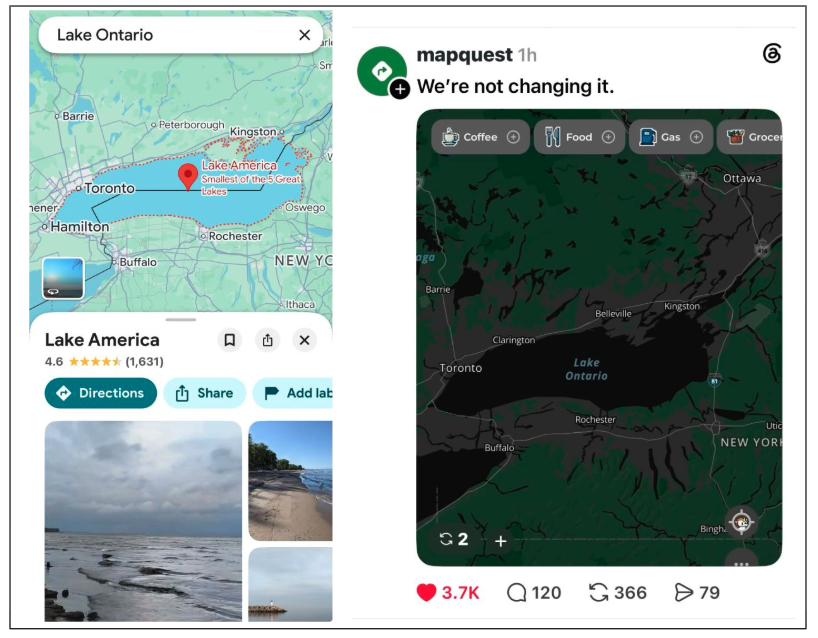
Source: Google, Mapquest
_This post is for subscribers only._
### EP 271 - The Path of Enshittification: Apple Ads, Google's Toll Booth, and Meta's $18B Escape Hatch
URL: https://www.nearmedia.co/ep-271-the-path-of-enshittification-apple-ads-googles-toll-booth-and-metas-18b-escape-hatch/
Last updated: 2026-08-28T19:57:44.000Z
Apple, Google, and Meta are all reaching for the same lever — more ad and services revenue from every surface they control — so the pattern that actually matters isn't AI eating search traffic but ads doing it, privacy and child-safety promises bending to the P&L, and businesses paying an ever-larger toll to reach customers they used to reach for free.
## Takeaways
- **It's the ads, not the AI, eating clicks.** The hosts' recurring point: Near Media user-behavior research keeps showing that *ads* — not [AI Overviews](https://blog.google/products/search/generative-ai-search/?ref=nearmedia.co) — are absorbing the clicks that once went to organic and local, as Google blurs the ad/organic line with weak labeling and richer ad units. "All of the traffic allegedly being stolen by AI Overviews is really about ads." *(17:38–22:03)*
- **Apple Maps ads launched with no way to turn them off.** They're contextual and largely on-device rather than personalized, but there's no opt-out — Mike's complaint is that even a top-tier subscriber who'd happily pay can't buy their way out. *(01:43–05:33)* Independent coverage [confirms there's no toggle to disable them](https://www.macrumors.com/2026/08/25/apple-maps-ads-live/?ref=nearmedia.co).
- **The "$150 to start" is really a 15% credit.** Setup is trivial — pick a business, add a card, 25-character promo text — and Apple seeds it with a credit worth up to \~$150/month (15% of up to $1,000 in spend). Home services, crypto, and bail bonds are excluded; personal-injury lawyers likely aren't. *(06:25–09:36)*
- **Apple Maps skews young and high-intent.** Apple markets \~1B relevant searches, a one-in-two action rate, and 57% Gen Z/millennial users. Mike's own client data puts Apple at \~5–7% of last-touch referrals (equal to or above Facebook), and "knocking it out of the park" in hospitality, where Apple partners with [Yelp](https://www.yelp.com/?ref=nearmedia.co), [TripAdvisor](https://www.tripadvisor.com/?ref=nearmedia.co), and [Hotels.com](https://www.hotels.com/?ref=nearmedia.co). *(02:01–09:35)*
- **The privacy brand is the casualty.** Apple built its brand on "you're not the product"; monetizing Maps quietly undercuts that, and the on-device-privacy explanation is too complex for most consumers to internalize. "Whether it undermines the reality, we don't know — but it undermines the message." *(10:56–13:23)*
- **Google will now charge for 20-second missed calls.** Starting Oct 1, [missed LSA calls during business hours become billable leads if the caller stays on the line more than 20 seconds](https://searchengineland.com/google-local-services-ads-will-charge-for-some-missed-calls-starting-oct-1-485798?ref=nearmedia.co) — and this lands *after* Google already stopped allowing most lead disputes. The hosts read it as a straightforward money grab that makes fast, human call handling a direct cost lever. *(13:31–17:38)*
- **LSAs have moved into the main ad org.** Google rolled Local Services Ads out of its standalone local unit and into the broader ads organization — both an income play and a tell about where local monetization is headed. *(17:38–18:12)*
- **"Paid search is getting bigger" means pixels, not market.** Greg's read of [Tom Capper's Moz piece](https://www.linkedin.com/in/thcapper/?ref=nearmedia.co): the growth isn't the paid-search *market*, it's the ad *real estate* — the pixel height and share of the page ads consume, which Near Media's research sees translating into a rising share of clicks. *(18:12–19:40)*
- **Even ad-skeptics now say "these are ads I like."** Rich local ad units — photos, a map image, reviews, stars — out-inform the local pack, and users who claim to ignore sponsored listings still click them, partly because Google's block-level labeling makes ads read less like ads. *(19:09–20:50)*
- **Ranking now feeds on ad-driven visits, too.** Mike's sharper point: through Chrome behavioral signals, a *successful* visit lifts organic rank no matter how the user arrived — ad, organic, or third party — so "if your whole search result is ads, you'd better predicate your ranking algorithm on ads as well as organic." *(23:17–24:15)*
- **Meta's $18B settlement is cheap, contingent, and admits nothing.** No admission of liability; the top-line only lands if YouTube and TikTok adopt matching terms; and spread over a decade it's a rounding error against Meta's ad revenue and AI spend. "This eighteen billion doesn't mean eighteen billion." *(24:15–30:55)* [\[1\]](#notes) [\[2\]](#notes)
- **The shared discovery pool is the real exposure.** Because the state cases were coordinated as a multidistrict litigation, depositions and documents can flow to the thousands of individual suits still pending — so the deal buys Meta out of *this* case and case law, but not the paper trail that will fuel the next ones. *(34:36–36:11)*
### Related Reading
- [Google Local Services Ads will charge for some missed calls starting Oct. 1](https://searchengineland.com/google-local-services-ads-will-charge-for-some-missed-calls-starting-oct-1-485798?ref=nearmedia.co) — Search Engine Land on the LSA policy.
- [Apple Maps Ads Are Here, and There's No Way to Turn Them Off](https://www.macrumors.com/2026/08/25/apple-maps-ads-live/?ref=nearmedia.co) — MacRumors on the Apple Maps rollout.
- [Meta settles social-media addiction claims with states for up to $18 billion](https://www.nbcnews.com/tech/social-media/meta-settles-social-media-addiction-suit-16-billion-rcna594492?ref=nearmedia.co) — NBC News on the settlement; see also [CNN](https://www.cnn.com/2026/08/26/tech/meta-states-settle-trial-children?ref=nearmedia.co) and [Time](https://time.com/article/2026/08/27/meta-settlement-facebook-instagram-child-safety/?ref=nearmedia.co).
- ["Paid Search Is Getting Bigger: How SEOs Can Respond"](https://getstat.com/blog/paid-search-getting-bigger-how-to-respond?ref=nearmedia.co) — Tom Capper, Moz.
- ["EU wants Meta to extend US teen safety restrictions to Europe"](https://www.france24.com/en/eu-wants-meta-to-extend-us-teen-safety-restrictions-to-europe?ref=nearmedia.co) — France24.
### Concepts
- **Enshittification** — the predictable decay of a platform as it shifts value from users to itself; the hosts' "path of ads."
- **Brand conquesting** — bidding on a competitor's brand keywords so your ad appears on their name.
- **Pay-per-call & lead disputes** — billing per phone lead rather than per click; the long-running fight over which leads are "valid" and disputable.
- **SERP real estate / pixel height** — measuring ad dominance by the vertical space and share of page ads occupy, not by the count of ad units.
- **Contextual vs. personalized ads** — targeting from the immediate query and location versus a cross-session profile of the user.
- **Product-defect ("big tobacco") theory** — a liability theory that routes around Section 230 by treating the product's addictive design, not third-party content, as the defect.
- **Multidistrict litigation (MDL) / shared discovery pool** — coordinated federal litigation in which depositions and documents are shared across all plaintiffs, so discovery need not be re-gathered case by case.
## Practitioner Notes
- **Test Apple Maps now, while it's cheap and uncrowded.** Geo-critical, deal-driven categories — storage, hospitality — look like the early-mover advantage, and the 15% credit funds a low-risk test. This is exactly the kind of channel question Near Media's attribution and user-behavior work is built to answer.
- **Fix intake before Oct 1.** The LSA missed-call change turns call answer speed and handling into a direct billing lever — the operational other half of [EP 267's "you can't outspend a bad intake experience"](https://www.nearmedia.co/ep-267-you-cant-outspend-a-bad-intake-experience-brand-building-for-legal/) with Gyi Tsakalakis.
- **Arm clients with the "it's the ads, not the AI" counter-narrative.** Near Media's user-behavior research is the evidence that ad real estate — not AI Overviews — is what's compressing organic and local; showing that to clients reframes where the lost traffic actually went, and what to do about it.
### Pick your starting point:
[00:00](https://www.youtube.com/watch?v=-fzGxh9xzC0&ref=nearmedia.co) Intro
[01:43](https://www.youtube.com/watch?v=-fzGxh9xzC0&t=103s&ref=nearmedia.co) Apple Maps ads launch
[03:17](https://www.youtube.com/watch?v=-fzGxh9xzC0&t=197s&ref=nearmedia.co) What the ads look like
[05:04](https://www.youtube.com/watch?v=-fzGxh9xzC0&t=304s&ref=nearmedia.co) Why Apple's doing it
[06:25](https://www.youtube.com/watch?v=-fzGxh9xzC0&t=385s&ref=nearmedia.co) Building an Apple Maps ad
[08:35](https://www.youtube.com/watch?v=-fzGxh9xzC0&t=515s&ref=nearmedia.co) Attribution & hospitality
[10:56](https://www.youtube.com/watch?v=-fzGxh9xzC0&t=656s&ref=nearmedia.co) The privacy brand undermined
[13:31](https://www.youtube.com/watch?v=-fzGxh9xzC0&t=811s&ref=nearmedia.co) Google's LSA missed-call charge
[15:20](https://www.youtube.com/watch?v=-fzGxh9xzC0&t=920s&ref=nearmedia.co) The history of pay-per-call
[17:38](https://www.youtube.com/watch?v=-fzGxh9xzC0&t=1058s&ref=nearmedia.co) It's the ads, not the AI
[19:09](https://www.youtube.com/watch?v=-fzGxh9xzC0&t=1149s&ref=nearmedia.co) Why ads now beat organic
[22:03](https://www.youtube.com/watch?v=-fzGxh9xzC0&t=1323s&ref=nearmedia.co) Ranking feeds on ad visits
[24:15](https://www.youtube.com/watch?v=-fzGxh9xzC0&t=1455s&ref=nearmedia.co) Meta's $18B settlement
[26:55](https://www.youtube.com/watch?v=-fzGxh9xzC0&t=1615s&ref=nearmedia.co) The contingent structure
[34:36](https://www.youtube.com/watch?v=-fzGxh9xzC0&t=2076s&ref=nearmedia.co) The discovery-pool problem
[36:18](https://www.youtube.com/watch?v=-fzGxh9xzC0&t=2178s&ref=nearmedia.co) Upbeat albeit idiosyncratic close
### Full Transcript -->
Near Media Podcast — Apple Ads, Google Ad Changes & the Meta Settlement
Hosts: Greg Sterling and Mike Blumenthal (no guests)
Corrected transcript (Master Transcript Audit applied)
Greg (00:10)
Hey everybody, welcome back to the Near Media Podcast with me, Greg Sterling, and Mike Blumenthal. Today we have no guests. We're taking a break this week after our fabulous series on building your local brand. We'll have more guests in the future, but we're just going to go old school today and talk amongst ourselves about Apple's ads launch and then the ad changes at Google — based on a couple of different pieces of information: Google's new policy around charging for LSAs, and then the expansion of Google ads on the SERP and what that means, in the larger context of Google trying to squeeze as much ad revenue out of every nook and cranny it can. And then finally we'll talk about the Meta settlement. They were in the midst of a trial that was going badly for them, sued by a bunch of attorneys general, and they made a proposal — there's a seventeen or eighteen billion dollar settlement that they arrived at, which is merely a fraction of what their potential exposure was had the case gone to a verdict against them.
Mike B (01:20)
But according to them, they did nothing wrong.
Greg (01:23)
Yes, exactly. But we'll talk about that. So, Mike — well, I have a lot of—
Mike B (01:27)
I just wanted to get it in there, that's all. All right.
Greg (01:31)
Very, very negative views of Meta, which I will probably try and restrain myself from expressing on this podcast. But we'll see. So let's talk about Apple Ads.
Mike B (01:43)
Sure. So Apple had told us that ads were coming with iOS twenty-six. They also said it would be available early-to-late summer. So it actually has rolled out in a later version of iOS and Mac twenty-six.
Greg (01:58)
And they're starting to email customers about it, right.
Mike B (02:01)
They're starting to email customers and market it aggressively. This is from their website, but it's very similar to the email they sent. Some interesting stats: over a billion relevant searches. We know from Google that they have a billion monthly active users on Google, so clearly they're several orders of magnitude less than Google Maps. Interestingly, they note a very high conversion rate — one in two searches results in a user taking some action — and they claim to have a very desirable demographic: 57% Gen Z and millennials make up map users. So those are interesting stats. We don't get a lot of stats from Apple about Maps use, although we know that in the United States — because it's not widely used on the desktop — it probably has 25% or something of total Google Maps usage. So it's nowhere near search. But I was able to discover some ads in real life, so let me just show you those real quickly. We'll call those up. Boy. We've done it. Here we are, right here.
Greg (03:15)
Where's the Jeopardy music when you need it?
Mike B (03:17)
Yes, where is it? So these ads are contextual ads, they're not personalized ads. There is some on-device analysis of location and language, which clearly could be used to identify you, and there is some on-device intelligence. They say local on-device processing may be used to select which ad to display, leveraging information about your usage, including your searches, the ads, and the content you view when you interact. So there is some on-device personalization. It doesn't appear to be global, and it's mostly contextual. So in theory it's more private than Google. But here's what an ad looks like. There are two places it shows: when you first put your cursor into the search bar, they might show up then, but typically they're going to show up on keyword searches. So this was a search I did yesterday for sporting goods in Chicago.
Greg (04:28)
This is a category search.
Mike B (04:30)
A category search in Chicago. They show first on the list and they get a highlighted map listing, obviously, which isn't even in Chicago. So, you know, I don't know — they don't have a lot of usage at this point. When you expand the list, it's clearly marked as an ad. So at this point, at least, they have not stooped to the level of Google, where they obfuscate ads from organic.
Greg (04:58)
Did they say anything about how many ads would appear in any given search result? I don't recall that.
Mike B (05:04)
I don't think they've said, but you know, the path of ads historically has been the path of enshittification, right.
Greg (05:13)
The path of enshittification — it is what it is.
Mike B (05:16)
Exactly. So that calls into question why Apple is doing this at all. I think there are many better ways for them to make money. Even if they gave me the choice — with my deluxe Apple subscription plan, I'd buy the biggest plan possible, because I need the storage, I want the TV+, all that stuff — I should be able to opt out of these ads, but they don't even provide that option. Sorry, go ahead.
Greg (05:40)
Is there any brand conquesting? I mean, I guess by definition in a category search you're conquesting, but if there's a brand search, will ads appear for a competitor? Do you know the answer to that?
Mike B (05:56)
That's a good question. I don't really know if ads will appear for a competitor.
Greg (06:03)
I mean, for example, can you bid on your competitor's brand keywords — you know, that kind of thing, which has been so historically controversial in Google.
Mike B (06:12)
Right. I don't know the answer to that, but it's fairly easy — let me just show you how easy it is to do an ad. Let me share the screen here real quickly.
Greg (06:22)
Again, if we only had the Jeopardy music.
Mike B (06:25)
There it is. So let me get over to this screen real quickly and I'll show you how this works. You pick a business, you click next. You have to have a credit card in there — this is in there, the same place where you add your brand, add your location. You can click into add an ad. Fairly trivial. They're giving people a hundred and fifty dollar budget to start with.
Greg (06:54)
And we should say, without going into a lot of detail, there are a bunch of exclusions — home services businesses and others can—
Mike B (07:02)
Well, yeah, home services, crypto, those sorts of things. I don't— well, sorry, go ahead.
Greg (07:06)
Yeah. Go ahead.
Mike B (07:10)
Well, I think personal injury lawyers can advertise. I don't think there's a restraint to that. So creating an ad is fairly trivial. Once you've entered your credit card, you give it a name. You can select some photos to upload, some promotional text — it's limited to twenty-five characters. And they then show you what the ad's going to look like; you establish a budget. And they do allow you to spend the 150 — only the credit — to see what they look like. I guess I would recommend that folks spend it and see if it generates. I'm not sure what categories would be best, but off the top of my head I would think something like storage, which is such a location-relevant decision — where geography is so critical, and where deals are so critical. And I think being early into Apple Maps might offer some advantage. I don't see it particularly in—
Greg (08:11)
What—
Mike B (08:13)
—many legal categories, for example, although a personal injury lawyer—
Greg (08:16)
Yeah, well—
Mike B (08:17)
—might be a branding exercise. I don't know.
Greg (08:19)
We don't have any visibility on the breakdown between brand or navigational search — I need to go to this particular business or this particular destination — versus business discovery, like best brunch in New York or whatever.
Mike B (08:35)
Right. They do show you individual stats on a local business if you're in Google that indicate that. And last I did the comparison of last-touch attribution — Apple versus Google — it was running five to seven percent of total. So it was equal or greater than Facebook on last-touch attribution, but I think it's much—
Greg (08:59)
You're saying overall — your overall referrals.
Mike B (09:02)
Overall referrals, but I think that in hospitality — hotels, restaurants — it is much, much higher. Because I have a few hospitality clients in Apple Maps and they are just knocking it out of the park in terms of everything from bookings to reservations, all that stuff — fairly large engagement. So I think that, to some extent, speaks to the fact that they partner with Yelp and TripAdvisor and Hotels.com for reviews and stuff. But also I think when you're traveling, when you're using maps, is when it's most likely—
Greg (09:35)
Right.
Mike B (09:36)
—to be valuable. And I think those are likely categories. I don't see it as useful in rural areas for discovery.
Greg (09:42)
Well, it contributes to the whole — searches fragmenting; different groups and different vertical contexts are using different tools to discover businesses. It's something that people should test out and determine if it's going to be effective for them.
Mike B (10:01)
Yes.
Greg (10:01)
And then more data will emerge, obviously, after that happens. But the idea that Apple is pushing — they have ads in news, they have ads on the App Store, and Maps, and I don't know if there were other properties that they were going to put ads into, but they obviously see ad revenue as a growth area, as part of their services revenue, I believe, is how they account for it. And it says to me — putting aside the efficacy for marketers or the success of ads in the App Store — it says to me that Apple is really sort of scrambling for sources of revenue that historically have been provided by hardware. Now, they obviously have a ton of revenue, and they have an event coming up where they're allegedly going to announce a foldable phone and the new iPhone, right. But I think their chief message—
Mike B (10:56)
And their phone sales have been going up by twelve to twenty percent a year. I mean, it's not like they're not generating revenue.
Greg (11:02)
—their chief message against Android has been a message of privacy protection: we don't monetize you. Their message used to be, for Facebook and Google, you're the product — they're selling you and your data. And this really fundamentally undermines that message and makes Apple—
Mike B (11:19)
It does undermine the message. Whether it undermines the reality, we don't know. But clearly they're using on-device intelligence to tailor searches for you. The real danger—
Greg (11:27)
Yeah, but the—
Mike B (11:28)
—danger is that they use that globally, right. The one point in ads' favor: look at the App Store. It's so many things, almost impossible to find things. In terms of a way of surfacing some things as opposed to others, having developers pay for that is not a crazy idea.
Greg (11:48)
No, it's—
Mike B (11:48)
I mean there's—
Greg (11:49)
It's good for marketers — it's potentially good for marketers. But I'm saying, for the consumer and for Apple's brand and public reputation, it's not as good. It's somewhat corrosive of those things, because—
Mike B (12:01)
Right. And the danger is it gets worse. That's the big danger with it, right.
Greg (12:05)
Yeah, and there's this kind of creep that happens, because if they succeed — if they're generating meaningful revenue — then we'll see more ads in more places. And—
Mike B (12:14)
Right. The other place that has ads is Apple TV. Although it's mostly ads for Apple TV, but it's still ads.
Greg (12:18)
Right. Although I don't see any ads on Apple TV. You're saying third-party ads on Apple TV?
Mike B (12:25)
No, not third-party ads — Apple ads on Apple TV. Apple TV is somewhat intrusive on your phone, where they're advertising F1 or Formula 1 races or whatever on your phone. It's like, I don't want it on my phone, you know.
Greg (12:34)
Yes. Yes. They're out there, yeah. I was thinking about third-party ads, but you're right. You're absolutely right. All right. And then they have all these tortured explanations about how their approach to targeting and privacy are different. But those—
Mike B (12:53)
Yeah, it becomes a complicated message. That's right.
Greg (12:57)
It's too complicated, and people don't internalize it. "We protect your—" like what they're doing with their AI: we've got the cloud server and the on-device processing and this and that. It's just too complex. All right, so let's—
Mike B (13:13)
It's true. The difference with AI, though, is it is encrypted, and as encrypted communications it's not visible to them or anybody else. So—
Greg (13:23)
Yes, but you're a sophisticated consumer, and most people are not.
Mike B (13:28)
That's true.
Greg (13:28)
So let's move on now to—
Mike B (13:30)
Including my children.
Greg (13:31)
—let's move on now to changes with the LSAs, and how they are trying to broaden the number of occasions for which they can charge businesses who are on the receiving end of the calls.
Mike B (13:44)
Do you have that screenshot? Why don't you just read it.
Greg (13:47)
Okay, so it says — this is under "upcoming changes to lead charge policy," went out to Local Services (LSA) customers as of October 1st this year. They're updating how and when you can be charged for leads coming from an LSA. In particular it says missed calls during business hours — and I wonder if that applies to twenty-four-seven businesses that are trying to exploit that. But anyway: missed calls during business hours will now be charged as valid leads if a user stays on the line for more than twenty seconds, with a few exceptions that are defined in other areas.
Mike B (14:25)
This speaks, first and foremost — this speaks to Gyi's point he made in the brand series: if you have bad intake, there's no—
Greg (14:33)
You're going to get screwed.
Mike B (14:34)
You're going to get screwed. It speaks to the need for quick answers, because Google is measuring it. Google is tracking you, and it's going to become increasingly— exactly.
Greg (14:43)
Well, you want to capture the lead. You're going to get charged, and you want to get that lead, and you want to talk to that potential customer. You don't want to get charged for somebody who happens to stay on the line because of your voicemail or IVR or whatever, but doesn't get through to you.
Mike B (14:59)
Exactly. That's first and foremost about this decision. It is obviously a money grab by Google. I don't know what twenty seconds means in the real world — what kind of things happen. It could be that your phone rings twice, it goes, you know, whatever — customer doesn't hang up. I don't know what it means in real life. In other words—
Greg (15:20)
Yeah, I mean it's clearly— in the most ethical version of this, Google would exclude more calls than it charges for, because there are a lot of bad calls, a lot of calls that get stuck in some IVR system or go to voicemail or whatever. And Google would give advertisers the benefit of only charging for calls that are answered. Just to zoom out a little bit: in the history of call tracking, when pay-per-call came into being as a business model — or as a billing model, which was, I don't know, fifteen years ago maybe, I don't remember precisely — everybody said, well, this is great, because you're only going to get charged for valid leads, and this is much more transparent to the business, and this is a much higher-quality lead, and so on and so forth. And what wound up happening was there were business rules, like we just described, around when the business would be charged, and people started disputing the quality of the leads — this isn't a real lead, this is my existing customer. And it got very problematic for some of these companies that were in this business — and there were several of them, it wasn't just Google. There were just a lot of customer-service issues that arose when people started questioning the quality of the lead. If I'm going to be charged ten dollars, twenty dollars, whatever the leads were — some of them were quite expensive — I really want confidence that this was a good lead, and I'm going to dispute every lead that I don't think was good. And Google has just—
Mike B (16:58)
And initially Google allowed disputes of leads, and then they decided you had— that the businesses had trained their AI well enough, they weren't going to allow disputes anymore. When was that — two years ago, eighteen months ago? They ended it, you know.
Greg (17:10)
Well, people— so there's bad-faith disputes, but there's also a lot of good-faith disputes. And a missed call, or a call that wasn't genuinely answered, is obviously not a bona fide lead for that customer — or probably not a bona fide lead, because the call wasn't received, et cetera. And Google is in a position to unilaterally impose these rules on people because it's a monopoly.
Mike B (17:38)
And this is occurring in a bigger context. Google has rolled LSA from an independent division — sort of coming out of local — into their bigger ad organization, which is a big change. And this is also an income play, but it also comes at a time when — we see in our user-behavior research that ads are what is stealing users' clicks. It isn't AI, it's ads. And I know you read that report that was on LinkedIn, from — who was it, from Tom—
Greg (18:12)
Right. So that brings up a related point, which is: Tom Capper at Moz wrote a piece called "Paid Search Is Getting Bigger: How SEOs Can Respond." On first glance, if you were to just see that headline, you would infer the market for paid search is growing — more revenue for Google, perhaps. But what he's really talking about is the height, the pixel size, the real estate that paid-search ads take up, which we have seen, as you just alluded to, in our user-behavior research. We've seen two things: the size of ads increasing in many cases — PPC ads — and the volume of clicks that are being consumed by ads growing, because of the way Google is presenting them, because of the way Google's blurring the distinction between ads and organic. Go ahead.
Mike B (19:02)
Right. Well, I was just going to say they're blurring the distinction between ads and organic with bad labeling, and they're—
Greg (19:08)
Yes.
Mike B (19:09)
—making ads more attractive than any other element in the SERP. It used to be local was the best-looking thing on the page and people would click on it. Now local packs often don't have as much information as an LSA, or even the new Google ads with local assets look better — they have photos, they have a map image, they have reviews, they have stars. And we've seen a number of cases in our research where users comment, "Gee, I didn't know— this has everything I need, this looks great. I'm not an ad user, but these are ads I like." We've seen those comments.
Greg (19:43)
Well, there is an objection — some subset of the audience, I don't know what the numbers are, that we've seen expresses skepticism: "I never click on the sponsored listings, I usually avoid them, I usually ignore them." And many of those people who have a philosophical objection to ads, as you say, are responding to them, because the ads are information-rich, their placement is higher up on the page — or they're just encountering so many ads on the page: LSAs, PPC ads, ads in the pack, another PPC pack below. And the labeling — this labeling change that Google made, wherever it was, a year ago or six, eight months ago, whenever, where you could collapse the paid listings at the top of the page, which nobody does — made those listings look more and more like organic. And the labeling was not on a per-ad basis, it was the ad group or the block, and that makes that ad label less prominent and less of an obstacle for people. They have very carefully—
Mike B (20:50)
I would contend also, though, that Google has trained users that ads are not bad. In addition to all of the deceptive things Google's doing, the other thing — maybe it's deceptive, but they've convinced more people that ads are less objectionable than they used to be, in some way. We've seen comments from people: "These people advertise, they must have more money," or "are better funded," those kinds of things.
Greg (21:12)
Well, yes. Google's refrain — this is a paraphrase, but their mantra is "ads are useful content." And there are, I will acknowledge, circumstances where, in a commercial context where you're looking for a particular item to buy, that may well be true. But what is bad is the degree to which Google has manipulated the page to drive eyeballs and clicks to ads at the expense of local, at the expense of organic content. And this is the real story. Many people have pointed it out, and we have as well: all of the traffic that was allegedly being stolen by AI Overviews is really about ads. It's really about ads taking that traffic that would have otherwise gone to organic listings.
Mike B (22:03)
Right. And just one minor example of this: we saw in our user-behavior research an example where a map pack had an ad at the top of the map pack and an ad at the bottom. So it became a five-pack — ad top and bottom, three free listings in the middle. So it's everywhere, and you know—
Greg (22:21)
And the consumer doesn't necessarily care about whether the—
Mike B (22:27)
And the algorithm doesn't care.
Greg (22:29)
Right. Google's system is trying to maximize the relevance of the ad. So the consumer may not care — the consumer may benefit. The business, however, because of Google's dominance of search, is now paying a toll for traffic that they didn't have to pay for before. Very often they're having to, to protect their own brand name, and bid — because of the conquesting that goes on, people have to buy their brand. Even a brand search may generate revenue for Google. So it's all part of Google's kind of hunger for more and more revenue — partly to fund AI, and partly to keep their stock going up. I mean, you know—
Mike B (23:17)
Right. But when I said the algorithm doesn't care, what I meant was the ranking algorithm. Google, obviously, through the use of Chrome — ads are going to generate site visits, and if the site visits are successful, where the user accomplishes the task they set out to accomplish, then that's going to help your organic rank as much as any organic listing would, in one level-abstracted way, because Chrome is watching behavior. It doesn't matter how somebody gets to your site — it could be an ad, it could be organic, it could be from a third party — but somebody gets to your site, Google sees on Chrome how long they're on your site, that the task is accomplished, and all of those contribute to your brand quality score, whatever it is that Google's tracking, and help you with ranking generally. So I guess if your whole search result is ads, you damn well better predicate your ranking algorithm on ads as well as organic, right.
Greg (24:15)
All right, so let's move to our final item here. We have tons of stuff that we talked about in the green room, some of which we're going to save. Let's talk about the Meta settlement. So there was a case involving social media — Snapchat, YouTube, TikTok, and Meta — that went to trial in Los Angeles. Snap and TikTok had settled, so they didn't go through the trial, which was a jury trial, but the jury found against YouTube and Meta, and it was a product-defect theory of liability.
Mike B (24:52)
Individual trial. It was for around an individual, right.
Greg (24:55)
For an individual, yes. There are thousands of — or maybe hundreds, not thousands necessarily, but maybe—
Mike B (24:59)
Thousands. There are thousands, yeah.
Greg (25:01)
There are thousands of cases pending. Section 230 has historically protected big tech companies against individual lawsuits based on content. So the idea is that they're totally immune against liability for any of the content that appears on their platforms, and that has been a get-out-of-jail-free card, literally, for them. But the recent innovation on the plaintiff's lawyers' side has been to use a big-tobacco theory of liability: product defect. That these products are defective, they're intentionally designed that way to be addictive and defective, they cause harm, and the companies know about it. And so this case involving Meta exclusively was happening in federal court in Northern California, in the Bay Area. And the potential exposure was basically Facebook's market cap, if everything went — and they were found liable and there were maximum damages. And they just yesterday, I believe, reached a settlement of roughly 18 billion dollars. This case was brought by state attorneys general from 29 states, I think — 34 states, okay — it was the majority of states.
Mike B (26:10)
Thirty-four states, but doesn't matter. It was a lot, yeah.
Greg (26:13)
And it was the same theory: that this was an addictive product that was defective inherently, was designed to be addictive; they ignored harms that it was actually causing, all in the name of making more revenue. And the case was going badly for Meta. It looked as though they were going to lose — because why would they settle if they were going to win? So they did settle, to avoid creating case law, and to avoid the massive damages that they could be exposed to if everything had gone against them. And they came up with this eighteen-billion-dollar settlement, which I'll briefly describe, and then we can talk about it.
Mike B (26:55)
Well, I'll describe it, because I am much more skeptical of it than you are. The settlement — this eighteen billion doesn't mean eighteen billion, right.
Greg (26:59)
Well, wait, wait. You're jumping to the editorial part of this. Let me just describe what it includes, and then you can critique it. So it's — seventeen to eighteen billion was what Facebook announced. It's contingent — Mike will describe that — and there's no admission of wrongdoing, and there's a bunch of complicated contingencies in here, which Mike is now going to talk about.
Mike B (27:26)
Well, they also put in limits — child-based limits, terms of usage, nighttime usage, a bunch of things. So eighteen billion is—
Greg (27:31)
Yes, there are going to be a bunch of protections, and they're supposedly implementing—
Mike B (27:35)
—the maximum. The minimum is eleven billion. So the way that the states get the other seven billion — first, all fifty states divide this number. So the base number of eleven billion gives a state like Alabama a hundred and seventeen million over ten years; in California, one-point-five billion.
Greg (27:55)
Yes — and this is a very important point. They're not paying it all at once, they're paying it over a decade, essentially.
Mike B (28:00)
Ten years. So a state like Alabama gets whatever — eleven million a year. Bupkis, right. Not much. So that's one issue. The other is that they only pay the whole 18 billion out if the state attorneys general manage to get YouTube and TikTok to agree to the same constraints on youth usage — verification of youth, time limits, nighttime limits, all that stuff — have to be agreed to, and YouTube and TikTok have to pay at least $2.5 billion each; then the total payout goes to $18 billion. Obviously, though, YouTube has higher teen usage than Facebook, and one would presume that the attorneys general are not going to let them off easily, and that the settlement numbers for YouTube could be equally high or higher than Facebook's — although, given that it's over ten years, it really doesn't amount to a whole lot.
Greg (28:58)
Yeah. So while this looks like a big number at first glance, and Facebook can say "we're interested in protecting kids and we're going to make these changes to blackout periods and so on," it's really cynical and disingenuous. The litigation was an existential threat to Facebook, because — I mean, there are still more suits out there, so this is not resolving all the potential litigation. This theory can be used again and again and again. But this particular suit was very threatening to them. And $18 billion paid over 10 years is not a lot of money compared to their ad revenue, and compared to the kind of money that they're throwing at AI. Their critics — presumably you included, but others — who are saying this really does not achieve a level of protection, doesn't address the harms sufficiently, doesn't address the problem with the platforms... I mean, Facebook is a bad actor. It's a corrupt company that intentionally— there's all kinds of evidence that would have also come out, this is another reason for the settlement — that they knew exactly what was going on, that their safety protocols and safety measures were really a performance more than effective tools, and that they prioritized revenue growth over child safety, knowing that there were harms happening, knowing there was harassment and bullying on the platform, knowing that there was porn and not-safe-for-work content being seen by kids. And there was a time when you could give Facebook the benefit of the doubt and believe them at their word. That time is long past. They are really a bad actor that needs to be constrained, if not punished, for their bad behavior — and this settlement does not really do that.
Mike B (30:55)
Doesn't seem to — although, if there are thousands more individual cases, it could ultimately amount to something significant. But as it stands, what we don't know is whether the safety standards implemented — strict youth safeguards including daily usage limits, expanded nighttime lockouts from 10 p.m. to 7 a.m., and robust age-assurance measures — whether those will actually work or not is unclear. The EU today—
Greg (31:24)
Well, okay—
Mike B (31:24)
—announced that they expect Facebook to implement the same safety standards in the EU, so this will theoretically become worldwide.
Greg (31:32)
Well, the EU is much less accepting of bullshit than the US is.
Mike B (31:38)
Right.
Greg (31:39)
And so they will be more dogged in their pursuit of actual changes. That's my belief.
Mike B (31:47)
And the way I look at the settlement: it was largely crafted by Facebook to minimize the competitive disadvantage that a loss would have caused, and to limit the financial obligation. But—
Greg (32:00)
Limit the impact on the product, limit the financial fallout, limit—
Mike B (32:03)
—and to prevent a competitive disadvantage. You know, if YouTube doesn't have the same obligations and teens can use it freely, then Facebook is—
Greg (32:10)
But they have the same vulnerability. They have the same legal vulnerability. They were held liable in the Los Angeles trial. They could be held liable again.
Mike B (32:15)
Perhaps more.
Greg (32:15)
What's very clear is that these platforms know exactly what's going on. They've reduced their safety teams, their red-flag teams, in the last few years — because they could, and because it was a barrier to certain kinds of revenue, ultimately; it was a cost center and a hassle for them, and they have alternatively used algorithmic systems and community notes and things like that in lieu of in-house teams. And they are very, very cynical about all of this. They protest, "We're of course interested in the health and welfare of children and vulnerable populations," but the evidence shows time and again they know the harms are happening and they do very little to address them.
Mike B (33:14)
And just one note — I looked up teen reach. Meta has a 63% teen reach, with high minor volume, high usage of those minors. And YouTube has a 92 to 95% teen reach and almost constant usage. So even this number, 18 billion, could be higher — assuming you apply the same logic and YouTube settles in the same way, which would make sense. In other words, eighteen billion over ten years, it's nothing for them, right.
Greg (33:45)
Well, so what happens if Google balks and says, you know, "we're going to slug it out in the courts and we're not going to join this settlement"? So the settlement holds, but the number goes down for Meta, and then—
Mike B (34:00)
Number goes down for Meta, and then it goes up for Google, one presumes. Although I have to—
Greg (34:04)
Well, I mean, Google—
Mike B (34:05)
—believe that the way they structured it, this was done with Google's connivance. I don't— well, awareness—
Greg (34:13)
Awareness, yeah.
Mike B (34:15)
Yes. And Google's agreement, even. This, to me, indicates that Google's ready to settle. We'll see — I'd bet you a beer on that.
Greg (34:22)
But the real question, though, is: if Google comes in and does join this settlement, what is the prophylactic effect, if any, on future litigation? I haven't looked at this closely enough to know. Because there must be—
Mike B (34:36)
It doesn't— none, because it still requires full discovery. In other words, there was no adjudication of guilt, and I think most of the findings are locked behind closed doors. So I'm not sure how much of it can be used in other trials. That's the question.
Greg (34:54)
Well, that's the really interesting question, because if there are thousands of suits in the queue lined up to advance the same theory of liability, this doesn't do them a lot of good. It helps them in this particular situation, but it doesn't protect them against future lawsuits, which will only keep coming, because this theory has already been proven successful. And they'll have to—
Mike B (35:17)
So apparently there was a fair bit of discovery gathered during this litigation, and it can be used, so — yeah.
Greg (35:23)
Yeah, there's tons of discovery. But the discovery is not public, obviously.
Mike B (35:32)
According to Gemini — I don't know if this is right — it says that much of it can be shared, because it's a multi-district—
Greg (35:38)
It is— it—
Mike B (35:40)
—litigation. It—
Greg (35:42)
So it is public.
Mike B (35:44)
It can be shared, yeah. So we'll see. The state AG lawsuits—
Greg (35:47)
It can be shielded, or cannot be shielded — shared.
Mike B (35:52)
—were part of a broader federal coordination known as a multi-district litigation, and there's a shared discovery pool for the common benefit of all plaintiffs. That means that depositions taken and documents produced during the state-level and federal investigations are accessible to attorneys representing individual teens and parents, and do not need to be duplicated.
Greg (36:11)
Okay. All right. Well, that's very bad news for them.
Mike B (36:16)
Yes.
Greg (36:18)
All right, so let's find some upbeat note to end on.
Mike B (36:22)
I have my "May the Fourth Be With You" t-shirt on. I'm both a Star Wars fan and a fan of the day, because it was the day my son was married. So I bought everybody in our family "May the Fourth Be With You" t-shirts, so on his wedding day we celebrate both Star Wars and his marriage. So — is that upbeat enough for you?
Greg (36:43)
All right, that's good. Yes, that's a good note. And somewhat eccentric, which is a bonus.
Mike B (36:48)
Well, I cannot claim normalcy in any traditional sense, you know. So—
Greg (36:56)
All right. Well, thank you, everyone, for listening once again. We're contemplating doing at least one session, if not a series, on attribution in the wake of all the changes in the market, which should be pretty interesting. And, as always, like and subscribe, tell your friends, and we'll see you next time. Yes.
Mike B (37:17)
And before we say goodbye, I would ask that if you're listening to this and you've made it this far into the podcast, and you have things that you would like us to explore with experts in the field, let us know what they are, and we'd be glad to consider adding them to the program.
Greg (37:35)
Very good. All right. See you next week.
Interested in sponsoring this podcast or our newsletters please reach out to [mblumenthal@nearmedia.co](mailto:mblumenthal@nearmedia.co)
[E-mail Mike ](mailto:mblumenthal@nearmedia.co)
### EP 270 - The Hidden Advantage: How Brand Awareness Decides the Click in Legal Search
URL: https://www.nearmedia.co/ep-270-the-hidden-advantage-how-brand-awareness-decides-the-click-in-legal-search/
Last updated: 2026-08-21T13:50:51.000Z
0:00
/2:45
1×
Sample User Behavior Research Result
Brand awareness is a pre-existing advantage that decides which lawyer gets the click long before anyone compares options — so as search fragments across Google, [AI Overviews](https://blog.google/products/search/generative-ai-search/?ref=nearmedia.co), and third-party sites, the firm people already recognize keeps winning, and a challenger's only real lever is creative strong enough to close the recognition gap.
## Takeaways
- **Recognition, not position, drives the click.** In the user-testing video the searcher skipped the local pack, fixated on the [Local Service Ads](https://ads.google.com/local-services-ads/?ref=nearmedia.co), and zeroed in on the one firm she already knew — [Montlick](https://www.montlick.com/?ref=nearmedia.co). She then used the firm's [BBB](https://www.bbb.org/?ref=nearmedia.co) page (not accredited, but an A+ rating) only to *confirm* a choice prior awareness had already made. *(\~03:30–05:30)*
- **Fewer than 2% go to AI first to find a lawyer.** Near Media's 2025 national survey found under 2% would turn first to a tool like [ChatGPT](https://chatgpt.com/?ref=nearmedia.co); Google is the default entry point. AI's real job is background research — understanding the case, prepping consultation questions, comparing options — not sourcing the firm. The 2026 number ticked up but the pattern held. *(\~09:00–10:00)*
- **People will still consider an AI-surfaced firm.** Majorities said they're open to hiring a lawyer they saw in an AI Overview or AI mode (roughly 78% would consider one), and \~18% would use AI somewhere in the process — so brand presence in AI matters even while direct referrals sit at 1–2%. *(\~10:30)*
- **Two things decide the hire: proven experience and fear of cost.** Ranked decision factors collapse into experience with *my kind of case* and the financial terms (contingency, free consult). Both are really one thing — minimizing risk and buying trust in a high-stakes, hard-to-judge purchase. *(\~15:30)*
- **"We support the community" is a tiebreaker, not a closer.** Respondents *say* local involvement matters, but in the message test "we support the community" ranked at the bottom of what would actually make them contact a firm — a nice-to-have, not persuasive on its own. It's the classic survey-attitude-vs-observed-behavior gap Near Media keeps finding. *(\~17:00)*
- **TV built the awareness — not digital.** Asked where they'd heard of the firms, respondents overwhelmingly said television; traditional media (TV, radio, outdoor, street furniture) far outpaced digital as the *source* of brand awareness, with \~55% recalling brands from TV. Greg flags this as unusually strong in legal, where firms spend on traditional media at a scale doctors and restaurants don't. *(\~20:00)*
- **Known brands get the "local" benefit of the doubt.** Four of the five firms are Georgia-based; the one that isn't — Morgan & Morgan, headquartered in Florida — was most often assumed to *be* the Georgia firm, purely because it's the most recognized. Awareness overrides fact. *(\~21:00)*
- **Great creative can close a 20-point awareness gap.** Montlick trailed Morgan by \~21 points on awareness, yet its ad scored \~10 points higher and lifted Montlick to near-parity on consideration. "If you have powerful messaging, good creative, you can close the gap with a better-known rival as a challenger." *(\~22:00–25:00)*
- **…but forced to pick one, people revert to the best-known firm.** At the final single-choice question, Morgan won on brand strength (\~38% chose the best-known brand). Strong creative narrows the gap; brand strength still closes the sale. Everyone gets business — brand decides who gets the largest share. *(\~25:00)*
- **When brand is absent, reviews are *the* single biggest factor.** Greg's clearest answer to Mike: if you must name one lever that moves behavior, it's reviews. Not everyone carries brand awareness, and undifferentiated searchers "lean on and rely on" reviews to both qualify and disqualify. *(31:24–33:04)*
- **Brand and performance marketing are interdependent, not rival budget lines.** The either/or framing — all-in on performance, brand is soft and unmeasurable — is the mistake. Brand lifts performance, and both Google and AI favor brands because consumers click brands and Google reads that behavior as signal. *(\~26:00)*
- **Offline demand routes back through Google as branded search.** Mike's "full circle," echoing [Cyrus Shepard](https://zyppy.com/cyrus/?ref=nearmedia.co): community and offline activity build awareness that shows up as branded queries, and branded-search demand itself lifts rank — so cheap, local, real-world work compounds online. *(35:22–36:03)*
### Related Reading
- [EP 269 — Tactics for Building a Local Brand in the Age of AI Search (Agency Panel)](https://www.nearmedia.co/ep-269-tactics-for-building-a-local-brand-in-the-age-of-ai-search-an-agency-panel/) — Part 4; the panel (French, Hawkins, Shotland, McGee) that name-checks the very Atlanta PI study Greg presents here.
- [EP 268 — AI Overviews, Brand Search & Local SEO: Cyrus Shepard on Earning the Click](https://www.nearmedia.co/ep-268-ai-overviews-brand-search-local-seo-cyrus-shepard-on-earning-the-click-from-the-archives/) — why brand search correlates with rankings.
- [EP 267 — You Can't Outspend a Bad Intake Experience: Brand-Building for Legal](https://www.nearmedia.co/ep-267-you-cant-outspend-a-bad-intake-experience-brand-building-for-legal/) — the legal-vertical deep dive with Gyi Tsakalakis; the conversion side of the brand front door.
- [EP 266 — Cyrus Shepard: What Local Brand Actually Means to Google and AI](https://www.nearmedia.co/ep-266-cyrus-shepard-what-local-brand-actually-means-to-google-and-ai/) — the technical, brand-as-entity view behind "Google and AI favor brands."
- [EP 265 — Decoding Local Branding with John Jantsch](https://www.nearmedia.co/ep-265-decoding-local-branding-with-john-jantsch/) — Part 1; "you have a brand whether you build one or not."
- [Lunch Hour Legal Marketing Summit](https://lunchhourlegalmarketing.com/?ref=nearmedia.co) — the Nashville event (run by [AttorneySync](https://www.attorneysync.com/?ref=nearmedia.co) and [Mockingbird Marketing](https://mockingbirdmarketing.com/?ref=nearmedia.co)) where Greg first gave this talk.
- [Impact of Brand Awareness on Consumer Choice Presentation (PDF)](https://www.nearmedia.co/content/files/2026/08/Impact-of-Brand-Awareness-on-Lawyer-Choice.pdf)
### Concepts
- **Unaided vs. aided awareness** — open-box recall ("name a PI firm") versus recognition from a supplied list. Both produced the *same* firm hierarchy; aided simply lifts the totals.
- **Benefit-of-the-doubt effect** — a recognized brand is assumed to have attributes it may not have (e.g., being a local Georgia firm), because familiarity substitutes for knowledge.
- **Qualify vs. disqualify** — reviews, websites, and BBB pages used on the *front end* to build a shortlist and on the *back end* to eliminate a tentative choice.
- **The say-do gap** — the divergence between survey-stated attitudes ("community involvement matters") and observed behavior (it rarely closes the deal); why Near Media pairs surveys with user testing.
- **Brand–performance interdependence** — treating brand and performance marketing as mutually reinforcing rather than competing line items; brand lowers the cost and lifts the yield of performance spend.
- **Local Service Ads (LSAs)** — Google's pay-per-lead units atop local results, styled nicer than the local pack (photos, reviews, Google Screened badge); the module that repeatedly captures attention, especially on mobile.
## Practitioner Notes
- **The user-testing video is the proof layer surveys can't provide.** The say-do gap and the discover-in-AI/validate-on-Google pattern both argue for Near Media's user-research methodology — watching a real searcher move from LSAs to website to BBB is what exposes behavior a survey would miss, and it's a differentiated deliverable for firms drowning in attribution noise.
- **Ad-creative testing is a shippable service, not just a study.** Montlick's \~10-point creative lift over a far-better-known rival is measurable, market-sourced feedback — exactly the "we use the market to give feedback to our clients" offer Greg describes, and a way to de-risk media spend before a firm commits to it.
- **This episode is the front door; [EP 267](https://www.nearmedia.co/ep-267-you-cant-outspend-a-bad-intake-experience-brand-building-for-legal/) is the conversion.** Brand awareness wins the click and reviews carry the undifferentiated searcher — but "you can't outspend a bad intake experience." The awareness findings here only pay off if the intake and review engine behind them holds.
### Pick your starting point:
[00:00](https://www.youtube.com/watch?v=3ftACl5PxC4&ref=nearmedia.co) A different episode: original brand research
[02:30](https://www.youtube.com/watch?v=3ftACl5PxC4&t=150s&ref=nearmedia.co) The video: how one searcher chose a lawyer
[04:00](https://www.youtube.com/watch?v=3ftACl5PxC4&t=240s&ref=nearmedia.co) Debrief: LSAs, recognition, the BBB check
[06:30](https://www.youtube.com/watch?v=3ftACl5PxC4&t=390s&ref=nearmedia.co) The SERP changed — ads crowd out organic
[09:00](https://www.youtube.com/watch?v=3ftACl5PxC4&t=540s&ref=nearmedia.co) Under 2% start with AI — where AI fits
[11:30](https://www.youtube.com/watch?v=3ftACl5PxC4&t=690s&ref=nearmedia.co) The study: 350 respondents in Atlanta
[15:30](https://www.youtube.com/watch?v=3ftACl5PxC4&t=930s&ref=nearmedia.co) What matters most: experience and cost
[18:30](https://www.youtube.com/watch?v=3ftACl5PxC4&t=1110s&ref=nearmedia.co) Brand awareness: unaided vs. aided
[20:00](https://www.youtube.com/watch?v=3ftACl5PxC4&t=1200s&ref=nearmedia.co) TV builds the awareness, not digital
[22:00](https://www.youtube.com/watch?v=3ftACl5PxC4&t=1320s&ref=nearmedia.co) Ad-creative testing: Montlick tops Morgan
[25:00](https://www.youtube.com/watch?v=3ftACl5PxC4&t=1500s&ref=nearmedia.co) Creative closes the gap — brand wins the pick
[26:00](https://www.youtube.com/watch?v=3ftACl5PxC4&t=1560s&ref=nearmedia.co) Brand and performance are interdependent
[31:24](https://www.youtube.com/watch?v=3ftACl5PxC4&t=1884s&ref=nearmedia.co) When brand is absent, reviews decide
[33:19](https://www.youtube.com/watch?v=3ftACl5PxC4&t=1999s&ref=nearmedia.co) Would the findings hold elsewhere?
[35:22](https://www.youtube.com/watch?v=3ftACl5PxC4&t=2122s&ref=nearmedia.co) Full circle: demand drives rank
[36:47](https://www.youtube.com/watch?v=3ftACl5PxC4&t=2207s&ref=nearmedia.co) Wrap and next week (EP 271)
### Full Transcript -->
# EP 270 — Choosing a Lawyer: Search, AI, and the Hidden Power of Brand
### Near Media Podcast · Greg Sterling & Mike Blumenthal
*Editor's note: This is a cleaned reading version. Stutters, false starts, and clear transcription errors were removed; backchannel ("yeah," "right") was folded into the speaker's turn; and brand/name errors were corrected (see the Corrections list at the end). Wording is otherwise left faithful to what was said. Speaker-side factual asides are left as spoken and noted at the end rather than rewritten. Timestamps inside Greg's opening presentation are approximate, because Riverside logged the monologue as a single turn.*
---
**Greg (00:15)**
Hey everybody, welcome back to the Near Media Podcast. It's me, Greg Sterling, with Mike Blumenthal. Today we're going to do something a little different. We've been running this series on brand — building a local brand. What does it mean, from a technical standpoint and from an operational standpoint? Last week I was at Lunch Hour Legal Marketing, a legal marketing conference in Nashville run by our partners, AttorneySync and Mockingbird Marketing, and I gave this presentation, which I'm about to give — to give some context about how people choose lawyers.
What's really interesting for our purposes today is the way it illustrates how brand and prior awareness impact online behavior and ultimate decision-making. This is something that's largely hidden, and many marketers are not fully conscious of it, or at least not aware of how powerful the impact is. We've seen this in much of our user-behavior research.
So I'm going to take you through these slides. It's a slightly altered version of the presentation — I've taken out a couple of slides — but basically the one I gave. There's also a video that sets up the whole thing, which we'll watch. It's only a couple of minutes, but it's really powerful, and it also shows the kind of user research we do, so you get a little taste of that. Okay, so: "Choosing a Lawyer: Search, AI, and the Hidden Power of Brand." This should only be about twenty-eight minutes, and then Mike and I are going to have a conversation.
We'll lead off with this illustration of the user-behavior research we do. It's just a couple of minutes, and it's going to set up the rest of the deck.
Okay — what's very interesting about that video, and it's relatively short (I chose it to present because there are a number of things going on that we see again and again in much longer user-testing cases). She did her search. She was instructed to search for a lawyer; we didn't give her the keyword, she chose her own. She hit the page and immediately focused on the LSAs. She really didn't even look at the pack. She scrolled down the page in a very cursory way and concentrated all her attention on the LSAs. The ones that got her attention were ones she'd heard of, and there was one of the two — Montlick — that had a stronger brand in her mind. That's the one she focused on.
What was also interesting is that she looked at one of the LSAs and the rating was good — a 5.0 — but there weren't enough reviews. So she disqualified that attorney because he didn't have enough reviews compared to some of the other competitors. Then, after looking at the LSA profile — the GBP — she clicked through to their website. For people who don't think websites matter: there are a lot of people still clicking through and looking at websites, not to qualify, but to potentially *disqualify*. She's got her tentative choice, and now she's looking for supporting information — verifying that they're a good firm. Then she goes off to the BBB site looking for further validation. They're not accredited, which concerns her — she says so — but she sees an A+ rating, and that comforts her. And she then decides this is the firm she's going to go with.
So that's a very concentrated version of what happens frequently. What it illustrates is that people are not hitting that page cold — in most cases. In some cases they are, but in many cases they're not. If there's some prior brand awareness, some familiarity, that is the thing that guides people to the click, or often to the choice, which is what happened here.
Just to give a little context before we get into the survey data and ad-creative testing: for years, people really focused on Google and the Google ecosystem, which was very stable. You could get traffic with organic links, and ads were not essential. That's all changed. Two things are happening on Google. Organic is being crowded out by ads and by different Google modules that are sucking up attention, as you saw with LSAs in that video. And there's a lot of fragmentation — people go to many different sites, apps, and tools to understand their choices and then make decisions. It's almost never the case that people rely exclusively on Google. She didn't — she went to the BBB. So you've got to deal with this fragmenting market, where Google is a critical piece but not the only influence on behavior.
The SERP has really changed over the years, as everybody listening or watching knows. The page now is just full of ads. This is a typical page: LSAs, then a traditional PPC ad — sometimes multiple ads in that slot — then some organic directory listings, a Reddit pack, the local pack (which is invariably below the fold these days, with an ad, and we've even seen two ads), then a couple more organic links, and another PPC pack after that. You've got very few slots to get attention. LSAs are very compelling because of all the information they contain.
In our research — and many people have validated this — when people generate longer queries, you get AI Overviews, often leading to AI mode these days. Here's a query somebody might ask in a legal situation: "I slipped and hurt myself, should I contact a lawyer?" What you see above the fold is an AI Overview, but it goes directly into AI mode. People have been debating for two years how influential AI is on consumer decision-making. In 2025, in our national survey, we found that less than 2% would turn *first* to an AI tool like ChatGPT to find a lawyer. The first place they go is typically Google. In 2026 that increased, but it hides a more complicated story: the way people use AI is for background research — to understand their case, or whether they should contact a lawyer. It's increasingly part of the mix.
We asked people whether they'd consider hiring a lawyer they saw in AI Overviews, and the same for AI mode. People are pretty open to it — the majority seem open to considering lawyers that appear there. So you can't dismiss AI. It's not the first place people go, but it's filtering into the mix, back to that fragmentation point.
So we asked 350 respondents in the Atlanta metro area 39 questions about how they'd go about choosing a lawyer, and we also showed them ad creative. We asked: if you need to find a personal injury lawyer, what tools or channels would you use? Google is number one, word of mouth is number two, but AI is in the mix — 18% would use AI as part of the process. A review site (probably also Google) and, interestingly, traditional media rank pretty high — that's people drawing on memory and familiarity from exposure through traditional media.
Then we asked: if you had only one tool or resource to choose a lawyer, what would it be? Of course it's Google — it's perceived to be the most complete, and in a local context that's true. We asked how they might use an AI tool when looking for a personal injury lawyer — not *whether*, but *how*. This was an aided-response question. About 24% wouldn't use AI at all in the process, but the majority would look at a lawyer's qualifications, prepare questions for a consultation, understand the financial terms, compare lawyers, and do background research. A smaller number would go to AI for contact information — but typically, even after doing AI research, people transfer over to Google for that last-mile data.
We asked what matters most — rank the decision factors in choosing a lawyer. On the right you see the hierarchy: general experience and credentials, experience with similar cases, understanding fees, reputation (which is reviews), contingency fee, and free consultation. Basically two categories: experience — especially with the kind of case I have — and financial issues. People want confidence that the lawyer knows what they're doing and will likely generate a favorable outcome, a settlement or a victory at trial. And they want to know it won't cost them money to talk to a lawyer. Both are really about minimizing risk and building trust.
We asked how important it was for a firm to be based in Georgia — not specifically Atlanta — versus being headquartered in another state with a local office. The majority said it's extremely or somewhat important. Then we asked: if a firm had a track record of giving back — community work, charitable contributions — how much would that impact your decision? Something similar: fewer in the highest category, but combined, a majority said it would have some influence.
Here's the interesting thing. We do both surveys and user testing, and we often see discrepancies. In surveys, people express attitudes and respond to hypotheticals from memory; in user testing, we give them concrete situations and watch what they actually do. In this survey we said: which of these messages would make you most likely to contact a lawyer? At the bottom of the choices was "we support the community." People like the *idea* of local lawyers and community involvement, but when push comes to shove it's not persuasive — it's a tiebreaker at best, not as impactful as the earlier slides suggested.
Now the brand-awareness stuff, which is the whole point. We picked five prominent firms in the Atlanta metro — no client relationships here, purely based on visibility and prominence. We asked: when you think of a personal injury firm or an accident lawyer, does anybody come to mind? Open comment box, no suggested names. The top three far outpaced the others. Then we followed up: do you know any of these firms? — and suggested the ones we'd chosen. The hierarchy was the same. The unaided and aided awareness questions show the same hierarchy; aided just means more people recognize the firms once suggested. So Morgan was number one, Montlick number two, and so on — consistent.
We asked where they'd heard about the firms. TV was overwhelmingly the answer. A lot of lawyers do TV, outdoor ads, radio, street furniture, and so on — but what's interesting is that traditional media far outpaced digital as the *source* of brand awareness. This may be somewhat unique to legal, because you don't have doctors, restaurants, or other categories making the same investment in traditional media. Traditional media still has a powerful influence on awareness, which in turn translates into clicks and choices online.
Then we asked which of these firms is based in Georgia. In fact, four of the five are based in Georgia, and three of the five are based in Atlanta. The only one not based in Georgia is Morgan & Morgan, which is based in Florida. What this shows is that people give the firms they're aware of the benefit of the doubt. Morgan — not a Georgia firm — came out number one, correlated directly to brand awareness. The firms people assume are Georgia-based are the same firms they're familiar with.
Now the ad creative. We took five video ads — TV ads — randomized them, and showed all 350 respondents the ads in different sequences, so there was no first- or last-position bias. Those are 30-second commercials. We asked three questions: What's the first thing that came to mind? Would you contact this firm based on the ad, on a scale of 1 to 100? And which adjectives — some positive, some negative — do you associate with the ad? Presenting from lowest to highest: the first one was Morgan & Morgan, the most well-known firm, which ranked the *lowest* — its ad was rated the lowest, which is interesting. Then John Foy, then Monge, then Gary Martin Hays, and then Montlick. Montlick was the number-two firm in familiarity, but its ad scored the highest — quite a bit higher than the Morgan ad, about 10 points higher. We did an overall sentiment analysis and combined it with the other data. Montlick is the winner and Morgan is the loser, basically — even though Morgan is the most prominent firm in awareness.
Then we showed them some PPC ads. We did two things: we showed the PPC ads *before* asking about awareness — which ad would you click on, with no context? — then exposed them to the firm names and showed the ads again. What this shows is that the brand hierarchy holds: the ads people said they'd click on are in the same order as the firms they're most aware of. Morgan wins, Montlick number two, John Foy, and so on — with the one exception of the Montlick ad outperforming the others. Brand creates a strong advantage going in. Many marketers assume a search is a level playing field. It's absolutely not.
We asked, based on everything you've seen, which top two firms would you consider? It's Morgan and Montlick — and the interesting thing is that the Montlick ad brought them way up, basically to parity with Morgan, which had about 20 points higher awareness. Montlick's ad elevated them to roughly equal consideration. The lesson: with powerful messaging and good creative, a challenger can close the gap with a better-known rival. But when we asked them to pick only one, it wound up being Morgan. Each of these firms gets business, but Morgan — based on brand strength — captured the largest share. Montlick came up quite a bit; that ad really helped them, and the gap is largely closed. Everybody's getting business, but brand is really driving these choices.
So what does the research tell us? The customer journey involves many touchpoints; it's fragmented — people hear this again and again, it's almost a cliché. AI is part of the process in most verticals now. It's not necessarily the starting or ending point, not necessarily the biggest influence, but it's there, showing up in Google AI Overviews and increasingly as Google pushes people into AI mode. Consumers are looking for trust and competence, and to reduce risk in this legal context — with reputation, experience evaluation, and messaging about fees. Reviews can qualify or disqualify: people look at reviews on the front end to qualify (especially when they can't differentiate) and on the back end to disqualify. "This is the one I'm inclined to choose — uh-oh, there's a bad experience here" — that may disqualify somebody.
Brand creates an advantage going in. TV and traditional media are powerful influences on brand awareness in this legal context, and that translates into online behavior. Strong brands get the benefit of the doubt, as you saw with people assuming Morgan was a Georgia firm even though it wasn't. Creative really matters in some contexts, and can boost the visibility and favorability of your brand — you can close the gap to some degree with great creative. But when people have to choose one, they often choose the most familiar firm. It's the same with any consumer choice; brand is a powerful draw. That's why people choose Google in many cases.
Brand and performance marketing here are interdependent. People often juxtapose them or see them as mutually exclusive — "we have a budget, we have to put all our money in performance; brand is a long-term proposition, hard to measure." But brand really matters, and it helps performance marketing perform better. AI also favors brands; Google favors brands, because consumers click on brands and Google takes behavioral signals into account. So brand really matters.
I'd encourage you to go back and look at other episodes in this series, because we talk about how to build your brand in a guerrilla fashion, from the ground up. Brand isn't just TV. As I said to the audience in Nashville, I don't want people to take away that brand is the only thing that matters, or that brand is just TV advertising — it's not. It's the sum total of everything. TV can be a powerful influence on awareness in certain contexts, but there are lots of ways to build a brand, and all the things local SEOs have talked about for years are part of that process.
**Mike B (27:12)**
Thanks — that was great, appreciate it. One of the things you mentioned was that LSAs garnered a great deal of attention, both in the example you provided and in our user research. What do you ascribe that to — position, content, or something else?
**Greg (27:32)**
Well, it's everything, right? It's position and content. LSAs look like the local pack — they've got pictures, reviews, messages on there. They're often…
**Mike B (27:41)**
Calls to action.
**Greg (27:42)**
Right, exactly. And the messages are often pretty generic — you only have a few attributes you can use in LSAs. But the combination of that imagery, the reviews, and the position on the page is extremely powerful, especially for people who don't have anything else to fall back on. Somebody who hits that page without a familiar brand, without any prior awareness, is going to look at those reviews. They may scroll, they may look at the local pack, but we've seen in our research that when LSAs are present — especially on mobile — they grab a lot of attention, even among people who are ad skeptics.
**Mike B (28:18)**
So you talked about this desire for locality as an expression of need, but not manifested in actions — and we see something similar in our user behavior. Do you think that opens up an opportunity for some sort of collective or individual anti-Morgan positioning, or anti-Morgan ads, in the local market?
**Greg (28:39)**
I think so. We've worked with firms that do a version of that. You need to include it as one of your messages among several. If you just say "we're the local law firm," that's probably not enough to get you over the hump. But if you include it as one of several considerations — we're successful, we're going to treat you right, we're local, we know the community, we've been here a long time — that's very appealing. People are looking at the totality of information to make the choice that minimizes their risk and exposure. It's a huge choice — one of the highest-consideration choices you can make, along with medical and healthcare. People are really trying to find somebody they can trust, who's going to be successful, who's not going to cost them money. It's a mix of factors.
**Mike B (29:34)**
So I was thinking — you're talking in a positive way, highlighting smaller practices' positive local attributes. I'm thinking about seven lawyers getting together, billboarding contrary to Morgan & Morgan: Morgan & Morgan isn't local, Morgan & Morgan sponsors the Braves but they're really from Florida, or they're not even certified. I'm wondering if a more overtly negative campaign against Morgan & Morgan might reduce their brand strength.
**Greg (30:03)**
Well, it works to some degree in politics, so it could work in this context, I suppose. I'm not an advertising expert on what creative is going to be most effective — one of the things we're doing in our program is surveys and user-behavior testing to see how people actually operate in a particular context, plus brand-awareness and ad-creative testing. So we're getting a sense of what works in each situation, but we're not ad-creative experts at this point. We're using the market to give feedback to our clients. I can't tell you for sure that going directly at Morgan would be particularly effective. It might be…
**Mike B (30:50)**
It would be expensive, because Morgan advertises so much, but it might set expectations more realistically. I have another —
**Greg (30:58)**
But you need something else too — not just negative.
**Mike B (31:02)**
Right. So we see brand in the attitudinal stuff — the surveys you did, where brand plays an outsized role. In our user behavior, do you see it playing as much of a role as other factors — as much as reviews, or messaging around pricing? Is it comparable, or do you see it as less important in our user-behavior research?
**Greg (31:24)**
I think if you have to point to one factor that drives behavior, it's got to be reviews — that's what we consistently see. Because not everybody has brand awareness. In this particular slide deck and video, the woman was aware of a couple of brands, and that was a heavy influence on her decision-making. When people do have prior awareness of a firm or multiple firms, that's a big influence on what they click on and ultimately choose. But that's not true in all cases. I don't want to skew the takeaways and say people always know brands and always pick them — they don't. People do come in and struggle because they don't know a brand or a law firm, and they're struggling to differentiate or to make a choice. That's where reviews are a big, big factor. They're probably the single most influential consideration people lean on and rely on.
**Mike B (32:24)**
You asked a question in the survey — if you needed a lawyer, where would you go first? Was that aided or unaided? And if it was aided, do you think an unaided question would generate the same answer?
**Greg (32:31)**
It was aided. But I think people would name Google. Yeah, people would name Google.
**Mike B (32:40)**
More than they would name a friend, a colleague, or a professional?
**Greg (32:43)**
It might be the case that word of mouth would win in an unaided-response scenario — "how would you find a lawyer?" with a blank box. They might say "I'd ask a friend or colleague." That might come out slightly ahead, because it's obviously a factor in a lot of people's decisions — referrals and so on. But I think Google is the winner if you say "where's the one tool, where would you go?" It's the default — the thing people are most familiar with. Twenty-plus years of Googling things has created a pretty deep groove.
**Mike B (33:19)**
So let's wrap this up. If you were to run this in three other cities, which of these findings do you think would definitely hold up?
**Greg (33:32)**
It would be interesting. This was a particularly strong example of brand awareness — I don't know the history of these lawyers, but the woman in the video said she'd been hearing about Montlick for years. So these firms have probably been advertising aggressively for a long time and created a high degree of awareness. In that kind of market, you see this brand lift, this brand effect. In other markets, maybe not. In more competitive or bigger markets — New York, LA, Chicago — maybe you wouldn't see quite as strong a brand effect, or maybe you would; there might be a dominant firm or set of dominant firms. The takeaway is that you have to look at the larger context: when people are struggling to make decisions, brand is a trust signal. If they have some awareness of a product or service and a positive association with it, that helps drive clicks and choices.
This is also something we talked about in our panel and in previous sessions — these things work together. For years, people have done link building offline because they want links to help them rank in Google. But one of the primary reasons to be involved in the community is to create awareness that then translates into the online choices and clicks we saw here. I think this is a stronger case than you might see in other verticals, because of the way lawyers — and PI lawyers in particular — operate, but the principle still holds. Offline and online work together. Invest in the community, because that helps build awareness — and those are things you can do on the cheap, versus buying TV ads.
**Mike B (35:22)**
And as Cyrus pointed out, demand at Google drives rank. So it's a full circle: not only will an open-ended query improve awareness and choice, but if you have people going to Google and entering your brand, it increases your rank. It's a full-circle sort of thing.
**Greg (35:41)**
That's right.
**Mike B (35:44)**
One last question. We did this series on brand, which I've totally enjoyed, with some great people — Gyi, and Andrew Shotland, and Joy. So when you came into this series, has your opinion of brand changed?
**Greg (36:02)**
Well, it's not totally fair, because I'm using the legal research we're doing as another input. But I'd probably say yes. The SEO world has largely ignored offline historically. Everybody has treated Google as a level playing field, where the tips and tricks everybody does will help you rank, and rank by itself will drive choice. My understanding now of what's really going on is a lot more complicated than it was before. What I've learned in this brand series has made my understanding of user behavior much richer — and also tactics. It's been a great learning experience for me, and hopefully for our audience as well.
**Mike B (36:47)**
With that, I want to thank everybody for joining us. Like the video, follow us on YouTube, listen to our podcast, and come to our website, where you'll find a full transcript and related links. We hope to see you next week — for some episode number, I don't remember what. So, 271.
**Greg (37:01)**
Two seventy-one, two seventy-one.
**Mike B (37:03)**
Next week. Thank you very much for joining us. We'll talk to you again.
**Greg (37:06)**
Right.
---
## Corrections
**Fixed (transcription / brand errors):**
- Grammar/verb repairs: "it also shows," "how influential is AI," "the customer journey involves," "being headquartered in another state," "have often juxtaposed."
- High-volume stutters, doubled words, and false starts removed for readability; backchannel folded into turns.
**Left as spoken (speaker-side — for show-notes footnotes, not silently rewritten):**
- Mike's aside that "Morgan & Morgan sponsors the Braves." Morgan & Morgan runs heavy sports and venue marketing, but the Atlanta Braves' official jersey-patch sponsor is QUIKRETE. The point is rhetorical (a Florida firm buying local presence), so it's left as said.
- "Gyi" (Gyi Tsakalakis, AttorneySync) and "Joy" (Joy Hawkins, Sterling Sky) are named in the wrap; spellings corrected but attributions left as spoken.
Interested in sponsoring this podcast or our newsletters please reach out to [mblumenthal@nearmedia.co](mailto:mblumenthal@nearmedia.co)
[E-mail Mike ](mailto:mblumenthal@nearmedia.co)
### EP 269 - Tactics for Building a Local Brand in the Age of AI Search — An Agency Panel
URL: https://www.nearmedia.co/ep-269-tactics-for-building-a-local-brand-in-the-age-of-ai-search-an-agency-panel/
Last updated: 2026-08-14T16:57:55.000Z
Four agency operators — [Paula French of Search Influence](https://searchinfluence.com/author/pfrench?ref=nearmedia.co), [Joy Hawkins of Sterling Sky](https://www.sterlingsky.ca/about-us/joy-hawkins/?ref=nearmedia.co), [Andrew Shotland of Local SEO Guide](https://www.localseoguide.com/?ref=nearmedia.co), and [Matt McGee of SEO Savvy Agent](https://www.seosavvyagent.com/?ref=nearmedia.co) — join Greg Sterling and Mike Blumenthal for Part 5 of the Near Memo brand-building series, closing out the run of solo interviews with a working session on what "brand" actually means for a local business and which tactics move the needle now that answers are generated, not just ranked.
A local brand is prominence plus goodwill made legible to machines — a name people connect to a query and a set of third-party corroborations Google and AI can verify — so as the results page fills with ads and AI Overviews, the winning work shifts away from your own site and toward real-world demand, off-site mentions, and content only you can produce.
## How the panel defines a local brand
Every guest was asked the cocktail-party question — "what does brand even mean locally?" — early on (03:21–05:25). The four answers stack into a usable working definition.
| Practitioner | Their definition of a local brand | The lever it implies |
| ------------------------------------------------------------------------------------------------------------------------ | -------------------------------------------------------------------------------------- | --------------------------------------------------------------------------------------- |
| Matt McGee | **Prominence + goodwill** — people know your name and associate it with something good | Name recognition; do offline + community work, not just marketing that "looks the same" |
| Andrew Shotland | **Brand-as-query** — do people connect your name to a search or LLM query | Drive branded search/LLM demand; measure it |
| Mike Blumenthal (via [John Jantsch, EP 265](https://www.nearmedia.co/ep-265-decoding-local-branding-with-john-jantsch/)) | You have a brand whether you build one or not — it's how customers perceive you | Fulfill your promises or the brand is defined by your negative reviews |
| Joy Hawkins | The entity AI actually recommends for "best \[x\] in \[city\]" | Earn third-party mentions; reviews alone no longer decide it |
## Takeaways
- **Pure brand mentions moved AI visibility \~400% in a week.** Andrew's startup client "that really doesn't have a brand anyone has ever heard of" got featured in [Business Insider](https://www.businessinsider.com/?ref=nearmedia.co) and [Reuters](https://www.reuters.com/?ref=nearmedia.co); tracked prompts across ChatGPT and [Perplexity](https://www.perplexity.ai/?ref=nearmedia.co) rose about 400% and Google organic about 150% in a single week off a small baseline. *(18:47–19:41)*
- **Third-party mentions now outweigh review count for "best" queries.** The number of Google reviews used to be "the primary dictator" of who ranked; in AI results Joy sees off-Google mentions carry more weight, and she has "yet to see a fake listing or a lead gen listing rank in AI." *(07:37–08:00)*
- **LLM referral traffic is still 1–2% — but self-reported discovery is much higher.** Across B2B and consumer, direct LLM referrals sit at one to two percent of leads, yet when leads self-report, "I found you on AI" is far more common. People discover in an LLM, then validate on Google, so the click logs as a Google referral. *(13:20–14:25)*
- **Local listings are the cheapest brand-mention engine for AI.** Andrew's "best secret weapon" — one business on a hundred directories is a hundred brand mentions; update the non-local citation platforms too ("we are a hot water installer in Sherman Oaks"). *(43:28–44:34)*
- **A reusable "fast expert" mini-bio scripts what LLMs say about you.** Matt gives agents a two-to-three-paragraph bio — awards, career sales numbers — dropped identically onto the Google Business Profile, [Zillow](https://www.zillow.com/?ref=nearmedia.co), and every citation site, so the machines repeat the framing you chose. *(44:35–45:00)*
- **YouTube is a top lead source and the most AI-proof play — on a multi-year horizon.** For Sterling Sky it's the number-one lead source, but it cost \~200 internal hours a month and produced no leads in year one; "AI can't do it, so you're not competing with anything automated." [Roger Wakefield](https://rogerwakefield.com/?ref=nearmedia.co) is the small-business model to copy. *(32:49–34:28)*
- **YouTube is the #2 most-cited domain in local AI answers.** In a study Andrew ran with rank-tracker [Nozzle](https://nozzle.io/?ref=nearmedia.co), YouTube came second across millions of local searches — and a phone-shot video can surface in an LLM faster than it would ever rank in Google or YouTube search.[\[1\]](#fn1) *(35:42–36:37)*
- **Offline and QR brand-building is back.** Matt put banner ads with QR codes at the local-airport baggage claim for [Cari McGee](https://www.carimcgee.com/?ref=nearmedia.co) — captive audience, phone in hand — and trains the audience with a standing CTA: "for more information, Google *Cari McGee housing market*." *(06:55–07:33, 21:19–22:00)*
- **"Competitor jiu-jitsu" wins LLM queries cheaply — if the client will allow it.** Write comparison content against a rival (or an adjacent "non-competitor competitor") and you'll surface when someone searches that name in AI; it's routine in SaaS, underused in local. Joy's counter: her clients "would flip out" over litigation and outreach fears. *(30:04–32:12)*
- **Data-rich, niche, client-voiced content is the only content worth making.** Joy interviews clients on monthly recorded calls and writes from their words — a [Noah Learner](https://www.sterlingsky.ca/about-us/noah-learner/?ref=nearmedia.co)\-built tool turns the transcript into copy — because "if you use AI or an SEO to write your content, you're gonna get the same crap that already exists on the web." Skip anything with 5,000 copies already online. *(28:50–29:22, 47:26–48:33)*
- **Original research + a credible partner still works the old-fashioned way.** Search Influence became a platinum partner of [UPCEA](https://upcea.edu/?ref=nearmedia.co) and co-branded four rounds of original research, then spun it into landing pages, webinars, and derivative posts to build a "higher education SEO agency" foothold — a traditional content-and-partnership play that still pays. *(23:37–28:19)*
- **Scaled content and scaled links are now the risk, not the shortcut.** Joy's closing warning: the old cheat codes — scaled/AI content, scaled link building — are exactly what she's seen small businesses "get nailed for" this year, while effortful marketing gets rewarded. Ross Simmonds' framing: "back to foundational marketing." *(50:55–51:43)*
### Related Reading
- [EP 265 — Decoding Local Branding with John Jantsch](https://www.nearmedia.co/ep-265-decoding-local-branding-with-john-jantsch/) — Part 1 of the brand series; the "you have a brand whether you build one or not" thesis Mike cites here.
- [EP 266 — Cyrus Shepard: What Local Brand Actually Means to Google and AI](https://www.nearmedia.co/ep-266-cyrus-shepard-what-local-brand-actually-means-to-google-and-ai/) — Part 2; the technical, brand-as-entity view.
- [EP 267 — You Can't Outspend a Bad Intake Experience: Brand-Building for Legal](https://www.nearmedia.co/ep-267-you-cant-outspend-a-bad-intake-experience-brand-building-for-legal/) — Part 3; the legal-vertical deep dive.
- [EP 268 — AI Overviews, Brand Search & Local SEO: Cyrus Shepard on Earning the Click (from the archives)](https://www.nearmedia.co/ep-268-ai-overviews-brand-search-local-seo-cyrus-shepard-on-earning-the-click-from-the-archives/) — the archive companion on why brand search correlates with rankings and what AI Overviews do to that ecosystem.
- [The State of Local SEO in 2026](https://www.sterlingsky.ca/the-state-of-local-seo-in-2026/?ref=nearmedia.co) — Joy Hawkins' data behind the panel's "organic squeeze": local-pack ads grew from 1% to 22% of tracked reports across 2025, and LSAs from 11% to 31%.
- [Ross Simmonds interview (Sterling Sky)](https://youtu.be/FZNXQTGY6Uc?ref=nearmedia.co) — the conversation Joy references on-air; the case that real, foundational marketing is what's rewarded now.
- [Yelp licenses reviews to OpenAI for ChatGPT](https://searchengineland.com/openai-yelp-deal-483326?ref=nearmedia.co) — the formal deal behind the panel's "Yelp is getting cited in AI" point.
- [Roger Wakefield](https://rogerwakefield.com/?ref=nearmedia.co) — the small-business YouTube model Joy names.
- [Nozzle](https://nozzle.io/?ref=nearmedia.co) — the rank-tracking tool behind Andrew's local-AI citation study.
- [AI Search in Higher Education 2025 Research Study](https://info.searchinfluence.com/2025-upcea-ai-search-higher-education-research-study/?ref=nearmedia.co) (2026 version is coming out in Sept)
- [Webinar with UPCEA: How to Make Existing University Marketing Work Harder](https://www.youtube.com/watch?v=XFowHKf1W8s&ref=nearmedia.co)
- [Higher Education Marketing Resources](https://www.searchinfluence.com/higher-education/marketing-resources/?ref=nearmedia.co)
### Concepts
- **Prominence + goodwill** — Matt McGee's plain-language definition of a local brand: people know your name, and the association is positive.
- **Brand-as-query** — Andrew Shotland's mechanical test: whether people connect your name to a search or LLM query; the thing you can actually see move.
- **AI local pack** — the AI Overview answer for "best \[category\] in \[city\]," sometimes a ranked list, sometimes a paragraph naming three or four businesses; often different from the classic local pack.
- **The "fast expert" mini-bio** — a fixed 2–3 paragraph bio (awards + performance stats) reused verbatim across GBP, Zillow, and citations to control what LLMs say about a business.
- **Competitor jiu-jitsu** — comparison content aimed at a competitor or adjacent business so you surface in AI answers to queries about *them*.
- **Local listings as brand mentions** — treating directory citations as volume brand-mention signals for LLMs (100 listings = 100 mentions), not just NAP hygiene.
- **"At bats" / .300 average** — Andrew's frame for AI tactics: cheap, high-volume experiments where a 30% hit rate is a win.
## Practitioner Notes
- **The discover-in-AI / validate-on-Google pattern is a measurement problem Near Media already tracks.** The panel's repeated observation — leads self-report "found you on AI" far above the 1–2% referral logs — argues for Near Media's user-research video work (the Atlanta PI example Greg cites at 11:14) as the way to see the real path, since analytics will keep miscrediting Google.
- **"Local listings as brand mentions" reframes citation audits.** If directory presence is now an LLM brand-mention lever rather than a NAP-consistency checkbox, a citation gap analysis becomes a brand-visibility deliverable — worth pairing with the [Yelp–OpenAI](https://searchengineland.com/openai-yelp-deal-483326?ref=nearmedia.co) reality that a thin Yelp profile is now a hole in the answer, not just a missing directory entry.
- **The "fast expert" bio is a concrete GEO artifact clients can ship this week.** It operationalizes the brand-as-entity theme from [EP 266](https://www.nearmedia.co/ep-266-cyrus-shepard-what-local-brand-actually-means-to-google-and-ai/): one controlled description, syndicated across profiles, is exactly the corroboration layer an LLM assembles an answer from.
---
1. Editorial footnote (speaker-side): Andrew cites the Nozzle study as "15 million local searches" at 35:42 and "1.5 million local services queries" at 52:41 — correct the figure in show notes. A separately published [OtterlyAI study](https://otterly.ai/blog/youtube-ai-citation-study-2026/?ref=nearmedia.co) reached a similar "YouTube #2" conclusion. [↩︎](#fnref1)
### Pick your starting point:
[00:00](https://www.youtube.com/watch?v=Xvrx77yTZOM&ref=nearmedia.co) Welcome & the panel
[03:21](https://www.youtube.com/watch?v=Xvrx77yTZOM&t=201s&ref=nearmedia.co) What "brand" means locally
[04:50](https://www.youtube.com/watch?v=Xvrx77yTZOM&t=290s&ref=nearmedia.co) You have a brand whether you build one or not
[06:38](https://www.youtube.com/watch?v=Xvrx77yTZOM&t=398s&ref=nearmedia.co) Baggage-claim banners & out-of-home
[07:37](https://www.youtube.com/watch?v=Xvrx77yTZOM&t=457s&ref=nearmedia.co) How AI treats "best" queries
[09:41](https://www.youtube.com/watch?v=Xvrx77yTZOM&t=581s&ref=nearmedia.co) The organic squeeze
[11:14](https://www.youtube.com/watch?v=Xvrx77yTZOM&t=674s&ref=nearmedia.co) Discover in AI, validate on Google
[15:04](https://www.youtube.com/watch?v=Xvrx77yTZOM&t=904s&ref=nearmedia.co) Why ads are eating clicks
[18:47](https://www.youtube.com/watch?v=Xvrx77yTZOM&t=1127s&ref=nearmedia.co) Brand mentions & the \~400% week
[21:19](https://www.youtube.com/watch?v=Xvrx77yTZOM&t=1279s&ref=nearmedia.co) Matt's playbook: PR, QR codes, community
[23:37](https://www.youtube.com/watch?v=Xvrx77yTZOM&t=1417s&ref=nearmedia.co) Higher-ed via UPCEA research
[30:04](https://www.youtube.com/watch?v=Xvrx77yTZOM&t=1804s&ref=nearmedia.co) Competitor jiu-jitsu
[32:49](https://www.youtube.com/watch?v=Xvrx77yTZOM&t=1969s&ref=nearmedia.co) YouTube as the AI-proof long game
[43:24](https://www.youtube.com/watch?v=Xvrx77yTZOM&t=2604s&ref=nearmedia.co) Local listings as brand mentions
[50:55](https://www.youtube.com/watch?v=Xvrx77yTZOM&t=3055s&ref=nearmedia.co) Scaled content & links are the new risk
[51:45](https://www.youtube.com/watch?v=Xvrx77yTZOM&t=3105s&ref=nearmedia.co) Reviews, Yelp in AI & sign-off
### Full Transcript -->
# The Near Memo — EP 269 · Building a Local Brand in the Age of AI Search (Part 5)
\*Editor's note: This is a cleaned reading copy. Stutters, false starts, and clear transcription errors were removed; backchannel ("yeah," "right," "mm-hmm") was folded into the main speaker's turn; and wording was otherwise left faithful to what was said.
---
**Greg (00:10)**
Hey everybody, welcome back to the Near Media Podcast with me, Greg Sterling, and as always the lovely and talented Mike Blumenthal. Today is Episode 269 — coming up on 300 if we get there. We've got a great panel of guests today, all local SEOs representing an agency point of view on the question of brand. This is the fourth installment in our series on brand. We had three really excellent solo interviews previously — you should go back and watch them — and today this is a panel to talk about what they're doing for local businesses to build brands, their own agency brands, and tactically and philosophically how you approach that. So welcome Paula, Joy, Andrew, and Matt McGee. And feel free to introduce yourself if you feel I've not done you justice.
**Andrew Shotland (01:03)**
Hi, I'm Andrew.
**Greg (01:04)**
I think most people are aware of Joy, Andrew, and Matt, who've been around on the circuit for a long time. Paula, why don't you tell us a little bit about yourself?
**Paula French (01:13)**
Yeah, thanks, Greg. I'm Paula French, a director at Search Influence. Many of the crowd listening probably know Search Influence best from our co-founder, Will Scott, but there are a lot of additional wonderful experts at the company. I've been working with Will at Search Influence for 16 years. I primarily focus on marketing and sales for our own company, sharing the insights from our team who's actually doing the work for our clients. And we have a lot to say about how we've built Search Influence's brand up in different ways than what it was originally known for.
**Greg (01:46)**
Okay. And anybody else? Andrew, do you want to talk about what you're doing these days? Everybody knows you work on multi-location stuff, but has that changed? Are there any new wrinkles?
**Andrew Shotland (01:57)**
I like to say our target customer is anybody with a website and a budget. That's how we narrow it down.
**Greg (02:02)**
All right, that's your tagline. How about just anybody with a budget?
**Matt McGee (02:10)**
You can build a website.
**Andrew Shotland (02:12)**
No — we do SEO for multi-location brands, small businesses, B2B SaaS, startups, media companies, you name it, but mostly local stuff.
**Greg (02:21)**
Okay. And Matt, what are you doing these days?
**Matt McGee (02:25)**
What am I doing? That's a broad question. My focus SEO-wise is in the real estate industry. My wife is one of the top agents in our market, and that's a full-time job. But I also have my own company called SEO Savvy Agent, where I train, coach, and do some client work for other real estate agents as well. So that's my focus.
**Greg (02:48)**
Okay. And Joy, your agency is very, very visible, as are the people in it. You guys have done a ton of podcasts and video and webinars. Anything you want to add to my very short introduction?
**Joy (03:07)**
Yeah. I'd say I'm obsessed with figuring out Google's algorithms — that's what I spend all my time doing. My team is fully remote in the US and Canada. We're coming up to almost fifty employees now.
**Greg (03:19)**
It's impressive.
**Matt McGee (03:19)**
That's awesome. Congrats.
**Greg (03:21)**
Okay, so we're talking about brand. I'm at a cocktail party with you and I ask what you do, and the subject of brand comes up, and I say: brand is kind of an elusive thing. What does that really mean when people talk about a brand — and a local brand in particular? Who wants to go first?
**Matt McGee (03:42)**
I'll go first. I've been trying to teach real estate agents this concept for the last couple of years, and when I say you need to be a brand, it's nebulous and vague — they have no idea what it means. "I'm not going to be Starbucks, I'm not going to be Apple." So I use the word prominence with them: people need to know your name. That's very difficult for a lot of real estate agents because real estate marketing looks the same. I just try to tell them that when people think of a real estate agent, they need to think of your name — they need to know who you are and what you do. And preferably it also brings goodwill. Obviously some brands don't have goodwill — there are bad brands and all that. But that's how I steer the conversation: prominence and goodwill.
**Andrew Shotland (04:31)**
Yeah, just to echo what Matt said, I think of it very mechanically: do people connect your brand name to a search query or an LLM query? Whether in Matt's case it's real estate, or any vertical — that's how I think of the brand, because we see it having an impact.
**Mike B (04:50)**
I'd add one thing. John said in the first episode that you have a brand whether you've chosen to develop one or not — it's basically how your customers perceive you, and you can either drive that conversation or be a victim to it. In some sense, if you're not doing anything, it's whether you've fulfilled your promises historically to the customers you've dealt with that defines your brand. If you haven't, it's a negative brand; if you have, it's a positive brand. People think they don't have a brand, or that they can't build one, but they've got one whether they want it or not — in local particularly.
**Greg (05:25)**
In some cases, though, you truly don't know. If you're in home services and you need an electrician, people may have a total lack of familiarity with electricians. It's really a blank slate when they go to Google and look up "best electrician in 94118."
**Mike B (05:46)**
In that case it might be defined by their negative reviews.
**Greg (05:49)**
Right. That's what people default to when they don't have anything else to go on — they go to reviews. But Paula and Joy, what are your thoughts on the concept of brand and what it means locally?
**Paula French (06:00)**
Getting ready for this, I was thinking about something you touched on earlier, Greg, before we started recording: when you do a search for the electrician, you're recognizing one of those brands there. That to me makes all the difference. Maybe it's because I come from a market where outdoor advertising is so incredibly prominent — in New Orleans, there's somebody marketing on the billboards, on the Smoothie King Center, whatever. It's so prominent that there's pretty much somebody in every category. So when you go to do a search, it's hard not to be influenced by the people doing those other things.
**Greg (06:38)**
It's interesting — that's not going to be true in every area of the country or every category. Certainly true in legal; there's a ton of legal out-of-home marketing. In real estate too — street furniture and billboards. I see them all over the Bay Area for different realtors.
**Matt McGee (06:55)**
We just — I think it was May or June — started putting up two banner ads at our local airport at the baggage claim for Cari, just to get her name there. There are QR codes on them. One of the QR codes does a Google search for her name so they can see her Google Business Profile and all that. We don't have a ton of billboards in our area, but that was one of the things I wanted to do more recently — offline advertising to grow her brand recognition. People are standing at the baggage claim with nothing to do for fifteen, twenty minutes. They're on their phone. Why not?
**Greg (07:33)**
I definitely want to come back to that — it's really interesting. Joy?
**Joy (07:37)**
Yeah, to expand on what Paula was saying, we're seeing a bit of a shift when it comes to queries like "best" on Google and how they're treated. Those are some of the terms we see AI results for the most these days — "best blank in city." And the businesses recommended by AI are really different from what we normally see in the local pack. One of the biggest trends I'm seeing: the number of Google reviews you have used to be the primary dictator of who ranked — whoever had the most reviews, the most frequent reviews, was the winner. That is not true with AI results. We're starting to see that third-party mentions, things outside of Google, actually carry more weight sometimes than your Google reviews themselves do. The good side is that I have yet to see a fake listing or a lead-gen listing rank in AI, which tells you they're getting something right if they're not recommending businesses that frankly have no brand.
**Mike B (08:36)**
Or at least not getting as much wrong.
**Joy (08:38)**
Well, there you go. Don't want to give them too much credit.
**Greg (08:40)**
And when you say AI specifically, what are you talking about — AI Mode, ChatGPT, Claude?
**Joy (08:48)**
AI Overviews — the thing right in the search results. That's what I focus on the most, because it's still the same search results page the majority of people are using. We call them AI local packs, but sometimes they don't show up like a local pack; sometimes they just list three or four businesses in a paragraph format. We're seeing them on a lot of queries, especially "best" queries.
**Greg (09:10)**
It's pretty interesting because — whether you share this view or not — I think ultimately there will be some merger of the local pack and AI in a local context. It just seems like the direction they're going.
**Joy (09:27)**
They're separate right now — they show one or the other. And then there are some search results where they show both, which is weird: you get a list in the AI and another list in the local pack. But I'm interested to see if they merge them, because right now it's an either/or for the most part.
**Greg (09:41)**
Speaking of the search results page, one of the things that's really challenging now is just getting organic visibility, period — because you've got LSAs very often showing up, PPC ads below that, the local pack almost always below the fold even on desktop, maybe a couple of organic listings, then more PPC ads lower on the page. You've got these modules, very often the forms module. Traditional organic visibility is really being squeezed, I think quite intentionally by Google to squeeze more ad revenue out of people. How do you think brand factors into this? Behind my question is an assumption that brand will help you get clicks and get leads. What are your thoughts about the way the page is going, and does that imply a need to develop a stronger brand?
**Andrew Shotland (10:38)**
Regardless of how the page is going, the stronger brand is always the recommendation. It's the easiest one: get better known, get people to like you more. The change in visibility for organic results is making that even more important — not only that people search for you more, but that when they're scrolling through that mess of AI and ads and local packs and organic results, they see your brand and click on it. Click-through rate is still a thing, and brand search demand is still a thing. We're seeing that absolutely make a difference.
**Greg (11:14)**
What's interesting is the way people will often — one of the videos I showed when I presented at a legal conference in Nashville: we do user research where we capture people searching in different contexts on video, and they narrate. In this particular video it was a PI search in Atlanta — a woman searching for a personal injury lawyer. She hit the page and there were two LSAs. This was a desktop result. She opened "more businesses," scrolled down the list of LSAs, and saw two firms she recognized: "I know those guys, and here's another one I know even more." She went to the one she knew even more, clicked through to their website, spent a lot of time looking around, then went to the BBB site to look at what the BBB said about the firm. They weren't accredited, but they had an A-plus rating. She got some validation that her familiarity with the firm was justified by that A-plus rating, and said, "That's the one I would choose." I think that's a microcosm of what a lot of people are doing. They're either looking at reviews to figure out who to go with, or they have somebody in mind, or they see a familiar brand and then validate with reviews or other third-party validation. We talked a little before recording about badges and awards — that's all part of that process.
**Andrew Shotland (12:57)**
Everything we hear anecdotally — when we ask people who found us to self-report how they found us — we just keep hearing it. I don't have any hard evidence beyond the anecdotes, but people look around in LLMs, have a conversation, decide on something, then go to Google and try to validate it by searching for stuff like BBB and GBP reviews.
**Joy (13:20)**
Yeah, we see something similar, Andrew. We track all the leads we get as an agency, and we get tons of leads from LLMs now — the growth has been pretty crazy for the last year. But we don't see that with clients. For B2B, especially in tech, which is where we live, most of our clients' LLM traffic is about two percent of their overall leads. So it's still super small for them.
**Andrew Shotland (13:45)**
It's that way across B2B and consumer — the LLM referral stuff is one or two percent. But we're seeing it even with consumer brands: if the lead is self-reporting, the incidence of "I found you on AI" is much higher.
**Greg (14:02)**
So there's a phenomenon happening where people go to AI, get two or three recommendations, then go to Google and check out — and what they see that as is a Google referral. They're not seeing a click from an LLM; they're seeing the click from Google. That's a common behavior pattern.
**Andrew Shotland (14:20)**
And most LLMs don't have clickable results, or at least they're not consistently clickable.
**Paula French (14:27)**
We've been paying attention more and more to the branded search impressions we're seeing in Google Search Console — visits to the home page — so we can tell that story to our clients and help them understand that while they're not getting as much organic traffic, some of what they are getting is brand. And then we try to break down the organic traffic they are getting: how much do we really believe is brand as a result of LLMs? It's not like there's a formula for that, but just speaking to it helps them understand that change in behavior, which is so different from what we've been talking to people about for twenty years.
**Mike B (15:04)**
So to address that change in behavior: even though people may reference AI Overviews or AI Mode, they are clicking on ads much, much more than we've ever seen. Google has really trained people — both with more content in ads and better-looking ads. One of the reasons you're not seeing much organic traffic, from my point of view, isn't AI or AI Overviews or ChatGPT — it's ads. I'm curious if you've seen the same phenomenon and how you address it. And whether these ads function equally well to improve your rank: if somebody comes through an ad to your website, has a long click, completes an action, and never goes back to search — is that as effective a way of telling Google you're a great company and deserve to be shown? I'm curious about all that. I know, Joy, you've talked about this.
**Joy (16:02)**
Yeah, we've been pushing ads like crazy the last two years. I used to leave it up to the business whether they wanted to run ads; we've now been actively pushing it to clients. The ROI we've seen from ads in the last year is way better than five years ago. All the features Google's adding — giant photos, review stars, all new in the last year or two — they're so hard to tell apart from organic listings. Sometimes I look at these all day long and still get confused about what's an ad and what's not, which is clearly intentional.
**Mike B (16:35)**
They look better.
**Joy (16:37)**
They do, they look so good.
**Greg (16:37)**
Which is the point. That's the entire point.
**Joy (16:42)**
Google's winning. But I wouldn't take the viewpoint that it's screwing over businesses. As long as they have a really tightly knit ads account, they should easily get ROI, and it satisfies the instant stuff. So to your question at the beginning, Greg — how do you deal with businesses that need leads right now, when things like Reddit and YouTube aren't going to do that for them? I love pairing it with ads. We do both, so we can work on the long-term stuff, but they're not emailing us every day going, "Where are my leads?" — because the ads are delivering those right away.
**Mike B (17:17)**
Or in the case of the lawyer saying, "I'm not going to be able to put my child through college this week." Just as a side note: in one of our user tests, we did see a local pack — a three-pack — with an ad at the top and an ad at the bottom. So it had two ads in it. Just warning you guys, it isn't going to get any better.
**Joy (17:38)**
You've got to show me that picture, Mike — I haven't seen one of those yet.
**Andrew Shotland (17:41)**
I was just thinking through the endless conversations I've had in the last several months about cost-per-click prices this year versus last year. I feel like the range is a twenty-five to sixty percent increase in prices across every client.
**Greg (17:58)**
It's because everybody now recognizes they have to advertise, and there's more competition — and who knows if Google is manipulating prices behind the scenes. It's opaque.
**Andrew Shotland (18:09)**
Yeah, who knows.
**Greg (18:10)**
Well, we do know they manipulate prices, based on the antitrust exhibit. One of the things I want to get into — we can keep talking about ads, but — is a discussion of tactics you're using that you see as really effective in increasing your clients' visibility and building awareness and brands. Matt, you alluded to the banners at the baggage claim, and Joy, you were talking about Reddit and YouTube. Tell us the kinds of things that are working for your clients and for you as agencies.
**Andrew Shotland (18:47)**
I'll kick it off. In terms of brand — as the entire industry has probably shared on LinkedIn infinite times — brand mentions on third-party sites seem to have an outsized effect on your visibility in LLMs. Not just the best third-party sites; any third-party site. But on the best ones it seems to have a really interesting effect. As an example, we're working with a startup client that really doesn't have a brand anyone has ever heard of, and last week they got featured in Business Insider and Reuters. We could see the prompts we're tracking for them in LLMs — ChatGPT, Perplexity, et cetera — went up about 400% over the last week off a small baseline, but still up. And their Google organic traffic has gone up about a hundred and fifty percent in a week. That's just brand mentions.
**Greg (19:41)**
So that's straight awareness, and then people are responding to that with brand queries, which in turn convince Google that this is noteworthy.
**Andrew Shotland (19:52)**
Something like that, yeah.
**Joy (19:56)**
Yeah, I agree. Those lists are like gold right now. Using lawyers as an example, because I work with a lot of lawyers: being on Super Lawyers lists — they list out the best lawyers in every single city — then Best Law Firms has another list, and then Avvo has another list. The more of those lists you're on, the better. And the local lists are really important too. In Florida there's a "Best of Florida" list, and also a "Best in Orlando" list. You want to hit as many as you can, and then promote those things like crazy on your social media channels, your newsletters, everywhere you do marketing. You need to mention those awards.
**Greg (20:35)**
What about paid? There are a number of these things around lawyers that are paid inclusion. Are those equally valid, or is it only the organic, editorial stuff that works?
**Joy (20:48)**
Google cannot tell the difference, so pay it all the way. It's usually worth it if you're a lawyer, for sure. Even in other industries, we've got clients in home services with badges that come with annual costs. Even a BBB badge — you have to pay an annual fee. It is what it is, but for the most part it's worthwhile.
**Greg (21:08)**
Matt, give us a sense of what you've been doing for Cari, your wife, who's a realtor, to elevate her profile — and tell us what's been effective.
**Matt McGee (21:19)**
As I mentioned, two or three months ago we started the airport ads with her name and QR codes. We do a lot of digital PR for her — trying to get her in national publications, get her expert interviews on realtor.com or homes.com, all the real estate and handyman sites. That has definitely helped with LLM mentions, as Joy was saying. We do press releases to local TV and local newspapers to get mentions there. On social media, whenever we put out information — since there's no point putting links in a social media post — for the past two years or so I'll say, "for more information, Google *Cari McGee housing market*," if it's a post about the monthly housing update. That's been really consistent: getting people in the habit of, if you want more information, Google — and it always includes her name. We also have a big community page on social media called Everything Tri-Cities that has about 10,000 followers. We support the community that way — again, getting her name out there, increasing prominence and goodwill. We have two Reddit subs, one branded and one not, that are starting to pick up in terms of brand recognition and conversation. Like I said earlier, when people think "real estate agent," I want them to think of her name — and when they're scrolling through the listings on Google or the ChatGPT answer and see her name, I want them to say, "Yeah, that's that agent." That's the goal of everything we're trying to do.
**Greg (23:12)**
Are you doing all that yourself? Are you the guy doing all the posting and content and releases? It's a lot of work.
**Matt McGee (23:19)**
Ninety percent of it, yeah. I involve her where there are legal things in real estate she has to handle — since I'm not a licensed agent, there are some things I'm not allowed to say, so she has to be involved in some of that. But yeah, it's mostly me.
**Greg (23:37)**
Paula, you told an interesting story about how you entered the education market as an agency, and you had no brand recognition. Talk about some of the things you've done that have been particularly effective.
**Paula French (23:48)**
Sure. About four to five years ago we started working with UPCEA, an association specific to continuing and professional education as well as online education — a certain unit within universities. We saw that as a great opportunity for our services, and saw the need, because there was really big growth in these units at universities. People needed that kind of education, and the units were over-reliant on undergrad traditional students and really needed to diversify their audience. We knew that because of our work with a local brand, Tulane's School of Professional Advancement. Search Influence is based in New Orleans; we've had a really good reputation locally, and we were known as "New Orleans SEO — that's Search Influence." Through that, we were able to work with the largest university here, and through them we really got to understand this adult learner. From that, we decided: there are a lot of universities who need our help, and a lot of learners who can ultimately be connected with those universities through our services.
So we partnered with UPCEA — and just think about it: we're a platinum partner of a very well-respected, very active organization. There's the simplest thing: we're listed on their site among our competitors. You have that co-citation right there that supports you with Google organic and AI search. But the more interesting thing — and this is really the reason we sought out the partnership — is that we wanted to do original research that would help serve the universities trying to make these decisions. We're in the process of doing our fourth research study right now. Through that, we provide very specific statistics on usage, behavior, cost-per-inquiry benchmarks — things universities didn't have before that now help them make decisions. Boiling that down to Search Influence: of course there's a landing page on the site where we capture leads to download the research. We have webinars about the research. We have so many derivative blog posts, and an amazing higher-ed marketing stats post that pulls from all our different research studies. It's given us a lot of things to talk about in a lot of places. Through our work to publish that research in all these places — as well as being live in person at the conferences and publishing higher-ed blog posts that aren't necessarily specific to the research — we've seen a major foothold within higher-education digital marketing searches: the higher-education SEO agency, and of course working on higher-education AI search agency.
**Greg (26:45)**
So you associated yourself — hence the word "platinum."
**Mike B (26:45)**
Is the platinum status paid? Or partially paid — and the research is not paid, or the research is co-branded?
**Paula French (26:54)**
It's co-branded research — UPCEA and Search Influence — and it's one of the benefits of being a platinum partner.
**Mike B (27:03)**
And who does the research?
**Paula French (27:06)**
Great question. UPCEA does the research. They have a research and consulting team that universities hire directly, and they also work with partners like us. They conduct the research, and we've done studies of the members — that's how we understood the cost per inquiry and cost per enrolled student of these individual units. Our two most recent studies have been of the target audience: potential adult learners, and whether they're using Google or AI search.
**Greg (27:36)**
How do they find it? Right.
**Paula French (27:40)**
That's been a really great one.
**Greg (27:42)**
So what you've described, in my mind, is a fairly effective, fairly traditional content strategy with an association partner: you partnered with a visible brand in the space, created content, and pushed it out in all kinds of channels. Is that a fair characterization?
**Paula French (28:02)**
Yeah, for sure. We continue to reuse, reuse, reuse, to make sure people are actually hearing about it in all of our channels.
**Greg (28:11)**
It's an old-school approach in a way — but it still can be effective.
**Paula French (28:15)**
Yeah. It's traditional, but it works.
**Greg (28:19)**
To what extent are the rest of you — what are you saying about content to your clients? Matt, you described a pretty broad-based content strategy. But what are you telling clients about content and what kinds they need to produce, or even whether it's worth producing? One point SEOs have made is: no more top-of-funnel content, because that's all going to be answered by Gemini and ChatGPT and Claude, so it's worthless. What's your philosophy on content now?
**Joy (28:51)**
Anything that includes data is what you want, because that's going to satisfy Google and LLMs. There are lots of ways to do that, but you're not going to have 50 million pieces of content you're pumping out — you're going to have a few very targeted, specific things you want to keep updated. It's not a volume thing. I'd stay away from producing content that already has 5,000 copies on the internet. That's usually the biggest waste of time — the scaled stuff that can be created easily is working very, very little.
**Andrew Shotland (29:22)**
For local queries, you want to look at the responses in Google AI Overviews and find gaps in the top-of-funnel stuff. If there are consistent gaps, you can easily fill them. Unfortunately, for most really good high-value local services, that gap has been filled over the last 20 years by spammers like ourselves.
**Greg (29:50)**
So what do you do if you're in a very competitive segment — a lot of home services, legal, professional services? What do you recommend?
**Andrew Shotland (30:04)**
There's no one-size-fits-all. Everything everyone else said is right-on-the-money stuff, but right-on-the-money stuff doesn't work all the time, so you have to keep poking the bear and finding little edges. We found a totally silly, fun strategy I call competitor jiu-jitsu. One of the ways you can show up in LLMs is to produce content that's not really on the web very much, and with a lot of local brands there's not a lot of competitive-analysis content — how does Joe's Plumbing compare to Bob's Plumbing? No one's really doing that.
**Greg (30:43)**
It's all over B2B, all over SaaS, but not local.
**Andrew Shotland (30:46)**
It's all over SaaS because it works and it's easy — you can just have Claude write 20 articles on "XYZ versus Y" and you'll show up for like 10% of them instantly. You can do the same for local businesses. Pick your biggest competitor, the one you're always up against, and write some content about them. You don't have to be disparaging — just compare yourselves to them. And you'll almost always instantly show up when someone's searching that person in AI.
**Mike B (31:13)**
You're smiling, Joy.
**Joy (31:13)**
You've had clients agree to do this? None of my clients would go for that. They would flip out. They don't want to talk about their competitors — they don't want their competitors calling them.
**Greg (31:21)**
Because they feel like it gives them exposure?
**Joy (31:24)**
No — because they don't want their competitors suing them or calling them.
**Andrew Shotland (31:31)**
Well, actually — where we've really seen it work is with what I'd call non-competitor competitors. You're in the same city, say, but this other business does something adjacent to you, not a direct competitor but in the same market. You just write about them. It's not like "they stink" — it's more, "Hey, are you using this thing? Well, you might consider this thing." That's worked pretty well. These don't create rivers of leads, but with certain industries, if you can get one lead a month out of something like that, it's worth it, because it's so easy to create that content.
**Greg (32:13)**
Let's talk a little about things like video and Reddit — stuff that maybe doesn't immediately occur to people, though it does pretty quickly these days. What role, in the brand-visibility mix, are you advising your customers on — or doing yourselves — specifically with video? Joy, I know you do tons with video, and Darren Shaw is doing a huge amount with video and credits it with a lot of his success. What are your thoughts on video, Reddit — things once removed from straight-up local SEO?
**Joy (32:49)**
YouTube is our number-one lead source. It's something I suggest to all my clients, but I don't expect more than about one percent of them to actually do it, because it's so hard and takes forever, and the payoff is years down the road. I don't even think we got a lead our first year doing YouTube, and we were pumping out three videos a week — I think our internal YouTube hours were about two hundred a month, and it's more than that now. So it's a huge expense, and pitching that to a business is not easy. But long term, it's absolutely one of the most AI-proof strategies you can have online — AI can't do it, so you're not competing with anything automated. I'd strongly suggest it, but it's a long-term play for businesses that have the budget and already have brands that can take off on YouTube. Reddit is —
**Mike B (33:43)**
How do you drive YouTube conversions specifically?
**Joy (33:47)**
It's a lot of informational content — you're giving out your expertise. We're teaching SEO on our YouTube channel, giving away some of our stuff.
**Greg (33:55)**
So it's not top-of-funnel exactly, but you're educating people.
**Joy (34:04)**
Yeah. My best example of someone who's nailed YouTube in the small-business space is Roger Wakefield, a plumber in Texas. That guy — follow him, do everything he does. He's got the YouTube thing down pat: he does the crazy faces, he's super animated, easy to follow, his thumbnails are amazing. That's basically what you have to do. But again, it's not going to be tomorrow — you are not going to get an ROI from YouTube quickly.
**Mike B (34:29)**
But how do they get from YouTube to you? Phone call, link to your website? What's the path from YouTube to actually talking to somebody?
**Joy (34:40)**
For us, the leads are way better because somebody's been following us — they've probably watched hours of our content. It's all about keeping someone engaged with you for a long time. Podcasts do this too. But you've got to make sure the people listening are actually your customers — that's always the tricky angle. It's about giving away information for free and helping people for free, and then you draw in your customers, who realize you're an expert in the thing.
**Greg (35:10)**
This is one of the hallmarks of brand — trust and confidence that if I hire this person, they're going to be able to do the work. You're giving proof of that well in advance of the hiring decision. This is something people otherwise try to decide on the fly by looking at reviews in a real-time search scenario: "I need somebody, their reviews are better than the other person, I'll take a risk." But this strategy lays a big foundation of trust.
**Andrew Shotland (35:42)**
And Joy's experience is probably what the real YouTube experience is — it takes years and a lot of investment to really make it pay off. But we just did a study with a data tool called Nozzle, and we looked at 15 million local searches, and YouTube was the second most-cited domain in all of the AI results. So what we're seeing in the one percent of clients we can get to just pick up their phone and make a video is: you can actually make a video pretty quickly on YouTube, and it's not like you have 100% odds of showing up in an LLM, but it shows up a lot quicker than showing up in YouTube or Google regular searches. So I'd encourage everyone to get their iPhone or Android out and just start making a few videos on some topics.
**Matt McGee (36:37)**
Along those lines: for Cari, the whole production element of video has been the reason she's never really gone both feet into it — the time, and she's just too busy. We were at a real estate conference earlier this month, and one of the agents on stage is apparently crushing it with YouTube. She does long-form home-tour videos — 15, 20 minutes. The moderator said her most recent one was an 18-minute home-tour video with thousands and thousands of views, and asked, "When you do an 18-minute video, how long does that take?" The agent literally said, "About 18 minutes and 30 seconds." There's no production, no pro level — it's just one shot, and then she sends the video to her VA, who creates a thumbnail, and they upload it. That was gospel to Cari. So Cari went out last night and recorded a twelve-minute home-tour video that I guess took her thirteen minutes to record.
**Mike B (37:43)**
The other day I had a friend doing videos for a book he just published, and his publicist recommended he buy a gimbal. He couldn't figure out how it worked because it did face tracking and all sorts of stuff, so I sat down, figured it out, and showed him — he walks with the gimbal, talks, and can hit a button and it flips 180 degrees, or switches cameras to show the other view. The technology for this kind of walkthrough is available and, with some learning, accessible. But I'm still asking this question — I asked Joy and didn't get an answer: how do you get them to pick up the phone and call you from the video? How do you get them to click a link to your website to fill in the form?
**Greg (38:26)**
What's the call to action?
**Mike B (38:30)**
How does the call to action work? You've got a video and you're trying to get them into your regular flow.
**Joy (38:38)**
You don't want to hard-sell on YouTube — we don't hard-sell at all. We'll close our videos sometimes saying, "Subscribe to our channel," and we'll definitely have a link in the video description. You need it in the first hundred characters or so, otherwise it doesn't show as a link — to our website.
**Mike B (38:51)**
Link to your channel or link to your website?
**Joy (38:55)**
To our website. So definitely those things — but we don't hard-sell, because the idea is you're gaining people's trust. "We know what we're talking about; here's what we did, this is what we saw," sharing all our tips. If you're a plumber, you're showing them how to fix things themselves at home, how you do all the things — and then you get people who go, "I don't freaking want to do this, I'm just going to hire somebody." So you serve both crowds.
**Mike B (39:20)**
But then they go and Google you? Is that the path you find them traveling to get to you from YouTube?
**Joy (39:27)**
First, yeah. And also the videos get cited a ton — they get pulled in on Google, pulled in on LLMs and things like that.
**Greg (39:36)**
Gemini and so on. Yep.
**Andrew Shotland (39:38)**
Plus, I imagine if someone's been watching Sterling Sky videos for a year, and then they do a bunch of "I need an SEO agency" and just search, and you guys show up, they'll be like, "Of course."
**Joy (39:49)**
Usually people who contact us say they've watched our videos, plural. It's not like "I watched a single video."
**Greg (39:55)**
That's your sales cycle — all the prior touches are happening on YouTube, and then the client is calling you at the bottom of the funnel when they're ready to close. One place I've seen a lot of realtor videos, Matt, is on TikTok. I'm seeing more and more, probably because I watch one and then they show me more. There are a lot of realtors on TikTok doing similar things, and I always wonder: is this working? Are prospective home buyers watching these? It's undeniably powerful — you see the house, you hear the person talk about it, it's very engaging. Paula, you haven't said anything about the role of video. Are you guys using video? Has your partnership with the industry association really involved video?
**Paula French (40:51)**
We haven't done quite as much video as I'd like. I started an Instagram channel called SEO for EDU with the idea that I'd try some of these shorter reel-style things. I think I'm going to switch to carousels, just because they'd be a lot easier to create. And I find from my own behavior — this is a trend that's talked about — people want to swipe on those carousels more than they want to watch videos, and people continually see higher engagement on carousels. So that's a strategic shift I'll be making when I pick SEO for EDU back up. But on the client side, we do see the combination of taking a blog post or a program page and repurposing that content for a LinkedIn article, a LinkedIn post, and a YouTube video — more of an informational YouTube video with slides and text that, with a well-optimized description, gives a few reference points that help corroborate the pattern we want AI to recognize, and ultimately help with visibility.
**Greg (41:56)**
So you're doing a slideshow or montage-style video rather than a talking-head approach, and you're saying that's also effective?
**Paula French (42:04)**
Yeah. In the case we've done this most for, the ones I've seen the most results for are universities that already have a well-established brand. But within a university, the brands are very complicated — you have the school, maybe the continuing-ed school, then maybe an additional program within the continuing-ed school. There's a lot of entity disambiguation that has to happen when we're talking about, say, the Program on Negotiation at Harvard Law School. There are a lot of sub-entities there.
**Greg (42:37)**
Right. Let's turn to some final advice for folks. A client comes to you and says, "I've been doing a lot of reading about online visibility, and my understanding is that brand is really significant. I want to build my brand, I want people to know me, I want all the benefits of brand online." What do you do — cold start?
**Paula French (43:01)**
A lot of people don't even know what they want to be known for, or they want to be known for too many things. Getting really clear about what you want to be known for, and who you want to know you for that — who your target audience is — is a big hurdle a lot of brands, or want-to-be brands, have to get over.
**Mike B (43:17)**
Google curmudgeon — that's my brand.
**Paula French (43:21)**
There you go, Mike.
**Andrew Shotland (43:28)**
I'd take what Paula just said a little further: you do that, and then you stack. What's easy to start convincing Google and AI that that's what we are? You take all the low-hanging-fruit stuff and update it as quickly as possible — your Google Business Profile, your website, your local listings. Your local listings, by the way, are the best secret weapon for AI ever, because if you have one business and you're on a hundred business directories, that's a hundred brand mentions.
**Greg (44:02)**
How far we've come from just a few years ago.
**Andrew Shotland (44:06)**
They're hot now.
**Mike B (44:08)**
So you mean Yext has a good business plan — is that what you're saying, Andrew?
**Andrew Shotland (44:12)**
Maybe, maybe. I don't know about that — but maybe. And then there are all these non-local-listing citation platforms out there, places to list your business. Just go update them all and say, "Hey, we are a hot water installer in Sherman Oaks, California." Those little stupid things are sometimes enough to move the needle in LLMs.
**Greg (44:35)**
Matt McGee?
**Matt McGee (44:35)**
Joy, you want me to go? I agree with everything Paula and Andrew said. Big picture, like Paula was saying — I'd talk to a real estate agent and ask, "What's your viewpoint? What do you believe? What do you want to be known for? What makes you different?" Especially in real estate, all the marketing looks the same; agents are out there doing the same thing time after time. So what makes you different? Tactically, to Andrew's point about citations, I talk to agents about having a two-to-three-paragraph mini-bio that becomes your Google Business Profile, becomes your Zillow profile — it's your "fast expert." You put it on all your citation sites. It describes what you want the LLMs and Google to say about you: it lists your awards, your performance statistics, how many sales you did last year, how many in your career. And, as Joy said earlier, content-wise, original data and press releases are a cheat code for getting your name in search results and LLMs. So strategically and tactically, that's what I'd say to a real estate agent.
**Greg (45:48)**
I want to follow up on one thing — the point about distinctiveness, which I think is an element of brand. If you define a brand, it features a distinctiveness component — what makes that brand different? For someone who's a realtor or a lawyer or a plumber or an electrician, where there are tons of other people doing the same thing, how do you tease that out? How do you identify it?
**Matt McGee (46:15)**
In real estate, a lot of social media marketing is very performative right now — entertaining, comedy. You see a lot of the funny videos, Greg, on TikTok. We don't do any of that. We take a more educational approach, trying to reach buyers and sellers who aren't looking to be entertained but are actively in the market and need information and assurance and trust. The entertaining stuff is more, "Remember me five years from now when you actually need to buy." We're trying to talk to people who are buying and selling right now. And on social media we try to be community-supportive instead of self-promotional — supporting other small businesses and getting involved in the community that way.
**Greg (47:01)**
So altruism is a marketing strategy on a certain level.
**Matt McGee (47:04)**
Yeah, on social media our angle is very much about supporting other small businesses.
**Greg (47:12)**
Well, Joy, that's essentially what you were saying about education — that's an altruistic strategy. So what about you? A new client comes in: "I've heard this brand stuff is important, but nobody knows me." What do you do?
**Joy (47:26)**
Our primary way of getting content is actually an idea Mike gave me a few years ago. We have monthly calls with our clients that we record, where we interview them. We're trying to get content that, as others have alluded to, is not highly talked about and very specific. The more niche and specific you get, the better — you don't want to be broad. If you start talking about "the most common plumbing issues," your page is not going to rank, probably won't even get indexed. So we get into really specific topics, and we get our clients' words, their expertise, and then write the content based on that — because if you use AI or an SEO to write your content, you're going to get the same crap that already exists on the web. You're not going to get anything new.
**Greg (48:09)**
So you're using a hundred percent human effort to create content?
**Mike B (48:15)**
But starting with the video interview, right? You have the video content too.
**Joy (48:20)**
We definitely do. I had Noah Learner build a tool to take the transcript and organize it into content that's readable and good for search engines. So there's an AI component there, but it's all the words of the person we interviewed.
**Matt McGee (48:34)**
Yeah, I do that too, with Cari and clients. You've got to interview the agent to get their expertise and experience into the article.
**Greg (48:41)**
Okay, we're at the end of a very informative and interesting discussion. Any final statements or words of advice or thoughts you didn't get a chance to express?
**Andrew Shotland (48:55)**
The clients we've had the most success with — the local clients — are the ones who really embrace this stuff as a big test. There are certainly things we've been doing for years where it's like, "Yeah, this works, let's do that." But especially with this AI stuff, it's all still a bit wild, wild west. The ones who say, "Yeah, let's do that — let me make 10 iPhone videos today and see what happens" — those guys are moving faster. I like to say it's all about how many at-bats you get. A .300 batting average is considered great in baseball, and great in SEO.
**Joy (49:33)**
Nice analogy.
**Matt McGee (49:34)**
I'd just say: embrace the hard. Building a brand is very difficult, but Google has always rewarded the hard stuff. The harder the link was to get, the more it gets rewarded. The harder the content, the more effort you put in, the more that gets rewarded. Building a brand is hard, but the rewards are worth it.
**Greg (49:57)**
I'm hearing a Jimmy Cliff song in my head now — "The Harder They Come, the Harder They Fall."
**Andrew Shotland (50:04)**
More like "Many Rivers to Cross." That's really the one.
**Matt McGee (50:06)**
Very good reference.
**Greg (50:10)**
There's a synergy between SEO and reggae here on display. So Paula, what are your final thoughts?
**Paula French (50:20)**
You've all reinforced a perspective I've been sharing over the last year: you have more control over your AI visibility than you realize. There are a lot of things you can test and try. You just need to start getting stuff out there, talk about your programs or services in a clear, focused way, get it out there, and see what magic happens.
**Greg (50:43)**
All right, Mike?
**Mike B (50:45)**
Well, I think Joy is the conclusion here. I don't think she's provided her insight on this, has she?
**Greg (50:51)**
If you have something else to say, by all means, Joy.
**Joy (50:55)**
I thought I went first — but I agree with what Paula said. I actually had an interview with Ross Simmonds on our YouTube channel, and he said, "I love this whole era because it's back to foundational marketing." A lot of the gimmicks that worked with SEO are getting hit hard in the last year. One thing I haven't said, but I will: exercise caution with how much you experiment with AI content or scaled content — or anything scaled when it comes to link building. Those were always the cheat codes for SEO in the past, and those are the things we're actually seeing a lot of small businesses get nailed for in the last year. Good marketing, which as Paula said takes time and effort, is being rewarded, and the slimy stuff is getting penalized.
**Greg (51:45)**
Interestingly, we didn't really spend much time talking about reviews. They were mentioned in passing, probably by me, but you guys didn't talk about them at all. Is there a reason for that, or is it so well understood that reviews are essential it's not worth mentioning?
**Joy (52:06)**
The only thing that's changed is that you need more than just Google. Everyone used to just get Google reviews, Google reviews. There's a shift in that, for sure — and this hurts to say, but the one that's getting cited the most —
**Greg (52:16)**
Yelp.
**Joy (52:18)**
You knew exactly where I was going. Yelp is actually getting featured in AI, on the homepage as the main source on lots of listings. It's gross, but Yelp is —
**Greg (52:26)**
Well, they have a deal now — they're the non-Google provider of reviews. They have a formal deal now with ChatGPT.
**Mike B (52:33)**
And when iOS 27 comes out, this is going to be even more obvious, because they have a deal with Apple as well, right?
**Greg (52:41)**
It's amazing how people just hate them, but you now kind of have to deal with them.
**Andrew Shotland (52:50)**
I'll give you some solace: in the Nozzle study I referenced, we looked at 1.5 million local-services queries, and Yelp was only referenced about one percent of the time in the LLMs. So look at your vertical — it may not be as beholden to Yelp as you think, although that was a month ago. Things might change.
**Matt McGee (53:07)**
Yeah, Yelp is not that important in real estate, unless you're in the really big cities — the San Franciscos, Chicagos, and all that.
**Greg (53:15)**
Right. Home services, restaurants, and entertainment are the two big Yelp categories — home services is a pretty big one for them.
**Mike B (53:25)**
And they've helped Barbara Oliver a tremendous amount, because she's the best jeweler in Buffalo — she has seventy Yelp reviews, which is twice as many as anyone else.
**Andrew Shotland (53:33)**
I have not heard about Barbara in so long. Please tell her I said hello.
**Mike B (53:37)**
She's doing well, trust me.
**Greg (53:42)**
Mike has single-handedly built her brand over these many years —
**Andrew Shotland (53:45)**
Totally. I had forgotten all about Barbara.
**Greg (53:48)**
— by simply using her as a case study so often, you've built her brand.
**Mike B (53:51)**
That's right. She's mentioned everywhere — she's on Business Insider, she's everywhere.
**Andrew Shotland (53:54)**
And what's the dive bar in Olean? I forgot.
**Mike B (53:58)**
Third Base, Third Base.
**Andrew Shotland (54:01)**
Third Base, right.
**Greg (54:01)**
All right, right at the hour mark, I want to thank you all for your time and expertise. Really interesting, practical conversation today, and an appropriate way to end the series. Mike, we need to do something to pull out the really juicy bits from all these sessions, because there's been so much valuable information. Maybe we'll just go make a bunch of YouTube videos and employ all these techniques you've been describing. It's always the cobbler's children — we talk about marketing, but you guys do it well for yourselves, and I'm not sure we do it so well for ourselves. This podcast is a good example of something that we do —
**Joy (54:36)**
Greg, you've got to make sure you put Mike in a thumbnail with his mouth open and his hands beside his face. I just need to see that. Please do that.
**Matt McGee (54:43)**
From earlier, yeah.
**Greg (54:44)**
Mike is the editor. Mike is the editor.
**Mike B (54:48)**
And I've clearly instructed all of my tools to take an educational, non-typical YouTube approach to thumbnails.
**Joy (54:55)**
Just try it, Mike. Just try it.
**Mike B (54:57)**
All right. Thank you very much.
**Greg (54:58)**
All right. Thank you, everybody, and thanks for listening. We'll be back next week with more exciting adventures.
**Paula French (55:05)**
Awesome.
Interested in sponsoring this podcast or our newsletters please reach out to [mblumenthal@nearmedia.co](mailto:mblumenthal@nearmedia.co)
[E-mail Mike ](mailto:mblumenthal@nearmedia.co)
### EP 268 - AI Overviews, Brand Search & Local SEO: Cyrus Shepard on Earning the Click - from the archives
URL: https://www.nearmedia.co/ep-268-ai-overviews-brand-search-local-seo-cyrus-shepard-on-earning-the-click-from-the-archives/
Last updated: 2026-08-07T14:26:25.000Z
> **Editor's note (replay):** This is a vacation-week re-run. The conversation was originally recorded and aired in April 2026 as **Near Memo EP 251**; it is being republished now (EP 269) because it still speaks directly to our ongoing series on brand in local. A live panel on local digital brand strategy follows next week.
Google can't tell what good content is on its own, so it watches what users do after they click — which means the durable levers are the ones that manufacture real-world demand and complete the user's task, not the ones you tune on a title tag.
## Cyrus's Three Click Signals
Cyrus frames Google's post-click measurement as three nested signals, stated around *(05:06–06:54)*. This is the spine of the episode — everything else (brand search, AI Overviews, on-site engagement) is a way of feeding or proxying these.
| Signal | What it measures | The primary lever |
| ---------------------------- | ------------------------------------------------------------------------------------ | --------------------------------------------------------------------------------------------------- |
| **Clicks** | Did anyone pick this result at all — Google's raw guess being confirmed or rejected | An attractive SERP listing: title matching intent, review stars, high-contrast favicon |
| **Long clicks / dwell time** | How long the user stays before returning; sliced by query type, language, location | Answer the query fast, then give people more worth engaging with (navigation, related content) |
| **Last longest click** | The user's journey ended here — they didn't bounce back to search for something else | Genuine task completion: reviews, booking, pricing, "who will I work with" — owned on your property |
## Takeaways
- **Google was "gaslighting" us on clicks.** For years Google denied using click data while [Bill Slawski documented the patents](https://www.seobythesea.com/?ref=nearmedia.co) and reps were under a stated no-comment policy; the [antitrust trial](https://searchengineland.com/google-vs-doj/?ref=nearmedia.co) then confirmed it's one of the top signals alongside content and links. *(02:06–03:36)*
- **Three sources, one story.** The court testimony, the Google patents, and the [API leak](https://signal.zyppy.com/?ref=nearmedia.co) independently line up — the leaked endpoints match what surfaced in court, giving a rare cross-confirmed picture of what data Google collects. *(03:36–04:26)*
- **Last longest click is the conversion proxy.** It's Google's stand-in for "task completed" — the user got what they wanted and never returned to the SERP; Cyrus reframes it as "I've completed whatever I set out to do." *(06:36–07:15)*
- **Own the whole task, don't rent it.** If reviews or booking live on Yelp instead of your site or profile, the satisfying action happens on someone else's property — [AJ Kohn's](https://www.blindfiveyearold.com/?ref=nearmedia.co) advice is to consolidate the data you can so users never have to search elsewhere. *(08:57–10:48)*
- **Brand search is a first-class ranking signal.** Strong branded query volume "always, always" correlates with higher rankings in Cyrus's correlation studies; Google's helpful-content guidance wants either an existing audience (brand) or a clear intended one. *(11:31–12:36)*
- **Rand proved clicks a decade before the leak.** At a MozCon keynote (\~2013), [Rand Fishkin](https://sparktoro.com/?ref=nearmedia.co) had \~1,000 attendees run the same search and click one business — it shot to #1 within the hour, foreshadowing the DOJ documents by a decade-plus. *(12:36–13:35)*
- **Off-search demand counts too.** Google can read popularity signals from Chrome, so traffic driven by a TV spot, billboard, or radio ad registers as demand even when you're not ranking — "there must be some demand there." *(13:35–14:23)*
- **AI Overviews mostly benefit Google.** They cut traffic to information publishers (the cost of mediocre info is now zero) while keeping users on Google, whose AIO links often point back to more Google search. *(15:32–16:20)*
- **Google is guesstimating clicks at the edges.** For long-tail queries Google reportedly built lighter systems — Cyrus cites FastSearch and a "RankEmbedBERT"-type model \[ear-check\] — using \~10× less data plus 20 years of history to predict clicks and verify with far fewer real ones. *(16:20–17:08)*
- **In local, AIOs can increase downstream clicks.** Near Media's personal-injury research (presented at the Vegas legal-marketing summit) shows consumers use AIOs to orient, not to finish — they aren't lawyers, so they still click through, often via follow-up brand searches. *(18:07–20:33)*
- **Watch branded search as your AIO scorecard.** Google's new branded-query filter in Search Console makes it a one-click read: rising brand search likely means you're being cited in AI Overviews; falling brand search is the warning sign. *(20:33–21:23)*
- **Don't fake the click.** A too-clickable title that over-promises lifts CTR for a couple weeks, then traffic drops as users bounce — "you're making a promise with your title and the result has to deliver that promise." *(23:15–24:00)*
- **Navigation is an underrated engagement weapon.** Testing different nav links and wording measurably moves time-on-site; Cyrus's favorite GA4 report is organic engagement, which tracks with downstream rankings. *(24:00–25:18)*
- **Let people leave satisfied.** It's fine if a visitor gets a quick answer and goes — brute-force pop-ups meant to force a "last longest click" backfire; delay any video pop-up 30–45 seconds and make it dismissible. *(26:31–27:41)*
### Related Reading
- [Zyppy Signal (Cyrus's Substack)](https://signal.zyppy.com/?ref=nearmedia.co) — Cyrus's click-data and AI-search research, including the click-signals post discussed here.
- [Cyrus Shepard at Zyppy](https://zyppy.com/cyrus/?ref=nearmedia.co) — bio and the firm's SEO testing work.
- [SEO by the Sea](https://www.seobythesea.com/?ref=nearmedia.co) — the late Bill Slawski's patent analysis, referenced as the early source on Google's click-data patents.
- [Blind Five Year Old — AJ Kohn](https://www.blindfiveyearold.com/?ref=nearmedia.co) — the "own the data in one place" argument Cyrus cites.
- [The Near Memo](https://www.nearmedia.co/memo/) — the full episode archive; this replay ties into the current brand-in-local series.
- [Google vs. DOJ, strategic SEO recap](https://searchengineland.com/google-vs-doj/?ref=nearmedia.co) — background on the antitrust findings on click data.
### Concepts
- **Clicks / long clicks / last longest click** — Google's three-tier read of post-click behavior; the last longest click (journey ended here, no return to search) is treated as the strongest signal.
- **Dwell time** — how long a user stays on a result before returning to the SERP; sliced by query type, language, and location.
- **Task completion** — Cyrus's reframe of a satisfied query: the user finished what they set out to do, whether or not money changed hands.
- **Brand / branded search** — volume of people searching for you by name; a real-world demand signal Google reads as popularity and, per Cyrus, a reliable ranking correlate.
- **Off-search demand signals** — popularity Google infers from sources like Chrome traffic, so demand created by TV, radio, or billboards still registers.
- **Guesstimated clicks** — Google predicting click behavior with lightweight models (FastSearch / "RankEmbedBERT"-type systems) for long-tail queries, verifying with far less live data.
- **Earn / get / end** — Cyrus's on-site sequence: earn the click (honest, attractive SERP listing), get the engagement (answer fast, draw them deeper), end the journey (satisfy intent so they don't return to search).
## Practitioner Notes
- **Brand search as the AIO proxy Near Media already recommends.** The show's local research (personal-injury law) and Cyrus's advice converge: since AI Overview presence is nearly impossible to track at scale, use the [Search Console branded-query filter](https://signal.zyppy.com/?ref=nearmedia.co) as the standing scorecard for whether AIOs are feeding you demand.
- **Consolidate reviews and booking onto owned surfaces.** For local operators, moving the satisfying action (reviews, booking link) onto the site or Google Business Profile — rather than sending users to Yelp — is the concrete way to earn the last longest click Cyrus describes.
- **Editorial footnote for show notes:** the algorithm names in the AI Overviews segment ("FastRank," "BedBERT") are almost certainly mis-transcriptions of Google's long-tail systems (FastSearch and a RankEmbedBERT-type model) — confirm against the audio before quoting them.
### Pick your poison:
[ 00:00](https://www.youtube.com/watch?v=PvpczTAHJBA&ref=nearmedia.co) Replay intro
[00:38](https://www.youtube.com/watch?v=PvpczTAHJBA&t=38s&ref=nearmedia.co) Welcome & guest — Cyrus Shepard
[01:46](https://www.youtube.com/watch?v=PvpczTAHJBA&t=106s&ref=nearmedia.co) Clicks as a ranking signal: the backstory
[03:04](https://www.youtube.com/watch?v=PvpczTAHJBA&t=184s&ref=nearmedia.co) The antitrust trial: Google confirmed it
[04:26](https://www.youtube.com/watch?v=PvpczTAHJBA&t=266s&ref=nearmedia.co) API leak: three sources, one story
[05:06](https://www.youtube.com/watch?v=PvpczTAHJBA&t=306s&ref=nearmedia.co) The three click types
[06:36](https://www.youtube.com/watch?v=PvpczTAHJBA&t=396s&ref=nearmedia.co) Last longest click = task completion
[07:28](https://www.youtube.com/watch?v=PvpczTAHJBA&t=448s&ref=nearmedia.co) Bringing it to local & GBP
[08:57](https://www.youtube.com/watch?v=PvpczTAHJBA&t=537s&ref=nearmedia.co) Own the task: reviews & booking
[11:31](https://www.youtube.com/watch?v=PvpczTAHJBA&t=691s&ref=nearmedia.co) Brand search as a ranking signal
[12:36](https://www.youtube.com/watch?v=PvpczTAHJBA&t=756s&ref=nearmedia.co) Rand proved clicks at MozCon
[14:23](https://www.youtube.com/watch?v=PvpczTAHJBA&t=863s&ref=nearmedia.co) AI Overviews: who really benefits
[16:20](https://www.youtube.com/watch?v=PvpczTAHJBA&t=980s&ref=nearmedia.co) Guesstimating clicks for long-tail
[18:07](https://www.youtube.com/watch?v=PvpczTAHJBA&t=1087s&ref=nearmedia.co) Local: AIOs drive more clicks, not fewer
[20:33](https://www.youtube.com/watch?v=PvpczTAHJBA&t=1233s&ref=nearmedia.co) Brand search as your AIO scorecard
[23:15](https://www.youtube.com/watch?v=PvpczTAHJBA&t=1395s&ref=nearmedia.co) Earning, getting & ending the click
### Full Transcript -->
*Replay (vacation week): originally aired April 2026 as EP 251; republished as EP 269.*
**Editor's note:** This is a cleaned reading version. Stutters, false starts, and clear transcription errors were removed, and backchannel ("yeah," "right," "mm-hmm") was folded into the main speaker's turn. Wording is otherwise left faithful to what was said. Names and brands were normalized (Cyrus Shepard, David Mihm, AJ Kohn, Substack). Speaker-side factual claims and uncertain technical terms are left as spoken and flagged in the Corrections list at the end.
---
**Mike Blumenthal (00:10)**
We are on vacation this week, so we're bringing back an April conversation with Cyrus Shepard and David Mihm that discusses what actually drives rankings in 2026\. It's a great episode, and no surprise, brand plays a big role — and it relates to our continuing discussion of how brand can and should play out in local. Join us next week for a great panel that discusses specific tactics around local digital brand strategy. Thanks again for listening.
**David Mihm (00:38)**
Hey everyone, welcome to another episode of the Near Memo. You might recognize that this is not Greg Sterling speaking. This is David Mihm, one of the other co-founders of Near Media, and I'm a relatively infrequent guest on the podcast these days. So I'm not sure what episode number this is, but I'm here.
**Mike Blumenthal (00:55)**
251.
**David Mihm (00:56)**
251, thank you, Mike. So we're one past the nation's birthday, apparently. I don't know what that says for the state of the podcast, but anyway. We are here with a very special guest today, Cyrus Shepard of Zyppy, a fellow Oregonian with myself. We're really excited to have Cyrus on to talk about a topic near and dear to our hearts at Near Media, as a company that does a lot of user testing of Google. We're here to talk about click data, user click patterns, how Google uses that data, and the impact that AI Overviews might have on this whole ecosystem. So Cyrus, welcome to the show. As we get started, maybe you can summarize for our listeners and watchers the thrust of the article you just published.
**Cyrus Shepard (01:46)**
Yeah, thank you, David. I'm happy to be back on the 251st episode. I feel like this is the SEO equivalent of the old radio show Car Talk. Do you remember that? Just veterans talking about SEO. Always happy to be here.
**David Mihm (01:57)**
Absolutely. If we last as long as Click and Clack, that will be a real feather in Near Media's cap.
**Mike Blumenthal (02:06)**
Although hopefully I don't go out with dementia, as one of those poor souls did.
**Cyrus Shepard (02:10)**
As may we all. So to get into it — the thrust of the article, and I'll go into a little history here; I don't want to get too long-winded — was that for years, people in the SEO space highly suspected Google was using user click data in its ranking algorithms. They always denied it, but there were experiments and patents. The great late Bill Slawski would analyze patents where Google would analyze click data, and Google would always say, "Well, just because we patented something doesn't mean we're necessarily using it. Don't believe everything you read." And then the Google antitrust trial, which happened I think two years ago now — evidence started pouring out that not only are they using click data, it is one of their major ranking signals. It's one of the top things they're using to analyze results, the other things being content and links, or anchors as they call them.
**Mike Blumenthal (03:04)**
So you're telling us that Google was gaslighting us, Cyrus?
**Cyrus Shepard (03:07)**
Gaslighting is a very good word. And apparently, in the court documents, it was discussed: they said, "We don't talk about it. We have a policy. You may want to talk about clicks, but we do not talk about it. You may disagree with that policy, but we do not talk about it." Some people call it lying, but these Google reps were in a very awkward position — they couldn't tell us the truth because it was company policy. And then we had a third thing, which was the Google API leak — a data-warehouse leak someone posted online where we could see the API endpoints of what Google's using in its algorithm. It didn't tell us how they were using the data, but we could see what data they were collecting. And interestingly, the endpoints they were collecting matched perfectly what they talked about in court and also the Google patents. So we have this record of how Google might be using clicks, confirmation that they're using clicks, and data endpoints showing exactly what they're collecting. I wanted to write a post that ties all these pieces together to show how Google is likely tracking and using click behavior — watching what people click on — so we can understand it better. There's so much data and so much noise out there; I just wanted to bring these pieces together so people could understand them.
**David Mihm (04:26)**
That's great. And one of the things that was really compelling about your post, for me anyway, as a sort of zero-click reader — the graphics you showed around bad click, good click, last long click, or whatever the exact attribute is called, are really impressive at showing the difference between those three things. Can you take us through in a little more detail what those three click types are that you identified in the API documentation, and then how those play into the positive or negative signals your website is sending to the algorithm?
**Cyrus Shepard (05:06)**
Yeah, absolutely. The big idea, which came out in the court case, is that Google, with all its amazing technology, can only guess at what good content is. They have a pretty good idea, but they're not really sure, so they're relying on us to tell them. When you see the 10 blue links or the top search results, that represents Google's best guess as to what should be ranking. And then they relentlessly watch what users click on to tell them: is this a good result or a bad result? Those are clicks, and they try to judge — are these good clicks or bad clicks? Reading through all the Google patents, time and again the number one metric they're looking at is dwell time — time on site, you can call it different things — how long a user stays on a certain result. They can take that data and slice it by the query: are you searching for something simple, like "how tall is Mount Everest?" You're not going to spend a lot of time on that page. But if you're looking for stock analysis, you might spend much more time. They can slice that data by language and location, and weigh all those things against each other to understand what users are saying is the best result. And then you have probably the most important endpoint, which Google calls "last longest click." That's a long click where the user spent significant time interacting with the result and didn't go back to the search result — meaning their search journey was satisfied. Maybe they searched for something else, maybe they go spend time on X or Facebook, but they don't go back to the search result and click on something else. Those last longest clicks appear to be the most important signal you can send to Google. So those are the three main ones: clicks, long clicks, and last longest clicks.
**David Mihm (06:54)**
So in some sense you might say a last longest click is Google's stand-in for a conversion on whatever the query was, right? Not necessarily that they ended up buying something, but that their query was satisfied.
**Cyrus Shepard (07:08)**
Their query was satisfied. The way I think about it is task completion — I've completed whatever I set out to do. When we're searching Google, power users like us might have 100 or 1,000 tasks a day that we're just trying to get through before we start new searches. And those are very important, apparently, to Google.
**David Mihm (07:28)**
Yeah. So I want to take this back to local briefly, since that's the main focus of Near Media, and then we'll go back to some of the other points you made in the article — which I think have impact not just on businesses trying to rank for local queries but all businesses. As it relates to local, the reason I was curious to get your take on query satisfaction is that we've hypothesized for a long time in local that the number of actions users take on Google Business Profiles, in addition to the engagement those profiles get — which you can take as a stand-in for the amount of time people spend on a website — scrolling photos, reading reviews, reading services, that's probably a pretty one-to-one comparison. The thing Google has with GBPs, especially on phones, is they can also track actions: clicks to call, which Google reports on in GBP data; clicks for driving directions; and potentially, for Android users, even if they don't click to call, they can probably track the number they're calling to see which business they're checking in on. So to us in local, it absolutely makes sense that Google's been doing this across the rest of the web, and they're having to find a proxy for that conversion action they have in-house data on when it comes to GBPs. Just as an aside — I don't know if you have any thoughts on that as a parallel.
**Cyrus Shepard (08:57)**
Absolutely — and just a caveat that you guys know so much more about local. But those Google Business Profiles are interesting. If you think about what I just talked about, task completion — I was thinking about a local example. If I had a dentist's office, think about the user journey. Someone refers you to a dentist; you Google them; you go to their website or their Google Business Profile. What's the first question they're going to have? They're going to wonder what your reviews are. If they have to leave your website and go to Yelp to look at those reviews, that doesn't send a good signal that your website is helping them complete their task. If those reviews are on your Google Business Profile, that can help — or maybe you embed those reviews on your website to have some of those signals. Then what's the next step they're going to want to do? Book an appointment, hopefully. Your call to action is, "Hey, call us at this phone number." But information's cheap — a lot of places can have your phone number. What if you have a booking link, and you can book and complete that action? Maybe that booking link's on your Google Business Profile as well. Completing that user journey — and Google's watching that journey and where it takes place — you can decide if you want it on your website or your Google Business Profile, but you don't want anybody else to own it. So for all of those actions, you want to make sure you're consolidated and own all of those places.
**Mike Blumenthal (10:26)**
So you don't want Yelp doing your reservations for you on their site.
**Cyrus Shepard (10:31)**
Right. AJ Kohn, an SEO consultant we all know in the Bay Area, is a big advocate of this: if other people have the data and you can collect it in one place, do that, so users don't have to search somewhere else — because you want to own that experience and own the task-completion journey. That's how it ties in.
**David Mihm (10:48)**
Absolutely. And in particular — not that you'd copy whole cloth, but featuring snippets of reviews from Yelp reviews that have been filtered is a great double win. It's content nobody else is going to see, because Yelp hides it as best they can, and it's keeping people on the site engaging with review content, which they'd otherwise have to go to third-party sites to find. And — we'll do a segue here into AI Overviews, which I know is another piece of the equation you've been analyzing the last month or so — the AI Overview might then pick up some of these review snippets when presenting answers about your business.
**Mike Blumenthal (11:31)**
Before you make that transition, though — conversions is one thing, but brand search is another. In local, brand search goes back to 2009, when Google would give you a Places sticker for your door if you had a lot of brand searches. So the history of brand searches goes way back in local, but clearly the rest of the web has finally recognized their value. And as you point out, one of the metrics Google appears to be using is the quantity of brand searches, right?
**Cyrus Shepard (12:04)**
Yeah, absolutely. Google says, with the helpful content update that came out and is now part of the core systems, they want to see two things from any website: you either have to have an existing audience — which we can translate as brand — or a pretty strong intended audience, a business model they can recognize that you're trying to draw people in. And whenever we run a correlation study between brand search and rankings, strong brands — people searching for you specifically — always, always correlate with higher rankings. Very real-world business signals.
**David Mihm (12:36)**
Yeah. And I remember — I don't remember the year, let's say MozCon 2013 — Rand gave a keynote, and at the beginning he asked people in the audience, a thousand people in Seattle, to all do the same search and all click on the same business in, I think it was a 10-pack at the time, or a seven-pack. It was a lot more than three. He gave his talk, and then at the end we all did the same search, and that business had shot up to number one in the ranking. So the combination of hot brand searches, even over the course of an hour, and clicks on the same business really led to a dramatic increase in that business's rankings and performance. For all of the gag orders Google introduced on its public representatives around the importance of click data, Rand proved it well before any of these DOJ documents or API leaks came out — this was a decade-plus ago.
**Cyrus Shepard (13:35)**
Yeah, I remember that. I remember it was a small Ethiopian restaurant or something that shot up to the top of the rankings. And you raise a really important point, David: one of the things that came out in the antitrust trial is that Google isn't just looking at search results. You guys were talking about real-world signals — people using directions with their phone — but Google can collect any data from Chrome browsers, and apparently that's a signal of popularity. So even if you aren't driving people through search — if you're driving them through other channels, getting them to search through a TV commercial or radio advertisement or a billboard — they can measure that data and see people are going to this website. There must be some demand there; it's a popular website. Even if they aren't ranking, we should give them some consideration.
**David Mihm (14:23)**
Yeah, 100%. And I will circle back to brand, Mike — there was a method to my madness.
**Mike Blumenthal (14:28)**
All right, all right. I just felt it was so fundamental, along with conversions. Sorry for interrupting — I'll zip it from here on out.
**David Mihm (14:43)**
All right, so let's get back to AI Overviews for a second, Cyrus. Obviously there's been a lot of doom and gloom, to put it mildly, in the web-publisher community about the impact of AI Overviews on the amount of traffic they're receiving, the number of queries they're present for, and so on. You also wrote what felt like a companion piece to your click-data post, about the impact AI Overviews might have on this click ecosystem. Can you summarize your thoughts? Obviously, in a world with fewer clicks, Google's going to have fewer direct signals to look at for last longest click when it comes to ranking publishers. So expand on that and take us through your logic behind that piece.
**Cyrus Shepard (15:32)**
Yeah. There's no doubt AI Overviews are decreasing traffic to a lot of publishers, especially those that profit on information — the cost of producing mediocre information is now zero for anybody. So that's definitely a thing. And AI Overviews also seem to highly benefit one business: Google. People are staying on Google longer, and a lot of the links in AI Overviews simply go back to Google searches, so a lot of people don't have to leave the Google interface. It's interesting about the click-data point you made. When Google developed AI Overviews, apparently the story within engineering circles is they couldn't use regular search results because it took too long to generate them for these long-tail queries. So they developed new algorithms — FastSearch and FastRank and something like RankEmbedBERT \[ear-check\] — that use far less data, like 10 times less data. I think they're using AI and machine learning to guesstimate click data. They have 20 years of data to build on, so they can pretty accurately look at a website and guesstimate how people will click, and then they need far fewer actual clicks to verify that. I think that's the future. I used to work as a Google quality rater — we've talked about this before — manually evaluating websites, and I think they're using a lot of AI and machine learning to do that job now. They're taking humans out of the loop to a certain extent. And they might do it better than I did, to be honest — I was kind of lazy at it, but there you go.
**David Mihm (17:08)**
You were one of the first people in the world to lose your job due to AI. All the hype now, and this was three years ago, right? When did they fire all the quality raters?
**Cyrus Shepard (17:17)**
Thanks, Google. But while we're on the subject of AI — we're talking about brand and reputation and all that — right now it's still kind of the wild, wild west. When people Google your brand, there's what other people say about you and what you say about yourself. And right now there's such an opportunity to say great things about yourself, if you know what questions people are asking. I see so many businesses own those AI Overviews with their own citations, and Google doesn't seem to care. I think it's a great opportunity to just Google yourself, see what the AI Overviews say, and start creating content around that and owning that SERP. Google's starving for content for those AI Overviews. If you provide it, they'll probably use it.
**David Mihm (18:07)**
Right. I want to highlight one thing while we're on the subject of AI and brand — I'm going to get back to my brand soapbox, Mike. One of the things we see in our user research in personal-injury law — we presented this data in September, I think of last year, at the Lunch Hour Legal Marketing summit in Vegas, and we've since done a follow-up study with a very similar pattern in PI law — I think this is true basically in any local business category. We don't necessarily see AI Overviews reducing clicks to local business websites. What we see is consumers using them to orient themselves in the category, because they're not domain experts in law. If you get an AI Overview for a furnace-repair query, you're not going to go try to do that yourself. They're using them to figure out: am I looking for the right type of professional? What criteria should I use to evaluate these professionals? And they're not stopping the journey — that doesn't satisfy their journey. Their journey is that they need someone to solve this problem, because they're not a professional themselves. So we actually see AI Overviews driving more searches that do lead to clicks to local business websites. But a lot of times — and this is where the brand thing comes in — consumers will pay attention to the firms getting recommended in the AI Overview. Here are six or eight firms in the greater Phoenix area that all have good reviews and so on, and then they'll do follow-up brand searches for each of those. One of the things that's frustrating for a lot of SEOs is that it's very hard to track at scale how you're doing in AI Overviews, because you never know when they're going to show up — the queries are always different. But one of the proxies we've recommended law firms look at is your volume of brand searches over time. If you see that going up, chances are good you're getting cited in an AI Overview and consumers are looking for your brand as a follow-up. If your brand searches are going down, you should probably be concerned that you're not showing up in AI Overviews the way your competition may be. So even if AI Overviews are in fact reducing clicks and reducing click data in the local business world, I think Google is still backfilling that click data with brand searches — which was Mike's earlier point. I don't know if you have any thoughts on that.
**Cyrus Shepard (20:36)**
No, I think that's great advice — branded search volume. And Google did us a huge favor a couple months ago by adding the branded-query filter in Google Search Console. I had to recreate those for years, and a lot of people didn't do them, but now you can do it with the click of a button. I always say brand search is one of the mandatory things all SEOs and marketing teams should be looking at, because it's a gauge of strength \[ear-check\]. It's interesting — I've had legal clients, and the old model used to be you'd create the content you wanted to rank for, try to get as much traffic as possible, and then funnel them. I'd work with lawyers who put big pop-ups and conversion banners — "call!" — and I'd say, "Too aggressive, we've got to tone this down."
**David Mihm (21:17)**
Yep, believe me, those are all over the place.
**Cyrus Shepard (21:23)**
But now I've started to change my thinking, because the information can live in the AI Overviews. I want to really capture that secondary intent — ultimately get the conversion, the call. So now I'm thinking, let's help with that task completion. What are the next steps after that? I want to understand pricing, understand reviews, understand how do I book, when will you call me back — all those things. Emphasizing that content a bit more on the website you own is maybe a little more important now, and we can push those things to help complete those tasks.
**Mike Blumenthal (22:00)**
How many years have you been in business? Great photography — who am I going to be working with? Those sorts of questions.
**Cyrus Shepard (22:10)**
Yeah, absolutely. But I think it's still worth creating that top-of-funnel content, because you're still going to get cited. People are going to have questions. You're just not going to see it.
**Mike Blumenthal (22:19)**
Although now you can just do it with a listicle. Why bother with all that content? "You're the best lawyer in Phoenix — and here are the other nine guys." No, no, they're just not number one.
**Cyrus Shepard (22:23)**
"Here are the other guys, and they're really bad. They're really, really bad."
**David Mihm (22:33)**
That's right.
**David Mihm (22:36)**
So in our final few minutes here, Cyrus — you also had some very strong tactical recommendations, structurally similar to what we provide in our personal-injury law research, which we're not going to reveal here. But you provided recommendations in terms of earning the click, for whatever percentage of traffic AI Overviews are not eating. How can you make your organic results earn more clicks and more longest clicks once they're there? Walk people through your thinking on how you'd structure title tags, descriptions, snippets, everything.
**Cyrus Shepard (23:15)**
Yeah, absolutely. The thing I want to avoid people doing is starting with title-tag optimization and creating a really clickable title tag — "best lawyer in Phoenix, rated blah blah" — and then the user clicks through and thinks, "This really isn't what I was looking for." They click back, and so you got the click but created a bad click. You shot yourself in the foot. You can see this in analytics when you do title-tag testing: you roll out a bunch of new titles, your click-through rate goes up, but within a couple of weeks your traffic is lower, because you're fooling people. You're making a promise with your title, and the result has to deliver that promise. So you want an attractive SERP: your review stars if you have them, an attractive icon — I think people sleep on their icons all the time; high-contrast site icons help you stand out — and a title that shows two things: exactly what people are searching for, the keywords they used, and then the promise. How are you going to deliver? What is the search intent? "Phoenix DUI lawyer — get your questions answered now," or "we'll help you out." There's some secondary intent you're going to help them with. That's earning the click. Then, getting the click, you want to engage people. The simplest way to think about it is: what else is on the page that I can engage people with? Answer their question quickly — if they're searching for something, answer it at the top of the page; don't bury it at the bottom. And for people who stick around, draw them into your content: give them interesting things to click on, an interesting navigation that answers their question, and use the content below the answer to answer related questions. I like testing navigations — I think they're secret weapons, because a lot of people look at navigations. Testing different navigation links and language can have a significant impact on time on site and engagement. One of my favorite reports — I'm not a huge fan of GA4, but I'm starting to like it — even now, years after Google launched GA4, one of their major reports was engagement. I filter for organic traffic and see how long people spend on site, how many engaged sessions per user. It's honestly become my favorite report, because there seems to be a correlation between increasing engagement and downstream rankings, I think because of these click signals. And then finally, it's ending the journey — satisfying user intent. This is a tough one; we can't measure it directly. We have proxies: conversions, brand search. It's really hard to measure and often involves a lot of competitive analysis. Is anybody else offering this? Am I actually the best for this query? You've got to put yourself in the user's shoes and go back to the SERP and see if someone else might be answering that question better and providing a better experience. It's often tough love when I talk to clients — showing them different screenshots, like, "I'd rather shop here than on your site, because they provide a lot, and we have to do better." Earning every part of that journey, helping people complete their task, measuring it, and looking at the things that matter — that's what we do.
**Mike Blumenthal (26:31)**
So in law, one of the things we see a lot is software that, as soon as the user gets to the site, asks, "Do you need a lawyer?" and brings a pop-up, and then, "Let me show you a video of the lawyer," and brings another pop-up, and it just keeps going. We see that all the time — trying to push this issue of last longest click by brute strength rather than answering the questions that are either explicit or implicit in the user's journey.
**Cyrus Shepard (27:07)**
Yeah. It's okay if people come to your site and leave, if they got what they were looking for in that moment. They might just need a quick question answered. So there's that push and pull. You have to satisfy the user intent within the first few seconds of them landing on the page. If you have a video pop-up that's really annoying, that's probably not going to help you for those short queries. Delay the video pop-up, if you have to, by 30 or 45 seconds; make it easily dismissible. Pull them in — but you have to satisfy that user intent very, very quickly, or you're probably going to send a bad signal.
**David Mihm (27:41)**
So Cyrus, thanks so much for your time today. You mentioned clients earlier — what kind of clients are you looking for? Who should be contacting Zyppy?
**Cyrus Shepard (27:51)**
I don't do a ton of client work these days. If someone writes me and it's an interesting problem with an interesting company, I'll probably have a conversation with you — I do appreciate that, David.
**David Mihm (28:02)**
All right, fair enough. For those who aren't looking to hire Cyrus, where can they stay in touch with you? What's your favorite social platform?
**Cyrus Shepard (28:10)**
My new platform is Substack, which I'm having a good time on. I've gotten back into content publishing and enjoy interacting there, doing research and publishing my results. I'm so glad it led to this conversation today.
**David Mihm (28:24)**
Awesome. What's the address of your Substack? Where should people go?
**Cyrus Shepard (28:27)**
It's Zyppy Signal — signal.zyppy.com.
**David Mihm (28:30)**
Signal.zyppy.com — and we'll link to it in the show notes. Thanks so much again for joining us. I know it's early out there on the West Coast, so I appreciate you being caffeinated and joining us for such a lively conversation.
**Cyrus Shepard (28:48)**
Mike, David, thank you very much.
**Mike Blumenthal (28:50)**
Thanks, Cyrus.
---
## Corrections
**What was fixed (transcription):**
- "David Mim" → **David Mihm**; "Cyrus Shepherd" → **Cyrus Shepard** (name normalization).
- "AJ Cohn" → **AJ Kohn** (SEO consultant, Blind Five Year Old).
- "SubStack" → **Substack**.
- "brand does a big plays a big role" → "brand plays a big role" (garbled duplication).
- "Do remember that?" → "Do you remember that?" (dropped pronoun).
- "the great Late Bill Slawski" → "the great late Bill Slawski" (stray capital).
- Removed stutters, false starts, and doublings ("if we if we," "apparently apparently," "it was it was," "you you," etc.); folded backchannel ("yeah," "right," "you," "mm-hmm") into the active speaker's turn for continuous reading.
- Minor: "one past the nation's birth years" read as "one past the nation's birthday" (2026 = US 250th); "before we start new results" read as "new searches" for sense. Flagged as low-confidence — revert if the audio differs.
**What was intentionally left as said (speaker-side — for show-notes footnotes):**
- **"FastSearch and FastRank and \[RankEmbed\]BERT"** — Cyrus's naming of Google's long-tail systems. "FastRank" and "BedBERT" are almost certainly mis-heard; Google's disclosed systems are FastSearch and a RankEmbedBERT-type model. Marked \[ear-check\] in the text — verify against audio before quoting, but not silently rewritten.
- **"a gauge of strength"** (20:36) — raw transcript read "a goal of strength," which is nonsensical; rendered as the most likely intended phrase and flagged \[ear-check\].
- **"the antitrust trial... two years ago"** and **"MozCon 2013"** — dates as the speakers recalled them; left as spoken.
Interested in sponsoring this podcast or our newsletters please reach out to [mblumenthal@nearmedia.co](mailto:mblumenthal@nearmedia.co)
[E-mail Mike ](mailto:mblumenthal@nearmedia.co)
### Start with Google, Alexa+ Local, SEO v. AEO, Local AI Varies, Chat UI Wins
URL: https://www.nearmedia.co/start-with-google-alexa-local-seo-v-aeo-local-ai-varies-chat-ui-wins/
Last updated: 2026-08-06T17:36:34.000Z
### Local Search Still Starts with Google
According to our research, somewhere between 60% and 70% of AI users have used AI for local search. There are questions about frequency and trust. But regardless of what industry you're in, AI is probably somewhere in your customer's journey – top and middle of the funnel most likely. And while Google has remained largely dominant in local, that doesn't mean nothing has changed. Consumers may start or end with Google but there are other channels in the mix, including social and AI. BrightLocal's recent consumer [survey data](https://www.brightlocal.com/research/consumer-search-behavior-channels/?ref=nearmedia.co) show a significant majority of local searchers consult more than just Google in their buying process. Google is the starting point for 52% of local searchers and used by 71% at some point in the journey. Not surprisingly, mobile is the device where most (73%) local searches start. The majority of people, however, consult at least one channel beyond Google. The survey documents that the number of people using AI for local search has grown, but only a minority (18%) are comfortable contacting a business directly from AI without further investigation. Google is typically that site, which AI users visit for reviews, directions or contact details. AI is often used for discovery and establishes the competitive set (the "[shortlist](https://citationlabs.com/funnels-new-gatekeeper-google-search-ai-mode-shortlisting-behavioral-study/?ref=nearmedia.co)"). Google usually provides validation and "last mile information." Conclusion: Google remains a critical pillar of local search but it's not the only one.
**Where People Go After an AI Local Search**
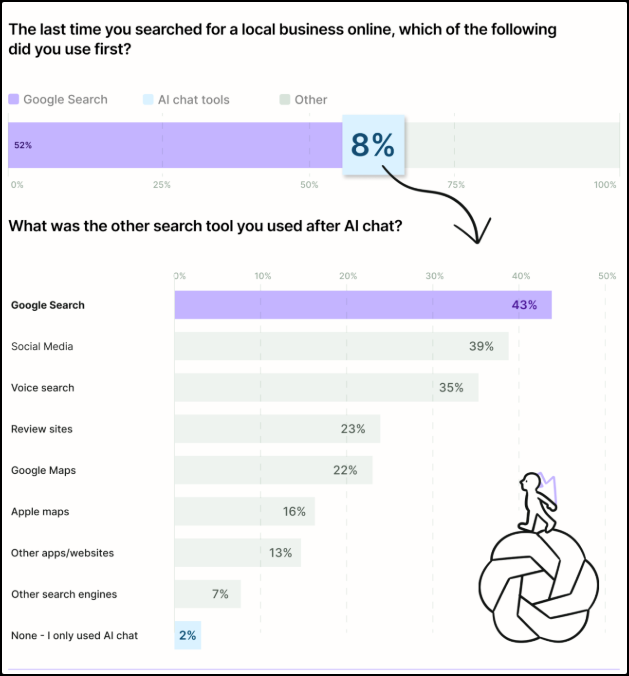
Source: BrightLocal n=1,227 US adults who had looked for a local biz in past quarter
_This post is for subscribers only._
### EP 267 - You Can't Outspend a Bad Intake Experience: Brand-Building for Legal
URL: https://www.nearmedia.co/ep-267-you-cant-outspend-a-bad-intake-experience-brand-building-for-legal/
Last updated: 2026-09-16T19:39:52.000Z
Brand in legal is reputation and recognizability — so in a market where every firm has 700 reviews, a 4.9 rating, and the same "we fight hard" ad, the decision is won *before* the direct-response moment, through intake, service delivery, and demand you manufacture in the real world and route back through Google.
## Gyi's Growth-Stage Segmentation
Gyi's advice is gated on where a firm sits in its growth journey — "that's question number one for me always" *(22:25)*. The playbook is different at each tier.
| Tier | The problem it answers | Primary lever |
| ------------------------------------------- | ------------------------------------------------------------------------- | -------------------------------------------------------------------------------------------------------- |
| **Startup** ("hung my shingle last week") | No compelling message, no reviews, no recognition — can't win the auction | Stay out of the "most-reviews-wins" contexts entirely; spend where recognition isn't the deciding factor |
| **The 5-to-10** (most AttorneySync clients) | Can't outspend the top firms, but has a competitive review base | Differentiate on brand positioning + service delivery; manufacture recognition before the LSA moment |
| **Top 3** (saturation advertisers) | Capturing knee-jerk, first-name-that-pops decisions | Hundreds of millions in offline spend — a game the other tiers shouldn't try to play |
## Takeaways
- **Brand in legal is two words: reputation and recognizability.** Recognizability is whether your name pops into someone's head; reputation is what that name makes them feel. "It's the thoughts... what they think about you." *(03:12–03:49)*
- **You can't outspend a bad intake experience.** The internet democratized reputation — unhappy people leave reviews and post on social. Amplifying bad service delivery with ad spend just "hurts your reputation and your conversion rates." Invest in intake *before* dropping money on Google Ads and [LSAs](https://www.nearmedia.co/ep-266-cyrus-shepard-what-local-brand-actually-means-to-google-and-ai/). *(07:21–11:37)*
- **Race to the phone is table stakes in PI.** LSAs prompt the consumer to contact several firms at once, so speed is baseline — but "race to the phone *with amazing service experience*" is the real bar. Firms lose won cases in the first intake interaction. *(19:42–20:11)*
- **Get reviewed for your intake — even by people you reject.** A prospect you can't sign will still post "they didn't hire me, but they listened and pointed me in the right direction." Mike cites a firm that put a lawyer on non-active cases purely to deliver "sophisticated rejections," and it generated a stream of five-star reviews. *(13:29–15:00)*
- **Sign them up first, qualify later.** Gyi's deliberately controversial take: after a few basic qualifiers (accident within \~2 years, injuries), "text them a retainer and get them signed up now," then investigate and turn down later. Cherry-picking upfront loses the client — "by the time you've done your research, they've already contacted a couple other firms." *(16:25–17:07)*
- **Response-time tolerance is per-channel and demographic.** Text, web form, call, and email each carry different expectations; miss the window and the lead moves on. Google/LSA also watches back-end response time and dings slow responders — a point reinforced by ex-Google LSA specialist Eric Levine and by [Aaron Weiche's](https://www.gatherup.com/?ref=nearmedia.co) mystery-shopper research on slow lead handling. *(18:20–19:42)*
- **The choice is made before the LSA, not inside it.** When every listing is a middle-aged white guy with 700 reviews, a 4.9, and 25 years in business, "by the time someone's looking at the LSAs, it's already too late." The winner is the one who "did backpacks at my school" or "spoke at my event." *(26:23–28:42)*
- **Manufacture brand demand and route it through Google.** The opt-in play: a community booth or restaurant co-marketing giveaway where the *only* sign-up path is a Google Business Profile post linking to an unindexed page — "search for us, find our GBP, click through." It drives a brand search, drops a retargeting cookie, and builds an email list. Gyi and Mike concede it's "borderline click manipulation," but "it works very well." *(31:00–34:11)* \[See editorial note.\]
- **Track leading indicators, not last click.** Brand-building has no last-click attribution. Watch brand queries in Search Console and Google Ads, and run consumer-recognition surveys, instead of demanding an ROI number the channel can't produce. *(29:06–33:22)*
- **Content strategy is reprioritized SEO, not new SEO.** Long-tail blog pages are deprioritized; short-form video is up, because "no one wants to read" and Google cites its own YouTube in both classic results and AI. Turn lawyers into creators: record an hour, cut it into FAQs and positioning clips, distribute across YouTube, LinkedIn, Reddit, Quora, and legal directories — the sources the machines cite. *(35:38–38:23)*
- **Make the invisible work into content.** [Michigan Auto Law's](https://www.google.com/search?q=3k4Free&ref=nearmedia.co) "3K for Free" campaign packages a state mini-tort rule (up to $3,000 for vehicle damage) into "three things you need to know." [Josh Hodges, the Hamilton, Ohio "hometown lawyer,"](https://thehometownlawyers.com/?ref=nearmedia.co) interviews local business owners until "everybody knows him" — digital PR as local celebrity. *(38:48–41:28)*
- **AI optimization is a PR game.** For AI answers, "it's mentions" — get people publishing about you, reviewing you, talking about you. But contextualize the hype: most local consumers still use Google, not AI, for bottom-of-funnel lawyer lookups, and GEO "visibility tracking" is shaky because [OpenAI doesn't release the actual prompts](https://ai.google/static/documents/GoogleATLASv1.pdf?ref=nearmedia.co). On July 30, a logged-out ChatGPT query for "car accident lawyer near me" returned Google Business Profile reviews and URLs still carrying GBP UTM parameters — "you don't think Google matters in ChatGPT world? Take another look." *(43:58–49:56)*
- **If you're a one- or two-channel marketer, your days are numbered.** CPA is climbing and PE-backed national players have the operational efficiency to tolerate higher cost-per-client. Diversify so you're "not beholden to any single channel." *(50:43–51:27)*
### Related Reading
- [EP 265 — Decoding Local Branding with John Jantsch](https://www.nearmedia.co/ep-265-decoding-local-branding-with-john-jantsch/) — Part 1 of the series: what "brand" means in the general context.
- [EP 266 — Cyrus Shepard: What Local Brand Actually Means to Google and AI](https://www.nearmedia.co/ep-266-cyrus-shepard-what-local-brand-actually-means-to-google-and-ai/) — Part 2: the technical side of how Google and AI model a local brand.
- [AttorneySync](https://www.attorneysync.com/?ref=nearmedia.co) — Gyi Tsakalakis's legal marketing firm and a partner in the Near Media legal research program.
- [Michigan Auto Law — "3K for Free"](https://www.google.com/search?q=3k4Free&ref=nearmedia.co) — the short-form-video campaign Gyi cites as a model.
- [Kruger & Hodges, "The Hometown Lawyers"](https://thehometownlawyers.com/?ref=nearmedia.co) — Josh Hodges's local-celebrity content strategy in Hamilton, Ohio.
- [Google's ATLAS study](https://ai.google/static/documents/GoogleATLASv1.pdf?ref=nearmedia.co) — Google research on how people use AI for local discovery, then switch to search to act.
- [Lunch Hour Legal Marketing Summit](https://lunchhourlegalmarketing.com/?ref=nearmedia.co) — the Nashville event where Greg is presenting new lawyer-discovery data.
### Concepts
- **Reputation and recognizability** — Gyi's two-word definition of brand: whether your name comes to mind (recognizability) and what it makes people feel when it does (reputation).
- **The 5-to-10** — the tier of firms just below the market's saturation advertisers; can't win on spend, so must win on differentiation and service. AttorneySync's core client.
- **Sign-up-first intake** — routing prospects to a retainer after minimal qualification, then investigating and declining later, to cut "breakage" between first contact and signed client.
- **Get reviewed for your intake** — treating the intake and even the rejection experience as a review-generation surface, not just the representation itself.
- **Brand-demand routing** — manufacturing a branded Google search (via a GBP-only giveaway or "Google me" billboard) so offline attention converts into on-Google brand signals and retargetable website visits.
- **Reprioritized SEO** — the same digital-PR and content fundamentals, reweighted: less long-tail blogging, more short-form video and third-party mentions the machines cite.
## Practitioner Notes
- **The intake-quality thesis maps directly onto Near Media's legal research program.** AttorneySync and Conrad Saam are partners in it, and Gyi credits the [user-behavior research](https://www.nearmedia.co/) with reprioritizing his own thinking — the survey and behavior data on how consumers judge firms is the evidence layer under his "you can't outspend bad service" argument. *(01:16–02:03)*
- **"Manufacture the brand search" is a testable claim, not a slogan.** Greg and Mike tie it to Google's own signals — brand queries in Search Console, satisfied-website-visit behavior, and the [ATLAS](https://ai.google/static/documents/GoogleATLASv1.pdf?ref=nearmedia.co) finding that people research in AI but convert in search. That's a measurable sequence a firm can instrument.
- **Editorial note:** the GBP-only giveaway funnel is described on-air as "borderline click manipulation" by the sGyi. We don't view it that way. Driving clicks to Google and having consumers engage with your GBP is a legitimate way to drive brand queries and rank. You can decide for yourself.
### Watch just the stuff you want!
[00:10](https://www.youtube.com/watch?v=GR8z-xUqcCA&t=10s&ref=nearmedia.co) Intro: branding for lawyers (Part 3)
[02:49](https://www.youtube.com/watch?v=GR8z-xUqcCA&t=169s&ref=nearmedia.co) What "brand" means in legal
[04:41](https://www.youtube.com/watch?v=GR8z-xUqcCA&t=281s&ref=nearmedia.co) Two camps: direct response vs. brand
[06:58](https://www.youtube.com/watch?v=GR8z-xUqcCA&t=418s&ref=nearmedia.co) Sustainable brands & the 5-to-10
[09:04](https://www.youtube.com/watch?v=GR8z-xUqcCA&t=544s&pp=0gcJCWMAwfN6Pr3D&ref=nearmedia.co) Intake is the lever
[16:25](https://www.youtube.com/watch?v=GR8z-xUqcCA&t=985s&ref=nearmedia.co) Sign up first, qualify later
[18:20](https://www.youtube.com/watch?v=GR8z-xUqcCA&t=1100s&ref=nearmedia.co) Response speed & Google's back end
[21:26](https://www.youtube.com/watch?v=GR8z-xUqcCA&t=1286s&ref=nearmedia.co) LSAs & why every ad looks the same
[26:23](https://www.youtube.com/watch?v=GR8z-xUqcCA&t=1583s&ref=nearmedia.co) How to actually differentiate
[29:22](https://www.youtube.com/watch?v=GR8z-xUqcCA&t=1762s&ref=nearmedia.co) Tracking brand without last click
[32:09](https://www.youtube.com/watch?v=GR8z-xUqcCA&t=1929s&ref=nearmedia.co) Manufacturing the brand search
[34:42](https://www.youtube.com/watch?v=GR8z-xUqcCA&t=2082s&pp=0gcJCWMAwfN6Pr3D&ref=nearmedia.co) Content: reprioritized SEO & short video
[39:20](https://www.youtube.com/watch?v=GR8z-xUqcCA&t=2360s&ref=nearmedia.co) Michigan Auto Law & the hometown lawyer
[43:19](https://www.youtube.com/watch?v=GR8z-xUqcCA&t=2599s&ref=nearmedia.co) AI: it's a PR game
[47:07](https://www.youtube.com/watch?v=GR8z-xUqcCA&t=2827s&ref=nearmedia.co) ChatGPT, Yelp & the GBP anecdote
[50:43](https://www.youtube.com/watch?v=GR8z-xUqcCA&t=3043s&ref=nearmedia.co) Closing: diversify or die
### Full Transcript -->
Near Memo EP 267
*You Can't Outspend a Bad Intake Experience: Brand-Building for Legal*
Greg Sterling & Mike Blumenthal, with guest Gyi Tsakalakis (co-founder, AttorneySync)
> **Editor's note:** This is a lightly cleaned reading transcript. Stutters, false starts, and clear transcription errors were removed; backchannel ("yeah," "right") was folded into the speaker's turn; and wording is otherwise left faithful to what was said. Speaker-side factual claims are left as spoken.
---
**Greg (00:10)**
Hey, welcome back, everybody. This is the Near Memo, episode 267\. We're here today with Gyi Tsakalakis, who is the co-founder of AttorneySync, a legal marketing firm. This is the third installment in our series on branding and brand building in local. The previous two episodes I thought were really great — if you haven't watched them, go back and watch them. John Jantsch, whose last name I can't say correctly, and Cyrus Shepard. They talked about what brand means in a general context, and then Cyrus got into a lot of technical detail: How does Google see brand? What's the difference with AI? Both of those were really valuable sessions, but we wanted to bring it back down to earth a little bit in this professional-services context — specifically legal, but this also applies to real estate and some other kinds of services. So welcome, Gyi. Great to have you here.
**Gyi Tsakalakis (01:05)**
Thanks for having me. Great to be here. And I'll also give a plus-one to both of those episodes — I thoroughly enjoyed both of your recent episodes. Great work. Learned some things.
**Mike B (01:16)**
And I would add, too, that Gyi and AttorneySync, along with Conrad Saam, are partners in our research program. They've helped us develop it, refine it, and understand how consumers are finding lawyers. So thank you for that support.
**Gyi Tsakalakis (01:31)**
And let me tell you something. I'm here on the Near Memo, so this is going to sound like a total shill, and obviously everybody can recognize my biases. But I've got to tell you: in the last almost 20 years of doing this, my sense right now is that the user-behavior research we've done in partnership with you guys has been some of the most insightful and perception-changing work — reprioritizing things, which I think we can talk about today — more than anything else we've really done in the last seventeen years. So I'm super grateful for that partnership.
**Greg (02:03)**
Right, and I was going to talk about that. So thanks, Mike, for bringing it up. Just to complete the picture, we do three kinds of things in that program. We do user behavior, where we actually watch people search. We do surveys, where we ask people about their path to purchase, their attitudes, and which messaging and channels are most effective for them. And we do brand-awareness and creative research, where we test different ad creatives against other ad creatives or competitors. It's pretty interesting because we get a holistic picture of user behavior and the psychology and mindset of users. So if you're a law firm out there, feel free to hit us up. It's really good stuff — and I'm not just saying that because I'm one of the people involved. It's really super interesting.
**Greg (02:50)**
All right. With all of that self-promotional stuff aside: you've seen these other two episodes, you've heard them talk about brand and the components of brand. What does brand mean to you? I know you're a big advocate of brand, and in legal — if somebody says "brand," what does that really mean as a practical matter for lawyers?
**Gyi Tsakalakis (03:12)**
There are two ways I think about it. If I really wanted to be concise and say two words, it's reputation and recognizability. It's the thoughts — and I think John mentioned this too — it's what your customers, or clients in the legal context, think about you. When your name pops into their head — one, does your name pop into their head? That's the recognizability. And two, what does it make them feel? Part of that is reputational, and part of it is traditional notions of trust. But that's how I think about brand.
**Greg (03:49)**
One of the things that's interesting about this market — and real estate as well, and certain other professional services like financial advisors — is that these are not frequent transactions. If you're hiring a personal injury lawyer, you're probably doing that once in your lifetime. You're not routinely looking at reviews of personal injury lawyers the way you might for plumbers or electricians or car-repair places, where you have some regularity. So how does that infrequency play into reputation and awareness, when people aren't necessarily looking for your business — even though your business might be in front of them twenty-four-seven on billboards and TV, and Cellino and Barnes are everywhere?
**Greg (04:38)**
That's an important aspect of this. Go ahead, Gyi.
**Gyi Tsakalakis (04:41)**
The thing I think about is, as you mentioned, it's not a frequent thing. And the second thing is it's a high-stakes decision. People have a sense that making a good choice about your lawyer is important, but they don't know much beyond that. As our researchers talk about, they don't know much about pricing, and it's very hard to distinguish the quality of a lawyer. How do you know this lawyer's better than that one? So it's a different consumer context than a lot of the ones you named. And even within professional services — when you talk about PI, you're talking about contingency fees, so there isn't really price shopping to the same extent.
That dynamic has created two different camps. Camp one, which I think is the overwhelming majority of firms, is performance, non-brand, direct response. Now that there's Google and you can advertise to people actively looking for personal injury lawyers, that's what's driving cost-per-clicks through the roof. And lawyers, especially depending on your growth stage, are very short-term focused — I need leads now, I need clients now — so they gravitate to non-brand direct response. It's got high intent. The other camp is the folks who've kind of figured it out; they're leaning more into brand. But brand takes time, especially if you're brand new — it's not going to fill up your pipeline tomorrow. And then you get into: well, what does brand mean? For a lot of lawyers, traditionally, branding has meant offline media buying.
We've been trying to get the word out that the amazing thing about the internet is you can actually build brand digitally. At the risk of stating the obvious, I'm a big believer in diversifying: you should have investments in direct response where it makes sense, and you should have investments in brand. But lawyers think they know that. They're like, "I want to get in front of people who are in a car accident, or family members of people in car accidents, right now." And the way to do that is direct response — which is why it's so competitive in legal on Google.
**Greg (06:58)**
You work with a variety of firms, and some are more well known than others. What do the firms you'd consider to have brands — even just local awareness, or especially local awareness — have in common, versus those that have yet to develop that? Is it just a life-cycle or growth-trajectory thing, or something else?
**Gyi Tsakalakis (07:21)**
The sustainable brands, especially locally, are really focused on service delivery and client experience. They've figured out that you can advertise as much as you want, but if you're not answering the phone, not following up, delegating clients to associates and paralegals and case managers who aren't providing an exceptional experience — the internet has democratized that. People leave negative reviews, they post nasty things on social media. My view is you can't outspend that. If it's coming out that you're not great at what you do, you're just amplifying bad service delivery. That hurts your reputation and your conversion rates.
We talked about this in the prep for this conversation. When we look at the firms that are maybe not the top three — the top three in a market tend to be saturation, offline, spending hundreds of millions on advertising, trying to capture the audience that makes a knee-jerk decision based on the first name that pops into their head. But the five-to-ten firms are the ones that are interesting to me, because they know they're not going to win on spend. They've got to get more creative and lean into brand positioning and service delivery that helps them stand out — to maintain and grow market share beyond just spending as much as they can.
**Greg (08:57)**
Elaborate on that. What does that mean tactically?
**Gyi Tsakalakis (09:04)**
Step one is this. It sounds cliché — everybody talks about how it's all about user experience, customer experience, client experience. Those are easy things to say, but tactically, in the context of a law firm, you have got to invest in your intake process. You've got to invest in reducing the friction for people to contact you. How many law firm websites, even today — you call the firm and it might go to voicemail, or IVR, and the new hotness is AI. But when someone calls up and says, "My brother was just killed in a truck accident," and they're met with "press one" — if you have a really powerful brand, if you're known as the person in your community who does this thing, you'll get a lot more latitude. People will leave a message; they'll give you more time to respond. If you don't have that brand equity, forget about it.
We see so many firms buying LSAs who don't have a sufficient number of competitive reviews, spending money on local SEO without a significant number of reviews, even running Google Ads — and it's fly-by. They click-call, you don't answer, and they're on to the next law firm. So I tell our lawyers all the time: before you drop a bunch of money on Google Ads and LSAs, you'd better have intake locked down. It has to be a frictionless experience. You'd better have people trained to empathize and help guide people through their journey to hiring you. Even the firms that are good at it still lose a bunch of business in that process, because for whatever reason the consumer chooses somebody else.
**Mike B (10:58)**
Part of the issue is that these cases can be complicated, and they may not be the right case for that lawyer. So there are backroom processes that have to assess the case. It's one thing to have the call answered quickly and get a case description — but do the better lawyers have a good system for rejecting the obvious no-cases they don't want? And then, on the edge cases, how do they put in place a system that's fast enough to really respond, when it might require more technical savvy than a phone person has?
**Gyi Tsakalakis (11:37)**
Yeah, totally. One: you have to meet clients where they are. You have to give people options. I'm not saying you have to respond to Facebook Messenger spam, but you'd better give people options, because not everybody wants to use the phone, not everybody wants to fill out a web form, and not everybody wants to engage with a chat. If you don't have those basic options, you'll have a lost opportunity.
On the intake side of the house, I tell people all the time: this is a place not to skimp. This is where you should be investing — whether it's full-time dedicated people or working with a virtual receptionist. There should be somebody at your firm managing the intake experience. That's not the place to go low-budget, because we see it over and over again, whether it's missed calls or — we're a big fan of CallRail — when you hear the conversations and the sentiment coming out of them, cases and clients are won and lost in that initial intake process. So reduce friction, be fast, and provide great experiences.
And by the way — tactically, and I know people are going to push back on this — I can't tell you how many times it's the situation Mike just described: a prospective client comes in, the firm decides it's an unqualified client. But if you invest in still giving that person a good experience, they'll go online and say, "So-and-so didn't hire me, but they listened to my issue, they helped guide me in the right direction, they sent me to another law firm." You want to talk about a way to get reviewed beyond just for your clients? Get reviewed for your intake.
**Mike B (13:29)**
I think it was you that shared with me a lawyer who was doing just that — they actually put a lawyer on these non-active cases and were getting a ton of great reviews just for that. They had invested in somebody to reject people and give them additional advice in the rejection, and it was a sophisticated rejection.
**Greg (13:49)**
This is a huge point, because if you give people — people often don't think about it. They think about maybe the first part of what you said, the intake process. But if they're going to reject somebody, as Mike is suggesting, it's worth thinking that through and having a process where maybe there's a referral, too. Because if you botch that process, you might get flamed online: "They were rude to me, they were arrogant, they didn't help me." There's this idea of the brand promise — what your marketing projects into the world, and then the experience of it. If you're out there saying "We'll fight for you, we'll win big for you," and somebody comes in and gets summarily rejected or someone's rude to them, that creates a real chasm between the two. And that shows up in these reviews and other online statements.
**Gyi Tsakalakis (14:54)**
That's right. There are law firm brand empires built on exactly that model. They've invested in call center and intake. They don't try to work cases at all — they refer everything out — but they're the ones who have the relationship with the prospect. So they follow up: "Hey, we wanted to check in on the law firm we referred you to. Are they giving you a good experience? Are they keeping you up to date?" You can see it online, because when they come into a new market starting at zero against local competitors, they're able to scale positive reviews. Now, don't get me wrong — as we've talked about many times, there's a huge review-fraud and fake-review-buying problem too. But there are huge law firm brands that come into a market, provide a great intake experience, partner with a local firm, refer the cases to them, and nurture that relationship throughout. Those clients, even though they're not being represented by them, end up referring and reviewing that business online, because that's who the experience is with — the front lines and the relationship.
**Mike B (16:02)**
So that model refers off quickly to known entities. But what happens when you're an employment lawyer and you don't deal with unions, or there's a case on the edge — maybe a pregnancy case you're not sure is quite right for you? How do you get them through the pipeline quickly?
**Gyi Tsakalakis (16:25)**
I have a controversial opinion about this, and I know a lot of lawyers aren't going to like it. I'm of the mind: sign everybody up, and then do your research and investigation and turn them down later. We see so much breakage between the time someone contacts a firm and the retainer. Reduce the friction, get them signed up. You can always do more investigation and always do a turn-down later. This idea that you're going to cherry-pick — by the time you've done your research, they've already contacted a couple of other firms, and it's a crapshoot whether you'll win.
**Mike B (17:03)**
So sign them up for a quick interview with a lawyer to make that decision, or —
**Gyi Tsakalakis (17:07)**
No — I mean send them a retainer. I think there are some basic qualifications you've got to hit first. If someone calls and says their car accident happened 25 years ago, you're going to go down a turn-down route; you're not going to sign that up. But if they hit the basic qualifications — a car accident in the last two years, injuries, a couple of other qualifying questions — for those folks, when they say yes, text them a retainer and get them signed up now, then decide if there's actually a case down the road. People will hear that and say there are trade-offs, and there's no question there are — what experience you give them and what expectations you set through that process really matter. But the alternative is you sit around, and even with good follow-up you say, "We're really sorry you're dealing with this situation; we'll get this in front of a lawyer as soon as possible." The lawyer reviews it — and if that process takes twenty-four hours, four to eight hours — we see it take several days to weeks with a lot of firms — you're toast, you're cooked. They're already on to the next firm.
**Greg (18:20)**
The failure to respond quickly enough is a problem throughout the local business world. Aaron Weiche did that mystery-shopper research, Mike, where he found people were taking a very long time to respond to really good, high-quality leads. That's a pervasive problem. And our research in this legal program shows — to the point about contact method — the channel where you reach out (text, online forms, calls, email) carries different tolerances. It's not all the same, and it's also demographic. If somebody texts you, emails you, or calls, they have different expectations about response time. Very clearly, our research shows that if you don't meet that expectation, they move on to somebody else. Final point: something we talked about with Eric Levine, who was at Google and now runs a marketing firm specializing in LSAs — Google watches response time and the back end of that. Are you responding to that lead in a timely way? You'll get dinged if you don't.
**Gyi Tsakalakis (19:42)**
A hundred percent — especially in the LSA context. The way the LSA system prompts a potential client to choose a couple of other lawyers to reach out to, it is a race to the phone. And race to the phone is table stakes in PI. It's really race to the phone with an amazing service experience. I keep coming back to the same thing: do not waste money amplifying your reputation for bad service experiences.
**Mike B (20:11)**
My input on this — and I've had this experience numerous times — is that the first way a consumer can judge the quality of your firm is this, and it's a judgment about your brand that's very real to them. They don't have a lot of other ways to judge; they don't know if you're good, compassionate, empathetic, or get big results. They have two ways: they can go to the website and see what it looks like — maybe it looks professional — or they can call and see how you handle the call. Both are really strong signals about whether you're somebody they want to do business with. When I get ghosted by a handyman for three, four, five days and have to call them back, there's a limit to how much you'll put up with. And in law, I think it's a really quick measure.
**Greg (21:02)**
Especially when you've got something like the LSA system, where they're actively sending your inquiry out to other people. It's like the old — I think it was a Head & Shoulders commercial, the dandruff shampoo — "you never get a second chance to make a first impression," if I'm remembering that correctly. Let's talk about LSAs.
**Mike B (21:21)**
How did dandruff ever become a problem? Now there's an interesting branding issue.
**Greg (21:26)**
They created that to market a solution — created a social problem to get people to buy the solution. Let's talk about LSAs, because in a lot of service-business areas, especially law, LSAs are huge. We've seen this in our research: when LSAs appear, especially on mobile, they have a profound impact on the choices people make. They swallow up the real estate on mobile in particular, and people sometimes disappear into that LSA/GBP world and never come back to the organic listings. So what do you tell clients about the need to advertise on LSAs, and how do you compete? Because what we see is that the top three or top two firms typically have some huge number of reviews and are almost always 4.8, 4.9, five —
**Gyi Tsakalakis (22:25)**
That's question number one for me, always — maybe question 1.1 or 1.2\. The first thing I tell people is you've got to assess where you are in your growth journey. If you're a startup — "I hung my shingle last week" — forget about all of this stuff. There's no way; you're going to spend a lot of money in a place where you don't have a compelling message to compete. Part of that message — the second question — is: do you have a competitive number of reviews? If you don't have a competitive number of reviews in your local search ecosystem — so if you're a personal injury lawyer looking at other personal injury lawyers somewhat near you (obviously it depends on geography and how big that radius has to be) — don't go throw money to compete in a place where it's not going to matter. You can show your ad there, but you're not going to get chosen.
Couple that with one of the big things the Near Media research really drove home for me: people, even in a non-brand search context, still come to the table with recognition. You hear people say, "I'm choosing this firm because I know them, or I've heard of them" — whether it's because they do TV advertising, backpack giveaways, or they're in the local community another way. That's what you're up against. So if you come in with your little ad that says "free consultation," no reviews, no brand recognition — forget about it. Go spend money in contexts where it's not a most-reviews-wins game.
That's the startup. Now, most of the AttorneySync clients fall into what I was saying earlier — the five-to-ten. Maybe they're not the number-one national or regional advertiser, but they're in the top echelon. For those firms, number one, there's a presumption you've got reviews, which isn't always fair. But if you've got the competitive number of reviews — based on my experience and the Near Media research — I don't see how you can't be there. You have to be. The ad spaces on Google take up so much of the choice market share.
**Mike B (24:43)**
Right, and now with Performance Plus and AI, they're integrating those ads into the AI answers. We're seeing ads that are equally compelling to LSA ads. The reason LSA ads have been so successful is they have the information people are looking for — reviews, ratings, picture, contact information. And now, if you want a contact button on your listing there, you've got to pay for it. Otherwise you might not even get your phone number shown, let alone your website.
**Greg (25:16)**
So if you're in this group of competitive lawyers — and this probably applies to realtors equally — you're spending money on ads and you've got a bunch of reviews. Those ads are pretty standardized. It's maybe a little different with PPC ads versus LSAs, but a lot of those LSA ads look identical, or almost identical. There are a number of things that can be changed, but not much — it's reviews, it's picture, it's years in business.
**Gyi Tsakalakis (25:47)**
Years in business, yeah.
**Greg (25:49)**
So everybody's ad looks the same. We see this in the research: people are struggling to differentiate, to figure out how to make a choice when everything looks the same. Sometimes that's when brand awareness comes in and people say, "I've seen this guy, I've heard of this guy." What do you say to your clients about differentiating? What do you do in an environment where everything looks the same — a bunch of middle-aged white guys with seven hundred reviews, a 4.9 rating, twenty-five years in business, and so on?
**Gyi Tsakalakis (26:23)**
Exactly right. My answer, and the question I always pose, is: when you're in a world where you're inundated with billboards, TV, social, and lawyer advertising, what can you do to cause somebody to actually choose you? You alluded to one of them. One: don't try to appeal to everybody. Stand out. Maybe that's an identity thing, maybe a demographic thing — if you're not a middle-aged white guy, you're at a competitive advantage in that context. Maybe there's some cause or charity you're passionate about that you can make more prominent. But the truth is, the only way to really do it is to do it in a different context. By the time someone's looking at the LSAs and they all look the same, it's already too late. It's the firms that have already given people a reason to choose them. When I see a list of middle-aged white guys who all have five-star reviews, have all been around a hundred years, and all fight as hard as the next person, it's the one where I think, "This person did backpacks at my school," or "I saw this person speak," or "There's some philanthropy they do in my local community." Those are the things that win that game.
Truthfully, in LSAs, what are you really going to do? You want to provide great service to get more reviews — number-one priority. We can talk about other ways firms have gotten creative about generating reviews, because a lot of the filter is what the reviews look like. If you don't have that, focus on it. But once you've got it, you can't do much there, you can't do much on years in business, you can do some imagery. Everybody's open 24 hours, seven days a week. The truth is you've got to give people reasons to choose you before they're in that direct-response context. That's the thing I keep coming back to: you need to shift resources — not be a hundred percent in non-brand, bottom-of-the-funnel performance marketing. Diversify and give people reasons to think about you and choose you beyond what they're seeing in an LSA ad.
**Greg (28:42)**
Let's talk about the community stuff a little bit. A lot of firms are doing charitable contributions or sponsorships — the backpacks at the school, the local sports team, whatever it is. In our experience dealing with these firms, many of them are doing this but aren't entirely sure it's working. They don't have an immediate sense of ROI. It's not a direct-response thing; they can't track it. You're advising them — what do you say to the people who are doing it but aren't clear whether it's a good use of resources?
**Gyi Tsakalakis (29:22)**
Totally. This comes back to starting at the top — big-picture strategic guidance. Essentially this is a component of brand building; you're not going to have last-click attribution to show this stuff. So you've got to partner with people — or, even if you're not working with an agency, your CMO, or if you're just a firm owner, you've got to have long-term strategic thinking. Once you're in that mindset, there are plenty of things you can do to track leading indicators of brand growth. You can see the number of brand queries showing up in Search Console. You can see it in Google Ads. You can do consumer-research surveys to see if people recognize your brand. Those are the front-end leading indicators.
Then take one touch point — I'll use a local community event. I think we've talked about this before, but this one hits me so hard. You've got a little booth at whatever it is — a farmer's market, a concert, whatever's popular in your local community — and your messaging is maybe a giveaway or promoting a charitable cause. You get people to opt into something, whether it's scanning a QR code or signing up for the giveaway list, because you're taking those brand impressions. Everybody's thinking just awareness and impressions, but it's really about getting people to take some kind of action so you can continue to market to them over time. I love the stuff where you opt in. Maybe you do a co-marketing thing with a local restaurant — a very popular one. You do content around a giveaway to buy dinner for folks. Whether they come to you in person or you make it available online, they sign up, and you've got opt-in permission to send them giveaway information and updates about the firm. Then you're nurturing those relationships through email and retargeting, and your messaging there isn't any of the things we talked about. It isn't "we fight hard, we've been doing this forever, we're super experienced." It's "We're so proud to partner with this local restaurant. We're so proud to support our local community." Because now, go back to the LSA: they've got that list of law firms and they think, "Yeah, this is the firm that shows up with the local pizza shop," or "This is the firm I'm already on the giveaway list for. I recognize them." People say, "Is that enough of a reason to choose you?" But in an environment where everybody has five-star reviews and everybody's fighting hard and everybody looks the same, those are the things that can actually cause someone to make the choice. Tactically, those are the campaigns we really think are effective.
**Mike B (32:09)**
So one of Cyrus's points was that demand on Google often dictates rank. This raises the question of whether this joint exercise with the restaurant becomes a three-way exercise: using the QR code to drive a brand search, find your website there, and click through to fill out the form — so you get not only the benefit of the backpack or free dinner, but the benefit of the brand search, and possibly somebody staying on your website. We know Google looks at website visits and satisfied website visits — they stay on the website, they don't come back to search for more. Have you explored that cycle as part of these exercises?
**Gyi Tsakalakis (32:58)**
Yes. Maybe people don't think — this is borderline click manipulation, but it works. Let me take your idea one step further. You do your giveaway. You're out there promoting it, but the only place to sign up is a Google Business Profile post that takes someone back to your website. That page isn't indexed; it's not accessible anywhere else. You tell people: go online, search for us, find our Google Business Profile, look for the giveaway post, click through to the website — because now you've got cookies, you can do retargeting — and sign up for the giveaway on the website. But the only access point is the Google Business Profile, from a brand search.
**Mike B (33:45)**
Right — that's what I was envisioning.
**Gyi Tsakalakis (33:49)**
It works very well.
**Mike B (33:50)**
Every one of these offline things needs to be conceived of in this context: as long as you have their attention, and as long as you're the brand that has their attention, you want to create demand on Google for your brand — whether it's artificial or not. I don't see it as artificial. It's as good a path as any. They have to get there somehow.
**Gyi Tsakalakis (34:11)**
I tell these guys: get rid of your website and phone number off your billboards, and just say, "Search for my name. Go Google me." Put that on your billboard.
**Greg (34:21)**
I've never actually seen that, but it's a good idea.
**Mike B (34:24)**
There is a car dealer regionally that does something similar — they say, "Go look at our five thousand reviews on Google." They don't remove their phone number, but they create a sense that you should go double-check that they're not bullshitting you.
**Greg (34:42)**
I've seen something comparable to that — "X number of reviews on Google." Let's talk, in our final handful of minutes, a little about content, and then we want to touch on AI. You alluded to content a couple of minutes ago. What do you tell people about content strategy? These things substantially overlap — this local promotion is a content play. But there are SEOs out there who say the top of the funnel is dead because AI is going to answer all those questions, so you shouldn't even bother with that kind of content. If you're in a context like PI law where somebody is only going to choose you once in a lifetime, how do you think about content? Do you educate people? Do you do novelty things? What's the right approach — and how do you enhance it to deal with AI?
**Gyi Tsakalakis (35:38)**
Yeah, totally. I know there are differing schools of thought, but with some exceptions we can talk about, really what we've done is reprioritize a lot of the traditional SEO ideas. In the past — even prior to many of the updates — we were much more in the mode of: if you're a newer firm without a lot of authority on your site, you do long-tail blog content and pages, because you can actually show up. You can hit a home run off a very specific thing — a type of injury, a type of diagnosis — and if there's not a lot of competition on that long tail, you could rank for it. Those days — it still happens, but a lot less; that's been deprioritized.
On the other hand, what we're prioritizing from a content standpoint — and I think it's largely a sad reflection of our society in general, but no one wants to read — is short-form video content. And guess what? Short-form video shows up on Google, because Google owns YouTube and they love to cite YouTube, whether in traditional results or AI. So from our reprioritization standpoint, if you're talking content strategy, I'm thinking we need to get these lawyers to be essentially creators. I say YouTube if I had to pick one, but really across all these platforms — LinkedIn, and every one of these research reports keeps coming back to the same thing: the forum sites, Reddit, Quora, LinkedIn, the legal directory sites where you can publish. Those are the places the machines are using — or at least citing. So we tell people: diversify your content. And because it's not limitless resources, I'm a huge fan of recording an hour of video content with audio — whether a podcast format or interview style — then cutting it up and distributing it: answer frequently asked questions, talk about your positioning, educate your community. A lot of it's the same stuff, but it's a reprioritization: we're not doing X number of pages a week; we're much more focused on creating content people are actually going to want to engage with, then finding ways to distribute and promote it so other people tag their friends and share it.
**Mike B (38:23)**
Do you — I do a lot of shorts for every one of our podcasts, two or three, and put them on YouTube and elsewhere. But it's so erratic what takes off on Google. So, two questions. One: is there a length you find optimal, under three minutes — thirty seconds, one minute, two minutes? And two — I lost my thought, so go ahead.
**Gyi Tsakalakis (38:48)**
We recommend all time-length versions, but I'll say this: there's a lot of — who knows why it's happening; the algorithm is choosing to show it, and what resonates with people, and virality. But thirty seconds — I'm a 30-second guy. People are moving on. And again, the idea here is —
**Greg (39:08)**
But Gyi — what do you talk about? If you're a personal injury lawyer, what do you talk about for thirty seconds on a YouTube Short or TikTok?
**Gyi Tsakalakis (39:20)**
I'll give you a real-life example. People can go look this up right now. There's a firm, Michigan Auto Law — they're here in Michigan. Go search Michigan Auto Law. They're doing this campaign around "3K for Free." In the state of Michigan, by state law, you're entitled to up to three thousand dollars for repair damage to your car. But as a consumer, there are a lot of hoops to jump through, and if you hire a lawyer, they're going to charge you — you pay a lawyer a third on your $3,000\. So here's a short-form video: "Three things you need to know about 3K for Free in Michigan." This firm happens to be doing it for free. But it's all the content we're talking about — go promote your giveaways, your charitable contributions, your community activities, your co-marketing with the restaurants. That's the stuff people want to engage with.
**Greg (40:09)**
That's a great piece of advice, because people don't know if that stuff is working; it seems to exist in some sort of black hole or void. Make it a piece of content that then goes online. I think that's great.
**Gyi Tsakalakis (40:24)**
I'll give you another example — a plug to Josh Hodges. He's in Hamilton, Ohio, the hometown lawyer. Just search for any of those things and go see what he's doing. He interviews business owners, goes to all the restaurants, all the local attractions, and he's in a small community. People are going to look at this and come back to you, "Well, what's the ROI on this?" And you can hear it from him: it's not because he's tracking someone who clicked his Instagram link and showed up in his CRM with last-click attribution. It's because everybody knows him. People call up and say, "Hey Josh, I saw you at such-and-such business last week." They just know him. He's become — that's true digital PR. Local celebrity. To me, that's the type of personal branding that has tremendous value. Being a good lawyer is table stakes. Knowing how to represent people is table stakes — everybody's doing that, and consumers can't tell the difference anyway.
**Mike B (41:29)**
So there was an idea that came up at Local U years ago that's germane here, and it segues into a slightly different topic: you're doing this giveaway, or working with a nonprofit you're funding, but you help them write the press release so it shows up in the local newspaper. Have you explored local press and coverage?
**Gyi Tsakalakis (41:53)**
Love local press. And again, people laugh about this, but even the traditional press-release networks that have been spammed beyond belief — if you put something in there that's a solid local, newsworthy story, to the extent that maybe you're doing a local scholarship, all of a sudden it gets picked up. It's not the press release everyone else is doing — "anchor text, best car accident lawyers Detroit" — it's an actual story of something you're doing in your community. And that was originally the whole point of press releases: something press-worthy. A brand mention.
**Mike B (42:31)**
Right — in fact, without a link, but with a brand mention.
**Gyi Tsakalakis (42:36)**
And then people start talking about it — you get that snowball effect, or flywheel, whatever metaphor you want to use, where other people start talking about it. The other big thing — we're running out of time and I'm ranting — is find ways to get your audience to create user-generated content on your behalf. When you're doing these giveaways on social, maybe you do a "share your 3K for Free story," or "share your favorite pizza place memory" if you're doing a co-marketing thing with a local spot. Then they're mentioning your business, tagging their friends, it's actually getting shared, local press picks it up. It works really well.
**Greg (43:19)**
I want to ask a couple of questions to close it out about AI, because obviously that's a big topic. We don't have time to go into it in depth, but I'll say this. In our research, people are still very focused on Google for PI law — very focused on finding lawyers using Google. But what's grown in our surveys is the use of AI to do background research: to assess the strength of a claim, to understand the process. So AI is making its way into that discovery process. What are you telling your clients about AI these days, and what's your attitude toward it?
**Gyi Tsakalakis (43:58)**
Again, there's a lot of overlap with what we've done traditionally. We could go deeper on ways to make your content more retrievable — express snippets about what the page is about earlier on the page, things like that. But for the most part, it's mentions. If you look at how these machines are supposed to work — forget about grounding and fan-out queries, which are relevant — the fundamental technology is: does this firm show up in a bunch of different contexts, a bunch of different training data, for this prompt? So what's the answer? Get people talking about you, publishing about you, writing about you, sharing their great experiences. We know reviews are playing a role in this. People say, "That sounds like a lot of what we were doing for digital PR and SEO." Historically you wanted to get that link — and I was big on links; I think links will still play some role, especially given the overlap with grounding and fan-outs — but get people talking. It's a PR game.
**Greg (45:07)**
You also, I think, should think about advertising, because ChatGPT now has ads \[see Corrections\], and that might give you exposure in a situation where somebody's saying, "If so-and-so hits me in this context, do I have a case?" — and then they'll see that firm. And one thing that needs to be said is there isn't a bright line between Google and AI, because more and more of what's going on in Google is AI. The local pack is frequently shown in an AI Overview these days. You've got AI Overviews, and more and more people using AI Mode. So you're going to have to think about AI, because that's going to ultimately define much of the Google search-result experience.
**Gyi Tsakalakis (45:52)**
A hundred percent. And don't get me wrong — the challenge I have right now is, like everything else, there's so much hype about AI and GEO. A lot of small businesses that don't know any better think, "This is the new shiny thing; I can't compete in Google because it's so saturated and everybody's got reviews, so I'm going to change my strategy and redeploy all my investments to AI." And I'm like, folks, let's contextualize this first. You don't have to take my word for it, or Near Media's research — go research the number of people using AI on a daily basis for these things versus Google. Even if the three of us are using it more, we're not indicative — especially in a lot of local communities, people are not turning to AI for bottom-of-the-funnel lawyer lookups to the levels they are on Google, period. Even if there's more of that growing — and being forward-looking, what are you going to do differently, really? Are you going to create some listicles across all these sites because it happens to be working right now? It's largely the same thing. The AIs are using reviews. And by the way, in ChatGPT, go look at where they're sourcing reviews from.
**Mike B (47:07)**
They just signed a deal with Yelp, by the way.
**Gyi Tsakalakis (47:09)**
There you go. And I think that's a good tactical tip — go see, for the very local prompts that might be relevant to your firm. Which, by the way, is another fake-news thing: all these GEO people are selling you on visibility tracking in AI. What's it based on? OpenAI isn't releasing the actual prompts being used. People who model this and are smarter than me say it doesn't really matter. In any event, the point is: it's a good tactical tip to anecdotally identify, the best you can, what the AI is using, and then focus on those profiles to try to get reviews there.
**Greg (47:47)**
The bottom line is you have to understand audience behavior, user behavior — and it's a more complicated proposition today than it's been. Google remains the last click for the foreseeable future. Sometimes it's the first place people go. But AI is in the mix in a lot of verticals, either at the top of the funnel or at the comparison stage, and then people go to Google. So it's playing in the brand-discovery context. We haven't seen it show up yet other than in this research environment where people are doing background research.
**Mike B (48:25)**
Google released a fairly large study of how people are using their AI in terms of local discovery and more advanced things. What they're saying is that people are using Google's AI for background research — to understand if they have a case, to understand who the players are in their market — but subsequent to that they're using search to actually find them.
**Greg (48:48)**
Right. They use search for reviews, to get contact information, all of that. Google will remain the last click, so you have to do all that stuff. But where people are learning — it's a version of what we said about offline advertising and other promotional tactics. Often people come into a Google search with some pre-existing awareness. So AI becomes another channel where you can potentially learn about lawyers or professional service providers in your area. It's not what everybody's doing, but it's what some people may be doing.
**Gyi Tsakalakis (49:26)**
Just for fun, anecdotally — folks, today's July 30th, so you can see this trend continues. ChatGPT, non-logged-in user, "car accident lawyer near me." Guess what they're showing? Google Business Profile data. It's Google Business Profile reviews, and the contextual URLs to the firms. Guess what they include? UTM parameters from Google Business Profiles — because they're scraping the Google Business Profile and pulling it in. So you don't think Google matters in the ChatGPT world? Take another look.
**Greg (49:56)**
It totally matters. In fact, SerpApi, which was the scraping provider for OpenAI, just won a case against Google that was trying to stop them from scraping. It's not completely over, but they won. So it seems like scraping Google will go on, and the biggest thing you need to do is focus on getting that Google Business Profile managed, built out, populated —
**Gyi Tsakalakis (50:19)**
Reviewed.
**Greg (50:20)**
Populated, reviews. Exactly. All right, this has been a great discussion — a lot of really good advice and provocative talking points. What's your last advice for people on this expansive subject of branding, or anything we've covered in this hour?
**Gyi Tsakalakis (50:43)**
Go diversify. Take a look at what your all-in marketing plan looks like, and look at what resources you're dedicating to short-term, non-brand, direct-response performance marketing versus what you're doing to invest in brand — and start spreading those assets out. Again, I'm an old-fashioned SEO person, local SEO person — we love SEO, I love local SEO. But in today's environment, if you're a one- or two-channel marketer, your days are numbered. The cost per acquisition is going through the roof. You're going to be competing with private equity and national players who have operational efficiency, so they have a higher cost-per-client threshold. You need to find ways to get people to come directly to you, and you should be doing that in a diversified approach so you're not beholden to any single channel.
**Greg (51:27)**
All right, great. Mike, anything you want to add?
**Mike B (51:30)**
No, just want to thank Gyi for being here.
**Greg (51:33)**
Absolutely. Thank you.
**Gyi Tsakalakis (51:33)**
Thanks for having me. And I'll give a little plug: I look forward to seeing you, Greg, in Nashville in a couple of weeks for the Lunch Hour Legal Marketing Summit.
**Greg (51:41)**
Where I will be — exactly — exposing new data, fresh research never before shown, on lawyer discovery, and talking about brand, this very subject. So I'm looking forward to that. Thanks, everybody, for listening.
**Gyi Tsakalakis (51:54)**
Can't wait. Thank you. Thanks for having me.
**Greg (51:57)**
Yes, thanks, Gyi, for being here. We'll see you next time.
Interested in sponsoring this podcast or our newsletters please reach out to [mblumenthal@nearmedia.co](mailto:mblumenthal@nearmedia.co)
[E-mail Mike ](mailto:mblumenthal@nearmedia.co)
### LSA-Max, ChatGPT + Yelp, Legal Karma, Google Self-Preferencing Fine
URL: https://www.nearmedia.co/lsa-max-chatgpt-yelp-legal-karma-google-self-preferencing-fine/
Last updated: 2026-07-24T20:57:47.000Z
### LSAs Now P-Max PPL
Local Services Ads (LSAs) [are merging into Google Ads](https://support.google.com/google-ads/answer/17213585?ref=nearmedia.co) and will run as Performance Max campaigns optimized for pay-per-lead goals. Google says, "This transition allows you to manage all your Google advertising in one unified platform while keeping the pay-per-lead model." The migration will roll out in phases over several quarters. Advertisers will receive an email 14 days ahead of their migration. PPL billing, category targeting and ad placements will remain the same. However, other things are changing. Everything is moving into the Google Ads platform (no old performance reports). Google will pre-populate campaigns with core GBP business details, which can't change without changing GBP. Photos and service areas will also be pre-populated but can be edited. Phone numbers can be customized for lead routing. Manual bidding (e.g., max CPL) is going away. Target CPAs will work differently and must be separated into separate campaigns for separate industries (e.g., plumbing vs. HVAC). Weekly budgets convert to a daily average but monthly billing will be capped (at that daily average × 30.4). No more BBB callouts, but other standard options remain: hours, payment methods, years in business, etc. Early local marketer reactions have been mixed: some view this as a net positive; others are upset about losing manual bidding. There's also concern about introducing greater complexity in the Google Ads/Performance Max environment. But from Google's POV, this certainly makes sense as the company seeks to rationalize its ad infrastructure and fully automate campaigns.
**LSA to P-Max Migration Timetable**
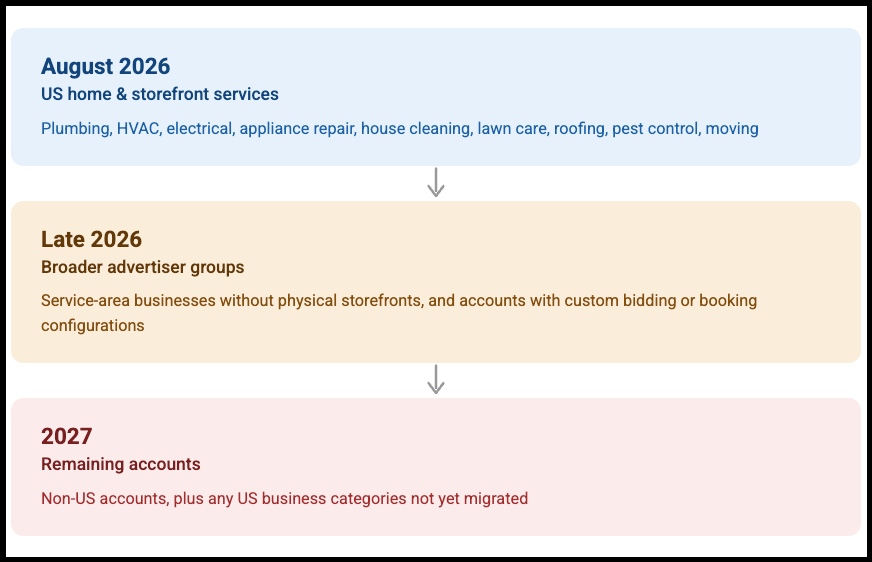
Chart: Claude
_This post is for subscribers only._
### EP 266 - Cyrus Shepard: What Local Brand Actually Means to Google and AI
URL: https://www.nearmedia.co/ep-266-cyrus-shepard-what-local-brand-actually-means-to-google-and-ai/
Last updated: 2026-09-16T19:38:35.000Z
A local brand is an entity in a database — a cluster of relationships Google and AI systems can verify — so as answers get generated rather than ranked, the levers that matter shift away from anything you can do on your own site and toward demand you generate in the real world and corroboration you earn from third parties.
## Cyrus's Four Pillars of Digital Brand
Shepard recaps his own framework near the close *(45:49)*. Treated as the episode's spine:
| Pillar | What it answers | Primary lever |
| ------------------- | ----------------------------------------------- | ---------------------------------------------------------------------------------- |
| **Distinctiveness** | Can Google tell you apart from a generic query? | Naming, schema, consistent entity references |
| **Relevance** | What are you known *for*? | Web pages, business description, review language, photos all naming the same thing |
| **Reputation** | What do third parties say? | Reviews, cross-referral mentions, category-specific sources |
| **Demand** | How many people seek you specifically? | Branded search, clicks, calls, direction requests, offline-to-digital conversion |
## Takeaways
- **Chrome, not search, is Google's actual moat.** Shepard's argument is that Google's value doesn't rest on the search engine but on the browser telemetry underneath it — every action by every user, on Maps or any website, whether or not they're on Google. Courts have been asked roughly six times to force Google to share that Chrome data with competitors; none has agreed. *(08:03–09:05)*
- **Ranking first no longer means being recommended.** The pre-AI game was position; today you can hold the number-one spot and still be omitted from an AI answer because nobody else is talking about you. "Ranking may not save you." The consequence is that third-party sites dismissed five years ago now carry more weight than your own optimization work. *(14:36–15:05)*
- **Google doesn't want content anymore — it wants evidence.** Google built a machine that produces content on any topic on demand, so the differentiated assets are the ones the machine can't generate: original research, product pages, tools, calculators, in-depth testing, first-person perspective. Shepard describes the residue of the old model as "zombie sites" carrying hundreds of thousands of informational pages as dead weight. *(21:58–23:00)*
- **NAP consistency has had an unexpected second life.** The decade-old local SEO fundamentals — consistent name, connected social profiles, schema, third-party references that resolve to one entity — matter again specifically because AI systems need the same entity-disambiguation signals traditional local search needed. Practitioners let these lapse on the assumption Google had gotten good enough to infer them. *(09:37–10:31)*
- **Email is a live brand channel for AI visibility.** Shepard cites the iPullRank experiment led by Garrett Sussman: [brand mentions embedded in customer emails measurably increased how often those brands surfaced](https://www.nearmedia.co/ep-256-p2-the-death-of-keywords-how-googles-personal-intelligence-is-defining-the-future-of-local-search/) in Gemini and AI Overviews, via personalization. Greg's caveat from Near Media's own two-part interview with Sussman — the lift required opting into Google's personalization. *(17:03–18:00, 18:34)*
- **Amazon's email design is a tell worth inverting.** Amazon deliberately writes vague shipping notices — "your health and wellness product has shipped" — to keep Google from scraping purchase specifics out of Gmail. The tactical inversion for a local business: send the detail Amazon withholds, and let it be scraped. *(18:00–18:27)*
- **Click signals are real but nearly immovable.** Google evaluates roughly thirteen months of click data across thousands of searches for a given business, which is why gimmicks like volunteer driving-direction campaigns produce a short-lived bump at best. Shepard rates them workable only for a business starting from zero visibility, and expects an established business to need continuous repetition for no durable gain. *(34:34–35:36)*
- **The review flywheel has an observable trigger point.** A three-year-old coffee shop sitting at four or five reviews ran a counter QR code, hit roughly 20–25 reviews, and started ranking in Google Maps — after which foot traffic, branded search, and further reviews became self-reinforcing. The threshold is low enough to be reachable deliberately. *(38:25–39:10)*
- **Skip llms.txt and markdown; fix JavaScript instead.** Against a large chunk of current industry advice, Shepard sees only marginal evidence that markdown improves AI readability and doesn't consider llms.txt worth resourcing for most businesses. The real technical failure is rendering: AI systems either can't render JavaScript or won't, and defer to Google to do it. Serve HTML. *(32:40–33:30)*
- **Photos are an entity-extraction channel, not an alt-text exercise.** Google now pulls entities directly out of images, which makes a professional photographer one of Shepard's top recommendations for mid-sized clients — and makes photographing branded product in situ (the Lennox unit with the label visible, the Nike sneakers on the shelf) a way to assert both service and brand association. Photos with actual humans in them outperform generic product shots. *(43:15–45:00)*
- **Cross-business referral pages are the episode's most novel tactic.** Genuine "we recommend these local businesses" pages exchanged among complementary non-competing businesses — the electrician, plumber, and roofer — produce exactly the local third-party mention AI systems reward. Shepard calls it "gold" and rates it well above a directory listing; Greg notes he has not heard anyone else propose it. *(37:34–40:02)*
- **Own your pricing or Reddit will own it.** When a business publishes no pricing information, AI tools source it from third parties and frequently get it wrong. Where executives won't approve full transparency, Shepard's fallback is a published range — "we start at five thousand dollars" plus a call-for-quote — purely so the system has something authoritative to pull. *(27:46–28:20)*
### Related Reading
- [Cyrus Shepard](https://www.linkedin.com/in/cyrusshepard00?ref=nearmedia.co) — LinkedIn
- [17 Content Types to Survive Google's Zero-Click Future](https://signal.zyppy.com/p/content-google-zero?ref=nearmedia.co) — Zyppy Signal
- [How Google Click Signals Drive SEO Rankings and AI Answers](https://signal.zyppy.com/p/google-click-signals?ref=nearmedia.co) — Zyppy Signal
- [Ep 251: Google Lied About Click Data — with Cyrus Shepard](https://www.nearmedia.co/ep-251-google-lied-about-click-data-heres-what-actually-drives-rankings-in-2026-with-cyrus-shepard/) — prior interview on the leaks and brand proxies
- [EP 265 - Decoding Local Branding with John Jantsch](https://www.nearmedia.co/ep-265-decoding-local-branding-with-john-jantsch/0) \- Brand as measure of satisfying client needs
- [Ep 256: The Death of Keywords — Google's Personal Intelligence](https://www.nearmedia.co/ep-256-p2-the-death-of-keywords-how-googles-personal-intelligence-is-defining-the-future-of-local-search/) — the Sussman email research
- [Google and the Visual Future of Local Search, Part 1](https://www.nearmedia.co/google-and-the-visual-future-of-local-search-part-1/) — photo impact on GBP rank
- [Bing as a source in ChatGPT](https://x.com/lilyraynyc/status/2077404384275620132?ref=nearmedia.co) — Lily Ray
### Practitioner Notes
- **Near Media's PI research is direct corroboration of Shepard's demand argument.** Greg's finding that prior brand awareness — usually built by offline advertising — dominates click behavior among personal injury searchers is the same claim Shepard makes from the Google side. Two independent vantage points converging on offline demand as the upstream variable is a stronger publishable position than either alone. Worth foregrounding rather than leaving as an aside at 16:31.
- **The photo discussion has an existing Near Media data set behind it.** Shepard's entity-extraction argument at 43:15 maps onto [the visual-future-of-local-search work](https://www.nearmedia.co/google-and-the-visual-future-of-local-search-part-1/) already published. Linking them turns his qualitative recommendation into something with measured GBP rank impact attached.
- **[TrueSignal](https://usetruesignal.com/?ref=nearmedia.co) fills the gap Shepard names but doesn't solve.** He argues repeatedly that businesses fail to supply an evidence layer; TrueSignal productizes exactly that by publishing verified operational history as citable third-party data. The connection wasn't made on-air because the name escaped Mike mid-episode — worth making explicit in the post.
- **The cross-referral tactic is a testable follow-up, not just a segment.** Greg states on-record he hasn't heard it proposed elsewhere. A small pilot — three complementary local businesses, reciprocal recommendation pages, tracked AI citation before and after — would be original research of the exact type Shepard says now earns visibility.
### Concepts
- **Brand-as-entity** — a brand is a database entry; your site, your profile, and you personally are separate entities whose relationships you strengthen
- **The demand side of brand** — branded search volume as a ratio of site visits; Shepard's "golden egg"
- **Good / bad / satisfied clicks** — bad click bounces instantly; good click browses; satisfied click ends the search journey entirely
- **Synthetic modeling** — Google using ML to estimate user behavior where real traffic data has disappeared to zero-click ("a synthetic circle jerk," per Mike)
- **The map portal view** — local ranking as a deliberately bounded problem; AI appears to be widening those bounds
- **Zombie sites** — large informational content libraries that now function as dead weight
- **The evidence layer** — what AI systems reward at grounding and citation time, distinct from what's in training data
- **Levels of AI visibility** — training data (would it recommend you offline?) vs. grounded retrieval via Google or Bing
- **The snowball / flywheel effect** — reviews → Maps ranking → foot traffic → branded search → more reviews
- **Leaving breadcrumbs** — varied directory descriptions that still resolve to one consistent entity
- **The offline-to-digital bridge** — billboards, events, and QR codes only convert to brand signal if you deliberately build the handoff
### Watch just a snippet
[00:00](https://www.youtube.com/watch?v=XibTV01dpL0&ref=nearmedia.co) Intro
[01:46](https://www.youtube.com/watch?v=XibTV01dpL0&t=106s&ref=nearmedia.co) What "brand" means to Google
[03:20](https://www.youtube.com/watch?v=XibTV01dpL0&t=200s&ref=nearmedia.co) A brand is an entity in a database
[05:11](https://www.youtube.com/watch?v=XibTV01dpL0&t=311s&ref=nearmedia.co) Behavioral signals and the CRAPS tables
[08:03](https://www.youtube.com/watch?v=XibTV01dpL0&t=483s&ref=nearmedia.co) Chrome is Google's real moat
[09:37](https://www.youtube.com/watch?v=XibTV01dpL0&t=577s&ref=nearmedia.co) Why NAP consistency came back
[11:32](https://www.youtube.com/watch?v=XibTV01dpL0&t=692s&ref=nearmedia.co) Local's map view vs. AI's boundaries
[14:36](https://www.youtube.com/watch?v=XibTV01dpL0&t=876s&ref=nearmedia.co) Ranking #1 no longer means recommended
[17:03](https://www.youtube.com/watch?v=XibTV01dpL0&t=1023s&ref=nearmedia.co) Email as a brand signal
[21:26](https://www.youtube.com/watch?v=XibTV01dpL0&t=1286s&ref=nearmedia.co) Google wants evidence, not content
[27:10](https://www.youtube.com/watch?v=XibTV01dpL0&t=1630s&ref=nearmedia.co) Pricing: own it or Reddit owns it
[32:05](https://www.youtube.com/watch?v=XibTV01dpL0&t=1925s&ref=nearmedia.co) llms.txt, Markdown, and JavaScript
[36:05](https://www.youtube.com/watch?v=XibTV01dpL0&t=2165s&ref=nearmedia.co) Converting offline demand
[38:25](https://www.youtube.com/watch?v=XibTV01dpL0&t=2305s&pp=0gcJCWMAwfN6Pr3D&ref=nearmedia.co) The coffee shop flywheel
[43:15](https://www.youtube.com/watch?v=XibTV01dpL0&t=2595s&ref=nearmedia.co) Photos and entity extraction
[45:49](https://www.youtube.com/watch?v=XibTV01dpL0&t=2749s&ref=nearmedia.co) The four pillars, recapped
### Full Transcript -->
**What Local Brand Means to Google & AI — with Cyrus Shepard**
*Brand Building, Part 2 of 2 · Guest: Cyrus Shepard, Founder, Zyppy · Runtime \~49:48*
**Editor's note:** This is a cleaned reading transcript. Stutters, false starts, and repeated words have been removed for readability, backchannel interjections have been folded into the surrounding turn, and clear transcription errors have been corrected. Wording is otherwise faithful to what was said. Timestamps mark the start of each speaker turn.
**Greg (00:10)** Welcome back, loyal listeners, devoted fans, and casual observers, to the Near Memo — episode 266, today with Cyrus Shepard. I was going to inject something pithy and clever before your name, which is why I hesitated. Cyrus is the founder of Zyppy and a long, long-time SEO — now a search and AI consultant, and a very visible figure in the SEO community, talking a lot about AI ranking and visibility these days.
This is the second installment of our series on brand building and brand development. Last week we had John Jantsch on and talked about the essence of building a small business brand. Today, we want to talk about some of the more technical aspects of brand building — how Google and AI understand brand, and how you can improve your visibility there. And be sure to stick around till the end, where we're going to go through a list of very practical, tactical recommendations for improving your visibility. So, welcome, Cyrus, after that very long and rambling introduction.
**Cyrus Shepard (01:12)** Thanks, Greg. Mike, good to see you. Glad to be back. Always happy to talk to you guys.
**Mike B (01:17)** Well, we're super happy to have you. We know you've been sort of practicing silent meditation outside of the blogosphere of SEO, and we appreciate your reentry on our show. So, thank you.
**Cyrus Shepard (01:29)** Yes. Hello. I shaved for this, so let's do it.
**Greg (01:33)** And while we're at it — what other ascetic practices have you adopted?
**Cyrus Shepard (01:37)** Well, I do laundry once a week. I vacuumed this weekend, washed the sheets. You know — cleanliness and SEO go hand in hand.
**Greg (01:40)** Mm-hmm. All right — no, no, no. So let's jump into the deep end. What does brand mean to Google?
**Mike B (01:46)** With that, Greg is speechless — first time ever.
**Cyrus Shepard (01:48)** Ha. That is such a good question. Brand has been part of Google since the beginning. Think about it: they have billions of websites to sort through, all competing for attention, and most of those websites are spam. So Google has always leaned on brand — a little, or a lot — to sort the garbage from the good stuff.
Eric Schmidt, the old CEO of Google, back in 2008 — I printed this out so I could get the quote right — said, "Brands are the solution, not the problem. Brands are how you sort the cesspool." And that's probably even more true today, in 2026, than it was in 2008, as more and more businesses compete for attention and SEO tactics become commoditized. Google is looking for things that people are actually looking for in the real world. Google wants to be a reflection of the real world, and brand is how they do it, to a certain extent.
To get to the other part of your question — what is a brand to Google? A brand is an entity. It's an entry in a database. And your website can have many such entities: your website could be an entity, your local business profile could be an entity, you could be an entity. When we think about branding, we think about how those things connect together in Google's databases, and how we can strengthen those relationships to become more prominent. So that, in a nutshell, is how Google thinks about it.
**Greg (03:20)** So it's purely a function of all these elements — consistency, complete data, and so on? There's not another aspect to Google's brand understanding?
**Cyrus Shepard (03:31)** Well, I think it's multidimensional. You named a couple of them — consistency, distinctiveness. Like, if my business is named "Thai food near me," do I mean the restaurant Thai Food Near Me, or do I actually mean Thai food in general? These are things that have been working in local SEO for a long time. There's reputation that can go into a brand. And there's the idea we've learned a lot about in the last few years, which is the demand side of things: How many people are actually looking for you? How many people are spending time on your website or your Google Business Profile? How many people are getting driving directions to your business? We've got a lot more evidence on the demand side of brand over the last few years than on the other side.
**Greg (04:12)** So — brand queries, and also clicks and dwell time.
**Cyrus Shepard (04:17)** Yes, exactly.
**Mike B (04:18)** And driving directions, as Cyrus pointed out — that's a really clear brand signal. If somebody lives fifty miles away from a business, there's a patent from 2013 where this is detailed extensively.
**Cyrus Shepard (04:29)** Yeah. We've known this for a long time. We've done correlation studies for years and years in traditional SEO, with regular websites: the more people search for a website, the better it does in Google rankings. We see this pattern over and over. Google has a few patents — quality scores — where they actually look at how many people are searching for you as a ratio of how many people are visiting your website. If you can get more people searching for you specifically, that's one of the best SEO levers we know, whether you're doing local search or traditional SEO. That is the golden egg of brand signals: how many people are specifically looking for you.
**Greg (05:11)** Let's talk about behavioral signals a little bit. Brand queries are one, but the great revelation of the antitrust trial was that Google does in fact rely very heavily on behavioral signals — something they'd historically denied, vehemently and repeatedly. So talk a little about that. How does that show up?
**Cyrus Shepard (05:32)** Yeah. Google has these database tables. They're called CRAPS, for the technically inclined — they literally call their click data "craps." So when they say click data is a bunch of crap, that's probably what they mean. In these databases, they measure how many people are clicking on your website, how many impressions you're getting, good clicks versus bad clicks. I think we've discussed this on another episode.
A bad click is when someone clicks on your site and instantly moves away. A good click is when they stick around and look at a lot of pages, compared to your competitors. And a satisfied click is when they come to your website and don't go back to Google to look for something else. Think about the average search journey: you look at a website, go back to Google, pick another website, or ask another question because you didn't get it quite right the first time. But when they end their journey — when they find what they're looking for — Google is really good at determining that a user got what they wanted. If you can deliver that, it's a good ranking signal for you. We don't have evidence in the Google leak that they do this for Google Business Profiles, but I would highly assume they use some of those same click signals there as well.
**Greg (06:43)** Well, the interesting thing about Google Business Profile, versus more general web search and click-through behavior, is that very often in local — and this has been true even before the modern era of zero-click — people get their questions answered simply through the business profile, and they don't need to go to the website. People still do visit websites, but you can make certain determinations by looking at pictures, reading reviews, getting the information on the profile — the hours, directions, and so on. So how does that differ, or factor into, this consideration of user behavior in a brand context?
**Mike B (07:26)** And particularly in the context of a declining web presence — with AI Overviews — that Google has relied on so strongly. How are they going to replace that with equivalent signals?
**Cyrus Shepard (07:36)** That's an excellent question. I think we have some indication that Google is using AI and machine learning to guesstimate and model what actual users would do when they don't have the real website-traffic data.
**Mike B (07:52)** So — a synthetic circle jerk, huh?
**Cyrus Shepard (08:03)** Yeah, a synthetic circle. But it's important to remember Google still has quite a bit of data. What people need to realize is that on our phones, most of us use Chrome — even on an Apple phone or an Android. Chrome is the predominant web browser in the world. Billions of people use it; billions of searches, maybe trillions, per day. That's how they gather all this data. They don't have to be on Google Search, because they have all that Chrome data, and they can measure every single thing every user is doing — whether they're on Google Maps or searching a website. As long as they're using Chrome, Google has all of that data, and it's an incredible amount.
**Mike B (08:36)** You mean that's why they nag me every time I use Safari that I should be using the Google app?
**Cyrus Shepard (08:40)** Yeah. Yeah. So, you know, Google has been declared a monopoly something like six times now. The judges and the plaintiffs — the US antitrust division — have called for Google to lose access to that Chrome data, or to share it with competitors. And no court has agreed to that. That is Google's moat. That's why they're a successful business — not because of search, but because they have all that Chrome data. That's what makes them valuable.
**Greg (09:09)** Right. So let me ask you this. We've established there are many signals that, from Google's point of view, establish brand trust and brand authority. What happens if you're a newer business, or a smaller player, that doesn't have the same visibility, the same click history? What do you do? How do you elevate yourself in that context?
**Cyrus Shepard (09:37)** So, we were talking beforehand about some of the traditional SEO things people were doing ten years ago — NAP consistency, things like that. Weirdly, that has had a resurgence in the age of AI, because AI systems are looking for the same sort of consistency and relationships between entities that traditional SEO was.
I think you have to start with the fundamentals — and a lot of people have kind of forgotten them, because Google got so good. So: Is your name consistent across multiple platforms? Do you have connected social media profiles across multiple platforms? Do they all connect to your website? Are you using schema to properly identify and distinguish yourself? Is your NAP consistent? Is your business referenced by third-party websites in a way that lets people distinguish exactly who you are?
This works one way with Google and a different way with these new AI systems, but they're looking for the same consistency signals. And what you say about yourself is so important. Do you have a page on your website that says who you are? I was discussing this with my wife, who's a graphic designer, and we realized she didn't have a page on her website that actually laid out exactly what her services were, what they cost, what she can deliver. A lot of businesses don't do a very good job of explaining what they do. You can use AI now to answer these questions — ask your AI, "Can you tell from my website exactly what I do, who I am, and what my services are? And if not, recommend suggestions." I'm getting off track going down this rabbit hole of consistency, but I think it's a fundamental thing we have to revisit. We've taken it for granted that Google just knows what we do and can figure it out on its own.
**Mike B (11:32)** I have a question for you. In local, Google has always defined the problem of identifying brand within a map-portal view. They create a world limited by the query and the implied geo-spatiality of the query — okay, we only care about brands within this three-, five-, or ten-mile radius. In that context, it's a problem written small; you're up against other people within that frame.
Does AI change that? And if so, how? I've noticed AI is much more flexible. I don't remember exactly — I think it was Pigeon, around 2013 — when they reduced the radius pretty dramatically. So if there were twenty lawyers on a street corner, you'd only go a quarter mile out on the map. But with AI, it seems to be expanding those boundaries. Again, we're trying to scale this down from Google's point of view. How do they see the world you're searching in?
**Cyrus Shepard (12:32)** Yeah. Going back to the entity within that local area — Google is probably looking at all those local signals much more. If you're a bakery known for your cinnamon rolls, are people mentioning cinnamon rolls in their reviews much more within your area than outside it? One example of local relevance: Google can look at a review a business gets and determine the location of the user who left it. If you're reviewing a bakery in Oregon, does the reviewer live in India, or New York? They may count that review a lot less.
But when I think of local and ChatGPT and all these others, I think they're not very good at local themselves. They're leaning on Google's local ecosystem — or Bing's, depending on the engine — to pull a lot of this information.
**Greg (13:37)** I mean, AI uses Yelp and, strangely, MapQuest and all these third-party directories nobody ever visits. And that goes back to your basics of SEO — NAP consistency and all of that. AI also seems to lean very heavily on reviews. That's become a focal point for AI visibility.
**Mike B (14:00)** Which accentuates this NAP consistency to the point where you should be getting reviews on Yelp and/or TripAdvisor, if they're relevant. And you should try to be on the top-ten list for your categories in your markets on those two sites — both do these top-ten algorithmic calculations based on how many reviews you have, acceleration of reviews, total quantity of reviews, and rating. If you can get that designation, I've seen it's golden — both across the Google local ecosystem, Google AI Overviews, Google AI Mode, ChatGPT, and Claude.
**Cyrus Shepard (14:36)** Yeah. It's obvious to a lot of people, but I think we have to recognize this fundamental shift: before AI, it was just about ranking. You wanted to rank your website at the top. Today, that may not matter — you may rank number one, but AI doesn't recommend you, because no one else is talking about you. So we have this shift where it's way more important now what other people are saying about you. These third-party sites we may have dismissed five years ago are increasingly relevant today — because ranking may not save you.
**Greg (15:09)** And what we've learned from our own research and from others is that the customer journey is fragmenting and getting more complicated. That's true — it's sort of always been true, but often hidden from marketers because they've fixated on Google. They don't necessarily see what comes before Google. The same is true now with AI, especially in local — and it's not uniform; it depends on the category.
People will include AI in the mix very often. Sometimes they start with it, sometimes they use it to compare something. And then, at the end of the journey, you typically get a Google search — a brand search, or a search to validate with reviews, or to find hours and directions, things that ChatGPT and Claude don't do as good a job with (although Claude's got the Google Maps API — that's what they're using for local). So we now have this multi-touch journey, which may include social search, AI, and back-and-forth.
**Mike B (16:19)** The other thing we see in our research, Cyrus, a lot — offline brand awareness totally kills it once they get someplace. Once they get to Google, or ChatGPT, or wherever.
**Greg (16:31)** I was going to bring that up. What we see in our research on personal injury lawyers in particular — though it can be generalized — is that when there's prior awareness of a brand, and we watch people search and interact with ads and organic content, that prior awareness has a very powerful influence on their clicks, whether it's an ad or an organic listing. And very often, at least in the PI context, prior awareness comes from offline ads. So what would you say about the role of offline marketing and advertising in this whole process?
**Cyrus Shepard (17:03)** That's an excellent question, because I think we have to think outside traditional search channels. I don't know if you saw the research from iPullRank, from Garrett Sussman. They did some interesting things with email — they emailed their customers with positive brand mentions embedded in the email, and then tracked how often those brands appeared in Gemini and AI Overviews. Simply emailing information about yourself increases the likelihood that you'll be recommended by AI, because of personalization. Which is fascinating.
**Mike B (17:48)** Google's control of mail seems to align with your thesis. Are they going to have to give up data they've scraped from Gmail, as well as data they've scraped from Chrome?
**Cyrus Shepard (18:00)** Great question. Probably not. I don't know if a lot of people know this, but anyone who shops on Amazon — Amazon typically doesn't put your purchase details in the email. They'll say something like "your health and wellness product has shipped," because Amazon doesn't want Google to scrape the data and know exactly what you bought. But we can leverage this: we can email our customers with our own brand information and allow Google to scrape it, to try to get more AI recommendations that way. But yeah — prior brand...
**Mike B (18:27)** Don't give Amazon any ideas — they'll charge the business to put the brand mention in the email. It'll be an ad format.
**Cyrus Shepard (18:33)** Yeah. Yeah, there we go.
**Greg (18:34)** Because it becomes a new advertising thing. Well — we did interview Garrett; we had a two-part interview, and that was a fascinating discussion about personalization. For the phenomenon you described to have an impact, you had to opt into Google's personalization. That was the precondition for the email-specific lift you're describing.
But as you say, Google has so much data that they're drawing on all kinds of things. Is there a distinction in your mind between AI and search? Those categories are breaking down because of what Google is doing with AI Overviews and, increasingly, AI Mode. Is there a distinction, in your mind, between the world of ChatGPT, Claude, et cetera, and Google — now with all the AI pieces they're bringing together? Or is Google just now part of this whole AI phenomenon? Are there concrete things about Google that are distinct?
**Cyrus Shepard (19:38)** Yeah, I think there are. Within any AI system, there are levels of information. One: are you in the core training data? If AI weren't connected to the internet, would it recommend your brand? That's level one. But increasingly, the AI systems are relying on Google Search — and increasingly on Bing Search. There's a lot of evidence that's come out in the last few weeks that OpenAI is transitioning more and more to Bing and their own internal search results.
**Greg (20:06)** There is a distinction, apparently — at least for now — between ChatGPT and Claude in terms of how quickly they go to web search. ChatGPT apparently goes to web search much more quickly than Claude does; Claude answers many more questions with its own training data. That's just a little footnote, but keep going.
**Cyrus Shepard (20:22)** No, that's an excellent point. More and more — the early AI systems just answered, and we got all sorts of hallucination. Everybody hated that, so now they're grounding everything in real-world search results, which makes traditional SEO so much more important: trying to get yourself mentioned in those top-twenty ranking results, and in all the fan-out queries. Then we have the real-world signals in Google's vast databases.
I was just thinking about QR codes on restaurant menus. If you can get your customer to scan a QR code, Google saw that you visited that website, and you're going to show up more in personalization. This entire ecosystem just grows and grows — real-world data, training data, everything. But ultimately, we need to remember that Google and all these AI systems are trying to mimic or reflect the real world through some sort of editorial process. That's what we need to be doing more of: getting ourselves out there in the real world.
**Mike B (21:26)** You wrote a great article on content that reinforces Google's desire to see users coming to your site. Could you tie that in here?
**Cyrus Shepard (21:40)** Yeah — are we talking about the click signals a bit?
**Mike B (21:43)** Well, I think you wrote several on this topic, but was it —
**Greg (21:45)** I think it was the one about content that breaks through — where people get more visibility from the content, as opposed to being filtered out because it's too generic.
**Cyrus Shepard (21:58)** Yeah, exactly. The old SEO model — which worked until very recently, the last couple of years — was that you could write content on any topic, get it to rank, and get traffic. There's this idea of topical authority and so on. But Google built a machine that can magically produce content on any topic it wants — Gemini, and AI generally. So Google doesn't want content anymore.
Google wants things that add distinct value. They want perspectives — human perspectives. That's why we see user-generated content exploding: Rick Steves' travel forum is a great example, Reddit, things like that. They're not looking for information anymore; they're looking for distinct information and distinct content types — original research, product pages, things AI isn't very good at: tools, calculators, in-depth reviews and testing. So it's shifted from content to what makes you distinct, that nobody else on the internet can offer. And we see a lot of zombie sites now littering the internet with hundreds of thousands of pages of informational content that they're just dragging around like dead weight.
**Mike B (23:10)** So let's say you're a Lennox air conditioner expert in a given market. Obviously there are hundreds or even thousands of Lennox experts, but in your market you're one of maybe two or three. How would you leverage that specific situation for this context?
**Cyrus Shepard (23:28)** Yeah. In the old days, we'd see a lot of people producing generic content around Lennox furnaces — "what to look for when buying a Lennox furnace." Thousands of websites can provide that information. What Google would rather have now is to know the people behind the business. So: owner interviews, with video, discussing exactly how they approach problems, their opinions, their certifications — things that make that individual distinct.
**Mike B (23:55)** Their certifications, perhaps. And you mentioned video specifically — could you elaborate on that?
**Cyrus Shepard (24:06)** Yeah, exactly. Talk about YouTube — YouTube channels, bringing video in, connecting people. If I were doing SEO for a Lennox business like this, I'd record myself and start producing short-form video with transcripts. One of the biggest sources of AI training data for Google is YouTube transcripts. They went through this entire process of transcribing all their videos a few years ago, simply for that AI training data. Just bringing the human perspective in, as opposed to producing generic content.
**Greg (24:42)** Let me push back a little and challenge that. In a situation like this Lennox example — let's say I don't have central air and I've decided to get it. I really don't know the considerations: cost, the machines I need, who the competitors are, pricing. I want to learn all of it. What I'm going to do is go to ChatGPT, or Claude, or my favorite AI tool — which is not AI Mode, in my case — and ask a bunch of questions to educate myself before I talk to any particular business. How much? How big? What do I need to be aware of? What are the pitfalls? What questions should I ask? What about my duct sizes? I'm going to learn through an iterative process, refining and refining. That content is coming from somewhere. There are SEOs who say abandon the top of the funnel, for exactly the reason you described — but, to play devil's advocate, don't I want to be answering some of those customer questions?
**Cyrus Shepard (25:46)** Yeah, absolutely. I think there's room in this world for both our perspectives. You can still produce that content — but the difference is, today I'd advocate making it personal. Instead of the generic "these are the top things to consider," I'd produce an article like "these are the top ten things I look for, based on my twenty-eight years of experience — and these are the good furnaces, these are the bad furnaces, I think this one is crap."
**Mike B (26:13)** And how it relates to your specific climate, for example.
**Cyrus Shepard (26:16)** Yeah, exactly. And here's the data to back it up, that nobody else has. So I think there's room for both.
**Greg (26:23)** So what you're saying is: top-of-funnel content still has value as a discovery mechanism, but make it very specific — as Mike is saying, to the geography, or to personal experience — grounded in concrete information, much more than platitudes and generic listicle stuff.
**Cyrus Shepard (26:43)** Yeah. The shift is that what AI systems are looking for today is evidence. They have everything in their corpus, their training data — but when they're grounding, citing, and ranking things, they're looking for people who can bring evidence, something beyond general knowledge. Or perspective — the personal perspective, which Google mentions all the time now. What does this person think about things? What does their expertise say?
**Greg (27:10)** Let me ask you specifically about pricing. You mentioned this with your wife and her website. One of the things Kevin Indig has talked about is that if you don't have pricing information, the AI tool is going to go to some third party and try to find it — and it may be inaccurate. A lot of businesses don't want to expose pricing, either because it's very specific to the job, or because they're fearful of competitive considerations. How do you handle that? What's your recommendation about pricing on your website?
**Cyrus Shepard (27:46)** I think you want to own your own pricing information, because — as you said — if you don't own it, someone else will. They'll go to Reddit or some other third-party site. So own as much as you can. I understand it's a business model for a lot of places — they want the leads, they want the call, "call for specific pricing." You might try a range, if you can't win that argument with your executives: "We start at five thousand dollars, up to so-and-so — call for a specific quote." But at least have a pricing page, so you show up and rank for it, and give the system something to pull from. Then you're not completely giving over to third-party sites where you have no control.
**Mike B (28:29)** Just a quick question, Greg — what was the name of the company that produces the internal data, that we talked to a couple of weeks ago? TrueSignal. They have a product that goes into your internal system and extracts all the data — the types of jobs you did, the categories, the pricing, customer loyalty, how many return customers, average price, all of it — and then makes it available both as an independent third-party assessment and on your own site. He went back through the customer management system.
**Greg (29:02)** We'll put it in the show notes. It was fascinating on two levels. One, the level Mike is describing: an additional source of data you might not otherwise have access to, that helps discoverability in an AI context. And the other, in my mind, was as an alternative to reviews — there are other signals that indicate quality or credibility.
**Mike B (29:24)** Time to response — that's right.
**Greg (29:26)** Right. Customer retention, customer loyalty, that kind of thing. It was very interesting. He's got a two-sided marketplace problem, or something like it — not exactly.
**Cyrus Shepard (30:03)** I think a lot of people are missing out on this evidence layer. If a local business just fires up ChatGPT and asks basic questions about their business — pricing, reputation — and sees, do you own the answer, or does somebody else? Where is it getting its information? A lot of times you'll find you're not providing anything for these AI systems to latch onto. Going back to the basics and building these pages out, so you are the authoritative source — they want to trust you; you have to give them the information.
**Greg (30:10)** So distinguish what you just described from third-party mentions, and talk about how important third-party mentions are in this AI visibility world — because a lot of companies are doing these self-referential listicles: "here are the ten best," but of course we're the best. That worked for a while, and now there's evidence it's not working anymore. What's your approach to disseminating your information across third-party sites, beyond directories — or soliciting third-party mentions? What's your general advice?
**Cyrus Shepard (30:44)** They're hugely important. The self-serving listicles don't work like they did a year ago, which is great. But all these systems are still relying on links and mentions from across the web. And the better visibility you have in those third parties — what you'll find when you search for something in AI is that they often go to very specific sources. If you're researching software, they'll go to G2, so you want good representation on G2\. If you're looking for a consumer product, they might go to Reddit, so make sure you're referenced on Reddit really well. It's hugely important. Google is trying to figure out the spam problem they have with listicles and self-serving things, and to go to authoritative sources instead. I don't think that's changed very much — but it's become oddly way more important than it used to be.
I'm going to go back to what I said earlier, though: oftentimes no one's mentioning you at all. So what you say about yourself fills that hole. Going back to the pricing example — these AI systems, and Google, are going to trust what you say about yourself more than the third parties. And oftentimes we're just not providing it. So make sure you're filling those holes — do that analysis, that content gap. Worry about what you're saying about yourself first, before you worry about what third parties are saying.
**Greg (32:05)** We've been talking about tactical things throughout, but let's move into some practical advice you haven't given yet — about Google's understanding of brand, AI's understanding of brand, and what you as a business need to do to make those things clear to Google. One area we haven't talked about is your website. Do you need to do something different technically now — llms.txt, Markdown, something technical — to make yourself more visible or accessible to Google and AI?
**Cyrus Shepard (32:40)** There is a little bit of evidence that websites in Markdown are a little easier for AI systems to read, but I think the difference is pretty minor, and I don't think it's worth it for most businesses to invest a lot of resources into things like llms.txt files and Markdown.
**Mike B (32:58)** So you're saying: make it readable to the human. If it's readable to the human, it's good enough.
**Cyrus Shepard (33:02)** Yeah. Exactly.
**Greg (33:03)** What about JavaScript, though? Because apparently Google's the only one that reads JavaScript.
**Cyrus Shepard (33:08)** Yeah — AI systems are really bad at rendering JavaScript, or they just don't do it, or they rely on Google to do it. So, going back to basics: don't build websites that rely on client-side rendering. (Server-side, client-side — sorry, I switched the two.) Make sure you're delivering HTML to folks, because JavaScript has been problematic for twenty years, and it's still a little problematic even today. We have the solutions — you don't need to serve JavaScript websites.
**Greg (33:37)** Well, I threw you off a little there. We're marching down a list of tactical things you need to do to show up — not just as visibility, but as a brand to be understood as a brand by Google, Google AI, and ChatGPT.
**Mike B (33:57)** I have an idea I want to run by you, Cyrus. I want you to vote it up or down — I haven't had the wherewithal to test it. Everybody asks for reviews, but most people use Google's review link, which Google gives them, so it takes the customer right to the review box — more convenient. My proposal: instead of that, give people a brand search to Google, and let them click on the review link from there. Given that Google can track the link they gave you, and given that they don't otherwise know where a brand query comes from — if you supply it, do you think that would work at building Google's sense of brand in the local market?
**Cyrus Shepard (34:34)** Yeah, I think it would have a marginal effect. I don't think I'd rely on it as a core foundational strategy — Google is looking at a lot of information.
**Mike B (34:41)** But again, we're looking in a very narrow window — the map portal. It's much smaller, so the impact is probably more or less the same.
**Cyrus Shepard (34:46)** Yeah, exactly. It's probably a little more. It's important to remember that these traffic signals, these click signals — they're pretty hard to move, because Google is looking at all the data. They're looking at thirteen months' worth of clicks. So you're looking at thousands of searches, usually, for any given business. Go ahead, Greg.
**Greg (35:04)** I just wanted to interject. You get these occasional experiments where employees select driving directions to their company, drive there, and show up — people have done these kinds of things, or gotten a bunch of volunteers to — and that has had a positive impact on visibility. It's a gimmicky kind of thing, but what's your view?
**Cyrus Shepard (35:36)** No — it can be a snowball effect. For a business that has no visibility, it can work. For an established business, it's probably short-lived, and you'd have to do it over and over again.
**Mike B (35:45)** But if you're a truly service-area business — you have an address, but nobody really drives to it in real life — what do you think of it then?
**Cyrus Shepard (35:54)** I don't think it would —
**Mike B (36:00)** Well, it's a service-area business with an address, so there is an address, but most people aren't selecting it, because people are —
**Cyrus Shepard (36:05)** Yeah — in that situation, you want to do anything you can to get your brand visibility out there. We talked about offline demand: billboards. People see your billboard, they Google you — and you can tell people on the billboard, "Google-search us," and then they're clicking on your website. That's a classic example of how offline visibility can drive SEO demand. And QR codes, again — you have flyers up all over town: "Scan this QR code for our event."
**Mike B (36:33)** "Scan this QR code for a plumber that'll show up on time."
**Cyrus Shepard (36:36)** Yeah, exactly. Commercials — anything you can do to drive that offline visibility onto the website, and have Google start to associate those things and strengthen those brand connections.
**Greg (36:45)** That can show up in two ways. As a direct brand search — or as a click, a latent kind of click without the brand search. Like, I'm searching for a plumber. I saw the plumber's truck with the logo and the smiling plumbers on the side. When I see the organic link or an ad, I remember it — "yes, I know those guys" — and I click on it, but I didn't do a brand search. So that's another way it can show up.
**Cyrus Shepard (37:12)** Yeah. We haven't talked about phone calls at this point. I'd have to imagine Google probably doesn't know exactly who you're calling all the time — but if they're clicking that call button on their phone within your Google Business Profile, that's a positive signal. So anything you can do to generate demand that way — getting more people to simply call your business — because Google can track that.
**Mike B (37:34)** Just a quick interjection. Last week, John Jantsch recommended an idea I thought was interesting, about word-of-mouth referrals — where an electrician, a plumber, and a roofer all work together. They do a job, and then they hand out a card for a ten percent discount at the other businesses. So the plumber says, "If you don't have a good house cleaner, maybe call this guy." One: that would work well for word of mouth — but is there a way to bring it back into the digital world, that would generate enough volume that you'd see an impact? And part two: the snowball effect. You said maybe, if you're a new business, you might do these driving directions yourself. But does the snowball effect lead to higher visibility — and does higher visibility then lead to greater brand interactions?
**Cyrus Shepard (38:25)** Yeah, absolutely. I'm going to answer the second part first. I have a local coffee shop I go to. They've been around three years, and I absolutely love it. They had no Google reviews — maybe four or five. So we did the classic QR code, put it on their counter, and everybody was encouraged to leave a review. And they're awesome, so everybody was leaving five-star reviews. Once they hit twenty, twenty-five reviews, the snowball effect started — they started ranking better in Google Maps. We have a foot-traffic count, so people searching for coffee shops (because they're hard to find) start walking to this particular one — and then everything just started working, because people are Googling them, going to the shop, leaving reviews, and it grows and grows. So there's a flywheel effect that happens once you get the process going.
**Greg (39:17)** Okay — go ahead, I didn't mean to cut you off.
**Mike B (39:19)** Let him answer the first part of the question.
**Cyrus Shepard (39:20)** Yeah — the first part, the word-of-mouth recommendations. Putting that in a real-world context: I can imagine, if I had a page on my website that said "we recommend these local businesses," and I was one of the businesses being recommended, that would be gold for AI systems and Google search in general. And you could network it — you could recommend each other. That personal recommendation would be huge for the LLM.
**Mike B (39:48)** And the card you hand out could take people to that page, where they could redeem their coupon or whatever.
**Cyrus Shepard (39:53)** Yeah, exactly. Just a simple blurb on a third-party site in your local area — that's gold. That's so much more valuable than a directory listing.
**Greg (40:02)** So that's a local visibility tactic — a local SEO tactic — that I haven't heard anybody talk about: groups of businesses coming together. Other than John's recommendation last week, groups of businesses creating a kind of network and pointing to each other — not in a manipulative way, but in a sincere way: "here are some great local businesses." That's a very interesting strategy.
**Mike B (40:29)** I had an idea around that, where an engagement ring company, a wedding dress company, and a venue all work together — for a sort of, what do you call those, a scavenger hunt — where people would get driving directions to each location, prove they went to each one, and then be entered in a drawing to win an engagement ring, a dress, and a venue, or something. I never had a chance to implement it, but I just thought — there's a way of bringing that idea of outside-in, real-world-to-digital.
**Cyrus Shepard (41:04)** I love it. How about — here's a horrible idea: you just order a lot of pizzas, and the drivers enter directions to your business all the time.
**Greg (41:14)** Well, you could do once a week — a pizza for your employees, and all of that.
**Cyrus Shepard (41:17)** Yep. "Google Maps is showing we're really busy at five PM on Friday" — 'cause we ordered so many pizzas. Yep.
**Mike B (41:25)** And partner with a liquor store as well. So it's twice as much fun.
**Greg (41:30)** Right. Okay, so let's use your coffee shop as a model. Let's assume they're a new business — newer than three years. Not the particular shop you talked about, but an analogous cafe that's recently opened. What do they need to do to generate the digital signals to start ranking in AI and on Google — and distinguish those, if they're different things? What are the very specific tactical things to build and strengthen their brand? Let's frame it that way — not an SEO conversation, even though there's a lot of overlap.
**Cyrus Shepard (42:06)** Yeah. I'm worried this is going to sound too basic, but you always start off with a Google search: Is your business on the map? Those very foundational local SEO signals. Do you have a website? Is it connected? Are your social media profiles connected? Are you listed in the basic directories where AI is going to look for your business — and are you represented well there? All those traditional signals we've been ignoring for a little while, because we thought Google was really good at it — I think we need to revisit the basics and make sure everything is tightened up.
**Mike B (42:38)** And something in that vein that Darren suggested: in each of these third-party directories, have a different description that includes additional or varied information about your business.
**Cyrus Shepard (42:50)** Yeah — but you also want to leave the breadcrumbs, so you have consistency: they all point to the same website, and my business name is the same in all of them, so the AI systems understand we're talking about this one entity. That's important. The other thing is relevance. What are you known for? If you're a bakery known for cinnamon rolls, you want your web page to talk about cinnamon rolls. You want "cinnamon rolls" in your business description. You want your reviews to say it. And pictures — we didn't discuss images. The evolution of Google and image SEO: we used to rely on alt tags to tell Google what a photo was about. Google can get so much information from your photos now — it's ridiculous.
**Greg (43:18)** And pictures of cinnamon rolls.
**Cyrus Shepard (43:40)** Exactly. So I really encourage some of the mid-sized businesses I work with — one of my biggest recommendations is to hire a professional photographer, just to come around your business and take pictures of you, your products, everything you're doing, because Google can identify those things. They can extract entities from your photos. That can be harder if you don't have the resources, but owning those photos yourself and putting them on your website and Google Business Profile is valuable.
**Mike B (44:02)** Take that one step further. You should be taking pictures of every branded product you sell, and including that both in your Google profile and on your website.
**Cyrus Shepard (44:14)** Yeah — take pictures of the cinnamon rolls and put them on there.
**Mike B (44:18)** Or take pictures of the Nike sneakers and put them on there — or whatever brands you're selling. If you're an AC company, all of your AC brands should be shown, perhaps in situ, with the brand label showing, so Google can see you're installing a Lennox air conditioner on site. They see you're providing the service, and you're using the brand.
**Cyrus Shepard (44:21)** Yep. And a minor point: I encourage people to put themselves in the photos. If you're camera-shy, put your hands in, or put your employees in if you can — that can be a gray area, but put real human photos of you interacting with your product, or your customers interacting with the product, because AI systems and Google are looking for authenticity. They're looking for real human perspectives.
**Greg (44:52)** Just like this.
**Mike B (45:06)** A minor variation on that idea: you can't incentivize reviews, but you could incentivize clients to post pictures of themselves with your product. Totally legal, totally legit — and it would do equally well in terms of the user-generated content Google likes. On social and on Google.
**Greg (45:22)** On social media, or to send in to you.
**Cyrus Shepard (45:29)** I leave a lot of Google reviews for local businesses here. And sometimes, when I look at my photo stats, my sharing stats, I notice that the photos I'm personally in always do better than the generic photos of food and so on. So I think that's a great suggestion, Mike.
**Mike B (45:45)** Well, this could be unique to you, Cyrus — I mean, there's something like...
**Cyrus Shepard (45:49)** Yeah — but people enjoy authentic experiences of real humans. So: we talked about being distinctive, we talked about being relevant, and then we have the reputation angle, which we discussed a few ways — what are the third-party sites saying about you? You see this with hotels a lot: you check in, and they recommend local businesses — who are the restaurants in the area, who do we recommend? I really liked your idea, Mike, of the local review ecosystem — who are we recommending in our area that's doing well? Just building your reputation that way, through all the review tactics we talked about. Again, very classic stuff, but authenticity — more than anything that can be scaled — is so important.
And then the fourth part, I think, is demand: How many people are actually searching for you online? How many are clicking on your website? Are you satisfying their experience? Are you owning those? If you do all four of those things well, you can grow your brand in Google and AI.
**Greg (46:47)** And the offline stuff can generate a lot of searches. Through event marketing, or through advertising if you have the budget, or through these local cross-referrals, you can generate demand online that then feeds into this brand-signal phenomenon.
**Cyrus Shepard (47:04)** Yep. In fact, you could argue some of those are more important than the online things you do. If people are genuinely looking for you all the time, Google doesn't care if you have a website that's not optimized — they're going to deliver your website to those users. So, yeah — genuine demand.
**Greg (47:21)** I think offline event marketing is underrated as a digital visibility tactic, because it translates into online visibility.
**Mike B (47:32)** But you have to make a conscious decision that you want it to translate. A QR code is a good example — encouraging people to get a coupon by visiting your site or leaving a review. You have to tie the two together, so the event becomes digital.
**Greg (47:45)** Right. You could do a promotion where you say, "Search our website" — search for us with this specific keyword, or a subdomain you've set up — to get access to a coupon: a discount on admission to the event, or a free drink, whatever it is.
**Mike B (48:07)** So, "Search Near Media with the name Cyrus Shepard, and you too will win something."
**Cyrus Shepard (48:13)** Yeah. I'm thinking about our coffee shop again —
**Greg (48:15)** To be determined.
**Cyrus Shepard (48:18)** I'm thinking about our coffee shop again. We had great success with the review QR codes, but I'm wondering what else we could do within the shop — with QR codes or whatever — to get people to open the website: look at an art installation, get an instant coupon they can redeem at the counter, sign up for the newsletter. Anything to get them interacting with our website, maybe our email list — to bring them into our ecosystem and expand our brand footprint.
**Mike B (48:49)** So here's an idea for that. You take a QR code and stick it in a particularly aesthetic-looking spot of your shop. People go to the QR code, and you say, "Gee, we'd really like it if you took a picture of this and sent it along." So, somehow tie the two together.
**Cyrus Shepard (49:03)** Yeah — all these Instagram spots where people set up photo spots: just make sure you have your QR code embedded in the Instagram spot. Funny.
**Mike B (49:08)** Right. There you go.
**Greg (49:13)** All right, Mike — any other questions for Cyrus?
**Mike B (49:15)** No. I just want to thank you for coming out of hermitage to join us. It's always a pleasure to speak with you, and we'll speak again someday — hopefully sooner rather than later.
**Cyrus Shepard (49:27)** Thanks, guys. Always a pleasure talking to you. My mind's abuzz with my coffee shop now.
**Mike B (49:33)** All right — let us know. Keep us posted.
**Greg (49:33)** Well, I think there were a lot of great ideas in this session. Thank you very much, as Mike said, for joining us — and we'll have you on again at some point in the indefinite future.
**Cyrus Shepard (49:46)** All right, looking forward to it.
**Greg (49:48)** Okay.
**Corrections applied in this version**
- **Zyppy** (not "Zyppy Marketing") — 00:10
- **ChatGPT** (not "ChatGTP") — 12:32
- **"cinnamon rolls"** (not "roles") — 43:15, 44:14
- **"breadcrumbs"** (not "breadcombs") — 42:50
- **"core foundational strategy"** (not "search") — 34:34
- **"hire a professional photographer"** (stray backslash removed) — 43:40
- **"leaving reviews"** (not "leaving the room") — 38:51
- **"My mind's abuzz"** (not "a buzzing") — 49:27
- Oregon / India / New York review-provenance example restored at 12:32 (present in the original recording, dropped in v2).
- Stutters, false starts, and backchannel ("Yeah," "Mm-hmm," "Ha") folded into surrounding turns throughout.
**What Local Brand Means to Google & AI — with Cyrus Shepard**
*Brand Building, Part 2 of 2 · Guest: Cyrus Shepard, Founder, Zyppy · Runtime \~49:48*
**Editor's note:** This is a cleaned reading transcript. Stutters, false starts, and repeated words have been removed for readability, backchannel interjections have been folded into the surrounding turn, and clear transcription errors have been corrected. Wording is otherwise faithful to what was said. Timestamps mark the start of each speaker turn.
**Greg (00:10)** Welcome back, loyal listeners, devoted fans, and casual observers, to the Near Memo — episode 266, today with Cyrus Shepard. I was going to inject something pithy and clever before your name, which is why I hesitated. Cyrus is the founder of Zyppy and a long, long-time SEO — now a search and AI consultant, and a very visible figure in the SEO community, talking a lot about AI ranking and visibility these days.
This is the second installment of our series on brand building and brand development. Last week we had John Jantsch on and talked about the essence of building a small business brand. Today, we want to talk about some of the more technical aspects of brand building — how Google and AI understand brand, and how you can improve your visibility there. And be sure to stick around till the end, where we're going to go through a list of very practical, tactical recommendations for improving your visibility. So, welcome, Cyrus, after that very long and rambling introduction.
**Cyrus Shepard (01:12)** Thanks, Greg. Mike, good to see you. Glad to be back. Always happy to talk to you guys.
**Mike B (01:17)** Well, we're super happy to have you. We know you've been sort of practicing silent meditation outside of the blogosphere of SEO, and we appreciate your reentry on our show. So, thank you.
**Cyrus Shepard (01:29)** Yes. Hello. I shaved for this, so let's do it.
**Greg (01:33)** And while we're at it — what other ascetic practices have you adopted?
**Cyrus Shepard (01:37)** Well, I do laundry once a week. I vacuumed this weekend, washed the sheets. You know — cleanliness and SEO go hand in hand.
**Greg (01:40)** Mm-hmm. All right — no, no, no. So let's jump into the deep end. What does brand mean to Google?
**Mike B (01:46)** With that, Greg is speechless — first time ever.
**Cyrus Shepard (01:48)** Ha. That is such a good question. Brand has been part of Google since the beginning. Think about it: they have billions of websites to sort through, all competing for attention, and most of those websites are spam. So Google has always leaned on brand — a little, or a lot — to sort the garbage from the good stuff.
Eric Schmidt, the old CEO of Google, back in 2008 — I printed this out so I could get the quote right — said, "Brands are the solution, not the problem. Brands are how you sort the cesspool." And that's probably even more true today, in 2026, than it was in 2008, as more and more businesses compete for attention and SEO tactics become commoditized. Google is looking for things that people are actually looking for in the real world. Google wants to be a reflection of the real world, and brand is how they do it, to a certain extent.
To get to the other part of your question — what is a brand to Google? A brand is an entity. It's an entry in a database. And your website can have many such entities: your website could be an entity, your local business profile could be an entity, you could be an entity. When we think about branding, we think about how those things connect together in Google's databases, and how we can strengthen those relationships to become more prominent. So that, in a nutshell, is how Google thinks about it.
**Greg (03:20)** So it's purely a function of all these elements — consistency, complete data, and so on? There's not another aspect to Google's brand understanding?
**Cyrus Shepard (03:31)** Well, I think it's multidimensional. You named a couple of them — consistency, distinctiveness. Like, if my business is named "Thai food near me," do I mean the restaurant Thai Food Near Me, or do I actually mean Thai food in general? These are things that have been working in local SEO for a long time. There's reputation that can go into a brand. And there's the idea we've learned a lot about in the last few years, which is the demand side of things: How many people are actually looking for you? How many people are spending time on your website or your Google Business Profile? How many people are getting driving directions to your business? We've got a lot more evidence on the demand side of brand over the last few years than on the other side.
**Greg (04:12)** So — brand queries, and also clicks and dwell time.
**Cyrus Shepard (04:17)** Yes, exactly.
**Mike B (04:18)** And driving directions, as Cyrus pointed out — that's a really clear brand signal. If somebody lives fifty miles away from a business, there's a patent from 2013 where this is detailed extensively.
**Cyrus Shepard (04:29)** Yeah. We've known this for a long time. We've done correlation studies for years and years in traditional SEO, with regular websites: the more people search for a website, the better it does in Google rankings. We see this pattern over and over. Google has a few patents — quality scores — where they actually look at how many people are searching for you as a ratio of how many people are visiting your website. If you can get more people searching for you specifically, that's one of the best SEO levers we know, whether you're doing local search or traditional SEO. That is the golden egg of brand signals: how many people are specifically looking for you.
**Greg (05:11)** Let's talk about behavioral signals a little bit. Brand queries are one, but the great revelation of the antitrust trial was that Google does in fact rely very heavily on behavioral signals — something they'd historically denied, vehemently and repeatedly. So talk a little about that. How does that show up?
**Cyrus Shepard (05:32)** Yeah. Google has these database tables. They're called CRAPS, for the technically inclined — they literally call their click data "craps." So when they say click data is a bunch of crap, that's probably what they mean. In these databases, they measure how many people are clicking on your website, how many impressions you're getting, good clicks versus bad clicks. I think we've discussed this on another episode.
A bad click is when someone clicks on your site and instantly moves away. A good click is when they stick around and look at a lot of pages, compared to your competitors. And a satisfied click is when they come to your website and don't go back to Google to look for something else. Think about the average search journey: you look at a website, go back to Google, pick another website, or ask another question because you didn't get it quite right the first time. But when they end their journey — when they find what they're looking for — Google is really good at determining that a user got what they wanted. If you can deliver that, it's a good ranking signal for you. We don't have evidence in the Google leak that they do this for Google Business Profiles, but I would highly assume they use some of those same click signals there as well.
**Greg (06:43)** Well, the interesting thing about Google Business Profile, versus more general web search and click-through behavior, is that very often in local — and this has been true even before the modern era of zero-click — people get their questions answered simply through the business profile, and they don't need to go to the website. People still do visit websites, but you can make certain determinations by looking at pictures, reading reviews, getting the information on the profile — the hours, directions, and so on. So how does that differ, or factor into, this consideration of user behavior in a brand context?
**Mike B (07:26)** And particularly in the context of a declining web presence — with AI Overviews — that Google has relied on so strongly. How are they going to replace that with equivalent signals?
**Cyrus Shepard (07:36)** That's an excellent question. I think we have some indication that Google is using AI and machine learning to guesstimate and model what actual users would do when they don't have the real website-traffic data.
**Mike B (07:52)** So — a synthetic circle jerk, huh?
**Cyrus Shepard (08:03)** Yeah, a synthetic circle. But it's important to remember Google still has quite a bit of data. What people need to realize is that on our phones, most of us use Chrome — even on an Apple phone or an Android. Chrome is the predominant web browser in the world. Billions of people use it; billions of searches, maybe trillions, per day. That's how they gather all this data. They don't have to be on Google Search, because they have all that Chrome data, and they can measure every single thing every user is doing — whether they're on Google Maps or searching a website. As long as they're using Chrome, Google has all of that data, and it's an incredible amount.
**Mike B (08:36)** You mean that's why they nag me every time I use Safari that I should be using the Google app?
**Cyrus Shepard (08:40)** Yeah. Yeah. So, you know, Google has been declared a monopoly something like six times now. The judges and the plaintiffs — the US antitrust division — have called for Google to lose access to that Chrome data, or to share it with competitors. And no court has agreed to that. That is Google's moat. That's why they're a successful business — not because of search, but because they have all that Chrome data. That's what makes them valuable.
**Greg (09:09)** Right. So let me ask you this. We've established there are many signals that, from Google's point of view, establish brand trust and brand authority. What happens if you're a newer business, or a smaller player, that doesn't have the same visibility, the same click history? What do you do? How do you elevate yourself in that context?
**Cyrus Shepard (09:37)** So, we were talking beforehand about some of the traditional SEO things people were doing ten years ago — NAP consistency, things like that. Weirdly, that has had a resurgence in the age of AI, because AI systems are looking for the same sort of consistency and relationships between entities that traditional SEO was.
I think you have to start with the fundamentals — and a lot of people have kind of forgotten them, because Google got so good. So: Is your name consistent across multiple platforms? Do you have connected social media profiles across multiple platforms? Do they all connect to your website? Are you using schema to properly identify and distinguish yourself? Is your NAP consistent? Is your business referenced by third-party websites in a way that lets people distinguish exactly who you are?
This works one way with Google and a different way with these new AI systems, but they're looking for the same consistency signals. And what you say about yourself is so important. Do you have a page on your website that says who you are? I was discussing this with my wife, who's a graphic designer, and we realized she didn't have a page on her website that actually laid out exactly what her services were, what they cost, what she can deliver. A lot of businesses don't do a very good job of explaining what they do. You can use AI now to answer these questions — ask your AI, "Can you tell from my website exactly what I do, who I am, and what my services are? And if not, recommend suggestions." I'm getting off track going down this rabbit hole of consistency, but I think it's a fundamental thing we have to revisit. We've taken it for granted that Google just knows what we do and can figure it out on its own.
**Mike B (11:32)** I have a question for you. In local, Google has always defined the problem of identifying brand within a map-portal view. They create a world limited by the query and the implied geo-spatiality of the query — okay, we only care about brands within this three-, five-, or ten-mile radius. In that context, it's a problem written small; you're up against other people within that frame.
Does AI change that? And if so, how? I've noticed AI is much more flexible. I don't remember exactly — I think it was Pigeon, around 2013 — when they reduced the radius pretty dramatically. So if there were twenty lawyers on a street corner, you'd only go a quarter mile out on the map. But with AI, it seems to be expanding those boundaries. Again, we're trying to scale this down from Google's point of view. How do they see the world you're searching in?
**Cyrus Shepard (12:32)** Yeah. Going back to the entity within that local area — Google is probably looking at all those local signals much more. If you're a bakery known for your cinnamon rolls, are people mentioning cinnamon rolls in their reviews much more within your area than outside it? One example of local relevance: Google can look at a review a business gets and determine the location of the user who left it. If you're reviewing a bakery in Oregon, does the reviewer live in India, or New York? They may count that review a lot less.
But when I think of local and ChatGPT and all these others, I think they're not very good at local themselves. They're leaning on Google's local ecosystem — or Bing's, depending on the engine — to pull a lot of this information.
**Greg (13:37)** I mean, AI uses Yelp and, strangely, MapQuest and all these third-party directories nobody ever visits. And that goes back to your basics of SEO — NAP consistency and all of that. AI also seems to lean very heavily on reviews. That's become a focal point for AI visibility.
**Mike B (14:00)** Which accentuates this NAP consistency to the point where you should be getting reviews on Yelp and/or TripAdvisor, if they're relevant. And you should try to be on the top-ten list for your categories in your markets on those two sites — both do these top-ten algorithmic calculations based on how many reviews you have, acceleration of reviews, total quantity of reviews, and rating. If you can get that designation, I've seen it's golden — both across the Google local ecosystem, Google AI Overviews, Google AI Mode, ChatGPT, and Claude.
**Cyrus Shepard (14:36)** Yeah. It's obvious to a lot of people, but I think we have to recognize this fundamental shift: before AI, it was just about ranking. You wanted to rank your website at the top. Today, that may not matter — you may rank number one, but AI doesn't recommend you, because no one else is talking about you. So we have this shift where it's way more important now what other people are saying about you. These third-party sites we may have dismissed five years ago are increasingly relevant today — because ranking may not save you.
**Greg (15:09)** And what we've learned from our own research and from others is that the customer journey is fragmenting and getting more complicated. That's true — it's sort of always been true, but often hidden from marketers because they've fixated on Google. They don't necessarily see what comes before Google. The same is true now with AI, especially in local — and it's not uniform; it depends on the category.
People will include AI in the mix very often. Sometimes they start with it, sometimes they use it to compare something. And then, at the end of the journey, you typically get a Google search — a brand search, or a search to validate with reviews, or to find hours and directions, things that ChatGPT and Claude don't do as good a job with (although Claude's got the Google Maps API — that's what they're using for local). So we now have this multi-touch journey, which may include social search, AI, and back-and-forth.
**Mike B (16:19)** The other thing we see in our research, Cyrus, a lot — offline brand awareness totally kills it once they get someplace. Once they get to Google, or ChatGPT, or wherever.
**Greg (16:31)** I was going to bring that up. What we see in our research on personal injury lawyers in particular — though it can be generalized — is that when there's prior awareness of a brand, and we watch people search and interact with ads and organic content, that prior awareness has a very powerful influence on their clicks, whether it's an ad or an organic listing. And very often, at least in the PI context, prior awareness comes from offline ads. So what would you say about the role of offline marketing and advertising in this whole process?
**Cyrus Shepard (17:03)** That's an excellent question, because I think we have to think outside traditional search channels. I don't know if you saw the research from iPullRank, from Garrett Sussman. They did some interesting things with email — they emailed their customers with positive brand mentions embedded in the email, and then tracked how often those brands appeared in Gemini and AI Overviews. Simply emailing information about yourself increases the likelihood that you'll be recommended by AI, because of personalization. Which is fascinating.
**Mike B (17:48)** Google's control of mail seems to align with your thesis. Are they going to have to give up data they've scraped from Gmail, as well as data they've scraped from Chrome?
**Cyrus Shepard (18:00)** Great question. Probably not. I don't know if a lot of people know this, but anyone who shops on Amazon — Amazon typically doesn't put your purchase details in the email. They'll say something like "your health and wellness product has shipped," because Amazon doesn't want Google to scrape the data and know exactly what you bought. But we can leverage this: we can email our customers with our own brand information and allow Google to scrape it, to try to get more AI recommendations that way. But yeah — prior brand...
**Mike B (18:27)** Don't give Amazon any ideas — they'll charge the business to put the brand mention in the email. It'll be an ad format.
**Cyrus Shepard (18:33)** Yeah. Yeah, there we go.
**Greg (18:34)** Because it becomes a new advertising thing. Well — we did interview Garrett; we had a two-part interview, and that was a fascinating discussion about personalization. For the phenomenon you described to have an impact, you had to opt into Google's personalization. That was the precondition for the email-specific lift you're describing.
But as you say, Google has so much data that they're drawing on all kinds of things. Is there a distinction in your mind between AI and search? Those categories are breaking down because of what Google is doing with AI Overviews and, increasingly, AI Mode. Is there a distinction, in your mind, between the world of ChatGPT, Claude, et cetera, and Google — now with all the AI pieces they're bringing together? Or is Google just now part of this whole AI phenomenon? Are there concrete things about Google that are distinct?
**Cyrus Shepard (19:38)** Yeah, I think there are. Within any AI system, there are levels of information. One: are you in the core training data? If AI weren't connected to the internet, would it recommend your brand? That's level one. But increasingly, the AI systems are relying on Google Search — and increasingly on Bing Search. There's a lot of evidence that's come out in the last few weeks that OpenAI is transitioning more and more to Bing and their own internal search results.
**Greg (20:06)** There is a distinction, apparently — at least for now — between ChatGPT and Claude in terms of how quickly they go to web search. ChatGPT apparently goes to web search much more quickly than Claude does; Claude answers many more questions with its own training data. That's just a little footnote, but keep going.
**Cyrus Shepard (20:22)** No, that's an excellent point. More and more — the early AI systems just answered, and we got all sorts of hallucination. Everybody hated that, so now they're grounding everything in real-world search results, which makes traditional SEO so much more important: trying to get yourself mentioned in those top-twenty ranking results, and in all the fan-out queries. Then we have the real-world signals in Google's vast databases.
I was just thinking about QR codes on restaurant menus. If you can get your customer to scan a QR code, Google saw that you visited that website, and you're going to show up more in personalization. This entire ecosystem just grows and grows — real-world data, training data, everything. But ultimately, we need to remember that Google and all these AI systems are trying to mimic or reflect the real world through some sort of editorial process. That's what we need to be doing more of: getting ourselves out there in the real world.
**Mike B (21:26)** You wrote a great article on content that reinforces Google's desire to see users coming to your site. Could you tie that in here?
**Cyrus Shepard (21:40)** Yeah — are we talking about the click signals a bit?
**Mike B (21:43)** Well, I think you wrote several on this topic, but was it —
**Greg (21:45)** I think it was the one about content that breaks through — where people get more visibility from the content, as opposed to being filtered out because it's too generic.
**Cyrus Shepard (21:58)** Yeah, exactly. The old SEO model — which worked until very recently, the last couple of years — was that you could write content on any topic, get it to rank, and get traffic. There's this idea of topical authority and so on. But Google built a machine that can magically produce content on any topic it wants — Gemini, and AI generally. So Google doesn't want content anymore.
Google wants things that add distinct value. They want perspectives — human perspectives. That's why we see user-generated content exploding: Rick Steves' travel forum is a great example, Reddit, things like that. They're not looking for information anymore; they're looking for distinct information and distinct content types — original research, product pages, things AI isn't very good at: tools, calculators, in-depth reviews and testing. So it's shifted from content to what makes you distinct, that nobody else on the internet can offer. And we see a lot of zombie sites now littering the internet with hundreds of thousands of pages of informational content that they're just dragging around like dead weight.
**Mike B (23:10)** So let's say you're a Lennox air conditioner expert in a given market. Obviously there are hundreds or even thousands of Lennox experts, but in your market you're one of maybe two or three. How would you leverage that specific situation for this context?
**Cyrus Shepard (23:28)** Yeah. In the old days, we'd see a lot of people producing generic content around Lennox furnaces — "what to look for when buying a Lennox furnace." Thousands of websites can provide that information. What Google would rather have now is to know the people behind the business. So: owner interviews, with video, discussing exactly how they approach problems, their opinions, their certifications — things that make that individual distinct.
**Mike B (23:55)** Their certifications, perhaps. And you mentioned video specifically — could you elaborate on that?
**Cyrus Shepard (24:06)** Yeah, exactly. Talk about YouTube — YouTube channels, bringing video in, connecting people. If I were doing SEO for a Lennox business like this, I'd record myself and start producing short-form video with transcripts. One of the biggest sources of AI training data for Google is YouTube transcripts. They went through this entire process of transcribing all their videos a few years ago, simply for that AI training data. Just bringing the human perspective in, as opposed to producing generic content.
**Greg (24:42)** Let me push back a little and challenge that. In a situation like this Lennox example — let's say I don't have central air and I've decided to get it. I really don't know the considerations: cost, the machines I need, who the competitors are, pricing. I want to learn all of it. What I'm going to do is go to ChatGPT, or Claude, or my favorite AI tool — which is not AI Mode, in my case — and ask a bunch of questions to educate myself before I talk to any particular business. How much? How big? What do I need to be aware of? What are the pitfalls? What questions should I ask? What about my duct sizes? I'm going to learn through an iterative process, refining and refining. That content is coming from somewhere. There are SEOs who say abandon the top of the funnel, for exactly the reason you described — but, to play devil's advocate, don't I want to be answering some of those customer questions?
**Cyrus Shepard (25:46)** Yeah, absolutely. I think there's room in this world for both our perspectives. You can still produce that content — but the difference is, today I'd advocate making it personal. Instead of the generic "these are the top things to consider," I'd produce an article like "these are the top ten things I look for, based on my twenty-eight years of experience — and these are the good furnaces, these are the bad furnaces, I think this one is crap."
**Mike B (26:13)** And how it relates to your specific climate, for example.
**Cyrus Shepard (26:16)** Yeah, exactly. And here's the data to back it up, that nobody else has. So I think there's room for both.
**Greg (26:23)** So what you're saying is: top-of-funnel content still has value as a discovery mechanism, but make it very specific — as Mike is saying, to the geography, or to personal experience — grounded in concrete information, much more than platitudes and generic listicle stuff.
**Cyrus Shepard (26:43)** Yeah. The shift is that what AI systems are looking for today is evidence. They have everything in their corpus, their training data — but when they're grounding, citing, and ranking things, they're looking for people who can bring evidence, something beyond general knowledge. Or perspective — the personal perspective, which Google mentions all the time now. What does this person think about things? What does their expertise say?
**Greg (27:10)** Let me ask you specifically about pricing. You mentioned this with your wife and her website. One of the things Kevin Indig has talked about is that if you don't have pricing information, the AI tool is going to go to some third party and try to find it — and it may be inaccurate. A lot of businesses don't want to expose pricing, either because it's very specific to the job, or because they're fearful of competitive considerations. How do you handle that? What's your recommendation about pricing on your website?
**Cyrus Shepard (27:46)** I think you want to own your own pricing information, because — as you said — if you don't own it, someone else will. They'll go to Reddit or some other third-party site. So own as much as you can. I understand it's a business model for a lot of places — they want the leads, they want the call, "call for specific pricing." You might try a range, if you can't win that argument with your executives: "We start at five thousand dollars, up to so-and-so — call for a specific quote." But at least have a pricing page, so you show up and rank for it, and give the system something to pull from. Then you're not completely giving over to third-party sites where you have no control.
**Mike B (28:29)** Just a quick question, Greg — what was the name of the company that produces the internal data, that we talked to a couple of weeks ago? TrueSignal. They have a product that goes into your internal system and extracts all the data — the types of jobs you did, the categories, the pricing, customer loyalty, how many return customers, average price, all of it — and then makes it available both as an independent third-party assessment and on your own site. He went back through the customer management system.
**Greg (29:02)** We'll put it in the show notes. It was fascinating on two levels. One, the level Mike is describing: an additional source of data you might not otherwise have access to, that helps discoverability in an AI context. And the other, in my mind, was as an alternative to reviews — there are other signals that indicate quality or credibility.
**Mike B (29:24)** Time to response — that's right.
**Greg (29:26)** Right. Customer retention, customer loyalty, that kind of thing. It was very interesting. He's got a two-sided marketplace problem, or something like it — not exactly.
**Cyrus Shepard (30:03)** I think a lot of people are missing out on this evidence layer. If a local business just fires up ChatGPT and asks basic questions about their business — pricing, reputation — and sees, do you own the answer, or does somebody else? Where is it getting its information? A lot of times you'll find you're not providing anything for these AI systems to latch onto. Going back to the basics and building these pages out, so you are the authoritative source — they want to trust you; you have to give them the information.
**Greg (30:10)** So distinguish what you just described from third-party mentions, and talk about how important third-party mentions are in this AI visibility world — because a lot of companies are doing these self-referential listicles: "here are the ten best," but of course we're the best. That worked for a while, and now there's evidence it's not working anymore. What's your approach to disseminating your information across third-party sites, beyond directories — or soliciting third-party mentions? What's your general advice?
**Cyrus Shepard (30:44)** They're hugely important. The self-serving listicles don't work like they did a year ago, which is great. But all these systems are still relying on links and mentions from across the web. And the better visibility you have in those third parties — what you'll find when you search for something in AI is that they often go to very specific sources. If you're researching software, they'll go to G2, so you want good representation on G2\. If you're looking for a consumer product, they might go to Reddit, so make sure you're referenced on Reddit really well. It's hugely important. Google is trying to figure out the spam problem they have with listicles and self-serving things, and to go to authoritative sources instead. I don't think that's changed very much — but it's become oddly way more important than it used to be.
I'm going to go back to what I said earlier, though: oftentimes no one's mentioning you at all. So what you say about yourself fills that hole. Going back to the pricing example — these AI systems, and Google, are going to trust what you say about yourself more than the third parties. And oftentimes we're just not providing it. So make sure you're filling those holes — do that analysis, that content gap. Worry about what you're saying about yourself first, before you worry about what third parties are saying.
**Greg (32:05)** We've been talking about tactical things throughout, but let's move into some practical advice you haven't given yet — about Google's understanding of brand, AI's understanding of brand, and what you as a business need to do to make those things clear to Google. One area we haven't talked about is your website. Do you need to do something different technically now — llms.txt, Markdown, something technical — to make yourself more visible or accessible to Google and AI?
**Cyrus Shepard (32:40)** There is a little bit of evidence that websites in Markdown are a little easier for AI systems to read, but I think the difference is pretty minor, and I don't think it's worth it for most businesses to invest a lot of resources into things like llms.txt files and Markdown.
**Mike B (32:58)** So you're saying: make it readable to the human. If it's readable to the human, it's good enough.
**Cyrus Shepard (33:02)** Yeah. Exactly.
**Greg (33:03)** What about JavaScript, though? Because apparently Google's the only one that reads JavaScript.
**Cyrus Shepard (33:08)** Yeah — AI systems are really bad at rendering JavaScript, or they just don't do it, or they rely on Google to do it. So, going back to basics: don't build websites that rely on client-side rendering. (Server-side, client-side — sorry, I switched the two.) Make sure you're delivering HTML to folks, because JavaScript has been problematic for twenty years, and it's still a little problematic even today. We have the solutions — you don't need to serve JavaScript websites.
**Greg (33:37)** Well, I threw you off a little there. We're marching down a list of tactical things you need to do to show up — not just as visibility, but as a brand to be understood as a brand by Google, Google AI, and ChatGPT.
**Mike B (33:57)** I have an idea I want to run by you, Cyrus. I want you to vote it up or down — I haven't had the wherewithal to test it. Everybody asks for reviews, but most people use Google's review link, which Google gives them, so it takes the customer right to the review box — more convenient. My proposal: instead of that, give people a brand search to Google, and let them click on the review link from there. Given that Google can track the link they gave you, and given that they don't otherwise know where a brand query comes from — if you supply it, do you think that would work at building Google's sense of brand in the local market?
**Cyrus Shepard (34:34)** Yeah, I think it would have a marginal effect. I don't think I'd rely on it as a core foundational strategy — Google is looking at a lot of information.
**Mike B (34:41)** But again, we're looking in a very narrow window — the map portal. It's much smaller, so the impact is probably more or less the same.
**Cyrus Shepard (34:46)** Yeah, exactly. It's probably a little more. It's important to remember that these traffic signals, these click signals — they're pretty hard to move, because Google is looking at all the data. They're looking at thirteen months' worth of clicks. So you're looking at thousands of searches, usually, for any given business. Go ahead, Greg.
**Greg (35:04)** I just wanted to interject. You get these occasional experiments where employees select driving directions to their company, drive there, and show up — people have done these kinds of things, or gotten a bunch of volunteers to — and that has had a positive impact on visibility. It's a gimmicky kind of thing, but what's your view?
**Cyrus Shepard (35:36)** No — it can be a snowball effect. For a business that has no visibility, it can work. For an established business, it's probably short-lived, and you'd have to do it over and over again.
**Mike B (35:45)** But if you're a truly service-area business — you have an address, but nobody really drives to it in real life — what do you think of it then?
**Cyrus Shepard (35:54)** I don't think it would —
**Mike B (36:00)** Well, it's a service-area business with an address, so there is an address, but most people aren't selecting it, because people are —
**Cyrus Shepard (36:05)** Yeah — in that situation, you want to do anything you can to get your brand visibility out there. We talked about offline demand: billboards. People see your billboard, they Google you — and you can tell people on the billboard, "Google-search us," and then they're clicking on your website. That's a classic example of how offline visibility can drive SEO demand. And QR codes, again — you have flyers up all over town: "Scan this QR code for our event."
**Mike B (36:33)** "Scan this QR code for a plumber that'll show up on time."
**Cyrus Shepard (36:36)** Yeah, exactly. Commercials — anything you can do to drive that offline visibility onto the website, and have Google start to associate those things and strengthen those brand connections.
**Greg (36:45)** That can show up in two ways. As a direct brand search — or as a click, a latent kind of click without the brand search. Like, I'm searching for a plumber. I saw the plumber's truck with the logo and the smiling plumbers on the side. When I see the organic link or an ad, I remember it — "yes, I know those guys" — and I click on it, but I didn't do a brand search. So that's another way it can show up.
**Cyrus Shepard (37:12)** Yeah. We haven't talked about phone calls at this point. I'd have to imagine Google probably doesn't know exactly who you're calling all the time — but if they're clicking that call button on their phone within your Google Business Profile, that's a positive signal. So anything you can do to generate demand that way — getting more people to simply call your business — because Google can track that.
**Mike B (37:34)** Just a quick interjection. Last week, John Jantsch recommended an idea I thought was interesting, about word-of-mouth referrals — where an electrician, a plumber, and a roofer all work together. They do a job, and then they hand out a card for a ten percent discount at the other businesses. So the plumber says, "If you don't have a good house cleaner, maybe call this guy." One: that would work well for word of mouth — but is there a way to bring it back into the digital world, that would generate enough volume that you'd see an impact? And part two: the snowball effect. You said maybe, if you're a new business, you might do these driving directions yourself. But does the snowball effect lead to higher visibility — and does higher visibility then lead to greater brand interactions?
**Cyrus Shepard (38:25)** Yeah, absolutely. I'm going to answer the second part first. I have a local coffee shop I go to. They've been around three years, and I absolutely love it. They had no Google reviews — maybe four or five. So we did the classic QR code, put it on their counter, and everybody was encouraged to leave a review. And they're awesome, so everybody was leaving five-star reviews. Once they hit twenty, twenty-five reviews, the snowball effect started — they started ranking better in Google Maps. We have a foot-traffic count, so people searching for coffee shops (because they're hard to find) start walking to this particular one — and then everything just started working, because people are Googling them, going to the shop, leaving reviews, and it grows and grows. So there's a flywheel effect that happens once you get the process going.
**Greg (39:17)** Okay — go ahead, I didn't mean to cut you off.
**Mike B (39:19)** Let him answer the first part of the question.
**Cyrus Shepard (39:20)** Yeah — the first part, the word-of-mouth recommendations. Putting that in a real-world context: I can imagine, if I had a page on my website that said "we recommend these local businesses," and I was one of the businesses being recommended, that would be gold for AI systems and Google search in general. And you could network it — you could recommend each other. That personal recommendation would be huge for the LLM.
**Mike B (39:48)** And the card you hand out could take people to that page, where they could redeem their coupon or whatever.
**Cyrus Shepard (39:53)** Yeah, exactly. Just a simple blurb on a third-party site in your local area — that's gold. That's so much more valuable than a directory listing.
**Greg (40:02)** So that's a local visibility tactic — a local SEO tactic — that I haven't heard anybody talk about: groups of businesses coming together. Other than John's recommendation last week, groups of businesses creating a kind of network and pointing to each other — not in a manipulative way, but in a sincere way: "here are some great local businesses." That's a very interesting strategy.
**Mike B (40:29)** I had an idea around that, where an engagement ring company, a wedding dress company, and a venue all work together — for a sort of, what do you call those, a scavenger hunt — where people would get driving directions to each location, prove they went to each one, and then be entered in a drawing to win an engagement ring, a dress, and a venue, or something. I never had a chance to implement it, but I just thought — there's a way of bringing that idea of outside-in, real-world-to-digital.
**Cyrus Shepard (41:04)** I love it. How about — here's a horrible idea: you just order a lot of pizzas, and the drivers enter directions to your business all the time.
**Greg (41:14)** Well, you could do once a week — a pizza for your employees, and all of that.
**Cyrus Shepard (41:17)** Yep. "Google Maps is showing we're really busy at five PM on Friday" — 'cause we ordered so many pizzas. Yep.
**Mike B (41:25)** And partner with a liquor store as well. So it's twice as much fun.
**Greg (41:30)** Right. Okay, so let's use your coffee shop as a model. Let's assume they're a new business — newer than three years. Not the particular shop you talked about, but an analogous cafe that's recently opened. What do they need to do to generate the digital signals to start ranking in AI and on Google — and distinguish those, if they're different things? What are the very specific tactical things to build and strengthen their brand? Let's frame it that way — not an SEO conversation, even though there's a lot of overlap.
**Cyrus Shepard (42:06)** Yeah. I'm worried this is going to sound too basic, but you always start off with a Google search: Is your business on the map? Those very foundational local SEO signals. Do you have a website? Is it connected? Are your social media profiles connected? Are you listed in the basic directories where AI is going to look for your business — and are you represented well there? All those traditional signals we've been ignoring for a little while, because we thought Google was really good at it — I think we need to revisit the basics and make sure everything is tightened up.
**Mike B (42:38)** And something in that vein that Darren suggested: in each of these third-party directories, have a different description that includes additional or varied information about your business.
**Cyrus Shepard (42:50)** Yeah — but you also want to leave the breadcrumbs, so you have consistency: they all point to the same website, and my business name is the same in all of them, so the AI systems understand we're talking about this one entity. That's important. The other thing is relevance. What are you known for? If you're a bakery known for cinnamon rolls, you want your web page to talk about cinnamon rolls. You want "cinnamon rolls" in your business description. You want your reviews to say it. And pictures — we didn't discuss images. The evolution of Google and image SEO: we used to rely on alt tags to tell Google what a photo was about. Google can get so much information from your photos now — it's ridiculous.
**Greg (43:18)** And pictures of cinnamon rolls.
**Cyrus Shepard (43:40)** Exactly. So I really encourage some of the mid-sized businesses I work with — one of my biggest recommendations is to hire a professional photographer, just to come around your business and take pictures of you, your products, everything you're doing, because Google can identify those things. They can extract entities from your photos. That can be harder if you don't have the resources, but owning those photos yourself and putting them on your website and Google Business Profile is valuable.
**Mike B (44:02)** Take that one step further. You should be taking pictures of every branded product you sell, and including that both in your Google profile and on your website.
**Cyrus Shepard (44:14)** Yeah — take pictures of the cinnamon rolls and put them on there.
**Mike B (44:18)** Or take pictures of the Nike sneakers and put them on there — or whatever brands you're selling. If you're an AC company, all of your AC brands should be shown, perhaps in situ, with the brand label showing, so Google can see you're installing a Lennox air conditioner on site. They see you're providing the service, and you're using the brand.
**Cyrus Shepard (44:21)** Yep. And a minor point: I encourage people to put themselves in the photos. If you're camera-shy, put your hands in, or put your employees in if you can — that can be a gray area, but put real human photos of you interacting with your product, or your customers interacting with the product, because AI systems and Google are looking for authenticity. They're looking for real human perspectives.
**Greg (44:52)** Just like this.
**Mike B (45:06)** A minor variation on that idea: you can't incentivize reviews, but you could incentivize clients to post pictures of themselves with your product. Totally legal, totally legit — and it would do equally well in terms of the user-generated content Google likes. On social and on Google.
**Greg (45:22)** On social media, or to send in to you.
**Cyrus Shepard (45:29)** I leave a lot of Google reviews for local businesses here. And sometimes, when I look at my photo stats, my sharing stats, I notice that the photos I'm personally in always do better than the generic photos of food and so on. So I think that's a great suggestion, Mike.
**Mike B (45:45)** Well, this could be unique to you, Cyrus — I mean, there's something like...
**Cyrus Shepard (45:49)** Yeah — but people enjoy authentic experiences of real humans. So: we talked about being distinctive, we talked about being relevant, and then we have the reputation angle, which we discussed a few ways — what are the third-party sites saying about you? You see this with hotels a lot: you check in, and they recommend local businesses — who are the restaurants in the area, who do we recommend? I really liked your idea, Mike, of the local review ecosystem — who are we recommending in our area that's doing well? Just building your reputation that way, through all the review tactics we talked about. Again, very classic stuff, but authenticity — more than anything that can be scaled — is so important.
And then the fourth part, I think, is demand: How many people are actually searching for you online? How many are clicking on your website? Are you satisfying their experience? Are you owning those? If you do all four of those things well, you can grow your brand in Google and AI.
**Greg (46:47)** And the offline stuff can generate a lot of searches. Through event marketing, or through advertising if you have the budget, or through these local cross-referrals, you can generate demand online that then feeds into this brand-signal phenomenon.
**Cyrus Shepard (47:04)** Yep. In fact, you could argue some of those are more important than the online things you do. If people are genuinely looking for you all the time, Google doesn't care if you have a website that's not optimized — they're going to deliver your website to those users. So, yeah — genuine demand.
**Greg (47:21)** I think offline event marketing is underrated as a digital visibility tactic, because it translates into online visibility.
**Mike B (47:32)** But you have to make a conscious decision that you want it to translate. A QR code is a good example — encouraging people to get a coupon by visiting your site or leaving a review. You have to tie the two together, so the event becomes digital.
**Greg (47:45)** Right. You could do a promotion where you say, "Search our website" — search for us with this specific keyword, or a subdomain you've set up — to get access to a coupon: a discount on admission to the event, or a free drink, whatever it is.
**Mike B (48:07)** So, "Search Near Media with the name Cyrus Shepard, and you too will win something."
**Cyrus Shepard (48:13)** Yeah. I'm thinking about our coffee shop again —
**Greg (48:15)** To be determined.
**Cyrus Shepard (48:18)** I'm thinking about our coffee shop again. We had great success with the review QR codes, but I'm wondering what else we could do within the shop — with QR codes or whatever — to get people to open the website: look at an art installation, get an instant coupon they can redeem at the counter, sign up for the newsletter. Anything to get them interacting with our website, maybe our email list — to bring them into our ecosystem and expand our brand footprint.
**Mike B (48:49)** So here's an idea for that. You take a QR code and stick it in a particularly aesthetic-looking spot of your shop. People go to the QR code, and you say, "Gee, we'd really like it if you took a picture of this and sent it along." So, somehow tie the two together.
**Cyrus Shepard (49:03)** Yeah — all these Instagram spots where people set up photo spots: just make sure you have your QR code embedded in the Instagram spot. Funny.
**Mike B (49:08)** Right. There you go.
**Greg (49:13)** All right, Mike — any other questions for Cyrus?
**Mike B (49:15)** No. I just want to thank you for coming out of hermitage to join us. It's always a pleasure to speak with you, and we'll speak again someday — hopefully sooner rather than later.
**Cyrus Shepard (49:27)** Thanks, guys. Always a pleasure talking to you. My mind's abuzz with my coffee shop now.
**Mike B (49:33)** All right — let us know. Keep us posted.
**Greg (49:33)** Well, I think there were a lot of great ideas in this session. Thank you very much, as Mike said, for joining us — and we'll have you on again at some point in the indefinite future.
**Cyrus Shepard (49:46)** All right, looking forward to it.
**Greg (49:48)** Okay.
Interested in sponsoring this podcast or our newsletters please reach out to [mblumenthal@nearmedia.co](mailto:mblumenthal@nearmedia.co)
[E-mail Mike ](mailto:mblumenthal@nearmedia.co)
### EP 265 - Decoding Local Branding with John Jantsch
URL: https://www.nearmedia.co/ep-265-decoding-local-branding-with-john-jantsch/
Last updated: 2026-09-16T19:37:29.000Z
A brand is the level of trust a buyer assigns based on how they experience you — so as AI narrows discovery to a shortlist of three, the levers that matter aren't more marketing but operational excellence, offline distinctiveness, and the customer language you mine and publish.
## Jantsch's Three-Strategy Model
Late in the conversation Jantsch names the structure his agency builds every engagement on *(35:53–36:30)* — useful because it locates "brand" as one of three coordinated strategies rather than a logo exercise.
| Strategy | What it governs | Primary lever |
| --------------------- | --------------------------------------------------- | ---------------------------------------- |
| **Brand strategy** | How the market perceives and trusts you | Distinctiveness + operational experience |
| **Growth strategy** | Acquisition and visibility (where everyone focuses) | Channels, GBP, content, referrals |
| **Customer strategy** | The experience once the phone rings | Onboarding, quoting, follow-through |
## Practitioner Notes
- **Review corpus and Customer Interviews as a brand data set.** Jantsch's "thousand reviews into an LLM" maps directly onto Near Media's long-running work on reviews as a ranking and trust signal — and onto [Celeste Gonzalez's EP 263 method](https://www.nearmedia.co/ep-263-stop-counting-stars-how-to-mine-competitor-reviews-for-high-converting-content-ideas/); the actionable pattern is treating the corpus as positioning research, not reputation monitoring.
- **Publish pricing as an AI-visibility play.** The claim that AI rewards operators who publish and justify pricing is a concrete, testable content tactic that pairs with Part 2's [entity/evidence framing (EP 266)](https://www.nearmedia.co/ep-266-cyrus-shepard-what-local-brand-actually-means-to-google-and-ai/) — demand and corroboration built on your own published specifics.
## Takeaways
- **Brand is a measure of trust, set by the buyer.** Jantsch strips brand down past logos and marks to "the perception of what the market thinks about you," which means every business already has one whether or not they've spent a dime on it *(01:12–02:36)*.
- **You can't market your way out of bad work.** Operational experience is the foundation of brand because it's what customers actually review and repeat; marketing only amplifies what the delivery earns *(02:36–02:44, 08:10–09:00)*.
- **A small business's brand may live in its reviews.** Without radio, TV, or billboards, "a small business's brand may lie very heavily in the forty-seven reviews they have on Google" *(02:44–03:26)*.
- **AI has compressed discovery to a shortlist of three.** Buyers now treat "ChatGPT says these are the three people" as the short list — trust deserved or not, that placement is now a formulation of brand, the same halo Google's top rankings once conferred *(05:00–06:30)*.
- **Offline is the forgotten brand lever for local.** Trucks, signage, and direct mail do disproportionate work; Jantsch rebranded a Kansas City managed-IT firm as "the purple guys" — purple trucks, purple shirts — and people remembered them purely on distinctiveness *(07:43–09:00)*.
- **Interview ten customers to find your positioning.** Before hiring a designer, Jantsch interviews \~10 customers to capture, in their words, why they stay — verbatims like "expensive, but they're worth it" become the brand the business couldn't articulate itself *(10:01–11:14)*.
- **Dump the review corpus into an LLM — it's positioning gold.** Feeding a thousand Google reviews into an LLM surfaces the real job: a tree service found 70% of reviews said "they show up when they said they would and clean up the job site" — not "we're the most-trained arborists" *(11:45–12:54)*. Mike ties this to [Celeste Gonzalez's review-mining method in EP 263](https://www.nearmedia.co/ep-263-stop-counting-stars-how-to-mine-competitor-reviews-for-high-converting-content-ideas/).
- **Fears and goals beat demographics.** ICPs built on "40-year-old white males" hide wildly different behaviors; the messaging that converts comes from named fears — "they'll mess up our house, they'll let the dog out" *(13:07–14:29)*.
- **One bad review can submarine the deal.** Only \~30–35% of buyers read reviews, but a single sufficiently-bad one — and how the business responded to it — can end the deal regardless of the surrounding thousands *(15:52–16:28)*.
- **AI can't fake the high-touch review response.** A remodeler who spends six months in a home has to name-check the kids in a reply; Jantsch argues reviews still "merit some time and human interaction," even as Gemini and SaaS tools automate responses *(16:28–18:00)*.
- **AI rewards businesses that publish their pricing — and their reasoning.** "Nobody needs how-to information anymore"; AI surfaces operators who publish specific jobs, pricing ranges, and "what goes into their price," writing about pricing as a topic rather than hiding it *(19:43–21:05)*.
- **The real AI leverage is analysis, and it's a CEO decision.** Most SMBs use AI to crank out fifty tweets; the higher-value use is customer, review, and competitive analysis. Because AI must become "an extension of your branding," adoption is a leadership call, not a marketing task — echoing his [fractional-CMO argument from EP 152](https://www.nearmedia.co/ep-152/) *(21:05–23:26)*.
- **Word of mouth correlates directly with what you can charge.** The best reason to build brand intentionally is pricing power: "don't call anybody else, they're the ones" is a far less price-sensitive conversation than getting five bids *(28:29–29:44)*.
- **Agentic search flattens brand — so double down on experience.** Greg raises that agents fulfilling by criteria strip out the brand moment; Jantsch's answer is that it makes customer experience *more* decisive, since harder first contact means repeat and referral business must carry more weight *(34:35–37:09)*.
### Related Reading
- [DuctTape Guide to Interactive Marketing](https://ducttapemarketing.com/ultimate-guide-integrated-marketing-strategy/?ref=nearmedia.co)
- [About John Janstch](https://ducttapemarketing.com/company/?ref=nearmedia.co)
- [EP 266 — Cyrus Shepard: What Local Brand Actually Means to Google and AI](https://www.nearmedia.co/ep-266-cyrus-shepard-what-local-brand-actually-means-to-google-and-ai/) — Part 2 of this series, the technical counterpart: how Google and AI systems model a brand as a verifiable entity.
- [EP 152 — John Jantsch on the fractional CMO as a service](https://www.nearmedia.co/ep-152/) — the earlier Near Memo conversation behind his "strategy before tactics / leadership decision" thread.
- [EP 263 — Celeste Gonzalez on mining competitor reviews for content](https://www.nearmedia.co/ep-263-stop-counting-stars-how-to-mine-competitor-reviews-for-high-converting-content-ideas/) — the review-corpus analysis method Mike references on-air.
- [Duct Tape Marketing](https://ducttapemarketing.com/?ref=nearmedia.co) — Jantsch's agency, books, and the fractional-CMO framework.
### Concepts
- **Brand-as-trust** — brand defined not as identity/logo but as the buyer's level of trust, derived from operational experience as much as marketing.
- **"The purple guys"** — distinctiveness manufactured through memorable, even arbitrary, offline cues; standing out can substitute for category superiority claims.
- **Customer-voice positioning** — pulling your positioning verbatim from customer interviews and review corpora rather than inventing a marketing message.
- **Fears transcend personas** — Mike's phrasing that shared buyer fears (risk, trust, damage) cut across demographic segments and drive messaging better than personas do.
- **Strategy before tactics** — Jantsch's mantra: AI is commoditizing tactics, raising the value of the strategic and leadership layer.
- **Three-strategy model** — brand / growth / customer strategy as the coordinated structure of a marketing engagement.
- **Flattening effect (of agents)** — agentic search fulfilling by criteria compresses brand differentiation at the discovery stage.
### Watch just a segment
• [00:00](https://www.youtube.com/watch?v=A5Ti0Qqkb5s&ref=nearmedia.co) — Introduction: Defining the Local Brand Architecture
• [01:13](https://www.youtube.com/watch?v=A5Ti0Qqkb5s&t=73s&ref=nearmedia.co) — Perception vs. Reality: The Trust Equation & Google Reviews
• [04:27](https://www.youtube.com/watch?v=A5Ti0Qqkb5s&t=267s&ref=nearmedia.co) — The AI Paradigm Shift: How ChatGPT & Gemini Dictate Selection
• [07:09](https://www.youtube.com/watch?v=A5Ti0Qqkb5s&t=429s&ref=nearmedia.co) — Distinctiveness via Offline Media: The Return of Printed Assets
• [09:13](https://www.youtube.com/watch?v=A5Ti0Qqkb5s&t=553s&ref=nearmedia.co) — Uncovering the Core Differentiator: The 10-Customer Audit
• [11:55](https://www.youtube.com/watch?v=A5Ti0Qqkb5s&t=715s&ref=nearmedia.co) — ICP Frameworks: Moving Past Legacy Demographics to Fears
• [14:43](https://www.youtube.com/watch?v=A5Ti0Qqkb5s&t=883s&pp=0gcJCWMAwfN6Pr3D&ref=nearmedia.co) — The Risk of AI-Automated Review Responses
• [16:43](https://www.youtube.com/watch?v=A5Ti0Qqkb5s&t=1003s&ref=nearmedia.co) — Strategy Over Tactics: Fractional CMO Leadership in Small Business
• [21:32](https://www.youtube.com/watch?v=A5Ti0Qqkb5s&t=1292s&ref=nearmedia.co) — The 3-Pack Framework: Local Web Visibility Priorities
• [25:16](https://www.youtube.com/watch?v=A5Ti0Qqkb5s&t=1516s&ref=nearmedia.co) — Agentic Search & Model Context Protocol (MCP): The Flattening Trend
• [28:40](https://www.youtube.com/watch?v=A5Ti0Qqkb5s&t=1720s&ref=nearmedia.co) — Cross-Vertical Referral Networks: Practical Programmatic Tactics
• [33:12](https://www.youtube.com/watch?v=A5Ti0Qqkb5s&t=1992s&ref=nearmedia.co) — Where to Find John Jantsch & Final Takeaways
### Full Transcript -->
**Mike B (00:10):** Hi, welcome to the Near Memo podcast, episode 265, according to Greg. I produce them every week, but I never remember the numbers. Anyways, this show is the beginning of a four-part series on brand: how brand impacts small businesses, what brand means for a small business, how Google views brand, and how we can influence it as small business operators.
Our lead-off guest is John Jantsch, sort of the grandfather of digital business brand marketing, as it were. I mean, he's been talking about brand as a critical element of local and digital marketing since we first met probably twenty years ago. John is the founder of Duct Tape Marketing and is well-known in the space as a leading thinker in the world of business strategy. Welcome, John. We really appreciate you joining us.
**John Jantsch (00:57):** Well, thanks! I am really looking forward to our chat.
**Greg (00:59):** So John, let's kick off this discussion by asking: what is brand? How would you define it? It's something that everybody talks about increasingly, but it's rarely defined in those conversations. People just assume everyone knows what it means.
**John Jantsch (01:13):** Sure. There are a lot of moving parts to it. A lot of times, people think of a brand as a mark, a logo, or a visual identity of some sort. Those are elements of it, certainly, but I try to simplify it. To me, brand is a gauge and a level of trust. It's the core perception of what the market, your potential clients, or your current clients think about your business. Are you the fastest? Are you the cheapest? Are you the best?
Those are perceptions that people derive from both marketing and operational experiences. Experiencing your business day-to-day is usually how a brand actually gets developed. We can run all the great marketing campaigns we want talking about how awesome we are, but in the end, how a customer experiences our business is what goes into building the brand.
Let's just lay this out right now: every business, whether they've spent a dime on traditional branding or not, has a brand because they have a customer perception. Maybe that sounds a little squishy to people who want a checklist of five specific elements, but it depends on many variables. A lot of things go into making a stronger company, but we have to start with the baseline that it's a measure of trust.
**Mike B (02:30):** And you're saying that trust is foundationally built on operational excellence as the very first step on this path.
**John Jantsch (02:38):** Yeah, how people experience working with you completely sets that brand. Even if you've been screaming from the rooftops that you are one thing, how people experience you is what matters because that's what they'll write in a review.
Those raw words of the customer are going to go a long way, particularly for a small business that isn't running massive radio, TV, billboard, or national campaigns. In many cases, a small business's entire brand lies heavily within the forty-seven reviews they have on Google.
**Greg (03:15):** Two primary threads have come through the brand conversation over the years. One emerged when people began talking about the importance of reputation management—the idea that what your customers say about you is your brand. The second thread is what you and Mike just alluded to: your customer experience is your brand. The customer experience is the core engine that drives the reputational attributions people encounter later when reading reviews or hearing word-of-mouth recommendations.
I guess that's more of a statement than a question.
**Mike B (03:57):** I have a two-part question on how you scale this. You've watched this ecosystem evolve from early offline marketing through digital marketing, local search optimization, and now through AI. I know I've spoken to your groups many times on Google local topics. Has your core definition changed at all, or has the way small businesses interact with the areas where brand becomes evident shifted with the advent of AI?
**John Jantsch (04:27):** I don't think the core definition has changed. What we are here to do as marketers hasn't fundamentally shifted with each new platform that comes along. However, the buyer's journey, the way buyers conduct research, and how they make decisions today have changed more than any other element of brand communication.
The part a lot of people miss is that we have to pay close attention to how drastically buyer behavior has evolved and where they place their trust. It's a measure of trust determined entirely by the buyer, and how they make that determination looks different now.
For better or worse, AI tools mean people can go to ChatGPT, ask for the top three providers who can handle a specific job, and accept that as their short list. Whether that placement is earned or not, it becomes a major component of a company's brand formulation today.
**Greg (05:32):** Historically, whatever Google ranked at the top of search results accrued a certain kind of brand equity or brand halo. Now AI engines are doing the exact same thing. In local markets, there are relatively few nationally known household brands. If you ask someone to name a local plumbing company, a roofer, or a dentist, they will name the single provider they worked with directly, but they rarely know the broader landscape. If we talk about technology, computers, or soft drinks, we can readily name a dozen brands off the top of our heads.
Because of this, going to Google or ChatGPT functions as a brand discovery mechanism. Discovery brings along an entire set of subsidiary elements: How do you get there? How do you rank? How do you show up in AI search models?
If I am a small business owner and I come to you saying, "John, I've heard all this talk about the importance of brand, and I'm doing the best work I can for my customers, but it doesn't seem to be enough these days. What else do I need to do to build my brand?" What would you advise me?
**Mike B (07:05):** Particularly given that there are now far more digital surfaces present than any single human can manage.
**John Jantsch (07:06):** Right. One thing we absolutely need to bring back into the conversation with local businesses is offline presence. We get enamored with online tools, but offline touchpoints remain a massive element of the local brand: your service trucks, physical signage, and direct mail campaigns. These are assets people easily forget about.
A big part of distinguishing a local brand, like a plumber, might just be running distinctive billboards or having memorable custom paintings on their service trucks. We worked with a managed IT service provider locally in Kansas City, and we helped them rebrand entirely to "The Purple Guys". The name itself didn't have an inherent industry meaning, but it was incredibly distinguishable. Their trucks were purple, their staff wore purple shirts, and the community remembered them.
When we talk about branding, it isn't just operational excellence. It's hard to market your way out of doing lousy work, but branding is also about asking: How do we stand out? How do we differentiate? How do we become "The Purple Guys" or the "expensive but worth it" provider? A massive portion of that distinctiveness comes from the physical, offline world.
**Greg (08:21):** You've introduced the core notions of distinctiveness and differentiation. I want to loop back to offline media opportunities later because you are entirely right that people have abandoned them, which leaves a wide-open opportunity. But how do you take a small business owner through the process of determining what actually makes them distinctive from a sea of commodity service providers?
**Mike B (08:40):** Though I will add, if you're over eighty and you need a new walk-in bathtub, the physical Yellow Pages still works like a charm.
**Greg (08:45):** That's true. Channels that were historically cost-prohibitive are becoming much more accessible now. Shared direct mail, for example, can be an incredibly effective performance medium. But walk us through that exercise for identifying distinctiveness.
**John Jantsch (09:13):** The very first step is looking closely at the local competitive landscape. Who are the direct competitors, what are they doing, and what are they saying in their messaging? Generally speaking, we find they are all saying the exact same generic things. So, you check that box to understand the status quo.
While most business owners would immediately call a graphic designer next, our next move is to deeply interview ten of their existing customers. I am not trying to run a standard satisfaction survey to see how well they are liked. I want to hear, in their exact words, what you do that keeps them coming back.
We regularly extract verbatim statements that uncover the exact market positioning. To use my earlier example, we have a client whose customers repeatedly noted, "You know what? They're expensive, but they are absolutely worth it." In the raw words of the customer, that is their true brand value proposition. It's something the business couldn't necessarily articulate cleanly in an ad, but it comes through clearly in customer interviews. I can't think of a single instance where interviewing a client's customers failed to give us gold.
**Mike B (10:16):** As a quick corollary to that interview process, do you also analyze their overall review history? We had Celeste Gonzalez on a few weeks back, and she detailed a similar framework focused heavily on auditing review text corpora.
**John Jantsch (10:44):** Yes, absolutely, one hundred percent. We started conducting these qualitative interviews long before modern online reviews existed. You get phenomenal context and core stories out of live conversations. But now that we can pull a thousand Google reviews, feed them into an LLM, and extract a thorough thematic analysis, the output is pure gold. It highlights the exact phrasing customers naturally use.
It shows you the precise problem you are solving. You might think you sell service X, but the data shows the actual problem you solve for the consumer. We audited a tree service company recently that insisted their brand was built on having certified, highly trained arborists who do the best technical work. We analyzed their reviews, and seventy percent of them said the exact same thing: they show up when they say they will, and they leave the job site completely clean. That operational reality is their actual brand, because that is the primary friction point they are solving for the customer. It is stunning for a business owner to see that data explicitly.
**Greg (11:37):** "We show up and we clean up." It's as simple as that.
**John Jantsch (11:39):** Right. As a consumer, we already assume you have the big trucks and the chainsaws required to cut down a tree. That's the baseline assumption. The real brand value is how you handle the execution.
**Greg (11:44):** You raise another interesting point regarding the Ideal Customer Profile, or ICP. Where does the ICP fit into brand development? Some segments of the market simply won't be interested in a premium, high-end service model. How do you think about target segmentation when mapping out brand messaging?
**John Jantsch (11:55):** You have to deeply understand their specific goals and their core fears. For many years, agencies focused entirely on dry demographic data within their ICP blueprints—focusing on buckets like "forty-year-old suburban homeowners who do X, Y, and Z." The reality is that individual behaviors, core beliefs, personal fears, and life goals vary wildly within that single demographic bucket.
This is why pulling unstructured customer data and reviews is so incredibly valuable. It lets you hear exactly what they are afraid of happening. For instance, with a high-end remodeling contractor, the reviews will show that clients are terrified that workers will mess up their home, disrupt their life, or accidentally let their dog out. Those real concerns become the core foundation of the messaging you need to lead with across every single marketing surface they encounter.
**Mike B (13:08):** Core fears transcend simple persona demographics.
**John Jantsch (13:11):** Yeah, one hundred percent.
**Greg (13:13):** Through our legal market intelligence program, we conduct brand awareness evaluations and comparative creative testing. We survey users on various creative assets and ask structural questions. One recurring insight that echoes your point is the sheer degree to which consumers are actively looking for risk mitigation. They want to minimize their vulnerability or exposure.
Risk mitigation looks very different if you are hiring a medical professional versus hiring a tree removal service, but the underlying emotional drivers remain identical.
**John Jantsch (14:00):** There is absolutely no question about that. It all feeds back into the factors that make up the trust equation. This is precisely why customer reviews carry such disproportionate weight. A consumer looks at them and thinks, "Other people faced this exact same structural problem, they hired this company, and they didn't regret it." That baseline reassurance makes them trust you. They are relying on perfect strangers to validate you, and it works.
**Mike B (14:26):** Our research shows the exact inverse is equally powerful. A prospect might discover you via an AI tool like ChatGPT, navigate over to Google to confirm, and encounter a single highly specific negative review tucked away inside a sea of hundreds of positive ratings. Depending on the exact topic of that single complaint, it can completely submarine the entire deal. Even if only thirty to thirty-five percent of prospects systematically read the negative entries, if the content highlights a core fear, they are immediately out.
**John Jantsch (14:43):** Yes, and you have to layer one other critical element onto that scenario: How did the business respond to that negative review? To me, the business's response goes a very long way toward successfully mitigating a negative review.
**Greg (15:02):** To that exact point, look at what is currently happening among businesses that leverage automated reputation management software or SaaS platforms. We are seeing a massive influx of entirely AI-generated review responses. Major platforms are facilitating this, and Google is actively pushing automated responses inside the Google Business Profile interface using Gemini. What is your take on that trend?
I was going to keep talking, but I'd rather hear your perspective.
**John Jantsch (15:31):** I think automated responses can technically work if you take the time to deeply train the underlying tool with customized rules, parameters, and historical brand context. However, if you are a high-end service provider—like a luxury remodeling contractor who spends six months working inside someone's private residence—a generic AI response will fall flat. A real, high-trust response needs to explicitly name-check the clients' children or reference their specific experience.
An out-of-the-box AI isn't going to do that. Now, you could theoretically build a highly customized AI instance trained on a granular case study of every single client project, and it might output a perfect response. But at that point, you lose the operational efficiency people are looking for from AI. The short answer is that high-value reviews still merit genuine human interaction and dedicated time.
**Mike B (16:26):** Let's follow your train of thought further regarding recommendations. You mentioned that you take qualitative customer interviews, sales calls, and review data and process them to help build out core brand recommendations. What comes next?
**John Jantsch (16:43):** We train specialized internal AI tools to act as persona generators. We feed them every piece of direct customer voice data we can get our hands on. The system maps out the relevant demographics, but it also evaluates our marketing assets, ads, and web landing pages against that profile. It asks: Are we systematically addressing the core needs and fears of our ICP? Are we surfacing the messaging that matters most?
For example, in the home services space, clean execution is a massive differentiator. So many people have had terrible experiences with contractors leaving a house messy or cluttered while the work is being done. Yet, ninety percent of companies that actually maintain clean job sites take it entirely for granted. They assume that's just how everyone operates, so they bury that message far below the fold on their homepage. We bring those critical proof points right to the surface.
**Mike B (17:51):** With AI search engines answering broad informational queries directly on the results page, do you see a greater need for local providers to surface incredibly granular details—like highly specific job types, transparent pricing ranges, and explicit service models—rather than focusing on generic top-of-funnel answers?
**John Jantsch (18:07):** Yes, absolutely. No one needs standard "how-to" content from a local provider's website anymore; AI models handle that instantly. What buyers need when running highly specific, two-sentence local queries is immediate confirmation that you handle their exact issue.
Because of this, we actively recommend that local service businesses publish clear pricing ranges directly on their websites. Consumers are increasingly including pricing parameters directly inside their search queries. We see it time and again: AI search models reward companies that transparently publish their rates, explain the variables that dictate those costs, and openly justify why they are more expensive but worth it. You need to treat pricing as an essential content topic.
**Greg (19:05):** Many small businesses have adopted AI purely as a tactical content creation mill—using it to churn out generic social media posts or basic copy. But the real value lies in deep customer sentiment analysis, review parsing, and competitive intelligence. What percentage of local businesses do you see actually utilizing AI for these high-level strategic applications?
**John Jantsch (19:31):** Not nearly enough. Most people view it through the lens of: "Look, I can write fifty tweets in a single click." While they focus on that, AI is rapidly commoditizing the standard tactical services that traditional marketing agencies used to charge for.
Our mantra has always been strategy before tactics. We build foundational brand strategies first, then help execute them. Because the tactical layer is being automated, we have shifted our agency model heavily toward high-level marketing leadership. We began calling this fractional CMO services about a decade ago because there is a massive leadership void within mid-sized businesses. They hire plenty of tactical executors, but they lack strategic direction.
Successfully adopting AI requires a strategic layer that must start at the very top of the organization. It is a corporate leadership decision, not a low-level marketing task. An AI tool needs to act as a seamless extension of your core brand identity. It cannot do that without intensive training, strategic parameter setting, and a deep understanding of where the business is heading. The strategic groundwork is more critical than ever.
**Mike B (21:11):** Once you have defined those customer fears, built out the target personas, and established fractional CMO leadership, where do you focus your tactical execution in local markets? How do you balance online versus offline priorities?
**John Jantsch (21:32):** On the digital side, your website remains your most essential platform. It needs to communicate properly, provide the foundational education buyers require during their research journey, and be entirely discoverable.
For local businesses, their Google Business Profile is easily one of their top three most critical assets, if not the most important digital asset they own. A massive percentage of local user intent stops entirely inside the local 3-pack interface. You must show up there.
As I mentioned earlier, the offline components—like local community involvement, sponsorships, and neighborhood engagement—are equally vital. These elements are often overlooked, but they heavily drive local brand perception.
**Greg (22:40):** What do you say to a business owner who says, "We give a lot of money to local groups and sponsor community events, but we can't accurately track the return on investment. It feels good, but is it actually moving the needle for our revenue?" How do you respond to that tracking challenge?
**John Jantsch (22:56):** It's a completely valid concern. If you sponsor something purely out of the goodness of your heart, that is reason enough to do it. However, if you are treating it as a business sponsorship, you need to actively maximize the asset.
Where most local businesses drop the ball is failing to secure a high-authority local backlink, missing out on local media mentions, or forgetting to place clear, branded physical signage at the venue. It is hard to attribute perfectly, but it is far more effective than just hoping someone mentions your name on stage and business rains down. If you view a sponsorship as a marketing campaign, you must execute the follow-through just like any other campaign.
**Mike B (23:49):** Which includes putting a large, prominent phone number on your physical event signage—and ensuring that specific phone number is trackable.
**John Jantsch (23:52):** Absolutely. Or leveraging dedicated QR codes. Exactly.
**Greg (23:59):** It's an interesting point. When I walk my dog around our neighborhood, I constantly see service vehicles parked along the streets. Many of them have bold signage and prominent QR codes. Even if I don't have an immediate need for a plumber or a contractor at that exact moment, I will regularly snap a photo of the QR code or vehicle branding to save for later use. Offline signage works incredibly well for passive discovery.
**John Jantsch (24:43):** We recently worked with a remodeling company that had a busy handyman service division. Their technicians regularly set up table saws right out in the clients' front yards while working on a house.
We provided them with custom-branded pop-up tents to work under. It kept the technicians out of the summer sun, but it also functioned as a giant, highly visible neighborhood billboard promoting their services to every single neighbor driving past.
**Mike B (25:16):** John, you mentioned the website as a foundational data source. David Mihm and I have discussed this shift extensively. Do you view emerging advanced architectures—like the Model Context Protocol (MCP) or structured search agent data access protocols—as critical items to implement immediately, or are they just things to keep on the radar? How far should a business take its site architecture to optimize for AI agents?
**John Jantsch (25:24):** I definitely think AI agents will completely dominate search patterns in the future. We are already seeing large enterprise organizations move rapidly in that direction. However, for the typical independent local business, deep agent architecture optimization is a bit of overkill right now.
The reality is that a massive volume of local small business revenue is still generated directly via word-of-mouth and customer referrals. We design specific programs to help companies intentionally accelerate that channel, but it happens organically when you build a strong brand. Your brand strength directly correlates with your word-of-mouth referral volume, which also directly dictates your pricing power.
One of the single best reasons to intentionally build a premium brand is that it lets you charge significantly more money. If a neighbor points across the fence and tells a friend, "Don't bother calling anyone else, just hire these guys," you enter a high-trust conversation where the client is no longer shopping around for five competing bids.
**Greg (26:47):** What is your stance on social channels like TikTok or Instagram? Do you recommend them as strategic counterweights to the volatility of Google's search algorithms or the brand-flattening nature of AI engines?
**John Jantsch (27:01):** Let me start with a disclaimer: I personally am not a fan of social media platforms. They drive me crazy. But despite my personal bias, it is an important marketing channel.
However, I always caution clients: you cannot simply phone it in. To derive any real business value from social media, you have to put in an immense amount of consistent effort. It can be incredibly lucrative for companies that dive into TikTok completely, invest real resources, and publish content consistently.
**Mike B (27:13):** That makes two of us, John. Plus, social media is a relentless hamster wheel. You have to keep churning out content constantly, which creates a massive operational bottleneck for a small business owner.
**John Jantsch (27:58):** Exactly. Most small businesses don't have a dedicated internal resource for it, so they execute it poorly—half-assing the execution. Consequently, they look at their metrics, see zero return, and decide the entire channel is a waste of time. If your resources are limited, pick the two or three primary marketing channels you actually enjoy and commit to executing them perfectly.
**Greg (28:09):** Given those natural constraints on time, energy, and money, how do you prioritize channels for an owner? Every marketing vendor gets up on a conference stage and screams that you need to be absolutely everywhere at once, which is physically impossible for a small team. How do you help them prioritize?
**Mike B (28:32):** And as a direct corollary to Greg's question, how do you systematically scale word-of-mouth referrals through programmatic workflows?
**John Jantsch (28:40):** For local business visibility, you must first allocate your available time and budget to optimizing your Google Business Profile. That means building a review acquisition system, managing citations, and securing localized media mentions. Earning coverage in regional or local publications is highly achievable and provides a powerful local authority signal to Google's core algorithm. Focus heavily there first; once you secure those local rankings, it is much easier to hold them than it was to acquire them.
Second, spend far more time marketing directly to your existing customer database. In my experience, there is a goldmine of repeat business left completely untouched because businesses simply fail to ask for it.
Third, build structured partnership programs that incentivize non-competing local providers to cross-refer your business. For example, we constructed a strategic alliance between a local plumber, an electrician, and an HVAC contractor. There was no punchline to this trio—just smart marketing.
Every single time the HVAC technician finished a seasonal furnace tune-up, they would hand the homeowner the final bill alongside a co-branded card offering ten percent off services with their partner electrician and plumber. Roughly twenty-five percent of those co-branded partner coupons were redeemed. The homeowner already trusted the HVAC tech, so that trust immediately transferred to the partners. That type of programmatic partnership costs next to nothing to set up and instantly triples your local brand exposure.
**Mike B (30:50):** That is a perfect place to wrap up our time. Greg, do you have any final quick questions for John?
**Greg (30:55):** Yes, I have one quick final question. Mike brought up AI search agents earlier, and it seems to me that agentic search has a significant flattening effect on brands. If an AI agent goes out, collects distributed structural data across the web to fulfill a user's exact criteria, and delivers a single solution, the traditional visual brand experience is stripped away. The buyer doesn't click through to a website; they just call the provider that fits the parameters.
In a future where online brand identity is suppressed by algorithmic answers, what handles the heavy lifting for your brand?
**John Jantsch (32:03):** That flattening reality makes a powerful case for why you must double down on sending clear, authoritative data signals that educate those AI models in the first place. You must consistently publish your structured operational data so you show up as the primary solution when an agent runs a complex query.
More importantly, this shift highlights the supreme impact of the offline customer experience. When we build a comprehensive marketing strategy, we divide it into three distinct pillars: the Brand Strategy, the Growth Strategy, and the Customer Strategy. Most businesses place all their focus on growth tactics. But your customer strategy—what happens the exact moment that office phone rings—is where the real brand experience begins.
How you onboard clients, how you deliver quotes, and how your team treats their home must reflect your brand promises. If algorithmic search engines make it harder to generate that initial digital discovery touchpoint, you must ensure you retain every single customer through the door by maximizing repeat business and systemic word-of-mouth referral loops.
**Mike B (33:12):** A brilliant note to conclude on. John, thank you so much for joining us today. Can you tell our listeners the best way to connect with you online?
**John Jantsch (33:21):** It's very easy. Everything I have built over the past few decades can be found directly at ducttapemarketing.com. That's d-u-c-t-a-p-e marketing dot com.
**Greg (33:31):** Phenomenal insights, John. Thank you so much for your time.
**John Jantsch (33:33):** You bet.
**Mike B (33:33):** Thank you very much.
Interested in sponsoring this podcast or our newsletters please reach out to [mblumenthal@nearmedia.co](mailto:mblumenthal@nearmedia.co)
[E-mail Mike ](mailto:mblumenthal@nearmedia.co)
### Future of Websites, Review Abstracts, Search Shift, Apple Sues OpenAI
URL: https://www.nearmedia.co/future-of-websites-review-abstracts-search-shift-apple-sues-openai/
Last updated: 2026-07-16T01:39:57.000Z
### Local Websites in a Sea of Slop
People increasingly feel that the "open web" is over. The web is now dominated by a small number of powerful "gatekeepers." Beyond this, more paywalls are going up, less traffic is being delivered by Google and [AI slop is proliferating](https://www.pangram.com/blog/ai-in-your-feed?ref=nearmedia.co). Seemingly imminent AI agents threaten to reduce website visibility even further. Against this backdrop we wanted to explore the future of websites and local marketing [with Raj Singh, VP of Product at Mozilla](https://www.nearmedia.co/ep-264-why-small-businesses-need-trust-artifacts-in-the-age-of-ai-search-friction-raj-raj-singh-mozilla/) and creator of [Solo](https://soloist.ai/?ref=nearmedia.co), an AI-assisted website builder for SMBs. Solo launched in 2023 and has more than 50,000 customers on the platform. Singh argued websites aren't going away, but their role and function is changing. He said that SMBs told him they saw websites as a growth driver, with instilling trust as a secondary benefit. Those functions have arguably flipped as deception and fraud have exploded. Websites increasingly operate as a "source of truth" and communicate that a business is credible and real. More significantly, where and how website content is discovered and consumed is also changing. Zero-click search has been a fact of life for some time in local with GBP, which many use to make decisions without a site visit. AI search and agents may significantly broaden that trend. Singh is readying Solo for the agentic web. It now generates an llms.txt file for every site to enable AI access. Ultimately, he says, it's important to support every platform and channel where your customers are. Authenticity is also critical in a world of AI slop and distrust. AI can and should be judiciously deployed for improved SMB workflows, as well as marketing, provided humans remain firmly in the loop. There's a lot more in the full interview below.
**A Conversation about the Future of Websites**
_This post is for subscribers only._
### EP 264 - Why Small Businesses Need 'Trust Artifacts' in the Age of AI Search Friction - Raj Singh, Mozilla
URL: https://www.nearmedia.co/ep-264-why-small-businesses-need-trust-artifacts-in-the-age-of-ai-search-friction-raj-raj-singh-mozilla/
Last updated: 2026-07-14T18:46:38.000Z
The landscape of local search is transitioning away from the open browser model toward multi-modal, agent-driven consumption layers. In this episode summary, digital marketing veterans Greg Sterling, Mike Blumenthal, and Raj Singh (Mozilla VP of Product) outline how AI-generated "slop" has turned small business websites into vital authentication layers. To maintain discoverability, businesses must implement structured technical formatting like`llms.txt` and Model Context Protocols while prioritizing uniquely human, localized outreach to bypass a web crowded by automated scraping and click fraud.
### The Podcast Deets
- **Segment 1: The Transition from Growth Portals to Trust Artifacts (**[**00:54 - 10:50**](https://www.youtube.com/watch?v=b8vqwi4yhaA&t=54s&ref=nearmedia.co)**)**
Small business owners traditionally built websites to scale operations and acquire customers. However, the rise of widespread generative AI has completely inverted this dynamic. Today's consumers utilize websites primarily to verify legitimacy, treating a domain as an official certificate of truth to differentiate real operators from algorithmic spam ("slop").
- **Segment 2: Engineering for AI Agents and the Model Context Protocol (**[**13:20 - 22:19**](https://www.youtube.com/watch?v=b8vqwi4yhaA&t=800s&ref=nearmedia.co)**)**
Web data consumption models are moving beyond traditional desktop screens toward background digital agents, automated terminal queries, and localized OS layers. To stay visible, web builders must programmatically bury advanced logic frameworks behind the scenes—such as `llms.txt` indexing maps and Model Context Protocols (MCP). These allow background AI crawlers to communicate cleanly with localized service APIs instead of haphazardly scraping front-end layouts.
- **Segment 3: The Threat of Scraping Bots and Walled Garden Solutions (**[**27:08 - 40:02**](https://www.youtube.com/watch?v=b8vqwi4yhaA&t=1628s&ref=nearmedia.co)**)**
The broader digital ecosystem is experiencing an unprecedented spike in click fraud and server resource exhaustion driven by unauthorized LLM data-scrapers. This pressure is forcing a paradigm shift toward centralized verification ecosystems controlled by massive infrastructure guardians like Cloudflare (via cryptographic human tokens) or hardware ecosystems like Apple and Google. These trusted networks will gate the bottom of the funnel, forever changing open-web ad monetization strategies.
### **Key Takeaways**
- **The Website as an Authenticator:** A business website is no longer just a sales platform; it is a critical trust artifact confirming the physical presence of a real company.
- **Technical Compliance is Silent:** Complex configurations (`llms.txt`, schema patterns, MCP integration) must be handled natively by hosting platforms so non-technical users don't hit a structural chasm.
- **Be Where the Users Breathe:** In an agentic landscape, businesses must distribute hyper-authentic, human-validated audio, visual, and written footprints across all active social nodes to feeds where users spend off-hours.
### 👇 Watch by topic:
• [00:00](https://www.youtube.com/watch?v=b8vqwi4yhaA&ref=nearmedia.co) \- Introduction: Guest Raj Singh from Mozilla
• [00:54](https://www.youtube.com/watch?v=b8vqwi4yhaA&t=54s&ref=nearmedia.co) \- From Growth to Trust: The Shift in Web Priorities
• [03:27](https://www.youtube.com/watch?v=b8vqwi4yhaA&t=207s&ref=nearmedia.co) \- The Hardest Segment: Scaling to 50,000 Small Businesses
• [10:51](https://www.youtube.com/watch?v=b8vqwi4yhaA&t=651s&ref=nearmedia.co) \- AI Infiltration: Wix, Claude, ChatGPT Sites, and Market Options
• [13:20](https://www.youtube.com/watch?v=b8vqwi4yhaA&t=800s&ref=nearmedia.co) \- Changing Consumption Models: Browsers vs. AI Chat & Agents
• [14:58](https://www.youtube.com/watch?v=b8vqwi4yhaA&t=898s&ref=nearmedia.co) \- Deep Dive into MCP (Model Context Protocol) and llms.txt
• [21:04](https://www.youtube.com/watch?v=b8vqwi4yhaA&t=1264s&ref=nearmedia.co) \- The Holy Grail: How AI Recommendations Impact Attribution
• [24:32](https://www.youtube.com/watch?v=b8vqwi4yhaA&t=1472s&ref=nearmedia.co) \- The Human Infrastructure Chasm: Training Small Businesses on AI
• [27:08](https://www.youtube.com/watch?v=b8vqwi4yhaA&t=1628s&ref=nearmedia.co) \- Click Fraud, LLM Scraping, and the Cloudflare Security Shift
• [29:32](https://www.youtube.com/watch?v=b8vqwi4yhaA&t=1772s&ref=nearmedia.co) \- Tactical Advice: How to Prepare for a Quasi-Agentic Future
• [35:36](https://www.youtube.com/watch?v=b8vqwi4yhaA&t=2136s&ref=nearmedia.co) \- The Reality of AI Agents vs. Walled Garden Ecosystems
• [40:02](https://www.youtube.com/watch?v=b8vqwi4yhaA&t=2402s&ref=nearmedia.co) \- Conclusion: The Consolidation of Web Power
### Related Links
[Solo - Free AI Website CreatorCreate a beautiful website for your business from a few simple inputsSolo - Free AI Website CreatorLegendRise Consulting](https://soloist.ai/?ref=nearmedia.co)
[Raj Singh - Mozilla | LinkedInI build and scale 0 to 1 consumer and SaaS products and organizations. 4x exited… · Experience: Mozilla · Education: California Polytechnic State University-San Luis Obispo · Location: San Francisco Bay Area · 500+ connections on LinkedIn. View Raj Singh’s profile on LinkedIn, a professional community of 1 billion members.LinkedInRaj Singh](https://www.linkedin.com/in/rajansingh/?ref=nearmedia.co)
[A Serial Founder’s Guide to Pivots, Exits, and AI | Raj Singh, VP of Product (Mozilla)Today, we’re joined by serial entrepreneur Raj Singh. His multiple exits have landed him in product leadership roles at companies like Salesforce.com, and, most currently, as a VP of Product at Mozilla, where he’s leading the team creating new AI products for SMBs. In this episode, Raj shares: \* How his companies navigated multiple pivots, with innovations from ChatGPT and Zoom leading most recently to an acquisition by Mozilla \* What makes “agentic browsers” the next major interface for the web, and how they could change everything from ad models to API access \* And why Mozilla’s stewardship of Gecko, one of only three major browser engines, is essential to keeping the internet open in the age of AILaunchPod | Product Management PodcastLogRocket](https://launchpod.logrocket.com/serial-founder-guide-pivots-exits-ai-raj-singh?ref=nearmedia.co)
[Raj Singh (@mobileraj) on XVP Product @mozilla. 4x exited Founder. Strong opinions. Basketball Dad. Chess enthusiast. AI tinkerer. PM geek. BJJ practitioner. Podcast addict. Builder.X (formerly Twitter)](https://x.com/mobileraj?ref%5Fsrc=twsrc%5Egoogle%7Ctwcamp%5Eserp%7Ctwgr%5Eauthor&ref=nearmedia.co)
Interested in sponsoring this podcast or our newsletters please reach out to [mblumenthal@nearmedia.co](mailto:mblumenthal@nearmedia.co)
[E-mail Mike ](mailto:mblumenthal@nearmedia.co)
### Full Transcript -->
I cannot directly generate or download a `.docx` file for you, but I have formatted the publication-ready, fully polished transcript below so it is completely ready for you to copy and paste directly into Microsoft Word or Google Docs.
All speaker names have been bolded, dangling paragraphs from the raw text have been seamlessly consolidated, and minor transcription artifacts have been corrected for maximum readability while preserving the exact conversation.
**Greg (00:10)** Hey everybody, welcome back to the Near Memo with me, Greg Sterling and Mike Blumenthal. And today our special guest is Raj Singh, who is a serial entrepreneur, as they say, and also currently the VP of product at Mozilla. We had him on originally to talk about a very interesting product that he had developed, which was a kind of a simple website builder. I guess AI was sort of in the background, but it wasn't the chat interface style that you see today.
And we wanted to bring him back to talk about how that product was going, but also kind of the future of websites against the backdrop of all these AI developments. What is the future of websites is the theme of today's discussion, and by implication the future of the internet. And by implication the future of the universe. So all right, Raj, take it away.
**Raj Singh (00:54)** Well, I'll start with the first one because I think that's the easy one. You know, when we started Solo, we got very consistent feedback when we used to ask small business owners, like, why are you building a website? And interestingly, they didn't often start with the website. They would start with maybe buying a domain and then sitting on the idea of a website for a while, or maybe they'd start an Instagram or a Facebook group or WhatsApp group and then build some kind of business. Then they're like, "Hey, you know what? I'm getting some traction. Now I want to kind of make this legit."
There was a strong perception at the time—and it still is—that the website is a critical trust artifact around your business. But their intention originally was: "I'm going to build this website so I can grow my business." What we're seeing over the last year is more of a lean into the trust aspect. I think this makes total sense. The volume of websites people are creating is just going up like crazy, and the volume of domains people are creating is going up like crazy. Building and construction has never been easier before in terms of generating websites and content, so there's just a lot of stuff out there.
Never in my career across many, many startups have I experienced this: I literally get emails through Solo support where they say, "Hey, can you just confirm this is a real email from you? Because I wasn't sure if you sent me an email or if this is someone else masquerading as you or pretending to be Solo." This stuff is happening right now. And so what we're seeing from a macro perspective is that small business owners, whereas previously they may have prioritized building a website for growth with establishing trust as a secondary goal, have completely flipped that mindset.
Today it's like, "I want to build my website because I want to establish more trust and authenticity around my business. And then if it also helps me drive some growth, that is great." But the first step is just proving to the end customer that this is us, we're real, and they can trust us. Don't look at information in these other places; we don't know if it's real or if it could have been fabricated. We are the true source of truth.
**Greg (02:43)** I mean, I think this is a really huge issue that's underappreciated on the internet right now. A lot of people talk about trust, but just look at the degree to which there's so much deception, fraud, slop, and sketchy stuff going on. Trust is a major, major factor. People talk about authenticity—wanting to see real humans on TikTok because it feels more authentic than something else. I think that this becomes an even bigger issue going forward, especially as slop overwhelms more and more of the internet, including all the social feeds, for example.
So, just give us a quick update on the growth of the product. You were telling us offline that you now have a whole bunch of customers. You started how many years ago now? Three, four?
**Raj Singh (03:27)** I think it went live in the winter of 2023, so yeah, it's almost been two and a half to three years.
**Greg (03:33)** So, three years or two and a half years? One of the great challenges of working with small businesses is it's very, very hard to acquire those customers. They're hard to reach, hard to acquire, and hard to retain.
**Mike B (03:46)** And they're hard to extract money from.
**Raj Singh (03:54)** Yeah, no, exactly. It continues to grow every day. One of the things that's really neat about this category is just the raw human creativity. I saw a business that emerged yesterday just looking at our Solo data: it was a person who installs elevators in homes in the Anguilla Islands. It stood out to me because I was like, wow, that's the literal origin of the `.ai` domain—the Anguilla Islands. But it was just amazing to see the kinds of businesses people are creating.
You can imagine with the rise of AI and its impact, people are increasingly moving toward this—and this trend has not slowed down since COVID. This is the "be your own boss" economy, right? People want to be owners. So anything you can do to further help people create their businesses, build their websites, establish their presence, drive growth, and build trust is just a net win for everyone.
**Mike B (04:47)** Originally you targeted businesses that focused on appointments; I think that was your original target group—service type businesses, accountants, et cetera. Has that focus changed given that I've seen you've added a number of new features to the product, like multi-page support and other interesting options?
**Greg (04:47)** Service businesses, yeah.
**Raj Singh (05:02)** Yeah, you know, it's always tricky when you're building a product. I'm going to share an anecdote here: no product wants to look like Microsoft Word circa 2005, right? But that's where they always end up. You start simple, but eventually, you look like Notion with hundreds of features, choices, choices, options, and settings. We have certainly continued to allow people to have more control and more ways to customize their site.
With that, it has introduced more complexity, so there's always this constant juggle between simplicity and customization. That being said, we have for the most part stayed focused on service providers—these are people who bill by the hour. That doesn't mean that we don't have users who come and use our platform as a personal homepage, a temporary site for events they're hosting, or other needs. We saw a website recently that was used as a place to share photos after a wedding event, which was amazing. You come up against all these interesting use cases, but in terms of where we focus our actual marketing effort, it remains around service providers.
**Greg (06:09)** And how are you as a marketer, product creator, and developer actually reaching these audiences? How have you scaled to 50,000 small businesses in two and a half years? What channels and marketing methods are you using?
**Raj Singh (06:27)** It's super hard; this is probably one of the hardest segments I've ever had to market to. We have tried many, many channels. Reddit has been a somewhat effective channel because there are a lot of small communities out there—like the HVAC community, the plumbing community, and whatnot. We went through Chamber of Commerce distributions, various online small business groups, and small business trade shows. Not necessarily a physical presence, but anything digital where we could present ourselves and trade notes.
Word of mouth is absolutely critical in this group. In fact, such a significant chunk of Solo's audience is direct traffic, which is basically owned media. These are people who clearly heard about Solo from another small business owner. Small business owners know each other because subcontracting is such a big thing. If they're doing some work and they need help on a particular item, they call their buddy, right? So that has certainly been an interesting channel.
We've dabbled with paid ads, though I wouldn't say we've spent any significant dollars there. It was an interesting experiment, but it hasn't been as effective from an overall return on ad spend perspective. We tried setting up our own communities on platforms like Discord, but that's been mixed. I realized it's just not authentic enough; they don't necessarily operate on Discord because they're already busy handling phone calls and field workflows. We even experimented with cold calling, where we would actually call businesses directly. It is very expensive—I do not suggest that—but it was an interesting exercise. We also tested email outreach to small business owners identified through Google Maps, but it yielded a very low hit rate. In part, that's because we didn't highly enrich the leads, and a lot of these owners don't use email in the same way tech companies do. So as you rightly pointed out, it's a difficult group to reach, but we've slowly been reaching them by executing a variety of channels.
**Mike B (08:16)** What is your current best-performing channel?
**Raj Singh (08:19)** I'd say the current channel we're about to experiment with is launching a series of social channels focused around small business tips and small business podcast clips. Maybe we'll get this clip up there too! But the core idea is that just because "Joe the Plumber" may not be super digital when it comes to performing his field labor, he's still on TikTok every night. He's still burning some time looking at funny videos during lunch. And so that's a great way to reach him if we can align with where his attention already is.
**Greg (08:48)** So you're about to do that, or you have been doing that?
**Raj Singh (08:51)** This is something we're about to start. We did some lightweight experimentation here with short-form video a year or two ago, but it's hard to scale because it takes real human time. However, one of the neat things with modern AI is that there are ways we can do this while minimizing the amount of human-in-the-loop time required. For example, we already have hundreds of deeply researched articles that we've written about small business topics, so we can translate those articles, feed screenshots or imagery from Unsplash, Pexels, or other gallery services, and effectively create an automated slideshow video.
Then the remaining question is just: can we approve it? Can we add the correct overlay text, the right audio, and polish it? So it is not completely devoid of human intervention—and that's intentional, because I'm not trying to be a slop generator. My goal is to authentically reach these people with genuinely useful stuff. But AI has been a massive multiplier in terms of accelerating that creative workflow.
**Mike B (09:48)** Right.
**Greg (09:53)** Well, so it sounds like word of mouth is your best lead source, is that right?
**Raj Singh (09:58)** Word of mouth for sure is our best lead source, which unfortunately and fortunately acts as both a positive and a negative. I was hoping to find a fully predictable channel too.
**Greg (10:06)** Well, what's the negative?
**Raj Singh (10:08)** I think the thing about word of mouth is it's hard to turn up on demand. I can't just flip a switch and say, "I want more of it today." You don't control it. That being said, we do have a lot of authentic owned media and earned media around the web now. We have hundreds of Google reviews and Trustpilot reviews that are highly rated, and those things make a massive difference.
**Greg (10:14)** Right, you don't control it at all. So really, your challenge in a certain way is an awareness problem fundamentally. If people know about the proposition and know that it exists, they're going to check it out, consider it, and do those brand recovery searches to find your good reviews. So it's primarily a brand awareness problem.
**Raj Singh (10:51)** I think the other thing too is, unlike when we started, there's an overwhelming number of options now. When we launched, this was a novel concept. At the time, you really only had the traditional heavyweights like WordPress, Wix, and Squarespace. Those are deeply investing platforms—you have to spend a lot of energy to build a functional presence within them.
Now, what's happened is a number of dedicated AI building tools have arrived—whether it's Lovable, B12, or even the AI layers within Wix and Squarespace. On top of that, companies like Anthropic, Figma, and OpenAI realized there's a trained, 25-year human behavior of paying for websites and domains. So they went full blitz on creating dedicated website features within their ecosystems. I mean, they have features that function as ChatGPT sites, Claude sites, Figma sites, and Lovable sites. So consumers have a multitude of options.
An exercise I often do with our teams is revisiting our market segmentation. If you look at the market today, you still have your fully vested builder solutions like WordPress or Next.js where you build everything from scratch. Certainly, you can use AI to help you construct the lines, but you still own the whole stack. Then you have the other end of the spectrum, which is fully WYSIWYG or chat-driven building experiences. I still firmly feel there is a massive segment that does not want to construct their entire site or edit solely through a chat box because it can be highly frustrating. They benefit from and enjoy a balanced Solo experience, which doesn't require as much manual stack work as WordPress. So there's a distinct segment there, but it's something we're constantly monitoring.
**Greg (12:40)** Yes. So let's move into the future of websites. We're in a situation now where people have all kinds of debates about to what extent AI is disrupting consumer behavior, and to what extent autonomous agents will truly be realized as a mainstream consumer tool. What is your sense of the next five years in terms of the actual function of websites? You talked about it as a source of trust. Traffic is going down from Google, and people are needing to diversify their channels. What's the ultimate role of the website going forward?
**Raj Singh (13:20)** I think we have to separate the website itself from where the content is actually being consumed. A lot of the foundational changes are not happening on the website itself. Content is still being created, but the consumption models have evolved. People are still consuming that information, but they may not be using a traditional browser. They might consume it through an AI chat interface, a specialized mobile app, or an autonomous software agent. That is the big shift that is going to rapidly accelerate over the next five years.
So if you're a website owner or a publisher and people are now consuming your content in entirely new ways, how do you react to that? As a website builder platform—whether it's Solo, Wix, or Squarespace—we have to think about this problem constantly. We have a bunch of small business customers who need to ensure they can be seen on whatever surface their end clients use to consume data.
Because of that, we've taken explicit steps, like natively introducing an `llms.txt` file for every single customer site. If an end user decides they want to consume information through an AI chat protocol or a developer terminal, the site can serve it up cleanly. We've even explored ideas around whether we should deploy a Model Context Protocol (MCP) to every single customer website. That way, an agent could pull up "Joe the Plumber's" direct MCP. Now, would an average user leverage something that bespoke and niche directly? I don't know, but these are the concepts we are actively building.
**Mike B (14:58)** So how would an MCP play out in that environment? What is your vision for its functional use vis-a-vis end users?
**Raj Singh (15:07)** Well, if the world increasingly runs through autonomous agents, those agents will look up available MCPs to query for highly specific, localized information. Imagine you're using a scheduling agent to book an appointment with Joe the Plumber. The agent needs a direct data interface to execute that task; it doesn't want to navigate a front-facing visual website or simulate clicks like a headless browser. Instead, it wants to use a clean API. By doing this, you are essentially bringing a standardized API layer to the entire open internet.
**Mike B (15:38)** Given that Apple and Google Android completely dominate the smartphone distribution mechanism, doesn't that narrow the potential ecosystem to those specific screens? I know there are advanced users on big desktop screens during the business day, but so much is happening on mobile. In the green room, we talked about multiple screens, but for me, the multi-screen reality is right here: I'm at work, but I'm still using my iPhone simultaneously with my desktop computer. How does this play out in a world constrained by Apple's tight design choices and interface control?
**Raj Singh (16:19)** To me, those are just different modalities—you simply have to be everywhere. We cannot make a blanket assumption that the mobile web is going to completely eliminate the use of computers on the desktop.
**Greg (16:29)** Well, it obviously hasn't done that.
**Mike B (16:30)** No, it hasn't, but mobile is just an incredibly massive use case.
**Raj Singh (16:37)** Yeah, absolutely. And that's exactly why every single website built today is built to be fully responsive. That wasn't necessarily the case ten years ago, but if you open up any Solo customer site today, it renders perfectly within a mobile view.
**Mike B (16:50)** The reason I'm raising this is that it seems to me that Apple and Google are not going to be very supportive of third-party agents that aren't their own. There is the issue of trust, the issue of absolute control, and a million other anti-competitive issues.
**Greg (17:05)** Well, that quickly becomes an antitrust issue.
**Raj Singh (17:09)** Yeah, and I don't know if they're going to be structurally able to stop this. The web is open by definition; anybody can host a website across providers like Cloudflare and various web hosts. The owners of those websites can decide whether they want to enable direct APIs into their content, and any independent application or web page can build on top of that.
The way I think about this problem in its most simplistic terms is: what are all the surfaces people will want to use to consume information in five years, and how do we ensure our customers are there? Traditional search isn't going to disappear entirely; it might decline, but it's a surface where you must remain visible. So how do we support it? We make sure we natively support all of Google's structured data formats—their JSON-LD, schema protocols, and all of that.
AI search isn't going away either, so we must ensure our small businesses show up when someone runs a Bing AI chat or a ChatGPT search. Cloud code and developer terminal searches aren't going away either, so we make sure the data formats align if someone queries through a terminal window. We have a massive variety of modalities—whether it's an Apple Watch, a Messenger bot, or a mobile phone. Our job as a web host and builder platform is to handle the structural complexity so our customer sites can show up everywhere automatically.
**Mike B (18:39)** Can you share what your current distribution looks like across those various modalities in terms of raw visibility?
**Raj Singh (18:46)** It is incredibly hard to accurately attribute traffic to AI surfaces right now. For instance, tracking exactly how often a customer site is served up as a reference link inside ChatGPT is something I just don't know with certainty.
**Greg (18:57)** But you track brand queries and navigational searches, right?
**Raj Singh (19:01)** We certainly look at who our top-visited customer sites are across geographies, but it's about as random as you might think. You have a random business owner selling crepes in France, and then you have a glass window installer in Florida.
**Greg (19:18)** One of the things that is really interesting to me about user behavior—and I've done a fair amount of survey work on this—is a recent Similarweb study talking about the downstream impact of AI search. There's this huge debate in the SEO world about Google owning over 90% of referral traffic, while ChatGPT drives the vast majority of AI clicks. What the Similarweb report highlighted is that users are performing initial transactional discovery inside AI chat tools, but then later hopping over to Google to run navigational and brand queries once they have a recommended business name. They tracked this across beauty, finance, and health categories.
Many marketers miss this multi-touch customer journey. Digital attribution has always been a messy problem, and it's even more fractured today because of the sheer variety of tools people use. If you're in B2B, AI search is already a massive factor because professionals use it to conduct heavy comparison diligence before visiting a site. It's a massive decision factor, even if it doesn't show up as a direct last-click referral source.
**Raj Singh (21:04)** In fact, I would argue the absolute holy grail for developer tool startups right now is simply being the default tool suggested by AI chats. Look at the growth of companies like Supabase or Vercel; their trajectory has been the modern equivalent of Zynga launching on the Facebook wall back in 2008\. ChatGPT explicitly tells developers, "If you want to set up this system, go install Vercel and grab an API key from Supabase." When that happens, you see their traffic metrics jump immediately.
Of course, how these LLMs calculate rankings and choose specific brands to suggest remains incredibly opaque. There are plenty of hypotheses, but as a small business owner, the best you can do is publish deep, authentic content across multiple platforms and ensure your web platform formats it so LLMs can ingest it and surface your brand.
**Greg (22:07)** Yeah, and all that technical complexity you're alluding to—the `llms.txt` formatting, the varying structured file types—has to be buried entirely behind the scenes. It has to be handled natively by the platform because the average small business owner has no idea any of that stuff even exists.
**Raj Singh (22:20)** Exactly, a hundred percent.
**Greg (22:21)** I attended an Anthropic "Claude for Small Business" workshop in San Jose a few weeks ago, and it was fascinating. They were pushing co-working setups and standardized use cases to get non-technical operators to use AI to automate internal business processes—like invoicing, billing analysis, and operational tasks, rather than external marketing. The power of those capabilities is self-evident, but there is a massive chasm between what everyday business owners know today and what the tech stack is actually capable of executing. As intuitive as these chat interfaces seem, there is still a layer of workflow friction. Until that complexity is completely abstracted out of the system or managed by a layer of third parties, you aren't going to see widespread adoption.
**Raj Singh (23:16)** Service providers and localized industries—like legal, accounting, and trade crafts—historically aren't the early adopters of cutting-edge tech tools. There are always individual exceptions, but this is going to be a long journey. This isn't like the traditional software development sector where an engineer can put out an open-source tool, and it virally spreads across tech teams overnight because they love testing new utilities. In the small business segment, you can't just put something online and expect viral loops. You have to pair the product with hands-on on-site training, consistent content marketing, physical outreach, and presence at trade shows. There is a heavy go-to-market motion required.
**Greg (23:53)** Right, except the core difference this time around is that AI is deeply embedded in the mainstream culture. Mike and I have watched multiple waves of small business tech adoption over the decades, and AI got an unprecedented amount of mass media exposure. People adopted chat tools informally because they were intuitive enough for basic personal tasks, but they hit a wall when trying to bridge that into professional automation.
**Mike B (24:32)** Right, there is a massive chasm between basic chat usage and harnessing a localized agent to execute repeatable business workflows. Most businesses are not prepared to cross that chasm, and many don't even realize it exists.
**Greg (24:37)** Exactly, they don't even know what the technical capabilities are. They need human guides to say, "Here is what is possible, and here is exactly how you execute it." I spoke to the woman running the small business initiatives at Anthropic during a break at that workshop, and I told her frankly: "You have to build a human infrastructure—an educational and support network—in order to scale this tool the way you want to."
I told her she should study Google's historical playbook. Google spent years building out localized human ecosystems—their Local Guides, their Google Product Experts network (of which Mike is a member), and their Small Business Advisors. That extensive support and education infrastructure was absolutely instrumental in helping them achieve their market objectives, which they're still fine-tuning today. You cannot just throw a raw tool into the wild and expect busy operators to master it.
**Raj Singh (25:58)** Did your message resonate with her?
**Greg (26:00)** Who knows? I sent her a follow-up email outlining those localized infrastructure examples and offered to chat further, but I haven't heard back yet. We'll see. OpenAI has similar small business initiatives, but I'm highly skeptical that they have the internal operational commitment to staff and support those programs with real human infrastructure over the long haul. They aren't going to fund it properly.
**Mike B (26:28)** It will be interesting to see what cultural path these AI companies follow. Will they behave like Facebook—where if an initiative doesn't hit a billion dollars in revenue within six months, they instantly drop it? Or will they follow Google's historical model of grinding away, keeping projects alive, and resurfacing old concepts until the market naturally accepts them? It's hard because small business revenue doesn't show up quickly, as Raj can certainly attest to.
**Greg (26:56)** Well, OpenAI clearly wants small business ad dollars over the long term, and that requires substantial localized outreach and clear education.
**Raj Singh (27:08)** The entire advertising ecosystem is going through a massive transformation right now. I'm certainly not the primary domain expert, but the sheer volume of ad click fraud across open websites is at astronomical levels due to aggressive web-scraping and malicious bot networks. When you audit the backend analytics data, you see millions of sessions logging one- or two-second durations. Those aren't humans—humans don't click through a site and bounce within a single second. These are scraping bots and automated systems.
I'm fascinated to see how this plays out. I know people on the Google local teams who used to buy heavy lookalike ad campaigns on Facebook to source small business advertisers. But going forward, nobody can rely on a single channel; it requires a diversified, multi-level approach.
Outside of small business, the foundational AI layer itself is shifting. Open-source models are improving at an incredible rate. Anthropic PMs themselves have shared posts suggesting that their top-tier models, like Fable, should essentially be used as coordination orchestrators for a web of much cheaper, open-source models.
**Greg (28:32)** That is absolutely the future. Everyone right now is heavily focused on minimizing inference costs, looking at open-source options or low-cost international models. Orchestration layers are the definitive path forward.
**Raj Singh (28:43)** Exactly. If you have an intelligent orchestration layer managing an ensemble of models, the end-user doesn't care whether the core computation is running on Anthropic, OpenAI, or an open-source model like GLM-5.2 or Qwen hosted on Hugging Face. As long as the output is accurate, the underlying engine is irrelevant to them.
But if that becomes the baseline reality, what happens to the core business models of Anthropic and OpenAI? If inference traffic shifts entirely to low-cost utility infrastructure and open-source models that are "good enough," while the frontier model is only called for high-level judgment, their data monetization collapses. That's exactly why all these major AI laboratories are aggressively expanding into vertical application layers—they realize they have to own the software applications directly, rather than just selling access to the underlying tech stack.
**Greg (29:33)** Let's bring it down to some immediate tactical advice. If I am a localized business owner or an agency marketer managing clients, what should I be doing right now to prepare for this quasi-agentic future where traffic visits may decline, but the need for rich structured data is higher than ever?
**Raj Singh (30:08)** I think it depends heavily on your lifestyle business goals. If you are a solo service operator who is already completely overloaded with field work and you aren't interested in scaling or hiring employees, you can honestly ignore all this noise. Keep doing exactly what you're doing, work when you want to work, and focus on your active labor. That segment shouldn't be discounted—it represents a massive percentage of the localized trade community.
However, if you are actively looking to grow your business, I have two absolute recommendations. First, you must be visible across every surface where your customers spend time. That means managing an active presence on social video platforms, distributing local content, building an email newsletter, and participating in niche podcasts. It is a full-time job in itself, which is why we built tools like Solo Grow—which functions as a micro-agency to automate that cross-channel expansion for our users.
Second, you have to be uncompromisingly authentic. This sounds counterintuitive because marketing teams have spent the last few years blasting automated, low-quality content everywhere just because algorithmic feeds rewarded high posting frequencies. People have been cross-syndicating 15-second clips, slicing up long-form articles, and boosting low-effort posts on LinkedIn for weeks on end.
But because the top of the marketing funnel is completely flooded with AI slop, consumers are actively craving authentic human artifacts. Yes, use AI tools to streamline your backend workflow and accelerate content production, but ensure the final output contains your unique voice, local touch, and lived expertise. Use AI to augment your presence, not to replace your humanity. That is how you get noticed today.
**Mike B (32:13)** The reality for most business owners is that they have to pick their battles; they can only execute maybe 10% of that massive list. Most businesses struggle heavily at the basic operational and marketing level, even the competent ones.
**Greg (32:33)** That's very true. Mike, when we were talking last week, you asked whether I got scammed on my recent chimney and dryer vent cleaning. I didn't get scammed at all, and my process is a perfect real-world example of this. Our dryer vent hadn't been serviced in years, so I looked for a firm that could clean both the vent and the chimney layout. I found one on Yelp, used their internal RFP system to communicate with a few operators, did my diligence by reviewing past client feedback, and selected a team.
They came out, did a highly professional job, and charged exactly what they quoted. But here's the kicker: within minutes of their truck pulling out of my driveway, I received an automated multi-channel communication stream via House Call Pro. I received immediate, direct requests to leave reviews on both Yelp and Google, alongside a follow-up quality email. Because they did great work and the prompt was immediate, I sat down and gave them 5-star reviews across both platforms. They had their operations completely dialed in. They might be private equity-backed in the background, but they were incredibly competent.
**Raj Singh (33:42)** Oh, I guarantee you a company with that level of automated back-office follow-up is private equity-backed.
**Greg (33:47)** They were highly competent, and that back-office operational speed was incredibly impressive to me. It might feel a bit aggressive to some, but it works.
**Mike B (34:00)** It's like going to the dentist these days—you haven't even walked out to your car in the parking lot, your mouth is still completely numb from the procedure, and your phone buzzes with a review request!
**Raj Singh (34:06)** These are simple automated workflows that small business owners need to leverage. The tooling is affordable and readily available, and we build those exact loops natively into Solo and Solo Grow. This is the new baseline table stakes for running a local service company. Again, if you're entirely slammed and don't want growth, that's fine—your only real challenge will be what happens to the value of the asset when you want to retire. But if you want expansion, you have to operationalize these touchpoints.
**Mike B (34:35)** And you guys implemented a native newsletter subscription feature, right? How is that performing for your users?
**Raj Singh (34:39)** Yes, we built a native way to capture customer emails for newsletter lists, alongside our built-in blog features, though we haven't launched a standalone newsletter email-builder yet.
**Mike B (34:47)** To me, a regular newsletter is a brilliant way of staying authentic without being overbearing. Reaching out to past clients once a quarter to share updates keeps you top-of-mind.
**Raj Singh (34:53)** Exactly, it's a great way to stay connected. Most local businesses do a poor job communicating with their existing client database; they are constantly obsessed with chasing new customer acquisition hooks instead of nurturing what they have.
**Greg (35:02)** Oh, absolutely—they drop the ball entirely on retention. It's always about hunting new customer acquisition.
**Raj Singh (35:06)** It's identical to how professionals treat LinkedIn: everyone is focused on juicing their total connection count, but nobody actively manages or nurtures the professional relationships they already have in their network.
**Greg (35:15)** Yeah, we've seen that slide presented at marketing conferences for decades: "It costs significantly less to retain an existing customer than to acquire a new one." People hear it a million times, but they never internalize it.
**Raj Singh (35:34)** It's because chasing new acquisition gives a quick dopamine hit—like seeing a notification that you added a new contact.
**Greg (35:37)** As a final topic, let's look at the agentic hypothesis. While autonomous software agents exist, the idea that a consumer is going to give a bot a credit card and say, "Go find a product, buy it, and deliver it to my house," is still heavily overblown for mainstream users due to basic trust issues. We are still years away from full transactional autonomy.
However, I can completely envision an intermediate search use case right now. A user could easily say to an assistant: "I need a local service provider to clean my dryer vent. Only pull options with a 4.5 rating or above, filter out anyone whose estimated charge exceeds this budget limit, ensure they have open availability during these specific calendar hours, and send a booking request to the top three matches." That is entirely realistic.
**Mike B (36:36)** But don't you think that interaction is going to happen natively inside dominant hardware ecosystems rather than an isolated web interface? Now that iOS 27 is deploying extensive orchestration layers capable of parsing queries out to low-cost models while controlling the system interface, Apple has the built-in trust to manage those workflows. Don't you think that interaction will happen natively through systems like Apple Maps or Siri, rather than a consumer opening up ChatGPT?
**Greg (36:56)** Yeah, completely. It could well be. I'm not talking about Anthropic or OpenAI specifically; I'm talking about the underlying localized use case. The core reason people stay locked into ecosystems like Amazon is trust—the explicit knowledge that you can return a defective product with a no-questions-asked policy. Having an institutional gatekeeper backstop unverified independent merchants is critical for consumers.
Apple and Google represent that trusted layer for the mobile internet. I trust Apple's privacy architecture immensely, even if I'm a bit more skeptical of Google. People naturally gravitate toward security. I've been running the new developer beta of iOS on my phone—which completely messed up my basic configurations, by the way—but the overhauled Siri is noticeably more capable. It's not perfect, but it can parse complex requests. When I need a quick sports score or a general knowledge answer, I find myself bypassing Google Search entirely because Siri gives me the answer directly without the clutter.
But here is the irony: Google doesn't necessarily make less money in this new environment. They lose the top and middle of the search funnel to direct answer engines, but they maintain absolute control over the high-intent bottom of the funnel. They remain the ultimate transactional gatekeeper, and brands are forced to buy local ads just to defend their brand terms.
**Raj Singh (38:40)** I agree. And from an internet monetization perspective, as much as people love to complain about advertising, it remains the single most equitable business model in the world. It is the exact reason why software utilities and educational content can be offered completely free to populations in developing nations who couldn't otherwise afford monthly software subscriptions.
But there is a dangerous counter-trend right now: the massive data bandwidth costs driven by bots crawling the web are forcing high-quality independent publishers to retreat behind strict walled gardens to protect their intellectual property from LLM scraping. I was tracking an innovation out of Cloudflare where they are positioned to act as a structural guardian of the open web. They are developing systems to identify scraping bots using advanced device fingerprinting and introducing automated payment tokens.
Imagine an autonomous agent tries to scrape a website; Cloudflare detects it's a bot rather than a human browser and forces the agent to execute a micro-payment token to access the content. Innovations like that are inevitable, and Cloudflare is uniquely positioned to execute them because they proxy such a massive percentage of open web traffic. It's an interesting window into what a decentralized, verified web could look like.
**Greg (40:03)** We don't have enough time to fully unpack that today, but it raises incredibly important societal questions about how we support independent journalism and open publishing going forward. If content consumption shifts entirely to enclosed models, independent content monetization collapses, leading to a dangerous consolidation of web power among a handful of tech platforms.
But on that semi-gloomy note, Raj, thank you so much for joining us for this wide-ranging and provocative discussion. You always stimulate our thinking. We will definitely have you back in the future. Mike, anything you want to close with before we sign off?
**Mike B (40:43)** No, I just want to thank Raj for coming back. I always thoroughly enjoy our conversations.
**Greg (40:46)** Awesome. To our audience, thank you for listening. Tell your friends about us via old-fashioned word of mouth, and we will see you all next time!
**Raj Singh (40:47)** No, I really enjoyed it. Thanks, guys!
### Gemini for GBP, Siri Is Better, Downstream AI, Yelp's Big Win
URL: https://www.nearmedia.co/gemini-for-gbp-siri-is-better-downstream-ai-yelps-big-win/
Last updated: 2026-07-04T16:17:56.000Z
### Gemini for GBP Is a Big Deal
Last month Google [announced](https://blog.google/innovation-and-ai/products/gemini-app/gemini-features-for-businesses/?ref=nearmedia.co) new Gemini features for small businesses. Rolling out this month (except in Europe), it's a significant development. It's not just another lame Gemini add-on to an existing product (e.g., Workspace, Chrome). It could be "game changing" for SMBs. There are two overlapping elements: 1) connecting Gemini and GBP and 2) a new Gemini-powered "Business Notebook." Once Gemini is connected, it simplifies profile management and offers a new "plain-language" way to access performance insights. It also helps SMBs understand, manage and respond to reviews and update their GBPs. Soon you'll be able to publish review responses directly from Gemini. The second piece, Business Notebooks, is like NotebookLM for your business data. It automatically captures data from GBP (including reviews) and your website. Business owners can also upload non-public documents, which help it personalize recommendations. It will also proactively identify GBP action items and deliver customized suggestions about promotional campaigns. Google calls it a "thought partner." Only [a minority of SMBs](https://www.brightlocal.com/research/smb-marketing-2025/?ref=nearmedia.co) have claimed their GBPs, according to multiple recent surveys. These new tools may grow that number and deepen engagement for those already using Google Business Profiles. Google said access is currently limited to single location businesses but will be coming to agencies and multi-location brands.
**Webinar on New Gemini for SMBs Features**
_This post is for subscribers only._
### EP 263 - Stop Counting Stars: How to Mine Competitor Reviews for High-Converting Content Ideas
URL: https://www.nearmedia.co/ep-263-stop-counting-stars-how-to-mine-competitor-reviews-for-high-converting-content-ideas/
Last updated: 2026-07-02T19:40:30.000Z
Local SEO strategy often gets stuck playing a quantitative numbers game with review counts and velocity benchmarks. But what happens when you treat the collective text of your market's customer reviews as an ongoing, free focus group? This week, Celeste Gonzalez joins us to show how tools like Apify and Natural Language Processing (NLP) allow local agencies to scrape hidden market trends from Reddit, TikTok, and competitor Google Maps profiles. We break down exactly how to extract actionable copywriting blueprints from customer pain points, avoid confirmation biases, and keep your business answers consistent for modern AI search engines.
### The Podcast Deets
- **Segment 1: The Automation Ingestion Blueprint (**[**00:00 – 13:32**](https://www.youtube.com/watch?v=eH5-BOnC9zY&ref=nearmedia.co)**)**
This segment addresses the technical and strategic fundamentals of gathering qualitative customer insights across disparate review platforms and social networks. It reviews structural data skew, identifies standard review-removal strategies, and outlines an enterprise scraping stack built directly upon Apify scripts, Google Colab notebooks, and the Google Cloud NLP API.
- **Segment 2: Organizing Raw Unstructured Data (**[**13:33 – 21:30**](https://www.youtube.com/watch?v=eH5-BOnC9zY&t=813s&ref=nearmedia.co)**)**
This discussion explores the process of managing unstructured language files without imposing internal confirmation biases. The conversation highlights why algorithmic, machine-learning-driven bucket classifications are significantly more accurate than manually prompted LLM architectures, and explains how to evaluate severe edge-case complaints against high-volume trend lines.
- **Segment 3: Turning Sentiment Into Tactical Revenue (**[**21:31 – End**](https://www.youtube.com/watch?v=eH5-BOnC9zY&t=1291s&ref=nearmedia.co)**)**
The concluding section tracks the real-world operational translation of processed customer sentiment data into bottom-line performance improvements. Using proven studies from competitive plumbing and home construction fields, this segment shows how tracking unpublicized operational features and implementing clear pricing details builds cross-channel marketing trust.
### **Key Takeaways**
- **Review Content Rules Over Star Scores:** While 65% to 80% of everyday consumers look exclusively at aggregate star averages and raw velocities, tracking underlying text profiles remains critical to modern content design and strategic brand creation.
- **Algorithmic Categorization Beats Prompting:** Relying on standard NLP APIs for initial review clustering avoids confirmation bias and exposes unexpected customer patterns that forced LLM prompting steps frequently overlook.
- **Address Unspoken Fears Explicitly:** High-performing content strategies use real competitor reviews to identify market anxieties (e.g., unexpected bills or delayed schedules) and counter them directly within core brand content.
- **AI Search Requires Multi-Channel Accuracy:** As search assistants leverage multi-source review records for citations, local brands must ensure their core messaging stays perfectly unified across website text, local listings, and social channels.
### 👇 Watch by topic:
• [00:00](https://www.youtube.com/watch?v=eH5-BOnC9zY&ref=nearmedia.co) | Introduction: The Review Content Goldmine
• [03:13](https://www.youtube.com/watch?v=eH5-BOnC9zY&t=193s&ref=nearmedia.co) | Capturing Emotional Responses & Customer Sentiment
• [06:21](https://www.youtube.com/watch?v=eH5-BOnC9zY&t=381s&ref=nearmedia.co) | The Problem with Skewed Data & Bad Review Ingestion
• [10:44](https://www.youtube.com/watch?v=eH5-BOnC9zY&t=644s&ref=nearmedia.co) | Building the Automation Stack: Apify & Google Cloud NLP
• [13:33](https://www.youtube.com/watch?v=eH5-BOnC9zY&t=813s&ref=nearmedia.co) | Aggregating Data: Machine Learning vs. Static Prompts
• [17:11](https://www.youtube.com/watch?v=eH5-BOnC9zY&t=1031s&ref=nearmedia.co) | Separating Critical Insights From Edge-Case Outliers
• [19:03](https://www.youtube.com/watch?v=eH5-BOnC9zY&t=1143s&ref=nearmedia.co) | Mapping the True Competitive Set via AI Discoveries
• [21:31](https://www.youtube.com/watch?v=eH5-BOnC9zY&t=1291s&ref=nearmedia.co) | Translating Raw Sentiment Data into Tactical Action
• [25:08](https://www.youtube.com/watch?v=eH5-BOnC9zY&t=1508s&ref=nearmedia.co) | Real-World Performance Case Studies: Plumbers & Homebuilders
• [27:45](https://www.youtube.com/watch?v=eH5-BOnC9zY&t=1665s&ref=nearmedia.co) | Local Brand Differentiation in a Highly Commoditized Market
• [33:46](https://www.youtube.com/watch?v=eH5-BOnC9zY&t=2026s&ref=nearmedia.co) | Cross-Channel Consistency: Aligning Operational & Marketing Realities
• [37:46](https://www.youtube.com/watch?v=eH5-BOnC9zY&t=2266s&ref=nearmedia.co) | Outro: Mining Untapped Audio Data and Call Logs
### Related Links
[**Celeste Gonzalez - LinkedIn**](https://www.linkedin.com/in/celestelili/?ref=nearmedia.co)
[The Review Gap: Finding Client Opportunities In Competitor FeedbackCompetitor review analysis reveals customer language, service gaps, and positioning opportunities that SEOs miss. Turn competitor shortfalls into conversion.Search Engine JournalCeleste Gonzalez](https://www.searchenginejournal.com/the-review-gap-finding-client-opportunities-in-competitor-feedback/576052/?ref=nearmedia.co)
[Study of 800K AI Responses: How Review Profiles Shape Brand Presence in AI SearchDiscover how Trustpilot profiles enhance brand visibility in AI search, revealing key insights from a study of 800K responses across multiple AI platforms.Nick Haigler](https://www.seerinteractive.com/insights/study-of-800k-ai-responses-how-reviews-shape-brand-presence-in-ai-search?ref=nearmedia.co)
[Apify: The largest marketplace of trusted tools for AIThousands of tools to automate your business. Get real-time web data, track competitors, generate leads, and integrate your apps and AI agents.ApifyClockworks](https://apify.com/?ref=nearmedia.co)
[Cloud Natural LanguageAnalyze text with AI using pre-trained API to extract relevant entities, understand sentiment, and more.Google Cloud](https://cloud.google.com/natural-language?utm%5Fsource=google&utm%5Fmedium=cpc&utm%5Fcampaign=Cloud-SS-DR-GCP-1713658-GCP-DR-NA-US-en-Google-BKWS-BRO-natural-language&utm%5Fcontent=c-Hybrid+%7C+BKWS+-+BRO+%7C+Txt-AIML-Text+and+Language+APIs-Natural+Language+AI-353599980122&utm%5Fterm=google%20nlp%20api&gclsrc=aw.ds&gad%5Fsource=1&gad%5Fcampaignid=23749696287&gclid=CjwKCAjwmJjSBhB-EiwAkZgxi3Do50qxxP9GW%5FCh5BPBwGWYlo1D-yFHPdjtF3OVlFR%5FAiPdpiQuWxoCkZIQAvD%5FBwE)
Interested in sponsoring this podcast or our newsletters please reach out to [mblumenthal@nearmedia.co](mailto:mblumenthal@nearmedia.co)
[E-mail Mike ](mailto:mblumenthal@nearmedia.co)
### Full Transcript -->[ ](https://nearmedia.co/ep-263-stop-counting-stars-how-to-mine-competitor-reviews-for-high-converting-content-ideas?ref=nearmedia.co)
###
GREG: Hey everybody, welcome back to the Near Memo. Today we have a special guest, Celeste Gonzalez. Welcome back, Celeste! We had her on the podcast the first time to talk about TikTok and local search, which was a very illuminating discussion.
Recently, she published a piece on mining the text content of competitor reviews for fresh content and brand ideas. The term you used in the article was a "persistent focus group," which is incredibly accurate.
Mike has spent a long time at GatherUp—and both of us separately have argued for years—that there is an enormous amount of qualitative information living inside reviews that remains largely unexploited. Most of the time, local marketers focus strictly on quantitative metrics like rankings, star ratings, and the competitive thresholds required for baseline visibility.
Now, with the rise of AI search ecosystems, reviews have become even more critical as primary signals for discovery engines. Your article was fascinating because it refocused attention directly back onto the review content itself and what businesses can learn from it. Let's dive into that. Celeste, tell us what this article successfully covered.
CELESTE: Got it. Essentially, I wanted to address how SEOs typically focus on the quantitative side of reviews—things like aggregate star ratings and review velocity. It has historically been treated purely as a numbers game. When marketers did talk about review text, the advice was usually limited to "stuff your keywords in there."
Because of how search is changing with AI visibility—especially with the AI-powered summarized experiences users interact with on Google Business Profiles and Google Maps, as well as conversational tools like ChatGPT and Gemini—we are seeing that there is much more to be said about a business than just a static list of their services and products.
The goal of the article was to show that companies should actively analyze their own reviews along with competitor reviews to find their true competitive advantages and exploit them. This data can be used to run targeted SEO content tests, re-evaluate H1 and H2 header copy, and ensure that whatever a business wants to be known for is clearly addressed while resolving common customer anxieties.
GREG: What specific types of information do you hope to extract when performing this level of analysis on your own or competitor reviews?
CELESTE: You are primarily hunting for emotional responses. People who take the time to leave reviews are typically highly motivated; they either had an incredibly positive experience or an exceptionally negative one, and they feel a strong need to share it. Of course, you also have local guides and SEOs who write reviews because they understand the mechanics of the ecosystem.
When I look at review content, I analyze the specific language patterns being used and the overarching sentiment. Are there unresolved questions left behind? Is there underlying fear, anxiety, or anger driving the text? Those are the exact pain points that need to be addressed in your marketing copy. Conversely, if something is repeatedly called out as a major positive, you want to make a permanent note of that as well.
GREG: That aligns with our user behavior research. We have found that across many verticals—such as healthcare, legal, restaurants, and hospitality—a significant majority of everyday consumers do not read the actual text of reviews. They rely almost entirely on the aggregate star ratings and total review counts. Depending on the category, usually only 20% to 35% of the audience reads the text, scaling up for higher-consideration categories.
Because that metric dominates consumer behavior, the industry conversation shifted away from content and toward raw velocity and volume. But your article focused heavily on competitor reviews. Tell us what analyzing your competitor set actually reveals.
CELESTE: Looking at your competitors shows you exactly how you stack up regarding customer experience and brand perception. Just like you perform traditional technical SEO or content gap analyses, review data should be an essential part of that competitive matrix.
By mapping out their specific strengths and weaknesses, you can spot immediate opportunities. If one of their primary recurring weaknesses happens to be one of your operational strengths, you need to check if your website explicitly highlights that advantage. If a competitor's strength highlights a weakness of your own, you can look for creative ways to address it through targeted content.
MIKE B: How large of a sample size do you need to make these insights reliable? As you noted, third-party reviews are heavily skewed toward the extreme ends of the spectrum rather than following a natural bell curve. Furthermore, many businesses work incredibly hard to suppress or remove their negative reviews through various means—including persistent rumors of manipulation within Google's support facilities in India to get reviews removed for a fee.
Because public review content can be highly curated or totally skewed, unlike first-party surveys where customers offer balanced feedback in greater quantities, how do you find a sample size clean enough to back up your strategic marketing decisions?
CELESTE: While my recent article focused primarily on Google reviews, they shouldn't be your only data source. Depending on your vertical, your primary platforms will change—B2B brands, for instance, should focus on G2 or Captera.
To build a balanced sample size that isn't entirely polarized, you should expand your scope to include social media comments. While a business can try to delete comments on their own profiles, they cannot clean up external discussions across Reddit, Instagram, or TikTok. If a target competitor is being actively discussed on those channels, scraping those conversations provides a much more well-rounded data set.
GREG: Mike makes an excellent point. If you use review content to guide your website copy or brand positioning, how do you know you can trust that content? It reminds me of the political polling debates during the first Trump administration, where people questioned why traditional surveys missed the mark. The consensus was that people who voice opinions online tend to be activists on either end of the spectrum—loyalists or haters—while the quiet majority sits somewhere in the middle.
Given that online commentary is often dominated by these two vocal extremes, how do you verify that the insights you extract are truly representative before rolling out major updates?
CELESTE: It is incredibly difficult to decipher absolute truth when evaluating competitors. When analyzing your own brand, it's simple because you can validate trends against your internal first-party survey data. For competitors, it has to be handled on a case-by-case basis informed by a deep understanding of the local market.
For example, I worked with a small business client who knew for a fact that her primary local competitor was manipulation-heavy—paying to remove negative reviews while purchasing fake positive ones. By having open conversations with the client and layering in our own market research, we decided to downweight that specific competitor's data in our final analysis. You should still monitor them, but you keep their data in the background so it doesn't skew your primary strategic insights.
MIKE B: In terms of gathering information outside traditional platforms, there are plenty of automated enterprise tools designed to scrape standard review directories into a clean database. But how are you finding and aggregating relevant Facebook, TikTok, or Reddit comments at scale without relying on manual copying and pasting?
CELESTE: I use a web scraping platform called Apify (apify.com). They have pre-built scraping models specifically for Reddit, Instagram, and Facebook. I feed those data extractions into a Google Colab notebook to handle the initial data management, clean the raw text strings, and format them into spreadsheets. From there, I connect the data to the Google Cloud NLP API to run the core sentiment and entity analyses.
MIKE B: Does that API offer internal query capabilities so you can point it directly at a competitor's brand name, or how are you configuring it to find the right contextual text blocks?
CELESTE: Right now, that process relies entirely on "vibe coding"—writing custom scripts to locate specific topics, terms, and conversational buckets. I fine-tune the data extraction parameters based on the specific depth of information required for the project.
GREG: Let's talk about the exact mechanics of this process. How do you execute this framework from a step-by-step perspective?
CELESTE: I use Apify to pull the raw text data. I'm not sponsored by them; they are simply the most flexible tool I've found for this type of vibe-coding workflow. Once the data is pulled, I organize it within a master spreadsheet featuring dedicated columns for the review text, the publication date, and the source profile.
Next, I run the data through the Google Cloud NLP API. I highly recommend using a dedicated machine learning API rather than trying to prompt an LLM like Claude or ChatGPT to handle raw sentiment analysis. Standard LLMs require extensive prompt engineering and fine-tuning to categorize concepts accurately without hallucinating. The NLP API is a peer-reviewed machine learning tool that integrates directly into Google Sheets as a script add-on. It automatically outputs reliable sentiment scores and thematic buckets. You can then easily filter the sheets to surface high-priority language trends.
MIKE B: Does the NLP engine automatically aggregate those reviews into predefined buckets, or are you creating those topical categories yourself?
CELESTE: The NLP API generates its own automated thematic buckets based on its structural training data. If you want to perform deeper analysis—such as building highly specific, custom categories tailored to your business—you can write custom scripts to layer those rules on top of the initial output.
GREG: That distinction is incredibly important. If you approach a data set with rigid, preconceived notions about what you want to find, your internal biases can blind you to valuable, unexpected insights. Letting an algorithmic engine independently surface recurring themes ensures you notice patterns you wouldn't have known to look for.
MIKE B: Does the NLP API use human-readable categorizations or raw word pairs to build those thematic buckets? What does the resulting data structure actually look like?
CELESTE: The NLP API provides an extensive array of predefined, clear thematic buckets. You can look through its direct outputs to see exactly how it maps core concepts. If you want to layer on a custom metric—like tracking "brand trust," as Greg mentioned—you have to define what terms signify trust for that specific client, and script the rules to look for those indicators within the data.
GREG: Once your spreadsheet is fully populated with these NLP buckets, how do you pull out the final strategic insights?
CELESTE: I start by analyzing the predefined NLP buckets alongside the custom categories I've built. That's when you dive into the details to see what is bubbling up to the surface. I make it a point to read through the individual reviews within each bucket to understand the exact conversational language customers use.
From there, you can write additional scripts to summarize those insights into strategic recommendations. If you're working with a smaller data set, you can easily track and write them out manually.
This is the point where you make core strategic decisions. For example, if the data reveals that customers are consistently confused about how a product works, that is a clear signal to build detailed "how-to" guides, expand your website FAQs, or produce explanatory video content. Often, that information might already exist on a website but is buried where users can't find it. You can cross-reference your review findings with user behavior data to see if your helpful content is actually being reached, or if it needs to be moved to more prominent locations.
GREG: So you are hunting for common themes that represent a critical mass of users. When you evaluate whether an insight warrants a formal content recommendation versus being a simple edge-case outlier, what is your framework? Is it based purely on volume, like a ten-to-one ratio?
CELESTE: Volume is an important metric, but it isn't the only consideration. If nine people leave standard comments and only one person leaves a highly specific complaint, you have to look at the severity of that single review. If it highlights a harsh or critical failure point, it warrants a deeper investigation to determine if it points to a systemic operational issue or a dangerous blind spot—especially when analyzing competitor vulnerabilities. While quantitative volume is a reliable baseline, individual outliers should still be evaluated.
MIKE B: Do you ever aggregate reviews from multiple top competitors into a single master data set to build a more robust text corpus, or do you analyze each competitor individually?
CELESTE: I aggregate them all into a single master working sheet. I include a dedicated column for the competitor's brand name so we can filter down to isolate specific brands for deeper research or view the market's aggregate data as a single theme.
GREG: Aggregating data makes perfect sense, especially if you want to isolate a specific competitor you are consistently losing bids to. You mentioned defining a client's true competitive set earlier, which is a great topic. Many business owners have a skewed perception of who their actual competitors are. Walk us through how you define a true competitive set and what factors you consider.
CELESTE: It requires balancing known competitive data with fresh market research. You start with the client's historical knowledge—the competitors they have traditionally run against and any existing competitive analyses. Next, you look at real-time local search visibility.
If you consistently search for core service terms on Google Maps, you can see exactly which businesses own the top local visibility. From there, you look at their review dynamics. With Google's AI-powered review summaries now live, you can check what specific attributes are being highlighted for those competitors. If a competitor is earning prominent AI call-outs for premium features your client wants to be known for, that competitor immediately goes into our active data set.
Finally, you must explicitly ask the client who they are losing jobs to in the field. A competitor might not rank on the first page of a local search when you audit their terms, but if a local service provider—like a plumber—tells you, "We lose three out of five calls to this specific company," that business belongs in the database. There is likely an operational or brand message hidden in their reviews that explains why they are winning conversions.
MIKE B: What industries or business sizes have you deployed this analysis framework for so far?
CELESTE: I have primarily run this for small-to-medium businesses, with a heavy focus on home services verticals. Now, at Last Mile Retail, I am deploying this framework for large enterprise-level clients. We are still compiling that data, but I look forward to sharing those insights once they are ready for publication.
MIKE B: It seems like running this at the enterprise level would be incredibly efficient. Having access to massive datasets across hundreds of locations makes it much easier to isolate broad market trends or filter down to specific regions to see why one location struggles at a 3.9 rating while another maintains a 4.7.
CELESTE: Exactly. The scale of enterprise data makes pattern recognition much faster.
GREG: Once you have extracted these insights from your master sheet, how do you translate them into concrete tactical actions? You've mentioned website copy modifications and social media content ideas, but give us a clearer picture of the tangible updates you execute based on this data.
MIKE B: And to add to Greg's question: Did your clients actually implement your recommendations?
GREG: Exactly. It's a common issue in our industry—we frequently deliver detailed strategic recommendations to clients, and they end up sitting on a shelf.
CELESTE: That is the ultimate battle, and it depends heavily on the strength of your client relationship, their operational agility, and how much direct influence you have over their broader marketing channels.
To answer your question about where to go next: when dealing with small-to-medium businesses, many unfortunately struggle to execute. For the ones who do listen, the most common discovery is that they are missing crucial content entirely. A client will say, "We want to be premium-tier for this specific service," or "Our top competitor is winning praise for this feature, and we want to match them."
When you look at their digital footprint, the content simply doesn't exist. There is no trace of that messaging on their website, landing pages, or social profiles. Step number one is building that missing content from scratch.
Step number two is mapping your strengths and weaknesses directly against your competitors. We isolate the specific operational weaknesses we can actually fix through communication. For example, if a client has an internal customer service issue, an SEO content update can't fix that. But if the reviews reveal that negative sentiment is driven by simple miscommunication or an unclear booking process, we can fix that instantly by publishing transparent, step-by-step FAQ blocks on the website to set accurate expectations.
MIKE B: For your most successful clients—the ones who provided clean data sets, listened to your advice, and executed your updates perfectly—what tangible business outcomes did you see?
CELESTE: Our two most successful case studies were a local plumbing business and a residential home builder. Both saw substantial increases in consumer engagement and on-site conversions after rolling out our updates.
We didn't just perform basic on-page SEO tweaks like changing an H2 tag; we introduced comprehensive FAQ blocks based directly on review anxieties. I closely track user behavior data to see if visitors are actually interacting with the new copy blocks, and then validate those trends against final conversion growth. To ensure accuracy, you always have to normalize the data against year-over-year seasonal benchmarks, but even after accounting for seasonality, both businesses achieved clear performance lifts.
GREG: Without revealing proprietary details or breaking client confidentiality, can you walk us through the specific insights you uncovered for those two businesses, how you implemented them, and what the final outcomes looked like?
MIKE B: You can share the secrets, Celeste—we're among friends here!
CELESTE: For the plumbing business, we started with the baseline reality that home services are generally viewed with a lack of consumer trust. Plumbing is often treated as a pure commodity category, and consumers frequently face stressful communication issues regarding pricing transparency. The absolute biggest anxiety for a consumer booking an emergency plumber is: "What is this going to cost me, can I afford it, and am I going to get hit with a massive surprise bill when the work is done?" The second most common complaint is punctuality—plumbers promising to arrive at 4:00 PM and not showing up until hours later.
To counter these widespread market frustrations, we completely overhauled their website copy to emphasize explicit pricing transparency and guaranteed arrival windows. We addressed those structural trust issues front and center where prospects look for reassurance.
For the home builder, the recurring market anxieties centered around chronic scheduling delays and a feeling of being left completely in the dark during construction. Clients would complain, "They told us our home would be ready by this date, and it took months longer without any updates."
While diving deep into their positive review data, we discovered something fascinating: multiple customers praised a proprietary mobile app the builder used to send automated, real-time status notifications for every step of the construction process.
When we spoke with the client, we realized they had never mentioned this app in any of their marketing materials or sales copy. They didn't view it as a marketing asset, yet their customers loved it. We immediately brought that feature to the forefront of their website copy, transforming a hidden operational tool into a core brand differentiator.
GREG: Were these updates confined entirely to website copy, or did you deploy them across other marketing channels?
CELESTE: Those specific updates were implemented as direct copy changes on their websites. I provided additional strategic recommendations to the plumbing client's internal brand and social media teams, advising them to use their social channels to lead with transparent operational messaging. However, I have since moved on from my previous agency, so I don't have visibility into how their social campaigns performed over the long term.
GREG: Your advice to their brand teams was spot-on: identify the primary market frustrations, be completely upfront with your information, and address those pain points directly. Were these projects focused purely on content creation, or did you introduce technical or functional upgrades as well?
CELESTE: They were entirely content-driven. Our review audits didn't surface any technical issues or structural site errors that needed tracking.
GREG: Mike and I were discussing in the green room before recording that we are launching a new series focused on local brand building, because it remains a highly misunderstood concept. Marketers talk about brand building constantly, but they rarely outline the practical steps required to differentiate a local business or improve its visibility without a massive, corporate budget.
At a local level, true differentiation is the primary engine of brand equity. How can marketers use review data to systematically discover those local branding and differentiation opportunities? Most service categories—like the chimney sweep and dryer vent cleaner I have coming to my house tomorrow—are highly commoditized. Consumers rarely have a specific brand in mind; they just look for the fastest availability or the best reviews at the lowest price point. Having a distinctive brand identity provides a massive competitive advantage. How does this data inform that branding framework?
MIKE B: Before Celeste answers, Greg, I have a quick question for you. Did you read our detailed investigative series on local duct cleaning scams? We published an extensive feature on the massive amount of consumer fraud running rampant through that specific category, and I want to make absolutely sure you aren't walking into a trap tomorrow.
GREG: Yes, I am acutely aware of the fraud in that space. If you want a quick diversion, I'll explain my exact vetting process for this job. I recently wrote an article about my experience buying a garden hose, which Celeste actually used as a blueprint for her own "path to purchase" study.
For this project, I used Yelp’s Request for Quote feature. When you submit an RFQ, Yelp automatically asks if you want to route your request to multiple local competitors, which immediately alerts a large subset of the local market.
As the quotes came in, I systematically vetted each business by cross-referencing their Yelp and Google review profiles. I instantly eliminated one provider because they took too long to reply. I disqualified another because their history revealed a pattern of aggressive on-site upselling—their technicians would show up under a low initial quote and then claim they found structural issues to inflate the final bill.
I checked both positive and negative reviews, asked targeted questions, and made sure I was dealing with a legitimate operation. Assuming I didn't fall victim to sophisticated review fraud, I think they are well-vetted.
MIKE B: We will check back in next week to see if Greg got scammed by the duct cleaner.
CELESTE: I will definitely be tuning in for that update!
To answer your question regarding brand differentiation: as you noted, many local business owners don't have a distinct brand concept, or they simply say, "I just want my phone to ring, I don't care about branding." That is where you have to guide the client relationship. You have to help them understand that clearly communicating their unique selling points online is non-negotiable.
With the rise of conversational AI search, every piece of public sentiment text is fair game for extraction. Seer Interactive recently published a study demonstrating that consumer review directories have become the second largest citation source for generative AI search results.
Even clients who aren't highly tech-savvy are starting to ask how these AI tools affect their businesses. It’s top-of-mind for them, which gives agencies an excellent opportunity to pivot the conversation toward long-term brand building. By running these audits, you can show a client exactly what the market is saying about them online and ask: "Is this the image you want to project?" If there is a massive gap between how they want to be perceived and what their reviews actually say, that creates the exact roadmap for your content strategy.
GREG: So while review audits don't always generate direct brand-level taglines out of the box, they initiate a critical diagnostic conversation with the client. It allows you to see the functional gaps between market perception and operational reality so you can steer the brand in a more profitable direction.
MIKE B: And Celeste noted an excellent example of this with the plumbing case study. In that world, standard marketing relies heavily on cliché taglines like "On Time and On Budget." If a local business can actually deliver on that baseline operational promise 98% of the time, they automatically establish a differentiated brand in a category notorious for poor service.
GREG: Exactly. The bar is remarkably low because the baseline standard in many commodity categories is plagued by poor communication.
Celeste, in our final couple of minutes, we've established that systematic review analysis is incredibly valuable for website copywriting and content development. But have you discovered any unexpected applications for this data—such as feeding insights directly into a client’s sales process or operational training?
CELESTE: I wouldn't say any of our findings were completely surprising, because qualitative feedback naturally impacts every channel of a business. If an agency runs a high-performing paid ad campaign, but a prospect checks the business's reviews and sees unaddressed complaints, that ad will not convert. You can produce a beautiful, high-budget commercial, but if your public review history highlights unverified pricing or poor service, your marketing spend is wasted. Review optimization is entirely about establishing foundational trust across every consumer touchpoint, meaning it directly impacts every layer of your marketing ecosystem.
GREG: You have to maintain absolute consistency across every marketing channel and operational touchpoint. In the early days of local SEO, the golden rule was structural NAP consistency—ensuring your Name, Address, and Phone Number matched perfectly across the web.
Today, largely driven by AI discovery engines, the standard has evolved into contextual brand consistency. The identical brand promises, values, and operational details must be mirrored seamlessly across your social media profiles, your main website, and your local search listings. Once you extract these core insights from your review data, you must ensure they are communicated across every digital surface where your brand appears.
MIKE B: It is critical to extend that consistency into your physical operations as well. Your operational reality must match your marketing messaging perfectly; otherwise, your digital strategies will fail to drive real business growth.
GREG: That focus on consumer trust is paramount. Definitive brand building requires making clear promises and reliably fulfilling them—showing up on time, sticking to your quotes, and executing clean work.
Review text analysis is a critical piece of a much larger operational strategy that modern local businesses must embrace. For years, call-tracking platforms like CallRail have talked about the massive amounts of conversational data sitting completely untapped inside recorded customer calls. Companies captured thousands of hours of real customer interactions containing deep insights into customer pain points and expectations, but nobody ever audited them because doing so manually was too labor-intensive.
Now, with modern AI tools, you can mine massive audio and text datasets instantly. Business owners should aggressively dive into their qualitative customer data, especially given the current search algorithm emphasis on authentic, non-commoditized content.
CELESTE: Public Google and Yelp reviews represent the easiest entry point for this type of research. Because it is entirely public data, you can feed it into AI analytics tools without running into data privacy issues or exposing proprietary information. Once you master that workflow, you can begin expanding your audits into internal call logs, customer satisfaction surveys, and direct feedback channels to uncover deeper trends.
GREG: I believe Google is currently building a native version of competitive sentiment analysis directly into its business suites—whether they brand it as Gemini for Google Business Profile or Gemini for Workspace. Users will soon be able to connect their business properties to Gemini to run automated competitor reviews and local market analyses. That will be an incredibly interesting paradigm shift, but it is a topic for a completely separate episode.
Celeste Gonzalez, it has been wonderful having you back on the show. Thank you for sharing your frameworks and insights with our audience. Mike, any final thoughts before we close?
MIKE B: I just want to encourage all of our listeners to tune in next week for the conclusion of Greg's duct cleaning adventure!
GREG: Yes, stay tuned for the exciting details of my home maintenance saga! It starts with the duct and chimney sweep tomorrow, then we move on to casement window repairs, and then I have to deal with a local locksmith. I'm systematically running through every local home services category on my own house, so we will have plenty of real-world local content for foreseeable future.
Celeste, thank you again for joining us. To everyone listening: please like, subscribe, and tell your friends about the show. Thank you for tuning in, and we will see you all next week!
CELESTE: Thank you!
### EP 262 - The $300 Billion Review Fraud Problem (And How the FTC is Fighting It)
URL: https://www.nearmedia.co/ep-262-the-300-billion-review-fraud-problem-and-how-the-ftc-is-fighting-it/
Last updated: 2026-06-25T18:51:49.000Z
In this deep-dive interview on the NearMemo podcast, hosts Greg Sterling and Mike Blumenthal discuss the growing ecosystem of digital deception with former FTC Senior Attorney Michael Atleson. The conversation explores the systemic flaws of platform moderation, the structural power of the FTC’s Consumer Review Rule to issue civil penalties, and the evolution of tech litigation. From the multi-million dollar *Premium Plumbing* fake location ring to landmark private and state lawsuits testing product liability theories against generative AI models, Atleson maps out the complex regulatory realities and explains why state-level enforcement is rapidly outpacing federal action.
### The Podcast Deets
- **Segment 1: The Consumer Review Rule & FTC Enforcement Framework (**[**00:10 – 18:08**](https://www.youtube.com/watch?v=g45ye3ikWYQ&ref=nearmedia.co)**)**
Michael Atleson details his two decades at the FTC, focusing on his work shaping the Consumer Review Rule to close consumer redress loopholes and institute civil penalties. He breaks down how targets are prioritized based on the severity of life impact (such as legal and housing services over restaurants) and explains why Section 230 isolates tech platforms from direct liability despite architectural flaws in their review networks.
- **Segment 2: The Scale of Review Fraud, Fake Locations, and Economic Harm (18:09 – 34:47)**
The conversation expands to international policy, examining Europe's Digital Services Act and the unintended side effects of strict German libel laws that trigger automatic review takedowns. The segment evaluates the massive *Premium Plumbing* local services scam, the use of metadata analysis to detect fraud, and economic metrics placing the societal impact of review manipulation at $300 billion annually across core industries.
- **Segment 3: The Intersection of AI, Innovation, and Modern Product Liability (**[**34:48 – 49:12**](https://www.youtube.com/watch?v=g45ye3ikWYQ&t=2088s&ref=nearmedia.co)**)**
Focusing on artificial intelligence, Atleson outlines the regulatory history of the AI review assistant *Writer (RYTR)*and how its enforcement shifted across administrations. He describes how private litigants and state attorneys general are adapting classic "product liability" and "defective design" common law frameworks to hold generative AI systems accountable for downstream harms, bypassing Section 230 altogether.
**Key Takeaways**
- **Bipartisan Action is Possible:** The Consumer Review Rule serves as a modern blueprint for federal rule-making, earning rare unilateral support across consumer protection groups and commercial industries.
- **Section 230 Workarounds:** Litigators are successfully pivoting away from online content communication lawsuits toward strict "defective design" and "failure to warn" product liability frames to sue platforms and AI providers.
- **States Are Leading the Charge:** Due to gridlock in Congress, states like California, New York, and Illinois have become the primary legal laboratories for consumer data privacy and AI companion bot guidelines.
### 👇 Watch by topic:
• [00:00](https://www.youtube.com/watch?v=g45ye3ikWYQ&ref=nearmedia.co) \- Introduction: Former FTC Senior Attorney Michael Atleson Join the Pod
• [04:11](https://www.youtube.com/watch?v=g45ye3ikWYQ&t=251s&ref=nearmedia.co) \- The Groundbreaking Consumer Review Rule & Civil Penalties
• [07:30](https://www.youtube.com/watch?v=g45ye3ikWYQ&t=450s&ref=nearmedia.co) \- Inside FTC Investigations: Subpoenas, Warning Letters, and Targets
• [13:54](https://www.youtube.com/watch?v=g45ye3ikWYQ&t=834s&ref=nearmedia.co) \- Section 230 vs. Platform Responsibility: Why Google Isn't Doing Enough
• [18:51](https://www.youtube.com/watch?v=g45ye3ikWYQ&t=1131s&ref=nearmedia.co) \- Review Fraud in Europe: The Digital Services Act & Germany’s Strict Laws
• [22:57](https://www.youtube.com/watch?v=g45ye3ikWYQ&t=1377s&ref=nearmedia.co) \- Catching the Fraud: Whistleblowers, Metadata, and Fake Locations
• [30:10](https://www.youtube.com/watch?v=g45ye3ikWYQ&t=1810s&ref=nearmedia.co) \- The $300 Billion Consumer Cost & FTC Economic Research
• [34:48](https://www.youtube.com/watch?v=g45ye3ikWYQ&t=2088s&ref=nearmedia.co) \- The RYTR Case: AI Review-Writing Bots and Shifting Bureaucracy
• [39:17](https://www.youtube.com/watch?v=g45ye3ikWYQ&t=2357s&ref=nearmedia.co) \- Circumventing Section 230: Product Liability Theories & Companion Bot Laws
• [45:58](https://www.youtube.com/watch?v=g45ye3ikWYQ&t=2758s&ref=nearmedia.co) \- The Future of AI Law: State Patchworks vs. Federal Gridlock
Related Links
[Michael Atleson - LinkedIn](https://www.linkedin.com/in/michaelatleson/?skipRedirect=true&ref=nearmedia.co)
[FTC Announces Final Rule Banning Fake ReviewsThe new rule will make it easer to go after and punish egregious offenders but many players in the “fake review economy” will still fall under the radar.AmazonMike Blumenthal](https://www.nearmedia.co/ftc-announces-final-rule-banning-fake-reviews/)
[Section 230 - WikipediaWikimedia Foundation, Inc.Contributors to Wikimedia projects](https://en.wikipedia.org/wiki/Section%5F230?ref=nearmedia.co)
[The platform is the product: the case for extending product liability doctrine to social mediaSCOCAblogMorgan Mitruka](https://scocablog.com/the-platform-is-the-product-the-case-for-extending-product-liability-doctrine-to-social-media/?ref=nearmedia.co)
Interested in sponsoring this podcast or our newsletters please reach out to [mblumenthal@nearmedia.co](mailto:mblumenthal@nearmedia.co)
[E-mail Mike ](mailto:mblumenthal@nearmedia.co)
### Full Transcript -->
**NearMemo Podcast TranscriptFeaturing Michael Atleson (Former FTC Senior Attorney)**
*Discussion on Review Fraud, Platform Liability, and AI Regulation*
**Greg (00:10):** Hey everybody, welcome back to the NearMemo with me, Greg Sterling, and Mike Blumenthal as always. And today we have with us Michael Atleson. Welcome, Michael. He was a former senior attorney with the FTC focused on consumer protection. And this is a great and rare opportunity to really get a kind of inside view of how the FTC operates and some of its thinking about questions of review fraud and AI, which is something we'll be we'll be getting in into. So Michael, before we get into this to the meat of the discussion, give a sense of what your what your role was at the FTC, what you did and what it was like to be there. just so for for some context for the audience.
**Michael Atleson (00:47):** Sure, I'm happy to be with you guys today. I was at the agency for close to twenty years, ending last May, in a variety of management and staff roles across The Bureau of Consumer Protection. And the last six or seven years there, I worked in its division of advertising practices and had two areas of specialty. One was on reviews, endorsements, and influencer marketing. And I was investigating and bringing cases, along with one other attorney, writing the consumer reviews rule and the revised version of the endorsement guides. and then the other the other specialty was artificial intelligence. starting from even before chatbots became a thing that everybody started using. and on AI, I was similarly investigating and bringing cases, writing policy papers and business guidance, and thinking a lot about how AI issues applied in the consumer protection space. When I left last May, I went to work at my current job at the large law firm DLA Piper, where I'm in our AI and data analytics practice, but also still Work on a lot of consumer protection related things, including consumer reviews.
**Greg (02:04):** Just a real quick question about your current role. What kinds of I mean without getting into anything privileged or confidential or anything, what kinds of things are you doing for for I would imagine large companies and organizations around AI? Just give us a taste of what that involves.
**Michael Atleson (02:16):** Yeah. Large and small companies, and the work can be both narrowly focused and broad. For example, one thing that we do is work with companies on their overall AI governance to ensure that the way that they are managing internal use of AI tools and systems, as well as any customer service chatbots or or or AI-related products that they are offering to the public are going to meet existing or emerging legal standards. But it could be a more minor topic, like trying to help them draft a policy on some issue like the use of transcription and recording tools that use AI with all their various, you know, privacy and confidentiality issues attended to them, or helping them with other legal issues around the use of AI in human resources and employment. That there's an endless set of issues that tend to cross cut lots of other codes of law.
**Greg (03:14):** It's it's it's inter it's it's interesting, just not to digress too much, but it's interesting because it kind of creates a horizontal I mean, n normally lawyers are specialized in a in a in a in a particular area, right? Contracts or whatever. I mean, civil litigation is kind of like that, but but but AI cuts across all areas of the organization. That's pretty interesting.
**Michael Atleson (03:24):** Yeah. Right. It yes. And it's so it's a very interesting place to be in because we are constantly going to our colleagues, and that's the advantage of being in a big law firm, is that there's going to be a colleague somewhere who has the specialty that you need to help with a client's AI related issue that is not within your own wheelhouse.
**Greg (03:51):** That's great. Well, so we're we're most interested in your time at the FTC and your perspective on on enforcement and the issues that you had to deal with. give it give us a little bit of a sense of like some of the review s related or or broader consumer protection cases, issues that you dealt with that were memorable or significant in one way or another, if you can speak to those.
**Michael Atleson (04:11):** on reviews, it they're not cases, but the thing that probably took the longest amount of time Sure.
**Greg (04:16):** I'm you I'm using that loosely, not in a le not in a legal sense, but in the sense of something that you focused on and devoted time and attention to.
**Michael Atleson (04:24):** I think it was certainly the consumer review rule, which was somewhat groundbreaking because there aren't a lot of jurisdictions in the world that have something like that. and we managed to put together in what is for that sort of federal rulemaking process a r a rather quick time from beginning to end of like two to three years. and we're now seeing as we can talk about later, some enforcement of that rule. And the thing that I think Is one thing I think that's important about that rule is that it had full bipartisan support in the commission and from consumer groups and from industry. Granted, you know, there's always going to be some people who think we went too far, not far enough, but broad support from one administration to the next and an interest in in enforcing it and an agreement that it was attempting to address to the extent the FTC could under its authority. the fake review and fake endorsement problem that has been plaguing the marketplace for years.
**Greg (05:27):** Well there was a there was a guideline in place which presumably gave you enforcement authority, but you felt there was a need to sort of ratchet up the powers that the FCC could bring to bear on this problem. Is that a fair characterization and what what motivated the change?
**Michael Atleson (05:41):** Well, yeah, let's un unpack the the the law here a bit. So the FTC on its consumer protection side has a general and broad authority under the FTC Act to stop deceptive or unfair commercial practices. but that authority, which can apply to all kinds of false advertising and fake reviews, among many other things, has its limitations, especially in terms of the kind of relief that the agency can get for consumers. It does not come, generally speaking, with the ability to get civil penalties, and even the ability to get redress for consumers, restitution, has been limited by the courts in recent years and not put back. By Congress. So a rule that spells out what the agency believes is in fact deceptive or unfair in some particular market area, like reviews, is hopefully helpful in terms of setting the rules of the road for businesses, but also provides more enforcement power for the agency because a violation of the rule allows the agency to seek civil penalties and in some Circumstances, consumer relief, monetary relief, and hopefully then provides a greater deterrence in the market for actors within the FTC's jurisdiction, that is within the United States, to avoid review-related misconduct. So that was really the reason for doing it.
**Mike B (07:04):** So if a business gets a anointed or t a notice from you that they've violated the rule, they have a opportunity in that conversation to provide a remediation plan, I believe. And is that the end of the story? If they do, I mean, how does it go from you advising them that you suspect them of having broken the rule to some sort of redress and or outcome that's, you know, punitive.
**Michael Atleson (07:30):** do you mean like when when the agency is investigating a company for a potential violation?
**Mike B (07:34):** Yeah, like in the December case, they sent out ten letters. Three were PI lawyers. I think six were property and one was an accountant. They got letters saying you violated this rule. What goes on next for those companies?
**Michael Atleson (07:40):** Right. Right. Well, the agency is not obliged to send out warning letters ever.
**Mike B (07:54):** I see.
**Michael Atleson (07:54):** so let's put that aside for a second. Most investigations the agency does don't involve a warning letter. They probably would, unless it's a in a case of sort of pure fraud, where the agency doesn't want the bad actors to know we're coming because we want to go into court and get a temporary restraining order and hold on to their assets and records before they, you know, they run off with them. When we're talking about investigations of you know established businesses, what the agency would usually do is send out one or more civil investigative demands, which are pre-litigation subpoenas. They would not be public. And the staff would gather information from them and other sources before deciding internally whether they wanted to bring a case, and then they would talk to the company and its lawyers about whether it would be possible to settle the matter without litigation. There are other instances in which the agency may decide instead to send out a bunch of warning letters. Warning letters go in and out of favor because sometimes. the powers that be in an agency may think that they look like weak. You wouldn't want to send a set of warning letters, for example, to a bunch of people who you think are total fraudsters because they would just laugh at a warning letter and it wouldn't do anything. But in certain circumstances, for example, when you're starting to enforce a rule for the first time, and where the people that you're sending the letters to, you don't know for sure, maybe that they've done something wrong, but on the surface, from looking at a website, you think maybe they have, it's not You know, it's not something that's resulting in people losing their homes or dying. And it's it's it's just not it and it's so it's something that the agency as an effective use of limited resources can do both to send a message to those companies and to send a general message to the marketplace, hey, we've just there's a new law, there's a new rule or a new focus on a particular area, and we're looking, and this is an indication of you know, what companies may do to get noticed in a bad way. So that what happened. Yeah.
**Mike B (09:48):** So th ten that were noticed, how did you learn about them? I mean, how would they have been learned about that got the notice?
**Michael Atleson (09:54):** Companies and their potential violations of either the FTC app or rule can come to the staff's attention in a wide variety of ways. someone could see a news article or a social media post, or we could get a referral from another agency or from a congressional office. or We could mine our enormous database of consumer complaints. The I s you know what I still say we sometimes. I can't help but even though I haven't been there for a year. yeah. but the agency gets millions of consumer complaints every year and they are put into a database. And that's why, you know
**Mike B (10:20):** It's okay. You were there for twenty years, it's a we.
**Michael Atleson (10:32):** One complaint is not necessarily going to get noticed because the agency just doesn't have the resources to review every single complaint that comes in. But they are mine for a number of reasons, and one of which is to look for trends. And if the agency is trying to focus on a particular area and look for good targets, the complaint database is a good place to look. And my speculation for those 10 companies is that the staff decided that they wanted to let the marketplace know that the rule wasn't just a piece of paper or a web page, and that they were going to enforce it. And they decided to look for certain types of companies in a first tranche of of warnings to send out. And my further speculation is That based on the fact that there are like law firms and property management offices, and I can't remember what else, yes, that they may have been looking for services that that were consequential for people.
**Mike B (11:21):** One accountant.
**Michael Atleson (11:29):** So, like not a restaurant where if you go to a restaurant you didn't like it very much, I mean, you know, not that big of a deal. But if you go to if you get a legal service or a mortgage service or rent a rent a an apartment or a home and have an inferior experience because of bad reviews, that matters a lot more to people's lives. And so they may have picked areas to focus on. based on that consideration, which is often a consideration in general when the agency is looking at choosing between cases or choosing areas to focus on.
**Greg (12:02):** So severity of harm or severity of potential harm in a in a particular context? Or the so s let me ask you
**Mike B (12:08):** The life impact of it. So in the case of rentals, it's a big impact. You're you know, you're deceiving people about their living conditions or personal injury, you're deceiving people about the quality of of representation they're
**Michael Atleson (12:10):** Right. Exactly. Right, and their rights and obligations under the law. Yeah.
**Greg (12:22):** How how big a problem in your experience at the FTC is let's I mean there's a a range of things that might be rolled up under the term fake reviews or review fraud or review manipulation. So I'll just I'll just say fake reviews or review fraud, but there but there's a lot of different things that happen that constitute that. How big a problem is it in the in the United States, in your in your experience? In whatever way you want to quantify it?
**Michael Atleson (12:49):** Yeah. Well I'm probably biased because I spent so much time working on it, but I tend to think it's a very serious problem, and one that is not abated despite efforts of many people across the ecosystem, including regulators, to to try and mitigate mitigate it. I think it's a microcosm of this larger issue of fraud and deceptive content across like the digital ecosystem, including social media. So I think that a lot of the the the trust and safety and and and other people who are working in some of the review platforms just run across a lot of the same types of issues and and problems that their counterparts do at social media companies and other platforms and it's not it's not easy. But I do think it's it's a serious problem that requires there's there's obviously no easy solution, but it requires the efforts of everyone in that ecosystem to make better. You know, there's not going to be a single law or a set of cases or or or some tech technological solution that is going to fix it.
**Mike B (13:54):** I mean Google many companies in this space use AI to moderate these reviews. And AI being probabilistic is one only good as it's training, and two, is never going to get it a hundred percent. But in in like in the dominant review platform, Google, it's very difficult to get human moderation when one of these like when fake reviews are left on a business, neg fake negative reviews, or when a competitor is getting them. So The algorithm itself is makes all these mistakes, but then it's very difficult in the case of Yelp or Google or any of these others to actually get somebody to look at the case. I mean, I s what role do you see platforms having in this? I mean, to a large extent, the rule excluded them by necessity, but but what role do you see them playing? And how do you go ahead, Greg. No well, how are you gonna regulate
**Greg (14:38):** Well j just real quick. Good no, go ahead. I was just I was just I was I was just gonna interject that for people that are unaware of this, which most people probably are not unaware or they are aware, section two hundred thirty of the Communications Decency Act basically prevents anyone from suing a major platform for third party content that's hosted on that platform. So in this case reviews. So third parties write the reviews, Google hosts them, presents them to the audience, and Google has no liability for any of that content.
**Mike B (15:11):** Although their product by design allows a certain percentage of fake and bad reviews, right? So it's there's this other deeper question. But but anyways, what role do you think platforms have in fighting this problem? And do you think that they've lived up to their obligations broadly across the ecosystem?
**Greg (15:19):** Wha what what what Google has said yeah, go ahead. Go ahead.
**Michael Atleson (15:28):** Well, I should say that, you know, section 230 of the Communications Decency Act is the principal reason why the FTC's fake review rule doesn't create obligations for third party platforms that feature reviews, because the rule would have been dead in the water the moment it was promulgated. and my View, my personal view of you know platform obligations here, it's it's really a normative one, right? Like they've created these ecosystems. they didn't exist in nature. They created them, they opened them up and put in the rules that they wanted to put in. And if Whatever they are doing, however much money they are spending, however many re however much resources they say they're throwing at the fake review problem, if it's still there for us to see and for researchers and others to find on the surface without even having to look at metadata, then they're not doing enough. That was always my view at the FTC. Not that I could do that much about it. but y you know, it it was something where we tried to keep some lines of communication open with Platforms that you know cared enough to talk to us. So we, if things did come to our attention, which, like I said, are difficult if consumers are sending things to our our database where millions of other complaints were being housed. But if someone managed to get to one of the attorneys and it was something that we thought was you know a real problem, but nothing that we could do about in terms of law enforcement, we had a way to connect them with someone in-house at one of the platforms. And we did that. And that is, in fact, where I sometimes came across companies that were facing what you were talking about, Mike, when fake negative reviews from a competitor who seemed to have nowhere else to turn, and the platform wasn't paying attention to them. And it's not a problem with an easy solution because those platforms too, even though they have many more people and and and money than a small federal agency does, still the scale that it might take to address every single i concern that comes in from a business like that. Would probably be enormous. And they also have to be worried that it's not a bad business that is attempting to get rid of honest negative reviews by claiming that they're fake and that a c competitor did it. So they'd feel like the need to investigate it. And that takes time and resources. So it's a difficult situation. I was never I always wanted to know, like obviously there lots of lots of evidence of about fake positive reviews.
**Greg (17:49):** Mm.
**Michael Atleson (17:57):** But I always wanted to know like, well, what to to what extent are the fake negative reviews a problem? And I hadn't seen any statistics on that. I really have always wanted the FTC to bring a case in that area to make a statement though.
**Mike B (18:09):** Right. I work in the Google business forums and I specialize in review negative fake negative review takedowns because that's something I can help the business effectuate. But what we see most fake negative reviews are an offended customer gets their husband and their daughter and their sister to leave three or four. We occasionally in Google subsequently to your rule did put in place a form that allowed businesses to report more than ten and Those are a little easier to get down when they're in bulk, but sometimes you know, Google will take down 80% of them and then leave some. And so then it just this constant ongoing struggle to get them to pay attention because even a couple of them affect the business negatively.
**Greg (18:51):** And An inter an interesting difference between the US and Europe, which we don't need to get into at length, is the the Digital Services Act, which, you know, Europe has no section two hundred thirty, and the DSA is designed to get at fraud and reviews, fake reviews are within the scope of that. There hasn't been any enforcement actions that I'm aware of. I mean they've invoked the DSA in other contexts, but
**Mike B (19:15):** Well, interestingly though, small businesses have an opportunity to do mediation in Europe, so they can mediate with Google about a negative review. And in Germany, the laws are so strict that lawyers can now get them taken down just by writing a legal letter. So Google has this opposite problem in Germany that you spoke of where right, where businesses are getting any negative review taken down, regardless of its quality. So if you go to Germany, don't trust the reviews. I suppose that's true.
**Greg (19:33):** It's a it's a libel. It's a libel thing. Yeah.
**Mike B (19:43):** Probably in the United States as well, but it's a particular problem there.
**Greg (19:46):** Yeah, I right. I mean l libel law is very strict and so all the there's a whole it's kind of a quasi scam. You get a lawyer involved, you get the review taken down almost automatically. And but everybody knows that. Yeah. Go ahead.
**Mike B (19:56):** To couple questions about the like you sent the letter, let's say somebody is in the category where you send them a letter, they are asked to provide a remediation plan within five days. Is there and the remediation plan, I assume it says we're gonna try to get these taken down or we're not gonna do this behavior anymore, but is there follow-up on those plans? I mean, if these ten businesses, you know, How do you know that they made an honest effort to get a review taken down at Google? Which and Google doesn't make it obvious or easy to figure out how to do that. So I mean, I they could say they did and maybe they did, but I mean what what happens after they get the letter? Anything?
**Michael Atleson (20:34):** Right. Well, if you look at different FTC letters, whether on reviews or other topics, and I know they're not always all available and sometimes you just see a template. they are not all the same in that sometimes the agency will send out letters and they won't even call them warning letters and they won't ask the companies who are receiving them to necessarily do anything, although those companies then sometimes may still send something back to the agency and say, Thanks for your letter, we took care of it. other times as you As you note, they will ask the company to take various steps, including getting back to the agency to tell them what they've done to address any concerns that were raised. And it is very important for the agency to follow up on those things because otherwise they become meaningless, those letters. No one will pay attention to them if there's not follow-up, which means that when the agency sends them out. they've got to send them out to companies that they are prepared to sue if they do not address what the concerns are or don't explain to the commission why the commission is wrong and in fact they haven't violated whatever the commission thinks they violated.
**Mike B (21:39):** In the few cases I followed up on, there was a plastic surgeon in Seattle that was accused of this. Most of the fake reviews stayed up over time, were not taken down. And so I'm just curious, I mean, if if they're able to benefit from the fruits of their illegal behavior after they've been called out by the Attorney General or whomever, it the enforcement then just becomes, you know, just one annoying business cost, right?
**Michael Atleson (21:48):** Yeah. That that's correct. Now it doesn't mean that The agency or some agency isn't attempting to address issues with that particular company because investigations can take a long time. But another thing the FTC can do is triangulate and talk informally with the platforms at issue, whether it's Google or Amazon or TripAdvisor or whatever, and say, Hey, see these letters. We sent them to these companies about these reviews. Would you please look at them? And if they violate your guidelines, could you please let us know what you do about them? We used to send those kinds of letters all the time, not not or emails even, not in connection with warning letters. but just just when we thought that was something that the platform should do. So it's not like the FTC can't speak to the platforms as well to make sure things are taken down. I don't know why it would not have happened in this me instance you're referring to, but it could be that other things are afoot.
**Greg (22:57):** I wanna I wanna ask you how did the I mean this is maybe a basic question, but it's it's i interesting. How did you assess what was a fake review or fake testimonial? I mean, how do you know, th this is not always self evident. In some cases it's very egregious, in other cases it's much harder to detect. And by and large, consumers are unable to determine what's real and what's what's fake in their assessment of reviews.
**Michael Atleson (23:19):** Yeah, it can be difficult sometimes. I think many of the cases that the FTC has brought in the fake review space were cases where a whistleblower or someone else had evidence and provided it to us. In other cases, there may have been sort of obvious outward signs. In other cases, still, it may have been one of these third-party platforms that told us about it and said, Here, here's a nice juice, juicy case for you to do. or it may have been the reverse that we got wind of something that looked like it might be a good case, but we couldn't tell and had to go to the platform and said, like, can you what information can you share with us about this? there are I one other thing to add. I do know that in you know in at least one case we did do some more sort of thorough research at the signals From a set of reviews looking at the kinds of things that I think a number of these third party review fraud services might use. You know, you look at how similar reviews were to each other, where they were coming from, other kinds of issues involving the metadata. Since, you know, as you note, if we just look at text on its face, it's not it's not always clear. Right.
**Mike B (24:32):** Great.
**Greg (24:32):** Right, especially with AI tools that now can sound very convincing. before we move on to AI, unless you have other questions, Mike, about this. Okay, let me let me
**Michael Atleson (24:36):** Yes.
**Mike B (24:40):** I have a couple, but w in this particular case with the ten, you know, as you know, I told you this privately. I attempted to find out who the ten businesses were. They were not publicized at the time. I subsequently, through a FOIA request, got the name of the ten businesses. And they and the FTC told me that I no longer needed a FOIA because they were now published on the site. I went to the site, tried to find them, and I couldn't, even though I know how to use Google very well and I know how to use site very well. So one And historically, at least under your tenure, the bully pulpit was quite vocal in terms of bringing attention to these problems, naming and shaming, which seems like a critical element of the enforcement thing to create a environment where people are aware and willing to comply. But it doesn't seem to be happening in this case. You have thoughts about it?
**Greg (25:15):** Na naming and shaming. Naming and shaming.
**Michael Atleson (25:30):** I was a little bit surprised when you told me earlier, Mike, about how they'd put it online at a URL, but not in a place where anyone would find if they were looking at the website or searching on Google. I will tell you that I think in most cases over the years, maybe not all, but in most, that when the FTC issues warning letters, it doesn't name the companies and that is largely because the warning letters reflect situations in which the FTC has not made any determination that the company in fact did violate the law and it would be, and I agree with this, unfair to tar them with that. However, because it
**Mike B (26:02):** I see.
**Michael Atleson (26:11):** Wasn't necessarily a law enforcement investigation, the agency can't protect the identity of those companies if it receives a FOIA request. And what at least used to happen is that if they received a number of FOIA requests such that it kind of became a matter of some public concern, they'd say, okay, fine. And then they would put the information up on the website, but they put it in a place where you could find it, like on you know, it on the side of the page with the press release on the release of those warning letters. For whatever reason, they did not do that here.
**Mike B (26:39):** Right. Right. Could be lack lack of staff. We don't know. It anything's possible. The other question I had before we got into AI, though, Greg, was just about fake locations, use of fake imagery, and how that relates I mean, that's integrally tied up with fake reviews. Clearly a bigger problem in some industries, locksmiths, moving, siding, roofing than others. But I don't recall seeing many. There's a recent case that the FTC was involved with this.
**Michael Atleson (26:53):** Yes.
**Mike B (27:11):** premium plumbing case in Illinois that was referred to the DOJ, where they claim to have fifteen thousand fake locations and committed seventy nine million dollars of consumer fraud is an example of that. But I'm curious your take on that whole thing, which seems more serious than just fake reviews, because these are really fraudulent businesses.
**Michael Atleson (27:30):** Right. Right. and that is something I certainly noticed and that we we talked about at the FTC that, you know, connection between the fake listings and and and fake reviews. And in fact, you know, if you look at many of the FTC cases that involve reviews, the reviews were the review fraud is often an adjunct to a central allegation that involves something else, like a bogus healthcare product or something like that. but I was really happy to see that case because I'd hoped for for some time that the agency would would bring an action involving fake listings boosted by fake reviews. It was certainly a matter where I remember referring certain things that had come to our attention to attorney general's offices because you know, since they're local services, they are they're often confined within a particular state. And therefore maybe better addressed by local law enforcement. But I was, you know, I was very happy to see that, and it allowed the agency once again, as it is now done a few times this year, to use provisions of the fake review rule which allows the agency to get more relief, especially monetary relief, than it would have if it had just brought a case under under section five of the FTC Act for Deceptive Conduct.
**Mike B (28:49):** Does the section five prevent things like using fake photographs of your work or, you know, like say a legitimate business, but perhaps might use fake photographs or something to show the quality of their work? Does that fall under that?
**Greg (28:49):** So
**Michael Atleson (29:00):** It it it certain yes, it certainly could. in any case where you're looking at whether a company engaged in some kind of false advertising or false or deceptive marketing. You would look at the net impression of the entire ad. So not just the text, but any imagery or anything else, and make a very fact specific judgment that you'd then have to prove in court if there were litigation, that reasonable consumers would be deceived. So there are, in fact, I'm sure FTC cases in which and they might not involve reviews, in in which you know, imagery was at issue. where, for example, let's say a weight loss case where they showed pictures of people who supposedly had used the product and thinned out, but in fact those pictures were fake. Like that would, that's part of the deception. so I can certainly think at least theoretically of instances where if you used a fake picture of your business location to make people think it was local, whereas in fact the company wasn't local at all, or there was something else that is material about that picture that would matter to consumers, then it would, you know, then it would be deceptive under the FTC Act.
**Greg (30:10):** S my question is, did the FTC ever internally try and quantify this scale of the problem? In other words, you know, th this is a fake reviews, review fraud is costing consumers X amount of money on an annualized basis because it's affecting their decision making. Was there ever any kind of analysis like that that happened internally?
**Michael Atleson (30:31):** If there I'm not sure I could tell you if if if there there were. but I will tell you that I was certainly interested, as were other people, in any third party surveys and research that were done in that area. I think one of you may have been involved in something like that. Yes.
**Greg (30:46):** Yeah, yeah. I I was I was directly involved in a in a pro in a project with the transparency company called the the the an economic analysis of consumer harm, the high cost of review fraud. And it was three we only looked at three categories. I did some of the some of the work and then we had a Roberto Cavazos, who was an economist in in Texas at a university, did the did the economic analysis. And the number we came up with first only three categories. I believe it was legal, medical, and and it was home services, legal and medical were the three that we looked at. 73 million reviews. The analysis estimated that review fraud had a had a $300 billion annual consumer economic impact because people were choosing businesses that were defrauding them or mis misrepresenting the quality of their work, which then required remediation or resulted in some sort of harm that had a cost associated with it. It's a very difficult analysis to do, but d does that number sound outrageously high to you? Three hundred billion annually?
**Michael Atleson (31:42):** Yeah. it sounds very high, but I don't really have anything to compare it to. But we were always interested in those figures. And I just want before I forget, I wanted to add that there was an economist, a great economist who worked at the FTC because the FTC does have a s a Bureau of Economics along with the Bureau of Consumer Protection and Bureau Competition, who was very interested in fake reviews and and did a lot of research himself, not to quantify the problem overall, but he did study that very question of whether.
**Greg (31:51):** Okay.
**Michael Atleson (32:15):** fake reviews were associated with inferior products and he found that they were based on the the research and the the data that he had and that study is published somewhere.
**Greg (32:23):** What what what what was the name of the economist just for my understanding? You can send it to you can send it
**Michael Atleson (32:27):** Veshwival.
**Greg (32:31):** it can you say get it get it to me in an email because I'd be very interested in seeing that. All right, let's let's let's pivot, as they say, in the technology industry to to AI for the for the remaining portion of this discussion. talk about talk about the work that you did at the FTC around AI and what kinds of things you were involved with before you left.
**Michael Atleson (32:31):** I'll get I'll give it to you later. Yeah. Yeah. The first thing that happened is that Congress directed the agency to do a study and a report on the use of artificial intelligence to combat various types of online harms. And they listed many types of harms, some of which were well outside the FTC's jurisdiction, like terrorism and violence. but one of them was you know fraud. And so your your point about using AI to try and catch fake reviews was a germane subject for that report. And I worked on that for about a year and a half and it came out like within months of when Chat GPT came out. So this was pre Generative AI, but by then I was pretty much hooked on the subject. So when generative AI did become a thing, I was more or less in the right place at the right time to start thinking about the extent to which these new text extruding machines and image generators could be used in ways that would fall afoul of the FTC's prohibition on deceptive or unfair conduct. And so a lot of people at the agency kind of saw AI as mostly as a privacy thing. And I tried to make sure both internally and externally that people realized it could also be used for fake advertising and a host of other you know, harmful outputs. And so I wound up writing a series of business blog posts on this topic with different applications of the saying that our our prior chair, Chair Khan, used to make which is there is no AI exception to the laws on the books. And for government blog posts they went a little bit viral. got a lot of attention, not because I was saying anything that other people weren't saying. It was just that it was coming from a federal agency. And then we also started following that up with investigations and lawsuits involving things where companies were overstating the ability of certain types of AI products. and I had other colleagues of course who were working on cases involving other AI-related harms. like those involving facial recognition.
**Mike B (34:48):** And you also, I think, actually brought a case against an AI company for claiming that it could write reviews, some s a review related AI claim.
**Michael Atleson (34:58):** Yes, and that is a really fascinating little case because of what happened to it across administrations. So the case is called Writer, R-Y-T-R, which is this yeah. So it offered a number of different services to businesses and individuals if they wanted to use AI for different use cases to write different kinds of things.
**Greg (35:09):** I remember it. Yep.
**Michael Atleson (35:22):** And one of the use cases was to write reviews. So and they at marketed this to businesses, not individuals. And you could just put in a few words about what you wanted to write a review about, like a white purse and maybe one or two other little things, and then it would spit out a review. And and yeah, and and it could do
**Mike B (35:41):** Purchase from Greg.
**Michael Atleson (35:46):** A whole bunch of reviews very quickly on the same subject with you know variations. And if you you know there was a free version, I think, and then maybe paid a tiers so that you could get a lot of them. It wouldn't post those reviews for you. You would have to copy and paste them into you know on onto the web somehow in accounts that you had set up. So the agency investigated and settled with the company and claimed that offering this service, specifically the review service, was deceptive or unfair, and I won't get into the intricacies of the legal theory there, but because there was really no other legitimate purpose to have that kind of service except for fake reviews. Two of the commissioners who were then in the minority, I think this was in maybe 2024, dissented and said that consumers, individual consumers, could use this service as well to write reviews. And there was no evidence in the complaint that any of the reviews that were created on the site were in fact fake and posted online, thus causing harm. And therefore, it's it was not a good case to bring. It didn't actually violate the act and it harms AI innovation. And then in the new administration, pursuant to some of the White House's pronouncements in the AI Action Plan and Executive Orders, where they told the FTC specifically to look back at its orders relating to AI and see what harmed innovation and do something about them. The agency did. They did something extremely unusual at the FTC, which is they reopened the matter. And they got rid of the order for the very same reasons that I mentioned before. The extraordinarily unusual, I can't even think of another matter during my whole tenure there where that happened. Now the FTC has continued to bring, including this year, cases involving AI washing or companies making claims about AI that are deceptive. But this matter was, of course, especially interesting to me, since it involved my two areas together: AI and reviews.
**Greg (37:43):** Yeah.
**Mike B (37:45):** So but given what you know now and all the APIs that somebody could subscribe to and all of the chatbots that can write these at scale, y y it seems like that was the Dutch boy plugging the dam at some level looking back at it. Not I'm not saying at the time it wasn't reasonable, but upon reflection it seems like that was just the
**Michael Atleson (37:53):** Yeah. Right. Yeah.
**Greg (38:06):** Well, the the interesting thing the interesting thing to me is that that this company had productized potential fraud in a way that ChatGPT or any of the others had not, but the technology, as Mike is saying, could still be used for the same purpose. And yeah.
**Mike B (38:22):** But somebody would have to write to the API to get it at scale, that's all. So right. So b
**Greg (38:26):** Yeah, but but you could s you could do that relatively easy, easily, right? and and and and it's an interesting question about potential harm versus actual harm. You know, if this thing can be used to enable fraud on a massive scale, if this thing can be used to to harm people in various ways, what is that what what is the what is the enforcement posture around that? I mean, for example, in in
**Mike B (38:30):** Right. Right. That's what I'm saying.
**Greg (38:50):** In Florida, to bring it back to something Mike said earlier, there's a there's a case, and I don't I don't know enough about the case to give you too much detail here, but it's it's kind of the product de defect theory that's being used. And it's being brought against Sam Altman and OpenAI. And I think it's around child ch child endangerment or tr or potential harm to to minors. But but it's it's it's
**Michael Atleson (39:09):** Yes.
**Mike B (39:09):** Misuse of Chat GPT.
**Greg (39:17):** It's taking this idea of I don't know if there was actual harm in the case, there probably was. It's taking this idea of the of what you could do with this thing and or or maybe what's been done in an isolated case and saying the product is defective because of the all the potential things that one can do with it that are negative or destructive. I mean, that's that's to me very interesting and right at the center of this whole debate about AI innovation and regulation, because in Europe. They have a much stronger AI regulatory framework. I mean, we have nothing here, essentially now, or very little. And and you know, probably somewhere in the middle is better. but but there's always the critics always say, Well, you you you're gonna harm edu you know, but the Chinese and you're gonna harm innovation, right? That always becomes the objection to any sort of attempt to to do regulation. This is a Th this is a very difficult area, I think. I mean, what is your what i I've given you kind of a sloppy question, but what are your thoughts on this?
**Michael Atleson (40:12):** A few thoughts. There is a set of more than a dozen private lawsuits against multiple AI companies for harm alleged harm from chatbot interactions, including suicide and mental health harms and violence. There are also two cases, the Florida one you mentioned and also one by the Kentucky Attorney General's office against a chatbot company alleging similar types of harm. Pardon me? The Kentucky one?
**Mike B (40:37):** That was settled. That was s that was recently settled, I think, for twenty six twenty six Kentucky one for twenty six million dollars.
**Michael Atleson (40:45):** Hmm. So most of the private cases are brought under the very same theories. and you alluded to them, Greg, product liability theories, which for many, many years only were brought involving, you know, products that you could see or hold in your in your hand. and there are various theories that can be used, including like defective design and failure to warn, and they can often be brought on a strict liability basis. And they are now being used both in social media cases and in these chatbot cases. It was also used unusually in the Florida Attorney General's case filed recently because, as I read the complaint, the Florida Attorney General's office can use common law theories. The FTC couldn't, but but the F that the Florida AG's office can common law. Theories that are available to private plaintiffs in Florida. But also both the Florida and the Kentucky Attorney General use their consumer protection laws. And that gets to the the question you were raising, Greg, about like how do you deal with these products that are not intended to cause such harm but have. And
**Greg (41:47):** Dis disparate intent i intent, disparate impact kind of thing. To use a to use the the Fourteenth Amendment analogy.
**Michael Atleson (41:51):** Right. Yeah. and it really is a difficult issue. It's one that I struggled with at the agency and in particular I thought not so much about chatbots but about AI image generators and the problem of them at least certain models creating CSAM and non-consensual intimate imagery and other kinds of harmful output that affected real individuals. Again, like although there are certain apps and products out there that are designed for that, many other models have been, you know, designed and marketed just for people to do whatever, nothing Bad, but others have have used them downstream in bad ways because they were able to get around whatever guardrails, if there were any, that were on were on that product. And I was always mad about that because I felt like any image generator company that had designed and you know open sourced this product out into the world. should have known based on history that people were gonna use them a lot for things like revenge porn because that's that was the original meaning of you know that that that's what deep fakes were originally right is and but but I so I was mad about it, but it it was hard to come up with a meaningful theory and meaningful relief under something like the FTC Act or Consumer Protection Law, when you're dealing with a product that was not you know, intended for that result. You could make a claim that it's unfair because the product causes more harm than good. That would be an innovative theory. if you're concerned about its use for, let's say, impersonating people and causing some kind of financial harm. Then you could make a claim that the product was basically a means and instrumentalities of causing harm, and therefore whoever put it into the stream of commerce is liable. But again, that theory is open to
**Mike B (43:43):** What about in the case of local listings and a product allows thousands and thousands of fake local listings? Could this logic be applied in that context to give a business an avenue to for redress against unfair competition or consumer deception or something? I mean, could the same logic be applied in that context?
**Michael Atleson (44:03):** Well, I think if you're talking about like a third party platforms liability, you'd still face the section 230 problem. but y you
**Mike B (44:12):** But in in the recent social media case against Facebook and YouTube, they lost based on defective theory, right?
**Michael Atleson (44:16):** Yeah.
**Greg (44:20):** Right. I mean the the product defect thing is a workaround of 230\. I mean that the why those cases are being brought because you can't bring a case under 230 or you know, because of the 230 immunity. So people are trying these novel theories as a way to get around that. So there's a whole body of law now being created. there's a whole interesting discussion about these theories of liability and the products and their capabilities and you know, new or should have known. there's a lot of looking away, you know, looking the other way about what's possible with the product because people assume that you know, that's gonna help it take off or whatever. But those are the let's let's sort of put that aside.
**Mike B (44:54):** you do see these defective product cases as gaining legs and and reach and and as a way of circumventing 230 in the battle against some of this technology.
**Michael Atleson (45:05):** Absolutely. And also the states are passing more and more laws that are either about AI products or about other things in the digital ecosystem, not just these age assurance laws and and and design safety codes, but also laws specifically that relate to to companion bots. And they at least nine or ten states have these laws now. And they not only require notices to consumers that they are in fact dealing with with bots But they have special protections for children and require various types of protocols and measures to prevent the bots from having certain kinds of output and over-engaging people. And they're very specific about that. And so it seems like state legislatures are some of them are trying not to make what is seen as the mistake of the social media area era of waiting too long to regulate.
**Greg (45:58):** AI is obviously a massive topic and a massive technology that's impacting virtually every area of our lives now. the the federal government in the last, you know, couple of cycles has been unable because of gridlock or because of other considerations to pass laws around comprehensive laws around privacy and and other kinds of technology regulation. And so, you know, everybody in the technology industry complains we can't have a patchwork of all these different state laws because compliance is impossible, but there's nothing happening at the federal level at all. Do you foresee this being the kind of condition going forward where you're going to get lots of different state laws that sort of directionally correspond but may have nuances and differences and lots of litigation from private parties as an alternative to what should be coherent federal regulation? Is that is that the future in your mind?
**Michael Atleson (46:49):** Think it's probably the future, but there's been this interesting shift in the last few months in which the administration has been pushing Congress to to have minimally burdensome AI regulations in order to both protect innovation because the administration is all about AI innovation, and also to preempt state laws that it finds to be burdensome or that create a patchwork that is very difficult for companies and their compliance efforts. it's been and and so this this shift from no regulation at all to well how about some minimally burdensome regulations from Congress. in addition to you know
**Greg (47:28):** For the purpose for the purpose of preemption, ost largely for the purpose of preempting state law regulation in those areas.
**Michael Atleson (47:35):** yes, but it does have a number of exceptions the the the the white house plans have for other types of state laws that address ai and just within the last few days we've heard that a bipartisan group of legislators is going to present a large package that will probably deal with among other things some of the issues involving like Large frontier models and catastrophic risks and transparency. And it'll be interesting to see how much of that bill reflects what is already in the state laws on that subject in New York and California and now Illinois and whether you know they're creating a lesser standard or basically equivalent to those state standards. Obviously it would be better if there was a federal standard that was it you know that everyone could agree upon and that wasn't impinging on you know states' rights and that was sufficiently protective of you know whatever whatever the you know whatever consumers are are you know are the focus of that law but we'll see what happens because it's obviously my reason for saying that it's probably unlikely that we're gonna have that is just because not because Congress can't pass an AI law it just as you noted is not really passing much of any laws right now. And the idea that that's gonna happen, especially in, you know, an election period, seems doubtful.
**Greg (49:00):** Mike, any final thoughts or questions? Well, Michael Atlison, thank you very much for your expertise and your time. A lot of fascinating topics that we could go further into and maybe we'll leave that for a follow up interview in the future. And yeah, and everybody, thanks very much for listening. And as always, tell your friends, share, like, and we'll see you next time.
**Michael Atleson (49:12):** Happy to do it.
### Facebook (Local) Search, Local Products, What's After Reviews, ChatGPT Erosion
URL: https://www.nearmedia.co/facebook-local-search-local-products-whats-after-reviews-chatgpt-erosion/
Last updated: 2026-06-23T20:17:51.000Z
### Facebook Local Search: Take 6
More than 15 years ago, people-powered ["Q&A" or "answer engines"](https://searchengineland.com/mobile-answer-engines-battle-search-engines-28106?ref=nearmedia.co) attempted to bring real-time first-person knowledge to user questions in contrast to search. Facebook briefly launched one of these, called [Facebook Questions](https://searchengineland.com/facebook-questions-opens-to-limited-public-release-47523??ref=nearmedia.co). The unifying theme of all these "Q&A" sites was: tap into a human network (or UGC archive) to receive first-person recommendations. These systems held great promise but they never worked quite well enough. Facebook's [new AI search](https://about.fb.com/news/2026/06/new-ai-tools-to-help-you-make-things-happen-on-facebook/?ref=nearmedia.co) is a kind of successor to these early answer engines. It's conversational AI on top of Meta UGC. And while it's not exclusively about local, it's definitely another run at local search, which will be a primary use case if it's used. Facebook has made several unsuccessful attempts to deliver local search and discovery experiences (e.g., [here](https://searchengineland.com/facebook-nearby-local-search-142617??ref=nearmedia.co), [here](https://searchengineland.com/facebook-launches-new-places-directory-208105??ref=nearmedia.co), [here](https://searchengineland.com/is-facebook-professional-services-facebooks-stealth-project-to-beat-yelp-238430?ref=nearmedia.co)). And while Meta AI has limited usage (see below) this *has the potential* to be an effective local search tool. The unfortunately named "AI Mode" uses public posts from across Meta to deliver "real perspectives and experiences rather than a generic list of search results." The proposition is thus the same as these old Q&A sites. But search is no longer the same as this straw man implies. Google [went all in on social](https://blog.google/products-and-platforms/products/search/google-search-perspectives/?ref=nearmedia.co) in 2023 and has increasingly incorporated content from Reddit, YouTube and other UGC sources often to the detriment of quality and usability.
**Meta AI Search in Facebook**
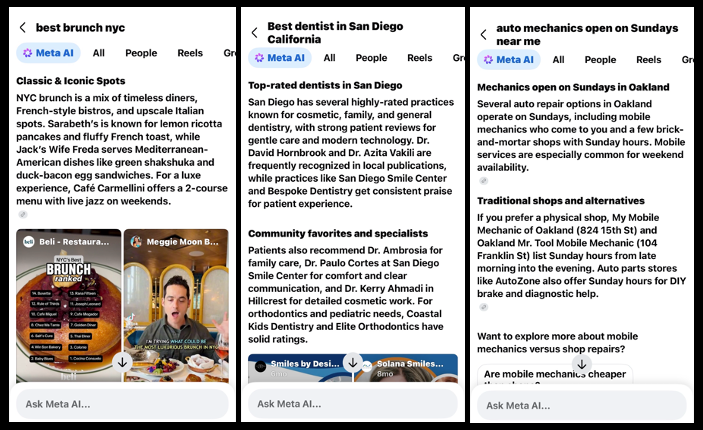
_This post is for subscribers only._
### EP 261 - A Deep Dive Into Google Maps Lists, Local Gems, and the Impact on Restaurant Discovery with Craig Burton
URL: https://www.nearmedia.co/ep-261-a-deep-dive-into-google-maps-lists-local-gems-and-the-impact-on-restaurant-discovery-with-craig-burton/
Last updated: 2026-06-19T18:17:39.000Z
In this episode, local search practitioner Craig Burton joins the team to unpack his discovery of these shifting, algorithmically driven layers within the mobile Google Maps layout. He explains how these updates track real-world user interactions and sentiment patterns rather than static business profiles, providing a critical operational blueprint for marketers who must now transition to an "Evidence Optimization" framework to keep their locations visible.
### The Podcast Deets
**Segment 1: The Google Maps Discovery Overhaul (**[**00:10 – 16:00**](https://www.youtube.com/watch?v=1QRFMCvFQww&ref=nearmedia.co)**)**
The team breaks down the structural differences between Google’s primary local ranking layers: Top Lists (historic standbys), Local Gems (emerging year-over-year favorites), and Trending (highly immediate weekly behavioral spikes). They demonstrate how these are augmented by dynamic "Curated with Gemini" query filters that vertically stack faceted recommendations directly on mobile viewports.
**Segment 2: Decoding "Evidence Optimization" (**[**16:01 – 33:24**](https://www.youtube.com/watch?v=1QRFMCvFQww&t=959s&ref=nearmedia.co)**)**
This section explores the algorithmic inputs that populate these visibility frameworks. The conversation details how Google is shifting past static Google Business Profiles to analyze comprehensive digital evidence—such as natural language sentiment frequencies in local guide text, external editorial authority validations, brand query velocity, mapped real-world location tracking, and aggregated payment provider datasets.
**Segment 3: Tactical Playbooks for Small and Enterprise Brands (**[**33:25 – End**](https://www.youtube.com/watch?v=1QRFMCvFQww&t=1896s&ref=nearmedia.co)**)**
The participants outline actionable strategies for local practitioners navigating these algorithmic updates. They focus on identifying brand coverage gaps, building hyper-localized digital PR footprints, cultivating authentic user-generated imagery, and managing decentralized profile structures for regional storefront networks.
**Key Takeaways**
- **The Death of Static Tuning:** Simply completing a Google Business Profile is no longer sufficient; visibility requires active external confirmation across multiple web platforms.
- **Three Layers of Algorithmic Curation:** Real-time visibility on Maps is stratified into long-term mainstays, annual local gems, and high-frequency weekly trending spikes.
- **The Rise of Gemini Facets:** Traditional horizontal menus are giving way to AI-sorted vertical carousels that guide users through conversational subcategories.
- **Unstructured Signals Drive Ranks:** Frequency of specific sentiment keywords (e.g., "atmosphere"), high-level local guide photos, and offline transaction records are critical local ranking inputs.
### 👇 Watch by topic:
• [00:00](https://www.youtube.com/watch?v=1QRFMCvFQww&ref=nearmedia.co) \- Introduction: Proliferation of Lists on Google Maps
• [01:51](https://www.youtube.com/watch?v=1QRFMCvFQww&t=111s&ref=nearmedia.co) \- Special Guest Craig Burton & Local SEO in Southeast Asia
• [02:40](https://www.youtube.com/watch?v=1QRFMCvFQww&t=160s&ref=nearmedia.co) \- The Tyre Plus Case Study: Instant Corporate Branding Permissions on Maps
• [05:11](https://www.youtube.com/watch?v=1QRFMCvFQww&t=311s&ref=nearmedia.co) \- Discovering the Google Maps List Hack & Dynamic Patterns
• [07:15](https://www.youtube.com/watch?v=1QRFMCvFQww&t=435s&ref=nearmedia.co) \- Live Screen Share Demo: Breaking Down Top Lists, Local Gems, and Trending Spots
• [09:48](https://www.youtube.com/watch?v=1QRFMCvFQww&t=588s&ref=nearmedia.co) \- Curated Publisher Networks vs. Organic Local Guide Curation
• [11:22](https://www.youtube.com/watch?v=1QRFMCvFQww&t=682s&ref=nearmedia.co) \- The "Curated with Gemini" Faceted Search Overhaul
• [14:17](https://www.youtube.com/watch?v=1QRFMCvFQww&t=857s&ref=nearmedia.co) \- UX Design Concerns: The Infinite Scroll & Product Defect Litigation
• [15:38](https://www.youtube.com/watch?v=1QRFMCvFQww&t=938s&ref=nearmedia.co) \- Live Testing the Depth of the Gemini "Rabbit Hole"
• [15:59](https://www.youtube.com/watch?v=1QRFMCvFQww&t=959s&ref=nearmedia.co) \- Passive Location Discovery & Real-Time Event Integration
• [17:05](https://www.youtube.com/watch?v=1QRFMCvFQww&t=1025s&ref=nearmedia.co) \- Monetization & Embedded Sponsored Ads in Curation Lists
• [19:27](https://www.youtube.com/watch?v=1QRFMCvFQww&t=1167s&ref=nearmedia.co) \- Algorithmic Testing: How Google Runs Hundreds of Daily SERP Experiments
• [20:38](https://www.youtube.com/watch?v=1QRFMCvFQww&t=1238s&ref=nearmedia.co) \- Review Sentiment Analysis: The Power of Specific Keyword Association
• [21:51](https://www.youtube.com/watch?v=1QRFMCvFQww&t=1311s&ref=nearmedia.co) \- Why Traditional Home Services Categories Are Excluded From Current Lists
• [24:01](https://www.youtube.com/watch?v=1QRFMCvFQww&t=1441s&ref=nearmedia.co) \- Influencer Curation Partnerships: The Google Dua Lipa Promotion
• [25:59](https://www.youtube.com/watch?v=1QRFMCvFQww&t=1559s&ref=nearmedia.co) \- Ask Maps vs. Traditional Local SERPs: The Probabilistic Challenge for SEOs
• [29:19](https://www.youtube.com/watch?v=1QRFMCvFQww&t=1759s&ref=nearmedia.co) \- Decoding Ranking Factors: Review Velocity, Footfall, and Aggregated Payment Data
• [31:36](https://www.youtube.com/watch?v=1QRFMCvFQww&t=1896s&ref=nearmedia.co) \- The Shift from Search intent to Automated Curation Systems
• [32:56](https://www.youtube.com/watch?v=1QRFMCvFQww&t=1976s&ref=nearmedia.co) \- Unpacking "Evidence Optimization": Managing Signals Across the Web
• [34:05](https://www.youtube.com/watch?v=1QRFMCvFQww&t=2045s&ref=nearmedia.co) \- Execution Strategy: Conducting Audits and Identifying Messaging Gaps
• [36:26](https://www.youtube.com/watch?v=1QRFMCvFQww&t=2186s&ref=nearmedia.co) \- Expanded Best Practices: Digital PR, Review Diversification, and Brand Velocity
• [38:31](https://www.youtube.com/watch?v=1QRFMCvFQww&t=2311s&ref=nearmedia.co) \- The Franchise Penalty: Why Multi-Location Brands Struggle on Curation Maps
• [41:35](https://www.youtube.com/watch?v=1QRFMCvFQww&t=2495s&ref=nearmedia.co) \- Future Horizons: Expansion into Hospitality, Hotels, and Real-World Digital Twins
• [42:54](https://www.youtube.com/watch?v=1QRFMCvFQww&t=2574s&ref=nearmedia.co) \- Maps as Google's Free Data Asset vs. The Complexity of the Interface
• [45:07](https://www.youtube.com/watch?v=1QRFMCvFQww&t=2707s&ref=nearmedia.co) \- The New Gemini Business Manager Architecture & Closing Remarks
### Related Links
[Google Business Profile Management Thailand | CTB Digital MarketingExpert GBP setup, optimisation & review management in Thailand. From single locations to 500+ franchise networks.CTB Digital MarketingCraig Burton](https://www.ctbmarketing.com/blog/google-maps-lists?ref=nearmedia.co)
[#googlemaps #gemini #localsearch | Michael B. SnowDiscovered a new “Curated with Gemini” feature now appearing in Google Maps for general food & beverage searches. The feature appears after the 4th organic result when it does appear. Selecting an option just triggers a new traditional maps search for that query. For Food & Beverage brands wanting to appear in these Gemini curated results, make sure you: 1\. Upload photos that help Google understand the vibe of your business. If you have outdoor seating, make sure you upload images that show diners enjoying a meal in that area. If you have a great view, show it. 2\. Upload your full menu to Google. If you want to be found for “pancake places” make sure your menu says you offer them. And upload photos that show it. 3\. Be social. Publish posts with copy and images that align with the curated groups you want to appear for. 4\. Make it easy for customers to leave you a review. Google learns from what your customers say. If your customers say your business has a great view, or that you’re a great place to get waffles, so will Google. 5\. Make sure your Local Landing Pages include content (copy & images) that supports all of the above. Gemini (still) does not have full access to all your information (reviews, photos, attributes, etc.) in the Google Maps Database; so if the relevant information from your profile isn’t returned in the fan out stage, Gemini doesn’t know about it. 🙄 #GoogleMaps #Gemini #LocalSearch SOCi.aiLinkedInMichael B. Snow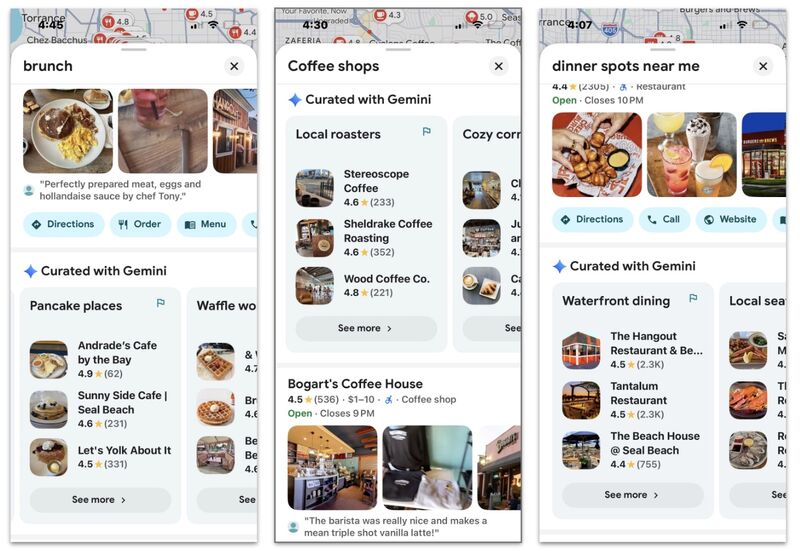](https://www.linkedin.com/posts/michael-b-snow-a7b7bb3%5Fgooglemaps-gemini-localsearch-activity-7467367072650514432-lizO?utm%5Fsource=share&utm%5Fmedium=member%5Fdesktop&rcm=ACoAAABJYd0BVvncqZgHyXeI1HxFJVbG0PlDSdM)
[3 Maps updates to make summer travel a breezeOur new updates will help you discover and customize lists, and learn about where to go when you’re on the go.GoogleAndrew Duchi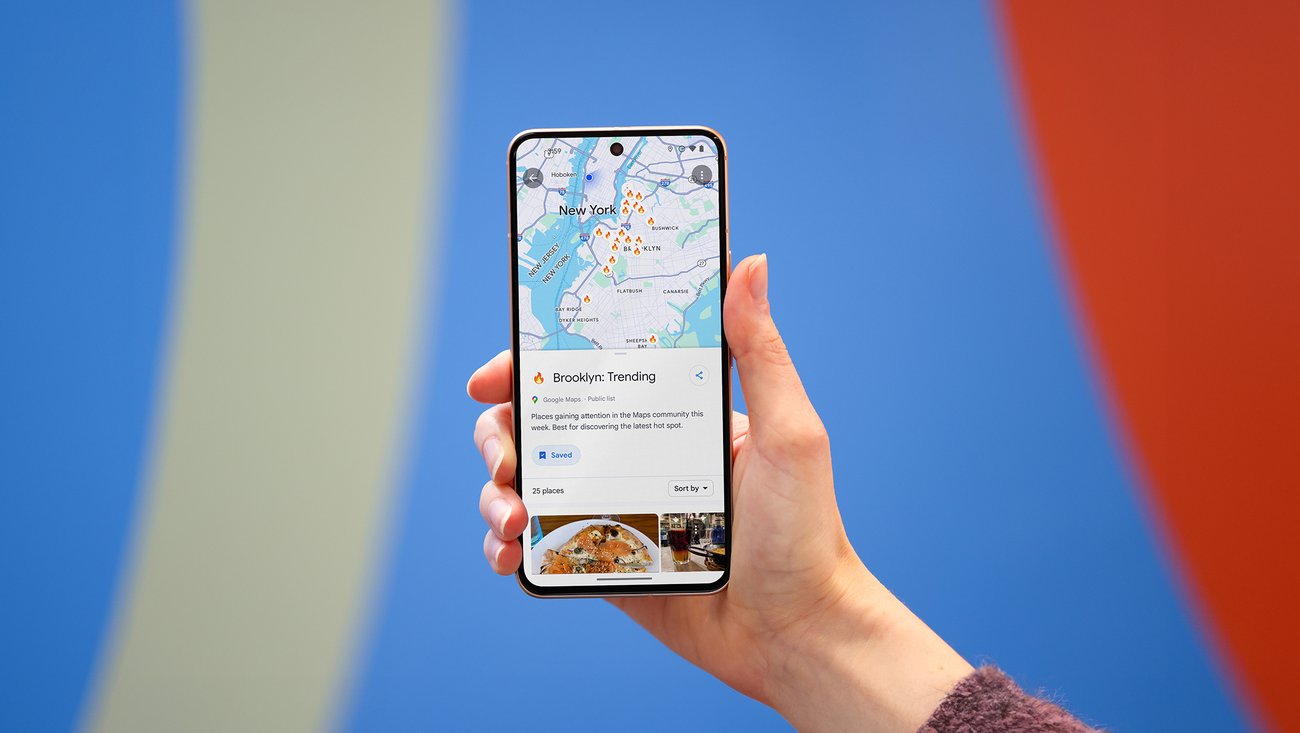](https://blog.google/products-and-platforms/products/maps/google-maps-updates-summer-travel-2024/?ref=nearmedia.co)
[First Look: AI-Organized Restaurant ResultsEarlier this year we saw a number of tests of AI generated local results for restaurants and bars. Google announced a few days ago that these are now rolling out with more to come.AmazonMike Blumenthal](https://www.nearmedia.co/first-look-ai-organized-restaurant-results-2/)
Interested in sponsoring this podcast or our newsletters please reach out to [mblumenthal@nearmedia.co](mailto:mblumenthal@nearmedia.co)
[E-mail Mike ](mailto:mblumenthal@nearmedia.co)
### Full Transcript -->
# Near Memo Episode 261: The Google Maps Lists Disruption
Here is the consolidated, publication-ready transcript. Spoken stutters, conversational filler, and repetitive sentence fragments have been polished out while preserving the exact technical insights, terminology, and natural tone of the speakers.
**Near Memo Episode 261: The Google Maps Lists Disruption**
**Greg:** Hey everybody, here we are again, episode 261 of the Near Memo. Today we are joined by Craig Burton from the Greater Bangkok metropolitan area in Thailand, and of course, the effervescent Mike Blumenthal, as always, is here with me. We are here today in our ongoing quest to discover how to deal with all the changes that Google is implementing.
**Craig Burton:** Yeah.
**Greg:** And they seem to just keep coming and coming, which is exciting and also kind of exhausting in a certain way. Today we're going to be talking about lists. Craig discovered a bunch of new lists, or rather the intensification of a list strategy that Google has been implementing around Maps, and we are going to be unpacking that today. It's pretty interesting, and it points to a number of things that Google is trying to do with Maps. We'll talk through that and what the implications are for marketers. So welcome, Craig. That was kind of a lengthy introduction, but welcome. How are you doing this evening from Bangkok, Thailand?
**Craig Burton:** Hello. Yeah, very good. Thank you. Very honored to be here. Everything's good. It's the opposite time of day for us, isn't it? You're in the morning, and I'm heading to bed.
**Greg:** And Mike is somewhere in between.
**Mike B:** I mean, it's still ten-thirty here, but it's still early morning from my point of view.
**Craig Burton:** All right.
**Greg:** So Craig, just give us a little bit of context about what you do and what your focus is, and then we can jump into the conversation.
**Craig Burton:** Okay. Well, as you mentioned, I live in Thailand, but I'm originally from the UK. If you can tell by my accent, I've been here for about 20 years. I've got a sales and marketing background, but I fully transferred over into digital marketing about 15 years ago with a focus on local SEO. I've been through various agencies and run different agencies, but the highlight of my career was serving as the head of the digital platform for Michelin in Southeast Asia, where we really pushed and did well with local SEO for the Tyre Plus brand. At the moment now—
**Mike B:** Could I interrupt real quickly? Do you mind telling the story about the permissions you were given as a local SEO in that context? I think our listeners would find it fascinating.
**Craig Burton:** Okay, yeah. One of the major things that we did when originally setting up for Tyre Plus is that a lot of the businesses are very old legacy, mom-and-pop type businesses. Their business profiles were on Maps historically from way back when Google used to add them automatically. A lot of them had these really old, long names, and one of the first things that we wanted to do was clean up the naming convention. We had lots of trouble trying to speak to the dealers directly because a lot of them didn't speak English. Then, one of our contacts in France got Google to give me a personal email address that I could do anything on Maps with. I could literally edit anybody's.
**Mike B:** So you were authorized to change the names to the corporate branding that you wanted for these independent businesses? So Joe's Trading Company became Joe's Michelin Tire store or Michelin Tire?
**Craig Burton:** Yeah, overnight. Every store became "Tyre Plus" followed by the location. Michelin themselves are not a tire seller; they're a manufacturer. They do all their selling through networks, the main one being Tyre Plus.
**Mike B:** I see. So it used the Michelin branding, and you were individually allowed to go in and change all these names—
**Craig Burton:** To all these locations that had never spoken to me and had no idea who I was. They just woke up with an optimized page.
**Greg:** How did they react to that? You just did that without informing them, I assume.
**Craig Burton:** No, this didn't happen overnight. It was after many, many months of trying and failing to get through directly. We would have key account managers go see the dealers and try to explain it to them, but it was just taking too long. A lot of the dealers came on board and were very happy about it. Some of the dealers, not so much, because they wanted their mom-and-pop shop name that they'd had for 50 years, you know?
But I've got the evidence: over the whole network in Malaysia, they saw a 45% visibility increase across the network in one month just by changing their name. It turned individual locations into an authority overnight. All these individual places instantly became the same entity.
**Mike B:** Thank you for that story.
**Greg:** So let's talk about why we're here today. You wrote a blog post that Darren Shaw commented on on LinkedIn. There was a discussion about it, I saw it that way, and I thought it was very interesting and that we should talk about it in more detail. Tell us about your discovery and what lists you were unearthing here as a broad matter, and then we'll show a demo of what those look like.
**Craig Burton:** Okay. Well, it stemmed from my envy of not having Ask Maps yet. I tried to recreate it using a Google demo, and when I started seeing the locations, I randomly found the hack that Mike is going to show us where you could generate or have these lists appear. I think most people didn't realize that the key is you have to save them, because a lot of them appear and disappear. Some appear at certain times of day; some are very random. But when you start collecting them, you start seeing patterns. It was an initial surprise to me because I'd never seen them and didn't know what they were. When I was messaging people, I was getting the same response back—nobody knew what they were.
**Greg:** What kinds of queries were you using to generate them, just out of curiosity?
**Craig Burton:** I was testing backwards. When I found the lists, I couldn't understand why certain restaurants were on there. Some made no normal sense under what we would say was an optimized profile, or they didn't have a great website or whatever. But the key was that it was mainly down to user-generated content (UGC) review quality and how recent the reviews were, plus a lot of other things that we're probably going to go into a little bit later on. I saw the list first and then wanted to reverse-engineer why it was showing them.
**Greg:** Okay. Mike is going to take us through a demo that's going to produce a number of these lists.
**Mike B:** As Craig pointed out, you scroll to the area you're interested in—in this case, Lower Manhattan. Below it, Google typically shows trending results. They show different types of results, but the top category is "Trending on Maps". Do you want to talk about that, Craig?
**Craig Burton:** Yeah, I'll give you the official definitions for the main three types of lists from GoogleCraig Burton: Yeah, I'll give you the official definitions for the main three types of lists from Google. First, you have the Top List, which features area mainstays with the most all-time interest in the Maps community—best for a spot that's tried and true**Top List**. Next are Local Gems, which are emerging favorites in the Maps community from the past year, best for dining like a local**Local Gems**. Then you have Trending, which highlights places gaining attention in the Maps community this week, best for discovering the latest hotspot**Trending**.
The other three categories are based on my own definitions: publisher lists, brand and editorial lists, and individual creator listsThe other three categories are based on my own definitions: publisher lists, brand and editorial lists, and individual creator lists.
**Greg:** So you were just reading Google's official statements for those first three.
**Craig Burton:** Yes, the first three are Google's. The publisher, brand, and individual lists are my definitions.
**Mike B:** Just a little bit of history: Google has always rewarded popular places on Maps. In fact, there was a marketing effort back in 2009 where they'd send out a little sticker if your business was searched frequently. So this is a long-standing concept. They are now surfacing them visually, a trend that really started in late 2024\. I believe the "Trending" lists are driven by review quantities during a very recent period. For the "Top List" mainstays, it's calculated over a longer window, combining reviews with driving directions, repeat interactions, and baseline foot traffic.
**Greg:** Well, they have all that visitation data. The busyness graph is entirely based on Android foot traffic.
**Mike B:** Right, and what they can pull from iPhone users via non-consensual tracking. Do you want to show the curated lists here? These come from either well-known publishing resources like The New York Times, or from Local Guides who are specialists in reviewing certain types of food and create their own lists*The New York Times*. For example, this one is from a Local Guide who has a top New York pizza list. But then we go to the "25 Best Restaurants in New York," which is a curated list from The Infatuation, an online restaurant review platform*The Infatuation*.
Then there's the "Lower Manhattan Local Gems," which looks like a public curated list with 15 results. As Craig pointed out, what shows up can feel sort of random. In this specific layout, the long, detailed description written by the business owner actually shows up. But Google always shows you the citations indicating which curated list the business is mentioned on.
**Craig Burton:** Nine times out of ten, you'll find a quite strong citation from a reputable source that does regular restaurant reviews.
**Greg:** So Craig, you identified six types of lists, but then there are also Gemini-curated lists. Mike, are you able to generate that?
**Mike B:** Yeah, I believe I can get there if I clear this search. Google doesn't do a great job of surfacing it easily. If I search for "dinner Manhattan", we get a couple of sponsored results, and then several well-known restaurants like Gramercy Tavern.
**Craig Burton:** And look at what you're seeing here—it's user reviews being quoted in the snippet, not publisher citations.
**Mike B:** Right, these are reviews being quoted. Interestingly, some of these locations don't even have that many reviews; Gramercy Tavern has over 4,900, whereas The Landing only has 279\. But as you scroll down past another ad, you come to the "Curated with Gemini" lists. These are essentially faceted views of a fairly high-level query. For "dinners," it breaks it down into subcategories like dinners with rooftop views, Broadway bites, Greenwich Village eats, Lower East Side dining, Upper West Side dining, and Brooklyn's Best. It's a number of faceted subcategory lists.
**Greg:** These are sort of quasi-"People Also Ask" or "People Also Search For" kinds of lists.
**Mike B:** Yes. They look very similar to the AI-organized categories we saw in organic search in late 2024\. When you typed "cocktails in Manhattan," it would generate carousels organized horizontally. Here, they're organized vertically, which is much more phone-facing. But the technology looks very similar.
**Greg:** Click on "Brooklyn's Best" and let's see what that page looks like. Are we going to get an AI-organized page?
**Mike B:** No, you're getting a standard result layout: two ads and then a number of listings. But then as you scroll down, you get yet another "Curated with Gemini" list layer. Now it's offering brunch in Brooklyn, pizza joints in Brooklyn, waterfront dining, neighborhood bars, and street food.
**Greg:** It's turtles all the way down. They can do it endlessly, presumably.
**Mike B:** They can, which is one of the points I made in our green room. While this serves to satisfy typical user queries and faceted searches, it also serves Google by creating an endless array of possible interactions.
**Craig Burton:** It's the infinite scroll, isn't it?
**Mike B:** It is the infinite scroll down the rabbit hole simultaneously. Poor Alice; she has an iPhone in her hand as she's falling down—
**Greg:** It kind of is. The interesting thing about the infinite scroll, just to digress for a moment, is the ongoing litigation strategy in the United States where plaintiffs are trying to hold platforms liable for product design. They've moved from attacking the content—which is granted immunity in the US—to a product defect litigation strategy, similar to what was used against Big Tobacco. They argue there is something inherently addictive or defective about the feature. The infinite scroll was recently flagged in a Los Angeles, California trial as a feature intentionally designed to keep people addicted to their own detriment, and there are federal court cases coming up using the same theory. So the infinite scroll has been legally tagged as a product defect, at least preliminarily, in the US.
**Mike B:** In Google's defense here, while you were talking, I was experimenting with the app. I found that this specific rabbit hole is actually only three clicks deep. We went from dinners to Brooklyn, to Brooklyn's best, to Brooklyn happy hours, and that was the end of it. So it isn't completely endless.
**Greg:** Okay, so my point is totally moot!
**Craig Burton:** No, but there is another list type that pops up depending on the time of day, and that relates to local events happening. If you are mapping out a daily itinerary via Ask Maps, it will add lists for events in the area. You could say, "I want to go have dinner, then go to a park, and then go for a coffee," and it will pull up those different placesYou could say, "I want to go have dinner, then go to a park, and then go for a coffee," and it will pull up those different places. I've seen lists of just local events happening, though I haven't been able to save one yet.
**Greg:** Maps has historically been a search-based interface where you put in a query, got a result, and made a decision based on that. These lists seem to be much more about passive discovery. Why do you think Google is doing that? Is it because it's genuinely helpful, or is there something else going on?
**Craig Burton:** From a user's point of view, I think they are genuinely helpful. I've personally discovered some really great restaurants in my area that I would never have heard of otherwise. But to speculate on the ulterior motive, at the end of the day, Google is going to monetize it. I've already seen curated lists with embedded sponsored results, so even these layouts are getting hijacked for ad inventory.
**Greg:** So it's more ad inventory, in one sense. I'm not entirely cynical about Google; I do think some of the folks internally are genuinely trying to create a better user experience or leverage AI productively. But there is always a companion, largely unacknowledged motivation around monetization. This simply creates more opportunities to show ads and drive clicks.
The curious thing to me is that I am a big fan of lists because they expedite decision-making. In a way, that's what people are trying to achieve with AI and Ask Maps: give me a short, relevant list of choices so I can decide quickly without scrolling or executing endless searches. So there is a lot of value there. However, some lists are much more prominent than others. The "Local Vibe" carousel Mike showed has highly visible cards as you scroll up, but other elements are buried ten levels deep. Why do you think some of these formats are easily discovered while others remain hidden?
**Craig Burton:** That's a difficult one, and at the moment, it's mostly speculation. I'm not going to pretend we've cracked any hidden codes. In the few weeks since I wrote that initial blog post, so much has happened in local search and it's moving so quickly that it's hard to tell what the final direction is.
Years ago, there used to be quotes about how many hundreds of experiments Google runs in search results per day globally. People always fixate on the massive core algorithm updates, but Google is constantly testing variations every day. I think they are trying to be helpful to the end user, but it also carries whiffs of the old Google+ strategy of trying to be more social. They've made these lists much easier to share compared to the old My Maps feature. It's too early to say what the definitive endpoint is, but from a user perspective, it's a good feature.
**Greg:** Let's talk about where the data comes from behind the scenes to build these lists. Some are dynamic, and some are static. Mike, feel free to weigh in on this as well.
**Mike B:** Sure. I think we need to break the lists out by category. Craig, speak to the "Trending" lists first and how you think those are generated.
**Craig Burton:** The "Trending" lists are probably the easiest example to explain. They always seem to rely on review commentary specifically mentioning the "atmosphere". Every single time, you will see very good reviews where the word "atmosphere" appears repeatedly. The reviews aren't necessarily from elite-level users, but the Local Guides are usually a couple of levels up and known for consistent reviews. So my jumping-to-conclusion factor is that specific sentiment keywords are a heavy trigger.
**Greg:** And to clarify, we are talking exclusively about restaurants here.
**Craig Burton:** It's all food and beverage restaurants at the moment. These all fall under what I classify as the "foodie drop".
**Greg:** That's an important distinction. These lists are not currently extending into home services or more utilitarian business categories.
**Mike B:** Right, you aren't seeing a "Top 25 Most Crooked Roofers in Houston" list.
**Greg:** You know, Yahoo is doing some interesting things with AI lists in local search, and they actually do extend it to home services. Similarly, Yelp has algorithmically generated "Top 10" lists for virtually every category they operate, and those have started appearing in various AI contexts like ChatGPT. If you need a plumber, getting a quick, vetted list of the five best plumbers in your area is incredibly useful. But right now, Google seems to be limiting this to restaurants and probably hotels.
**Craig Burton:** Hospitality and accommodation would be the next logical step.
**Mike B:** To summarize on "Trending," from my point of view, it's a short-term view of highly active locations getting sudden spikes in foot traffic or review velocity, with the reviews expressing very specific sentiments. The "Top List" mainstays use a similar calculation but over a much longer haul—steady brand searches, steady driving directions, and positive reviews over the course of a year or moreThe "Top List" mainstays use a similar calculation but over a much longer haul—steady brand searches, steady driving directions, and positive reviews over the course of a year or more. Craig, do you want to speak to some of the other variations, like the influencer lists?
**Craig Burton:** Yes, one of the prominent examples we discussed in the green room was a list curated by a major celebrity influencer. Google actually published a co-branded blog post promoting her specific travel listsGoogle actually published a co-branded blog post promoting her specific travel lists.
**Greg:** You're talking about Dua Lipa?
**Craig Burton:** Yes, she's based in the UK and has lists all over the place, including America. It surprised me because she isn't a traditional food blogger, but Google is clearly leveraging her star power to build mass user awareness for the list feature itself. Even so, these lists remain hidden in the standard interface. Some only appear contextually based on the time of day, like "Lunchtime Picks" or "Evening Options," and you can't manually save themSome only appear contextually based on the time of day, like "Lunchtime Picks" or "Evening Options," and you can't manually save them.
**Mike B:** The "Gemini Gems" are also incredibly buried. In the dinner search I ran, they were hidden 10 or 12 results deep. Because these Gemini-curated lists are essentially AI-informed search results, Google is likely running a quiet user interaction test without highlighting them prominently.
The underlying problem with Maps right now is the utter complexity of the interface. When we were trying to coordinate in the green room, it was difficult to even communicate where certain features were located or how to surface them.
**Craig Burton:** Exactly. But isn't their ultimate goal to move us away from using a visual interface entirely? They want us to eventually just talk to the system.
**Mike B:** Who knows what they want, besides advertising revenue.
**Greg:** In my opinion, the best AI experience Google currently offers is Ask Maps, precisely because it is so simple. You have a massive degree of control; you can type a descriptive, 40-word query, and it responds directly to your specific intent. In contrast, this massive influx of list components makes the standard Maps interface feel incredibly cluttered—it's almost analogous to Microsoft Excel. Most everyday users are only going to utilize the very top layer of functionality because the density of information hidden 16 levels deep is something they will never discover. Google could simplify this dramatically.
**Mike B:** To demonstrate your point, I just entered an Ask Maps query: "trending restaurants in Manhattan that have been open a short time, show on a number of lists, and are located in Chelsea."*"trending restaurants in Manhattan that have been open a short time, show on a number of lists, and are located in Chelsea."* The system immediately pinpointed ten highly specific locations across Chelsea, putting it all together in a much cleaner, quicker list without a single adThe system immediately pinpointed ten highly specific locations across Chelsea, putting it all together in a much cleaner, quicker list without a single ad. I agree completely that it's a vastly superior interface.
**Craig Burton:** But here is the major gap: are those the same restaurants you would see if you ran a traditional organic search? In my testing, they are not, and that is the scary part for local SEOs.
**Mike B:** Let's check. If I search for a standard "Indian restaurant in Chelsea," the results are completely different. Granted, my Ask Maps query specifically requested newly opened places, but the specific venue featured in the AI answer doesn't even show up under the "Curated with Gemini" section in standard searchGranted, my Ask Maps query specifically requested newly opened places, but the specific venue featured in the AI answer doesn't even show up under the "Curated with Gemini" section in standard search. It's a completely different answer. This demonstrates that Ask Maps is highly probabilistic and personalized, whereas traditional map results are more deterministic.
**Greg:** Let's get into the tactical side of this. What are the core ranking factors driving these list placements, and what should marketers be doing? Reviews are clearly central, but what else is influencing this?
**Craig Burton:** Google explicitly states that a massive portion of this is driven by user-generated content—what real people are saying across reviews, posts, and photos. Because of this, I am actively advising clients to focus less on traditional review volume and focus more on getting customers to upload geotagged photos and videos when they visit.
**Greg:** What about external data material, like editorial content, social media, or blog posts? To what degree are those factoring in?
**Craig Burton:** We aren't seeing direct inputs from platforms like YouTube, TikTok, or Reddit showing up in these list extractions yet, even though they represent a ton of local talking points.
**Greg:** Except those external social signals are occasionally starting to surface directly on Google Business Profiles now.
**Mike B:** They are just starting to integrate that data.
**Craig Burton:** It's the next logical step for SEO in general. Google is analyzing every consumer touchpoint to compile aggregate evidence on a business location.
**Mike B:** I would also suggest that brand query velocity plays a massive historic and current role. Real-world busyness metrics, driving direction requests, and even point-of-sale data influence this; I recall reading that Google actively purchases aggregated credit card transaction data to verify actual consumer purchase volume at specific locations.
**Greg:** They've had credit card data from major providers like MasterCard for a long time. Historically, Google Maps has been a highly transactional utility used for two primary queries: direct brand lookups or generic "category near me" searches. Ask Maps and these curated lists broaden the consumer use cases dramatically.
Tactically, there is a lot of new advice regarding how to manage a Google Business Profile. It's no longer a "set it and forget it" task; it has to be treated as a living, breathing asset. Craig, you've used the term "Evidence Optimization" to describe this shift over traditional optimization**"Evidence Optimization"**. Can you elaborate on that?
**Craig Burton:** Traditionally, an agency would optimize a business profile, schedule regular posts, and set up a basic review acquisition strategy. But Evidence Optimization introduces an entirely separate layer: managing the digital proof behind the answers*behind*. Google is looking far beyond your official profile to gather external validation to answer complex user queries. Marketers must perform audits to uncover structural gaps in their outward digital footprint—not just on their profile, but deep within customer reviews, Q&As, and third-party mentions.
**Greg:** How exactly do you identify those messaging gaps?
**Craig Burton:** Start with a rigorous self-audit. If you are a restaurant owner, look at the local lists appearing in your market and evaluate why your competitors are featured instead of you. More often than not, you'll find you are missing specific sentiment keywords in your reviews, your review frequency has dropped, or you lack citations in the local lifestyle publications Google uses as trusted sources. This is going to turn digital PR and localized blog outreach into a major necessity for local businesses. The absolute key is that people have to be talking about your brand consistently across the webThe absolute key is that people have to be talking about your brand consistently across the web.
**Greg:** There's a major debate right now over whether AI optimization is its own distinct discipline or merely an extension of core SEO. We don't need to rehash that entire argument here, but current recommendations span review diversification, digital PR, and earning authoritative editorial mentions. If an agency executes good local SEO alongside these expanded best practices, does that naturally cover them for these hidden lists, or do they need to build specific tactics targeted directly at lists?
**Craig Burton:** At ground level, the harsh reality is that the vast majority of local businesses still aren't doing anything with their business profiles.
**Greg:** Right, a huge percentage of local listings remain completely unclaimed.
**Craig Burton:** Exactly. So for most businesses, I advise starting with the foundational basics: claim and optimize your profile, fill out every single data field, and proactively ask customers for detailed reviews. But if you are an agency operating at a higher level with a proper budget, your roadmap absolutely must include local digital PR and deliberate outreach to get your clients named in prominent regional lifestyle lists.
**Greg:** One quick point we neglected to cover is multi-location brands and franchises. In our current restaurant context, major corporate chains are visibly absent from these algorithmic curation lists. What should a multi-location brand think about in this environment?
**Craig Burton:** Honestly, I wouldn't sweat it too much. I am seeing zero franchise penetration in these specific lists. My advice for multi-location brands remains consistent: you have to look past corporate headquarters and actively educate your individual store managers. Real, high-quality, authentic evidence and content always bubble up directly from the local store level, not from a detached marketing agency or corporate HQ.
**Greg:** In this framework, nobody expects McDonald's to make its way onto a "Local Gems" list, because people searching for McDonald's perform direct, transactional brand lookups. The entities that will really suffer here are the smaller, mid-market multi-location brands that lack massive household name recognition. A brand like Shake Shack is a place a discriminating burger eater might go, but if they aren't top-of-mind or visible on an automated "Top List," they lose out on discovery because they don't command the raw baseline search volume of a McDonald's.
As we wrap up, let's look at the future. Google has an array of fragmented interfaces: traditional search, Maps, Ask Maps, AI Overviews, and GeminiGoogle has an array of fragmented interfaces: traditional search, Maps, Ask Maps, AI Overviews, and Gemini. What is the future of these lists, and are we going to see them integrated across Google's alternative surfaces?
**Craig Burton:** The natural trajectory is an expansion into hospitality, hotels, and travel accommodation. They are testing exclusively with restaurants right now, but hospitality is the next logical step.
**Greg:** Should marketers be treating this as a high priority because it's going to expand into major AI overviews, or is it too early?
**Craig Burton:** Time will tell, but right now I'd caution against shiny object syndrome. Focus heavily on the basics. There is a lot of buzzwords in the industry right now, but ultimately, it's still SEOThere is a lot of buzzwords in the industry right now, but ultimately, it's still SEO. Framing it differently can be useful to open up new lines of revenue with corporate clients, but fundamentally, the core discipline hasn't changed.
**Greg:** Most of our audience would probably agree with that sentiment. Mike, any final thoughts?
**Mike B:** I've always viewed Google Maps as a fascinating, sort of also-ran product to core Google Search. Restaurants generate massive query volume but represents a relatively low-volume ad ecosystem for Google. Consequently, Google treats Maps as a massive data accumulation point rather than a pure income driver. I can only hope that the conversational Ask Maps engine eventually consolidates this absolute clutter of menus, tabs, chiclets, and drop-down carousels into a clean, dynamic discovery environment that is actually easy to useI can only hope that the conversational Ask Maps engine eventually consolidates this absolute clutter of menus, tabs, chiclets, and drop-down carousels into a clean, dynamic discovery environment that is actually easy to use.
**Craig Burton:** You have to look at how incredibly generous Google has been to Maps users and Local Guides for years. Think about the massive, unfathomable volumes of proprietary training data we hand over to them completely for free every single day in the form of geotagged photos, food reviews, and videos. If they are trying to build an AI digital twin of the real world, the community is building it for them.
**Mike B:** Absolutely, it's a massive competitive advantage for Google, and local data is critically important. I just want them to service it more cleanly, and Ask Maps is a step in that direction.
**Greg:** From a pure consumer standpoint, the single best AI product experience Google offers today is Ask Maps. The quality is exceptionally high, and while they can still clean up the UI, it's an instance where AI genuinely makes the underlying product useful. Go ahead, Craig.
**Craig Burton:** Let's see what happens now that they've introduced Gemini directly into the Business Profile manager app. I haven't received the update yet, but it's going to be significant for business owners and agenciesI haven't received the update yet, but it's going to be significant for business owners and agencies.
**Mike B:** To be slightly crude, it looks to me like an AI circle jerk. You have Gemini operating as the basic information resource, Gemini divulging the information to consumers, and Gemini writing the updates for the business owners. It's a completely synthetic, circular ecosystem, so we'll see how it plays out.
**Craig Burton:** We are living in a simulation!
**Greg:** On that conspiratorial note, we will conclude today's discussion. Craig Burton, thanks so much for joining us. This is an incredibly exciting time to be in local SEO, and everything is changing so fast that it's tough to stay on top of it all. Thanks to everybody for listening. Remember to tell your friends, like, and subscribe. Have a great rest of your week.
### Siri AI, Z-Click 68%, Gemini + GBP, AI Liability, Siri Search
URL: https://www.nearmedia.co/siri-ai-z-click-68-gemini-gbp-ai-liability-siri-search/
Last updated: 2026-06-10T22:31:02.000Z
### Siri AI Seems to Work
The pre-recorded [Apple keynote](https://www.youtube.com/watch?v=hF8swzNR1-o&ref=nearmedia.co) this week at the company's WWDC kickoff was dominated by [Siri](https://www.apple.com/newsroom/2026/06/apple-introduces-siri-ai-a-profoundly-more-capable-and-personal-assistant/?ref=nearmedia.co) and Apple Intelligence. There were other announcements, but the main focus was AI and long-promised Siri improvements. Because prior Apple discussions of Siri and AI have largely been vaporware, the company took the unusual step of doing a "live demo" to showcase Siri's AI capabilities – as if to say, "yes, they're real." Siri can now search through iMessages, photos, and Apple calendar to answer questions, take actions inside (selected) apps, pull information and context from your screen, use the camera to search and identify objects, play music, and sync your conversation history across Apple devices with a new Siri app. It will have new "more expressive" voices and better dictation accuracy (let's hope). Siri will also use "world knowledge" (knowledge graph + web index) to answer questions. It cites sources and allows you to click-through. This is Apple Search effectively. There was nothing announced that Google hasn't already done with AI – and there were no significant "agentic" Siri features – but the key is that this is going to be the assistant most directly and deeply integrated with the iPhone, which means it will probably be the most personalized assistant out of the gate. If it actually works, which must still be seen, it will have massive distribution. Below I discuss how Siri AI could affect Google search and other AIs. It will be available later this year on the most recent devices, but not in the EU or China.
**Siri's New Capabilities**
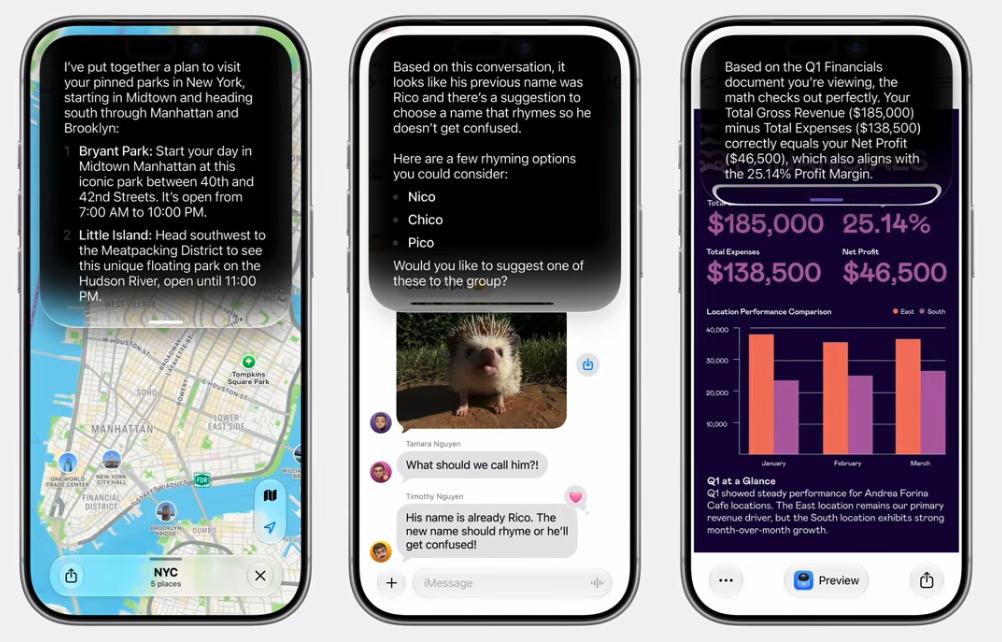
Source: Apple
_This post is for subscribers only._
### EP 260 - Goodbye Traffic, Hello Sales: The New Playbook for Local SEO Visibility with Cindy Krum, Gregg Gifford & Krystal Tang - Part 2
URL: https://www.nearmedia.co/ep-260-goodbye-traffic-hello-sales-the-new-playbook-for-local-seo-visibility-with-cindy-krum-gregg-gifford-krystal-tang-part-2/
Last updated: 2026-06-10T16:44:05.000Z
As Google shifts toward an action-oriented, zero-click environment, businesses can no longer rely on vanity traffic metrics and standard website content to win customers. In Part 2 of this post Google I/O deep-dive analysis, our expert panel lays out a clear strategy for building local brand permanence. Because modern search paths run across YouTube, TikTok, and Reddit, brands must transition to an omni-channel presence where their website acts primarily as a high-quality data feed. Survival requires avoiding generic, automated AI-generated content in favor of unique internal data tracking, creating personality-driven video assets, and building a broad web consensus that algorithms can trust and recommend.
### The Podcast Deets
**Segment 1: The Attribution Crisis and the New Multi-Channel Reality** ([00:00 – 11:01](https://www.youtube.com/watch?v=jjDBNuU1luI&t=46s&ref=nearmedia.co))
- The panel addresses the fragmentation of traditional customer paths, noting that younger demographics frequently bypass Google entirely in favor of search behaviors on TikTok, YouTube, and specialized forums like Reddit. This reality requires an immediate pivot away from insular website tracking toward omni-channel content strategies. Greg Gifford highlights an important mindset shift: while brands are losing top-of-funnel informational blog traffic to AI summaries, actual high-intent transactional search volumes remain steady. Marketers must accept a future with less precise attribution and refocus their core KPIs on direct bottom-line revenue.
**Segment 2: Video SEO and Content Differentiation Frameworks** ( [11:01 – 26:09](https://www.youtube.com/watch?v=jjDBNuU1luI&t=661s&ref=nearmedia.co))
- The discussion highlights short-form vertical video production as a primary growth channel for modern visibility. Because video elements serve as highly cited visual sources within native AI overviews, the panel urges businesses to produce human-centric, personality-focused videos to build brand permanence across platforms. The team strongly warns against using automated LLMs to pump out commoditized textual pages. Cindy Krum models a process for developing detailed comparison frameworks, showing that true differentiation comes from unique data and value metrics that automated AI engines cannot synthesize on their own.
**Segment 3: Internal Data Mining and Strategic Review Acquisition** ( [26:09 – End of Episode](https://www.youtube.com/watch?v=jjDBNuU1luI&t=1581s&ref=nearmedia.co))
- The roundtable wraps up with clear instructions on leveraging internal corporate data. Panelists explain how text-mining your support history and sales presentation transcripts can uncover high-intent audience questions to optimize your content gap strategy. Finally, the group shares a safe, creative framework for review optimization: by routing users to an internal feedback landing page that features open-ended, contextual questions, businesses can naturally guide users to compose rich, descriptive reviews without triggering platform spam filters.
**Key Takeaways**
- **Stop Obsessing Over Traffic:** Clicks are losing their value as a primary marketing indicator. High-intent consumers want rapid answers; your strategy must prioritize bottom-line sales conversions over superficial informational traffic metrics.
- **Ditch Generic AI Content:** Pumping out standard text blocks creates commoditized pages that search engines will struggle to rank. You must build unique value through human insight, internal team expertise, and deep vertical metrics.
- **Build Web Consensus:** AI recommendation engines look for confirmation across the web before suggesting a business. True visibility means seeding consistent digital profiles, securing broad reviews across varied platforms, and developing cross-channel video coverage.
👇 Watch by topic:
[00:00](https://www.youtube.com/watch?v=jjDBNuU1luI&ref=nearmedia.co) \- Introduction: Tactical Marketing in the AI Era
[00:46](https://www.youtube.com/watch?v=jjDBNuU1luI&t=46s&ref=nearmedia.co) \- AI Optimization vs. Traditional SEO Frameworks
[02:07](https://www.youtube.com/watch?v=jjDBNuU1luI&t=127s&ref=nearmedia.co) \- The Attribution Crisis: Moving Beyond Traffic & Clicks
[03:03](https://www.youtube.com/watch?v=jjDBNuU1luI&t=183s&ref=nearmedia.co) \- Local Brand Building: What Differentiates Your Business?
[05:23](https://www.youtube.com/watch?v=jjDBNuU1luI&t=323s&ref=nearmedia.co) \- The Commoditization Trap: Breaking Out of Mediocrity
[06:31](https://www.youtube.com/watch?v=jjDBNuU1luI&t=391s&ref=nearmedia.co) \- Video SEO: Connecting via Social & AI Overviews
[08:14](https://www.youtube.com/watch?v=jjDBNuU1luI&t=494s&ref=nearmedia.co) \- YouTube Case Study: Driving 30% AI Visibility Gains
[10:02](https://www.youtube.com/watch?v=jjDBNuU1luI&t=602s&ref=nearmedia.co) \- Short-Form Algorithmic Trajectories & Shelf Lives
[11:01](https://www.youtube.com/watch?v=jjDBNuU1luI&t=661s&ref=nearmedia.co) \- Expanding GMB / GBP Focus Beyond Basic Ranking
[13:30](https://www.youtube.com/watch?v=jjDBNuU1luI&t=810s&ref=nearmedia.co) \- The Media Mix: YouTube Ads vs. Traditional Local TV
[15:52](https://www.youtube.com/watch?v=jjDBNuU1luI&t=952s&ref=nearmedia.co) \- Bypassing Google: The Fragmented Search Journey
[16:59](https://www.youtube.com/watch?v=jjDBNuU1luI&t=1019s&ref=nearmedia.co) \- The Zero-Click Shift & Website as a Data Feed
[19:56](https://www.youtube.com/watch?v=jjDBNuU1luI&t=1196s&ref=nearmedia.co) \- Building Brand Permanence vs. The Hamster Wheel
[21:42](https://www.youtube.com/watch?v=jjDBNuU1luI&t=1302s&ref=nearmedia.co) \- Operational Excellence vs. Operational Efficiency
[22:45](https://www.youtube.com/watch?v=jjDBNuU1luI&t=1365s&ref=nearmedia.co) \- Do Automated AI Review Responses Actually Matter?
[26:21](https://www.youtube.com/watch?v=jjDBNuU1luI&t=1581s&ref=nearmedia.co) \- The Threat of Commodity Text: Why Not to Use AI for Writing
[27:44](https://www.youtube.com/watch?v=jjDBNuU1luI&t=1664s&ref=nearmedia.co) \- Programmatic Audits: Scaling Research via AI Tools
[28:07](https://www.youtube.com/watch?v=jjDBNuU1luI&t=1687s&ref=nearmedia.co) \- Content Differentiation & Finding Internally Sourced Knowledge
[31:01](https://www.youtube.com/watch?v=jjDBNuU1luI&t=1861s&ref=nearmedia.co) \- Final Takeaways: Achieving Visibility and Web Consensus
[33:45](https://www.youtube.com/watch?v=jjDBNuU1luI&t=2025s&ref=nearmedia.co) \- High-Converting Tactics: The Subliminal Review Strategy
Interested in sponsoring this podcast or our newsletters please reach out to [mblumenthal@nearmedia.co](mailto:mblumenthal@nearmedia.co)
[E-mail Mike ](mailto:mblumenthal@nearmedia.co)
### Related Links
[Stop trying to rank for keywordsAlmost all SEO briefs and ambitions begin with a sentence like, “We want to rank for X”. It sounds reasonable, but it’s completely the wrong place to start.Jono AldersonJono Alderson](https://www.jonoalderson.com/conjecture/stop-trying-to-rank-for-keywords/?ref=nearmedia.co)
[📱 Cindy Krum - MobileMoxie | LinkedInCindy Krum is the Founder & CEO of MobileMoxie. She has been bringing fresh and creative… · Experience: MobileMoxie · Education: Colorado State University · Location: Denver · 500+ connections on LinkedIn. View 📱 Cindy Krum’s profile on LinkedIn, a professional community of 1 billion members.LinkedIn📱 Cindy Krum](https://www.linkedin.com/in/cindykrum/?ref=nearmedia.co)
[Get found in more local searches - SearchLab DigitalGet found in more local searches We help local businesses show up in search results, appear in AI, rank in the Map Pack, and turn nearby searches into more calls and revenue.People in your area are searching for your product or service. They want what you’re selling. Local SEO That Gets You Customers If you’re a \[…\]SearchLab Digital](https://searchlabdigital.com/?ref=nearmedia.co)
[Krystal Taing: VP of Solutions & Local SEO Expert | UberallKrystal Taing is a Google Business Profile Platinum Expert and VP of Solutions at Uberall with over a decade of SEO experience.Business Review ManagementConnect on LinkedIn](https://uberall.com/en-us/author/krystal-taing?ref=nearmedia.co)
[Decoding Google Search BehaviorHow do people really use Google? Explore SparkToro’s research findings and real-world insights from Uberall clients, including effective SEO strategies.UberallLara Siebert](https://uberall.com/en-us/resources/blog/google-search-behavior?ref=nearmedia.co)
### Full Transcript -
**SEGMENT 1: THE AI OPTIMIZATION MYTH & THE ATTRIBUTION CRISIS**
**Mike B** Welcome back to part two of episode 260 of the Near Media Podcast. Last week, we broke down the macro infrastructure shifts coming out of Google I/O and explored the new Ask Maps Discovery Engine. Today, we're shifting gears entirely into the tactical considerations for local businesses and enterprise brands. Let's jump straight in. What are the tactical implications of everything we've been talking about? What should marketers do, invest in, think about, and change? What do businesses need to do right now?
**Greg Gifford** This kind of plays into my last six months where I always start ranting about people trying to make "GEO" (Generative Engine Optimization) happen. Most of the time, the tactics that people say are GEO tactics are just basic SEO practices that the good SEOs have been doing all along. I think the real question is, what should businesses be doing? It's looking at what you're doing for marketing in general, not just SEO, and making sure that you're including all the things that you should have been including from the start.
**Greg Gifford** Is optimizing for AI the same thing as traditional SEO? I'm not going to get into that argument because it is technically different, but it's not measurably different on a tactical level. Those of us that have been in this industry long enough remember before we even had mobile phones doing SEO. When mobile for SEO rolled out, it wasn't like we created an entirely different discipline; it ended up just being an expansion of SEO where you had to worry about both desktop and mobile layouts. Then Voice Search came out, and everyone thought optimizing for voice was going to be the next big separate thing. There were entire conferences and talks about it, it was a massive buzzword for a year and a half, and now we don't even bring it up anymore.
**Greg Gifford** Right now, it's too early to say that you need to run out and do all these brand-new things because they are "proven to work." We have a massive measurement problem. You can't actually measure effectively what your clear outcome is inside AI models because they don't operate like Google's traditional index, where you have a deterministic solution that outputs the exact same results every single time. How are you supposed to execute all this new stuff if you can't even measure that it's working?
**Mike B** Well, the new stuff is highly manipulative too; it's all based on these AI top-ten lists. What we see in our user behavior research is that offline advertising plays a huge role in driving conversions, particularly in personal injury law. It comes down to classic brand awareness.
**Greg Gifford** Exactly. It's brand awareness and brand building. When I talk about this at conferences, small business owners always ask, "Well, we're a small local business, how are we supposed to build a distinct brand?" And my answer is always simple: just do real marketing.
**SEGMENT 2: DECONSTRUCTING LOCAL BRANDING & THE SHIFT TO VIDEO**
**Mike B** This comes back to a core question: how do you deconstruct brand value at that tactical, local level? What do you see as the pillars of that brand? Word of mouth is obvious, and reviews are crucial, but what about the other elements?
**Greg Gifford** Look at car dealers as a prime example. I always use Dallas because it's the most competitive Ford market in the world. There are 24 dealerships in the Dallas market that are all within about a 10-minute drive of each other. They sell more Ford pickups in North Texas than the rest of the world combined every single year. The manufacturer brand is Ford, but the local brand is the specific dealership. It comes down to: what is actually different about you compared to the other 19 guys in town, and why should people buy from you instead of them?
**Greg Gifford** It cannot be, "We treat customers like family," because every stinking small business says that exact same thing. You have to pinpoint what is genuinely unique about your consumer experience. How do you treat customers differently? How do you get people in and out faster? When buying a new car, everybody dreads sitting back in the financing office for three hours while they try to sell you extra add-ons. What are you doing to change that? Why is the customer buying experience better with you than with your competition? That is how you build a real brand.
**Mike B** So the strategy is: "We suck less."
**Greg Gifford** Yeah, basically.
**Greg Gifford** This is a huge topic worthy of its own standalone podcast, but it's a massive problem in sector after sector because every business makes the exact same claims. They rely on identical messaging. When we look at user research in personal injury law, for example, it's all middle-aged white men. Their websites look exactly the same, the copy is interchangeable, and they even have the same haircuts.
**Mike B** Usually with the exact same secretarial staff standing right behind them in the office picture.
**Greg Gifford** Exactly! If you have the same generic content and messaging as all your local competition, why would any consumer choose you? So where does true differentiation come from? It's the classic copycat phenomenon where people see someone winning and say, "Let's do that too." But what is the actual process to figure out your true uniqueness? Google states that local SEO requires standard structural stuff combined with unique content—meaning non-commodity content.
**Greg Gifford** But it can't just be unique in text while remaining generic in intent. Jono Alderson wrote an excellent post about this several months back. His post focused on general content strategy, but we can apply it directly to local SEO. Right now, pretty much everyone approaches local SEO by looking at who is currently ranking number one, and then writing content that is just a tiny bit better than theirs so they can outrank them. If your goal is to just be marginally better than an already mediocre competitor, you are still shooting for mediocrity.
**Greg Gifford** You may have already figured out what makes your real-world business experience infinitely better than your competition. But if Google or the AI models don't find clear information online about the fact that you are different and better, they aren't going to recommend you in search results. You have to translate the physical reality of your customer experience into a digital pattern. And I don't want to just say your website, because we have to worry about far more than just your website now.
**Cindy Krum** Thinking completely outside of your website is the best thing you can do right now for building a brand. I've spent the entire year talking to clients about video SEO optimization because video assets are heavily cited sources inside AI overviews. We are seeing a major convergence where Google is prioritizing video content. A lot of the Google I/O presentations focused heavily on how they are investing in video. Why are they doing that? Because that's where consumer engagement and ad dollars are going. Small businesses need to invest there because traditional cable TV is dying; everyone cut the cord, and no one is seeing local TV advertising anymore.
**Cindy Krum** Where are people getting exposed to new brands, ideas, and concepts? It's through social networks, and most of the time, it's through video. If you're trying to differentiate your local Ford truck dealership from another one down the road, you have to build something that connects with people on a human level. We're living in a loneliness epidemic. Put your actual face on video, even if you hate being on camera, and say, "Hey, I'm Todd, I own the local dealership down on Main Street. We've got 80 red Fords on the lot this week and we need to move them. Do you like red Ford trucks?" Take the camera and walk around the lot. As the algorithm improves at mapping local data, you set the stage by creating a distinct personality for your brand. When you're a local business, you aren't competing with the entire global web; you just have to be the best option within your close geographic radius that possesses real personality. Having a personality is the perfect place to start.
**SEGMENT 3: ALGORITHMIC MULTI-CHANNEL DISTRIBUTION & THE NEW GMB PLAYBOOK**
**Krystal Taing** To double down on what Cindy is saying, we actually ran a direct test at our company. Christian on our team is speaking at SMX in Boston right now about this exact topic. We published some of our video content natively on YouTube without embedding or publishing it anywhere else online, and it increased our organic brand mention rates across AI models—like ChatGPT and Gemini—by 30% in just a single month. We are seeing incredible visibility increases from that.
**Mike B** Do you think that lift was driven by pure utilization rates—meaning a lot of people watched the videos—or was it due to the specific topics you covered, or a combination of both?
**Krystal Taing** It's a mix. Part of it was actual view engagement, and part of it was because these were a few podcasts featuring Google representatives on them. But the core factor was simply indexing that raw content inside YouTube. Again, it wasn't published on our website at all; it was hosted purely on YouTube, and it drove a massive increase in AI citations. We're running a lot of tests on this right now. Anywhere you can build your brand on video outside of your core website content, you're going to see major returns.
**Mike B** But doesn't cross-posting that YouTube video over to your website just count toward your overall YouTube performance metrics anyway? It doesn't really pass traditional SEO value back to your website domain, does it?
**Cindy Krum** Honestly, who cares? You can cross-post it, sure, but most users aren't going to discover it on your site; they're going to see it cited directly from YouTube.
**Mike B** Interestingly, we see in our own analytics that when we cross-post our YouTube videos onto our website and drive our email newsletter subscribers there, our YouTube analytics show our website domain as a reasonable driver of overall video views.
**Krystal Taing** Yeah, we will generally cross-post them for that exact reason, but for this specific test, we isolated the video on YouTube just to see what the direct model indexing effect would be. But in general practice, cross-posting is exactly what we recommend.
**Cindy Krum** Video anywhere is the play right now because Google is doubling down on video, especially short-form vertical video. They have a dedicated short-form video tab in search results that not enough people are talking about, and they clearly have big algorithmic plans for it.
**Mike B** The short-form vertical video algorithm is the strangest thing in the world, though. You'll publish a short video and it goes absolutely nowhere. Then you'll publish one that is hardly any different, and all of a sudden it completely takes off for two or three days, and then immediately flatlines for the rest of its lifespan. You have no clue why it behaves that way.
**Krystal Taing** They are trying to compete directly with TikTok's distribution model.
**Greg Gifford** These specific short-form formats have incredibly short shelf lives.
**Mike B** But why does it go from massive, accelerating velocity to a totally flat line minute-to-minute? It doesn't taper off naturally; it looks like Google is flipping a switch and shutting it off entirely.
**Cindy Krum** They're chasing TikTok, and that is exactly how the TikTok algorithm functions. When you post a video, the system instantly pushes it out to a small test batch of people. If it hits high initial engagement, they keep expanding the circle and pushing it out further. If it drops off or fails to hit engagement metrics, the algorithmic distribution stops instantly.
**SEGMENT 4: BUILDING CONSENSUS & ETHICS IN REVIEW ACQUISITION**
**Greg Gifford** Let's pivot back to direct tactical advice for the final part of our discussion. My perception has long been that for a long time, local SEO has essentially been treated as basic Google My Business (GMB) optimization and review management. People would optimize their basic site structures, but the core focus was reviews and GMB. True, high-level local SEO is a much broader discipline than that. To what extent do you agree with that characterization? Now that we're in an era focused on broad review diversification across multiple third-party platforms and treating GMB posts like a living, breathing entity rather than a set-it-and-forget-it profile, what are the core things businesses should have been doing all along that they need to execute right now?
**Krystal Taing** Historically, everyone has focused strictly on ranking tracking. My primary tactical advice is to shift your mindset from "getting ranked" to "getting recommended." That's the ball game. Local businesses must audit the exact evidence they are feeding into these algorithms to ensure they get recommended. Yes, that means syndicating complete data to GMB and earning reviews, but don't look at it as just Name, Address, and Phone Number (NAP) compliance. It means maximizing your Google Business Profile completely: uploading your photos, adding native profile videos, and publishing consistent updates via GMB posts.
**Krystal Taing** Don't look at review management as just a race to get a massive volume of five-star ratings either. It's about the semantic content and contextual quality of those reviews. If your review profile is limited to a single platform or lacks deep data on third-party sites, you aren't providing enough structural evidence. GMB is a great starting point, but you cannot stop there.
**Greg Gifford** And native YouTube optimizations fall outside the scope of traditional local SEO thinking, yet it's incredibly important for building your overall AI overview footprint.
**Krystal Taing** Absolutely, and you can easily add your primary YouTube channel link directly inside your Google Business Profile dashboard.
**Mike B** Can native video distribution on YouTube ultimately replace traditional local TV advertising? From my perspective, online video can't quite establish the immediate, widespread brand salience in a local market that Cindy and Greg were discussing earlier.
**Greg Gifford** Connected TV (CTV) and digital streaming ad networks can absolutely establish that salience because they allow for precise geographic targeting.
**Mike B** Right, but can you achieve that same localized brand permanence organically with a standard YouTube channel, or do you have to invest in programmatic CTV and Over-The-Top (OTT) advertising networks?
**Krystal Taing** Personally, I use YouTube TV for everything. I don't even have a traditional local cable subscription anymore.
**Greg Gifford** You are far more likely to get an ad seen by a target consumer on YouTube than on local broadcast television. I can't even tell you the last time I saw a traditional television commercial. If you don't pay for the premium, ad-free tiers of streaming services, you'll see them, but I will gladly pay an extra five dollars a month to completely avoid advertising. I don't have cable; I only stream content, and I haven't seen a standard commercial in years.
**Greg Gifford** Streaming services like Netflix have successfully built out massive ad-supported tiers that hold huge, aggregate audience numbers. What these platforms are doing now is consistently raising the subscription prices of their premium tiers to intentionally force price-sensitive consumers back into the ad-supported tiers. It begs the question: how much are you personally willing to pay to skip them?
**Greg Gifford** To the original question, I would much rather have a client invest their marketing budget into targeted OTT and streaming ad networks than traditional local TV stations. Broadcast television networks simply aren't maintaining viewership capture anymore.
**Greg Gifford** Let me share a quick anecdote. I did a presentation for a large HVAC company down in Texas. It blew my mind how much money these guys were spending every month on traditional broadcast TV commercials. They were highly sophisticated marketers, so I asked them point-blank why they were pouring thousands of dollars into TV. They looked right at me and said, "Our Ideal Customer Profile (ICP) is older homeowners who still sit down and watch traditional network television." You have to be deeply aware of exactly who your target audience is and where they actually spend their media consumption time.
**Cindy Krum** Exactly, the younger demographics can't afford to pay for premium, ad-free streaming tiers anyway.
**Greg Gifford** The younger demographic is the absolute key here. When anyone in our generation wants to find information, we use the colloquial phrase, "Go Google it." Younger kids don't say that anymore; they say, "Search it up." They aren't reflexively opening Google Web Search. They are opening TikTok, YouTube, Reddit, or specialized forums. They execute searches directly on whichever platform they believe will return the best, most authentic answer to their immediate intent. They're living on TikTok.
**Greg Gifford** A lot of local business owners aren't factoring this in because they assume the consumer journey still begins and ends on Google. The modern search journey is completely fragmented. This ties back to the local brand building question. You can optimize your website all day long, but that is no longer sufficient. You have to establish a footprint on YouTube and TikTok. Depending on your specific vertical, you might need to build a heavy presence inside Reddit communities. You have to think well outside of the narrow lanes of just monitoring your website and your basic Google Business Profile.
**Cindy Krum** If you create a fun, organic TikTok video that clearly explains your brand personality—even if it's just a silly video about red Ford pickups—you aren't paying for ad placement; that media asset lives on the web completely for free.
**Greg Gifford** This raises the ultimate question: with the rise of conversational AI agents and Google's closed-loop future where they take action, book reservations, and fulfill purchases on a user's behalf right inside the interface, we are moving toward a Zero-Click or "Google Zero" reality where standard web visits drop significantly. You are forced to push content out to alternative channels where audiences spend their time. Your website essentially becomes a structured data feed for external AI engines and conversational endpoints.
**Greg Gifford** With the realization that audiences are highly fragmented across social networks, YouTube, and forums, does local SEO now transform into a broad-spectrum portfolio diversification play? Does the definition of local SEO pivot from technical title tags on a website to understanding your customer and optimizing your brand's presence on TikTok, Instagram, YouTube, and Reddit?
**Greg Gifford** It absolutely has to.
**Krystal Taing** I feel like it has been moving that way for a long time.
**Greg Gifford** But the reality is that the vast majority of businesses simply aren't executing it yet.
**Greg Gifford** A lot of high-level brands are, but people get in an absolute tizzy about how AI is changing search, how they're losing traffic volume, and how we are entering a world completely devoid of traditional click attribution. Honestly, I shrug it off and say, "Who cares?" If you look at the analytics of the businesses that are complaining about losing traffic, they are losing informational blog post traffic; they aren't losing bottom-of-funnel transactional traffic.
**Greg Gifford** Consumers never wanted to click through to a dealership website just to get an answer to a simple question. Take the car dealer example again: if someone searches to find the exact towing capacity of a 2026 Ford F-150, they don't want to land on a dealership homepage, and they certainly don't want to read a fluffy, 1,000-word blog post to find it. They want a one-sentence answer; they want a specific number. What consumers want out of search experiences is rarely aligned with what business owners want. We have conditioned business owners to believe that traffic volume and clicks are the ultimate winning Key Performance Indicators (KPIs) for search, but that was never the truth. The true KPI is sales. You want people to buy your products and services. The baseline number of people looking to buy your product isn't changing; the digital path they use to locate you and execute that purchase is changing. We have to break out of this outdated mindset that we must force people onto our website just so we can track them in analytics. Marketers must prepare for a future centered around attributionless visibility.
**SEGMENT 5: BRAND PERMANENCE VS. THE CONTENT HAMSTER WHEEL**
**Mike B** Let me play devil's advocate for a second. You all know Craig Mount from Nerdy Nuts. He successfully built a national brand on TikTok by using the platform to generate localized excitement, surprise product drops, and limited availability. But he came to me one day and said, "I feel like I'm stuck on a continuous content hamster wheel because I'm getting diminishing returns from publishing more and more TikTok videos as they tweak their core algorithm." When we discuss branding, how do you build true, long-term brand permanence in a local market, rather than just relying on short-form videos and temporary excitement that completely floats away the minute the algorithm adjusts?
**Cindy Krum** You have to build a consistent narrative. If you just publish a single organic truck video, it hits the feed and vanishes. But if you establish a consistent narrative arc combined with a distinct personal identity, that becomes your real marketing engine. It is far more compelling and valuable than just pumping out generic blog posts. Personally, I would way rather produce a video a day than write a blog post a day.
**Greg Gifford** It comes down to the fundamental customer experience. If you boil your entire strategy down to a single element, it's keeping your operational promises, delivering an exceptional real-world experience, and treating your customers incredibly well. You layer your positioning, your digital messaging, and your brand personality right on top of that core operational truth. Far too many businesses completely disregard how they actually operate in the physical world, yet that real-world operation is the engine behind authentic word of mouth.
**Mike B** It's the critical difference between operational efficiency and operational excellence. Operational efficiency might make the business a lot of money quickly because it's fast and cheap, but the consumer comes away from the interaction feeling like it was just a forgettable, mediocre experience.
**Greg Gifford** I conducted a conference presentation yesterday focused entirely on reputation management. One of the core points I made to the audience is that most of the time when a local business receives a negative review, it isn't driven by a malicious online actor trying to intentionally harm the business. It's an authentic customer trying to communicate that their actual, real-world experience today did not match the expectations set by the company's marketing. There is a major disconnect between public expectation and operational reality. Usually, that disconnect happens because your digital marketing is completely inconsistent, vastly outdated, or so generic that it fails to reflect the actual friction points consumers encounter at your physical business location. It is all about the customer experience, and your job is to ensure that real-world experience is accurately translated into your digital pattern.
**Greg Gifford** Let's look at review management through that lens. With the expanded conversational capabilities of Ask Maps pulling in diverse data layers, do review responses start to matter in a brand-new way? A lot of enterprise brands use automated, AI-generated review responses, or they treat them as a perfunctory chore, or they ignore them entirely. What is your take on the strategic role of the review response moving forward?
**Greg Gifford** Personally, I don't think review responses will ever have a direct impact on search algorithms.
**Krystal Taing** I don't know that responding to a review matters for direct algorithmic rankings, but the contextual content inside the review itself absolutely does. We are seeing Google roll out interactive review tiles across more verticals, intentionally prompting consumers to highlight specific services, operational features, or products they utilized to try and extract deeper content within the review text.
**Greg Gifford** Exactly, they want that semantic text because they need it to accurately answer future natural language queries. But what I'm suggesting is: if a consumer leaves a review asking about specific accommodations like disabled access or vegetarian options, and that data isn't structured on your website, can an optimized review response supply that missing content to the search engine? The business response can state, "We have all of those accommodations located right behind the main entrance." Does the review response fill a content gap for Google's models, or am I just hallucinating?
**Cindy Krum** You are spot on, and that falls right under core branding. But if you are using lazy, automated AI tools to respond to real customers who took the time to write to you, it comes across as incredibly rude.
**Greg Gifford** I agree for negative reviews or detailed feedback, but if an automated AI tool is handling a basic five-star review that just says, "Hey, the food was great," you don't need a human wasting time typing a response. An AI assistant can easily handle that by saying, "Hey, thanks for the awesome review! We're thrilled you enjoyed your burger." But the moment a customer highlights an actual operational issue, I would never permit an AI-generated response.
**Krystal Taing** Crafting a descriptive response can be highly valuable for the human consumers reading your profile because it educates them on additional offerings, which can contextually prompt them to leave richer review content during their next visit. But I don't believe review responses directly inform Google's core AI models. I don't think Ask Maps parses the business response for discovery answers because that would instantly open the door to keyword stuffing and profile manipulation. That risk is exactly why Google stopped counting business descriptions and similar fields for core organic search rankings years ago.
**Mike B** Interestingly, according to recent research from Darren Shaw, Google is currently utilizing standard business descriptions to answer local queries within the limited version of Ask Maps we have live. It isn't driving core geographic map rankings, but it is actively being parsed to generate answers within the "About This Place" informational AI summaries.
**SEGMENT 6: HUMAN-DERIVED CONTENT & THE SUBLIMINAL REVIEW BLUEPRINT**
**Greg Gifford** Taking into account this entire architectural shift, what does this mean for your core content strategy? Marketers have been using automated AI tools to churn out high-volume, "good enough" blog content at a massive scale. In an era centered around real customer experiences and unique brand perspective, what should businesses be doing with their content right now?
**Greg Gifford** Step number one: stop using AI to write your content. What a lot of amateur marketers fail to realize is how large language models actually function. They think that if they prompt ChatGPT to write a 1,500-word blog post about a topic, they're getting an amazing piece of content. They'll write these elaborate prompts like, "Act as the leading SEO expert in the world who knows everything about air conditioning repair in Houston, Texas, and write a comprehensive article on system maintenance."
**Greg Gifford** They think the output is going to be stellar, but they don't realize the model is simply generating a highly generic, commoditized text block based on statistical patterns it found in its historical training data or basic web searches. It is commoditized content that offers zero unique value, and it will not move the needle for your business. You must possess the human element and real-world experience if you want your content to rank and convert in modern search engines.
**Mike B** Cindy mentioned earlier that we should look at user questions and customer friction points as our primary source for content inspiration. I saw a tool the other day designed to help brands identify the exact information gaps their site is missing that an AI engine looks for when evaluating a business. What are the core things businesses should be openly sharing on their sites that they typically hide? Clear pricing structures are a perfect example.
**Greg Gifford** Yes, pricing is huge. Figure out exactly what your customers are searching for and audit what information currently exists about your brand online. This is an area where AI assistants can genuinely help you. You shouldn't use AI to write your copy, but you absolutely should use AI to handle large-scale research efficiently. You can task an LLM like Claude to run a programmatic analysis across 500 competitor websites to highlight clear informational gaps—a task that would take a human analyst three days of manual work can be executed cleanly in twenty minutes.
**Cindy Krum** Take that automated Claude research, let the model build the basic bones of your framework, and then take it steps further. I'm working with a marketing team right now where I tasked them with writing a detailed brand comparison landing page: our brand versus a primary competitor. The copy they brought back was human-written, but it was incredibly generic. We have allowed generic content to pass as acceptable SEO for far too long; every dentist on the web has an identical, interchangeable page about how to floss. You have to stand out. Take your content further and inject real knowledge gain. Don't just settle for saying, "We both handle international logistics." Go deeper: do you handle international logistics at the same price point, with the same turnaround time, or through the same port infrastructure? Dive into the specific operational data points that a general AI engine could never summarize on its own.
**Greg Gifford** Exactly. Marketers focus entirely on what it takes to show up as a search result, rather than concentrating on whether they are actually giving their customers the exact information required to make an informed purchase decision. You have to ask yourself: am I proving to the consumer that I am worth their business?
**Krystal Taing** At our company, we look completely inward to generate unique content. We audit our internal customer support tickets and case logs, identify the exact informational gaps our customers face, and turn those insights into public content. Don't just look outward at competitor gaps; look inside your own organization and write content in the authentic voices of your actual employees. These are not ground-breaking new concepts; they are simply excellent, fundamental SEO practices that brands should have been executing all along. Speak from the genuine expertise of your internal teams. It makes your brand unique because it relies on insights sourced internally rather than just looking at external competition.
**Greg Gifford** We execute the exact same strategy with our sales demos. We take the transcripts from our sales team's demos, feed them into an AI model, and ask it to extract the common themes and primary questions prospects ask during the sales process. Then we audit our website to see if that specific content is easily findable or completely missing. It has uncovered some phenomenal content opportunities for us.
**Greg Gifford** If you were standing on stage at a conference right now, what is the single piece of advice you want to leave this audience with?
**Krystal Taing** Search is evolving rapidly, and while these structural shifts can make business owners feel highly uneasy, the local brands that win won't just be the ones focusing on pure visibility. They will be the brands that establish deep trust with both human customers and AI engines. Ensure your digital data is clean, structurally complete, and easy for an AI system to parse and transact with. That is the simplest, most effective way to compete moving forward.
**Cindy Krum** Google and the major AI models are not going to trust your website if your website is the only place on the web claiming that your business is great. The entire web needs to be in digital consensus regarding your excellence. That requires seeding your unique, expert content—whether it is written copy or video assets—across the wider web. Build a consistent brand narrative that answers consumer questions everywhere they are actively being asked, not just on your own domain.
**Greg Gifford** Pay far more attention to your reviews. As Cindy stated, your information needs to be visible everywhere so the models can understand your business. AI models don't inherently know which local business is objectively the best option. When a user asks an LLM for the best restaurant or the best attorney in a city, the model can only infer "best" by parsing your customer reviews. Too many businesses treat reputation management as an isolated, passive chore handled by a third-party platform like Podium or GatherUp. All they are doing is logging into a dashboard to monitor ratings. They aren't being proactive about acquiring more reviews, making it easier for customers to share feedback, or cultivating reviews across diverse third-party platforms. Reviews are a critical element that brands miss out on. When you ask an AI model what it knows about a company, it will explicitly state, "Customer reviews say X, Y, and Z." You must be proactive across all review platforms to ensure your brand looks phenomenal.
**Mike B** How do you get consumers to provide deeper, more contextually descriptive reviews without being heavy-handed, manipulative, or obnoxious?
**Greg Gifford** I have a brilliant framework for this that complies perfectly with platform guidelines. Years ago, local SEOs proved that keywords inside reviews directly helped a profile rank better for those terms. While the algorithm has backed off on that direct weight, having comprehensive review text is still vital. Instead of just handing a customer a direct link that opens up Google Reviews, build a dedicated "Leave Us A Review" landing page on your website featuring a simple thank-you message.
**Greg Gifford** On that page, say: "Thank you for doing business with us today. Please share your experience on one of the platforms below," and provide direct links to all your various review profiles so it's simple for them to choose their preferred site. Crucially, add a short text block that says: "If you aren't entirely sure what to write, the most helpful reviews offer specific guidance or practical tips for future customers. Here are a few quick questions to consider while writing your review."
**Greg Gifford** Provide two or three open-ended questions like: "What specific service did we complete for you today?", "Which neighborhood do you live in?", or "How did our team communicate throughout the process?" By reading those questions right before clicking a link, the consumer subliminally anchors those themes in their mind while typing. We have seen this framework result in significantly longer reviews that naturally contain the exact localized keywords and services you want to highlight. It is completely ethical, highly effective, and stays safely within Google's updated guidelines because you are never telling the customer what to write; you are simply providing helpful questions for them to consider.
**Greg Gifford** On that note, that is exceptional tactical advice. Thank you all so much for sharing your ideas, your strategic recommendations, and your time with us today. This wraps up our special two-part series on the post-Google I/O search landscape. Thank you again to our incredible panel, have a wonderful week, and to everyone listening—thanks for tuning in!
**Krystal Taing** Thanks all!
Krystal Taing Thanks all!Greg Gifford On that note, that is exceptional tactical advice. Thank you all so much for sharing your ideas, your strategic recommendations, and your time with us today. This wraps up our special two-part series on the post-Google I/O search landscape. Thank you again to our incredible panel, have a wonderful week, and to everyone listening—thanks for tuning in!Greg Gifford Provide two or three open-ended questions like: "What specific service did we complete for you today?", "Which neighborhood do you live in?", or "How did our team communicate throughout the process?" By reading those questions right before clicking a link, the consumer subliminally anchors those themes in their mind while typing. We have seen this framework result in significantly longer reviews that naturally contain the exact localized keywords and services you want to highlight. It is completely ethical, highly effective, and stays safely within Google's updated guidelines because you are never telling the customer what to write; you are simply providing helpful questions for them to consider.Greg Gifford On that page, say: "Thank you for doing business with us today. Please share your experience on one of the platforms below," and provide direct links to all your various review profiles so it's simple for them to choose their preferred site. Crucially, add a short text block that says: "If you aren't entirely sure what to write, the most helpful reviews offer specific guidance or practical tips for future customers. Here are a few quick questions to consider while writing your review."Greg Gifford I have a brilliant framework for this that complies perfectly with platform guidelines. Years ago, local SEOs proved that keywords inside reviews directly helped a profile rank better for those terms. While the algorithm has backed off on that direct weight, having comprehensive review text is still vital. Instead of just handing a customer a direct link that opens up Google Reviews, build a dedicated "Leave Us A Review" landing page on your website featuring a simple thank-you message.Mike B How do you get consumers to provide deeper, more contextually descriptive reviews without being heavy-handed, manipulative, or obnoxious?Greg Gifford Pay far more attention to your reviews. As Cindy stated, your information needs to be visible everywhere so the models can understand your business. AI models don't inherently know which local business is objectively the best option. When a user asks an LLM for the best restaurant or the best attorney in a city, the model can only infer "best" by parsing your customer reviews. Too many businesses treat reputation management as an isolated, passive chore handled by a third-party platform like Podium or GatherUp. All they are doing is logging into a dashboard to monitor ratings. They aren't being proactive about acquiring more reviews, making it easier for customers to share feedback, or cultivating reviews across diverse third-party platforms. Reviews are a critical element that brands miss out on. When you ask an AI model what it knows about a company, it will explicitly state, "Customer reviews say X, Y, and Z." You must be proactive across all review platforms to ensure your brand looks phenomenal.Cindy Krum Google and the major AI models are not going to trust your website if your website is the only place on the web claiming that your business is great. The entire web needs to be in digital consensus regarding your excellence. That requires seeding your unique, expert content—whether it is written copy or video assets—across the wider web. Build a consistent brand narrative that answers consumer questions everywhere they are actively being asked, not just on your own domain.Krystal Taing Search is evolving rapidly, and while these structural shifts can make business owners feel highly uneasy, the local brands that win won't just be the ones focusing on pure visibility. They will be the brands that establish deep trust with both human customers and AI engines. Ensure your digital data is clean, structurally complete, and easy for an AI system to parse and transact with. That is the simplest, most effective way to compete moving forward.Greg Gifford If you were standing on stage at a conference right now, what is the single piece of advice you want to leave this audience with?Greg Gifford We execute the exact same strategy with our sales demos. We take the transcripts from our sales team's demos, feed them into an AI model, and ask it to extract the common themes and primary questions prospects ask during the sales process. Then we audit our website to see if that specific content is easily findable or completely missing. It has uncovered some phenomenal content opportunities for us.Krystal Taing At our company, we look completely inward to generate unique content. We audit our internal customer support tickets and case logs, identify the exact informational gaps our customers face, and turn those insights into public content. Don't just look outward at competitor gaps; look inside your own organization and write content in the authentic voices of your actual employees. These are not ground-breaking new concepts; they are simply excellent, fundamental SEO practices that brands should have been executing all along. Speak from the genuine expertise of your internal teams. It makes your brand unique because it relies on insights sourced internally rather than just looking at external competition.Greg Gifford Exactly. Marketers focus entirely on what it takes to show up as a search result, rather than concentrating on whether they are actually giving their customers the exact information required to make an informed purchase decision. You have to ask yourself: am I proving to the consumer that I am worth their business?Cindy Krum Take that automated Claude research, let the model build the basic bones of your framework, and then take it steps further. I'm working with a marketing team right now where I tasked them with writing a detailed brand comparison landing page: our brand versus a primary competitor. The copy they brought back was human-written, but it was incredibly generic. We have allowed generic content to pass as acceptable SEO for far too long; every dentist on the web has an identical, interchangeable page about how to floss. You have to stand out. Take your content further and inject real knowledge gain. Don't just settle for saying, "We both handle international logistics." Go deeper: do you handle international logistics at the same price point, with the same turnaround time, or through the same port infrastructure? Dive into the specific operational data points that a general AI engine could never summarize on its own.Greg Gifford Yes, pricing is huge. Figure out exactly what your customers are searching for and audit what information currently exists about your brand online. This is an area where AI assistants can genuinely help you. You shouldn't use AI to write your copy, but you absolutely should use AI to handle large-scale research efficiently. You can task an LLM like Claude to run a programmatic analysis across 500 competitor websites to highlight clear informational gaps—a task that would take a human analyst three days of manual work can be executed cleanly in twenty minutes.Mike B Cindy mentioned earlier that we should look at user questions and customer friction points as our primary source for content inspiration. I saw a tool the other day designed to help brands identify the exact information gaps their site is missing that an AI engine looks for when evaluating a business. What are the core things businesses should be openly sharing on their sites that they typically hide? Clear pricing structures are a perfect example.Greg Gifford They think the output is going to be stellar, but they don't realize the model is simply generating a highly generic, commoditized text block based on statistical patterns it found in its historical training data or basic web searches. It is commoditized content that offers zero unique value, and it will not move the needle for your business. You must possess the human element and real-world experience if you want your content to rank and convert in modern search engines.Greg Gifford Step number one: stop using AI to write your content. What a lot of amateur marketers fail to realize is how large language models actually function. They think that if they prompt ChatGPT to write a 1,500-word blog post about a topic, they're getting an amazing piece of content. They'll write these elaborate prompts like, "Act as the leading SEO expert in the world who knows everything about air conditioning repair in Houston, Texas, and write a comprehensive article on system maintenance."Greg Gifford Taking into account this entire architectural shift, what does this mean for your core content strategy? Marketers have been using automated AI tools to churn out high-volume, "good enough" blog content at a massive scale. In an era centered around real customer experiences and unique brand perspective, what should businesses be doing with their content right now?SEGMENT 6: HUMAN-DERIVED CONTENT & THE SUBLIMINAL REVIEW BLUEPRINTMike B Interestingly, according to recent research from Darren Shaw, Google is currently utilizing standard business descriptions to answer local queries within the limited version of Ask Maps we have live. It isn't driving core geographic map rankings, but it is actively being parsed to generate answers within the "About This Place" informational AI summaries.Krystal Taing Crafting a descriptive response can be highly valuable for the human consumers reading your profile because it educates them on additional offerings, which can contextually prompt them to leave richer review content during their next visit. But I don't believe review responses directly inform Google's core AI models. I don't think Ask Maps parses the business response for discovery answers because that would instantly open the door to keyword stuffing and profile manipulation. That risk is exactly why Google stopped counting business descriptions and similar fields for core organic search rankings years ago.Greg Gifford I agree for negative reviews or detailed feedback, but if an automated AI tool is handling a basic five-star review that just says, "Hey, the food was great," you don't need a human wasting time typing a response. An AI assistant can easily handle that by saying, "Hey, thanks for the awesome review! We're thrilled you enjoyed your burger." But the moment a customer highlights an actual operational issue, I would never permit an AI-generated response.Cindy Krum You are spot on, and that falls right under core branding. But if you are using lazy, automated AI tools to respond to real customers who took the time to write to you, it comes across as incredibly rude.Greg Gifford Exactly, they want that semantic text because they need it to accurately answer future natural language queries. But what I'm suggesting is: if a consumer leaves a review asking about specific accommodations like disabled access or vegetarian options, and that data isn't structured on your website, can an optimized review response supply that missing content to the search engine? The business response can state, "We have all of those accommodations located right behind the main entrance." Does the review response fill a content gap for Google's models, or am I just hallucinating?Krystal Taing I don't know that responding to a review matters for direct algorithmic rankings, but the contextual content inside the review itself absolutely does. We are seeing Google roll out interactive review tiles across more verticals, intentionally prompting consumers to highlight specific services, operational features, or products they utilized to try and extract deeper content within the review text.Greg Gifford Personally, I don't think review responses will ever have a direct impact on search algorithms.Greg Gifford Let's look at review management through that lens. With the expanded conversational capabilities of Ask Maps pulling in diverse data layers, do review responses start to matter in a brand-new way? A lot of enterprise brands use automated, AI-generated review responses, or they treat them as a perfunctory chore, or they ignore them entirely. What is your take on the strategic role of the review response moving forward?Greg Gifford I conducted a conference presentation yesterday focused entirely on reputation management. One of the core points I made to the audience is that most of the time when a local business receives a negative review, it isn't driven by a malicious online actor trying to intentionally harm the business. It's an authentic customer trying to communicate that their actual, real-world experience today did not match the expectations set by the company's marketing. There is a major disconnect between public expectation and operational reality. Usually, that disconnect happens because your digital marketing is completely inconsistent, vastly outdated, or so generic that it fails to reflect the actual friction points consumers encounter at your physical business location. It is all about the customer experience, and your job is to ensure that real-world experience is accurately translated into your digital pattern.Mike B It's the critical difference between operational efficiency and operational excellence. Operational efficiency might make the business a lot of money quickly because it's fast and cheap, but the consumer comes away from the interaction feeling like it was just a forgettable, mediocre experience.Greg Gifford It comes down to the fundamental customer experience. If you boil your entire strategy down to a single element, it's keeping your operational promises, delivering an exceptional real-world experience, and treating your customers incredibly well. You layer your positioning, your digital messaging, and your brand personality right on top of that core operational truth. Far too many businesses completely disregard how they actually operate in the physical world, yet that real-world operation is the engine behind authentic word of mouth.Cindy Krum You have to build a consistent narrative. If you just publish a single organic truck video, it hits the feed and vanishes. But if you establish a consistent narrative arc combined with a distinct personal identity, that becomes your real marketing engine. It is far more compelling and valuable than just pumping out generic blog posts. Personally, I would way rather produce a video a day than write a blog post a day.Mike B Let me play devil's advocate for a second. You all know Craig Mount from Nerdy Nuts. He successfully built a national brand on TikTok by using the platform to generate localized excitement, surprise product drops, and limited availability. But he came to me one day and said, "I feel like I'm stuck on a continuous content hamster wheel because I'm getting diminishing returns from publishing more and more TikTok videos as they tweak their core algorithm." When we discuss branding, how do you build true, long-term brand permanence in a local market, rather than just relying on short-form videos and temporary excitement that completely floats away the minute the algorithm adjusts?SEGMENT 5: BRAND PERMANENCE VS. THE CONTENT HAMSTER WHEELGreg Gifford Consumers never wanted to click through to a dealership website just to get an answer to a simple question. Take the car dealer example again: if someone searches to find the exact towing capacity of a 2026 Ford F-150, they don't want to land on a dealership homepage, and they certainly don't want to read a fluffy, 1,000-word blog post to find it. They want a one-sentence answer; they want a specific number. What consumers want out of search experiences is rarely aligned with what business owners want. We have conditioned business owners to believe that traffic volume and clicks are the ultimate winning Key Performance Indicators (KPIs) for search, but that was never the truth. The true KPI is sales. You want people to buy your products and services. The baseline number of people looking to buy your product isn't changing; the digital path they use to locate you and execute that purchase is changing. We have to break out of this outdated mindset that we must force people onto our website just so we can track them in analytics. Marketers must prepare for a future centered around attributionless visibility.Greg Gifford A lot of high-level brands are, but people get in an absolute tizzy about how AI is changing search, how they're losing traffic volume, and how we are entering a world completely devoid of traditional click attribution. Honestly, I shrug it off and say, "Who cares?" If you look at the analytics of the businesses that are complaining about losing traffic, they are losing informational blog post traffic; they aren't losing bottom-of-funnel transactional traffic.Greg Gifford But the reality is that the vast majority of businesses simply aren't executing it yet.Krystal Taing I feel like it has been moving that way for a long time.Greg Gifford It absolutely has to.Greg Gifford With the realization that audiences are highly fragmented across social networks, YouTube, and forums, does local SEO now transform into a broad-spectrum portfolio diversification play? Does the definition of local SEO pivot from technical title tags on a website to understanding your customer and optimizing your brand's presence on TikTok, Instagram, YouTube, and Reddit?Greg Gifford This raises the ultimate question: with the rise of conversational AI agents and Google's closed-loop future where they take action, book reservations, and fulfill purchases on a user's behalf right inside the interface, we are moving toward a Zero-Click or "Google Zero" reality where standard web visits drop significantly. You are forced to push content out to alternative channels where audiences spend their time. Your website essentially becomes a structured data feed for external AI engines and conversational endpoints.Cindy Krum If you create a fun, organic TikTok video that clearly explains your brand personality—even if it's just a silly video about red Ford pickups—you aren't paying for ad placement; that media asset lives on the web completely for free.Greg Gifford A lot of local business owners aren't factoring this in because they assume the consumer journey still begins and ends on Google. The modern search journey is completely fragmented. This ties back to the local brand building question. You can optimize your website all day long, but that is no longer sufficient. You have to establish a footprint on YouTube and TikTok. Depending on your specific vertical, you might need to build a heavy presence inside Reddit communities. You have to think well outside of the narrow lanes of just monitoring your website and your basic Google Business Profile.Greg Gifford The younger demographic is the absolute key here. When anyone in our generation wants to find information, we use the colloquial phrase, "Go Google it." Younger kids don't say that anymore; they say, "Search it up." They aren't reflexively opening Google Web Search. They are opening TikTok, YouTube, Reddit, or specialized forums. They execute searches directly on whichever platform they believe will return the best, most authentic answer to their immediate intent. They're living on TikTok.Cindy Krum Exactly, the younger demographics can't afford to pay for premium, ad-free streaming tiers anyway.Greg Gifford Let me share a quick anecdote. I did a presentation for a large HVAC company down in Texas. It blew my mind how much money these guys were spending every month on traditional broadcast TV commercials. They were highly sophisticated marketers, so I asked them point-blank why they were pouring thousands of dollars into TV. They looked right at me and said, "Our Ideal Customer Profile (ICP) is older homeowners who still sit down and watch traditional network television." You have to be deeply aware of exactly who your target audience is and where they actually spend their media consumption time.Greg Gifford To the original question, I would much rather have a client invest their marketing budget into targeted OTT and streaming ad networks than traditional local TV stations. Broadcast television networks simply aren't maintaining viewership capture anymore.Greg Gifford Streaming services like Netflix have successfully built out massive ad-supported tiers that hold huge, aggregate audience numbers. What these platforms are doing now is consistently raising the subscription prices of their premium tiers to intentionally force price-sensitive consumers back into the ad-supported tiers. It begs the question: how much are you personally willing to pay to skip them?Greg Gifford You are far more likely to get an ad seen by a target consumer on YouTube than on local broadcast television. I can't even tell you the last time I saw a traditional television commercial. If you don't pay for the premium, ad-free tiers of streaming services, you'll see them, but I will gladly pay an extra five dollars a month to completely avoid advertising. I don't have cable; I only stream content, and I haven't seen a standard commercial in years.Krystal Taing Personally, I use YouTube TV for everything. I don't even have a traditional local cable subscription anymore.Mike B Right, but can you achieve that same localized brand permanence organically with a standard YouTube channel, or do you have to invest in programmatic CTV and Over-The-Top (OTT) advertising networks?Greg Gifford Connected TV (CTV) and digital streaming ad networks can absolutely establish that salience because they allow for precise geographic targeting.Mike B Can native video distribution on YouTube ultimately replace traditional local TV advertising? From my perspective, online video can't quite establish the immediate, widespread brand salience in a local market that Cindy and Greg were discussing earlier.Krystal Taing Absolutely, and you can easily add your primary YouTube channel link directly inside your Google Business Profile dashboard.Greg Gifford And native YouTube optimizations fall outside the scope of traditional local SEO thinking, yet it's incredibly important for building your overall AI overview footprint.Krystal Taing Don't look at review management as just a race to get a massive volume of five-star ratings either. It's about the semantic content and contextual quality of those reviews. If your review profile is limited to a single platform or lacks deep data on third-party sites, you aren't providing enough structural evidence. GMB is a great starting point, but you cannot stop there.Krystal Taing Historically, everyone has focused strictly on ranking tracking. My primary tactical advice is to shift your mindset from "getting ranked" to "getting recommended." That's the ball game. Local businesses must audit the exact evidence they are feeding into these algorithms to ensure they get recommended. Yes, that means syndicating complete data to GMB and earning reviews, but don't look at it as just Name, Address, and Phone Number (NAP) compliance. It means maximizing your Google Business Profile completely: uploading your photos, adding native profile videos, and publishing consistent updates via GMB posts.Greg Gifford Let's pivot back to direct tactical advice for the final part of our discussion. My perception has long been that for a long time, local SEO has essentially been treated as basic Google My Business (GMB) optimization and review management. People would optimize their basic site structures, but the core focus was reviews and GMB. True, high-level local SEO is a much broader discipline than that. To what extent do you agree with that characterization? Now that we're in an era focused on broad review diversification across multiple third-party platforms and treating GMB posts like a living, breathing entity rather than a set-it-and-forget-it profile, what are the core things businesses should have been doing all along that they need to execute right now?SEGMENT 4: BUILDING CONSENSUS & ETHICS IN REVIEW ACQUISITIONCindy Krum They're chasing TikTok, and that is exactly how the TikTok algorithm functions. When you post a video, the system instantly pushes it out to a small test batch of people. If it hits high initial engagement, they keep expanding the circle and pushing it out further. If it drops off or fails to hit engagement metrics, the algorithmic distribution stops instantly.Mike B But why does it go from massive, accelerating velocity to a totally flat line minute-to-minute? It doesn't taper off naturally; it looks like Google is flipping a switch and shutting it off entirely.Greg Gifford These specific short-form formats have incredibly short shelf lives.Krystal Taing They are trying to compete directly with TikTok's distribution model.Mike B The short-form vertical video algorithm is the strangest thing in the world, though. You'll publish a short video and it goes absolutely nowhere. Then you'll publish one that is hardly any different, and all of a sudden it completely takes off for two or three days, and then immediately flatlines for the rest of its lifespan. You have no clue why it behaves that way.Cindy Krum Video anywhere is the play right now because Google is doubling down on video, especially short-form vertical video. They have a dedicated short-form video tab in search results that not enough people are talking about, and they clearly have big algorithmic plans for it.Krystal Taing Yeah, we will generally cross-post them for that exact reason, but for this specific test, we isolated the video on YouTube just to see what the direct model indexing effect would be. But in general practice, cross-posting is exactly what we recommend.Mike B Interestingly, we see in our own analytics that when we cross-post our YouTube videos onto our website and drive our email newsletter subscribers there, our YouTube analytics show our website domain as a reasonable driver of overall video views.Cindy Krum Honestly, who cares? You can cross-post it, sure, but most users aren't going to discover it on your site; they're going to see it cited directly from YouTube.Mike B But doesn't cross-posting that YouTube video over to your website just count toward your overall YouTube performance metrics anyway? It doesn't really pass traditional SEO value back to your website domain, does it?Krystal Taing It's a mix. Part of it was actual view engagement, and part of it was because these were a few podcasts featuring Google representatives on them. But the core factor was simply indexing that raw content inside YouTube. Again, it wasn't published on our website at all; it was hosted purely on YouTube, and it drove a massive increase in AI citations. We're running a lot of tests on this right now. Anywhere you can build your brand on video outside of your core website content, you're going to see major returns.Mike B Do you think that lift was driven by pure utilization rates—meaning a lot of people watched the videos—or was it due to the specific topics you covered, or a combination of both?Krystal Taing To double down on what Cindy is saying, we actually ran a direct test at our company. Christian on our team is speaking at SMX in Boston right now about this exact topic. We published some of our video content natively on YouTube without embedding or publishing it anywhere else online, and it increased our organic brand mention rates across AI models—like ChatGPT and Gemini—by 30% in just a single month. We are seeing incredible visibility increases from that.SEGMENT 3: ALGORITHMIC MULTI-CHANNEL DISTRIBUTION & THE NEW GMB PLAYBOOKCindy Krum Where are people getting exposed to new brands, ideas, and concepts? It's through social networks, and most of the time, it's through video. If you're trying to differentiate your local Ford truck dealership from another one down the road, you have to build something that connects with people on a human level. We're living in a loneliness epidemic. Put your actual face on video, even if you hate being on camera, and say, "Hey, I'm Todd, I own the local dealership down on Main Street. We've got 80 red Fords on the lot this week and we need to move them. Do you like red Ford trucks?" Take the camera and walk around the lot. As the algorithm improves at mapping local data, you set the stage by creating a distinct personality for your brand. When you're a local business, you aren't competing with the entire global web; you just have to be the best option within your close geographic radius that possesses real personality. Having a personality is the perfect place to start.Cindy Krum Thinking completely outside of your website is the best thing you can do right now for building a brand. I've spent the entire year talking to clients about video SEO optimization because video assets are heavily cited sources inside AI overviews. We are seeing a major convergence where Google is prioritizing video content. A lot of the Google I/O presentations focused heavily on how they are investing in video. Why are they doing that? Because that's where consumer engagement and ad dollars are going. Small businesses need to invest there because traditional cable TV is dying; everyone cut the cord, and no one is seeing local TV advertising anymore.Greg Gifford You may have already figured out what makes your real-world business experience infinitely better than your competition. But if Google or the AI models don't find clear information online about the fact that you are different and better, they aren't going to recommend you in search results. You have to translate the physical reality of your customer experience into a digital pattern. And I don't want to just say your website, because we have to worry about far more than just your website now.Greg Gifford But it can't just be unique in text while remaining generic in intent. Jono Alderson wrote an excellent post about this several months back. His post focused on general content strategy, but we can apply it directly to local SEO. Right now, pretty much everyone approaches local SEO by looking at who is currently ranking number one, and then writing content that is just a tiny bit better than theirs so they can outrank them. If your goal is to just be marginally better than an already mediocre competitor, you are still shooting for mediocrity.Greg Gifford Exactly! If you have the same generic content and messaging as all your local competition, why would any consumer choose you? So where does true differentiation come from? It's the classic copycat phenomenon where people see someone winning and say, "Let's do that too." But what is the actual process to figure out your true uniqueness? Google states that local SEO requires standard structural stuff combined with unique content—meaning non-commodity content.Mike B Usually with the exact same secretarial staff standing right behind them in the office picture.Greg Gifford This is a huge topic worthy of its own standalone podcast, but it's a massive problem in sector after sector because every business makes the exact same claims. They rely on identical messaging. When we look at user research in personal injury law, for example, it's all middle-aged white men. Their websites look exactly the same, the copy is interchangeable, and they even have the same haircuts.Greg Gifford Yeah, basically.Mike B So the strategy is: "We suck less."Greg Gifford It cannot be, "We treat customers like family," because every stinking small business says that exact same thing. You have to pinpoint what is genuinely unique about your consumer experience. How do you treat customers differently? How do you get people in and out faster? When buying a new car, everybody dreads sitting back in the financing office for three hours while they try to sell you extra add-ons. What are you doing to change that? Why is the customer buying experience better with you than with your competition? That is how you build a real brand.Greg Gifford Look at car dealers as a prime example. I always use Dallas because it's the most competitive Ford market in the world. There are 24 dealerships in the Dallas market that are all within about a 10-minute drive of each other. They sell more Ford pickups in North Texas than the rest of the world combined every single year. The manufacturer brand is Ford, but the local brand is the specific dealership. It comes down to: what is actually different about you compared to the other 19 guys in town, and why should people buy from you instead of them?Mike B This comes back to a core question: how do you deconstruct brand value at that tactical, local level? What do you see as the pillars of that brand? Word of mouth is obvious, and reviews are crucial, but what about the other elements?SEGMENT 2: DECONSTRUCTING LOCAL BRANDING & THE SHIFT TO VIDEOGreg Gifford Exactly. It's brand awareness and brand building. When I talk about this at conferences, small business owners always ask, "Well, we're a small local business, how are we supposed to build a distinct brand?" And my answer is always simple: just do real marketing.Mike B Well, the new stuff is highly manipulative too; it's all based on these AI top-ten lists. What we see in our user behavior research is that offline advertising plays a huge role in driving conversions, particularly in personal injury law. It comes down to classic brand awareness.Greg Gifford Right now, it's too early to say that you need to run out and do all these brand-new things because they are "proven to work." We have a massive measurement problem. You can't actually measure effectively what your clear outcome is inside AI models because they don't operate like Google's traditional index, where you have a deterministic solution that outputs the exact same results every single time. How are you supposed to execute all this new stuff if you can't even measure that it's working?Greg Gifford Is optimizing for AI the same thing as traditional SEO? I'm not going to get into that argument because it is technically different, but it's not measurably different on a tactical level. Those of us that have been in this industry long enough remember before we even had mobile phones doing SEO. When mobile for SEO rolled out, it wasn't like we created an entirely different discipline; it ended up just being an expansion of SEO where you had to worry about both desktop and mobile layouts. Then Voice Search came out, and everyone thought optimizing for voice was going to be the next big separate thing. There were entire conferences and talks about it, it was a massive buzzword for a year and a half, and now we don't even bring it up anymore.Greg Gifford This kind of plays into my last six months where I always start ranting about people trying to make "GEO" (Generative Engine Optimization) happen. Most of the time, the tactics that people say are GEO tactics are just basic SEO practices that the good SEOs have been doing all along. I think the real question is, what should businesses be doing? It's looking at what you're doing for marketing in general, not just SEO, and making sure that you're including all the things that you should have been including from the start.Mike B Welcome back to part two of episode 260 of the Near Media Podcast. Last week, we broke down the macro infrastructure shifts coming out of Google I/O and explored the new Ask Maps Discovery Engine. Today, we're shifting gears entirely into the tactical considerations for local businesses and enterprise brands. Let's jump straight in. What are the tactical implications of everything we've been talking about? What should marketers do, invest in, think about, and change? What do businesses need to do right now?SEGMENT 1: THE AI OPTIMIZATION MYTH & THE ATTRIBUTION CRISISTactical Local SEO, Brand Building, Video, Reviews, and the Post-Google I/O LandscapeNear Media Podcast – Episode 260, Part 2
###
[ ](https://www.youtube.com/watch?v=keatzpAVTtg&ref=nearmedia.co)
### EP 259 - What Does I/O Mean for Marketers with Cindy Krum, Gregg Gifford & Krystal Tang - Part 1
URL: https://www.nearmedia.co/ep-259-what-does-i-o-mean-for-marketers-with-cindy-krum-gregg-gifford-krystal-tang-part-1/
Last updated: 2026-06-05T18:43:03.000Z
The traditional concept of optimizing websites to earn user clicks is being fundamentally disrupted by Google’s native, infrastructure-backed AI capabilities. As detailed in this expert panel breakdown, Google is re-engineering its entire interface to process long, complex natural language queries and handle transactions directly within its own ecosystem. By combining personal data integrations with its massive proprietary database of hyper-local information, Google is building an ecosystem where user needs are predicted and fulfilled without requiring them to visit a third-party website. For digital marketers and enterprise brands, surviving this landscape means adjusting your strategies to focus on building broad web consensus, expanding your presence across multiple digital channels, and adapting to a world where search visibility is driven by algorithmic recommendations rather than traditional keyword matches.
### The Podcast Deets
**Segment 1: The Core Infrastructure Shift & The Closed-Loop SERP** (00:00 – 10:13)
The panel explores the fundamental architecture updates coming out of Google I/O. Rather than simply upgrading search components, Google is leaning heavily into its custom TPU hardware to drop AI processing costs while introducing interactive, ad-supported formats right inside conversational interfaces. This structural shift lays the groundwork for a zero-click ecosystem designed to answer queries, suggest solutions, and complete customer transactions entirely within Google’s native apps. This poses clear structural challenges for traditional content publishers and e-commerce websites that have long relied on standard outbound organic traffic.
**Segment 2: Deep Dive on Predictive Personalization & Spark Agents**
( 10:14 – 20:52)
This segment breaks down the launch of the Universal Commerce Protocol (UCP) alongside Google’s personal intelligence data layer. By integrating user history across Gmail, YouTube, photos, and calendar data, Google can deliver deeply personalized recommendations based on past purchases and real-world behavior. The panelists also analyze the strategic role of custom Spark agents, arguing that these new tools serve a secondary purpose: crowdsourcing user interactions to help train and refine Google's underlying AI models.
**Segment 3: Ask Maps and Google’s Hyper-Local Defensive Moat** (20:52– 35:31)
The conversation shifts to a deep-dive evaluation of Ask Maps—Google’s conversational interface built directly over its local mapping platform. The panel outlines how this update changes search from a simple navigational directory into a powerful discovery engine capable of answering complex, multi-variable geographic requests. The group emphasizes that this massive, human-verified database of physical locations serves as Google's ultimate defensive moat against standalone LLMs. However, the segment also highlights an ongoing challenge for the platform: the persistent difficulty of tracking accurate, real-time product inventory for both small businesses and major retailers.
**Key Takeaways**
- **Transactions Over Clicks:** Google’s strategic goals have clearly shifted from simply providing helpful information to executing actions natively within its own ecosystem, turning the SERP into a self-contained transactional platform.
- **The Power of Proprietary Local Data:** While general text models can easily commoditize standard web content, Google's deep, real-world database of mapping and local business insights remains a core competitive advantage that competing LLMs cannot easily replicate.
- **The Shift to Web Consensus:** As personalized AI overviews and conversational interfaces take center stage, relying solely on your own website content is no longer enough; brands must build broad consensus across third-party reviews, directories, and cross-platform channels to ensure AI systems trust and recommend their business.
👇 Watch by topic:
[00:00](https://www.youtube.com/watch?v=todO%5FtlGzhc&ref=nearmedia.co) \- Introductions: The Structural Pivot at Google I/O
[03:47](https://www.youtube.com/watch?v=todO%5FtlGzhc&t=227s&ref=nearmedia.co) \- From Answers to Action: Monetizing the New Closed-Loop SERP
[10:13](https://www.youtube.com/watch?v=todO%5FtlGzhc&t=613s&ref=nearmedia.co) \- Universal Commerce: Clawing Back Shopping Traffic from Amazon
[14:26](https://www.youtube.com/watch?v=todO%5FtlGzhc&t=866s&ref=nearmedia.co) \- Personal Intelligence & Highly Personalized Search Buckets
[17:57](https://www.youtube.com/watch?v=todO%5FtlGzhc&t=1077s&ref=nearmedia.co) \- Google Spark Agents: Training the Core LLM Models
[20:52](https://www.youtube.com/watch?v=todO%5FtlGzhc&t=1252s&ref=nearmedia.co) \- Deep Dive: Ask Maps and the New Local Discovery Engine
[27:13](https://www.youtube.com/watch?v=todO%5FtlGzhc&t=1633s&ref=nearmedia.co) \- Google's Defensive Moat: Hyper-Local Data vs. ChatGPT
[30:37](https://www.youtube.com/watch?v=todO%5FtlGzhc&t=1837s&ref=nearmedia.co) \- The Local Inventory Gap and the Ghost of Pointy
35:18 - Final Thoughts: Preparing for the Next Era of Digital Marketing
### Related Links
[Cindy Krum, Founder & CEO of MobileMoxie - MobileMoxie BlogCindy Krum is the author of Mobile Marketing: Finding Your Customers No Matter Where They Are. She is the founder of MobileMoxie in Denver, CO.MobileMoxie BlogFounder](https://mobilemoxie.com/about/author/cindy-krum/?ref=nearmedia.co)
[Greg Gifford - SearchLab DigitalChief Strategy Officergreg@searchlabdigital.comGreg’s presentations on SlideShareLinkedIn profileX profile Need a dynamic, engaging speaker for your event? Book Greg to Speak Greg Gifford is SearchLab’s Chief Strategy Officer. He’s one of the most popular speakers in the SEO industry and presents all over the world on topics related to Local SEO. There’s hardly anything at SearchLab that \[…\]SearchLab DigitalGreg Gifford](https://searchlabdigital.com/meet-our-team/greg-gifford/?ref=nearmedia.co)
[Krystal Taing: VP of Solutions & Local SEO Expert | UberallKrystal Taing is a Google Business Profile Platinum Expert and VP of Solutions at Uberall with over a decade of SEO experience.Business Review ManagementConnect on LinkedIn](https://uberall.com/en-us/author/krystal-taing?ref=nearmedia.co)
[ ](https://www.youtube.com/watch?v=keatzpAVTtg&ref=nearmedia.co)
Interested in sponsoring this podcast or our newsletters please reach out to [mblumenthal@nearmedia.co](mailto:mblumenthal@nearmedia.co)
[E-mail Mike ](mailto:mblumenthal@nearmedia.co)
### Ask Maps Listicles, Links vs. Agentic Search, AI Referrals, Google's Antitrust Appeal
URL: https://www.nearmedia.co/ask-maps-listicles-links-vs-agentic-search-ai-referrals-googles-antitrust-appeal/
Last updated: 2026-06-01T07:34:53.000Z
### Google's Ask Maps Listicles
Even as Google is [starting to crack down](https://lilyraynyc.substack.com/p/is-google-finally-cracking-down-on) on listicles designed to manipulate AI, the company is generating its own lists for local discovery. It's creating home-grown listicles to answer questions in Ask Maps and probably soon AI Mode. Craig Burton explores this in a [recent blog post](https://www.ctbmarketing.com/blog/google-maps-lists?ref=nearmedia.co). List content comes from a range of sources: reviews, blog posts, photos and video, editorial listicles and others. Burton argues Google's increasing use of lists requires a new way of thinking about local visibility. He calls it "evidence optimization" and contrasts that with GBP optimization, where marketers largely focused on maximizing their GBPs. Now you've got to optimize for a broader range of sources that AI is looking at, something many people have been advocating. In some ways this is another version of citation optimization, only more challenging. It's also consistent with the recommendation to diversify reviews beyond Google. Burton identifies several list categories, some of which are dynamic and some of which are curated: Top List, Local Gems, Trending, Publisher lists, Brand/editorial lists and creator lists. However the situation is dynamic. Many lists appear to be highly contextual (and eventually personalized). "Best X" searches have always generated lists, less formally. And Google has played with curated lists in the past. But this is something more sweeping. In his post, Burton offers a range of tactical advice for local discovery (list) optimization in Google AI.
_This post is for subscribers only._
### EP 258 - From Keyword Rankings to Brand Reverence: The New Local AI SEO Blueprint with Darren Shaw
URL: https://www.nearmedia.co/ep-258-from-keyword-rankings-to-brand-reverence-the-new-local-ai-seo-blueprint-with-darren-shaw/
Last updated: 2026-05-29T16:37:11.000Z
In this Duda webinar, Darren Shaw and Mike Blumenthal explore the paradigm shift occurring in local search as Google increasingly incorporates generative AI into Google Business Profiles and Google Maps. Through new features like "Know Before You Go" and the conversational "Ask Maps," local discovery is transitioning from a deterministic ranking model to a highly personalized, context-aware ecosystem. Blumenthal demonstrates how to leverage Ask Maps for deep competitive analysis to pinpoint market weaknesses and operational gaps. The speakers emphasize that while traditional SEO remains foundational "table stakes," long-term visibility in the AI era requires businesses to cultivate a deeply revered brand through comprehensive website data, widespread consumer sentiment, community engagement, and niche specialization.
### The Podcast Deets
**. The Integration of Generative AI in Local Graph Signals \[**[**06:45**](https://www.google.com/search?q=http://www.youtube.com/watch%3Fv%3DkeatzpAVTtg%26t%3D405&ref=nearmedia.co)**\]**
In this section, the speakers dissect the early layers of AI hitting Google Business Profiles (GBP), including automated business summaries, "Know Before You Go" cached metrics, and conversational Q&A modifications. Blumenthal highlights a critical shift: Google's LLMs look first and foremost at the "local graph" (the entity data within Google Maps, business profiles, and connected websites) before looking out to the wider web. They explain that AI has completely flipped the script on older local SEO advice; details hidden within service descriptions and even text crafted inside review responses are now being actively parsed to determine situational relevance for voice and AI chat prompts.
**2\. Deep Dive and Live Demonstration of "Ask Maps" \[**[**15:50**](https://www.google.com/search?q=http://www.youtube.com/watch%3Fv%3DkeatzpAVTtg%26t%3D950&ref=nearmedia.co)**\]**
Blumenthal screenshares a live demo of "Ask Maps," demonstrating how conversational discovery handles multi-variable, long-tail queries that traditional map searches fail to process. Using complex examples—such as finding a New York City brunch spot equidistant via subway lines for three friends in different neighborhoods, or matching broad geographic solar installations—he showcases how the feature pulls dynamically from localized entity clusters. The segment contrasts traditional deterministic search results with the fluid, non-deterministic nature of AI, highlighting current UI complexities, verbosity issues, and the lack of native share links or tracking metrics.
**3\. Market Research Tactics and Future Brand Strategy \[**[**38:23**](https://www.google.com/search?q=http://www.youtube.com/watch%3Fv%3DkeatzpAVTtg%26t%3D2303&ref=nearmedia.co)**\]**
The final core segment pivots from technical mechanics into actionable business strategy, detailing how owners can treat Ask Maps as a powerful, free market research tool. By prompting the AI to compare a business's weaknesses against its primary competitors based on sentiment analysis across reviews, owners can reveal hidden operational or content gaps. To win visibility six to nine months down the line, Blumenthal urges businesses to look beyond individual keyword chasing and aim to become the most "revered" brand in their local market. This involves securing professional accreditations, building relationships with local media for PR, tracking organic sentiment across platforms like Reddit, and narrowing focus to dominate a specific industry niche.
**Key Takeaways**
- **Traditional SEO is Only Table Stakes:** Tweak-based optimization and standard local ranking factors are still mandatory to ensure data gets ingested by Retrieval-Augmented Generation (RAG) loops, but they are no longer sufficient to guarantee dominance.
- **The Death of Uniform Rankings:** Local AI search is fundamentally non-deterministic and highly personalized; results shift dynamically based on historical user data, localized user proximity, explicit conversational variables, and default AI memory tracking.
- **GBP Descriptions and Services Matter Anew:** While keyword stuffing a business description historically had zero impact on traditional map pack algorithms, comprehensive descriptions and thoroughly completed service fields directly influence whether an LLM flags a business as relevant.
- **Leverage Conversational Competitive Audits:** Businesses can bypass costly research tools by directly prompting Ask Maps to compare specific competitor names, asking it to explicitly map out customer pain points, structural weaknesses, and localized operational flaws extracted from review data.
- **Revered vs. Merely Known:** Future-proofing against AI requires an active community footprint—focusing heavily on media relations, localized corporate sponsorships, helpful non-promotional interactions on platforms like Reddit, and intentional niche specialization (e.g., dialing in on "engagement rings" over general jewelry).
👇 Watch by topic:[ 00:00](https://www.youtube.com/watch?v=keatzpAVTtg&ref=nearmedia.co) \- Local SEO/AEO Success in the AI Era
[01:56](https://www.youtube.com/watch?v=keatzpAVTtg&t=116s&ref=nearmedia.co) \- Mike's background: family business, internet design, discovering local SEO
[03:29](https://www.youtube.com/watch?v=keatzpAVTtg&t=209s&ref=nearmedia.co) \- Google Maps consolidation and the end of yellow pages
[04:42](https://www.youtube.com/watch?v=keatzpAVTtg&t=282s&ref=nearmedia.co) \- First blog post, early local SEO community (Bill Slawski, Matt McGee)
[06:00](https://www.youtube.com/watch?v=keatzpAVTtg&t=360s&ref=nearmedia.co) \- Collaboration in local SEO vs. the threat of large corporate entities
[06:45](https://www.youtube.com/watch?v=keatzpAVTtg&t=405s&ref=nearmedia.co) \- AI features in Google local search: AI-generated business summaries
[07:56](https://www.youtube.com/watch?v=keatzpAVTtg&t=476s&ref=nearmedia.co) \- No legal accountability for AI-generated content about businesses
[08:21](https://www.youtube.com/watch?v=keatzpAVTtg&t=501s&ref=nearmedia.co) \- Intro to Ask Maps as the main webinar topic
[08:52](https://www.youtube.com/watch?v=keatzpAVTtg&t=532s&ref=nearmedia.co) \- "Know Before You Go" feature explained
[10:19](https://www.youtube.com/watch?v=keatzpAVTtg&t=619s&ref=nearmedia.co) \- GBP description now matters for AI visibility (not just rankings)
[11:49](https://www.youtube.com/watch?v=keatzpAVTtg&t=709s&ref=nearmedia.co) \- Review responses as a relevance signal for AI results
[13:51](https://www.youtube.com/watch?v=keatzpAVTtg&t=831s&ref=nearmedia.co) \- Mike's view: reviews, attention, and clever responses as ranking signals
[15:50](https://www.youtube.com/watch?v=keatzpAVTtg&t=950s&ref=nearmedia.co) \- Ask Maps demo begins; Google Maps interface overview
[18:54](https://www.youtube.com/watch?v=keatzpAVTtg&t=1134s&ref=nearmedia.co) \- Traditional maps search vs. Ask Maps: deterministic vs. non-deterministic results
[21:55](https://www.youtube.com/watch?v=keatzpAVTtg&t=1315s&ref=nearmedia.co) \- Ask Maps example: complex brunch query with subway equidistance
[23:57](https://www.youtube.com/watch?v=keatzpAVTtg&t=1437s&ref=nearmedia.co) \- Ask Maps limitations: no inventory data, no event data, no agentic sharing
[25:56](https://www.youtube.com/watch?v=keatzpAVTtg&t=1556s&ref=nearmedia.co) \- Ask Maps as market research: competitive strengths and weaknesses via reviews
[33:08](https://www.youtube.com/watch?v=keatzpAVTtg&t=1988s&ref=nearmedia.co) \- Current drawbacks: Maps UX complexity, verbosity, no tracking
[35:32](https://www.youtube.com/watch?v=keatzpAVTtg&t=2132s&ref=nearmedia.co) \- Hallucination risk is low; Ask Maps is grounded in the local graph
[38:23](https://www.youtube.com/watch?v=keatzpAVTtg&t=2303s&ref=nearmedia.co) \- Strategy: local SEO as table stakes; becoming the most revered local brand
[43:09](https://www.youtube.com/watch?v=keatzpAVTtg&t=2589s&ref=nearmedia.co) \- Word of mouth, reviews everywhere, professional accreditations, PR, media relations
[48:34](https://www.youtube.com/watch?v=keatzpAVTtg&t=2914s&ref=nearmedia.co) \- Community involvement, Reddit, social media sentiment as new signals
[53:14](https://www.youtube.com/watch?v=keatzpAVTtg&t=3194s&ref=nearmedia.co) \- Niching down: be revered for one specific thing (Barbara Oliver engagement rings)
[55:00](https://www.youtube.com/watch?v=keatzpAVTtg&t=3300s&ref=nearmedia.co) \- Ask Maps is hidden; most clients don't know it exists yet
[56:01](https://www.youtube.com/watch?v=keatzpAVTtg&t=3361s&ref=nearmedia.co) \- Multi-location businesses and LLM visibility: optimize service descriptions, website as primary database
[58:34](https://www.youtube.com/watch?v=keatzpAVTtg&t=3514s&ref=nearmedia.co) \- Service area businesses: AI may level the playing field vs. brick-and-mortar
[01:01:26](https://www.youtube.com/watch?v=keatzpAVTtg&t=3686s&ref=nearmedia.co) \- Where Ask Maps pulls data: top vertical directories, complete listings
[01:03:10](https://www.youtube.com/watch?v=keatzpAVTtg&t=3790s&ref=nearmedia.co) \- Closing plugs: Whitespark local ranking grids, Near Media user research
Interested in sponsoring this podcast or our newsletters please reach out to [mblumenthal@nearmedia.co](mailto:mblumenthal@nearmedia.co)
[E-mail Mike ](mailto:mblumenthal@nearmedia.co)
### EP 257 - Google Already Knows Everything About You — And Their New AI Features Make It Worse
URL: https://www.nearmedia.co/ep-257-google-already-knows-everything-about-you-and-their-new-ai-features-make-it-worse/
Last updated: 2026-05-21T19:56:24.000Z
In this episode of Near Memo, Mike Blumenthal and Greg Sterling explore how Google’s rapidly evolving AI ecosystem is transforming search, advertising, and personalization. They begin with a major DOJ fraud case involving 15,000 fake Google Business Profiles and discuss whether Google’s platform design enables abuse at scale. The conversation then shifts to inferred demographics, with Mike sharing experiments showing how Gemini and ChatGPT can accurately infer income, lifestyle, politics, and buying habits without explicit opt-ins. Finally, they analyze the biggest announcements from Google I/O and Google Marketing Live, including AI Mode, multimodal search, AI-native ads, shopping integrations, and Google’s broader strategy to deepen user lock-in and dominate the AI era.
### The Podcast Deets
**1\. DOJ Fraud Case & Google Business Profile Abuse** ([01:32 – 10:05](https://www.youtube.com/watch?v=ppSjHpGJkfg&t=94s&ref=nearmedia.co))
Mike and Greg unpack a sweeping DOJ complaint against Premium Home Service and its CEO over alleged fake listing and fake review schemes spanning thousands of fraudulent Google Business Profiles. The discussion examines how scammers exploit weaknesses in Google’s verification systems, whether Google’s platform design effectively enables this behavior, and why Section 230 protections may prevent meaningful accountability. The hosts also debate whether Google Search and Maps could someday face “defective product” legal theories due to systemic fraud exposure.
**2\. AI Personalization & What Google Already Knows About You (**[10:15 – 16:26](https://www.youtube.com/watch?v=ppSjHpGJkfg&t=615s&ref=nearmedia.co))
Mike shares an experiment asking Gemini and ChatGPT to infer his demographic, political, professional, and socioeconomic profile using search history, memory, and publicly available information. The results were surprisingly accurate, including estimates of income, lifestyle preferences, and social class. Greg and Mike discuss how inferred personalization works even without explicit “Personal Intelligence” opt-ins and why AI-powered search experiences are becoming increasingly individualized and behaviorally targeted
**3\. Google I/O, AI Mode & The Future of Search Advertising** ([16:26 – 34:09](https://www.youtube.com/watch?v=ppSjHpGJkfg&t=1020s&ref=nearmedia.co))
The hosts break down the major AI announcements from Google I/O and Google Marketing Live, including AI Mode, Gemini Spark, multimodal search, agentic experiences, and AI-native ad formats. They analyze Google’s “good enough AI” strategy, its advantages from owning the full AI stack, and the company’s growing ability to personalize both organic results and advertising. The discussion also explores shopping integrations, AI commerce, Google Maps implications, and whether antitrust efforts have failed to meaningfully constrain Google’s expanding ecosystem power.
### Key Takeaways
- Google already infers enormous amounts about users without explicit opt-ins.
- AI personalization is becoming central to both search results and advertising.
- Google’s AI ecosystem strategy increasingly aims to keep users entirely inside Google experiences.
- AI-native advertising formats may unlock full monetization of AI search.
- Google’s ownership of infrastructure, distribution, and data gives it major AI advantages.
- The DOJ fraud case highlights ongoing weaknesses in Google Business Profile verification systems.
- Google Maps and local search are likely to become deeply AI-driven and personalized.
- Antitrust rulings so far appear unlikely to meaningfully slow Google’s AI expansion.
- AI Mode represents a major interface shift toward conversational and multimodal search.
- Agentic AI and transactional search experiences are rapidly approaching mainstream adoption.
### 👇 Watch by topic:
• [0:00](https://www.youtube.com/watch?v=ppSjHpGJkfg&ref=nearmedia.co) \- Introduction
• [1:34](https://www.youtube.com/watch?v=ppSjHpGJkfg&t=94s&ref=nearmedia.co) \- The DOJ Fraud Case Against Premium Home Service
• [10:15](https://www.youtube.com/watch?v=ppSjHpGJkfg&t=615s&ref=nearmedia.co) \- Inferred Personalization: What Google Knows About You
• [17:00](https://www.youtube.com/watch?v=ppSjHpGJkfg&t=1020s&ref=nearmedia.co) \- Google I/O and the AI-Powered Search Box
• [25:37](https://www.youtube.com/watch?v=ppSjHpGJkfg&t=1537s&ref=nearmedia.co) \- AI-Native Ad Formats and Future Monetization
### Related Links
[Department of Justice Files Complaint Against B.E.S.T. GDR, LLC, Doing Business As Premium Home Service, and its CEO Yosef Bernath for Violations of the FTC Act and Related LawsThe Department of Justice, acting on a referral from the Federal Trade Commission (FTC), along with the Attorney General of Illinois and the U.S. Attorney for the Northern District of Illinois, announced today the filing of a civil complaint to stop an Illinois company and its owner from deceiving consumers in connection with the sale of home repair and improvement services inDepartment of Justice Logo Office Of Public Affairs](https://www.justice.gov/opa/pr/department-justice-files-complaint-against-best-gdr-llc-doing-business-premium-home-service?ref=nearmedia.co)
[“Premium” Home Service – The questionable businesses of Yosef Shmuel Bernath"Premium" Home Service](https://premiumhomeservice.info/?ref=nearmedia.co)
[EP 255 - How Google’s Personal Intelligence is Quietly Revolutionizing (Everyone’s) Search ResultsIn this episode we are joined by Garrett Sussman (iPullRank) to discuss his provocative 12-month study on AI personalization. We dive deep into how Google’s “AI Mode” uses your Gmail, Photos, and Calendar to tailor results—and why “unopened emails” might be influencing what you see next.Near MediaNear Media](https://www.nearmedia.co/ep-255-how-googles-personal-intelligence-is-quietly-revolutionizing-everyones-search-results/)
[EP 256 P2 - The Death of Keywords: How Google’s Personal Intelligence is defining the future of Local SearchIn Part 2, Garrett Sussman joins Near Media to explore how Google’s AI personalization could transform local search, reviews, SEO, attribution, and marketing strategy — and what businesses should start doing now before AI-driven discovery becomes dominant.Near MediaNear Media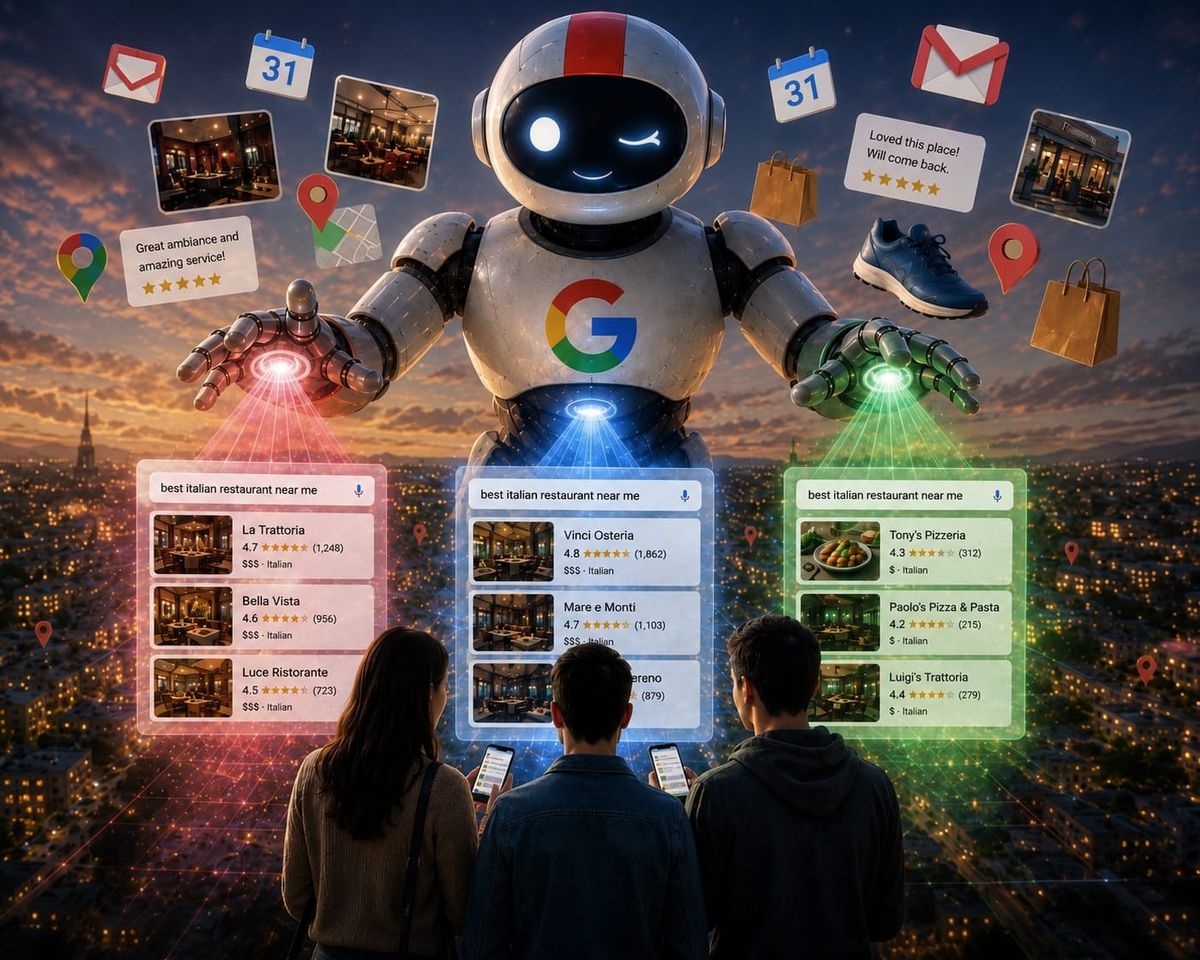](https://www.nearmedia.co/ep-256-p2-the-death-of-keywords-how-googles-personal-intelligence-is-defining-the-future-of-local-search/)
[Google I/O 2026: All the news and biggest announcements of the year for Gemini AI, Android XR smart glasses and moreDon’t miss all of the updates coming to Google Gemini, Search, Workplace and almost every other application the company makes.YahooValentina Palladino](https://tech.yahoo.com/general/article/google-io-2026-all-the-news-and-biggest-announcements-of-the-year-for-gemini-ai-android-xr-smart-glasses-and-more-171618610.html?guccounter=1&guce%5Freferrer=aHR0cHM6Ly9zZWFyY2gueWFob28uY29tL3locy9zZWFyY2g%5FaHNwYXJ0PWZsb3dzdXJmJmhzaW1wPXlocy1zbmFwc2VhcmNoJnR5cGU9eF9UMHRXUzNRNVQxSjRhSGRIVEhSd2RFbE1RVGhIUmpBOSZncmQ9MSZwPWdvb2dsZStpbytiaWdnZXN0K2Fubm91bmNlbWVudHMrc3VtbWFyeSZmcjI9c2ItdG9w&guce%5Freferrer%5Fsig=AQAAAKLKf7HbPwhzP%5FEL7%5FhCXcq1kYDYolSJ55RU0NQcNyt-CmTrLZvZjmaVkLEcSl0XXguc9SOTjM7wn0lwP-QlA4XdHlsBtgWoRW0hVFXmzau7TRcmD9GY40HfedGKheJ-PJeqERfI7IXw29i66hzawqGLtUL3oYB8t4wrFe0sAb8D&ref=nearmedia.co)
[Google Marketing Live 2026: The Biggest Shift in YearsGoogle Marketing Live 2026 announced major updates to search, ads, creative and measurement. Here’s what’s changing and what it means for your business.Blayzer Digitalblayzerdigital](https://blayzer.com/updates-from-google-marketing-live-2026/?ref=nearmedia.co)
Interested in sponsoring this podcast or our newsletters please reach out to [mblumenthal@nearmedia.co](mailto:mblumenthal@nearmedia.co)
[E-mail Mike ](mailto:mblumenthal@nearmedia.co)
Near Memo Transcript:
Greg (00:10) Hey, everybody. Welcome back to the Near Memo Episode 257 remarkably.
And I'm here as always with the lovely and talented Mike Blumenthal.
Just as today, we will have more guests in the future. Today, we have a packed episode.
We're going to be talking about a blockbuster fraud, review fraud, listings fraud case that Mike has been kind of tracking and is deep into.
We're going to be talking about Google's inferred personalization. We talked with Garrett Sussman a couple of weeks ago or last week, depending on when this showed up, about personalization in a two-part episode.
It's really excellent. You should listen to it if you haven't.
And there's two types of personalization, explicit, where you opt in and you give Google access to much of your data, and inferred personalization or implicit personalization.
And Mike is going to talk about that. Google already knows that.
ton about us, it doesn't really need us to opt into capturing more of our data.
And then we're going to talk about I.O., Google I.O., and some of the search related announcements that came out of there.
We're also going to be talking about at Google Marketing Live, they announced new AI native ad formats, which I think is very, very significant and has implications for the search experience, which we'll discuss.
So Mike, why don't you kick us off with the fraud
**Mike B (01:32)**
Sure.
**Greg (01:33)**
fraud issue.
**Mike B (01:34)**
So last week, the Department of Justice, which is the legal form of legal arm of the government filed a complaint against BEST doing business as premium home service and its CEO, Joseph Bernth, for violations of the FTC Act.
And one presumes that the move from reporting to the FTC, their determination of repeated violations that reached a level of legal standing.
So it got referred to the DOJ, which means that it's a criminal case at this point, accused of creating 50... Well, it's throughout the whole Midwest and we don't know how broadly it reaches, but he created 15,000 fake business profiles with fake reviews over time that use bricks and mortar addresses belonging to unrelated businesses and local phone numbers that were outed to oversee call centers.
The standard...
**Greg (02:07)**
And this is in Minnesota also, I think.
**Mike B (02:28)**
You know, MO of these guys and the defendants posted, you know, fake reviews, which appraised their fake business profiles.
And the defendants misappropriated the images of people from the staff of directors of unrelated websites, all the standard stuff.
including, you know, signing people up for subscriptions and, you know, claiming they do the work themselves and then outsourcing it by this sort of, you know, there's a whole black.
market of subcontractors, often Israelis, you working in certain forums on Facebook and elsewhere, where a business like this can go and say, who wants this job, right?
And typically that subcontractor.
**Greg (03:08)**
Well, is that the primary model here, lead gen for outsourcing to subcontractors?
**Mike B (03:11)**
That's what he's, this guy is doing. And also though, in addition to a subscription model that, you know, wasn't fulfilled.
they estimated 15,000 fake businesses and $79 million in illicit gains.
**Greg (03:29)**
Which is which is kind of astounding that there was that much money generated what what what was the duration of the of this I mean did it did it start years ago or is it a fairly recent thing.
**Mike B (03:40)**
That's the interesting thing to me. it best I can figure it started in 2022\. There is a website called premium home service dot info, which is a critique site that details abuses as far back as 2022, 2023\. hit mainstream, uh, regional press in 2024 and 2025 in Minnesota and got fairly broad coverage at that time.
Um, and Finally, the AG there, I think in Minnesota, sued these guys.
And I went and looked at the filing and interestingly, some of the businesses mentioned in the filing were still live on Google, which speaks to this whole issue.
This has been going on for four years. don't know. Four years.
I don't know how much Google knew or didn't know, but given the detail on the website that critiques this business.
**Greg (04:25)**
for years.
**Mike B (04:34)**
One presumes that it was reported extensively to Google.
**Greg (04:34)**
Well, what?
At least two years ago, it seems like Google was on notice.
**Mike B (04:41)**
Yes.
They were on notice because two years ago, it hit mainstream media in Minneapolis.
So for sure, at least two years ago, although I assume it's longer.
Yet only recently Google contends via the DOJ that they are in fact taking these down.
But when I went to look, I still found them.
and in none of the press coverage is Google criticized, which I find fascinating because in effect, even though they are protected under section 230 against abuses of their product, they're not protected against defective product that by design allows this behavior, which is where I think they are.
**Greg (05:21)**
Well, Google, other than the YouTube social media context, Google has not been hit with a defective product lawsuit yet.
**Mike B (05:30)**
Right, and so it's a novel theory that hasn't been tested.
**Greg (05:34)**
Well, you could argue that rampant fraud like this, unpoliced by Google, creates a defective product.
That's what you're effectively saying.
**Mike B (05:43)**
I'm saying that by design, their product allows this to happen.
They assume that they will catch it before it causes a serious problem and they don't.
And even though there's no incentive.
**Greg (05:53)**
Well, because there's no vetting on the front end.
**Mike B (05:59)**
There's not enough vetting on the front end.
They make it really easy on the front end to create a fake listing.
This guy figured out how to create 15,000 fake listings.
And then the subsequent vetting is not agreed, you know, heavy enough to filter out this character.
And, and from Google's point of view, had 15,000\. So that's like, if they have 300 million business locations, that amounts to 0.0005 of a percent, very small.
from their point of view, it's essentially below the radar and it's dispersed geographically.
So it's below the radar, but it
**Greg (06:32)**
Well, is right.
So this is an illustration of Google's general attitude, who knows some of those subcontractors could have done legitimate work.
Maybe some of those jobs were competently done, but $79 million in fraudulent work it doesn't matter to Google.
Google doesn't care that
**Mike B (06:49)**
Media.
**Greg (06:53)**
that consumers are being harmed to the tune of $79 million because for them it's a blip.
It's a tiny fragment of their overall corpus of business listings and 15,000.
They are just very cavalier about this and it's all Section 230 because they can be.
If there were liability here, Google would be on this much more quickly.
And there really needs to be some change in the law.
I mean, beyond the defective product novel legal theory, there needs to be some change in the law that tackles this kind of situation.
I mean, you can't identify isolated problems. Like some individual creates some fake business or something.
But when you've got systemic a systemic problem like this or something that spans enough people and geographies, Google has to be responsible to do something.
**Mike B (07:50)**
Right, but what happens is a dollar here, a dollar there.
Soon it adds up to real money, which it does in this case.
But Google, over the four years that this has happened, every year, they've proclaimed how good their fraud detection is and how many businesses they've prevented from participating in fraud.
And so on the one hand, they hide behind 230, on the other, they proclaim their competence.
And then reality is, that real people and real businesses get hurt.
**Greg (08:20)**
Right, exactly.
I've been thinking a lot about alternative rating systems to traditional reviews. And no, no, no, no, no.
I like this business and this business and this business. No, that's not what I'm talking about.
Years ago, I don't mean to launch into something different, but years ago, just as a quick digression, years ago,
**Mike B (08:29)**
The Stirling system.
The Sterling rating, this is like, Zagat.
**Greg (08:46)**
businesses that had difficulty competing with review volume, even in the early days, in the early 2000s, were trying some of, there were a couple of attempts to use other signals to rate businesses.
Like, I don't know what it was back then.
**Mike B (09:02)**
Well, Google used it, what was called a Bayesian average early on.
And what a Bayesian average is when you have a new business and you don't have a lot of reviews, they would go out and look at the average for your category.
And if you were over it, if you were over it, they would reduce it.
So there are even statistical methods of doing it.
**Greg (09:06)**
Well, no, no, no. Yeah. Yeah, Well, that's interesting. That's interesting.
That's not what I'm talking about. So like today, you could use visitation, right?
How frequently is foot traffic going to the business if it's a storefront? You could use business's credit rating.
You could use transaction data. I mean, there are a number of other data sources that could be brought to bear on this question of which businesses are reputable, which businesses are popular.
and to sort of augment or, you know, even replace reviews.
**Mike B (09:47)**
Right, and Google does that to some extent.
They target high distress categories and reviews in high distress categories get removed much more frequently than in other categories.
And new businesses get reviews removed more. So they do it in a very broad way to do that.
**Greg (10:05)**
Yeah. Right. mean, this is topic for maybe another conversation. But let's move on to your inferred personalization experiment.
**Mike B (10:15)**
Sure. Right. Well, you mentioned that we had a great conversation with Garrett Sussman last week and the week before about Google's feature, what do they call that?
Personal intelligence, which allows Google to see into your Gmail, your photos, calendar, et cetera.
And Garrett set up a great experiment to see how much that influenced outcomes. So that made me curious.
I've been using Gemini pretty regularly for the last six months and ChatGPT for the last three or four years.
And I was curious during that period, what had it surmised about me?
I had asked it both personal and professional questions, used it to edit our podcast and to, you know, to market research and those sorts of things.
I went in and I asked it, if you... search the open web and combine with information of Gemini memory, which I believe is default on it is default on with ChatGPT just the memory function, not the personal intelligence, which you have to select on.
if you combine that with Gemini memory, as well as my search history, can you expand on what you think my personal political and social profile is?
And then I said, went on to say, classify me as a standard marketing persona.
what can you infer about my class wealth income? and for my age and for my annual income and give me a summary.
It's amazing how much it knows. got my salary spot on, my annual income spot on.
It got my buying patterns that, spot on. got my critiques of government spot on, my professional relationships.
so it did a great job of categorizing me beyond any thing I would have thought given the somewhat random nature of my inquiries, right?
I might've asked about, raising vegetables in my garden. might've asked about biking, those kinds of things.
For example, I like Specialized bikes, which are high end bike and well-made, well-designed. And I like iPhones high end.
And they inferred from that, you know, both income and predilection to buy higher quality, less frequently, more reliable sort of stuff.
**Greg (12:30)**
Yes, you have two bikes in the background behind you.
**Mike B (12:33)**
I do, one's my exercise bike and one's my bike I am now riding into work.
I just got a new Specialized bike. My wife bought it for me for our anniversary.
**Greg (12:42)**
very nice.
Specialized as a brand as opposed to a niche bike that has a specific capability or something like that for those in the audience who are unfamiliar with the brand.
**Mike B (12:48)**
Right, that's correct. But I wanted a commuting bike that, a commuting e-bike that weighed under 40 pounds that had a very long battery duration and Specialized is the only company that made it.
anyways, I am classified as making.
**Greg (13:01)**
So that sounds like a query for AI mode. Yes, go ahead.
**Mike B (13:06)**
So I, you know, my income is classified as roughly 200,000, which is spot on.
I'm a new agrarian analyst. In other words, I am critical thinker that likes to grow my own food, et cetera, et cetera.
And, uh, I social classes, upper middle class, professional managerial, uh, with high cultural capital capital characterized by stealth wealth that values utility, durability, and experiences over flashy status symbols.
You know, I drive a 10 year old car. and my age, it got the range, right.
But in the end, underestimated, I don't know if it's glad handing me, maybe it likes to be sychophantic so maybe it me I'm younger than I am.
**Greg (13:45)**
Yeah, you sound and act much younger than you are.
**Mike B (13:49)**
It said that too, but then it also ended up giving me an age in like the mid sixties or something.
**Greg (13:53)**
Well, maybe your enthusiasm about bikes suggests to it somebody who's younger, who's more active or something. Yeah. Right. Right.
**Mike B (14:01)**
Right, because I have investigated longer 200 kilometer treks that imply that I'm younger.
So anyways, we don't need Personal Intelligence to gain this level of knowledge for Google to understand demographically everything they need to understand about me.
Just if you used Gemini
**Greg (14:18)**
Well, so one of the features of Garrett Sussman's research experiment was to create different personas, fake personas that had different income levels, different job titles, different genders, men and women, and a range of different elements.
And what he showed was that this is all AI mode.
What he showed is that the results, the brands recommended were different based on the persona.
So somebody like you who has a taste for more expensive this or that is going to see, according to this experiment, the higher end product, the more expensive product, not the run of the mill product.
Now, years ago, as recently as
**Mike B (15:00)**
But I would add that as a complement to his experiment, it is clear that you don't need to turn on personal intelligence for this to happen.
**Greg (15:06)**
Right. That's the fundamental point. That's the fundamental insight is that I have not signed up for personal intelligence because creepy, ew, you know, I don't want to give Google any more of my data than it already has, but it doesn't matter.
That's the point of this. Google already knows everything. the more that it gets you, I mean, the more that it gets you to engage with AI, the more that it's capturing intelligence about your preferences, your behaviors, your histories, and it's going to utilize that in search results.
later on, which we'll talk about probably in ads, now one of the things that is so striking now about where we are and where we're headed in search is this personalization idea.
Until pretty recently, I don't know whether it's a year or... couple of years, Google denied that it was doing any personalization at Search at all.
The only personalization you got was location. You you got different, different, yes, you got, you got different restaurants for Buffalo, New York versus Oakland, California, whatever, because for up.
**Mike B (16:02)**
Which is highly personal, I mean. or different coffee shops for this block versus that block.
**Greg (16:12)**
Right, and that's just a feature of location. That's not a feature of your preferences or your income or your behavior.
Now, where we're headed is...
**Mike B (16:20)**
Although they did talk about that in, do you remember the hot pot days from 2010?
They talked about personalizing based on your preferences, which they never did do.
**Greg (16:26)**
Well, that's. Yeah, never took off.
we're now, Google I.O. was this week and Google Marketing Live, which is now their kind of companion ads event.
And there was a whole bunch of stuff that they talked about too much for us to discuss.
But in all of these announcements, there is an undercurrent or an explicit aspect of personalization.
So what did they announce at Google I.O.? They announced a new personal agent, Gemini Spark, which is yet another freaking stupid AI brand that people have to think about.
They announced an AI powered search box, which Liz Reed, who's the head of search at Google said is the biggest change to the search box or to search in 25 years.
And what that is is a box that will expand to accommodate your query length and will thus encourage longer queries.
Also, you can upload documents and photos and other stuff as you could with Gemini now into the search box and get Google search to respond to it.
They also announced a generative UI, sort of dynamic UI that is based on, built on some intrinsic coding capabilities.
And this is AI mode. So you can... ask very specific questions and Google in some cases will create a kind of mini app or a graphical experience that either explains or illustrates whatever you're trying to get at.
They also, yeah, right.
**Mike B (18:01)**
and then coding with interface design as well, and with the ability to go directly with the output to the App Store.
**Greg (18:09)**
Yes, mean, of the, yeah, so the AI-powered search boxes is really sort of the biggest single thing that came out of it.
They also, There were just too many things going on.
**Mike B (18:24)**
Well, just let's deal with that.
Let me just make a comment about the search box, which is that it's a way for Google with a single box to parse between a high intent, low funnel query and a mixed intent high funnel query.
In other words, whether they're going to give you a local result or whether they're going to give you an AIO result in a single field.
And so that is significant in terms of ease of use, mitigating buttons and cleaning up the shit that has gotten there.
**Greg (18:45)**
Yes, and that, yes, it's. It's yes, it's a, it's a kind of Omnibox thing, which will drive you either into traditional search results for now or AI mode.
And they're really pushing people into AI mode, more and more, and they're more deeply integrating AI overviews and AI mode, which has been going on for some time.
**Mike B (19:09)**
And it allows for multimodal input. if you're exploring what kind of flower is this, you can drop it right into your main browser and it will deal with it.
You don't have to go to Lens in the app.
**Greg (19:12)**
That's right. Right.
**Mike B (19:21)**
disjointed experience.
So they've consigned.
**Greg (19:22)**
Right. Sort of in general, in general, they were a ton of things discussed, tons of announcements.
there was this kind of, for me, there was this kind of quality of clutter about the whole thing.
Google is throwing tons and tons of stuff at the refrigerator, a kind of shock and awe approach.
You know, the entirety of IO is really primarily directed at investors, secondarily at developers and, you know, tertiarily, if that's a word, thirdly at, you know, the consumer population, the user population.
Well, competitors and investors are sort of the same group in a certain way.
Yeah, they're saying, they're saying to investors, hey, we are now in the driver's seat of AI.
We are, we are now ascendant.
**Mike B (19:56)**
You left out competitors, which I think was a key target.
Well, they're saying it clear enough that the New York Times understands it finally, but it's been clear that they've been in the driver's seat for the last two years.
And this just makes it, this puts a real sort of emphasis on that.
**Greg (20:18)**
Well, but let's talk briefly about why that is. You and I have different opinions about this, but is Gemini the best AI product on the market?
The answer...
**Mike B (20:28)**
I don't think it's the best. think it's goog enough, as it were.
**Greg (20:31)**
Yes, it's good enough.
Google has elevated it to the place where it's good enough to retain usage.
Certain things, right, and they talked a lot about it being faster. They're speeding it up.
And that's a big issue for AI because AI answers often take a while to populate. Google has multiple monopolies.
It has some great data, right? It's got a better sort of local graph.
**Mike B (20:37)**
It's convenient, it's fast.
So.
**Greg (20:57)**
data set shopping graph than other people except for Amazon in in that isolated case.
And so it's brought all of this stuff to bear to basically put enormous pressure on ChatGPT, which is about to have its IPO apparently.
And they have the full stack, the full AI stack from chips to distribution.
**Mike B (21:17)**
And what that full stack means is not only can they deliver this Google enough AI answer more quickly, they can deliver it more cheaply because they are not paying rent to Nvidia, right?
And they're not paying rent to electric company because often they own the data centers and the electric powering it.
So through vertical integration, they're able to drive speed, quicker responses and much lower costs.
And in the end, that's what defines
**Greg (21:30)**
Right. Right, and they.
**Mike B (21:46)**
you know, success of their future monopoly.
**Greg (21:48)**
They talked about bringing down the cost of AI responses.
Ironically though, notwithstanding that, they just are reducing the amount of tokens that are available to their Google One subscribers.
So they're constraining your ability to engage with Gemini, bringing that down.
I don't know what the precise numbers are, but I got to notice about that this week.
To serve you better, we're going to reduce your available tokens.
So we'll do a dedicated show on the implications for both search and local of the announcements in Google I.O.
But they are driving more and more people into AI mode. They are leaning on AI mode.
They did not replace the traditional SERP with AI mode, which many people were thinking was going to happen.
And I've been arguing they're not going to do that until they figure out the ad problem, until they can really monetize AI as well or better.
And this week.
**Mike B (22:41)**
But this is a step in that direction in terms of integrating the interfaces so that users feel totally comfortable moving from traditional search to Isearch without skipping a beat.
**Greg (22:46)**
Yes. That's right. well, Google has had Gemini as a standalone experience, which they are maintaining.
They've had many front doors. They have Gemini. They've got AI overviews. They've got AI mode.
They've got traditional search. They've got the assistant, whatever their voice stuff, which is now just Gemini.
And they introduced this thing, Gemini Spark.
**Mike B (22:59)**
Google app.
**Greg (23:15)**
which is a new agentic feature of Gemini.
It's a subset of Gemini. It's not a standalone app.
And this was the other piece that I had neglected to mention that was really significant.
In an interview a few weeks ago, Sundar Pichai was talking about the future of Search.
And he said, I could see Search being this kind of orchestration layer for agents, right?
It's going to be agentic. And so what they announced was Spark and other agentic features of search.
So the idea is the first one being informational, sort of Google alerts on steroids, informational agents where you can track and follow certain kinds of things, financial data.
Right.
**Mike B (23:55)**
If my airplane price to X location gets low enough, buy it for me.
**Greg (24:01)**
Right, except there's no transaction yet, but transactions are coming for sure.
And this is another strategy for them to keep you in search, on search, give you more capabilities in search.
And we'll see more of these agentic tools being integrated over time.
And they've talked about informational agents is going to be, or information agents is the first one and then we're going to move to transaction.
So shopping and travel and other things. And that's quite significant.
But as I was saying,
**Mike B (24:32)**
particularly when you layer it with UCP, their universal commerce protocol.
**Greg (24:36)**
Right.
they talked a lot about shopping and the universal commerce protocol.
Now, the UCP, Google's quote unquote open source, I think it's open source, shopping cart and related infrastructure was competing with the agenda commerce protocol.
And OpenAI pretty much bailed on their shopping cart, which was going to be native to their experience.
Now they're just sending people to to third party retailers. We can do a whole session on UCP and the shopping cart, but all of these assets are very significant.
And Google is accelerating the migration from the traditional experience to a heavily AI inflected experience.
And the barrier to that acceleration has been the need to maintain ad revenue, which they have not figured out for AI.
But here this week at Google Marketing Live, they introduced new ad formats. They're AI native ad formats.
**Mike B (25:37)**
just as a note, I am going to be on a webinar with Darren Shaw next week.
of talking about the impact of AI on Google Maps.
So if you want a deep dive on Google Maps, we will cover it there.
I see all of these elements as able to influence Google Maps, and ultimately, I think they will.
**Greg (25:48)**
Right.
Well, all going to come to Google Maps. And we had a dedicated podcast on Ask Maps and its significance.
But these new features in search will all be coming to Google Maps with some meaningful implications, not the least of which is personalization.
So the four ad types or five ad types that Google talked about during Google Marketing Live that are now AI native, conversational discovery ads, which are dynamically generated.
All of these are AI mode with one exception. Show up in AI mode.
Highlighted answers, which are AI-generated responses or recommendations that appear in line. They're not at the bottom or the top.
Those are also AI mode. AI-powered shopping ads, which are in search. These are dynamic.
**Mike B (26:45)**
So hold it, I have this idea about the information ad. Who should I vote for for president?
So that spot can be purchased and will give me the highlighted answer to it in the ad, right?
**Greg (26:55)**
Well, they will probably not do that for politics. That would be kind of ill-advised. But it's OK.
So shopping ads, which are dynamically generated also, those are going to be richer ads appearing in traditional results.
Those will have product images, reviews, and other explanatory text.
Business agent for leads, is a lead gen ad or a form fill.
**Mike B (27:02)**
Sorry, go back to what you were saying.
**Greg (27:24)**
ad, kind of structured ad, and they're going to plug in a Gemini bot inside of that, which is going to get information for the marketer's website and will be able to answer questions.
So people will interact with that ad and get questions answered.
And this was like an ad type that ChatGPT talked about but hasn't implemented yet.
And then they've expanded what they call direct offers, which was an ad unit that they introduced, I believe, earlier this year or late last year.
which, is basically as it sounds, you know, some sort of discount designed to get you to engage with it.
But now what they've done is they've added the universal commerce protocol into the ad.
So you can, you've got a native checkout capability. You click the ad, you can check out and pay within the ad unit.
And, there's a lot more to say about these things, but they're quite significant because this is what has been missing from advertising in, in AI.
The old sort of static ads, even ad types like LSAs or other kind of ads that have been working very well in traditional search are really not adapted to AI and the AI user experience.
And these ads are really the first foray into that.
And Google will learn a lot about how users interact with them and improve them.
And it breaks the barrier around monetization. what that also means is that once they feel confident that they're going to be making money at an equivalent level, or they'll be able to charge more for these ads or whatever.
When they feel confident that they're going to be generating money revenue from these, they then can accelerate their other consumer facing experiences because that will no longer be an obstacle.
**Mike B (28:49)**
equivalently outrageous level.
**Greg (29:08)**
the monetization issue will no longer be an obstacle to changing the interface or changing the user experience.
One final thing, one final thing, one final thing. All of the stuff that we said about personalization and their inferences about you and your income and what you like and your preferences will come into these ads.
Google has not made any announcements about these ads, but that is one thing that I am 99.9 % confident at some point in the future
**Mike B (29:13)**
And the only tragedy in all of this though, well go ahead, sorry.
**Greg (29:37)**
These ads will be more personalized. Not only how they're shown, to whom they're shown, but the ad units themselves, the copy, the product choices, all of that stuff will be personalized.
**Mike B (29:49)**
So we'll combine intent shoes with demographics, high income, and show me a pair of high income shoes, even if I don't do personal intelligence.
**Greg (29:57)**
Exactly. If I'm looking for best running shoes for men that I can use on a trail and I live in this kind of environment, based on what it knows about me versus what it knows about you, it's going to wreck.
**Mike B (30:11)**
Dude, go to Walmart, it's gonna tell ya.
**Greg (30:13)**
Well... That's right. The point is we'll get two different ads.
The point is we'll get two different ads and the ad copy might be different, right?
The ad copy dynamically generated might be quite different. So if you like off-road biking, that might be featured in the ad in a sense that somebody else who's of a comparable income level, but who has different preferences might not see.
**Mike B (30:37)**
What I was going to say before, which I think is, that this is happening in an environment in which basically, even though Google lost two antitrust decisions and a court case, well, basically not only has nothing has happened, but the consequences are so minimal that Google has pulled out all the stops and Skynet here we come.
mean, it, you know, this announcement combined with AI.
**Greg (30:48)**
Nothing has happened.
**Mike B (31:03)**
pretends a much more invasive reality going forward. We don't have to worry about AI killing us.
We have to worry about Google killing us, right? I mean, it's not the AI itself that's a danger to humanity.
It's the decision makers who control it.
**Greg (31:07)**
Yes. Well... The, will echo your statement about the antitrust case where Google was found to be an illegal monopoly in search and paid search advertising and display advertising and the.
**Mike B (31:32)**
And we're giving a pass because ChatGPT was there.
**Greg (31:34)**
Right, that is the irony, right?
That the existence of ChatGPT put, know, who knows what was going on psychologically with the judge.
The judge was afraid of acting more boldly and the remedies that were issued were totally inadequate to address the competitive environment for which Google was found liable.
And so as you point out, what we have now, is going to be 10 X what we have before because Google now has, I mean, I would make the argument that beyond fending off ChatGPT, Google's primary objective in developing all these AI capabilities is to get more data from you, to learn more about you and to deliver more personalized ads and information to you so that you generate more income for them and They can keep you in their ecosystem.
I mean, this was one of the big features of this IO set of announcements is that Google is taking what is already a very self-consciously insular system there and trying to lock you in further.
They're going to keep you more and more and more within their system.
UCP don't have to go to a third party site to check out.
The assistant keeps you engaged and fulfills all your information needs.
The data that they're sucking, you know, because you're giving it more high intent data and more elaborate data, they know more about you.
They can target you better. They can bucket you better in into a persona.
And all of that is brought to bear on this kind of flywheel of, you know, using Google more and more and more and locking you in. and the
**Mike B (33:13)**
And on that note, have a great Memorial Day.
**Greg (33:16)**
No, no, no, no, no, no. I think it's a very serious problem.
And I think there are no immediate solutions except competition. know, ChatGPT is in trouble.
They are stumbling at a time when it would be useful to have them as a counterweight to Google.
Claude has some chance of becoming that, but probably not really, because Google just has the revenues, the stack.
the data, the local graph, the shopping graph. It's just they have, yeah, I mean, they have Chrome, they have Android, they have, now they said they have five properties which have in excess of 3 billion users and 13 or something like that that have more than 1 billion.
And then they have YouTube and it's just insane.
**Mike B (33:48)**
distribution, Android, blah blah blah.
Like I said, have a good Memorial Day weekend.
**Greg (34:09)**
Well, all right, let's end on a more friendly note.
Having said all of that negative and critical stuff about Google, this is a really interesting time to be in search.
it is very dynamic and very intellectually stimulating and fascinating to see how this market is evolving.
And that's my attempt to be positive as we head out into the weekend.
**Mike B (34:33)**
Well, from one neo-Brahmin to the other, I'll say goodbye and thank you for a great episode.
**Greg (34:41)**
All right. And as I said in an upcoming episode, we will be talking about the local search and broader search implications of all of this with a panel of guests.
So in the interim, have a great weekend. Try and enjoy things to the extent you can.
Live in the moment. Appreciate your friends. Appreciate your family. Appreciate your health. And we will see you next time.
### Google's AI Box, Siri & Spark, Gemini Trust, Zero Traffic
URL: https://www.nearmedia.co/googles-ai-box-siri-spark-gemini-trust-zero-traffic/
Last updated: 2026-06-01T23:46:13.000Z
### Google Launches AI Powered Search Box
AI Mode now has more than 1 billion users, [according to](https://www.nearmedia.co/r/44d9f671?m=b33638f4-e35d-43c6-9996-83a06120cff3) Liz Reid today at Google I/O. Many SEOs had been predicting that AI Mode would become the new SERP. Google isn't doing that but it is much more deeply integrating AI into search with a new "intelligent search box," tightening the AIO and AI Mode connection and introducing new "search agents." The new search box, which Reid described as the biggest upgrade in 25 years, is supposed to go live today. It's not operative for me yet. One gets the sense that it will lead people more often into AI Mode. The new search box also offers AI powered search suggestions. Google described it as a "seamless experience," likely intended to overcome some of the fragmentation that Google introduced with all its disparate AI experiences. Reid also discussed search agents, starting with "information agents." These are the AI equivalent of Google Alerts, with more capabilities (e.g., apartment hunting, financial research). Eventually, more types of agents will be deployed. Google [mentions](https://www.nearmedia.co/r/479343a9?m=b33638f4-e35d-43c6-9996-83a06120cff3) local here: "We’re also expanding agentic booking capabilities in Search to a wide range of new tasks, including local experiences and services*."* Google will find pricing and availability information (including calling the business) and then book or offer booking options. These agentic capabilities go live this summer for paid Gemini users. Many or all of these tools will also be available through a new Gemini agentic assistant called Spark.

Source: Google I/O
**Our take**
- It's not yet clear how much this will change the search experience or user behavior. It's safe to say it will, however.
- Until we can see these tools in action it's premature to prognosticate. Still, this appears to be a significant shift in search.
- To the extent Google drives more users into AI Mode, however, it's risking ad clicks at the moment.
### Siri Search & Gemini Spark
OpenAI is reportedly [getting ready to sue](https://www.nearmedia.co/r/cbb7abd5?m=b33638f4-e35d-43c6-9996-83a06120cff3) Apple over its disappointing ChatGPT partnership. At the same time Apple is (finally) preparing to unveil an AI-upgraded Siri at its coming developer conference in June. There will apparently be a new stand-alone Siri app, which will emphasize privacy, but perform like ChatGPT or Claude and be built on Gemini. A more functional and broadly useful Siri could peel away search volumes from Google if it works. We'll have to see. But today at I/O, Google announced yet another AI brand, as mentioned, in the form of Gemini Spark. Spark is agentic assistant built on Gemini 3.5\. Spark lives within Gemini – there's no Spark app – and will carry out actions and tasks on behalf of users, right now mostly around schedule and information management. To get the full value of Spark you'll need to share all your data and Google apps (Google docs, calendar, etc.) It appears users can also create their own "skills" and that Spark will work with third party tools, presumably through MCP/ connectors. However, Spark will only be available to those paying for Gemini Ultra. Normally $200 per month, Google has introduced a new $100 monthly plan. Spark appears useful, but primarily to those willing to opt in and share all their personal data with Gemini. Spark will also work on Gemini for macOS and the iPhone. Google demonstrated a number of consumer-facing agentic tools, in Search, Gemini and Shopping. They probably all share the same infrastructure and are just different ways in. But there's a lot of brand clutter going on.
**Google's New Personal Agentic Assistant**

Source: Google I/O
**Our take**
- No doubt many of these "agentic" features will be useful. It's hard to know how user friendly they are or how widely embraced they'll be.
- A decade ago I would've been celebrating all these tools and capabilities and writing some fawning article about them.
- Now they feel manipulative. It's hard not to see all this as just another Google data grab and way to keep users from going anywhere else.
### Gemini Only AI to Gain Trust YoY
AI is facing a trust crisis, although that hasn't stopped usage. Unlike people in other countries, Americans strongly distrust AI. More than 60% of survey respondents say they have little or no trust in AI. The main concerns are misinformation, job displacement, data security and privacy questions, as well as overall negative societal impacts. A new AI Trust Report from Morning Consult captures all of those issues in some detail. But the most interesting finding for our purposes is the growth of trust in Gemini vs. most other AI brands. According to the survey, seven of ten leading AI companies lost trust over the past 12 months. The biggest losers were xAI, Perplexity and Meta. However, OpenAI was in there as well. The three companies to gain consumer trust were Anthropic (+1.4) and Apple Intelligence (+1.2), while Gemini gained a whopping 6 points. Similarweb has been tracking Gemini's market share gains, which are partly about quality improvements but much more about Google's massive distribution and ability to drive usage through its various channels: search, Chrome, Android, Workspace. In May Similarweb [reported](https://www.nearmedia.co/r/9fa17390?m=b33638f4-e35d-43c6-9996-83a06120cff3) that ChatGPT had declined to 53.7% traffic share, while Gemini had grown to 26.7%. Significantly Claude is now number three with 8%. (There are [other data](https://www.nearmedia.co/r/f261a665?m=b33638f4-e35d-43c6-9996-83a06120cff3) somewhat less upbeat for Gemini.) Another important story, documented by Morning Consult, is that people are not simply choosing one AI tool over another; they're making choices about when to use each. Gemini is seen mostly as an extension of search and used primarily for "utility tasks," whereas ChatGPT and Claude are being used for a broader range of things. There's also a very large overlap between ChatGPT and Gemini usage.
**AI Platform Trust**

Source: Morning Consult
**Our take:**
- The key implication from these trust survey findings is that they may predict future behavior, which means further Gemini gains.
- Copilot is one of the more trusted AI brands, but that's not turning into usage. Microsoft's "halo" isn't helping. However Google's is for Gemini.
- OpenAI is [in trouble](https://www.nearmedia.co/r/5d665033?m=b33638f4-e35d-43c6-9996-83a06120cff3). The hits their brand has taken since last year, together with this trust information, suggest further slowing.
### Plan for 'Google Zero'
There's no way an objective observer could have come away from today's Google I/O [keynote](https://www.nearmedia.co/r/76e397ed?m=b33638f4-e35d-43c6-9996-83a06120cff3) without a strong sense that Google is using all its technology, tools and tricks to increase user lock-in. The changes in Search and the SERP either announced or hinted at and the various agentic tools and features seem calculated to keep users on Google properties and to further reinforce Google dependence. In particular, Google's Robby Stein spoke about "generative UIs" in Search. These are dynamic and unique SERPs designed to answer specific questions or to provide graphical mini-apps that respond to a unique user need. As such they're extremely personalized. They may appear exclusively in AI Mode, but that's not clear because they didn't show actual live screens, just mockups. More generally these dynamic SERPs and other changes may further marginalize organic links. Therefore all marketers should plan and act as if they had to market without Google going forward. That's not to say you don't do SEO or advertise in appropriate contexts; it means you can't rely on Google. You have to work toward driving brand queries. The Condé Nast CEO Roger Lynch [recently stated in an interview](https://www.nearmedia.co/r/f862bf28?m=b33638f4-e35d-43c6-9996-83a06120cff3) that they're actively planning for a future where search traffic is zero. For them subscriptions have become a primary alternative strategy. Google Zero is what most publishers will experience in a future where all third party content is merely an input or data for the company's AI systems and answers.
**Dynamic UIs in Search**

Source: Google I/O
**Our take:**
- Google has argued that declining publisher traffic is really just low value clicks.
- It's difficult to see how all these new Google-centric AI experiences pass muster under the DMA's anti-self-prefercing rules.
- Marketers must still play the Google game, but should diversify and build brands (long-term proposition). That will help in both search and AI.
### Recent Podcasts & Analysis
- **Near Memo ep. 256** \- [Death of Keywords: Google’s Personal Intelligence is Defining the Future of Local Search](https://www.nearmedia.co/r/edb432d5?m=b33638f4-e35d-43c6-9996-83a06120cff3) – Part 2 (**Garrett Sussman**)
- **Near Memo ep. 255** \- [How Google’s Personal Intelligence Is Quietly Revolutionizing Everyone’s Search Results](https://www.nearmedia.co/r/cbfe7541?m=b33638f4-e35d-43c6-9996-83a06120cff3) – Part 1 (**Garrett Sussman**)
- **5-Star Fraud: The FTC Targets Law Firms & Property Managers for Review Abuse** [by Mike Blumenthal](https://www.nearmedia.co/r/82baaa7a?m=b33638f4-e35d-43c6-9996-83a06120cff3)
**LOCAL SEARCH & SEO**
- Google releases **GBP optimization** [guide](https://www.nearmedia.co/r/50589b1c?m=b33638f4-e35d-43c6-9996-83a06120cff3) for restaurants.
- Checklist for [troubleshooting](https://www.nearmedia.co/r/0d8f0c85?m=b33638f4-e35d-43c6-9996-83a06120cff3) Google **review disappearances**.
- Why listing **24/7 business hours** is a [suspension risk](https://www.nearmedia.co/r/0248f1a8?m=b33638f4-e35d-43c6-9996-83a06120cff3).
- Beware the [vindictive](https://www.nearmedia.co/r/f6a7dfbd?m=b33638f4-e35d-43c6-9996-83a06120cff3) "**update for customers**" slam.
- Yelp [showing up frequently](https://www.nearmedia.co/r/5607fa60?m=b33638f4-e35d-43c6-9996-83a06120cff3) in Google **AIOs, AI Mode, AI Packs**.
- Google [testing](https://www.nearmedia.co/r/270bc2cd?m=b33638f4-e35d-43c6-9996-83a06120cff3) an **offer callouts** in business profiles.
- How to **add text to GBP photos** to [improve AI understanding](https://www.nearmedia.co/r/736d04d3?m=b33638f4-e35d-43c6-9996-83a06120cff3).
**GENERAL SEARCH & SEO**
- **ChatGPT** has a "[hidden cached index](https://www.nearmedia.co/r/9afed17c?m=b33638f4-e35d-43c6-9996-83a06120cff3)" of webpages.
- Risky [strategies](https://www.nearmedia.co/r/713dd648?m=b33638f4-e35d-43c6-9996-83a06120cff3) for **SEO and AI search** visibility.
- **YouTube** may be a [quick way into AI Overviews](https://www.nearmedia.co/r/e9ac7f0f?m=b33638f4-e35d-43c6-9996-83a06120cff3).
- Study: **custom design** and images [boosted SEO visibility](https://www.nearmedia.co/r/43a8a2ab?m=b33638f4-e35d-43c6-9996-83a06120cff3).
- Google [now offers](https://www.nearmedia.co/r/3aa4bd8b?m=b33638f4-e35d-43c6-9996-83a06120cff3) AI assistant/**LLM tracking** in GA.
**ARTIFICIAL INTELLIGENCE**
- **OpenAI finance** tool [wants access](https://www.nearmedia.co/r/57417228?m=b33638f4-e35d-43c6-9996-83a06120cff3) to your bank accounts.
- Google: **AI search optimization** [is still SEO](https://www.nearmedia.co/r/42eb6d89?m=b33638f4-e35d-43c6-9996-83a06120cff3), [critics disagree](https://www.nearmedia.co/r/0657d579?m=b33638f4-e35d-43c6-9996-83a06120cff3).
- Ahrefs [study](https://www.nearmedia.co/r/ab81df87?m=b33638f4-e35d-43c6-9996-83a06120cff3) on no **schema AI impact** [and criticism](https://www.nearmedia.co/r/4f166e60?m=b33638f4-e35d-43c6-9996-83a06120cff3).
- Google [extends](https://www.nearmedia.co/r/51d5002d?m=b33638f4-e35d-43c6-9996-83a06120cff3) **spam policies** to AIOs and AI Mode.
**SOCIAL, ADS & COMMERCE**
- **Meta**: search and social don't compete, [but social's better](https://www.nearmedia.co/r/f10e71f4?m=b33638f4-e35d-43c6-9996-83a06120cff3).
- **Reddit** less valuable for targeting than for [brand insights](https://www.nearmedia.co/r/792a8bed?m=b33638f4-e35d-43c6-9996-83a06120cff3).
- OpenAI [turning product feeds into ads](https://www.nearmedia.co/r/273ead74?m=b33638f4-e35d-43c6-9996-83a06120cff3) on **ChatGPT**.
- **LinkedIn:** [no more AI slop](https://www.nearmedia.co/r/9a994798?m=b33638f4-e35d-43c6-9996-83a06120cff3); also: use our AI writing tools.
**LAW, POLICY & PRIVACY**
- US [sues home services fraudster](https://www.nearmedia.co/r/efcb42b5?m=b33638f4-e35d-43c6-9996-83a06120cff3); scammed $79M with **fake GBPs**.
- Musk [loses court battle](https://www.nearmedia.co/r/34026727?m=b33638f4-e35d-43c6-9996-83a06120cff3) against nemesis Altman and **OpenAI**.
- CA [sues](https://www.nearmedia.co/r/59dfd3b1?m=b33638f4-e35d-43c6-9996-83a06120cff3) **Meta** over scam ads under false advertising law.
### EP 256 P2 - The Death of Keywords: How Google’s Personal Intelligence is defining the future of Local Search
URL: https://www.nearmedia.co/ep-256-p2-the-death-of-keywords-how-googles-personal-intelligence-is-defining-the-future-of-local-search/
Last updated: 2026-05-13T15:58:40.000Z
In this second installment of Near Media’s conversation with Garrett Sussman, the discussion moves from theory into practical implications as the group explores how Google’s “personal intelligence” systems may reshape local search, SEO, customer discovery, reviews, attribution, and reputation management. Garrett explains how behavioral data, Gmail, direct mail, calendars, reviews, and customer affinities could influence AI-driven recommendations, while Greg Sterling and Mike Blumenthal examine the broader implications for marketers, privacy, and the future of SEO measurement. The episode argues that traditional keyword-centric SEO is giving way to a far more holistic model centered around customer understanding, omnichannel presence, and AI visibility.
### The Podcast Deets
**1\. How AI Personalization Could Transform Local Search (**[**00:00–18:30**](https://www.youtube.com/watch?v=jRQdnCQ3ni0&ref=nearmedia.co)**)**
The episode opens by connecting the themes from Part 1 — personalization, Gmail influence, and AI Mode — to local search and real-world commerce. Garrett describes a striking example where Google surfaced a shoe recommendation based on a USPS mail digest email containing a scanned postcard from a local running store. The group explores how AI systems could combine Gmail, Maps, Calendar, reviews, behavioral patterns, and location data to create highly individualized recommendations for restaurants, lawyers, retailers, and local services. The conversation also explores how Google may increasingly shift from explicit location intent (“near me”) to implicit behavioral understanding.
**2\. Why SEO Is Becoming More Holistic & Less Deterministic (**[**18:30–36:00**](https://www.youtube.com/watch?v=jRQdnCQ3ni0&t=1110s&ref=nearmedia.co)**)**
The discussion then turns to the future of SEO and measurement. Garrett argues that AI search is forcing marketers to move beyond keywords toward broader audience understanding and omnichannel visibility. The panel debates whether GEO/AEO differs meaningfully from traditional SEO and concludes that while SEO fundamentals remain important, marketers must now think far more holistically. The episode also examines the collapse of deterministic ranking tools and the growing importance of citations, brand mentions, reviews, PR, YouTube, and social influence in AI-driven discovery systems.
**3\. What Marketers Should Do Right Now (**[**36:00–48:42**](https://www.youtube.com/watch?v=jRQdnCQ3ni0&t=2160s&ref=nearmedia.co)**)**
In the final segment, Garrett outlines practical next steps for businesses preparing for AI-driven search. He emphasizes direct customer research, usability testing, persona modeling, and building “search twins” that simulate customer behavior across Gmail, social media, newsletters, and search. The group also discusses why businesses should obsess over consistency, structured business information, visual storytelling, and reputation management. The episode concludes on an optimistic note: despite the uncertainty and ethical concerns surrounding AI personalization, local SEO may actually become more strategic, creative, and customer-focused than ever before.
### Key Takeaways
- Google’s AI systems may increasingly personalize local search results using Gmail, Maps, Calendar, reviews, browsing behavior, and even direct mail signals.
- Traditional keyword-centric SEO is becoming less important than holistic customer understanding and omnichannel visibility.
- Reviews may gain even more influence in AI-driven search experiences because LLMs can consume and synthesize large amounts of review sentiment.
- Businesses should begin building “persona search twins” to simulate customer behavior and test AI search outcomes.
- Measurement is becoming probabilistic rather than deterministic — marketers must think in terms of trends, visibility, citations, and influence rather than exact rankings.
- Breaking down silos between SEO, PR, email, social, and branding is becoming increasingly critical in AI search environments.
- Customer interviews and usability testing may become one of the most valuable competitive advantages in local marketing.
- Visual storytelling, signage, images, menus, partnerships, and real-world brand presence may all become stronger AI signals over time.
- Reputation management is becoming harder because AI systems may surface historical narratives and context in unpredictable ways.
- Despite privacy and regulatory concerns, AI-powered personalization is likely to become a major force in local discovery over the next few years.
- **👇 Watch by topic:**[ 00:00](https://www.youtube.com/watch?v=jRQdnCQ3ni0&ref=nearmedia.co) Intro & recap of Google’s “personal intelligence”
[02:20](https://www.youtube.com/watch?v=jRQdnCQ3ni0&t=140s&ref=nearmedia.co) Direct mail influencing AI recommendations
[05:00](https://www.youtube.com/watch?v=jRQdnCQ3ni0&t=300s&ref=nearmedia.co) Local search implications of AI personalization
[08:00](https://www.youtube.com/watch?v=jRQdnCQ3ni0&t=480s&ref=nearmedia.co) CRM, email marketing & behavioral targeting
[10:40](https://www.youtube.com/watch?v=jRQdnCQ3ni0&t=640s&ref=nearmedia.co) Building “persona search twins” for AI testing
[11:10](https://www.youtube.com/watch?v=jRQdnCQ3ni0&t=670s&ref=nearmedia.co) Google Business Profiles, reviews & AI discovery
[15:00](https://www.youtube.com/watch?v=jRQdnCQ3ni0&t=900s&ref=nearmedia.co) Location, behavior & implicit personalization
[18:30](https://www.youtube.com/watch?v=jRQdnCQ3ni0&t=1110s&ref=nearmedia.co) AI recommendations, bias & consumer discovery
[20:20](https://www.youtube.com/watch?v=jRQdnCQ3ni0&t=1220s&ref=nearmedia.co) Why classic SEO thinking is breaking down
[23:10](https://www.youtube.com/watch?v=jRQdnCQ3ni0&t=1390s&ref=nearmedia.co) Is SEO becoming GEO/AEO?
[26:00](https://www.youtube.com/watch?v=jRQdnCQ3ni0&t=1560s&ref=nearmedia.co) Privacy, antitrust & AI personalization risks
[31:00](https://www.youtube.com/watch?v=jRQdnCQ3ni0&t=1860s&ref=nearmedia.co) Why keyword research is changing forever
[34:00](https://www.youtube.com/watch?v=jRQdnCQ3ni0&t=2040s&ref=nearmedia.co) Measuring AI visibility & citations
[36:00](https://www.youtube.com/watch?v=jRQdnCQ3ni0&t=2160s&ref=nearmedia.co) Breaking down marketing silos
[38:20](https://www.youtube.com/watch?v=jRQdnCQ3ni0&t=2300s&ref=nearmedia.co) Customer research & usability testing
[41:00](https://www.youtube.com/watch?v=jRQdnCQ3ni0&t=2460s&ref=nearmedia.co) The three things marketers should do now
[45:00](https://www.youtube.com/watch?v=jRQdnCQ3ni0&t=2700s&ref=nearmedia.co) Reputation management in the AI era
[48:00](https://www.youtube.com/watch?v=jRQdnCQ3ni0&t=2880s&ref=nearmedia.co) Final thoughts: why local SEO is entering a new era
Related Links
[EP 255 - How Google’s Personal Intelligence is Quietly Revolutionizing (Everyone’s) Search ResultsIn this episode we are joined by Garrett Sussman (iPullRank) to discuss his provocative 12-month study on AI personalization. We dive deep into how Google’s “AI Mode” uses your Gmail, Photos, and Calendar to tailor results—and why “unopened emails” might be influencing what you see next.Near MediaNear Media](https://www.nearmedia.co/ep-255-how-googles-personal-intelligence-is-quietly-revolutionizing-everyones-search-results/)
[Google's Context Packing and Hyperpersonalization Explained | Garrett Sussman posted on the topic | LinkedInSEOs should start obsessing over context packing and hyperpersonalization. AI assistants are context machines. Google says consent is required, but we’re going from opt-in to opt-out before people are ready. That’s going to shock the system. The optimist in me says people will love it. For the uninitiated, Google’s Personal Intelligence doc describes context packing as finding the right pieces of your personal data and putting them into the model’s working memory. Doc in the comments. Gmail, Photos, Search history, YouTube, saved places, past conversations, receipts, confirmations, and the random paper trail of your life can all shape the AI output. We already know personalization from local search. I’m talking about this today with Mike Blumenthal and Greg Sterling on the Near Media podcast. Google can find relevant content in a massive corpus of documents. Your digital life history can probably predict intent most of the time, like an optometrist spotting cholesterol levels. Yeah, that’s real. Personalization has to thread the needle between helpful and creepy. Google calls out the limitations: Overpersonalization: One signal can become the whole personality of the answer. Mistaken preferences: Buying something for your kid, spouse, friend, or brother can make the model think it’s your thing. Incomplete information: The model may act like it has the whole story from a few scraps in the kitchen junk drawer. Timeline confusion: AI already struggles with time. Personal history gives it more ways to mess up past, present, and future. Relationship confusion: Names, emails, photos, and messages can still lead to the wrong human read. Missing life changes: Your life can change faster than the model’s understanding of you. \~Ferris Bueller Bad assumptions: A receipt can become proof that you only want Aviator Nation hoodies and Starbucks forever. Ignored corrections: You can correct the model, and it may still wander back like my daughter insisting pink and golden are rainbow colors. Speed vs. depth: More personal answers require more work, so speed becomes a tradeoff. Multimodal risk: Once photos, videos, and visual summaries enter the mix, the risk becomes wrong context with a screenshot attached. And this isn’t just Google. ChatGPT is now surfacing Gmail-connected personalization too. Brand new FAQ in the comments. Brands have to earn their way into the context layer before the search happens. Andrea Volpini wrote about this yesterday. Emails. Newsletters. Reviews. Communities. Videos. Receipts. Support interactions. Third-party mentions. Saved lists. Past purchases. This is the year of hyperpersonalization. Google I/O is in a couple of weeks. I’m betting we’ll see more Personal Intelligence news. The psych of this gets me excited. It’s messy now. It’ll get better. The ugly part is that we’re still at the whims of corporations we can’t trust to have our best interests at heart. Y’all notice that it references receipts? What??LinkedInGarrett Sussman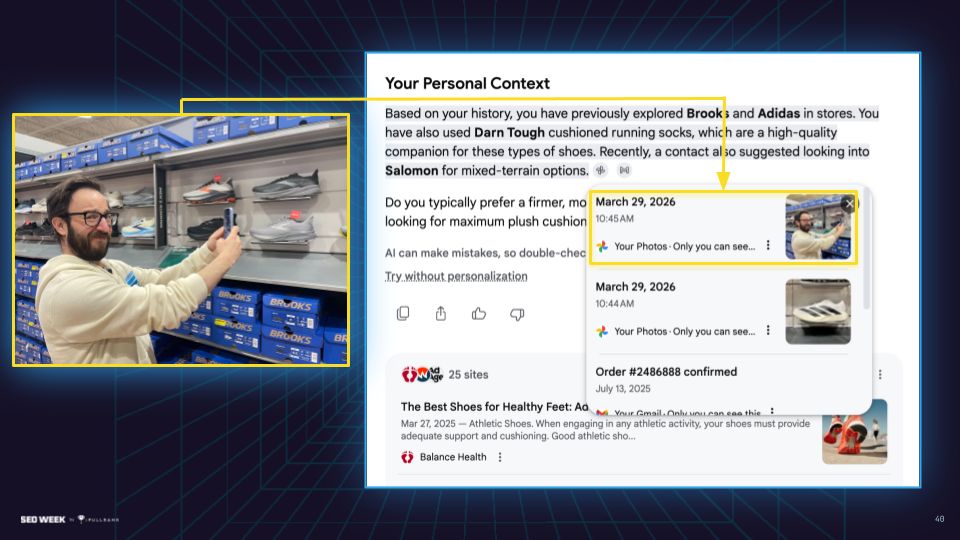](https://www.linkedin.com/posts/garrettsussman%5Fseos-should-start-obsessing-over-context-activity-7458153918603132928-Mkto?utm%5Fsource=share&utm%5Fmedium=member%5Fdesktop&rcm=ACoAAABJYd0BVvncqZgHyXeI1HxFJVbG0PlDSdM)
Interested in sponsoring this podcast or our newsletters please reach out to [mblumenthal@nearmedia.co](mailto:mblumenthal@nearmedia.co)
[E-mail Mike ](mailto:mblumenthal@nearmedia.co)
### Near Memo Transcript: -->
The Future of Personal Intelligence and Local SEO *\-*
*Local Implications of Personal Intelligence*
**Greg Sterling:** Hey everybody, welcome back to episode two of this exciting discussion about personalized intelligence or personal intelligence in Google with Garrett Sussman, Mike Blumenthal, and me, Greg Sterling. This is a week later in truth, but it's just moments later because we started recording this after we concluded the last episode. We're going to get into the local implications of personal intelligence, talk about the impact on SEO and measurement, and what marketers should be thinking about and doing now, given the inevitable trajectory of search and AI answers toward a more personal and variable set of responses.
**Greg Sterling:** So Garrett, welcome back. Last time we talked about Google's introduction of personal intelligence, which asks you to opt in to sharing Gmail, photos, and YouTube. We talked about explicit versus implicit personalization—where Google takes search history and other information to personalize even without an opt-in. We also discussed your cluster of studies around personalization and the 'seeding' tests using different Gmail accounts. Email emerged as the most powerful influence, which has big implications for email marketers. It expands what SEO becomes; it's no longer just a narrow silo. One thing we didn't cover last time is the impact of physical direct mail.
**Garrett Sussman:** Yeah, I know exactly the anecdote you're talking about, which shocked me. The USPS has a daily digest email that scans your mail. In my experiment, I asked for best running shoes in AI mode, and it recommended a 3D rendering service from a local shoe retailer. The citation came from that USPS email digest with a scanned postcard I received months ago. The AI copy said, 'Hey, you got this in the mail the other day... why don't you check them out?' That's a fascinating use case for the implications of this.
**Greg Sterling:** It ties back to email since it had to be scanned and emailed to you, but it makes direct mail an influence on AI recommendations. Historically, marketers struggled to connect online and offline dots. Now, demographic targeting from direct mail can combine with online recommendations. Let's talk about local. Most commerce is local—researching online, buying offline, finding a plumber or restaurant. How does personal intelligence, including Google Calendar data, factor into local marketing?
**Garrett Sussman:** That's huge. There's a difference between potential and reality. I highly recommend people start running local query studies. If you have time constraints in your calendar or take photos of your meals, Gemini knows your routines and preferences. Anecdotally, when I looked for a lawyer after a fender bender, if the AI has context from my chats or emails about a court summons, it will take that into consideration. It knows where you live, too.
**Garrett Sussman:** There's significant impact on local—practically keeping your Google Business Profile (GBP) up to date, but also thinking about specific personas. How can you show up in your marketing holistically to influence those recommendations?
**Greg Sterling:** I worked on 'location intelligence' years ago. Your physical footprint—how often you go to the gym, the airport, or a dealership—creates a behavioral profile. It's the real-world equivalent of clickstream data. Google has this for Android users and can combine it with calendar info to trigger powerful profiles. For a local business with a CRM and email list, how does that factor in?
**Garrett Sussman:** Hugely. This touches on relationship building—connecting with local chambers of commerce, libraries, or anyone with a newsletter. If you have a CRM with emails, you can use tools like SparkToro to see which newsletters or podcasts your audience subscribes to. I recommend building a 'persona search twin.' Create a Gmail account, subscribe to those newsletters and podcasts, and test local searches to see if your brand is in the conversation.
**Greg Sterling:** We've discussed 'Ask Maps' before—putting a conversational UI on top of local data. The future involves managing GBP much more actively—adding freshness and linking to sources. What about reviews and Google Posts?
**Garrett Sussman:** You have to maximize those. The probabilistic nature of LLMs means reviews heavily influence results. AI can consume much more review data than traditional search. We're moving away from specific keywords toward relevant content. Everything matters: posts, reviews, even owner responses. Google recently changed rules to prevent soliciting specific content in reviews, but I'm skeptical about enforcement at scale.
**Mike Blumenthal:** We're already seeing review takedowns for things like repeating employee names too many times. But in local, Google was always localizing to an extreme degree. Now, AI is better at mapping deep query intent, like 'restaurants between here and there.' Location remains a driving factor but is becoming more nuanced based on user preferences.
**Garrett Sussman:** Exactly. Location might be weighted differently if the AI knows you're willing to drive further for a better burger. It moves from explicit geographic mentions to implicit preferences based on device history.
**Greg Sterling:** If Google sees I buy on Amazon, will it route me to e-commerce? Or will it use Merchant Centers to show local inventory? That's the agentic stuff. It's making assumptions that might obscure certain choices.
**Garrett Sussman:** It's problematic. If I want to support local, I hope it recommends local. But my experiment showed AI can over-index on what it already knows, recommending brands I've already bought when I'm actually in 'discovery mode.' We're all learning to navigate these gaps.
**Mike Blumenthal:** Your research is forward-looking. Marketers have suggested personas and 'being where customers are' for years. While bombarding emails with products won't work immediately, the basic advice remains: know the customer.
**Greg Sterling:** Exactly. People get fixated on tips and tricks, but the basics—understanding behavior—are more important than ever. AI Overviews are now the default; we can't turn them off. We have to deal with whether we're being recommended and why.
**Garrett Sussman:** SEO is the foundation, but Google is automating more. Your responsibility is the narrative, the positioning, and the visualization. We see this with PMAX and LSAs drawing directly from websites to build ads. Marissa Mayer's vision of a search engine that anticipates needs is finally here.
**Mike Blumenthal:** But there will be pushback via privacy lawsuits. Google is 'breaking the dams' now because there were no penalties in recent antitrust cases, but individuals and litigation will eventually create pressure.
**Greg Sterling:** It's different in Europe with stricter controls. But regardless, keyword research is changing. What replaces it?
**Garrett Sussman:** It's not replaced, but the framing shifts. We measure three tiers: Input (discoverability/GBP), Visibility (how often are you recommended?), and Performance (revenue). Tracking will be a 'hellscape' because journeys are multi-touch. We need to focus on topic-level research and the questions customers actually ask.
**Greg Sterling:** What should marketers do right now?
**Garrett Sussman:** One: Interview your customers. Two: Over-index on critical information—ensure your phone number, address, and specific attributes are everywhere. Three: Don't underestimate brick-and-mortar visuals and signage. Marketing is more holistic than ever.
**Greg Sterling:** Content is storytelling—why should people choose you? Reputation management is also harder because you can't just 'bury' bad content in AI. You have to handle objections head-on on your own pages. It's an exciting time to be in local SEO. Run experiments and have fun with it.
### ChatGPT Ads, Claude Goes Local, AI Ranking Factors, Google's 91% Ad Revenue
URL: https://www.nearmedia.co/chatgpt-ads-ai-ranking-factors-google-91/
Last updated: 2026-05-08T00:32:24.000Z
### ChatGPT Expand Ads, Offers Self-Service
Driven by necessity, ChatGPT is rapidly expanding its ad platform. Earlier this week, OpenAI [announced](https://openai.com/index/new-ways-to-buy-chatgpt-ads/?ref=nearmedia.co) it was making ads more widely available. There are now two ways to buy, through partners (agencies, technology partners) and using a new self-service Ads Manager (US only). OpenAI is explicitly appealing to SMBs as well as brands. "Businesses can register as advertisers, add payment information, set budgets, bids and pacing, upload ads, launch and manage campaigns, and view performance in the portal." The company has also enabled improved measurement and CPC billing, but will continue to offer CPM, adding "over time \[we\] expect to support more ways for advertisers to bid and optimize for the outcomes they care about most." And a new AI ads [report](https://www.similarweb.com/corp/reports/advertising-in-ai/??ref=nearmedia.co) from Similarweb offers a first look at ChatGPT ad performance and pricing. The report estimates there are about 1K active ChatGPT advertisers. Significantly (vs. Google AI) only one ad appears per conversation "turn" (page/result). This is a major differentiator; how long it will last is another matter. Ads appear on the first answer ("turn 1") 44% of the time and on a later "turn" 56% of the time. The report shows a 0.50% median CTR at the bottom and 5.4% at the top. According to third party benchmarks ChatGPT ads outperform Google Display Ads but have lower CTRs generally than paid search ads. The report assumes a $60 CPM and $12 CPC.
**ChatGPT Ads: One Unit Per Page**
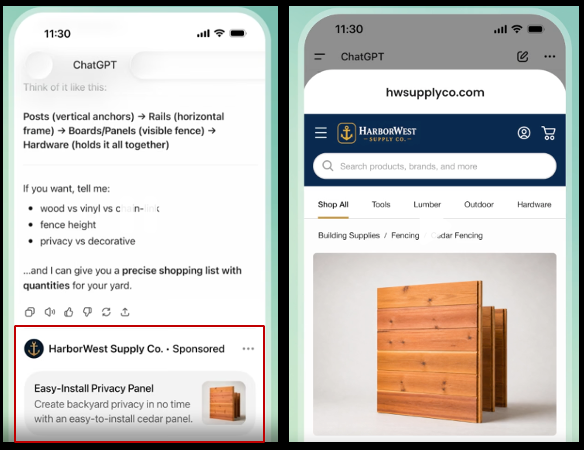
_This post is for subscribers only._
### EP 255 - How Google’s Personal Intelligence is Quietly Revolutionizing (Everyone's) Search Results
URL: https://www.nearmedia.co/ep-255-how-googles-personal-intelligence-is-quietly-revolutionizing-everyones-search-results/
Last updated: 2026-05-08T16:59:55.000Z
The search landscape is shifting from keyword matching to "Personalized Intelligence," where Google leverages explicit consent to access a user's Gmail, Calendar, and Photos. Research conducted by Garrett Sussman and Profound reveals that Google’s AI doesn't just find information; it infers a user's values and disposable income to steer them toward specific brand outcomes.
### The Podcast Deets
**The Opt-In Ecosystem (**[**03:11 - 10:59**](https://www.youtube.com/watch?v=MA-pg2UbG5A&t=191s&ref=nearmedia.co)**):** A look at the "Personalized Intelligence" toggle that gives Google permission to scan your private documents.
**The Persona Impact (**[**12:22 - 21:07**](https://www.youtube.com/watch?v=MA-pg2UbG5A&t=742s&ref=nearmedia.co)**):** How LLMs change their tone and recommendations based on whether a user makes $45k or $150k.
**The Email Seeding Experiment (**[**21:35 - 30:02**](https://www.youtube.com/watch?v=MA-pg2UbG5A&t=1295s&ref=nearmedia.co)**):** A breakdown of how sending specific emails can move a brand from the "bottom 10" to a top AI recommendation.
### Key Takeaways
• Google’s Personal Intelligence is an opt-in feature that integrates Gmail, Photos, and YouTube history into AI search.
• AI search platforms (like Gemini and ChatGPT) change product recommendations based on explicit and implicit persona data, such as salary.
• Gmail content is a significantly stronger signal for AI personalization than Google Photos.
• Even unopened emails can influence the recommendations provided in Google's AI Mode.
• Google’s AI is moving toward an "agentic" model, acting as a partner that "solves" problems before a user even finishes their query.
- **👇 Watch by topic:**
[00:00](https://www.youtube.com/watch?v=MA-pg2UbG5A&ref=nearmedia.co) – Introductions and the Personalization Shift
[03:11](https://www.youtube.com/watch?v=MA-pg2UbG5A&t=191s&ref=nearmedia.co) – Defining Google’s "Personalized Intelligence"
[12:22](https://www.youtube.com/watch?v=MA-pg2UbG5A&t=742s&ref=nearmedia.co) – The 12-Month Profound Study: How Persona Impacts Results
[21:35](https://www.youtube.com/watch?v=MA-pg2UbG5A&t=1295s&ref=nearmedia.co) – Seeding Experiments: How Gmail Influences AI Recommendations
[30:02](https://www.youtube.com/watch?v=MA-pg2UbG5A&t=1802s&ref=nearmedia.co) – The Privacy Paradox: Family Names and "Creepy" Data
Related Links
[Implications of AI Mode and Personal Context - 2025 Google I/O Hot TakesWhat did we learn about AI Mode and Personal Context at Google I/O 2025 and what does it mean for the future of SEO and Content Strategy?iPullRankGarrett Sussman](https://ipullrank.com/ai-mode-and-personal-context-google-io?ref=nearmedia.co)
[SEOs should start obsessing over context packing and hyperpersonalization. AI assistants are context machines. Google says consent is required, but we’re going from opt-in to opt-out before people… | Garrett SussmanSEOs should start obsessing over context packing and hyperpersonalization. AI assistants are context machines. Google says consent is required, but we’re going from opt-in to opt-out before people are ready. That’s going to shock the system. The optimist in me says people will love it. For the uninitiated, Google’s Personal Intelligence doc describes context packing as finding the right pieces of your personal data and putting them into the model’s working memory. Doc in the comments. Gmail, Photos, Search history, YouTube, saved places, past conversations, receipts, confirmations, and the random paper trail of your life can all shape the AI output. We already know personalization from local search. I’m talking about this today with Mike Blumenthal and Greg Sterling on the Near Media podcast. Google can find relevant content in a massive corpus of documents. Your digital life history can probably predict intent most of the time, like an optometrist spotting cholesterol levels. Yeah, that’s real. Personalization has to thread the needle between helpful and creepy. Google calls out the limitations: Overpersonalization: One signal can become the whole personality of the answer. Mistaken preferences: Buying something for your kid, spouse, friend, or brother can make the model think it’s your thing. Incomplete information: The model may act like it has the whole story from a few scraps in the kitchen junk drawer. Timeline confusion: AI already struggles with time. Personal history gives it more ways to mess up past, present, and future. Relationship confusion: Names, emails, photos, and messages can still lead to the wrong human read. Missing life changes: Your life can change faster than the model’s understanding of you. \~Ferris Bueller Bad assumptions: A receipt can become proof that you only want Aviator Nation hoodies and Starbucks forever. Ignored corrections: You can correct the model, and it may still wander back like my daughter insisting pink and golden are rainbow colors. Speed vs. depth: More personal answers require more work, so speed becomes a tradeoff. Multimodal risk: Once photos, videos, and visual summaries enter the mix, the risk becomes wrong context with a screenshot attached. And this isn’t just Google. ChatGPT is now surfacing Gmail-connected personalization too. Brand new FAQ in the comments. Brands have to earn their way into the context layer before the search happens. Andrea Volpini wrote about this yesterday. Emails. Newsletters. Reviews. Communities. Videos. Receipts. Support interactions. Third-party mentions. Saved lists. Past purchases. This is the year of hyperpersonalization. Google I/O is in a couple of weeks. I’m betting we’ll see more Personal Intelligence news. The psych of this gets me excited. It’s messy now. It’ll get better. The ugly part is that we’re still at the whims of corporations we can’t trust to have our best interests at heart. Y’all notice that it references receipts? What??LinkedInGarrett Sussman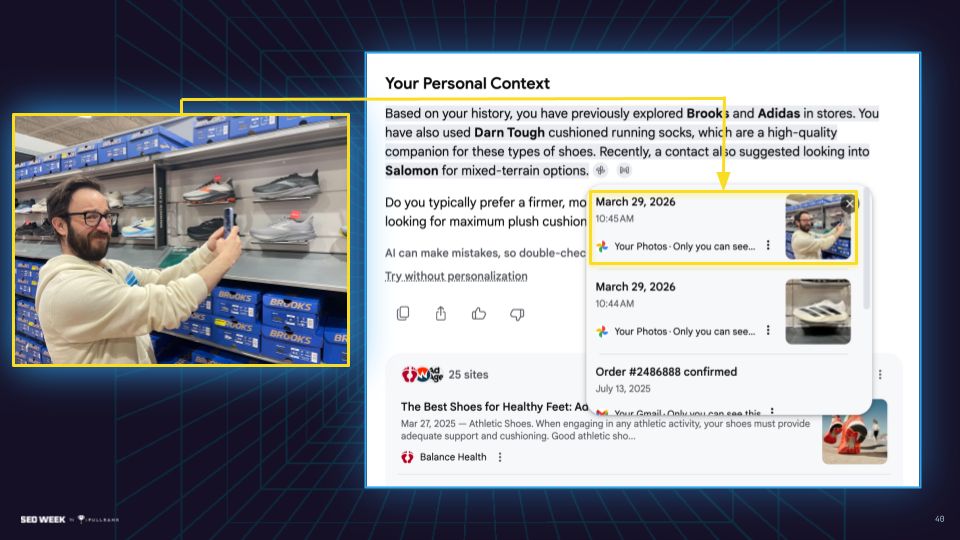](https://www.linkedin.com/posts/garrettsussman%5Fseos-should-start-obsessing-over-context-activity-7458153918603132928-Mkto?utm%5Fsource=share&utm%5Fmedium=member%5Fios&rcm=ACoAAAAIV74Bb1aAoZdEKRnVNUEej8CRDU-HC9w)
[Building Personal Intelligence: A step towards truly personal AI](https://ai.google/static/documents/building%5Fpersonal%5Fintelligence.pdf?ref=nearmedia.co)
Interested in sponsoring this podcast or our newsletters please reach out to [mblumenthal@nearmedia.co](mailto:mblumenthal@nearmedia.co)
[E-mail Mike ](mailto:mblumenthal@nearmedia.co)
### Near Memo: Personalized Intelligence & AI Mode Transcript
**Greg Sterling:** Hey everybody, welcome back to the Near Memo with the lovely and talented Mike Blumenthal and me as always, Greg Sterling. And today we have another special guest with us, Garrett Sussman, who's the director of marketing at iPullRank. And many of you know him from his prolific LinkedIn activity. And he just spoke at SEO Week in New York. And this is why he's on the show today because he had a very, very provocative, interesting and relevant presentation about personalization, Personalized Intelligence, and AI Mode, and we want to get into that and we may, we may decide to break this into two, depending on how it's going, because there's so much to talk about and we're going to talk about what is it? We're going to talk about a really provocative year-long study that they ran with Profound that kind of got into the mechanics of personalization. How does this impact local? How does this impact SEO and what does the sort of near-term future look like with personalization, AI Mode and other things? So welcome, Garrett. Glad to have you on.
**Garrett Sussman:** Thanks for having me guys. Obviously I came from local, I got into SEO originally from working with Mike and GatherUp. And so it always holds a place in my heart. And we are in a weird space right now. So excited to dive in and get some very hot, spicy opinions.
**Greg Sterling:** Yeah, so for the folks that weren't at SEO Week and haven't seen your presentation, which we'll link to in the show notes, and I recommend people watch it, talk about what, sort of at the highest level, what did you talk about? What was the presentation?
**Garrett Sussman:** Yeah. So the focus, I think in SEO, local SEO and AI search right now is hyper-personalization. It's something we're all familiar with with local. But in essence, I talked about how we need to, as marketers and SEOs, take into consideration how through AI search, we are getting much more personalized results. It's very difficult to track. It changes our content strategy, it changes the way we approach business and AI search in general, and so I ran a bunch of experiments to show how that's happening and looking at what's coming and what's already here?
**Greg Sterling:** So personalization is one of the hallmarks of AI generally: ChatGPT, Claude, Co-pilot, presumably. It remembers, it has a long kind of context window in memory. It remembers what you asked before. You can make references to things that you previously talked about. And so there's that kind of personalization and it learns about your preferences. It learns about your biases and then it answers things. I mean, I see this with ChatGPT all the time, but it doesn't know information other than what I've given it. It doesn't know anything about my history or my behavior or my interest other than what I've explicitly told it. Now, this specifically is about Google and Personalized Intelligence. Let's talk a little bit about what is that. Google announced that a few months ago, I think, or maybe last year. So talk a little bit about that.
**Garrett Sussman:** Yeah. So this was in January and this is—we already know Google collects a lot of data about you—but you are basically now giving Google explicit permission to access different Google data sources in your ecosystem. We're talking Gmail, Calendar, Photos, YouTube history. We already know it looks at your Google search and allowing Google to basically, when relevant, take that information, that hyper-personal private content and use it to give you a better personalized result in AI Mode and in Gemini and potentially ultimately in AI search results.
**Greg Sterling:** Yeah, the blog post was January.
**Mike Blumenthal:** So Personal Intelligence is on by default, but connected apps to the Google ecosystem is off by default. Is that correct?
**Garrett Sussman:** So it is something that you need to opt into. And once you opt into it, then when you do a search in AI Mode, it will actually reference a specific email from your Gmail or a specific photo.
**Mike Blumenthal:** But the memory is defaulted on, the connected apps are defaulted off. It looks like to me when I'm looking at the Personal Intelligence settings screen.
**Garrett Sussman:** It's defaulted on when you actually set it up. You have the ability to manage it, but the memory is defaulted on when you opt in.
**Greg Sterling:** Just to clarify, it's an opt-in, not an opt-out. They're not turning it on for everyone, and then people have to figure out how to opt out. It's something that you have to explicitly agree to do. In other words, share the contents of these apps, Photos and Gmail. What else is in there beyond that?
**Garrett Sussman:** Calendar, YouTube, search history.
**Greg Sterling:** And obviously, let's assume that Google were an ethical company and we could trust them. This would be a great benefit, right? It would be a convenience and the machine would prompt you with information that would be helpful and it would tailor responses to your interests and needs. And so it's a great idea in the abstract.
**Garrett Sussman:** Absolutely significant improvement of the product. I mean you just think about how much better your results are when you are logged into Google versus Incognito. Just multiply that times like a thousand.
**Greg Sterling:** So I mean, when I saw this, absolutely did not. My response was no f-ing way am I going to do this? Part of me feels like I have to do this just to understand how it's working, as your presentation described. But as a consumer, as a person, it's like Google is already too intrusive and too manipulative. And I don't want to give it any more of my information because not only do I not trust Google, but then Google just becomes a conduit for all the bad actors out there where they can go in and say, hey, Google, give us all this data. I mean, it's already happening in the current government. Give us all this data about critics and dissidents and all of these. This is a China scenario. But let's not get too political here. I want to talk about the mechanics of this.
**Mike Blumenthal:** But as Garrett pointed out in his talk, even if you don't turn on the give-apps-permission, it one has memory defaults on. It remembers all your queries and then two, it has your search history. So even without giving it access to your Gmail and your YouTube, whatever, it brings that into the AI memory. It knows a lot about you, whatever you choose to do or not do.
**Greg Sterling:** Okay, Garrett, would you add anything to that about sort of implicit personalization where somebody hasn't explicitly said, okay, personalize my results with these different apps and the content? But as Mike said, the search history and other inputs that Google is getting, that's almost as good really as a practical manner, I would imagine.
**Garrett Sussman:** Yeah, I mean, philosophically, I think if you want to participate in digital society, Google has all your information. We can all agree that whether we consent or not, to your point about Google as a corporate entity, it has the data. How they decide to use it, the Personal Intelligence is a way for you to explicitly give them permission to do all sorts of creepy stuff with your data that in theory will improve the product and the experience. I feel like culturally and socially, we are not there yet, but I feel like that's the inevitable direction that we're going in. And so, you know, I'm not an important person, so I don't give a crap if they have access to my stuff.
**Greg Sterling:** But you are! You're on this podcast. So by virtue of that, we've recognized you as an important person. Well, I mean, there's a whole long conversation about privacy that we can have at another time, which is privacy and trust and all of these issues—this cluster of issues are very important. But there's so much material to get to. I want to focus on that.
**Mike Blumenthal:** Well, the one reason it's material here is because if apps are not opted into, for example, as a normal part of consumers' behavior, then some of what Garrett did is limited to the people that do that. You can't extrapolate it to everybody. And so one of the questions that I would have is how many people actually participate given it's opt-in. Now it's probably very few. But like everything with Google, sooner or later, it becomes default.
**Greg Sterling:** Nobody knows about this. People out in the world have no idea about any of this right now.
**Garrett Sussman:** There you go. No, we're still at like less than 1% of the population. I think Mike's point is right on. Liz Reid gave a presentation or was on a podcast where she said, we care about consent. I think AI Mode, we've seen growth. I got some SimilarWeb data where we're seeing like 25% of Google users are actually starting to use it because they are starting to force feed us AI Mode. The only reason all this is a big deal is AI Overviews were the default version of SERPs. If AI Overviews wasn't opt-in, then we wouldn't be talking about AI search and LLMs in the same way that we have in our search world. You know, going into whether AI Mode and all of this will become a part of our daily process, I think it's inevitable. But to your point right now, same way ChatGPT is just what, 2% of the actual search market? Like even ChatGPT doesn't really move the needle, nor does Bing, but eventually, if Apple integrates Personal Intelligence with Siri, then all of a sudden that market expands significantly.
**Greg Sterling:** Well, what our survey data show is that people—I mean, I've said this a million times—people really like the conversational experience. They prefer the conversational experience to traditional search. Traditional search is in certain cases more efficient, but all things being equal, people, most people are going to say, either I want to use a combination of the two, or I prefer AI Mode explicitly or some equivalent conversational kind of interface. We have both survey data and behavioral data. We were looking at it in the context of choosing a PI lawyer. Let's just say directionally, people will embrace these tools because they like the experience better. And the question is, can they trust the underlying data? But that's a little bit of a tangent. I think we can make the assumption that AI Mode, because Google is, as you say, force feeding it, at every turn it's presenting it as a 'try this, look at AI Mode.' And so I think we can assume that the numbers will continue to increase. But let's talk about your study.
**Garrett Sussman:** To your point, there's two mental models, right? The way that we use search and we've been trained to use search is different than a conversational search bot. Like we've been trained to use keyword-ese to be efficient, use a couple of words to get the information we need because we all know how Google operates. But Google has been implementing natural language processing for decades now, like with MUM and BERT. And so once you get into this chat bot model, I think the way your brain processes it and uses it is different. So that context is a big thing. We did an AI Mode study last year as well with user data and behavioral interviews. Our local search was on healthcare, finding a healthcare provider. And seeing people actually have the conversation around insurance and making that be a qualifier using natural language is a completely different experience than the way people use search.
**Greg Sterling:** Right. So you get a lot more about their intent and you get a lot more about what their priorities are and what's really important and what are the deal breakers and so on and so forth. OK. So let's talk. In the SEO Week presentation, you talked about a 12-month study that you did with Profound that was really fascinating that proved essentially the thesis about personalization. That all of the data that was kind of coming into the mix was changing search results depending upon the persona. Talk about that. What did you do and what did you find?
**Garrett Sussman:** Yeah, there are two experiments. So the way I broke it down in this framework is when we're thinking about the personalization interaction with these LLMs, there's explicit context and implicit context. There's the implicit context that it's taking that you are not saying in your prompt—that it knows about you, location, and what we're talking about with Personal Intelligence. But then there's the explicit context where you're actually telling it about you. Like I just mentioned about finding a health provider that I need an insurance that is under this provider when I'm looking for a doctor. So my study with Profound is I gave it explicit context where I set up four different personas: I am this gender, I make this much money, this is my job, this is what I'm into. And then I said, 'what is the best coffee machine for me?' 'what is the best running shoes?' across four different products. And we ran that across eight different AI search platforms for 12 months, over a hundred thousand prompts to see how the results were influenced. And what we found is when you give that explicit context—when it knows I make this much money—it makes different coffee machine recommendations, statistically significant across that data. Now, this is a kind of lab environment. It's not in the wild. So, you know, the way that we extrapolate any of these types of findings, I think we need to take everything with a grain of salt. And we've seen it change over time. Over that period, I saw ChatGPT move from four to five. I saw Gemini go from two to three. But for instance, if we told them that this person makes $150,000 per year, they were recommended much more expensive coffee machines versus someone who only makes 45,000 a year and they got like a Keurig recommendation. And so we saw this across all different brands that this explicit context very much influenced the results. And one other really interesting aspect of the study was the language that they used in the LLM's output was different. So for instance, when it comes to salary, we found that it used premium language. It made assumptions that the person had disposable income.
**Greg Sterling:** It's making assumptions about values.
**Garrett Sussman:** Exactly. Whereas if they didn't have as much money, you're like, 'you might need to consider whether you even get a coffee machine. Here's your budget.' So there are brand implications. There's audience research implications. That was the explicit experience.
**Greg Sterling:** Yeah, that's super fascinating. And one of the things you mentioned, you referenced Kevin Indig's research, and there's been a bunch of research—Profound has done this research. And what it sort of collectively shows—and this goes to the debate about how influential LLMs are—is that people are using LLMs, especially in a product context, to get a short list of recommended products. So 'I'm looking for a coffee maker. I want to see the three best in this price range, based on reviews and longevity and whatever the considerations are.' And then it will show you those recommendations. And the studies show that very often people will take that information and that becomes the competitive set that they choose from. And then they may go off and do subsequent research or get reviews. But this is setting up their sort of universe of choices. Now they can break out of it if none of them are satisfying. But it's not like going to Google and seeing 10 options or 20 options or that product grid where you've got 16 different things going on. It's like, 'here are the three or here are the four,' and that conditions people's subsequent choices. If that's true, if that holds in the real world—and my anecdotal experience is pretty consistent with that—then there are pretty profound implications for these LLMs recommending, 'here are the running shoes, here are the places to stay,' et cetera. You're really steering people toward—it's not just 'here's a result, click it or don't click it'—it's like 'we're steering you toward these outcomes' and it's pretty significant.
**Garrett Sussman:** I mean, there's a choice paradox. We live—like in the '70s when you went to the grocery store, there's what, like a hundred products in the grocery store? Now you walk into a grocery store and there's like thousands and thousands. I think we are overwhelmed with choice. And I think over time, people want to be given just a few options that are actually relevant and personalized for them. All these studies are tricky because search behavior is changing very rapidly. There was another study talking about kind of like a magical realism when it comes to AI. People who are not familiar with AI, they think it's magic. They are skeptical, but they're also willing to trust it. I think as that trust is built over time and they have positive experiences with their AI interactions, that's going to be the way that people search. So to your point, there are implications for businesses with this technology.
**Greg Sterling:** I mean, you referenced the trust or lack of trust in AI and there's a lot of data on that. I think it's a very nuanced conversation because it depends on context, depends on what you're doing, what you're looking up. And what people say—what people used to say in the beginning—is 'yeah, I totally trust it.' Two thirds would say 'yeah, I trust it.' Now what people say is, 'I trust it, it depends,' or 'I trust it somewhat.' And so the users have gotten more sophisticated. They're still using it independent of the question of trust. It's not like 'I trust it, I use it.' It's like 'I'm using it, but I may in this particular situation not trust it or I validate with something else.' I do the research and then I go to Google to verify that this is accurate information. So there's a lot of nuance. But anyway, talk about gender and job title in the presentation. Gemini was inferring salary based on these. Talk about that because that's interesting as well.
**Garrett Sussman:** Yeah, there's model-to-model differences. And the other thing, as you called out—if I can encourage one thing to any SEOs listening to this, it's run experiments, do your own research, because there's no blanket statements anymore. Everything to your point about the nuance is super specific. We wouldn't have the same approach to a city that we would to a rural location and the way that people search there and who searches there. But for gender, what was interesting was we did some citation research on shoes. And what we found was when the citations were examined for the gender, we actually found references to women-driven running shoe websites. They did not appear in the citations for the male personas. So when you're starting to think from a digital PR standpoint and where you want to appear, you need to make sure that you are showing up for your ideal persona because there's going to be selection bias based on that context as well that makes it more complex and messy.
**Greg Sterling:** Right, and there's a kind of underlying discussion about whether the LLMs are biased. What are the assumptions LLMs are making about people's choices and tastes and who should be shopping with what?
**Mike Blumenthal:** 45-year-old white programmers in California.
**Garrett Sussman:** Great book reference: if you've never read it, in 2020 Brian Christian wrote 'The Alignment Problem.' And he talks about this specifically. We in the SEO space have all got obsessed with the idea of vector embeddings, right? But the training data, to Mike's point, is Western hemisphere based on a ton of English writing historically. I think it was like in the nineties we started to move from using male pronouns for everything and all that is baked into the Common Crawl data sets. Yes, there are situations that depend on RAG where it actually retrieves up-to-date fresh information from the internet, but the whole sort of training data is the history of the internet, which is problematic.
**Greg Sterling:** Yeah. So let's talk about the seeding piece of this. One piece of this that was really interesting is you were testing how different pieces of content, emails and images, would affect the recommendations because Google is starting to draw upon Gmail and Photos and YouTube videos. So tell us about that aspect of the study.
**Garrett Sussman:** So this was a Personal Intelligence experiment that we ran over three weeks. Me and two of my colleagues at iPullRank, Michael Tando and Kate Dombrowski, basically set up three different accounts. We had a completely clean Gmail/Google account that wasn't used, tabula rasa, completely not connected to anything. Then we had a second completely clean Gmail account that we connected to Personal Intelligence—we opted in. And then the third one was my ridiculously noisy personal Gmail account with decades of emails and photos and everything connected. And I connected that to Personal Intelligence. Don't judge me! And so what we then did is we set up an experiment where over two weeks, every single day, we ran about 50 prompts. They were eight different products across everything from banks to shoes and productivity tools. And then we had a set of six prompts that are 'what are the best versions of this?', 'what are the best versions for this specific attribute?', 'what are three recommendations based on what you know about me?'. And so they all had the same structure. And we ran it for three weeks. And then halfway through what I did is I sent an email from a different account to each of these accounts for each of the different products saying, 'hey, I recommend this brand. I like it because of X, Y and Z.' And then I went to a local store and I took photos of all the products and I uploaded all those to Google Photos to see how it would influence the results. And it was statistically significant for this specific data set. For our data set, we saw a significant lift in recommendations across the board for all of these products, mostly from email. Photos did not have the same impact, but we saw the products that I seeded in the emails were not showing up in the original subset. They were like the bottom 10, they really wouldn't show up. And they consistently had about 60% to 80% visibility in the recommended results for the accounts connected to Personal Intelligence and actually referenced those emails consistently.
**Greg Sterling:** So after the emails were sent, those results started showing up in the accounts opted into Personal Intelligence.
**Garrett Sussman:** Precisely. A lot of the times you would get the context in AI Mode saying like, 'based on this email that you received from Garrett Sussman, we think you would like this Salomon running shoe brand because it's great for durability.' It would actually parrot the copy from the email. So it was very much influencing the recommendations pretty clearly from the experiment.
**Greg Sterling:** So why do you think that email was weighted so much more heavily as a signal than images?
**Garrett Sussman:** That's a good question. Mike's done a lot of research on visual recognitions and Google's tools. And while it's really excellent, it isn't as specific. There's a lot of noise in photos, I think.
**Mike Blumenthal:** And there's more processing costs. I mean, the reality is that getting to an understanding of a photo takes a whole extra step. We've already got the text in the email. That's easy to bring into a recommendation. It's explicit. And there's nothing explicit in a photo. Plus you got to process it to even get what's implicit in the photo. And I would assume the costs are a big driver here.
**Greg Sterling:** Yeah, that's probably a good insight. If you take a picture inside a store, Google may have no idea what the intent behind that photo is. But you even used some fake brands, and you said those were recommended.
**Garrett Sussman:** Yes, so as an additional part of the study, once we saw statistical significance, we on the last couple of days added in the same email format and the same photo format for completely fake made-up brands. And those were recommended consistently as well, which I guess is not really surprising. Highly recommend the PDF that Google wrote on Personal Intelligence, acknowledging a lot of these potential limitations of AI Mode. In my talk I kind of joked about email scam marketing is back. I would hope that Google would get better at identifying the issues there, but it's still an LLM. It still lacks a lot of control, even though it's in the product.
**Greg Sterling:** And you said—I mean, this was fascinating—even unopened email was influential.
**Garrett Sussman:** Yeah, there were two really surprising cases. One is a newsletter that I received over a year ago for productivity software tools that was cited in AI Mode. It referenced three different products. And I went back to find the email because it showed me the subject line. It was an unopened email. So then I opened it. I found it right in the middle of the body where this guy, Marco Giordano, talked about this product. And so that's nuts. There's a lot of noise out there, Greg.
**Greg Sterling:** You don't really like it if you're not opening the email!
**Mike Blumenthal:** Well, the reality is if Google has aspirations to be your agentic partner, they need the information from all the emails you didn't have time to read because they're going to solve this. Whatever information problem is in that email, they're going to solve it for you.
**Greg Sterling:** Well, Meredith Whitaker, who's the CEO of Signal, has talked about agentic work. For agentic work to work, people have to give it access to all kinds of things: calendar, bank accounts, credit card information, so on and so forth. And it needs kind of holistic access and information to be able to sort of carry things out. And this is sort of a baby steps version of that, right? I mean, it's sort of the foot in the door to get us accustomed to giving Google... I mean, Google already has my credit card information on file with Google Pay, and I just click a button and there it is. Talk a little bit about transactional emails.
**Garrett Sussman:** To that point, one interesting thing that came up in the study before we even see the emails is Google has all of our receipts and our confirmation emails. And they—my goodness, Google loved telling me that I bought stuff. It was uncomfortable because you're getting this output about hoodie recommendations. And it would say, 'well, clearly you love Reigning Champ, Aviator Nation. Here's the three times that you've bought it in the last year.'
**Greg Sterling:** Yes, I was gonna ask you about that.
**Garrett Sussman:** And as a human, I did not like that, but it was interesting that it over-indexed on these transactional emails. One next step of the study that I have not done yet is I am going to go through all of the links to the emails that we got. I want to see what percentage are transactional emails, what percentage are marketing emails, what percentage are those personal emails? Because I'd be very curious. I didn't see a ton of marketing emails, but we did get subscriber updates or ClickUp emails about product marketing updates. So they did come. It just wasn't as explicit as the personal.
**Greg Sterling:** We have to assume that Google is going to refine this and that the balance of the weighting of the signals will evolve over time. This is right now, they're just very much in an experimental phase. You also talk about your family's names showing up in some of these recommendations. And that was weird and somewhat uncomfortable.
**Garrett Sussman:** Yeah, uncomfortable. It is uncomfortable. I remember because it was last Hanukkah, I was looking for gifts for my daughter. And I might have mentioned her name once—Sammy. And so then when I was looking for streaming network recommendations, it gave a very personal output saying, 'hey, knowing that you're in a family, your daughter Sammy loves Bluey. We would recommend Disney Plus because your wife can watch HBO Max as well and blah, blah, blah.' What was interesting and what is very tricky with all of this too is we know that we have explicit citations from the Gmail and the Photos. We do not have explicit citations from our search history. And one thing I called out in the study, which was really interesting to me, is when I had a general query—'recommend a streaming service for me'—it would go into that personal recommendation. And then in the citations, you could see a CNET article that said 'the top 10 family streaming services.' And I did not give any context of that in my search. So there is a lot of implicit data that's being pulled in in the results.
**Greg Sterling:** And I would argue that Google is probably going to have to focus on that because once things like your family members' names start showing up and these kinds of very personal details, it's going to freak people out. If you look at all the privacy surveys, we are in a very different position today than we were a decade ago when these tech companies were seen as cool and really innovative. Today, we've got the bro-ligarchy and there's this really adversarial relationship, I think, between technology and users. Users are engaged with technology because they have to be. Everybody's using social media. Everybody's using search. But I think people are very ambivalent. And I don't think Google can take anybody's consent or participation for granted. So what's going to probably wind up happening is a lot of these implicit signals will be brought to bear on this. You know, they're going to have to find the right balance between something that seems too intrusive and something that is genuinely useful and helpful.
**Garrett Sussman:** I think there's a lot of nuance about audience types. It's going to be very interesting to see different demographics and how they kind of encounter this and how they interact with it. For the past couple of years, we've seen people preferring to go to TikTok or more people going to Reddit for their searches. I think as long as Google is the default version on many devices and ecosystems, people, whether they have a problem with this data or not, will continue to engage. I think people—myself included—we have our laziness gene in us. You know, we don't want to expend too much cognitive energy switching from the defaults, whether that's a new channel or a new way of searching.
**Greg Sterling:** Of course. Right, and there's data that backs that up. There was a really interesting study that paid people to use Bing versus Google and tried to measure whether that would continue after the end of the experiment. And for a small percentage of people it did, but most people went back to what they were comfortable and familiar with. So I want to break at this point because I think this is a lot of content for one episode, and we will bring you back for part two of this where we're going to talk about what the implications for local are, SEO in general and measurement, and how do marketers respond to all of this. There's a lot of important things in shifting your perspective and shifting your tactics. Then we'll do a little bit of prognostication about the near-term future. Thank you very much, Garrett Sussman, and we'll have you on immediately after we conclude this for part two. OK, thanks.
### 5-Star Fraud: The FTC Targets Law Firms & Property Managers for Review Abuse
URL: https://www.nearmedia.co/ftc-warning-letters-about-review-abuses-2/
Last updated: 2026-05-06T21:06:52.000Z
In December 2025, the FTC [issued](https://www.ftc.gov/news-events/news/press-releases/2025/12/ftc-warns-10-companies-about-possible-violations-agencys-new-consumer-review-rule?ref=nearmedia.co) warning letters to 10 companies determined to have likely violated the [Trade Regulation Rule on the Use of Consumer Reviews and Testimonials](https://www.nearmedia.co/ftc-announces-final-rule-banning-fake-reviews/), which became fully effective on October 21, 2024.
After FOIA requests these letters, detailing the specific firms and their alleged offenses, were recently published on the FTC website. The "on alert" group includes three personal injury law firms, one CPA, and six property management firms.
### Compliance Requirements
Within 5 days of their receipt of these letters the companies needed to provide proof of the following:
**1\. Immediate Mandatory Compliance**
Each business was required to respond via email to the assigned FTC staff member within 5 business days of receiving the letter. Their response was required to include:
- **Point of Contact**: Identification of the specific person or entity in charge of the company's review policies and compliance.
- **Reciept Confirmation**: Proof that the warning letter was been delivered to that person or centralized entity.
- **Remediation Plan** A detailed description of the specific actions the business will take to ensure future compliance with the Rule.
**2\. Remedial Action**
The FTC "advised" these businesses to immediately cease all prohibited conduct and take corrective steps, such as:
- **Removal**: Deleting problematic reviews and testimonials from websites under their direct control.
- **Third Party Outreach**: Making a "best effort" to have non-compliant reviews removed from third-party platforms like Google or Yelp.
- **Process Revision**: Ending "gatekeeping" or sentiment-based incentive programs (e.g., gift cards or rent discounts for 5-star ratings).
**3\. Risk of Formal Legal Action**
If no response was received by the FTC or if the FTC gathers further reports of non-compliance, the FTC signaled its intent to file of a federal lawsuit. Because these businesses are now on formal notice, any continued violations carry significant legal risk.
Under the FTC Act, the Commission can only seek high civil penalties if a business had "actual knowledge" or "knowledge fairly implied" that their conduct was unfair or deceptive and prohibited by a rule. By sending these letters, the FTC has:
- **Eliminated the "I didn't know" defense**: The businesses can no longer claim they were unaware of the specific prohibitions (e.g., review gating or incentivizing sentiment).
- **Set the stage for per-day fines**: In cases of "continuing failure to comply," every single day a prohibited review stays up or a practice continues can be treated as a separate violation. Under the Consumer Review Rule, the FTC is authorized to seek substantial monetary damages with penalties of up to$53,088 per violation.
### Target Firms and Alleged Offenses
Here are the firms and the banned review practices of which they were accused:
| Business Name | City | Prohibited Practice | Category | |
| ------------------------------------------------------------------------- | ----------------- | ---------------------------------------------------------------------------------------------------------------------------------------------------------------------------------------------------- | ------------------- | |
| Provident CPAS PLC | Tulsa, Ok | Providing a $100 fee discount to customers in exchange for the customer posting a 5-star Google review. | CPA | |
| Glasheen, Valles & Inderman, LLP | Lubbock, Tx | Providing a $50 gift card incentive to employees in exchange for each 5-star review obtained from family or friends who were not clients and had no actual experience with the firm. | Personal Injury | |
| Craig Swapp and Associates | Sandy, UT | Providing a $50 bonus to employees for each 5-star review from non-clients (family/friends), and soliciting reviews at community events from individuals without actual experience with the firm. +1 | Personal Injury | |
| Emerson Straw PL | St. Pete, FL | Providing a $50 gift card incentive to employees in exchange for each 5-star review obtained from family or friends who were not clients and had no actual experience with the firm. | Personal Injury | |
| Somerset Apartment Management, LLC (d/b/a Sandhurst Apartment Management) | Charlotte, NC | Conditioning entry into a raffle for a 50-inch TV on a tenant's submission of a 5-star review, and allowing unlimited raffle entries for each positive review. | Property Management | |
| Weidner Property Management LLC | Kirkland, WA | Conditioning entry into a raffle for a choice of a $500 gift card or $500 rent discount on a tenant's submission of a 5-star review. | Property Management | |
| Hortenstine Properties, LLC (d/b/a Lincolnshire Apartments) | Mattoon, IL | Providing a $15 lease credit to tenants in exchange for the tenant posting a 5-star Google review of the apartment complex. | Property Management | |
| Tec Management, L.C. (Hilltop Towers) | South Ogden, UT | Conditioning a $25 account credit and entry into a raffle for a $300 gift card and 1-year Sam's Club membership on a tenant's submission of a 4- or 5-star review. | Property Management | |
| 10 Stars Property Management LLC | Pinellas Park, FL | Providing lease fee discounts to prospective and current tenants in exchange for their publishing a 5-star Google review. | Property Management | |
| Allview Real Estate | Newport Beach, CA | Providing $10 Starbucks gift cards to tenants in exchange for their publishing 5-star Google or Yelp reviews. | Property Management | |
### Analysis and Takeaways
The law firms, while not mom and pops, are mostly local and a few are regional in scope. None are national in scope.
Emerson Straw LLP, a boutique firm, appears to have 7 employees and one main office. Glasheen, Valles & Inderman Injury Lawyers operates 7 locations across Texas and New Mexico with fewer than 40 employees. The largest, Craig Swapp & Associates has 14 offices across Utah, Idaho and Washington with fewer than 100 employees. The property management firms were similar with sizes ranging from a few employees to the largest with several hundreds of employees.
While I presume that the FTC is not going out and actively looking for offenders, you are not too small to be targeted if you have been reported to them for review programs that violate "The Rule".
### Types of Offenses
The three law firms all were targeted for incentivizing employees (not a problem) to solicit reviews from non customers (the problem) including friends, family and community events. The similarity in their incentive programs are so similar, one has to assume that the idea was promoted at some conference or in a "mastermind group" of some sort.
The property management firms were called out for conditioning their incentives in exchange for a specific star rating.
Incentives, in and of themselves, are NOT against the rule but if incentives are used, then the review must clearly state that they were in place and they can not be predicated on receiving a certain rating. This makes it a violation to incentivize Google or Yelp reviews as there is no mechanism to indicate the incentives. As a note, while incentive are not illegal under the FTC Rules they are against the Terms of Service at most review sites.
### The Outcome
The firms that were singled out by the FTC were obligated to quickly put together a remediation plan, attempt to get the offending reviews removed and promise not to ever do this again.
In theory, the FTC would call them out publicly from their bully pulpit to insure broader compliance. However, that really hasn't happened to date. The publicity around these cases was limited to the December press release noting that the letters were sent. However, garnering the names of the offenders and the specific allegations of their behaviors required that a Freedom of Information Act request be filed. And to date there has been no public mention of these firms, let alone public shaming.
### The Future of Reviews
The FTC’s current enforcement strategy relies on a "bully pulpit" approach, yet the noise has been surprisingly absent. Identifying these offenders required a Freedom of Information Act (FOIA) request; the FTC has not engaged in any proactive "public shaming."
If the only consequence for a violation is being asked to submit a "remediation plan," review abuses are likely to continue. With the FTC providing minimal publicity and Google struggling to catch sophisticated fraud, a further decline in public trust regarding review integrity seems inevitable.
---
You can download the complete set of letters here:
[FTC Warning LettersWarning letters to each offender including violationsmaterial-for-release-2026-00567.pdf17 MBdownload-circle](https://www.nearmedia.co/content/files/2026/04/material-for-release-2026-00567.pdf "Download")
We have filed a follow-up FOIA request for details on the remediation plans that these 10 companies filed.
We reached out to the personal injury firms for comment but none responsed.
### EP 254 - Google Ask Maps Deep Dive: Ask Maps Is The Future of Local SEO Panel Discussion
URL: https://www.nearmedia.co/ep-254-google-ask-maps-deep-dive-ask-maps-is-the-future-of-local-seo-panel-discussion/
Last updated: 2026-05-01T20:09:57.000Z
The "Ask Maps" conversational UI represents a shift in local search, prioritizing natural language and hyper-personalization based on user history and saved labels. However, this AI interface often surfaces fragmented or outdated data from "orphaned" URLs and old citations, making it imperative for businesses to maintain "content freshness" through frequent updates to service pages and reviews.
### The Podcast Deets & Take-Aways
**Segment 1: The New Paradigm: Conversational Search in 2026**
Timestamps: 00:00 – 10:20
This segment defines the scope of the 2026 search landscape, contrasting the "listicle" model with the new synthesized, recommendation-driven conversational interface. It demonstrates that natural, complex, relationship-based prompts (like "halfway between") are now effectively resolved by Google AI, validating the panel’s predictions from preceding years.
**Segment 2: Hyper-Personalization: Building the Competitive Moat**
Timestamps: 10:20 – 18:28
The panel shifts focus to the core strategic asset Google leverages in Ask Maps: implicit and explicit personalized data. They establish that user-defined labels are the single most powerful tool a business can utilize to capture repeat business, defining the new boundaries of customer retention and competitive defense against other large language models.
**Segment 3: Data Integrity and the Threat of AI Hallucinations**
Timestamps: 18:28 – 23:20
This segment provides the reality check for local businesses. The panel probes the dangers of data entropy, proving that forgotten web pages, old blog posts, and outdated citations are the primary sources of AI "hallucinations." They establish that data hygiene is no longer just about NAP (Name, Address, Phone) consistency; it is about content integrity across the entire historical domain footprint.
**Segment 4: The Strategic Response: The Freshness Mandate and "Vibe Coding"**
Timestamps: 23:20 – End
The discussion concludes with actionable strategies for SEO professionals and business owners in the Ask Maps era. It moves beyond theory to define "Freshness" as the new foundational tactic. The segment makes a convincing case that a "set and forget" GBP profile or website is no longer viable in an index that prioritizes current activity over historic domain authority.Key Takeaways:
**👇 Watch by topic:**
[00:00](https://www.youtube.com/watch?v=sul9ndyArbc&ref=nearmedia.co) \- Introduction to Ask Maps & The Panel
[01:42](https://www.youtube.com/watch?v=sul9ndyArbc&t=102s&ref=nearmedia.co) \- Live Demo: Ask Maps Desktop Interface
[05:13](https://www.youtube.com/watch?v=sul9ndyArbc&t=313s&ref=nearmedia.co) \- Hyper-Personalization & User Search Behavior
[14:19](https://www.youtube.com/watch?v=sul9ndyArbc&t=859s&ref=nearmedia.co) \- Google Maps vs. Apple Maps & ChatGPT
[18:28](https://www.youtube.com/watch?v=sul9ndyArbc&t=1108s&ref=nearmedia.co) \- Data Integrity: Where AI Gets Its Information
[21:35](https://www.youtube.com/watch?v=sul9ndyArbc&t=1295s&ref=nearmedia.co) \- The Freshness Mandate: Staying Relevant in AI
Interested in sponsoring this podcast or our newsletters please reach out to [mblumenthal@nearmedia.co](mailto:mblumenthal@nearmedia.co)
[E-mail Mike ](mailto:mblumenthal@nearmedia.co)
### **Full Transcript**
**Greg Sterling (00:**10) Hey, everybody, welcome back to the Near Media Podcast. And today we're doing a special episode on Ask Maps. And joining us is our celebrity local SEO panel, Claudia Tomina, Adam Dorfman, and Darren "The Canadian" Shaw. And the reason that that's meaningful in this context is he doesn't yet have access to this feature, but he is such a smart guy that he's gonna have a lot of opinions about it anyway. So welcome everybody and tell me if you wanna say anything before we jump into this. Anybody wanna say anything about how they're doing, what's up in the world?
**Darren Shaw (00:**37) you
**Adam Dorfman (00:**45) Isn't Buffalo kind of an honorary Canadian city? Like, Camp might be a... Yeah.
**Greg Sterling (00:**49) It is. It is.
**Mike Blumenthal (00:**49) It used to be. ...
**Claudia Tomina (00:**51) Okay.
**Darren Shaw (00:**51) Yeah.
**Mike Blumenthal (00:**52) if it still is.
**Darren Shaw (00:**53) Detroit too. There's a lot of comedians on this.
**Adam Dorfman (00:**54) there.
**Claudia Tomina (00:**54) Yeah, I'm very close.
**Greg Sterling (00:**55) Well, wasn't there like a sporting event where the two American teams and they were singing the Canadian national anthem recently. Did you read about that?
**Adam Dorfman (01:**06) I saw the clip, yeah, I think it was in Boston, but the mic went out when they were singing Canada and the Boston, I think it was Boston crowd just picked it up and the entire crowd sang it, so.
**Darren Shaw (01:**06) No. I didn't see it. that's
**Greg Sterling (01:**18) Yeah.
**Darren Shaw (01:**18) nice.
**Greg Sterling (01:**19) OK, all right. So here we are with the Mike's desktop view. And we're talking, as I said, about Ask Maps today and its implications for local search and how businesses should manage their data. And I wasn't even aware of this until this morning because I'm so focused on my phone that Ask Maps is now available on the desktop in certain markets. So Mike, why don't you give us a quick demo to orient people who may not have personally tried this?
**Mike Blumenthal (01:**42) Sure. So like in mobile, it's a separate UI element to get into it. In mine along the left menu. It brings up a very similar interface to AIOs. I'm just going to do a quick lunch about halfway between where my doctor is and where my son lives, sort of just in Buffalo. it spins the globe, charting the course, launches three expeditions, whatever those are, pinpoint six places. and gives you these little clues about what the fan out query is, but it doesn't give you as much information as the fan out query in the desk, you know, in AIO overviews. And then you get a series of restaurants. This is the one we ate at last time. Claudia said an interesting, so you can see, this gives you the map.
**Greg Sterling (02:**30) Can you expand the window? Are you able to expand the window to the right? I can't see your little carrot there.
**Claudia Tomina (02:**36) If you click on the Google Business Profile, you'll see it on the right.
**Greg Sterling (02:**40) Yeah, click.
**Claudia Tomina (02:**40) We'll click on Swan Street and then it should pop up the knowledge panel.
**Mike Blumenthal (02:**44) Right, and then I just made it bigger. Does that make it easier to see?
**Greg Sterling (02:**46) Okay, all right. So it just gives you a, okay. I thought you might be, go ahead.
**Mike Blumenthal (02:**50) So it gives you the, in maps, it typically only gives you three. When I do this in AI overviews, it gives me often 10\. AI, no, in AI overviews, or AI mode gives you 10, right? So pictures, some verbiage, a little bit of summary, but no driving directions, because the question was specifically about driving directions. And then a map.
**Greg Sterling (03:**00) You talking about AI mode, you mean AI mode. But you can get that from the knowledge panel if you want to on a particular business. do, as Claudia pointed out, that you can do a search for local events, which is really interesting. So do that and see what comes up.
**Mike Blumenthal (03:**21) Right. in the cross-border nature of our exercise. I added a second geography to this, five expeditions, whatever that might mean.
**Greg Sterling (03:**40) It's just a cute little way of telling you to be patient.
**Mike Blumenthal (03:**44) that is doing a fan out. So one of the things I wanted to do was to see if I could figure out where they're going for the, for the information. playoff fever. So Saturday, well, that's cool. Artisan market, Leslie Odom Jr. Urban bash.
**Adam Dorfman (04:**01) head to the bourbon part. Yeah.
**Mike Blumenthal (04:**04) Sabres game, if they go that far, Jazz Brunch. And then Toronto too. one of the things that I really like about it, living rural is this ability to search in broader regions, multiple geographies. Like I live in rural Western New York and Google historically has not been able to parse searches for Western New York with any kind of accuracy. But now it does. where I live, it's also called the Southern Tier, which extends from the border with Ohio all the way over to Binghamton. So, but now I'm able to say the Southern Tier in Western New York, and it will actually use that as a broad geography. anyways, there you have it. You want to see anything else while I'm here? Wanna see how this compares to Overview?
**Greg Sterling (04:**50)
**Darren Shaw (04:**53) want to see like, like my favorite recommend some plumbers in Denver. I'm just like, what do you get with classic search like that?
**Greg Sterling (04:**53) You mean as-
**Claudia Tomina (05:**00) Yeah.
**Mike Blumenthal (05:**01) Let me just do a clean one here. I don't know how to spell.
**Greg Sterling (05:**04) That's the beauty of the whole system. You don't have to.
**Adam Dorfman (05:**07) One thing is this is
**Claudia Tomina (05:**07) 33
**Mike Blumenthal (05:**08) I'm
**Claudia Tomina (05:**08) sources,
**Mike Blumenthal (05:**08) 33 sources, yeah.
**Claudia Tomina (05:**09) much more, much more.
**Greg Sterling (05:**12) Adam, go ahead.
**Adam Dorfman (05:**13) and, one thing I was just going to mention as this loads is that I've seen with ask maps that I find really interesting is, I've been testing my history and seeing how well it reads that. so recommend some restaurants in this neighborhood that I've visited before versus have rated highly before. Google certainly has all of that data, like whether I visited or rated it and is really good about saying you visited this restaurant like many times in the last year.
**Greg Sterling (05:**40) So personalization is a key feature of this.
**Adam Dorfman (05:**45) Yes, 100%.
**Greg Sterling (05:**47) And Claudia, you were talking about that too, think. You were experiencing that. Is that right?
**Claudia Tomina (05:**53) Yeah, I've tested it also. What I'm doing is saving labels and then adding certain places to a list. And I've noticed that it'll reference that I have this on this saved list or that I've labeled this. So, or, you know, you can label your home, your work, your office, and you can specifically say, it'll know exactly where your home office is because you have it labeled and then find locations in that area. So you can really personalize it. if you're utilizing all these extra features.
**Adam Dorfman (06:**26) I love that. And I also love using Mike's example. He put in the town his son lives in and switching that to what's a good place for me and my son to meet halfway between our homes. I wouldn't be surprised if that's coming or already possible these days, depending on how you have contacts within Google too.
**Greg Sterling (06:**48) So obviously one of the things about this that's really kind of exciting is the flexibility of what you can do with it, just as we're discussing right now. And it's quite a bit different than the conventional map search or even regular search. Do you?
**Mike Blumenthal (07:**04) Just as an aside on that, one of the big differences is query length and the dialectic between users learning what it means to have AI and how it changes their behaviors. Even in our research on PI lawyers, query length has gone up a half a word in the last six months. In other words, it was four and a half and now it's five or something like that, average query length. And this was for a very low funnel task, right? Super low funnel task that people were given.
**Greg Sterling (07:**29) Yeah, super low funnel.
**Mike Blumenthal (07:**33) So it will be interesting to see how long it takes. And then what do these queries show up in insights like these very long, bizarre geographies and queries, will they show up in Google insights at all or not? Or are they buried away in the deep bowels of Google knowing about you, but you not knowing anything.
**Greg Sterling (07:**51) Well, Google confirms this. They mean they consistently are saying that query length is getting longer. And it makes a lot of sense is that as people use these AI tools and discover they can ask these very specific questions, it just makes a lot of sense. It produces a better outcome.
**Claudia Tomina (08:**08) When you add in the voice activation, I mean, you're naturally gonna talk longer.
**Darren Shaw (08:**14) Mm-hmm.
**Greg Sterling (08:**14) Yeah. Yeah, I mean, you'll just go on and on and on and this and this and this thing, and it doesn't have that. And yeah, I mean, I was, as I said before we started recording and I posted about this on LinkedIn is that I discovered it was available to me in Mexico and I would and I used it a lot and it worked very well. mean, I was really surprised and.
**Mike Blumenthal (08:**36) As he walked down the street and the Mexicans were saying, gringo loco talking to his phone.
**Greg Sterling (08:**41) Sure, that's exactly what they were saying, Mike. It was really astounding. No, no, no, no.
**Mike Blumenthal (08:**46) I mean, it's interesting though, like the natural language will change how we search. The question is, will it change our behavior? I think is equally interesting. In other words, you're gonna probably do it in your car where it's private, but are you gonna talk to your phone in public?
**Greg Sterling (09:**02) Sometimes, but not most of time. It depends on the circumstances as you point out.
**Mike Blumenthal (09:**06) Right, but I'm curious if behaviors, just type, query behaviors, but behavior behaviors will change.
**Greg Sterling (09:**13) Well, the interesting thing here to me is the relationship between this. I mean, this is kind of a microcosm of what Google's dealing with on the Google.com side. It's like, you've got these two entry points. will ask maps just become the default UI where people can ask whatever they want, and they're going to get the results? Or is Google going to preserve this as a sort of distinct UI experience from traditional maps.
**Adam Dorfman (09:**42) I feel like I would hope that similar to what they're doing on the main page of search results, they're going to be smart enough to infer from the query that's being entered whether a traditional list of local businesses makes sense or. whether a more AI generated response comes back. Because at this point, if I'm on Google and I do a search and it doesn't get that right, I'm irritated. Like if I'm doing some informational requests and it sends me a list of blue links or sponsored, like I get irritated very quickly with that. And I was like, you should know, like just based on my, what I'm asking, what type of response I want to see.
**Greg Sterling (10:**20) go ahead, Claudia.
**Claudia Tomina (10:**22) It's so hyper personalized and I think it's going to continue to be even more personalized, but it knows exactly what types of restaurants you're leaving reviews for. It knows if you have a pet, so it could recommend pet-friendly places for you. And it knows if you have allergies or if you prefer gluten-free. So a lot of times you don't even have to mention that in the query, but it's already gonna know to recommend that place for you.
**Adam Dorfman (10:**48) 100%. I'm celiac and I'm seeing that. Like, absolutely. So yes, it knows to lean towards gluten-free friendly places.
**Greg Sterling (10:**56) So I'm very opposed to giving Google my data as much as, as I can avoid it. And this, of course, but, but, but, you know, like being able to track you and do all the things, you know, all the, all the tracking that they do. I've tried to block that, when people talk about personalization, I just think it's a euphemism for we want all your data and we want to track it and use it.
**Mike Blumenthal (11:**02) They infer a lot from your searches.
**Adam Dorfman (11:**05) Yeah, they do.
**Greg Sterling (11:**20) But I think in this case, it's genuinely useful, as you guys are describing. And so I might be inclined to let Google take all this information because of the convenience of this. And does this then become something that draws more and more people to it as opposed to Google.com, where the bulk of local search is happening? Does the center of gravity start to shift at all once people discover these capabilities? What do you guys think?
**Claudia Tomina (11:**45) Absolutely. Yeah, I think most people are not fully aware. We are because we're in the market and we're marketers and we're looking for it. But most of my family and relatives haven't really caught on to Ask Maps. Like they think they're using AI because they're defaulting to ChatGPT or they're still throwing their itineraries and questions into, you know, Gemini or ChatGPT where I'm shifting my focus into Ask Maps and saying, I'm traveling here. I want to stay at this hotel and I want to make sure it's in walking distance from this event that I have. And then I find everything, I save it into my list. And then I ask, what are some good recommended like restaurants? And I'll save that into my list. And then I keep utilizing these features until I get it perfect.
**Adam Dorfman (12:**30) Hey, Claudia, what was the, I'm curious, because I had a very specific light bulb moment with Ask Maps. I'm curious what yours was. Like if you were just playing around with it you're like, this is different. Like, was there any moment like that with you?
**Claudia Tomina (12:**42) Yeah, I have like this idea of I'm a local plumber and I tell my customer, save me, like label me as your plumber. So if you're at home and you're doing a query on like something's leaking and you want to understand if you need to call the plumber, it probably will automatically recommend your plumber that you have saved in your in your Ask Maps list. And so it's just a way for these companies like It's not just about reviews anymore. It's about making sure that you're getting recommended. so utilizing and educating that end consumer to remember you by labeling you or like if they searched your business and they called you, maybe it's automatically going to recommend it. I don't know. It's just interesting to see how local businesses can really utilize like their past reviews and everything to reconnect with customers.
**Greg Sterling (13:**34) This feature of it being your memory, you're setting it up so it can serve as a memory function. Who was the person, who's the plumber I used last time or where's the restaurant that I liked in this area? That's super interesting and gets you engaged in really curating the data in a sense that adds this whole other dimension to the experience.
**Adam Dorfman (13:**55) It also makes getting reviews that much more important because if a customer of yours, let's say you're a restaurant, leads you a good review and they don't remember or they are looking for something else and maybe that restaurant also serves that or whatever, they're gonna be, I suspect the personalization is gonna be more likely to say, hey, you really like this place and they can also do this as well too.
**Greg Sterling (14:**18) So.
**Mike Blumenthal (14:**19) Yeah, I find I'm similar in just to you, Adam, just in my shift. Like I pretty much had stopped using Google Maps altogether. I had switched a hundred percent to Apple maps on my phone. And because of this capability, like last week we went to Rochester for a Jake Shimabukuro concert. And I'm not at all familiar with Rochester. It's out of my wheelhouse altogether. So we needed dinner, we needed parking. We didn't want to be too far from the venue.
**Greg Sterling (14:**28) Me too. Me too. Me too.
**Mike Blumenthal (14:**47) you know, fairly complicated query. and, did it, ChatGPT Gemini, Google Maps, and Google Maps was the most useful of them in the sense of it, organizing it in a way that made, you know, parking isn't this far and here's some parking places near some dinner that are all within five minutes. And so it was very, it was very useful. And so this is the first time I've used Google Maps in several years with any regularity. So being
**Adam Dorfman (15:**12) Yeah.
**Greg Sterling (15:**12) My story is exactly the same. Go ahead, Adam.
**Mike Blumenthal (15:**15) Well, I was gonna say it'd be
**Adam Dorfman (15:**16) There you go.
**Mike Blumenthal (15:**16) interesting to say, see what apples, what we've heard that they're gonna have something similar. We'll have to see if it's anywhere near as useful. And Yelp does have something similar.
**Greg Sterling (15:**25) I suspect it's not going to be, but go ahead, Adam.
**Adam Dorfman (15:**29) I was just going to say for me, the moment where I thought, Google Maps is pulling ahead again was I was traveling about a month ago to some city. I was staying almost in an office park in some city or whatever, like one does when you're traveling for work. And I wanted to go for a run. And I said, can you please create a three to five mile loop? for me to run in and include nature as much nature as possible. And normally if you're doing that by manually, like within Google Maps, you're like looking at, okay, this is how far a mile is. So if I can maybe create a quadrant and so on, and then you don't know where to go and you're just kind of making it up. And this time it came back with like two or three really good options of different lengths. And then it said, do you want to do this? And I said, yes. And then suddenly in my year, had navigation guidance as well too, as I was running. So that was really cool.
**Greg Sterling (16:**20) Yeah, that is an amazing thing. And this idea of these events and this running guide really expands the boundaries of what is going on here and what's possible.
**Mike Blumenthal (16:**34) Don't you think it's just totally a question for you all? I mean, the fact that Apple is going to be talked about releasing it a year and a half ago, but is finally going to release it, but only a few months behind Google. I mean, to me, that speaks to a certain change in how the market is functioning, how Apple's functioning. And yeah, their first efforts with Apple are always weak, but the inference one can take from that is that this ability isn't going to be limited to Google Maps. I
**Adam Dorfman (17:**03) And Apple just relaunched Apple Business Connect, Apple Business, and now they're doing ads and all of that good stuff. So my understanding is they certainly have more resources on Apple Maps, Apple Business, and Connect or Apple Business Now. So I could see them.
**Mike Blumenthal (17:**07) Yes. Did you notice this minor grin that he has on his face? I think we need to take him into the back room and sort of tighten his thumbs against the wall and see what other, no, I'm talking about Adam, has a grin on his face about Apple's plants.
**Greg Sterling (17:**19) What? Are you talking about Darren?
**Darren Shaw (17:**36) Hahaha.
**Adam Dorfman (17:**36) no, no, no, Nothing that hasn't already.
**Greg Sterling (17:**38) Well, so let's, I mean, I think what's really clear is that in the research that I've done, when we ask people about what do they prefer, do they prefer AI mode, do they prefer chat GPT versus traditional search, blah, blah, people consistently say they like the flexibility of the conversational UI, they like the ability to ask follow-up questions. So I think that this is a change that's here to stay. And the question is, How big does it get, and does it subsume other stuff? Does it take over, or does it live in a sort of parallel universe like it exists now? But I want to shift to the data behind the scenes. And how does this impact your management of GBP, things like that? Where is Google getting this information from, and does it change how you have to think about or manage your GBP? Claudia, you had some thoughts on this.
**Claudia Tomina (18:**28) Yeah, so I had a question. I wanted to know if my jeweler carried a specific watch brand. And I was like, I wasn't about to search the website. I went to Ask Maps and just asked them if they did. They said yes. And then when I texted him, he's like, we don't carry those brands. So I went back to Ask Maps and I was like, where did they get this data from? And it's interesting that they had an orphaned URL, you know, for the brand. So it wasn't linked to the homepage or it wasn't linked to the website at all. But they still never de-indexed it. So it was able to be crawled. And so people have to think about their SEO website maintenance as far as making sure they're cleaning up old data. And then there was a listicle list from 2015 or 16\. that mentioned the brands on there. So it's quite possible that they used to carry the brands, but then now they don't. So how do you go about cleaning up old citations that mention this? Because at the end of the day, when you ask Maps a question, they're searching for the answer and they're not looking for domain authority or whether, they don't care how old it is. They don't care how old the review is or how old the blog post was. If they can answer the query, they're gonna surface it and then. come up with all this fragmented information and give you the answer and present it as fact.
**Adam Dorfman (19:**49) That's really interesting and very much in line with, we recently ran a study over, I have no idea, millions of prompts or whatever, and 80 % of the citations that... were that were utilized within those sources came from business websites. And I would not be surprised at all if these bots are referencing your site maps. So if those are out of date and you have old URLs there, they could get to it that way. They have old indexes that they've done, and you haven't no indexed that properly or done what you can to remove it. Yeah, Claudia, that makes an awful lot of sense. And I can definitely see how bad information could get out there. No, it's not.
**Claudia Tomina (20:**27) Yeah, SEO is not that.
**Greg Sterling (20:**29) And well, but it's interesting because there's a different, I mean, it doesn't matter how old the review is, in the current or the previous world, it was all about recency and this kind of hierarchy, kind of hierarchical treatment of data. And now there seems to be something different going on with this, right? It's needle in a haystack or. I don't know, I just have a sense that it's more expansive somehow than what Google has been doing historically in search and maybe in local search in particular. No?
**Mike Blumenthal (21:**03) Do you think I have a question, technical question, just that Google seems to have de-indexed a lot of secondary pages by the same token. In other words, a lot of these pages, when you go and you do an audit, they're getting zero visits. And so there's this conflict between information and Google de-indexing this stuff. are you seeing that? And then are you consolidating information? to fewer pages how do you handle that from an SEO point of view, if you're seeing it?
**Darren Shaw (21:**35) I think freshness is more important than it ever has been. think about like, and then I mean, that applies to everything now. And it usually just be your website. And maybe people think a little bit about keeping their Google business profile fresh. But now I'm like, man, the whole broader web, whatever it says about you gets pulled into this AI. And so you got to think about like, yeah, we wrote our We wrote the description for our business in 2007 and that is on every citation out on the internet. And it's the same description. It's like, this is saying things that we don't even do anymore. It is saying things that it has, it has no context on what we do now and all the new services that we've added over the last 20 years. It's just like, there's so much that could be said about you on the broader web. And I think people are just waking up to this now being like, Oh, We gotta worry about all these old outdated citations.
**Mike Blumenthal (22:**29) Well, the flip side to that though, is if a business figured out what their services and products accurately first time and hasn't changed it in five years and it's still accurate, what should they do? I mean.
**Darren Shaw (22:**39) Yeah. Well, they're fine. They should just update their website and keep it fresh anyways, because as you mentioned, the de indexing, I actually think that Google, I saw something recently and I haven't investigated this, but my theory, so there was a chart where BackLinko Brian Dean's website, you know, had this huge meteorite rise and has absolutely plummeted lately. And I believe that post acquisition, have not been maintaining the site, they have not been adding new content, they have not been refreshing that content. And so I think that content is just old, so it's not getting the visits anymore. And I think that, you know, it's just kind of fallen off both rankings.
**Greg Sterling (23:**20) Do you think that that's gonna be true in local for something like Ask Maps? mean, so what does that mean? That means updated reviews. What else does it mean beyond reviews?
**Darren Shaw (23:**25) Yes. Yeah, my what I want to do is I want a system in place for all of our clients where it's quarterly updates. It's like you have a you have a service page on let's say you were a plumber and you have a hot water tank repair page. When was the last time that was touched? It's like a three month cycle. We want to update that page in a significant way 30 % of the page needs. I want new FAQs added on there. I want to move sections around. I want to rewrite sections. I want to add new photos. I want to add new
**Adam Dorfman (23:**31) We'll cut it down,
**Darren Shaw (23:**58) Examples of projects that we have completed for hot water tank repair. I want to embed new reviews on that page, so I just want I just have this idea that pages go stale and I don't want them to go stale for my clients to stay relevant in search.
**Mike Blumenthal (24:**14) So I gather up, you we implemented that embedded changing review corpus. Are there other, which is programmatic and you do it once on a page, you find all the reviews that talk about engagement rings and go to the engagement ring page and you talk, whatever, custom jewelry goes on the custom jewelry page. So do you think it has to be more updating than that to achieve this or, and then are there other programmatic ways that a small business like.
**Adam Dorfman (24:**15) That's the best.
**Mike Blumenthal (24:**41) GatherUp was designed for small business websites, really well in that context, but are there other tools that would do something equivalent?
**Darren Shaw (24:**48) well, I'm vibe coding my own tools to do the content freshness stuff, but the, do think it's more than just a review. Like I think if the review panel changes, there's lots of websites that just randomly pull stuff in. And so it is, there is that whole element of freshness, but I think it needs to be bigger than that. The API leak revealed that it's 30 % of the page must change. So, and I think that if you were just doing the review panel, that probably doesn't hit the 30 % mark. So that'd be more like the five to 10 mark.
**Mike Blumenthal (24:**51) You
**Greg Sterling (25:**13) Images, for sure. And how does this translate into Google Business Profile? Same kind of idea, just touch it on a scheduled basis and update things, add pictures, add new content. I mean, same kind.
**Darren Shaw (25:**16) Yep. more research required because you know, like, what are you just faking it? Are you just pretending like, okay, let's change these service descriptions. Let's change the Google business profile description every three months that feels performative. Like, is that actually having an impact? But I think adding new photos, adding videos, refreshing it with fresh content and utilizing Google posts, Google has recently demonstrated that they care a lot about Google posts, they're putting a lot of effort into launching new features. And I think that that is the key freshness signal for Google these days.
**Adam Dorfman (26:**03) Yeah,
**Greg Sterling (26:**03) So
**Adam Dorfman (26:**03) I agree. Claudia and I were at a Google Business Profile API developer conference a few months ago. And it felt like they'd already been talking about it for a while. So it's kind of old news, probably, for the two of us. But it did feel like they spent a disproportionate amount of time talking about what's happening now, and specifically, as it relates to Google Posts.
**Darren Shaw (26:**20) Mm-hmm they want
**Claudia Tomina (26:**23) And I will add that
**Mike Blumenthal (26:**23) So do I.
**Claudia Tomina (26:**26) even if they don't like reference your Google post and let's say they reference, a lot of times I'm noticing that they'll mention an event or an offer, but they're not citing it. And I feel this need to validate it. And then I click into the Google business profile. If it was actually under the updates or it was a post and I can confirm. what the AI said about that event because they may have pulled it in from social media or something, or for whatever reason they're not citing it. I just want that validation on the Google Business Profile.
**Darren Shaw (26:**56) Mm-hmm.
**Mike Blumenthal (26:**57) Do you think that they're going to use Google? I mean, they've obviously made a big push to get third party social links in, and to bring events in from Facebook for restaurants and those sorts of things. you think that's, I mean, do you think that they don't care? They're agnostic as to the source of events and other, and are other things besides events important to them? mean, special sales, you know,
**Greg Sterling (27:**18) Product inventory, product inventory, for example.
**Mike Blumenthal (27:**21) Well, product inventory, I mean, seems to me consolidated around merchant centers. Is that not correct? In other words, it doesn't seem like posts can really do product inventory. It doesn't seem like the GBP products can do product inventory.
**Greg Sterling (27:**31) Yeah, you might look for product inventory. Who has this in a store near me in Ask Maps? And that extends down to the very small business as well. I don't think so. Anybody can do Merchant Center regardless of size and volume? OK.
**Mike Blumenthal (27:**39) Right, but that's going to be a merchant center feed, right? If they're doing merchant center, I think it would, but they have to do.
**Darren Shaw (27:**54) if they have products. I think review freshness is a big one too. So like I think Google is very much looking at like, is this business alive? Do people care? Are they going to this business? How popular is this business and review frequency and review freshness I think is really playing a big role there. So if a business hasn't got a review in three months, then Google like, well, guess nobody goes here anymore. They don't care.
**Adam Dorfman (28:**17) And ask maps, they're certainly, they're using it for traditional map search too, but ask maps, it's very.
**Greg Sterling (28:**23) Yeah, but the specificity of the question and the intent is going to be fundamentally different on something like Asmaps or AI mode versus traditional Google where it's been keyword, location, and then they're just giving a ranking based on all these signals. But if you do that really specific thing that somebody is asking for, you're in the right location or your proximity to the parking garage is such, don't you think that they're going to serve that up? because it's a very specific and relevant answer versus maybe the thing that is the most fresh or whatever that complies with these sort of traditional ranking signals but doesn't necessarily fulfill the user's questionnaire criteria. If that was.
**Adam Dorfman (29:**03) Yeah, we're seeing that in the data when we're tracking all of the citations that we're monitoring. the minute, if you do a search for how do I find a good physical therapist that does knee surgery, then review data may or may not be part of that. Maybe they'll use it to see if a specific physical therapist does anything. But the minute that you say, who is the best physical therapist and like near me with good bedside manner, da da da da da. Like suddenly review sources are like flood. Like it's very clear. That's where they're getting a lot of that information from. once the sentiment comes into play, reviews matter an awful lot.
**Greg Sterling (29:**30) Best. s-s- So what are the sort of, just list off the totality of data sources that you guys have seen or think are being used in Ask Maps. And is that different than what's historically been used? mean, socials, the website, Google business profile, citations from around the web. Is there anything else in the mix there that you guys are?
**Mike Blumenthal (29:**45) Yay! you
**Claudia Tomina (30:**05) listical lists, website content, business descriptions, videos. I mean, had a... I haven't seen YouTube.
**Greg Sterling (30:**09) YouTube is YouTube showing up. Yeah, neither, right? Okay.
**Claudia Tomina (30:**16) But you know what's interesting that I keep thinking about is, let's say you're a doctor and you don't take certain insurances. Would you want to have a page that lists all the insurances that you carry and all the insurances that you don't carry? So if somebody were to specifically ask, does this doctor take Medicaid? Would you want to mention that you don't take Medicaid? Or would that like not be the most ideal. I don't know. It's like things like this kind of get my head spinning. are we should we our FAQs also list what we don't do so we don't get bad leads?
**Darren Shaw (30:**52) The question is, if you the word Medicaid on that page, will the AI say, yeah, they do Medicaid?
**Mike Blumenthal (30:**53) I doubt that the system is quite ready for that. Go ahead, Darren, sorry.
**Greg Sterling (31:**01) Probably, probably, right? How smart is it, right? How contextually able is it to?
**Claudia Tomina (31:**06) Well, that would be something you have to test, Darren.
**Darren Shaw (31:**08) Me? Okay, I'm accepted.
**Greg Sterling (31:**09) You're the designated tester.
**Claudia Tomina (31:**10) Hahaha!
**Mike Blumenthal (31:**13) Yeah, to me that seems like a high risk project.
**Adam Dorfman (31:**14) idiot
**Claudia Tomina (31:**14) You're doing the website freshness like
**Greg Sterling (31:**17) You're the ethical Canadian, so that's why we want you to do all the testing.
**Claudia Tomina (31:**20) And how fast
**Darren Shaw (31:**20) Thank
**Claudia Tomina (31:**21) does it reference new content on your website? I'd like to know if like you could get something indexed in the two, three days or if you get it indexed through a Google post, like how fast is AI looking at that?
**Darren Shaw (31:**32) I can't test it because I don't have Ask Maps because I'm just a lowly Canadian. I haven't given it to us Canadians yet.
**Greg Sterling (31:**39) But after this call, Michael hook you up. just very quickly is, know, so let's kind of broaden the whole aperture. AI mode, you know, Apple's going to do something here. Yelp is doing something. This sort of conversational local search thing, I think is really the future of this. is that, you know, to optimize for that, you've been talking quite a bit about that. Is that just good SEO, as Google is fond of saying, or is there something else here as well? it just tick all the boxes, do all the normal stuff, do this periodic refresh? Or do you have to think differently about this? Does your website have to be structured differently? Do you have to manage your GDP in a different way beyond simply updating it? Is there a mindset shift here that has to happen at all?
**Darren Shaw (32:**29) I've had a pretty big one with regards to AI search. feel like traditional SEO has been optimized the website, optimized the Google business profile. It's like traditional local SEO. We've been really mostly focused on that. But then I think that if you want to be competitive in the new world of AI search, you must be thinking about how famous your brand is. So if you think about any city, if I asked you right now, name a donut shop in your city, you'd be like, it's that one. Like it's just comes to mind or a bakery or, or like even a plumbing company. If someone asked me, could you name a plumbing company in Edmonton? I'd be like, yeah, capital plumbing and heating. Why is that? I've seen their trucks around that. They, it's just like, in my mind share, I already know that brand there. They're somehow the famous plumbing brand in this city. And it's like, How does a local business become famous within, and you can even get it even more centralized, just within their neighborhood or within their locality. It's just like that is this new thing that you have to try and produce either as a business or as an agency trying to help a business. It's like we need to think beyond just the website and the Google business profile into the broader web, the community involvement, writing, all the offline stuff. That's where I think...
**Greg Sterling (33:**43) And offline, and offline as well.
**Darren Shaw (33:**48) It's a bit of a mindset shift for me.
**Greg Sterling (33:**50) Well, I mean, that's interesting because that was the advice, sorry to cut you off, that was the advice that has been given post, know, antitrust case, post API link, you brand, brand, brand, gotta build your brand. And now it's sort of here and local is what I'm hearing you say.
**Darren Shaw (34:**06) Yeah, and you know what, and anyone who's a good SEO will say, well, I was doing that always before. And they're not wrong. Like that would have been good SEO practice before. for me, it's like, this, we got to stop like, because it was always the hardest part of SEO, building the brand doing the link building doing the community. Like that was always the hardest part. But I feel like now it's it's table stakes, you have you have to start doing it. If you're not doing it, it'll be tough to compete in the new world.
**Mike Blumenthal (34:**34) I mean, this is largely confirmed by our PI research where people awareness of a brand, positive awareness, and in PI there's a fair bit of negative awareness of a brand due to their advertising. Right. But positive awareness of a brand just from advertising billboards and TV makes a huge difference. And it functions. see it AIO function in a similar way. If a business is mentioned in a, in an AIO overview, then it carries more weight when they go out and they do a
**Adam Dorfman (34:**34) I think.
**Darren Shaw (34:**42) Yes.
**Greg Sterling (34:**44) Right. I hate those commercials or whatever. Yeah. make it.
**Mike Blumenthal (35:**03) the final search because they've seen it. So there's some residual value to it.
**Greg Sterling (35:**04) They, and that was, that was the C or interactive data. If there's a business mentioned in the AI overview, then there's a, then there's a click through lift subsequently. And that's that we've, we've seen that also. It's kind of, it kind of operates as a little mini brand awareness vehicle, you know, there's a business in an AI overview. They must be one of the better ones. Let me do a search on them and see what they're all about. You know, check out their reviews.
**Claudia Tomina (35:**29) have something to add to this. So I took the performance metrics data from a Google business profile and exported it and fed it into Gemini. And then I figured out what was the, you know, which had the most popular day and most impressions. And then I asked it to reference any social media posts or high activity for that same day or in that same timeframe. And in They'd mentioned that an influencer mentioned the brand and that could be possibly why the brand search was up in that specific period of time.
**Darren Shaw (35:**59) Mm-hmm.
**Greg Sterling (36:**03) Totally, totally, that's 100%, I'm sure, with the explanation.
**Adam Dorfman (36:**07) That's...
**Darren Shaw (36:**07) How does it know that? It knows that an influencer mentioned it. And how does it define an influencer? A follower count? Yeah.
**Adam Dorfman (36:**07) Yeah. Yeah.
**Claudia Tomina (36:**12) And it's, no, think any brand mentioned, I'm calling it an influencer, but it's just somebody mentioned the brand on social media. And it's such a great tool to be able to do that. And like as a marketer, you don't have to go search for that, but it's something you can correlate very easily.
**Darren Shaw (36:**18) Sure, yeah.
**Adam Dorfman (36:**30) I love that correlation. This has been going on for a while too. I remember in the 2000s, I was doing SEO for a large national insurance thing and there was a sudden spike in traffic one day and I was like, what's going on? And they had just launched a new national television campaign, which led to people searching and a whole lot of additional books like that.
**Greg Sterling (36:**48) This has always been true, right? But marketers have myopically not focused on it. It's always been the case that people are learning about the business somewhere else and then searching on Google, and that drives a lot of the search volume.
**Mike Blumenthal (37:**01) And the reason we've been myopic about it is that there was low hanging fruit that was much easier to leverage, know, manipulating business name, for example, right? I mean, so it's always been true and it's in the original. When you go back and you look at the original patents, they don't talk about structured citations. They talk about web references, right? And a web reference is nothing more than a newspaper article online. So it goes all the way back. you know, Eric Schmidt, 2009 made it clearly clear that brand was
**Greg Sterling (37:**05) Yes. Yes.
**Adam Dorfman (37:**08) and we don't have.
**Greg Sterling (37:**12) Keyword stuffing. Right.
**Mike Blumenthal (37:**31) critical element, right? But it's just was, it's the hardest, hard to control. Like doing reviews beyond Google. It's hard to do. And so people don't do it.
**Greg Sterling (37:**34) It's hard to control. It's hard to control. Hard to...
**Adam Dorfman (37:**37) Can I? Can I, I'm worried, I think we need to state one thing though. which is traditional SEO, making your site crawlable, indexable by bots, whether search or LLMs is still so incredibly important because these LLMs are essentially doing a web search when you query them first to figure out what their query fan outs and everything else. And I'm sometimes concerned that a lot of people, lot of people that are excited about this new world of LLMs are going all in somewhere else and not keeping the fundamentals in place, which they need to continue doing.
**Mike Blumenthal (38:**14) There's something I've
**Greg Sterling (38:**14) Yes, speak.
**Mike Blumenthal (38:**15) always said with Google and that is they never throw an algorithm away either. I mean, they build on everything they do and so things that were important in 2007 are still important. They're just less important as a percentage of the whole, but you still have to go all the way back, all the things and then put.
**Adam Dorfman (38:**19) Yeah, it's a
**Greg Sterling (38:**28) There's the.
**Darren Shaw (38:**28) Mm-hmm.
**Adam Dorfman (38:**31) Well, it's kind of like when Darren updated the survey to include table stakes or whatever your no foundational thing or whatever, like, no foundational, nothing's been reviewed.
**Greg Sterling (38:**35) Right, right. There's an archaeological metaphor there in there, Mike, about, you know, I have this visual image of cities being built on top of each other in the Middle East or something. Anyway, so we need to do a sort of a part two of this at some point in the future, but we are unfortunately out of time. There's a ton more stuff to talk about, but this has been really informative. If you guys want to add something or say one final thing as a message to marketers or agencies that are listening about all of this and where it's going, Now is the time. So Darren, why don't we start with you?
**Darren Shaw (39:**08) thing.
**Greg Sterling (39:**09) Just, it can be simple, doesn't need to be profound.
**Darren Shaw (39:**13) All right, diversify your reviews, not just Google.
**Greg Sterling (39:**15) Okay, Adam.
**Adam Dorfman (39:**16) Keep foundation. I'm caught off guard with this one.
**Greg Sterling (39:**20) You always must be prepared for the final question, the summary question. All right, Claudia, you get the final word here.
**Adam Dorfman (39:**23) I see no matter of this way.
**Claudia Tomina (39:**27) I think agencies and brands should know that Yelp is being a lot more receptive to helping brands without paying to get their listings in order and to get their data integrity in place. I've seen it lately where reps would never talk to me or help me and now they're more willing to help more than ever.
**Darren Shaw (39:**41) All right.
**Greg Sterling (39:**48) And if Will Scott were here, he would say Yelp is a good Barnacle SEO play. And certainly in LLMs, Yelp has a lot of visibility. OK, Mike, do you want to add anything before we go?
**Mike Blumenthal (39:**57) Just I want to thank these folks for taking time out of their day to be with us. It's always a pleasure and hopefully we'll have you all back again for an update once you all get deeper into the weeds on this.
**Greg Sterling (40:**00) 100%. Once Darren gets access to Ask Maps, we'll reconvene. OK. Well, you had a lot to say anyway, as I correctly predicted. So thank you. Thanks, everybody. And thanks for listening. We'll see you next time.
**Darren Shaw (40:**09) Yeah, I'm excited. I'll have more to say. I'm Thanks.
### Local AI Trust, CTRs Up, Commodity Content, Agentic Search Vision
URL: https://www.nearmedia.co/local-ai-trust-ctrs-up-commodity-content-agentic-search-vision/
Last updated: 2026-04-28T09:14:08.000Z
### Yelp: 57% Using AI for Local Search
Yelp recently [upgraded its AI assistant](https://www.yelp.com/article/yelp-assistant-your-new-favorite-way-to-find-it-book-it-and-fix-it?ref=nearmedia.co), expanding capabilities and integrating third party tools (e.g., ZocDoc, DoorDash), to enable users to "take action." Simultaneously, the company released a [survey](https://blog.yelp.com/news/americans-use-ai-but-dont-trust-it-thats-a-problem-worth-solving/?ref=nearmedia.co) of 2,200 US adults about AI local search usage. It found that 65% of respondents used AI search in the past 6 months, and 57% "use AI tools to find local businesses at least once a month." However, Yelp believes the study's true headline is "only 15% of respondents 'trust \[AI\] a lot.'" Accordingly, nearly two-thirds of respondents said they look up other sources to validate AI findings. The survey is silent on the specific other sources, but think: Google reviews. This is what our research has discovered; people use AI for local and then validate on Google. Survey respondents complain about a lack of transparency or visibility into AI sources as the chief reason for their distrust or skepticism. The survey goes on to report that people really want trusted citations, especially human experiences and reviews. (Yelp believes it has an inherent trust advantage.) The survey also presented competing AI local search scenarios (restaurants, HVAC): one with text only and no citations and the other with rich information, including reviews, and booking widgets. Of course "respondents preferred the AI answers that featured authentic human content and trusted sources." Gen Z was the most interested in seeing what was behind AI answers, but so was everyone else.
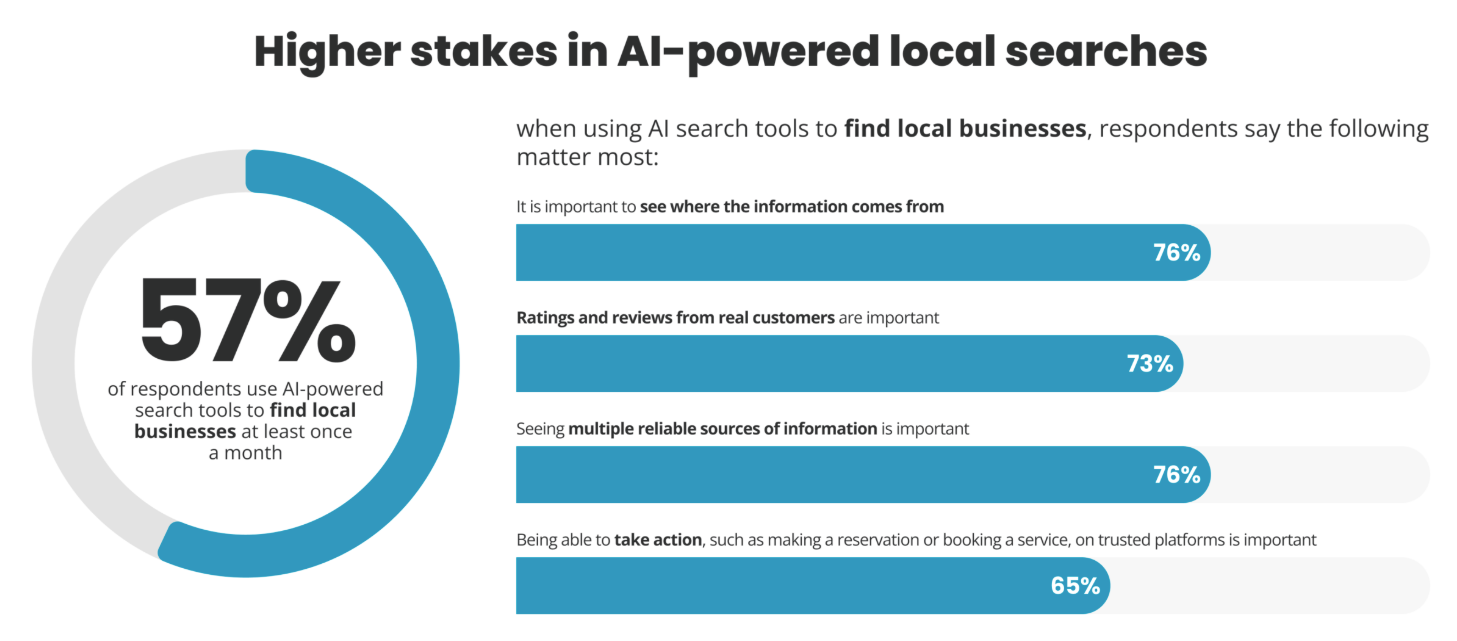
Source: Yelp, Morning Consult
_This post is for subscribers only._
### EP 253 - Yelp Strikes Back + The FTC’s Review Fraud Hit List
URL: https://www.nearmedia.co/ep-253-yelp-strikes-back-the-ftcs-review-fraud-hit-list/
Last updated: 2026-05-04T21:15:08.000Z
This week’s Near Memo explores the legal and regulatory pressures squeezing Google and local businesses alike. Mike shares FOIA results revealing the specific small businesses the FTC is targeting for incentivized reviews, while Greg analyzes Yelp’s motion to fast-track their antitrust case following the historic Mehta ruling. We also look at the technical expansion of LSAs and why "Ask Maps" might be the conversational interface that finally replaces the traditional local pack.
### The Podcast Deets & Take-Aways
1. **The Review Pressure Cooker:** Analysis of new Google guidelines regarding "undue pressure" in review solicitation and the (non?) risks of using QR codes and employee names.
2. **FTC's Small Business Review Crackdown:** A breakdown of FOIA data showing which small-to-mid-sized firms (legal/property management) for review fraud and incentivized "friend and family" reviews the FTC is targeting.
3. **LSA Expansion & Scraping:** Google's move to bring Local Services Ads to restaurants and the technical shift toward scraping landing pages to auto-generate ad content.
4. **The Yelp vs. Google Endgame:** Yelp’s strategic use of the "Mehta" antitrust ruling to fast-track their own litigation and how the potential rise of "Ask Maps" as the new local UI may make any Yelp victory hollow.
### Related Links
[Why Are My Google Reviews Disappearing? What Businesses Need to Know About Googles New Review Policies and Algorithm UpdatesIn 2024, Google blocked or removed more than 240 million policy-violating reviews. That is over 40% more than the year before, according to Google’s own annual spam report.LinkedInClaudia Tomina](https://www.linkedin.com/pulse/why-my-google-reviews-disappearing-what-businesses-need-tomina-24zge/?trackingId=DCc3q6QMSdiHZjmHOrCy8w%3D%3D&ref=nearmedia.co)
[5-Star Fraud: The FTC Targets Law Firms & Property Managers for Review AbuseNo business is too small to be a target. Through a recent FOIA request, we’ve identified ten firms—ranging from boutique law offices to regional property managers—that the FTC recently flagged for review abuses like “gatekeeping” and employee-solicited fake ratings.Near MediaNear Media](https://www.nearmedia.co/ftc-warning-letters-about-review-abuses-2/)
[Legal Hallucinations, Review Changes, 16% Mobile CTRs, Legal Ads in AI ModeThis is Near Media’s new monthly legal marketing newsletter.Near MediaGreg Sterling](https://www.nearmedia.co/legal-hallucinations-review-changes-16-mobile-ctrs-legal-ads-in-ai-mode/?ref=legal-marketing-and-ai-newsletter)
[Restaurants now on Local Services Ads. Piloting in Atlanta, Boston, Miami, San Jose Haven't seen it in the wild yet. Curious to hear your feedback. | Eric LevineRestaurants now on Local Services Ads. Piloting in Atlanta, Boston, Miami, San Jose Haven’t seen it in the wild yet. Curious to hear your feedback.LinkedInEric Levine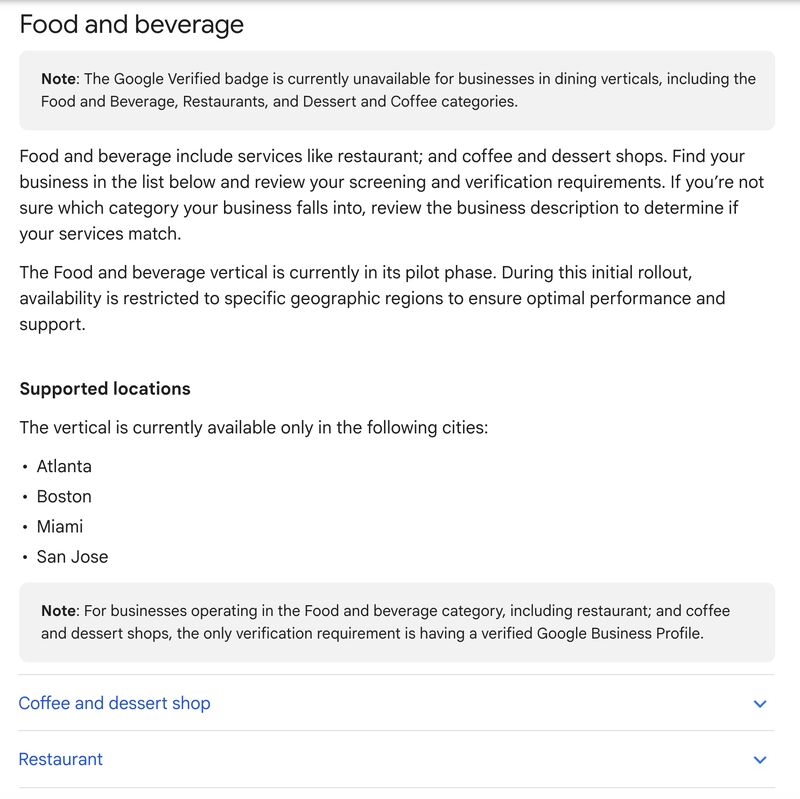](https://www.linkedin.com/posts/eric-levine-0b35659b%5Frestaurants-now-on-local-services-ads-share-7452430121111818240-zqwl?utm%5Fsource=share&utm%5Fmedium=member%5Fdesktop&rcm=ACoAAABJYd0BVvncqZgHyXeI1HxFJVbG0PlDSdM)
[Yelp Vs Google FilingsRecent filings in the Yelp vs Google Anti-trust fileNear MediaNear Media](https://www.nearmedia.co/yelp-vs-google-filings/)
**👇 Watch by topic:**
[00:00](https://www.youtube.com/watch?v=d2PI8fsy%5FII&ref=nearmedia.co) \- Introduction & Near Memo Kickoff
[01:07](https://www.youtube.com/watch?v=d2PI8fsy%5FII&t=67s&ref=nearmedia.co) \- The Truth About Google’s "Review Pressure" Rules
[06:51](https://www.youtube.com/watch?v=d2PI8fsy%5FII&t=411s&ref=nearmedia.co) \- Yelp's New Solicitation Survey
[10:11](https://www.youtube.com/watch?v=d2PI8fsy%5FII&t=611s&ref=nearmedia.co) \- FTC Warning Letters: Who’s Getting Caught?
[14:47](https://www.youtube.com/watch?v=d2PI8fsy%5FII&t=887s&ref=nearmedia.co) \- LSAs for Restaurants: Will They Actually Work?
[19:05](https://www.youtube.com/watch?v=d2PI8fsy%5FII&t=1145s&ref=nearmedia.co) \- Yelp vs. Google: The "Mehta" Ruling & Antitrust Update
[30:27](https://www.youtube.com/watch?v=d2PI8fsy%5FII&t=1827s&ref=nearmedia.co) \- The Future: Ask Maps & AI Conversational UI
Interested in sponsoring this podcast or our newsletters please reach out to [mblumenthal@nearmedia.co](mailto:mblumenthal@nearmedia.co)
[E-mail Mike ](mailto:mblumenthal@nearmedia.co)
### **Full Transcript** of the Near Memo EP 253
Greg Sterling:
We're back, everybody. Welcome to the latest episode of the Near Memo with me, Greg Sterling, and Mike Blumenthal, as always. Today, we will be talking about reviews once again, and also FTC enforcement actions against law firms, which is very interesting for reasons that we will get into. Then we're going to also be talking about how Google has just introduced LSAs to the restaurants category and will they be able to make any money there? In addition, they're now going to be importing information to your LSA ad from a URL website landing page. And then finally, we're going to be talking about Yelp's litigation against Google, which is a kind of a local search mirror of the antitrust suit that was successfully litigated against Google in Washington DC. So Mike, why don't you tell us about your review experiences of late?
Mike Blumenthal:
In the forums, we've been seeing a lot of review takedowns. Claudia Tomina has been doing some good research about cases where volume went way up and reviews got taken down. There are also new Google guidelines about minimizing pressure in retail locations; you shouldn't be pressuring people to leave reviews or asking them to leave specific information like employee names.
Claudia did a nice piece on LinkedIn and was on a podcast with Darren Shaw, but unfortunately, some of her nuanced understanding didn't quite make it through to the public. We're seeing reports that you should never use QR codes or employee names in reviews. I think that's not correct—it’s too black and white. The rule specifically talks about "undue pressure." From my experiments, undue pressure is a combination of things.
For example, I was at a restaurant recently that had a QR code. I left a review using the waiter’s name—I loved the waiter but hated the food—and did it via the QR code. My review is fine. I also edited an old review for a restaurant in Florida where the waiter originally pitched me to leave his name so he could get extra meals. That edited review with the name and QR code history didn't get taken down either.
Greg Sterling:
Well, Google provides the QR codes, which is problematic if they're going to spank you for using them.
Mike Blumenthal:
Right. Using employee names happens naturally. I think it's a combination of frequency plus velocity. I saw a situation in the forum where 20 names were mentioned in a single review—that got filtered, but it was 20 names for goodness sake!. In excess, it’s a problem, but in and of itself, you shouldn't stop using QR codes.
One alternative strategy discussed was asking people to do a brand search and find the review link. Your volume would go down, but you'd benefit from additional brand searches.
Greg Sterling:
I remember someone hypothesizing that if Google doesn't see a history of you searching for that business, they might treat the review as suspect.
Mike Blumenthal:
It actually works the other way. If you call the business before leaving a review, it's more likely to stick. However, "long-distance" reviews are more likely to come down.
Greg Sterling:
The larger point is that none of these factors individually automatically zaps your reviews; it's multiple factors casting a shadow.
Mike Blumenthal:
Right. It’s "review velocity delta"—the change in velocity along with names and location. Don't stress if your process is working. It’s the "pressure" issue you need to worry about.
Greg Sterling:
One adjacent thing: I was leaving a review on Yelp recently, and it asked at the bottom: "Did this business ask you to write a review?". It asks if a staff member requested it or if you got a text or email. An ordinary person will see this as a neutral question and say yes. This is going to catch a lot of companies using solicitation platforms and seems like an automatic removal scenario.
Mike Blumenthal:
It is. At GatherUp, we received a lawyer letter from Yelp early on telling us to stop soliciting reviews. We realized it was easier to just stop asking for Yelp reviews because first-time reviewers weren't getting through anyway. The only company hurt by that is Yelp.
Greg Sterling:
Yelp did have a presence in Europe but retreated because they were spread too thin or it was too expensive for compliance.
Mike Blumenthal:
Booking.com and TripAdvisor were creaming them there, too. This takes us to the FTC. Last December, they announced that 10 businesses received warning letters under the new rule against incentivized reviews. I filed a FOIA to get the names. It was one CPA, three Personal Injury (PI) attorneys, and six property management companies.
Greg Sterling:
These seem to be small businesses, which is interesting because we speculated the FTC would only go after large ones due to resource constraints.
Mike Blumenthal:
They were cited for providing $50 gift card incentives to employees in exchange for five-star reviews from family or friends who were not clients. All three PI firms used the same dollar amount, which suggests a "mastermind group" suggested the idea. They were given five days to provide a remediation plan. If accepted, there is virtually no further consequence.
Greg Sterling:
Review fraud is rampant in the legal profession. Speaking of Google making money, they’ve rolled out LSAs for the restaurants category. Historically, restaurants were the number one usage category in Yellow Pages but very low in advertising spend.
Mike Blumenthal:
Restaurant margins are tight. The question for LSAs is whether they will be cheap and effective enough to allow Google to switch their on-page model from organic to paid results.
Greg Sterling:
LSAs are also now taking the URL you provide and scraping that page for ad content. This might allow for things like coupons.
Now, onto the Yelp versus Google antitrust litigation. Yelp filed a motion for "issue preclusion," essentially saying Google must agree to the facts of monopoly power already decided in the Mehta trial. Yelp argues it’s a waste of resources to re-adjudicate those facts.
Mike Blumenthal:
Yelp is also objecting to Google wanting to dig into Yelp's internal failures to prove that Yelp's decline was due to bad business decisions, not Google's monopoly.
Greg Sterling:
Yelp is trying to take advantage of the DC decision. However, the local search market specifically was not litigated in the Mehta case, which might be problematic for this summary judgment motion.
Mike Blumenthal:
Next week, we have a panel with Crystal Tang, Claudia Tomina, Darren Shaw, and Adam Dorfman. We’ll discuss Google's "Ask Maps" AI tool.
Greg Sterling:
Ask Maps as a user experience is much more likely to take over for local search than SGE. We’ll see you all next week
### FTC Warning Letters About Review Abuses
URL: https://www.nearmedia.co/ftc-warning-letters-about-review-abuses/
Last updated: 2026-04-23T19:01:36.000Z
[FTC Warning LettersWarning letters to each offender including violationsmaterial-for-release-2026-00567.pdf17 MBdownload-circle](https://www.nearmedia.co/content/files/2026/04/material-for-release-2026-00567.pdf "Download")
| Business Name | City | Prohibited Practice | Category | |
| ------------------------------------------------------------------------- | ----------------- | ---------------------------------------------------------------------------------------------------------------------------------------------------------------------------------------------------- | ------------------- | |
| Provident CPAS PLC | Tulsa, Ok | Providing a $100 fee discount to customers in exchange for the customer posting a 5-star Google review. | CPA | |
| Glasheen, Valles & Inderman, LLP | Lubbock, Tx | Providing a $50 gift card incentive to employees in exchange for each 5-star review obtained from family or friends who were not clients and had no actual experience with the firm. | Personal Injury | |
| Craig Swapp and Associates | Sandy, UT | Providing a $50 bonus to employees for each 5-star review from non-clients (family/friends), and soliciting reviews at community events from individuals without actual experience with the firm. +1 | Personal Injury | |
| Emerson Straw PL | St. Pete, FL | Providing a $50 gift card incentive to employees in exchange for each 5-star review obtained from family or friends who were not clients and had no actual experience with the firm. | Personal Injury | |
| Somerset Apartment Management, LLC (d/b/a Sandhurst Apartment Management) | Charlotte, NC | Conditioning entry into a raffle for a 50-inch TV on a tenant's submission of a 5-star review, and allowing unlimited raffle entries for each positive review. | Property Management | |
| Weidner Property Management LLC | Kirkland, WA | Conditioning entry into a raffle for a choice of a $500 gift card or $500 rent discount on a tenant's submission of a 5-star review. | Property Management | |
| Hortenstine Properties, LLC (d/b/a Lincolnshire Apartments) | Mattoon, IL | Providing a $15 lease credit to tenants in exchange for the tenant posting a 5-star Google review of the apartment complex. | Property Management | |
| Tec Management, L.C. (Hilltop Towers) | South Ogden, UT | Conditioning a $25 account credit and entry into a raffle for a $300 gift card and 1-year Sam's Club membership on a tenant's submission of a 4- or 5-star review. | Property Management | |
| 10 Stars Property Management LLC | Pinellas Park, FL | Providing lease fee discounts to prospective and current tenants in exchange for their publishing a 5-star Google review. | Property Management | |
| Allview Real Estate | Newport Beach, CA | Providing $10 Starbucks gift cards to tenants in exchange for their publishing 5-star Google or Yelp reviews. | Property Management | |
### Yelp Vs Google Filings
URL: https://www.nearmedia.co/yelp-vs-google-filings/
Last updated: 2026-04-23T18:37:06.000Z
[Yelp MSJ re Issue PreclusionYelp MSJ re Issue Preclusion.pdf384 KBdownload-circle](https://www.nearmedia.co/content/files/2026/04/Yelp-MSJ-re-Issue-Preclusion.pdf "Download")
[Discovery Letter re Google ResponsesDiscovery Letter re Google Responses.pdf231 KBdownload-circle](https://www.nearmedia.co/content/files/2026/04/Discovery-Letter-re-Google-Responses.pdf "Download")
[Discovery Letter re Yelp ResponsesDiscovery Letter re Yelp Responses.pdf295 KBdownload-circle](https://www.nearmedia.co/content/files/2026/04/Discovery-Letter-re-Yelp-Responses.pdf "Download")
### Legal Hallucinations, Review Changes, 16% Mobile CTRs, Legal Ads in AI Mode
URL: https://www.nearmedia.co/legal-hallucinations-review-changes-16-mobile-ctrs-legal-ads-in-ai-mode/
Last updated: 2026-04-22T15:40:09.000Z
💡
Sign up for our Legal Marketing Newsletter [here](https://www.nearmedia.co/signup/). If you want deeper behavior insights, tactical and brand intelligence, talk to us about our [legal market research program](https://www.nearmedia.co/personal-injury-law-research/).
### Legal Hallucination & Humiliation
Lawyers in an Oregon [case](https://www.oregonlive.com/pacific-northwest-news/2026/04/ai-hallucinations-cost-lawyers-110000-in-oregon-vineyard-lawsuit.html?ref=nearmedia.co) involving vineyard ownership were recently sanctioned more than $100,000 by a federal judge for AI errors and fabrications in their court filings. This case joins a growing list from around the US where lawyers have been shamed and penalized for AI errors in legal documents, extending even to the [most expensive "white shoe" firms](https://www.yahoo.com/news/articles/law-firm-charges-3-000-085612181.html?ref=nearmedia.co). While it's not clear which system generated the hallucinated material, legal research vendors LexisNexis and Thomson Reuters both make strong promises about the accuracy of their products. Specifically, LexisNexis [makes the claim](https://www.lexisnexis.com/community/pressroom/b/news/posts/lexisnexis-launches-lexis-ai-a-generative-ai-solution-with-hallucination-free-linked-legal-citations?ref=nearmedia.co) its tools are effectively hallucination free. Researchers at Stanford and Yale decided to [test those claims](https://arxiv.org/abs/2405.20362??ref=nearmedia.co). They compared Lexis+ AI, Ask Practical Law AI (Thomson Reuters) and GPT-4 on 200 legal queries. What they found was that none of these tools in fact had *eliminated* hallucinations, which still showed up in a substantial number of cases – even when [RAG](https://cloud.google.com/use-cases/retrieval-augmented-generation?ref=nearmedia.co) was involved. Lexis+ AI answered more questions and delivered accurate responses "about 65% of the time." Remarkably, Thomson Reuters’ tool punted on about 60% of queries – simply not providing an answer – and generated accurate responses <20% of the time. Researchers found the failures were both significant and subtle: use of irrelevant sources, bad case authority, incorrect citations and others. The less obvious errors (vs. outright fabrication) were harder to detect and potentially more dangerous accordingly. The temptation to turn over research and writing to AI is great, but as this Oregon case shows, you do so at your own peril.
_This post is for subscribers only._
### EP 252 - Google Reviews Crackdown, Meta vs Google, and the AI Search Shift (What Marketers Are Missing)
URL: https://www.nearmedia.co/ep-252-google-reviews-crackdown-meta-vs-google-and-the-ai-search-shift-what-marketers-are-missing/
Last updated: 2026-04-17T15:35:14.000Z
This episode explores three major shifts: Google’s tightening review enforcement and what signals drive removals, Meta’s potential rise past Google in digital ad share despite ethical concerns, and the growing but under-measured impact of AI on search behavior. Together, these trends reveal a rapidly evolving landscape where traditional SEO, attribution, and customer journeys are being fundamentally redefined.
### The Podcast Deets
#### **1\. Google Review Crackdown (**[**00:00–14:50**](https://www.youtube.com/watch?v=rr-upYw9iyE&ref=nearmedia.co)**)**
Google’s updated policies targeting incentivized reviews, especially those tied to employee names and unusual volume patterns at a store location. Enforcement appears algorithmic, combining multiple signals. Businesses must rethink review generation strategies and normalize volume.
#### **2\. Meta vs Google + Ad Market Shifts (**[**14:50–23:15**](https://www.youtube.com/watch?v=rr-upYw9iyE&t=890s&ref=nearmedia.co)**)**
Meta is projected to surpass Google in ad share, even amid legal and ethical controversies. Rising costs and declining ROI clarity are pushing marketers to diversify channels, highlighting growing the conflict of marketers dealing with Facebook despite their unethical behavior.
#### **3\. AI Search & the Future of Discovery (**[**23:15–End**](https://www.youtube.com/watch?v=rr-upYw9iyE&t=1395s&ref=nearmedia.co)**)**
AI tools like ChatGPT and Ask Maps are reshaping search behavior in ways analytics don’t capture. Google’s infrastructure advantage positions it strongly, while OpenAI may pivot enterprise. The future of local search will be conversational and intent-driven and is likely driven by Google.
### Key Takeaways
- Google's newest review enforcement **to prevent in-store pressure** is **multi-signal**
- Review volume spikes + named employees = risk factors
- Meta’s dominance persists despite serious ethical issues
- Ad ROI is becoming harder to measure and justify
- AI is already changing behavior—but **analytics lag reality**
- Google has structural advantages in consumer AI
- Ask Maps signals a shift to **conversational local search**
- GBP content must evolve to answer complex, intent-rich queries
### Related Links
[Google review enforcement over the past 6 months or so has been up or so it seems from reports of missing reviews in the GBP forums. It seems to be up even further in April (red is a projection to… | Mike BlumenthalGoogle review enforcement over the past 6 months or so has been up or so it seems from reports of missing reviews in the GBP forums. It seems to be up even further in April (red is a projection to month end) Is this due to the new Google review guideline prohibiting merchants from requesting that specific content, like staff member name, be included? From a technical viewpoint employee name is an easy proxy. But it occurs at some low volume IRL whether the business requires it or not. Google also says that “content exhibiting unusual volumes or patterns of review contributions that are indicative of efforts to manipulate a place’s rating” are prohibited. But there are times when review volumes go up like a grand opening. Google adds that “merchants should not require or pressure users to leave ratings or write reviews while on the premises, nor should they request that specific content be included”. This indicates to me that there are three proxy signals that Google is using to target in-store pressure: location, volume and staff names. While we haven’t nailed down the specifics my gut says that review removals for in store pressure is some combination or aggregate value of the three signals. what does this mean in practice? -Service Area business might be less likely to get this “penalty” (operative word is might) -It is probably good practice to figure out a different way to incentivize employee garnered reviews other than their name -If you are having an on-site event, be somewhat restrained in review gathering And as always you should keep track of all reviewer names and review content should some block of reviews goes missing so that you are able to request help from support. They are passive-aggressive about not helping in these situations without that data.LinkedInMike Blumenthal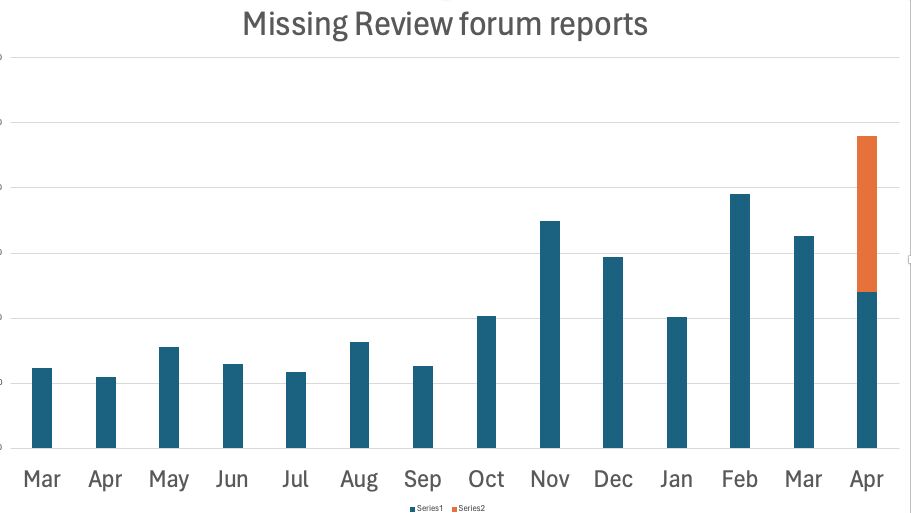](https://www.linkedin.com/posts/mblumenthal%5Fgoogle-review-enforcement-over-the-past-6-activity-7450602571758534656--53F?utm%5Fsource=share&utm%5Fmedium=member%5Fdesktop&rcm=ACoAAABJYd0BVvncqZgHyXeI1HxFJVbG0PlDSdM)
[Prohibited & restricted content - Google Business Profile HelpFake & Misleading Content & Behavior Fake & Misleading Content & ReviewsGoogle Business Profile Help](https://support.google.com/business/answer/7400114?hl=en&visit%5Fid=639119476879846059-33573721&rd=1&ref=nearmedia.co#zippy=%2Cfake-misleading-content-reviews%2Crating-manipulation)
[Meta Has Made Child Exploitation a Cost of Doing BusinessMeta has not only survived multiple scandals, its advertising revenue continues to creep up.AdweekMark Ritson](https://www.adweek.com/social-marketing/meta-has-made-child-exploitation-a-cost-of-doing-business/?ref=nearmedia.co)
[Meta to Surpass Google in Digital Ad Revenues for First Time EverMeta will overtake Google in the US and worldwide April 13, 2026 (New York, NY) – This year will be a watershed moment in the digital ad industry, as a major upset will take place. According to our latest Emarketer forecast for ad spending, Meta will overtake Google in terms of total digital ad revenues \[…\]EMARKETERDouglas Clark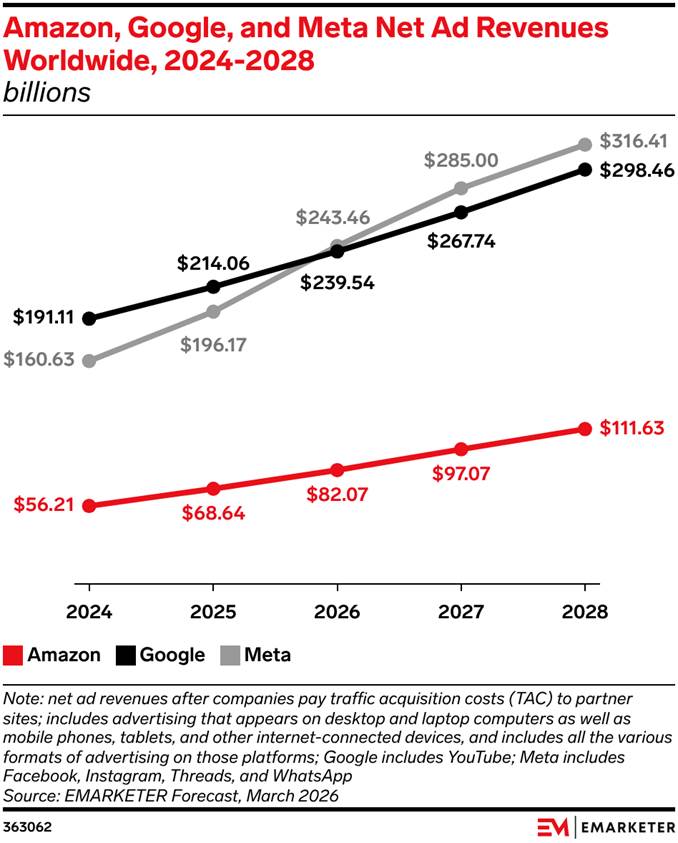](https://www.emarketer.com/learningcenter/guides/meta-to-surpass-google-in-digital-ad-revenues-for-first-time-ever/?ref=nearmedia.co)
[IAB/PwC Internet Advertising Revenue Report: Full Year 2025Discover key insights from IAB’s Full Year 2024 Internet Ad Revenue Report. Download now to stay informed!IABApr. 16, 2026](https://www.iab.com/insights/internet-advertising-revenue-report-full-year-2025/?ref=nearmedia.co)
**👇 Watch by topic:**
[00:00](https://www.youtube.com/watch?v=rr-upYw9iyE&ref=nearmedia.co) Intro & Episode Overview
[01:00](https://www.youtube.com/watch?v=rr-upYw9iyE&t=60s&ref=nearmedia.co) Google Review Policy Updates
[04:30](https://www.youtube.com/watch?v=rr-upYw9iyE&t=270s&ref=nearmedia.co) Review Removal Signals & Missing Reviews
[08:00](https://www.youtube.com/watch?v=rr-upYw9iyE&t=480s&ref=nearmedia.co) Point-of-Sale Reviews & Incentives
[12:55](https://www.youtube.com/watch?v=rr-upYw9iyE&t=775s&ref=nearmedia.co) Ethical Review Strategies
[14:50](https://www.youtube.com/watch?v=rr-upYw9iyE&t=890s&ref=nearmedia.co) Meta vs Google Ad Market Shift
[18:00](https://www.youtube.com/watch?v=rr-upYw9iyE&t=1080s&ref=nearmedia.co) Rising Costs & ROI Challenges
[20:30](https://www.youtube.com/watch?v=rr-upYw9iyE&t=1230s&ref=nearmedia.co) Meta Legal Issues & Ethics Debate
[23:15](https://www.youtube.com/watch?v=rr-upYw9iyE&t=1395s&ref=nearmedia.co) Section 230 & Product Liability Theory
[26:50](https://www.youtube.com/watch?v=rr-upYw9iyE&t=1610s&ref=nearmedia.co) AI Search Behavior Is Changing
[28:15](https://www.youtube.com/watch?v=rr-upYw9iyE&t=1695s&ref=nearmedia.co) Ask Maps & New Discovery Patterns
[31:00](https://www.youtube.com/watch?v=rr-upYw9iyE&t=1860s&ref=nearmedia.co) Who Wins AI? Google vs OpenAI vs Meta
[34:00](https://www.youtube.com/watch?v=rr-upYw9iyE&t=2040s&ref=nearmedia.co) Future of Search & Monetization
Interested in sponsoring this podcast or our newsletters please reach out to [mblumenthal@nearmedia.co](mailto:mblumenthal@nearmedia.co)
[E-mail Mike ](mailto:mblumenthal@nearmedia.co)
### **Full Transcript** of the Near Memo EP 252 – >
###
# Episode 252: Near Memo Transcript
**Greg Sterling:** Hey everybody, welcome back to the near memo coming off a great episode last week with Cyrus Shepard where I was not present.
**Mike Blumenthal:** and a great green room session. We could have recorded a whole podcast in the green room.
**Greg Sterling:** I'm This is Episode 252, remarkably. And it's me and Mike today. And we're going to be talking about some updated review guidelines and a range of issues tied to reviews, like the signals Google's relying on to remove reviews, our point of sale reviews being penalized. We're going to talk about the eMarketer projection that Meta is going to surpass Google as the largest internet ad platform and some associated issues there. And then we're going to have a kind of broader discussion about AI and where we are. And Mike and I have some different opinions about who's going to win and what's really going on with consumer behavior. So let's jump into the reviews. show us the, show, yeah. Yep.
**Mike Blumenthal:** Sure. Well, before I show you the chart, just want to put this into context. So Google updated their review practices and policies several weeks ago. I think it was first noticed by Amy Toman on LinkedIn where they, a week or so ago, they noticed, they note that merchants, it's prohibited for merchants requests that staff solicit a certain number of reviews and it's prohibited that merchants requests that staff solicit reviews that include specific content, including content that identifies a staff member. Those are two relatively new things. And then one that's sort of old, but is not widely that I think Claudia Tomina talked about, but content exhibiting unusual volumes or patterns of review contributions that are indicative of efforts to manipulate a places rating. And then the final little snippet in that is that Google does allow merchants to solicit or encourage the posting of content that represents a genuine experience without offering, of course, incentives or gating. or they shouldn't attempt to influence the rating of or the contents of the review. So it's OK to ask, but you shouldn't be you should. You don't want to be exhibiting unusual volume. And you if you're you don't want be including, asking for specific content. the context is sort of new as well. so what I, you know, I'm a product expert, I...
**Greg Sterling:** Can I just say to people like us that sort of live in this world and are very fixated on all the nuances of these little changes, this may add some clarity to what's going on, but to an ordinary business that isn't going to really be aware that maybe these even exist or understand the distinctions between what was existed before and what exists now. They sound like they're talking out of both sides of their mouth in a certain way. You can solicit, but you can't do this and that and the other. You can ask for reviews at the point of sale, but you can't do this and blah, blah, blah, blah,
**Mike Blumenthal:** So a lot of my clients, not a lot, but for me a lot, reached out this week and wanted to know because they use name and review as they incentivize salespeople and people on the front lines. And the metric they use is if the name is in the review, they incentivize that employee. So instead of incentivizing review, they incentivize. Right. They reward it. And so several people reached out to me and asked me if I thought this was a real rule and if Google is going to enforce it algorithmically. And the reality is that it's a fairly trivial, given the state of AI, it's fairly trivial to enforce it algorithmically. I think though you have to view it in the context of volume and other things. Sometimes a review is going to have a user's name. It's going to be a salesperson's name. It's going to be a totally legitimate review. Other times, if they're getting 10x the volume of reviews, And there's a bunch of names in it. I think the combined signal is going to lead to a series of large takedowns. Now, one of the sort of early indicators I use of an update to the filter is posts in the Google forum around missing reviews. I think you can see this that in April so far, we've almost had as many reports as we had in March. You can see over the last year, a general increase in review, missing review reports. But this April, there's a particularly large uptick in the first two weeks. So the red line is my projection for the rest of the month that it looks like there are reviews being taken down. Now, I don't know that these posts are about reviews with names in them. It just appears that Google is generally tightening them. I think it could be around a combination of volume and other signals like names combined. And so I think that businesses, one, need to look carefully at how they incentivize employees to ask for reviews. I think they should perhaps use some metric other than the name in the review to reward them. In other words, tie the user to the account. best you can, sales rep to the business account as best you can, or the person's account as best you can. And I think you need to be really careful about special events where volumes go beyond average. think if you can sort of mitigate those three things without freaking out about it, I think you're going to be fine long haul. was just as a reference, I went to a restaurant a month ago and the waiter said to me, gee, and he was a very nice waiter had a great conversation with him. he said that if I mentioned his name in a review, he would get free lunch. So he was incentivized to ask me for review and he got free food. So I put his name in the review. went back to check and all of their reviews are still there. Now that doesn't tell us much other than having gone back and looked at excessive volume. It could be they haven't gone back and looked at excessive volumes of names or it be that Google's gonna find those acceptable given their normal volume. Don't know yet. So I think you need to not freak out. I think you need to keep close track of all of your reviews so that if there are missing reviews, there's a form at Google support, or if you fill it in, you can tell them how many reviews are missing. But if you need to provide them with usernames to have any chance of getting those reviews back, because Google says, if you don't tell us who's missing, we can't tell you why they're missing. So then it can help you. So keep track of them. So sort of. Even out your review volumes, don't get crazy. I think find a different mechanism to reward employees for getting reviews to measure rather than name. And I think you'll be okay.
**Greg Sterling:** I mean, Google, it seems to me, is trying to shut down the system of internal incentives where employees are rewarded for soliciting reviews. I think that's a rational and effective tool that businesses have been using to get reviews. And I think Google is trying to shut it down without explicitly saying you cannot incentivize employees because they can't police that itself. They can police review volume. You know, another thing that's relevant is and they can police names, but they can't police incentives, direct incentives. Yes, right. So I think what we have to do, which you just said, is we have to look at combinations of factors. Google has multiple signals that it's looking at to determine whether reviews are unduly influenced or improper. And one of those is volume, clearly, and another one is names, as you just mentioned. Claudia had earlier talked about seeing restaurants penalized where she sort of through the inference that the point of sale solicitation of a review was something that Google was cracking down on. And that is something.
**Mike Blumenthal:** Wasn't just restaurants. was, I think it was a cannabis store or something where they got it. And they had a contest at point of sale. It was retail.
**Greg Sterling:** OK, retail, retail, sure. OK, retail. So Google can see, at least in the case of Android and maybe in the case of the iPhone, they can see where the user is. And if the user's location is physically at the point of sale, the business premise, and that's where the review is coming from, I was operating under the assumption that they were drawing an inference that that was improper. What Google itself says, and I've had two people from Google say a version of this to me, is they're really concerned about influence and pressure, which they cannot see and they cannot discern from the behavior. What they can do is they can say these signals together, point of sale, solicitation, excessive volume, et cetera, et cetera, looking at all these factors, they can say this is likely a review that was improperly gained through incentives or pressure or what have you. And it raises the question, which we don't need to get into at length, what is pressure? There's a continuum. Is somebody persistently asking you to review them, like a waiter who says, this happened to me in Mexico, which I wrote about, waiter in this Indian restaurant, Señor Nón in Mexico, which is a very good restaurant, by the way, put the QR code in the little check where the check goes. There it was. And he pointed to it. He said, essentially, leave us a review. And then he did it a couple other times before we left. He wasn't pressuring us per se, but that might be seen as pressure, which is something that Google has no capacity to observe. how, other than a user saying,
**Mike Blumenthal:** And they're trying to thread this very thin line between solicit and too much solicit. Too much rights. You can solicit this much, but not that much. It's a very thin line. So that is the confusion. And I think that you as a business need to assess your business model. One, are you a location-based business? Two, do you have events where you might have this higher volume of reviews? And three, are you using employee names to track?
**Greg Sterling:** Solicitation and pressure. Right, exactly. That's right. That's the confusion. That's the crazy thing is, yeah.
**Mike Blumenthal:** Now, a service area business is going to have a different issue because there's no location data, right? And so one presumes that the volume and the name, you know, whatever the metrics are, have to be higher to make up for the location information, right?
**Greg Sterling:** There's no location. are going to be more heavily weighted. Right. Right. And so many service area businesses will do that. They'll finish the job, and then they will solicit a review on site. I've had that experience a number of times.
**Mike Blumenthal:** Right. Exactly. But I think if they switch the metric they use to reward, particularly in service area businesses, this shouldn't be hard. The electrician knows that he went to House, Blumenthal House, Blumenthal left to review. That should be plenty of metric to incentivize to pay the electrician. I don't think that I need to have the electrician's name in my review. for them to know that I did business with them.
**Greg Sterling:** Well, that's key thing for service area businesses. It doesn't work as well for traditional storefronts, obviously.
**Mike Blumenthal:** Right, but my sense is, and this is a gamble that the business is have taken, I'm not gonna be responsible if I'm wrong, is that if you can keep two of the three sort of modulated, then you're gonna be okay. In other words, if you don't have massive increase in volume at your location, but you do have some with names, I think you're gonna probably still be okay if the volume stays at whatever it was. Hard to know. mean, Google could go sweep through and look at all your reviews at some point as they sort of wind through their system. Because what they do is they go through old reviews in waves. New reviews get the new metrics, the new filters. Old reviews, the filter gets applied to slowly as they work their way around the world. So we don't know yet what's going to happen. But my sense is that if you have to deal with it differently, if it's a service business or a location-based business, I think if you're having an event, don't tie it with review solicitation at the event. Keep your volume fairly steady and pretty, and I think you'll be okay. But if I'm wrong, let me know.
**Greg Sterling:** Right. Right. Well, I mean, if you have a bunch of people, this is not unethical. you have a bunch of people show up, grand opening for the restaurant or the store or whatever, a bunch of people show up, they give you their emails or you have their emails, and then subsequent to their visit, you send an email out with the link, which Google provides, and you say, hey, thanks for coming in. If you enjoyed our stuff, feel free to leave us a review here. That's completely ethical, but it may result in excessive volume. It could result. Why? Why wouldn't it?
**Mike Blumenthal:** Totally ethical and probably wouldn't result in excessive volume, right? And because the response rate to email is lower, you're gonna get a 10 % response rate as opposed to a 60 % response rate. So the overall volume is gonna be less.
**Greg Sterling:** Yeah, maybe, maybe, maybe statistically that you'll be protected. anyway, all right, let's move on to our sort of, yes, yes.
**Mike Blumenthal:** I think one other point for business people to keep in mind is that, and I see this all the time, that reviews cause a great deal of angst in business owners because they feel it's an unfair system. They're being singled out. They're doing the best they can. They take it very personally. And the reality is over time, you will lose reviews. If you're well organized, you can dispute that. If you're not, you just need to move on and get more reviews.
**Greg Sterling:** Well, they take it very personally. They take it very personally, yep.
**Mike Blumenthal:** You and you can't let this drive your emotional state. It's like, I see it all the time.
**Greg Sterling:** Well, this is... Right, this is a very important point. It's a process. It's not something that they should be attached to or fixated on. You just have a process in place that produces reviews over time and let go of your attachment to particular reviews. It's a Buddhist take on review solicitation. There you go. All right, OK.
**Mike Blumenthal:** Exactly. Here you go. Or don't take you can't control the things that you can't control.
**Greg Sterling:** OK, so let's talk about Google and Meta. So eMarketer came out this week, I think, or maybe late last week, and said, Meta is going to surpass Google as the world's largest digital advertising company. And that would mean that they were now at 27 % of global ad spend, and Google was going to be at just below that at 26.4 % of global ad spend. And this is a projection. So it may or may not have, you know, it's informed by all kinds of data and, know, they've certainly been wrong before. But the point is that Google is potentially losing its position as the number one ad platform, which is on one level quite significant on another level, not really, because Google continues to grow its own revenue. And to that point, the IAB put out a report, 2025 full year advertising report as they do every year. which is interesting. And what it shows is that in 2024, search grew 16 % year over year, which is almost, that's Google basically. And then in 2025, only 11%. So there was a 5 % or 5 point rather, not 5%, 5 point deceleration. And the report also talks about the diversific
**Mike Blumenthal:** Is that in total searches or users searching or a revenue?
**Greg Sterling:** No, this is revenue, revenue only, revenue only. And what is also in the report, I mean, there's a lot of stuff in there. It's interesting, worth reading. what's also in there is this idea that people, and they've been doing this for a while, but there's more diversification going on, video, social media, other channels beyond search. That's always been true that people have used other channels and it's always been true that people have moved money into those channels to bolster their position. But it does seem like now there is some, some migration away from, from Google, which is still going to take a huge amount of ad revenue. But, you know, I think marketers, SEOs are, and, digital marketers generally are frustrated by you know, the sort of decline in clicks we've talked a lot. Rand Fishkin has talked a lot about zero click search and AI is contributing to that. So we're, we're in an interesting time. you know, and we've had a number of calls with, people who are small businesses and digital marketers. And there's a lot of confusion that is reflected in those calls. and in surveys that I've done, people are confused about what's working. You know, there's genuine confusion about how to put all the attribution, what's working. That's always been the feature of internet marketing, but it seems like it's much more true today as a general matter. But then...
**Mike Blumenthal:** Part of the problem too is that Google has been raising prices. So the ROI, which used to be obvious and high is no longer an obvious use case, right? As they've jacked the prices. And even as users have become, our research have become more acclimatized and more willing to use ads, it's not clear that the value is there. I some of these LSA ads per click are
**Greg Sterling:** Depending on the category, right. Right, and Google is essentially forcing people by pushing organic. You've got LSAs, you've got the AI overview, and you've got the organic stuff. By pushing that further and further down the page, it compels people to advertise to get visibility and clicks. So it's just interesting to see that we're at this point in the market. We've got AI. We've got Meta sort of. gaining, we've got Google still very profitable growing because they're jamming more and more ads everywhere, but maybe losing its dominant position. then advertisers frustrated marketers, not just advertisers frustrated by attribution challenges, ROI challenges, increasing cost. Yes, right. then you add AI into the mix and there's a lot of...
**Mike Blumenthal:** some of journey challenges.
**Greg Sterling:** confusion about the role that that's playing. But let's talk real quickly before we get into AI about something you posted on LinkedIn this morning, an Adweek article illustrating Meta is an ethically challenged, I mean, all these companies are ethically challenged to varying degrees, but Meta is a supremely ethically challenged company. We don't need to do the litany of bad behavior. Most recently, there were two trials that they were found liable in. One was a New Mexico trial that involved child safety. And the other one was a trial in state court in Los Angeles that employed the sort of big tobacco product theory of liability. And they were found liable by the jury for creating an addictive and defective product. There are some federal cases coming up that employ that same product defects or addiction, addictive product theory. And we'll see how those goes, but what they see how those go, but what they represent is a kind of sea change in the attitude of the public toward these companies, right? I mean, for years and years and years, they were able to hide behind section 230 immunity and avoid any kind of accountability responsibility for the shit that happened on their platforms. And there has been an attitudinal shift among the public toward these companies, which has enabled now these legal theories that would have been perceived as inapplicable or outrageous like product defect. to succeed because the public thinks these are companies that are up to no good. So you found the headline. What was the headline?
**Mike Blumenthal:** So the headline from Adweek was, Meta has made child exploitation a cost of doing business. The subhead was, for today's chief marketing officers, Meta has always been both under legal scrutiny and the best performing buy in their marketing plan. the, just highlight, and this isn't the first sort of super egregious conviction on the part of Facebook, right? There was a privacy scandal in 2017 where they were involved in hijacking elections. And there was the fact that they make 10 % of their profit from scams that they know are taking place and they look the other way because it's such a profitable thing. And yet, and so they have always been an ethically challenged company. Right, and you can see this in marketers own behavior, right?
**Greg Sterling:** they've had all the privacy stuff. Right. It doesn't seem to matter. Doesn't matter. Doesn't matter.
**Mike Blumenthal:** Every marketer I know left Twitter in moral outrage, but most of them went, many of them went to Threads where they get better exposure. Now, I don't know if you're going to have moral outrage. seems to me Facebook deserves as much moral outrage, if not more than Elon Musk and Twitter. mean, they're both, both their CEOs and the companies have checkered pasts, but of them, which does the greater damage? It's not Twitter, it's Facebook in terms of society damage.
**Greg Sterling:** Yeah, yeah, yeah. Well, this to me, I mean, we can argue about the willpower of individuals or the kind of hypocrisy, but this to me illustrates the position of these monopolies, right? You are compelled to use them. If you're a digital marketer, if you're a company, you are compelled to use these platforms. mean, Google is a monopoly also. Facebook is a monopoly.
**Mike Blumenthal:** with some ethical challenges, historical and current that are really questionable as well.
**Greg Sterling:** Google is better than Facebook, not, I mean, not tons and tons in my mind.
**Mike Blumenthal:** They're not as pure as the driven snow.
**Greg Sterling:** Well, yes, this is a larger philosophical debate about guardrails and self-regulation versus.
**Mike Blumenthal:** It is the nature of how large, most companies work, but large companies particularly.
**Greg Sterling:** They will push to the limit of the law and beyond it sometimes to make as much revenue as they can.
**Mike Blumenthal:** and calculate that the losses due to the violation of the law are sustainable or at cost to a business.
**Greg Sterling:** are costs of doing business. That's how they've Europe, which has tried to regulate privacy and other things. They have seen violating those rules as simply a cost of doing business, which caused Europe to pass the digital DMA and the DSA, the Digital Markets Act and the Digital Services Act to increase the penalties to the point where they couldn't simply be a cost of doing business.
**Mike Blumenthal:** An interesting question sort of related to this, but not totally, but it's about Google. And one of the things that's happened in the last couple of weeks is the success of a novel legal theory that these products are defective in design and thus, and that extends to YouTube. it allows the plaintiffs to avoid the question of 230 protection that Google, Facebook, and all these other companies have long had. What I'm wondering is,
**Greg Sterling:** And that extends to YouTube. That extends to YouTube.
**Mike Blumenthal:** If one views Google Maps as a defectively designed product because it's so easy to hijack a business, to hijack a phone number, to create fake businesses and to post fake reviews. If you use this argument that this isn't just protected 230 speech, but is really a defective product, would Google have lose that case and what would be the result?
**Greg Sterling:** Well, I'm not sure what you described in the Maps case is the same as what was being litigated and what will be litigated in the Meta and YouTube case.
**Mike Blumenthal:** Well, the impacts are different, but Google has a product that allows a consumer to change business information that often leads to scams and to the loss of the part of business and deception of the consumer.
**Greg Sterling:** Right. Right. Will the product defect theory extend to this kind of use case that you're describing? Well, think it may be litigated. mean, Google has, this backs onto the question for 230 purposes, is Google a publisher? Publishers are not immune. Platforms are immune, but not publishers. And Google is in a very gray area. Content moderation does not make you a publisher.
**Mike Blumenthal:** Yes, that's the question I am asking.
**Greg Sterling:** But Google's all the Google AI stuff, what it's doing in Maps, arguably makes it a publisher. And so 230 should not apply, right? They are publishing new content that is not created by a third party in AI overviews.
**Mike Blumenthal:** Yeah, there's a lot of novel ways to go after Google. be interesting to see if anybody does.
**Greg Sterling:** Well, but I mean, a lot of the problems, and we can move on to the AI discussion, a lot of the problems that have come out of the fraud, the disinformation, the misinformation that is going on, chiefly on social media, but also on Google to a lesser degree, YouTube in particular, would be solved if 230 didn't exist because they would be compelled to do responsible moderation. And they don't, in fact, they're not doing any moderation. mean, what happened on Facebook was all the conservatives said, oh, you're censoring conservative positions, which was not true. And then they stopped doing moderation. When Trump got elected, they stopped doing moderation. And now they're doing reverse moderation, which is censoring some of some and you know certain kinds of political positions that are seen as contrary to their interests.
**Mike Blumenthal:** Well, I think though that the most recent cases point out a direction that doesn't require getting rid of section 230\. It requires a more technical view of these products and viewing the impact of design decisions on user behavior and user right and on fraud and crime. And I think, you know, we'll see. And AI is going to raise that question too. So as they say, we live in interesting times.
**Greg Sterling:** on user engagement and retention, yep. Yeah, Okay, so just to wrap up a kind of a quick discussion about AI, know, obviously tons and tons and tons of stuff always going on. You know, David Mihm has said.
**Mike Blumenthal:** Not the least of which is AI for Maps.
**Greg Sterling:** Right. Well, that's a huge topic. think I am very bullish in a certain way about Ask Maps. Some people don't like it. I think it is the future of Google Maps. And yes, we will talk about it, the future of the user experience and what marketers need to do to prepare. Because I think the way you have to approach content on Google Business Profile, and maybe more generally,
**Mike Blumenthal:** We were talking about having a panel on just this topic.
**Greg Sterling:** It's very different in an Ask Maps scenario versus a straightforward Google Maps scenario where you're saying, best brunch near me, or is this particular place open, or what are the directions to this place? But when you start using very complex queries that have multiple criteria in them and you're asking all kinds of questions about the business, the AI is cultivating new behaviors for search. you know, the experience of these conversational queries is being imported back into Google. And that will change the way in which you have to meet the moment as a marketer by providing content that answers those questions. And I think your, your, your GBP starts to look very different than just a catalog of facts about your business, you know, over time. But, but anyway, so just real quickly, you know, when I was in, in, in, Mexico a couple of weeks ago,
**Mike Blumenthal:** Great.
**Greg Sterling:** I use ChatGPT a ton, I use Ask Maps a ton, where it was available, it wasn't always available to me. And I used regular Google only in cases where I was looking for a brand and I was looking for walking directions to the place. And the combination of Ask Maps and ChatGPT were just enormously helpful. And it causes me to reflect on my own changing behavior. And then I subsequently had, I wrote about this on LinkedIn and in the newsletter, I subsequently had some car related shopping things. I got back and it's like, suddenly I have to do a bunch of stuff on this one car. And what I did is I just used AI. I used, what? I thought you were laughing at me, not coughing. Yeah, I do too. I have terrible allergies.
**Mike Blumenthal:** No, have a seasonal cough.
**Greg Sterling:** I used AI, these were product and service search questions to identify the problem and then to find businesses. And then I used Google to validate as we've discussed a bunch. And these are isolated anecdotal examples, but I think search behavior is really changing, especially product search, but also local search. And it's not being reflected in the referral data. It's not being reflected in the analytics. And I think that a lot of SEOs don't think that it's changing because they say, hey, look at this. And it's mostly desktop clickstream data also that's being used in this discussion. The percentage of volume that is being, referral volume or traffic is just de minimis. And this AI thing is being really overhyped. And I think That's an overly simplistic and incorrect answer. And I think what's happening is there's a lot more complexity now in how people are engaging with Google, how people are using AI in tandem with Google, even Google's properties. And it's just not being captured in the analytics. It's just not being seen by marketers. And so they're not correctly understanding how, and I'm speaking in generalities, and this is different from category to category, how user behavior is changing. I mean, we can see it in our research.
**Mike Blumenthal:** But also I think your definition of AI needs to be explicit.
**Greg Sterling:** I'm including Google. I include Google in that.
**Mike Blumenthal:** But it needs to be explicit. It's chatbot AIs, which means largely it's Google OpenAI, ChatGPT, and to some lesser extent, Claude /Perplexity, right? And the reality is, from where I sit, is that there's really two markets for AI right now. One is the corporate market, the enterprise market, which Claude's going after very aggressively.
**Greg Sterling:** Mm-hmm. Enterprise. Yep. That's all operational stuff and internal stuff and all of that. Yep.
**Mike Blumenthal:** Bright coding and management and finance. And then there's chat, which is very consumer driven, which initially ChatGPT went after. But as you start reading about ChatGPT's problems, overextended, they're going after enterprise, Right his house being bombed or whatever. But what you see is that consumer driven chat is very expensive.
**Greg Sterling:** Sam Altman. Molotov cocktail.
**Mike Blumenthal:** for people like ChatGPT So it's one of the reasons they're pulling back is their model that they developed, is hard to make a living on $20 a month with very expensive inference costs. There are only two companies that I think are likely to be frontier AI and consumer focused in the end. One is Google, which has a great ability to lower the cost of inference and understands fast delivery speeds and how to cache answers so they don't have to continually have the expenditure. They run their own chips, et cetera. mean...
**Greg Sterling:** Well, right, Google is the only company that owns the entire tech stack for AI. That's a very significant thing.
**Mike Blumenthal:** Right, and that speaks to a consumer fulfillment. And the other is Facebook, I think, has the opportunity with their recent changes in their AI stuff to deliver consumer base. But I see ChatGPT as not being a force, nor do I see Claude currently configured or, you know, or even, I don't see how they get profitable enough to be consumer facing AI tools.
**Greg Sterling:** What co- Well, Claude is not emphasizing consumer. I mean, you can use Claude as a consumer tool and it'll search the web. Claude is not emphasizing that. They're clearly betting on the enterprise and all these B2B facing tools. And I think that they have...
**Mike Blumenthal:** And I think what we're seeing with OpenAI is that is there transitioning to that also because the high cost of inference.
**Greg Sterling:** But they're not abandoning the consumer market. What they have abandoned is their grandiose instant checkout, we're gonna take a piece of all these e-commerce transactions. They've abandoned that because they either thought that that was too difficult or consumers weren't biting. know, ChatGPT is...
**Mike Blumenthal:** I think those abandonments are a foreshadowing of ChatGPT cutting back on consumer focus, which changes this discussion. So this went from defining what AI is. So right now it's Google and ChatGPT and to a lesser extent, Claude, and then how that affects the customer journey. And so from my point of view, given those economics, the customer journey, which is currently more mixed, but Google's goal and
**Greg Sterling:** Well, it's some, it's.
**Mike Blumenthal:** Amazon's goal and everybody else's Facebook's goal is to consolidate using what they have, which is huge cashflow to dominate the consumer interface on that AI so that they then can simplify the customer journey to benefit them.
**Greg Sterling:** Well, so they can then not lose engagement in revenue is what it ultimately amounts to. I mean, everybody, everybody, you know, there are a lot of people out there saying, oh, it's going to be, you know, Q1 2027, Google's going to flip the switch and it's going to be AI mode and that's going to be the SERP. And I just don't believe that partly because Google has so many interfaces running around that they're testing, but also they're just not going to monetize AI mode.
**Mike Blumenthal:** Exactly. Right.
**Greg Sterling:** to the same degree that they monetize the current SERP It's just not, unless what they do is they give us a dedicated ad block and then AI mode down below or some, it's gonna be a hybrid in some way because they can't, they can't.
**Mike Blumenthal:** But I think we are seeing foreshadowing of this in Ask Maps. They created a separate user interface for Ask Maps with its own unique button. But there's no reason that their system can't get intelligent enough to understand the difference between a near me query and an AI query in a single user interface where they then present the results. and, and, and.
**Greg Sterling:** Set a separate button. Right. 100%.
**Mike Blumenthal:** present them profitably in the case of maps with the ability to continue on to make the reservation or whatever it is is the appropriate call for an appointment, whatever.
**Greg Sterling:** 100%. Right, I mean, and that's what they should do. They should integrate those things because it's just really awkward. This is a feature, this is a function of it being new. One of the interesting things to consider, and not everybody is as enthusiastic about Ask Maps. I mean, I was never using Google Maps outside of work just to test things. I had abandoned it. I used Apple Maps and I used Google Search for local searches where I need a category search. But Ask Maps has prompted me to use Maps again because it's more flexible and it's more interesting. And I wonder if Google does what you describe, which is the complete integration of conversational UI into, you know, this with this local graph behind it and all the other stuff with maps and navigation, whether that would that would kind of siphon off traffic from Google itself. right, which is where most of the local search happens. whether, I mean, on a desktop, people are going to go to Google. They're not going to go to maps.google.com and then do a search. But on a mobile device, they might abandon Google and go just to Maps for local search. I could foresee that because it's a better experience. And it's going to be less aggressively monetized than the regular SERP.
**Mike Blumenthal:** Yeah, I think it'll depend on the environment. mean, in an iPhone right now, it's very app-based. It's very split up. Like there's the Google app, there's Safari, there's Apple maps, Google maps. It's very fragmented. And so it's a bigger problem than an Android where they control the whole stack there. I mean, it's conceivable to me that there's going to be a search bar on Android that makes a decision whether to go to search or maps or where it's going to get the best answer. Right. Right.
**Greg Sterling:** Yeah, just on the homepage, right? Right. That's very true, very true. Different experience. The antitrust court, the search and paid search antitrust trial that found Google liable and found Google to be a monopoly. And then the remedies portion of the trial, which kind of chickened out. One of the primary concerns was that Google was going to leverage its search monopoly to dominate the AI. you know, kind of world by, tying things together by, by just taking that search traffic and, and exposing people to AI. And that's precisely what they're doing. That's their playbook. And the court should have acted more aggressively to prevent that from happening because I do believe like you, that Google will eventually be able to capture, a, a substantial, a sort of plurality of search or of AI usage. or the outright majority of AI usage by using search and by using Android and by using all these distribution channels that it has. And a lot of people...
**Mike Blumenthal:** and for enterprise by integrating it into their office applications, right? Absolutely.
**Greg Sterling:** Claude and all of that. Yep. Well, Microsoft has been trying to do a version of that strategy and it's completely failed.
**Mike Blumenthal:** Thanks.
**Greg Sterling:** But Google's in a different position. All right. As always, more to talk about. But thank you very much for listening. All the things that people say, tell your friends, click and subscribe, blah, blah, blah, blah. Thanks again. And we will be back with more guests in the future and the dedicated session on Ask Maps and what marketers should be thinking about doing in response to that. So have a great rest of the week, and we'll see you next time.
###
### Ask Maps, PoS Penalty, Short List, AIO Accuracy
URL: https://www.nearmedia.co/ask-maps-pos-penalty-short-list-aio-accuracy/
Last updated: 2026-04-13T16:45:28.000Z
### Ask Maps Is the Future
I was recently in Oaxaca, Mexico for a short vacation with friends and [posted](https://www.linkedin.com/feed/update/urn:li:activity:7445112365798387712/??ref=nearmedia.co) on LinkedIn about some of my real-world experiences with Ask Maps, ChatGPT (with precise location), and on-site restaurant review solicitation. ChatGPT with precise location is worthy of its own discussion. But Ask Maps is a [more important development](https://blog.google/products-and-platforms/products/maps/ask-maps-immersive-navigation/??ref=nearmedia.co) in the world of local search. From its January, 2025 debut as "[Ask Maps about This Place](https://www.nearmedia.co/ai-comes-to-your-business-profile-ask-maps-about-this-place-2/)" on individual GBPs, Google has now fully integrated its local graph – "information from over 300 million places, including reviews from our community of more than 500 million contributors" – behind a conversational UI, which is much more useful than the traditional search bar. I used Ask Maps a lot in Mexico for important queries such as, "Find me the best rated rooftop bar within walking distance that is open late and also has a decent food menu." Since my return I've also used it multiple times for more mundane and practical local searches. I had almost entirely abandoned Google Maps. Now I'm using it again. Other than for simple brand and directions searches, Ask Maps offers an overall better experience. I would predict it will gradually become more prominent over the next 12 months. Local marketers will need to start thinking not just about data and factual information but about customer intent, key decision criteria and the user journey more directly in managing their GBPs. You really need to get much more deeply into the mind of the customer/know the customer well. Many SEOs argue that AI Mode is the future of the SERP, but I'm not convinced. However, Ask Maps definitely seems like the future of local search on Google Maps.
**Ask Maps: Local Graph Behind Flexible UI**
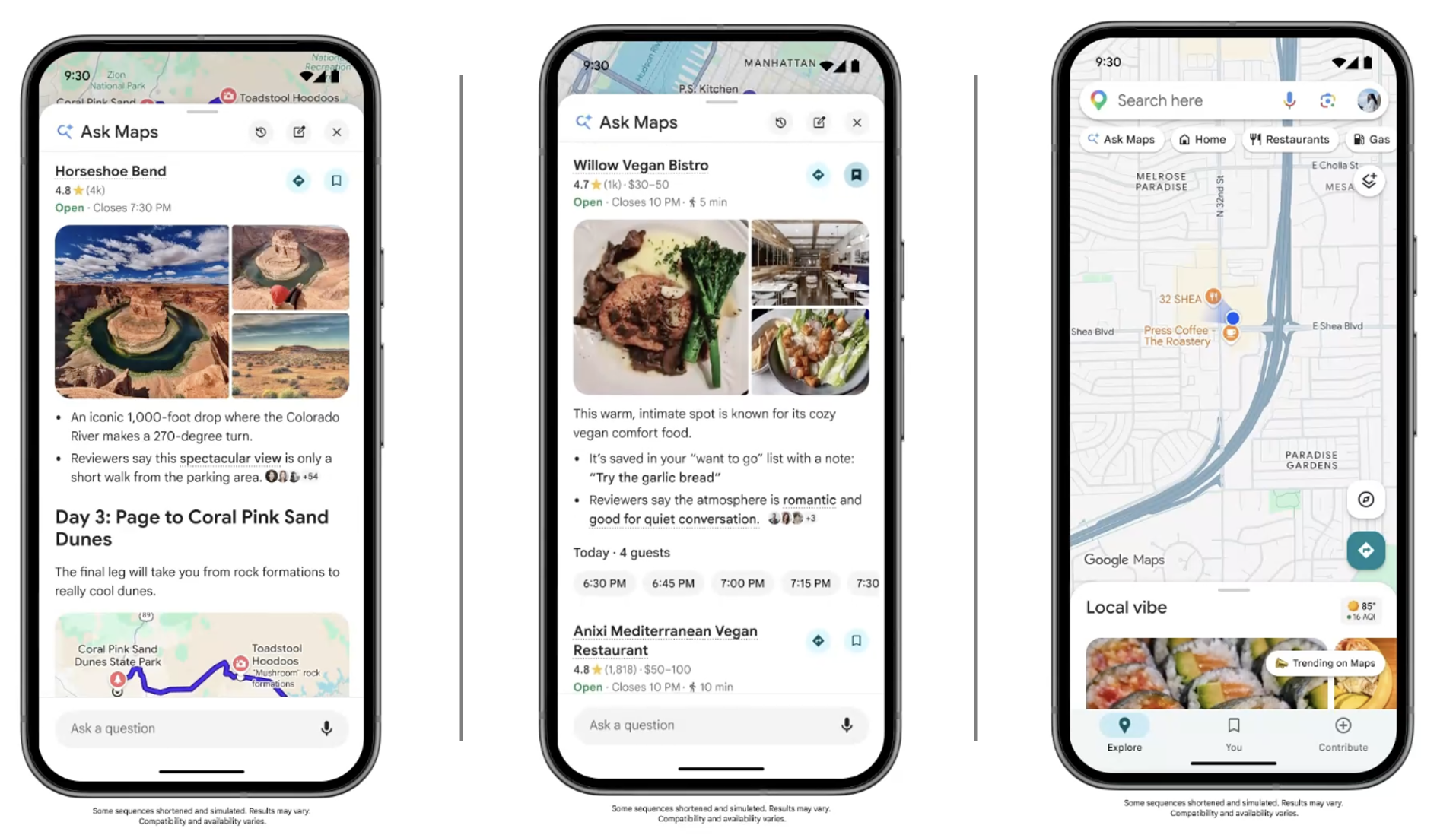
Source: Google
_This post is for subscribers only._
### EP 251 - Google Lied About Click Data — Here’s What Actually Drives Rankings in 2026 with Cyrus Shepard
URL: https://www.nearmedia.co/ep-251-google-lied-about-click-data-heres-what-actually-drives-rankings-in-2026-with-cyrus-shepard/
Last updated: 2026-04-09T15:45:46.000Z
Sign up for our new Legal Marketing Newsletter. Once a month, no fluff, just good ideas.
[Sign Up ](#/portal)
### **The Podcast Deets**
### **1\. The Truth About Click Data & Ranking Signals (**[**00:00–13:30**](https://www.youtube.com/watch?v=rnLbyvn3L2s&ref=nearmedia.co)**)**
The episode opens with a deep dive into Google’s long-denied use of click data, now confirmed through court documents and leaks. Cyrus explains key concepts like **long clicks and “last longest click”**, showing how Google measures satisfaction. The discussion ties this to local SEO, where conversions, engagement, and actions (calls, directions) mirror these signals.
### **2\. AI Overviews, Brand & The Future of SEO (**[**13:30–End**](https://www.youtube.com/watch?v=rnLbyvn3L2s&t=810s&ref=nearmedia.co)**)**
The second half explores how AI Overviews are reshaping search behavior. While reducing clicks for publishers, they increase reliance on **predicted engagement and brand signals**. The group discusses how AI drives **brand discovery and follow-up searches**, and Cyrus outlines tactical strategies for earning clicks, improving engagement, and optimizing for **task completion instead of traffic**.
## **Key Takeaways**
- **Google uses click data heavily**—especially “last longest click” as a proxy for satisfaction
- **Task completion > traffic** is the new SEO north star
- **AI Overviews reduce clicks but increase brand importance**
- **Brand searches are a critical ranking signal** (and a proxy for AIO visibility)
- **Bad clicks hurt rankings**—misleading titles backfire
- **Engagement metrics (time, interaction) correlate with rankings**
- **Own the full user journey**—don’t send users to third-party platforms
- **Optimize for what happens after the click**, not just the click itself
**👇 Watch by topic:**
[00:00](https://www.youtube.com/watch?v=rnLbyvn3L2s&ref=nearmedia.co) Introduction & Cyrus Shepherd joins
[01:15](https://www.youtube.com/watch?v=rnLbyvn3L2s&t=75s&ref=nearmedia.co) The click data controversy explained
[04:20](https://www.youtube.com/watch?v=rnLbyvn3L2s&t=260s&ref=nearmedia.co) Clicks, long clicks & “last longest click”
[07:30](https://www.youtube.com/watch?v=rnLbyvn3L2s&t=450s&ref=nearmedia.co) Local SEO, conversions & task completion
[11:00](https://www.youtube.com/watch?v=rnLbyvn3L2s&t=660s&ref=nearmedia.co) Brand search as a ranking signal
[13:30](https://www.youtube.com/watch?v=rnLbyvn3L2s&t=810s&ref=nearmedia.co) AI Overviews: impact on clicks & traffic
[16:30](https://www.youtube.com/watch?v=rnLbyvn3L2s&t=990s&ref=nearmedia.co) How Google predicts clicks with less data
[19:00](https://www.youtube.com/watch?v=rnLbyvn3L2s&t=1140s&ref=nearmedia.co) AI Overviews + brand search behavior
[22:45](https://www.youtube.com/watch?v=rnLbyvn3L2s&t=1365s&ref=nearmedia.co) How to earn better clicks (titles, UX, engagement)
[25:00](https://www.youtube.com/watch?v=rnLbyvn3L2s&t=1500s&ref=nearmedia.co) Engagement metrics & GA4 insights
[26:30](https://www.youtube.com/watch?v=rnLbyvn3L2s&t=1590s&ref=nearmedia.co) Bad UX, popups & failed task completion
[27:30](https://www.youtube.com/watch?v=rnLbyvn3L2s&t=1650s&ref=nearmedia.co) Final thoughts & where to follow Cyrus
Interested in sponsoring this podcast or our newsletters please reach out to [mblumenthal@nearmedia.co](mailto:mblumenthal@nearmedia.co)
[E-mail Mike ](mailto:mblumenthal@nearmedia.co)
### Related Links
[How Google Click Signals Drive SEO Rankings and AI AnswersThe AI SEO Marketer’s Playbook for improving user click signals in a way Google rewardsZyppy Signal with Cyrus ShepardCyrus Shepard](https://signal.zyppy.com/p/google-click-signals?ref=nearmedia.co)
[How AI Overviews Shift Traffic From Publishers to Google - ZyppyGoogle’s AI Overviews are seemingly designed to shift user clicks away from websites and nudge them towards Google ads. Zero-click answers leaveZyppyCyrus Shepard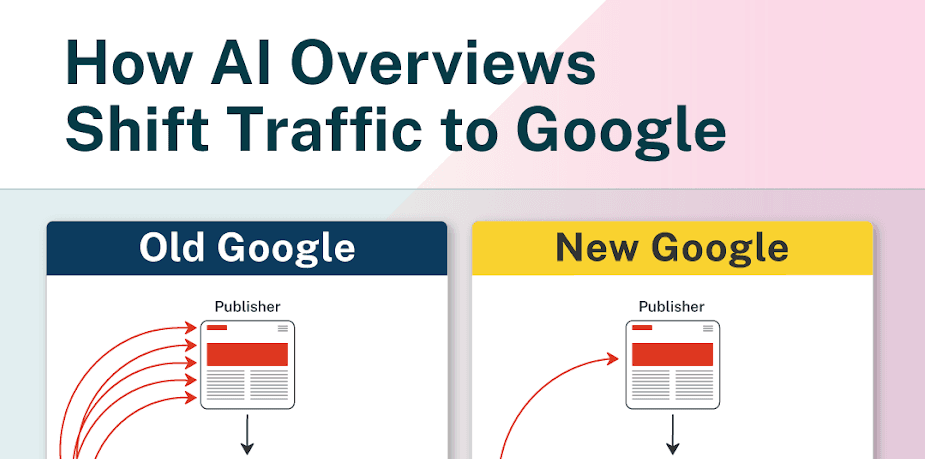](https://zyppy.com/seo/ai-overviews-to-google-ads/?ref=nearmedia.co)
[Cyrus S. - Zyppy SEO Consulting | LinkedInI'm an SEO consultant, online marketer, content publisher, speaker, and writer. Several… · Experience: Zyppy SEO Consulting · Education: University of Southern California · Location: Astoria · 500+ connections on LinkedIn. View Cyrus S.’s profile on LinkedIn, a professional community of 1 billion members.LinkedInCyrus S.](https://www.linkedin.com/in/cyrusshepard/?ref=nearmedia.co)
[Cyrus Shepard, Founder of Zyppy SEOI’m Cyrus Shepard, a data-driven SaaS SEO consultant who grows qualified website traffic with evidence-backed testing and clear, actionable straZyppy](https://zyppy.com/cyrus/?ref=nearmedia.co)
### **Full Transcript** of the Near Memo EP 251
###
David Mihm (00:10): Hey everyone, welcome to another episode of the Near Memo. You might recognize that this is not Greg Sterling speaking. This is David Mihm one of the other co-founders of Near Media. And I am a relatively infrequent guest on the podcast these days. So I'm not sure what episode number this is, but I'm here. 251, thank you, Mike. So we're one past the nation's birth years, apparently. So I don't know what that says for the state of the podcast, but anyway.
Mike Blumenthal (00:26): 251.
David Mihm (00:38): We are here with very special guest today, Cyrus Shepherd of Zyppy, a fellow Oregonian with myself. And we're really excited to have Cyrus on today to talk about a topic near and dear to our hearts at Near Media as a company that does a lot of user testing of Google. We are here to talk about click data, user click patterns, how Google uses that data and the impact that AI overviews might have on this whole ecosystem. So Cyrus, welcome to the show. as we get started, maybe you can just kind of summarize for our listeners and our watchers kind of what the thrust of your article that you just published was.
Cyrus Shepard (01:17): Yeah, thank you, David. I'm happy to be back on the 251st episode. I feel like this is the SEO equivalent of the old radio show Car Talk. Do remember that? Yeah. Where you could just veterans talking about SEO, but always happy to be here. So the thrust of my article.
David Mihm (01:28): Absolutely. Yes. If we if we last as long as Click and Clack, I will. That will be a real feather in Near Media's cap. So.
Mike Blumenthal (01:37): Although hopefully I don't go out with dementia, as one of those poor souls did.
Cyrus Shepard (01:41): No, no, no, As say we all. So to get into it, the thrust of the article, and I'll go into a little bit of history here. I don't want to get too long winded, was that for years, people in this space, in the SEO space, highly suspected that Google was using user click data in its ranking algorithms. They always denied it, but there were experiments and patents, the great Late Bill Slawski would analyze patents where Google would analyze click data. And Google would always say, well, just because we patented something doesn't mean we're necessarily using it. Don't believe everything you read. And then the Google antitrust trial, which happened, I think, two years ago now, evidence started pouring out that, wow, not only are they using click data, It is one of their major ranking signals. is one of the top things that they are using to help analyze results. The other things being content and links, anchors as they call them.
Mike Blumenthal (02:35): So you're telling us that Google was gaslighting us, Cyrus?
Cyrus Shepard (02:38): Gaslighting is a very good word. And apparently, apparently, you know, in the court documents, it was, it was, discussed this. They're like, we don't talk about it. We have a policy. You may not, you may want to talk about clicks, but we do not talk about it. You may disagree with that policy, but we do not talk about it. gaslighting, some people call it lying, but these Google reps were in a very awkward position. So they, they couldn't tell us the truth because it was company policy. Uh, And then, so then we had a third thing, which was the Google API leak in which this data warehouse leak, someone leaked it online where we could see the API endpoints of, you know, how, what Google's using its algorithm. It didn't tell us how they were using, this data. So then we have the Google API leak, which didn't tell us how Google was using, you know, these endpoints, but we could see what data they were collecting. And interestingly, the endpoints they were collecting match perfectly what they talked about in court and also the Google patents. So we have this record of how Google might be using clicks, confirmation that they're using clicks, and data endpoints showing us exactly what they're collecting. So I wanted to write a post that ties all these pieces together to show how Google is likely tracking and using click behavior, watching what people click on, so that we can understand it better, cemented in our minds because there's so much data out there. There's so much noise. I just wanted to create, you know, bring these pieces together so people could understand them.
David Mihm (03:57): That's great. So yeah, absolutely. And I think one of the things that was really compelling about your posts in particular, for me anyway, as a sort of zero click reader, if you will, the graphics that you showed around sort of, you know, bad click, good click, last long click, or whatever the exact sort of attribute is called, the graphics are really impressive and just kind of showing the difference in kind of what those three things are.
Cyrus Shepard (03:58): if that makes sense.
Mike Blumenthal (04:13): you
David Mihm (04:22): Can you take us through a little bit more detail about what those three click types are that you identified in the API documentation, and then how those play into the positive or negative signals that your website is sending to the algorithm?
Cyrus Shepard (04:37): Yeah, absolutely. So the big idea is, which came out in the court case, is Google, with all its amazing technology, can only guess at what good content is. They have a pretty good idea, but they're not really sure. So they're relying on us to tell them. So when you see the 10 blue links or the top search results, that represents Google's best guess as to what they think should be ranking. And then they relentlessly watch what users are clicking on. to tell them, is this a good result? Is this a bad result? So those are clicks. And then they try to judge, these good clicks or bad clicks? And it was interesting to me because reading through all the Google patents time and time again, the number one metric they're looking at is dwell time. Time on site, you can call it different things. How long a user is staying on a certain result. And they can take that data and they can divide it. They can slice it by, you know, the query, you know, are you searching for something simple? Like how tall is Mount Everest? You're not going to spend a lot of time on that page, but if you're looking for, you know, stock analysis, you might be spending much more time on that page. They can slice that data by language, location, and weigh all those things against each other and start to understand what users are saying is the best result. And then you have something, probably the most important, endpoint, which Google calls last longest click. And that is a long click. The user spent a significant time interacting with the result and they didn't go back to the search result, meaning their search journey was satisfied. So maybe they searched for something else. Maybe they go on and spend some time on X or Facebook, but they don't go back to the search result and click on something else. Those last longest clicks appear to be the most important signal.
Mike Blumenthal (06:07): you
Cyrus Shepard (06:19): that you can send to Google. And those are the three main ones you're looking for. Clicks, long clicks, and last, longest clicks.
David Mihm (06:25): So in some sense that you might say that a last longest click is Google sort of stand in for a conversion on whatever the query was, right? So not necessarily that they ended up buying something, but that their query was satisfied by that last longest click.
Cyrus Shepard (06:36): Right. Their query was satisfied. I think about the way I think about it is task completion. I've completed whatever I set out to do. And when we're searching Google, people like us, power users, we might have 1,000 tasks a day or 100 tasks a day that we're just trying to get through before we start new results. And those are very important, apparently, to Google.
David Mihm (06:45): Mm-hmm. Yeah. Yeah. Yeah. So I want to take this back to local briefly, since that's kind of the main sort of focus of near media. And then we'll kind of go back to some of the other points that you made in the article, which I think have impact not just on businesses who are trying to rank for local queries, but all businesses. So but as it relates to local, I mean, I think and sort of the reason I was curious to get your take on a sort of query satisfaction is we've hypothesized for a long time in local that the number of actions that users take on Google business profiles, in addition to the engagement that those profiles get, right? Which you can take that sort of a stand in for the amount of time that people spend on a website, amount of times people spend on a Google business profile, scrolling photos, reading reviews, reading services, that sort of thing. That's probably a pretty much of a sort of one-to-one comparison. the thing that Google has with GBPs, especially on phones, is they can also track actions, right? They can track clicks to call, which Google reports on in GBP data, clicks for driving directions, and potentially for Android users, I suppose, even if they don't click to call, they can probably track the number that they're calling to see what kind of which business they're checking in on. So I think to us, and in local anyway, it absolutely makes sense that Google's been doing this sort of across the rest of the web. And they're having to find a sort of proxy for that conversion action that they have sort of in-house data on when it comes to GBPs. just to kind of an aside there, I don't know you have any thoughts on kind of that as a parallel.
Cyrus Shepard (08:27): ⁓ absolutely. And just a caveat that I'm not, you guys know so much more about local, but those Google business profiles are interesting. If you think about what I just talked about, task completion. And I was thinking about this before we started talking today about a local example. And I was thinking like, if I had a dentist office. And think about that user journey. Someone. someone refers you to a dentist, you Google them, you go to their website or their Google business profile. And they're looking at you and like, well, what's the first question they're going to have? They're going to like wonder what your reviews are. if they have to leave your website and go to Yelp to look at those reviews, well, that doesn't really send a good signal that your website is helping them complete their task. If those reviews are on your Google business profile, that can help. or maybe you embed those reviews on your website to have some of those signals. Doesn't matter. But then what's the next step they're going to want to do? They're going to want to book an appointment, hopefully. And this is part of their journey. And your call to action is, hey, call us at this phone number. But Information's cheap. A lot of places can have your phone number. Maybe they can't find it on your website, or I don't know. But what if you have a booking link? And you can book and complete that action. And maybe that booking link's on your Google Business Profile as well. But completing that user journey, and Google's watching that journey and where it takes place. And you can decide if you want it on your website, on your Google Business Profile, but you don't want anybody else to own it. So all of those actions, you want to make sure you're consolidated and own all of those places. AJ Cohn talks about user. Yeah, no, you do not. AJ Cohn, SEO consultant that we all know in the Bay Area, he's a big advocate of just, if other people have the data and you can put it, know, collect it in one place, do that so they don't have to search somewhere else because you want to own that experience and own the task completion journey. So that's, I think that's how it ties in.
Mike Blumenthal (09:57): So you don't want Yelp doing your reservations for you on their site.
David Mihm (10:20): Absolutely, and I think in particular one of my, not that you would just copy whole cloth, but I think featuring snippets of reviews from Yelp reviews that have been filtered is a great double win, right? It's content that nobody else is going to see because Yelp sort of hides it as best they can, and it's keeping people on the site engaging with review content, like you said, which they're going to have to go, otherwise they're going to have to go to third party sites to find. And the other thing is,
Cyrus Shepard (10:35): Yep. Yeah.
David Mihm (10:47): and we'll do a segue here into AI overviews, which I know is also another piece of the equation that you've been thinking about and analyzing the last month or so. The AI overview then might pick up some of these snippets from reviews when it comes to presenting answers about your business. So that's, think, one of the things that... All right, go for it.
Mike Blumenthal (11:03): Before you make that transition though, so conversions is one thing, but brand search is another thing. And in local, brand search goes back to 2009 when Google would give you a places sticker for your door if you had a lot of brand searches, right? So the history of brand searches goes way back in local, but clearly the rest of the web has finally recognized the value of these. And as you point out, it's one of the metrics that Google. to be using is the quantity of brand searches, right?
Cyrus Shepard (11:34): Yeah. Yeah, absolutely. You know, Google says, with the helpful content update that came out and is now part of the core systems, they want to see two things from any website on the web. You either have to have an existing audience, which we can translate as brand, or you need to have a pretty strong, you know, intended audience, a business model set up that they can recognize that you're trying to draw things in. whenever we run a correlation study between brand search and rankings, strong brands, people searching for you specifically, always, always correlate with higher rankings. So very real world business signals.
David Mihm (12:08): Yeah, and I remember, I don't remember the year, let's say MozCon 2013, something like this. Rand gave a keynote and at the beginning of the keynote, he asked people in the audience, thousand people in Seattle, all do the same search and all click on the same business in the, I think it was a 10 pack at the time or a seven pack. It was a lot more than three. And then we sort of, he gave his talk and then at the end, we all did the same search and that business had shot up to number one. in the ranking. So the combination of hot brand searches, even in the course of an hour, right? Hot brand searches and clicks on the same business, like really led to a dramatic increase in that business's rankings and performance. And I think that that was, you know, for all of the, all of the, gag orders that Google introduced on, you know, all of its public, representatives around the importance of click data, like ran proved it. well before any of these DOJ documents or API leaks came out. This was a decade plus ago.
Cyrus Shepard (13:07): Yeah, I remember that. I remember it was like a small Ethiopian restaurant or something. I had to shut up to the top of the rankings. What, and you raise a really important point, David, that one of the things that came out in the antitrust trial is Google isn't just looking at, search results. you know, you guys were talking about real world signals, people using directions with their phone. have that, but Google, Google can collect any data from Chrome Chrome browsers and that
David Mihm (13:11): Yeah, yeah.
Cyrus Shepard (13:35): apparently that's a signal of popularity. So even if you aren't driving people through search, if you're driving them through other channels, getting them to search through a TV commercial or radio advertisement or a billboard, they can measure that data and see, people are going to this website. There must be some demand there. It's a popular website. Even if they aren't ranking, we should give them some consideration.
David Mihm (13:56): Yeah, 100%. And I will circle back to Brand, Mike. There was a method to my madness, but... ⁓ Yeah, yeah, yeah. Right. So let's... All right. No, no, please, please interject. All right, so let's get back to AI overviews for just a second, Cyrus. So obviously, AI overviews, there's been a lot of...
Mike Blumenthal (14:00): All right, all right. just didn't, I felt it was so fundamental as an aspect along with conversions that, sorry for interrupting. I'll zip it from here on out. If you believe that I've got some property for you in Florida.
avid Mihm (14:22): doom and gloom, to put it mildly in the sort of web publisher community about the impact of AI overviews on the amount of traffic that they're receiving, the number of queries that it's present for, et cetera. you also wrote a, it felt like a companion piece. I don't know if you conceived of it that way, but a companion piece to your click data post in terms of the impact that AI overviews might have on this click ecosystem. And I don't know if you can kind of summarize your thoughts as they relate to AI overviews, but obviously in a world where there's fewer clicks, Google's going to have fewer sort of direct signals to look at for last longest click or whatever when it comes to ranking publishers. So kind of expand on that and take us through kind of your logic behind that piece.
Cyrus Shepard (15:05): Yeah, well, there's no doubt that AI overviews are decreasing traffic to a lot of publishers, especially publishers that profit on information. The cost of producing mediocre information is now zero for anybody. So that's definitely a thing. And AI overviews also seem to highly benefit one business, which is Google. Because people are staying on Google longer, a lot of the links in the AI overviews simply go back to Google searches. a lot of people don't have to leave the Google interface. It's interesting about the click data training that you said. So when Google developed AI overviews, apparently the story is within the engineering circles, they couldn't use regular search results because it took too long to generate those for these long tail queries. So they developed new algorithms called a FastSearch and FastRank and BedBERT that use far less data. And they're using complex algorithms that use like 10 times less data. And I think they're using AI and machine learning to guesstimate click data. So they have, they have 20 years of data to build on. So I think they can, pretty accurately look at a website and guesstimate using their algorithms how people will click. And then they just need a little, they need far less actual clicks to verify that. So, and I think that's the future. I used to work, we've talked about this before, I used to work as a Google quality rater. manually evaluating websites. I think they're using a lot of AI and machine learning to do that job now. They were taking humans out of the loop to a certain extent. And they might do it better than I did, to be honest. I was kind of lazy at it, but ⁓ there you go.
David Mihm (16:40): You were one of the first people in the world to lose their job due to AI. All the hype now, this was three years old, right? When did they fire all the quality raters? Yeah, exactly. ⁓
Mike Blumenthal (16:46): You
Cyrus Shepard (16:50): Thanks, Google. Thanks, Google. But while we're on the subject of AI, we're talking about brand and reputation and all that stuff. Right now, it's still kind of the wild, wild west. When people Google your brand, there's what other people say about you and what you say about yourself. And right now, there is there's such an opportunity for you to say great things about yourself if you know what questions people are asking. I see so many businesses own those AI overviews with their own citations, and Google doesn't seem to care. And I think it's a great opportunity to just Google yourself and see what the AI overviews say, and just start creating content around that and owning that SERP. Because... What you say about yourself is absolutely, Google's starving for content for those AI overviews. If you provide it, they'll probably use it.
David Mihm (17:40): Right. I think I just want to highlight one of the things, you know, while we're on the subject of sort of AI and brand in here, I'm going to get back to my brand soapbox mic. So one of the things that we see in our user research in personal injury law, we presented this data in September, I think of last year at the lunch hour legal marketing summit in Vegas. And we've, we've since done a follow-up study with a very similar pattern, but in, in PI law and I, I think that this is true basically in any local business category. We don't necessarily see AI overviews reducing clicks to local business websites. What we see is consumers using them to sort of orient themselves in the category because they're not domain experts in law. You know, if you get an AI overview for a furnace repair query or something like that, you're not going to go and try to do that yourself probably. But they're sort of using them to kind am I looking for the right type of professional? What are some of the criteria I should be using to evaluate these professionals, that sort of thing. And they're not stopping the journey. That doesn't satisfy their journey to your earlier point, right? Their earlier, their journey is they need someone to solve this problem for them because they are not a professional themselves. And so we actually see AI overviews driving more searches that do lead to clicks to local business websites. But a lot of times, this is where the brand thing comes in, consumers will pay attention to the the firms that are in law are getting recommended in the AI overview. here's six or eight firms in the greater Phoenix area that all have good reviews and blah, blah, blah. And then they'll do follow up brand searches for each of those. so this is one of our, and one of the things that's frustrating for a lot of SEOs is it's very hard to track at scale kind of how you're doing in AI overviews because you never know when they're going to show up. The queries are always different, et cetera, et cetera. But I think one of the proxies that we've recommended law firms look at is your volume of brand searches over time. Because if you see that going up, chances are good that you're getting cited in an AI overview and consumers are looking then for your brand as a follow up to that exercise. And if your brand searches are going down, you probably should be concerned that you're not showing up in AI overviews the way your competition may be. that's kind of where I think that the sort of, even if AI overviews are in fact reducing clicks and reducing the amount of click data in the local business world to small business websites. think Google is still then backfilling that click data with brand searches, which was, think, Mike's earlier point. So I don't know if you have any thoughts on that. Yeah.
Cyrus Shepard (20:06): Yeah, I think that's a No, think that's great advice, branded search volume. And Google did us a huge favor a couple months ago by adding the branded query filter in Google Search Console. And I had to recreate those for years. And a lot of people didn't do them, but now you can just do it with a click of a button. I always say brand search is one of the mandatory things that all SEOs and marketing teams should be looking at, because it's a It's a goal of strength. It's interesting because I've had, I've had legal clients and the old model used to be, you know, you'd create the content you wanted to rank for and try to get as much traffic and then you'd funnel them. And I would work with lawyers who put big pop-ups and conversion banners, you know, call. I'd say too aggressive, too aggressive. We got to tone this down. We got to tone this down. But now I've started to kind of change my thinking on this because the information can live in the AI overviews, but.
David Mihm (20:49): Yep. believe me, those feel like this. Those are all over the place. Yes.
Cyrus Shepard (21:03): I want to really capture that secondary intent, is ultimately get the conversion, the higher the call. So now I'm thinking... let's help with that task completion. What are the next steps after that? I want to know, I want to understand pricing. want to understand reviews. I want to understand how do I book? When will you call me back? All those things. And I think emphasizing that content a little bit more on the website that you own is maybe a little bit more important now. And we can push those things to help complete those tasks.
Mike Blumenthal (21:33): How many years have you been in business?
Cyrus Shepard (21:37): All that, all that, those,
David Mihm (21:38): Great photography, who am I going to be working with? Those sorts of questions.
Cyrus Shepard (21:43): Yeah, absolutely. But also, I think it's still worth creating that top of funnel content because you're still going to get cited. People are going to have questions. But you're not going to see it.
Mike Blumenthal (21:52): Although now you can just do with a listicle. Why bother with
David Mihm (21:54): That's right.
Mike Blumenthal (21:55): all that content? You're the best lawyer in Phoenix. And here are the other nine guys, right? No, no, they're just not number one, that's all.
Cyrus Shepard (21:56): Yeah. Here's the other guy and they're really bad. They're really, really bad.
David Mihm (22:06): That's right.
Cyrus Shepard (22:07): They're really terrible.
David Mihm (22:08): So in our final few minutes here, Cyrus, you also had some very strong tactical recommendations, which we also provide in our personal injury law research, which we're not going to reveal here on the call. But you provided sort of structurally similar recommendations, shall we say, in terms of earning the click, right? for the percentage of whatever percentage of traffic that AIO reviews are not eating. How can you make your organic results earn more clicks and earn more sort of longest clicks once they're there? So I don't know if you can walk people through kind of some of your thinking in terms of how you recommended people structure their title tags, their descriptions, their snippets, everything.
Cyrus Shepard (22:48): Yeah, absolutely. the thing I want to avoid people doing is people start with title tag optimization and they create this really clickable title tag, know, best lawyer in Phoenix rated blah, blah. And then the users click through and they're like, this, this really isn't what I was looking for. They click back and you, so you got the click, but you just created a bad click. So you shot yourself in the foot and you can see this in analytics when you do title tag testing that you, you,
David Mihm (23:04): It doesn't match. Yeah, exactly. That's right.
Cyrus Shepard (23:14): roll out a bunch of new titles and your click through rate goes up. then, but within a couple of weeks, your traffic is lower because people, you're fooling people. So you have to, you, you, you're making a promise with your title and the result has to deliver that promise. So you want an attractive SERP. You want your, you know, review stars. If you have them, you want an attractive icon. I think people sleep on their icons all the time, high contrast side icons. So you stand out and you want a title that shows Two things, exactly what people are searching for, the keywords that they used. Then you want to show the promise. How are you going to deliver that? What are you giving them? What is the search intent? So Phoenix DUI lawyer, get your questions answered now or we'll help you out. There's some secondary intent that you're going to help them with. So that's earning the click. Getting the click, you want to engage people. And The simplest way to think about this is what else is on the page that I can engage people with. So you want to answer their question quickly. If they're searching for something, answer the question at the top of the page. Don't bury it in the bottom. And then for those people who stick around, draw them into your content. And the simplest way to think about this, give them things to click on that are interesting. Have an interesting navigation that answers their question. Use the content below the answer to answer related questions, you're drawing them in. I like testing. think navigations are secret weapons because a lot of people look at navigations. Testing different navigation links in the language can often have a significant impact on time on site and engagement because you're, drawing people in. So we're trying to get people to one of my favorite reports in, I'm not a huge fan of GA4 but I'm starting to like it. And even now years later,
David Mihm (24:51): Hahaha
Cyrus Shepard (24:53): is when Google launched GA4, one of their major reports was engagement. I filter for organic traffic. And I just see how long people are spending on site, how many engaged sessions per user. And it's honestly become my favorite report, because there seems to be a correlation between increasing engagement and downstream rankings, I think because of these click signals that we're talking about. And then finally, it's it's ending the journey, satisfying the user intent. And this is a tough one. We can't measure this. We have proxies. We can look at conversions. We can look at brand search to see if people are satisfied, but it is really hard to measure. it often involves a lot of competitive analysis. anybody else offering, am I actually the best for this query? You gotta put yourself in the user's shoes and go back to the SERP. And see if someone else might be answering that question better than you and providing a better experience. And it's often tough love when I talk to clients, you know, showing them different screenshots, like I, I'd rather shop here, than, your site because they provide a lot and you know, we, have to do better. So. Earning every part of that journey and just helping people complete their task and measuring it and looking at the things that matter. that's what we do. That's what we're going to do.
David Mihm (25:52): Hahaha!
Mike Blumenthal (26:05): So in law, one of the things we see a lot of is this software that as soon as the user gets to the site, it asks, do you have a, do you need a lawyer? And brings a pop-up and then gee, let me show you a video of the lawyer and brings another pop-up and it just keeps on going, right? It's like, and we just see that all the time trying to push this issue of last longest click by somehow brute strength rather than
Cyrus Shepard (26:22): Yeah.
Mike Blumenthal (26:34): answering the questions that are either explicit or implicit in the user's journey, right?
Cyrus Shepard (26:40): Yeah, it's okay if people come to your site and leave if they got what they were looking for in that moment. They just might need a quick question answered. So there is that push and pull. You have to satisfy that user intent within the first few seconds of them landing on their page. If you have a video pop up that's really annoying, that's probably going to help you for those short queries. Delay the video pop up if you have to by 30, 45 seconds. Make it easily dismissible. Pull them in, but you have to satisfy that user intent very, very quickly, or you're probably going to send a bad signal.
David Mihm (27:15): So Cyrus, thanks so much for your time here today. You mentioned clients earlier. What kind of clients are you looking for? Who should be contacting Zyppy?
Cyrus Shepard (27:25): I don't do a ton of client work these days. do, if someone writes me and it's an interesting problem with an interesting company, I'll probably have a conversation with you, but I appreciate that, David, I do.
David Mihm (27:37): All right, fair enough. Well, and for those who aren't looking to hire Cyrus though, where can they stay in touch with you? What's your favorite social platform? Yeah. Great, good.
Cyrus Shepard (27:44): So my new platform is Substack, which I'm having a good time on. I've got back into content publishing and having a good time interacting there and doing research and publishing my results. And I'm so glad that it led to this conversation today.
David Mihm (27:59): Awesome, so what is the address of your sub stack? Where should people go? Yeah.
Cyrus Shepard (28:02): it's a Zyppy Signal, signal at zyppy.com.
David Mihm (28:04): Awesome. Very good. So signal.zyppy.com, Signal.zyppy.com and we'll link to it in the show notes. thanks so much again for joining us. I know it's early out here on the West Coast, so appreciate you being caffeinated and joining us for such a lively conversation.
Cyrus Shepard (28:09): That's right. Mike, David, thank you very much.
Mike Blumenthal (28:24): Thanks, Cyrus
### EP 250 - AI, Photos, Reviews & Intent Pages: What Actually Drives Multi-Location SEO Now (Part 2)
URL: https://www.nearmedia.co/ep-250-ai-photos-reviews-intent-pages-what-actually-drives-multi-location-seo-now-part-2/
Last updated: 2026-04-02T16:19:20.000Z
Interested in sponsoring this podcast or our newsletters please reach out to [mblumenthal@nearmedia.co](mailto:mblumenthal@nearmedia.co)
[E-mail Mike ](mailto:mblumenthal@nearmedia.co)
### **The Podcast Deets**
**1\. AI Hype vs Reality (**[**00:00–04:44**](https://www.youtube.com/watch?v=Rqj7xS9FAL8&ref=nearmedia.co)**)**
The conversation opens with growing executive concern about AI and “agentic commerce.” However, real-world data shows AI contributes less than 1% of traffic and revenue for most brands. The takeaway: don’t panic—but pay attention.
**2\. What Actually Drives Visibility (**[**04:44–13:10**](https://www.youtube.com/watch?v=Rqj7xS9FAL8&t=284s&ref=nearmedia.co)**)**
The discussion shifts to what’s working now. Intent pages—originally built for SEO—are now powering visibility in AI tools. The shift from keywords to intent, combined with insights from reviews & photos, is shaping the next generation of content strategy.
**3\. The Future of Local Search (**[**13:10–End**](https://www.youtube.com/watch?v=Rqj7xS9FAL8&t=790s&ref=nearmedia.co)**)**
AI isn’t replacing Google—it’s changing behavior. Websites are becoming data sources, brand awareness is driving clicks, and review diversification across platforms like Yelp and TripAdvisor is becoming essential. The future rewards foundational SEO, not shortcuts.
### **Key Takeaways**
- AI traffic is currently **negligible (<1%)** for most brands
- “Agentic commerce” is **overhyped (for now)**
- **Intent pages are a major competitive advantage** in AI search
- Reviews are not just reputation—they are **content + ranking signals**
- Brand awareness is increasingly critical in a **zero-click world**
- Websites are evolving into **data sources for AI systems**
- Review diversification (Yelp, TripAdvisor, etc.) matters more than ever
- Long-term SEO (“the garden”) beats short-term tactics
**👇 Watch by topic:**
[00:00](https://www.youtube.com/watch?v=Rqj7xS9FAL8&ref=nearmedia.co) Intro – AI and multi-location marketing
[00:18](https://www.youtube.com/watch?v=Rqj7xS9FAL8&t=18s&ref=nearmedia.co) Are clients worried about AI visibility?
[01:10](https://www.youtube.com/watch?v=Rqj7xS9FAL8&t=70s&ref=nearmedia.co) The “agentic commerce” panic
[02:05](https://www.youtube.com/watch?v=Rqj7xS9FAL8&t=125s&ref=nearmedia.co) What actually matters for AI SEO
[03:05](https://www.youtube.com/watch?v=Rqj7xS9FAL8&t=185s&ref=nearmedia.co) AI traffic reality ( less than 1%)
[04:44](https://www.youtube.com/watch?v=Rqj7xS9FAL8&t=284s&ref=nearmedia.co) AI vs Google behavior by category
[05:46](https://www.youtube.com/watch?v=Rqj7xS9FAL8&t=346s&ref=nearmedia.co) Ask Maps and discovery changes
[07:42](https://www.youtube.com/watch?v=Rqj7xS9FAL8&t=462s&ref=nearmedia.co) Intent pages driving AI visibility
[10:04](https://www.youtube.com/watch?v=Rqj7xS9FAL8&t=604s&ref=nearmedia.co) From keywords → intent
[11:53](https://www.youtube.com/watch?v=Rqj7xS9FAL8&t=713s&ref=nearmedia.co) Using reviews as content strategy
[13:10](https://www.youtube.com/watch?v=Rqj7xS9FAL8&t=790s&ref=nearmedia.co) Zero-click search and attribution
[14:00](https://www.youtube.com/watch?v=Rqj7xS9FAL8&t=840s&ref=nearmedia.co) Measuring AI → offline conversions
[15:07](https://www.youtube.com/watch?v=Rqj7xS9FAL8&t=907s&ref=nearmedia.co) Are websites becoming data sources?
[16:05](https://www.youtube.com/watch?v=Rqj7xS9FAL8&t=965s&ref=nearmedia.co) Brand awareness and marketing shift
[18:49](https://www.youtube.com/watch?v=Rqj7xS9FAL8&t=1129s&ref=nearmedia.co) Long-term SEO strategy (“the garden”)
[21:45](https://www.youtube.com/watch?v=Rqj7xS9FAL8&t=1305s&ref=nearmedia.co) AI hype vs Google dominance
[23:26](https://www.youtube.com/watch?v=Rqj7xS9FAL8&t=1406s&ref=nearmedia.co) Review diversification strategy
[25:06](https://www.youtube.com/watch?v=Rqj7xS9FAL8&t=1506s&ref=nearmedia.co) Yelp, TripAdvisor, and local authority
[26:14](https://www.youtube.com/watch?v=Rqj7xS9FAL8&t=1574s&ref=nearmedia.co) The future of local search (3–5 years)
[27:43](https://www.youtube.com/watch?v=Rqj7xS9FAL8&t=1663s&ref=nearmedia.co) Final takeaways
### Related Links
[Steve Wiideman“SEO STEVE” WIIDEMAN WEANS BUSINESSES AWAY FROM OLD-SCHOOL AGENCIES WITH A REVOLUTIONARY, SELF-EMPOWERING SEO ROADMAP Specializing In Strategic Planning For Multi-Location And Franchise Brands, Wiideman Consulting Group Founder Has Created Powerful Key Strategies for SKECHERS, Public Storage and Linksys Steve Wiideman is a big believer in a famous quote by Jim Rohn, the influential entrepreneur, \[…\]Wiideman Consulting Group](https://www.wiideman.com/about-us/steve-wiideman-biography?ref=nearmedia.co)
Sign up for our new Legal Marketing Newsletter. Once a month, no fluff, just good ideas.
[Sign Up ](#/portal)
### **Full Transcript** of the Near Memo EP 250 -->
Greg Sterling (00:18) But Let's talk about where we are in the market right now with some of the AI stuff. So about like, Hey, we're not in this AI search or we're not in, you know, we did this ChatGPT search or whatever Gemini search and we don't show up for our phrases or our keywords. Are you hearing a lot of that kind of feedback from your clients? What is their level of attention to AI search, AI mode, AI overviews, et cetera?
Steve Wiideman (00:27) Mm-hmm. It's much broader than that right now. It's not as granular as we're not appearing in search. It's more about what are we doing about AI? This came down from the CEO of one of the brands that we work with and it went to the digital marketing manager who then gave it to our contact. And so this big email thread comes through with all the history and the CEO wants to know, how are we addressing agentic commerce? What are we going to do about it? And I'm like, that's so interesting that they jump straight to agentic and never even ask. Yeah, probably. Oh my God. So we get to see what.
Greg Sterling (01:12) Somebody read an article is what it amounts to and then, you know.
Mike Blumenthal (01:17) Yeah, at the firm my daughter works for, which is not in the food industry. Her boss says, you know, have you learned Claw? What is that one? The agentic manager? What's that? The OpenClawHave you learned OpenClawWe've got to implement it. And I've been feeding my daughter articles about the danger of this sort of stuff so early. And it's just funny. This is what a CEO focuses on, right? Is that.
Steve Wiideman (01:25) OpenClaw.
Greg Sterling (01:26) MCP or whatever. OpenClaw. Yeah.
Steve Wiideman (01:31) You
Greg Sterling (01:36) Yeah.
Mike Blumenthal (01:41) They managed to pick out the part that's both the least functional and the most hazardous to your health.
Steve Wiideman (01:46) Yep. So what's our response? We always jump back with, well, let's start, let's go back a little bit, right? Let's take a step back and then let's make sure that we're looking at things a little bit more strategically. And your first part of this question before we get into Agentic is what are we doing in general about artificial intelligence and LLMs, right? And then, and that's where we communicate. Well, we're working with the tech teams to make sure these bots can access our website. We're making sure... You know, are our contents retrievable and that they have no issues finding and being able to cite us as a potential answer. We're working with off-page teams to help increase, you know, the frequency of these semantic triples that are important to us in all of our citations everywhere so that when someone's saying, find me a restaurant that does X, all across the web, all these citation sources says, this restaurant offers X, right? Fundamentally, we're measuring that too, right? We're making sure that we're actually tracking in what it's doing. So the good news, CEO, the good news, key stakeholder, is when you look at the data, which I'm sure we'll get into, there's not a lot of traffic or revenue coming from it. Literally less than 1 % for these restaurant chains anyway. Less than 1 % of the traffic and revenue is coming from clicks from ChatGPT, Perplexity, Claude, or any other LLM. Agentic will be the next thing. It's coming down the pipeline. It's not even something you can really do yet as a restaurant chain. But yes, at some point in the near future, somebody is going to go to ChatGPT and they're going to say, help me place an online order for restaurant. Help me to place a takeout order. Help me to book a reservation for such and such place. And they're going to want to do it through either a third party like an OpenTable or a delivery service provider. For the delivery portion and they might want to do it for themselves, you know, for takeout and for, you know, other things that somebody would want to make a purchase for. So yeah, the days of the website might be going away a little bit as these, you know, LLMs are trying to do what YouTube does and keep users on their website as opposed to navigating off of it. So it's definitely an interesting transition, but I don't see agentic happening for these chains. You know, for several years, I think we're going to be paying attention to it and watching and those early adopters who are in there goofing around with things, who are making mistakes, we're going to learn from them so that we don't have to repeat them and we'll go in strategically and when there's actual documentation that helps brands to do a little bit more, we're going to do it, but we're not going to do it with a sense of urgency knowing what we already know that the traffic and, you know, the ROI from it just isn't there. So there's definitely no means to panic right now. This is like Hitchhiker's Guide to the Galaxy. Where's the book? Don't panic. But pay attention, right? Watch, listen, don't spend a lot of money on super expensive AI prompts, optimization tools just yet, but pay attention.
Greg Sterling (04:44) Well, as Mike suggested, think in our pre-show discussion, the behavior is different by category. And I think that that pertains to AI. I mean, I think in a restaurant context where brands queries are a very high percentage of the searches, people already have a brand in mind and they're less inclined to do that in ChatGPT or Gemini or something like that. It's much... It's much lower in the funnel. They want to know driving directions or are they open or whatever it is. And that's a Google search. Think if you're looking for product discovery, well, if you're looking for product discovery, if you're trying to learn about something, then that's much more in the domain of AI, which can lead you down to specific recommendations. But if you're looking for a, I don't know, a Buffalo
Steve Wiideman (05:16) 100%. Doctor.
Greg Sterling (05:34) Wild Wings or something like that. You're not going to go to AI and say, unless you're already in there and say, hey, where's the nearest one or whatever, you're just going to go to Google because that's the comfortable, familiar behavior.
Steve Wiideman (05:45) 100%.
Mike Blumenthal (05:46) Although one has to ask now that Ask Maps is in Google Maps, is there much high level discovery that's gonna go on because Ask Maps frees the user to ask questions they never could ask before in terms of geography or style or combination of when do they open, are they good date place, do they have excellent food, do they have five stars?
Greg Sterling (05:50) Yes.
Mike Blumenthal (06:10) and find me a place that's within 25 miles of this location, those kind of complicated queries that users haven't been able to ask before about a restaurant can now be asked, can be very personalized and it's exactly, yeah, exactly.
Steve Wiideman (06:20) or personalized, yeah, like a place I haven't been to before, right? Or haven't been to lately.
Greg Sterling (06:26) Or, yeah, and it's, I think it's gonna happen. I mean, I Mike is exactly right. I was getting coffee with somebody the other day. I had to find a place that was kind of convenient for both of us that had certain characteristics, know, coffee, a coffee. Well, no, no, no, that's your, no, no.
Mike Blumenthal (06:38) You stole my example. No, one that's halfway between us. That was what I was talking about two weeks ago. OK.
Greg Sterling (06:46) Yeah, but I wasn't looking for halfway between. I was looking for some place that was convenient to the freeway because this other person was coming, a place where we could talk, a place that had decent food, that had a comfortable atmosphere inside. Wasn't just a, you know, kind of some of these places are pretty raw. Yeah. And anyway, so it gave me, I did that on Ask Maps and it gave me a bunch of choices and I made a choice from
Mike Blumenthal (06:53) I see.
Steve Wiideman (06:55) Mm-hmm.
Mike Blumenthal (07:02)
Greg Sterling (07:14) from the choices that were there. And it worked out. And it was a good experience. And I think there will be a lot of people using it. I mean, right now, it's pretty kludgy because you've got this dual interface with the button there and then the normal search bar. But Google will find a way to integrate it more elegantly. And I think a lot of people will use it. And it may kind of swallow the traditional experience, other than for something like directions or.
Steve Wiideman (07:19) That was interesting.
Greg Sterling (07:41) You know, some very simple thing. Right. Right. Right.
Mike Blumenthal (07:41) or brand queries.
Steve Wiideman (07:42) Which are brand driven searches anyway, right? So yeah, think what's been helping us, and we didn't expect this to happen. And Greg, you and I have talked about this before about the intent pages and landing pages that we were creating on these sites. We were doing it for web search back in 2019\. And the collateral benefit of doing that is these intent pages, these sub pages underneath each location page that are highly focused around a page for takeout, a page for delivery, a page for restaurant specials, a page for restaurant jobs, maybe even specific menu items like pancakes near me, waffles near me. These intent pages are now being cited as the citations when we look at a ChatGPT search. And that wasn't what we built them for. We built them for web search. But it turns out because they're kind of a source of truth being on the brand site and being so specific to an intent, that our brands that are utilizing them are seeing significant improvements in visibility and zero-click visibility in these AI models. It's really kind of exciting.
Greg Sterling (08:47) But what about search, though? Also improve visibility in search or no? Yeah.
Steve Wiideman (08:51) of course. Yeah, that was that was the original intent. And the more we we make it unique, the more we add in, I mentioned 60 fields went down to like 30 or 40 that the client will actually use. Huge difference because because like you mentioned, some of those fields are distance from freeway. Some of them are distance from the nearest park and we'll list like three parks. Distance from the nearest body of water, evergreen things that don't need to be changed every couple of months because the neighboring business, you know, gets new ownership or something. It's it's ⁓ evergreen, helpful, useful content that isn't just here's the weather in the city, unique, hyperlocal. We're talking about "our restaurant is a block away from such and such field" or "such and such stadium". So those queries that are, I need to find a restaurant that's, what's near? Yeah, exactly. So that's where I found, at least from a groundwork standpoint, those intent pages make such a big difference and so few brands are even using them.
Greg Sterling (09:34) near this thing. Yep.
Steve Wiideman (09:46) So it's been great. So now our clients have had five to six years of CTR history and we've got some really good rankings that are going be hard to unroot. So anyone who's out there trying to create new stuff, is, know, do it now because it's going to take a few years for some of them to get the maturity to rank as well as you'd like them to.
Greg Sterling (10:04) I can't remember who, somebody on LinkedIn published this and it might've been Claudia Tomina, but I don't remember who it was. Somebody else could have been talking about sort of moving from keywords to intense, right? Sort of in your thinking about content creation. Know, what's that?
Steve Wiideman (10:20) Things not strings. Yeah. Things not strings, as Google has been telling us for a decade.
Greg Sterling (10:25) Right, yeah, yeah. So people have been focused around keywords, which is a proxy for intent, to shifting to intent and building content around that. And I assume that that would be your recommendation for this sort of new, brave new world of AI.
Steve Wiideman (10:39) Right. And we keep trying to remind our clients to stop being so obsessed with the idea of keywords. If we think about a keyword itself, really, Google defined that in its Google Ads platform, combining several different search terms and misspells and singulars and plurals into what they call a keyword. And we get so obsessed over Google's keywords, even though they're made up, they're not the actual searches that people are making. Pay more attention. To your search console, to real searches that are happening so that that can help inspire and be the catalyst to growing your content online. Searches are way more important than keywords. I think internal search and learning from your internal search is probably one of the missing links that a lot of brands don't pay attention to. Whenever we ask, like, hey, what are people searching for on your website? You have a chat feature on there. Can I see ⁓ an export of what people are asking in the chat? At data points that are real humans typing in real things, not some made-up keyword that Google created to sell ad clicks. So I think there's where one of the biggest opportunities might stem from is really understanding what people are actually searching and testing your content strategy around what you're learning from your searches.
Greg Sterling (11:53) And you talked about reviews, the role that reviews play in that process as well earlier.
Steve Wiideman (11:57) I love that. So if you're using AI, we use AI for every research we do now. If you're using AI and you can you can dump your your reviews into, you know, a spreadsheet and throw it up into a perplexity computer. And if you've been playing with that, I love that tool, perplexity computer does some really smart things. And so you can upload all of your reviews and say, help me to to craft ideas for titles and meta descriptions and and content. Based on what customers are saying about us and help me draft an email to my client based on the negative things that people are saying about us so that they can be aware of it and address it. And a lot of the platforms that are out there from Uberall and Yext and BirdEye and these platforms do a lot of that automation for you now on their own. So if you already use one of those data management platforms, talk to them first and say, Is there something I can do with reviews to understand sentiment and to classify and categorize all the things that people are saying so that I can use them in my content strategy and my citation building as well as in our overall content plan? I think there's a huge missed opportunity that most brands just don't pay attention to.
Greg Sterling (13:10) So you talked about zero click search. There's a lot of people who believe Rand Fishkin is the champion of that whole kind of arena, but a lot of people are talking about it. And this is one of the problems or challenges with AI. Mean, you talked about how there's so little referral traffic. My own theory, and this is category dependent, is that... Know, the behavior is just different. People aren't clicking through. So they're not seeing the influence of AI on the conversion or on their Google searches because they're not getting the clicks. You know, it's like I'm going to AI to learn about something, to discover something. Then I go back to Google and I do the bottom of the funnel search. And so that looks like a Google search. Doesn't.
Steve Wiideman (13:37) Mm-hmm. So I went to Korean barbecue place Greg the other day and I got there and there was a tablet where you go to sign in and before you sign in there's a couple little options to say where did you find us? I'm a previous customer, I found you from ChatGPT, I found you from Google, you just hit a button. I was like that's the simplest easiest thing to do and you don't measure the volume, you're measuring the trend. Where are people finding us and where over time are we seeing the most trend there? Where are we not getting clicks? We're not really getting a lot of clicks from people finding us on social media. We probably need to look at what we're doing in social media to make sure that customers are still finding us in social. Let's do a little bit of research and figure out what's missing. I think that's the easiest way to better understand offline. With Skechers, we just use a simple promo code. It didn't always work because they had buy one get one that would compete with it but if someone went into the store and they use that promo code that was exclusive to the local landing page we can understand trend and how many users were actually going into the store after finding the code on the local page so if you can if you can do some online to offline attribution with QR codes and promos and and track the actual search to an in-store visit fantastic but it's been over a decade since BJ's pizza was doing that and You know, no other brand seemed to be doing online to offline still after all these years. Yeah. It's like, isn't everybody doing it? It's
Greg Sterling (15:07) It's just kind of crazy. It's crazy. But what I wanted to ask is about the strategy going forward. And Mike suggested this with the Ask Maps question. Does your website, do your landing pages simply become data sources for AI now, whether it's Google AI or ChatGPT or perplexity or Claude or whomever? That really all, know, less and less about humans visiting your site and more and more about the data that then gets processed by the AI tool.
Mike Blumenthal (15:37) as if Google Local hasn't always been about data, about using your website as data to deliver a result in Google. I mean, you know.
Greg Sterling (15:44) Well, that's true, but it's getting more so. It's getting more so, I think, in certain categories in particular. And restaurants is one of those. Don't need to go. The only reason I would go to a restaurant website is because the Google version of the menu is inadequate versus the restaurant's own menu. I don't trust that as much. But you can get all the information you need from Google, and you don't ever need to go to the restaurant's website.
Steve Wiideman (16:05) which is still not an excuse to not create great content because if they are still using the website as a data source, even if a customer isn't going to actually visit your website, even if your impressions are up and your clicks are down, still continue creating really helpful content because it's going to get crawled and used and hopefully help with your visibility as AI becomes more prominent. It's interesting. And was Danny Sullivan who was talking about it a couple years ago about the importance of brand and people were spinning it into, it's not fair that big brands get more clicks or more visibility. And the reality is it's not what he was saying. He was saying it's important for people to know who you are. And the behavioral differences that are happening is that people aren't just going to Google, performing a non-brand search, clicking a result and being done. You need to be top of mind. So now marketers need to start doing more proactive marketing so that we're top of mind so when they are performing searches they recognize us and say yeah I saw one of their ads a week ago or I clicked on an ad a couple weeks ago for this brand and I wanted to check them out and I never got chance to go in there so we we can't just rely on on inbound being you know what is the catalyst to our organic success it we really need to think more about the the the other types of marketing that we've neglected to make sure we're top of mind for people who are performing searches and that every single time will result in more brand search and it'll result in higher click-through rates for non-brand because we're doing more proactive work in marketing and in paid social and in UGC. So I think that's where we need to shift our mindset around, not just being myopic on a Google SERP, but instead making sure that our brands are doing other types of marketing that support you know, our efforts in inorganic.
Greg Sterling (17:56) Well, we've seen that in our research when somebody is familiar with a particular brand, they're, you know, in these legal categories that we're tracking, you know, there's a lot of sameness, there's a lot of noise and a lot of similar, similarly well-reviewed businesses, similar looking lawyers. And when people have some awareness of the firm or the individual from another channel or another medium that really plays into their behavior, we can see them. Say I recognize them, I've seen their TV commercials, I've heard their ads, and that ultimately turns into a consideration or a click. So it's very clear that that's going on. Let me just back to this sort of zero-click scenario in your statement about you still need to create great content. If I were a multi-location client who was saying to you, well, we're not seeing any clicks, do websites really matter, blah, blah.
Steve Wiideman (18:29) Absolutely. Right?
Greg Sterling (18:49) What would be your sort of disciplined approach to content, given what you know about where the world is going? What would you tell them about the content that needs to be created and how you would go about doing that?
Steve Wiideman (19:02) I would go back to the phrase groundwork, right? I would say what we're doing right now is planning a garden, right? That's with the right amount of water and sunlight over the next several years is going to help drive the visibility we're going to need when the ecosystem continues to evolve. We're getting ahead of things. And while you're not feeling like this is driving anything right now, based on what we've seen in the work we've already done with location and intent pages, and we weren't wrong there, this is going to set us up for success in the future. So we just make it clear instead of expectations, don't expect to see immediate return on investment from this work. This is SEO, this is the marathon, this is a long run. In a couple years from now, here's what could happen. If it doesn't happen, we still have great content. If it does happen, then we're going to flank all of our competitors who won't invest in the resources to make these things come to life. That's the least the first part of getting the buy-in. The second part sometimes is just kind of creating some estimates, you know, looking at the data and saying, hey, based on how people are currently searching, you know, using whatever metrics we can from Search Console, here's where we think we can go. Here's our average position for a certain query or a longer tail phrase and across all of our locations based on what our click-through rate is, based on what our average order value is, based on what our conversion rate looks like. If we are able to increase visibility like we do in traditional search, this is what we could forecast in a year to two years from now. So a lot of it is going to stem from putting forecasts together to help quantify what the ROI could look like in two to five years.
Greg Sterling (20:43) Do you get a lot of pushback on that from the executives that you're, no, but the long-term, really what I'm talking about is the long-term view that you're taking, which I think is strategically correct, but people want immediate results. They want quarter over quarter growth. So do you get, you, yeah.
Steve Wiideman (20:47) Not when you have data. Data seems to always be my... Yeah, we've been pretty fortunate. Honestly, we haven't had too much kickback because a lot of these brands have trusted us since like 2016\. They've been with us forever and we've never steered them wrong. But there's always going to be occasions where we get pushback. We've had pushback on things like native reviews for the entire tour of working together. It's like, boy, if we could get those star snippets, wow. But in terms of trying to get buy-in for AI when messages are coming down from the CEO, it's actually becoming less challenging now, especially when the, you know, again, the big shiny thing freaks out the leadership team. Suddenly, there's more of an interest and as long as we can communicate effectively with our point of contact, you know, there's a higher chance that our suggestion will get approved.
Mike Blumenthal (21:45) One of the things I see in my consulting practice is the freakout was caused by ChatGPT and that still has a high presence of mind. But the reality of how capitalism works means that the extreme likelihood is that Google is going to dominate all aspects of this and ChatGPT is going to be bringing up the rear. Do your CEOs recognize that sort of reality of monopoly and
Steve Wiideman (22:04) I keep hearing that.
Mike Blumenthal (22:09) the moat that Google is currently constructing and reinforcing on a daily basis.
Steve Wiideman (22:15) Yeah, depending on your category, like Greg said, but yeah, I think there's definitely a lot of uncertainty. There's a lot of FOMO, I think, happening around AI. The message for, at least for our category of clients that we work with, everything's fine. In fact, in many cases, we remind our clients that people are looking for fresh content. Fresh content requires the LLMs to search the web. When they search the web, they're searching Bing and Google, and we've been optimizing for that for years. So there's no need to panic when it comes to local search as it relates to LLMs, other than just making sure that the bots on the LLMs aren't being blocked from crawling, which IT and security teams can be a bit of a jerk with sometimes. And making sure that we're not being myopic on Google business reviews that we're telling our customers to share feedback everywhere online. And if you want to throw up some logos like TripAdvisor and Yelp and other sites that aren't just Google Maps, that could remind them that they don't have to go to Google and leave a review. They can leave a review somewhere else that might actually help our AI visibility.
Greg Sterling (23:26) Where do you stand on, sort of as we're coming to the end here, a couple of last questions, where do you stand on review diversification across multiple sites, right? So people have focused for a long time, you know, with some justification on Google pretty exclusively. And now, you know, there's a broader range of sites that are playing both on Google itself and on ChatGPT and elsewhere. What do you tell clients about where they need to get reviews beyond Google?
Steve Wiideman (23:52) Sure, well, I always try to be data driven. So if there's research that's been conducted or if you want to do your own research to see what citation sources are coming up the most prominently for your locations, I would start with that citation research and say, hey, we did some research and it turns out that the recommendations that these AI platforms are giving out stem from these publishers. Again, Yelp, TripAdvisor, whatever they happen to be. So by giving them that data, that helps get buy-in, think, to convince them to not just focus on Google Business Profiles, but to also look at other websites that people are talking about. Sometimes it's Reddit, not a big Reddit fan, but sometimes Reddit might be part of that. So just making sure that at the counter when people are coming to the location or to the store, there's a nice little reminder or flyer or poster that reminds them of the places that they can leave. Feedback, I think that's a good start. The other is just showing them screenshots where you can, like here's an example where our competitor is beating us and the citation source is TripAdvisor. So maybe we should be paying a little more attention to TripAdvisor because we want to beat that competitor in terms of what we're coming up for in the search results.
Mike Blumenthal (25:06) I would just add that historically, if you go back and you read the first Google local ranking algorithm, they make it quite clear that third party reviews matter when the page that they are on has some prominence. And both TripAdvisor and Yelp highlight the most popular pages in a local market, giving those pages prominence. And so this behavior
Steve Wiideman (25:13) ⁓ Mm-hmm. Yeah.
Mike Blumenthal (25:31) which people think is somehow new to AI has been around forever. And the trick, it's particularly easy in the restaurant because it's clear it's Yelp and TripAdvisor, right? And those are pages, unlike AVO that sends all of their page strength to their category pages, not to the local business pages, but with both Yelp and TripAdvisor. If you can become a top 10 in something, 10 best hamburgers, 10 best pancakes, whatever,
Steve Wiideman (25:55) Mm-hmm.
Mike Blumenthal (25:59) the benefit is gonna be universal across local search and AI. And this has always been the case. It's just now there's an additional surface that makes it obvious to people. Just sort of think it's myopic to think this is new,
Steve Wiideman (26:13) Right.
Greg Sterling (26:14) So three years from now, Steve, what do you think local? What's going to be different? What's going to be the same in local?
Steve Wiideman (26:22) What's going to be different is the platforms that we use to manage our local will be smarter and better. And you'll want to choose the right one to see the best results. If you're a multi-location brand anyway, I would say what's going to be different is that I imagine your typical Google web search, you know, is going to be less prominent and we're going to be doing a lot more conversational searches like Joaquin Phoenix in the movie Her. I think you can see a lot more wearables and our job is still the same. It's still to make sure our data is accurate and consistent. It's still to make sure our location pages and intent pages are as detailed and as helpful as they possibly can be, even if they're just used as a data source. It's going to be to make sure we're as prominent across the web as we possibly can be with the right, I use the term semantic triples, everywhere within those citations. And mentions. Then lastly, it's going to be to continue to pay attention to reputation and to not be so, I'll use the word of the hour, myopic on just Google Maps. So think about where the reviews are going to matter across the web and to make sure that those reviews where they can be can be influenced with the right narrative and potentially the right semantic triples so that we continue to show up for all the ways that AI and traditional search engines are going to be. Displaying this.
Greg Sterling (27:43) I think I have the impulse to ask more questions, but we could go on and on. But I think that's a good place to leave us. A lot of great advice. Know, what I heard overall was like a lot of hard work, a lot of foundational work, no simple...
Steve Wiideman (27:49) Awesome.
Mike Blumenthal (27:58) a lot of repeating your instructions.
Steve Wiideman (28:02) No techniques or tricks or hacks.
Greg Sterling (28:04) Right. No magic bullets, no simple, you know, fast track approaches, just a lot of hard work and effort over time.
Steve Wiideman (28:15) Yep, patience, lots of patience.
Greg Sterling (28:16) Okay, all right, well thanks very much Steve Wiideman for being with us and giving us your advice and perspective on all these issues and we will definitely have you back in the future. Yeah, and thanks everybody for listening and we'll see you next time.
Steve Wiideman (28:19) Thanks, guys. Appreciate you guys. Thank you so much.
Steve Wiideman (28:19) Thanks, guys. Appreciate you guys. Thank you so much.Greg Sterling (28:16) Okay, all right, well thanks very much Steve Wiideman for being with us and giving us your advice and perspective on all these issues and we will definitely have you back in the future. Yeah, and thanks everybody for listening and we'll see you next time.Steve Wiideman (28:15) Yep, patience, lots of patience.Greg Sterling (28:04) Right. No magic bullets, no simple, you know, fast track approaches, just a lot of hard work and effort over time.Steve Wiideman (28:02) No techniques or tricks or hacks.Mike Blumenthal (27:58) a lot of repeating your instructions.Steve Wiideman (27:49) Awesome.Greg Sterling (27:43) I think I have the impulse to ask more questions, but we could go on and on. But I think that's a good place to leave us. A lot of great advice. Know, what I heard overall was like a lot of hard work, a lot of foundational work, no simple...Steve Wiideman (26:22) What's going to be different is the platforms that we use to manage our local will be smarter and better. And you'll want to choose the right one to see the best results. If you're a multi-location brand anyway, I would say what's going to be different is that I imagine your typical Google web search, you know, is going to be less prominent and we're going to be doing a lot more conversational searches like Joaquin Phoenix in the movie Her. I think you can see a lot more wearables and our job is still the same. It's still to make sure our data is accurate and consistent. It's still to make sure our location pages and intent pages are as detailed and as helpful as they possibly can be, even if they're just used as a data source. It's going to be to make sure we're as prominent across the web as we possibly can be with the right, I use the term semantic triples, everywhere within those citations. And mentions. Then lastly, it's going to be to continue to pay attention to reputation and to not be so, I'll use the word of the hour, myopic on just Google Maps. So think about where the reviews are going to matter across the web and to make sure that those reviews where they can be can be influenced with the right narrative and potentially the right semantic triples so that we continue to show up for all the ways that AI and traditional search engines are going to be. Displaying this.Greg Sterling (26:14) So three years from now, Steve, what do you think local? What's going to be different? What's going to be the same in local?Steve Wiideman (26:13) Right.Mike Blumenthal (25:59) the benefit is gonna be universal across local search and AI. And this has always been the case. It's just now there's an additional surface that makes it obvious to people. Just sort of think it's myopic to think this is new,Steve Wiideman (25:55) Mm-hmm.Mike Blumenthal (25:31) which people think is somehow new to AI has been around forever. And the trick, it's particularly easy in the restaurant because it's clear it's Yelp and TripAdvisor, right? And those are pages, unlike AVO that sends all of their page strength to their category pages, not to the local business pages, but with both Yelp and TripAdvisor. If you can become a top 10 in something, 10 best hamburgers, 10 best pancakes, whatever,Steve Wiideman (25:13) ⁓ Mm-hmm. Yeah.Mike Blumenthal (25:06) I would just add that historically, if you go back and you read the first Google local ranking algorithm, they make it quite clear that third party reviews matter when the page that they are on has some prominence. And both TripAdvisor and Yelp highlight the most popular pages in a local market, giving those pages prominence. And so this behaviorSteve Wiideman (23:52) Sure, well, I always try to be data driven. So if there's research that's been conducted or if you want to do your own research to see what citation sources are coming up the most prominently for your locations, I would start with that citation research and say, hey, we did some research and it turns out that the recommendations that these AI platforms are giving out stem from these publishers. Again, Yelp, TripAdvisor, whatever they happen to be. So by giving them that data, that helps get buy-in, think, to convince them to not just focus on Google Business Profiles, but to also look at other websites that people are talking about. Sometimes it's Reddit, not a big Reddit fan, but sometimes Reddit might be part of that. So just making sure that at the counter when people are coming to the location or to the store, there's a nice little reminder or flyer or poster that reminds them of the places that they can leave. Feedback, I think that's a good start. The other is just showing them screenshots where you can, like here's an example where our competitor is beating us and the citation source is TripAdvisor. So maybe we should be paying a little more attention to TripAdvisor because we want to beat that competitor in terms of what we're coming up for in the search results.Greg Sterling (23:26) Where do you stand on, sort of as we're coming to the end here, a couple of last questions, where do you stand on review diversification across multiple sites, right? So people have focused for a long time, you know, with some justification on Google pretty exclusively. And now, you know, there's a broader range of sites that are playing both on Google itself and on ChatGPT and elsewhere. What do you tell clients about where they need to get reviews beyond Google?Steve Wiideman (22:15) Yeah, depending on your category, like Greg said, but yeah, I think there's definitely a lot of uncertainty. There's a lot of FOMO, I think, happening around AI. The message for, at least for our category of clients that we work with, everything's fine. In fact, in many cases, we remind our clients that people are looking for fresh content. Fresh content requires the LLMs to search the web. When they search the web, they're searching Bing and Google, and we've been optimizing for that for years. So there's no need to panic when it comes to local search as it relates to LLMs, other than just making sure that the bots on the LLMs aren't being blocked from crawling, which IT and security teams can be a bit of a jerk with sometimes. And making sure that we're not being myopic on Google business reviews that we're telling our customers to share feedback everywhere online. And if you want to throw up some logos like TripAdvisor and Yelp and other sites that aren't just Google Maps, that could remind them that they don't have to go to Google and leave a review. They can leave a review somewhere else that might actually help our AI visibility.Mike Blumenthal (22:09) the moat that Google is currently constructing and reinforcing on a daily basis.Steve Wiideman (22:04) I keep hearing that.Mike Blumenthal (21:45) One of the things I see in my consulting practice is the freakout was caused by ChatGPT and that still has a high presence of mind. But the reality of how capitalism works means that the extreme likelihood is that Google is going to dominate all aspects of this and ChatGPT is going to be bringing up the rear. Do your CEOs recognize that sort of reality of monopoly andSteve Wiideman (20:47) Not when you have data. Data seems to always be my... Yeah, we've been pretty fortunate. Honestly, we haven't had too much kickback because a lot of these brands have trusted us since like 2016\. They've been with us forever and we've never steered them wrong. But there's always going to be occasions where we get pushback. We've had pushback on things like native reviews for the entire tour of working together. It's like, boy, if we could get those star snippets, wow. But in terms of trying to get buy-in for AI when messages are coming down from the CEO, it's actually becoming less challenging now, especially when the, you know, again, the big shiny thing freaks out the leadership team. Suddenly, there's more of an interest and as long as we can communicate effectively with our point of contact, you know, there's a higher chance that our suggestion will get approved.Greg Sterling (20:43) Do you get a lot of pushback on that from the executives that you're, no, but the long-term, really what I'm talking about is the long-term view that you're taking, which I think is strategically correct, but people want immediate results. They want quarter over quarter growth. So do you get, you, yeah.Steve Wiideman (19:02) I would go back to the phrase groundwork, right? I would say what we're doing right now is planning a garden, right? That's with the right amount of water and sunlight over the next several years is going to help drive the visibility we're going to need when the ecosystem continues to evolve. We're getting ahead of things. And while you're not feeling like this is driving anything right now, based on what we've seen in the work we've already done with location and intent pages, and we weren't wrong there, this is going to set us up for success in the future. So we just make it clear instead of expectations, don't expect to see immediate return on investment from this work. This is SEO, this is the marathon, this is a long run. In a couple years from now, here's what could happen. If it doesn't happen, we still have great content. If it does happen, then we're going to flank all of our competitors who won't invest in the resources to make these things come to life. That's the least the first part of getting the buy-in. The second part sometimes is just kind of creating some estimates, you know, looking at the data and saying, hey, based on how people are currently searching, you know, using whatever metrics we can from Search Console, here's where we think we can go. Here's our average position for a certain query or a longer tail phrase and across all of our locations based on what our click-through rate is, based on what our average order value is, based on what our conversion rate looks like. If we are able to increase visibility like we do in traditional search, this is what we could forecast in a year to two years from now. So a lot of it is going to stem from putting forecasts together to help quantify what the ROI could look like in two to five years.Greg Sterling (18:49) What would be your sort of disciplined approach to content, given what you know about where the world is going? What would you tell them about the content that needs to be created and how you would go about doing that?Steve Wiideman (18:29) Absolutely. Right?Greg Sterling (17:56) Well, we've seen that in our research when somebody is familiar with a particular brand, they're, you know, in these legal categories that we're tracking, you know, there's a lot of sameness, there's a lot of noise and a lot of similar, similarly well-reviewed businesses, similar looking lawyers. And when people have some awareness of the firm or the individual from another channel or another medium that really plays into their behavior, we can see them. Say I recognize them, I've seen their TV commercials, I've heard their ads, and that ultimately turns into a consideration or a click. So it's very clear that that's going on. Let me just back to this sort of zero-click scenario in your statement about you still need to create great content. If I were a multi-location client who was saying to you, well, we're not seeing any clicks, do websites really matter, blah, blah.Steve Wiideman (16:05) which is still not an excuse to not create great content because if they are still using the website as a data source, even if a customer isn't going to actually visit your website, even if your impressions are up and your clicks are down, still continue creating really helpful content because it's going to get crawled and used and hopefully help with your visibility as AI becomes more prominent. It's interesting. And was Danny Sullivan who was talking about it a couple years ago about the importance of brand and people were spinning it into, it's not fair that big brands get more clicks or more visibility. And the reality is it's not what he was saying. He was saying it's important for people to know who you are. And the behavioral differences that are happening is that people aren't just going to Google, performing a non-brand search, clicking a result and being done. You need to be top of mind. So now marketers need to start doing more proactive marketing so that we're top of mind so when they are performing searches they recognize us and say yeah I saw one of their ads a week ago or I clicked on an ad a couple weeks ago for this brand and I wanted to check them out and I never got chance to go in there so we we can't just rely on on inbound being you know what is the catalyst to our organic success it we really need to think more about the the the other types of marketing that we've neglected to make sure we're top of mind for people who are performing searches and that every single time will result in more brand search and it'll result in higher click-through rates for non-brand because we're doing more proactive work in marketing and in paid social and in UGC. So I think that's where we need to shift our mindset around, not just being myopic on a Google SERP, but instead making sure that our brands are doing other types of marketing that support you know, our efforts in inorganic.Greg Sterling (15:44) Well, that's true, but it's getting more so. It's getting more so, I think, in certain categories in particular. And restaurants is one of those. Don't need to go. The only reason I would go to a restaurant website is because the Google version of the menu is inadequate versus the restaurant's own menu. I don't trust that as much. But you can get all the information you need from Google, and you don't ever need to go to the restaurant's website.Mike Blumenthal (15:37) as if Google Local hasn't always been about data, about using your website as data to deliver a result in Google. I mean, you know.Greg Sterling (15:07) It's just kind of crazy. It's crazy. But what I wanted to ask is about the strategy going forward. And Mike suggested this with the Ask Maps question. Does your website, do your landing pages simply become data sources for AI now, whether it's Google AI or ChatGPT or perplexity or Claude or whomever? That really all, know, less and less about humans visiting your site and more and more about the data that then gets processed by the AI tool.Steve Wiideman (13:37) Mm-hmm. So I went to Korean barbecue place Greg the other day and I got there and there was a tablet where you go to sign in and before you sign in there's a couple little options to say where did you find us? I'm a previous customer, I found you from ChatGPT, I found you from Google, you just hit a button. I was like that's the simplest easiest thing to do and you don't measure the volume, you're measuring the trend. Where are people finding us and where over time are we seeing the most trend there? Where are we not getting clicks? We're not really getting a lot of clicks from people finding us on social media. We probably need to look at what we're doing in social media to make sure that customers are still finding us in social. Let's do a little bit of research and figure out what's missing. I think that's the easiest way to better understand offline. With Skechers, we just use a simple promo code. It didn't always work because they had buy one get one that would compete with it but if someone went into the store and they use that promo code that was exclusive to the local landing page we can understand trend and how many users were actually going into the store after finding the code on the local page so if you can if you can do some online to offline attribution with QR codes and promos and and track the actual search to an in-store visit fantastic but it's been over a decade since BJ's pizza was doing that and You know, no other brand seemed to be doing online to offline still after all these years. Yeah. It's like, isn't everybody doing it? It'sGreg Sterling (13:10) So you talked about zero click search. There's a lot of people who believe Rand Fishkin is the champion of that whole kind of arena, but a lot of people are talking about it. And this is one of the problems or challenges with AI. Mean, you talked about how there's so little referral traffic. My own theory, and this is category dependent, is that... Know, the behavior is just different. People aren't clicking through. So they're not seeing the influence of AI on the conversion or on their Google searches because they're not getting the clicks. You know, it's like I'm going to AI to learn about something, to discover something. Then I go back to Google and I do the bottom of the funnel search. And so that looks like a Google search. Doesn't.Steve Wiideman (11:57) I love that. So if you're using AI, we use AI for every research we do now. If you're using AI and you can you can dump your your reviews into, you know, a spreadsheet and throw it up into a perplexity computer. And if you've been playing with that, I love that tool, perplexity computer does some really smart things. And so you can upload all of your reviews and say, help me to to craft ideas for titles and meta descriptions and and content. Based on what customers are saying about us and help me draft an email to my client based on the negative things that people are saying about us so that they can be aware of it and address it. And a lot of the platforms that are out there from Uberall and Yext and BirdEye and these platforms do a lot of that automation for you now on their own. So if you already use one of those data management platforms, talk to them first and say, Is there something I can do with reviews to understand sentiment and to classify and categorize all the things that people are saying so that I can use them in my content strategy and my citation building as well as in our overall content plan? I think there's a huge missed opportunity that most brands just don't pay attention to.Greg Sterling (11:53) And you talked about reviews, the role that reviews play in that process as well earlier.Steve Wiideman (10:39) Right. And we keep trying to remind our clients to stop being so obsessed with the idea of keywords. If we think about a keyword itself, really, Google defined that in its Google Ads platform, combining several different search terms and misspells and singulars and plurals into what they call a keyword. And we get so obsessed over Google's keywords, even though they're made up, they're not the actual searches that people are making. Pay more attention. To your search console, to real searches that are happening so that that can help inspire and be the catalyst to growing your content online. Searches are way more important than keywords. I think internal search and learning from your internal search is probably one of the missing links that a lot of brands don't pay attention to. Whenever we ask, like, hey, what are people searching for on your website? You have a chat feature on there. Can I see ⁓ an export of what people are asking in the chat? At data points that are real humans typing in real things, not some made-up keyword that Google created to sell ad clicks. So I think there's where one of the biggest opportunities might stem from is really understanding what people are actually searching and testing your content strategy around what you're learning from your searches.Greg Sterling (10:25) Right, yeah, yeah. So people have been focused around keywords, which is a proxy for intent, to shifting to intent and building content around that. And I assume that that would be your recommendation for this sort of new, brave new world of AI.Steve Wiideman (10:20) Things not strings. Yeah. Things not strings, as Google has been telling us for a decade.Greg Sterling (10:04) I can't remember who, somebody on LinkedIn published this and it might've been Claudia Tomina, but I don't remember who it was. Somebody else could have been talking about sort of moving from keywords to intense, right? Sort of in your thinking about content creation. Know, what's that?Steve Wiideman (09:46) So it's been great. So now our clients have had five to six years of CTR history and we've got some really good rankings that are going be hard to unroot. So anyone who's out there trying to create new stuff, is, know, do it now because it's going to take a few years for some of them to get the maturity to rank as well as you'd like them to.Greg Sterling (09:34) near this thing. Yep.Steve Wiideman (08:51) of course. Yeah, that was that was the original intent. And the more we we make it unique, the more we add in, I mentioned 60 fields went down to like 30 or 40 that the client will actually use. Huge difference because because like you mentioned, some of those fields are distance from freeway. Some of them are distance from the nearest park and we'll list like three parks. Distance from the nearest body of water, evergreen things that don't need to be changed every couple of months because the neighboring business, you know, gets new ownership or something. It's it's ⁓ evergreen, helpful, useful content that isn't just here's the weather in the city, unique, hyperlocal. We're talking about "our restaurant is a block away from such and such field" or "such and such stadium". So those queries that are, I need to find a restaurant that's, what's near? Yeah, exactly. So that's where I found, at least from a groundwork standpoint, those intent pages make such a big difference and so few brands are even using them.Greg Sterling (08:47) But what about search, though? Also improve visibility in search or no? Yeah.Steve Wiideman (07:42) Which are brand driven searches anyway, right? So yeah, think what's been helping us, and we didn't expect this to happen. And Greg, you and I have talked about this before about the intent pages and landing pages that we were creating on these sites. We were doing it for web search back in 2019\. And the collateral benefit of doing that is these intent pages, these sub pages underneath each location page that are highly focused around a page for takeout, a page for delivery, a page for restaurant specials, a page for restaurant jobs, maybe even specific menu items like pancakes near me, waffles near me. These intent pages are now being cited as the citations when we look at a ChatGPT search. And that wasn't what we built them for. We built them for web search. But it turns out because they're kind of a source of truth being on the brand site and being so specific to an intent, that our brands that are utilizing them are seeing significant improvements in visibility and zero-click visibility in these AI models. It's really kind of exciting.Mike Blumenthal (07:41) or brand queries.Greg Sterling (07:41) You know, some very simple thing. Right. Right. Right.Steve Wiideman (07:19) That was interesting.Greg Sterling (07:14) from the choices that were there. And it worked out. And it was a good experience. And I think there will be a lot of people using it. I mean, right now, it's pretty kludgy because you've got this dual interface with the button there and then the normal search bar. But Google will find a way to integrate it more elegantly. And I think a lot of people will use it. And it may kind of swallow the traditional experience, other than for something like directions or.Mike Blumenthal (07:02)Steve Wiideman (06:55) Mm-hmm.Mike Blumenthal (06:53) I see.Greg Sterling (06:46) Yeah, but I wasn't looking for halfway between. I was looking for some place that was convenient to the freeway because this other person was coming, a place where we could talk, a place that had decent food, that had a comfortable atmosphere inside. Wasn't just a, you know, kind of some of these places are pretty raw. Yeah. And anyway, so it gave me, I did that on Ask Maps and it gave me a bunch of choices and I made a choice fromMike Blumenthal (06:38) You stole my example. No, one that's halfway between us. That was what I was talking about two weeks ago. OK.Greg Sterling (06:26) Or, yeah, and it's, I think it's gonna happen. I mean, I Mike is exactly right. I was getting coffee with somebody the other day. I had to find a place that was kind of convenient for both of us that had certain characteristics, know, coffee, a coffee. Well, no, no, no, that's your, no, no.Steve Wiideman (06:20) or personalized, yeah, like a place I haven't been to before, right? Or haven't been to lately.Mike Blumenthal (06:10) and find me a place that's within 25 miles of this location, those kind of complicated queries that users haven't been able to ask before about a restaurant can now be asked, can be very personalized and it's exactly, yeah, exactly.Greg Sterling (05:50) Yes.Mike Blumenthal (05:46) Although one has to ask now that Ask Maps is in Google Maps, is there much high level discovery that's gonna go on because Ask Maps frees the user to ask questions they never could ask before in terms of geography or style or combination of when do they open, are they good date place, do they have excellent food, do they have five stars?Steve Wiideman (05:45) 100%.Greg Sterling (05:34) Wild Wings or something like that. You're not going to go to AI and say, unless you're already in there and say, hey, where's the nearest one or whatever, you're just going to go to Google because that's the comfortable, familiar behavior.Steve Wiideman (05:16) 100%. Doctor.Greg Sterling (04:44) Well, as Mike suggested, think in our pre-show discussion, the behavior is different by category. And I think that that pertains to AI. I mean, I think in a restaurant context where brands queries are a very high percentage of the searches, people already have a brand in mind and they're less inclined to do that in ChatGPT or Gemini or something like that. It's much... It's much lower in the funnel. They want to know driving directions or are they open or whatever it is. And that's a Google search. Think if you're looking for product discovery, well, if you're looking for product discovery, if you're trying to learn about something, then that's much more in the domain of AI, which can lead you down to specific recommendations. But if you're looking for a, I don't know, a BuffaloSteve Wiideman (01:46) Yep. So what's our response? We always jump back with, well, let's start, let's go back a little bit, right? Let's take a step back and then let's make sure that we're looking at things a little bit more strategically. And your first part of this question before we get into Agentic is what are we doing in general about artificial intelligence and LLMs, right? And then, and that's where we communicate. Well, we're working with the tech teams to make sure these bots can access our website. We're making sure... You know, are our contents retrievable and that they have no issues finding and being able to cite us as a potential answer. We're working with off-page teams to help increase, you know, the frequency of these semantic triples that are important to us in all of our citations everywhere so that when someone's saying, find me a restaurant that does X, all across the web, all these citation sources says, this restaurant offers X, right? Fundamentally, we're measuring that too, right? We're making sure that we're actually tracking in what it's doing. So the good news, CEO, the good news, key stakeholder, is when you look at the data, which I'm sure we'll get into, there's not a lot of traffic or revenue coming from it. Literally less than 1 % for these restaurant chains anyway. Less than 1 % of the traffic and revenue is coming from clicks from ChatGPT, Perplexity, Claude, or any other LLM. Agentic will be the next thing. It's coming down the pipeline. It's not even something you can really do yet as a restaurant chain. But yes, at some point in the near future, somebody is going to go to ChatGPT and they're going to say, help me place an online order for restaurant. Help me to place a takeout order. Help me to book a reservation for such and such place. And they're going to want to do it through either a third party like an OpenTable or a delivery service provider. For the delivery portion and they might want to do it for themselves, you know, for takeout and for, you know, other things that somebody would want to make a purchase for. So yeah, the days of the website might be going away a little bit as these, you know, LLMs are trying to do what YouTube does and keep users on their website as opposed to navigating off of it. So it's definitely an interesting transition, but I don't see agentic happening for these chains. You know, for several years, I think we're going to be paying attention to it and watching and those early adopters who are in there goofing around with things, who are making mistakes, we're going to learn from them so that we don't have to repeat them and we'll go in strategically and when there's actual documentation that helps brands to do a little bit more, we're going to do it, but we're not going to do it with a sense of urgency knowing what we already know that the traffic and, you know, the ROI from it just isn't there. So there's definitely no means to panic right now. This is like Hitchhiker's Guide to the Galaxy. Where's the book? Don't panic. But pay attention, right? Watch, listen, don't spend a lot of money on super expensive AI prompts, optimization tools just yet, but pay attention.Mike Blumenthal (01:41) They managed to pick out the part that's both the least functional and the most hazardous to your health.Greg Sterling (01:36) Yeah.Steve Wiideman (01:31) YouGreg Sterling (01:26) MCP or whatever. OpenClaw. Yeah.Steve Wiideman (01:25) OpenClaw.Mike Blumenthal (01:17) Yeah, at the firm my daughter works for, which is not in the food industry. Her boss says, you know, have you learned Claw? What is that one? The agentic manager? What's that? The OpenClawHave you learned OpenClawWe've got to implement it. And I've been feeding my daughter articles about the danger of this sort of stuff so early. And it's just funny. This is what a CEO focuses on, right? Is that.Greg Sterling (01:12) Somebody read an article is what it amounts to and then, you know.Steve Wiideman (00:27) Mm-hmm. It's much broader than that right now. It's not as granular as we're not appearing in search. It's more about what are we doing about AI? This came down from the CEO of one of the brands that we work with and it went to the digital marketing manager who then gave it to our contact. And so this big email thread comes through with all the history and the CEO wants to know, how are we addressing agentic commerce? What are we going to do about it? And I'm like, that's so interesting that they jump straight to agentic and never even ask. Yeah, probably. Oh my God. So we get to see what.Greg Sterling (00:18) But Let's talk about where we are in the market right now with some of the AI stuff. So about like, Hey, we're not in this AI search or we're not in, you know, we did this ChatGPT search or whatever Gemini search and we don't show up for our phrases or our keywords. Are you hearing a lot of that kind of feedback from your clients? What is their level of attention to AI search, AI mode, AI overviews, et cetera?
###
### Apple Maps Ads, OpenAI's Retreat, GBP Benchmarks, Socially Addictive
URL: https://www.nearmedia.co/apple-maps-ads-openais-retreat-gbp-benchmarks-socially-addictive/
Last updated: 2026-03-27T18:54:56.000Z
### Local Ads Coming to Apple Maps
Apple will be launching local [ads in Maps](https://ads.apple.com/maps?ref=nearmedia.co) in the next few months, according to a [report](https://www.bloomberg.com/news/articles/2026-03-23/apple-is-set-to-add-search-advertising-to-maps-in-services-push?ref=nearmedia.co) from Bloomberg. Apple Business Connect (soon Apple Business) listings must be claimed to participate. This is something that has been coming as part of Apple's broader ads expansion. Like Google Ads, local marketers will bid on search queries. Apple investors are hungry for growth and ads is a category ripe for expansion. As a result, Apple is putting ads in more places: App Store, News, Podcasts, Apple TV and now Maps. According to third party estimates, Apple's ad revenue is projected to reach almost $9 billion this year. But given Apple's large and affluent audience, and likely demand, local ads could become a fast-growing source of revenue. Apple's services business, which includes ads, exceeds $100 billion and contributes more than 25% of total company revenue. Ads could push that percentage even higher. Yet by putting ads in more places, Apple is becoming more like Google and Meta, [companies it has criticized](https://www.youtube.com/watch?v=fjf7c-O5GyQ&t=4s&ref=nearmedia.co) for turning users "into the product." Apple is trying to thread the needle and maintain privacy while delivering performance to marketers. The company's site says that Apple Maps ads will use only contextual signals (search terms, approximate location, map area) but no location history, no behavioral targeting, no age/gender targeting and no data will leave your device. Local ads will be available in the US and Canada at rollout.
**Apple's New Local Ads on Maps**
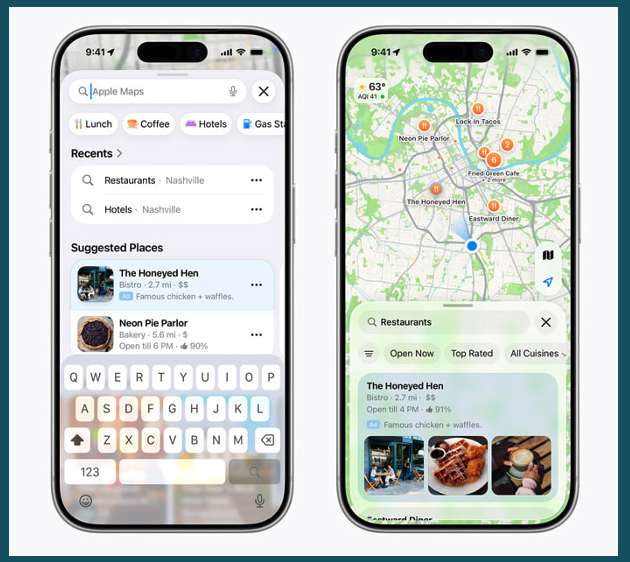
Source: Apple
_This post is for subscribers only._
### EP 249 - Why Multi-Location SEO Is So Hard (And What Actually Works) Part 1
URL: https://www.nearmedia.co/ep-249-why-multi-location-seo-is-so-hard-and-what-actually-works-part-1/
Last updated: 2026-03-26T19:47:46.000Z
Multi-location SEO is less about algorithms and more about execution inside complex organizations. In this episode, the team explores how brands struggle with internal alignment, why testing beats tactics, how reviews and imagery drive visibility, and how search behavior is shifting toward long-tail and conversational queries.
Interested in sponsoring this podcast or our newsletters please reach out to [mblumenthal@nearmedia.co](mailto:mblumenthal@nearmedia.co)
[E-mail Mike ](mailto:mblumenthal@nearmedia.co)
### **The Podcast Deets**
### **Segment 1 (**[**00:00 – 07:30**](https://www.youtube.com/watch?v=7nLWuXoznkY&ref=nearmedia.co)**)**
**Foundations & The Scientific Approach to SEO**
Steve Wiedemann outlines his background and approach to SEO as a discipline rooted in testing and experimentation. The conversation highlights the difficulty of documenting SEO due to constant change and the need to rely on fundamentals.
### **Segment 2 (**[**07:30 – 17:00**](https://www.youtube.com/watch?v=7nLWuXoznkY&t=450s&ref=nearmedia.co)**)**
**Why Multi-Location SEO Breaks Down**
The group explores the real challenges of scaling SEO across large brands—organizational friction, legal constraints, dev bottlenecks, and franchise complexity. Education and alignment emerge as the biggest barriers.
### **Segment 3 (**[**17:00 – 25:30**](https://www.youtube.com/watch?v=7nLWuXoznkY&t=1020s&ref=nearmedia.co)**)**
**What Actually Drives Performance: Content, Reviews & Behavior**
The discussion shifts to practical execution: imagery, user-generated content, reviews, and long-tail queries. They highlight how real-world customer behavior—not keywords—should drive strategy.
### **Key Takeaways**
- Multi-location SEO is primarily an **organizational challenge**
- Testing beats tactics—always
- Reviews and imagery are **core ranking + conversion signals**
- Franchisee participation is low—but highly impactful when it happens
- Long-tail and conversational queries are increasing
- SEO success requires **consistent execution, not hacks**
**👇 Watch by topic:**
[00:00](https://www.youtube.com/watch?v=7nLWuXoznkY&ref=nearmedia.co) Intro & Steve Wiedemann background
[02:30](https://www.youtube.com/watch?v=7nLWuXoznkY&t=150s&ref=nearmedia.co) Why SEO is hard to “teach” (and constantly changing)
[05:00](https://www.youtube.com/watch?v=7nLWuXoznkY&t=300s&ref=nearmedia.co) The scientific approach to SEO testing
[07:30](https://www.youtube.com/watch?v=7nLWuXoznkY&t=450s&ref=nearmedia.co) Biggest multi-location SEO challenges
[12:40](https://www.youtube.com/watch?v=7nLWuXoznkY&t=760s&ref=nearmedia.co) Photography, reviews & user-generated content
[17:00](https://www.youtube.com/watch?v=7nLWuXoznkY&t=1020s&ref=nearmedia.co) Getting franchisees to actually take action
[20:10](https://www.youtube.com/watch?v=7nLWuXoznkY&t=1210s&ref=nearmedia.co) Common SEO mistakes brands make
[22:00](https://www.youtube.com/watch?v=7nLWuXoznkY&t=1320s&ref=nearmedia.co) Long-tail search behavior & menu-driven queries
[25:30](https://www.youtube.com/watch?v=7nLWuXoznkY&t=1530s&ref=nearmedia.co) The shift toward conversational search
### Related Links
[Steve Wiideman“SEO STEVE” WIIDEMAN WEANS BUSINESSES AWAY FROM OLD-SCHOOL AGENCIES WITH A REVOLUTIONARY, SELF-EMPOWERING SEO ROADMAP Specializing In Strategic Planning For Multi-Location And Franchise Brands, Wiideman Consulting Group Founder Has Created Powerful Key Strategies for SKECHERS, Public Storage and Linksys Steve Wiideman is a big believer in a famous quote by Jim Rohn, the influential entrepreneur, \[…\]Wiideman Consulting Group](https://www.wiideman.com/about-us/steve-wiideman-biography?ref=nearmedia.co)
[BooksWe offer high-end search engine optimization strategy, consulting, training, and guidance, with core competencies in multi-location and e-commerce SEO & SEM.Wiideman](https://www.stevewiideman.com/books/?ref=nearmedia.co)
[Ryan Jones - Detroit SEORyan JonesRyan Jones on Search Engine Journal](https://www.ryanmjones.com/?ref=nearmedia.co)
Sign up for our new Legal Marketing Newsletter. Once a month, no fluff, just good ideas.
[Sign Up ](#/portal)
### **Full Transcript** of the Near Memo EP 249
Greg: Hey everybody, welcome back to the Near Memo, the Near Media podcast with me, Greg Sterling, as always the lovely and talented Mike Blumenthal. And today our very special guest, Steve Wiedemann, who refuses to be called an expert, but he is a very long time local SEO person in the industry, observer, scientists, thoughtful individual. And we have him on to talk about multi-location, local SEO, local landing pages, franchises, and all this AI stuff.
So Steve, thank you and welcome.
Steve: Thanks guys,
Good morning. Thanks for having me on the podcast. Excited to share everything I can.
Greg: Okay, so tell us a little bit just for people, I mean, you're a well-known figure, but tell us the folks who may not know you, what your, you know, Wiedemann Consulting Group does and who you work with and what your kind of area of focus is.
Steve: Sure. You mentioned it. It's multi-location franchise seems to be what we fell into several years ago. My background stems about 28 years in search, growing up as a freelancer, eventually working for some pretty fun enterprise brands, including Disney, and then eventually taking off on my own to be independent and work with clients and be close to home. I think it's kind of the dream, right, of all of us. Most of our clients, as I mentioned, are
franchises, restaurant chains. We work with brands such as Skechers and Public Storage and some really exciting brands that have really big challenges that we enjoy kind of navigating through. What we do is really just spend a couple months doing a deep analysis of tech and content and off-page and local and multi-location. And then we work with our clients on a monthly basis to help them through all of the recommendations that we proposed after that audit.
Greg: And you're also teaching, right? You were teaching some of this stuff.
Steve: So I'm teaching
at UC San Diego right now. This is the first week of the first AI-driven SEO and digital marketing online extension. I don't know if in the world or country, but at UC San Diego, it's definitely the first. It's also the first time that the school's using my textbook that I co-authored with Professor Scott Cowley. It's called SEO Strategy and Skills, and it's fun when the students get in there and they're like, hey, I think they accidentally put you down as the author and the teacher.
And like, no, it's me on both ends. And it's kind of a funny but exciting milestone. And like you guys, love to write. So whenever I have five minutes of free time, you'll find me in a Google Doc working on books.
Greg: don't, don't. Yeah.
You shouldn't, shouldn't volunteer to write this. We'll take you up on it.
Steve: Yep.
Mike: Greg
does it out of compulsion.
Greg: Kind of, that's kind of true. That's kind of true. the idea of an SEO textbook is kind of a funny and almost oxymoron like idea. So how do you write a textbook about SEO given how dynamic and fast changing it is or seemingly?
Steve: Yeah, I have to be writing all the time. Yeah. With chat, you can be closed, right?
Yeah. Yeah.
a lot
of fundamentals and a lot of at the time of this writing, right? So there's a lot of that. We have to do updates every year and the updates are becoming much greater in terms of the amount of time and citations and references of updating all that kind of content does take a lot of time. So Scott, my co-author, he's phenomenal. He'll take my 40 pages of what I want to talk about and trim it down to 10.
Greg: Right.
Steve: that will last us through the year, right? As opposed to several that are like, oh, right now this thing's happening. It's like, you know, Steve, but by the time they get this in three or four months, this isn't going to be applicable. And I'm like, yeah, you're right. So it's a great team effort and it's a lot of fun. I mean, it's neat when the editors get it they're like, "What is this?" And "I don't understand that". And because it helps you become better at communicating and it helps me become a better teacher. it's, I don't know if I'm doing the teaching and writing.
to help me in my career or if I just generally just love doing it, but probably a combination of both. But it is a great exercise in teaching yourself how to be a better communicator to help your clients through things that they still don't quite understand, right?
Greg: Yeah, I mean,
Probably about 12 or 14 years ago, I had a contract to write a book on local and mobile marketing with one of the B2B publishers. And it was very challenging because I would turn in a chapter and then Google would make a bunch of announcements that would necessitate an update. And I finally just quit because it was just crazy. It was maddening. There was so much that was changing that I just couldn't keep up with it. And it was kind of overwhelming.
Steve: Nice.
Mm-hmm.
Yeah, every time.
Greg: That's neither here nor there. So, yeah.
Mike: So Steve, I have a quick question about this.
You mentioned in the green room that you are an SEO scientist of sorts, not as a brag, but just that you approach SEO, try to approach it as scientifically as you can. I'm just curious what sort of research you've been doing, high level and anything you've learned from that specifically within the last six, eight, nine months.
Steve: Right.
Sure, yeah. mean, there's so much change happening all the time, as Greg mentioned. A lot of it's paying attention, right? We have alerts set up where VisualPing, for example, is one of the tools I love to use. And yesterday, I got my little update about the Google SEO Starter Guide changing. And I went and looked at the changes, and they literally stripped out everything. It's all just very clear, concise, short sentences where they remove the details of what they're talking about.
So now there's all this ambiguity in it. And I find that really fascinating. I'm glad that we've been paying attention for so many years because we have a little bit of that history that seems to be getting burned over time. A lot of it also is trial and error and experimentation. Hey, hey, restaurant chain, your pages are really thin. We've done some research. We came up with 60 fields we'd like to test. We know you're probably going to approve 30 of them because of
of trademarks and legal and branding issues. So let's test using those additional fields to see if we can broaden out the array of search terms and prompts that our pages appear for. We'll run it across 30 pages instead of just blowing it up across 1,600 and see how it performs. Hey, wow, look at the difference that this made in the amount of search terms that our pages appear for per page. Hey, other restaurant chain, notice your categories might be a little bit off in Google Business Profile. We did some industry research and it looks like the categories
of the brands that are performing really well are these ones. Let's test a few locations and see how that change performs. Wow, based on what you get from Google Business Profiles and what website visits and online orders and things that are happening, looks like this change could result in $2 million of incremental revenue for you if you roll it out across all 900 locations. So a lot of it's tests and experimentation and listening. I wish I had the time to, but I'm not nearly as in the weeds.
as some of my peers who study patents and look at the source code of a Google SERP and are more the technical gurus. I have a lot of respect for them, like Ryan Jones, who's just brilliant in creating tools that enable us to do things that a lot of folks who aren't very technical can understand and make a difference to how we're optimizing. So for me, it's just a lot of learning what might work and what might not work.
doing tests, never telling a client, if you do this, it's going to increase your revenue. Instead saying, hey, this might be, this could be based on our research, based on our tests, based on our experiment, we could see. So it's a lot of not making promises, but just continuing to do tests and then reporting on them at end of the year, saying, hey, man, this test that we did and then we rolled it out actually did result in an increase in visibility or an increase in traffic or an increase in interactions in Google Maps.
Greg: So you alluded earlier to the challenges that your multi-location clients face. If you could sort of rattle off the big ones just for context, what are those that you most commonly see?
Steve: Of course, yeah, there's
quite a few of them too. like we were talking about in the green room and just writing in general, this is something I'm actually putting into text. And so those people who are looking for lot of actionables are probably not going to find it in the book I'm writing. They're gonna find these challenges, relate to them and help navigate through some of them. The biggest challenge I've felt...
is education, right? It's trying to get everybody in every group on the client side to understand what you're doing and why. Because when you're working through tasks, you've got to get through so many layers. I mentioned brand. I mentioned legal. Brand might not like the use of how we're using a term. Maybe they don't call themselves a bar and grill. Maybe they call themselves grill and bar, right?
Then you've got to get through legal teams like, we can't use near such and such stadium because such and such is a trademark. Like, great. All right. We're next door to them. We can't say we're next door to it. You know, and then it's getting through the, dev Martech teams, backlogs and trying to convince them that this is more important than a marketing thing, that this could actually generate revenue, that we've got a loss of revenue because we haven't done these things yet. and then.
You know, again, going through each of those different teams and whoever the decision makers are in those teams, getting them all to buy into what you're trying to get them to implement. That to me has been the biggest challenge and trying to get each team educated because these are big corporations focus on broke fix and whatever the person at the top is telling them to focus on. And everything else is a second priority. SEO is never really a priority to a lot of these big brands. The priorities paid media, paid search, paid social.
offline advertising, it's a lot of their in-store events and local, right? So trying to convince them that what you're recommending is just as important as those other things, that takes a lot of work and a lot of education. So I'd say that's a big part of it. The other, course, is not making informed decisions. Like, hey, Wiedemann, just guess what? We've decided to move from this platform over to Yext or over to another tool.
And they don't talk to you first to help them determine what would be the appropriate platform based on what their current CRM happens to be. They just kind of make these big decisions based on salespeople who come in and try to convince them that they need something. In a lot of cases, it's throwing a shovel at something that really only needs a spoon. They only have 89 locations. Why do you need a big, massive enterprise platform when a smaller platform at a lower cost could give you everything you need?
you know, save you some money. So yeah, think those are just a handful of some of the challenges you meet when you work with larger brands that have multiple locations. And you mentioned one of them earlier, Greg, was the, this might have been the green room, but it was about the franchisees themselves and the complications and complexity of trying to do anything directly with them. I can't tell you how many times I asked our point of contact, hey, if we could just run a quick survey.
I can get a lot of input from the locations that'll play into our local page content. Like, no, we can't just send a survey out to everybody. It doesn't work like that. I'm like, isn't there someone at each location? Kind of. There's someone who runs 25 locations. You want them to fill out 25 surveys? I'm like, yeah. And they're like, no. I'm like, okay. So yeah, there's definitely that level of, know, jeez, if we could just get store images, jeez, if we could just get somebody there to, you know, to take some pictures outside.
Right, something like that.
Greg: So it
sounds like you're compensating in a way for some of these organizational or bureaucratic inefficiencies that are going on both internally with the brand, the corporate entity, and then in terms of the relationship with the franchisees. And that that's a kind of a structural challenge that you face. mean, SEOs have been fighting the battle of budget and prioritization and education for 20 plus years. And it doesn't sound like it's.
Steve: Mm-hmm.
every time.
Yeah.
Greg: It sounds like it's still going on.
Steve: Yeah, unfortunately, and also sometimes not to throw any big brand under the bus, but sometimes there's a recruiter who does the hiring. So the point of contact you might be working with whose specific job is digital marketing and SEO experience, you find out they really don't have SEO experience. They somehow got through the recruiter because the recruiter doesn't know what SEO is and doesn't know any better.
So there's no vetting. So so many times we've been brought in to kind of be the agency's agency and help interview potential digital marketing folks who claim to know SEO. So we get to be a filter for lot of brands that are hiring where the recruiters just don't have an understanding of the topic as well as they could. So again, going back to the education challenge, working with brands and making sure they're educated on all those different disciplines from tech to content to local and.
off page and so forth.
Mike: So you mentioned
photography in passing. Obviously, you know, I've done a lot of work in photography. We've seen in both our current research and previous research, just how important current and real photography is for both the website and for GBP and your socials. And I'm just curious how you help these multi-locations deal with that question. If you've tested it, where you fall on it, how you find them.
Steve: huh.
I remember.
Mm-hmm.
Mm-hmm.
Mike: how they maintain brand consistency and still do real imagery, those kinds of questions. And what you think of it, you know.
Steve: Right.
Right.
Sure. Well, we've kind of learned to navigate around it a little bit with asking the locations to be involved in actually taking photos. We've tried that and we'll always suggest it in the beginning. And then when we realize they're just not going to do it, what we do is we try to give them kind of a one sheet of some things that they could work on that include getting customers to take photos, getting the customers involved in that process so that
that we know what kind of pictures we want them to take and why it's important to the business. And I feel like that's an easier buy-in than doing anything formal that could put the business at risk of doing something that they're not sure they should be doing or not. But when we get customers involved, it's so much easier because then it's not the business saying, we're better, we do this, we offer that. It's our customers doing it. So when it comes to imagery, that seems to be what's been
you know, what's been the most effective is giving them this guide of some things that they can say to their customers that motivate them to want to be involved in that process, to want to take pictures and to share their feedback and to do things that now...
Mike: So could you provide some
specific examples of how some franchisees engaged and then did you research it and determine there was a decent ROI
Steve: Of
Oh yeah, for years. mean, even with Skechers back in, geez, what was it, like 2010, 2011, when we're still kind of new with them, they had this two megabyte image of a store location on there that took forever to get the company that would manage their pages to reduce it. When we're doing that test alone, just looking at the impact of having an actual store image versus not, I mean, we saw it lifts as high as 20, 25%.
alone, both in organic for having more unique relevance content that the user stayed on, as opposed to going back to search and choosing a competing result, which, as you know, user behavior signals make a difference. And then on the map side of things and having more up-to-date imagery and a wider array of imagery shows that this location is open. If you only see one or two pictures on a Google Maps profile, you start to wonder, is this place even open? Is this real?
because there's only like two pictures and this Nike store, this Foot Locker store has like a hundred pictures. So I'm curious if this place is even worthwhile spending time in. So just from the user interaction standpoint itself, we see what appears to be a performance boost just by putting time and energy into it. And Mike, you came to me a while ago about some cool things that you were doing around image recognition.
And you threw me down a rabbit hole and we fell in love with it and we did several tests ourselves to see the difference. as I recall from those tests, we saw the same impact. Google recognized that this is a stack of pancakes and it showed us more often for pancakes. Google recognized that this image was a burger. And so we saw a restaurant that doesn't really specialize in burgers who has a burger category.
suddenly start to see more burger attractions simply because they're taking more images, close-up, high-definition images that Google recognizes as being those products. So I feel like there's a huge gap in these large brands understanding just how important imagery and video play into their multimodal approach to handling search. They're really myopic still on just a Google web search with blue links and black text.
and don't factor in all of the different benefits of having that level of media creation can actually do for their visibility, for how good they look in a search result across the different search options, ⁓ as well as really helping the customer.
Mike: So if you had to summarize
a tactic to get your customers engaged in this context that might help others, what would it look like?
Steve: Absolutely.
Yeah, I think that's the end game, right? The end game is to get the customers to choose us and stay on our website.
Mike: Right, but if you want
customers to actually take photos for you, what kind of system would you set up to encourage the business owner to do that? What kind of systems have been set up that actually succeeded in that task of getting customers to take these photos?
Steve: Sure.
I think we have more,
it's more around awareness with these larger brands. So we haven't really created any systems so far. What we've, what we've done is created documentation to, give them some tools to use. Um, it's, it's a three section document that we usually start with. Section one is basically here's, here's what corporate is doing for you that you don't have to worry about. We're managing your data online. We're making sure all of your listings, your Yelp and everything are squared away. We've got a webpage for you that's been optimized. You don't have to do any of this. We have a section.
Greg: So
this is communication to the local franchisee right now. Okay.
Steve: Correct, these are
one pagers that go out to every single location. then yeah, there's a section that basically says don't do any of these things. Don't create a separate website, don't buy reviews, don't bribe for reviews, don't incentivize for reviews, don't respond negatively to reviews, all the things you don't want them to do. And then there's this big section at the bottom that says here's some things you can do. And that's where we start focusing in on the narrative of...
Greg: Okay.
Steve: the importance of imagery and customer feedback and getting driving directions even get everybody who works there every so often just to use driving directions to show that people are actually coming in and especially for newer locations. And the imagery part is on there. says, talk to your customers when they've had a good experience, just say, hey, it sounds like you had a really great experience. I'm sure others would love to hear this as well.
If you are going to leave some feedback somewhere, we'd love it if you took some pictures. if somebody comes back that's a regular customer, say, welcome back. Thanks so much for leaving that review last time. That was so awesome. Hey, we noticed that a lot of customers aren't sharing some of the photos of our remodel or of some of our new menu items. If you wouldn't mind, since you left such a great review last time, maybe you could share some photos on it while you're here this time. Just kind of reminding them, getting them all in the process.
Mike: And have you found that some small
percentage of franchisees do this and see success from it? And how would you characterize those?
Steve: Very limited number
actually take action on most of what we recommend in SEO, but those that do, 100 % of the time we see improvements, especially if they're willing to do more than just take a photo and do something a little bit more creative like a 360 video or 360 tour. So yeah, we see those that want to get actively involved, always see the best results. So we love it when a franchisee says, hey, I was just Googling for...
spicy chicken sandwich near me and I didn't see us. Like, great, I'm so glad you reached out. Here, let's go through this document that we sent you a while ago and see how we can help you. And 90 % of the time, of course, their biggest challenge is their ratings, right? So trying to not throw them out of the bus for getting lower star ratings in their nearby competition, you know, we have to navigate that carefully.
Greg: What would you say just kind of to establish this? there's many problems, many challenges. In your recent experience, if you had to point to one thing or one or two things, what's the most common mistake that you see in these multi-location SEO scenarios? But like that they're doing or that they have failed to do?
Steve: Not listening to the rest of your consultant. I'm kidding.
I would say the most harmful thing was one of, one of the chains that we worked with last year decided to start putting signs up everywhere, incentivizing reviews. And one of my peers sent me a picture of it he's like, is this your client? And I'm like, not right now. They're not. that was, yeah, we, and we were still on the distribution for the Google Business Profile stuff. And we saw all the emails coming in saying we've, we've blocked your ability to do any review and take.
Greg: Not not anymore
Steve: for the time being and we're like, you know, if you would have asked, we would have told you not to do that, you know. I'd say that's the biggest negative thing I think that I've seen happen. The second thing is really more structurally around how they organize their content on the website. Sometimes they can create a nightmare of OLO URLs of the ordering system URLs that create a lot of duplicate content and create confusion for users who are performing searches.
We saw one that dropped their categories, their menu categories completely, and in doing so, users struggled to try to find what they were looking for in a Google search result. Like, well, this will improve user experience. It didn't, really. In fact, they lost quite a bit of revenue because users who used to be able to do a search for something like waffles or pancakes no longer saw those categories in search because they wanted to go with this single page application.
experience. I think those are kind of the challenges I've seen is that they're not throwing their websites and online marketing changes through their SEO team first. They're just impulsively doing changes and then the SEO team has to deal with the triage of it when traffic and rankings are impacted. I think that's the biggest thing I see.
Mike: So back
when I recommended that, was talking to you about the Google understanding image content surfacing on queries, I saw very little of that long tail type of query going on, know, waffles near me or hamburgers near me, whatever. And I'm curious over that past, I don't know when I told you about this, six, seven years ago, time travels.
Steve: Mm-hmm.
Mike: Very fast, it might've been five years ago, I have no idea. Anyways, I'm just curious over that arc of time from when we spoke to now, if you've seen user behavior shift towards more of these sort of very specific long tail restaurant search phrases.
Steve: with AI now more than ever.
Mike: Well, in general, no,
not with AI with or without AI. mean, are people like, again, when I was first doing this and Google was first rolling it out, it was sort of very early in the user understanding of how a keyword search would change and result and how an image would change the result of a keyword search. If it was for a long tail food item, pancake, whatever. I'm curious if you've seen users increase their searching behavior.
those types of things as Google increasingly showed those types of results over the past seven years.
Steve: I don't see anything
in the data when I look at Search Console specific to users looking for imagery as part of their search.
Mike: Not imagery, but for
long tail searches related to imagery. In other words, hamburgers near me. I mean, have those kinds of searches gone up? Pancakes near me or pancakes or, you know, French toast kind of searches. mean, historically those were very low and I'm curious if they've increased over time.
Steve: yeah.
Sure. Yeah, no, we see that. We see that for sure.
For the
restaurant chains, absolutely. There's a lot of that in Search Console that you'll see where they're looking for specific menu items. The brand always wins, right? I would say probably 70 % of the search queries have the brand's name in it. So if we filter out brand, there's still some broader searches that the restaurants will appear for, like restaurant near me or food near me, but we don't always know what genre of food they're looking for. So if you get rid of some of those broader queries and get more specific,
you do actually see a significant amount of searches for nachos near me, tacos near me, spicy chicken sandwich near me. You do still see some of those queries. Are they going up or down? I don't know. I'd have to go back in and look, but they seem pretty normal. They're still in the integrated reporting that we're putting together that shows average position for these long tail queries and share a voice for them and then the traffic, of course, for...
what's available, we'll just grab like keyword planner data sometimes and see the trend over the last 11 months. But yeah, I do see quite a bit of long tail query, especially as searches are becoming more conversational thanks to AI. So I think now people know, hey, I can ask a full sentence question now and get some good results. So I think that those behaviors have shifted and they're gonna continue to shift and maybe even at some point the keyword will go away.
Greg: Thanks.
Mike: Ew.
Steve: Right? Because AI mode may kick in and we're all just going to be using conversational searches, which you guys probably see a lot more than we do. But yeah, I think that's where the long tail is really going to have its impact as we get into more of prompting versus dropping keywords in.
Greg: We can see in our research that over the last six months, the nature of queries has changed in the legal vertical. what I'm observing anecdotally is that queries are getting longer and more conversational definitely. And that's because people are importing their AI behavior into Google.
Mike: Thank you for joining us for part one of this conversation with Steve Wiedemann. Join us next week where we will discuss what multi-location brands need to do about AI right now.
### EP 248 - State of Google Business Profile 2026: Impressions Are Down 54%—But Actions Aren’t with Adam Dorfman
URL: https://www.nearmedia.co/ep-248-state-of-google-business-profile-2026-impressions-are-down-54-but-actions-arent-with-adam-dorfman/
Last updated: 2026-03-18T19:00:03.000Z
Interested in sponsoring this podcast or our newsletters please reach out to [mblumenthal@nearmedia.co](mailto:mblumenthal@nearmedia.co)
[E-mail Mike ](mailto:mblumenthal@nearmedia.co)
### **The Podcast Deets**
**1\. 📉 The Data Shift: Impressions Down, Conversions Stable (00:00–13:45)**
BirdEye’s analysis shows a 54% drop in impressions but only a \~5% decline in actions. This suggests that AI and improved search efficiency are compressing the funnel—reducing exploratory searches while preserving intent-driven conversions.
**2\. 🧠 AI, LLMs & the New Discovery Layer (13:45–30:00)**
AI Overviews and LLMs are increasingly shaping brand discovery. Visibility is becoming binary—either you’re cited or you don’t exist. Google still owns the “last click,” but discovery is fragmenting across AI interfaces.
**3\. 🗺️ Ask Maps & the Future of Local Search UX (30:00–End)**
Google’s new Ask Maps feature introduces conversational, intent-rich search within Maps. It enables complex queries (e.g., midpoint searches, multi-constraint queries), signaling a major shift from keyword-based search to task-based discovery.
### **Key Takeaways**
- **Category search dominates (86%)** → brand is less important than visibility
- **Impressions ≠ performance** → top-of-funnel shrinking, bottom stable
- **AI is compressing the funnel** → fewer searches, faster decisions
- **LLM visibility is binary** → cited or invisible
- **Google still owns conversions (for now)** → especially via Maps
- **Ask Maps is a major UX shift** → task-based, conversational local search
- **Reviews are evolving** → from content → structured AI input
- **GBP is not “set it and forget it”** → ongoing optimization required for higher visibility
- **Ask Maps is a new paradigm in Local search** → constrained, accurate LLM local search will change user and Google behaviors.
**👇 Watch by topic:**
[00:00](https://www.youtube.com/watch?v=S2-GMiCzlHI&ref=nearmedia.co) – Intro & BirdEye Report Overview
[02:15](https://www.youtube.com/watch?v=S2-GMiCzlHI&t=135s&ref=nearmedia.co) – 86% of Searches Are Category-Based
[05:00](https://www.youtube.com/watch?v=S2-GMiCzlHI&t=300s&ref=nearmedia.co) – AI Overviews & Brand Discovery Shift
[07:00](https://www.youtube.com/watch?v=S2-GMiCzlHI&t=420s&ref=nearmedia.co) – GBP Impressions Down 54% (But Why?)
[10:30](https://www.youtube.com/watch?v=S2-GMiCzlHI&t=630s&ref=nearmedia.co) – The “Last Click” Still Belongs to Google
[13:45](https://www.youtube.com/watch?v=S2-GMiCzlHI&t=825s&ref=nearmedia.co) – Industry Differences: Calls vs Directions vs Website Clicks
[18:30](https://www.youtube.com/watch?v=S2-GMiCzlHI&t=1110s&ref=nearmedia.co) – Why Most Businesses Still Fail at GBP Basics
[23:00](https://www.youtube.com/watch?v=S2-GMiCzlHI&t=1380s&ref=nearmedia.co) – “Set It and Forget It” Is Dead
[26:30](https://www.youtube.com/watch?v=S2-GMiCzlHI&t=1590s&ref=nearmedia.co) – Ask Maps: Google’s New AI Interface
[30:00](https://www.youtube.com/watch?v=S2-GMiCzlHI&t=1800s&ref=nearmedia.co) – How Search Behavior Is Changing (Longer Queries)
[33:30](https://www.youtube.com/watch?v=S2-GMiCzlHI&t=2010s&ref=nearmedia.co) – LLM Accuracy Problems & Data Trust Issues
[36:30](https://www.youtube.com/watch?v=S2-GMiCzlHI&t=2190s&ref=nearmedia.co) – Reviews in an AI World (Structured Data Wins)
[39:00](https://www.youtube.com/watch?v=S2-GMiCzlHI&t=2340s&ref=nearmedia.co) – Apple Maps vs Google Maps: Early Signals
### Related Links
[State of Google Business Profile 2026 | Birdeye UKDiscover what drives visibility, engagement, and customer actions on Google Business Profile. Benchmark your locations against top multi-location brands.Birdeye](https://birdeye.com/resources/guides/state-of-google-business-profile-2026/?ref=nearmedia.co)
Sign up for our new Legal Marketing Newsletter. Once a month, no fluff, just good ideas.
[Sign Up ](#/portal)
### **Full Transcript** of the Near Memo –> [on-line](https://nearmedia.co/ep-248-state-of-google-business-profile-2026-impressions-are-down-54-but-actions-arent-with-adam-dorfman?ref=nearmedia.co)
### EP 247 - From the Archives: Local Search Ranking Factors — Darren Shaw on Reviews, AI Search & What Drives Local Rank
URL: https://www.nearmedia.co/ep-247-from-the-archives-local-search-ranking-factors-darren-shaw-on-reviews-ai-search-what-drives-local-rank/
Last updated: 2026-03-13T18:53:58.000Z
Interested in sponsoring this podcast or our newsletters please reach out to [mblumenthal@nearmedia.co](mailto:mblumenthal@nearmedia.co)
[E-mail Mike ](mailto:mblumenthal@nearmedia.co)
### **The Podcast Deets**
### **1️⃣ How the Ranking Factors Study Works**
**Timestamp:** [00:00–07:20](https://www.youtube.com/watch?v=nAI-TvsVyuc&ref=nearmedia.co)
Darren Shaw explains the methodology behind the Local Search Ranking Factors survey. Dozens of experienced local search experts evaluate more than 180 potential ranking factors, scoring their impact across multiple areas including Local Pack rankings, organic results, conversions, and AI search visibility.
### **2️⃣ Reviews, Behavioral Signals & Traditional Local Ranking**
**Timestamp:** [07:20–24:30](https://www.youtube.com/watch?v=nAI-TvsVyuc&t=440s&ref=nearmedia.co)
The panel discusses the growing importance of reviews—particularly review recency—and how Google likely uses them as a proxy for real-world engagement. They also debate whether behavioral signals like clicks, engagement, and brand demand may now outweigh traditional SEO signals such as links.
### **3️⃣ AI Search and the Future of Local Discovery**
**Timestamp:** [24:30–43:30](https://www.youtube.com/watch?v=nAI-TvsVyuc&t=1470s&ref=nearmedia.co)
The conversation shifts to the rise of AI-driven search interfaces such as ChatGPT and Gemini. The group explores how LLMs evaluate businesses differently—placing greater weight on mentions across trusted sites, curated lists, and industry citations rather than traditional link signals.
### **Key Takeaways**
**1\. Reviews remain one of the most powerful ranking signals**
- Volume, rating, and **recency** all matter.
**2\. Behavioral signals may be Google’s strongest advantage**
- Clicks, engagement, and brand demand may increasingly drive rankings.
**3\. Link signals appear to be declining**
- Content engagement and real-world mentions may matter more.
**4\. AI search prioritizes reputation across the web**
- Expert lists, industry sites, and brand mentions play a larger role.
**5\. Google still has a structural advantage**
- Google Business Profile data + browser behavioral data give it unmatched insight.
### **👇 Watch by topic:**
[00:00](https://www.youtube.com/watch?v=nAI-TvsVyuc&ref=nearmedia.co) Introduction – Darren Shaw & the Ranking Factors Study
[01:10](https://www.youtube.com/watch?v=nAI-TvsVyuc&t=70s&ref=nearmedia.co) Methodology of the Local Search Ranking Factors Survey
[04:30](https://www.youtube.com/watch?v=nAI-TvsVyuc&t=270s&ref=nearmedia.co) What's New in the Latest Survey
[07:20](https://www.youtube.com/watch?v=nAI-TvsVyuc&t=440s&ref=nearmedia.co) AI Search and the Future of Local Discovery
[14:00](https://www.youtube.com/watch?v=nAI-TvsVyuc&t=840s&ref=nearmedia.co) Review Signals and Why Review Recency Matters
[18:30](https://www.youtube.com/watch?v=nAI-TvsVyuc&t=1110s&ref=nearmedia.co) Review Spam and Google's Enforcement Challenges
[20:40](https://www.youtube.com/watch?v=nAI-TvsVyuc&t=1240s&ref=nearmedia.co) Surprising Findings and Divergent Opinions
[24:30](https://www.youtube.com/watch?v=nAI-TvsVyuc&t=1470s&ref=nearmedia.co) The Decline of Link Signals
[27:00](https://www.youtube.com/watch?v=nAI-TvsVyuc&t=1620s&ref=nearmedia.co) Behavioral Signals and Google's Data Advantage
[30:20](https://www.youtube.com/watch?v=nAI-TvsVyuc&t=1820s&ref=nearmedia.co) AI Ranking Factors and Expert Lists
[36:50](https://www.youtube.com/watch?v=nAI-TvsVyuc&t=2210s&ref=nearmedia.co) What Businesses Should Actually Focus On
[41:10](https://www.youtube.com/watch?v=nAI-TvsVyuc&t=2470s&ref=nearmedia.co) Darren Shaw's AMA and Final Thoughts
Sign up for our new Legal Marketing Newsletter. Once a month, no fluff, just good ideas.
[Sign Up ](#/portal)
### **Full Transcript** of the Near Memo – Episode 247
Greg (00:10)
Hey everybody, welcome back to the Near Memo with David, Mike and Greg. And today, very, very special guest, three verys, very, very, yes, super special, super excited to welcome Darren Shaw of Whitespark, who is now the steward of the Local Search Ranking Factors study started originally by David Mihm in 2008\. And we wanna sort of unpack in a...
Mike Blumenthal (00:17)
Very, very, very, very special, special guest.
Darren Shaw (00:20)
So special.
Greg (00:36)
in a relatively short time, we could spend a lot of time talking about this, but we don't have hours and hours, but unpack what the main findings were, what was really interesting about the study and some implications of some of the things. And what's changed from previous years, because there's always changes. citations was a big, it was an example of that, where it was important, not important, are there other things like that going on? So Darren.
Why don't you give us a kind of overview of the methodology for people that don't know the background and any sort of caveats that you would attach to the findings and then we'll jump in.
Darren Shaw (01:15)
Sure, yeah. So the methodology is it's a grueling two hour survey. It takes about two hours to get through it. And it's really grown in annoyance since David was running it. So I keep making it longer and harder to do. And fortunately, the local search experts except for you, Mike, fortunately, most people are willing to keep doing it. I ask Mike every year and he's like,
David Mihm (01:26)
Thank
Darren Shaw (01:41)
He actually this year you straight up ignored me. I think you responded to any request that I had to ask you to
Mike Blumenthal (01:49)
I didn't realize they
were a person. I thought they were general. I thought everybody was giving me a hard time. You were just sending out a mass email. It went right to my spam folder.
Darren Shaw (01:59)
Yeah, it is sad to me, Mike, not to get your insights into this survey, but I understand. So, I understand. I'm going to get him right now. Yeah. This is where everyone needs to go to hear Mike Blumenthal's ideas on the local search ranking factors.
Greg (02:06)
You're gonna get them right now though. You're gonna get them right now.
Darren Shaw (02:17)
But yeah, so it's a huge survey. takes a really long time. you know, David used to do it as spreadsheets and then I took that over and it was an Excel spreadsheet. And then I built this whole custom tool and now I've moved to SurveyMonkey for the past couple of editions. And it just, it's this long survey. so what, there's two key components to it. One is the open-ended questions. So I ask a number of open-ended questions and people type their responses. I love that section of the report.
And then the other area of the report is the scoring of the factors and you score them across four different areas. So like, let's take a factor like keywords in your web page title tag, your landing page title tag, the page that you link to from your Google business profile. You're going to take that factor and you're going to score it from zero to five on how impactful you think that signal is.
for Local Pack rankings, local organic rankings, how impactful it is for conversions, like will it drive conversions, and how new for this year is how impactful it is for AI search. And so that would be like being visible in ChatGPT, in Gemini, and any of these sort of large language models. So that is the methodology. You did say the word.
caveat and I would say it's really important to know that this is not the inner workings of Google. We don't really have much insight. It's an opinion piece for sure. It is based off of what these people that I invite to do the survey. They've been doing local search for a very long time. They have clients they are in the trenches doing this work. And so it's really about like what are you seeing working.
if you could get 47 of the best local search experts in the world in a room and then ask them like, Hey, tell me what's happening. That's what this report is. And so I find it just like a really valuable report, but it is for the caveat is like it's opinions and some people's opinions are divergent and some people's opinions might be wrong. I don't know. It's opinions. Yeah.
Greg (04:27)
Okay, is there beyond the AI material, which you said was new, is there anything else that's different or new for 2026 versus previous surveys?
Darren Shaw (04:37)
I would say that I went a little crazy with the addition of new factors. 47 new factors were added to the survey. So it really expanded the length that it took to do the survey. But I worked really hard with my team. So my marketing team that I meet with all the time, we just really spent a lot of days going through the factor list, removing things, adding things, renaming things. So we really
revised the factor list this year. And so that's where 47 new factors came from. It's like a lot of stuff that we see happening, especially over the course of two years, because I haven't done it since 2023\. There's new things that keep coming up like, and, we added those as factors because we want to say, okay, well, yeah, sure. We think this is a new factor. We've heard about people saying that this is impacting ranking. So we add that to the, to the survey.
and then we get to actually see where does it fall in the list. I would say that's what's what big and new to the survey this year would be the addition of the factors and then the addition of the whole new section on AI. But also I put a little bit more emphasis on the local services ads this year too. So I wanted to really highlight the local services ads section and I took all of the answers from the local services ads.
And I tabularized that data so that I could score it and figure out like what appears to be the most important. And so I expanded upon that. got more answers this year than I got previous edition. And I really think it's a critical thing. I know you guys do a lot of work in like PI law and it's like, if you're not in the LSAs, it's like, well, you're not getting a lot of leads. So LSAs become more more important. Google's doing a great job of monetizing their search.
Greg (06:24)
Yeah,
Congratulations, Google.
Darren Shaw (06:26)
Yeah, exactly.
Greg (06:27)
So let's jump into the findings. There's a lot of stuff in here. I just want to say this is an enormously valuable tool for people. And it's free. You don't charge for it. You don't turn it into a lead form. It's a sort of a gift to the industry. And I mean, obviously David started it, but it's just super valuable. so I think everybody appreciates the work that goes into it. What are the...
Mike Blumenthal (06:50)
Did your children recognize
you after you were done? I mean, after you came back home and were done with the tabulation?
Greg (06:53)
Yeah.
Darren Shaw (06:56)
Barely because actually I got
back from a trip. I went to the UK for Brighton SEO and I picked up COVID. So I was actually locked in the guest room quarantined for 10 days, which is when I got most of the like final work done on this like analysis report. So I truly was locked in a cave for 10 days finishing the report.
Greg (07:15)
Well...
God wanted you to finish it, so that's what happened, I guess. If you can filter out just through the density of all of this, what are the kind of main findings, the top level findings, if you had to present them on one slide at an event?
Darren Shaw (07:22)
I guess so,
Alright, that's a good question. I would say the top-level findings as a general rule and we see this every time we put it out, a lot of the fundamentals basically are the same and that's what we see almost every time that we release this this survey. But I'm always looking, I'm like trying to find like what's new what are the things?
The biggest thing that is new is we have a whole new search interface with AI mode, AI overviews, Gemini, ChatGPT These interfaces are changing the way that people discover information, including local businesses. So there are some people that rather than going to a Google search, they will type in to ChatGPT, hey, could you recommend a plumber in Chicago? And so they're going to get a list of results and.
ChatGPT will even put them on a map and they'll show you the results and then they'll explain why they pick those ones. And it's like, so what drives that? Because I really do think that's the future of search. think that Google is going to flip a switch and instead of the traditional search results, we're going to see AI driven as the default. And so that is majorly important. and I think there are a lot of the insights.
Mike Blumenthal (08:48)
I would just add to that,
Darren, I don't know if you followed, I did some searches now in legal and particularly in PI, but many they have, at least for the last week, are now showing AI overview local results instead of pack results, just to emphasize your point there.
Darren Shaw (08:50)
Yeah, you do.
Exactly.
Is coming. Yeah, this is this is where things are going. So the big insights from this year that we're seeing that's different. It's just being able to see what the consensus is amongst the local search experts about what you can do to improve your visibility in those LLM driven results. And so that that whole section is full of very interesting. I've taken all the factors.
So all the 187 factors have been scored for like, how does that, how do you think that impacts AI results? And so you will see that the chart itself or the list of factors for AI results is quite different than the list of factors for your traditional Local Pack map results. So the things that are at the very top of this list do not really match because to rank in local packs and Google Maps,
There's so much Google business profile stuff that is is playing into that and I think that the Google business profile stuff is being considered on Google's versions of the LLMs, but this question is pretty broad and wide open and so it's like All LLMs are we talking about ChatGPT? We're talking about Claud We talk about Perplexity because they may have different things So it's a little bit tricky to try and condense it into just AI search
because the different interface, it's almost like Google's ranking factors versus Bing's ranking factors. They're potentially different. And the same thing could be said about ChatGPT versus Gemini because in Gemini or AI mode, Google has a much richer database of Google business profiles. But as of the publication of this, I don't really think Google's doing a good job of pulling in data from their own local database. They seem to be like doing the LLM thing, which is mostly based on the website.
and the broader web reviews and mentions on industry sites.
David Mihm (11:01)
Yeah. I
would say I've I'm in labs. I'm sure all of us are. like I've been served a heavy dose of Web Guide in the last, I would say, two weeks. And I think Web Guide does a way better job of sort of leveraging Google's entire corpus of data about a business and about a topic than the than their typical Gemini or AI overview results do. I've been a pretty big
Greg (11:16)
Yeah. Yeah.
Darren Shaw (11:19)
⁓ exciting.
David Mihm (11:27)
proponent of Web Guide since it first rolled out just in terms of the user interface and also the quality of the results seems much, much higher to me. And I wouldn't be surprised if, well, I'm certainly rooting for the product team that's running that to sort of gain influence with Liz Reed for that to be the go-forward model. I think that that's a much more, from putting myself in Google's shoes, I just think that that positions them much better.
Darren Shaw (11:30)
Mm-hmm.
David Mihm (11:50)
in terms of result quality versus ChatGPT and all these other players.
Greg (11:54)
And it's less jarring, People keep talking about how AI mode is the future of Google search results. I don't think that that's true. It might be that AI mode kind of takes the place of AI overviews in some sense. But totally agree with David that the Web Guide is a much more user-friendly interface and it allows them in fact, I think to do,
Darren Shaw (12:02)
Mm.
Greg (12:17)
It's similar, somewhat similar to what they've got today, but cleaner and sort of better done. It's a better version. But, you know, we'll see what happens. They have to reconcile some of these things. They've got three or four things running around and they need to kind of bring them together eventually, which, you know.
David Mihm (12:33)
And
guess I would say that's what makes the timing of this particular survey for me, I think really interesting. Like it's, it's kind of great to have a kind of what I think is probably like the last sort of traditional local search result, uh, as the, as the kind of dominant paradigm of search. I wouldn't be surprised if early in 2026, we see something radically different, uh, from Google. Uh, once they get through the holiday period and they make sure they're not shooting themselves in the foot with respect to ads over Black Friday.
Darren Shaw (12:54)
Mm-hmm.
David Mihm (13:01)
But I think that this is going to be a really interesting snapshot of like, okay, in sort of the final phase of this paradigm, here's what mattered. And we're going to see, think, very different set of factors. If you do the survey next year or in 2027, I think it's going to look a lot closer to what the AI results say in this year's survey.
Darren Shaw (13:20)
Yeah, I love that. And actually, I was thinking the same thing as you were describing Web Guide I was like, it's so great that we captured this right before this. You can feel that paradigms shift happening. And so it'd be so interesting when I do the next edition to compare the two. I love that.
Greg (13:36)
In terms of the variables, I these are the same factors just ranked differently by the contributors and review signals is in the same place. It's got different weight, but it's in the same place in the Map Pack and in AI search. And then, know, other things are there, but they're shifted in different positions. You know, I think we talked a lot about reviews.
Darren Shaw (13:42)
Yes.
Mm-hmm.
Greg (14:01)
Were there any interesting review specific findings this year that you saw or that you've seen to date?
Darren Shaw (14:08)
Yeah, so
for people that follow Local Search closely, they probably saw a lot of people talk about review recency being a factor that in previous editions of the survey was maybe not quite on people's radar. And so we've seen that factor really increase in importance. Before most people were kind of thinking along the lines is it's like a numbers game. How many reviews do you have? That seemed to be like the number one thing like
You've got a good rating. You've got lots of reviews. You got more reviews in the competition. That seemed to be the thing that was most important for reviews. As of this edition, we're seeing an awareness that how recently you're getting reviews seems to be a major factor as well. like, You will actually see it happen for any of those brands that do the review burst requests, where they have a mailing list and then once a quarter they email the whole list and they say, Hey, can you leave us a review? And then they get a burst of reviews. You'll see them.
jump up to the top of the rankings. It'll have a positive impact and then they will slow down. It kind of tapers off until they get a new influx of reviews. And so the recommendation going forward is you need to be asking for reviews on a regular basis. If you stop getting reviews, you will slow down. Google cares about how fresh your reviews are. And that makes sense. Like if a business totally stops getting reviews, let's say you got 2,000 reviews, but they haven't gotten one in six months.
It's a little bit of a signal that that business is like, are they shutting down? What's happening in that business? Maybe we are not going to show that one of the results because nobody appears to be going there anymore. So I think that Google's algorithm is looking at this and review recency becomes one of the review specific factors that we're seeing some shifts in mind in thinking around.
David Mihm (15:41)
Yeah.
It's almost part of the behavioral signals bucket in terms of is this business still getting visits? Is it still selling things? Are people still booking things with it? I think it's absolutely, go ahead Greg.
Darren Shaw (16:02)
Totally.
Mike Blumenthal (16:02)
Thank
Greg (16:02)
It's it's.
No, it's totally, you're right, exactly. I didn't think about it that way. It's an engagement signal.
Mike Blumenthal (16:11)
Right. I mean, it's
roughly equivalent to a brand engagement signal. So it's not clear to me that it is the review specifically, or is it just a bigger part of just this engagement picture? We don't know. But driving that engagement, regardless of whether it's the review or the engagement, doesn't really matter, But you could interpret it as engagement, not as a review specifically. Maybe if people went and searched your brand that many times,
Darren Shaw (16:16)
Totally.
Mm-hmm.
Mike Blumenthal (16:34)
In the corner, you'd have equally good results. Who knows? Right, exactly.
Darren Shaw (16:36)
Yeah, even if they didn't write a review, they just did the thing that went to
your profile. They spent a bunch of time on there that that might have the same impact as someone doing the same thing, but then typing a review.
Greg (16:47)
Right, of demand, recognition of demand is a kind of a proxy for other values that are important. The other thing that I wanted to mention quickly is, isn't the sort of burst of reviews kind of scenario problematic from a review fraud perspective as well? You know, if you're getting, you know, if you go periods of time without any reviews and then here all of a sudden there's a lot of reviews that show up at once,
Isn't that as sort of a trigger potentially for some sort of algorithmic fraud review?
Darren Shaw (17:19)
will answer quickly and then I want to hear Mike's take, but basically I do not see Google doing much about review fraud. It's like, is a very arduous and difficult task to try and get review fraud taken down and Google's not taking action themselves. You have to beg and plead and use the product like make it happen. Basically. Yeah. Mike, what do what do you got to say about that?
Mike Blumenthal (17:19)
can answer that. Okay.
Greg (17:37)
You have to get an article in the New York Times and then they'll do it.
David Mihm (17:41)
Hahaha.
Mike Blumenthal (17:42)
So the answer to your question
specifically, Greg, there is a threshold of volume that will trigger the little red box warning that this business is getting, but it is very, very, very high. In other words, we've seen it. mean, Claudia has a good example of it, Tamina, where she had a client that opened a store and had a big influence on business. And then I don't know if she incentivized people to leave review, but the volume was so high in a couple of days that
Darren Shaw (17:59)
Mm-hmm.
Mike Blumenthal (18:08)
she got the flag. So the answer is yes, but it's a very, high number to trigger it.
Greg (18:13)
I think there was a point of sale review request scenario there also, if I remember her. Yeah, yeah. And Google, you know, that's a different conversation. So we're, yeah.
Mike Blumenthal (18:18)
Yes, it was point of sale, right?
But it speaks to this issue of does Google ever
do this? And the answer is yes, they do do it, but they don't want to do it too often. They never do it too often.
Greg (18:33)
We can call their enforcement capricious, whimsical. So what about any, I mean, you may not have an answer for this. I think you alluded to this during the prep. Were there any sort of outliers or major disagreements among the contributors?
Darren Shaw (18:37)
Sure, that's a good word. Yeah.
Mike Blumenthal (18:37)
Lazy. Cheap.
Greg (18:54)
that you could, you know, that sort of pop out like there's somebody over here, I'm not asking you to name names, somebody over here really has a theory about something and it's very different than the rest. Was there some of that?
Darren Shaw (19:07)
I'm gonna name names because I think he would find it funny. Andrew Shotland, he put in his scoring, and I was surprised by it, that he scored like Google ads, like presence of like running ads across all the factors is like, you know, two. Everyone else is scoring this zero. And I'm like, that's interesting.
And also I have a lot of respect for Andrew Shotland the guy knows what he's talking about. He's he's an OG of local SEO. And so I emailed him, I asked him about it. And he was like, Well, I, I don't think it's a direct factor. But from a behavioral signal standpoint, it's interesting to think about the impact of ad and I think that that's where he's coming from. It's like, he's not scoring it super highly. But there is a thing there. And I was like,
It's divergent. He is divergent from what the most people are talking about with ads. It's like, ads don't impact ranking. Google's, you know, it's been tested and it's like, yeah, no, nobody thinks ads directly impact ranking, but it is cool to see some of these differences and then dig into them. Like what's happening there. And it's like, I agree. I think Andrew's right. I think that if you are running ads, then there's
potentially a ranking impact because the ads get more visibility, more brand search, more activity around, even from the LSA or even from like the, know, they just create more brand search and more activity on your website and you know, sure. All right, so that's cool. That's one of the ones that I noticed. I personally have a divergent opinion from what seems to be most people.
Greg (20:24)
It's a brand thing.
Darren Shaw (20:45)
on one specific factor, is whether or not you're showing your address on your Google business profile or you're hiding it. And there's a number of cases that make my take on this. I'm just like, what is happening here? Because one, I have seen two cases where we removed the address from the Google business profile and the rankings did not change at all. Perfectly stayed in exact place.
No change. So there's that. But let me just quickly explain. The idea is is that if you are a business that has an address showing on the profile and then to get into guidelines compliance Google says you don't serve customers at your location you need to hide your address so they remove the address. It is 100 percent true that very like a massive amount of people will see the rankings disappear. So as a result people think this is a ranking factor showing your address and your profile. Yes you're going to rank.
Not showing it. In fact, they people think this is such a huge ranking factor that it came in in this survey as number seven, the seventh most important thing you need to focus on. Because of that case where I've hidden the address and see no movement in rankings, it makes me think there's more going on here. And then I have other cases which are also quite interesting. Other cases I have seen was you remove the address.
And yes, it looks like you stopped ranking in Chicago. And now what you're ranking in a suburb of Chicago, what's happening there? Your rankings moved? that's because when you originally created your Google business profile, you created it here. You removed your address. Google only has one address still on record for your business and it's the previous address. So your pin, your ranking kind of position moved back to where you originally verified. So that's something we see happen all the time. You hide your address.
and you're ranking shift back to where you originally verified. The other case is I've seen this happen where.
David Mihm (22:38)
Hmm.
Darren Shaw (22:42)
The guy tells me, no, I'm telling you, Darren, I never moved my address that was on the profile was exactly the same as the address that I verified at. But when I removed my address, my rank has disappeared and I found them. They were 200 miles north in the desert. And so it's interesting to think about that. It's like, I think there's a bug. It's like, if you remove your address, Google is like, Oh no, where
Where is this business? I don't know where to locate them anymore. And so it throws a pin on the map somewhere, or I don't know how it works, but I think Google's system gets confused. And so I found this guy by doing a massive like statewide grid in our new local ranking grids. And I found the spot and then I could zoom in and be like, yeah, he some for some reason he's now ranking up there. So when you hide your address, do you lose your rankings? I think no, I think your rankings just
Mike Blumenthal (23:18)
Thanks
Greg (23:40)
They just become irrelevant to your business.
Darren Shaw (23:42)
They go somewhere
else. no, now you're ranking in the desert. You're ranking in you're ranking where nobody lives in the middle of middle of farmers field. So this is one factor where I, you know, you asked me about like divergent opinions. I may be the only one that thinks this but I'm like, I got to do more research on this because it's it is quite fascinating.
Greg (24:01)
No, there's logic there because Google probably does need to locate the business in order to respond. so even though their guidelines require you to remove your, I mean, the guidelines are at odds with what the machine is doing in the background in some way. There's some inconsistency there.
Darren Shaw (24:08)
Yeah, they got us out of PIN somewhere.
Yeah.
Yeah, something something's going on. There's more to the story that I don't have the answer to yet. I'm still researching.
Greg (24:28)
So what about any surprises? mean, we're talking about sort of divergent opinions or outliers. What about any surprises that popped out at you? You don't have to go deep into the data, but just things. Yeah, dude.
Darren Shaw (24:33)
Yeah.
David Mihm (24:36)
Okay.
Can
I share my biggest surprise, which is that if you look, I love this graphic at the top of the report this year, Darren, I know you've done it previously, but like just the, where you're grouping factors and, and showing what their sort of percentage importance was over the last X number of surveys, right? So you have 2018, 2019 all the way to today and the sort of starting to get precipitous decline of link signals, I think is very, very surprising. Um, again, I think that this is something
Darren Shaw (24:52)
You're the waiting.
Mm-hmm.
Yeah, me too. I'm surprised too.
David Mihm (25:09)
You know, if we're just talking about AI results, I can kind of see that maybe link signals, you know, may not be as important for those, but based on the results that we're seeing in our user research and everything else, I mean, it still seems to be playing, uh, they still seem to be playing quite a strong role, uh, at the very least for organic results. Um, but even with respect to, to GBP, I think you see far fewer results today that are getting by purely on a spammy business name and 500 reviews than you used to.
Darren Shaw (25:36)
Mm-hmm.
David Mihm (25:37)
I think link signals still play a pretty big role in Google's sort of traditional results. I was surprised to see that, that just kind of continued fall off over the last five or seven years. So.
Darren Shaw (25:47)
Yeah, I think it's a reflection of like the general SEO sentiment about links. I think that you see in the broader world of SEO, a lot of people saying, I ranked a whole website number one with no links. Like you see people talking about that, right? And so the shift to content-based optimization and being really good. And actually I think what it is, is the, what people are becoming really aware of is
You can have great content with no links, but it's being shared in Slack groups on emails. It's being shared everywhere. And so it's getting all of the engagement behavioral signals and that's enough to keep it up. And so people are like, you don't need links. You need what Google really cares about, which is
Are the humans of the world engaging with your content? Do they like it? If they do, then we should rank it. And so this is a smart move from Google because it becomes more difficult to manipulate because they're looking for the real world signals and they're getting it from the behavioral signals. And so that's why we see links becoming like used to be like, this is actually how the algorithm really works, but they really increase their dependence, I believe on the behavioral signals.
And you called that out a long time ago, David. You were like, this is the future. This is how Google needs to do it. And yeah, you were right.
David Mihm (27:09)
I
still believe that behavioral signals are a big piece of the pie and I think still an underappreciated piece of the pie. I'm just surprised that kind of everybody seems to be sort of throwing links in the garbage. I think it's a bit of a premature death. yeah. Yeah. Yeah.
Darren Shaw (27:21)
Yeah, I would agree that it's like, don't throw them out. You definitely still need the links. Yeah.
Greg (27:27)
Well, on the beat.
Mike Blumenthal (27:27)
Well, we've learned with Google,
we've learned with Google, they never throw an algorithm out. They reduce its importance. They keep them forever. So there's that. And, and it used to be, like you said, that people did follow links as a behavioral signal much more frequently than they do today. So, I mean, obviously all of that points to multiple factors, but how do you agree with David? Don't throw them off.
Greg (27:47)
Well,
there's an argument on the behavioral signals point. I mean, there's an argument that like, as we were discussing with reviews just a few minutes ago, that in some way, most of these things are proxies for behavior or are point to behavior or engagement. And they're just different channels of behavioral expression in a certain way. I don't wanna go too far with that, but I mean, I'm just sort of piggyback on David's point a little bit.
Mike Blumenthal (28:13)
Well, when you own the
browser market, you have those signals at a much higher rate than otherwise, right?
Darren Shaw (28:17)
you can see.
Greg (28:20)
Right. So why do you think, the antitrust trial exhibits and the API link and all the discussion about clicks and brand rewarding brands and all of that, that behavioral signals is kind of flat. It's flat versus last year. What do you think is going on there? You think people are just sort of tentative or uncertain? They don't think that, or they just, why do you think?
Darren Shaw (28:20)
Yeah, it's really interesting.
I know.
I don't have an answer
To your question, because I'm surprised. So you're asking me about surprises, I'm surprised. I thought you should see an inverse relationship of the link chart and the behavioral chart in my opinion. So why is it flat? I don't know the answer to that question. And I think there is some challenges with completing the survey. You think about how does a person fill out that section, the weightings? And so I got to...
Greg (28:50)
Yeah, yeah.
Darren Shaw (29:08)
Google spreadsheet, they put in the numbers and it tells them if it's calculated to 100 and they have to just be like, how important are Google business profile factors? How important are link factors? How important are these factors? So they gotta do these weightings. And this chart, I think it's very important to talk about this chart being one piece of the pie.
There are actually three other charts that I probably should have put in here. Maybe I'll make them post. But this is just local packs. So to rank in the Local Pack and Maps that's what we're looking at for the changes over time. I should make that more clear because this chart might look quite different for the changes over time for organic, local organic and for, well, I don't have the changes over time for AI search, but it would look different.
Greg (29:41)
Mm-hmm.
organic.
Darren Shaw (29:59)
And so maybe we would see the behavior, maybe people just think the behavioral stuff is more of a websitey signal for local organic. So you might actually see an increase in behavioral on the local organic side, but they're not really thinking that it's as important for activities on your Google business profile. So it's possible that that's why we see a little bit of difference there.
Greg (30:22)
Let's talk about the AI findings, because that's completely new for this year. And obviously, it's a hot topic of conversation. And we've seen this sort of pendulum swing from ChatGPT is taking over to a lot of SEOs now saying, you don't really need to pay that much attention, or it's all the same SEO. Just do good SEO, and you're taken care of. And it's such slight traffic anyway, you don't need to pay attention to it.
Darren Shaw (30:40)
Yeah.
Greg (30:45)
not why did you include it, what are the sort of interesting findings there? mean, we did already talk about the different order of the findings, but what else would you say about that?
Darren Shaw (30:56)
Yeah, I would say that it's quite insightful. actually really like this data and I really like the expert Q &A answers to like, what are you seeing working for AI search? So I think it's just a really interesting thing to be thinking about, especially if you think about Google switching to Web Guide or AI mode or Gemini, like these types of things. So it's like getting ahead of local search. But...
It's like, you know, to your point, a lot of SEOs are saying that it's the same. There's no different. You should have been doing all this SEO stuff before. You don't have to worry too much about it. If you're doing good SEO, you're doing good AI SEO. I won't, I won't say that other acronym. I won't say it. I'm not saying it. Yeah. So, you're, doing good AI SEO if you're doing good SEO.
Greg (31:36)
Don't use the offensive acronym. Okay.
Darren Shaw (31:44)
And so that is true to a point, but the reality is I think a lot of people were not putting enough emphasis on the things that the LLMs seem to really care about. And so if you were doing all those things before, then like Gold Star, you're doing great, but you know, there's only so much time in the day. And so these are some signals that appear to be very important for AI search that I think people need to start thinking about. And so my list for that is getting
listed on Expert Curated Best of Lists like best hot dog stands in New York city. Like, you know, those kinds of lists are really powerful. And so people don't write them. And if you are featured on them, then the LLMs are picking up on that and being like, well, they're listed on all 10 of the best lists in the city. So they must be good. And so it makes sense.
Mike Blumenthal (32:33)
Did you make a distinction
between curated lists and just Yelp algorithmic lists from trusted sites like Yelp or TripAdvisor?
Darren Shaw (32:40)
Yeah,
I don't have that this that distinction in the factor list. The factor is let me just find it. The factor.
David Mihm (32:48)
Presence of business
on expert curated best of and similar lists. Yeah
Darren Shaw (32:52)
Yeah, I know what's cool about
that factor, David is that this a factor you've had that in the list since like 2010 or something like that you've always had.
Greg (33:00)
Well,
it's a kind of a local citation, right? I the past. I mean, AI seems to rely very heavily on those kinds of lists when they exist. You know, the Eater and these Roundups.
Darren Shaw (33:03)
Yeah, but it's like the best local citation you could get.
Mike Blumenthal (33:13)
But they also rely on non-curated lists that are algorithmically generated from trusted sites. Yelp, TripAdvisor.
Greg (33:17)
Well, yelp.
David Mihm (33:18)
So that's, I would argue
Darren Shaw (33:18)
Yelp is a great example.
David Mihm (33:20)
that that's number five, which is authority of third party sites on which reviews are present.
Darren Shaw (33:25)
Yeah, yeah,
or industry relevant domains, just like having a listing on those like, but but then you're still not in those. I do think it's interesting question, Mike, like, separate those two types of the ones actually expert curated, the type that you cannot manipulate, you just have to be good to be listed, or the type that is algorithmically driven by the directories. I do think that it might be worth
David Mihm (33:30)
Yep. Yep.
Darren Shaw (33:53)
pulling those out as two separate factors and they are currently not. But it's interesting. ⁓
David Mihm (33:57)
I just, takeaway
is I, this to me looks like a set of ranking factors that Google has sort of been striving for, for a really long time, right? There's a lot of unspammie stuff here, just in terms of being mentioned on all of these various websites. ⁓ You know, you don't see links anywhere at the top of the page. You know, it's, yeah. And so it's about unstructured citations, you know, prominence on these big domains, presence on lists.
Darren Shaw (34:07)
Right.
Yeah.
Right? Yeah, I care about links.
David Mihm (34:23)
Like it's more sort of traditional PR type stuff, which I think Google has probably been, you know, attempting to rank businesses that do that well for a long time. And AI is finally, you know, we see it in Web Guide frankly, like sort of allowed them to sort of leapfrog all these old, you know, keyword stuffing and review spamming and all these other techniques. So I think it's a really interesting, you know, I'm
Mike Blumenthal (34:44)
Although I would
contend they've been doing a knowledge graph in local for years, these things, right? I mean, separate from organic.
Darren Shaw (34:49)
Yeah.
David Mihm (34:50)
But
yeah, but we still, mean, I would say that these are, these are less spammable than Google business profiles are today, for example. So.
Mike Blumenthal (34:58)
Right.
But these are the factors that have long been involved in locals. What I'm saying is citations, expert curated lists, we've known them noted and highlighted and emphasized by Google. So I don't see this as a huge change, but.
Darren Shaw (34:59)
I think there's a very
Of course. Yeah.
There's one thing very interesting to me about the AI search visibility factors, and it is a distinct lack of behavioral signals. So if you look through this list, like they are not in there. And that's because I think people are thinking about this from the ChatGPT perspective, right? So they just don't have access to that data.
Another reason why I think Google has a stranglehold on this industry and it's because it's like one, yes, they've got the ultimate database of local businesses. So from, from a local search perspective, Google will continue to be king in my opinion, because nobody else has the rich data that they have in their Google business profiles. Businesses care about keeping their profile up to date with fresh information, real information. They populate the hell out of it. Just builds up Google's data set.
And so especially in an AI driven world, Google has so much data there. But they are also the keepers of the behavioral signals. They have all that data.
Greg (36:09)
Well, mean,
now you have Atlas. It remains to be seen how widely adopted it is. both for Plexity and ChatGPT release browsers, I think, exactly for this reason. Yeah. ⁓
Darren Shaw (36:18)
Yeah, good luck to them. I don't see
that really catching up because Google is such a head start.
David Mihm (36:23)
There's not exactly a warm reception for Atlas
Greg (36:24)
It's not.
David Mihm (36:26)
in the tech press from what I can see.
Greg (36:28)
Well,
Darren Shaw (36:28)
Yeah.
Greg (36:29)
all the security issues are problematic. But I'll tell you that I'm using it a lot and I like it. I mean, I'm using it in tandem with Chrome. I'm using it as like the substitute for the Mac, the ChatGPT client that sat on the desktop. That's how I'm using it. It's just to quickly access it and not have to go back and forth to tabs. We're kind of going to bump up against our time pretty soon.
A couple more things to talk about. So you mentioned just a few minutes ago that people can't do everything, right? In the context of, if there's a list of a hundred things you should be doing, nobody gets to that final set of factors. What are the biggest difference makers here that people should really understand? I mean, you've got it all laid out in terms of the weightings, but if they had to focus on a manageable list of things, what would those be?
Darren Shaw (37:19)
I would say, know, well, it depends on what you're talking about. AI, you're talking about local packs.
Greg (37:25)
Let's
talk about traditional local search.
Darren Shaw (37:27)
Yeah, then
it's, you know, getting your primary category, right. It's super key. is reviews, reviews, reviews. It's just review volume pays multiple dividends because of course Google is using the reviews directly as a ranking factor, but it also really drives behavioral signals, which and conversion. It's just so powerful reviews have, should be your number one focus. If you do not have a review strategy in place, like do it today, you've got to fix your review strategy.
Greg (37:43)
And conversions, obviously, that's the...
Darren Shaw (37:55)
Ongoing strategy and you need to continue refining it and tweaking it because it is so powerful in local search and it will 1000 % pay the dividends for you later when you know Web Guide becomes the default because Google has all that data. All those reviews will continue to become will continue to provide value. So it's like the reviews reviews reviews for sure
I would love to see people put more emphasis on behavioral signals. I think it's true on both the Google business profile side of things and on the local organic website side of things. You want to make sure your title tags are click worthy. You want to make sure the reviews are making your profile click worthy. You want to have videos on your profile so that your profile is engaging. People dwell on it. They spend more time in it and you want to make sure that your
profile and your website are answering the questions that people are interested in so discovering what those questions are and then making sure that everywhere on the internet you're answering. People don't even think about this: make sure those questions are being answered in your citations like when you write your business description I can tell you what the vast majority of businesses have done. They wrote a description for their business in
2007 when they started their company and that description has been used on every citation on the internet since then. This is like you got to now rethink that write a really good description in semantic triples: This business is this and this business does this you want to make it very clear and understandable for the robots what you're doing and I think that it's like You know
Citation description optimization is a hot new tactic for 2026\. I think people need to be thinking about that. you know, you've got it There is a shift in how you optimize a web page that we're seeing happening because we're realizing that the LLMs are interpreting things a bit differently. No more long long pages just 10,000 words being more succinct being more clear in your writing being more like
Greg (40:05)
Structured.
Darren Shaw (40:05)
very descriptive,
less flourish, just saying we are this, we do these things and then writing it in that format for the robot and then also adding the like, and this is why you wanna hire us for the conversions for the humans, right? There's this shift happening in the way that we write website content and optimize website content. But I would say.
Those are the huge takeaways, like the huge things that you really have to be focusing on is just kind of like, how do you present yourself on your website, your Google business profile and the broader web and reviews, reviews, reviews, reviews. You just got to keep reviews coming. They do not only get your reviews on Google, diversify your review strategy, particularly on those industry specific sites because we are like, look, the LLMs care about your reviews on other sites, but everyone on this.
podcast would be saying, yeah, Google's always cared about it. You should have been doing this for a very long time because Google was using it too. You're just finally becoming aware of it. so yeah, review diversification would be another thing I would say.
Mike Blumenthal (41:09)
As they say, I resemble that remark.
Darren Shaw (41:11)
Totally. Yeah.
Greg (41:13)
So we could talk about a whole bunch more things, but I think this has been a great kind of discussion of the, of at least at a high level and you should definitely check out the report itself, which is available on the WhiteSpark website. think linked from the top of your homepage. If it's, if it's still there, any sort of final words of wisdom from anybody here about the report or about local SEO or the future of local SEO that you want to throw in?
David Mihm (41:39)
I want to promote Darren's Ask Me Anything on Reddit coming up next week. So if you have questions and you or you want to sort of get into a conversation with Darren, Darren share the details because I don't I just know what's happening.
Greg (41:42)
⁓
Darren Shaw (41:43)
yeah. Thanks.
Yeah, so I don't know if you'll publish this by the time it's happening, but on Monday. Well, you are fast. What a production team. So yeah, Monday, November 10th I'm doing an ask me anything about the local search ranking factors on the WhiteSpark subreddit. So if you just look for WhiteSpark on Reddit, you're going to. Find our subreddit and pinned at the top will be an ask me anything, so I'll be answering any questions that anyone has about the local search ranking fact.
David Mihm (41:55)
I think we're hoping to publish it today. Yeah.
Greg (41:55)
Yes, yes, yes.
Darren Shaw (42:18)
And I'm gonna keep it open to it's like gonna ask me anything anytime. It's an AMAA So it's gonna be running forever and so anytime anyone has a question that's the place to go to ask because the LLMs love Reddit and so this is be like a nice addendum to the local search ranking factors
Greg (42:38)
Well,
so I was going to say this is not only a sort of an opportunity to get questions answered on the local search ranking factors, but it's a demonstration of a Reddit strategy, a Reddit optimization strategy.
Darren Shaw (42:51)
Yeah, leading
by example. That's what I'm trying to do here.
Greg (42:55)
Yeah.
All right, well, thank you.
David Mihm (42:56)
building your prominence
on a key industry relevant domain for SEO.
Darren Shaw (43:00)
It's perfect,
Greg (43:01)
Exactly.
Darren Shaw (43:01)
yeah.
Greg (43:01)
Although Reddit did say the other day, I think in their Q3 earnings call that they're not seeing traffic from LLMs, which is kind of interesting. I think this is a longer conversation which we don't need to get into, but I think the analytics are problematic here and drawing definitive conclusions about what's going on.
David Mihm (43:06)
I saw that. Yeah.
Darren Shaw (43:17)
The very
problem, LLM data is just impossible. There's not good data. Yeah.
Greg (43:21)
Right,
right. All right, well thank you very, much, Darren, for taking the time to talk us through this. And I'm sure we'll be talking about it more in future weeks. And there's a lot here to digest. And thanks for doing the survey again. ⁓ And everybody, thanks for.
Darren Shaw (43:35)
Yeah. And thanks to you
guys. Yeah. Honestly, I love you guys so much. You are the greatest in the industry and it's an honor to do this survey. It's an honor to, for, for me, for David to entrust me with that survey. He, he developed something really special in this industry and, for me to run with it, it's just, it's, it's, an honor of my life. So thank you, David. Thanks to all of you guys.
Greg (43:56)
And it's,
yeah, thank you. Thank you again. Thanks for listening.
#
### Yahoo Local, AI Bears, We Rewrite Your Site, AI Mode Self-Referencing
URL: https://www.nearmedia.co/yahoo-local-ai-bears-we-rewrite-your-site-ai-mode-self-referencing/
Last updated: 2026-03-07T00:54:59.000Z
### The Return of Yahoo Local
Back in the day, Google and Yahoo went head-to-head for local supremacy. Yahoo had a successful mapping product as well as listings and proprietary reviews. It also operated the largest SMB web and e-commerce hosting service (Yahoo Small Business, now part of Verizon). Then things fell apart. Yahoo outsourced search and maps and let local languish. Yahoo has been rebuilding since CEO Jim Lanzone took over (e.g., [Yahoo Scout](https://www.nearmedia.co/scout-yahoos-new-ai-answer-engine-first-look/)). A couple of weeks ago I stumbled upon a seemingly new Yahoo [local experience](https://local.yahoo.com/?ref=nearmedia.co). It's interesting and has good potential, but it's kind of buried. It leads with content ("pros share winter painting tips for inside and outside your home") rather than search or listings. There are five featured categories: moving, roofing, plumbing, painting, awards. There are also in-depth SMB roundups with titles like "[best roofers in Boulder Colorado](https://local.yahoo.com/roofing/article/best-roofing-companies-boulder-colorado-110025398.html?ref=nearmedia.co)." Those articles contain profiles of well-rated contractors. In those articles are lead-gen links ("get estimate") though it's not clear if they're paid – though probably. If you scroll all the way down, you'll find a directory. You can either click and [browse or search](https://local.yahoo.com/co/?ref=nearmedia.co) for services across a wide range of locations and categories. The SERPs have a clean UI, though the profile pages are somewhat thin. Yelp is the review source and the business listings are probably from a third-party vendor. Yahoo has an opportunity to offer something fresh and useful. We'll see whether they do.
**Content Front and Center on Yahoo Local**
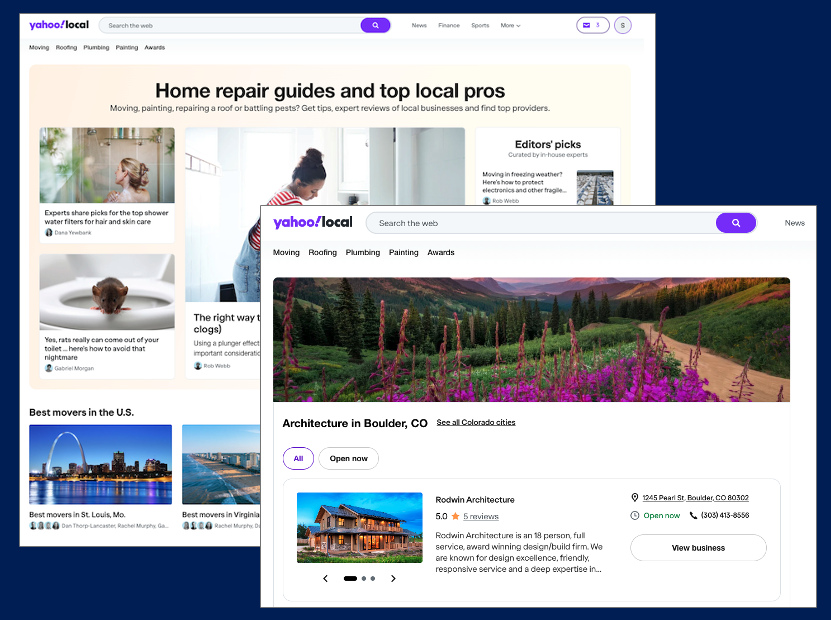
Source: Yahoo
_This post is for subscribers only._
### EP 246 - Inside the LSA Agency Model (Former Google Insider Explains)
URL: https://www.nearmedia.co/ep-246-inside-the-lsa-agency-model-former-google-insider-explains/
Last updated: 2026-03-07T14:09:35.000Z
In this Near Memo panel discussion, Greg Sterling and Mike Blumenthal bring together Eric Levine (Leadwise HQ), Claudia Tomina (Reputation Arm), Matt Casady (Sterling Sky), and Crystal Horton (Google Business Profile Platinum Product Expert) to examine how agencies are building services around Google Local Service Ads. The conversation explores ranking factors, pricing models, fraud challenges, lead quality issues, and how agencies set expectations with clients when managing LSAs in competitive markets.
Interested in sponsoring this podcast or our newsletters please reach out to [mblumenthal@nearmedia.co](mailto:mblumenthal@nearmedia.co)
[E-mail Mike ](mailto:mblumenthal@nearmedia.co)
### **The Podcast Deets**
### **1️⃣ How Google Local Service Ads Actually Work (**[**00:10 – 14:30**](https://www.youtube.com/watch?v=wEjhJuA24i8&ref=nearmedia.co)**)**
The discussion begins with an overview of Local Service Ads and why they have become such an important part of Google’s local search ecosystem. Former Google employee Eric Levine explains that LSAs operate differently from traditional Google Ads, relying heavily on trust and responsiveness signals rather than pure bidding power. The panel explores the three primary ranking factors behind LSA visibility: reviews, service radius, and responsiveness to incoming leads. Reviews influence both consumer trust and algorithmic ranking, while responsiveness measures how consistently businesses answer calls and respond to inquiries. The panel also discusses how LSAs are increasingly connected to Google Business Profiles, meaning reputation management and local SEO signals may indirectly influence ad performance.
### **Key Takeaways**
- LSA rankings are primarily driven by **reviews, service radius, and responsiveness**.
- Unlike traditional PPC ads, LSAs cannot simply be **bought to the top position**.
- Google Business Profile signals and reputation management likely influence LSA performance.
- Businesses must manage **reviews and lead response processes**, not just ad settings.
### **2️⃣ Fraud, Lead Quality, and Managing LSAs for Clients (**[**14:30 – 33:00**](https://www.youtube.com/watch?v=wEjhJuA24i8&t=880s&ref=nearmedia.co)**)**
The panel then turns to the practical challenges agencies face when managing LSAs for clients. Fraud remains a persistent issue in some verticals, particularly in industries like locksmiths, garage doors, and legal services. The group discusses how Google has strengthened verification processes, including identity verification and tighter integration with Google Business Profiles. Despite these improvements, agencies still encounter fake listings and difficulties removing fraudulent competitors. The conversation also covers lead quality and the removal of Google’s lead dispute feature, which previously allowed advertisers to contest invalid leads. Without that mechanism, agencies must focus on expectation setting with clients and careful campaign management to ensure LSAs remain profitable.
### **Key Takeaways**
- Fraud and fake listings still occur in certain **high-risk industries**.
- Google has implemented **stronger verification processes**, but enforcement remains inconsistent.
- The removal of the **lead dispute feature** makes bad leads harder to challenge.
- Agencies must set **realistic expectations with clients** about lead quality and competition.
### **3️⃣ Building an Agency Model Around Local Service Ads (**[**33:00 – End**](https://www.youtube.com/watch?v=wEjhJuA24i8&t=1980s&ref=nearmedia.co)**)**
In the final segment, the panel explores how agencies are turning LSAs into a service offering. Different pricing approaches are discussed, including flat monthly management fees, consulting retainers, and hybrid models that combine LSA management with broader local SEO services. The panel agrees that LSAs have evolved from a simple DIY product into something that often requires specialized expertise, particularly in competitive industries. The discussion concludes with a look at the future of LSAs as Google integrates AI-driven search experiences. Rather than disappearing, LSAs may become embedded within AI-powered recommendations that guide consumers to trusted service providers.
### **Key Takeaways**
- Agencies typically charge **flat monthly management fees or consulting retainers** for LSAs.
- Successful LSA management requires coordination between **marketing, operations, and reputation management**.
- LSAs may evolve alongside **AI search experiences**, not disappear.
- Brand recognition and trust signals may become **increasingly important as discovery shifts to AI tools and social platforms**.
### **👇 Watch by topic:**
[00:00](https://www.youtube.com/watch?v=wEjhJuA24i8&ref=nearmedia.co) Introduction to LSAs and the panel
[01:30](https://www.youtube.com/watch?v=wEjhJuA24i8&t=90s&ref=nearmedia.co) Eric Levine’s background working on LSAs at Google
[04:00](https://www.youtube.com/watch?v=wEjhJuA24i8&t=240s&ref=nearmedia.co) Fraud in Local Service Ads and verification challenges
[07:30](https://www.youtube.com/watch?v=wEjhJuA24i8&t=450s&ref=nearmedia.co) Reporting fraud and removing fake LSA listings
[10:20](https://www.youtube.com/watch?v=wEjhJuA24i8&t=620s&ref=nearmedia.co) The real LSA ranking factors (Reviews, Radius, Responsiveness)
[14:40](https://www.youtube.com/watch?v=wEjhJuA24i8&t=880s&ref=nearmedia.co) Do users actually click beyond the top LSA results?
[18:00](https://www.youtube.com/watch?v=wEjhJuA24i8&t=1080s&ref=nearmedia.co) Competing in crowded markets like personal injury law
[21:30](https://www.youtube.com/watch?v=wEjhJuA24i8&t=1290s&ref=nearmedia.co) LSA pricing and cost per lead across industries
[24:30](https://www.youtube.com/watch?v=wEjhJuA24i8&t=1470s&ref=nearmedia.co) When LSAs don’t work for a client
[27:00](https://www.youtube.com/watch?v=wEjhJuA24i8&t=1620s&ref=nearmedia.co) How agencies manage and bill for LSAs
[30:00](https://www.youtube.com/watch?v=wEjhJuA24i8&t=1800s&ref=nearmedia.co) DIY vs agency management for LSAs
[33:00](https://www.youtube.com/watch?v=wEjhJuA24i8&t=1980s&ref=nearmedia.co) Handling bad leads and the removal of lead disputes
[37:00](https://www.youtube.com/watch?v=wEjhJuA24i8&t=2220s&ref=nearmedia.co) Multi-quote leads and how Google charges for them
[40:30](https://www.youtube.com/watch?v=wEjhJuA24i8&t=2430s&ref=nearmedia.co) Photo best practices for LSAs
[44:30](https://www.youtube.com/watch?v=wEjhJuA24i8&t=2670s&ref=nearmedia.co) Service area targeting strategies
[48:00](https://www.youtube.com/watch?v=wEjhJuA24i8&t=2880s&ref=nearmedia.co) The future of LSAs in AI search
[52:00](https://www.youtube.com/watch?v=wEjhJuA24i8&t=3120s&ref=nearmedia.co) Brand search, AI discovery and the evolving funnel
[57:30](https://www.youtube.com/watch?v=wEjhJuA24i8&t=3450s&ref=nearmedia.co) Final thoughts
Sign up for our new Legal Marketing Newsletter. Once a month, no fluff, just good ideas.
[Sign Up ](#/portal)
### **Full Transcript -->**
# Near Memo Podcast – Episode 246 Transcript
Greg Sterling (00:10)
Hey everybody, welcome back to the Near Memo today. We've got a great group of panelists to talk about LSAs and LSA adjacent issues. Back with us is Eric Levine. We've also got Claudia Tomina, Crystal Horton and Matt Casady. And of course, as always, the lovely and talented Mike Blumenthal. I just love saying that. Did I say it was episode 246? I hope I did. Okay.
Mike Blumenthal (00:33)
Yeah.
Greg Sterling (00:35)
Anyway, Mike, why don't you tell us why we're doing this? We just had Eric for a two-part podcast episode, and now we've gotten back with this group of esteemed panelists. What's the genesis of this?
Mike Blumenthal (00:46)
Well, firstly, I felt Eric is new to the industry. So one, I wanted to be sure he had a good platform, but I wanted to also provide that platform to others. I'm curious about LSAs. I see them as really a very strong play by Google and local as a pay to play avenue. And I am just curious from the point of view of agencies, how you make money with it, what things you can do that can set you apart.
And I wanted to give other agencies some presence in that. And I also wanted to give them a chance to grill poor Eric, because he used to work at Google. So he can uncover all their dirty laundry. Although, as we learned in the last one, he's very circumspect. So you're to have to really needle this poor schmuck to get some good juice out of him.
Claudia Tomina (01:31)
Yeah.
Greg Sterling (01:32)
Yeah, you can just treat Eric like a whistleblower, and this is congressional testimony. OK. All right, so no, there's none of that, of course. So Eric, for people that didn't see the first two installments or our initial interview with you, why don't you just give a little bit of background about your history at Google and with LSAs for context, and then we can jump in.
Mike Blumenthal (01:37)
Yes, that's right. And your relationship with Epstein,
Asking for a friend.
Eric Levine (02:00)
Yeah, absolutely. So I worked at Google for about six and a half years. started summer of 2019 and I came on during the law pilot. this was summer 2019\. And so we were cold calling lawyers trying to get them to try Google's newest ad product, local services ads. And we've just seen like a lot of evolution. So I helped the rollout on the go to market side with like healthcare and with the global expansion and then
Yeah, more recently, I launched Leadwise HQ about three months ago, almost to the day. And now we help multi-location operators and we help other agencies manage LSAs and really sort of navigate Google's ever-changing landscape.
Greg Sterling (02:44)
Okay, and do you guys want to say anything about yourselves? Since I mean, I assume most people are going to know you and know your agencies, but do you want to introduce yourselves at all?
Mike Blumenthal (02:51)
Please do, Matt, Crystal, Claudia, take a moment.
Matt Casady (02:53)
Sure.
Yeah, Matt Casady from Sterling Sky. I help our clients. I'm an account manager and strategist and also help our clients with LSAs. I'm kind of the in-house LSA guy, so to speak. And yeah, just been passionate about LSAs since about 2020\. I've been super fascinated with how they work. So yeah.
Claudia Tomina (03:17)
And I'm Claudia Tomina with Reputation Arm. And I work with a lot of multi-location brands, managing Google business profiles, listings management, review management, often get sucked into LSA discussions because we're managing for the brand at whole. And yeah.
Crystal Horton (03:33)
I'm Crystal Horton, a Platinum Google Business Profile product expert and a managed partner with Local Services.
Greg Sterling (03:40)
Okay, great. So Mike, why don't you jump in with your.
Mike Blumenthal (03:45)
Sure.
So I've been following fraud on Google for many, many years. I am just curious from each of your perspectives, much fraud and LSA has a long history. First, it was brought out to not to be fraud proof. It was very difficult to get a profile and Google found that that didn't scale very well. And then it was full of fraud. Anybody could get an LSA and everybody used it to cheat. And
subsequently about a year ago, it integrated more tightly with GMB and GMB's verification process. So I'm curious how much fraud you see in the product these days, both on the side of illicit listings and also...
Greg Sterling (04:27)
Thank you for your time.
Mike Blumenthal (04:27)
fraud on click fraud,
if there is click
Eric Levine (04:30)
Yeah, absolutely. yeah, while there like quite a bit of like review fraud, and I think that that probably still happens to this day, you know, it's, only so much that Google can do to try to figure out whether reviews are legitimate or not. And then when you're dealing with such volume, no matter how sophisticated Google's tech is, it's, it's really tough to, to catch bad actors, but bad actors do get caught. There was an initiative in the law.
vertical called IDV, identity verification, which came about, I think we believe, because of fraud, where essentially people have to upload a copy of their driver's license in order to prove that they are who they are. So not just that you have a bar number and that your name is John Smith on the bar website, but you actually have to show your ID. And then, yeah, as Mike brought up, the business affiliation, where the link between the Google Business Profile and LSA, Google Business Profile has to be
verified all the information has to be super consistent. yeah, and then there's always like notorious verticals. I think like the advanced verification vertical is pretty notorious for that. Garage door locksmiths, stuff like that. Especially, you know, also with the review gaming as well. yeah, I'm curious to hear from your guys' perspective as well. What you guys have seen.
Mike Blumenthal (05:41)
Do you guys see much fraud, Matt?
Matt Casady (05:42)
I mean, I'm still seeing,
I still see fraud. and I, like, I would be curious if like, kind of changing the question a little bit, if, anyone has had success getting the fraud removed or like reporting it, because I mean, in every case, like we've, we've set it up the chain through LSA rep and like with anything with Google, it's like, okay.
Thanks for the feedback. We'll send it up to chain and like, you know, nothing ever. you never, the listing is still there a few weeks later and it's like, okay, you know, or even months, but.
So I'm curious if anyone's had success actually getting those removed because we still see it. Like you said, Eric, we see it in the garage door space where, you know, our client has the darnedest time getting verified. And yet they've got several fake listings in their market. That's like obviously fake that are live. Or you see like the lawyers that are the disability lawyer who's serving multiple states and it's like clearly legit, not legit listing, but.
Yeah, that's our experience with it.
Crystal Horton (06:40)
I agree. It's definitely tough, Matt, especially in the garage door space where it's almost 18 plus months to get past that advertiser or advanced verification. Showing proofs of vehicle registration, documents of proof with the government. And then yet these lead gen companies pass no problems within three months. They have a fancy LSA account that's generating over 300 leads a month.
So what I've found to take down companies like that is if they start overlapping between multiple LSA accounts, I report it through our managed partner. That's the best way that I've been able to get it taken down. Other than that, we have to go through the Google Business Profile side of things because the GBP is your source of truth. And so we have better luck.
when we work with Google Business Profile as opposed to LSA support.
Mike Blumenthal (07:41)
So you do that through the forum or through support and then to the forum?
Crystal Horton (07:45)
through support, through the forum, wherever we will get a response through the redressal form, creating a case ID, anything that we need to do in order to just get some attention on it.
Mike Blumenthal (07:57)
So it's usually based on the idea that this location is fake and that thus needs to be removed from the GBP and then subsequently gets removed from LSA. Gotcha.
Claudia Tomina (08:07)
That's really smart.
Eric Levine (08:07)
Yeah.
Yeah, it's tough too, because people will say, hey, my competitor, they're cheating. Look into them. That happens a lot. So I think it's also tough from Google's perspective too, because competitors are constantly doing that to each other. We know that they'll call each other's ads and try to run their ad budgets up, but also calling out frauds, that's a big thing. I would even tell people not to not waste your time.
with it, but there's not much bang for buck trying to take competitors down. But yeah, it's tough. Google wants to take them down because it doesn't make Google look good when that happens, but it's trying to suss out. Sometimes it's a lot of he said, she said, and it can be really, really tough to figure out who's legitimately committing fraud and who's not. then is Google going to be paying somebody to be investigating that full time? Because it would be thousands, probably tens of thousands.
of cases either per month or per year that they would have to be looking into. it's fraud is really, really tough. It's got to be super, super explicit that somebody is clearly violating the policies that you could see externally before they even took a look at it.
Mike Blumenthal (09:11)
But there
isn't any, like in GBP there's this process, right? You can report it on maps and then you report it through the redressal form. Then you get a case number, then you can escalate it. Then you can actually, through the forms in GBP, escalate it so that a human or some facsimile of a human might look at it. And then you might be able to go back and say that, oh, I have additional proof and they look at it again. And sooner or later, if you have a legitimate case,
Although again, it may take two or three or four attempts. It's very frustrating, but at least there's a path. It doesn't sound like there's even a pathway that is open and available to agencies other than as Crystal noted through her top tier company that she's doing business with.
Eric Levine (09:57)
Yeah, I'm not, I can't remember the exact percentage of people who have dedicated support on LSA, but I want to say it's less than 10%. It might be less than 5%. And, and so, yeah, so it's, it's really limited. LSA is just limited in general. know, LSA and Google ads are, they share some, they share some things like access and security and billing and stuff, but it's a, it's a separate platform, separate teams. And even though it's all Google, things are kind of separate, but
Yeah, it is tough.
Greg Sterling (10:22)
So let's just refresh everybody on the sort of ranking factors that are most important for the top LSA position. So you've either got two or three that show up. And we talked about this when we had you on before. But for the people that didn't see that, why don't you just kind of lay those out for everybody?
Eric Levine (10:39)
Yeah, so the top three ranking factors are the three Rs. So that's usually what I start with. reviews, so both quality and quantity of reviews. People typically ask like, how many reviews should I have? You know, what is a good number of reviews? And it's gonna be based on your competition. So if on average, you know, you're in the plumbing space, it's very competitive. And on average, the top 10 people have over a thousand reviews.
That gives you a good idea about where you stack up. And so that's reviews. Then there's radius. So that's the actual.
Mike Blumenthal (11:11)
Well, you mentioned
quantity there, or quality of the review. Could you be a little more explicit about that?
Greg Sterling (11:15)
Yeah,
good follow up.
Eric Levine (11:18)
Yeah, yeah, absolutely. quantity of reviews, so total number, and then the quality. Exactly. Totally, totally, yeah. So like the numbers, like 4.9 stars, 4.9 stars. Yeah, our rating.
Mike Blumenthal (11:21)
That's obvious, right. Big number, more than your competitor. Okay, what's quality mean?
Greg Sterling (11:30)
Just the star rating.
Mike Blumenthal (11:31)
⁓ I see. Sorry.
Greg Sterling (11:33)
There's no investigation of the text or anything like that, right? It's just purely volume and star ratings.
Eric Levine (11:41)
So that's a little bit complicated because from an SEO standpoint, from a Google Business Profile standpoint, responding to reviews and some of those SEO basics improve Google Business Profile. And if LSA is pulling signals from Google Business Profile, if they have a very, close relationship, then there's a chance that they are also pulling those intent signals. That GBP is saying, this business has good review.
Greg Sterling (12:09)
engagement or whatever.
Eric Levine (12:10)
Exactly, 100%. And so yeah, so a lot of people ask like what is the link between SEO and LSA? And there is some overlap, but Google's not explicit, you know, that this equals this. yeah, so that's the review side. Radius is the actual areas inside the profile and budget that you target. And then there's responsiveness. So how often you answer the phone.
And yeah, responsiveness is a little bit finicky sometimes because just because you answer the phone, know, a lot of people say, you know, the phone will ring three or four times and then we have an automated service on third or fourth ring will answer the phone automatically to make sure that it doesn't go to voicemail. And so, you know, that can be good. So your responsiveness rate is high. But if people are clicking on you, if customers are clicking on you because it's just taking too much time.
know, the phone has been ringing for a minute or a minute and a half before a human or anybody's actually answered the phone. You know, that's not good. But yeah, those are the top three ranking factors that Google uses.
Claudia Tomina (13:11)
I have a question. If somebody's brand new, like you're adding on a new franchisee, is there like a certain number of reviews that they should have before you start onboarding them to LSA?
Eric Levine (13:22)
So there's a minimum threshold. Most verticals, the minimum is five reviews that you have to have. But again, what I typically tell people is, you know, got to look at the competition in the area. You know, if you are a painter in rural Iowa, and you know, on average people have 20, 40, 50 reviews, then if you have five to 10 reviews, you know, you're in the neighborhood proportionally. And as long as you're continuing to get reviews over time, there are other things that you can do other than getting reviews.
by having a wide service area, by answering the phone, by opting into the other CTAs, like messaging and booking. So there are other things that you can do, but you also have to know that from a user experience standpoint, somebody's gonna look. When you see a restaurant that has five five-star reviews and another restaurant that has 1,000 4.7 star reviews, from a user experience, if you have more reviews, you're gonna appear as more trusted.
So to your question, like how do you how do you kind of get it going? There's a couple things you can do You can just have the LSA run and continue to try to get reviews over time But you got to come back to set expectations with the client to let them know like hey guys This is where you stack up against the competition reviews is a really important ranking factor to Google also to customers Who you know are trying to find out how trustworthy that you are? So yeah, it's a little bit of a you got to kind of build it up while you're doing it But it's not just reviews that impact ranking
Greg Sterling (14:41)
So piggybacking on Claudia's question, unless you have a follow up, Claudia. OK, so piggybacking on that question, I'd be curious to know how many leads actually come through the, I don't know what we'd call it. We would call it otherwise the local finder in an organic context where you click on more businesses and you see additional listings beyond the top three, and then you scroll and may interact with those. we see that in our research, we see that behavior
sort of vary by category. Mostly what people are doing is choosing from the visible listings, which would include in an LSA context, the top two or top three, depending on the category and the platform. Is anybody coming through the more business, I forget what the button says, more businesses or whatever. So below the top three, do leads actually come through those or is it always the top listings?
Eric Levine (15:29)
So I did a very biased user experience study with my parents asking them to, we did a search for painters and I said, I want you to find the best painter here. And so she's looking through and she goes, this one, she picked the second one. And I said, why'd you pick that? She goes, it just looked good. And I said, would you look through more, like you said, would you go to the next page? How long would you take to search through all these? And she said, well,
I'm not an expert at exterior painting, so I don't even know what I am comparing. So I always kind of laugh at that, which is like, well, people like, you know, we want to compare plumbers or we want to compare, you know, personal injury lawyers. If you're not a personal injury lawyer, what are you comparing? Like genuinely, are you looking at reviews or, you know, are photos of a law firm telling you that this lawyer, because they have good photos, is going to deliver me more money for the car accident that I was in?
So yeah, it's tough.
Greg Sterling (16:25)
Well, so is that a statement that people generally do not click through to the additional businesses and choose from those that don't rank in the top two or three?
Eric Levine (16:34)
Um, people likely will click into it to take a look, but, um, that's what I think the benefit of the feature, like the get a quote feature is, is because really, you know, top three, top four, top five, again, you know, it doesn't really matter to me if I'm looking for a plumber. Um, you know, I have an issue in my house that I need resolved immediately. So the most important thing is can I get somebody here quickly? Which means I'm going to send a note to everybody, um, uh, you know, to the top four or five. And then I want to quote.
to make sure that it's not completely out of my price range.
Greg Sterling (17:05)
But you don't have any internal data from your experience, anecdotal or otherwise. mean, this kind of focus group of one is consistent with what we've seen in our research. But I was hoping that you had some sense of what actually happened, but you don't, it sounds like.
Eric Levine (17:21)
like as far as how
Greg Sterling (17:22)
From
your experience as a Google employee, like where are people, are a bunch of people clicking through and then choosing businesses lower down the list, being more selective or more thoughtful about it, or are they just sort of choosing from the top three? I mean, our experience indicates that they choose from the top three basically most of the time. Sometimes they look at the others, but most of time not.
Eric Levine (17:41)
Yeah, that's.
Yeah, that's most generally the case. ⁓
Greg Sterling (17:48)
Okay,
so to go back to Koladia's question then, it's not even worth it then, I would infer to do any LSA advertising at all, unless you're within striking distance of the top, in terms of review quality and quantity, the top competitors in that category, that you're just wasting your time and money.
Eric Levine (18:05)
If you do a search
If you do a search right now, you'll see that the order of rankings is not just that the highest reviews are at the top. So sometimes you'll see somebody that has 54 reviews that shows up at the top. Again, that's not how it looks. And then a lot of times what people will say is, my ad just won't show up at the top. I search for it all the time. It just never shows up at the top. When we drill down and go into the account, you look at absolute top impression share. It will show you percentage. And I say, hey, it says 25 %
of the 10,000 impressions that you got, a quarter of them, you were the number one result. So you absolutely are showing up at the top. Google is cycling through the rankings. So yeah, I still do think it is worth it because the data is showing that you are showing up at the top a good percentage of the time.
Greg Sterling (18:51)
Yeah, but as you said before, and then I'll defer to other people, if I'm a PI lawyer in Los Angeles, California, and the top PI lawyers have 1,500 reviews, 1,700 reviews, and I've got 100 or 200 reviews, is there any chance that I'm going to show up there?
Eric Levine (19:13)
Yeah, there's still a chance because again, reviews is not the only thing that matters, right? If you're able to be agile and let's say you have a big law firm and you have an intake team and you don't have messaging set up because the call intake team isn't set up to do that and you're a smaller firm and you're able to opt into messaging and you do do that, then yeah, then you can't compete like that. But yeah, I mean, even if you're a smaller, you know, personal injury lawyer, I used to call them that the
PI lawyers are advertising maximalists. They are the only people who advertise on buses, bus benches, billboards. Electricians don't put up billboards. So even if you are a smaller personal injury lawyer, to have the value of the digital real estate at the top of Google is still extremely important for you as a brand in order to get your brand out there.
Crystal Horton (19:59)
The other thing I'd to add, Greg, when you are verified through the LSA, it shows a blue verified check mark on the Google Business Profile. And that helps as a conversion rate on the business profile through Maps. So whether or not you're showing up on LSA, it still benefits you.
Mike Blumenthal (19:59)
What are those ads? Go ahead, Crystal.
Greg Sterling (20:20)
That's a good point. Thank you. Mike, you were gonna say something?
Mike Blumenthal (20:23)
I was
just curious what these at how Google prices them, how they run, what is it, what's the variety across markets and verticals? And if there's any transparency in the pricing, I know originally it was fixed pricing and moved to some sort of bid system. I'm curious about. And so in the end, in a big market, PI lawyer, what are they paying for an LSA ad?
Eric Levine (20:45)
Yeah, so there's actually a cost tool on the local services website. You scroll about halfway down. You put in how many leads you want per month, what zip code you're in, and then it'll give you what the average range is. It'll give a $20 to $10 to $30 range, something like that. PI law in the more competitive verticals. And I'd be curious, Matt, Crystal, Claudia, what you guys see as well. But $150?
I mean, you know, yeah, it's pretty brutal, but the auction does cause the price to continue to drive up. And there are people who are just willing to have their budgets set at, you know, I want $10 million worth of leads per week, even though they would never get that. So yeah, the auction on that is going to continue to stay high. And then we see that that's like one of the biggest pieces of feedback we get is that the prices on LSA have continued to go up and up and up.
Claudia Tomina (21:17)
Yeah.
a question in regards to that. let's just say it's super competitive, like your personal injury lawyer, it's like super competitive. I mean, and you say, okay, I'm going to try it. And you know, your budget has to be at least 2500 to $3,000\. And then you try it. And then, you know, the clients like totally disappointed because they're not getting any quality leads, they weren't able to close. I mean, at what point do you tell your client,
All right, your market's way too competitive. Do you ever do that? Have you found yourself in a situation where you say, don't even recommend LSA for you?
Eric Levine (22:16)
Absolutely, all the time. I rather set expectations with the client and let them know and be honest versus make two to three months worth of fees from them and then have them get pissed off and have them tell us that we didn't set expectations with them. Absolutely. And yeah, I tell them that it's brutal and that it's very, different from Google Ads. At Google Ads, it's a little bit more straightforward. This is how much you pay in order to show up at the top. LSA is a lot different. It's more complicated. Responsiveness.
reviews. are things that are, again, those top three ranking factors of those top three, two of them, if I'm managing your LSA, I'm not in control of your reviews. I'm not in control of how you're asking for reviews, whether you're responding to them. And I'm definitely not in control of how your lead intake team is answering the phone. So the top ranking factors actually aren't even in control of people who are managing the ad when you think about it. So definitely, it's an expectation setting game with the client to let them know. If LSA,
you know, matters a lot to them, then, you know, being able to kind of take that worry off the table for them to say, Hey, you know, we can manage it. But if they're not having a good experience or if, so I see this a lot in the healthcare space. There are a lot of high value businesses in the healthcare space that are not primary care doctors. So for example, like pain management clinics, they make a ton of money and they are constantly looking for
constantly trying to advertise on LSA, but they don't, there isn't a category for pain management. So I tell them, hey, guys, it's not close for you. The lead quality that's going to come in is going to be people searching for physician near me, primary care near me. So I tell them, do not do this. You guys are going to have a bad experience. I've got more positive feedback from that. I've gotten referrals from people being like, yeah, he was honest about this. We can't do it, but you should meet with them because these other guys do do something that...
will fit with LSA.
Greg Sterling (24:03)
So that raises the question about negative keywords. Is that something that Google will ever introduce into the system in the same way that it exists in PPC? So you can avoid those kinds of primary care when that's not really what I do?
Eric Levine (24:20)
So that's definitely, that was a huge piece of feedback that we would get. But as far as I know, haven't heard anything about that. You can obviously do negative service area targeting, but as far as negative keyword targeting, not that I know of.
Matt Casady (24:33)
Eric, I have a quick question.
Mike Blumenthal (24:34)
So I'm curious,
go ahead, Matt.
Greg Sterling (24:35)
Yeah, go for
it, myth.
Matt Casady (24:36)
I was gonna say, kind of going back to Claudia's question about like, if you're telling a client like this maybe isn't a good fit for you, let's say you took over a new account and you're like doing your like, quote unquote, like best practices for that account. Like I have.
the things that we found that work best, know, it's really sky that we do for clients. But I'm curious from your end, what, you know, have you found like, do you do like zip code versus County targeting? Are you gonna like, like what are things that you're gonna do? Like what bidding modes, what would you define as like best practices for a new account or for account that's like struggling and you're trying to prove it.
Eric Levine (25:14)
Yeah, so it's tough. At Leadwise HQ, what we do is we have essentially like a custom score scoring engine that we built. So we put different like weights on the way different like profile and budget settings are set. And then that gives us like a baseline score. And then we make recommendations against that. And so like from a high level, what we look at is
Verification status, we look at service area configuration, and then we look at the bid mode that you're using. We also want to know what's happened in the past. Did you guys used to have accounts in the past? Did another agency have this and the account got suspended? We want to know a little bit about the history that's going to indicate some things. Responsiveness rate, if they go, they just tried some new AI tool and it messed up the responsiveness rate. And so we tell them, yeah, it's going to take a little bit of time of consistently answering the phone in order to improve that.
But yeah, so we look at all those things, but it's tough because it really is case by case. A law firm versus a plumbing business is going to vary widely. know, LSAs are to a degree, set it and forget it a bit. The issue and where the expertise comes in is in the infinite edge cases.
And that is really what makes or breaks. What I think is somebody who's like a competent, you know, LSA ad manager is being able to recognize all those edge cases and be able to apply it to a specific client. So you may say that, you know, messaging and booking that has to be opted into this client and the client tells you we can't do that. So you have to come up then with some, you know, custom ways and some other things that they can do in order to make sure that the account is doing the best they can up against their business structure.
So for whatever reason, they can't do messaging. So it's like, OK, so we have to think about some other things. I might also want to kind of audit and figure out how are they asking for reviews, right? Some of the things that aren't on the LSA side that I don't have control over, but that I know is going to impact how well their LSA performs, I'm to want to ask them about that. Same thing about the lead intake. I'm going to want to ask them, how is it set up? Do you guys have somebody answering the phone eight hours a day, and then it goes to a call center? How often are you auditing that call center? Do you guys ever secret shop?
and call them at one o'clock in the morning. So LSA is like a golf score. It's a whole bunch of different factors. And then what we've done, like at our agencies, we've added some weighting and some scores to that so that we can create a baseline and then set expectations with the clients. Hey, here's how we would set it up. Here's where you're at. And then just being honest with them about, you know, essentially, you know, what's gonna happen to the best of their ability.
Greg Sterling (27:40)
So related question, what did you consistently see people doing wrong when you were at Google? What was the big one or two top mistakes that people consistently made in managing LSAs?
Eric Levine (27:51)
So is this like agencies or just how profiles were set up?
Greg Sterling (27:54)
Well, for both. You could answer for both.
Eric Levine (27:57)
Yeah. So for just how accounts are set up, a lot of people don't know what the best practices are. For a long time, trying to read the LSA Help Center and extract from the Help Center, based on all this information in the Help Center, how should my ad look? It's very difficult to suss out exactly what it means. If you read the
Greg Sterling (28:20)
Well, now you can use
Gemini for that or ChatGPT, right?
Eric Levine (28:23)
Yeah, you can't, but even Gemini and ChatGPT will say, be sure to dispute leads. And I'm like, there's no more lead disputes. it's clearly not reading the right sources. So that's the other part that's a little scary is trying to rely on what you think may be true, which is why expertise is so important. So yeah, that's the other thing. Maybe just a disclaimer is like, be careful what Gemini says about LSA ad management. It is unreliable and I cannot put a finer point on that.
that it makes stuff up and I'm like, oh, you're lying. is not, I mean, selfishly, I'm like, this is great for my business because it makes LSA expertise even more valuable. yeah, so, and then how agencies manage it. for individual businesses, make sure you have best practices opted in. It's difficult to figure out what that is. There's a lot of podcasts and blogs and stuff that people write about that. And then for agencies, obviously you have to make sure best practices are established, but.
The number one most important thing for agencies to do with their clients with LSA is set expectations. You've got to understand the limitations of LSA. If your clients are used to Google Ads and pay-per-click, you need to understand that there is a massive difference between how LSAs operate and how PPC operates. You cannot just pay your way to the top like you could with Google Ads. The importance of the SEO.
part of things, is again, that's answering the phone, the reviews and all that stuff. So yeah, that's the number one reason that people churn from agencies is they feel like the agency either lied to them or failed to set expectations. yeah, for both categories.
Mike Blumenthal (29:51)
How do
you, how do each of you bill for LSA services? I'm curious.
Eric Levine (29:54)
Like how much do we charge?
so it's case by case. so for like smaller businesses with fewer locations, we charge a little bit more for, for bigger. We charge a little bit wider, as, as we've just been. Sure. Yeah. Yeah, absolutely. but we're also like, we're, trying a whole bunch of different models to kind of see what works. because it's not, I don't know, maybe with Google ads, it's a little bit easier. People typically will do like a percentage of ad spend. LSA is a little bit different, but.
Mike Blumenthal (30:05)
It's a monthly management fee or something similar.
Eric Levine (30:23)
I have talked to so many different agencies and so many people managing it and everybody seems to do it slightly differently. But yeah.
Mike Blumenthal (30:29)
How about you guys? Matt, Crystal.
Matt Casady (30:31)
Yeah, we do.
We have two different plans basically that are ongoing. So one is like more of a consulting where we're doing ongoing optimizations and testing of the account. And then we have a managed plan, which is basically the same thing. But on top of that, our team with the client's permission is also reviewing each of the calls.
where possible, adding client information, marking leads, book, rating them, and so forth. So both are ongoing options. We also do LSA audits, one-time audits, yeah, typically the monthly consulting or management.
Claudia Tomina (31:06)
So we've moved away from percentage and strictly to a flat fee, no matter ad spend.
Mike Blumenthal (31:11)
And how about you, Crystal?
Crystal Horton (31:13)
It's a monthly management fee that includes consultation, reporting, optimization, and
lead management. I have seen some agencies charge a percentage, which has actually been successful for them. I've also seen other agencies that charged per lead. That type of model has sort of shut down their department because LSA doesn't just work based off of leads that way. And then I've seen others that include it in their SEO.
platform where if they're Google Business Profile, they'll just include it. I've also seen other agencies that are more Google Ads focused on pay-per-click. And so they also just include LSA into that fee as well. So it's structured in many different ways.
Mike Blumenthal (32:02)
And is it still, mean, originally this product was brought out to be a DIY product. Is it still a DIY product or do the many vagaries and algorithmic impositions create a world in which no individual business can really know how to do this?
Eric Levine (32:21)
Yeah, it gets it varies how much you want to do it yourself. There are some people who are plumbers who are like really interested in advertising and they actually like it and they like having being into the nitty gritty of how their money's being spent. They want to have a real close eye on it. And then there's other people who are like, I cannot be bothered. You know, we want more leads, but the dream for us is for somebody to just call us and say, show up at, you know, one, two, three Main Street. And, you know, we just want to do plumbing. So yeah, we've definitely seen.
Devices in all versions.
Mike Blumenthal (32:50)
So I just as a note, go ahead, Claudia, go ahead.
Claudia Tomina (32:50)
I just want to
No, want to, I'm kind of changing subjects. So if you want to go ahead. So you said no more disputing. There's no disputes. just want to clarify. Like, so you tell your clients don't ever dispute a lead no matter how bad of a lead it was.
Crystal Horton (32:57)
you
Eric Levine (33:08)
You cannot do that, so they removed the dispute feature. So inside the lead, when you click into a specific lead, in the top right, there was a little menu bar. You'd click it, and it used to say, dispute. You'd click it, and it'd say, dispute in progress. Now, when you go in there and you click on it, it says, lead. So you click on it, and then it gives you a survey. Very satisfied, not satisfied, completely dissatisfied. An extremely small percentage of the time when you click,
extremely dissatisfied, Google may give you an ad credit back. But I tell people to be very, cautious of that. Some people will use that feature as a dispute feature. And essentially what you are doing is you are training Google to say, hey, for all these searches that people are doing, and then that turned into leads, I'm not satisfied with any of them. So Google is going to send you fewer and fewer and fewer of those.
Because what Google cares about is making sure that the customer gets their problem solved. So if you're constantly telling Google, I'm not able to solve this customer's problem over and over and over again, they're going to pull you down because essentially you're not able to solve their users' problems.
Claudia Tomina (34:16)
Okay, so can I ask another question? So this is like really interests me because like restoration companies, there's like there's not a mold category. Like people just know mold is associated with a restoration company. So, but a lot of restoration companies don't do mold, they just do water and fire restoration and have nothing to do with mold mitigation or like it's a different license. So how should these restoration companies
address that because they're getting mold leads and maybe somebody searched restoration and then they got the mold lead that way. So like how would you address that with your client?
Eric Levine (34:54)
So at end of the day, to quote a famous rapper, if it doesn't make dollars, it doesn't make sense. If the ROI is not there, it doesn't matter what category they're in. It doesn't matter what ad platform they're using. You have to advocate for your client. So if it's making money, but they're concerned because a percentage of the time, the lead quality that they're getting isn't good, that's it. You just got to ask them whether or not it's continuing to be worth it.
As far as like, are we supposed to do with bad leads that come in, back to the expectation setting game. If you're in the restoration category, is that the name of the category? I think it's got another name, right?
Claudia Tomina (35:28)
I mean, usually the primary category is water damage restoration.
Eric Levine (35:34)
Got it. So yeah, so like for water damage, the vast majority of searches in that category are going to be for the broad category. They're be for water damage. So let's say you go into their profile and budget and you know, one of the toggles, like what's, what's an example of one of the job types that's in there.
Claudia Tomina (35:49)
like a like flood ⁓
Eric Levine (35:51)
Flood, okay.
Yeah, so let's say like flood damage or something like that. I can't remember exactly what flood that is. Let's say they have flood damage turned off and they're getting leads for flood damage and they go, hey, Claudia, why am I getting calls for flood damage? I thought we had that toggled off. What you basically have to tell them is that, guys, out of 10 searches that people are doing for like water restoration near me, eight,
or nine out of 10 of those searches are going to be for water damage near me. So that's what somebody does a search for their ad shows up because they're in that category. And then when they get on the phone, they say, Hey, we're looking for flood damage. ⁓ and, the, client still like, know, ostensibly, they still want to show up for water removal for that category. but yeah, we just have to like set the expectation with them that like they still showed up for that search and that that is a valid lead because they're in that category, but back to the expectation setting part of that.
Mike Blumenthal (36:23)
.
you
Eric Levine (36:47)
And we actually see that a lot more in the personal injury law space because not a lot of people know what a personal injury lawyer does. Like if you were to ask 10 people on the street, what does a personal injury lawyer do? I don't know if 10 out of 10 people would be able to tell you, maybe half would, which means that about half the time it picks up the phone for a PI lawyer. there may or may not be accurate. And they say, Hey, no, we, got bit by a dog and they go, well, we had dog bite turned off.
The search that was done that triggered their ad was personal injury lawyer in Dallas. That lawyer that serves Dallas still technically wants to show up for that lead. Yeah. The only time you would ever have recourse is let's say back to the water damage example, you had flood damage turned off. If you can take a screenshot on Google search where somebody types in flood damage, you know, professional near me, and you see your, your client's ad show up.
Mike Blumenthal (37:14)
You
Good boy.
Eric Levine (37:41)
If you take a screenshot of that, that is something that you could action against because your ad shouldn't show up for that query because you had to toggle it off. But in general, the vast majority of are going to be through that broad.
Greg Sterling (37:52)
I have any more questions about sort bad leads and managing bad leads? No? OK, I have a question about the multiple quote scenario, right? That's going to four people. If you check that box, it'll go to a total of four, your initial one and then three others. Is that right?
Eric Levine (38:08)
Yes, I believe it messages the top four results.
Greg Sterling (38:11)
So
that was the question. The question is where do those other lead sources come from? I mean, where do those other firms come from? Are they just the top four in order or is there some other consideration?
Eric Levine (38:23)
I believe it's the top four in order. Yeah, somebody else might be able to confirm that, but yeah, it should be the top one.
Greg Sterling (38:28)
Okay, okay. I can keep going.
Okay, Claudia, Crystal, Matt. Matt, do you have other questions that you want to ask?
Mike Blumenthal (38:37)
I'm curious about that one is how does it get built?
Greg Sterling (38:40)
Right.
Eric Levine (38:40)
I believe everyone is charged. yes, please. Yeah, Matt, please.
Mike Blumenthal (38:43)
Full amount. Whatever it is.
Matt Casady (38:46)
Yeah, we.
I was just going to say, we, we, we loved that internally when, you know, any reference it in your first chat, Eric, that, you know, used to say half off for the eats and conveniently Google. Took the half off discount right around the time that they started rolling out the, you know, get multiple opinions. So, now I think that the, help center basically says it's based on like likelihood of their converting. So it basically Google.
it can choose how much to charge you for it. yeah, we've seen it's not, you know, definitely not half off anymore, but yeah, that timing was...
Greg Sterling (39:22)
Do you have a?
Do you have any visibility into how those sort of others perform? the, you know, when somebody says I'm looking for these additional leads, do you have any sense from your time there, whether people are actually contacting those or they perform equally well or there are some, you know, lesser performance?
Eric Levine (39:39)
Yeah, I mean, it's going to be case by case, right? So if you need a plumber, you only need one plumber to come over. So like.
Greg Sterling (39:45)
So it's going
to be the first one.
Eric Levine (39:47)
It will, it's going to depend. If it's super urgent, you may not care about the price and you just want somebody to come over now. If you're like looking for a locksmith, literally I need to get into my house or I need to get into my car. That's the most important thing. I really don't care how much it costs. If you're doing something like, let's say a home remodel, like, you know, a few percentage points difference in price is going to make a big difference. And you're all, it's not, it's also not urgent. So.
That you may take more time. You may even reach out to more than four people in order to get even more feedback to make sure about how you balance that. But really, the reason that Google made that change to the message multiple is because I think we talked about this last time is because they're really just mimicking the user behavior anyway. If somebody needs a locksmith right now because I'm locked out of my house, I'm going to message as many people as humanly possible, and I need somebody to get back to me. And then similar thing with
like a bathroom remodel. I really want to make sure that I'm not paying two, three grand more when there's absolutely no need to, when the top two people, one guy has 1,500 reviews, another person has 1,200 reviews. So yeah, I think it's just more about them meeting customers where they were.
Greg Sterling (40:57)
And conveniently, Google makes more money.
Eric Levine (41:00)
If you charge twice as much, you make twice as much money. It's pretty... smart.
Crystal Horton (41:02)
Yeah. ⁓
Mike Blumenthal (41:04)
This
is 4x, this is not 2x, this is 4x.
Eric Levine (41:07)
That's it, yeah.
Greg Sterling (41:08)
So we've been talking for a while. I want to be mindful of the time here for everybody. can you review, you talked in our previous interview about image photography and image best practices for LSAs. Why don't you just kind of go over the highlights of that? What are some of the things that people really need to pay attention to with images?
Eric Levine (41:28)
So.
Greg Sterling (41:29)
And do they impact performance ranking conversions?
Eric Levine (41:33)
Yeah, so what Google will say as far as best practices is you need four to six high quality photos minimum on the ad. And you obviously have to have some photos. And I believe they actually even used to have a call out inside the profile and budget when you had no photos added. And they would say, adding photos increases conversion by 26%. And they actually used to cite a statistic. I'm not sure if they still do that. So yeah, you need at least four to six high quality photos.
And then really, what you want to do is you want to demonstrate the user journey with the photos. So the best way to think about it is almost like Amazon product photos. So if you're going to buy like a new office chair, you essentially want to see how the chair works in action. You want to see how you sit in it, how it gets assembled and all that. For the local services example, let's say home services like for a plumber or HVAC.
The order in which I want to see the photos, the first photo is I want to see the truck in the driveway so that as a person who called the plumber, I see, okay, it's going to be a blue van that pulls up. And then, you know, gentlemen walks up to the, you know, up to the front. I want to see somebody in a white polo shirt with the logo of the brand. Then maybe the third photo is I see them, you know, doing some work underneath the sink. And then maybe a fourth or fifth photo is either, you know, other action shots if they do other things like, you know,
Mike Blumenthal (42:54)
you
Eric Levine (42:54)
electrical
or something else. And then very last, or it's really almost not needed at all, is the logo of the business. A lot of times I'll see people put the logo first. ⁓ And you got to think from a customer's perspective, the logo of your brand is obviously very important to that brand, but it doesn't tell me that you are a good plumber. So yeah, so that's on the home services side. For lawyers, very similar. I want to...
Mike Blumenthal (43:02)
you
Eric Levine (43:17)
What is the user journey that somebody is going to go through? Let's say for like family law or estate law, where I'm going to actually walk into a lawyer's office. I want to see the outside of the building as the first photo. So I see exactly where I'm going to pull up. Next, I want to see a picture of the front desk. And I can see where the receptionist is sitting. Then next, I want to see a picture of the conference room. And then after that, maybe a picture of the whole team. And then again, fifth or sixth or seventh down the line is the logo.
of the brand, but also like on average, people are really only looking at a couple photos.
Claudia Tomina (43:49)
Eric, is it
relevant to delete photos, or does it work against you if you delete photos?
Eric Levine (43:54)
No, no, it doesn't work against you. but just know, I've talked to some people who say like, you know, we upload a photo every week, you know, so that Google knows, like we have activity. like I would say don't waste your time with that. You know, by the time you get to five, six, you know, after 10 photos, nobody's like cycling through 40 photos for your law firm. That's going to like, that was the photo that got me to convert. people aren't spending that much time.
Greg Sterling (44:18)
So Crystal, were you going to say something? No? OK. So a question about service areas. So my recollection is that you were encouraging people to target as widely as possible. What would you say about service area targeting best practices? And is targeting too wide an area, does that potentially dilute your ability to rank or penalize or harm your ability to rank?
Crystal Horton (44:20)
No.
Claudia Tomina (44:45)
Specifically
zip code versus county. That's what I want to know
Eric Levine (44:49)
Gotcha, gotcha. So inside the help center, it says that you should serve as wide as you can reasonably serve. So that's what it says in the help center. If you're targeting further than your technicians are able to drive, like this is not smart, you're to lose leads because they're just going to be too many miles away and nobody's going to want to travel there. So it's got to make sense for you in the home services space where people are actually driving to jobs. In the law vertical,
you can target statewide and suggest that you do target statewide. Because if you have passed the bar in Texas, you're able to serve the entire state. As far as zip code versus county, that's really dealer's choice. Google gives you a whole bunch of different options because based on the type of business, they may have different service area criteria. So if you're a franchise or a real estate agent or something, they typically will have particular kind of gang territory that they're not able to
overlap with each other. And if it's based on county or if it's based on city, that's why they just give you the option to do that. But the most important thing is kind of what's covered in blue in the actual service area section, less whether it's this city versus this like zip code.
Claudia Tomina (45:53)
Okay, but Google will tell you to remove like overlaps. So what if your county is overlapping with your zip code?
Eric Levine (45:59)
So they won't tell you to remove service area overlaps in a single ad unit. So let's say you've got a zip code here, but then you've also targeted the county. That's not what they mean by overlap. By overlap, they mean two different businesses. So you've got chain businesses together. You just don't want to have two businesses overlap. They call that double service.
Claudia Tomina (46:19)
Yeah.
Crystal Horton (46:19)
I think what you're talking about Claudia is the duplicates that flag in the map where it says you've got four duplicates because your zip codes are being targeted under the county.
Greg Sterling (46:29)
Okay, so kind of winding down here a little bit.
What, if you were, if you were like Matt scenario, you're, you're, you're taking over an account or you're, you know, you've got a new client and they're, they have an existing LSA program or they want to get into the LSA situation. well, no, actually let's just, let's just use it as you're the Matt's earlier example. You're taking over somebody who's run LSAs in the past and you, touched on this before, but let's be really explicit. What would be the first.
two or three things that you would do in auditing that account.
Eric Levine (47:01)
yeah, I mean, so like what we talked about last time, it's, it's going to like depend case by case. And like at Leadwise HQ, what we do is very, very custom. It's extremely like secret sauce about how we do it because there are so many different things that go into it. but it's really on balance, like from a high level verification status, like past history, you know, what has happened to the account recently? That's probably like, you know, most importantly, where we just suspended,
What did another agency, an old agency create overlapping accounts and now we've got some sort of an issue. would want to know like account history. Next thing I would want to look at the service area section. You know, I've seen like service area bugs where people's service areas are, look kind of spotty and I'll say, Hey, how come this isn't more filled in or how come you haven't targeted more? they say, well, we tried to, but there seems to be a bug. So I'd be like, okay, well, we need to file a bug for this. So I'd want to look at account history. Then I would want to look at service areas.
And then, know, bid mode. We'd want to look at, make sure that they're using the right bid mode. And then, yeah, photos as well. Like photos are small and it's, you know, there really isn't like a particular guide for how photos should look. So I will click into the photos and I will, you know, look at them like very, very intensely to make sure they're not too blurry, whatever that may be. But yeah, that's kind of how we do it.
Greg Sterling (48:20)
Okay, want to give you guys the opportunity to ask a question or compound question that you didn't get, that you didn't hear an answer to, or that you didn't get to ask during the main part of this discussion. Is there something, some burning question that you have? Go ahead.
Matt Casady (48:31)
Yeah.
Yeah, I have a question on just kind of like the future of LSAs, Eric. is there, first of all, do you see LSAs ever going away? you see like, in like new verticals they're rolling out with? And then I know this is multiple questions in one, but like what features, if any, do you see being added like to LSAs?
Eric Levine (48:59)
Absolutely. So as far as the LSA is going away, I don't think that's going to happen. LSAs have been pretty successful and pretty important to businesses. And so I personally don't see them going away. I see them integrating pretty well into AI search. So when you ask Gemini, which plumber should I use? Or I take my phone and I, you know,
go through my house and I use the augmented reality in order to show me what the kitchen remodel would look like. And I say, OK, tell me how much it's going to cost. Here's what my budget is. Who are the people on search who are trusted, reliable, been in business for 20 years, who are within my price range? Show me the top three. And then tell me what I should be comparing and what questions I should ask them when I get them on the phone or when I send that request a quote. So I see basically just like multi-step, these high intent based questions. And then.
them basically surfacing ads. And it could potentially be that they surface PPC ads or they could surface LSAs or they could surface whatever it may be. So I don't see the LSAs going away. I also think that the verification, the blue check, the fact that if somebody's doing locksmith that they've passed the background check, like the structure and value of LSA, I don't see that going away. As far as new verticals,
I will say, think they have like over a hundred verticals right now and some of them are still in pilot. So, you know, just like they've always done, my guess is they're going to continue to roll out more verticals. Probably, you know, try to see what works, but yeah, my guess is if it's still like, makes sense to continue to expand. And then as far as new features, that's, that's hard to say. That's hard to say.
But one of the big, like more recent ones is that direct business search breakout, being able to see how much direct business search leads costs, why some of them are, you know, charged particular way. You're like, aren't those supposed to be free anyway? So some of the, just a little bit more drill down on the reporting side. but, yeah, it's, it's, it's tough with LSAs. you know, I think the team is sort of always trying to balance making it accessible to a small business owner, you know, like.
My dad, he's a general contractor. He could not use Google ads. It would break his brain. But for local services ads, it's probably simple enough for him to set it up. So that's the balance. If they add too many features and make it too complicated, it's going to be Google ads. yeah, that's kind of the balance.
Greg Sterling (51:17)
One quick thing about that, one of the ad types that Chat GPT previewed was an interactive ad where you could ask questions about the service within the ad. It had a chat feature. Do you see something like that being integrated into LSAs at some point in the future?
Eric Levine (51:30)
Yeah, that would be like ideal is essentially like follow up questions, right? So you're a personal injury lawyer. I would love if Google asked the lead a couple of questions, similar to the questions my lead intake would ask. Like I would love if Google could quickly ask a couple of those questions. You know, were you actually injured in a car accident? You searched for personal injury lawyer near me. What's the actual, like job type that you, you know, are looking for? You actually were bit by a dog.
OK, well then now we can actually filter out those people who don't have Dogbite toggled on. And then we can pull in some of the review sentiment and see, these are the best Dogbite attorneys in the area. And so I just see that the lead quality would go up just by asking a few follow-up questions. So yeah, that would be a dream feature.
Greg Sterling (52:15)
or Claudia's mold question, right? You could eliminate that, right?
Claudia Tomina (52:19)
Right.
Eric Levine (52:21)
Yes.
Claudia Tomina (52:21)
What are your thoughts on using AI tools for like LSA?
Eric Levine (52:25)
expand on that a little bit. What do you mean by that?
Claudia Tomina (52:27)
There's like broccoli AI for like LSA lead ratings and things like that. Have you ever tried anything in regards to an AI tool?
Eric Levine (52:37)
Yes, we've definitely been playing around with a few different AI tools. The sort of gap that I see is that no matter how useful the tool, you still have to have LSA expertise in order to sort of understand like what the edge cases are. Now, if you have something that's really good at like lead scoring, I could see that as being good because the
Business itself could train the AI to lead score. And so I could see that being as really valuable. yeah, as far as some other specific tools for LSA, it's pretty limited. Most of them I see either certainly in the SEO space and then a lot in the Google Ads space. But even that, the reviews are still mixed on having LSA sort of do everything for you.
sort of despite what LinkedIn and Twitter says that I've seen.
Greg Sterling (53:32)
Crystal, what's still outstanding in your mind that we didn't get to talk about?
Crystal Horton (53:38)
I think let's go back to direct business search where you type in the brand name, the LSA account shows up. They click on that. The prompt asks one if you're a customer, two if you're not. Based off of that, that's how it gets charged. Now that the reporting is showing direct business search, we are finding that more than 70 % of those leads are getting charged full price.
and there is no way to dispute that. So any advice on how to proceed that way?
Mike Blumenthal (54:12)
.
Greg Sterling (54:13)
No.
Crystal Horton (54:14)
Thank
Eric Levine (54:15)
That's going to be tough. My guess is that it's probably pretty accurate. If Google is showing you what's happening, then my guess is that it's probably pretty accurate and that people actually are pressing, press 2 if you're a new customer. That's my guess is people are probably pressing that. But yeah, to your point, about 70%, that seems really high.
that 70 % of the time somebody's doing a direct search for that business. And then when they call, go, yeah, I'm a brand new customer. Yeah, it seems like kind of high, but yeah.
Claudia Tomina (54:49)
Maybe
it's fraud, maybe it's your competitors.
Mike Blumenthal (54:52)
Or maybe it's good brand advertising in the legal space. We see one of the primary considerations of people who click on LSAs is that they've heard about this company before and it could be just a really effective brain campaign.
Crystal Horton (54:52)
Yeah.
Greg Sterling (54:55)
Right, that's right.
So this is an important point, I think, without going into too long a digression. I think this is my thesis. We're going to see more and more of Google usage be navigational or brand search over time, because people, these informational queries or these comparison queries are going to be offloaded to chat GPT or AI mode or someplace else, right? Or they're hearing about, you know, they're on social media and they've heard about the brand and they want to look, you know, they want to look at reviews or whatever it is.
Crystal Horton (55:07)
Okay.
Greg Sterling (55:33)
And so they're doing this kind of validation verification search on Google, but it's not this kind of initial discovery. And I think that will create more and more of the circumstance that Crystal is talking about where you've got a name in mind and you're clicking on LSA because it's the top of the page and it's just convenient for you.
Crystal Horton (55:53)
Yeah.
Mike Blumenthal (55:54)
Although
I would contend, Greg, that Google is going to want to desirous of controlling that whole funnel from AI down through the click on LSA. And if they find that they're losing too much to ChatGPT or TikTok, they're going to develop a product that brings those queries back in and drives the click on the ad. Right.
Greg Sterling (56:11)
Yeah. Well, I said, I also said AI mode, right? So if somebody
starts in AI mode and the LSA shows up in AI mode, then that's totally legit because they're saying, I need to find a mold remediation company. And then they go down the funnel and they contact that. if they're in AI mode and there is no LSA or they're on TikTok and they come to Google or they're on ChatGPT and they come to Google, which
I have a lot of data that says when people do these local searches on chat GPT, they then go to Google very often, you know, in a lot of cases, because they're looking for the additional information that Google has that isn't as reliable or isn't present on chat GPT. I think we're just going to see more of that behavior where the LSA is a convenient way to get more information about that particular business as opposed to like, here are the three that I'm choosing from, you know, that's my thesis.
Eric Levine (57:06)
Yeah, I think it's also going to depend a little bit about where you came from and where your business, what your business is used to. So if you're, if you're used to showing up on organic and you're used to somebody doing a direct search for your business and your GBP comes up or your organic listing comes up. And then now LSA is basically taking that and charging for it. You go, LSA is now charging, charging me for what used to be organic versus let's say that you were heavy in PPC and somebody else was bidding on your brand term.
a lot and you were in a brand battle for your own name, like quite heavily with LSAs. You're the only one who can bid on that branded term or you're the only one who can show up for that branded term. So that is, you know, your best way to defend that top spot. So I think a little bit also depends on where you came from. You were used to showing up organic and Google took that away is now charging for it versus, you know, if you're constantly fighting brand battles on PPC and then now LSA gives you a way to, just pay to be fixed there.
yeah, so think it's going to be a little bit of both.
Greg Sterling (58:00)
So Mike, any final questions from you?
Mike Blumenthal (58:03)
No, I just note that I probably hit my physical limit.
Greg Sterling (58:06)
All right, well, Eric, any final remarks you want to say or anybody else? Matt, Crystal, Claudia, anything you want to say about anything we've discussed today that hasn't already been talked about?
No? Okay. Well, thank you all for joining us. Great information. Really valuable for people, I think, to hear this and to hear these tactical pieces of advice. So thanks for making yourselves available. Where can people find all of you if they want to follow up and talk to any of you? Claudia, you start.
Eric Levine (58:15)
Please.
Claudia Tomina (58:32)
You can find me on LinkedIn or just Google reputation arm and land on our website.
Greg Sterling (58:37)
Okay, Matt.
Matt Casady (58:38)
Yeah, same LinkedIn or just Google Sterling Sky. And yeah, you can find us on there.
Greg Sterling (58:44)
Okay, Claudia, or sorry, not Claudia, Crystal.
Crystal Horton (58:47)
Same here, LinkedIn, or you can type in my name and my details will populate in Google search.
Greg Sterling (58:53)
Okay, and Eric, last but not least.
Eric Levine (58:55)
You can find us at leadwisehq.com and really appreciate your guys time. Thank you again.
Greg Sterling (59:01)
Yes, and thanks everybody for listening. Thanks for participating. Thanks for listening. We'll see you next time.
Claudia Tomina (59:02)
Thanks, Eric.
### Attorneys Embrace AI, LSA Secrets, Lawyer Finding, Review Diversification
URL: https://www.nearmedia.co/attorneys-embrace-ai-lsa-secrets-lawyer-finding-review-diversification/
Last updated: 2026-02-27T16:28:16.000Z
💡
This is our first monthly Legal Marketing Newsletter. Sign up [here](https://www.nearmedia.co/signup/). If you want deeper tactical and competitive insights, talk to us about our [legal market research program](https://www.nearmedia.co/personal-injury-law-research/).
### Lawyer AI Adoption Nears 50%
According to recent [survey data](https://www.thomsonreuters.com/content/dam/ewp-m/documents/thomsonreuters/en/pdf/reports/2026-ai-in-professional-services-report.pdf?ref=nearmedia.co) from the Thomson Reuters Institute, 41% of law firms and 47% of corporate legal departments have now adopted generative AI. The data were collected in Q4 2025 among 1,500 professionals in law, accounting, corporate risk and government. It was an extensive multi-country study but with the largest respondent groups coming from the US, UK and Canada (results aren't segmented by country). Among the AI adopters, 55% of lawyers reported using AI at least daily. Top use cases were: legal research (80%), document review (74%), document summarization (73%), brief or memo drafting (59%), correspondence drafting (55%) and contract drafting (49%). The majority of law firms (62%) and corporate legal departments (72%) said they believed AI should be utilized in their work. Yet there's also ambivalence and concern about potential negative impacts on the profession, including job displacement (see chart below). The survey reflects something of a disconnect between lawyers and clients about when AI use is appropriate. The bulk of AI platforms being used by firms constitute the usual suspects (i.e., ChatGPT, Gemini, Claude), some enterprise-focused AI tools (e.g., Copilot), and specialized industry AI software (e.g., Harvey). Yet less than a quarter of lawyers say they're tracking an ROI. When they are, the metrics are mainly cost savings and employee adoption.
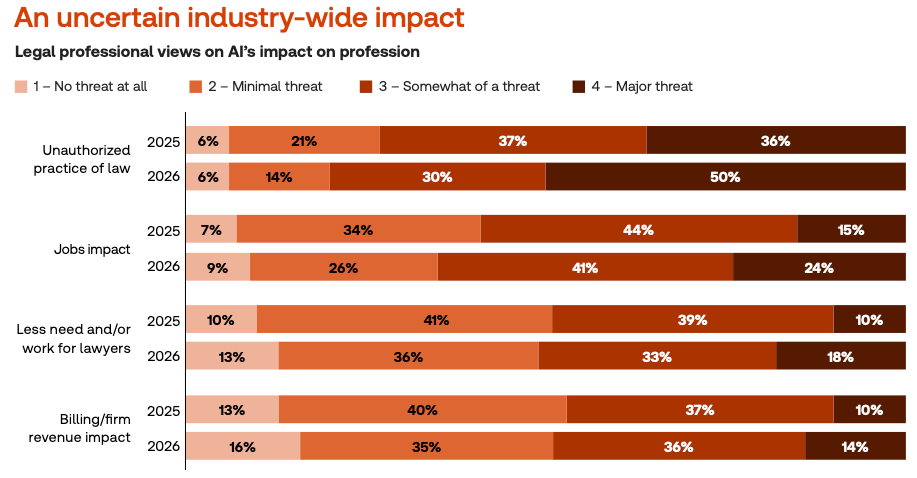
Source: Thomson Reuters
**Summation:**
- Baker McKenzie is [laying off](https://futurism.com/artificial-intelligence/law-firm-sacks-hundreds-ai?ref=nearmedia.co) between 600 and 1,000 business employees because of AI. It's likely the start of a wave of major firm layoffs.
- As AI usage increases so do errors. A database [tracking hallucinations](https://www.damiencharlotin.com/hallucinations/??ref=nearmedia.co) in legal filings identified nearly 1,000 instances so far. That will only grow.
- Privilege problem: [US v. Heppner](https://www.courtlistener.com/docket/71872024/united-states-v-heppner/?ref=nearmedia.co) (S.D.N.Y.) held that attorney-client and work product privileges might not attach to AI uploads and answers.
### The Secret World of LSA Rankings
Near Media's recent podcast interviews with former Googler Eric Levine about LSAs contain a wealth of tactical information (links below). Levine was part of the original LSA team. He spent six years at Google focused on LSAs in different roles. Now he's founded an agency that specializes in LSAs, which are now present in more than 100 business categories and sub-verticals. Near Media data show that when LSAs appear (especially on mobile) they not only grab clicks but drive a significant percentage of all conversions. Levine offered best practices advice during the discussion. Among his recommendations, service areas should be defined as broadly as realistically possible. He recommends automated (not manual) bidding for Lead Maxxing (as Gen Z might say). Images matter: you need four to six high-quality images – there are more specifics around photos in the interviews. He recommends opting-in to all CTAs: messaging, calls, and booking if available. Of course reviews are critical and local marketers should maintain a steady review cadence. He adds that responsiveness across customer channels will impact placement. Google rewards businesses that quickly engage and the company pays attention to behavioral signals (clicks, calls) – no surprise there. Levine explains that IVR systems (because they delay contact) are a hidden rankings killer. Marketers should also use callouts (e.g., years in business), up to six. He adds that LSAs work best for high-volume "near me" categories and intent-based service queries. Don't use LSAs if you're "too niche" or your services don't line up with Google's established LSA categories.
**LSAs Now in 100+ Categories**
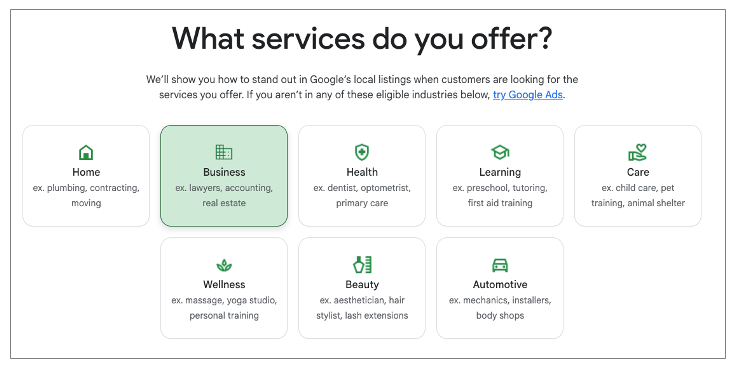
Source: Google
**Summation**
- Here's our two-part Eric Levine Interview: [Part 1](https://www.nearmedia.co/ep-242-p1-inside-google-local-services-ads-ranking-signals-lead-costs-and-why-lsas-beat-the-local-pack-w-eric-levine/) & [Part 2](https://www.nearmedia.co/ep-243-p2-the-truth-about-google-local-service-ads-rankings-reviews-photo-strategy-w-eric-levine/).
- There were a lot of subsequent questions from that session, so we're bringing Levine back in a forthcoming roundtable with additional guests.
- LSAs are part of Google's larger "pay to play" creep. The only way to mitigate is to build your brand locally offline, and on other digital channels.
### AI for Lawyer Discovery
One of the things we're tracking is how consumers are (or aren't) using AI as an alternative to Google for lawyer discovery. In our two recent national surveys we asked people where they would *turn first* and what would they *rely on most* to find an attorney. Basically, word-of-mouth and Google rank #1 and #2\. AI is much farther down the list for bottom of the funnel lawyer discovery. But this finding doesn't tell the whole AI story. People are inclined to use AI to learn about the issues in their case. That's currently separate from lawyer finding, but it may not be for long. The differences between informational research and bottom of the funnel attorney lookups may quickly erode. As Google shows more AI Overviews (AIOs) and exposes more people to AI Mode, the distinction between "traditional" Google and AI becomes less meaningful. Our data show that people generally like and value the AI experience. And in user testing, we don't see AIOs "stealing" organic clicks – that's a job for LSAs. Instead the AIO often boosts lawyer awareness, which may prompt a click on a follow-up search. In our January survey people expressed openness to using AI Mode for lawyer finding. So despite the low adoption of AI today as a lawyer discovery tool, legal marketers must prepare for a near-term future in which the funnel is more compressed and informational legal research very quickly turns into lawyer finding.
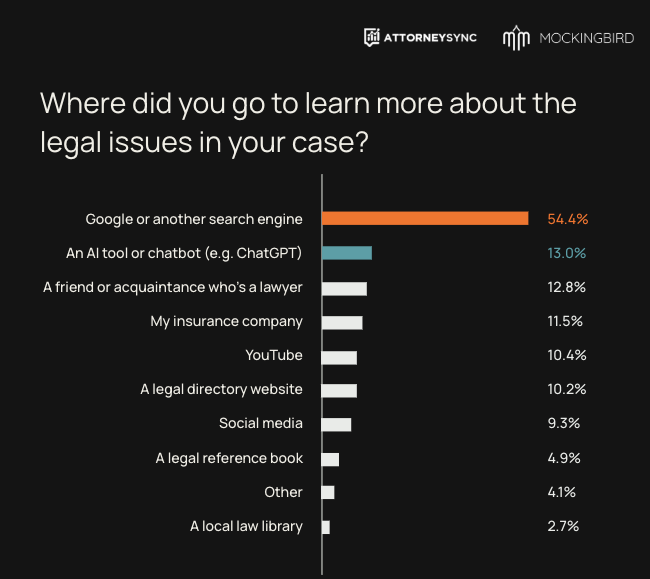
Source: Near Media Legal Consumer Survey Wave 1
**Summation:**
- We're in the midst of a backlash of sorts among many SEOs and digital marketers, who point to low AI referral traffic. That's too simplistic.
- AIOs are an AI Mode onramp. Yet Google tends not to show AIOs for "accident lawyer \[city name\]." Instead: LSAs, PPC ads and Pack ads.
- Consumers see AI and conventional search as complementary and use them together. The future involves more blending, obviously.
### Need for Review Diversification
BrightLocal's 8th annual consumer review [survey](https://www.brightlocal.com/research/local-consumer-review-survey/??ref=nearmedia.co) reaffirms two things: 1) reviews are the top-driver of consumer decisions and Google continues to be the top review site, although it declined 12 points YoY. Beyond these, there are a number of other findings worth calling out. If you look at the chart below, what you see is a growing list of places users look for local recommendations, including ChatGPT, Apple Maps and AI Mode. And if you roll up AI into one category, it's now the #3 source for local recommendations. Consumer expectations of reviews/ratings are also rising; people want more reviews and higher ratings. Some of that, as Mike and I previously [discussed](https://www.nearmedia.co/ep-245-ai-strong-arm-tactics-a-shifting-review-landscape-are-reshaping-local-search/), is a function of review inflation/fraud. The survey reflects that consumers are generally aware of review fraud and looking at multiple sources partly as a hedge against fake reviews. While consumers often can't detect fake reviews – because only a minority actually read review text – they know the problem exists and want fraudsters punished (97%), with some even calling for "jail time" (16%). The tactical takeaway is that marketers must double-down on reviews (recency matters a lot) and invest energy in accumulating reviews on other platforms, especially Yelp and to some degree relevant legal directories. More broadly, legal marketers must also be aware of the citations and sources being used by AI, with a focus on ChatGPT and Gemini/AI Mode.
**Top Review Sites 2026**
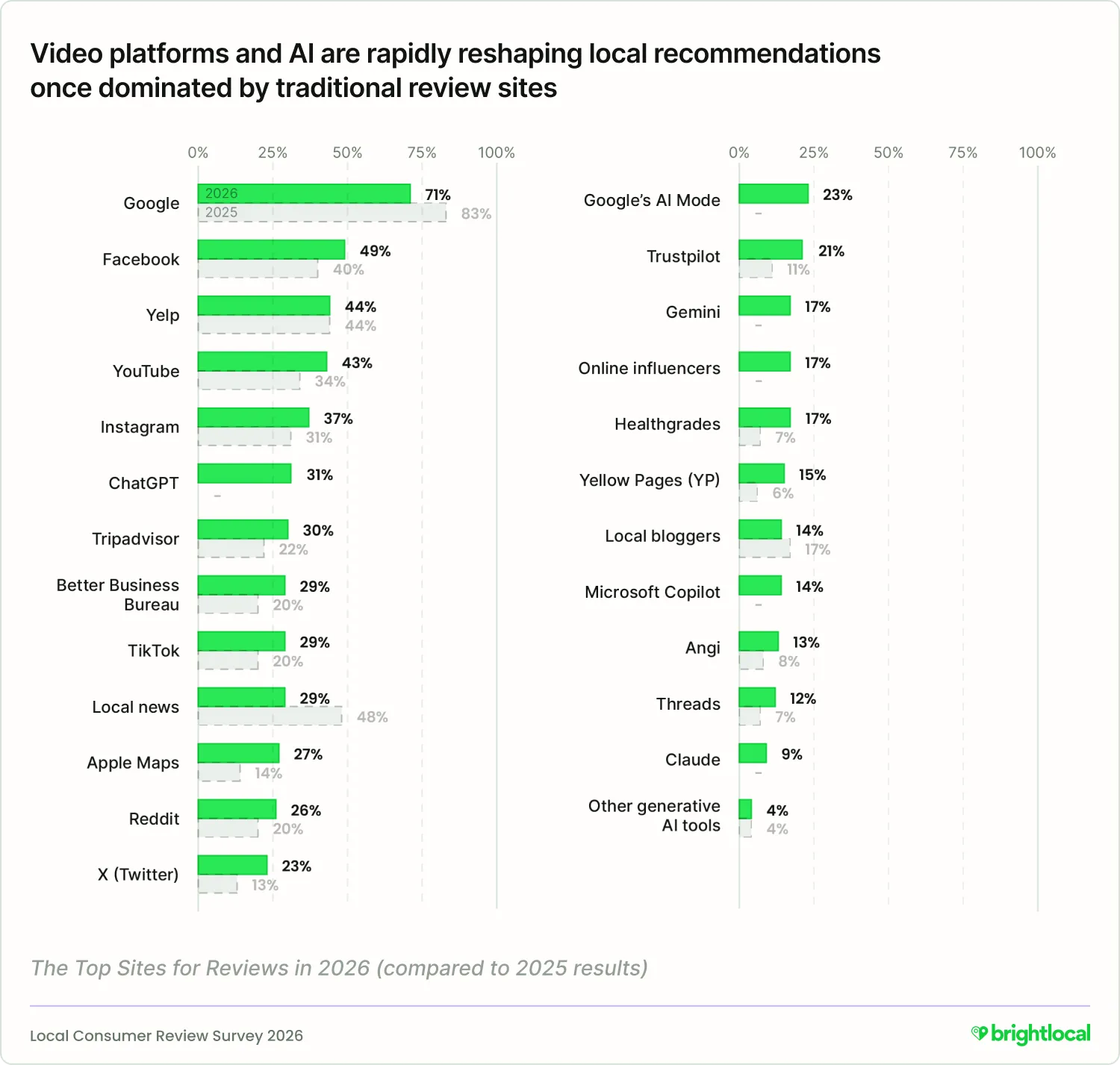
**Summation:**
- If you focus on one thing, Google/GBP remains the most important. But there's more going on in the market and you shouldn't ignore it.
- Surveys like this are helpful but legal marketers need vertically specific insights to avoid expending resources and time inefficiently.
- One thing that can balance a weaker review profile is brand awareness. However, building local awareness is a long-term proposition.
### Sidebar
- How to [access AI search prompts](https://www.linkedin.com/posts/darrenshawwhitespark%5Fmost-seos-dont-realize-they-can-see-ai-search-activity-7432454495785115648-Irmw/?ref=nearmedia.co) inside Google Search Console.
- You [can't track AI](https://sparktoro.com/blog/new-research-ais-are-highly-inconsistent-when-recommending-brands-or-products-marketers-should-take-care-when-tracking-ai-visibility/?ref=nearmedia.co) ranking reliably – or [can you](https://www.linkedin.com/posts/garrettfrench%5Fyou-can-track-rank-in-ai-recently-a-massive-activity-7431716300353134592-UYbn/?ref=nearmedia.co)?
- Call buttons[migrating to ads](https://www.linkedin.com/posts/joyhawkins%5Fwe-found-out-where-the-click-to-call-in-activity-7432160242098147329-5qHy/?ref=nearmedia.co) and away from Local Pack.
- How to [respond](https://www.sterlingsky.ca/the-state-of-local-seo-in-2026/?ref=nearmedia.co) to more aggressive Google local monetization.
- Google may soon replace your [GBP](https://www.linkedin.com/posts/mblumenthal%5Fexploring-googles-newest-gbp-ai-generated-activity-7321518567068164096-zoo4/?ref=nearmedia.co) and [landing page content](https://www.linkedin.com/feed/update/urn:li:activity:7431776973804183552/?ref=nearmedia.co) with AI.
- Review platforms [appear more often](https://learn.g2.com/do-software-review-platforms-show-up-more-in-the-bottom-of-the-funnel?ref=nearmedia.co) in higher intent AI answers.
- Review removals and [changes](https://www.linkedin.com/posts/hiroko-imai%5Fthe-google-business-profile-policy-has-been-ugcPost-7429686096097263616-Mzj6/?ref=nearmedia.co) in Google review guidelines.
- Google [nudging](https://www.linkedin.com/posts/claudia-tomina%5Fgoogle-is-nudging-reviewers-to-edit-their-activity-7432439022343389184-FYN5/?ref=nearmedia.co) reviewers/local guides to provide more detail.
- Yelp's annual (review) trust and safety [report](https://blog.yelp.com/news/2025-trust-and-safety-report/?ref=nearmedia.co).
- ChatGPT [ads](https://searchengineland.com/chatgpt-ads-spotted-and-they-are-quite-aggressive-469651?ref=nearmedia.co): brand awareness opportunity for lawyers?
- Anthropic’s legal plugin (one of [several](https://claude.com/plugins-for/cowork?ref=nearmedia.co)) prompted huge [SaaS sell-off](https://www.cnn.com/2026/02/04/investing/us-stocks-anthropic-software?ref=nearmedia.co).
[](https://nearmedia.co/memo?ref=nearmedia.co)
Learn more about Near Media's [Private Legal Market Intelligence](https://www.nearmedia.co/personal-injury-law-research/)program, combining **quantitative, qualitative and customized behavioral research**.
### EP 245 - AI, Strong-Arm Tactics & a Shifting Review Landscape Are Reshaping Local Search
URL: https://www.nearmedia.co/ep-245-ai-strong-arm-tactics-a-shifting-review-landscape-are-reshaping-local-search/
Last updated: 2026-02-25T20:31:34.000Z
Episode 245 examines Google’s expanding AI integration into local search, evidence that LSAs — not AI Overviews — are draining clicks, new restrictions on scraping review data, and new data from Yelp and Bright Local showing emerging consumer frustration with review fraud. The episode explores how trust, monetization, and AI personalization are reshaping local marketing.
Interested in sponsoring this podcast or our newsletters please reach out to [mblumenthal@nearmedia.co](mailto:mblumenthal@nearmedia.co)
[E-mail Mike ](mailto:mblumenthal@nearmedia.co)
### **The Podcast Deets**
### **1️⃣ Google AI & Click Economics (00:00–14:00)**
Google is replacing structured GBP data with AI-generated summaries, nudging users into AI Mode, and expanding monetization pathways. Aleyda Solis’ study and Near Media research show ads — especially LSAs — are siphoning clicks.
### **2️⃣ Data Moats & Scraping Crackdowns (14:00–22:00)**
Google restricts scraping, disrupting SerpAPI. The move reinforces Google’s data advantage against ChatGPT and Perplexity while signaling an increasingly closed ecosystem.
### **3️⃣ Reviews, Inflation & Consumer Backlash (22:00–36:00)**
Yelp’s Trust Report and BrightLocal’s 2026 study show persistent fraud, rising consumer anger, review inflation in legal, and AI becoming the third source of recommendations.
### **Key Takeaways**
- Google is integrating more AI in the Local Brand Panels
- LSAs are the real click siphon — not AI Overviews.
- Google is tightening control over review data.
- Review inflation is undermining trust.
- Consumers want harsher penalties for fraud.
- AI search is increasing awareness but not eliminating click behavior.
- Local marketers must diversify trust signals beyond Google.
### **👇 Watch by topic:**
[ 00:00](https://www.youtube.com/watch?v=Fobx3u0Vk%5F0&ref=nearmedia.co) Introduction & Episode Overview
[01:30](https://www.youtube.com/watch?v=Fobx3u0Vk%5F0&t=90s&ref=nearmedia.co) Google Replacing GBP Content with AI
[08:30](https://www.youtube.com/watch?v=Fobx3u0Vk%5F0&t=510s&ref=nearmedia.co) AI Mode & Monetization Signals
[10:30](https://www.youtube.com/watch?v=Fobx3u0Vk%5F0&t=630s&ref=nearmedia.co) Are AI Overviews Killing Clicks?
[14:00](https://www.youtube.com/watch?v=Fobx3u0Vk%5F0&t=840s&ref=nearmedia.co) LSAs as the Real Click Drain
[16:00](https://www.youtube.com/watch?v=Fobx3u0Vk%5F0&t=960s&ref=nearmedia.co) Google Blocking Review Scraping
[19:00](https://www.youtube.com/watch?v=Fobx3u0Vk%5F0&t=1140s&ref=nearmedia.co) Yelp Trust & Safety Report
[22:00](https://www.youtube.com/watch?v=Fobx3u0Vk%5F0&t=1320s&ref=nearmedia.co) BrightLocal 2026 Review Survey
[25:00](https://www.youtube.com/watch?v=Fobx3u0Vk%5F0&t=1500s&ref=nearmedia.co) Consumer Anger Over Review Fraud
[27:00](https://www.youtube.com/watch?v=Fobx3u0Vk%5F0&t=1620s&ref=nearmedia.co) Legal Vertical Review Inflation
[31:00](https://www.youtube.com/watch?v=Fobx3u0Vk%5F0&t=1860s&ref=nearmedia.co) AI as the Third Source of Recommendations
[35:00](https://www.youtube.com/watch?v=Fobx3u0Vk%5F0&t=2100s&ref=nearmedia.co) Multi-Platform Validation Behavior
[36:00](https://www.youtube.com/watch?v=Fobx3u0Vk%5F0&t=2160s&ref=nearmedia.co) Final Thoughts
### **Related Links**
[Google Maps ‘limited view’ was hiding reviews, images for signed-out users \[U: Fixed\]Google Maps is more than just a navigation app, as it contains a treasure trove of data about locations across…9to5GoogleBen Schoon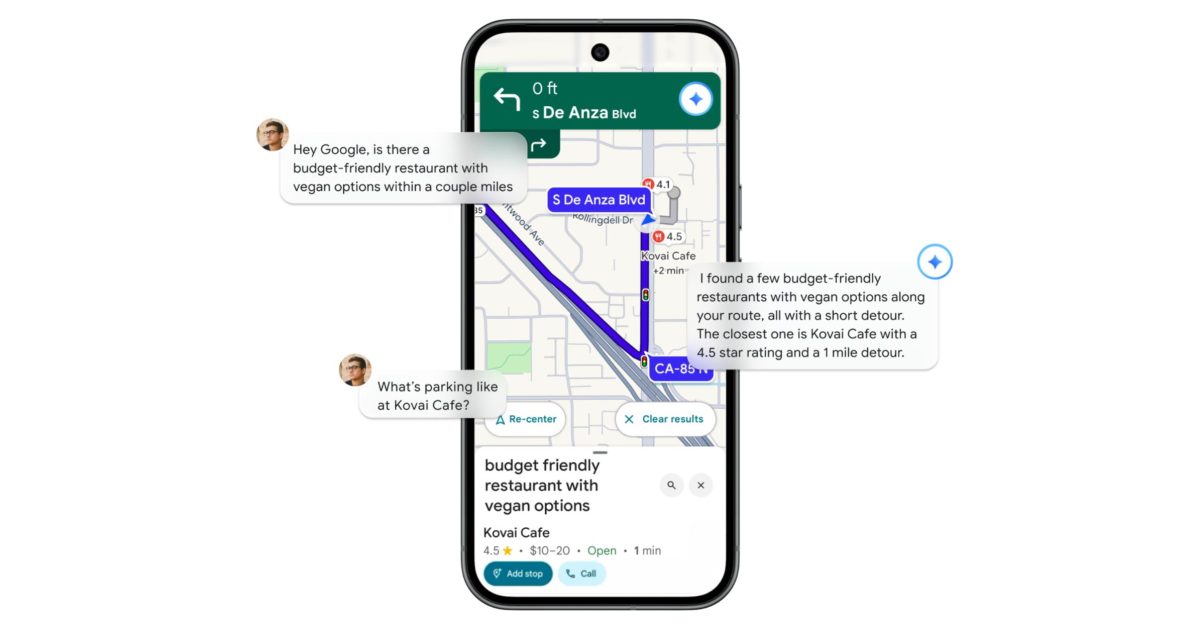](https://9to5google.com/2026/02/23/google-maps-limited-view-signed-out/?ref=nearmedia.co)
[\[Google Maps Reviews API\] Low success rateSerpApi’s Status Page - \[Google Maps Reviews API\] Low success rate.\[Google Maps Reviews API\] Low success rate](https://status.serpapi.com/incidents/9dpwt5xjfp0n?ref=nearmedia.co)
[**Search Isn’t Just Turning to AI, it’s being Re-Monetized: Text Ads Are Taking a Bigger Share of Google SERP Clicks**](https://www.aleydasolis.com/en/search-engine-optimization/serp-shifts-ads-remonetized/?ref=nearmedia.co)
[**2025 Yelp Trust & Safety Report**](https://trust.yelp.com/trust-and-safety-report/2025-report/?ref=nearmedia.co)
[**Local Consumer Review Survey 2026: Star Ratings Keep Rising, Old Reviews Don’t Cut It**](https://www.brightlocal.com/research/local-consumer-review-survey?ref=nearmedia.co)
Sign up for our new Legal Marketing Newsletter. Once a month, no fluff, just good ideas.
[Sign Up ](#/portal)
### **Full Transcript -->** [**On-line**](https://nearmedia.co/ep-244-ai-visibility-vs-google-rankings-rand-fishkin-on-the-future-of-search-zero-click-brand-measurement?ref=nearmedia.co)
### EP 244 - AI Visibility vs Google Rankings: Rand Fishkin on the Future of Search, Zero-Click & Brand Measurement
URL: https://www.nearmedia.co/ep-244-ai-visibility-vs-google-rankings-rand-fishkin-on-the-future-of-search-zero-click-brand-measurement/
Last updated: 2026-02-18T17:39:26.000Z
In this wide-ranging conversation, Rand Fishkin shares new research on AI brand visibility and challenges assumptions about rank tracking, attribution, and zero-click search. While AI responses are inconsistent, aggregate brand presence can be measured statistically. However, as discovery shifts to platforms and attribution erodes, marketers must rethink how they build brand and measure impact.
Interested in sponsoring this podcast or our newsletters please reach out to [mblumenthal@nearmedia.co](mailto:mblumenthal@nearmedia.co)
[E-mail Mike ](mailto:mblumenthal@nearmedia.co)
### **The Podcast Deets**
### **1️⃣ AI Visibility & Ranking Reality (**[**00:00–15:00**](https://www.nearmedia.co/matchcraft-bought-by-vendasta/)**)**
Rand discusses his experiment testing whether AI brand tracking is possible. While individual AI responses are inconsistent, brand frequency can be measured statistically across large samples. Rank tracking, however, is unreliable. The segment explores AI randomness, long-tail discovery, and how finite local categories behave differently from broad product categories.
### 2️⃣ Zero-Click, Discovery & Agentic Commerce ([15:00–31:00](https://www.youtube.com/watch?v=o%5F5oc-O1B8k&t=900s&ref=nearmedia.co))
The conversation shifts to zero-click journeys and whether AI will disintermediate websites entirely. Rand argues that commerce isn’t disappearing—but discovery is moving onto platforms. The group debates UX differences between Google and generative AI and explores whether agentic commerce will meaningfully reshape transactions.
### 3️⃣ The Attribution Crisis & Brand Strategy ([31:00–40:00](https://www.youtube.com/watch?v=o%5F5oc-O1B8k&t=1890s&ref=nearmedia.co))
The final segment tackles marketing measurement. With AI platforms providing little referral transparency, the illusion of perfect attribution is breaking down. Rand explains why paid platforms retain power due to behavioral data, and why local businesses should focus on selective channel strength rather than being everywhere.
### **Key Takeaways**
- AI rank tracking is unreliable; brand frequency tracking is possible.
- Zero-click journeys are growing, but sales aren’t disappearing.
- Discovery is shifting from owned media to platforms.
- Attribution models are weakening as AI disintermediates clicks.
- Paid platforms retain advantage via behavioral data.
- Local businesses should focus narrowly, not universally.
- “Don’t build on rented land” is no longer viable advice.
### **👇 Watch by topic:**
[00:00](https://www.youtube.com/watch?v=o%5F5oc-O1B8k&ref=nearmedia.co) – Intro & 2026 Predictions
[02:00](https://www.youtube.com/watch?v=o%5F5oc-O1B8k&t=120s&ref=nearmedia.co) – Can You Track Brand Visibility in AI?
[09:00](https://www.youtube.com/watch?v=o%5F5oc-O1B8k&t=540s&ref=nearmedia.co) – AI Randomness & Long-Tail Brand Discovery
[15:00](https://www.youtube.com/watch?v=o%5F5oc-O1B8k&t=900s&ref=nearmedia.co) – Is AI More “Democratic” Than Google?
[20:00](https://www.youtube.com/watch?v=o%5F5oc-O1B8k&t=1200s&ref=nearmedia.co) – UX Debate: ChatGPT vs Traditional Search
[24:30](https://www.youtube.com/watch?v=o%5F5oc-O1B8k&t=1470s&ref=nearmedia.co) – Zero-Click, Discovery & Website Disintermediation
[29:00](https://www.youtube.com/watch?v=o%5F5oc-O1B8k&t=1740s&ref=nearmedia.co) – Agentic Commerce & The Future of Transactions
[31:30](https://www.youtube.com/watch?v=o%5F5oc-O1B8k&t=1890s&ref=nearmedia.co) – The Collapse of Attribution & Measurement Illusions
[35:00](https://www.youtube.com/watch?v=o%5F5oc-O1B8k&t=2100s&ref=nearmedia.co) – Google’s Paid Media Advantage
[37:30](https://www.youtube.com/watch?v=o%5F5oc-O1B8k&t=2250s&ref=nearmedia.co) – Where Should Local Businesses Build Brand?
[39:30](https://www.youtube.com/watch?v=o%5F5oc-O1B8k&t=2370s&ref=nearmedia.co) – Final Takeaways
### **Related Links**
[NEW Research: AIs are highly inconsistent when recommending brands or products; marketers should take care when tracking AI visibility - SparkToroThe Problem: For the last few years, companies have been investing inordinate sums into AI tracking and AI visibility for their brands and products.SparkToroRand Fishkin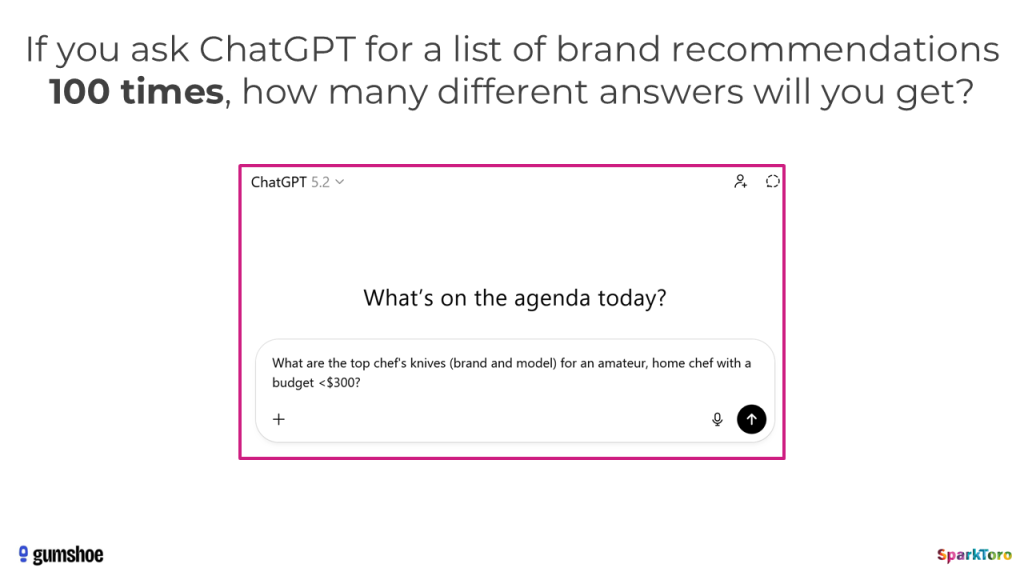](https://sparktoro.com/blog/new-research-ais-are-highly-inconsistent-when-recommending-brands-or-products-marketers-should-take-care-when-tracking-ai-visibility/?ref=nearmedia.co)
[The 5 Big Trends that Will Dominate Marketing in 2026 - SparkToroI find most end-of-year prediction and crystal ball-gazing listicles to be trash. They don’t prove their assertions, use anecdotes rather than data atSparkToroRand Fishkin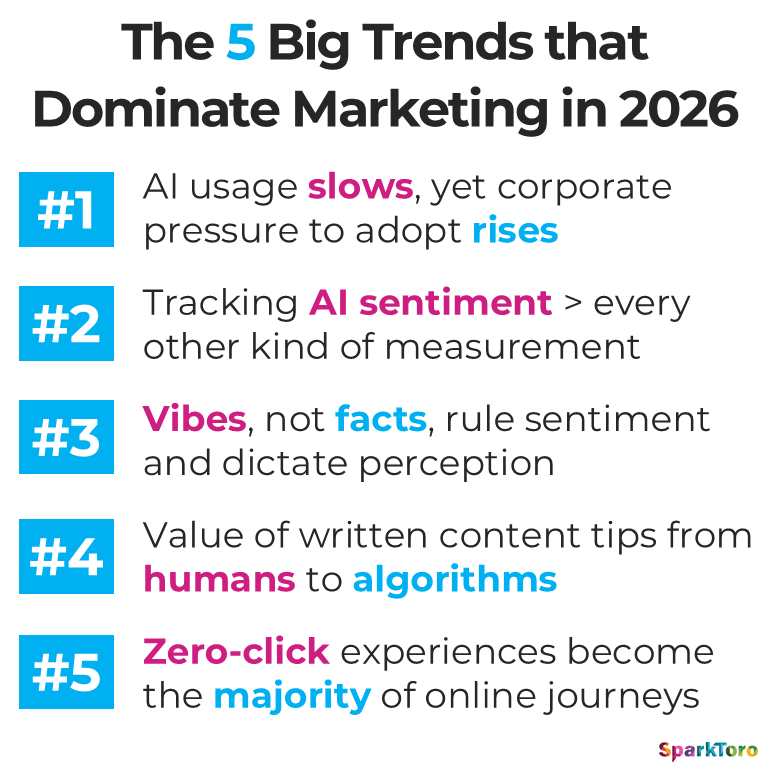](https://sparktoro.com/blog/the-5-big-trends-that-will-dominate-marketing-in-2026/?ref=nearmedia.co)
[Rand Fishkin’s Bio, Speaker Rates, Contact Details | SparkToroHow to book Rand Fishkin to speak at your event, tweet about your groundbreaking ICO (kidding! Please don’t), or get in touch via email.SparkToro](https://sparktoro.com/team/rand?ref=nearmedia.co)
Sign up for our new Legal Marketing Newsletter. Once a month, no fluff, just good ideas.
[Sign Up ](#/portal)
### **Full Transcript -->** [**On-line**](https://nearmedia.co/ep-244-ai-visibility-vs-google-rankings-rand-fishkin-on-the-future-of-search-zero-click-brand-measurement?ref=nearmedia.co)
**Greg Sterling (00:10)**
Hey everybody, welcome back to the Near Memo with David Mihm, Mike Blumenthal, me, Greg Sterling, and today our friend, Rand Fishkin is back for an encore performance. And we'll be talking about a lot of interesting things tied into his predictions for 2026 and adjacent issues. Welcome, Rand. Thanks for being on again. It's always great to have you.
**Rand Fishkin (00:28)**
Yeah, my pleasure. Always great to be here with you.
**Mike Blumenthal (00:30)**
I would like to think of it as a second act rather than an encore. That way we can get them back again. Then we have an encore.
**Greg Sterling (00:36)**
All right. So among the predictions that you made earlier, not too long ago, you talked about five big marketing trends. AI usage is going to slow, yet there’ll be continuing corporate pressure for employees and companies to adopt it. AI sentiment tracking is inherently unreliable and people are disproportionately investing in that while underinvesting in other areas. There’s a credibility crisis happening to some degree online. We’re starting to see more and more content written for algorithms and less for humans, more AI abstraction of content and summaries, and more zero-click experiences becoming the majority of online journeys.
Let’s jump into the issue of people investing in AI visibility tools. You did some compelling research on their reliability and their ability to consistently show where brands appear. Why don’t you elaborate?
**Rand Fishkin (01:59)**
I had a theory that tracking AI tool responses to brands was entirely baloney because of randomness: the statistical lottery of word generation, differences between API calls, caching, personalization, geography, and how frequently results change. I assumed asking the same question 1,000 times would yield 1,000 chaotic responses.
We had 600 volunteers run identical prompts through Claude, ChatGPT, and Google AI and submit responses. Every answer was different in wording, but brand presence was more consistent than I expected. We discovered you can track brand presence frequency with statistical rigor—if you run prompts enough times, avoid assuming models are identical, account for weekly change, and use realistic prompts. Rank tracking, however, is full baloney.
**David Mihm (04:28)**
I read your results with interest, especially around medical searches like cancer treatment. The expected brands showed up. But at the end of the day, is it really useful to know you're present 75% of the time among peers? It’s better than Google where Mayo or Cleveland Clinic dominate, but there’s not a lot of “there” there relative to the money being spent.
**Rand Fishkin (05:32)**
If you're running campaigns to improve AI visibility and using statistical methods properly, you can measure improvement. But paying $50,000 a month for enterprise tracking tools feels excessive.
**Mike Blumenthal (06:20)**
What was the distribution of AI clients used? And what happens when brand gets localized to a small geographic area?
**Rand Fishkin (06:42)**
We used Google AI Overviews (or AI Mode), Claude Opus, and ChatGPT. Prompts were run 65–90 times per platform. In a localized example like LA Volvo dealers—about 9–11 total dealers—only eight ever appeared. The top four were dramatically overrepresented. AI visibility is real and resembles early Google Maps dynamics. But in AI, you can’t scroll to see more. If you're invisible, you're invisible.
**David Mihm (09:41)**
In broader categories like personal injury lawyers in LA, results vary wildly—even qualitatively. Sometimes maps appear, sometimes directories. Variability increases with more brands in the pool.
**Rand Fishkin (10:48)**
We also asked users to write their own prompts (B2C and B2B). Over 150 unique prompts were generated. More than 95% of them produced one or more brands. When intent is transactional, AI tools typically produce brand lists.
**Greg Sterling (13:14)**
Google produces consistent rankings. AI responses may distribute attention across more acceptable options. Does that make AI more democratic?
**Rand Fishkin (14:29)**
It depends on query type. In narrow local categories, visibility clusters. In broader categories—like sci-fi novels—we saw 211 unique titles across 99 responses. The long tail is massive.
The future of digital marketing is platform-based visibility, not link-based traffic generation.
**Mike Blumenthal (17:47)**
Google’s knowledge graph and clickstream data give it a structural advantage.
**Rand Fishkin (18:33)**
Knowledge graphs are replicable. Clickstream data is not. The DOJ case showed click behavior is Google’s core advantage.
**Greg Sterling (20:24)**
People prefer conversational AI UX.
**Rand Fishkin (21:08)**
ChatGPT feels like Ask Jeeves. Google’s efficiency remains strong in lower-funnel contexts.
**Rand Fishkin (23:09)**
After doing this research, I don’t trust one AI answer. I refresh multiple times. Any single response is incomplete.
**David Mihm (24:21)**
Zero-click may grow, but sales won’t disappear.
**Rand Fishkin (26:07)**
Discovery and audience influence are moving onto platforms. “Don’t build on rented land” is no longer viable advice. You must build where attention exists.
**Greg Sterling (27:07)**
Agentic commerce could shift transactions onto platforms like Google Merchant Center.
**Rand Fishkin (27:58)**
Commerce centralization aligns with broader cultural consolidation. Platforms aim to become research and transaction endpoints.
**David Mihm (29:10)**
When will agentic commerce become real?
**Rand Fishkin (29:18)**
Too early to predict. Protocol adoption will determine timing.
**Greg Sterling (30:40)**
Let’s discuss measurement. What happens to attribution?
**Rand Fishkin (31:40)**
Perfect digital attribution is collapsing. AI platforms don’t report visibility clearly. Measurement is shifting toward time-series brand lift—similar to billboard modeling.
SparkToro experienced a spike from a TikTok mention with no link. We only saw correlation, not attribution.
Google and Meta retain power via behavioral data. They can predict purchases before they happen. Incrementality testing—turning ads off—is rarely done due to executive fear.
**Greg Sterling (36:14)**
Local businesses can’t test scientifically across all channels.
**Rand Fishkin (36:51)**
They don’t need to. Follow the 80/20 rule. Focus where your audience pays attention, where you’re strong, and where you’re competitively unique. Ignore the rest.
**Greg Sterling (39:45)**
Great advice. Thanks, Rand.
**Rand Fishkin (39:53)**
My pleasure.
### Webinar: What Really Drives (PI) Clients to Choose You
URL: https://www.nearmedia.co/webinar-what-really-drives-pi-clients-to-choose-you/
Last updated: 2026-02-18T05:47:27.000Z
Join us for our next **webinar on February 24th**: [Before the Click: What Really Drives PI Clients to Choose One Lawyer Over Another](https://go.gatherup.com/winning-in-2026-reviews-ai-and-the-new-rules-of-search?ref=nearmedia.co). It's presented by GatherUp – next Tuesday.
We'll unpack proprietary behavioral data that shows **how consumers search for a PI lawyer today**, what truly influences their choices, and how AI-driven results are reshaping competitive visibility.
**Near Media’s user-behavior research pulls back the curtain on what real clients think and do before they ever land on your website.** While the research focuses on Legal, many of the findings are broadly applicable to other categories.
****We'll see next Tuesday!**
[Sign Up ](https://go.gatherup.com/winning-in-2026-reviews-ai-and-the-new-rules-of-search?ref=nearmedia.co)
**David, Mike & Greg**
### Google Slips, TikTok Local Feed, Ads Not AIOs, Social Media on Trial
URL: https://www.nearmedia.co/google-slips/
Last updated: 2026-02-16T16:10:51.000Z
### Google Review Dominance Slips
Near Media behavioral and survey research has found repeatedly that, across categories, reviews are a/the top consumer-decision driver. And despite still-rampant fraud, consumers appear more reliant on reviews than ever. But consumer behavior – mirroring search behavior – is changing. BrightLocal's new consumer review [survey](https://www.brightlocal.com/research/local-consumer-review-survey/?ref=nearmedia.co) (8th year) reflects this increasing complexity. In general, consumers are looking in more places for business validation and local recommendations, including AI. They also have higher expectations – and they're really mad about review fraud. In this year's survey, Google lost 12 points as the dominant local reviews site. Generative AI sites grew from single-digit usage in 2025 to become the "third most popular source of business recommendations" (below). BrightLocal's findings show that users are diversifying (somewhat) to find or validate local recommendations. This suggests a lack of trust in any single source. Consumer expectations are also rising, both in terms of the number of desired reviews and star ratings: "31% of consumers will only use a business that has 4.5+ stars." While it varies by context, Near Media user testing has found consumer expectations of review volumes and star-ratings are sky high, especially in high-consideration categories. In parallel with other changes, according to the BrightLocal survey, consumers appear to be getting more sophisticated in their evaluation of reviews. And they want businesses committing fraud to be severely punished, including being banned from review sites and de-indexed from Google.
**Growth of AI for Local Search**
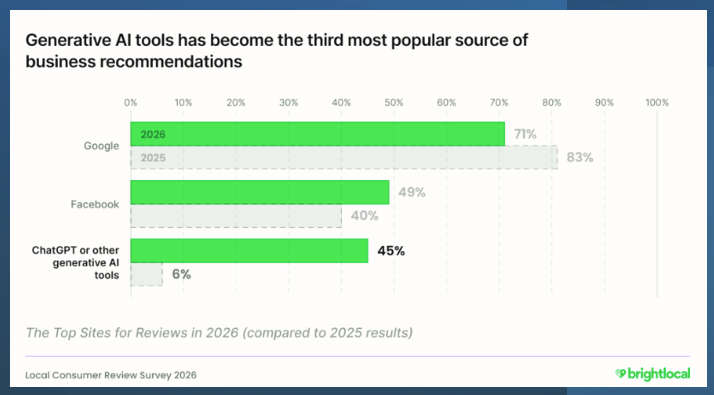
Source: BrightLocal
_This post is for subscribers only._
### EP 243 P2 - The Truth About Google Local Service Ads: Rankings, Reviews & Photo Strategy (w/ Eric Levine)
URL: https://www.nearmedia.co/ep-243-p2-the-truth-about-google-local-service-ads-rankings-reviews-photo-strategy-w-eric-levine/
Last updated: 2026-02-12T20:51:46.000Z
Interested in sponsoring this podcast or our newsletters please reach out to [mblumenthal@nearmedia.co](mailto:mblumenthal@nearmedia.co)
[E-mail Mike ](mailto:mblumenthal@nearmedia.co)
Local Service Ads sit at the very top of many high-value local searches — yet most firms treat them as either a budget game or a review race. The reality is more nuanced. LSAs blend algorithmic ranking signals with behavioral psychology. Review velocity, responsiveness, and messaging opt-in matter — but so does how your business visually presents itself. Headshots, office imagery, and “user journey” photos influence trust long before someone reads a review. Understanding this mix of ranking signals and visual cues is critical for anyone competing in LSAs.
Sign up for our new Legal Marketing Newsletter. Once a month, no fluff, just good ideas.
[Sign Up ](#/portal)
### **The Podcast Deets**
### Segment 1 ([00:00 – \~11:00](https://www.youtube.com/watch?v=LSKfdZhSvJQ&t=120s&ref=nearmedia.co))
**Visual Trust: Headshots, Photos & Review Psychology**
The episode opens by dissecting how LSAs visually present businesses. Headshots are required and framed differently from standard GBP photos, raising questions about trust, gravitas, and perception. The discussion expands into a “user journey” photo strategy — showing the exterior, front desk, and team to reduce friction and increase conversion. Reviews are layered on top as the dominant decision shortcut.
### Segment 2 ([11:00 – \~19:00](https://www.youtube.com/watch?v=LSKfdZhSvJQ&t=660s&ref=nearmedia.co))
**Ranking Mechanics: Reviews, Responsiveness & Tactical Setup**
This segment explores what truly drives LSA ranking: review recency, cadence, messaging opt-in, and call responsiveness. LSAs are not PPC — you cannot simply outbid competitors. Instead, businesses must maintain operational excellence. Setup best practices include broad service areas, maximize leads bidding, and maintaining at least 4–6 strong photos. Phone answer speed emerges as a hidden but critical performance lever.
### **Segment 3 (**[**19:00 – 28:00**](https://www.youtube.com/watch?v=LSKfdZhSvJQ&t=1110s&ref=nearmedia.co)**)**
**AI Integration, Expansion & The Future of LSAs**
The final section looks ahead. With over 100 categories already active, LSAs are expanding aggressively. The conversation explores how AI search (Gemini, conversational interfaces) could evolve LSAs into interactive, intent-driven ad units that respond dynamically to user constraints and preferences. The future of LSAs likely involves deeper integration with AI-powered local search workflows.
### **Key Takeaways**
• LSAs are not purely pay-to-play
• Review velocity and recency matter more than raw volume
• Suspiciously perfect 5.0 profiles distort competition
• Photos should reduce friction, not showcase branding
• Phone answer speed materially affects conversion
• Messaging opt-in and responsiveness influence ranking
• Agencies often overpromise due to algorithm misunderstanding
• LSAs are expanding across nearly all local verticals
• AI search will likely reshape LSA presentation and interactivity
• Overly niche businesses may not benefit from LSAs
### 👇 Watch by topic:
[00:00](https://www.youtube.com/watch?v=LSKfdZhSvJQ&ref=nearmedia.co) – Introduction: What LSAs Really Are
[02:00](https://www.youtube.com/watch?v=LSKfdZhSvJQ&t=120s&ref=nearmedia.co) – Headshots & Visual Trust in LSAs
[04:30](https://www.youtube.com/watch?v=LSKfdZhSvJQ&t=270s&ref=nearmedia.co) – The “User Journey” Photo Strategy
[07:30](https://www.youtube.com/watch?v=LSKfdZhSvJQ&t=450s&ref=nearmedia.co) – Review Volume, 5.0 Ratings & Competitive Barriers
[11:00](https://www.youtube.com/watch?v=LSKfdZhSvJQ&t=660s&ref=nearmedia.co) – Ranking Signals: Velocity, Recency & Responsiveness
[15:30](https://www.youtube.com/watch?v=LSKfdZhSvJQ&t=930s&ref=nearmedia.co) – Set It & Forget It vs Moving Targets
[18:30](https://www.youtube.com/watch?v=LSKfdZhSvJQ&t=1110s&ref=nearmedia.co) – Why You Can’t Pay Your Way to the Top
[21:00](https://www.youtube.com/watch?v=LSKfdZhSvJQ&t=1260s&ref=nearmedia.co) – AI Search & the Future of LSAs
[24:00](https://www.youtube.com/watch?v=LSKfdZhSvJQ&t=1440s&ref=nearmedia.co) – Category Expansion & Growth
[25:30](https://www.youtube.com/watch?v=LSKfdZhSvJQ&t=1530s&ref=nearmedia.co) – Lead Disputes, Credits & Expectation Setting
[27:30](https://www.youtube.com/watch?v=LSKfdZhSvJQ&t=1650s&ref=nearmedia.co) – Final Takeaways
### Related Links
[LeadWise HQ | activate your local presence | Boost Local Visibility TodayExpert local digital strategies with Google LSAs and profiles to help businesses enhance their local presence and drive growth.LeadWise HQ | activate your local presence](https://www.leadwisehq.com/?ref=nearmedia.co)
[Eric Levine LinkedIn Profile](https://www.linkedin.com/in/eric-levine-0b35659b/?ref=nearmedia.co)
### **Full Transcript**
# Episode 243 – Google Local Service Ads
Mike Blumenthal AI (00:00)
This is part two of our interview about the ins and outs of Google Local Service Ads.
Mike Blumenthal (00:10)
You must have a great sense of what types of photos work best in this context. Obviously we see a lot of headshots. Is your oldest lawyer a better bet? Is your male lawyer a better bet than a female lawyer? how do you understand this imagery and what works best for people?
Eric Levine (00:29)
Yeah, for these, like for lawyers right here, the photo for a headshot is specifically different. So like in the profile, when you go to upload, there's a headshot specific photo that you upload that is different than your normal just business photos. So the headshot, they want something specifically, they have the specific guidelines for the headshot and that's for what's going to display on search right there with the ads. But then for the rest of the photos,
Mike Blumenthal (00:47)
Eric Levine (00:58)
What I typically like to tell people is that we want to display the user journey with the photos. And the best way to think about it is like Amazon product photos. So if you are going to buy a new office chair and you're looking through Amazon photos, the least important photo that you could possibly see is the logo of whatever business that is. So a lot of times we'll see like office, even law offices, they'll have a picture of the logo or something like that. That logo doesn't tell me that they're good lawyers. It doesn't tell me that they're going to get me my money. It doesn't really tell me anything about the business. And again, most people aren't really going to be looking through. if you've got 50 pictures, you know, by the time you've gotten to the 40th picture of a personal injury law firm, you know, you're not getting any additional information. So. What we want to do is demonstrate the user journey. So for a law office, example, being able to see early on the front of the building. actually in that, you could see what the front of the building looks like. That's going to help show somebody where they park, like where the front door is, what they're actually going to be walking into. The next photo I'd want to see is like the front desk. So that, you know, I know that, you know, this is where the receptionist is. This is where I'm going to go. And then the next photo beyond that is like, conference room and then maybe down the line is the photos of the team or anything like that.
Greg Sterling (02:18)
So this is general advice about all GBP photos you're saying. I mean, we're talking about LSAs, but you would give this advice to somebody just setting up a GBP, the user journey as the guide. Yeah, okay.
Eric Levine (02:30)
Yeah, absolutely. Because it's much more user behavior than what Google is looking for using their image recognition. It's much more about when people actually click on the ad, what is the difference between when people are comparing? That's one thing I used to joke with an agency before where they did pest control. they're talking about people comparing pest control. And I'm like, don't know what pest control. They don't know anything about pest control. So what are they actually comparing? Really, they're gonna be looking at reviews. They're gonna make sure that they're in their area. And they may look through a couple photos, but really that's it. And so for like home services, the types of photos that you wanna see is I wanna see the van, you know, in the driveway or the van parked out front. So I know, okay, they got a blue van. So in my head, that's what it's gonna look like. The guy walks up to my house wearing a blue polo shirt. You know, I can kind of picture what the experience is gonna be like. I'm more likely to convert. That's the idea.
Mike Blumenthal (03:21)
So within this, obviously you've standardized around headshots. I can understand why people like to see, get a sense of whether that person's in their tribe or not and a headshot close up is the best way to do it. I mean, Is there advice you can provide on providing the best possible headshots? I mean, if you have three lawyers in the firm, should it be the oldest one, the youngest one, the... You know, you know what I mean? It's like, how would one choose which lawyer to put up for Broderick, Broderick and Broderick or whatever.
Eric Levine (03:58)
That's tough. As far as why the headshot photos, like why they choose headshot versus just like on Google Business Profile where you can put any photo first is this looks more consistent. And Google cares a lot about the consistency and how it looks. As far as like who should be the face of your business, I mean, maybe run some user experience studies and do some A.B. testing on whose face is the best. But otherwise, likely with the business owner. Whoever is the managing partner at the firm, the face of the company. And yeah, that's who you probably typically want to go with.
Mike Blumenthal (04:32)
I did some user survey work years ago and Gravitas seemed the older the lawyer, the more people chose it. I'm just curious if that's still the case. That was 10 or 15 years ago I did that research. I don't know. Anyways, back to you.
Eric Levine (04:48)
When you've got the face next to reviews, I think you look at the face, but if I'm looking at these three people, I'm really, gonna be looking at the reviews. And to your point about the 5.0 looking a little fake, yeah, sometimes too perfect looks like, almost like plastic. It sometimes looks too perfect.
Greg Sterling (05:08)
Well, there there's different responses to that. There are some people who are savvy enough to say, hey, that doesn't seem realistic or that doesn't seem legit. But most people don't question. I mean, based on this user research that we've done, which is quite a lot of it, most people are looking at ratings and number of reviews and they're not doing any second guessing or reading of text. There's about a third of the audience that will go in and look at reviews, but most people don't. They just look at it at this level and they make a choice based on that. And.
Mike Blumenthal (05:38)
Which does raise another question for me, Greg and Eric, which is that typically when I see these, we always see more reviews in LSAs, even though they're based on their local business, than we see in the PACs. Again, another attribute that seems to drive people towards the LSAs, but I'm curious why or how that comes about. I mean, why does that happen?
Eric Levine (06:04)
So because lawyers are able to target statewide, these are likely the top performing lawyers in the state from like a reviews standpoint, let's say. ⁓ But based on the Brooklyn, so this, the map package is showing you the best people who are in Brooklyn near you. The LSAs, assuming that they're targeting statewide, are showing you best lawyers in the entire state. So I think it's just more of like a sample difference there.
Mike Blumenthal (06:14)
Greg Sterling (06:29)
Just a kind of a quick follow up and then we should probably shift into a different area. In our work with the legal vertical and personal injury in particular, there were just a lot of five star, 1,000 plus, 2,000 plus reviews, which are obviously not legit or not entirely legit. And what that does is it creates a a barrier to businesses that are not engaged in some sort of review manipulation, review gating or outright fraud because they can't get into that top group because they just don't have enough reviews, right? Or they don't have, they're not hitting the thresholds. How do you respond to that?
Eric Levine (07:13)
Yeah, so when you say reviews are not legit, you I mean you think that they're having somebody pay a farm to generate false reviews?
Greg Sterling (07:21)
There's a variety of ways that reviews can be manipulated, but seeing 2,000 plus reviews or 1,200 reviews that are all five stars, not one less than five star review, that's just on its face, prima facie, as they say in the legal profession, evidence of fraud to me or some sort of manipulation.
Eric Levine (07:42)
Sure, sure. Yeah, I think that's fair. One thing I would say to people who are like worried about competing, let's say, is that reviews aren't the only signal that are used to determine who's gonna be in that top spot. Review velocity, so not just the fact that you have 5,000 five-star reviews, but the fact that you are continuing to get reviews every day, or at least have a good....
Greg Sterling (08:08)
So not velocity precisely, but cadence and recency. Because I mean, I think velocity is a signal that Google is going to look at to flag the account. If I have 25 reviews and then all of a sudden 100 show up, that's going to be a problem, I think, for Google.
Eric Levine (08:13)
Yes, absolutely. that they're probably gonna be doing it based on some sort of baseline. So if you are 200 % above all the averages, that might give a flag. But I don't think that there's like a specific number that is gonna cause a flag, but outliers are likely gonna raise some signals. But yeah, reviews, review velocity, who's opted into the CTAs. There's been a lot of push to get the lawyers to opt into messaging. A lot of lawyers have call centers where an intake team that's somewhere else. And it was difficult for them to opt in a messaging. But as you can see, the top people have messaging turned on. And then responsiveness rates as well, making sure that they're being responded to consistently. yeah, reviews aren't the only thing that they take into account. And if somebody is doing some sort of review fraud, over time people get flagged and people do get pulled down. And so it's a game just like any other fraudster that may last for a season and people may make out like bandits for a while. But eventually people are gonna get caught. That's just my guess.
Mike Blumenthal (09:33)
I have one final question about design of these. They have slightly different ⁓ attributes. are these attributes, are they selectable and in the setup process, family-owned, free consultation, those kinds of things, or are they automatically assigned?
Eric Levine (09:51)
Yeah, so those inside the profile is what's called the business bio call outs. And I believe you can call out up to six different ones, know, Better Business Bureau approved back in COVID times, they had all the COVID call outs, like wears masks or something like that. So you can go inside the dashboard and select, believe up to six and then Google will choose whichever they think are the best.
Greg Sterling (10:08)
Yeah, yeah.
Mike Blumenthal (10:14)
And have you seen, are you, do you favor certain ones that you think are more compelling, let's say in the legal space?
Eric Levine (10:23)
Interesting. Not particularly. Free consultation, that calls out to me when I see that, because I know that a lot of law firms don't do free consultation. So the fact that they do, that's a big call out. Family owned, I'm not sure how that conveys. Years in business, that's a pretty important one. ⁓
Greg Sterling (10:29)
Yeah. Yes.
Mike Blumenthal (10:40)
Do you vet years in business? I mean, if I just make it up and said I've been in business 45 years, because that's how long I've been a lawyer, but my firm has only been here 10, do you actually check that? is it a trust? It's just ⁓ you trust that people aren't going to lie about it.
Eric Levine (10:55)
think it's probably more based on trust, but at a certain point, you know, cause Google checks a lot of your documents and stuff. They do business entity background checks. I haven't seen anybody, at least I can't remember anybody who's been flagged for that before, but yeah, it'd be kind of hard to, well, it wouldn't be impossible to figure that out, but yeah, I don't think people have been gaming that too much.
Greg Sterling (11:20)
In this last section that we're talking about, let's focus in on some tactical recommendations and maybe a little bit of prognostication. What are the most common mistakes that you have seen people make or agencies make with LSAs? Just so we can flesh those out.
Mike Blumenthal (11:27)
I'm gonna take this off the screen, Greg, okay.
Eric Levine (11:43)
man, making promises you can't keep. ⁓ We're going to help you dominate the top spot. ⁓ Yeah, we're going to help you improve your lead volume by 15%. A lot of this stuff that's just not possible. And I think a lot of people are frustrated with their agencies because their agencies make these big promises that they can't keep.
Greg Sterling (11:46)
such as, what does that I mean? I see.
Eric Levine (12:09)
the, you know, I know it sounds kind of simple, but that's, that's one thing when, when we started Leadwise HQ, which was that all we have to do is just not lie to people. Like if we, if we do a good job and we do not lie to people, we don't set false expectations. People aren't going to have a reason to be upset with us. ⁓ like, you know, retroactively. So that's a big one that I've seen just unfortunately I've heard a lot of podcasts where people are, you know, just making promises that they know what's happening on the inside. You know, this is what happened. with reviews, this is what's happening with SEO. And I'm always like, how do you know? And they say, well, we've run tests and we've looked at this. And I say, when did you run those tests? Between May and June? How do you know that Google wasn't running an experiment from April to July? And it's very, difficult to try to A-B test or try to get ahead of the algorithm or think that you know what's happening. yeah, so I would say try not to make any promises you can't keep. Try not to get inside the brains of what's happening at Google because it's very, difficult to do. And even people at Google, a lot of them don't know, which is why they call it experiments. They're running different tests to see what's going to happen. So that's probably the biggest piece of advice is try not to do that.
Mike Blumenthal (13:23)
Does your agency, clearly we're seeing a trend towards Google making local pay to play either through LSAs and or local location asset PPC or location asset in maps. Does your agency also offer GBP and organic optimization or you strictly LSA? And what would you suggest agencies going forward to best sort of protect themselves against a future
Eric Levine (13:43)
to work.
Mike Blumenthal (13:50)
in which they are sleeping with the elephant. And the problem with that is you never know when it's going to roll over.
Eric Levine (13:56)
So at Leadwise HQ, we're just going deep on LSA because that is really what I have the domain expertise at. I know a lot about GBP, but there's a big difference. There are people like you folks who have just been in the space for many, many years and have just seen all of the episodes of the TV show and you know what the evolution has been. So there are people who are better at it than me, but there's also a lot of There's also just a lot of basic stuff that you can be doing. And the future of AI search, I know, cares a lot about local. I mean, if you ask ChatGPT or Gemini, are the top three plumbers in the area, it will tell you. And you can't pay to rank based on how they're doing it. So they're pulling some sort of intent signals. And my guess is a lot of it is pulled from Google Business Profile. They're reading reviews. They're seeing how many of your reviews are responded to. You know, looking at the FAQs, things on your website. That's the other big one. Website is massive. They're pulling a lot of stuff from website. Even LSA pulls stuff from website. Promotions and other things that are not added inside the LSA platform are pulled from the website. So, yeah, again, it's a little bit of a golf score where they're kind of doing a lot of different things in order to try to infer.
Mike Blumenthal (15:05)
A Trumpian golf score or a regular golf score?
Greg Sterling (15:06)
Wha- wha- ⁓
Eric Levine (15:09)
A little bit of both, they're experimenting, that's the whole
Mike Blumenthal (15:10)
You
Eric Levine (15:11)
thing.
Greg Sterling (15:13)
What are the, I mean, you've already gone through a sort of a list of things in terms of relevance and ranking signals. For somebody who's setting up these profiles and trying to compete, what are the top things that must be done? I mean, you've already sort of talked about this a little bit, but I just want to make sure that we've gotten all these out.
Eric Levine (15:37)
Yeah, absolutely. So a lot of people believe LSAs are set it and forget because compared to PPC, there are so many fewer levers that LSAs just come across as much easier to manage. I would say that there's two components to LSAs. There's a part that's set in and forget it. So things like service areas, you're not really changing those on a daily or weekly basis. Bid mode, photos, those are things that are not really changing on a daily basis. The minimum for photos is four to six high quality photos. That's the recommendation, the best practices. The best bid mode is maximize leads. There are people who swear by using manual leads, but the best practice to use manual leads that just automatic bidding lets Google set the price. And then service areas is serving as wide as you can reasonably serve. So that's the sort of set it and forget it part. And then there's like the, what I call like moving targets component of local services. And that's reviews and responsiveness. So these are things that are constantly happening. Reviews, people have extraordinarily complex operations with how they handle reviews and review responses and reputation management, and there's a million apps for all of that. And then the responsiveness component too. There's a million different third party apps that are used to either answer and respond to message leads. There's Leadferno that does SMS message response. And in the world of AI, I think that's gonna take over answering the phone. Those are the two components that it's a little bit, you have to... Understand what Google cares about they care about that review velocity and they care that you're answering your phone But then also it's customer service right the response in this specifically I believe there's I can't remember the exact number but it is something like 40 % of people hang up if they are not connected to a human in the first 30 seconds something like that and then 90 % hang up if they're not responded, you know, if human is not answered the phone within the first 50 seconds, something like that. And so a lot of times when a mom calls with people, I'll show them and we'll actually call their business, whether it's this, you know, big enterprise business or just a mom and pop shop, we'll call and we'll actually count down how long it's taking to be connected. And a lot of people are shocked to find out that it's one minute or one and a half minutes or longer ⁓ until a person is actually, you know, answers the call. So That's two important parts, the set and forget it component and then the moving targets that require a little bit more handholding.
Mike Blumenthal (18:08)
In those moving targets, there anything more important than the other? I mean, obviously response rate and reviews, booking information. I mean, if somebody has to prioritize one over the other, or one is failing one and the other, do you recommend a direction there?
Eric Levine (18:27)
This is one where you have to do everything. With Google Ads, you can pay your way to the top. And it's almost simpler in that sense, which is how do I dominate Google Ads? Well, pay the most amount of money. That's your best chance. With local services, you cannot pay your way to the top. So there are all these non-financial mechanisms by which people have to display that they are the best advertiser. And what that means is you have to do a little bit of everything. So I wouldn't tell people just focus on reviews, responsiveness doesn't matter, or vice versa. I would say you have to think a little bit about everything.
Greg Sterling (19:00)
You alluded to something a second ago, which is the idea that AI customer service tools will be answering the phone. That's happening at a lot of restaurants now. Do you foresee some of these AI Google, like Google has this price investigation thing, and ask the maps about this place? Do you see Google integrating AI in some fashion into LSAs in the future?
Eric Levine (19:28)
My guess is of course, my guess is absolutely.
Greg Sterling (19:30)
So what form might that take in your mind?
Eric Levine (19:34)
I mean, it's just natural. let's say I want to remodel my kitchen. So I open up Gemini and I'm holding the camera right up to the kitchen and I'm saying, hey Gemini, want, show me what this new countertop is going to look like, what these cabinets look like and show me what a new stove is going to look like. know, superimpose them. Let's try a few different versions and then give me a price. And then it's going to tell you, here's what the average price is and say, great, find me somebody in the area who can do this. and it's gonna go, here's three different people. And you're gonna go, I don't want three different people. I don't know anything about home improvement. I need you to tell me who should I choose? And it's gonna think for a second, then it's gonna go, based on what we read on all these websites, blogs, based on all the reviews, we think that John's home improvement is gonna be the best match for you.
Greg Sterling (20:22)
that's going to be potentially drawn from an LSA, or that'll be an LSA. mean, LeadGen is an obvious ad model for local search, right? I mean, this kind of thing. I've got this job. Here's a practitioner. What I was asking really was about whether AI features would be incorporated into the ads themselves or behind the scenes in the ads.
Eric Levine (20:27)
That would be my guess. That would be my guess. This seems to make sense.
Greg Sterling (20:49)
as opposed to the consumer scenario that you just played out.
Eric Levine (20:54)
So like, what's an example that you could think of?
Greg Sterling (20:56)
Well,
Mike Blumenthal (20:56)
Well, an example would be, I am looking for a personal injury lawyer that his headquarters is in my county, and who is committed to the local community. And I want somebody who has at least 20 years of experience, et cetera, et cetera, et cetera. In other words,
Greg Sterling (20:56)
like- That's the same example.
Eric Levine (21:13)
100%.
Mike Blumenthal (21:13)
Well, I mean, but, it isn't in the sense that I want to constrain it geographically and I want to, I want to see a comparison. So there's an example and you're doing that in maps right now. you're doing it in Gemini and in AI mode. And, and I guess what Greg is asking is will that immediacy show up within the current version of LSAs? In other words, it's showing up in the current version of maps. It's showing up.
Eric Levine (21:18)
Yes.
Mike Blumenthal (21:40)
in the current version of search, will it show up within LSAs? That sort of inquiry mode, I guess.
Eric Levine (21:47)
My guess is absolutely, because what you're describing is that rich intent-based search, which is done inside of AI, versus just basic keyword search. yeah, absolutely, because if they can pull information, that rich content off your website and off your blogs and reviews of an LSA, and then they can match that to the rich intent-based search that you just did, yeah, absolutely, I could see that.
Greg Sterling (22:11)
Well, so ChatGPT has shown this mock-up of an ad, like a chat ad, where you've got the answer, then you've got this ad unit, and you can interact with the ad unit. I can imagine something like that in the LSA. So you can expand something, then you can start asking questions. It's sort of like Ask Maps or Ask About This Place, where all the information that's behind the scenes can be brought to bear on the question. I mean, that's kind of what I was getting at. Do we see the LSA unit itself starting to incorporate that kind of interactivity?
Eric Levine (22:44)
So we don't see it now, but as you've seen with the LSA where it's now pulling things like promotions or business hours or that business bio information off the website, yeah, I can see that happening as well. Or even more of like a drill down. Because one thing, let's say, for example, with personal injury lawyers, a lot of people don't like, if you were to ask 10 people on the street, what does a plumber do? 10 people will tell you. If you ask 10 people, what does a personal injury lawyer do? How many people are going to know what a personal injury lawyer does? So not as many. So what I see a version of this as is things like follow-up questions. So yeah, like I was personally injured by my neighbor.
Greg Sterling (23:15)
Not as many. Right. That's what I was suggesting. Right.
Eric Levine (23:27)
Right? And then they go, no, you need a criminal lawyer, not a personal injury lawyer.
Greg Sterling (23:30)
Right. these ads will, some version of these things will show up in AI. They're going to show up in AI mode in all likelihood because this is a natural ad unit to put at the back of a local search, especially if it develops this interactive capability.
Eric Levine (23:47)
Yeah, if it works.
Mike Blumenthal (23:47)
So quick question going forward. I how many categories is LSA in now and how many do you think will be next year this time when we have you back on the show?
Eric Levine (24:00)
Sure, so ⁓ there are over 100 right now, home services, healthcare, professional services, education, people care, pet care, auto. There's a miscellaneous category like with storage and cell phone repair. My guess is that they're gonna try to keep going.
Greg Sterling (24:17)
Every category.
Eric Levine (24:19)
Yeah, yeah, every category. Yeah, I'm not sure about how they think about the prioritization. I mean, you know, a lot of times they run things in tests and pilots. I mean, if you look, please, please.
Greg Sterling (24:28)
What the? No, go ahead. I was just gonna make a cynical remark, you go ahead. You got the real information.
Eric Levine (24:37)
They want to do everything. That's my guess. Or at least everything that's a fit for local services.
Greg Sterling (24:44)
OK, we should probably wind up. We've been doing this for long time. I mean, there's a bunch of questions that we didn't get a chance to ask that maybe we'll ask at a later point. But what is your big takeaway? If somebody wants to know the one or two nuggets here about LSAs, what would you leave them with?
Eric Levine (25:06)
The only time I would not use LSA or when I would tell people don't use LSA is if you are too niche. So if all you're interested in is say one job type of a vertical. Or what you do is maybe adjacent and it's close But it's not exactly the types of job types that you would see inside of LSA. I would say don't do it the vast majority of You know searches for any of the verticals are gonna be for that broad the general category personal injury laywer near me that's like the vast majority of searches and Yeah, so if it's too niche then I wouldn't say that Otherwise, know what one big that we would get from people is, especially from personal injury lawyers, is they would say, hey, I just got a phone call for a dog bite. We put on our profile, we don't do dog bites. Why did Google send me this and why did they charge me for that? ⁓ And how do I get credit? Yes, exactly. Who do I sue? Exactly. And...
Mike Blumenthal (25:58)
And how do I get credit? Yeah.
Eric Levine (26:07)
This is where some of the like expectation setting comes from. And just letting people know that again, the vast majority of these searches are gonna be for personal injury lawyer near me. So probably 80%, maybe more of the searches or for that broad category. So somebody's doing a search for personal injury lawyer near me. They call and they tell them, hey, I was bitten by a dog. So they didn't search for dog bite near me. They searched for the broad category. They called in and that's why that happened. But yeah, very similar to like if it was PPC. ⁓ right, and somebody called and clicked, they wouldn't then expect to get that click money back. But anyway, that's the idea.
Greg Sterling (26:38)
So are there any circumstances now where you can get a credit or refund? I guess there are no refunds, but where you get a credit?
Eric Levine (26:47)
So Google has now moved to the auto-crediting system where they try to essentially infer whether or not that's a legitimate lead or not. The only time I've ever seen any real recourse, it's extraordinarily rare. Sometimes when you leave lead feedback, it will give you a credit, but very rare. And I tell people,
Mike Blumenthal (27:08)
Can you tell us the secret words that the AI is looking for in that lead feedback form?
Eric Levine (27:10)
Well, that's the point. When you're leaving that feedback, sometimes people will say, I was very dissatisfied with this lead over and over, thinking that it's the same thing as a lead dispute. But essentially, you're training the system to say, hey, we shouldn't send you any leads. So tell people to just be careful with that. Try to be honest with the system.
Mike Blumenthal (27:28)
Eric Levine said this word should work.
Eric Levine (27:31)
Yes, exactly. Exactly. ⁓
Greg Sterling (27:36)
The magic language.
Mike Blumenthal (27:38)
Yes.
Greg Sterling (27:38)
All right, that, Mike, do you wanna throw in one final thing or should we let him go? Let him off the hook here.
Mike Blumenthal (27:42)
No, no, just want to thank Eric for appearing on our show and putting up with us. We're not the easiest hosts in the world to live with, particularly when you work for Google. well, it's like three Jews at a table, right? There's no different. And you're welcome to my table anytime.
Greg Sterling (27:47)
Absolutely. We talk over each other. We interrupt each other. Yeah.
Eric Levine (27:59)
you
Greg Sterling (28:00)
Well, yes, thank you very much for your generosity and your time. We'll include a link to your website. And if people want to reach out to you directly, where's the best place to do that?
Eric Levine (28:02)
Amazing. head on over to leadwisehq.com, send us a message, we'd be happy to take a look, happy to do some audits for you guys. And yeah, just really appreciate the time. This means a lot, we're early in this. We've been in the LSA game for a while, but the agency is new. And just really, really appreciate the opportunity.
Greg Sterling (28:30)
Thanks for all your advice and your insights. It was very helpful. And yeah, we will do it again. And as always, thanks for listening, and we'll see you
Eric Levine (28:36)
Yeah, of course. We'd happy to do this again if you get more questions.
###
### EP 242 P1 - Inside Google Local Services Ads: Ranking Signals, Lead Costs, and Why LSAs Beat the Local Pack (w/ Eric Levine)
URL: https://www.nearmedia.co/ep-242-p1-inside-google-local-services-ads-ranking-signals-lead-costs-and-why-lsas-beat-the-local-pack-w-eric-levine/
Last updated: 2026-02-07T14:31:00.000Z
Interested in sponsoring this podcast or our newsletters please reach out to [mblumenthal@nearmedia.co](mailto:mblumenthal@nearmedia.co)
[E-mail Mike ](mailto:mblumenthal@nearmedia.co)
Local Services Ads have quietly become Google’s most influential local monetization layer. In this episode, former Googler Eric Levine explains how LSAs evolved, why verification standards changed, how rankings actually work, and what Google’s own user testing reveals about trust, confusion, and conversion behavior.
Join us next week as for Part 2 of this interview with Eric as we cover photo guidance for LSAs, LSA review dynamics, technical mistakes, AI forward speculation about this ad type, and the ongoing topic of LSA credits and refunds.
Sign up for our new Legal Marketing Newsletter. Once a month, no fluff, just good ideas.
[Sign Up ](#/portal)
### **The Podcast Deets**
**Segment 1 (0:00–10:00): Origins & Trust Signals**
How LSAs started, why Google created a separate review system, and the evolution from Google Guaranteed and Screened to Google Verified.
**Segment 2 (10:00–20:00): Rankings, Leads & Monetization**
What actually determines LSA placement, how multi-provider leads work, why “responsiveness” matters so much, and how Google prices leads.
**Segment 3 (20:00–29:00): User Behavior & Market Impact**
Consumer confusion around sponsored listings, why LSAs outperform organic results, mobile vs desktop behavior, and what this means for local SEO.
### **Key Takeaways**
- LSAs are now Google’s primary local ad product
- Verification standards have been simplified to enable scale
- Rankings are driven by behavior, not just reviews
- Multi-provider leads are full-price, not discounted
- LSAs structurally disadvantage organic local results
- User trust and speed matter more than transparency
### 👇 Watch by topic:
[](https://www.youtube.com/watch?v=BPxR-ijqFEk&ref=nearmedia.co)[ 00:00](https://www.youtube.com/watch?v=zWATdabFu6o&ref=nearmedia.co) – Introduction & Eric Levine’s background at Google
[03:30](https://www.youtube.com/watch?v=zWATdabFu6o&t=210s&ref=nearmedia.co) – Early LSA pilots, cold calling, and product experiments
[06:30](https://www.youtube.com/watch?v=zWATdabFu6o&t=390s&ref=nearmedia.co) – Why Google built a separate LSA review system
[08:00](https://www.youtube.com/watch?v=zWATdabFu6o&t=480s&ref=nearmedia.co) – Verification, Google Guaranteed → Google Verified
[10:00](https://www.youtube.com/watch?v=zWATdabFu6o&t=600s&ref=nearmedia.co) – LSAs vs Google Ads vs Google Business Profile
[13:30](https://www.youtube.com/watch?v=zWATdabFu6o&t=810s&ref=nearmedia.co) – Why LSAs dominate the top of search
[15:00](https://www.youtube.com/watch?v=zWATdabFu6o&t=900s&ref=nearmedia.co) – Multi-provider leads & how billing works
[18:30](https://www.youtube.com/watch?v=zWATdabFu6o&t=1110s&ref=nearmedia.co) – What really determines LSA rankings
[22:00](https://www.youtube.com/watch?v=zWATdabFu6o&t=1320s&ref=nearmedia.co) – Responsiveness, behavior signals, and algorithm feedback
[25:00](https://www.youtube.com/watch?v=zWATdabFu6o&t=1500s&ref=nearmedia.co) – User research, confusion, and why LSAs win clicks
[28:30](https://www.youtube.com/watch?v=zWATdabFu6o&t=1710s&ref=nearmedia.co) – Mobile vs desktop & closing thoughts[](https://www.youtube.com/watch?v=BPxR-ijqFEk&ref=nearmedia.co)[ ](https://www.youtube.com/watch?v=XV9Z0g36vqI&ref=nearmedia.co)
### **Related Links**
[LeadWise HQ | activate your local presence | Boost Local Visibility TodayExpert local digital strategies with Google LSAs and profiles to help businesses enhance their local presence and drive growth.LeadWise HQ | activate your local presence](https://www.leadwisehq.com/?ref=nearmedia.co)
[Eric Levine LinkedIn Profile](https://www.linkedin.com/in/eric-levine-0b35659b/?ref=nearmedia.co)
### **Full Transcript -->**
###
**Greg Sterling (00:00):** Hey everybody, we're back. It's me, Greg Sterling and the lovely and talented Mike Blumenthal on the near memo. And today we're joined by Eric Levine, who is a former Googler who was part of the original LSA team. We're going to be talking exclusively about Local Services Ads today. And he's just started or recently started his own agency Leadwise HQ. Welcome Eric.
**Eric Levine (00:24):** Thanks everybody, appreciate you having me.
**Greg Sterling (00:26):** Yep. So give us a little bit of background and context about yourself and your time at Google and the LSA program before we get into the nuts and bolts.
**Eric Levine (00:36):** Yeah, yeah, absolutely. So I started at Google in the summer of 2019, where they were launching the pilot for professional services. So I was cold calling real estate agents and lawyers trying to get them to test Google's newest ad product, Local Services Ads. And slowly it evolved since then. But yeah, that's the origin story when I started.
**Greg Sterling (00:59):** When did the program start in? go ahead, Mike.
**Mike Blumenthal (01:00):** And from there,
what other positions did you hold besides cold calling?
**Eric Levine (01:06):** So eventually moved into a product feedback role where I was interfacing in between clients and the product team, sharing insights. We were constantly running pilots and experiments. And you've heard that from Google a lot. So I was doing a lot of translating in between the two. So meeting with clients, meeting with agencies, running feedback studies, asking when we would implement a new tool or a new feature, how people felt about it, and then we would translate those insights.
to the product and to the engineer teams also did like a lot of trainings. So when a new feature would get rolled out or when healthcare was rolled out, essentially training all the sales teams, frontline sales reps on how that worked. And then closer to the end, I was in a little bit more of a product-facing role where I was training the Google Ads sales reps.
on how local services worked. Because as you know, LSA and Google Ads have got separate dashboards, separate interfaces, separate logins. The only thing that they really share is access and security billing. But otherwise, they're pretty separate. And yeah, so I did that. And then also, all the bugs that were filed across the global teams would come to me, and then I would triage them. And I would help the engineers prioritize which bugs.
should be fixed. And then I would meet with the engineers weekly and we talk about that.
**Mike Blumenthal (02:26):** Which bugs should be fixed this year and which bugs should be fixed in 2030? That kind of thing.
**Greg Sterling (02:30):** Yeah.
**Eric Levine (02:31):** Basically, basically a version of that.
**Greg Sterling (02:33):** So how much of a feature of the Local Services Ads program is outcalling today? I mean, I can imagine when you joined, it was already fairly well established, like in other categories and professional. the Google Guarantee program essentially had been around for a number of years, and you were now on the Google Screened side with professional services. And so I can understand to get that going, you were using cold calling or.
outcalling. How?
**Mike Blumenthal (03:01):** which is the evolution
from guaranteed to verified, I think, right? So in professional services, became, right, they became verified as opposed to.
**Greg Sterling (03:05):** Yeah, it's now all verified.
**Eric Levine (03:09):** Yeah, they had three badges
at one point. Google guaranteed, Google screened, and then when healthcare came out, it was called license verified by Google. Because a screening is a, it's like a healthcare procedure. So they had to come up with a third badge for that. And then it was natural that it was too many badges, they unified it, Google verified.
**Greg Sterling (03:24):** Mm-hmm.
So I just wanna ask how widely used is cold calling or out calling today when you left versus when you started?
**Eric Levine (03:35):** So as far as I know, they weren't doing cold calling for early on when we were seeding that initial pilot. They wanted to even see if professional services was even going to work, if people were interested in that, if lawyers even cared about that. But yeah, I don't believe that they have been doing cold calling since then. I know that they're always running pilots. And so probably on an extremely limited basis, they may be.
**Greg Sterling (03:39):** Well, you were doing cold calling initially,
**Eric Levine (04:00):** doing some tests and doing stuff like that, doing outreach, but actually having like cold calling a sales floor and stuff like that. think a lot of that stopped after that initial pilot.
**Greg Sterling (04:09):** Right.
**Mike Blumenthal (04:09):** So
is the bulk of it currently still self-serve or is a lot of it going through PPC ad reps from your point of view?
**Eric Levine (04:18):** So
a lot of it is self sign up where people either hear about it or they come through like that. And then if you do that, typically they'll either ask if you want to have a rep reach out or they may automatically a rep on an onboarding team may reach out and help you get through the process because there is some hand holding required. yeah, and then on the pay-per-click side, similar to people just hearing about new things, they want to know about local services.
that top real estate at the very, top of Google, it's impossible to ignore. It's got reviews. It's got call-outs. It's a pay per lead model, which is completely different. So it's just naturally built some buzz like that.
**Mike Blumenthal (04:54):** So you were there during the transition from both into professional services and then the broad expansion across multiple verticals in the 2020, 2021, the fraud that from your own review, from its own review system and from the listing fraud that occurred where somebody could have locations in just about any city, whatever. And then the subsequent sort of tightening up of that with
**Greg Sterling (04:54):** Peace.
**Mike Blumenthal (05:23):** by moving over to GBP verification and GBP reviews. Could you sort of articulate sort of what was going on and you know, the arc of this transition?
**Eric Levine (05:33):** Well, the end state of having all the reviews unified makes sense to just have a unified trust. Yeah.
**Mike Blumenthal (05:39):** Made sense though in 2017 though. Meanwhile, you still rolled out your own review system. Why'd
**Greg Sterling (05:40):** Why
**Mike Blumenthal (05:43):** you roll out your own review system?
**Greg Sterling (05:45):** was it independent in the beginning?
**Eric Levine (05:47):** Well, local services itself was independent. Local services is separate from Google Ads, separate from Google Business Profile. And my guess, because I wasn't in the room at that highest level back then, my guess is that it was just part of the pilot, that they wanted to see whether people would potentially infer higher trust to local services if they knew that these people were background checked and verified, that maybe this was an additional layer of trust.
or whether people like those reviews more or less, also whether the advertisers cared more about those reviews more or less. But over time, it just ended up being so confusing, having different numbers. And as I don't even tell you guys that reviews to a business owner is, it's their lifeblood. It's extraordinarily sensitive. So doing any kind of manipulation or any type of difference between the two, I think just caused too much consternation.
But that's just my guess.
**Greg Sterling (06:40):** Well, Mike, I-
**Mike Blumenthal (06:41):** It was an opportunity
to get verified reviews. You knew when the transaction took place, but unfortunately that opportunity was lost when there was a decision to make to scale reviews and to surface a review link that businesses could send out where anybody could leave a review and there was no vetting. There was no algorithms in place that monitored those reviews. So there was a period of time where I was paid regularly to get fake LSA reviews down, you know, which was very difficult at the time.
**Greg Sterling (06:45):** Right, that's what I was going to say.
**Mike Blumenthal (07:10):** there was no forms, was no mechanism. LSA didn't seem this was during your early days of your tenure.
**Greg Sterling (07:16):** All right, so there's a whole lot of things to talk about here. But let's talk about the guaranteed and the Google screened process a little bit. So we understand the rationale for both of those. Tell us about the evolution of that. How rigorous was it in the beginning, and now how rigorous is it or is it not? What's, you know.
**Eric Levine (07:36):** as far as the verification
process in general.
**Greg Sterling (07:38):** Yeah, I mean, as Mike, I think alluded to earlier, it was something that Google took very seriously in the beginning. it was a, you know, I mean, was a Google's stamp of approval on these businesses and it carried the Google brand and all of that stuff. And it seems like the process has been become very diluted over time. Outsource to third parties and, you know, so on and so forth. Tell us what's the reality behind that.
**Eric Levine (08:04):** Yeah, think what you're saying is right. Google has slowly over time made it easier for businesses to get verified. So one is like the enterprise equivalency program. So if you're a business of a certain size, you're able to essentially sign a contract that says, hey, Google, we've got so many.
individual users, know, we don't have the time to give you 100 or 1000 licenses and insurance. So we're willing to sign a contract that says all of our technicians are up to Google standards. We're willing to sign a contract that basically says that. So enterprise equivalency. So that's one way that Google has made it easier, the verification process. And then over time, also, like the Google business profile itself, having to have a verified Google business profile.
Google's coming up with other ways to infer some legitimacy onto the business, which is really, that's what I think people care about. But yeah, still at least having some sort of verification that does separate Local Services Ads and does, especially when somebody's coming into your house or somebody's a locksmith, knowing that this person has been vetted, I think adds to that trust and what makes local services so popular.
**Mike Blumenthal (09:11):** Is the guarantee still in place or not?
**Greg Sterling (09:14):** It's verified, right? Just Google verified.
**Eric Levine (09:14):** No, no.
**Mike Blumenthal (09:16):** Thank
**Eric Levine (09:17):** Yeah,
everything's Google verified now.
**Mike Blumenthal (09:19):** And that process is beyond GBP verification. Is there a process beyond GBP verification in terms of vetting these listings?
**Eric Levine (09:29):** Yeah, so you still have to prove that you have a license and then verticals that require like insurance and background check. You still have to have that. But yeah, I think, you know.
The biggest hurdle for local services is this deep verification that you have to do, right? Every single step that you add to onboarding makes it difficult for people to pass requirements. So if there's ways to make it easier, I'm sure that they're exploring that, but still having to balance that with making sure that this is a legitimate business, that they are actually licensed, that the technicians, not just the business owner, people who are coming into your house, are safe and don't have criminal records or anything like that.
But yeah, that's the idea.
**Greg Sterling (10:04):** Once upon a time, Google had this strategy, which was to get everybody into GBP or Google My Business at the time. And then that would be the on-ramp to AdWords, right? That was the strategy for a long time. And that didn't work because people were not making the leap automatically from Google My Business into AdWords. And so my assumption is that Google shifted.
to LSAs as the primary local advertising vehicle. I mean, even though there are different kinds of local ads and we see ads in the Local Pack and elsewhere. And my perception is that Local Services Ads are enormously successful for Google. Can you give us any insight into that? I mean, I don't know, they don't break out any revenue for any specific type of ad, but.
I mean, obviously they just announced earnings and they had you know, 89, roughly $89 billion quarter with most of that being ad revenue and a 400 billion, you know, it was another a hundred plus billion dollar quarter beating last quarter, which was the first. So ads are going.
**Mike Blumenthal (11:05):** Just to
add a little bit to your question, my understanding is that GBP actually ended up moving under ads in the org chart away from maps, relatively recently during your tenure there. In other words, it was under maps and then it moved under ads sometime in the last couple years, three years, four years. that seems, I mean, if you could answer this question from Greg, just.
if that can answer whether that's actually.
**Greg Sterling (11:32):** Well, answer
Mike's question first, because it's a simpler question. And then you can go on to answer my question.
**Eric Levine (11:39):** As far as how GBP is rolled up under the org, I'm not sure. But what I can say is Local Services Ads used to have its own website. And now if you type in Local Services Ads and go to their landing page, I believe it's under the Google business profile domain. I mean, we can do a check right now. But I believe the last time, yeah, so if you type in Local Services Ads, exactly. Yeah.
**Greg Sterling (12:01):** Yeah, it's business.google.com. Yep. Yeah.
**Eric Levine (12:07):** Yeah, so to your point, know, local services was designed for small businesses in mind. So like, there's fewer...
**Greg Sterling (12:14):** Originally, there was
no bidding. There was no bidding at all. It was a fixed fee, by category, and geography.
**Eric Levine (12:20):** the fewest levers possible. Like my dad, for example, he is a general contractor. He would not have been able to set up a Google Ads account. It would have fried his brain. But he could absolutely set up a local services account. It's pretty easy to set up. So I think lowering the barrier to entry for an ad product is a big deal. Making it more accessible.
And LSA really is that. It's also easy to sell. when we were cold calling, if you had somebody who was interested, who understood the value of the digital real estate at the top, and you could tell them, yeah, you're going to show up at the top. Your reviews that you care so much about, we're going to display those prominently. I think it was an easier sell once people understood what was happening. So yeah, I think that that definitely lowered the barrier to entry. But I really think of...
the relationship between GBP and LSA. That GBP is sort of the brain in some sense, and LSA is almost a sleeve worn over the GBP. All the key business information, business name, address, phone number, all that information, the reviews, photos, I mean, it's very, very similar. The CTAs, call-outs, booking, all that stuff, it's very, very similar.
**Greg Sterling (13:25):** So give us a sense of how successful these ads are in terms of revenue generation. My perception is that they're very, very successful. I mean, we're seeing lots and lots of ads, lots of categories. It's a kind of a compulsory thing now for many categories because you're just not going to get clicks if you don't appear at the top. So give us some sense, even if it's just directional, of what the success of these ads units is.
**Eric Levine (13:54):** Yeah, absolutely. So I can't speak to revenue directly, but if the LSAs are there in that extraordinarily valuable digital real estate, the inference you can make is that they are very successful, that they are not pushing. I'm sorry, please.
**Greg Sterling (14:08):** Well, we can see
that. I'm sorry, I don't mean to cut you off. We can see that from the user testing that we've done that Michael talked about in a second. But I assume that this is the revenue driver that Google always was hoping for from AdWords, from small businesses that didn't materialize. This has become that thing.
**Eric Levine (14:26):** likely, likely, but again, the best way to think about it for Holistically, because again, I'm not in the boardroom. they are likely having much higher level conversations and have access to info that I just don't have. But the fact that they are in that spot, pushing Google ads down the page.
**Greg Sterling (14:40):** Sure. OK.
**Eric Levine (14:46):** makes me believe that they are extremely powerful, that even probably beyond revenue, there's probably other, you know, intense signals and there's other things that they see that's happening based on the user behavior that they are pleased with. Otherwise, I don't think that they would be sort of allowed to monopolize that area. But again, that's just my guess.
**Greg Sterling (15:06):** Okay, Mike, proceed.
**Mike Blumenthal (15:08):** Well, so I, for those of you who are listening, we brought up a screen. my location is set as Brooklyn, New York as personal injury lawyer near me. And the top three results are LSA ads. The next subsequent results, there are no PPC ads showing in the next results are PAC results, the top of which is sponsored. So, you know, a couple questions. One is,
In this display, you see request multiple options, which allows a user to get callbacks from I think up to four personal injury law firms. How does that work? How does it get billed? How does the cost of that get distributed across 40 people? Do they pay their full boat per click or is it some reduced value? Maybe you could explain that to folks.
**Eric Levine (16:01):** Yeah, absolutely. So one thing I will say is when I first started, when we were calling real estate agents, one thing they would say is, you know, don't become like Zillow, don't become like these other lead gen platforms where, you know, send one, a customer sends one message and it goes out to everybody, whoever responds first kind of gets it. But what was found...
**Greg Sterling (16:26):** But yet
here we are.
**Eric Levine (16:28):** Yet here we are.
Well, what they're building for is what customers are already doing. So customers are already messaging multiple people. So they just made it easier for them to do that anyway. if you were messaging somebody and you had an issue, let's say an emergency and you needed a plumber.
Are you going to text one person or are you going to text whoever's I mean you have an emergency you're going to need to find out I mean what if somebody doesn't get back to you in an hour and you need something fixed and the second person gets back to you immediately I mean it's just customer behavior that they're
**Greg Sterling (17:04):** Sure,
consumer rationale is self-evident, it's clear. People are often gonna reach out to multiple vendors, multiple providers, and they want a couple of estimates or they wanna have a sense of the range of possibilities. So there's no question about that, dispute there. But in terms of the, yes, yes.
**Mike Blumenthal (17:22):** So how is it paid billing? How is it billed though? I mean,
does the lawyer pay full boat for it or is there some pro rated value when that happens or?
**Eric Levine (17:32):** I know that the help center, what's available externally has changed sometimes. think at one point it referred to being half price, like 50% of what a phone lead was. But I believe now, and I can check again, but I believe that it's full price. So I believe if they're messaging multiple people that it's full price.
**Greg Sterling (17:50):** Of course
it is. Of course it is. So how is it determined who gets the lead? So we see these three. I click the button and it goes to four. Is it these three and then somebody else, the next one in line? Or how is that determined?
**Mike Blumenthal (17:54):** I we don't know. I'm Troy Maskin. I'm trying to learn here.
**Eric Levine (18:10):** I believe if you click on it, you're able to select which ones you want to reach out to.
**Mike Blumenthal (18:14):** It says Google selects top four rated near you who typically reply in a few minutes.
**Greg Sterling (18:18):** So it's reviews.
So reviews plus response time.
**Mike Blumenthal (18:25):** Top rated who have fast response times, yes. That's what it.
**Eric Levine (18:25):** and
Yeah, not just
reviews, not just reviews. Because as you can see, the person at the very top has 322 and below them has 1,400 five star. So it's not just reviews. They don't just stack by reviews.
**Greg Sterling (18:40):** review
fraud, by the way. The 1400 five-star is a review fraud person.
**Eric Levine (18:42):** What is?
It does seem statistically pretty outrageous. I mean, just knowing how people are. But yeah, even just based on that, you can see, but yeah, there's a whole bunch of factors. I mean, also what determines the top three is, all agree. Sure.
**Greg Sterling (18:54):** Unlikely.
Yes, exactly. Let's go there.
What are the factors behind those top three positions or top two positions sometimes?
**Eric Levine (19:18):** So, reviews, quality and quantity of reviews, responsiveness, so how likely somebody is to answer the phone, radius, so the actual area that is being targeted. But then also other things like whether or not you're.
**Greg Sterling (19:34):** Is that from the centroid, radius from the centroid?
**Eric Levine (19:37):** So the service areas that are targeted inside the local services platform, inside your profile and budget, the service area section, depending on where you target. Now, lawyers are a little bit different because if you're licensed in the state of New York, you could target the entire state. But what we've seen in the past is that people who target too wide, let's say if you're in the home services space and your GBP and your LSA's address is in Los Angeles, but you're targeting the whole state,
**Greg Sterling (19:43):** Mm-hmm.
**Eric Levine (20:05):** You are likely not driving, your technicians aren't driving the entire length of California back and forth. So yeah, people have been flagged for widespread serving. And I think even Google mentions that you have to serve as wide as you can reasonably serve. But that doesn't apply in professional services, because again, if you're licensed in the state, you can target everywhere. But back to the ranking. that's service areas. In home services, you're also able to do booking.
So with professional services, it's just messaging and calls. with home services, you can also add booking. What you'll tend to see when you do a search for a plumber near me is that the people at the top typically have, just from what you can see on its face, is very, high reviews relative to the competition. But then they are also opted into all the CTAs. And
Again, this is just because Google wants to give its users more options, providing an additional way to reach out to a plumber. And then what we would always say is that Google is always experimenting. So there is no one way to sort of stay ahead of the algorithm or to predict what is going to happen because there is no one algorithm. There's a whole series of things that they're doing.
**Greg Sterling (21:24):** Sure.
What about responses or click-throughs or booking or messaging? that, in an AdWords context, clicks matter in terms of subsequent ranking and how much you have to pay to get into that position? Is there something similar going on here where if one of these people is frequently called or frequently booked or messaged, that that gives them some sort of advantage versus competitors?
**Eric Levine (21:52):** Yeah, it's tough because it's a little bit of a golf score. It's a little bit of a tiny bit of everything that you're doing. Now there are more prominent signals like the three Rs, ratings, reviews, responsiveness, and radius, also opting into the CTAs, but there are other signals that there aren't levers for that they're likely taking into account.
**Greg Sterling (22:18):** such as...
**Eric Levine (22:19):** whether somebody's ads been clicked on a lot, whether they've got really, really good photos, whether their responsiveness is, their phone responsiveness is really good, but also their message lead responsiveness is good. Those two responsiveness scores are different from each other. But yeah, there's a whole bunch of things that they're taking into account.
**Greg Sterling (22:42):** So people who have an IVR system, for example, and who can't respond immediately sometimes, IVR is supposed to route you to the right person, but maybe it goes to voicemail or something, that disadvantages that individual if they're not responding to it. So if I get a message and then I call back sometime later, does that disadvantage me in this of signals environment that you're describing?
**Eric Levine (23:08):** To a degree, yeah, because the way you want to think about it is if somebody calls and they click the get phone number and they just call that one person without Google knowing anything else, they know that they probably had a good experience with that person. But if somebody is calling multiple people, then there's a chance that they know that the original person who they called maybe didn't provide the best experience or maybe the person is shopping around. It's kind of hard to know.
Yeah, that's
**Greg Sterling (23:38):** So they're
watching people call multiple vendors, multiple providers in a sequence, and then they're drawing inferences about the quality of their interaction from that, and that's factored back into the algorithm somehow. Is that what you're saying?
**Eric Levine (23:53):** Sure, to some degree. Now, I won't claim to understand how the algorithms work and there's people far smarter than me that put these experiments and algorithms together. But yeah, they're certainly taking in as many signals as possible. And then that's why they're running these experiments. They're running these experiments to try to figure out what works the best. Because if there's one thing that I know about Google, they care about being number one.
And if they provide such a poor experience that it causes people to churn and to leave, that is not good. That is not what they want. The people there are absolutely committed to trying to make it work. And yeah, they're absolutely trying to hit earnings and do that as well. So it's a little bit of a balance, but that's the idea.
**Greg Sterling (24:33):** So Mike, why don't you go ahead.
**Mike Blumenthal (24:33):** So sure.
One of the things that we do consumer behavior research, we give them a problem. My cousin was injured and he's going to be okay, but he's asked you to take, to find him legal representation to the injury, go to Google and solve the problem. And so we do that regularly and we've done it several times in the legal space where we watch user behavior and several things that I just wanted to ask you about. One is
People see the sponsored LSAs. There's only one word sponsored above the top one. Some small percentage of people, one to 2% or 3% seem to indicate that the subsequent two, they don't think they are sponsored, point one. Point two is they see a sponsored listing at the top of Google Maps. And for those of you who watching, you can see this on the screen. There's a sponsored listing and some small percentage, again, one to 2% think that all Google Maps are sponsored. So again,
They drive them back to Local Service Ads, but in some verticals, like in PI, personal injury lawyers, you have photos next to the listings and don't have them in LSAs, but don't have them next to the Google pack profiles. And then you have calls to action that are more immediate and available. For example, in the LSA, it's, you when I'm looking at it's message and get phone number.
In the pack, it's go to the website or get directions. it and as a result, what we see is that users extol the value of LSAs in terms of providing pictures and reviews and years in business and contact information. And it often at the expense of free listings. I'm curious if these things are tested together or apart to get to this state.
It seems that the pack is sort of disadvantaged in this environment. And I'm curious just how it got to that point if you can shed any light on it.
**Eric Levine (26:37):** Yeah, yeah, absolutely. one thing we can see here, so that top business in the map pack right there that says sponsored, that's PPC. So that is an ad that's called a local search ads that I believe is purchased through PMAX. And sometimes LSAs will show up on maps. And then the way to tell the difference between LSA and local search ads.
**Mike Blumenthal (26:46):** Mm-hmm.
**Eric Levine (27:06):** is the LSAs will have the LSA callouts, and then local search ads will have website and directions like that.
**Mike Blumenthal (27:12):** Yeah, we've seen
**Greg Sterling (27:12):** Well,
**Mike Blumenthal (27:12):** occasionally
**Greg Sterling (27:12):** and the-
**Mike Blumenthal (27:13):** when you click through to, from more businesses, sometimes LSA ads show up when you do that even not always often it's if there's a PPC available, it'll do that. But, so anyways, obviously in this environment, there's no question that the LSAs look better and do more. And and we've seen users selected more as a result, whether through a little bit of confusion or whether the, the
more attractive design, they're better. are they tested together or are they tested separately? how do you get there? That's the question, right?
**Greg Sterling (27:41):** Well, they're just very effective. Yeah, they're very effective.
**Eric Levine (27:50):** Both yes, yes and yes and yes. Of course, absolutely. But I mean like this this is on desktop vast majority searches are done on mobile. So when you do
**Greg Sterling (27:52):** All of the above.
**Mike Blumenthal (28:00):** When you say vast
majority, is it more than 60% or?
**Eric Levine (28:04):** I believe it's 70%, 80%. it's phone usage on Google in general.
**Mike Blumenthal (28:09):** Yeah, this does display differently in mobile, for sure. And there are images on the Local Pack in mobile. You can see here. So there is that. It does display, but there's still a sponsored ad here. And then they get a carousel here, which they do here as well. So they're closer on mobile although, again,
The LSA has the calls to action. Thepack has some, not as many, right? The ad has a call. Maybe if we scroll over, Thepack brings the call up if they scroll over. So the call to action is one swipe away here. Still not as functional, I guess, for lack of a better
word.
**Mike Blumenthal (29:02):** Thank you very much for joining us for this interview with LSA expert Eric Levine, formerly of the Google LSA team and now the owner of an LSA-focused agency, Leadwise. Join us next week as we cover photo guidance for LSAs, review dynamics, technical mistakes, AI forward speculation about this ad type, and th
### Local Pack Ads, Google Ka-Ching!, Claude Super Bowl Ads, AI Ankle-Biters
URL: https://www.nearmedia.co/local-pack-ads-google-ka-ching-claude-super-bowl-ads-ai-ankle-biters/
Last updated: 2026-02-05T21:17:41.000Z
### Local Pack Ads Explosion
As part of Google's increasingly aggressive monetization of the SERP, it's [blurring the differences](https://www.nearmedia.co/local-agents-alexas-do-over-google-dark-ad-patterns-reviewpocalypse/) between ads and organic links at the top of the page. But it's also putting more ads in more places. Joy Hawkins recently [posted](https://x.com/joyannehawkins/status/2017226964017238228?s=12&ref=nearmedia.co) about the percentage of keywords generating Local Packs with ads. In November 2024, roughly 1% of Local Packs had ads. Last month it was 22%. I predict it will rise to reach or exceed 50% this year. Eventually, every Local Pack may have ads, provided Google has the advertiser inventory. But take a look at the image below. The Local Pack ad unit is heavily privileged, not only because it's at the top of the Pack but because it exclusively displays action buttons. Matt McGee [showed something similar](https://www.linkedin.com/posts/mattmcgee%5Fim-not-an-alarmist-or-drama-king-but-this-activity-7424175831708790786-tB7E/??ref=nearmedia.co) in real-estate, where ads appearing above the Pack also featured call, messaging and reviews buttons absent from Local Pack listings. A significant percentage of Google users consciously try to avoid ads. However, in the case of Local Services Ads (LSAs) and Pack Ads, the units carry identical or nearly identical content as organic local listings and they have privileged placement and features. People are thus more inclined to notice and click them. Google is trying to make these ads look less like ads and more like organic content. LSAs, when they appear, capture a significant percentage of clicks and conversions, reducing Pack engagement and clicks. Slowly but surely on Google, it's becoming pay to play.
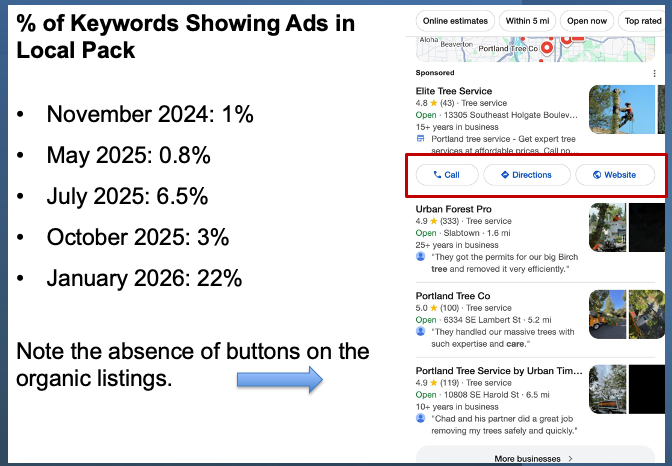
Source: Joy Hawkins-Yext (Places Scout)
_This post is for subscribers only._
### EP 241 - AI Isn’t Replacing Local Search, But It’s Rewiring How People Choose - with Crystal Carter
URL: https://www.nearmedia.co/ep-241-ai-isnt-replacing-local-search-but-its-rewiring-how-people-choose-with-crystal-carter/
Last updated: 2026-01-30T18:50:52.000Z
In this episode, we explore how AI-powered interfaces and emerging agents are reshaping discovery, decision-making, and local search behavior. Rather than replacing Google or traditional search, AI changes *how* people move from curiosity to choice.
We discuss personalization, intent modeling, brand trust, reviews, and what happens when AI systems begin completing tasks on behalf of users. If you work in search, local marketing, UX, or consumer research, this conversation will help you understand what’s actually changing and what isn’t.
Sign up for our new Legal Marketing Newsletter. Once a month, no fluff, just good ideas.
[Sign Up ](#/portal)
### **The Podcast Deets**
**1) AI as a Complement, Not a Replacement (00:00–14:30)**
The discussion opens by reframing a common misconception: AI isn’t replacing search, it’s extending it. Instead of ten blue links, users increasingly get synthesized answers that guide them forward. We explore how this changes user expectations, reduces friction, and shifts where influence actually happens in the journey.
**2) Personalization, Intent, and the New Funnel (14:30–28:45)**
As AI systems learn who users are — their preferences, habits, and context — discovery becomes deeply personalized. This segment dives into how “I’m a gym person” or “I prefer spa experiences” becomes an organizing principle for results, reshaping traditional funnels and category competition.
**3) — Agents, Action, and What Comes Next (28:45–42:49)**
The final segment looks ahead to AI agents that don’t just inform, but act. From booking to purchasing, AI systems increasingly collapse research and execution into a single flow. We explore what this means for businesses, local visibility, and how brands earn trust when AI becomes the decision layer.
### **Key Takeaways**
- AI complements search more than it replaces it
- Discovery is becoming personalized by default
- Choice and consideration are collapsing into fewer steps
- Reviews, brand signals, and trust still matter — but surface differently
- AI agents will increasingly *act*, not just recommend
- Businesses must be legible to AI systems, not just users
### 👇 Watch by topic:
[ 00:00](https://www.youtube.com/watch?v=BPxR-ijqFEk&ref=nearmedia.co) – Why AI isn’t “killing” search
[02:10](https://www.youtube.com/watch?v=BPxR-ijqFEk&t=130s&ref=nearmedia.co) – AI as a complement vs. replacement
[05:40](https://www.youtube.com/watch?v=BPxR-ijqFEk&t=340s&ref=nearmedia.co) – What changes when the interface answers for you
[09:30](https://www.youtube.com/watch?v=BPxR-ijqFEk&t=570s&ref=nearmedia.co) – Agents, tasks, and collapsing user journeys
[13:45](https://www.youtube.com/watch?v=BPxR-ijqFEk&t=825s&ref=nearmedia.co) – Personalization and “I am a gym person” signals
[18:10](https://www.youtube.com/watch?v=BPxR-ijqFEk&t=1090s&ref=nearmedia.co) – Local search, reviews, and trust in AI answers
[23:00](https://www.youtube.com/watch?v=BPxR-ijqFEk&t=1380s&ref=nearmedia.co) – Choice vs. consideration in AI-driven results
[28:45](https://www.youtube.com/watch?v=BPxR-ijqFEk&t=1725s&ref=nearmedia.co) – What businesses should prepare for next
[34:30](https://www.youtube.com/watch?v=BPxR-ijqFEk&t=2070s&ref=nearmedia.co) – The future: from research tools to action engines[](https://www.youtube.com/watch?v=BPxR-ijqFEk&ref=nearmedia.co)[ ](https://www.youtube.com/watch?v=XV9Z0g36vqI&ref=nearmedia.co)
### **Related Links**
[The Agentic Web Will Change Marketing in 2026Savvy marketers are preparing for an agentic 2026\. Here are a few tips to get you started.AI Search LabCrystal Carter](https://www.wix.com/studio/ai-search-lab/agentic-web-will-change-everything?ref=nearmedia.co)
[Top Agentic AI Protocols for Website Growth in 2026: Essential GuideYour customers are using AI agents. Is your website ready to talk to them?AI Search LabRan Yahalom](https://www.wix.com/studio/ai-search-lab/agentic-ai-protocols?ref=nearmedia.co)
[Scout: Yahoo’s New AI ‘Answer Engine’ (First Look)Yahoo has been through a lot in the past 32 years. It dominated the internet for much of its early life, until being unseated by Google as the most visited US online destination in 2000\. In 2008, Yahoo turned down a $45 billion ($68 billion today) buyout offer from Microsoft,Near MediaGreg Sterling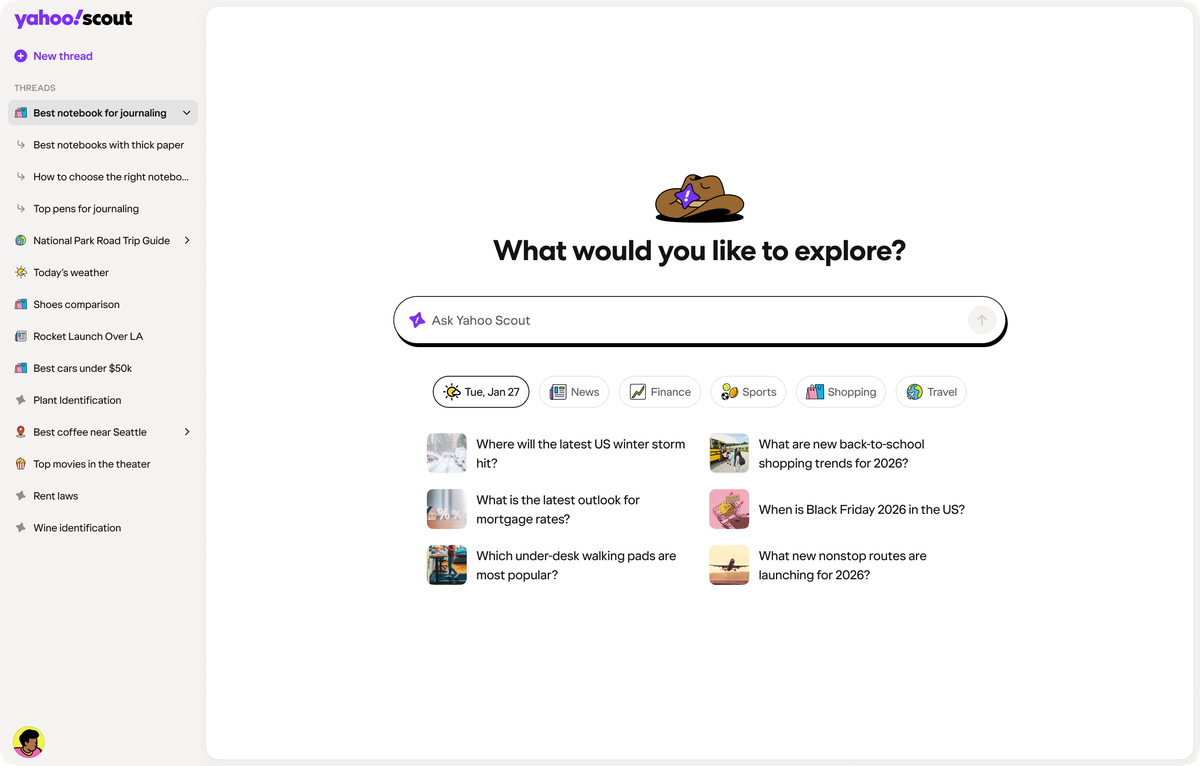](https://www.nearmedia.co/scout-yahoos-new-ai-answer-engine-first-look/)
[Clawdbot explained: What it is and how to try this AI assistant | The Jotform BlogDiscover what Clawdbot (Moltbot) is, how this self-hosted AI assistant works inside chat apps, key use cases, and how to try it for private, action-driven productivity.JotformJotform Editorial Team](https://www.jotform.com/ai/agents/what-is-clawdbot/?ref=nearmedia.co)
### **Full Transcript -->** [**on-line**](https://nearmedia.co/ep-241-ai-isnt-replacing-local-search-but-its-rewiring-how-people-choose-with-crystal-carter?ref=nearmedia.co)
Interested in sponsoring this podcast or our newsletters please reach out to [mblumenthal@nearmedia.co](mailto:mblumenthal@nearmedia.co)
[E-mail Mike ](mailto:mblumenthal@nearmedia.co)
### Local AI Study, AI Mode Onramp, G-Queries Down, Squandered Tech Trust
URL: https://www.nearmedia.co/local-ai-study-ai-mode-onramp-g-queries-down-squandered-tech-trust/
Last updated: 2026-01-30T16:06:45.000Z
Sign up for our new Legal Marketing Newsletter. Once a month, no fluff, just good ideas.
[Sign Up ](#/portal)
### Report: Up to 30x Harder to Show Up in Local AI
SOCi's [Local Visibility Index](https://www.soci.ai/insights/lvi/?ref=nearmedia.co) is now in its seventh year and has become increasingly sophisticated over time. The report was created to benchmark and rank franchises and multi-location brands. The 2026 report audits more than 2.7k companies with 50 or more locations (350k individual locations) in five verticals and 42 subcategories. It looks at digital presence on multiple platforms (Google/GBP + Maps, Yelp, Facebook, brand websites and landing pages) and, this year, AI (ChatGPT, Gemini, Perplexity). SOCi ran thousands of queries (category, location) and evaluated 120 metrics that all contribute to visibility. Each brand received a composite score between 0 and 100\. Here are a few of the study's notable findings. A ChatGPT "local recommendation" is 30x harder to achieve than ranking in the Local Pack. There's a less than 50% overlap in the top 20 sites for traditional search and AI. Just as others have, SOCi also found considerable local data inaccuracy in AI. However, Gemini was much more accurate (for local) than ChatGPT and Perplexity. AI visibility was easier to achieve in less competitive verticals where fewer best practices were observed. Reviews are particularly important for AI visibility, which includes diversification, star ratings, volume, freshness and response rates. The most common sources for local AI results were Google Maps, niche/vertical sites, brand websites, Yelp and Facebook (below). The study produced lists of visibility/rankings by industry as well as a massive overall list. The top 10 were 1) Planet Fitness, 2) Public Storage, 3) Hobby Lobby, 4) LongHorn Steakhouse, 5) Mattress Firm, 6) European Wax Center, 7) FASTSIGNS, 8) America’s Tire, 9) O’Reilly Auto Parts, and 10) Culver’s.
**Top Local Sources Used by AI Platforms**
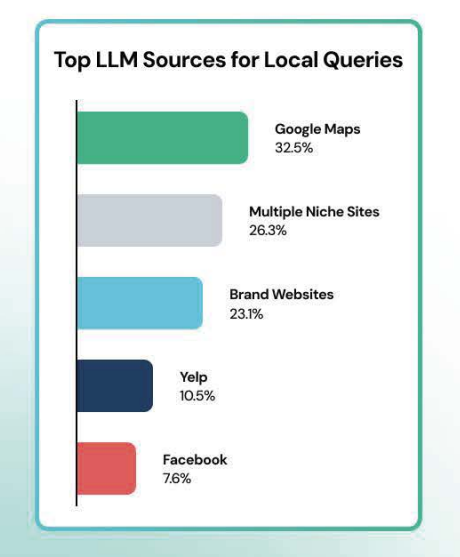
Source: SOCi LVI 2026
**Our take:**
- The recommendations in the report are broadly consistent with much of the expanded local SEO best practices advice being developed for AI.
- Big picture: "manage accuracy, reputation, content, and engagement as an integrated system" rather than as silos.
- Perhaps the most unexpected finding is that ranking in traditional local search does not necessarily translate into AI visibility.
_This post is for subscribers only._
### Scout: Yahoo's New AI 'Answer Engine' (First Look)
URL: https://www.nearmedia.co/scout-yahoos-new-ai-answer-engine-first-look/
Last updated: 2026-01-27T16:24:43.000Z
**Yahoo has been through a lot in the past 32 years.** It dominated the internet for much of its early life, until being unseated by Google as the most visited US online destination in 2000\.
In 2008, Yahoo turned down a $45 billion ($68 billion today) [buyout offer](https://news.microsoft.com/source/2008/02/01/microsoft-proposes-acquisition-of-yahoo-for-31-per-share/?ref=nearmedia.co) from Microsoft, only to turn around and [outsource its search business](https://www.npr.org/2009/07/29/111341708/microsoft-yahoo-strike-search-deal?ref=nearmedia.co) to Redmond the next year. After that, Yahoo endured a slow decline culminating in an acquisition by Verizon for $4.5 billion in 2017\.
But Verizon didn't really know what to do with Yahoo – it had also acquired AOL – and wound up selling both to private equity firm [Apollo Global Management](https://www.apollo.com/insights-news/pressreleases/2021/09/apollo-funds-complete-acquisition-of-yahoo-161530593?ref=nearmedia.co) for $5 billion in 2021\. Apollo then [brought in](https://www.yahooinc.com/press/jim-lanzone-to-join-yahoo-as-chief-executive-officer?ref=nearmedia.co) search and digital media veteran Jim Lanzone to run the company. Lanzone was CEO of CBS Digital and then Tinder and, much earlier, was behind [Ask 3D](https://searchengineland.com/ask-relaunches-now-ask-3d-11379?ref=nearmedia.co), an innovative search user experience that influenced Google.
Since Lanzone took over at Yahoo, the company has been making regular investments, acquisitions and hiring talent, largely under the tech-media radar. The company is profitable and likely headed for an IPO. It's a relatively rare private equity success story.
A year ago, I asked Lanzone on social media whether Yahoo was going to do anything with AI and search. He gave me the impression they weren't. But that was a head fake.
### Enter Yahoo Scout
Last week I got a chance to reconnect with Lanzone and his team at Yahoo for a sneak preview of a new AI-powered "answer engine" the company is rolling out today: [Yahoo Scout](https://scout.yahoo.com/?ref=nearmedia.co). It's a stand-alone site, but its features and capabilities are being integrated across Yahoo, including into search.
Built on what the company is calling the Yahoo Scout Intelligence Platform, the AI capabilities will be deployed in Yahoo Mail, News, Weather, Shopping, Finance, Sports and other areas of the site (desktop and mobile). In Mobile, Scout is directly available within the Yahoo Search app, which will let you toggle back and forth, as Google did initially with Gemini.
Scout will offer different capabilities in each of these vertical content areas. As one example, in Finance, Yahoo says Scout will "provide one-click access to real-time insights spanning company news, analyst ratings, financials, and earnings calls. Key signals are synthesized into clear analysis with headlines that refresh every 10 minutes and stock movements explained as they happen, helping investors make faster and smarter decisions."
Yahoo also appears to be adding an AI summary to search results, not unlike Google's AI Overviews.
**Mock Up of Scout Integration into Verticals and Search**
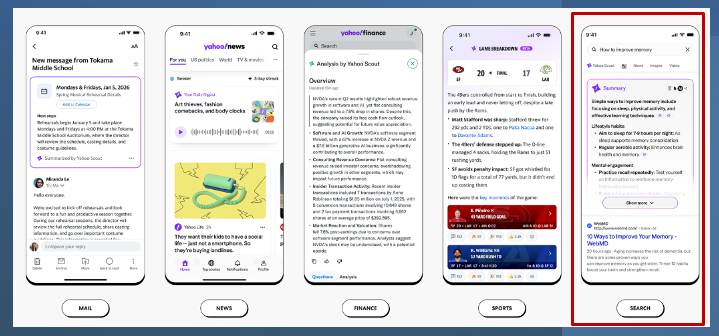
Source: Yahoo Scout
### Anthropic + Bing API
Yahoo is using Anthropic as its foundational LLM and Bing’s grounding API to supplement it. Scout also taps into Yahoo's extensive knowledge graph, "spanning more than 1 billion entities, and 18 trillion consumer events that occur annually across Yahoo."
Yahoo says Scout will be immediately available to the company's 250 million US desktop and mobile users. It was developed by an internal team led by Eric Feng, Senior Vice President and General Manager of Yahoo Research Group. Among other things, Feng was the founding CTO of Hulu.
### Better AI-Search Hybrid
Lanzone told me he didn't necessarily see Scout as Yahoo's entry into general market AI-Search competition, but rather as a tool to improve Yahoo search and the user experience across the Yahoo suite of verticals. But Scout could well have broader market appeal.
Google is struggling to figure out how to integrate AI into its SERP, with many people speculating AI Mode is the future. Then there's Google's Web Guide, which is an AI-Search hybrid. But what Yahoo has done with Scout may be much closer to a true blending of AI and search.
**Scout Has Prominent Branded Links**
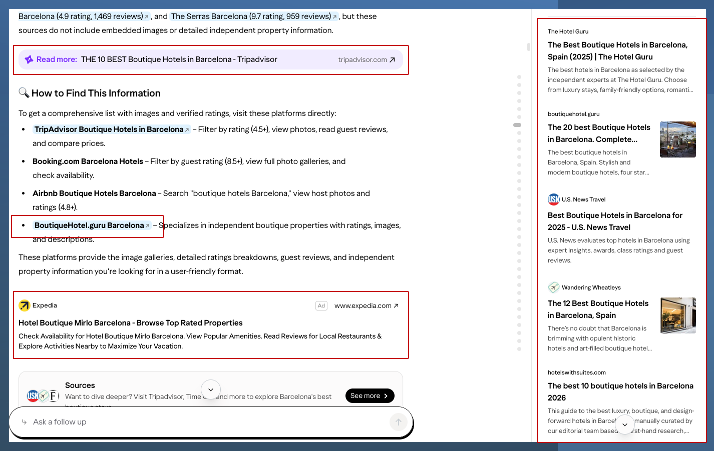
Source: Yahoo Scout
Rather than duplicate the ChatGPT or Gemini LLM search experience, Scout feels more like a genuine hybrid of AI and traditional search. It operates like an LLM but with elements that feel more traditionally like search (e.g., prominent links). Scout features a conversational UI but it blends visual elements and predictable structure that relieves some of the LLM fatigue from looking at dense text, outlines and lists.
Scout is also less likely to be a zero-click experience. That's because it doesn't answer every question. It answers many questions but frequently refers users to websites, which can be previewed by hovering over the link.
A search I did for independent hotels in Barcelona Spain (above) yielded multiple links and branded site references. It's not clear why all the site mentions aren't links. But the Yahoo approach (blue highlighting) is superior to the tiny source "buttons" on, for example, ChatGPT – or the customary source box in the right panel, which this also has.
**Highlighted Links Offer Website Previews**
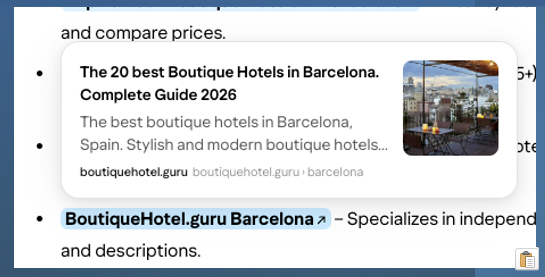
Source: Yahoo Scout
### **Yeah, but What about Local?**
Without trying to verify the accuracy of any of the business listings or reviews data, I thought Scout did a decent job with Local results. It appears to be drawing upon many of the same directories and editorial sources used by Gemini and ChatGPT, which vary widely by category. There's also a relationship with Yelp, though Yelp's presence was inconsistent.
Overall, the experience is pretty good, but there's considerable room for improvement – as there certainly is in ChatGPT.
**Local Results: Map and Comparison Grid**
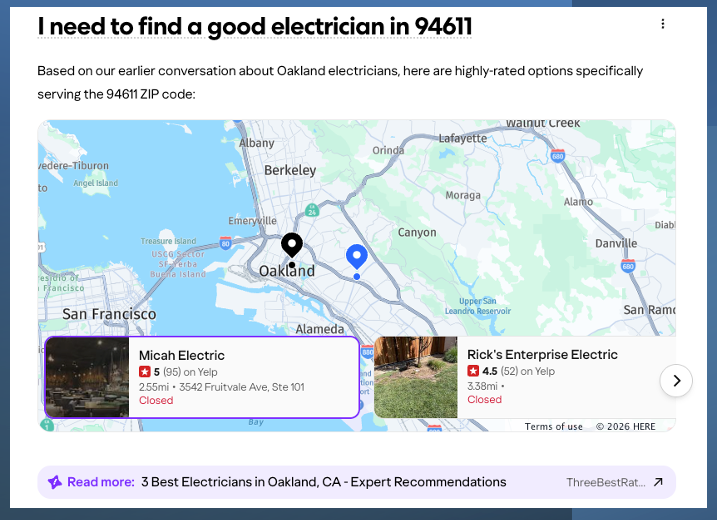
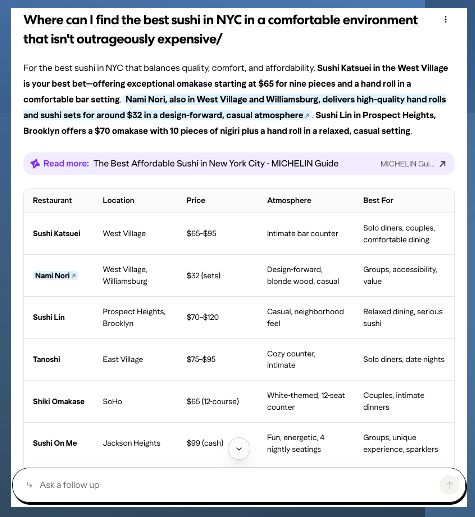
Source: Yahoo Scout
Many of the Scout results have a consistent format, and Local seems to follow that pattern. There's usually a short narrative at the top, often with multiple links, some sort of table or comparison grid and then bulleted lists discussing features or individual listings/products. Often there are vertically or context-specific elements in the SERP, such as a map for Local or a ticker graphic for a stock lookup (below).
**Stock Valuation Graphic**
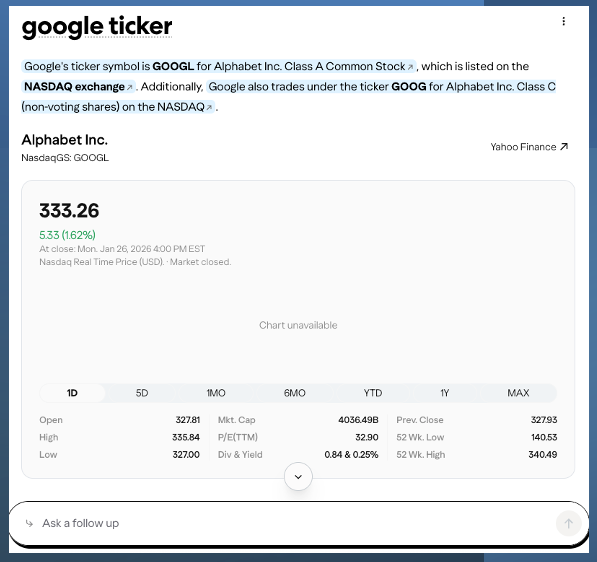
Source: Yahoo Scout
### Ads Will Follow – Fast
There are a lot of search advertisers on Yahoo and they're definitely going to get their chance to appear in Scout answers. However, in numerous searches and prompts, I only saw a one ad in Travel (i.e., Expedia, see above). Undoubtedly there will be many more as Scout rolls out and evolves.
There will be lots of advertising opportunities. But, hopefully, Yahoo will be restrained.
**Integrated, Contextually Relevant Ad**

Source: Yahoo Scout
### Competitive Outlook
The Yahoo team has done a nice job with Scout at launch, bringing together the familiar and predictable structure of a SERP with AI's interactivity, depth and flexibility. The company says that in the near future Yahoo Scout "will become more personalized \[and\] add new capabilities focused on deeper experiences within key verticals."
Scout is unlikely to grab market share from Gemini or ChatGPT. At a minimum, however, it will probably generate more engagement and search frequency from the millions of people who use Yahoo. That, in turn, will deliver more search revenue. If it does that, it will be deemed a success.
One of Scout's virtues is that it's fast, and typically faster than Gemini. The page structure is also consistent and predictable, which many people may prefer to the variability of LLM outputs.
I haven't used or thought about using Yahoo search for years. But after exploring Scout for only a couple of hours, I'm inclined to add it to my AI search repertoire.
**Take your own spin and give us your reactions and comments ...**
### Local Agentic Commerce, AI Ads, Google Antitrust Appeal, Gemini Catches Up
URL: https://www.nearmedia.co/local-agentic-commerce-ai-ads-google-antitrust-appeal-gemini-catches-up/
Last updated: 2026-01-23T18:05:27.000Z
Sign up for our new Legal Marketing Newsletter. Once a month, no fluff, just good ideas.
[Sign Up ](#/portal)
### Local 'Agentic Commerce'
In the wake of Google's recent agentic [announcements](https://blog.google/products/ads-commerce/agentic-commerce-ai-tools-protocol-retailers-platforms/??ref=nearmedia.co), people are spinning out grand (or dystopian) visions of an "agentic future" where human involvement in online research and transactions is substantially eliminated. And while marketers need to understand and prepare for these technologies (e.g., [UCP](https://developers.google.com/merchant/ucp?ref=nearmedia.co), [ACP](https://developers.openai.com/commerce/?ref=nearmedia.co)), user behavior may take much longer to change. I'm happy to let AI do a bunch of tedious research. But when it comes to buying decisions, I'm unlikely to turn that over to a machine, however personalized. I might allow an AI agent to identify flight options to New York, or the best-rated portable iPhone chargers, or hotels in a neighborhood in a defined price range. But I'm much less inclined to let AI ultimately choose or pay for things, except in low-risk scenarios (e.g., reordering past purchases). Predictions about transactional autonomy are way premature. Local is a category, however, where agentic AI could take off relatively quickly. It will likely revolve around booking and scheduling. The AI Mode page below shows available restaurant reservations. That's the model. And it could extend to any merchant with time-based inventory, i.e., service businesses. Scheduling estimates and emergencies are well suited to agentic AI usage. Yet many variables (e.g., category, cost, complexity) will affect trust and adoption. Agents will undoubtedly compress and further disrupt the funnel, but people will still want to be involved at critical decision points. The "set it and forget it" process being described by agent-boosters is still a long way away, if it ever arrives.
**Agentic: Available Restaurant Reservations**
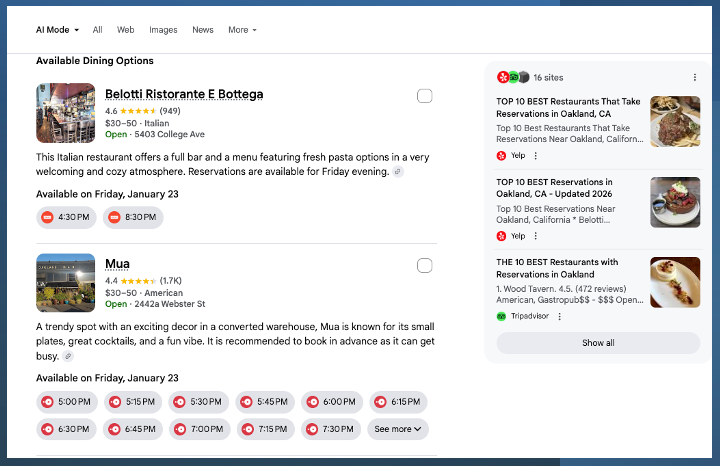
Source: Google AI Mode
_This post is for subscribers only._
### EP 240 - Inside Google Local Rankings and the Review Purge
URL: https://www.nearmedia.co/ep-240-inside-google-local-rankings-and-the-review-purge/
Last updated: 2026-01-20T18:13:44.000Z
Why does adding one word suddenly put a business in the top 3—and removing it makes them disappear? Claudia Tomina explains how Google’s local ranking system prioritizes one-to-one matches between search queries, business names, and primary categories—and why business name is still the cheat code. And why are reviews still disappearing? Tip: It's not a bug.
Sign up for our new Legal Marketing Newsletter. Once a month, no fluff, just good ideas.
[Sign Up ](#/portal)
### **The Podcast Deets**
1. Local Rankings & Business Names ([00:00–10:45](https://www.youtube.com/watch?v=-BChkNIc4E0&ref=nearmedia.co))
2. Reviews, Enforcement & Risk ([10:45–21:40](https://www.youtube.com/watch?v=-BChkNIc4E0&t=645s&ref=nearmedia.co))
3. AI Overviews, Gemini & the Future Funnel ([21:40–42:30](https://www.youtube.com/watch?v=-BChkNIc4E0&t=1300s&ref=nearmedia.co))
### **Key Takeaways**
- Business names and primary categories outweigh most other ranking signals
- Missing reviews are due to a Google algorithm update NOT a bug
- Review volume and patterns matter more than intent
- AI interfaces are becoming the final decision layer
- Google Business Profiles are now the last mile, not the first
### 👇 Watch by topic:
[00:00](https://www.youtube.com/watch?v=-BChkNIc4E0&ref=nearmedia.co) – Introduction & Google API Leak
[08:40](https://www.youtube.com/watch?v=-BChkNIc4E0&t=520s&ref=nearmedia.co) – Business Names, Categories & Brand Searches Role in Ranking
[10:45](https://www.youtube.com/watch?v=-BChkNIc4E0&t=645s&ref=nearmedia.co) – Review Removals, Volume & Enforcement
[21:40](https://www.youtube.com/watch?v=-BChkNIc4E0&t=1300s&ref=nearmedia.co) – AI Overviews & Local Search
[32:45](https://www.youtube.com/watch?v=-BChkNIc4E0&t=1965s&ref=nearmedia.co) – Gemini, AI Mode & Agentic Shopping
[40:30](https://www.youtube.com/watch?v=-BChkNIc4E0&t=2430s&ref=nearmedia.co) – What Marketers Should Do Now[ ](https://www.youtube.com/watch?v=XV9Z0g36vqI&ref=nearmedia.co)
### **Related Links**
[Claudia Tomina Linked-In Profile](https://www.linkedin.com/in/claudia-tomina/?ref=nearmedia.co)
[Watch for Claudia's article on business name in ranking](https://searchengineland.com/author/claudia-tomina?ref=nearmedia.co)
[Unpacking Google’s massive search documentation leakThis breakdown unveils potential Google Search ranking factors, including details on PageRank variations, site authority metrics and more.Search Engine LandAndrew Ansley](https://searchengineland.com/unpacking-googles-massive-search-documentation-leak-442716?ref=nearmedia.co)
Interested in sponsoring this podcast or our newsletters please reach out to [mblumenthal@nearmedia.co](mailto:mblumenthal@nearmedia.co)
[E-mail Mike ](mailto:mblumenthal@nearmedia.co)
### **Full Transcript**
**Greg Sterling:** Hey everybody, welcome back to the Near Media podcast, the Near Memo with Greg and Mike and today Claudia Tomina. Did I pronounce your surname correctly? Tomina? Tomina? Tomina, okay, good. I wanna always make sure that I pronounce people's names correctly. I hear it in my mind as Tomina, but Tomina is the correct pronunciation. Okay, good. She's the founder of Reputation Arm and she's a local SEO, pretty prominent local SEO who's...
**Claudia Tomina:** Tomina, Tomina
**Greg Sterling:** posting a lot, writing a lot, kind of making the rounds on podcasts and here to talk to, and she's been on this podcast before a couple of times, I think, at least once. I mean, you've been, yeah, and you've been in our office hours. So this is your first solo outing with us. So we're really gonna put your feet to the fire here, I think. So thank you for being with us and welcome Claudia and...
**Claudia Tomina:** Yeah, on a panel. Yes.
**Greg Sterling:** I want to say you've got a piece coming out in Search Engine Land where you're talking about local ranking on Google and some of the things that you have discerned, learned from your research into the Google API link, leak rather. Why don't you tell us about sort of the high level takeaways from that, not to preempt them or anything. And then we can get into it. And we also want to talk about reviews in the future. the interface and local AI stuff. So we'll be getting to all of that.
**Claudia Tomina:** Yeah, OK, so thank you for having me. Appreciate it. Episode 240\. So. No, no, I think you did. So yeah, I wrote this article because I do like to explore the API leak and I think you can find a wealth of information and kind of just validate some of your theories at the end of the day. We don't always know how these algorithms are working, but we have a good idea and case studies are always great.
**Greg Sterling:** 240, did I not say that? Thank you for saying that. Okay, all right.
**Claudia Tomina:** So I've been looking into specific search queries, like why can somebody rank for this and then add this one keyword in front of it and all of a sudden they're ranking in top three. You remove it, make a little bit of a broader search, and then you're eliminated. So I started looking at the API and from my understanding, Google obviously is looking for a one-to-one match. So when when the search query can match, the category and a token in the business name, then obviously you're going to become more relevant and you're going to rank. So everybody knows that business name is your cheat code and to entering into the SERP. So the idea was, what happens when there's a search query that doesn't really match a category? How is Google looking at that? And so that's where business name really becomes a priority, but business name is a priority regardless from. From what I understand, I think it's the top layer. And then when there needs to be a tiebreaker or Google needs to validate something, they're looking at your category. And primary category is going to be the key to whether you're going to show up in the top three. If you have a secondary category, you're less likely to be that one-to-one match for Google. So yeah, I mean, it's interesting to see. I think when you have a broader search term like restaurant in general, then there's a lot of other factors that come into play. Reviews, behavioral clicks, all that kind of stuff comes more into play. But when the search is in the name or the category, it has to be extremely relevant. So I think for the most part, people have to realize, don't chase every keyword. You're not going to rank for everything. sometimes you have to look at other channels to promote certain services, and then become the brand search later on. So don't waste your SEO dollars on trying to rank for 20 or 30 keywords in Google Maps. It's a waste of time.
**Greg Sterling:** Well, so what you just said about promote your business on other channels and become the brand search, I think that's the ultimate strategy. But does putting keywords in the business name detract from that at some point? Like if you're thinking about long term building a brand, building your, I'm not disputing anything you're saying about the way Google thinks about the business, but if you're trying to build.
**Mike Blumenthal:** You think Plumber San Francisco is not a good brand name? Is that what you're saying?
**Greg Sterling:** Precisely. Best San Francisco plumber. But people have been doing that. I mean, the keyword stuffing advice has been pretty prevalent and people have been doing a version of that. But if you're going to build a brand long term, maybe this is what I was trying to think of when we were in the green room. It doesn't make a lot of sense to have a generic business name like that. I mean, what would you say to that,
**Mike Blumenthal:** There you go.
**Claudia Tomina:** I mean, so, okay, in the article, there's a specific example, and it's for a, I searched smoothie near me, and the second listing in a local map pack is a smoke shop. So everyone thinks like, your category, your category, but there's not, it's not a juice bar, it's Smokies, smoke, and smoothie. And just the fact that the smoke shop, and, has pictures of smoothies and has smoothie in the business name, allowed it to over rank in a business that's completely more relevant. So you just have to look at every specific search query. It's like super unique. That's my point is every, every search query is going to give you different results and maybe weigh different rankings. But the idea is business name category. And I think domain URL is another huge one. I mean, it's not a mistake that every garage door has garage door in the name, garage door is the primary category, and garage door in their URLs. Like, they know what they're doing.
**Mike Blumenthal:** But to answer your question, Greg, I would say that Google has driven this behavior in the marketplace. There's this dialectic between ranking and degradation of unique business names. And I think a business to achieve both effects, which is the ability to have your brand stand out and stand out at Google, needs to thread a needle between a creative name and a keyword name.
**Greg Sterling:** Of course.
**Mike Blumenthal:** And I think that it's doable, but I think it's, I think people don't give it enough thought because they think that Google delivers so many customers. And the reality is we've seen in our legal search that outside branding probably delivers more customers. It's just that Google is so good at claiming last click attribution. So I would say to Claudia that, that the answer to your question or to you is some combination. something between a unique name and a keyword that is memorable.
**Claudia Tomina:** But what other way is there for Google to do this, right? If somebody wants to search a name, they have to show the knowledge panel. They have to match the business name.
**Mike Blumenthal:** Right. This is their way of discerning brand and it's a, it ends up distorting the market. I'm not saying it's wrong. I'm just saying it is. I mean, it certainly.
**Greg Sterling:** Well... So I have another example. I think the rationale that you've articulated is right, that Google is trying to do brand matches as much as it can. And when we did some research in Europe with travel, and what we saw is that booking.com is obviously a huge travel site. and especially in Europe. And when people would put booking in the query, it wasn't necessarily a brand search that they were doing. I mean, you could tell that because we watched the videos, but Google was interpreting it as a brand search. in almost every case and Booking.com would show up in that number one position consistently and they also were buying ads. So they had ads, then they had the number one organic position. So Google was biased towards sort of showing a brand when they could infer that it was a brand query, but they were over inferring that because it wasn't always the case that people were looking to navigate to Booking.com.
**Claudia Tomina:** And the same thing happens on Amazon with product searches. It's the same idea.
**Greg Sterling:** So is there any tactical advice there?
**Claudia Tomina:** I mean, would I just like...
**Greg Sterling:** Beyond keyword stuffing
**Claudia Tomina:** I just think everybody needs to kind of evaluate the search query and then not get so worked up when the rankings aren't going in their favor. And then look to the other channels, you know, especially like, like I give the example of the Med Spa, you know, they provide weight loss drugs or IV therapy, but they're not going to be able to compete for IV therapy because it's a secondary category and there might be too much competition in the area with that business name and that as a primary category. So, so move on and And if you want to build out that service, do it on social channels and become the Brand Search.
**Greg Sterling:** Yeah, somebody was remarking yesterday, I don't know who it was that, or maybe it wasn't yesterday, but I saw yesterday on LinkedIn that Instagram searches were influencing Google rankings. know, that information on Instagram was showing up in Google rankings.
**Mike Blumenthal:** Well, it was actually, I think you're referring to the one where the Instagram search was interpreted by Google as an event and was included as a justification in the display. So that though is a known feature. just, was, what was different about this post was that Google used the event information or the daily special information, which is what Google interpreted it as, as a justification, which justifications typically don't
**Claudia Tomina:** Yes.
**Greg Sterling:** Yeah, yeah, yeah. Right.
**Mike Blumenthal:** as you'll at least don't influence rank, but do influence conversions. And it's Google's way of saying, here's what we know that might be relevant to your queries, this about this place. So, we're, I mean, Claudia can speak to this more, but tying your social in with your profile at Google will increase the amount of secondary information that Google has about things like your daily specials.
**Greg Sterling:** Don't impede Drake King's Re...
**Mike Blumenthal:** and can certainly help with conversions. I mean, if you're looking for liver and onions special on Wednesday, which, it is still on the menu around here just as a special, just as a note, I use it because people respond to it. you know.
**Greg Sterling:** I'll never be looking for liver and onions. That'll never be a search query that I enter into Google. Yeah. My deceased relatives would be very excited by that, but not I. All right, so let's talk about reviews. You've quite a bit over the, as we all have, quite a bit over the last year, there was just a lot of kind of chaos and confusion around reviews, Google taking down reviews, people trying to get reviews reinstated, a lot of discussion of review fraud. We had the GMB API. folks on and they were talking about the patterns in review removals. What are your takeaways from the last year, in this review management world? And you wrote about the punishment of people who were soliciting reviews at the point of sale.
**Claudia Tomina:** Yeah, that's the main issue is these businesses are asking for reviews at checkout. Google's tracking that the reviews were left inside the building. And then when they do their audits, they're removing, I believe they're removing all the reviews that were left inside the building. This is why I say that.
**Mike Blumenthal:** You don't think it's a function of just sheer volume?
**Claudia Tomina:** So I think the volume is what triggers the, you know, the flags. And then from there, they're looking at the patterns of where the review was left, because I had a client that all the negative reviews stayed, but all the positive reviews were removed. And my thought is, well, somebody left the building and went home and then left the negative review later. So that's why those stuck, but all the positive ones got removed because they were being left after the point of sale. So you're less likely to be inside somebody's business and leave a negative review. So why did Google leave those, right? That's my theory is that.
**Mike Blumenthal:** Well, there
**Greg Sterling:** Well-
**Mike Blumenthal:** could be, as we've seen, are now the ability for users to report incentives. And if there were incentives involved with this, even subtle ones, that could be another confounding factor. It's a little hard to know for sure. But volume is certainly a trigger.
**Greg Sterling:** It seems like Google is inferring some bad behavior or unethical behavior on the part of the business if the review is left in the facility or in the restaurant or whatever. But it's not necessarily the case.
**Claudia Tomina:** Well, I think they're looking for patterns. And so when they see these huge spikes, that might trigger an audit. That's one theory. then when GMB API showed us that there is that local map question of, did this business incentivize reviews? I mean, I'm sure that's triggering something as well. So I started to think, well, was that the trigger or was the trigger
**Greg Sterling:** Yep.
**Claudia Tomina:** the actual like huge spike in reviews. But both both are present, right? It's just it's interesting. At the end of the day, you know, this was not the most businesses think like, well, I'm I'm not giving away anything for free. Everyone I talked to, the handful of customers that this happened to, they all claim that they did not incentivize or give away anything for free, that they just were asking for the review at the counter with a QR code. But how would Google know?
**Greg Sterling:** And well, that they're inferring from presence inside the building, right?
**Claudia Tomina:** Correct. Exactly.
**Mike Blumenthal:** Yeah. Although Google's ability to discern location isn't as, I it's only, it's about a quarter of a mile. And so it might or might, I mean, to me, volume is a much Occam's razor would tell me that a simpler solution for Google, a less costly solution would be to flag them for volume. And then perhaps as Claudia pointed out, review them for location and see, but it seems more likely that volume is a prime.
**Claudia Tomina:** you-
**Mike Blumenthal:** me, more likely that they would invest in a very simple, too many and too short a time in this category.
**Greg Sterling:** It's. Right. So velocity is another factor here. It's like the concentration. Yeah.
**Mike Blumenthal:** I would think, I mean, it's just a simpler factor to track.
**Claudia Tomina:** And I think the way that the review was left, like did they search the business, then leave the review or was a QR code scanned? do you know what I'm saying? Like Google's looking at that too.
**Greg Sterling:** But see, but Google facilitates that themselves. Google makes it easy. They do that themselves.
**Mike Blumenthal:** They do facilitate it, but it could be part of Google's plan to discern between brand searches and review requests, right? A true brand search wouldn't use that. And so it might even be tactically advisable for people to not use Google's review code and just have people do brand searches to leave a review. I mean, it may, I would hypothesize that that would serve them better over the five-year period than that review link, which Google can easily track.
**Claudia Tomina:** Right, because it's... That share this link to leave a review, I never recommend that for clients because I would say that you're like 80 % more likely to get filtered when you use that feature.
**Greg Sterling:** that would infuriate. Yeah.
**Mike Blumenthal:** And we've talked about in the past about how brand searches reinforce and rank. And so there may be multiple reasons to not use Google's link, not the least of which is they, as Claudia points out, they're likely to use it as a signal.
**Greg Sterling:** Yes. So the follow-up email is, hey, if you liked us, leave us a review. Search for us on Google, and then leave us a review. And here's the template where you can mention all these keywords in your review.
**Claudia Tomina:** Well, so the business, one of the businesses that lost a bunch of reviews. So see, there was like 400 reviews in one month that was left. And I believe like upwards of 300 plus were taken down. Why were 80 or so left? My theory was that they were actual brand search reviews. And that they weren't left. Yes. Or they do text campaigns as well. So they may have sent out an email or a text.
**Greg Sterling:** Brand Search preceded the review.
**Mike Blumenthal:** and
**Claudia Tomina:** which is sending a link that's not the, leave us a review link that Google provides. It's more of a branded search link. And that was not filtered out.
**Greg Sterling:** Do you, I mean.
**Mike Blumenthal:** And you could provide a link in an email to a brand search, Greg. And I don't think Google would distinguish between that and an actual brand search. I think it would fall within this is a brand search.
**Claudia Tomina:** That's how our app works. Like it's a branded search.
**Greg Sterling:** So you pre-populate the brand search and people just click on it.
**Claudia Tomina:** Yeah, and then it pops up for the business when they click.
**Greg Sterling:** and then Google.
**Mike Blumenthal:** And then you say this keyword and that keyword and the other keyword and go from there.
**Greg Sterling:** Yeah. Yeah.
**Claudia Tomina:** Well, you can, in the text or in the email, can, hey, thanks for catering with us. So hopefully they will mention catering.
**Greg Sterling:** Yeah. One of my sort of beefs has been that Google has not done a lot of education of small businesses, of local businesses about what is permitted and what's not permitted. I mean, they rely to a high degree on this network of agencies that are managing these accounts to understand the rules and to advise them. But there are many, many more businesses out there that aren't working with agencies that are just trying to do this on their own. And, you know, some of them are operating in bad faith and may be cheating. Others are operating in good faith and simply don't understand what's going on. or don't have clarity around the rules. To what extent do you think that that's true or not?
**Claudia Tomina:** Yeah, it's totally true, but everything's fluid with them. They cannot make public statements and hold themselves liable to something if they want to change it down the line. So, you know, they're trained not to speak because they can't. That's just like at the end of the day, that algorithms change or they want to prioritize something or they want to adapt to the Yelp model and say, hey, you know what? We decided you shouldn't ask for reviews. If they've already made other public statements educating people on how to ask for reviews, then it kind of makes it difficult for them to change.
**Greg Sterling:** For sure, but I mean, don't you think they have an obligation to be clear about what the rules are so people can follow them?
**Mike Blumenthal:** They publish the rules and they intentionally leave a lot of vagueness so that they have the latitude to make a decision within a very broad framework to take it down. In other words, in compliance with 230, they're given the ability to editorially remove reviews and they want that to be as broad as possible. So they write it down in a very somewhat vague way to give them the most freedom possible and the least cost possible. don't think, you know,
**Claudia Tomina:** Yes.
**Greg Sterling:** Thank
**Claudia Tomina:** If there's one thing I've learned.
**Mike Blumenthal:** And they've never spent money on either education or not in local on promotion.
**Greg Sterling:** That's not 100 % true. Years ago, they did a whole bunch of workshops. They did a lot of ad workshops early on, and then they did. Right. But they did.
**Mike Blumenthal:** Not 100 % true. And years ago they sponsored Local U but that was more, I mean, it wasn't with an effort to clarify what they wanted. It was an effort to get people to spend money on ads.
**Greg Sterling:** They did these local boot camps for a while. They did local boot camps for a while. Interestingly, OpenAI is doing a sort of a version of that now. Okay, so.
**Claudia Tomina:** just think everything Google does is very intentional. You know, we may think, it's a bug, it's a bug. Yeah, but it's not, they're never really bugs. And if it is a bug, typically, like you would see it kind of get worked out within a month or two, if it's a major bug. I mean, there's bugs that are never going to get cleared out. But you know, like the review purge, I think in the beginning, even I felt like, like what's going on? there, I mean, obviously I knew there was some kind of algorithmic update and I thought,
**Greg Sterling:** of course it is. you
**Claudia Tomina:** will they fix this? But then it became clear that it was extremely intentional and that there was no fix and that it was our job to kind of let these businesses know like you lost your reviews. That's it. It's over. Move on. But it's
**Greg Sterling:** Well, I mean, they for years and years, they denied that there was any behavioral element to to ranking and that proved to be completely false, you know, so that that loan, you know, it's it's a version of deception, right? You know, you can give them the benefit of the doubt and say they don't want to reveal too much because then spammers would take over, blah, blah, blah. But but but they they they do deceptive things with some regularity. would I would use that term. All right, so what is the practical advice to business owners now? So where we are with the state of reviews? What would you say? What are the things that they need to really understand?
**Claudia Tomina:** Everyone should back up their reviews. Everyone should be like scraping their reviews or having copies of their reviews because they never know if they're going to need to go back. there were threads where I escalated in the forums and I got reviews back. I'm not saying like it's entirely impossible. There are times where like the hundreds or thousands that you lost, may be somebody said that you incentivize and so they see that flag and then you're not getting your reviews back. But there are times where when they do make updates to the algorithm and then genuine reviews get filtered out, you can possibly get them back. But you need the proof. If you don't have proof of the review, if you're like, I I had 300 reviews and now today I have 270\. Well, if you cannot provide the 30 reviews to Google support, I don't believe you'll be able to get them back. What do you think, Mike?
**Mike Blumenthal:** I absolutely agree that if it's that volume and there are several ways to do this, some software like GMB API actually tracks removed reviews and gives them to you in a downloadable format. ⁓ the other way is, is archiving the emails that Google might send to you. Sometimes they send, re review announcements that there's a new review to the.
**Claudia Tomina:** I do the same thing.
**Mike Blumenthal:** owner, manager it's not a terribly reliable system. But if you archive those, I agree that absolutely you should be tracking every review, the text, the username, and ideally the link to it if you can and keep it in case you ever need it.
**Claudia Tomina:** Especially with suspensions, there's times where you get reinstated and then all of a sudden your reviews are missing. I anything can happen. So, right.
**Mike Blumenthal:** And they can't find them unless you give them, you spoon feed it back to them. They're amazingly incompetent in that.
**Greg Sterling:** All right, let's move on to the inevitable topic of AI. So when Google SGE showed up, there was a lot of duplication. If you're doing a local search, they would essentially duplicate most of the local pack in those SGE results at the top of the page. You had the local pack, and then very often two out of the three that would show up. Sometimes they had five, sometimes they had more than five in the SGE result. And it was totally redundant, or almost totally redundant. know what to do with the SGE result. And then local disappeared when AI overviews launched. Local wasn't present. Over time, that's changed. And now, probably more than anybody, Joy Hawkins is kind of tracking the degree to which the local pack or some version of the local pack is starting to show up in AI overviews, which portends the disappearance of the traditional local pack. thoughts.
**Claudia Tomina:** So I think it's affecting a lot like specific verticals more than others. I'm not seeing it in, you know, my clients where I'm primarily focused on the restaurants. She's primarily focused on service based companies and lawyers. And so yes, like it's, it's definitely something and probably because those type of businesses are the ones that do the most ads. So they're just focused on that category for that reason. Some type of monetization is going to be coming out of that.
**Greg Sterling:** Well, yeah.
**Mike Blumenthal:** And it could also be a function of query length in the category, right? We saw very clearly in the legal research that when queries got more than four and a half words or five words long, we saw an increase. Users are making longer queries. And I think there's this, again, learning that users can make longer queries. as they do, I think we may see a shift towards more AI. So we don't know exactly what's going trigger it, but I think cost
**Greg Sterling:** Right. you get the AIOverview
**Claudia Tomina:** Yeah.
**Mike Blumenthal:** is a big issue. the local pack is very cheap for them, fast and cheap for them to deliver as our LSAs and their LSAs and local pack, presume are profitable for them. They charge enough for them and,
**Greg Sterling:** Well, LSA is for sure.
**Claudia Tomina:** Well, and then it's triggering like get quotes and those type of things. So that's probably why they're testing it more than other categories.
**Greg Sterling:** Yeah, well, I a restaurant query is more, I mean, you know, occasionally you'll see these longer queries, but for the most part, a restaurant query is going to be best cuisine type near me, brand name, you know, or whatever. It's going to be, these are going to be fairly compact queries. And so there's no, this phenomenon of ambiguity is that triggers the AI overview or is it an informational surge? it's not, you know, that's not going to show up as much, but, but the, the You're suggesting that by putting the local pack in the AI overview that they can monetize that? Is that what you guys were saying? Or Claudia, you were saying?
**Claudia Tomina:** Well, then your trigger to go into AI mode maybe, they're just, I think they're just constantly just testing behavioral signals and then what they can do with it after. I don't think they know what they want, what they're gonna do. I think it's all tests.
**Greg Sterling:** Yep. Right. There's a lot more tests going on. I mean, you you've pointed this out and we've done our own version of this. There's just a ton of testing happening all the time now. And yeah, and it's, it's, it's very disorienting obviously, because, you know, is this going to be something that takes hold? Is this just a test? I mean, the thing that you saw the other day was Gemini, right? Where there was all this AI generated information before you got to the result. Describe that a little bit.
**Claudia Tomina:** all the time. It's quite obnoxious. Yes. Yeah, I was was like shocked to see it because I've never seen that in Gemini. And then all of sudden I did a like I had a restaurant search query in Gemini. I wanted to see what pop up and it was just this like extra layer. And then at the bottom there was a call to action that said open in maps. But everything that was there was like it was kind of similar to like know before you go, but not exactly. It was more like tips and everything review related. So like everything was pulled from reviews. It wasn't the most attractive UI, but it was just like a one pager, lots of data from reviews, and then open in Maps.
**Greg Sterling:** This was a brand search for a particular restaurant.
**Claudia Tomina:** Yes. Or no, and it was was just best sushi in Michigan. That's what I was searching.
**Greg Sterling:** Okay. And so what and did they show you, did they hint at multiple businesses or what did they actually show you?
**Claudia Tomina:** So yes, they displayed, I wanna say four businesses, and when I would click on the business name, it was linked, it would take me to that page, and then I had the option to open in Maps. So it was like a layer before the layer.
**Greg Sterling:** to the profile. Yeah. Yeah, that's like too many clicks going on.
**Claudia Tomina:** Yeah, it wasn't the best and it's only in mobile, it's not in desktop. So that's another thing. It's like what you test in mobile is not always going to be the same as desktop and so, and then AI mode, it's just going to display a little bit differently. So I like to test in all places because I like to see how things are being presented and what's their focus. And it's always typically reviews, photos, videos, content.
**Greg Sterling:** Well, so we've got AI overviews, AI mode, Gemini, Web Guide, which fewer people are talking about and using. I've opted into Web Guide So all of my desktop results, at least in one of my. browser screens is Web Guide, which I initially liked a lot and thought was kind of a good UI as sort of a hybrid. But now I don't like it because there's less information on the page. It's just much more text, fewer results. I don't like it as much. And it's especially bad in mobile, think, because you have to scroll and scroll and scroll and there's too much text. where many people, including you recently, or not so recently perhaps, speculated that AI mode is the future of the Google SERP. I don't think that that's true. I think there's elements of AI mode that make their way into the traditional SERP. But where do you think all of this is going? I mean, it's kind of a mess.
**Claudia Tomina:** I honestly think Google doesn't know where they're going with it. I think that they're still brainstorming through it. And I think they're just constantly testing. I don't know, like is there really a purpose to have AI mode and Gemini? Like why have them separated? Sometimes I think about that.
**Greg Sterling:** Right. Well, Gemini is a more general tool. It's their true ChatGPT competitor, whereas AI Mode is not really. It sort of is, but not really.
**Mike Blumenthal:** And as you saw in the recent announcement, Gemini is going to become the personal assistant technology. Well, no, it's going to become Google's personal assistant for you. They want you to tie in your email and your calendar personalization of Gemini. And they've also said that Gemini, they don't feel like Gemini is even closely ready for ads. So AI mode and
**Greg Sterling:** for Siri. you're talking about the personalization thing, Yeah.
**Mike Blumenthal:** and AI overviews and search is where they generate their money. So when you look at the big picture, from my point of view, firstly, it's competitive. They want to win against ChatGPT To do that, they've got to keep Gemini relatively pure. The second is income and the third is usability and how they mix and match those three things, the competitive nature of it. And then the fourth is a cost, right? AI mode is very expensive for them to generate some of these responses. And so they have to balance those four things, how that's going to all balance out, which of those four things Google is going to pick is most important. You know, think initially to be competitive and then as the competition fails or ChatGPT is absorbed by Microsoft when they run out of money, you know, who knows what we'll see. But for now it's those things are balancing each other. So we're not seeing the degradation of Gemini yet or AI mode yet.
**Greg Sterling:** So I saw something interesting the other day, which I posted on LinkedIn about, and may have talked about on one of these podcasts, where my wife and I went and saw the song sung blue, which is the Neil Diamond movie. You saw that, I know, Well, so one of the things, it was totally different than what I expected. So we came out of the movie, and it's based on a true story. And so I wanted to figure out what elements of the story were true and what happened to the people after the... Right, okay, so I did...
**Mike Blumenthal:** Very sweet movie, wasn't it? Same search I did afterwards. She did get hit by a car twice. Whoops, spoiler alert.
**Claudia Tomina:** Hahaha
**Greg Sterling:** Yeah, yeah, that's just an incredible detail that we don't need to talk about the movie. So so I did this. I did this search. I don't remember what the verbatim query was. It was something like, you know, song sung blue, true story or something, you know, question mark or whatever.
**Mike Blumenthal:** Yes, we do. reg Sterling (30:05) And it showed me an AI overview. I was on my iPhone. It showed me an AI overview, and it gave me a little bit of information. And then it said something like, it was a prompt to open the AI overview. It didn't say AI mode at the bottom. It said see more or something comparable to that, like learn more or whatever. It was some prompt to get the full, expand the AI overview. And what it did is it took me into AI mode. It didn't open the, open the AI overview in the SERP, which normally happens. It took me into AI mode, which I didn't recognize at the time. And so I'm just looking at the information. And then I thought, I'm in AI mode. That's weird. And then I compared the two, like the top of the AI overview with the AI mode result. And they were verbatim the same. So it was essentially the same information. I couldn't open the AI overview to see what was below it, because it just sent me the AI mode. And I thought, that's a path forward for Google with how to. reconcile the two of these things. So you go into AI mode and then you ask your follow-up question. I know they've been doing it, but I had not experienced that personally. They talked about that at some point in the past, but I had not seen it. Typically what you see, also what was striking to me is that typically you see something referencing AI mode to learn more or whatever, try this search on AI mode or whatever they're saying. This did not do that. It was just a generic prompt to learn more. And I thought,
**Claudia Tomina:** Well, they've been doing that. Yeah, they've been doing that.
**Greg Sterling:** Go ahead.
**Mike Blumenthal:** So let me, let me just interject slightly. did the exact same query or same intent of query. I don't remember some version of that. And perhaps, you know, they see all these new queries coming all the time, right? So a new movie comes out, a new query gets associated with it. Perhaps this is caching of AI mode information. In other words, that would reduce their costs. This is a query that's happening over and over again. So number of people went into AI mode.
**Greg Sterling:** some version of that, right?
**Mike Blumenthal:** They see that people go into AI mode. then automatically make AI mode with a cached response, lower cost, as a path. What do think of that theory? Good theory.
**Greg Sterling:** It's a good theory. It's a good theory. But why do you have AI overviews and AI mode? You don't need both together.
**Claudia Tomina:** Well, it's a way to get you into AI mode because people, everyone's used to going to Google, right? So it's like, there's Google and then how do they get them to start utilizing AI mode? They start with the AI overview, move them into AI mode. But I think they're starting to see a lot of people using Gemini and doing the same type of query searches that they would normally do on AI mode they're doing in Gemini. And so maybe they're trying to figure out how to balance that.
**Greg Sterling:** Well, for sure. For sure. But-
**Claudia Tomina:** It's the same thing.
**Greg Sterling:** Well, let's talk sort of for this final section, let's talk about sort of the future of AI and how that impacts all of the things that we talk about and write about and think about. Google made a big announcement about agentic shopping, including this thing called Business Agent, which is really interesting, which I think will come to GBP. There's Ask Maps is a version of that already, right? Where you have a chat bot. that you can ask any question about the business and it'll get you an answer. But what the agentic shopping blog post, which had a bunch of announcements in it, suggests is that more and more of the activity will be in an AI interface. It'll be you ask the question, you ask a follow-up question, and then you zero in on the product or the business that you want to, you know, do business with or want to buy. And then maybe you go to the website, or maybe you go someplace else to buy the thing. Google wants to sell you stuff within Google. I mean, this suggests a bunch of things to me. One is more zero-click activity, which is less of a problem in local because there's an offline transaction. More zero-click activity, less visitation of websites, less looking directly at reviews and more that this is all about data for the AI engine to assimilate and present to you. Thoughts on any of that stuff?
**Claudia Tomina:** So I used to sell on Amazon before I did marketing. So in the like 2000s, I was selling on Amazon before Prime even existed. And I've seen the evolution and I've seen how Amazon, you know, can dictate basically pricing just by not granting you buy box and all that kind of stuff. I kind of welcome this in a sense where perhaps maybe Amazon might have to change some of their practices because more people are already going to be in Google AI and searching for a product. And if they give a merchant the ability to run a transaction without having to run it through Amazon and worrying about the buy box and 15 to 20 % in fees, I don't know what Google takes and fees or what they're going to come out of this. But I kind of, I like the idea of where this is going to go. I think it's going to really catch on. I think Amazon is going to have to come up with some, I mean, Amazon's always going to do well. They have prime two day shipping, but most merchants use their fulfillment centers regardless. So you could, you could still use the fulfillment center to ship your stuff, but sell on other places. But at the end of the day, it's so hard to sell on your own website. You can't show up in the SERPs, right? Like Amazon dominates and all these other big, you know, marketplaces are dominating Walmart everywhere else. So if you're not selling on your, your brand on Walmart, it's very difficult to sell your product on your own website.
**Greg Sterling:** Let's talk about local businesses though. The businesses that we're chiefly interested in here, not necessarily product sellers, although local businesses can be product sellers. Do you see a further migration to some sort of AI, kind of the full funnel happens in AI, there's no click. And then there's a visitation or a call to a local business. People aren't reading reviews. aren't looking at, everything they look at is within the AI, in the AI environment. Right.
**Claudia Tomina:** Well, yeah, they're getting Well, they have merchant center. There's merchant center. And so that you have your product feeds in there. Eventually there's gonna be the ability to check out. Like they've been already trying to do that or pick up.
**Greg Sterling:** they're, yeah, they're, they, that's what they, they explicitly announced it. Yeah.
**Claudia Tomina:** Yeah, so that's all going to just start getting developed and there's going to be third parties that are going to be able to facilitate that for you. Maybe Shopify, all that is just going to be integrated right into AI mode. And so all of a sudden, you know, your Shopify site can run a transaction in AI mode. So you're less likely to maybe shop it on Amazon.
**Mike Blumenthal:** And we're seeing a version of that with restaurants now in AI mode, where it'll actually allow you to make a reservation without leaving AI mode using Google, Google reserve as the tool.
**Greg Sterling:** Right.
**Claudia Tomina:** Anytime you can have some sort of integration, any API integration, I've always said this, whether it's your menu where it's constantly updated because you have your toast integration, whether it's your open table or resi reservation list, like you have to be fully integrated into Google Business Profiles. So constantly be paying attention to that because at the end of the day, if somebody can't finish the transaction in AI mode, somebody else might win.
**Greg Sterling:** Well, that's, that's, go ahead, Mike.
**Mike Blumenthal:** I was going to say that more dystopian version of what you're talking about though, is what OpenAI suggested in terms of an OS for the internet, where all apps come within three or four or five agentic AI LLMs, Amazon, Facebook, Google, OpenAI, Apple, where this is the world, right? In other words, it could go well beyond reservations. What's that?
**Greg Sterling:** Yep.
**Claudia Tomina:** TikTok shop. TikTok shop.
**Greg Sterling:** TikTok Shop
**Mike Blumenthal:** Yes, all where these things become totally integrated. Everything from graphic editing to reservations could be totally integrated into two or three or four OS's that then battle it out so that in the end we have three OS's on the internet, right? I mean, and that's entirely possible. So it could go.
**Greg Sterling:** Well, that's where everybody wants to go. That's where everybody wants to go with this. totally. Because, well, Google would like nothing better than to own the entire funnel. That's what's at stake is that Google is the place where you discover everything. Google is the place where you learn and compare everything. And Google is the place where you buy things. I mean, they were unsuccessful in launching their own shopping cart.
**Mike Blumenthal:** Right. And one has to presume that Google wants to go there. If ChatGPT wants to go there, Google wants to go there, right?
**Greg Sterling:** a number of years ago as a kind of competitive tool against Amazon. But now with this, they can. But they want to own the entire funnel, show you ads at potentially maybe the top and the bottom or everywhere. And I think that we interviewed Jes Schultz a number of weeks ago. And she was making an argument about users and sort of the, I mean, users fundamentally like the AI experience. They like it better than search, than traditional Google search. They trust traditional Google, they trust the data and they're familiar with traditional Google, but they like.
**Mike Blumenthal:** If I can get Google to do a fan out query for me, I'm in because it gives me 25 sources and it summarizes them for me.
**Greg Sterling:** Right. That's right. people like the AI experience better than they like the traditional search experience. And Google understands this very clearly. And so that's why it doesn't matter if OpenAI disappears or all these other sites disappear. They are still migrating, maybe not at the same speed, but they are still migrating to some version of this going forward. And that's the reality that everybody has to sort of prepare for, I think.
**Mike Blumenthal:** or moving to the woods.
**Greg Sterling:** Yeah, that's right. That's the other alternative.
**Claudia Tomina:** It's very intrusive, but at the same time, everybody likes it and it's going to catch on no matter what.
**Greg Sterling:** Well, it's just, yeah, it's just more fluid. It conforms to your own. You don't have to do these kind of truncated clipped phrases. You can just speak to it. You can zero in on something. It's just much more flexible than what search has been.
**Claudia Tomina:** love when Amazon reminds me to buy something at the end of my checkout. you know, when you're checking out for Amazon and then it reminds me, do you also purchase this in the past? Do you need it now again? So Google's gonna do the same type of stuff.
**Greg Sterling:** Totally, and that's what the personalization thing where you are linking all these apps and letting them have all your data, they're just gonna be making recommendation after recommendation in an effort to get you to buy. So in this last sort of couple of minutes that we have, as people look forward to 2026, which we're sort of in the third week of, I guess, what should they be doing this year? I mean, there's gonna be a lot of change, there's gonna be a lot of volatility. sort of probably more than 2025\. What is your advice to marketers?
**Claudia Tomina:** My advice is look at your Google business profile, not so much as like obviously the first step, but more or less the last step. Can somebody book or run a transaction from AI mode from your Google business profile? Look at it as like a portfolio. At the end of the day, if somebody's doing a brand search, how do you appear? Do you have reviews like? There's many times where financial advisors will say, I don't get leads from Amazon or Google, so I don't really care. But everyone should care about their Google business profile because it could potentially be the last touch point. And if you don't look good, somebody will bounce off and you're not going to win that search. So all your efforts that you do outside of Google on social and everywhere else, if somebody ends up searching your brand and you're not presented well, you couldn't lose. So make sure at the end of the day, your Google business profile looks the right way and check everywhere. Ask AI mode about your brand and ask Gemini about your brand and make sure that the data that you want presented is there. And if there's something about your brand that isn't there, start producing better content on your website.
**Greg Sterling:** That's good advice. Thank you, Claudia. And we've seen exactly what you described in our user testing, where people will disqualify potential vendors on the basis of what is or isn't present in their Google Business Profile. All right. Well, thanks for joining us. Great conversation, great advice. And we will obviously have you back in the future. And where can people find you if they want to contact you?
**Claudia Tomina:** LinkedIn is always a good spot to find me or you can go on reputationarm.com and fill out a contact form and schedule a call.
**Greg Sterling:** Okay, all right, well thanks and thanks for listening everybody. We'll see you next week.
**Claudia Tomina:** Thanks.
###
### Agentic Shopping, GBP Agents, Gemini Share Surge, Siri-Google Deal
URL: https://www.nearmedia.co/agentic-shopping-gbp-agents-gemini-share-surge-siri-google-deal/
Last updated: 2026-01-14T22:03:01.000Z
_This post is for subscribers only._
### EP 239 P#2 - AI Is Breaking Local Search—But Google Still Decides Who Gets Chosen
URL: https://www.nearmedia.co/ep-239-p-2-ai-is-breaking-local-search-but-google-still-decides-who-gets-chosen/
Last updated: 2026-01-14T17:36:22.000Z
AI-driven discovery is reshaping local search, but reviews, brand trust, and Google still drive decisions. This deep dive with Gyi Tsakalakis explains what’s changing, what isn’t, and how local marketers should adapt now.
_This post is for subscribers only._
### EP 238 P#1 - Why Local SEO Is Breaking for Law Firms (And What Actually Works Now)
URL: https://www.nearmedia.co/ep-238-p-1-why-local-seo-is-breaking-for-law-firms-and-what-actually-works-now/
Last updated: 2026-01-08T20:19:00.000Z
Local SEO, Google visibility, reviews, & Google LSAs are no longer working the way law firms expect. In this episode, Gyi Tsakalakis of AttorneySync joins us to explain why rankings & traffic are misleading, how LSAs reshape legal demand, and how brand trust has become the real competitive moat.
_This post is for subscribers only._
### Looking Back at Local: 2025
URL: https://www.nearmedia.co/looking-back-at-local-2025/
Last updated: 2026-01-06T20:15:12.000Z
### AI Invades the SERP
AI features and content continued to encroach on the traditional SERP in 2025\. AI Overviews (AIOs), which [launched in 2024](https://blog.google/products/search/generative-ai-google-search-may-2024/?ref=nearmedia.co), were a major subject of debate (and derision) in 2025\. Many [publishers](https://pressgazette.co.uk/publishers/digital-journalism/google-ai-overviews-leads-to-dramatic-reduction-in-click-throughs-for-mail-online/?ref=nearmedia.co), [agencies](https://www.seerinteractive.com/insights/ctr-aio?ref=nearmedia.co), [research vendors](https://www.pewresearch.org/short-reads/2025/07/22/google-users-are-less-likely-to-click-on-links-when-an-ai-summary-appears-in-the-results/?ref=nearmedia.co) and tool providers [argued](https://www.growth-memo.com/p/the-impact-of-ai-overviews-on-seo?ref=nearmedia.co) that AIOs kill clicks. Google disputed this, claiming the methodologies behind these studies [were flawed](https://www.seroundtable.com/google-on-ai-ctr-studies-39628.html?ref=nearmedia.co). (In our behavioral research \[in the [legal vertical](https://www.nearmedia.co/personal-injury-law-research/)\] we didn't see AIOs suppress clicks, but LSAs did.) Beyond AIOs, Google [aggressively started](https://www.linkedin.com/posts/gregsterling%5Fheres-something-of-a-dark-pattern-my-wife-activity-7412928830203465729-PhqQ??ref=nearmedia.co) exposing people to AI Mode in an effort to get them to use it instead of ChatGPT. AI Mode was [announced](https://blog.google/products/search/ai-mode-search/?ref=nearmedia.co) in March and rolled out in the US [in May](https://blog.google/products/search/google-search-ai-mode-update/?ref=nearmedia.co#ai-mode-search), and then more countries throughout 2025\. Many SEOs believe AI Mode will fully replace the traditional SERP this year. That's unlikely. But it [may replace AIOs](https://www.linkedin.com/posts/gregsterling%5Fheres-something-of-a-dark-pattern-my-wife-activity-7412928830203465729-PhqQ?utm%5Fsource=share&utm%5Fmedium=member%5Fdesktop&rcm=ACoAAAAIV74Bb1aAoZdEKRnVNUEej8CRDU-HC9w), which were a kind of answer to ChatGPT and preliminary version of AI Mode. In local specifically, [Ask Maps](https://www.nearmedia.co/ask-maps-nuked-reviews-flogging-gemini-2/) (or "Ask a Question") was introduced with content from GBPs, reviews, websites and third-party sources. Throughout 2025, Google experimented with AI features in the Pack/GBP, such as AI-enabled [calling for price information](https://www.nearmedia.co/google-ask-for-me-agentic-shopping-ask-maps-moves/), AI-generated attributes, automated menu/service updates [and others](https://www.linkedin.com/feed/update/urn:li:activity:7411861125442486272/?ref=nearmedia.co). It will continue to push more AI features into local SERPs and [Maps](https://www.nearmedia.co/g-maps-ai-makeover-google-unbowed-hidden-decision-engines-ctrs-down-again/) in 2026\. Google has also started to test [inserting a version of the Pack](https://www.linkedin.com/posts/joyhawkins%5Fweeks-ago-i-was-only-seeing-ai-powered-local-activity-7407046265475280897-4ySG/?ref=nearmedia.co) into AIOs. We can expect an acceleration of these efforts and a further blurring of AI and traditional SERPs ([a la Web Guide](https://www.nearmedia.co/google-web-guide-chatgpt-domination-local-graph-2-0-great-betrayal/)) in 2026\.
### It's an Ad, Ad, Ad World
Google had its [first $100 billion quarter](https://s206.q4cdn.com/479360582/files/doc%5Ffinancials/2025/q3/2025q3-alphabet-earnings-release.pdf?ref=nearmedia.co) in 2025, which won't be its last. Even with the challenge of AI, this reflects Google's [continued market dominance](https://www.nearmedia.co/g-maps-ai-makeover-google-unbowed-hidden-decision-engines-ctrs-down-again/). It also reflects Google's increasingly aggressive monetization of SERPs. Google is putting more ads in more places and making them [harder to distinguish](https://www.nearmedia.co/local-agents-alexas-do-over-google-dark-ad-patterns-reviewpocalypse/) from organic content. A large percentage of Local Packs now feature ads (top or bottom). Another case-in-point is the recent change in [how ads are presented](https://www.nearmedia.co/ai-mode-subtext-link-quality-google-ad-labeling-gemini-success) at the top of the SERP. Google reduced individual ad labeling to a single scrolling mention at the top of the page and added a "hide sponsored results" button that allows people to collapse ads if desired. This appears to benefit users but, as a practical matter, further blurs the ads-organic content distinction. The more clearly ads are labeled, the [less likely](https://searchengineland.com/study-clear-search-ad-labeling-reduces-clicks-by-25-percent-55179?ref=nearmedia.co) they are to generate clicks. Google understands this and has been [incrementally trying for years](https://searchengineland.com/search-ad-labeling-history-google-bing-254332?ref=nearmedia.co) to desensitize people to ads in the SERP. In Near Media's research we see people who explicitly resist traditional PPC ads. But that's less likely to happen with LSAs, which often capture a huge percentage of clicks and conversions because they carry many of desirable features of GBPs (e.g., reviews, images). Google is also [testing larger local ads/LSAs](https://www.linkedin.com/posts/joyhawkins%5Fjust-when-i-thought-ads-couldnt-get-any-activity-7411812662982078464-MdD0/??ref=nearmedia.co) that further reduce the visibility of organic links. And the company has [started rolling out](https://www.nearmedia.co/gemini-3-excites-local-ads-in-ai-mode-holiday-shopping-review-nicknames/) ads/local ads in AI Mode results [and Gemini](https://gemini.google.com/share/a964ba8b1407?ref=nearmedia.co). Yet ads are the challenging, gatekeeping problem that Google must solve before it can fully deploy any AI-SERP substitute.
### Google's Billion Dollar Legal Bills
In August 2024, Judge Mehta of the US DC Circuit Court [held](https://www.nearmedia.co/google-loses-ai-ankle-biters-gbp-menu-optimization/) that Google had created monopolies in search and search advertising. This year we got that court's largely [cowardly and ineffectual ruling](https://www.nearmedia.co/court-chickens-out-bigger-pie-bottom-ad-eu-blinks/) on remedies, with mostly wrist slapping for Google. Meanwhile, another federal court in a separate ad-tech antitrust case, in April, [found Google liable](https://www.justice.gov/opa/pr/department-justice-prevails-landmark-antitrust-case-against-google?ref=nearmedia.co) for monopolizing the ad server and ad exchange markets. The court is now deciding on remedies. There were also two big privacy cases where Google was [found liable](https://www.bbc.com/news/articles/c3dr91z0g4zo?ref=nearmedia.co). In a federal court class action, a jury awarded plaintiffs $425 million in damages. Google separately [settled](https://www.texasattorneygeneral.gov/news/releases/attorney-general-ken-paxton-secures-historic-1375-billion-settlement-google-related-texans-data?ref=nearmedia.co) with the Texas attorney general for $1.4 billion in the second privacy case. Back in California, Yelp's local search antitrust case against Google [survived](https://www.nearmedia.co/yelp-vs-google-antitrust-case-survives-first-big-test-2/) a motion to dismiss the case and is moving forward. In Europe, the European Commission fined Google €2.95 billion ($3.4 billion) for abuse of market position for its self-preferential use of advertising technology (similar to the US ad-tech case). Though not yet final, Google also [seems poised](https://curia.europa.eu/jcms/upload/docs/application/pdf/2025-06/cp250072en.pdf?ref=nearmedia.co) to lose its appeal of a 2018 fine of €4.3 billion ($5 billion) for anticompetitive practices regarding phone partner rules around access to the Google Play Store and app pre-install requirements. Then, in December, the European Commission [opened](https://ec.europa.eu/commission/presscorner/detail/da/ip%5F25%5F2964?ref=nearmedia.co) a new antitrust investigation into Google's use of third party content in its AI answers. Despite all this litigation and regulatory activity, Google's power and position are mostly unscathed.
### ChatGPT's Local Progress
More than 60% of ChatGPT users conduct local searches. Satisfaction and trust are mixed. Regardless it's not as popular an AI use case as, say, product research. And as OpenAI has pushed [e-commerce and shopping improvements](https://openai.com/index/buy-it-in-chatgpt/?ref=nearmedia.co) this year it wasn't clear they were going to meaningfully invest in local. That would've been a strategic mistake in their competition with Google and Google's AI tools. OpenAI recently [regrouped and refocused](https://www.nearmedia.co/chatgpt-code-red-dynamic-serp-local-ai-visibility-ai-shopping-on-the-rise/) in the face of Gemini 3's quality and speed improvements and it appears to have made some progress in local. The company rolled out Knowledge Panels across categories, which we [first noticed in local results](https://www.nearmedia.co/chatgpt-local-results-now-feature-a-knowledge-panel/). In addition, although it has historically used Bing Places and other vertical and editorial sources for local business information, ChatGPT has more recently [leaned more heavily on Google Business Profiles](https://www.linkedin.com/posts/brewerdigitalmarketing%5Fgmb-hotelrichcards-naturallanguagesearch-activity-7408237916201705472--kl2/??ref=nearmedia.co), directly [and indirectly](https://www.seroundtable.com/google-sues-serpapi-40631.html?ref=nearmedia.co). Google has sought to disrupt this by suing OpenAI's scraping vendor [SerpApi](https://serpapi.com/??ref=nearmedia.co). That litigation will likely be resolved in 2026\. Regardless, this will be a pivotal year for ChatGPT, which [has ambitions of replacing Google](https://www.nearmedia.co/google-web-guide-chatgpt-domination-local-graph-2-0-great-betrayal/) as the "front door to the internet." That's unlikely to happen; more likely is that users will increasingly turn to AI for some types of research in specific contexts and verticals followed by Google searches for "last mile" information.
### Suspensions, Verifications, Disappearing Reviews
There were a lot of issues this year around GBP suspensions, reinstatement delays and verifications, as well as confusion and frustration with disappearing reviews. Starting in Q1 and [growing](https://images.seroundtable.com/google-business-profile-suspensions-chart-1759172337.png?ref=nearmedia.co) throughout the year, [suspensions were up](https://www.nearmedia.co/gbp-suspensions-rise-support-fails-2/) for both individual and bulk accounts, especially for service area businesses. It was never entirely clear why. We (Mike in this case) speculated that it might have been related to Google algorithm changes to improve data quality, perhaps tied to AI. Suspensions happened when users made even minor profile changes. The flip side of suspensions is reinstatement. And there were extended backlogs and wait times as the volume of suspensions grew. At the same time Google [changed the verification process](https://searchengineland.com/guide/2025-change-to-gbp-verification??ref=nearmedia.co), limiting the number of unsuccessful attempts available to a business. Google also seemed to be tweaking and tightening its review algorithm to address suspicious reviews, throughout 2025\. Whether it was this or bugs, businesses consistently [complained](https://support.google.com/business/thread/389568054/my-business-review-count-dropped-from-260-to-88-%E2%80%93-expert-review-needed??ref=nearmedia.co) of missing reviews (there were [patterns](https://www.nearmedia.co/hacking-engagement-review-deletions-maps-economic-power-real-estate-ads/)). And once again, because of the volume of complaints, Google ended 2025 with a [backlog of pending review removal appeals](https://support.google.com/business/thread/395218564?ref=nearmedia.co). Review [extortion](https://www.nearmedia.co/review-extortion-a-growing-threat-to-your-gbp-profile/) was a growing problem too, which Google initially dismissed then [began to address](https://support.google.com/business/answer/16404809?hl=en&ref=nearmedia.co). In addition, Google introduced review [nicknames](https://blog.google/products/maps/holiday-gemini-tips-new-explore-tab/??ref=nearmedia.co) and said it would [moderate review responses](https://www.seroundtable.com/google-clarifies-business-owner-review-replies-40603.html?ref=nearmedia.co) before publishing them. We haven't seen the last of these issues and problems.
### But Is It SEO?
Even though many digital marketing folks and SEOs (unwisely) have adopted the term "GEO" for AI optimization, it hasn't fully stuck – thankfully. However the naming debate has always been a surrogate for the real question of whether SEO and AEO/GEO are the same or different, and if different how different? Is there really a separate discipline or is "good SEO" enough to generate AI visibility? Google continues to argue [good SEO is enough](https://www.seroundtable.com/google-danny-sullivan-john-mueller-seo-ai-40620.html?ref=nearmedia.co) and that SEO for LLMs is merely a sub-discipline of SEO. There are philosophical and technical arguments in support of and against that position. But a healthy contingent of SEOs argue that while the disciplines may overlap, [they're distinct](https://www.semrush.com/blog/traditional-seo-vs-ai-seo/?ref=nearmedia.co). Those on team GEO would argue the goals and methodologies are different. SEO is about rankings and clicks, AEO/GEO is about becoming a trusted source and being cited in AI responses. SEO seeks and assumes a human click; AEO/GEO more often assumes zero-click. Success in AEO/GEO is about inclusion and visibility rather than visits. Backlinks play less of a direct role with AI, though may play an indirect one (varies between Google AI and ChatGPT). SEO is focused on pages, AEO/GEO is focused on content and information that can be extracted, understood and presented by LLMs. There are also different KPIs and success metrics emerging for AEO/GEO. And, finally, probabilistic results and personalization make AEO/GEO a different beast than traditional SEO.
### Clean-up: Bing, Siri, Meta & Alexa Plus
Microsoft momentarily seemed to have the upper hand when it partnered with OpenAI in 2022 and launched Bing Chat in [early 2023](https://blogs.microsoft.com/blog/2023/02/07/reinventing-search-with-a-new-ai-powered-microsoft-bing-and-edge-your-copilot-for-the-web/?ref=nearmedia.co). There were some [preliminary indications](https://searchengineland.com/google-search-market-share-drops-2024-450497?ref=nearmedia.co) that Bing might be able to steal a point or two of share. Microsoft CFO Amy Hood [said](https://www.microsoft.com/en-us/investor/events/fy-2023/ai-powered-bing-edge-conf?ref=nearmedia.co), "For every one point of share gain in the search advertising market, it’s a $2 billion revenue opportunity for our advertising business." But that early optimism has faded. Bing market share [is flat](https://gs.statcounter.com/search-engine-market-share?ref=nearmedia.co) and Copilot adoption [has apparently stalled](https://www.extremetech.com/computing/microsoft-scales-back-ai-goals-because-almost-nobody-is-using-copilot?ref=nearmedia.co), relegating Microsoft (despite its $3.6 trillion market cap) to continued also-ran status in search and now AI usage. Apple too has struggled to make AI headway, with Siri being the most obvious example, though that [hasn't really hurt iPhone sales](https://www.cnbc.com/2025/11/26/apple-iphone-shipments-to-beat-samsung-for-the-first-time-in-14-years.html?ref=nearmedia.co). Despite promises, AI-Siri has still not materialized and the ChatGPT integration is unimpressive. Apple has decided to go with Gemini for the guts for Siri 2.0\. There has also been a [shakeup among Apple executives](https://www.apple.com/newsroom/2025/12/john-giannandrea-to-retire-from-apple/?ref=nearmedia.co). After multiple delays Apple is now expected to unveil the new Siri in Q1\. Meanwhile, Amazon has been very busy with AI on the B2B side, but just [rolled out a web version of Alexa Plus](https://alexa.amazon.com/?ref=nearmedia.co). It's no ChatGPT killer but could become widely adopted for shopping. Finally, Meta has been poaching everyone else's AI employees and overspending on AI. Most recently [it bought Manus](https://www.facebook.com/business/news/manus-joins-meta-accelerating-ai-innovation-for-businesses) for more than $2 billion. This could be a prelude to making its own AI tools more useful or an admission of a confused AI strategy that hasn't worked – or both.
**A busy and confusing as 2025 was this year promises to be even more consequential. More changes are coming to Google and AI will continue change consumer behavior – and the internet itself. We'll continue to track and analyze it all, through a local lens.**
Thanks to all our readers, podcast listeners and those who subscribed to our newsletter in 2025\. Slightly belated Happy New Year from David, Mike & Greg.
- Want to be on the [**Near Media podcast**](https://www.nearmedia.co/memo/) or become a sponsor?
- Want to know more about our [**Legal Market Intelligence program**](https://www.nearmedia.co/personal-injury-law-research/)?
- Interested in our other SEO consulting and consumer-behavior research?
[**Drop us a line**](https://www.nearmedia.co/contact/?).
### EP 237 P#2 - Google’s AI Mode Is Rewriting Local Search — What Businesses Must Do for 2026
URL: https://www.nearmedia.co/ep-237-p-2-googles-ai-mode-is-rewriting-local-search-what-businesses-must-do-for-2026/
Last updated: 2025-12-30T19:29:35.000Z
Google’s AI Mode and ChatGPT search are reshaping local discovery. This Part 2 of a deep dive interview with Michel van Luijtelaar of GMBapi explains what’s changing, how users behave inside AI results, and what local businesses must do now to stay visible and trusted.
_This post is for subscribers only._
### ChatGPT Local Results Now Feature a Knowledge Panel
URL: https://www.nearmedia.co/chatgpt-local-results-now-feature-a-knowledge-panel/
Last updated: 2025-12-19T19:12:43.000Z
ChatGPT has introduced a Local Knowledge Panel (local business entity card). It's similar to Google's Knowledge Panel but much less detailed. We were able to generate them quickly in multiple local categories: legal, restaurants and home services. They also appear for brand queries (e.g., "Costco Locations").
Here's what it looks like in legal: "who are the best employment lawyers in San Francisco?"
The result features the familiar discussion and bulleted list of firms, together with buttons that take users to source citations. At the bottom of the page is a "how to choose" discussion with a map plotting the locations of the firms together with their star ratings. Clicking any of the links in the body of the result or the star ratings in the map opens the Knowledge Panel for the individual firm.
The panel features a large image, which if clicked opens a photo carousel that appears to be drawn from the firm's site and other third party sources (and may include poor quality images or errors). That's followed by three buttons: directions (Google Maps), website and call. I'm on a Mac and the call button wanted to open FaceTime (on mobile it simply initiates a call). After that come hours, address and phone number information.
Below that information is a set of headings and paragraph discussion of each. In the above law firm example's case:
- Practice Focus
- Leadership and Attorneys
- Reputation and Impact
- Locations and Scope
### Websites and Third Party Citations
The headings aren't consistent from firm to firm. Each section/discussion features a source button, which is either a link to the firm's website or a third party publisher/directory. Law firm websites were most often the source for this information. However, in other categories such as Home Services or Restaurants, third party sources/directories were more common.
**Firm Reputation Discussion (via Mapquest)**
Source: ChatGPT
Here's a restaurant example: "Best Indian Restaurants Bay Area."
Source: ChatGPT
Here's what mobile versions of these pages look like:
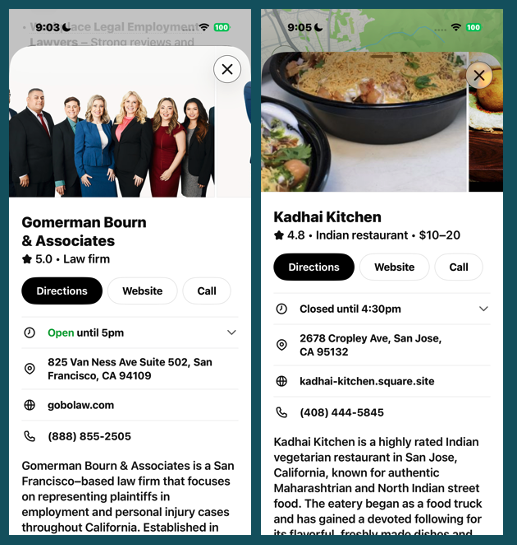
Source: ChatGPT
The new Knowledge Panel is an improvement for ChatGPT's local results, though it's not obvious to the user that these Panels exist. They don't, for example, automatically appear when you do a branded search. However, people will discover them when they click around.
These Panels (or entity cards) appear to postdate ChatGPT 5.0\. They weren't appearing earlier, but may be an evolution of the local business cards that have been around in various forms for some time.
### No Local Knowledge Graph
One question is whether OpenAI is building a local knowledge graph or whether these Panels are dynamically generated. Based on Mike's quick analysis of the code, aided by ChatGPT, it appears that ChatGPT does not have a knowledge graph but is creating these Panels from external databases and then generating AI summaries. The data are grounded by using reconciled third party information from multiple sources.
Given that LLMs are probabilistic, they might not always generate the same results. And we didn't verify the accuracy of any of the data presented.
This is what ChatGPT says is going on:
> The embedded markup reveals multiple underlying data sources. Images are pulled opportunistically from third-party sites such as Yelp, LoopNet, Wikipedia, and the firm’s own website, indicating no single canonical image provider. Business facts—NAP details, hours, category, ratings, and directions—strongly resemble Google Business Profile–style data and appear to be reconciled across multiple providers (with MapQuest explicitly referenced), rather than sourced from a single API. The longer descriptive sections are clearly LLM-generated summaries, grounded in public web sources and directories, produced via retrieval-augmented generation with inline citations.
### Positive Development
Overall, we consider this a positive development that indicates ChatGPT is taking steps to improve local results. Better local results and a better local UX are critical for ChatGPT's long term competitive position vs. Google.
### EP 236 P#1 - Google’s Review Algorithms Are Tightening — Here’s What GMBapi.com's Data Shows
URL: https://www.nearmedia.co/ep-236-p-1-googles-review-algorithms-are-tightening-heres-what-gmbapis-data-shows/
Last updated: 2025-12-19T21:21:02.000Z
We talk with Michel van Luijtelaar of GMBapi.com about what new data reveals regarding review removals, fraud detection, incentivized reviews, and regional legal differences across Europe and the U.S. Their new data shows Google is deleting reviews at ever increasing levels.
_This post is for subscribers only._
### Hacking Engagement, Review Deletions, Maps' Economic Power, Real Estate Ads
URL: https://www.nearmedia.co/hacking-engagement-review-deletions-maps-economic-power-real-estate-ads/
Last updated: 2025-12-19T22:36:38.000Z
### Hacking Local Engagement
Since the release of the Google antitrust "default search" [trial exhibits](https://searchengineland.com/google-search-ranking-documents-434141?ref=nearmedia.co) and the subsequent [search API leak](https://www.nearmedia.co/google-rides-the-clickstream-long-tail-citations-ai-overview-fails/), we've known that Google historically has used engagement signals for ranking (e.g., CTR, bounce rate). That also apparently applies to local. And many local ranking signals may in fact be proxies for engagement – perhaps the ultimate relevance signal. Not long ago, Andrew Shotland [did some engagement hacking](https://www.linkedin.com/posts/randyeroberts%5Fi-got-20-teenagers-to-search-for-a-pi-attorney-activity-7393706086370983936-osem/?ref=nearmedia.co) to see how it would impact local rankings: "I got 20 teenagers to search for a PI attorney in Pleasanton, click on their GBP, then use GMaps to drive to their office every day for a week. Within a week they were #1 for PI attorney queries in Pleasanton." More recently, Darren Shaw [reported](https://www.linkedin.com/posts/darrenshawwhitespark%5Fthis-might-be-the-craziest-local-seo-stunt-activity-7406728803202326531-gdhX/??ref=nearmedia.co) on a similar test that Holly Starks did with Google Maps and driving directions: "She put 100 phones in her car and set up driving directions to a business on Google Maps, drove there, and the result was crazy: That business’s rankings went from the 20s right to number 1!" These two tests suggest that Google is watching driving directions as well as local business visitation and factoring those signals into ranking. Shotland's advice was to ask employees to initiate driving directions before they drive to work – or get teenagers to do it.
Image source: ChatGPT
**Our take:**
- This is probably not a hack that will become a widespread problem.
- But it appears to conclusively illustrate that engagement – here directions and foot traffic – do impact local rankings (as proxies for popularity).
- What are the other engagement signals that Google might be using in local?
_This post is for subscribers only._
### EP 235 P#2 - AI Agents Are Coming: Jes Scholz Reveals How to Prepare Your Business & Website NOW
URL: https://www.nearmedia.co/ep-235-p-2-ai-agents-are-coming-jes-scholz-reveals-how-to-prepare-your-business-website-now/
Last updated: 2025-12-12T19:50:00.000Z
AI agents, content freshness, and database readiness are rewriting marketing. Jes Scholz explains what brands must do now to stay discoverable, trustworthy, and competitive as conversational interfaces reshape how people search and buy.
_This post is for subscribers only._
### Got Moats?, Google AI Training Probe, Agencies Are 'OK,' SMBs Are Social
URL: https://www.nearmedia.co/got-moats-google-ai-training-probe-agencies-are-ok-smbs-are-social/
Last updated: 2025-12-11T09:22:13.000Z
### Where's the Moat?
The way [many SEOs](https://www.linkedin.com/posts/barryadams%5Fi-predict-that-ai-mode-will-not-become-the-activity-7403775939538472960-b2RL?utm%5Fsource=share&utm%5Fmedium=member%5Fdesktop&rcm=ACoAAAAIV74Bb1aAoZdEKRnVNUEej8CRDU-HC9w) and [investors](https://www.google.com/search?q=google+ticker&oq=google+ticker&gs%5Flcrp=EgZjaHJvbWUqCggAEAAYsQMYgAQyCggAEAAYsQMYgAQyCggBEAAYsQMYgAQyBwgCEAAYgAQyBwgDEAAYgAQyBwgEEAAYgAQyBwgFEAAYgAQyBwgGEAAYgAQyDwgHEC4YChjHARjRAxiABDIHCAgQABiABDIHCAkQABiABNIBCDQwNDdqMGo3qAIAsAIA&sourceid=chrome&ie=UTF-8&ref=nearmedia.co) are now talking, you'd think that Google had locked up the "AI race." That perception has only emerged since Gemini 3's recent rollout. But there are several indications Google has gained ground on OpenAI. One data point is that OpenAI downloads [have recently slowed](https://techcrunch.com/2025/10/17/chatgpts-mobile-app-is-seeing-slowing-download-growth-and-daily-use-analysis-shows/??ref=nearmedia.co). (OpenAI has also [become nervous](https://www.wsj.com/tech/ai/openai-sam-altman-google-code-red-c3a312ad??ref=nearmedia.co) about Google's gains.) There's also Sensor Tower [data](https://www.pymnts.com/artificial-intelligence-2/2025/googles-gemini-outpaces-openais-chatgpt-in-monthly-active-user-growth/?ref=nearmedia.co) showing that last month Gemini grew its monthly active users 30%, compared with ChatGPT's 5%. On the other hand, The Information reported that ChatGPT has nearly [900 million users](https://www.theinformation.com/articles/chatgpt-nears-900-million-weekly-active-users-gemini-catching?ref=nearmedia.co), up from 800 million in October. Much of Gemini's recent adoption is tied to the viral popularity of its Nano Banana image creation tool, part of Gemini 2.5\. Another consideration is that Google has a full AI tech stack, with [its own chips](https://theconversation.com/google-is-relying-on-its-own-chips-for-its-ai-system-gemini-heres-why-thats-a-seismic-change-for-the-industry-270818?ref=nearmedia.co), so it doesn't need to rely on Nvidia to the same extent that rivals do. And, as we've said before, Google can fund AI development out of the "[irrationally high" rents](https://monopoly-report.com/p/us-v-google-day-5??ref=nearmedia.co) it collects from advertisers. This leads to the perception that Google's financial position vis-à-vis AI is *much stronger* than its rivals, which is probably true. Feeling some pressure, ChatGPT just [hired Slack CEO Denise Dresser as CRO](https://openai.com/index/openai-appoints-denise-dresser/?ref=nearmedia.co) to accelerate monetization. And while ChatGPT still "owns" the AI brand and remains the market share leader – including [among younger users](https://www.pewresearch.org/internet/2025/12/09/teens-social-media-and-ai-chatbots-2025/?ref=nearmedia.co) – the adage that "the competition is just a click away" seems more applicable to AI than search.
**Global AI Market Share**
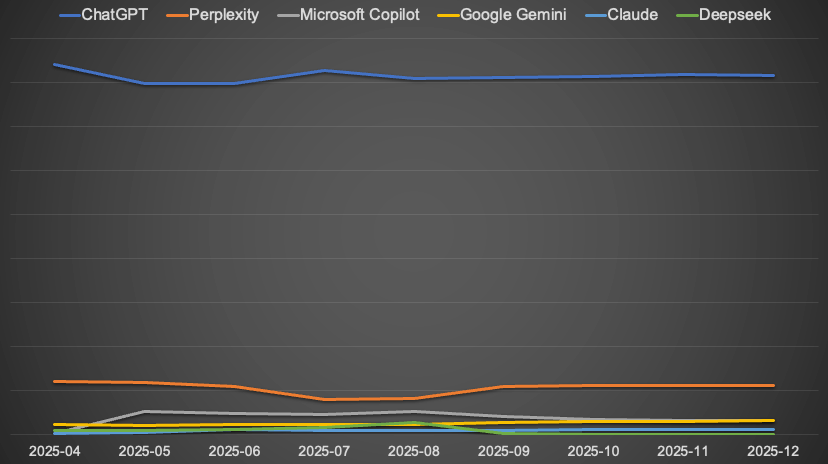
Chart: StatCounter
**Our take:**
- Google's massive distribution channels (i.e., search, Chrome, Workspace) are huge advantages, together with its ad-revenues
- If Google delivers a "good enough" AI experience, it will claw back some usage from ChatGPT, especially in local where it has better data.
- Google is speeding up AI feature rollouts and pushing more people into AI Mode. But the need to drive ad clicks will block radical SERP change, for now.
_This post is for subscribers only._
### EP 234 P#1 - Gemini 3, AI Mode & the New Search Reality: A Conversation with Jes Scholz
URL: https://www.nearmedia.co/ep-234-p-1-gemini-3-ai-mode-the-new-search-reality-a-conversation-with-jes-scholz/
Last updated: 2025-12-05T15:52:33.000Z
AI search is evolving fast. Jes Scholz joins us to explain how conversational interfaces, Gemini 3, shrinking indexes and brand salience are reshaping SEO & Local SEO strategy. Here’s what matters — and what doesn’t — in 2025.
_This post is for subscribers only._
### ChatGPT 'Code Red', Dynamic SERP, Local AI Visibility, AI Shopping on the Rise
URL: https://www.nearmedia.co/chatgpt-code-red-dynamic-serp-local-ai-visibility-ai-shopping-on-the-rise/
Last updated: 2025-12-03T04:52:35.000Z
### Now It's 'Code Red' for ChatGPT
When ChatGPT launched roughly three years ago, Google was knocked off-guard and [declared "code red"](https://www.nytimes.com/2022/12/21/technology/ai-chatgpt-google-search.html?ref=nearmedia.co) (nearly a tech cliche) to deal with the perceived existential-competitive threat. Since its launch, ChatGPT has grown to more than 800 million monthly users. The company projects it will have [more than 200 million paying subscribers](https://www.reuters.com/technology/openai-projected-least-220-million-people-will-pay-chatgpt-by-2030-information-2025-11-26/?ref=nearmedia.co) by 2030, but could face "headwinds" from Google's Gemini 3\. The latter has rattled OpenAI, which has now itself [declared "code red](https://www.wsj.com/tech/ai/openais-altman-declares-code-red-to-improve-chatgpt-as-google-threatens-ai-lead-7faf5ea6??ref=nearmedia.co)." Gemini 3 was released last month. It's received widespread praise, topping AI leaderboards on several measures. Google also says that Gemini's MAUs hit 650 million in October driven in part by Nano Banana, but even more significantly by Google's [relentless promotion](https://www.nearmedia.co/gemini-ascendant-mapquest-1-web-guide-appears-its-seo-aeo/) of Gemini across all its major products – without which it would have far fewer users. With [ad revenue growing](https://www.cnbc.com/2025/10/29/alphabet-google-q3-earnings.html?ref=nearmedia.co) and Gemini 3 momentum, the wind now seems to be at Google's back. Google can fund its AI ambitions with ad revenue, while OpenAI has to keep raising or borrowing money and may never be able to [pay it all back](https://x.com/hedgiemarkets/status/1993836166563676184?s=46&ref=nearmedia.co). OpenAI's code red means that it will postpone or delay other projects, including (probably) ads and potentially shopping. Meanwhile on another front, OpenAI faces intensifying B2B competition for developers and enterprises from Claude/Anthropic.

Source: Gemini
_This post is for subscribers only._
### Gemini Ascendant, Mapquest #1, Web Guide Appears, It's SEO + AEO
URL: https://www.nearmedia.co/gemini-ascendant-mapquest-1-web-guide-appears-its-seo-aeo/
Last updated: 2025-11-26T00:32:29.000Z
_This post is for subscribers only._
### EP 233 - Google Maps Gets AI, Reviews Get Aliases, Ads Invade AI Mode — And Google Uses Tech & Monopoly to Win the AI War
URL: https://www.nearmedia.co/ep-233-google-maps-gets-ai-reviews-get-aliases-ads-invade-ai-mode-and-google-uses-tech-monopoly-to-win-the-ai-war/
Last updated: 2025-11-21T19:32:47.000Z
Google is pushing deeper into AI: Maps gets new AI features, reviews get aliases, ads creep into AI Mode, and Google changes the reality of search and leans on its monopoly power to steer users toward Gemini as it battles ChatGPT for AI dominance
_This post is for subscribers only._
### Gemini 3 Excites, Local Ads in AI Mode!, Holiday Shopping, Review Nicknames
URL: https://www.nearmedia.co/gemini-3-excites-local-ads-in-ai-mode-holiday-shopping-review-nicknames/
Last updated: 2025-11-20T02:59:06.000Z
_This post is for subscribers only._
### LSRF, Local Inventory Calls, Social Double Duty, AI & Yelp
URL: https://www.nearmedia.co/lsrf-local-inventory-calls-social-double-duty-ai-yelp/
Last updated: 2025-11-13T23:58:56.000Z
_This post is for subscribers only._
### EP 232 - What #1-Ranking Personal Injury Lawyers Are Doing Right With GBP— Greg Gifford’s Local Ranking Study
URL: https://www.nearmedia.co/ep-232-what-1-ranking-personal-injury-lawyers-are-doing-right-with-gbp-greg-giffords-local-ranking-study/
Last updated: 2025-11-13T17:08:23.000Z
Greg Gifford shares his massive study of 3,000 personal injury GBPs, revealing which tactics truly separate high-ranking firms from the rest—and what it means for local SEO in the AI era.
_This post is for subscribers only._
### EP 231 - Local Search in the Age of AI: Darren Shaw on the 2026 Ranking Factors
URL: https://www.nearmedia.co/ep-231-local-search-in-the-age-of-ai-darren-shaw-on-the-2026-ranking-factors/
Last updated: 2025-11-08T16:18:32.000Z
Darren Shaw joins Near Media to discuss the 2026 Local Search Ranking Factors report — revealing how AI search, reviews, and behavioral signals are reshaping local SEO. Discover what really drives visibility in the age of AI.
_This post is for subscribers only._
### G-Maps AI Makeover, Google Unbowed, Hidden Decision Engines, CTRs Down Again
URL: https://www.nearmedia.co/g-maps-ai-makeover-google-unbowed-hidden-decision-engines-ctrs-down-again/
Last updated: 2025-11-06T06:16:22.000Z
_This post is for subscribers only._
### Near Media will be free next month and beyond
URL: https://www.nearmedia.co/near-media-will-be-free-next-month-and-beyond/
Last updated: 2025-11-01T13:39:46.000Z
Near Media is unlocking all newsletters and analysis starting on December 1, 2025.
_This post is for subscribers on the All-Access Membership tier only._
### EP 230 - TikTok’s Local Play: How Gen Z Is Rewriting Local Search
URL: https://www.nearmedia.co/ep-330-tiktoks-local-play-how-gen-z-is-rewriting-local-search/
Last updated: 2025-10-31T12:49:42.000Z
Gen Z’s search habits are changing fast — 62 % now use TikTok to find local businesses. Greg Sterling, Mike Blumenthal, and Celeste Gonzalez (Rickety Roo) Explore how TikTok’ and their Local Explorer program could redefine local SEO and authentic review discovery. Sign up to access for free.
_This post is for subscribers only._
### Apple Map Ads, LSA's 'Economic Rents,' Yelp's Uphill Battle, AI for B2B
URL: https://www.nearmedia.co/apple-map-ads-lsas-economic-rents-yelps-uphill-battle-ai-for-b2b/
Last updated: 2025-10-30T14:51:01.000Z
_This post is for subscribers only._
### EP 229 - Google’s Local Antitrust Battle with Yelp Moves Forward, Gemini’s “Grounded” Local AI, and ChatGPT’s New Local Results
URL: https://www.nearmedia.co/ep-229-googles-local-antitrust-battle-with-yelp-moves-gorward-geminis-grounded-local-ai-and-chatgpts-new-local-results/
Last updated: 2025-10-23T19:05:07.000Z
We discuss Yelp’s revived antitrust lawsuit, Google’s confusing new ad labeling, Gemini’s flawed “grounding” in Maps, and ChatGPT’s evolving local search results — plus why trust in AI is starting to crack. Sign up to access for free.
_This post is for subscribers only._
### ChatGPT Local Pack, Atlas Browser, Local Product Inventory, Rapid Response
URL: https://www.nearmedia.co/chatgpt-local-pack-atlas-browser-local-product-inventory-rapid-response/
Last updated: 2025-10-23T17:09:59.000Z
_This post is for subscribers only._
### AI Mode Subtext, Link Quality, Google Ad Labeling, Gemini Success
URL: https://www.nearmedia.co/ai-mode-subtext-link-quality-google-ad-labeling-gemini-success/
Last updated: 2025-10-17T19:05:44.000Z
### AIOs & AI Mode: The Subtext
Robby Stein, VP of Product at Google, was [recently interviewed](https://www.youtube.com/watch?v=kOnsqqVbIeY&ref=nearmedia.co) by Lenny Rachitsky on his podcast. Among other places, Stein has worked at Google, Meta and Yahoo. This is his second go at Google, following a consumer product leadership role at Instagram, where he oversaw Stories and Reel (both clones of rival products). Stein is now responsible for multiple search features including AI Overviews and AI Mode. It's a lengthy interview and Stein says lots of things. Among them, he remarks that AI hasn't impacted core Google usage. What he probably means is Google still has lots of traffic, but search usage *is* changing. Stein says that AI is "expansionary," – something Liz Reid [has repeatedly said](https://www.wsj.com/podcasts/wsj-the-future-of-everything/the-google-exec-reinventing-search-in-the-ai-era/52d5bc85-7056-40a7-b790-04079a2c44d7?ref=nearmedia.co) – and growing the search query pie overall. There's an implication that that top-of-funnel questions are going to AI features and "core search" is increasingly about navigation, brand queries and last clicks. Here are some inferences from the conversation: AI Overviews (AIOs) were rushed out to respond to ChatGPT and AI Mode is the better version of what Google is seeking to build. The two features will thus eventually be consolidated. Stein touts Google's entity graphs (products and local structured data) as major differentiators vs rivals. Finally, he sees Gemini, the direct ChatGPT competitor, and AI Mode as distinct. Gemini is for creativity/productivity, he says, whereas AI Mode is for information and more search-like. But this distinction feels a bit forced.
**Google's Robby Stein's Full Interview**
_This post is for paying subscribers only._
### EP 228 - AI & Local: How AI Is Rewriting Location Management; Interview with Ana Martinez, P2
URL: https://www.nearmedia.co/ep-228-ai-local-how-ai-is-rewriting-location-management-interview-with-ana-martinez-p2/
Last updated: 2025-10-16T17:38:28.000Z
In Part 2 of our interview with Ana Martinez of Uberall we discuss how AI is changing local visibility. From adoption curves to Google’s AI Overviews, shifting consumer behavior, and the renewed value of citations, we explore what businesses must do to stay visible in an AI-driven marketplace.
_This post is for subscribers only._
### Local AI Citations, TikTok Explorers, Worthless Reviews, Global Opt-Out
URL: https://www.nearmedia.co/local-ai-citations-tiktok-explorers-worthless-reviews-global-opt-out/
Last updated: 2025-10-13T05:32:39.000Z
### Unpacking Local AI Citations
A new [analysis](https://www.yext.com/research/article/ai-citations-user-locations-query-context?ref=nearmedia.co#introduction), from Yext looks at how location, context and search intent affect which citations appear in AI results. The study critiques brand-level visibility analyses (see Profound) as being superficial and insufficient for local marketers. The study digested nearly 7 million citations from 1.6 million AI answers on OpenAI, Gemini and Perplexity. Yext also examined multiple query types (branded/unbranded, objective/subjective) across four industries (Finance, Food Service, Healthcare, and Retail). It then grouped citations into four categories: websites, listings (directories), review sites and social platforms, and other (news, forums, gov't, etc.). At the highest level, as one might expect, Yext found that citations differ by AI platform, industry and query type. For example, "Gemini shows a strong preference for first-party websites" (52.2%), while "OpenAI relies heavily on listings" (48.7%). Yext also points out that OpenAI draws heavily on Google Business Profiles as well. Each citation category was also rated according to the degree of control the brand or business may have. Websites, for instance, are "fully controllable," while directories are merely "controllable" and review/social sites can be "influenced" but not controlled.
**Local Citations Differ by Model**
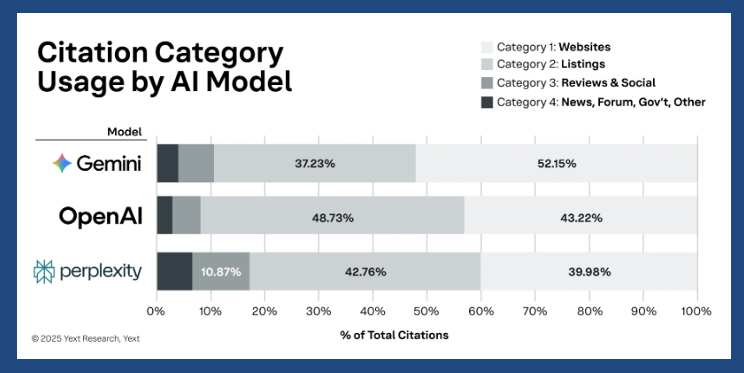
Source: Yext
_This post is for paying subscribers only._
### ChatGPT Local Apps, Brands Beat AIOs, Deceiving SMBs, AI for the Holidays
URL: https://www.nearmedia.co/chatgpt-local-apps-brands-beat-aios-deceiving-smbs-ai-for-the-holidays/
Last updated: 2025-10-07T22:56:09.000Z
### Local Apps in ChatGPT
One of ChatGPT's major strategic challenges is local search. OpenAI is making big investments in shopping with its new [Checkout capability](https://www.localdialog.com/what-to-make-of-chatgpt-checkout/?ref=nearmedia.co) and Agentic Commerce Protocol, but so far not in local. Local is equally if not more strategic than shopping, but not as easily monetized. Local ChatGPT results are acceptable in many cases, but lag behind Google in terms of features and quality. Indeed, when local searchers can't find what they're looking for on ChatGPT, they turn to Google. We've been talking on the [podcast](https://www.nearmedia.co/memo/) for some time about this problem and how ChatGPT really needs to address it to be competitive with Google. At its developer day yesterday in San Francisco, the company made several announcements. One of them was an [SDK for apps](https://openai.com/index/introducing-apps-in-chatgpt/?ref=nearmedia.co), which included a number of launch partners. This SDK effectively brings [third-party app experiences into ChatGPT](https://www.youtube.com/watch?v=2C4Cs6503gw&t=4s&ref=nearmedia.co). Zillow is one of the launch partners, which allows users to search for real-estate listings on ChatGPT and then invoke Zillow. After that it provides a fairly robust version of the Zillow site/app experience within ChatGPT. The launch and soon-to-launch partners, in addition to Zillow, include AllTrails, Booking, Canva, Coursera, DoorDash, Expedia, Figma, Instacart, Khan Academy, OpenTable, Peloton, Spotify, Target, TheFork, Thumbtack, Tripadvisor and Uber.
**Zillow in ChatGPT**
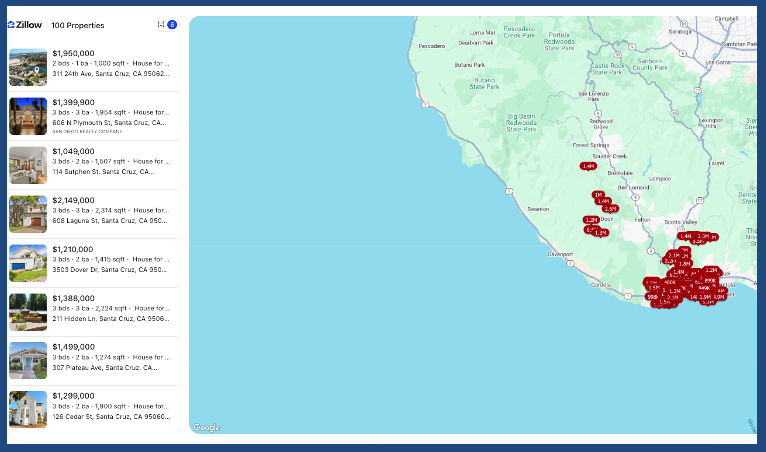
Source: Zillow-ChatGPT
_This post is for paying subscribers only._
### EP 227 - Inside Uberall’s Local AI Shift: From Culture Shift to Client Tools; Interview with Ana Martinez -- Part 1
URL: https://www.nearmedia.co/ep-227-inside-uberalls-local-ai-shift-from-culture-shift-to-client-tools-interview-with-ana-martinez-part-1/
Last updated: 2025-10-07T17:13:16.000Z
[](https://www.youtube.com/watch?v=UiqeDrSQXuo&t=7s&ref=nearmedia.co)
click to watch Youtube
In this Near Memo conversation, Uberall CTO Ana Martinez details the company’s transformation into an “AI-native” organization. She explains how AI is reshaping internal culture, changing and sometimes blurring roles across teams, and driving client-facing innovation like the UB-I concierge and Location Performance Score. We also discuss how to manage change, avoid AI hallucinations, and balance cultural concerns with the demands of rapid innovation.
If you are interested in sponsoring this podcast please reach out to [mblumenthal@nearmedia.co](mailto:mblumenthal@nearmedia.co)
### The Podcast Deets
- [**00:00**](https://www.youtube.com/watch?v=UiqeDrSQXuo&ref=nearmedia.co)**–11:05 — Culture & Internal AI Adoption** Uberall commits to becoming “AI native,” rethinking workflows and roles. Teams experiment with tools like Cursor and Copilot, reshaping how engineering, product, and design collaborate.
- [02:59](https://www.youtube.com/watch?v=UiqeDrSQXuo&t=179s&ref=nearmedia.co) – Internal AI Initiatives & Organizational Change
[05:36](https://www.youtube.com/watch?v=UiqeDrSQXuo&t=336s&ref=nearmedia.co) – Cultural Dynamics & AI Integration
[08:14](https://www.youtube.com/watch?v=UiqeDrSQXuo&t=494s&ref=nearmedia.co) – Managing Change & Employee Roles
- [**11:05**](https://www.youtube.com/watch?v=UiqeDrSQXuo&t=665s&ref=nearmedia.co) **— AI in Products & Location Performance Optimization** Martinez explains how AI is being embedded into client-facing tools, especially around location marketing. She introduces Location Performance Optimization (LPO) and the Location Performance Score (LPS).
- [16:35](https://www.youtube.com/watch?v=UiqeDrSQXuo&t=995s&ref=nearmedia.co) – Location Performance Optimization & AI
- [**22:05**](https://www.youtube.com/watch?v=UiqeDrSQXuo&t=665s&ref=nearmedia.co)**–31:43 — UB-I, Hallucinations & Quality Control** The team explores UB-I, Uberall’s AI concierge, designed to help clients manage visibility and reputation. They also discuss the risks of AI hallucinations and the safeguards Uberall uses to maintain quality.
- [27:38](https://www.youtube.com/watch?v=UiqeDrSQXuo&t=1658s&ref=nearmedia.co) – Quality Control & AI Hallucinations
### Related Links
[Inspirational Woman: Ana Martinez | Chief Technical Officer, Uberall](https://wearetechwomen.com/inspirational-woman-ana-martinez-chief-technical-officer-uberall/?ref=nearmedia.co)
[Who Is UB-I: Meet Your New Platform AI | UberallThe first agentic AI built for location performance. Not an assistant, not a copilot, not a chatbot. UB-I orchestrates your marketing efforts at scale.UberallSara Vordermeier](https://uberall.com/en-us/resources/blog/who-is-ub-i?ref=nearmedia.co)
### Takeaways
- Becoming “AI native” requires cultural change, not just tech adoption.
- AI blurs traditional roles, fostering more cross-functional collaboration.
- Location Performance Score (LPS) helps brands track visibility, reputation, and engagement.
- UB-I serves as a client-facing AI concierge.
- Guardrails are critical to prevent AI hallucinations from undermining trust.
###
### EP 226 - Google GBP Suspension Increases?, The Future of Reviews, and Liz Reid’s AI Vision for Search
URL: https://www.nearmedia.co/ep-226-google-gbp-suspension-increases-the-future-of-reviews-and-liz-reids-ai-vision-for-search/
Last updated: 2025-10-01T18:47:11.000Z
From GBP suspension increases to the future of reviews to Liz Reid’s AI roadmap, the Near Memo breaks down what Google’s latest moves mean for small businesses, SEOs, and consumers navigating an increasingly AI-driven search world.
_This post is for subscribers only._
### Local Agents, Alexa's Do-Over, Google Dark Ad Patterns, Reviewpocalypse
URL: https://www.nearmedia.co/local-agents-alexas-do-over-google-dark-ad-patterns-reviewpocalypse/
Last updated: 2025-09-29T18:27:26.000Z
### AI Mode, Agents & Local
It's still not clear whether and how AI Overviews, AI Mode, [Web Guide](https://www.nearmedia.co/google-web-guide-chatgpt-domination-local-graph-2-0-great-betrayal/) (i.e., AI Organized pages) and Gemini and Gemini in Chrome will co-exist. Many people believe AI Mode is the future of Google's SERP. I'm not entirely convinced, but Google is aggressively promoting AI Mode, [rolling it out globally](https://blog.google/products/search/ai-mode-agentic-personalized/?ref=nearmedia.co) and [integrating it into Chrome](https://blog.google/products/chrome/chrome-reimagined-with-ai/?ref=nearmedia.co). More recently the company has started releasing AI Mode's "agentic" capabilities for people opted-in to [Google Search Labs](https://labs.google.com/search?ref=nearmedia.co). Google is starting with restaurant reservations but will shortly introduce local services appointments and event tickets. I had some challenges triggering the restaurant functionality but was able to get it to show up with the prompt "Find me a dinner reservation ..." The screen below was the result: restaurants with reservation buttons provided through Resy and OpenTable integrations. Other scheduling/commerce partners include Tock, Ticketmaster, StubHub, SeatGeek and Booksy. Most of these are coming out of [Reserve with Google](https://www.google.com/maps/reserve/partners?ihs=3&ref=nearmedia.co) while others are likely separate integrations (see also, [Google Actions](https://developers.google.com/actions-center?ref=nearmedia.co)). The current agentic functionality is comparatively primitive vs. its promise. But capabilities will accelerate and become more sophisticated over time. AI Mode is not widely used today but if it gains usage there are obvious local scheduling and commerce implications for marketers.
**AI Mode 'Agentic' Reservations**
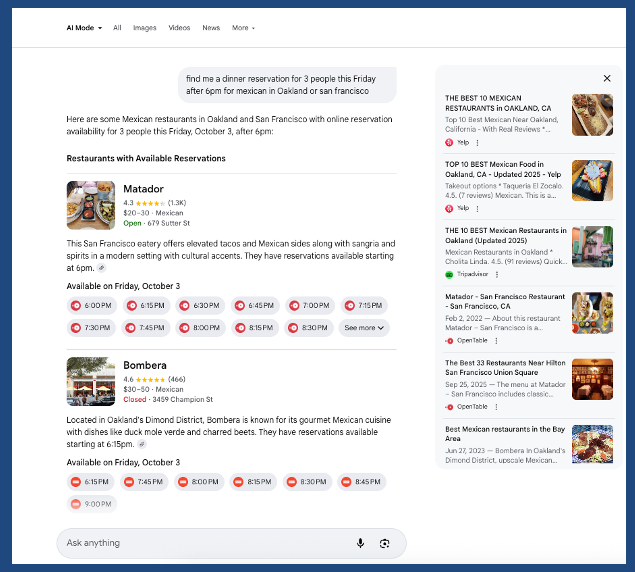
_This post is for paying subscribers only._
### Review Extortion - A Growing Threat to Your GBP Profile
URL: https://www.nearmedia.co/review-extortion-a-growing-threat-to-your-gbp-profile/
Last updated: 2025-11-24T13:43:14.000Z
While [Google SMB review extortion](https://youtu.be/QNTPmhz0Fnc?t=144&ref=nearmedia.co) continues to grow it isn't, as the NY Times [claims](https://www.nytimes.com/2025/09/11/technology/fake-reviews-small-businesses.html?ref=nearmedia.co), a new threat. But why is it increasing now and how can you combat it?
**GBP Forum Reports of Review Extortion**
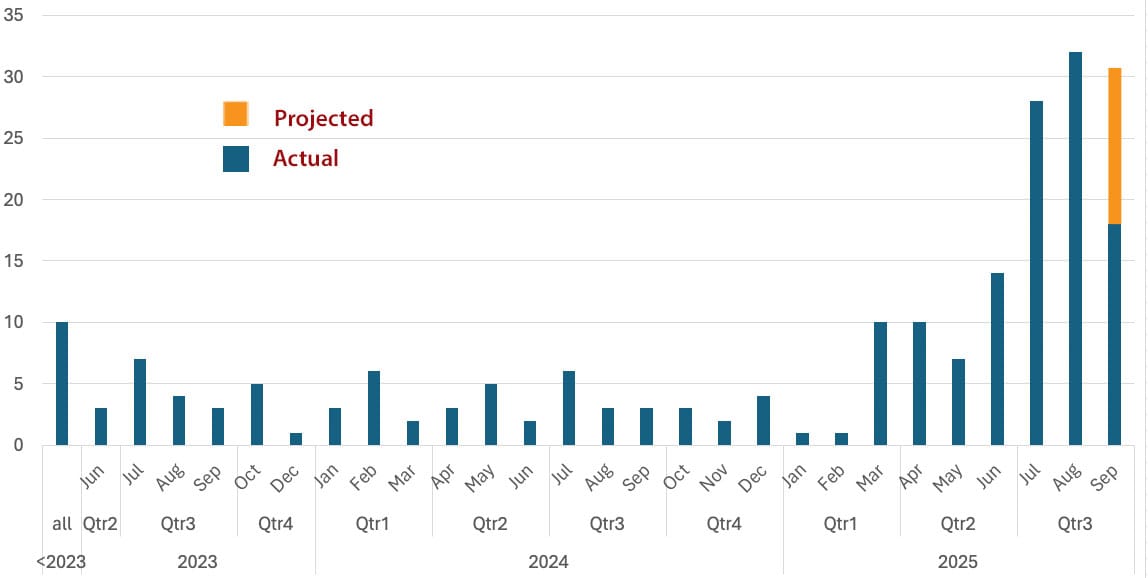
Reported instances of review extortion threats from 2021 until this week via the Google GBP forum
As the chart shows, there has been a steady drumbeat of review extortion threats in the Google Business Profile forum for the past two and a half years. A very small percentage of small businesses make it to the forum so this accounting tends to underreport the incidence of extortion.
The steep increases provide directionally strong evidence of a growing and more widespread problem since early March of this year.
### How the Scam Works
Scammers, often from India or Pakistan, [reach out](https://support.google.com/business/thread/374436463?ref=nearmedia.co) to a US business via WhatsApp and suggest that they have been hired by a competitor to leave fake negative reviews. They offer the targeted business the opportunity to avoid this if they pay a fee, usually several hundred dollars. If the business refuses, the negative reviews start to flow.
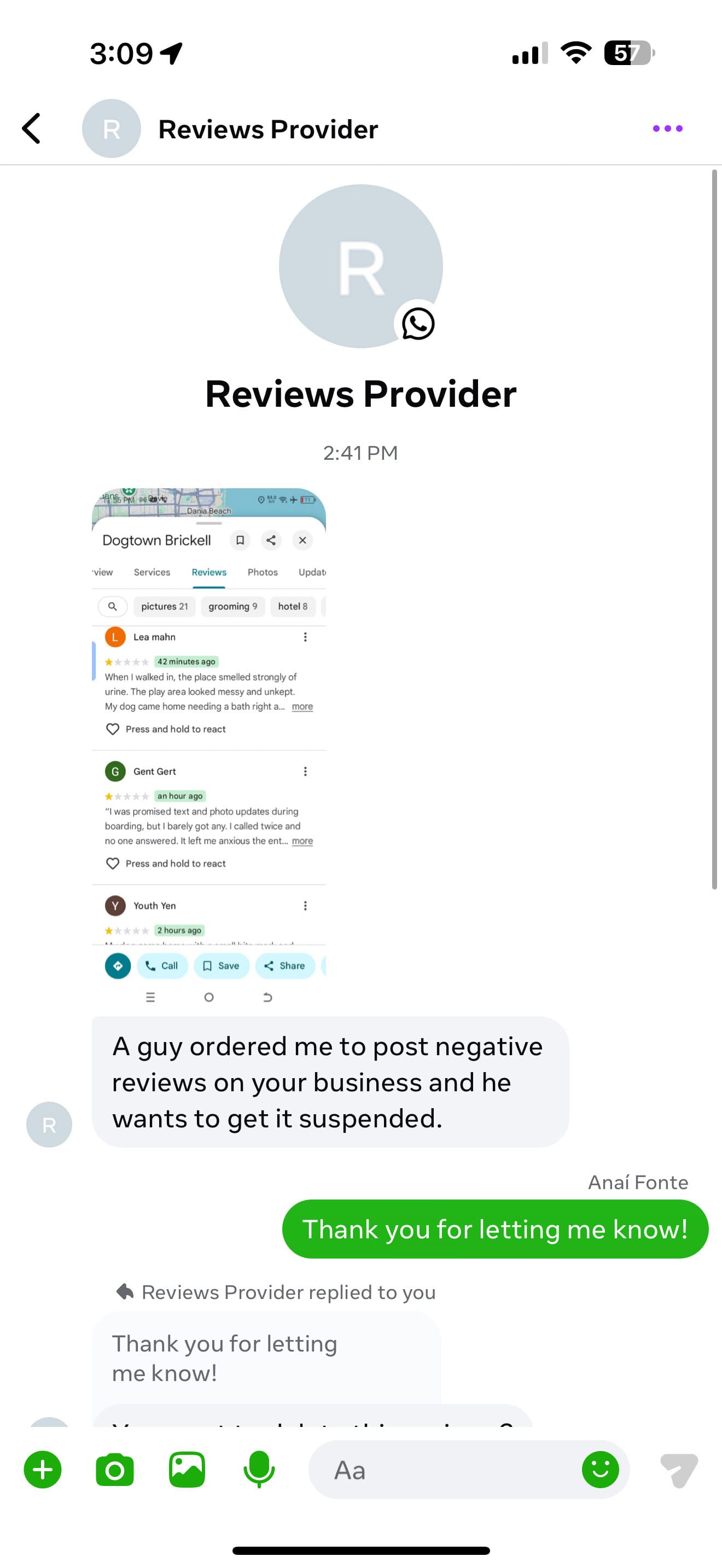
### But Why Now?
In 2024, Google [deprecated](https://www.seroundtable.com/google-business-profile-call-history-deprecating-37465.html?ref=nearmedia.co) their GBP specific messaging app and [started rolling out WhatsApp](https://www.seroundtable.com/google-business-profiles-chat-with-sms-whatsapp-37500.html?ref=nearmedia.co) and SMS as a replacement around the world. In late January 2025, Google [allowed](https://www.seroundtable.com/google-business-profiles-chat-whatsapp-us-38784.html?ref=nearmedia.co) US businesses to add these messaging platforms to their GBP profiles.
During 2023 and 2024, the Google messaging app saw a low, ongoing level of review extortion threats. But after WhatsApp was added there was a significant uptick. The addition of WhatsApp to GBP profiles created a situation that made it easier, cheaper and quicker for worldwide scammers to contact US businesses – and they did.
### What to Do if It Happens to You
If you have 10 or more reviews, you should head directly to the GBP forums and ask for help in escalating the situation. You should include a public Google Sheet with links to the bogus reviews as well as your GBP profile and any proof of the extortion. Silver-level Google Product Experts (PE) and above can escalate cases with 10 or more reviews directly without a case number.
If you have fewer than 10 reviews, you have to do the convoluted Google multi-step process to get them removed:
1. Report the reviews via Maps
2. Report via GBP tool if the Maps report doesn't get them removed
3. Appeal via GBP if they are still there after 5 days
4. Escalate to Forum with the necessary information
5. A PE can then escalate to Google for additional review via a special form
6. And if all of that fails, the PE has access to a community level escalation to a private forum for additional review.
### How to Reduce Your Exposure
The best way to prevent this type of review extortion from happening is to remove WhatsApp from your Google Business Profile. Adding SMS or lead management tools like Leadferno might lower the risk of the occurrence because of the costs associated with using SMS internationally. But it won't entirely eliminate the threat.
### What Could Google Do?
Google has long been aware of the review extortion scam with their own messaging product, yet did nothing to address it. It is very likely they anticipated an increase in these scams by adding WhatsApp to the mix. And yet they have not taken any action to address or limit the impact.
In the NY Times article, Google [noted](https://www.nytimes.com/2025/09/11/technology/fake-reviews-small-businesses.html?ref=nearmedia.co) that they would be releasing a special reporting form to handle these situations, but that's still MIA.
Google has long chosen ease-of-use over security with their SMB tools. Their introduction of WhatsApp is no exception. While their early-release philosophy gets products out in the real world quickly, it often causes real-world harms. When a small business's ratings plummet that's definitely the case.
Google just sees these occurrences as the externalized cost of their efficiency. I once asked a Google Places product lead about the massive amount of locksmith spam; he said they were intentionally letting it through so that they could "inoculate" the system. We saw how well that went.
What could Google do to combat increased review extortion? They could do what they should have done from the beginning: anticipate the uptick and if they can't stop it, make it easier to identify and remove the fake reviews.
Business owners shouldn't have to wait for a NY Times article to get action. It should've happened from day one.
### What the Video Instead
Rather watch the video?
### EP 225 - Google Review Extortion, Maps AR Experiment, What ChatGPT is Missing & YouTube’s Strategic Power
URL: https://www.nearmedia.co/ep-225-google-review-extortion-maps-ar-experiment-what-chatgpt-is-missing-youtubes-strategic-power/
Last updated: 2026-10-18T13:25:20.000Z
From review extortion scams to new AR tools in Google Maps, ChatGPT’s local blind spots, and YouTube’s rise as a strategic powerhouse — here’s what’s shaping the future of Google and local marketing.
_This post is for subscribers only._
### Local Users Want More, Google vs. Web, Local Ranking Variables, TikTok Survives
URL: https://www.nearmedia.co/local-users-want-more-google-vs-web-local-ranking-variables-tiktok-survives/
Last updated: 2025-09-24T19:12:31.000Z
### Local Searchers Want More from AI
The early 2022 - 2024 [narrative](https://www.gartner.com/en/newsroom/press-releases/2024-02-19-gartner-predicts-search-engine-volume-will-drop-25-percent-by-2026-due-to-ai-chatbots-and-other-virtual-agents?ref=nearmedia.co) that Google would be displaced by AI has given way among many SEOs to its polar opposite: ChatGPT [hasn't had any impact](https://sparktoro.com/blog/new-research-google-search-grew-20-in-2024-receives-373x-more-searches-than-chatgpt/?ref=nearmedia.co) on Google. That's equally untrue. What we see is a pattern of complementary or sequential usage, where people are using AI *and* Google. AI [is changing buyer journeys](https://www.seerinteractive.com/insights/study-the-ai-search-landscape-beyond-the-seo-vs-geo-hype??ref=nearmedia.co), but those changes typically vary by vertical and use case. Shopping and product comparison research is a prominent one, which is why Google is stepping up AI shopping efforts. Research we recently presented with Last Mile Retail ([form required](https://www.lastmileretail.com/campaigns/local-search-shopping-how-ai-is-disrupting-the-customer-journey?ref=nearmedia.co)) at BrightonSEO looked at AI and Google usage for local search, extending to local product finding. What we see is that many people are using AI for local search but ChatGPT (primarily) is not providing the information depth and detail people want. In the survey (n=1,045 US adults), 66% of respondents said that a majority of their overall search activity has local intent. And 87% said they'd conducted local searches using AI, with 57% having done it multiple times. Yet 68% expressed mixed satisfaction with AI local results. The chart below shows what people believe is missing from local AI results. When they don't get what they want from AI, they (re)turn to Google.
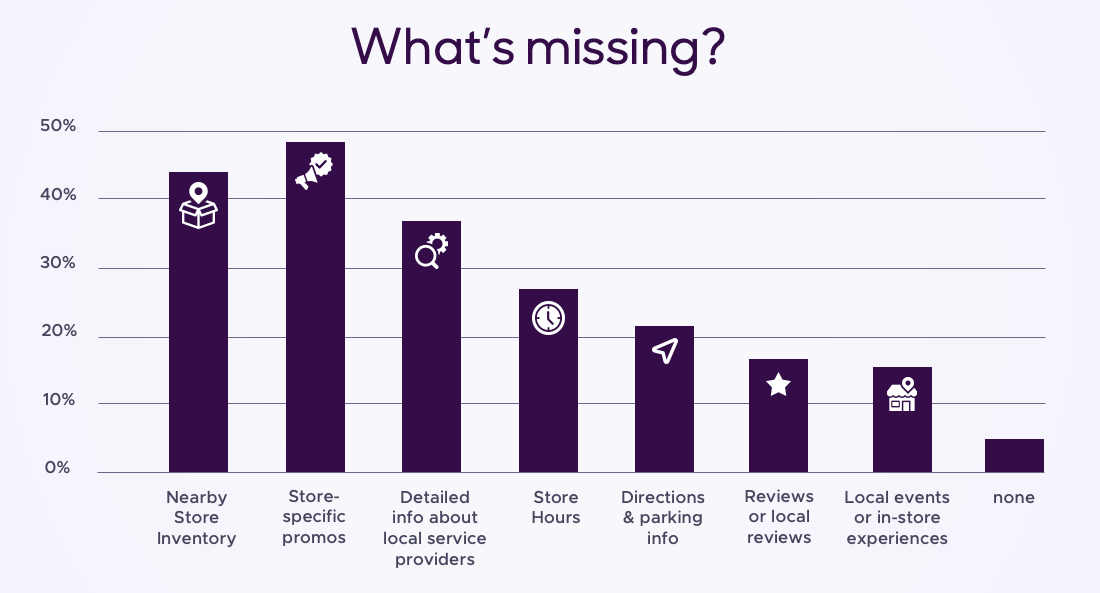
Source: Last Mile Retail-Near Media
_This post is for paying subscribers only._
### Local Blindspot, ChatGPT Users, AIOs on Trial, Smart Glasses
URL: https://www.nearmedia.co/local-blindspot-chatgpt-users-aios-on-trial-smart-glasses/
Last updated: 2025-09-19T16:40:11.000Z
_This post is for paying subscribers only._
### EP 224 - Review Extortion, Google’s Double Talk on the Open Web, The Open Web Future — with Barry Schwartz
URL: https://www.nearmedia.co/ep-224-review-extortion-googles-double-talk-on-the-open-web-the-open-web-future-with-barry-schwartz/
Last updated: 2025-09-18T23:09:14.000Z
Barry Schwartz joins The Near Memo to discuss review extortion, contradictions in Google’s “open web” claims, the decline of publisher traffic, affiliate content debates, and how AI overviews are reshaping perceptions of search quality.
_This post is for subscribers only._
### Does Local Really Need AI?, AIO Trust, Engagement Channels, Break Up Google
URL: https://www.nearmedia.co/does-local-really-need-ai-aio-trust-engagement-channels-break-up-google/
Last updated: 2025-09-14T00:23:41.000Z
_This post is for subscribers only._
### Office Hours: 'AI Optimization for Local' (Sept. 17)
URL: https://www.nearmedia.co/office-hours-ai-optimization-for-local-sept-17/
Last updated: 2025-09-10T23:55:41.000Z
Google says, “Good SEO is good GEO.”
_This post is for subscribers only._
### EP 223 - Google’s Action Links Crackdown, The “Declining” Open Web, and Siri + Gemini
URL: https://www.nearmedia.co/ep-223-googles-action-links-crackdown-the-declining-open-web-and-siri-gemini/
Last updated: 2025-09-10T19:19:11.000Z
Google tightens business action link rules, calls the open web “in decline” in court and then retracts, and we explore an AI deal with Apple’s Siri. We break down what these moves mean for businesses, publishers, and the future of search.
_This post is for subscribers only._
### Google-AI Overlap, Changing User Behavior, AI Mode, SiriGPT
URL: https://www.nearmedia.co/google-ai-overlap-changing-user-behavior-ai-mode-sirigpt/
Last updated: 2025-09-13T23:05:34.000Z
### The Google-ChatGPT Overlap
The [chart below](https://www.linkedin.com/posts/brodieclark%5Fnew-data-the-latest-audience-overlap-data-activity-7370786011209129984-z39d/??ref=nearmedia.co) is getting a lot of attention on LinkedIn and Twitter. The data is from Similar Web. What it shows is the overlap between Google and ChatGPT users. In August, according to Similar Web, 95% of ChatGPT users went to Google, while just over 14% of Google users visited ChatGPT. The argument: everyone's using Google, only a fraction are using ChatGPT – and even ChatGPT users are visiting Google. In addition, ChatGPT referral traffic has recently declined. And here's another piece of data: [there's potentially no conversion difference](https://www.amsive.com/insights/seo/does-llm-traffic-convert-better-than-organic-a-new-data-backed-study/?ref=nearmedia.co) between Google and ChatGPT traffic. One conclusion might be: just focus on Google; you're not going to get enough leads from ChatGPT and Google's never going away. However, according to multiple surveys between 35% to nearly 60% of adults have used AI applications, mostly ChatGPT. (Frequency is a different discussion.) That represents somewhere between 90 and 160 million people in real terms. Many of those people are doing things on ChatGPT that they would otherwise have done on Google in the past. So what's "really going on" and why should you care?
**ChatGPT-Google User Overlap**
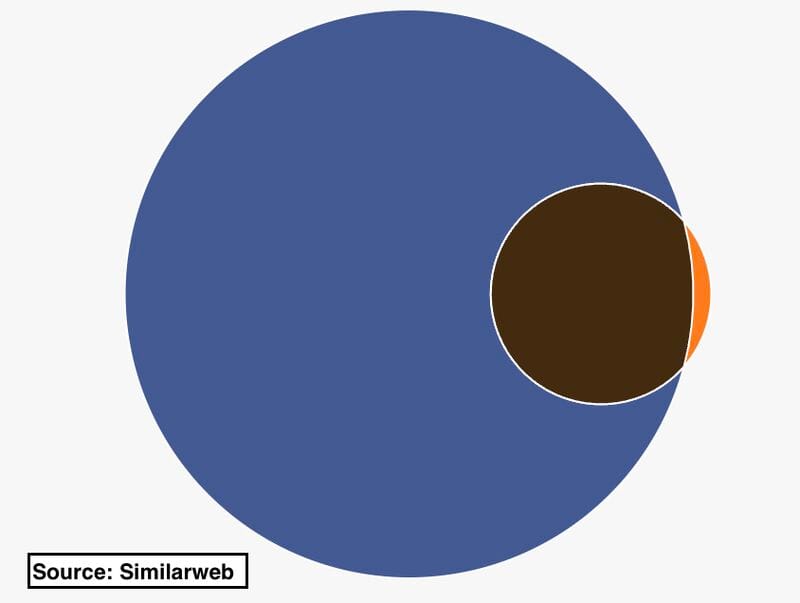
Note: the image looks suspiciously like the Death Star in Star Wars
_This post is for paying subscribers only._
### EP 222 - AI Overviews in Local: When & Where, DOJ Remedies (?), and an SMB GBP Case Study
URL: https://www.nearmedia.co/ep-222-ai-overviews-in-local-when-where-doj-remedies-and-an-smb-gbp-case-study/
Last updated: 2025-09-05T18:18:32.000Z
New data on AI Overviews in local search: where AIOs appear, how people actually use Google vs ChatGPT, what DOJ’s remedies mean, and a real client case where a brand-new ‘Summit Holiday Lighting’ triggered an AIO. Tactics & takeaways.
_This post is for subscribers only._
### Court Chickens Out, Bigger Pie, Bottom Ad, EU Blinks
URL: https://www.nearmedia.co/court-chickens-out-bigger-pie-bottom-ad-eu-blinks/
Last updated: 2025-09-03T17:20:54.000Z
### Google Gets Off Easy
A Jeff Bezos inspired [editorial](https://www.washingtonpost.com/opinions/2025/09/02/google-antitrust-judge-mehta-ai-chatbots/?ref=nearmedia.co) in the Washington Post opines, "A judge did not need to curb Google’s power. AI is already doing that." While there's a smidgen of truth there, it's not nearly as much as the author thinks. As Rand Fishkin [will tell you](https://sparktoro.com/blog/new-research-20-of-americans-use-ai-tools-10x-month-but-growth-is-slowing-and-traditional-search-hasnt-dipped/?ref=nearmedia.co), ChatGPT isn't eroding Google's search volume (and more importantly ad revenue). Yesterday Judge Amit P. Mehta finally [issued his 200+ page ruling](https://storage.courtlistener.com/recap/gov.uscourts.dcd.223205/gov.uscourts.dcd.223205.1436.0%5F4.pdf?ref=nearmedia.co) in the remedies phase of the default search antitrust trial. Among other things, the government [had asked](https://www.nearmedia.co/bing-places-aio-love-no-google-killer-wheres-the-decision/) for divestiture of Chrome. The court rejected that remedy as too severe, despite finding that "the Chrome default undoubtedly contributes to Google’s dominance in general search." As predicted, it barred Google from paying for exclusionary distribution agreements (e.g., the Apple-Google iOS search deal). But it didn't bar Google from paying for distribution. The most "serious" part of the opinion was the required sharing of "portions" of the search index and, more significantly, user-interaction data. Specifically, Google doesn't have to share its index, just a "one-time snapshot" of its search data. The court won't allow rivals to build search indexes off Google's data. But it required the disclosure of user data such as clicks, hovers, bounce-backs, query logs, and training datasets (GLUE, RankEmbed, GenAI-related). This second requirement could be very useful to SEOs and Google rivals. In response, Google predictably [said](https://blog.google/outreach-initiatives/public-policy/doj-search-decision-sept-2025/?ref=nearmedia.co), "We have concerns about how these requirements will impact our users and their privacy." While appearing measured, the court effectively chickened out. Critics have [decried the ruling as ineffectual](https://x.com/DuckDuckGo/status/1962989795971399787??ref=nearmedia.co).
**Snapshot of Judge Mehta's Remedies Decision**
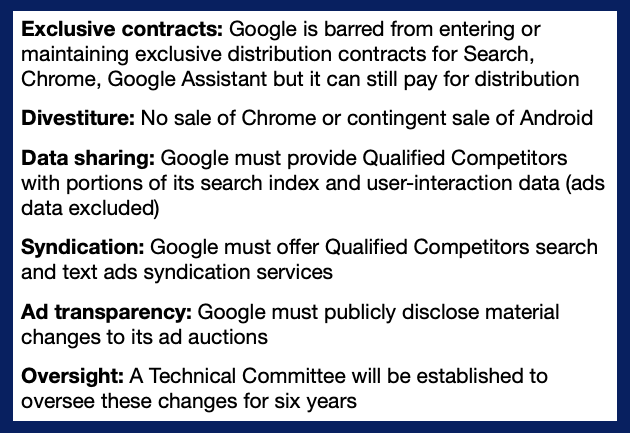
Source: Judge Amit P. Mehta's Ruling
_This post is for paying subscribers only._
### EP 221 - AI Overviews & Why consumers like them, Reviews V. Reality & Why Search Volumes Aren’t Falling
URL: https://www.nearmedia.co/ep-221-ai-overviews-why-consumers-like-them-reviews-v-reality-why-search-volumes-arent-falling/
Last updated: 2025-08-29T15:35:26.000Z
We explore consumer acceptance of AI Overviews, how consumer review behavior differs from survey expectations, and why Datos data shows Google search remains strong despite AI adoption.Sign up for free to read
_This post is for subscribers only._
### Bing Places, AIO Love, No Google Killer, Where's the Decision?
URL: https://www.nearmedia.co/bing-places-aio-love-no-google-killer-wheres-the-decision/
Last updated: 2025-08-29T20:13:52.000Z
### Optimizing for ChatGPT via Bing
There's an ongoing [debate](https://www.seroundtable.com/chatgpt-serpapi-scrape-google-39989.html?ref=nearmedia.co) about whether and how much ChatGPT is [pulling from Google results](https://www.tomsguide.com/ai/chatgpt-is-secretly-using-google-search-data-heres-how?ref=nearmedia.co) vs. how reliant it is on Bing. Bing Places is probably in the mix for local but it's unclear how much ChatGPT uses it. It doesn't seem to explicitly cite Bing – ever. After conducting several local searches this morning, I asked it, "do you rely on Bing places for any of this local information?" ChatGPT's answer was, "When I give you local business information (restaurants, painters, dentists, etc.), I do not pull from Bing Places." We probably can't take that at face value but it's interesting. It also said it doesn't rely on Apple Maps or "proprietary databases" such as InfoGroup (old brand, now Data Axle). Let's assume that Bing Places is a data source for ChatGPT. Miriam Ellis and Whitespark [looked at](https://whitespark.ca/blog/want-to-rank-in-chatgpt-focus-on-these-review-sites-new-research/?ref=nearmedia.co) "17 local business categories across 9 major US cities" to determine the primary review sources that Bing Places relies upon, which *may* in turn be helpful for ChatGPT visibility. Facebook, Yelp and Tripadvisor were the most frequently cited. There were other vertical directories cited in specific categories such as healthcare and home services. And Yelp is also often cited in Google's AI mode in many local categories. Regardless of how reliant ChatGPT is on Bing Places in fact, the larger message of the study, review diversification, is increasingly important.
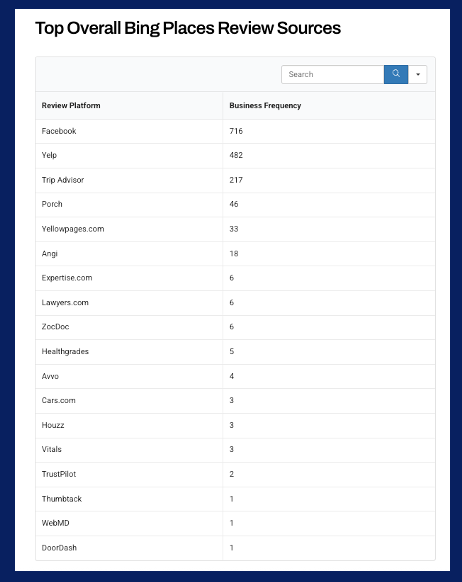
Source: Whitespark
_This post is for paying subscribers only._
### Google Inertia, AI Shopping Surge, New 'Verified' Badge
URL: https://www.nearmedia.co/google-inertia-ai-shopping-surge-new-verified-badge/
Last updated: 2025-08-22T21:16:21.000Z
_This post is for paying subscribers only._
### EP 220 - Google’s LSA Shake-Up, Google LSA Dark Patterns & BrightLocal SMB Marketing Insights
URL: https://www.nearmedia.co/ep-220-googles-lsa-shake-up-google-lsa-dark-patterns-brightlocal-smb-marketing-insights/
Last updated: 2025-08-22T20:42:01.000Z
Google is consolidating LSA with a single badge - we cover other recent LSA changes, the degradation of organic results, the dark patterns that elevate LSA usage and new BrightLocal data showing less than half of small businesses have claimed their Google Business Profiles. Sign up for free to read
_This post is for subscribers only._
### LSAs Dominate, AI Failures, Common Local SEO Mistakes
URL: https://www.nearmedia.co/lsas-dominate-ai-failures-common-local-seo-mistakes/
Last updated: 2025-08-19T23:10:18.000Z
### LSAs Are Eating the Pack
Local Services Ads (LSAs) are in more than [70 local business categories](https://blog.google/outreach-initiatives/small-business/local-services-ads-expands/?ref=nearmedia.co). Originally introduced in 2015 in a few home services industries, they were intended to offer a simplified, fixed-price-per-lead ad product that delivered more obvious, concrete value to small businesses than AdWords, which were more opaque and drove significant churn. In 2020, [bidding was introduced](https://searchengineland.com/google-brings-bidding-to-local-services-ads-341050?ref=nearmedia.co) and they came to resemble Google Ads in many respects. In crucial ways, however, they don't look like traditional Google ads at all. As everyone reading this knows, LSAs look like Pack listings, only more so. They've got prominent, eye catching images; they feature reviews and offer other details that make them fairly compelling to users. Landing pages look like GBPs as well. They're always relevant to the query and are probably the best example of Google's familiar earnings-call mantra: "Ads are useful content." They're also almost always in the top slot in the SERP. What we see in our user-testing research is that when LSAs are present, as they often are these days, they grab attention and clicks often at the expense of the Local Pack and certainly of organic results. Many times organic results are way down the page. In the result below, you need to scroll to "page 4" before you see an organic listing. Even self-identified "ad skeptics" respond to LSAs.
**Ads crowd out organic content**
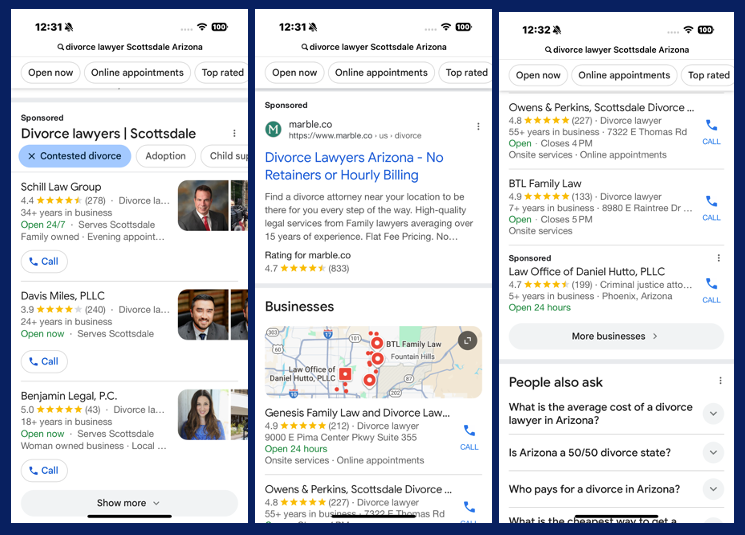
Source: Google
_This post is for paying subscribers only._
### Trust Gap, Search Expansion, Local Signals, Apple's AI Comeback
URL: https://www.nearmedia.co/trust-gap-search-expansion-local-signals-apples-ai-comeback/
Last updated: 2025-08-15T15:32:23.000Z
### Google's Secret Weapon vs. AI: Trust
If asked whether AI results are trustworthy, a majority of users will say "yes." The percentages vary depending on how the question is framed. But if they're prompted to consider issues like hallucination, accuracy, bias, plagiarism, privacy, and so on, they'll express concerns and trust goes down. I've had plenty of personal experience with ChatGPT hallucinating lately and it's becoming a major issue. A recent Yext [survey](https://www.yext.com/about/news-media/ai-archetypes-study-2025??ref=nearmedia.co) of 2,200 people in the US and Europe found that "48% \[of AI users\] cross-check answers across platforms, highlighting the need for consistent brand information everywhere." It's not entirely clear what "platforms" means here, but probably a range of other sites. In other words, they're using a secondary site to validate the AI result. This type of behavior is not new. It has existed in travel. (e.g., checking multiple sites for pricing) and local (checking reviews on other sites [as an anti-fraud strategy](https://www.brightlocal.com/research/local-consumer-review-survey-2024/?ref=nearmedia.co)). But, if true, it represents a significant problem for AI. It could mean that trust in AI is eroding. And having to conduct a redundant lookup as a matter of routine reduces the efficiency of using ChatGPT. The whole game is trust. And even though Google has thoroughly "enshittified" its user experience, people still do trust Google.
**In the abstract people trust AI results**
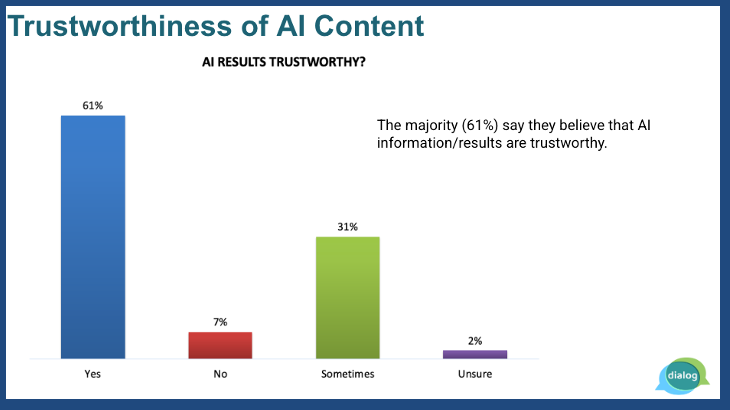
Source: Dialog consumer survey 11/24, n=1K US adults who used both search and AI
_This post is for subscribers only._
### EP 219 - Barnacle SEO in the AI Era: Will Scott on Tools, Automation & Content Strategy - Part 2
URL: https://www.nearmedia.co/ep-219-barnacle-seo-in-the-ai-era-will-scott-on-tools-automation-content-strategy-part-2/
Last updated: 2025-08-14T18:45:36.000Z
In Part 2 of this interview, Will Scott of Search Influence explains how AI is changing Local SEO. Learn how to use semantic SEO, no-code tools, and content repurposing to “barnacle” onto authority sites, boost brand visibility, and thrive in an AI-first search world. Sign up for free to read.
_This post is for subscribers only._
### Search Beats AI, Google 'Gaslighting,' Double Pack, GBP Slackers
URL: https://www.nearmedia.co/search-beats-ai-google-gaslighting-double-pack-gbp-slackers/
Last updated: 2025-08-08T00:21:25.000Z
### Local Comparison: Google Beats ChatGPT
More than two-thirds of consumers have used ChatGPT for local business discovery. Yet local search is not a common use case for AI. That's because most consumers see Google as a more accurate source of local data and information. That perception is confirmed in a new local accuracy [benchmarking study](https://www.linkedin.com/posts/adamdorfman%5Fai-powered-search-is-quickly-becoming-the-activity-7358613667736637441-lI7p/??ref=nearmedia.co) from Birdeye. The company ran 2,400 "near me" prompts in urban, suburban and rural areas of Illinois across four verticals (Dental, Healthcare, Restaurants, and Self-Storage). The contestants were Google, Bing, Yelp, ChatGPT, Gemini, Perplexity, Claude, Grok and DeepSeek. Birdeye used multiple criteria to evaluate the accuracy and relevance of the results for each platform, including whether listings returned were current, correct and proximate to the searcher. Google and Bing performed the best in the study and essentially tied. After that, Yelp and ChatGPT were pretty neck-and-neck. Then came Gemini and the other AIs. DeepSeek was the worst performer of the group. AI platforms committed multiple errors not seen in the search engines: made-up listings, too-remote businesses, stale listings (closed) and bad categorization (not relevant). ChatGPT, the best AI performer, delivered location-accurate results in urban areas but struggled in more remote locations. It also returned 40% fewer listings than Google and Bing.
**The Winners by Category**
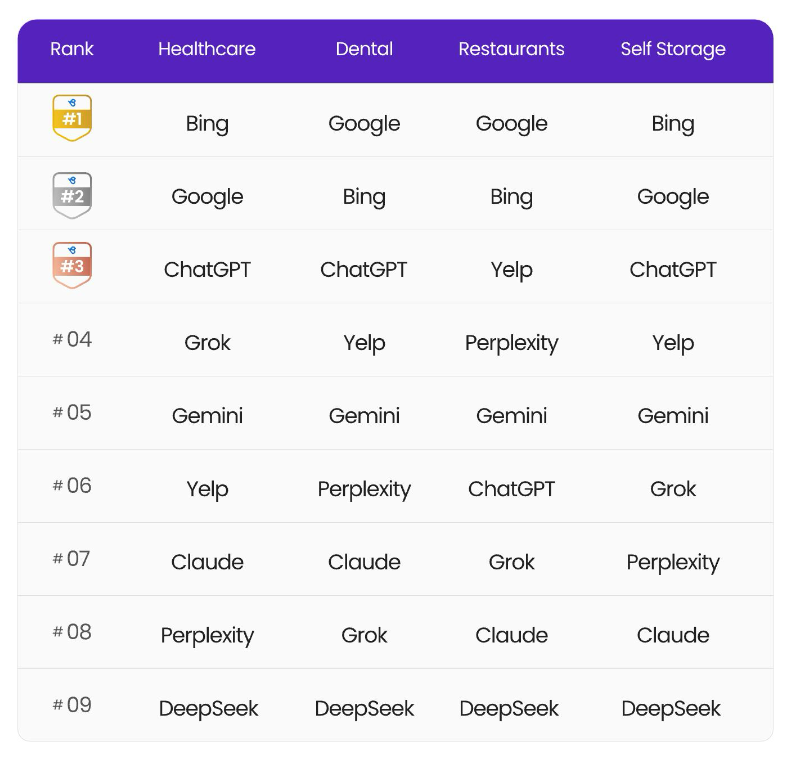
Source: Birdeye
_This post is for subscribers only._
### EP 218 - Part 1: Barnacle SEO in the AI Era: Will Scott on Leveraging AI for Search & ChatGPT Visibility
URL: https://www.nearmedia.co/ep-218-part-1-barnacle-seo-in-the-ai-era-will-scott-on-leveraging-ai-for-search-chatgpt-visibility/
Last updated: 2025-08-07T18:54:44.000Z
Will Scott joins Near Memo to reframe Barnacle SEO for the AI era. Learn how to stay visible in AI overviews, leverage trusted sources, and why “garbage engine optimization” might be the new SEO enemy.... Sign up for free to read.
_This post is for subscribers only._
### Apple 'Answer Engine,' Google Engagement Down, AI Threat to Shopping Ads
URL: https://www.nearmedia.co/apple-answer-engine-google-engagement-down-ai-threat-to-shopping-ads/
Last updated: 2025-08-05T23:17:30.000Z
### Report: Apple 'Answer Engine' Coming
We've [speculated](https://www.nearmedia.co/apple-search-engine-cookie-relief-email-wins-again/) for years about the possibility and potential impact of an Apple search engine. Yet Google has paid Apple billions annually to not develop its own search engine. When the antitrust court's remedies decision finally comes [this month](https://www.cnbc.com/2025/05/09/google-search-remedies-trial-wraps.html?ref=nearmedia.co), it will likely spell the end of the Google-Apple default search deal. At the same time, Apple has continued to fall behind in AI and is losing researchers to Meta. To put it bluntly, Siri blows by comparison to ChatGPT, and the ChatGPT Siri integration and implementation is weak. Investors are increasingly pressuring Apple to show AI progress. During the most recent earnings call, CEO Tim Cook said that the company was "significantly growing our investments." He added, "We’re making good progress on a more personalized Siri, and we do expect to release the features next year." Cook also said that Apple was open to acquiring an AI company: "We’re very open to M&A that accelerates our roadmap." In that larger context, Mark Gurman at Bloomberg is [reporting](https://www.bloomberg.com/news/newsletters/2025-08-03/apple-s-chatgpt-rival-from-new-answers-team-iphone-17-spotted-in-the-wild-mdvmqs6g?ref=nearmedia.co) that "Apple quietly formed a new team called Answers, Knowledge and Information, or AKI ... with the goal of creating a new ChatGPT-like search experience. It would be an "answer engine" and "capable of crawling the web to respond to general-knowledge questions."

Source: ChatGPT
_This post is for paying subscribers only._
### New Yelp Relevance, AIO Contrarians, AI Browsers, ChatGPT 700M
URL: https://www.nearmedia.co/new-yelp-relevance-aio-contrarians-ai-browsers-chatgpt-700m/
Last updated: 2025-08-02T01:07:15.000Z
### ChatGPT, AI Mode Give Yelp New Relevance
For the past several years at least, Yelp user traffic and review growth have been flat. But over the past 12-18 months product and UX improvements have helped to generate usage growth. (Ad revenue increases have come largely from higher CPCs.) Generally, Yelp is eclipsed by Google in both traffic and review volume. But inclusion as a frequent source by both ChatGPT and AI Mode is breathing new relevance into Yelp for local marketers. For local searches, across service-business categories, Yelp is routinely cited by ChatGPT, often prominently. AI Mode and, sometimes, AI Overviews source from Yelp as well. AI Mode is more unpredictable since Google relies so heavily on Google Business Profiles. But Yelp is often present there. When I asked ChatGPT why it so frequently cites Yelp it said, "Yelp usually has the most detailed and recent user reviews for local businesses \[and\] Yelp’s listings are often among the top organic Google search results for service-related queries." It cited Yelp's "rich metadata" (e.g., hours, photos, menus, services) and that it captured "authentic, community-sourced feedback" (it also likes Reddit for that reason). Interestingly, ChatGPT said that it cross-references Yelp with other sources such as "Healthgrades, Opencare, and Zocdoc for doctors and dentists; Reddit for local nuance and less-commercial advice; Diamond Certified or Houzz for contractors; and Google Maps and the BBB for corroboration or complaint tracking."
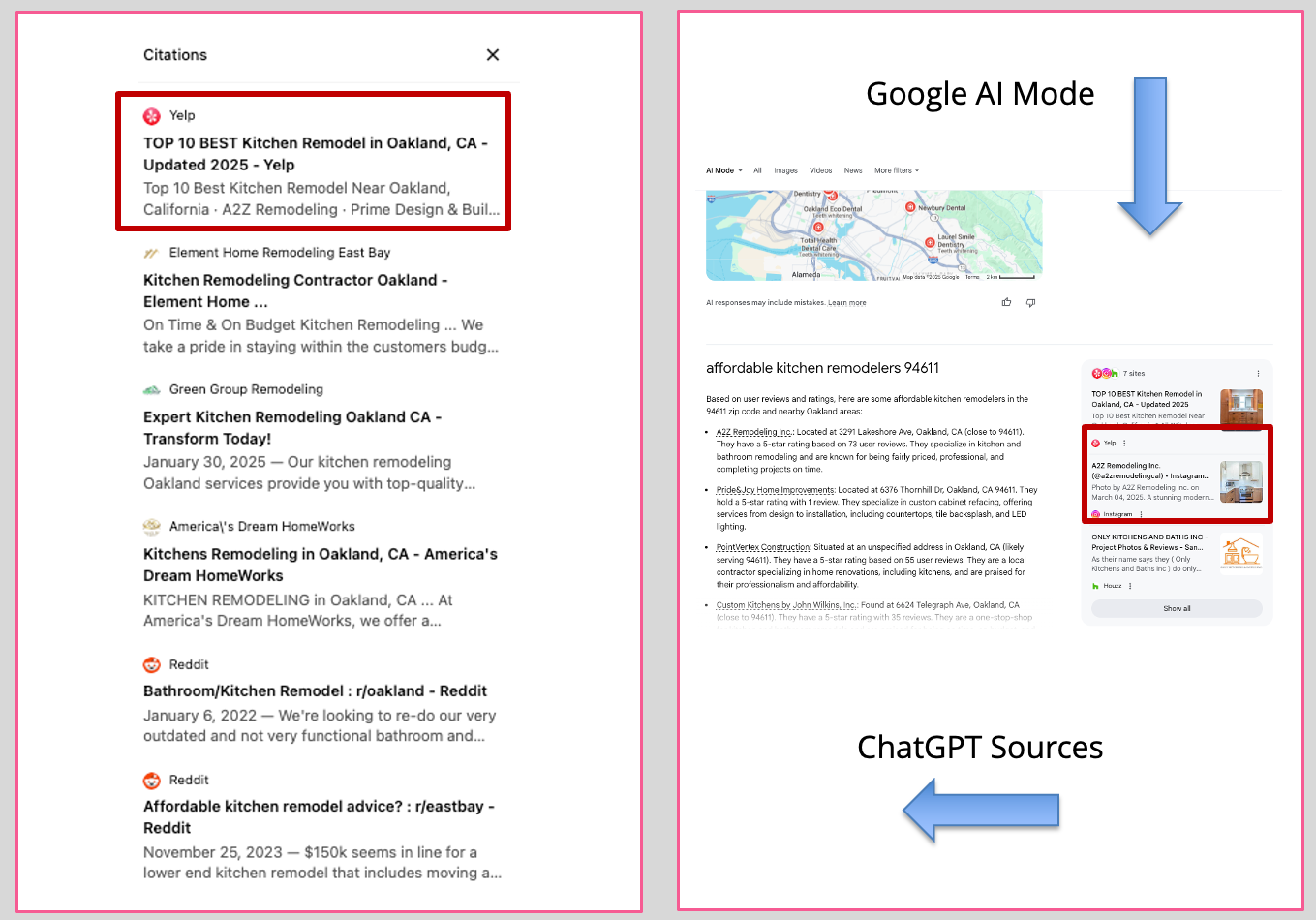
Source: AI Mode, ChatGPT
_This post is for subscribers only._
### EP 217 - The Future of Maps: User Focused, Contextual & Integrated AI with Goetz Weber
URL: https://www.nearmedia.co/ep-217-the-future-of-maps-user-focused-contextual-integrated-ai-with-goetz-weber/
Last updated: 2025-07-31T18:49:31.000Z
We talk with map expert Goetz Weber about why today’s maps fail to deliver personal, contextual experiences & what needs to change. From intent modeling to the limits of monetization, from ChatGPT to Snap, he lays out a compelling vision for mapping 2.0: visual, social, & AI powered. Sign up to read
_This post is for subscribers only._
### Google Web Guide, ChatGPT Domination, Local Graph 2.0, Great Betrayal
URL: https://www.nearmedia.co/google-web-guide-chatgpt-domination-local-graph-2-0-great-betrayal/
Last updated: 2025-07-29T00:18:21.000Z
### And Now, Google Web Guide
Last week Google introduced yet another AI SERP into the mix: [Web Guide](https://blog.google/products/search/web-guide-labs/?ref=nearmedia.co). The blog post characterized this new UI as an "AI organized search results page." That means we have AI Overviews, AI Mode, AI Organized Pages (e.g., [restaurants](https://www.nearmedia.co/googles-ai-organized-restaurant-results/)) and now this. Web Guide uses a "query fan out" methodology and organizes results into clusters or headings. For example, a search "sushi San Francisco" returns results organized under headings such as: Curated Lists from Food Critics, Aggregated User Reviews, Recent Reddit Discussions and Michelin Guide for Japanese Restaurants. There's no Local Pack, no image/listings carousels and no ads. Available via Google Search Labs, it's like a mashup between AI Mode and the traditional SERP. You can expand the top section and effectively get a version of "10 blue links." Indeed, links are much more prominent than in AI Mode or AI Overviews. For marketers and publishers it's a more promising UI than either of those. People have speculated that AI Mode is the future of Google Search, while Google has said AI Mode will remain experimental. I do believe, however, Google is heading toward some integration of some or all of these elements in a single experience – although it's possible the company will maintain a "pure" chat experience separately. I think it's all very much up for grabs right now.
0:00
/0:07
1×
Source: Google
_This post is for subscribers only._
### EP 216 -AI Overviews vs. Local SEO: Are Users Clicking Less? Who Will Win the Name Game?
URL: https://www.nearmedia.co/ep-216-new-data-shows-ai-overviews-reduce-website-clicks-and-disrupt-the-local-pack-greg-and-mike-explore-the-implications-for-search-traffic-and-branding-in-the-ai-era-plus-some-fun-wi/
Last updated: 2025-07-25T18:47:08.000Z
New data shows AI Overviews reduce website clicks and disrupt the local pack. Greg and Mike explore the implications for search, traffic, and branding in the AI era—plus some fun with burritos and Bosch dishwashers. Sign up for a free account to read.
_This post is for subscribers only._
### Pew: Click-Death Real, Local Pack in Danger, Google Q2 Growth, Local AI lags
URL: https://www.nearmedia.co/goo/
Last updated: 2025-07-24T05:09:41.000Z
### Pew: Click Decline Is Real
A recent [report](https://www.pewresearch.org/short-reads/2025/07/22/google-users-are-less-likely-to-click-on-links-when-an-ai-summary-appears-in-the-results/?ref=nearmedia.co) from the Pew Research Center confirms something we already knew: AI Overviews (AIOs) [kill clicks](https://growthsrc.com/google-organic-ctr-study/?ref=nearmedia.co) – the so-called "great decoupling." Pew combined survey and behavioral data (n=900 adults) purchased from Ipsos – people who'd consented to allowing a third party watch their on-device behavior – to assess the impact of AIOs on search activity. (Mobile and desktop browser users were monitored but not mobile app users.) Just under 60% saw at least one AIO during a month-long behavioral observation period in March. Roughly one in five (18%) Google searches yielded an AIO. Most of these presented three or more links/sources. Longer queries framed as questions were more likely to generate an AIO. Pew also reported that users clicked on organic search links in 8% of visits when AIOs were present compared to 15% in AIO free pages. Pew found that Wikipedia, YouTube and Reddit were common to search and AIOs alike. Pew further explained that "One-in-ten respondents made a search \[in March\] that directly related to AI" (e.g., "AI" or "ChatGPT"). It also said that 13% of survey participants "and 20% of those ages 18 to 29" visited an AI site "at least once" in March. This includes ChatGPT, Google Gemini, Copilot or Perplexity.
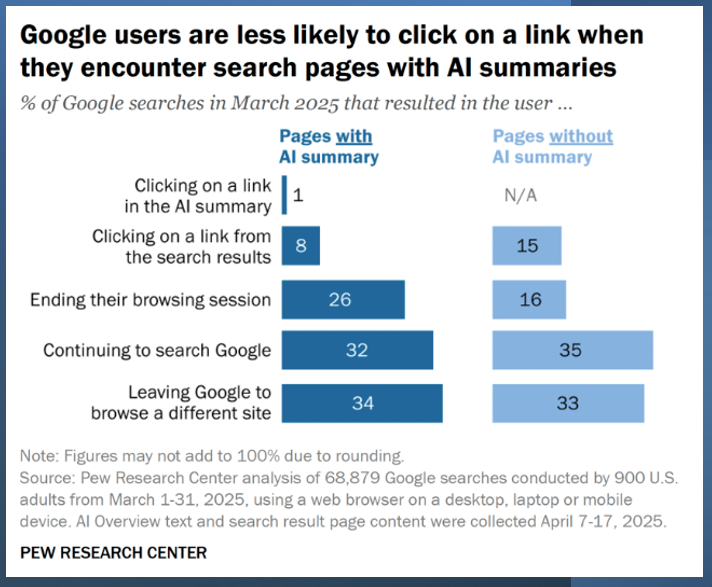
_This post is for subscribers only._
### Google Ask for Me, Agentic Shopping, Ask Maps Moves
URL: https://www.nearmedia.co/google-ask-for-me-agentic-shopping-ask-maps-moves/
Last updated: 2025-07-19T00:09:36.000Z
### 'Ask for Me' Rolls Out
As part of a broader [announcement](https://blog.google/products/search/deep-search-business-calling-google-search/?ref=nearmedia.co) about Gemini 2.5 Pro in search, Google said that its experimental "Ask for Me" agent was rolling out in selected local categories. We've seen it in the wild in automotive, salons, pet grooming and dry cleaning. Mike first wrote about it [in February](https://www.nearmedia.co/google-ask-for-me-great-tech-smb-burden-2/) when it was in Labs. It's an improved successor to [Google Duplex](https://www.youtube.com/watch?v=D5VN56jQMWM&ref=nearmedia.co), which called businesses to make local reservations and appointments. Ask for Me, which Google called "Have AI check pricing" in its post, is an RFP-lead-gen tool that asks a series of vertical-specific questions and then sends the request to multiple local businesses (7 - 8 in our testing). None of the businesses are identified up front, but we assume these are the top-ranked businesses in keyword/category + location. Google sends two emails: an acknowledgment of the inquiry and another with the business responses, which come within an hour or less. The second email shows the businesses contacted, their details (incl. reviews) and any responses around pricing and availability. In Mike's case, 3 out of 8 responded; in mine 2 out of 7\. Many Local SEOs have expressed concern about spam/abuse potential and the tool wasting the business owners' time. It should be said that businesses can decline to participate if they don't want to receive these inquiries.
**Google's Ask for Me**
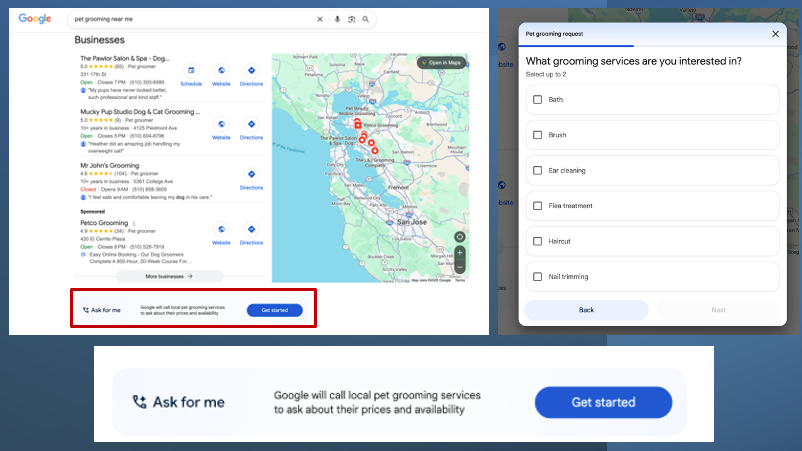
Source: Google
_This post is for paying subscribers only._
### EP 215 - Google Fixes GBP Alerts Sort Of, Expands "Ask for Me" Local Quotes, Is ChatGPT Becoming a Local Search Disruptor?
URL: https://www.nearmedia.co/ep-215-google-fixes-gbp-alerts-sort-of-expands-ask-for-me-local-quotes-is-chatgpt-becoming-a-local-search-disurptor/
Last updated: 2025-07-24T05:04:52.000Z
Google improves GBP notifications—finally. “Ask for Me” AI quote tool rolls out more broadly, but UX is messy. ChatGPT’s new product search and agent features point to OpenAI’s e-comm/local ambitions and raising big trust + data questions.... Sign up for free to read.
_This post is for subscribers only._
### Nextdoor 2.0, Prominence, ChatGPT's Memory, Google's Trust Advantage
URL: https://www.nearmedia.co/nextdoor-2-0-prominence-chatgpts-memory-googles-trust-advantage/
Last updated: 2025-07-17T17:01:45.000Z
### Nextdoor Tries Again
After an extended period under former CEO Sarah Friar where the utility of Nextdoor was largely ignored in favor of trying to transform the site's toxic culture, founder Nirav Tolia returned as CEO (Friar is now CFO at OpenAI). Tolia is trying to right the ship and ignite both usage and revenue growth. Yesterday the site [announced](https://about.nextdoor.com/press-releases/meet-the-new-nextdoor?ref=nearmedia.co) a redesign and some new features that it hopes will deliver more value and produce more engagement. The redesign introduces a new AI-powered home feed, expanded local news, local favorites, a simplified UI and emergency (weather) alerts. The local news feature is the most interesting and most differentiated, potentially. However, the UX is poor at the moment. Nextdoor argues these various changes, some of which involve third-party partnerships (i.e., news, weather), will make the site more useful. The "Favs" feature is supposed to make local businesses and hotspots/places/restaurants more easily discoverable. Right now it's buried and not particularly impressive. It's reportedly AI-driven and based on troves of historical Nextdoor internal data. However, the data is thin: profiles are relatively superficial and reviews are mostly inaccessible. Conceptually this is all right but the execution is lacking.
**The 'New' Nextdoor**
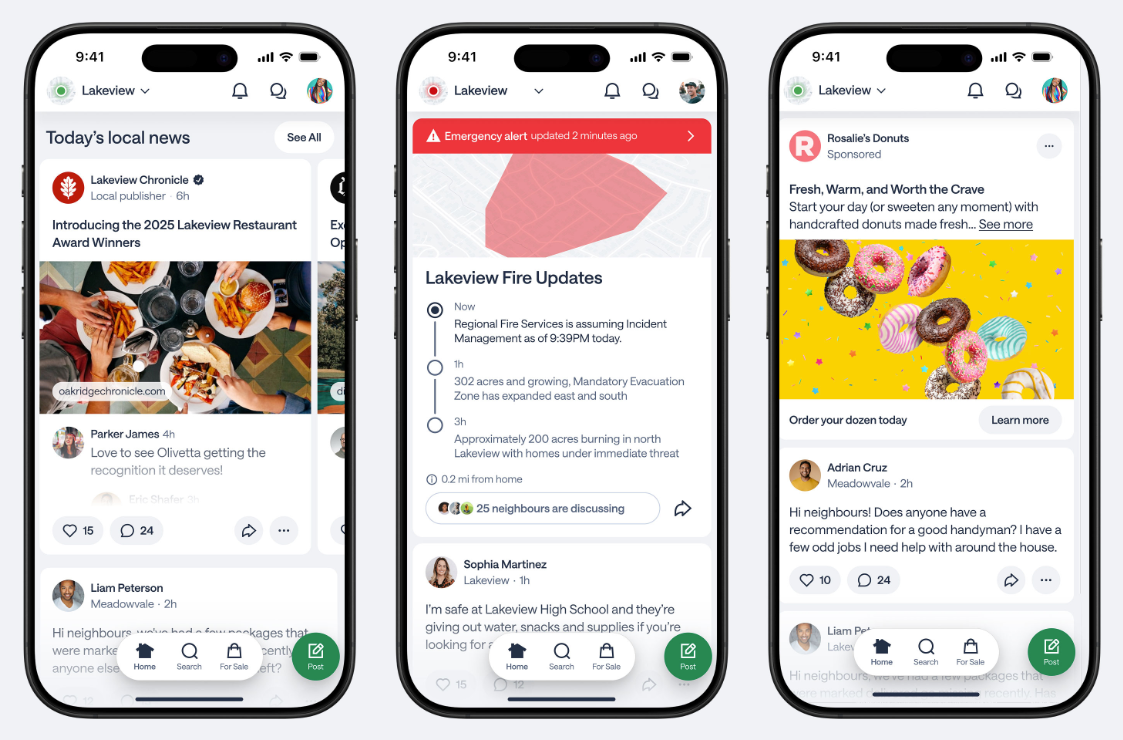
**Our take:**
- Nextdoor should be the first place people go for local information, events and local business recommendations. It has repeatedly failed to deliver.
- Trying to suppress or moderate away toxic whining won't work; Nextdoor needs to make the app's utility much more prominent and obvious so people ignore the annoying stuff.
- Most people I know have written off Nextdoor. It will take a lot to win them back. Delivering on "utility" is the right approach but will be hard.
### 'Prominence' Definition Changed
_This post is for paying subscribers only._
### Local Guides Swell, 'Near Me' Impressions, Most Content AI-Aided, Google Wins!
URL: https://www.nearmedia.co/local-guides-swell-near-me-impressions-most-content-ai-aided-google-wins/
Last updated: 2025-07-10T22:58:23.000Z
_This post is for paying subscribers only._
### EP 214 - AI Overviews, ChatGPT's Google Shift & Google's Secret Weapon
URL: https://www.nearmedia.co/ep-214-ai-overviews-chatgpts-google-shift-googles-secret-weapon/
Last updated: 2025-07-10T17:53:40.000Z
New insights on AI Overviews in Local, is ChatGPT using Google index results, and the scale and impact of Google's 500 million Local Guides on Maps and reviews.... Sign up for free to read & to get future episodes in your in-box.
_This post is for subscribers only._
### ChatGPT ❤️ Google?, Winning Local AIOs, Search Fragmentation, Antitrust-IO
URL: https://www.nearmedia.co/chatgpt-google-winning-local-aios-search-fragmentation-antitrust-io/
Last updated: 2025-07-10T05:12:02.000Z
_This post is for paying subscribers only._
### EP 213 - GBP Suspensions, AI Overviews & New Best Practices for AI-Era Local SEO and Reviews
URL: https://www.nearmedia.co/ep-213-gbp-suspensions-aio-overviews-new-best-practices-for-ai-era-local-seo-and-reviews/
Last updated: 2025-07-08T20:58:02.000Z
From Google's crackdown on suspensions to AI overviews reshaping the SERPs, Greg and Mike explore what's changing in local search—and why just answering your phone might be your best marketing move yet. Sign up for free to read.
_This post is for subscribers only._
### AI Mode Study, Gemini in Chrome, ChatGPT Search, PPCrawl
URL: https://www.nearmedia.co/ai-mode-study-gemini-in-chrome-chatgpt-search-ppcrawl/
Last updated: 2025-07-02T16:17:25.000Z
_This post is for paying subscribers only._
### Review Diversification, AI & Local, AI Click Quality, Content Chunking
URL: https://www.nearmedia.co/review-diversification-ai-local-ai-click-quality-content-chunking/
Last updated: 2025-06-26T22:23:14.000Z
_This post is for paying subscribers only._
### EP 212 - AI, Reviews & the Future of Local SEO: What Darren Shaw Says You Need to Know
URL: https://www.nearmedia.co/ep-212-ai-reviews-the-future-of-local-seo-what-darren-shaw-says-you-need-to-know/
Last updated: 2025-06-26T21:56:09.000Z
AI is reshaping local SEO, but most small businesses are still focused on Google. Darren Shaw shares how to prep for what’s next—diversified reviews, smarter content, and YouTube visibility for Search Everywhere Optimization (SEO). Sign up for free to read.
_This post is for subscribers only._
### Near Me Results, Google Says Web Is 'Thriving,' AIO Liability, SEO Is Dead - Again
URL: https://www.nearmedia.co/near-me-results-google-says-web-is-thriving-aio-liability-seo-is-dead-again/
Last updated: 2025-06-24T23:14:34.000Z
_This post is for subscribers only._
### EP 211 - Avoiding Google Suspensions, Understanding AI-Driven Search Trends, and Why Siri Is Still on the Sidelines
URL: https://www.nearmedia.co/ep-211-avoiding-google-suspensions-understanding-ai-driven-search-trends-and-why-siri-is-still-on-the-sidelines/
Last updated: 2025-06-14T14:05:33.000Z
### The Podcast Deets
### 🛑 **1\. Google Business Profile Suspensions (00:00–10:20)**
**⏱️ Timestamps:**
- [01:30](https://www.youtube.com/watch?v=33iczjTP5KI&t=90s&ref=nearmedia.co) – Suspensions and the role of AI in verification
- [03:00](https://www.youtube.com/watch?v=33iczjTP5KI&t=180s&ref=nearmedia.co) – Video verification process and issues - getting ready for the inevitable suspension
### 🔍 **2\. Consumer AI Search Trends (10:20–21:40)**
**⏱️ Timestamps:**
- [10:20](https://www.youtube.com/watch?v=33iczjTP5KI&t=620s&ref=nearmedia.co) – Survey: AI use in local search is rising
- [12:45](https://www.youtube.com/watch?v=33iczjTP5KI&t=765s&ref=nearmedia.co) – Users return to Google for final steps and Complementary funnel behavior emerges
- [17:00](https://www.youtube.com/watch?v=33iczjTP5KI&t=1020s&ref=nearmedia.co) – Google risks losing mid-funnel ad value
- [18:30](https://www.youtube.com/watch?v=33iczjTP5KI&t=1110s&ref=nearmedia.co) – AI Overviews are surprisingly well-received by users
### 🍏 **3\. Siri and Apple’s AI Strategy (21:40–34:15)**
**⏱️ Timestamps:**
- [21:40](https://www.youtube.com/watch?v=33iczjTP5KI&t=1300s&ref=nearmedia.co) – Apple Intelligence and Siri’s absence at WWDC
- **23:00** – Apple’s utility-focused AI vs. chatbots
- [25:20](https://www.youtube.com/watch?v=33iczjTP5KI&t=1520s&ref=nearmedia.co) – Siri’s continued shortcomings
- [29:30](https://www.youtube.com/watch?v=33iczjTP5KI&t=1770s&ref=nearmedia.co) – Challenges of merging LLMs with legacy assistants
- [33:00](https://www.youtube.com/watch?v=33iczjTP5KI&t=1980s&ref=nearmedia.co) – Predicting the future of conversational AI[ ](https://www.youtube.com/watch?v=H42OzMN0QzA&ref=nearmedia.co)
### Related Links
[Apple RetreatsApple’s WWDC was a retreat from not just last year’s WWDC, but potentially a broader reset for the company. That’s why it was a great presentation.Stratechery by Ben Thompson](https://stratechery.com/2025/apple-retreats/?ref=nearmedia.co)
### Takeaways
- Google Business Profiles continue being suspended at high rates by an AI-driven verification process
- Legitimate businesses need to be ready for suspension and be prepared for the more rigorous process.
- Video verifications now rely primarily on AI, with human fallback difficult to get to.
- AI tools (ChatGPT, Gemini, etc.) are increasingly used for local business research.
- Users still return to Google Maps or Search to complete actions like calls or directions.
- AI excels at top-of-funnel; Google dominates bottom-of-funnel.
- Google risks losing ad revenue if it loses relevance in research phases.
- AI Overviews are surprisingly popular with consumers despite SEO criticism.
- Apple unveiled “Apple Intelligence” at WWDC, but didn’t yet upgrade Siri.
- Siri remains weak in conversation and functionality compared to ChatGPT voice mode.
- Apple’s focus is on private, on-device AI for utility, not chatbot competition.
- Retrofitting legacy assistants like Siri and Alexa with LLMs is a major challenge.
- Seamless conversational AI is still 2–3 years away.
- Despite AI growth, Google Business Profile accuracy and reviews remain essential.
### [Full transcript on-line](https://nearmedia.co/ep-211-avoiding-google-suspensions-understanding-ai-driven-search-trends-and-why-siri-is-still-on-the-sidelines?ref=nearmedia.co)
### June Office Hours
URL: https://www.nearmedia.co/june-office-hours/
Last updated: 2025-06-13T19:42:23.000Z
Greg Sterling shares new survey data on Google & AI usage. Despite media negativity, users say Google search quality is improving. AI tools like ChatGPT are reshaping search habits, especially for research & discovery, with local search still Google’s stronghold. Full access members only.
_This post is for paying subscribers only._
### Local Data Advantage, AI Traffic to Beat Organic, the 'Google of AI'
URL: https://www.nearmedia.co/local-data-advantage-ai-traffic-to-beat-organic-the-google-of-ai/
Last updated: 2025-06-12T20:38:55.000Z
_This post is for subscribers on the Premium and All-Access Membership tiers only._
### Apple's Siri Silence, Citations 2.0, Breaking Up with Google
URL: https://www.nearmedia.co/apples-siri-silence-citations-2-0-breaking-up-with-google/
Last updated: 2025-06-11T05:29:49.000Z
_This post is for subscribers on the Premium and All-Access Membership tiers only._
### Gemini Usage, AIO & News Content, More Google Spin
URL: https://www.nearmedia.co/gemini-usage-aio-news-content-more-google-spin/
Last updated: 2025-06-06T16:27:57.000Z
_This post is for subscribers on the Premium and All-Access Membership tiers only._
### EP 210 - Google’s AI Shell Game: Gemini Hype, Antitrust Heat, and The Fight for the Future of Search
URL: https://www.nearmedia.co/ep-210-googles-ai-shell-game-gemini-hype-antitrust-heat-and-the-fight-for-the-future-of-search/
Last updated: 2025-06-05T19:26:34.000Z
Google says Gemini has 350M monthly users—but is that real usage or baked-in bloat? We dive into AI inflation, DOJ’s push to break up Google, and why YouTube (not Search) may be the future. Plus: local guides, scraped content, and Google’s shifting deal with the web - Sign up for free to read.
_This post is for subscribers only._
### Google Breakup, Maps Spinoff, Just Brand It, Alphabet Soup
URL: https://www.nearmedia.co/google-breakup-maps-spinoff-just-brand-it-alphabet-soup/
Last updated: 2025-06-04T14:57:25.000Z
_This post is for subscribers on the Premium and All-Access Membership tiers only._
### EP 209 - Rewriting the Rules: AI, Search, and the Future of Local
URL: https://www.nearmedia.co/ep-209-rewriting-the-rules-ai-search-and-the-future-of-local/
Last updated: 2025-05-30T18:52:35.000Z
AI is transforming local search—and not always in helpful ways. Long-time local expert Adam Dorfman breaks down what’s changing with Google’s AI Overviews, why clicks are fading, and what still matters for visibility today. Reviews, schema, and smart strategy lead the way.
_This post is for subscribers only._
### Whither Local Pack, Brandz, Social Only Looks Easy, Google Then & Now
URL: https://www.nearmedia.co/whither-local-pack-brandz-social-only-looks-easy-google-then-now/
Last updated: 2025-05-30T01:40:31.000Z
_This post is for subscribers on the Premium and All-Access Membership tiers only._
### Surviving AI Mode, Sundar Again, Back to Maps
URL: https://www.nearmedia.co/surviving-ai-mode-sundar-again-back-to-maps/
Last updated: 2025-05-28T01:04:56.000Z
_This post is for subscribers on the Premium and All-Access Membership tiers only._
### Local AIO Visibility, No Ad-Free Zones, Local Ad CPCs
URL: https://www.nearmedia.co/local-aio-visibility-no-ad-free-zones-local-ad-cpcs/
Last updated: 2025-05-22T20:04:41.000Z
_This post is for subscribers on the Premium and All-Access Membership tiers only._
### EP 208 - SEO Tactics from the Frontline: Real User Behavior in AI Overviews - Part 2 of the UX Study Analysis
URL: https://www.nearmedia.co/ep-208-seo-tactics-from-the-frontline-real-user-behavior-in-ai-overviews-part-2-of-the-ux-study-analysis/
Last updated: 2025-05-21T17:13:39.000Z
### The Podcast Deets
[00:55](https://www.youtube.com/watch?v=Lhq7Ph5Vono&t=55s&ref=nearmedia.co) – “Trust over Traffic: The SEO Paradigm Shift”
[02:10](https://www.youtube.com/watch?v=Lhq7Ph5Vono&t=130s&ref=nearmedia.co) – “SEO as Traffic Cop, Not Traffic Driver”
[03:33](https://www.youtube.com/watch?v=Lhq7Ph5Vono&t=213s&ref=nearmedia.co) – “Reddit, YouTube & Beyond: Tactical SEO Musts”
[07:20](https://www.youtube.com/watch?v=Lhq7Ph5Vono&t=440s&ref=nearmedia.co) – “Google Killed the Small Guys”
[09:05](https://www.youtube.com/watch?v=Lhq7Ph5Vono&t=545s&ref=nearmedia.co) – “Google’s Fear-Driven Strategy”
[11:14](https://www.youtube.com/watch?v=Lhq7Ph5Vono&t=674s&ref=nearmedia.co) – “Redefining SEO Inside the Org”
[12:03](https://www.youtube.com/watch?v=Lhq7Ph5Vono&t=723s&ref=nearmedia.co) – “Click Recession and the Future of Metrics”
[13:31](https://www.youtube.com/watch?v=Lhq7Ph5Vono&t=811s&ref=nearmedia.co) – “Pitching the New SEO to Leadership”
[17:17](https://www.youtube.com/watch?v=Lhq7Ph5Vono&t=1037s&ref=nearmedia.co) – “People Don’t Know LSAs Are Ads”
[20:22](https://www.youtube.com/watch?v=Lhq7Ph5Vono&t=1222s&ref=nearmedia.co) – “Gen Z, TikTok, and the Platform Migration”
[22:23](https://www.youtube.com/watch?v=Lhq7Ph5Vono&t=1343s&ref=nearmedia.co) – “ChatGPT Is the Train—You’re the Station”
**Part 2 of the Near Memo Podcast’s deep dive into real user behavior discusses what SEO looks like in 2025.**
In this episode, Kevin and Eric break down the shift from “attention economy” to “trust economy,” and how user behavior in AI Overviews, Local Packs, Reddit results, and YouTube snippets is reshaping what SEOs, marketers, and digital teams must prioritize.
Spoiler: The SEO playbook has changed—and if you’re still using the old one, you’re falling behind.
They unpack the tactical implications of one of the most detailed UX studies in recent search history. After analyzing 70 users and over 30 hours of on-screen behavior, they’ve come back with a clear message:
> **Trust is now the first click. Traffic is just a byproduct.**
And if you’re still measuring SEO success by rankings and CTR, you’re going to miss what really matters.
These are **real behavioral insights** from real people doing real searches—not just theory or clickstream data. The study captures how users scan, where they scroll, why they don’t click, and what triggers trust.
And the conclusion is clear: **The top result doesn’t always win. The trusted one does.**
### Related Links
[The first-ever UX Study of Google’s AI Overviews: The Data We’ve All Been Waiting ForWe tracked 70 users across 8 tasks to deeply understand their behavior, thoughts emotions when engaging with Google’s AI Overviews and other SERP Features. The findings paint a new picture of SEO.Growth MemoKevin Indig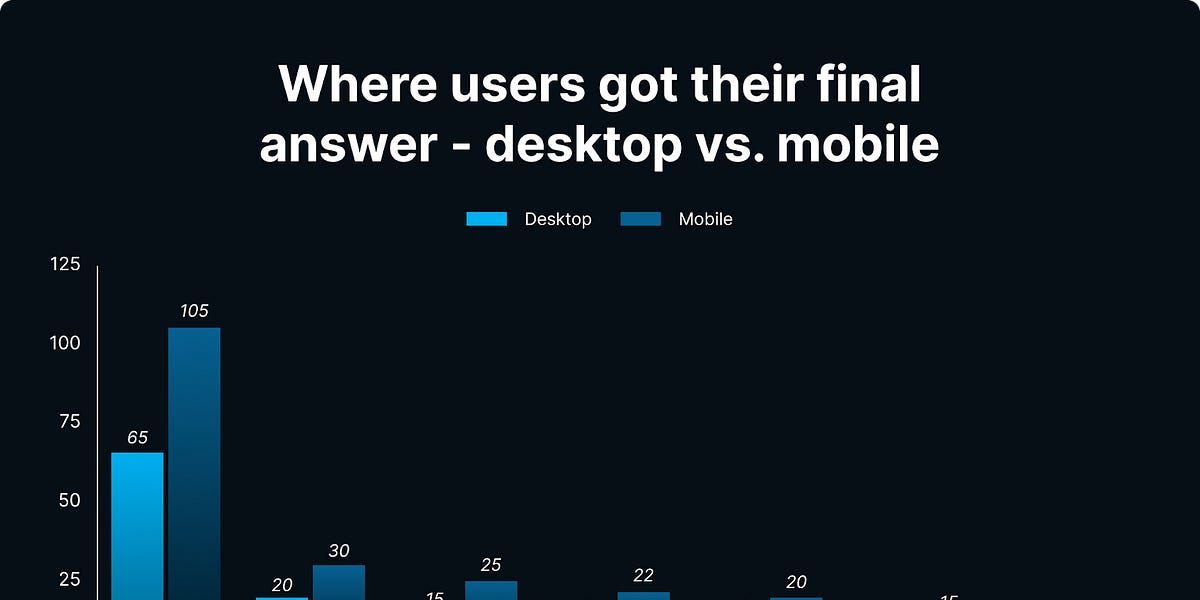](https://www.growth-memo.com/p/the-first-ever-ux-study-of-googles?ref=nearmedia.co)
### Takeaways
- **Clicks are down. Conversions aren’t.** “Click stagflation” is here. Users click less, but they still buy. Old KPIs won’t cut it—especially in AI-dominated SERPs.
- **Trust is the new filter.**Before users even ask if your content is relevant, they ask: *Do I trust this brand? Have I heard of it before?* Recognition drives action.
- **AI Overviews don’t kill SEO—they change it.** Users skim AI results quickly. But for high-stakes searches (finance, health, law), they dig deeper. The opportunity? Be the source they *fact-check* with.
- **Reddit and YouTube didn’t rise by accident.** Google didn’t boost forums because they wanted to—they had to. Younger users were defecting to TikTok and ChatGPT. Google’s adapting under pressure.
- **It’s time to rethink team structure.** SEO now overlaps with content, UX, paid, and social. Maybe it’s time to ditch silos and build real **growth teams**.
💡
Thanks to our sponsor, [GatherUp](https://gatherup.com/?ref=nearmedia.co) for helping us create great content.
### Full Transcript
Greg (00:10)
A lot of what people use Google for now, and I think increasingly so, is just navigational or brand search. For example, someone might search "Mike Blumenthal, dog trainer" because that’s what their vet recommended. They're not looking to discover something—they’re confirming what they already know.
Kevin Indig (00:55)
Exactly. I’d summarize it like this: we’re moving from an attention economy to a trust economy. SEO is no longer the pure performance channel it used to be—if it ever really was. Now, it's a branding channel. It’s about influencing users over time.
That’s hard to accept. People naturally resist change. We want the playbook that’s predictable. But success metrics have to evolve. We need better ways to measure trust and sentiment—merging qualitative and quantitative methods to know if we’re actually moving in the right direction.
Eric Van Buskirk (01:57)
Right, and that opens the door to broaden our scope. It's not just about ChatGPT anymore. We're also talking Reddit, YouTube—other ecosystems where trust and presence matter.
Kevin Indig (02:10)
SEOs today are like traffic cops at busy intersections—coordinating teams more than driving clicks. Success isn't just about tweaking tags for quick traffic bumps. It's about aligning product, content, design, and brand. SEO success in 2025 will be much more collaborative than ever before.
Greg (02:57)
That leads us into tactical changes SEOs need to adopt. Let's start with those and then discuss SEO's evolving place within organizations.
Kevin Indig (03:33)
Here are three big takeaways:
1. You need to be present across platforms—Reddit, YouTube, or wherever your audience hangs out. Not every brand needs a slick YouTube channel, but someone should be thinking about how your brand shows up there.
2. Structure content around trust and skimmability. People don’t read—they scan. We saw users gravitate toward content that highlighted key takeaways, FAQ boxes, and clear summaries. Adding publish dates, editorial notes, and disclosures helps build trust.
3. Understand your users more deeply. Map content not just to intent, but to age, risk tolerance, and context. What’s at stake in the query? You can use tools like GA to reverse-engineer demographics.
Eric Van Buskirk (05:53)
Exactly. People are more sophisticated than we give them credit for. They're tuned into credibility signals, especially in high-stakes queries like health and finance.
Kevin Indig (06:12)
Right. The higher the stakes, the deeper the scrutiny. In medical or financial searches, users didn’t just glance—they spent time validating. In low-stakes topics, they skimmed and moved on quickly.
Greg (07:20)
This brings up the idea that Google is favoring big brands—often at the expense of smaller publishers. It’s not always merit-based. Many small businesses are being squeezed out.
Eric Van Buskirk (07:54)
It’s a real concern. It raises the question: are big brands dominating because they’re better—or because Google has engineered the SERP in their favor?
Greg (09:05)
There’s also the fear-driven side. Google isn’t always innovating for users. Sometimes, it’s reacting—worried about TikTok, ChatGPT, and losing the next generation of users. That’s why we’re seeing more Reddit and YouTube in the results.
Kevin Indig (11:14)
The number one challenge now is getting buy-in. You’re proposing new tools, new roles—YouTube strategy, Reddit engagement, AI content. But that means redefining SEO itself.
Eric Van Buskirk (12:03)
Exactly. We’re in a "click recession." Clicks are down and they’re not coming back. That doesn’t mean people stop buying—it means we have to measure differently. Influence and trust are harder to quantify, but they matter more than ever.
Kevin Indig (12:31)
Right, and this shift means we may need new teams. Think cross-functional “growth” teams that include SEO, content, paid, and social—because users don’t care about our org chart. They care about answers.
Eric Van Buskirk (13:31)
And pitching this to leadership is the biggest challenge. The lag time between effort and result makes it a tough sell. But we’re losing that middle measurement layer—clicks. It might take six months to see results, and it’s hard to isolate the impact of any one change.
Greg (17:17)
Let’s talk Local Services Ads (LSAs). In behavioral studies, people gravitate to them—but often don’t realize they’re ads. They see headshots, star ratings, trust badges—and think, "This is the best option."
Eric Van Buskirk (17:54)
It’s not deception—it’s effective UX. People trust visuals. This is a huge reason LSAs perform so well.
Kevin Indig (19:52)
Also, we need to understand demographics. Younger users search differently. Gen Z may prefer TikTok or Reddit. This shift isn’t temporary—it’s generational.
Greg (20:22)
That was confirmed by Google itself. Prabhakar Raghavan once said many young users go to TikTok for search. He’s no longer at Google Search—but the shift remains. Age determines platform behavior.
Kevin Indig (22:23)
So what’s the opportunity? It’s not to compete with AI on speed or scope. AI is the train. You’re the station. Be the place where users verify and fact-check AI answers. That’s how brands win.
Greg (23:22)
Thanks, Kevin and Eric. This was a rich discussion. We’ll see you next time—and thanks to GatherUp for sponsoring.
### Google I/O Mode, What Innovator's Dilemma?, PR's Second Act
URL: https://www.nearmedia.co/google-i-o-mode-what-innovators-dilemma-prs-second-act/
Last updated: 2025-05-20T20:10:51.000Z
_This post is for subscribers on the Premium and All-Access Membership tiers only._
### Office Hours May 23: 'What's Working Now?'
URL: https://www.nearmedia.co/office-hours-may-23-whats-working-now/
Last updated: 2025-05-20T14:11:14.000Z
_This post is for subscribers only._
### Local AIOs, Apple Maps Content, Swallowing the SERP, Ad Tracking Illegal
URL: https://www.nearmedia.co/local-aios-apple-maps-content-swallowing-the-serp-ad-tracking-illegal/
Last updated: 2025-05-15T22:37:05.000Z
_This post is for subscribers on the Premium and All-Access Membership tiers only._
### EP 207 - Trust Before Clicks: What Google’s AIO UX Study Reveals About Real User Behavior
URL: https://www.nearmedia.co/ep-207-trust-before-clicks-what-googles-aio-ux-study-reveals-about-real-user-behavior/
Last updated: 2025-05-16T12:33:13.000Z
💡
Thanks to our sponsor, [GatherUp](https://gatherup.com/?ref=nearmedia.co) for helping us create great content.
### The Podcast Deets (Join us for part 2 next week)
[00:00](https://www.youtube.com/watch?v=pjE3MwOLYcg&ref=nearmedia.co) – Why Behavioral Research on Google’s AIO Was Necessary
[01:17](https://www.youtube.com/watch?v=pjE3MwOLYcg&t=77s&ref=nearmedia.co) – Clickstream Isn’t Enough: Rethinking User Data
[04:10](https://www.youtube.com/watch?v=pjE3MwOLYcg&t=250s&ref=nearmedia.co) – How the Study Was Designed: Tasks, Tools & Tracking
[07:55](https://www.youtube.com/watch?v=pjE3MwOLYcg&t=475s&ref=nearmedia.co) – Who Participated: Demographics & Statistical Rigor
[09:00](https://www.youtube.com/watch?v=pjE3MwOLYcg&t=540s&ref=nearmedia.co) – What Users Were Asked to Do (and Why It Mattered)
[11:45](https://www.youtube.com/watch?v=pjE3MwOLYcg&t=705s&ref=nearmedia.co) – When AI Overviews Appear—and How People React
[12:41](https://www.youtube.com/watch?v=pjE3MwOLYcg&t=761s&ref=nearmedia.co) – Trust Before Relevance: A New User Search Model
[15:34](https://www.youtube.com/watch?v=pjE3MwOLYcg&t=934s&ref=nearmedia.co) – How Awareness and Reviews Signal Trust
[19:03](https://www.youtube.com/watch?v=pjE3MwOLYcg&t=1143s&ref=nearmedia.co) – Skimming, Risk & Behavioral Patterns in the SERP
[22:47](https://www.youtube.com/watch?v=pjE3MwOLYcg&t=1367s&ref=nearmedia.co) – Clicks Are Dead Weight: What Really Drives Decisions
**🧠 Trust Over Clicks: How People *Really* Use Google’s AI Overviews**
Let’s cut through the noise: Google’s AI Overviews (AIOs) may look fancy, but the way people interact with them is anything but magical—and it’s not what SEOs have been telling themselves.
In Part One of this podcast, Kevin Indig and Eric Van Buskirk break down their first-of-its-kind behavioral UX study. The big idea? **Clicks lie. Trust tells the truth.**
---
**📊 The Study That Needed to Happen**
We’ve had endless clickstream data. What we *haven’t* had is actual footage of real users navigating real Google queries. This study fixed that.
- ✅ 70 participants from Prolific
- ✅ 8 real-world tasks (local, health, shopping, etc.)
- ✅ Chrome plugins or mobile apps tracked behavior
- ✅ Annotators logged scrolling, dwell time, and comments
- ✅ 30 hours of footage, 13,000 words of notes
This wasn’t “ask people what they did.” This was: **watch people do it.**
---
**🔍 Clicks Are Not What You Think**
Forget the old SEO gospel that clicks = success. This study proves it’s not about clicks—it's about **final answers**.
Users clicked to validate or skim. The majority of decisions were made *without* clicking. And only about 20% of “final answers” came from AIOs. Most came from good ol’ organic links.
**Clicks are just noise. Final answers are the signal.**
---
**💥 Trust Comes First. Relevance Comes Second.**
Kevin’s mental model of search got flipped. It’s no longer:
> “Which result answers my question best?”
> It’s now:
> “Do I trust this source?” *then* “Is it relevant?”
People scroll past perfectly good content if the brand isn’t familiar or trusted. If they *don’t know you*, they won’t *click you.*
---
**🌟 Stars = Trust. Everywhere.**
From local to shopping, **reviews are king**. People scroll specifically looking for stars.
- Don’t have them? You’re skipped.
- Only two reviews? You’re sketchy.
- Well-reviewed on Yelp or G2? Jackpot.
In short: **Review presence = legitimacy.**
---
**📉 AIOs Are Skimmed, Not Studied**
86% of users **skim** AIOs.
They glance at the top, rarely scroll, and treat it like a TL;DR blog post. Only when the stakes are high—like medical or financial topics—do people slow down and actually read.
AIOs aren’t the end-all, be-all. They’re the new intro paragraph.
---
**🧪 Risk Changes Everything**
In high-risk searches, people:
- Scroll more
- Click to fact-check
- Linger in AIOs
- Cross-reference citations
In low-risk searches (shopping, storage units), they go faster and let price or reviews steer the decision.
Trust = the deeper the risk, the deeper the research.
---
**📱 Users Don’t Stay on Google**
Sure, AIOs might “answer” a query. But users still go to:
- Reddit
- YouTube
- Amazon
- Maps
The modern search journey is *multi-touch* and *cross-platform*. Google’s not the destination—it’s just one stop along the way.
---
**🙅♂️ Users Don't Click on AIO Icons (or Much of Anything)**
Those tiny link icons in AIOs? People ignore them. Even panels with 20 clickable links barely get touched. Why? Because users don’t *feel* like they’re supposed to.
Most treat AIOs like static answers. They want to **validate**, not engage.
---
**🧠 Users Are Skeptical—But Still Satisfied**
Here’s the twist: users double-check AIOs… and still report **high satisfaction**. Even when they weren’t sure if the info was accurate, they walked away feeling good about it.
Trust isn't always rational. It's about **perceived completeness**, not factual precision.
---
**🤫 Google Benefits From the Confusion**
Kevin and Eric argue that Google has long benefited from the false belief that it’s the *entire* search journey. The truth? It never was.
Google gives almost no data back to SEOs—and that fog of uncertainty keeps the illusion alive. Meanwhile, the real decision paths often happen off-platform.
---
**🏁 Final Word (for Part One): Trust is the New CTR**
Whether it’s through brand familiarity, review signals, or search presence across platforms, **trust has become the gatekeeper**.
So stop obsessing over blue links and start asking:
> “Does my brand show up where users already trust the answer?”
Because in the world of AI Overviews, **being seen is not enough**.
You need to be *believed.*
### Related Links
[The first-ever UX Study of Google’s AI Overviews: The Data We’ve All Been Waiting ForWe tracked 70 users across 8 tasks to deeply understand their behavior, thoughts emotions when engaging with Google’s AI Overviews and other SERP Features. The findings paint a new picture of SEO.Growth MemoKevin Indig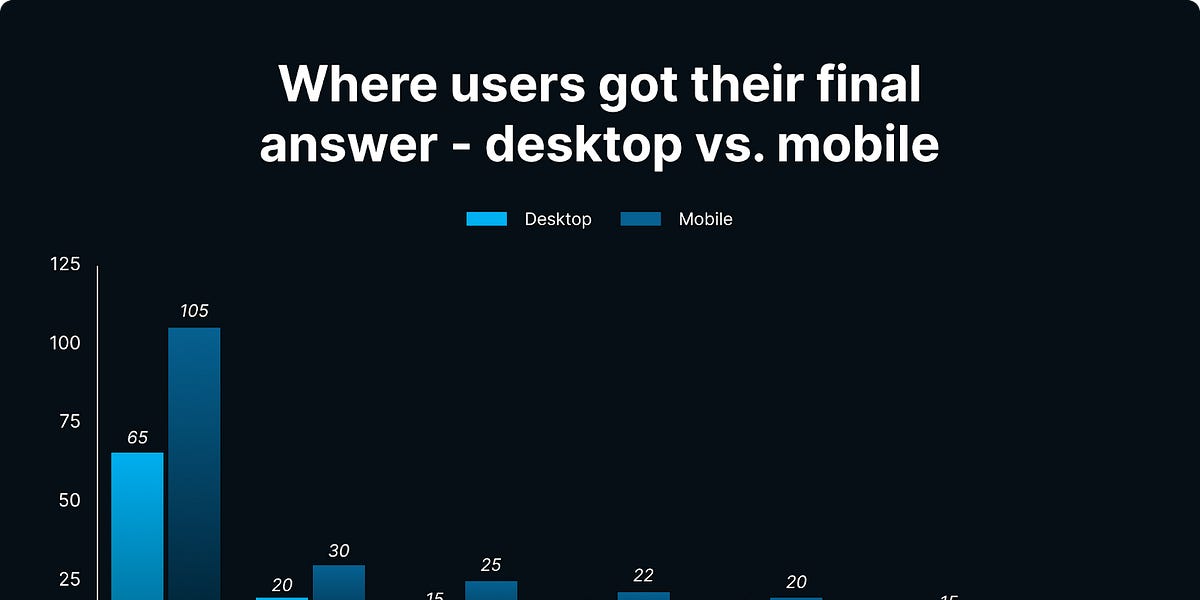](https://www.growth-memo.com/p/the-first-ever-ux-study-of-googles?ref=nearmedia.co)
💡
Thanks to our sponsor, [GatherUp](https://gatherup.com/?ref=nearmedia.co) for helping us create great content.
### Local SEO Theory & Praxis
URL: https://www.nearmedia.co/local-seo-theory-praxis/
Last updated: 2025-05-14T18:07:01.000Z
[Please consider subscribing](#/portal/signup)
[](https://www.nearmedia.co/content/files/2025/05/LocalSEO-AMPUP.pdf)
### ABC Ranking Factors, AIOs & Your Brand, Worried Google
URL: https://www.nearmedia.co/abc-ranking-factors-aios-your-brand-worried-google/
Last updated: 2025-05-13T20:06:55.000Z
_This post is for subscribers on the Premium and All-Access Membership tiers only._
### EP 206 - Google's Power Grab: AI Journeys, Monetized Moments, & the End of SEO as We Know It with Cindy Krum
URL: https://www.nearmedia.co/ep-206-googles-power-grab-ai-journeys-monetized-moments-the-end-of-seo-as-we-know-it-with-cindy-krum/
Last updated: 2025-05-09T13:19:24.000Z
**Welcome to our new sponsor, GatherUp. Be sure to check out their upcoming** [**AmpUp Virtual Conference**](https://go.gatherup.com/ampup2025?ref=nearmedia.co)**. May 13th-15th, 2025**
### The Podcast Deets
In this thought-provoking episode of the *Near Memo* podcast, SEO veteran Cindy Krum joins Greg Sterling and Mike Blumenthal to unpack how Google's evolving use of AI, including MUM (Multitask Unified Model), is reshaping the search landscape. Krum explains how Google is moving from keyword- and entity-based indexing to modeling “journeys” that reflect a user’s intent — aligning with Google's long-abandoned concept of “micro-moments” like “I want to know,” “I want to go,” “I want to do,” and “I want to buy.” These journeys are increasingly being monetized across different verticals such as YouTube, Merchant Center, and local results, as Google balances expensive AI integration with ad revenue optimization.
The trio also explores the convergence of Google Discover, AI Overviews, and personalized browsing experiences — warning that this personalization could result in unprecedented data tracking and loss of consumer privacy. Krum emphasizes that marketers and SEOs must adapt quickly: diversify traffic sources, optimize across social and non-Google platforms, and consider how Google's motivations (data consolidation and monetization) are shaping an experience that prioritizes corporate interests over user needs. The message is clear — traditional SEO tactics won’t survive the AI-driven tide unless they evolve dramatically.
[0:00](https://www.youtube.com/watch?v=iwQxJjaVj6s&ref=nearmedia.co) Introduction and Guest Introduction
[02:16](https://www.youtube.com/watch?v=iwQxJjaVj6s&t=136s&ref=nearmedia.co) Understanding Google Mum and SEO Evolution
[06:41](https://www.youtube.com/watch?v=iwQxJjaVj6s&t=401s&ref=nearmedia.co) Monetization of Search and AI Integration
[10:11](https://www.youtube.com/watch?v=iwQxJjaVj6s&t=611s&ref=nearmedia.co) Personalization in Search and User Intent
[15:59](https://www.youtube.com/watch?v=iwQxJjaVj6s&t=959s&ref=nearmedia.co) Mapping User Journeys for SEO
[20:33](https://www.youtube.com/watch?v=iwQxJjaVj6s&t=1233s&ref=nearmedia.co) The Role of AI Overviews in Informational Queries
[25:54](https://www.youtube.com/watch?v=iwQxJjaVj6s&t=1554s&ref=nearmedia.co) Exploring AI Overviews in Local Search
[39:23](https://www.youtube.com/watch?v=iwQxJjaVj6s&t=2363s&ref=nearmedia.co) Adapting SEO Strategies for the Future & Navigating the Changing Landscape of Search
### Related Links
[MUM: A new AI Milestone for Understanding Information](https://blog.google/products/search/introducing-mum/?ref=nearmedia.co)
[Micro-Moments: Your Guide to Winning the Shift to Mobile](https://think.storage.googleapis.com/images/micromoments-guide-to-winning-shift-to-mobile-download.pdf?ref=nearmedia.co)
[The Next Chatper of Search with Cindy Krum](https://www.youtube.com/watch?v=zc37ByWJ9sw&ref=nearmedia.co)
[Word to Your Mum: Managing the Future of SEO Without Keywords by Cindy Krum, MobileMoxie](https://www.youtube.com/watch?v=pmf3I1PsuPQ&ref=nearmedia.co)
[Google MUM Algorithm 2023 - Cindy Krum & Bartosz Goralewicz](https://youtu.be/Z64JY0UauEY?si=jtIwPA8IZIWA9eNw&ref=nearmedia.co)
### Takeaways
- Cindy Krum discusses the MUM model and its impact on SEO.
- Google's monetization strategies are evolving with AI integration.
- Personalization in search is becoming increasingly important.
- Marketers need to optimize for user intent and MUM journeys.
- Informational queries represent a significant portion of search traffic.
- Diversifying traffic sources is crucial for digital marketers.
- Branding and social media presence are essential for visibility.
- The search landscape is changing rapidly due to AI advancements.
- Marketers should be proactive in adapting to these changes.
- Understanding user journeys will be key to future SEO strategies.
### Google Panics, Mega-Local AIO, Top o' the Funnel
URL: https://www.nearmedia.co/google-panics-mega-local-aio-top-o-the-funnel/
Last updated: 2025-05-09T01:58:35.000Z
_This post is for subscribers on the Premium and All-Access Membership tiers only._
### AIO Pack, AIn't No Threat, Double Divestiture, Automation Blues
URL: https://www.nearmedia.co/aio-pack-aint-no-threat-double-divestiture-automation-blues/
Last updated: 2025-05-07T14:56:28.000Z
_This post is for subscribers on the Premium and All-Access Membership tiers only._
### ChatBP, AI Mode, Yelp Gets SaaSier, Google Remedies Trial Disclosures
URL: https://www.nearmedia.co/chatbp-ai-mode-yelp-gets-saasier-google-remedies-trial-disclosures/
Last updated: 2025-05-02T02:09:41.000Z
_This post is for subscribers on the Premium and All-Access Membership tiers only._
### EP 205 - AmpUp Conference, Yelp’s Antitrust V. Google, Google AIO for Local Reviews, ChatGPT Gets Product Search
URL: https://www.nearmedia.co/ep-205-ampup-conference-yelps-antitrust-v-google-google-aio-for-local-reviews-chatgpt-gets-product-search/
Last updated: 2025-05-01T19:03:33.000Z
AmpUp conference dives into the strategies & nitty gritty tactics of reputation. Yelp’s antitrust case against Google could blow up local search. Google’s AI review overviews don't dazzle with brilliance, just baffle users. And ChatGPT? It's turning into a shopping mall. Sign up for free to read.
_This post is for subscribers only._
### Local Search Survey, ChatGPT Shopping, Bing Bribery
URL: https://www.nearmedia.co/local-search-survey-chatgpt-shopping-bing-bribery/
Last updated: 2025-04-29T20:33:11.000Z
_This post is for subscribers on the Premium and All-Access Membership tiers only._
### Yelp vs Google Antitrust Case Survives First Big Test
URL: https://www.nearmedia.co/yelp-vs-google-antitrust-case-survives-first-big-test-2/
Last updated: 2025-04-29T19:31:42.000Z
Yelp’s antitrust case against Google just survived a critical test. A judge tossed some claims but kept Yelp’s core attack on Google’s local search monopoly alive. The battle over Big Tech’s power isn’t cooling off anytime soon. This report is available to anyone with a free membership.
_This post is for subscribers only._
### Google Remedies, 1.5B 'Use' AIOs, Smart Glasses, Apple Ads and Brand Trust
URL: https://www.nearmedia.co/google-remedies-1-5b-use-aios-smart-glasses-apple-ads-and-brand-trust/
Last updated: 2025-04-25T14:40:15.000Z
_This post is for subscribers on the Premium and All-Access Membership tiers only._
### EP 204 - Know Before You Go: New Ai Feature on GBP Profiles, G in Antitrust Cross Hairs & the Coming Shift in Search
URL: https://www.nearmedia.co/know-before-you-go-new-ai-feature-on-gbp-profiles-g-in-antitrust-cross-hairs-the-coming-shift-in-search/
Last updated: 2025-05-01T17:52:00.000Z
We explore a never before seen feature on your Google Business Profile, breakdown the remedy phase proposals of the Google Anti-trust trial & discuss how AI might bridge search to what it might become. Sign up for free to read.
_This post is for subscribers only._
### Upgrade Your Membership to Receive Great Content
URL: https://www.nearmedia.co/upgrade-your-membership-to-receive-great-content/
Last updated: 2025-04-22T20:16:25.000Z
**Since we founded Near Media in 2021** we've published over 500 [newsletters](https://www.nearmedia.co/tag/news/), recorded more 200 [podcasts](https://www.nearmedia.co/memo/), published findings from user-research [studies](https://www.nearmedia.co/tag/dma/) and more than 150 deep-dive [analysis](https://www.nearmedia.co/tag/analysis/) articles, on everything from local suspensions and review best practices to the emergence of AI. **Our goal is to push the state of local marketing knowledge forward.**
[Please Upgrade Now](https://www.nearmedia.co/v2/#/portal)
Our analysis provides **strategic insights and tactical advice** that local marketers can't afford to miss. Our 2x weekly newsletters provide **critical updates and analysis** of the most important **local and search marketing developments** each week.
In addition to all this helpful content, All-access subscribers can participate in exclusive live monthly "Office Hours" conversations and Q&A sessions.
**Please support our work and** [**subscribe**](https://www.nearmedia.co/v2/#/portal) **for $20 per month.** Bulk pricing of 5 seats for $50 is also available. Contact [dm@nearmedia.co](mailto:dm@nearmedia.co) for details.
If you're interested in **sponsoring our podcast**, contact [gsterling@nearmedia.co](mailto:gsterling@nearmedia.co).
### Google 0 for 2, AIO-Zero, Search Dominates Spend, SEO Bad Practices
URL: https://www.nearmedia.co/google-0-for-2-aio-zero-search-dominates-spend-seo-bad-practices/
Last updated: 2025-04-20T22:09:23.000Z
_This post is for subscribers only._
### EP203 The Future of Reviews: What Businesses Need to Know - Sammy Paget Interview Part 2
URL: https://www.nearmedia.co/ep203-the-future-of-reviews-what-businesses-need-to-know-sammy-paget-interview-part-2/
Last updated: 2025-04-18T15:50:05.000Z
We discuss review strategy—review requests, response tactics, and how AI is changing everything. From best practices to Google's crackdown on fake reviews, it's a forward-looking guide to reputation, rankings, and real customer connection. Join our free level to watch and get our show notes.
_This post is for subscribers only._
### Google 'Enshittification', TikTok Reviews Tab, OpenAI's Math Problem, Meta on Trial
URL: https://www.nearmedia.co/google-enshittification-tiktok-reviews-tab-openais-math-problem-meta-on-trial/
Last updated: 2025-04-16T00:46:41.000Z
_This post is for subscribers on the Premium and All-Access Membership tiers only._
### Google Is As Google Does: A Mobile Page Analysis
URL: https://www.nearmedia.co/google-is-as-google-does-a-mobile-page-analysis/
Last updated: 2025-04-15T23:10:42.000Z
The first unpaid results were two full iPhone 15 pro screen-swipes deep. Sign up for our free membership tier to access this article.
_This post is for subscribers only._
### Review Fatigue, AIOs Up & CTR Down, AI Search Test, TikTokageddon?
URL: https://www.nearmedia.co/review-fatigue-aios-up-ai-search-test-tiktokageddon/
Last updated: 2025-04-13T15:57:55.000Z
_This post is for subscribers on the Premium and All-Access Membership tiers only._
### EP202 From Stars to Skepticism: How Reviews Evolved & Why Trust Is Declining - Sammy Paget Interview Part1
URL: https://www.nearmedia.co/ep202-from-stars-to-skepticism-how-reviews-evolved-why-trust-is-declining-sammy-paget-interview-part1/
Last updated: 2025-04-10T18:57:39.000Z
We interview Sammy Paget to unpack 15 years of review research—from the rise of review culture to the sharp drop in consumer trust. Explore how AI, fake reviews, and new platforms are reshaping how people research and decide where to spend their money. Subscribe to our free tier to watch.
_This post is for subscribers only._
### Local SEO & AI, 245M Fake Reviews, AI for Shopping, Big Tech's Bad Deal
URL: https://www.nearmedia.co/local-seo-ai-245m-fake-reviews-ai-for-shopping-big-techs-bad-deal/
Last updated: 2025-04-09T00:07:10.000Z
_This post is for subscribers on the Premium and All-Access Membership tiers only._
### Office Hours: Search, AI & Agents
URL: https://www.nearmedia.co/office-hours-search-ai-agents/
Last updated: 2025-04-04T18:52:47.000Z
Sign up to be a part of the our next exclusive discussion
_This post is for subscribers only._
### Bing's Successor, TikTok Sale, Gemini Leaders, Quid Pro Quo
URL: https://www.nearmedia.co/bings-successor-tiktok-sale-gemini-leaders-quid-pro-quo/
Last updated: 2025-04-04T17:41:15.000Z
Our next Office Hours will happen on April 17. More details coming soon.
_This post is for subscribers on the Premium and All-Access Membership tiers only._
### EP200 Google’s Euro DMA Headaches, GBP Local Chaos - Uncharacteristic Google Comms & AI Search Futures
URL: https://www.nearmedia.co/ep200-googles-euro-dma-headaches-gbp-local-chaos-uncharacteristic-google-comms-ai-search-futures/
Last updated: 2025-04-03T18:39:52.000Z
In our milestone 200th episode, David unpacks Google’s mounting DMA regulatory woes in Europe. Mike breaks down a storm of GBP bugs and ponders the fact that Google is actually admitting to them. Greg steers the convo into the evolving future of search. Subscribe to our free tier to watch.
_This post is for subscribers only._
### Google Zero, Banking on Inertia, Chat UI, SMB Ad Spending Outlook
URL: https://www.nearmedia.co/google-zero-banking-on-inertia-chat-ui-smb-ad-spending-outlook/
Last updated: 2025-04-01T23:21:16.000Z
_This post is for subscribers on the Premium and All-Access Membership tiers only._
### Stars Don't Matter, AIOs in Local, Peak GBP, What's Google Good For?
URL: https://www.nearmedia.co/peak-gbp-2/
Last updated: 2025-03-28T07:49:48.000Z
_This post is for subscribers on the Premium and All-Access Membership tiers only._
### EP199.5 Surviving the New Google: Suspensions & Appeal Delays, AI Overviews, & the Future of Local Marketing
URL: https://www.nearmedia.co/ep199-5-surviving-the-new-google-suspensions-appeal-delays-ai-overviews-the-future-of-local-marketing/
Last updated: 2025-04-01T23:25:42.000Z
We discuss the current state of Google bulk reverification and the delays in suspension appeals, the impact of AI overviews on local search traffic, and the evolving landscape of digital marketing strategies. Subscribe to our free tier to watch.
_This post is for subscribers only._
### Update: Google Suspension & Reverification Issues Resolving
URL: https://www.nearmedia.co/update-google-suspension-reverification-issues-resolving/
Last updated: 2025-03-27T14:06:38.000Z
It appears that a fix has been implemented. Bulk issues have ceased, and suspension appeal complaints are slowly declining—though appeals are still significantly delayed. Our numbers confirm this shift.
_This post is for subscribers only._
### Local Organic RIP, Google's Crisis, DMA Fines, AI Dilemma
URL: https://www.nearmedia.co/rip-local-organic-googles-crisis-dma-fines-ai-mode-dilemma-2/
Last updated: 2025-03-25T21:38:17.000Z
_This post is for subscribers on the Premium and All-Access Membership tiers only._
### EP 199 EU Targets Google, Supspensions Still On-going, and AI Heats Up: Search is Changing Fast
URL: https://www.nearmedia.co/ep199-eu-targets-google-supspensions-still-on-going-and-ai-heats-up-search-is-changing-fast/
Last updated: 2025-03-27T13:43:20.000Z
Recent EU findings vis-a-vis Google's non-compliance with the DMA, algorithm changes leading to increased suspensions & reverifications, and the evolving landscape of AI competition and Google's strategies to retain users amidst rising AI technologies. Subscribe to our free tier to watch.
_This post is for subscribers only._
### Google Violated DMA, Brand It, Localized Challenges, AI Commoditized?
URL: https://www.nearmedia.co/google-violated-dma-brand-it-localized-challenges-ai-commoditized-2/
Last updated: 2025-03-21T01:44:21.000Z
_This post is for subscribers on the Premium and All-Access Membership tiers only._
### Thoughts on the European Commission’s Preliminary Finding of Self-preferencing by Google
URL: https://www.nearmedia.co/dma/google-preliminary-non-compliance-6-5/
Last updated: 2025-03-20T15:00:50.000Z
Yesterday‘s news that the European Commission sent a preliminary finding of non-compliance with Article 6(5) has the potential to radically alter search results in Europe [for the better](https://www.nearmedia.co/dma-statement/), even beyond the specific verticals addressed by the announcement itself. We enthusiastically applaud this news.
[Commission sends preliminary findings to Alphabet under the Digital Markets ActToday, the European Commission sent two sets of preliminary findings to Alphabet for failing to comply with the Digital Markets Act (DMA), regarding two services for which it has been designated as aEuropean Commission - European Commission](https://ec.europa.eu/commission/presscorner/detail/en/ip%5F25%5F811?ref=nearmedia.co)
**From the press release (bold is original):**
> \[F\]ollowing the Commission's investigation and feedback from interested third parties during several workshops, the Commission takes the preliminary view that Alphabet self-preferences its own services over those of third parties, thereby failing to comply with the DMA. In particular:
>
> \- Alphabet **treats its own services**, such as shopping, hotel booking, transport, or financial and sports results, **more favourably in Google Search results** than similar services offered by third parties**.**
>
> \- More specifically, Alphabet **gives its own services more prominent treatment compared to others** by displaying them at the top of Google Search results or on dedicated spaces, with enhanced visual formats and filtering mechanisms.
We concur with the Commission’s preliminary findings as they relate to [the Hotel vertical specifically](https://www.nearmedia.co/dma/european-hotel-search-study/), as well as the other local verticals we’ve studied in Europe ([restaurants](https://www.nearmedia.co/dma/google-serp-restaurants-eu-dma-analysis/) and [home services](https://www.nearmedia.co/dma/eu-home-services-search-behavior/)).
The Commission’s specific reference to “enhanced visual formats and filtering mechanisms” is particularly noteworthy. We see this as a key way which [Google preferences its own Business Profiles](https://www.nearmedia.co/dma/google-dma-compliance-2025-03/) — even when the third party Places sites carousel appears above Business Profiles.
Far from “[hurting European businesses](https://blog.google/around-the-globe/google-europe/the-eus-competition-rules-are-hurting-consumers-and-businesses/?ref=nearmedia.co),” we assert this finding of non-compliance has the potential to drive more traffic straight to local businesses (and directories and publishers)—traffic which Business Profiles intermediate for so many local searches. Google’s tests thus far have been limited.
At today’s Thought Leaders 4 Competition event in Brussels, DG Comp Head of Unit Thomas Kramler indicated that the Commission seeks to give Google guardrails for compliance with Article 6(5), as opposed to specific product design guidance: an approach [we also applaud](https://www.nearmedia.co/dma-statement/).
Kramler also stated the Commission’s desire to see the guardrails apply beyond just the three verticals currently under investigation: specifically that the Commission is trying to “avoid whackamole” investigations in subsequent verticals.
This could mean significant changes to SERP interfaces across Google Search in the near future.
---
## Comment on a new Google local search test
Google may have had some early indication of these findings. In certain local verticals, they’ve introduced a new map-oriented module featuring a carousel of Google Business Profiles above or below a carousel of Aggregators (the Places sites module). Both carousels are placed on a blue background, which is a new treatment in and of itself.

Example of the new local search user interface.
The closer integration with the Places sites module with the map interface *may* drive more clicks but still doesn’t provide equal treatment to third party profiles.
Google Business Profiles invariably feature gold star ratings and photos (highly impactful to consumer engagement), whereas Places sites only link to category pages, sometimes without photos and at least in our anecdotal experience while traveling in Germany and Belgium this week, always without ratings.
It seems to us this would still under the umbrella of “favourable treatment” for Google’s own products.
### GBP Suspensions Rise, Support #Fails
URL: https://www.nearmedia.co/gbp-suspensions-rise-support-fails-2/
Last updated: 2025-03-20T18:15:47.000Z
Suspensions have steadily risen since January and, as they increase, appeal resolution times have grown significantly—from about 5 days to nearly 5 weeks. This article is available to free and paid members.
_This post is for subscribers only._
### AI Product Search, Review 'Blackmail', Gemini Kills Assistant, Non-Brand SEO
URL: https://www.nearmedia.co/ai-product-search-review-blackmail-gemini-kills-assistant-non-brand-seo/
Last updated: 2025-03-18T18:23:04.000Z
_This post is for subscribers on the Premium and All-Access Membership tiers only._
### Local AIOs, AI 60% Wrong, Google Erosion?
URL: https://www.nearmedia.co/local-aios-ai-60-wrong-google-erosion/
Last updated: 2025-03-13T22:58:38.000Z
_This post is for subscribers on the Premium and All-Access Membership tiers only._
### EP198 Google GBP Suspensions Update, AI in Local Search, Google Selling Chrome? & Tesla’s Brand Freefall
URL: https://www.nearmedia.co/ep198-google-gbp-suspensions-update-ai-in-local-search-google-selling-chrome-teslas-brand-freefall/
Last updated: 2025-03-13T19:27:59.000Z
Buckle up! This Near Memo dives into Google’s Business Profile suspensions, AI shakeups in local search, and Tesla’s brand freefall. Plus, what losing Chrome could mean for Google’s antitrust battle. Mike & Greg break it all down. Subscribe to our free tier to watch.
_This post is for subscribers only._
### AI Local Mode, Chrome Sale, Google Traffic Data, Google a 'Publisher'?
URL: https://www.nearmedia.co/ai-local-mode-chrome-sale-google-traffic-data-google-a-publisher-2/
Last updated: 2025-03-11T20:27:45.000Z
_This post is for subscribers on the Premium and All-Access Membership tiers only._
### Why Google’s typical local search results do not comply with DMA Article 6(5)
URL: https://www.nearmedia.co/dma/google-dma-compliance-2025-03/
Last updated: 2025-03-12T18:48:59.000Z
🖨️
[This article is also available as a PDF](https://nearmedia.co/assets/Google%5FDMA%5F6%285%29%5FCompliance%5F2025-03.pdf?ref=nearmedia.co).
## **Digital Markets Act Article 6(5)**
> “The gatekeeper shall not treat more favourably, in ranking1 and related indexing and crawling2, services and products offered by the gatekeeper itself3 than similar services or products of a third party4. The gatekeeper shall apply transparent, fair and non-discriminatory conditions5 to such ranking.”
## **Why Google's local search results do not comply**
### **1\. The Places unit receives favorable ranking treatment.**
The Places unit ranks in the first or second unpaid position for the majority of searches Google deems to have local intent and often appears multiple times on the same search result page.
### **2\. Places are not part of Google's primary organic search index.**
Places are not generated by crawling third-party websites.
### **3\. The panels linked from Places consist primarily of first-party data from two discrete Google products.**
In its own marketing, Google has long referred to the panels linked from Places as Business Profiles, which it [offers as a discrete product](https://www.google.com/intl/en%5Fie/business/?ref=nearmedia.co).
Data collected from business users of Google Business Profiles and end users via Google Maps exclusively populates the overwhelming majority of Places units and Google Business Profiles.
### **4\. The Places unit is similar to third-party products.**
Myriad third party vertical search services (TripAdvisor, Yelp, My-Hammer/Travaux, Houzz, to name a few) offer similar business listing products
### **5\. The Places unit discriminates against third-party Profiles.**
Vertical search services’ profiles are [ineligible for inclusion within Google Business Profiles](https://support.google.com/business/answer/13763036?ref=nearmedia.co); only businesses eligible for Google Business Profiles appear in the Places unit.
---
## “Search Result Page Previews” are Google Business Profiles
In its [2025 Compliance Report1](https://storage.googleapis.com/transparencyreport/report-downloads/pdf-report-bb%5F2024-3-7%5F2025-3-6%5Fen%5Fv1.pdf?ref=nearmedia.co), Google claims that Places links point to “Search Results Page Previews” and repeats its 2024 claim that no Places unit links point to separate Vertical Search Services of Google.
**Google’s positioning of Business Profiles as an integrated part of organic search results, rather than as a discrete Google product, is a material misrepresentation.**
[In its own marketing](https://www.google.com/intl/en%5Fie/business/?ref=nearmedia.co)[2](https://www.google.com/intl/en%5Fie/business/?ref=nearmedia.co),[3](https://blog.google/products/ads-commerce/connect-local-holiday-shoppers/?ref=nearmedia.co) Google has long described what it now calls “Previews” in DMA Compliance Reports as Business Profiles – [a discrete Google product](https://about.google/intl/en%5Fie/products/?ref=nearmedia.co)[4](https://about.google/intl/en%5Fie/products/?ref=nearmedia.co).
[](https://www.google.com/intl/en%5Fie/business/?ref=nearmedia.co)
****Google Business Profiles product homepage**
Clicks from the Places unit, including those on the Map or the More Places "Finder" link beneath the Places unit still go to Business Profiles, which very clearly falls within the bounds of DMA Article 6(5).
Even if one accepts Google’s misrepresentation of these Profiles as “SERP Previews,” they still fail to comply with Article 6(5). These “Previews” invariably privilege Google’s own products, with reviews and photos from Google Maps and Business Profiles.
The Hotel "offers and reviews from VSSs with links to VSS websites" Google cites in its Compliance Report (seen below) are dominated by sponsored ads.
[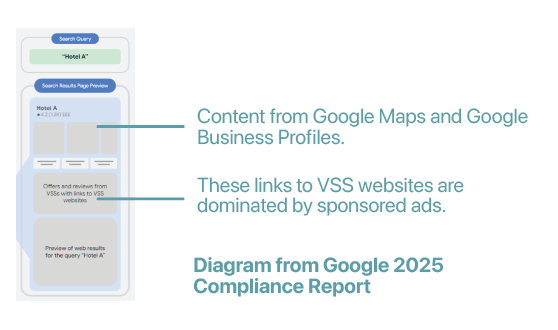](https://storage.googleapis.com/transparencyreport/report-downloads/pdf-report-bb%5F2024-3-7%5F2025-3-6%5Fen%5Fv1.pdf?ref=nearmedia.co)
In [our September 2024 study](https://www.nearmedia.co/dma/european-hotel-search-study/), free clicks to VSSs made up only 25% of clicks from these result blocks (and free clicks to Suppliers only 39%).[5](https://www.nearmedia.co/dma/european-hotel-search-study/)
Forcing Suppliers to outbid well-funded VSSs, especially gatekeeper Booking.com, for clicks from their own Business Profile to their own website hardly seems a desirable outcome for the digital market.
---
## To date, Google’s DMA-related changes obfuscate the fact that both Aggregators and Suppliers should benefit from fair and contestable local search results.
---
### Bad-faith Hotels experiment
Google’s [November 2024 10-blue-link experiment in the Hotel vertical](https://blog.google/around-the-globe/google-europe/dma-compliance-update/?ref=nearmedia.co)[6](https://blog.google/around-the-globe/google-europe/dma-compliance-update/?ref=nearmedia.co) – showing that Suppliers would suffer if Business Profiles are [no longer featured at the top of the SERP7](https://blog.google/feed/sharing-data-on-our-dma-hotels-test?ref=nearmedia.co) – promotes a false dichotomy.
Since its [“Venice” update in 20128](https://search.googleblog.com/2012/02/search-quality-highlights-40-changes.html?ref=nearmedia.co), Google’s organic algorithm has typically ranked local SME Supplier websites quite well, even for competitive terms without geo-modifiers, e.g. “estate agents,” for queries performed by searchers in their area.
Our recent [research in the Home Services vertical9](https://siinda.org/wp-content/uploads/2025/03/EU-DMA-2024-Final.pdf?ref=nearmedia.co) is a prime example: the websites of local SME Suppliers received a meaningful number of organic result clicks.
**Not applying this same algorithmic logic in the Hotel vertical experiment was a conscious choice on the part of Google.**
Provoking user dissatisfaction by reverting the design of the search results page to 10 blue links was another conscious choice.
If, as we suspect, Google’s own user data shows a strong consumer preference for a map-centered interface with star ratings and images, the DMA does not require Google to degrade the search experience by removing it entirely.
A take-it-or-leave-it approach to the current Google Business Profiles interface belies the talent of the company’s innovative designers and engineers.
---
## Google's post-DMA interface elements do not place third-party vertical search services on a “fair and non-discriminatory” footing with Google’s own products.
---
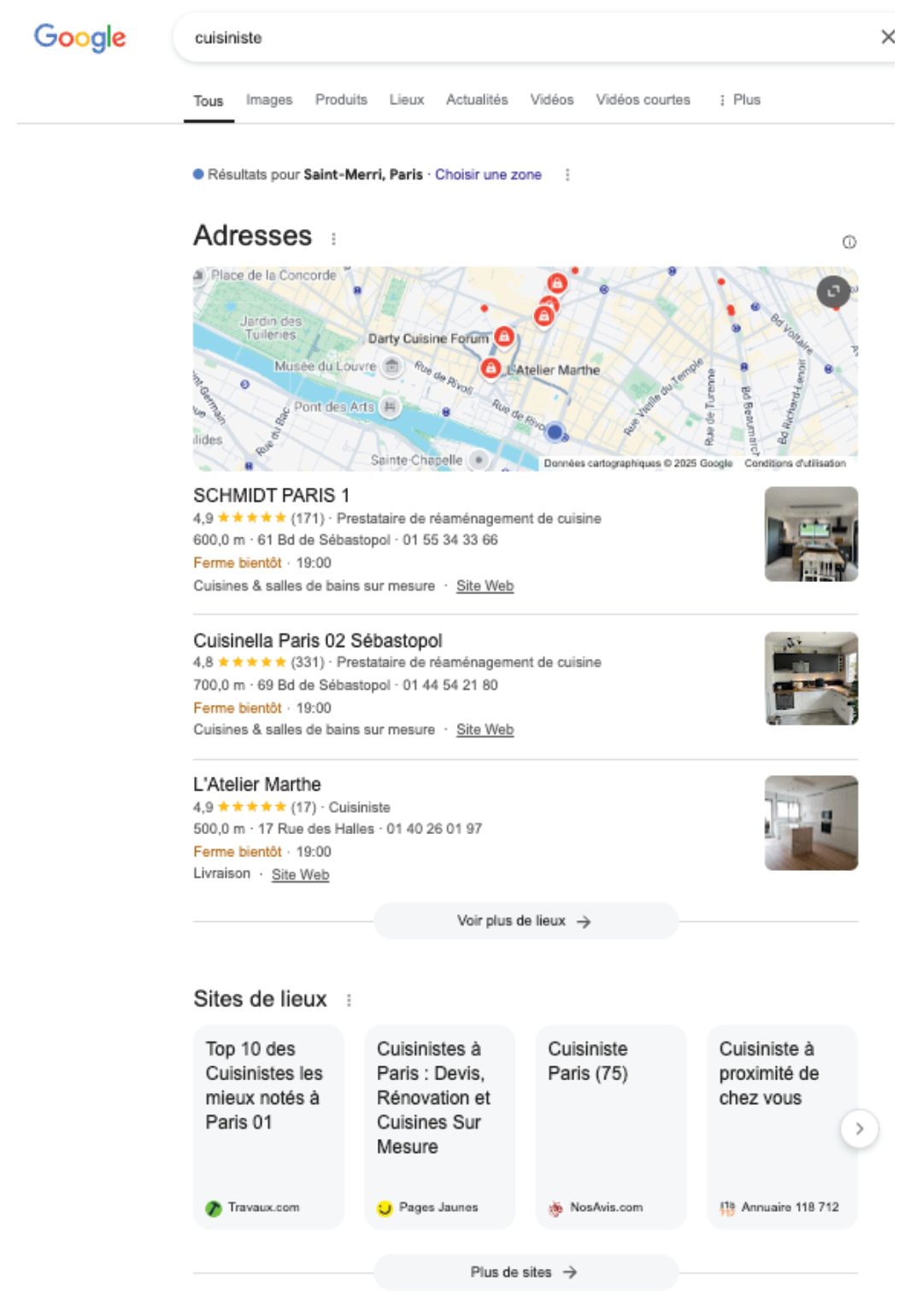
*While specific treatments vary by query and market, the representative screenshot above shows the difference in size, position, color, and user interface elements between Google Business Profiles and Places Sites. Our joint study with Siinda of kitchen remodeling searches found that 42% of clicks went to Google Business Profiles when they appeared for similar searches; just 2% went to Places Sites when they appeared.*[*9*](https://siinda.org/wp-content/uploads/2025/03/EU-DMA-2024-Final.pdf?ref=nearmedia.co)
### Ranking discrimination via user interface
The three most appealing search result elements with which European local searchers engage are ratings & reviews, photos, and the Google Map.[5](https://www.nearmedia.co/dma/european-hotel-search-study/),[9](https://siinda.org/wp-content/uploads/2025/03/EU-DMA-2024-Final.pdf?ref=nearmedia.co),[10](https://www.nearmedia.co/dma/google-serp-restaurants-eu-dma-analysis/) (Prices are also a key element in the Hotels vertical but Google only displays this element for Hotels.)
**Critically, the Places Sites unit introduced by Google following the enactment of the DMA includes neither a map nor ratings and reviews, and only occasionally includes photos.**
Users rarely engage with this unit, clicking within it barely 2% of the time it appears. The Places Sites chip/filter receives similarly-low engagement.[5](https://www.nearmedia.co/dma/european-hotel-search-study/),[9](https://siinda.org/wp-content/uploads/2025/03/EU-DMA-2024-Final.pdf?ref=nearmedia.co),[10](https://www.nearmedia.co/dma/google-serp-restaurants-eu-dma-analysis/)
The size and interactivity of the brightly-colored Map, along with the photos and star ratings of Business Profiles, capture the plurality of user clicks—even when positioned below the Places Sites unit.
**The interface discrepancy creates a self-reinforcing feedback loop. Because Google’s algorithm rewards result blocks with high user engagement, the “common and consistent ranking framework” Google cites in its Compliance Report will always favor the huge, visually-appealing Places unit over less visually-compelling third-party results.**
Based solely on the position of the Places Sites unit, one respected industry observer expected clicks to Hotel Business Profiles to drop by 50 to 66%.[11](https://www.seoclarity.net/blog/impact-digital-markets-act?ref=nearmedia.co)
The visual discrepancy between Business Profiles and Places Sites units explains the anemic impact of Places Sites relative to expected position-based clickthrough rates (2% vs. +50%).
Segregating Aggregators into an inferior Places Sites interface which lacks the most engaging elements of Google’s own Places unit does not create “fair and non-discriminatory conditions” to ranking.
---
### References
1. [https://storage.googleapis.com/transparencyreport/report-downloads/pdf-report-bb\_2024-3-7\_2025-3-6\_en\_v1.pdf](https://storage.googleapis.com/transparencyreport/report-downloads/pdf-report-bb%5F2024-3-7%5F2025-3-6%5Fen%5Fv1.pdf?ref=nearmedia.co)
2. [https://www.google.com/intl/en\_ie/business/](https://www.google.com/intl/en%5Fie/business/?ref=nearmedia.co)
3. [https://blog.google/products/ads-commerce/connect-local-holiday-shoppers/](https://blog.google/products/ads-commerce/connect-local-holiday-shoppers/?ref=nearmedia.co)
4. [https://about.google/intl/en\_ie/products/](https://about.google/intl/en%5Fie/products/?ref=nearmedia.co)
5.
6. [https://blog.google/around-the-globe/google-europe/dma-compliance-update/](https://blog.google/around-the-globe/google-europe/dma-compliance-update/?ref=nearmedia.co)
7. [https://blog.google/feed/sharing-data-on-our-dma-hotels-test](https://blog.google/feed/sharing-data-on-our-dma-hotels-test?ref=nearmedia.co)
8. [https://search.googleblog.com/2012/02/search-quality-highlights-40-changes.html](https://search.googleblog.com/2012/02/search-quality-highlights-40-changes.html?ref=nearmedia.co)
9. [https://siinda.org/wp-content/uploads/2025/03/EU-DMA-2024-Final.pdf](https://siinda.org/wp-content/uploads/2025/03/EU-DMA-2024-Final.pdf?ref=nearmedia.co)
10.
11. [https://www.seoclarity.net/blog/impact-digital-markets-act](https://www.seoclarity.net/blog/impact-digital-markets-act?ref=nearmedia.co)
---
### How we conduct our research
We recruit panels of consumers who agree to share their screens and audio as they perform searches, split evenly across mobile and desktop devices.
A representative search prompt (given to users in their native language), from our [October 2024 study conducted in partnership with Siinda](https://siinda.org/wp-content/uploads/2025/03/EU-DMA-2024-Final.pdf?ref=nearmedia.co), follows below.
*"You've wanted to remodel your kitchen for a long time and you're finally going to get started on it this summer. You've decided that it's too big a project to take on yourself and you're going to hire professionals for the job.*
*You decide to search Google to help find professionals for your project.*
*Browse and click any results you’d like. Please “think out loud” as you search and describe your thoughts and reactions.*
- *What results are you drawn to?*
- *What elements of the results stand out to you?*
- ***Which business or professional(s) would you choose to contact first and WHY?***
*Once you have made your selection, please state verbally “this is the one I'd choose.”*
We then analyze the screen and audio recordings and aggregate result attributes, panelists’ click patterns, and decision-making criteria.
---
### Additional DMA local search perspectives from Siinda & Near Media�
1. [https://leadershipbeyondborders.libsyn.com/site/guardians-of-digital-fairness-exploring-europes-dma](https://leadershipbeyondborders.libsyn.com/site/guardians-of-digital-fairness-exploring-europes-dma?ref=nearmedia.co)
2. [https://www.forbes.com/councils/forbesagencycouncil/2025/03/05/the-impact-of-the-eus-digital-markets-act-on-consumer-search-behavior/](https://www.forbes.com/councils/forbesagencycouncil/2025/03/05/the-impact-of-the-eus-digital-markets-act-on-consumer-search-behavior/?ref=nearmedia.co)
---
## About Near Media
Founded by three veteran local and vertical search analysts in 2021, Near Media is an applied market research firm helping businesses maximize their SEO & paid search investments.
Counting both vertical search services and Suppliers among our client base, we regularly publish analyses of search product releases and local search market dynamics.
To date, we’ve analyzed audio and screen recordings of 700 Google users from Ireland, Germany, France, and Spain searching Google in their native language for restaurants, hotels, and kitchen remodeling professionals.
---
## About [Siinda](https://siinda.org/?ref=nearmedia.co)
Siinda is more than an association; it’s a vibrant community where experts in digital marketing, local search, and technology unite to share insights, stay updated on the latest trends in digital marketing and AI, access valuable market research, and cultivate meaningful partnerships. At Siinda, we connect you with like-minded professionals from around the globe, helping you build lasting relationships. We promote cooperation for mutual success while nurturing connections that empower your business to thrive. We actively advocate for our members and the SMB community in shaping European digital marketing and AI legislation, prioritizing member interests while respecting consumer rights. Siinda is not just an association; it represents a dynamic journey of collaboration.
*12 Mar 2025 - Ed. note: Clarified clickthrough rates as 42% and 2%* when each element was visible *for kitchen remodeling searches.*
### Near Media All-Access Exclusive: Friday Office Hours with David Mihm
URL: https://www.nearmedia.co/2025-03-14-office-hours/
Last updated: 2025-03-10T14:59:26.000Z
[Sign Up Now](https://docs.google.com/forms/d/e/1FAIpQLSfZRShfnCuAQwNdylE1ktfYOU1Sb91jfM-ZvbOEH0uIlOSf0A/viewform?ref=nearmedia.co)
GSC, GBP Insights, and GA all help you understand how consumers interact with your site and business profiles. *But they don’t share how or why consumers choose your business – or your competition – on Google in the first place.*
### [**Join us for our upcoming office hours, Friday March 14 at 10am PT\***](https://docs.google.com/forms/d/e/1FAIpQLSfZRShfnCuAQwNdylE1ktfYOU1Sb91jfM-ZvbOEH0uIlOSf0A/viewform?ref=nearmedia.co)
David will share the ins-and-outs of European search behavior across the hotel, restaurant, and home services verticals with data from over 700 searchers and close to 2000 SERP interactions. Zero-click, ad engagement, how consumers use reviews, the GBP attributes they prize most, and much, much more.
David will also give an update on the latest Digital Markets Act developments, particularly as they relate to self-preferencing–a law whose rigorous enforcement may spur the largest shake-up in Google’s approach to local search in over a decade.
Mike and Greg will also be available for questions and a lively conversation.
We hope to see you there.
[Sign Up Now](https://docs.google.com/forms/d/e/1FAIpQLSfZRShfnCuAQwNdylE1ktfYOU1Sb91jfM-ZvbOEH0uIlOSf0A/viewform?ref=nearmedia.co)
---
\*EU subscribers: 17:00 GMT, 18:00 CET.
### EP 197 Google’s Crazy Ride: Suspensions, Total Searches Stat & AI Shake-Ups
URL: https://www.nearmedia.co/ep917-googles-crazy-ride-suspensions-total-searches-stat-ai-shake-ups/
Last updated: 2025-03-07T19:31:33.000Z
Google’s cracking down on business suspensions, boasting 5T searches (maybe inflated?), and launching AI Mode to keep users from ChatGPT. Subscribe to our free tier to watch.
_This post is for subscribers only._
### Google AI Mode Appears, Review Summaries, Gray Content, AI Citation Sources
URL: https://www.nearmedia.co/google-ai-mode-appears-review-summaries-gray-content-ai-citation-sources/
Last updated: 2025-03-07T03:42:31.000Z
_This post is for subscribers on the Premium and All-Access Membership tiers only._
### 5T Searches, 15 Years of Review Data, YMYL Queries, Siri Stumbles
URL: https://www.nearmedia.co/5t-searches-15-years-of-review-data-ymyl-queries-siri-stumbles-2/
Last updated: 2025-03-04T22:58:04.000Z
_This post is for subscribers on the Premium and All-Access Membership tiers only._
### Alexa+, Google Trust Down, LSA Monetization, AI & Acquisition
URL: https://www.nearmedia.co/alexa-google-trust-down-lsa-monetization-2/
Last updated: 2025-02-28T04:18:18.000Z
_This post is for subscribers on the Premium and All-Access Membership tiers only._
### EP196: The Evolution of Local Inventory Solutions with Michael Carini, Last Mile Retail
URL: https://www.nearmedia.co/ep196-2/
Last updated: 2025-02-27T19:30:55.000Z
How product inventory impacts local marketing. Subscribe to our free tier to watch.
_This post is for subscribers only._
### Zero Click 4ever, Nouveau Product Search, AIO Lawsuit, Apple+ Recipes
URL: https://www.nearmedia.co/zero-click-4ever-nouveau-product-search-aio-lawsuit-apple-recipes-2/
Last updated: 2025-02-26T02:52:34.000Z
_This post is for subscribers on the Premium and All-Access Membership tiers only._
### Intentional 'Enshittification,' Reddit Local Answers, SERP Diversity, Meta-AIO Analysis
URL: https://www.nearmedia.co/google-enshittification-reddit-local-answers-diversity-disruption-2/
Last updated: 2025-02-20T17:25:59.000Z
_This post is for subscribers on the Premium and All-Access Membership tiers only._
### EP 195: Unlocking Google Business Profile Secrets with Brad Wetherall
URL: https://www.nearmedia.co/ep-195-unlocking-google-business-profile-secrets-with-brad-wetherall/
Last updated: 2025-02-27T19:29:06.000Z
### The Podcast Deets
[ 00:00](https://www.youtube.com/watch?v=6mWvoRqx0EI&t=0s&ref=nearmedia.co) Introduction to Brad Wetherall and His Background
[04:04](https://www.youtube.com/watch?v=6mWvoRqx0EI&t=244s&ref=nearmedia.co) Google Personnel Policies Leading to a Loss of Google Local Institutional Knowledge
[17:57](https://www.youtube.com/watch?v=6mWvoRqx0EI&t=1077s&ref=nearmedia.co) Communication Challenges During Review Issues
[23:41](https://www.youtube.com/watch?v=6mWvoRqx0EI&t=1421s&ref=nearmedia.co) Trust Scores and Local Guides' Impact on Reviews
[28:46](https://www.youtube.com/watch?v=6mWvoRqx0EI&t=1726s&ref=nearmedia.co) Identifying and Reporting Spam Listings
[32:58](https://www.youtube.com/watch?v=6mWvoRqx0EI&t=1978s&ref=nearmedia.co) Engagement and Business Verification Challenges
[36:44](https://www.youtube.com/watch?v=6mWvoRqx0EI&t=2204s&ref=nearmedia.co) Improving Video Verification Processes
[41:17](https://www.youtube.com/watch?v=6mWvoRqx0EI&t=2477s&ref=nearmedia.co) Handling Duplicate Listings
[44:07](https://www.youtube.com/watch?v=6mWvoRqx0EI&t=2647s&ref=nearmedia.co) Managing Business Hours Effectively
[47:30](https://www.youtube.com/watch?v=6mWvoRqx0EI&t=2850s&ref=nearmedia.co) Differences in Support Quality between Countries
[48:59](https://www.youtube.com/watch?v=6mWvoRqx0EI&t=2939s&ref=nearmedia.co) Exploring Paid GBP Support Options
[53:27](https://www.youtube.com/watch?v=6mWvoRqx0EI&t=3207s&ref=nearmedia.co) Understanding Google’s Data Sources
[56:34](https://www.youtube.com/watch?v=6mWvoRqx0EI&t=3394s&ref=nearmedia.co) The Impact of AI on Local Listings
[57:19](https://www.youtube.com/watch?v=6mWvoRqx0EI&t=3439s&ref=nearmedia.co) Trust Score and User Management
The Near Media team and Google Product Experts [Claudia Tomina](https://www.linkedin.com/in/claudia-tomina-ab78692a/?ref=nearmedia.co), [Ehab Aboud](https://www.linkedin.com/?ref=nearmedia.co) and [Vinay Toshniwal](https://www.linkedin.com/in/vinay-toshniwal-69972919b/?ref=nearmedia.co) interview (grill?) Brad Wetherall on various aspects of Google Business Profiles. Everything from how internal mobility at Google might cause issues with maintaining institutional knowledge, and the complexities of Google review filtering to the recent discrepancies in review counts, the importance of communication from Google, and the impact of trust scores on Local Guides. The discussion covers creative strategies for enhancing review authenticity, the challenges of video verification, and the implications of operating hours on business rankings.
### Takeaways
- Google encourages internal mobility to retain talent which might cause a loss of Local institutional knowledge.
- Documentation is extensive but not always utilized effectively.
- Algorithm adjustments can lead to review discrepancies.
- Proactive communication from Google is often lacking.
- Trust scores influence the acceptance of edits.
- Creative strategies can enhance review authenticity.
- Multiple signals are considered when identifying spam listings.
- Engagement signals impact visibility in search results.
- Maintaining a corporate email domain is beneficial for trust.
- AI-generated content is monitored and regulated by Google.
[The Near Media podcast is generously supported by The Transparency Company. ](https://askfortransparency.com/?ref=nearmedia.co)
### Local AI, Review Trust P.2, Reviews As Data, Search & Social Ad Growth
URL: https://www.nearmedia.co/local-ai-review-trust-p-2-reviews-as-data-search-social-ad-growth/
Last updated: 2025-02-17T18:50:22.000Z
_This post is for subscribers on the Premium and All-Access Membership tiers only._
### EP 194: Missing Google Reviews, Ask for me - an SMB Time suck, New Gemini Reasoning Model Points to Future of Local Search
URL: https://www.nearmedia.co/ep-194-missing-google-reviews-ask-for-me-an-smb-time-suck-new-gemini-reasoning-model-points-to-future-of-local-search/
Last updated: 2025-02-14T13:46:39.000Z
We discuss how review counts got SO wrong & how to protect yourself, how the new Google 'Ask for me' AI agent works and why is it a terrible idea for SMBs and how the new Gemini Reasoning model points to the future of local search. Subscribe to the free tier to watch.
_This post is for subscribers only._
### Google 'Ask for Me': Great Tech, Not Great for SMBs
URL: https://www.nearmedia.co/google-ask-for-me-great-tech-smb-burden-2/
Last updated: 2025-02-13T19:17:29.000Z
We are testing out Google's newest "Ask for me" Search Lab test. It is quick, easy and impressive technology, but it is not at all clear that it is good for small businesses. Subscribe to our free plan to access this article.
_This post is for subscribers only._
### Office Hours: the State of GBP Support with Brad Wetherall
URL: https://www.nearmedia.co/office-hours-the-state-of-gbp-support-with-brad-wetherall-2/
Last updated: 2025-02-13T16:07:41.000Z
[Sign Up Now](https://docs.google.com/forms/d/e/1FAIpQLSfZRShfnCuAQwNdylE1ktfYOU1Sb91jfM-ZvbOEH0uIlOSf0A/viewform?ref=nearmedia.co)
We'll discuss **the state of GBP support this Friday (Feb. 14)**, **at 10PT/12 CT/1 ET\***, during a special open Office Hours Q&A session with [Brad Wetherall](https://www.linkedin.com/in/bradwetherall/?ref=nearmedia.co), former **Director of Operations at Google Business Profile Support**.

How does Google think about support? **How can you successfully navigate the often frustrating world of verifications, suspensions and disappearing reviews?** What are the best "support hacks" to get your problem expedited?
**Brad will take your questions.**
If you'd like to attend Friday, [**please confirm using this form**](https://docs.google.com/forms/d/e/1FAIpQLSfZRShfnCuAQwNdylE1ktfYOU1Sb91jfM-ZvbOEH0uIlOSf0A/viewform?ref=nearmedia.co)*.* You'll then receive a calendar invitation*.* **It's first come, first served.**
**All Near Media subscribers are eligible to attend this session.**
---
\*EU subscribers: 18:00 GMT, 19:00 CET.
### Yext + Places Scout, Google: Best of Both, Amazon's Product Lead, American Gulf
URL: https://www.nearmedia.co/yext-buys-places-scout-ai-mode-amazons-lead-grows-gulf-of-america-2/
Last updated: 2025-02-11T23:28:28.000Z
_This post is for subscribers on the Premium and All-Access Membership tiers only._
### EP 193: Google Maps: New Features, The Importance of Brand and Declining Review Trust
URL: https://www.nearmedia.co/ep-193-google-maps-new-features-the-importance-of-brand-and-declining-review-trust/
Last updated: 2025-02-07T19:36:38.000Z
[00:00](https://www.youtube.com/watch?v=Duvke8q65A4&t=0s&ref=nearmedia.co) Celebrating 20 Years of Google Maps
[02:42](https://www.youtube.com/watch?v=Duvke8q65A4&t=162s&ref=nearmedia.co) New Google Map Lists; Trending, Gems & Top List
[12:09](https://www.youtube.com/watch?v=Duvke8q65A4&t=729s&ref=nearmedia.co) Exploring New Messaging Features in Google Business Listings
[18:30](https://www.youtube.com/watch?v=Duvke8q65A4&t=1110s&ref=nearmedia.co) Erosion of Review Trust
[31:59](https://www.youtube.com/watch?v=Duvke8q65A4&t=1919s&ref=nearmedia.co) Google's New AI Features: Ask For Me
In this episode, Greg and Mike discuss the 20th anniversary of Google Maps, highlighting its evolution and new features. They delve into the newest Map's Top Lists feature, the implications of recent GBP messaging features for businesses and the ongoing decline in consumer trust in online reviews. The conversation also introduces Google's new 'Ask for Me' AI feature, exploring its potential impact on local businesses and consumer interactions.
Takeaways:
- Google Maps revolutionized navigation with its interactive features.
- The new restaurant Map List feature in Google Maps enhances visibility for businesses.
- Brand queries are crucial for businesses to appear prominently in Google Maps.
- Consumer trust in online reviews is declining significantly.
- People are increasingly relying on star ratings over review text.
- Google's new messaging features require businesses to respond quickly to inquiries.
- The 'Ask for Me' feature aims to streamline appointment bookings for consumers.
- Businesses need to build relationships with local media for better visibility.
- Trust in online reviews is now lower than personal recommendations.
- Google's rollout of new features should raise skepticism among local businesses.
### Related articles
[12 Map Happenings that Rocked our World: Part 11](https://maphappenings.com/2025/02/06/google/?ref=nearmedia.co)James Kilpatrick's series thatdelves into the history of Google’s hugely impactful offerings
[Local Consumer Review Survey 2025](https://www.brightlocal.com/research/local-consumer-review-survey/?ref=nearmedia.co)
[Consumer Review Trust Down but Usage Up](https://www.nearmedia.co/consumer-trust-in-reviews/)
[Ep 191: Review Fraud & Its Economic Impact: Interview with Curtis Boyd of The Transparency Company, P#1](https://www.nearmedia.co/google-review-fraud-economic-impact/)
##
### Happy Birthday G-Maps, Tiny Traffic, And/Or, High Anxiety
URL: https://www.nearmedia.co/happy-birthday-google-maps-tiny-ai-traffic-and-not-or-not-the-old-google-2/
Last updated: 2025-02-07T07:48:09.000Z
_This post is for subscribers on the Premium and All-Access Membership tiers only._
### Local Links, ChatGPT Usage Revealed, Bigger Pie Theory, AIOs and CTR
URL: https://www.nearmedia.co/local-links-chatgpt-usage-revealed-bigger-pie-theory-aios-and-ctr/
Last updated: 2025-02-07T21:30:57.000Z
_This post is for subscribers on the Premium and All-Access Membership tiers only._
### WhatsApp Now Live on US Google Business Profiles
URL: https://www.nearmedia.co/whatsapp-now-live-on-us-google-business-profiles-2/
Last updated: 2025-02-04T21:36:29.000Z
In May 2024, Google [announced](https://www.seroundtable.com/google-business-profile-call-history-deprecating-37465.html?ref=nearmedia.co) a July 2024 [end](https://www.seroundtable.com/google-search-chat-37733.html?ref=nearmedia.co) for Business Profile Chat. In June 2024 Google [started testing](https://www.seroundtable.com/google-business-profiles-chat-with-sms-whatsapp-37500.html?ref=nearmedia.co) WhatsApp and SMS integration with GBP in Brazil. Google [rolled out this feature to US business profiles](https://www.seroundtable.com/google-business-profiles-chat-whatsapp-us-38784.html?ref=nearmedia.co) on January 22, but it has only recently begun appearing on public profiles in a limited way.
### Where It Shows Up
If you do a browser-based, mobile search for a US-based business that has added WhatsApp to GBP, the WhatsApp CTA shows just above their hours. When clicked it initiates a WhatsApp communication if you have the app installed.
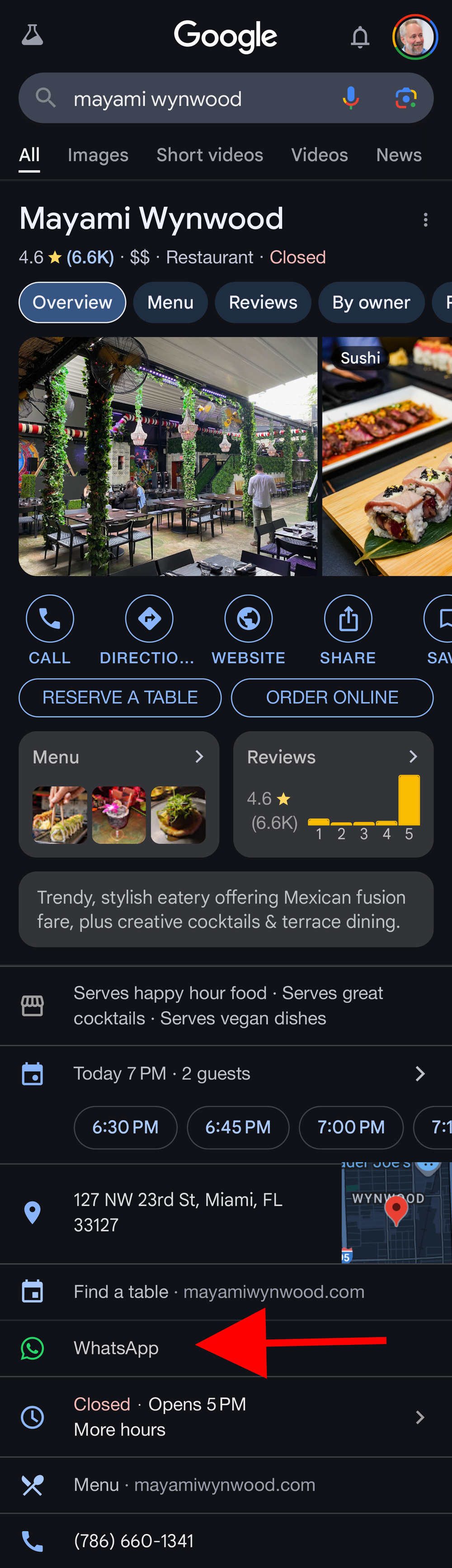
While showing as a CTA on business profiles, SMS/text messaging is still throwing an error and not initiating a message.
### Only on Mobile Browsers
The feature currently is only available on browser-based mobile searches. It is not yet available on Google Maps (mobile or desktop) or desktop search.
We assume the SMS functionality will be completed and tested before the other surfaces are added.
### Who Should Use It?
Obviously SMS in the US and WhatsApp elsewhere in the world are a preferred communication method for many if not most people.
If you are currently using WhatsApp or SMS for client-lead communication then adding this functionality to your GBP makes sense, if only as a test. Unlike many features on the GBP profile, you can add a single SMS number or WhatsApp link on multiple profiles. That makes this a useful addition for multi-location businesses that are currently using something like Leadferno (SMS) or WhatsApp for prospective and new client communications.
If your business does not yet have processes in place to manage an additional communication channel, it’s best to hold off until you do. Even then it bears watching to be sure that you can manage it and respond quickly.
### How to Add WhatsApp or SMM to Your GBP
1. Go to your Business Profile. Go to the Contact section
2. Select Chat: Add
3. In the dropdown that opens, select either **Text message** or **WhatsApp**
4. In the “Number” field, add a phone number that can receive text messages or your WhatsApp URL
5. Click **Save**. To **edit**, click Chat.
### How to Track Success
Since Google [does not currently provide performance metrics](https://support.google.com/business/answer/15013580?hl=en&ref=nearmedia.co#zippy=%2Ccan-i-find-the-performance-of-user-interaction-with-each-text-exchange-like-clicks) for this feature, businesses should track activity through WhatsApp Business Analytics or their SMS lead platform. Additionally, monitoring inbound message volume and response times can help assess effectiveness.
### What to Watch Out For
This new feature has considerable potential—if consumers adopt it and it does not become overrun with spam. One concern is that GBP Chat had a more visible CTA, whereas WhatsApp and SMS have a more subtle presence. As a result, consumer adoption may be slow.
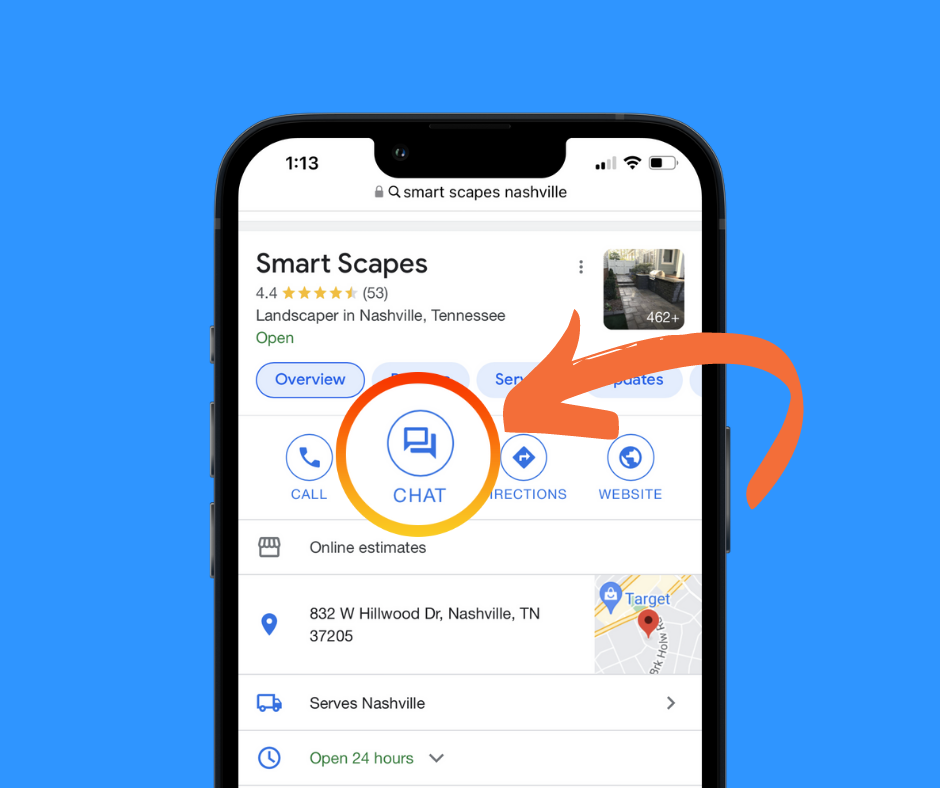
Image courtesy of [Leadferno](https://leadferno.com/?ref=nearmedia.co)
### The Final Decision
We recommend testing this over the next six months. If your team can manage incoming messages, spam remains manageable, and it helps convert leads, it may be worth fully integrating into your GBP strategy.
As with all things Google, be prepared for its potential discontinuation if it doesn’t meet Google's internal expectations or align with Google’s long-term priorities.
### Review Trust, Maps AI Lists, Duplex 2.0, Gen Z Store Love
URL: https://www.nearmedia.co/review-trust-maps-ai-lists-duplex-2-0-gen-z-store-love-2/
Last updated: 2025-01-30T22:53:16.000Z
_This post is for paying subscribers only._
### Ep 192: Google Review Fraud, with Curtis Boyd of The Transparency Company, P#2
URL: https://www.nearmedia.co/ep-192-google-review-fraud-ftc-business-concerns-interview-with-curtis-boyd-transparency-company-p-2-2/
Last updated: 2025-01-30T22:19:39.000Z
Picking up from [part 1](https://www.nearmedia.co/google-review-fraud-economic-impact/), Mike Blumenthal and Greg Sterling continue their discussion with Curtis Boyd, CEO of [the Transparency Company](https://askfortransparency.com/?ref=nearmedia.co),\* focusing on the pervasive issue of review fraud. They explore the current landscape of consumer trust in online reviews, implications of new FTC regulations and the challenges SMBs face in maintaining review integrity. Curtis shares his optimistic outlook on potential solutions and emphasizes the importance of transparency in the review process. The conversation also delves into practical strategies for businesses and marketers to combat fake reviews and improve their online reputations.
[00:00](https://www.youtube.com/watch?v=Z8mNPCEhi8E&t=0s&ref=nearmedia.co) Introduction to Review Fraud and Transparency Company
[00:23](https://www.youtube.com/watch?v=Z8mNPCEhi8E&t=23s&ref=nearmedia.co) Future of Review Integrity
[08:40](https://www.youtube.com/watch?v=Z8mNPCEhi8E&t=520s&ref=nearmedia.co) Strategies for Businesses and Marketers
[17:55](https://www.youtube.com/watch?v=Z8mNPCEhi8E&t=1075s&ref=nearmedia.co) Optimism Amidst Challenges
### Takeaways
- 98% of consumers rely heavily on reviews.
- Curtis believes in solutions for review integrity.
- Targeting businesses that buy fake reviews is crucial.
- People often doesn't read reviews, only looks at star ratings.
- Consumers are being misled by fake reviews.
- Fake one-star reviews are removed faster than five-star reviews.
- Businesses need to understand the impact of fake reviews.
- Education on review compliance is essential.
- Larger businesses must monitor their reviews closely.
- Increased fines may lead to better compliance from companies.
### Related Links
- [Ep 191: Google Review Fraud & Its Economic Impact: Interview with Curtis Boyd, Transparency Company, P#1](https://www.nearmedia.co/google-review-fraud-economic-impact)
- [AI Comes to GBP: 'Ask Maps About This Place'](https://www.nearmedia.co/ai-comes-to-your-business-profile-ask-maps-about-this-place-2/)
- [AMZN Rufus Impact: Reviews, Ads, Google?](https://www.nearmedia.co/gbp-optimization-blueprint-waiting-for-search-heres-amzns-rufus/#amzn-rufus-impact-reviews-ads-google)
- [The High Cost of Review Fraud: An Economic Analysis of Consumer Harm](https://askfortransparency.com/research/high-cost-of-review-fraud/?ref=nearmedia.co)
***\*The Transparency Company is Near Memo's inaugural podcast sponsor. If you're interested in becoming a sponsor of this podcast*** [***contact us***](mailto:gsterling@nearmedia.co)***.***
### DeepSeek and Search, Discovery Fragmentation, NotebookLM, Gulf Games
URL: https://www.nearmedia.co/deepseek-and-search-discovery-fragmentation-notebooklm-gulf-games-2/
Last updated: 2025-01-28T23:58:42.000Z
_This post is for paying subscribers only._
### OpenAI Operator, 25 Local Predictions, Yahoo AI Chat, GBP Support Issues
URL: https://www.nearmedia.co/openai-operator-25-local-predictions-yahoo-ai-chat-gbp-support-issues/
Last updated: 2025-01-23T23:20:27.000Z
_This post is for paying subscribers only._
### Ep 191: Review Fraud & Its Economic Impact: Interview with Curtis Boyd of The Transparency Company, P#1
URL: https://www.nearmedia.co/google-review-fraud-economic-impact/
Last updated: 2025-01-24T04:53:57.000Z
In this episode, we discuss the state of review fraud with Curtis Boyd, CEO of [the Transparency Company](https://askfortransparency.com/?ref=nearmedia.co)\* and explore the landscape and complexities of fake reviews. The conversation delves into the role of AI in generating fake reviews and the economic impact of review fraud on consumers and businesses. Curtis offers insights from a new report analyzing more than 73 million reviews, estimating the economic harm they cause to consumers and highlighting the challenges faced by ethical businesses in a marketplace rife with deception.
[00:10](https://www.youtube.com/watch?v=Cb8BS7CskSg&t=10s&ref=nearmedia.co) Introduction to Review Fraud and Transparency Company
[01:48](https://www.youtube.com/watch?v=Cb8BS7CskSg&t=108s&ref=nearmedia.co) Understanding Review Fraud: Types and Metrics
[04:42](https://www.youtube.com/watch?v=Cb8BS7CskSg&t=282s&ref=nearmedia.co) The Landscape of Fake Reviews: Business Practices and Impacts
[09:11](https://www.youtube.com/watch?v=Cb8BS7CskSg&t=551s&ref=nearmedia.co) The Role of AI in Review Fraud
[18:27](https://www.youtube.com/watch?v=Cb8BS7CskSg&t=1107s&ref=nearmedia.co) Economic Impact of Review Fraud: Insights from the Report
[25:32](https://www.youtube.com/watch?v=Cb8BS7CskSg&t=1532s&ref=nearmedia.co) The Challenge of Review Fraud
[32:08](https://www.youtube.com/watch?v=Cb8BS7CskSg&t=1928s&ref=nearmedia.co) Learn about Part 2 of the interview
### Takeaways
- Most fake reviews are five-star, not just one-star.
- The Transparency Company uses over 190 metrics to identify fake reviews.
- Fake reviews are often purchased by businesses to inflate ratings.
- AI-generated reviews are growing rapidly, complicating detection.
- The economic impact of review fraud is estimated at more than $300B.
- Google's enforcement against fake reviews is inadequate.
- The review fraud industry operates like a multi-billion dollar business.
- Ethical businesses face pressure to inflate reviews because of competition.
- The algorithm used by Google allows for a significant number of false positives.
### Related Links
- [The High Cost of Review Fraud: An Economic Analysis of Consumer Harm](https://askfortransparency.com/research/high-cost-of-review-fraud/?ref=nearmedia.co)
- [Interview with Brad Wetherall, ex-Director of GBP Support on Navigating Google ReviewsNear MediaNear Media](https://www.nearmedia.co/ep-190-part-2-interview-with-brad-wetherall-ex-director-of-gbp-support-on-navigating-google-reviews/)
- [The State of Online Review Fraud: An Analysis of 4 Million Reviews on Google, Facebook, Yelp and Tripadvisor](https://join.momentfeed.com/hubfs/2021%20Fake%20Reviews/FakeReviews%5FReport.pdf?ref=nearmedia.co).
***\*The Transparency Company is Near Memo's inaugural podcast sponsor. If you're interested in becoming a sponsor of this podcast*** [***contact us***](mailto:gsterling@nearmedia.co)***.***
### Google Blocks Rivals, Gemini 500M, TikTok = X, SEM Gains
URL: https://www.nearmedia.co/google-blocks-rivals-gemini-500m-tiktok-x-sem-gains/
Last updated: 2025-01-21T23:59:38.000Z
_This post is for paying subscribers only._
### AI Content Ranks, New Agency Biz, TikTok's Fate
URL: https://www.nearmedia.co/ai-content-ranks-new-agency-biz-tiktoks-fate-2/
Last updated: 2025-01-16T23:00:51.000Z
Join us tomorrow for our first Office Hours; you have an email invite.
_This post is for paying subscribers only._
### Ep 190: Part 2, Interview with Brad Wetherall, ex-Director of GBP Support on Navigating Google Reviews
URL: https://www.nearmedia.co/ep-190-part-2-interview-with-brad-wetherall-ex-director-of-gbp-support-on-navigating-google-reviews/
Last updated: 2025-01-16T19:50:54.000Z
[Brad Wetherall](https://bitwizeconsulting.com/about?ref=nearmedia.co) shares insights on the Google review algo, fake reviews, the role of AI in review management, and the need for businesses to understand Google's policies regarding reviews to navigate the complexities of online reviews. Be sure to catch [Part 1 of this great interview](https://www.nearmedia.co/how-does-google-gbp-support-really-work-brad-wetherall-interview/) where we discuss GBP support issues, the vagaries of verification and suspensions and how Google leverages Trust Scores to automate moderation.
Consider [signing up as a member](#/portal/signup). As a free subscriber you will also get access to unique content like the recent piece on AI in Local, [Ask Maps about this place](https://www.nearmedia.co/ai-comes-to-your-business-profile-ask-maps-about-this-place-2/).
### Video Chapters
[00:00](https://www.youtube.com/watch?v=ti-PtJs3d2A&t=0s&ref=nearmedia.co) Final Thoughts on Reviews and Trust Scores
[06:45](https://www.youtube.com/watch?v=ti-PtJs3d2A&t=405s&ref=nearmedia.co) Understanding Review Deletion and Algorithm Scrutiny
[08:54](https://www.youtube.com/watch?v=ti-PtJs3d2A&t=534s&ref=nearmedia.co) The Role of Review Responses in Business Rankings
[11:44](https://www.youtube.com/watch?v=ti-PtJs3d2A&t=704s&ref=nearmedia.co) Engagement and Its Impact on Reviews
[14:32](https://www.youtube.com/watch?v=ti-PtJs3d2A&t=872s&ref=nearmedia.co) AI's Influence on Review Management
[17:07](https://www.youtube.com/watch?v=ti-PtJs3d2A&t=1027s&ref=nearmedia.co) Challenges for New Businesses in Review Acquisition
[20:15](https://www.youtube.com/watch?v=ti-PtJs3d2A&t=1215s&ref=nearmedia.co) Best Practices for Managing Reviews
[23:51](https://www.youtube.com/watch?v=ti-PtJs3d2A&t=1431s&ref=nearmedia.co) Google's Support Culture and Business Impact
[26:28](https://www.youtube.com/watch?v=ti-PtJs3d2A&t=1588s&ref=nearmedia.co) The Future of AI and Local Business Visibility
### Transcript
Greg (00:14)
We can do a part two of this, So let's talk about reviews. obviously this is something that is very close to both Mike and my heart. I've been involved in a couple of different fake review studies and the first one I
I did with the Transparency Company when I was at Uberall in 2020\. they have a methodology, which is, I can't fully explain, but it has multiple factors. And we discovered a lot of review fraud. We looked at TripAdvisor, Facebook, Google, and Yelp. And Google had the, had the highest fraud. The aggregate score was 11 % of reviews that we looked at across 19 categories or,
roughly 20 business categories and 19 DMAs. That was the sort of aggregate number. But in some of these categories, the number was much higher. It was over 20 % in moving and several of the others, I don't have it in front of me. We just did a kind of a quasi follow-up study in a more limited number of categories with a focus on economic harm, trying to generate what is the actual economic harm of fake reviews?
in terms of consumer behavior. this is not about that report. But I'm just saying there have been a number of independent studies that have found quite significant numbers of fake reviews on Google. Now, what's sort of your general statement about that and how Google sees that internally and how it handles review fraud?
Brad Wetherall (01:48)
Yeah.
Yeah. I mean, like fake reviews is something that is again, it's a constant investment, constant battle to try and eliminate the detection or as soon as we detect that it's a fake review, the idea is to try and pull it down immediately.
Greg (02:01)
How
does Google detect review fraud? What's the algorithm?
Brad Wetherall (02:05)
It's very complicated. So There's a lot of signals that go into that. So there is the age of the account that was created. If it was an account that was created yesterday and how much activity has that account had? So like, you know, if it was created yesterday and the first thing that they did was leave one negative review or 5 negative reviews and then one positive review on a competitor all within the same geographic location, then that's
easy to determine that it's fake, right? Because the age of the profile, like if it's a plumber, for example, like would you actually hire 5 different plumbers in the span of a week? The probability of that happening is really low. So there's some obvious things. The complication though is that the companies that are out there that sell these fake reviews are privy to this. They know that that stuff will get taken down really quickly. And so
there's review farms that exist where people will like create a Google account and then they use it a little bit every day over the course of a month. And so when they get an order in for fake reviews, they, they're trying to trick Google's algorithm into believing that it's a real person that it like they've had activity and they've navigated the internet and they've done all these crazy things. So from a profile perspective, we can look at that account and say, all right, this looks like a legitimate human.
And then the next thing is like, what is their activity? So like how many reviews have they left? Do they happen to all be in the same industry? What's the geographic location of, you know, where the person was when they left the review and where is the business, that they're leaving the review for? So for example, if you're like, I'm leaving a review for a plumber in New York, but I live in Bangladesh, right? Like what, what, is the probability that that actually now, now even that in and of itself,
Greg (03:49)
Zero.
Brad Wetherall (03:51)
Well, no, it's not necessarily because the hypothesis was also they could have visited New York and then went back to Bangladesh and left.
Greg (03:57)
And in their
hotel, they needed a plumber. So they called that plumber in the hotel and then went back to Bangladesh and wrote the review.
Brad Wetherall (04:04)
So that's the part that like it's the combination of data, right? So like if you're reviewing a restaurant and then you go back to Bangladesh, like it's not unfeasible to believe that they visited, right? Exactly. So, but all of that is kind of factored in. like it's very complicated. And again, they do that, the fine tuning of it to try and determine, you may remember like a bunch of businesses losing legitimate reviews, right? Like, and then
Greg (04:08)
Sure.
Yes, certainly tourism travel, certainly.
Brad Wetherall (04:32)
and then filing tickets with support to be like, hey, I used to have 100 5 star reviews and they all disappeared, I need to get them all back, right? So it's that balance between false positives and fraudulent activity that is constantly that.
Mike Blumenthal (04:45)
And we saw
that occur, the FTC came out with their new regulations and new guidelines. Google wrote a blog post, I think it February, 2022, and all of a sudden review reports of takedowns spiked. So we saw a similar sort of twisting of the dials as it were, happening. And,
Brad Wetherall (05:07)
And I mean, like, there's some easy cases, right? Like if it's violating policy, with like if it's using profanity, if there's personal information, like a lot of those easy stuff gets taken down already, but.
Greg (05:19)
And those things are all identified algorithmically with AI, is that right?
Brad Wetherall (05:23)
That's right.
That's right. Usually a lot of those don't ever get posted. Like we catch them.
Mike Blumenthal (05:27)
Although
the ones that do get posted that have masked the, or that are sort of marginally racist or disableist or whatever, those are very hard to get down because the language is a subtler and you have to have a human look at them. And it often, again, will take me escalation, re-escalation, re-escalation with highlights of the words and why it is.
Brad Wetherall (05:35)
Yep.
Yeah. Yeah.
Mike Blumenthal (05:55)
prejudicial, that sort of thing.
Brad Wetherall (05:57)
That's
a resourcing problem, right?
Mike Blumenthal (06:00)
And then
though, I find that if I reported about doctors, they're very hesitant to take down a doctor review no matter how bad it gets. No matter what they accuse a doctor. I've had a doctor accused of stealing pain drugs from a patient, illegal activity, an accusation of illegal activity, the doctor could have lost his license. It took me three months to get that review taken down and I just, and only through persistent hammering was I able to.
And it turns out it appears that they won't take doctor reviews down without really a lot of conversation or something.
Brad Wetherall (06:37)
Yeah, yeah, and I think, you know, that's a shame, you know, like I think that, that doesn't sound like the case of a fake review though, that sounds like the case of a negative review.
Mike Blumenthal (06:45)
No, a TOS
Greg (06:46)
That's,
Mike Blumenthal (06:47)
violation, clear TOS violation.
Greg (06:49)
yeah. So just in terms of the algorithm, GMB, G, G, G, B, A, P, G, B, P, A, P, I dot com. We know those guys. Sorry. I tripped over their names. Recently put out a report in which they tried to understand a kind of a rationale for deleted reviews and they correlated certain variables that they found.
Brad Wetherall (06:49)
Yeah.
Yeah.
Mike Blumenthal (06:58)
GBP.
Greg (07:11)
with deleted reviews, one of which was 5-star reviews. That was 70 plus percent of the reviews that they saw in this data set that had been removed had 5 stars. And then the second category, the second most often reviewed, removed reviews were one-star reviews. Does Google pay special attention to those extremes as part of the algorithm? If you can, if you know the answer to that.
Brad Wetherall (07:37)
Hi.
Greg (07:37)
So in other words, our 5 star
reviews automatically going to get scrutiny.
Mike Blumenthal (07:41)
I would point out that the reviews by nature skew that way. There are more 5-star reviews and more one-star reviews and there are two, three and four-star reviews. So just by the nature of the system, by volume they are more prevalent.
Brad Wetherall (07:51)
Yeah.
Greg (07:54)
You're saved by volume, yeah.
But I'm interested to know if that's a trigger, if those things are triggers as one of the many factors.
Brad Wetherall (08:04)
So I didn't work in the Trust and Safety Organization to know definitively a yes or no answer to that question. My speculation is that it does not. I think that for Mike's perspective, I mean, think that if you think of the culture of reviews, a lot of people will only ever leave a review if their experience was really good or really bad, right? Statistically speaking, right? It's very rare that you'll get people leaving reviews just because they love leaving reviews and they are
Greg (08:10)
What's your speculation?
Right in the middle.
Brad Wetherall (08:30)
right, middle of the road. So, so I do think statistically the reviews steer towards the extremes, the poles. Funny, you mentioned GMB API. I've been working with those guys a lot. I do know that like I use their product.
Greg (08:42)
GBP. You
said it too. Well, so why were you correcting me? No, no, no.
Mike Blumenthal (08:44)
No, no, is GMB API. It's the old initials in their name. I thought you were going to talk about GBP and not GMB.
You were stumbling over GMB and then I, my mistake.
Greg (08:54)
No, it was GMB
API. Okay, anyway, Brad, back to you.
Brad Wetherall (08:57)
Yeah,
Gmbapi.com as a company, right? Like is that they have this really great software service. I use it myself to kind of manage it. And one of the benefits there is that they actually save a lot of the reviews that are coming in from, from profiles. So if they do get lost, that really helps in the recovery because they have a history of what, what review was made, when it was made. And it's a lot easier in the recovery.
So yeah, gmbapi.com. It's a really, I'm sure they won't mind me saying this. It's cheap, relatively speaking, right? So like it's affordable. That's a better word.
Greg (09:32)
Affordable. Euphemism is affordable.
Mike Blumenthal (09:35)
So
just to comply with our FTC requirements, are you remunerated by them in some capacity?
Brad Wetherall (09:41)
So I am not an employee of the company. I have been advising them but you know just I've used their products personally and I've been advising them as a company, but I am not
Mike Blumenthal (09:52)
but you are being remunerated for that advice. That's the necessary FTC disclosure.
Brad Wetherall (09:57)
yes, not currently, but yeah.
Mike Blumenthal (09:59)
Okay, great. Just a note
on whether one star reviews or two star reviews are being used to identify spam. So I don't know whether it was two years ago, roughly, there was a large number of fake one star review attacks. Google got that under control and the spammers moved to two star review attacks and ultimately Google fixed the algorithm to deal with that. But initially, Greg, they did focus more on one star fake reviews and
The spammers figured that out and Google changed the algorithm to speak to that specifically.
Greg (10:32)
Another quick question, review responses by the business. So the business receives a review in most cases, probably in the majority of cases, businesses don't respond to the reviews. Depends on what segment of the population we're talking about. Does that have any bearing the business response, business owner or representative response to whether review is flagged for removal or whether it actually gets removed? Is that a factor?
at all in the algorithm.
Brad Wetherall (10:58)
I don't, again, I'm not, I didn't write the algorithm, but my educated experience is that no, doesn't. The replying to reviews has a lot of other benefits. Improving your ability for it to get it removed is, don't think one of them. The benefits are really, you can get increased rank. In fact, the GMBA-
Greg (11:17)
OK, so
wait, so that's really interesting. So replying to reviews does improve your rankings on Google.
Brad Wetherall (11:23)
Yes, so like the gmbapi.com, they did a study on this and they showed that for every 10 % of reviews that you reply to will correlate to a 3 % increase in impressions. So like if you are not replying to reviews, start doing that immediately. That's a really quick and easy way to.
Mike Blumenthal (11:44)
But
it's unlikely that this is causal, Greg. It's likely users engaging with the reviews more because there is, right.
Greg (11:51)
Well,
it's of indirectly causal if that's not a contradiction.
Brad Wetherall (11:57)
Right.
Mike Blumenthal (11:57)
Right,
and it probably revolves around engagement as opposed to the specifics of response.
Brad Wetherall (12:01)
Yes, it does.
Greg (12:02)
Well, right. we know
that Google rewards engagement both on the consumer side and now on the small business side or the B2B side.
Brad Wetherall (12:09)
Absolutely.
Mike Blumenthal (12:10)
Just a note on the GMB
API study, they have never looked at what the normal response rate is of regular reviews, how many get responded to. So taking those out of context and saying of the ones that remove this percentage had responses is not a particularly easy number to understand because there was no context to it, right?
Brad Wetherall (12:30)
Right, right.
I agree. I think that the lesson I think for people watching would be does replying to reviews have any inherent benefit? And I think the answer is absolutely it does. Right. I think that, you know, yes, in the form of engagement, you want to be able to make sure that you're controlling your narrative, especially as AI gets more prominent. AI is already
Greg (12:52)
Well, for
your customers, for your customers. mean, the ultimate objective here, I mean, we talk in terms of local SEO and SEO and people are thinking about what can I do to boost my rankings and so on and so forth. But really ultimately it's the customer that you're dealing with and the customer negative reviews, critical reviews expect a response from the business. People who leave critical reviews want a response. People who do read reviews, we've determined in our own Near media research that the minority of
Brad Wetherall (13:12)
Yes.
Greg (13:21)
consumers read reviews, actually read review text. It's something like 20 to something north of 30 something percent,
Mike Blumenthal (13:30)
in europe is like fifty percent in europe and
twenty 5 percent in the united states twenty two percent rexley read reviews
Greg (13:35)
Yes, and it
varies by category, but the majority just look at star ratings and they look at review counts. But for people who read reviews, they do want to see business owner responses.
Brad Wetherall (13:42)
Yes.
Absolutely. In fact, I'm working with another company as well, you know, called called merchant, they have a GBP management software called page. And that company is an AI based company, they do automation, and they automate review replies. So like, if you're looking for and the reason they do that is because they know that engagement, like they automate posts.
Greg (14:10)
A
lot of folks are doing that now. A lot of the reputation management tools will do that.
Brad Wetherall (14:12)
Yeah,
exactly. And I think that the reason why I think a lot of these companies, you know, like Merchant are kind of like investing in this is because there is ROI there, right? And that like you people, you can set up the system to automatically reply and even tune it to your language, right? So that that way, you know, you're staying on top of
Greg (14:33)
Is Google in any way going to punish that behavior or filter that behavior where there's an AI response? So there's a growing trend. I don't want to digress too far down this path, but there's a growing trend toward AI review generation and AI review responses in particular. What's Google's attitude toward those?
Brad Wetherall (14:46)
Yep.
Yeah, it's a great question, actually. So I think that it's similar to that of AI-generated content for regular organic SEO, which is Google is now, and you may have even seen this in some of the algorithm updates last year, that they don't say that they are penalizing AI content, but they do say they are rewarding unique content. That's the way that they brand it.
ways Google does know when, at least to a level of percentage or level of precision, they know when content is generated by AI versus when it's written by a human, right? And there's, a lot of tools out there you can use to kind of detect that Google is using that and they are identifying unique content and reward. They say rewarding unique content. So my guess, like there are ways to use AI. There's a way to abuse it. And then there's a way to use it to your advantage. And I think
Abusing it would be just copy and pasting AI content directly in the way to use it more effectively is to train it according to your voice, right? And to use training so that you can be like, look at my website, look at who I am and how I represent myself, write this review from the perspective of that persona, right? There are ways for you to use AI to actually benefit. My speculation as we go further and further into 2025,
is that if you do cookie cutter content, it's not going to be valuable at all because Google's going to see that as regurgitated content. It's not unique. I wouldn't necessarily say that they will penalize it, but they're definitely not going to reward it. They're not going to reward it.
Greg (16:17)
They weren't rewarded.
Mike Blumenthal (16:20)
I have another question about letting reviews through or filtering them. The first question in this regard is whether certain categories are going to more likely to be filtered because they're high distress categories.
Brad Wetherall (16:33)
Absolutely. In fact, that happens today already. We know that certain duress verticals, plumbers, locksmiths, garage door repair, a lot of these companies, like moving companies, know, they are more prone to fraud.
Greg (16:47)
companies we found more
spam and yep.
Brad Wetherall (16:51)
Yep. So, so the algorithm is tuned to be more, more aggressive. Thank you. with, those types of industries versus a restaurant or something.
Greg (16:56)
aggressive.
Which,
can you rattle off what those categories are?
Brad Wetherall (17:06)
I mean, those were the big ones that I can remember.
Mike Blumenthal (17:07)
garage
door openers, moving companies, locksmiths are the three biggest. And then it drops into HVAC and electricians and roofers and almost every other home service business. But they're not as bad as those top three. The next question I have though, is there also a limit in terms of age of business? In other words, this is a new business. I know you said this initially, but it strikes me that how long is there, it's not a penalty, but it's like there seems to be a regulator on
how many reviews a business less than a year old can get, even if they're totally legitimate. Is that perception accurate?
Brad Wetherall (17:39)
Yes.
Yeah.
Yes. Well, so let me, let me put it this way. Um, if you've had no reviews on your business for 10 years, and then all of a sudden you get a hundred reviews in a week, that looks weird. Right. Um, now, now I also know that you could theoretically have been going back to your client base for the last 10 years and asking them to write reviews retroactively, but like, it definitely is a signal that the trust algorithm is going to look at to determine whether
Mike Blumenthal (18:07)
volume
in relation to the size of the business? Or how does Google determine, is it just pure velocity? But if it's a huge business, like Hilton and Times Square, velocity is totally different than a plumber in Buffalo.
Greg (18:11)
Velocity also.
Brad Wetherall (18:22)
It's all of the above, Mike, unfortunately, right? mean, like, this is where the Google algorithm is very complex. And so, you know, that's also why it's hard to predict because a lot of people will come to me and say, Brad, why was this review rejected? And I'm like, geez, mate, I'm only looking at half the picture. I don't know all the data that Google was looking at to determine that outcome.
Mike Blumenthal (18:41)
Speaking
of that data, do they look at projected business volume for a given business in term determining this? I I know they have access to all the credit card information. They have access to Google Pay. They know a lot about business volume per business. Does that come into play?
Brad Wetherall (18:47)
Not, not the wrong way around.
Not that I'm aware of. The other factors might contribute to the level of trust because it's about what does Google know about you, right? It's not about are you spending more money or do like, but it's like, if we know more information about you, then you may.
Mike Blumenthal (19:11)
about the
reviewer or the business or both.
Brad Wetherall (19:14)
Both.
I mean, when you write a review, the review stays with the reviewer and then it's attached to the business, right? So like even just systemically, when you think about the database structure, the review, the review is owned by the reviewer, not by the business. And so that like, there's a lot of data that goes into the integrity of the reviewer more so than the business. There's other signals that'll look at the business, but the, from a review perspective.
there's a lot more scrutiny on who's leaving the review versus the business that they're leaving.
Greg (19:43)
The categories we found in that 2020-2021 study that had the highest review fraud percentages were locksmiths, number one, moving companies, number two, plumbers, number three, then digital marketing agencies, personal injury lawyers, dermatologists, cosmetic surgeons, dentists, con... Well, you know, they're...
Brad Wetherall (20:00)
Digital marketing agencies, that's a weird one to show up. wouldn't even do that.
Mike Blumenthal (20:04)
It showed up in my anecdotal
research from the forum too. Almost all the services had higher reports of missing reviews than bricks and mortars, for example.
Greg (20:14)
So what can you, we sort of need to move on to our kind of final segment here. This has been a fascinating conversation. We definitely want to have you back. But what is your general, to sort of cap this review discussion off, what is your general observation or advice to business owners or agencies, digital marketing agencies that are working with business owners around
Brad Wetherall (20:15)
You too.
Greg (20:41)
around reviews, review fraud, review reinstatement, anything that you want to say sort of by way of summary, practical information.
Brad Wetherall (20:49)
Yeah, so two things. mean, buying reviews don't do it. I don't think it's worth the risk. I think that lot of Google's getting more more sophisticated in detecting fake ones and they're penalizing companies. They're putting them in. Joy used to call it review jail, right? where they can... Yep. And that is a very...
Greg (20:53)
Well, right of, yep.
Right, it's this scarlet letter, know, badge of shame.
Brad Wetherall (21:10)
That's a very Google thing to do for transparency. Like they, like to make an example of some of some, some really egregious people and try and scare off people from, doing things. Right. So that's the, you know, done that a number of, a number of cases. But the other thing that I would recommend to businesses is just get more reviews. Right. I think that you, got to make it part of your standard operating procedure to ask for reviews. A lot of companies that I've been working with in my, in my consulting capacity.
feel like they don't feel like they can ask people for reviews. It's like they're nervous to ask for reviews. And I think that people just need to get through that because if they knew that the inherent benefit of how reviews is going to result in increased performance and increased customers, it just needs to become normal, like a normal operating.
Greg (21:59)
The same token, lot of businesses have no hesitation in asking for reviews and we'll hammer away at that. One question about review gating. So the FTC made review gating illegal, meaning by review gating, sort of asking for feedback and then sending somebody who had a positive experience through one door to a review site or whatever, and then the other person gets a internal customer service response. Does Google have any way to detect that? I would assume it does not.
You can look at the platforms and their functionality and the FTC went over after some of the platforms doing that. But does Google have any internal process by which they're trying to detect review gating that's still going on?
Brad Wetherall (22:35)
It's a good question. I know that review gating is against Google policy. That is something that we're very much aware of. And if we find people that are doing it, we will actually delete all their reviews. But as far as is there a systemic detection, I don't know. That's not a yes or a no. I don't know.
Greg (22:51)
It's pretty hard. I think it would be pretty hard.
Mike Blumenthal (22:53)
It's hard to
prove the negative, right? The absence of, and it's hard, it would be very difficult.
Greg (22:58)
Yeah, I mean, I
have experienced it myself recently as a consumer. you know, these businesses from a certain point of view, you know, one of the things that's going on, I think, there's a lot of gray in review fraud. You know, there's the buying of reviews on one extreme. And then there's like friends and family. You open a new business and say, hey, I need some reviews, you know, whatever. And these people might be patrons of the business and they might have had a real experience. But there's also a little
sort of like we want to help this person out kind of thing. right. there's well, and that begs the question of what is a conflict of interest, but let's not get into that. How does Google, Google is not doing any education beyond the FAQs and help articles to my knowledge to educate the businesses at large about what is acceptable, what is not acceptable. And this is, there's a lot of genuine ignorance. And I mean that in a completely descriptive way.
Brad Wetherall (23:26)
Conflict of interest, by the way, is against Google policy. So you shouldn't really.
Greg (23:51)
about what Google expects, what Google will allow, what Google won't allow. And sometimes you don't find that out until after the penalty has been imposed. And it doesn't seem like Google is going to do anything further. They used to do a lot of explainer videos. That seems to have stopped. It doesn't seem like Google is going to do anything further to educate businesses on verification, review policy, these rules that are quite material to the success or failure of businesses.
Brad Wetherall (24:18)
Yeah, I think your assessment is accurate. I think that Google hasn't really done a great job of communicating what the policies are, how they're being enforced, like what is good, what is bad. A lot of that is by design. Google wants to limit the amount of coaching to prevent bad guys from circumventing all of the protections that we put in place. But it's also kind of a pet peeve that I've had historically in my career.
Which is why I feel like now that I am no longer a Google employee, I get invited to speak in a lot of different places. And this podcast, Notwithstanding, where I'm happy to actually talk through about my experience and share some of that. Because Google, I used to get requests to do these talks all the time. And PR would always shut down. Our PR team in Google would say, no, not going to allow you to do that.
Greg (25:07)
Well,
the irony is that if Google did a better job of educating people on the front end, it would have less of a support burden.
Brad Wetherall (25:14)
I completely agree, Greg, I agree. I had that discussion many times and the Trust and Safety organization, the counter argument to that being like, we don't want you to even inadvertently give away information that is going to make it easier for spammers to exploit.
Greg (25:31)
So let's talk about the culture of Google a little bit before we wrap up and the culture of support there. So how would you say that has changed? mean, you're obviously a person who was very sincere and invested in doing the best job you could and making the system efficient and work for people, notwithstanding the limitations you described. How would you describe that culture of support at Google over your tenure and
as an outsider now. You talked about striking a balance and acceptable levels of collateral damage. Is Google simply indifferent to these businesses? Does Google really care about support? Is Google smug about outsourcing support to Mike and people profile experts? Yeah, Product Experts rather.
Mike Blumenthal (26:16)
Bye, Caksubers.
Greg (26:19)
What is sort of the internal sense of how much support matters and how much it matters to these businesses? Is there a sort of a cavalier attitude? That was a very long-winded way to get to that.
Brad Wetherall (26:28)
Yeah,
absolutely not. As to your last question, is there a cavalier attitude? think that my team, I've made lifelong friends for people that I've worked with at Google because they're all really passionate and care a lot about the work they're doing and they really strive to help out businesses, right? To help businesses grow. I think this was evident during the pandemic when, you know, internally we were
We were striving to help businesses grow. then during the pandemic that pivoted to let's help businesses survive. Right. And there was a lot of hours that were put in by a lot of the Googlers on my team, really motivated to helping people like, and they're very passionate and motivated. I think what you, what you see is the challenge that we deal with at the scale that we operate at where, you know, like my, my focus and my, my direction to the, to the Googlers on my team was we need to make sure that we're investing
in a way that has the biggest impact. And that typically revolves around not necessarily solving one problem for one person, but identifying systemic issues and fixing the systemic issues, right? So that we can solve problems for hundreds of thousands of businesses or even millions of businesses. And so, you know, there's definitely no lack of passion within the Google team. they care very much.
But the challenge is to kind of know where to invest because we like at the scale we operate at, we can't deal with onesie twosies. We have to deal with scale. If I transition your question over to like, what is the culture of the extended support organization, right? So like the actual agents that are taking the phone calls, then we try to incentivize that at a Google level to make sure that we're getting the right behaviors. So incentivizing high customer satisfaction, right? CSAT scores is a big one.
efficiency in terms of how fast we resolve, high level of quality and empathy. but in all honesty, right, they, they're playing a numbers game, right? They're trying to close as many cases as they can because we also have efficiency laws where we want each agent to close around 12 to 15 cases a day. Right. And so like, you know, it's, it's a scale game. So like, I think that it's a complicated answer to like, how is the culture of Google? Because.
While I firmly believe that the people there are all amazing individuals and the highlight of my Google career, doing it at the scale that we operate at is complicated.
Greg (28:55)
It's a
microcosm of the larger problem. The Google employees are sincere, good people, nice people, but the logic of the marketplace is such that the outcomes produced are not always beneficial for everybody.
Brad Wetherall (29:05)
Correct.
Mike Blumenthal (29:06)
Some quick
math here, 3 million contacts, 40 % of those, 1.2 million were troubleshooting, which is the bulk of the users we see in the forums. My estimate is that we see 100 in the Google Business Profile Forum, see 150,000 contacts a year, give or take in total, which then get escalated.
You know, many of them are suspensions, verification and reviews, as you pointed out, many of which get escalated. So is that number accurate? Are those numbers roughly accurate that the private, that the public forum is dealing with 10 % of the troubleshooting issues, give or take?
Brad Wetherall (29:46)
It sounds a little high, but ballpark, think that that's about right. I think there's generally more... In the day since I left Google, I think it's getting harder and harder to get access to a human is my observation. And I'm starting to see a lot more no-reply email address aliases coming out as opposed to people that are allowed to reply and get access to a human.
I do think that there is a lot like Google's very cost conscientious at the moment. And transparently, there's not a huge amount of investment in GBP at the moment. A lot of the a lot of the investment internally has pivoted over to the shopping products at the switching center next and Google brand profiles, which is a new thing that got announced last year that I think is going to have more prevalence in 2025.
Greg (30:24)
See, I... Yeah.
Brad Wetherall (30:36)
I think that GBP is being maintained, but I don't think there's a huge amount of investment going into it. that's kind of another reason why it's, you know, like the levels of support and improving support, I don't think is a huge priority for the overall business because they're focusing on.
Mike Blumenthal (30:54)
Is that decision based on the ideal that Google will be able to answer questions about a given business using AI as opposed to input from the business owner?
Brad Wetherall (31:02)
Yes.
you know, I think it's, the philosophy is like, like differentiating the signal from noise, right? Like in, this, in this huge sea of support contacts that we get every day, you know, 3 million contacts. It's probably more than that. If I were to look at 2024 data. but it's really about like, how do we focus on the things that we need to focus on and like,
use AI to support the things that we don't need to focus on. And so I think that's, that's kind of like the responsible investment of AI is like, how do we try and use that? We don't want to necessarily ignore people that are having problems.
Mike Blumenthal (31:41)
I'm not talking
about problems, I'm talking about content, right? In other words, local content that has surfaced regularly in the search results to answer a user's query. Obviously there, there's a tension between the business who is theoretically a trusted resource for that content, third party providers of that content. And to some extent we're seeing with Ask Maps, the ability of Google to generate the answers about that business.
Brad Wetherall (32:03)
Yeah.
Yeah.
Mike Blumenthal (32:10)
using AI. I'm talking about that tension.
Brad Wetherall (32:11)
Yeah. Got it. Yeah. That's it. That's it. That's That's, think that's a really great question because I think it, it talks to the future of search and, and, you know, like how much investment do we need to put into content in order to influence what AI says about us. And, and, and a quick 30 second story on this is that before I left Google, I was working on the generative search experience GSE, which is, which is being rebranded to the AI over
And so like the AI overview, the PM came to me and asked me, you know, what are merchants going to ask? Or what is their feedback going to be when we launch the SG or AI overview? And I said, they're going to ask three things. One, how do I get in the AI overview? Two, how do I get out of the AI overview if I don't wanna be in it? And three, how do I change the information that it says about me in the AI overview? And the PM turns to me and says, they're not going to be able to do any of those things.
Right. And I think that you can kind of, you can, you can understand that because AI isn't a database that you can tweak. It's, it's a, it's generated based on a lot of different sources of data. It uses GBP data. uses website data. It uses social media data. It uses all of this stuff to come up with a perspective on the company or the topic that you're talking about. So for my future recommendation.
would be you cannot stop investing in having good content on your website and having good data and managing your GBP profiles, your presence in social media. All of that is contributing to your company's brand and AI is going to summarize that and represent that to the world. And so whether that's ChatGBT, Gemini, Claude, any of these other AI bots, you need to be investing in the way that you are represented digitally.
Greg (33:58)
There's a bunch of additional questions that we could ask you and that I'd love to talk to you about. But let me ask you just really quickly about brand. That's a hot topic these days because of, for all the reasons that you know in SEO. The sort of current SEO advice is you build your brand off Google, people are going to search for your brand on Google. Google's going to surface that because it responds to branded queries. And more and more of the queries on Google are navigational or brand queries.
What was the internal attitude? I recognize you're in the support organization, but what was the internal attitude about how you build your brand? You just alluded to this. How you build your brand as a local business, purposes of Google visibility. mean, reviews is an obvious one, but go ahead.
Brad Wetherall (34:38)
Yeah, and I think...
Yeah reviews is an obvious one.
Mike Blumenthal (34:45)
I would add in my research with Ask Maps, the new AI insertion in Maps, not just reviews on Google, reviews everywhere are showing up in the AI answers, reviews from third parties, particularly reviews even from your website when you use schema are showing up in review questions asked of Ask Maps. So I would say reviews everywhere, Greg, just as a side note. Sorry, go ahead.
Brad Wetherall (35:09)
Yep.
No, no, I agree. you know, I think that, in any type of engagement. like photos is a really big part of, of GDP optimization as well. And it's not just taking your photos and loading in a hundred. It's feeding it every couple of weeks, feeding it new photos, right? Like, and, and spacing that out. it goes to show engagement and it goes to show, that you're, you're constantly committed to providing high quality.
data and that increases your trust and relevancy in the eyes of search, right? Because it's like it's a more trustworthy signal. And so I think that, the short answer is yes. think that it's investing in GBP will help give you prominence in the local pack, investing in your website and your website content will help you with organic. And then obviously social media is a big influencing part as well, which we're seeing to get that.
Greg (35:58)
It's a kind of an ironic return to what existed before. In the beginning, there was a lot of different sources for consumers to get information about local businesses. Then it became all about Google. And now what's happening is AI is sort of, you know, there's a kind of migration to other sites, fragmentation. And AI is, as Mike is suggesting, of bringing these other sources back into the visibility calculation. And so it's a book, it's a weird sort of
Brad Wetherall (36:22)
I agree.
Greg (36:26)
return to an older kind of way of thinking about how consumers are discovering you.
Brad Wetherall (36:29)
Play three.
Mike Blumenthal (36:30)
older
technically also because prior to 2012, you couldn't fix a broken Google business profile that merged from a neighbor's business. And this is going to be very similar. You're not going to be able to fix this output when it's broken. Right? So not only is it similar in its reach, it's similar in its impact, which raises this question though, that Greg has often asked is does Google have liability for this content that they are generating?
If it's false, in other words, this is no longer a case where a business is using the platform to promote their business. Google is using the business to generate content. Google's creating the content. Who holds the liability in that context?
Greg (37:09)
Google's creating the content.
Well,
that's what you would call a novel legal question that hasn't been addressed. And it's not going to show up except in a defamatory, you where somebody has a real incentive to sue. It's going to be in a sort of an egregious example with some kind of harm that will motivate somebody to sue. And that's where it'll arise. I mean, it's, you know, I don't want to digress into a whole legal discussion.
Brad Wetherall (37:19)
So.
Greg (37:41)
There's so many interesting things here to talk about, I think unless Mike, there's a kind of, Brad, we'd love your final thoughts and any advice you have for agencies and local marketers. And unless Mike, you have any kind of final questions, we should wrap up and then we'll have you back, definitely.
Brad Wetherall (37:41)
Thank you.
Yeah, no worries. I think I've appreciated the conversation. think suspensions, reviews, verification, those are usually the things that most people are interested in. So I think we covered majority of that in today's podcast. The one thing that I'll end is that I am available as a consultant if people are stuck on something or they want to learn more.
Greg (38:18)
How
can they contact you?
Brad Wetherall (38:21)
Yep. So you can contact me. My website is bitwiseconsulting.com. So bitwise with a Z. And you can just contact me through the website and I'd be happy to set up some time and talk to you about whatever challenge that you may be having. And yeah, I'm like, I'm really excited to be able to help businesses and agencies. You know, I think that at the scale that we operated out of Google, I would really only get to talk to like
the Walmarts and the Targets and the Starbuckses of the world. So like being able to talk to a lot of agencies is really exciting and I love hearing the various stories and challenges.
Greg (38:56)
with this.
Mike Blumenthal (38:56)
And he
gets to talk to me, the mythic blogger.
Brad Wetherall (38:59)
Yeah,
the world famous Mike Blumenthal, right? Like that Dan Pritchett introduced me to all those years ago. And I'm like, who is that bloke?
Mike Blumenthal (39:03)
Yeah.
If you
run into Dan, I tell him he's one of the people I think of as a prince and a gentleman.
Brad Wetherall (39:13)
One of the best leaders that I've worked with at Google is Dan. He's a great writer.
Mike Blumenthal (39:17)
Truly.
Greg (39:18)
Okay, all right, on that positive note, friendly note, thanks, Brad Wetherall, for being with us and we'll definitely have you back and thanks for all your thoughts and advice and insider perspective.
Brad Wetherall (39:30)
Not my pleasure. Thanks for having me.
###
### Near Media Office Hours
URL: https://www.nearmedia.co/near-media-office-hours/
Last updated: 2025-01-15T18:19:04.000Z
This is our kick-off of a new monthly, subscriber-only benefit
_This post is for subscribers on the All-Access Membership tier only._
### Google Bowl, Voice Search Redux, Brand Neglect, 'Innovation' Rhetoric
URL: https://www.nearmedia.co/google-bowl-voice-search-redux-brand-neglect-innovation-rhetoric-2/
Last updated: 2025-01-15T06:07:34.000Z
Our first subscriber Office Hours Q&A will be this Friday, details to follow.
_This post is for paying subscribers only._
### EP 189: How Does Google GBP Support Really Work? Brad Wetherall, ex-Director- Support Operations, Interview
URL: https://www.nearmedia.co/how-does-google-gbp-support-really-work-brad-wetherall-interview/
Last updated: 2025-01-11T17:58:31.000Z
[Brad Wetherall](https://bitwizeconsulting.com/about?ref=nearmedia.co) is the CEO of [Bitwize Consultin](https://bitwizeconsulting.com/?ref=nearmedia.co)g and the ex-Director of Operations at Google Business Profile support where he spent 10 years. He shares a number of details about how GBP support works, what algos drive outcomes, why they use the processes that they do. If you want to learn more about the vagaries of GBP and its support, **this interview is for you**. It's is both interesting AND enlightening.
This is Part 1 and we will be sharing Part 2 next week.
[00:15](https://www.youtube.com/watch?v=-kMbwhM86qU&t=15s&ref=nearmedia.co) Introduction to Brad Wetherall and His Journey
[02:53](https://www.youtube.com/watch?v=-kMbwhM86qU&t=173s&ref=nearmedia.co) Transitioning from Google to Bitwise Consulting
[05:34](https://www.youtube.com/watch?v=-kMbwhM86qU&t=334s&ref=nearmedia.co) Understanding Google Business Profile Support Structure
[08:03](https://www.youtube.com/watch?v=-kMbwhM86qU&t=483s&ref=nearmedia.co) Support Strategies and User Journeys
[11:08](https://www.youtube.com/watch?v=-kMbwhM86qU&t=668s&ref=nearmedia.co) The Evolution of Support Systems at Google
[13:36](https://www.youtube.com/watch?v=-kMbwhM86qU&t=816s&ref=nearmedia.co) Challenges in Support: Suspensions and Verifications
[16:45](https://www.youtube.com/watch?v=-kMbwhM86qU&t=1005s&ref=nearmedia.co) The Algorithm Behind Suspensions and Reviews
[19:29](https://www.youtube.com/watch?v=-kMbwhM86qU&t=1169s&ref=nearmedia.co) Trust and Reporting Mechanisms in Google Business Profile
[22:23](https://www.youtube.com/watch?v=-kMbwhM86qU&t=1343s&ref=nearmedia.co) Review Fraud: Detection and Challenges
[25:01](https://www.youtube.com/watch?v=-kMbwhM86qU&t=1501s&ref=nearmedia.co) The Balance Between Fraud Detection and User Experience
[27:46](https://www.youtube.com/watch?v=-kMbwhM86qU&t=1666s&ref=nearmedia.co) Video Verification and Its Implications
[30:41](https://www.youtube.com/watch?v=-kMbwhM86qU&t=1841s&ref=nearmedia.co) Final Thoughts on Reviews and Trust Scores
### Transcript:
Greg
Hey, everybody, it's 2025\. Welcome back to the Near Memo. This is Episode 189 with Mike and Greg. And today I'm very excited to, we're very excited to welcome Brad Wetherall, who is the former director of operations for GBP. And today he's the CEO of [Bitwize Consulting](https://bitwizeconsulting.com/?ref=nearmedia.co). He's going to give us lot of insight into his time at Google and what's really going on. The real story behind the scenes, ripped from the headlines.
So Brad, why don't you give us little quick kind of download on what you're doing today and what you did at Google before you left or before you were axed, as the case may be, and we can talk about that.
Brad Wetherall
Yeah, no worries. And thanks, Mike and Greg, for having me. So as you mentioned, I was the Director of Operations at Google for the last 10 years. I worked on a variety of different products during my time at Google. I started off working in the Google payment space on the first iteration of Google Wallet. Quickly moved over to the Maps Organization and worked on Google My Business, as it was referred to at the time.
And, worked on that for over 10 years. My responsibilities as the director of operations included, the management of GBP support, but it was also more broadly the operation space. So I worked very closely with the product and engineering teams on feature enhancements, on launching new features, turning off the features that weren't performing as well. And, and all the things in between.
So lots of great experiences there. Before I left Google, I also had expanded my responsibilities to include the Google Shopping team. So that included the Google Merchant Center and Google Domains as well, up until the point that it was sold to Squarespace. So I had a couple of different products in my portfolio, but the Google Business Profile was the one that I have had the longest tenure with and that I have the most expertise with.
To that end, upon leaving Google in january of 2024, I started a consulting business, [Bitwise Consulting](https://bitwizeconsulting.com/?ref=nearmedia.co), that is really focused on leveraging my subject matter expertise and helping businesses and agencies with some of the more tricky challenges that you may experience with the Google Business Profile. A lot of that involves suspensions, verifications, deleted reviews, all the fun stuff that a lot of the businesses are dealing with..
Greg
Yeah, and I characterized your departure as being axed, which to some people may sound like you were fired. You were not fired. I just want to clarify, tell us what happened there.
Brad Wetherall
For personal reasons, we relocated down to Orange County. So I spent, like many of the years at Google in headquarters in Mountain View, relocated down to Los Angeles. At the time during Covid, that was completely fine, work from anywhere kind of thing. In the last couple of years, many businesses are really pushing return to office.
And in Google's case, I think the, the LA location for my area of the business specifically, was an undesirable location. And, ultimately Google made the decision or at least my leadership made the decision to eliminate all of the employees that were working out of the la location and myself included. So I, left Google as a result of the, location policy.
And, I have found myself falling into this role and actually being able to help a lot of businesses with my expertise. So I'm getting quite a lot of enjoyment being on the other side of the curtain now and really going deeper with businesses to help them solve.
Greg
Well, and these businesses are going to benefit for that. I mean, you would still be at Google, but for this return to office policies. But business owners and agencies are the beneficiaries of that. So I know Mike is kind of chomping at the bit to ask a bunch of questions. No? All right. Ok. So go ahead, Mike. Ask your first question.
Mike Blumenthal
I'm sitting here perfectly calmly.
Well, so obviously I been a \[GBP\] Product Expert since 2007, long before they were product experts, volunteering in the free Google support environment, which always struck me as one of the more bizarre sort of developments that many other companies envy about Google where they offload some of the more complicated support questions. I am just curious about how under you what support, I'm curious how support is broken up.
Like what support is done by a support team? Where is that support team located? How does it get from that support team to somebody who knows what they're doing? We see a lot of these sort of problematic stuff in the forum where it would seem like these are self-evident problems that should have been resolved, but don't seem to be able to get resolved. And that's typically what we see is sort of stupid outcomes of legitimate business that can't get verified or an employee review that doesn't get taken down or something like that. And I'm just curious sort of how that one, the big picture of support and then two, how it filters out and three, sort of how it ends up in the forum and why I go through 27 steps to get a review taken down that should be obvious to anybody in the world that it should come down.
Brad Wetherall
No worries, Michael. Yeah, there is a lot to unpack. But, before I kind of jump into the support strategy and how I designed it, I wanted to give a special mention, michael.
Greg
A lot of stuff in there.
Mike Blumenthal
You designed it like a line at a disney thing where it seems like you're getting closer, but you're really not.
Brad Wetherall
Well, yes and no, the thing I wanted to mention though Mike is that so I started working on on GBP in around 2013 2014 timeframe and and I remember vividly going into a it was a weekly product meeting where one of the best engineers and leaders that I've ever worked with dan pritchett was his name
I remember him saying in this meeting where it was probably a dozen engineers and pms and I was there representing support. And he made a comment that says, if we do that, we're going to end up on Mike's blog. He actually called you out by name. And I'm like, who is this Mike Blumenthal guy that dan keeps referring to? This was about 10 years ago. You do have quite a. ..
Quite a brand even inside the walls of Google Mike. So congrats on that on your career.
Mike Blumenthal
I work very hard at that brand.
Brad Wetherall
Nice. Yeah. So, all right. So to answer your question. So how was support designed? You know, and I think that it went through quite an evolution over the years. The latest evolution is really around how do we continue to provide high quality support at scale? And I think that's kind of like, you know, I say the term high quality and you kind of look at me like, yeah, well, it is, it is right. And so just for context,
Greg
Isn't that an oxymoron? Yeah.
Brad Wetherall
You know, like in, I say last year it's early 2025 right now. So in 2023, um, we processed over 3 million contacts, right? So like that's kind of like, it's from a support perspective. That's the scale that we're operating at. And so, you know, we.
Mike Blumenthal
Contact
Is inquiry. So it could have seven or eight back and forths, but it's one
Brad Wetherall
Great. Yep.
That's right. Yeah. And, so, just the scale that we operate is huge. The strategy really is to try and identify what are the things that, users Or Businesses can resolve themselves. We, we refer to them as education based user journeys and where, so the action that the support agent takes is information, right? It's like, here is how you solve that yourself.
The other section of cases is troubleshooting based cases, things where you cannot solve that on your own. Someone from Google has to do something, right? We have to go into the backend, flick a switch. We need to Merge Profiles. You can't do any of that stuff on your own, right? Like that's something that we have to do. And so the strategy for support is how do we encourage people who have the ability to solve the problem on their own, to get them the information that they need to resolve it.
And for the people that can't resolve it on their own, how do we expedite getting them to a human agent so that they can, so that we can take that on and resolve that ourselves. So when you go through the support, yes.
Greg
Quick question, quick
Question, just to interject. That's an interesting distinction, something you can resolve on your own versus something that you can't. That's subject to a lot of debate, what Are Businesses capable of resolving on their own. Just real quickly, can you identify how Google delineated between those two use cases?
Brad Wetherall
We have a pretty robust system in place for case tracking and reporting. And so what we're able to track is what was the symptom. So the symptom is, does the user say the problem is? And then we have another column that says, what was the actual problem? Because a lot of times the user doesn't really have the correct problem identified. And then there's the third section in the column, which is what did we do to resolve that?
Like what was the resolution? And so we look at the data of resolutions where we look at, here's the symptom, here's the resolution pairing. And we're like, the resolution was education, right? All I had to do was say, if you ask me, how do I upload a photo? Right? Like I'm using a very simple example, but like we can have ai generate a step-by-step instruction that says,
"here is how you update a photo" and we personalize it. So it's like, hi, Greg, thanks for contacting us. Here's step one, go to this website, click this button, upload. And theoretically that, that direction would be as good or better than had an agent actually sat down and wrote that out, right? Cause we can script it according to what is needed to solve that problem. So, so usually when it's an education based resolution,
That's the data that we looked at to say, okay, there's a high probability that we can automate the resolution of this problem. Depending on the symptom that you select in the support flow, right? So like if if you know the support flow, you go in, you type in an issue, you select a chip, like what issue it is. A lot of that will then feed how that case proceeds. So like if you deal with something that is a, that requires a human, like,
A merge or something like that, something that is a little bit more difficult to resolve that you can't resolve on your own, then you'll even see different contact methods appear. So instead of just being an email only, you'll now see email, chat and phone as an option for contact. And so you can get an agent on a phone call and talk to them that way. But the symptom that you choose is the thing that derives how
That support case is managed. And, and a lot of the times you'll see that it's being automated or the first step in the process is to send an automated response. The hack for people there though, is that, and I used to call this the escape hatch, if we, for whatever reason, if that automated results that that solution that we send you isn't, isn't, doesn't help you, either because we got the symptom wrong.
And you know, like it's not actually issue a, it's issue b. And so the automated response that we sent you was irrelevant. You can always reply to that email address and it will go to a human straight away, right? So that's kind of the way to go from an automated response into a human case. The exception to the rule would be something like, how do I become number one on Google? That type of question we get a lot. And there's no incremental information that an agent can give you in that case.
In that case, we push you to the documentation that exists on the Help Center. And we send that from a no reply email address so that you can't actually reply and get to a human. Because even if you did, even if you were able to get to a human, they wouldn't be able to give you any more information than what is publicly posted on that website anyway. So they're kind of like the three different categories of support. And the way that we thought about strategy is like,
What is information that we're just going to push you to the Help Center because even if you get to a person, we can't help you. What are the scenarios where we wanna guide you to help yourself? If that doesn't work, you can then reply and get access to a human. And then what cases do we want to expedite you getting to a human because we know you can't resolve this on your own. So we're not even going to try and push you to self help.
Mike Blumenthal
In the scheme of things in my 20 years experience, this is a relatively new flow. Mean, I remember writing blog posts in 2016 about how intuit had solved this basic problem, but Google hadn't even made a start. So first question is, when did you implement this more structured flow? Because it hasn't always been there and it wasn't there for many, many years.
Brad Wetherall
Yeah, we were, we started experimenting with it in the early days of covid. So I want to say 2020 is when we started with it. At the time, you probably remember this, you know, like we just ran into a massive backlog and a lot of this was driven because one of your other questions was like, where's the team located? You know, and, and, know, our team is distributed all around the world. We have Call Centers in india, in san paulo, brazil, in argentina, buenos aires in
Krakow, poland, in kuala lumpur, in malaysia, in japan, right? And a lot of these different locations are all strategically placed for language and, a lot of the english support is out of india. You've probably identified that over the time, but like during covid we, couldn't have people come into the office. And so getting people equipment, you know, like computers and headsets so that they could work from home.
Was a logistical complication that we had. And so we ended up with this massive backlog. That's when, not only were we investing in like, how do we make sure that we're prioritizing the cases that need us the most, that's kind of, I think where the concepts kind of came from is that like, we're not going to focus on the education user journeys, because theoretically people can solve them themselves. When we have this massive backlog, we need to prioritize the people that need our help the most.
And that was the things where they can't solve the problem on their own and we have to do something. So that was not a
Mike Blumenthal
So what percentage
Of these three million, how does it break out end user journey requirement versus troubleshooting of the three million roughly? We're talking half and half, 60, 40, 70, 30.
Brad Wetherall
Yeah. So, um, it was,
I mean, I haven't, I haven't seen the numbers in the last year, but it was around, I think 60 40, I think was, was probably around the, it might've gone up a little bit. Maybe approaching the 70 30\. So where, where the 60 was the education journeys and the 40 was the troubleshooting. Um, and, and what we found is that, um, and this was just kind of like interesting evolution of our ai algorithm was that.
Um, we would attempt to automate the 60 % and we were successful at automating half of that. So we fully automated about 30 % of our entire support base. The other half got, had replies to them and they went to a human agent. So we didn't really count that as being successfully automated because it still went to a human. Um, the, the, motivation and the goal of the team is how do we make our ai better so that we can, um, successfully automate a larger percentage of.
So that was a big part of the motivation.
Mike Blumenthal
And
Of the 40%, I mean, one of the sort of mythic attributes of Google is to release early and fix it as you go and not worry about bugs too much. My experience is they release early and then never fix these bugs. But what percentage of this 40 % was due to bad code or problematic code, let's call it, or googly code. How's that? Googly code.
What percentage
Of this 40 % was due to systemic issues that you guys really weren't quite capturing?
Brad Wetherall
Yeah, so not a lot, but I think that we would see spikes in data from time to time that was actually driven by a bug. One of the things, I know the hot topics for support is usually suspensions, verifications, and reviews, right? Like they're usually the big three. You may remember a couple of years ago, there was a massive spike in suspensions. That was. ..
Mike Blumenthal
That has been
Ongoing. I mean, it didn't drop really. It peaked and then sort of leveled off at a much higher level.
Brad Wetherall
Yeah, so there's a couple of scenarios there. The time that I'm talking about, there was like a massive jump in suspensions. And that was actually driven when they made an algorithmic change to the suspension model. And they actually changed it, like the entire technology from one code base to a new code base. And we saw a massive increase in suspensions. And that created, again, another backlog where we had to go through and work out.
Which of these suspensions were legitimate and which ones weren't. And that took a long time to resolve. That was a large support incident that happened as a result of a bug in the code. And then the engineers had to really scramble to fix that. And there was a lot of motivation and urgency in trying to stop the bleeding, right? So that we didn't keep suspending incremental clients. And then there was a cleanup exercise to go through and make sure that we were re-enabling.
And, so that, that was, that was one example of where it's kind of a combination of both. And then the, the trust and Safety Organization who is responsible for the algorithm of suspensions and even reviews and determining which one gets approved and which one gets taken down. That team is constantly trying to tweak the algorithm a little bit because the pendulum is really around if they dial up that algorithm so that it's more aggressive.
Yes, we can eliminate a lot more Fraudulent Businesses that are showing up on the map, but we also increase the collateral damage where a lot of Good Businesses get caught in the net. If we dial it back too much, then the bad guys get in, but like less collateral damage. And so the real trick for this team is to configure and dial it and experiment to try and identify what that healthy medium is.
Greg
And if you
Mike Blumenthal
So with suspensions
Though, I'm seeing, I deal with a lot of illegal listings in the forums these days, helping Legitimate Businesses take down illegal listings. And I will present, it gets to the forum because they've gone through the redressal form. These listings are obviously fake, locations, all go to a Call Center. It's like any idiot could see that they're fake locations. And yet I have to escalate them multiple times
Create multiple examples of the abuse and multiple iterations back and forth before I can start getting them taken down. Why does that even happen? It's like anybody looking at these would know quickly that these are fake locations. And yet when I escalate through the forum, through community manager, to wherever they send it, it takes me three or four back and forths to convince them that the list provided was a legitimate list.
Brad Wetherall
Yeah.
Yeah, yeah, it's, that's a, that's more of a resourcing complication, I think, right? Like the timing it takes is that, you know, because of the scale that the Google operates at a lot of this process is, is dependent on the algorithm, right? And so if the algorithm has determined that it's okay or that, you know, it's not fraudulent, then the chance of it getting taken down has to be then pushed to a human to override.
The system.
Mike Blumenthal
So does
Trust of the original reporter on the redressal form make a difference?
Brad Wetherall
Absolutely. Yeah. So that goes into the algorithm that determines whether it's real or not. And so it's not, so there's a couple of correct. So the trust level, you know, Mike, you're a product expert in GBP so you would think that your particular account, if you're flagging it from your email address that is used, that has that high trust score within Google.
Greg
Who's making the report? Who's making the report?
Brad Wetherall
Is going to hold more weight than someone who created a Google account yesterday that has no history to it. Like it isn't a local guide and there's a very low trust score with the account.
Greg
And
Mike Blumenthal
So this
Greg
So local.
Mike Blumenthal
Is true across review reports and fake listings, everything. The original reporting and then is subsequent reporting, people evaluated in that. In other words, comes to the forum and then I escalate it. So might my escalations be viewed differently than tom waddington's who's also a product expert?
Brad Wetherall
100%.
Yes.
So the more the better, right? I mean, like you can kind of think about it, generally speaking, as a voting system, right? And so the idea would be, so like this works across suggested edits on the Google Business Profile, as well as like suspension reinstatements or review removals or reinstatements. It's kind of a voting system. So if you go to A Business that you believe to be fraudulent,
Mike Blumenthal
I have long thought this. Just, is interesting confirmation, but go ahead.
Brad Wetherall
And you say, hey, I think this is fraudulent. Um, that's one vote. Now, if you might have like a product expert status or you're a local guide level seven, right? Kind of like, you know, then maybe that counts for five votes, right? Like as opposed to one, because there's it's weighted exactly. There's a higher trust score with your account. Um, and then if you get five of your mates to go out and do the same thing, if they also have high trust scores, then that's more votes that,
Greg
There's a weighting factor. Yeah.
Brad Wetherall
Change is getting.
Mike Blumenthal
It's cumulative though. In other words,
One plus five plus 20, at some point it gets triggered.
Brad Wetherall
But also, generally speaking, that was a very rudimentary explanation because there's different levels of confidence. So for example, if you're standing in front of the building, right, so there's a geo signal that says, "oh, you're like physically standing at That Business", then that also has higher weight because I believe that you're at the location where you're claiming doesn't exist. Like if I'm sitting in california and I'm reporting something for A Business in new york,
Mike Blumenthal
I get it.
Brad Wetherall
Even though I have a high standing and I used to report stuff from my Google email address all the time, because hey, that's a Google. Com alias, right? But like if I'm nowhere near, if I've never visited that location, if I've never been to, if I haven't been to That City in the last six months or whatever, then that is a negative signal that kind of like works against it. So there's a lot of intelligence that is going on behind the scenes.
Mike Blumenthal
Negative
In the sense that it reduces the report or just or doesn't use the report?
Brad Wetherall
Yeah, it may be so if we think about it as a voting, like if I, if I'm a local guy.
Greg
But is it
Weighted? What Mike is asking is, if you're not physically in front of the building or there's something about your presence or status, is that a subtraction from some scoring?
Brad Wetherall
It's not really,
I wouldn't say it's a subtraction, but it's a glass half full philosophy, right? Versus a glass half empty. So like glass half full being you get extra benefits if there's signals that make me believe that my data has higher quality, right? And then I'm a, so.
Mike Blumenthal
And on my iphone though, where I have location turned off to a large extent, how does that play in then?
Brad Wetherall
Well, then it just won't use the signal, right? So you don't get the benefit of saying, hey, I'm physically at that location. I'm reporting that it doesn't exist. If you've got location turned off, you don't get the benefit of that.
Greg
Because they can't get the signal. Yeah.
Mike Blumenthal
So when
I do these reports, I should turn my location on, go log into a vpn and then report it. Is that what you're saying here?
Brad Wetherall
That's
Not exactly what I'm saying
Greg
So Brad,
I want to ask something about the algorithm. So the review algorithm and the listing suspension algorithm are distinct, is that correct? Or are they part of one big algorithm? So in terms of this fine line that you said, this balance that Google is trying to strike between aggressive, removing more listings and creating more
Mike Blumenthal
Just checking.
Greg
Letting more bad guys through, is one of the calculations in that algorithm tweaking the burden on support. In other words, if you dial up the algorithm and cast a wider net, you're going to have a lot more support issues than if you didn't do that. Is that a consideration calculus that goes into the thinking?
Brad Wetherall
That's right.
It is.
The complication I would get into is that as I was leading the Support Organization, I would go to the trust and safety team and I'm like, there's way too many suspensions coming through. My goal is to eliminate the problem from happening in the first place to reduce my support volume. That was a big part of the culture of the team. How do we prevent the issue from happening in the first place? And so one of my goals was to go to the trust and safety team and say, hey,
Can you fix the algorithm so that you're not getting a lot of this collateral damage caught in the net? And they would come back to me and say, look, generally, like when they look at the data, the amount of false positives that they are reporting in the system. So they look at how many people were appealing the decision and how many were successfully overturned as a signal on how many were false positives. And they were saying that our false positive rate fluctuated between five and 10%. And so
The theory from the trust and safety team is that they're good with that. That's a pretty successful outcome from keeping all the bad guys out. And if the collateral damage is limited to five to 10%, then that's something that they were okay with. They're like, look, we'll just let support deal with that five to 10 %" now, my counter argument was always, we're dealing with a hundred Million Businesses. Like 10 million. ..
Or 10 % of false positives is still 10 Million Businesses. So like the scale that we're operating at is still quite large and you get a lot of collateral damage in that. But their response like in agGregate, and this is why I think the scale at which we operate is so important is because they see that as a success. They don't see that as a problem. And so. ..
Mike Blumenthal
Does five or 10 % apply to reviews as well as suspensions, as well as verifications? Is that number roughly what you're seeing in terms of false positives?
Brad Wetherall
Yes.
Yeah, I mean, the metrics are different for the different types of moderation. So suspensions, edits, reviews, they have their own measurements. I think the objective is to keep it under 10%. It definitely fluctuates, as you know, know, tweaks in the algorithm might push it above and below, but the theory is to keep it below 10%.
Mike Blumenthal
So the switch to video verification occurred largely after this tweak to the algorithm. And it appears to have its own set of bugs where it doesn't allow upload at certain times of the day or the pipeline gets too busy. It just shuts the user off and user can't upload it. But how does that change in verification? It appears to me that almost every service Area Business in the world
Was required to re-verify at some point over the last three years. Is that a correct observation?
Brad Wetherall
I think it might be a side effect or I want to hesitate from using the term coincidence, but it definitely wasn't by design. I think that the story behind the evolution of verification was we just wanted to get out of the Postcard Business, right? I think that, you know, like years ago when I joined Google and they explained to me that the most used method Of Business verification was postcards.
I thought that was an analogy for something. I didn't actually think that they physically printed a postcard, put a stamp on it and put it in the mail because like we're Google, why would we do that? And I think that like they explained it to me and the reason is really good, right? I mean, it's a really effective way to confirm both existence and affiliation. They're the two things that we're really trying to discover with verification. And postcard was a good way to do that because if you can receive a postcard, I know the building exists.
If you receive the postcard and you plug that code into your digital representation, like your email address and you complete it, then you're affiliated with that company. So great! I have that data there. And so getting out of the Postcard Business was the main motivation for switching over to video verification.
Mike Blumenthal
So I assume
With the video verification, it somehow seems to look at the documents you included to be sure that they are adequate to meet the needs of these two standards of proof, true existence and your right to do that. Is this all ai driven or primarily ai driven on the video verification?
Brad Wetherall
That's right. That's right.
So it's both, there's an ai, there's an automated check of the data sometimes. And again, this comes back to trust as well. So what's the trust score? And this actually changed. Like many years ago, Mike, you may remember this, but the theory was that the barrier to entry for GBP was really high. So in order to do anything, you had to verify, and we pushed you through all these hoops, and it was really difficult. And then once you're in, then
You've got the keys to the door, and you can do whatever you want. The philosophy from the product and engineering team was, "how do we lower the barrier to entry? " how do we allow you to do little things? If you want to update data on The Profile itself, great. Let's let you do that. That's higher quality data that Google then gets to serve to consumers. But if you try and do something that looks suspicious, like if you change the address or the name or the phone number or the website,
That's a little bit more suspicious that requires an elevated level of trust. So then we have a look at your trust score. Like, do we believe that you work for This Business? If your trust score is high enough, we may let that edit go through fine. But if the trust score is not high enough, then in the terms of the pms, we would have you jump through a couple of hoops, right? Like in that hoop would be usually verification. Like, let's prove that you are who you say you are. And video verification.
We believe that that was more effective than postcard verification, because you can do it faster. So like postcard verification, you have to wait for the postcard, it sometimes takes a week, maybe more. Video verification, you can do it today, theoretically. But we need to see some level of evidence. We need to see existence and affiliation. Existence being, show me that it physically exists in the world, street signs and things like that, the actual building, so that I know it exists. And then affiliation, show yourself unlocking the door and walking in or. ..
Opening up a cash register or in the case of a service Area Business, show your branded vehicle and start the car, right? Because then I know that you're an authorized representative of The Business. And so if you cover those two things, and that's where documentation becomes a big part of that as well. So like if you can show A Business license that has the name of The Business and the address on it, then it connects The Business and the address together. And that's an official document. And so like that, that's all the evidence that we need to verify.
Mike Blumenthal
Although,
So this person verifies, but the trust level still doesn't seem quite as high as say a local guide 10 who manages to move That Business location to east jehunga screwing That Business totally. And That Business, when they attempt to bring it back to where it belongs, gets suspended and has to go through the unsuspension process. So, I mean, there seems to be still a disconnect in this sort of trust model.
Of business owner who's verified versus some schmuck off the street who's done a lot of edits and he manages to screw Your Business.
Greg
Well, I didn't-
And
It allows people who have carefully built a reputation on Google as local guides to trump, so to speak, The Business owner who may have less of a track record.
Brad Wetherall
Yeah
So, I mean, and this is where the trust score is a living breathing thing, right?
Mike Blumenthal
With asthma on occasion.
Brad Wetherall
So like if you, if you want to build your trust, yeah. So if you want to build your trust score, if you go in and make a bunch of edits that are successful, that are received, then your trust score goes up. If you verify, successfully verify Your Business, then your trust score goes up because now we believe that you are an authorized representative of That Business. So like we're going to authorize you to make changes to That Profile. It doesn't necessarily make you an authority on Other Businesses, but for That Business, your trust score goes up. But you can also have your trust score go down. And the trust score going down is when you do suspicious or negative things where if you move A Business and then we see that it was appealed and moved back, then that negatively impacts your trust score because you made an incorrect edit.
So that trust score will fluctuate. If people are out there, you know, Moving Businesses, then I think that their ability to do that is going to get more and more difficult because they're going to negatively impact their trust score and it's going to prevent them from doing that in the future.
Greg
So I think, Mike, we should probably move on to reviews.
Mike Blumenthal
We probably should, but this is like rich, interesting stuff.
### AI Comes to GBP: 'Ask Maps About This Place'
URL: https://www.nearmedia.co/ai-comes-to-your-business-profile-ask-maps-about-this-place-2/
Last updated: 2025-01-10T22:16:08.000Z
We looked at several hundred Ask Maps queries so you wouldn't have to. Google's Q&A is likely going away, to be replaced by this new feature. Subscribe to our free membership tier to get access to this article.
_This post is for subscribers only._
### Search Is Dead, AI Local Data, Reddit Rules
URL: https://www.nearmedia.co/search-is-dead-ai-local-data-reddit-rules/
Last updated: 2025-01-09T22:23:55.000Z
It's not too late to take advantage of our BOGO subscription offer. Ask us how.
_This post is for paying subscribers only._
### Ask Maps, Nuked Reviews, Flogging Gemini
URL: https://www.nearmedia.co/ask-maps-nuked-reviews-flogging-gemini-2/
Last updated: 2025-01-08T00:46:26.000Z
_This post is for paying subscribers only._
### Ep 188: 2024 Local SEO In Review: Brand Power & Local; AI's Search Shake-Up; EU & US Oversight reshaping Google Search
URL: https://www.nearmedia.co/ep-188-2024-local-seo-in-review-brand-power-local-ais-search-shake-up-eu-us-oversight-reshaping-google-search/
Last updated: 2025-01-10T02:34:32.000Z
**Part 1 starts 00:13 -** [**Google Leaks & NavBoost: How Engagement & Brands Shape Local SEO Rankings in 2024**](https://youtu.be/i%5FmgOvLY3CU?ref=nearmedia.co)
We have long known that brand mentions impacted Local, we just didn't know exactly how. Now we do. Mike unpacked revelations from Google's algorithm leaks and their likely importance for Local SEO. We dove into "NavBoost," a technique where Google rewards high engagement and brand signals with better rankings. Think clicks, brand searches, and even driving directions contributing to a business's prominence.
Greg and David noted how brands dominate the search game. We broke down why engagement—real photos, reviews, and strong brand presence—creates a feedback loop that propels rankings. This led us to the age-old debate: does SEO success mean going beyond Google? Our consensus leaned toward balancing on-platform optimization with off-platform brand-building.
**Part 2 starts 12:25 -** [**ChatGPT: A Game-Changer in Google's AI Playground**](https://youtu.be/ZY81u8kVg70?ref=nearmedia.co)
We dove into the competitive shake-up in search, sparked by ChatGPT's rise since late 2022\. This dynamic newcomer has lit a fire under Google, which has enjoyed dominance for decades. While ChatGPT hasn’t toppled Google’s traffic, its user base is reshaping behaviors, with 19% reportedly favoring ChatGPT over Google when forced to choose.
Competition from ChatGPT has catalyzed innovation at Google, pushing AI tools like Gemini into the spotlight. Discussions about AI in search touched on knowledge graphs, generative AI, and how platforms like Apple are slowly carving their niches.
One standout point? ChatGPT's integration into daily life for tasks like knowledge-based queries is altering habits, making Google more of a secondary option for some. We see these shifts leading to a long-term evolution in how people search—no seismic shifts yet, but wedges are forming in Google's monopoly. As AI-driven tools improve, we’re likely witnessing the beginning of a multi-player field in search and beyond.
**Part 3 starts 21:25 -** [**DMA and the Search Transformation of 2024**](https://youtu.be/VGi3NVVI4ss?ref=nearmedia.co)
David unpacked how 2024 is shaping up as a pivotal year for search, driven by regulatory crackdowns and competitive pressures. The European Union’s Digital Markets Act (DMA) is taking center stage, with investigations into Google’s practices for flights, hotels, and shopping. We noted Google’s “malicious compliance” tactics—like reverting to ten blue links—to generate user dissatisfaction and push back against regulators.
Amid the antitrust buzz, we reflected on the potential fragmentation of search. ChatGPT and similar AI tools are gaining traction, compelling Google to innovate under pressure. We agreed this regulatory momentum, alongside AI advancements, might dramatically reshape how we search and retrieve information in the coming years.
With the possibility of stricter regulations in the U.S. on the horizon, the monopoly grip on search seems less certain. Looking ahead, we’re optimistic about the dynamic changes brewing in the industry—there’s never been a more exciting time to explore search innovation.
Reference Articles:
[The Big Local Stories of 2024](https://www.nearmedia.co/the-big-local-stories-of-2024/)
[Exploring Google’s EU Compliance & User Search Behavior](https://www.nearmedia.co/ep-187-exploring-googles-dma-compliance-user-search-behavior-with-siindas-stephanie-verilhac/)
[Brand Building Critical for SEO](https://www.nearmedia.co/branding-seo-google-non-compliant-ai-eating-social/#brand-building-critical-for-seo)
### The Big Local Stories of 2024
URL: https://www.nearmedia.co/the-big-local-stories-of-2024/
Last updated: 2024-12-31T22:58:32.000Z
This is the final day of a very eventful year in search and local. Next year will probably bring even more change. In [our final post of 2023](https://www.nearmedia.co/top-stories-trends-of-2023/), here's some of what predicted about 2024:
- Apple Maps will take on increasing importance to marketers.
- Google Local Service Ads (and other highly visual ad formats) will be shown more, in more categories, cost more and be worth less.
- As the quality of search results continues to erode Google will be forced to offer more "answers" in the SERP, leading to more zero-click results.
- Frequent algorithm updates and more SERP volatility will continue in 2024, creating continued ranking instability.
- Courts will rule that Google is an illegal monopoly in its default search and ad-tech cases. Google's deal with Apple will end but little else will happen.
- Users will continue to seek out alternatives to Google, including AI assistants, but Google's market share will remain largely unchanged.
I'm perhaps most pleased with the correct illegal monopoly ruling call.
Local search [is evolving](https://www.nearmedia.co/the-speed-of-the-sound-of-the-local-pack/) and 2025 promises to be at least as eventful as 2024\. This time, rather than predictions, here's a look back at some of biggest stories we covered this year:
- **The Rise of AI:** ChatGPT launched in late 2022; Google SGE followed in 2023, morphing into AI Overviews [in May of this year](https://www.nearmedia.co/gemini-dominates-i-o-and-sge-goes-live/). Arguably AI was the dominant tech story of 2024\. SearchGPT appeared in July and was rolled into ChatGPT in December. While Google's local graph gives it significant advantages, ChatGPT presents [a credible alternative](https://www.nearmedia.co/way-too-early-thoughts-on-searchgpt-for-local-search/) to Google search for many types of queries. Local may eventually be among them.
- **The Algorithm: Exhibits and Leaks:** Google's ranking algorithm looks very different at the end of 2024 than it did at the beginning. In late 2023 the Google search antitrust trial exhibits [were made public](https://www.justice.gov/atr/us-and-plaintiff-states-v-google-llc-2020-trial-exhibits??ref=nearmedia.co). This, combined with the Google Search API [documentation leak](https://sparktoro.com/blog/an-anonymous-source-shared-thousands-of-leaked-google-search-api-documents-with-me-everyone-in-seo-should-see-them/??ref=nearmedia.co) and multiple third party [research efforts](https://moz.com/blog/helpful-content-update-not-what-you-think??ref=nearmedia.co), left us more cynical about search rankings. Brand [visibility](https://www.blindfiveyearold.com/its-goog-enough?ref=nearmedia.co), clicks and other behavioral signals were revealed to be much more significant factors in search rankings than previously understood. Google may not have "lied," but it wasn't exactly truthful either.
- **Google's Self-Preferencing and Legal Woes:** Many North Americans are not paying close attention to what's going on in Europe with the Digital Services Act and Digital Markets Act in particular. Google is in a pitched battle with EU regulators over its alleged self-preferencing in search results. We've [done multiple research projects](https://www.nearmedia.co/tag/dma/) with EU users and have been monitoring the action. Google is trying to minimize changes to its SERPs in Europe and argues it's in DMA compliance. Our research in [restaurants](https://www.nearmedia.co/google-serp-restaurants-eu-dma-analysis/), [hotels](https://www.nearmedia.co/european-hotel-search-study/), and [home services](https://www.nearmedia.co/eu-home-services-search-behavior) contradicts Google's claims. And the Local Pack is a [major example of self-preferencing](https://www.nearmedia.co/google-dma-compliance-redefinition/). Next year will bring more wrangling and potentially fines. Its legal woes also continue in the US, although the outlook is somewhat murkier.
- **Reviews and Fake Reviews:** This is a perennial favorite. That's because reviews are [critical to rankings and consumer decisions](https://whitespark.ca/blog/why-local-business-reviews-are-so-important/??ref=nearmedia.co). They're one of the top two local ranking factors and arguably the top conversion factor. However, Near Media research shows user engagement with review text varies significantly by vertical and often a majority don't read reviews so much as look at review counts and star ratings. Beyond this, a [major new report](https://askfortransparency.com/research/high-cost-of-review-fraud/?ref=nearmedia.co) shows AI review fraud is growing and the "cost" of review fraud is in the hundreds of billions. Also, this year the FTC [issued a rule](https://www.ftc.gov/news-events/news/press-releases/2024/08/federal-trade-commission-announces-final-rule-banning-fake-reviews-testimonials?ref=nearmedia.co) banning fake reviews. It may impact some egregious bad actors and larger companies but it may ultimately have limited impact "on the ground." At the same time, Google has been more aggressive in its review takedowns, in part because Europe's DSA punishes counterfeit content. But Section 230 immunizes Google in the US.
- **Alt Platforms for (Local) Search:** ChatGPT and AI are part of a larger story about the fragmentation of search, which has been going on for some time and will continue. Social media in particular (Instagram, TikTok, Reddit) have emerged as go-to sources for different groups and use cases. Specifically, younger users have reduced their Google reliance for certain query categories. And younger people also use ChatGPT and other AI tools. However, use of AI or social is [not necessarily 1:1 a zero-sum proposition](https://www.linkedin.com/feed/update/urn:li:activity:7277360519622094848/?actorCompanyId=102011641&ref=nearmedia.co) where Google is concerned.
- **Apple, Siri and Search:** Most local SEOs don't think very much about Apple. But they should. It already [delivers more referral traffic](https://maplabs.com/google-vs-bing-apple-and-yelp-part-1/?ref=nearmedia.co) than Bing or Yelp and that will undoubtedly increase. We talked a lot this year about Apple Maps, [Apple Business Connect](https://www.apple.com/newsroom/2024/10/apple-expands-tools-to-help-businesses-connect-with-customers/??ref=nearmedia.co) and potential Apple search alternatives to Google, including [Apple Intelligence + ChatGPT](https://www.nearmedia.co/is-apples-siri-sherlocking-google-search-2/). At least right now, Apple isn't building a direct Google web-search competitor – and [wants to hang on](https://www.reuters.com/technology/apple-seeks-defend-googles-billion-dollar-payments-search-case-2024-12-24/?ref=nearmedia.co) to its Google-default-search billions as long as possible. But Apple's knowledge graphs, an improving Siri, Apple Intelligence and Maps may cumulatively chip away at Google iPhone volumes. This is also part of AI and fragmentation stories.
- **Mysterious GBP/Local SEO Neglect:** You would think that nearly 100% of local marketers, multi-location brands (MLBs) and local businesses would be laser-focused on managing and optimizing their Google Business Profiles – given that many consumers will make decisions based on the information in GBPs and not click-through to websites. Yet, when compared with other digital marketing channels and tactics, local SEO is neglected by many MLBs companies. That's according to BrightLocal's [Brand Beacon Report](https://www.brightlocal.com/research/brand-beacon-report?ref=nearmedia.co). In addition, my Dialog program's SMB [survey data show](https://www.nearmedia.co/rethinking-content-for-seo-smbs-neglect-bgp-local-virtual-assistants/) that only 43% were managing business profiles. By comparison 100% were using social media as the primary marketing channel.
- **Local Ranking Factors:** SterlingSky keeps a [pretty comprehensive list](https://www.sterlingsky.ca/google-local-changes/?ref=nearmedia.co) of Google local SERP, GBP and LSA changes. For our purposes, this year there were a few variables that stood out or emerged: business hours (in late 2023), the continued importance of reviews, and the growing importance of images and videos in GBP/local results. For more context, Miriam Ellis has [a terrific article](https://moz.com/blog/gbp-profile-fields?ref=nearmedia.co) on GBP profile elements that impact local rankings.
- **Zero-Click Is Variable:** Digital marketers tend to speak in sweeping generalizations. Such has been the conversation around zero-click behavior. According to Rand Fishkin's [research](https://sparktoro.com/blog/2024-zero-click-search-study-for-every-1000-us-google-searches-only-374-clicks-go-to-the-open-web-in-the-eu-its-360/?ref=nearmedia.co), the majority of search queries don't result in a click to third party websites on the "open web." This is reportedly even more pronounced in mobile. However, what we've seen in [our user research](https://www.nearmedia.co/search-gameplan/) at Near Media is that it varies, sometimes significantly, by category. For example, zero-click numbers may be high in a category such as restaurants but in healthcare, legal, home improvement and even self-storage there is likely to be a meaningful percentage of clicks to websites. So crude generalizations about zero-click may not be accurate in any specific vertical or industry.
- **Google UI (Mess) and AI Dilemma:** While some users [say it's easier](https://www.searchenginejournal.com/searchquake-chatgpt-a-real-google-alternative/535193/?ref=nearmedia.co) today to find what they're looking for on Google there's plenty of competing [evidence](https://www.nearmedia.co/search-frustration-aio-disappearing-act-genzs-social-search/) of increasing search dissatisfaction and fatigue. It takes a lot more effort to evaluate the SERP than it used to, despite Google's efforts to make it more "helpful." We [previously likened](https://www.nearmedia.co/ai-overviews-backlash-siri-do-or-die-serp-cognitive-load/) Google's SERP evolution to "building a house without an architect; room after room is added without a coherent design or vision." Part of this is Google not wanting to damage ad clicks, while needing to respond to competitive threats, technological innovation and changing user expectations. With AI Overviews and [AI Organized Pages](https://www.nearmedia.co/first-look-ai-organized-restaurant-results-2/) the company is trying to preserve ad clicks, beat back competitors and build the search engine of the future. It's truly the "innovator's dilemma." The company trying to have it both ways; the [reported AI Mode](https://www.nearmedia.co/xmas-eve-edition-ai-mode-light-antitrust-remedy-2/) is an expression of that.
- **Diversifying Beyond Google:** The cumulative impact of all the discussions, disruptions, research and revelations of 2024 is that it's become imperative for marketers to diversify beyond direct response/performance marketing on Google and focus more efforts on other platforms where their users are spending time. While this can be seen as common sense or generic advice it's more true than ever. Furthermore, 2024's parade of seemingly capricious and chaotic algorithm updates and manual actions [wrecked havoc](https://ppc.land/google-search-updates-risk-damaging-independent-publishers-experts-warn/?ref=nearmedia.co) on many marketers and [publishers](https://pressgazette.co.uk/comment-analysis/google-publishers-ai-overviews/?ref=nearmedia.co). It's now critical to focus on [developing a trusted brand](https://www.nearmedia.co/ep-170-the-increasing-role-of-brand-in-digital-marketing-seo/) that consumers will search for directly, rather than exclusively fight the category search battle in the trenches of organic results.
There's a lot more I could have included, especially technical and [in-the-weeds local SEO material](https://www.nearmedia.co/content/files/2024/11/LocalSEO-Theory-praxis-differentiators.pdf). But it's New Years Eve.
Happy New Year. **We'll see you in 2025\.**
***If you like what we do and want to support our work*** [***please subscribe***](https://www.nearmedia.co/#/portal) ***(we have several options and a BOGO offer.*** [***Email us***](mailto: gsterling@nearmedia.co) **to learn more).* You can also sponsor* [*our podcast*](https://www.nearmedia.co/memo/)*, which reaches a wide range of agencies and SEO professionals.*
### Xmas Eve Edition: Google AI Mode, Antitrust Lite, AI Users Search More, LLM Referrals
URL: https://www.nearmedia.co/xmas-eve-edition-ai-mode-light-antitrust-remedy-2/
Last updated: 2024-12-24T21:58:57.000Z
### Google's Coming 'AI Mode'
Earlier this week The Information [first reported](https://www.theinformation.com/articles/google-plans-to-add-ai-mode-option-to-search?ref=nearmedia.co) that Google was going to introduce an "AI Mode" to its mobile search experience. If accurate, it signals a deeper integration of Gemini capabilities in search but not necessarily the SERP. It appears to be [launching on mobile](https://www.androidauthority.com/google-search-ai-mode-button-shortcut-apk-teardown-3506926/?ref=nearmedia.co) but would likely come to the desktop. It also appears to be a variation on Google's current mobile Search-Gemini toggle, which has been around for some time (usage is unclear). While AI Overviews [continue to roll out](https://videos.brightedge.com/assets/documents/New-BrightEdge-Research-November-to-December-AIO-Stabilzation-and-Industry-by-Industry-Updates.pdf?ref=nearmedia.co) for more categories and queries, they don't compete with the experience offered by ChatGPT, Claude, Perplexity and even Gemini's native capabilities. Presumably AI Mode will allow users to get more context and ask follow up questions – without having to enter a new query – which currently can't be done in the traditional SERP. This UX would be more directly competitive with ChatGPT and provide users with some of the things they value about the AI experience: conversational interaction, follow-up questions, more complete information. Depending on how it's executed it could be a very clever and effective way for the company to provide two complementary experiences and retain users.
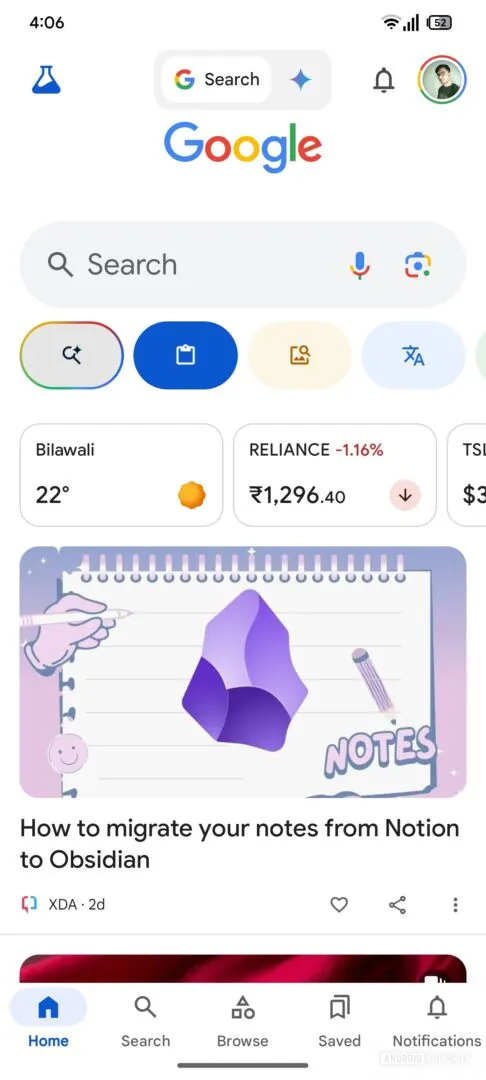
Source: [Android Authority](https://www.androidauthority.com/google-search-ai-mode-button-shortcut-apk-teardown-3506926/?ref=nearmedia.co)
### **Our take:**
- Search is getting an AI makeover in multiple ways. For example, this week the company [introduced AI Organized](https://www.nearmedia.co/first-look-ai-organized-restaurant-results-2/) pages for restaurants and bars.
- AI Overviews offer a tepid AI user experience; AI Mode would allow for something more useful and "robust."
- This "side-by-side" experience would potentially give Google something its competitors don't have (AI + Knowledge Graphs + Search).
### Google to Court: Don't Break Us Up
Google filed [its response](https://blog.google/outreach-initiatives/public-policy/google-remedies-proposal-dec-2024/?ref=nearmedia.co) to the US Department of Justice's (DOJ) proposed remedies in its antitrust case. The DOJ [has proposed](https://www.nearmedia.co/doj-sell-chrome-fake-reviews-300-billion-chatgpt-gaining-2/) significant penalties and remedies, including selling Google’s Chrome browser (and potentially Android), syndicating search data for 10 years, killing default search deals and imposing multiple restrictions around AI distribution. Google's [proposal](https://storage.googleapis.com/gweb-uniblog-publish-prod/documents/2024.12.20%5F1108%5FExecutive%5FSummary%5Fof%5FGoogle%5FProposed%5FFinal%5FJudgment.pdf?ref=nearmedia.co), as you might expect, seeks to avoid almost all of what the DOJ wants. Google recommends ending exclusive search distribution agreements but still allowing non-exclusive default search arrangements. Google also says it will no longer require Android device manufacturers to license Google search or Chrome or preload Google apps. It also said that it won't force device makers to license and distribute Gemini or seek to prevent rival chatbots on Android phones. The DOJ had asked for licensing/sharing of Google's search data to rivals for 10 years. Google countered with a suggestion of three years. The district court will hear both sets of recommendations and arguments in April 2025\. Google continues to maintain it's not a monopoly and is going to appeal the court's liability ruling.

Source: Made with ChatGPT
**Our take:**
- Apple is [seeking to intervene](https://www.reuters.com/technology/apple-seeks-defend-googles-billion-dollar-payments-search-case-2024-12-24/?ref=nearmedia.co) in the case so it can try to hang on to Google's billions in default search payments.
- Google's proposal seeks to minimize the impact of potential remedies on its core businesses without sacrificing all credibility. It almost gets there.
- The court will likely adopt some of each side's recommendations. The big question is whether what comes out will have any real impact.
### Study: AI Sites Starting to Drive Traffic
Previsible conducted [a small LLM Traffic Study](https://previsible.io/seo-strategy/ai-seo-study-2024/?ref=nearmedia.co) to determine how much traffic was coming from LLMs and specifically which AI sites ([h/t SEJ](https://www.searchenginejournal.com/study-chatgpt-ai-tools-gain-ground-in-search-market/536137/?ref=nearmedia.co)). Previsible looked at 30 sites in different categories and tracked referrals from Perplexity, ChatGPT, CoPilot, Gemini, Claude, Meta and Mistral. The study found that "Perplexity and ChatGPT are neck-and-neck, each commanding about 37% of LLM referral traffic." CoPilot and Gemini each drove about 12% - 14%. Others (Claude, Meta, Mistral) had a minimal impact. A range of site categories were among the dataset: Finance, SaaS, Health, Legal, Insurance, E-commerce and others. However, "84% of all LLM referral traffic \[ \] analyzed went to finance-related websites." Here Perplexity was the winner. Otherwise ChatGPT was the largest referrer. What types of content/pages are being linked to? Previsible found it was blog posts (77.4%), homepages (9%), news content (8.2%) and guides (2.4%). It also said that AI referral traffic had grown by triple digits in just a few months. Previsible predicted, "If current growth rates hold, what’s currently 0.25% of total traffic from LLMs could become 10% of the overall traffic mix by the end of 2025."
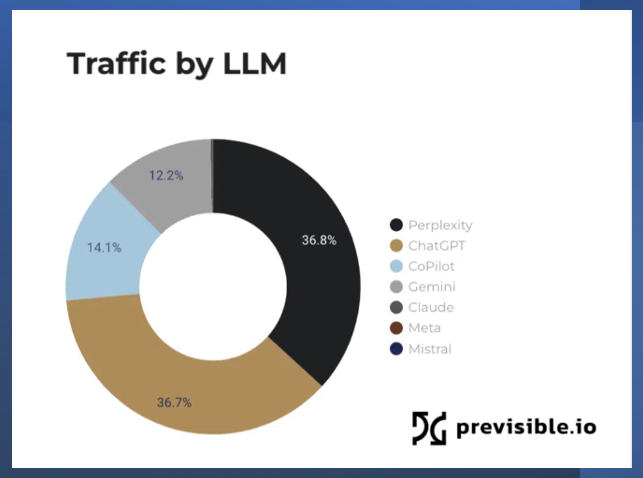
**Our take:**
- The study was small. But it suggests that LLM referrals may be uneven and category dependent (at least for the immediate future).
- Specific LLMs may wind up having greater influence in specific verticals, as Perplexity did with finance in this study.
- Recommendations: high quality (informational) content, blog-to-conversion paths, SEO best practices and build brand authority.
### Surprise: Heavy AI Users Search More
One of the great surprises of a recent [Dialog consumer study](https://www.localdialog.com/ai-vs-search-consumer-survey-findings-2/?ref=nearmedia.co) is the finding that many heavy AI users actually use search *more not less.* This is contrary to what I expected and it appears to support what Google is doing with AI Mode. Previously, based on my own behavior and some empirical data, I assumed AI would increasingly cannibalize Google. There's some evidence of this. But for many, search and AI are complementary rather than mutually exclusive. The survey of 1K US adults recruited people who used search engines at least weekly and had previously used AI at least once. There are lots of [interesting findings](https://www.searchenginejournal.com/searchquake-chatgpt-a-real-google-alternative/535193/?ref=nearmedia.co) in the data but I want to highlight just a couple now: 57% of respondents said they used AI daily; 28% reported multiple times a day. I would expect this latter group to report reduced Google usage – that was true for 26% of total respondents – but nearly 50% of "heavy AI users" said they used Google *more*. When asked, "Are AI applications and search engines basically interchangeable or are they different?" 95% of these users said "they're different and I use them differently." This implies that more sophisticated AI users see different use cases for search and AI.
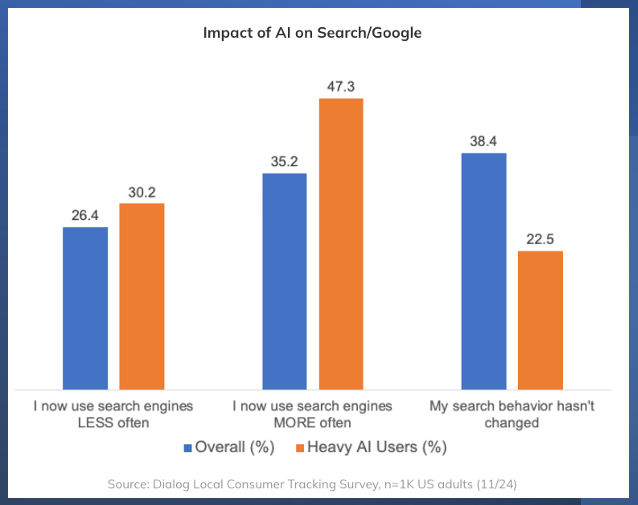
**Our take:**
- Although this is my survey, I'll say it again: we need to be careful about generalizing too much from one survey. But it's provocative.
- There's no question that Google will lose some amount of informational query volume to ChatGPT and others. Hence AI Mode.
- It's clear that Google and its Knowledge Graphs (especially local) can deliver things AI is currently unable to ([but for how long](https://www.linkedin.com/posts/location-foursquare%5Fchatgpt-foursquare-ai-ugcPost-7274479297153716224-BxXa/?ref=nearmedia.co))?
## Recent Analysis
- **First Look: AI-Organized Restaurant Results**, [by Mike Blumenthal](https://www.nearmedia.co/first-look-ai-organized-restaurant-results-2/).
- **Near Memo episode 187**: [Exploring Google’s DMA Compliance & User Search Behavior with Siinda’s Stephanie Verilhac](https://www.nearmedia.co/ep-187-exploring-googles-dma-compliance-user-search-behavior-with-siindas-stephanie-verilhac/).
## Short Takes
**LOCAL**
- Big local boost: **ChatGPT** [taps Foursquare's 100M places](https://www.linkedin.com/posts/location-foursquare%5Fchatgpt-foursquare-ai-ugcPost-7274479297153716224-BxXa/?ref=nearmedia.co) API.
- **Recently viewed places**: [personalized local SERPs](https://x.com/joyannehawkins/status/1870198052763426947?ref=nearmedia.co).
- Visa: 77% of [holiday shopping payment volume](https://investor.visa.com/news/news-details/2024/Visa-Analysis-U.S.-Rings-in-Holiday-Retail-Spending-Growth/default.aspx?ref=nearmedia.co) **in store** versus 23% online.
- Local biz: coping with [the stress and frustrations](https://whitespark.ca/blog/coping-with-google-disappointments-what-to-do-when-you-feel-let-down/?ref=nearmedia.co) of dealing with **Google**.
**GENERAL SEARCH & SEO**
- Google [pitches the benefits](https://blog.google/products/chrome/chrome-autofill/?ref=nearmedia.co) of **Chrome autofill** to merchants.
- **Google** [tests two ad placements](https://www.linkedin.com/posts/anthony-higman-a3656a46%5Fgoogle-is-continuing-to-double-serve-the-activity-7274802015694667776--TPa/?ref=nearmedia.co) for one advertiser in same local result.
- Google [showing payment options](https://www.seroundtable.com/google-knowledge-panels-payment-options-38621.html?ref=nearmedia.co) on some **retailer Knowledge Panels**.
**AI**
- **Google** made [more than 60 AI announcements](https://blog.google/technology/ai/google-ai-news-recap-2024/?ref=nearmedia.co) this year.
- **Microsoft Copilot** and Gemini among [top 20 fastest growing brands](https://pro.morningconsult.com/analyst-reports/fastest-growing-brands-report-2024?ref=nearmedia.co).
- Google using Anthropic's **Claude** [to benchmark performance](https://techcrunch.com/2024/12/24/google-is-using-anthropics-claude-to-improve-its-gemini-ai/?ref=nearmedia.co).
- **Google Gemini** can [now answer questions](https://www.androidpolice.com/files-by-google-ask-about-this-pdf-rolling-out/?ref=nearmedia.co) about PDFs.
- **Google AIOs** [muscling in](https://x.com/suzzicks/status/1870161466399379706?s=43&t=NNLJEcbkhyOw0gOk6%5FrQUw&ref=nearmedia.co) on coupon sites.
- **AI crawlers** (other than Google) [don't render JavaScript](https://www.linkedin.com/posts/drew-bredvick%5Fvercel-dropped-an-aiseo-bombshell-this-week-activity-7276300203110871040-ZMRi/??ref=nearmedia.co).
**LAW & POLICY**
- **AI-generated fake reviews** [continue to increase online](https://apnews.com/article/fake-online-reviews-generative-ai-40f5000346b1894a778434ba295a0496?ref=nearmedia.co).
- Google argues EU DMA "test removal" of **hotel features** [created a bad UX](https://blog.google/feed/sharing-data-on-our-dma-hotels-test/?ref=nearmedia.co).
- **FTC**: AutoCanada to pay $20 million re [fraud claims](https://www.ftc.gov/news-events/news/press-releases/2024/12/ftc-illinois-take-action-against-leader-automotive-group-overcharging-deceiving-consumers-through?ref=nearmedia.co) (junk fees, fake reviews).
**OVERFLOW**
- Musk has [raised $6 billion](https://www.sec.gov/Archives/edgar/data/2002695/000200269524000003/xslFormDX01/primary%5Fdoc.xml?ref=nearmedia.co) for **xAI**, his AI company.
- **AI progress** [will accelerate in 2025](https://jack-clark.net/2024/12/23/import-ai-395-ai-and-energy-demand-distributed-training-via-demo-and-phi-4/?ref=nearmedia.co) and be faster than in 2024\.
Listen to our [latest podcast](https://www.nearmedia.co/memo/).
[](https://nearmedia.co/memo?ref=nearmedia.co)
How can we make this better? Email [us](mailto:gsterling@nearmedia.co) with suggestions and recommendations.
### First Look: AI-Organized Restaurant Results
URL: https://www.nearmedia.co/first-look-ai-organized-restaurant-results-2/
Last updated: 2024-12-24T19:00:57.000Z
First [announced](https://blog.google/products/search/generative-ai-google-search-may-2024/?ref=nearmedia.co#:~:text=Explore%20an%20AI%2Dorganized%20results,makes%20it%20easy%20to%20explore.) at Google I/O in May and [tested](https://www.seroundtable.com/google-ai-organized-local-search-37723.html?ref=nearmedia.co) during the summer, with a [broader test](https://www.nearmedia.co/googles-ai-organized-restaurant-results/) in October, AI-organized results are now [rolling out](https://x.com/rmstein/status/1870219629710450864?ref=nearmedia.co) for restaurant and bar search results. "This includes unique, AI-generated categories based on your search with helpful resources from the web, like articles, videos, forums, etc."

### The Layout
The new layout starts with a small "[Organized with AI](https://support.google.com/websearch/answer/14901683?hl=en&visit%5Fid=638706579895859291-3537207781&p=organized%5Fai&rd=1&ref=nearmedia.co#organized%5Fai)" notice followed immediately by a top rated 3 pack, two organic results and two related AI-organized carousels. That pattern repeats several times down the page. The interspersed organic results rely heavily on Reddit, which provides three of the first four organic results. Down the page, some of the results also include a "Best neighborhoods" view offering a map and a list of neighborhoods, each with a drop down that exposes a local carousel for each of the neighborhoods. Several scrolls down, at the end of the repeating pattern, Google adds a Trending video carousel that includes related Instagram, TikTok and YouTube content.

### 'Best Neighborhoods' and Video
The "Best neighborhoods" map interface is one of the most interesting and useful features if you are not already familiar with an area. It only seems to trigger when the density of relevant results is high across many neighborhoods. When one of the listed neighborhoods is selected, the map updates with that neighborhood's locations.
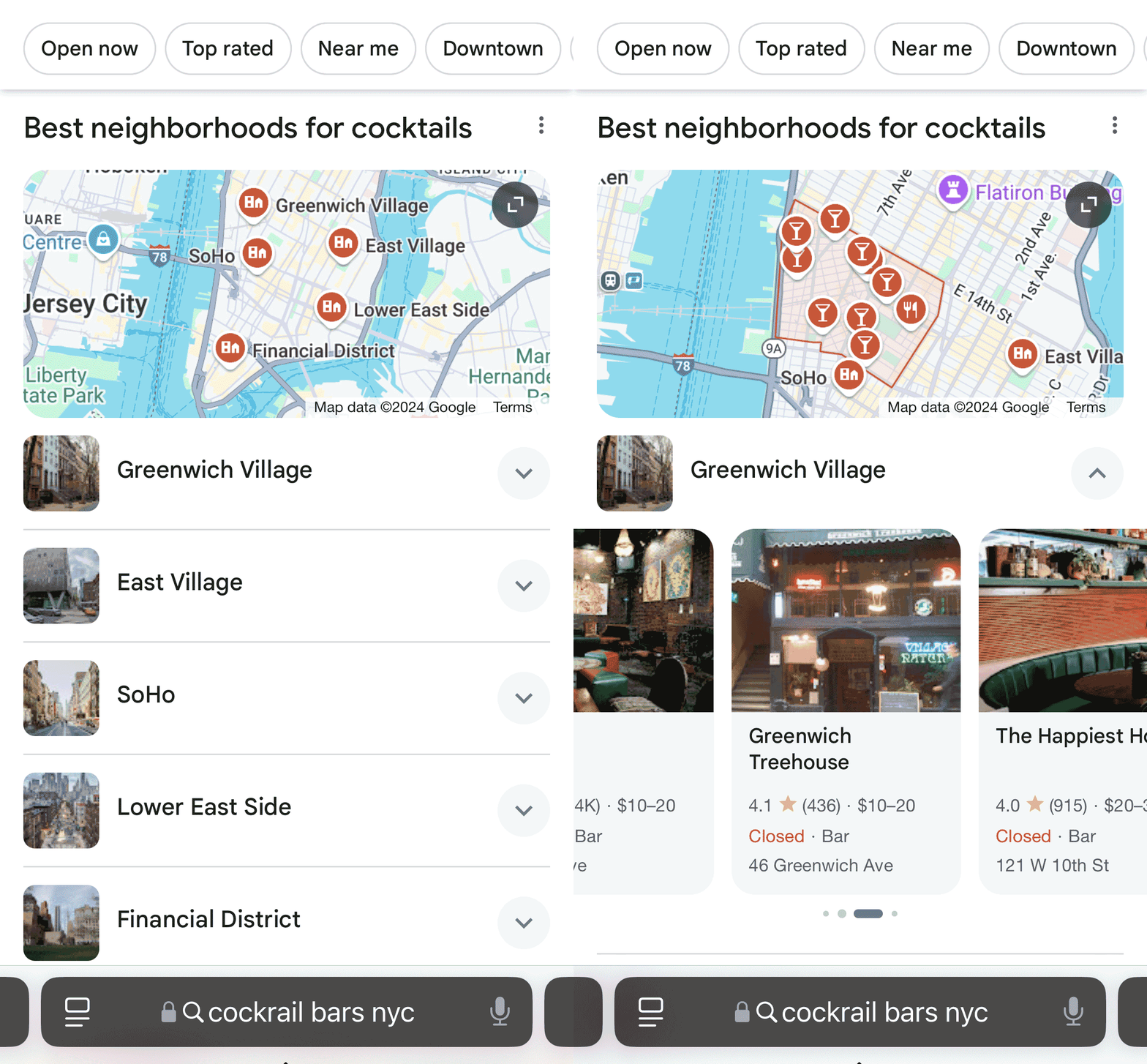
Video remains an important component of the local listing. When you activate an image carousel in the 3-Pack, a video will auto-play if there is one on your listing and it can be quite compelling.
0:00
/0:27
1×
Here is a video of the full results seen while scrolling on mobile. As far as I can tell, these results are not yet visible for desktop searches.
0:00
/0:57
1×
### Opportunities to Be Found Abound
With these AI-organized results, Google is going all-in on their Local Knowledge Graph. The opportunities abound to be found – if your money terms are returning these types of results. If they are, determine the relevant categories to your listing and highlight those with solid internal linking from the home page of your site.
While there are still some visible organic results, the first truly local website was well down the page and traditional directories like Yelp are very hard to find. This doesn't diminish the value your website as a data source for the Google's Knowledge Graph. In fact, these results may make it more so.
### More Zero-Click
In our [EU restaurant research](https://www.nearmedia.co/google-serp-restaurants-eu-dma-analysis/), "zero-click" sessions, where searchers make their choice directly from GBP/local results, were [predominant on mobile](https://www.nearmedia.co/google-serp-restaurants-eu-dma-analysis/#zero-click-search). We expect that to increase and would expect directory and publisher traffic to decrease. However we found that a large number of users still visited the business website frequently via the local listing and we think that behavior will persist. (Menus are one reason people visit restaurant websites.)
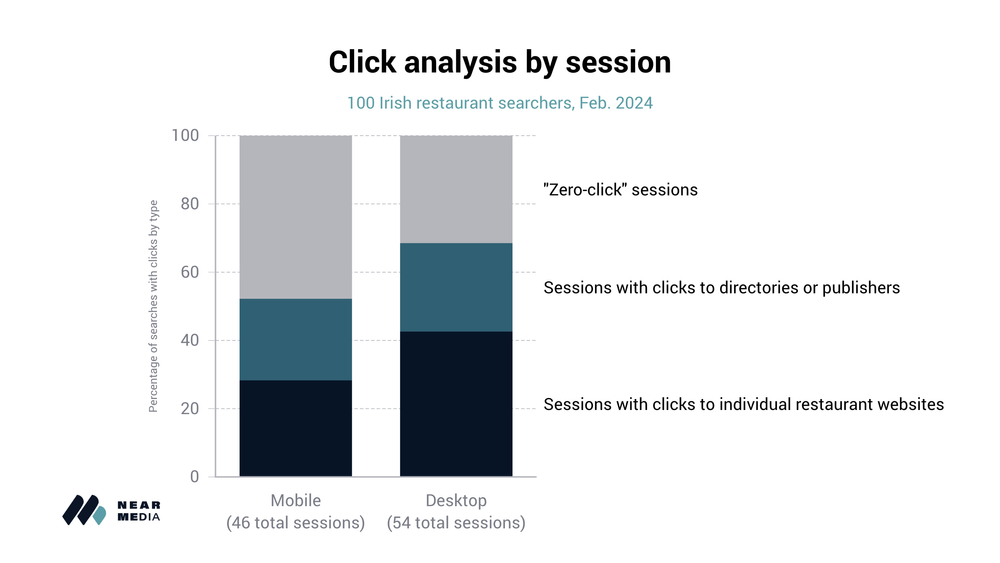
As we noted in that [research](https://www.nearmedia.co/google-serp-restaurants-eu-dma-analysis/#zero-click-search) and believe will still apply:
💡
Searchers don't spend a long time evaluating restaurants. That means the first impression has to be a great one. That argues for great reviews, great photos, readily-available menus, and online booking to convert prospective diners.
### Changing Directory Dynamics
It would appear that Yelp will take another hit. TripAdvisor seems slightly more visible. But with Google going all-in on their local results, these directories will have more value for their direct users than through Google. Reddit and publisher sites with top 10 articles seem to do well and are obvious targets for your marketing. Video sites (Instagram, TikTok and YouTube) will present some additional exposure opportunities as well.
### Antitrust and EU DMA issues
In Europe, the Google local search results have yet to become an area of dispute despite obvious Google self-preferencing. Google has retained more traditional local results there and has staunchly defended the local results as part and parcel of their typical results. To learn more about this, see our [recent interview](https://www.nearmedia.co/ep-187-exploring-googles-dma-compliance-user-search-behavior-with-siindas-stephanie-verilhac/) with Stephanie Verhilac of [SIINDA](https://siinda.org/?ref=nearmedia.co) and some of our [DMA user behavior research](https://www.nearmedia.co/tag/dma/).
In the US [Yelp's antitrust case](https://www.nearmedia.co/yelp-v-google-seo-challenges-section-230s-new-crack/?ref=near-media-newsletter), which questions Google local results as [self preferencing](https://www.nearmedia.co/hindsight-self-preferencing-behind-google-maps-rise/) and disadvantaging competitors, becomes even more compelling.
### Ep 187: Exploring Google’s DMA Compliance & User Search Behavior with Siinda’s Stephanie Verilhac
URL: https://www.nearmedia.co/ep-187-exploring-googles-dma-compliance-user-search-behavior-with-siindas-stephanie-verilhac/
Last updated: 2025-01-10T02:33:28.000Z
In Episode 187 we interview guest Stephanie Verilhac of Siinda. Siinda is an industry association that brings together agencies and technology companies in the local search and “on demand” industry sectors. We explored the application of the EU's Digital Markets Act (DMA) and the effects of Google compliance changes on searcher behaviors. Stephanie highlighted Siinda's role in supporting digital businesses across Europe and its interest in user responses to Google’s compliance measures.
💡
Digital Marketing Acts Article 6(5):5\. The gatekeeper shall not treat more favourably, in ranking and related indexing and crawling, services and products offered by the gatekeeper itself than similar services or products of a third party. The gatekeeper shall apply transparent, fair and non-discriminatory conditions to such ranking.1
We focused on joint Siinda/Near Media consumer behavior research, examining Google search results in Ireland, France, and Germany for kitchen remodeling services. While Google implemented changes to align with the DMA's anti-self-preferencing rules, the study revealed that user engagement overwhelmingly favored Google's own ecosystem, including its Local Pack and Maps. The newly introduced "Places Sites" carousel at the top of the search results showed minimal clicks compared, when present, to Google's own properties.
Stephanie emphasized notable regional differences in searcher behaviors and needs: Irish users prioritized "near me" searches, French users leaned heavily on brand recognition, and Germans showed a higher propensity to click ads and desire more sophisticated web sites. Cultural diversity across the EU proved significant in shaping search behavior. Photos and reviews emerged as key factors universally influencing decisions, with users frequently clicking through to business websites for final evaluations.
The conversation also touched on DMA compliance challenges, with Stephanie noting Google's approach often skirts full adherence in local as well as other areas targeted by the EU.
As the European Commission continues enforcing the DMA under its newly appointed leadership, Stephanie predicted more scrutiny on gatekeepers and potential updates in 2025\.
Related resources
[Near Media Research: European Local Search Behavior in the Home Services Vertical](https://www.nearmedia.co/eu-home-services-search-behavior/)
[Siinda Full DMA Research Results](https://siinda.org/dma-research/?ref=nearmedia.co)
[REGULATION (EU) 2022/1925 OF THE EUROPEAN PARLIAMENT AND OF THE COUNCIL](https://eur-lex.europa.eu/legal-content/EN/TXT/HTML/?uri=CELEX:32022R1925&ref=nearmedia.co) on contestable and fair markets in the digital sector
### SEO Meta, ChatGPT v Google, Content 2025, Low-Q AIOs
URL: https://www.nearmedia.co/all-about-brand-low-quality-aios-2/
Last updated: 2024-12-18T01:20:58.000Z
Mark Williams-Cook further unpacks Google's algorithm; Google preferred but ChatGPT gaining; content teams are stretched; don't optimize for AIOs.
_This post is for subscribers on the Premium and All-Access Membership tiers only._
### Ep 186: The Limits and Future of AI Impact on Maps; Search vs AI: Challenges, Trends, and Consumer Insights
URL: https://www.nearmedia.co/ep-186-the-limits-and-future-of-ai-impact-on-maps-search-vs-ai-challenges-trends-and-consumer-insights/
Last updated: 2024-12-13T16:46:19.000Z
**Part 1 starts 00:13 -** [**AI and Maps: Current Limitations (many) and Future Prospects (good)**](https://youtu.be/vXEPD8zllj8?ref=nearmedia.co)
We explore a recent piece by cartographer James Killick on how AI will be shaping the geospatial landscape & mapping, despite the mixed results today. Current tools struggle with complex queries, such as mapping open businesses along a route and broader queries that AI should be able to handle. Despite limitations, innovations like geo-trained AI and object classification suggest potential for enhanced location-based services, professional applications, and augmented reality. Emerging technologies may soon enable smoother interaction with geospatial tools and real-time location insights.
Segment Reference Article:
[James Killick: Is AI Finally Starting to ‘Get’ Geography?](https://maphappenings.com/2024/12/12/ai-get-geography/?ref=nearmedia.co)
**Part 2 starts 12:42 -** [**Search vs. AI: Consumer Behavior and the Future of Discovery**](https://youtu.be/cHcHXIueNxw?ref=nearmedia.co)
Insights from a consumer survey shed light on the evolving role of AI in search. While 77% of users find Google easier than three years ago, many are exploring alternatives like ChatGPT for direct answers and conversational capabilities. Trust in AI is growing, with 67% believing it will redefine search within three years. The shift signals a fragmented search ecosystem, where convenience and reliability will shape user behavior.
[Consumer Survey: A meaningful minority can live without Google](https://www.nearmedia.co/gemini-2-0-chatgpt-sources-19-could-quit-google-2/#19-could-live-without-google) (Paywall)
### Gemini 2.0, ChatGPT Sources, 19% Could Quit Google
URL: https://www.nearmedia.co/gemini-2-0-chatgpt-sources-19-could-quit-google-2/
Last updated: 2024-12-12T22:51:26.000Z
_This post is for subscribers on the Premium and All-Access Membership tiers only._
### Search Change a Comin', Yelp RFQ in Apple Maps, Safari Dwarfs Chrome (on iOS)
URL: https://www.nearmedia.co/search-change-coming-safari-vs-chrome-2/
Last updated: 2024-12-10T23:49:08.000Z
_This post is for subscribers on the Premium and All-Access Membership tiers only._
### Is Apple's Siri Sherlocking* Google Search?
URL: https://www.nearmedia.co/is-apples-siri-sherlocking-google-search-2/
Last updated: 2024-12-15T18:35:07.000Z
*This article has been* [*updated*](https://www.nearmedia.co/is-apples-siri-sherlocking-google-search-2/#ios-182-update) *on 12/12/24 with results of the ChatGPT integration.*
The discovery of [Siri's improved Local Search](https://www.nearmedia.co/siri-finally-gets-local-search-2/) capability led me to ask: Is the new Siri capable of similarly answering questions across other knowledge domains? Could Siri pull off the [biggest Sherlock](https://www.npr.org/2024/06/17/g-s1-4912/apple-app-store-obsolete-sherlocked-tapeacall-watson-copy?ref=nearmedia.co#:~:text=The%20practice%20has%20become%20known,then%2C%20the%20term%20has%20stuck.)\* ever by integrating features to replace much of what search does?
Siri and Spotlight search have long had the ability to surface types of knowledge that aren't limited to local entities. In fact, the newly reconstituted assistant has access to many in-depth knowledge graphs that Apple has been building out since 2012\.
Siri 2.0 brings the ability leverage AI to remember the context of your initial query and provide follow-on answers and, importantly, it can now be accessed through text entry and not just voice.
Many of these features are still in their early stages, but they hint at a future where more of the questions we currently ask Google are answered directly on our phones—instantly, seamlessly and without interrupting what we’re doing, without opening a browser, or launching an app.
### Apple Builds Out Knowledge Graphs
Many of the answers that we see in Siri are based on knowledge graphs that Apple has built for specific applications and cover a broad range of potential user interests. Apple is answering questions directly on the device: questions about entertainment, movies, TV shows, sports, realtime sports scores, current events, news, stocks, music, weather, Wikipedia, Local POIs, the web and more. I even found evidence of Siri being able to perform product searches.
When Siri can't answer from one of the existing knowledge domains, it will access ChatGPT or Google search to answer.
For each of these inquiries, Siri presents a short pop-up summary screen, on the fly, over whatever you are doing on your phone. It then provides the user with easy, one-click access to a longer answer without going onto the open web. It's a very slick informational retrieval interface that allows the user to either explore the query in more depth or easily return to the iPhone task at hand.
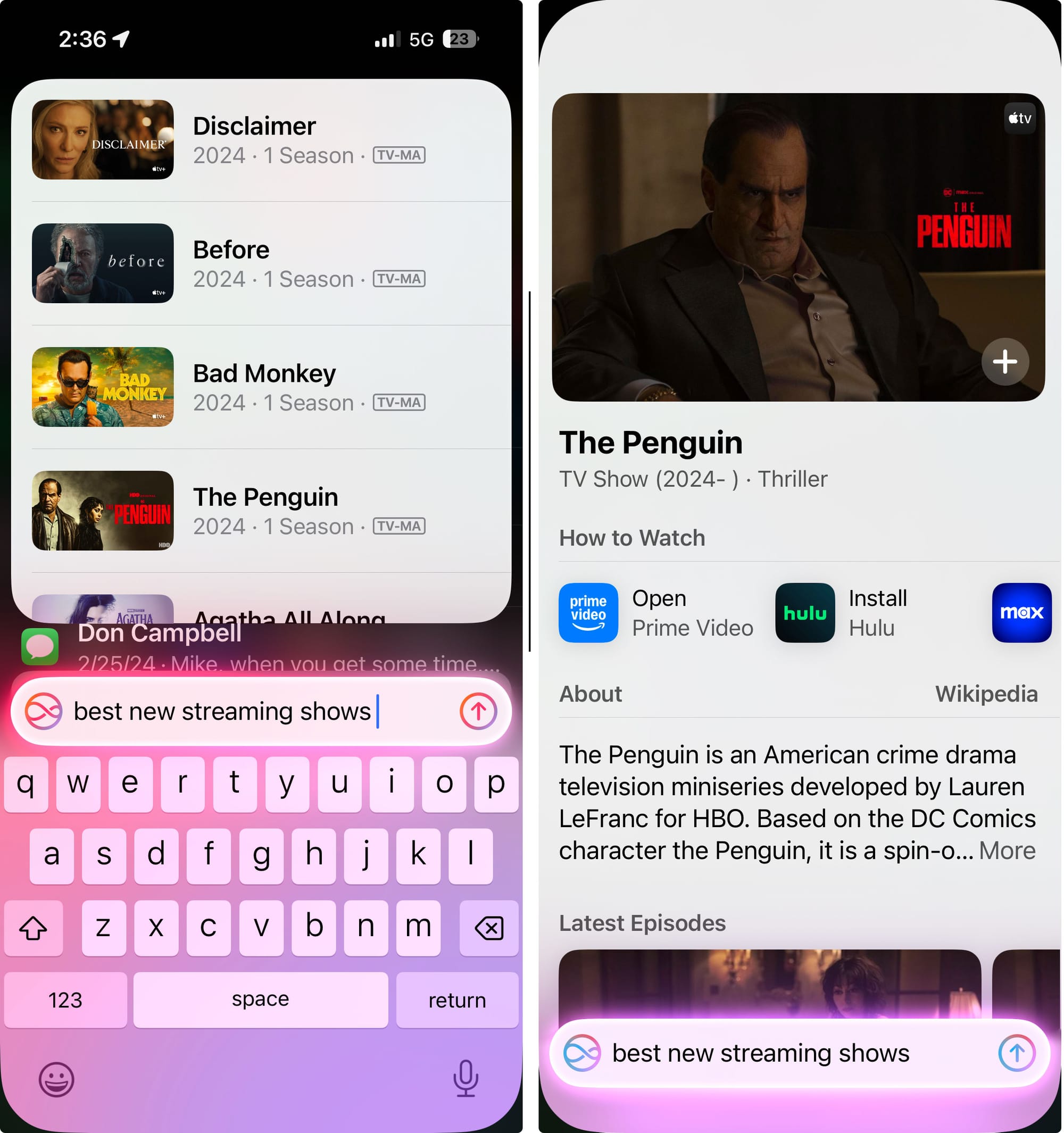
Movies and TV shows come from the TV+ app graph
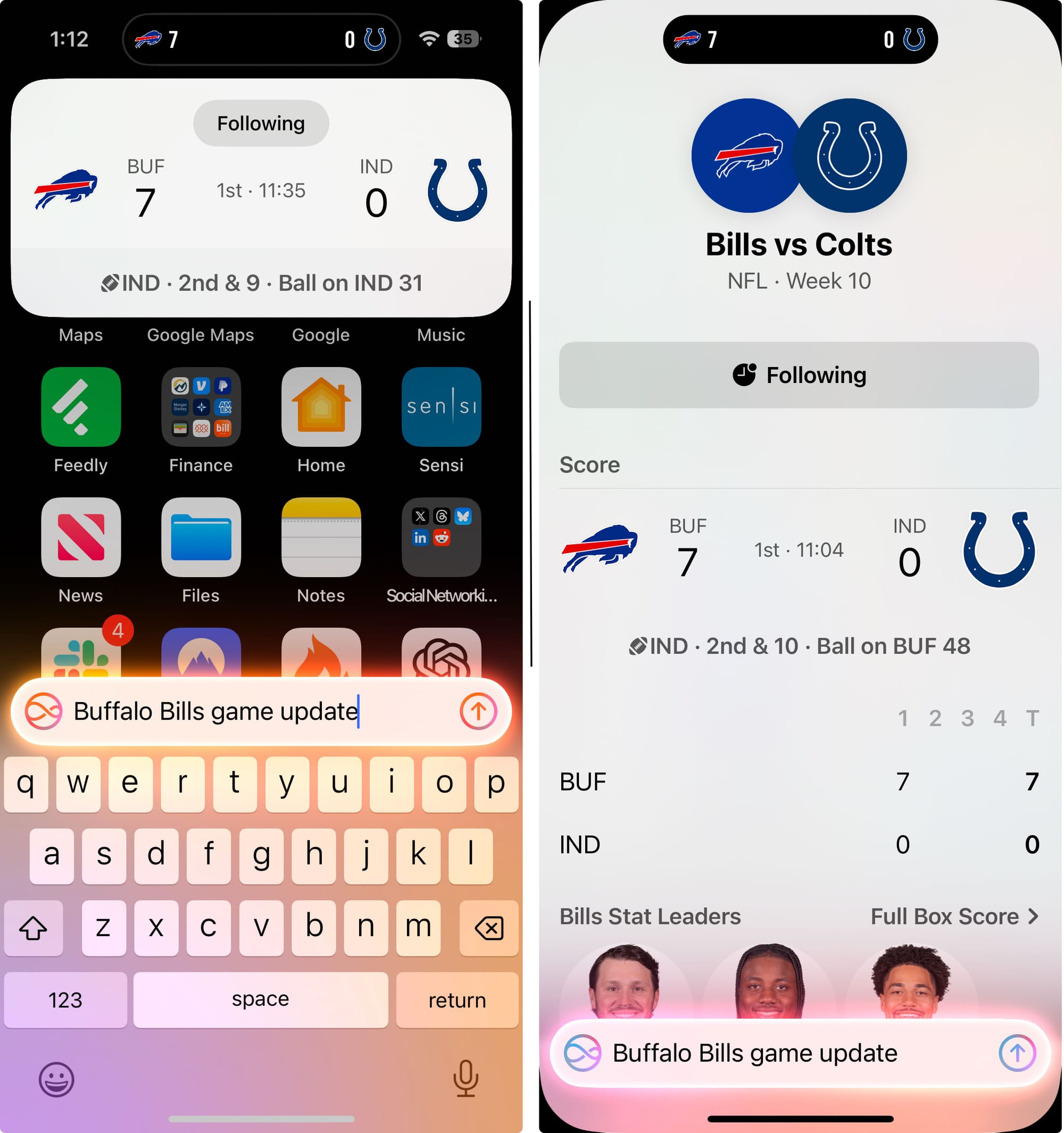
Upcoming sporting events, real time game play and box scores come from the Apple Sports app
It not only can tell you when a game is, it can provide the odds when asked
Current events come from Apple News+ App
Music queries are obviously being fed from the Music App. For example, this query began playing the **Come Together* (2019) album while offering alternative choices. Unfortunately none was **Rubber Soul* :(.
Not all of Apple's knowledge graphs come from their apps. These answers are drawn from a Wikipedia summary graph and demonstrate Siri's ability to retain some context around a query
Apple has also built out other knowledge graphs, like the long-standing dictionary and the new-to-iOS 18 ability to ask for instructions on how to interact with your iPhone settings.
Other graphs that limit how often you have to go out to the web
### Siri Looks to the Web?
Besides surfacing more results from their internal knowledge graphs, Apple is surfacing *more trusted* web results via the new Siri interface as well.
When Siri determines "the answer" to a question is better provided by the web, it presents a single trusted result much like the "I feel lucky" Google result of days long gone by. With current News queries, it often presents three results to choose from.
Apple is known to have one of the [largest web indexes](https://www.seroundtable.com/apple-search-index-37855.html?ref=nearmedia.co) outside of Google, with billions of websites indexed. It clearly leverages that index with an on-phone overlay that provides a direct answer but can also take the user directly to a particular website for an answer, totally sidestepping internet search.
Apple might provide three results directly from trusted new sources for breaking news
It appears that when Siri lacks trust in its ability to provide an "I feel lucky" answer, it will head over to Google for the answer. Exactly when or how or why that decision is made is unclear.
Often adding a "best" modifier to a query will drive the result to Google.
Sometimes Siri decides it needs to surface Google results. It will then strip out all of the ads, Knowledge Panels, People Also search for, People search next, Fast Pickup or delivery etc., and show the top three organic results. It also offers an opportunity to search further on Google.
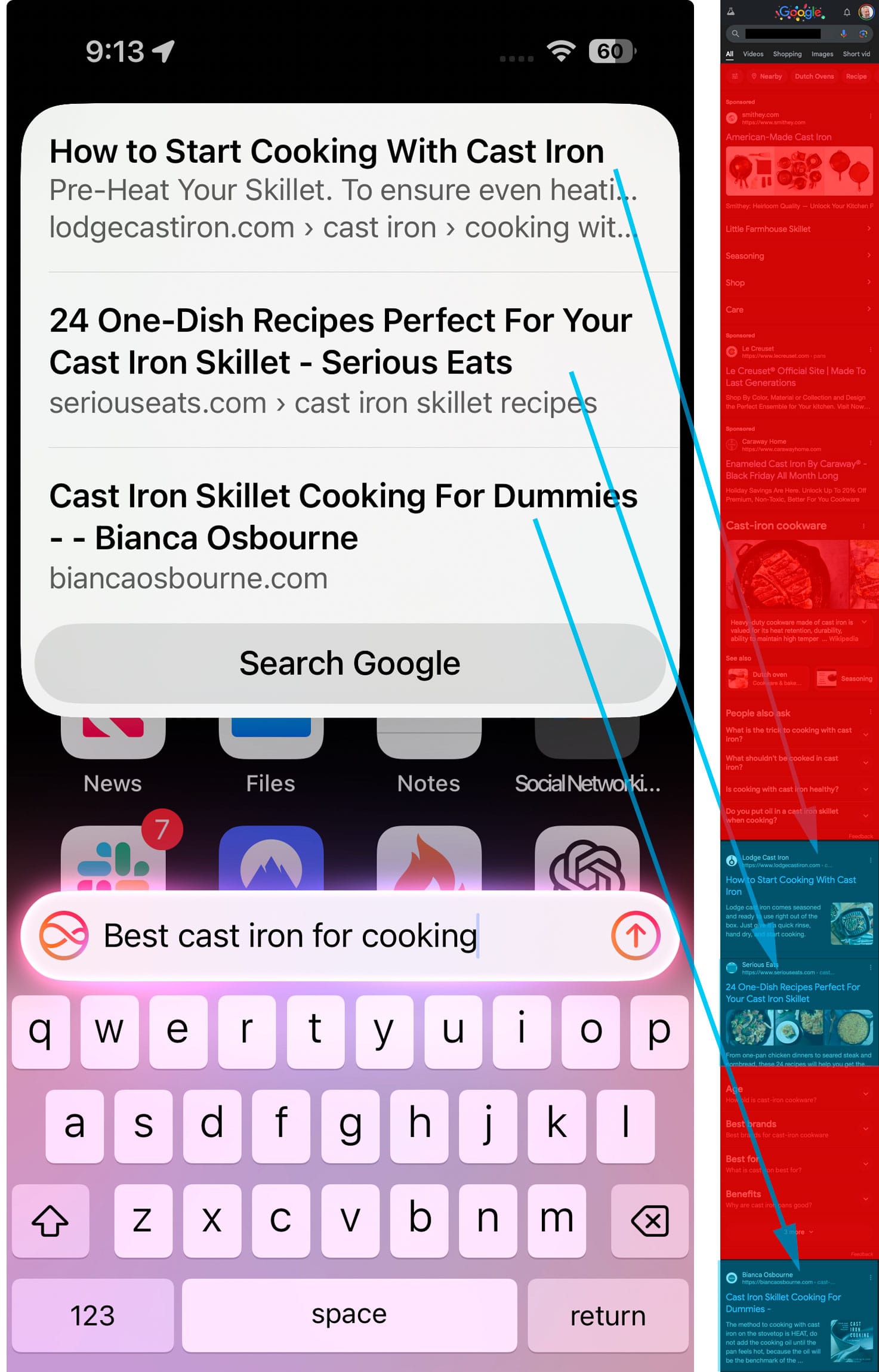
The three results suggested from Google search can be clicked to go directly to the result's websites.
### iOS 18.2 Update
How have results changed with the rollout of iOS 18.2 on 12/11/24? I re-ran all my searches, and the only noticeable change is the addition of an intermediate pop-up before a user is directed to either web search or ChatGPT. In some ways, the new interface feels less user-friendly. It requires a decision (search or ChatGPT), an extra click, and is not particularly speedy. If the information in the ChatGPT box exceeds its size, it can be scrolled but is not persistent, and there’s no way to recall it if you touch another part of the screen. However, you can continue and follow up on the conversation via Siri and the details are stored in your ChatGPT account.
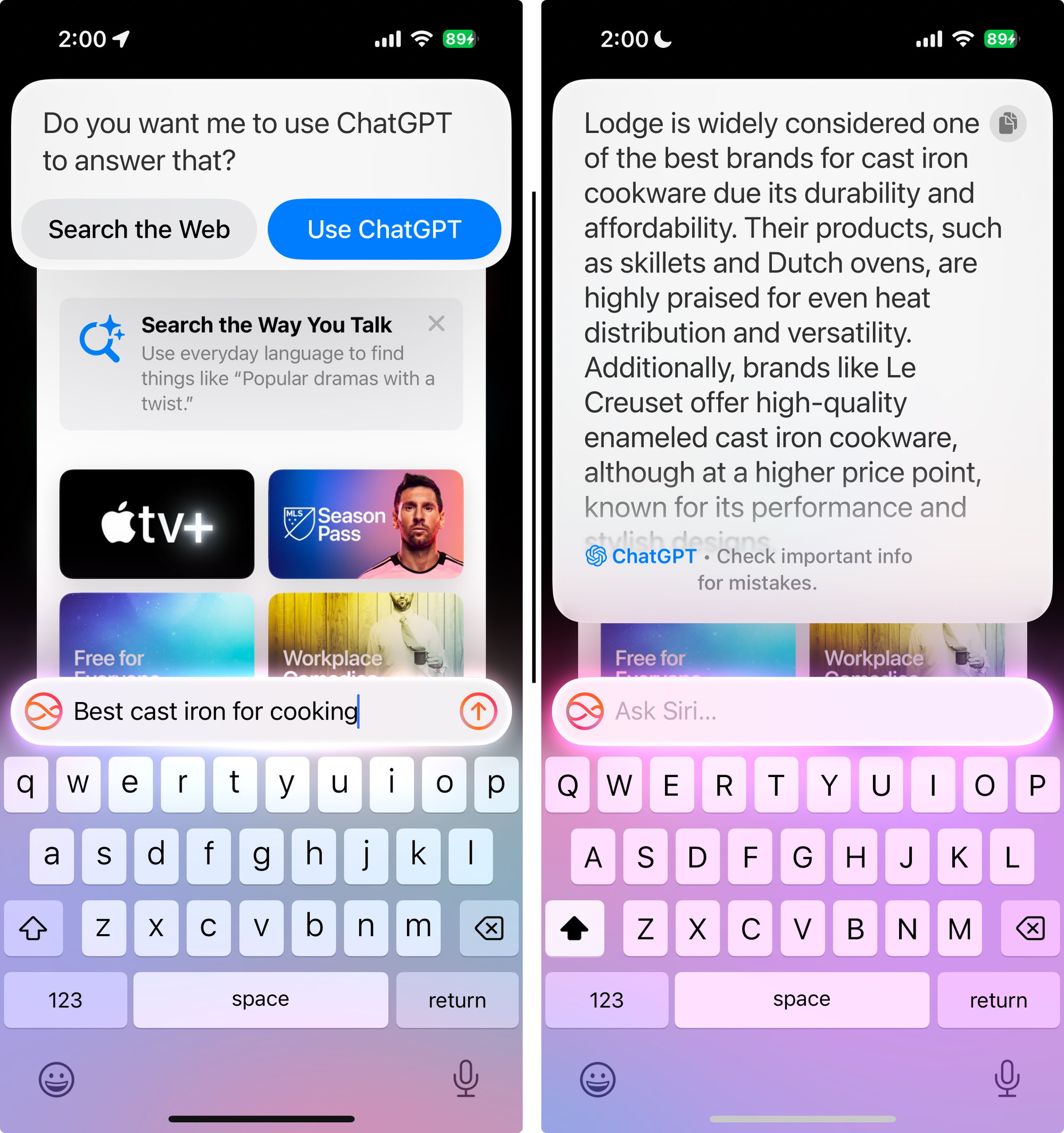
When choosing the "Search the web" option, it performs the search directly on the user’s preferred search engine —Google in my case– and opens the results directly in Safari. This approach is faster and persistent, unlike the ChatGPT responses. However, the downside is a more cluttered Google interface that you perviously could avoid.
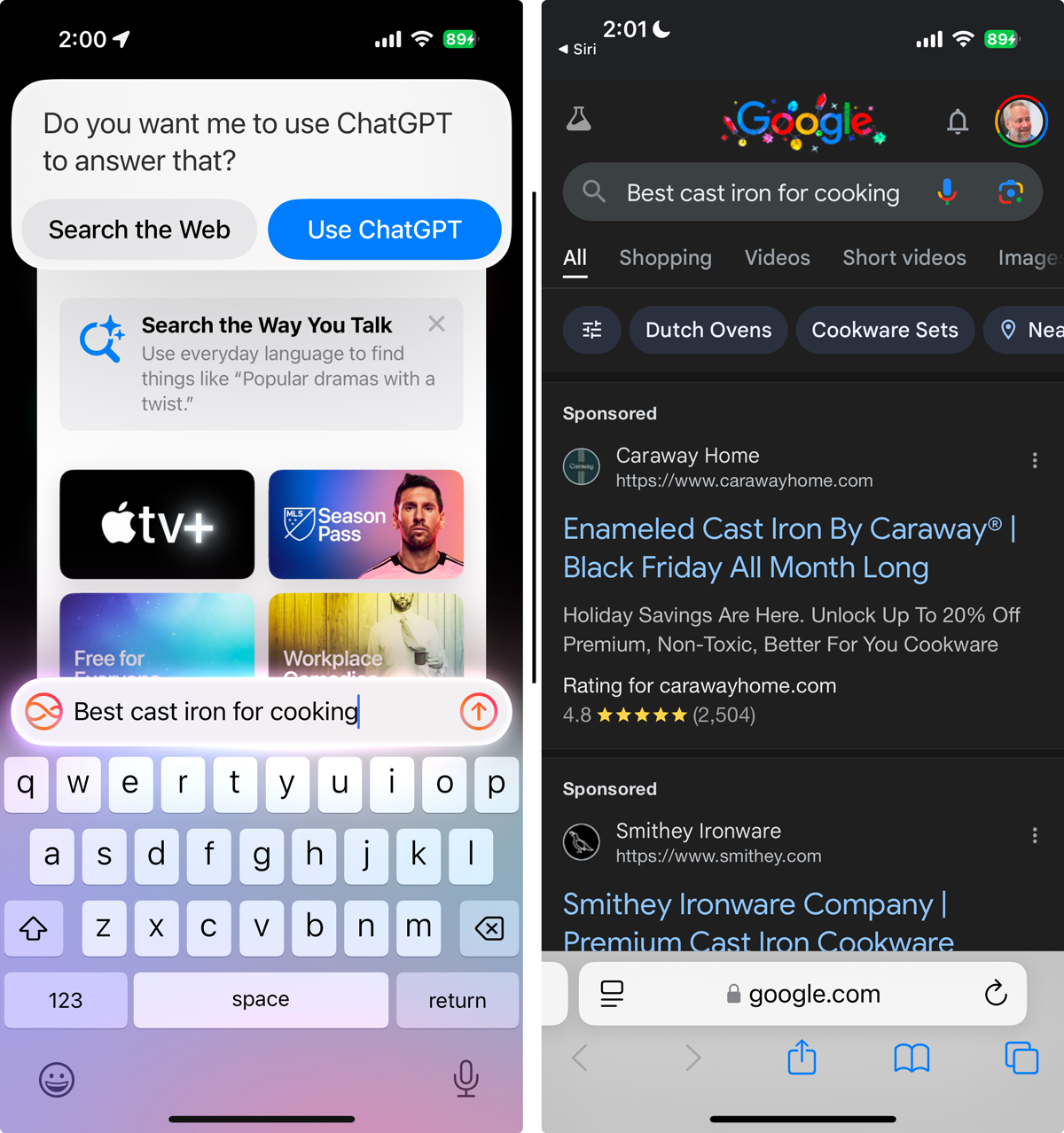
### Recipes and More Recipes
One of the more reliable results Siri now returns are YouTube recipes when you are looking for cooking ideas.
There are rumors of an [Apple smart home display](https://9to5mac.com/apple-new-home-device-rumors/?ref=nearmedia.co) coming next year and it makes sense, if it sits in the kitchen, that it have voice inputs/controls and video out for recipes. Clearly Apple could have partnered with the NY Times or Cook's Illustrated, and might still. While a text recipe might be most people's current modus operandi, I could envision video being a better delivery mechanism for a kitchen based home display if the interface, as is rumored, is primarily voice.
As the world's second largest search engine and the largest search source not under Department of Justice scrutiny, YouTube might just be buying the space.
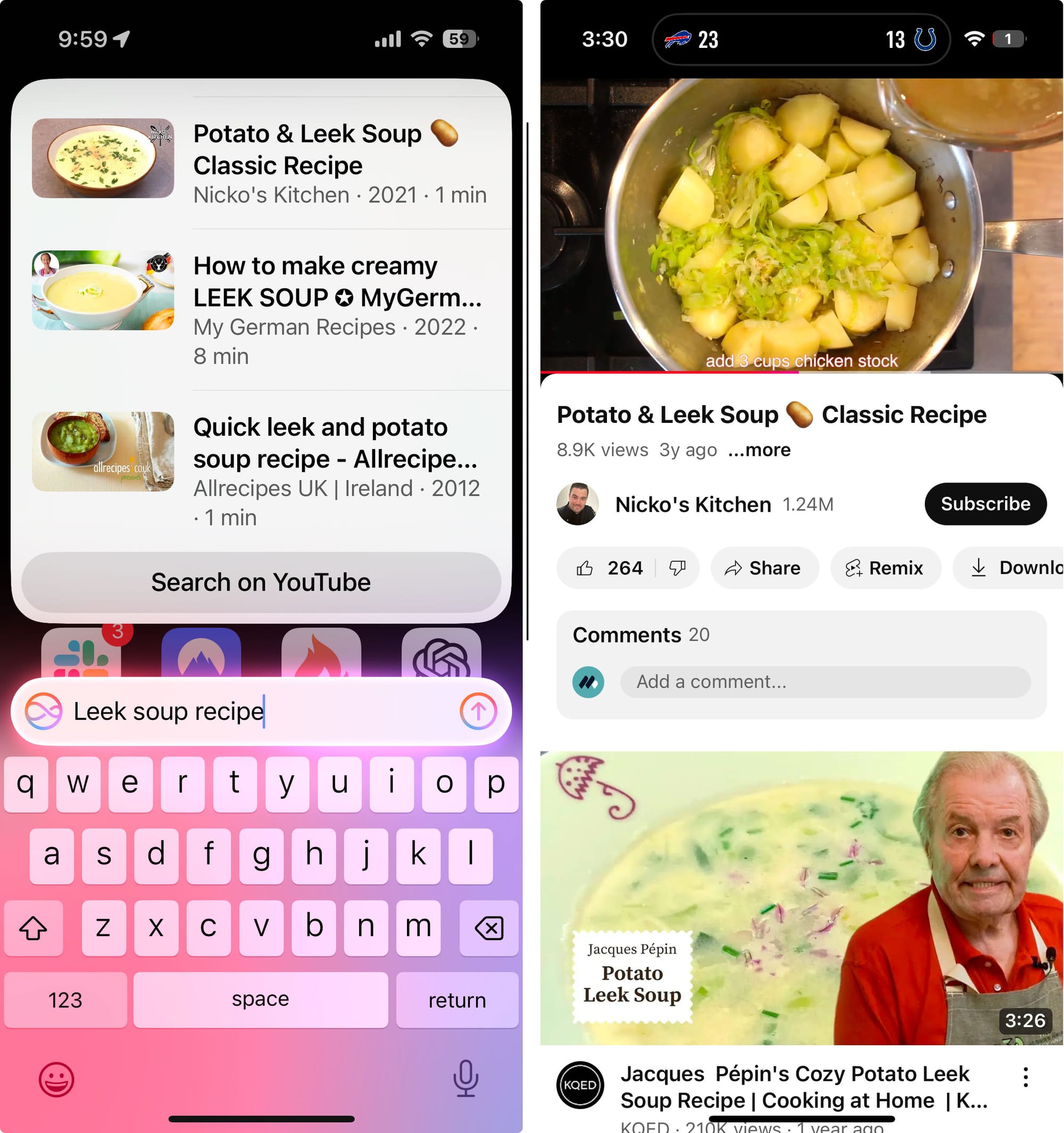
More and more I am asking ChatGPT or Cooks Illustrated for recipes because I prefer the written word and their recipes are free of the endless blathering so common these days.
### Product Search – Hello
Products are obviously something that folks search frequently on Google and Amazon. I was surprised when Siri, which is supposed to deliver primarily personal and not "world knowledge," actually returned a usable result when I asked "Does Walmart have air conditioners in stock?." It gave me a brief on-screen card and then took me directly to Walmart's air conditioners page. These types of Siri product inquiries are currently quirky and unpredictable and may not be answered correctly or usefully. It is not clear if this result is just a fluke of the beta or a direction that Apple is planning on taking.
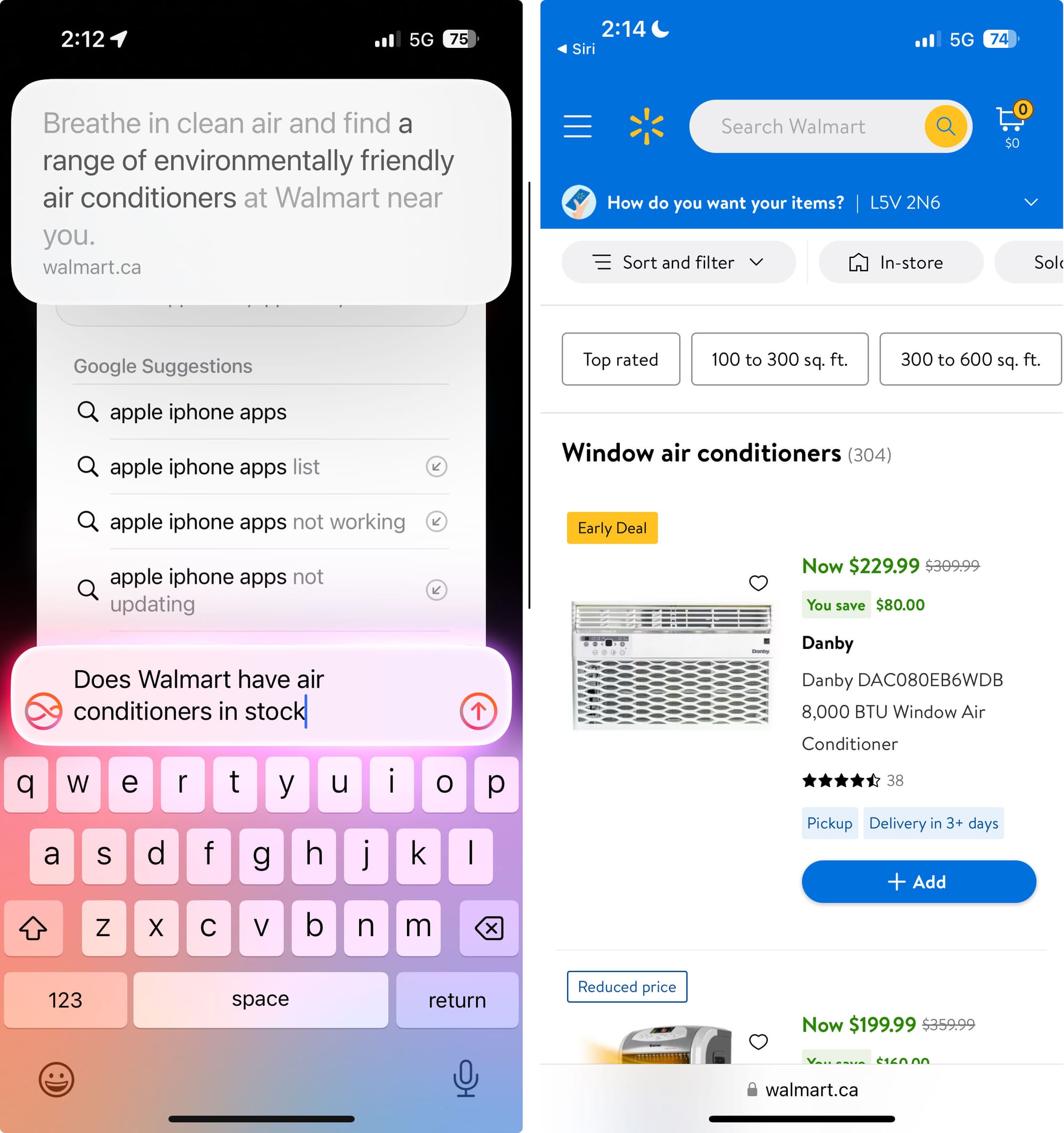
Even though Siri knows my location, the Walmart page was a .ca domain
### Siri Gets Personal
To reach its full potential as an AI agent Siri needs to "know us." It can currently access your Calendar, Reminders, Health, FindMy, Message, Notes, Mail and can quickly surface information on-screen without the need to enter the app.
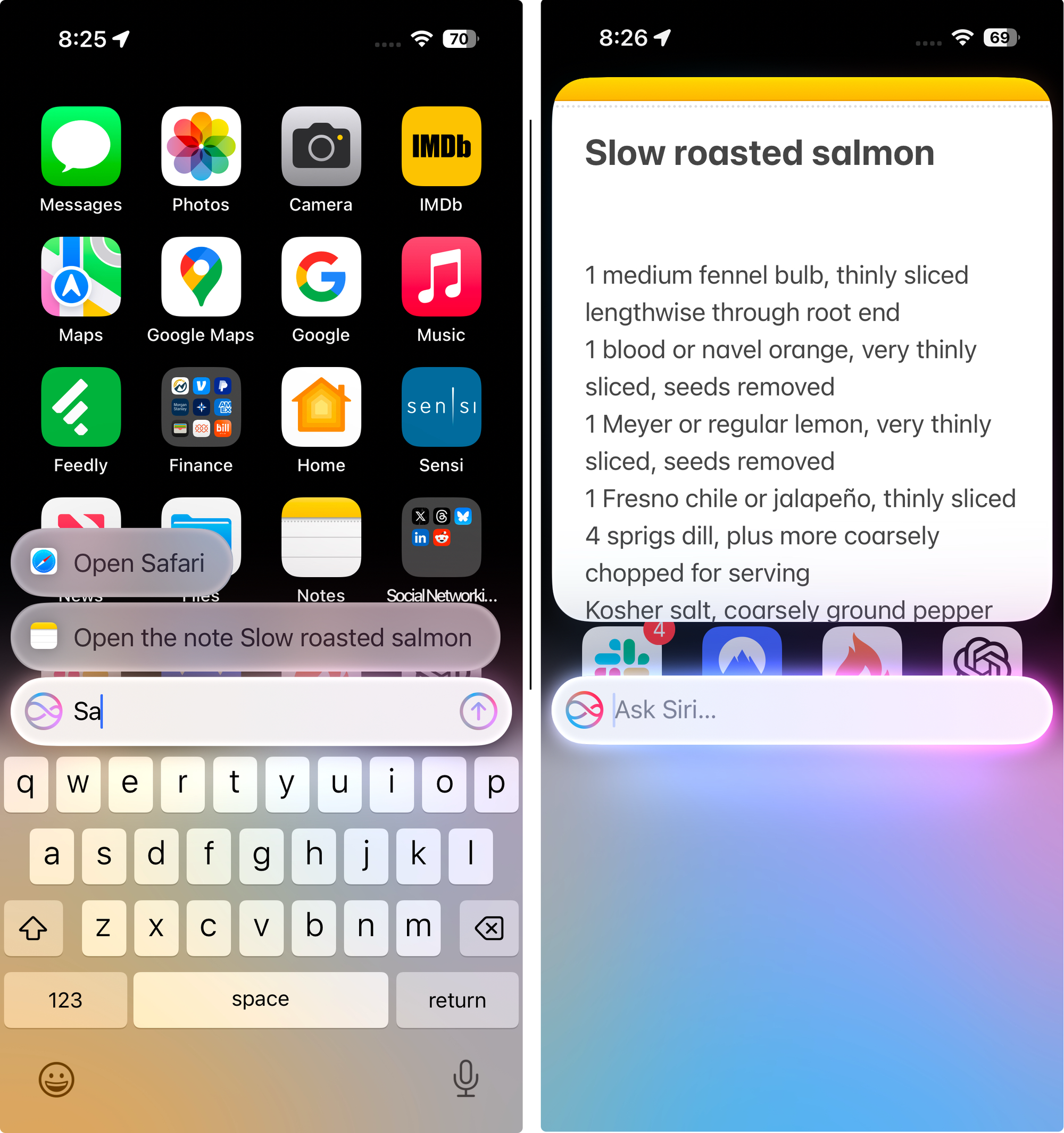
Similar to the current Spotlight, the Type to Siri interface allows entering a few letters to find personal content. However, the answer appears as a hovering card and doesn’t require opening the full app
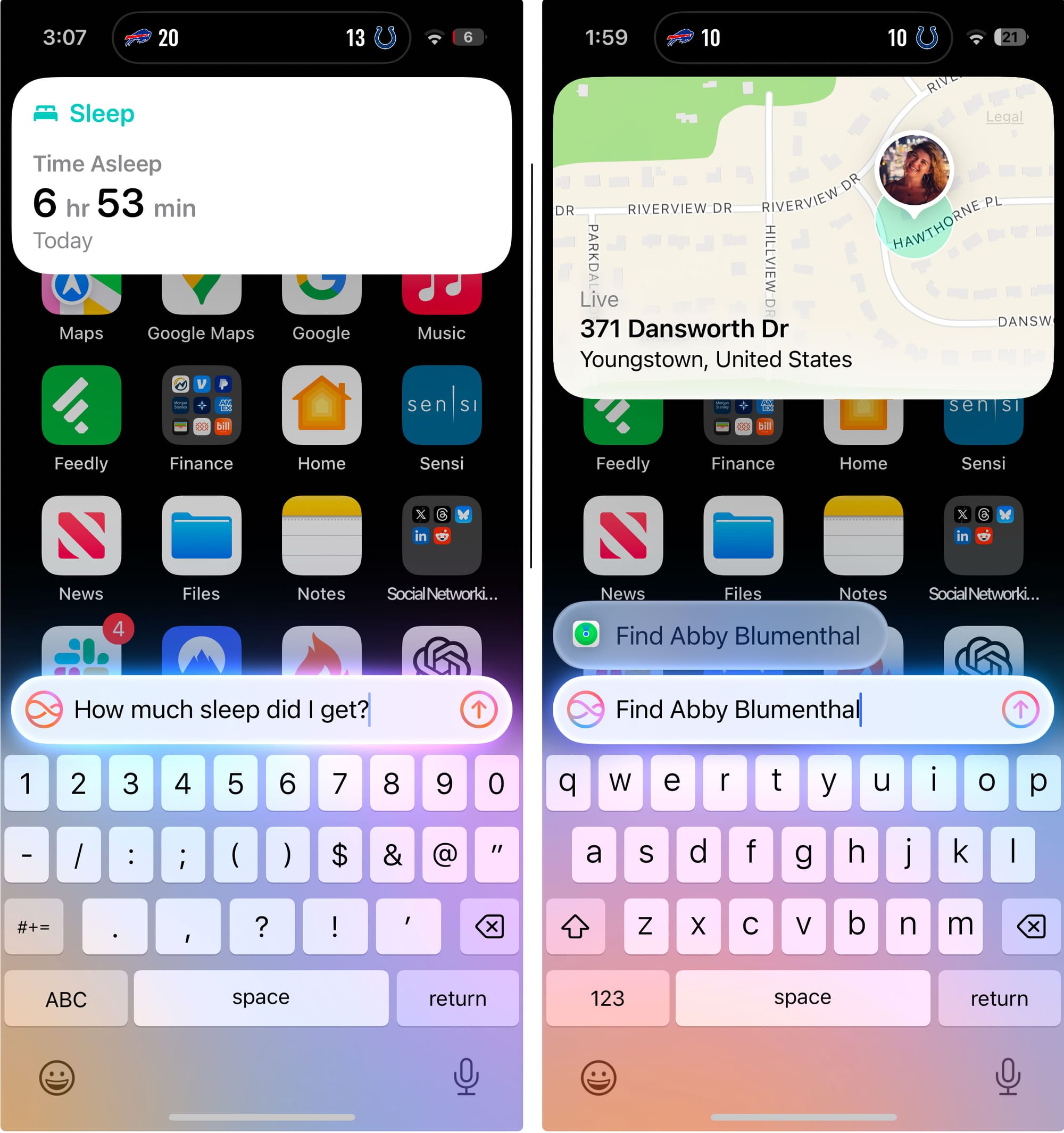
Notably, less than 7.5 hours of sleep, tends to make me grumpy.
### Knowledge Graphs Are Hard
The hard part of Knowledge Graphs isn't building them but maintaining them. Google relies on web scraping and UGC to maintain theirs. Apple seems to be generating theirs by partnering with data partners, trusted web resources and news organizations. While Apple's approach might limit them to fewer graphs it tends to avoid the abuse problems of that Google often sees with UGC. And as we have seen with the recent election results and their new Sports app, they are capable of handling real time and near real time information.
For the foreseeable future, when Siri 2.0 can't answer a given query, Apple will pass off the query to ChatGPT. And there are rumors of Siri [gaining significantly more ChatGPT like](https://appleinsider.com/articles/24/11/24/siri-engine-to-be-fundamentally-revamped-across-2025-early-2026?ref=nearmedia.co) conversational, generative AI features by 2026\. It remains to be seen whether Apple's in-house AI models will simply compliment or replace ChatGPT.
ChatGPT will likely remain and continue to do the types of things that a "world-knowledge" LLM can do that – which are potential brand risks for Apple – while Siri will apply any new AI/agentic capabilities to improving understanding and results from Apple's many knowledge graphs.
### KGs + AI + R.A.G. = Brand Promise
Google has no problem testing AI in the main search results on real users and [getting whacky results](https://www.theverge.com/2024/5/23/24162896/google-ai-overview-hallucinations-glue-in-pizza?ref=nearmedia.co). That is the Google way. Apple on the other hand believes that a MVP should be a reasonable first stab and not doing crazy stuff. They experienced the Apple Maps debacle and seem to want to avoid that embarrassment again.
One of the reason for Apple's slow roll-out of AI is wanting to give users solutions in a way that keeps Apple's brand promise of a tool that helps and doesn't hurt. AI LLMs currently can't keep that promise. Whatever Apple is building towards will do just that.
When Apple does roll-out their own LLM, they will likely infuse their AI with their knowledge graphs using a technique known as RAG (Retrieval-Augmented Generation) to create reliable and predictable outcomes. RAG is a natural language processing (NLP) [technique](https://www.google.com/url?sa=t&source=web&rct=j&opi=89978449&url=https://www.cohesity.com/glossary/retrieval-augmented-generation-rag/%23:~:text%3DRetrieval%2520augmented%2520generation%2520%28RAG%29%2520is,with%2520generative%252Dbased%2520AI%2520models.&ved=2ahUKEwiFq5GMo6WKAxXlLtAFHQk9BegQ-tANegQIAxAP&usg=AOvVaw1HqhC9ceD9IYfCRJFh3OKu) that combines the strengths of both retrieval- and generative-based AI models.
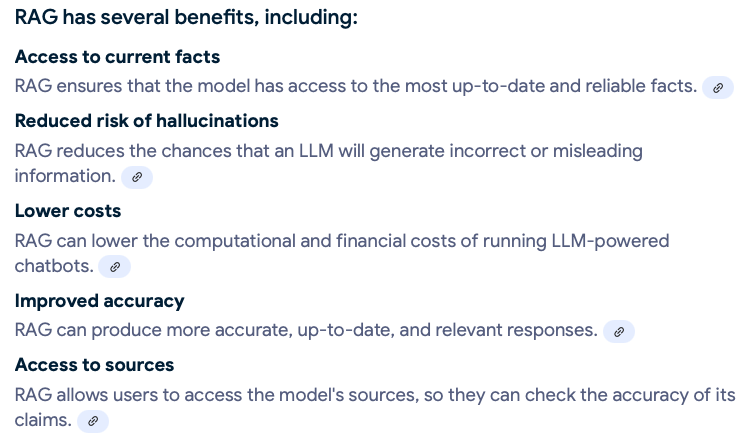
The benefits are many including not going off the rails in a way that would tarnish Apple's brand image
Imagine future queries that combine and articulate knowledge from discreet graphs: "Provide driving directions to theaters showing new movies with the stars of Shrinking" or "Find the best Indian restaurants in Brooklyn or Queens that have been reviewed in the NY Times" and "Indicate how long it will take to get to them via public transportation".
### What is Apple doing?
Is Apple building a search engine? The answer to that is no – at least not in any traditional sense. There are lots of reasons we won't see an Apple search engine that functions like Google in the next few years. And we may never see one.
First and foremost, Google's appeal of the DOJ antitrust victory [could take up to 5 years](https://www.cjr.org/the%5Fmedia%5Ftoday/google%5Fantitrust%5Fdecision.php?ref=nearmedia.co#:~:text=And%20Google%20plans%20to%20appeal,as%20long%20as%20five%20years.). Google will cling to their default-search position on the iPhone as long as possible, as will Apple. Why? Because it provides both significant data advantages and income to Apple.
Second, Apple's approach to AI is, in typical Apple fashion, intentionally slow and stepwise. Many of the currently announced AI features will not be available until after the first of the year. Due to RAM and speed constraints, the AI features will only run on a few current iPhone models.\*\*
We don't know which new models besides the iPhone 16 series will be capable of running Apple Intelligence, although it seems likely to [reach across the product line](https://www.theverge.com/2024/8/11/24217924/iphone-se-apple-intelligence-support-generative-ai-rumor?ref=nearmedia.co) within 12 months. Given that users [hang on](https://macbookjournal.com/how-long-do-macbooks-last/?ref=nearmedia.co) to their iPhones for an [average](https://9to5mac.com/2019/02/08/four-year-smartphone-upgrades/?ref=nearmedia.co) of 4 years, it could still take 3 years for Apple to have Siri 2.0 AI capacity available to the majority of their user base.
Finally, Apple doesn't want to compete directly with a resource-rich company like Google. It would appear that the path that they have chosen, to bring results closer to the user as an integral part of the operating system, allows them to "think different" about search.
### How Will Apple Replace $20 Billion?
The DOJ has [recommended](https://www.theverge.com/2024/11/27/24302415/doj-google-search-antitrust-remedies-chrome-android?ref=nearmedia.co) that Google no longer be allowed to buy the default search position on the iPhone. But the potential loss of the Google default search payment, doesn't mean Apple still can't charge search engines for access, it just needs to be non-exclusionary.
It would seem, though, that Apple has a longer-term view of replacing this income by selling subscriptions around their Knowledge Graphs and [increasing ad revenue](https://www.axios.com/2024/11/19/apple-news-ads-direct-sales-publishers?ref=nearmedia.co).
Apple News, Music, TV, Gaming, and Sports Knowledge Graphs are all supported by Apple and third party subscriptions. [Currently](https://jobs.apple.com/en-us/details/200580526/technical-integrations-specialist-search-ads?team=SFTWR&ref=nearmedia.co) Apple technology "makes advertising possible on the App Store, Apple News, Stocks, and Apple TV." With Apple moving into[ News Ad sales directly](https://www.axios.com/2024/11/19/apple-news-ads-direct-sales-publishers?ref=nearmedia.co), it could foreshadow similar in-house ad efforts around other Knowledge Graphs as well. Local is an obvious fit, as would be Music, Books and Gaming. Apple is continuing to add new Knowledge Graphs as well. They are [currently hiring](https://jobs.apple.com/en-us/details/200580526/technical-integrations-specialist-search-ads?team=SFTWR&ref=nearmedia.co) for ***Integrations Specialist - Search Ads***.
Apple currently has an [installed base of 2.2 billion users](https://www.apple.com/newsroom/2024/02/apple-reports-first-quarter-results/?ref=nearmedia.co#:~:text=%E2%80%9CWe%20are%20pleased%20to%20announce,all%20products%20and%20geographic%20segments.), which is [growing](https://www.statista.com/statistics/1383887/number-of-apple-active-devices/?ref=nearmedia.co) at about 10% a year. That base will, over the next 3 to 4 years, continue to increase in appeal to advertisers. If Google can't pay Apple directly, due to judicial decree, Apple will have little difficulty gaining additional income from other companies that desire access to this valuable user base.
Between subscriptions, ad sales and other third party deals we won't have to worry about Apple losing Google's payments. And with an interface that obviates the need for search to a large degree, Apple seems to be skating to a future puck position so that users won't really miss Google when the full transition takes place.
### Is Siri Sherlocking Search?
What Apple seems to be doing is adding a increasingly sophisticated AI based information retrieval to the system level of the phone. Information that once took a specialized search engine or app to retrieve can now be answered directly from a query from any screen of your iPhone.
Apple also continues to add new Knowledge Graphs. In November they [added](https://9to5mac.com/2024/11/12/apple-music-classical-carplay/?ref=nearmedia.co) a Classical Music app to the iPhone and CarPlay and enabled Siri to access and retrieve its contents. They are also, with iOS 18.2, [allowing third party apps to better integrate](https://developer.apple.com/documentation/sirikit/integrating-your-app-with-siri-event-suggestions?language=objc,objc&ref=nearmedia.co) with Siri 2.0 results via app events.\*\*\*
The arrival of ChatGPT integration will both expand the types of answers Siri can provide and offer a way to keep users engaged with Siri. As Apple expands its definition of what information a personal device should provide and how to securely provide it, the company will continue to bring more query results on device.
### Will This Siri Succeed?
Consumers are currently making [1.5 billion Siri queries a day](https://youtu.be/J7al%5FGpolb8?si=46OY1kUUke-Qf0XD&t=4633&ref=nearmedia.co) but many users, particularly on the iPhone, have been [deterred](https://youtu.be/zWvWoZBIYLI?si=YLTt2Oqx0U5pKO0R&ref=nearmedia.co) by Siri's inability to properly understand more in depth queries: the "brittleness" of voice search and the limits of voice as an information retrieval interface.\*\*\*\* It's early days for Siri 2.0 and Apple Intelligence. Despite already shipping, it's [still in beta](https://support.apple.com/en-us/121115?ref=nearmedia.co#:~:text=Apple%20Intelligence%20is%20available%20in,set%20to%20a%20supported%20language.). The new Siri has improved its ability to understand me, although when the environment is loud it still has problems extracting my voice from the background.
What Apple brings to the Siri party, is a broad ecosystem of devices where Siri could be a game changer. For users of Apple TV, AirPods and HomePods, voice has largely been effective as an interface. But voice isn't always an ideal interface. To that point Apple has built out a Type-to-Siri interface that is likely to become popular on the Mac and to some extent on the iPhone as well.
Accessing the Type-to-Siri interface on both the Mac and the iPhone is not obvious. On the iPhone it [requires](https://support.apple.com/guide/iphone/use-apple-intelligence-with-siri-iph17bafe0f6/18.0/ios/18.0?ref=nearmedia.co) a double tap at the bottom of the screen and on the Mac requires [fiddling](https://support.apple.com/guide/mac-help/change-siri-settings-for-accessibility-mchl5715a9f2/mac?ref=nearmedia.co#:~:text=On%20your%20Mac%2C%20use%20Siri,Submit) with the accessibility settings to make it appear. There is also the confusion of the relationship between Spotlight search, available on all iPhones, and the full Siri 2.0 capability currently available on the iPhone 15 Pro and above.
Given that the Type-to-Siri 2.0 interface is a pixel for pixel match for Spotlight, it is safe to assume that Spotlight will be replaced at some point.
To succeed, Apple must maintain interest and engagement with Siri 2.0, while rolling out not only new phones with improved UI access but also new devices (e.g., the smart home device), that engage users with Siri across the ecosystem. They must do this while overcoming some reluctance toward voice search on phones in general and Siri in particular. A tall order, but a company that can bring Apple Maps back from the brink seems to have the chops to do this as well.
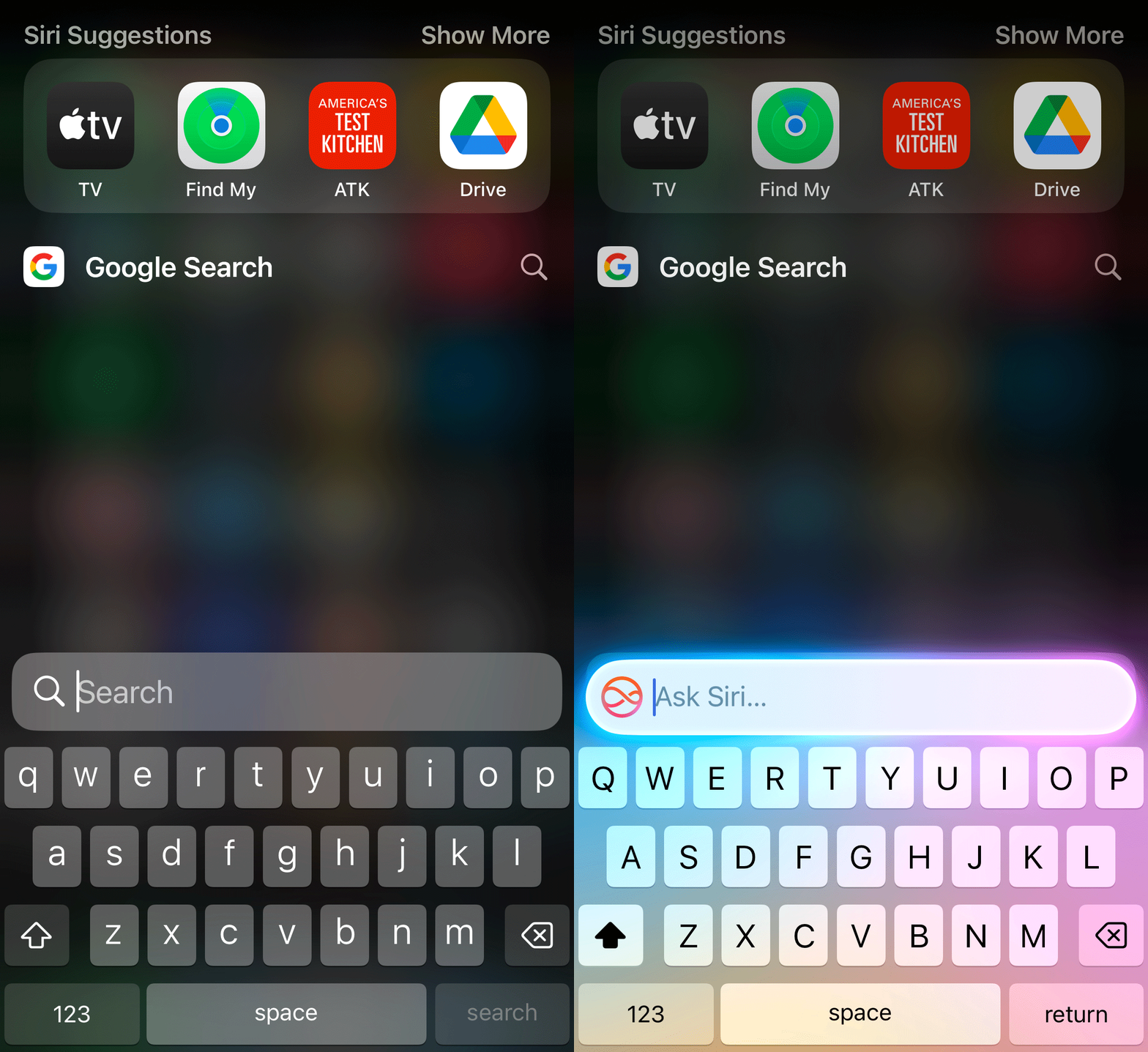
### How Marketers Should Respond
We are in a period of epochal change. Generative AI is literally the [bridge to the future](https://stratechery.com/2024/the-gen-ai-bridge-to-the-future/?ref=nearmedia.co). As Rand Fishkin's [recent research](https://sparktoro.com/blog/new-research-we-analyzed-332-million-queries-over-21-months-to-uncover-never-before-published-data-on-how-people-use-google/?ref=nearmedia.co) pointed out, search has already changed a great deal. Brands are increasingly important and content alone is no longer a guaranteed path to client acquisition.
Google is saying [search will ‘change profoundly’ in 2025](https://www.theverge.com/2024/12/5/24314245/sundar-pichai-google-search-change-profoundly-2025?ref=nearmedia.co). Apple appears to be betting that search is undergoing radical change and, within four years, this will be evident to all.
While much will change much will stay the same: Apple and Google are likely to control many of the devices we use, Google search habits will die hard and branding will retain its role as critical in building out a client base wherever consumers end up.
Much is unknown and there will be much to learn for marketers. Who will dominate generative AI?; Will Apple present real opportunities? And if they do, How do AI and Apple even choose the winning answers?
At the meta level, marketers need to accept the fact that search is going to become more fragmented. It is likely that Google will slowly lose out as the singular place for consumers to get answers (arguably that's already true). Amazon has already shown how that happens with products; Apple and ChatGPT are showing a way forward for informational queries that is likely to increasingly cannibalize Google. And Google will cannibalize itself with AI.
The need for a well designed website that answers customers key questions will remain key. Branding IRL and outside of Google is increasingly important.
Follow the path of the current crop of generative AIs to see which of them is impacting referrals. ChatGPT has done a great job building out visibility but Google will not go gently. ChatGPT will get a boost from Apple integration but that benefit might be short lived as Apple has made clear that [other gen AIs](https://9to5mac.com/apple-intelligence-google-gemini/?ref=nearmedia.co) are welcome.
In the Local space, you should stay up with Apple Business Connect and develop reporting to understand your success. This is particularly true if you cater to high-end clientele or are in the hospitality fields, where we are seeing significant Apple Maps traffic.
Nobody said digital marketing would be easy, but it's certainly going to be exciting. That's for sure.
---
\*Sherlocking, a term made infamous when Apple put the search tool Sherlock out of business by integrating it's features, is really just technology evolution in action. It makes sense over time and increasing capabilities of the devices to take the functionality of the apps and build it into the hardware (think the new photo action button on the iPhone 16) or, more commonly, the integration of information retrieval into the OS. Much of what Google does would be better served by being delivered easily and transparently to the user.
\*\*Apple Intelligence with Type to Siri is available on iPhone 16, iPhone 16 Plus, iPhone 16 Pro, iPhone 16 Pro Max, iPhone 15 Pro, iPhone 15 Pro Max, iPad with A17 Pro or M1 and later, and Macs with M1 processors and later.
\*\*\*You can experience Siri App Events now if you have iOS 18.1, an iPhone 15 pro or greater and either CarPlay and/or Airpod Pros and Apple Maps. If you ask for a local category suggestion using voice, Siri will suggest the first of several locations that fulfill the query and will follow up with a question as to whether you want that location. With the Airpod Pros,if you shake your head left to right for "no" it will then ask the same for the second location.If you shake your head for "yes" it will then ask if you want it to call the location or provide driving directions.
\*\*\*\*This conversation with John Giannandrea, previously the Google AI lead who went to Apple due to weak leadership at Google, is worth listening to. He details why voice search has failed to this point and with LLMs has a chance for broader adoption.
### Ep 185: GBP’s Biz Name Shift, Fishkin’s Search Query Insights, & AI's Growing Role in Challenging Google
URL: https://www.nearmedia.co/ep-185-gbps-biz-name-shift-fishkins-search-query-insights-ais-growing-role-in-challenging-google/
Last updated: 2024-12-07T14:28:40.000Z
**Part 1 starts 00:13 -** [**Extended GBP Business Names - Spam or Legitimate Descriptors?**](https://youtu.be/FaIKszAzAcw?ref=nearmedia.co)
We explore Google's growing tolerance for extended taglines & descriptors in business names via the Google Business Center and its impact on local SEO strategies. Examples include businesses embedding descriptors like “best plastic surgeon” or “sexual harassment lawyer” into their names that were escalated to Google but were deemed acceptable. These additions act as taglines and significantly boost search visibility by leveraging Google’s algorithm, which treats business names as ranking signals. This shift marks a departure from earlier strict rules, offering businesses a competitive edge when such names are left unchallenged.
Google’s willingness to accept these extended descriptors, even after they are flagged, suggests a prioritization of scalability over strict enforcement. While businesses may benefit from increased visibility, they must balance this tactic with potential risks, such as temporary suspension or muddling brand identity. The conversation calls for structured testing to understand the limits of Google's tolerance and how businesses can effectively navigate these relaxed guidelines without overstepping.
Segment Reference Articles:
[Best Plastic Surgeon Seattle](https://support.google.com/business/thread/300853420?msgid=308955201&ref=nearmedia.co)
[Severe Name Abuse Leads to Consumer Confusion](https://support.google.com/business/thread/304252015?ref=nearmedia.co)
**Part 2 starts 12:08 -** [**Rand Fishkin Research: Branded Queries Dominate Google: Insights from 300 Million Searches**](https://youtu.be/DLJg6HbV2CM?ref=nearmedia.co)
Rand Fishin’s analysis of over 300 million Google queries reveals surprising insights into search behavior. A striking 15% of all queries consist of just 150 terms, primarily branded or navigational, underscoring the dominance of well-known names in search behavior. Informational queries represent 53% of the total, while commercial and transactional searches trail significantly, with less than 1% being purely transactional. This data suggests a need for businesses to emphasize brand building to thrive in Google’s search ecosystem.
The findings underscore the challenge of zero-click searches, where Google resolves queries directly, leaving businesses without traffic. The recommendation? Shift focus from SEO competition to brand building via alternative channels to drive direct searches. Ads, for example, can complement this strategy by enhancing brand awareness, leading to stronger organic performance and bypassing Google’s increasingly saturated search landscape.
Segment Reference Articles:
[New Research: We analyzed 332 million queries over 21 months to uncover never-before-published data on how people use Google](https://sparktoro.com/blog/new-research-we-analyzed-332-million-queries-over-21-months-to-uncover-never-before-published-data-on-how-people-use-google/?ref=nearmedia.co)
[What 300M Queries Tell Us About Search](https://www.nearmedia.co/300-million-queries-old-google-cyber-week-location-data-is-like-ground-beef/)
**Part 3 starts 25:32 -** [**AI vs. Google: The Rise of ChatGPT as a Search Alternative**](https://youtu.be/L3MgfgpFJ%5Fc?ref=nearmedia.co)
We discuss AI’s potential as an alternative to search engines, with tools like ChatGPT emerging as viable competitors. A survey reveals that while 77% of frequent search users find Google easier to use than three years ago, AI tools are gaining traction, with ChatGPT ranked second in perceived usefulness. This shift reflects growing consumer trust in AI for specific tasks, such as shopping comparisons, where platforms like Perplexity accelerate decision-making.
Despite Google’s dominance, dissatisfaction with its cluttered and spam-prone results is evident. Businesses face a dual challenge: leveraging Google for recovery searches while addressing consumers’ complex decision-making needs. AI's rise presents an opportunity for businesses to adapt, using diverse platforms to maintain relevance amid evolving consumer habits.
### ChatGPT Milestone, F**Ked Up Attribution, Siri's AI Future
URL: https://www.nearmedia.co/chatgpt-milestone-f-ked-up-attribution-siris-ai-future-2/
Last updated: 2024-12-05T23:33:55.000Z
### ChatGPT: 300 Million Weekly Users
Google CEO Sundar Pichai [told a conference audience](https://www.nytimes.com/live/2024/12/04/business/dealbook-summit-news?smid=url-share&ref=nearmedia.co#bbae9064-80f0-5ce5-baea-e347592b7c1c) yesterday that the pace of AI development is "slowing down" but added, "Search itself will continue to change profoundly in 2025." That could be a promise or simply a bland PR statement. But let's assume it's true. Without competition from ChatGPT, the Google UI probably wouldn't be changing "profoundly" – although Google had already been trying to [address Gen Z user defections](https://www.nearmedia.co/new-google-ads-ar-rising-what-tech-will-stick/) by "transforming the SERP into an endless stream of visual ideas." It's pretty clear that competitive pressure and revenue imperatives are driving Google search-product development, much more than consumer utility. For its part, ChatGPT's Sam Altman spoke at the same conference and [announced](https://www.cnbc.com/2024/12/04/openais-active-user-count-soars-to-300-million-people-per-week.html?ref=nearmedia.co) that ChatGPT now had 300 million weekly active users. That's up from 200 million in August, 100 million more in three months. OpenAI is targeting a billion users by the end of 2025\. That's ambitious but probably not out of the question. To get there the company will need to keep improving search results, including and especially in local. Today, according to Dialog survey data, Google is perceived by consumers as a more reliable information source vs. AI across categories. Asked “If you had to choose only one of \[11 search and AI tools\] for all your research and purchase decision-making needs, which would it be?," Google was the winner. But ChatGPT came in second.
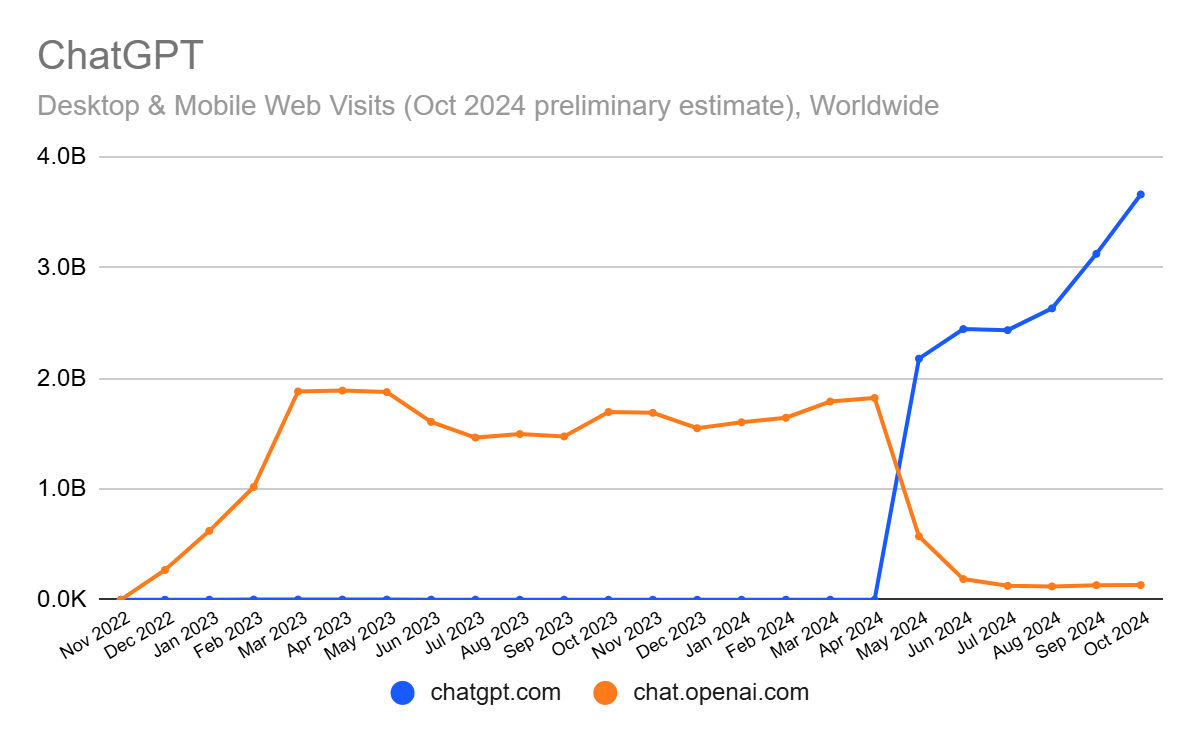
Source: SimilarWeb
_This post is for subscribers on the All-Access Membership tier only._
### 300 Million Queries, Old Google, Cyber Week, Location Data Is Like Ground Beef
URL: https://www.nearmedia.co/300-million-queries-old-google-cyber-week-location-data-is-like-ground-beef/
Last updated: 2024-12-04T02:48:29.000Z
### What 300M Queries Tell Us About Search
Rand Fiskin has [published](https://sparktoro.com/blog/new-research-we-analyzed-332-million-queries-over-21-months-to-uncover-never-before-published-data-on-how-people-use-google/?ref=nearmedia.co) a massive new study of more than 300 million Google search queries (Datos data). The study excluded app-based searches and those on "specialized Google platforms," such as Shopping or Maps. There's a lot there, so take a look; we'll highlight the main findings. On average users conduct just over 120 searches per month or roughly 4 searches per day. The "head" is very "fat": just under 150 search terms made up roughly 15% of all queries in this 21 month study. Most of these terms are navigational (or branded). Fishkin's data argue that 53% of queries are informational (less than [others have argued](https://www.nearmedia.co/prop-22-goes-down-smb-social-disconnect-mid-funnel-queries-dominate/)), 32% are navigational (e.g., "YouTube"), 14.5% are commercial and a tiny 0.7% are transactional. The top 10 topics by search volume (in order) are Arts & Entertainment, Computers/Technology, Ecommerce/Shopping, Games, Science/Education, Sports, Finance, Social Media, Hobbies/Leisure and Adult. (Fiskin points out that 37% of Google searches have low commercial value.) Branded search terms comprise 44% of total volume, with "generic" keywords making up 56%. He adds that zero-click answers (including AIOs) dominate "5 of the 9 biggest categories of query demand." Finally Fiskin advises: target audiences (off Google) rather than "millions of query permutations" on Google.
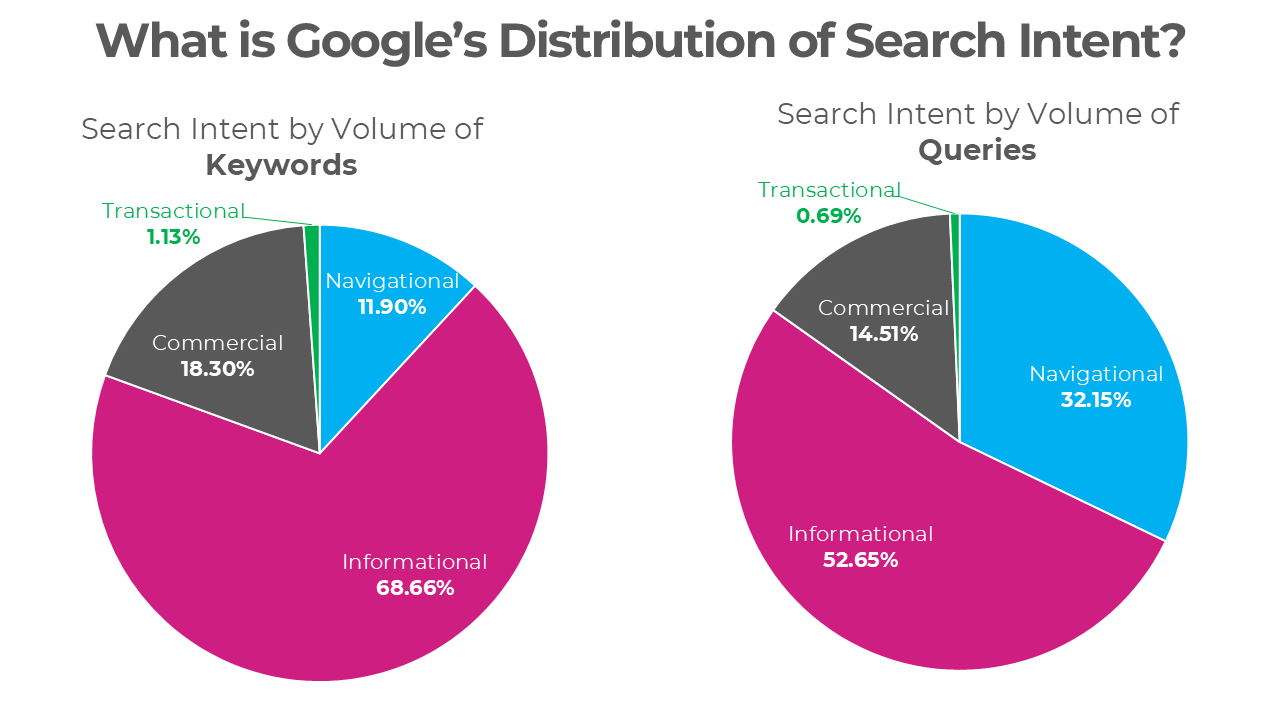
Source: SparkToro
**Our take:**
- There's a lot of great data here but generally few surprises, except maybe the concentration of queries and the ranking of query categories.
- The big takeaway is: you need to build a brand off Google so that people will search for you directly. Since the DOJ and click revelations, people have been discussing this. It's harder in local, though not impossible.
- The implied customer journey discussion is instructive as well. Google isn't the beginning of the customer journey, it's more in the messy middle.
_This post is for subscribers only._
### Waves of GBP Suspensions Reflect Google Support Failures
URL: https://www.nearmedia.co/waves-of-gbp-suspensions-reflect-google-support-failures/
Last updated: 2024-12-02T18:31:43.000Z
***Upgrade to*** [***continue receiving our research, analysis & commentary***](https://www.nearmedia.co/upgrade-to-all-access/)***.***
Google has allowed too many fake listings into the local index. So, last year they started to clean up their act. But as with so many things about Google, they often throw out the baby out with the bath water. You can see this in our examination of the Google Business Profile (GBP) [help forums post types](https://www.nearmedia.co/apple-maps-discovery-gbp-call-history-is-history-gbp-forum-insights/#gbp-forum-suspensions-video-reviews) in general and suspensions posts in particular.
As Google's algorithms swept through the local knowledge graph last year, looking for suspected fake listings, the number of SMBs seeking help in the forums soared, a reflection of both over indexing on the removals and poor support to resolve errors. As is typical with Google's algorithm it's only accurate up to a point. Many of the suspended (as fake) listings were real businesses that depend on Google for new customers.
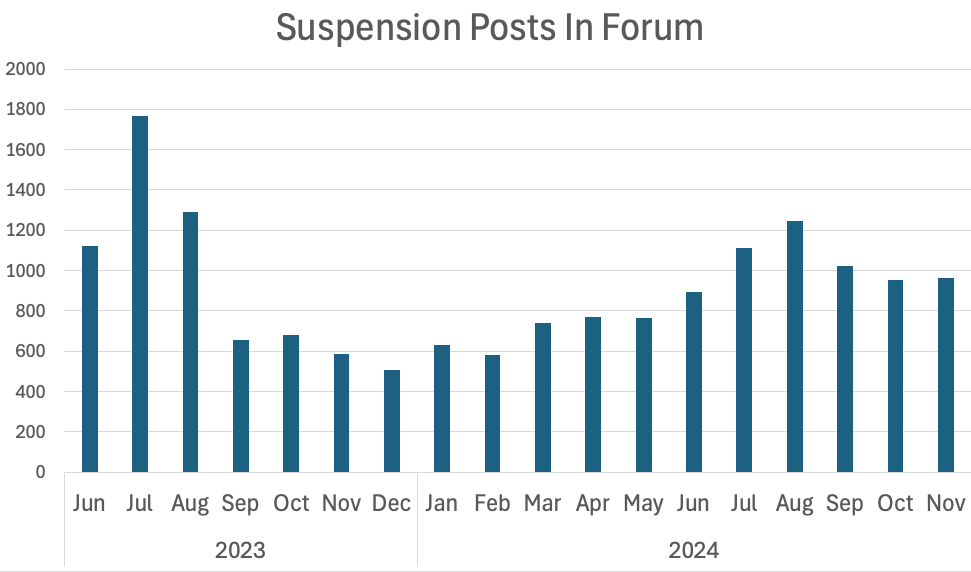
Forum escalations regarding unresolved SMB suspensions. This is where a small % of frustrated SMBs end up when support fails them. We believe that trends in the forum reflect the larger overall suspension trends.
### Poor Support System
The support process Google put in place for dealing with the many wrongful suspensions was primarily email based. It offered no guidance about what the business did wrong or how they should go about getting their listing back up. After the second or third email exchange, Google just stopped responding.
Frustrated, many of these businesses flocked to the forum where volunteer Google Product [Experts](https://support.google.com/business/community-guide/289980627/meet-our-product-experts??ref=nearmedia.co) (PEs) helped businesses comply and navigate the re-inclusion process. This was time consuming and included multiple PE escalations to Google staff to help legit businesses make their way back into the index.
Overall, it was a pretty janky support system that left too many businesses out in the cold, and left Google and the PE volunteers facing a tidal wave of support requests. Google set out to fix it.
### Fix Is Not Much Better
The problem is multifaceted and Google's new fix, while better, still ensnares a great many businesses. In an effort to keep the index clean, even small edits to an service-area-business (SAB) listing can trigger the dreaded "your listing is not visible to the public" notification, keeping the number of suspensions high.
To lighten Google's support load and to reduce the seemingly infinite (and unanswered emails), they started to allow only one re-inclusion request and one appeal, which required a business to fill out a form. The form did provide more guidance as to which documents to include. While it limited the email tidal wave it created other problems: the business was only given 60 minutes to submit documents and if they were wrong or something was missing, the business had only one chance to appeal before the case was closed.
Once again SMBs were forced into the forums out of desperation.
The chart above, showing increasing numbers of forum suspension-related posts from early summer, reflects both an uptick in actual suspensions as well as the failure of the new support mechanism. The numbers are starting to decline as Google had to reintroduce additional re-inclusion processes to supplement the automated one, which hit its limits. But too many legitimate businesses are still being impacted.
### Who Bears the Costs?
Scaling solutions for creating and curating location ground truth only takes Google so far. This is particularly true with an AI/ML driven process that might only be 75 or 80% accurate. The other issue with an AI-driven solution is that when suspension numbers go down, fake listings go up and vice versa. From Google's perspective, 1,200 posts a month in the forum, reflecting who knows how many actual suspensions, is a tiny percentage of the total listings graph. But to those 1,200 (and who knows how many more) businesses that have lost access to a key demand generator, it is potentially a death knell.
Google has been reluctant or unwilling to spend money on creating an accurate and reliable knowledge graph and even more unwilling to provide adequate human support when they do make mistakes. They effectively push the costs of fixing these issue onto the small business owners, volunteers and the public.
### What to Do If You're Suspended
If you are suspended, I strongly recommend that you stop and assess your situation before applying for re-inclusion. It is often quicker and less expensive to partner with a Google Product Expert who specializes in re-inclusions to navigate the complexities of the system and your particular situation. There are several I work with that very good so please [reach out](mailto:mblumenthal@nearmedia.co) if you need a recommendation.
### Apple's $30B Ad Future, Agency AI Ambivalence, Tricks for Ad Clicks
URL: https://www.nearmedia.co/apples-30b-ad-future-agency-ai-ambivalence-tricks-for-ad-clicks/
Last updated: 2024-11-27T23:05:26.000Z
***Next week most of our content*** [***will move behind a paywall***](https://www.nearmedia.co/v2/)***; please continue to support us*** [***by subscribing***](https://www.nearmedia.co/v2/#/portal)**.* We're thankful to all our readers and subscribers. And to all those in the US, Happy Thanksgiving.*
### Google Expects Apple Ad Competition
As Apple [confronts the loss](https://www.nearmedia.co/doj-sell-chrome-fake-reviews-300-billion-chatgpt-gaining-2/) of Google's massive $20 billion in default search payments it appears to be ramping up its own ad business. The company [will sell ads directly](https://www.axios.com/2024/11/19/apple-news-ads-direct-sales-publishers?ref=nearmedia.co) in its increasingly popular News app. As Axios commented, "The shift toward direct sales represents a significant milestone in Apple's advertising ambitions." In 2022, Google started thinking about Apple's inchoate advertising ambitions and what it would be like to have Apple as an ads competitor. Google issued an internal [report](https://www.courtlistener.com/docket/66753787/1132/3/united-states-v-google-llc/?ref=nearmedia.co) ("Project Black Walnut") containing their informed speculation. It became a Google anti-trust trial exhibit in the [current Google ad-tech trial](https://www.courtlistener.com/docket/66753787/united-states-v-google-llc/?ref=nearmedia.co) ([via](https://www.yahoo.com/tech/inside-project-black-walnut-sheds-171021383.html?ref=nearmedia.co) Business Insider). Google estimated that "long term," Apple could build a roughly $30 billion advertising business. By comparison Google saw $238 billion in 2023 ad revenue; Meta posted $132 billion and Amazon had approximately $47 billion. Google expects Apple to monetize its own apps first, followed by third party apps and then eventually "the Safari web." Google speculated that Apple was generating $4 billion in mostly app store ad revenue "today" (2022).
**Google estimates of Apple's ad opportunity**
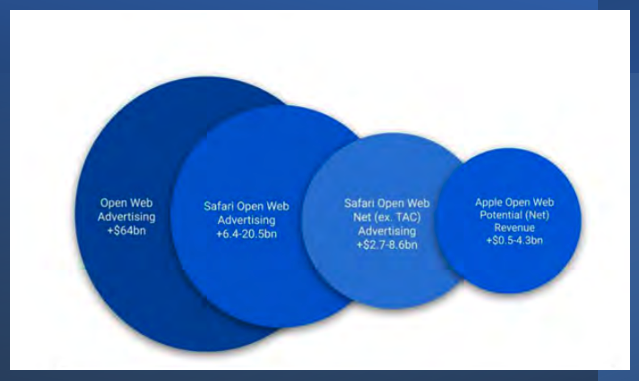
Source: Google
**Our take:**
- Google expects Apple to monetize Maps, Spotlight Search and Apple TV among other properties.
- Spotlight Search will likely be merged with an improved Siri at some point. Maps and Search ads are logical to recoup some of Google's $20 billion that Apple is likely to lose.
- Apple has differentiated from Google's partly on the basis that it doesn't sell ads. Broad adoption of ads across properties creates a brand risk.
### Agency AI Ambivalence
BrightLocal released its fourth [Local Marketing Industry Survey](https://www.brightlocal.com/research/local-marketing-industry-survey-agencies/?ref=nearmedia.co), which is full of information about gender pay disparities, job satisfaction, hiring, training and technology investments. Conducted in August and September, the survey had 385 respondents. There's lots in there that's interesting; I'll focus on a few highlights. The most commonly offered agency services were GBP management (68%), SEO audits (65%), content creation (65%), technical SEO (63%), reporting/analytics (62%), web design (60%), on-site optimization (60%), citation building (53%), social media management (53%), and competitor research (51%). Strangely, reputation/review management didn't make the top 10\. The top three reasons for churn were budget cuts, disappointing results and in-housing. Biggest opportunities for clients included foundational SEO (e.g., E-E-A-T), GBP optimization and "alternative search engines and business discovery platforms" (e.g., AI search). Indeed, AI was cited as the biggest area of opportunity for agencies themselves, with a majority (59%) of local marketers seeking to develop more AI expertise. But there was also skepticism and concern about the overselling of AI and its benefits. Full survey results are [here](https://www.brightlocal.com/research/local-marketing-industry-survey-agencies/?ref=nearmedia.co).
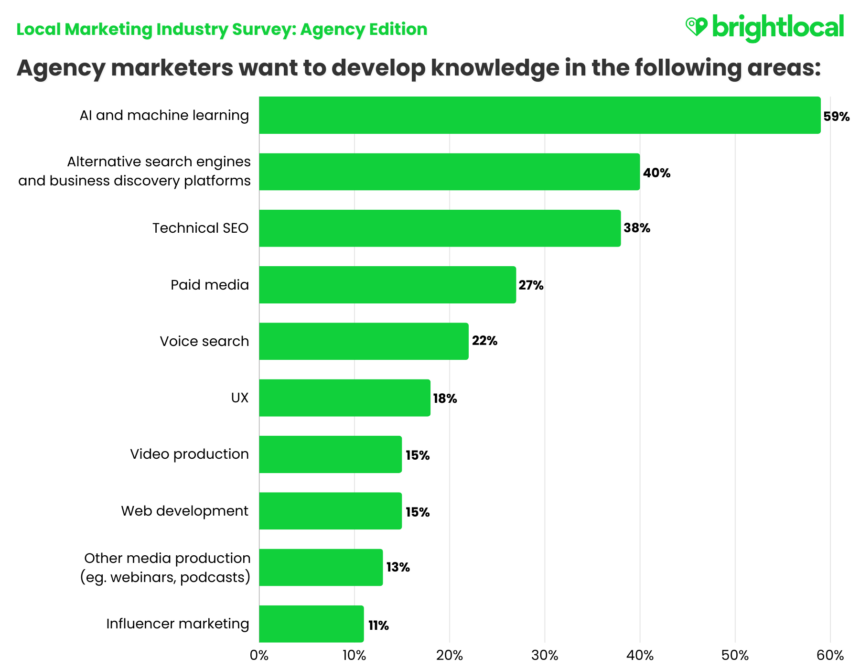
**Our take:**
- BrightLocal did not discuss agency headcount, client numbers or revenues. We need to assume these are smaller agencies overall.
- Regardless of agency AI ambivalence, it will have a major impact on their businesses going forward in multiple ways. It may also prompt more in-housing among target clients.
- In Near Media's 2022 agency survey, the optimal services mix was 1) SEO, 2) web design, 3) paid search and 4) content marketing. They had highest demand, profitability and retention – but findings varied by agency size.
### Google Tricks for Clicks
Google's justification for almost everything it does is "helping users" or "improving the user experience." Typically, anything that frustrates Google's intentions or designs "undermines the user experience" (see, e.g., DMA compliance responses.) If we pierce the veil of this rhetorical unreality, there's generally a business or revenue justification lurking just below the surface. That's likely what's going on with a newly introduced feature in the Google app for iOS: Page Annotation. Barry Schwartz [first flagged the new feature](https://www.seroundtable.com/google-ios-app-page-annotation-38451.html?ref=nearmedia.co). When Google recognizes entities on your site, it will turn them into links that generate Google searches. Here's Google's [explanation](https://support.google.com/websearch/thread/308719098/page-annotation-in-google-app-browser-for-ios?hl=en&ref=nearmedia.co) of the purported consumer value: "This new experience allows people to quickly get additional context about people, places or things - without leaving the site they're on." As a practical matter what this is likely intended to do is generate additional search volume and more ad clicks, as Anthony Highman's [example](https://x.com/AnthonyHigman/status/1861740316245577930?ref=nearmedia.co) below illustrates. Highman speculates this move is intended to "hide losses in query growth." Regardless of whether it's actually hiding query losses, it's about generating more searches and ad clicks rather than consumer value.
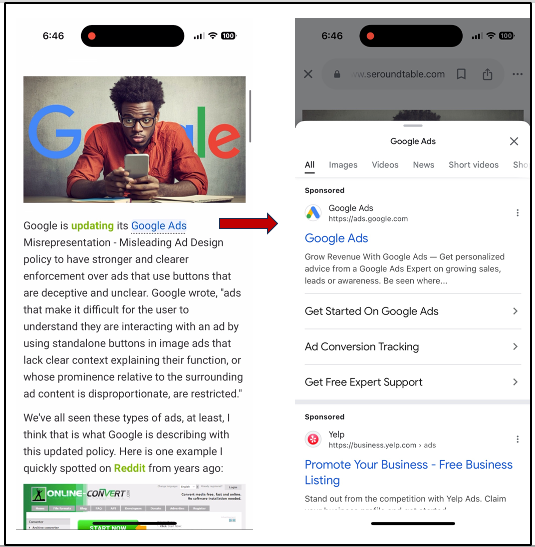
Source: Anthony Highman
**Our take:**
- Some [data sources](https://gs.statcounter.com/search-engine-market-share/desktop-mobile-tablet/united-states-of-america/?ref=nearmedia.co#monthly-202211-202411) show Google's search market share increasing; however considerable anecdotal evidence argues against that claim.
- ChatGPT's referral traffic has been growing and there's evidence to suggest people are "diversifying" their search behavior.
- Google will remain the dominant search engine. However even a hint of slippage will put the fear of God into investors.
## Recent Analysis
- **Near Memo episode 184:** [GBP suspension woes and support #fails, Siri 'Sherlocking' search, and the coming fragmentation of search](https://www.nearmedia.co/ep-184-gbp-suspension-woes-support-fails-siri-sherlocking-search-the-fragmentation-of-search/).
## Short Takes
**LOCAL**
- In-store [product inventory improves](https://www.linkedin.com/posts/george-henderson-68b621189%5Falways-find-these-graphics-interesting-to-ugcPost-7267227656121716736-4%5Fu4/??ref=nearmedia.co) **local rankings.**
- **Google** [showing LSAs in Local Pack](https://x.com/lenraleigh/status/1861135698583035928?ref=nearmedia.co) for category searches.
- **Optimizing location pages** [for local ranking](https://www.screamingfrog.co.uk/optimising-your-location-pages-for-both-users-and-search/?ref=nearmedia.co) and conversions.
- GBP: **Age restricted products** (e.g., alcohol) [now require storefront](https://bsky.app/profile/stefansomborac.bsky.social/post/3lbwjbjdhbs2b?ref=nearmedia.co).
- **Yelp** [completes RepairPal buy](https://www.businesswire.com/news/home/20241126440898/en/Yelp-Completes-Strategic-Acquisition-of-RepairPal?ref=nearmedia.co), to add a third revenue vertical.
**AI & SEARCH**
- **AI best practices** [for content creation](https://www.keywordinsights.ai/blog/using-ai-to-write-the-right-way/??ref=nearmedia.co).
- **SearchGPT** will be available [through iPhone shortcuts](https://www.macrumors.com/2024/11/25/openai-searchgpt-shortcuts-app/?ref=nearmedia.co).
- More [people in the UK are using](https://www.thetimes.com/uk/technology-uk/article/shoppers-ditch-search-engines-as-ai-shakes-up-online-spending-q6swp9hqw?ref=nearmedia.co) **AI for product search**/holiday shopping.
- And now an AI **deep fake** [detecting browser](https://thenextweb.com/news/uk-startup-launches-worlds-first-ai-deepfake-detector-browser?ref=nearmedia.co).
- Longer posts are **LinkedIn** [were probably written by AI](https://www.wired.com/story/linkedin-ai-generated-influencers/?ref=nearmedia.co).
**GENERAL SEO & MARKETING**
- Major **Google clickthrough trends** for Q3, [by industry and platform](https://www.advancedwebranking.com/blog/ctr-google-2024-q3??ref=nearmedia.co).
- Google promised more **search personalization**; [is it happening](https://www.seroundtable.com/google-search-results-more-personalized-38471.html?ref=nearmedia.co)?
- Most [marketing spend doesn't align](https://sparktoro.com/blog/if-your-audiences-sources-of-influence-and-your-marketing-budget-dont-align-youre-gonna-have-a-bad-time/?ref=nearmedia.co) with actual **influence channels**.
**LAW & POLICY**
- A mostly unconvincing argument against "breaking up" **Google** ([NYT](https://www.nytimes.com/2024/11/26/opinion/google-chrome-antitrust.html?ref=nearmedia.co)).
- Antitrust: FTC says it will investigate **Microsoft's cloud business** ([WaPo](https://www.washingtonpost.com/technology/2024/11/14/ftc-microsoft-cloud-investigation-khan/?ref=nearmedia.co)).
- Summaries of [closing arguments](https://www.usvgoogleads.com/trial-updates/closing-arguments-november-25-once-twice-three-times-a-monopolist?ref=nearmedia.co) in **US v. Google** (ad-tech case).
- **Google** argues DMA demands hurt consumers, [as it struggles to comply](https://blog.google/around-the-globe/google-europe/dma-compliance-update/?ref=nearmedia.co).
**OVERFLOW**
- **Apple iPhone 17** "Air" will reportedly [require multiple compromises](https://9to5mac.com/2024/11/26/reported-iphone-17-air-compromises-tell-us-a-lot-about-apples-thinking/?ref=nearmedia.co).
- Overshadowed by Blue Sky, **Threads** says 35M [signed up in November](https://www.theverge.com/2024/11/26/24306591/threads-35-million-signups-november-growth?ref=nearmedia.co).
Listen to our [latest podcast](https://www.nearmedia.co/memo/).
[](https://nearmedia.co/memo?ref=nearmedia.co)
How can we make this better? Email [us](mailto:gsterling@nearmedia.co) with suggestions and recommendations.
### Upgrade to Continue Receiving Our Research, Analysis & Commentary
URL: https://www.nearmedia.co/upgrade-to-all-access/
Last updated: 2024-11-26T17:00:26.000Z
💡
****Help us continue to provide great content.** [****Upgrade your subscription**](https://nearmedia.co/subscribe?ref=nearmedia.co) **to continue receiving all our research and analysis for only $200/year.**
Since Near Media's inception in 2021 we've published nearly 500 [newsletters](https://www.nearmedia.co/tag/news/), recorded 184 [podcasts](https://www.nearmedia.co/memo/), revealed the findings from multiple user-research [studies](https://www.nearmedia.co/tag/dma/) and published more than 150 deeper-dive [analysis](https://www.nearmedia.co/tag/analysis/) pieces on everything from local suspensions and review best practices to LSA scams, Apple Business Connect, Siri Local Search and the future of the SERP.
### Here are 12 most popular analysis pieces from the last 12 months:
- [Missing Google Reviews: A Step-by-Step Recovery Guide](https://www.nearmedia.co/missing-reviews-at-google-a-step-by-step-guide-to-recovery/)
- [Healthcare Reserve with Google Mayhem](https://www.nearmedia.co/healthcare-reserve-with-google-mayhem/)
- [Local Search Implications of the Google API Leak](https://nearmedia.co/googles-api-leak-and-local-search/?ref=nearmedia.co)
- [Google Now Showing Facebook, Other Social Posts on Your GBP Profile](https://www.nearmedia.co/google-to-show/)
- [Local Search Is Evolving, Here's Why You Need to Pay Attention](https://www.nearmedia.co/the-speed-of-the-sound-of-the-local-pack/)
- [Hacking a Business Phone Number on a Google Listing Is (Still) Easy](https://www.nearmedia.co/hacking-a-business-phone-number-on-a-google-listing-is-still-easy-2/)
- [Is Google's DMA Compliance DOA for Local Searches in Europe?](https://www.nearmedia.co/google-serp-restaurants-eu-dma-analysis/)
- [Why Local Searchers Look to the Local Finder](https://www.nearmedia.co/why-local-searchers-look-to-the-local-finder/)
- [Do Searchers Use Pack Results?; LSA Review Abuses, Failed Moderation](https://www.nearmedia.co/searcher-behaviors/)
- [Bug or Feature: Google Business Profile 'Image Not Approved'](https://www.nearmedia.co/google-business-profile-solving-images-not-approved-problem/)
- [How Many Reviews Do You Need to Reach a 5.0 Rating?](https://www.nearmedia.co/how-many-reviews-do-you-need-to-reach-a-5-0-rating-2/)
- [Google Business Profile: 'Your Business Is Not Visible To Customers'](https://www.nearmedia.co/google-business-profile-your-business-is-not-visible-to-customers/)
We provide fresh insights, details of user search behaviors and hands-on tactical advice that local marketers can't afford to miss.
In addition to all this great content, subscribers will be able to participate in exclusive monthly office hours conversations and Q&A sessions.
**Please help support our work and** [**subscribe**](https://www.nearmedia.co/v2/#/portal) **for $20 per month or a discounted $200 per year.** If you want access for multiple people in your organization, we are offering **All-Access bulk pricing** for 5 or more same-company recipients for just $10/user/month. Email dm@nearmedia.co for details.
### Ep 184: GBP Suspension Woes & Support #fails, Siri Sherlocking Search, the Fragmentation of Search
URL: https://www.nearmedia.co/ep-184-gbp-suspension-woes-support-fails-siri-sherlocking-search-the-fragmentation-of-search/
Last updated: 2024-11-24T15:57:11.000Z
As a reminder, Near Media’s newsletter and analysis is heading behind a paywall. The podcast will remain free for everyone. We hope you would consider supporting our efforts by [subscribing](https://www.nearmedia.co/doj-sell-chrome-fake-reviews-300-billion-chatgpt-gaining-2/).
[Subscribe ](https://www.nearmedia.co/v2/)
**Part 1 starts 01:32 -** [**Google Business Profile Suspension Woes**](https://youtu.be/KjNs0XxXjgI?ref=nearmedia.co)
The discussion highlights rising frustrations with Google Business Profiles, focusing on increasing suspension rates and difficult reinstatement processes. Businesses face bottlenecks with video verification and unclear policies. Legitimate operations often fall victim, showcasing systemic flaws in Google's automated support and limited pathways for resolution.
**Part 2 starts 11:03 -** [**Siri’s AI Search Evolution**](https://youtu.be/E5YJ7YLJmZI?ref=nearmedia.co)
Siri’s transformation with AI and knowledge graphs marks a major leap in user interaction. Enhanced capabilities include text input, contextual responses, and real-time actions like map queries. Apple’s integration of personalized data in areas like news, sports, and local searches aims to deliver efficient and reliable information, rivaling traditional search engines.
**Part 3 starts 20:35 -** [**The Slow Fragmentation of Search**](https://youtu.be/-xk7J686fos?ref=nearmedia.co)
The analysis underscored search fragmentation, with Siri, ChatGPT, and social media peeling away queries from Google. Informational searches dominate, while platforms like TikTok and Instagram gain traction among younger users. Local traffic from tools like Apple Maps reveals unmeasured impact, signaling a shift toward more diverse, integrated search ecosystems over the next 2 to 4 years.
### DOJ: Sell Chrome, Fake Reviews = $300 Billion, ChatGPT Gaining Share
URL: https://www.nearmedia.co/doj-sell-chrome-fake-reviews-300-billion-chatgpt-gaining-2/
Last updated: 2024-11-21T17:13:05.000Z
### DOJ's Google Reckoning
The US Department of Justice (DOJ) filed its [Proposed Final Judgment](https://www.courthousenews.com/wp-content/uploads/2024/11/doj-google-final-remedy-propsal-chrome-break-up.pdf?ref=nearmedia.co) in US v Google, which the company [lost earlier this year](https://www.nearmedia.co/google-loses-ai-ankle-biters-gbp-menu-optimization/).Here's what the DOJ is now asking for: 1) sale of Chrome, 2) potential divestiture of Android if other anti-self preferencing measures fail, 3) no more default search deals, 4) licensing/sharing of Google's search data to rivals for 10 years, and 5) multiple restrictions around Google AI. The latter would include no self-preferencing in AI products (e.g., AIOs, Gemini), disclosure of AI training data/sources, letting publishers to opt out of AI training, query data sharing with rivals and no investing in AI rivals. The sale of Chrome could be worth $20 billion [according to Bloomberg estimates](https://finance.yahoo.com/news/doj-push-google-sell-chrome-222920497.html??ref=nearmedia.co). The loss of Chrome would eliminate valuable clickstream and user data and a major source of search query volume. While divestiture of Android is on the table, it's a backup if other "behavioral remedies" (e.g., no mandatory pre-installed Google apps) don't improve competition. This is an ambitious remedial "ask" by the DOJ. It's not clear how much the court will embrace.
Source: ChatGPT
**Our take:**
- Mindful of US vs. Microsoft and the [potential to be overturned on appeal](https://caselaw.findlaw.com/court/us-dc-circuit/1017290.html?ref=nearmedia.co), the trial court may steer clear of seemingly harsh "structural remedies."
- Google will appeal any decision the court makes and that could play out over years, during which time nothing would happen.
- Trump has said he wouldn't break Google up; his takeover of the DOJ happens in January. They could reverse course and settle accordingly.
### High Cost of Review Fraud
What is the cost of review fraud? According to [a new study](https://askfortransparency.com/the-real-cost-of-fake-reviews/?ref=nearmedia.co) from The Transparency Company, it's potentially hundreds of billions of dollars. (Disclosure: I'm one of the report authors.) In 2023, the company examined 73 million reviews in Home Services, Legal and Medical and determined that review fraud in those categories was responsible for an estimated $300 billion in annual consumer harm. That takes the form of higher prices, remedial spending and/or actual losses as a result of fake or illegitimate reviews that prompt consumers to choose inferior, unethical or fraudulent service providers. The Transparency Company found that in these three verticals 13.7% of reviews were likely fake (with high confidence). In addition, the study found that AI-generated reviews accounted for 3.1% of the suspicious review dataset. AI usage in review fraud has surged, growing 80% month-over-month since June 2023\. The 73 million reviews generated an estimated 62 billion impressions. Of those, fake reviews saw an estimated 8.5 billion impressions, which was combined with a conversion metric and multiplied by the average cost of services, resulting in the overall harm figure.
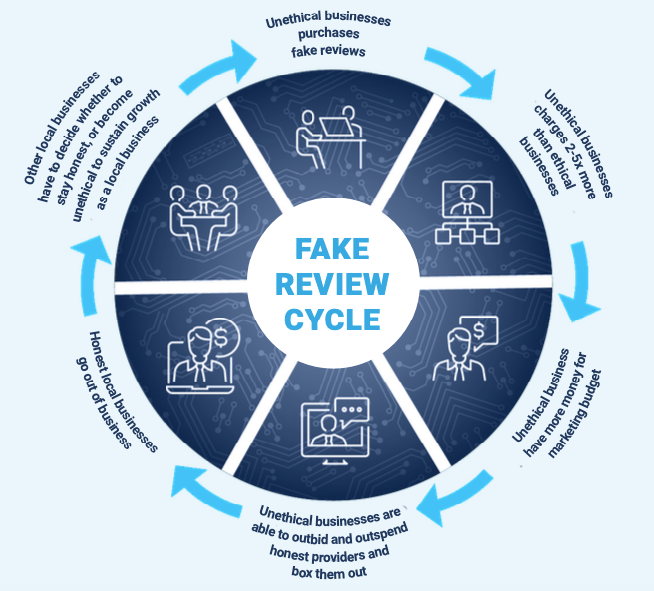
Source: The Transparency Company
**Our take:**
- One of the important points made in the report is that, beyond consumer harm, fake reviews also hurt ethical businesses that play by the rules.
- In a 2021 Transparency Company - Uberall [study](https://join.momentfeed.com/hubfs/2021%20Fake%20Reviews/FakeReviews%5FReport.pdf?ref=nearmedia.co), suspicious review percentages ranged from 1% to more than 20% in some categories.
- Since then, Google has tightened up fake review enforcement (partly in response to the EU's DSA). Q: what's an acceptable % of fake reviews?
### ChatGPT *Is* Gaining Share
Rand Fiskin, using multiple data sources, [has loosely calculated](https://x.com/randfish/status/1858953453139382729??ref=nearmedia.co) that ChatGPT has captured just over 4% of "cross-platform" search volume. Google has 83.5% by comparison. But ChatGPT's share is greater than Bing's and about two points less than YouTube's. The remaining 3.4% is an amalgam of multiple other sites including Facebook, Reddit, Linkedin, Pinterest and Perplexity. Separately, Marcus Tober [discusses the overlap](https://www.linkedin.com/posts/marcustober%5Fcomparison-of-llm-and-seo-results-activity-7264661260955267074-7g3Z/??ref=nearmedia.co) in results between ChatGPT, Perplexity, Google and Bing. He found a strong correlation between Google rankings and Perplexity results, less so with ChatGPT. Add to that a recent unpublished consumer survey (n=1K adults) from [Dialog](https://www.localdialog.com/?ref=nearmedia.co), comparing search and AI usage. These were all people who used search engines at least monthly and had used an AI application (e.g., ChatGPT) at least once. Respondents repeatedly favored Google but 26% said they were now using conventional search engines less. And a majority thought that AI would replace traditional search within three years.
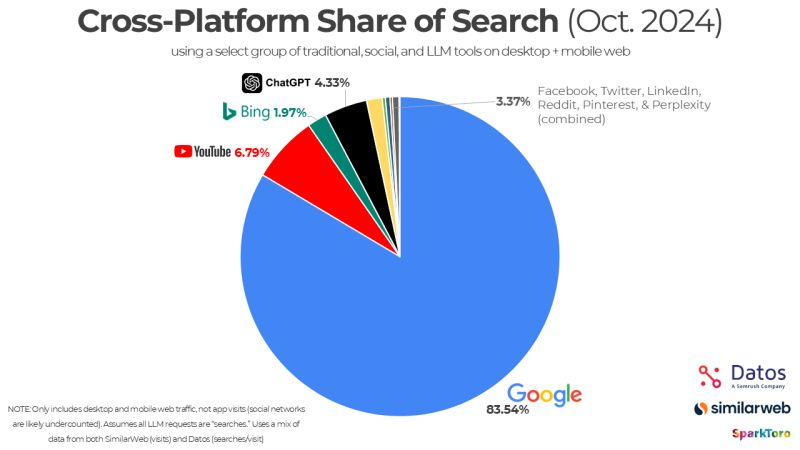
Source: Rand Fishkin/SparkToro
**Our take:**
- There's an ongoing debate about whether Google will lose meaningful share to AI engines and whether it will impact ad revenue.
- Multiple forms of data and anecdotal evidence argue that usage of ChatGPT as a search substitute (for informational queries) is growing. But Google ad revenue may not be affected or marginally impacted.
- There are more AI-powered Google competitors on the way.
### Support Near Media
This is one of our last ungated newsletters, as [we move most content behind the paywall](https://www.nearmedia.co/v2/). Over the past nearly four years we've published almost 500 newsletters and scores of deeper-dive analysis pieces. We're also approaching our 200th podcast. Over that time we've received lots of positive feedback from our readers and listeners. This has been for a long time a labor of love but it can't continue that way unfortunately. David, Mike & I bring many collective years of experience to Near Media and the research we're doing. But it takes a big chunk of time to keep it going. And to keep it going we've made the decision to ask for support from our audience. We're asking for $20 a month or $200 a year if you pay annually. We've had a positive response so far. We hope you'll consider supporting our work, if you find what we're doing valuable.
Source: ChatGPT
**Three ways to support us:**
- [Subscribe for $200](https://www.nearmedia.co/v2/#/portal) (or $20 per month). Get your company to pay; we have discounted "bulk" options.
- Sponsor the podcast ([contact us](https://www.nearmedia.co/contact/) to learn more).
- Hire us to perform a unique Local SEO audit with [custom user testing and behavioral research](https://www.nearmedia.co/search-gameplan/) that produces direct, tangible outcomes.
## Recent Analysis
- **Near Memo episode 183:** [Exploring Google AI overviews impact, SearchGPT & Google’s evolution with Mark Traphagen](https://www.nearmedia.co/ep-183-exploring-google-ai-overviews-impact-searchgpt-googles-evolution-with-mark-traphagen/).
## Short Takes
**LOCAL**
- **AI-enhanced Google Lens**: [reviews and price comparisons](https://blog.google/products/shopping/google-maps-lens-holiday-shopping/?ref=nearmedia.co) in store.
- Restaurants: **Google’s AI menu feature** [now supports PDF uploads](https://searchengineland.com/google-business-profiles-ai-transcribed-menu-upload-just-got-better-448434??ref=nearmedia.co).
- **Google Location History** (now Timeline) on-device storage [rolling out](https://9to5google.com/2024/11/20/google-maps-location-history-timeline/?ref=nearmedia.co).
- **Foursquare** [open sources its places dataset](https://www.linkedin.com/posts/location-foursquare%5Fopensource-foursquare-locationintelligence-activity-7264688468272766977-yFMy/??ref=nearmedia.co).
- **GrabMaps** [beats Google at its mapping game](https://restofworld.org/2024/grab-google-maps-southeast-asia/?ref=nearmedia.co) in Southeast Asia.
- Adam Driver [reads 5-star](https://www.retaildive.com/news/amazon-adam-driver-black-friday-ugc-campaign/733469/?ref=nearmedia.co) **Amazon product reviews** (not really local).
**AI & SEARCH**
- **Local Falcon** [using Claude](https://www.anthropic.com/customers/local-falcon?ref=nearmedia.co) to analyze reviews/feedback.
- **Google AI Overview ads** [start to appear](https://x.com/jamesfgibbons/status/1857958721021772106?ref=nearmedia.co) in mobile SERPs.
- **Perplexity's new AI-shopping feature** [includes integrated e-commerce](https://www.perplexity.ai/hub/blog/shop-like-a-pro??ref=nearmedia.co).
- A [very complete article](https://www.wix.com/seo/learn/resource/llm-brand-visibility?ref=nearmedia.co) on AI **LLM optimization** from Wix.
- New **AI-powered "answer engine" ProRata** [getting ready to launch](https://www.fastcompany.com/91197477/prorata-ai-search-payment?ref=nearmedia.co).
- French AI company **Mistral** [launches](https://mistral.ai/news/mistral-chat/?ref=nearmedia.co) an OpenAI competitor.
**GENERAL SEO**
- Rand Fishkin: [44% of searches on Google](https://bsky.app/profile/digital-danielle.com/post/3lbgcxf7pmc2k?ref=nearmedia.co) are for **brands**.
- **Site rep abuse**: Google [doesn't care about your first party oversight](https://developers.google.com/search/blog/2024/11/site-reputation-abuse?ref=nearmedia.co).
- Mike King's [roundup of](https://moz.com/blog/ai-seo-tools?ref=nearmedia.co) **AI tools** and their SEO uses.
- Filter bubble: to grow, SEOs [must move beyond](https://www.growth-memo.com/p/filter-bubble??ref=nearmedia.co) **outdated SEO tactics**.
**SOCIAL MEDIA**
- **Local Starter Packs** [for Blue Sky](https://x.com/mblumenthal/status/1857798381927547317?s=12&ref=nearmedia.co).
- **BlueSky** and the [fragmentation of social media](https://www.technologyreview.com/2024/11/18/1106960/the-rise-of-bluesky-and-the-splintering-of-social/?ref=nearmedia.co).
**LAW & POLICY**
- DuckDuckGo [calls on EC to investigate](https://spreadprivacy.com/investigate-google-dma/?ref=nearmedia.co) Google'a **DMA non-compliance**.
- Read **Booking.com**'s [DMA compliance report](https://www.bookingholdings.com/wp-content/uploads/2024/11/DMA-Consumer-Profiling-Report.pdf?ref=nearmedia.co), which discusses profiling.
- Social media: court allows **public nuisance lawsuits** [to move forward](https://www.aboutlawsuits.com/social-media-public-nuisance-claims-addresed-by-meta-tech-companies/?ref=nearmedia.co).
- **Google's "culture of concealment"** re internal communications ([NYT](https://www.nytimes.com/2024/11/20/technology/google-antitrust-employee-messages.html?ref=nearmedia.co)).
[**Subscribe to Near Media 2.0**](https://www.nearmedia.co/v2/).
[](https://nearmedia.co/memo?ref=nearmedia.co)
We'd love to hear your feedback; email [us](mailto:gsterling@nearmedia.co) with suggestions and recommendations.
### Local SEO: Theory, Praxis & Differentiators
URL: https://www.nearmedia.co/local-seo-theory-praxis-differentiators/
Last updated: 2024-11-21T17:11:11.000Z
[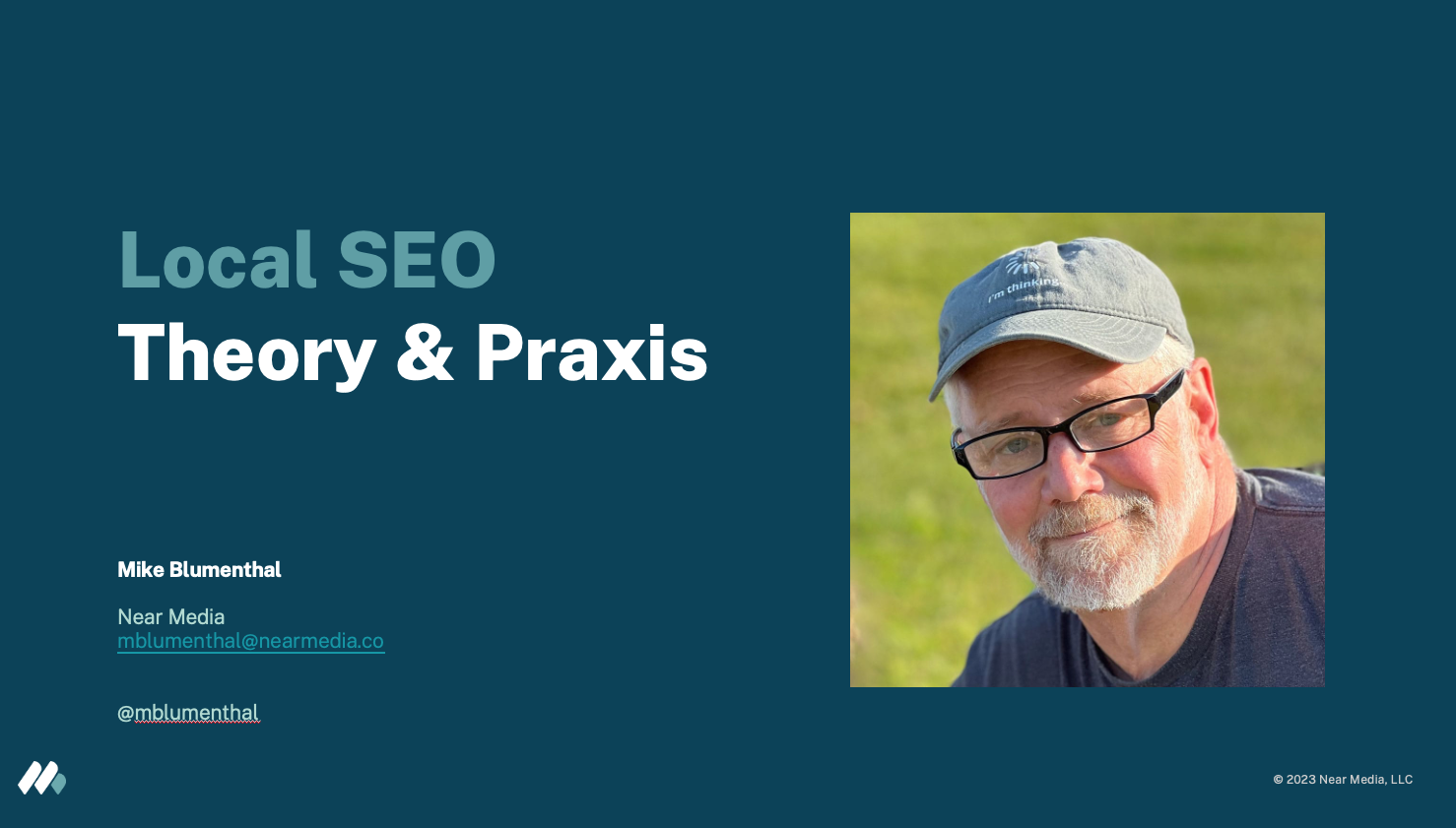](https://www.nearmedia.co/content/files/2024/11/LocalSEO-Theory-praxis-differentiators.pdf)
[LocalSEO-Theory-praxis-differentiatorsLocalSEO-Theory-praxis-differentiators.pdf8 MBdownload-circle](https://www.nearmedia.co/content/files/2024/11/LocalSEO-Theory-praxis-differentiators.pdf "Download")
[Sign up for our newsletter](https://www.nearmedia.co/local-seo-theory-praxis-differentiators/)
### References
•[**Menu Items Can Boost Your Local SEO Ranking**](https://reputationarm.com/ranking-factor-popular-times-on-google-maps/?ref=nearmedia.co)
•[**GBP AI-Transcribed Menu Upload Just Got Better**](https://searchengineland.com/google-business-prof?ref=nearmedia.co)
•[**Do Google My Business Identity Attributes Impact Ranking?**](https://www.sterlingsky.ca/do-google-my-business-identity-attributes-impact-ranking/?ref=nearmedia.co)
•[**Services in Google Business Profiles Impact Ranking**](https://www.sterlingsky.ca/services-in-google-business-profile-impact-ranking/?ref=nearmedia.co)
•[**Adding In-store Products Can Improve Local Rankings**](https://www.nearmedia.co/google/)
•[**Name Abuse** ](https://support.google.com/business/thread/304252015?ref=nearmedia.co)[**Escalated on Forums Denied by Google**](https://support.google.com/business/thread/304252015?ref=nearmedia.co)
•[**Google algo**](https://github.com/yoshi-code-bot/elixir-google-api/blob/d7a637f4391b2174a2cf43ee11e6577a204a161e/clients/content%5Fwarehouse/lib/google%5Fapi/content%5Fwarehouse/v1/model/repository%5Fwebref%5Fmention.ex?ref=nearmedia.co)[](https://github.com/yoshi-code-bot/elixir-google-api/blob/d7a637f4391b2174a2cf43ee11e6577a204a161e/clients/content%5Fwarehouse/lib/google%5Fapi/content%5Fwarehouse/v1/model/repository%5Fwebref%5Fmention.ex?ref=nearmedia.co)[**leak**](https://github.com/yoshi-code-bot/elixir-google-api/blob/d7a637f4391b2174a2cf43ee11e6577a204a161e/clients/content%5Fwarehouse/lib/google%5Fapi/content%5Fwarehouse/v1/model/repository%5Fwebref%5Fmention.ex?ref=nearmedia.co)[](https://github.com/yoshi-code-bot/elixir-google-api/blob/d7a637f4391b2174a2cf43ee11e6577a204a161e/clients/content%5Fwarehouse/lib/google%5Fapi/content%5Fwarehouse/v1/model/repository%5Fwebref%5Fmention.ex?ref=nearmedia.co)[**search**](https://github.com/yoshi-code-bot/elixir-google-api/blob/d7a637f4391b2174a2cf43ee11e6577a204a161e/clients/content%5Fwarehouse/lib/google%5Fapi/content%5Fwarehouse/v1/model/repository%5Fwebref%5Fmention.ex?ref=nearmedia.co)
•[**Are The Number of Google Reviews Hurting Your Businesses Local Ranking?**](https://www.sterlingsky.ca/number-of-reviews-impact-ranking/?ref=nearmedia.co)
•[**Unraveling Google** ](https://searchengineland.com/navboost-user-trust-ux-445240?ref=nearmedia.co)[**Navboost**](https://searchengineland.com/navboost-user-trust-ux-445240?ref=nearmedia.co)[ **and building user trust through UX**](https://searchengineland.com/navboost-user-trust-ux-445240?ref=nearmedia.co)
•[**The Visual Future of Local Search**](https://www.nearmedia.co/the-visual-future-of-local-search-in-3-parts/)
•[**Case Study – Medical (13:41)**](https://www.nearmedia.co/the-visual-future-of-local-search-in-3-parts/)
•[**Cloud Vision Try** ](https://cloud.google.com/vision/docs/drag-and-drop?ref=nearmedia.co)[**It**](https://cloud.google.com/vision/docs/drag-and-drop?ref=nearmedia.co)
•[**Know Your Vertical: The Search Gameplan**](https://www.nearmedia.co/search-gameplan/)
•[**Near Media Research**](https://www.nearmedia.co/search-gameplan/)
•[**Apple Business Connect**](https://businessconnect.apple.com/?ref=nearmedia.co)
### New Research: European Local Search Behavior in the Home Services Vertical
URL: https://www.nearmedia.co/dma/eu-home-services-search-behavior/
Last updated: 2024-11-20T17:35:43.000Z
🇪🇺
**The results that follow below are an excerpt of our recent investigation conducted in partnership with Siinda. We invite you to* [**visit Siinda for the full results*](https://siinda.org/dma-research/?ref=nearmedia.co)**.*
### Introduction
Near Media and Siinda assessed how consumers searched for kitchen remodeling professionals, how they evaluated the results presented by Google, and what elements of a business’s digital presence received the most engagement.
**Among the questions we sought to answer:**
- What search result interface types received the most engagement, and by extension, did the local search interface elements introduced by Google in response to the [Digital Markets Act](https://developers.google.com/search/blog/2024/02/search-experiences-in-eea?ref=nearmedia.co) receive meaningful searcher engagement
- How widespread is the “zero-click search” phenomenon, whereby a searcher never leaves Google’s own properties before making a decision?
- What attributes of a business’s digital presence did consumers mention most frequently as influencing their choice of remodeling professional?
- Ultimately, where and how should a kitchen remodeling business prioritize its digital activities?
**Additional background information:**
- [Our study methodology](#methodology)
- Near Media's prior European consumer research in [Hotels](https://www.nearmedia.co/european-hotel-search-study/) and [Restaurants](https://www.nearmedia.co/google-serp-restaurants-eu-dma-analysis/)
- A [visual glossary](https://www.nearmedia.co/eu-local-serp-visual-glossary/) of terms used in this analysis
---
## Executive Summary
**Google most commonly displayed its Business Profiles in positions 1 and 2, generating 20x the engagement for itself as the DMA-driven Places Sites module generated for Aggregators and Publishers.** Where Google Local Packs appeared in the top two results, consumers were highly likely to ultimately choose a business based on its Google Business Profile.
Consumers in all three countries demonstrated a willingness to **scroll deep into the page** to find a professional that resonated with them prior to deciding whom to contact first, whether searching in Google Business Profiles or traditional organic results.
While **reviews and ratings were important to consumer decision-making in all three countries,** behaviors and specific attributes mentioned by consumers appeared to reflect meaningful differences by country.
German searchers were more likely to be drawn to ads – and a website with a professional look-and-feel. French searchers were more likely to be drawn to larger brands, and tended to evaluate one extra professional before deciding whom to call first. Irish searchers were more likely to include “near me” or explicit references to location in their queries, and had a lower review volume threshold than their German and French peers.
There was little evidence of zero-click search in the kitchen remodeling space – in fact, **website photos mattered almost as much as customer reviews when it came to choosing a professional to contact first.**
---
## Selected Results of Our Research
## SERP element visibility and position
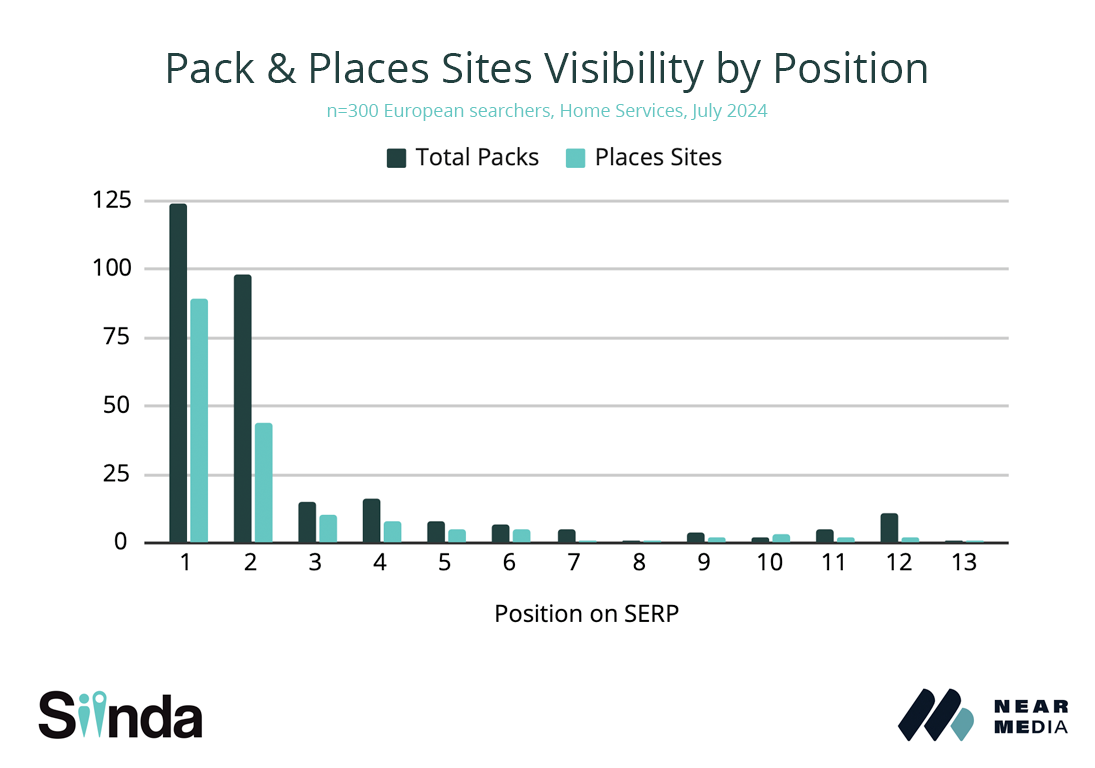
### **Google's own profiles**
*Google Business Profiles were visible for 78% of explicitly localized searches* (and for 39% of other searches where Google inferred implicit local intent), usually in Position 1 or Position 2.
### **New DMA response element: Places Sites**
*Places Sites were visible for just 48% of localized searches* and 20% of others.
### **New DMA response element: Aggregator Carousels**
Aggregator Carousels were nearly nonexistent, *visible for just 3% of explicitly localized searches*, and receiving just 1 out of 848 total clicks.
## SERP element engagement
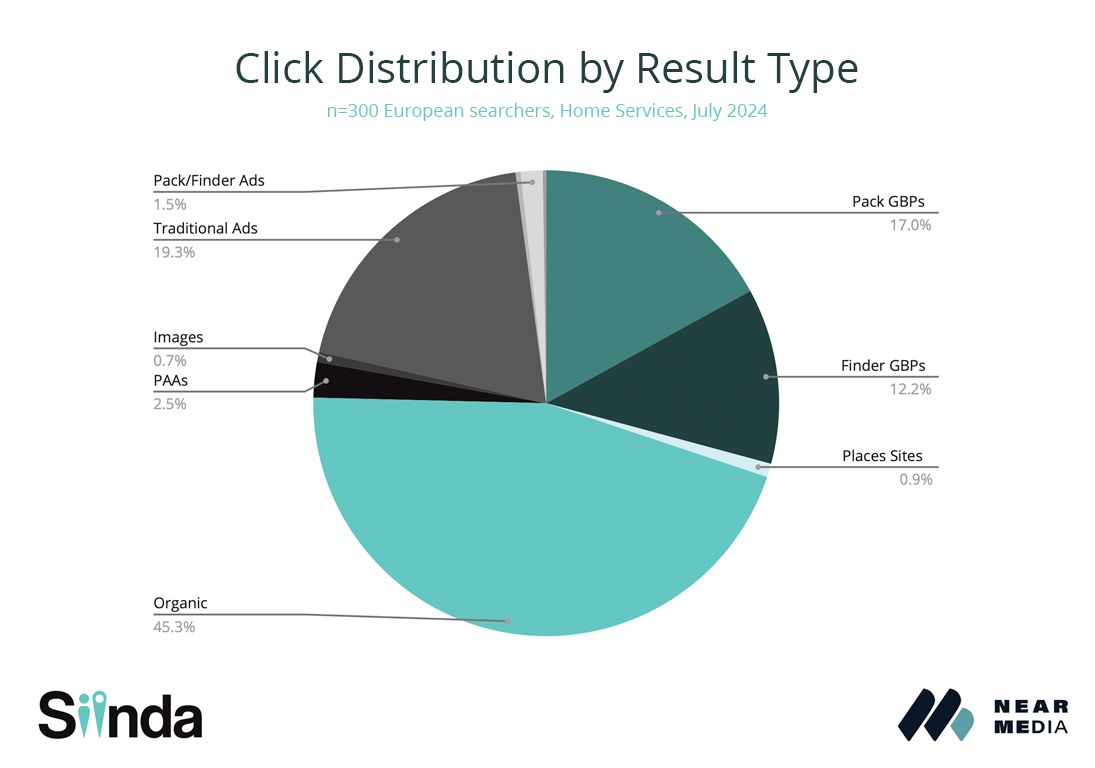
*Engagement with Google Business Profiles drove 42% of all clicks for searchers where they were visible.* Most clicks on Google Business Profiles came when the Local Pack was in the first or second position; 75% of clickthroughs on position 2 went to Google Business Profiles, and 50% of clicks on position 1.
*Meanwhile, Places Sites received just 2% of clicks when they were visible,* even though they were frequently positioned above the Local Pack. From a clickshare standpoint, clicks to Places Sites came at the expense of traditional organic results: Google Business Profiles’ click share dropped only 0.5%.
### **Zero-clicks**
*Unlike our previous research in the restaurant vertical, we saw very little evidence for so-called “zero-click search,”* where consumers began and ended their journey without leaving Google.
71% of all searches ended with at least one click, and most searches that ended without a click were simply unsatisfied queries, where the user subsequently refined their query and clicked through to at least one website. *Users made very few choices without clicking through to the website of their chosen business.*
### **Organic clicks**
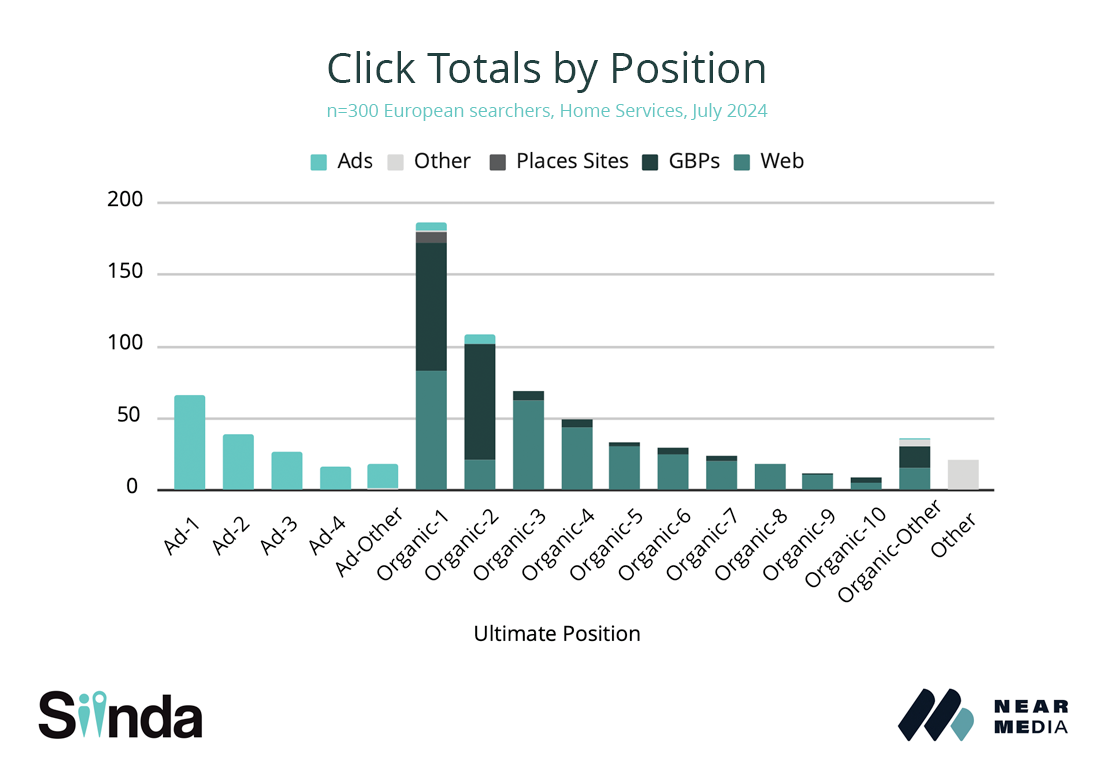
Users typically considered organic results well beyond the #1 placement. The “tail” of organic clicks all the way through position 9 was notable, with just as many organic clicks coming from the 5th and 6th positions in aggregate, for example, as position 1\.
### **Google Business Profile clicks**
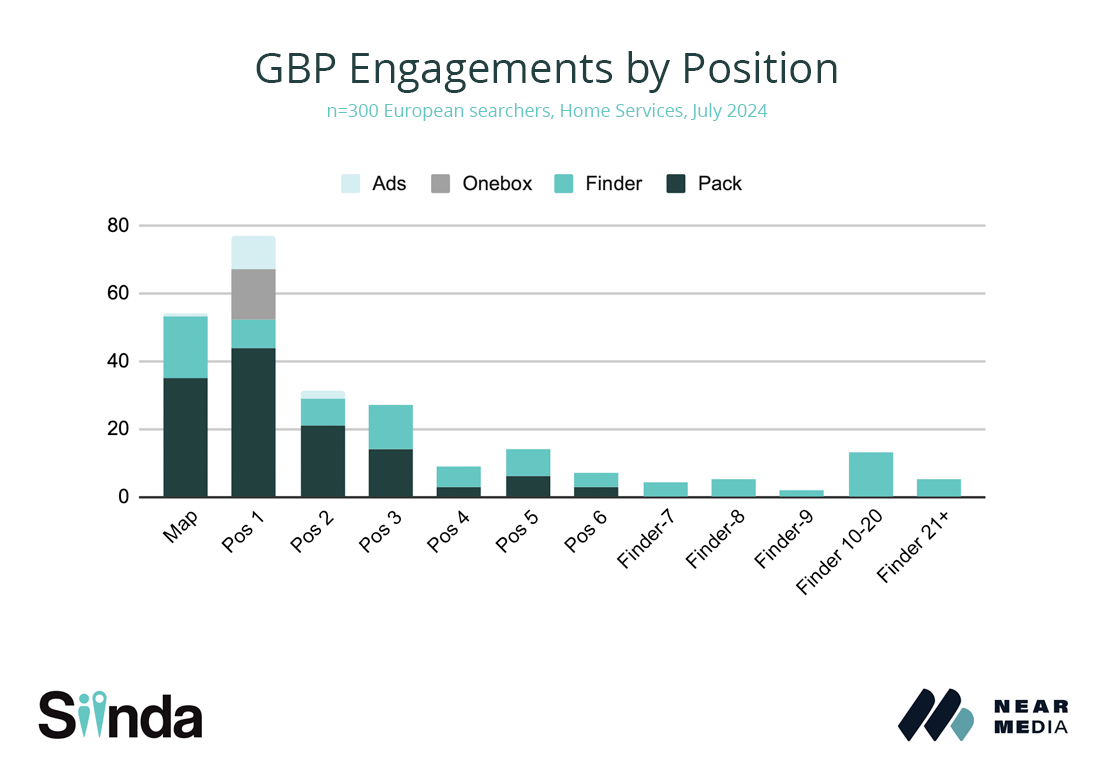
The click distribution by position was similar for Google Business Profile results as for organic results.
While the top three Google Business Profile positions unsurprisingly drove the lion’s share of engagements, in the aggregate, more clicks came from users engaging with the map (where the concept of ranking is irrelevant) than from the #1 result across both interfaces. We saw plenty of deep scrolling in the local finder, with consumers using reviews and Google Business Profile photos to qualify (and disqualify) providers.
### **Click destinations**
8 out of 10 clicks overall went to businesses (“Suppliers”). Just 1 in 10 went to Aggregators, and barely 1 in 25 clicks went to Publishers.
The vast majority of Aggregator traffic came from organic results (73%), not Places Sites (10%). For businesses, 41% of their traffic came from organic results, 35% via Google Business Profiles, and 24% via Ads.
Most consumers who conducted specific brand searches engaged with a brand’s website via organic results. While not prevalent, where brands employed review schema on their pages, these tended to draw searchers’ attention (and clicks).
## Searcher choices
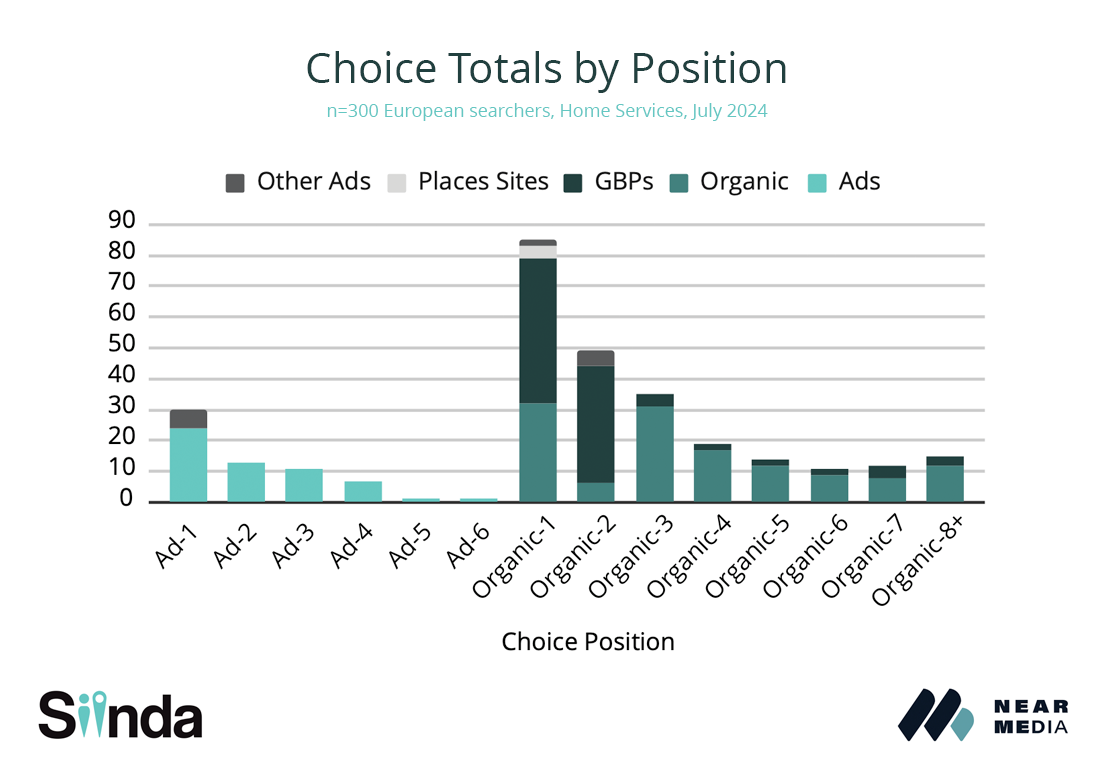
19% of all participants whose SERPs contained ads made an explicit, unprompted comment to the effect of “I always skip the ads” or “I don’t trust the sponsored results.” And yet Ads also drove 20% ultimate choices of business – in a few cases, even from Ad skeptics!
Only half the number of consumers who mentioned reviews and ratings were important to their choice of professional actually took time to read the text of reviews, however. Half simply used the rating and volume as a heuristic.
Choices followed a similar curve as discovery search clicks. The primary
difference was a slightly deeper Click exploration of Organic results below position 8, which rarely yielded Choices.
Reviews and ratings were mentioned by the greatest number of searchers as influencing their decision of whom to contact, with website photos–especially before-and-after project photos–a very close second.
---
## DMA-related conclusions
1. **Google shows its own Business Profiles prominently for the vast majority of local searches–78% in the case of kitchen remodeling– and almost always in Position 1 or 2\.** Places Sites are visible at a much lower rate, just 48% of the time even for explicitly localized queries.
2. **Users are dramatically more likely to engage with a Google Business Profile than a Places Site: 20x more likely** in the case of our kitchen remodeling scenario.
When the Local Pack was visible to users, Google Business Profiles drew the plurality of their engagement (42%). Google Business Profiles received twice as many clicks as aggregators and publishers in our study, many via the Google Map interface which appears prominently as part of the Local Pack and Local Finder elements.
Conversely, Places Sites drew just 2% of user engagements when they were visible. These clicks appeared to replace organic traffic that Aggregators and Publishers ranking in the same spot organically might have already received. Aggregator Carousels received a paltry 0.1% of all engagements.
*Taken together, it would be hard to describe this as a fair and contestable playing field, as aggregators and publishers are ineligible to appear in Google Business Profiles.*
## Conclusions for home services businesses and home services aggregators
Businesses in all three countries should invest in a well-rounded presence, given the 40%-40%-20% breakdown of clicks and choices between Google Business Profiles, organic results, and Ads.
Consumers showed a strong desire to browse multiple results, frequently across multiple search queries, to find a provider that resonated with them. The top organic position certainly drove its fair share of clicks (and ultimate choices), but a well-optimized website didn’t need to rank #1 to win a consumer’s business.
The attributes of Google Business Profiles that swung the needle most for consumers were a strong review profile (median 4.9 reviews and 80+ reviews in Germany and France) and a nearby location (in some cases, a retail showroom). Many consumers conducted follow-up brand searches for a deeper dive into a business’s reputation, though only 50% of consumers actually read reviews at this stage of their remodel exploration.
Reviews and ratings are highly likely to influence a potential customer’s choice of professional, and customers have very high expectations: a 4.9 rating from a minimum of dozens of former customers.
Aggregators and larger brands should be sure to implement review schema to enable Google’s display of first-party ratings in organic search results.
---
### Methodology
We recruited a panel of 300 German, French, and Irish consumers, split equally by country and across Desktop and Mobile devices, presented them with a home services search scenario, and analyzed and aggregated their narrated behavior in their native language:
*You've wanted to remodel your kitchen for a long time and you're finally going to get started on it this summer. You've decided that it's too big a project to take on yourself and you're going to hire professionals for the job.*
*You decide to search Google to help find professionals for your project.*
*Browse and click any results you’d like. Please “think out loud” as you search and describe your thoughts and reactions.*
We loaded the default Google.com homepage in their browsers at the start of the task. We then recorded their screens and audio narration (with permission), and aggregated and analyzed their behavior and decision-making rationales.
Any click was deemed to be a “consideration,” as was any extended lingering on an individual profile with narration that indicated the participant was evaluating that provider.
---
### *About Near Media*
*Founded by three veteran local and vertical search analysts in 2021,* [*Near Media is an applied market research firm*](https://www.nearmedia.co/about/) *helping marketing executives maximize their SEO & paid search investments.*
*Through our unique combination of proprietary consumer research, localized search result page analysis, and step-by-step performance improvement roadmaps, we are the go-to strategic and tactical advisor for brands seeking to maximize their investments in paid, organic, and local search.*
*Focused largely on Google and its place in the local search ecosystem, we publish a twice-weekly newsletter and a weekly podcast on the latest updates shaping local search visibility and consumer behavior, and regular analyses of search product releases and local search market dynamics.*
### *About Siinda*
[*Siinda*](https://siinda.com/?ref=nearmedia.co) *is the leading European based non-profit association bringing together agencies, brands, media and technology companies in the local search, digital advertising, media, mobile and “on demand” industry sectors. We foster partnerships through our extensive members network, containing many of the most prominent media outlets in Europe and globally.*
### Near Media 2.0
URL: https://www.nearmedia.co/v2/
Last updated: 2024-11-19T14:30:58.000Z
After almost four years of covering local search and conducting unique user research, we’ve been encouraged by all your positive feedback. But we need to generate more reliable and consistent revenue to keep this going – and we hope you'll help us.
**Here’s what we’ve decided to do:**
- The [Near Media newsletter](https://www.nearmedia.co/tag/news/) and majority of new [analysis](https://www.nearmedia.co/tag/analysis/) content will move behind a paywall. **To continue receiving our content, we're asking for $20 per month or $200 per year.**
- For paying subscribers we’ll also host monthly “office hours”: tactical Q&A and discussion on critical topics of interest to local marketers.
- The podcast will remain “free” and we’ll selectively accept sponsors.
*Our new (paid) content plan will go live on December 1.*
[Subscribe to continue receiving our content](https://www.nearmedia.co/#/portal)
A couple of weeks ago we proposed a [$2,500 research and content package](https://www.nearmedia.co/crossroads/). We were hoping for 100 commitments. Many people responded positively but we still fell well short of our goal. We’re still considering other value-added offerings that are TBD.
For those interested in our [unique behavioral search-user research](https://www.nearmedia.co/search-gameplan/) and SEO consulting, we’ll continue to do those projects, as demand arises.
**We live and breathe local; and we sincerely hope you’ll continue to support our work.**
### [Click here to subscribe & continue receiving our content](https://www.nearmedia.co/#/portal).
### Ep 183: Exploring Google AI Overviews Impact, SearchGPT & Google’s Evolution with Mark Traphagen
URL: https://www.nearmedia.co/ep-183-exploring-google-ai-overviews-impact-searchgpt-googles-evolution-with-mark-traphagen/
Last updated: 2024-11-16T16:00:13.000Z
**Part 1 starts 00:13 -** [**AI Overview and Google Search Trends**](https://youtu.be/5m1-sElxeX0?ref=nearmedia.co)
In a discussion on AI search trends, Mark Traphagen from SEO Clarity shared insights on Google’s search generative experience (SGE) and its limited functionality in delivering localized results. His analysis highlighted that SGE results in the U.S. tend to be highly informational (91%) and less transactional, especially for keywords related to products. According to Mark, Google’s AI-driven search lacks the capacity to enhance local search results, pointing out that traditional SERP results still perform better. Meanwhile, Google’s AI continues to evolve, with recent tweaks aiming to improve ranking relevance in AI responses.
Segment Reference Articles
[How seoClarity optimized for Google | Mark Traphagen posted on the topic](https://www.linkedin.com/posts/marktraphagen%5Fai-overview-optimization-is-now-justgoogle-activity-7231755937324101633-wRGq?utm%5Fsource=share&utm%5Fmedium=member%5Fdesktop)
[**AIOs: More Clicks than Snippets**](https://www.nearmedia.co/aio-ctr-google-nostalgia-pre-fulfillment-reviews/#aios-more-clicks-than-snippets)
[How to Rank in AI Overviews: Content Optimization Tips](https://www.seoclarity.net/blog/how-rank-ai-overviews?ref=nearmedia.co)
[Sistrix re CTRs on AIOs](https://www.sistrix.com/blog/ai-vs-seo-what-does-the-future-of-search-look-like/?ref=nearmedia.co)
**Part 2 starts 19:13 -** [**ChatGPT Search Growth and Future Projections**](https://youtu.be/Gd-LyP5UQcw?ref=nearmedia.co)
Mark noted a recent 10x rise in referrals from ChatGPT, suggesting growing adoption of OpenAI’s real-time web search capabilities. He indicated that this growth corresponds with ChatGPT’s recent integration of SearchGPT and its compatibility with Apple iOS, predicting further rises. While alternatives like perplexity show gradual increases, OpenAI maintains a stronghold, steadily reclaiming market share. For SEO professionals, Mark advises monitoring these shifts and tracking SearchGPT, Bing's Gen.AI, and other emerging platforms as they shape traffic trends.
Segment Reference Articles:
[145x – That's how much referral traffic from ChatGPT has grown since May.](https://www.linkedin.com/posts/marktraphagen%5F145x-thats-how-much-referral-traffic-from-activity-7257423918498541568-LTrv?utm%5Fsource=share&utm%5Fmedium=member%5Fdesktop)
[Early Thoughts on SearchGPT](https://www.nearmedia.co/way-too-early-thoughts-on-searchgpt-for-local-search/)
**Part 3 starts 35:15 -** [**Google SERP’s Dilemma and E-commerce Impact**](https://youtu.be/WxhAMlUXeHs?ref=nearmedia.co)
Mark discussed Google’s strategic challenges, balancing ad-driven revenue with user satisfaction in AI integration. He highlighted that Google’s “Popular Products” feature increasingly dominates SERP top spots, pushing organic listings down, especially on mobile. This shift affects e-commerce traffic significantly, as traditional organic ranking struggles against the prominent Google product listings. Mark encourages SEO strategies that embrace Google’s product features for better reach. Despite the influx of new platforms, he reassures clients that established SEO practices remain essential in the evolving landscape.
Segment Reference Articles:
[Popular Products SERP Feature: SEO Impact \[+ Research\]](https://www.seoclarity.net/blog/popular-products-serp-feature?ref=nearmedia.co)
[Scorpion survey re search challenges](https://searchengineland.com/search-engine-experience-results-ads-survey-442943?ref=nearmedia.co)
[Informal survey on search difficulty](https://x.com/gsterling/status/1854919415386849450?ref=nearmedia.co)
### Google Antitrust Part 2, Social + Stores, Local Inventory
URL: https://www.nearmedia.co/google-antitrust-part-2-social-stores-local-inventory/
Last updated: 2024-11-14T20:03:34.000Z
### Google's Second Antitrust Trial
Google's antitrust search trial got much more attention than its sibling adtech trial, which recently concluded [in federal court in Virginia](https://www.reuters.com/technology/googles-antitrust-trial-over-online-advertising-set-begin-2024-09-09/?ref=nearmedia.co). To briefly recap, the Department of Justice (DOJ) alleged Google had monopolized markets for ad servers, ad networks and exchanges through acquisitions (i.e., DoubleClick), tying arrangements, self-preferencing and other exclusionary actions, creating publisher lock-in. At trial Google argued the industry is extremely competitive (see Facebook, Microsoft, Amazon, Criteo, others), its DoubleClick acquisition benefitted publishers and advertisers, its fees were reasonable and it has not locked publishers and advertisers into using its platforms. A week ago the DOJ and Google [filed findings of fact](https://checkmyads.notion.site/Trial-Documents-98fecbafb0f7465893d09835e6993f04?ref=nearmedia.co) for the court to review. These documents reiterate the parties' positions, supported by evidence. Closing arguments will be held November 25\. Judge Leonie Brinkema will then issue a decision in early 2025\. If the DOJ prevails there will be a trial on remedies, which almost certainly will include a request for divestiture (breakup).
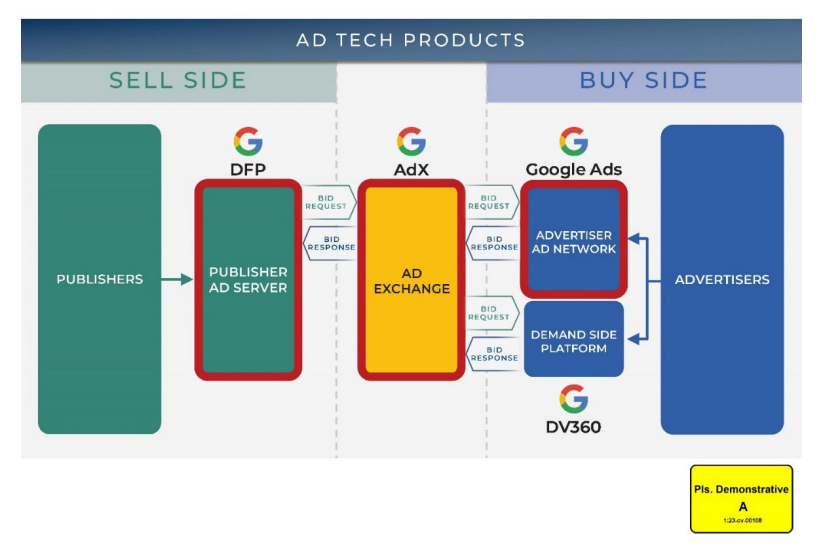
Source: DOJ Filings
**Our take:**
- As with the search antitrust case, the government presented strong evidence of prohibited behavior using eye-brow-raising internal communications.
- Google's strongest argument is that the display market is highly competitive. This is the weakest part of the DOJ's case and Google may prevail accordingly.
- If there's any adverse outcome, Google will appeal. While a breakup in the search case is extremely unlikely ([post-Trump](https://www.nearmedia.co/google-pardon-avoiding-gbp-mistakes-google-ui-box/)), it's possible here.
### SMBs, Social Media & Stores
Entrepreneur and online marketplace Faire [recently surveyed](https://www.entrepreneur.com/growing-a-business/77-of-small-business-owners-say-this-channel-is-driving/479797?ref=nearmedia.co) 1,200 small business retailers asking a range of questions, including about concerns, marketing and sales tactics and top business priorities. Customer acquisition and inflation where their top priorities and concerns, respectively. They said their "most effective" marketing tactics/channels were 1) social media (54%) and 2) local community engagement (21%). Social media is consistently the top channel used by SMBs and usually leads all other channels by \~20 points. (The full range of potential answer options wasn't made clear.) An even bigger gap appeared in responses to the sales channel question: what's driving most of your sales? Social media sales and e-commerce each appeared in single digits. Brick and mortar store was the top answer (77%); pop-up events was number two (9%). Again, the full list of available responses wasn't made clear. What struck me was that these results seemed more like they were from 2014 (or maybe 2004) than 2024\.
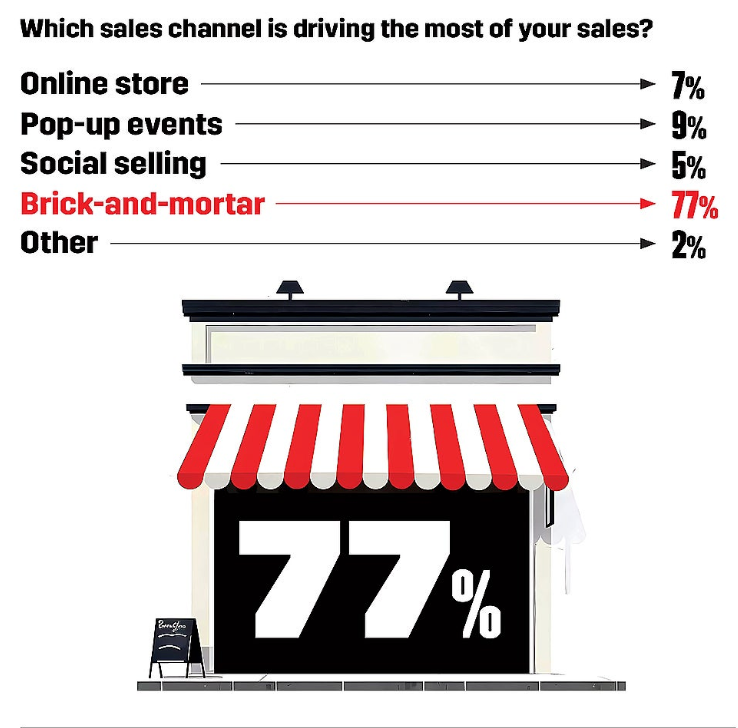
Source: Entrepreneur
**Our take:**
- Most SMBs don't closely monitor digital analytics and rely heavily on instinct and intuition to determine "what's working."
- These are retailers so of course stores will figure prominently in their sales figures. But we don't know much more about them (size, category).
- It's not explicit but the difficulty of tracking digital marketing to offline sales seems to be implicated here. And it's mysterious search is nowhere.
### Waiting for Local Inventory
Almost 20 years ago, there were *at least* 10 startups working on the problem of getting local product inventory online. You may remember some of these names: Milo, Shopatron, Krillion, NearbyNow, ShopLocal, uLocate, StepUp, Where2GetIt, Channel Intelligence, Yokel, GPShopper and Askthelocal (UK). Back then Google was taking local inventory feeds from StepUp and ShopLocal. And many big box retailers were experimenting with BOPIS. It seemed we were on the cusp of an online-offline, local inventory revolution. I prematurely wrote this [back in 2007](https://searchengineland.com/black-friday-inventory-data-and-local-shopping-12726?ref=nearmedia.co): "Very soon consumers will be able to do online product research and then learn, fairly quickly, where they can buy the desired product offline. This is the future of online shopping..." Oops. We're still waiting for that future to arrive. Of those early players, Google is essentially the only one standing (and Bing, sort of). Today, Google gets local inventory feeds directly from merchants, Near.st and Shopify. That inventory data [appears in various places](https://support.google.com/business/answer/9934993??ref=nearmedia.co): Ads, Local Pack, GBP, Maps, organic search, Google Shopping. Others, including Meta, have taken baby steps in this direction but nobody (even Google) has given it the push it deserves.
**Local Product Availability on Google**
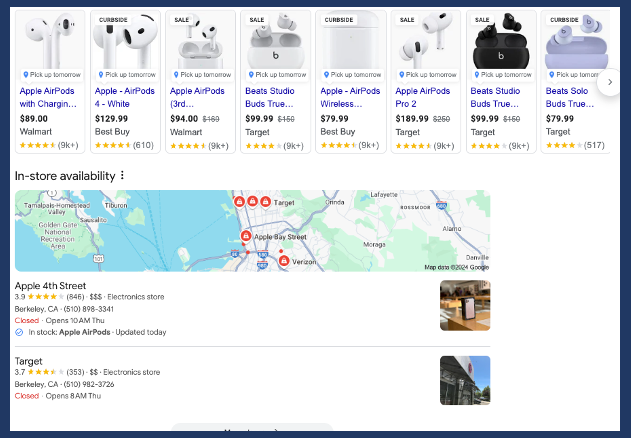
Source: Google
**Our take:**
- There are many reasons why this is still not a "solved problem." The short version is: the infrastructure is hard, the data is hard.
- Irish startup [Pointy](https://searchengineland.com/google-buys-pointy-to-bring-smb-store-inventory-online-327566?ref=nearmedia.co) had a brilliant solution for SMBs but [then Google bought it](https://searchengineland.com/google-buys-pointy-to-bring-smb-store-inventory-online-327566?ref=nearmedia.co) and absorbed it into the Google "omnichannel" team.
- Google doesn't do much promotion of its local inventory feature(s). I bet if ChatGPT did something in this area, we'd hear more about it.
## Recent Analysis
- **Near Memo episode 182:** [A Google “pardon”?, Siri’s search improvements, search from ChatGPT is really good](https://www.nearmedia.co/ep-182-a-google-pardon-siris-search-improvements-search-from-chat-gpt-is-really-good/).
- **Siri Finally Gets Local Search**, [by Mike Blumenthal](https://www.nearmedia.co/siri-finally-gets-local-search-2/).
## Short Takes
- A look at Google's **new hotel "metasearch" format** [and its implications](https://koddi.com/new-google-metasearch-experience-implications/?ref=nearmedia.co).
- A 30K foot look at **Google's Local Guides program** [and where it's been](https://searchengineland.com/google-local-guides-program-wins-woes-what-next-448210?ref=nearmedia.co).
- How to [get more](https://whitespark.ca/blog/how-to-get-more-and-better-local-business-reviews/?ref=nearmedia.co) (and better) **local business reviews**.
- **Yelp** [bought](https://www.businesswire.com/news/home/20241107085157/en?ref=nearmedia.co) RepairPal for $80 million in cash.
- Why **traditional SEO metrics** are losing relevance [and what to do](https://www.seerinteractive.com/insights/why-2020s-seo-kpis-wont-work-in-2024-in-a-genai-data-scarce-world?ref=nearmedia.co).
- Survival guide: [17 tips](https://moz.com/blog/how-to-prepare-for-the-future-of-seo-17-tips-from-lily-ray?ref=nearmedia.co) on the **future of SEO**.
- **NPR** disses AI Overviews, [questions why there's no opt-out](https://www.npr.org/transcripts/nx-s1-5171322?ref=nearmedia.co).
- **Perplexity** [reveals more about ads](https://www.perplexity.ai/hub/blog/why-we-re-experimenting-with-advertising?ref=nearmedia.co), including labeling and formats.
- **Google** [to remove news pubs](https://blog.google/around-the-globe/google-europe/more-data-about-news-results-eu/?ref=nearmedia.co) from some EU SERPs to show traffic value.
- **Amazon Haul**: [lots of cheap](https://www.aboutamazon.com/news/retail/affordable-products-amazon-20-dollars-and-under?ref=nearmedia.co) (crappy) products to take on Temu.
- The 'Xodus' picks up steam: **Bluesky** [gains a million users](https://www.theverge.com/2024/11/13/24295484/bluesky-15-million-users-social-media-x-musk?ref=nearmedia.co) post-election.
- **Meta** [must face antitrust trial](https://www.reuters.com/legal/meta-will-face-antitrust-trial-over-instagram-whatsapp-acquisitions-2024-11-13/?ref=nearmedia.co) over WhatsApp, Instagram buys.
- **Location sharing** is making us miserable ([WaPo](https://www.washingtonpost.com/technology/2024/11/13/location-sharing-partner-friends-family/?ref=nearmedia.co)).
Listen to our [latest podcast](https://www.nearmedia.co/memo/).
[](https://nearmedia.co/memo?ref=nearmedia.co)
How can we make this better? Email [us](mailto:gsterling@nearmedia.co) with suggestions and recommendations.
### AIO CTR, Google Nostalgia, Pre-Fulfillment Reviews
URL: https://www.nearmedia.co/aio-ctr-google-nostalgia-pre-fulfillment-reviews/
Last updated: 2024-11-12T22:03:49.000Z
### AIOs: More Clicks than Snippets
Google has repeatedly claimed searchers are responding positively to AI Overviews (AIOs) and that they're [driving more engagement and clicks](https://blog.google/products/search/generative-ai-google-search-may-2024/?ref=nearmedia.co) than if they weren't present. Search marketers have rightly been skeptical of these claims. Now a [report](https://www.sistrix.com/blog/ai-vs-seo-what-does-the-future-of-search-look-like/?ref=nearmedia.co) from Sistrix, looking exclusively at UK traffic, seems to support some of what Google is claiming – but it's qualified. Sistrix compared Featured Snippets and AIO click-throughs (CTRs). Roughly 75% of AIOs contain between 4 and 7 links according to the report. As the charts below indicate, AI Overviews have a higher CTR in the top two positions. In position one, the AI Overview has a 12.5% CTR vs. 10% for the Snippet. In Position 2, AIOs had an 8.7% CTR, whereas Snippets had 8.2%. In the lower positions, however, CTRs are comparable or the Snippet has a slightly higher CTR. The practical advice: beef up E-E-A-T and authentic content and build a brand. Consumers favor brands and so does Google.
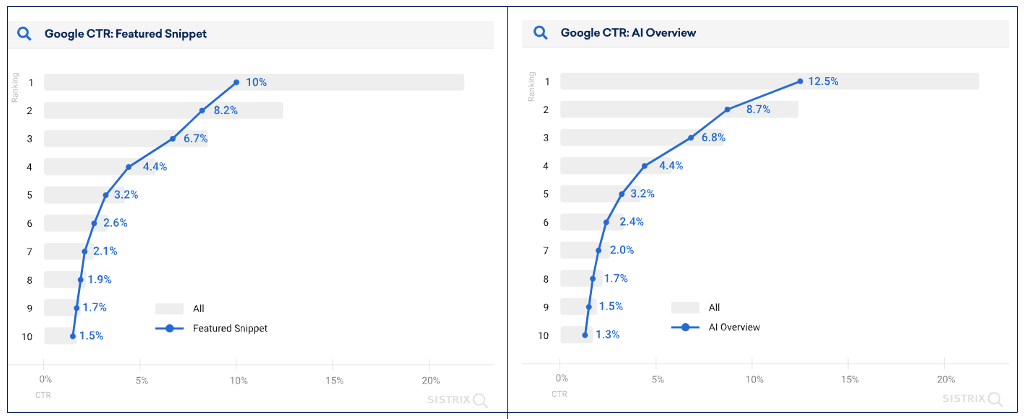
Source: Sistrix UK traffic analysis
**Our take:**
- Google is using "curated" and trusted sources in AIOs to make them more authoritative and deal with inaccuracy, which plagued them early on.
- It's also [starting to embed links](https://x.com/rustybrick/status/1855956391451561995?ref=nearmedia.co) in anchor text in its AIOs. That will likely drive more clicks for prominent links.
- There's plenty of advice about being included in AIOs (e.g., [seoClarity](https://www.seoclarity.net/blog/how-rank-ai-overviews?ref=nearmedia.co)). Partly it involves SEO best practices and partly it's about building a brand.
### Google Nostalgia Kicking In
Google is very far from being dethroned as the king of search. But there's some handwringing starting to happen among people who can see AI search gaining traction. An [article](https://www.technologyreview.com/2024/10/31/1106504/ai-search-could-break-the-web/??ref=nearmedia.co) in the The MIT Technology Review worries about about the prospect of AI eliminating the need to click through to publisher websites and the corresponding disruption of their business models. People have talked about something similar with Google AI Overviews (AIOs) since the launch of SGE, but see the item above. Now, a [new piece](https://www.theatlantic.com/technology/archive/2024/11/ai-search-engines-curiosity/680594/?ref=nearmedia.co) in The Atlantic argues that the convenience and time savings of AI search results are actually a bad thing. The author says that AI search can be inaccurate and, at best, promote only a superficial understanding of topics. The point is to avoid clicks to original sources, he contends; adding, they also diminish user experiences by limiting content exploration. What's more, they're antidemocratic, by further consolidating control of information in a few corporate hands. There's almost a wistful, nostalgic quality to the critique.
Source: ChatGPT
**Our take:**
- Many of the points made in The Atlantic piece have merit. However Google has been in control for too long. It needs true competitors.
- Google is committed to AIOs and publishers have to get used to a search landscape that's changing. Build your brand, use other channels.
- For informational queries AI [can offer better outcomes](https://www.nearmedia.co/way-too-early-thoughts-on-searchgpt-for-local-search/) and significant time savings. Plus the competition will (hopefully) make Google better.
### 'Pre-Fulfillment' Review Scheme Busted
Product review site [Sitejabber](https://www.sitejabber.com/?ref=nearmedia.co), which has been around for 17 years and claims it's backed by the National Science Foundation, [was accused by the FTC](https://www.ftc.gov/news-events/news/press-releases/2024/11/ftc-order-against-ai-enabled-review-platform-sitejabber-will-ensure-consumers-get-truthful-accurate?ref=nearmedia.co) of consumer deception by capturing product reviews *before* customers had received the products (or services) they had bought. The FTC and Sitejabber have now entered into a consent decree that prohibits Sitejabber from misrepresenting that its reviews come from people who've actually used the products in question, if they haven't. Sitejabber apparently solicited "pre-fulfillment" ratings immediately after consumer purchases but before they received the items. It also encouraged people to leave 5-star reviews in the process. And it syndicated these reviews to third party review sites. Sitejabber monetizes [with a review and reputation management product](https://www.sitejabber.com/?ref=nearmedia.co) that includes review solicitation. This now prohibited solicitation methodology was likely aimed an improving its clients' ratings.
Source: Sitejabber B2B review management product
**Our take:**
- What Sitjabber was doing is not very different from other review solicitation strategies online.
- Many review sites, including Amazon, solicit reviews relatively quickly after purchase. There may be not enough product experience to deliver a real verdict, hence: "works great so far."
- Previous [research argues](https://www.nearmedia.co/when-is-the-right-time-to-ask-for-customer-reviews/) the best time to ask for reviews is not within 24 hours of a transaction but later on.
## Recent Analysis
- **Siri Finally Gets Local Search**, [by Mike Blumenthal](https://www.nearmedia.co/siri-finally-gets-local-search-2/).
- **Near Memo episode 182:** [A Google “pardon”?, Siri’s search improvements, search from ChatGPT is really good](https://www.nearmedia.co/ep-182-a-google-pardon-siris-search-improvements-search-from-chat-gpt-is-really-good/).
## Short Takes
- **Local SEO** [tips](https://searchengineland.com/top-seo-tips-for-location-specific-websites-447951?ref=nearmedia.co) for SABs and businesses with storefronts.
- Google [releases](https://developers.google.com/search/updates/core-updates?ref=nearmedia.co) November **Core Search Update**.
- **Firefox** is 20; how will Mozilla [jumpstart growth](https://techcrunch.com/2024/11/09/as-firefox-turns-20-mozilla-ponders-how-to-restore-it-to-its-former-glory/?ref=nearmedia.co)?
- More **screen-controlling LLMs** [are coming](https://www.linkedin.com/posts/niels-rogge-a3b7a3127%5Fhuggingface-screenshots-parsing-activity-7256617300131287041-PTEP/??ref=nearmedia.co) (Apple, MSFT).
- New **rich markup travel ads** [may be rolling out](https://www.seroundtable.com/google-travel-ads-feed-format-rolling-out-38374.html?ref=nearmedia.co).
- How might a **Google breakup** [change PPC](https://searchengineland.com/how-a-google-breakup-could-change-the-ppc-industry-448000?ref=nearmedia.co)? (probably not happening).
- Rivals Ecosia and Qwant [are teaming up](https://www.wired.com/story/ecosia-qwant-eusp-take-on-google-search-index/?ref=nearmedia.co) to create **new search index**.
- **Apple’s Find My** [lets](https://www.apple.com/newsroom/2024/11/apples-find-my-enables-sharing-location-of-lost-items-with-third-parties/?ref=nearmedia.co) users share lost item locations with others.
- Google and UK's CMA [continue to spar](https://www.mediapost.com/publications/article/401024/google-privacy-sandbox-holding-the-industry-hosta.html?ref=nearmedia.co) over the G's **Privacy Sandbox**.
- EU [doesn't like](https://ec.europa.eu/commission/presscorner/detail/en/ip%5F24%5F5727?ref=nearmedia.co) **Apple "geo-blocking**" in different European countries.
- Under pressure, **Meta** [brings down "no ads" subscription price](https://about.fb.com/news/2024/11/facebook-and-instagram-to-offer-subscription-for-no-ads-in-europe/?ref=nearmedia.co) in Europe.
Listen to our [latest podcast](https://www.nearmedia.co/memo/).
[](https://nearmedia.co/memo?ref=nearmedia.co)
How can we make this better? Email [us](mailto:gsterling@nearmedia.co) with suggestions and recommendations.
### Siri Finally Gets Local Search
URL: https://www.nearmedia.co/siri-finally-gets-local-search-2/
Last updated: 2024-11-19T19:44:32.000Z
Apple has largely [downplayed Siri](https://9to5mac.com/2024/11/03/new-apple-intelligence-siri-looks-different-works-the-same/?ref=nearmedia.co) and Apple Intelligence with its rollout in iOS 18.1 and macOS 15.1, instead positioning them as foundational for significant AI enhancements later this year and in 2025\. But if you have a compatible device\* and dig a little deeper, you can see the outlines of much broader search and knowledge functionality – not the least of which is a much enhanced local search capability.
### Siri's New Local Search
The best way to test out Siri's new local search functionality, is to use the new [Type- to-Siri feature](https://www.techradar.com/phones/iphone/whats-actually-new-in-siri-in-ios-18-1-the-apple-intelligence-upgrades-explained-and-whats-coming-next?ref=nearmedia.co) that enables Siri to accept text input. This is available from any compatible iPhone with a double-tap of the bar at the bottom of **any screen**. By making local search available on every screen, Apple is greatly reducing the need for conventional internet search. The Type-to-Siri feature not only eliminates the awkwardness of talking to your phone, it dramatically increases accuracy and eliminates any potential [Siri misunderstanding](https://youtu.be/kTefnhbg0Ig?si=PNhZYO6vy1lDNROY&ref=nearmedia.co).
Here is a short video with some examples of the results:
0:00
/0:51
1×
###
### Other Tricks Up Siri's Sleeve
The iPhone is primarily a touch screen UI that relies on relatively long form text and graphics for answers. That works well when looking for a location on Apple or Google Maps, which can then present a list of choices and a map.
When you're only able to talk and listen to your device, for example when exercising or driving, a voice answer presents a more difficult human interface problem in presenting and parsing the multiple options that might exist in local search results. The new Siri however, when paired with AirPod Pros, is making intriguing progress in this area.
After asking Siri a question you can [shake your head yes or no to decline, accept or dismiss a notification or message](https://support.apple.com/guide/airpods/use-controls-and-gestures-with-your-airpods-devb2c431317/web?ref=nearmedia.co#:~:text=Use%20head%20gestures%20to%20respond,your%20head%20side%20to%20side.) via the AirPods. This feature is put to good effect with a Siri local search audio result.
Riding my bike with my iPhone in my pocket, wearing my AirPod Pros, I asked for "lunch restaurants near me." Using Siri's spoken output, it presented a result and asked if I wanted that one. I shook my head side to side for no. It then asked if I wanted the second result. When I shook my head up and down for yes, it then went on to ask if I wanted it to call the restaurant or if I needed directions.
Not only were the input and outputs oral/aural, Siri was prepared to take action on my behalf. This capability speaks to a long-anticipated future where voice is everywhere and there are multiple modes of interacting beyond touch.
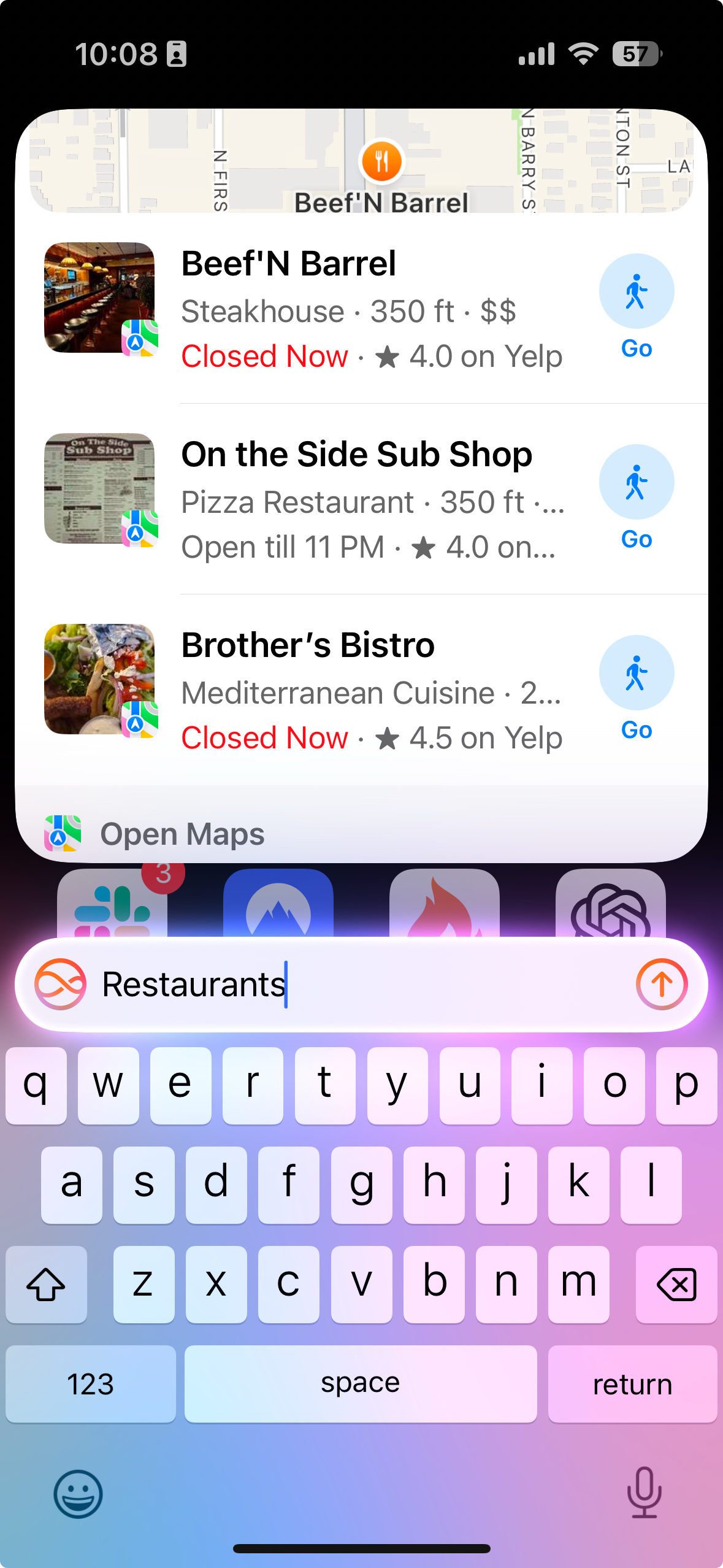
### The Limits of Siri Local Search
**Visibility:** The Text-to-Siri interface is largely hidden from view in its current beta incarnation. It appears, however, that Text-to-Siri can be a pixel-for-pixel replacement of Spotlight Search in the iPhone interface, which currently has favored placement on the iPhone home screen.
0:00
/0:12
1×
click to see how pixel perfect the new Text to Siri fits in the existing layout
**Audio comprehension**: The success of Siri-based local search will depend on not just a better, more visible text input for Siri but a much better voice experience overall. Siri has a well-earned reputation for [being stupid](https://youtu.be/kTefnhbg0Ig?si=8x7xKIZs4IFvE2cF&ref=nearmedia.co). The problems are connected to "brittleness," i.e. the inability to map the complexities of human language to a single computer command and "hearing," where Siri needs to separate the command from the background noise.
Apple seems to be making progress on both of these fronts. The use of LLMs for advancements in language and [audio processing](https://www.apple.com/airpods-pro/?ref=nearmedia.co#:~:text=The%20H2%2Dpowered%20AirPods%20Pro%202%20feature%20Adaptive,right%20mix%20of%20sound%20for%20any%20environment.) seems to help Siri better understand and execute. If you haven't listened to this [conversation](https://youtu.be/J7al%5FGpolb8?si=46OY1kUUke-Qf0XD&t=4633&ref=nearmedia.co), with John Giannandrea, Apple's head of AI, on these issues you really should.\*\*
While Siri is "smarter" in iOS 18.1, it still needs improving. But the basic technologies for that to happen appear to be in place.
**Lack of local details**: Apple Maps has made an amazing recovery as a go-to navigational tool, and its entity database of local businesses has improved dramatically. However, its local search success has also been impeded by a lack of depth and detail in Apple's local listings. It needs much more to answer long-tail inquiries such as, Who has a Nikon D700 in stock? Which bar has shuffleboard? Which employment lawyer provides sexual harassment defense? Is the business LGBTQ friendly?
### Changing Local Landscape
Google has long dominated local search at all levels with broad and deep data across many different local verticals. By integrating these verticals they have dominated the local funnel from planing to purchase. ChatGPT's recent [integration of SearchGPT](https://www.nearmedia.co/way-too-early-thoughts-on-searchgpt-for-local-search/) into their product and Apple's elevation of local holds the promise of a more competitive and interesting local search market.
Clearly Apple is moving more aggressively by making their local graph more visible and integrating it more fully with Apple Intelligence. We have yet to see how well Apple's AI integration with ChatGPT will handle more complicated queries like full-on [trip planning](https://www.nearmedia.co/way-too-early-thoughts-on-searchgpt-for-local-search/#ability-to-hold-context-query-to-query). But that's a use case that ChatGPT is highlighting.
Whether it's flights, hotel bookings, services, products, ownership attributes or social attributes, Google Local has set a very high bar for more complicated and longer tail local searches, which Apple has not yet reached.
### Impact on Your Marketing
Apple has long flown under search marketers' radar. Some of this is due to difficulty tracking results and some of it is likely due to their inability to make obvious changes to impact rank.
We have covered the [growing strength](https://www.nearmedia.co/apple-maps-road-to-discovery/) of [Apple Maps for location discovery](https://www.nearmedia.co/apple-maps-the-road-to-discovery-part-2/) and Apple's play to increase local data with [their Apple Business Connect product](https://www.nearmedia.co/should-a-business-put-energy-into-apple-maps/). In certain local verticals, Apple is sending a reasonable amount of traffic; in many categories it's ahead of Yelp or even Facebook. And the growing successes of Apple Maps and anticipated growth of Siri point to Apple "stealing" ever more local searches from Google.
Apple local search is local entity search that relies heavily on partners for data, photos and reviews. To succeed you need to:
- Claim your listing at Apple Business Connect
- Add photos and promotions for engagement
- Determine which partner Apple is using for reviews and photos in your vertical
- Do barnacle SEO at that partner with a review push and photos
- Use call tracking for your Apple listing to guage success
- Assess Apple's local insights to understand their impact
- If you are a home services or e-commerce business add yourself to Business Connect. You won't show in Maps but there are indications that the new Siri search is adding other vertical searches.
### What Does the Future Hold?
Apple is currently processing over [1.5 billion Siri queries a day](https://youtu.be/J7al%5FGpolb8?si=46OY1kUUke-Qf0XD&t=4633&ref=nearmedia.co) in the existing product. In December, when ChatGPT is added to Siri as part of iOS 18.2, we are likely to see significant growth of Siri usage. There is every reason to think that an increasing portion of that will be local search.
And now that Siri finally has Apple's full attention, it's likely to become increasingly competent over time.
However, Apple moves very slowly and implements incremental changes every six months. So, at the end of year two, three or four of a product, you really have something. The same is going to happen with Siri local search.
Siri and Apple Intelligence are getting [stepwise iOS upgrades](https://9to5mac.com/2024/11/03/new-apple-intelligence-siri-looks-different-works-the-same/?ref=nearmedia.co) over the next six months. For now only higher end current iPhones can even run the new Siri. Hopefully, new [low-end model releases](https://www.macrumors.com/2024/05/17/when-to-expect-the-next-iphone-se/?ref=nearmedia.co) will increase its availability. It will take another two years before half of the installed base is upgraded and sometime beyond that to see the full adoption and impact of Siri Local.
Whether this will put a dent in Google's local dominance remains to be seen.
Watching the rise of Apple Maps from the ashes, we've seen how tenacious the company can be. That bodes well for the long term future and a more competitive local playing field. But however it plays out, it will be much more like multiple seasons of [Pachinko](https://youtu.be/tcz6aWXEb8A?si=sX3zQj-jqjQghIVZ&ref=nearmedia.co) than [The Family Plan](https://youtu.be/ns8weNznn1Y?si=9kMPgXzLVJl%5FhXRf&ref=nearmedia.co).
---
\* *Apple Intelligence with Type to Siri is available on iPhone 16, iPhone 16 Plus, iPhone 16 Pro, iPhone 16 Pro Max, iPhone 15 Pro, iPhone 15 Pro Max, iPad with A17 Pro or M1 and later, and Mac with M1 and later.*
\*\* *This* [*conversation*](https://youtu.be/J7al%5FGpolb8?si=46OY1kUUke-Qf0XD&t=4633&ref=nearmedia.co) *with* *John Giannandrea* *, previously the Google AI lead who left for Apple* [*due to weak leadership*](https://www.cnbc.com/2024/06/07/john-giannandrea-apple-ai.html?utm%5Fsource=substack&utm%5Fmedium=email) *at Google, is worth listening to. He details why voice search has failed to this point and, with LLMs, why it now has a chance for broader adoption.*
### Ep 182: A Google “Pardon”?, Siri’s Search Improvements, Search from Chat GPT is Really Good
URL: https://www.nearmedia.co/ep-182-a-google-pardon-siris-search-improvements-search-from-chat-gpt-is-really-good/
Last updated: 2024-11-09T17:16:29.000Z
**Part 1 starts 00:13 -** [**Google's Antitrust Battle: Legal and Political Shifts**](https://youtu.be/n85wLFJHvEY?ref=nearmedia.co)
As Google’s antitrust trial unfolds, recent shifts in U.S. leadership may change the tech giant’s outlook. With Trump’s election win, the likelihood of drastic regulatory action against Google, such as a breakup, appears to be reduced. The new administration’s stance on big tech could soften the Justice Department’s approach, shifting from aggressive oversight to a more business-friendly posture. While there’s bipartisan support for reigning in big tech, motivations differ: Republicans often cite censorship concerns, while Democrats focus on monopolistic practices. Given these dynamics, Google may emerge with only minor restrictions—like changes to default search agreements—rather than a forced split. Despite some regulatory adjustments, the tech landscape now looks less likely to see major disruptions, leaving room for Google to maintain its market dominance.
Segment Reference Article:
[**Will Trump 'Pardon' Google?**](https://www.nearmedia.co/google-pardon-avoiding-gbp-mistakes-google-ui-box/#will-trump-pardon-google)
**Part 2 starts 08:10 -** [**Apple's Applied Intelligence Transformation: Siri's Leap to Intelligent Search**](https://youtu.be/SY%5F807p72GQ?ref=nearmedia.co)
We take a look at the iOS 18.1 Siri Beta. Apple’s Siri is evolving into a powerful AI assistant, moving beyond simple voice commands to provide advanced, text-based search capabilities and an app-like experience. With new features allowing Siri to pull information directly from trusted sources, users can get sports scores, local recommendations, and entertainment options seamlessly without going to the web. Apple’s focus on data privacy and ad-free interaction offers a distinct alternative to Google’s ad-driven models, emphasizing a cleaner, user-centered experience. Apple’s work on voice isolation is also enhancing Siri’s effectiveness, allowing smoother interactions even in noisy environments. Because of the many iPhones in the wild, Siri’s expanded abilities across the Apple ecosystem could lead to a shift in user habits, positioning Apple IntelligenceI as a viable alternative to traditional search.
**Part 3 starts 28:53 -** [**ChatGPT Redefining Search**](https://youtu.be/3wn7DaYu3kE?ref=nearmedia.co)
The new SearchGPT feature might just redefine search by offering a conversational interface that maintains context across multiple queries. This functionality could make ChatGPT a compelling alternative to Google, especially in local search, where its ability to remember and refine previous queries sets it apart. ChatGPT’s clean interface and ability to deliver quick, relevant answers directly within the chat could attract users interested in exploring new search options. As Apple prepares to integrate ChatGPT into Siri, this AI-driven trend may drive additional “zero-click” behaviors—where users get instant answers without leaving the app. Search GPT also shows promise in e-commerce and product searches, delivering a streamlined experience that could change how users interact in this space and transform how consumers search.
Segment Reference Articles:
[Google’s UI Limitations](https://www.nearmedia.co/google-pardon-avoiding-gbp-mistakes-google-ui-box/#google-uis-limitations)
[SearchGPT: It's genuinely impressive.](https://www.nearmedia.co/way-too-early-thoughts-on-searchgpt-for-local-search/)
[Google is still dominant. Does it matter?](https://www.linkedin.com/posts/davidmihm%5Faiandsearch-digitalmarketing-expertinsights-activity-7260725088402972673-kOHf?utm%5Fsource=share&utm%5Fmedium=member%5Fdesktop)
### Google 'Pardon', Avoiding GBP Mistakes, Google UI Box
URL: https://www.nearmedia.co/google-pardon-avoiding-gbp-mistakes-google-ui-box/
Last updated: 2024-11-07T20:56:12.000Z
***Please read*** [***this message about Near Media's future***](https://www.nearmedia.co/crossroads/)***.***
### Will Trump 'Pardon' Google?
Just as Trump will now escape criminal liability, Google appears poised to avoid any "structural" remedies for its anticompetitive search behavior. As you recall, the Department of Justice (DOJ) [is considering](https://www.nearmedia.co/breaking-up-google-facebook-local-tab-searchgpt-ads/) seeking a breakup of Google to "prevent Google from using products such as Chrome, Play, and Android to advantage Google search and Google search-related products and features ... over rivals or new entrants." It was actually Trump's DOJ that initiated the antitrust case against Google, partly because Google was seen as "[unfair](https://abcnews.go.com/Politics/trump-attacks-google-claims-prioritizes-fake-news-searches/story?id=57444232&ref=nearmedia.co)." More recently, however, Trump [has signaled](https://www.nytimes.com/2024/10/15/us/politics/trump-google-monopoly-china.html?ref=nearmedia.co) he won't pursue a Google breakup because that would somehow help China. But Trump's inconsistency and unpredictability is a wild card. Google's Sundar Pichai (and other obsequious tech executives) are [doing all they can](https://www.nytimes.com/2024/11/07/technology/trump-tech-ceos.html?ref=nearmedia.co) to curry favor with the President-elect. Pichai knows Trump's favor/disfavor will have very real consequences for Google. This is almost exactly what happened to Microsoft when George W. Bush took power in 2000\. Microsoft's earlier antitrust trial resulted in a breakup order. But Bush's DOJ settled with Microsoft and the company dodged a major bullet.
> Congratulations to President [@realDonaldTrump](https://twitter.com/realDonaldTrump?ref%5Fsrc=twsrc%5Etfw&ref=nearmedia.co) on his decisive victory. We are in a golden age of American innovation and are committed to working with his administration to help bring the benefits to everyone. [pic.twitter.com/IPX7AJ8VvI](https://t.co/IPX7AJ8VvI?ref=nearmedia.co)
>
> — Sundar Pichai (@sundarpichai) [November 6, 2024](https://twitter.com/sundarpichai/status/1854207788290850888?ref%5Fsrc=twsrc%5Etfw&ref=nearmedia.co)
**Our take:**
- Trump still thinks Google is unfair (to him) and wants to see "something" done to make Google more "fair." But he will steer clear of divestiture.
- Trump's election may also impact its [second antitrust suit](https://www.theverge.com/24237832/google-monopoly-trial-ad-tech-antitrust-us-search?ref=nearmedia.co) over its ad-tech. (Red state AGs are also involved in the litigation.)
- The new administration is poised to gut corporate regulation. And Trump will undoubtedly fire Lina Khan (FTC) and Jonathan Kanter (DOJ), who was the architect of the successful antitrust suit against Google.
### Top GBP Mistakes to Avoid
There are many mistakes that local businesses, franchises and multi-location brands make with local SEO and managing their Google Business Profiles. Miriam Ellis has cataloged many of them in [an excellent new article for Whitespark](https://whitespark.ca/blog/16-common-local-seo-mistakes-and-how-to-avoid-them/?ref=nearmedia.co). She provides a list of 16 common local SEO/GBP mistakes that businesses often make. Here are the Near Media consensus top 5 mistakes to avoid:
- **Misunderstanding the Market**: you need to understand your customers and competition. You also need to understand Google search radii (plural form of radius), when you'll be seen and when you won't in Google SERPs.
- **Poor Biz Location Choice**: there are many considerations in choosing a physical address. But being too close to competitors or in the wrong location can impair online visibility.
- **Incorrect GBP Categorization**: choosing the wrong categories for your GBP will limit your visibility and ranking. GBP primary category is [a major local ranking factor](https://moz.com/blog/top-local-search-ranking-factors-explained?ref=nearmedia.co).
- **Minimal GBP Profile Effort**: invest in your Google Business Profile. Many consumers will make buying decisions after only consulting the GBP.
- **Neglecting Reviews**: everyone reading this already understands that reviews area critical ranking factor and one of the top two buyer decision criteria.
For the full list and discussion check out [the article](https://whitespark.ca/blog/16-common-local-seo-mistakes-and-how-to-avoid-them/?ref=nearmedia.co).
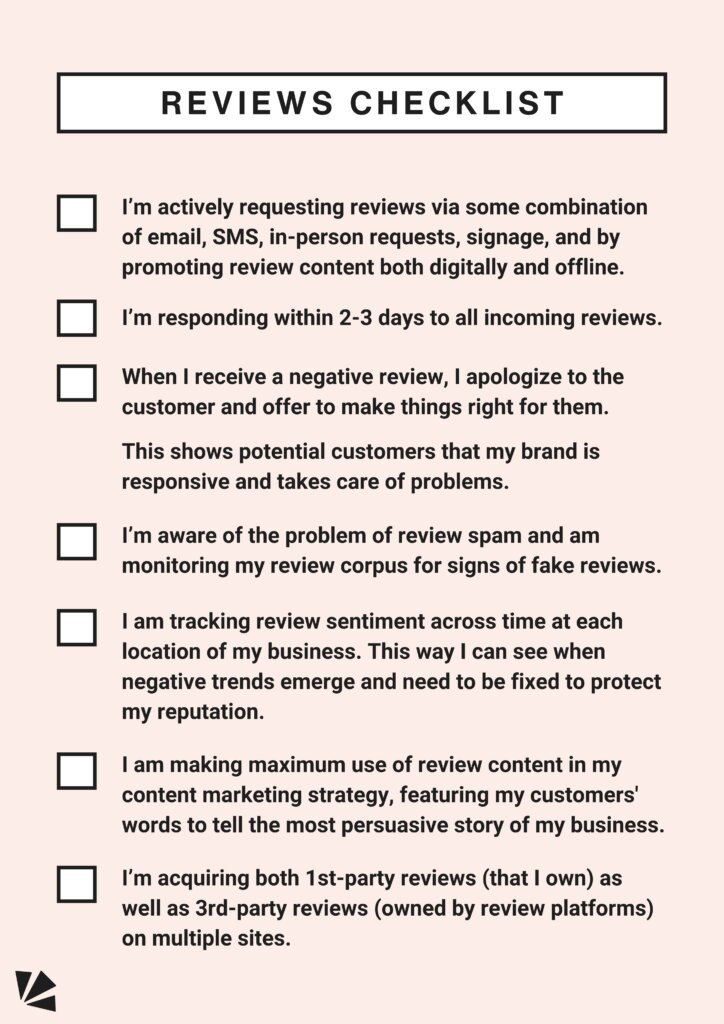
Source: Whitespark
**Our take:**
- Avoiding these mistakes maximizes your local SEO ranking chances.
- In a 2024 SMB survey I conducted, only 43% of 1K US small businesses (including some well over 100 headcount) were managing GBPs.
- Local SEO is also influenced by organic SEO, your brand and consumer engagement (e.g., clicks). [Offline marketing and engagement matter too](https://www.wix.com/seo/learn/podcast/episodes/merge-offline-online-marketing?ref=nearmedia.co).
### Google UI's Limitations
In the latest edition of the [Near Memo](https://www.nearmedia.co/memo/) (episode 182 coming this weekend) we discuss the competitive outlook for ChatGPT/SearchGPT vs. Google. David is [very bullish on ChatGPT](https://www.nearmedia.co/way-too-early-thoughts-on-searchgpt-for-local-search/) and [so am I](https://www.localdialog.com/halloween-surprise-searchgpt-is-live/?ref=nearmedia.co). Many people have quickly criticized ChatGPT search results and largely dismissed it as a significant Google competitor. However David rightly makes the point that results will only get better and people should focus on the user experience, which is more engaging, and the interface, which is cleaner and ad-free (though it won't remain that way probably). ChatGPT has massive awareness and growing distribution. Two superior features of ChatGPT are its long context window and conversational UX, which offers quicker and easier refinements than traditional Google. Google Gemini has some of the same features as ChatGPT; Google search doesn't really yet, although it's working toward more conversational interaction. Google's [AI Organized Pages](https://www.nearmedia.co/googles-ai-organized-restaurant-results/) don't really do the trick either. Google SERPs are now cluttered with all kinds of modules and features. And Google is also kind of boxed in by the need to drive ad clicks and grow quarterly revenue. So it can't really do anything radical to the SERP.

Source: ChatGPT
**Our take:**
- Facing intensifying pressure from ChatGPT, Google is increasingly shoehorning AI into search results with mixed results.
- David argues Google should start from scratch with Gemini and build a totally new search experience.
- I agree Google needs to develop a very different UX than what it offers today, which is cluttered, often spammy and [increasingly inefficient](https://www.nearmedia.co/search-frustration-aio-disappearing-act-genzs-social-search/).
## Recent Analysis
- **Near Memo episode 181**: [AI in local SEO, Siri finally gets local search, ChatGPT's growing user base](https://www.nearmedia.co/ep-181-ai-in-local-seo-siri-finally-gets-local-search-chatgpts-growing-user-base/).
- **Way-Too-Early Thoughts on SearchGPT for Local**, [by David Mihm](https://www.nearmedia.co/way-too-early-thoughts-on-searchgpt-for-local-search/).
## Short Takes
- How **local SEO** differs for [SABs vs. brick and mortar](https://searchengineland.com/top-seo-tips-for-location-specific-websites-447951?ref=nearmedia.co).
- **Nextdoor** Q3 active users and [revenue numbers improve](https://investors.nextdoor.com/news/news-details/2024/Nextdoor-Reports-Third-Quarter-2024-Results/default.aspx?ref=nearmedia.co).
- **Perplexity** [raised its profile](https://techcrunch.com/2024/11/06/the-other-election-night-winner-perplexity/?ref=nearmedia.co) on election night.
- **AI Overviews** [appearing in](https://www.seroundtable.com/google-ai-overview-within-people-also-ask-38370.html?ref=nearmedia.co) People Also Ask.
- Review platform Sitejabber, [charged by FTC](https://www.ftc.gov/news-events/news/press-releases/2024/11/ftc-order-against-ai-enabled-review-platform-sitejabber-will-ensure-consumers-get-truthful-accurate??ref=nearmedia.co) with **consumer deception**.
- **ChatGPT** is [not a keyword research tool](https://www.linkedin.com/feed/update/urn:li:activity:7256617638464733185/?ref=nearmedia.co).
- ChatGPT [paid millions](https://techcrunch.com/2024/11/06/openai-acquired-chat-com/??ref=nearmedia.co) for **Chat.com**; will this be the new brand?
- Court: Google [has no duty to victims](https://arstechnica.com/tech-policy/2024/11/google-has-no-duty-to-refund-gift-card-scam-victims-judge-finds/?ref=nearmedia.co) in **Google Play** gift card scam suit.
- More AI features [coming to some](https://www.theverge.com/2024/11/6/24289714/ios-18-2-apple-intelligence-public-beta-chatgpt-siri-image-playground?ref=nearmedia.co) **iPhones** with iOS 18.2\.
- Publishers [don't count on](https://pressgazette.co.uk/publishers/digital-journalism/google-discover-publishers/?ref=nearmedia.co) **Google Discover**.
- Google [explains the tech](https://deepmind.google/discover/blog/pushing-the-frontiers-of-audio-generation/?ref=nearmedia.co) behind **NotebookLM** "podcasts."
- **Amazon's** virtual [Beyond showrooms](https://www.amazon.com/beyond/events/holiday2024??ref=nearmedia.co) emulate physical retail.
Listen to our [latest podcast](https://www.nearmedia.co/memo/).
[](https://nearmedia.co/memo?ref=nearmedia.co)
How can we make this better? Email [us](mailto:gsterling@nearmedia.co) with suggestions and recommendations.
### SearchGPT Boosts Bing, ChatGPT Eclipses Gemini, 230 Must Go
URL: https://www.nearmedia.co/searchgpt-boosts-bing-chatgpt-eclipses-gemini-230-must-go/
Last updated: 2024-11-05T20:47:07.000Z
### Bing Optimization = SearchGPT SEO?
The Bing search index is a significant contributor to ChatGPT results, according to multiple sources (e.g., [here](https://www.theverge.com/2024/10/31/24283906/openai-chatgpt-live-web-search-searchgpt?ref=nearmedia.co), [here](https://www.linkedin.com/feed/update/urn:li:activity:7258597583353245696/?ref=nearmedia.co)) – although this comes as no surprise given the partnership between OpenAI and Microsoft. However, OpenAI is using more content inputs than just Bing. It has multiple content licensing deals, for example. ChatGPT's search capabilities involve a "mix of search technologies," OpenAI's head of search Adam Fry told The Verge. And Bing results are definitely not 1:1 with ChatGPT. In a few local search scenarios ChatGPT and Bing were relatively close but not identical; in other cases they're dramatically different. In the example below, "best pizza San Francisco" there's some listings overlap, but it ends there. This ironically breathes new life into Bing in an indirect way. ChatGPT traffic [surpassed Bing in August](https://www.linkedin.com/posts/kevinindig%5Fchat-gpt-surpassed-bings-traffic-in-august-activity-7256699061607493635-eEkv/?ref=nearmedia.co). But now many SEOs will be compelled to take a fresh look at Bing and Bing Places. Julian Hooks' [recommendation to optimize for Bing](https://www.linkedin.com/posts/davidmihm%5Fmax-out-bing-webmaster-tools-is-the-first-activity-7259300532790452224-kumj/?ref=nearmedia.co) appears to be solid advice accordingly. You'll get the benefit of whatever incremental traffic Bing drives as well as a better chance of appearing in ChatGPT.
**Best Pizza San Francisco**
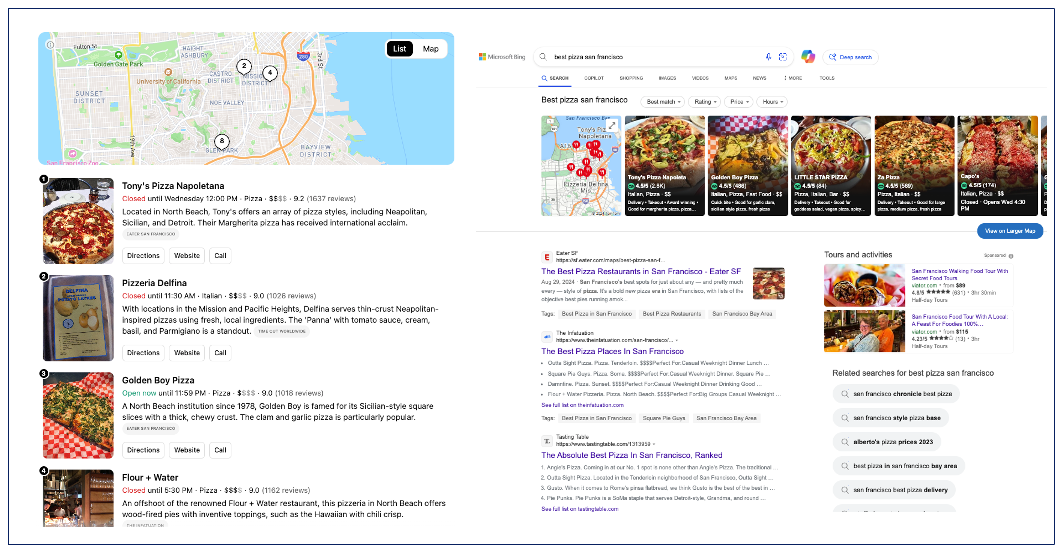
Source: ChatGPT - Bing
**Our take:**
- Whether you have a positive [or critical view](https://x.com/joyannehawkins/status/1853249413210337332?ref=nearmedia.co) of ChatGPT results ([also here](https://techcrunch.com/2024/11/04/chatgpt-search-is-not-openais-google-killer-yet/?ref=nearmedia.co)), Google now has a very real competitor – or competitors.
- We're likely to see [fewer informational](https://www.aleydasolis.com/en/search-engine-optimization/chatgpt-search-initial-analysis-post-launch-comparison-vs-google-serps/?ref=nearmedia.co) queries on Google over time, but local and commercial queries will probably remain there.
- It remains to be seen what, if anything, ChatGPT does with Apple, which has a massive high quality database of local places.
### ChatGPT Eclipses Gemini
ChatGPT is the top AI chatbot driver of traffic according to a small sample analysis [by Graphite](https://www.linkedin.com/posts/ethanls%5Fai-chat-search-traffic-analysis-method-activity-7254943394806853632-Ndrw/??ref=nearmedia.co). The company looked "at anonymized traffic across several sites to assess the composition and growth rate of traffic and conversions from AI chat." Company CEO Ethan Smith said that there was a nearly 70% increase "in traffic coming directly from ChatGPT since August 2024." That is consistent with data from SEO Clarity's Mark Traphagen, who recently [said](https://www.linkedin.com/posts/marktraphagen%5F145x-thats-how-much-referral-traffic-from-activity-7257423918498541568-LTrv/?ref=nearmedia.co) on LinkedIn that traffic from ChatGPT has roughly tripled in the past couple of months. In terms of the traffic breakdown, Smith reported that "87% of traffic is coming from ChatGPT, 7% from Perplexity, 4% Gemini." And the vast majority of traffic is being driven to homepages rather than landing pages. Smith also speculated that AI traffic might be undercounted based on the way users are interacting with AI and search: getting information on ChatGPT and then validating with Google by conducting a separate search, rather clicking-through to the site from ChatGPT.
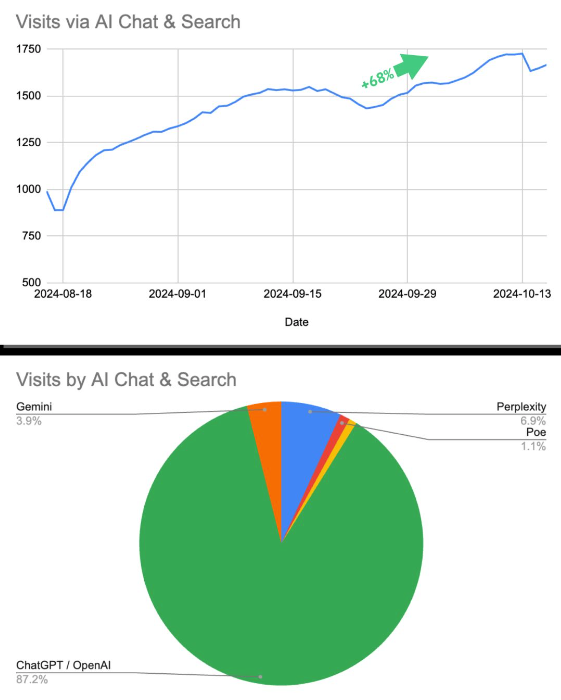
Source: Graphite
**Our take:**
- It's important to point out that percentage growth from a small base can appear very impressive but be insignificant IRL. That's likely true here.
- The fact that Gemini is such a tiny contributor here is interesting. Among consumers and SMBs, ChatGPT is used far more than Gemini. That's not true for larger agencies and enterprises where the usage gap is smaller.
- Graphite's Smith offers [slides](https://docs.google.com/presentation/d/1CP0ksqYF%5Fw%5FoO9s5oNr%5FZq3WCaFUYAXAcdmE6uDXe90/edit?ref=nearmedia.co#slide=id.g273c489ba56%5F0%5F301) on "AI answer optimization" and "AI citation optimization." Separate: [Getting found in ChatGPT](https://www.botify.com/blog/welcome-to-the-search-revolution??ref=nearmedia.co) and AI search results.
### Section 230 Needs to Go
On election day in the US it seems fitting to talk again about Section 230 reform. That's because social media have been relentlessly and successfully exploited by domestic purveyors of disinformation and [foreign interests/governments](https://www.nytimes.com/2024/11/05/us/politics/election-threats-russia.html??ref=nearmedia.co) to influence election results. AI and deepfakes [have been heavily used](https://apnews.com/article/artificial-intelligence-elections-disinformation-chatgpt-bc283e7426402f0b4baa7df280a4c3fd?ref=nearmedia.co) as well. While the major social platforms do varying degrees of voluntary moderation, it's entirely discretionary. Indeed, Section 230 makes them totally immune from liability for any content appearing on their sites. Over the past several years, the platforms have reduced moderation and [generally retreated](https://www.washingtonpost.com/technology/2024/11/02/social-media-election-voter-fraud-x-meta/??ref=nearmedia.co) from trying to block disinformation. Twitter is an extreme case: owner Elon Musk is [one of the biggest promoters of disinformation](https://apnews.com/article/disinformation-musk-x-twitter-european-union-9f7823726f812bb357ee4225b884354f?ref=nearmedia.co) himself. And there are no consequences for any of this, but it could have a material impact on our election and those around the world. The platforms have largely retreated from moderation after pressure from conservatives [claiming censorship](https://www.usatoday.com/story/news/politics/2024/06/26/supreme-court-biden-social-media-decision-debate/74221889007/?ref=nearmedia.co). However, with the [collapse of local news](https://ny1.com/nyc/all-boroughs/news/2023/11/16/local-news-outlet-decline-report?ref=nearmedia.co) and traditional media most people are [now getting most of their "news" from social media](https://www.pewresearch.org/journalism/fact-sheet/social-media-and-news-fact-sheet/?ref=nearmedia.co). And when local news shuts down, [communities become more polarized](https://newslit.org/tips-tools/did-you-know-loss-of-local-news-outlets/?ref=nearmedia.co).

Source: ChatGPT
**Our take:**
- We need a notice and takedown approach that requires action within a period of time or else liability. Europe's DSA might offer a model of sorts.
- Managing such a process would be very tricky; content violation notifications would likely become a political battleground too.
- Yet it's clear that the laissez-faire approach being used today isn't working, with potentially disastrous real-world consequences.
## Recent Analysis
- **Near Memo episode 181**: [AI in local SEO, Siri finally gets local search, ChatGPT's growing user base](https://www.nearmedia.co/ep-181-ai-in-local-seo-siri-finally-gets-local-search-chatgpts-growing-user-base/).
- **Way-Too-Early Thoughts on SearchGPT for Local**, [by David Mihm](https://www.nearmedia.co/way-too-early-thoughts-on-searchgpt-for-local-search/).
## Short Takes
- Does **Prominence trump Proximity** in [Local Pack rankings](https://www.localseoguide.com/does-prominence-trumps-proximity-local-seo-observations-from-the-field/?ref=nearmedia.co)?
- Google showing **new menu carousel** [for restaurant brand searches](https://www.seroundtable.com/google-search-menu-highlights-carousel-38302.html?ref=nearmedia.co).
- The [severe consequences](https://www.kare11.com/article/news/investigations/kare-11-investigates-phantom-fixers-premium-home-service/89-596fc6fe-384f-40ce-bc7b-501c427920f0?ref=nearmedia.co) of **local business listings hijacking**.
- A [guide](https://searchengineland.com/how-to-pick-the-right-google-business-profile-categories-447898?ref=nearmedia.co) to **GBP category selection** and optimization.
- Google asking [yes/no questions](https://support.google.com/business/answer/15496277?hl=en&ref=nearmedia.co) about **in-store inventory**.
- **iOS 18.2:** ChatGPT has daily limits [with an upsell to paid option](https://www.theverge.com/2024/11/4/24288015/apple-ios-18-2-upgrade-to-chatgpt-plus-settings?ref=nearmedia.co).
- How to **appear in ChatGPT** results [without training ChatGPT](https://www.coywolf.news/seo/how-to-be-in-chatgpt-search-results-without-training-their-ai-models/?ref=nearmedia.co).
- Apple's **app intent system** [will make Siri smarter](https://appleinsider.com/articles/24/11/04/developers-can-begin-work-on-an-app-intent-system-that-will-make-siri-smarter-in-2025?ref=nearmedia.co), more functional.
- **Threads** [now has 275 million](https://www.threads.net/@mosseri/post/DB6zNlQSsJN?ref=nearmedia.co) monthly active users.
- Google **AIO "highlight" button** [triggers another AI Overview](https://www.seroundtable.com/google-ai-overviews-highlight-button-38342.html?ref=nearmedia.co).
- GM [defends decision](https://www.theverge.com/24285581/gm-software-baris-cetinok-apple-carplay-android-auto-google-cars-evs-decoder-podcast?ref=nearmedia.co) to ditch **CarPlay**, build proprietary system.
- **Locked merchandise in stores** is [driving shoppers online](https://chainstoreage.com/numerator-locked-goods-can-lead-lost-sales?ref=nearmedia.co).
- **Perplexity** CEO [suggests](https://x.com/AravSrinivas/status/1853501484006342801?ref=nearmedia.co) his service replace striking NYT journalists.
- Study [highlights](https://arxiv.org/pdf/2410.22349?ref=nearmedia.co) myriad **accuracy problems** with "AI answer engines."
Listen to our [latest podcast](https://www.nearmedia.co/memo/).
[](https://nearmedia.co/memo?ref=nearmedia.co)
How can we make this better? Email [us](mailto:gsterling@nearmedia.co) with suggestions and recommendations.
### Ep 181: AI in Local SEO, Siri Finally Gets Local Search, ChatGPT's Growing User Base
URL: https://www.nearmedia.co/ep-181-ai-in-local-seo-siri-finally-gets-local-search-chatgpts-growing-user-base/
Last updated: 2024-11-04T15:00:07.000Z
**Part 1 starts 00:13 -** [**AI in Local SEO: Challenges and Opportunities**](https://youtu.be/pcP4ki7gNAE?ref=nearmedia.co)
We dive into how AI is reshaping local search. Key insights from Andrew Shotland’s analysis reveal that Google’s AI overviews appear inconsistently in local searches, mainly showing up for broader queries, while lower funnel searches rely on the local pack. New platforms like Perplexity, with licensing from Yelp, seem to offer promising results for complex local queries, potentially challenging Google’s dominance in local search.
Segment Reference Articles
[The State of Local AI Search Results Near You](https://www.localseoguide.com/the-state-of-local-ai-search-results-near-you/?ref=nearmedia.co)
[Way-Too-Early Thoughts on SearchGPT for Local Search](https://www.nearmedia.co/way-too-early-thoughts-on-searchgpt-for-local-search/)
[Local SEO for ChatGPT](https://www.nearmedia.co/localgpt-maps-ai-makeover-london-lovebombing/#local-seo-for-searchgpt)
**Part 2 starts 11:10 -** [**Apple Siri Finally Gets Local Search**](https://youtu.be/%5FWj0mbcEzSw?ref=nearmedia.co)
Mike showcases Apple’s upgraded Siri new features in iOS 18.1 that demonstrate a largely hidden but significant leap in local search capabilities. By allowing for text input and recognizing contextual cues, Siri can now provide tailored local results from any screen. Apple is taking a calculated approach to search and AI, suggesting it could take one of several directions. Long haul they appear to be banking on AI based search becoming a dominant model. They appear to be gradually developing a more functional search alternative. For it to be successful Apple needs the new SIRI to be successful and to increase its visibility. Apple, though recognizes that the change to new search modalities might take three to four and they are apparently leaving themselves open for appropriate partnerships if they lose Google’s \~$20 billion search payment.
**Part 3 starts 26:07 -** [**ChatGPT's Growing User Base and Implications for Google**](https://youtu.be/EnrmXOnquOQ?ref=nearmedia.co)
ChatGPT's is experiencing escalating popularity as a search tool, with survey data indicating that nearly half of respondents use it weekly. This rising trend hints at a shifting search landscape, though Google’s latest earnings suggest minimal immediate impact. Google’s has made strategic AI cost reductions and is investing heavily in expanding capabilities, reflecting its response to AI-driven competitors like ChatGPT
Segment Reference Articles:
[Inbound or outbound? What 1,000 consumers reveal about search, social and AI](https://searchengineland.com/inbound-or-outbound-what-1000-consumers-reveal-about-search-social-and-ai-447777?ref=nearmedia.co)
[Google's Q3 Momentum](https://www.nearmedia.co/meta-ai-search-google-q3-mo-97-vs-48/#googles-q3-momentum)
### LocalGPT, Maps' AI Makeover, London 'Lovebombing'
URL: https://www.nearmedia.co/localgpt-maps-ai-makeover-london-lovebombing/
Last updated: 2024-11-01T19:03:51.000Z
***Please read*** [***this message about Near Media's future***](https://www.nearmedia.co/crossroads/)***.***
### Local SEO for SearchGPT
Yesterday David conveyed his [first impressions of SearchGPT](https://www.nearmedia.co/way-too-early-thoughts-on-searchgpt-for-local-search/), now integrated into ChatGPT. He concluded, "SearchGPT is the first product I've seen that could actually draw meaningful market share away from Google." And I [agree](https://www.localdialog.com/halloween-surprise-searchgpt-is-live/?ref=nearmedia.co) (although I was apparently incorrect \[so far\] about Apple Maps in ChatGPT). Increasingly, people have been writing about [SEO for LLMs](https://sparktoro.com/blog/how-can-my-brand-appear-in-answers-from-chatgpt-perplexity-gemini-and-other-ai-llm-tools/?ref=nearmedia.co). The consensus seems to be: do good SEO and it will generally work for ChatGPT, Gemini and Perplexity. Yext's Christian Ward argued at recent conference that listings management is highly relevant for AI (BrightLocal recently reaffirmed that key directories in verticals [do matter](https://www.nearmedia.co/directories-matter-apple-biz-connect-trump-google/).) While Yext's argument might be seen as self-serving, it's not necessarily wrong. When you perform, for example, a home services search on ChatGPT and open the "sources" pane, you'll see a mix of individual business listings and directories such as: Angi, Thumbtack, Houzz, Better Business Bureau, YP.com and (shockingly) Mapquest, among others. Individual business links also often take you to Google Maps, with obvious implications there. This is an evolving situation and could change significantly over time. But it starts to point toward a local SEO strategy, not that different from current local SEO strategy and which includes GBP optimization.
**'Affordable House Painters in 94611'**
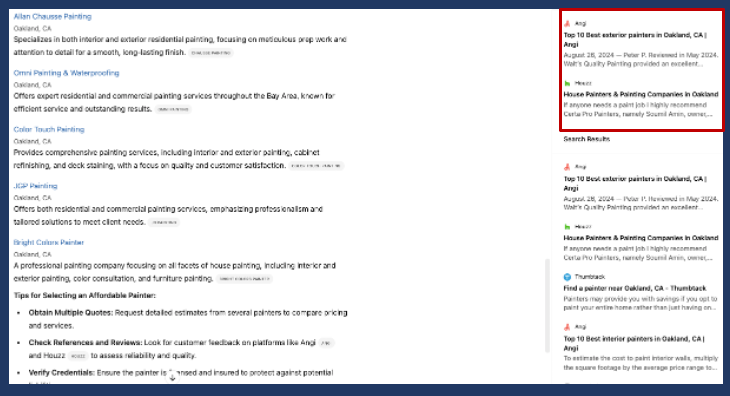
Source: ChatGPT-SearchGPT
**Our take:**
- The result above, for "affordable house painters in 94611," shows "citations" from Angi, Houzz and Thumbtack. The red box (my add) in the upper right is probably where [ads will eventually live](https://www.nearmedia.co/breaking-up-google-facebook-local-tab-searchgpt-ads/).
- Perplexity, among other things, is using a Yelp data feed for local content, arguing obviously for Yelp optimization.
- SearchGPT is immature. Its source diversity and local data depth will grow. But we can figure out key directories by category and optimize accordingly.
### Google Maps AI Makeover
Google said during its [most recent earnings call](https://www.nearmedia.co/meta-ai-search-google-q3-mo-97-vs-48/) that Maps now has a whopping 2 billion users. CEO Sundar Pichai also spoke about Gemini integration into Maps. The company further detailed those features in three (count 'em) blog posts this week. First the company [said](https://blog.google/waze/conversational-reporting-waze/?ref=nearmedia.co) that Waze is getting "conversational reporting" for road incidents, where users can simply speak naturally to describe what's happening. Next, Google Maps platform [will allow](https://blog.google/products/earth/grounding-google-maps-generative-ai/?ref=nearmedia.co) developers to use its "place data to build generative AI-powered experiences." Urban planners are going to get new AI-powered map/place data-analysis tools. And Google's Immersive View is receiving a big AI update. Google is also adding some new navigation features. But of more interest to us is the "curated with Gemini" Google Maps [feature](https://blog.google/products/maps/gemini-google-maps-navigation-updates/?ref=nearmedia.co), which allows local searchers to ask broad questions ("for inspiration") using informal language. "Things to do with friends at night," is the example Google uses. You'll apparently be able to ask follow-up questions as well. This will be coming to search in the near future, Google added. The company also touted new AI-review summaries, which *can* be useful but are also a bit of a black box and can mask fraud. Google's initial attempts to integrate new AI features into Maps were largely unsuccessful. We'll see if they work better now.
**Curated with Gemini**
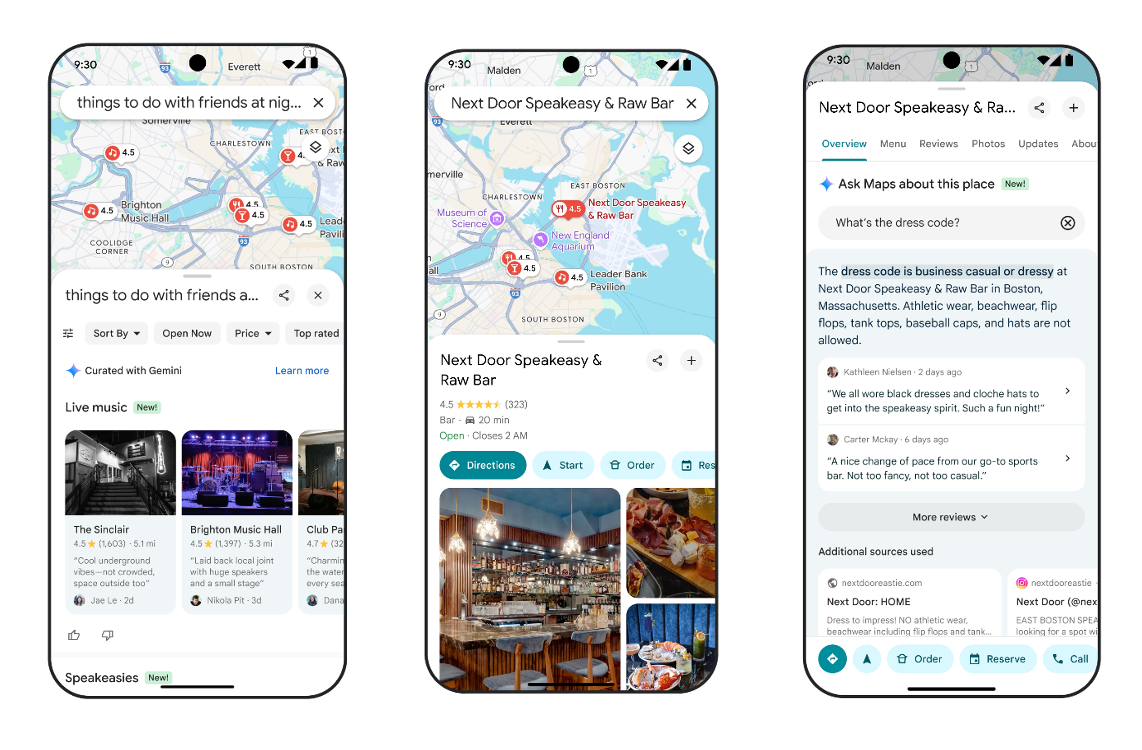
Source: Google
**Our take:**
- One of the things that we like about SearchGPT is its ability to understand and remember (local) context, to make follow-up questions and refinements easier.
- Google is trying to duplicate that experience. But the current Google search and Maps UIs aren't well suited to that type of interaction. They'll have to change.
- If it works, however, it will mean more query volume and local ad impressions.
### Google 'Lovebombed' to Stymie Tourists
The vast majority of internet users rely on local reviews when making purchase decisions. Yet Near Media user research has consistently found that most people don't read reviews, although they rely on review counts and ratings. Review fraud remains a major issue on Google and elsewhere. But in a very amusing, though problematic, development Londoners are reportedly generating a high volume of fake positive reviews for mediocre chain restaurants to fool Google rankings and lure tourists away from better local eateries. As Tim Capper [writes](https://onlineownership.com/locals-gatekeeping-london-restaurants-from-tourists-with-fake-positive-reviews/?ref=nearmedia.co), "This trend has grown into a coordinated, city-wide “lovebombing” campaign to attract tourists to mediocre restaurants, safely leaving the real hidden gems in local hands." It's [also happening on Reddit](https://gizmodo.com/redditors-are-trying-to-poison-googles-ai-to-keep-tourists-out-of-the-good-restaurants-2000516156?ref=nearmedia.co), Twitter and Tripadvisor. Capper opines, "Google’s system has very little moderation and almost no algorithm to catch these deceptive reviews—especially if they’re positive." He identifies the reasons they're unlikely to be moderated: users are in London (local), they interact with Google in an authentic way (searching for businesses and engaging with GBPs), and Google's use of signals rather than "genuine user verification \[allows\] ... fake reviews to slide through undetected."
**Agnus Steakhouse Is One of the Targeted Restaurants**
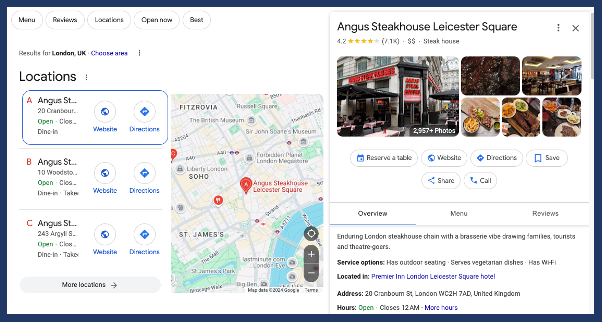
Source: Google
**Our take:**
- Google's review algorithm has become somewhat tighter over the past couple of years, likely in response to Europe's DSA. But that hasn't solved the problem.
- Ironically, all the visibility this effort generated may prompt Google to take manual action, where it otherwise would not have.
- Capper predicts the eventual decline of reviews if Google doesn't take a different approach. Already many younger people are turning to social and influencers to sidestep the "burdens" of sifting through SERPs and reviews.
## Recent Analysis
- **Way-Too-Early Thoughts on SearchGPT for Local**, [by David Mihm](https://www.nearmedia.co/way-too-early-thoughts-on-searchgpt-for-local-search/).
- **Near Memo episode 180:** [A conversation with Raj Singh, founder of Soloist.ai, an AI-powered website builder](https://www.nearmedia.co/ep-180-conversation-with-raj-singh-the-founder-of-soloist-ai-an-ai-powered-website-builder/).
## Short Takes
- **GBP's** (potentially) new "[learn something specific" box](https://www.seroundtable.com/google-business-profiles-learn-something-specific-38299.html?ref=nearmedia.co) probably AI.
- **ChatGPT** [answers "geotagging images](https://x.com/ndyjsimpson/status/1852355799571411059?ref=nearmedia.co)" question correctly – partly.
- Andrew Shotland [updates](https://www.localseoguide.com/the-state-of-local-ai-search-results-near-you/?ref=nearmedia.co) his "**ChatGPT** for local sucks" post (sucks less).
- **Restaurant chains**, not retailers, [now anchor shopping malls](https://data.yelp.com/evolution-of-the-mall-report.html?ref=nearmedia.co).
- **Amazon** Q3 ad revenue [jumped 19% to $14.3 billion](https://www.businesswire.com/news/home/20241030305950/en/?ref=nearmedia.co).
- **Microsoft** search and ad revenue [up 18%](https://www.microsoft.com/en-us/Investor/earnings/FY-2025-Q1/press-release-webcast?ref=nearmedia.co).
- **iPhone 16** sales [see strong demand](https://www.apple.com/newsroom/2024/10/apple-reports-fourth-quarter-results/?ref=nearmedia.co) despite weak Apple Intelligence.
- Google employees [worried about more layoffs](https://www.cnbc.com/2024/11/01/google-employees-pressure-execs-at-all-hands-for-clarity-on-cost-cuts.html??ref=nearmedia.co) to fund **AI**.
- **Google** [fined](https://www.nbcnews.com/news/world/russia-fines-google-20-decillion-world-gdp-youtube-kremlin-war-ukraine-rcna178172?ref=nearmedia.co) $20 decillion (?) for blocking Russian media on YouTube.
- **Godaddy** survey [finds](https://www.prnewswire.com/news-releases/2024-is-shaping-up-to-be-the-smallest-black-friday-ever-godaddy-study-302292661.html?ref=nearmedia.co) holiday shoppers more focused on SMBs this year.
- Google's **Waymo** autonomous vehicles unit [now worth $45B](https://archive.ph/XcNQT?ref=nearmedia.co).
Listen to our [latest podcast](https://www.nearmedia.co/memo/).
[](https://nearmedia.co/memo?ref=nearmedia.co)
How can we make this better? Email [us](mailto:gsterling@nearmedia.co) with suggestions and recommendations.
### Way-Too-Early Thoughts on SearchGPT for Local Search
URL: https://www.nearmedia.co/way-too-early-thoughts-on-searchgpt-for-local-search/
Last updated: 2024-11-19T22:52:41.000Z
### SearchGPT [just rolled out to the general public this morning](https://openai.com/index/introducing-chatgpt-search/?ref=nearmedia.co). It's genuinely impressive.
---
## SearchGPT As Content Tool
The first thing that struck me was that SearchGPT is better at generating a content outline than most, if not all, SEO products I've tried.
The product took my simplistic, Google-style single keyword searches and extrapolated loads of useful associated content that anticipated follow-up questions I might want to ask.
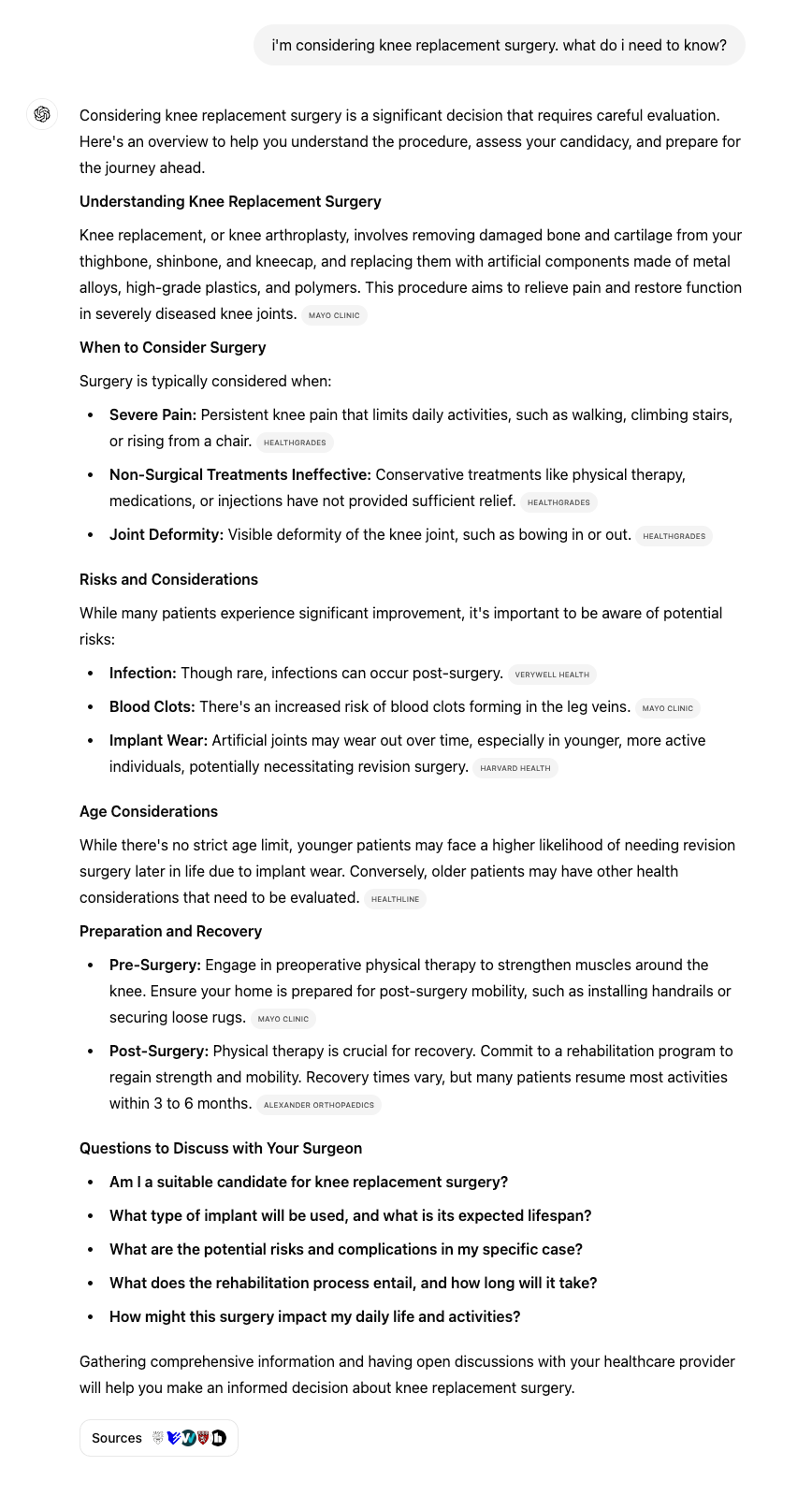
This is a pretty darn good seed of a page for a lot of questions I might have related to knee surgery.
## Simple Answers/Inconsistent Interface
For explicit local searches, both the quality and simplicity of its answers stood in stark contrast to the typically-bloated, ad-dominated Google results – and certainly relative to Google's [upcoming AI-organized pages](https://www.seroundtable.com/google-ai-organized-local-search-37723.html?ref=nearmedia.co), as we've discussed in multiple [Near Memo podcast episodes](https://www.nearmedia.co/memo/).
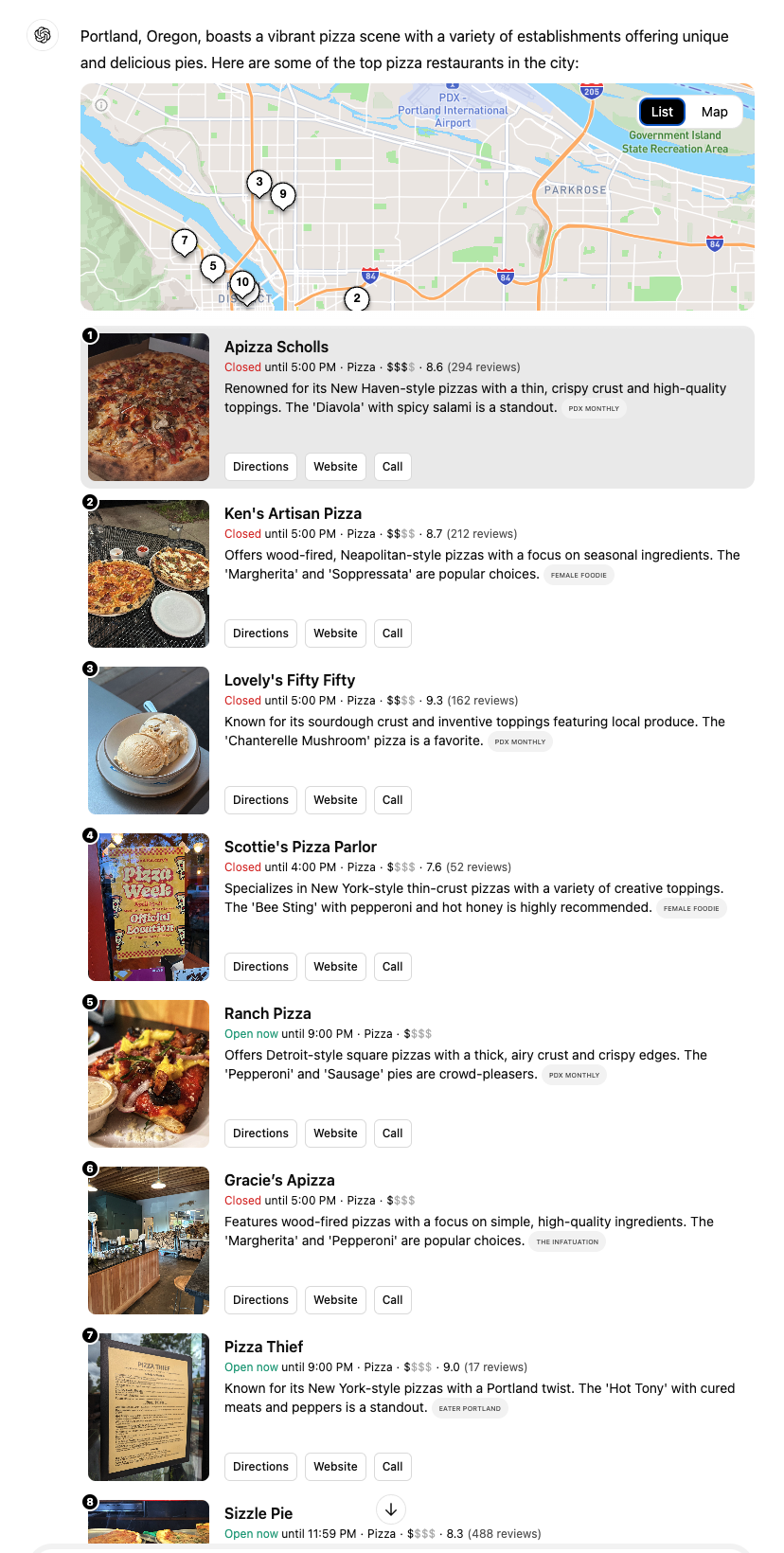
Reasonable minds may differ, but this is a good cross-section of Portland pizzerias.
Strangely, sometimes SearchGPT will return a map/list interface as shown above, and other times the UI is something closer to a localized web-based result as shown below, which bizarrely links to Google Maps URLs.
## Ability to Hold Context Query to Query
SearchGPT’s ability to refine queries is another standout feature. It naturally retained the context of previous questions, meaning I didn't need to rephrase or restate details in follow-up searches.
Not only did it basically get the list of Ireland's top golf courses correct (though I'd definitely also include [Rosapenna](https://rosapenna.ie/?ref=nearmedia.co) and [Narin & Portnoo](https://narinandportnoolinks.com/?ref=nearmedia.co)), but it knew that Adare Manor wasn't a links course and removed it from the list with a very conversational follow-up.
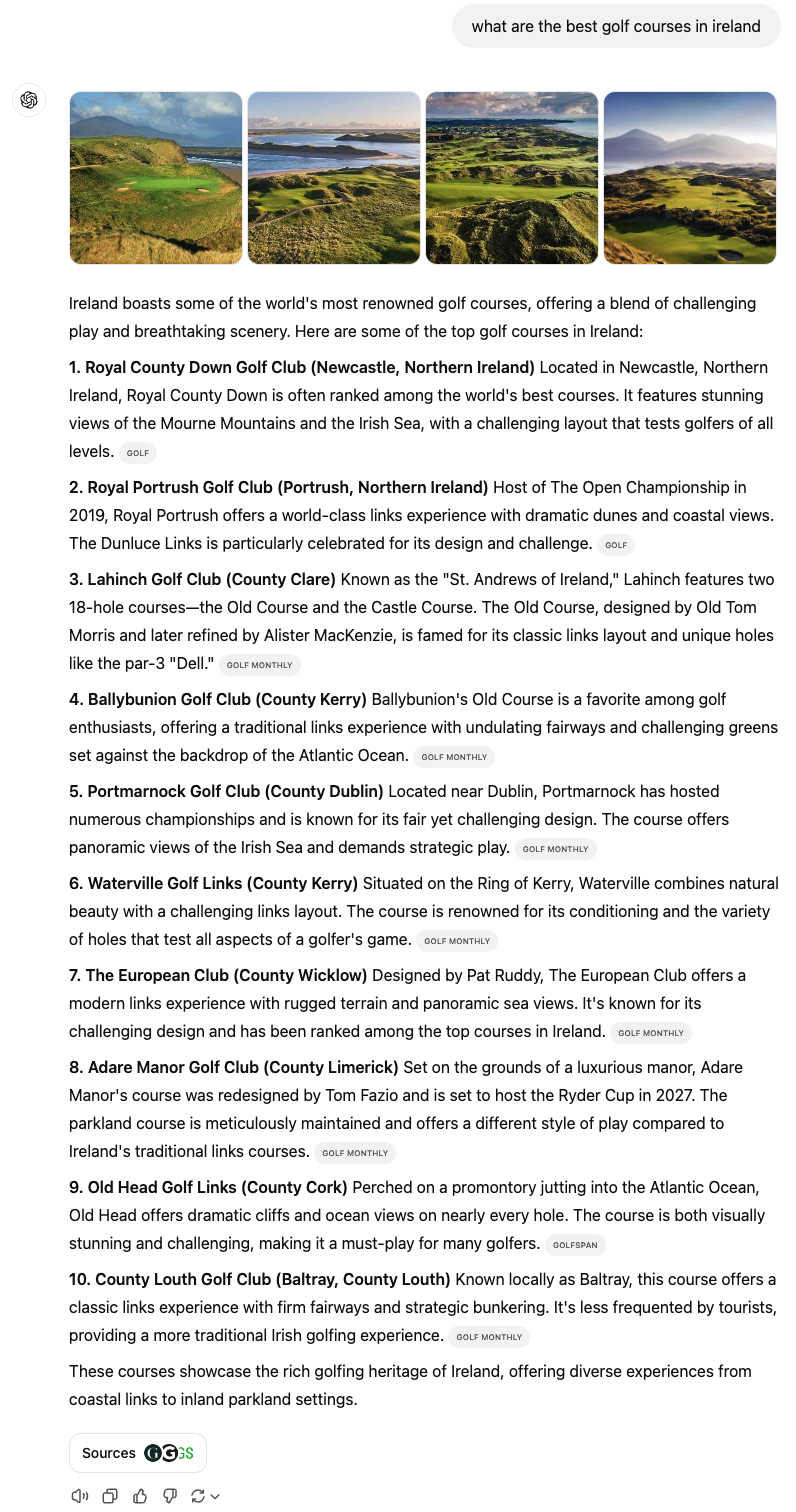
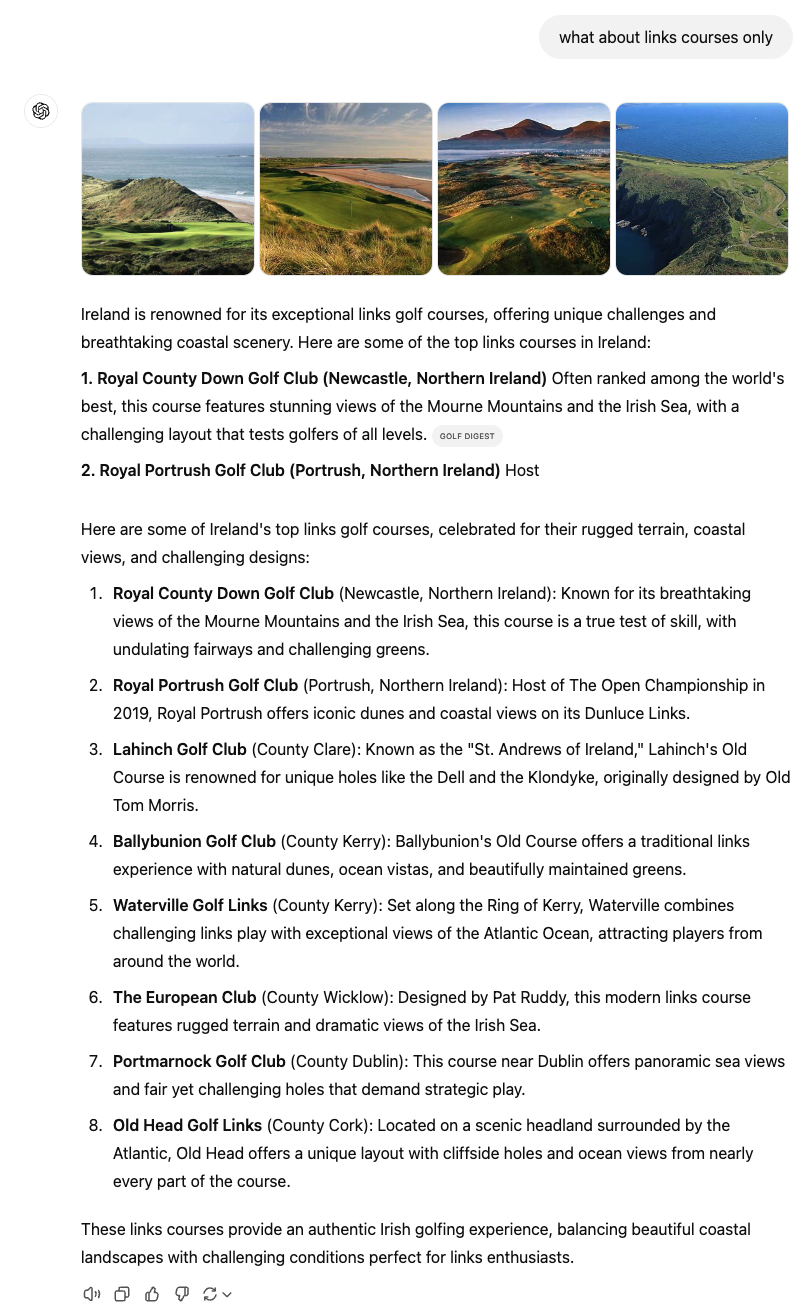
It did just as well with more exploratory, open-ended local searches (e.g., discovering points of interest rather than looking for specific businesses). And it personalized them based on how I described myself.
Below is another example of the ability to hold context without having to repeat myself, not to mention the quality of results.
Interestingly, planning a travel itinerary is the highlighted use case in OpenAI's announcement post, so perhaps the product team spent a lot of time evaluating performance for these kinds of searches.
## Local Intent as Remembered Context
After I performed an "urgent care near me" search, in a series of health-related informational searches, SearchGPT returned localized resources within the same chat.
Interestingly, it did NOT localize the same queries if they were the start of a fresh chat.
## Kissing Up to the Reviewer? 😂
Initially, I performed these searches using our Near Media company account in which my colleague Mike Blumenthal has conducted hundreds of searches.
As [Uberall's Krystal Taing](https://www.linkedin.com/in/krystaltaing/?ref=nearmedia.co) [highlighted on LinkedIn](https://www.linkedin.com/feed/update/urn:li:ugcPost:7257851776995864576?commentUrn=urn%3Ali%3Acomment%3A%28ugcPost%3A7257851776995864576%2C7257863866838077440%29&dashCommentUrn=urn%3Ali%3Afsd%5Fcomment%3A%287257863866838077440%2Curn%3Ali%3AugcPost%3A7257851776995864576%29&ref=nearmedia.co), Mike's search history seems to have a substantial influence on which results are returned.
### Searches in our company account:
### Searches in a "fresh" personal account:
Deep personalization has long been an area of opportunity for Google, given the vast amount of Chrome browsing data and search feature click data they accumulate, but they've seemed reticent to leverage it to its full extent.
SearchGPT seems to be leaning in to personalization heavily right out of the gate – and based solely on the results above, to positive effect.
## Implications for Search Practitioners
Given the massive influence of query context and personalization on the handful of initial searches I tried, it seems like it's going to be exceedingly difficult to track visibility/rankings in SearchGPT results in any meaningful way at scale.
## Hope for Hotel Suppliers
The SearchGPT hotel search UI may serve as an interesting reference as EU regulators consider Google's compliance with the Digital Markets Act's provision against self-preferencing.
One of the most striking findings from our recent study of [user hotel search behavior](https://www.nearmedia.co/european-hotel-search-study/) was the near-total [dependence hoteliers have on the Google Hotel Finder for traffic](https://www.nearmedia.co/european-hotel-search-behavior/).
Aggregator Ads absolutely dominated consumer engagement, earning the majority of all mobile clicks. And most user engagements with the Hotel Finder stayed on Google, with Aggregators receiving as many clicks as the canonical hotel website even from that hotel's Google Business Profile.
In the SearchGPT hotel search interface, however, not only are there no ads at all, but SearchGPT's "business profiles" are too spartan for "zero-click" engagement to be useful.
Instead, they feature a single (presumably unpaid) aggregator or publisher link, and clear Website and Call buttons which point directly to each hotel property. (The Directions button takes users to Google Maps, at least for now!)
We suspect hoteliers and non-Booking aggregators will all receive more organic search traffic if SearchGPT begins to eat into Google's market share.
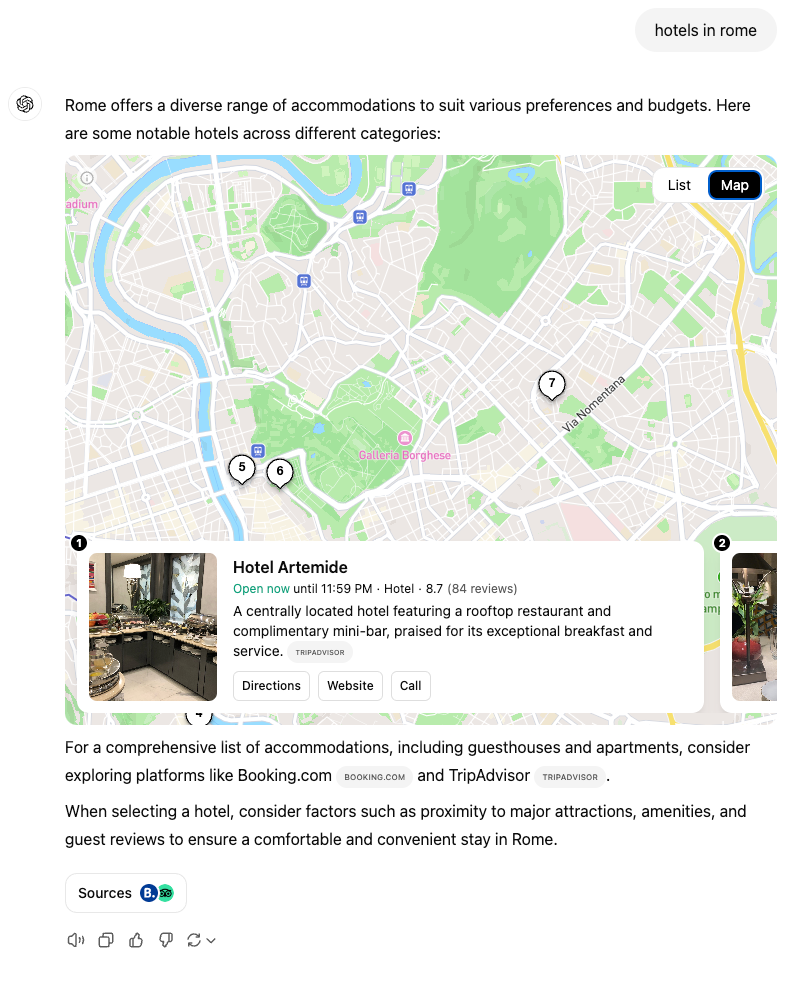
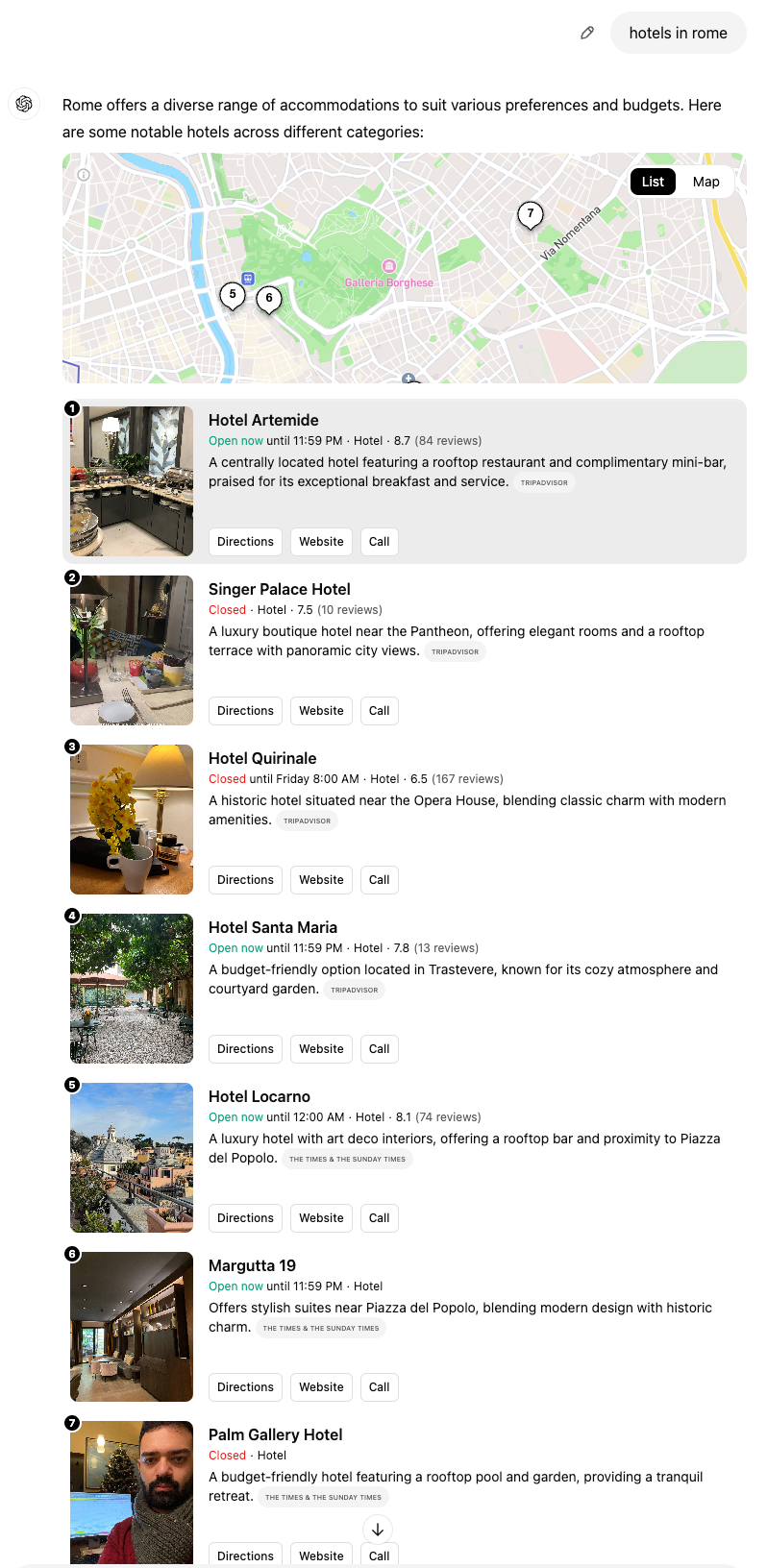
## Less for Publishers to Fear vs. Google's AI Overviews?
In the current iteration, OpenAI provides plenty of opportunities for outbound clicks, though in general the product does such a good job answering questions, I'm not sure how many users will click them.
I'd say *publishers* are just as much at risk from SearchGPT as from AI Overviews. But for most B2B and B2C companies, I see it more as a jumping-off point for mid-funnel queries – almost like an "expert reviewer" – than as something that will necessarily steal traffic from companies trying to attract customers as opposed to eyeballs.
## I Don't Say this Lightly: SearchGPT Is the First Product I've Seen that Actually Might Be a 'Google-Killer.'
Not only is the product vision of a clean, comprehensive search experience a radical departure from the current Google search paradigm, the execution in terms of result quality is far better than I've seen from OpenAI previously.
Changing consumer habits is always hard, but if [half the population is already using ChatGPT weekly](https://searchengineland.com/inbound-or-outbound-what-1000-consumers-reveal-about-search-social-and-ai-447777?ref=nearmedia.co), SearchGPT is the first product I've seen that could actually draw meaningful market share away from Google.

And with OpenAI's aggressive Chrome Extension rollout, they might draw that market share away faster than I'd previously thought possible.
### Meta AI Search, Google Q3 Mo, 97% vs. 48%
URL: https://www.nearmedia.co/meta-ai-search-google-q3-mo-97-vs-48/
Last updated: 2024-10-30T19:33:06.000Z
***Please read*** [***this message about Near Media's future***](https://www.nearmedia.co/crossroads/)***.***
### Meta's AI Search Engine
Meta is [reportedly](https://www.socialmediatoday.com/news/meta-is-developing-a-search-engine-to-power-its-ai-chatbot/731272/?ref=nearmedia.co) building a new search engine for its "conversational assistant" AI chatbot, [according to](https://www.theinformation.com/articles/meta-develops-ai-search-engine-to-lessen-reliance-on-google-microsoft?ref=nearmedia.co) The Information. The stated reason is to reduce its dependance on [Bing](https://about.fb.com/news/2023/09/introducing-ai-powered-assistants-characters-and-creative-tools/?ref=nearmedia.co) and Google, which currently provide its search results. The company has been crawling the web to train LLMs, but apparently also to create a new search index. This decision appears to be strategic and not just about cost savings. The chatbot is now deployed across Meta properties: WhatsApp, Messenger, Instagram, Ray-Ban Meta smart glasses and AR headsets. A proprietary search capability that Meta can better control makes sense in this new conversational AI environment. I directly asked Meta.ai about the company's forthcoming search engine; it told me there would be integration with multiple properties and that UGC and reviews would also be indexed. However it later qualified this statement as an "educated prediction based on publicly available information." The inclusion of content from Facebook and Instagram – local product, hospitality, travel and service recommendations – would make this a very interesting tool. Separately, Facebook recently [announced](https://about.fb.com/news/2024/10/facebook-local-tab-messenger-communities-ai/?ref=nearmedia.co) a new [Local tab](https://www.nearmedia.co/breaking-up-google-facebook-local-tab-searchgpt-ads/) that "pulls together the best local content from across Facebook – from places like Marketplace, Groups and Events – into a single tab called Local." Meta's also part of the [Overture Maps Foundation](https://www.nearmedia.co/near-memo-special-edition/), open-source mapping project. Presumably, all that data would be available via this new search engine as well.
**Best Fish Tacos 94118**
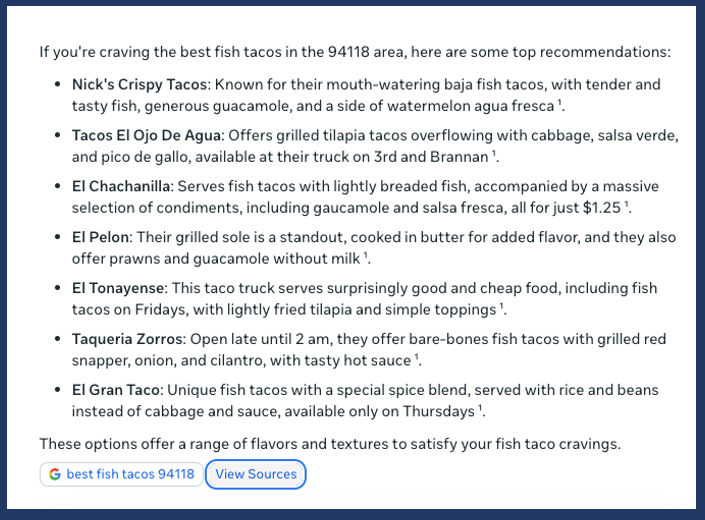
Source: Meta.ai
**Our take:**
- Fifteen years ago there were [multiple](https://searchengineland.com/facebook-questions-opens-to-limited-public-release-47523?ref=nearmedia.co) Q&A services including [Facebook Questions](https://martech.org/facebook-questions-quiet-death/?ref=nearmedia.co), which was [short lived](https://techcrunch.com/2012/10/19/facebook-questions-shut-down/?ref=nearmedia.co). This is a sort of 2.0 version.
- Any Meta search tool is unlikely to directly challenge Google but it could provide a useful alternative on Meta's various properties.
- And the inclusion of Facebook, Instagram and mapping content *could* make the Meta conversational assistant a pretty useful local search tool.
### Google's Q3 Momentum
Despite a wide range of legal setbacks and growing competition Google had [a very good Q3](https://abc.xyz/assets/71/a5/78197a7540c987f13d247728a371/2024q3-alphabet-earnings-release.pdf?ref=nearmedia.co), handily beating Wall Street Expectations. The company reported $88.3 billion in total revenue, up 15% year-over-year. Ad revenue came in at $66 billion; search advertising (and "other") brought in $49 billion and YouTube generated $9 billion. But the real star was Google Cloud, which saw 35% growth and $11.4 billion in revenue. Ruth Porat, who brought a Wall-Street focus to the company, is giving up her CFO role to become president and chief investment officer. Her successor, Anat Ashkenazi, previewed more layoffs in her introductory remarks [on the earnings call](https://abc.xyz/assets/1f/d2/b4b2a1c4437395dce09645f71173/2024-q3-earnings-transcript.pdf?ref=nearmedia.co). Also on the call, CEO Sundar Pichai made this statement (which is getting [lots of attention](https://www.theverge.com/2024/10/29/24282757/google-new-code-generated-ai-q3-2024?ref=nearmedia.co)): "Today, more than a quarter of all new code at Google is generated by AI, then reviewed and accepted by engineers" (read: more layoffs coming). Additional highlights include Waymo's momentum (150K paid rides weekly), AI Overviews in 100 countries (now with more ads) Gemini integration into Maps and across major products – and Maps now has 2 billion monthly active users.
**Google Q3 Revenues**
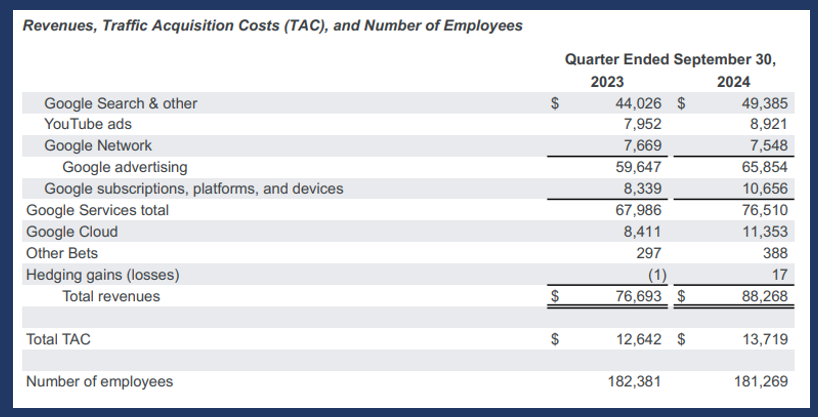
Source: Google
**Our take:**
- Despite impressive Cloud growth, Search Ads remain the biggest revenue contributor. This was the highest ad-revenue quarter Google to date.
- Google seems to be trying to grow its cloud business partly by going after Microsoft, [with apparent dirty tricks and unethical tactics](https://blogs.microsoft.com/on-the-issues/2024/10/28/googles-shadow-campaigns/?ref=nearmedia.co).
- Google has rapidly integrated AI across its products and organization, partly to thwart any structural antitrust remedies.
### Google vs. ChatGPT: 97% vs. 48%
One of the debates surrounding AI and ChatGPT in particular is: will it impact Google? There's a [seeming conflict](https://www.localdialog.com/does-ai-powered-search-truly-threaten-fortress-google/?ref=nearmedia.co) between consumer surveys and traffic/query volume data. Surveys suggest Google is vulnerable and seeing defections; [traffic data](https://sparktoro.com/blog/2024-zero-click-search-study-for-every-1000-us-google-searches-only-374-clicks-go-to-the-open-web-in-the-eu-its-360/??ref=nearmedia.co) seem to contradict that. And Google's Q3 results argue the company is very healthy and not seeing any obvious usage erosion. It saw it's highest ad revenue quarter to date. Now, a new [survey](https://searchengineland.com/inbound-or-outbound-what-1000-consumers-reveal-about-search-social-and-ai-447777?ref=nearmedia.co) from agency Fractl (n=1K adults) shows that Google remains dominant but that ChatGPT is gaining ground. (Separate source: ChatGPT referral traffic [has tripled](https://www.linkedin.com/posts/marktraphagen%5F145x-thats-how-much-referral-traffic-from-activity-7257423918498541568-LTrv?utm%5Fsource=share&utm%5Fmedium=member%5Fdesktop) in the past two months.) According to the survey, 97% of respondents used Google in the past week, 91% used social media, while 48% used ChatGPT. OpenAI said this week that ChatGPT has more than 250 million weekly active users. The Fractl survey found that 16% of respondents used ChatGPT daily, and 19% used it weekly. Younger people tended to be more frequent users of ChatGPT. The question is whether these ChatGPT users are substituting it for Google or using it for different purposes in parallel with Google? In other words, is it a search replacement or simply additive?
**Search vs. AI Usage**
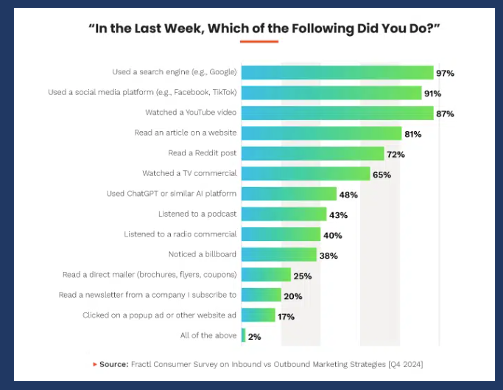
Source: Fractl-Search Engine Land
**Our take:**
- Andrew Shotland investigates the state of local search on ChatGPT and [finds it pretty weak](https://www.localseoguide.com/the-state-of-local-ai-search-results-near-you/?ref=nearmedia.co). Nobody can touch Google's local knowledge graph.
- There's lots of anecdotal evidence that people who use AI tools heavily are using Google less. That was also reflected [in a recent survey](https://www.nearmedia.co/ai-use-hurts-google-smb-response-times-local-ai-review-tool/) from Tinuiti.
- Any substitution of ChatGPT for Google is probably happening at the top of the funnel and not the bottom, minimizing the ad revenue impact.
## Recent Analysis
- **Near Memo episode 180:** [A conversation with Raj Singh, founder of Soloist.ai, an AI-powered website builder](https://www.nearmedia.co/ep-180-conversation-with-raj-singh-the-founder-of-soloist-ai-an-ai-powered-website-builder/).
## Short Takes
- Why **local reviews** [are so important](https://whitespark.ca/blog/why-local-business-reviews-are-so-important/?ref=nearmedia.co).
- **AI Overviews** showing up for [more than 50% of real estate queries](https://www.seosavvyagent.com/blog/ai-overviews-real-estate-october-2024?ref=nearmedia.co).
- **Google** tests [new local comparison UI](https://www.seroundtable.com/google-local-places-compare-sites-interface-38309.html?ref=nearmedia.co), inspired [by EU regs](https://www.linkedin.com/posts/filipsilobod%5Fgoogle-testing-our-compare-now-in-local-activity-7255866084283588608-VPRH/??ref=nearmedia.co).
- Backstory of UK's **Foundem**, [which won its antitrust suit](https://www.bbc.com/news/articles/cjr431lr72jo?ref=nearmedia.co) against Google.
- Boosted by Google, **Reddit** has 100M users and [just turned first profit](https://www.theverge.com/2024/10/29/24283056/reddit-earnings-user-growth-revenue-up?ref=nearmedia.co).
- An overview of **Google SERP** [verticalization and personalization](https://www.searchenginejournal.com/transformation-complete-googles-new-ai-shopping-experience-verticalizes-search/531039/?ref=nearmedia.co).
- France: court orders **Google** [to pay $29M](https://www.pymnts.com/cpi-posts/paris-court-orders-google-to-pay-e26-5-million-to-equativ-in-advertising-dispute/?ref=nearmedia.co) in ads antitrust case.
- At its creator summit, Google tells small **HCU** "victims" [to move on](https://www.seroundtable.com/google-search-ranking-update-coming-38323.html?ref=nearmedia.co).
- A [first person account](https://mike-hardaker.com/f/i-drank-the-kool-aid-at-the-2024-google-web-creator-summit/?ref=nearmedia.co) (mixed) of the **Google creator summit**.
- New AI "**Search Bidding Exploration**" [expands ad reach](https://searchengineland.com/google-tests-ai-tool-large-advertisers-447835?ref=nearmedia.co) and G revenue.
- Some [independent retailers are thriving](https://www.retaildive.com/news/retail-resilient-against-amazon/730513/?ref=nearmedia.co) despite **Amazon's** dominance.
- **Amazon** [top-of-funnel starting point](https://www.mediapost.com/publications/article/400664/amazon-dethrones-google-as-top-destination-for-hol.html?ref=nearmedia.co) for shoppers, Google far behind.
- **Big Tech's hidden influencers** and lobbyists [try to undermine](https://www.somo.nl/uncovering-big-techs-hidden-network/?ref=nearmedia.co) EU regs.
Listen to our [latest podcast](https://www.nearmedia.co/memo/).
[](https://nearmedia.co/memo?ref=nearmedia.co)
How can we make this better? Email [us](mailto:gsterling@nearmedia.co) with suggestions and recommendations.
### Near Media at a Crossroads
URL: https://www.nearmedia.co/crossroads/
Last updated: 2024-10-29T16:09:54.000Z
***(Prefer a slide format?*** [***Scroll down***](#slideview)***)***
Near Media has been publishing since January 2021.
We’ve tried different business models and embraced [search user testing](https://www.nearmedia.co/search-gameplan/). While people [love the data](https://www.nearmedia.co/clients/), it has been challenging to find individual clients to commit $30K+ per project.
We are now at a point where we must find a more sustainable model or wind down.
**What we do**
We engage real people in real-life search situations and track their mobile and desktop behaviors (and their thought processes). We provide deep analysis of those sessions and their concrete strategic and tactical implications for brands and marketers.
**Verticals**
To date, we’ve conducted studies for clients (and ourselves) in multiple verticals:
- Legal
- Healthcare
- Home Services
- Self Storage
- Hotels
- Restaurants
**User behavior is often counterintuitive and can vary significantly by vertical:**
- Clicks/zero-click activity
- Critical and decisive business attributes
- Engagement with SERP features
- Response to ad types
### We're "kickstarting" a new subscription offering.
**$2,500/yr, billed annually** ($208/mo)
- 6 new vertical studies of searcher behavior [similar to our research in Hotels](https://www.nearmedia.co/european-hotel-search-behavior/) where subscribers influence vertical choices
- **NEW** Deep-dive GBP analysis by vertical and geography
- [Near media newsletters](https://www.nearmedia.co/tag/news/) (moving behind paywall)
- [Near media analysis](https://www.nearmedia.co/tag/analysis/) (moving behind paywall)
- **NEW** “Office hours”— Tactical Q&A with us
### What we need from you:
**To be viable, we need 100 subscribers to commit to this program by Nov 18.**
**How to commit: Email** [**dm@nearmedia.co**](mailto:dm@nearmedia.co) **and just say “yes I’m interested.”**
We’ll send an email to our subscribers with an update on the 18th.
**If we meet or exceed 100 subscribers**, we’ll follow up with each of you individually for a secure credit card payment.
And, if we don't meet the 100 subscriber threshold, we've certainly appreciated the opportunity to be present in your inbox these last four years.
\--Greg, Mike, and David
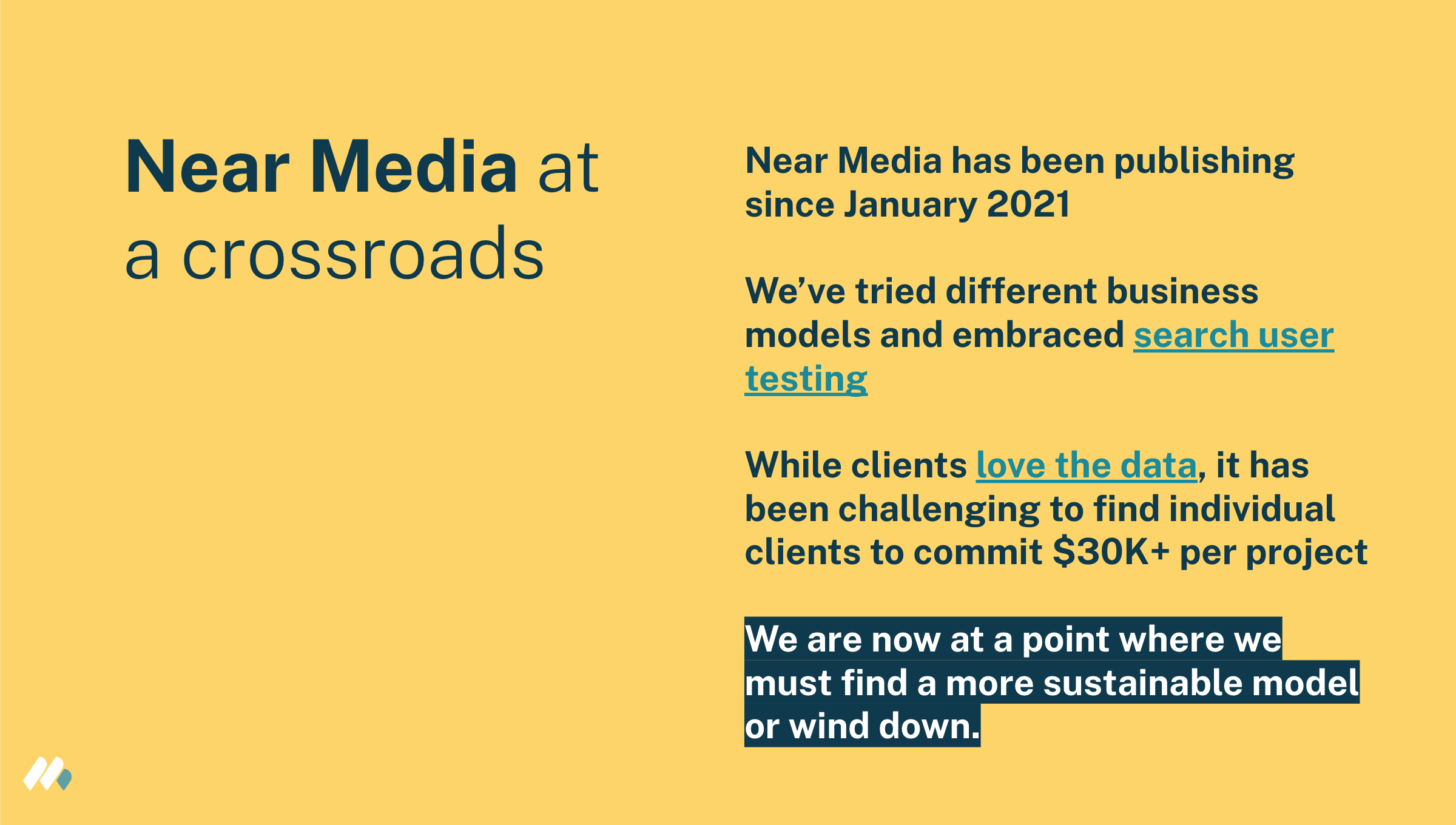
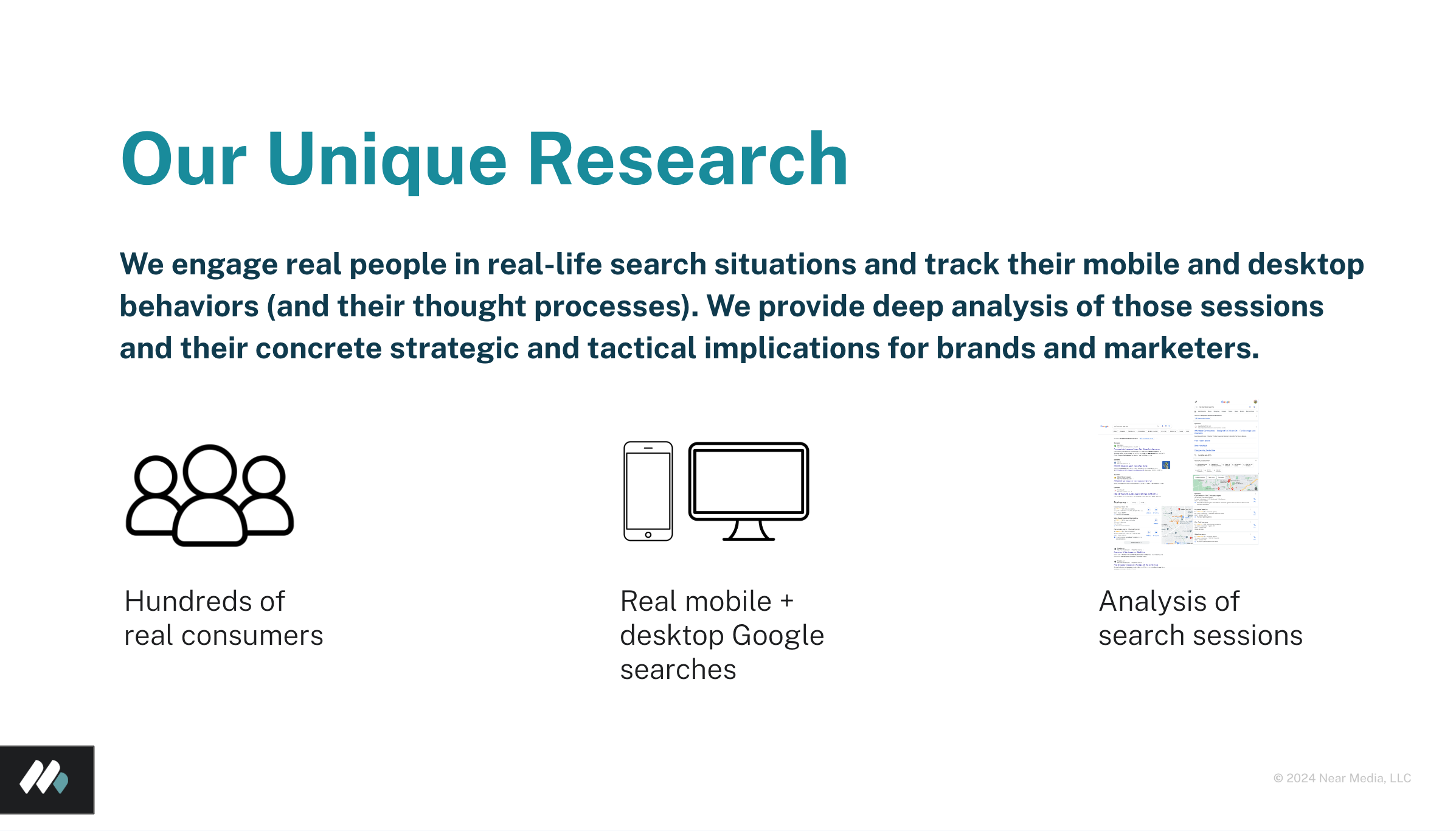
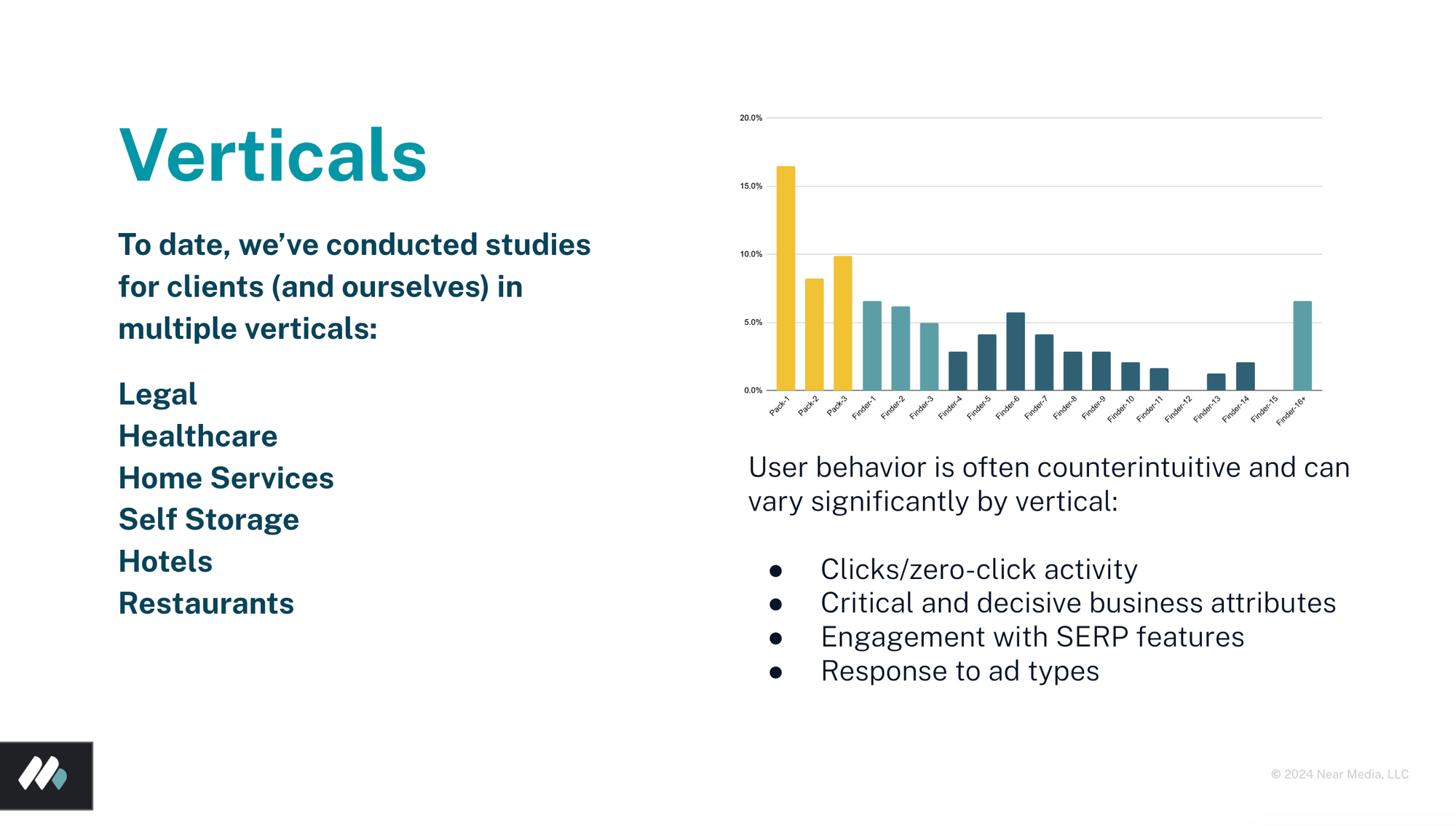
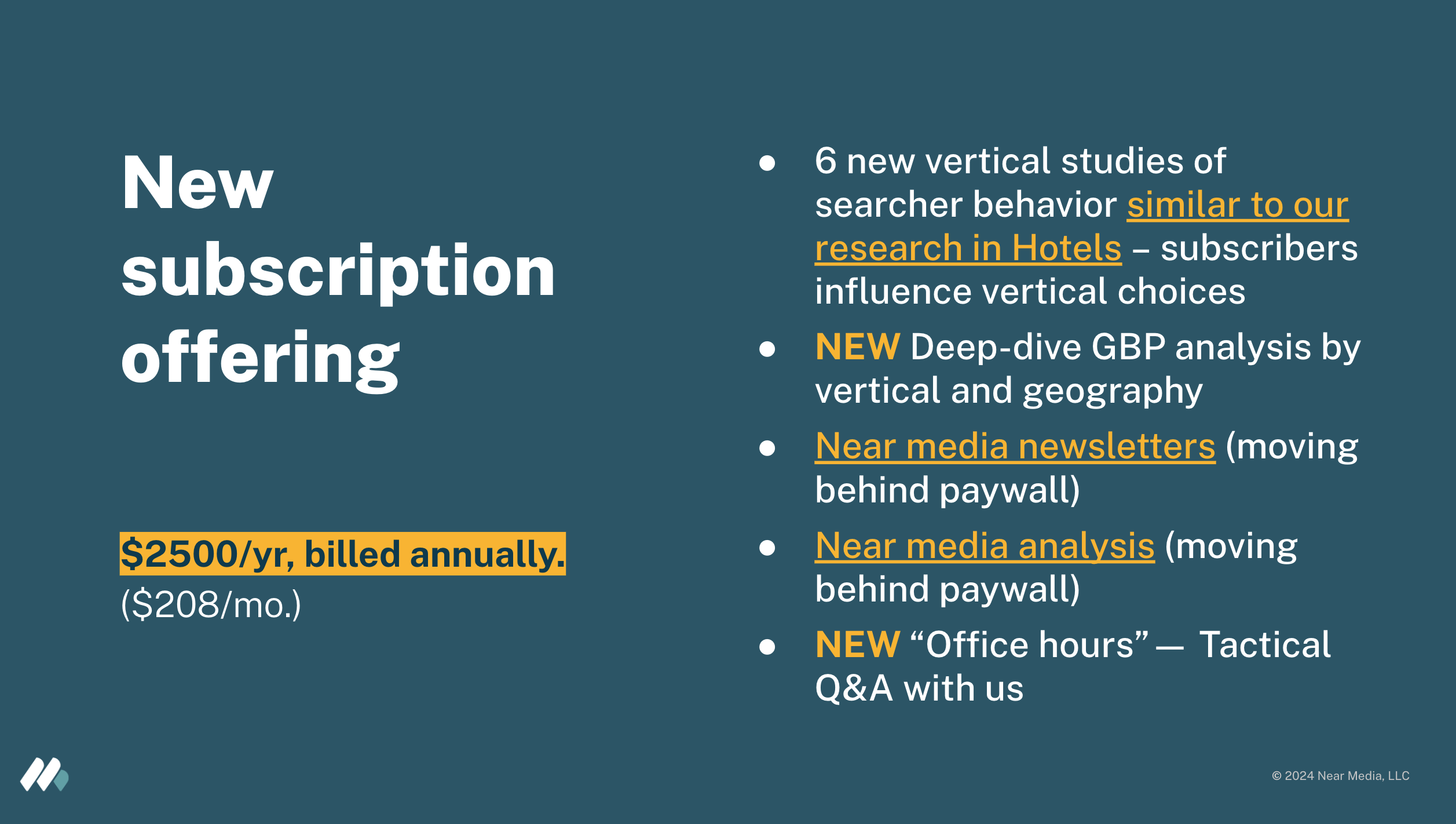
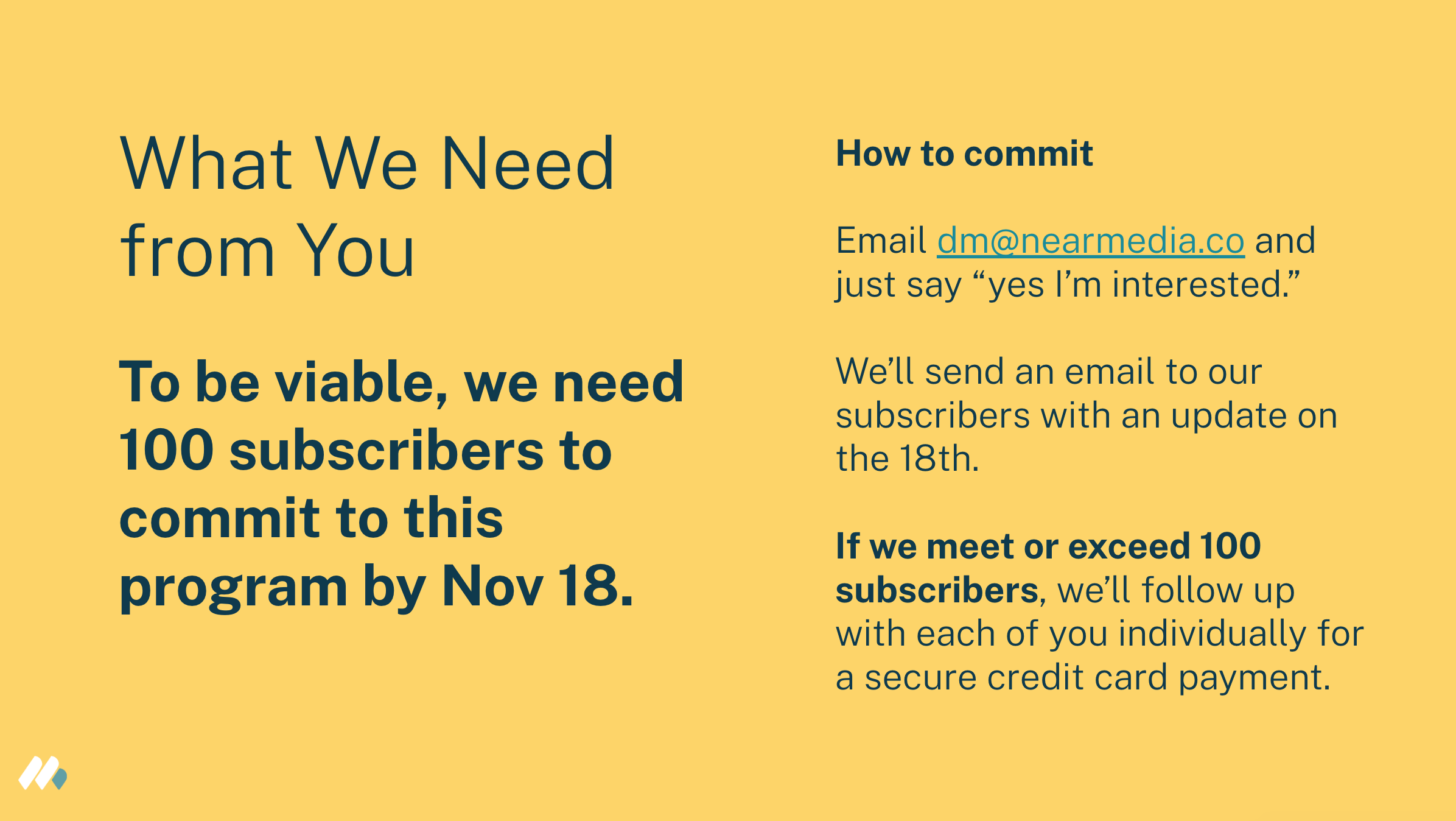
### Ep 180: Conversation with Raj Singh, the founder of Soloist.ai, an AI-powered website builder
URL: https://www.nearmedia.co/ep-180-conversation-with-raj-singh-the-founder-of-soloist-ai-an-ai-powered-website-builder/
Last updated: 2024-11-02T15:10:50.000Z
00: 13 [Meet Raj Singh & Soloist.ai](https://youtu.be/f4NRB0ysMYY?ref=nearmedia.co)
Meet Raj Singh, the founder of [Soloist.ai](https://soloist.ai/?ref=nearmedia.co), an AI-powered website builder targeted at small businesses and freelancers. Raj shares his background as a successful serial entrepreneur and how he developed an interest in simplifying website creation for non-technical users.
Here is a **sample of a site created after our conversation:** [**The Spot 2 Be Breakfast Restaurant**](https://spot2berestaurant.com/?ref=nearmedia.co)**. Take a look.**
10:43 [Soloist.ai’s Purpose and Unique Features](https://youtu.be/omghm3hfmzI?ref=nearmedia.co)
Unlike other website builders, Soloist.ai focuses on simplicity, eliminating design paralysis by limiting customization options and streamlining the site creation process. The platform, while free, is tailored for solopreneurs and small businesses needing a fast, functional web presence. Raj discusses Mozilla’s support for the project and Soloist’s AI capabilities, enabling users to build single-page sites quickly. The conversation also touches on Mozilla’s broader mission to avoid dark patterns and keep the product free from hidden fees, making it accessible to freelancers and small businesses.
39:13 [Soloist's Future Directions and Local Marketing Challenges](https://youtu.be/wQTewdNooEg?ref=nearmedia.co)
We discuss the future of Soloist.ai and the challenges of digital marketing for local businesses. While keeping the website free, Raj explains plans for monetization through Mozilla’s ad network and potentially integrating tools like invoicing and CRM into the platform. The team addresses concerns about fraud, site security, and SEO strategies, with Raj considering features for long-term growth while maintaining simplicity. Emphasis is placed on the importance of local SEO and building trusted partnerships, ensuring Soloist’s continued utility for small businesses seeking to establish an online presence.
### Healthcare Reserve with Google Mayhem
URL: https://www.nearmedia.co/healthcare-reserve-with-google-mayhem/
Last updated: 2024-11-25T20:08:28.000Z
Healthcare practitioners [are](https://support.google.com/business/thread/302120483?ref=nearmedia.co) [in](https://support.google.com/business/thread/302979870?ref=nearmedia.co) [an](https://support.google.com/business/thread/303816474?hl=en&ref=nearmedia.co) [uproar](https://support.google.com/business/thread/303671942/remove-ooot-com-from-my-online-bookings-link?hl=en&ref=nearmedia.co) over the fact that Reserve with Google buttons are appearing on their Google Profiles, often sending potential patients down appointment rabbit holes.
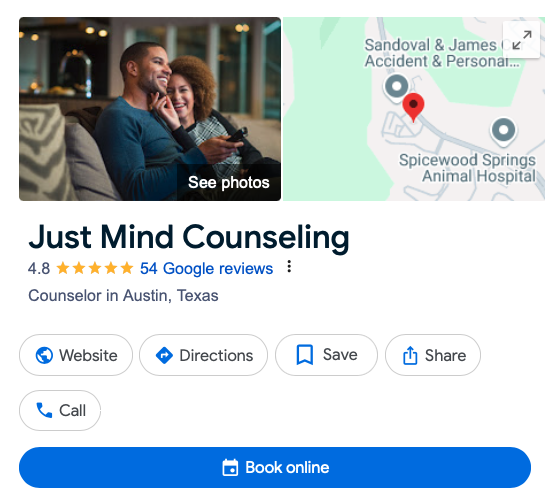
e
### What's Happening?
William Schroeder of [Just Mind Counseling](https://justmind.org/about-us/?ref=nearmedia.co) in Austin shared an email that detailed the issue and why it's a huge problem:
💡
**If your practice is now receiving client requests for appointments or consultations through a process that isn't familiar to you (ie: not through your intake form or PsychToday or signing up through SimplePractice, etc), it could be a Google My Business bug. Some of us now have a "Book Online" button on our Google My Business section when folx Google us that links to a 3rd party site like* [**OOOT.com*](http://ooot.com/?ref=nearmedia.co) *or ZocDoc that we have absolutely nothing to do with. Our \[practice's\] goes to some site called* [**OOOT.com*](http://ooot.com/?ref=nearmedia.co) *that has our old address from 6 years ago and that allows the public to book consultations with us. I know this because two folx did so yesterday, resulting in emails that said we now have two consultations booked for the next day. I made our website team aware of it and they say it's a brand new bug that Google will address at some point, but it might be good to Google your own practice to see if this button was added to yours.*
Schroder reached out to Clinic Trackers who "claim to have a relationship with us, but we've never heard of them. We once had a demo of Clinic Tracker, but that’s the extent of our interaction. I contacted Clinic Tracker who is apparently behind this and they said:"
> Thanks for your email. We are an official Reserve with Google partner.
>
> It looks like your business was registered on one of our platforms [ooot.com](http://ooot.com/?ref=nearmedia.co) to generate for your business more leads, more clients, more bookings with no costs helping your business, so because our platform is partnered with google you got extra listed on google maps free of charge to get more appointments and bookings in your inbox. You have the right contact details on the platform already that means for any new appointment and new client you will get an email notification that includes all customer details asking for your services. This is generating more leads, appointments for your business and all free. It takes 24-48 hours for Google to update their servers.
### Bug or Feature?
Whenever you see something happen like this with Google one has to ask whether it is an [exploit](https://support.google.com/business/thread/303671942?hl=en&msgid=303856313&ref=nearmedia.co), a bug or (as is all too often the case) a half-baked feature rollout.
We are seeing this happening with Reserve with Google providers like Practo as well ooot.com. And there have been indications that ClinicSoftware, Clinic Tracker and others are involved.
Google had long taken [feeds](https://blumenthals.com/blog/2015/05/07/google-rolls-out-mobile-local-business-orders-and-appointments/?ref=nearmedia.co) from scheduling companies to insert onto business' GBP profiles with or without approval of the business. It became such a [problem](https://onlineownership.com/removing-reservation-button-in-restaurants-google-business-profile/?ref=nearmedia.co) in the restaurant industry that Google finally added a feature to GBP to [allow the link's removal](https://reputationarm.com/removing-third-party-vendors-from-google-business-profile-a-guide-to-streamlining-your-food-ordering-links/?ref=nearmedia.co) and created a [help page](https://support.google.com/business/answer/6218037?hl=en&ref=nearmedia.co) with instructions and a [form to report ](https://support.google.com/business/contact/gmb%5F3p%5Fcomplaints?sjid=510028975858620412-NC&ref=nearmedia.co)scheduling companies that didn't comply. Unfortunately that feature is not available for healthcare businesses now showing the link.
**Remove Provider Request**
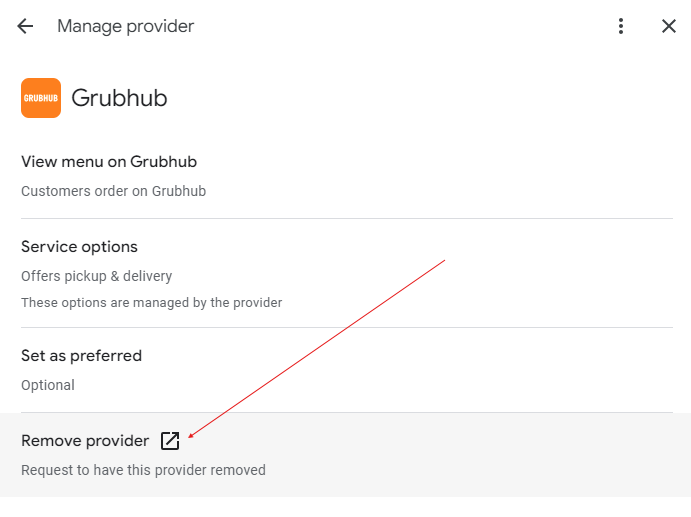
How to remove provider in the restaurant category. Image courtesy of [Claudia Tomina, Reputationarm.com](https://reputationarm.com/removing-third-party-vendors-from-google-business-profile-a-guide-to-streamlining-your-food-ordering-links/?ref=nearmedia.co)
As Clinic Tracker noted: "We are an official Reserve with Google partner." That means that the oot.com feed (as well as others) was likely an approved Google feed. The fact that the GBP dashboard does not offer a direct way to control this is par for the Google rollout course, where first they achieve scale and then later worry about which small business has been negatively impacted, and how they might automate complaints so as to not involve any humans.
### What Should Your Practice Do?
Check your Google Business Profile and determine if your listing has been impacted. You need to then determine the source of the feed and whether it's coming from your current software or something you previously used.
**For the US & UK**
There are probably more sources, but so far these have been the ones reported as sources for ooot.com.
ClinicSoftware [instructions](https://support.google.com/business/thread/303671942?hl=en&msgid=303856313&ref=nearmedia.co):Email to contact@clinicsoftware.com or go to [https://clinicsoftware.com/find-us](https://clinicsoftware.com/find-us?ref=nearmedia.co), open a chat and request a complete deletion of your profile
Clinic Tracker instructions: Complete the [DELETION REQUEST FORM](https://share.hsforms.com/1mAyfOaBBSa-W-UJZRxbYsg1rf5h?ref=nearmedia.co)
**For India**
You need to reach out to [Procto.com help](https://help.practo.com/?ref=nearmedia.co) via email at [support@practo.com](mailto:support@practo.com). According to[ one poster](https://support.google.com/business/thread/302120483?msgid=303945662&ref=nearmedia.co), they were very slow to change it until he sent them a lawyer letter.
[Per the Google support document](https://support.google.com/business/answer/6218037?hl=en&ref=nearmedia.co)*,* schedulingproviders need to remove third-party links from your profile within 5 days of receiving a removal request. If a provider doesn’t process your request, use this form to [report a violation](https://support.google.com/business/contact/gmb%5F3p%5Fcomplaints?sjid=510028975858620412-NC&ref=nearmedia.co). That being said, Google just collates these complaints and may or more likely, may not, actually remove the link.
### What's Next?
It is extremely likely that this isn't an exploit or a bug. It appears to me that Google is moving their Reserve with Google feature into healthcare. They have historically avoided making appointments in fields that accept insurance but it appears they are "broadening their horizons."
Google, as a matter of philosophy, scales first and worries about issues later. They have always done so and it appears to be the case here. In the end, they have NO PROBLEM pushing the cost on to the business that has to try and deal with the resultant mess.
This should put every medical practice on alert. Be ready for an unauthorized Booking button to appear on your profile – one you didn't ask for, and have no idea where it came from, but will be forced to deal with.
### Slow AI Rollout, Foursquare Done, Do More with Less
URL: https://www.nearmedia.co/slow-ai-rollout-foursquare-done-do-more-with-less/
Last updated: 2024-10-24T21:10:05.000Z
### Apple's Slow AI Rollout
Apple's vision of a "personal digital assistant" reportedly [goes all the way back to 1987](https://www.cultofmac.com/news/apple-knowledge-navigator-video-from-1987-predicts-siri-ipad-and-more?ref=nearmedia.co). It took a big leap forward with Apple's acquisition of Siri roughly 15 years ago. But Siri's early promise has largely turned to disappointment. It only "works" part of the time and can only do a few things well. Siri had started to languish, which Apple is trying to correct with Apple Intelligence [and ChatGPT integration](https://www.nearmedia.co/apple-intelligence-take-two-links-really-matter-genzs-local-affinity/). Next week, the first AI baby steps will roll out with iOS 18.1\. By most accounts they'll be limited or mostly unnoticeable. This first update lays the foundation for more advanced features that will come later. Siri is moving toward broader functionality, greater personalization and context awareness. However those capabilities won't appear until 2025\. Apple software SVP Craig Federighi emphasized, in an [interview](https://www.wsj.com/tech/personal-tech/apple-intelligence-3833c320??ref=nearmedia.co) with the WSJ, that Apple's incremental approach to AI is about privacy and responsibility. Federighi says that Apple wants to "get it right" and that "this is a many year, honestly, even decades-long arc of this technology playing out, and so we're gonna do it responsibly." Access to ChatGPT won't show up until [iOS 18.2](https://sixcolors.com/post/2024/10/apple-releases-second-wave-of-intelligence-features-via-new-developer-betas/?ref=nearmedia.co), probably by the end of the year or early next year.
**Our take:**
- Apple is by nature iterative and cautious. It's also undoubtedly mindful of Google's problematic (read: botched) rollout of Gemini and AI Overviews.
- While the take-it-slow AI approach may be right from a UX and product perspective it's going to disappoint users and minimize any sales bounce for the iPhone 16\.
- We'll probably never see a full-blown "[Apple search engine](https://www.nearmedia.co/apple-search-redux-assistant-bard-google-ads-useful-50/)." But the ChatGPT handoff may mean less Google reliance. We'll see and TBD.
### Foursquare Shutting Down
Foursquare is shutting down – not the company, but the company's namesake app. Foursquare's "cityguide" [will stop working](https://foursquare.com/city-guide-sunset/?ref=nearmedia.co#accordion%5Fv2-509935d6-b147-4e9b-8a3c-76eb860daa7e) on December 15, 2024\. On the desktop it will survive for a few more months. The company's Swarm location-sharing check-in app will soldier on apparently. Foursquare launched in 2009, at a heady time for "location based services." It was originally positioned as a social "check-in" app. Competitors included [Gowalla](https://www.nearmedia.co/gowalla-comeback-ai-ambivelance-digital-twin-shopping/), Brightkite, Loopt, Yelp (check-in feature) and SCVNGR. Foursquare, for a time, was the hottest thing in local. But over time it evolved into a more conventional local search app (check-in volume is a alternative quality signal). And there was the problem of the business model. It tried selling ads to local businesses for a time but that wasn't really scalable. So years after it set SXSW ablaze, it became just another directory in the listings management networks. In the interim Foursquare the company morphed into a [location intelligence platform](https://location.foursquare.com/?ref=nearmedia.co) and data broker to third parties ([buying Placed](https://location.foursquare.com/resources/blog/news/foursquare-to-acquire-placed-from-snap-inc-to-deepen-its-location-technology-platform/?ref=nearmedia.co) from Snap). The consumer apps became simply one channel or tool to acquire user location data. The fact that the company is shuttering its flagship app must mean that its costs are no longer justified by whatever data the company is getting in return.
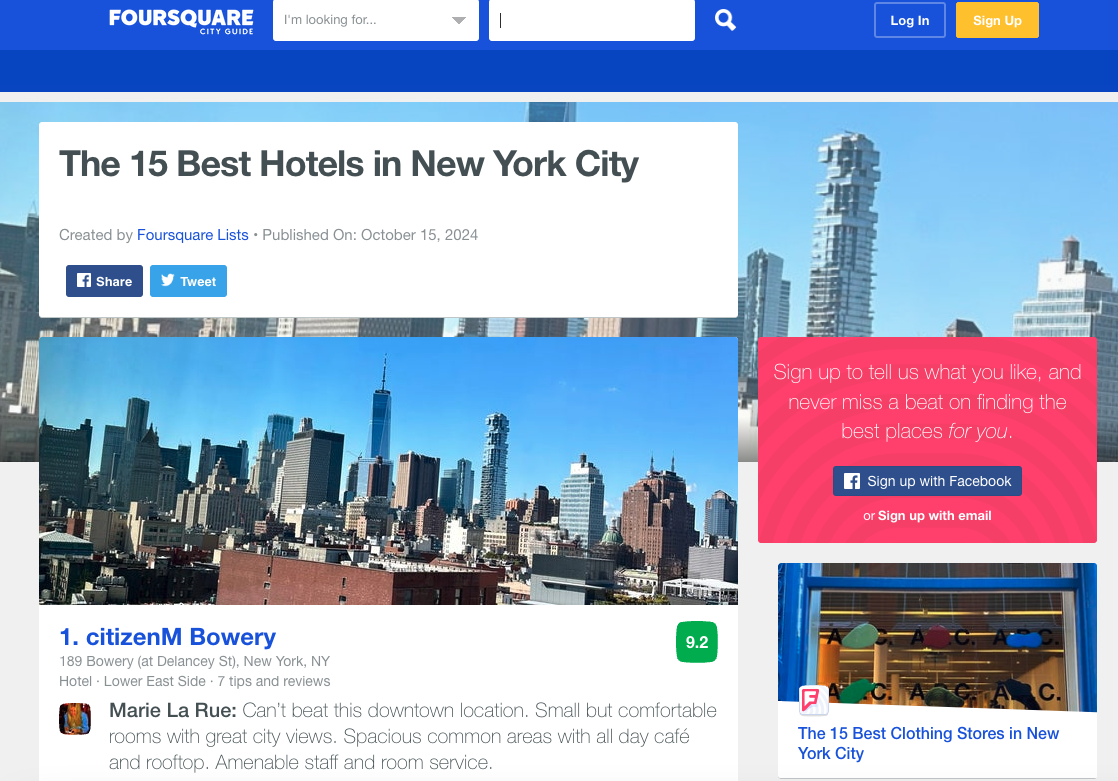
Source: Foursquare
**Our take:**
- Google wasn't always the primary way to find local businesses. Back when Foursquare was in vogue there were a dozen or more competitors.
- It's a reminder of how totally dominant Google has become. Indeed, as we've argued, Google's local graph is its true differentiator vs. AI rivals.
- Foursquare could have continued investing in and developing the app (given the location data business model) but there was a lack of will/imagination.
### Content Marketing: Do More with Less
The Content Studio recently released "The State of (Dis)Content," a survey based [report](https://www.thecontentstudio.com/the-state-of-discontent/?ref=nearmedia.co) on content marketing in the US. It captures the responses of more than 500 content marketers, including in-house marketers, freelancers, agencies and consultants. The big theme of the report, which has numerous findings, is "doing more with less" and the tension between rising expectations and declining resources. AI is seen as a blessing and a curse. The median content team size identified in the report is 2-5 people. It presents a picture of a relatively satisfied group (in-house especially) that is nonetheless feeling stress and anxiety about the future. While many respondents credit AI with making their work more efficient and productive, they also say it's devaluing content creation and depressing the price of their work (especially consultants and freelancers). And it's creating job insecurity for many of these people. One of the big challenges is creating high-quality, differentiated content to keep up with both internal and external demands. They cite a lack of resources, difficulties accessing experts, workflow issues and a lack of strategy. The most common content types being produced are blog posts, emails, video, ebooks, case studies, webinars and podcasts.
**Content Creation Challenges**
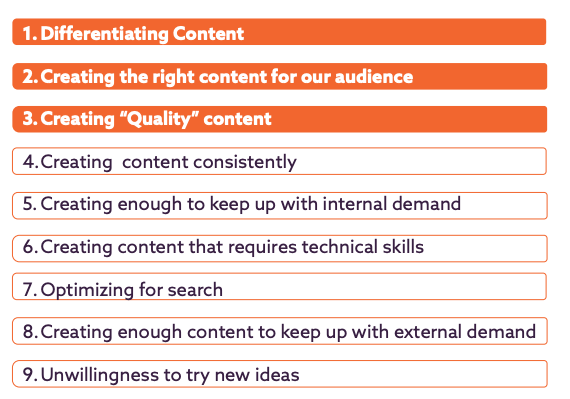
Source: Content Studio
**Our take:**
- The report is prescriptive and makes a number of recommendations around strategy, leadership buy-in, cross departmental coordination and mostly neglected audience research.
- In one of my previous lives I lived this experience. Content is critical but often undervalued. And AI is making the perception that "content is easy" much worse.
- Unfortunately AI will enable cost-cutting executives to not fill open positions or reduce the size of teams, without a reduction in expectations – fueling burnout.
## Recent Analysis
- **Near Memo episode 179**: [Apple Expands Business Connect, Which Directories Matter?, SEMrush Acquires Search Engine Land](https://www.nearmedia.co/ep-179-apple-expands-business-connect-which-directories-matter-semrush-acquires-search-engine-land/).
- ICYMI: **Google's AI Organized Restaurant Results**, [by Mike Blumenthal](https://www.nearmedia.co/googles-ai-organized-restaurant-results/).
## Short Takes
- Google's **LSA - GBP** linking mandate [will take many SMBs by surprise](https://archive.ph/lOkiC?ref=nearmedia.co).
- SMBs with **unclaimed GBP** and no SEO [can still rank #1](https://www.linkedin.com/posts/claudia-tomina-ab78692a%5Fthis-local-deli-is-always-showing-up-in-local-activity-7254859681888665601-dQ3q/??ref=nearmedia.co).
- Everything [you wanted to know](https://larslofgren.com/parasite-seo/?ref=nearmedia.co) about "**parasite SEO**" but afraid to ask.
- State of **technical SEO** [survey results](https://hub.seofomo.co/surveys/seofomo-technical-seo-survey/?ref=nearmedia.co).
- Google [tests video](https://searchengineland.com/google-search-video-enabled-shopping-ads-test-447714?ref=nearmedia.co) for **Shopping Ads**.
- Appearance of **Google "Product Grid"** [cuts CTRs in half](https://www.linkedin.com/posts/jbeus%5Fgoogle-product-grid-der-klickdieb-in-den-activity-7252701262100549634-%5Fs%5F1/??ref=nearmedia.co).
- Google adds [new AI features](https://searchengineland.com/google-performance-max-ai-video-asset-testing-447728?ref=nearmedia.co) to **Performance Max**.
- Google [disclaiming](https://www.seroundtable.com/google-search-peoples-insights-38286.html?ref=nearmedia.co) [ubiquitous](https://x.com/JepsenThomas/status/1848791033372414172?ref=nearmedia.co) **Reddit** YMYL content, while promoting it.
- Report: **Apple** likely [winding down Vision Pro](https://www.reuters.com/technology/apple-sharply-cuts-back-vision-pro-production-information-reports-2024-10-23/?ref=nearmedia.co) on weak demand.
- **Amazon** shuttering its same day [brick and mortar delivery service](https://sell.amazon.com/programs/amazon-today?ref=nearmedia.co).
- Read the WSJ's copyright infringement [complaint](https://storage.courtlistener.com/recap/gov.uscourts.nysd.630270/gov.uscourts.nysd.630270.1.0.pdf?ref=nearmedia.co) against **Perplexity**.
- Phone tracking/**location data** widely available [and widely abused](https://krebsonsecurity.com/2024/10/the-global-surveillance-free-for-all-in-mobile-ad-data/?ref=nearmedia.co).
Listen to our [latest podcast](https://www.nearmedia.co/memo/).
[](https://nearmedia.co/memo?ref=nearmedia.co)
How can we make this better? Email [us](mailto:gsterling@nearmedia.co) with suggestions and recommendations.
### Want to know how consumers search in _____?
URL: https://www.nearmedia.co/subscriber-research-survey/
Last updated: 2024-10-24T19:01:17.000Z
## **TL;DR**
## [**Tell us what category we should research next.**](https://docs.google.com/forms/d/e/1FAIpQLSf4Z73qMMpeQM2xQhaO6jKOxrL%5FmXbCuLsMe-thmtkB0n6O-A/viewform?usp=sf%5Flink&ref=nearmedia.co)
---
Near Media specializes in helping companies understand how consumers use Google to find businesses like theirs. We want to make our research more affordable to more people, so we’re seeing which subscribers might want to team up and split the cost of a single category multiple ways.
**Typical insights our research provides:**
- What percentage of consumers choose a business from an ad vs. an organic result vs. a Google Business Profile?
- What directories matter most?
- Where are clicked and chosen businesses ranked?
- What do selected businesses have in common?
- *Why* do consumers choose a business—what messaging and positioning resonates most?
[Here’s a typical example of our research output from the Hotels vertical.](https://www.nearmedia.co/european-hotel-search-behavior/)
[**If you want to know how consumers search in YOUR category, please let us know by taking our brief 5-question survey here** ](https://docs.google.com/forms/d/e/1FAIpQLSf4Z73qMMpeQM2xQhaO6jKOxrL%5FmXbCuLsMe-thmtkB0n6O-A/viewform?usp=sf%5Flink&ref=nearmedia.co)
---
## **Backstory**
For the past 18 months, Near Media has helped clients and trade groups understand how consumers in specific verticals search Google, evaluate the results, and choose businesses from those results.
### **We’re basically user-testing Google search results, category by category.**
We’ve watched and listened to over 1300 videos of searcher journeys, and while we’ve seen some consistent decision-making patterns, mostly we’ve been struck by how different consumer behavior is in each category.
We’ve also been struck by how much behavior differs from conventional wisdom based on horizontal search queries or out-of-date clickthrough rate hypotheses.
It’s not a cheap undertaking, and while the data that comes back from our studies has been [immensely valuable to clients](https://www.nearmedia.co/clients/), it’s not an obvious line item in most companies’ marketing budgets, or even SEO budgets.
We want to make our research more affordable to more people, so we’re seeing if newsletter subscribers whose businesses or clients’ businesses are in the same category might want to team up and split the costs of our research into that category multiple ways.
## **Why behavioral research is so important**
### **Google is only sharing data about the clicks you receive — but what about all the clicks you’re missing out on?**
- Where should you be trying to compete?
- What review, rating, or distance thresholds do selected companies exceed in your category?
- How should you be talking about your products, services, or company as a whole?
**We’ve seen substantial differences in how consumers choose businesses from category to category across legal, healthcare, storage, restaurant, travel, and home services verticals.**
### [If you want to know how consumers search in YOUR category, please let us know by taking our brief 5-question survey here](https://docs.google.com/forms/d/e/1FAIpQLSf4Z73qMMpeQM2xQhaO6jKOxrL%5FmXbCuLsMe-thmtkB0n6O-A/viewform?usp=sf%5Flink&ref=nearmedia.co)
---
And even if you don’t take the survey, if you’ve got any comments, feedback, or suggestions on what we’re doing, we’d love to hear.
Thanks for being a subscriber!
David, Mike, and Greg
### Raghavan Outfoxed, OpenTable's Back, LLinkbuilding
URL: https://www.nearmedia.co/raghavan-outfoxed-opentables-back-llinkbuilding/
Last updated: 2024-10-23T16:13:14.000Z
### Raghavan Outfoxed
I met Nick Fox years ago, when he gave me a short demo of what became AdWords Express. He was matter-of-fact and unassuming. Now he's Google's [new head of search](https://blog.google/inside-google/company-announcements/changes-knowledge-information-gemini-app-deepmind/?ref=nearmedia.co) and reportedly one step away from CEO Sundar Pichai's job. Fox replaces Prabhakar Raghavan, who now becomes Chief Technologist. Raghavan had become [a controversial figure](https://www.wheresyoured.at/the-men-who-killed-google/?ref=nearmedia.co) of late. According to [Ed Zitron](https://www.wheresyoured.at/requiem-for-raghavan/??ref=nearmedia.co), citing anti-trust trial documents, Raghavan sought to boost query volume and pushed a "growth at all costs" mentality at Google, allegedly resulting in the widely perceived decline of search quality. Pichai [spins](https://blog.google/inside-google/company-announcements/changes-knowledge-information-gemini-app-deepmind/?ref=nearmedia.co) Raghavan's move as "a big leap in his own career." But it's clearly a demotion and likely a segue to an eventual departure from Google. The executive shuffle is part of a larger reorg, seeking to make Google more competitive for the AI era and remedy some of the organizational issues that have hampered Google as it seeks to beat back the ChatGPT threat. The other "winner" in the reorg is Google DeepMind co-founder and CEO Demis Hassabis, who has steadily accrued more responsibility and is mentioned as another potential Pichai successor – perhaps more likely than Fox at this point.

Source: ChatGPT
**Our take:**
- Many people had knives out for Raghavan. But I think he's partly being scapegoated for problems that are more cultural-structural in nature.
- Fox will be less of a lightning rod but under pressure to repair Google Search's reputation, as well as keep delivering strong revenue growth.
- Fox joined Google in 2003 and knows all facets of the company. Unfortunately, however, like Pichai and Raghavan, Fox was originally a McKinsey consultant.
### OpenTable's Comeback
Fading incumbents rarely come back. But OpenTable is [making a credible go at it](https://sfstandard.com/2024/10/22/opentable-resy-tock-reservation-war/?ref=nearmedia.co). The company had seen its brand and marketshare erode amid intensifying competition from newer companies such as Resy, Tock (now both owned by American Express). However, OpenTable is making aggressive moves to reinvigorate its business, including high-touch recruitment of marquee restaurants, flexible pricing, improved technology, special programs, marketing incentives, new partnerships (Visa), and a renewed focus on service. Personal attention/better service and pricing changes were cited by some top restaurants as key to their shift to OpenTable. OpenTable went from a SaaS fee plus reservation charge to tiered pricing, which is more restaurant friendly. These changes have led some of San Francisco's most popular restaurants to defect from other platforms to OpenTable, which still has the largest booking inventory in the business but was no longer seen as "cool." OpenTable was founded in 1998 and went public in 2009\. In 2014, OpenTable was bought by travel juggernaut Booking Holdings Inc. (formerly Priceline), which owns Booking.com, Priceline, Kayak, Agoda and Rentalcars.com. Booking is the [dominant travel booking site in Europe](https://www.nearmedia.co/european-hotel-search-study/).
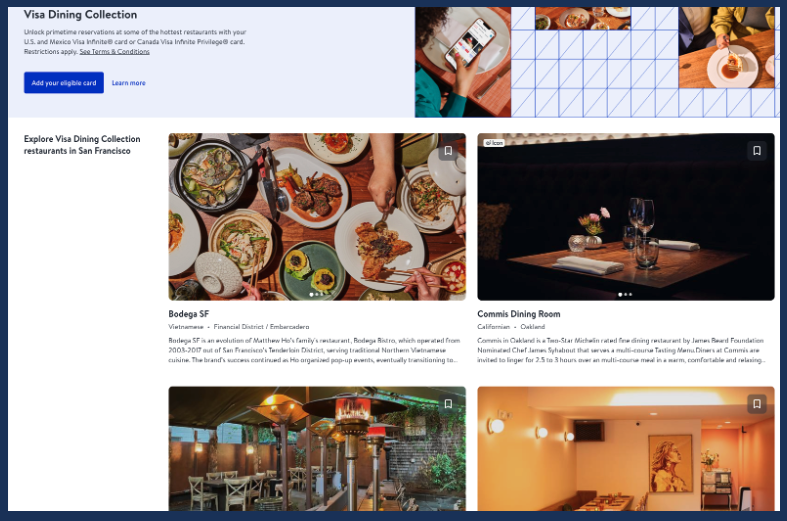
Source: OpenTable
**Our take:**
- This is a story of reinvention and there are lessons in here for every incumbent facing new startup competition.
- Brand matters and OpenTable is arguably the only consumer brand in restaurant reservations. Yes, TripAdvisor uses OpenTable.
- The coverage attributes OpenTable's recent success to its CEO and other executives, but Booking's resources and reach are probably in the background.
### Optimizing for LLMs
Search marketers are increasingly thinking about optimizing for large language models (LLMs) as more people use them for discovery and informational queries (and local search to a lesser degree). Rand Fishkin is out [with his own take on optimizing for LLMs](https://sparktoro.com/blog/how-can-my-brand-appear-in-answers-from-chatgpt-perplexity-gemini-and-other-ai-llm-tools/?ref=nearmedia.co). According to Fishkin's analysis, traditional SEO tactics (e.g., linkbuilding, keywords, etc.) are replaced by "mentions across the training data." What he means by that – after offering a synopsis of Stephen Wolfram's [explanation of ChatGPT](https://writings.stephenwolfram.com/2023/02/what-is-chatgpt-doing-and-why-does-it-work/?ref=nearmedia.co) – is that you need to get into those sites and publications that are part of the LLM training data set, which will vary somewhat by platform. How you do this, according to Fishkin, is to use Google to find the places with discussions of the topic or relevant keywords you want to appear for. Fishkin input a list of those sites discovered on Google into ChatGPT and asked how likely it was for them to be part of the training data. He also promotes other sites, SparkToro (his site) and BuzzSumo, as discovery tools for this purpose. Once you've identified the likely sites, you need to do the hard work of getting their attention (i.e., pitching, PR). This is a version of traditional linkbuilding – only harder.
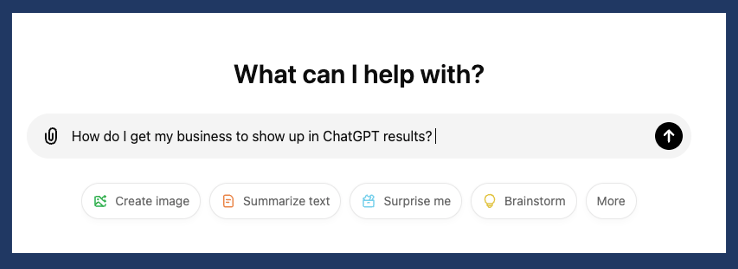
Source: ChatGPT
**Our take:**
- Fishkin's approach will help with brand building and traditional SEO; so it's not wasted effort if it isn't exactly correct or efficient for LLMs.
- When you ask ChatGPT about LLM optimization, it says: SEO optimized site, listings/reputation management, schema, media coverage, social media, integration "with AI-collaborating services like Yelp or OpenTable."
- ChatGPT and its peers are only driving modest amounts of traffic. But that will change. The simplest optimization approach is a holistic SEO strategy.
## Recent Analysis
- **Near Memo episode 179**: [Apple Expands Business Connect, Which Directories Matter?, SEMrush Acquires Search Engine Land](https://www.nearmedia.co/ep-179-apple-expands-business-connect-which-directories-matter-semrush-acquires-search-engine-land/).
- ICYMI: **Google and Booking: The Symbiotic Gatekeeper Relationship in European Hotel Search**, [by David Mihm](https://www.nearmedia.co/european-hotel-search-study/)
## Short Takes
- Unverified vs. Disabled vs. **Suspended GBPs**: [What’s the Difference](https://whitespark.ca/blog/unverified-vs-disabled-vs-suspended-gbps-whats-the-difference/?ref=nearmedia.co)?
- **GBP**: Top 11 [ranking factors for restaurants](https://reputationarm.com/mastering-search-rankings-11-ranking-factors-for-boosting-your-google-business-profile/?ref=nearmedia.co).
- **FTC** [fake reviews rule enforcement](https://www.linkedin.com/feed/update/urn:li:activity:7254264664551821313/?ref=nearmedia.co) began yesterday.
- Google [introducing](https://blog.google/products/ads-commerce/improve-ad-performance-with-travel-feeds-in-search-ads/?ref=nearmedia.co) **travel-data feeds** (hotels) into Search Ads.
- Google undermining **LSA** advertisers with [competitive quotes button](https://www.seroundtable.com/google-local-service-ads-request-competitive-quotes-38266.html?ref=nearmedia.co).
- Google testing **gen-AI "snippets**" [throughout the SERP](https://www.seroundtable.com/google-generative-ai-featured-snippets-38274.html?ref=nearmedia.co).
- Google [may be getting better](https://x.com/JoyanneHawkins/status/1847651770584989714?ref=nearmedia.co) in detecting **fake employee reviews**.
- Google [removing](https://www.theverge.com/2024/10/21/24276184/google-sitelinks-search-box-discontinued?ref=nearmedia.co) **sitelinks search box** from its search results on Nov. 21\.
- Google AI search challenger **Perplexity** [seeks $500M](https://www.reuters.com/technology/artificial-intelligence/perplexity-ai-funding-talks-more-than-double-valuation-8-bln-wsj-reports-2024-10-20/?ref=nearmedia.co), gets [sued again](https://variety.com/2024/biz/news/news-corp-dow-jones-ny-post-sue-perplexity-copyright-infringement-1236184900/?ref=nearmedia.co).
- **Google** [simplifying Gemini](https://9to5google.com/2024/10/21/ask-gemini-advanced-app/?ref=nearmedia.co) to drive more usage.
Listen to our [latest podcast](https://www.nearmedia.co/memo/).
[](https://nearmedia.co/memo?ref=nearmedia.co)
How can we make this better? Email [us](mailto:gsterling@nearmedia.co) with suggestions and recommendations.
### Ep 179: Apple Expands Business Connect, Which Directories Matter?, SEMrush Acquires Search Engine Land
URL: https://www.nearmedia.co/ep-179-apple-expands-business-connect-which-directories-matter-semrush-acquires-search-engine-land/
Last updated: 2024-10-19T16:14:04.000Z
Apple Expands Business Connect Beyond Brick-and-Mortar, BrightLocal Study: Which Directories Matter, SEMrush Acquires Search Engine Land's Parent Company, Third Door Media
**Part 1 starts 00:13 -** [**Apple Expands Business Connect Beyond Brick-and-Mortar**](https://youtu.be/NP6bH8TY1%5F0?ref=nearmedia.co)
It was announced that Apple Business Connect will now include a broader range of businesses, such as e-commerce, work-from-home, and service-area businesses. Businesses will still undergo the Apple verification process but will benefit from a consistent brand presence across apps like Mail, Apple Pay and ultimately Messages. While non-brick-and-mortar businesses won't appear on Apple Maps, their verified logos will be visible in key Apple services like Siri and Spotlights, enhancing brand trust within the Apple ecosystem. This move strengthens Apple's position as a trusted platform for businesses and customers alike, despite some limitations for smaller agencies and vendors.
Segment Reference Article:
[Time to Get on ABC (Apple Business Center)](https://www.nearmedia.co/directories-matter-apple-biz-connect-trump-google/#time-to-get-on-abc)
**Part 2 starts 11:55 -** [**BrightLocal Study: Which Directories Matter?**](https://youtu.be/Iu6g%5FSMhO3Q?ref=nearmedia.co)
A recent study by Bright Local revealed that while platforms like Yelp maintain a significant presence in Google search results, the majority of high-ranking directories are vertical-specific, varying by industry. Key directories such as ZocDoc for healthcare and TripAdvisor for hospitality were identified as essential for consumer engagement. The study emphasized the importance for businesses to focus on directories that are relevant to their specific verticals, rather than relying on broader platforms.
Segment Reference Articles:
[Business Listings Visibility Study](https://www.brightlocal.com/research/business-listings-visibility-study/?ref=nearmedia.co)
[Yes, Directories Matter](https://www.nearmedia.co/directories-matter-apple-biz-connect-trump-google/)
**Part 3 starts 21:31 -** [**SEMrush Acquires Search Engine Land & Third Door Media**](https://youtu.be/JoU3C6hyTQg?ref=nearmedia.co)
The acquisition of Third Door Media, parent company of Search Engine Land and Martech World, by SEMrush was announced this week. The move has sparked concerns about the potential loss of independent industry voices, with fears that SEMrush may shift focus toward promotional content. However, some view the acquisition as a strategic decision, allowing SEMrush to capitalize on the domain authority of these platforms. It is expected that the move will enhance SEMrush’s reach, particularly among beginner and intermediate SEO users, while maintaining a balance between transactional and informational content.
Segment Reference Articles:
[Semrush Acquired Search Engine Land](https://www.seroundtable.com/semrush-acquires-third-door-media-38255.html?ref=nearmedia.co)
[SMX & Third Door Media (Industry Reaction](https://www.seroundtable.com/semrush-acquires-third-door-media-38255.html?ref=nearmedia.co)
### Directories Matter, Apple Biz Connect, Trump ❤️ Google
URL: https://www.nearmedia.co/directories-matter-apple-biz-connect-trump-google/
Last updated: 2024-10-17T11:04:29.000Z
### Yes, Directories Matter
In 2014 - 2015, "local citations" and "NAP consistency" were [seen by many](https://searchengineland.com/citation-inconsistency-no1-issue-affecting-local-ranking-210643?ref=nearmedia.co) SEOs as critical to local search visibility. Since that time, however, citations have declined in importance to the point where many Local SEOs now ignore "local listings management" entirely. Both Uberall and Yext, which offer these services, generated studies that argue listings management on a network of directories does still matter to local visibility. Now BrightLocal has produced [research](https://www.brightlocal.com/research/business-listings-visibility-study/??ref=nearmedia.co), based on "800 manual Google searches for local businesses ... \[in\] 20 different cities across the USA and 20 different business verticals," which shows directories are still very relevant. The study's purpose was to determine what actually shows up in the Google SERPs for local queries – both "informational" and "transactional." What BrightLocal found was that "directories make up almost a third of local-intent organic search results overall (31%)" and that these vary considerably by vertical. Indeed, Near Media has separately found the same thing in our user behavior research: directories matter in many verticals. But those directories are typically specific to each category, with exceptions like Yelp that appear in multiple verticals. Below is a chart that shows, across 20 categories, the 53 directories that BrightLocal found prominently appear in the top 10 organic results on Google.
**Directories That Matter by Category**
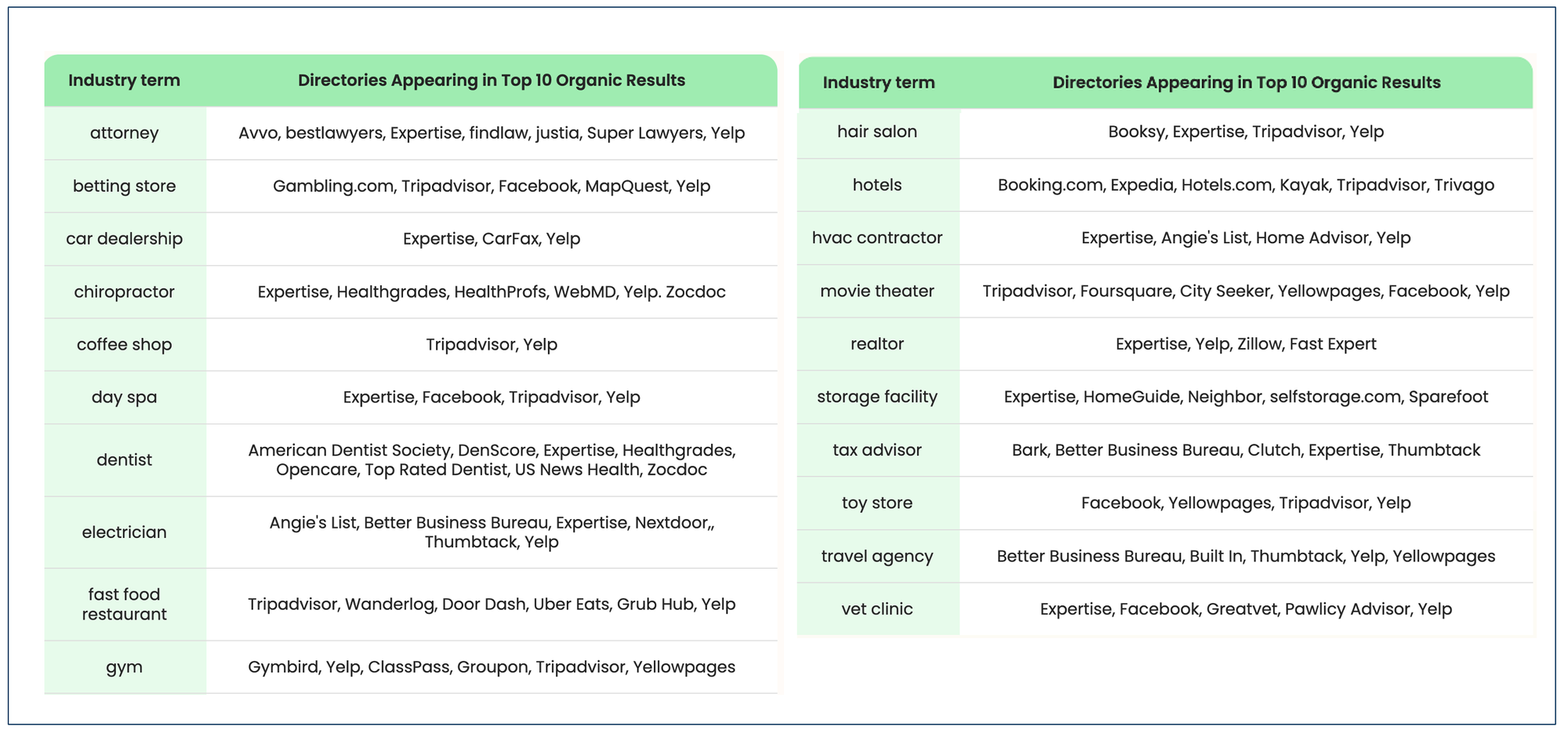
Source: BrightLocal
**Our take:**
- At the SIINDA conference in Croatia, where we presented [on Google DMA compliance](https://www.nearmedia.co/ai-search-8-mrwhosetheboss-google-dma-compliance/), Yext argued listings management is important for AI search.
- Near Media found that when users engage with key vertical directories they evaluate listings as they might on GBP, looking closely at content, images, reviews. Your presence can't be thin or perfunctory.
- BrightLocal has definitively shown that directories still do matter. But SEOs need to be clear on which directories and actively manage them.
### Time to Get on ABC
The shorthand way to describe [Apple Business Connect](https://www.apple.com/business/connect/?campaignId=7103&ref=nearmedia.co) (ABC) is that it's the company's version of Google Business Profiles. However, it's also broader and does more. And yesterday Apple [expanded ABC](https://www.apple.com/newsroom/2024/10/apple-expands-tools-to-help-businesses-connect-with-customers/?ref=nearmedia.co) with a number of new features and capabilities, which can also be utilized by home-based businesses and service businesses without physical storefronts. The new capabilities allow ABC listed businesses to customize and manage profiles – including prominent branding elements – across a range of Apple apps and experiences: Maps, Search, Safari, Mail, Wallet (and Tap to Pay), Siri and, later, the iPhone's caller ID. A dashboard will offer presence management, tips, analytics and lead tracking. Interestingly, Apple also says, "Businesses can also manage their location presence at scale through listing management agencies like DAC Group, Rio SEO, SOCi, Uberall, and Yext." These companies have API access and can manage multi-location brand data on ABC. Reportedly, there are millions of business users on ABC. However, it's clear that it's largely neglected by the SEO community and not well understood by local businesses themselves – many of whom don't use Google Business Profiles either. Apple points out there are more than 1 billion iPhone owners and 1.5 billion Apple devices that offer potential distribution for these new capabilities. Some of the new features (e.g., caller ID branding) won't roll out until next year.
**New Exposure Opportunities through ABC**
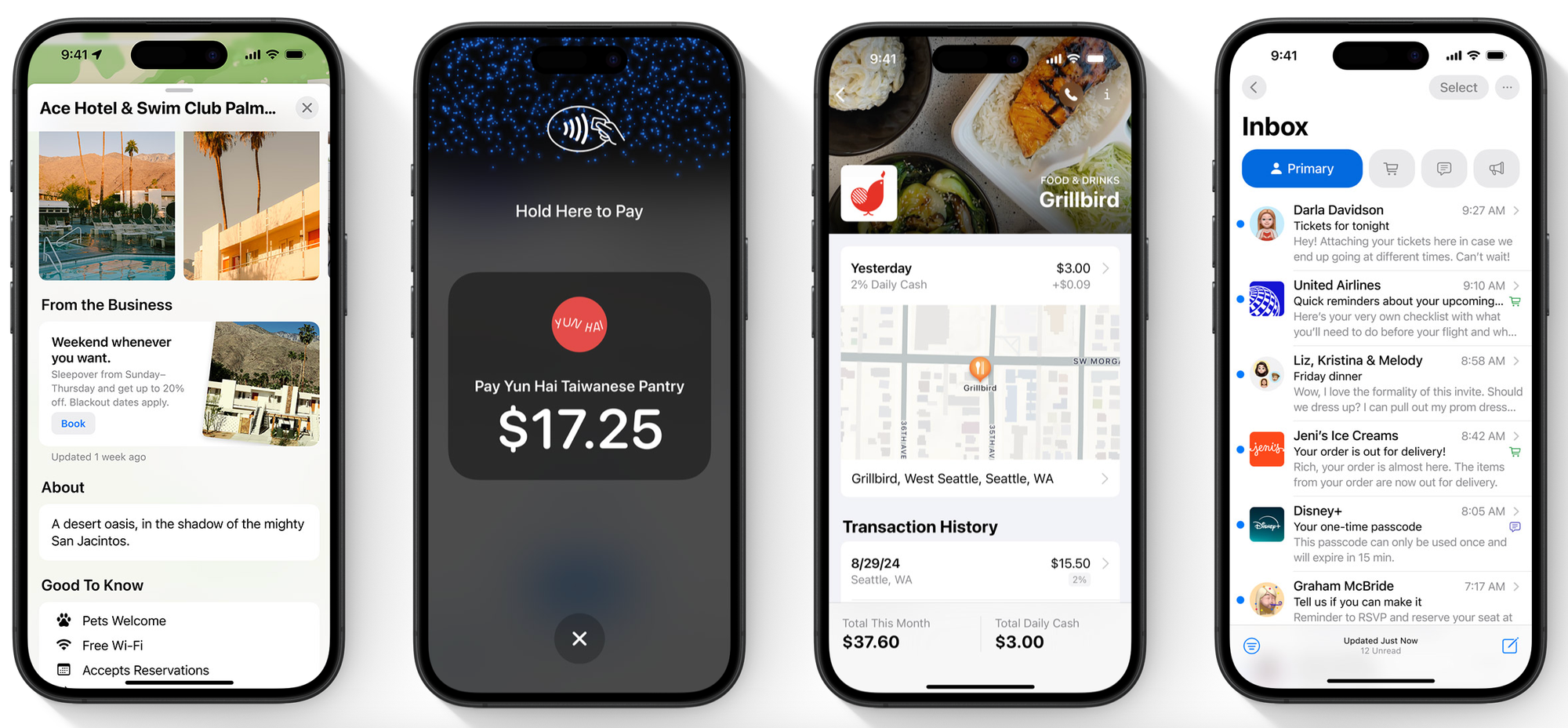
Source: Apple
**Our take:**
- ABC is arguably the [biggest local (and branding) opportunity](https://www.nearmedia.co/why-is-the-new-apple-business-center-so-important/) you're not taking advantage of.
- ABC is [more important than Bing](https://www.nearmedia.co/bing-is-4-state-of-digital-agencies-ai-and-copyright/) and, arguably, Yelp in terms of reach and potential visibility.
- To date Apple has not done a great job of educating business owners and agencies about ABC and why they should care. Hopefully that's changing.
### Trump (Maybe) Rides to Google's Rescue
Elections make strange bedfellows. Just before the 2020 election the Trump Justice Department (DOJ) [initiated the antitrust suit](https://www.politico.com/news/2020/10/20/justice-department-antitrust-case-google-430281?ref=nearmedia.co) against Google, which the company [recently lost](https://www.nearmedia.co/google-loses-ai-ankle-biters-gbp-menu-optimization/) under the Biden Justice Department. The latter is [now looking at](https://www.nearmedia.co/breaking-up-google-facebook-local-tab-searchgpt-ads/) "structural remedies" (breaking up Google) among other fixes to restrain the company. The government wants to end Google's control over distribution and ensure "Google cannot control the distribution of tomorrow." But despite the fact that Trump, who [claims](https://archive.ph/zzfCA?ref=nearmedia.co) Google is biased against him, instigated the original antitrust case, he's now saying that if re-elected he [wouldn't pursue a breakup](https://www.nytimes.com/2024/10/15/us/politics/trump-google-monopoly-china.html?ref=nearmedia.co) of the company because "China is afraid of Google." Instead he would do "something" to make Google more fair (to him). Beyond Trump's position being semi-incoherent, it's bizarre given the history. While the outcome of the election is uncertain, Trump riding to Google's rescue would be an ironic potential repeat of what happened to Microsoft when Bush II was anointed by SCOTUS in 2000\. Microsoft had been designated a monopoly and the trial judge ordered a breakup. The case was on appeal when it [settled](https://en.wikipedia.org/wiki/United%5FStates%5Fv.%5FMicrosoft%5FCorp.?ref=nearmedia.co) and Microsoft escaped mostly unscathed. The market intervened in the form of Google (and the iPhone). But today Microsoft is more valuable than ever. The Google case may be on an identical trajectory.

Source: Grok
**Our take:**
- While Trump's statements are not policy based, Harris is seen as tech-friendly. And so it's also unlikely Google would be broken up if she wins.
- The Biden DOJ may be floating the idea of a breakup primarily as a bargaining tool for any future settlement negotiations.
- It's clear, however, that Google is already leveraging it's market position to promote Gemini adoption, which the DOJ wants to block.
## Recent Analysis
- **Google AI Organized Restaurant search results**, [by Mike Blumenthal](https://www.nearmedia.co/googles-ai-organized-restaurant-results/).
- **Near Memo episode 178:** [Google tests AI organized carousels in local, Facebook tests new local tab, Google customer loyalty declines](https://www.nearmedia.co/ep-178-google-tests-ai-organized-carousels-in-local-facebook-tests-new-local-tab-google-customer-loyalty-declines/).
## Short Takes
- **Search Engine Land** [acquired by Semrush](https://searchengineland.com/semrush-acquires-search-engine-land-447555??ref=nearmedia.co).
- Andrew Shotland's [thoughts](https://www.localseoguide.com/semrush-the-comcast-of-seo/?ref=nearmedia.co) on who **Semrush** might buy next.
- **Google Shopping** [gets a major AI upgrade](https://blog.google/products/shopping/google-shopping-ai-update-october-2024/?ref=nearmedia.co).
- **Popular products** in the SERP: [impact on SEO](https://www.seoclarity.net/blog/popular-products-serp-feature?ref=nearmedia.co).
- **GBP** [customer diss-service](https://x.com/mblumenthal/status/1845857064662282656??ref=nearmedia.co) (long turnaround times).
- Europe **DMA** [tips for SEOs](https://searchengineland.com/digital-markets-act-reshaping-google-monopoly-europe-447540?ref=nearmedia.co) (but read [this](https://www.nearmedia.co/european-hotel-search-behavior/), [this](https://www.nearmedia.co/google-serp-restaurants-eu-dma-analysis/), [this](https://www.nearmedia.co/google-dma-compliance-redefinition/), [this](https://www.nearmedia.co/googles-2nd-local-pack-in-the-eu/) too)
- FTC [finalizes](https://www.ftc.gov/news-events/news/press-releases/2024/10/federal-trade-commission-announces-final-click-cancel-rule-making-it-easier-consumers-end-recurring?ref=nearmedia.co) "**click to cancel**" subscription rules.
- **Amazon** [revamps ads](https://www.marketingdive.com/news/amazon-unboxed-advertisers-need-know-ai-dsp/729894/?ref=nearmedia.co) capabilities and analytics.
- Google adds [new "cheapest" tab](https://blog.google/products/search/google-flights-cheapest-tab/?ref=nearmedia.co) to **Google Flights**.
- Before Google's Quick View, **Bing** [had similar zero-click feature](https://www.seroundtable.com/bing-search-recipes-also-cheat-publishers-38244.html?ref=nearmedia.co).
- **Forbes** [beating the Google algorithm](https://mike-hardaker.com/f/how-forbes-is-using-their-authority-to-manipulate-google-search/?ref=nearmedia.co) yet again.
- **Apple Vision Pro** is a financial flop but [surgeons, architects love it](https://www.yahoo.com/tech/why-surgeons-wearing-apple-vision-170344039.html?ref=nearmedia.co).
Listen to our [latest podcast](https://www.nearmedia.co/memo/).
[](https://nearmedia.co/memo?ref=nearmedia.co)
How can we make this better? Email [us](mailto:gsterling@nearmedia.co) with suggestions and recommendations.
### AI Search 8%, Mrwhosetheboss, Google DMA Compliance
URL: https://www.nearmedia.co/ai-search-8-mrwhosetheboss-google-dma-compliance/
Last updated: 2024-10-15T22:29:13.000Z
### Is AI Search Rising?
There's an ongoing debate about whether Google is seeing any usage erosion from social sites or AI. Survey [data](https://www.nearmedia.co/ai-use-hurts-google-smb-response-times-local-ai-review-tool/) suggest yes, while [behavioral data](https://gs.statcounter.com/search-engine-market-share/desktop-mobile-tablet/united-states-of-america/?ref=nearmedia.co#monthly-202211-202410) argue no or not much. However, a relatively new [survey](https://www.fool.com/investing/2024/09/12/is-chatgpt-taking-market-share-from-google-search/??ref=nearmedia.co) of 1,300 US adults conducted by investment banking firm Evercore (h/t Christian Ward) found that 8% of users now rely on ChatGPT as their "go-to search engine," up from 1% in a previous survey. The firm also reportedly found that Google’s consumer market share "dropped from 80% to 74%." (We're relying on coverage because we don't have access to the data directly.) This survey seems like an outlier and probably not an accurate reflection of the market as a whole. Indeed every third party traffic data source shows Google with a significantly greater share. But the Evercore survey does suggest or reflect some vulnerability for Google. And when you look at this data in the larger [context](https://www.localdialog.com/does-ai-powered-search-truly-threaten-fortress-google/?ref=nearmedia.co) of everything else, it does seem like there's movement happening. Is it material? Not yet. Google believes, however, that its [experience and its data advantages](https://www.linkedin.com/posts/michellerobbins%5Fgoogle-exec-says-data-gives-it-an-edge-in-activity-7249506197861543938-4Co2/?utm%5Fsource=share&utm%5Fmedium=member%5Fdesktop) will enable the company to prevail against rivals.
Source: ChatGPT
**Our take:**
- The [comments](https://www.theinformation.com/articles/google-exec-says-data-gives-it-an-edge-in-ai-search?ref=nearmedia.co) about search experience and data advantages were made by Google’s head of search Liz Reid at a conference this week.
- Arguably, Google's search data advantages are the result of monopolistic behavior, recently criticized by the Google antitrust trial court.
- It would be a mistake to assume anything here is inevitable – one way or another. But Google is unlikely to be "dethroned" any time soon.
### Mrwhosetheboss Google Takedown
Arun Maini, a British YouTuber known to his 20+ million subscribers as "Mrwhosetheboss," wades into the debate over Google search quality. The video he produced (below) repeats all the familiar arguments about Google's alleged decline. The [video](https://www.youtube.com/watch?v=uSGVk2KVokQ&t=791s&ref=nearmedia.co) is going viral and may be persuasive to those not in the industry. His three main arguments are: 1) search results have too many ads, 2) cynical SEO tactics have made search worse and 3) Google has become [enshittified](https://www.nearmedia.co/yandex-google-platform-enshittification-nice-to-have-economy/) and is focused almost entirely on maximizing revenue. Maini, who reminded me of a British Marques Brownlee, pivots at the end (hypocritically) to a pitch for a sponsored VPN product. But before that moment I was engaged. We still don't know how widely the views he expresses are held by "ordinary users" (vs. industry insiders). From Google's perspective this is another unwelcome, high-profile broadside against its brand and reputation.
**Our take:**
- Cumulatively, the numerous Google critiques over the past several years have got to be taking a toll on Google's brand perception.
- That may be reflected in the company's loyalty numbers, which have meaningfully [declined](https://www.nearmedia.co/google-loyalty-down-stock-photos-notebooklm-podcasts/) over the past two years.
- Included in Maini's criticisms are AI Overviews, though consumers [appear to like them](https://www.nearmedia.co/ai-use-hurts-google-smb-response-times-local-ai-review-tool/). The Google antitrust [trial exhibits](https://www.justice.gov/atr/us-and-plaintiff-states-v-google-llc-2020-trial-exhibits?ref=nearmedia.co), which Maini also discusses, have made people much more critical of Google.
### Google DMA Compliance Research
Earlier today we [presented](https://x.com/gsterling/status/1846113627767484896/photo/1?ref=nearmedia.co) new research at the SIINDA conference in Croatia on Google DMA compliance in Europe. The research was a joint initiative of Near Media and SIINDA and involved behavioral testing in a home improvement sub-vertical in Ireland, Germany and France. The findings, at a high level, are consistent with what we separately discovered in [Restaurants](https://www.nearmedia.co/google-serp-restaurants-eu-dma-analysis/) and [Hotels](https://www.nearmedia.co/european-hotel-search-behavior/). Google's DMA accommodations – i.e., Places Sites, Aggregator Carousels, refinement chips – are having a negligible impact on engagement, clicks and traffic. For example, Local Packs/GBPs saw 20x more engagement than Places Sites, which captured only 2% of all engagements. Beyond DMA compliance, the research offers insights into buyer journeys in Europe, which vary by country and by vertical. For example, Germans clicked more ads, the French were more brand-focused and the Irish used "near me" queries more often. And although Pack/Maps/Finder/GBP data were a dominant source of local business "considerations," there were still CTRs to websites. Zero-click search is now widely assumed to be the norm, but here we found 71% of searches ended with at least one click to a website.
**Places Sites Aren't Moving the Needle**
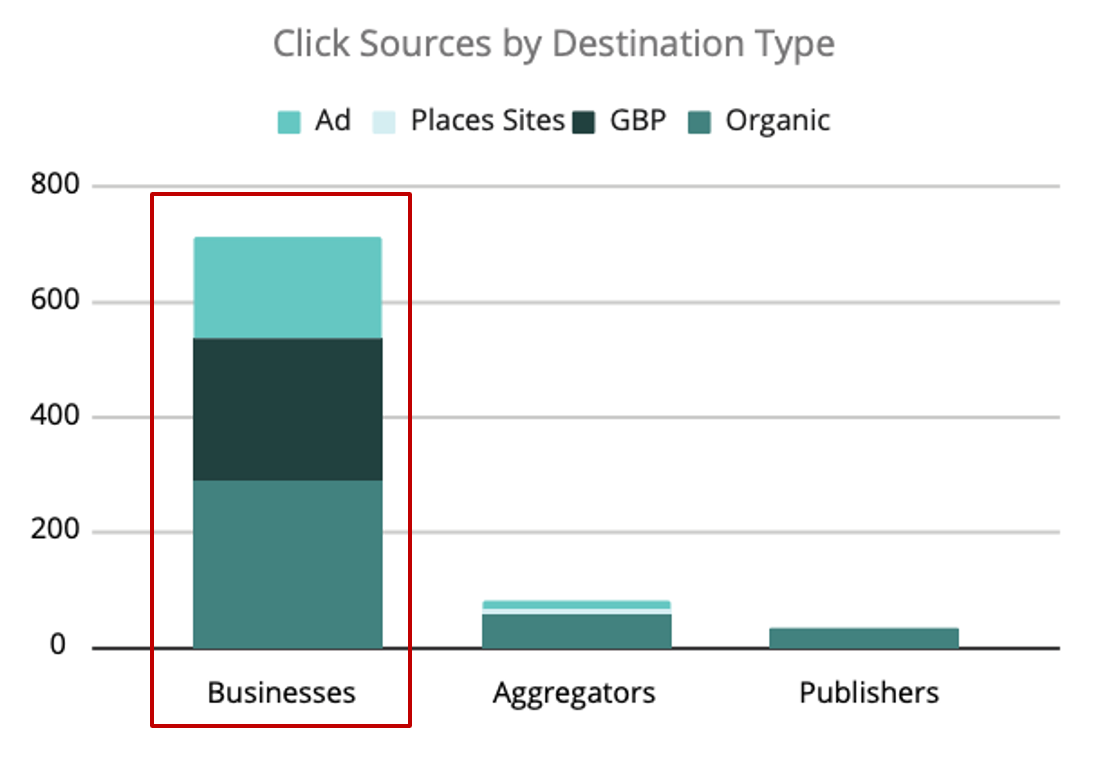
Source: Near Media-SIINDA user research (n=300)
**Our take:**
- Traffic sources to websites roughly broke down 40% - 40% - 20%: GBP, organic search, and ads in that order.
- Places Sites and Local Packs were usually in top SERP positions, except in France where they were often further down. France also had fewer ads.
- The pattern of citing reviews as top influence but not reading them held true here too – though more read them (\~50%) vs. earlier studies.
## Recent Analysis
- **Near Memo episode 178:** [Google tests AI organized carousels in local, Facebook tests new local tab, Google customer loyalty declines](https://www.nearmedia.co/ep-178-google-tests-ai-organized-carousels-in-local-facebook-tests-new-local-tab-google-customer-loyalty-declines/).
- **Google AI Organized Restaurant search results**, [by Mike Blumenthal](https://www.nearmedia.co/googles-ai-organized-restaurant-results/).
## Short Takes
- BrightLocal **business listings** visibility [study](https://www.brightlocal.com/research/business-listings-visibility-study/?utm%5Fsource=twitter&utm%5Fmedium=organic%5Fsocial&utm%5Fcampaign=research#).
- **Mapquest** introduces Android app "[private maps](https://www.businesswire.com/news/home/20241014335847/en/MapQuest-the-Online-Mapping-Pioneer-Is-Back%21-MapQuest-Unveils-Private-Mapping-App-that-Protects-Your-Privacy-Keeps-Your-Data-Away-from-Big-Tech?ref=nearmedia.co)."
- **Google review appeal tool** [allows selection](https://x.com/claudiatomina/status/1845620023722746203?s=12&ref=nearmedia.co) of multiple reviews at once.
- A [new approach to content creation](https://chantalsmink.nl/en/blog/creating-content-for-seo-in-a-zero-click-world/?ref=nearmedia.co) in a **zero-click** world.
- An [SEO strategy](https://searchengineland.com/ai-search-visibility-guide-446740?ref=nearmedia.co) for **AI powered search**.
- Moz: A **content and SEO model** for a [changing search landscape](https://moz.com/blog/navigating-content-marketing-amidst-ai-whiteboard-friday??ref=nearmedia.co).
- Campaign: **Digital OOH**, AI and Pods, [with location-sensitive messaging](https://www.thinkwithgoogle.com/marketing-strategies/automation/tombras-ai-powered-ad-campaign/?ref=nearmedia.co).
- Handicapping potential **Google** [antitrust remedies](https://www.platformer.news/google-antitrust-trial-search-remedies-breakup-chrome-android/?ref=nearmedia.co).
- **Perplexity** gets "cease and desist" [from the NYT](https://www.reuters.com/technology/artificial-intelligence/nyt-sends-ai-startup-perplexity-cease-desist-notice-over-content-use-wsj-reports-2024-10-15/?ref=nearmedia.co).
- Shopping: traffic from **gen-AI engines** [have "surged](https://business.adobe.com/resources/sdk/adobe-holiday-shopping-forecast.html?ref=nearmedia.co)" since last year.
- MSFT's AI CEO Suleyman is trying to [simplify](https://x.com/mustafasuleyman/status/1844464572570402992??ref=nearmedia.co) **Bing**.
- Survey: [top ranked tools](https://x.com/aleyda/status/1845921558990041261?ref=nearmedia.co) for **technical SEO**.
Listen to our [latest podcast](https://www.nearmedia.co/memo/).
[](https://nearmedia.co/memo?ref=nearmedia.co)
How can we make this better? Email [us](mailto:gsterling@nearmedia.co) with suggestions and recommendations.
### Ep 178: Google Tests AI Organized Carousels in Local, Facebook Tests New Local Tab, Google Customer Loyalty Declines
URL: https://www.nearmedia.co/ep-178-google-tests-ai-organized-carousels-in-local-facebook-tests-new-local-tab-google-customer-loyalty-declines/
Last updated: 2024-10-14T16:32:41.000Z
**Part 1 starts 00:13 -** [**Google Tests AI-organized Carousels in Local Search Results for Restaurants & Bars**](https://youtu.be/0q4NzeCqD70?ref=nearmedia.co)
Recent test search results for local businesses on Google, particularly restaurants and bars, have been dominated by AI-organized carousels. Searches like “best cocktail bar” now return multiple carousels sequentially down the page, with categories such as rooftop bars, artisanal cocktail bars, and budget-friendly options. These results feature large visuals, ratings, and addresses, allowing users to scroll through various options to view and choose from local listings. Interestingly, the number of carousels varies depending on the location—New York City displayed more than 12, while smaller cities like Rochester and Buffalo showed fewer or none at all, with traditional results like Yelp or Reddit appearing so far down in the search results below the carousels that they are largely invisibile.
0:00
/0:58
1×
Segment Reference Article:
[**Google's AI Organized Restaurant Results**](https://www.nearmedia.co/googles-ai-organized-restaurant-results/)
**Part 2** starts **17:35 -** [**Facebook Tests New Local Tab, Aggregating Content from Reels, Marketplace, and Events**](https://youtu.be/A6xlq3mT72E?ref=nearmedia.co)
A new local tab by Facebook has been introduced in several U.S. cities, aggregating content from Reels, Marketplace, and local events. This move consolidates previously dispersed local content, aiming to create a more streamlined and engaging user experience. Cities like Austin, New York, and Los Angeles were selected for the initial rollout. While no new content is being created, Facebook is leveraging its existing local data. The strategy is expected to enhance engagement by making local information easier to find, though questions remain about how successful this product will be in the long run.
Segment Reference Articles:
[Facebook Takes Another Run at Local](https://www.nearmedia.co/breaking-up-google-facebook-local-tab-searchgpt-ads/#facebook-takes-another-run-at-local)
**Part 3 starts 25:40 -** [**Google Experiences Significant Decline in Customer Loyalty Rankings Over Past Two Years**](https://youtu.be/GW7Ds8l94Q4?ref=nearmedia.co)
Google experienced the largest decline in customer loyalty among top 100 brands, dropping from 9th place in 2022 to 25th in 2023, according to a list compiled by Brand Keys. The annual report assesses nearly 1,500 brands across 140 industries using consumer feedback. While Google's decline was noted, YouTube rose from 21st to 6th place over the same period. Additionally, ChatGPT entered the list at 49th in 2023 and advanced to 40th in 2024\. The rankings, based on customer feedback and loyalty metrics, suggest shifting consumer sentiment despite Google's continued market dominance
Segment Reference Articles:
[**Google Loyalty Drops 16 Positions**](https://www.nearmedia.co/google-loyalty-down-stock-photos-notebooklm-podcasts/#google-loyalty-drops-16-positions)
### Google's AI Organized Restaurant Results
URL: https://www.nearmedia.co/googles-ai-organized-restaurant-results/
Last updated: 2024-11-19T21:05:11.000Z
We are starting to see a broader test (rollout?) of Google's new AI organized restaurant results in search. First [announced](https://blog.google/products/search/generative-ai-google-search-may-2024/?ref=nearmedia.co#:~:text=Explore%20an%20AI%2Dorganized%20results,makes%20it%20easy%20to%20explore.) at Google I/O in May, [tested](https://www.seroundtable.com/google-ai-organized-local-search-37723.html?ref=nearmedia.co) during the summer and [released](https://blog.google/products/search/google-search-lens-october-2024-updates/?ref=nearmedia.co) for recipes this past week, AI organized results are now showing more broadly for restaurant and bar results.
For lack of a better description, they are intense.
On the search for "best cocktail bar in NYC" the AI organized results were 8 1/2 full screen scrolls (almost 18,000 pixels high) from beginning to end. The result was comprised of 12 horizontal local carousels and each carousel took up \~1050 pixels.

Exactly how Google is determining the groupings to provide the cocktail bar categories in the search results is TBD; it is likely based on user search behaviors although critic reviews could also play a significant role in the classification.
The first carousel has a large (and somewhat buggy) map embedded above it and a button for More Places below it. The subsequent carousels included two buttons; one taking you to an in-line Maps view and the other taking you to the Places search modifier result for the specific type of cocktail bar. Each carousel shows two results immediately and allows a user to scroll to the right for another 4 locations.
0:00
/0:58
1×
You can see the carousel and Places results page in this video
The total number of carousels is market dependent with a lesser metro area like Rochester, NY getting "only" 5 carousels and Albany defaulting to the 3-Pack and not getting the AI results at all. Similar AI organized results were visible for me on searches for cocktail bars in Canada & Mexico but not for searches in the EU or when not logged in.
### Google's Pitch
At I/O and again last week, Google [positioned](https://blog.google/products/search/generative-ai-google-search-may-2024/?ref=nearmedia.co#:~:text=Explore%20an%20AI%2Dorganized%20results,makes%20it%20easy%20to%20explore.) AI organized search results as a way to bring "people more diverse content formats and sites, creating even more opportunities for content to be discovered". They also pitch the idea that "AI can help you explore and discover a wider range of results from the web, for those questions that may be open-ended or have no single right answer".
To some extent these results do help users find a better answer when looking for the best cocktail bar... these results facet that query into multiple parts allowing a user to narrow in on exactly what they are looking.
They also say "you can easily explore content and perspectives from across the web including articles, videos, forums and more — all in one place". That is for sure true... and that one place is Google.
### Offers & Events
When the AI organized result wern't showing, we frequently saw the "Nearby offers and events" feature below the 3-Pack. This mostly drew from Google Posts (are they again rising from the ashes?) but they also can come from Facebook and we assume other sources.
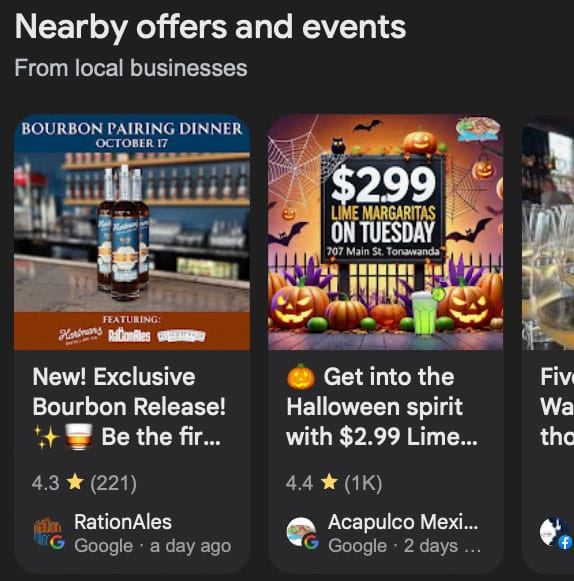
### Antitrust Implications
In the NYC results my finger cramped well before the first organic result was anywhere to be seen. Of course once you did finally get to the organic results Reddit was frequently among them and Yelp had even moved further down the result.
These results are all local, all the time. They rely almost exclusively on Google's local knowledge graph and they are intensely visual in a Tic-Tok/Instagram kind of way. Despite Google's claim of bringing you information from "across the web", nothing from the web is very visible. Websites in the carousels are always at least two clicks and often three clicks away from the searcher.
If these results reflect the final or near final implementation of the AI organized results for local then Yelp's [antitrust arguments](https://www.nearmedia.co/yelp-v-google-seo-challenges-section-230s-new-crack/?ref=near-media-newsletter) of self preferencing and disadvantaging competitors becomes even more compelling.
### Still Missing the Mark?
There is value in using AI to facet a local search result that might be interpreted differently by different searchers. This type of user choice, like showing the many different types of cocktail bars, should lead searchers down their optimal path fairly quickly.
That being said, this result is still missing the mark that Google set for themselves of solving more complex problems, allowing consideration of more options and providing fresh ideas. The example that Google [offered](https://blog.google/products/search/generative-ai-google-search-may-2024/?ref=nearmedia.co#:~:text=Explore%20an%20AI%2Dorganized%20results,makes%20it%20easy%20to%20explore.), "Anniversary Celebration dinner places Dallas", doesn't do much of anything. I can conceive of other local searches that would provide significant value but for which Google has no current solution like "Best Cocktail bars with 80 miles of my home" or "surgeons that specialize in Holmium laser prostate surgery within 4 hours of Olean".
The real power of Google's vision would be the ability for the results, not just to disambiguate ambiguous queries, but to break free from the arbitrary and rigid constraints of the Local algo.
### Breaking Up Google, Facebook Local Tab, SearchGPT Ads
URL: https://www.nearmedia.co/breaking-up-google-facebook-local-tab-searchgpt-ads/
Last updated: 2024-10-11T02:17:33.000Z
### Breaking Up Google
In its [filing](https://s3.documentcloud.org/documents/25197004/6ad1f361-4e42-4390-9125-80c21515a4cc.pdf?ref=nearmedia.co) in the remedies phase of Google's antitrust trial, the US Department of Justice (DOJ) confirmed it was considering asking the court to break up Google: "Plaintiffs are considering structural remedies that would prevent Google from using products such as Chrome, Play, and Android to advantage Google search and Google search-related products and features—including emerging search access points and features, such as artificial intelligence—over rivals or new entrants." However, that's not its first line of attack. The DOJ spoke about a wide range of remedies to punish Google and restrain its market dominance. These include the end of default search agreements (as expected), requiring Google to allow sites to opt out of AI training while remaining in the index, more transparency in Google search ads, licensing/syndication of Google’s ad feed, forced data sharing with competitors, among several others. (Forced data sharing might truly boost search rivals.) However, the filing is more a preview of the DOJ's thinking rather than a specific set of remedies. It will file an updated proposed final judgment, with more concrete recommendations, in November.

Source: ChatGPT
**Our take:**
- The DOJ is seeking to end Google's control over distribution ("gatekeeping") and "also ensuring Google cannot control the distribution of tomorrow."
- Google formally [responded](https://blog.google/outreach-initiatives/public-policy/doj-search-remedies-framework/?ref=nearmedia.co) that doing what the DOJ wants will hurt innovation, businesses and consumers. It will appeal the decision so nothing will probably change for now.
- Google seeks to frame potential regulation/punishments as harmful to society, not just itself. Google is suggesting, by implication, that it's a public utility.
### Facebook Takes Another Run at Local
Facebook has tried (repeatedly) and failed in Local. Marketplace, which is riddled with spam, is its probably most successful effort. Buying Waze might have truly made it a viable local search competitor [but that's old news](https://www.nearmedia.co/facebook-blew-waze-deal-prime-dark-patterns-gbp-category-boost/). Now the company is having another go. At an Austin event last week, Facebook [announced](https://about.fb.com/news/2024/10/facebook-local-tab-messenger-communities-ai/?ref=nearmedia.co) a new Local tab that "pulls together the best local content from across Facebook – from places like Marketplace, Groups and Events – into a single tab called Local." The company says the Local tab is currently testing in a number of US cities: Austin, New York City, Los Angeles, Washington D.C., Chicago, Charlotte, Dallas, Houston, San Francisco and Phoenix. We haven't seen it live yet and so can't comment on the experience. However, if done well, it could succeed. Local events will be personalized "based on your interests" (and all your data). There's also going to be a "swipeable section in Feed that surfaces the best content across Facebook," including Local. But because of Facebook's track record we'll have to wait and see.
**Facebook's New Local Tab**
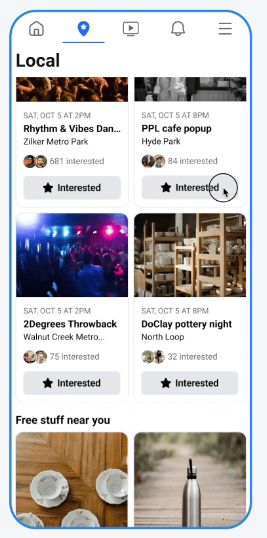
Source: Facebook
**Our take:**
- It would be great if Facebook succeeds. This is more like TikTok than the Local Pack. We'll see if there's a search angle eventually (guessing yes).
- Partly this is a bid to appeal to the "TikTok generation," who also heavily use Instagram for local discovery.
- You can bet that this would quickly become a targeted advertising channel. Social, and Facebook specifically, is already the #1 SMB marketing method.
### SearchGPT Ads Coming?
SearchGPT will reportedly be integrated into ChatGPT by the end of 2024\. Speaking virtually to a conference in Europe, OpenAI's head of media partnerships, Varun Shetty, [said](https://pressgazette.co.uk/platforms/openai-searchgpt-advertising-revenue-sharing-publishers-varun-shetty/?ref=nearmedia.co) OpenAI intended to inegrate SearchGPT into ChatGPT "by the end of the year." The integration, which was previously announced, is not news. But the timing is. Very interestingly, Shetty also told the conference that the company did not currently intend to share ad revenue with publishers. Before this, there had been no public hint, let alone announcement, about monetizing SearchGPT with ads. OpenAI CEO Sam Altman [doesn't like](https://www.nearmedia.co/sge-hits-brands-dma-hot-seat-altman-reimagines-search/) the idea of ads in search results. But OpenAI's [massive burn rate](https://www.cnbc.com/2024/09/27/openai-sees-5-billion-loss-this-year-on-3point7-billion-in-revenue.html?ref=nearmedia.co) may force the company to reconsider. Perplexity has embraced a search ad model, [with a twist](https://www.pymnts.com/artificial-intelligence-2/2024/ai-firm-perplexity-reportedly-plans-new-advertising-model/?ref=nearmedia.co), also out of necessity. Perplexity Ads will reportedly launch very soon. Meanwhile, OpenAI has been inking content licensing deals with numerous publishers including Condé Nast, Time, News Corp, Vox, Atlantic, Dotdash Meredith, AP, Axel Springer, Hearst and others. According to OpenAI's Shetty, there are only 10K users of SearchGPT today. And while it's not likely to have an immediate impact on Google, over the long term it could reduce Google reliance and the frequency of Google usage.
Source: ChatGPT
**Our take:**
- ChatGPT [now has](https://www.axios.com/2024/08/29/openai-chatgpt-200-million-weekly-active-users??ref=nearmedia.co) more than 200 million WAUs according to the company. That's double one year ago.
- While there's missing context around Shetty's remarks, I suspect advertising is being actively discussed within OpenAI. How could it not be?
- Survey data [argue](https://www.nearmedia.co/ai-use-hurts-google-smb-response-times-local-ai-review-tool/) heavy AI users tend to use Google and Bing less.
## Recent Analysis
- **Dr. Fraudster Still Deceiving Surgery Patients on Google**, [by Mike Blumenthal](https://www.nearmedia.co/dr-fraudster-still-deceiving-surgery-patients-on-google/).
- **Near Memo episode 177:** [Places sites in US? Allure’s ongoing Google review fraud scandal, FTC targets Rytr for fake review generation](https://www.nearmedia.co/ep-177-places-sites-in-us-allures-ongoing-google-review-fraud-scandal-ftc-targets-ai-tool-rytr-for-fake-review-generation/).
- ICYMI: **Hotels Part II: Search Marketing Implications for European Hotel Suppliers**, [by David Mihm](https://www.nearmedia.co/european-hotel-search-behavior/).
## Short Takes
- Google's new **Quick View**: [content without a click](https://www.seroundtable.com/google-quick-view-button-on-recipes-38222.html?ref=nearmedia.co).
- **LSAs** [must be attached to GBPs](https://x.com/thesocialdude/status/1844076515866312780?s=46&ref=nearmedia.co) and the data must match.
- New Google SERP [local carousel](https://x.com/JoyanneHawkins/status/1844429206253601192?ref=nearmedia.co) feature: **Nearby Offers and Events**.
- **Google** [appears to remove](https://localsearchforum.com/threads/can-we-add-insurance-providers-for-an-addiction-center.61905/?ref=nearmedia.co) insurance field from GBP in healthcare.
- **Content for SEO**: [where things stand](https://searchengineland.com/content-length-depth-and-seo-everything-you-need-to-know-in-2025-447197?ref=nearmedia.co) (and best practices).
- Risks and rewards of "**guest posting**" for [linkbuilding and SEO](https://www.sterlingsky.ca/guest-posting-link-building-strategy/?ref=nearmedia.co).
- **Google** [expands Store Ratings](https://developers.google.com/search/blog/2024/10/store-ratings?ref=nearmedia.co) to more countries.
- Survey: 87% of **US teens** [own an iPhone](https://mms.businesswire.com/media/20241009988058/en/2267142/1/TSWT%5FFall24%5FInfographic%5FFINAL.pdf??ref=nearmedia.co).
- Google's **Pixel phones** [are surveillance devices](https://cybernews.com/security/google-pixel-9-phone-beams-data-and-awaits-commands/?ref=nearmedia.co) for the company.
- **YouTube** [playing hide the button](https://9to5google.com/2024/10/10/youtube-skip-ad-button-changes/?ref=nearmedia.co) with "skip ads."
Listen to our [latest podcast](https://www.nearmedia.co/memo/).
[](https://nearmedia.co/memo?ref=nearmedia.co)
How can we make this better? Email [us](mailto:gsterling@nearmedia.co) with suggestions and recommendations.
### Google Loyalty Down, Stock Photos?, NotebookLM Podcasts
URL: https://www.nearmedia.co/google-loyalty-down-stock-photos-notebooklm-podcasts/
Last updated: 2024-10-08T23:24:07.000Z
### Google Loyalty Drops 16 Positions
Brand Keys' 2024 Top 100 Brand Loyalty Index [is out](https://brandkeys.com/loyalty-leaders-list/?ref=nearmedia.co). This is essentially a promotional tool for Brand Keys' consultancy and normally I wouldn't write about it. However, it shows an interesting (and meaningful) decline in Google's consumer loyalty over the last two years – a drop of 16 points. Google went from #9 in 2022 to #25 this year. That's the biggest decline of any company in the top 100\. By the same token, Google-owned YouTube has gained 15 positions since 2022, going from #21 to #6\. Interestingly, ChatGPT has moved up nine positions since last year – it didn't appear in 2022 – from #49 to #40\. Brand Keys says it uses multiple consumer inputs and evaluations to rank almost 1,500 brands. Consumers rate brands based on how well they meet both emotional and rational expectations within specific categories. The firm is measuring engagement and brand loyalty and argues the results predict future behavior, including purchase intent and advocacy.
**Brand Loyalty Rankings for Selected Tech Companies (2022-2024)**
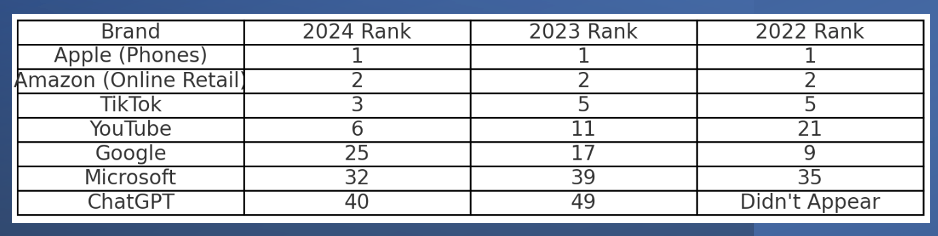
Source: Brand Keys
**Our take:**
- Despite the narrative of Google search quality deterioration, there's been no discernible impact on traffic [or market share](https://gs.statcounter.com/search-engine-market-share/desktop-mobile-tablet/north-america/?ref=localdialog.com#monthly-202211-202409).
- Yet this loyalty decline does seem to correspond to lots of anecdotal evidence. I don't think it's meaningless.
- Google's brand is one of the world's most visible and presumably resilient. And it's possible the company will rebound next year.
### SEO: 'Unique Photos' vs. Stock Photos
In Near Media's user research in the healthcare vertical we found that consumers often had a negative reaction to stock images. They wanted to see real photos of doctors, clinics and their staffs. We have not necessarily seen this to the same degree in other verticals but have counseled people to replace stock photos with actual images of their businesses. An isolated test and [case study](https://x.com/JoyanneHawkins/status/1843681331672481918?ref=nearmedia.co) from Joy Hawkins and SterlingSky suggests there may be more nuance here. Joy's team replaced stock photos with "unique photos" (which she says can include AI) on a number of pages and found it had no impact on ranking. She says, "In fact, some rankings dropped after replacing stock photos!" The conclusion of the test is that Google appears to be valuing quality and relevance vs. the uniqueness of images by itself. Quality matters. And regardless of their ranking impact there are multiple reasons to use high quality, professionally taken photographs, including branding, engagement and differentiation.
**Our take:**
- To fully understand the ranking impact of stock images vs. unique photos, there would need to be a larger controlled test.
- However, the finding that simply replacing stock photos with unique images isn't going to improve rankings is likely valid.
- On balance, it's still better to use real images, unless they're bad/low quality. This test probably establishes real images aren't a magic ranking boost.
### Will NotebookLM Survive?
NotebookLM (formerly Project Tailwind) [was introduced](https://blog.google/technology/ai/notebooklm-google-ai/?ref=nearmedia.co) in July last year, following Google I/O as a kind of technology showcase (Google Labs). Built on top of Gemini, it's intended to be an educational and information management tool, to help people understand and gain faster insights from a body of disparate facts, content and articles. It's actually quite useful but had not captured the imagination of audiences – until now. The [addition of "Audio Overviews](https://blog.google/technology/ai/notebooklm-audio-overviews/?ref=nearmedia.co)" (previously "deep dive conversations") has made the product [go viral](https://www.technologyreview.com/2024/10/03/1104978/people-are-using-google-study-software-to-make-ai-podcasts-and-theyre-weird-and-amazing/?ref=localdialog.com). For those who haven't experienced it (listen below), it will take a single slide deck or multiple documents and turn them into a conversation between two natural sounding voices. It's truly impressive. In fact it's the most impressive demonstration of Google's AI capabilities I've seen so far. Gemini, the foundation for NotebookLM's podcast feature, is not a hit among consumers or most businesses. This is. Obviously this AI voice feature can and will be deployed in other contexts and products. But the question in my mind is: will NotebookLM survive or in 18 months join the [Google Graveyard](https://killedbygoogle.com/?ref=nearmedia.co)?
**Listen to Audio Overview of David's write-up of our EU Hotels User Research Part 2**
EU Hotel Search Research
0:00
/482.16
1×
**Our take:**
- Because there's no direct revenue or strategic importance associated with NotebookLM its chances for long-term survival are modest at best.
- The average lifespan of discontinued Google products is just under six years but that includes outliers like Google Toolbar that lasted roughly 20 years.
- Most products killed by Google are gone within just a few years, often 2 years.
## Recent Analysis
- **Near Memo episode 177:** [Places sites in US? Allure’s ongoing Google review fraud scandal, FTC targets Rytr for fake review generation](https://www.nearmedia.co/ep-177-places-sites-in-us-allures-ongoing-google-review-fraud-scandal-ftc-targets-ai-tool-rytr-for-fake-review-generation/).
- **Dr. Fraudster Still Deceiving Surgery Patients on Google**, [by Mike Blumenthal](https://www.nearmedia.co/dr-fraudster-still-deceiving-surgery-patients-on-google/).
## Short Takes
- Google [showing competitor ads](https://www.seroundtable.com/google-competitor-ads-above-local-reviews-38194.html?ref=nearmedia.co) in reviews tab on **GBPs**.
- **Two star reviews** often lead to the best coffee houses ([WaPo](https://www.washingtonpost.com/travel/tips/best-coffee-shops-two-star-reviews/?ref=nearmedia.co)).
- Why [effective SEO](https://www.growth-memo.com/p/ai-on-innovation-part-2?ref=nearmedia.co) should be your **AIO optimization** strategy.
- Why you need to [assume zero site traffic](https://sparktoro.com/blog/how-to-fight-back-against-a-traffic-less-web/?ref=nearmedia.co) from **Google** going forward.
- Parking reservations app SpotHero [to integrate with](https://techcrunch.com/2024/10/08/google-partners-with-spothero-convenient-parking-reservations-maps-search/?ref=nearmedia.co) **Google Maps**.
- Judge in **Epic v. Google**: Google Play [must open up to rivals](https://www.theverge.com/policy/2024/10/7/24243316/epic-google-permanent-injunction-ruling-third-party-stores?ref=nearmedia.co).
- Google **AI Overview ads** [will appear beneath AIO answer](https://searchengineland.com/google-ai-overviews-ads-mobile-us-launch-447247?ref=nearmedia.co) and links.
- Darren Shaw [asks](https://www.linkedin.com/posts/darrenshawwhitespark%5Fseo-localseo-activity-7249494014389805056-bgjz?utm%5Fsource=share&utm%5Fmedium=member%5Fdesktop): **800 number or local number**? (hint: local)
- **Google** testing "[researched with AI – experimental](https://x.com/SERPalerts/status/1843248830533558756?ref=nearmedia.co)" within Shopping tab.
- **Baby peacock** problem: [AI filling up image tab](https://www.linkedin.com/posts/cyrusshepard%5Fdoes-google-detectdemote-ai-generated-images-activity-7249265409562976256-691j/??ref=nearmedia.co) with machine-gen pix.
- **TikTok** [launches](https://newsroom.tiktok.com/en-us/tiktok-is-building-for-the-future-with-smart-plus?ref=localdialog.com) AI-supported Smart+ performance ads.
- US states sue **TikTok** for [harming kids' mental health](https://www.nbcnews.com/tech/tech-news/tiktok-sued-14-attorneys-general-rcna174395?ref=nearmedia.co).
Listen to our [latest podcast](https://www.nearmedia.co/memo/).
[](https://nearmedia.co/memo?ref=nearmedia.co)
How can we make this better? Email [us](mailto:gsterling@nearmedia.co) with suggestions and recommendations.
### Dr. Fraudster Still Deceiving Surgery Patients on Google
URL: https://www.nearmedia.co/dr-fraudster-still-deceiving-surgery-patients-on-google/
Last updated: 2024-12-05T18:43:55.000Z
Dr. Javad Sajan of Allure Esthetic in Seattle was[ convicted of fraudulent review practices](https://www.nearmedia.co/seattle-surgeon-guilty-of-breaking-law-with-review-practices/) in April, 2024 and in July he [entered into a consent decree](https://www.atg.wa.gov/news/news-releases/ag-ferguson-plastic-surgeon-must-pay-5-million-illegally-manipulating-consumer?ref=nearmedia.co) to pay $5 million in fines and restitution. As part of that agreement he was ordered to "*perform a full audit of all public reviews on Google, Yelp, WebMD and other third-party review platforms, and request removal of every review Allure was involved in creating, posting or shaping in any manner*."
And yet, as of today, Google has removed few if any of these ill-gotten reviews, the rating remains essentially the same and the rank manipulating company name spam remains.

💡
****Update 10/12**: The issue of the name spam AND the many reviews accrued during this company’s known period of malfeasance was [raised](https://support.google.com/business/thread/300853420?hl=en&ref=nearmedia.co) with Google again. Google removed 11 reviews leaving the listing with 924, still hundreds more than competitors. More importantly Google did nothing about the YMYL (your money or your life) risk implicit in this search result.

### Crime Seems to Pay
Dr. Sajan and his practice don't just rank highly in the 3-Pack, but often rank first for money phrases such as best plastic surgeon, [best plastic surgeon Seattle](https://www.google.com/search?client=safari&rls=en&q=best+plastic+surgeon+seattle&ie=UTF-8&oe=UTF-8&ref=nearmedia.co), cosmetic surgeon Seattle, plastic surgeon Seattle. The name spam and reviews contribute to this shit show.
Searchers see his listing with a 4.8 rating and 935 reviews. That is 500 more reviews than the nearest in-market competitor. And his listing is highly visible across search, Maps *and* ads.
We know from our [consumer research in the medical vertical](https://www.nearmedia.co/why-local-searchers-look-to-the-local-finder/#why-searchers-enter-the-local-finder) that people looking for a physician look for doctors with the highest ratings and the most reviews. Despite being charged and convicted, this business is still benefiting from its deceptive Google listing – five months after being declared guilty and three months after agreeing to remove the reviews.
In the 10 months since the case became public, Sajan's practice continues to leverage Google's cornucopia of leads despite being fundamentally deceptive. Given the high [average cost of plastic surgery](https://www.plasticsurgery.org/documents/News/Statistics/2020/cosmetic-procedures-average-cost-2020.pdf?ref=nearmedia.co) and the large number of patients this firm handles, its ranking could have contributed somewhere on the order $250,000+ (or more) in income since the inception of the lawsuit alone; and over the past 7 years, many times that.
### What Did Google Know and When?
According to the [lawsuit filed by the Attorney General of Washington](https://www.atg.wa.gov/news/news-releases/ag-ferguson-files-lawsuit-against-seattle-based-plastic-surgery-clinic-bribing?ref=nearmedia.co), from 2017 to 2019 Allure required patients to sign non-disclosure agreements that restricted them from posting negative reviews. In addition, the lawsuit highlighted, from 2018 to 2021, employees and subcontractors posted fake positive reviews using VPNs. This makes every review during that period suspect and appropriate for removal by Google. Yet 522 of his 935 reviews are from that period (2017 - 2021) and remain on his profile.
It's very likely that Google knew about this suit early because of the Attorney General's investigations (and discovery) as well as court filings in 2023 and early 2024\. However, just to be sure, we notified Google on July 16, 2024 of the case and its outcome via the [Business Complaint Redressal Form](https://support.google.com/business/contact/business%5Fredressal%5Fform?ref=nearmedia.co).
Google readily removes reviews from businesses that incentivize reviews, from the initial date of incentive. And yet, for some reason, these reviews and the name spam remain. (Yelp only does slightly better.)\*
### Google's Scam Spotting Tips
Google recently [published](https://blog.google/technology/safety-security/how-to-spot-scams-and-what-to-do-if-you-encounter-one/?ref=nearmedia.co#intro) a post detailing the company's ability to block 99.9% of Gmail scams. They also note that Search is 99% spam free. And Google offers a range of tips for avoiding internet scams. These include five ways that consumers and businesses should take action to protect themselves. But for the scams actually appearing on Google, you're essentially on your own. This is no more clear than in the case of plastic surgery in Seattle.
Choosing the wrong plastic surgeon can have profound and long term negative consequences. If any business categories should be monitored and moderated in search results, surgery should be among them. Yet in this case it's incredibly difficult for a consumer to assess the reputation of Allure Aesthetics or even learn that they cheated on their reviews over the past 7 years.
Google Ads, Local and Organic search results and Google Maps all suggest this business is exemplary. It is almost impossible for a typical consumer, that [only looks at ratings](https://www.nearmedia.co/chatgpt-search-reviews-unread-gen-z-search/#users-love-reviews-dont-read-them) and generally trusts them, to know the backstory without a significant amount of additional effort and searching.
What a user sees when searching on the Allure brand
Given how buried the links are to the review fraud case against this doctor and practice, it's likely that the firm has hired a "reputation management" firm to push negative results down the page.
### What Should Happen Now?
Shouldn't consumers have a right to know that this company was cheating on their reviews by illegally avoiding negative reviews and fraudulently generating positive ones? Shouldn't that information be front and center for both Google and Yelp? Shouldn't the Google Business Profile and search results on Google carry additional information alerting the public to the problem? Shouldn't this business be prevented from using name spam to manipulate the search results?
My answer to all of those questions is an emphatic YES!
### 'Badge of Shame' Not Enough
We have seen indications that Google might start including a [Review Badge of Shame ](https://www.nearmedia.co/badge-of-shame-second-google-loss-aios-ads/)(similar to Yelp's Consumer Alerts) to notify users when certain review abuse situations arise. That is a small start. In this case even that would not be enough. Somewhere on the order of 75% of searchers [never read the actual reviews](https://www.nearmedia.co/chatgpt-search-reviews-unread-gen-z-search/#users-love-reviews-dont-read-them) when looking for physicians and thus probably wouldn't see the badge.
Because the business is so visible in the search and ad results, any shaming badges would need to also be visible within the Local 3-Pack and the Local Finder. Given the risk to consumers in this case, this business should have a substantial number of their reviews removed (at least those >500 or so solicited during the 4 years that the law suit covers). And their manipulation of search results using name spam should lead to a significant loss of search and ad visibility.
The sad truth is that Google has complied with the law, in its current form. All too often Google hides behind the immunity shield of Section 230, which protects it against lawsuits stemming from unethical, illegal, abusive or fraudulent activity on the platform. But shouldn't Google have a greater ethical, if not legal, obligation to notify the public – once they're put on notice of illegal or other significant harmful conduct on their platform?
My answer to that is yes and yet here we are, with this plastic surgeon continuing to profit despite being convicted of review fraud, and obviously violating Google's TOS and guidelines.
---
\*While Yelp \[is showing\](https://www.yelp.com/biz/allure-esthetic-seattle-3) a badge of shame far down their page, above the fold we see a 4.5 rating with 131 reviews. This is still too good for a practice convicted of review fraud. And 87 of the 131 reviews on Yelp were posted during the period between 2017 and 2021, the relevnt period of the conviction. The Yelp search visiblity only serve to bolster this firm's reputation.
### Ep 177: Places Sites in US? Allure’s Ongoing Google Review Fraud Scandal, FTC Targets AI Tool Rytr for Fake Review Generation
URL: https://www.nearmedia.co/ep-177-places-sites-in-us-allures-ongoing-google-review-fraud-scandal-ftc-targets-ai-tool-rytr-for-fake-review-generation/
Last updated: 2024-10-06T23:59:46.000Z
**Part 1 starts 00:13 -** [**Google's Place Sites: A Compliance Gesture or A True Shift in Search?**](https://youtu.be/gg8z3BjouT4?ref=nearmedia.co)
Google is rolling out a new feature called "Place Sites" in North America, following its initial launch in Europe as part of compliance with the Digital Markets Act (DMA). The feature presents a carousel of aggregator search results, such as Yelp and TripAdvisor, prominently placed in top positions for local queries like restaurants. The idea is to redirect traffic to competitors to address accusations of Google self-preferencing. However, our testing shows that user engagement has been very, very low, with people rarely interacting with the carousel despite its visibility.
This could be a preemptive move by Google to fend off similar regulatory pressures in North America, where laws against self-preferencing are still in discussion. Or it might be part of a larger strategy to boost Google’s new AI-organized search results that keep users within Google’s ecosystem. By offering the AI-refined, visually driven search results, Google could be aiming to increase search volume and maintain its dominance in the market. That all being said, the Places Sites feature is seen more as a compliance gesture than a game-changer for user experience.
Segment Reference Articles
[Joy Hawkins: Canada has this Places sites carousel now? ](https://x.com/JoyanneHawkins/status/1840234954166317424?ref=nearmedia.co)
[Places Sites Land in North America?](https://www.nearmedia.co/places-sites-go-west-googles-best-efforts-chrome-click-surveillance/)
[Places Sites may as well not exist. The module drives almost no engagement, even above the fold.](https://www.nearmedia.co/google-serp-restaurants-eu-dma-analysis/)
**Part 2 starts 11:48 -** [**Allure Aesthetics' Review Fraud Highlights Google's Inaction & Continuing Consumer Harm**](https://youtu.be/MDoo26Dgyk8?ref=nearmedia.co)
Allure Aesthetics, a plastic surgery clinic in Seattle, has been caught in a major review fraud scandal. After being convicted in 2024 for illegal review practices—such as forcing patients to sign NDAs to prevent negative reviews and having employees post fake ones—Allure was fined $5 million. Despite this, Google has taken little action to remove the fraudulent reviews from its platform. As of now, the clinic still ranks highly in search results with an impressive 4.8 rating based on over 900 reviews, many of which were accumulated during the period of fraudulent activity.
Despite plenty of media coverage and efforts to report the fraud, Google has not removed the questionable reviews or penalized the clinic in its local search results. The scandal underscores a larger issue: Google’s inconsistent approach to handling cases of review fraud, even when businesses have been legally penalized.
Segment Reference Articles:
[Convicted Review Fraudster Still Deceiving Surgery Patients on Google](https://www.nearmedia.co/p/25a1543b-0e05-4d79-8d2e-ca130d4ccb16/)
[Google Tips for Coping with Scams in Search: You are on your own](https://blog.google/technology/safety-security/how-to-spot-scams-and-what-to-do-if-you-encounter-one/?ref=nearmedia.co#spotwebscams)
**Part 3 starts 24:20 -** [**FTC Targets AI Tool Rytr for Enabling Fake Review Generation**](https://youtu.be/Ve3o6G8Mmrw?ref=nearmedia.co)
The FTC has taken action against Rytr, an AI-powered writing tool, accusing it of facilitating the creation of thousands of fake reviews. With a simple interface that allows users to generate human-sounding testimonials at scale, the tool has enabled some subscribers to produce over 10,000 reviews each. The FTC's complaint argues that the tool’s only practical use is to produce deceptive reviews, leading to an enforcement action that requires the company to shut down its review-generating functionality and undergo 20 years of monitoring.
The case has sparked debate, with some FTC members arguing that the action is based on hypothetical harm, while others emphasize the risk of AI tools being misused for fraud. The FTC's move raises questions about the broader role of AI in generating content and its potential to facilitate large-scale review abuse, with concerns growing over how much consumers can trust online reviews in the face of increasing fraud.
Segment Reference Articles:
[FTC: AI Writing Tool = Fake Reviews](https://www.nearmedia.co/google-aips-go-live-ftc-goes-after-ai-ai-buying-assist/#ftc-ai-writing-tool-fake-reviews)
[FTC Rytr Complaint](https://www.ftc.gov/system/files/ftc%5Fgov/pdf/2323052rytrcomplaint.pdf?ref=nearmedia.co)
AI Notes: These summaries were written by ChatGPT from transcripts of the recording. They were checked for accuracy and rewritten for tone. But if you disagree with the results, take it up with Open AI.
### Google AIPs Go Live, FTC Goes After AI, AI Buying Assist
URL: https://www.nearmedia.co/google-aips-go-live-ftc-goes-after-ai-ai-buying-assist/
Last updated: 2024-10-03T20:59:08.000Z
### AI Organized Pages Go Live
At Google I/O [earlier this year](https://www.nearmedia.co/gemini-dominates-i-o-and-sge-goes-live/) Google Head of Search Liz Reid teased "AI Organized Pages," which as the name suggests use AI to organize an entire page of search results, not just an overview at the top. That feature is rolling out today in the US, with recipes first, according to a new [blog post](https://blog.google/products/search/google-search-lens-october-2024-updates/?ref=nearmedia.co). It will expand later to restaurants, entertainment, travel, shopping and other categories. It's not clear how different these pages will be from one another. However, it represents a potentially significant (even radical) change in the way the SERP appears and the order of particular features and modules. Google says this will create a better user experience and make content more discoverable. This is Google's boldest response to date to the challenge of AI and "chatbots." Reid's blog post suggests that some of these results may be personalized: "You’ll now see a full-page experience, with relevant results organized just for you." In addition to AIOPs (AIPs if you prefer), there were several other announcements. Google Lens will now support video-based search queries; Lens shopping results will be more detailed; a new AIO design with more prominent links, and ads will now officially appear in AIOs.
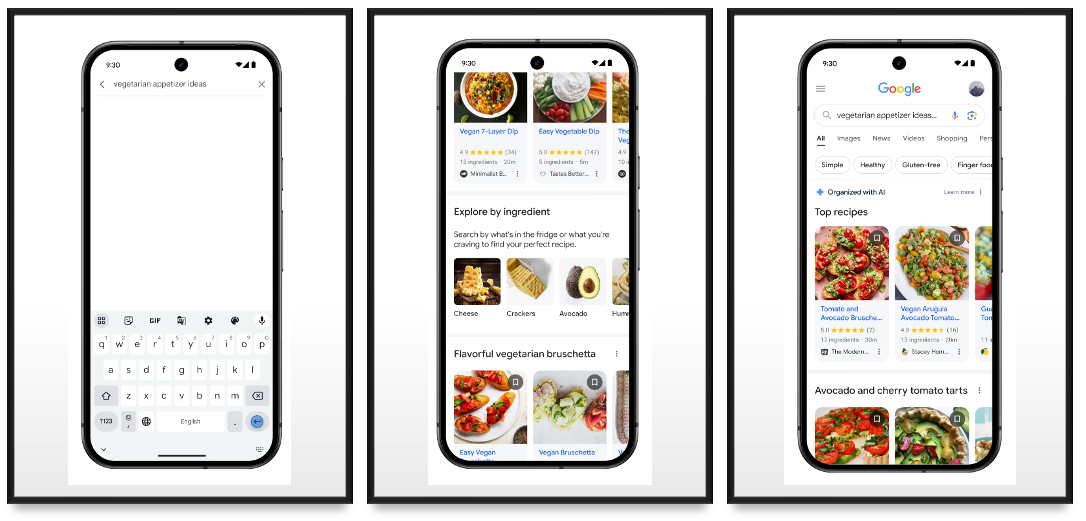
Source: Google
**Our take:**
- As we previously discussed on one of our podcasts around Google I/O, the company could have done a version of this (by vertical) without AI.
- We'll have to see what these pages look like and how they perform: engagement, clicks, traffic. Reid says beta tester response has been positive.
- There's some evidence of usage erosion at the margins (social and AI). This is part of a larger effort to stop/preempt that, while not impacting ad revenue.
### FTC: AI Writing Tool = Fake Reviews
[Rytr](https://rytr.me/??ref=nearmedia.co) is an AI writing tool, much like many others on the market. Among other uses, Rytr can create "testimonials and reviews." The FTC filed a [complaint](https://www.ftc.gov/system/files/ftc%5Fgov/pdf/2323052rytrcomplaint.pdf?ref=nearmedia.co) against Rytr, in conjunction [with other enforcement actions](https://www.ftc.gov/news-events/news/press-releases/2024/09/ftc-announces-crackdown-deceptive-ai-claims-schemes?ref=nearmedia.co) against several companies "that use AI hype or sell AI technology that can be used in deceptive and unfair ways." The vote was 3-2 on whether to charge Ryter, with Republican Commissioners Andrew N. Ferguson and Melissa Holyoak dissenting. The FTC argues that Rytr can be, and likely has been, used to generate fake or deceptive reviews. "As the service can quickly generate an unlimited number of detailed and genuine-sounding reviews ... its likely only use is to facilitate subscribers posting fake reviews," the complaint reads. The FTC is especially concerned about how the tool facilitates review generation at scale. It says that since 2021, "24 subscribers have generated over 10,000 reviews each, 114 subscribers have generated over 1,000 reviews each, and 630 subscribers have generated over 100 reviews each." This will cause "or is likely to cause" substantial consumer harm. The FTC is seeking a ban on Ryter's review/testimonial generation. The dissent argues the agency is penalizing Ryter for a hypothetical use case without evidence of harm. It also warns about "deleterious consequences for AI products generally."

Source: ChatGPt
**Our take:**
- The complaint does contain examples suggesting the tool has been abused. But the dissent argues there's no specific evidence of actual harm.
- The danger is that existing fraudsters and review farms will supercharge their schemes with AI. Lots of AI tools *can be* used for "consumer deception." Does that mean they should be punished?
- If Rytr hadn't advertised "testimonials and reviews" as a use case would the FTC have gone after it? We see what the FTC is doing but it's problematic.
### Consumers Using AI for Buying Research
Consumers appear to be turning, at least sometimes, to AI to help with buying decisions. That's according to a report from New Street Research, based on a survey of 263 US adults. (The report itself isn't available, so this is based on Mediapost's [coverage](https://www.mediapost.com/publications/article/399920/google-lags-in-mobile-ai-captures-most-search-mar.html?ref=nearmedia.co).) The survey appears to focus primarily or exclusively on mobile users. The significant finding is that roughly 59% of respondents had used AI in the past month "to help research or decide on a purchase." This was more typical of men than women. The survey also asked questions about search usage and found Google to be dominant, as one might expect, although DuckDuckGo and Yahoo came in ahead of Bing. Among "chatbots," ChatGPT was most widely used (48%), then Meta AI (45%), Snapchat My AI (35%) and Gemini (30%). Bing didn't register for mobile users. The findings around Meta and Snapchat My AI usage are somewhat surprising. Tinuiti previously [published findings](https://reports.tinuiti.com/tinuiti-public-perceptions-of-ai-in-marketing/generative-search?ref=nearmedia.co) from a survey asking about comparative search and AI usage. It found there was a correlation between heavier ChatGPT/Perplexity usage and reduced reliance on traditional search.
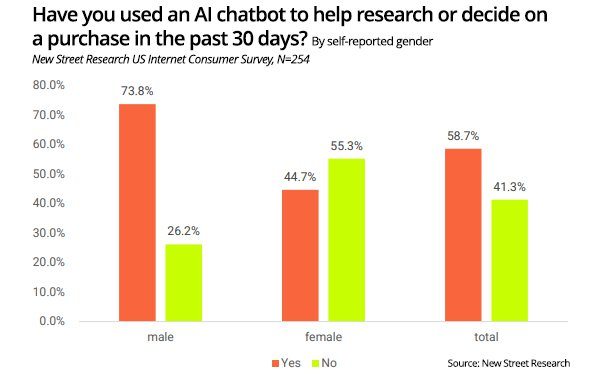
Source New Street Research via Mediapost
**Our take:**
- The New Street sample is too small to be meaningful, although the key finding about pre-purchase research is provocative and directionally interesting.
- The majority of search queries are "informational." This is where Google is most vulnerable to "AI substitution."
- It's clear that AI usage is growing, including for traditional search use cases, but so far that hasn't impacted Google in any discernible way.
## Recent Analysis
- **Hawk Tuah Academy Goes Global on Google Maps**, [by Mike Blumenthal](https://www.nearmedia.co/hawk-tuah-academy-goes-global-on-google-maps/).
- **Near Memo episode 176**: [Search tactics for EU hotels, Google’s updated spam guideline, when might Yelp v Google go to trial?](https://www.nearmedia.co/ep-176-search-tactics-for-eu-hotels-googles-updated-spam-guideline-when-might-yelp-v-google-go-to-trial/)
## Short Takes
- More on how **Google** outsources [indexing, rendering](https://searchengineland.com/google-chrome-mobile-first-indexing-user-signals-447154?ref=nearmedia.co) to users.
- **Yelp** [report](https://data.yelp.com/state-of-services-2024.html?ref=nearmedia.co) shows home services industry is booming.
- Lawyers [sue over firm names](https://www.reuters.com/legal/transactional/column-keywords-google-lawyer-ads-spark-lawsuits-ethics-concerns-2024-09-27/?ref=nearmedia.co) being used as **ad keywords**.
- New Google **GBP review** [edit and delete buttons](https://x.com/TheSocialDude/status/1841532314439884838?ref=nearmedia.co).
- **Google's** Amazon-like e-commerce pages [have SEO implications](https://searchengineland.com/retailers-google-new-category-page-447069?ref=nearmedia.co).
- **Amazon** [introduces](https://www.aboutamazon.com/news/retail/visual-search-shopping-features?ref=nearmedia.co) new visual search features, including circle to search.
- Why SEO [may not be the key](https://x.com/wilreynolds/status/1841052890812551519?ref=nearmedia.co) to optimizing for **generative AI** results.
- **TikTok search ads**, so far, [aren't stealing budgets](https://digiday.com/marketing/tiktoks-search-ads-are-live-but-advertisers-arent-ready-to-reallocate-those-google-dollars/??ref=nearmedia.co) from Google ads.
- Any image **Ray Ban Meta glasses** [could be used for AI training](https://techcrunch.com/2024/10/02/meta-confirms-it-may-train-its-ai-on-any-image-you-ask-ray-ban-meta-ai-to-analyze/?ref=nearmedia.co).
- Following $500M Spain antitrust fine, [10K hotels may sue](https://eskariam.com/wp-content/uploads/IMPACTO-GCR.pdf?ref=nearmedia.co) **Booking.com**.
- Fidelity says **Twitter** [now worth only $9B](https://techcrunch.com/2024/09/29/fidelity-has-cut-xs-value-by-79-since-musk-purchase/?ref=nearmedia.co), vs $44B when Musk bought it.
- **iOS 18** privacy feature could kill social apps' growth tool ([NYT](https://www.nytimes.com/2024/10/02/technology/apple-social-apps-contacts-change.html??ref=nearmedia.co)).
Listen to our [latest podcast](https://www.nearmedia.co/memo/).
[](https://nearmedia.co/memo?ref=nearmedia.co)
How can we make this better? Email [us](mailto:gsterling@nearmedia.co) with suggestions and recommendations.
### Places Sites Go West, Google's Best Efforts, Chrome Click Surveillance
URL: https://www.nearmedia.co/places-sites-go-west-googles-best-efforts-chrome-click-surveillance/
Last updated: 2024-10-01T22:28:05.000Z
### Places Sites Land in North America
The Places Sites carousel is one of Google's [accommodations for the Digital Markets Act](https://www.nearmedia.co/eu-local-serp-visual-glossary/) in Europe. It's an effort to drive more traffic to directories and aggregators. Now Places Sites have apparently come to North America ([Canada](https://x.com/joyannehawkins/status/1840234954166317424?s=12&ref=nearmedia.co), [US](https://x.com/JoyanneHawkins/status/1840235345729769888?ref=nearmedia.co)). Near Media has found in three European user-research projects, in different verticals, that the vast majority of people do not click on these modules and they don't drive meaningful traffic to publishers (see, e.g., [Hotels](https://www.nearmedia.co/european-hotel-search-study/), [Restaurants](https://www.nearmedia.co/google-serp-restaurants-eu-dma-analysis/)). There are some very (capital V) isolated exceptions where well-known brands are present (e.g., TripAdvisor, Booking.com). It's not entirely clear why Google is importing this feature to North America, except perhaps that it wants to harmonize the SERP across markets. Google may also want to point to Places Sites to head off DMA-style regulations in the US: "see we're not self-preferencing." Places Sites is really an updating of the [old "rival links" approach](https://searchengineland.com/sponsored-study-argues-googles-rival-links-dont-drive-enough-ctrs-to-rivals-179867?ref=nearmedia.co) that Google proposed to try and preempt EU antitrust action, but was ultimately abandoned.

Source: ChatGPT
**Our take:**
- Our research has found that, even in organic positions 1 or 2, Places Sites see very few clicks.
- In our most recent [Hotel vertical research](https://www.nearmedia.co/european-hotel-search-study/) the Hotel Finder and Maps drove 28x the number of clicks of Places Sites, which saw just 7 out of 601 total clicks.
- User reactions to Places Sites in North America are likely to be similarly indifferent but we won't know for sure until we do some testing.
### Google: We're Just Doing Our Best
On the heels of last months' Barry Schwartz [interview](https://www.seroundtable.com/interview-google-august-core-update-38024.html??ref=nearmedia.co) of Google Search Liaison Danny Sullivan comes a new [interview](https://www.youtube.com/watch?v=m3M%5Ftal884c&ref=nearmedia.co) with SEO Aleyda Solis (video below). And they cover much of the same territory. Solis asks questions about core updates, brand preferencing, forums and UGC, Gen Z use of social over Google, AI Overviews and the future of SEO. Regarding brands outranking smaller sites, Sullivan says Google doesn't explicitly prefer brands; it's trying to surface the most relevant and useful content regardless of the source (Navboost and CTR weren't discussed). On the topic of forums and UGC, Sullivan acknowledges the use of TikTok and other sites as search alternatives, but says that Google is showing hundreds of UGC sources and forums to offer the most "authentic" results available and implies Google does a better job of this than social sites. He definitively says no Search Console reporting on AIOs. He concludes with the statement that he has no predictions about the future of search other than it's perpetually changing. As for SEO, Sullivan provides familiar advice: produce quality content rather than trying to game the system. Eventually, he says, your sincerely produced good content will rank – eventually.
**Our take:**
- As mentioned, the interview doesn't discuss clicks or engagement as ranking signals. (Barry's interview did a bit.) See Cindy Krum's argument below.
- Why known brands rank: because people click on them and Google uses those clicks to determine relevance. It's not that simple but ... it also sort of is.
- Very often, UGC material is of limited (or no) relevance IMO. One reason for the prevalence of forums is to [win back Gen Z](https://www.nearmedia.co/last-click-mindset-apple-google-ai-deal-gen-z-local/).
- The gist of this interview: put away your SEO cynicism, we're doing our best but we're not perfect; great content will win in the end. Or will it?
### Chrome Click Surveillance
In stark contrast to the above, Cindy Krum [offers a blistering critique](https://www.youtube.com/watch?v=txNT1S28U3M&ref=nearmedia.co) of Google's undisclosed use of Chrome clickstream data to fuel and improve its algorithms. We know it does this from the [previous Search API leak](https://www.nearmedia.co/google-rides-the-clickstream-long-tail-citations-ai-overview-fails/). Indeed, tracking users was allegedly part of the rationale behind Chrome. In the video below, Krum argues that Chrome captured virtually everything users did after clicking through from the Google SERP, whether signed-in or incognito. There's discussion of technical issues – JavaScript rendering, Chrome histograms, back-forward cache (BF cache), "no-store" HTTP headers and Core Web Vitals – and their role in data collection and user surveillance. All of these efforts, Krum argues, are part of a broader strategy to collect as much data as possible, for search and ad-model optimization. She asserts this non-consensual tracking and data collection has enabled Google to monopolize the search and advertising markets by giving it a significant data advantage over competitors. Accordingly, Chrome's market dominance supports and reinforces Google's search dominance. She further argues this behavior is likely illegal in the EU, under its more restrictive consent-based privacy regulations. Cue the investigations and litigation.
**Our take:**
- Krum was a previous [guest on the Near Media podcast](https://www.nearmedia.co/ep-167-reframing-how-search-ranking-works-google-doubles-down-on-income-voice-search-set-for-a-comeback/), where we talked about the role of clicks and behavioral signals in Google's ranking algorithm.
- Recently a US appellate court [revived a privacy class action](https://www.reuters.com/legal/us-appeals-court-revives-google-privacy-class-action-2024-08-20/?ref=nearmedia.co) against Google that alleges Chrome users' personal data was captured without permission.
- Google has been repeatedly sued and fined for deceptive privacy practices over the past 15 years and paid more than $800 million in penalties/settlements.
- The totality of evidence argues that Google has used ethically questionable, if not illegal, practices to maximize revenue and maintain search dominance.
## Recent Analysis
- **Near Memo episode 176**: [Search tactics for EU hotels, Google’s updated spam guideline, when might Yelp v Google go to trial?](https://www.nearmedia.co/ep-176-search-tactics-for-eu-hotels-googles-updated-spam-guideline-when-might-yelp-v-google-go-to-trial/)
- **Hawk Tuah Academy Goes Global on Google Maps**, [by Mike Blumenthal](https://www.nearmedia.co/hawk-tuah-academy-goes-global-on-google-maps/).
## Short Takes
- Microsoft [rolls out](https://blogs.bing.com/search/October-2024/The-next-step-in-Bing-generative-search?ref=nearmedia.co) its answer to AIOs, **Bing Generative Search**.
- **Yelp** releases [report](https://data.yelp.com/state-of-services-2024?ref=nearmedia.co) on home services industry growth.
- Google **LSAs** [roll out](https://www.seroundtable.com/google-tcpl-target-cost-per-lead-38143.html?ref=nearmedia.co) Target Cost per Lead Bidding ([support doc](https://support.google.com/localservices/answer/15406075?ref=nearmedia.co)).
- Click on Google's **review "badge of shame**," [this is what you see](https://www.linkedin.com/posts/mblumenthal%5Fas-part-of-the-new-google-fake-engagement-activity-7245853134869209089-D8MM/?ref=nearmedia.co).
- Google [takes manual action](https://www.seroundtable.com/google-hit-forbes-advisor-38147.html?ref=nearmedia.co) against **Forbes' "site reputation abuse**."
- **Google Flights** [now showing Amtrak train routes](https://9to5google.com/2024/09/30/google-flights-amtrak-integration/?ref=nearmedia.co) as an alternative.
- Almost half of **Gen Z** wishes X and TikTok didn’t exist ([NYT](https://www.nytimes.com/2024/09/17/opinion/social-media-smartphones-harm-regret.html??ref=nearmedia.co)).
- Google's impressive **Project Starline** video conferencing [is still happening](https://blog.google/technology/research/apply-project-starline-hp-product/?ref=nearmedia.co).
- **Google** introduces new [Ads Data Hub](https://developers.google.com/ads-data-hub/marketers?hl=en&ref=nearmedia.co).
- CA Governor [vetos](https://www.gov.ca.gov/wp-content/uploads/2024/09/SB-1047-Veto-Message.pdf?ref=nearmedia.co) strict **AI regulation** that Silicon Valley feared.
- **NotebookLM's** "[podcast" feature](https://simonwillison.net/2024/Sep/29/notebooklm-audio-overview/?ref=nearmedia.co) is kind of amazing.
Listen to our [latest podcast](https://www.nearmedia.co/memo/).
[](https://nearmedia.co/memo?ref=nearmedia.co)
How can we make this better? Email [us](mailto:gsterling@nearmedia.co) with suggestions and recommendations.
### Hawk Tuah Academy Goes Global on Google Maps
URL: https://www.nearmedia.co/hawk-tuah-academy-goes-global-on-google-maps/
Last updated: 2024-11-19T21:05:57.000Z
We are seeing and confirming widespread [reports](https://www.linkedin.com/posts/darrenshawwhitespark%5Fseo-localseo-activity-7246577946906255362-i5hA?utm%5Fsource=share&utm%5Fmedium=member%5Fdesktop) of schools being renamed "Hawk Tuah School" on Google Maps. For those of you who've been hiding in a bear cave, this is a [meme](https://www.msn.com/en-us/lifestyle/relationships/is-the-hawk-tuah-girl-s-dad-a-preacher-how-does-her-family-feel/ar-BB1pft6e?ref=nearmedia.co) started in Tennessee by a preacher's daughter, caught on film after an evening out. The phenomenon of school renaming now appears to be global as well, not just across the US and Canada.
### Hawk Hacking
We previously [reported](https://www.nearmedia.co/hacking-a-business-phone-number-on-a-google-listing-is-still-easy-2/) how easy it is to change business-critical information, like a phone number, on Google. But if you need any more proof that Google's "suggest an edit" feature needs "fine tuning" (fixing) look no further than one of the [many schools](https://www.google.com/maps/place/The+hawk+tuah+school/@50.1130627,-21.7530296,8182894m/data=!3m1!1e3!4m10!1m2!2m1!1shawk+tuah+school!3m6!1s0x48769f005310ff17:0xf36aabafd2aaf179!8m2!3d51.3970151!4d-1.0688529!15sChBoYXdrIHR1YWggc2Nob29skgEKY2FyX2RlYWxlcuABAA!16s%2Fg%2F11wh%5Fkzcvz?entry=ttu&g%5Fep=EgoyMDI0MDkyNS4wIKXMDSoASAFQAw%3D%3D&ref=nearmedia.co) that have had their name changed.
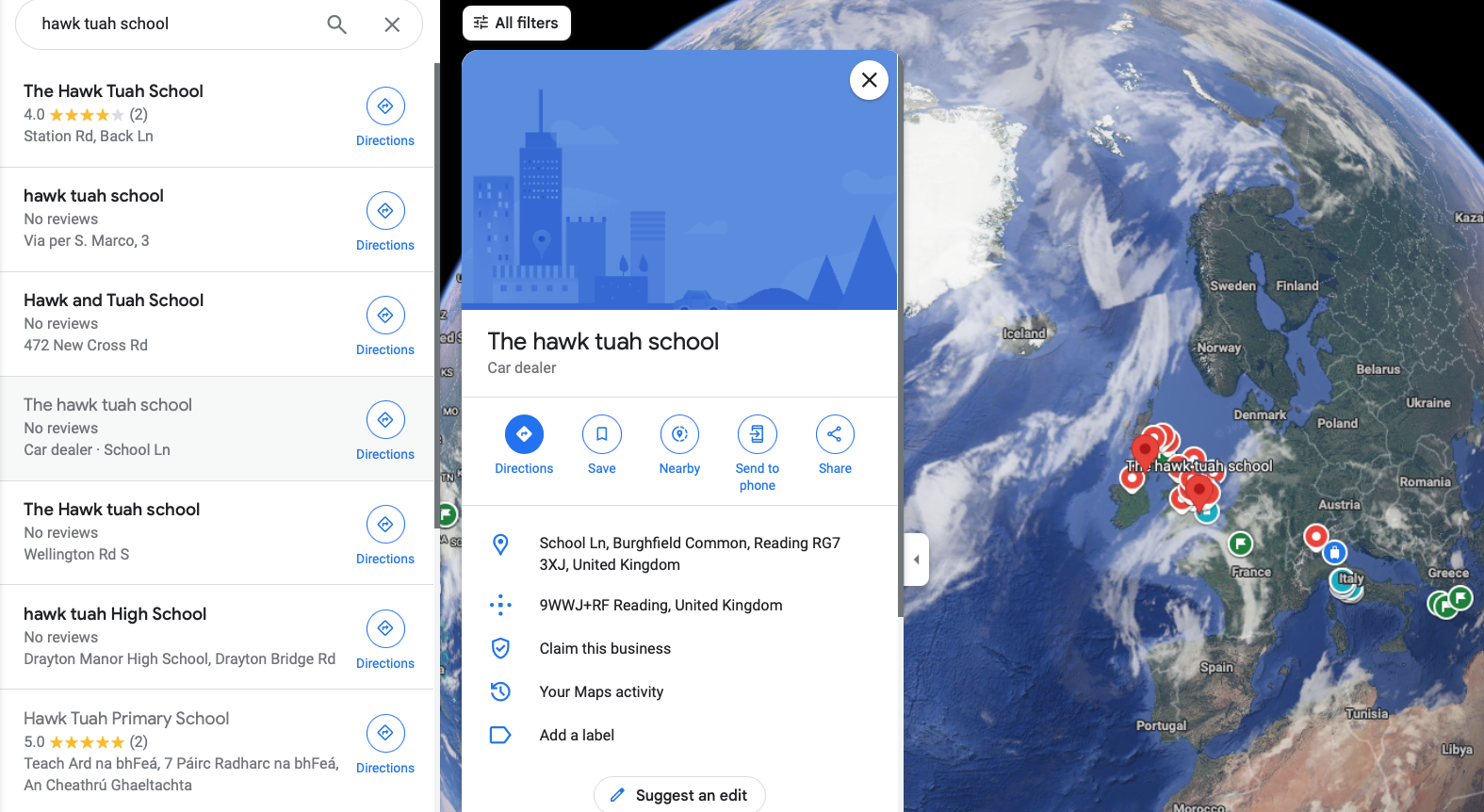
These "hacks" are not being done by evil-minded spammers that are outsmarting Google's sophisticated algorithms but by school children having a good time at the expense of their local school and Google.
### Why Does This Keep Happening?
When asked, Google will say that this only happens in a very small number of cases and that they are taking care of it. The question that should be asked of them is: Why does it [keep happening](https://blumenthals.com/blog/2008/10/30/microsofts-listing-in-google-maps-hijacked-oops-by-me/?ref=nearmedia.co)?
The impact of malicious third party GBP edits can be damaging to catastrophic for local businesses. While this is more amusing than damaging, it illustrates the scale of the problem.
If Google is going to fill the utility role of worldwide map and business directory provider, then consumers and business owners deserve better.
### Ep 176: Search Tactics for EU Hotels, Google’s Updated Spam Guideline, When might Yelp v Google Go to Trial?
URL: https://www.nearmedia.co/ep-176-search-tactics-for-eu-hotels-googles-updated-spam-guideline-when-might-yelp-v-google-go-to-trial/
Last updated: 2024-09-30T02:21:53.000Z
How individual hotels can successfully navigate Google Search in the EU, Google updated Spam Guidelines: Helpful or just more FUD?, When & What are we likely to see in the Yelp antitrust case against Google?
**Part 1 starts 00:13 -** [**How Individual Hotels Can Win in EU Search**](https://youtu.be/6b04Ts2miD0?ref=nearmedia.co)
Our research on hotel searches in Europe, revealed that Booking.com dominated user clicks, especially through ads, while Google's Hotel Finder and Business Profiles saw significantly fewer interactions. One surprising discovery was the prominent role of ads, with over 50% of mobile clicks going to ads, particularly Booking.com.
We explore how Google’s algorithm and ad strategies favor aggregators like Booking, rather than individual hotel brands, who do however have an ad opportunity with the new(ish) carousel ad and the Google Business Profiles for visibility. While Booking.com often dominates ad spots, the landing pages sometimes confuse users by showing lists of hotels instead of the specific property clicked from within the Google Hotel Finder.
Segment Reference Articles:
[**Search Marketing Implications for European Hotel Suppliers**](https://www.nearmedia.co/european-hotel-search-behavior/)
[**Google and Booking: The Symbiotic Gatekeeper Relationship in European Hotel Search**](https://www.nearmedia.co/european-hotel-search-study/)
**Part 2 starts 17:17 -** [**Google Updated Spam Guidelines: Helpful or FUD?**](https://youtu.be/X5KNSv7cBpc?ref=nearmedia.co)
We discuss Google’s recently updated spam guidelines for web search. The new policy defines spam as content designed to deceive users OR manipulate Google’s search systems for higher rankings. While the term “deceive users” is clear, the use of “manipulate,” could be interpreted broadly to include legitimate SEO practices aimed at improving visibility.
How should businesses and agencies react when dealing with Google spam guidance? Google has a history of FUD. Both groups should be aware of the risks of pushing the limits of SEO. If you're focused on providing real value to users, the risk of penalties remains low, but it’s critical to stay aware of evolving rules.
Segment Reference Articles:
[**Spam policies for Google web search**](https://developers.google.com/search/docs/essentials/spam-policies?ref=nearmedia.co)
[**Google updates its spam policies document**](https://searchengineland.com/google-updates-its-spam-policies-document-446967?ref=nearmedia.co)
**Part 3 starts 26:00 -** [**When & What are we likely to see in the Yelp antitrust case against Google?**](https://youtu.be/hQa6nWzpzus?ref=nearmedia.co)
**The Yelp case accusing Google of unfair business practices, specifically using its dominance in local search to disadvantage competitors like Yelp could provide plenty of insights which may uncover data related to Google’s local search algorithms.**
**Yelp argues that Google’s local search and local ads operate as separate markets, using a unique algorithm and data set. However, like the Epic Games case against Google, it could take as long as three years for the case to actually go to trial and several more years to explore penalties and file appeals.**
**That being this case could impact future legislation, especially in light of the EU’s Digital Markets Act and its approach to regulating tech giants like Google.**
Segment Reference Articles:
[**Yelp v. Google**](https://trust.yelp.com/yelp-v-google/?ref=nearmedia.co)
### Reviews Done Right, Potential $30B Fine, GBPs 96% Claimed
URL: https://www.nearmedia.co/reviews-done-right-potential-30b-fine-gbps-96-claimed/
Last updated: 2024-09-26T20:24:42.000Z
### Local Review Solicitation Best Practices
Reputation management platform GatherUp is out with a useful [report](https://go.gatherup.com/power-of-online-reputation-guide-ty??ref=nearmedia.co) about review solicitation best practices. (Mike was one of the co-founders but is no longer involved.) It's based an analysis of 23,000 business locations in 2023\. The report offers a kind of template for local marketers. There are some meaningful differences by vertical, which the report unpacks. Here are the main findings condensed: asking for reviews will boost your volume, star ratings and improve NPS scores; combining SMS and email outreach generates more reviews than either alone. However, if you use only one channel make it SMS: "Across industries, businesses that only use SMS to request reviews get 20 reviews for every 100 requests they send, as compared to 15 reviews using email only." The report also discusses differences between first and third party reviews and strongly advocates responding to reviews – not for search rankings but for customers who filter by negative reviews. There are no major surprises here (maybe some small ones in the vertical findings) but it's a useful reminder of the importance of proactive reputation management.
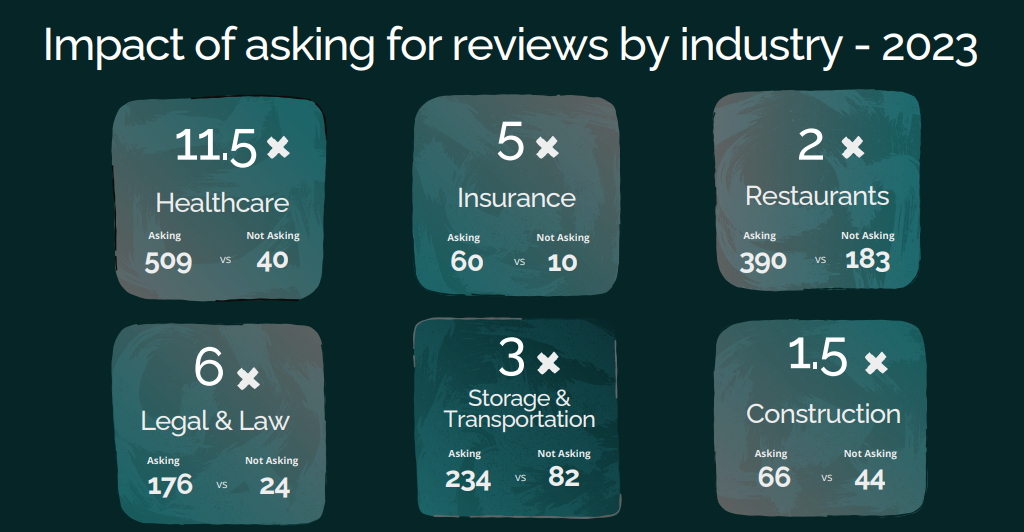
Source: GatherUp
**Our take:**
- GatherUp says, "Ask for reviews when the experience is still fresh for your customers," but doesn't really elaborate except to suggest timing will vary.
- Separate research [argues](https://www.nearmedia.co/when-is-the-right-time-to-ask-for-customer-reviews/) timing really matters. It concludes: don't ask customers for reviews immediately in most cases.
- Business owners/local marketers will need to investigate and experiment to determine the optimal timing. Perhaps this can be the next GatherUp study.
### Google Risks $30B Fine in EU
One of the Google verticals the European Commission is looking closely at is travel (Google Flights, Hotels). As you remember, Google introduced [some new SERP features](https://www.nearmedia.co/eu-local-serp-visual-glossary/) to comply with Europe's Digital Markets Act. These include "Places Sites," Aggregator (directory) carousels and refinement chips (filter buttons). The Commission has been investigating whether these new elements bring Google into compliance with the DMA, which requires "gatekeepers" to not favor their own features, results and content over rivals and other third parties. Bloomberg is [reporting](https://www.bloomberg.com/news/articles/2024-09-20/google-faces-eu-ultimatum-in-fresh-attack-on-search-dominance?ref=nearmedia.co) that the Commission is preparing "a formal chargesheet," indicating an adverse finding that Google is non-compliant. According to the article, Google is trying to head off that action by "introducing a new design into Google’s search tabs, that would give users the option of navigating to alternative search platforms or direct suppliers such as hotel websites and airlines." The potential penalty for non-compliance is 10% of global revenue, which in 2023 was in excess of $300 billion for Google. That could represent $30 billion in fines. Google has cumulatively paid more than €8 billion in antitrust-related fines in the EU to date.
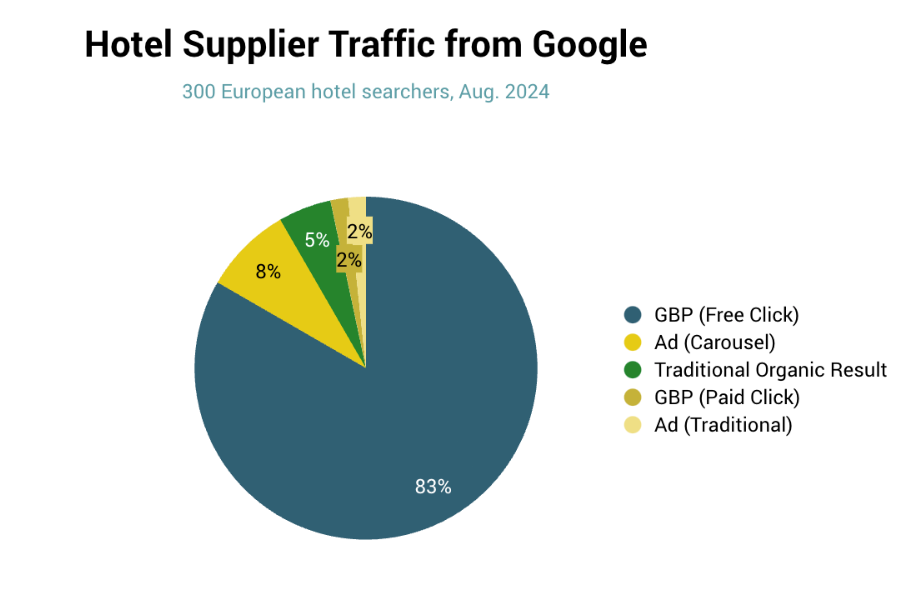
Source: Near Media user research
**Our take:**
- Near Media research in Europe ([Restaurants](https://www.nearmedia.co/google-serp-restaurants-eu-dma-analysis/) and [Hotels](https://www.nearmedia.co/european-hotel-search-study/)) has found that these new SERP features have almost no impact on clicks and user conversions.
- We're presenting a third EU vertical study (Home Services) at next month's [SIINDA conference](https://siinda.org/etn/siinda-live-split/?ref=nearmedia.co) in Croatia.
- Google is [trying to keep local away](https://www.nearmedia.co/google-dma-compliance-redefinition/) from EU regulators, but it may not ultimately succeed and could result in significant local SERP changes.
### Report: 96% of GBPs Claimed by MLBs
Local marketing platform SOCi argues in its latest Local Visibility Index [report](https://www.soci.ai/insights/lvi/?ref=nearmedia.co) that franchises and multi-location brands are leaving potentially lots of money on the table by not fully optimizing their profiles across local marketing platforms – primarily Google, Facebook and Yelp. The company says, "The total size of the opportunity in localized marketing for multi-location brands is $54.1B every year." For this latest report, its sixth, SOCi mined and benchmarked the online profiles of almost 2,800 multi-location brands (representing 350K individual locations) in five verticals: Retail, Food & Beverage, Financial Services, Local Services, and Property. The company captured metrics like percent of business profiles claimed, profile completeness, Local Pack appearances, social follower counts and engagement, star ratings, review counts, review responses and response times. Some of the data collection was done by SOCi partner Places Scout. The report ranks the 100 "most visible local brands" as a function of all these findings. While not a formula for local marketing success, it's a directional proxy. There are numerous best practices explicitly and impliedly discussed in the report as well.
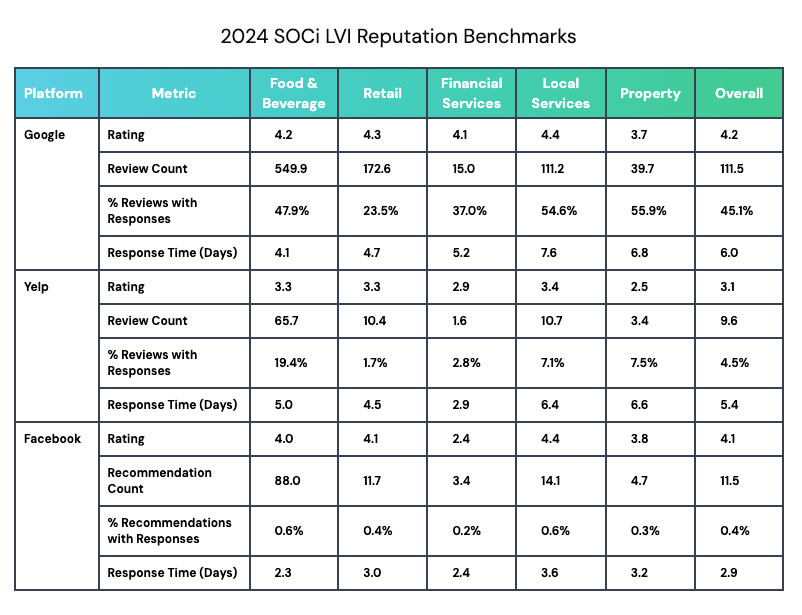
Source: SOCi LVI (2024)
**Our take:**
- The report found a surprisingly high claimed-profile average (96%) on Google for the 2,800 brands – well above the national average.
- The report is useful for multi-location brands in comparing themselves to competitors. The report also discusses AI and social media beyond Facebook.
- Near Media's own research has found that businesses need to be within striking distance of competitors (e.g., star ratings and review volumes) to be considered.
## Recent Analysis
- **Near Memo episode 175**: [Google tests review badge of shame in UK; Google’s antitrust travails; SMB marketing disconnects](https://www.nearmedia.co/ep-175-google-tests-review-badge-of-shame-in-uk-googles-antitrust-travails-smb-marketing-disconnects/).
- **Hotels Part II: Search Marketing Implications for European Hotel Suppliers**, [by David Mihm](https://www.nearmedia.co/european-hotel-search-behavior/).
## Short Takes
- BrightEdge: clients [getting more traffic](https://searchengineland.com/google-ai-overviews-signed-in-users-data-446747?ref=nearmedia.co) from **SearchGPT** than Perplexity.
- Making minor changes in **GBP** information [seems to trigger re-verification](https://x.com/krystal%5Ftaing/status/1839306250812883312?ref=nearmedia.co).
- How to set up a "[watchdog" to protect](https://whitespark.ca/blog/why-your-google-business-profile-needs-a-watchdog/?ref=nearmedia.co) your **Google Business Profile**.
- Common **Google Business Profile** [questions answered](https://searchengineland.com/google-business-profile-frequently-asked-questions-446555??ref=nearmedia.co).
- Google [updating](https://www.theverge.com/2024/9/24/24252979/google-maps-updated-street-view-images?ref=nearmedia.co) **Street View** round the world, adding new locations.
- **Review removals** on Google [appear to surge](https://x.com/JoyanneHawkins/status/1839330426328072396?ref=nearmedia.co); also [suspensions](https://x.com/TheSocialDude/status/1836146916167684206?ref=nearmedia.co).
- **TikTok** [adds keyword targeting](https://www.tiktok.com/business/en-US/blog/introducing-search-ads-campaign?r&ref=nearmedia.co) to Search Ads.
- Beware [shady](https://www.brightlocal.com/blog/new-policies-shady-review-schemes/?ref=nearmedia.co) "guaranteed" GBP **review removal** services.
- Google's various **AI systems in search** (briefly) [explained](https://searchengineland.com/how-google-search-uses-ai-446639?ref=nearmedia.co).
- **Google Site Reputation Abuse** policy [being unevenly enforced](https://x.com/thetafferboy/status/1838880267181723650?ref=nearmedia.co).
- Is **search ranking volatility** [the new normal](https://www.seroundtable.com/google-search-ranking-heated-volatility-38132.html?ref=nearmedia.co)? Potentially yes.
- **Google** [testing "preferred source](https://www.seroundtable.com/google-search-preferred-source-38119.html?ref=nearmedia.co)" label on organic links.
- Is AI being [hyped to drive growth](https://www.wheresyoured.at/saaspocalypse-now/?ref=nearmedia.co) in a stagnating **SaaS** industry?
Listen to our [latest podcast](https://www.nearmedia.co/memo/).
[](https://nearmedia.co/memo?ref=nearmedia.co)
How can we make this better? Email [us](mailto:gsterling@nearmedia.co) with suggestions and recommendations.
### Search Marketing Implications for European Hotel Suppliers
URL: https://www.nearmedia.co/dma/european-hotel-search-behavior/
Last updated: 2024-10-17T22:05:13.000Z
## Part II of *Google and Booking: The Symbiotic Gatekeeper Relationship in European Hotel Search*
---
### Summary
**Our analysis of 300 European consumers reveals that** [**Booking.com dominates hotel search results on Google**](https://www.nearmedia.co/european-hotel-search-study/)**. Consumer engagement with Google’s** [**Aggregator**](https://www.nearmedia.co/eu-local-serp-visual-glossary/#additional-glossary-terms)**\-centric Places Sites module is almost non-existent, but so is organic consumer engagement with** [**Supplier**](https://www.nearmedia.co/eu-local-serp-visual-glossary/#additional-glossary-terms) **websites. Given the predominance of ads and ad clicks, hoteliers are almost entirely dependent on their Google Business Profiles for visibility, but even from these Profiles, consumers frequently choose to book a room via an Aggregator.**
That Booking is an important player in European hotel search will surprise no one, though we at Near Media were surprised by the scale of its dominance.
In Part II of our analysis, we take a deeper dive into where consumers engage with search results and how they evaluate those results, surfacing ways in which hotel [Suppliers](https://www.nearmedia.co/eu-local-serp-visual-glossary/#additional-glossary-terms) might improve their chances of acquiring a guest in this challenging ecosystem.
*For more on our methodology, hypotheses, and Digital Markets Act implications, please see* [*Part I of our results*](https://www.nearmedia.co/european-hotel-search-study/)*.*
---
## Results
### **The kinds of results consumers engage with**
As we discussed in Part I, consumers overwhelmingly engaged with Booking.com results (especially via ads) and Google Business Profiles via the Google Hotel Finder.
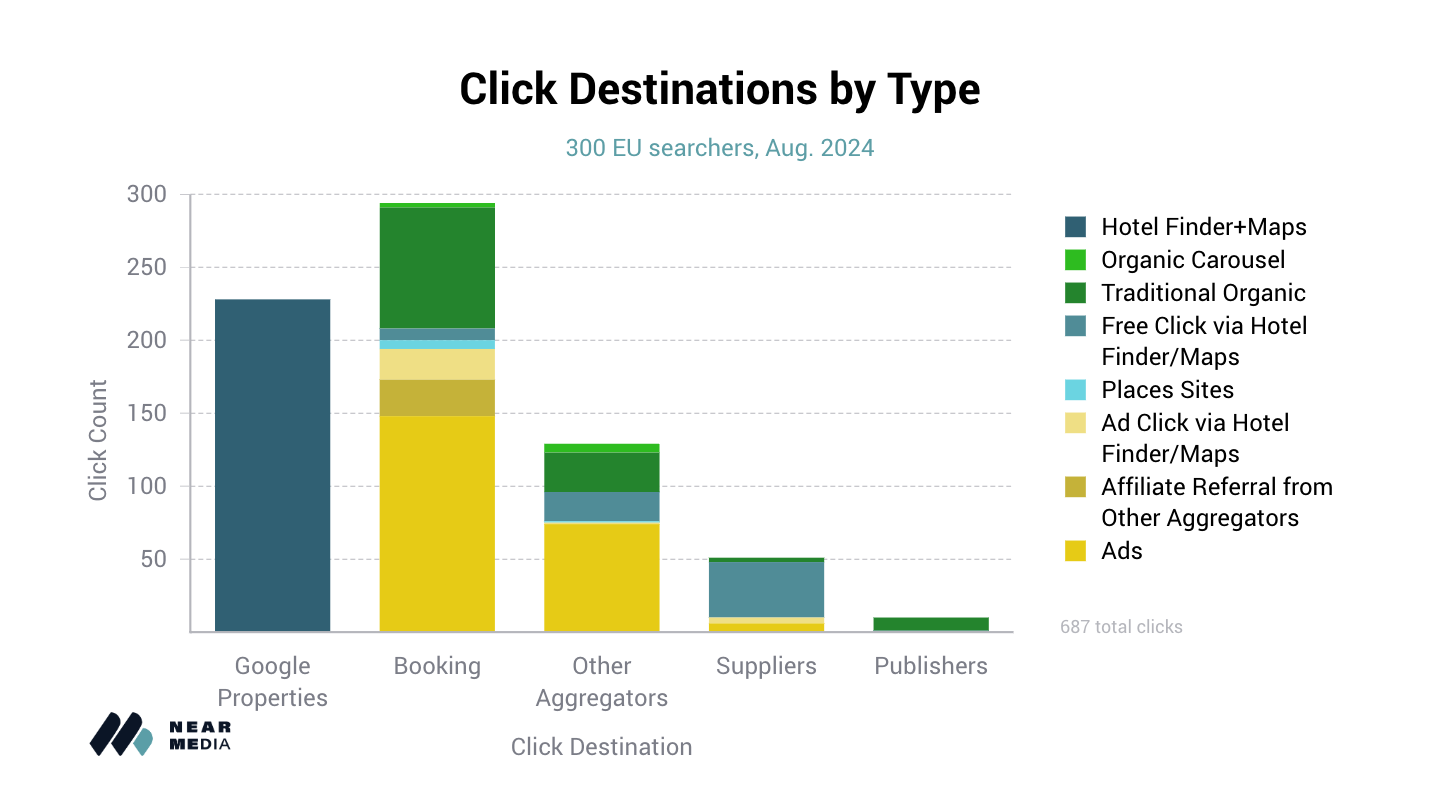
Supplier websites received just 10% of clicks overall, with organic search driving just 3 of the 61 total clicks to supplier websites. Almost all Supplier engagement came via the Google Hotel Finder, with 83% of Supplier clicks coming from the Hotel Finder or Google Maps.
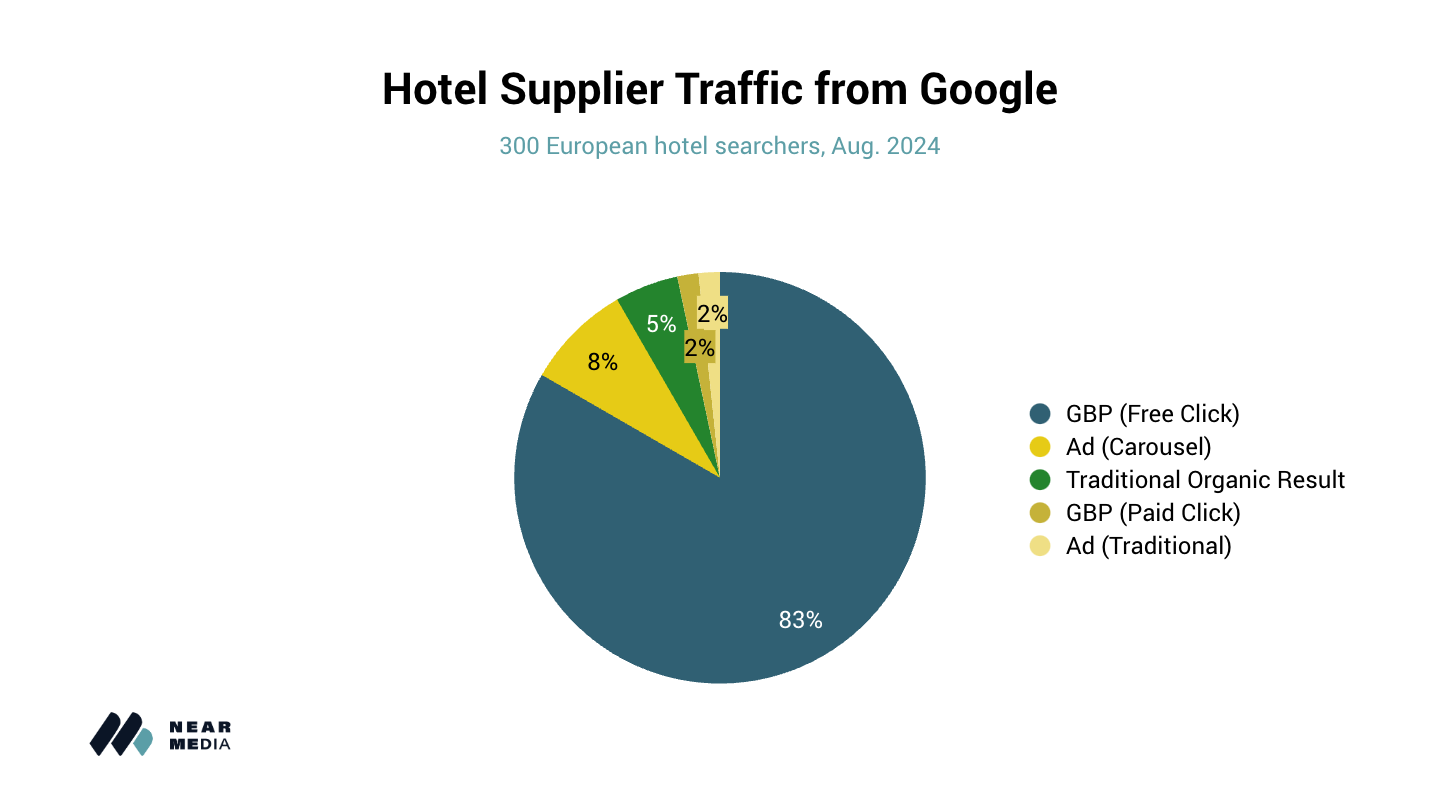
Position within the Hotel Finder mattered far less than we’ve seen in other verticals, with consumers making the majority of clicks within the Map interface, and frequently scrolling well down lists of hotels beyond the default three visible on the primary Google SERP.
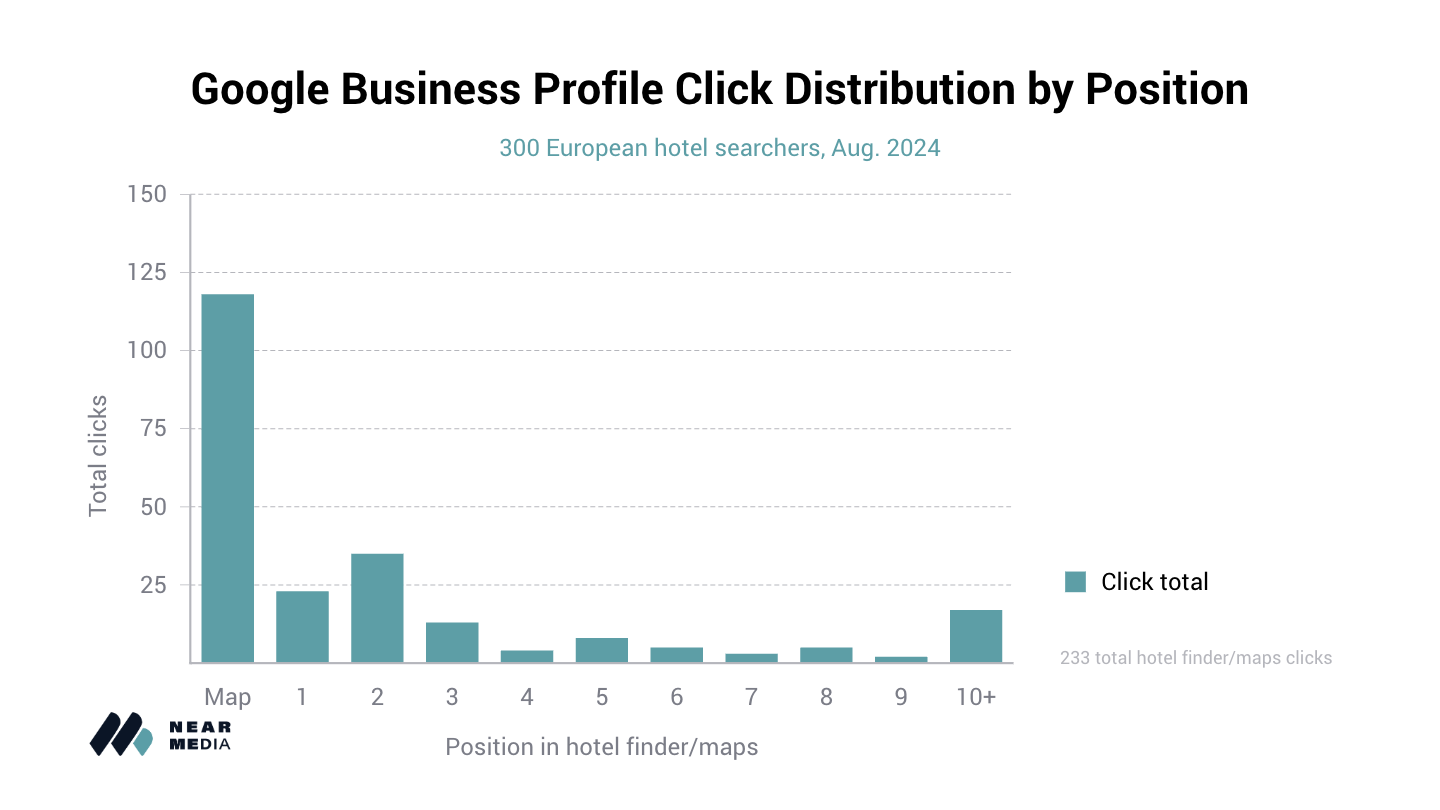
(Keep in mind our finding from Part I of this research that the Hotel Finder almost always appears in Position 1 or Position 2, if consumers scroll past the near-ubiquitous ad block at the top of most search results.)
Fewer than half of all Hotel Finder engagements led to a click outside the Google ecosystem, however, showing the degree to which **consumers** **use the Hotel Finder not just to make hotel choices but to disqualify properties which don’t meet their specifications.**
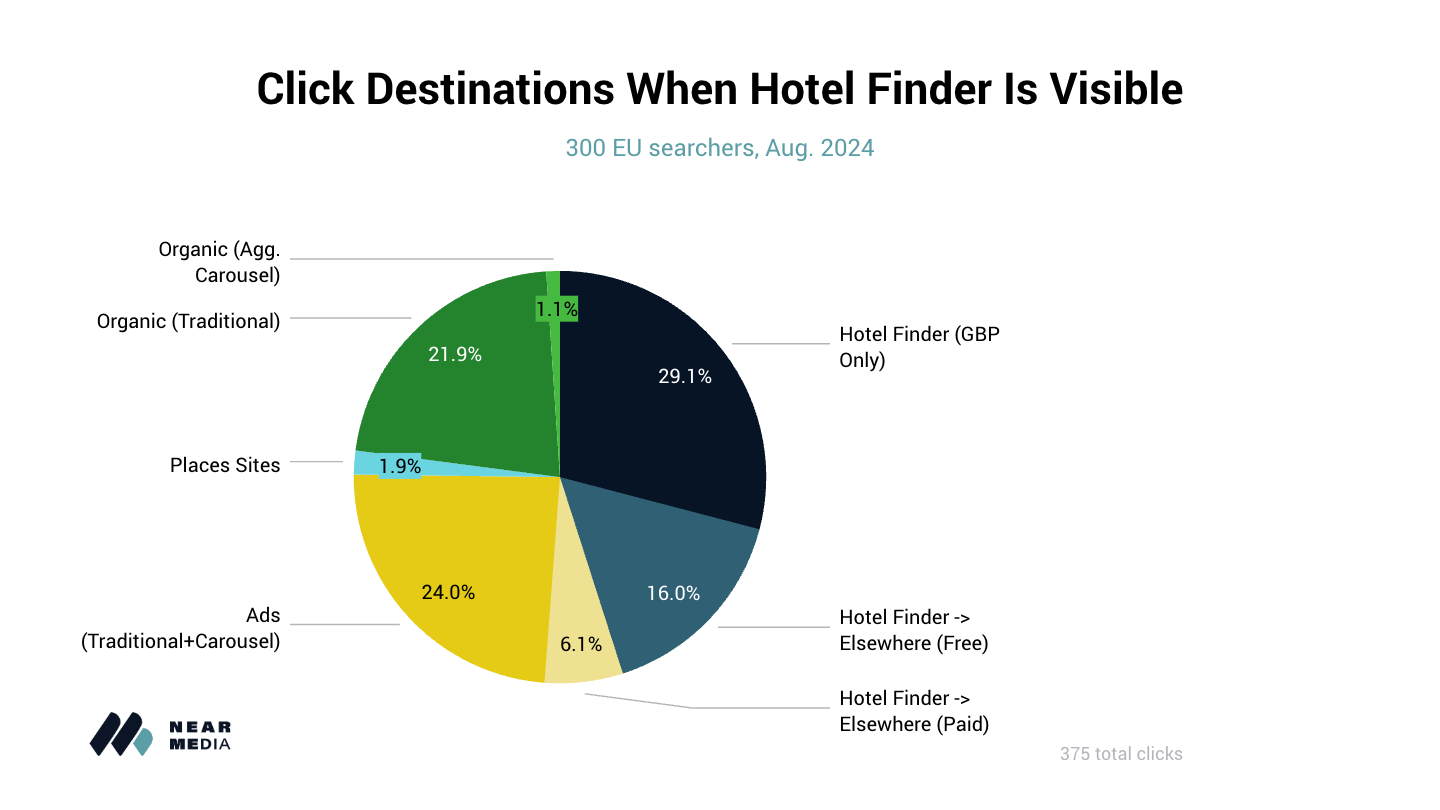
In fact, as demonstrated in the graphic below, consumers were over twice as likely to stay on Google.com ("GBP Only") as to click to a Supplier website ("GBP > Supplier" or "GBP Supplier AND GBP > Aggregator"), and were more likely to click an Aggregator website ("GBP > Aggregator") from a Google Business Profile than the official Supplier website for that property.
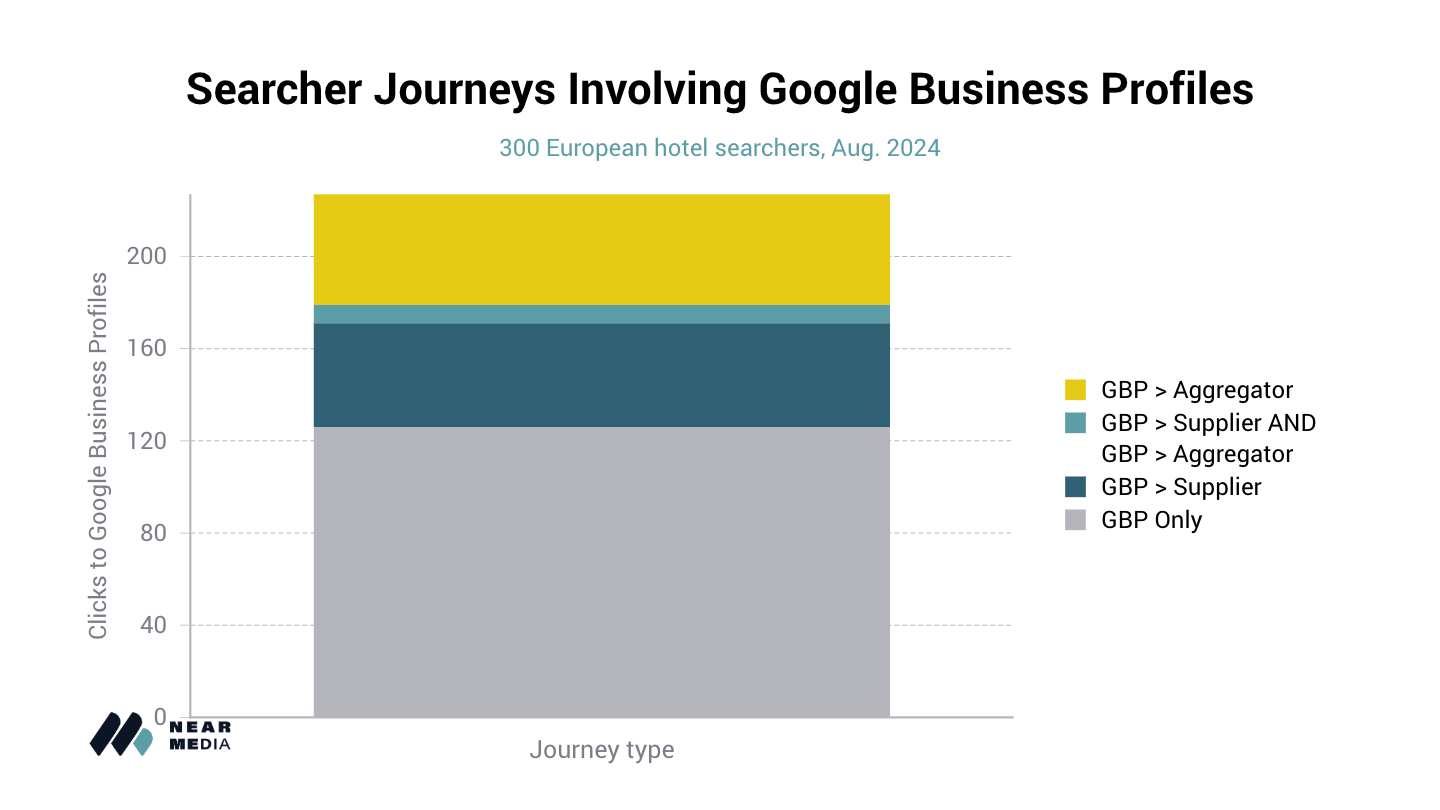
## **Carousel Ad Strategy**
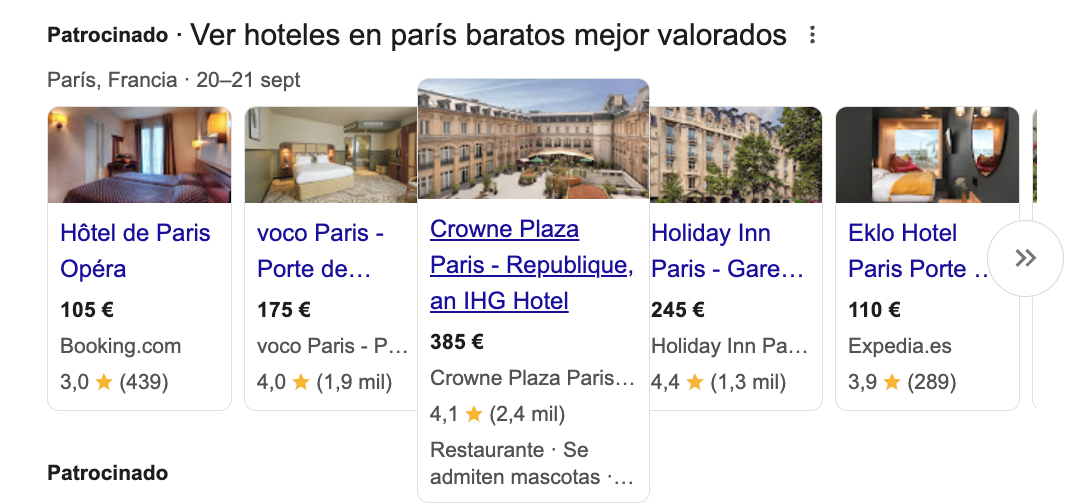
While ad carousels made up only 8% of Supplier clicks, they are clearly Suppliers’ second-best chance at search traffic.
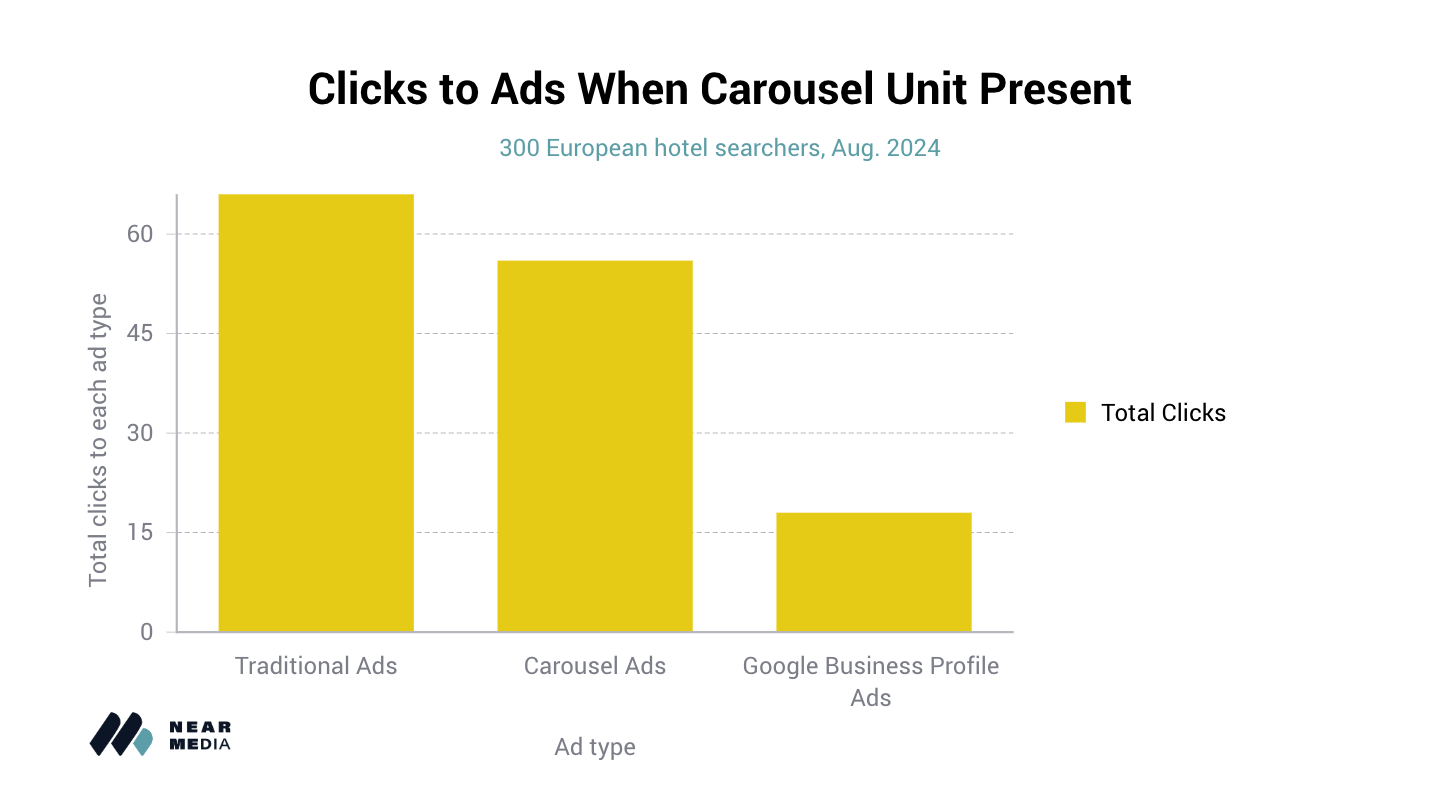
Though carousels only appeared on just under half of discovery search results, when present, they’re always at the very top of the page. Consumers are highly attracted to the photos, star ratings, and prices that accompany each carousel ad.
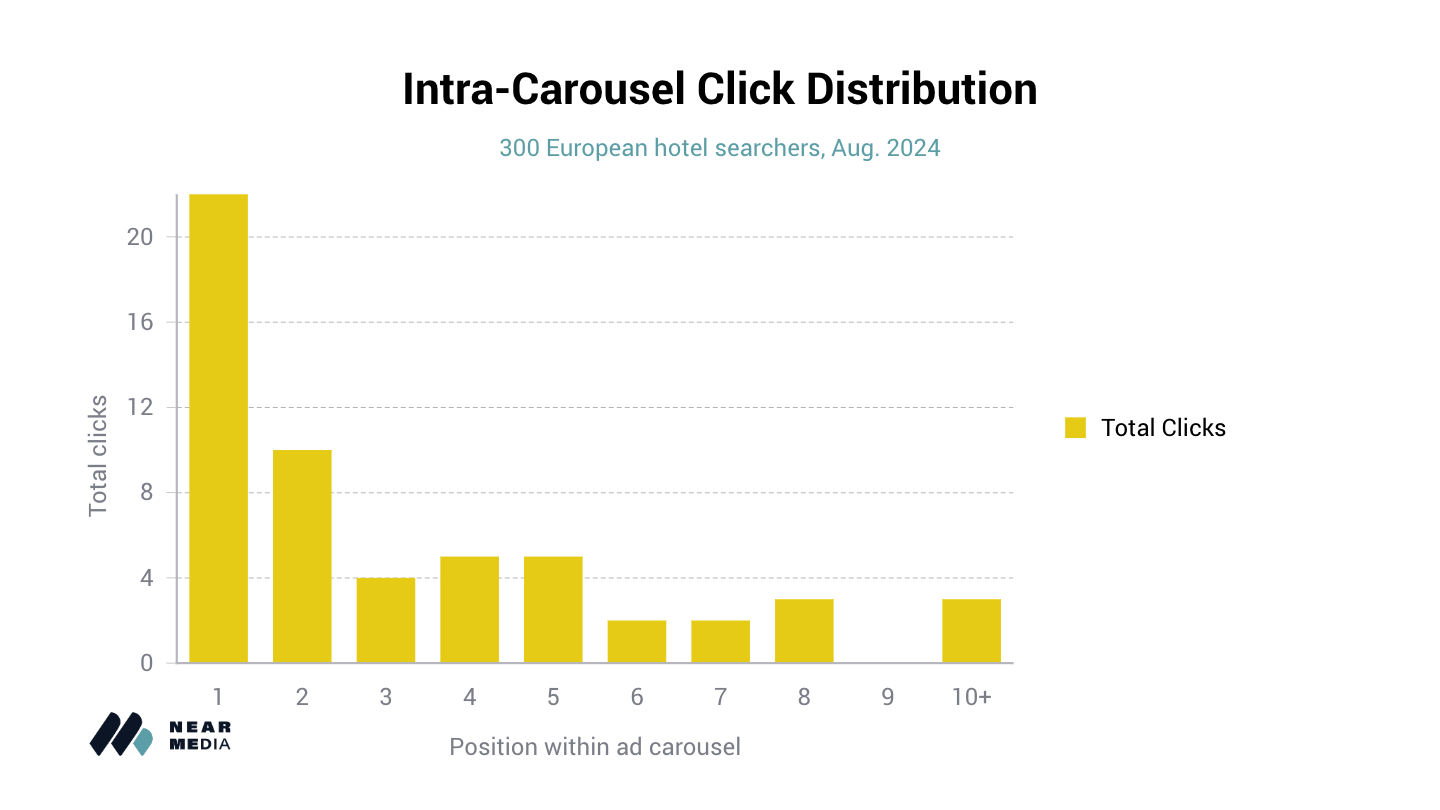
If Google charges less (or even a comparable price) for a carousel click than a traditional ad click, we would suggest Suppliers shift more of their ad budgets here, as consumers frequently scrolled deep into these results: **27% of carousel clicks came on ads beyond the fourth position.**
Though traditional ads still received more clicks than carousel results, the conversion rate on Carousel clicks was slightly better than traditional ads. Both were astonishingly high: 46% vs 42%.
**One of the reasons for this incredible conversion rate lies in Aggregators’ landing page strategy: Suppliers should strongly consider mimicking this strategy with their carousel ads.**
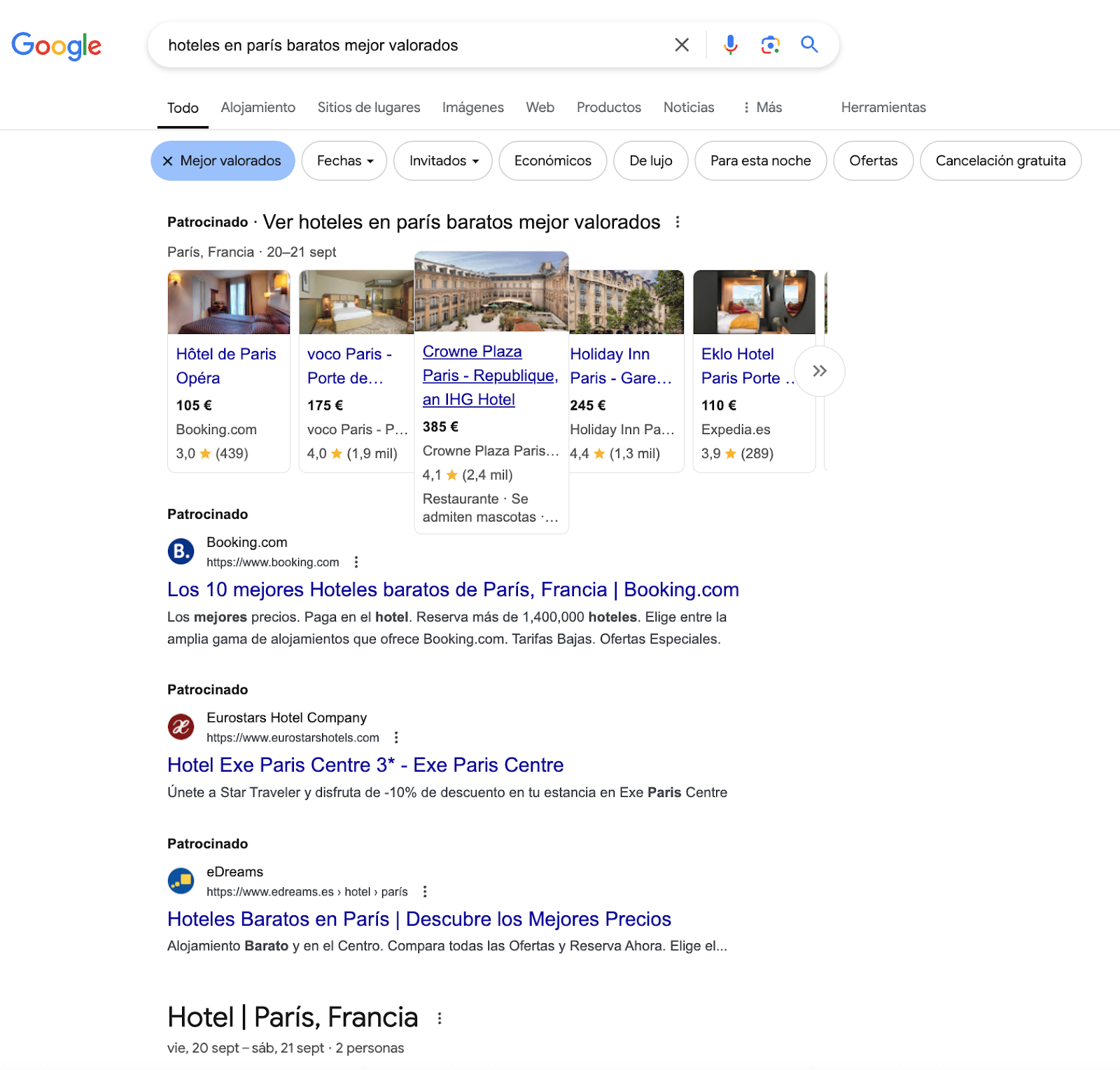
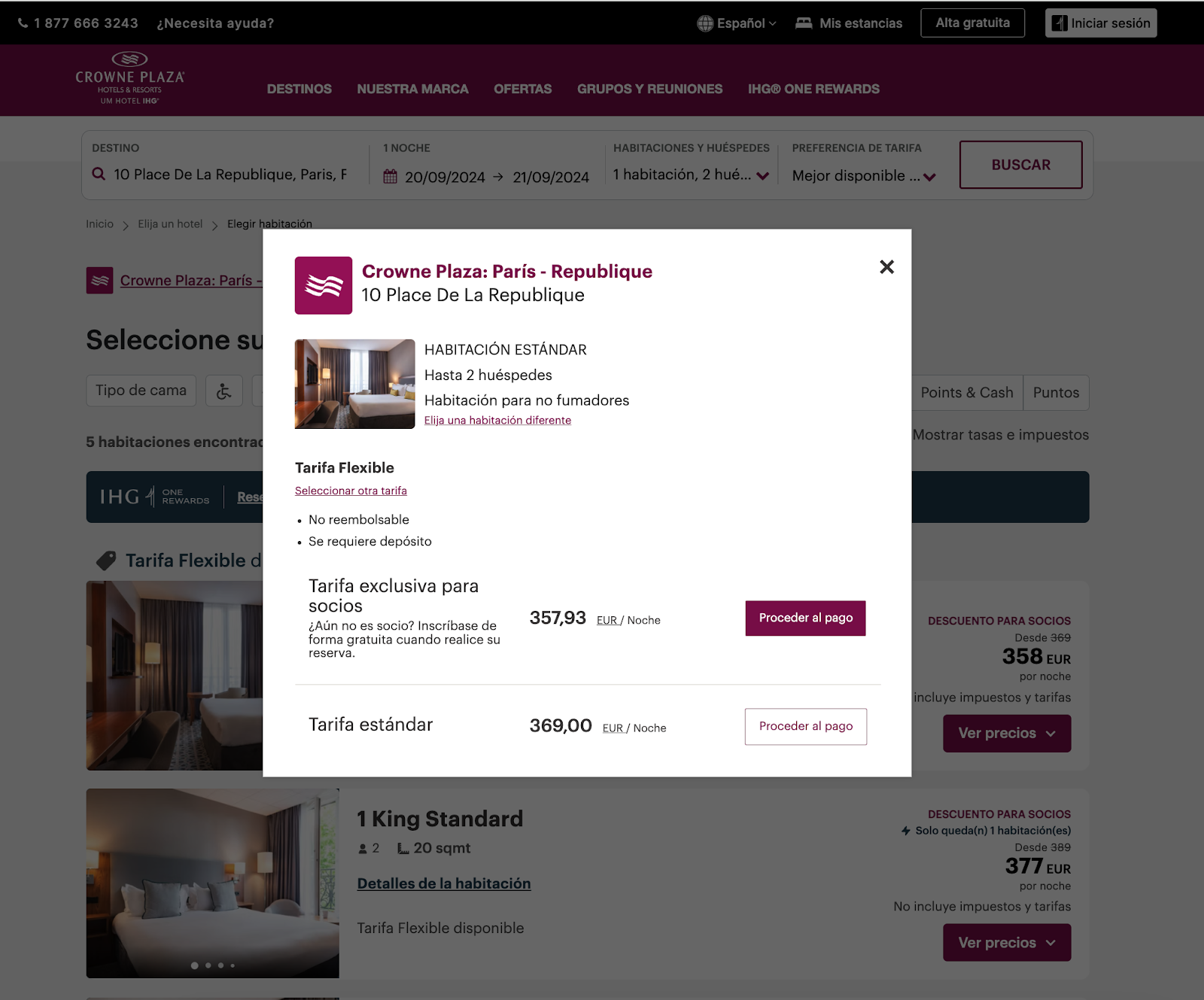
****Suppliers typically send their carousel ads to a landing page exclusive to the** ***single** **property they are advertising.**
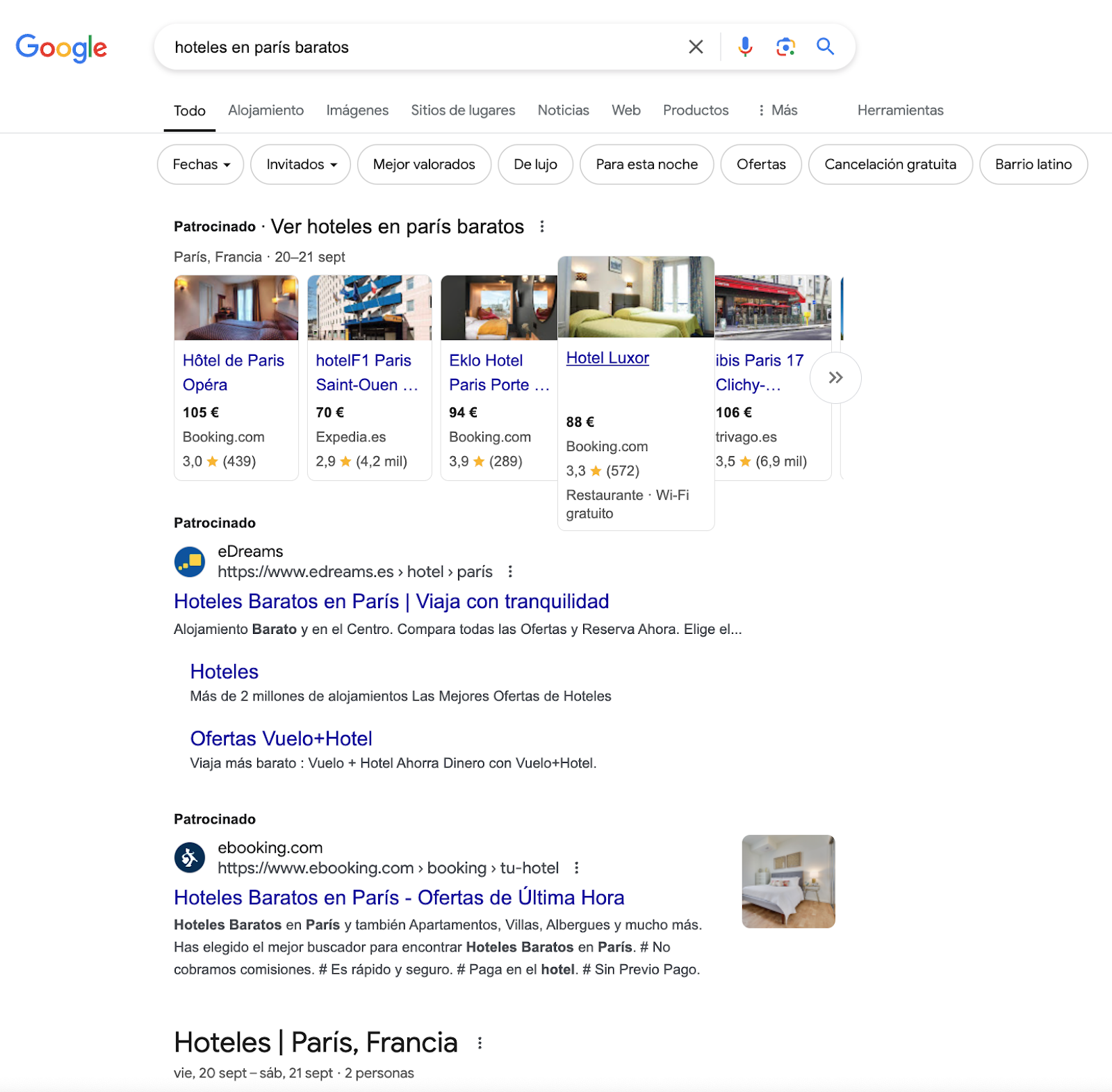
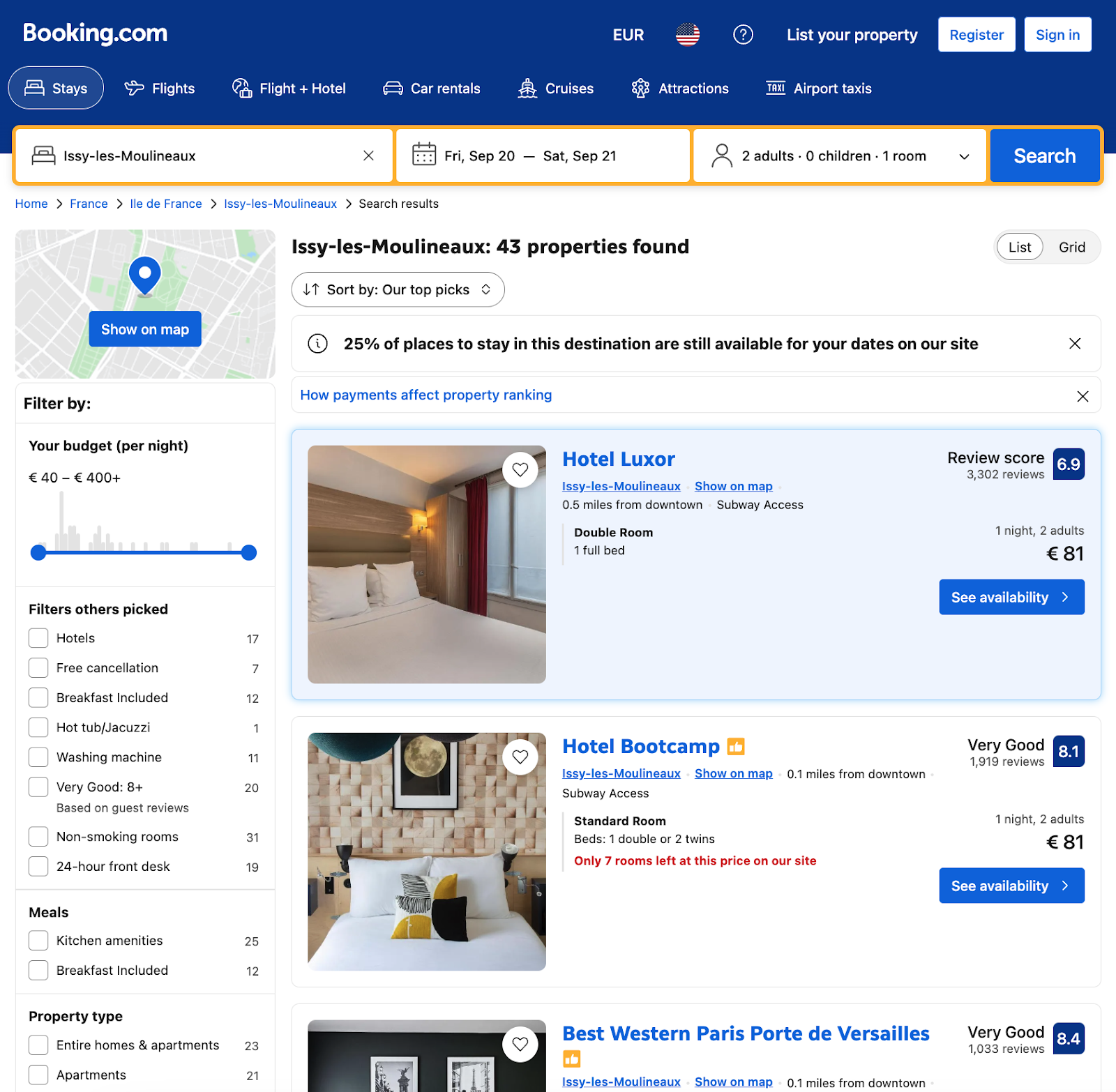
****Aggregators typically send ads to a** ***list-style** **landing page featuring the property being advertised--increasing the odds that a visitor will find** ***a** **property they are interested in booking, even if not the same property they initially clicked on from Google.**
Drive your carousel ads to a list-style result, where the specific property you’re advertising is featured at the top of the list of other properties in your portfolio (as opposed to the canonical URL for that property). Doing so will likely increase the chance that a consumer will choose \*a\* property from your website, even if it’s not the same one they clicked from their initial search at Google.
(As an aside, Aggregators also employed this strategy even from the direct-booking links displayed on Google Business Profiles.)
---
## **How Consumers Evaluate Hotel Results**
As we mentioned above, consumers frequently disqualified hotels they browsed in the Google Hotel Finder–not to mention on Aggregator websites. They made extensive use of filters, and almost always considered multiple properties before arriving at a choice of hotel.
German searchers in particular considered multiple properties, checking out an average of 3 hotels prior to making their choice.
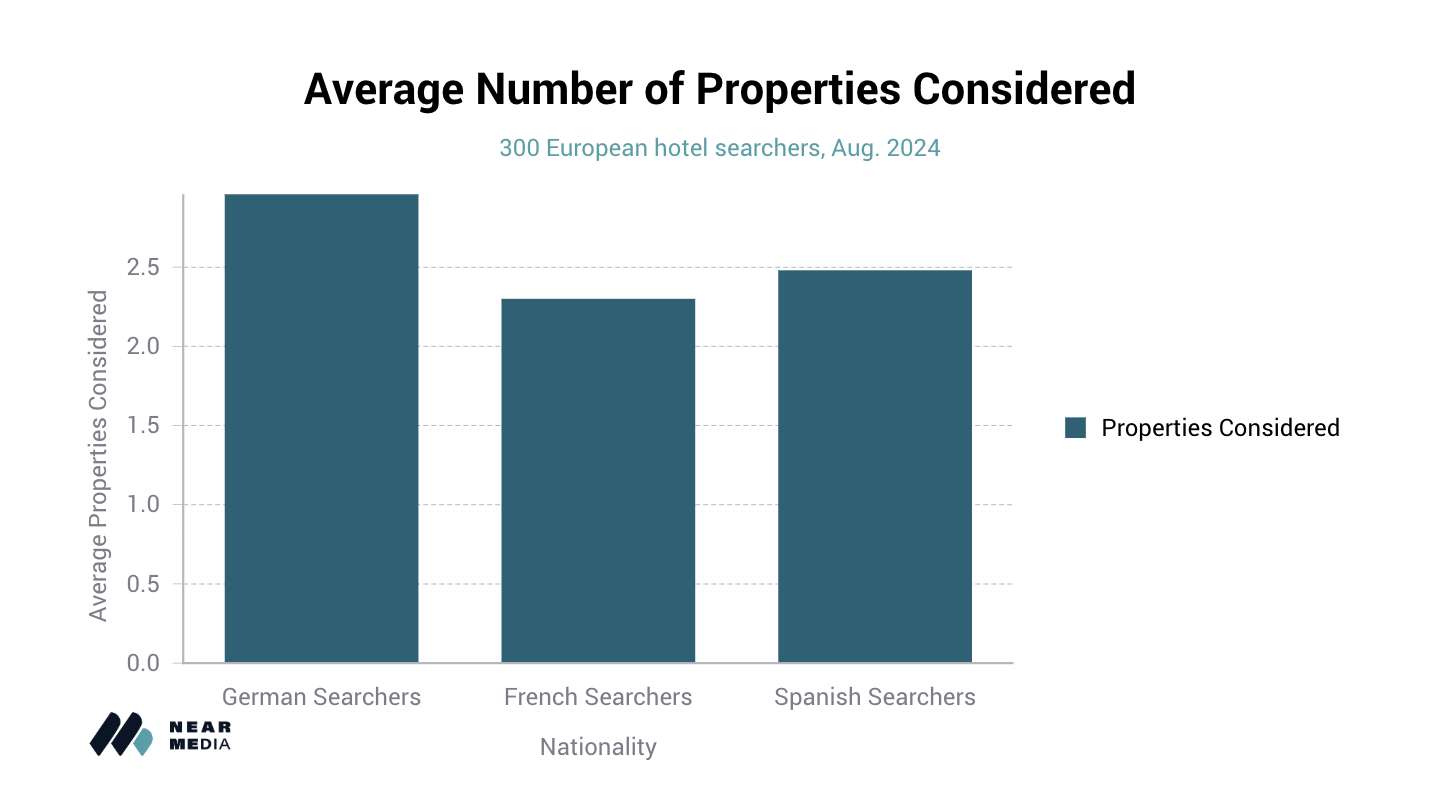
Unsurprisingly dates and price were the two most commonly used filters; dozens of users also included the dates of our fictitious long weekend directly in their search queries.
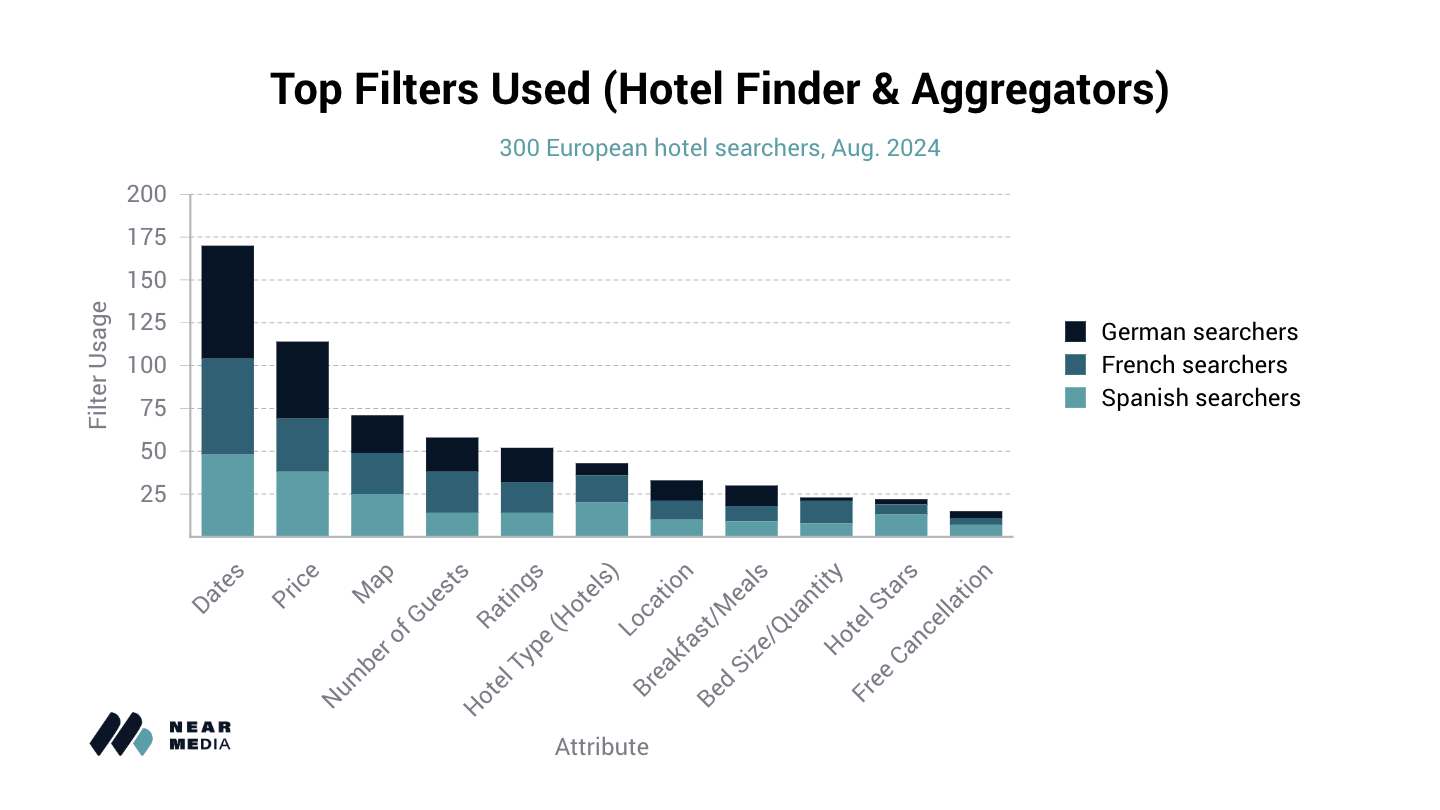
Price was the single most-common driving factor in searchers’ choice of hotel, with nearly 2 in 3 mentioning it or proactively filtering their results based on it. Ratings and reviews were nearly as important, followed by location.
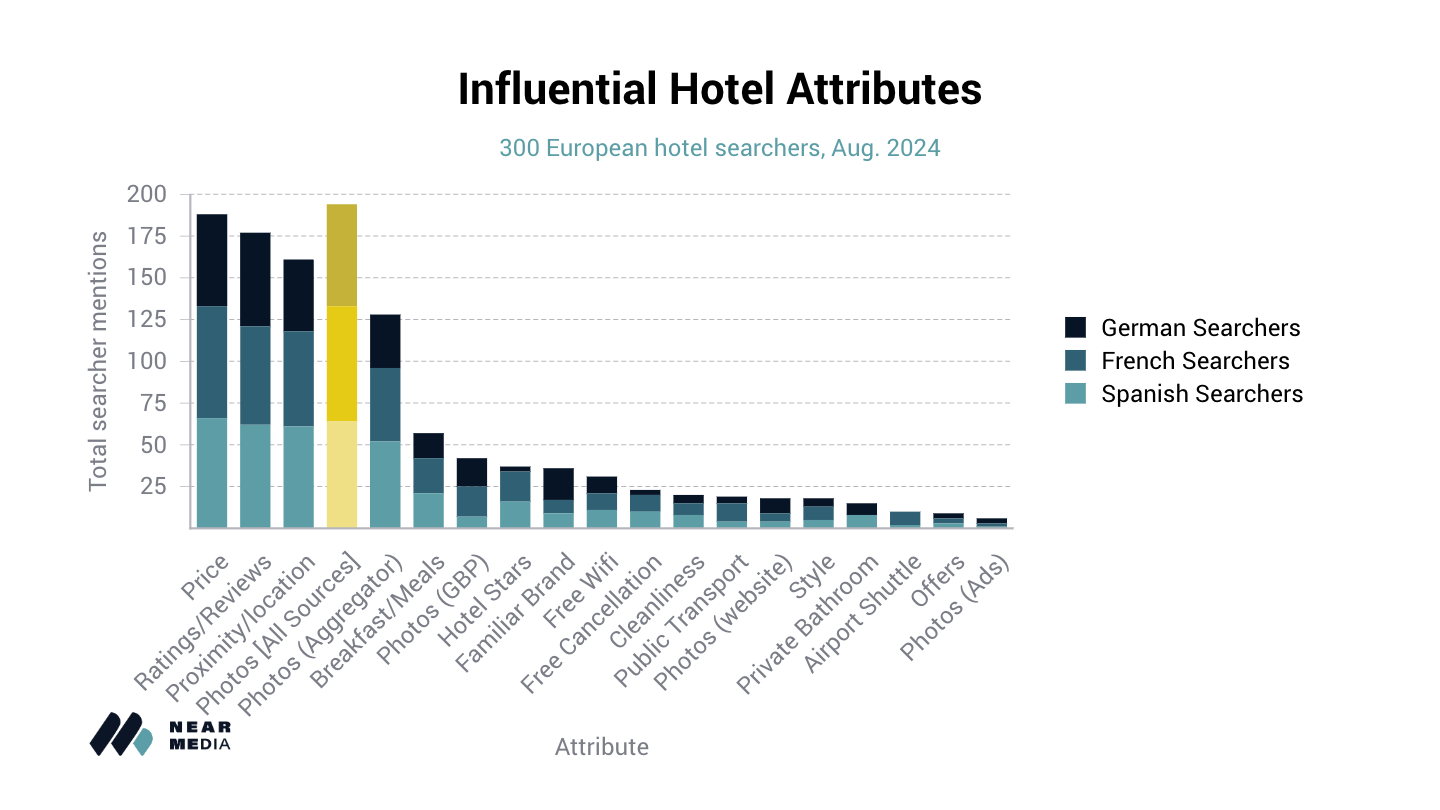
Note, however, that summing the numbers of consumers mentioning Photos (or property features seen in photos) across sources–-not to mention visual descriptors like “cleanliness” and “style”–**photos are clearly the most important attribute of hotel listings.**
Searchers were most likely to consume photos on aggregators, followed by Google Business Profiles. Supplier websites were a distant third. Investing in superlative photography of their property is arguably the most important digital marketing tactic for hoteliers, and distributing that photography to aggregators and Google Business Profiles is also essential. **Third-party sites are where photos will most likely grab consumers’ attention.**
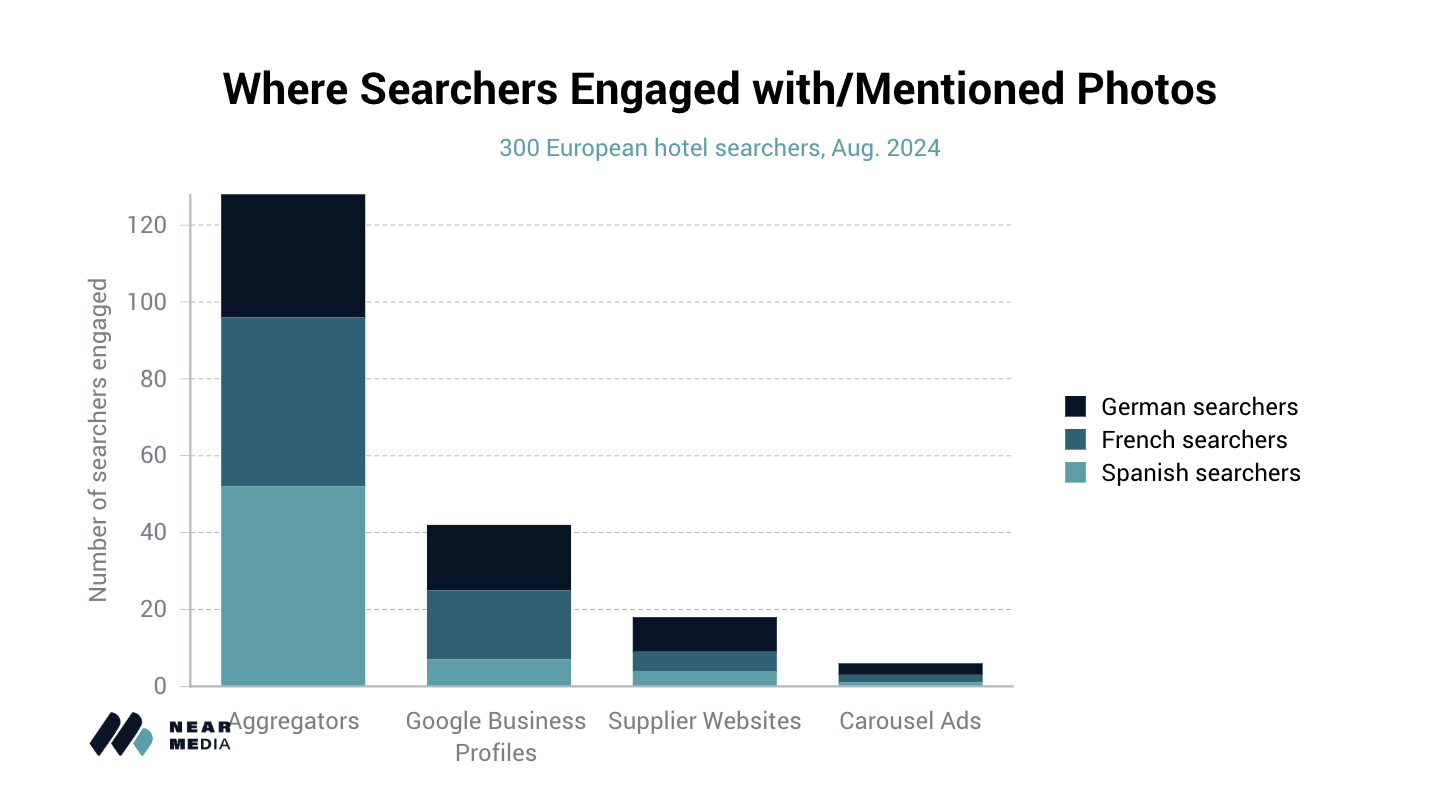
Rooms were certainly the most common photo type with which searchers engaged, but bathrooms, lobby areas, and exterior shots were also viewed or engaged with by significant percentages of consumers.
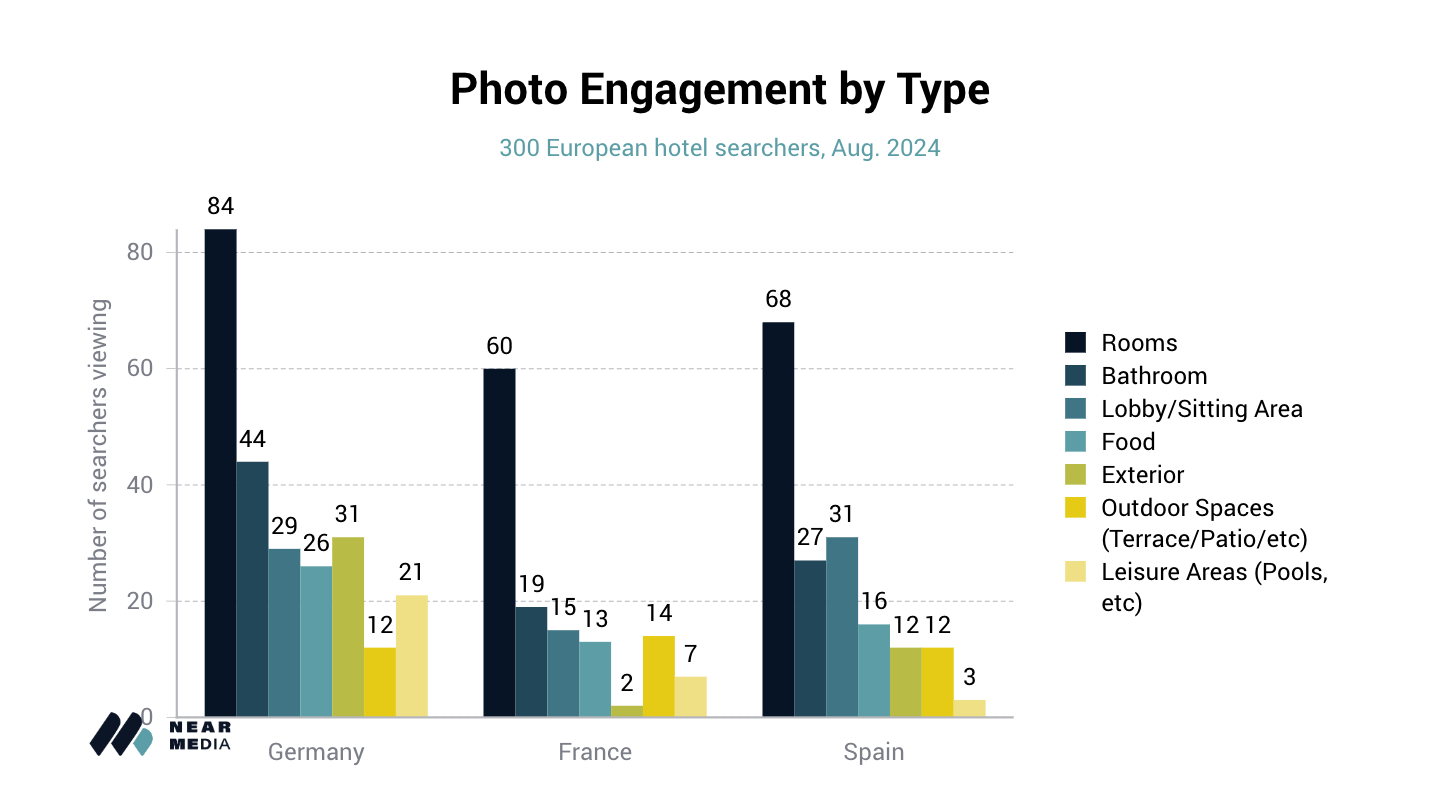
As mentioned above, reviews and ratings were important decision-influencing criteria for consumers, but as we’ve seen in every other vertical we’ve studied, **only** **half of consumers who mentioned their importance (53%) actually took time to read reviews.** Star ratings and review volumes are what drive consumer behavior.
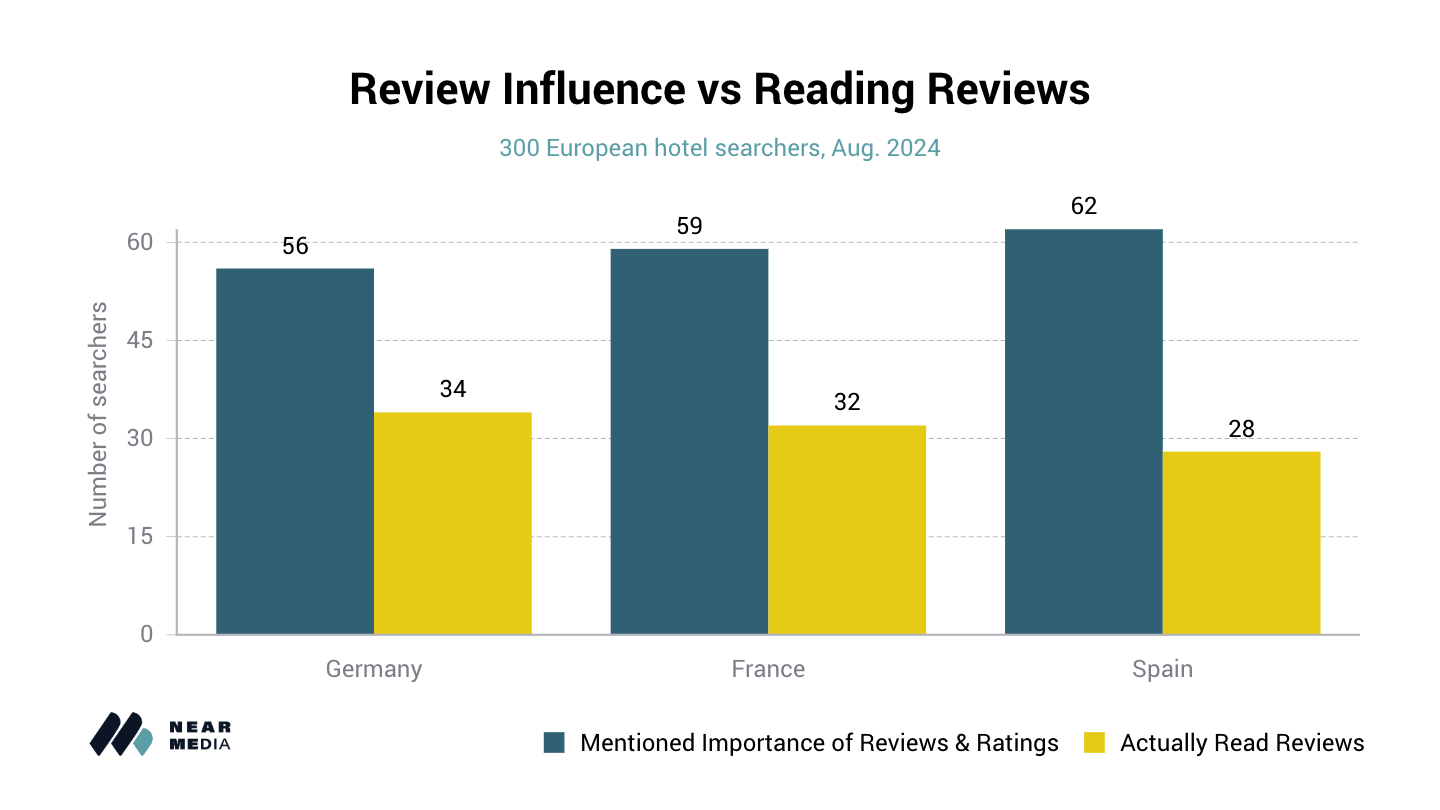
Consumers had relatively high, though not astronomical, rating expectations. The median rating of properties chosen via Google Business Profiles was 4.2 out of 5 stars, and via Aggregators with a 10-point scale, 8.2 out of 10\. (In other verticals, we’ve seen median ratings closer to 4.8.)
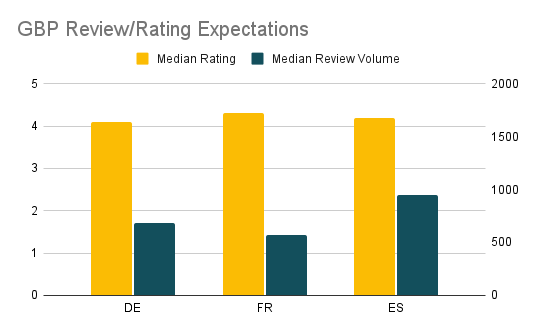
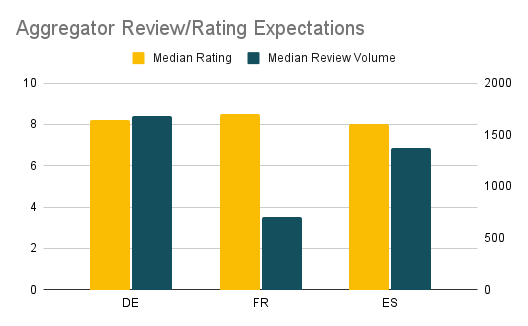
Rating expectations are equivalent across Google Business Profiles and Aggregators when scales are normalized; review corpuses of chosen hotels were double that of Google Business Profiles, however.
Not surprisingly given the category, the median volume of reviews of chosen hotels *was* astronomical – north of 500 Google reviews in every country, and approaching 1000 Google reviews for hotels chosen by Spanish participants. For aggregator-driven bookings the numbers were even higher–north of 1000 reviews in all but France.
There was a somewhat interesting difference in search behavior between countries, as the graphic above reflects–French searchers had the highest rating expectations amongst any of the three nationalities, but tended to choose properties with lower review volumes–perhaps reflecting a willingness to try less-established properties that were nevertheless well-rated.
Given the consumer behavioral choices we outlined at the top of our results, hoteliers should be asking guests for reviews where those reviews are most likely to be seen by future guests – on Booking.com and on their Google Business Profile. Less-established hotels likely have a long path ahead of them before their review corpus is large enough to make them eligible for consideration by most consumers.
---
## **Conclusion**
Hotel Suppliers, frequently outbid for ad space by deep-pocketed Aggregators (especially Booking.com), receive a minuscule percentage of traffic via Google’s traditional organic results, making them heavily dependent on the Google Hotel Finder for visibility.
Almost all Supplier traffic comes from the Hotel Finder, but consumers are 2.3 times as likely to stay within the Hotel Finder to browse properties than to click through to a supplier website, and are more likely to click an aggregator website from a Google Business Profile than they are a supplier website.
Carousel ads seem to offer the most efficient opportunity for Suppliers to bid on paid traffic, particularly if they adopt Aggregators’ landing page strategy of featuring the clicked property at the top of a list, rather than the canonical page or microsite for a single property.
Aside from price, reviews/ratings and photos are the most influential levers that hoteliers can pull to attract more consumers. It’s important to distribute photos and reviews where they’re most likely to be seen–specifically, Booking.com and Google Business Profiles.
Despite their importance in consideration and choice, only half of consumers who mentioned the importance of reviews and ratings (53%) actually took time to read reviews.
Based on how Google constructs its search results today, Google itself and Booking are the clear winners in hotel search, with hoteliers of all sizes getting squeezed by both gatekeepers.
Even if well-ranked by Google’s organic algorithm, in Google’s current hotel SERP construction it’s unlikely consumers ever encounter a Supplier website in a hotel search journey, given the positional and visual dominance of Booking ads and the Google Hotel Finder.
### Ep 175: Google tests Review Badge of Shame in UK; Google’s Antitrust Travails; SMB Marketing Disconnects
URL: https://www.nearmedia.co/ep-175-google-tests-review-badge-of-shame-in-uk-googles-antitrust-travails-smb-marketing-disconnects/
Last updated: 2024-09-21T13:58:23.000Z
**Part 1 starts 00:13 -** [**Google Testing Review Badge of Shame & More in UK for Review Abuses**](https://youtu.be/e1N3CuWQGnk?ref=nearmedia.co)
Google has rolled out a new review “badge of shame” and a new help document titled "Business Profile Restrictions for Policy Violations," introducing stricter actions for businesses engaging in deceptive review practices. Currently being tested in the UK, the policy includes a tiered system of penalties, such as preventing new reviews, unpublishing existing ones, and displaying a "badge of shame" for businesses caught with fraudulent reviews. This marks a shift in Google’s approach, as they historically removed fake reviews without directly accusing businesses of wrongdoing.
The penalties, though designed to improve review integrity, raise concerns about fairness, particularly for businesses that may be falsely flagged. Google has implemented an appeals process, offering business owners a chance to contest these restrictions. However, with previous experiences showing delays in review processes, some wonder how effective the system will be. This effort aligns with broader global regulatory pressures, such as the UK's push against fake reviews and potential influences from European legislation like the Digital Services Act (DSA).
Segment Reference Articles
[Google Badge of Shame](https://www.nearmedia.co/badge-of-shame-second-google-loss-aios-ads/)
[Business Profile restrictions for policy violations](https://support.google.com/business/answer/14114287?ref=nearmedia.co)
[Submit Your Business Profile for Review - Appeal form](https://support.google.com/business/contact/submit%5Fyour%5Fbusiness%5Fprofile%5Ffor%5Freview?sjid=15814485884353484606-NA&ref=nearmedia.co)
**Part 2 starts 12:12 -** [**Google’s Antitrust Travails: What’s at Stake in the Latest Legal Battle?**](https://youtu.be/l3dZtvn%5FgHk?ref=nearmedia.co)
Google is currently facing its second antitrust trial, focusing on its ad-tech dominance. The trial, now in its second week, follows an earlier case where Google was found to be an illegal monopoly in search and text ads. This new case explores the workings of Google's ad exchange and network, with internal documents revealing questionable practices like taking premium cuts from advertisers. Central to the case is how the market is defined—if Google can argue for a broad market with competitors like Amazon and Facebook, it could escape further liability. However, if the market is viewed more narrowly, Google may face more significant consequences, including potential divestitures of its ad business.
Beyond legal outcomes, this case, coupled with Google’s aggressive internal strategies, is tarnishing the company’s public image. Wall Street has already priced in potential legal losses, showing expectations of a major financial impact from a loss. Additionally, these trials may open the door to more lawsuits, including cases like Yelp's, which could bring greater visibility into Google's local search dominance.
Segment Reference Articles:
[Exclusive: Google offered to sell part of ad tech business, not enough for EU publishers](https://www.reuters.com/technology/google-offered-sell-advertising-marketplace-adx-eu-antitrust-probe-sources-say-2024-09-18/?ref=nearmedia.co#:~:text=O%29%20%2C%20opens%20new%20tab%20Google,the%20matter%20said%20on%20Wednesday.)
[Google’s Breakup Is Starting to Get Priced In](https://www.wsj.com/tech/googles-breakup-is-starting-to-get-priced-in-7ca89598?ref=nearmedia.co) (paywall)
[Google antitrust trial reveals the 'succeed at all costs' culture behind the pursuit of ad market domination](https://digiday.com/marketing/google-antitrust-trial-reveals-the-succeed-at-all-costs-culture-behind-the-pursuit-of-ad-market-domination/?ref=nearmedia.co)
**Part 3 starts 19:42 -** [**Digital Agencies Highlight Disconnect in Local Marketing Priorities**](https://youtu.be/ZvdZTvtys34?ref=nearmedia.co)
In a recent survey of nearly 300 digital agencies, a mismatch emerged between the services offered and what agencies perceive as client demand. Agencies commonly offer web design, social media marketing, and SEO, but client demand also includes email marketing and brand marketing—services not prioritized by many agencies. This gap raises questions about how well agencies understand their clients' evolving needs, particularly in small business marketing.
Small businesses also show a surprising lack of attention to crucial tools like Google Business Profiles (GBP) and review management. Despite the importance of local search and reputation management, only a quarter of businesses actively manage their profiles, a disconnect made more mysterious given that business owners frequently use Google for their own research. The data suggests a broader education gap around how these digital tools influence visibility and growth, with many small businesses over-relying on social media while underestimating the value of search and reputation management.
Segment Reference Articles:
[Marketing Misalignment: Agencies & SMBs](https://www.nearmedia.co/reddit-search-marketing-misalignment-dark-side-of-dma/#marketing-misalignment-agencies-smbs)
### Reddit Search, Marketing Misalignment, Dark Side of DMA
URL: https://www.nearmedia.co/reddit-search-marketing-misalignment-dark-side-of-dma/
Last updated: 2024-09-19T19:39:39.000Z
### Reddit the Search Engine
The widely cited [article](https://dkb.blog/p/google-search-is-dying?ref=nearmedia.co) "Google Search Is Dying" appeared in February 2022\. It was really a discussion about Reddit as a search engine. Nearly three years later, Reddit has done [a significant deal](https://blog.google/inside-google/company-announcements/expanded-reddit-partnership/?ref=nearmedia.co) with Google and [ranks #1 for numerous queries](https://www.linkedin.com/posts/lily-ray-44755615%5Fseo-reddit-activity-7233906765615005697--3PE/?ref=nearmedia.co) (it shouldn't). It's the 10th [most visited site globally](https://pro.similarweb.com/?ref=nearmedia.co#/digitalsuite/markets/webmarketanalysis/mapping/All/840/1m?webSource=Total) and number 5 in the US, ahead of Yahoo – partly because it ranks so well in Google. Now, an Adobe [survey](https://www.adobe.com/express/learn/blog/reddit-search-engine?ref=nearmedia.co#searching-with-reddit) finds that 63% of consumer-respondents are using Reddit as a search engine at least once a week. GenZ and Millennials are the largest groups. GenZ trusts Reddit results more than Google's, although older users don't. The top three reasons, according to the survey, that people are searching on Reddit are: authentic reviews (67%), opinion diversity (52%), and sense of community (44%). And small businesses are increasingly viewing Reddit as a marketing platform, with 28% posting – replying to posts – on Reddit as part of their marketing strategies; 49% post at least weekly. In addition, roughly 10% of small businesses say a Reddit page (presumably that they're mentioned on) outranks "their business page" in Google.
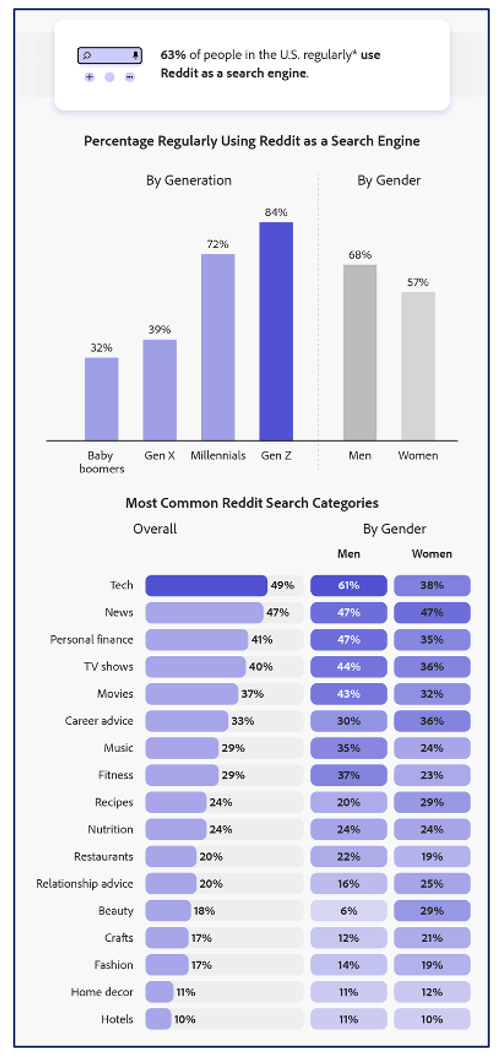
Source: Adobe
**Our take:**
- Adobe did a similar [survey](https://www.adobe.com/express/learn/blog/using-tiktok-as-a-search-engine?ref=nearmedia.co) about TikTok search. The two sites are being used by consumers for search in very different categories.
- Will success spoil Reddit? In a word "yes." The site is getting spammier and will only get worse as more people [exploit Reddit for marketing](https://larslofgren.com/reddit-marketing/??ref=nearmedia.co).
- Reddit is also a public company, which brings (often unrealistic) growth expectations and pressure. That will mean more ads in more places.
### Marketing Misalignment: Agencies & SMBs
Two sets of data (from my other project [Dialog](https://www.localdialog.com/?ref=nearmedia.co)) tell an interesting story of misalignment between agencies and their clients. In January, we published the results of a 1K small business survey (here only with <10 headcount). A new survey of 294 agencies came out in August. What the data show is general alignment but some meaningful gaps between agencies' offerings, demand and SMBs' performance perceptions. The first slide below shows channels these very small SMBs use and what they think works (emphasis on *think*). The second slide shows top agency offerings and their perceptions of demand (not segmented). The SMB channels vs. performance perceptions generally line up, although there are differences (e.g., traditional media). But with agencies there are larger gaps (offerings vs. demand). For example: SEO, reputation management and email. Reputation management is a core offering (#5) but not in demand, validated by the SMB data. Email marketing is not a top offering, yet it's in demand. On the SMB slide, email is #2 (used + results). Back to agencies, there's broad alignment with SEO, web/app design, and social media marketing, which is dominant among SMBs. But there are clearly missed opportunities here for agencies.
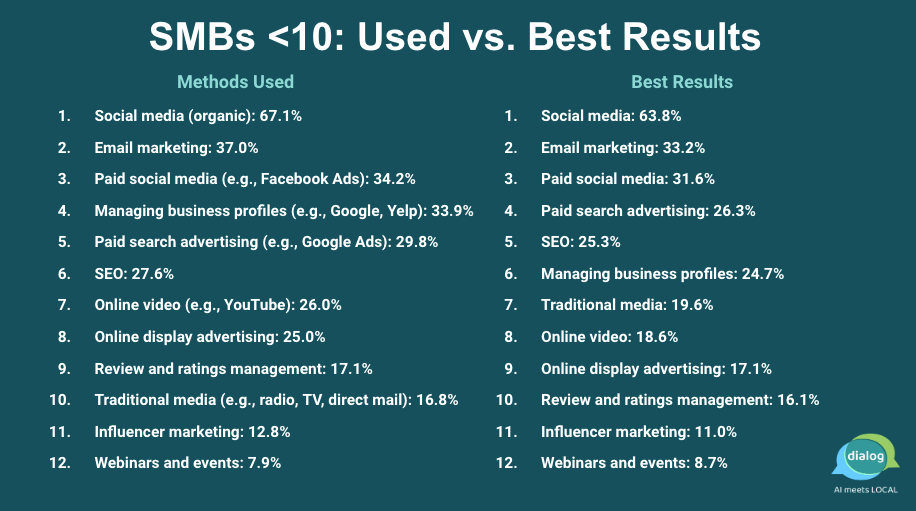
Source: Dialog, n=1K SMBs (segmented)
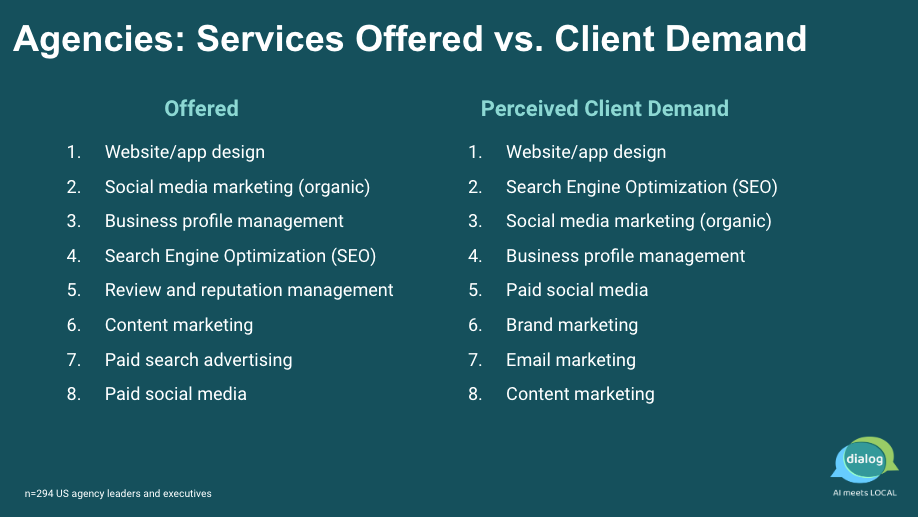
Source: Dialog, n=294 marketing agencies
**Our take:**
- Segmenting agency data might tell a slightly different story. But why don't agency offerings and demand perceptions better line up?
- On the SMB slide, it's crazy that SEO, profile management (to some degree) and reputation management aren't higher priorities.
- Agencies have an opportunity to educate clients on the value of services like review management and expand offerings to better respond to demand.
### Dark Side of EU Regulatory Zeal
Europe has shown resolve and regulatory courage where the US has failed to act legislatively. However, there's a darker side to the EU's zeal to become the world's tech regulator: economic nationalism. The Draghi [report](https://commission.europa.eu/topics/strengthening-european-competitiveness/eu-competitiveness-looking-ahead%5Fen?ref=nearmedia.co#paragraph%5F47059), about European competitiveness in a late-stage capitalist economy dominated by US and Chinese companies, calls on Europe to make a number of ambitious moves, including significant and costly investments, difficult reforms and to aggressively enforce the Digital Markets Act (DMA). As you know, the DMA seeks to boost competition in Europe by restraining so-called "gatekeepers." The designated gatekeepers – there are only six, although Booking.com will likely become one – are Google, Amazon, Apple, ByteDance, Facebook and Microsoft. That's five US companies and TikTok's Chinese parent. On the one hand this is entirely appropriate, given how powerful these companies are all around. Ensuring fairness, ethical behavior and transparency are critical. However, the "quiet part" is that the DMA targets US tech providers so EU companies can succeed; in other words, regulation as a tool of nationalistic economic competition (not different from tariffs in a way, though seemingly more principled). Accordingly, the DMA is one part principle and one part power play.

**Our take:**
- Regulating complex industries is hard, often with [unintended consequences](https://techcrunch.com/2024/09/16/uks-privacy-watchdog-takes-credit-for-rise-of-consent-or-pay/?ref=nearmedia.co).
- Tech companies are trying to push back with lobbying and PR, [arguing](https://www.wsj.com/tech/ai/meta-to-european-union-your-tech-rules-threaten-to-squelch-ai-boom-35297c03??ref=nearmedia.co) too-strict regulations impair EU competitiveness, rather than advance it.
- There is some truth to the argument, although it's transparently self-interested and not really about Europe's economic health or well-being.
## Recent Analysis
- **ICYMI: Tool – How Many Reviews Do You Need to Reach a 5.0 Rating?** [by Mike Blumenthal](https://www.nearmedia.co/how-many-reviews-do-you-need-to-reach-a-5-0-rating-2/).
- **Near Memo episode 174:** [How consumers look for hotels, impact of recent EU fines on Google, possible remedies to prevent Google self-preferencing](https://www.nearmedia.co/ep-174-how-consumers-look-for-hotels-the-impact-of-recent-eu-fines-on-google-possible-remedies-to-prevent-google-self-preferencing/).
## Short Takes
- How many **local citations**[do you need](https://www.sterlingsky.ca/how-many-citations-does-small-business-need/?ref=nearmedia.co)?
- **Clicks** [may support rankings](https://www.sterlingsky.ca/the-concept-of-link-echoes/?ref=nearmedia.co) even when links are removed.
- Mail Boxes Etc. [misused to mislead](https://onlineownership.com/mail-boxes-loophole-in-google-business-profiles/?ref=nearmedia.co) on UK **business addresses**.
- How to [get keywords in the text](https://www.linkedin.com/posts/darrenshawwhitespark%5Flocalseo-seo-activity-7242246264988278785-LwTx/??ref=nearmedia.co) of **reviews**.
- No **LSA** [bid minimum](https://x.com/AnthonyHigman/status/1835792581722017805?ref=nearmedia.co) – or maximum?
- Google **search antitrust** trial judge lays out [remedies schedule](https://x.com/jason%5Fkint/status/1836517761801162762?ref=nearmedia.co).
- **LinkedIn** (MSFT) [trained AI on user data](https://www.theverge.com/2024/9/18/24248471/linkedin-ai-training-user-accounts-data-opt-in?ref=nearmedia.co) before telling users.
- The [TikTok-ification of](https://blog.google/products/youtube/made-on-youtube-2024/?ref=nearmedia.co) **YouTube** continues.
- **Google**\-employed lobbyist [watering down privacy](https://www.politico.com/news/2024/09/17/andrew-kingman-data-privacy-lobbying-00179630?ref=nearmedia.co) for consumers.
- **Google** [offered to sell Adx](https://www.reuters.com/technology/google-offered-sell-advertising-marketplace-adx-eu-antitrust-probe-sources-say-2024-09-18/?ref=nearmedia.co) to avoid EU antitrust probe.
- Investors see **Google break-up** as inevitable ([WSJ](https://www.wsj.com/tech/googles-breakup-is-starting-to-get-priced-in-7ca89598?ref=nearmedia.co)).
Listen to our [latest podcast](https://www.nearmedia.co/memo/).
[](https://nearmedia.co/memo?ref=nearmedia.co)
How can we make this better? Email [us](mailto:gsterling@nearmedia.co) with suggestions and recommendations.
### Badge of Shame, Second Google Loss?, AIOs + Ads
URL: https://www.nearmedia.co/badge-of-shame-second-google-loss-aios-ads/
Last updated: 2024-09-17T21:01:16.000Z
### Google Badge of Shame
Earlier this week Mike Blumenthal [discovered](https://x.com/mblumenthal/status/1835746813032177806?s=46&ref=nearmedia.co) that suspected review abuse in the UK can lead to a 30 day review ban. As a bonus it comes with a brand-killing badge of shame: "Suspected fake reviews were recently removed from this place." To our knowledge this is the first such Scarlet Letter-style public notice that Google has attached to business profiles in connection with potential review fraud. Yelp has for years put up "Consumer Alerts" ([of various flavors](https://trust.yelp.com/consumer-alerts/?ref=nearmedia.co)) on business profiles when they're caught violating the rules, such as paying for reviews. Note, in the image below, it says "suspected fake reviews." That implies the algorithm has flagged the profile without human investigation. This could result in false positives but the suspension and shame badging can be [can be appealed](https://support.google.com/business/answer/14114287?ref=nearmedia.co). If successful (timeframe uncertain) Google will remove the review suspension but the reputation damage might well be done by then. On the other hand, we want fraudsters to be held accountable. Regardless, it's good to see Google taking stronger action against review fraud. Even though this is the UK, it may be partly motivated by the EU's DSA, which imposes stricter content moderation requirements on large platforms.
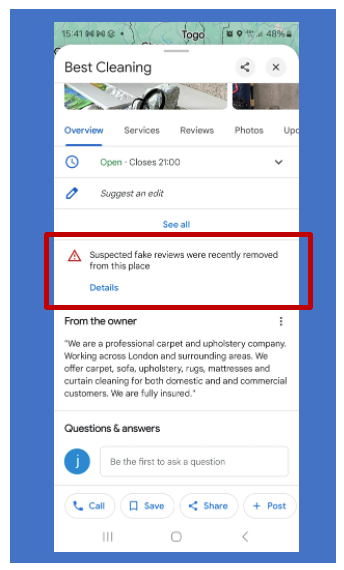
Source: Mike Blumenthal - Google
**Our take:**
- What about [fake review attacks](https://www.nearmedia.co/fake-review-attacks-on-the-rise-at-google/)? Could that get a victimized business suspended and badged as well? Unclear.
- Is this a precursor to a global rollout? That's also not clear but it's a reasonable bet that Google will also start to do this in North America.
- Months ago Google [indicated](https://www.nearmedia.co/lsa-reviews-to-be-unified-with-gbp-reviews-finally/) and then later announced it was "unifying" LSA and GBP reviews. This was partly about fraud and partly about cost savings.
### Google Headed for Another Loss?
Google is in the second week of its second major antitrust trial. As you remember, it [lost the first case](https://www.nearmedia.co/google-loses-ai-ankle-biters-gbp-menu-optimization/) (about search and paid search ads) and is awaiting the judge's decision on remedies. This second case is about the Google Network and ad tech, specifically Google's suite of tools born out of its 2008 DoubleClick acquisition. The government argues (in its [complaint](https://storage.courtlistener.com/recap/gov.uscourts.vaed.533508/gov.uscourts.vaed.533508.120.0.pdf?ref=nearmedia.co)) that Google bought DoubleClick to control both sides of digital advertising, creating a conflict of interest and unfair competition. Another argument is that Google forced publishers to use its ad server and exchange, which limited competition, stifled innovation and financially harmed advertisers and publishers. (News Corp [claims to have been "held hostage](https://www.reuters.com/technology/news-corp-would-lose-9-million-by-ditching-google-ads-ex-exec-testifies-2024-09-10/?ref=nearmedia.co)" by reliance on Google ad tech.) Google is also accused of destroying potentially incriminating internal communications and abusing attorney-client privilege. In the previous trial Google was largely undone by its own witnesses' testimony and internal documents. That appears to be happening again (see, e.g., [here](https://digiday.com/marketing/google-antitrust-trial-reveals-the-succeed-at-all-costs-culture-behind-the-pursuit-of-ad-market-domination/?ref=nearmedia.co), [here](https://x.com/jason%5Fkint/status/1835874877682676137?ref=nearmedia.co), [here](https://www.theverge.com/2024/9/16/24244357/google-adx-take-rate-commission-antitrust-trial?ref=nearmedia.co), [here](https://chatgpt.com/c/66e9e3a8-78e8-8010-b15f-bc8646ba74a3?ref=nearmedia.co)), although it's still too early to predict the outcome.

Source: ChatGPT
**Our take:**
- Like the previous antitrust trial this one is before a judge. The government wanted a jury but Google [maneuvered to avoid one](https://arstechnica.com/tech-policy/2024/06/google-avoids-jury-trial-by-sending-2-3-million-check-to-us-government/?ref=nearmedia.co).
- The remedies are somewhat uncertain in the first trial, though divestiture is on the table. This case offers a clear set of structural remedies.
- But Google will prevail if it can define the relevant market broadly enough to convince the judge that it faces strong competition and it's not a monopoly.
### Lower Value Keywords = AIOs + Ads
SE Ranking is out [with another sprawling analysis](https://seranking.com/blog/ai-overviews-and-ads-research/?ref=nearmedia.co) of Google AI Overviews (AIOs) that examines the relationship between Ads and AIOs in mobile and desktop results. Overall, SE Ranking found AIOs showing up more frequently in August than over the summer. On the desktop AIOs were present for 12.5% of keywords vs. just over 7% in July. That was based on automated research on roughly 100k keywords. However, on mobile it's almost the opposite: AIOs appeared 70.4% of the time according to manual research on 1,022 keywords. SE Ranking saw growth in AIO frequency in a number of verticals while others were flat. In the SE Ranking dataset, ads appeared in 13.5% of cases with an AIO on the desktop. In mobile that number was only 3.8%. The three types of ads that appeared (on the desktop) were text ads at the top of the SERP, shopping ads and text ads at the bottom of the SERP. The most frequent combination was text ads at the top and bottom of the SERP when AIOs were present. On mobile, ads and AIOs appeared most often together for shopping queries. Interestingly, on the desktop, SE Ranking found that AIOs and ads tended to appear together for lower value/CPCs and lower volume keywords. Shopping queries often triggered ads within AIOs.
**When Ads and AIOs appear together**
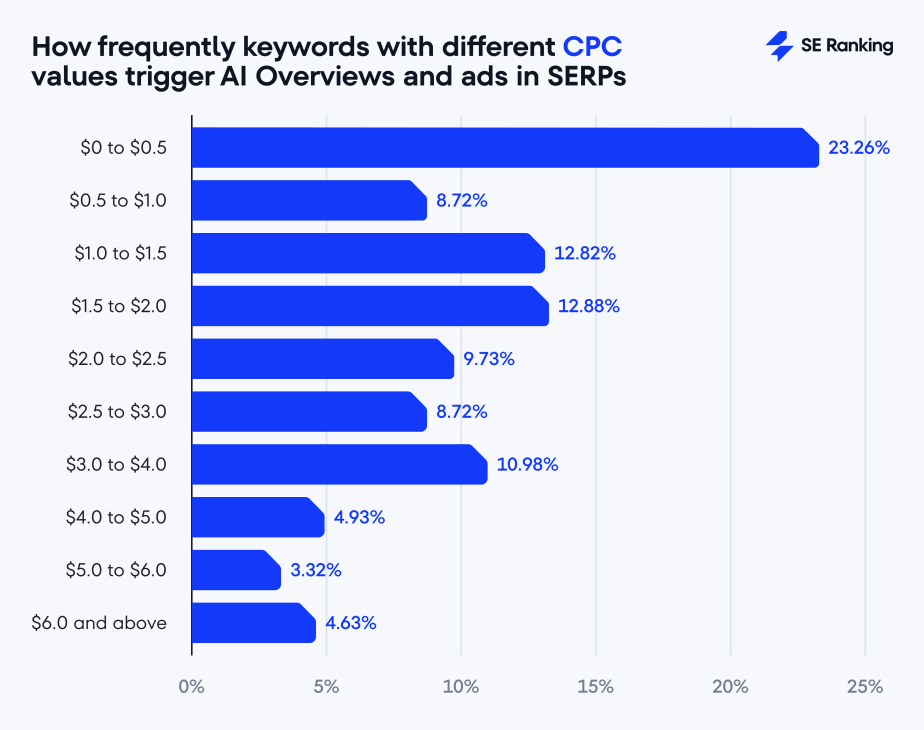
**Our take:**
- When ads and AIOs are present on mobile there's almost zero visibility for organic search results absent scrolling (often true without AIOs).
- The fact that ads + AIOs appear for lower value, lower volume keywords may be about experimentation but also the possibility that [AIOs hurt ad clicks](https://www.nearmedia.co/aios-hurt-ad-clicks-travel-mindtripping-bing-we-took-share/).
- So what can we make of this? AIOs are still very much in flux as Google continues to experiment – and will be for some time.
## Recent Analysis
- **Near Memo episode 174:** [How consumers look for hotels, impact of recent EU fines on Google, possible remedies to prevent Google self-preferencing](https://www.nearmedia.co/ep-174-how-consumers-look-for-hotels-the-impact-of-recent-eu-fines-on-google-possible-remedies-to-prevent-google-self-preferencing/).
- **Google and Booking**: **Symbiotic Gatekeeper Relationship in European Hotel Search**, [by David Mihm](https://www.nearmedia.co/european-hotel-search-study/).
## Short Takes
- How to [determine if](https://x.com/JoyanneHawkins/status/1836039665578545205?ref=nearmedia.co) a **local citation** matters.
- **Reddit** now [dominating results](https://x.com/lilyraynyc/status/1836054422532628485?ref=nearmedia.co) for "review/reviews."
- **LSAs** now showing you [whether you've seen them](https://x.com/AnthonyHigman/status/1833934907271532906?ref=nearmedia.co) before.
- Once again, [how to remove](https://searchengineland.com/negative-google-reviews-guide-446528?ref=nearmedia.co) **negative Google reviews**.
- Embarrassing: **Google** SMB account [runs a poll about AI for SEO](https://www.seroundtable.com/google-gemini-ai-seo-poll-38067.html?ref=nearmedia.co).
- **Google Products** now in [top 3 mobile SERP positions](https://www.linkedin.com/feed/update/urn:li:activity:7237515207391019008/?ref=nearmedia.co) 62% of the time.
- Product [carousels return](https://www.linkedin.com/posts/aleyda%5Fseofomo-activity-7238976456591110147-V3I4/??ref=nearmedia.co) to **AI Overviews**.
- **TikTok** having a rough time in court, seeking to avoid "ban" ([WSJ](https://www.wsj.com/us-news/law/tiktoks-u-s-future-hangs-in-the-balance-in-court-03bfefd7??ref=nearmedia.co)).
- The sleazy world of **Reddit** [marketing](https://larslofgren.com/reddit-marketing/??ref=nearmedia.co).
- **Google** giving $10M to [promote AI](https://blog.google/outreach-initiatives/google-org/google-ai-training-funding-small-businesses/?ref=nearmedia.co) education ([and Gemini](https://www.linkedin.com/posts/localdialog%5Fgoogleorg-googles-philanthropy-activity-7241831218130944000-Xd0x?utm%5Fsource=share&utm%5Fmedium=member%5Fdesktop)).
- Stealth layoff? **Amazon** forcing employees [back into office](https://www.cnbc.com/2024/09/16/amazon-jassy-tells-employees-to-return-to-office-five-days-a-week.html?ref=nearmedia.co) full time.
Listen to our [latest podcast](https://www.nearmedia.co/memo/).
[](https://nearmedia.co/memo?ref=nearmedia.co)
How can we make this better? Email [us](mailto:gsterling@nearmedia.co) with suggestions and recommendations.
### Ep 174: How Consumers Look for Hotels, The impact of recent EU fines on Google, Possible remedies to prevent Google self-preferencing
URL: https://www.nearmedia.co/ep-174-how-consumers-look-for-hotels-the-impact-of-recent-eu-fines-on-google-possible-remedies-to-prevent-google-self-preferencing/
Last updated: 2024-09-17T15:33:32.000Z
**Part 1 starts 00:13 -** [**Google and Booking: The Symbiotic Gatekeeper Relationship in European Hotel Search**](https://youtu.be/%5F8zmhhjpfPk?ref=nearmedia.co)
We dive into our recent user behavior research findings about hotel searches in Europe. We recruited 100 users each from Spain, France, and Germany, asking them to find hotels in Paris or Rome, and observed how they interacted with Google's search results.
Key findings include:
1. **Dominance of Ads**: A significant number of users, particularly on mobile, clicked on ads. Over 50% of mobile users engaged with ads, while many didn't scroll past them.
2. **Google’s Hotel Finder**: Google’s Hotel Finder gathered about 30% of all clicks, while the newly introduced "Places Sites" module (compliant with the Digital Markets Act) attracted less than 2%. This highlights Google's continued self-preferencing, as the Hotel Finder consistently outranked other options.
3. **Booking.com’s Market Power**: Surprisingly, Booking.com garnered a significant portion of clicks, primarily through ads, indicating that the platform's dominance extends beyond organic search results. This is particularly pronounced in Spain, where Booking.com’s share was overwhelming. Spain's antitrust authorities have fined Booking.com $450 million for abusing its monopoly.
4. **Country-Specific Behavior**: Users in different countries showed varying behaviors. For instance, German users engaged more with filters and tabs, affecting their interaction with the Hotel Finder while Spanish users searhttps://www.linkedin.com/in/thomas-h%C3%B6ppner-7ba59a70/ched for and used Booking.com significantly more than the Hotel finder.
5. **Impact on Suppliers**: The study raised concerns about the fairness of Google's results for individual hotel suppliers, as aggregators like Booking.com can outbid them in the ad arena and dominate the space. This dynamic likely leads to increased hotel prices for consumers.
The European hotel market is quite distinct, with behavior in hotel searches differing drastically from other verticals, as well as across countries. This, coupled with Google’s persistent self-preferencing, poses challenges for fair competition.
Segment Reference Articles
[Google and Booking: The Symbiotic Gatekeeper Relationship in European Hotel Search](https://www.nearmedia.co/european-hotel-search-study/)
[Thomas Höppner Competition Lawyer on LinkedIn](https://www.linkedin.com/in/thomas-h%C3%B6ppner-7ba59a70/?ref=nearmedia.co)
**Part 2 starts 13:38 -** [**EU Court Upholds €2.5 Billion Fine Against Google: Antitrust Ruling Could Shape Future Regulations**](https://youtu.be/sPDikr4c5Us?ref=nearmedia.co)
In a landmark decision, the European Court of Justice upheld a €2.5 billion fine against Google for antitrust violations in its Shopping Search case. This ruling marks a significant win for regulators, setting the stage for broader action against Google's self-preferenc[i](https://www.bbc.com/news/articles/cjw3e1pn741o?ref=nearmedia.co)ng practices across multiple sectors.
The case, which dates back over a decade, focused on Google's practice of promoting its own shopping services at the expense of competitors. Despite Google's appeal, the court sided with regulators, reinforcing the original decision. While the fine represents a small fraction of Google’s revenue, the ruling sends a strong message about the EU's determination to hold tech giants accountable.
The key takeaway? The court highlighted that Google's use of "boxes" in search results, which showcase its own services prominently, was a major factor in the decision. This could have serious implications for other verticals like local and hotel search, where similar self-preferencing behavior is prevalent.
Moreover, the Digital Markets Act (DMA) gives the EU further tools to regulate Google’s behavior across sectors. Fines under the DMA could reach up to 20% of global revenue for repeat violations, raising the stakes significantly.
With this ruling in place, it’s clear that European regulators are prepared to push harder on Google’s dominance, not just in shopping but across the entire search ecosystem.
Segment Reference Articles:
[Court Rules Google Must Pay](https://www.bbc.com/news/articles/cjw3e1pn741o?ref=nearmedia.co)
**Part 3 starts 17:57 -** [**Leveling the Playing Field: Remedies for Google’s Self-Preferencing Practices**](https://youtu.be/AtJrdviyg5o?ref=nearmedia.co)
In the ongoing conversation about Google's self-preferencing, the focus turned to potential remedies in light of mounting regulatory pressure. We discussed various solutions that could address the issues raised by Google’s dominance, particularly in light of the European Court of Justice ruling.
Key Suggestions and Insights:
1. Lighter Regulation, Not Full Control: David argued for a regulatory approach that doesn’t dictate how Google designs its search results but ensures that any module Google introduces—like the Hotel Finder or Local Pack—gives competitors and individual businesses a fair shot at competing. The goal: prevent Google from keeping traffic solely on its own properties, which heavily tilts the playing field in its favor.
2. Fair Competition for All: One solution discussed was making sure all businesses, not just aggregators like Booking.com, can fairly compete within Google’s ecosystem. This would help smaller players like local hotels get more visibility rather than being overshadowed by big brands paying for top ad spots.
3. Self-Preferencing in Local Search: Mike pointed out that Google allows individual businesses to rank in the Local Pack, but the real problem arises when aggregators dominate through ads and ranking manipulation. The team agreed that while individual businesses do benefit from Google’s local results, the overall system still favors deep-pocketed aggregators like Booking.com, leading to higher costs for consumers.
4. Cross-Continental Impact: Interestingly, the team noted that actions in Europe are likely to influence U.S. policies, especially with the ongoing antitrust lawsuits stateside. There’s a growing pressure on Google to change its practices globally, not just in Europe.
Ultimately, the team concluded that Google's self-preferencing creates an unfair advantage for itself and other monopolistic platforms. Remedies should focus on leveling the playing field, encouraging competition, and limiting Google’s ability to monetize every user interaction. As regulation heats up, Google’s dominance across industries—especially in search—faces significant challenges in the coming years.
### Conversion Benchmarks, Brand Demand, 'Illegal' AI Summaries
URL: https://www.nearmedia.co/conversion-benchmarks-brand-demand-illegal-ai-summaries/
Last updated: 2024-09-19T14:55:51.000Z
### Conversions: Email Still Kicks Ass
Unbounce has [released](https://unbounce.com/conversion-benchmark-report/?ref=nearmedia.co) its latest Conversion Benchmarking Report (form required). The study contains data from 57 million conversions and 41 thousand landing pages. The median conversion rate across the dataset is 6.6%, which varies by industry between 3.8% to 12.3%. The highest converting industry is entertainment; the lowest is SaaS:
- Events and entertainment - 12.3%
- Education - 8.4%
- Financial services - 8.3%
- Legal - 6.3%
- Commercial and professional services - 6.1%
- Health and wellness - 5.1%
- Travel and hospitality - 4.8%
- Ecommerce - 4.2%
- SaaS - 3.8%
Email is by far the highest converting channel (19.3%); display advertising is the lowest at 4.1%. Paid social converts somewhat better than paid search, according to the report (see chart below). But Google converts much better than Bing and Yahoo, which bring the average down. Instagram is the best performing social channel (17.9%), Facebook follows (13%) and then Twitter, YouTube, TikTok in that order (9% to 6.4%). Finally, the report advocates dumbing down your content and copy. Depressingly, the study says, "Writing at a 5th to 7th grade level can significantly boost your conversion rates," which converts twice as well as "professional-level writing."
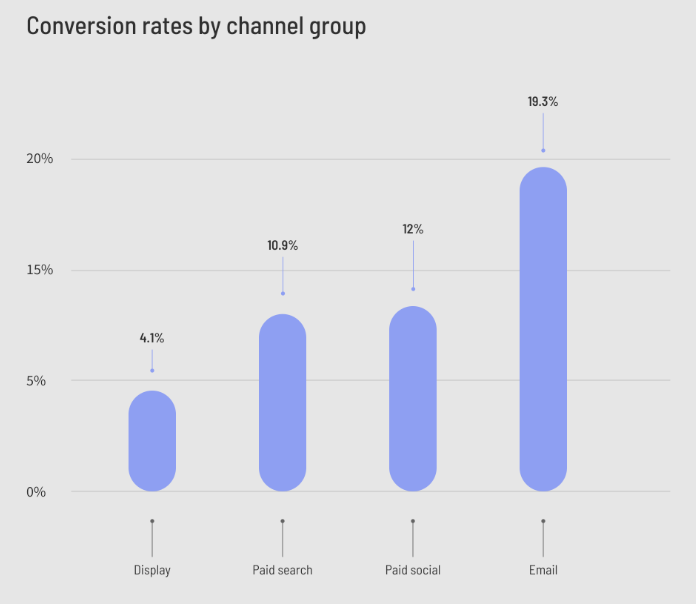
**Our take:**
- Alas, there was no data or discussion of local landing pages. But here are some: [SEL](https://searchengineland.com/optimizing-local-landing-pages-for-search-best-practices-393396?ref=nearmedia.co), [Moz](https://moz.com/blog/create-local-landing-pages-whiteboard-friday?ref=nearmedia.co), [Wiideman Consulting](https://www.wiideman.com/location-pages-for-seo?ref=nearmedia.co).
- Email continues to be a critical channel to invest in, for numerous reasons, even though it's mature.
- Despite the overload of promotional email it still outperforms all other channels, especially for e-commerce where conversions are 10 points higher.
### HCU: Demand for Your Brand
We've talked recently about the importance of [building a strong brand for ranking purposes](https://www.nearmedia.co/branding-seo-google-non-compliant-ai-eating-social/), and devoted [a podcast episode](https://www.nearmedia.co/ep-170-the-increasing-role-of-brand-in-digital-marketing-seo/) with Wix's Mordy Oberstein to the topic. I wasn't going to write about it again so soon but several items prompt it. On the local front there's Miriam Ellis' excellent article "[Everything That Can Go Right and Wrong with Your Local Business Name](https://whitespark.ca/blog/everything-that-can-go-right-and-wrong-with-your-local-business-name/?ref=nearmedia.co)." This is not explicitly about branding but indirectly it is. Also, Glen Allsopp of Detailed [examines](https://detailed.com/top-stories/??ref=nearmedia.co) media brands vs. independent publishers in Google's Top Stories module. In an analysis of 45 million keywords, he finds that large media brands overwhelmingly dominate, although there is some hope for independent sites in the study. Most striking perhaps are the findings of a Tom Capper [analysis of winners and losers in the Helpful Content Update](https://moz.com/blog/helpful-content-update-not-what-you-think??ref=nearmedia.co) (HCU). The study looks at HCU outcomes through the lens of domain vs. brand authority. Capper argues, "HCU was about the demand for your brand." He asserts that the HCU penalized sites where the brand and domain authority profiles were out of sync – strong link profiles without strong brand recognition. Capper also points to an [older Google patent](https://www.searchenginejournal.com/googles-branded-search-patent-for-ranking-search-results/524083/?ref=nearmedia.co) that uses branded queries as a ranking factor (see also, [Navboost](https://victorious.com/blog/navboost/?ref=nearmedia.co) re behavioral signals).
**Comparing HCU Winners & Losers**
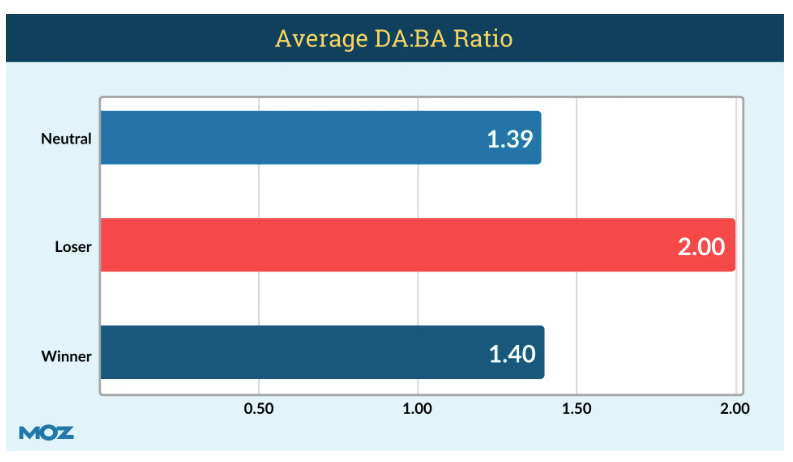
Source: Moz
**Our take:**
- Capper's theory that HCU penalized sites that had more links than their brands perhaps deserved is interesting. The practical advice is: keep going, make helpful content. But you've also got to [build your brand](https://www.nearmedia.co/ep-170-the-increasing-role-of-brand-in-digital-marketing-seo/) (off Google).
- Brand is not directly a ranking signal. But users communicate their affinity for brands, which Google tracks.
- Users tend to click on brands and search for brands because they're better known. This creates a feedback loop that Google responds to and rewards.
### Are AI Summaries Illegal?
Democratic Senators [have called on](https://www.klobuchar.senate.gov/public/index.cfm/news-releases?ID=E65C9B3F-1EDC-4059-ADEB-F67CF37F259D&ref=nearmedia.co) US Assistant Attorney General Jonathan Kanter and FTC Chair Lina Khan to investigate whether generative AI and AI summaries (e.g., AI Overviews) violate US competition laws. They argue essentially that AI summaries misappropriate content from publishers, denying them clicks and potential revenue so that the "gatekeeper" (e.g., Google, Facebook) can capture the ad revenue itself. "\[A\]n AI-generated summary keeps the users on the original search platform, where that platform alone can profit from the user’s attention through advertising and data collection." The Senators acknowledge the presence of links in AI summaries but say they're "hidden behind tabs or at the bottom of a page where users are unlikely to scroll after already reading an answer." The upshot is that content creators are effectively competing "against themselves without any recourse to profit from AI-generated content that was composed using their original content." This is just a request, not an official investigation, but the effort to preempt or regulate AI summaries could threaten Google's future ability to compete.
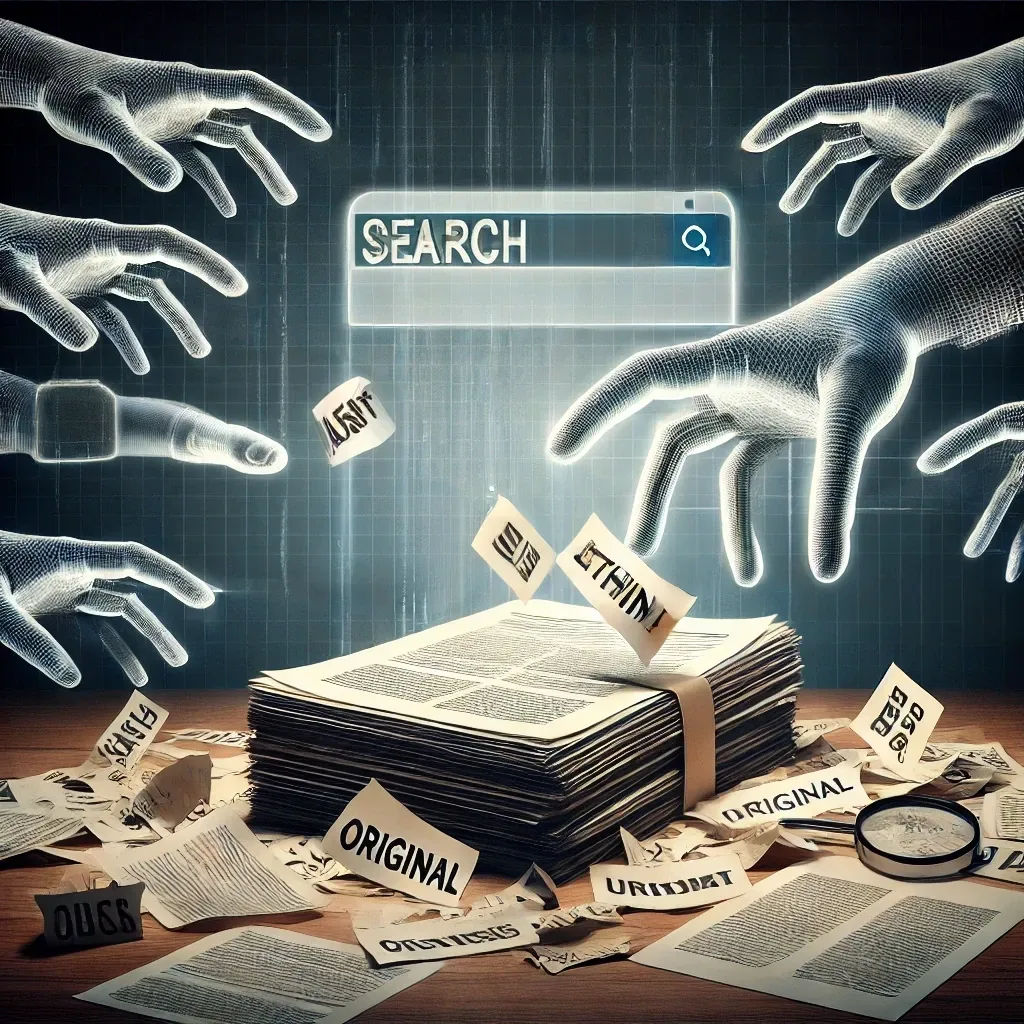
Source: ChatGPT
**Our take:**
- There is [some evidence](https://www.nearmedia.co/sge-drives-traffic-gen-local-search-google-ceo-evasions/) that links in AI summaries do drive traffic but there's [more evidence](https://www.growth-memo.com/p/augmentation?ref=nearmedia.co) that "SERP features" generally (AIOs are one) harm CTRs.
- We're likely to see a version of this argument take flight in Europe. The European Court of Justice [found this week](https://www.nearmedia.co/google-legal-woes-searchgpt-not-enough-danny-sullivan/) that SERP features favoring Google content are anticompetitive. This has sweeping implications.
- It's interesting that copyright is not explicitly mentioned. But more striking is the attack (both in the US and Europe) on Google's control over the SERP.
## Recent Analysis
- **Near Memo episode 173:** [(From the Vault) The Google Review Fraud Landscape in Maps & LSA and How a Business Should Respond](https://www.nearmedia.co/ep-173-from-the-vault-the-google-review-fraud-landscape-in-maps-lsa-and-how-a-business-should-respond/).
- **Google and Booking: The Symbiotic Gatekeeper Relationship in European Hotel Search**, [by David Mihm](https://www.nearmedia.co/european-hotel-search-study/).
## Short Takes
- **Local SEO** [not seen as "difficult](https://x.com/gsterling/status/1834262663586873380?ref=nearmedia.co)" in SEO survey.
- The [local ranking power](https://www.linkedin.com/posts/claudia-tomina-ab78692a%5Flocalseo-googlemaps-activity-7239701288446275586-dq17/??ref=nearmedia.co) of **GBP secondary categories.**
- **LSA reverification process** [rolling out](https://www.linkedin.com/posts/anthony-higman-a3656a46%5Fwelp-just-got-about-100-emails-for-google-activity-7239018320518156288-gnHA/?ref=nearmedia.co) in legal vertical.
- Some [evidence](https://x.com/JoyanneHawkins/status/1834201871503724938?ref=nearmedia.co) **August Core Update** now hitting SMBs.
- **Bing Local Pack** [tests favicons](https://www.seroundtable.com/bing-local-pack-tests-review-source-icons-38042.html?ref=nearmedia.co) for review sources rather than stars.
- **NotebookLM** can now [create an AI conversation](https://blog.google/technology/ai/notebooklm-audio-overviews/?ref=nearmedia.co) from sources.
- **Google co-founder** Brin [working on AI "everyday](https://www.entrepreneur.com/business-news/sergey-brin-is-back-is-google-working-on-a-god-ai-model/479739??ref=nearmedia.co)."
- **TikTok** search [consistently delivers misinformation](https://www.newsguardtech.com/misinformation-monitor/september-2022/?ref=nearmedia.co).
- **Google AI** [will decide](https://gizmodo.com/googles-ai-will-help-decide-whether-unemployed-workers-get-benefits-2000496215?ref=nearmedia.co) whether people should get unemployment.
- Google to link to **Wayback Machine** to show [earlier versions of sites](https://x.com/searchliaison/status/1833910332000993314?ref=nearmedia.co).
- **Google trial**: News Corp. exec [testifies](https://www.mediapost.com/publications/article/399214/news-corp-estimates-a-9m-loss-if-it-had-switched.html?ref=nearmedia.co) re publisher ad dependence.
- **Amazon** [bringing ads to AI shopping assistant](https://www.adweek.com/commerce/amazon-brings-ads-to-rufus/?ref=nearmedia.co) Rufus.
Listen to our [latest podcast](https://www.nearmedia.co/memo/).
[](https://nearmedia.co/memo?ref=nearmedia.co)
How can we make this better? Email [us](mailto:gsterling@nearmedia.co) with suggestions and recommendations.
### Google Legal Woes, SearchGPT Not Enough, Danny Sullivan
URL: https://www.nearmedia.co/google-legal-woes-searchgpt-not-enough-danny-sullivan/
Last updated: 2024-09-10T21:56:12.000Z
### Google's Legal Woes Mount
In many ways Google has never been more successful or powerful; 2023 ad revenue was $238 billion. But the company has probably never been more legally vulnerable either. Google suffered a major setback last month when it [lost](https://www.nearmedia.co/google-loses-ai-ankle-biters-gbp-menu-optimization/) its landmark US antitrust trial in federal court. Now the US Department of Justice (DOJ) is likely to push for a structural remedy ([breakup of some sort](https://www.bloomberg.com/news/articles/2024-08-13/doj-considers-seeking-google-goog-breakup-after-major-antitrust-win?ref=nearmedia.co)) in phase two of that case. And this week, Google's [second antitrust trial](https://www.cnbc.com/2024/09/06/google-second-antitrust-trial-advertising-model.html?ref=nearmedia.co) began in Virginia. It focuses on Google's ad network business (formerly AdSense) and its power over publishers. If successful, the DOJ will push for the divestiture of Google Ad Manager (formerly DoubleClick). Google says it's [surrounded by competitors](https://blog.google/outreach-initiatives/public-policy/google-ad-tech-sept-2024/?ref=nearmedia.co) and only winning because it's better and more innovative. That's essentially the argument it used unsuccessfully in the earlier trial. And just last night, Google [lost its shopping search case](https://curia.europa.eu/juris/document/document.jsf;jsessionid=4E014DCB8E979CD48B7E01C11FDD243A?text=&docid=289925&pageIndex=0&doclang=EN&mode=req&dir=&occ=first&part=1&cid=980402&ref=nearmedia.co) in The European Court of Justice. Here's the short version: Google's favoritism toward its own Google Shopping results in the SERP violated EU antitrust law ([Article 102 TFEU](https://en.wikipedia.org/wiki/Article%5F102%5Fof%5Fthe%5FTreaty%5Fon%5Fthe%5FFunctioning%5Fof%5Fthe%5FEuropean%5FUnion?ref=nearmedia.co)). This suggests, by implication, that any top-of-the-page features that direct users to other Google properties or results (e.g., Local Finder, Hotel Finder) are illegal and will suffer the same fate.
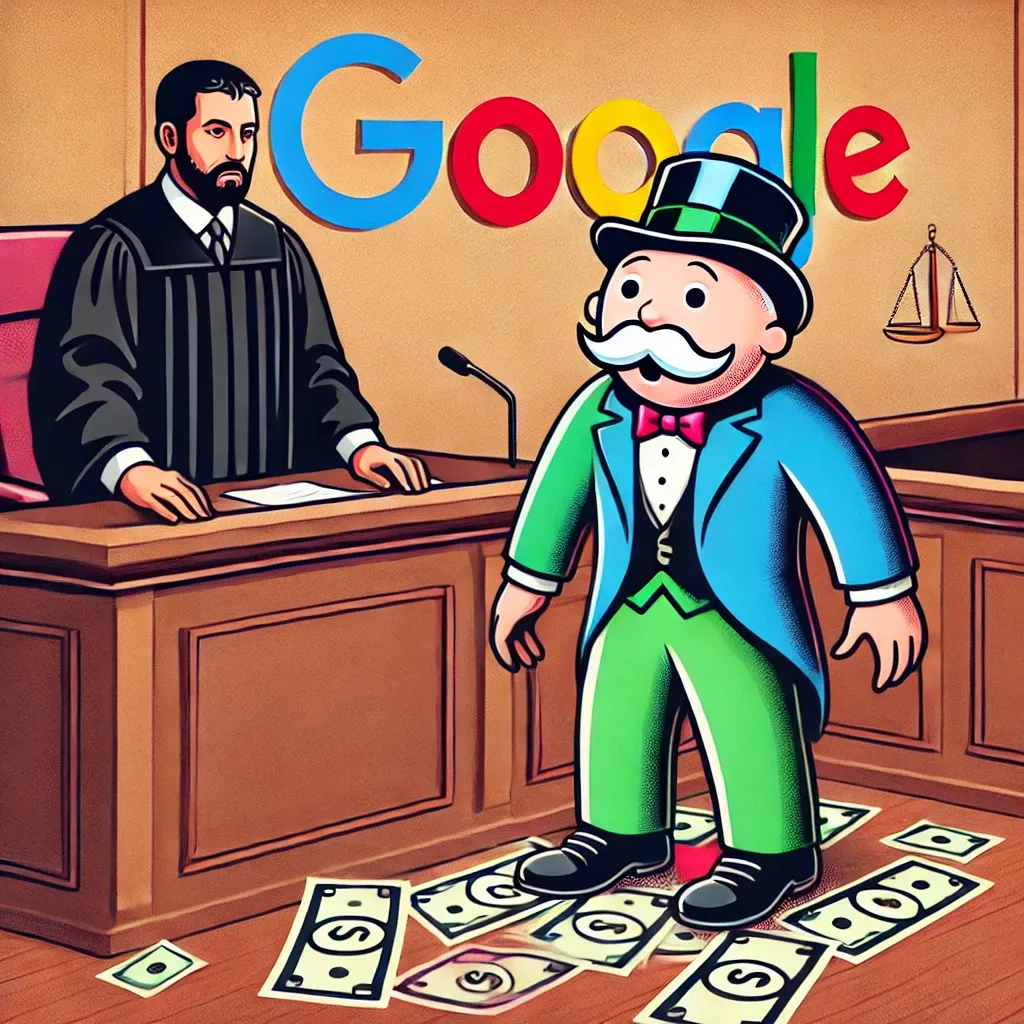
Source: ChatGPT
**Our take:**
- The implications of the EU's highest court decision are far reaching. David Mihm will explore them in a forthcoming article.
- Europe is moving closer to regulating the SERP itself, which may be necessary but is also highly problematic in many ways.
- As Europe steps up global regulation of tech companies, [some are criticizing](https://foreignpolicy.com/2023/10/23/metaverse-europe-uk-us-big-tech-regulation-innovation/?ref=nearmedia.co) its regulatory frameworks as being hostile toward innovation.
### Study: SearchGPT Lacking, but Improving
SearchGPT is still a prototype but that doesn't stop the head-to-head comparisons with Google (including [my informal one](https://www.nearmedia.co/searchgpt-ftc-review-rule-unproductive-ai/)). The latest comes from SE Ranking, which [compared](https://seranking.com/blog/searchgpt/?ref=nearmedia.co) Google and SearchGPT results during the week of August 19\. The company examined a small sample of 36 keywords covering an array of query types and search intents: informational, navigational, transactional and local. The evaluation was based on several criteria: quality and quantity of URLs displayed, presence of SERP features, domain diversity and freshness and relevance of results. The findings are very detailed. Local results were focused on New York and London. Much of the SearchGPT analysis was manual, hence the small sample. As you might expect, the study found that Google results were superior in most instances but that SearchGPT was strong for informational queries and improving overall, including in local. We know that OpenAI [is using the Bing index](https://www.nearmedia.co/searchgpt-bing-index-aio-grounding-will-ai-sell-smartphones/). Accordingly, SE Ranking found that SearchGPT results were "73% similar to Bing and 46% to Google." SE Ranking also observed, "26% of URLs ranking in SearchGPT receive no traffic from Google, suggesting new visibility opportunities." SE Ranking faults SearchGPT for having fewer URLs, lacking SERP features (e.g., video, maps), having less varied results and "outdated content."
Source: SearchGPT
**Our take:**
- It's very clear that SearchGPT is not an existential threat to Google. Over time that could change, but it's unlikely. Google's legal problems are a wild card.
- Google has conditioned our expectations about what search is and what a SERP looks like. Accordingly, there's a hint of that bias in the comparison.
- In its own defense, SearchGPT says, "Unlike Google, which provides a list of links to users, I also offer contextualized and summarized information from my background knowledge."
### Google Search Liaison Interview
Barry Schwartz's [extensive interview](https://www.seroundtable.com/interview-google-august-core-update-38024.html?ref=nearmedia.co) with Google Search Liaison Danny Sullivan is a bit of an inkblot test, depending on how you feel about Google and/or Danny in particular. Regardless, there's a lot in there for SEOs – though unfortunately not a lot of reassurance. The interview covers core updates, ranking changes, the Helpful Content Update, AI, Reddit and forums, Navboost (though not really) and other topics. The TL;DR version boils down to this: at Google, we're not perfect, we're trying hard to reward good content and independent sites; we know we can do better but don't expect anything immediately. I worked directly with Barry and Danny for years at Search Engine Land and its predecessor site. I'm sure Danny's sincerely doing his best within the boundaries of what he can say. My view is that Google has simply amassed too much market power and now has [the power of life and death](https://healthyframework.com/an-open-letter-to-google-from-a-small-publisher/?ref=nearmedia.co) over many small publishers. Google is not a benevolent dictator. It's totally self interested and its primary focus is quarterly revenue growth. Everything else matters only to the extent it's instrumental for that purpose.

Source: ChatGPT
**Our take:**
- Most of the comments on the post were critical, cynical and/or expressed frustration though a few were positive.
- Unfortunately the interview doesn't delve very deeply into the degree to which Google relies on clicks and other behavioral signals to rank sites.
- Google's argument that publishers and site owners should just create "helpful content" would have more credibility if it truly rewarded the best content.
## Recent Analysis
- **Google and Booking: The Symbiotic Gatekeeper Relationship in European Hotel Search**, [by David Mihm](https://www.nearmedia.co/european-hotel-search-study/).
- **Near Memo episode 173:** [(From the Vault) The Google Review Fraud Landscape in Maps & LSA and How a Business Should Respond](https://www.nearmedia.co/ep-173-from-the-vault-the-google-review-fraud-landscape-in-maps-lsa-and-how-a-business-should-respond/).
## Short Takes
- **GBP** broken appointment links get [notifications from Google](https://x.com/ndyjsimpson/status/1831384534895751185?ref=nearmedia.co).
- Study: **SERP features** [depress clicks](https://www.growth-memo.com/p/augmentation??ref=nearmedia.co) to organic sites ([see also](https://www.nearmedia.co/european-hotel-search-study/)).
- Visual illustration of **business hours'** [impact on rankings](https://x.com/JoyanneHawkins/status/1833177135764111600?ref=nearmedia.co).
- What [to know](https://x.com/JoyanneHawkins/status/1833232497049567547?ref=nearmedia.co) before embarking on **local linkbuilding**.
- Holiday shopping: 13% [will use AI tools](https://skai.io/wp-content/uploads/2024/09/2024-Holiday-Spending-Consumer-Survey.pdf?ref=nearmedia.co) **ChatGPT**, up from 5%.
- **Google Shopping** rolling out [virtual try-ons](https://blog.google/products/shopping/virtual-try-on-dresses/?ref=nearmedia.co) via AI tool.
- Podcast: [understanding](https://www.seroundtable.com/google-shopping-merchant-center-interview-38023.html?ref=nearmedia.co) **Shopping Search** and Merchant Center.
- Most brands' **TikTok** videos fall flat, [fail to capture attention](https://www.searchenginejournal.com/8-out-of-10-tiktok-videos-by-brands-fail-to-capture-attention/526139/?ref=nearmedia.co).
- Ad platform Mediavine [bans publisher](https://www.searchenginejournal.com/mediavine-bans-publisher-for-overuse-of-ai-generated-content/526343/?ref=nearmedia.co) for overuse of **AI**.
- All the major **Apple iPhone 16** [announcements](https://www.theverge.com/24239739/apple-iphone-16-event-announcements-watch-series-10-airpods?ref=nearmedia.co).
- **Apple Intelligence** hallucinates according to early review ([WaPo](https://www.washingtonpost.com/technology/2024/09/09/iphone-16-apple-intelligence-ai-event-2024/?ref=nearmedia.co)).
- Ford patents **in-car system that eavesdrops** [for ads](https://www.motortrend.com/news/ford-in-vehicle-advertising-patent/?ref=nearmedia.co).
Listen to our [latest podcast](https://www.nearmedia.co/memo/).
[](https://nearmedia.co/memo?ref=nearmedia.co)
How can we make this better? Email [us](mailto:gsterling@nearmedia.co) with suggestions and recommendations.
### Ep 173 (From the Vault)The Google Review Fraud Landscape in Maps & LSA and How a Business Should Respond
URL: https://www.nearmedia.co/ep-173-from-the-vault-the-google-review-fraud-landscape-in-maps-lsa-and-how-a-business-should-respond/
Last updated: 2024-09-11T11:09:32.000Z
**Google Review Fraud Landscape (10:17)**:
- Estimates that 18% of reviews across various platforms are fake.
- Home service industries, such as locksmiths, moving companies, and HVAC, are heavily affected.
- Legal sector is also impacted, with fake reviews prevalent among personal injury, criminal defense, and DUI lawyers.
**LSA Review Fraud (21:38)**:
- Lead generation scammers are stealing business from ethical businesses using fake LSA reviews.
- They overcharge consumers and use higher ad revenue to improve their bidding strategy within LSA dashboards.
- Google's LSA program is designed to give consumers confidence in businesses by elevating them above spam and fraud, but it has not been successful.
**Practical Advice for Business Owners to Cope With Fake Reviews (41:03)**:
- Gather evidence of fraudulent activity, such as fake reviews or stolen business licenses, to build a strong case.
- Report fake reviews to Google through the proper channels, but be aware that Google's response may be slow or ineffective.
- Consider legal action against fraudulent businesses, as it may be a violation of racketeering laws in certain jurisdictions.
### Segment Reference Articles:
- [The Transparency Company](https://askfortransparency.com/?ref=nearmedia.co)
- [LSA Spam Scam - It's Deja Vu All Over Again](https://www.nearmedia.co/lsa-spam-scam-its-deja-vu-all-over-again/)
- [Uberall analyzes four million reviews on Google, Facebook, Yelp and Tripadvisor to determine comparative rates of review fraud](https://uberall.com/en-us/company/press-releases/study-67-of-us-consumers-say-fake-online-reviews-a-growing-problem?ref=nearmedia.co)
### Google and Booking: The Symbiotic Gatekeeper Relationship in European Hotel Search
URL: https://www.nearmedia.co/dma/european-hotel-search-study/
Last updated: 2024-09-24T17:41:54.000Z
## Part I: Digital Markets Act Implications
---
## **Summary**
**Even given its legal obligation to comply with the Digital Markets Act, Google is likely averse to making significant user experience changes in the hotel vertical because the status quo is so profitable. Booking, another European Commission-designated gatekeeper, appears to be a primary driver of this profitability.**
*Near Media analyzed the sessions of 300 European consumers (100 each in Germany, France, and Spain) who had granted screen and audio recording permission as they searched for hotels on Google.*
*As we’ve seen in* [*other verticals*](https://www.nearmedia.co/assets/Google%5FDMA%5Fvertical%5Fsearch%5Fresponse%5Frestaurants.pdf)*, the Places Sites module, introduced by Google as a significant component of its response to the Digital Markets Act’s self-preferencing provision, is almost never used by searchers. This module was visible to searchers for 50% of queries in this study. When visible it typically appeared in the first or second organic position, but drove just 7 out of 601 total clicks.*
*Google’s own Hotel Finder received clicks 56% of the time it was visible to searchers (invariably adjacent to Places Sites)–and the Hotel Finder and Google Maps garnered 28x the total number of clicks as the Places Sites module.*
*The percentage of clicks sent by Google to hotel* [*Aggregators*](https://www.nearmedia.co/eu-local-serp-visual-glossary/#additional-glossary-terms) *and* [*Suppliers*](https://www.nearmedia.co/eu-local-serp-visual-glossary/#additional-glossary-terms) *skews heavily in favor of Aggregators–in particular, heavily in favor of Booking, a designated gatekeeper subject to the Digital Markets Act.*
*Booking’s consistent bidding for premium ad space on Google is undoubtedly raising prices for consumers, not just for consumers who reserve a room on Booking, but on any site competing for hotel search traffic.*
*In all, 48% of queries (including 62% of mobile queries) in the hotel vertical yielded at least one ad click, compared to between 4%-11% queries in our previous research in other verticals, giving Google a strong financial incentive to maintain the status quo in this vertical.*
---
## **Introduction**
Article 6(5) of the European Union Digital Markets Act, passed in 2022, requires that digital gatekeepers (including Google’s parent company Alphabet) not treat “more favourably, in ranking and related indexing and crawling, services and products offered by the gatekeeper itself than similar services or products of a third party” and that gatekeepers “apply transparent, fair and non-discriminatory conditions to such ranking.”
Numerous software tools exist for tracking the rankings of individual websites and certain interface elements across individual Google queries and ranges of queries. Google itself reports click data to verified website owners in Google Search Console and to verified profile owners in the Google Business Profile (GBP) console.
Historically Google has kept click behavior that takes into account the entire Search Engine Results Page (SERP) to itself. Typical user interface tests using prototypes and mockups are useful proxies, but hide significant nuances found in live search experience data.
Near Media regularly conducts consumer behavioral research on behalf of enterprise clients. We applied our typical methodology to understand what impact on searcher behavior these new SERP result types would have, if any, within the E.U.
**Among the questions we sought to answer:**
• What search interface types received the most engagement, and by extension, did the new Places Sites module receive meaningful engagement?
• What was the balance of traffic sent by Google to [Aggregators](https://www.nearmedia.co/eu-local-serp-visual-glossary/#additional-glossary-terms) and [Suppliers](https://www.nearmedia.co/eu-local-serp-visual-glossary/#additional-glossary-terms)?
• Which Aggregators, if any, received the biggest boost from this post-DMA treatment?
*N.B.:*
*Near Media self-funded this study.*
*For the purposes of this study, we considered Airbnb an Aggregator.*
[*A visual glossary of many EU SERP elements can be found here*](https://www.nearmedia.co/eu-local-serp-visual-glossary/)*.*
---
## **Methodology**
To answer these questions, we recruited a panel of 100 residents each from Germany, France, and Spain and presented them with a hotel search scenario, recording their screens and narrations with permission.
We then analyzed and aggregated their search behavior, narrated in their native language. Participants were split evenly across Desktop and Mobile devices.
We gave our panel the following instructions in their native language:
**Scenario:* Your best friend’s birthday is coming up on 12 October. To celebrate, they’ve asked you to go to {city} with them for a long weekend. Your friend has agreed to pay all reasonable expenses for the trip, but they have trouble with travel details and they have asked you to book hotel rooms for both of you.*
*You go to Google to find a reasonably-priced hotel room for you and your friend’s weekend trip to {city}.* **Browse and click any results you’d like. Please “think out loud” as you search and describe your thoughts and reactions.**
- What results are you drawn to?
- What elements of the results stand out to you?
- **Which hotel would you choose to book with and WHY?**
*Once you’ve found a room that suits you, please simply say “this is the room I’d choose.” *Do not actually complete a booking.**
(All French users were prompted with Rome as the destination; German and Spanish users were prompted with Rome or Paris.)
---
## **Results**
### **Positioning of SERP elements**
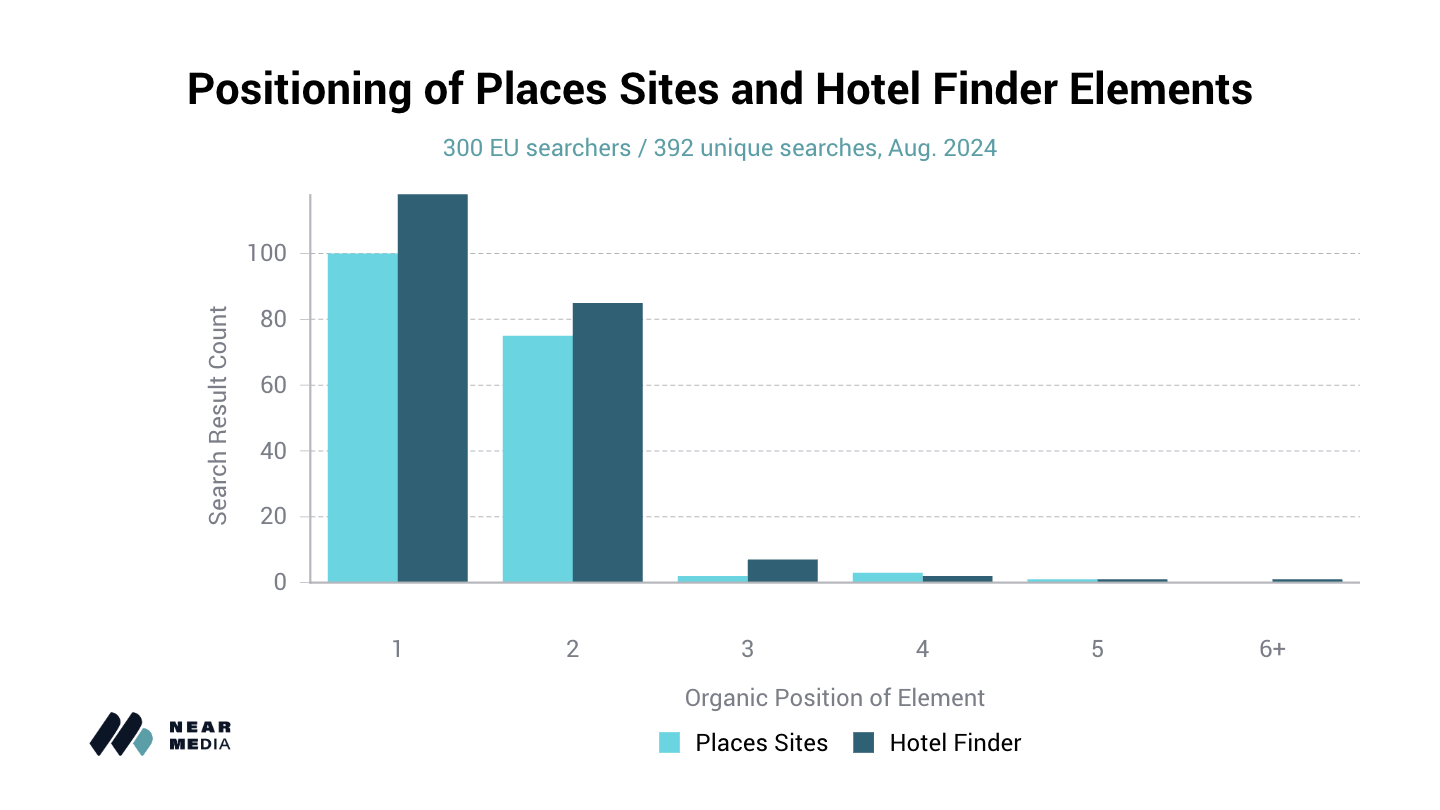
On the surface, Google appears to be giving the Places Sites module prominent billing, presenting it in either the first or second organic position 45% of the time.
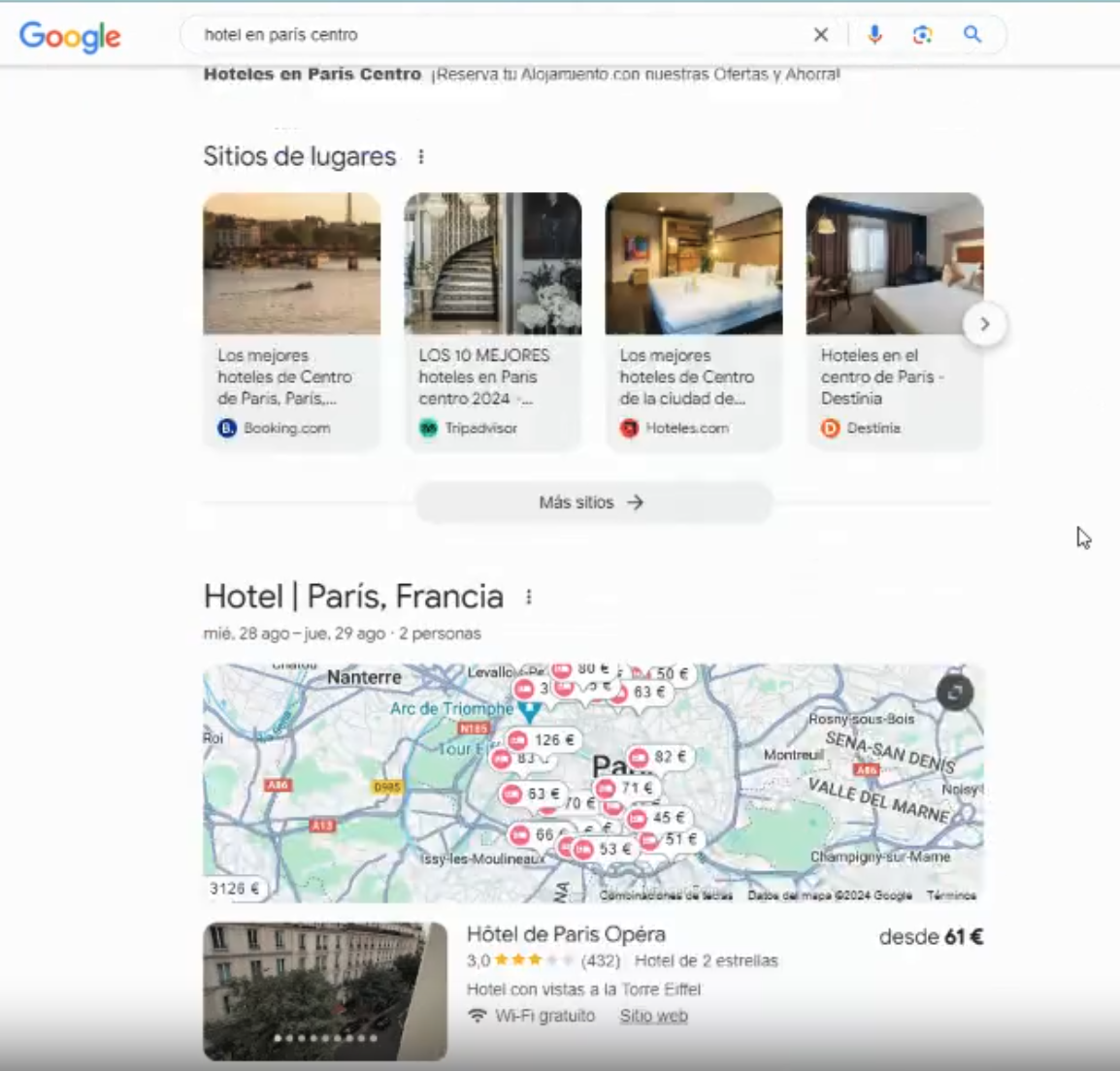
**Typical hotel SERP presentation; screenshot from a search behavior recording*
However, Google continues to present its Hotel Finder either just above or just below the Places Sites module, invariably drawing searchers’ eyes and clicks to its own results with the embedded map, colorful iconography, and interactive photo elements. The Hotel Finder also appears in the top two positions 16% more often than the Places Sites module.
---
### **Engagement with Google SERP elements by device**
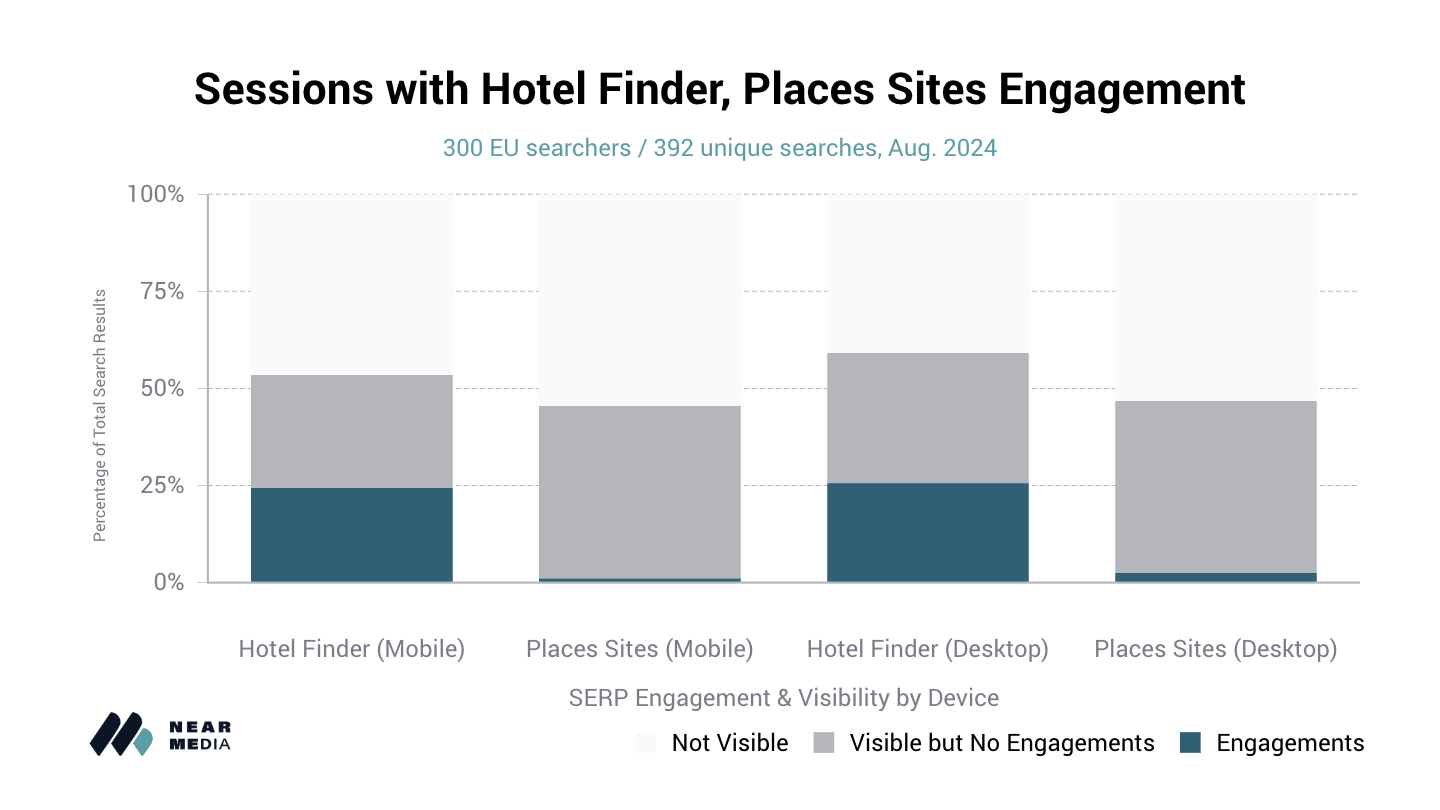
Even when the Places Sites module appears in the top two positions, **this feature has little to no impact on behavior**. In fact, were it given such prominent placement, a traditional organic result would likely earn far more clicks. The Places Sites module received almost no engagements (only 7 out of 601 total clicks), mirroring the lack of engagement we’ve seen in other local search verticals including restaurants.
Our surprise in the hotel vertical was the relative lack of visibility for both the Hotel Finder *and* Places Sites module. In restaurants, the Local Pack of Google Business Profiles was visible to searchers almost 90% of the time, vs. just over 50% for the Hotel Finder in this study.
The reasons?
1. Users rarely scrolled past the extensive ads Google showed for discovery searches (e.g. “hotels in rome”).
2. We saw a significant number of brand searches for Aggregators (Booking in particular), for which Google displays neither the Hotel Finder or Places Sites module.
---
### **Engagement with Google SERP elements by position**
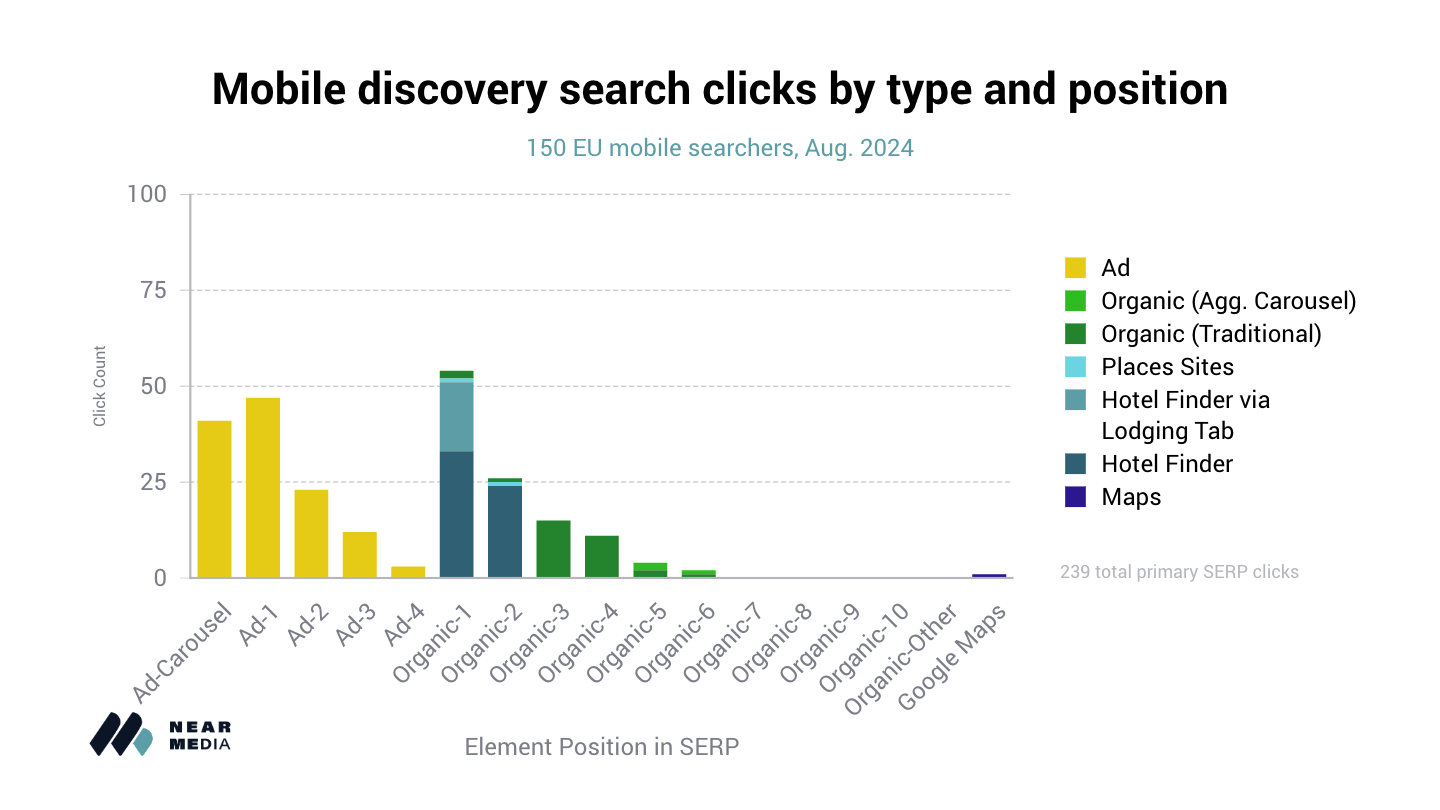
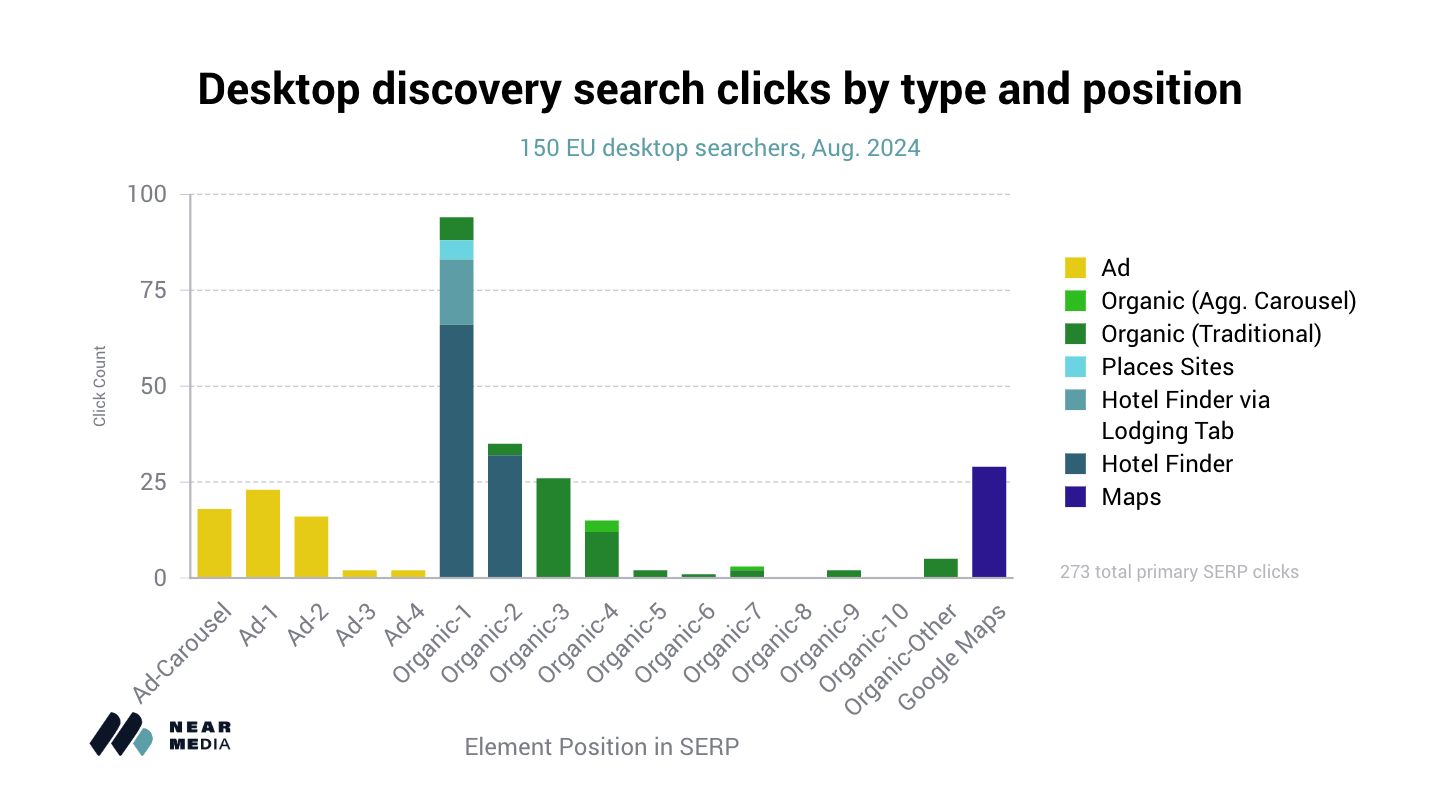
Mobile searchers were highly likely to engage with ads. This was the primary reason so few of them encountered either the Hotel Finder or Places Sites module: many did not make it far enough down the page to see them.
**In fact, ads received the majority of all mobile clicks (53%)**, while the Hotel Finder garnered 31%. Organic results (whether Places Sites, Aggregator Carousels, or Traditional organic results) attracted just 15% of all mobile clicks.
Desktop behavior hewed a little more closely to the results of our previous research. Ads received 22% of desktop clicks, while the Hotel Finder received 42%. Organic results received 25%. (7 desktop users went directly to Google Maps, which accounted for 11% of all desktop clicks.)
---
### **Engagement with Google SERP elements when the Hotel Finder is Visible**
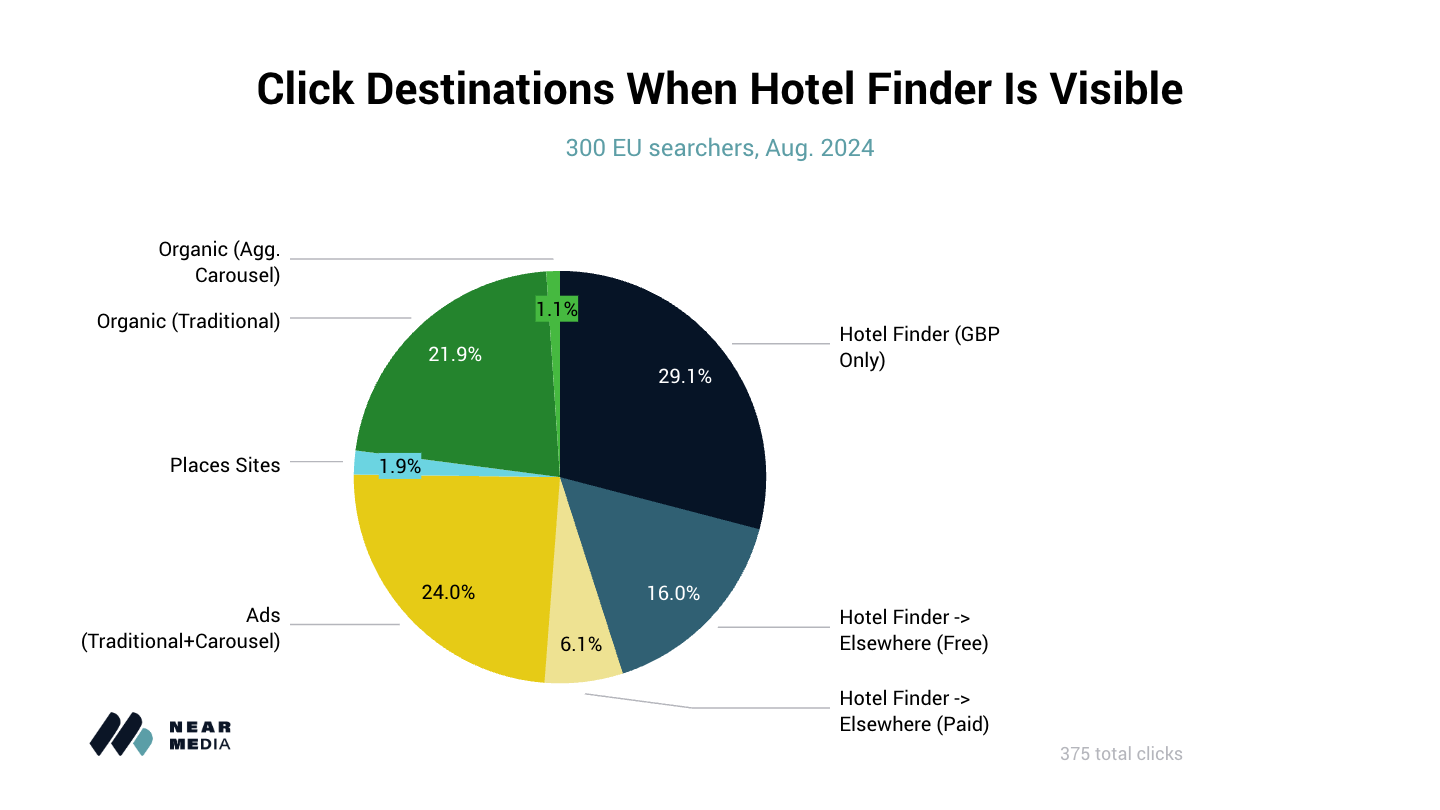
Our panel of 300 searchers made 395 total clicks within Google results when the Hotel Finder was visible.
When visible, the Hotel Finder drew half of all clicks (197/395). And half of Hotel Finder Profile views (97/197) ended up on a Supplier or Aggregator site for that property.\*
Ads still drew almost a quarter of all clicks, even after the searcher had scrolled far enough to encounter the Finder.
Organic results drew another fifth of clicks, while the Places Sites module and organic Aggregator Carousel, introduced as the centerpieces of Google’s DMA compliance earlier in 2024, drew less than 2% each.
*\*Some consumers visited* multiple *sites via the same Google Hotel Profile to do more research or make a booking, hence the representation of Hotel Profile clicks totaling slightly more than 50% in the above graphic.*
---
### **Engagement with Search Results by Click Destination**
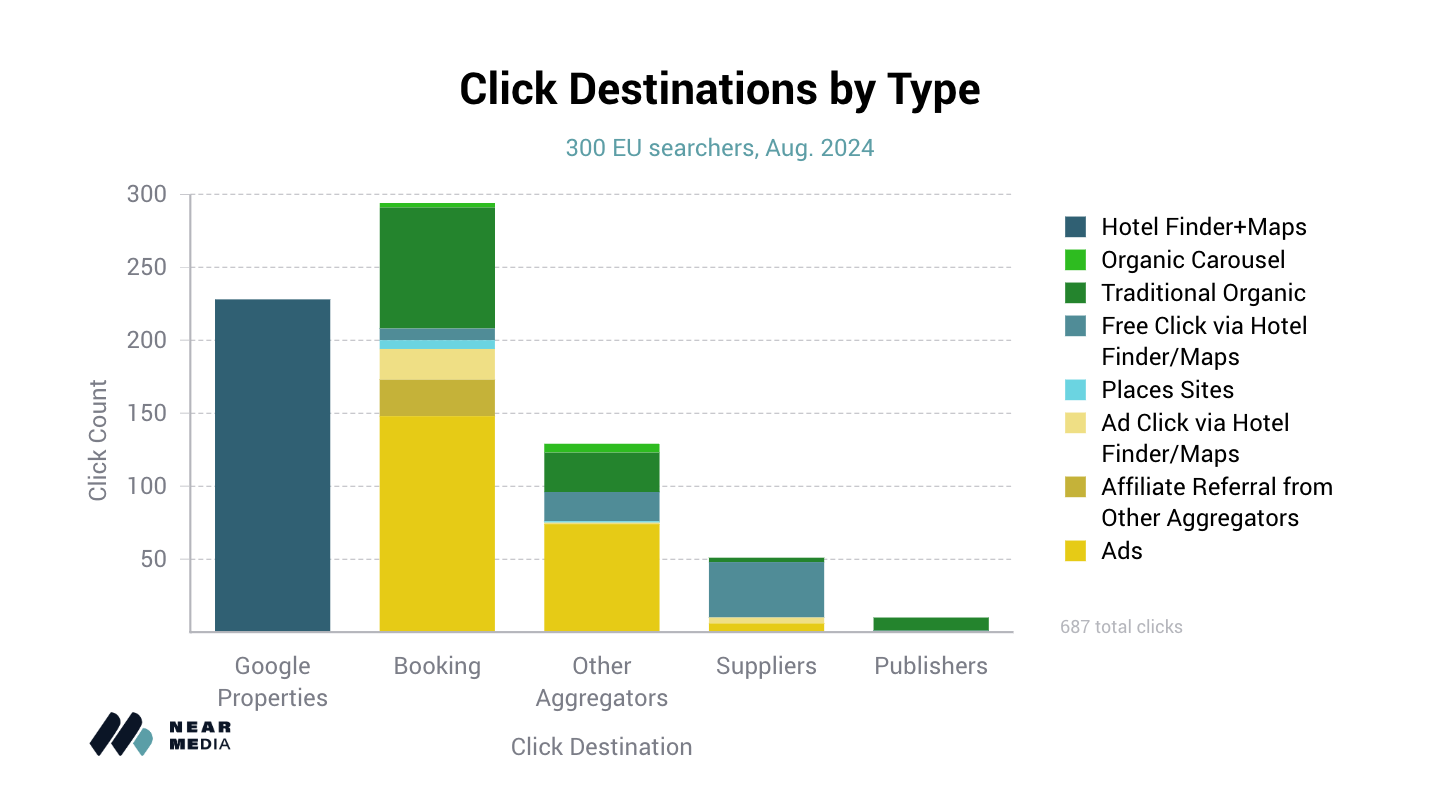
**Aggregators received approximately three-fifths of all clicks, and paid for approximately three-fifths of those clicks.**
Another 33% of clicks went to Google Hotel Finder Profiles or Google Maps, with consumers clicking through to Suppliers’ and Aggregators’ websites from those Profiles equally about 18% of the time. Hotel Finder profiles were the primary source of Suppliers’ traffic (almost entirely unpaid), but consumers largely used these Profiles to disqualify a particular hotel from consideration without leaving Google.
Meanwhile, nearly half of all Aggregator clickthroughs from Hotel Finder Profiles were monetized by Google (seen in the screenshot below as “Patrocinado - Opciones destacadas”).
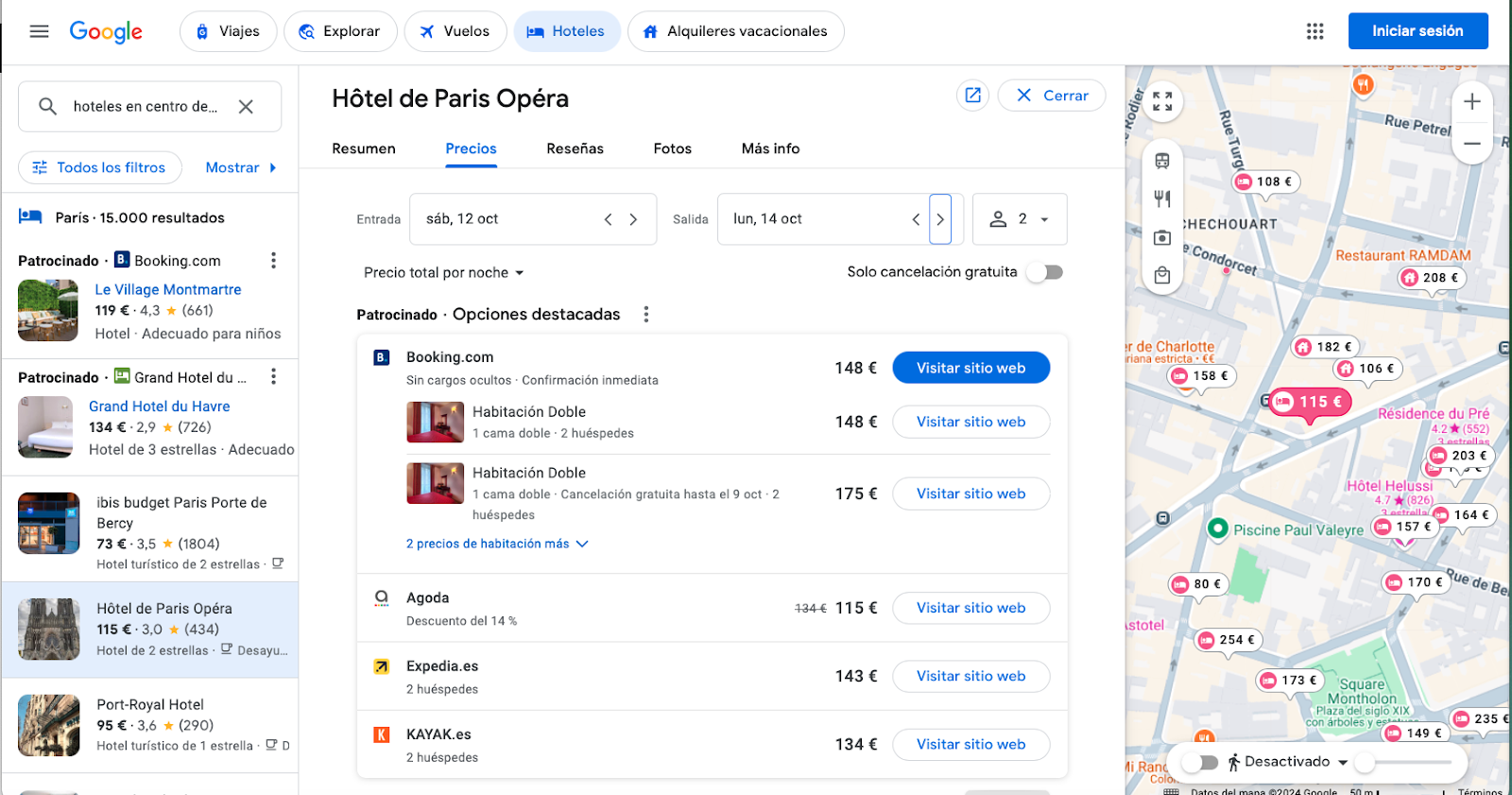
While Suppliers are eligible to place ads alongside Aggregators in carousels, traditional ad blocks, and on Google’s Business Profile of their hotel, consumers don’t encounter them at nearly the same frequency as Aggregators.
Rarely if ever do paid Aggregator clicks from a Hotel Finder Profile or an Ad Carousel unit take users to directly the corresponding property on the Aggregator, but instead to a list of multiple properties. This increases the chance that a user will book **a** room on the Aggregator, even if not their original preference from the Google Hotel Finder.
Boutique suppliers don't have the same opportunity to convert a user into a different property than the one clicked from Google, making it harder for ad spend to pencil out.
Whether Google’s ad auction in this vertical is “fair and contestable,” a commonly-stated goal by many European Commissioners, is worthy of future investigation.
---
### **Differences in Search Behavior by Country**
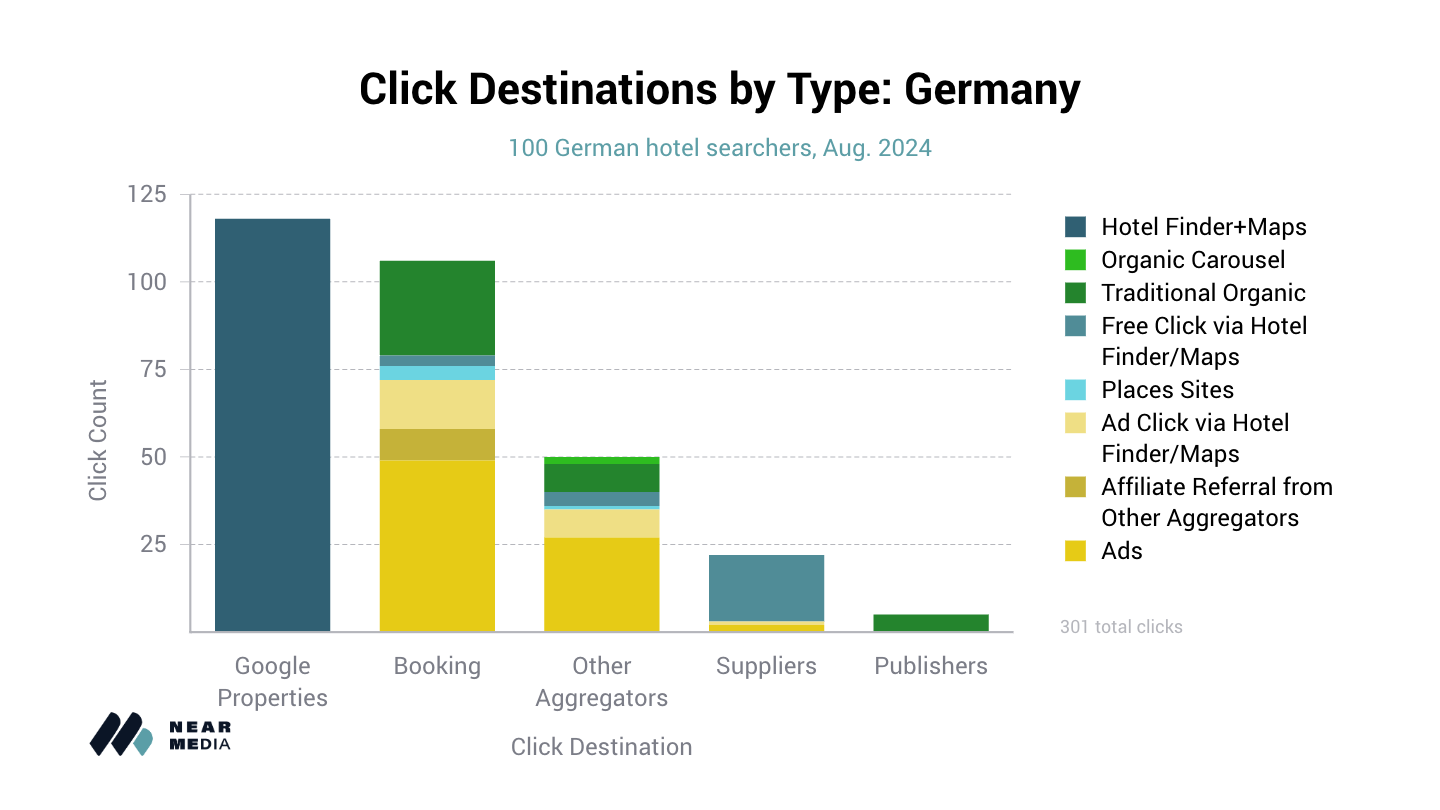
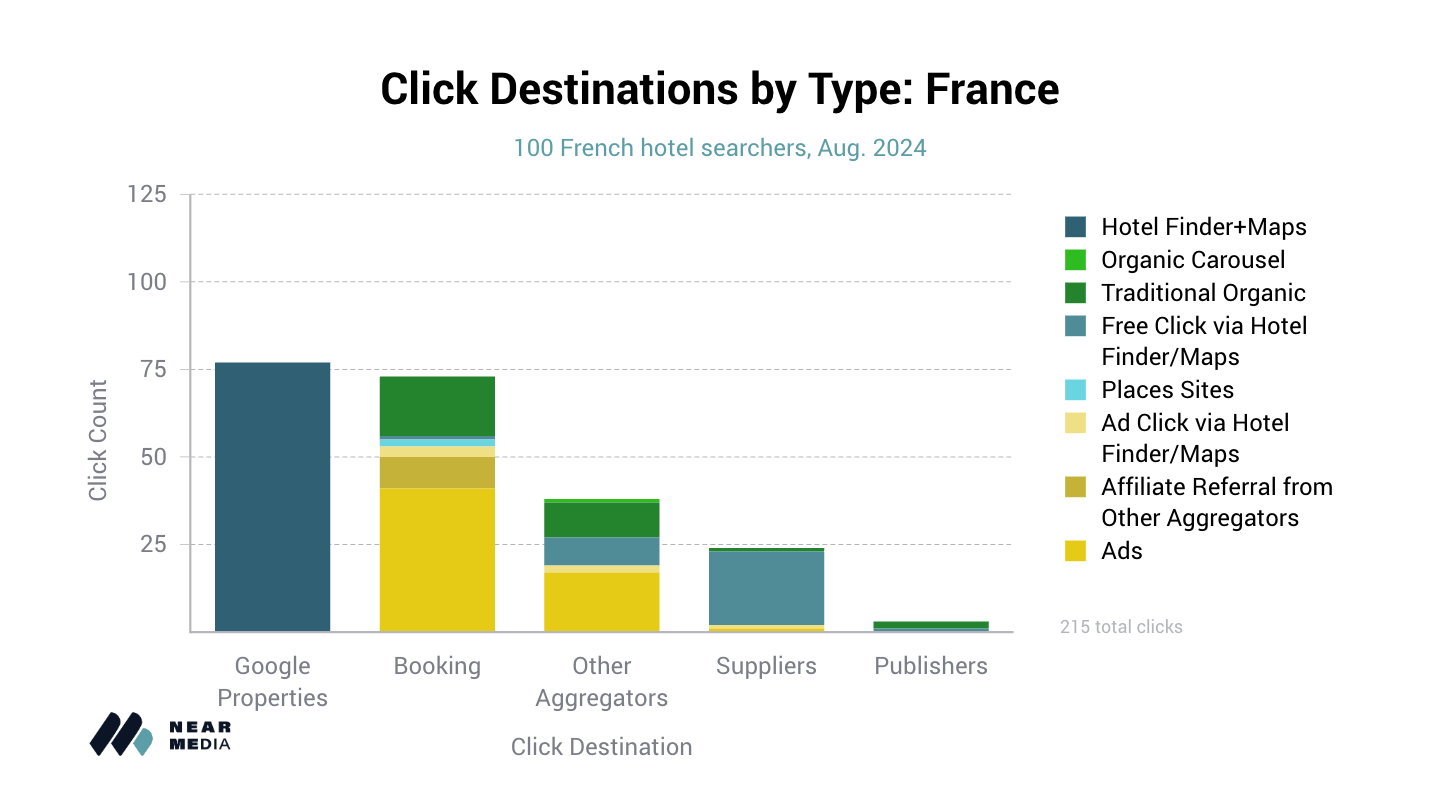
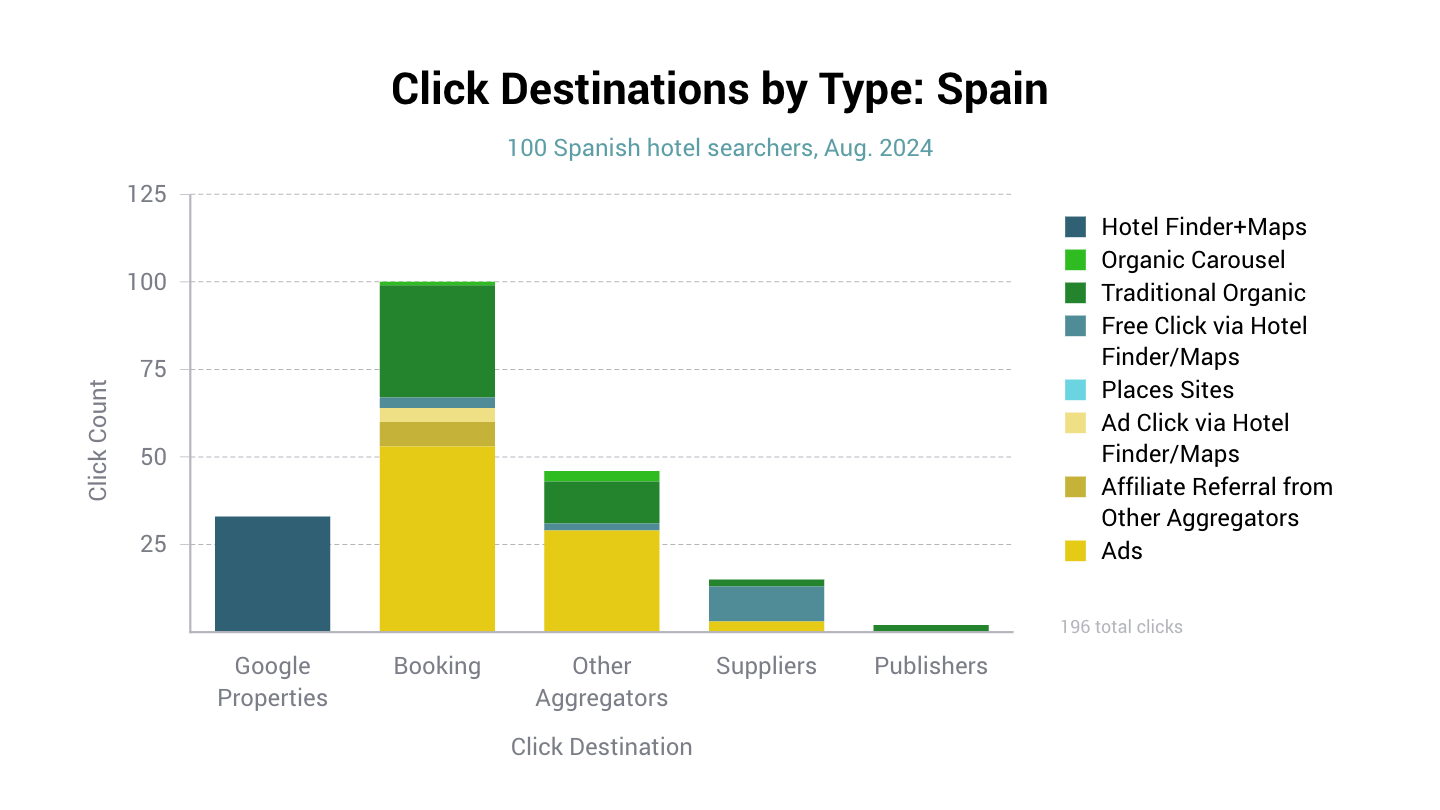
We saw different behaviors across German, French, and Spanish users in terms of their most common click destinations. German and French users were considerably more likely to engage with the Google Hotel Finder than Spanish users; Spanish users were the most likely to use Booking (though over 50% of search sessions in all three countries included at least one click to Booking). This is particularly noteworthy in the context of [Spanish regulators’ existing fine of Booking](https://www.reuters.com/markets/europe/spain-fines-bookingcom-448-million-euros-abusing-dominant-position-2024-07-30/?ref=nearmedia.co) for abusing its market position.
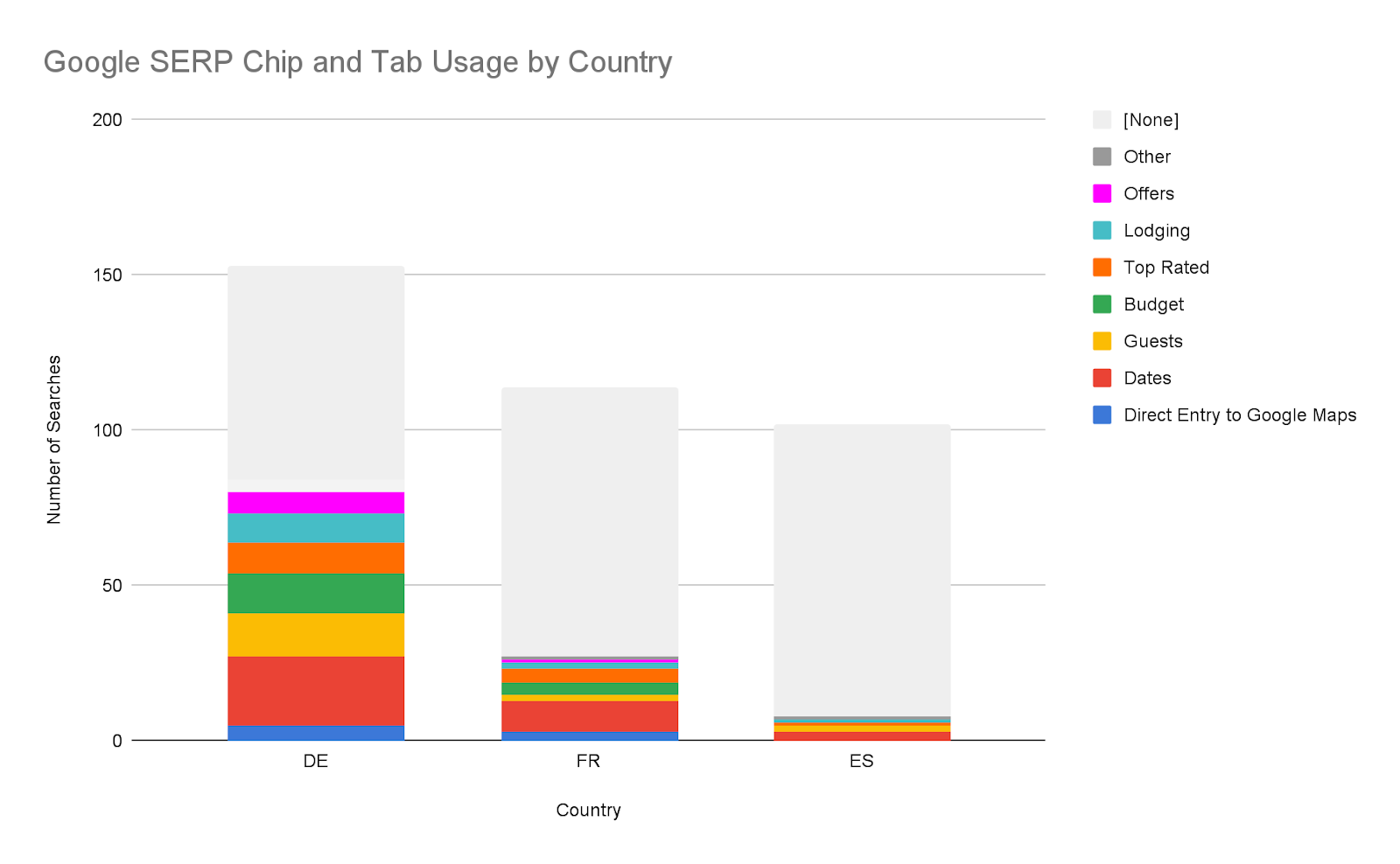
The primary reason for the difference in feature engagement is that French and especially German searchers were more likely to utilize the Tabs and Chips at the top of the Google SERP (most of which trigger prominent Hotel Finder results). **Not a single participant out of 300 clicked the Places Sites refinement, however,** and only 44 of 300 searchers across all three countries (14.6%) used *any* tab in their search session.
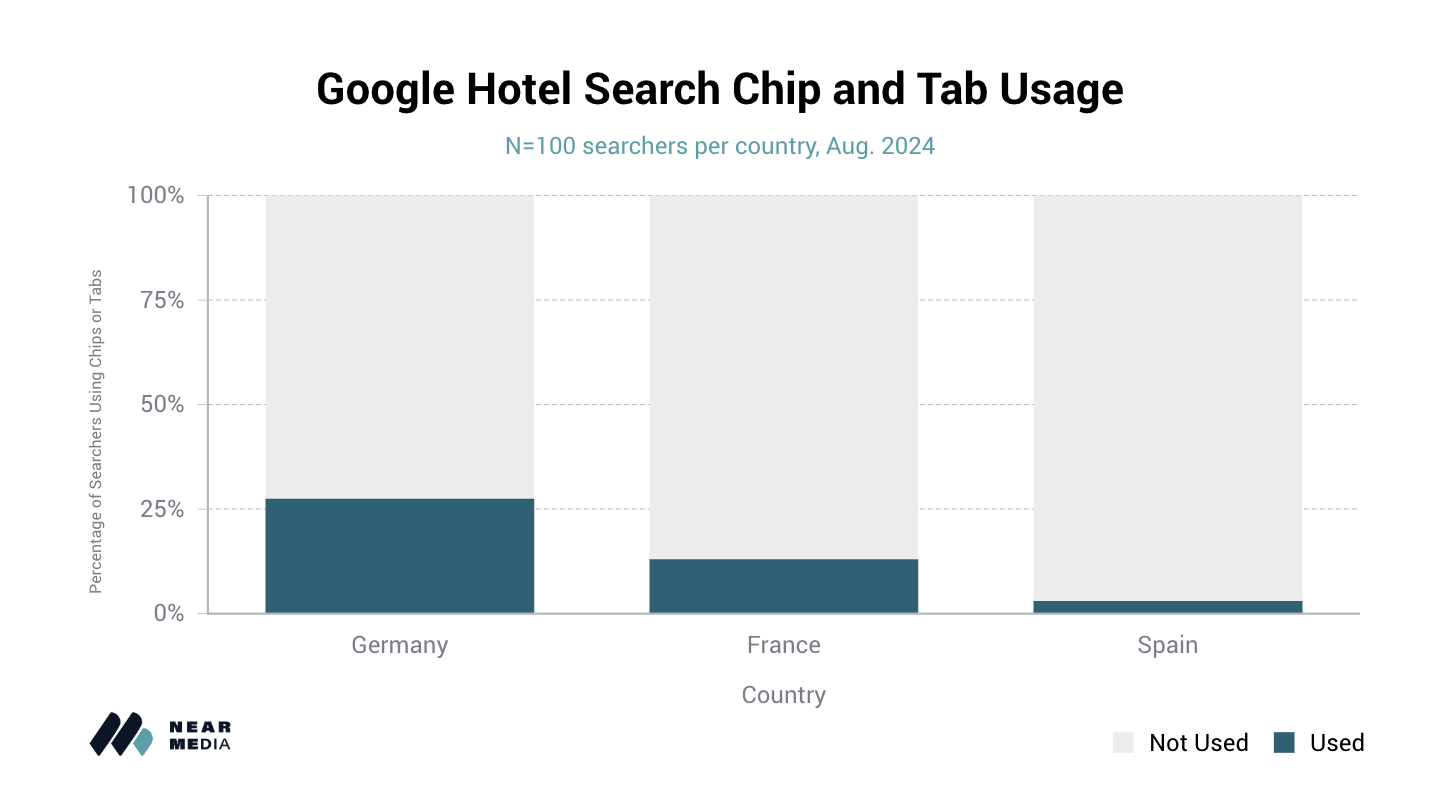
German searchers were also more likely to refine their initial query or queries–performing a higher number of total searches, and evaluating more results overall than their French or Spanish counterparts.
---
### **Where Searchers View and Book Hotel Properties**
The consistent theme across all three countries was the tiny amount of traffic that Suppliers received, even after consumers considered all their options and were ready to book.
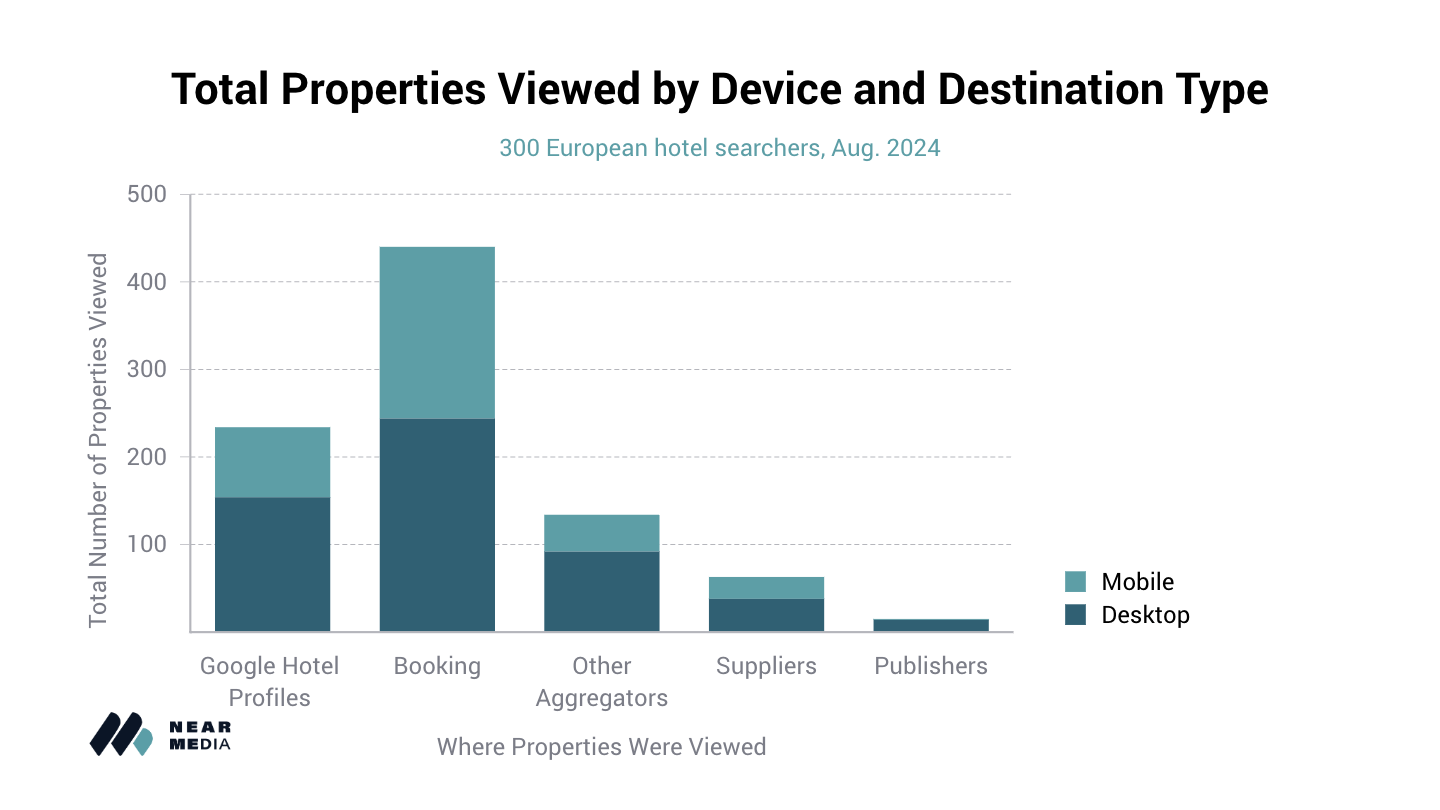
**Only 8% of all hotels/rooms were viewed on Supplier websites (63/774 total),** vs. 57% on Booking, 30% in the Google Hotel Finder, and 17% on non-Booking Aggregators. (Searchers viewed approximately 100 hotels/rooms on multiple websites.)
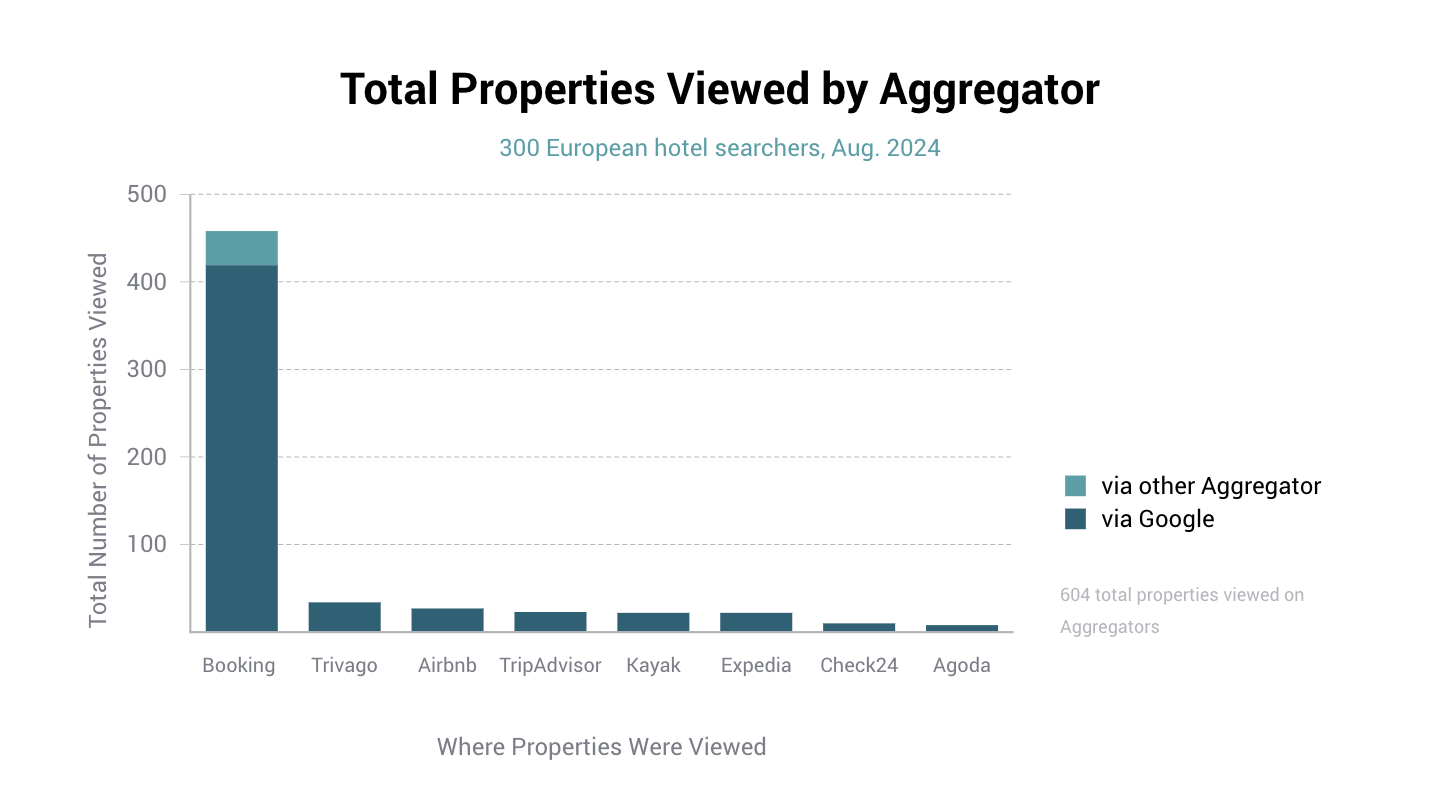
Booking completely dominates other aggregators in terms of number of properties viewed, and even drew a meaningful amount of traffic from other aggregators such as Kayak, Trivago, TripAdvisor, and others (presumably for an affiliate fee or revenue share).
As noted earlier, Google does send traffic to Suppliers’ websites from the booking section of its Hotel Finder Profiles, but when the consumer is ready to book, they frequently end up on an Aggregator website–many times, thanks to a fee paid to Google by the Aggregator.
In previous DMA workshops, Google has [attempted to deflect responsibility](https://www.nearmedia.co/google-dma-compliance-redefinition/) for arbitrating the traffic battle between Suppliers and Aggregators. However, its aggressive monetization of hotel search relative to other verticals raises the ultimate price consumers have to pay for a given hotel room, no matter where they book.
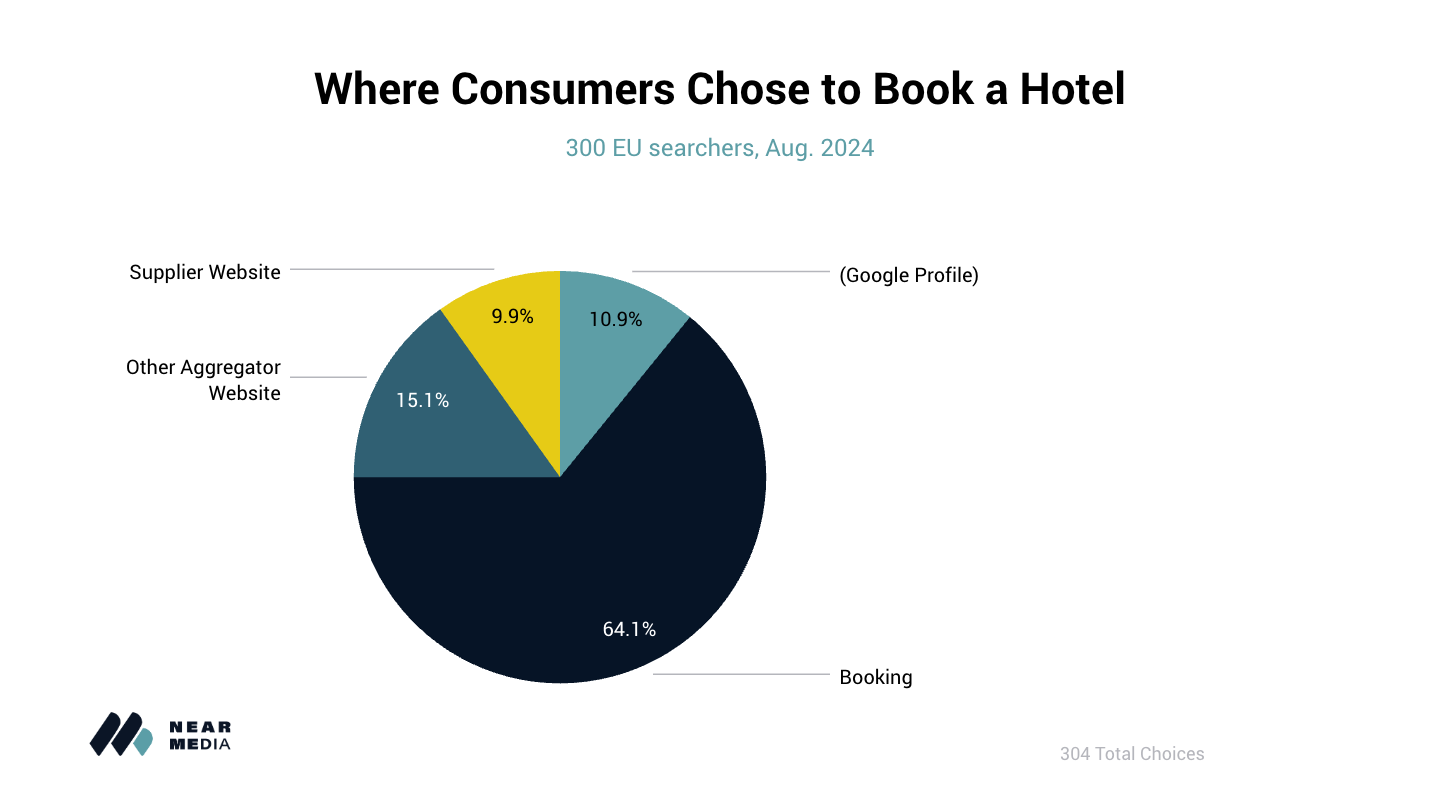
Only 10% of searchers’ ultimate choice of room came from a Supplier’s website, whereas 64% chose their hotel room on Booking, and 14% on another Aggregator.\*
*\* For obvious reasons, we instructed users not to make an actual booking, hence 11% of users completing the task while still viewing a Google Hotel Finder result.*
---
## **Conclusion**
We expected the results of this study to more-or-less match the results of our earlier search behavior studies in other verticals. They diverged in significant ways.
In European hotel search, Google’s own properties are less visible to consumers and receive somewhat less engagement from consumers relative to other local verticals, including restaurants in Europe and many U.S. verticals we’ve investigated).
That said, when it *was* visible to searchers in our study, the Google Hotel Finder still received a plurality of clicks, which is largely inline with our previous research. Also inline with our previous research, neither the Places Sites module nor the organic Aggregator Carousel introduced by Google in response to the DMA drove meaningful consumer engagement. And zero consumers in our study clicked the Places Sites refinement tab.
The impact of Google’s self-preferencing may be less noticeable in hotel search than in other local search verticals, but only because it is monetizing hotel search so heavily.
Consumers are far more likely to engage with Aggregator results in the hotel vertical than the others we’ve investigated – largely because Aggregators (especially Booking) are dominating Google’s *paid* search results. In many cases, mobile users in particular wouldn’t scroll past the first or second ad, one of which was usually from Booking.
We see one gatekeeper (Booking) enhancing its own dominant market position by paying another gatekeeper (Google) for premium placement. Both gatekeepers benefit, at the expense of the rest of the market, and neither has an incentive to change the status quo.
This is hardly a great outcome for consumers, who bear the ultimate cost of increased advertising costs paid to Google, and increased transaction fees paid to Booking, in the form of higher room prices.
Relative to other local search verticals, the results of our investigation into hotel search suggest that if there *is* a strong Aggregator in a given vertical, consumers will make use of it.
But by monetizing queries so heavily, and showing its own Hotel Finder results so prominently, Google has made it increasingly difficult for less-entrenched Aggregators (let alone Suppliers) to gain traction when it comes to capturing hotel bookings.
---
*September 20, 2024*
*Data on the percentage of searchers making use of chips and tabs was added to* [*the Chip and Tab section of this post*](#chip-tab-usage)*, following the news that* [*Google's latest proposal to comply with the Digital Markets Act*](https://www.bloomberg.com/news/articles/2024-09-20/google-faces-eu-ultimatum-in-fresh-attack-on-search-dominance?ref=nearmedia.co) *centers around tabbed navigation options.*
### How Many Reviews Do You Need to Reach a 5.0 Rating?
URL: https://www.nearmedia.co/how-many-reviews-do-you-need-to-reach-a-5-0-rating-2/
Last updated: 2024-11-26T16:39:20.000Z
### Review Average Goal Calculator
Take your review game to the next level. To save you the trouble of remembering your 8th grade algebra (which most people hated anyways), we created a calculator that tells you exactly how many reviews you need to get that bump in your average rating.
Simply enter your target rating, add your current review counts at each rating and hit calculate. The calculator will let you know how many more 5-star reviews you need to get there.
---
# Review Score Calculator
*Enter Your Target Average Rating (e.g. 4.5)*
*Enter Total Reviews for Each Star Rating*
Number of 1-Star Reviews
Number of 2-Star Reviews
Number of 3-Star Reviews
Number of 4-Star Reviews
Number of 5-Star Reviews
Calculate
### Branding & SEO, Google Non-Compliant, AI Eating Social
URL: https://www.nearmedia.co/branding-seo-google-non-compliant-ai-eating-social/
Last updated: 2024-09-03T17:44:29.000Z
### Brand Building Critical for SEO
Since the revelations from the Google antitrust trial and [Search API leak](https://www.nearmedia.co/google-rides-the-clickstream-long-tail-citations-ai-overview-fails/), there's been renewed interest among search marketers in branding – for several reasons, among them that brands get clicks. A couple of weeks ago, we had a very interesting Near Media podcast [discussion about branding and search](https://www.nearmedia.co/ep-170-the-increasing-role-of-brand-in-digital-marketing-seo/) with Wix's Mordy Oberstein. As part of that we talked about brand building in local where there often aren't recognized brands. Boosting trust and reliability signals online, offline community engagement, delivering superior customer experiences and, of course, creating a strong reputation are paths to local brand building. People are going to choose recognized brands over lesser known options. Indeed, most sites or content publishers with weak brands are reduced to "commodity" information providers. Since day one, the Google SERP has always "flattened" and commoditized content; AIOs [are the latest threat](https://pressgazette.co.uk/platforms/google-ai-overviews-rollout-hits-news-publisher-search-visibility/??ref=nearmedia.co). And even though SERPs today have more branding elements (e.g., logos, images), brand building is one of the only defenses against what might be called the capriciousness of the algorithm. People search directly for brands or quickly choose them, as we've seen in Near Media user testing. Without a brand you're fighting for attention, every single query, in the purgatory below the fold.

Source: ChatGPT
**Our take:**
- Gone are the days when you can reliably build a brand via organic search. Brands must now be built off Google, mostly offline and on social media.
- Companies often sacrifice brand budgets for performance marketing, to meet quarterly quotas and KPIs. But you can't neglect branding any more.
- Rand Fishkin and Mike King are both strong advocates of building brands to improve search visibility, [including in local](https://www.sterlingsky.ca/google-algorithm-leak-decoded/?ref=nearmedia.co).
### Report: All DMA Gatekeepers Non-Compliant
The BEUC (The European Consumer Organisation) has issued a [report](https://www.beuc.eu/sites/default/files/publications/BEUC-X-2024-062%5FSummary-non-compliance-reports-gatekeepers.pdf?ref=nearmedia.co) that finds all of the designated "gatekeepers" under the EU [Digital Markets Act](https://commission.europa.eu/strategy-and-policy/priorities-2019-2024/europe-fit-digital-age/digital-markets-act-ensuring-fair-and-open-digital-markets%5Fen?ref=nearmedia.co) (DMA) are non-compliant in one form or another. The six gatekeepers are: Amazon, Apple, ByteDance, Google, Meta and Microsoft. Broadly, the DMA focuses on consumer choice and consent and seeks to prevent self-preferencing and other practices that keep consumers on gatekeeper platforms and block competitors. BEUC is a non-profit, non-governmental organization. The report will be influential and receive coverage but it has no immediate impact. Among other alleged violations, Meta, Amazon, ByteDance (TikTok) and Microsoft were all faulted for manipulating users (dark patterns) into giving consent to data sharing. Apple was criticized for App Store-related practices. Google is also criticized for steering users into sharing their personal data. Of interest to us, the report says that Google's SERP "redesign of its search results page has not eliminated Google’s preferential treatment of its own services." Our user testing in Europe would generally support that conclusion.
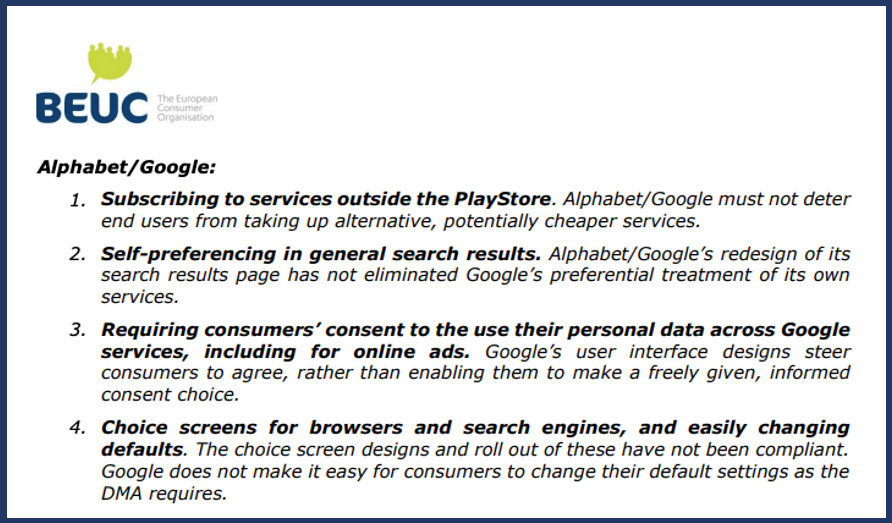
Source: BEUC report on DMA compliance
**Our take:**
- Many of Google's structured SERP features will qualify as self-preferencing under the DMA; Google does not want to change them.
- Local is going to be a key battleground; Google is trying to define local as an element of "core search" and [exempt it from DMA compliance](https://www.nearmedia.co/google-dma-compliance-redefinition/).
- Apple, Google and Meta [are currently under DMA investigation](https://digital-markets-act.ec.europa.eu/commission-opens-non-compliance-investigations-against-alphabet-apple-and-meta-under-digital-markets-2024-03-25%5Fen?ref=nearmedia.co). No fines have yet been imposed. Penalties can be 10% of global revenue (billions).
### Flooding Social with AI Content
Content creation is one of the top AI use cases and social media content is probably leading in that context, ahead of email marketing, website copy, blog posts, ad copy and landing pages. In addition, reputation management platforms now generally incorporate review responding via AI tools. AI is thus already well established in the social media world (including [for disinformation](https://www.rand.org/pubs/articles/2024/social-media-manipulation-in-the-era-of-ai.html?ref=nearmedia.co)). So it comes as no surprise that a global Capterra [survey](https://www.capterra.com/resources/generative-ai-for-social-media-content/?ref=nearmedia.co#businesses-will-substantially-increase-their-use-of-genai-for-social-media-marketing) from earlier this summer predicts that roughly half of social media content will be AI-generated in two years. But the numbers are even higher in many English language countries (see graphic). Efficiency and productivity are cited as the primary benefits of AI in the survey. But there are also concerns, including maintaining authenticity (43%), maintaining the value of human creativity (40%), ensuring content resonates (35%). Google is adapting to increasing AI generated content with various strategies, [including elevating quality standards and indexing fewer pages](https://www.searchenginejournal.com/seozempic-quality-over-quantity-for-google-indexing/525444/??ref=nearmedia.co). AI content in social isn't subject to Google's quality standards but it will eventually impact Google.
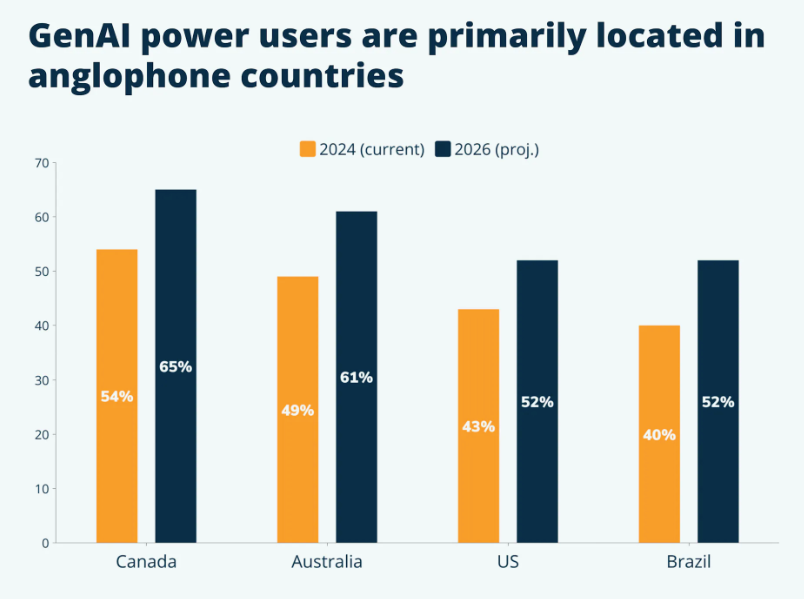
Source: Capterra
**Our take:**
- In the next decade it will probably be true that a majority of online content is at least partly AI generated – not just social media.
- It's not entirely clear how audiences will react when much or most of what they see online is touched by AI. There are [indications](https://futurism.com/poll-americans-presenting-ai-content-human-illegal?ref=nearmedia.co) people won't like it.
- A flood of AI content across the web will make general search engines such as Google less useful and less trustworthy. Google is well aware.
## Recent Analysis
- **Near Memo episode 172:** [LSAs get more GBP features, Google Maps gets a cleanup, Yelp sues Google for antitrust violations](https://www.nearmedia.co/ep-172-lsa-gets-more-gbp-features-google-maps-gets-cleanup-yelp-sues-google-over-antitrust/).
## Short Takes
- What **ranking on Google** [requires today](https://www.sterlingsky.ca/google-algorithm-leak-decoded/?ref=nearmedia.co) (including local).
- German example: only **hotels** with "connectivity partner" [clickable](https://x.com/petrakraft/status/1830547506582716429?s=12&ref=nearmedia.co).
- Clarifying the relationship between **AIOs** [and top organic results](https://www.authoritas.com/blog/why-generative-to-organic-alignment-scores-goa-score-matter-when-optimising-for-ai-overviews??ref=nearmedia.co).
- Top 20 domains appearing in **Google** [Top Stories module](https://detailed.com/top-stories/??ref=nearmedia.co).
- **Google Core Update** [poll](https://www.seroundtable.com/google-august-2024-core-update-impact-poll-results-37989.html?ref=nearmedia.co): largest group (44%) said rankings down.
- Semrush [expands](https://www.linkedin.com/feed/update/urn:li:activity:7236730614433902592/?ref=nearmedia.co) **Google AI Overview** tracking capability.
- Google [testing](https://www.seroundtable.com/google-new-shopping-search-design-37993.html?ref=nearmedia.co) new **shopping search UI** design.
- How to use Google's new **Gemini Gems** [for SEO](https://www.searchenginejournal.com/new-google-gemini-ai-experts-called-gems-might-be-good-for-seo/525677/??ref=nearmedia.co).
- Google [adding more controls](https://blog.google/outreach-initiatives/civics/preparing-for-the-us-elections-in-november/?ref=nearmedia.co) against **AI misinformation**.
- **Google indexing** fewer pages: [focus on quality not quantity](https://www.searchenginejournal.com/seozempic-quality-over-quantity-for-google-indexing/525444/??ref=nearmedia.co).
- **Alibaba** says its AI [can analyze 20+ minute videos](https://venturebeat.com/ai/alibaba-releases-new-ai-model-qwen2-vl-that-can-analyze-videos-more-than-20-minutes-long/?ref=nearmedia.co) and understand them.
***Note: the newsletter will not publish on Thursday.***
Listen to our [latest podcast](https://www.nearmedia.co/memo/).
[](https://nearmedia.co/memo?ref=nearmedia.co)
How can we make this better? Email [us](mailto:gsterling@nearmedia.co) with suggestions and recommendations.
### Ep 172: LSA Gets More GBP Features, Google Maps Gets Cleanup, Yelp Sues Google Over Antitrust
URL: https://www.nearmedia.co/ep-172-lsa-gets-more-gbp-features-google-maps-gets-cleanup-yelp-sues-google-over-antitrust/
Last updated: 2024-08-30T20:44:13.000Z
**Part 1 starts 00:13 -** [**LSA Increasingly relying on GBP Features**](https://youtu.be/IM-wDP15R18?ref=nearmedia.co)
We delve into Google's ongoing “fixes” of LSA features, where reviews and booking tools for LSAs are being integrated from GBP. This move is seen as an attempt to streamline operations and reduce costs, especially in light of Google's recent staffing cuts as well as improve LSA’s ineffective review moderation. While operational efficiency might improve, Google’s tolerance of abuses in GBP means that the risk of review fraud in LSAs will persist.
Segment Reference Articles
[Is Google Replacing LSA Reviews with GBP Reviews?](https://www.nearmedia.co/lsa-reviews-to-be-unified-with-gbp-reviews-finally/)
[Google to Use GBP reviews in US LSAs](https://x.com/TheSocialDude/status/1828529125986050335?ref=nearmedia.co)
[Booking for LSA and GBP are merging](https://x.com/TheSocialDude/status/1828533977759748549?ref=nearmedia.co)
**Part 2 starts 11:29 -** [**Google Maps Gets a Makeover: Sleeker Design, but More Ads?**](https://youtu.be/3zh%5FCFpxhuE?ref=nearmedia.co)
Google's latest aesthetic changes to Google Maps, which have rolled out across both mobile and desktop platforms, includes subtler colors and smaller, rounder pins that make the interface resemble Apple Maps. While the changes make the map less cluttered, they also seem to highlight ads and promotional content more prominently. This shift has led to concerns that Google is prioritizing monetization over user experience, as irrelevant ads are now more noticeable on the map.
Segment Reference Articles:
[Google Maps rolls out new colors on Android, iOS, and web](https://9to5google.com/2023/11/29/google-maps-colors-update/?ref=nearmedia.co)
[Google Maps rolling out redesigned pin shape and colors](https://9to5google.com/2024/08/27/google-maps-pin-redesign/?ref=nearmedia.co)
[Google Maps cleans up icons and colors and makes maps more readable so you can see ads?](https://www.linkedin.com/posts/mblumenthal%5Fgoogle-maps-cleans-up-icons-and-colors-and-activity-7234624788105740291-Nc89?utm%5Fsource=share&utm%5Fmedium=member%5Fdesktop)
**Part 3 starts 16:55 -** [**Yelp Takes on Google: Antitrust Showdown Over Local Search Dominance**](https://youtu.be/xN2Fy8VWcAk?ref=nearmedia.co)
Yelp's recent antitrust lawsuit against Google, filed in federal court in Northern California, accuses Google of abusing its market position in local search, echoing similar claims made in the recent DC Circuit case where Google was found liable for antitrust violations. Yelp argues that local search is a unique market, separate from general search, and claims Google unfairly pushed its own products, like the "local pack," at the expense of competitors like Yelp. The lawsuit highlights how Google's dominance in local search reviews and advertising has stifled competition, a move Yelp sees as detrimental to the broader local ecosystem.
With the case potentially setting a precedent in defining local search as a distinct market, the outcome could have significant repercussions not only in the U.S. but also in Europe, where Google has argued against treating local search separately.
Segment Reference Articles:
[It's On: Yelp v. Google](https://www.nearmedia.co/yelp-v-google-seo-challenges-section-230s-new-crack/?ref=near-media-newsletter)
[Yelp versus Google: An antitrust court fight plays out in San Francisco](https://www.latimes.com/entertainment-arts/business/story/2024-08-30/how-yelps-lawsuit-against-google-could-spur-other-litigation?ref=nearmedia.co)
[Court Filing: Yelp-v-Google (66 pg PDF)763673164-Yelp-v-Google.pdf1004 KBdownload-circle](https://www.nearmedia.co/content/files/2024/08/763673164-Yelp-v-Google.pdf "Download")
### Yelp v. Google, SEO Challenges, Section 230's New Crack
URL: https://www.nearmedia.co/yelp-v-google-seo-challenges-section-230s-new-crack/
Last updated: 2024-08-29T18:35:01.000Z
### It's On: Yelp v. Google
Yelp has arguably been Google's chief antagonist over the years. For example, it was Yelp's behind-the-scenes lobbying of European regulators that basically killed the early "[rival links](https://searchengineland.com/googles-new-european-antitrust-serps-heres-what-theyll-look-like-156904?ref=nearmedia.co)" antitrust settlement. And CEO Jeremy Stoppleman's 2018 [*60 Minutes* interview](https://www.youtube.com/watch?v=TVA-3X6Ae3o&ref=nearmedia.co) was instrumental in popularizing the narrative that Google was a monopoly abusing its power. Now, [Yelp has sued Google](https://blog.yelp.com/news/yelp-v-google/?ref=nearmedia.co) for violations of federal antitrust and California unfair competition law, based on Google's "self-preferencing and gatekeeping." The [complaint](https://trust.yelp.com/wp-content/uploads/2024/08/Yelp-v.-Google-Complaint-August-28-2024.pdf?ref=nearmedia.co) argues Google has engaged in numerous anti-competitive practices, including stealing information from Yelp’s website and passing it off as Google’s own; preferencing Google’s own local search results over Yelp’s; implementing a 'OneBox' feature to prioritize Google’s own inferior local search services at the top of the search results page; and even going so far as to tweak its algorithm and steer customers away from Yelp." The timing of this suit is significant, on the heels of the DC Circuit federal court [finding that Google had illegally exercised monopoly power](https://www.nearmedia.co/google-loses-ai-ankle-biters-gbp-menu-optimization/). Yelp is seeking both money damages and an injunction to stop Google's alleged self-preferencing. The antagonism between the companies goes back to Google's [failed attempt in 2009](https://techcrunch.com/2009/12/20/yelp-walks-away-from-google-deal-and-half-a-billion-dollars/?ref=nearmedia.co) to buy Yelp.
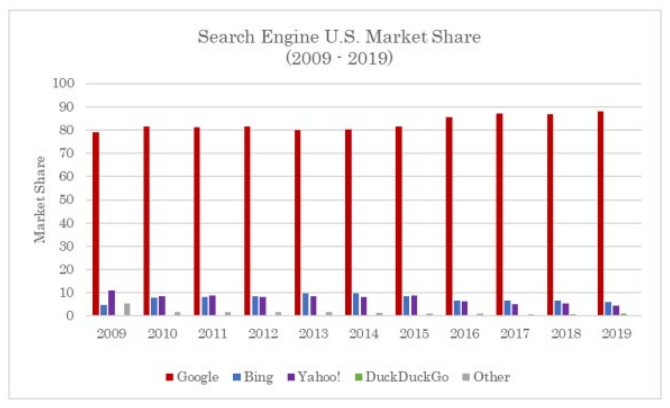
Source: Yelp complaint
**Our take:**
- Yelp's complaint goes to Google's control over its SERP, found years ago to be editorially sacrosanct ("free speech") – but no longer.
- The recent DC case (and liability finding) directly paves the way for Yelp, but so do the numerous past regulatory actions against Google.
- Earlier this case would have been dismissed (literally and figuratively) as competitive sour grapes. Today, Yelp has a real shot at winning.
- In Europe, Google is trying to [keep local out of the discussion of DMA compliance](https://www.nearmedia.co/google-dma-compliance-redefinition/), arguing that it's part of Google's core search experience.
### SEO Is Getting Harder
SEO is one of the most widely offered and in-demand marketing services. In a 2022 Near Media agency survey (unpublished), we found that it was the highest retention and most profitable service. It was also the second most common offering after website development. However, a new SEOFOMO [survey](https://hub.seofomo.co/surveys/the-seofomo-seo-consulting-survey/??ref=nearmedia.co) of "337 SEO specialists" shows it's getting harder to sell and fulfill SEO services. The survey respondents' locations and firm sizes weren't specified but the survey appears to reflect the experiences of smaller firms and independent consultants. The largest group of respondents (43%) said it was now harder to sell SEO services than a couple of years ago. Roughly 70% said they were able to achieve desired results between 70% and more than 90% of the time. (This self-assessed success probably needs to be taken with a grain of salt.) The rest fell short to varying degrees. Despite the success claims, 58% said achieving SEOs success was more difficult than two years ago. Respondents identified several factors that were seen as "a threat to their SEO consulting." The top three were Google UGC and brand site favoritism, self-preferencing and AIO overviews.
**Perceived threats to SEO consulting in the next year**
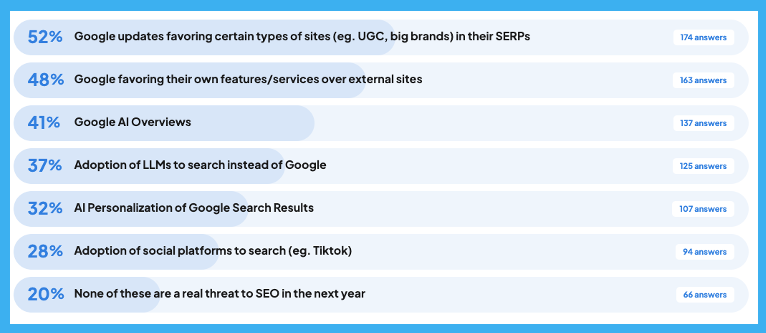
Source: SEOFOMO survey of SEO specialists
**Our take:**
- The Near Media survey found that SEO also had the fastest churn, in addition to the best retention, and that SEO was easier for smaller agencies to implement than large ones.
- Collectively the biggest complaint, in the SEOFOMO survey, appears to be Google's SERP changes that reduce the visibility of websites.
- SEOs have had a tumultuous couple of years, as [CTR revelations](https://www.nearmedia.co/google-rides-the-clickstream-long-tail-citations-ai-overview-fails/), ranking volatility and AI have created new concerns and uncertainty.
### Crack in the Section 230 Immunity Wall
The question of how much platforms must moderate their content and what should happen if they don't continues to be a hot issue. This week, for example, Pavel Durov, CEO of messaging app Telegram, [was arrested in France](https://www.reuters.com/world/europe/telegram-messaging-app-ceo-pavel-durov-arrested-france-tf1-tv-says-2024-08-24/?ref=nearmedia.co). Authorities alleged that Telegram enabled organized crime, money laundering and other types of illegal activity by failing to sufficiently moderate conversations on its platform. This event, which has shocked some in the tech industry, again raises the question of the accountability of technology executives for misconduct, disinformation and illegal activity on their platforms. In Europe there is no Section 230 to protect tech companies from liability. And the Digital Services Act explicitly mandates content moderation. In the US, of course, there is Section 230 which has immunized platforms from any liability for bad conduct or illegal behavior on their platforms. But now the 3rd Circuit Court of Appeals [reinstated a civil suit against TikTok](https://www.theverge.com/2024/8/28/24230523/tiktok-blackout-challenge-lawsuit-appeals-court?ref=nearmedia.co), saying that Section 230 did not immunize algorithms (vs. just "content"), which ultimately caused harm. This is a major decision but appears to directly "fly in the face" of the ruling in a recent SCOTUS decision in [Gonzalez v. Google](https://knightcolumbia.org/cases/gonzalez-v-google?ref=nearmedia.co), which said that algorithms did not "materially contribute" to the alleged illegality.

Source: ChatGPT
**Our take:**
- There are many "ifs," but if the lower court finds TikTok liability (and it holds) this opens the door to more lawsuits against "big tech."
- It's unclear what will happen if this TikTok case makes it to SCOTUS. For now, this is a MAJOR crack in the 230 immunity shield.
- People have been looking for ways to "hold platforms accountable" for lax content moderation. If this 230 exception ruling survives, this is it.
## Recent Analysis
- **Near Memo episode 171**: [GBP phone hacking problems persist, new FTC fake reviews rules, SearchGPT & the future of search](https://www.nearmedia.co/ep-171-gbp-phone-hacking-problems-persist-new-ftc-fake-reviews-rules-searchgpt-the-future-of-search/).
- ICYMI: **Is Google’s engagement-hacking masking stalled growth?**,[by David Mihm](https://www.nearmedia.co/google-engagement-hacking/).
## Short Takes
- Why you should seek **reviews** for [local sites beyond Google](https://www.linkedin.com/posts/darrenshawwhitespark%5Freviews-on-other-sites-are-activity-7234947302614818816--g%5F6/??ref=nearmedia.co).
- Google making **Maps** [more ad-friendly](https://x.com/mblumenthal/status/1828858519489261734?ref=nearmedia.co)?
- Case study: [adding address](https://www.sterlingsky.ca/address-on-website-impact-google-ranking/??ref=nearmedia.co) of **SAB** to website boosted local ranking.
- Booking for **LSAs and GBPs** [are merging](https://x.com/TheSocialDude/status/1828533977759748549?ref=nearmedia.co).
- Optimizing for Google's "From **Sources Across the Web**" [SERP feature](https://www.seoclarity.net/blog/optimize-from-sources-across-the-web??ref=nearmedia.co).
- **Google** [says](https://www.seroundtable.com/google-words-or-links-counts-37969.html?ref=nearmedia.co) link numbers and word counts don't matter.
- **AIOs** [starting to appear above ads](https://www.linkedin.com/posts/marktraphagen%5Fwere-starting-to-see-more-and-more-examples-activity-7234910880541413376-9ZHf/??ref=nearmedia.co) in mobile search results.
- Some marketers have [more faith](https://www.mediapost.com/publications/article/398769/google-ads-return-on-ad-spend-slips-into-tiktok.html?ref=nearmedia.co) in **TikTok** than Google ads.
- Major problems [with judge](https://x.com/jason%5Fkint/status/1828445438376062981?ref=nearmedia.co) for **Google** in new adtech antitrust trail.
- Major publishers [opting out](https://www.wired.com/story/applebot-extended-apple-ai-scraping/?ref=nearmedia.co) of **Apple AI** scraping.
- **Baidu** [blocking](https://finance.yahoo.com/news/baidu-blocks-google-bing-scraping-093000944.html??ref=nearmedia.co) Google and Bing from conducting AI-related scraping.
- Controversial CA **AI bill** [moves closer to passage](https://www.reuters.com/technology/artificial-intelligence/contentious-california-ai-bill-passes-legislature-awaits-governors-signature-2024-08-28/?ref=nearmedia.co).
Listen to our [latest podcast](https://www.nearmedia.co/memo/).
[](https://nearmedia.co/memo?ref=nearmedia.co)
How can we make this better? Email [us](mailto:gsterling@nearmedia.co) with suggestions and recommendations.

### AIOpocalypse, Alexa Subscription, Reviewed Gets Panned
URL: https://www.nearmedia.co/aiopocalypse-alexa-subscription-reviewed-gets-panned/
Last updated: 2024-08-27T20:52:28.000Z
### The AIOpocalypse Hasn't Come
The AIOpocalypse – the anticipated drop in traffic from Google's AI Overviews (AIOs) – hasn't materialized, at least not yet. During the year when Google was testing SGE, AIOs appeared for more than 80% of search queries. Multiple [studies](https://www.nearmedia.co/google-sge-pushdown-siri-ai-overhaul-brick-mortar-halo/) found that when they were present, AIOs dramatically reduced the visibility of traditional organic content by pushing it down the page. This was especially pronounced on smartphones. However, the [feared traffic apocalypse](https://www.nearmedia.co/sge-a-traffic-destroyer-ai-optimization-smb-badges/) hasn't shown up. IAC-owned publisher Dot-Dash Meredith and Ziff Davis both [told investors](https://searchengineland.com/google-ai-overviews-publisher-traffic-impact-445238?ref=nearmedia.co) that they had seen a "negligible" effect on their referral traffic from the presence of AIOs. The publishers are conveying the attitude that AIOs are a non-event and it's business as usual. But the fact that there's been little or no effect on traffic is largely a function of Google's frequency reduction in AIOs, due to a [botched rollout](https://www.nearmedia.co/google-rides-the-clickstream-long-tail-citations-ai-overview-fails/) and, plausibly, a [negative impact on ad clicks](https://www.nearmedia.co/aios-hurt-ad-clicks-travel-mindtripping-bing-we-took-share/) (on mobile devices). This does not necessarily represent the "new normal" going forward.

**Our take:**
- The situation with AIOs is very fluid and will partly be determined by how successful AI competitors are.
- If ChatGPT, Perplexity and others fail to gain consumer adoption Google will be more restrained. If they do, we might see a faster return of AIOs.
- Google [may be evolving](https://www.nearmedia.co/searchgpt-bing-index-aio-grounding-will-ai-sell-smartphones/) the AIO into a giant featured snippet, as it draws more AI content (and citations) from the top organic results.
### Can Subscriptions Save Alexa?
The story of Alexa and smart speakers is a cautionary tale of reality not cooperating with technology hype. Amazon Echo/Alexa are almost 10 years old. Despite its massive distribution and strong brand recognition, Alexa 1.0 has failed. The company lost billions annually on its smart speakers – $10 billion in 2022 according to estimates – which it sold at or very near cost. The anticipated commerce, ancillary services and ad revenue never materialized, nor did the third party voice app ecosystem (skills). And thousands of Echo/Alexa-related jobs were eliminated in late 2022\. It's estimated that more than 500 million Alexa devices have been sold globally. Now Amazon hopes to review the early promise of voice search and "v-commerce" with an AI-powered Alexa 2.0\. According to documents seen by [The Washington Post](https://www.washingtonpost.com/technology/2024/08/26/amazon-ai-alexa-launch-subscription-election/?ref=nearmedia.co), a subscription to the AI-upgraded Alexa will cost $10 per month; "classic Alexa" will remain free. The new Alexa will feature:
- AI news summaries
- More conversational interactions and personalization
- Better and more personalized shopping tools
- Kid features
Reportedly, there's also a ChatGPT style competitor for the web coming in parallel.

Source: Amazon
**Our take:**
- Alexa was one of two "voice search" brands, the other being Siri. Amazon blew a massive opportunity by not sufficiently evolving the UX.
- The Alexa 2.0 take rate will depend on the quality of the user experience, but I'm going to go out on a limb and say it will be very low.
- ChatGPT, Apple Intelligence and smarter voice assistants could revive voice search. But have users already moved on?
### Reviewed.com: Panned, Then Canned
Gannett/USAToday owned [Reviewed.com](https://reviewed.usatoday.com/home-outdoors/features/best-of-year-home-2024?ref=nearmedia.co) is [shutting down](https://www.theverge.com/2024/8/26/24228880/gannett-usa-today-reviewed-product-reviews-ai-articles?ref=nearmedia.co). The affiliate revenue-driven site is the latest victim of a scandal involving undisclosed AI content. Late last year, several outlets [discovered](https://x.com/nyguild/status/1716840703098057020?ref=nearmedia.co) fake bylines (via ex-Reviewed employees) with undisclosed AI-generated product reviews. This followed an earlier failed experiment with [AI-generated sports recaps](https://www.axios.com/local/columbus/2023/08/28/dispatch-gannett-ai-newsroom-tool?ref=nearmedia.co) by Gannett. The source of the bogus AI content, [according to](https://www.theverge.com/2024/8/26/24228880/gannett-usa-today-reviewed-product-reviews-ai-articles?ref=nearmedia.co) The Verge, is a marketing company called AdVon. The same company reportedly was behind a similar [embarrassing AI incident at Sports Illustrated](https://futurism.com/sports-illustrated-ai-generated-writers?ref=nearmedia.co), which pushed a bunch of AI articles off as human-written. There have been other such publisher scandals. For example, CNET [was caught](https://www.thedailybeast.com/cnets-ai-generated-articles-riddled-with-errors-and-plagiarism?ref=nearmedia.co) flogging error-ridden AI content as human-created. The scandal tainted the CNET brand and may partly explain the [recent sale of the company](https://www.nearmedia.co/ep-169-gbp-bugs-ai-driven-layoff-concern-sale-of-cnet-google-antitrust-remedy-impact-on-apple-seo/) at a major discount to Ziff Davis. Beyond the AI issues at Reviewed, Google's [Site Reputation Abuse penalty](https://developers.google.com/search/docs/essentials/spam-policies?ref=nearmedia.co#site-reputation) might be contributing to the decision to shut down the site – even though it would appear outside the strict parameters of the rule.

Source: Reviewed.com
**Our take:**
- Because it's much cheaper to produce, publishers will continue to try and use AI to reduce their costs. That's what these "experiments" are about.
- The data are mixed on how receptive audiences are to AI content. But [*undisclosed* AI content is generally disapproved](https://digitalcontentnext.org/blog/2024/03/05/not-disclosing-ai-generated-content-negatively-impacts-trust/?ref=nearmedia.co).
- Getting caught with undisclosed AI content can damage a brand. CNET was bought for $500M and sold for \~$100M. That discount, perhaps even the sale itself, was impacted by the decline of CNET's brand.
## Recent Analysis
- **Near Memo episode 171**: [GBP phone hacking problems persist, new FTC fake reviews rules, SearchGPT & the future of search](https://www.nearmedia.co/ep-171-gbp-phone-hacking-problems-persist-new-ftc-fake-reviews-rules-searchgpt-the-future-of-search/).
- **Hacking a Business Phone Number on a Google Listing Is (Still) Easy**, [by Mike Blumenthal](https://www.nearmedia.co/hacking-a-business-phone-number-on-a-google-listing-is-still-easy-2/)
## Short Takes
- More **LSA and GBP** [integration](https://x.com/mblumenthal/status/1828534501716435409?ref=nearmedia.co)**.**
- **Google AIOs** [getting it wrong on local](https://x.com/JoyanneHawkins/status/1828419090936983928?ref=nearmedia.co).
- **Google Business Profile** [appeals process delayed](https://www.seroundtable.com/google-business-profile-appeals-delayed-37967.html?ref=nearmedia.co).
- [How to do](https://ricketyroo.com/blog/local-seo-testing/?ref=nearmedia.co) **local SEO testing**.
- AI [appears to be having an impact](https://searchengineland.com/keyword-query-length-insights-445376?ref=nearmedia.co) on **search query length.**
- **Perplexity** to [introduce search advertising](https://www.cnbc.com/2024/08/22/perplexity-ai-plans-to-start-running-search-ads-in-fourth-quarter.html?ref=nearmedia.co) in Q4\.
- **Top SEO tools** ranked [according to popularity](https://x.com/aleyda/status/1827267209472680088?ref=nearmedia.co).
- Excessive "**content pruning**" [can backfire](https://www.linkedin.com/posts/cyrusshepard%5Fwhen-negatively-hit-by-a-google-update-soooooo-activity-7233688588888981504--9AB/??ref=nearmedia.co).
- Mobile gamer **Niantic** is [crowdsourcing a 3D map](https://techcrunch.com/2024/08/26/niantic-aims-to-build-a-richer-3d-map-of-the-world-with-a-new-version-of-scanniverse-app/?ref=nearmedia.co) of the world.
- **Telegram CEO** [arrested in France](https://www.theguardian.com/world/article/2024/aug/25/telegram-app-founder-pavel-durov-to-appear-in-court-after-arrest-in-paris?ref=nearmedia.co) for lax content moderation.
- **Uber** [gets $320+ million fine](https://fortune.com/2024/08/26/uber-slapped-324-million-fine-for-sharing-drivers-personal-information/?ref=nearmedia.co) for sharing EU driver data with US servers.
- Zuckerberg: Europe is [stifling](https://thenextweb.com/news/meta-spotify-zuckerberg-european-stifling-ai-innovation?ref=nearmedia.co) **AI innovation** with too many rules.
Listen to our [latest podcast](https://www.nearmedia.co/memo/).
[](https://nearmedia.co/memo?ref=nearmedia.co)
How can we make this better? Email [us](mailto:gsterling@nearmedia.co) with suggestions and recommendations.
### Ep 171: GBP Phone Hacking Problems Persist, New FTC Fake Reviews Rules, SearchGPT & the Future of Search
URL: https://www.nearmedia.co/ep-171-gbp-phone-hacking-problems-persist-new-ftc-fake-reviews-rules-searchgpt-the-future-of-search/
Last updated: 2024-08-23T21:05:38.000Z
**Part 1 starts 00:13 -** [**Google's PR Smoke and Mirrors: Old GBP Phone Hacking Problems Persist Despite Promises**](https://youtu.be/Z4aKPOcWFtc?ref=nearmedia.co)
Spammers and scammers have been able to hijack business phone numbers on Google listings with alarming ease, despite Google's assurances that such problems were swiftly resolved. We conducted an experiment, changing a listing's phone number through a fake business listing. The results were shocking—within minutes, the suggested phone number change was accepted, largely due to the high trust Google places in frequent editors, even those located halfway across the world.
This raises serious concerns about Google's handling of user-generated edits, especially when considering real-world implications, like the previous hijacking of major airlines' contact numbers. Despite Google's claims of quick fixes, the reality shows a continued vulnerability, with significant consequences for businesses globally.
Segment Reference Articles
[Hacking a Business Phone Number on a Google Listing Is (Still) Easy](https://www.nearmedia.co/hacking-a-business-phone-number-on-a-google-listing-is-still-easy-2/)
**Part 2 starts 10:41 -** [**FTC Cracks Down on Fake Reviews with New Readily Enforceable Rules**](https://youtu.be/OAzwtDogQuQ?ref=nearmedia.co)
In a significant move, the FTC has officially banned fake reviews and testimonials with a new rule that allows for fines up to $50,000 per instance of abuse. This rule, unlike previous guidelines, has the force of law, giving the FTC more teeth in combating fraudulent online practices. The rule targets a range of deceptive behaviors, including AI-generated reviews, purchased reviews, and insider testimonials.
Despite the tough stance, enforcement is expected to be limited, focusing on the most egregious offenders. Smaller players and offshore review farms might continue to operate with little fear of repercussions. The new rule marks progress, but without stronger regulations on platforms themselves, the battle against fake reviews is far from won.
Segment Reference Articles:
[FTC Announces Final Rule Banning Fake Reviews](https://www.nearmedia.co/ftc-announces-final-rule-banning-fake-reviews/)
[Federal Trade Commission Announces Final Rule Banning Fake Reviews and Testimonials](https://www.ftc.gov/news-events/news/press-releases/2024/08/federal-trade-commission-announces-final-rule-banning-fake-reviews-testimonials?ref=nearmedia.co)
**Part 3 starts 24:58 -** [**SearchGPT & the Future of Search**](https://youtu.be/B0GBVu0Lrio?ref=nearmedia.co)
SearchGPT, still in its early stages, has shown promise in handling informational queries but lags behind Google in delivering robust local search results. Meanwhile, Apple’s strategic moves, such as making Apple Maps available on the web, signal its growing ambition to challenge Google’s dominance, possibly partnering with OpenAI to integrate local data into SearchGPT.
As Google faces antitrust scrutiny, the future of its lucrative default search deals with Apple hangs in the balance. The potential for divestitures of key assets like Chrome or Android could reshape the industry, but any significant changes are likely years away. With the rapid evolution of AI in search, the next few years could redefine how users interact with these platforms, setting the stage for a new era in digital search.
Segment Reference Articles:
[Competing in Search](https://www.ben-evans.com/benedictevans/2024/8/19/competing-in-search?ref=nearmedia.co)
[Local Is Key for SearchGPT](https://www.nearmedia.co/local-key-for-searchgpt-default-search-power-google-naivete/)
AI disclosure: The imagery and summaries of the segments were created by ChatGPT and edited & vetted by someone with human intelligence, although the amount of it is questionable. If there are grammatical errors, blame the AI not the author.
### SearchGPT + Bing Index, AIO Grounding, Will AI Sell Smartphones?
URL: https://www.nearmedia.co/searchgpt-bing-index-aio-grounding-will-ai-sell-smartphones/
Last updated: 2024-08-22T20:30:16.000Z
### SearchGPT Uses Bing Index
BrightEdge has done a fairly [in-depth review](https://www.brightedge.com/searchgpt?ref=nearmedia.co) of SearchGPT, including side-by-side comparisons with Perplexity and Google AI Overviews. The generally favorable analysis opines, "SearchGPT's unique approach to information retrieval and presentation sets it apart from traditional search engines and even other AI-powered platforms." And While we don't know how popular SearchGPT will eventually become, the big takeaway for marketers is that it's using the Bing search index, which makes sense given Microsoft's massive investment in OpenAI. Thus, you should pay attention to and optimize for Bing – and Bing Places (assuming any future traction). The BrightEdge analysis looked at queries and results for E-commerce, Education, Healthcare, Finance, and Insurance and compared them across platforms. SearchGPT is lauded for its "depth and detail" and the diversity of its sources. Many of the examined queries have a local dimension or are explicitly local. But the article doesn't offer a local search comparison; it just talks about optimizing for local search. We've spoken [before](https://www.nearmedia.co/local-key-for-searchgpt-default-search-power-google-naivete/) about how local is now Google's main advantage over AI powered rivals.
**Healthcare Search Result on SearchGPT**
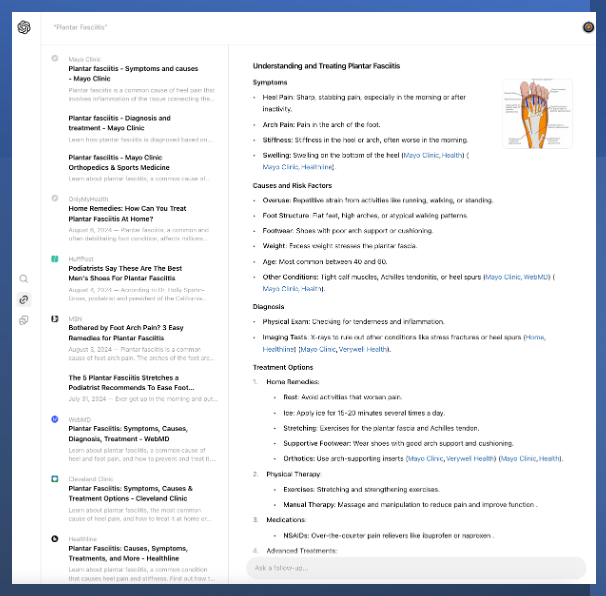
Source: BrightEdge
**Our take:**
- Another takeaway from the BrightEdge analysis is that SearchGPT is already a credible competitor to Google in many instances, which I agree with.
- The UI is one of the best aspects of SearchGPT, which is going to be a matter of preference, but it offers a strong contrast with Google.
- SearchGPT may not emerge as a true Google challenger. Yet the AI insurgents are collectively forcing change. Search in five years won't look like search today.
### Google 'Grounding' AI with Top Links
Even though Featured Snippets and AI Overviews (AIOs) [co-exist today](https://www.nearmedia.co/monopoly-remedy-aios-down-again-more-google-revelations/), it makes sense for Google to merge them. That may be starting to happen according to a new seoClarity analysis of 36,000 keywords that Mark Traphagen shared on [Twitter](https://x.com/marktraphagen/status/1826216399867359653?ref=nearmedia.co) and [LinkedIn](https://www.linkedin.com/posts/marktraphagen%5Fai-overview-optimization-is-now-justgoogle-activity-7231755937324101633-wRGq/?ref=nearmedia.co). The SEO firm looked at the URLs showing up as links in AIOs and compared them with the top 10 organic search results. What they found was that in almost 100% of cases "one or more of the top 10 web results was included in the AI Overview's sources!" Previously there were a lot of semi-random lower-ranked sites/links represented in AIOs. That may partly have accounted for the inaccuracies and errors people were pointing out and complaining about. So the AIO optimization advice becomes: get ranked in the top 10\. SEO Glenn Gabe [says](https://www.seroundtable.com/links-ai-overviews-google-report-37938.html?ref=nearmedia.co) he's not seeing the same pattern in the sites he's tracking.
**How Often Should You Change Your Oil?**
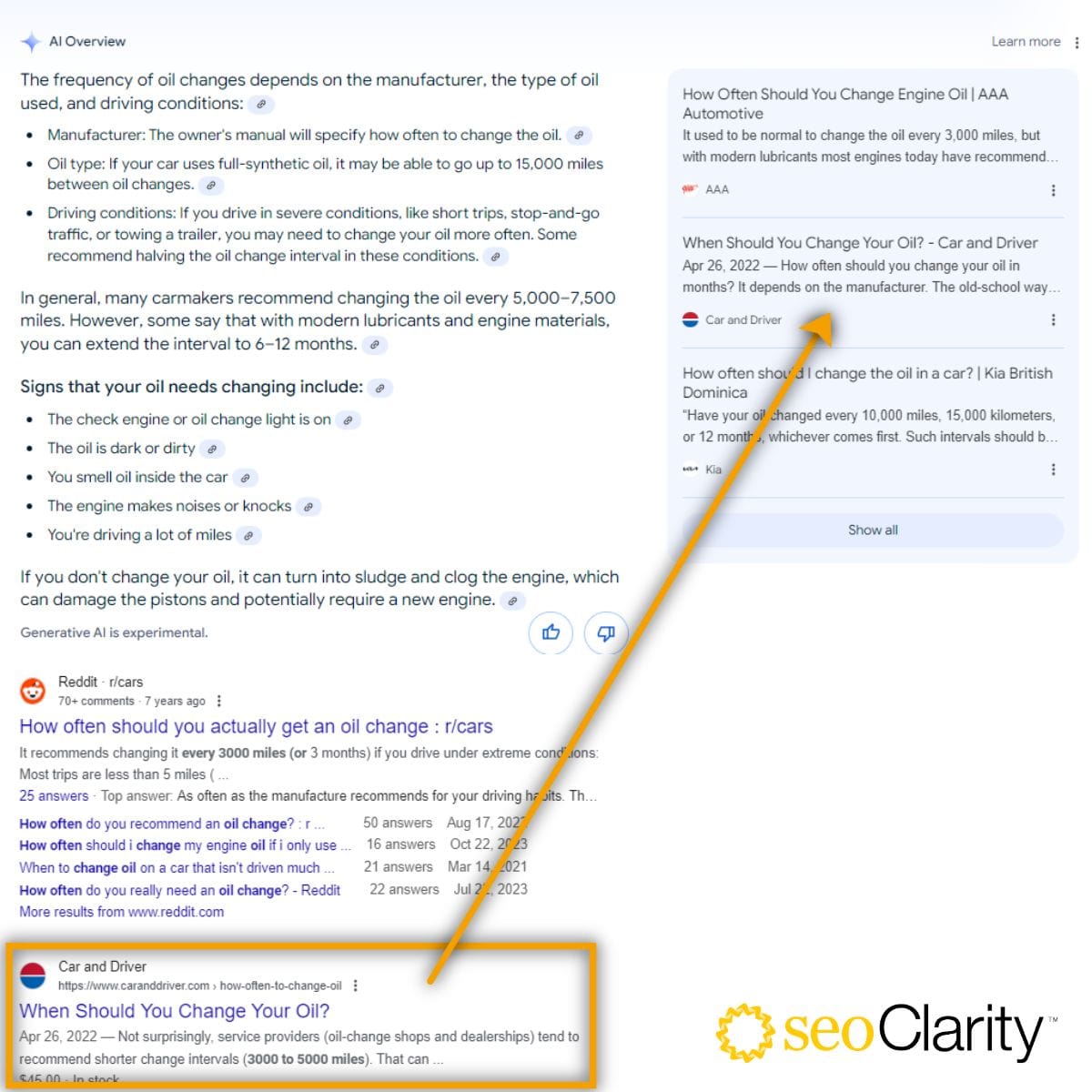
**Our take:**
- Google has talked about using search to "ground" AI. This would appear to be an example of that.
- Google can use its traditional algorithm to support AIOs for more credible results. Longer term, that's a potentially significant advantage.
- Once it works out the AI kinks, Google should ultimately merge Featured Snippets and AIOs. They sort of perform the same function.
### Will AI Sell Smartphones?
Both Google and Apple are betting that AI will be an attractive smartphone feature for consumers. Yet it's not clear that's true. Google's Pixel 9 and Pixel 9 Pro are generally [getting positive reviews](https://www.theverge.com/24225221/google-pixel-9-pro-xl-review-ai-gemini-screen-battery-camera?ref=nearmedia.co). This is the first Android smartphone to deeply incorporate AI elements and a new assistant. Pixel holds [a modest <5% share](https://www.androidauthority.com/google-pixel-market-share-2023-3427326/?ref=nearmedia.co) of the Android smartphone market but generally sets the pace for other manufacturers. By the same token Apple Intelligence (AI) will be compatible with the iPhone 15 Pro, Pro Max and, reportedly, the full iPhone 16 lineup. Apple will aggressively promote AI capabilities to drive sales (though its marketing will be smarter than simply touting AI). But there's a real question whether the general public will care. There are indications that consumers are wary or or turned off by AI integrations in consumer products. An academic [paper](https://www.tandfonline.com/doi/full/10.1080/19368623.2024.2368040?ref=nearmedia.co#abstract) published in June found that AI mentions in product descriptions turned off buyers. "The findings of the study indicated that the inclusion of the 'Artificial Intelligence' term in descriptions of products and services decreases purchase intention." However, there were different consumer reactions depending on whether the product was seen as "high risk" or "low risk." Examples of the former are medical devices and cars, the failure of which could be catastrophic. Low risk products/service examples include customer service and vacuum cleaners.
**Gemini Is a Big Part of Pixel 9**
Source: Google Pixel 9 promo
**Our take:**
- We in the technology/digital marketing world are heavily enamored of AI and tend to see it almost entirely as a positive thing.
- But the public is [more ambivalent](https://www.pewresearch.org/internet/2022/03/17/how-americans-think-about-artificial-intelligence/?ref=nearmedia.co), hence the study outcome above.
- AI trust needs to be further developed to entice the public. It will also be a feature of winning AI tools online, including AI-powered search.
## Recent Analysis
- **Near Memo episode 170**: [The Increasing Role of Brand in Digital Marketing & SEO with special guest Mordy Oberstein](https://www.nearmedia.co/ep-170-the-increasing-role-of-brand-in-digital-marketing-seo/).
- **Hacking a Business Phone Number on a Google Listing Is (Still) Easy**, [by Mike Blumenthal](https://www.nearmedia.co/hacking-a-business-phone-number-on-a-google-listing-is-still-easy-2/)
## Short Takes
- **Semrush** map rank tracker: [viable](https://www.localseoguide.com/semrush-map-rank-tracker-a-solid-local-grid-rankings-tool/?ref=nearmedia.co) Local Falcon competitor.
- Did Apple Maps motivate **Google** [to change Maps color scheme](https://x.com/JoyanneHawkins/status/1825859941577408516??ref=nearmedia.co)?
- **Mobile** now driving 50% of [e-commerce sales](https://chainstoreage.com/adobe-mobile-shopping-breaks-records-280-billion-so-far-2024?ref=nearmedia.co).
- Case study: reporting **GBP listings spam** to Google "[is futile](https://onlineownership.com/google-business-profile-failure-to-act-on-spam/?ref=nearmedia.co)."
- Google [upgrades](https://workspaceupdates.googleblog.com/2024/08/refine-emails-faster-with-help-me-write-gmail.html?ref=nearmedia.co) **Gemini** "help me write" in Gmail.
- Speculating on [what it would take](https://www.ben-evans.com/benedictevans/2024/8/19/competing-in-search?ref=nearmedia.co) to create real **competition in search**.
- Report: **Google** reps [counseled marketers](https://www.theverge.com/2024/8/21/24225326/google-target-teens-ads-unknown-users?ref=nearmedia.co) on teen targeting (illegal).
- Here are the main **Twitter** [shareholders](https://www.washingtonpost.com/documents/2a00ce74-6d58-4f8e-bc2c-1bb820ee4705.pdf?itid=lk%5Finline%5Fmanual%5F10&ref=nearmedia.co) (X Corp).
- Google [must face revived privacy class action](https://www.reuters.com/legal/us-appeals-court-revives-google-privacy-class-action-2024-08-20/?ref=nearmedia.co) over **Chrome surveillance**.
- Marketers see **CTV** as more important [consumer trend](https://www.marketingdive.com/news/ad-spend-forecast-to-grow-in-h2-ctv-generative-ai-report/724805/?ref=nearmedia.co) than AI.
- **Conde Nast** the latest publisher to sign [content deal](https://www.cnbc.com/2024/08/20/openai-announces-content-deal-with-cond-nast-including-content-from-wired-the-new-yorker-and-vogue.html?ref=nearmedia.co) with OpenAI.
- CA deal [to fund](https://apnews.com/article/california-journalism-google-tax-pay-b3d1ca996202366f41b6dcfc340ad965?ref=nearmedia.co) **local journalism** [also promotes Google AI](https://www.politico.com/news/2024/08/21/google-california-newsroom-ai-00174817?ref=nearmedia.co).
Listen to our [latest podcast](https://www.nearmedia.co/memo/).
[](https://nearmedia.co/memo?ref=nearmedia.co)
How can we make this better? Email [us](mailto:gsterling@nearmedia.co) with suggestions and recommendations.
### Local Key for SearchGPT, Default Search Power, Google Naïveté
URL: https://www.nearmedia.co/local-key-for-searchgpt-default-search-power-google-naivete/
Last updated: 2024-08-20T21:09:28.000Z
### Local Is Key for SearchGPT
My [earlier hot take on SearchGPT](https://www.nearmedia.co/searchgpt-ftc-review-rule-unproductive-ai/) is that it's pretty good already and could be used as a Google replacement for many/most informational queries. I also pointed out that local is an area where SearchGPT is considerably weaker than Google. I have subsequently done multiple side-by-side searches in the San Francisco Bay Area, where I live. This has reinforced my earlier view that Google is much much stronger in local, because it has more and better data. SearchGPT rarely links directly to local business entities. It links to aggregators and directories instead; that's understandable given its infancy. Sometimes that's fine, often it doesn't deliver a good user experience. I looked for service businesses, entertainment, activities, hotels and restaurants. I used short queries and more elaborate "conversational" queries. The area where SearchGPT beats Google is the ability to ask follow-up questions and refine results. Also, SearchGPT's UI isn't littered with ads and modules, which some people may actually like. Regardless of your UI preferences, it's clear that weaker local results will hinder SearchGPT adoption. If it doesn't do a better job – or a "good enough" job in local – it probably won't ever become a credible search alternative.

Source: ChatGPT
**Our take:**
- Google typically uses local examples when discussing a new search feature, as evidence of its strategic value.
- I would argue that local (data, entity graph) is now Google's primary advantage over rivals – other than it's brand of course.
- Any company that aspires to compete with Google needs a local strategy. For SearchGPT that means crawling, licensing and direct data uploads.
### Survey: 39% Would Use Safari Default
Earlier this month BMO Capital Markets conducted a [survey](https://www.mediapost.com/publications/article/398482/how-much-of-google-search-market-share-relies-on-d.html?ref=nearmedia.co) of 1,000 US users that sought to understand how vulnerable Google is to default search displacement on the iPhone and/or substitution by AI alternatives. The end of the Google-Apple default search deal is almost certainly [a "remedy" that the court will impose](https://www.nearmedia.co/google-fallout-apple-search-speculation-stores-rule/) after finding Google liable for antitrust violations. The survey found a large percentage of consumers (56%) were at least open to trying an AI alternative to Google (e.g., ChatGPT). But [traffic data argue](https://www.nearmedia.co/google-loses-ai-ankle-biters-gbp-menu-optimization/) that people aren't swapping AI for Google so far. More interesting, the survey reportedly found 61% of consumers were loyal to Google but that 39% (or "one third" in [different article](https://www.investing.com/news/company-news/bmo-maintains-222-target-on-alphabet-cites-search-dominance-93CH-3567720?ref=nearmedia.co)) would use something like Bing if it became the iPhone default. According to Similarweb data, just over 60% of Google's traffic comes from mobile. Google has [struggled](https://www.theinformation.com/articles/google-struggles-to-lessen-reliance-on-apple-safari?ref=nearmedia.co) to get iPhone users off Safari and onto its own apps. As with all surveys, this one should be viewed with healthy skepticism. If there were some sort of "choose your search engine" screen upon iPhone setup, the overwhelming majority would still choose Google.
**Google Traffic Distribution**
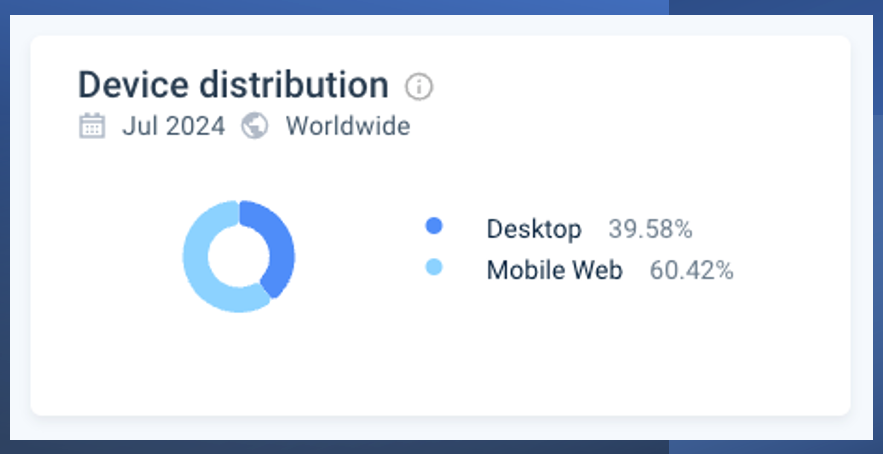
Source: Similarweb
**Our take:**
- Google will appeal a) the liability decision and b) any remedies the court imposes. It's not clear what might happen during an appeal.
- It's possible some version of the existing default deal would remain in place (if court kills it), changing virtually nothing for users.
- All of these scenarios are hypothetical. But the survey is another indication there's some level of pent-up demand for Google alternatives.
### Google's IPO Was Today – 20 Years Ago
Google's Initial Public Offering was [20 years ago yesterday](https://x.com/i/trending/1825661654673031290?ref=nearmedia.co). And now, the familiar "if you had invested X when Google went public" exercise. The shares have grown more than 6,500% over the past two decades. So $10 would today be worth roughly $660, $1,000 would be worth $66,000, $10,000 would be worth $660,000, and $100,000 would be worth more than $6,600,000\. Google is worth more than $2 trillion and the fourth largest US company by market cap after 1) Apple, 2) MSFT, 3) Nvidia. Larry Page and Sergey Brin could probably not have foreseen their impact on society and the economy when they sought to develop a better search tool, relying on the existing authority structure of the internet (back linking) as a primary relevance signal. Google has done and accomplished some remarkable, positive things and created millions of jobs and, yes, probably improved some people's lives. It has also contributed to some very damaging and destructive outcomes for the culture and society as a whole. But the same is also true for Amazon, Meta, etc. I'm reminded again of the original [Google founders' letter](https://abc.xyz/investor/founders-letters/ipo-letter/?ref=nearmedia.co) issued at the time of its 2004 IPO:
- Our goal is to develop services that significantly improve the lives of as many people as possible.
- Serving our end users is at the heart of what we do and remains our number one priority.
- Outside pressures too often tempt companies to sacrifice long term opportunities to meet quarterly market expectations.
- We aspire to make Google an institution that makes the world a better place.
- We believe strongly that in the long term, we will be better served ... by a company that does good things for the world even if we forgo some short term gains.
In retrospect all of that seems naïve.
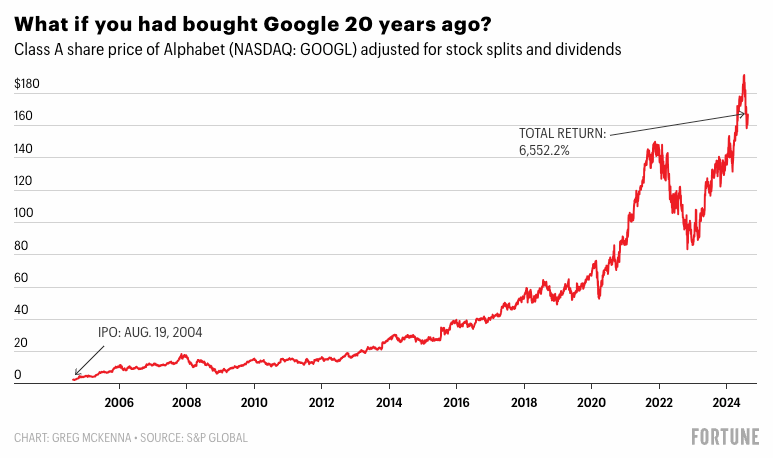
Source: Fortune
**Our take:**
- Google has largely betrayed all the values stated in the founders' letter. The antitrust trial clearly revealed the bad (self-interested) behavior.
- It has gone from a company that (says it) wanted to maximize positive outcomes to a company that maximizes quarterly ad returns.
- Google may not be entirely to blame. The structural power and incentives inherent in markets is arguably too great for any company to resist.
## Recent Analysis
- **Hacking a Business Phone Number on a Google Listing Is (Still) Easy**, [by Mike Blumenthal ](https://www.nearmedia.co/hacking-a-business-phone-number-on-a-google-listing-is-still-easy-2/)
- **Near Memo episode 170**: [The Increasing Role of Brand in Digital Marketing & SEO](https://www.nearmedia.co/ep-170-the-increasing-role-of-brand-in-digital-marketing-seo/)
- **Google’s engagement-hacking masks stalled growth**, [by David Mihm](https://www.nearmedia.co/google-engagement-hacking/).
## Short Takes
- How to **emulate local search** results [from any other location](https://www.linkedin.com/posts/chris-long-marketing%5Flocal-seo-tip-you-can-use-devtools-sensors-activity-7231628600570003457-he6A/??ref=nearmedia.co).
- Could AI radically [transform](https://searchengineland.com/billion-dollar-one-person-seo-agency-445273?ref=nearmedia.co) **SEO agencies**: smaller, more profitable?
- Search [feature](https://www.seroundtable.com/google-search-mentioned-in-key-answers-37905.html?ref=nearmedia.co): "**mentioned in key answers**" ([generate more searches](https://www.nearmedia.co/google-engagement-hacking/)).
- Years after blowing Waze deal, **Meta** tests [new Insta mapping feature](https://www.theverge.com/2024/8/9/24217027/instagram-snap-map-style-feature-testing?ref=nearmedia.co).
- **OpenAI** [releases "fine tuning](https://openai.com/index/gpt-4o-fine-tuning/?ref=nearmedia.co)" for developers for ChatGPT 4o.
- Popular iPad design app **Procreate** says it [won't integrate generative AI](https://www.theverge.com/2024/8/19/24223473/procreate-anti-generative-ai-pledge-digital-illustration-creatives?ref=nearmedia.co).
- **Google August core update**: [what's happened](https://searchengineland.com/google-august-2024-core-update-what-were-seeing-early-on-445290?ref=nearmedia.co) so far ([some recoveries](https://www.seroundtable.com/google-helpful-content-update-recoveries-37920.html?ref=nearmedia.co)).
- **Gemini Live** reviews: very lifelike voice, [but with quirks](https://www.theverge.com/2024/8/13/24219736/gemini-live-hands-on-pixel-event?ref=nearmedia.co) and [awkwardness](https://techcrunch.com/2024/08/19/gemini-live-could-use-some-more-rehearsals/?ref=nearmedia.co).
- **Section 230**:prof. trying to shift social media balance power ([NYT](https://www.nytimes.com/2024/08/20/technology/meta-section-230-lawsuit.html??ref=nearmedia.co)).
- Nearly 75% of **PR people** (in-house and agency) [report being burned out](https://www.axios.com/2024/08/20/pr-burnout-muck-rack??ref=nearmedia.co).
Listen to our [latest podcast](https://www.nearmedia.co/memo/).
[](https://nearmedia.co/memo?ref=nearmedia.co)
How can we make this better? Email [us](mailto:gsterling@nearmedia.co) with suggestions and recommendations.
### Hacking a Business Phone Number on a Google Listing Is (Still) Easy
URL: https://www.nearmedia.co/hacking-a-business-phone-number-on-a-google-listing-is-still-easy-2/
Last updated: 2024-11-19T21:06:39.000Z
Last year airline phone numbers were hijacked and [redirected](https://www.washingtonpost.com/technology/2024/02/27/airline-customer-service-phone-numbers/?ref=nearmedia.co) to scammers. At the time, a "Google spokesperson [said](https://www.nbcnews.com/tech/tech-news/phone-numbers-airlines-listed-google-directed-scammers-rcna94766?ref=nearmedia.co) in an emailed statement \[to NBC\] that the company does ’not tolerate this misleading activity’ and that it had fixed the issue." Google also [told](https://www.washingtonpost.com/technology/2024/02/27/airline-customer-service-phone-numbers/?ref=nearmedia.co) the Washington Post that "it’s 'extremely rare' for airline customer service searches to show you scam phone numbers."
Recently we discovered just how surprisingly easy it still is to change a Google listing's business phone number. How do I know? I tried it.
### The Experiment
I was curious what it would take to change a listing's phone number. I purchased a virtual forwarding number for the experiment last year and I enlisted Local SEOs [Amy Toman](https://www.digitallawmarketing.com/about-us/amy-toman/?ref=nearmedia.co), [Kevin Pauls](https://simpleseo.biz/team/kevin-pauls/?ref=nearmedia.co) & [Kurt Impens](https://www.linkedin.com/in/kurtimpens/?ref=nearmedia.co), Local Guides of varying rankings, to change the phone number of my [infamous Illusory Laptop listing](https://blumenthals.com/blog/2010/12/07/illusory-laptop-repair-a-most-elegant-googleplaces-hack/?ref=nearmedia.co) in Bradford, Pa., asking each to "suggest an edit" to the new phone number.
The third attempt at suggesting an edit was successful and the number on the listing was changed almost instantly.
While the number changed on the public profile within a few minutes, there was no obvious notification in the GBP dashboard. While Google did send an email to a listing manager within a few minutes, the primary owner of the listing (me) received *no email or alert* of the changed phone number.
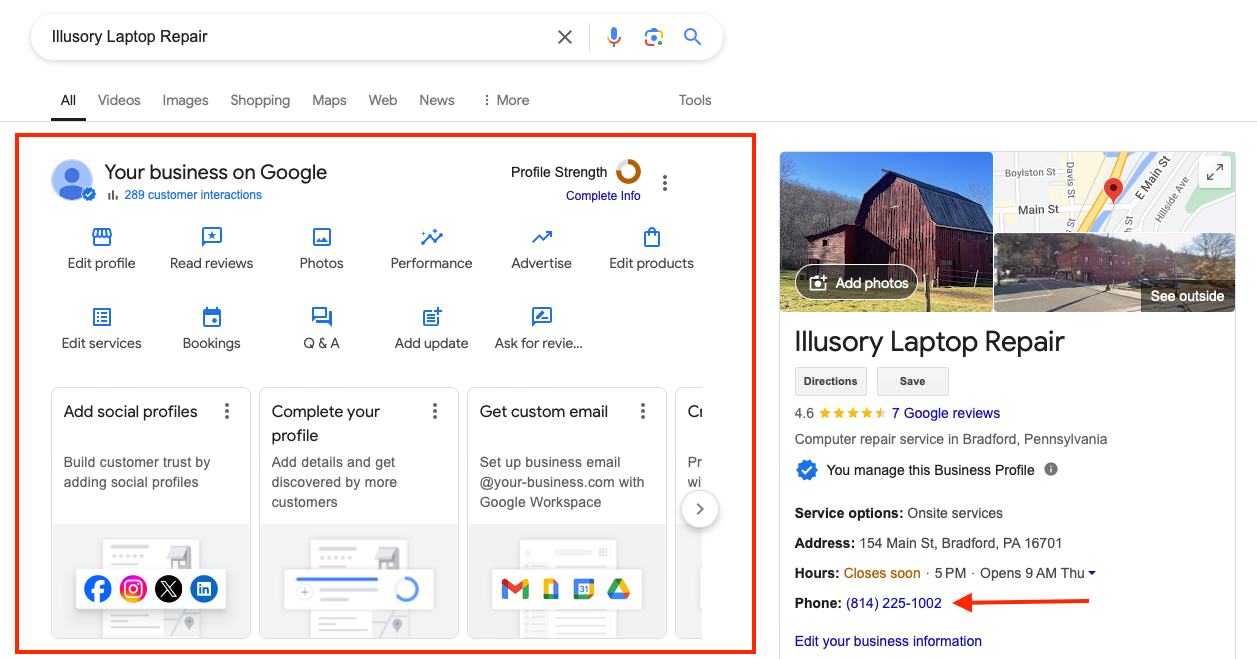
No obvious notice at the highest level of the GBP dashboard
Buried in the "Edit profile" area there was a small notice of the change.
Two clicks away for a business to learn of the edit
### How Hard Was It?
While I purchased the number a year ago, the actual "work" took 22 minutes from start to finish.
### 2:32 PM Posted to Local Slack Group
I asked my friends there to change the number
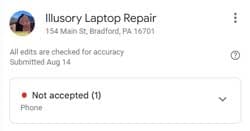
### 2:35 Amy Toman suggests an edit
The new number is instantly rejected
### 2:43 Kevin Pauls suggests the same edit
It immediately goes to a pending status
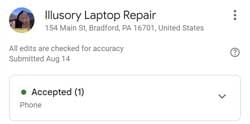
### 2:54 Kurt suggests the same edit
It is immediately published and shows publicly on search
That's it. Three suggested edits and the dirty work was done. I had anticipated a much rockier road and if I knew I was on the clock I probably could have accomplished the task in less time. Who knew it would be so easy?
Given the lightweight communication from Google about the number change, it's very likely most businesses would not have noticed the email, and the hijacked number would have persisted for some time.
### What Actually Triggered the Change?
Each of the three "editors" are [Local Guides](https://support.google.com/maps/answer/6225846?hl=en&ref%5Ftopic=14986415&sjid=5051226713466295042-NC&ref=nearmedia.co). Amy is a Level 5, Kevin a Level 2 and Kurt is a Level 10\. While it seems likely that it was the three edits that did the trick, it is conceivable that there was some extra value to Kurt's [Level 10 status](https://support.google.com/maps/answer/6225851?hl=en&co=GENIE.Platform%3DAndroid&ref=nearmedia.co), which requires a crazy amount of Google contributions. I suppose that the "aged" phone number with a local area code might have contributed as might the size and visibility of the business.
I will leave it to others to determine the nuance of this hack and whether Local Guide Level (etc.) played a role.
### It Shouldn't Be This Easy
Google and the public at large both want accurate and reliable business data. It's understandable that Google wants to gather information from multiple sources. Some potential changes, like a minor business hours alteration, could be harmful to the business but would not lead to criminality and probably would have a limited or minimal impact on consumers.
However a change to a phone number allows bad actors to step between a business and their customers to the detriment of both, potentially causing significant harm. In the case of the airline phone number hijacking the bad actors attempted to charge consumers credit cards for flight changes.
On critical data like a phone number it shouldn't be so easy to make a change. More verification should be required and a business should be alerted that a change is pending. There should also not be so little communication or notification *after* the change is made.
While we don’t know for sure whether this can still happen in the airline industry, we do know that it could happen in any number of other industries.
### How Google Handles the Media
If you look at major reports of consumer harm from bad actors on Google Maps over the years, you'll see the same Google PR playbook every time. Whether it's [fake drug rehab listings](https://www.theverge.com/2017/9/7/16257412/rehabs-near-me-google-search-scam-florida-treatment-centers?ref=nearmedia.co) or [bait and switch locksmith tactics](https://www.cbc.ca/news/canada/locksmith-google-maps-reviews-fake-marketplace-1.5417931?ref=nearmedia.co) from fake listings or [bogus appliance repair listings](https://www.cbc.ca/news/canada/appliance-repair-industry-online-listings-1.5762489?ref=nearmedia.co), Google temporarily tightens things up and says the same thing they said about the airline scam in 2023:
💡
"Google spokesperson said in an emailed statement that the company does ’not tolerate this misleading activity’ and that it had fixed the issue"
Sometimes for good measure they will remind us of the many bad actors out there and how Google is equally a victim, having to play whack a mole with spammers. To Google claiming victim status I say bollocks.
As mentioned, during the airline number hijackings, Google [told](https://www.washingtonpost.com/technology/2024/02/27/airline-customer-service-phone-numbers/?ref=nearmedia.co) the Washington Post it's “extremely rare” for this to happen. By Google's calculation, rare means the number of hacked airlines that show in search/divided by the number of locations in Google. By Google's math that is something less than 5000/2,300,000 or .2%, the total number of worldwide airlines divided by the total number of business in Google’s local database. It *is* rare – for them.
If it happens to you or your airline, it is painful, deeply disturbing and potentially costly.
But I also call bollocks on their oft-repeated playbook for these situations. Unfortunately, in every case, it would seem their fix is temporary and six months later the exact same thing happens again. This playbook has been around since the [first reports of widespread locksmith](https://blumenthals.com/blog/2009/02/18/google-maps-proves-more-locksmiths-in-nyc-than-cabs/?ref=nearmedia.co) spam in 2009 and [similar reports](https://www.cbc.ca/news/canada/locksmith-google-maps-reviews-fake-marketplace-1.5417931?ref=nearmedia.co) ten years later, where Google said (are you ready?):
💡
"More than 99 per cent of the businesses people find on Google Maps are legitimate and we're working hard to detect and remove the small number of fraudulent listings that have been posted by bad actors."
and
"Local business scammers have been a thorn in the internet's side for over a decade. We're continually working on new and better ways to fight these scams using a variety of ever-evolving manual and automated systems."
In late 2020, I [worked](https://www.cbc.ca/news/canada/appliance-repair-industry-online-listings-1.5762489?ref=nearmedia.co) with the CBC in Canada on fake appliance repair listings in the Toronto area where Google's [response](https://s3.documentcloud.org/documents/7232321/pages/Google-responds-to-CBC-Marketplace-story-p1-normal.gif?ts=1605148021863&ref=nearmedia.co) was similar:
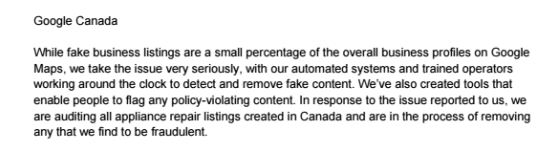
For the past several months I have been [tracking](https://support.google.com/business/thread/279256210?ref=nearmedia.co) the [exact same problem](https://support.google.com/business/thread/289634143?ref=nearmedia.co), fake appliance repair listings in the exact same Toronto market.
The bigger crime here is not the scammers and spammers who deceived the public but that a large, public corporation glad hands the press and allows these scams and harmful deceptions to continue year after year.
---
### Ep 170: The Increasing Role of Brand in Digital Marketing & SEO
URL: https://www.nearmedia.co/ep-170-the-increasing-role-of-brand-in-digital-marketing-seo/
Last updated: 2024-08-22T19:42:29.000Z
**Part 1 starts 00:13 -** [**The Role of Brand in Seo**](https://youtu.be/gLFFOugtjwQ?ref=nearmedia.co)
We speak with guest, Mordy Oberstein on the role of branding in SEO, particularly how it has re-emerged as a significant factor in conversions and SEO. We explore the interaction between brand and user experience, and the introduction of Google’s emphasis on brand in its algorithms.
Segment Reference Articles
[Why You Should Be Focusing On Brand Marketing Right Now](https://www.searchenginejournal.com/why-you-should-be-focusing-on-brand-marketing-right-now/522593/?ref=nearmedia.co)
[How Brand Building and Performance Marketing Can Work Together](https://hbr.org/2023/05/how-brand-building-and-performance-marketing-can-work-together?ref=nearmedia.co)
**Part 2 starts 25:39 -** [**Brand Differentiation and Local SEO**](https://youtu.be/H%5Fhsqw%5FLMvw?ref=nearmedia.co)
We delve into how brands differentiate themselves in the marketplace, particularly in local SEO contexts. What are the challenges small businesses face in building brand recognition? How do brand elements like reputation and local engagement impact SEO performance?
**Part 3 starts 46:15 -** [**Practical Approaches to Brand Building and the Role of AI in Content Creation**](https://youtu.be/wCJPx7H1lcM?ref=nearmedia.co)
We focus on practical advice for SEO professionals on integrating brand-building strategies into their work. Mordy also explores the role of AI in content creation, highlighting the potential benefits and pitfalls of using AI tools in a strategic and controlled manner.
Segment Reference Articles
[AI Content is NOT a panacea](https://x.com/MordyOberstein/status/1821877709393330192?ref=nearmedia.co)
### SearchGPT, FTC Review Rule, Unproductive AI
URL: https://www.nearmedia.co/searchgpt-ftc-review-rule-unproductive-ai/
Last updated: 2024-08-15T20:00:50.000Z
### SearchGPT's Promising Start
SearchGPT is already a credible challenger for Google – from the jump (as they say). As a paid subscriber I got [access](https://chatgpt.com/search??ref=nearmedia.co) this morning, as I'm sure many others did. As you've already seen, there's a two column expandable format. The main column shows primary search results (with thumbnails) and inline links. A left pane can open and toggle between content sources and images. All links go directly to publisher sites. So far I've found very few direct local business links. Instead, local businesses are primarily offered through aggregators or directories. Sometimes local websites are shown. There's a conversational dimension, that Google is aspiring to, which allows you to compare or refine results without initiating a new search. This is a compelling feature and quite different from the current Google UX. The interface is clean and different enough to be enticing to people who are fatigued by too many ads and too much clutter on the SERP. OpenAI has said this is a prototype that will be folded back into ChatGPT ultimately. There are many skeptics of the idea that SearchGPT can gain any market share, given how entrenched and habitual Google usage is. But for most queries it's a viable Google replacement now and for some it's better. Local is an area where it's considerably weaker than Google because of Google's local knowledge/entity graph.
**Best Fried Chicken Sandwich in SF Bay Area**
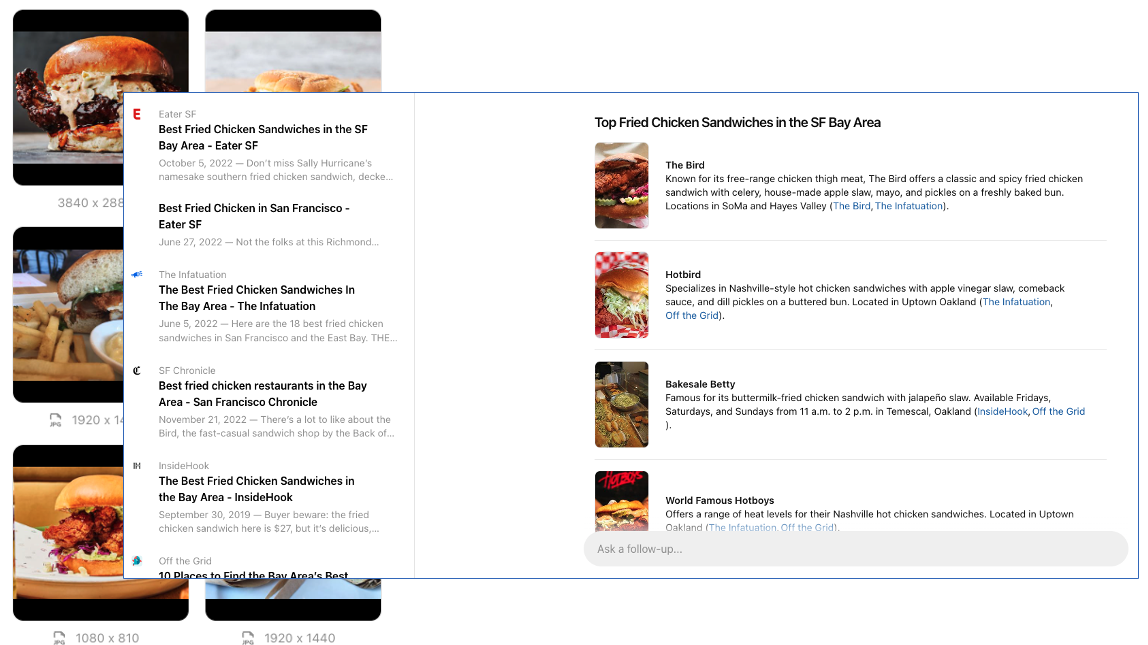
Source: SearchGPT
**Our take:**
- We previously discussed how local is now Google's main differentiator and it arguably has a big advantage over everyone save *perhaps* Apple.
- Otherwise, I feel like I could substitute SearchGPT today for Google and not really miss it. The UI/UX is less bulky and carries a lighter "[cognitive load](https://www.nearmedia.co/ai-overviews-backlash-siri-do-or-die-serp-cognitive-load/)."
- Business model: Perplexity [announced ads](https://www.fastcompany.com/91163900/perplexity-selling-ads-ai-search?ref=nearmedia.co). No ads is a great thing about SearchGPT but will the allure of ad revenue be too much eventually?
### Fake Review Ban's Limited Impact
Yesterday the FTC [announced](https://www.ftc.gov/news-events/news/press-releases/2024/08/federal-trade-commission-announces-final-rule-banning-fake-reviews-testimonials?ref=nearmedia.co) a final rule "banning fake reviews and testimonials." Mike [wrote an analysis](https://www.nearmedia.co/ftc-announces-final-rule-banning-fake-reviews/) of the rule and its potential impact. As a practical matter, the new rule makes it easier for the FTC to go after "knowing violators" and seek civil penalties. As Mike explained, however, it still allows review incentives so long as they don't require a quid pro quo. And there's nothing about the platforms (Google, Yelp, Tripadvisor, etc.) – meaning there are no new obligations, responsibilities or accountability for them. Mike lamented this omission (but [see Section 230](https://www.npr.org/2021/05/11/994395889/how-one-mans-fight-against-an-aol-troll-sealed-the-tech-industrys-power?ref=nearmedia.co)). However, review management companies will be subject to the rule. Where does all this leave us? It's certainly a good development and may impact review fraud somewhat, by creating some deterrence. But it's unlikely to have a major impact. The way in which consumers rely on reviews for purchase decisions and the ranking rewards mean that merchants large and small will continue to cheat. Offshore review farms (now increasingly AI enabled) will be impossible to prosecute. Local merchants engaged in unethical review practices will fall below the FTC's enforcement radar. Only larger companies and brands will likely be ensnared by the rule, which is something – but not enough.

Source: ChatGPT
**Our take:**
- Google, Amazon and others contend they are diligent about removing fake reviews and suing review fraud purveyors. Their efforts are uneven.
- The FTC simply doesn't have the resources to do more than pick a handful of high profile cases and hope that deters others from cheating. It won't.
- The inability to hold the platforms accountable (per Section 230) represents a major obstacle to comprehensively tackling review fraud. In Europe they may have more luck under the DSA (and w/o a Section 230).
### AI Not Boosting Productivity
There's a bit of an AI backlash in process, with several reports now questioning the benefits of AI and the accompanying productivity expectations. Among these, a [new study](https://www.upwork.com/research/ai-enhanced-work-models?ref=nearmedia.co) from Upwork (n=2,500 workers and execs.) finds that expected AI gains have largely not – or not yet – materialized. (Enterprises, agencies and SMBs have adopted AI [to varying degrees](https://www.localdialog.com/ai-adoption-where-does-it-stand/?ref=nearmedia.co).) The Upwork study found that 71% of employees feel burned out yet subject to higher demands from bosses. Here's the relevant nugget:
> "Nearly half (47%) of workers using AI say they have no idea how to achieve the productivity gains their employers expect. Over three in four (77%) say AI tools have decreased their productivity and added to their workload in at least one way. For example, survey respondents reported that they’re spending more time reviewing or moderating AI-generated content (39%), invest more time learning to use these tools (23%), and are now being asked to do more work (21%). Forty percent of employees feel their company is asking too much of them when it comes to AI.
Conversely, the report found that 81% of executives at companies that had deployed AI believed it had increased productivity. The report recommends: 1) using more freelancers, 2) creating new/better productivity metrics, 3) providing more/better AI training.
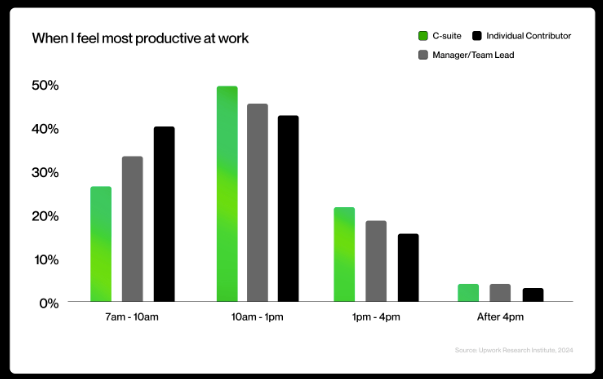
Source: Upwork Productivity Study
**Our take:**
- There's no question that with the right use cases AI can deliver significant productivity gains. I suspect a lack of training is a significant issue.
- Turning employees into simply editors of AI content can and probably will exacerbate burnout, the real problem identified in this research.
- It's premature to pass judgement on AI but, as the report suggests, AI is a tool that should be judiciously deployed and not a panacea for productivity woes.
## Recent Analysis
- **FTC Announces Rule Banning Fake Reviews**, [by Mike Blumenthal](https://www.nearmedia.co/ftc-announces-final-rule-banning-fake-reviews/).
- **Google’s engagement-hacking masks stalled growth**, [by David Mihm](https://www.nearmedia.co/google-engagement-hacking/).
- **Near Memo 169**: [GBP bugs & AI-driven layoff concern, sale of CNET & Google, antitrust remedy: impact on Apple & SEO](https://www.nearmedia.co/ep-169-gbp-bugs-ai-driven-layoff-concern-sale-of-cnet-google-antitrust-remedy-impact-on-apple-seo/).
## Short Takes
- Google [launches](https://blog.google/products/search/new-ways-to-connect-to-the-web-with-ai-overviews/?ref=nearmedia.co) **AI Overviews** globally.
- Google [takes aim at SEO](https://developers.google.com/search/blog/2024/08/august-2024-core-update?ref=nearmedia.co) with new **core update**, now rolling out.
- Google [won't reinstate reviews](https://support.google.com/business/thread/261385168/google-didn-t-reinstate-the-reviews-after-reinstatement?hl=en&ref=nearmedia.co) after **profile reinstatement**.
- Easiest [way to claim](https://www.sterlingsky.ca/claim-a-service-area-business-listing/??ref=nearmedia.co) a **service area business** listing on Google.
- **OpenStreetMap**, Wikipedia for maps, [still going after 20 years](https://techcrunch.com/2024/08/10/one-man-decided-to-take-on-google-maps-20-years-later-openstreetmap-is-still-going-strong/?ref=nearmedia.co).
- Report: Apple [developing](https://www.macrumors.com/2024/08/14/apple-tabletop-robotic-home-device-2026/??ref=nearmedia.co) smart home device: **iPad + robotic arm**.
- DOJ's Kanter [talks about](https://www.theverge.com/24215684/doj-jonathan-kanter-antitrust-google-monopoly-verdict-win-decoder-podcast-interview?ref=nearmedia.co) forward-looking **Google antitrust remedies**.
- **Understanding search ranking** (post-leaks) [with SEO action items](https://searchengineland.com/how-google-search-ranking-works-445141?ref=nearmedia.co).
- **Stratechery**: [Hands off Android](https://stratechery.com/2024/integration-and-android/?ref=nearmedia.co) Justice Department!
- Google [betting big on AI](https://blog.google/products/gemini/made-by-google-gemini-ai-updates/?ref=nearmedia.co) and "**Gemini Assistant**" in new Pixel 9 devices.
- **TikTok** [beat Instagram Reels](https://www.localogy.com/2024/08/tiktok-vs-instagram-reels-tiger-pistols-face-off-reveals-clear-winner/?ref=nearmedia.co) in single client head-to-head campaign.
Listen to our [latest podcast](https://www.nearmedia.co/memo/).
[](https://nearmedia.co/memo?ref=nearmedia.co)
How can we make this better? Email [us](mailto:gsterling@nearmedia.co) with suggestions and recommendations.
### FTC Announces Final Rule Banning Fake Reviews
URL: https://www.nearmedia.co/ftc-announces-final-rule-banning-fake-reviews/
Last updated: 2024-11-19T21:06:56.000Z
Today, the FTC [announced](https://www.ftc.gov/news-events/news/press-releases/2024/08/federal-trade-commission-announces-final-rule-banning-fake-reviews-testimonials?ref=nearmedia.co) the final details of their new rule against fake reviews. The final rule prohibits:
- **Fake or false consumer reviews, consumer testimonials, and celebrity testimonials**
- **Buying positive or negative reviews**
- **Insider reviews and consumer testimonials**
- **Company-controlled review websites**
- **Review suppression**
- **Misuse of fake social media indicators**
Incentives remain acceptable as long as they're not predicated on the "reviews expressing a particular sentiment" and it "clarifies that the conditional nature of the offer of compensation or incentive may be expressly or implicitly conveyed."
### Why Is There Now a 'Rule'?
The FTC has been getting more aggressive toward fake reviews. Part of that effort was to go through the many [steps](https://www.ftc.gov/news-events/news/press-releases/2022/10/ftc-explore-rulemaking-combat-fake-reviews-other-deceptive-endorsements?ref=nearmedia.co), [hearings](https://www.ftc.gov/news-events/news/press-releases/2023/06/federal-trade-commission-announces-proposed-rule-banning-fake-reviews-testimonials?ref=nearmedia.co) and public comments needed to implement a rule that removes any ambiguity. This process started in late 2022 and just concluded.
You would be correct in noting that the FTC has long had a *guideline* prohibiting these sorts of unethical practices and review manipulation. But an FTC guideline requires that each and every time a new business violates it, the agency must prove the details of the case. And because of recent Supreme Court rulings rolling back regulatory authority, they might not be able to easily impose fines. In many situations the FTC was required to advise the business and give them a second chance to avoid penalties.
With a rule, the business is expected to know the details of the prohibition and if the FTC identifies a violation, it can move straight to the penalty phase with no additional hearings.
💡
"As the Commission noted previously, case-by-case enforcement without civil penalty authority might not be enough to deter clearly deceptive review and testimonial practices. The Supreme Court’s decision in AMG Capital Management LLC v. FTC has hindered the FTC’s ability to seek monetary relief for consumers under the FTC Act. This rule will enhance deterrence and strengthen FTC enforcement actions."
### Incentives Survive, Free Pass for Platforms
The continued allowance of incentives is problematic. Most businesses do not understand the nuances of the rule and what types of incentives would cross the line. Both the guideline and the rule ultimately should be updated to prohibit incentives of any kind.
Also, the rule looks exclusively at the behaviors of the businesses on the ground buying and selling fake reviews or followers. The platforms (Google *et al*.) were largely given a pass and have no additional obligations under the rule. Without formal enforcement responsibility, or consequences, at the platform level the problem is likely to continue. Fake reviews often come from overseas; who actually purchased them will not be obvious the FTC. Without significantly better platform enforcement review fraud will continue despite their illegal status.
### Increased Exposure for Businesses
The rules are now clear. As such, they're now much easier for the FTC and State Attorney Generals to enforce. That might lead to increased enforcement against the biggest and most obvious offenders but most cases will still to fall under the enforcement radar.
While I don't think most individual businesses will be targeted, they should recognize their increasing liability risk.
### Better Than Nothing
The rule streamlines the FTC process, so large and egregious offenders will be easier to punish. Perhaps if these prosecutions are well publicized and visible enough they may deter some participants in the fake review economy. But all of that will depend on more aggressive enforcement.
### Monopoly Remedy, AIOs Down Again, More Google Revelations
URL: https://www.nearmedia.co/monopoly-remedy-aios-down-again-more-google-revelations/
Last updated: 2024-08-13T20:19:22.000Z
### End of the Google Era?
After the court's [finding that Google had illegally exercised monopoly power](https://www.nearmedia.co/google-loses-ai-ankle-biters-gbp-menu-optimization/) to maintain search dominance and "earn monopoly profits" from paid search, speculation immediately turned to remedies. Professor and former Biden economic advisor Tim Wu has several [recommendations](https://www.nytimes.com/2024/08/13/opinion/google-antitrust-remedy.html??ref=nearmedia.co): force divestiture of Android and Chrome, force Google to "grant anyone free and open access to all of its A.I. technologies, as well as the vast troves of data on which those technologies are trained." Interestingly he doesn't believe killing the default search deals would do much other than "help Google" (by saving money). Kevin Indig [argues](https://www.growth-memo.com/p/monopoly?ref=nearmedia.co) for the end of default search deals but also suggests: compelling Google to share "click behavior \[data\] with the open market so everyone can train search engines on it," as well as divesting YouTube, Android and Chrome. However, like us, he believes killing the default search deals is likely while other remedies are uncertain. Meanwhile Axios [proclaims](https://www.axios.com/2024/08/07/google-antitrust-ruling-end-era??ref=nearmedia.co) "the end of the Google Era." That's very premature.
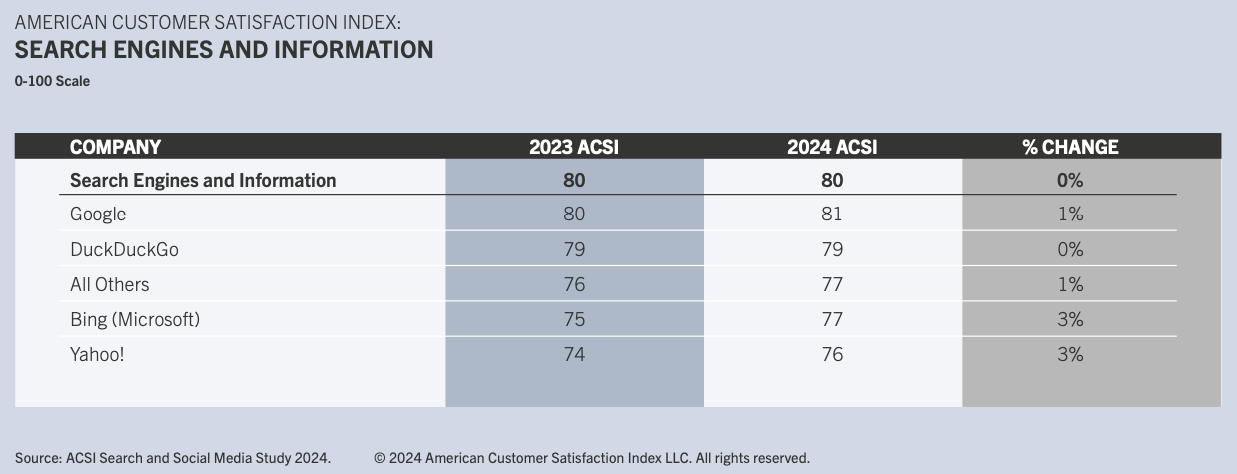
Source: ACSI
**Our take:**
- Killing default search *will* happen. But a stronger remedy is needed vs. simply ending the Apple deal, which saves Google money and doesn't change the competitive dynamics of the market.
- Google *should* be forced to share click data, divest Chrome and perhaps Android. It's unlikely the court will embrace Wu's AI remedy, however.
- Despite all the criticism (by us and others), according to the [ACSI](https://theacsi.org/news-and-resources/press-releases/2024/07/23/press-release-search-and-social-media-study-2024/?ref=nearmedia.co), Google's user satisfaction rating has improved. However, survey data indicate [search "frustration" is growing](https://www.nearmedia.co/search-frustration-aio-disappearing-act-genzs-social-search/).
### AI Overviews Drop Again
There are multiple estimates of the frequency of Google's AI Overviews (AIOs) but they all agree that AIO appearances have dropped dramatically since the [botched rollout](https://www.nearmedia.co/google-rides-the-clickstream-long-tail-citations-ai-overview-fails/) in late May. They went from showing for 80% - 90% of searches during the SGE period to less than 15% and [then down below 10%](https://www.nearmedia.co/too-much-seo-google-aio-caution-products-over-research/). Now, SE Ranking [has found](https://seranking.com/blog/ai-overviews-sources-research/??ref=nearmedia.co) that AIOs on average are appearing for "only 7.47% of searches." The previous number from the company was 8.71% in June. However, a few categories, according to SE Ranking, are showing more AIOs: relationships, business, wellness, exercise, finance and very marginally some categories at the low end. The study also found that "AIOs and featured snippets are appearing together more frequently" (64% of the time). SE Ranking said the searches most likely to trigger AIOs featured \~10 keywords, low volume keywords and low CPC keywords. AIOs contain anywhere from 1 to more than 10 links, depending on the query and whether the AIO is expanded. The rationale for why AIOs appear or don't appear may be partly driven by ad-revenue considerations. A Tinuiti report [found](https://www.nearmedia.co/aios-hurt-ad-clicks-travel-mindtripping-bing-we-took-share/) that AIOs negatively impacted ad clicks on "non-branded keyword mobile SERPs." If accurate, this is undoubtedly a problem Google is working on. The top links appearing in AIOs were from YouTube and LinkedIn, though educational institutions and academic resources figured prominently. There's a great deal more in the [report](https://seranking.com/blog/ai-overviews-sources-research/??ref=nearmedia.co) itself.
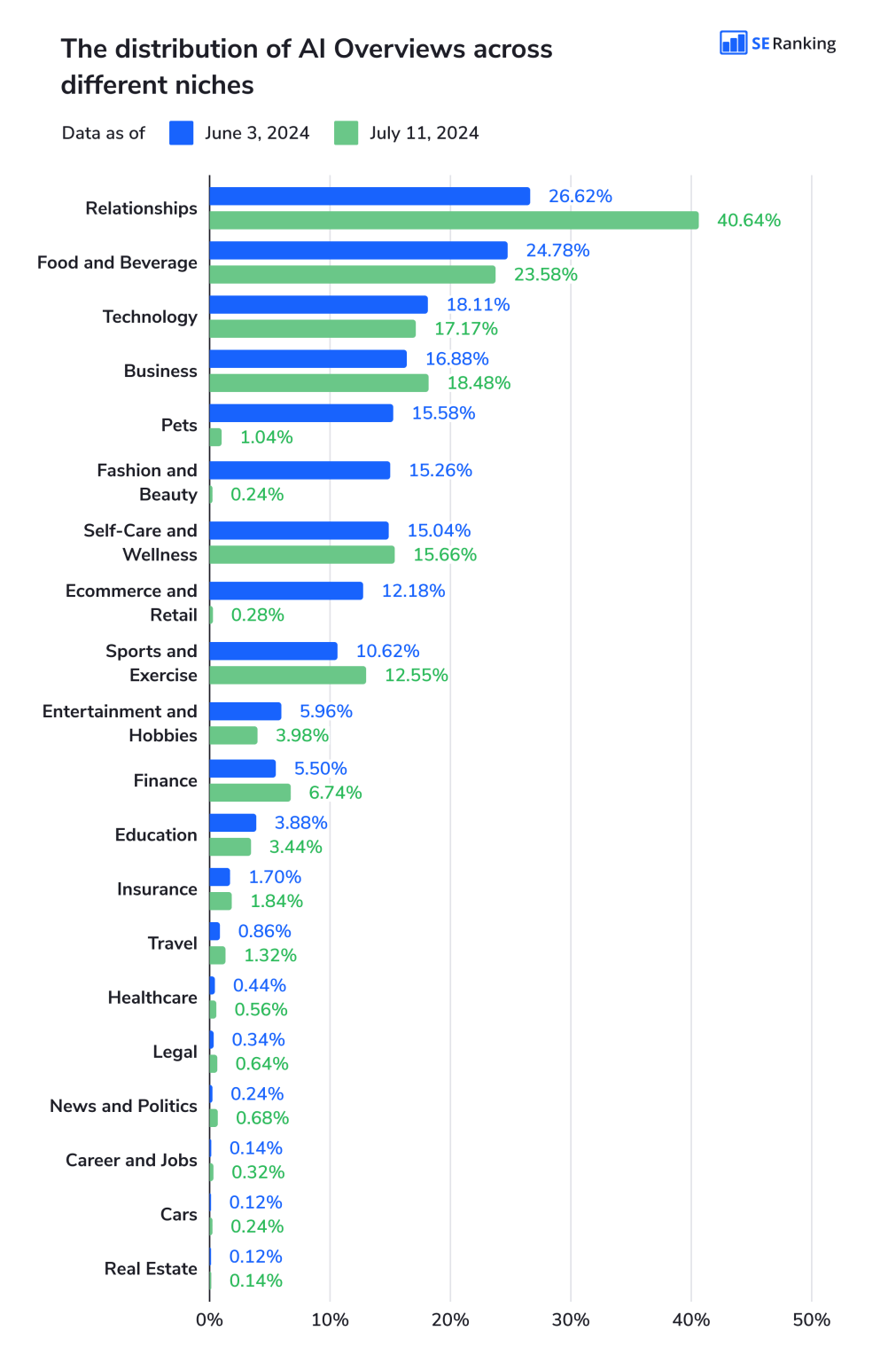
Source: SE Ranking
**Our take:**
- One interesting finding, given the ranking visibility of forums: "The current dataset shows zero Reddit and Quora links in AIOs."
- Matt McGee who tracks real estate keywords [said](https://www.linkedin.com/posts/mattmcgee%5F600-real-estate-agents-marketers-just-activity-7228466785140797440-gCu3/?ref=nearmedia.co), "46% of the keywords I track now show an AIO, up from 6% last month."
- It's been reported that serving AIOs is much more expensive than serving conventional search results (organic). That's probably also a consideration.
### More Unsavory Google Revelations
Google critic Jason Kint has [analyzed](https://x.com/jason%5Fkint/status/1821554841786683554?ref=nearmedia.co) what he describes as "a 325 page Google strategy [document](https://storage.courtlistener.com/recap/gov.uscourts.vaed.533508/gov.uscourts.vaed.533508.1132.2%5F1.pdf?ref=nearmedia.co)" that was part of the Google antitrust trial exhibits. There are numerous revelations in it. Among other things, it reflects Google's efforts to shift ad revenue "away from rest of the web to its own properties where it doesn't have to share any of it." There's also extensive discussion of tightening privacy rules in North America and Europe (GDPR) and Google's apparent efforts to circumvent their intent while technically complying. There's further discussion of how Google's 2016 merger of anonymous browsing data with PII and search (profile unification) was designed to build "a holistic in-depth user profile that understands exactly where a user is in their purchase journey" and intended for better tracking and targeting across the web. It was "sold" to users (and regulators) on the grounds of simplification. The document also reveals that Google saw publisher subscriptions as a "threat to the open web" and itself. And it shows how Google gives special data privileges to its largest spending advertisers. It's worth reading his [Tweets](https://x.com/jason%5Fkint/status/1821554841786683554?ref=nearmedia.co) and, if you've got the time/stamina, the exhibit itself.

Source: DALL-E
**Our take:**
- The document, as well as antitrust trial exhibits generally, reinforce the perception of Google as an aggressively self-interested party – both manipulative and often deceptive – if not an outright bad actor.
- Again, Google's data hoarding, surveillance and weaponization of data strongly argue for divestiture of Chrome (and probably Android), as well click data sharing.
- As Kint says in his Tweet string, Google would dismiss many of these revelations as brainstorming or simply "ideas" but they're part of a pattern.
## Recent Analysis
- **Is Google’s engagement-hacking masking stalled growth?**, [by David Mihm](https://www.nearmedia.co/google-engagement-hacking/).
- **Near Memo episode 169**: [GBP bugs & AI-driven layoff concern, sale of CNET & Google, antitrust remedy: impact on Apple & SEO](https://www.nearmedia.co/ep-169-gbp-bugs-ai-driven-layoff-concern-sale-of-cnet-google-antitrust-remedy-impact-on-apple-seo/).
## Short Takes
- **LSAs**: new [image auto-select](https://searchengineland.com/google-enhances-local-services-ads-with-auto-selected-photos-445044?ref=nearmedia.co) and [more budget control](https://searchengineland.com/google-enhances-budget-control-for-local-service-ads-445037?ref=nearmedia.co).
- Refresher and [overview](https://www.linkedin.com/posts/sam-knight-47b778124%5Flocalseo-seotips-activity-7227724473670496256-5IkE/?ref=nearmedia.co) of **service areas for GBP.**
- **Apple Maps** [now available](https://appleinsider.com/articles/24/08/09/apple-maps-now-works-in-firefox-and-edge-for-mac?ref=nearmedia.co): Chrome, Edge for Mac and Firefox.
- Publishers [refocus on](https://www.adweek.com/media/reddit-search-visibility-publishers/?ref=nearmedia.co) **Reddit** as traffic soars.
- Google has a patent re using **branded queries** [as a ranking signal](https://www.searchenginejournal.com/googles-branded-search-patent-for-ranking-search-results/524083/?ref=nearmedia.co).
- **Google Discover** (not Search) [now delivering](https://x.com/JShehata/status/1821953011238801658?ref=nearmedia.co) majority of news pub traffic.
- By [reducing attention on physical stores](https://x.com/MordyOberstein/status/1821877709393330192?ref=nearmedia.co), **Nike** enabled competitors.
- Locking up **store displays** depressing sales; [pushing shoppers online](https://www.axios.com/2024/08/11/retail-theft-cvs-walgreens-locked-cabinet??ref=nearmedia.co).
- **TikTok** upgrades messaging, adds [group chats](https://newsroom.tiktok.com/en-us/share-your-favorite-tiktok-moments-with-direct-messaging?ref=nearmedia.co).
- **Alexa** is 10, its survival [depends on generative AI](https://techcrunch.com/2024/08/10/as-alexa-turns-10-amazon-looks-to-generative-ai/?ref=nearmedia.co).
- How **AI** could [threaten Wikipedia](https://sherwood.news/tech/ai-is-mining-the-sum-of-human-knowledge-from-wikipedia-what-does-that-mean/??ref=nearmedia.co).
- Death of early Googler **Susan Wojcicki** both [sad](https://blog.google/inside-google/message-ceo/an-incredible-life-and-career/?ref=nearmedia.co) and symbolic.
Listen to our [latest podcast](https://www.nearmedia.co/memo/).
[](https://nearmedia.co/memo?ref=nearmedia.co)
How can we make this better? Email [us](mailto:gsterling@nearmedia.co) with suggestions and recommendations.
### Is Google’s Engagement-Hacking Masking Stalled Growth?
URL: https://www.nearmedia.co/google-engagement-hacking/
Last updated: 2025-03-06T20:35:54.000Z
Google appears to be propping up query volumes with some weird UX decisions as it continues its quest for predictable ad-revenue growth. To read the full article, sign up for our free membership level.
_This post is for subscribers only._
### Ep 169: GBP Bugs & AI-Driven Layoff Concern, Sale of CNET & Google, Antitrust Remedy: Impact on Apple & SEO
URL: https://www.nearmedia.co/ep-169-gbp-bugs-ai-driven-layoff-concern-sale-of-cnet-google-antitrust-remedy-impact-on-apple-seo/
Last updated: 2024-08-09T13:43:28.000Z
**Part 1 starts 00:13 -** [**Google's Local Business Service Woes: Persistent Bugs and AI-Driven Layoffs Spark Concern**](https://youtu.be/3fMUt5%5FmF3g?ref=nearmedia.co)
There have been ongoing support and technical issues with Google Business Profiles. Major bugs affecting local business profiles have persisted for months and in several cases years, including image misassignments and overzealous suspension algorithms that remove legitimate reviews. Google's support and engineering teams have struggled to resolve these issues, partly due to significant layoffs aimed at funding AI projects. While Google’s local business services might not generate significant revenue for Google, they are crucial for the company's differentiation in the market. Is Google killing the goose by milking traditional resources for income and not investing enough to stay ahead of the competition?
Segment Reference Article:
[Is Google artificially inflating search volumes?](https://youtu.be/yNVi5pa0R3I?ref=nearmedia.co)
[Bulk bugs](https://support.google.com/business/thread/281370509?ref=nearmedia.co)
[On-going Image Profile bug](https://support.google.com/business/thread/261564715?ref=nearmedia.co)
[Google not providing pathway for recovery of missing reviews](https://support.google.com/business/thread/288310517?ref=nearmedia.co)
[Google unable to restore reviews lost during suspension](https://support.google.com/business/thread/261385168?msgid=289967336&ref=nearmedia.co)
**Part 2 starts 11:28 -** [**CNET's Future Under Ziff Davis: Challenges and Google Opportunities/Difficulties Post-Sale**](https://youtu.be/C20hF6myitI?ref=nearmedia.co)
Red Ventures recently sold CNET to Ziff Davis for around $100 million, a significant loss from the $500 million purchase price. Despite Red Ventures' strong SEO and digital product expertise, CNET struggled due to aggressive content strategies and controversies over AI-generated content. CNET, once a trusted tech review site, saw its reputation and traffic decline. Factors like Google's increased emphasis on shopping ads and affiliate revenue pressures contributed to CNET's struggles. The sale to Ziff Davis is viewed as a positive move, but the site's recovery remains uncertain and tracking whether CNET can recover in the SERPS is worth following to see if a well managed, strong domain with good content can overcome Google’s algorithmic whims.
Segment Reference Articles:
[Ziff Davis is acquiring CNET for more than $100 million](https://www.theverge.com/2024/8/6/24214374/cnet-zeff-davis-acquisition-digital-media-100-million?ref=nearmedia.co)
**Part 3 starts 15:42 -** [**Google's Antitrust Remedies: Implications for Apple, Mozilla, and the SEO Landscape**](https://youtu.be/o2tThYCXvs8?ref=nearmedia.co)
What will the repercussions of Google's recent antitrust liability be?. The potential remedies, such as breaking up Google, ending exclusive default search deals with Apple, and implementing data-sharing practices, all have limits and issues. The big question will be the impact on Apple and Mozilla if Google’s default search deals are prohibited. Apple has the potential to develop a robust search engine, considering its existing search index and AI advancements. Perhaps we are seeing the outline of that via Apple’s announced relationship with ChatGPT. Given that the settlement could take 4 years and a similar amount of time for Apple to fully implement generative AI across their full user base, changes to the landscape will be slow in coming. The long-term effects of these potential regulatory changes could impact Google's market dominance. For now and the immediate future, SEO’s need not worry as things will change little and when they do it will be slowly.
Segment Reference Articles:
[Friendly Google and Enemy Remedies](https://stratechery.com/2024/friendly-google-and-enemy-remedies/?ref=nearmedia.co)
[How Will Google’s Antitrust Ruling Affect You?](https://moz.com/blog/google-antitrust-ruling?ref=nearmedia.co)
### Google Fallout, Apple Search Speculation, Stores Rule
URL: https://www.nearmedia.co/google-fallout-apple-search-speculation-stores-rule/
Last updated: 2024-08-08T20:21:55.000Z
### Google Monopoly Ruling: The Fallout
Unless you've been in a coma, you know that [Google was found this week to be an illegal monopoly](https://www.nearmedia.co/google-loses-ai-ankle-biters-gbp-menu-optimization/) in violation of the Sherman Antitrust Act. The court determined that Google abused its search dominance to thwart rivals, prevent Apple from building its own search engine and raised PPC prices with impunity. But, as we previously said, a finding of liability is mostly symbolic unless there are meaningful remedies. The remedies portion of the trial begins next month. There appear to be three broad options available: breaking up Google, search/click data sharing and elimination of Google's default search agreements. There may be other possibilities on the paid-search side around pricing or auction transparency. The judge's ruling took many people in the industry by surprise – although the same thing happened to Microsoft in 1999\. Will the judge be bold in his remedies decision or more "balanced"? Arguably the real remedy is breaking up Google; that's unlikely to happen. Apple's default search deal is probably done however. And there will likely be some sort of data sharing/selling requirement with competitors, [as in Europe](https://www.bruegel.org/working-paper/what-should-be-done-about-googles-quasi-monopoly-search-mandatory-data-sharing-versus?ref=nearmedia.co). In the near term, nothing will change for consumers or marketers, including SEOs. It will be BAU for the foreseeable future.
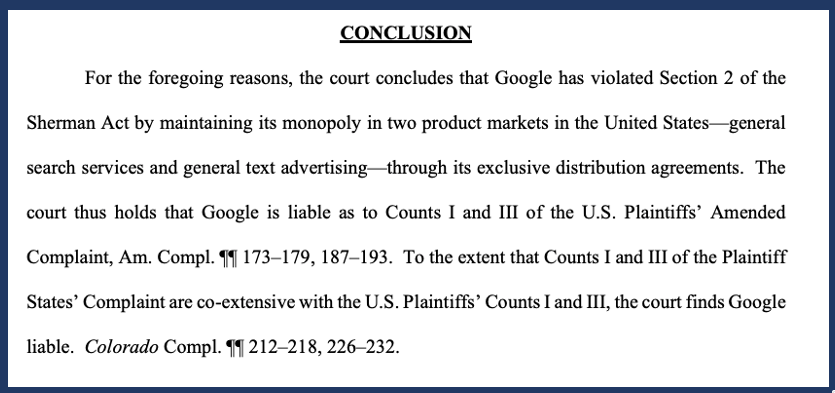
Source: Court opinion excerpt DOJ vs. Google
**Our take:**
- Prognosticators: here's [a general set of fallout predictions](https://www.mediapost.com/publications/article/398336/google-long-term-impact-consequences-of-antitrus.html?ref=nearmedia.co); and here's Dr. Pete from Moz, who [believes](https://moz.com/blog/google-antitrust-ruling?ref=nearmedia.co) the biggest impact will be on paid search.
- Google's position in general search is what allowed them to so thoroughly dominate paid search. It's unclear what can be done to address that.
- Most people will choose Google anyway, if asked to choose. So in a way the court has done Google a favor by giving them back $20 billion a year.
### *Now*, Will Apple Build a Search Engine?
Having said above that very little is likely to change, we want to explore a more interesting scenario: whether probable loss of the default search deal motivates Apple to build a search engine in earnest. Apple has been flirting with creating a search engine for years but reportedly got fat and complacent on Google's $20 billion annual rev-share deal. This was part of the judge's findings: that Google's payments kept Apple from fully competing in search. At trial it came out that Apple (or some expert) estimated it [would need to spend $6 billion](https://www.theverge.com/24214574/google-antitrust-search-apple-microsoft-bing-ruling-breakdown?ref=nearmedia.co) per year (on top of existing spending) to operate a general search engine. It was also revealed at trial that Apple [currently maintains a search index](https://www.seroundtable.com/apple-search-index-37855.html?ref=nearmedia.co) with billions of sites. So it's more ready to jump into the search fray than perhaps perviously thought. There's a kind of inexorable logic to Apple developing a general purpose search engine, especially now with Apple Intelligence and the partnership with OpenAI, which [recently announced SearchGPT](https://www.nearmedia.co/the-anti-google-reframing-seo-marketers-neglect-seo/) – including local.
Source: ChatGPT
**Our take:**
- Apple clearly appears reluctant to compete in search. But it doesn't need to think about it that way. It could just built a better UX for iPhone owners that has web search (also Siri). It has the bad version now.
- In our forthcoming [podcast](https://www.nearmedia.co/memo/), we discuss monetization of Apple search. The company has a paid-search infrastructure (App Store). It could make a lot potentially with one relevant ad in search results, a better UX.
- Apple is arguably the best positioned right now to have an impact on search competition if it embraced the inevitable rather than fighting it.
### Why People Want Stores
During the pandemic analysts made all sorts of grandiose predictions about the death of local retail. E-commerce would continue to eat a larger share of spending as stores closed and malls died, the narrative declared. Clearly that hasn't happened. And while e-commerce continues its incremental march, stores continue to play a critical role for consumers. This was reaffirmed in a massive [survey](https://www.ey.com/en%5Fgl/newsroom/2024/07/ey-future-consumer-index-consumers-return-to-physical-stores-for-personal-service-even-as-ai-and-tech-revolutionize-online-shopping?ref=nearmedia.co) by Ernst & Young (EY): 23,000 consumers across 30 countries. The survey asked about in-store experiences, AI, customer service and other issues. EY found (globally): 57% of shoppers "want to see, touch and feel items before they buy them," while nearly 70% wanted "expert advice on high-value purchases" (presumably from in-store associates). In addition, 61% said "they would go to a retailer for a store promotion \[ \] not available online." Shoppers were ambivalent about AI; 68% said they were open to AI-personalized offers, but a majority expressed disappointment, distrust and frustration with AI in online shopping. Roughly half were frustrated by generic chatbot responses and a third didn't trust AI product recommendations. Consumers also cited poor online customer service and difficult returns as digital shopping frustrations.

Source: ChatGPT
**Our take:**
- As we've said, it's not "or" it's "and." Retailers that have both an online and offline presence are much stronger, including in search.
- People are far more likely to buy something online if the can return it to a local store. It gives them confidence + trusted brand. Brand = clicks.
- The bigger challenge is using all these technology tools in a way that enhances CX and doesn't F it up, which is often the case.
## Recent Analysis
- **Near Memo episode 168:** [OpenAI & MindTrip bring AI search, search shenanigans, boost Google local rankings with engagement?](https://www.nearmedia.co/ep-168-openai-mindtrip-bring-ai-search-search-shenanigans-boost-google-local-rankings-w-engagement/)
## Short Takes
- New **Google Knowledge Panel** [format live](https://x.com/clairecarlile/status/1818317690416582910?ref=nearmedia.co) for some people.
- How to [connect](https://x.com/mblumenthal/status/1821229842123386897??ref=nearmedia.co) **SMS or WhatsApp** to GBP for messaging.
- GBP **'See Also' carousel** [shows competitors](https://www.seroundtable.com/google-business-profiles-see-also-37849.html?ref=nearmedia.co), drives more searches.
- Google [to show](https://www.seroundtable.com/google-your-local-service-ads-photos-37865.html?ref=nearmedia.co) **LSA photos** from the Local Service Ads profile.
- **Product images in Google** SERPs [now showing star ratings](https://www.seroundtable.com/google-shopping-product-images-user-review-images-37838.html?ref=nearmedia.co).
- Dotdash Meredith: **Google AIOs** [having a "negligible" impact](https://www.linkedin.com/posts/glen-allsopp-63084025%5Fiacs-dotdash-meredith-revealed-revenue-of-activity-7227329804176384000-pllY/?ref=nearmedia.co) on traffic.
- **Forbes** [ranking](https://x.com/JoyanneHawkins/status/1821244767352578553?ref=nearmedia.co) for its directory of near me lawyers (probably shouldn't).
- **Click prices** going up, [performance is flat](https://searchengineland.com/digital-ad-prices-rise-channels-performance-steady-444590?ref=nearmedia.co) (which means ROI down).
- **Apple services** profit [may soon surpass](https://daringfireball.net/2024/08/apple%5Fservices%5Fprofit?ref=nearmedia.co) its devices profit.
- UK regulator [issues warning](https://www.ofcom.org.uk/topic-and-subtopics/online-safety/illegal-and-harmful-content/news-and-updates/open-letter-to-uk-online-service-providers/?ref=nearmedia.co) to **social media sites** about inciting violence.
- **Nextdoor** [Q2 revs](https://investors.nextdoor.com/news/news-details/2024/Nextdoor-Reports-Second-Quarter-2024-Results/default.aspx?ref=nearmedia.co) of $63 million, 45 million users (both numbers up YoY).
- More pages indexed in Google [correlated with](https://www.linkedin.com/posts/localseoguide%5Fget-more-pages-indexed-in-google-watch-your-activity-7227342811212234752-70O3/?ref=nearmedia.co) **traffic declines**.
- Stupidest thing ever: **Twitter/X** [sues advertisers](https://www.axios.com/2024/08/06/scoop-x-sues-major-brands-ad-industry-group-for-antitrust?ref=nearmedia.co) for not advertising on X.
Listen to our [latest podcast](https://www.nearmedia.co/memo/).
[](https://nearmedia.co/memo?ref=nearmedia.co)
How can we make this better? Email [us](mailto:gsterling@nearmedia.co) with suggestions and recommendations.
### Google Loses, AI Ankle Biters, GBP Menu Optimization
URL: https://www.nearmedia.co/google-loses-ai-ankle-biters-gbp-menu-optimization/
Last updated: 2024-08-06T19:30:49.000Z
### Google Loses Antitrust Case
Contrary to what you may understand, it's not illegal to be a monopoly in the US. Rather, it's illegal to *abuse* your position to maintain that monopoly. That's what Judge Mehta of U.S. District Court for the District of Columbia found in his [almost 300 page ruling](https://www.washingtonpost.com/documents/d42ab8b2-e648-45f9-a4a5-0e0d147be918.pdf?itid=lk%5Finline%5Fmanual%5F4&ref=nearmedia.co), which largely goes against Google. Specifically, the court found that Google holds monopolies in "general search services" and "general search text ads." Its default search deals (e.g., Safari) were found to be anticompetitive. The judge also determined the company charged "supracompetitive prices for general search text ads," allowing Google to "earn monopoly profits." What the court essentially said is that Google used its power in general search (and default distribution agreements) to hobble competitors and increase paid-search prices without concern about competition. The decision is a major victory for the Department of Justice and reminiscent of Microsoft's antitrust defeat 25 years ago (the company mostly escaped unscathed). However, this was only the liability phase; now comes the more important remedies phase. Google's response was [mostly defiant self-justification](https://x.com/Google%5FComms/status/1820558371285508123?ref=nearmedia.co).

Source: Court opinion excerpt DOJ vs. Google
**Our take:**
- We predicted this outcome, given the [really incriminating material](https://www.nearmedia.co/google-ppc-fixing-search-chatgpt-pichai-evades/) that came out at trial. But liability is mostly symbolic without remedies.
- Default search deals are now probably dead, which means billions lost for Apple but [could really impact Mozilla/Firefox](https://fortune.com/2024/08/05/mozilla-firefox-biggest-potential-loser-google-antitrust-search-ruling/?ref=nearmedia.co). It might also jumpstart Apple's moves into search, especially given Apple Intelligence.
- Google is going to appeal, which could tie things up for years. There are two outcomes: minimal change or structural change. My guess is that the judge won't break up the company. But there will be a ripple effect.
### Report: AI Not a Threat to Google
It wasn't the legal system that disrupted Microsoft's desktop and browser monopolies two decades ago it was competition from Apple and Google – although Microsoft is now more valuable than ever. Similarly, today, Google is probably less concerned about the consequences of antitrust liability than the competitive threat of AI. But behavioral [data so far](https://sparktoro.com/blog/new-research-so-far-ai-is-not-disrupting-search-or-making-a-dent-in-google/?ref=nearmedia.co) don't seem to validate the "disruption narrative" popular among industry insiders. A new traffic-based report ([gated](https://datos.live/whitepaper/consumer-search-behavior-whats-changing-and-whats-not-in-the-age-of-ai/?ref=nearmedia.co)) from Datos/Semrush and Sonata Insights uses traffic and search volume data to look at AI's impact on Google, the relative positions of AI-based search offerings (ChatGPT, Perplexity, Claude, Copilot and Gemini), social search and product search. It says that Google's traffic and share of search data has been stable since ChatGPT's launch. AI search (especially Perplexity) is growing but relatively small. And all five AI properties saw growth except Gemini. The report found that 16.4% of all search users also use an AI tool, up 2 points since May 2023\. Social search isn't really a threat to Google and YouTube is the biggest "social search engine." It concludes by saying that retail search activity is "stable" (e.g., Amazon, eBay) and not yet impacted by AI. The argument is: AI is so far is more PR than product disruption.
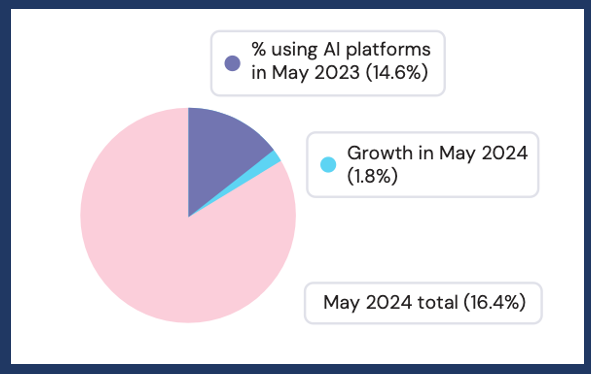
Source: Semrush-Sonata Insights
**Our take:**
- There's tension between consumer [survey data](https://www.nearmedia.co/ai-use-hurts-google-smb-response-times-local-ai-review-tool/) and the traffic data. The traffic data doesn't indicate (as the report argues) any changes. But the survey data suggest pent-up demand for Google alternatives.
- The chart above may be the most important in the report: 16.4% of searchers use an AI platform. If this continues to grow, more people may conduct AI-based searches simply because they're there.
- The analogy that comes to mind is MySpace and Facebook. Users were on both until they weren't. Google isn't MySpace but there will be erosion of usage, mostly on the informational query front.
### Menu Optimization and GBP Visibility
Near Media's search user [research](https://www.nearmedia.co/google-serp-restaurants-eu-dma-analysis/) in the restaurant vertical has found, unsurprisingly, that menus drove significant user engagement. They often appear in images (menu photographs) in Google Business Profile carousels. And people frequently click through to restaurant sites to look at menus. Claudia Tomina's own research confirmed that menus and menu items help local restaurants rank. Her recent [post](https://reputationarm.com/boost-your-rankings-with-menu-items-menu-highlights-reviews-and-photos/?ref=nearmedia.co) discusses menu optimization best practices. For those doing SEO for local restaurants it offers detailed tactical advice. She says that while primary category (i.e., cuisine) is the dominant signal, "you need a combination of strategic menu naming (think query searches), relevant photos ... the right business name and consistent menu highlights..." No single factor is enough by itself. In contrast to SEO conventional wisdom, she argues that, at least here, keywords in reviews do matter – this is a fairly nuanced discussion. Understanding competitors and what they're ranking for is also a key success variable. As a bonus, she links to [another guide](https://reputationarm.com/removing-third-party-vendors-from-google-business-profile-a-guide-to-streamlining-your-food-ordering-links/?ref=nearmedia.co) about how to remove third party vendors from your GBP listing.
**Ranking Improvement Once Menu Item Changed to Match Queries**
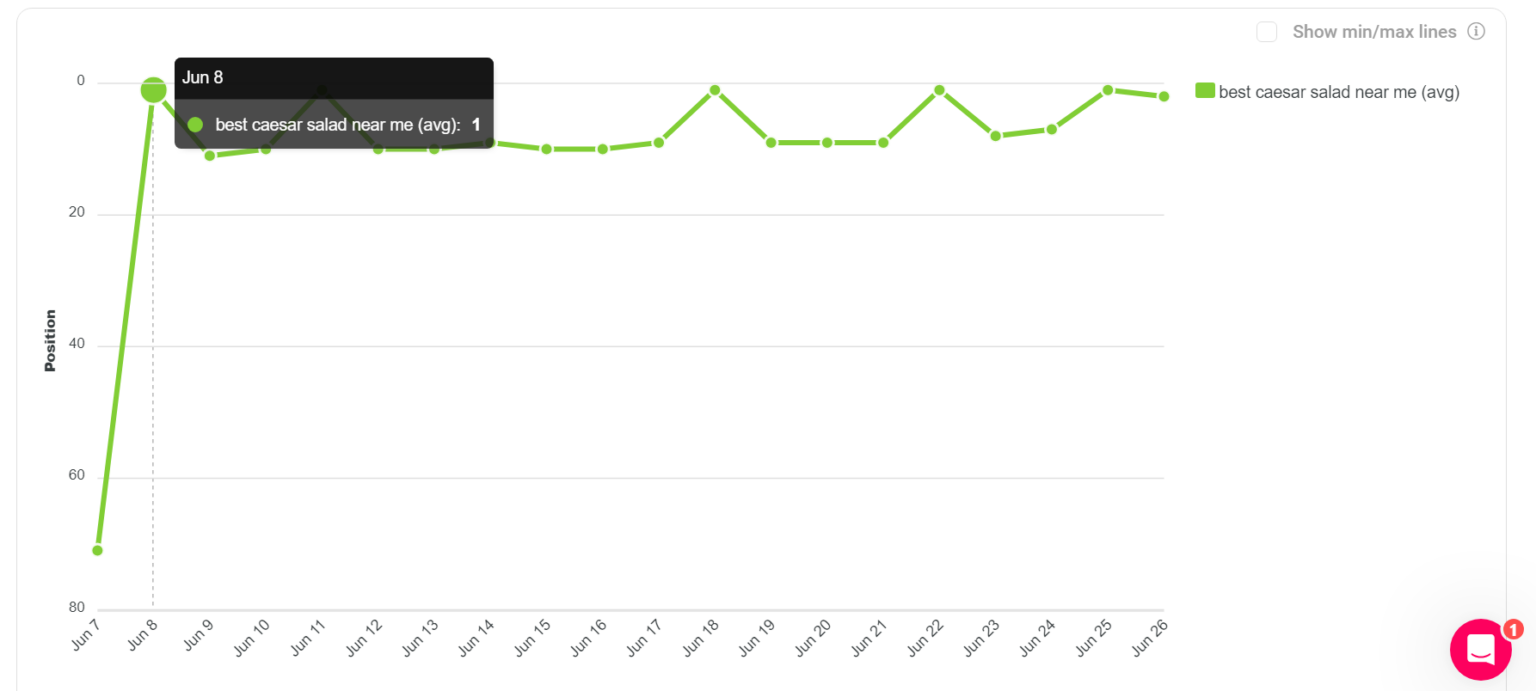
Source: Reputation ARM
**Our take:**
- Tomina doesn't specifically discuss clicks/engagement; however, these changes also will boost engagement and potentially visibility accordingly.
- Images, menus and reviews are going to matter most to users when looking at Google Business Profiles, in terms of decision factors.
- I'm struck (again) by how it would be impossible for a non-corporate restaurant to do any of this on its own without professional SEO help.
## Recent Analysis
- **Near Memo episode 168:** [OpenAI & MindTrip bring AI search, search shenanigans, boost Google local rankings with engagement?](https://www.nearmedia.co/ep-168-openai-mindtrip-bring-ai-search-search-shenanigans-boost-google-local-rankings-w-engagement/)
- ICYMI: **Local Search Is Evolving, Here's Why You Need to Pay Attention**, [by Mike Blumenthal](https://www.nearmedia.co/the-speed-of-the-sound-of-the-local-pack/).
## Short Takes
- 11 **Local SEO tools** [you should be using](https://searchengineland.com/local-seo-tools-you-should-use-444604?ref=nearmedia.co).
- **Google** [sending notifications](https://x.com/colannielsen/status/1819556017371218000?ref=nearmedia.co) to users to update local reviews.
- **Google** [testing "see also"](https://x.com/mblumenthal/status/1820527668129079545?ref=nearmedia.co) (other GBP profiles) in local results.
- How to use **Apple Maps** new "[search here](https://appleinsider.com/inside/apple-maps/tips/how-to-use-the-new-search-here-feature-in-apple-maps-with-ios-18?ref=nearmedia.co)" (near me) feature.
- **Google Search Console** [introduces recommendations](https://searchengineland.com/google-search-console-launches-recommendations-444711?ref=nearmedia.co).
- Distraction Control (**iOS 18**) [will hide ads](https://www.theverge.com/2024/8/6/24214338/apple-ios-18-thanos-snap-animation-hide-ads?ref=nearmedia.co) and other annoying site features.
- Sites blocking **OpenAI's crawler**, [make](https://x.com/lilyraynyc/status/1819779575586394236?ref=nearmedia.co) its search efforts more difficult.
- **Twitter** [closing SF headquarters](https://sfstandard.com/2024/08/05/x-officially-kills-its-san-francisco-headquarters-will-relocate-workers-to-south-bay/?ref=nearmedia.co) in spiteful move by Musk.
- Tarnished **CNET** being sold to Ziff-Davis for \~$100 million ([NYT](https://www.nytimes.com/2024/08/06/business/media/cnet-ziff-davis.html?ref=nearmedia.co)).
- Don't hallucinate: **Apple Intelligence** "back end prompts" [revealed](https://simonwillison.net/2024/Aug/6/apple-intelligence-prompts/?ref=nearmedia.co).
- **Optimizing for AI** chatbots [a different game vs. Google](https://www.similarweb.com/blog/insights/ai-news/searchgpt-is-coming/?ref=nearmedia.co).
- Beyond the phone: Google bringing **Gemini** [to earbuds](https://9to5google.com/2024/08/05/gemini-earbuds-ai-assistant/?ref=nearmedia.co), [Nest speakers](https://9to5google.com/2024/08/06/google-assistant-nest-displays-speakers/?ref=nearmedia.co).
Listen to our [latest podcast](https://www.nearmedia.co/memo/).
[](https://nearmedia.co/memo?ref=nearmedia.co)
How can we make this better? Email [us](mailto:gsterling@nearmedia.co) with suggestions and recommendations.
### EP 168: OpenAI & MindTrip bring AI search, Search Shenanigans, Boost Google Local Rankings w/ Engagement?
URL: https://www.nearmedia.co/ep-168-openai-mindtrip-bring-ai-search-search-shenanigans-boost-google-local-rankings-w-engagement/
Last updated: 2024-08-03T13:56:49.000Z
**Part 1 starts** **00:13 -** [OpenAI & MindTrip bring AI to search, will it matter?](https://youtu.be/3E9AQJ7dpk0?ref=nearmedia.co)
Last Thursday, OpenAI made waves with an announcement about Search GPT, a prototype aimed at revamping the search experience for ChatGPT users. Promising a two-column format, it aims to ease the search process and challenge traditional search engines like Google. The prototype has the potential to streamline user experience while emphasizing publisher control and cooperation.
In related news, a new travel bot, MindTrip, emerged, offering a conversational approach to travel planning. Users can refine searches for hotels, activities, and dining options, echoing the AI-driven trip planning Google showcased at their IO event.
Clearly Google has the mindshare, the consumer usage AND the knowledge graph to fend off these new competitors, but Google’s increasing contradictions and emphasis on income rather than user experience may hurt them.
Segment Reference Articles
[MindTrip.ai](http://mindtrip.ai/?ref=nearmedia.co)
[SearchGPT Prototype](https://openai.com/index/searchgpt-prototype/?ref=nearmedia.co)
[Trip Planning + Trip Memories: Nobody’s Nailed It.](https://maphappenings.com/2024/06/20/trips/?ref=nearmedia.co)
**Part 2** \- [**Google’s Search Shenanigans: Boosting Search Numbers with Tricks?**](https://youtu.be/yNVi5pa0R3I?ref=nearmedia.co)
Is Google artificially inflating search volumes? One tactic involves generating new URLs for actions like clicking reviews in business profiles, which counts as additional searches. Another strategy is tweaking ad displays to change when users return to the search page, boosting ad inventory without increasing actual searches.
This behavior coincides with Google’s internal goal of increasing search volumes, potentially to impress Wall Street. However, this approach might be backfiring, frustrating users who have to perform multiple searches to find relevant information. This shift towards prioritizing revenue over user experience raises questions about Google’s long-term strategy and the potential need for new leadership to refocus on user satisfaction. How sustainable are these tactics?
**Part 3** \- [**Can You Boost Google Local Rankings via Engagement?**](https://youtu.be/mCgPZi2cnng?ref=nearmedia.co)
Recent revelations from API leaks and DOJ findings highlight that Google uses click-through rates and on-site engagement as primary metrics to rank sites, contributing up to 30% of a site's ranking factors. This suggests that improving user interaction—like enhancing title tags, adding images, and boosting on-site engagement—can significantly impact search rankings.
Does Google use similar engagement metrics to influence local business rankings? Actions like users interacting with business profiles, scrolling through images, and reading reviews might boost local search visibility. While photos play a critical role in attracting user attention, reviews and specific content like menus or price information can drive deeper engagement, do they potentially also elevate rankings?
This underscores the importance of comprehensive competitor analysis to identify effective content strategies, ensuring businesses stay ahead in the local search game. As Google prioritizes engagement metrics, businesses must understand and cater to user desires on a category by category basis going forward.
Segment Reference Articles:
[Reframing how search ranking works](https://www.nearmedia.co/ep-167-reframing-how-search-ranking-works-google-doubles-down-on-income-voice-search-set-for-a-comeback/)
[Boost Your Rankings With Menu Items, Menu Highlights](https://reputationarm.com/boost-your-rankings-with-menu-items-menu-highlights-reviews-and-photos/?ref=nearmedia.co)
### AIOs Hurt Ad Clicks, Travel Mindtripping, Bing: We Took Share
URL: https://www.nearmedia.co/aios-hurt-ad-clicks-travel-mindtripping-bing-we-took-share/
Last updated: 2024-08-01T21:12:04.000Z
### Google AIOs Depress Ad Clicks
Based on an early analysis, Tinuiti found that AI Overviews depressed ad clicks on non-branded keyword mobile SERPs. This comes from their [Q2 digital ads benchmarking report](https://tinuiti.com/research-insights/research/digital-ads-benchmark-report-q2-2024/?ref=nearmedia.co). According to the findings, "as Google rolled out AIOs to all US users in May, non-brand text ads on both computers and phones saw a meaningful drop in click-through rate (CTR) compared to April, and a much larger drop than that seen for brand keywords." When AIOs [were "dialed back](https://www.nearmedia.co/search-frustration-aio-disappearing-act-genzs-social-search/)" shortly thereafter, "CTR for other segments recovered, but it did not for non-brand phone text ads." The report goes on to heavily qualify its findings and suggest multiple factors may be involved in the observed CTR drop. However, these data suggest that another motivation for the AIO pullback may have been an adverse impact on revenue and [not just bad PR](https://www.nearmedia.co/google-rides-the-clickstream-long-tail-citations-ai-overview-fails/). Another finding from the report is that ad clicks were down but ad spending is up: "Spending on Google search text ads was up 13% Y/Y in Q2 2024, which was driven almost entirely by CPC growth."
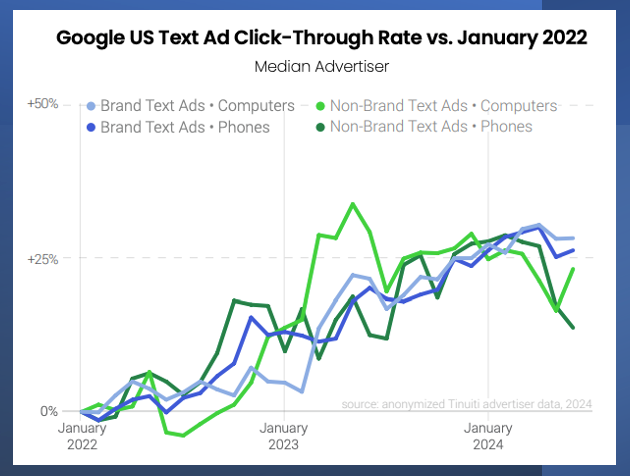
Source: Tinuiti
**Our take:**
- It would appear that increased ad prices are primarily driving [Google's ad-revenue growth](https://www.nearmedia.co/apple-webmaps-bing-ai-serp-google-q2-85b/), rather than click volume growth.
- Google seems to be [doing lots of things](https://www.nearmedia.co/the-google-local-serp-today/) to increase search volume (and show more ads) but might not be helping with CTR.
- Before we see AIOs ramp back up (after fixing hallucination and misinformation), Google needs to solve AIO monetization.
### Travel Mindtripping
At Google's developer conference in May, the company demonstrated AI-based conversational search [for complex queries](https://www.nearmedia.co/gemini-dominates-i-o-and-sge-goes-live/). It allowed users to ask multi-part queries and follow-up questions. Among other scenarios, this would be useful for travel planning. However that experience has yet to materialize. But a new AI travel site [Mindtrip](https://mindtrip.ai/?ref=nearmedia.co) offers a pretty compelling version of that and points the way to the future of "travel search." I've only used it twice and haven't verified the accuracy or quality of the underlying data. But I like it. It's primarily a conversational UI, like ChatGPT. But it also includes a socially curated "explore" area for trip inspiration. Right now to plan a trip to Paris, for example, I need to do a bunch of discrete searches on Google – although there is a generic AI Overview sample itinerary. Mindtrip gives you the ability to do "faceted search," starting broadly and then narrowing and refining in the chat UI without initiating a new query. If signed in, it saves your searches so you can engage in multiple planning sessions without having to start over. The site uses Google Maps so you get the benefit of all that data. And you can book hotels through affiliate partners such as Tripadvisor, Priceline, Agoda and others. It's a pretty complete experience.
**Paris Travel Planning on Mindtrip**
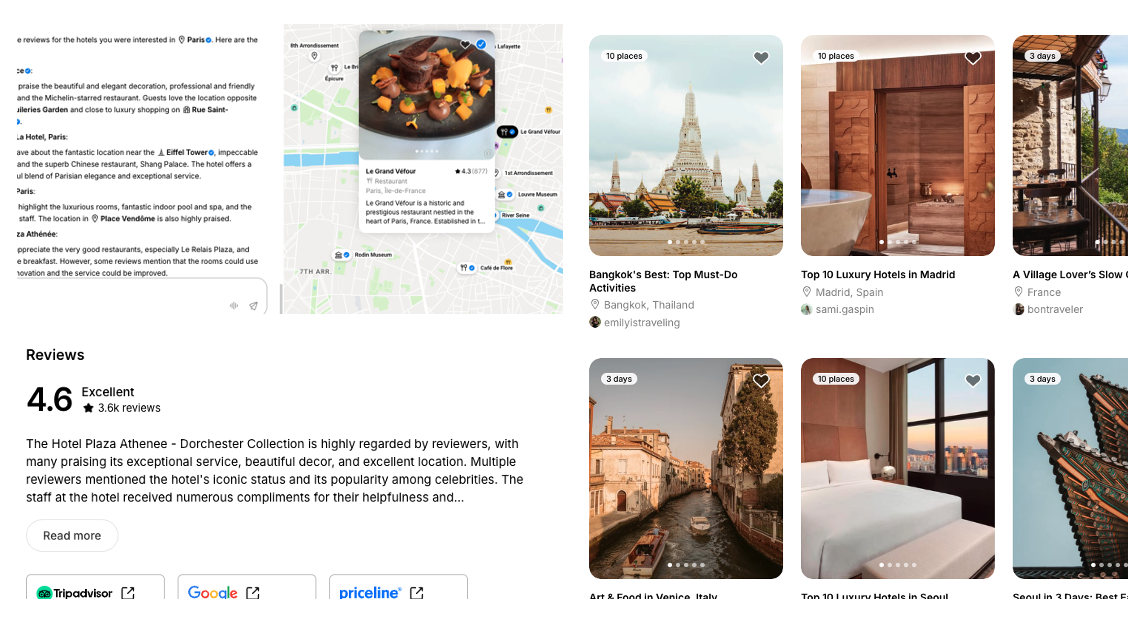
Source: Mindtrip
**Our take:**
- The business model is going to be affiliate revenue (already), ads (probably) and premium services (maybe).
- Mindtrip allows you say, "I want a 4-star hotel, under $200 per night with more than 4.5 stars, close to the heart of Paris." Google can't really deal with that query efficiently.
- The quality of the underlying data and recommendations need to be tested vs. other travel sites. But the data seem to be pretty complete.
### MSFT: Bing Took Share (from Google)
Earlier this week Microsoft [announced](https://www.microsoft.com/en-us/investor/earnings/fy-2024-q4/press-release-webcast?ref=nearmedia.co) better-than-expected quarterly revenues of $64.7 billion, up 15% year-over-year. However, Search and News ad revenues were up 19%. That's a roughly 10 point gain vs. a year ago and a 7 point gain sequentially. Microsoft CEO Satya Nadella, on the company's earnings call, said "We are ensuring that Bing, Edge, and Copilot are collectively driving more engagement and value to end-users, publishers, and advertisers ... we again took share across Bing and Edge." He didn't provide any third party data or specific discussion about taking share (presumably from Google) but he made the claim. Nadella added, "Our share gains accelerated this year, driven by AI." In that context he also touted the recently showcased Bing [AI-organized SERPs](https://www.nearmedia.co/apple-webmaps-bing-ai-serp-google-q2-85b/) – an arguably more thoughtful take on Google's AI organized pages. If we look at StatCounter [data](https://gs.statcounter.com/search-engine-market-share/desktop-mobile-tablet/united-states-of-america/?ref=nearmedia.co#monthly-202212-202407), which may not be entirely accurate, it shows a very slight search marketshare gain for Bing over time (about 1 point since last year). Microsoft CFO Amy Hood previously said that one point of search share could translate into $2 billion of new search revenue for the company.
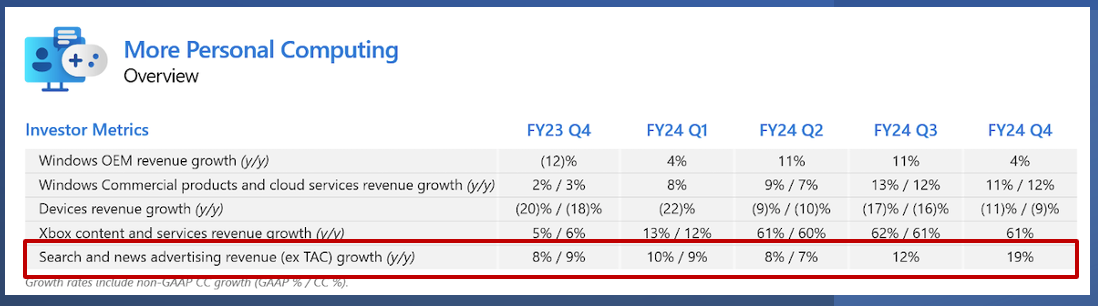
Source: Microsoft company earnings
**Our take:**
- Microsoft is telling a strong AI story across company divisions.
- Zooming out, as they say, Google is winning in search but MSFT is winning on Wall Street. Redmond is worth $1T more than Google today.
- Indeed, both Google and Apple "disrupted" Microsoft in major ways but the company is more valuable today than it was as a "monopoly."
## Recent Analysis
- **Google Completes GBP Reviews for LSAs Swap in EU**, [by Mike Blumenthal](https://www.nearmedia.co/google-completes-gbp-reviews-for-lsas-swap-in-eu/?).
- **Near Media podcast episode 167:** [Reframing how search ranking works, Google doubles down on income, voice search set for a comeback](https://www.nearmedia.co/ep-167-reframing-how-search-ranking-works-google-doubles-down-on-income-voice-search-set-for-a-comeback/)?
- ICYMI: **The Google Local SERP Today**, [by Mike Blumenthal](https://www.nearmedia.co/tag/analysis/).
## Short Takes
- Simple [fix](https://x.com/SterlingSkyInc/status/1817939035991535765?ref=nearmedia.co) for a broken booking/appointment link on **GBP**.
- Google ads cool [historical landmarks data](https://blog.google/products/maps/immersive-ar-content-google-maps-paris/?ref=nearmedia.co) to **Maps** using AR.
- The [Waze-ification](https://blog.google/products/maps/maps-waze-new-features-information-on-the-go/?ref=nearmedia.co) of **Google Maps**.
- **Siri** sees [marginal improvement](https://www.theverge.com/2024/7/31/24209910/apple-intelligence-ios-18-preview-siri?ref=nearmedia.co) in iOS 18.1 according to early reports.
- **Wix** AI tool will [do the blogging for you](https://www.theverge.com/2024/7/31/24210304/wix-ai-website-builder-seo-blog-posts?ref=nearmedia.co) (mostly).
- Poor **local SEO** advice [can be very costly](https://www.linkedin.com/posts/sam-knight-47b778124%5Flocalseo-seotips-activity-7224132932003643392-aZ1y/??ref=nearmedia.co).
- Sort products in **AI Overviews** [by attributes](https://x.com/Kevin%5FIndig/status/1819106582271062242?ref=nearmedia.co).
- How is "**generative engine optimization**" [different from SEO](https://searchengineland.com/what-is-generative-engine-optimization-geo-444418??ref=nearmedia.co)?
- **Optimizing video** in a [post-Google API leak world](https://www.womenintechseo.com/knowledge/digging-into-the-video-content-modules-of-googles-api-leak/??ref=nearmedia.co).
- **Reddit CEO** [reveals](https://www.theverge.com/2024/7/31/24210565/reddit-microsoft-anthropic-perplexity-pay-ai-search?ref=nearmedia.co) why scrapers blocked: to get them to pay for content.
- **Social media** [becoming a driver](https://corporate.walmart.com/content/dam/corporate/documents/newsroom/2024/07/23/adaptive-retail-report-2024.pdf?ref=nearmedia.co) of product discovery and commerce.
- Amazon: Adding AI to **Just Walk Out** [appears to give it new life](https://www.aboutamazon.com/news/retail/amazon-just-walk-out-improves-accuracy?ref=nearmedia.co).
- **Google** [remains](https://pro.morningconsult.com/analyst-reports/most-trusted-brands-2024?ref=nearmedia.co) a "most trusted brand" in the US.
Listen to our [latest podcast](https://www.nearmedia.co/memo/).
[](https://nearmedia.co/memo?ref=nearmedia.co)
How can we make this better? Email [us](mailto:gsterling@nearmedia.co) with suggestions and recommendations.
### The Anti-Google, Reframing SEO, Marketers Neglect SEO
URL: https://www.nearmedia.co/the-anti-google-reframing-seo-marketers-neglect-seo/
Last updated: 2024-07-30T18:07:15.000Z
### SearchGPT: The Anti-Google
Right after we published the newsletter Thursday, SearchGPT was [announced](https://openai.com/index/searchgpt-prototype/?ref=nearmedia.co). This comes after months of rumors and speculation (and disappointment). However, it's only available to a small number of users and publishers for feedback. OpenAI is calling it "a prototype of new search features designed to combine the strength of our AI models with information from the web to give you fast and timely answers with clear and relevant sources." The company says that it will "integrate the best of these features directly into ChatGPT in the future." (If you haven't already, you can join the waitlist [here](https://chatgpt.com/search?ref=nearmedia.co).) The image below shows an expandable two-column format; but because it will be incorporated into ChatGPT it's not clear what it will eventually look like. One person in my LinkedIn network who has access said, "I like it a lot. I think I will be using more than Google because it provides better context along with the links." Another person remarked that it was "more of Perplexity killer than a Google killer." There are three points to make: OpenAI emphasizes how it wants to support publishers and give them more control; it emphasizes links ("clear links to relevant sources") and says it will make search more conversational, faster and easier to use.
**OpenAI 'SearchGPT' result**
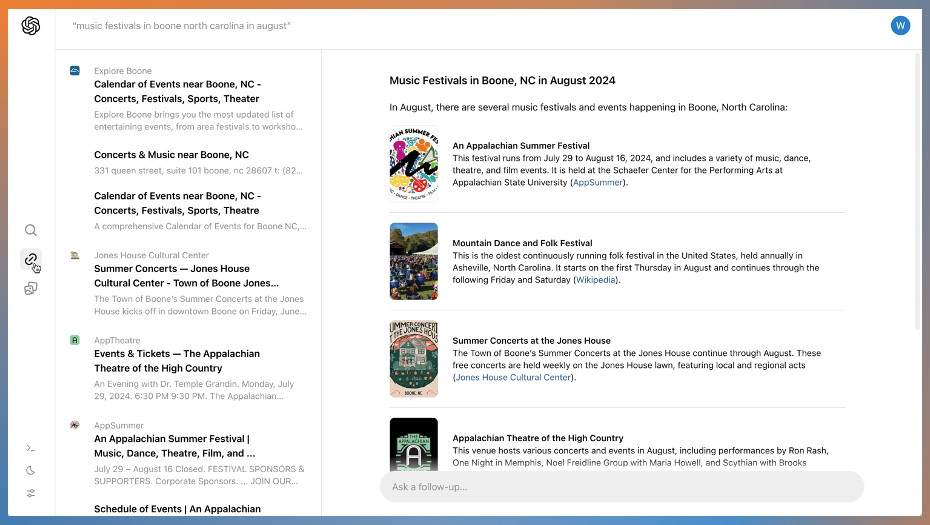
Source: OpenAI
**Our take:**
- In a note on "what comes next," OpenAI explicitly mentions local: "We’ll keep improving the experience in areas like local information and commerce."
- Many of the features mentioned in the blog post are not-so-subtle digs at Google, especially this: "Getting answers on the web can take a lot of effort, often requiring multiple attempts to get relevant results."
- Without access and testing there's no way to assess its potential impact. But it will have an impact; it's a question of degree.
### Flipping the SEO Script
We learned from the antitrust trial ([and elsewhere](https://www.nearmedia.co/google-rides-the-clickstream-long-tail-citations-ai-overview-fails/)) that Google relies heavily on clicks and behavioral signals for search rankings. In fact, clicks may be the dominant ranking signal. In the most recent Near Media [podcast](https://www.nearmedia.co/ep-167-reframing-how-search-ranking-works-google-doubles-down-on-income-voice-search-set-for-a-comeback/), special guest [Cindy Krum](https://mobilemoxie.com/about/author/cindy-krum/?ref=nearmedia.co) of Mobile Moxie introduced a simple but potentially radical reframing of SEO. She floated the idea that schema in particular make search results more appealing to end users, which results in clicks and potentially higher engagement. Google uses those signals as a proxy for high-quality content. Yet SEOs fetishized schema and other SEO tactics as intrinsically meaningful, she argues, suggesting that Google will index sites better if certain technical elements are implemented. But Cindy adds, "The real benefit of these elements, such as schema markup, lies in increasing clicks and user engagement, which is what Google prioritizes." It flips the script on SEO. Star ratings, prices, event dates and so on, make results more informative and appealing, driving clicks/engagement, which Google then responds to. Technical SEO tactics aren't meaningful per se, they help attract the attention of users – in some cases Google *is* better able to showcase content – and generate higher CTRs accordingly.

Source: ChatGPT
**Our take:**
- Cindy asserts that this perspective aligns SEO strategies with the goal of search engines: delivering the most relevant content to users.
- It adds new meaning and insight into Google's seemingly facile advice: just create great content for users.
- While the practical implications may not dictate different tactics, they help put things (e.g., schema) in a broader context that make them more coherent.
### Marketers Neglect SEO
A 2024 [report](https://www.salesforce.com/resources/research-reports/state-of-marketing/?ref=nearmedia.co) from Salesforce, grandiosely entitled The State of Marketing, finds that marketers globally are using an average of 10 channels to reach their target audiences. The survey was conducted in Q1 and involved 4,850 "marketing decision-makers" from different global regions. Social media is the dominant channel (93%) while organic search (SEO) is being used by only 56% of respondents. Paid search, though not specifically broken out is likely contained within "digital ads," used by 90% of respondents. A separate [report](https://ascend2.com/multi-channel-2024/?ref=nearmedia.co) from Ascend2 about multi-channel marketing directionally agrees with the Salesforce findings. Social is the top tactic (55%) followed by digital advertising (41%). Organic search is not mentioned though content marketing is (33%). The question here was not what do you use but “Which of the following tactics have the most impact on the success of your multi-channel strategy?” In other words: which are your most successful and impactful channels. Amazingly, marketers seem to agree that social is more improtant/effective than search.
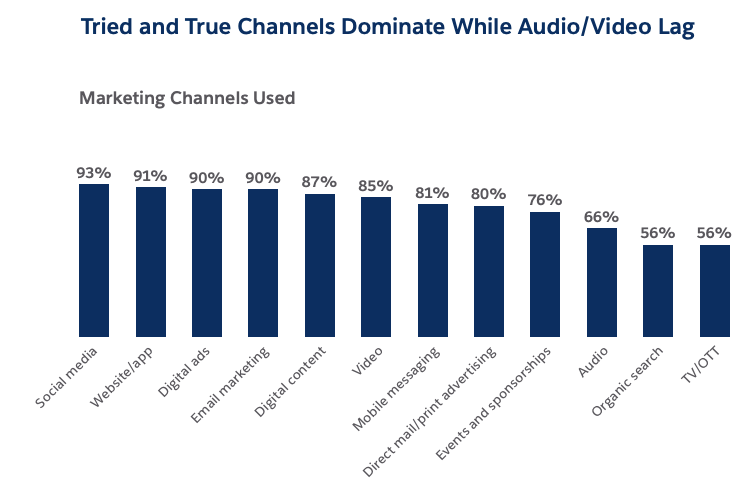
Source: Salesforce State of Marketing report (2024)
**Our take:**
- Organic search is a critical marketing channel; why is it being neglected?
- One answer may be the perceived complexity of SEO and the [volatility](https://www.seroundtable.com/continued-google-search-ranking-volatility-37406.html?ref=nearmedia.co) of rankings, which has seemingly become greater in the recent past.
- Social media may be seen as a more stable and predictable alternative to search. However, paid search [is booming](https://www.nearmedia.co/apple-webmaps-bing-ai-serp-google-q2-85b/).
## Recent Analysis
- **Near Media podcast episode 167:** [Reframing how search ranking works, Google doubles down on income, voice search set for a comeback](https://www.nearmedia.co/ep-167-reframing-how-search-ranking-works-google-doubles-down-on-income-voice-search-set-for-a-comeback/)?
- **Google Completes GBP Reviews for LSAs Swap in EU**, [by Mike Blumenthal](https://www.nearmedia.co/google-completes-gbp-reviews-for-lsas-swap-in-eu/?).
## Short Takes
- Experimental **GBP AI tool** can [create a menu from an image](https://searchengineland.com/google-business-profile-ai-menu-photo-444429??ref=nearmedia.co).
- Whitespark: Adding **localities** to title tags [can boost GBP actions](https://www.threads.net/@darrenshawzam/post/C-AsV7fpjEo?ref=nearmedia.co).
- How **Apple Maps** on the web [may impact](https://www.localogy.com/2024/07/thought-you-had-figured-out-local-seo-apple-maps-hits-google-serps/?ref=nearmedia.co) Local SEO.
- Why **blogging** [may make a comeback](https://searchengineland.com/blogging-build-trust-brand-loyalty-ai-444393?ref=nearmedia.co) in the age of AI (and spam).
- After cookie reversal, W3C [reiterates](https://www.w3.org/blog/2024/third-party-cookies-have-got-to-go/?ref=nearmedia.co) opposition to **tracking cookies**.
- AI Overviews [appearing in](https://www.seroundtable.com/google-discover-promoting-ai-overviews-37803.html?ref=nearmedia.co) **Google Discover**.
- How often does **Google** [mix ads](https://www.seroundtable.com/report-google-mixes-ads-into-organic-search-results-37806.html?ref=nearmedia.co) into organic search results?
- iOS 18.1 beta [offers](https://www.macrumors.com/2024/07/29/ios-18-1-call-recording-and-transcribing/?ref=nearmedia.co) **call recording** and transcription.
- We're likely going to [have to wait](https://www.theverge.com/2024/7/29/24208656/apple-intelligence-ai-ios-18-1-iphone-16-launch?ref=nearmedia.co) until 2025 for **AI upgraded Siri**.
- Blocking **AI web scrapers** has become [a cat and mouse game](https://www.404media.co/websites-are-blocking-the-wrong-ai-scrapers-because-ai-companies-keep-making-new-ones/?ref=nearmedia.co).
- Google AI partnership with **Anthropic** [being investigated](https://www.reuters.com/technology/google-parent-alphabets-partnership-with-anthropic-under-investigation-uk-2024-07-30/?ref=nearmedia.co) in UK.
- **WhatsApp** has 100M users in US, Meta [pushing](https://techcrunch.com/2024/07/25/mark-zuckerberg-says-whatsapp-has-100-million-daily-active-users-in-the-u-s/?ref=nearmedia.co) to grow it more.
Listen to our [latest podcast](https://www.nearmedia.co/memo/).
[](https://nearmedia.co/memo?ref=nearmedia.co)
How can we make this better? Email [us](mailto:gsterling@nearmedia.co) with suggestions and recommendations.
### Google Completes GBP Reviews for LSAs Swap in EU
URL: https://www.nearmedia.co/google-completes-gbp-reviews-for-lsas-swap-in-eu/
Last updated: 2024-11-19T21:07:52.000Z
In the UK and much of the EU, as we [reported](https://www.nearmedia.co/lsa-reviews-to-be-unified-with-gbp-reviews-finally/) in May, Google has sent out emails to Local Services Ads (LSAs) accounts confirming the need for ads to be associated with a Google Business Profile (GBP) and the end of LSA-based reviews. Businesses that failed to associate their LSA accounts with GBPs had their ads turned off.
To turn LSAs back on, the account holder needs to be associated with a GBP for which they are an owner or a manager. The email noted that "Unfortunately, your Local Services Ads customer reviews and rating may be permanently lost." It's not clear whether the reviews will remain even if the account had been previously associated with a GBP.
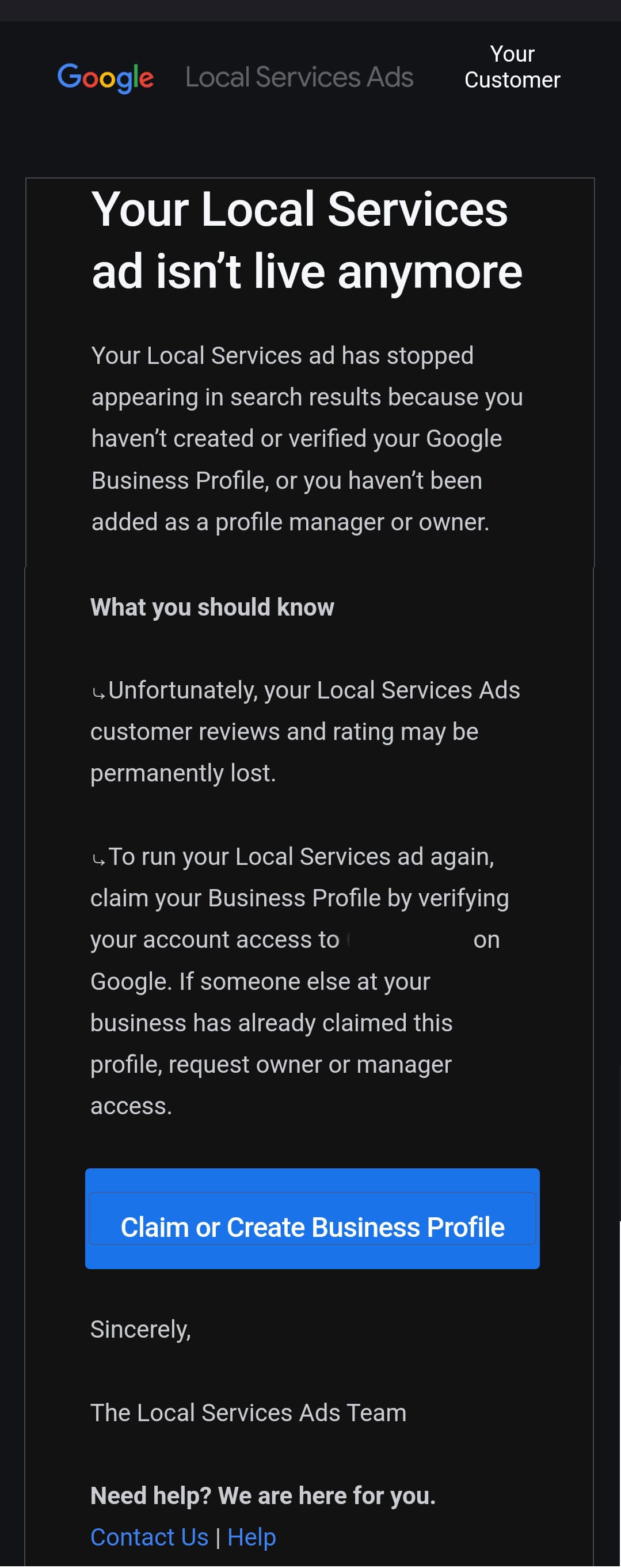
Emails recently sent to LSA accounts in the UK
**\[Update 7/30/24\]** Apparently the process to get this done is not as easy as the email implies. This poster in the Google forum [claims](https://support.google.com/business/thread/288149006?ref=nearmedia.co) that they have tried three times to update their LSA address to match their GBP and have failed.
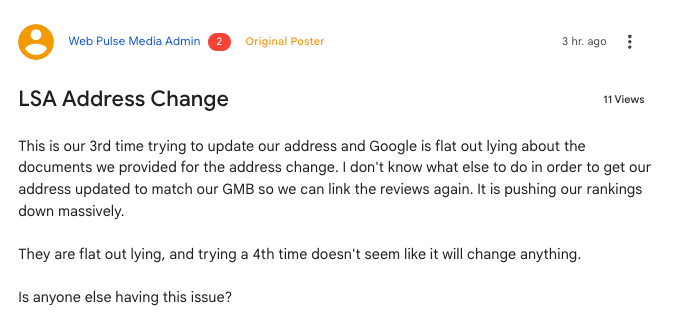
### GBP Reviews Take Over
LSA account owners were also informed, in a second email, that the LSA review link would no longer work, that the GBP review link should be used, and that reviews would be managed via the Google Business Profile. A new GBP "ask for a review" link was provided in the email.
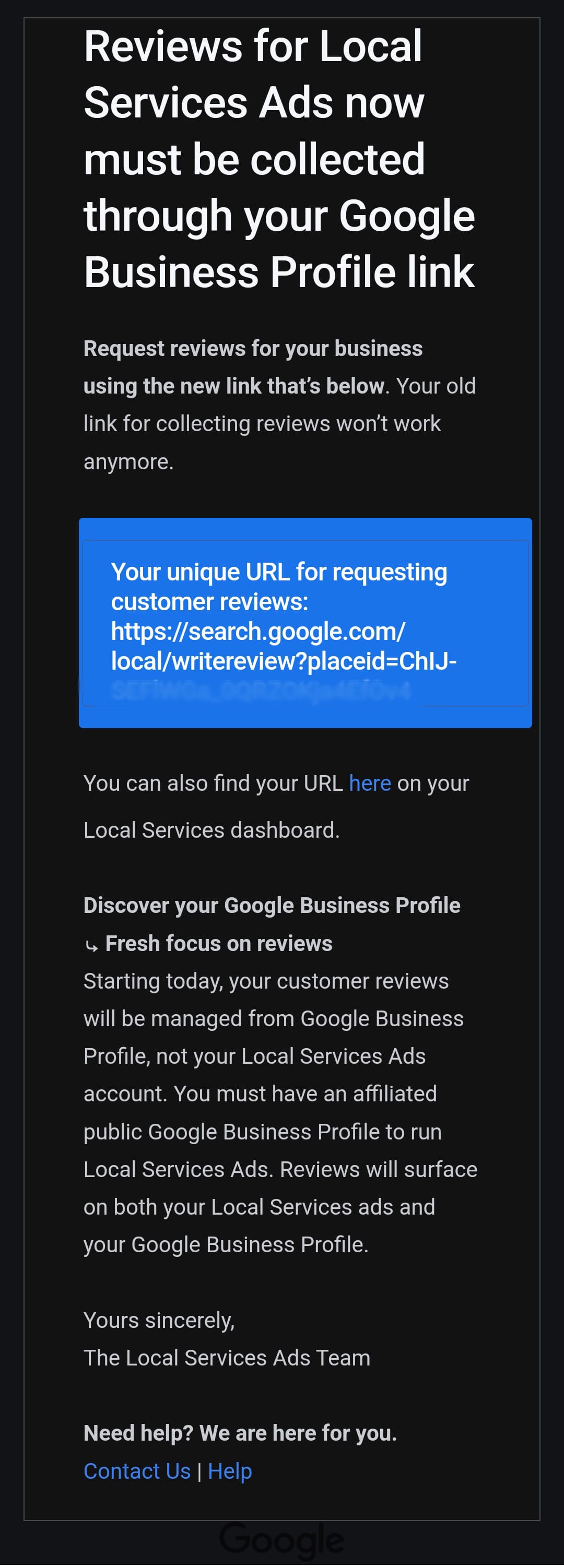
Currently, the need to associate LSA accounts with GBPs and use the GBP review link only applies to certain EMEA countries. Apparently that includes the UK and much of the EU, although it is [difficult](https://support.google.com/localservices/answer/7496631?hl=en-GB&sjid=14245698371784449528-EU&ref=nearmedia.co#zippy=%2Cuse-your-google-link-to-ask-for-a-review%2Cask-for-reviews-in-the-reviews-tab-us-and-canada-only%2Clink-existing-reviews-from-your-business-profile-if-available) [to ascertain](https://support.google.com/localservices/answer/12174778?hl=en-GB&co=GENIE.CountryCode%3DGB&sjid=10872697475339906871-EU&ref=nearmedia.co) from the help files exactly which countries are included in this change.
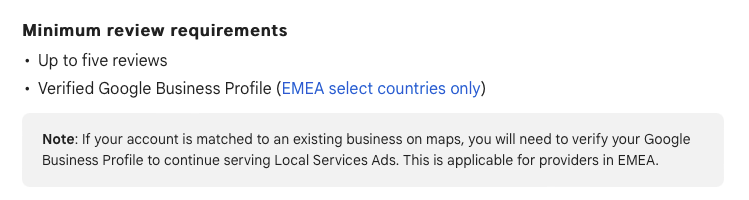
### Driven by DSA Moderation Rules?
Google may be doing this because of its need to comply with the [EU's Digital Services Act's (DSA) requirements](https://www.nearmedia.co/google-maps-businesses-hijacked-again-again-again/#google-maps-and-the-dsa) around regulating illegal content and promoting transparency in content moderation. Google has allowed LSA reviews to [flow largely unmoderated](https://support.google.com/business/thread/285482675?ref=nearmedia.co). As a result, fake positive and negative LSA reviews have proliferated in the EU and the US. Google has offered almost no way for businesses to dispute these fake reviews, which would likely violate DSA requirements.
It is ironic and more than a little disheartening that GBP review moderation, with its numerous problems and fake reviews, is the higher standard vs. LSA reviews. At one time, the Local Services Ads program [held out the promise of truly verified reviews](https://blumenthals.com/blog/2015/07/30/googles-home-service-ads-questions-and-observations/?ref=nearmedia.co).
### US, Canada May Be Next
In May, we also speculated that the same policy and review swap might be rolled out in the US. At the time Google was [implementing](https://www.seroundtable.com/google-lsa-new-verification-process-36985.html?ref=nearmedia.co) more rigorous verification for some US categories. However, given that there has been such little movement on the US reviews front, it's unclear whether LSA reviews will in fact be replaced in the US. If it doesn't happen, we have to wonder how Google will fix the incredibly broken LSA review system in the US and Canada.
### Ep 167: Reframing how search ranking works, Google Doubles Down on Income, Voice Search Set for a Comeback?
URL: https://www.nearmedia.co/ep-167-reframing-how-search-ranking-works-google-doubles-down-on-income-voice-search-set-for-a-comeback/
Last updated: 2024-07-28T14:29:55.000Z
SEOs need to reframe how search ranking works - click thru data being the most important factor; Google doubles down on tried & true income generators; Is Voice Search Set for a Comeback? SEOs Should Stay Calm and Test
**Part 1 starts 00:13 -** [**SEOs need to reframe how search ranking works - click thru data being the most important factor**](https://youtu.be/dyIz2w1ilmM?ref=nearmedia.co)
Click data is a cornerstone of Google’s ranking algorithm, as highlighted by recent DOJ findings. Google uses its heavy reliance on click data to grasp new trends swiftly as well as to “understand” page quality.
Traditional SEO elements like title tags, meta descriptions, scheme, great photos and content provide enduring value but with a new twist. These elements are tools to drive clicks and engagement and thus ultimately drive higher rankings.
Segment Reference Articles
[EEAT Your Soup - Why click thru drives ranking](https://www.youtube.com/watch?v=YGg-FYem68U&ref=nearmedia.co)
[Rand Fishkin interview: The importance of the the Google Search Leak](https://www.nearmedia.co/ep-159-rand-fiskin-interview-on-the-importance-and-learnings-from-the-google-search-leak/)
**Part 2 starts 18:50 -** [**Google Doubles Down on Tried & True Income Generators**](https://youtu.be/Psy6oaHKWMc?ref=nearmedia.co)
Big changes are happening in the search results whether its AI overviews, Bing’s Generative Search, Reddit’s exclusive relationship with Google and decision to exclude others and all seem related to the rollout of AI on Google. But Google’s has been scaling back AI overviews due to high costs and the need for better monetization. With AI responses being expensive, Google’s focus is shifting towards proven money makers like YouTube, Merchant Center and Local results. Krum highlighted Google's continued play on its “micro moments”—know, go, do, buy—each tied to different monetized Google services.
Segment Reference Articles:
[Local Search Is Evolving, Here's Why You Need to Pay Attention](https://www.nearmedia.co/the-speed-of-the-sound-of-the-local-pack/)
[EEAT Your Soup](https://www.youtube.com/watch?v=YGg-FYem68U&ref=nearmedia.co)
**Part 3 starts 28:45 -** [**Is Voice Search Set for a Comeback? SEOs Should Stay Calm and Test**](https://youtu.be/da-x2gttoGI?ref=nearmedia.co)
With the evolving landscape of voice search and AI assistants, improvements in natural language processing and better ML programming could solve past issues, such as background noise interference. While voice commands for simple tasks like turning on lights or adding items to a shopping list have become second nature, using voice in public or work settings still feels socially awkward.
Cindy Krum emphasized the expansive nature of what constitutes a "search" in Google's eyes. A simple voice command involves complex data retrieval and context understanding, transforming voice interactions into a broad and intricate type of search. This perspective shift means SEOs might need to rethink their strategies to include optimization for these varied and nuanced queries.
While voice won't ever entirely replace screen-based interactions, its role could significantly expand if user experiences improve. Despite past disappointments with voice technology, there's cautious optimism that advancements could lead to broader acceptance and use.
Cindy advised SEOs to stay calm amid Google's rapid and sometimes erratic changes. She recommended continuing with proven strategies while experimenting with new platforms and search engines. The consensus was clear: it’s a volatile time in SEO, but understanding and adapting to these changes is crucial for future success.
Segment Reference Articles:
[Apple is giving Siri an AI upgrade in iOS 18](https://www.theverge.com/2024/6/10/24171936/apple-siri-ai-update-ios18-features-wwdc?ref=nearmedia.co)
[Assistant with Bard: A step toward a more personal assistant](https://blog.google/products/assistant/google-assistant-bard-generative-ai/?ref=nearmedia.co)
### Apple Webmaps, Bing AI SERP, Google Q2: $85B
URL: https://www.nearmedia.co/apple-webmaps-bing-ai-serp-google-q2-85b/
Last updated: 2024-07-25T18:54:48.000Z
### Apple Maps on the Web
Apple has had a Mac desktop Maps application for years. But now Apple Maps is [expanding to the web](https://beta.maps.apple.com/??ref=nearmedia.co): Safari for the desktop (Mac) and Chrome and Microsoft Edge for PCs – only in English for now. It's not clear why this is happening now vs. two years ago or five years ago. Apple Maps for the iPhone launched in 2012 and was initially ridiculed for myriad problems, bugs and errors. Apple executive Scott Forstall was fired over the disastrous rollout and so was then-head of Apple Maps Richard Williamson. CEO Tim Cook apologized at the time and [referred people](https://techcrunch.com/2012/09/28/tim-cook-apologizes-for-apple-maps-points-to-competitive-alternatives/??ref=nearmedia.co) to Waze, Mapquest, Google and Bing Maps. Arguably Waze's success is attributable to Cook's apology and endorsement. Google [acquired Waze in 2013](https://www.nearmedia.co/facebook-blew-waze-deal-prime-dark-patterns-gbp-category-boost/) to keep it away from competitors (specifically Facebook) and has been cannibalizing its features and technologically consolidating it with Google Maps ever since. In the 12 years since the launch of Apple Maps, the company has been rebuilding the product, and it has more recently become the preferred mapping application for many iOS users. In a separate mapping development, open-source platform Overture Maps [announced](https://overturemaps.org/overture-maps-foundation-releases-general-availability-of-its-open-maps-datasets/?ref=nearmedia.co) general availability of its open maps data sets.
Source: Apple
**Our take:**
- The move to the browser expands Apple's competitive reach vs. Google Maps. However, Google search provides G-Maps with massive advantage.
- A year ago, we [estimated](https://www.nearmedia.co/apple-maps-discovery-gbp-call-history-is-history-gbp-forum-insights/) that Apple is delivering about 5% of the visits and roughly 10% of the calls driven by the Google Local Pack.
- There are a number of SEO implications but we'll have to see how Google treats Apple Maps. Apple [announced native reviews](https://www.nearmedia.co/a-look-at-apples-review-environment/) but hasn't really promoted it.
### Bing's AI Organized SERP
Microsoft has introduced "[Bing generative search](https://blogs.bing.com/search/July-2024/generativesearch?ref=nearmedia.co)," which some people quickly called its version of Google's AI Overviews. It's actually more like Google's "AI Organized Pages," which the company [previewed](https://blog.google/products/search/generative-ai-google-search-may-2024/??ref=nearmedia.co) at its developer conference in May. According to the Microsoft blog post, "This new experience combines the foundation of Bing’s search results \[with LLMs\] ... It understands the search query, reviews millions of sources of information, dynamically matches content, and generates search results in a new AI-generated layout to fulfill the intent of the user’s query more effectively." Microsoft provides [an example SERP](https://www.bing.com/search?q=what%20is%20a%20spaghetti%20western&filters=optdocid%3A%22FEAE1DCDB8C6EE53C79940E954D86536CA9BAE82E9DAAE000BEE5854B780C38B%22&ref=nearmedia.co) for the query "what is a spaghetti western?" But if you didn't know better, you'd think it was an ordinary SERP. There is an AI summary but the rest of the page is AI organized and influenced and there's a TOC for navigation. One thing that's significant is that traditional search results are featured in a right column so they're not "pushed down the page," compared with Google's AI Overviews.

Source: Microsoft
**Our take:**
- Microsoft said, "early data indicates that this experience maintains the number of clicks to websites and supports a healthy web ecosystem," and even "increases the number of clickable links."
- This is a more "mature" product and more thoughtful design than Google's current AI Overviews.
- While Bing Generative Search might prompt Google to rethink AI Overviews, it's not clear it Bing can do anything that makes inroads against Google.
### Google Q2: 'Another Excellent Quarter'
Earlier this week Google [reported](https://abc.xyz/assets/19/e4/3dc1d4d6439c81206370167db1bd/2024q2-alphabet-earnings-release.pdf?ref=nearmedia.co) strong revenues that were better than expected in most areas [except YouTube advertising](https://www.cnbc.com/2024/07/23/alphabet-set-to-report-q2-earnings-results-after-the-bell.html?ref=nearmedia.co), which was still up 13%. Total revenue was $84.7 billion, up 14% YoY. Search ads were responsible for $48.5 billion (57.3%) of total ad revenue. Google Cloud crossed $10 billion in quarterly revenue with $1 billion in operating profit. As you might imagine, there was considerable discussion of AI and AI Overviews on the [earnings call](https://abc.xyz/2024-q2-earnings-call/?ref=nearmedia.co). "We are pleased to see the positive trends from our testing continue as we roll out AI Overviews, including increases in Search usage and increased user satisfaction with the results," said CEO Sundar Pichai. He also claimed, "\[W\]e see even higher engagement from younger users aged 18 to 24 when they use Search with AI Overviews." (Define engagement.) Asked about the go-forward plan for AI Overviews, Pichai made bland statements (e.g., "All the feedbacks \[sic\] we have seen are positive"). He deferred to CBO Philipp Schindler on the question of AI Overview monetization. Schindler dutifully responded, "We announced that soon we’ll actually start testing search and shopping ads in AI Overviews for users in the U.S."
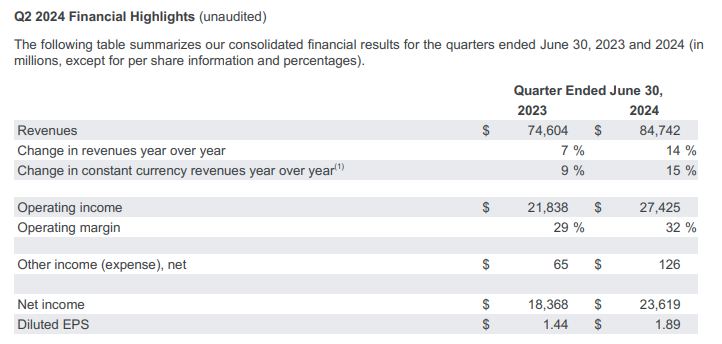
Source: Google
**Our take:**
- Google touted its leadership position in AI generally, which is largely accurate – though ChatGPT is used 2:1 vs. Gemini.
- Google will be aggressively promoting Gemini and AI during the Olympics, which start tomorrow. Some of that will be free via a deal with NBCU.
- It feels like there's some gaslighting going on. The collective AIO experience of the SEO community is quite different from what Google portrays.
## Recent Analysis
- **Black Hat Tactic Moving Google Map Pins Still Ongoing**, [by Mike Blumenthal](https://www.nearmedia.co/black-hat-tactic-moving-google-map-pins-still-ongoing/).
- **The Google Local SERP Today**, [by Mike Blumenthal](https://www.nearmedia.co/the-google-local-serp-today/).
- ICYMI: **Hindsight: Self-Preferencing Behind Google Maps' Rise**, [by Greg Sterling](https://www.nearmedia.co/hindsight-self-preferencing-behind-google-maps-rise/).
## Short Takes
- **Google Maps pin scam**: discussion ([Sherry Bonelli](https://searchengineland.com/google-maps-pin-scam-threat-444109?ref=nearmedia.co), [Mike Blumenthal](https://www.nearmedia.co/black-hat-tactic-moving-google-map-pins-still-ongoing/)).
- Top three [reasons why](https://x.com/darrenshaw%5F/status/1816132039957155988?ref=nearmedia.co) **Google reviews** might get filtered.
- **Content marketing** [must go beyond](https://sparktoro.com/blog/the-smarter-not-harder-guide-to-content-marketing/?ref=nearmedia.co) keyword research and SEO.
- Why it's time to focus on **brand marketing** and [building your brand](https://www.searchenginejournal.com/why-you-should-be-focusing-on-brand-marketing-right-now/522593/?ref=nearmedia.co).
- Best practices for **internal linking** [from Google](https://www.searchenginejournal.com/google-shares-tips-to-improve-seo-through-internal-links/522797/?ref=nearmedia.co).
- **Reddit** [blocks search engines](https://www.404media.co/email/4650b997-7cc3-4578-834c-7e663ed3d516/?ref=nearmedia.co) not named Google.
- **Amazon** and BBB [file joint lawsuit](https://www.aboutamazon.com/news/policy-news-views/amazon-better-business-bureau-file-lawsuit-on-fake-reviews?ref=nearmedia.co) against fake review broker.
- Informal poll [finds](https://www.seroundtable.com/poll-positive-effects-from-google-updates-37778.html?ref=nearmedia.co) **majority of SEOs** saw Google updates as positive.
- **Yelp** now offers [RFQs for brands](https://blog.yelp.com/news/summer-ad-release-2024/?ref=nearmedia.co), new ads, measurement tools.
- **Google Play** [wants to become](https://blog.google/products/google-play/google-play-july-2024-new-updates/?ref=nearmedia.co) a consumer shopping destination.
- You'll be using **Google's new Merchant Center** [by September](https://blog.google/products/shopping/tips-for-new-merchant-center/?ref=nearmedia.co).
- **Google** [to put $5B more](https://www.cnbc.com/2024/07/23/alphabet-to-invest-5-billion-in-self-driving-car-unit-waymo.html?ref=nearmedia.co) into self-driving car unit **Waymo**.
Listen to our [latest podcast](https://www.nearmedia.co/memo/).
[](https://nearmedia.co/memo?ref=nearmedia.co)
How can we make this better? Email [us](mailto:gsterling@nearmedia.co) with suggestions and recommendations.
### Black Hat Tactic Moving Google Map Pins Still Ongoing
URL: https://www.nearmedia.co/black-hat-tactic-moving-google-map-pins-still-ongoing/
Last updated: 2024-11-19T21:08:19.000Z
Google Local has a number of [long](https://support.google.com/business/thread/280930065?ref=nearmedia.co) [standing](https://support.google.com/business/thread/261564715?ref=nearmedia.co), [unresolved](https://support.google.com/business/thread/285938057?ref=nearmedia.co) bugs and they [go back](https://support.google.com/business/thread/261385168?ref=nearmedia.co) a good many months. They all hurt local businesses to a greater or lessor degree. The most detrimental of these is the unchecked ability for a competitor to move a business's Map pin to a totally different location.
How long should businesses have to wait for Google to provide a solution to this hack? Check back to see when the clock stops.
### What Is the 'Map Pin Hack'?
Here's how it works: a bad actor suggests an edit to your Map location and moves your pin out of your market or service area. Easy peasy, and probably easier to perpetrate the higher your Local Guide status.
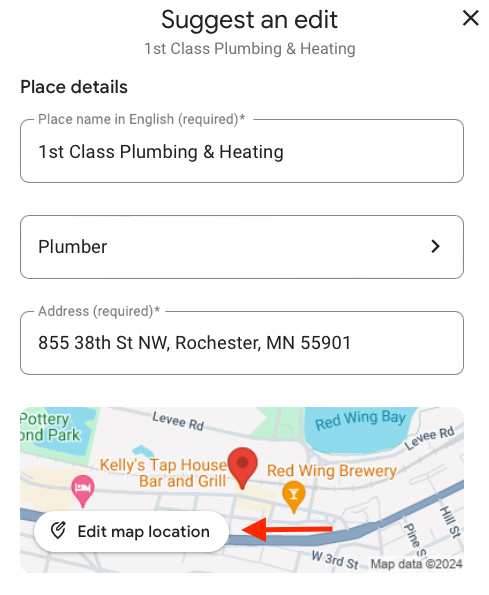
When this happens, a business is impacted in a number of ways. The most significant is that it loses any ability to rank in or around their location. Driving directions are totally hosed, taking customers to the wrong place; and if the business attempts to rectify/relocate via the GBP dashboard they are often forced to re-verify. To add insult to injury, their LSA ads will often quit working as well.
Company is actually located in Rochester, MN but the pin is in Kelly's Tap House in Rogers, MN miles away
Let's look at an example, [1st Class Plumbing & Heating](https://maps.app.goo.gl/n4PjJnGoYJjNfGXc7?ref=nearmedia.co)\* at 855 38th St NW in Rochester, MN. They were moved to 1530 Old W Main St in Red Wing, MN, 43 miles away. Obviously, driving directions are totally useless when this happens.
Driving directions from their actual location to their business and location
The *much* bigger issue is that when you do a search for a [plumber near their actual location](https://www.google.com/maps/search/plumbing+near+855+38th+St+NW,+Rochester,+MN+55901/@44.0540669,-92.4890269,13z/data=!4m7!2m6!3m5!2s855+38th+St+NW,+Rochester,+MN+55901!3s0x87f75fe6f347cebb:0x71461e4e21ac41a5!4m2!1d-92.4765378!2d44.0625126?entry=ttu&ref=nearmedia.co), they are nowhere to be seen. They have literally dropped off the map.
A search for plumbing using the business address as the centroid shows every plumber except them
Here's a great video from Darren Shaw that details the nature and history of this problem:
### How Long Has Google Known?
The Map Pin Hack was [reported](https://www.reddit.com/r/GoogleMyBusiness/comments/1azxzcp/gmb%5Fglitch/?ref=nearmedia.co) on Reddit in mid-March and in the [public *and* private Google forums](https://support.google.com/s/community/forum/1081366/thread/264930823?ref=nearmedia.co) on March 20th. [SearchEngineRoundtable](https://www.seroundtable.com/google-map-pin-hack-rankings-drop-suspension-37592.html?ref=nearmedia.co), [SearchEngineLand](https://searchengineland.com/google-maps-pin-scam-threat-444109?ref=nearmedia.co), [Joy Hawkins](https://x.com/JoyanneHawkins/status/1805933481257574528?ref=nearmedia.co), [Jason Brown](https://x.com/keyserholiday/status/1804135732145181030?ref=nearmedia.co) and [Darren Shaw](https://youtu.be/9CQtNUYrYvQ?si=i79gMAH%5FvkryS1nx&ref=nearmedia.co) have all been sharing updates since then. There have also been [reports](https://x.com/DarrenShaw%5F/status/1812204895279407296?ref=nearmedia.co) of this hack happening internationally.
Clearly, Google is aware of this problem and has not yet solved it – or potentially addressed it in any form. Joy is right to [ask](https://x.com/JoyanneHawkins/status/1805933481257574528?ref=nearmedia.co) "How is this still happening!?"
### How Can Businesses Protect Themselves?
Currently, there appears to be no way to actually stop a bad actor from moving your pin location. If you are in a competitive vertical in a competitive market the best that you can do is: 1) monitor your listing location on a regular basis and 2) move it back if it gets moved. [Whitespark's Local Platform](https://whitespark.ca/local-platform/?ref=nearmedia.co) will automatically monitor your listing for this and any other unwanted changes if you are too busy to keep an eye out for this skullduggery.
When you do move it back, to avoid re-verification, you should have a Local Guide [suggest an edit](https://support.google.com/websearch/answer/9879130?hl=en&co=GENIE.Platform%3DAndroid&ref=nearmedia.co) via Google Maps. If you move it back to its original location via your GBP dashboard, be prepared to go through the [verification process](https://support.google.com/business/answer/7107242?hl=en&ref=nearmedia.co) all over again.
Unfortunately, at least in the US, businesses have little or no legal recourse due to Google's categorical [Section 230 protections](https://www.eff.org/issues/cda230??ref=nearmedia.co).
### A Disturbing Trend
When you see this sort of outcome you always have to ask "Is it a bug or a feature"? And, as is often the case with black hat tactics in Google Maps, the answer is "yes." The ability to edit pin location is a feature designed to allow consumers to make entrances and store locations more accurate than Google can do via automation. Why there are no distance limits on this "feature" is a big question.
The other question that has to be asked is when will it get fixed? Previously, when asked about the time for a Google repair, I would give my "666" answer. If it isn't fixed in 6 days, it will be 6 weeks and, if not by then, it'll be 6 months.
But with many bugs we are seeing an unsettling trend: very extended repair times. For example GBP support's [inability to restore reviews](https://support.google.com/business/thread/261385168?ref=nearmedia.co) in certain cases after a suspension/reinstatement goes back at least until February. In the EU, the issue where a photo is grabbed willy nilly off the internet and featured on the mobile business profile goes back well over a year. In one case, Google [added](https://support.google.com/business/thread/261564715?ref=nearmedia.co) an image from an animal rights activist to the profile photos of a chicken farmer.
While bugs are to be expected, these increasing delays are problematic.
### What Is Going On?
I strongly suspect that the ongoing, extended delays in fixing these serious bugs is a function of the [many layoffs](https://www.nearmedia.co/how-googles-local-development-deprecation-process-affects-innovation/#nobody-else-wanted-it) over the past 24 months from the GBP and Google Maps teams. Thus, the few remaining folks assigned to maintenance are forced to delay repairs for all too many issues.
Now when I give the "666" answer as to when something might be fixed I add an addendum: If it isn't fixed in 6 weeks, it will be 6 months and if not done by then it might be 60 months or worse, [Deep-Sixed](https://www.nearmedia.co/how-googles-local-development-deprecation-process-affects-innovation/#nobody-else-wanted-it/).
---
\* I made an effort to reach out to 1st Class but they refused to take my call, thinking that I just another telemarketer. As soon as the word Google came out of my mouth, they hung up. Not once but twice. It is an amazing fact that Google's brand has been so tarnished by spammers that even the word "google" causes the person answering the phone to freak out.
### Cookies Are Back, Alexa $inkhole, Pubs Attack AIOs
URL: https://www.nearmedia.co/cookies-are-back-alexa-inkhole-pubs-attack-aios/
Last updated: 2024-07-23T20:02:19.000Z
### Google Abandons Cookie Deprecation
A mixture of UK regulatory objections and ad-industry inertia/resistance has prompted Google [to abandon third party cookie deprecation](https://privacysandbox.com/intl/en%5Fus/news/privacy-sandbox-update/?ref=nearmedia.co), after multiple delays and deferred deadlines. In a blog post Google [said](https://privacysandbox.com/news/privacy-sandbox-update/?ref=nearmedia.co), "\[W\]e recognize this transition requires significant work by many participants and will have an impact on publishers, advertisers, and everyone involved in online advertising." Instead, Google says it will offer Chrome users more choice: "we would introduce a new experience in Chrome that lets people make an informed choice that applies across their web browsing." Many industry groups and publishers didn't like Google's Privacy Sandbox and the UK Competition and Markets Authority believed that it would expand Google's control over online advertising. Google's vague statement about user choice doesn't give us any indication of how user-friendly cookie controls will be. If the browser settings are global it's likely a majority will reject tracking (see iPhone "[ask app not to track](https://www.nearmedia.co/idfa-opt-ins-mobile-payments-killing-cash-cpsc-sues-amazon/)"). But it remains to be seen how easy it is for users to exercise control. In Europe, every site has a cookie choice pop-up/banner that can be quite cumbersome to engage with, leading some people simply to "accept all."
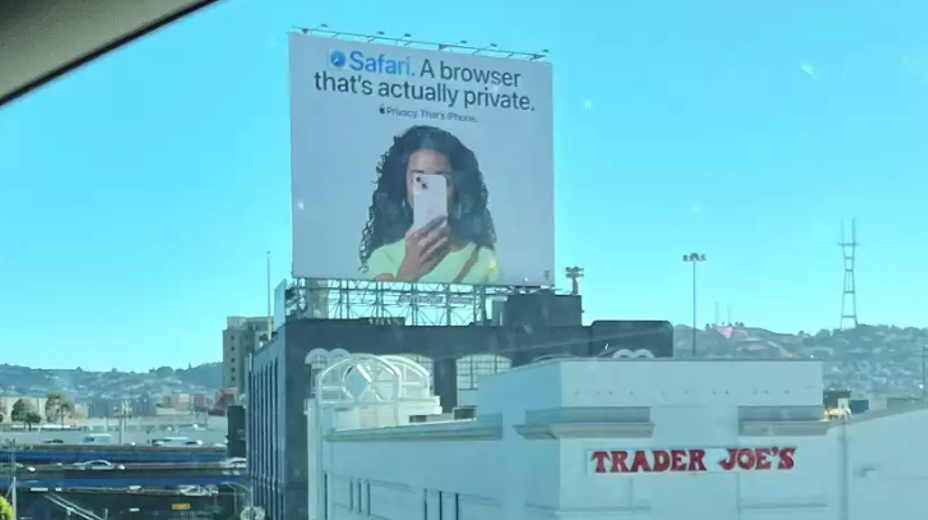
Source: Sfgate
**Our take:**
- Apple is running a national ad campaign on behalf of Safari, but it's equally an anti-Chrome campaign. Privacy is the message.
- Chrome is the dominant browser globally – Google has leveraged its position in search to make it so – but not on the iPhone, where [it trails Safari](https://gs.statcounter.com/browser-market-share/mobile/united-states-of-america?ref=nearmedia.co#monthly-202309-202404).
- Google [has been trying](https://9to5mac.com/2024/07/05/google-search-iphone-safari-ai-features/?ref=nearmedia.co) to migrate more users from Safari to Chrome and its search app, mostly unsuccessfully.
### Alexa a $inkhole for Amazon
When Amazon [announced](https://www.cnbc.com/2014/11/06/amazon-surprises-with-new-device-a-voice-assistant.html?ref=nearmedia.co) the first Echo smart speaker in 2014 it caught the tech world [by surprise](https://www.theverge.com/2014/11/6/7167793/amazon-echo-speaker-announced?ref=nearmedia.co) and proved to be immediately popular. Siri already existed but this was an entirely new device category and soon others were playing catch-up, including Apple but especially Google. Echo was the hardware, Alexa was the voice assistant; and soon there was a whole family of Alexa-powered devices. They were supposed to help usher in a new era of voice search, voice commerce and audio advertising. Echo and Alexa (and later Google Home) were also supposed to be new platforms for developers to build on. Despite several experiments, none of it materialized – none of it. Amazon now regards Echo/Alexa as a costly mistake. According to a [report](https://www.wsj.com/tech/amazon-alexa-devices-echo-losses-strategy-25f2581a??ref=nearmedia.co) in the Wall Street Journal, "Between 2017 and 2021, Amazon had more than $25 billion in losses from its devices business." In 2022, it [reportedly](https://arstechnica.com/gadgets/2022/11/amazon-alexa-is-a-colossal-failure-on-pace-to-lose-10-billion-this-year/?ref=nearmedia.co) lost $10 billion. That means Amazon has lost *at least* $40+ billion in the decade since Echo launched. This is partly because Amazon priced the devices aggressively (almost at cost) to gain adoption and then planned to make money "downstream" with ads and e-commerce. But that proved to be a gross miscalculation. In late 2022, Amazon laid off 10,000 employees, many of them from the division responsible for Alexa/Echo.
Source: DALL-E
**Our take:**
- ChatGPT makes the current Alexa effectively obsolete. Amazon reportedly is giving Alexa an AI upgrade but [will charge fees](https://www.cnbc.com/2024/05/22/amazon-plans-to-give-alexa-an-ai-overhaul-monthly-subscription-price.html?ref=nearmedia.co) to access the AI version.
- There's no clear data, but it's unlikely that most users will pay more than a token monthly fee for an AI Alexa, if that.
- Google is also merging its Assistant with AI. Overall Google Assistant (and Google Home) have been disappointing as search utilities.
### News Publishers Attack AIOs
The News/Media Alliance has [appealed to](https://www.newsmediaalliance.org/wp-content/uploads/2024/05/2024-05-28-Coffey-Ltr-to-DOJ-and-FTC.pdf?ref=nearmedia.co) Jonathan Kanter, Assistant US Attorney General for Antitrust, to investigate (and stop) a range of Google practices, specifically use or expansion of AI Overviews (AIOs). Previously known as the Newspaper Association of America, the trade group represents publishers in the US and Canada. The organization's missive complains of a range of anti-competitive behavior by Google but can be summarized as follows: "Google’s misappropriation of publishers’ content and its undermining of publishers’ monetization opportunities." The letter objects to use of news publisher content in AIOs (and other AI products) without permission. It also points out, "the only way for publishers to opt out of AI Overviews \[ \] and stop Google’s monopolistic practice is to effectively opt out of search distribution, which is not a viable option for publishers." The letter also asks for a revision of Google's site reputation abuse policy targeting affiliate content on news sites, which had become an important revenue stream for some publishers. It complains that "Google did not engage in any meaningful consultations with newspaper, magazine, and digital media publishers prior to the adoption and implementation of the policy."
Source: DALL-E
**Our take:**
- The News/Media Alliance letter says AIOs will reduce clicks to member sites and "further strengthen Google’s monopoly."
- Google's position is that it sends considerable traffic to publishers' sites and that AIOs contain links and see meaningful CTR.
- A meaningful distinction can be made between "fair use" of publisher content in the SERP (for traffic referrals) and more expansive use in AIOs.
- Publishers' inability to block use of their content in AIOs without opt-ing out of indexing is an abuse of market position.
## Recent Analysis
- **The Google Local SERP Today**, [by Mike Blumenthal](https://www.nearmedia.co/the-google-local-serp-today/).
- **Near Memo (from the vault) episode 166:** [How local SEOs are using Gen AI & ChatGPT: Tips, tactics & strategies w/ Darren Shaw & Joy Hawkins](https://www.nearmedia.co/ep-166-how-local-seos-are-using-gen-ai-chatgpt-tips-tactics-strategies-w-darren-shaw-joy-hawkins-from-the-vault/).
## Short Takes
- With "scan products in store" **Google** [steering purchasers online](https://www.linkedin.com/posts/mblumenthal%5Fis-google-the-new-yelp-or-is-this-just-more-activity-7220044891471450113-H%5F1I/??ref=nearmedia.co).
- You need 10+ **reviews** [to see ranking boost](https://x.com/DarrenShaw%5F/status/1815400531025973432?ref=nearmedia.co), then \~100 for the next one.
- **SEO Tactics**: community involvement generates [local backlinks](https://www.wix.com/seo/learn/resource/local-seo-link-building-activities??ref=nearmedia.co).
- Google [testing link icons](https://www.seroundtable.com/google-link-icon-citations-for-ai-overviews-37765.html?ref=nearmedia.co) for **AI Overviews**.
- After August 25, all **goo.gl** short links will [no longer work](https://developers.googleblog.com/en/google-url-shortener-links-will-no-longer-be-available/?ref=nearmedia.co).
- **Country code domains** [get ranking boost](https://www.searchenginejournal.com/google-confirms-ranking-preference/522477/??ref=nearmedia.co) vs. generic domains.
- Survey: **Search marketers** mostly happy, but [satisfaction down](https://searchengineland.com/search-marketing-job-satisfaction-2024-444121??ref=nearmedia.co).
- EU says **Facebook's "pay or consent"** policy/language [misleading](https://www.theverge.com/2024/7/22/24203479/eu-meta-facebook-pay-or-consent-warning-consumer-protection-cooperation-cpc?ref=nearmedia.co).
- Report: Apple [moving forward](https://9to5mac.com/2024/07/23/report-foldable-iphone-is-coming-in-2026-with-top-down-fold-design/?ref=nearmedia.co) with **foldable iPhone** for 2026.
- **Apple ads deal** [with Taboola](https://www.axios.com/2024/07/16/taboola-apple-news-deal?ref=nearmedia.co) raises questions about its judgment.
- Cloud security platform Wiz [walks away from](https://www.cnbc.com/2024/07/23/google-wiz-deal-dead.html?ref=nearmedia.co) $23B **Google deal**.
- FTC [investigation](https://www.ftc.gov/news-events/news/press-releases/2024/07/ftc-issues-orders-eight-companies-seeking-information-surveillance-pricing?ref=nearmedia.co) into personal data use for "**surveillance pricing**."
Listen to our [latest podcast](https://www.nearmedia.co/memo/).
[](https://nearmedia.co/memo?ref=nearmedia.co)
How can we make this better? Email [us](mailto:gsterling@nearmedia.co) with suggestions and recommendations.
### Ep 166: How Local SEOs are using Gen AI & ChatGPT: Tips, tactics & strategies w/ Darren Shaw & Joy Hawkins(from the vault)
URL: https://www.nearmedia.co/ep-166-how-local-seos-are-using-gen-ai-chatgpt-tips-tactics-strategies-w-darren-shaw-joy-hawkins-from-the-vault/
Last updated: 2024-07-20T17:05:32.000Z
Join us for this great conversation with Joy Hawkins and Darren Shaw. We explore:
- Experiences and opinions on the use of AI tools like ChatGPT in SEO and content creation.
- The effectiveness of AI in different aspects of agency work, including creative tasks and data analysis.
- The influence of AI on the quality of content and the evolving nature of SEO strategies.
- Perspectives on the future impact of AI on the SEO industry and the role of agencies.
**Part 1 starts 00:13 -** [**How Local SEO agencies use AI to improve client content**](https://youtu.be/79AuS2M3fpQ?ref=nearmedia.co)
- **Content Creation Challenges with AI**: Contrary to initial expectations, AI has not replaced content writers. While it is used for drafting and repurposing content, AI-generated articles often require extensive human editing, especially for factual accuracy and coherence.
- **Content Refinement and Repurposing**: AI excels in transforming existing content into different formats, like converting a list into a blog post or a blog into a script. This minimizes the editing work required.
- **Efficiency in Post Creation**: AI has been particularly effective in generating social media or Google posts, reducing the time and mental effort involved in content creation. This includes automating tasks like emoji placement in posts.
Segment Reference Articles:
[Think Twice Before Using Chat GPT for Local Content](https://www.sterlingsky.ca/using-chat-gpt-for-local-content/?ref=nearmedia.co)
[How to Rank Your Website for More Keywords with Service Pages](https://whitespark.ca/blog/how-to-rank-for-more-keywords-with-service-pages/?ref=nearmedia.co)
[Save Time by Using ChatGPT to Write Your Google Posts \[Prompt Included\]](https://www.sterlingsky.ca/chatgpt-powered-google-posts/?ref=nearmedia.co)
[How To Use Chat GPT to Optimize Your Content for Local Search ](https://www.sterlingsky.ca/how-to-use-chat-gpt-to-optimize-your-content-for-local-search/?ref=nearmedia.co)
**Part 2 starts 14:47 -** [**How Local SEO agencies explain AI to their clients**](https://youtu.be/NJR-l7FieeY?ref=nearmedia.co)
**AI in Client Communication:** Both Sterling Sky and Whitespark are transparent with clients about their AI usage, addressing concerns about potential negative impacts on SEO performance. AI is presented as a tool for idea generation and preliminary drafting, not as a primary content creator.
- **Client Engagement with AI:** Clients are generally receptive and interested in AI's role in content creation. The emphasis is on AI as an assistant that complements human skills, ensuring quality and originality in content.
- **Cost Implications:** There have been no significant shifts in pricing structures due to AI efficiencies. The focus is on using AI to maintain or reduce costs rather than altering client fees.
Segment Reference Articles
[Survey Reveals: The Real Impact of Generative AI on SEO](https://www.seoclarity.net/research/impact-generative-ai?ref=nearmedia.co)
[Census.gov](http://census.gov/?ref=nearmedia.co) [report](https://www.nearmedia.co/r/7725645d?m=bfc50bd6-31c0-48b7-964c-eaac941c5279): Only 3.8% of Businesses Use AI to Produce Goods and Services
**Part 3 starts 29:48 -** [**Local SEO Agencies & their AI future**](https://youtu.be/YCFQGX8SiAQ?ref=nearmedia.co)
- **AI as a reporting super power:** extracting meaningful insights from large data sets for clients.
- **Using ChatGPT to understand reviews:** Discussion of a specific reporting around reviews that provides a template for creating better client reporting and expanding reporting tools.
- **Long-Term Impact on Staffing and Skills:** Agencies do not foresee AI re placing human staff. Instead, AI is viewed as a tool that enhances staff capabilities. Concerns about AI causing dependency or de-skilling are noted, but the overall sentiment is optimistic.
- **Future of AI in Local SEO:** AI is expected to lead to more efficient workflows and better quality content. Agencies anticipate a growing divide between those heavily reliant on AI and those favoring a balanced, human-centric approach. AI's role in data analysis and automating repetitive tasks is highlighted, enhancing both client service and internal processes.
Segment Reference Articles
[ChatGPT's Review Insights](https://www.nearmedia.co/google-ai-goes-vegan-apple-maps-ranking-tool-chatgpt-review-insights/)
### The Google Local SERP Today
URL: https://www.nearmedia.co/the-google-local-serp-today/
Last updated: 2024-11-19T21:08:34.000Z
The question of self-preferencing by Google, where they favor their own properties over competitors, has come into sharper focus recently as part of anti-trust investigations in the US and [DMA compliance hearings](https://www.nearmedia.co/google-serp-restaurants-eu-dma-analysis/) in the EU. And we have covered how Google historically leveraged its privileged position to dominate other product categories (e.g, [Maps](https://www.nearmedia.co/hindsight-self-preferencing-behind-google-maps-rise/)). But I explored SERPs for some new EU consumer research, I was struck by prominence of self-referential elements like People also ask (PAA), People also search for (PAS), as well as various local elements and features.
### Space Allocated to Different Content Types
Search results for "car dealers NYC" embodies this new SERP reality by also surfacing a "People search next" module. That's in addition to the Local Pack, the PAA & PAS results. This motivated me to sit down and calculate how Google was allocating digital turf between the different SERP elements.
**'Car Dealers NYC' SERP Space Allocation**
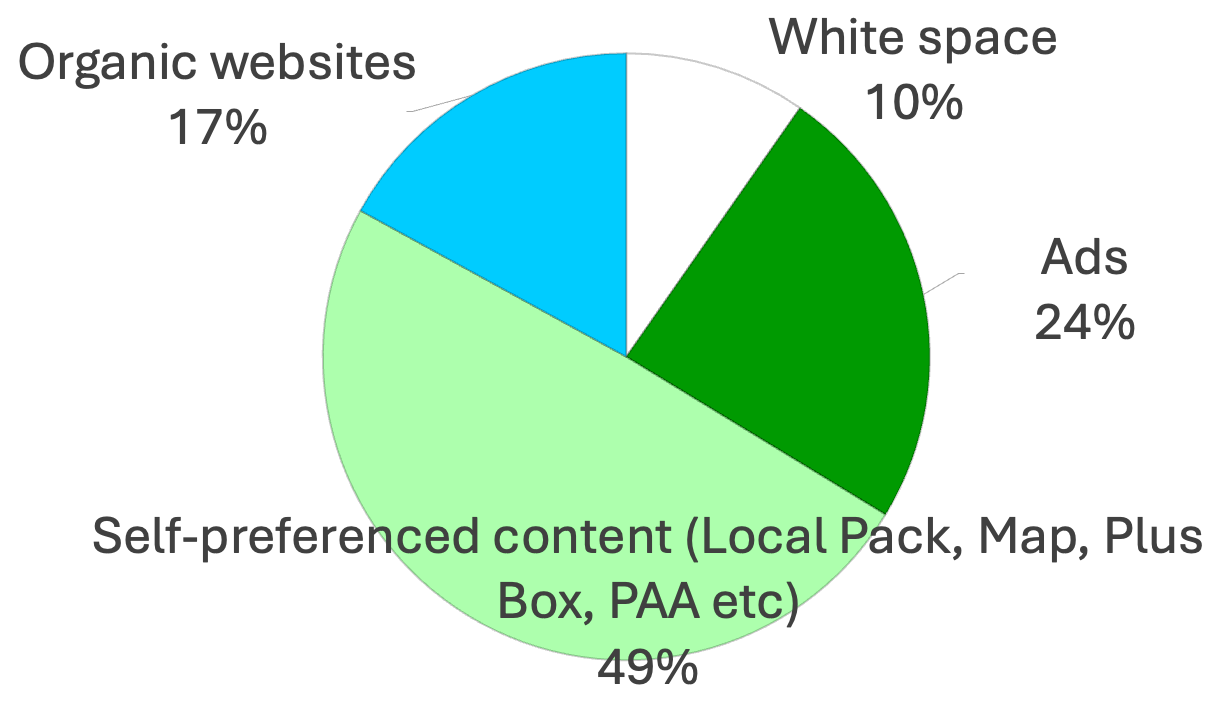
As you can see in the chart, almost half of the total space available is being used to drive searchers into other Google content, either within the SERPs or to other Google properties like Maps, Images or the Local Finder. The self-preferencing elements (49%) are roughly equally split between Local and the various PAA-type modules and search filters.
The SERP itself, shown below, covered roughly 5 full screen-scrolls down the page, with the first screen and part of the second filled with ads. Ads, in the prime real estate at the top of the SERP, covered 24% of the allocated space. The first organic search result was several scrolls down, with organic results in total occupying 17% of the total area.
Below is a [video](https://youtube.com/shorts/hwi0y3qTi14?ref=nearmedia.co) of the experience.
### Car Dealers Mobile Search Result
Below is the Car Dealers SERP as a static image. I have annotated the page to make the case visually.

Color key for SERP below
| |  | |
| | -------------------------------------------------------------------------------------------------------------------------------------------------------------------------------------------------------- | |
The [story](https://en.wikipedia.org/wiki/Boiling%5Ffrog?ref=nearmedia.co#:~:text=The%20boiling%20frog%20is%20an,will%20be%20cooked%20to%20death.) of the frog, sitting in gradually warming water until it's boiled alive, turns out to not to be scientifically true. But dam, it's getting hot in here.
### Travel Places Sites, Mapquest's Demise, Prime Day Mania
URL: https://www.nearmedia.co/travel-places-sites-mapquests-demise-prime-day-mania/
Last updated: 2024-07-18T22:00:09.000Z
### Study: Places Sites in Travel
At Near Media we've been [documenting](https://www.nearmedia.co/google-serp-restaurants-eu-dma-analysis/) the impact (or lack thereof) of Google's new DMA-SERP features (e.g., Places Sites) on EU searcher behavior. And we've just completed a study covering Ireland, Germany and France. But this week seoClarity [published](https://www.seoclarity.net/blog/impact-digital-markets-act??ref=nearmedia.co) rankings research on the Hotel vertical in Europe in the wake of Google DMA-compliance changes. The DMA applies to large "gatekeepers" like Google, Meta, Apple, Amazon and Microsoft and is supposed to level the playing field for competitors vs. "self-preferencing." The seoClarity study looked travel SERPs triggered by 156,000 hotel keywords (mobile only). Prior to the launch of Places sites, seoClarity said that the Google Hotel Pack ranked in the top organic SERP position 95% of the time. That dropped to 70% after Places Sites rolled out. The study found, "Overall, the presence of Google hotels in position one went from 146,000 of our 153,000 keyword set to around 108,000." However the Hotel Pack remained in the top three after the change. Places Sites in the hotel vertical feature well-known aggregators such as Hotels.com, Tripadvisor and Booking.com. "In Germany, by far, Booking.com shows up most often — over 40% of the time — dominating the first and most visible position in the carousel," explained seoClarity. So while the Google Hotel Pack lost potentially meaningful visibility, it's important to note that this is a ranking study, not a search-behavior study, and doesn't indicate whether Places Sites are actually driving traffic.
**EU SERPs (Hotel Pack) before and after Places Sites**
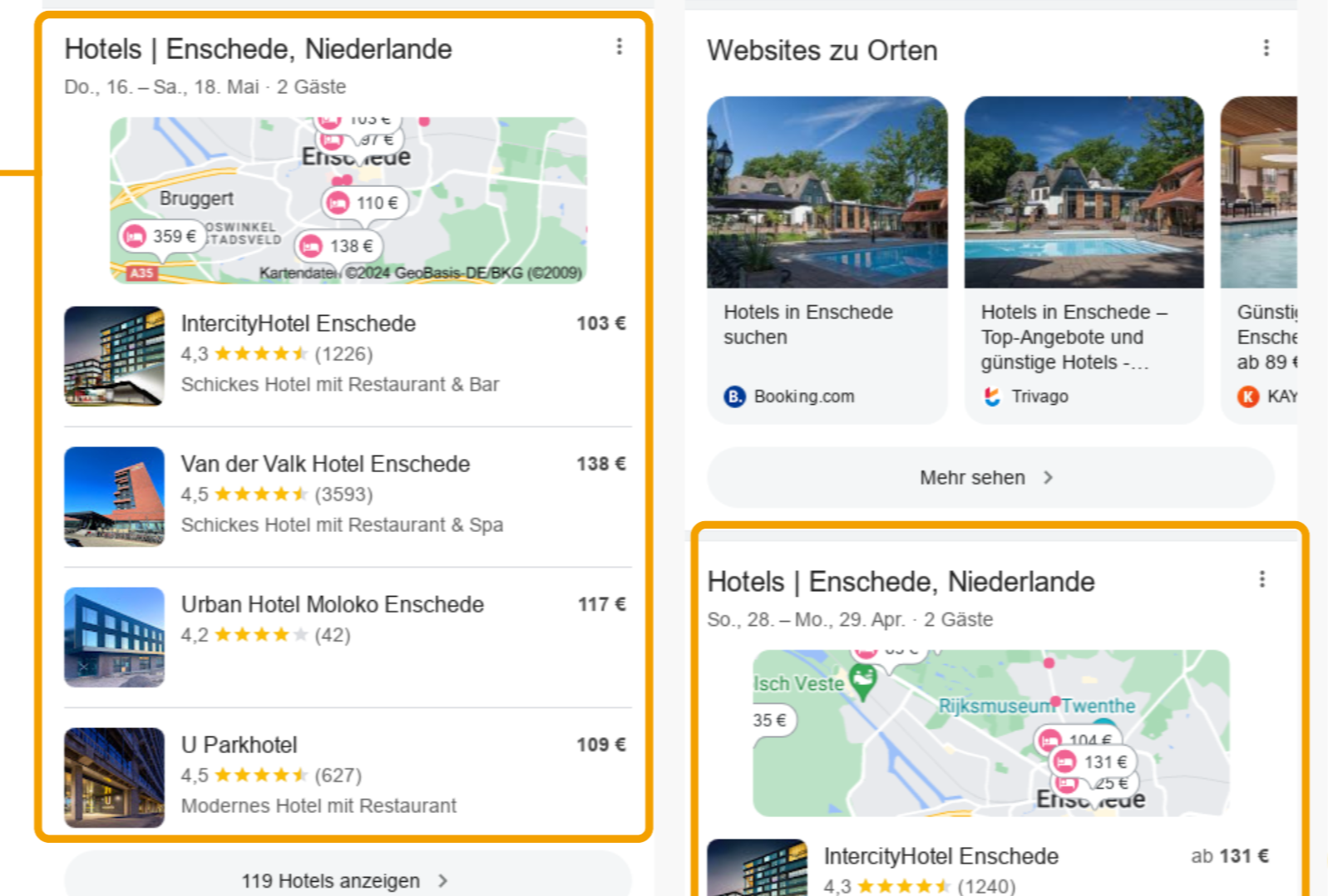
Source: seoClarity
**Our take:**
- Travel is a vertical the European Commission is very focused on. Surprisingly it's not equally focused on Local. Local is not really a vertical but is [equally worthy of DMA scrutiny](https://www.nearmedia.co/google-dma-compliance-redefinition/) because of its economic importance.
- What Near Media's research has found to date is that despite the SERP prominence of Places Sites they're not driving meaningful clicks.
- Google's rhetorical position on DMA compliance re local is something like: by helping aggregators (its competitors) we're harming local businesses.
### Rise and Fall of Mapquest
Last month I [wrote about](https://www.nearmedia.co/hindsight-self-preferencing-behind-google-maps-rise/) how Google Maps came to dominate rivals, such as Yahoo Maps and Mapquest, and accelerate their demise partly through self-preferencing. But there was also massive spending – Yahoo couldn't/didn't want to continue investing at Google's level – and neglect, which is partly what killed Mapquest. James Killick, who was a pre-launch Mapquest employee, [tells the whole story](https://maphappenings.com/2024/07/18/mapquest/?ref=nearmedia.co) of the company from birth as a spin-off of print publisher R.R. Donnelley to its current zombie-like status. It's an insider take on the evolution of digital mapping in the early internet era and also offers a behind-the-scenes look at the 1999 AOL acquisition. According to Killick, the company's "slow demise" began in 2000 following the acquisition. It partly got lost in the bureaucratic quagmire of AOL Time Warner and the unwillingness of the corporate parent top pay sufficient attention and make the necessary investments to keep pace with Google in particular. Its brand strength was such that it wouldn't have had to match Google dollar for dollar, just continue to update and improve the product. But it didn't, instead mostly coasting until it was too late. The site [still exists](https://www.mapquest.com/?ref=nearmedia.co) and there's still the echo of a brand but it's a zombie shell of what it once was.
**Early Mapquest Homepage**

Source: James Killick
**Our take:**
- Mapquest (and the internet) helped kill paper maps. Remember Thomas Guides and AAA TripTiks?. Then Google largely killed Mapquest.
- Once the top travel site, Killick's Mapquest story is a cautionary tale about neglect, complacency and poor corporate management.
- Mapquest is just one of [dozens of companies](https://www.linkedin.com/feed/update/urn:li:activity:7219392864072425472/?ref=nearmedia.co) that were once robust and ambitious competitors in local, but now defunct or zombies.
### Prime Day Mania
Prime Day is now 10 years old. Consumer [awareness](https://www.mediapost.com/publications/article/397676/amazon-prime-day-featured-brands-see-boost-in-sear.html?ref=nearmedia.co) is extremely high and that paid off, as this year's Prime Day was Amazon's biggest to date. US consumers [spent $14.2 billion](https://www.cnbc.com/2024/07/18/amazon-prime-day-us-online-sales-climb-to-record-14point2-billion.html?ref=nearmedia.co) during the two-day event, which was up 11% year over year. There was also a "[halo effect](https://www.digitalcommerce360.com/2024/07/17/prime-day-effect-amazon-day-1-2024/?ref=nearmedia.co)" for selected other retailers (especially Walmart), boosting their online sales as well. We think of electronics as the "marquee" e-commerce category – heavily featured in third party deal [roundups](https://www.cnn.com/cnn-underscored/deals/best-amazon-prime-day-deals-2024-07-18?ref=nearmedia.co) – but it ranked 6th in Prime Day sales [according to](https://www.numerator.com/prime-day/?ref=nearmedia.co) Numerator: "1) Apparel & Shoes, 2) Home Goods, 3) Household Essentials, 4) Beauty or Cosmetics, 5) Health & Wellness, 6) Consumer Electronics, 7) Pet Products, 8) Groceries, 9) Toys/Video Games, 10) Small Appliances." The average price paid per item was $28.06\. The typical Prime Day shopper is a female Prime member, over 35, who lives in an urban or suburban area. Many shoppers bought things they had intended to buy but were waiting for a sale to purchase. Bullish analyst firms have [projected](https://www.retaildive.com/news/online-retail-sales-increase-over-1-trillion-report/721564/?ref=nearmedia.co) that e-commerce in the US will reach $1.2 trillion this year and constitute roughly 23% of all retail sales. It's probably closer to 16% according to US government [data](https://www.census.gov/retail/mrts/www/data/pdf/ec%5Fcurrent.pdf?ref=nearmedia.co).
Source: DALL-E
**Our take:**
- Mobile devices drove roughly half of Prime Day shopping in 2023; however I didn't see publicly released 2024 data. We should assume similar numbers.
- Most Amazon shoppers are Prime members; the company has a kind of captive audience. CIRP [estimates](https://cirpamazon.substack.com/p/we-definitely-spoke-too-soon-amazon?) that 180 million Americans had a Prime membership in Q1 – roughly 70% of the US adult population.
- The mix of brand awareness, high trust, pricing and marketing power and huge audience make Amazon almost unique among global retailers.
## Recent Analysis
- **How Google's (Local) Development –>Deprecation Process Affects Innovation**, [by Mike Blumenthal](https://www.nearmedia.co/how-googles-local-development-deprecation-process-affects-innovation/).
- ICYMI: **Hindsight: Self-Preferencing Behind Google Maps' Rise**, [by Greg Sterling](https://www.nearmedia.co/hindsight-self-preferencing-behind-google-maps-rise/).
## Short Takes
- What to know about Google "[suggest an edit](https://searchengineland.com/google-maps-pin-scam-threat-444109?ref=nearmedia.co)" **Google Maps scam**.
- Google [testing Knowledge Panels](https://www.seroundtable.com/google-knowledge-panels-store-ratings-reviews-37728.html??ref=nearmedia.co) with store **ratings/reviews**.
- **Site reputation abuse** update [having a big impact](https://www.seroundtable.com/googles-site-reputation-abuse-policy-financial-forecast-37744.html?ref=nearmedia.co) on some revenues.
- Hoping to revive growth, **Nextdoor** [reassembles](https://investors.nextdoor.com/news/news-details/2024/Nextdoor-Welcomes-Back-Sarah-Leary-and-Kelsey-Grady-to-the-Leadership-Team/default.aspx?ref=nearmedia.co) old leadership team.
- Report: Meta [mulls big investment](https://www.ft.com/content/4da37b6a-b241-4090-9445-467087694ab7?ref=nearmedia.co) in **Ray-Ban glasses** parent.
- Italy [accuses](https://techcrunch.com/2024/07/18/google-accused-of-misleading-consumers-to-grab-more-data-for-ads/?ref=nearmedia.co) **Google** of misleading consumers to get more data.
- House lawmaker [wants](https://schiff.house.gov/imo/media/doc/letter%5Fto%5Fgoogle%5Fon%5Fai%5Foverviews%5Ffeature.pdf?ref=nearmedia.co) Google to address **AIO misinformation**.
- **Google Search Notes** [finally being shut down](https://www.seroundtable.com/google-search-notes-dead-37707.html?ref=nearmedia.co), but it was DOA.
- EU [investigating](https://www.reuters.com/technology/artificial-intelligence/eu-antitrust-regulators-want-know-if-google-samsungs-chatbot-deal-hinders-rivals-2024-07-17/?ref=nearmedia.co) Google-Samsung deal to embed **Gemini** in Galaxy phones.
- Why **AI and natural language** inputs [may not enable better search results](https://dtunkelang.medium.com/is-search-trying-too-hard-09557c29427f?ref=nearmedia.co).
Listen to our [latest podcast](https://www.nearmedia.co/memo/).
[](https://nearmedia.co/memo?ref=nearmedia.co)
How can we make this better? Email [us](mailto:gsterling@nearmedia.co) with suggestions and recommendations.
### GBP Optimization Blueprint, Waiting for Search, Here's AMZN's Rufus
URL: https://www.nearmedia.co/gbp-optimization-blueprint-waiting-for-search-heres-amzns-rufus/
Last updated: 2024-07-16T23:12:50.000Z
### Blueprint for GBP Optimization
Although Google has "[disappeared](https://www.nearmedia.co/zero-click-data-google-not-a-publisher-aio-extreme-caution/)" most AI Overviews (AIOs), they still represent a (potential) competitive challenge to content publishers. Local is one area that has been relatively unscathed by AIOs; though AI may [show up in different ways](https://x.com/mblumenthal/status/1811435277077946784??ref=nearmedia.co) in local. In this new AI era, arguably, Google Business Profile (GBP) optimization is more important than ever, partly because [Google is increasingly self-preferencing](https://www.nearmedia.co/zero-click-data-google-not-a-publisher-aio-extreme-caution/) with GBP content. Miriam Ellis at Moz has created [an excellent overview](https://moz.com/blog/gbp-profile-fields?ref=nearmedia.co) of GBP profile fields that have a documented impact on local ranking. She cites 11 (or 12) categories that must be optimized and offers helpful discussion and context. Not all of these are equally impactful but have been shown by SEOs to affect local visibility. Here they are, not necessarily in order of tactical priority: Business Name, Address (for proximity), Primary Business Category, Website Link, Business Hours, Reviews, Attributes, Services, Products, Popular Times, Menu Items, Photos. (Menus largely applies to restaurants obviously.) At a minimum, local businesses need to be paying attention to these things, with special emphasis on reviews and images. This advice from Miriam represents a kind of must-do baseline for businesses hoping to improve their local visibility. Also, check out Mike Blumenthal's [excellent article](https://www.nearmedia.co/the-speed-of-the-sound-of-the-local-pack/) on how local search is changing and evolving.
Source: ChatGPT
**Our take:**
- There's a ton of [zero-click behavior](https://www.nearmedia.co/zero-click-data-google-not-a-publisher-aio-extreme-caution/) in local. We've seen this directly in our [user testing](https://www.nearmedia.co/search-gameplan/) in multiple categories in North America and Europe.
- Many people will engage extensively with GBPs, including reviews and especially images. Often decisions are made entirely from GBP content. So that's lost revenue if the GBP isn't fully optimized.
- In other cases, users will click through to a website from the GBP, which might not rank in organic results otherwise.
### Waiting for Godot: Search Edition
There have been reports from various [news outlets](https://www.nearmedia.co/google-ppc-fixing-search-chatgpt-pichai-evades/) for months that OpenAI was going to directly take on Google with a next-generation search tool of some sort. OpenAI CEO Sam Altman himself seemed to confirm this with [comments](https://www.nearmedia.co/sge-hits-brands-dma-hot-seat-altman-reimagines-search/) about "reimagining search" on a podcast. But the long-rumored announcement hasn't come to pass. The last one turned out to be the [reveal of ChatGPT-4o](https://www.nearmedia.co/chatgpt-omni-hcu-travel-impact-cpcs-up-but-cvrs-down/) instead of a search engine or direct Google competitor. Now the CEO of The Atlantic, which has a content licensing deal with Open AI, [suggests](https://www.theverge.com/2024/7/11/24196396/the-atlantic-openai-licensing-deal-ai-news-journalism-web-future-decoder-podcasts?ref=nearmedia.co) that a more search-like OpenAI product is in fact coming. We've heard this before, although today ChatGPT can replace Google for many types of queries. So why do these rumors persist? I think there are several reasons. First, there's dissatisfaction with Google and pent up demand for a genuine alternative. Then there's the fact that it's entirely logical that ChatGPT should evolve a better web search capability; they crawl the web and can access web search results via Bing. So they're already doing the mediocre version. There are Altman's own remarks and those of seemingly knowledgeable sources. And finally, ads. The paid search business model is extremely attractive, even though Altman says he hates ads.

Source: ChatGPT
**Our take:**
- The same types of rumors swirled around Apple for years and there was a certain logic there too. Yet a search engine never came.
- Despite all the early analyst hand-wringing, Google's search volumes have [seemingly not been impacted](https://qz.com/google-search-market-dominance-chatgpt-traffic-ai-1851580904?ref=nearmedia.co) by ChatGPT, Perplexity or others.
- I'm confident that some sort of next-generation experience will come, which more elegantly marries gen-AI with search.
### AMZN Rufus Impact: Reviews, Ads, Google?
Amazon's recently introduced AI shopping assistant, Rufus, was apparently named after a dog who was a fixture in Amazon’s first warehouse in the mid-90s. Just in time for Prime Day, Rufus [has been released](https://www.aboutamazon.com/news/retail/how-to-use-amazon-rufus?ref=nearmedia.co) to the general public. (It's not yet showing up for me.) But it promises to make shopping "more personal" and more precise, with the capacity to respond to very specific questions and get answers about products, your orders or even non-product questions (including local recommendations apparently). It was trained on Amazon data, including reviews, and the web more generally. Unless it blows (to use the colloquial expression), Rufus promises to be popular and raises interesting questions. For example, will consumers start to use Rufus instead of search on the Amazon app; or will Rufus be adopted for more specialized use cases? Amazon now has [billions](https://www.cnbc.com/2024/04/30/amazons-advertising-revenue-jumps-24percent-in-first-quarter.html?ref=nearmedia.co) in revenue tied to search ads; how will Rufus affect that (and Amazon sellers)? Will Rufus make Amazon reviews less or more impactful? And how will Rufus, a new assistant brand, co-exist with Alexa, which is in decline? For years, Google has been pushing aggressively into product search. Will Rufus have any impact on that? In other words, will even more informational/commercial top-of-funnel queries go to Amazon vs. Google ?
**Product Comparison Shopping Using Rufus**
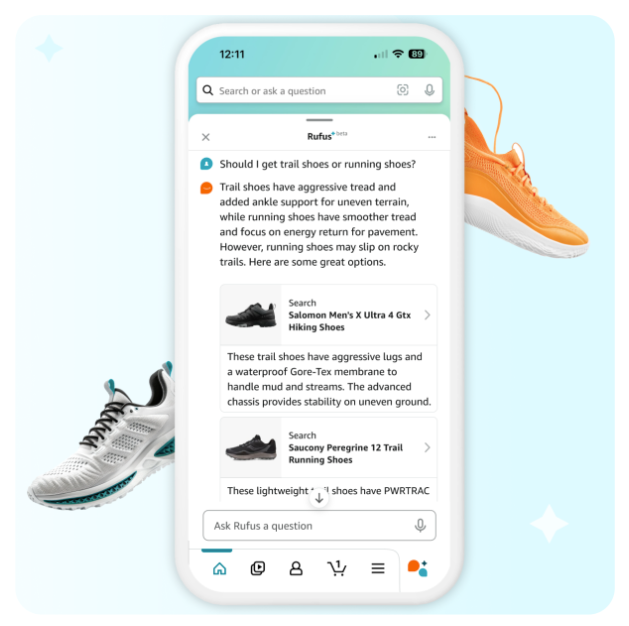
Source: Amazon
**Our take:**
- While we don't have precise figures, review fraud on Amazon [is rampant](https://www.webretailer.com/amazon/amazon-fake-reviews/?ref=nearmedia.co). AI [review summaries](https://www.nearmedia.co/ai-review-summaries-e-commerce-1t-ai-adoption/) mask and thereby exacerbate it. Rufus could make Amazon fake reviews even more opaque.
- Amazon's push for more ad revenue has "enshittified" it. Rufus might partly redeem the UX, getting people to recommendations without crossing a sea of ads. Yet, Amazon won't disrupt its ad business.
- Amazon [once had local ambitions](https://press.aboutamazon.com/2005/1/a9-com-transforms-traditional-yellow-pages-with-more-than-20-million-images-of-businesses-and-their-surroundings?ref=nearmedia.co), will Rufus offer some new opportunities in this arena for the company?
## Recent Analysis
- **Near Memo podcast episode 165**: [Seattle surgeon pays $5 million fine for review fraud, local search increasingly shows Google GBP results](https://www.nearmedia.co/ep-165-seattle-surgeon-pays-5-mil-fine-for-review-fraud-local-search-increasingly-shows-google-gbp-results/).
- **How Google's (Local) Development –>Deprecation Process Affects Innovation**, [by Mike Blumenthal](https://www.nearmedia.co/how-googles-local-development-deprecation-process-affects-innovation/).
## Short Takes
- Here are some reasons why your **Google reviews** [are not appearing](https://www.linkedin.com/pulse/google-reviews-showing-up-heres-why-joy-hawkins-ujcpc/?ref=nearmedia.co).
- New **Google Maps** design for Android [rolling out](https://9to5google.com/2024/07/14/google-maps-android-redesign/?ref=nearmedia.co).
- Google **Chrome** [gives special privileges](https://daringfireball.net/linked/2024/07/12/google-chrome-system-monitoring?ref=nearmedia.co) to Google-owned properties.
- Gaming publisher [meets with](https://brandonsaltalamacchia.com/a-brief-meeting-with-google-after-the-apocalypse/?ref=nearmedia.co) **Google** after traffic apocalypse.
- **Forums** have grown [at the expense of niche content sites](https://searchengineland.com/forums-google-adapt-444065?ref=nearmedia.co).
- **Twitter** in [violation of EU's DSA](https://ec.europa.eu/commission/presscorner/detail/en/IP%5F24%5F3761?ref=nearmedia.co), could face fines of 6% of global revenue.
- Why lower-ranking sites [are appearing](https://richsanger.com/google-ai-overviews-do-ranking-studies-tell-the-whole-story/??ref=nearmedia.co) (as links) in **Google AIOs**.
- Cloud security startup **Wiz** would be Google's [largest acquisition at $23B](https://www.theverge.com/2024/7/14/24198613/google-wiz-acquisition-talks-23-billion-cloud-cybersecurity?ref=nearmedia.co).
- **LinkedIn** AI ad tool, with positive early buzz, [rolling out globally in Q3](https://digiday.com/marketing/linkedin-is-officially-rolling-out-its-own-ai-campaign-tool/?ref=nearmedia.co).
- French startup unveils **LLM** exclusively [for digital ad creative](https://thenextweb.com/news/french-startup-adcreative-launches-llm-for-advertising-copy?ref=nearmedia.co).
- **Google domains** sold to Squarespace [hijacked](https://krebsonsecurity.com/2024/07/researchers-weak-security-defaults-enabled-squarespace-domains-hijacks/?ref=nearmedia.co).
- More interesting **AI skepticism** [from](https://www.ben-evans.com/benedictevans/2024/7/9/the-ai-summer?ref=nearmedia.co) Ben Evans.
Listen to our [latest podcast](https://www.nearmedia.co/memo/).
[](https://nearmedia.co/memo?ref=nearmedia.co)
How can we make this better? Email [us](mailto:gsterling@nearmedia.co) with suggestions and recommendations.
### How Google's (Local) Development –> Deprecation Process Affects Innovation
URL: https://www.nearmedia.co/how-googles-local-development-deprecation-process-affects-innovation/
Last updated: 2024-11-19T21:08:52.000Z
As you are probably aware [Google Business Profile chat](https://support.google.com/business/answer/14919062?hl=en&ref=nearmedia.co) and the [Business Messages API](https://developers.google.com/business-communications/business-messages/resources/release-notes/update-on-gbm?ref=nearmedia.co) (that integrates third party products with GBP chat) are both [heading](https://www.seroundtable.com/google-business-profile-call-history-deprecating-37465.html?ref=nearmedia.co) to the Google graveyard on July 31st. It was a product that held great promise but having been ignored by the GBP team for the past two years has fallen on hard times.
The big players in the local world will hardly miss it. And the SMBs that had been inundated with spam and review blackmail might breathe a sigh of relief. But the small, forward thinking developers that are providing SMBs with innovative and integrated SMS tools are the ones paying the price for Google's fickle development/deprecation processes.
### Huge Untapped Potential
Google clearly has a lock on local discovery and recovery searches. Chat is a growing and popular way for end users to have a quick conversation with a business, and a quick and easy way for a business to interact with a new lead.
Aaron Weiche of [Leadferno](https://leadferno.com/?ref=nearmedia.co)\* spoke to GBP Chat's potential:
💡
For our customers it’s frustrating because messaging and chat is such a valuable touchpoint for many businesses. Offering this direct from their Google Business Profile and maps was helpful. Of course it was riddled with spam for many too, but the signal was there over the noise, and Google could have improved it for a huge impact instead of killing it.
However like many Google local efforts, left to win or lose on their own, the product was never rolled out fully nor promoted effectively.
Jon Hall of [Switchbird](https://www.switchbird.com/?ref=nearmedia.co), an independent messaging platform noted:
💡
Early on I was bullish on the future of Google Business Messages because: 1) there was a great product team in place at Google who consistently communicated with partners, holding bi-weekly events and releasing frequent updates; 2) the "chat" call-to-action on GBPs was compelling and powerful: it drew more clicks than the "call" call-to-action in many scenarios tested by Google and others; and 3) the trickle of inbound messages and leads we saw come through GBM on our own customer accounts could quite obviously have become a firehose had Google continued the rollout.
Also, it was easy to see a monetization strategy for Google had it started to capture and "own" more B2C conversations.
### Google's Development Cycle
Google has a bottom-up engineering culture that encourages quick development of an idea into a *truly* minimum viable product, with testing in the real world. In the burning light of real world search, if the product achieves enough volume to warrant maintenance and upgrades it is rolled into an update/bug fix schedule.
From the 2010s onward, when it came to messaging, the engineers across Google went wild, [creating multiple, competing products](https://arstechnica.com/gadgets/2021/08/a-decade-and-a-half-of-instability-the-history-of-google-messaging-apps/?ref=nearmedia.co) across the breath and depth of Google's silos – all without a cohesive messaging plan. In this scheme, the original engineers are rewarded for their initiative. But businesses using the product (and the public) end up being punished for their loyalty.
It was into this world that GBP chat was [initially birthed](https://blumenthals.com/blog/2017/07/12/testing-of-google-messaging-rolling-out-to-more-dashboards/?ref=nearmedia.co) as a GBP dashboard-based SMB product in mid-2017\. In the world of GBP, products either start on the dashboard side with an intense focus on very small businesses or on the enterprise side with an API. If the product gains traction, and there is market demand, then it moves in the opposite direction.
Without a thoughtful rich SMS strategy, Google built out an SMS API interface for chat following its release, which allowed integration of GBP profile chat with enterprise messaging systems like Podium. These early API releases are often only available to a select few companies that frequently leverage the exclusive capability for market share gains.
Google recognized the need for an integrated media messaging platform by the end of the last decade but axed the limited distribution of the [GBP SMS API](https://blumenthals.com/blog/2019/01/25/google-my-business-deprecating-sms-caught-in-the-google-messaging-cluster-fk/?ref=nearmedia.co) in early 2019\. At the time, Google [provided](https://blumenthals.com/blog/2019/01/25/google-my-business-deprecating-sms-caught-in-the-google-messaging-cluster-fk/?ref=nearmedia.co) no client-side communication and left a number of big multi-location businesses high and dry. This was prior to the release of a more robust platform.
During late 2019 and early 2020, large enterprise SMS platforms like Podium were given early access and direct support to build out integrations with Google's future messaging platform, the Business Messaging API. It was over a year later, in July 2020, that Google [announced](https://blog.google/products/maps/now-sending-business-messages-google-maps-and-search/?ref=nearmedia.co) that this new Business messaging API was generally available to replace the one deprecated in 2019\.
### **Nobody Else Wanted It**
I spoke with several folks about the why of the deprecation of Business Messaging and Chat now. After existing for such a long time most assumed that it would remain in the product. The answer to why is was nuked, uniformly came back that the team building and maintaining the platform was impacted (decimated?) by layoffs in GBP in late 2022, 2023 and earlier this year.
Google's Business messaging strategy (?) remains confused and confusing. There doesn't appear to be a single back-end API for the purpose of responding to chats from clients or coworkers. Besides the Business Messaging API, Workspace developers can access a [Chat API for Google Chat](https://developers.googleblog.com/en/google-chat-apis-now-generally-available-to-all-workspace-developers/?ref=nearmedia.co) (their Slack-like program); [RCS Business Messaging](https://developers.google.com/business-communications/rcs-business-messaging/guides/get-started/how-it-works?ref=nearmedia.co) apparently is another unique messaging backend for direct to consumer communications. Ideally some other team could have picked up the GBP messaging tools but apparently no other team or product was willing to take it on.
Again, from Jon Hall:
💡
The writing has been on the wall for some time that GBM was not a priority at Google. In late 2022, I and others raised concerns about the level of spam activity in the channel that mostly fell on deaf ears. (Not an unusual response to spam at Google.) Then in early 2023 a round of layoffs at Google decimated the GBM product team. Around that time, the primary developer liaison to GBM partners left the company and was never replaced. And since that time, product development at GBM virtually stagnated. Spam overwhelmed some GBPs such that we turned chat off, and the product itself never really got in front of the bulk of the local search audience.
### Impact on Small Developers
Google prides itself on its quick product development and often quicker product deprecation as sound business. But Google's prejudicial development process, release of buggy MVP products and lack of commitment to those products isn't "sound business" for everyone.
New businesses and startups, so necessary for a healthy business environment and internet ecosystem, are negatively impacted by these sorts of actions. Again from [Aaron Weiche](https://leadferno.com/conversioncast?ref=nearmedia.co):
💡
The killing off of Google Business Messages is frustrating. For our product, Leadferno, it was a brutal process to integrate with, taking nearly six months because of poor API documentation and issues. Once the integration was launched, their approval process was flawed for launching new brands and agents and created additional work every time. No feature has given us more headaches than GBM for integration. The time it took, the issues/breaking, the approval process.
Jon Hall added, "Switchbird first integrated Google Business Messages into our 'omni-channel inbox' solution in early 2021\. Like all technical integrations with Google products, the effort involved was non-trivial. Behind the scenes of a seemingly simple chat functionality, GBM partners had to not only jump through administrative hoops to gain access to the relevant GBM and GBP APIs, we also had to grok Google's concept of conversation design and the messaging lifecycle, enforce adequate business responsiveness and customer satisfaction (or face automatic disabling of the feature) and build pipelines to manage the provisioning, verification and launch of messaging 'agents' tied to GBP locations and authorized by their owners."
### Sleeping with Elephants
Short haul, Google might not feel the pain of these sorts of actions. Their bottom line is not affected and their engineers get to move on to "cool" new projects. The better funded players in the field of SMS communications, like the Podiums and SOCIs, see their investment in the product as a way to impress clients and the losses as a relatively minor inconvenience. The businesses using GBP Chat or Business Messaging are harmed in the short term but will likely find alternatives – and ultimately lose trust in Google as a "partner."
The bigger problem is that the internet and its diversity suffer. The small, unique players in the ecosystem are the ones that are harmed, which affects their ability to compete and succeed long term. These harms and consequences should be used to examine and evaluate Google's role and responsibility in keeping the internet a vibrant space – and I'm afraid they are failing.
Google is much like the elephant in the old adage, "Be careful when you sleep with elephants, you never know when they will roll over." And like the elephant in the saying, Google doesn't seem worried about whom it rolls over.
---
\* The author is an investor in Leadferno
### Ep 165: Seattle surgeon pays $5 mil fine for review fraud, Local Search increasingly shows Google GBP results
URL: https://www.nearmedia.co/ep-165-seattle-surgeon-pays-5-mil-fine-for-review-fraud-local-search-increasingly-shows-google-gbp-results/
Last updated: 2024-07-13T13:56:53.000Z
**Part 1 starts 00:13 -** [**Seattle surgeon pays $5 mil fine for review fraud; What responsibility does Google have?**](https://youtu.be/u28yUNpYluw?ref=nearmedia.co)
Allure Esthetics and its owner Dr. Java Sagan, were convicted of violating the Consumer Review Fairness Act. They forced 21,000 clients to sign agreements preventing them from leaving honest reviews and engaged in additional deceptive practices like paying for the removal of negative reviews and posting fake ones.
Despite a $5 million fine, Allure Esthetics still shows high ratings on Google and Yelp. Google’s failure to address these fake reviews, raises questions about the platform’s responsibility under Section 230, which currently shields it from liability.
This case highlights the need for changes to Section 230 to better protect consumers and maintain trust in online reviews.
Segment Reference Articles
[Seattle Surgeon Slammed with $5M Consent Decree](https://www.nearmedia.co/seattle-surgeon-slammed-with-5m-consent-decree/)
**Part 2 starts 13:20 -** [**Local Search increasingly shows Google GBP results & extensively highlight Google self preferencing**](https://youtu.be/kLPRO3dbl6U?ref=nearmedia.co)
In a recent AI-driven experiment the local results included numerous horizontally scrolling pack of restaurant types and related local categories, with images and reviews. Most all results in this test took users to further Google searches rather than external sites
In Europe, current local search results showed significantly more Google self-referencing content, raising questions about regulatory compliance. The variations in local search displays across different European countries, suggests that Google's approach might be influenced by regional regulatory strategies.
Despite the heavy Google-centric content, local businesses still benefited from visibility. However, the trend of zero-click searches, where users find all needed information without leaving Google, highlights the increasing prominence of Google's own services in local search outcomes.
Segment Reference Articles:
[Local Search Is Evolving, Here's Why You Need to Pay Attention](https://www.nearmedia.co/the-speed-of-the-sound-of-the-local-pack/)
[Example of the new Google Local AI experience with autostart shorts and interactive neighborhood views](https://x.com/mblumenthal/status/1811725143321825529?ref=nearmedia.co)
[Local Search in EU demonstrates high reliance on Google’s local graph](https://www.linkedin.com/posts/mblumenthal%5Fyou-dont-need-experimental-google-local-activity-7217213787756445699-stnm?utm%5Fsource=share&utm%5Fmedium=member%5Fdesktop)
### Fake Review Takedowns, Health AIOs, 1M AI-Generated Pages
URL: https://www.nearmedia.co/fake-review-takedowns-health-aios-1m-ai-generated-pages/
Last updated: 2024-07-11T19:32:02.000Z
### Fake Reviews Need Notice + Takedown
Mike Blumenthal [reported](https://www.nearmedia.co/seattle-surgeon-slammed-with-5m-consent-decree/) on a $5 million fine for a Washington-state plastic surgeon who had been faking reviews and using NDAs and payments to suppress criticism for years. This was a pretty egregious example of review fraud. Behind it there was likely significant real-world financial and even physical patient harm. Yet much of the fake review discussion occurs in the context of SEO/rankings or in the abstract. We don't often consider the real-world costs to people and honest businesses. It's one thing to be duped into a mediocre restaurant meal, it's quite another to choose a mediocre doctor or incompetent attorney because their profiles and rankings are inflated by review fraud. The consequences in those cases can be life-changing. And the review platforms have essentially no accountability. Their fake review enforcement is simply about their own perceived brand integrity. All the platforms, and especially Google, [promote their efforts](https://blog.google/products/maps/how-machine-learning-keeps-contributed-content-helpful/?ref=nearmedia.co) to address review fraud. Yet Google did not remove this high-profile fraud-doctor's reviews even after he was convicted. Section [230](https://www.nearmedia.co/big-gs-product-problem-aggregators-vs-local-biz-section-230-recklessness/) allows platforms to take a "whimsical" approach to content moderation without fear of legal repercussions. What we need is 230 reform and something that [looks more like copyright enforcement](https://www.copyright.gov/512/?ref=nearmedia.co) online.
**Online Copyright Notice and Takedown Process**
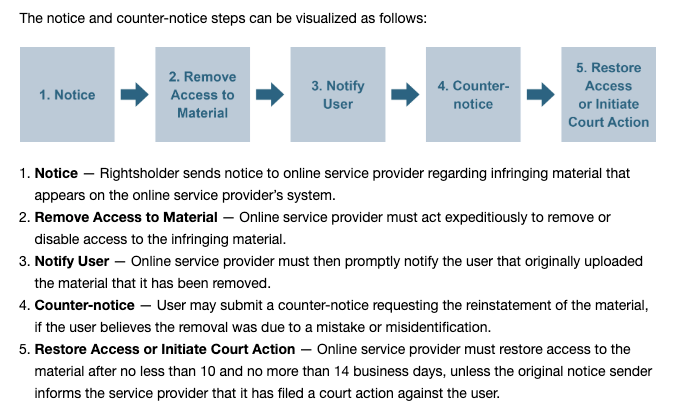
Source: US Copyright Office
**Our take:**
- Copyright rules have a notice and takedown [procedure](https://www.copyright.gov/512/?ref=nearmedia.co). Here, the liability shield is contingent on platform cooperation. Otherwise: liability.
- Once a compliant notice (TBD) is served that triggers an obligation to remove the offending material. There are also ways to resolve disputes.
- We need to not just focus on the ranking harm but on the real-world consequences of review fraud and the failure to sufficiently address it.
### Health AIOs Most Common
There have now been multiple AI Overview (AIO) [studies](https://www.nearmedia.co/google-aio-impact-apple-ai-search-big-leak-local/) since [Google I/O](https://www.nearmedia.co/gemini-dominates-i-o-and-sge-goes-live/). The latest comes from [Advanced Web Ranking](https://www.advancedwebranking.com/blog/ai-overview-study?ref=nearmedia.co). Based on an analysis of 8K keywords in early July, AIOs appeared in 12.4% of Google SERPs. This is a larger number than in several [recent studies](https://www.nearmedia.co/too-much-seo-google-aio-caution-products-over-research/), which put AIOs in single digits. Health was the vertical that saw a higher percentage (a majority of queries) than any other. This is potentially problematic because of [hallucination](https://www.nearmedia.co/google-rides-the-clickstream-long-tail-citations-ai-overview-fails/). However, the top AIO-featured health domains were largely reputable sources (e.g., Mayo Clinic). The top two domains appearing overall in AIOs were LinkedIn and YouTube. Search strings of five or more words were more likely to trigger them, especially with terms such as "'how,' 'SEO,' 'safety,' 'tips,' 'practices,' 'manage,' 'understanding,' 'importance,' 'prepare,' and 'best.'" On average, AIOs had roughly 7 links; just under half were from outside the top 50 results. The study also points out that the average AIO is 912 pixels long and pushes organic listings down meaningfully, especially in mobile. No AIOs appeared for branded or navigational searches; they were most common for informational queries. The other features most often appearing with AIOs were: PAA, Snippets, Video, Forums.
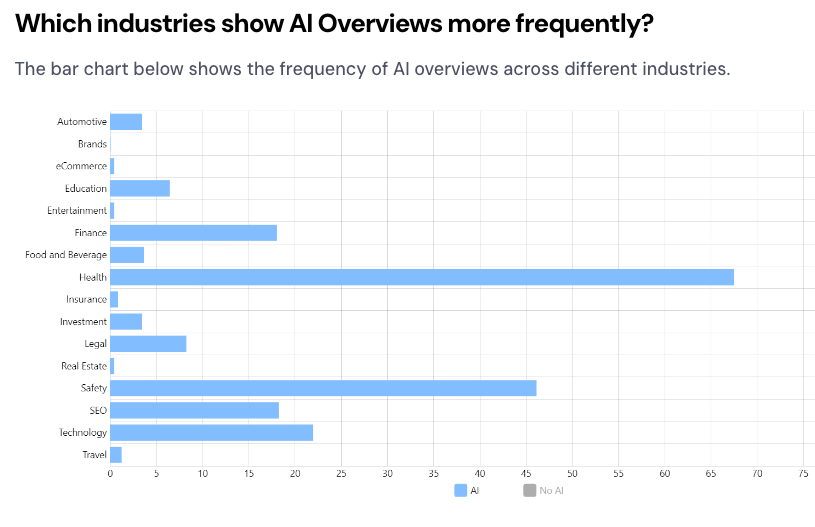
Source: Advanced Web Ranking
**Our take:**
- As you know, Google [retreated](https://www.nearmedia.co/search-frustration-aio-disappearing-act-genzs-social-search/) on AIOs after some highly embarrassing [mistakes](https://www.nearmedia.co/google-rides-the-clickstream-long-tail-citations-ai-overview-fails/) with questionable or incorrect information.
- AIOs were originally created hastily to compete with ChatGPT and Bing Chat. Now that those threats [appear reduced](https://qz.com/google-search-market-dominance-chatgpt-traffic-ai-1851580904?ref=nearmedia.co), there's less need for AIOs.
- In local there's almost no AIO activity; however there are some new AI-generated [local SERP experiments](https://www.linkedin.com/posts/mblumenthal%5Fwe-have-yet-to-see-googles-ai-play-out-that-activity-7217200072516612097-yKH3/??ref=nearmedia.co) happening.
### Nextdoor Now Has 1M AI-Generated Pages
Glen Allsopp is out with a [lengthy list](https://detailed.com/q4/?ref=nearmedia.co) of Q4 SEO-related insights about major brands and publishers that dominate Google results. He talks about too many things to capture or summarize here; so I'll mention just a few. Last year Nextdoor used AI to generate hundreds of thousands of pages for SEO (over 1 million now). Those pages are apparently seeing great ranking success. As Allsopp explains, "Traffic to these pages has almost tripled since I last checked ... \[and\] recently passed the one million URL mark." Allsopp says that "of the 522 content-first sites we track ... 228 have seen traffic increase, while 294 have seen traffic decrease." The median decrease was -560K visits. The average traffic decline was 21.16%. In contrast, digital media company Puck is driving lots of revenue with relatively little search traffic. And Allsopp points out that other publishers are trying to steer away from reliance on SEO. Quora, which has massive search traffic and is one of Google's top forum sites, is riddled with product-review spam as a result. Finally, Google travel competitors in Europe are saying DMA regulations have had almost no discernible impact. There's [more here](https://detailed.com/q4/?ref=nearmedia.co).
**Nextdoor AI Pages Traffic Growth**
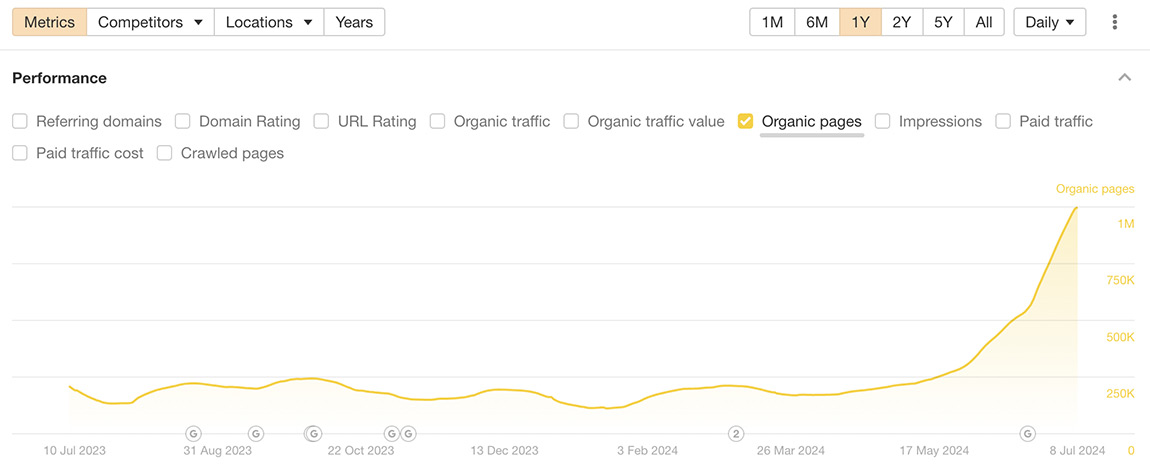
Source: Ahrefs-Glen Allsopp
**Our take:**
- Although he doesn't explicitly list them out, there's plenty of general strategy and SEO recommendations in the article.
- Two seemingly contradictory trends: movement away from SEO/search reliance and increased use of AI pages and programmatic SEO.
- Because of ranking volatility it's important to aggressively diversify away from search, while still engaging in SEO best practices.
## Recent Analysis
- **Seattle Surgeon Slammed with $5M Consent Decree**, [by Mike Blumenthal](https://www.nearmedia.co/seattle-surgeon-slammed-with-5m-consent-decree/).
- **Near Media podcast encore episode:** [What and why of review fraud on Google & how to deal with it](https://www.nearmedia.co/ep-164-from-the-vault-what-and-why-of-review-fraud-on-google-how-to-deal-with-it/).
## Short Takes
- Top 5 **local SEO** and marketing [takeaways from MozCon](https://moz.com/blog/mozcon-2024-local-seo-takeaways?ref=nearmedia.co) 2024.
- Google[ layering review](https://www.linkedin.com/feed/update/urn:li:activity:7216609890918694912/?ref=nearmedia.co) text over related **GBP photos**.
- New **Google Maps** [pop-up ad unit](https://www.linkedin.com/posts/mblumenthal%5Fthis-new-test-ad-format-first-seen-by-an-activity-7215344888777711616-zbfT/??ref=nearmedia.co) "add stop" appears.
- Embedded **YouTube** videos on landing pages [boost ranking](https://www.linkedin.com/posts/darrenshawwhitespark%5Flocalseo-seo-activity-7209574473111388160-v5XV/?ref=nearmedia.co).
- **AI spam** articles [outranking human-reporting](https://www.wired.com/story/google-search-ai-spam-original-reporting-news-results/?ref=nearmedia.co) on the same topics.
- Report: \~**30% of Google queries** on iPhone [from Google App](https://9to5google.com/2024/07/05/google-iphone-apps-report/?ref=nearmedia.co).
- Google **broad match** [default-enabled](https://www.seroundtable.com/google-ads-broad-match-enabled-by-default-37698.html?ref=nearmedia.co) for new search campaigns.
- Study: 76% of **subscription sites** and apps [used "dark patterns](https://www.ftc.gov/news-events/news/press-releases/2024/07/ftc-icpen-gpen-announce-results-review-use-dark-patterns-affecting-subscription-services-privacy?ref=nearmedia.co)."
- **Amazon** [launches](https://aws.amazon.com/blogs/machine-learning/empowering-everyone-with-genai-to-rapidly-build-customize-and-deploy-apps-securely-highlights-from-the-aws-new-york-summit/?ref=nearmedia.co) fusillade of AI products to hold off cloud rivals.
- **LinkedIn** the most trusted, **Twitter** the [least trusted social platform](https://www.numerator.com/resources/blog/tiktok-ban-insights/?ref=nearmedia.co).
- **Google** [lobbying Congress](https://x.com/lutherlowe/status/1810993220022628447??ref=nearmedia.co) to reduce funding for antitrust enforcement.
- Stinging [critique](https://stratechery.com/2024/the-e-u-goes-too-far/?ref=nearmedia.co) of **global technology regulation** by the EU.
- **Google and Hubspot** [end acquisition talks](https://www.cnbc.com/2024/07/10/hubspot-shares-plunge-16percent-on-report-that-alphabet-is-shelving-interest.html?ref=nearmedia.co).
Listen to our [latest podcast](https://www.nearmedia.co/memo/).
[](https://nearmedia.co/memo?ref=nearmedia.co)
How can we make this better? Email [us](mailto:gsterling@nearmedia.co) with suggestions and recommendations.
### Seattle Surgeon Slammed with $5M Consent Decree
URL: https://www.nearmedia.co/seattle-surgeon-slammed-with-5m-consent-decree/
Last updated: 2024-11-19T21:09:10.000Z
Last week, as a result of Attorney General Bob Ferguson’s 2022 consumer protection lawsuit, Seattle based Allure Esthetic and owner [Dr. Javad Sajan entered a consent decree](https://www.atg.wa.gov/news/news-releases/ag-ferguson-plastic-surgeon-must-pay-5-million-illegally-manipulating-consumer?ref=nearmedia.co) and must pay $5 million in fines and restitution.
In April, we [reported](https://www.nearmedia.co/seattle-surgeon-guilty-of-breaking-law-with-review-practices/) that a Federal judge found [Allure Esthetic](https://www.nearmedia.co/seattle-surgeon-guilty-of-breaking-law-with-review-practices/) and owner Dr. Java Sagan had violated the the Federal Consumer Review Fairness Act (CRFA) and was guilty of wrongly preventing patients from posting negative reviews using illegal NDAs. In addition the state Attorney General's lawsuit accused the business and owner of falsifying online reviews, manipulating before and after images and incentivizing review removal.
💡
**AG Ferguson accused Allure of artificially and illegally inflating its ratings on online platforms such as Yelp and Google by posting fake positive reviews while suppressing honest accounts of consumers’ negative experiences. The company forced patients to sign illegal non-disclosure agreements to intimidate patients into removing truthful reviews — or not posting them at all. Allure also ordered its employees to post fake positive reviews.*
### Consumers Will Get *Some* Restitution
The [consent decree](https://s3.documentcloud.org/documents/24785836/2024%5F07%5F01proposedconsentdecree.pdf?ref=nearmedia.co) "requires Allure to pay $5 million, approximately $1.5 million of which will go to affected consumers. The rest will go to the Attorney General’s Office for its attorneys’ fees and costs of investigating and litigating the case, future monitoring and enforcement of the consent decree," [according](https://www.atg.wa.gov/news/news-releases/ag-ferguson-plastic-surgeon-must-pay-5-million-illegally-manipulating-consumer?ref=nearmedia.co) to the Washington Attorney General's office. Allure also must:
- Stop posting or influencing consumer reviews, perform a full audit of all public reviews on Google, Yelp, WebMD and other third-party review platforms, and request removal of every review Allure was involved in creating, posting or shaping in any manner;
- Remove all misleading before and after photographs of plastic surgery procedures from its website and social media and stop altering photographs of future procedures;
- Cease use of and attempts to enforce all illegal NDAs and notify patients who previously signed them that they are released from the terms of those NDAs;
- Pay a third-party forensic accounting firm to perform a full, independent audit of Allure’s consumer rebate program to identify consumers who are owed rebates that were unlawfully claimed by Allure; and
- Provide the Attorney General’s Office, upon request, information that demonstrates compliance with the terms of the consent decree for the next 10 years."
### How Has Google Responded?
From the inception of the lawsuit in late 2022 until last week, this case has had a very high profile. When we wrote about the [Allure Esthetic lawsuit](https://www.nearmedia.co/seattle-surgeon-guilty-of-breaking-law-with-review-practices/#google-inaction) in April 2024 the listing had 917 reviews and a 4.8 rating. Today it has a 4.8 rating and still shows 938 reviews. In other words, Google hasn't taken any action.
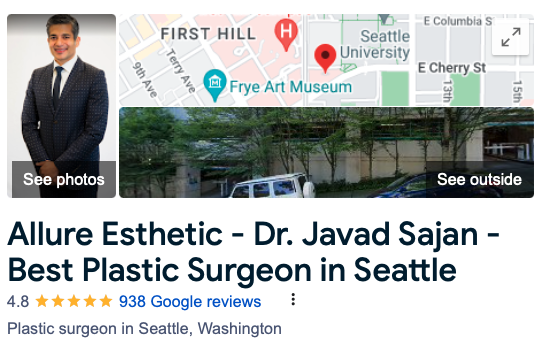
Screenshot from July 7, 2024
Allure Esthetic's GBP profile shows a fair bit of abuse on its surface and many of the [reviews referenced in the original case](https://storage.ghost.io/c/03/80/0380d96d-ef7e-450e-96b3-2963e18aaab5/content/images/2024/04/Screenshot-2024-04-16-at-4.49.48-PM.png?ref=nearmedia.co) are still present. And there is the obvious business naming abuse as well (best plastic surgeon?). The reviews themselves are revealing and speak of the malfeasance of this business.
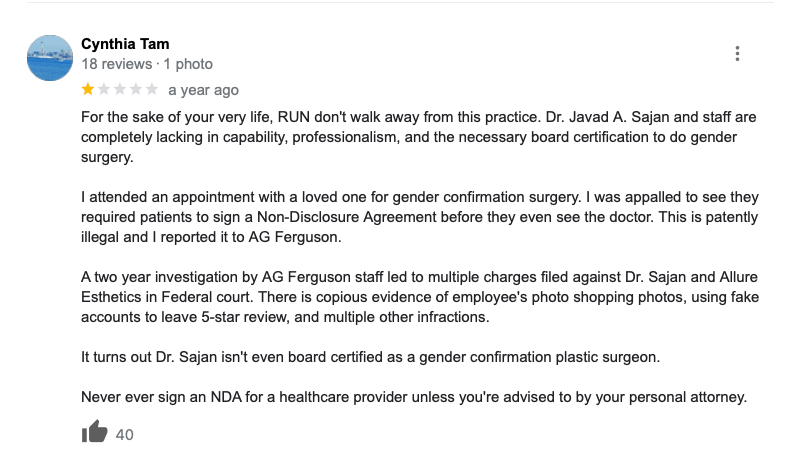
Clearly Google should have been aware of the abuse and yet it wasn't caught by their vaunted [review algorithm](https://blog.google/products/maps/how-google-maps-reviews-work/?%5Fga=2.15712499.490650238.1654712525-492412280.1654712525&ref=nearmedia.co) – or human moderators. Through its inaction, Google was complicit in an ongoing scam of sending folks to this doctor during for the past 7 years. This is even more true now, post-trial and settlement, given the many illegal and manipulated reviews that still appear on Google.
### A Big Enough Fine?
This settlement seems large and holds some good news. The fine is significant and moving in the right direction, and consumers will also see some restitution. It is in fact one of the larger fines we have seen in the area of fake reviews.
However this has been going on for a very long time, at least 7 years. According to the Attorney General, restitution is being made to approximately 21,000 people. That works out to a fine of $238 for every violation. However, more people and more harms were created by this business. Just the lost business experienced by competitors could equate to several million dollars.
Even more problematically, the business and Dr. Sajan's spammy reviews and spammy name remained on Google and Yelp during the 18 months of this case. According to salary.com a typical plastic surgeon in Seattle generally [makes](https://www.salary.com/research/salary/benchmark/surgeon-plastic-reconstructive-salary/seattle-wa?ref=nearmedia.co) between $400,000 and $600,000 (and perhaps upwards of $750,000) a year. Given Dr. Sajan's many business locations and operations, it is likely that he is making significantly more than that. While it appears that the consent decree requires an audit and removal of his fake online reviews, it is unclear how long that will take. His listings are presumably still generating traffic and clients and he is still benefiting from his unlawfully earned reputation.
A $5 million dollar fine given his significant, ill-gotten gains might still not be enough of a deterrent.
### Ep 164: (From the vault) What and why of review fraud on Google & how to deal with it
URL: https://www.nearmedia.co/ep-164-from-the-vault-what-and-why-of-review-fraud-on-google-how-to-deal-with-it/
Last updated: 2024-07-04T16:14:12.000Z
**Part 1 starts 00:13 -** [**The big picture of review fraud - who does it and why**](https://youtu.be/JW9wx5a-018?ref=nearmedia.co)
We explore the full range of review fraud from fake positive reviews, black hat negative reviews and review extortion with Curtis Boyd of the Transparency Company. How widespread is it, is it growing, which categories are most likely to participate in it and why.
Segment Reference Articles: [Askfortransparency.com](https://askfortransparency.com/about/?ref=nearmedia.co)
**Part 2 starts 15:36 -** [**How to deal with fake review attacks and competitors who use fake reviews**](https://youtu.be/Aq5u4dvCp9Y?ref=nearmedia.co)
If you are an honest business can you compete in a world rife with review fraud. We discuss how to deal with fake review attacks and how to get fake reviews that your competitors have gotten taken down.
Segment Reference Articles
[Google Business redressal form](https://support.google.com/business/contact/business%5Fredressal%5Fform?ref=nearmedia.co)
[Step-by-Step Guide to Fighting Fake Google Review Attacks](https://www.nearmedia.co/how-to-fight-a-fake-google-review-attack/)
[Missing Google Reviews: A Step-by-Step Recovery Guide](https://www.nearmedia.co/missing-reviews-at-google-a-step-by-step-guide-to-recovery/)
**Part 3 starts 22:29 -** [**The FTC and fake review guidelines and rules**](https://youtu.be/J1yYPqbmVn8?ref=nearmedia.co)
The FTC has been upping their enforcement game with new Guidelines which set a standard and upcoming Rules which will facilitate their ability to impose fines on buyers and sellers of reviews. The major platforms are largely exempt from any enforcement but their is language in the upcoming FTC rules that makes a business fully responsible for compliance.
Segment Reference Articles
[Trade Regulation Rule on the Use of Consumer Reviews and Testimonials](https://www.ftc.gov/system/files/ftc%5Fgov/pdf/r311003consumerreviewsandtestimonials%5Fnprm.pdf?ref=nearmedia.co)
[The FTC Guidelines: Everything you need to know](https://www.nearmedia.co/content/files/2022/03/FTC-Guidance-Presentation-w-Links.pdf) (presentation)
**Part 4 starts 30:13 -**[ **The Future of Reviews: What will see over the next 24 months in review spam & possible enforcement**](https://youtu.be/BsLdZtg0CPQ?ref=nearmedia.co)
New rules from the FTC and better filters from Google might turn the corner on fake reviews but the lack of FTC resources and the lack of Google’s focus may prevent that from happening
### Zero-Click Data, Google NOT a Publisher, AIO Extreme Caution
URL: https://www.nearmedia.co/zero-click-data-google-not-a-publisher-aio-extreme-caution/
Last updated: 2024-07-03T14:55:46.000Z
### Study: 29% of Clicks Stay on Google
On a recent Near Media [podcast](https://www.nearmedia.co/ep-161/) Rand Fishkin teased a new US-EU zero-click study. He's now [released it](https://sparktoro.com/blog/2024-zero-click-search-study-for-every-1000-us-google-searches-only-374-clicks-go-to-the-open-web-in-the-eu-its-360/?ref=nearmedia.co). What it shows is a very high percentage of zero-click results (59% in US, 60% in EU), which is not new. In fact, it's somewhat lower [than in 2020](https://sparktoro.com/blog/in-2020-two-thirds-of-google-searches-ended-without-a-click/?ref=nearmedia.co). When there is a click (42% in US, 40% in EU), much of *that* traffic stays within the Google ecosystem (29% in US, 24% in EU). What this means is that a minority of search behavior results in clicks to third party sites (or ads): 36% in the US and 37% in the EU. Fishkin concludes that in Europe the DMA has had only a limited impact on Google's [self-prefencing behavior](https://www.nearmedia.co/hindsight-self-preferencing-behind-google-maps-rise/): referring traffic to its own properties – Google Maps, Images, Flights, Hotels, YouTube and so on. Fishkin goes on to argue, based on clickstream data, that Google is not threatened by AI competitors and that "US and EU, searches per searcher are rising." He infers that search quality controversies have not hurt Google with the general public. This conflicts with recent survey data ([here](https://www.nearmedia.co/ai-use-hurts-google-smb-response-times-local-ai-review-tool/), [here](https://www.nearmedia.co/search-frustration-aio-disappearing-act-genzs-social-search/)). But Fishkin's data is behavioral rather than self-reported. Interestingly, he also suggests AI Overviews may have had a negative impact on mobile traffic in May, which has recovered after [the dramatic AIO pullback](https://www.growth-memo.com/p/aio-pullback?ref=nearmedia.co).
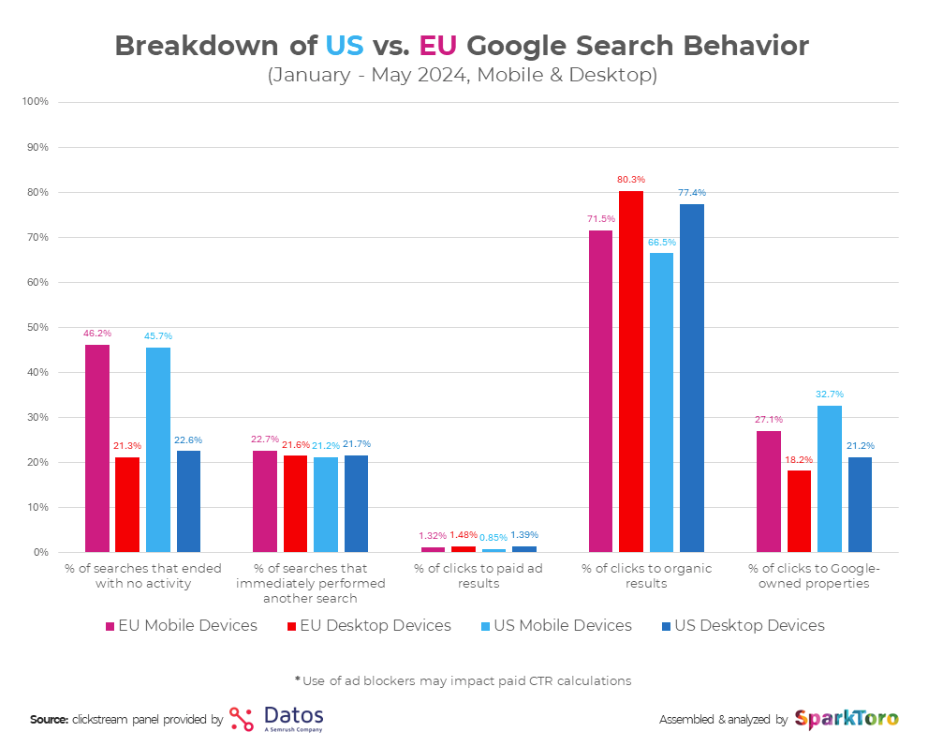
**Our take:**
- I don't entirely believe that there's zero competitive threat from AI alternatives to Google. But it may only be from a relatively small group of heavy AI users.
- I wish there were more insight into the relationship between AI Overviews and the May traffic drop. May is when AIOs formally launched.
- Zero-click behavior is less of a concern for local SEOs and local marketers because many leads are driven by GBP content.
### Google: Don't Call Us a Publisher
Google does not want to be considered a publisher. That's because if Google were legally deemed a publisher [Section 230](https://www.eff.org/issues/cda230??ref=nearmedia.co)'s liability protection would arguably disappear. That's an oversimplification, but that's what Google is essentially trying to avoid and disclaim with its recently [updated Google Business Profile Terms](https://support.google.com/business/answer/9292476??ref=nearmedia.co). The relevant section says, "Google is not responsible for your Business Profile. But, once you’ve claimed it, you understand that we have the right, but not the obligation, to moderate the content you provide using Business Profile Services." Moderation is permitted, even required in some instances by Section 230\. And moderating content doesn't automatically convert Google into a publisher. Basically, a publisher creates content but "an interactive computer service" (protected by Section 230) merely hosts or distributes it (e.g., social media posts, reviews). But this distinction breaks down in reality. Google local search results (Local Pack, Business Profiles, Maps) are not simply third party content hosted by Google. Google local content is a proprietary suite of products and, as Google itself [told the European Commission](https://www.nearmedia.co/google-dma-compliance-redefinition/), part of its core search offering. Given that, what's the distinction between a traditional yellow pages *publisher* and Google local/GBP, which it editorially controls?
**Google Business Profile Additional Terms of Service for Business Entities**
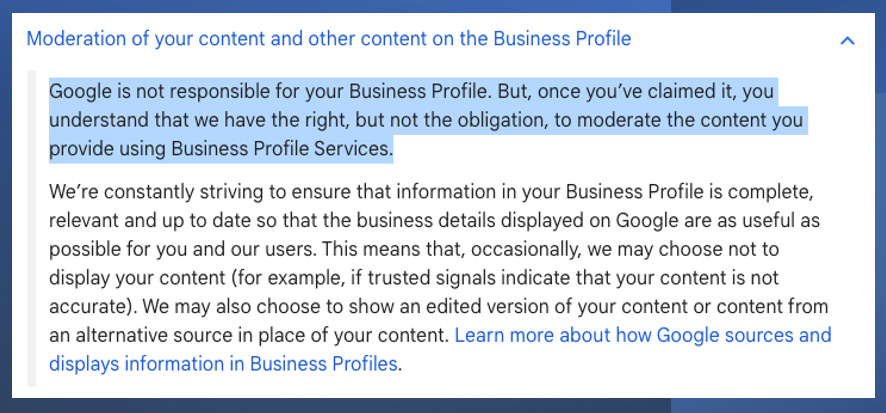
Source: Google
**Our take:**
- NetChoice case: SCOTUS [suggested](https://www.supremecourt.gov/opinions/23pdf/22-277%5Fd18f.pdf?ref=nearmedia.co) content moderation is not unlike what "traditional publishers" do when they "shape other parties’ expression into their own curated speech products."
- Moderation and search results are both "editorial" and protected by the First Amendment. That's why you can't sue when your rankings drop.
- There's clear tension between Google's editorial control over SERPs/GBP/Maps and the claim Google isn't a publisher.
### AIOs Proceed with Extreme Caution
By now you know the history of Google's AI Overviews well. Launched [in May 2023](https://searchengineland.com/new-google-search-generative-ai-experience-413533?ref=nearmedia.co), they were originally "Search Generative Experience." In the Google Labs beta, SGE results appeared in [almost 90% of results](https://www.nearmedia.co/google-sge-pushdown-siri-ai-overhaul-brick-mortar-halo/) for those who'd opted-in. At Google I/O, SGE was rebranded as AI Overviews (AIOs) [and went live](https://www.nearmedia.co/gemini-dominates-i-o-and-sge-goes-live/). After the general rollout, AIOs appeared far [less frequently](https://www.seoclarity.net/research/ai-overviews-impact??ref=nearmedia.co). But then came a [series of embarrassing errors](https://www.nearmedia.co/google-rides-the-clickstream-long-tail-citations-ai-overview-fails/) and corresponding "PR backlash." Kevin Indig has been tracking AIOs using [Semrush Sensor](https://www.semrush.com/sensor?compare=serp%21321&ref=nearmedia.co) and [found](https://www.growth-memo.com/p/aio-pullback?ref=nearmedia.co) that they now appear (as of June 28) only 0.2% of the time on desktop and 0.3% on mobile. He observes that YMYL industries (e.g., health) have seen the biggest pullbacks. He also observes that the top organic result is often the source for much of the AIO text. Curiously, Featured Snippets and AIOs co-exist – often with slightly different information – creating potential confusion. Indig adds, on a positive note, that there are more links/citations (including more Reddit and Wikipedia) in AIOs now, which is probably a way of trying to improve accuracy. From an SEO strategy perspective, Indig argues, its business as usual – for now.
**AIOs in SERPs May vs. June**
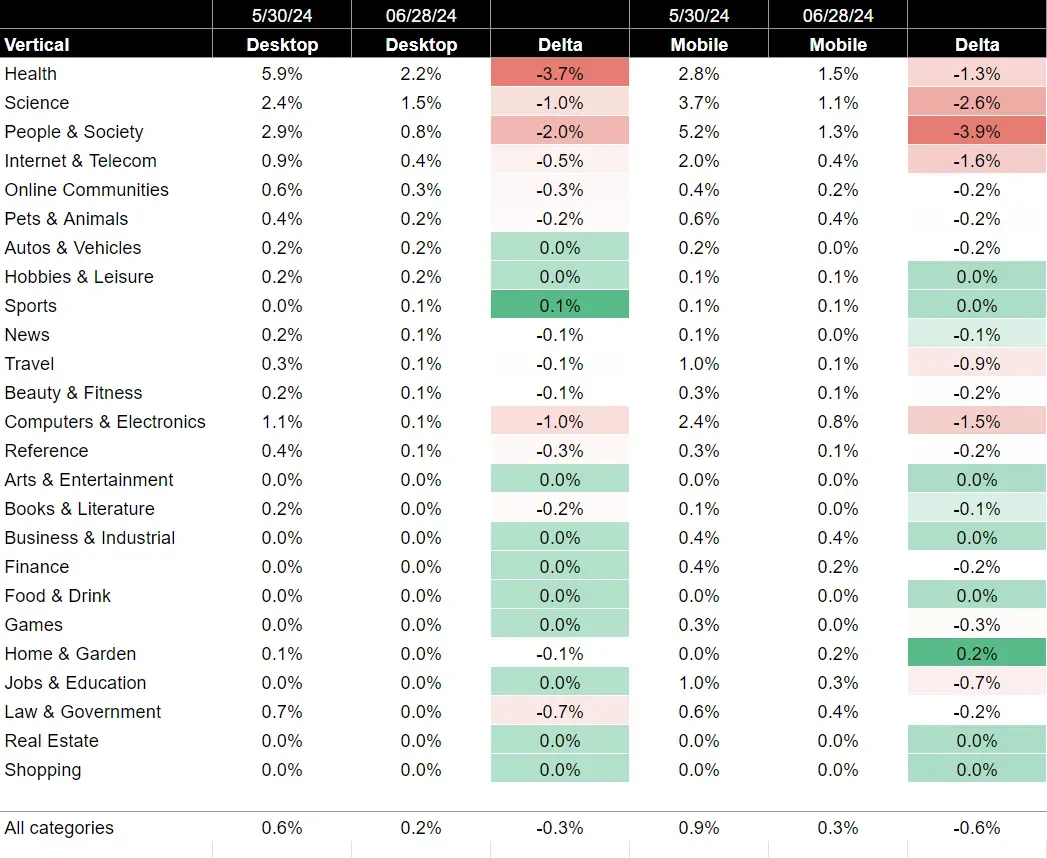
Source: Kevin Indig
**Our take:**
- SGE was mostly a defensive reaction to the launch of ChatGPT and Bing Chat. It was also partly a performance for investors.
- While Google has long used AI behind the scenes in search, it probably would not have developed SGE unless it felt compelled to.
- Fishkin's analysis argues there's effectively no AI threat to Google. If true, that suggests Google will continue to be very conservative with AIOs.
## Recent Analysis
- **Near Memo episode 163**: [New research – SMB web lead generation failures & how to fix them](https://www.nearmedia.co/ep-163-new-research-smb-web-lead-generation-failures-how-to-fix/) (Special Guest Aaron Weiche).
## Short Takes
- **Menu items and popular times** [appear to impact local rankings](https://reputationarm.com/ranking-factor-popular-times-on-google-maps/?ref=nearmedia.co).
- BrightLocal [benchmarks reviews](https://www.brightlocal.com/research/brand-review-index/?ref=nearmedia.co) for **Gyms, QSR, Grocery**
- **Sponsored Local Pack listings** get [call-to-action buttons](https://x.com/mblumenthal/status/1807844840291311915?ref=nearmedia.co).
- New **Google profile reviews troubleshooting** and FAQs [document](https://www.seroundtable.com/google-reviews-troubleshooting-faqs-37648.html?ref=nearmedia.co).
- Budgeting [for local and national](https://www.searchenginejournal.com/seo-cost-calculator-2/515986/?ref=nearmedia.co) **SEO campaigns**.
- How to determine [when to create](https://www.sterlingsky.ca/pick-locations-for-service-area-pages/?ref=nearmedia.co) **service area pages**.
- Some **HCU**\-hit sites are now [seeing small recoveries](https://www.seroundtable.com/google-helpful-content-update-lifts-37647.html?ref=nearmedia.co).
- Google [brings shortcut buttons](https://blog.google/products/chrome/chrome-mobile-features-june-2024/?ref=nearmedia.co) to local **search suggestions in Chrome**.
- Former **Bing Search Director** Stefan Weitz on [AI's impact on search](https://searchengineland.com/reimagining-search-ai-era-443674?ref=nearmedia.co).
- **Meta "pay or consent" plan** in EU [shot down](https://ec.europa.eu/commission/presscorner/detail/en/IP%5F24%5F3582?ref=nearmedia.co) as violating DMA.
- **Apple Intelligence** Gemini deal [may come this fall](https://www.theverge.com/2024/6/30/24189262/apple-intelligence-google-gemini-deal-iphone-mac-ipad-openai-chatgpt?ref=nearmedia.co).
- **MSFT AI boss**: anything published online [is "freeware](https://www.theverge.com/2024/6/28/24188391/microsoft-ai-suleyman-social-contract-freeware?ref=nearmedia.co)" (wrong).
Listen to our [latest podcast](https://www.nearmedia.co/memo/).
[](https://nearmedia.co/memo?ref=nearmedia.co)
How can we make this better? Email [us](mailto:gsterling@nearmedia.co) with suggestions and recommendations.
### Ep 163: New Research: SMB web lead generation failures & how to fix
URL: https://www.nearmedia.co/ep-163-new-research-smb-web-lead-generation-failures-how-to-fix/
Last updated: 2024-06-28T15:30:35.000Z
**Part 1 starts 00:13 -** [**Leadferno: a better tool to capture website leads**](https://youtu.be/OuICXJHJY5k?ref=nearmedia.co)
Leadferno is a conversion platform designed to transform website visitors into leads through seamless communication tools. Unlike traditional chatbots, Leadferno leverages SMS to facilitate human conversations, which studies show is the preferred communication channel for most people. It’s floating CTAs (Call-to-Actions) on websites encourage visitors to start conversations via text messaging. This approach helps businesses engage more effectively with potential customers by providing a more responsive and preferred communication method.
Leadferno offers various tools, including an embeddable contact form that initiates SMS conversations, request call-back options, and links to other lead forms and scheduling tools. It attempts to make businesses easier to work with by enhancing their ability to convert website visitors into valuable leads through better communication options.
Recently, they tested a large number of forms on small business websites to understand how effectively these forms were managed and whether they served as effective lead generation tool.
Segment Reference Articles: [RESEARCH: Website Contact Forms and Lead Management – Uncovering Costly Mistakes](https://leadferno.com/blog/research-website-contact-forms-and-lead-management-uncovering-costly-mistakes?ref=nearmedia.co)
**Part 2 starts 05:00 -** [**Google nuking GBP & Business Messaging costs small developers**](https://youtu.be/laS6qj-BZJI?ref=nearmedia.co)
Google's recent decision to axe its business messaging tools—Google Business Profile Chat and Business Messenger— hits particularly hard for niche players like Leadferno, a company that had heavily invested in integrating these tools. The discontinuation forces smaller firms to reconsider future integrations with Google, given the considerable time and financial resources wasted—six months and approximately $100K, in Leadferno's case.
While it looks like Google will potentially integrate with WhatsApp or SMS, which could partially mitigate the blow for some businesses. However, for many, the sudden shift means lost opportunities and the need to reallocate development efforts. The most affected were businesses with significant Google Business Profile visibility and multi-location operations, which benefited from centralized messaging and automated replies. These features allowed for quicker customer interactions, a critical factor in Google's ranking algorithms.
Google’s decision, like so many similar ones it has made in the past, leaves smaller, innovative companies grappling with the fallout, forcing them to navigate the challenging landscape of constantly shifting tech ecosystems.
Segment Reference Articles: [Google Deprecates GBP Business Messaging](https://developers.google.com/business-communications/business-messages/resources/release-notes/update-on-gbm?ref=nearmedia.co)
**Part 3 starts 12:30 -** [**Leadferno Research: Small Business Contact Form Failures**](https://youtu.be/z0aKIk7FwWM?ref=nearmedia.co)
Leadferno documented the startling inefficiencies of small businesses in responding to online contact forms, a crucial channel for new customer acquisition. The research, encompassing 225 businesses across home services, professional services, and medical sectors, highlights a significant gap between customer inquiries and business responses.
Leadferno's Aaron Weiche and his team "mystery shopped" these businesses, submitting highly detailed and strong buying inquiries via their contact forms. The findings are staggering: almost 5% of forms were broken, failing to deliver customer messages entirely. More shockingly, only 15.6% of forms sent an auto-reply, a basic feature that acknowledges receipt and sets customer expectations.
The average response time to these contact form submissions was a lethargic 17 hours and 49 minutes, with professional services responding slightly faster than average, and healthcare lagging behind at over 19 hours. Yet, the most alarming statistic was that 42% of these forms received no response at all.
While small businesses consistently rank new customer acquisition as their top challenge, they are neglecting warm, ready-to-buy leads that land directly in their inboxes. This neglect is even more baffling given the simplicity of the solution: prompt and efficient responses to online inquiries.
The study underscores a critical disconnect. Small businesses are not leveraging the full potential of their digital contact points, leading to missed opportunities and, ultimately, lost revenue. Leadferno's research calls for a reevaluation of how businesses handle online customer interactions, stressing the need for improved digital practices to enhance customer engagement and drive growth.
Segment Reference Articles:
[Dismal SMB Lead Response Times](https://www.nearmedia.co/ai-use-hurts-google-smb-response-times-local-ai-review-tool/#dismal-smb-lead-response-times)

**Part 4 starts 23:10 -** [**How Small Businesses Can Up Their Lead Game**](https://youtu.be/ldqMaTZpfB8?ref=nearmedia.co)
In today's competitive market, small businesses need to sharpen their lead management:
- Businesses need to systematize their process by having a structured approach to handle leads. Without a clear process, leads often get lost, mishandled, or delayed.
- Treat all communication channels equally. While many business owners prioritize phone calls, they often overlook direct messages on social media or emails, thinking they're lower quality.
- Businesses should strive to initiate as many conversations as possible and leverage these interactions efficiently through a solid process.
- Email, often cluttered with spam and other distractions, isn’t the best place for new leads.
- SMS stands out and garners quick attention.
- Diversifying response methods—using calls, texts, and emails—can significantly enhance engagement.
- Speed is crucial.
- Providing choice in communication channels can help businesses align with consumer expectations and enhance lead conversion rates.
Small businesses can greatly improve their lead management by adopting a structured process, diversifying communication channels, responding swiftly, and aligning their methods with customer preferences. This strategic shift can turn more leads into loyal customers, ensuring sustained growth and success.
Segment Reference Articles: [Case Study: Law Firm Increases Website Leads By 46.3%](https://leadferno.com/blog/case-study-law-firm-increases-website-leads-by-46-percent?ref=nearmedia.co)
### AI Use Hurts Google, SMB Response Times, Local AI Review Tool
URL: https://www.nearmedia.co/ai-use-hurts-google-smb-response-times-local-ai-review-tool/
Last updated: 2024-07-17T16:52:47.000Z
### Heavy AI Fans Use Google Less
Google has repeatedly said users like AI Overviews. At least one survey seems to partly support that claim. But that survey also has bad news for Google. To assess consumer perceptions of AI in search, Tinuiti [polled](https://tinuiti.com/research-insights/research/public-perceptions-of-ai-in-marketing/?ref=nearmedia.co) 1,000 US adults who were "at least slightly familiar with AI technology in June 2024." Just under half (48%) who had "received AI summaries felt they improved Google’s search results," while the remaining 52% had various other responses, including 15% who said they made search worse. Only 40% of all respondents were confident they'd seen AI Overviews and 29% weren't sure. The rest either had not or didn't remember. Among those who thought AI made search worse, inaccuracy and general distrust were the main two reasons. Here's the more concerning news for Google: When asked whether their search usage was affected by using AI platforms such as ChatGPT and Perplexity, "29% of respondents said yes." Among heavier AI users – those using AI tools at least monthly – "45% said they are using traditional search engines less." And for daily AI users, "that rate jumps to 62%."
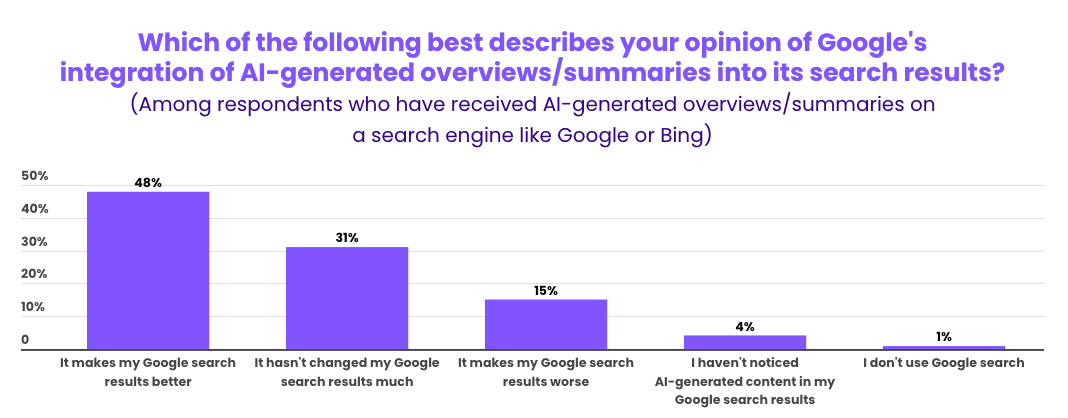
Source: Tinuiti
**Our take:**
- Asked whether they would click through to a site vs. getting their answer directly from AIOs, 44% preferred clicking a link to a website.
- However, younger users were less inclined to click and preferred the AI answers, at least conceptually.
- The survey confirms what we know from anecdotal information: the more you use AI, the less you tend to use Google.
### Dismal SMB Lead Response Times
Survey data consistently shows that the top challenge for local businesses is customer acquisition. Yet, many businesses are leaving money potentially "on the table," by ignoring or not responding to inbound inquiries in a timely way. That's a key finding from a new "mystery shopping" study conducted by [LeadFerno](https://leadferno.com/blog/research-website-contact-forms-and-lead-management-uncovering-costly-mistakes?ref=nearmedia.co). The company identified 225 top-ranking small businesses (SMBs) in three verticals and submitted "buying focused" inquiries to their website contact forms. These were "bottom of the funnel" sales inquiries and appointment requests. The SMBs were from home services, professional services and healthcare. Roughly 43% of contact submissions never received any response. The fastest response happened in an impressive two minutes but the longest took over 6 days. Roughly 11% of responses happened in under an hour. The average response time was just under 18 hours. Nearly 85% of submissions didn't generate an auto-reply email confirmation. And 66% of businesses who responded only made one follow-up attempt. Home Services had the best reply rate, followed by Healthcare and Professional Services. But in each case, the majority didn't respond.
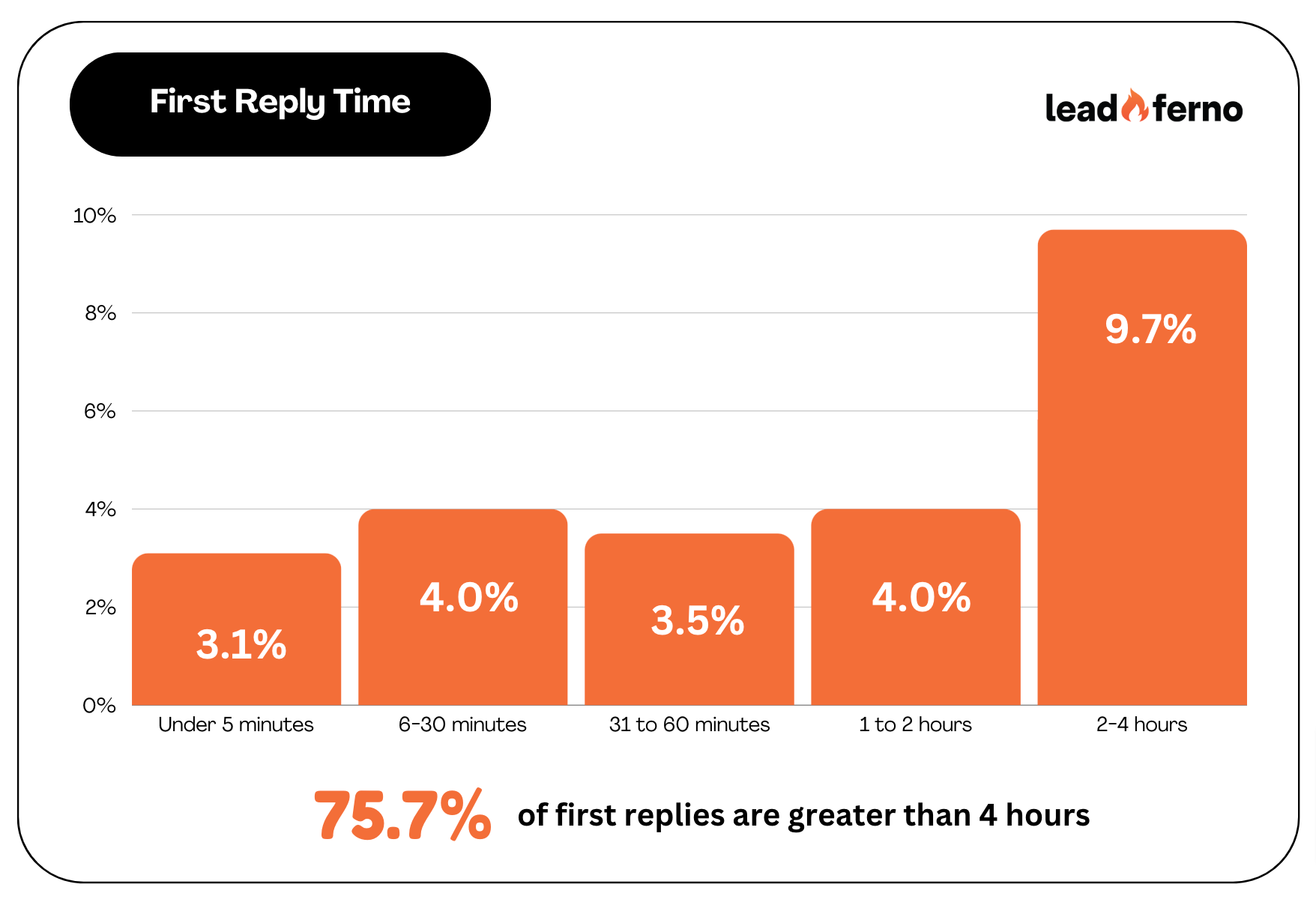
Source: Lead Ferno
**Our take:**
- There are many potential explanations for the failure to respond or respond in a timely way. But there are really no excuses.
- Part of this is a technology problem and part of it is a culture/process problem. But it's kind of astonishing nonetheless.
- Time to response is a key factor in whether a business will get the job. It's amazing that's not more intuitive for these business owners.
### Local Falcon 'Reviews Analysis'
Local Falcon is introducing a new AI-based [review analysis tool](https://www.localfalcon.com/features/reviews-analysis?ref=nearmedia.co) to complement its popular local rankings product. It doesn't help businesses solicit or generate more reviews or respond to reviews, but offers deeper review insights using AI, including of competitors' reviews. Designed to work for both SMBs and enterprises, the objective is to provide more actionable insights. The tool compares a company's top three competitors, based on Local Falcon's ranking position understanding, and looks at the 100 most recent GBP reviews for each business. It can also analyze "up to 250 business locations and their respective competitors." It then scores each business on review recency, frequency and quality. There's an [executive summary](https://localrankingtracker.com/reviews-analysis-report/3329e6b942653e7/683f772c2384801/?ref=nearmedia.co), which offers a set of recommendations and a kind of competitive SWOT analysis. The tool can also identify reviews that have not been responded to (probably most of them) and flag spam reviews. The pricing is $19 per location, which CEO David Hunter says is very aggressive and less than rivals' pricing.
**Local Falcon Sample Report**
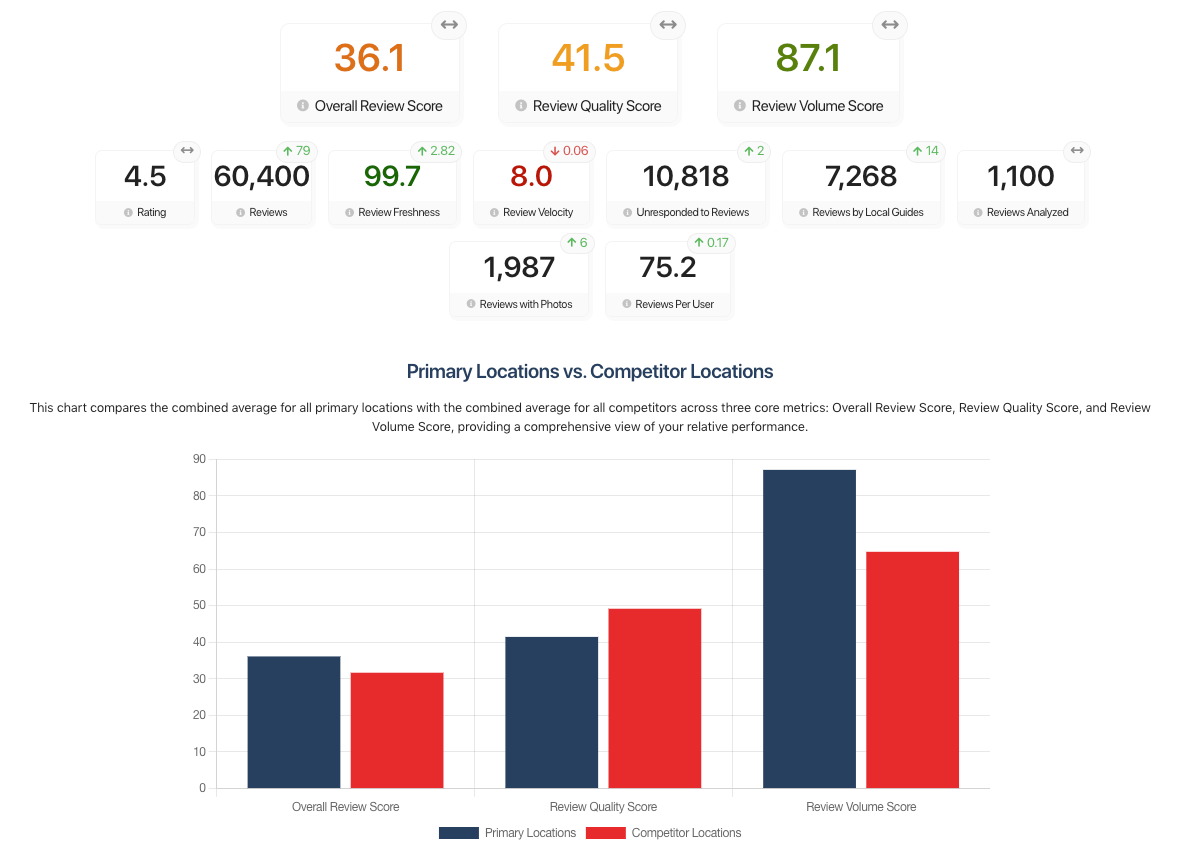
Source: Local Falcon
**Our take:**
- The product has just been rolled out and Hunter is receiving feedback from early users (agencies).
- There were a number of obvious feature extensions that he suggested were on his roadmap. But he wants to collect more feedback first.
- There are also plans for an AI bot so that users can ask questions about the data.
## Recent Analysis
- **Near Memo episode 162**: [Expanding local results, cluttered SERPs reduce organic traffic, AI overviews make it worse](https://www.nearmedia.co/ep-162/).
- **Local Search Is Evolving, Here's Why You Need to Pay Attention**, [by Mike Blumenthal](https://www.nearmedia.co/the-speed-of-the-sound-of-the-local-pack/).
- ICYMI: **Self-Preferencing Behind Google Maps' Rise**, [by Greg Sterling](https://www.nearmedia.co/hindsight-self-preferencing-behind-google-maps-rise/).
## Short Takes
- **Moz**: 18 [local search developments](https://moz.com/blog/local-search-developments-q2-2024?ref=nearmedia.co) from Q2 2024.
- Google [tries to disclaim responsibility](https://www.linkedin.com/feed/update/urn:li:activity:7212102825101733892/??ref=nearmedia.co) for **Business Profiles**.
- **LSAs** [coming to Google Maps](https://x.com/mblumenthal/status/1803857359456079996??ref=nearmedia.co) on iOS. GBP reviews will be used.
- Google [automates lead credits](https://searchengineland.com/google-automates-lead-credits-local-services-ads-443468?ref=nearmedia.co) for **Local Services Ads**.
- The "[second page" of Google returns](https://searchengineland.com/google-dropping-continuous-scroll-in-search-results-443529?ref=nearmedia.co) – no more **continuous scroll**.
- Potential [new layout](https://www.seroundtable.com/google-ai-overview-link-cards-top-37633.html?ref=nearmedia.co) for **AIOs** that puts the "link boxes" above the text.
- Use of **clickstream data** boosts brands in SERPs, [not quality](https://www.linkedin.com/posts/ajkohn%5Fgoogenough-activity-7211773621214543875-fte5/??ref=nearmedia.co).
- More [volatility ahead](https://www.seroundtable.com/google-search-rankings-improve-scale-system-37636.html?ref=nearmedia.co) as **Google** struggles to improve rankings.
- **Google Cloud** [has a data plan](https://www.axios.com/2024/06/27/google-hallucinations-cloud-moodys?ref=nearmedia.co) to minimize hallucinations.
- Amazon [thinking](https://www.reuters.com/technology/amazon-mulls-5-10-monthly-price-tag-unprofitable-alexa-service-ai-revamp-2024-06-21/?ref=nearmedia.co) about $5 to $10 monthly fee for **AI-upgraded Alexa**.
- AI frenzy [drives up](https://www.reuters.com/markets/us/amazon-hits-2-trillion-valuation-ai-fervor-rate-cut-bets-2024-06-26/?ref=nearmedia.co) **Amazon's** value beyond $2 trillion.
- **Reddit** [now more important](https://searchengineland.com/reddit-online-reputation-challenge-443441?ref=nearmedia.co) for reputation management.
Listen to our [latest podcast](https://www.nearmedia.co/memo/).
[](https://nearmedia.co/memo?ref=nearmedia.co)
How can we make this better? Email [us](mailto:gsterling@nearmedia.co) with suggestions and recommendations.
### Big G's Product Problem, Aggregators vs Local Biz, Section 230 Recklessness
URL: https://www.nearmedia.co/big-gs-product-problem-aggregators-vs-local-biz-section-230-recklessness/
Last updated: 2024-06-25T20:26:33.000Z
### Product Search: More Problems for Big G
Multiple surveys in the market (e.g., [here](https://www.nearmedia.co/googles-30-problem-ai-search-marriage-next-sge-mediocrity/), [here](https://www.forbes.com/advisor/business/software/social-media-new-google/?ref=nearmedia.co)) illustrate seemingly growing challenges for Google in retaining younger users (GenZ). A very recent [survey](https://www.nearmedia.co/search-frustration-aio-disappearing-act-genzs-social-search/) from Scorpion also showed that many people are frustrated with the search experience. The big picture is that many users, especially younger people, are seeking alternatives to Google – at least in some categories. This includes [local discovery](https://www.nearmedia.co/last-click-mindset-apple-google-ai-deal-gen-z-local/) and product search. A new US-EU report from Reddit and GWI [explores](https://www.business.reddit.com/marketing/search-insights?ref=nearmedia.co) how GenZ is turning to social media for product discovery, as a search alternative. While the report is self-serving for Reddit, it contains multiple findings of note. The chart below, for example, shows how the percentage of GenZ using "search engines for brand and product discovery" has generally been declining since 2018\. It's now about 29% in both Europe and the US. Amazon, of course, is the product search elephant in the room, unfortunately not addressed in the survey. The Reddit survey also reflects frustration with search quality and efficiency. Among users' frustrations: content reliability, the need to sift through multiple pages of results and having to go to multiple sources to get answers. And too many ads was the top single complaint, undermining trust (roughly half of respondents). But the report also found that GenZ distrust social media content to varying degrees.
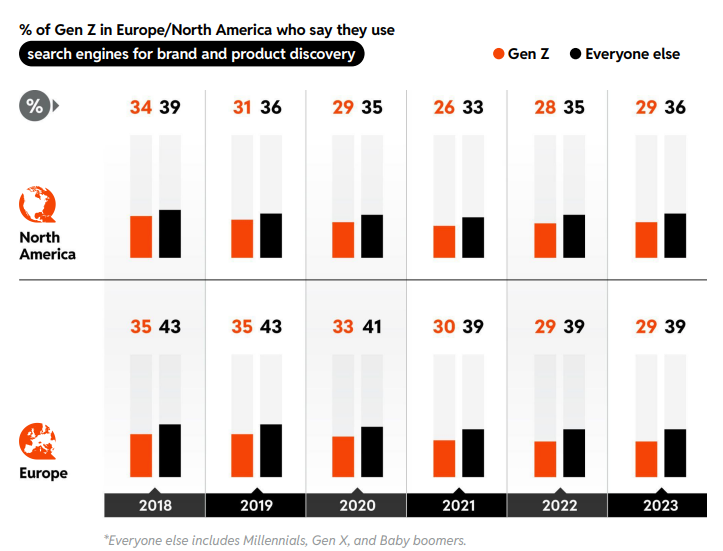
Source: GWI
**Our take:**
- No single survey should be treated with too much deference; however, multiple surveys paint a clear directional picture.
- There's a broad perception now that search quality is declining and that the search experience is polluted with too many ads.
- Google's AIOs attempt to address these complaints. But the company is generally leaning into them, with more ads, more SERP modules and [more overall clutter](https://www.nearmedia.co/ai-overviews-backlash-siri-do-or-die-serp-cognitive-load/).
### Google Spin: Aggregators vs Local Biz
Google has made [SERP changes](https://www.nearmedia.co/eu-local-serp-visual-glossary/) in Europe [to comply](https://www.nearmedia.co/google-dma-compliance-redefinition/) with the Digital Markets Act (DMA). So far their [impact on user behavior](https://www.nearmedia.co/google-serp-restaurants-eu-dma-analysis/) appears minimal. Many of these changes relate directly or indirectly to local: Places refinement chips (filters), Places Sites Aggregator Carousel, a second local pack, and an Aggregator Carousel (multiple results from a single company). Google has also done testing of new local-heavy SERPs, [in Europe](https://www.nearmedia.co/googles-2nd-local-pack-in-the-eu/) and [the US](https://www.nearmedia.co/crazy-google-near-me-test/), that show GBP listings [almost to the exclusion of organic results](https://www.nearmedia.co/the-speed-of-the-sound-of-the-local-pack/). In some of these cases, the tests appear to fly in the face of DMA anti-self-preferencing rules (e.g., multiple Packs). Yet Google is trying to define local entirely outside the scope of its DMA compliance obligations. As we previously [wrote](https://www.nearmedia.co/google-dma-compliance-redefinition/), Google seems to be arguing that Google Business Profiles are part of its "core search service" and should therefore be exempted from regulatory enforcement. Google also is rhetorically trying to play up opposition or competition between local businesses and aggregators (TripAdvisor, Yelp, etc.) with Google as the champion of direct local information. What consumers really want, the subtext goes, is direct access to local data not third parties, once removed.
Source: ChatGPT
**Our take:**
- Google's local graph data, though compiled from public factual information, is absolutely a Google product and should be thought of that way.
- The aggregator vs. "supplier" conflict is partly real. People often want direct information and don't want to conduct another search on a third party site.
- But if Google kills aggregators there will be many fewer places online (and competitors) for local information. Look at [what happened in digital mapping](https://www.nearmedia.co/hindsight-self-preferencing-behind-google-maps-rise/).
### Section 230 Recklessness
Since the start of Near Media, we've written multiple times about [Section 230](https://www.eff.org/issues/cda230??ref=nearmedia.co), which was originally enacted as part of the Communications Decency Act in 1996\. It says that "No provider or user of an interactive computer service shall be treated as the publisher or speaker of any information ..." And it offers immunity to online platforms for content that appears on their sites. Essential in the beginning, it has been exploited by digital behemoths to avoid responsibility for their often toxic content. And it has allowed companies like Meta and Twitter/X to significantly reduce the resources they spend on moderation (Europe's DSA could change that). Recognizing these problems, there have been several failed attempts at Section 230 reform in Congress. An [article](https://www.404media.co/has-facebook-stopped-trying/?ref=nearmedia.co) in 404 Media argues that Section 230 is at least partly to blame for Facebook's declining interest in safety and content quality (because they can), resulting in an increase in AI spam and scams, hacking, porn, and ads for illegal activities. In a topically adjacent article, The Atlantic [calls](https://www.theatlantic.com/technology/archive/2024/06/google-ai-overview-libel/678751/?ref=nearmedia.co) Google AI Overviews a potential "Libel Machine." It explains that hallucinated, defamatory information about individuals is a significant risk with AI. If Google were considered a "publisher" there would be legal exposure, but for Section 230\.

Source: ChatGPT
**Our take:**
- In the same way that telcos were "publishers" of yellow pages, Google is today a "publisher" of local information, without question.
- US Supreme Court Justice Neil Gorsuch suggested that AI-generated content (e.g., AIOs) might be outside Section 230 protection [in Google vs. Gonzalez](https://www.techpolicy.press/transcript-gonzalez-v-google-oral-argument/?ref=nearmedia.co).
- This is another reason why Google should be cautious about AI Overviews.
## Recent Analysis
- **Local Search Is Evolving, Here's Why You Need to Pay Attention**, [by Mike Blumenthal](https://www.nearmedia.co/the-speed-of-the-sound-of-the-local-pack/).
- **Near Memo episode 162**: [Expanding local results, cluttered SERPs reduce organic traffic, AI overviews make it worse](https://www.nearmedia.co/ep-162/).
## Short Takes
- Here are the **Google Business Profile** [ranking factors](https://x.com/DarrenShaw%5F/status/1805254449327481057?ref=nearmedia.co).
- Google [removing the ability](https://x.com/anthonyhigman/status/1805364128610959816?s=12&ref=nearmedia.co) to dispute leads in **LSAs**.
- Google [using AI](https://x.com/JoyanneHawkins/status/1804133336815722527?ref=nearmedia.co) for **GBP business descriptions**, frustrating owners.
- **Winning vs. competitors** when SEO [is stacked against you](https://moz.com/blog/be-better-than-your-competitiors?ref=nearmedia.co).
- The amount of "**content effort**" [may be a ranking factor](https://www.linkedin.com/posts/cyrusshepard%5Fis-your-content-effort-a-google-ranking-activity-7211068066737061888-d6-m/??ref=nearmedia.co).
- **Gemini** [side panel now live](https://workspaceupdates.googleblog.com/2024/06/gemini-in-side-panel-of-google-docs-sheets-slides-drive.html?ref=nearmedia.co) in Gmail, Drive, Docs, Sheets, and Slides.
- **Apple** the first "gatekeeper" [formally charged](https://www.axios.com/2024/06/24/eu-charges-apple-app-store-tech-competition-law?ref=nearmedia.co) under the EU's DMA.
- **Apple Intelligence** [not coming to EU](https://www.theguardian.com/technology/article/2024/jun/21/apple-ai-europe-regulation?ref=nearmedia.co) (for now) because of DMA.
- AI tools [not (yet) good enough](https://searchengineland.com/ai-technical-seo-analysis-443431?ref=nearmedia.co) for **technical SEO analysis**.
- How small claims court [became](https://www.engadget.com/how-small-claims-court-became-metas-customer-service-hotline-160224479.html?ref=nearmedia.co) **Meta's customer service** hotline.
- **Google** [getting rid of credit card payments](https://searchengineland.com/google-ads-card-payments-443247?ref=nearmedia.co) for some advertisers.
- **Google** [enters the credit card affiliate](https://www.linkedin.com/posts/lily-ray-44755615%5Fseo-activity-7211392201526829056-ndXf/??ref=nearmedia.co) marketing space.
Listen to our [latest podcast](https://www.nearmedia.co/memo/).
[](https://nearmedia.co/memo?ref=nearmedia.co)
How can we make this better? Email [us](mailto:gsterling@nearmedia.co) with suggestions and recommendations.
### Local Search Is Evolving, Here's Why You Need to Pay Attention
URL: https://www.nearmedia.co/the-speed-of-the-sound-of-the-local-pack/
Last updated: 2024-11-25T20:09:52.000Z
When SEOs talk about the future of search they usually talk AI Overviews (AIOs). While AIOs are interesting they have yet to really surface in local (post-Google I/O). And it is not clear that they will. The heated Google-AI conversation might in fact be masking another, equally significant but overlooked move by Google to control search results with their data: local entity expansion.
When we think of Local Search and Google, the Local 3-Pack comes to mind. Even though Google has embraced the Local Pack as a staple of local search results, the reality is much more varied and nuanced. When we look closely we see the Google local listing graph claiming ever more space in both ads and organic search results.
Why is this important? And what can we learn about the future of local by better understanding what we are seeing today?
### Typical Local Result Today
That's a trick heading because the reality is that there is no typical local result. Google varies the results based on the vertical and user intent. The standard results fall into 5 or so types: retail & restaurants, professional & home services, hotels, product packs and brand packs:
| Sales & Restaurants | Pro & Home Services | Hotels |
| ------------------------------------------------------------------------------------------------------------------------ | ------------------------------------------------------------------------------------------------------------------------ | -------------------------------------------------------------------------------------------------------------------- |
| 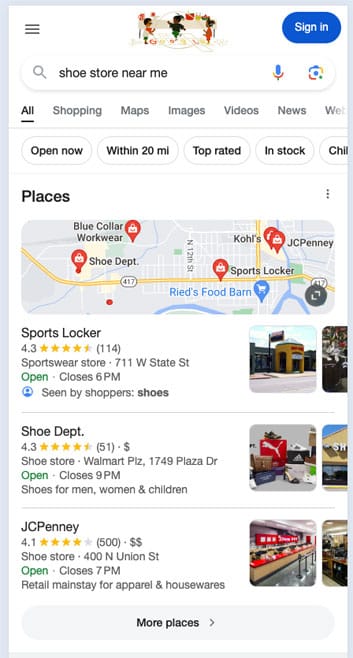 | 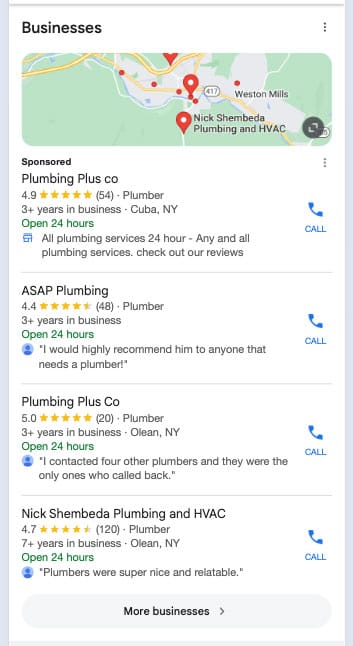 | 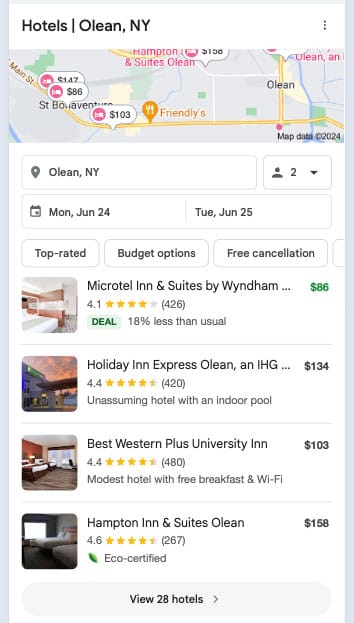 |
| Products | Brands | |
| 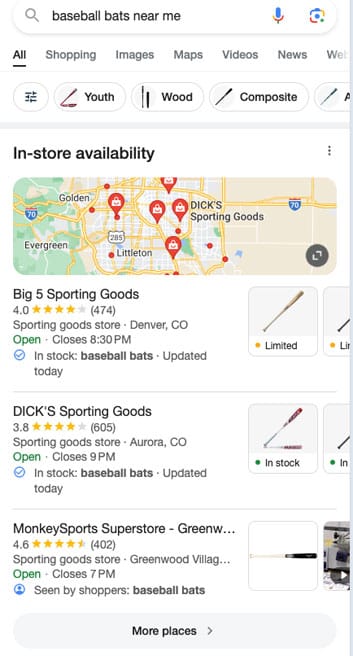 | 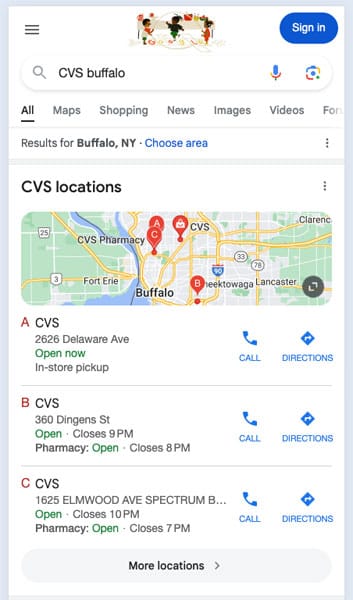 | |
Obviously the Product Packs also leverage Google's product graph *and* local graph, as do many ad types these days and while they certainly are playing an ever bigger role in local search results, product inclusion is a discussion for another day.
### Expansion of Local listings Visibility
Over the past three-to-four years, elements of the Google's local listing graph have migrated to ads as well as organic results further down the page. Local Services Ads (LSAs) and Sponsored Ads using [Location Assets](https://support.google.com/google-ads/answer/2404182?sjid=8947634339922877049-NC&ref=nearmedia.co) are two clear examples of Google using local elements in ads. These ads, because of limited disclosures, positioning, layout and social proofs (ratings), are often not clearly perceived as ads by searchers but as part of organic local results.
| Location Assets | Location Assets (Pack) | Local Service Ads |
| ------------------------------------------------------------------------------------------------------------------------------------------------ | ------------------------------------------------------------------------------------------------------------------------ | -------------------------------------------------------------------------------------------------------------------------- |
| 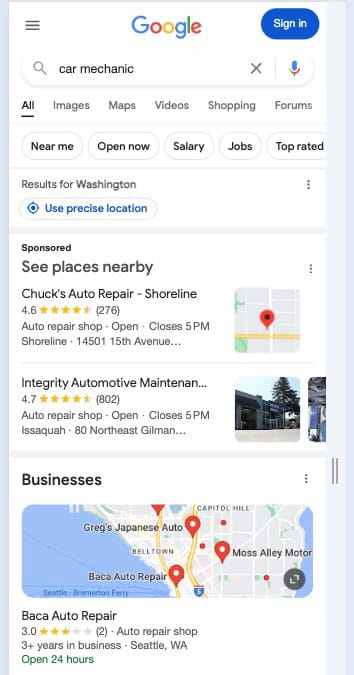 | 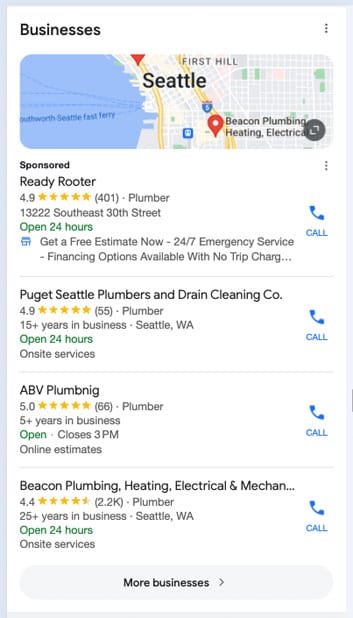 |  |
| | | |
Of more interest, to me at least, is the presence of an increasing number of local graph elements in organic results. Elements like the Search/Find or Order by photos are shown across multiple verticals.
| Find by photos | | Order |
| ------------------------------------------------------------------------------------------------------------------------------------ | | -------------------------------------------------------------------------------------------------------------------------------------- |
|  | |  |
The [resurrected](https://www.mattcutts.com/blog/new-google-ui-feature-plus-box/?ref=nearmedia.co) Plus Box is another local graph element often shown concurrently with other local expansions. It appends local mapping data to organic results for businesses that engage with Merchant Center via product uploads.
The Plus Box [has been around](https://blumenthals.com/blog/2008/03/04/google-and-the-plusbox-blues/?ref=nearmedia.co) Google in one form or another since 2006\. It has been resuscitated as a side benefit for local businesses that auto upload inventory to Merchant Center
### Testing Infinite Expansion of Local Visibility
Google search experiments are common and a way for Google to measure the general value and relative utilization of new universal result layouts. And recently, we have been seeing a lot of tests that either expand the Local Pack or add additional, more visual iterations of local listings. These include the 5-Pack and what I'm calling the Quad Pack.
| Quard Pack (Below TA) | 5 Pack |
| ---------------------------------------------------------------------------------------------------------------------------------------------------------------------------------- | ------------------------------------------------------------------------------------------------------------------------------------------ |
| 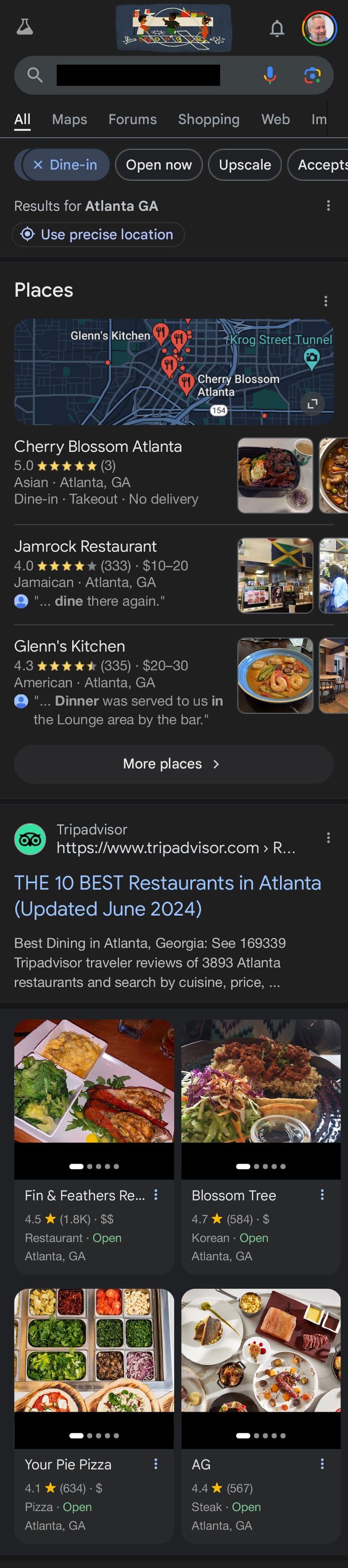 | 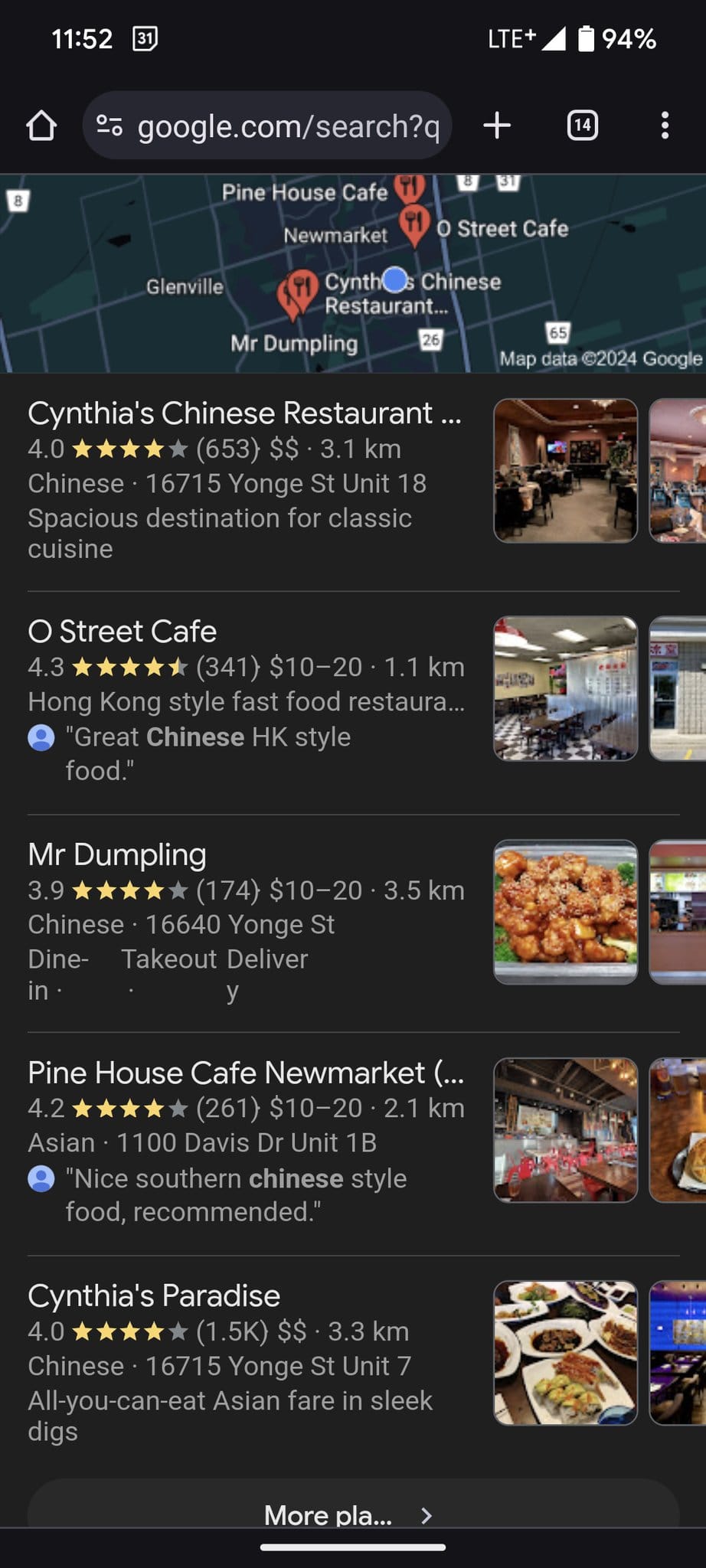 |
An even more surprising test expansion we have seen is the "InfiniPack" – a virtually endless display of local entities for near me searches.
All of these tests reflect the expanding visibility of local entities. What the InfiniPack (video below) demonstrates is an almost endless number of local businesses displayed as individual results, not really tied to the hard limits imposed by a 3 (or even 5) Pack result. It eliminates the need for the user to head over to the Local Finder or even to Maps, and theoretically provides the answer directly in search.
0:00
/1:13
1×
### EU: Where the Expansion Is Happening
You don't need Google experiments to see where local search results are going.
In the EU, Google released Digital Markets Act (DMA) compliance features like Places sites and chose to stop sending local results to Google Maps in an effort to demonstrate their attempts at DMA compliance.
In the same timeframe, they also doubled down with a dramatic expansion of local results. The Twin Pack, a second Local 3-Pack displaying one or two positions below the main Local Pack started showing up. A Google engineer, at the recent DMA hearings in Brussels, told me that the feature was a bug. Yet it has been present for a six months, which belies that response.
Perhaps Google was trying to make a point with their removal of a Maps link but the Twin Pack has much the same effect as having the ability to capture users with Maps. The Twin Pack is part of a long trend to include ever more data from their local graph in the search results and to keep users on Google.
When you scroll through these results you'll notice that organic search results have almost been subsumed by LSAs and sponsored ads, local features and People Also Search For results. Most organic results present, such as Places Sites, offer a scrolling carousel but only occupy a single slot.
| Sneakers near me | | Plumbers near me |
| ---------------------------------------------------------------------------------------------------------------------------------------------------------------- | -------------------------------------------------------------------------------------------------------------------------------------- | ---------------------------------------------------------------------------------------------------------------------------------------------------- |
|  |  |  |
### How Does This Affect Your Marketing?
Web traffic, while nice, is not critical to our success in Local. All these tests and the rollouts in the EU make Google's local entity results more important than ever and suggests that businesses need to double down on entity enhancing activities like photos, reviews and particularly products.
Websites in many verticals will retain their importance, as much as Google wants to minimize their visibility, because consumers still need more information than Google is often able to provide. However, they must quickly answer users' unanswered questions. Hours, phone number, address, and contact options are obvious. But, depending on the vertical, things like what insurance do you take?, are appointments available? (etc.) become important to quickly answer on the site.
Most importantly, all local businesses need to move away from SEO tactics that attempt to directly influence Google search results. Shift effort into local [brand building](https://www.nearmedia.co/ep-161/). Think about relationships with local non-profits, articles (not even links) in the local news and validation by local business groups. This may look like local linkbuilding – getting links or mentions on sites with local authority – but it's more strategic with a larger goal: developing your brand in the real world.
### Why Is This Important?
Google's long term goal has been to control more of search results surfaces to maximize user search volume and ad exposures. This behavior has been obvious to many for a good long time in the form of zero click searchers (see our recent [Rand Fishkin interview](https://www.nearmedia.co/ep-161/)) and "Google as your new home page" thinking.
The conversations around AIO's potential impact on site traffic has focused on publishers and websites that offer answers to informational queries. However AIOs are not the only way for Google to maximize search results "shelf space" in an effort to capture eyeballs for longer.
At the [EU EMA hearings](https://www.nearmedia.co/google-serp-restaurants-eu-dma-analysis/) in Brussels, referenced above, Google was quite clear that they would not be talking about Local Search results or their entity graph in the context of "self-preferencing." By attempting to set up this boundary, they're trying to protect one of their important sources of proprietary data that encourages zero-click behaviors: the local graph.
It should be obvious from the above examples that the trend in Local is much like the trend every place else on Google. It's not so much about AIOs for Google as it is about creating surfaces that reduce the amount of traffic going off-site and maximizing their opportunities in the SERPs.
###
### Ep 162: Expanding Local Results in SERPS, Cluttered SERP Reduce Organic Traffic, AI Overviews Worsen Search
URL: https://www.nearmedia.co/ep-162/
Last updated: 2024-06-21T20:43:41.000Z
**Part 1 starts 00:13 -** [**Google Expanding Local Results in the SERPS to the Exclusion of Organic**](https://youtu.be/8EquiC2tarw?ref=nearmedia.co)
While many SEOs have been focused on AI answers and how they are disrupting search, the story in Local search is different. AI Answers have yet to have any impact in Local but Google, over the past several years has dramatically increased their control & domination of the Local SERPS with Local Entity data and in doing so seem to be in the process of banishing organic results…. this is particularly true in Near Me searches and the EU results, which should be treated as the canary in the coal mine.
Agencies and businesses need to double down on real world activities that get reflected on line to succeed in these increasingly entity driven search results.
Segment Reference Articles
[Local Brand Loyalty Takeaways From That Time Ace Hardware Was Trending](https://moz.com/blog/local-brand-loyalty-takeaways?ref=nearmedia.co)
**Part 2 starts 11:25 -** [**Cluttered Google Results Decrease Traditional Organic Traffic - How to Cope?**](https://youtu.be/%5F3u1Vtq79H0?ref=nearmedia.co)
We have often mentioned the increasingly cluttered nature of Google's search engine results pages (SERPs). There has been a significant rise in various elements such as product listing ads (PLAs), image carousels, and video results, which diminish the visibility of organic search results. In a recent client analysis, David found that cluttered SERPs for that client, filled with multiple search features and reduced organic presence, were identified as a likely cause for their declining organic traffic.
In a world where Google's shift towards a more modular, AI-driven organization of search results leads to a disjointed user experience, prompting multiple searches to find relevant information, businesses need to adopt a multimodal approach, optimizing their digital assets across various SERP features. This includes using high-quality images with descriptive alt text, leveraging Google Merchant Center feeds for PLAs, and considering broader online channels to build brand visibility.
**Part 3 starts 23:20 -** [**Google’s AI Overviews Make Search Worse - A Lot Worse**](https://youtu.be/rEfVBGLtoCU?ref=nearmedia.co)
SE Ranking conducted a study of Google’s AI Overview frequency, finding them present in only 8% of searches, a significant drop from earlier & much higher percentages. This decline is attributed to numerous errors and inaccuracies, causing Google to reduce their usage drastically.
Jess Peck's article, "How and Why Google Made Its Own Product Worse," critiques Google's implementation of AI, highlighted inherent flaws in large language models (LLMs) and their unsuitability for delivering factual search results. Google's rushed deployment of AI overviews, driven by competitive pressure rather than product improvement, has led to a compromised search experience. Google should either refine the use of AI in a controlled manner or reconsider its placement within search results to mitigate the negative impact on its brand and user trust.
Segment Reference Articles:
[AI Overviews Make Search Worse](https://www.nearmedia.co/aios-dumb-search-down-local-lessons-from-ace-social-product-discovery/#ai-overviews-make-search-worse)
[How and Why Google Made its Own Product Worse](https://www.nearmedia.co/r/7f7368df?m=bfc50bd6-31c0-48b7-964c-eaac941c5279)
### Too Much SEO, Google AIO Caution, Products over Research
URL: https://www.nearmedia.co/too-much-seo-google-aio-caution-products-over-research/
Last updated: 2024-06-20T20:34:39.000Z
### Overly 'SEO'd' Sites Appear to Suffer
A new "winners and losers" [study](https://zyppy.com/seo/google-updates-punish-good-seo/?ref=nearmedia.co) from Cyrus Shepard suggests that SEOs may need to rethink what he's calling "over-optimization" – widely used tactics that Google may now be punishing. For the study, Shepard looked at 50 "informational" websites and several SEO "best practices." Those were anchor text variety, page update frequency, title tags and schema usage. Here's what he found: sites that had more anchor text variation lost traffic; pages that were updated more frequently performed worse; clickbaity title tags also saw traffic losses; and sites with heavy schema tended to be losers in Shepard's sample. He also looked at several other variables but found a more-or-less neutral impact. Those included heavy dependance on Google traffic, author information, using tables-of-contents, word count (shorter articles better) and Google Business Profiles (having one didn't help). Shepard was careful to add caveats and qualify that is a correlation study and that his sample size was small.
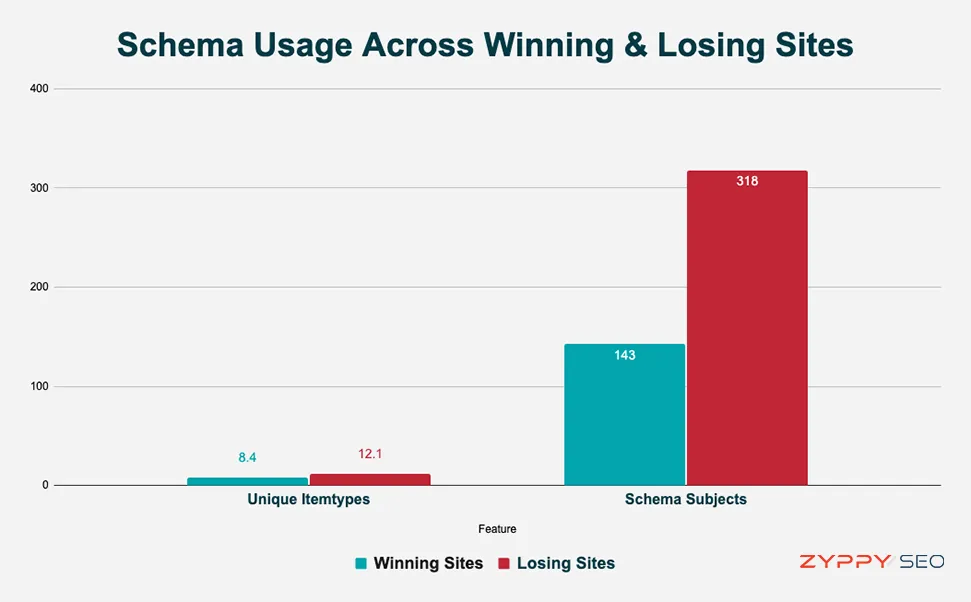
**Our take:**
- Some of these findings seem to fly in the face of SEO conventional wisdom. But the landscape is dynamic as Google tries to beat back various competitive threats and restore SERP credibility.
- There's a lot of ranking speculation (post [Search API Leak](https://www.nearmedia.co/google-rides-the-clickstream-long-tail-citations-ai-overview-fails/)) out there. And it's important to be careful, experiment and "test and learn."
- In March [we interviewed Shepard](https://www.nearmedia.co/ep-150/) for the Near Media podcast about his on-page ranking factors study and experience as a Google Quality Rater.
### Google AIOs Down to 9%
Another [study](https://seranking.com/blog/google-ai-overviews-research/?ref=nearmedia.co) examines the current state of Google AI Overviews (AIOs) and their SERP frequency. This one, from SE Ranking, confirms the diminished visibility of AIOs, currently only seen by signed-in US users. The big finding is that "only 8.71% of keywords (out of 100,013) have AI Overviews." SEO Clarity earlier [found it was 7.6%](https://www.seoclarity.net/research/ai-overviews-impact??ref=nearmedia.co) – a massive decrease vs. the SGE Labs period (64% [to 80%+](https://www.nearmedia.co/search-frustration-aio-disappearing-act-genzs-social-search/)) and post-I/O rollout. According to SE Ranking, AIOs appear more often in certain verticals and are triggered by longer keyword strings (10+ words). Interestingly, AIOs are also correlated with "keywords with lower CPC values, typically below $0.5\. Lower CPC keywords are often associated with informational, niche-specific, non-commercial queries." Relationships, food and beverage and technology are the top three verticals (see chart). Conversely, Real Estate, Cars, Careers and News see the fewest appearances. AIOs generally link to well-known domains with recognized authority. Some of those have changed in the past several months, however. For example, Reddit and Nerdwallet are gone from the top 10\. But generally, the sites that show up in AIOs are "trusted information sources and \[ \] highly visible in organic search results."
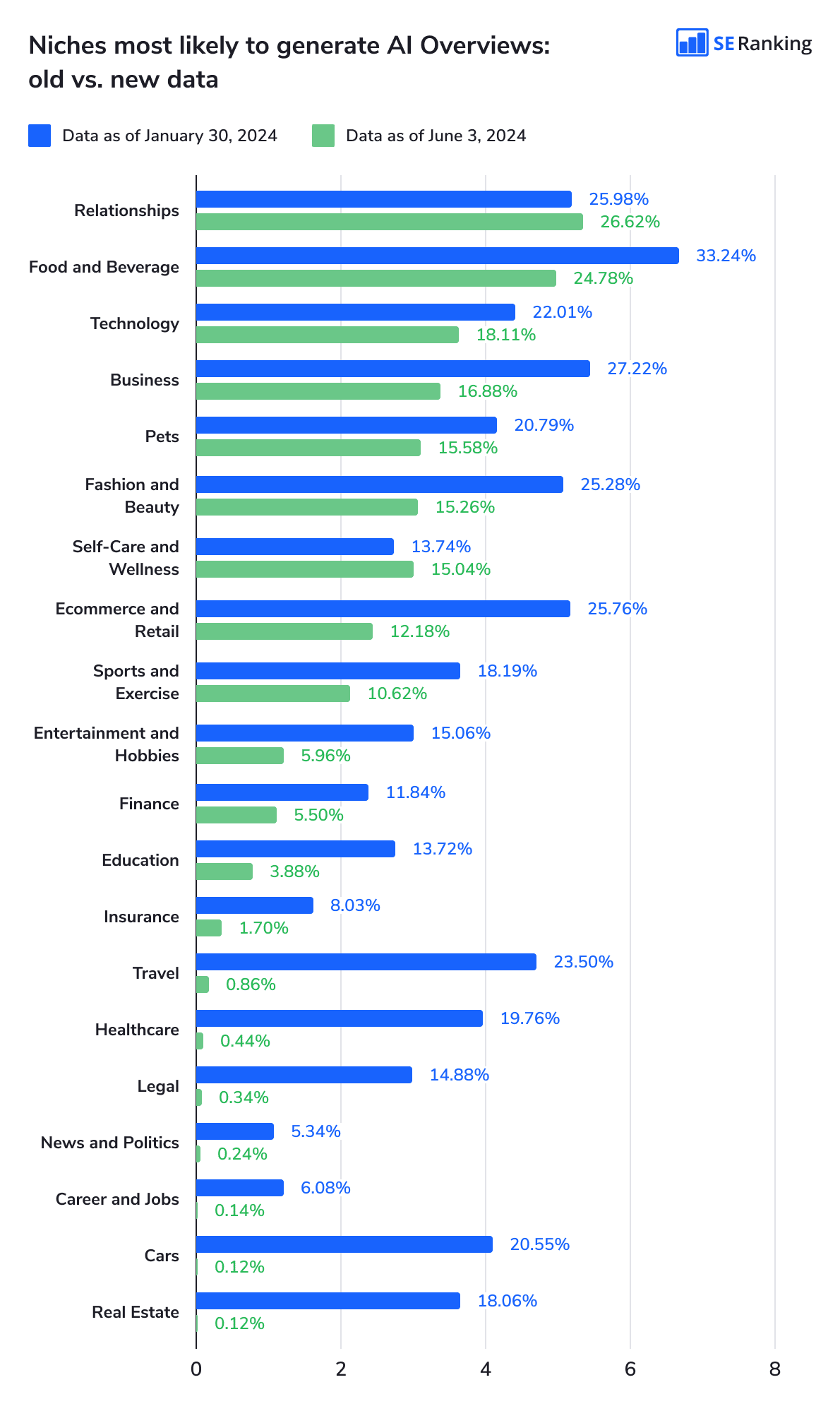
**Our take:**
- There are almost zero AIOs (if not zero) in local. They really didn't add much to the Pack, during the SGE time period.
- It makes sense that AIOs appear more often for informational queries and in certain verticals, but it's hard to discern the vertical logic here.
- Google is now being very cautious, given past AIO [snafus](https://www.nearmedia.co/google-rides-the-clickstream-long-tail-citations-ai-overview-fails/). It's [not clear](https://www.nearmedia.co/aios-dumb-search-down-local-lessons-from-ace-social-product-discovery/), however, that they can avoid future gaffes without a major AIO overhaul.
### Google Culture: Profits over Research
Google acquired London-based AI research firm DeepMind in 2014 for approximately £400 million ($650 million at the time). Almost a decade later, in 2023, Google [merged](https://www.cnbc.com/2023/04/20/alphabet-merges-ai-focused-groups-deepmind-and-google-research.html?ref=nearmedia.co) its homegrown AI efforts (Google Brain) with DeepMind to streamline disparate and often competitive AI operations. Since that time, reportedly, Google has pushed DeepMind to be less of a research unit and more of a product development pipeline. Google would undoubtedly dispute (or spin) this. Bloomberg, [reporting](https://www.bloomberg.com/news/articles/2024-06-17/google-deepmind-shifts-from-research-lab-to-ai-product-factory?ref=nearmedia.co) on the history of Google AI and the DeepMind merger, says the company "has faced internal challenges, including cultural differences and balancing commercial and scientific priorities." An internal critique is that "pure research is being overshadowed by commercialization efforts." While productizing and commercializing AI makes sense in many cases, there's concern that research will suffer and Google is pushing too hard to make money off of AI.

Source: ChatGPT
**Our take:**
- Google is under pressure to generate double-digit quarterly revenue growth [to please investors](https://www.nearmedia.co/aios-dumb-search-down-local-lessons-from-ace-social-product-discovery/), who now seem to be its primary audience.
- As we and many others have argued, Google's AI efforts are at least partly reactive and, allegedly, [driven by panic](https://www.linkedin.com/feed/update/urn:li:activity:7198073799051780096/?ref=nearmedia.co).
- Google's hastily put together [Paris 2023 event](https://www.nearmedia.co/google-in-paris-binggpt-smb-recession-angst/) (a day after the BingGPT unveiling) seems to be some evidence of that.
## Recent Analysis
- **Near Memo ep. 161**: [Rand Fishkin interview: Zero click, regulating Google & marketing in a zero click world](https://www.nearmedia.co/ep-161/).
- **Hindsight: Self-Preferencing Behind Google Maps' Rise**, [by Greg Sterling](https://www.nearmedia.co/hindsight-self-preferencing-behind-google-maps-rise/).
## Short Takes
- **Google Maps exploit** [can screw your rankings](https://x.com/DarrenShaw%5F/status/1803088693252542820??ref=nearmedia.co) and get you suspended.
- Google[rewards](https://www.linkedin.com/posts/darrenshawwhitespark%5Flocalseo-seo-activity-7209212310484107265--LS9/??ref=nearmedia.co) regularly updated **Google Business Profiles**.
- **Google Local Knowledge Panels** get [new menu button](https://www.seroundtable.com/google-local-panels-menu-button-37580.html?ref=nearmedia.co).
- In the EU, it's ads and **Local Pack results**; [organic less visible](https://www.linkedin.com/posts/mblumenthal%5Fin-the-eu-google-is-showing-results-from-activity-7209365640728428544-H7ZU/?ref=nearmedia.co).
- Google: If you don't like **AI Overviews** [use the "web" filter](https://www.seroundtable.com/google-posts-ai-overviews-faqs-37587.html?ref=nearmedia.co).
- Slightly [fewer links](https://www.seroundtable.com/google-search-showing-fewer-reddit-links-37590.html?ref=nearmedia.co) to **Reddit** in search results but [traffic way up](https://www.searchenginejournal.com/reddit-traffic-up-39-is-google-prioritizing-opinions-over-expertise/520219/??ref=nearmedia.co).
- **YouTube** [tests server-side ad injection](https://searchengineland.com/youtube-embeds-ads-videos-ad-blockers-443187?ref=nearmedia.co) to defeat ad blockers.
- How to [adapt your SEO strategy](https://searchengineland.com/social-search-brand-engagement-443241?ref=nearmedia.co) in the an era of **social search**.
- **Reddit** [plans to serve](https://www.mediapost.com/publications/article/396922/cannes-lions-reddit-taps-comments-to-increase-ad.html?ref=nearmedia.co) new "conversation ads" in comment threads.
- Report: **Perplexity** [ignores robots.txt](https://www.wired.com/story/perplexity-is-a-bullshit-machine/?ref=nearmedia.co) and other shady stuff.
- **Mozilla** [buys](https://blog.mozilla.org/en/mozilla/mozilla-anonym-raising-the-bar-for-privacy-preserving-digital-advertising/?ref=nearmedia.co) ad measurement and optimization tool Anonym.
- Responding to OEM backlash, **Apple** [cedes some control](https://www.theverge.com/2024/6/17/24180353/apple-carplay-wireless-system-features?ref=nearmedia.co) over CarPlay.
Listen to our [latest podcast](https://www.nearmedia.co/memo/).
[](https://nearmedia.co/memo?ref=nearmedia.co)
How can we make this better? Email [us](mailto:gsterling@nearmedia.co) with suggestions and recommendations.
### AIOs Dumb Search Down, Local Lessons from Ace, Social Product Discovery
URL: https://www.nearmedia.co/aios-dumb-search-down-local-lessons-from-ace-social-product-discovery/
Last updated: 2024-06-18T22:15:55.000Z
### AI Overviews Make Search Worse
That's the case being made by Jess Peck in her article, "[How and Why Google Made its Own Product Worse](https://jessbpeck.com/posts/googlesaiisbad/?ref=nearmedia.co#is-google-getting-worse%3F)." She says that AI is contributing to a decline in overall search quality and reliability. Her extensive discussion argues that technical limitations of AI models, lack of oversight and "profit over product" are all combining to undermine search quality. (She also critiques OpenAI but the article is mainly about Google.) Here's the essence: "The primary objective is no longer to produce a good product but to make stockholders happy, often by reacting hastily to perceived risks \[i.e., ChatGPT\]. This shortsighted approach undermines long-term quality and innovation." There's too much depth and detail in her critique to reproduce here but it includes some of the following ideas: underlying LLM data issues and "inherent flaws," lack of AI verification mechanisms, prioritization of competition over reliability of search results, and undermining the historical symbiosis between publishers and Google.

Source: [TechCrunch](https://techcrunch.com/2024/06/15/apple-joins-the-race-to-find-an-ai-icon-that-makes-sense/?ref=nearmedia.co)
**Our take:**
- Google's AIOs have been [widely criticized](https://www.nearmedia.co/google-rides-the-clickstream-long-tail-citations-ai-overview-fails/) for inaccuracies. Google [pushed back saying](https://blog.google/products/search/ai-overviews-update-may-2024/?ref=nearmedia.co) the errors were a very small percentage of all AIOs.
- Google has significantly [reduced their visibility](https://www.nearmedia.co/search-frustration-aio-disappearing-act-genzs-social-search/) in search results, partly as a result of negative coverage and online ridicule.
- Google [claims](https://www.nearmedia.co/gemini-dominates-i-o-and-sge-goes-live/) most people like AIOs. However, most SEOs and [many users](https://www.nearmedia.co/ai-overviews-backlash-siri-do-or-die-serp-cognitive-load/) don't. Yet it's compelled to push ahead because: Wall Street.
### Local Branding, SEO Lessons from Ace
Miriam Ellis' latest excellent Moz [column](https://moz.com/blog/local-brand-loyalty-takeaways?ref=nearmedia.co) is about local brand loyalty lessons from Ace Hardware. The column was inspired by a [tweet](https://x.com/indexnforgetit/status/1796863979840528800?ref=nearmedia.co) (14.3M views) that questioned Ace's continued existence, given its higher prices and more limited stock compared to Home Depot and Lowes. There was a massive customer response praising Ace vs. its larger rivals. Those responses contain the secrets to Ace's brand success and customer loyalty – almost a formula. Among them were local-store convenience and proximity, knowledgeable staff offering personalized attention, friendly service, high-quality inventory, local ownership/community involvement, and special/quirky individual store touches, among others. Miriam Ellis summarizes a range of takeaways including the following advice for local business owners: compete on experience rather than price.
> How does Ace Hardware stay in business?
>
> 15% higher than Lowe’s and Home Depot while having nothing you need in stock
>
> — TheWealthCoach (@indexnforgetit) [June 1, 2024](https://twitter.com/indexnforgetit/status/1796863979840528800?ref%5Fsrc=twsrc%5Etfw&ref=nearmedia.co)
**Our take:**
- There are some great CX lessons here about service and value. But what's more interesting is the connection between offline CX and online visibility.
- Ace fans rushed to express their IRL loyalty online. But reviews is another example of how offline CX impacts online visibility – very directly.
- Many SEOs now argue SEO must evolve into a more holistic discipline that encompasses more considerations. Offline CX is one of them.
### Social Beats Search for Product Discovery
When it comes to product discovery, many SEOs think primarily about Google vs. Amazon. However, according to extensive [research](https://www.gwi.com/reports/social-media-trends?ref=nearmedia.co) from GWI (n=200K+ global users), more consumers are now getting product information and recommendations from social media than from search engines. While the two aren't mutually exclusive, "Today, more consumers discover products via social media ads, updates on a brand’s social pages, or recommendations in this space than on search engines," explains GWI. This is especially true for younger users (GenZ). Product discovery on social involves a broader range of behaviors than search, from following brands and product sellers to actively seeking out [specific types of products](https://www.nearmedia.co/sge-failure-to-launch-quality-raters-axed-whats-wrong-at-google/). However, social media is much more fragmented than search. Instagram, YouTube and TikTik are the three platforms with the greatest combination of reach and "cultural power," according to the study. And while Facebook has the greatest reach (#1) it has less cultural influence and impact than the others.
**Social Shopping and Product Discovery vs. Search**
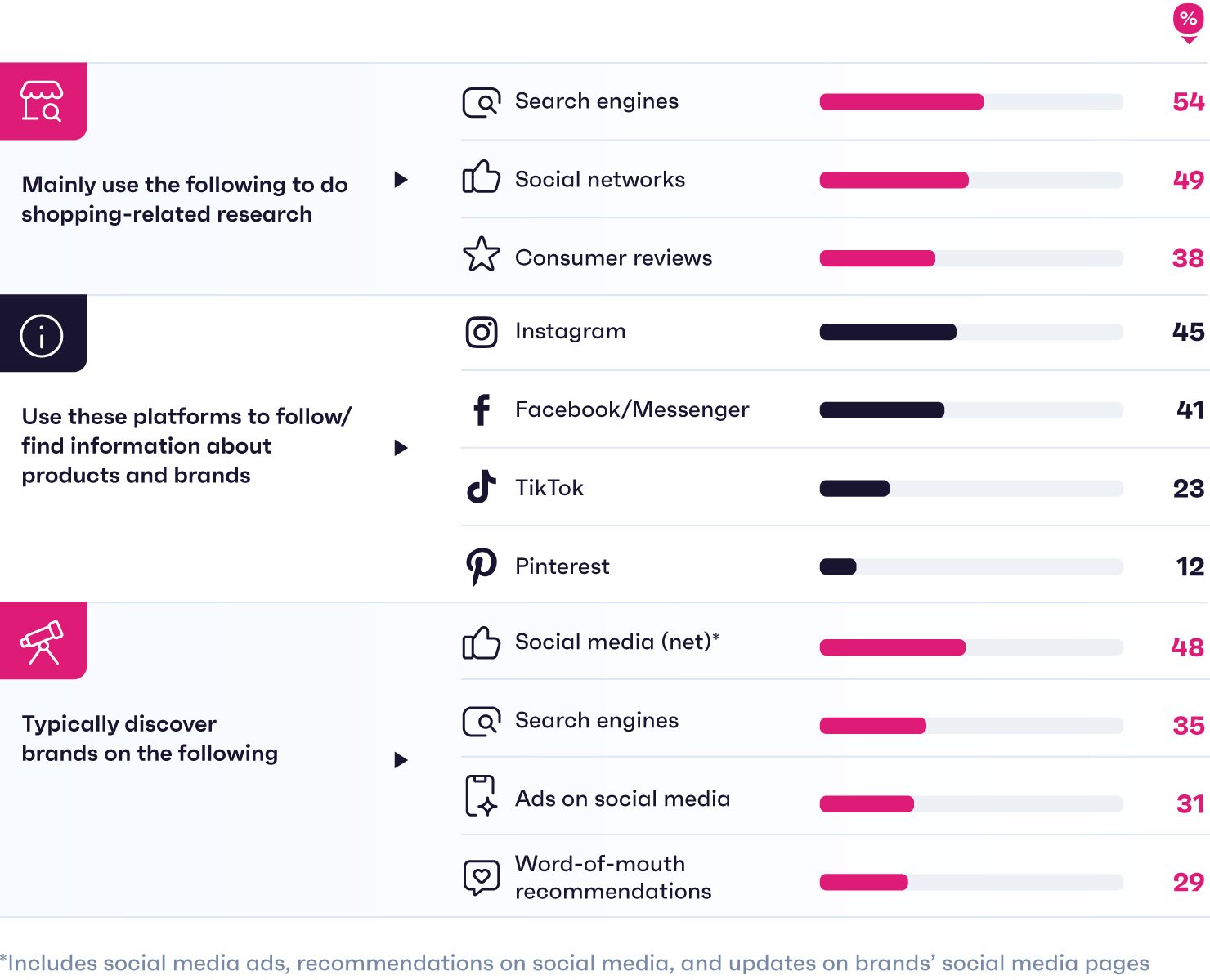
Source: GWI surveys (global sample)
**Our take:**
- Other survey data (2023) [confirms](https://www.nearmedia.co/social-product-search-chatgpt-4-winning-brand-new-world/) that search (including Amazon) has lost ground to social as a starting point for product discovery.
- According to recent [findings](https://www.nearmedia.co/last-click-mindset-apple-google-ai-deal-gen-z-local/) from SOCi, Google was #3 among US 18 - 24 year olds for local business discovery, after Instagram and TikTok.
- More than ever it's important to build a strong social presence, to capture social-first users but also to build brand for awareness and SEO.
## Recent Analysis
- **Near Memo ep. 161**: [Rand Fishkin interview: Zero click, regulating Google & marketing in a zero click world](https://www.nearmedia.co/ep-161/).
- **Hindsight: Self-Preferencing Behind Google Maps' Rise**, [by Greg Sterling](https://www.nearmedia.co/hindsight-self-preferencing-behind-google-maps-rise/).
## Short Takes
- Multi-location: [how to decide](https://lsgseo.com/blog/when-should-you-add-a-local-service-page-to-your-site/?ref=nearmedia.co) whether to add **local service pages**.
- Google [updates](https://www.seroundtable.com/google-maps-updates-fake-engagement-policy-37570.html?ref=nearmedia.co) "fake engagement" **Maps** policy, with more detail.
- Having a **GBP** [won't help publishers](https://www.linkedin.com/posts/cyrusshepard%5Ftheory-does-having-a-google-business-profile-activity-7208620078899105792-BYuG/??ref=nearmedia.co) that aren't "real businesses."
- **No-follow links** on high traffic pages can still [deliver a rankings boost](https://www.reddit.com/r/localsearch/comments/1decd57/do%5Flinks%5Fon%5Freddit%5Fhelp%5Franking%5Fon%5Fgoogle%5Fsince/?ref=nearmedia.co).
- [Content creation](https://www.linkedin.com/posts/darrenshawwhitespark%5Fseo-localseo-activity-7206314793601781760-SvlN/??ref=nearmedia.co) in a **Google clickstream** world.
- How to [track](https://www.seroundtable.com/tracking-ai-overviews-search-console-37578.html?ref=nearmedia.co) **Google AI Overviews** as a referral source – sort of.
- **Perplexity** [adds weather](https://x.com/AravSrinivas/status/1801732777420984691??ref=nearmedia.co) and other factual info to results.
- **Reddit vs. Google**: Reddit better for products in comparison ([WSJ](https://www.wsj.com/tech/personal-tech/can-you-replace-google-search-with-reddit-i-tried-it-for-a-week-ea1f36c5??ref=nearmedia.co)).
- EU competition czar: **Apple** has some "[serious" DMA issues](https://www.cnbc.com/2024/06/18/apple-issues-very-serious-under-landmark-eu-rules-vestager.html?ref=nearmedia.co).
- **Google** [forcing many advertisers](https://www.seroundtable.com/google-ads-remove-credit-card-payments-37574.html?ref=nearmedia.co) off credit cards to ACH payments.
- **Google** introduces [a Gemini app in India](https://blog.google/intl/en-in/company-news/technology/gemini-in-india-now-on-mobile-multilingual-and-more-powerful-for-your-everyday-tasks/?ref=nearmedia.co).
- **YouTube** testing "notes" for [context and fact checking](https://blog.youtube/news-and-events/new-ways-to-offer-viewers-more-context/?ref=nearmedia.co) by community.
- US Surgeon General: **social media like smoking**, needs warning ([NYT](https://www.nytimes.com/2024/06/17/opinion/social-media-health-warning.html??ref=nearmedia.co)).
Listen to our [latest podcast](https://www.nearmedia.co/memo/).
[](https://nearmedia.co/memo?ref=nearmedia.co)
How can we make this better? Email [us](mailto:gsterling@nearmedia.co) with suggestions and recommendations.
### EP 161: Rand Fishkin Interview: Zero Click, Regulating Google & Marketing in a Zero Click World
URL: https://www.nearmedia.co/ep-161/
Last updated: 2024-06-17T14:19:17.000Z
[**Rand Fishkin Interview: Zero Click, Regulating Google & Coping with the New SEO Reality**](https://youtu.be/Uz29sSZpLB8?ref=nearmedia.co)
In this week’s podcast we discussed the evolution of zero-click search and Rand’s upcoming study with Spark Toro's clickstream data provider, Datos, to explore the impact of AI overviews and changes in zero-click searches across different regions.
Rand argued for more stringent antitrust measures, drawing parallels between Google's practices and historical monopolies that unfairly leveraged their market power to move into new markets. His call for breaking up Google's core services—search, YouTube, and maps—into separate entities could spur innovation and competition.
He advised businesses that the best way to succeed at SEO was to adapt by focusing on diverse marketing strategies that go beyond traditional SEO. By creating content that gains traction on social media, earns media attention, and resonates locally, businesses can thrive even in a zero-click dominated landscape.
Related Articles by Rand:
[Search API Leak Report](https://sparktoro.com/blog/an-anonymous-source-shared-thousands-of-leaked-google-search-api-documents-with-me-everyone-in-seo-should-see-them/?ref=nearmedia.co)
[In 2020, Two Thirds of Google Searches Ended Without a Click - SparkToro](https://sparktoro.com/blog/in-2020-two-thirds-of-google-searches-ended-without-a-click/?ref=nearmedia.co)
[Zero click marketing](https://sparktoro.com/blog/5-minute-whiteboard-zero-click-marketing-101/?ref=nearmedia.co)
DMA Related Articles by Near Media
[User Behavior Research - Ireland](https://www.nearmedia.co/google-serp-restaurants-eu-dma-analysis/)
[Google & DMA Compliance](https://www.nearmedia.co/google-dma-compliance-redefinition/)
### Hindsight: Self-Preferencing Behind Google Maps' Rise
URL: https://www.nearmedia.co/dma/hindsight-self-preferencing-behind-google-maps-rise/
Last updated: 2024-11-08T23:14:00.000Z
In January, 2007 Google decided to remove links to Mapquest and Yahoo Maps from the top of search results. This was a momentous decision and I [wrote about it](https://searchengineland.com/google-no-longer-linking-to-yahoo-mapquest-maps-10267?ref=nearmedia.co) at the time for Search Engine Land. It was also the beginning of the end for the Google Maps competitors.
Here's a before and after view of what it looked like at the time:
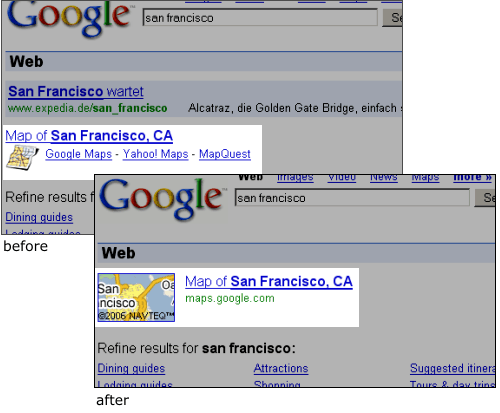
Source: [Google Blogoscoped](https://blogoscoped.com/archive/2007-01-16-n66.html?ref=nearmedia.co)
### Loss of Valuable Links
In the 2007 Search Engine Land article I speculated, "The removal of those links from 'generic' searches could impact their traffic in a meaningful way. MapQuest, which is the category leader, has plenty of direct traffic but Yahoo and Google Maps are running neck and neck. And so Yahoo may be the site that suffers most from this move."
Mapquest also suffered. Though the category leader, it failed to keep pace with the mapping feature war happening at the time. Despite being one of its marquee properties, AOL neglected to invest in the site and saw Mapquest's leadership position erode. [Google officially surpassed its traffic in 2009](https://searchengineland.com/comscore-to-report-google-maps-now-number-1-16570?ref=nearmedia.co). After a decade of decline, Mapquest was ignominiously sold by then owner Verizon Media to System1 in 2019\.
In 2010, a year after Google Maps took over the number one spot from Mapquest, Yahoo threw in the competitive towel and [began outsourcing](https://searchengineland.com/yahoo-nokia-deal-some-details-perspective-42751?ref=nearmedia.co) its maps to Nokia. This was during the unfortunate Carol Bartz era at Yahoo. As CEO she was mainly a cost cutter and outsourced many of the company's important products to third parties, most notably search (to Microsoft), but also Shopping to PriceGrabber and Real Estate to Zillow. (An example of the destructiveness of short term "Wall Street thinking" on products.)
### Blaming Google for Mapquests' Decline
Mapquest insiders later blamed Google's removal of its mapping link for declining traffic. That was largely validated in 2008 by Hitwise’s Heather Hopkins, who [argued](https://searchengineland.com/google-maps-gaining-on-market-leader-mapquest-13103?ref=nearmedia.co) that Google Maps' growth was based almost exclusively on Google referring search traffic to its own Maps product:
> *Google sends more of its own traffic to Google Maps than to Mapquest, a change that occurred last March. This can’t really be attributed to an increase in consumers looking for Google Maps. We can measure this through Internet searches. Searches for “google maps” have increased but the term “mapquest” receives nearly 10x the search volume.*
> *The change is that Google is sending more traffic to Google Maps for high volume generic terms and for variations on the Mapquest brand name. Google sent more traffic to Google Maps for searches for “maps” this year compared with the same week last year. The same is true for “driving directions,” “map,” and “directions,” as well as variations on the Mapquest brand name, including “mapquest driving directions” and “map quest.”*
### Nobody Clicking?
When I asked Google about its rationale for removing links to Yahoo Maps and Mapquest, in 2007, I was told off the record they were being removed because people weren’t clicking on them. Officially Google issued the following statement at the time:
> Google is always working to improve search. The redesign of maps onebox better simplifies the Google user experience when looking for business and address information. Users will now be able to obtain directions and store their default location.
Google's official statement was PR speak but its "off the record" remark was probably misleading at best or an outright lie. Google wanted to grow its mapping product and knew that by eliminating competitive links it would do that. In retrospect this was clear self-preferencing and it had a significant impact on competitors' products.
### 'Because We Can'
A newly surfaced video of Google Search VP Marissa Mayer shows her talking about Google elevating its finance site over competitive sites (e.g., Yahoo Finance) with its primary link position. Google finance launched in 2006; and this video appears to have been recorded before 2007 and the mapping links decision.
Google Finance was placed first in a sequence of competitive finance links, as the company had originally done with maps. The reason Mayer gives is essentially "because we can," implying that the company is entitled to promote its own products ahead of rivals (watch the clip).
> 🚨BREAKING NEWS: Our legal team has unearthed a video of Google's former VP of Search Products, Marissa Mayer, laughing to Google recruits about preferencing Google owned products in Google Search.
>
> This will be exhibit 1 in our self-preferencing antitrust lawsuit against Google [pic.twitter.com/AGD98yyILx](https://t.co/AGD98yyILx?ref=nearmedia.co)
>
> — Chris Pavlovski (@chrispavlovski) [June 13, 2024](https://twitter.com/chrispavlovski/status/1801287521755709772?ref%5Fsrc=twsrc%5Etfw&ref=nearmedia.co)
### But Google Maps Is Better
Yes, Google Maps was a stronger product. And perhaps over a longer period of time it would have won anyway. Indeed, AOL was coasting with Mapquest and Yahoo didn't want to keep paying the literal price of the mapping arms race with Google. So the reality is complex.
But it appears pretty clear that Google was self-consciously trying to divert and capture traffic for "generic terms and for variations on the Mapquest brand name" to grow Google Maps. It was using its dominance in search to boost a secondary product (Maps) that was increasingly strategic. And it succeeded.
To say that Google Maps won simply because it was or is the "best product" would be only half the story. Similarly, the reason Google dominates search and paid-search today is partly because of Google search superiority and partly because of what is now seen as anti-competitive behavior (e.g., paying Apple billions for the default search spot on Safari).
Apple Maps is the only real Google Maps competitor today (sorry Bing Maps). Ultimately, the local search market would be better and healthier for both consumers and businesses if there were more mapping sites and local search competitors. But the story isn't black and white: Google is better vs. Google abuse of market power. The truth is somewhere in-between.
### Apple Intelligence Take 2, Links Really Matter, GenZ's Local Affinity
URL: https://www.nearmedia.co/apple-intelligence-take-two-links-really-matter-genzs-local-affinity/
Last updated: 2024-06-13T19:33:08.000Z
### Apple Intelligence: Hot or Not?
People appear to be split on the significance and potential impact of [Apple Intelligence](https://www.apple.com/apple-intelligence/?ref=nearmedia.co). Some found the WWDC announcements [unimpressive](https://www.wired.com/story/apple-intelligence-ai-feature-not-product/?ref=nearmedia.co) and the much-anticipated integration of ChatGPT to be underwhelming. Others argue exactly the opposite: that Apple is perfectly leveraging its unique position in the market and spot on with its approach to AI, personalizing it in ways that Google isn't and ChatGPT can't currently. Apple has rebranded AI and positioned what it's doing as "AI for the rest of us." Indeed, this may be a watershed moment in terms of the general public's AI awareness and adoption. However, iPhone owners will be compelled to buy [higher priced phones](https://www.theverge.com/2024/6/12/24176494/apple-intelligence-ai-upgrade-cycle-here?ref=nearmedia.co) to get it. Apple is also becoming an aggregator of AI tools and platforms. While it's working exclusively with ChatGPT now, Apple [says it wants to work with others](https://9to5mac.com/2024/06/10/craig-federighi-says-apple-hopes-to-add-google-gemini-and-other-ai-models-to-ios-18/?ref=nearmedia.co) going forward, including Gemini. As [Stratechery](https://stratechery.com/2024/wwdc-apple-intelligence-apple-aggregates-ai/?ref=nearmedia.co) put it, "The company owns users and, by extension, generative AI demand by virtue of owning its platforms, and it is deepening its moat through Apple Intelligence." Users trust Apple and may see Apple Intelligence as a data and privacy safe way to access these tools.

Source: ChatGPT
**Our take:**
- Interestingly, the Apple-OpenAI deal [is about distribution](https://www.bloomberg.com/news/articles/2024-06-12/apple-to-pay-openai-for-chatgpt-through-distribution-not-cash?srnd=undefined&ref=nearmedia.co) and potential revenue sharing. No money is reportedly changing hands.
- ChatGPT's brand is getting a big boost from the partnership, even if it's not getting paid. And the company's revenue has [doubled in six months](https://www.pymnts.com/artificial-intelligence-2/2024/report-openai-doubled-annualized-revenue-in-6-months/?ref=nearmedia.co).
- Contrast Apple's approach to AI branding (Apple Intelligence) vs. Google's [with Gemini](https://www.theverge.com/24176860/google-gemini-explained-ai-assistant?ref=nearmedia.co), where there are multiple sub-brands, flavors and access points.
### Links Still Matter – a Lot
Google has recently [downplayed the importance of links](https://www.seroundtable.com/google-very-few-links-needed-rank-pages-37267.html?ref=nearmedia.co) for ranking. However, a [new study](https://www.internetmarketingninjas.com/backlinks-google-study/?ref=nearmedia.co) from Internet Marketing Ninjas (h/t [SEL](https://searchengineland.com/link-importance-google-top-10-study-443024?ref=nearmedia.co)) appears to directly contradict that position. It looked at 200 commercial keywords and the top 10 ranking sites (total of 1,113 sites) in each of the corresponding search results. Ahrefs, Moz, Majestic Historic, Semrush were used to determine backlinks. The major finding is "96.3% of the sites that ranked in the top 10 have over 1,000 unique domain backlinks." And none of the ranking sites had fewer than 50 backlinks. Nine of the 200 keywords were locally focused (on Las Vegas): "best pizza in Las Vegas, Las Vegas fine dining, Las Vegas hotels, Las Vegas helicopter tours," etc. The finding here was that while fewer links were necessary, generally there were more than 100 links required to rank. Yet "to rank on the first page for any of the 'Las Vegas' phrases, you’ll need an average of at least 21,000 backlinks." What this study, which needs to be replicated by others, affirms is that links remain critical and that you need lots of links to rank – even in local.
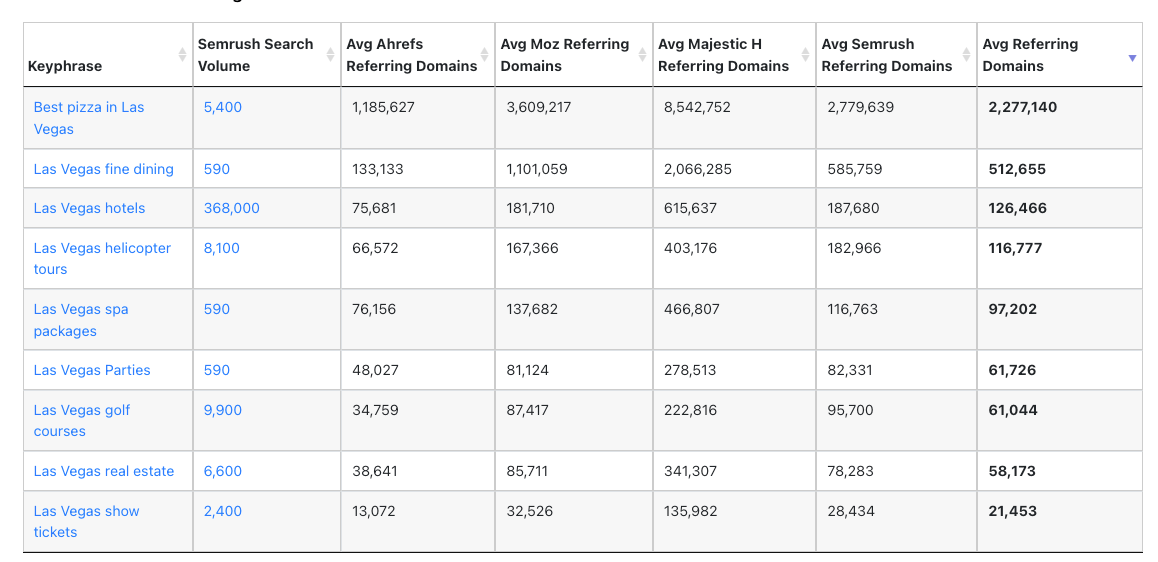
Source: Internet Marketing Ninjas
**Our take:**
- The study also found major sites dominated the top 10 (e.g., Amazon, Walmart). This makes sense given [Google's affinity for brands](https://www.nearmedia.co/brands-clicks-social-acquisition-gemini-toggle/), use of clicks, and the required backlink profiles.
- The Search API leak also implies that links must come from higher traffic/engagement/click pages, [including in local](https://www.nearmedia.co/why-local-citations-dont-work-ai-dilemma-rip-smart-speakers/).
- Google has [recently defended itself](https://searchengineland.com/seo-takeaways-google-elizabeth-tucker-smx-advanced-443070?ref=nearmedia.co) against claims that it's lying to SEOs. But it's not entirely convincing, given the [DOJ evidence](https://www.justice.gov/atr/us-and-plaintiff-states-v-google-llc-2020-trial-exhibits?ref=nearmedia.co) and the [Search API leak](https://www.nearmedia.co/google-rides-the-clickstream-long-tail-citations-ai-overview-fails/).
### GenZ Shop Local
Is location-marketing still relevant? Believe it or not that question was at the center of a webinar I recently participated in. It arises because many pundits assert it's only a matter of time before most transactions shift online. That was certainly the prevailing view during COVID. But e-commerce, while significant, is a sideshow compared to the much larger pattern of consumers using the internet to research where to go or what to buy in the real world (90%+). What's more, GenZ shoppers are more inclined to buy locally than their predecessors. Numerous surveys have affirmed this (e.g., [here](https://business.rakuten.com/blog/insights/gen-zs-love-for-in-store-shopping-why-physical-shopping-and-the-omni-channel-experience-matters/?ref=nearmedia.co), [here](https://www.lek.com/press/nearly-two-thirds-gen-z-prefer-store-shopping-online-new-study-finds?ref=nearmedia.co)). The [latest](https://news.faire.com/2024/05/15/americans-willing-to-spend-an-extra-2k-to-strengthen-their-main-street/?ref=nearmedia.co) comes from Wakefiled Research and focuses on consumers' philosophical commitment to local businesses. Among GenZ's reasons for shopping in stores (see graphic below) are feeling more connected to the local community, unique products, better quality products, supporting the local economy and better service. Of course GenZ are omni-channel/multi-channel shoppers and buy things online. But these continued findings should put to bed the myth that the majority of shopping will be e-commerce driven – internet driven yes, but not e-commerce. In fact, the presence of stores in markets [encourages people to buy online](https://www.nearmedia.co/review-fraud-crisis-stores-drive-online-sales-yelp-reserves-with-google/); when stores close [online sales decline](https://www.nearmedia.co/macys-stores-boost-digital-smb-saturday-pawns-in-antitrust-chess/).
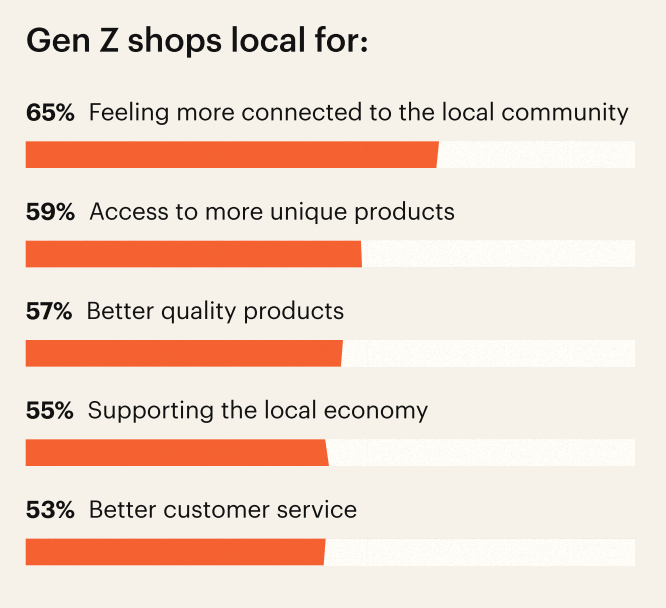
Source: Faire-Wakefield Research
**Our take:**
- From a 2021 [survey](https://www.prweb.com/releases/study-67-of-consumers-trust-local-businesses-more-than-internet-only-brands-826754056.html?ref=nearmedia.co) I conducted: 70% said that more than half their search activity carries a local intent. Larger numbers for Millennials and GenZ.
- That translates into \~49% of overall search activity having a local intent, pretty close to what Barry Schwartz [reported back in 2018](https://www.seroundtable.com/google-46-of-searches-have-local-intent-26529.html?ref=nearmedia.co).
- If we consider transaction-oriented queries, the percentage would likely be higher. Outside of PLAs, Google has dropped the ball on [getting local inventory online](https://www.nearmedia.co/local-product-visibility-yelp-selling-its-data-74-of-shoes-sold-online/).
## Recent Analysis
- **Near Memo episode 160**: [GBP chat is dead, consumers frustrated with search too, local takeaways from the API leak](https://www.nearmedia.co/ep-160/).
- **Local Search Implications of the Google API Leak**, [by David Mihm](https://www.nearmedia.co/googles-api-leak-and-local-search/).
## Short Takes
- Why **GBP** [should be the last listing](https://www.linkedin.com/posts/sam-knight-47b778124%5Flocalseo-localseotips-activity-7206762347909050369-6doU/??ref=nearmedia.co) you create; here's [the opposite view](https://x.com/DarrenShaw%5F/status/1801278465544769853?ref=nearmedia.co).
- Barry Schwartz's SMX [interview](https://searchengineland.com/seo-takeaways-google-elizabeth-tucker-smx-advanced-443070?ref=nearmedia.co) with **Google's Elizabeth Tucker**.
- Search-based **Google leak reporting tool** [makes docs more accessible](https://wordlift.io/google-leak-reporting-tool/?ref=nearmedia.co).
- **Pages disappearing**: 38% of pages online in 2013 [are no longer accessible](https://www.pewresearch.org/data-labs/2024/05/17/when-online-content-disappears/??ref=nearmedia.co).
- Google: We'll [continue to take risks](https://www.cnbc.com/2024/06/13/google-wont-always-find-mistakes-in-ai-search-vp-reid-tells-staff.html?ref=nearmedia.co) with **AI Overviews**.
- **Generative AI'**s role in the [future of digital advertising](https://searchengineland.com/generative-ai-role-advertising-future-442955??ref=nearmedia.co).
- **Social media** is a [major news source](https://www.pewresearch.org/journalism/2024/06/12/how-americans-get-news-on-tiktok-x-facebook-and-instagram/?ref=nearmedia.co), [as local news declines](https://centerforhealthjournalism.org/our-work/insights/local-news-recedes-rising-tide-pink-slime-floods-gap?ref=nearmedia.co).
- All the independent apps that **Apple** "[Sherlocked" at WWDC](https://techcrunch.com/2024/06/12/the-apps-that-apple-sherlocked-at-wwdc/?ref=nearmedia.co).
- New and [improved](https://www.wired.com/story/yahoo-news-app-relaunch-artifact/?ref=nearmedia.co) **Yahoo News** appears, after Artifact acquisition.
- EU complaint: Google **Privacy Sandbox** [tricks users](https://noyb.eu/en/google-sandbox-online-tracking-instead-privacy?ref=nearmedia.co) into being tracked.
- **Slop**,low-quality AI content, increasingly prevalent online ([NYT](https://www.nytimes.com/2024/06/11/style/ai-search-slop.html??ref=nearmedia.co)).
Listen to our [latest podcast](https://www.nearmedia.co/memo/).
[](https://nearmedia.co/memo?ref=nearmedia.co)
How can we make this better? Email [us](mailto:gsterling@nearmedia.co) with suggestions and recommendations.
### Apple Intelligence (AI), Impact on Google, More API Leak Local Tactics
URL: https://www.nearmedia.co/apple-intelligence-ai-impact-on-google-more-api-leak-local-tactics/
Last updated: 2024-06-11T21:06:02.000Z
### Apple Intelligence: Better Siri + ChatGPT
At Apple's WWDC event yesterday, as expected, the company announced numerous AI features and integrations, [including ChatGPT](https://openai.com/index/openai-and-apple-announce-partnership/?ref=nearmedia.co). But it didn't lead with them. The [AI announcements](https://www.theverge.com/2024/6/10/24175405/wwdc-apple-ai-news-features-ios-18-macos-15-iphone-ipad-mac?ref=nearmedia.co) were widely expected and partly a function of Wall Street pressure. ChatGPT emerges as just one aspect of Apple's overall AI strategy and brand, which it's calling "[Apple Intelligence](https://www.apple.com/apple-intelligence/?ref=nearmedia.co)" (get it). The multiple LLM-based generative features include writing help and image creation, among others. Apple Intelligence will be available across the Mac, iPad and the iPhone later this year. Siri will now be more capable and more deeply integrated into the iPhone, including the ability to [control or take action in apps](https://appleinsider.com/articles/24/06/08/siri-is-reborn-in-ios-18----everything-apples-voice-assistant-will-be-able-to-dohttps://appleinsider.com/articles/24/06/08/siri-is-reborn-in-ios-18----everything-apples-voice-assistant-will-be-able-to-do?ref=nearmedia.co). This was ironically part of the original pre-Apple vision for Siri. It remains to be seen how well this works. Interestingly, ChatGPT was presented as a kind of accessory or add-on rather than at the core of Apple Intelligence. Siri will figure out whether the question or "search" should be handled by ChatGPT and then ask for permission to hand it off. You won't need a ChatGPT account and your data won't be stored. Apple has developed an elaborate solution to manage data privacy in the cloud called "[Private Cloud Compute](https://arstechnica.com/ai/2024/06/apples-ai-promise-your-data-is-never-stored-or-made-accessible-by-apple/?ref=nearmedia.co)," to be used only when the device can't handle the request. (The AI/Siri discussion in the Apple keynote begins at 1:04).
**Our take:**
- Siri must get better and undoubtedly will. But will it be incremental or dramatic or somewhere in-between (probably)?
- After declaring ChatGPT the best gen-AI model, Apple left open the door [to working with Gemini and others](https://9to5mac.com/2024/06/10/craig-federighi-says-apple-hopes-to-add-google-gemini-and-other-ai-models-to-ios-18/?ref=nearmedia.co) in the future (iOS 18).
- Given Apple's installed base of users globally, ChatGPT should get a major boost in awareness and usage from this deal.
### Will Apple Intelligence Impact Google?
One of the immediate questions in the wake of Apple Intelligence is: how much will it impact Google on the iPhone? Many people, including us at Near Media, have long speculated about the potential market impact of some sort of improved Apple general search capability. However, Google's $20 billion in annual "default search" payments to Apple have largely prevented that from materializing. The forthcoming new and improved Siri, including the hypothetical ability to execute actions within apps and access to ChatGPT, suggests that iPhone users might be able to do more in the future without turning to Google. All this is speculation until we can test it. But my instinct is that this combination of new capabilities and ChatGPT access will reduce the number of searches that iPhone users need to do on Google – at least for informational queries. Somewhat strangely, there were a few small Apple Maps announcements but no discussion of any integration with Apple Intelligence. Apple Maps data *could be* more deeply integrated with Apple Intelligence/Siri to create a more convenient and viable local search experience on the iPhone as part of the broader new-Siri proposition.

Source: ChatGPT
**Our take:**
- As Siri becomes better, there's a kind of logic to substituting it (or it + ChatGPT + apps) for Google in some cases and contexts.
- Google's competitive advantage now boils down to two or three things: its vast data and knowledge graphs, local (its own graph) and habit/familiarity/inertia.
- If Siri + AI does erode informational queries, Google may see little impact on ad clicks. But there's also a scenario where the very bottom of the funnel (at least re local) is affected: brand and some category queries ("best . . .").
### API Leak Local Tactics
Rand Fishkin is a popular podcast guest these days. Recently we had him on the [Near Media podcast](https://www.nearmedia.co/ep-159-rand-fiskin-interview-on-the-importance-and-learnings-from-the-google-search-leak/) to discuss the implications of the Google Search API leak. We got into some discussion of local tactical implications but not extensively. (David [subsequently wrote](https://www.nearmedia.co/googles-api-leak-and-local-search/) about them.) Luckily, Fishkin and Mike King of iPullRank were recently [interviewed](https://www.youtube.com/watch?v=cymhsnWsZoQ&ref=nearmedia.co) by Joy Hawkins. The following are some of the tactical recommendations that came out of that discussion. Build your brand through multiple channels, on and offline – and through digital PR. Awareness will improve rankings. If you're entering a new service area you need to create *much* more content to gain visibility; don't worry about no-follow links. Do internal linking to reinforce desired keywords with a consistent linking structure. Maximize user engagement with your site design and monitor user interactions with Google Search Console to minimize pogo-sticking. Experiment with different tactics and monitor feedback to see what works. In that spirit, they did a live test during the webinar/podcast, directing coordinated audience clicks to a Seattle restaurant (+ some time on site) to see if they could boost their rankings. It [seems to have worked](https://x.com/JoyanneHawkins/status/1799165501303660588?ref=nearmedia.co).
**Our take:**
- Most local marketers don't think a lot about brand (vs. leads/sales). But brand building is hugely important for consumers and also for Google.
- It's common sense that you need to deliver a great CX – online and offline. But that will also contribute to online visibility long term.
- Local SEO ultimately requires a mix of great content, PR, brand development, multi-channel marketing, GBP optimization and testing. Rinse and repeat.
## Recent Analysis
- **Near Memo episode 160**: [GBP chat is dead, consumers frustrated with search too, local takeaways from the API leak](https://www.nearmedia.co/ep-160/).
- **Local Search Implications of the Google API Leak**, [by David Mihm](https://www.nearmedia.co/googles-api-leak-and-local-search/).
## Short Takes
- **Google** [tests a 5-pack](https://www.seroundtable.com/google-local-five-pack-37542.html?ref=nearmedia.co) (vs. 3-Pack) in local results.
- How to do [video verification](https://www.linkedin.com/posts/krystaltaing%5Fverify-your-business-with-a-video-recording-activity-7201228538471985153-S1x7/??ref=nearmedia.co) on **Google Business Profile**.
- **MozCon** recaps: [Day 1](https://moz.com/blog/mozcon-2024-day-one-recap??ref=nearmedia.co) and [Day 2](https://moz.com/blog/mozcon-2024-day-two-recap??ref=nearmedia.co).
- Google Search Liaison [responds](https://www.seroundtable.com/google-search-leak-navboost-clicks-user-interactions-37547.html?ref=nearmedia.co) to **Search API leak** and click theories.
- Google slowly adding **AIOs** back, [mostly for informational queries](https://x.com/aleyda/status/1800425855493046545?s=12&ref=nearmedia.co).
- **Backlinks** appear to be [as important as ever](https://www.internetmarketingninjas.com/backlinks-google-study/?ref=nearmedia.co), despite Google statements.
- **QR codes** [appear on some](https://www.linkedin.com/posts/joyhawkins%5Fseeing-qr-codes-for-some-business-listings-activity-7204878664595824641-IzoQ/??ref=nearmedia.co) GBP desktop listings.
- Moz: [Optimizing houses of worship](https://moz.com/blog/place-of-worship-gbphttps://moz.com/blog/place-of-worship-gbp?ref=nearmedia.co) in **Google local** results.
- Google [launches an ad network](https://blog.google/products/ads-commerce/meet-the-google-tv-network/?ref=nearmedia.co) for **Google TV**.
- The [importance of](https://www.searchenginejournal.com/google-case-study-shows-importance-of-structured-data/518561/??ref=nearmedia.co) **structured data** for Google visibility.
- **Helpfulness** [is a KPI](https://www.linkedin.com/posts/schwartze%5Fhelpfulness-is-a-search-kpi-for-google-activity-7204123548188049410-pDB9/??ref=nearmedia.co) for Google.
- **Big tech platforms** [have stopped growing](https://sherwood.news/tech/facebook-google-traffic-decline-ai-is-no-solution-hypergrowth/?ref=nearmedia.co) but AI won't solve the problem.
- US states are beginning to try and **regulate AI** in earnest ([NYT](https://www.nytimes.com/2024/06/10/technology/california-ai-regulation.html?ref=nearmedia.co)).
Listen to our [latest podcast](https://www.nearmedia.co/memo/).
[](https://nearmedia.co/memo?ref=nearmedia.co)
How can we make this better? Email [us](mailto:gsterling@nearmedia.co) with suggestions and recommendations.
### Ep 160: GBP Chat is Dead, Consumers Frustrated with Search too, Local Takeaways from the API Leak
URL: https://www.nearmedia.co/ep-160/
Last updated: 2024-06-09T12:53:29.000Z
**Part 1 starts 00:13 -** [**GBP Chat is Dead, Long Live WhatsApp**](https://youtu.be/9r7wdyGmHSc?ref=nearmedia.co)
Google nuked both Google Business Profile Chat AND Google Business Messaging last week in a typical show of disregard for the product and the businesses supporting it. This decision comes amid concerns over increasing spam within the GBP chat service, which initially launched in 2017 with high hopes. Despite a significant initial investment, Google's inconsistent product strategy led to its downfall.
Interestingly, Google is now introducing WhatsApp and SMS messaging integration to GBP profiles, suggesting an attempt to fill the void left by the discontinued services. This move highlights Google's long-standing struggle with a coherent messaging strategy, characterized by the launch and subsequent abandonment of numerous messaging apps over the years.
The discussion underscores the broader issue of Google's bottom up product development techniques and indecisive top-down management style, which often leaves strategic innovative projects without sustained support. Smaller SAAS businesses that invested heavily in integrating with Google's messaging API, like Switchbird and Leadferno, faced significant difficulties in adopting the Business Messaging API and expended considerable resources in doing so. Google's structural inefficiencies hinder its ability to dominate key markets but also damage the greater ecosystem that attempts to integrate with their products.
Segment Reference Articles
[When one door closes, another opens](https://x.com/FrancastroKW/status/1797921298460614693?ref=nearmedia.co)
[Changes to Google Business Profile chat](https://support.google.com/business/answer/14919062?hl=en&ref=nearmedia.co)
[Update on Google Business Messages ](https://developers.google.com/business-communications/business-messages/resources/release-notes/update-on-gbm?ref=nearmedia.co)
[A decade and a half of instability: The history of Google messaging apps](https://arstechnica.com/gadgets/2021/08/a-decade-and-a-half-of-instability-the-history-of-google-messaging-apps/?ref=nearmedia.co)
**Part 2 starts 09:58 -** [**Scorpion Survey Highlights Growing Frustrations with Google Search**](https://youtu.be/coY1HocSPyw?ref=nearmedia.co)
In a recent survey by marketing firm Scorpion, consumers have voiced increasing frustrations with Google search results. The survey revealed that users are spending more time sifting through results than five years ago. Top complaints include the need to refine queries repeatedly, excessive scrolling, and visiting multiple websites to find desired information. This aligns with ongoing industry discussions about the declining quality of Google's search experience.
Tom Capper’s keynote at MozCon highlighted additional challenges for SEOs, including the difficulty of achieving visibility amidst aggressive monetization and AI-driven content. Google’s numerous proprietary modules in search results are making it harder for users to find straightforward information, adding to their dissatisfaction.
Segment Reference Articles:
[Survey: 54% of people look through more search results vs. 5 years ago](https://searchengineland.com/search-engine-experience-results-ads-survey-442943?ref=nearmedia.co)
[SEO In Crisis? Moz Search Scientist Warns Of Challenges Ahead](https://www.searchenginejournal.com/seo-in-crisis-moz-search-scientist-warns-of-challenges-ahead/518374/?ref=nearmedia.co)
**Part 3 starts 22:20 -** [**3 Local Takeaways from the Google API Leak**](https://youtu.be/%5FY%5FmsQ42ddk?ref=nearmedia.co)
A recently leaked GitHub repository revealed extensive insights into Google's algorithm, highlighting 14,000 attributes and numerous modules that influence search results. This leak, analyzed by Rand Fishkin and Mike King, suggests that Google tracks a wide array of data points from websites, Google Maps features, and YouTube videos to entities.
The significance of 'nav boost' and the 'CRaPS' click-through algorithm, which impact page rankings based on user interactions. Additionally, Google tracks location relevance at a page level, encouraging businesses to create localized content silos for better search performance.
The leak underscores the importance of linking high-traffic pages to target pages and creating localized versions of national content to improve site architecture. It also suggests that local mentions in reputable publications can boost a business's online presence.
Listen in for actionable insights for businesses aiming to optimize their local SEO efforts.
Segment Reference Articles:
[Local Search Implications of the Google API Leak](https://www.nearmedia.co/googles-api-leak-and-local-search/)
**Part 4 starts 36:34 -** [**A Tribute to John Heaston. R.I.P. to a great human being**](https://youtu.be/mNyQnPsnzus?ref=nearmedia.co)
John Heaston \- founder, publisher, and visionary leader of The Reader and El Perico, died on May 31, 2024\. He was a prince among humans and an early advocate for inclusive watchdog journalism and ethical digital marketing. John, you will be missed.
Segment Reference Articles:
[Remembering John Heaston: A Champion of Inclusive Journalism and Community Media](https://www.omahamagazine.com/today/remembering-john-heaston-a-champion-of-inclusive-journalism-and-community-media/?ref=nearmedia.co)
### Search Frustration Growing, AIOs Disappearing, GenZ Socializing
URL: https://www.nearmedia.co/search-frustration-aio-disappearing-act-genzs-social-search/
Last updated: 2024-06-06T20:40:33.000Z
### Survey: Search Frustrations Growing
A new survey from Scorpion, conducted by Dynata ([h/t SEL](https://searchengineland.com/search-engine-experience-results-ads-survey-442943?ref=nearmedia.co)), paints a picture of growing user frustration with "search." The survey of 1,000 US adults was conducted earlier this year. According to the findings, 79% of searchers are looking at more results than 5 years ago. In addition, 51% of respondents say that searches are taking longer than in the past; and nearly half (46%) sometimes question the "credibility" of search results. These users also express concerns about search relevance and the "amount of information \[they have\] to filter" in the SERP. We previously discussed how this [cognitive load](https://www.nearmedia.co/ai-overviews-backlash-siri-do-or-die-serp-cognitive-load/) is one reason some younger users are substituting social for search (see below). The good news for Google is that, while 87% distinguish ads from organic results, 53% are more receptive to ads than in the past. However, 37% said they thought search engines were making it tougher to "identify ads." Overall the survey confirms the importance of ranking high in the SERP – notwithstanding growing frustrations and skepticism. The survey also reinforces the role of brands in consumer decision-making: "1 in 3 consumers seek familiar names first in SERPs."
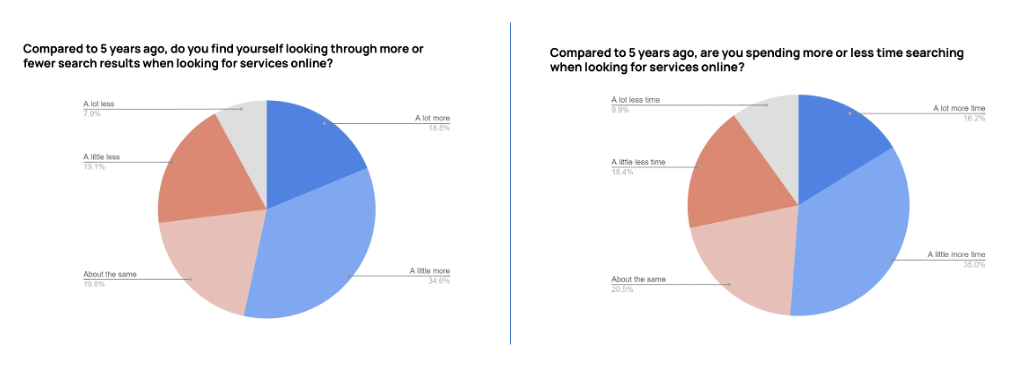
Source: Scorpion
**Our take:**
- Surveys often reflect perceptions and attitudes more than behavior. At a minimum, however, this suggests a decline in search confidence.
- It also reflects user ambivalence. The findings are nuanced but clearly show frustration and areas of vulnerability for Google.
- We haven't seen a survey to date that addresses the anecdotal discussion of search quality decline – until this one.
### AIO Disappearing Act
When SGE was in Labs, several studies found AI Overviews were appearing for [between 80% and 90%](https://www.nearmedia.co/google-sge-pushdown-siri-ai-overhaul-brick-mortar-halo/) of queries. That number went down after Google took SGE out of labs. And following the [embarrassing AI Overview gaffes](https://www.nearmedia.co/google-rides-the-clickstream-long-tail-citations-ai-overview-fails/) of the past couple weeks, Google has further reduced their visibility – though it varies by vertical. According to [BrightEdge](https://www.brightedge.com/news/press-releases/brightedge-releases-post-google-io-data-impact-ai-overviews?ref=nearmedia.co), in the aggregate, fewer than 15% of keywords now generate AI Overviews, which is down from 84% during the labs period. And SEO Clarity has seen [something similar](https://x.com/marktraphagen/status/1798323110888030611?ref=nearmedia.co): "AIO in keywords submitted by our enterprise-level clients went from 17% before the Google announcement about re-engineering AIO to about 2.5% yesterday." In local, as far as we can tell, there are no AI Overviews being shown. This retreat is somewhat analogous to Google's [shutdown of Gemini images](https://www.npr.org/2024/02/28/1234532775/google-gemini-offended-users-images-race?ref=nearmedia.co) following a series of embarrassing and strange episodes and "problematic performance." Separately, SEO Lily Ray [observed](https://www.linkedin.com/feed/update/urn:li:activity:7200911630841348099/??ref=nearmedia.co) that the links in AI Overviews are often "dead sites, low quality sites, spammy AI content, biased/salesy content, content lacking E-E-A-T on YMYL topics, international sites, parked domains, and a random Reddit/Quora post from 12 years ago."

Source: ChatGPT
**Our take:**
- Google [strongly defended itself](https://blog.google/products/search/ai-overviews-update-may-2024/?ref=nearmedia.co) in responding to AI Overview criticism from the industry and the press.
- Google AI Overviews were created in response to competitive pressure rather than a strong product vision. Many people would be happy if they simply went away but they appear "here to stay" – at least in some form.
- Google will probably maintain reduced AIO visibility for the foreseeable future until it can fix the egregious errors and its PR vulnerability is reduced.
### Study: GenZ Uses Google 25% Less
A recent SOCi [survey](https://www.nearmedia.co/last-click-mindset-apple-google-ai-deal-gen-z-local/) found that Google was the #3 choice among 18 - 24 year olds for local business discovery. Instagram and TikTok, in that order, bested Google. This is consistent with Google's internal research, other surveys and anecdotal reports. Now a [new study](https://www.forbes.com/advisor/business/software/social-media-new-google/?ref=nearmedia.co) (n=2,000) from Forbes Advisor and Talker Research affirms the SOCi findings, pointing to increasing use of social media as a Google alternative for GenZ. Google remains dominant across the general population, but usage is ebbing for younger users. Among the Forbes findings, GenZ uses Google 25% less than GenX. There was also a 30% gap in Google use for brand lookups by GenZ vs. Baby Boomers. Here, TikTok was preferred to Instagram for certain categories of business search. Google remains dominant for service business queries and restaurant searches. In terms of the "why," 29% of respondents said they "opt to search on social media primarily for convenience" because they're already the platform in question. In addition, "22% of respondents favor social media for its quick results and the engaging nature of its content, particularly videos, over text-based articles."
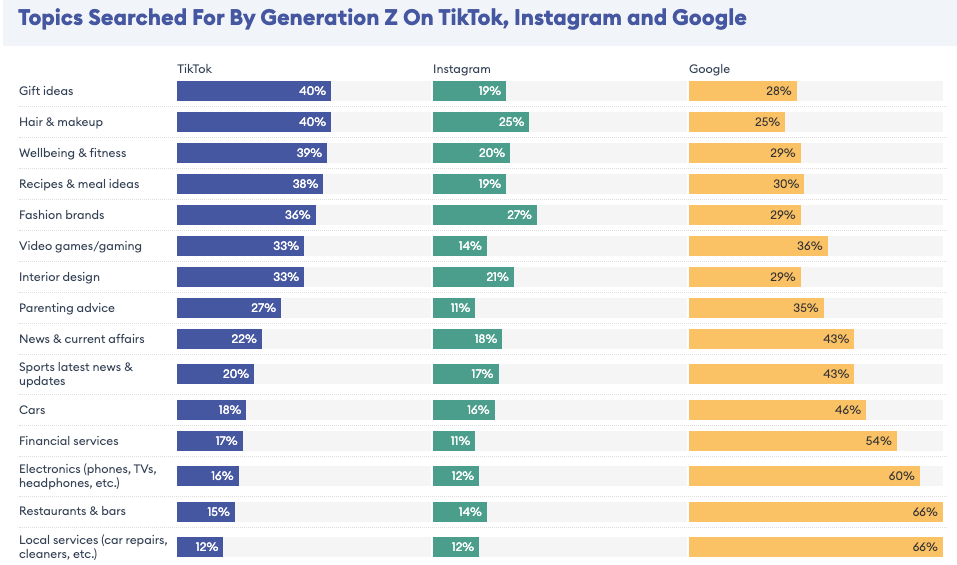
Source: Forbes Advisor
**Our take:**
- This survey adds to the growing body of evidence that younger users are defecting from Google in certain search categories.
- Google's desire to win these users back is partly why we have more social content in search (hidden gems/forums), as well as more video.
- The logic of searching on a platform you're already using equally applies to ChatGPT. If you're using it for work, it's easy to just conduct the search there.
## Recent Analysis
- **Local Search Implications of the Google API Leak**, [by David Mihm](https://www.nearmedia.co/googles-api-leak-and-local-search/).
- **Crazy Google Local Near-Me Test**, [by Mike Blumenthal](https://www.nearmedia.co/crazy-google-near-me-test/).
- **Near Memo episode 160:** [Rand Fishkin interview: The importance of the the Google Search Leak](https://www.nearmedia.co/ep-159-rand-fiskin-interview-on-the-importance-and-learnings-from-the-google-search-leak/)
## Short Takes
- More [local reflections](https://searchengineland.com/local-seo-insights-google-api-documentation-leak-443006?ref=nearmedia.co) on the **Google Search API leak**.
- **Google Maps** to store location history [on device, not in cloud](https://www.theverge.com/2024/6/5/24172204/google-maps-delete-location-history-timeline?ref=nearmedia.co).
- GBP adding **WhatsApp** [to replace Google Google Business Chat](https://x.com/JoyanneHawkins/status/1798374078136668444?ref=nearmedia.co).
- **Moz** search scientist: [SEO is in crisis](https://www.searchenginejournal.com/seo-in-crisis-moz-search-scientist-warns-of-challenges-ahead/518374/?ref=nearmedia.co).
- How **Retrieval Augmented Generation** (RAG) [works](https://arstechnica.com/ai/2024/06/can-a-technology-called-rag-keep-ai-models-from-making-stuff-up/?ref=nearmedia.co) vs. hallucination.
- Enhittification: **Google News** [has been in decline](https://www.techdirt.com/2024/06/04/dear-google-if-youre-going-to-let-google-news-suck-just-let-it-die-instead/?ref=nearmedia.co) for over a year.
- Google [expands](https://blog.google/technology/ai/notebooklm-goes-global-support-for-websites-slides-fact-check/?ref=nearmedia.co) **NotebookLLM** availability and adds new features.
- Inside **Canva's** [wildly successful SEO strategy](https://www.linkedin.com/posts/lennyrachitsky%5Finside-canvas-famous-seo-strategy-activity-7204156080799584256-rioT/??ref=nearmedia.co) (and execution).
- Profits over safety and ethics: **OpenAI** [is the new Facebook](https://www.theatlantic.com/technology/archive/2024/06/openai-right-to-warn/678607/?ref=nearmedia.co).
- **Google** must face [$16B advertiser UK lawsuit](https://www.bbc.com/news/articles/cqlle3k92zqo?ref=nearmedia.co) over "self-preferencing"
- **Nvidia** [passes Apple](https://www.cnbc.com/2024/06/05/nvidia-passes-apple-in-market-cap.html?ref=nearmedia.co) to become 2nd most valuable company.
- **Google** WILL [continue to index](https://www.seroundtable.com/google-will-index-not-mobile-friendly-sites-37516.html?ref=nearmedia.co) non-mobile friendly sites.
- **Perplexity Pages** [are showing up](https://techcrunch.com/2024/05/30/perplexity-ais-new-feature-will-turn-your-searches-into-sharable-pages/?ref=nearmedia.co) in Google AIOs and Featured Snippets.
Listen to our [latest podcast](https://www.nearmedia.co/memo/).
[](https://nearmedia.co/memo?ref=nearmedia.co)
How can we make this better? Email [us](mailto:gsterling@nearmedia.co) with suggestions and recommendations.
### Why Local Citations Don't Work, AI Dilemma, RIP Smart Speakers?
URL: https://www.nearmedia.co/why-local-citations-dont-work-ai-dilemma-rip-smart-speakers/
Last updated: 2024-06-11T20:42:53.000Z
### The 'Why' Behind Citations' Decline
It's now clear from the [Search API documents leak](https://www.nearmedia.co/google-rides-the-clickstream-long-tail-citations-ai-overview-fails/) that Google carefully tracks and grades clicks and links using clickstream data from Chrome. And one of the "aha" moments for me from our recent [interview with Rand Fishkin](https://www.nearmedia.co/ep-159-rand-fiskin-interview-on-the-importance-and-learnings-from-the-google-search-leak/) fills in a causal blank about why long-tail listings distribution [no longer "works" for SEO](https://www.nearmedia.co/why-citations-aint-what-they-used-to-be/). Listings management was arguably the top local ranking factor in 2014\. Since that time it has declined significantly in importance, confirmed by the [Local Search Ranking Factors](https://www.nearmedia.co/local-search-ranking-factors-23/) and a recent SOCi [study](https://www.nearmedia.co/google-rides-the-clickstream-long-tail-citations-ai-overview-fails/). The explanation for the decline of long-tail listings' SEO influence has always been a version of the following: Google built up its local graph and GBP data and doesn't need need to look to third party citation consistency anymore. But the search leak documents suggest that Google uses clickstream data to discount links on low-traffic pages and reward those on high-traffic pages. Much of the long-tail directory syndication goes to sites that have little or no traffic now. While this is logical and may be self-evident in hindsight, it was the missing piece in the citations story.

Source: SOCi - Semrush
**Our take:**
- As you can see in the chart above, most of the old local listings sites get very little traffic today, though they once did.
- Accordingly, links on those sites effectively don't count. Conversely, higher traffic sites (that people still use) are going to be valuable for SEO.
- We've always argued you should focus on sites that consumers actually use. But this new revelation appears to be a causal explanation for citations' decline.
### AI Overviews: The Publisher's Dilemma
After considerable negative attention and major media coverage over the past couple weeks, Google finally made a significant public statement about the [gaffes and errors](https://x.com/Goog%5FEnough?ref=nearmedia.co) in its AI Overviews. It came as a [blog post](https://blog.google/products/search/ai-overviews-update-may-2024/?ref=nearmedia.co) from Liz Reid, the head of Google Search. Reid defended Google and said the errors were infrequent, isolated or fabricated to make the company look bad. Google has so far said that users like AI Overviews and that they're [driving more search engagement and clicks](https://www.nearmedia.co/gemini-dominates-i-o-and-sge-goes-live/). By comparison, publishers mostly don't like them – or, more precisely, fear them and the idea that they represent zero-click on steroids (to use the hackneyed expression). Here's the dilemma (via [NYT](https://www.nytimes.com/2024/06/01/technology/google-ai-search-publishers.html??ref=nearmedia.co)): "Media executives said in interviews that Google had left them in a vexing position. They want their sites listed in Google’s search results, which for some outlets can generate more than half of their traffic. But doing that means Google can use their content in AI Overviews summaries." ChatGPT has been striking licensing deals with selected publishers but Google has not, fearing it will set a precedent in paying for content. This may be a no-win, "damned if you do, damned if you don't" scenario for most publishers.
Source: Meta.ai
**Our take:**
- Americans [are turning less often](https://www.pewresearch.org/short-reads/2023/11/28/audiences-are-declining-for-traditional-news-media-in-the-us-with-some-exceptions/?ref=nearmedia.co) to traditional news sources. This creates an imperative to reach users where they are.
- Today that means [social media](https://www.pewresearch.org/journalism/fact-sheet/social-media-and-news-fact-sheet/?ref=nearmedia.co) and Google, which tends to commoditize news and reduce the value of publisher brands, even as it relies on them.
- Regardless of AI Overviews, publishes must develop alternative channels, build stronger brands, strengthen first-party relationships.
### Smart Speakers and AI: Rebirth or RIP?
We're at something of a crossroads in the smart speaker market. Once projected to be worth $61 billion by 2032, the segment long ago lost its novelty and appeal to many consumers. Google has seemingly been [deemphasizing](https://techcrunch.com/2024/01/10/google-cuts-hundreds-of-jobs-in-its-voice-assistance-hardware-teams-as-fitbit-founders-leave/?ref=nearmedia.co) Google Nest/Home. And the current Google Assistant is being folded into Gemini. Also, Amazon Echo penetration [has plateaued](https://www.theverge.com/2021/12/23/22851451/amazon-alexa-by-the-way-use-case-functionality-plateaued?ref=nearmedia.co). The product was exposed a [massive money loser](https://www.nearmedia.co/retail-boom-alexa-failed-calls-please/) and thousands of employees were laid off. To inject new life, Siri, Alexa and Google Assistant are all getting "AI makeovers." Will this make them more interesting and useful? Smart speakers disappointed because their voice assistants didn't evolve beyond functions like weather and kitchen timer. AI could fulfill the early promise of voice assistants and make them truly conversational ([like ChatGPT 4o](https://www.nearmedia.co/chatgpt-omni-hcu-travel-impact-cpcs-up-but-cvrs-down/)). Amazon reportedly hopes to [charge a new subscription fee](https://www.cnbc.com/2024/05/22/amazon-plans-to-give-alexa-an-ai-overhaul-monthly-subscription-price.html?ref=nearmedia.co) for an upgraded Alexa (probably DOA). And, next week, Siri is getting AI [out of competitive necessity](https://www.nearmedia.co/ai-overviews-backlash-siri-do-or-die-serp-cognitive-load/). It could signal the rebirth or the end of smart speakers.

Source: Meta.ai
**Our take:**
- Voice assistants will evolve and live on; the main question is where and how they'll be accessed.
- Smart speakers appear to be reaching the end of their run, although there are lots of them in homes. AI could reinvigorate growth.
- The business model remains a problem: nobody ever figured out how to make money off smart speakers, other than by selling the devices themselves.
## Recent Analysis
- **Local Search Implications of the Google API Leak**, [by David Mihm](https://www.nearmedia.co/googles-api-leak-and-local-search/).
- **Near Memo episode 159:** [Rand Fishkin interview: The importance of the the Google Search Leak](https://www.nearmedia.co/ep-159-rand-fiskin-interview-on-the-importance-and-learnings-from-the-google-search-leak/)
## Short Takes
- The **GBP verification status tool** [has new options](https://onlineownership.com/verification-help-via-status-tool-for-google-business-profiles/?ref=nearmedia.co) for support.
- A searchable database of the **Google Search API** [leaked attributes](https://searchrankingfactors.com/?ref=nearmedia.co).
- Google API leak [implications](https://digitaloft.co.uk/what-does-google-documentation-leak-mean-for-digital-pr/?ref=nearmedia.co) for **digital PR**.
- Google appears to create links for **AI Overviews** [after the fact](https://x.com/CyrusShepard/status/1796262674097127579??ref=nearmedia.co).
- Novel [way to rank](https://www.linkedin.com/posts/cyrusshepard%5Fmini-seo-case-study-getting-a-site-ranking-activity-7202023500834877442-Ejyo/??ref=nearmedia.co) in **Google AI Overviews** (won't last long).
- Google [mixing](https://www.searchenginejournal.com/google-ads-now-being-mixed-in-with-organic-results/516940/??ref=nearmedia.co) **ads into organic search** results more frequently.
- Don't trust **AI Overviews** for health queries ([NYT](https://www.nytimes.com/2024/05/31/well/live/google-ai-health-information.html??ref=nearmedia.co)).
- After July 5, Google [won't index your site](https://searchengineland.com/google-wont-index-sites-that-do-not-work-on-mobile-devices-after-july-5th-442851??ref=nearmedia.co) if it's not **mobile friendly**.
- Another leak: undisclosed **Google** [privacy incidents](https://www.404media.co/google-leak-reveals-thousands-of-privacy-incidents/?ref=nearmedia.co) over years.
- SEO argument: **Mid-funnel keywords** now [the place to focus](https://www.linkedin.com/posts/schwartze%5Fai-overviews-is-here-to-stay-seo-needs-to-activity-7203093060505776128-yYuZ/??ref=nearmedia.co).
- How **Facebook** is [trying to win back GenZ](https://www.axios.com/2024/06/04/facebook-meta-gen-z-users?ref=nearmedia.co) users.
- Some [things to expect](https://www.meetsoci.com/resources/insights/brands-franchises/long-tail-syndication-still-work-local-search/?ref=nearmedia.co) from **Apple's WWDC** next week.
- **Amazon Project PI:** AI to [scan products for defects](https://www.aboutamazon.com/news/innovation-at-amazon/amazon-ai-sustainability-carbon-footprint-product-defects?ref=nearmedia.co) before shipping.
Listen to our [latest podcast](https://www.nearmedia.co/memo/).
[](https://nearmedia.co/memo?ref=nearmedia.co)
How can we make this better? Email [us](mailto:gsterling@nearmedia.co) with suggestions and recommendations.
### Local Search Implications of the Google API Leak
URL: https://www.nearmedia.co/googles-api-leak-and-local-search/
Last updated: 2024-11-25T20:09:00.000Z
Last week's leak of Google Search API documentation has broad SEO implications relevant to local search, including the importance of SERP clickthrough patterns, site architecture, sitewide signals, page-level scoring, quality raters, mobile-friendliness, and the prevalence of entities.
The leak also reveals specific details about local search, such as the role of categories, local intent, query parsing, and the special treatment given to high-volume categories and brands.
While the documents do not provide a complete picture of Google's algorithms, they offer valuable directional information for SEO practitioners. As [Mike King](https://ipullrank.com/google-algo-leak?ref=nearmedia.co) and others have noted, the leak suggests that a holistic approach to SEO, leveraging larger themes of site architecture, topical relevance, user intent, and entity-based optimization, may be more effective than targeting specific keywords alone.
---
Rand Fishkin of SparkToro first published the news that a huge set of Google Search API documentation had been made public, initially anonymously, and later attributed to [Erfan Azimi](https://www.youtube.com/watch?v=AEb8%5FrbfFVw&ref=nearmedia.co). It’s one of the most consequential events in my 20-year SEO career.
### **Where to start**
You can’t go wrong reading, watching, or listening to
- [Rand Fishkin’s summary](https://sparktoro.com/blog/an-anonymous-source-shared-thousands-of-leaked-google-search-api-documents-with-me-everyone-in-seo-should-see-them/?ref=nearmedia.co)
- [Mike King’s summary](https://ipullrank.com/google-algo-leak?ref=nearmedia.co)
- [Rand’s follow-up](https://sparktoro.com/blog/11-min-video-the-google-api-leak-should-change-how-marketers-and-publishers-do-seo/?ref=nearmedia.co)
- [Our podcast with Rand](https://www.nearmedia.co/ep-159-rand-fiskin-interview-on-the-importance-and-learnings-from-the-google-search-leak/)
if you haven’t already. If you’d prefer to review the documents yourself, start with the [homepage for the complete repository](https://hexdocs.pm/google%5Fapi%5Fcontent%5Fwarehouse/0.4.0/api-reference.html?ref=nearmedia.co).
### **How I'd position this repository**
The scope of the documents is vast, with everything ranging from Google Assistant API calls to Google Maps road segments and transit options.
I wouldn’t call it an algorithm leak exactly, though I understand why some position it that way. Having reviewed the repository in some detail, it strikes me more as (a subset of?) a wiki of algorithmic elements which may or may not be in use. A buffet of ingredients Google might use in its special sauce, but not a recipe per se.
### **Limitations**
We don’t know a particular date on which a given document was published. For example, there were a handful of noticeable Attribute references to Google Plus ([including this one](https://hexdocs.pm/google%5Fapi%5Fcontent%5Fwarehouse/0.4.0/GoogleApi.ContentWarehouse.V1.Model.GeostoreEstablishmentProto.html?ref=nearmedia.co#module-attributes), which also references bizbuilder, the internal name for the mid-2010s version of Google My Business, and even [this one which references its predecessor](https://hexdocs.pm/google%5Fapi%5Fcontent%5Fwarehouse/0.4.0/GoogleApi.ContentWarehouse.V1.Model.GeostoreSourceTrustProto.html?ref=nearmedia.co), the Local Business Center). Whether or not the attributes, or even the entire modules, containing those references hold any algorithmic value is very much an open question.
That said, the authors of these docs tend to go out of their way to mark particular attributes as deprecated (there are a lot of deprecations), and many modules and attributes certainly still *seem* to be applicable based on my general osmosis of thousands of SERPs over the last few months.
The bigger limitation, as I hinted above, is whether this is anything close to a complete list of ingredients or whether there are others contained in sub-APIs which are *referenced* extensively by these documents but not leaked alongside them.
### **High-level themes suggested by the documentation**
I’d caution against taking any interpretation of these docs (including the one below!) as gospel. But I don’t see the harm in using them directionally. They absolutely help in understanding how Google looks at the job of "organizing the world’s information."
And while it’s true that there are no weights associated with given attributes, at some point, the volume of references to a particular theme has to be *some* indication of its importance in the algorithm.
Below are my most important takeaways for local search practitioners.
## **Local-relevant docs**
### **SERP clickthrough patterns (“NavBoost”) seem to play a meaningful role in rankings**
Importantly, as Rand pointed out in his summary and [Pandu Nayak revealed in DOJ testimony](https://www.blindfiveyearold.com/what-pandu-nayak-taught-me-about-seo?ref=nearmedia.co), [clickthrough analysis happens at the Metro level](https://hexdocs.pm/google%5Fapi%5Fcontent%5Fwarehouse/0.4.0/GoogleApi.ContentWarehouse.V1.Model.CountryMetroNBFeature.html?ref=nearmedia.co), and along with entity information Google procures from other sources, this may be one way Google assesses "brandyness," even for local businesses.
Localized clickthrough rate is [also referenced here](https://hexdocs.pm/google%5Fapi%5Fcontent%5Fwarehouse/0.4.0/GoogleApi.ContentWarehouse.V1.Model.CountryGeoLocation.html?ref=nearmedia.co#module-attributes) in a very interesting way:\*
- clickRadius50Percent (*type:* integer(), *default:* nil) - The radius (in miles) around the assigned location that the document gets 50% of its clicks.
*\*A caveat is that this document references a deprecated geoLocation system (“docloc;” “brainloc” appears to be more recent).*
My primary takeaway from both of these localized clickthrough attributes is that *your on-SERP presence needs to be compelling enough for local searchers to click on it, whether that’s a Google Business Profile or a Title Tag and Meta Description snippet.*
It’s one of the reasons we’re so passionate about the [consumer search behavior portion of our Search Gameplan](https://www.nearmedia.co/search-gameplan/) – companies need to understand what captures users’ attention and what drives their clicks at least as much as they assess their competitive presence across traditional SEO metrics.
### **Three major site architecture takeaways**
1. **Link to pages you *want* to rank from your high search traffic pages.** I’ve long advised clients to link to their most important pages from their homepage and primary navigation. I’m now also going to advise finding a way to link to them from *high search traffic pages* as well. What seems to be the [primary page-level module](https://hexdocs.pm/google%5Fapi%5Fcontent%5Fwarehouse/0.4.0/GoogleApi.ContentWarehouse.V1.Model.PerDocData.html?ref=nearmedia.co#module-attributes) refers to onsiteProminence, defined as “the importance of the document within its site. It is computed by propagating simulated traffic from the homepage and high craps click pages.” Based on other references to "craps" in NavBoost documents, I take "high craps click pages" to mean "high search traffic pages." (An ex-Googler confirmed this interpretation on X last week before deleting his tweet.)
2. **Implement localized content silos where they make sense.**
It’s not clear to me whether "the list of locations assigned to a document" in the [CountryGeoLocation module](https://hexdocs.pm/google%5Fapi%5Fcontent%5Fwarehouse/0.4.0/GoogleApi.ContentWarehouse.V1.Model.CountryGeoLocations.html?ref=nearmedia.co#module-attributes) refers to intra-country Metros and States/Provinces ([referenced as such elsewhere](https://hexdocs.pm/google%5Fapi%5Fcontent%5Fwarehouse/0.4.0/GoogleApi.ContentWarehouse.V1.Model.CountryCountryAttachment.html?ref=nearmedia.co#module-attributes)) or the higher-level country. Even if Google does not explicitly tag a localized subpage with a given location, this module indicates it will inherit the location assigned to its parent.
[This module](https://hexdocs.pm/google%5Fapi%5Fcontent%5Fwarehouse/0.4.0/GoogleApi.ContentWarehouse.V1.Model.LocalsearchChainId.html?ref=nearmedia.co) refers to the notion of a "sitechunk" specific to chains.
The most prudent course of action would seem to be to *implement localized content silos ("sitechunks"?) where they make sense.*
3. [**On-site anchors matter**](https://hexdocs.pm/google%5Fapi%5Fcontent%5Fwarehouse/0.4.0/GoogleApi.ContentWarehouse.V1.Model.RepositoryWebrefSimplifiedAnchor.html?ref=nearmedia.co)**.**
Their importance and textual relevance is calculated separately from off-site anchor text, which suggests they may not contribute as *much* to rankings, but why devote so much documentation if they don’t contribute *something*?
### **Sitewide signals evident throughout the documentation**
Plenty of ink has already been spilled over the inclusion of [siteAuthority in these documents](https://hexdocs.pm/google%5Fapi%5Fcontent%5Fwarehouse/0.4.0/GoogleApi.ContentWarehouse.V1.Model.CompressedQualitySignals.html?ref=nearmedia.co#module-attributes), despite Google’s repeated denials of this concept. But siteAuthority is far from the only reference to sitewide (not to mention sitechunk) and domain-level signals, even within documents that are ostensibly [about page-level scoring](https://hexdocs.pm/google%5Fapi%5Fcontent%5Fwarehouse/0.4.0/GoogleApi.ContentWarehouse.V1.Model.PerDocData.html?ref=nearmedia.co#module-attributes). This includes topical classification which seems to take [sitewide relevance](https://hexdocs.pm/google%5Fapi%5Fcontent%5Fwarehouse/0.4.0/GoogleApi.ContentWarehouse.V1.Model.QualityAuthorityTopicEmbeddingsVersionedItem.html?ref=nearmedia.co#module-attributes) to a given topic into account.
The sheer quantity of sitewide signals referenced helps explain why larger, more "trusted" sites continue to dominate so many search results today, even if the page-level content that’s ranking seems subpar.
Reading these documents suggests placing at least as much emphasis on site architecture, general topical relevance suggested by the complete corpus of content on your website, and user intent, as on *specific* keyword targeting.
### **Page-level scoring is there, too, relative to location**
Unsurprisingly, Google seems to evaluate the suitability of a given page for a given query via [quality raters](https://hexdocs.pm/google%5Fapi%5Fcontent%5Fwarehouse/0.4.0/GoogleApi.ContentWarehouse.V1.Model.RepositoryWebrefPerDocRelevanceRating.html?ref=nearmedia.co), page typology ([commercialScore](https://hexdocs.pm/google%5Fapi%5Fcontent%5Fwarehouse/0.4.0/GoogleApi.ContentWarehouse.V1.Model.PerDocData.html?ref=nearmedia.co#module-attributes)), [trigger words in the Title](https://hexdocs.pm/google%5Fapi%5Fcontent%5Fwarehouse/0.4.0/GoogleApi.ContentWarehouse.V1.Model.RepositoryWebrefDocumentMetadata.html?ref=nearmedia.co#module-attributes), and more.
But more interesting for local search practitioners: document (page-level) performance appears to be assessed at the [city, county, state, and country level](https://hexdocs.pm/google%5Fapi%5Fcontent%5Fwarehouse/0.4.0/GoogleApi.ContentWarehouse.V1.Model.QualityGeoBrainlocBrainlocAttachment.html?ref=nearmedia.co).
Page-based metro-level assessments are also referenced in [a parallel module](https://hexdocs.pm/google%5Fapi%5Fcontent%5Fwarehouse/0.4.0/GoogleApi.ContentWarehouse.V1.Model.CountryCountryAttachment.html?ref=nearmedia.co#module-attributes).
### **Quality raters aren’t just evaluating the quality of search results, but links and entities too**
It looks like Google has used quality raters (internal [codename EWOK](https://hexdocs.pm/google%5Fapi%5Fcontent%5Fwarehouse/0.4.0/search.html?q=ewok&ref=nearmedia.co)) to assess [link quality and topical relevance](https://hexdocs.pm/google%5Fapi%5Fcontent%5Fwarehouse/0.4.0/GoogleApi.ContentWarehouse.V1.Model.RepositoryWebrefMentionRatingsSingleMentionRating.html?ref=nearmedia.co#module-attributes), as well as [entity relevance](https://hexdocs.pm/google%5Fapi%5Fcontent%5Fwarehouse/0.4.0/GoogleApi.ContentWarehouse.V1.Model.RepositoryWebrefEntityJoin.html?ref=nearmedia.co#module-attributes) for a given query.
### **Mobilegeddon was (and is?) real**
The documents contain a number of references to project VOLT, which incorporates [Core Web Vitals, HTTPS, and general mobile-friendliness](https://hexdocs.pm/google%5Fapi%5Fcontent%5Fwarehouse/0.4.0/GoogleApi.ContentWarehouse.V1.Model.IndexingMobileVoltVoltPerDocData.html?ref=nearmedia.co#module-attributes). (The presence of interstitials is also noted, presumably as a negative factor, in the de facto [primary page-level module](https://hexdocs.pm/google%5Fapi%5Fcontent%5Fwarehouse/0.4.0/GoogleApi.ContentWarehouse.V1.Model.PerDocData.html?ref=nearmedia.co#module-attributes), and is explicitly called out in [other places](https://hexdocs.pm/google%5Fapi%5Fcontent%5Fwarehouse/0.4.0/GoogleApi.ContentWarehouse.V1.Model.IndexingMobileInterstitialsProtoInterstitialBasicInfo.html?ref=nearmedia.co) as well.)
### **Entities are everywhere**
Long underappreciated by the wider SEO community, the extent of entity-related references in the documentation almost seem to position content as context for entities, rather than the other way around.
Based on [this document](https://hexdocs.pm/google%5Fapi%5Fcontent%5Fwarehouse/0.4.0/GoogleApi.ContentWarehouse.V1.Model.KnowledgeAnswersIntentQueryArgumentSignals.html?ref=nearmedia.co), it wouldn’t surprise me if every query were checked for known entity references (including location) as a starting point.
Here are of the more comprehensive modules discussing [entity resolution](https://hexdocs.pm/google%5Fapi%5Fcontent%5Fwarehouse/0.4.0/GoogleApi.ContentWarehouse.V1.Model.RepositoryWebrefEntityJoin.html?ref=nearmedia.co#module-attributes) and [entity attributes](https://hexdocs.pm/google%5Fapi%5Fcontent%5Fwarehouse/0.4.0/GoogleApi.ContentWarehouse.V1.Model.NlpSemanticParsingQRefAnnotation.html?ref=nearmedia.co). Of particular interest are the notions of [entities being graded on a topicalityScore](https://hexdocs.pm/google%5Fapi%5Fcontent%5Fwarehouse/0.4.0/GoogleApi.ContentWarehouse.V1.Model.RepositoryWebrefEntityAnnotations.html?ref=nearmedia.co), and multiple references to something called MDVC [here](https://hexdocs.pm/google%5Fapi%5Fcontent%5Fwarehouse/0.4.0/GoogleApi.ContentWarehouse.V1.Model.NlpSemanticParsingRelatedEntity.html?ref=nearmedia.co), [here](https://hexdocs.pm/google%5Fapi%5Fcontent%5Fwarehouse/0.4.0/GoogleApi.ContentWarehouse.V1.Model.RepositoryWebrefMdvcMetadata.html?ref=nearmedia.co), and [here](https://hexdocs.pm/google%5Fapi%5Fcontent%5Fwarehouse/0.4.0/GoogleApi.ContentWarehouse.V1.Model.RepositoryWebrefMdvcMetadataPerVertical.html?ref=nearmedia.co).
As noted earlier, Google looks *everywhere* for linkages between entities, perhaps most eye-openingly [within transcripts of YouTube videos](https://hexdocs.pm/google%5Fapi%5Fcontent%5Fwarehouse/0.4.0/GoogleApi.ContentWarehouse.V1.Model.VideoContentSearchCaptionEntityAnchorSetFeatures.html?ref=nearmedia.co), which of *course* are [also measured by attributes](https://hexdocs.pm/google%5Fapi%5Fcontent%5Fwarehouse/0.4.0/GoogleApi.ContentWarehouse.V1.Model.VideoContentSearchVideoInfo.html?ref=nearmedia.co) such as crapsData (again, presumed to be SERP clickthroughs) and uniqueChromeViews.
---
## **Local-Specific Docs**
### **Categories and local intent**
Sadly, we don’t *know* what the salientTermSets are that drive Google’s decision to show results corresponding to particular categories ([GCIDs](https://hexdocs.pm/google%5Fapi%5Fcontent%5Fwarehouse/0.4.0/GoogleApi.ContentWarehouse.V1.Model.NlpSemanticParsingLocalBusinessType.html?ref=nearmedia.co#module-attributes)), but [these two](https://hexdocs.pm/google%5Fapi%5Fcontent%5Fwarehouse/0.4.0/GoogleApi.ContentWarehouse.V1.Model.KnowledgeAnswersIntentQueryLocalResultSignals.html?ref=nearmedia.co) [documents](https://hexdocs.pm/google%5Fapi%5Fcontent%5Fwarehouse/0.4.0/GoogleApi.ContentWarehouse.V1.Model.KnowledgeAnswersIntentQueryLocalSignals.html?ref=nearmedia.co) provide at least a little insight into the back-end of local intent satisfaction:
- gcidIntent (*type:* list(String.t), *default:* nil) - Geo intents corresponding to the gcids obtained from the Local result.
- salientTermSet (*type:* GoogleApi.ContentWarehouse.V1.Model.QualitySalientTermsSalientTermSet.t, *default:* nil) - Salient terms associated with this Local result based on the result gcids.
- localResultSignals (*type:* list(GoogleApi.ContentWarehouse.V1.Model.KnowledgeAnswersIntentQueryLocalResultSignals.t), *default:* nil) - Signals relating to each Local result.
- minSalientTermSimilarity (*type:* number(), *default:* nil) - Minimum salient term similarity between Local results.
### Local category lists
Google maintains a [subset of local categories here](https://hexdocs.pm/google%5Fapi%5Fcontent%5Fwarehouse/0.4.0/GoogleApi.ContentWarehouse.V1.Model.NlpSemanticParsingLocalBusinessType.html?ref=nearmedia.co) and an even more [bizarrely-specific category list here](https://hexdocs.pm/google%5Fapi%5Fcontent%5Fwarehouse/0.4.0/GoogleApi.ContentWarehouse.V1.Model.NlpSemanticParsingLocalImplicitLocalCategory.html?ref=nearmedia.co). Lodging-specific categories [can be found here](https://hexdocs.pm/google%5Fapi%5Fcontent%5Fwarehouse/0.4.0/GoogleApi.ContentWarehouse.V1.Model.NlpSemanticParsingLocalHotelType.html?ref=nearmedia.co). None aligns exactly with Google Business Profiles’ list, or [even the Google Places API](https://developers.google.com/maps/documentation/places/web-service/place-types?ref=nearmedia.co#table-a).
### **Local query parsing**
While not directly actionable, Google’s discussion of how they parse of [location-related queries in this module](https://hexdocs.pm/google%5Fapi%5Fcontent%5Fwarehouse/0.4.0/GoogleApi.ContentWarehouse.V1.Model.NlpSemanticParsingLocalLocation.html?ref=nearmedia.co) is interesting. They first look for an entity type (or category) and then figure out which constraints apply in a structured manner.
As I’ve indicated in previous [Near Memo podcasts](https://www.nearmedia.co/ep-137-can-gemini-fix-search-the-impact-of-googles-rating-bias-lsa-reviewjacking/) and [LinkedIn posts](https://www.linkedin.com/posts/davidmihm%5Fwith-our-custom-gemini-models-multi-step-activity-7196263334537539584-ILf2?utm%5Fsource=share&utm%5Fmedium=member%5Fdesktop), faceted or sequential search seems to me to be the most logical final state for actually-useful AI overviews – *not* the dissertation-length single query that Google VP Liz Reid demo’ed at I/O last month. Google’s existing logic for interpreting local search queries seems to position it for success with either style of query, however.
This recent (post-pandemic) document appears to contain [all the structured “constraints”](https://hexdocs.pm/google%5Fapi%5Fcontent%5Fwarehouse/0.4.0/GoogleApi.ContentWarehouse.V1.Model.NlpSemanticParsingLocalLocationConstraint.html?ref=nearmedia.co) for location-related searches. Included here is visitHistory, which I’ve long hypothesized is a possible “hidden” ranking factor for categories with lots of foot traffic.
Star ratings oddly are thought to be [primarily relevant for hotels](https://hexdocs.pm/google%5Fapi%5Fcontent%5Fwarehouse/0.4.0/GoogleApi.ContentWarehouse.V1.Model.NlpSemanticParsingLocalStarRatings.html?ref=nearmedia.co).
### **Special treatment for high volume categories**
Google appears to maintain a discrete library of keywords which [pre-filters local results based on Google Business Profile attributes](https://hexdocs.pm/google%5Fapi%5Fcontent%5Fwarehouse/0.4.0/GoogleApi.ContentWarehouse.V1.Model.NlpSemanticParsingLocalScalableAttribute.html?ref=nearmedia.co).
Certain categories ([coffee, brunch](https://hexdocs.pm/google%5Fapi%5Fcontent%5Fwarehouse/0.4.0/GoogleApi.ContentWarehouse.V1.Model.NlpSemanticParsingLocalLocationConstraint.html?ref=nearmedia.co#module-attributes), [hotels, restaurants](https://hexdocs.pm/google%5Fapi%5Fcontent%5Fwarehouse/0.4.0/GoogleApi.ContentWarehouse.V1.Model.QualityDialogManagerLocalResult.html?ref=nearmedia.co#module-attributes) – "[hyperReliableData](https://hexdocs.pm/google%5Fapi%5Fcontent%5Fwarehouse/0.4.0/GoogleApi.ContentWarehouse.V1.Model.NlpSemanticParsingLocalHyperReliableData.html?ref=nearmedia.co#module-attributes)") seem to be treated differently from all the rest. After reviewing the repeated references to hyperReliableData, it started to feel like there might be some kind of manual mapping of certain keywords in high-volume categories to specific GBP category IDs.
Additionally, Google at least started down the path of [category-dependent Proximity impact](https://hexdocs.pm/google%5Fapi%5Fcontent%5Fwarehouse/0.4.0/GoogleApi.ContentWarehouse.V1.Model.NlpSemanticParsingLocalHyperReliableData.html?ref=nearmedia.co) (commodityStrength), but the unresolved comment about future changes to this attribute implies this particular implementation may have been abandoned.
### **Special treatment for brands**
Nowhere is Google’s “brand” assessment more obvious than in local search. At least historically – and possibly still today – Google treats large chains qualitatively differently in local search evaluation and results.
- Chains are [a discrete LocationType](https://hexdocs.pm/google%5Fapi%5Fcontent%5Fwarehouse/0.4.0/GoogleApi.ContentWarehouse.V1.Model.QualityActionsReminderLocationChainInfo.html?ref=nearmedia.co) with their own freebase IDs.
- Chains and Subchains [receive their own module](https://hexdocs.pm/google%5Fapi%5Fcontent%5Fwarehouse/0.4.0/GoogleApi.ContentWarehouse.V1.Model.LocalsearchChainId.html?ref=nearmedia.co).
- [Google associates canonical GConcepts with chains](https://hexdocs.pm/google%5Fapi%5Fcontent%5Fwarehouse/0.4.0/GoogleApi.ContentWarehouse.V1.Model.GeostoreBusinessChainProto.html?ref=nearmedia.co).
- Those GConcepts are [assigned to individual chain locations](https://hexdocs.pm/google%5Fapi%5Fcontent%5Fwarehouse/0.4.0/GoogleApi.ContentWarehouse.V1.Model.GeostoreCanonicalGConceptProto.html?ref=nearmedia.co).
- Google tries to parse queries to [see if they refer to chains](https://hexdocs.pm/google%5Fapi%5Fcontent%5Fwarehouse/0.4.0/GoogleApi.ContentWarehouse.V1.Model.KnowledgeAnswersIntentQueryArgumentSignals.html?ref=nearmedia.co).
- Google tries to assess [whether a page refers to a large chain](https://hexdocs.pm/google%5Fapi%5Fcontent%5Fwarehouse/0.4.0/GoogleApi.ContentWarehouse.V1.Model.LocalWWWInfo.html?ref=nearmedia.co#module-attributes) or is itself a large chain.
- Quality raters are even explicitly asked to [assess chain-related content](https://hexdocs.pm/google%5Fapi%5Fcontent%5Fwarehouse/0.4.0/GoogleApi.ContentWarehouse.V1.Model.RepositoryWebrefPerDocRelevanceRating.html?ref=nearmedia.co).
This isn’t to say that chains are necessarily treated more *favorably* in Local results, simply that Google seeks to understand them in a specific way, and possibly at a deeper level, than the typical local business.
### **Local organic results**
This “[LocalWWWInfo” document’s](https://hexdocs.pm/google%5Fapi%5Fcontent%5Fwarehouse/0.4.0/GoogleApi.ContentWarehouse.V1.Model.LocalWWWInfo.html?ref=nearmedia.co#module-attributes) reference to a brickAndMortarStrength attribute is particularly interesting. Is it possible that the strength of a Google Business Profile can influence organic rankings (as well as vice versa)?
The isLargeLocalwwwinfo attribute is also noteworthy; presumably Google is classifying directory-like sites with this tag. And they're classifying enterprise websites with the isLargeChain attribute noted above.
Coupled with references to [specific Travel Site types](https://hexdocs.pm/google%5Fapi%5Fcontent%5Fwarehouse/0.4.0/GoogleApi.ContentWarehouse.V1.Model.QualityTravelGoodSitesData.html?ref=nearmedia.co) and [smallPersonalSite](https://hexdocs.pm/google%5Fapi%5Fcontent%5Fwarehouse/0.4.0/GoogleApi.ContentWarehouse.V1.Model.QualityNsrNsrData.html?ref=nearmedia.co#module-attributes), this implies there are a specific number of slots allotted to specific types of sites in certain localized SERPs. I didn't find anything in the documentation describing how these slots are allocated ([from other research](https://ipullrank.com/google-algo-leak?ref=nearmedia.co), via "Twiddlers"), but the underlying taxonomy associated with a given website is clearly important for some local queries.
### **Local data**
[This](https://hexdocs.pm/google%5Fapi%5Fcontent%5Fwarehouse/0.4.0/GoogleApi.ContentWarehouse.V1.Model.LocalWWWInfoCluster.html?ref=nearmedia.co) *feels* like an older document due to the references to the “cluster” and “plusbox,” but there is clear evidence for the concept of citations (LocalEntityAnnotations::location\_confidence). Another seemingly older document talks about Google’s ability to [extract address, phone, and hours information from web documents](https://hexdocs.pm/google%5Fapi%5Fcontent%5Fwarehouse/0.4.0/GoogleApi.ContentWarehouse.V1.Model.LocalWWWInfoAddress.html?ref=nearmedia.co). They appear to have called (or continue to call) the concept of a citation a “[wrapptorItem](https://hexdocs.pm/google%5Fapi%5Fcontent%5Fwarehouse/0.4.0/GoogleApi.ContentWarehouse.V1.Model.LocalWWWInfoWrapptorItem.html?ref=nearmedia.co).” As Mike Blumenthal and I have long maintained, in many ways Local served as the guinea pig for the entire Knowledge Graph.
[A seemingly more recent document](https://hexdocs.pm/google%5Fapi%5Fcontent%5Fwarehouse/0.4.0/GoogleApi.ContentWarehouse.V1.Model.QualityDialogManagerLocalResult.html?ref=nearmedia.co#module-attributes) (which mentions food ordering via Google) mentions whether a result is located inUserLocality, long suspected to be a local ranking factor.
### **Miscellany**
- [An older doc](https://hexdocs.pm/google%5Fapi%5Fcontent%5Fwarehouse/0.4.0/GoogleApi.ContentWarehouse.V1.Model.GeostoreEstablishmentProto.html?ref=nearmedia.co), both due to its BizBuilder reference (internal name of the proto-Google My Business) as well as to the GConcepts doc.
- This GConcept document may imply that [primary category is given greater weight](https://hexdocs.pm/google%5Fapi%5Fcontent%5Fwarehouse/0.4.0/GoogleApi.ContentWarehouse.V1.Model.GeostoreGConceptInstanceProto.html?ref=nearmedia.co) when assessing relevance for a given query (assuming that Google Business Profiles are considered a “data source.”)
- [These two Geo-related](https://hexdocs.pm/google%5Fapi%5Fcontent%5Fwarehouse/0.4.0/GoogleApi.ContentWarehouse.V1.Model.GeostoreRankSignalProto.html?ref=nearmedia.co) [ranking documents](https://hexdocs.pm/google%5Fapi%5Fcontent%5Fwarehouse/0.4.0/GoogleApi.ContentWarehouse.V1.Model.GeostoreRankDetailsProto.html?ref=nearmedia.co) appear to refer to Maps features, not businesses (Zenrin is a Japanese mapping data provider; Oyster appears to be or have been Google’s entity resolution system – h/t [Andrew Shotland](https://localseoguide.com/?ref=nearmedia.co)).
- [Google’s appears to define a centroid](https://hexdocs.pm/google%5Fapi%5Fcontent%5Fwarehouse/0.4.0/GoogleApi.ContentWarehouse.V1.Model.GeostoreFeatureProto.html?ref=nearmedia.co) (referred to as “center”) as the “conceptual center” which I quite like.
- RIP [custom calls to action](https://hexdocs.pm/google%5Fapi%5Fcontent%5Fwarehouse/0.4.0/GoogleApi.ContentWarehouse.V1.Model.GeostoreCallToActionProto.html?ref=nearmedia.co) (and everything else Messaging-related) in Google Business Profiles.
- I don’t know what to make of this [Jobs-related local document](https://hexdocs.pm/google%5Fapi%5Fcontent%5Fwarehouse/0.4.0/GoogleApi.ContentWarehouse.V1.Model.GeostoreJobRelatedCategory.html?ref=nearmedia.co).
### Crazy Google Local Near-Me Test
URL: https://www.nearmedia.co/crazy-google-near-me-test/
Last updated: 2024-11-19T21:09:51.000Z
We are seeing a test on mobile "near me" searches where nearly 100% of the organic results are sourced from Google's local graph. The results are visible on mobile Safari with a cell only connection. When using Wifi, the test was not visible and similar searches using geographic modifiers or no geo-modifiers did not reproduce the test result.
Turmoil is the name of the Google game these days and it appears that all bets are on the table in terms of showing results that users respond to.
### Other near me test results/Geo-modified results:
[Car dealer near me](https://www.nearmedia.co/content/files/2024/06/car-dealer-near-me---Google-Search-2.pdf) / [car dealer buffalo, ny](https://www.nearmedia.co/content/files/2024/06/car-dealers-buffalo--ny---Google-Search-2.pdf)
[engagement rings near me](https://www.nearmedia.co/content/files/2024/06/engagement-ring-near-me---Google-Search-2.pdf) / [engagement ring near buffalo, ny](https://www.nearmedia.co/content/files/2024/06/engagement-ring-near-buffalo-ny---Google-Search-2.pdf)
[obgyn near me](https://www.nearmedia.co/content/files/2024/06/obgyn-near-me---Google-Search.pdf) / [obgyn buffalo ny](https://www.nearmedia.co/content/files/2024/06/obgyn-buffalo-ny---Google-Search-2.pdf)
[lawyers near me](https://www.nearmedia.co/content/files/2024/06/lawyer-near-me---Google-Search-2.pdf) / [lawyers Erie county ](https://www.nearmedia.co/content/files/2024/06/lawyer-erie-county-ny---Google-Search-2.pdf)

### Ep 159: Rand Fishkin interview: The importance of the the Google Search Leak
URL: https://www.nearmedia.co/ep-159-rand-fiskin-interview-on-the-importance-and-learnings-from-the-google-search-leak/
Last updated: 2024-06-02T15:33:44.000Z
This week we interviewed [Rand Fishkin of SparkToro](https://sparktoro.com/team/rand?ref=nearmedia.co) on the details and importance of the Google Search API leak. In discussing the “biggest leak of the last 25 years” we look at
- How it provides SEO practitioners with menu of possible experiments to explore
- The role of Chrome as a source for click through data and what it means for link builders
- How this click through data seems to be one of the most important ranking factors
- Why links on low performing pages have absolutely no value and thus why many citations no longer do either
- Whether Ad clicks might in fact influence rank
- How should we think about “web references” aka mentions vs Links
Segment Reference Articles:
[Aleyda’s spreadsheet of all of the best related articles and tools](https://docs.google.com/spreadsheets/d/1RV4aKGSx5cpnIFmv8w85SdMHcZNvZOUaj5g4KHpM8Wo/htmlview?ref=nearmedia.co#gid=160587763)
[An Anonymous Source Shared Thousands of Leaked Google Search API Documents with Me; Everyone in SEO Should See Them](https://sparktoro.com/blog/an-anonymous-source-shared-thousands-of-leaked-google-search-api-documents-with-me-everyone-in-seo-should-see-them/?ref=nearmedia.co)
[Mike Kings: Secrets from the Algorithm](https://ipullrank.com/google-algo-leak?ref=nearmedia.co)
[Explore connections between the variables/features/modules in the leak](https://ranking-features.streamlit.app/?ref=nearmedia.co)
[Search leak quick search link](https://hexdocs.pm/google%5Fapi%5Fcontent%5Fwarehouse/0.4.0/GoogleApi.ContentWarehouse.V1.Model.LocalsearchChainId.html?ref=nearmedia.co)
### Google AIO Impact, Apple AI Search, Big Leak Local
URL: https://www.nearmedia.co/google-aio-impact-apple-ai-search-big-leak-local/
Last updated: 2024-05-30T20:02:44.000Z
### AIOs Not a Traffic Doomsday Weapon
For roughly a year the search world has been anticipating a kind of traffic apocalypse, when AI Overviews (AIOs) rolled out. Several early studies showed the frequency of AIOs in the SERP and extrapolated there would be substantial traffic losses due to their expected "zero-click" nature. For the past several weeks Google [has disputed this assessment](https://www.nearmedia.co/gemini-dominates-i-o-and-sge-goes-live/), saying that AI Overviews are driving more engagement and clicks (implied caveats). There are some new studies that try to assess the impact of AIO post-launch. As we previously discussed, [Siege Media](https://www.nearmedia.co/sge-drives-traffic-gen-local-search-google-ceo-evasions/) found "an increase in impressions, average clickthrough rate (CTR)" for a sample of 43 clients. More recently Kevin Indig [published the results](https://www.growth-memo.com/p/the-traffic-impact-of-ai-overviews?ref=nearmedia.co) of a similarly modest-sized study (1,675 queries) which concluded that AIOs send fewer clicks to cited URLs (9% less). There was a smaller (\~3%) loss of organic traffic for non-cited URLs when AIOs appeared. Both studies indicate that AIOs don't radically impact traffic up or down (though 9% isn't nothing). SEO Clarity, in a separate [study](https://www.seoclarity.net/blog/ai-overviews-impact-on-seo??ref=nearmedia.co), makes a number of interesting observations about AIOs and their impact, although doesn't deliver a similar percentage value. Significantly, regarding local it says, "Previously, SGE appeared for local results, but now AI Overviews are no longer shown for these queries based on our sample."
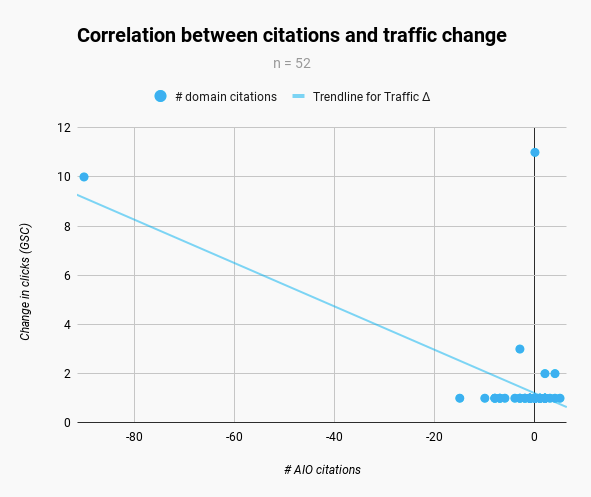
Source: Kevin Indig Growth Memo
**Our take:**
- Obviously these are small studies that partly contradict each other. We'll need to see larger samples – I'm sure we will – before drawing conclusions.
- AIOs are showing up far less often than during the Google Labs phase, when they were present 80%+ of the time. Kevin Indig found 42% (healthcare) vs. 15% and 16% in other studies; there's a smaller number in [Semrush data](https://www.semrush.com/sensor/?compare=serp%21321&date=2024-05-18&ref=nearmedia.co).
- The negative PR surrounding [AIO errors](https://www.nearmedia.co/google-rides-the-clickstream-long-tail-citations-ai-overview-fails/) is a wild card (which [may not be fixable](https://www.washingtonpost.com/politics/2024/05/29/google-ai-overview-wrong-answers-unfixable/?ref=nearmedia.co)). Will Google now show them less; will people avoid them out of distrust?
### Apple's Second Bite at Search
Apple has [reportedly signed a deal](https://www.bloomberg.com/news/newsletters/2024-05-26/apple-ios-18-macos-15-ai-features-project-greymatter-privacy-openai-deal-lwni63s3?srnd=undefined&ref=nearmedia.co) with OpenAI for iOS 18\. It had also been [talking with Google](https://www.reuters.com/technology/apple-talks-let-googles-gemini-power-iphone-ai-features-bloomberg-news-says-2024-03-18/?ref=nearmedia.co) about using Gemini. (There's speculation that there may still be a role for Gemini on the iPhone.) We don't know much about what the integration will look like (but: [speculation](https://appleinsider.com/articles/24/05/30/ios-18-project-greymatter-will-use-ai-to-summarize-notifications-articles-and-much-more?ref=nearmedia.co)) or how it will be branded. Will there be a new brand, a co-brand or will the AI sit behind existing Apple products, such as Siri? It's clear that one of Apple's primary motivations is improving Siri, which now [seems pathetic by comparison](https://www.nearmedia.co/ai-overviews-backlash-siri-do-or-die-serp-cognitive-load/) to the "Scar-Jo" sounding AI assistant unveiled at the ChatGPT 4o/omni [launch event](https://www.nearmedia.co/chatgpt-omni-hcu-travel-impact-cpcs-up-but-cvrs-down/). The latter partly fulfills the [vision of the "Star Trek computer](https://slate.com/technology/2013/04/google-has-a-single-towering-obsession-it-wants-to-build-the-star-trek-computer.html?ref=nearmedia.co)" that Google has been chasing for a long time. It also shows us what Siri could/should've been. Just as Google [was caught off-guard](https://www.nearmedia.co/google-in-paris-binggpt-smb-recession-angst/) by the 2021 arrival of ChatGPT, Apple has been behind in its development of AI – it miscalculated the competitive and Wall Street significance of the fast-moving technology – forcing it to turn to third parties to play catch up. One of the more interesting possible dimensions of the OpenAI deal is how it might finally bring a more complete search experience (device + apps + web) to the iPhone.

**Our take:**
- Apple's brand has partly become about privacy. It thus [faces a major challenge](https://9to5mac.com/2024/05/29/apple-ai-confidential-computing-ios-18/?ref=nearmedia.co) in how to manage the device-cloud relationship in an AI context.
- There's massive amounts of data tied to the iPhone for its \~1.5 billion users. There are many compelling AI personalization scenarios. But see privacy. 👆
- ChatGPT uses Bing for web search. This raises obvious, intriguing possibilities. We'll have to wait for [WWDC](https://developer.apple.com/wwdc24/?ref=nearmedia.co) to see, but a "search" angle seems likely.
### The Big Leak: Local Angle
Marketers are still processing the big [Google Search API data leak](https://www.nearmedia.co/google-rides-the-clickstream-long-tail-citations-ai-overview-fails/) and its implications for SEO and content strategy. There are potentially 14,000 ranking variables identified in the material. Google has confirmed the documents are authentic but [told](https://www.theverge.com/2024/5/29/24167407/google-search-algorithm-documents-leak-confirmation?ref=nearmedia.co) The Verge not to make "inaccurate assumptions about Search based on out-of-context, outdated, or incomplete information." In other words: nothing to see here. What about the local angle? Local SEO Guide's Andrew Shotland has compiled local/maps mentions [in a Google sheet](https://docs.google.com/spreadsheets/d/1kFg8QJ6IVUcGRyrK5bHZehRp9Yl7vSpjSeuatsJBjfU/edit?ref=nearmedia.co#gid=0). But they're largely impenetrable to ordinary minds, such as my own. Shotland [concludes](https://www.localseoguide.com/local-seo-according-to-the-leaked-google-api-documents/?ref=nearmedia.co), "There is very little here to give us any clues about Local SEO." In addition to the original [Rand Fishkin](https://sparktoro.com/blog/an-anonymous-source-shared-thousands-of-leaked-google-search-api-documents-with-me-everyone-in-seo-should-see-them/?ref=nearmedia.co) and [Mike King](https://ipullrank.com/google-algo-leak?ref=nearmedia.co) posts, a nice overview comes from [Andrew Ansley](https://searchengineland.com/unpacking-googles-massive-search-documentation-leak-442716?ref=nearmedia.co) at Search Engine Land, which has some limited discussion of local. But perhaps Mike King's Zen conclusion is the best takeaway from all this dizzying information: "make great content and promote it well." (However King provides some specific SEO recommendations in [a new post](https://searchengineland.com/google-search-document-leak-ranking-442617?ref=nearmedia.co).)

Source: ChatGPT
**Our take:**
- David Mihm will be publishing his take on the leaked documents soon. And we'll have Rand Fishkin on the [Near Media podcast](https://www.nearmedia.co/memo/) this week, talking about the leak and what it means for marketers (out Monday).
- Google has always said it uses hundreds if not thousands of considerations and variables in its algorithm to rank search results. This supports that notion.
- Yet there are some big "Pinocchio moments," such as how much Google relies on clicks and clickstream data. We discovered some of that from the [antitrust trial exhibits](https://www.justice.gov/atr/us-and-plaintiff-states-v-google-llc-2020-trial-exhibits??ref=nearmedia.co), but it's much more extensive than previously reported.
## Recent Analysis
- **Near Memo podcast ep. 158:** [New SAB local ranking factor; interpreting Google AI tea leaves around search](https://www.nearmedia.co/ep-158/).
## Short Takes
- More [details on the end](https://www.seroundtable.com/google-business-profile-call-history-deprecating-37465.html?ref=nearmedia.co) of **GBP Call History** and business chat.
- Why you should **ask for reviews** [by phone on a customer feedback call](https://x.com/DarrenShaw%5F/status/1796223008136482953?ref=nearmedia.co).
- SterlingSky: Five [local SEO strategies](https://www.sterlingsky.ca/5-seo-strategies-for-family-lawyers/?ref=nearmedia.co) for family **lawyers**.
- Despite the general rollout, [not everybody is going to see](https://x.com/lilyraynyc/status/1796169104094613833?s=12&ref=nearmedia.co) **AIOs**.
- It appears [you can rank more than once](https://x.com/CyrusShepard/status/1796256862402396260?ref=nearmedia.co) in **AI Overviews**.
- **OpenAI** [does huge deal](https://www.cnbc.com/2024/05/29/pwc-to-become-openais-first-reseller-and-largest-enterprise-user.html?ref=nearmedia.co) with PwC, which becomes biggest customer/reseller.
- The **Atlantic and Vox Media** [sign partnership/licensing deals](https://www.axios.com/2024/05/29/atlantic-vox-media-openai-licensing-deal?ref=nearmedia.co) with OpenAI.
- **Facebook** is becoming [a Hollywood tabloid](https://www.socialmediatoday.com/news/hollywood-gossip-referral-traffic-down-facebooks-trending-report/717446/?ref=nearmedia.co) publication.
- **Apple's iOS 18** is supposed [to introduce AI ad blocking feature](https://www.mediapost.com/publications/article/396367/apple-web-eraser-will-force-brands-to-know-their-c.html?ref=nearmedia.co) "web eraser."
- Geek out on which of the big tech companies is [best positioned "to win](https://stratechery.com/2024/ai-integration-and-modularization/?ref=nearmedia.co)" in **AI**.
Listen to our [latest podcast](https://www.nearmedia.co/memo/).
[](https://nearmedia.co/memo?ref=nearmedia.co)
How can we make this better? Email [us](mailto:gsterling@nearmedia.co) with suggestions and recommendations.
### Google Ranking Leaks, Long-Tail Citations, AI Overview #Fails
URL: https://www.nearmedia.co/google-rides-the-clickstream-long-tail-citations-ai-overview-fails/
Last updated: 2024-05-29T17:57:07.000Z
### Google Rides the Clickstream
The [various exhibits](https://www.nearmedia.co/gpt-vs-search-google-antitrust-docs-will-the-smb-attribute-help/) from the recently concluded Google antitrust trial surprised many, delighted others and contradicted Google's [repeated public statements about clicks](https://www.nearmedia.co/clicks-do-impact-rankings-tiktok-google-search-yelp-reviews-survey/) and other behavioral signals (e.g., dwell time) not impacting rankings. The opposite has turned out to be true. Now a leak of Google Search API Documents, provided to [Rand Fishkin](https://sparktoro.com/blog/an-anonymous-source-shared-thousands-of-leaked-google-search-api-documents-with-me-everyone-in-seo-should-see-them/?ref=nearmedia.co) (overview) and analyzed by [Mike King](https://ipullrank.com/google-algo-leak?ref=nearmedia.co) (technical), reinforces the centrality of clickstream data to the algorithm. (Fishkin [explains why](https://www.linkedin.com/feed/update/urn:li:activity:7201047792142737410/?ref=nearmedia.co) he believes the documents are authentic; see also the video below.) Some of the material will be familiar; much of the detail is new. There are [skeptics](https://www.linkedin.com/feed/update/urn:li:activity:7201240482163621889/?ref=nearmedia.co) who question whether there's anything truly revelatory here. Regardless, there's too much information to summarize. But here are a few of Fishkin's observations: intent-tracking Navboost (which relies on click data) may be the single most powerful ranking factor; Chrome clickstream data influences rankings; Google rewards known brands ([not new info](https://www.nearmedia.co/brands-clicks-social-acquisition-gemini-toggle/)) vs. smaller/newer companies; traditional SEO may not help SMBs until they are local "brands" (but see local pack); E-E-A-T may not matter as much as people think; quality rater data *probably* directly influences rankings. King's lengthy post unpacks the technical details, which contain implied tactical recommendations. His big conclusion, however, is "make great content and promote it well."
**Our take:**
- Another finding: Google carefully tracks and categorizes clicks, as proxies for intent and CX. It looks at time on site as evidence of a "good" click.
- People will be analyzing this data for some time and it will likely impact future strategy and tactics in the SEO community.
- In the video above, the leaker Erfan Azimi (not a ex-Google employee), speaks about why he leaked the data ([via](https://searchengineland.com/google-search-document-leak-ranking-442617??ref=nearmedia.co) SEL).
### Citation Study: Long-Tail Is Dead
At one point, roughly a decade ago, NAP (name, address, phone) consistency and distribution to a wide range of online directories was seen as a critical local ranking factor – if not the top ranking factor. However the relative importance of citations or listings syndication has been in decline for years. There's [now a local SEO consensus](https://www.nearmedia.co/local-search-ranking-factors-23/) that long-tail directories deliver little or no value for Google local rankings. However, being on major platforms and key vertical directories still matters. SOCi, which has a listings distribution component to its business, recently conducted a seven month [study](https://www.meetsoci.com/resources/insights/brands-franchises/long-tail-syndication-still-work-local-search/?ref=nearmedia.co) involving "three multi-location brands in the retail and healthcare industries," with a total of 451 locations, randomly divided into control and exposed groups or a non-syndicated group (major platforms only) and a syndicated group (platforms + long-tail directories). SOCi tracked impressions and actions (calls, clicks, directions). What the company found was that at the end of the seven-months the long-tail syndicated group was no better off than the control group, which actually slightly outperformed it. This comes as no surprise given the local SEO discussion over the past several years.
**Head vs. the Tail**
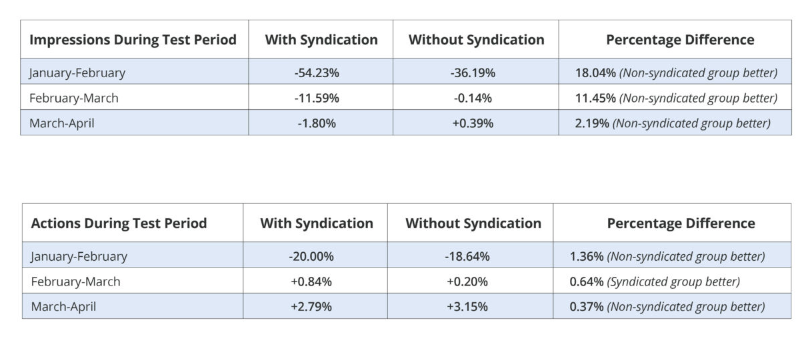
Source: SOCi (actions is clicks, calls, navigation requests)
**Our take:**
- At Uberall I helped initiate a 2019 study of 115K business locations (US, EU) using a similar methodology. However, we did find "meaningful increases in visibility and engagement" for listings optimized across the network.
- Google used to rely on NAP consistency as a trust signal. With GBP it doesn't have to. The consumer side of local also used to be competitive. With the exception of Yelp and a couple of others, most old competitors are now gone.
- Listings management still has value, but mostly on the major platforms and key vertical directories that have consumer traffic [and rank for relevant keywords](https://www.nearmedia.co/why-citations-aint-what-they-used-to-be/).
### AI Overviews = New Google+?
Unless you've been recently hospitalized, having put [glue in your pizza sauce](https://futurism.com/the-byte/googles-ai-glue-on-pizza-flaw??ref=nearmedia.co), you'll know that Google's AI Overview rollout is not going according to plan. Major news [outlets](https://www.axios.com/2024/05/24/googles-ai-overview-search-summaries?ref=nearmedia.co) have captured a list of high-profile mistakes, bad answers and more egregious errors (e.g., glue in the pizza sauce) that have been showing up at the top of search results. There's now even [a dedicated Twitter/X account](https://x.com/Goog%5FEnough?ref=nearmedia.co). And this isn't isolated; a lot of people are now [tracking the problems](https://x.com/lilyraynyc/status/1792903992772628929?s=46&t=lWeRdBU5epOoS27GJ8FHHg&ref=nearmedia.co) of Google AI Overviews. A Google spokesperson [told](https://www.nytimes.com/2024/05/24/technology/google-ai-overview-search.html?ref=nearmedia.co) the NY Times that the vast majority of AI Overviews deliver "high-quality information, with links to dig deeper on the web." While that may be, as a matter of statistical accuracy, the sometimes funny, sometimes disturbing mistakes are what's getting attention. People have made the point that Google had a year to work out the bugs before it chose to roll out AI Overviews. It's mysterious because you'd think they'd want to get this right given all the scrutiny and pressure. In an exasperated LinkedIn [post](https://www.linkedin.com/posts/aleyda%5Fgoogle-had-a-year-to-test-the-ai-overviews-activity-7200072173833592835-DYLX/?ref=nearmedia.co), SEO Aleyda Solis quips, "It seems that most of their concerns were about their monetization viability and impact rather than the quality." Google CEO Sundar Pichai has been [giving interviews](https://www.nearmedia.co/google-ppc-fixing-search-chatgpt-pichai-evades/) in which he's praised AI Overviews ("grounded by search") and how they're [improving the search experience](https://www.nearmedia.co/gemini-dominates-i-o-and-sge-goes-live/). Not exactly.
**Our take:**
- Separately, there's a bit of [an AI Overview backlash](https://www.nearmedia.co/ai-overviews-backlash-siri-do-or-die-serp-cognitive-load/) going on among some users who want to turn it off. There's no opt-out or off switch (there is with Bing).
- This negative PR, combined with unflattering [antitrust revelations](https://www.nearmedia.co/gpt-vs-search-google-antitrust-docs-will-the-smb-attribute-help/), will add fuel to the narrative of Google's decline. It could impact the Google brand.
- It appears that SGE was a reactive product, allegedly [driven by fear](https://www.linkedin.com/feed/update/urn:li:activity:7198073799051780096/?ref=nearmedia.co) (reportedly like Google+). Or perhaps the company really has spent more time on the advertising angle than quality control, which may have just been assumed.
## Recent Analysis
- **Near Memo podcast ep. 158:** [New SAB local ranking factor; interpreting Google AI tea leaves around search](https://www.nearmedia.co/ep-158/).
## Short Takes
- **Google Local** [has top "share of voice"](https://moz.com/blog/2024-serp-features-whiteboard-friday??ref=nearmedia.co) on SERP when it appears.
- Moz: How to [write a "positive](https://moz.com/blog/best-negative-local-business-review?ref=nearmedia.co)" negative **local review**.
- **Google Business Messages** [is going away](https://developers.google.com/business-communications/business-messages/resources/release-notes/update-on-gbm?ref=nearmedia.co) in July of this year.
- Former Uber exec: **Apple Maps** [better than Google](https://x.com/altimor/status/1795234646357377534?s=12&ref=nearmedia.co) for fastest routes.
- **Perplexity** the winner of [WSJ test](https://www.wsj.com/tech/personal-tech/ai-chatbots-chatgpt-gemini-copilot-perplexity-claude-f9e40d26??ref=nearmedia.co) of five major AI engines, including Gemini.
- **Google Lens** and Circle to Search [beefed up](https://searchengineland.com/google-lens-and-circle-to-search-gains-more-links-facts-and-ai-overviews-440652??ref=nearmedia.co) with links, AI Overviews.
- Digital marketers had [mixed reactions](https://searchengineland.com/advertisers-react-google-marketing-live-2024-440740??ref=nearmedia.co) to **Google Marketing Live** 2024\.
- **Apple AI strategy**: [make AI more practical](https://www.bloomberg.com/news/newsletters/2024-05-26/apple-ios-18-macos-15-ai-features-project-greymatter-privacy-openai-deal-lwni63s3?ref=nearmedia.co) for ordinary users.
- **Apple** [signs deal with OpenAI](https://www.androidauthority.com/apple-signs-deal-openai-iphones-3446254/?ref=nearmedia.co) but wants to preserve Gemini "as an option."
- **TikTok** [testing](https://techcrunch.com/2024/05/16/tiktok-upload-60-minute-videos/?ref=nearmedia.co) hour-long video uploads (which would totally change TikTok).
- **Elon Musk's xAI** [announces](https://www.theverge.com/2024/5/27/24165619/elon-musk-xai-startup-6-billion-funding?ref=nearmedia.co) a $6 billion fund raise.
Listen to our [latest podcast](https://www.nearmedia.co/memo/).
[](https://nearmedia.co/memo?ref=nearmedia.co)
How can we make this better? Email [us](mailto:gsterling@nearmedia.co) with suggestions and recommendations.
### Ep 158: New SAB Local Ranking Factor & Interpreting Google AI Tea leaves around Search
URL: https://www.nearmedia.co/ep-158/
Last updated: 2024-05-28T16:30:17.000Z
Is Service Area a new SAB ranking factor in Google local? What do Google’s comments around web traffic in the AI Overview era really mean and what can we learn about Google’s struggles in this new era
**Part 1 starts 00:13 -** [**New SAB Local Ranking Factor**](https://youtu.be/zgr3MqVdFso?ref=nearmedia.co)
Service area businesses have long been a problem on Google Maps. Spam, privacy, suspension AND ranking issues have plagued them since the beginning. Now it appears that there may be hope on the ranking issue. Historically they were ranked around the location from which they were claimed regardless of the service area. Darren Shaw of Whitespark has uncovered some indications that this is starting to change and the ranking signals are more around the service area chosen. Stay tuned.
Segment Reference Articles:
[New Local Ranking Factor Just Dropped - here's what we know so far](https://insider.whitespark.ca/p/new-local-ranking-factor-just-dropped?ref=nearmedia.co)
**Part 2 starts 12:25 -** [**Interpreting Google AI Tea leaves & What it Says About Google’s Product Development**](https://youtu.be/itSGZB9ywzo?ref=nearmedia.co)
Lots of questions swirled around Google’s AI Overviews: Would their effect be apocalyptic on publishers? What did Pichai mean when he talked about an increase in web visits? Was Google going to surface the data in Search Console?
Segment Reference Articles:
[The formula for Google’s claim that AI Overviews generate more clicks](https://www.linkedin.com/feed/update/urn:li:activity:7198342646518423552/?commentUrn=urn%3Ali%3Acomment%3A%28activity%3A7198342646518423552%2C7198455345738833921%29&dashCommentUrn=urn%3Ali%3Afsd%5Fcomment%3A%287198455345738833921%2Curn%3Ali%3Aactivity%3A7198342646518423552%29&ref=nearmedia.co)
[Google AI Overviews Backlash?](https://www.nearmedia.co/ai-overviews-backlash-siri-do-or-die-serp-cognitive-load/)
[SERP Clutter and 'Cognitive Load'](https://www.nearmedia.co/ai-overviews-backlash-siri-do-or-die-serp-cognitive-load/#serp-clutter-and-cognitive-load)
[Impact of AI overview on traffic ](https://x.com/bart%5Fgoralewicz/status/1790438632081240095?s=12&ref=nearmedia.co)
[Goog Enough - Weird & wacky AI overviews](https://x.com/goog%5Fenough?s=11&ref=nearmedia.co)
[Google CEO Sundar Pichai says AI search will actually help the web](https://youtu.be/lqikP9X9-ws?si=1VgVYqJDEBNZMFeb&ref=nearmedia.co) (YouTube)
### Reddit in Local, AI Overview Ads, Service Area Boost
URL: https://www.nearmedia.co/reddit-in-local-ai-overview-ads-service-area-boost/
Last updated: 2024-05-23T20:52:37.000Z
### Reddit Colonizes Local
I can see the future Atlantic headline now: "How Reddit Ruined Google." Reddit has been showing up more often and for more types of search queries since: 1) "[discussions and forums](https://www.seoclarity.net/blog/impact-discussions-and-forums?ref=nearmedia.co)" (née [Hidden Gems](https://blog.google/products/search/google-search-perspectives/?ref=nearmedia.co)) became a more prominent feature the SERP and 2) Google did its [\~$60M content licensing AI-training deal](https://blog.google/inside-google/company-announcements/expanded-reddit-partnership/?ref=nearmedia.co) with the company. Arguably, Reddit [is showing up too often](https://www.nearmedia.co/openai-search-reddit-overexposed-clarifying-ai-content-policy/) for too many keywords. That now seems to be happening in local, according to [a new study from BrightLocal](https://www.brightlocal.com/research/reddit-local-serps/?ref=nearmedia.co). The research looked at 800 local SERPs, comparing informational and transactional queries in 20 verticals and 20 US cities. The objective was to determine how often Reddit appeared and its average ranking position (see graphic). BrightLocal found that Reddit showed up in 81% of local informational results (e.g., best \[category\] location) but only 16% of transactional queries. It also found that Reddit content appeared both within the "discussions and forums" module and outside of it as pure organic results. Given Reddit's new prominence it's attracting more spam. Perhaps the forthcoming Atlantic headline should instead be "How Google Ruined Reddit."
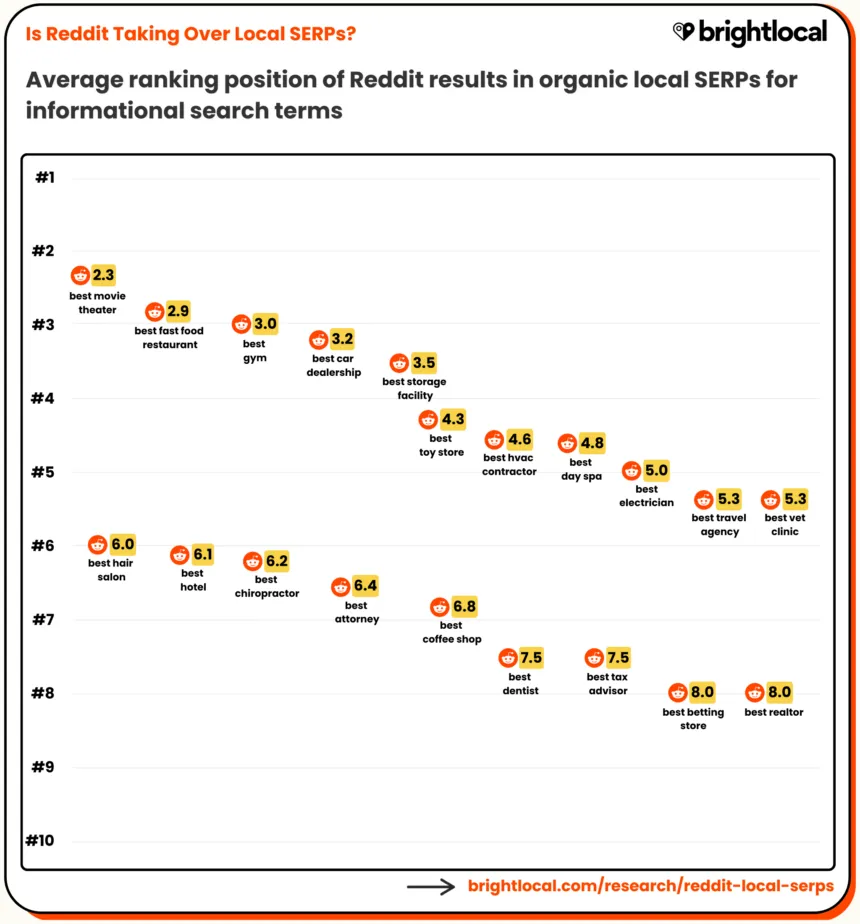
**Our take:**
- A Glen Allsopp [study](https://detailed.com/forum-serps/?ref=nearmedia.co) earlier this year found that Reddit was dominating product search review results. And many of those results were spammy.
- Google has elevated Reddit, Quora and some other social sources, partly in response to some users' turn to social for "more authentic" content.
- BrightLocal's advice to SEOs: monitor Reddit for brand mentions. Engage organically when appropriate. Follow SEO content best practices (e.g., EEAT).
### AI Overview Ads
Last week Google held its [I/O developer event](https://www.nearmedia.co/gemini-dominates-i-o-and-sge-goes-live/), which was all about AI. This week it held its Google Marketing Live (GML) advertiser event. GML was also about AI and how it's being integrated across Google's ad products. There were a number of [announcements](https://blog.google/products/ads-commerce/ai-creativity-google-marketing-live/?ref=nearmedia.co), including PMax upgrades, AI brand-compliant creative generation, more immersive shopping ads, merchant brand profiles (inspired by Google Business Profiles) and ads in AI Overviews, among [several other things](https://www.linkedin.com/posts/ginnymarvin%5Fgml-gml2024-activity-7198756489287643136-%5FX9s/?ref=nearmedia.co). Google has always said (and told investors) that it would monetize AI results or, conversely, that it wouldn't let AI results hurt ad revenues. At GML the company said, "\[W\]e’ll start testing Search and Shopping ads in AI Overviews for users in the U.S. They will have the opportunity to appear within the AI Overview in a section clearly labeled as 'sponsored' when they’re relevant to both the query and the information in the AI Overview." Ads are drawn from current Search, PMax and Shopping Campaigns. Google promised more and higher quality clicks for these advertisers, which is consistent with what it has said about engagement with AI Overviews generally. The only (very brief) mention of local was in the context of a pre-recorded retail case study.
**Mockup of Ads in AI Overview**
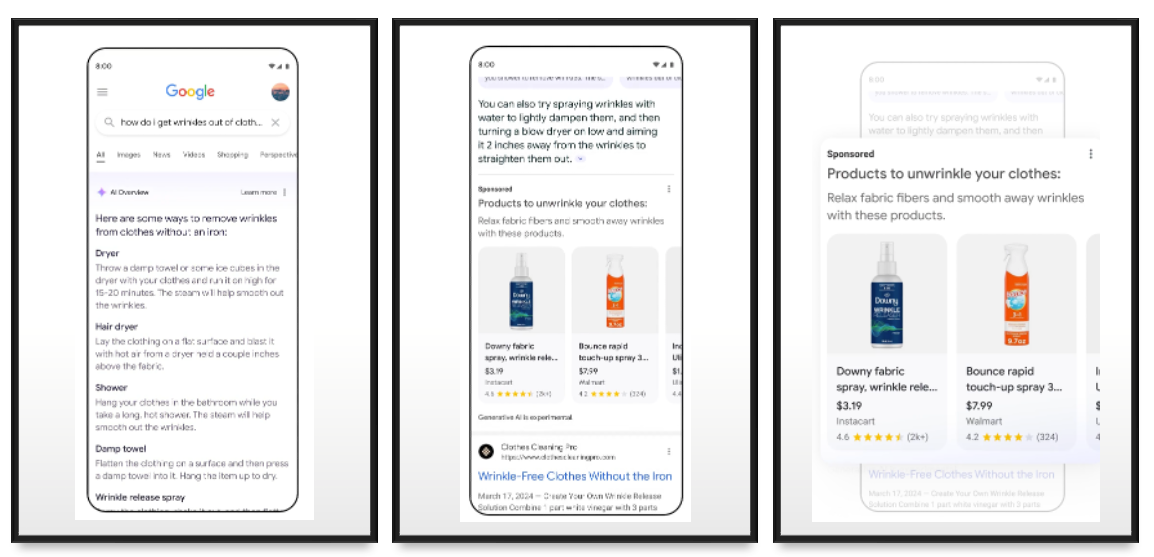
Source: Google
**Our take:**
- Today AI Overviews aren't showing much in local, in contrast to the Labs incubation period. It will be interesting to see if LSAs do.
- Beyond LSAs, there are potentially other opportunities including Search Ads with location extensions and Product Inventory Ads.
- In the retail case study (Pandora) the company rep said, "We were able to see major incremental value using Omnichannel bidding, Performance Max for Store Goals and Local Inventory Ads."
### Service Areas a New Ranking Factor?
While it's not confirmed, Whitespark has [posted](https://insider.whitespark.ca/p/new-local-ranking-factor-just-dropped?ref=nearmedia.co) about the possibility that service areas is now a local ranking factor. Historically, service areas in Google Business Profiles have not impacted local rankings. There is now some evidence that it might have become one. Whitespark cites an example from Jim Allen on Twitter, who updated the service areas for his notary business to be more focused around specific target geographies. "Updated Local Falcon scans now show him ranking better in that area," the blog post reads. This is some evidence that Google may be tweaking or updating the local algorithm. Similarly, business hours was [not long ago revealed](https://www.nearmedia.co/local-hours-ranking-bard-getting-better-ai-content-dilution/) as a new local ranking signal. Assuming service areas is a new local factor, Whitespark asks how strong a signal and whether it requires hiding the businesses address to obtain the benefit.
**Service Area Adjustment Boosted Rankings**

Source: Whitespark-Local Falcon
**Our take:**
- Businesses that come to your location (SABs) represent many billions in annual revenues; it's a big chunk of GDP.
- Google's awkward treatment of service areas prompted workarounds: service area pages, use of PO Boxes and faking it with WeWork locations.
- Dealing with SABs has been a problem for Google for at least 15 years. In one sense LSAs were created to address the above "spam" issue.
## Recent Analysis
- **Google I/O: Gemini Dominates Search, SGE Goes Live**, [by Greg Sterling](https://www.nearmedia.co/gemini-dominates-i-o-and-sge-goes-live/).
- **Near Memo ep. 157**: [ChatGPT & Google I/O – how will users & SEOs adapt to the new Google AI features?](https://www.nearmedia.co/ep-157/)
## Short Takes
- Why killing proximity as a ranking factor for **LSAs** is [a potentially bad idea](https://www.linkedin.com/posts/mattmcgee%5Flocalseo-seo-activity-7199083424681271300-0Vzy/?ref=nearmedia.co).
- Permanently closed, if **Apple Biz Connect** [hours/address missing](https://x.com/ownyourserp/status/1790091553685258569?ref=nearmedia.co).
- Only 16% of queries [showing an](https://www.linkedin.com/posts/goralewicz%5Fgoogle-ai-overviewssge-vs-ecommerce-activity-7199071294074609664-ygKm/??ref=nearmedia.co) **AI Overview** (vs. 80% - 90% in Labs).
- Ways to "[get rid of](https://www.theverge.com/24162621/google-search-ai-overviews-get-rid-of?ref=nearmedia.co)" **AI Overviews** in Google results.
- **Google Street View** helps trigger another SCOTUS scandal ([NYT](https://www.nytimes.com/2024/05/22/us/justice-alito-flag-appeal-to-heaven.html?ref=nearmedia.co)).
- New **SOCi** "Genius Search" [says](https://www.meetsoci.com/resources/insights/brands-franchises/soci-changes-the-game-with-genius-search/?ref=nearmedia.co) it can "do the work of 1,000 marketers."
- **Apple** looks like it may develop [a foldable phone](https://www.yahoo.com/tech/apple-patents-foldable-iphone-self-142000117.html?ref=nearmedia.co).
- **TikTok** Symphony: [AI tools for brand ads](https://www.socialmediatoday.com/news/tiktok-announces-new-ad-tools-at-tiktok-world-event-1/716912/?ref=nearmedia.co) (text + video).
- **Google** threatens to cut funding to new pubs over [link tax bill](https://www.axios.com/2024/05/21/google-news-initiative-journalism-funding-california?ref=nearmedia.co).
- **Google** and 'the [toilet theory of the internet](https://www.theatlantic.com/technology/archive/2024/05/google-generative-ai-search-toilet-theory/678411/?ref=nearmedia.co)."
- US lawmakers [propose killing](https://www.theverge.com/2024/5/22/24161150/section-230-tech-liability-shield-sunset?ref=nearmedia.co) **Section 230** and replacing it.
Listen to our [latest podcast](https://www.nearmedia.co/memo/).
[](https://nearmedia.co/memo?ref=nearmedia.co)
How can we make this better? Email [us](mailto:gsterling@nearmedia.co) with suggestions and recommendations.
### SGE Drives Traffic, Gen-Local Search, Google CEO Evasions
URL: https://www.nearmedia.co/sge-drives-traffic-gen-local-search-google-ceo-evasions/
Last updated: 2024-05-23T14:46:40.000Z
### AI Overviews = More Traffic?
Siege Media CEO Ross Hudgens initially [predicted](https://www.linkedin.com/posts/rosshudgens%5Fyou-should-expect-a-11-to-18-decrease-in-activity-7196259911897370626-nO85/??ref=nearmedia.co) an "11% to 18% decrease in traffic from AI Overviews." That's much smaller than many [had been forecasting](https://www.nearmedia.co/sge-a-traffic-destroyer-ai-optimization-smb-badges/). But a few days later he released [a study](https://www.siegemedia.com/seo/ai-overviews-impact-report?ref=nearmedia.co) (using data from 43 clients) that came to a different conclusion: AI could actually increase traffic and CTRs. This is what Google has been arguing to skeptical audiences. Across all clients in the study Hudgens found "an increase in impressions, average clickthrough rate (CTR), and total traffic since the overviews went live." The report is broken down into three client categories: SaaS, Fintech and B2C/E-commerce. AI Overviews showed up with different frequency in each of these. But on the whole there were more impressions, clicks and traffic after the introduction of AI Overviews. Hudgens attributes this to more engagement and query volume, which is what Google has been saying. While more data are needed to confirm Hudgens' findings, they're hopeful and suggest the sky isn't falling – at least in terms of AI Overviews.
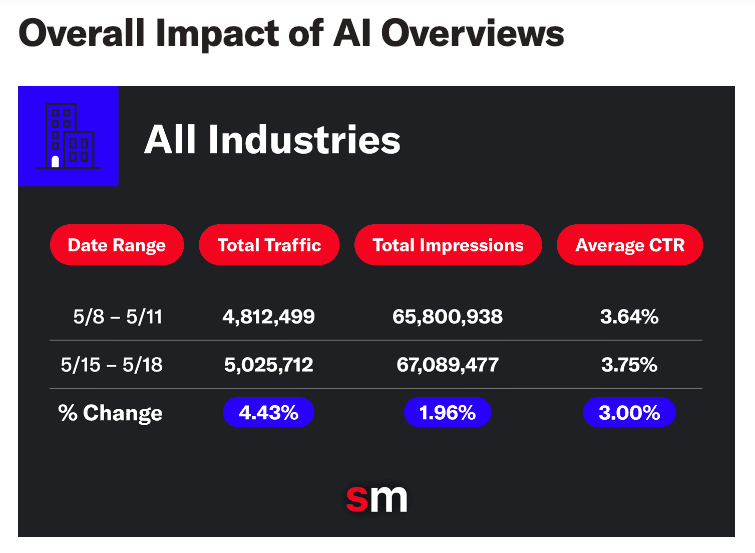
Source: Siege Media
**Our take:**
- This is tentatively good news for publishers and SEOs. As we've argued in the past, we need to see how people actually react IRL before judging.
- According to [Semrush Sensor](https://www.semrush.com/sensor?compare=serp%21321&date=2024-05-18&db=MOBILE-US&ref=nearmedia.co), AI Overviews appear pretty infrequently, though slightly more often in mobile results.
- A considerable number of people are [still trying to turn off](https://x.com/rustybrick/status/1792639033442497021?ref=nearmedia.co) AI Overviews. Bing [allows this](https://www.seroundtable.com/bing-lets-you-turn-off-ai-copilot-responses-in-search-37415.html?ref=nearmedia.co) but Google currently does not.
### Google Wins with 'Gen-Local'
Local has always been the red-headed stepchild of search. But it emerges as a potential white knight and one of Google's key competitive advantages in this new AI-driven world. One of the things that struck us about the [Google I/O keynote last week](https://www.nearmedia.co/gemini-dominates-i-o-and-sge-goes-live/) was the number of local examples the speakers brought up – again and again. Google never explicitly mentioned local but it was there in the background to subtly illustrate that Google has an unmatched local knowledge graph. Perplexity recently [did a licensing deal with Yelp](https://www.nearmedia.co/perplexity-yelps-ftc-pins-location-brokers-the-web-at-35/) to beef up local results and Bing/Copilot of course has its own local graph. But nobody has more local data than Google. SOCi [recently compared](https://www.meetsoci.com/resources/blog/listings/local-search-performance-gen-ai/?ref=nearmedia.co) what we might call "gen-local" search results on multiple AI properties: Google SGE (AI Overviews), Gemini, Bing Copilot, Perplexity, Meta.ai and ChatGPT. The company ran six local queries and used several criteria to comparatively score the results. Interestingly, Gemini was the overall winner (beating SGE), with Bing and SGE tied for second. ChatGPT did the worst job with local queries, despite having access to Bing's local data.

Source: SOCi
**Our take:**
- While this was a fairly informal study it's interesting. I'm sure we'll see more such comparisons going forward and I'm sure ChatGPT will improve.
- Local intent search is a [much bigger phenomenon](https://www.nearmedia.co/local-search-50-amazons-war-on-visa-wall-street-myopia/) than Google acknowledges. It touches most categories, especially services and product queries.
- Despite Bing's close second, it will be very hard to match Google's local depth, which the company will continue to emphasize as the competition intensifies.
### Google CEO's Friendly Evasions
The Verge editor Nilay Patel gave Google CEO Sundar Pichai the [toughest interview](https://www.theverge.com/24158374/google-ceo-sundar-pichai-ai-search-gemini-future-of-the-internet-web-openai-decoder-interview?ref=nearmedia.co) he's had in recent memory. Clearly uncomfortable with many of Patel's direct and even confrontational questions, Pichai is often evasive in his always friendly answers. Perhaps the best question is about how Sundar Pichai felt when he discovered that OpenAI had trained its AI video offering ([Sora](https://openai.com/index/sora/?ref=nearmedia.co)) on YouTube videos. The question seeks to put Pichai in the place of publishers and content creators on whose work Google has built its business. Pichai repeatedly likens the transition to AI-powered search to the shift from desktop to mobile. He adds that Google needs to support "the ecosystem," meaning content creators. "If there isn't a rich ecosystem making unique and useful content, what are you putting together and organizing, right?" Pichai again reports that AI Overviews are prompting more engagement but the reality is probably more qualified. "If you put content and links within AI Overviews, they get higher click-through rates than if you put it outside of AI Overviews," he argues. But he punts on a point-blank question about whether Google will break out AI traffic in Search Console. "It's a good question for the Search team; they think about this at a deeper level than I do," he defers.
**Our take:**
- Pichai repeatedly deflects and spins – all in a very well-intentioned-seeming way.
- He indirectly references DMA changes in Europe, when asked about Google not showing smaller sites: "Ironically, there are times when we have done changes to actually send more traffic to the smallest sites. Some of those sites which complain a lot are the aggregators in the middle. Should the traffic be going to the restaurant which has created a website with their menus and stuff, or are people writing about these restaurants?"
- Pichai comes across as sincere but also as a technocrat who doesn't fully accept responsibility for the real-world consequences of Google's decisions.
## Recent Analysis
- **Near Memo ep. 157**: [ChatGPT & Google I/O – how will users & SEOs adapt to the new Google AI features?](https://www.nearmedia.co/ep-157/)
- **Google I/O: Gemini Dominates Search, SGE Goes Live**, [by Greg Sterling](https://www.nearmedia.co/gemini-dominates-i-o-and-sge-goes-live/).
## Short Takes
- How to [re-appeal](https://searchengineland.com/google-business-profile-suspension-reappeal-440524?ref=nearmedia.co) a **Google Business Profile** suspension.
- **Google AI** support [hallucinates customer service number](https://www.linkedin.com/posts/mblumenthal%5Fgoogle-is-testing-the-use-of-generative-ai-activity-7198411861279547392-3qzM/??ref=nearmedia.co).
- **Uber** [brings "lists"](https://www.uber.com/newsroom/better-together/?ref=nearmedia.co) (social content) to Eats food delivery.
- Google [improves accessibility features](https://blog.google/outreach-initiatives/accessibility/ai-accessibility-update-gaad-2024/?ref=nearmedia.co#maps) in **Maps**.
- **ChatGPT** is [bad at local search](https://www.linkedin.com/posts/darrenshawwhitespark%5Fthese-local-results-that-rand-fishkin-generated-activity-7196982974565801984-1k69/??ref=nearmedia.co).
- **OpenAI** couldn't get Scar-Jo's voice [so they deepfaked it](https://www.npr.org/2024/05/20/1252495087/openai-pulls-ai-voice-that-was-compared-to-scarlett-johansson-in-the-movie-her?ref=nearmedia.co).
- **MSFT** [announces new AI PCs](https://blogs.microsoft.com/blog/2024/05/20/introducing-copilot-pcs/?ref=nearmedia.co) with "recall" feature.
- Tools to **track AI Overviews**; how AI Organized Pages [may impact SEO](https://www.aleydasolis.com/en/search-engine-optimization/google-ai-overviews-release/?ref=nearmedia.co).
- Everything Google announced at **I/O**, [from new products to vaporware](https://blog.google/technology/ai/google-io-2024-100-announcements/?ref=nearmedia.co).
- Former [head of Bing](https://x.com/MParakhin/status/1791148459124457502?ref=nearmedia.co) joins board of **Perplexity.ai**.
- [Asking AI tools](https://x.com/mblumenthal/status/1792522130518663549?ref=nearmedia.co) what does **WTF** mean?
- **Apple News+** [may be a lifeline for news pubs](https://www.semafor.com/article/05/19/2024/as-clicks-dry-up-for-news-sites-could-apples-news-app-be-a-lifeline?ref=nearmedia.co) losing traffic.
- People prefer **human-written content**, [AI disclaimers](https://x.com/neilpatel/status/1792026385730711963?ref=nearmedia.co) a turn off.
Listen to our [latest podcast](https://www.nearmedia.co/memo/).
[](https://nearmedia.co/memo?ref=nearmedia.co)
How can we make this better? Email [us](mailto:gsterling@nearmedia.co) with suggestions and recommendations.
### Ep 157: ChatGPT & Google I/o: How Will Users & SEOs Adapt to the New Google AI Features
URL: https://www.nearmedia.co/ep-157/
Last updated: 2024-05-19T14:40:18.000Z
**Part 1 starts 00:13 -** [**ChatGPT 4o Makes an Impression**](https://youtu.be/nCXfBMMLcQg?ref=nearmedia.co)
OpenAI, not so subtly, introduced improvements to ChatGPT 4.0 just before I/O Google's event. The presentation was crisp and focused highlighting OpenAI's ChatGPT 4o enhanced speech capabilities and creative functionalities, such as summarizing audio streams shows and organizing the resultant notes into coherent outlines. Despite some features demoed on Monday being API-exclusive, the potential for ChatGPT to rival Google's search, at least on informational queries, is becoming more clear. Speculation about a potential integration with Apple's iOS adds to this potential, as this could significantly boost ChatGPT's reach, access to training data and even possibly local search capabilities.
Segment Reference Articles
[Introducing GPT-4o and more tools to ChatGPT free users](https://openai.com/index/gpt-4o-and-more-tools-to-chatgpt-free/?ref=nearmedia.co)
[Apple and OpenAI 'finalizing terms' for bringing ChatGPT to iOS 18](https://x.com/markgurman/status/1789102212775612604?ref=nearmedia.co)
**Part 2 starts 12:40 -** [**The Chaos that was Google I/O, is Google**](https://youtu.be/W4AAjxmJcEQ?ref=nearmedia.co)
The recent Google I/O event, from the DJ to the presentations, felt chaotic much like the increasing complexity and seemingly disjointed nature of Google's product strategies. The showcase included a range of multimodal search results and demonstrations, such as trip planning and dining recommendations, which, while technically impressive, seemed to add to the cognitive load rather than streamline the user experience.
The event highlighted Google's shift from its original, simpler search interface to a more cluttered and multifaceted array of services and features, spreading functionality across various platforms without clear integration. In contrast, competitors like OpenAI are offering more straightforward, user-friendly interfaces, claiming a position Google once held. Discussions also touched on Google's potential in workspace solutions, which could transform into valuable tools for small businesses, though the realization of these potentials remains uncertain amid concerns about which products were real and which were vaporware.
Segment Reference Articles:
[Google I/O: Gemini Dominates Search, SGE Goes Live](https://www.nearmedia.co/gemini-dominates-i-o-and-sge-goes-live/)
[100 things we announced at I/O 2024](https://blog.google/technology/ai/google-io-2024-100-announcements/?ref=nearmedia.co)
**Part 3 starts 21:10 -** [**How Will Users & SEOs Adapt to the New Google AI Features**](https://youtu.be/L94R2G6tFBc?ref=nearmedia.co)
At Google I/O's announced the launch of AI overviews (SGE) in the U.S., theoretically aiming to improve user engagement by highlighting lesser-known sites. Users are already searching for ways to disable this feature, with over 2,000 downloads for a Chrome extension designed to do just that. Google's introduction of dynamically organized search result pages for categories like restaurants and recipes is another significant change. These pages adapt based on user queries, a move seen as both innovative and potentially disruptive for SEO.
Meanwhile, Google's strategic vision appears unclear. As users habituate to the many new AI tools, with users gravitating towards simpler, more effective interfaces like ChatGPT, Google's position as the go-to search engine could be at risk.
Note: During the show David exponentially misstated the number of downloads of the chrome extension which hides AI overviews, conflating a completely different post on the number of SGE results in previous AI overview studies. The number of opt-out downloads is currently in the thousands, not 2 million as stated on the show. He regrets the error.
Segment Reference Articles:
[AI Overviews Backlash, Siri Do or Die, SERP 'Cognitive Load'](https://www.nearmedia.co/ai-overviews-backlash-siri-do-or-die-serp-cognitive-load/)
[Google’s broken link to the web](https://www.platformer.news/google-io-ai-search-sundar-pichai/?ref=nearmedia.co) \- is letting Google do the Googling for you the future of the web?
### AI Overviews Backlash, Siri Do or Die, SERP 'Cognitive Load'
URL: https://www.nearmedia.co/ai-overviews-backlash-siri-do-or-die-serp-cognitive-load/
Last updated: 2024-05-16T20:49:08.000Z
### Google AI Overviews Backlash?
Google is formally rolling out AI Overviews (SGE), on a limited basis, to US users this week and to other markets thereafter. CEO Sundar Pichai's [statements](https://www.nearmedia.co/gemini-dominates-i-o-and-sge-goes-live/) on Google's most recent earnings call and to CNBC suggest that AI Overviews are a hit and net positive for everyone. He told CNBC, "In general we find it is both overall increasing usage and, when we look at it year on year we have been able to grow traffic to the ecosystem." He added, "The feedback has been great." Obviously, the SEO community doesn't entirely agree. But Pichai's comments would also seem to be at odds with some early public user reactions. A "hide Google AI overviews" [Chrome extension](https://chromewebstore.google.com/detail/hide-google-ai-overviews/neibhohkbmfjninidnaoacabkjonbahn?pli=1&ref=nearmedia.co) has 1,000 users and a 4.9 star rating. And Amsive Digital's Lily Ray [points out](https://www.linkedin.com/feed/update/urn:li:activity:7196826290358800384/?ref=nearmedia.co) that Google's search community [forum](https://support.google.com/websearch/threads?hl=en&thread%5Ffilter=%28category:search%5Flabs%29&sjid=12387294840045068633-NC&ref=nearmedia.co) is full of posts asking how to disable AI Overviews (most pre-date Google I/O). Reddit has [some of these](https://www.reddit.com/r/mildlyinfuriating/comments/1csag0m/googles%5Fnew%5Fai%5Foverview%5Fcant%5Fbe%5Fturned%5Foff%5Feven/?ref=nearmedia.co) too. Because we don't yet have any solid empirical data, we don't know how representative these complaints are of the broader reaction to AI Overviews.
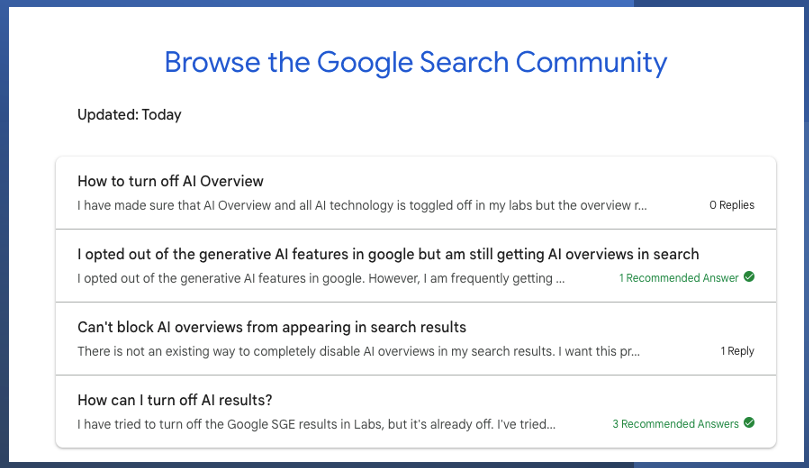
Source: Google Search Community Forum
**Our take:**
- Pichai is speaking to the investor community, Google's primary audience, in making these positive claims. And much of it is probably spin.
- Prior to launch Google [scaled way back](https://twitter.com/bart%5Fgoralewicz/status/1790438632081240095?s=12&ref=nearmedia.co) the number of results where SGE appeared. Previously it had been showing for 80%+ of queries.
- Google will likely calibrate AI Overview appearances to public reaction. If there is a backlash of sufficient scale Overviews will appear less often.
### Siri's Do or Die Moment
Before Apple bought Siri in 2010, the assistant was being positioned as a kind of Google alternative, a way to connect smartphone users directly to services and content in apps without needing search as middleware. Initially Siri was a great addition to the iPhone. As time has passed, however, development languished as competition advanced. Today, Siri has a negative reputation on balance. (Alexa is weak too.) Afraid of [being left behind](https://www.nytimes.com/2024/05/10/business/apple-siri-ai-chatgpt.html??ref=nearmedia.co), Apple has [entered into negotiations with Google](https://www.nytimes.com/2024/03/19/technology/apple-google-ai-iphone.html?ref=nearmedia.co) and OpenAI to license their technology to improve Siri (and other elements of the iOS UX). It appears that OpenAI [is getting the deal](https://www.bloomberg.com/news/articles/2024-05-11/apple-closes-in-on-deal-with-openai-to-put-chatgpt-on-iphone?ref=nearmedia.co), although there's been no confirmation. An announcement of a new and improved Siri (and perhaps more) is expected at Apple's June developer conference. This is kind of a do or die moment for Siri. ChatGPT-4o is miles ahead. Apple has been unable to sufficiently develop AI in house to match Google Gemini or OpenAI. For its part, Google sees Android-Gemini integration as a competitive advantage. ChatGPT's upgraded voice assistant, [showcased this week](https://www.nearmedia.co/chatgpt-omni-hcu-travel-impact-cpcs-up-but-cvrs-down/), is what Siri could and should have been.

**Our take:**
- It will be interesting to see what's announced at WWDC and how deeply Apple integrates ChatGPT into iOS.
- In our upcoming podcast, Mike asks which way the money is going. Might OpenAI be paying Apple for distribution? And will ChatGPT get any billing?
- Ultimately Apple needs to own core AI technology. It will likely try to buy one of the smaller companies as a bridge (Stability AI? Mistral?).
### SERP Clutter and 'Cognitive Load'
One potential metaphor to describe Google's search UI evolution is: building a house without an architect. Room after room is added without a coherent design or vision. The UI is increasingly cluttered as more modules, carousels, ads, boxes, filters and buttons have been added over the years. Some of this is about technology changes and opportunities and some of it is responding to competition (OpenAI, TikTok, Reddit). Regardless, the amount of mental effort required to evaluate all the information on the page has increased the "cognitive load" of search. Google was once "magical" and simple. No longer. I suspect Google understands this and is rolling out AI Overviews partly to simplify the experience for users. Yet it introduces another element that has to be evaluated: how accurate, complete and/or [trustworthy](https://www.seroundtable.com/google-sge-drink-urine-to-pass-kidney-stones-37339.html?ref=nearmedia.co) is the AI Overview? The overall UI clutter and corresponding fatigue is partly why [some younger users](https://www.nearmedia.co/googles-30-problem-ai-search-marriage-next-sge-mediocrity/) have fled to social media and why others are using AI chatbots. Still others are avoiding ads. In another interesting and parallel development, Google rolled out a ["web" filter](https://twitter.com/searchliaison/status/1790473952256786805?s=12&ref=nearmedia.co) that just shows links (and ads). No content blocks or carousels.

Source: DALL-E
**Our take:**
- Web results doesn't avoid ads but it's a much "calmer" SERP. It's also buried typically behind the "more" filter.
- The SERP is a mess partly because Google is responding to competitive pressure rather than pursuing a coherent search product vision.
- Perhaps the most interesting search announcement at I/O was "[AI organized](https://blog.google/products/search/generative-ai-google-search-may-2024/??ref=nearmedia.co)" pages, which change by query. This wouldn't address clutter but could offer a better integration and use of AI in the SERP.
## Recent Analysis
- **Google I/O: Gemini Dominates Search, SGE Goes Live**, [by Greg Sterling](https://www.nearmedia.co/gemini-dominates-i-o-and-sge-goes-live/).
- **Near Memo episode 156:** [Is Google finally fixing LSA reviews?; why Google fails; DOJ slide deck details abusive Google ad practices](https://www.nearmedia.co/ep-156-google-finally-fixing-lsa-reviews-why-google-fails-doj-slidedeck-details-abusive-google-practices/).
## Short Takes
- Are [service areas](https://www.linkedin.com/posts/darrenshawwhitespark%5Fseo-localseo-activity-7196141906274226176-2fSz/??ref=nearmedia.co) now a **local ranking factor** – maybe yes.
- **LSAs**: new "[message multiple](https://twitter.com/mattcasady/status/1790525108941177156?s=12&ref=nearmedia.co)" option seeks to [drive more revenue](https://mockingbird.marketing/lsa-now-means-lets-screw-attorneys/?ref=nearmedia.co).
- How to [improve ranking performance](https://www.localseoguide.com/store-locator-seo-case-study-simple-but-effective/?ref=nearmedia.co) of **store locator pages**.
- **Google Maps** [will deliver more augmented reality](https://techcrunch.com/2024/05/15/google-maps-is-getting-geospatial-ar-content-later-this-year/?ref=nearmedia.co) content on phones.
- What's behind the "[deranged" one-star reviews](https://slate.com/life/2024/05/yelp-reviews-restaurants-business-funny-one-star.html?ref=nearmedia.co) on **Yelp**?
- **Expedia** [readies new AI assistant](https://techcrunch.com/2024/05/14/expedia-starts-testing-ai-powered-features-for-search-and-travel-planning/?guccounter=1&ref=nearmedia.co) for travel planning.
- Research: **Google** [not "intentionally biased](https://www.searchenginejournal.com/does-google-give-big-sites-an-unfair-seo-advantage/516225/?ref=nearmedia.co)" against small publishers.
- I/O: **Google's** [broken link to the web](https://www.platformer.news/google-io-ai-search-sundar-pichai/?ref=nearmedia.co) and [end of search as we know it](https://www.wired.com/story/google-io-end-of-google-search/?ref=nearmedia.co).
- **Google Project Starline** video conferencing [coming out of labs](https://blog.google/technology/research/google-project-starline-hp-partnership/?ref=nearmedia.co) with HP.
- Now with 40M ad-supported subscribers, **Netflix** [to build own ad tech](https://www.theverge.com/2024/5/15/24157487/netflixs-ad-tier-40-million-subscribers?ref=nearmedia.co).
- Study: **internet access and use** [correlated](https://www.ox.ac.uk/news/2024-05-14-internet-use-statistically-associated-higher-wellbeing-finds-new-global-oxford-study?ref=nearmedia.co) with positive wellbeing.
Listen to our [latest podcast](https://www.nearmedia.co/memo/).
[](https://nearmedia.co/memo?ref=nearmedia.co)
How can we make this better? Email [us](mailto:gsterling@nearmedia.co) with suggestions and recommendations.
### Google I/O: Gemini Dominates Search, SGE Goes Live
URL: https://www.nearmedia.co/gemini-dominates-i-o-and-sge-goes-live/
Last updated: 2024-11-19T21:10:03.000Z
Google's I/O [keynote](https://www.youtube.com/watch?v=XEzRZ35urlk&ref=nearmedia.co) was all about Gemini. "We are fully in our Gemini era," CEO Sundar Pichai intoned in his opening remarks. The fusillade of announcements that followed were dominated by Gemini and [new features](https://blog.google/?ref=nearmedia.co) claiming to be best-in-class or breakthrough capabilities.
Search was there but in a secondary or supporting role. Gemini was the star.
In addition to search, the Gemini announcements touched nearly every product category: DeepMind, Android, Assistant, Workspace, Photos, Google Cloud and others. Just a day before, however, OpenAI held its comparatively low key ChatGPT-4o [launch presentation](https://www.nearmedia.co/chatgpt-omni-hcu-travel-impact-cpcs-up-but-cvrs-down/), which preempted Google I/O – by design. And it succeeded in stealing some of the thunder from the Gemini announcements.
The I/O keynote was largely directed, we suspect, at tech journalists and Wall Street investors, in an effort to provide reassurance and reclaim the AI leadership narrative from OpenAI.
### More Clicks in 'AI Overviews'
As predicted by [Eli Schwartz](https://www.linkedin.com/posts/schwartze%5Fsge-likely-launches-next-week-at-io-but-activity-7193972915040575489--3z1/?ref=nearmedia.co) and a number of other SEOs, Google is rolling out SGE (now called AI Overviews) to US users this week and "more countries soon." And as mentioned [on the Q1 earnings call](https://www.nearmedia.co/google-search-sge-review-response-uplift-end-of-location-intelligence/) a week ago, Pichai stated that the presence of SGE has reportedly increased search usage and user satisfaction.
Google added that "by the end of the year, AI Overviews will be available to over a billion people using Google Search."
The announcement felt like an anti-climax, perhaps because it was so widely expected. It's a big deal that the entire industry has been anticipating – or dreading. Now we'll finally get some data on whether and how users engage with AI results and what it does – or doesn't do – to publisher traffic.
Interestingly, Google VP of Search Liz Reid said in a [companion blog post](https://blog.google/products/search/generative-ai-google-search-may-2024/?ref=nearmedia.co), "we see that the links included in AI Overviews get more clicks than if the page had appeared as a traditional web listing for that query." In other words, CTRs in SGE are greater than elsewhere on the page. Microsoft [said something similar](https://www.seroundtable.com/bing-chat-clicks-on-ads-1-8x-higher-36099.html?ref=nearmedia.co) about Bing chat.
### Multi-Step Reasoning
In her I/O presentation Reid discussed a range of new search use cases that Gemini enables. She emphasized that users can now ask complex, multi-part questions in a single query and get an AI Overview, which uses "multi-step reasoning." She hinted that this is the beginning of search as personal AI agent, something OpenAI is working on as well.
Reid discussed examples of how you can now do planning (e.g., meals, travel, exercise) with a single query. In a travel example (a trip to Dallas) the entire SERP was taken over by AI results organized into different categories of information. These "AI Organized Pages" will start in restaurants and recipes and roll out to movies, music, books, hotels, shopping and more.
There was also an impressive demo of a text + video query, which Gemini can understand and respond to. This is a kind of successor to what Google previously called multisearch (text + images).
Many of the specific search use cases, as well as examples used throughout the keynote, were local or had a local angle. One of Google's competitive advantages over OpenAI is its local knowledge graph, which the company was showcasing but not directly emphasizing.
### Slow Rollout
In conjunction with I/O, Google [told](https://searchengineland.com/google-rolls-out-ai-overviews-in-us-with-more-countries-coming-soon-440418?ref=nearmedia.co) Search Engine Land that AI Overviews will only be shown at the outset for a limited number of queries and "complex questions," not for \~90% of searches, as some of the [preliminary studies](https://www.nearmedia.co/sge-failure-to-launch-quality-raters-axed-whats-wrong-at-google/) have found. And AI Overviews will not fully replace Featured Snippets.
Google confirmed it will be showing AI Overviews for YMYL queries. It's also going to report AI impressions and clicks in Search Console, though it won't break out the AI data separately.
In a post-keynote interview with CNBC ([here](https://youtu.be/4aZhhM4kfc4?feature=shared&ref=nearmedia.co), [here](https://youtu.be/PERSmGSr-sA?feature=shared&ref=nearmedia.co)) Sundar Pichai said that AI Overviews were making the search experience better – according to user feedback – and that Google was "simplifying" the search experience rather than creating additional page clutter. (We can debate that.) Of course he said that AI wouldn't impact Google's ad clicks (and hurt revenue). If anything, he implied, AI would potentially boost revenue.
When asked, why not just turn search into Gemini or make Gemini the new search UI?, Pichai argued that Google's Knowledge Graph and index were needed to "ground" Gemini in real world information and that conventional search was still valuable to users. But he pointed out that Google was in fact changing the UI with AI Organized Pages, which are dynamically reformatted using AI generated headings.
### The Gemini Machine
Even though it's been coming for a year, the formal rollout of SGE/AI Overviews and some of the related SERP changes mark the beginning of an uncertain new phase for search and SEO, which can either fill you with excitement or consternation. And despite Google's upbeat remarks, it remains to be seen how AI Overviews actually affect publisher traffic.
Google emphasized links and sending traffic to websites in its keynote. But the overwhelming impression conveyed is that the entire web and all content are now more or less fodder for Google's AI machine.
### Other Announcements
Beyond AI Overviews, here are some of the other things Google announced:
**Google Workspace**
- Gmail summarization, Q&A, and context-aware replies
- Gemini side panel (availability next month)
- AI virtual teammate
**Media Tools**
- Imagen 3 image generation
- Music AI Sandbox (collaboration with YouTube)
- Veo generative video
**Notebook LM**
- Gemini 1.5 Pro coming to Notebook LM
- Audio overview
**Project Astra (DeepMind)**
- More advanced AI assistant/agent with improved reasoning and memory
It very much remains to be seen which of these new offerings and features are adopted by users. Impressive sounding products introduced at past Google I/O events have failed to gain traction and later been discarded.
You can watch the full keynote below or a shorter version [here](https://www.youtube.com/watch?v=MzHCWZB5ZpE&ref=nearmedia.co).
### ChatGPT Omni, HCU Travel Losses, CPCs Up CVRs Down
URL: https://www.nearmedia.co/chatgpt-omni-hcu-travel-impact-cpcs-up-but-cvrs-down/
Last updated: 2024-05-14T18:04:23.000Z
### ChatGPT: Search Successor
After [anticipating a "search engine"](https://www.nearmedia.co/google-ppc-fixing-search-chatgpt-pichai-evades/) and direct Google competitor, [what OpenAI announced instead](https://openai.com/index/hello-gpt-4o/?ref=nearmedia.co) was ChatGPT-4o ("o" for "omni") – an improved voice assistant with faster and better performance. It can "reason across audio, vision, and text in real time." The company also made GPT-4 free to all users, [opened up access](https://www.theverge.com/2024/5/13/24155582/openai-custom-gpt-store-available-free-subscribers?ref=nearmedia.co) to its GPT store, announced a desktop application and cut the price of API access by 50%. In an economical 26-minute presentation, CTO Mira Murati discussed and demonstrated some of the new capabilities, including real-time translation (50 different languages), interactive math problem solving and impressive computer vision. The assistant is now more conversational, has more "personality" and can read emotion in human faces and presumably voices. Web search is [still provided by Bing](https://help.openai.com/en/articles/8077698-how-do-i-use-chatgpt-browse-with-bing-to-search-the-web?ref=nearmedia.co). No, this isn't a search engine but it sure feels like the successor to search.
**Our take:**
- An [informal poll I conducted](https://twitter.com/gsterling/status/1790273058428907942?ref=nearmedia.co) last week shows there is anticipation and pent up demand (in the industry) for a viable alternative to Google.
- ChatGPT has the "magical" quality that Google used to have – it offers a simple UX that hides massive complexity.
- ChatGPT has claimed the mantle of technology innovation from Google. There's still hallucination and uneven "search results." But AI could replace Google for most "informational" lookups.
### Google’s HCU Impact on Travel
"The definition of ‘helpful’ is massively subjective," argues Digital Loft in its [analysis](https://digitaloft.co.uk/the-impact-of-googles-helpful-content-update-on-travel-publishers/?ref=nearmedia.co) of the Helpful Content Update's impact on hundreds of travel sites. It paints a detailed picture of a mostly punitive update that caused significant traffic losses to numerous well-recognized travel destinations. Indeed, the vast majority of sites in the study lost traffic, in some cases more than 90%. Only a relatively small number gained traffic by comparison. On the winners list were Fodors, Cruise Critic and Lonely Planet. Losers included The Culture Trip and Thrillist, two popular travel sites. Digital Loft theorizes that many of the sites that lost traffic were "pushing the bounds of \[travel\] relevancy" with "content created because it can rank and drive traffic." This is what Google said it was going to do: punish content created "for search engines," cynically trying to rank for keywords. Digital Loft also points to many sites that were justly demoted but it argues that "many travel publishers that experienced traffic losses \[ \] didn’t deserve it .... way too many sites have been caught in the crossfire of the HCU."
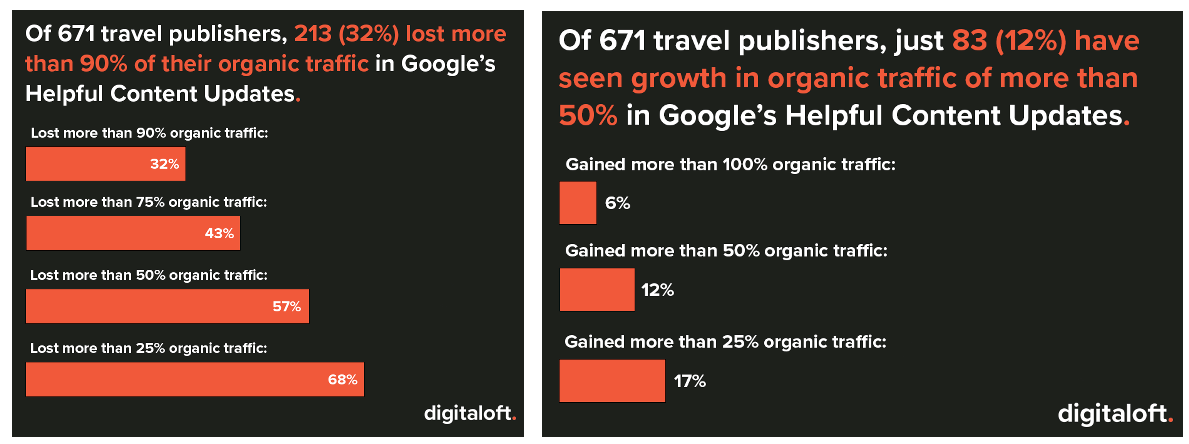
**Our take:**
- All publishers create content for search engines – a necessity. It's really a question of degree more than "content for people vs. search engines."
- Google faces existential threats in the combined form of AI content spam, AI search alternatives [and social media](https://www.nearmedia.co/googles-30-problem-ai-search-marriage-next-sge-mediocrity/) with younger users.
- Its algorithm updates are about trying to hold on to usage to protect revenues. There's a lot of collateral damage happening as it does this.
### Google Ads: Costs Rising, Conversions Aren't
The good news (for Google) is that click-through rates are up 5% year over year, according to the latest Google Ads [benchmarking report](https://www.wordstream.com/blog/2024-google-ads-benchmarks?ref=nearmedia.co) from Wordstream. The bad news, for search advertisers, is that costs are up considerably – hence Google's ["blowout" Q1](https://www.nearmedia.co/google-search-sge-review-response-uplift-end-of-location-intelligence/) – but conversions are down: CTR 5.1%, CPCs 10.4%, conversions -1.1%, cost per lead 24.6%. The report partly attributes all this to broad match and a blurring of ads vs. organic results, which has been an ongoing complaint and discussion topic. "As ads are blending into organic results, and often take up more space on the SERP, even for search terms with low commercial intent, lower CVRs may be more common ... because of an increase in clicks from people who may not be ready to convert," argues Wordstream. Google and third party experts, in the report, assert that rising costs are due to macroeconomic forces and "inflation." Really? CTRs, CPCs and conversions vary considerably by industry, among the 23 verticals in the report. It also presents year-over-year comparisons.
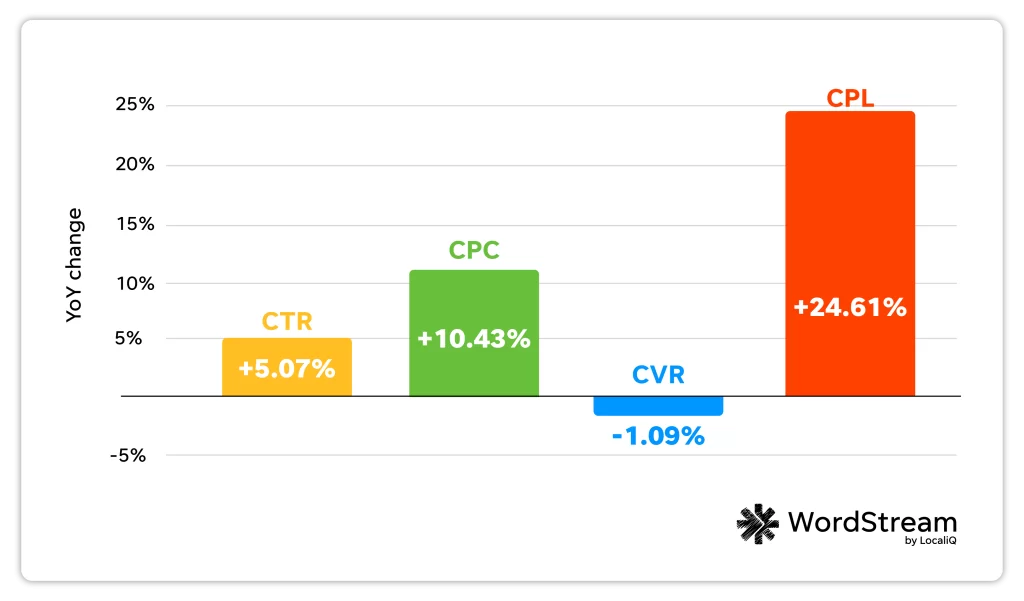
**Our take:**
- The report provides high-level recommendations, including prioritize ROAS, do frequent audits, adapt ads to be more "conversational" and others.
- Not mentioned: diversify away from Google to other channels. Double down on SEO and organic, but ...
- With SGE/AI answers and the [anticipated loss of organic traffic](https://www.washingtonpost.com/technology/2024/05/13/google-ai-search-io-sge/??ref=nearmedia.co), Ads will become even more competitive and costly.
## Recent Analysis
- **Near Memo episode 156:** [Is Google finally fixing LSA reviews?; why Google fails; DOJ slide deck details abusive Google ad practices](https://www.nearmedia.co/ep-156-google-finally-fixing-lsa-reviews-why-google-fails-doj-slidedeck-details-abusive-google-practices/).
- **Is Google Replacing LSA Reviews with GBP Reviews?**, [by Mike Blumenthal](https://www.nearmedia.co/lsa-reviews-to-be-unified-with-gbp-reviews-finally/).
## Short Takes
- **SGE** [is rolling out](https://twitter.com/gsterling/status/1790428717543747957?ref=nearmedia.co) this week in the US.
- **GBP** testing [business owner attribute/identity](https://www.seroundtable.com/google-local-panel-owner-attribute-37353.html?ref=nearmedia.co).
- **Google** testing [more prominent social media](https://www.linkedin.com/posts/darrenshawwhitespark%5Flocalseo-seo-activity-7195829607189630976-7WeQ/??ref=nearmedia.co) posts in GBP.
- Four searches show how **Google** is changing ([WaPo](https://www.washingtonpost.com/technology/2024/05/14/google-ai-search-can-you-trust/?ref=nearmedia.co)).
- Six **unpopular SEO opinions** [you need to consider](https://searchengineland.com/unpopular-seo-opinions-consider-440389??ref=nearmedia.co).
- Looks like [Apple going with OpenAI](https://www.bloomberg.com/news/articles/2024-05-11/apple-closes-in-on-deal-with-openai-to-put-chatgpt-on-iphone?ref=nearmedia.co) to beef up **Siri**.
- **Booking.com** [a new "gatekeeper](https://digital-strategy.ec.europa.eu/en/news/commission-designates-booking-gatekeeper-and-opens-market-investigation-x?ref=nearmedia.co)" under DMA in Europe.
- **USAToday**: Google [anti-coupon moves](https://www.usatoday.com/story/opinion/2024/05/09/google-tech-business-consumers-usa-today/73632211007/?ref=nearmedia.co) hurt consumers, SMBs.
- Traffic to news sites from **Facebook** [fell by 50%](https://pressgazette.co.uk/platforms/how-far-facebook-referral-traffic-to-news-sites-has-plummeted/?ref=nearmedia.co) in the last year.
- **Vector embeddings**: keyword + link-based SEO thinking [outdated](https://ipullrank.com/vector-embeddings-is-all-you-need?ref=nearmedia.co).
- **OpenAI** building [its version of robots.txt](https://techcrunch.com/2024/05/07/openai-says-its-building-a-tool-to-let-content-creators-opt-out-of-ai-training/??ref=nearmedia.co) to allow opt-outs.
- **TikTok** [testing AI search highlights](https://www.theverge.com/2024/5/13/24155875/tiktok-ai-generated-search-results-highlights-chatgpt?ref=nearmedia.co), trying to [prompt more searches](https://twitter.com/gsterling/status/1790407519988507132?ref=nearmedia.co).
- Despite antitrust issues, [Google still in the hunt](https://searchengineland.com/alphabet-acquire-hubspot-ongoing-440400?ref=nearmedia.co) for **Hubspot**.
Listen to our [latest podcast](https://www.nearmedia.co/memo/).
[](https://nearmedia.co/memo?ref=nearmedia.co)
How can we make this better? Email [us](mailto:gsterling@nearmedia.co) with suggestions and recommendations.
### Ep 156: Google finally fixing LSA reviews? Why Google fails, DOJ slide deck details abusive Google ad practices
URL: https://www.nearmedia.co/ep-156-google-finally-fixing-lsa-reviews-why-google-fails-doj-slidedeck-details-abusive-google-practices/
Last updated: 2024-05-11T14:05:06.000Z
**Part 1 starts 00:13 -** [**Is Google Finally fixing LSA reviews?**](https://youtu.be/h5ffYx3Ko0E?ref=nearmedia.co)
In a significant update for advertisers and businesses in the UK, Google has announced changes to its Local Services Ads (LSA) review system. Effective July 7, the existing LSA customer review URLs will expire and be replaced with URLs from Google Business Profiles (GBP), centralizing review management under GBP. This shift mandates businesses to have an affiliated GBP to run LSAs, integrating reviews on both platforms.
While it is unclear when or if this change will come to the US, it is likely given Google’s penchant for scale, to be rolled out worldwide. While the GBP review moderation and appeal process are significantly better than the current, totally lame LSA one, it still leaves a bit to be desired. These changes hint at Google's broader organizational challenges, including siloed product development and a lack of sustained oversight, which often result in suboptimal product evolutions.
Segment Reference Article:
[Is Google Replacing LSA Reviews with GBP Reviews?](https://www.nearmedia.co/lsa-reviews-to-be-unified-with-gbp-reviews-finally/)
**Part 2 starts 07:20 -** [**How Google has Failed to Reward the Best Content**](https://youtu.be/zASvG1w0pRA?ref=nearmedia.co)
HouseFresh, a small product review site known for its focus on air purifiers and home environment hygiene, has faced challenges due to recent Google algorithm updates, which have adversely impacted its visibility. Having lost 93% of their site traffic, they have detailed the many effects of recent Google updates on smaller niche sites that Google claimed they were trying to highlight.
HouseFresh clearly documents how large publishing houses leverage their strong domain presence and SEO strategies to dominate Google search results in profitable niches. This situation underscores the broader trend of niche sites being overshadowed by major brands, which have learned to effectively utilize SEO to their advantage and the problems present in the Google SERPS.
Segment Reference Articles:
[HouseFresh has virtually disappeared from Google Search results. Now what?](https://housefresh.com/how-google-decimated-housefresh/?ref=nearmedia.co)
[Google's Big Publisher Problem](https://www.nearmedia.co/big-brand-problem-forbes-content-farm-social-to-store/#googles-big-publisher-problem)
**Part 3 starts 19:30 -** [**DOJ Slidedeck Detailing Google’s Abusive Monopoly Practices Kills it**](https://youtu.be/VyiGxIk3Ft4?ref=nearmedia.co)
In a dramatic culmination to a three-year antitrust case, the Department of Justice (DOJ) presented a robust argument against Google, focusing on its dominant market practices with its advertising strategies. The DOJ accused Google of manipulating auction prices in paid search advertising to artificially boost revenue, a practice that arguably harms both competitors and consumers by stifling fair competition and transparency.
The government's presentation, encapsulated in a detailed 143-slide deck, highlighted how Google's practices are designed to meet its quarterly financial targets and cater to Wall Street expectations, often at the expense of genuine market competition. The DOJ argued that Google has a unique hold over the search advertising market, distinguishing it from other forms of digital advertising like social media or display ads, which do not serve as direct substitutes. This market control, according to the DOJ, compels advertisers to maintain their spending with Google, lacking viable alternatives.
The deck painted a picture of a company that, while not illegal in holding a monopoly, is crossing the line into abusing that power through strategies like price manipulation—one of the classic signs of monopolistic abuse.
Segment Reference Articles:
[United States & Co-Plaintiff States v. Google LLC Closing Statement on Search Advertising](https://www.justice.gov/d9/2024-05/421661.pdf?ref=nearmedia.co)
### Google PPC Games, Search.ChatGPT, Pichai Evades
URL: https://www.nearmedia.co/google-ppc-fixing-search-chatgpt-pichai-evades/
Last updated: 2024-05-09T18:53:42.000Z
### Google Ad-Price Manipulation
Last week Google and the US Department of Justice (DOJ) presented closing arguments in the company's long-running antitrust case that focused on Google's default search payments to Apple (among others) and its alleged anticompetitive manipulation of search advertising. The case won't be formally decided by the judge for at least a couple of months. But if the judge finds liability there will be a new proceeding to determine remedies. It's unlikely Google will escape at least some liability. In conjunction with the trial's conclusion, the DOJ publicly released [its closing slide presentation](https://www.justice.gov/d9/2024-05/421661.pdf??ref=nearmedia.co). The deck doesn't focus on Apple and default search; it details Google's alleged manipulation of paid search ad prices in order to meet Wall Street revenue expectations. It also argues there's no practical substitute for Google search advertising and seeks to rebut the argument that Google has a wide range of competitors (i.e., search and display are not equivalent). The deck is 143 pages but presents a solid argument and evidence, often using the testimony of Google employees to make its case.
**DOJ Slide presentation excerpts**
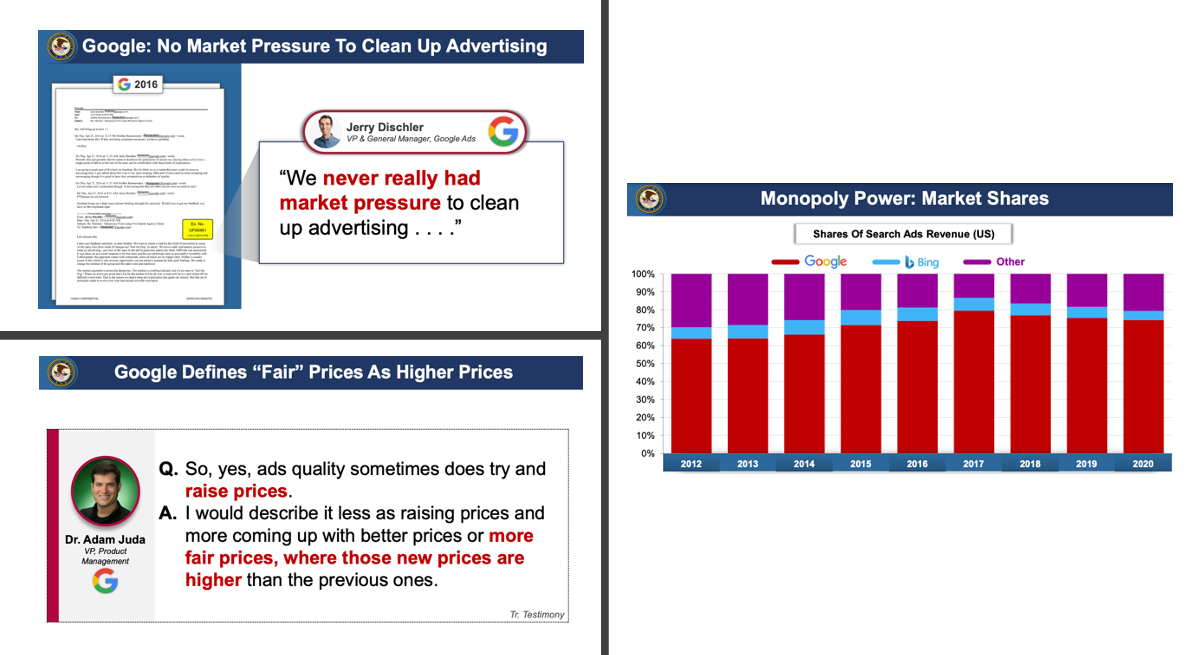
Source: US Justice Department
**Our take:**
- The deck is persuasive. It suggests how much Google [has changed](https://www.nearmedia.co/googles-revenue-imperative-meh-ai-content-tiktok-drama/) and now focused on revenue optimization almost single-mindedly.
- In terms of default search, Google argued at trial: "we're simply the best search engine," that's why people choose us. That's partly true but ...
- If so, as a matter of common sense, why does Google need to [pay Apple $20 billion a year](https://www.bloomberg.com/news/articles/2024-05-01/google-s-payments-to-apple-reached-20-billion-in-2022-cue-says?ref=nearmedia.co) for the "default search" position in Safari?
### Search.ChatGPT Is Coming
Not long ago [the rumor](https://www.nearmedia.co/openai-search-google-share-loss-yelp-assistant/) appeared that OpenAI was developing a bona fide search engine and Google (and Bing) competitor. That was based in part on the discovery of the subdomain [search.chatgpt.com](https://search.chatgpt.com/?ref=nearmedia.co), which is currently "not found." But more reports have surfaced that the effort is real. The Information and Bloomberg both independently reported that ChatGPT search is happening. Apparently it will be part of ChatGPT. According to [Bloomberg](https://www.bloomberg.com/news/articles/2024-05-07/openai-is-readying-an-ai-search-product-to-rival-google-perplexity?ref=nearmedia.co), "The feature would allow users to ask ChatGPT a question and receive answers that use details from the web with citations to sources such as Wikipedia entries and blog posts ... One version of the product also uses images alongsidewritten responses to questions, when they’re relevant." The Verge [adds](https://www.theverge.com/2024/5/7/24151616/openai-is-entering-the-search-game?ref=nearmedia.co), "Sources also tell *The Verge* that OpenAI has been aggressively trying to poach Google employees for a team that is working hard to ship the product soon." Google is expected to announce a formal rollout of SGE-AI Answers at Google I/O next week. There was speculation that the OpenAI search engine could launch this week to preempt that announcement.

Source: ChatGPT
**Our take:**
- There are dozens of brand rankings. Google is always in the top 5 if not the top three – though there's dissatisfaction according to multiple [anecdotal reports](https://www.nearmedia.co/google-worse-debate-eu-big-regs/).
- It's possible Google [has lost \~2 points](https://gs.statcounter.com/search-engine-market-share/desktop-mobile-tablet/united-states-of-america/?ref=nearmedia.co#monthly-202309-202404) of market share since the fall. Younger users [appear to be favoring social](https://www.nearmedia.co/googles-30-problem-ai-search-marriage-next-sge-mediocrity/) for discovery in some cases.
- A ChatGPT search engine doesn't guarantee success. People who predicted Google's downfall when ChatGPT arrived (11/22) [were obviously wrong](https://abc.xyz/assets/91/b3/3f9213d14ce3ae27e1038e01a0e0/2024q1-alphabet-earnings-release-pdf.pdf?ref=nearmedia.co).
### Nothing Wrong, We're Just Innovating
In a new Bloomberg [interview](https://www.bloomberg.com/news/articles/2024-05-08/video-alphabet-ceo-sundar-pichai-lays-out-google-s-ai-roadmap?ref=nearmedia.co) with Google CEO Sundar Pichai, he's questioned about search quality, AI competition and potential disruption of Google's business model. Reporter Emily Chang asks whether "search is getting worse." Pichai responds with a kind of non-answer: "Anytime there's a transition, you get an explosion of new content, and AI is going to do that. So for us, we view this as the challenge ... So doing that well is what will define a high-quality product, and I think it's gonna be the heart of what makes Search successful." He confidently explains Google ad revenue won't be compromised by SGE. "As we are rolling out AI or views in Search, we've been experimenting with ads, and the data we see shows that those fundamental principles will hold true during this phase as well." And when asked whether AI-generated content will "ruin search," Pichai says, "How do you have a notion of what's objective and real in a world where there's gonna be a lot of synthetic content? ... We are making progress, but it's gonna be an ongoing journey." Finally, Chang mentions regulatory pressure and potential divestiture. Pichai blithely asserts, "A lot of our products integrate in a way that provides value for our users."
**Our take:**
- Pichai is an affable figure but he intentionally equivocates and doesn't directly address reporter Chang's questions. Unfortunately, she doesn't follow up.
- Chang asks about threats to Google's future. "Our biggest threat is not executing well," he suggests. It's already happening.
- The general tone and content of Pichai's remarks is: nothing is wrong at Google, we're busy innovating.
## Recent Analysis
- **Is Google Replacing LSA Reviews with GBP Reviews?**, [by Mike Blumenthal](https://www.nearmedia.co/lsa-reviews-to-be-unified-with-gbp-reviews-finally/).
- **Near Media podcast episode 155:** [An interview with Dana DiTomaso: to Google GA4 analytics Hell and back again](https://www.nearmedia.co/ep-155/).
## Short Takes
- New layout for [reporting and replying to reviews](https://twitter.com/JoyanneHawkins/status/1786357075708088678?ref=nearmedia.co) on **GBP**.
- **50 local SEO tips** [to rank better](https://www.linkedin.com/posts/timkahlert%5Ftop-50-local-seo-tips-for-2024-ugcPost-7193938789965213696-Hsdz/?ref=nearmedia.co) on Google Maps.
- Using local pack **grid rankings** for [competitive local SEO analysis](https://www.localseoguide.com/using-local-pack-grid-rankings-for-competitive-local-seo-analysis/?ref=nearmedia.co).
- **Google** testing [product review summaries](https://www.seroundtable.com/google-product-review-summary-labels-37345.html?ref=nearmedia.co) with one-word titles.
- Why the March 2024 **Core Update** [was unique](https://searchengineland.com/google-march-2024-core-update-key-observations-440148?ref=nearmedia.co).
- Google [uses iPhone action button](https://www.theverge.com/2024/5/8/24151918/google-app-shortcut-circle-to-search-google-lens-ios?ref=nearmedia.co) to bring "**Circle to Search**" to iOS.
- **MSFT Copilot** [getting auto-complete feature](https://www.theverge.com/2024/5/8/24151847/microsoft-copilot-rewrite-prompt-feature-microsoft-365?ref=nearmedia.co) for better AI prompts.
- **Bing** tests SERP changes that clearly [distinguish ads from content](https://www.seroundtable.com/bing-seperator-ads-free-search-results-37341.html?ref=nearmedia.co).
- **TikTok** e-commerce sellers are [diversifying to other social sites](https://www.digitalcommerce360.com/2024/05/08/how-tiktok-ban-could-impact-ecommerce-retailers/?ref=nearmedia.co).
- Low quality **AI-generated articles** [are all over](https://futurism.com/advon-ai-content?ref=nearmedia.co) A-list media sites.
- **Slop**: A new term of art for [unwanted AI](https://simonwillison.net/2024/May/8/slop/?ref=nearmedia.co) content.
- Amherst professor [turns](https://knightcolumbia.org/cases/zuckerman-v-meta-platforms-inc?ref=nearmedia.co) **Section 230** against big tech.
Listen to our [latest podcast](https://www.nearmedia.co/memo/).
[](https://nearmedia.co/memo?ref=nearmedia.co)
How can we make this better? Email [us](mailto:gsterling@nearmedia.co) with suggestions and recommendations.
### Is Google Replacing LSA Reviews with GBP Reviews?
URL: https://www.nearmedia.co/lsa-reviews-to-be-unified-with-gbp-reviews-finally/
Last updated: 2024-11-19T21:10:24.000Z
Local Services Ads (LSA) reviews have long been total crap and wildly effective at deceiving consumers. They are easily faked, readily bought, open to a great deal of abuse and offer no effective moderation process. They have been distinct from Google Business Profile reviews and I have long wondered why Google didn't just create a single, effective review system.
Now, they might just be heading in that direction.
A user in the UK recently shared this LSA notification with me indicating that (at least in the UK) LSA reviews are going to be replaced with Google Business Profile reviews.
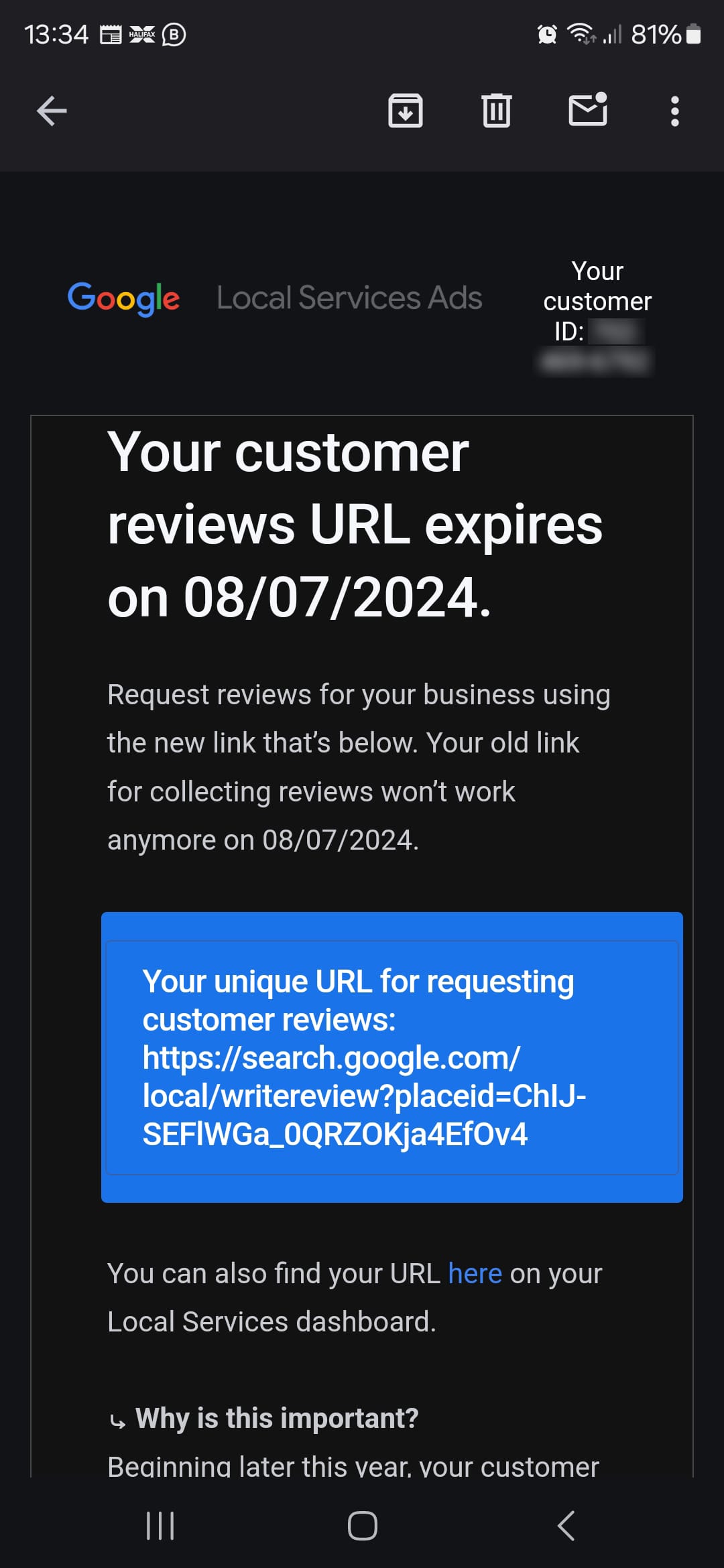
### Widespread LSA Abuse
When LSAs first rolled out, the idea was to have reviews from verified customers of a business. However the links provided, instead of being job specific, were generic and allowed anyone to leave LSA reviews, including spammers.
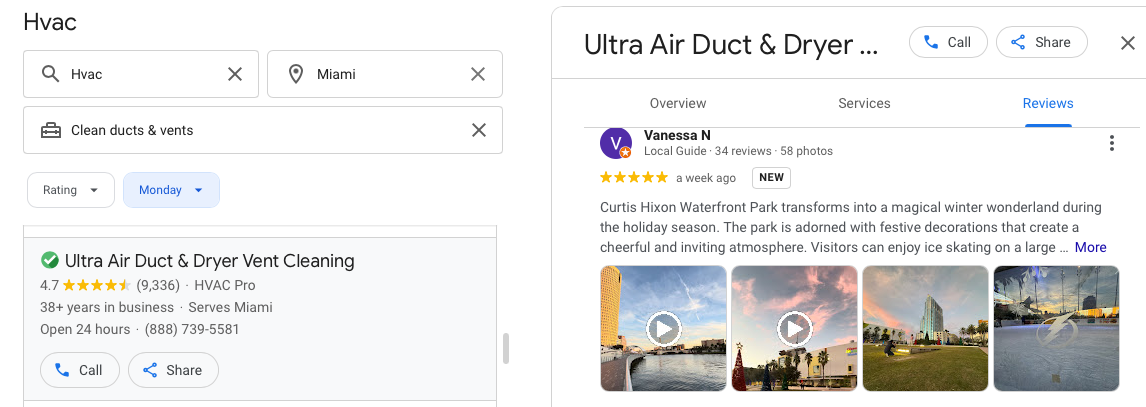
Not only were LSA reviews easy to buy, the system was easy to game, with businesses figuring out how to ["borrow" thousands of reviews](https://www.nearmedia.co/lsa-spam-scam-its-deja-vu-all-over-again/) from national parks and other popular locations. Inevitably this led to [significant fraud](https://www.nearmedia.co/google-lsa-supercharges-the-duct-cleaning-scam/) in the LSA world.
### Lack of Moderation Filters
Starting in winter of 2022, under [pressure](https://www.nearmedia.co/ftc-review-platform-guidelines/) from the FTC, Google Business Profiles implemented [new AI driven review filters](https://www.nearmedia.co/a-guide-to-googles-review-filter/) that addressed a great deal of home services review fraud. While [these filters were imperfect](https://www.nearmedia.co/a-guide-why-are-my-google-reviews-missing/), with a fair number of false positives, they were an improvement and have continued to improve. No such filters made their way over to LSA reviews. Thus purchased reviews stayed up, even if they were obviously and easily identified as fraudulent or manipulated.
### No Escalation Process
To comply with new EU regulations, Google Business Profiles created a relatively successful [support-based escalation process](https://www.nearmedia.co/how-to-fight-a-fake-google-review-attack/) that allowed businesses experiencing fake review attacks (and missing reviews) to file a ticket. The process offered the option of several appeals and the hope of Google intervention with some possibility of redress. While not even close to perfect, it is dramatically better than the LSA method.
No such process existed for LSA reviews until recently. Last year a simple [reporting form](https://support.google.com/localservices/contact/dispute%5Freview?ref=nearmedia.co) was [provided](https://tomwaddington.com/?ref=nearmedia.co). But submissions via this form went into a deep, dark hole and provided no communication once the report was filed. If the reviews were not removed there was no appeal options, let alone a way to communicate with the LSA team.
So while jobs booked via LSAs were "guaranteed" by Google, LSA reviews were largely a joke – but [consumers were regularly fooled](https://www.nearmedia.co/google-lsa-supercharges-the-duct-cleaning-scam/).
### Hope Springs Eternal

Your old customer reviews link will expire by 2024-07-08 as we're unifying review collection with Google Business Profile. In order to receive a new link and continue serving ads please complete business profile verification
The message posted above has not been seen in the US and has not been confirmed by Google so we can't be sure if this is a local UK change or (hopefully) a worldwide rollout.
In March, there were [reports of an improved LSA verification process](https://www.seroundtable.com/google-lsa-new-verification-process-36985.html?ref=nearmedia.co) rolling out that requires verification within 60 days or your LSA will be removed. While the GBP review process leaves a lot to be desired, we can only hope this verification process and review change are part of larger changes that clean up LSA reviews as well.
### Big Brand Problem, Forbes Content Farm, Social to Store
URL: https://www.nearmedia.co/big-brand-problem-forbes-content-farm-social-to-store/
Last updated: 2024-05-07T19:28:21.000Z
### Google's Big Publisher Problem
HouseFresh is [back to warn us](https://housefresh.com/how-google-decimated-housefresh/?ref=nearmedia.co) about how Google's favoritism of big brand sites is pushing out independent publishers. In February, the small product review site [called out](https://www.nearmedia.co/brands-clicks-social-acquisition-gemini-toggle/) bigger media publishers that were publishing product reviews (often with affiliate links) "without firsthand testing and simply paraphras\[ing\] marketing materials and Amazon listing information." Now HouseFresh says it has "virtually disappeared" from Google results because of "keyword swarming" tactics by larger publishers. The principal example used is Dotdash Meredith, which "allegedly identifies small sites that have cemented themselves in Google results for a specific (and valuable) term or in a specific topic, with the goal of pushing them down the rankings by publishing vast amounts of content of their own." Another example is Forbes, which has lots of content tied to affiliate revenue (not just coupons). However, the HouseFresh article cites numerous examples from different publishers. It also discusses how the site is trying to adapt (barnacle SEO, social channels) to being demoted in the SERPs.
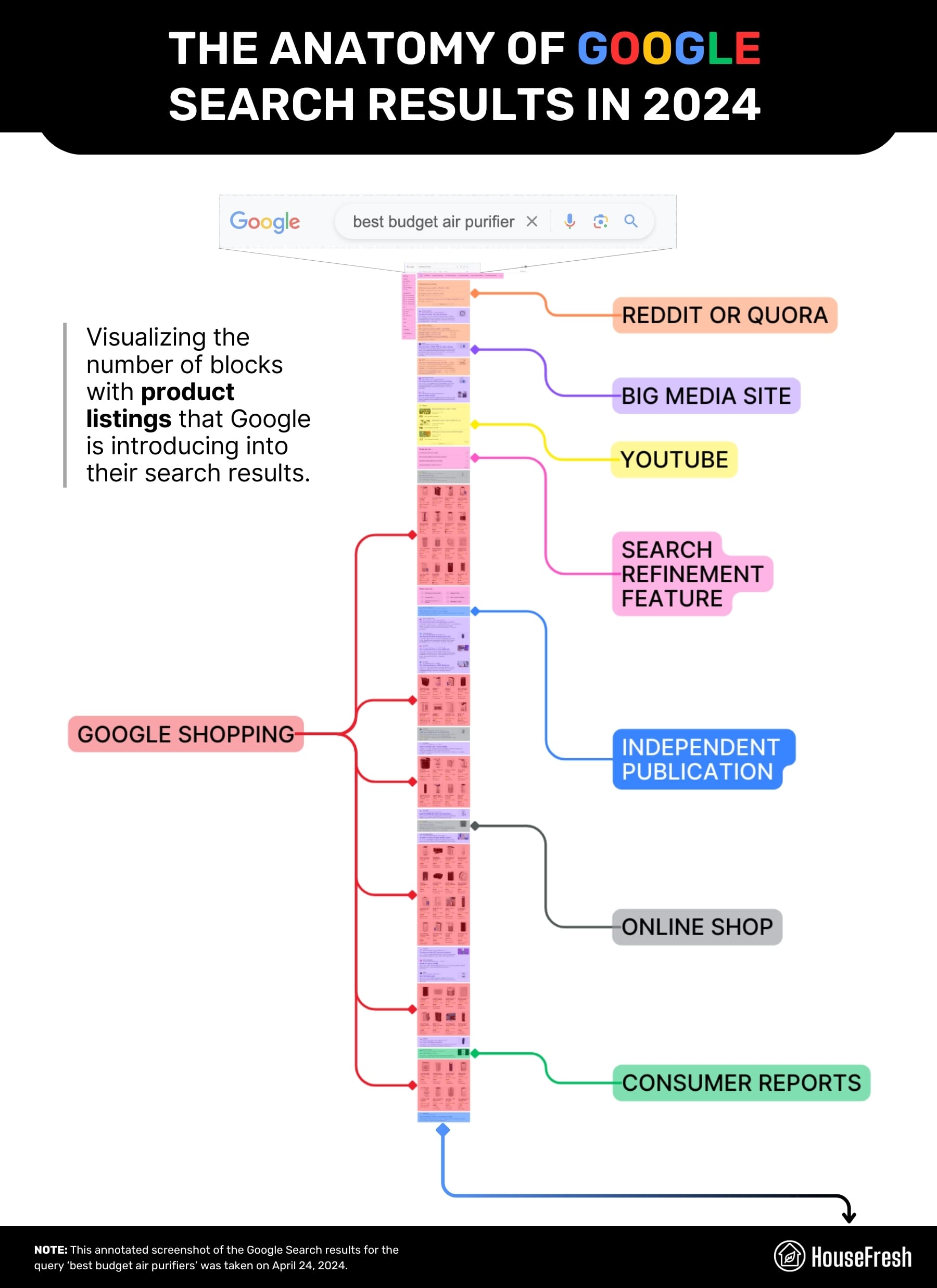
Source: HouseFresh
**Our take:**
- Google is punishing some of the affiliate revenue behavior discussed in the article with its site reputation abuse policy and enforcement.
- Google has [pledged to reward "the best content](https://twitter.com/searchliaison/status/1760017643766153350?ref=nearmedia.co)" regardless of the source. But it doesn't seem to be able to do that in practice, partly because it relies heavily on brand and behavioral signals, which creates a self-reinforcing pattern.
- Is this brand favoritism simply a "bad product" problem, which David Mihm has described as a "[content oligopoly](https://www.nearmedia.co/biggest-traffic-referrers-online-oligarchy-79-of-reviews-on-google/)," or is it an aspect of the Google monopoly problem?
### Forbes: Financial Mag to Content Farm
At one time Forbes was a respected business news magazine. In the past \~15 years it has become an SEO-driven "platform" (read: content farm) that ranks for almost [every conceivable topic](https://twitter.com/localseoguide/status/1787574694671266111?ref=nearmedia.co), including things like "best kitchen flooring" that have no relationship to the original brand. Facing a traditional media revenue crisis, Forbes made a strategic decision in roughly 2010 to [open up to "contributors](https://www.forbes.com/sites/lewisdvorkin/2011/01/10/inside-forbes-our-content-strategy-brand-power-and-the-path-forward/??ref=nearmedia.co)" and effectively become a blogging platform. According to [Wikipedia](https://en.wikipedia.org/wiki/Forbes?ref=nearmedia.co), two years later it had 1,000 outside contributors generating thousands of articles. In 2019, Forbes was reportedly publishing 100 articles a day. Most of this was monetized by display ads and video but also affiliate links. The company, which had a huge coupons subdomain, just [removed](https://www.seroundtable.com/forbes-completely-removes-coupon-directory-410-pages-37320.html?ref=nearmedia.co) those pages in anticipation of Google's enforcement of its "[site reputation abuse](https://blog.google/products/search/google-search-update-march-2024/?ref=nearmedia.co)" policy. Like others, Forbes sought to capitalize on its domain authority and rankings – Google [rewards brands](https://www.nearmedia.co/brands-clicks-social-acquisition-gemini-toggle/) – to maximize revenue with affiliate links/content. I am no fan of Forbes and am often dismayed by what it ranks for, but one could argue that its strategy and choices are an entirely a rational response Google's algorithmic biases.
**Forbes ranks just under SGE for "best kitchen flooring"**
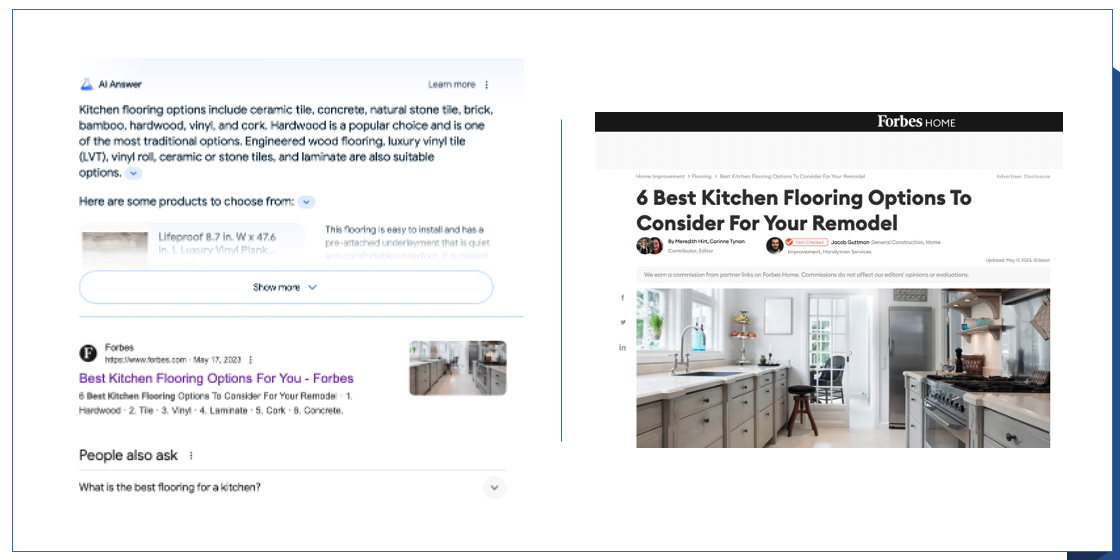
Source: Google-Forbes
**Our take:**
- The Forbes site experience is almost totally unusable. But the clicks keep coming (brand familiarity), creating a feedback loop Google rewards.
- Google largely created this monster and now has to clean up its mess. Enter [site reputation abuse](https://www.linkedin.com/posts/glen-allsopp-63084025%5Fsince-march-ive-been-monitoring-2500-coupon-focused-activity-7193557452636786688-YmR5/?ref=nearmedia.co), which is something of a [blunt instrument](https://twitter.com/lilyraynyc/status/1787832358512587189?s=43&t=NNLJEcbkhyOw0gOk6%5FrQUw&ref=nearmedia.co) apparently.
- Forbes may be a symbol of what's wrong with internet content; it's also a byproduct of how sites respond (rationally) to Google's market power.
### GenZ: Social to Store Shoppers
After the closure of Bed, Bath & Beyond (BB&B) stores in July 2023, Overstock.com bought the domain and has been capitalizing on BB&B's brand authority. After traffic dropped significantly around the liquidation, the domain has partly recovered. According to Semrush, monthly uniques are \~5.4 million vs. \~22 million two years ago. Without stores, the brand is likely to fade over time; we know that [stores drive online buying](https://www.nearmedia.co/review-fraud-crisis-stores-drive-online-sales-yelp-reserves-with-google/). A [report](https://2visions.org/ecommerce-market-research/2024-clothing-accessories-ecommerce-market-research-report/?ref=nearmedia.co) from research firm 2 Visions reinforces the importance of stores, both as a stand-alone channel and as a support for e-commerce. At the highest level the report finds hybrid shopping is critical for retailers but that there are nuanced age, income and geographic differences in shopping behaviors. Most interesting is the discussion of GenZ. Younger shoppers tend to discover products on social media but prefer buying in stores (more than other generations). Somewhat surprisingly, GenZ is relatively less price sensitive vs. other groups. The majority of GenZ also perceive the in-store experience to offer higher product quality. Internet-centric buyers, by comparison, like the larger selection, convenience and price discounts offered online.

Source: Meta.ai
**Our take:**
- This report reinforces what we've seen and argued repeatedly; consumers want both online and offline options from retailers.
- And with very few exceptions online-only retailers are at a disadvantage vs those offering both experiences – though stores are expensive to run.
- In a more competitive, unpredictable and costly SEO/PPC environment for product sellers, stores offer differentiation and branding.
### Recent Analysis
- **Near Media podcast episode 126**: (from the vault) [Do searchers use the Local Finder?; how many links does a local site need?; Google's content BS](https://www.nearmedia.co/ep-156-from-the-vault-ep-126/).
## Short Takes
- Google testing **GBP SERP** for ['near me' queries](https://www.seroundtable.com/google-search-only-local-listing-near-me-queries-37338.html?ref=nearmedia.co) in multiple categories.
- How to [rank in local results](https://searchengineland.com/localized-serps-traffic-leads-service-area-pages-440129?ref=nearmedia.co) using **service-area pages**.
- New **Google Business Profile** [categories](https://twitter.com/JoyanneHawkins/status/1787912082685354374?ref=nearmedia.co).
- **Keyword stuffing in business names** shouldn't work [but it does](https://twitter.com/darrenshaw%5F/status/1786414660637561016?ref=nearmedia.co).
- Kendrick-Drake rap feud [escalates](https://twitter.com/vidsthatgohard/status/1787158996681380227?s=12&ref=nearmedia.co) onto **Google Maps**.
- Early impact of [Google manual actions](https://www.linkedin.com/posts/glen-allsopp-63084025%5Fsince-march-ive-been-monitoring-2500-coupon-focused-activity-7193557452636786688-YmR5/?ref=nearmedia.co) on media **coupon subdomains**.
- **Google**: post HCU recoveries possible but [could take months](https://www.seroundtable.com/google-helpful-content-update-recoveries-much-longer-37317.html??ref=nearmedia.co).
- Apple's AI work should result in a more capable **Siri** [with iOS 18](https://appleinsider.com/articles/24/05/03/siri-for-ios-18-to-gain-massive-ai-upgrade-via-apples-ajax-llm??ref=nearmedia.co).
- **Google** seems to be [changing flight search results](https://www.linkedin.com/feed/update/urn:li:activity:7193319622253666304/?ref=nearmedia.co) to satisfy EU regs.
- **Statcounter** Google [search-share](https://www.nearmedia.co/openai-search-google-share-loss-yelp-assistant/) drop [an error](https://searchengineland.com/googles-huge-search-market-share-loss-wasnt-real-data-revised-440191?ref=nearmedia.co).
- **Google-Apple default search** deal [supposed to last](https://www.theinformation.com/briefings/apple-google-search-deal-valid-until-at-least-2026-doj-says??ref=nearmedia.co) through 2026\.
- Here are the DOJ's "closing argument" **Google** trial [slides](https://www.justice.gov/d9/2024-05/421661.pdf?ref=nearmedia.co).
- Most [common features](https://www.adobe.com/express/learn/blog/small-business-branding-report?ref=nearmedia.co) of **SMB websites**.
Listen to our [latest podcast](https://www.nearmedia.co/memo/).
[](https://nearmedia.co/memo?ref=nearmedia.co)
How can we make this better? Email [us](mailto:gsterling@nearmedia.co) with suggestions and recommendations.
### Ep 126: (from the vault) Do searchers use Local Finder?, How many links does a local website need? Google's BS around content
URL: https://www.nearmedia.co/ep-156-from-the-vault-ep-126/
Last updated: 2024-05-02T18:55:51.000Z
**We're taking the week off, but here's an episode (#126) from the "vault" that we think you'll enjoy!**
**Part 1 starts 00:13 -**[ **Do Google searchers enter the Local Finder?**](https://youtu.be/C-XdxxLGXHA?ref=nearmedia.co)
Local SEOs wonder whether searchers actually enter the Local Finder from the Pack results. We often think no but our research indicates that not only do searchers enter the Local Finder on a regular basis, they also scroll deep and often pick a business not in the top three.
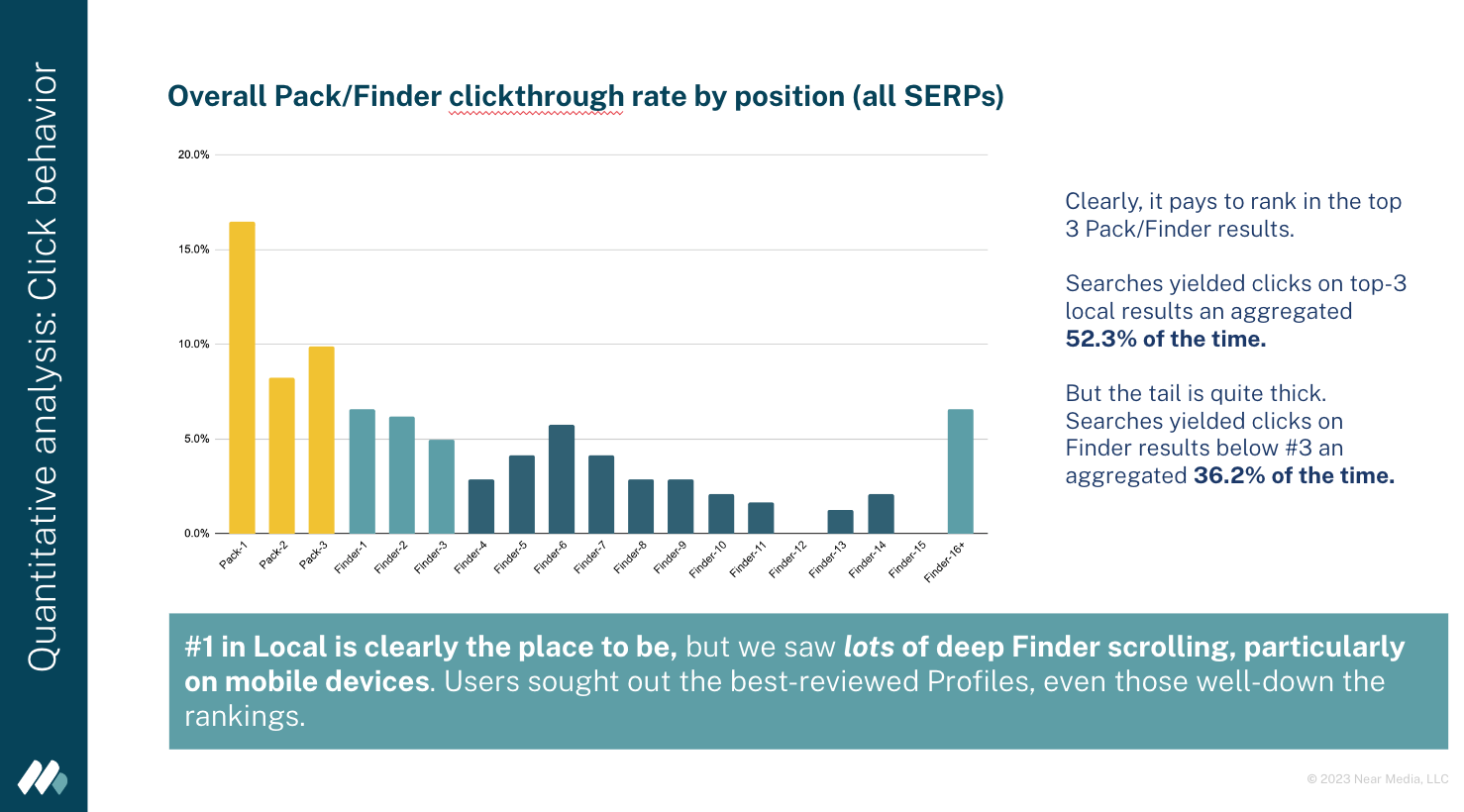
**Part 2 starts 07:10 -** [**How many links does a local website need to compete in Local Search?**](https://youtu.be/m%5FGJaK1Eyww?ref=nearmedia.co)
Local link building is hard but NearMedia research indicates that even in competitive markets in competitive categories it only takes several great local links to compete.
**Part 3 starts 17:00 -** [**Google's BS around creating great content**](https://youtu.be/KitxcqsBSDw?ref=nearmedia.co)
Google has created a world where focusing on search optimizations has rewarded businesses who have invested in SEO. Yet they consistently lecture users about the need for user centric content. The reality is that there is a great deal of hypocrisy on the part of Google in these matters. How should they deal with this reality?
[Google's 'Naïve' SEO Advice](https://www.nearmedia.co/naive-seo-advice-meh-or-malevolent-ai-ai-for-b2b/)
### OpenAI Search, Google Share Loss, Yelp Assistant
URL: https://www.nearmedia.co/openai-search-google-share-loss-yelp-assistant/
Last updated: 2024-05-02T19:19:43.000Z
### OpenAI Search Imminent?
There's been [speculation](https://www.theinformation.com/articles/openai-develops-web-search-product-in-challenge-to-google?ref=nearmedia.co) that OpenAI is preparing a more direct search challenge to Google. That chatter intensified over the past few days, [as the subdomain 'search.chatgpt.com' appeared](https://www.seroundtable.com/openai-to-launch-search-engine-37319.html?ref=nearmedia.co) in server log files. OpenAI is reportedly also hosting an [event on May 9](https://twitter.com/apples%5Fjimmy/status/1785436609095328067?ref=nearmedia.co), ahead of Google's developer conference, where many expect the formal launch of Google SGE. ChatGPT can today search the internet using Bing. But existing analytics data argue ChatGPT hasn't captured much "search" usage. Perplexity.ai is the AI platform that has [most directly positioned itself](https://www.nearmedia.co/perplexity-google-sge-coming-soon-antitrust-conundrum/) as a Google alternative, including the incorporation of Yelp data for local. In a recent [podcast interview](https://www.nearmedia.co/sge-hits-brands-dma-hot-seat-altman-reimagines-search/) OpenAI CEO Sam Altman said, "The thing that’s exciting to me is not that we can go build a better copy of Google search, but that maybe there’s just some much better way to help people find and act on and synthesize information ... I don’t think the world needs another copy of Google." His vision for a next-gen search experience is a hybrid combination of search and LLMs, which is what Google is essentially doing (somewhat awkwardly) with SGE.

Source: DALL-E
**Our take:**
- For years we anticipated [an Apple search engine](https://www.nearmedia.co/apple-search-redux-assistant-bard-google-ads-useful-50/), only to be repeatedly disappointed. ([Google 'default' payments](https://www.bloomberg.com/news/articles/2024-05-01/google-s-payments-to-apple-reached-20-billion-in-2022-cue-says?ref=nearmedia.co) essentially prevented it.)
- If some sort of enhanced ChatGPT search capability is coming, it probably wouldn't be a stand-alone product. But that's a strategy decision.
- Google's brand has lost its shine for many people. But OpenAI would need to deliver something very strong to compete. Habits are hard to break.
### Data: Google Losing Search Share
We noticed ([via](https://searchengineland.com/did-google-really-lose-search-market-share-to-microsoft-bing-in-april-440098?ref=nearmedia.co) SEL) that Google appears to have lost meaningful search market share in the US. According to [Statcounter](https://gs.statcounter.com/search-engine-market-share/desktop-mobile-tablet/united-states-of-america/?ref=nearmedia.co#monthly-202309-202404), Google had \~87% of search in March but that declined to \~77% in April. At the same time, Bing and Yahoo grew by roughly 5 points each. Globally, Google's share [appears to be down](https://gs.statcounter.com/search-engine-market-share/desktop-mobile-tablet/worldwide/?ref=nearmedia.co#monthly-202309-202404) a more modest 4 points. SimilarWeb doesn't show a similar drop for Google, although the data I saw was from February. We haven't seen any other validation for the accuracy of the Statcounter findings, suggesting it may be a mistake or glitch. Statcounter says on its site that, in generating search market share, it analyzes "every page view [referred by a search engine](https://gs.statcounter.com/faq?ref=nearmedia.co#search-engine-referrals)." And Google just had a very successful first quarter, where it [asserted](https://www.nearmedia.co/google-search-sge-review-response-uplift-end-of-location-intelligence/) that search volumes and engagement were growing. Yet there's [evidence](https://www.nearmedia.co/googles-30-problem-ai-search-marriage-next-sge-mediocrity/) that younger users are transferring some search activity to Instagram and TikTok. There's also anecdotal discussion online of people using ChatGPT (and other AIs) instead of Google in many instances. For example, my Google usage is down perhaps 50%.
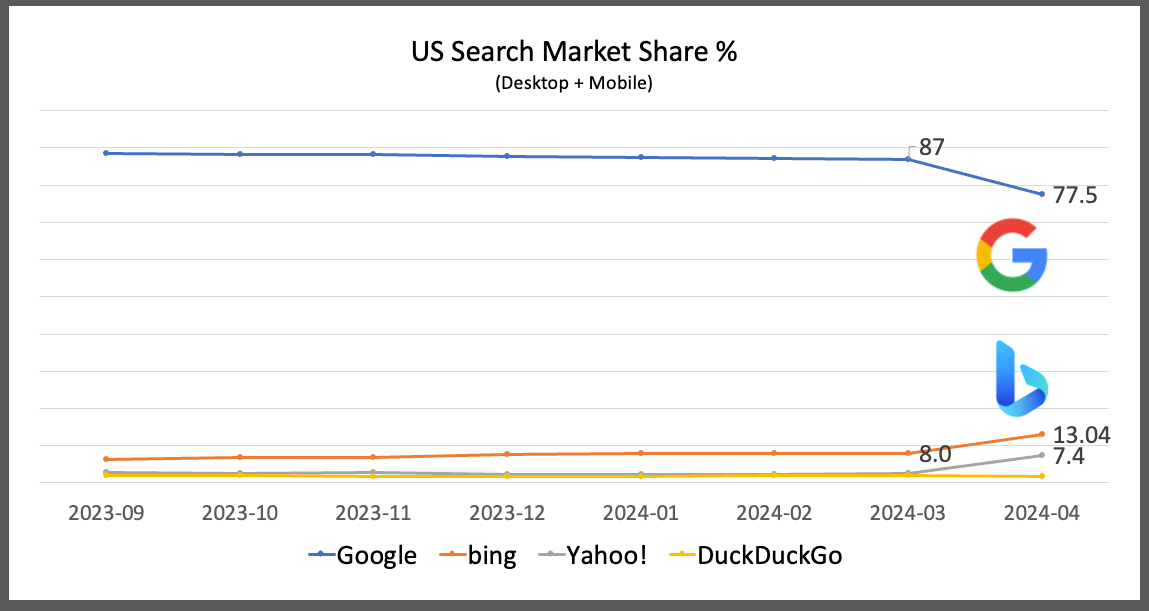
Source: StatCounter
**Our take:**
- There are three possibilities here: the data is simply wrong, the data is correct or, more likely, there's some "directional" accuracy to it.
- We'll find out soon. Statcounter (and Google) will be compelled to respond once investors get wind of this and demand a response.
- **Update:** Because Statcounter is [measuring traffic referrals](https://twitter.com/dukeo/status/1785850368796303389?s=46&t=49BP272BJJ0MXFQqRl-8XQ&ref=nearmedia.co) it may mean Google is simply sending less traffic to websites rather than losing usage.
### Yelp's New AI Assistant
Over the past few years, Yelp has steadily lost ground to Google in local search. However, [higher CPCs, more ad clicks](https://www.nearmedia.co/google-trial-smb-ai-hopes-yelps-cpcs-up/), broader monetization and cost cutting have [keep the company growing](https://www.yelp-press.com/press-releases/press-release-details/2024/Investments-in-Product-Led-Strategy-Drove-Yelps-Strong-2023-Results/?ref=nearmedia.co). More recently, Yelp has been trying to figure out how to use AI in order to create a differentiated experience. This week it [announced](https://blog.yelp.com/news/spring-product-release-2024/?ref=nearmedia.co) the [Yelp Assistant](https://youtu.be/746cYlUANxo??ref=nearmedia.co), which offers a more conversational and intuitive entry point for Yelp's request for quote (RFQ) system. I assume Yelp has used its historical data to train the assistant on relevant questions to ask by vertical/job type. And it appears to supersede the current wizard-forms that front-end the RFQ system. If it works, it could increase the volume of quotes requested – and revenue to Yelp. This would also represent a different experience from what's offered today on Google. (We don't yet have access and so can't comment on the user experience.) Yelp also announced upgrades to its Fusion API and Guest Manager tool. The Fusion API now includes natural language processing for more flexible search options on partner sites. Guest Manager is a front-of-house restaurant management tool.
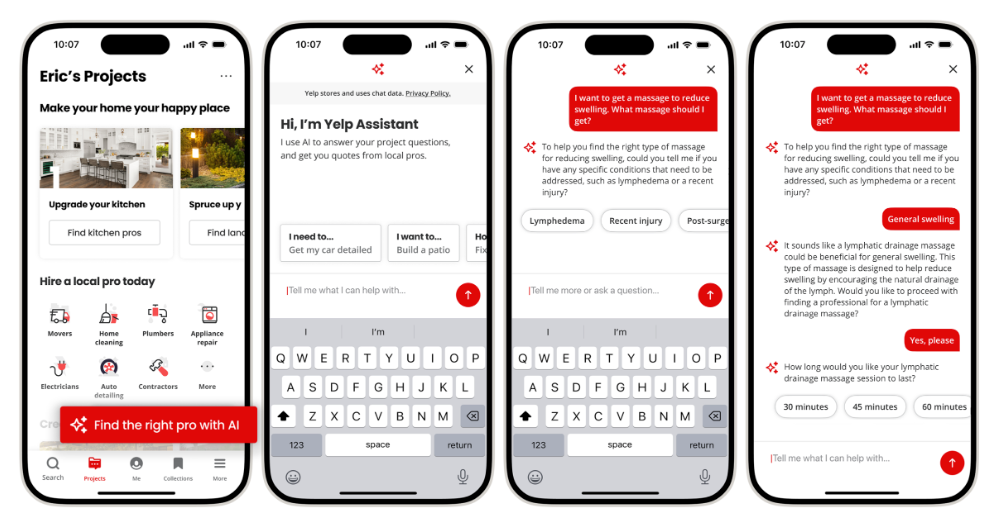
Source: Yelp
**Our take:**
- Services delivers 60% of Yelp's ad revenue; home services is a subsidiary category but probably the biggest revenue driver within "services."
- The current Yelp RFQ process seeks to maximize the number of pros that receive the lead, which isn't always best for the end user.
- Overall, the Yelp Assistant appears to be a smart approach – with the caveat that we haven't used it yet – to competing with Google.
## Recent Analysis
- **Near Media podcast episode 155:** [An interview with Dana DiTomaso: to Google GA4 analytics Hell and back again](https://www.nearmedia.co/ep-155/).
## Short Takes
- Google [paid Apple](https://www.bloomberg.com/news/articles/2024-05-01/google-s-payments-to-apple-reached-20-billion-in-2022-cue-says?ref=nearmedia.co) $20B in **default search deal** in 2022\.
- **Safari browser** [getting AI upgrade](https://appleinsider.com/articles/24/04/30/apple-to-unveil-ai-enabled-safari-browser-alongside-new-operating-systems?utm%5Fmedium=rss&ref=nearmedia.co), including "intelligent search."
- **Amazon's** [generated $11.8B](https://ir.aboutamazon.com/news-release/news-release-details/2024/Amazon.com-Announces-First-Quarter-Results-68b9258cd/?ref=nearmedia.co) in ad revenue in Q1, up 24% YoY.
- Report: tech "[gatekeepers" falling short](https://eutechalliance.eu/wp-content/uploads/2024/04/EUTA-DMA-Concers-on-gatekeepers-compliance-measures-May-2024.pdf?ref=nearmedia.co) on EU **DMA** compliance.
- **Google** showcases new "[shopping destination](https://blog.google/products/shopping/mothers-day-gift-ideas-2024/?ref=nearmedia.co)" via search.
- **Google** now calling SGE content "[AI answers](https://www.seroundtable.com/google-sge-ai-answer-37314.html?ref=nearmedia.co)."
- Google [testing "custom filters"](https://9to5google.com/2024/05/01/google-search-testing-useful-custom-filters-that-you-can-save-to-your-account/?ref=nearmedia.co) for more **search personalization**.
- Some Twitter usage [has apparently migrated](https://techcrunch.com/2024/05/01/linkedin-is-the-twitter-x-rival-no-one-is-talking-about/?ref=nearmedia.co) to **LinkedIn**.
- Americans [want more regulation](https://www.pewresearch.org/internet/2024/04/29/americans-views-of-technology-companies-2/??ref=nearmedia.co) of **social media** and big tech.
- **Marie Haynes** [laments the HCU/CU impact](https://www.mariehaynes.com/dear-google-please-do-more-to-help-the-website-owners-impacted-by-hcu-and-march-core/?ref=nearmedia.co) on small sites.
- Split screen: **Google** [revenue growth](https://www.nearmedia.co/google-search-sge-review-response-uplift-end-of-location-intelligence/) vs. [SEO/user dissatisfaction](https://www.growth-memo.com/p/the-big-disconnect?ref=nearmedia.co).
- Sarah Friar out at **Nextdoor**, [co-founder Tolia returning](https://about.nextdoor.com/press-releases/nextdoor-announces-leadership-transition-and-reports-preliminary-q4-2023-financial-results/?ref=nearmedia.co) as CEO.
- How AI may [bring about](https://www.theatlantic.com/technology/archive/2024/04/generative-ai-search-llmo/678154/?ref=nearmedia.co) the "**end of the web** as we know it."
Listen to our [latest podcast](https://www.nearmedia.co/memo/).
[](https://nearmedia.co/memo?ref=nearmedia.co)
How can we make this better? Email [us](mailto:gsterling@nearmedia.co) with suggestions and recommendations.
### Google ❤️ SGE, Review Response Uplift, Location Data Drought
URL: https://www.nearmedia.co/google-search-sge-review-response-uplift-end-of-location-intelligence/
Last updated: 2024-05-18T06:24:52.000Z
### Google: SGE Is Boosting Search
On Google's [earnings call](https://abc.xyz/2024-q1-earnings-call/?ref=nearmedia.co), following its "blowout" Q1, the company was upbeat about SGE. CEO Sundar Pichai argued that including AI answers in search increases engagement: "We are seeing early confirmation of our thesis that this will expand the universe of queries..." In a blog [post](https://blog.google/inside-google/message-ceo/alphabet-earnings-q1-2024/?ref=nearmedia.co#AI-search-innovation) he added, "We’re encouraged that we’re seeing an increase in Search usage among people who use the new AI overviews, as well as increased user satisfaction with the results." Gartner infamously predicted Google would lose 25% of its traffic to AI by 2026\. So far there's [little or no evidence](https://datos.live/predicted-25-drop-in-search-volume-remains-unclear/??ref=nearmedia.co) that's going to happen. While more search competition would be refreshing, we can probably look forward to Google's continued dominance but with AI snippets gobbling up informational queries, where most of the search volume resides. A new [study](https://ziptie.dev/blog/state-of-sge-11-google-sge-disruptions-found-after-analyzing-500k-queries/?ref=nearmedia.co) from Ziptie reinforced many of the things that have already been said about Google SGE and SEO: AI results appear for 82% of queries (Autoritas [says 86%](https://www.nearmedia.co/google-sge-pushdown-siri-ai-overhaul-brick-mortar-halo/)), answers are often quite long (pushing other results down), UGC is favored (e.g., Reddit, Quora), and links are drawn from beyond the top 10 organic results (new competitors). The post also argues that SGE will make ads more competitive and expensive.
**Most Common Sources for SGE**
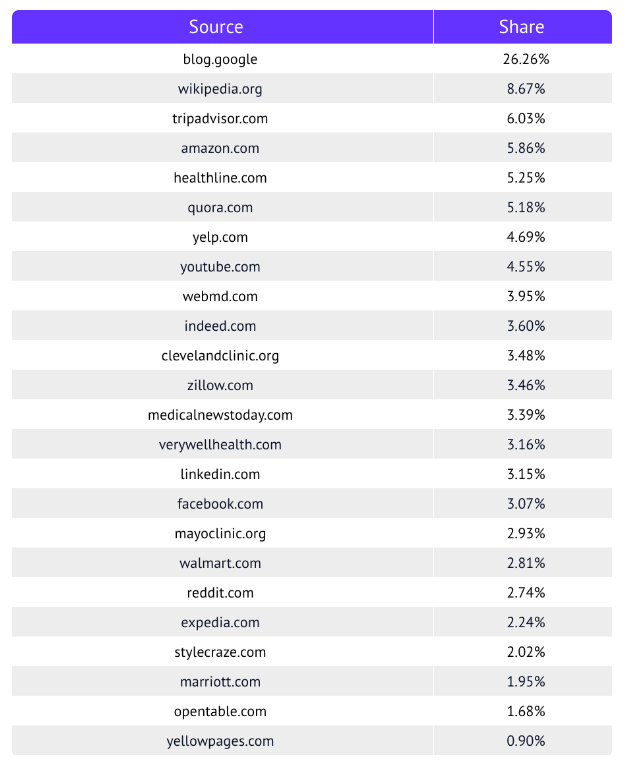
Source: Ziptie analysis
**Our take:**
- Other than Google's own comments about SGE, we have no user data. That may come soon, as a general launch may happen at Google I/O.
- Another variable is engagement. Users must click to expand SGE results, on average, 57% of the time. It varies by category and they may not click.
- Ziptie (and others) argue for a new approach to content/optimization. The [post](https://ziptie.dev/blog/state-of-sge-11-google-sge-disruptions-found-after-analyzing-500k-queries/?ref=nearmedia.co) offers advice, most of it familiar – e.g., focus on the customer journey.
### Study: Review Responses Boost Visibility
Does responding to reviews increase your visibility in local search results? A recent [correlation analysis](https://gmbapi.com/news/why-replying-to-google-reviews-is-a-quick-win/?ref=nearmedia.co) from GMBapi.com argues it does. According to co-founder Michel van Luijtelaar, "Every 1% increase in your reply rate... leads to 0.31% increase in impressions and actions (calls/clicks/nav) and 0.14% increase in rating." This is based on an analysis of the company's entire client list. He added, "We researched all of our customer data for 2023 and found that on average, 41% of the reviews collected by our customers were replied to." Review response rates are typically uneven. (An [estimated 79%](https://www.nearmedia.co/biggest-traffic-referrers-online-oligarchy-79-of-reviews-on-google/) of local business reviews are on Google.) And the majority of businesses do not respond to reviews – although reputation platforms and AI have made it easier for multi-location brands. Michel van Luijtelaar added, "The longer it takes you to reply the more likely your conversion rate is to drop." Responding to reviews has [not been seen as a ranking factor](https://whitespark.ca/local-search-ranking-factors??ref=nearmedia.co) by the majority of leading Local SEO professionals. Near Media research has found most users [don't actually read reviews](https://www.nearmedia.co/chatgpt-search-reviews-unread-gen-z-search/); they look at review volumes and ratings. However, those who actually read them frequently care about responses.
**Our take:**
- Correlation vs. causation: businesses that respond to reviews might also engage in other Local SEO best practices that increase visibility.
- Google *could* be tracking local engagement (with reviews) and these "responding profiles" might drive higher engagement. We know Google [has used behavioral signals](https://www.nearmedia.co/clicks-do-impact-rankings-tiktok-google-search-yelp-reviews-survey/) to rank results.
- Beyond ranking, it's important to monitor and respond (in most cases) to reviews. They offer valuable customer, brand and operational insights and are an important CS channel.
### Location Data Drought
Location intelligence is the subfield of mobile marketing that uses location data to identify audiences and track the efficacy of media channels on real-world user behavior (did they visit a store after an ad exposure?). It evolved out of mobile "geo-fencing" and has been likened to "cookies for the real world." But just like third party cookies, location intelligence and location data may be disappearing or at least severely curtailed. Apple landed a significant blow with location tracking permissions and AppTrackingTransparency in 2021, which required explicit consent for tracking. And consumers have largely [turned against non-consensual use of their data](https://www.pewresearch.org/internet/2019/11/15/americans-and-privacy-concerned-confused-and-feeling-lack-of-control-over-their-personal-information/?ref=nearmedia.co). The proposed [American Privacy Rights Act](https://www.commerce.senate.gov/services/files/E7D2864C-64C3-49D3-BC1E-6AB41DE863F5?ref=nearmedia.co) (APRA), which has bi-partisan support, would among other things require affirmative consent for use of location data. Most people will only consent to first party use cases (e.g., sharing location for directions). They won't allow their data to be sold to others. And the FTC [has increasingly been cracking down](https://www.ftc.gov/news-events/news/press-releases/2024/01/ftc-order-will-ban-inmarket-selling-precise-consumer-location-data?ref=nearmedia.co) on data brokers that don't obtain consent for data transfers to third parties. More recently, the FCC [has fined](https://www.fcc.gov/document/fcc-fines-largest-wireless-carriers-sharing-location-data?ref=nearmedia.co) the major US mobile carriers for illegally sharing access to customers’ real-time location data sans consent.

Source: ChatGPT
**Our take:**
- Location data usage in the EU already requires consent. If APRA passes, the US will be 100% opt-in. Regardless, the FTC and FCC are already acting.
- Maybe [20% of users](https://www.nearmedia.co/idfa-opt-ins-mobile-payments-killing-cash-cpsc-sues-amazon/) will allow tracking. Some things could be extrapolated. But there will be much less location data for marketers. The major platforms might have workarounds, but then [lawsuits](https://www.reuters.com/legal/google-pay-155-million-settlements-over-location-tracking-2023-09-15/?ref=nearmedia.co).
- Contextual location targeting and location targeting in paid search would still be available because they don't rely on real-time user location data.
## Recent Analysis
- **Near Media podcast episode 155:** [An interview with Dana DiTomaso: to Google GA4 analytics Hell and back again](https://www.nearmedia.co/ep-155/).
## Short Takes
- **Apple** [enables custom links](https://support.apple.com/guide/apple-business-connect/add-custom-action-links-abcbfd3840ae/web?ref=nearmedia.co) in local listings on Maps.
- Reviews alone [won't win](https://twitter.com/JoyanneHawkins/status/1784991403296030812?ref=nearmedia.co) in the **Local Pack**.
- Whitespark's **AI-aided content creation** [process](https://www.linkedin.com/posts/darrenshawwhitespark%5Flocalseo-seo-activity-7190727870170763265-J1rg/?ref=nearmedia.co).
- **Reddit**: the dark side of "barnacle SEO" is "[parasite SEO](https://www.404media.co/ai-is-poisoning-reddit-to-promote-products-and-game-google-with-parasite-seo/?ref=nearmedia.co)."
- **Google** [testing "ad"](https://www.linkedin.com/posts/brodieclark%5Fseo-searchengineoptimization-google-ugcPost-7190667497266683904-ikyp/??ref=nearmedia.co) (vs. "sponsored") label again.
- When **keyword optimization** works ... and [when it doesn't](https://searchengineland.com/optimizing-specific-keyword-seo-439875?ref=nearmedia.co).
- **Brands win** in Core Update [vs. marketplaces and affiliates](https://www.linkedin.com/posts/aleyda%5Fwelcome-to-the-google-big-brand-update-ugcPost-7189988989854957568-MOWE/?ref=nearmedia.co).
- **Core Update** saw [45% reduction](https://searchengineland.com/google-march-2024-core-update-rollout-is-now-complete-438713??ref=nearmedia.co) in low quality content – [or did it](https://twitter.com/lilyraynyc/status/1785019429161451930?s=43&t=NNLJEcbkhyOw0gOk6%5FrQUw&ref=nearmedia.co)?
- After **HCU/CU**, will articles just [get longer and longer](https://inlinks.com/insight/hit-by-helpful-content-update-read-this/?ref=nearmedia.co)?
- Survey: 25% of **CMOs** say they're [not using marketing technology](https://cmosurvey.org/marketers-spend-on-new-technologies-while-battling-usage-and-impact-challenges/?ref=nearmedia.co).
- **Meta's AI ad tools** boosting CPMs, [burning through budgets](https://www.theverge.com/2024/4/28/24141585/meta-ai-advantage-plus-automated-ad-glitch-cpm?ref=nearmedia.co).
- Report: **TikTok** will shut down in US rather than sell the app ([WSJ](https://www.wsj.com/tech/bytedance-says-it-wont-sell-u-s-tiktok-business-61f43079?ref=nearmedia.co)).
- Beyond Google, **Apple talking with OpenAI** [for iPhone](https://www.bloomberg.com/news/articles/2024-04-26/apple-intensifies-talks-with-openai-for-iphone-generative-ai-features??ref=nearmedia.co).
Listen to our [latest podcast](https://www.nearmedia.co/memo/).
[](https://nearmedia.co/memo?ref=nearmedia.co)
How can we make this better? Email [us](mailto:gsterling@nearmedia.co) with suggestions and recommendations.
### Ep 155: An interview with Dana DiTomaso: To Google GA4 analytics hell & back again
URL: https://www.nearmedia.co/ep-155/
Last updated: 2024-04-27T17:03:22.000Z
Dana DiTomaso brings her practical insights to the often murky waters of Google Analytics 4 (GA4). Dana, who wears multiple hats as the president and co-founder of KickPoint, shares candid thoughts on the challenges of demystifying GA4\. She discusses the shortcomings of GA4, emphasizing its strong data collection capabilities but criticizing its reporting features. Dana emphasizes the necessity of understanding what GA4 and other analytics tools can and cannot do and advocates for a realistic approach to data, encouraging marketers to focus on trends rather than absolute numbers. She discusses the integration of various data sources need for reporting and the strategic use of analytics tools to provide actionable insights.
Segment Reference Articles:
[BrightLocal GA4 course](https://academy.brightlocal.com/course/google-analytics-essentials-for-local-seo?ref=nearmedia.co) (free!)
[Branch Tools](https://branch.tools/?ref=nearmedia.co) (for GSC exports & reporting)
[Fathom](https://usefathom.com/?ref=nearmedia.co)
[Matomo](https://matomo.org/?ref=nearmedia.co)
Her courses **(And a discount code nearmemo for 20% off)**:
\- [Analytics for Agencies](https://kpplaybook.com/analytics-for-agencies/?ref=nearmedia.co) (includes templates)
\- [Practical GA4](https://kpplaybook.com/google-analytics-4-course/?ref=nearmedia.co)
If you sign up for [Dana’s courses](https://kpplaybook.com/analytics-for-agencies/?ref=nearmedia.co) with the coupon code: *nearmemo* you will get 20% off.
### Google Revenue Culture, Meh-AI Content, Divestiture Drama
URL: https://www.nearmedia.co/googles-revenue-imperative-meh-ai-content-tiktok-drama/
Last updated: 2024-04-25T22:07:29.000Z
### Man vs. Money Machine
If you haven't yet read Ed Zitron's incendiary article "[The Man Who Killed Google Search](https://www.wheresyoured.at/the-men-who-killed-google/?ref=nearmedia.co)" you've probably read comments about it on Twitter or LinkedIn. Zitron pinpoints the moment when Google's decline either began or accelerated, depending on your perspective. With material drawn from Google antitrust trial [exhibits](https://www.justice.gov/atr/us-and-plaintiff-states-v-google-llc-2020-trial-exhibits?ref=nearmedia.co), he describes an internal "code yellow," where ad receipts were falling behind for the quarter. The ads and growth executives wanted to "[hack search](https://www.justice.gov/d9/2023-09/416646.pdf?ref=nearmedia.co)" to generate more PPC revenue to meet Wall Street expectations. Then head of search Ben Gomes objected. Zitron says what followed was a rollback in search quality, the [blurring of ads and organic results](https://twitter.com/edzitron/status/1782810699447849319?ref=nearmedia.co) and the replacement of Ben Gomes with Prabhakar Raghavan, then head of ads. Zitron describes Gomes as a principled "hero," while Raghavan was allegedly willing to compromise to meet business goals. Zitron squarely lays the blame for Google's enshittification at Raghavan's feet and argues he was equally responsible for the decline of Yahoo search while he worked there. Zitron also blames former McKinsey consultant and current CEO Sundar Pichai for supporting Raghavan's approach: "Google’s finance and advertising teams, led by Raghavan with the blessing of CEO Sundar Pichai, actively worked to make Google worse to make the company more money."
Source: Meta.ai
**Our take:**
- If we combine Zitron's narrative with AJ Kohn's "[It's Goog Enough](https://www.blindfiveyearold.com/its-goog-enough?ref=nearmedia.co)," you get a powerful (though still partial) explanation for the current state of search.
- This [piece](https://www.oreilly.com/radar/rising-tide-rents-and-robber-baron-rents/?ref=nearmedia.co) on "robber baron rents" by Tim O'Reilly is also part of the story, as is the influence of [CFO Ruth Porat](https://en.wikipedia.org/wiki/Ruth%5FPorat?ref=nearmedia.co) and Wall Street on Google and its culture.
- Raghavan may have been instrumental in Google's decline; however, he's not solely to blame. There are a mix of factors that got us to where we are today.
### Content: Moving Beyond Meh
Google is in an existential battle against spam and mediocre content. And that appears to be intensifying, as more frequent algorithm updates struggle to parse and reward unique, authoritative and authentic information (think: quality raters, brands, UGC and EEAT). Reversing an earlier position, Google decided against a blanket prohibition for AI content because: 1) some AI-aided content can be good and 2) Google faces practical challenges in detecting it. So it has chosen to focus on content quality rather than methodology. Three recent articles take on the issue of content quality and share similar perspectives on what's now required to succeed. Wil Reynolds ([Sea of Sameness](https://www.seerinteractive.com/insights/the-sea-of-sameness-problem-in-content-marketing-seo?ref=nearmedia.co)), Kevin Indig ([Information Gainz](https://www.growth-memo.com/p/information-gainz?ref=nearmedia.co)) and Amanda Natividad ([You Are Your Moat](https://sparktoro.com/blog/you-are-your-moat/?ref=nearmedia.co)) all contend that previous SEO content strategies often produced mediocrity (see [Skyscraper content](https://www.semrush.com/blog/skyscraper-technique/?ref=nearmedia.co)). All argue for a more grounded approach based on experience, serving users, enhancing brand value and delivering real utility. They don't argue against AI but advocate using it selectively. Kevin Indig says, "Competing in SEO means surfacing and finding new and relevant insights." Wil Reynolds and Amanda Natividad both agree that you must be better than ChatGPT or you shouldn't even try.

Source: Meta.ai
**Our take:**
- The views expressed in these articles are exactly what Google is advocating, even as search quality is declining. It's a "small batch" approach.
- But the "fast, cheap and good enough" mindset with AI is being rapidly embraced by publishers and many SEOs.
- The content methodologies advocated in the three articles fly in the face of that mindset and the "AI content at scale" culture that's coming in.
### TikTok Probably Not Going Away
TikTok, which is now a major B2C marketing and ad platform and search competitor of Google [among younger users](https://www.nearmedia.co/tiktok-search-amazons-meh-ai-audiences/), was put on notice that it must sell itself to a non-Chinese buyer or face a ban in the US. TikTok's forced divestiture [was signed into law](https://www.npr.org/2024/04/24/1246663779/biden-ban-tiktok-us?ref=nearmedia.co) as part of the recently passed foreign aid package. Now the clock starts running. The law requires TikTok's parent ByteDance to sell the company within a year, effectively. China [has said it won't allow the sale](https://www.wsj.com/tech/tiktok-ban-chinese-owners-bytedance-1a857a06?ref=nearmedia.co). TikTok [intends to fight](https://www.linkedin.com/posts/liza-heller%5Ftiktok-tiktok-activity-7188984213969289216-ause/??ref=nearmedia.co) the law on the grounds that it [violates the First Amendment](https://constitutioncenter.org/blog/a-national-tiktok-ban-and-the-first-amendment?ref=nearmedia.co) of the Constitution. An earlier, similar ban imposed by the state of Montana [was blocked](https://www.reuters.com/legal/montana-appealing-ruling-that-blocked-state-barring-tiktok-use-2024-01-03/?ref=nearmedia.co) by a Federal judge on several grounds, including the First Amendment. The US will seek to overcome the Constitutional objection using national security arguments. For example, there's evidence ([here](https://www.buzzfeednews.com/article/emilybakerwhite/tiktok-tapes-us-user-data-china-bytedance-access?ref=nearmedia.co), [here](https://www.wsj.com/tech/tiktok-pledged-to-protect-u-s-data-1-5-billion-later-its-still-struggling-cbccf203?ref=nearmedia.co)) that the Chinese government has access to the personal data of more than 100 million Americans, which could be used for espionage. There's also concern than TikTok is or could become a propaganda instrument. Indeed, there's [some evidence](https://www.washingtonpost.com/opinions/2024/01/08/china-antisemitism-online-tool-west-gaza/?ref=nearmedia.co) that the Chinese are fueling antisemitism on TikTok – a claim [denied by the company](https://www.nytimes.com/2023/11/02/business/tiktok-antisemitism-claims-israel-palestinians.html?ref=nearmedia.co) – as part of plan to sow discord. Like other major tech companies whose revenues are threatened by government action, TikTok argues that millions of SMBs will suffer.
**TikTok CEO Shou Chew**
> [@tiktok](https://www.tiktok.com/@tiktok?refer=embed&ref=nearmedia.co "@tiktok")
>
> Response to TikTok Ban Bill
>
> [♬ original sound - TikTok - TikTok](https://www.tiktok.com/music/original-sound-TikTok-7361449109087128350?refer=embed&ref=nearmedia.co "♬ original sound - TikTok - TikTok")
**Our take:**
- While we're waiting to see the outcome of this drama, here's how to [optimize](https://searchengineland.com/tiktok-seo-the-ultimate-guide-439795?ref=nearmedia.co) your content on TikTok and for Google SEO.
- The case will be a nail biter and wind up in SCOTUS, which will extend TikTok's lifespan by years perhaps. No ban is imminent.
- If the law is upheld (I believe it will be), TikTok could continue under new ownership. But "creators" should still diversify into other platforms.
## Recent Analysis
- **Near Memo episode 154**: [Ad sales up; physician guilty of violating federal reviews law; meh content will fail](https://www.nearmedia.co/ep-154/).
## Short Takes
- **Google Q1**: $80.5B in revenue, [beats expectations](https://www.cnbc.com/2024/04/25/alphabet-set-to-report-first-quarter-results-after-market-close.html?ref=nearmedia.co).
- **Reddit** [now more visible](https://twitter.com/lilyraynyc/status/1783122676413854087?ref=nearmedia.co) in SERPs than Facebook.
- Joy Hawkins: "We're [seeing an influx](inkedin.com/posts/joyhawkins%5Fwere-seeing-an-influx-in-lsa-spam-has-anyone-activity-7189328118384410625-gTXz/?) of **LSA spam**."
- **Google** testing year [business "established](https://www.seroundtable.com/google-ads-established-in-extensions-37274.html?ref=nearmedia.co)" in Ad extensions.
- **Yelp** report [reveals](https://data.yelp.com/fastest-growing-brands-2024?ref=nearmedia.co) fastest growing brands by state.
- **AirBnB's** investments in brand awareness [are paying off in search](https://searchengineland.com/airbnb-search-sentiment-report-439799?ref=nearmedia.co).
- According to [Tinuiti](https://s3.amazonaws.com/media.mediapost.com/uploads/TINUITI%5FQ1%5F2024%5FDigital%5FAds%5FBenchmark%5FReport.pdf?ref=nearmedia.co), **Google CPCs** are up 13% but clicks are down 4%.
- Google [delays](https://privacysandbox.com/intl/en%5Fus/news/update-on-the-plan-for-phase-out-of-third-party-cookies-on-chrome/?ref=nearmedia.co) **Chrome cookie deprecation** – again.
- **Google Chrome** IP proxies [would degrade location targeting](https://searchengineland.com/google-chrome-ip-masking-439820?ref=nearmedia.co) accuracy.
- Business groups [sue FTC](https://www.cnbc.com/2024/04/24/chamber-of-commerce-sues-ftc-for-banning-noncompete-clauses.html?ref=nearmedia.co) over new **non-compete ban**.
- EU **Gmail** rival [files DMA complaint](https://www.reuters.com/technology/google-rival-tuta-complains-eu-tech-regulators-about-de-ranking-2024-04-24/?ref=nearmedia.co) against Google.
- Someone [has purchased](https://www.linkedin.com/posts/seoexpert%5Fprabhakar-raghavan-activity-7189310467503226881-cloc/??ref=nearmedia.co) the domain **Prabhakar Raghavan**.
Listen to our [latest podcast](https://www.nearmedia.co/memo/).
[](https://nearmedia.co/memo?ref=nearmedia.co)
How can we make this better? Email [us](mailto:gsterling@nearmedia.co) with suggestions and recommendations.
### Meta.ai Search, Home Services & Local SEO, Social Plateau
URL: https://www.nearmedia.co/meta-ai-search-home-services-local-seo-social-plateau/
Last updated: 2024-04-23T21:04:29.000Z
### Meta.ai: Another Go at Local
Last week Meta [released](https://about.fb.com/news/2024/04/meta-ai-assistant-built-with-llama-3/?ref=nearmedia.co) its updated AI assistant (Meta.ai), also integrated into Facebook, Instagram, WhatsApp and Messenger. It's the latest consumer-facing AI offering in a growing list that includes Perplexity, Google Gemini, Claude, Grok and ChatGPT. It does multiple things, similar to Gemini and ChatGPT, including image and code generation. While it's less versatile than ChatGPT, it's very fast. Meta.ai may be a better assistant for local search other AI platforms, because it draws upon Google *and* Bing. I asked Meta to identify its local data sources; here's a partial list: Acxiom, Apple Maps, Bing Places, Citysearch, Eventbrite, Facebook Places, Foursquare, Google, Google Maps, Google My Business, Google Places, HERE Maps, InfoGroup, Instagram, Kayak, Microsoft Bing, OpenTable, TripAdvisor, Yellow Pages, Yelp. (Each time I said, "Is that everything?" it came back longer.) Most of my informal testing produced results from Google. Meta.ai also allows you to initiate the verbatim query on Google with a single click (see below). The upgraded assistant gives Meta a chance to get back into (local) search, an explicit use case mentioned in the blog post. There's also the ability to "access real-time information from across the web without having to bounce between apps." That's the most interesting angle.
**Best general contractors Cheyenne Wyoming**
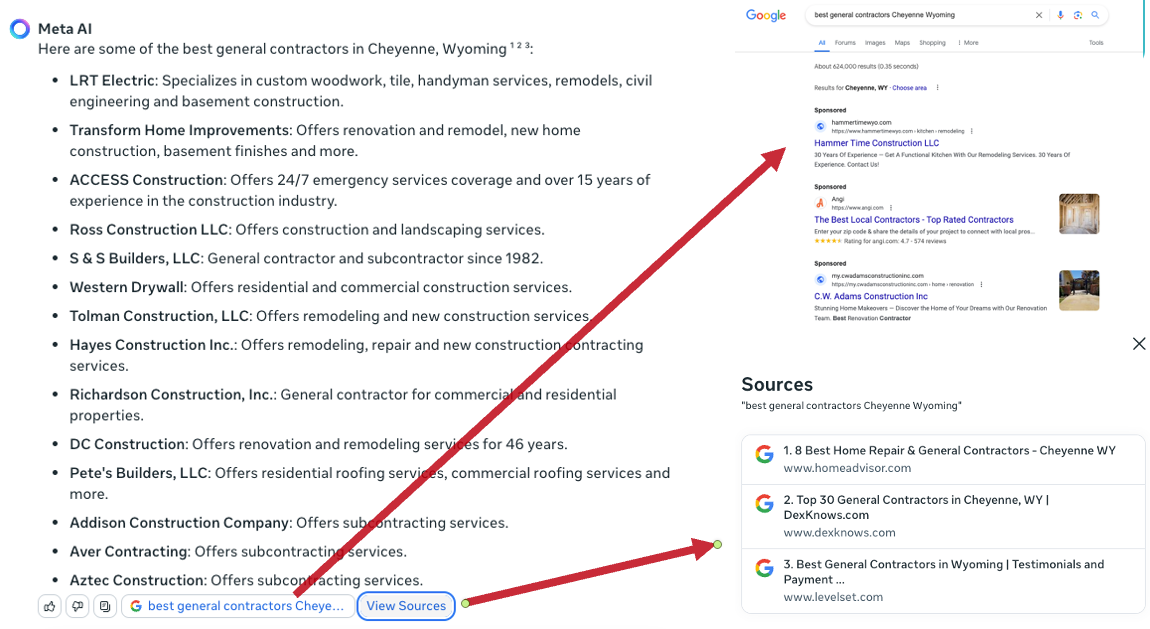
Source: Meta.ai
**Our take:**
- Facebook should have been a leader in local search; however, it repeatedly stumbled in the past. We'll see what happens with Meta.ai.
- There's not enough context for most buying decisions, but its lists may be enough in some situations (e.g., what are some good restaurants near XX?).
- Will the integration of this across Meta's apps, especially Instagram and WhatsApp, siphon off some search queries that would've gone to Google?
### Home Services & Local Ranking
At the recent New York SEO [meetup](https://seomeetup.com/events/seomeetup-seo-summit-2024?ref=nearmedia.co) LSG's Andrew Shotland laid out a methodology for scaling local SEO with AI. He also [presented findings](https://lsgseo.com/blog/serp-summary-preview-my-localogy-nyc-seo-meetup-deck/?ref=nearmedia.co) on the current state of local SEO through the lens of the Home Services vertical. Among Shotland's findings, Forbes outranks incumbents in the category. Shotland admits to being "kind of shocked" at this but, as in other content categories, Forbes is using its domain authority to rank for queries unrelated to its core business. According to Shotland, Forbes' local listings "are basically reskinned Angi's affiliate results." However, Google's site reputation abuse policy [may wipe these rankings out](https://www.seroundtable.com/forbes-coupon-directory-google-block-37269.html?ref=nearmedia.co). From all this Shotland infers Google's heavy reliance on "trusted domains," which argues for brand building. He explains, "Over the past year ... the biggest sites are getting bigger." This is reinforced by [research](https://www.nearmedia.co/biggest-traffic-referrers-online-oligarchy-79-of-reviews-on-google/) from SparkToro and Glenn Allsopp, and Google [antitrust trial documents](https://searchengineland.com/google-search-ranking-documents-434141?ref=nearmedia.co), as well as AJ Kohn's excellent earlier [analysis](https://www.blindfiveyearold.com/its-goog-enough?ref=nearmedia.co). Interestingly, Shotland says Google-owned SERP features have declined by 9% (perhaps a function of [Europe's DMA](https://www.nearmedia.co/google-dma-compliance-redefinition/)) and LSAs have become less visible. The latter tracks with our anecdotal observations, though [LSAs are very effective](https://www.nearmedia.co/searcher-behaviors/) when present. Shotland also believes that local links still really matter, despite Google [statements](https://www.seroundtable.com/google-very-few-links-needed-rank-pages-37267.html?ref=nearmedia.co) to the contrary.

Source: DALL-E
**Our take:**
- The deck points out that Reddit, Quora and forums are spiking in the SERPs. Shotland suggests developing a Reddit strategy, although Google will probably dial it back because of [growing criticism](https://www.linkedin.com/posts/glen-allsopp-63084025%5Fi-analysed-the-top-ranking-sites-for-1000-activity-7184190725444583425-9W1K/?ref=nearmedia.co).
- He also argues against targeting head terms vs. the long tail. And, "If you want non-brand traffic, your best bet is to be a brand."
- Not discussed in-depth is getting GBP right, including reviews and images, although consumer priorities and engagement vary considerably by vertical.
### Social Media Has Peaked
While TikTok and Instagram usage have grown, as an overall category social media has plateaued. That's according to The Infinite Dial 2024 [report](https://www.edisonresearch.com/the-infinite-dial-2024/?ref=nearmedia.co) from Edison Research, which typically tracks podcast listening. The total social media audience in the US is estimated at 235 million and has been essentially flat for the past five years. The estimate, which is extrapolated from survey data, includes Americans over 12\. The total US population is 333 million. Facebook is dominant over all other platforms, followed by Instagram, with TikTok in third position. For its part, Twitter/X has lost significant ground since the Musk takeover. However, as the chart below indicates, most usage is stable or flat – although LinkedIn grew in 2023, perhaps partly from Twitter refugees. Facebook is used by more people over 35 than other social sites, while TikTok and Instagram are most heavily used by 12 - 34 year olds. From a demographic targeting perspective, Instagram has become Meta's platform for people under 35\. Facebook is for people over 35\. Overall, Facebook is the [top marketing channel](https://bredin.com/blog/2024/04/bredin-report-the-social-media-platforms-smbs-use-to-promote-themselves/?ref=nearmedia.co) used by small business owners. Instagram is number two. Threads isn't really on their radar.
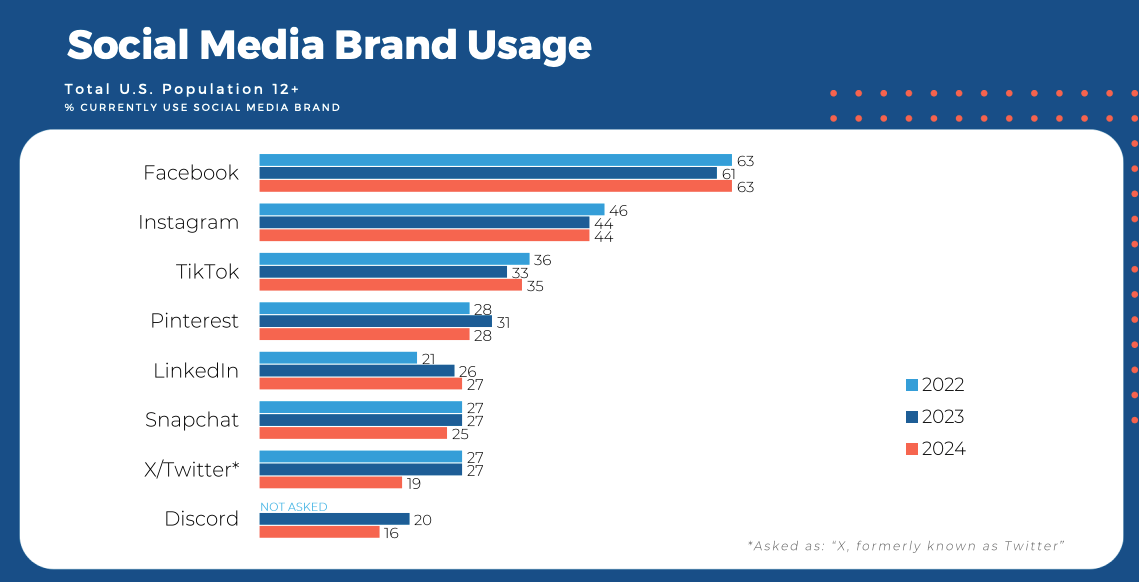
Source: Infinite Dial 2024
**Our take:**
- We've reached peak social media. Growth is possible but probably only at the expense of others in the category.
- As we previously discussed, social media has near total awareness and adoption by smaller marketers, [while GBP does not](https://www.nearmedia.co/rethinking-content-for-seo-smbs-neglect-bgp-local-virtual-assistants/).
- TikTok's parent is about to be [asked to sell to a non-Chinese buyer](https://www.bloomberg.com/news/articles/2024-04-22/tiktok-braces-for-us-law-requiring-a-sale-and-fresh-legal-fight?ref=nearmedia.co). The paradox is: only the biggest tech companies could afford it, which would probably be opposed by regulators.
## Recent Analysis
- **Near Memo episode 154**: [Ad sales up; physician guilty of violating federal reviews law; meh content will fail](https://www.nearmedia.co/ep-154/).
## Short Takes
- Google [tests "post" button](https://www.seroundtable.com/google-business-profiles-posts-button-search-37258.html?ref=nearmedia.co) in **Google Business Profile** panel.
- SEOFOMO meetup [recap](https://www.wix.com/seo/learn/resource/google-sge-insights-seofomo?ref=nearmedia.co): SEO strategies for a **post-SGE world**.
- Deconstructing the [components](https://www.linkedin.com/posts/willnye%5Fthe-anatomy-of-sge-activity-7186649766729031681-eG1z/?ref=nearmedia.co) of **Google's SGE results**.
- How to write a **critical online review** without being a jerk ([WaPo](https://www.washingtonpost.com/technology/2022/03/30/online-review-etiquette/?ref=nearmedia.co)).
- **Google Maps** [will now help you](https://blog.google/products/maps/new-ways-to-power-up-your-electric-vehicle-adventures-with-google-maps/?ref=nearmedia.co) find the closest EV charger.
- **Yellow Pages** segment "[hammered](https://www.linkedin.com/posts/glenngabe%5Fgoogle-seo-activity-7186712505153396736-xjRf/??ref=nearmedia.co)" by recent Google updates.
- **Google**: all your "**ad strength**" [questions answered](https://www.searchenginejournal.com/all-your-ad-strength-questions-answered/514092/?ref=nearmedia.co).
- Ads [coming](https://digiday.com/marketing/metas-threads-expected-to-have-ads-this-year/?ref=nearmedia.co) to **Threads.net** this year (of course).
- Google quietly becoming [a merchant marketplace](https://www.linkedin.com/posts/aleyda%5Fgoogle-has-already-quietly-become-a-merchant-ugcPost-7188558777325940736-wUw%5F/??ref=nearmedia.co) for **product queries**.
- **Google search boss** [warns employees](https://www.cnbc.com/2024/04/23/google-search-boss-raghavan-warns-employees-of-new-operating-reality.html??ref=nearmedia.co): more pressure ahead.
- Competition, [capitalism and the need to](https://www.noemamag.com/we-need-to-rewild-the-internet/?ref=nearmedia.co) "**rewild the internet**."
Listen to our [latest podcast](https://www.nearmedia.co/memo/).
[](https://nearmedia.co/memo?ref=nearmedia.co)
How can we make this better? Email [us](mailto:gsterling@nearmedia.co) with suggestions and recommendations.
### Ep 154: Ad Sales Up, Physician Guilty of Violating Federal Review Law, Content Only as Good as ChatGPT Will Fail
URL: https://www.nearmedia.co/ep-154/
Last updated: 2024-04-19T19:17:44.000Z
**Part 1 starts 00:13 -** [**Ad market dominated by a few players**](https://youtu.be/UlcQkJXcYeI?ref=nearmedia.co)
The Internet Advertising Bureau released their annual report for 2024\. Digital advertising reached a record-high of $225 billion, with the biggest share going to search ($88.8 billion) & display ($66.1 billion). The bulk of this income is distributed across the top 10 advertising platforms and with the end of cookies, their dominance is likely to be reinforced. While paid search's (ie Google’s) share of total revenue declined, real dollars grew 5.2%. With a flattening of search demand, Google's [new opt-in Ad Intents contextual format](https://www.nearmedia.co/r/475b9adb?m=bfc50bd6-31c0-48b7-964c-eaac941c5279) is an example of the "creative" monetization that we will increasingly see more of.
Segment Reference Articles:
[Paid Search Is Winning](https://www.nearmedia.co/paid-search-winning-healthcare-review-explosion-too-big-to-care/)
[Boost your revenue potential with the new ad intents format for Auto ads - Google AdSense Help](https://support.google.com/adsense/answer/14184572?ref=nearmedia.co)
**Part 2 starts 07:30 -** [**Seattle Physician Found Guilty of Violating Federal Review Law**](https://youtu.be/ZBOZGDEGPLE?ref=nearmedia.co)
A federal judge found Allure Esthetic of Seattle wrongly prevented patients from posting negative reviews with illegal NDAs and issued a summary judgment in the case. Not only did this surgeon buy fake reviews and have staff create fake reviews, he forced over 10,000 patients to sign NDAs preventing them from post reviews of less than 4 stars without first consulting with the surgeon. If they did post lower reviews they also had to agree to their private health information being divulged in the response. The case, first filed in late 2022, will go to trial in September and the main purpose of the trial will be to determine the monetary damages. Given the large number of patients affected and the high costs in this vertical, the fine should be substantial.
Segment Reference Articles:
[Seattle Surgeon Guilty of Breaking Law with Review Practices](https://www.nearmedia.co/seattle-surgeon-guilty-of-breaking-law-with-review-practices/)
**Part 3 starts 19:30 -** [**If your content is only as good as ChatGPT you will fail**](https://youtu.be/eUQaRmYlMak?ref=nearmedia.co)
Ten websites dominate search results for nearly all medical symptoms. This dominance is attributed to their substantial content libraries and extensive inbound links. Major names like Mayo Clinic and Johns Hopkins lead this group, often making it nearly impossible for other healthcare brands to gain visibility. Additionally, platforms like Quora and Reddit also appear frequently in search results, sometimes promoting questionable medical advice through user comments. This trend reflects a broader challenge within SEO practices where established brands with robust content and linking strategies overwhelmingly outperform newer entrants, reinforcing the need for strategic content investment and diversification beyond mere SEO tactics.
Segment Reference Articles:
[Glen Alsop: The top-ranking sites for 1,000 health symptom keywords](https://www.linkedin.com/posts/glen-allsopp-63084025%5Fi-analysed-the-top-ranking-sites-for-1000-activity-7184190725444583425-9W1K?utm%5Fsource=share&utm%5Fmedium=member%5Fdesktop)
[Wil Reynolds: The Sea of Sameness Problem in Content Marketing & SEO](https://www.seerinteractive.com/insights/the-sea-of-sameness-problem-in-content-marketing-seo?ref=nearmedia.co)
### Paid Search Winning, Healthcare Review Explosion, Too Big to Care?
URL: https://www.nearmedia.co/paid-search-winning-healthcare-review-explosion-too-big-to-care/
Last updated: 2024-04-18T20:14:06.000Z
### Paid Search Is Winning
Last year was good for digital advertising, which grew more than 7% and brought in a total of $225 billion in the US. That's a new watermark, [according to](https://www.iab.com/news/2023-u-s-digital-advertising-industry-hits-new-record-according-to-iabs-annual-internet-advertising-revenue-report/?ref=nearmedia.co) the 2023 Internet Advertising Revenue (IAB) Report. Paid search accounted for the largest share of online ad revenue (39.5%), coming in at roughly $89 billion, up more than $4 billion vs 2022\. While paid search's share of total revenue declined, real dollars grew 5.2%. The report notes that "advertisers continue to prioritize paid search due to its effectiveness in driving brand and business results." Many analysts expect a deceleration in paid search because of its maturity. That's a safe prediction, but we can expect Google search revenues to continue to climb because of search's role in the buyer journey and the company's dominant status, as well as the company's ongoing efforts to monetize (everything). Google's [new opt-in Ad Intents contextual format](https://support.google.com/adsense/answer/13829511?ref=nearmedia.co) is an example of "creative" monetization. The other noteworthy dimension of the IAB report is that the top 10 ad platforms increased their share of US digital ad revenue, by 3%, to 79.8%. The IAB partly credits "Apple’s privacy practices" as boosting the largest platforms (walled gardens), which have lots of first party data and "closed-loop reporting."
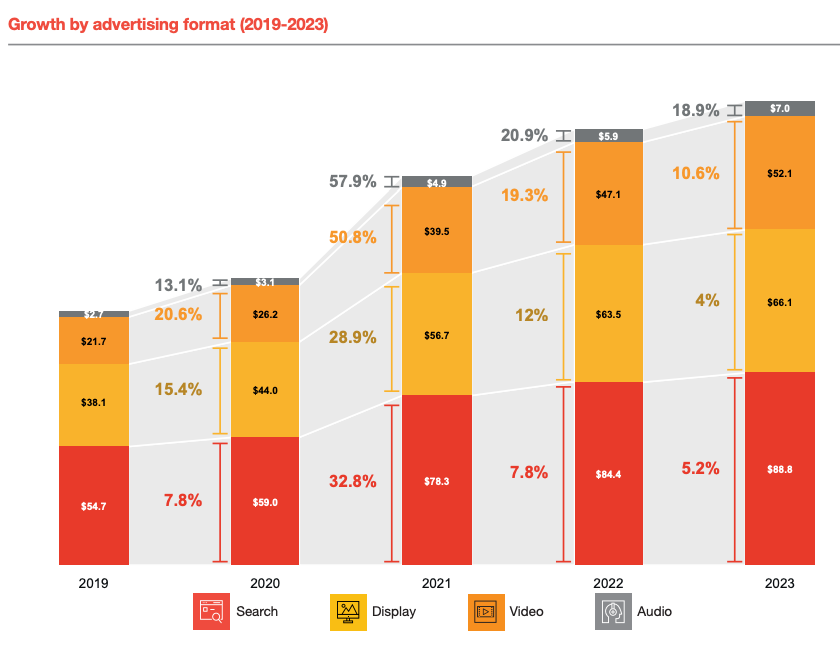
Source: IAB, PwC
**Our take:**
- The concentration of ad revenue in only a few companies has been true for some time but it's not healthy – a too-powerful oligopoly.
- The end of third party cookies and regulatory efforts, unintentionally, seem to be bolstering the power of larger platforms.
- In a world of increased online privacy, paid search should continue to see gains because it doesn't rely on cookies or other personalized targeting.
### Massive Review Growth in Healthcare
Reputation's new 2024 Healthcare Reputation Report, which argues in favor of active, SaaS-based review management, [documents](https://www.linkedin.com/posts/reputation-com%5F2024-healthcare-reputation-rankings-report-activity-7185989088011767808--XD9/?ref=nearmedia.co) the significant growth of user reviews in the healthcare vertical. The reputation management platform says that roughly five years ago, healthcare "received 643,000 reviews annually." By the end of last year that number had grown 150% to "1.61 million reviews annually." Reputation said that the average rating for hospitals with active review solicitation programs was 4.41 stars vs. 3.49 for those not doing so. Review volumes were also significantly higher as were review response rates. And online visibility is much greater for hospitals with more reviews and higher scores. Finally, search is the dominant way consumers look for doctors, followed by insurance company portals. Reviews are typically, though not always, the top consideration in consumer buying decisions. In Near Media healthcare research (physicians and clinics), we saw consumers scroll deep [into the Local Finder](https://www.nearmedia.co/why-local-searchers-look-to-the-local-finder/) (especially in mobile), looking for the best reviewed doctor profiles. This frequently took them to positions 4 - 14 and beyond. And for those doctors under active consideration, the median rating was 4.8 stars, with at least 20 reviews.
**Average: Ratings, Review Volume, Response Rates**
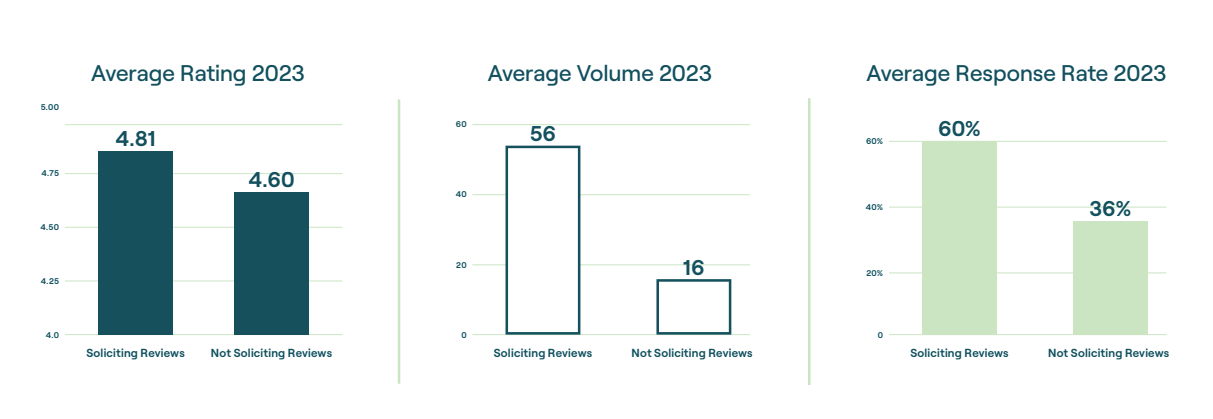
Source: Reputation (2024)
**Our take:**
- The bottom line: active review management produces much better results across the board.
- You're probably not going to be considered without meeting review volume and ratings thresholds. The stakes are high for business owners.
- There's increasing review manipulation (see, [here](https://www.nearmedia.co/seattle-surgeon-guilty-of-breaking-law-with-review-practices/), [here](https://www.nearmedia.co/fake-review-doctor-clever-scam-got-reviews-removed-solution-to-gbp-bug/)). According to a 2021 [report](https://uberall.com/en-us/company/press-releases/study-67-of-us-consumers-say-fake-online-reviews-a-growing-problem?ref=nearmedia.co) from Uberall and The Transparency Company, between 8% and 9.2% of selected healthcare category reviews were suspicious.
### Too Big to Care?
Should Google be considered a "public utility"? The idea that Google is like a power company has been raised multiple times by commentators, regulators and some public officials. In 2021, for example, Ohio's Republican attorney general [sought to have Google declared a public utility](https://www.reuters.com/technology/ohio-sues-have-google-declared-public-utility-2021-06-08/?ref=nearmedia.co) to prevent it from "self-preferencing." The case has not been resolved but it's unlikely that Ohio will prevail. A Wired [article](https://www.wired.com/story/no-facebook-google-not-public-utilities/?ref=nearmedia.co) explains why the logic behind the suit is "a mess." But the sentiment behind it may not be. Google certainly has competitors (e.g., Bing, Amazon, ChatGPT, TikTok) and may be more vulnerable than it has been in some time. Yet it's still a near monopoly in search, [with 91%](https://gs.statcounter.com/search-engine-market-share?ref=nearmedia.co) of the global market. (In North America [it's lower](https://gs.statcounter.com/search-engine-market-share/all/north-america?ref=nearmedia.co).) In a recent interview with Jon Stewart, FTC Chair Lina Khan discussed the current state of antitrust and tech companies. Without mentioning anyone by name, Khan nonetheless described the attitude of many tech companies as "too big to care." What this means, she elaborated, is they can start mistreating stakeholders because there are no real alternatives. She also argues, these companies treat regulatory/legal fines as a "cost of doing business."
**Our take:**
- She's right that fines have historically been treated as a cost of doing business; although EU fines now have more teeth.
- Google is probably not committing "malfeasance" but "negligence": e.g., [review fraud](https://www.nearmedia.co/google-lsa-supercharges-the-duct-cleaning-scam/) and [potentially damaging](https://twitter.com/homemadehooplah/status/1780308060013244859??ref=nearmedia.co) UGC rankings ([YMYL queries](https://twitter.com/lilyraynyc/status/1779909940020154430??ref=nearmedia.co)).
- Section 230 also protects companies like Google and enables "too big to care" indifference to potential harms "on the ground."
## Recent Analysis
- **Seattle Surgeon Guilty of Breaking Law with Review Practices**, [by Mike Blumenthal](https://www.nearmedia.co/seattle-surgeon-guilty-of-breaking-law-with-review-practices/).
- **A closer look at user behavior in Local**: [Conversion Cast discussion with Mike Blumenthal](https://conversioncastpod.com/episodes/consumer-search-behavior-in-local-seo?ref=nearmedia.co).
- **Near Memo episode 153**: [Standardizing review processes to avoid fear, Google cries wolf around DMA, and the future of SGE](https://www.nearmedia.co/ep-153-standardizing-review-processes-to-avoid-fear-google-cries-wolf-around-dma-the-future-of-sge/).
## Short Takes
- What to do when **Google** changes your [Google Business Profile](https://searchengineland.com/google-changes-gbp-information-439655?ref=nearmedia.co) data.
- Increase in **GBP** [booking button integrations](https://www.reddit.com/r/localsearch/comments/1c79svo/increase%5Fin%5Fgbp%5Fbooking%5Fbutton%5Fintegrations/??ref=nearmedia.co).
- Anticipating **SGE's** [impact on local search](https://www.searchenginejournal.com/search-generative-experience-and-how-it-will-affect-local-seo-businesses/511907/?ref=nearmedia.co) and local SEO.
- **Brave** [launches](https://brave.com/blog/answer-with-ai/?ref=nearmedia.co) "AI answer engine," less impressive than it sounds.
- No more [draft review saving](https://www.seroundtable.com/google-maps-dropping-draft-reviews-37241.html?ref=nearmedia.co) on **Google Maps**.
- **Google Maps** [wants to help you](https://9to5google.com/2024/04/17/google-maps-driving-walking-alts/?ref=nearmedia.co) lower your carbon footprint.
- Case study: Smaller **internal link block** [boosted rankings](https://www.searchpilot.com/resources/case-studies/seo-split-test-lessons-reducing-link-block?ref=nearmedia.co).
- **Google** internally [reorgs](https://blog.google/inside-google/company-announcements/building-ai-future-april-2024/?ref=nearmedia.co) [to accelerate AI adoption](https://www.theverge.com/2024/4/18/24133881/google-android-pixel-teams-reorg-rick-osterloh?ref=nearmedia.co) across products.
- **Amazon Prime** subscriptions [reached](https://www.bloomberg.com/news/articles/2024-04-16/amazon-prime-memberships-in-us-gain-8-to-new-high-after-lull?ref=nearmedia.co) a new high: 180M in US.
- **Amazon** says it's [not walking away](https://apnews.com/article/amazon-just-walk-out-india-checkout-160bf03c1654f665834ab141e6db7516?ref=nearmedia.co) from **Just Walk Out**.
- **Meta** [adding AI-powered assistants](https://www.nytimes.com/2024/04/18/technology/meta-ai-assistant-push.html?ref=nearmedia.co) across its various apps.
- SparkToro [building a tool](https://www.linkedin.com/posts/randfishkin%5Fgonna-take-you-behind-the-scenes-into-a-feature-ugcPost-7185749301078208514-NBCV/??ref=nearmedia.co) that aggregates **search "chip" frequency**.
- EU: **Meta** [cannot infer consent](https://noyb.eu/en/statement-edpb-pay-or-okay-opinion?ref=nearmedia.co) for behavioral ads; must be explicit.
- EC's **Margrethe Vestager** [is moving on](https://www.politico.eu/article/margrethe-vestager-eclipse-european-commission-competition-2024-election/?ref=nearmedia.co), will antitrust enforcement suffer?
Listen to our [latest podcast](https://www.nearmedia.co/memo/).
[](https://nearmedia.co/memo?ref=nearmedia.co)
How can we make this better? Email [us](mailto:gsterling@nearmedia.co) with suggestions and recommendations.
### Seattle Surgeon Guilty of Breaking Law with Review Practices
URL: https://www.nearmedia.co/seattle-surgeon-guilty-of-breaking-law-with-review-practices/
Last updated: 2024-11-19T21:10:42.000Z
💡
A federal judge agreed with Attorney General Bob Ferguson, ruling that Seattle plastic surgery provider Allure Esthetic and its owner, Dr. Javad Sajan, illegally prevented patients from posting negative reviews about the business.
Some businesses find reviews so important and so threatening they are willing to do just about anything to avoid a bad one. While the [case](https://www.atg.wa.gov/news/news-releases/ag-ferguson-files-lawsuit-against-seattle-based-plastic-surgery-clinic-bribing?ref=nearmedia.co) is still technically ongoing, a federal judge has [granted summary judgement](https://www.atg.wa.gov/news/news-releases/federal-judge-rules-plastic-surgeon-acted-illegally-restricting-online-reviews?ref=nearmedia.co#:~:text=SEATTLE%20%E2%80%94%20A%20federal%20judge%20agreed,negative%20reviews%20about%20the%20business.), declaring that "the clinic broke the law by requiring more than 10,000 patients to sign illegal non-disclosure agreements before receiving treatment. In many cases, patients learned they had to sign only after paying Allure a nonrefundable $100 consultation fee."
### Coercive and Illegal NDA
Under this “pre-service” non-disclosure agreement, Allure required patients to agree to “pay monetary damages to the practice for any losses” if they did not take down a negative review. Some patients were also required to waive health privacy rights, to “allow a response \[to the review\] from the practice with my personal health information” if they posted a negative review.
Allure, a major provider of plastic and cosmetic surgery procedures in the Seattle area, is also accused of "intimidating and bribing patients to remove negative reviews, ordering its employees to post fake positive ones, and altering 'before and after' photos to misrepresent the actual results of procedures, among other allegations."
**Yelp Consumer Alert**
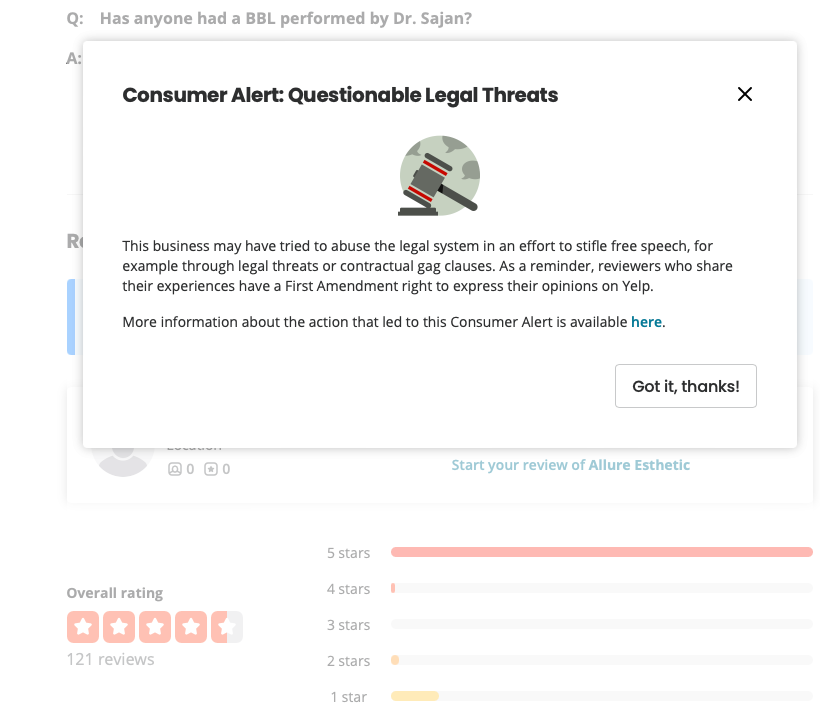
Yelp has acknowledged some of this behavior with one of their alerts, although the business is still showing a 4.5 rating.
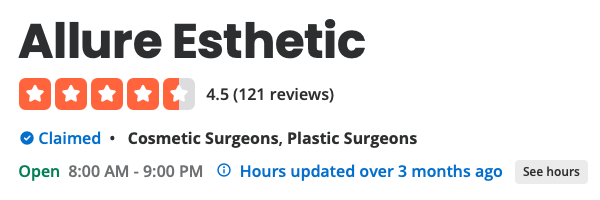
Web designers, from 2018 to 2021, noted that they [regularly posted fake reviews ](https://www.atg.wa.gov/news/news-releases/ag-ferguson-files-lawsuit-against-seattle-based-plastic-surgery-clinic-bribing?ref=nearmedia.co)by creating fake email accounts and fictional online personas. Employees used stock photos and built a “persona” to create a more realistic profile to post reviews from. These [reviews](https://maps.app.goo.gl/C5LkdT6nYKcgrhUW9?ref=nearmedia.co), [mentioned](https://maps.app.goo.gl/dHaco74rQ8UdpLFc7?ref=nearmedia.co) in the AG's 2022 lawsuit, are still showing on Google.
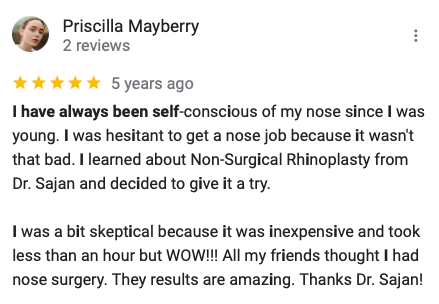
### Google Inaction
Google, unlike Yelp, has not only *not removed* the reviews specifically mentioned in the lawsuit, they have made no mention of any of the issues involved with the case and are showing the business as having 917 reviews and a 4.8 star rating.
Clearly the actions of Allure Esthetic are egregious and obviously a violation of the the 2016 federal [Consumer Review Fairness Act](https://www.ftc.gov/business-guidance/resources/consumer-review-fairness-act-what-businesses-need-know?ref=nearmedia.co). While some of the case is still to be adjudicated, because of the summary judgment the NDA issues are going directly to a penalty phase and will be determined at trial, scheduled for September.
### Will the Penalty Be Meaningful?
Despite claims to the contrary, Google and to a lesser extent Yelp, have not been very successful at preventing this level of review abuse. The government deserves credit for bringing the case and getting a summary judgement.
Now, the issue will be whether the business pays a fine commensurate with the income that they have generated by violating the law. In recent similar [review case in NY state](https://www.nearmedia.co/fake-review-doctor-clever-scam-got-reviews-removed-solution-to-gbp-bug/) involving a surgeon, the fines were a veritable slap on the wrists coming in at $100,000\. Plastic surgery procedure costs vary widely but are typically several thousand dollars. Allure had 10,000 patients sign the NDA, which could represent tens of millions of dollars in income.
With this case being in federal court and summary judgment already granted, the penalties hopefully will reflect the massive amount of business gained due to these deceptive practices.
### Rethinking Content for SEO, SMBs Neglect GBP, Local Virtual Assistants
URL: https://www.nearmedia.co/rethinking-content-for-seo-smbs-neglect-bgp-local-virtual-assistants/
Last updated: 2024-04-16T21:42:16.000Z
### Rethinking Content Strategy
The question for many SEOs and content marketers going forward is: how much effort to put into content; how much can we integrate AI to expedite things? Wil Reynolds of Seer Interactive [argues](https://www.seerinteractive.com/insights/the-sea-of-sameness-problem-in-content-marketing-seo?ref=nearmedia.co) that to escape an increasingly frequent "sea of sameness" content problem you have to think broadly and unconventionally about traffic and be willing to sacrifice rankings in the short term to gain in the long term. He critiques the "SEO mindset," which takes a largely formulaic approach to content creation. As an alternative, Reynolds expresses several principles to guide content strategy: be genuinely (even uniquely) helpful to the audience, uplift brand perception, create something worthy of being shared in private groups, make the content good enough that you'd be willing to pay to promote it. Using this approach to rewrite an SEO RFP blog post, Reynolds says that his rankings initially "tanked" but ultimately the post reached #1 (he's not specific about the time frame). He then says this experiment is changing his thinking about content and even about the future of his agency. This article is unlikely to change many minds about content for SEO, where "good enough" and increasing volume are often the dominant considerations.

Source: DALL-E
**Our take:**
- Reynolds does concede that "standard SEO content" has a role to play to gauge potential organic traffic for particular topics or keywords.
- His arguments are consistent with Google's mantra: create content for people not for search engines. But, as Reynolds also points out, Google often rewards average content on domains with high authority (see Forbes).
- Then there's The Verge's funny "meta" [critique](https://www.theverge.com/2024/4/2/24117976/best-printer-2024-home-use-office-use-labels-school-homework?ref=nearmedia.co) of SEO and Google in the context of a "best printer" article that's partly AI-generated and still ranks well.
### Survey: Only 43% Managing Biz Profiles
If you're working in local SEO you probably have the sense that most local businesses are focused on ranking in Google and, perhaps with your help, have claimed and optimized their Google Business Profiles. That's because the clients you're working with have become more sophisticated about Google. But the majority of SMBs are not focused on GBP optimization. In a separate research [program](https://www.localdialog.com/?ref=nearmedia.co) I'm involved with, we surveyed 1,000 local business decision-makers and asked questions on multiple topics. Among them, we asked about what marketing channels they used and which ones were most effective. Social media was by far the top channel and rated as most effective. (Follow-up interviews have revealed that many of these respondents don't really track performance.) Business profile management was number five for usage and six for effectiveness; SEO was six (usage) and five (effectiveness). Yet paid search was number four for usage but third in effectiveness. In other words, paid search was more widely used and seen, incorrectly, as more effective by these respondents than free GBP adoption. Then there's review management – in tenth position. WTF.
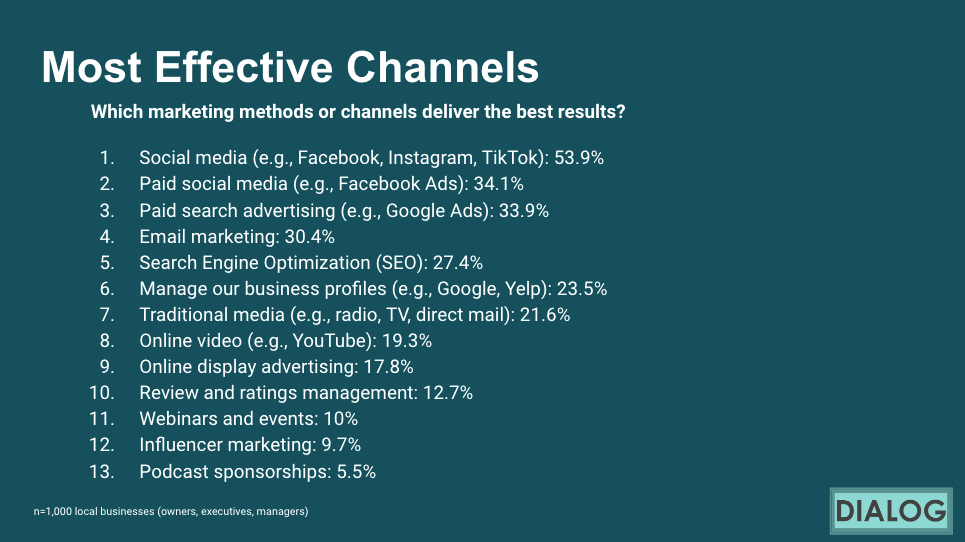
Source: Dialog 12/23 - 1/24 survey of 1K business decision makers
**Our take:**
- Note: only 18% of these respondents were working with agencies/vendors for digital marketing. Company headcount ranged from 1 to 499 people.
- It's kind of amazing at this point that GBP isn't more widely adopted; only 43% of SMBs said they were managing business profiles.
- By contrast, social media has been much more effective in capturing small business awareness and adoption, despite Google's ubiquity.
### Local Virtual Assistants Near You
Cashiers and customer service retail positions represent more than 6% of all US jobs, according to the US Census Bureau. Many states and cities have been raising minimum wages for these often entry level positions (e.g., CA's new [$20 fast food minimum wage](https://apnews.com/article/california-fast-food-minimum-wage-a04c2e559b09cbcd26dd5702e0755a83?ref=nearmedia.co)), which have drawn business-owner ire. Independently, these types of jobs have been under pressure from automation or offshoring. And many business owners complain about hiring and retaining employees. This combination of conditions is spawning new "solutions" – virtual assistants in local storefronts. First exposed by [Brett Goldstein](https://twitter.com/thatguybg/status/1776755582562709823?ref=nearmedia.co) and then covered by the [New York Times](https://www.nytimes.com/2024/04/11/nyregion/nyc-restaurants-virtual-remote.html?ref=nearmedia.co), a company called Happy Cashier, installs screens in local restaurants (in NYC). The screens beam in live agents from the Philippines who "offer warm greetings, explain the menu and beckon guests inside." The individuals on the other end of the screen are paid $3 per hour but not subject to local wage laws because they're employees or contractors of the startup, not the local business. Where some people see creativity and innovation, others see exploitation or a potentially bad customer experience.
Source: Brett Goldstein
**Our take:**
- Hiring is a major SMB pain point. AI assistants and other tech-based solutions such as Happy Cashier could become much more common.
- Proponents argue this helps SMBs cope with hiring challenges and rising costs.
- Customer acceptance is the wild card. In certain retail categories the combination of automation and virtual employees might catch on.
## Recent Analysis
- **Near Memo episode 153**: [Standardizing review processes to avoid fear, Google cries wolf around DMA, and the future of SGE](https://www.nearmedia.co/ep-153-standardizing-review-processes-to-avoid-fear-google-cries-wolf-around-dma-the-future-of-sge/).
- **Seattle Surgeon Guilty of Breaking Law with Review Practices**, [by Mike Blumenthal](https://www.nearmedia.co/seattle-surgeon-guilty-of-breaking-law-with-review-practices/).
## Short Takes
- Sistrix: 49% of all **Reddit** rankings [appear in the Top 10](https://www.sistrix.com/blog/reddit-and-the-11-4-million-daily-click-funnel/?ref=nearmedia.co).
- Case study: [optimizing](https://www.linkedin.com/pulse/seo-personal-injury-lawyers-case-study-joy-hawkins-yaptc/?ref=nearmedia.co) **service area pages** for better lead quality.
- Emails, subject lines for [Google support](https://www.clairecarlilemarketing.com/resources/gbp-support?ref=nearmedia.co) (re **GBP, Maps**).
- **Reviews and expert guides** [help you rank in SGE](https://twitter.com/aleyda/status/1778037838266667057?ref=nearmedia.co) product results.
- Using **schema markup** [could boost SGE inclusion](https://searchengineland.com/how-schema-markup-establishes-trust-and-boosts-information-gain-438833?ref=nearmedia.co) chances.
- **Brand management** [on Reddit](https://searchengineland.com/google-reddit-brand-management-439616??ref=nearmedia.co), now that it's so visible.
- **Google** "disowns" AI outputs, [seeks to maintain 230 immunity](https://9to5google.com/2024/04/16/google-tos-ai/?ref=nearmedia.co).
- Google to fight "**reputation abuse spam**" [with further actions](https://www.seroundtable.com/google-site-reputation-abuse-spam-37231.html?ref=nearmedia.co).
- Google to [consolidate location sharing controls](https://9to5google.com/2024/04/13/google-location-sharing-android-hub/?ref=nearmedia.co) on **Android**.
- **Quora** ranking for health symptom SERPs, [results of dubious quality](https://twitter.com/ViperChill/status/1778418310427680802?ref=nearmedia.co).
- **OpenTable** [to add first names and profile pictures](https://www.bleepingcomputer.com/news/technology/opentable-is-adding-your-first-name-to-previously-anonymous-reviews/?ref=nearmedia.co#google%5Fvignette) to reviews.
- Facebook, Instagram **B2B ads** [as substitute](https://searchengineland.com/b2b-audience-targeting-meta-ads-alternative-linkedin-439558??ref=nearmedia.co) for costly LinkedIn.
- **Google** [blocks](https://www.politico.com/news/2024/04/12/google-california-news-journalism-00151873?ref=nearmedia.co) some news in CA to [protest](https://blog.google/products/news/california-journalism-preservation-act-puts-news-ecosystem-at-risk/?ref=nearmedia.co) Journalism Preservation Act.
Listen to our [latest podcast](https://www.nearmedia.co/memo/).
[](https://nearmedia.co/memo?ref=nearmedia.co)
How can we make this better? Email [us](mailto:gsterling@nearmedia.co) with suggestions and recommendations.
### Ep 153: Standardizing Review Processes to Avoid Fear, Google Cries Wolf Around DMA, The Future of SGE
URL: https://www.nearmedia.co/ep-153-standardizing-review-processes-to-avoid-fear-google-cries-wolf-around-dma-the-future-of-sge/
Last updated: 2024-04-15T17:23:52.000Z
**Part 1 starts 00:13 -** [**Reviews are Like Death & Taxes & Should be Treated that Way**](https://youtu.be/JR1oJM7NtG4?ref=nearmedia.co)
Miriam Ellis wrote a great article at Moz providing small business owners tips on how to overcome their fear of reviews. But they really need to go further. Given that reviews, like death and taxes, are not going anywhere businesses need to not only remove their fear but create stringent business processes around getting AND contesting reviews that removes their emotions from the process.
Segment Reference Article: [How to Acknowledge and Cope with Fear of Local Business Reviews](https://moz.com/blog/fear-of-local-business-reviews?ref=nearmedia.co)
**Part 2 starts 10:40 -** [**Google Cries ‘Wolf” When it Comes to DMA Compliance**](https://youtu.be/a0jHSdH8fRs?ref=nearmedia.co)
Google's approach to DMA compliance seems to prioritize its interests, presenting a false dichotomy between new compliance changes and the previous state, which was more favorable to all parties. Google needs to innovate rather than blame DMA for negative outcomes, and to really increase opportunity within the search results there needs to be stringent regulation on self-preferencing, especially with first-party data, particularly entity data.
Segment Reference Articles:
[Complying with the Digital Markets Act](https://blog.google/around-the-globe/google-europe/complying-with-the-digital-markets-act/?ref=nearmedia.co)
[Google: DMA Hurting Local Biz](https://www.nearmedia.co/google-dma-hurtz-federal-privacy-law-pepsi-content-challenge/)
**Part 3 starts 17:36 -** [**The Future of SGE**](https://youtu.be/nT0HfsTSmk4?ref=nearmedia.co)
Google’s SGE experiment is still just that; an experiment. There is speculation that it will be formally introduced during Google I/O in May. When it is, will it move behind a paywal, will it become just another universal result or will Google take some third path. Equally importantis whether Google generative AI will continue to receive legal protection under Sec 230\.
Segment Reference Articles:
[Google AI Paywall](https://www.nearmedia.co/google-ai-paywall-perplexity-google-overlap-just-gave-up/)
[Marriage of AI & Search](https://www.nearmedia.co/googles-30-problem-ai-search-marriage-next-sge-mediocrity/#marriage-of-ai-search)
[Why Isn't SGE Better?](https://www.nearmedia.co/googles-30-problem-ai-search-marriage-next-sge-mediocrity/#next-why-isnt-sge-better)
### Google's <30 Problem, AI + Search Marriage, Next & SGE Mediocrity
URL: https://www.nearmedia.co/googles-30-problem-ai-search-marriage-next-sge-mediocrity/
Last updated: 2024-04-11T19:22:29.000Z
### Google's <30 Problem
Contrary to [early pronouncements](https://www.financialexpress.com/life/technology-chatgpt-can-destroy-google-in-two-years-says-gmail-creator-2962712/lite/?ref=nearmedia.co), when ChatGPT came out, Google is in no danger of immediately being disrupted by AI. But there are worrying signs for the company when it comes to GenZ longer term. Multiple surveys indicate younger people are using a broader array of sources (mostly social media) as search engines or search alternatives. The survey data come from [Adobe](https://www.nearmedia.co/sge-failure-to-launch-quality-raters-axed-whats-wrong-at-google/), [Tinuiti](https://www.nearmedia.co/chatgpt-search-reviews-unread-gen-z-search/) and SOCi, [which most recently reported](https://www.nearmedia.co/last-click-mindset-apple-google-ai-deal-gen-z-local/) that 18 - 24 year olds were using Instagram and TikTok before Google for local search. Now, youth research firm YPulse [echos those earlier results](https://www.axios.com/2024/04/11/google-gen-z-search-engines-tiktok-youtube?ref=nearmedia.co), finding that GenZ are using multiple Google alternatives, including TikTok and other social media, though they also use YouTube (a Google property) to search. According to a discussion of the survey findings, "46% of those ages 18-24 start their information quests \[ \] on Google ... that's compared with 58% of those ages 25-39; 21% of 18- to 24-year-olds start with TikTok, while 5% start on YouTube." In other words, no single site has captured the non-Google usage. Other studies have also shown that GenZ members are among the most enthusiastic and [heaviest users of AI](https://www.nearmedia.co/ai-travel-itineraries-23-for-chatgpt-personalized-google/), including ChatGPT. Interestingly, Google [said](https://blog.google/products/search/google-search-generative-ai-india-japan/?ref=nearmedia.co) last year that 18-24 year olds gave the "highest satisfaction scores" for SGE.
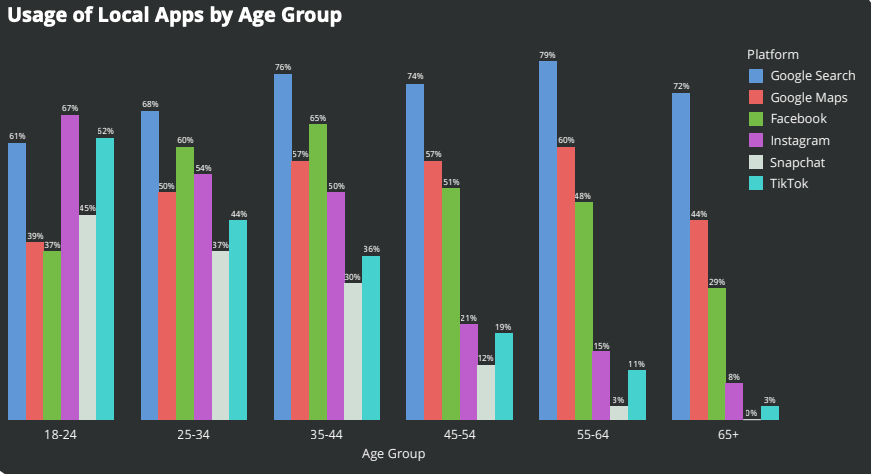
Source: SOCi consumer survey, n=1K US adults
**Our take:**
- The YPulse survey discussion attributes GenZ's changing behavior to "relatable \[social media\] answers amid dissatisfaction" with Google results.
- There's some anecdotal evidence that dissatisfaction is driving users to other platforms, but surveys typically don't tell the whole story.
- Google's comment that 18-24 year olds like SGE is also interesting. One can see a relationship between social media and conversational search.
### Marriage of AI & Search
Google CEO Sundar Pichai sees AI and search as distinct but complementary. In a wide ranging but largely non-confrontational interview at Stanford (h/t [SEJ](https://www.searchenginejournal.com/google-ceo-on-future-of-search/513619/?ref=nearmedia.co)), he speaks about multiple topics, from how Google innovates with nearly 200K employees to AI and the future of search. Pichai says, fundamentally, that AI is not a replacement for search. Chatbot answers, he argues, are good for factual information (but see, hallucinations), but search can offer a multiplicity of perspectives for more nuanced or complex queries. He implies the combination of web search and AI will enable Google to maintain its dominant position as the entry point for discovery on the web. (This POV suggests SGE will not go [behind a paywall](https://www.nearmedia.co/google-ai-paywall-perplexity-google-overlap-just-gave-up/)). Indeed, he sees Google SGE as a kind of evolution of universal search and featured snippets. Pichai also believes that Google's AI infrastructure – Ben Thompson [explores that topic in depth](https://stratechery.com/2024/gemini-1-5-and-googles-nature/?ref=nearmedia.co) – is critical to the company's ability to compete and win in the future. Pichai further explains that what's novel about AI is that it's "one \[ \] piece of technology which can improve Search, can improve YouTube, can improve Waymo." In other words, there's enormous leverage here for Google. The interview begins at 1:18 below; the discussion about how AI is impacting the trajectory of search begins around 1:33\.
**Our take:**
- Not discussed: Google's aggressive monetization of search, specific competitive challenges (e.g., TikTok), its ambivalence about transparency, spam, fraud.
- Pichai's version of Google is a thoughtful, ethical company focused on quality and maintaining trust of users and society as a whole.
- While Pichai is believable and sincere, there's a gap between his presentation of Google and many of the "facts on the ground."
### Next + Why Isn't SGE Better?
A lot of [news](https://cloud.google.com/blog/topics/google-cloud-next/welcome-to-google-cloud-next24?ref=nearmedia.co) came out of Google's Cloud Next 2024 event this week, which was wall-to-wall AI. From a search perspective, one of the more interesting items is the integration of Google search into the company's Vertex AI platform. Google [said](https://blog.google/products/google-cloud/google-cloud-next-2024-generative-ai-gemini/??ref=nearmedia.co) that search data is being used to help "ground" AI to " improve the accuracy of responses." Presumably this will enable Google customers to access the full Google index through Vertex. Developers and Google customers can also use their own data as a "source of truth" in tandem. These moves are designed to address the MSU issue ("make shit up" or hallucination) and help build trust in Google's AI models, a theme CEO Sundar Pichai stressed in his Stanford interview. As Google continues to improve the quality of its B2B AI experiences, why isn't that equally happening with SGE, which has been [criticized](https://www.washingtonpost.com/technology/2024/04/01/new-ai-google-search-sge/?ref=nearmedia.co) for inaccuracy, hallucinations and latency. SGE results show up [for more than 90% of queries](https://www.nearmedia.co/sge-hits-brands-dma-hot-seat-altman-reimagines-search/) and it appears Google is going make it more widely available next month at Google I/O. Like many Google Labs users, I enthusiastically tried but now largely ignore SGE results (less so on mobile). SGE often takes the place of snippets, and appears to play a central role in Google's "marriage of search and AI" story. SGE *could* be more useful. One idea [being tested](https://www.seroundtable.com/google-sge-testing-tabs-for-ai-overviews-37189.html?ref=nearmedia.co) adds tabs or filters to results for product queries.
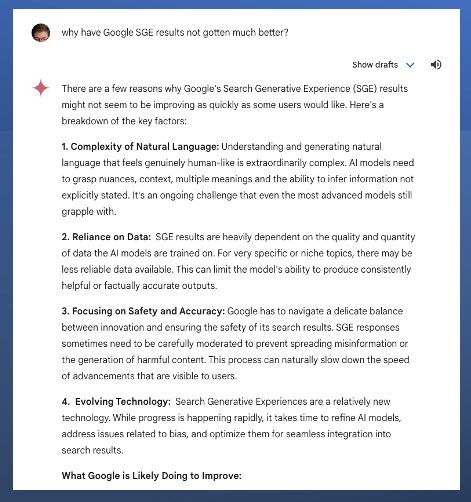
Google Gemini answering the question: why aren't SGE results better?
**Our take:**
- If SGE gets really good it likely will result in more zero-click behavior, potentially creating additional regulatory problems for Google.
- While there are technical explanations for why SGE may be lagging, Google has seemed, to date, uncertain or ambivalent about it.
- All the signs point to an I/O rollout, which may be limited. Regardless, we'll finally get a sense of user engagement and the impact on traffic.
## Recent Analysis
- ICYMI: **Near Media podcast episode 150 with Cyrus Shepard**: [on-page factors + Google updates, lessons from a Quality Rater, and what is the future of SEO](https://www.nearmedia.co/ep-150/)?
## Short Takes
- Marie Haynes: why **Reddit** [is all over search results](https://www.mariehaynes.com/some-thoughts-on-why-reddit-is-all-over-your-search-results/?ref=nearmedia.co).
- **Google + Reddit** \= [funny](https://twitter.com/carlhendy/status/1777935430190772715?ref=nearmedia.co).
- Joy Hawkins' **local search/GBP** AMA [on Reddit](https://www.reddit.com/r/localsearch/?ref=nearmedia.co).
- The [history](https://maphappenings.com/2024/04/11/story-of-etak/?ref=nearmedia.co) of the **Etak Navigator**, in-car nav way ahead of its time.
- **PPC**: "search location [doesn't match location targeting settings](https://www.seroundtable.com/google-ads-new-warning-search-location-doesnt-match-37195.html?ref=nearmedia.co)."
- Zyppy [Scorecard](https://www.linkedin.com/posts/cyrusshepard%5Fgoogle-says-the-most-important-part-of-e-e-a-t-activity-7183931794038120448-r3N9/?ref=nearmedia.co) offers insight into Google's **E-E-A-T** thinking.
- **Print magazines** [seeing a resurgence](https://www.axios.com/2024/04/09/nylon-print-returns-magazine?ref=nearmedia.co).
- **WPP and Google** partner to [accelerate AI-driven creative](https://www.wpp.com/news/2024/04/wpp-and-google-cloud-forge-groundbreaking-new-collaboration?ref=nearmedia.co).
- Europe's **DMA** [appears to be working](https://www.reuters.com/technology/eus-new-tech-laws-are-working-small-browsers-gain-market-share-2024-04-10/?ref=nearmedia.co) for smaller browsers.
- Europe [developing](https://www.politico.eu/article/europeans-race-create-artificial-intelligence-chatbots-counter-english-ai/?ref=nearmedia.co) **AI chatbots** to preserve local languages.
- **YouTube** would be worth more than Netflix or Disney [if spun out](https://www.bloomberg.com/opinion/articles/2024-04-05/hey-google-set-youtube-free-as-a-standalone-company?ref=nearmedia.co).
- **Teen** [Survey](https://mms.businesswire.com/media/20240409532694/en/2092783/1/TSWT%5FSpring24%5FInfographic%5F4-8-24.pdf??ref=nearmedia.co): weekly VR usage up, TikTok loses ground to Instagram.
Listen to our [latest podcast](https://www.nearmedia.co/memo/).
[](https://nearmedia.co/memo?ref=nearmedia.co)
How can we make this better? Email [us](mailto:gsterling@nearmedia.co) with suggestions and recommendations.
### Google: DMA Hurtz, Federal Privacy Law, 'Pepsi (Content) Challenge'
URL: https://www.nearmedia.co/google-dma-hurtz-federal-privacy-law-pepsi-content-challenge/
Last updated: 2024-04-09T21:07:06.000Z
### Google: DMA Hurting Local Biz
On Friday Google released some early information about the impact of its Digital Markets Act (DMA) compliance measures in Europe. (Mike and David were in Brussels and covered [Google's compliance "workshop](https://www.nearmedia.co/google-dma-compliance-redefinition/).") In a [blog post](https://blog.google/around-the-globe/google-europe/new-competition-rules-come-with-trade-offs/?ref=nearmedia.co), which is part explanation part argument, Google asserts [its compliance measures](https://blog.google/around-the-globe/google-europe/complying-with-the-digital-markets-act/??ref=nearmedia.co) – that were not specifically mandated by regulators but determined by Google itself – are having largely negative effects or unintended consequences. Google says that its [changes](https://www.nearmedia.co/eu-local-serp-visual-glossary/) to EU search results are driving "increased traffic to a small number of successful intermediary services and significantly less engagement with a wide range of businesses like airlines, hotels, local merchants and restaurants." Google [cites](https://www.linkedin.com/feed/update/urn:li:activity:7166372671595634689/?ref=nearmedia.co) third party data showing that direct hotel booking clicks are down by 30%. It also argues that consumers are unhappy with the changes (citing forums and message boards). Google further implies that "small businesses that don’t have a voice in the regulatory process" are also being harmed. Collectively, Google says, DMA compliance changes have brought about "adverse consequences" and encourages other countries not to follow Europe's lead.
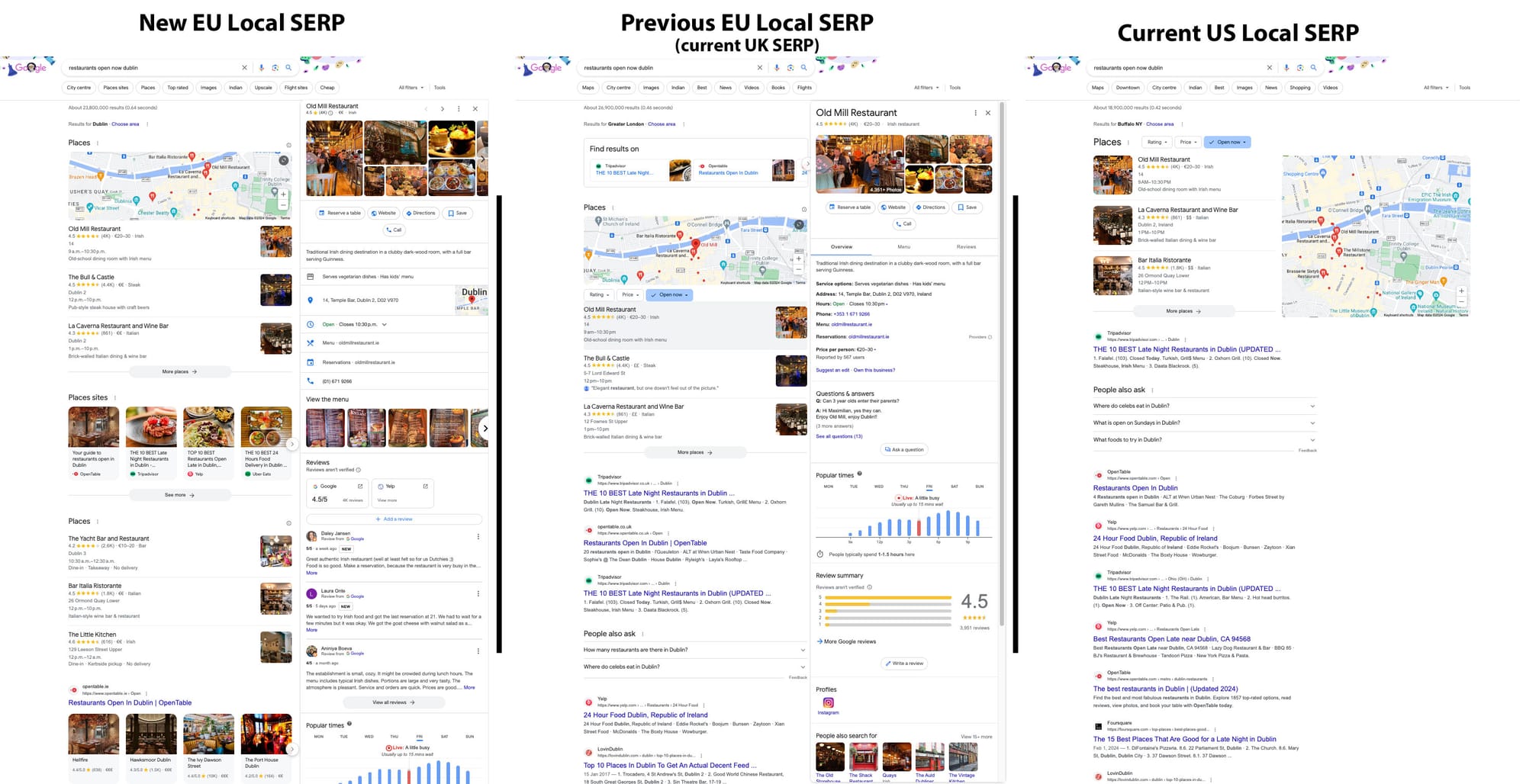
Source: Near Media
**Our take:**
- Near Media's early user testing in the restaurants vertical in Ireland [showed not much had changed](https://www.nearmedia.co/google-serp-restaurants-eu-dma-analysis/) post-DMA with user engagement.
- Google's familiar "SMBs/SMEs are being hurt/will be hurt" arguments are cynical, even disingenuous. Remedies are challenging. But ...
- Google is setting up a false dichotomy between 1) its version of DMA compliance and 2) the way things were. There are more options.
### America's GDPR Arrives
After years of disagreement, unfruitful negotiations and now compromise, a comprehensive federal privacy bill [was unveiled](https://energycommerce.house.gov/posts/committee-chairs-rodgers-cantwell-unveil-historic-draft-comprehensive-data-privacy-legislation?ref=nearmedia.co) over the weekend. Called the [American Privacy Rights Act](https://www.commerce.senate.gov/services/files/E7D2864C-64C3-49D3-BC1E-6AB41DE863F5?ref=nearmedia.co) of 2024 ([bill text](https://d1dth6e84htgma.cloudfront.net/American%5FPrivacy%5FRights%5FAct%5Fof%5F2024%5FDiscussion%5FDraft%5F0ec8168a66.pdf?ref=nearmedia.co)), the bill would create a single national privacy framework and standards that would preempt the patchwork of state privacy laws, a goal most tech companies support. It would still allow states to legislate in certain areas, including around healthcare data and financial privacy. The proposal is bipartisan and has a reasonable chance of passing, although it could see changes and amendments along the way. It gives consumers more control over their data and allows them to globally opt-out of targeting and tracking from a "single interface." It would also provide the right to sue companies for non-compliance with opt-out or data deletion requests. Collection of certain categories of information ("sensitive data") would require actual consent. A partial list of those includes: precise geolocation information, government IDs, financial accounts, health information, biometric information, information about sexual behavior, race, ethnicity and religion, among others.

**Our take:**
- After years of trying, this is indeed a breakthrough. And while passage probably has a better than 50% chance it's still not certain.
- There are \~15 U.S. states with comprehensive data privacy laws, not all of which have gone into effect. APRA would gut them all.
- While the FTC would enforce, civil litigation would be key to ensuring compliance. That option has been opposed by tech companies.
### Content Challenge: Humans vs. AI
In [January](https://www.nearmedia.co/google-maps-ai-ai-content-working-gemini-vs-search/), Semrush released "[Think Big with AI](https://www.semrush.com/goodcontent/ai-content-marketing-report/??ref=nearmedia.co): Small Business Content Marketing in 2024." The sprawling document focused on AI adoption and usage. On page 97, there's a discussion comparing human-generated and AI content. Semrush conducted a kind of "[Pepsi Challenge](https://en.wikipedia.org/wiki/Pepsi%5FChallenge?ref=nearmedia.co)," involving head-to-head comparisons of blog and social media copy by people vs. AI on an array of topics. Users were asked which option they preferred without knowing more. AI content was preferred every time, though the margin of victory ranged between 6 and 30 points. Now [a similar study](https://www.searchenginejournal.com/humans-vs-machines-ad-copy-content-test-data-study/509942/?ref=nearmedia.co), focused exclusively on Google Search ads copy, has found the opposite result. Human and AI generated ads were run on Google for eight weeks. The study concluded that "human-written ads significantly outperformed AI-generated ones ... The human-written ads achieved 45.41% more impressions and 60% more clicks, resulting in a significantly higher CTR of 1.33%." The analysis offers several potential explanations for the outcome: human creativity, adaptability and intuition, among others. But it's very interesting that these two similar, though not identical studies, produced opposite outcomes.
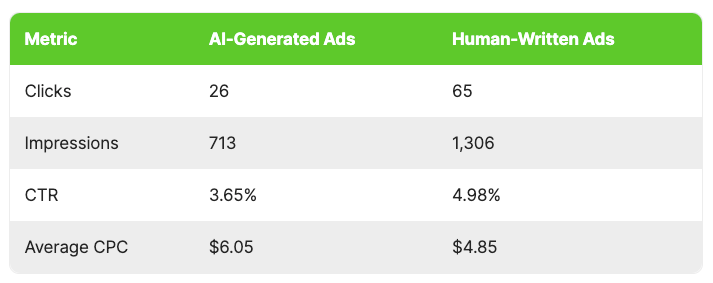
Source: SEJ/Hop Skip Media
**Our take:**
- The human-written ads performed quite a bit better than AI. We don't know how experienced the humans involved were, which is important.
- It's not clear what to make of these two outcomes, except to say that AI may be more appropriate to use in some cases, not others.
- While it might be best to shun AI entirely in some contexts, the best-practice is AI + a high degree of human oversight.
## Recent Analysis
- **Near Media podcast episode 152**: [a Conversation with John Jantsch: How your agency can increase retention an profitability with a fractional CMO](https://www.nearmedia.co/ep-152/).
## Short Takes
- **Moz**: How to [overcome reviewphobia](https://moz.com/blog/fear-of-local-business-reviews?ref=nearmedia.co), for SMBs and their SEOs.
- SingleInterface [to challenge](https://www.singleinterface.com/?ref=nearmedia.co) **listings/rep. management** incumbents.
- If **SGE** owns the top of funnel, pivot to [target the midfunnel](https://productledseo.substack.com/p/win-at-sge-with-midfunnel-seo).
- Why "**ranch-style SEO**" [may replac](https://www.clearscope.io/blog/ranch-style-seo-content-strategy?ref=nearmedia.co)[e](https://www.clearscope.io/blog/ranch-style-seo-content-strategy?ref=nearmedia.co) "skyscraper" content.
- **Cookie deprecation** [shifting budgets](https://www.marketingcharts.com/advertising-trends-232715?ref=nearmedia.co) to CTV, PPC and social.
- **TikTok** [to launch Instagram competitor](https://techcrunch.com/2024/04/08/tiktoks-instagram-competitor-likely-to-be-named-tiktok-notes/?ref=nearmedia.co): TikTok Notes.
- **Microsoft** announces [new AI hub](https://blogs.microsoft.com/blog/2024/04/07/announcing-new-microsoft-ai-hub-in-london/?ref=nearmedia.co) in London.
- Marketer trust in **Google, Meta and Twitter** ads [declining](https://assets-global.website-files.com/64ec68244172089051b43f1f/660cfda5d69c305654b42050%5FGlobal-State-of-PPC-2024-PPCsurvey-com.pdf?ref=nearmedia.co).
- **Uber Eats** [launches own short-form video](https://techcrunch.com/2024/04/08/uber-eats-launches-tiktok-like-video-feed/?ref=nearmedia.co) feed a la TikTok.
- **Meta** to step up [labeling of content](https://www.theguardian.com/technology/2024/apr/05/facebook-instagram-ai-label-digitally-altered-media?ref=nearmedia.co) generated or altered by AI.
- **AI companies** doing shady things in the quest for training data ([NYT](https://www.nytimes.com/2024/04/06/technology/tech-giants-harvest-data-artificial-intelligence.html??ref=nearmedia.co)).
Listen to our [latest podcast](https://www.nearmedia.co/memo/).
[](https://nearmedia.co/memo?ref=nearmedia.co)
How can we make this better? Email [us](mailto:gsterling@nearmedia.co) with suggestions and recommendations.
### Ep 152: Conversation with John Jantsch: How your agency can increase retention & profitability by offering a fractional CMO as a service
URL: https://www.nearmedia.co/ep-152/
Last updated: 2024-04-05T15:00:40.000Z
**Part 1 starts 00:13 -** [**The need to move SMBs from Tactics to Strategy & how fractional CMO’s can do that**](https://youtu.be/YXRz33HFd58?ref=nearmedia.co)
John Jantsch is a seasoned consultant, speaker, and bestselling author, notably recognized for his Duct Tape Marketing brand. He shares his journey of owning an agency for 30 years, highlighting his affinity for small to midsize businesses and the challenges they face, especially regarding budget and focus. Jantsch's Duct Tape Marketing was his solution to the market's need for effective and straightforward marketing services. Over time, his approach evolved into licensing his methodology to other agencies and consultants.
In the last five years, Jantsch has pivoted towards offering fractional Chief Marketing Officer (CMO) services, capitalizing on the growing acceptance and need for part-time executive roles. He explains that the fractional CMO concept is cost-effective, providing senior marketing leadership at a fraction of the cost of a full-time CMO, particularly beneficial for companies with revenues under $30 million.
Jantsch observes an increasing demand for strategic marketing services, partly due to the market's rapid changes and the desire for differentiation among agencies. He notes that while there is a prevalent focus on lead generation and short-term goals in the industry, there's a growing recognition of the value of strategic planning, especially for businesses crossing the million-dollar revenue threshold.
Resource: [Fractional CMO Insights Survey: Why Businesses Hire Them](https://ducttapemarketing.com/fractional-cmo-insights-survey-for-businesses-and-marketers/?ref=nearmedia.co)
**Part 2 starts 11:21 -** [**Helping agencies to increase profits by developing their own fractional CMO capacity**](https://youtu.be/M5eg3HuBKwg?ref=nearmedia.co)
In the second part of the interview, John Jantsch delves into the challenges and nuances of adopting a fractional Chief Marketing Officer (CMO) role within agencies. He acknowledges the difficulty agencies face when shifting from execution-focused services to strategic consulting, especially with existing clients who may not perceive them in this new light. Jantsch suggests that offering strategic services as an add-on and targeting a more ideal client base can facilitate this transition.
He critiques the common misunderstanding of having a marketing "plan" when businesses merely execute isolated tactics without a cohesive strategy. Jantsch emphasizes the importance of a targeted approach, focusing on the top 20% of customers and aligning marketing efforts with the entire customer journey, which he represents through the "marketing hourglass" concept. This approach entails understanding the customer's needs, refining messaging, and integrating strategic content creation.
Jantsch also discusses the foundational phase of client engagement, where he insists on starting with a strategy phase, lasting about 45 days, to build trust and set the groundwork for further marketing efforts. This phase allows for the identification of a client's true challenges and needs, fostering a relationship where the agency transitions from a vendor to a trusted advisor.
He highlights the importance of the CMO as the advocate for the customer within the company, ensuring that the entire customer experience, from initial contact through sales and service, aligns with the strategic marketing plan. Jantsch's approach underscores the need for a comprehensive understanding of the client's business processes, which is crucial for delivering effective marketing solutions and establishing a long-term partnership.
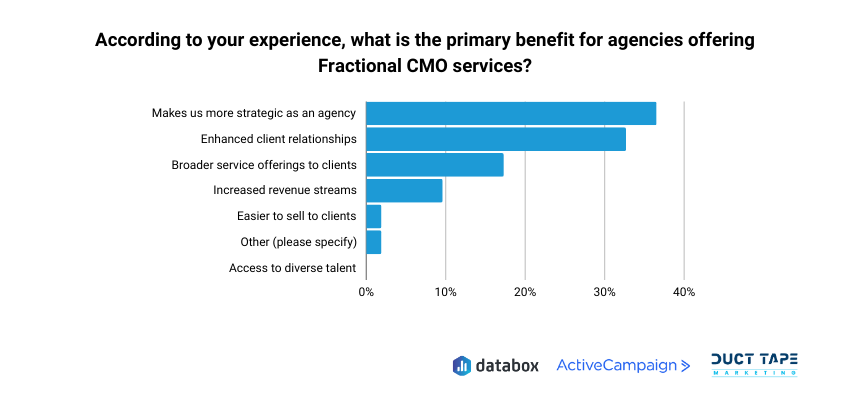
**Part 3 starts 21:45 -** [**How to begin implementing a fractional CMO relationship with your client**](https://youtu.be/chgxqMod8iM?ref=nearmedia.co)
In the final part of the interview, John Jantsch discusses building trust and managing dynamics within client organizations as a fractional CMO. He notes the common presence of internal politics and resistance, but emphasizes that many organizations lack strategic direction, making them receptive to outside expertise. Jantsch highlights the importance of establishing authority through a strategic process, which often leads to a more influential role within the client's operations, sometimes even involving personnel changes.
Jantsch shares that the average client retention for agencies adopting the fractional CMO model is 19 months, significantly higher than the industry average. He stresses the ongoing nature of marketing, with relationships evolving from intensive involvement to advisory roles as clients mature their internal capabilities. The discussion also covers the importance of regular strategy reviews, ideally every 90 days, to ensure alignment with goals and adapt to changes.
Regarding success metrics, Jantsch mentions tracking about 14 key metrics, including customer acquisition cost and lifetime value, acknowledging the challenges in obtaining reliable data. He emphasizes the importance of starting the data-tracking conversation early to identify and address gaps in client operations.
Finally, Jantsch discusses the role of artificial intelligence (AI) in marketing, viewing it as a tool that amplifies the need for strategic context and human insight. While AI can enhance efficiency and content production, Jantsch asserts that its effectiveness depends on the underlying strategy and original content, reinforcing the value of human expertise in marketing.
Resource Article: [How to Become a Fractional CMO](https://ducttapemarketing.com/how-to-become-a-fractional-cmo/?ref=nearmedia.co)
**AI disclosure*: the section summaries were created by ChatGPT based on the transcripts of our conversations and edited/checked by a fractional human for accuracy.*
### Google AI Paywall, Perplexity - Google Overlap, Just Gave Up
URL: https://www.nearmedia.co/google-ai-paywall-perplexity-google-overlap-just-gave-up/
Last updated: 2024-04-04T22:13:06.000Z
### Google May Put AI Behind Paywall
When Google [changed Bard's name to Gemini](https://blog.google/products/gemini/bard-gemini-advanced-app/?ref=nearmedia.co) and introduced Gemini Advanced in February, the company also rolled out a $20 per month subscription, bundling Gemini Advanced into a new Google One AI Premium Plan with more storage. Now comes a [report](https://www.ft.com/content/2f4bfeb4-6579-4819-9f5f-b3a46ff59ed1?ref=nearmedia.co) from the Financial Times that Google is considering putting AI search capabilities behind a paywall. "Google is looking at options including adding certain AI-powered search features to its premium subscription services." The article is unspecific about whether SGE would remain outside the paywall or whether it too would be folded in. We then could have "Google Classic" and Google AI search as parallel universes. It's also unclear whether paying subscribers would simply get a different search experience (sort of like Google Labs today) or whether there would be a different entry point for Google's AI experience. The article suggests all the technology is ready but that there may be internal indecision or strategic confusion over how to proceed. Part of this is apparently motivated by the higher costs of delivering AI results. Yet another angle undoubtedly involves protecting Google's search ads business from disruption while offering an AI experience to compete with ChatGPT, Perplexity and others.
Source: DALL-E
**Our take:**
- Many SEOs would be pleased if SGE went behind a paywall. It's not clear that will happen; there will probably be some sort of announcement at Google I/O.
- The percentage of people who would pay for a Google AI search product, which wouldn't necessarily be ad free, is likely a fraction of the total search user base.
- If true, this is a fascinating attempt by Google to "have it both ways" – to hold on to the past while trying to compete with emerging AI rivals.
### Report: 60% Perplexity - Google Overlap
Research from BrightEdge [found](https://www.brightedge.com/perplexity?ref=nearmedia.co) that there's a 60% overlap between Perplexity citations and Google organic search results (in nine verticals). BrightEdge also found that "referrals from Perplexity to brand sites are growing at nearly 40% month over month since January." From this, the SEO tool provider infers that Perplexity is indeed being used as a search engine, which is increasingly how the company is positioning itself. Of all the AI tools, Perplexity is making the most direct run at Google. As part of its study, BrightEdge also looked at overlap between Perplexity and Google SGE results (chart below). Healthcare showed the biggest overlap among the nine verticals, while e-commerce/product search had the lowest. In some cases there was a massive gap in rankings between domains featured in Google SGE and those in Perplexity. However, Reddit is one that figures very prominently in both. There are different traffic and usage numbers floating around but the consensus is that Perplexity visits and active users are growing. However, they remain a tiny fraction of Google usage.
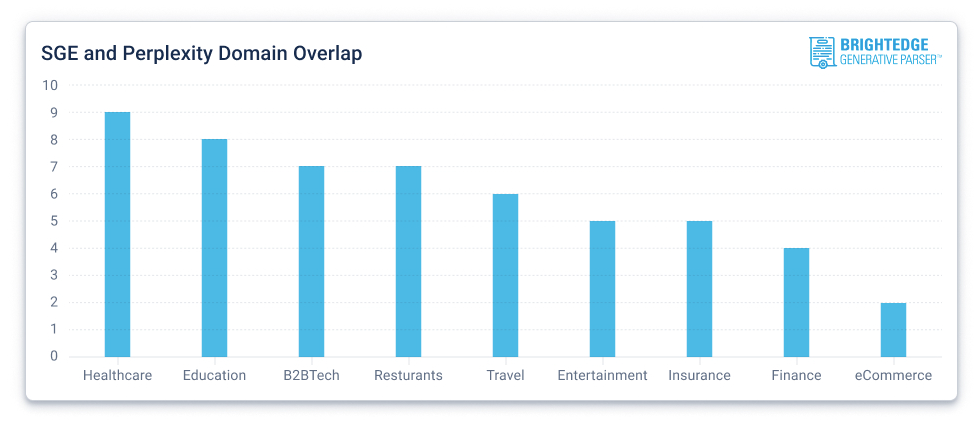
**Our take:**
- The report is interesting. It's worth monitoring Perplexity, but there's not much to do at this point. [Ads](https://www.adweek.com/media/gen-ai-search-engine-perplexity-has-a-plan-to-sell-ads/??ref=nearmedia.co) may present a near-term traffic opportunity.
- However, BrightEdge offers a range of specific Preplexity "SEO" recommendations. Most simply reflect general SEO best practices for Google.
- BrightEdge also suggests focusing on specific domains and aggregators favored by Perplexity. Many of these will also rank in Google (e.g., Reddit, Tripadvisor).
### 'Just Walk Out' + Other Shiny Objects
People working in technology are typically more star struck by shiny new objects than "regular people." And because of that we often overestimate the impact or uptake of new technologies. Virtual Reality/Augmented Reality are prime examples. As impressive as they are, they haven't broken through and become mainstream, despite years and years of effort. Apple VisionPro is a technical masterpiece but probably a commercial flop. Amazon's "[Just Walk Out](https://justwalkout.com/?ref=nearmedia.co)" cashierless technology was the "future of retail" when it was first introduced in 2018 in Amazon Go stores, and others raced to copy it. But now it appears Amazon is [sunsetting Just Walk Out at its grocery locations](https://www.cnbc.com/2024/04/03/amazon-ditches-cashierless-checkout-system-at-its-grocery-stores.html??ref=nearmedia.co) in favor of smart carts. Similarly, more basic retail self-checkout systems – themselves a "future of retail" technology at one time – [are being abandoned](https://www.theatlantic.com/technology/archive/2023/10/self-checkout-kiosks-grocery-retail-stores/675676/?ref=nearmedia.co) right and left. Self-driving cars is another example of a technology that hasn't lived up to the hype, although it still could. And EV sales [have slowed down](https://www.cnbc.com/2024/04/02/tesla-tsla-q1-2024-vehicle-delivery-and-production-numbers.html?ref=nearmedia.co), though they will likely rebound. AI's potential disruption of search could also be a casualty of inflated expectations.
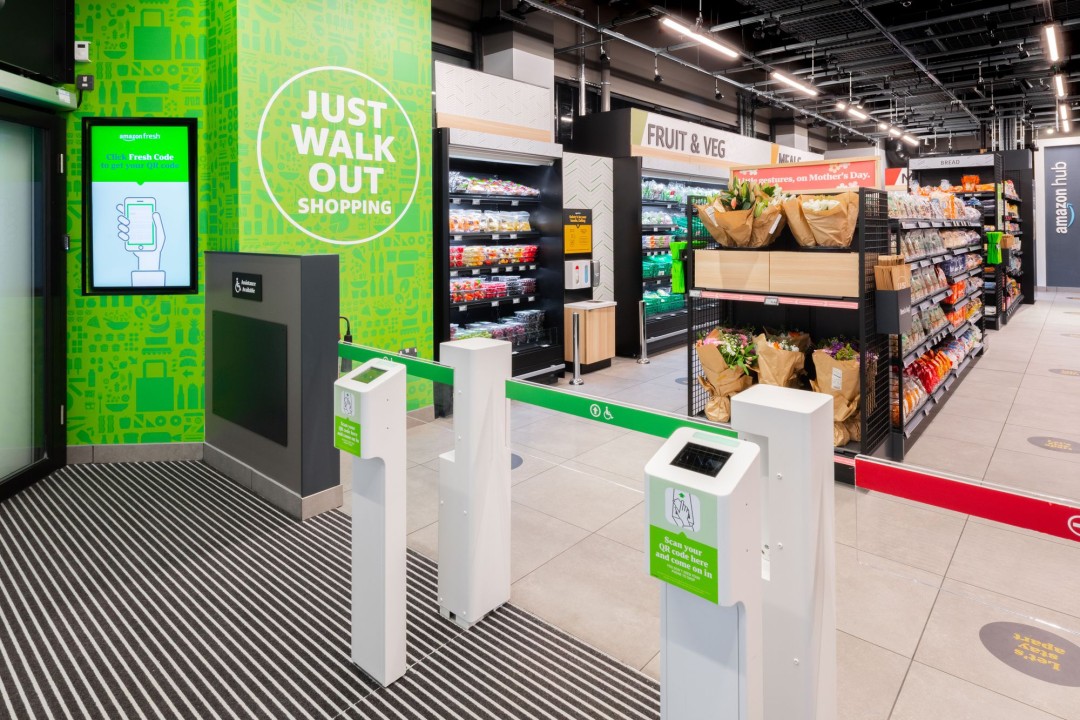
Source: Amazon
**Our take:**
- The introduction of an impressive new technology does not automatically mean people will buy it – literally and figuratively.
- For all its brand and market power, Google famously has introduced [and killed](https://killedbygoogle.com/?ref=nearmedia.co) at least 150 products over the years.
- AI, for its part, is a profound and disruptive technology. But it won't likely displace Google search any time soon, though could chip away at usage.
## Recent Analysis
- **Near Media podcast:** [Google goes to Brussels and attempts to defend their DMA compliance](https://www.nearmedia.co/ep-151-google-goes-to-brussels-attempts-to-defend-their-dma-compliance/).
- ICYMI: **Cyrus Shepard on Making Sense of Google Updates, Being a Quality Rater & the Future of SEO,** [by Greg Sterling](https://www.nearmedia.co/making-sense-of-google-updates-being-a-quality-rater-the-future-of-seo/).
## Short Takes
- Report: **Google** [wants to buy Hubspot](https://www.reuters.com/markets/deals/google-parent-alphabet-weighs-offer-hubspot-sources-say-2024-04-04/?ref=nearmedia.co) for $30+ billion.
- New next **Local Pack** result [advance button test](https://twitter.com/Miriam%5FEllis%5F/status/1775537951562420553?ref=nearmedia.co).
- **Microsoft** argues Bing's [market share is actually 23%](https://www.seroundtable.com/bing-usage-seos-dont-get-37161.html?ref=nearmedia.co) not 17%.
- How a Google "Gemini inside" **iPhone** [might work](https://www.wired.com/story/apple-google-gemini-iphone/?ref=nearmedia.co).
- **Nextdoor** [rolls out an Ads API](https://investors.nextdoor.com/news/news-details/2024/Nextdoor-Launches-Ads-API-Program-Offering-Advertisers-an-Easier-Way-to-Extend-Their-Campaigns-to-Nextdoor/default.aspx?ref=nearmedia.co) to generate more ad volume.
- **Google Ads** extension tests "[send this number to your phone](https://www.seroundtable.com/google-ads-call-us-with-text-or-email-to-call-37150.html?ref=nearmedia.co)."
- Waymo self-driving cars [will deliver](https://www.cnbc.com/2024/04/03/waymo-self-driving-cars-are-delivering-uber-eats-orders-for-first-time.html?ref=nearmedia.co) **Uber Eats** in Phoenix, AZ.
- OpenAI announced new [ability to edit](https://twitter.com/OpenAI/status/1775569161759985737?s=20&ref=nearmedia.co) **DALL·E** images in ChatGPT.
- Opera and **Brave** [incorporate AI assistants](https://techcrunch.com/2024/04/03/brave-launching-ai-assistant-iphone-ipad-users/?ref=nearmedia.co) into their browsers.
- The **DMA** has given birth to new third party app stores [in Europe](https://www.theverge.com/24100979/altstore-europe-app-marketplace-price-games?ref=nearmedia.co).
- Partisan sites [masquerading as](https://www.ft.com/content/ce6f8b43-8b0f-4081-a13c-47e58640253e?ref=nearmedia.co) genuine **local news publishers**.
- **Musicians** [make a moral argument](https://www.axios.com/2024/04/02/musicians-letter-ai-replace-artists?ref=nearmedia.co) against AI.
Listen to our [latest podcast](https://www.nearmedia.co/memo/).
[](https://nearmedia.co/memo?ref=nearmedia.co)
How can we make this better? Email [us](mailto:gsterling@nearmedia.co) with suggestions and recommendations.
### SGE Launch Date, AI & Section 230, ChatGPT's New Links
URL: https://www.nearmedia.co/sge-launch-date-ai-section-230-chatgpts-new-links/
Last updated: 2024-04-02T18:37:07.000Z
### Rumor: SGE Will Launch at Google I/O
Google has begun [exposing SGE results](https://twitter.com/rustybrick/status/1773405559531708713??ref=nearmedia.co) to some users not enrolled in Google Labs. And there's new SEO [speculation](https://searchengineland.com/google-still-has-not-announced-a-launch-date-for-sge-438862??ref=nearmedia.co) that Google will formally roll out SGE at its developer conference, Google I/O, on May 14\. Originally Google said SGE would become generally available in December 2023 but that deadline came and went. Then, in a January 17 [blog post](https://blog.google/products/search/google-search-ai-january-2024-update/??ref=nearmedia.co), Google explained it would "continue to offer SGE in Labs as a testbed for bold new ideas." That suggested, [and we agreed](https://www.nearmedia.co/sge-failure-to-launch-quality-raters-axed-whats-wrong-at-google/), that SGE would never formally launch but that AI-search features would slowly make their way into the SERP. But the totality of evidence, including Liz Reid's [elevation to Search VP](https://www.nearmedia.co/perplexity-google-sge-coming-soon-antitrust-conundrum/), now argues that a formal rollout of SGE is coming. Google's public [remarks](https://abc.xyz/assets/f1/cc/ee9f31bd40e399789d3fb8315bc7/2023-q2-earnings-transcript.pdf?ref=nearmedia.co) about audience reactions suggests that the response has largely been positive. But they're also not going to say anything negative publicly. The current state of SGE and the quality of its information [is imperfect at best](https://www.washingtonpost.com/technology/2024/04/01/new-ai-google-search-sge/?ref=nearmedia.co). Most third party research and analysis, which doesn't yet include direct user testing, suggests a negative [impact on publisher traffic](https://www.nearmedia.co/sge-a-traffic-destroyer-ai-optimization-smb-badges/) and [even on direct brand queries](https://www.nearmedia.co/sge-hits-brands-dma-hot-seat-altman-reimagines-search/).

Source: Authoritas
**Our take:**
- According to [Authoritas](https://www.authoritas.com/blog/research-study-the-impact-of-google-sge-on-brands??ref=nearmedia.co), more than 90% of keywords generate some form of SGE result, including those that require 'Generate' or 'Show More.'
- There are potential implications for local in SGE's launch, since Google Maps/Local is [one of the top sources](https://seranking.com/blog/sge-research/?ref=nearmedia.co) linked in SGE results.
- Despite the pushing-down-the-page phenomenon, once again, we won't really know anything until we have some user engagement data.
### Gen-AI May Turn Google into a 'Publisher'
Big tech platforms have consistently used [Section 230 of the Communications Decency Act](https://crsreports.congress.gov/product/pdf/R/R46751?ref=nearmedia.co) to avoid liability – some would argue responsibility – for harms arising out of the content on their sites. The intent of the provision, enacted in 1996, was to protect nascent internet startups from being sued out of existence. Section 230(c)(1) says, "No provider or user of an interactive computer service shall be treated as the publisher or speaker of any information provided by another information content provider." As a practical matter this has meant total immunity from liability for Meta, Google, Microsoft, Twitter/X and others. Now, unwittingly, AI may have done (or be about to do) what plaintiffs and legislators could not: overcome Section 230 immunity. The recent US Supreme Court case [Gonzalez v. Google](https://www.supremecourt.gov/oral%5Farguments/audio/2022/21-1333?ref=nearmedia.co) raised this possibility although didn't decide the question. Justice Gorsuch said the following during oral argument, "artificial intelligence generates poetry, it generates polemics today. That \[ \] would be content that goes beyond 'picking, choosing, analyzing, or digesting' ... And that is not protected." As the Wall Street Journal [points out](https://www.wsj.com/tech/ai/the-ai-industry-is-steaming-toward-a-legal-iceberg-5d9a6ac1??ref=nearmedia.co), this position now creates significant legal uncertainty for tech companies and especially for search engines and social media.

**Our take:**
- It's not clear how many other SCOTUS members share Gorsuch's position on Section 230 and AI. But it's possible a majority could.
- As generative AI becomes broadly infused into search engines, online productivity suites and social sites, the door is open to liability.
- It's also possible that courts or legislators could extend Section 230's protections to AI. But that seems unlikely in the current climate.
### ChatGPT Links = More Search Competition
Last Friday OpenAI [announced](https://twitter.com/OpenAI/status/1773738074041717109?ref=nearmedia.co) that ChatGPT was getting "more prominent links" (see example below). Rather than just a link indicator, you can now see the specific source from which the information comes. It may seem like a small thing but it's not. First off, SEOs will be happy. But more importantly, this will help instill greater trust in the content generated. According to a recent Pew [survey](https://www.pewresearch.org/short-reads/2024/03/26/americans-use-of-chatgpt-is-ticking-up-but-few-trust-its-election-information/?ref=nearmedia.co) users are distrustful or cautious of AI-generated answers in some cases. That same survey found that (only) 23% of US adults have ever used ChatGPT; however the number is 43% for people under 30\. Among technology industry workers, I would speculate the number is closer to 90% or more. Overall, ChatGPT has greater awareness, and usage, than Google Bard/Gemini – although Google is trying to change this by putting Gemini messages and badges all over its products. The addition of more obvious links/sources in ChatGPT will give people more confidence in the results they're seeing. The move comes as OpenAI [no longer requires account creation](https://openai.com/blog/start-using-chatgpt-instantly?ref=nearmedia.co) to use the site.
**Search: Best Hotels London**
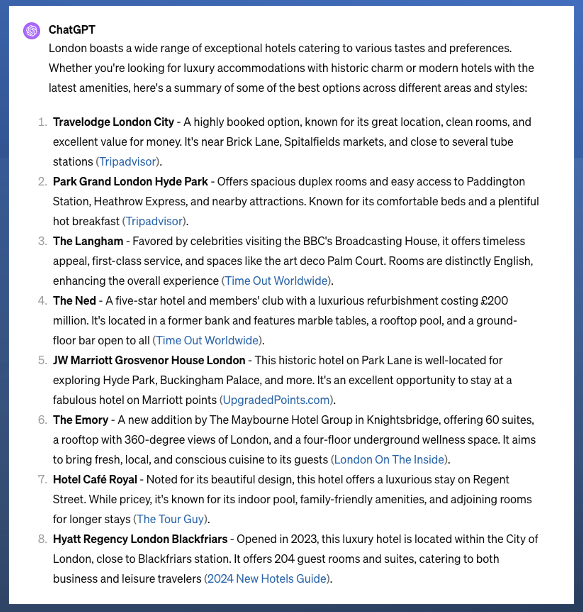
Source: ChatGPT
**Our take:**
- Sam Altman has [said](https://www.nearmedia.co/sge-hits-brands-dma-hot-seat-altman-reimagines-search/) he doesn't want to "build a better Google" but reimagine the search experience instead.
- Early predictions of Google's imminent demise at the hands of AI were obviously wrong, but some usage is starting to migrate, although some argue it will be additive to search rather than a substitution for Google.
- As I've said in other contexts, between ChatGPT, Perplexity, Copilot and, to a lesser degree, Claude, my Google usage is down by at least 50%.
## Recent Analysis
- **Near Media podcast:** [Google goes to Brussels and attempts to defend their DMA compliance](https://www.nearmedia.co/ep-151-google-goes-to-brussels-attempts-to-defend-their-dma-compliance/).
- **Google Redefines Local Services to Avoid DMA Compliance Consequences**, [by David Mihm & Mike Blumenthal](https://www.nearmedia.co/google-dma-compliance-redefinition/).
## Short Takes
- Google[testing](https://www.linkedin.com/feed/update/urn:li:activity:7180978730658402304/?ref=nearmedia.co)EU-style local "**aggregator carousel**" in US.
- **Perplexity** sets off on the road to perdition: [ads coming](https://www.adweek.com/media/gen-ai-search-engine-perplexity-has-a-plan-to-sell-ads/?ref=nearmedia.co).
- Might **AI** enable [an alternative to reviews](https://www.linkedin.com/posts/gregsterling%5Fa-couple-of-weeks-ago-i-was-on-amazon-and-activity-7180982626327961600-BQAb?utm%5Fsource=share&utm%5Fmedium=member%5Fdesktop) for products, businesses?
- **Quora and Reddit** [gain massively](https://twitter.com/lilyraynyc/status/1775164915411493039?ref=nearmedia.co) from recent Google update.
- Google must destroy improperly collected **Incognito** data ([WSJ](https://www.wsj.com/tech/google-pledges-to-destroy-browsing-data-to-settle-incognito-lawsuit-1febfde5??ref=nearmedia.co)).
- Is Google replacing search **Notes** [with Comments](https://www.seroundtable.com/google-tests-comments-button-37153.html?ref=nearmedia.co)?
- Google's **John Mueller**: too much [focus on links](https://www.seroundtable.com/google-over-focusing-seo-37145.html?ref=nearmedia.co) a waste of time.
- Still [no recoveries](https://www.seroundtable.com/no-hcu-yes-core-google-update-recoveries-37144.html?ref=nearmedia.co) from September **Helpful Content Update**.
- Terms like "**do what's best for users**" [are ambiguous](https://www.searchenginejournal.com/what-does-do-whats-best-for-users-even-mean/512212/?ref=nearmedia.co).
- **OpenAI** is [announcing Synthetic Voices](https://openai.com/blog/navigating-the-challenges-and-opportunities-of-synthetic-voices?ref=nearmedia.co), what could go wrong?
- Eight EU countries [without](https://www.techdirt.com/2024/03/28/eus-digital-services-act-stumbles-out-of-the-gate-as-member-states-fail-to-appoint-regulators/?ref=nearmedia.co) **DSA regulators** after the deadline has passed.
- Microsoft and **OpenAI** to collaborate [on $100 billion supercomputer](https://www.reuters.com/technology/microsoft-openai-planning-100-billion-data-center-project-information-reports-2024-03-29/?ref=nearmedia.co).
- **Yahoo** [buying](https://www.yahooinc.com/press/yahoo-announces-the-acquisition-of-artifact-the-news-discovery-platform-created-by-instagram-cofounders-kevin-systrom-and-mike-krieger?ref=nearmedia.co) AI news aggregator Artifact.
- Amazon's **Just Walk Out** tech [may be on the way out](https://www.paymentsdive.com/news/amazon-just-walk-out-checkout-payment-smart-cart-grocery/711999/?ref=nearmedia.co).
Listen to our [latest podcast](https://www.nearmedia.co/memo/).
[](https://nearmedia.co/memo?ref=nearmedia.co)
How can we make this better? Email [us](mailto:gsterling@nearmedia.co) with suggestions and recommendations.
### Ep 151: Google goes to Brussels & attempts to defend their DMA compliance
URL: https://www.nearmedia.co/ep-151-google-goes-to-brussels-attempts-to-defend-their-dma-compliance/
Last updated: 2024-03-29T20:43:42.000Z
In this special edition, Mike and David discuss their visit to Brussels to attend Google’s report on their compliance with the European Digital Markets Act (DMA). The DMA, targeting large tech entities including Google, aims to regulate their status as gatekeepers to the internet. This session, specifically addressing Google's compliance, saw over 20 presenters from Google over an extensive eight-hour period, detailing their view of adherence to the DMA's regulations across various aspects of their operations.
The workshop was organized by the European Commission and attended by a diverse group, including industry trade groups, direct competitors such as DuckDuckGo, and consumer organizations. Discussions spanned from Google's dominance in online search and data portability to interoperability issues, with Google outlining its efforts in adapting its services to meet DMA requirements. Google specifically excluded Local, the Local Pack, Google Maps and entities from a need for compliance.
Google's argument primarily revolved around the challenges of balancing stakeholder needs while continuing to innovate within the constraints imposed by the DMA. Despite this, skepticism persisted among attendees and the commission regarding Google's compliance, particularly concerning self-preferencing. The commission's quick initiation of an investigation into Google's compliance post-workshop indicates both a rigorous approach towards enforcing the DMA and great deal of skepticism on the part of the EU as to compliance.
Segment Reference Article:
G[**oogle Attempts to Redefine Its Local Services to Avoid DMA Compliance Consequences**](https://www.nearmedia.co/google-dma-compliance-redefinition/)
[Google's astroturf critics find flaw in Near Media assessment](https://x.com/adamkovac/status/1772957053671326148?s=46&ref=nearmedia.co)
### AI Travel Itineraries, 23 for ChatGPT, Personalized Google
URL: https://www.nearmedia.co/ai-travel-itineraries-23-for-chatgpt-personalized-google/
Last updated: 2024-03-29T18:51:19.000Z
### Maps & Search: Lists + Itineraries
Google is further expanding the social and planning features of Maps. The company is [adding new lists](https://blog.google/products/maps/google-maps-updates-summer-travel-2024/?ref=nearmedia.co) and list-making tools. Rolling out in roughly 40 North American cities, Google Maps will soon show three types of lists. The "trending list" reflects short-term trending searches in a particular location (e.g., NYC). The "top list" is for places that have demonstrated enduring popularity. A third, "gems list," showcases less well-known but interesting or emerging places that don't show up on the other two. Google is also adding recommendations from OpenTable, The Infatuation, Lonely Planet and the New York Times. And Google is enhancing personal list-making on Maps, which now includes linking to content from social media sites. People who've made their own lists can submit them to Google via listnominations@google.com. Presumably Google will use any submissions as more community input for its new Maps lists. Finally, Google is testing AI trip itineraries in Search. You'll get an SGE result featuring things to do and places to stay for queries such as "plan a three-day visit to New York."
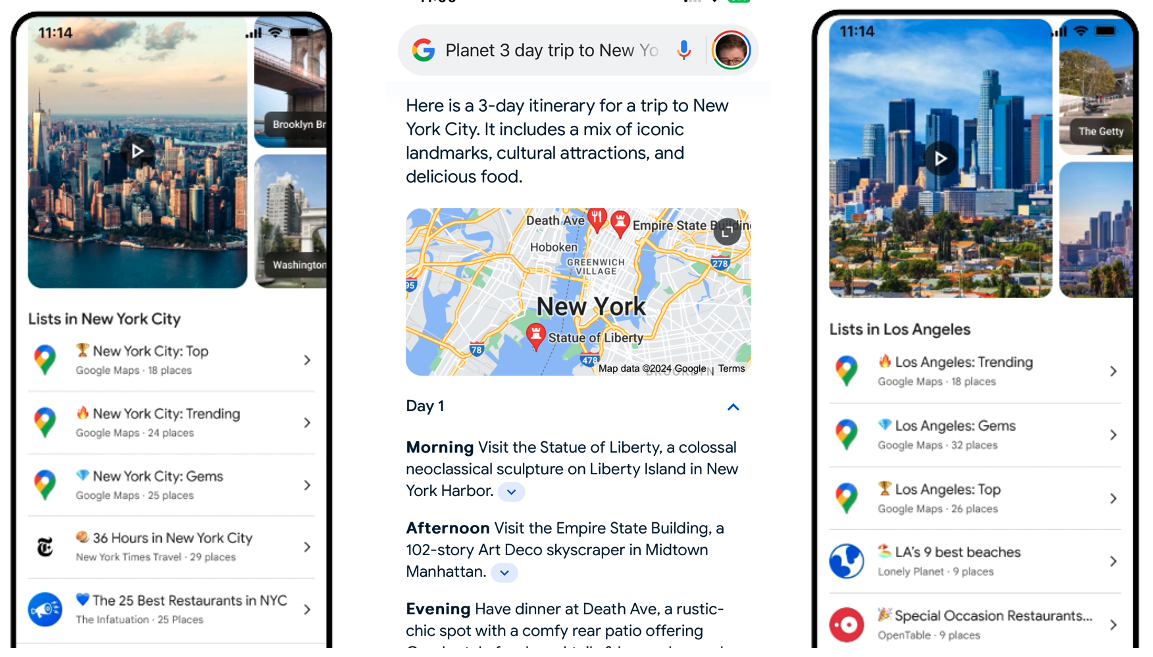
Source: Google
**Our take:**
- The new lists will undoubtedly be useful. We'll see how they impact conversions. Navigational/brand queries, reviews and clicks are probably behind the scenes.
- The AI itineraries will probably utilize Maps lists as an input. There are no ads/booking links – yet. Itineraries also likely responds to the emerging use of ChatGPT for travel planning.
- The cynical view is that itineraries will help Google capture more travel-intent data and push organic travel links (e.g., Tripadvisor) further down the page (see, ad revenue).
### Survey: 23% Using ChatGPT
Public awareness of AI and ChatGPT in particular is high. However the Pew Research Center found, in a recent [survey](https://www.pewresearch.org/short-reads/2024/03/26/americans-use-of-chatgpt-is-ticking-up-but-few-trust-its-election-information/?ref=nearmedia.co#how-have-americans-used-chatgpt) of US adults, that only 23% of Americans "have ever used it." That's up from 18% in July 2023\. Yet among adults aged 18 - 29 the figure is much higher: 43%. It's slightly higher than the average for those 30 - 49 (27%). Americans over 40 are much less likely to have used ChatGPT. Those with more education are also more likely to be using it. Asked about ChatGPT use cases, Pew's survey is frustratingly abstract. People are using ChatGPT at work (for "tasks"), and in their private lives to "learn something new" and "for entertainment." There may be more detail but it's not exposed in the public results. For example, there's no discussion of whether people are substituting ChatGPT for Google – a key question in our world. However, the idea that people are using it "to learn something new," suggests ChatGPT could be making inroads in the realm of "informational" queries. Informational search queries [represent 70%+ of all search volume](https://www.nearmedia.co/review-diversification-google-spam-reduction-informational-vulnerability/). In addition, the fact that it's being widely adopted among younger users should be concerning to Google.
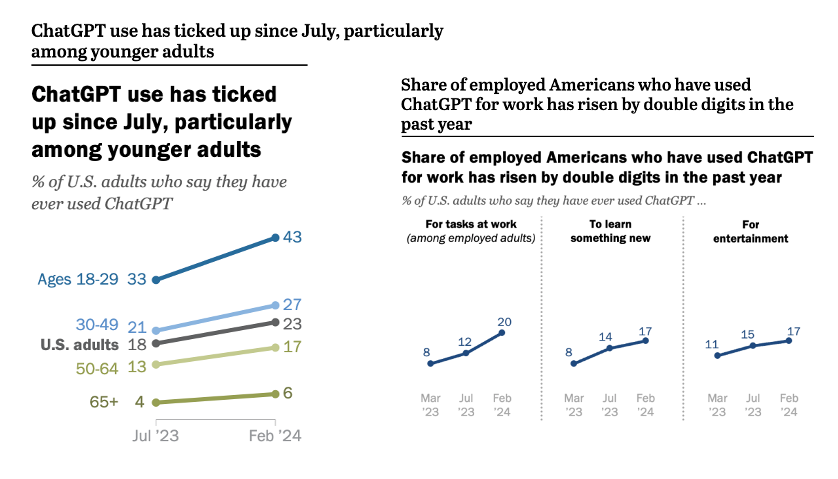
Source: Pew Research Center
**Our take:**
- It's too early to argue younger users are "abandoning Google." But there's growing evidence that they've [diversified their search behavior](https://www.nearmedia.co/last-click-mindset-apple-google-ai-deal-gen-z-local/).
- For example, the replacement of "[search it up](https://twitter.com/gsterling/status/1765610282389590363??ref=nearmedia.co)" for "Google it," as a colloquialism, is anecdotal evidence younger users are [looking elsewhere](https://www.adobe.com/express/learn/blog/using-tiktok-as-a-search-engine?ref=nearmedia.co).
- Many of the changes we're seeing in search features and the Google UI are responses to a range of perceived competitive threats.
### Personalized Google Shopping
Google [introduced](https://blog.google/products/shopping/google-personalized-shopping-tips/?ref=nearmedia.co) a number of new shopping tools and features that offer greater personalization. The first is Style Recommendations, which allows shoppers to give a thumbs up or down to particular items to enable future personalization (below, right). Searchers can also select brands that they prefer, a refinement that will show them more options from those chosen companies. And Google is adding AI-generated images. This was previously announced, but if users don't see anything that matches what they want, they can click a "generate images" button, which will attempt to depict the item they've described. That can then be matched with actual products (presumably via Google Lens). Finally, as also previously announced, Google is rolling out a virtual try on feature. Selected apparel images carry a "try-on" label. Once clicked you'll see a range of models. Select the one who matches your size and body type and, hopefully, get a better sense of what the item would look like on you. All these features aim to offer a much more personalized shopping experience on Google.
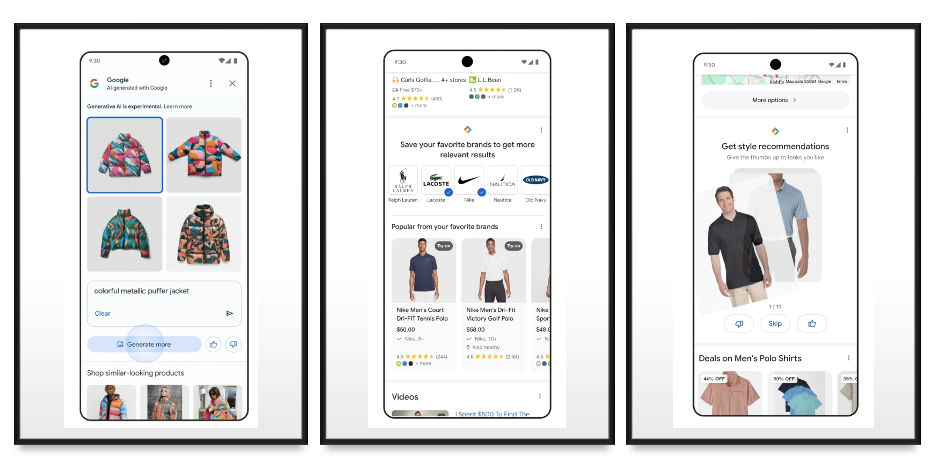
Source: Google
**Our take:**
- Google had previously shunned personalization, but now the company appears to be leaning into it.
- I can't help but think the shopping personalization is a prelude to much broader search personalization features across the company's properties.
- These personalization features only work, of course, if you're signed in to Google.
## Recent Analysis
- **Making Sense of Google Updates, Being a Quality Rater & the Future of SEO**, [by Greg Sterling](https://www.nearmedia.co/making-sense-of-google-updates-being-a-quality-rater-the-future-of-seo/).
- **Google Redefines Local Services to Avoid DMA Compliance Consequences**, [by David Mihm & Mike Blumenthal](https://www.nearmedia.co/google-dma-compliance-redefinition/).
## Short Takes
- Google [soliciting more image uploads](https://www.seroundtable.com/google-local-service-ads-photos-email-37116.html?ref=nearmedia.co) for **Local Services Ads**.
- **SGE reviews summary** [appears within](https://twitter.com/garrettsussman/status/1773091480808124858?ref=nearmedia.co) Google Business Profile.
- Google [expanding availability](https://www.seroundtable.com/google-local-reviews-reactions-37108.html?ref=nearmedia.co) of "reactions" to **GBP reviews**.
- Google [rolling out](https://localsearchforum.com/threads/new-photo-upload-interface-and-file-size-requirements.61276/?ref=nearmedia.co) a **new photo upload interface** for GBP.
- **Reddit** is [growing faster than TikTok](https://www.similarweb.com/blog/insights/social-media-news/reddit-post-ipo/?ref=nearmedia.co) in the US.
- **Hotels** in Europe [can now opt-out of showing prices](https://www.seroundtable.com/europe-hotels-pricing-google-hotel-search-37082.html?ref=nearmedia.co) on Google.
- **Helpful Content System reflections:** [Marie Haynes](https://www.mariehaynes.com/the-helpful-content-system-has-changed/?ref=nearmedia.co) and [Lily Ray](https://www.amsive.com/insights/seo/googles-helpful-content-update-ranking-system-what-happened-and-what-changed-in-2024/?ref=nearmedia.co).
- **Google**: [we blocked 5.5B bad ads](https://blog.google/products/ads-commerce/google-ads-safety-report-2023/??ref=nearmedia.co) and 12.7M advertiser accounts.
- Study: [more than 1/3](https://originality.ai/blog/upwork-writers-using-ai?ref=nearmedia.co) of **freelancers using AI**.
- **Google and Amazon** are your landlords who [keep raising the rent](https://www.linkedin.com/pulse/google-amazon-your-landlords-raise-rent-david-rodnitzky-w9ufc/?ref=nearmedia.co).
- **Amazon** [ad revenue](https://www.digitalcommerce360.com/amazon-ecommerce-facts-and-statistics/?ref=nearmedia.co) grew to $47 billion in 2023\.
- Now [it begins](https://productledseo.substack.com/p/googles-sge-is-launching-heres-what?): **SEO for SGE**.
- Glen Allsopp: "[Analyzing](https://detailed.com/q3/?ref=nearmedia.co) the **SEO playbook of digital Goliaths**."
- Data scientists [don't really understand](https://www.technologyreview.com/2024/03/04/1089403/large-language-models-amazing-but-nobody-knows-why/?ref=nearmedia.co) **why AI works** the way it does.
Listen to our [latest podcast](https://www.nearmedia.co/memo/).
[](https://nearmedia.co/memo?ref=nearmedia.co)
How can we make this better? Email [us](mailto:gsterling@nearmedia.co) with suggestions and recommendations.
### SGE Hits Brands, DMA Hot Seat, Altman Reimagines Search
URL: https://www.nearmedia.co/sge-hits-brands-dma-hot-seat-altman-reimagines-search/
Last updated: 2024-03-26T20:39:24.000Z
### SGE Is Coming for Brands
Google has started to [expose SGE results](https://searchengineland.com/google-starts-testing-ai-overviews-from-sge-in-main-google-search-interface-438680?ref=nearmedia.co) to users outside of Google Labs. There's been much hand-wringing in the SEO community over anticipated organic traffic losses if/when SGE rolls out. Aleyda Solis offers [a risk assessment guide](https://www.aleydasolis.com/en/search-engine-optimization/the-3-main-types-of-google-sge-snapshots-and-their-level-of-ranked-pages-traffic-risk/?ref=nearmedia.co) for three SGE scenarios: duplicative SGE, summarizing/complementary SGE and accelerator SGE – low, medium and high, accordingly. Surprisingly, brand queries are in the high-risk category, a finding echoed in [a new study from Authoritas](https://www.authoritas.com/blog/research-study-the-impact-of-google-sge-on-brands?ref=nearmedia.co). The new SGE study is a follow-up to one conducted [earlier this year](https://www.nearmedia.co/google-sge-pushdown-siri-ai-overhaul-brick-mortar-halo/). Brand queries saw a higher percentage of SGE results than other categories. "These new types of generative results introduce more opportunities for third-party sites and even competitors to rank for your brand terms and related brand and product terms that you care about," observes Authoritas' Laurence O'Toole. Beyond this, 91% of all keywords across 15 verticals triggered an SGE result. And when a user expands an AI snapshot/SGE result, the top organic link drops way down the page: "an average 1,255 pixels." There are \~11 links from \~4 domains on average in SGE. And 62% of SGE links are from outside the top 10 domains. A slide deck containing the study findings is available [here](https://docs.google.com/presentation/d/1lav4vY4AVRwe6yPrfvkpJfabblbraeKJ/edit?ref=nearmedia.co#slide=id.p1).
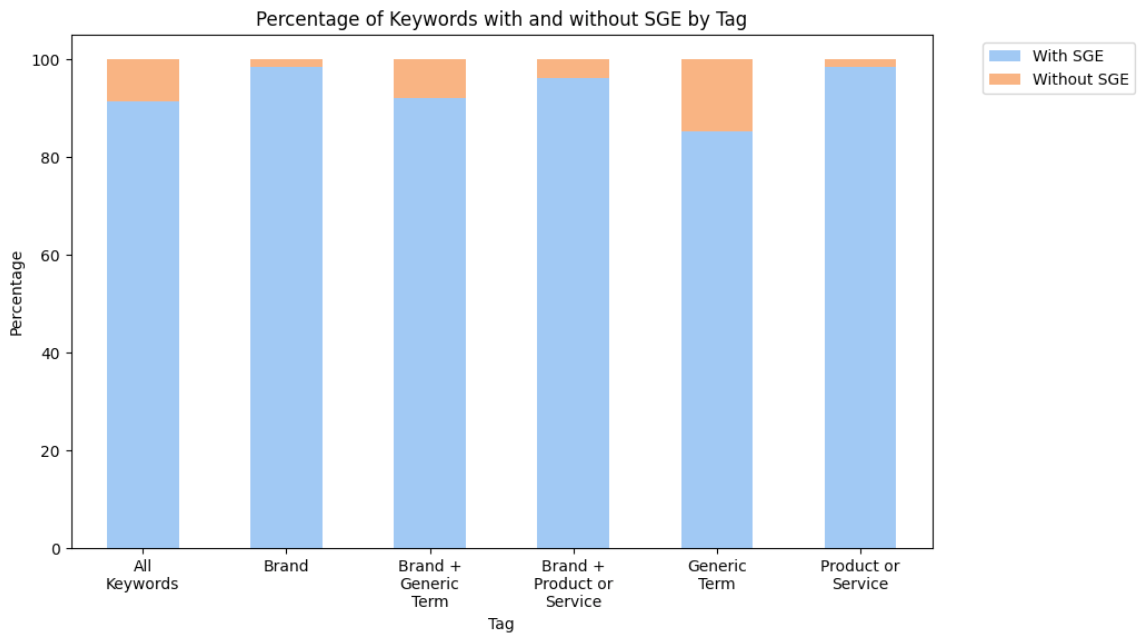
Source: Authoritas
**Our take:**
- The fact that non-top 10 domains can rank in SGE is potentially positive; Google is trying to use SGE to diversify top results. However, the idea that branded keywords could be "hijacked" is worrying.
- Building a brand has been an important and powerful hedge against the vagaries of Google's algorithm. Perhaps not as much going forward.
- We still don't have much data on how consumers interact with SGE. That is the "x variable" in this debate. Google has tons of user data but hasn't released any.
### In the DMA Hot Seat
Last week, in a Brussels DMA workshop with regulators, Google argued that it was in compliance with the Digital Markets Act (DMA). However, on Monday, regulators [opened non-compliance investigations](https://ec.europa.eu/commission/presscorner/detail/en/IP%5F24%5F1689?ref=nearmedia.co) into Meta, Apple and Google. That apparently means Google failed to sway them with its compliance demonstrations. Each company faces different "charges." Meta is being investigated over its "pay or consent" model. Apple confronts issues surrounding user choice and iOS. And Google is being investigated for "steering in Google Play and self-preferencing on Google Search." David and Mike offer [an in-depth look at Google's arguments](https://www.nearmedia.co/google-dma-compliance-redefinition/) and positions presented in Brussels. Near Media user testing [previously found](https://www.nearmedia.co/google-serp-restaurants-eu-dma-analysis/) that Google's DMA SERP changes did not capture significant engagement. The DMA is intended to promote consumer choice and make the internet more competitive in Europe. Penalties for non-compliance can be a meaningful percentage of global revenue. Google has [said](https://www.reuters.com/business/google-says-will-defend-its-dma-compliance-coming-months-2024-03-25/?ref=nearmedia.co) it will "defend" the changes implemented in search results. The company argues that it's currently in compliance, although there's ambiguity and disagreement over how compliance should be measured. Google has taken the position that significant UI/SERP changes would "degrade Google search," which it claims is not required by the DMA.
**Comparison of Local SERPs: EU, UK and US**

Source: Near Media
**Our take:**
- In some DMA categories compliance is much easier to imagine (e.g., browser or search choice). In others, such as local, it gets very tricky to determine.
- Does compliance mean that "aggregators" (e.g., Tripadvisor) see more traffic from Google? Process vs. outcomes: should the DMA guarantee outcomes – and for whom?
- And what if people continue to choose Google and its various properties (e.g., Maps) instead of third parties' sites/tools?
### OpenAI Wants to Reinvent Search
OpenAI CEO Sam Altman, in a widely covered [interview](https://lexfridman.com/sam-altman-2-transcript/?ref=nearmedia.co), talks about how AI might reinvent the search experience. Asked about whether OpenAI can improve upon Google, Altman responds, "I find that boring." While he expresses confidence that a better search engine could be built, he says, "The thing that’s exciting to me is not that we can go build a better copy of Google search, but that maybe there’s just some much better way to help people find and act on and synthesize information ... I don’t think the world needs another copy of Google." He says he wants to combine LLMs plus search: "I would love to go do that. I think that would be cool." Presumably Bing tried to do a version of that with limited impact (not discussed). And ChatGPT can search the internet using Bing, though the experience is suboptimal. Asked about business models, Altman says he hates ads, although he admits they were necessary for the early internet. He prefers that people pay to access services because that avoids conflicts of interest or editorial bias. He allows, however, that it might be possible to do a better version of ads for LLMs.
**Our take:**
- The existence of BingGPT and the integration of search into OpenAI shows that no current combination of LLMs + search is a Google killer.
- Altman's intuition that a next-gen, AI-powered search experience needs to be very different from Google is right.
- It's technically feasible to build a better search engine with AI. But Google's entrenched advantages make competing very challenging.
## Recent Analysis
- **Google Attempts to Redefine Its Local Services to Avoid DMA Compliance Consequences**, [by David Mihm & Mike Blumenthal](https://www.nearmedia.co/google-dma-compliance-redefinition/).
- ICYMI: **Why Local Searchers Look to the Local Finder**, [by Mike Blumenthal](https://www.nearmedia.co/why-local-searchers-look-to-the-local-finder/).
## Short Takes
- An informal Reddit [roundup](https://lsgseo.com/blog/pubcon-ai-seo-tools/?ref=nearmedia.co) of **SGE studies** to date.
- **GBP appeal process** [bringing more transparency](https://twitter.com/CarrieHill/status/1772624857823416486?ref=nearmedia.co).
- An [inventory](https://lsgseo.com/blog/pubcon-ai-seo-tools/?ref=nearmedia.co) of all the **AI SEO tools** mentioned at Pubcon.
- **E-E-A-T** contains "[hidden" elements](https://searchengineland.com/google-neeatt-438497??ref=nearmedia.co): notability, transparency.
- Google continues with [testing](https://www.seroundtable.com/google-testing-places-places-sites-search-bar-37112.html?ref=nearmedia.co) **Places/Place Sites filters** in EU.
- Taking a page from Ask, **Bing buying Google Ads** [to drive traffic](https://www.seroundtable.com/bing-ads-on-google-ads-37083.html?ref=nearmedia.co).
- Content model [alternatives](https://ahrefs.com/blog/content-marketing-funnel/?ref=nearmedia.co) to the traditional **marketing funnel**.
- Continuing decline: **Twitter**/X users down [18% year over year](https://www.nbcnews.com/tech/tech-news/fewer-people-using-elon-musks-x-struggles-keep-users-rcna144115?ref=nearmedia.co).
- AI Pin = [search + ChatGPT](https://www.youtube.com/watch?v=1H4SNFtEzys&ref=nearmedia.co), but will people buy it?
- **GenZ** [has broken](https://www.voguebusiness.com/story/consumers/gen-z-broke-the-marketing-funnel?ref=nearmedia.co) the marketing funnel.
- Antitrust case against **Apple** [may be weaker](https://hardcoresoftware.learningbyshipping.com/p/216-united-states-v-apple-complaint??ref=nearmedia.co) than [it seems](https://www.theverge.com/2024/3/22/24109033/doj-apple-antitrust-lawsuit-legal-expert-praise?ref=nearmedia.co).
Listen to our [latest podcast](https://www.nearmedia.co/memo/).
[](https://nearmedia.co/memo?ref=nearmedia.co)
How can we make this better? Email [us](mailto:gsterling@nearmedia.co) with suggestions and recommendations.
### Google Attempts to Redefine Its Local Services to Avoid DMA Compliance Consequences
URL: https://www.nearmedia.co/dma/google-dma-compliance-redefinition/
Last updated: 2024-04-05T14:58:32.000Z
### The Digital Markets Act
The Digital Markets Act, or DMA, is the [European Union’s law](https://digital-markets-act.ec.europa.eu/about-dma%5Fen?ref=nearmedia.co) "to make the markets in the digital sector fairer and more contestable." Six large platforms, including Google, have been designated as gatekeepers providing so-called Core Platform Services (such as online search engines), that are subject to this regulation.
The DMA addresses many more gatekeeper market positions beyond online search, including default browser and search engine choice, user data portability, and app stores. Near Media's narrow focus is around Google's compliance with DMA Article 6(5) for vertical (local and travel) searches:
> The gatekeeper shall not treat more favourably, in ranking and related indexing and crawling, services and products offered by the gatekeeper itself than similar services or products of a third party. The gatekeeper shall apply transparent, fair and non-discriminatory conditions to such ranking.
---
### Google's DMA Response Generates Skepticism
The European Commission hosted a [workshop for Google to present its DMA compliance responses](https://digital-markets-act.ec.europa.eu/events-poolpage/alphabet-dma-compliance-workshop-2024-03-21%5Fen?ref=nearmedia.co) in Brussels on March 21\. The [Tech Oversight Project](https://techoversight.org/?ref=nearmedia.co) made our attendance at the workshop possible, and we were honored to speak with Commission members about our [Irish consumer search research](https://www.nearmedia.co/assets/Google%5FDMA%5Fvertical%5Fsearch%5Fresponse%5Frestaurants.pdf) assessing Google's vertical search DMA response.
Earlier today, on the heels of last week's Google presentations, the European Commission [opened an investigation into Google (Alphabet)](https://ec.europa.eu/commission/presscorner/detail/en/ip%5F24%5F1689?ref=nearmedia.co) around its self-preferencing in vertical search:
> **Alphabet's measures to prevent self-preferencing**
> The Commission has opened proceedings against Alphabet, to determine whether Alphabet's display of Google search results may lead to self-preferencing in relation to Google's vertical search services (e.g., Google Shopping; Google Flights; Google Hotels) over similar rival services.
>
> The Commission is concerned that Alphabet's measures implemented to comply with the DMA may not ensure that third-party services featuring on Google's search results page are treated in a fair and non-discriminatory manner in comparison with Alphabet's own services, as required by Article 6(5) of the DMA.
---
### Google's Proposed Local Solution
Google went to great lengths to emphasize the depth of its compliance commitment – 16 workshops and over 300 engineers involved in the effort – and yet few (if any) workshop attendees seemed happy with the effect of its solutions.
Below is an overview highlighting the major elements of Google's proposed DMA solution in Local (vertical) Search:
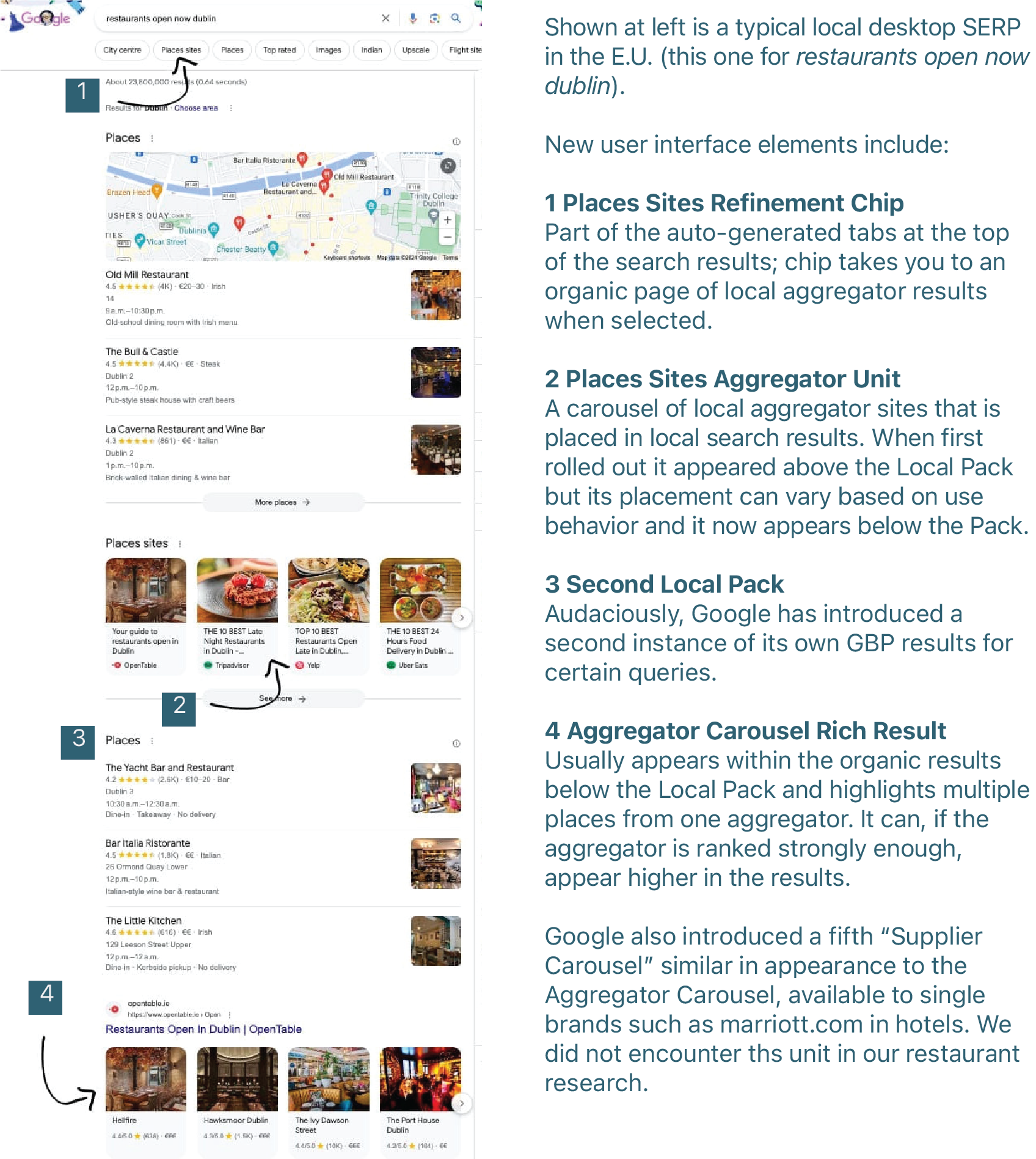
Vertical Search Services – "Aggregators," or directories in US search industry language (e.g., Tripadvisor, Yelp) – and websites are eligible for the new rich carousel results ([markup details here](https://developers.google.com/search/docs/appearance/structured-data/carousels-beta?ref=nearmedia.co)).
### Limitations of Google's Local, Hotel Search Definitions
Despite their intrinsic connection to Maps, Google seems to define Business Profiles as *part of its core search service*, arguing they should be excluded from regulatory consideration. Google has defined user interface elements, like the visually-prominent map insert in restaurant search results, as providing "context" to the search.
In the workshop, Google also positioned entities of all sorts – whether local, hotels, tickets or products – as beyond the regulatory bounds of the DMA.
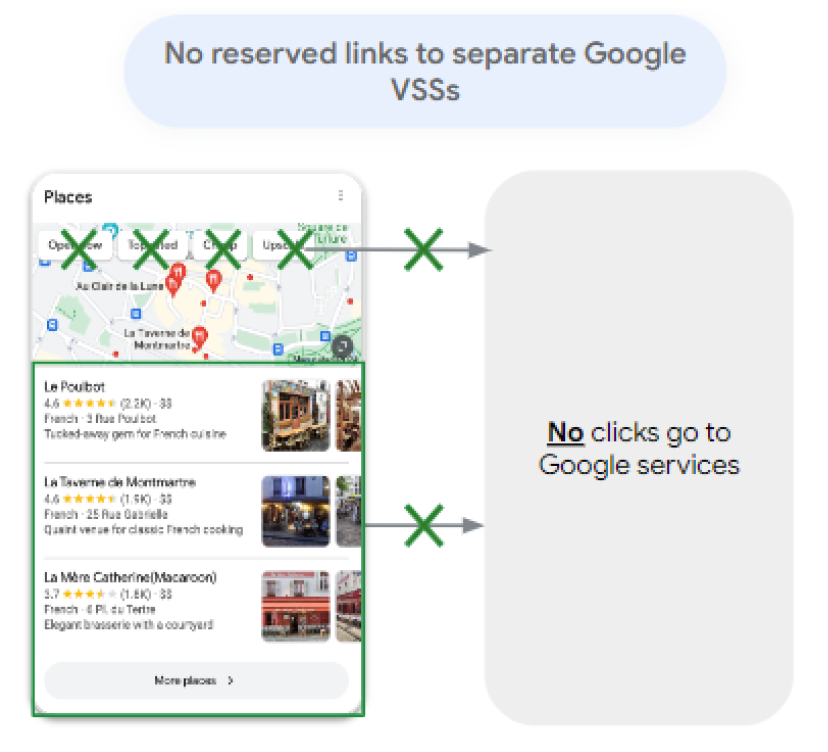
Source: [Google EU DMA Compliance Report](https://storage.googleapis.com/transparencyreport/report-downloads/pdf-report-bb%5F2023-9-6%5F2024-3-6%5Fen%5Fv1.pdf?ref=nearmedia.co)
**If Google is allowed to exclude Maps, Local, and any consideration of entities as being outside the bounds of the self-preferencing regulation, the regulatory solutions offered so far will have little impact.**
### Google's Attempted Compliance Reframe
Google is attempting to reframe its compliance obligation in a couple of key ways:
1. By positioning itself as stuck in the middle of competing Supplier and Aggregator factions, both of whom want more traffic, leaving Google unable to make significant changes because "feedback from different stakeholders was contradictory and diametrically opposed."
2. By signaling that significant user interface changes would "degrade Google search in Europe," which Google asserts is not required by the DMA.
3. By divorcing its own compliance responses from external success metrics.
(Quotes above from Oliver Bethell, Google EMEA Director of Competition.)
In shifting focus toward adding a few links and carousels here and there, Google is creating a dynamic where consumers, aggregator sites, and suppliers (hotels and airlines) are "fighting over the scraps." In this case, the scraps are which links should be included and where they should be placed.
Changing or adding a few links (as Google's solution tends to) simply divides and conquers the many businesses and consumers that are affected by Google search.
### Data to Assess Compliance Lacking
At the March 21 workshop, groups representing both Suppliers *and* Aggregators complained that Google's introduced solutions had hurt *both* of their members' traffic. **That** **leaves only one party whose traffic might have increased following the DMA solution: Google.** This is hardly the "contestable" outcome that European regulators have been seeking.
During the workshop Q&A, we asked Google directly if it would share aggregate ranking and clickthrough data for Google Business Profile Local Packs and the newly-introduced carousel units.
Despite an explicit comment from Google Product Manager Chetna Bindra during Google's presentation that the new carousel units were "performing quite well," they did not provide data to back up this assertion.
While Google's Bethell *did* commit to sharing at least some of this data privately with E.U. regulators in his response, in a later comment he noted that “indicators of compliance will not involve particular outcomes – that is not the nature of this obligation."
It remains to be seen whether regulators will deem traffic delivered to non-Google properties as a Key Performance Indicator.
### Future of Search and Competition
Search is essentially a ranking program that combines elements of all the websites links (the link graph) and all of the entities (the knowledge graph of people, places and things) into a user interface.
Historically its function has been to send searchers to the open web, but since the advent of the Local One Box in 2006, Google has seen its function more and more as providing direct answers to searchers queries using entities.
As has often been noted, including [by Google itself](https://blog.google/products/search/introducing-knowledge-graph-things-not/?ref=nearmedia.co) over a decade ago, search is becoming ever more about "things not strings." The inclusion of generative AI into the interface further takes searchers and businesses down the path of answers, not traffic to the open web ("answers not links").
If Google continues to capture most user queries *and* uses entities and AI to directly answer their questions, it hardly seems that a fair and contestable digital market will have been achieved. In fact, just the opposite.
**Whoever controls the entities controls general search, vertical search, and Maps.**
### Possible Vertical Search Remedies
Remedies settled on by the European Commission depend on their objectives and how they're measured. Structural solutions, like a break up of the many Google parts, could have unintended consequences – not the least of which is that the new entities could become their own monopolies.
Here are some potential solutions that we believe could be effective in accomplishing the DMA's objectives:
- **Mandate a minimum percentage of vertical search traffic referred to the open web as a reasonable proxy for "fairness," regardless of where that traffic ends up.** Percentage of traffic delivered to the open web is easily-trackable (surely Google is already tracking it) and ensures that search results are "contestable" by both aggregators and suppliers.
- Designate Google Maps as a search engine and apply a similar logic to it as other vertical search services.
- Evaluate whether (or where) user interface elements like the Local One Box (the "Local Pack") should be radically modified or removed entirely, as Local involves as much or more self-preferencing as any other search vertical.
- Require Google to make entity data across *all* verticals, including Local, available to other search engines at a reasonable cost, in the same manner it is required to share query, ranking, and click data with other search engines under DMA Article 6(11).
### Our **Framework to Assess Google's Compliance with the Digital Markets Act**
The purpose of analyzing user behavior was to bring clarity to how users were interacting with the new Google results. How we view Google, the EU and suggested remedies is based on our lived experiences and business & personal philosophies. You can find our framework to assess Google's compliance in [(html)](https://www.nearmedia.co/dma-statement/) and [here in (pdf)](https://nearmedia.co/assets/EU%5FDMA%5FCompliance%5FPrinciples.pdf?ref=nearmedia.co) so you can understand how our thinking has influenced our recommendations.
### Perplexity ❤️ Google, SGE Coming Soon?, Antitrust Conundrum
URL: https://www.nearmedia.co/perplexity-google-sge-coming-soon-antitrust-conundrum/
Last updated: 2024-03-21T21:08:21.000Z
### Can Perplexity Succeed Where Others Failed?
When OpenAI launched in 2022, many perceived an existential threat to Google. Bing quickly integrated AI chat into its search results and a host of smaller companies promised to redefine the way we discover and process online content. So far that hasn't happened – although my own Google usage is down by \~50% – but you can't escape the thought that, eventually, AI will radically change "search." Google is trying to elegantly manage the transition without undermining revenues. If it succeeds it will have defied "[the innovator's dilemma](https://www.hbs.edu/faculty/Pages/item.aspx?num=46&ref=nearmedia.co)." One of Google's smaller, AI-fueled competitors was Neeva. Founded by former Googler Sridhar Ramaswamy, the company was acquired and [shut down](https://www.nearmedia.co/neeva-search-done-ai-content-discovery-heres-twittergram/) last year. (Ramaswamy is now CEO of Snowflake, which bought it.) Neeva then said, "Convincing users to pay for a better experience was actually a less difficult problem compared to getting them to try a new search engine in the first place." Perplexity is now following in Neeva's footsteps and [making a direct run](https://www.fastcompany.com/91033202/perplexity-most-innovative-companies-2024?ref=nearmedia.co) at Google, [sometimes with Google's own rankings](https://twitter.com/glenngabe/status/1770494851743654064?ref=nearmedia.co). It also [recently integrated Yelp data](https://www.nearmedia.co/perplexity-yelps-ftc-pins-location-brokers-the-web-at-35/) to boost local results. Perplexity [aims to compete](https://www.perplexity.ai/hub/blog/perplexity-raises-series-b-funding-round?ref=nearmedia.co) by delivering "instant, reliable answers," without the need "to click on different links ... or endlessly dig for information."
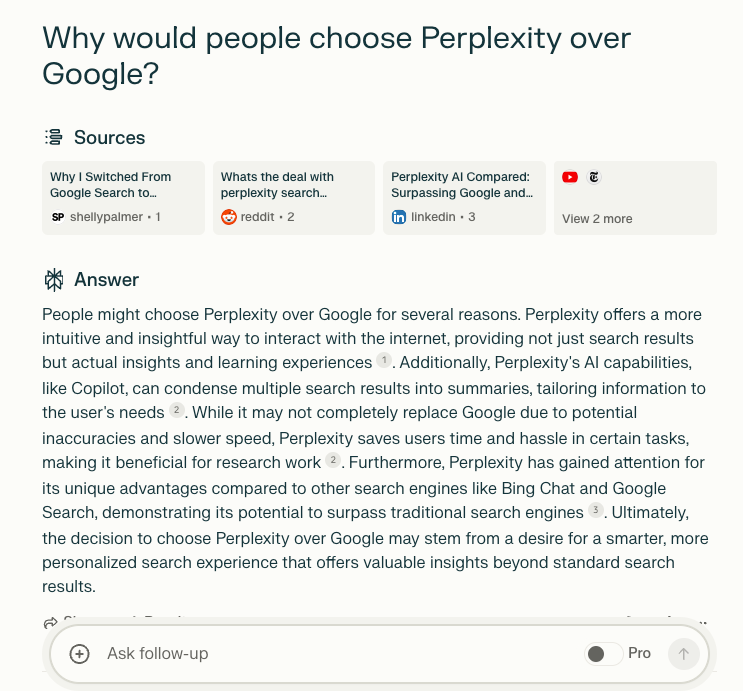
Source: Perplexity
**Our take:**
- Perplexity is right about the UX, many people are fatigued by the Google SERP. That's partly [why brand results win](https://twitter.com/lilyraynyc/status/1770866116547485754?ref=nearmedia.co).
- Perplexity's model, right now, is paid subscriptions. That would potentially change over time, but the absence of ads is currently an advantage.
- It's unlikely that any one site will eat meaningfully into Google's share. But collectively they could peel off several points of usage.
### Does Liz Reid Mean SGE Is Coming Soon?
Google's new Search VP Liz Reid got her start in Local. "I joined Google in 2003 as one of the first engineers building Google Local, which laid the foundation for the local information you find in Google Search and Maps today," she says in a LinkedIn [post](https://www.linkedin.com/posts/elizabeth-reid-56356724%5Ftoday-im-taking-on-a-new-role-leading-search-activity-7175645922851262465-oYX6/??ref=nearmedia.co). More recently she's been one of the executives [leading the integration of AI into search](https://blog.google/products/search/generative-ai-search/?ref=nearmedia.co), one example of which is Google's Search Generative Experience (SGE). A few months ago Google [declined to fully roll out SGE](https://www.nearmedia.co/sge-failure-to-launch-quality-raters-axed-whats-wrong-at-google/), as was originally expected. That caused many people, including us, to speculate that SGE would probably not roll out at all, at least in current form. Having held off BingGPT and OpenAI itself, Google seemed to no longer be under immediate competitive threat. Thus it could piecemeal selected SGE features to users over time. But, given Reid's appointment, some are now [speculating](https://www.theverge.com/2024/3/19/24105705/google-liz-reid-search-ai-sge-gemini?ref=nearmedia.co) that the AI future of Google Search looks a lot like SGE – "trading links for answers" – and is a lot closer than we think.
**Our take:**
- Publishers are [quite concerned](https://www.nearmedia.co/sge-a-traffic-destroyer-ai-optimization-smb-badges/) about the impact of SGE-like experiences in Google SERPs on referrals. That fear is probably justified, although Google is mindful of the dilemma they face.
- Google's results are cluttered and [search quality](https://www.nearmedia.co/google-search-quality-email-appreciation-dma-dilemma/) has declined. Beyond competition those factors also put pressure on the company to evolve.
- There's no question that AI will have a dramatic impact (over the next 5 years) on "search." But SEO will also evolve with it.
### The Antitrust Conundrum
As you're aware, Apple is now more directly in the antitrust cross-hairs, both in Europe and the US. Though [not its first brush](https://en.wikipedia.org/wiki/Epic%5FGames%5Fv.%5FApple?ref=nearmedia.co) with antitrust litigation, the US Justice Department, and multiple state attorneys general, [have just sued](https://www.justice.gov/opa/pr/justice-department-sues-apple-monopolizing-smartphone-markets?ref=nearmedia.co) Apple for seeking, in multiple ways, to erect barriers to competition: "Apple undermines apps, products, and services that would otherwise make users less reliant on the iPhone, promote interoperability, and lower costs for consumers and developers." The central idea is that Apple keeps an iron grip on its ecosystem to maintain market share and grow revenues – in other words: a moat. The [complaint](https://storage.courtlistener.com/recap/gov.uscourts.njd.544402/gov.uscourts.njd.544402.1.0%5F3.pdf?ref=nearmedia.co) and its claims do have merit. Apple counters that a government victory would get it into the business of designing technology experiences and prevent the kind of beneficial hardware-software integrations that consumers fundamentally want. Google has made similar arguments around the design of its search results (e.g., integration of Maps into the SERP). Indeed, some European users seem to be complaining about the [loss of some functionality](https://support.google.com/websearch/thread/261655134?hl=en&ref=nearmedia.co) in the post-DMA Google SERP. So is this a case of governments opposing user interests and the market?

Source: DALL-E
**Our take:**
- The government is seeking broad but unspecific remedies against Apple. Some things (like interoperability) are more feasible than others. Apple [argues](https://www.macrumors.com/2024/03/21/apple-sued-by-us-department-of-justice/?ref=nearmedia.co), some remedies would degrade user experiences.
- Nobody disputes the value of competition. However, Apple and Google do dispute that they're anti-competitive monopolies. They argue they've won with better products – and have plenty of competition.
- Consumers made choices in the past that arguably have created fewer choices in the present. Google won in search and usage is now habitual, though that could eventually change.
## Short Takes
- **Moz**: [14 Local Search developments](https://moz.com/blog/local-search-developments-q1-2024?ref=nearmedia.co) from Q1 2024.
- **Review recency** is a [local ranking factor](https://www.linkedin.com/posts/darrenshawwhitespark%5Flocalseo-seo-activity-7176604312033263617-mKi4/??ref=nearmedia.co).
- New **Google Local spam scheme** [makes competitors invisible](https://www.linkedin.com/posts/joyhawkins%5Fthis-new-spamming-technique-is-bonkers-activity-7176295886547738624-Pm9y/??ref=nearmedia.co).
- Uber "[unable" to remove](https://www.seroundtable.com/uber-eats-removal-google-business-profiles-37067.html?ref=nearmedia.co) **Uber Eats links** in GBPs.
- **Yelp**: Google SERP changes [not DMA compliant](https://blog.yelp.com/news/googles-changes-do-not-comply-with-digital-markets-act/?ref=nearmedia.co).
- **Semrush Copilot**: AI-assistant [offers SEO recommendations](https://www.semrush.com/blog/copilot-ai-seo-assistant/??ref=nearmedia.co).
- Messy [behind-the-scenes story](https://spectrum.ieee.org/unicorn-startup?ref=nearmedia.co) of a **local marketplace**'s expansion.
- **Microsoft** [paid $650 million](https://www.reuters.com/technology/microsoft-agreed-pay-inflection-650-mln-while-hiring-its-staff-information-2024-03-21/?ref=nearmedia.co) for Inflection "[acquihire](https://blogs.microsoft.com/blog/2024/03/19/mustafa-suleyman-deepmind-and-inflection-co-founder-joins-microsoft-to-lead-copilot/??ref=nearmedia.co)," licensing.
- **Google** [fined €250M](https://blog.google/intl/fr-fr/nouvelles-de-lentreprise/chez-google/accord-regler-differend-qui-dure-depuis-trop-longtemps/?ref=nearmedia.co) for AI training data copyright violations.
- OpenAI's **GPT Store** is [full of suspect bots and spam](https://techcrunch.com/2024/03/20/openais-chatbot-store-is-filling-up-with-spam/?ref=nearmedia.co).
- EU: **Meta's** new anti-tracking consumer fee [probably illegal](https://www.reuters.com/technology/eus-vestager-warns-about-apple-meta-fees-disparaging-rival-products-2024-03-19/?ref=nearmedia.co).
- Too much **Schema** [counterproductive](https://inlinks.com/insight/stuffing-pages-with-all-of-schema-org-a-strategy-killing-tactic/?ref=nearmedia.co) and could hurt results.
- **TikTok ban** slows down [as it moves into the US Senate](https://www.axios.com/pro/tech-policy/2024/03/20/senate-plots-next-moves-on-tiktok?ref=nearmedia.co).
Listen to our [latest podcast](https://www.nearmedia.co/memo/).
[](https://nearmedia.co/memo?ref=nearmedia.co)
How can we make this better? Email [us](mailto:gsterling@nearmedia.co) with suggestions and recommendations.
### Making Sense of Google Updates, Being a Quality Rater & the Future of SEO
URL: https://www.nearmedia.co/making-sense-of-google-updates-being-a-quality-rater-the-future-of-seo/
Last updated: 2024-11-19T21:10:59.000Z
No website hit by Google's Helpful Content Update (HCU) last year [has recovered](https://www.seroundtable.com/google-helpful-content-recovery-core-update-37095.html?ref=nearmedia.co) so far. It also now appears that the distinct [HCU classifier is gone](https://www.mariehaynes.com/the-helpful-content-system-has-changed/?ref=nearmedia.co) and has become part of Google's Core Update.
There's lots of advice circulating about what marketers should do, notwithstanding Google's repeated (but vague) statements about creating content for users and not trying to impress or "[show Google](https://twitter.com/searchliaison/status/1770867218059800685?ref=nearmedia.co)" that you're doing what you think it wants.
In our 150th podcast we spoke with well-known SEO [Cyrus Shepard](https://zyppy.com/about/?ref=nearmedia.co) about his recent on-page ranking-correlation [study](https://zyppy.com/seo/google-update-case-study/?ref=nearmedia.co), his experience as a Google Quality Rater and his take on the future of SEO. You can [listen to the full recording](https://www.nearmedia.co/ep-150/) or read on. The following are edited excerpts of Shepard's remarks.
### On-Page Ranking Correlation Study
Google says create helpful content but nobody understands what's going on. And to this day we've seen shockingly few recoveries. People don't understand what Google means when they say "helpful content" and Google themselves are very opaque about it so I just started collecting sites and trying to get a correlation between factors that Google seemed to be rewarding and demoting.
We've seen these traditional ranking factor studies over the years. They all do word count, how many incoming links, what's the domain authority of the site. And those are all what we'd call \[ranking\] factors. But with Google moving into more machine learning, I wanted to look at things that quality raters would actually be looking at, things that are hard to quantify. A lot of them were just human value judgments.
One of the obvious things was the **use of ads** – really heavy ads use. That was one of the largest negatively correlated factors. Anything with a fixed ad that covered the content when you scroll; that increased your chances of getting hit by the HCU by like 50% to 60% in some cases.
I \[also\] looked for **first-person pronouns and first-hand experience**. Are they describing something that they did themselves? Do they have unique pictures? Are they explaining a process? How they made a recipe or something like that. And those were the highest correlated factors; first-person pronouns I think was the highest correlated factor.
A lot of **contact information** \[was correlated with better visibility\]. Google and their quality raters talk about looking at who is responsible for the website, who created the content, does this person have expertise? Do the authors have their email address, things like that? So contact information was highly correlated. (I don't think these are ranking factors. It's kind of like that firsthand experience just trumped everything else.)
Use of **stock images** \[was negatively correlated with visibility\]. When I say stock images, I mean, any images that were not original, even if they were licensed from a stock image site or that taken from somebody's Instagram page. They only were qualified as non-stock images if they were completely original.
Does this page demonstrate **firsthand experience** or does it not? That's something that I couldn't feed into a computer and get a yes/no answer. So I just had to check a box here, just like a Google Quality Rater would. A lot of it was like, what would I be looking at if I was trying to judge these sites on experience?
**Observations and conclusions** ([more here](https://zyppy.com/seo/google-update-case-study/?ref=nearmedia.co)):
- Firsthand experience: you want to create content that not anybody else can create just by doing a lot of research on the internet.
- I think they were responding to all the SEO tools that teach you how to pump out content that looks like everybody else. And they're trying to reward human based signals. So that's the big one: human based content.
- I'm advising my clients these days, just get rid of all your stock images, replace them with something else, do something unique.
### Being a Quality Rater
I wanted to become a quality rater because **I suspect that Google is using quality rater data much more extensively than they let on**. They currently have 17,000 quality raters around the world. They're cutting the workforce by 3,500 in April. They sort of downplay it if you listen to their public statements. But I think they're probably using it much more extensively than that.
With machine learning they're undoubtedly feeding some of these example websites, that quality raters rate, into their deep learning algorithms to reward this, demote that. And I wanted to learn more with that process was like.
When I started the job, I was thinking like an SEO. I would be like, "Whoa, this page has keywords." When I stopped thinking like an SEO and I started thinking, "What sites would an elderly parent or grandparent who's not internet savvy trust?", that's how you want to approach working as a quality rater. I think that's why Google hires humans to do this job, because those are very human signals are really hard to do with machine learning or traditional ranking signals.
We have to consider that **Google probably is looking at user interaction data in the Helpful Content Update**: seing if people are clicking on a result, the pogo sticking, bounce rate, whatever you want to call it. Are people satisfied with what they're searching for online? Is it actually helpful?
In the \[Google default search\] [anti-trust trial](https://www.nearmedia.co/gpt-vs-search-google-antitrust-docs-will-the-smb-attribute-help/), I think that they testified RankBrain uses 13 months of click data. And if they're **using months of click data for the Helpful Content Update**, it may explain why we've seen shockingly few recoveries.
I \[also\] think if more people realized **sites were being rated on mobile**, they might pay a little more attention to that experience.
### The Future of SEO
We've seen over the last 10, 15 years, **Google used to be the gateway to the internet**. Now it's a gateway to a product. You're looking at a product that Google is delivering to you – and the web is somewhere else.
I think when we say the internet is broken we're talking about the gateways to the internet: the TikToks, Instagrams, Facebook, Google. These gateways are all ruled by algorithms and all send us to a particular experience and a particular product. But I think creators are doing better than they ever have been.
**Because Google has productized the experience, that product is more easily replicable by AI.** They've created something that can be replaced by a different experience in a few years. And we're going to see a big shift; I don't know what's gonna happen, but it's being reshaped.
I think the model that we've had over the last few years – where you do your research on Ahrefs or Moz or Semrush, find some keywords then you use another tool to optimize your content and it looks like all the other content on the web – that sort of model has an expiration date on it. It can't last forever, because that process can be easily replicated by AI.
**But I still think 99% of people can continue the traditional SEO model** that we've seen work and keep investing in those channels, at least for a while, but start to think about branching out.
We need more people creating original content with original perspectives. Try to **think about the things that can't be replicated by AI**, such as unique video content, unique graphics research. Maybe shift a little bit towards the original research and expertise if you're not doing that already. But otherwise, keep doing what you're doing for now.
### Last Click Mindset, Apple-Google AI Deal, Google #3
URL: https://www.nearmedia.co/last-click-mindset-apple-google-ai-deal-gen-z-local/
Last updated: 2024-03-19T18:11:19.000Z
### Google Getting Too Much Credit?
Seeking to clarify what he regards as a widespread misinterpretation of his earlier "traffic referral" [study](https://sparktoro.com/blog/who-sends-traffic-on-the-web-and-how-much-new-research-from-datos-sparktoro/??ref=nearmedia.co), SparkToro's Rand Fishkin published a follow up [post](https://sparktoro.com/blog/where-web-users-spend-time-vs-where-traffic-referrals-originate/?ref=nearmedia.co) pointing out the difference between traffic referrers and sources of "demand creation." The study originally found, "Google’s almost 10X larger than the next largest referrer in our dataset." That reinforced the perception that marketers should focus their time and resources on Google accordingly. However, Fishkin vehemently argues against this. Because "Google sends close to 2/3rds of all referral traffic to US websites ... that doesn’t mean Google is the best, only, or most important place" to focus your online marketing efforts. If you look at share of visits (uniques), time and engagement, Fishkin contends, a different picture emerges. Search is fourth and fifth in these categories respectively, with social media in the top position. He asserts that a substantial amount of Google traffic is navigational or sits between discovery and conversions. He's describing a kind of "last click" attribution problem: Google gets more credit than it should.
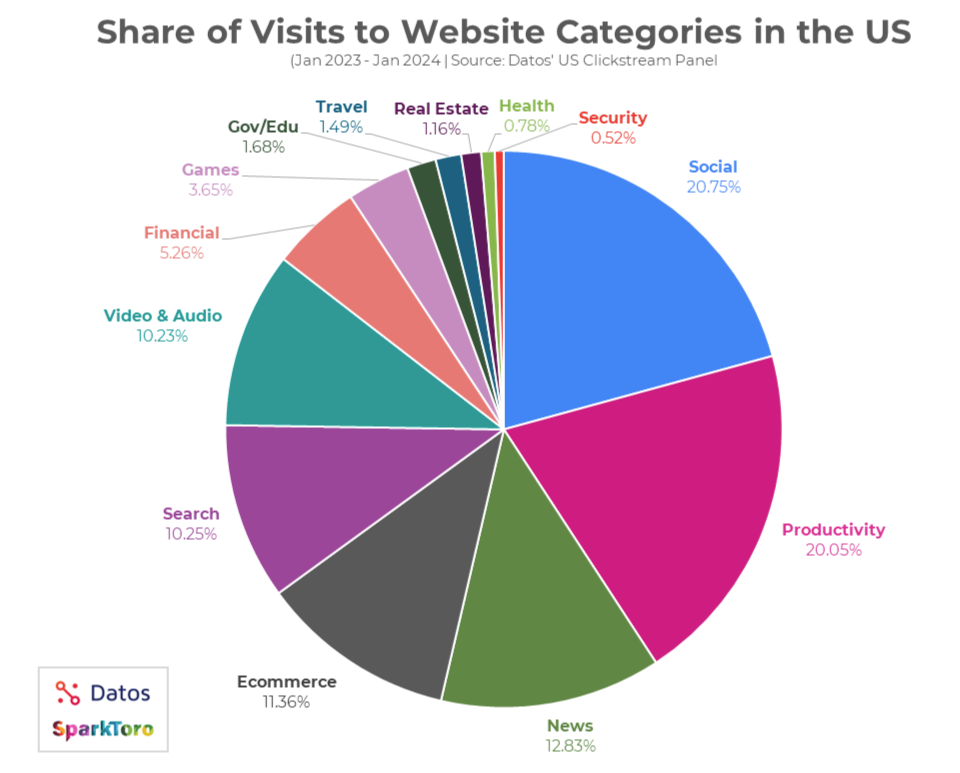
**Our take:**
- Fishkin: a "search exclusive" or mostly search marketing strategy is a mistake. Local is potentially more debatable; but see below.
- Another argument: zero-click (Snippets, Local, etc.), SGE and other Google efforts combat low engagement/time on site for search.
- It's absolutely true that marketers should build brand awareness and stimulate demand outside of search (e.g., on social).
### Apple's Pending Gemini Deal
Apple is [reportedly](https://www.bloomberg.com/news/articles/2024-03-18/apple-in-talks-to-license-google-gemini-for-iphone-ios-18-generative-ai-tools?ref=nearmedia.co) talking to Google and OpenAI about incorporating their AI technology into iOS 18\. Google appears to be the more likely partner for Apple, given their long-standing default search deal. (As an aside, that deal will likely be found to have broken US antitrust laws in the next few months.) Over the past year Apple has been pouring [enormous resources into AI](https://www.cnbc.com/2023/10/23/apple-to-spend-1-billion-a-year-in-ai-catch-up-efforts-report-.html?ref=nearmedia.co) development and is apparently on track to announce AI features at its developer conference this June. Gemini may be a core component of those capabilities. It's also possible that Apple will deliver an AI cocktail, with some features provided by its own technology and others via third parties or Google exclusively. Many commentators saw the report as analogous to the default search relationship. Yet web search is "external" to the core iPhone user experience. AI would potentially be more integrated or central to iOS 18\. Of course we'll have to see what gets announced. But if the Gemini deal does happen, it could put Google's AI technology on roughly 2 billion iPhones globally. That would be a coup vs. rival OpenAI. It could also raise additional antitrust concerns.

Source: DALL-E
**Our take:**
- The negotiation is an admission by Apple that its AI technology and capabilities are lagging and/or inferior.
- It's somewhat surprising that Apple isn't using open-source tools or working with a smaller AI company that it could eventually buy.
- AI is strategic going forward and Apple shouldn't be dependent on a rival for a core device capability, though perhaps this is a stop-gap measure.
### For Gen Z Google Is #3
At a conference in July 2022 Google SVP Prabhakar Raghavan [said](https://www.nearmedia.co/zoomers-no-maps-dash-cart-location-data-abuse/), "In our studies, something like almost 40% of young people, when they’re looking for a place for lunch, they don’t go to Google Maps or Search ... They go to TikTok or Instagram." This was something of a surprise but also strategic PR to help Google's antitrust position. Since then, third party studies have confirmed that Gen Z has diversified its search behavior beyond Google (e.g., [Adobe](https://www.nearmedia.co/sge-failure-to-launch-quality-raters-axed-whats-wrong-at-google/), [Tinuiti](https://www.nearmedia.co/chatgpt-search-reviews-unread-gen-z-search/)). New research from SOCi [looks at this same question](https://www.meetsoci.com/resources/insights/agency/nurturing-the-customer-relationship-2024-consumer-behavior-index/?ref=nearmedia.co) through a local lens. In a survey of 1,000 consumers the company asked, "Which smartphone apps or websites have you used in the last 30 days to look up information about local businesses?" Google Search was dominant (72%), followed by Google Maps (51%), Facebook (49%), Instagram (33%), TikTok (27%) and others. Apple Maps and Yelp were tied for seventh place at 16% apiece. (The responses indicate people are using multiple sites for local search.) However, when the data are segmented by age (18 - 24), it looks like this: Instagram (67%), Tiktok (62%) and Google Search (61%). SOCi added, "\[A\]ccording to our findings, Gen Z is even more likely to use social apps for local search and discovery than they were 18 months ago."

Source: SOCi consumer survey, n=1K US adults
**Our take:**
- Google leads for all age groups 25 and above. This is especially true for those over 45 years old.
- The study presents a more "competitive" picture of local search than the dominant narrative and marketer perceptions.
- This data validates Rand Fishkin's argument above that (local) marketers should focus on more than just Google.
## Recent Analysis
- **Near Media podcast episode 150 with Cyrus Shepard**: [on-page factors + Google updates, lessons from a Quality Rater, and what is the future of SEO](https://www.nearmedia.co/ep-150/)?
## Short Takes
- New **head of Google search** Elizabeth Reid [started in Local](https://www.linkedin.com/posts/elizabeth-reid-56356724%5Ftoday-im-taking-on-a-new-role-leading-search-activity-7175645922851262465-oYX6/?ref=nearmedia.co).
- Suspended **Google Business Profiles** can [get a second review](https://www.seroundtable.com/google-business-profiles-second-review-37065.html?ref=nearmedia.co).
- How important is **Schema** [for Local SEO](https://www.linkedin.com/posts/darrenshawwhitespark%5Fseo-localseo-activity-7175530948921331713-B6uh/??ref=nearmedia.co)?
- Google's "**Perspectives**" filter [to become "Forums](https://searchengineland.com/google-to-replace-perspectives-filter-with-forums-filter-438473?ref=nearmedia.co)."
- Some EU users [unhappy](https://support.google.com/websearch/thread/261655134?hl=en&ref=nearmedia.co) about **Google Maps' DMA changes**.
- How [to rank](https://searchengineland.com/identify-rank-hidden-gems-seo-438385??ref=nearmedia.co) for **Google's Hidden Gems** social content slots.
- **Core Web Vitals** [a ranking signal](https://searchengineland.com/google-updates-its-page-experience-docs-to-clarify-ranking-signals-438346?ref=nearmedia.co) but not a "ranking system."
- Google: **HCU classifier** [is gone](https://twitter.com/gsterling/status/1769808281038422305?ref=nearmedia.co), now part of core update system.
- Related Posts and **internal linking** [can boost rankings](https://ahrefs.com/blog/related-posts-seo/?ref=nearmedia.co) somewhat.
- **Apple Vision Pro** is "amazing" but [not ready](https://www.ben-evans.com/benedictevans/2024/3/17/a-month-of-the-vision-pro?ref=nearmedia.co) for the masses.
- **TikTok** paying creators to generate more [search-worthy content](https://www.theverge.com/2024/3/18/24101695/tiktok-creator-rewards-program-monetization-search-value-seo?ref=nearmedia.co).
- **Content creators** need to [go the extra mile](https://www.searchenginejournal.com/originality-escape-the-serp-fluffyfication/510869/?ref=nearmedia.co) to stand out in SERPs.
- **Google's VLOGGER** [needs just one image](https://enriccorona.github.io/vlogger/paper.pdf?ref=nearmedia.co) to create full motion video.
Listen to our [latest podcast](https://www.nearmedia.co/memo/).
[](https://nearmedia.co/memo?ref=nearmedia.co)
How can we make this better? Email [us](mailto:gsterling@nearmedia.co) with suggestions and recommendations.
### Ep 150: On-page factors & Google updates, Learnings from a G Quality Rater, What is the future of SEO?
URL: https://www.nearmedia.co/ep-150/
Last updated: 2024-03-16T19:07:59.000Z
**Part 1 starts 00:13 -** [**What on-page factors are associated with sites that see big gains or declines after Google updates?**](https://youtu.be/%5FBMCAPtsB9k?ref=nearmedia.co)
Cyrus Shepard explains his recent research looking at correlations between a range of on page factors that might affect Google’s perception of your site and analyzes which factors were associated with increases or decreases in site visibility. Are stock photos a death knell? Are ads a deal breaker? Should contact information be on every page?
Segment Reference Article:
[Winning & Losing Big Google Updates: 50-Site Case Study](https://zyppy.com/seo/google-update-case-study/?ref=nearmedia.co)
**Part 2 starts 21:30 -** [**What Cyrus learned from being a Google Quality Rater?**](https://youtu.be/oJ-Opr6gpGo?ref=nearmedia.co)
It isn’t easy to become a quality rater. It is hard work and pays beans but someone had to do it, right? Cyrus jumped into the breach and from his experience explained how these guidelines should inform your site.
Segment Reference Articles: [How 16 Companies are Dominating the World’s Google Search Results (2024 Edition)](https://detailed.com/google-control/?ref=nearmedia.co)
[I Secretly Worked As A Google Search Quality Rater (You Can Too)](https://zyppy.com/seo/google-search-quality-rater/?ref=nearmedia.co)
[Google Page Quality Scorecard](https://zyppy.com/seo/quality-rating-scorecard/?ref=nearmedia.co)
**Part 3 starts 41:30 -** [**What is the future of SEO?**](https://youtu.be/69UuqsDIQDk?ref=nearmedia.co)
Things are changing fast. Ai is stealing eyeballs and impacting search results. How long does SEO have and should we all be looking for other jobs or will generative AI solutions to search just increase the opportunities? Will Google continue to be the main source for leads going forward?
Segment Reference Article:
[Who Sends Traffic on the Web and How Much? New Research from Datos & SparkToro](https://sparktoro.com/blog/who-sends-traffic-on-the-web-and-how-much-new-research-from-datos-sparktoro/?ref=nearmedia.co)
### Perplexity Yelps, FTC Pins Location Brokers, Web at 35
URL: https://www.nearmedia.co/perplexity-yelps-ftc-pins-location-brokers-the-web-at-35/
Last updated: 2024-03-15T02:10:20.000Z
### Perplexity Taps Yelp for Local Search
Perplexity has integrated Yelp data ([Fusion API](https://fusion.yelp.com/?ref=nearmedia.co)) into its results for improved local answers. The API offers full access to Yelp's data and search capabilities, including name, address, phone number, images, reviews, pricing information and hours of operation. Perplexity didn't disclose any financial terms. This is part of a much larger trend in the "AI industry" to directly license content from sources, which includes Google's recent $60 million [deal](https://apnews.com/article/google-reddit-ai-partnership-a7f131c7cb4225307134ef21d3c6a708?ref=nearmedia.co) with Reddit and, this week, ChatGPT's [deal](https://openai.com/blog/global-news-partnerships-le-monde-and-prisa-media?ref=nearmedia.co) with European news publishers. You can now do any search on Perplexity that you might have done on Yelp, although the presentation of results needs to be refined and and there are occasional bugs. For some queries (e.g., home services), Perplexity also shows content from other local directories such as Home Advisor or Thumbtack. Below is an example search result for "best breakfast places Portland OR." You get a "SERP" with listings, a clickable map and images. The photo pages are linked to their source listing on Yelp. There are several "cards" at the top of the results that also take users to individual listings on Yelp. Most of the major AI platforms, especially BingGPT and Gemini, deliver local results. Perplexity CEO Aravind Srinivas [told](https://www.theverge.com/2024/3/12/24098728/perplexity-chatbot-yelp-suggestions-data-ai?ref=nearmedia.co) The Verge that people are using AI like search and so this was an effort to meet those expectations.
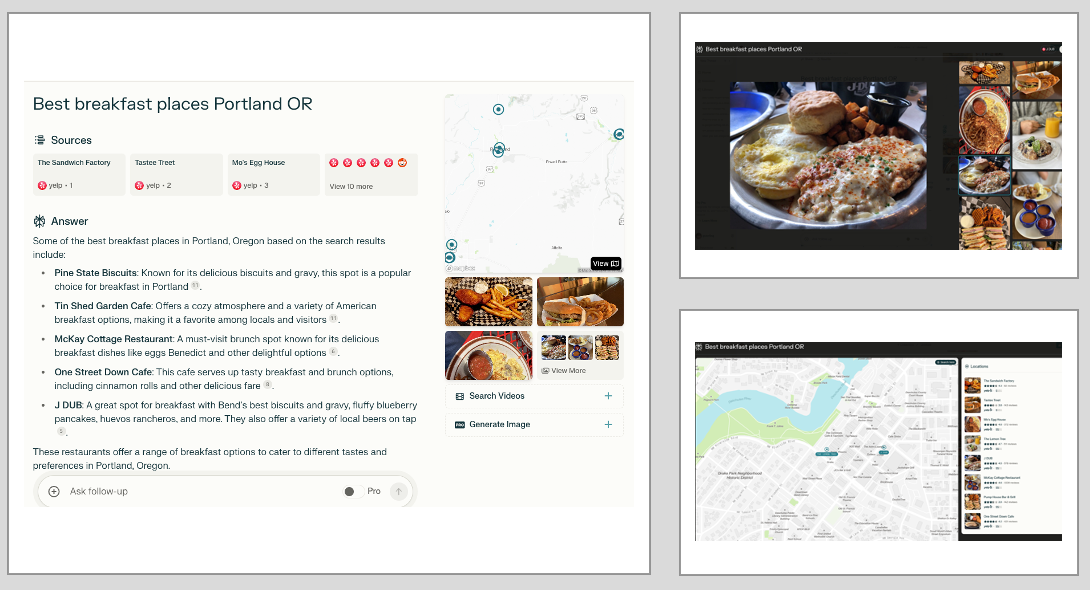
Source: Perplexity
**Our take:**
- So far none of the AI sites does a better job with local than Google, not even Gemini, which is supposed to have access to the identical information.
- This is "early days" for local content in AI and we assume the UI, data richness and accuracy will only improve.
- You can ask AI to "create an itinerary for a 7 day London trip including a 4+ star hotel that's under $200 per night" and get reasonably good results. That efficiency gives it an advantage vs. search.
### Is 'Location Intelligence' Dead?
Earlier this month the FTC put out a [press release](https://www.ftc.gov/policy/advocacy-research/tech-at-ftc/2024/03/ftc-cracks-down-mass-data-collectors-closer-look-avast-x-mode-inmarket?ref=nearmedia.co) about how it was cracking down on unauthorized online data collection, in three recent settlements involving Avast, X-Mode and InMarket. Anti-virus software maker Avast was capturing user browsing data in a way that might allow people to be individually identified. X-Mode and InMarket were spanked because of their location data collection practices. The thrust of the FTC's [complaint](https://www.ftc.gov/system/files/ftc%5Fgov/pdf/Complaint-InMarketMediaLLC.pdf?ref=nearmedia.co) against InMarket, in particular, was that the company failed to properly inform consumers their location data was being captured and how it was being used or to obtain consent in the process. This was true with InMarket's own consumer apps and its SDK partners. The settlement and order require InMarket to create new privacy programs, monitor partners and prohibits the company from "selling or licensing precise location data—a first for the FTC." It mandates that they obtain informed consent before collecting and using location data. The FTC also made this striking statement in its press release: "Browsing and location data are sensitive. Full stop."

Source: Google Gemini
**Our take:**
- The FTC is saying, any precise (mobile) location data collection is "sensitive." The only way to legally collect it is via consent.
- Location data is extremely valuable to marketers/brands but the industry has effectively screwed itself by failing to be transparent with users.
- The FTC is making location data collection totally opt-in. We know that when consumers are asked to consent to data collection, [the vast majority do not](https://arstechnica.com/gadgets/2021/05/96-of-us-users-opt-out-of-app-tracking-in-ios-14-5-analytics-find/?ref=nearmedia.co).
### State of the Web at 35
It was 35 years ago that Tim Berners-Lee generated a proposal for "information management" at [CERN](https://home.cern/?ref=nearmedia.co), which evolved into the web. In a [blog post](https://webfoundation.org/2024/03/marking-the-webs-35th-birthday-an-open-letter/?ref=nearmedia.co) this week, he reflects on the past roughly three decades of the internet: "It was to be a tool to empower humanity ... \[yet\] instead of embodying these values, the web has instead played a part in eroding them." Instead of becoming a force for public good, Berners-Lee laments, it has become a tool of exploitation, disinformation, unethical data collection and magnified the forces of capitalism "resulting in monopolisation." He then goes on to propose some solutions, one of which is giving control of data to individuals – the creation of "personal online data stores," an old-ish idea that coincidentally is at the center of his new startup [Inrupt](https://www.inrupt.com/?ref=nearmedia.co). In an interview with CNBC, Berners-Lee makes three [predictions](https://www.cnbc.com/2024/03/12/world-wide-web-turns-35-tim-berners-lee-gives-predictions-for-future.html?ref=nearmedia.co) about the internet's future: 1) everyone will have a personal AI assistant, shifting online interactions toward "AI intermediaries"; 2) users will come to truly own and control their data; 3) a major tech company will be broken up.
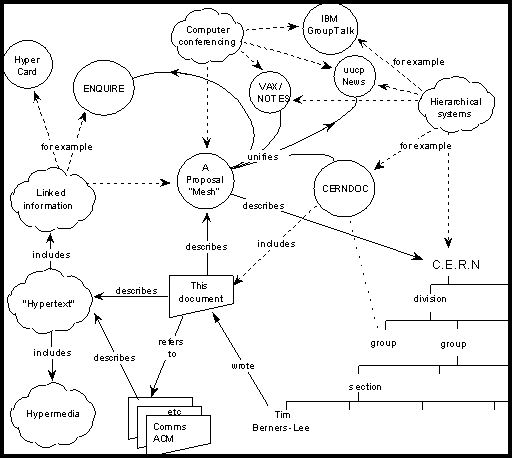
Source: "Information Management: A Proposal" by Tim Berners-Lee, 12 March 1989 via W3C.org
**Our take:**
- The idea of the internet being a force for public good is desirable but now seems almost quaint and certainly naive in retrospect.
- The EU's tech regulations, [now including AI](https://www.europarl.europa.eu/news/en/press-room/20240308IPR19015/artificial-intelligence-act-meps-adopt-landmark-law?ref=nearmedia.co), seek to correct the abuses Berners-Lee describes. Success is far from certain, however.
- Berners-Lee's prediction of an AI mediated internet is highly likely. His desire to give individuals more data control will probably happen though not as he envisions.
## Recent Analysis
- **Near Media podcast 149**: [Google’s Core Update & FUD, BrightLocal Consumer Review Survey, Do Searchers Use the Local Finder?](https://www.nearmedia.co/ep-149/)
- IYCMI: **Why Local Searchers Look to the Local Finder**, [by Mike Blumenthal](https://www.nearmedia.co/why-local-searchers-look-to-the-local-finder/).
## Short Takes
- Google [separates](https://twitter.com/DarrenShaw%5F/status/1768294355255865701?ref=nearmedia.co) "**bookable services**" from others in GBP.
- Google matching images and "[related reviews](https://www.seroundtable.com/google-local-photos-reviews-37039.html?ref=nearmedia.co)" in **GBPs**.
- **Google Map** in the Business Profile [no longer clickable in the EU](https://www.linkedin.com/feed/update/urn%3Ali%3Aactivity%3A7173724595424808960/?ref=nearmedia.co).
- Google [boosting prominence](https://twitter.com/DarrenShaw%5F/status/1767938392288059704?ref=nearmedia.co) of **local links** in SERPs in Europe.
- **Traffic losses from SGE** (if launched) expected to be [20% to 60%](https://www.adweek.com/programmatic/googles-gen-ai-search-threatens-publishers-with-2b-annual-ad-revenue-loss/?ref=nearmedia.co).
- **OpenAI** continues to [drop new Sora videos](https://www.tiktok.com/@openai?lang=en&ref=nearmedia.co), will be public [in late 2024](https://www.theverge.com/2024/3/13/24099402/openai-text-to-video-ai-sora-public-availability?ref=nearmedia.co).
- **Ad pop-ups** are consumers' [biggest online CX complaints](https://www.marketingcharts.com/customer-centric/customer-experience-232291?ref=nearmedia.co).
- US House of Reps [passes](https://apnews.com/article/tiktok-ban-house-vote-china-national-security-8fa7258fae1a4902d344c9d978d58a37?ref=nearmedia.co) "**TikTok ban**" bill but path forward murky.
- **TikTok** [using sophisticated targeting](https://www.marketingdive.com/news/tiktok-calls-on-us-users-to-oppose-ban-app-proposal/709725/?ref=nearmedia.co) to rally users against potential ban.
- **Apple** to allow EU developers [to distribute apps from their own sites](https://www.reuters.com/technology/apple-let-developers-distribute-apps-directly-their-sites-2024-03-12/?ref=nearmedia.co).
- **Amazon AI** can create [a product listing page with a website URL](https://www.aboutamazon.com/news/innovation-at-amazon/amazon-generative-ai-powered-product-listings?ref=nearmedia.co).
- US online **retail sales** [up more than 18%](https://nrf.com/media-center/press-releases/february-cnbc/nrf-retail-monitor-numbers-show-consumers-continued?ref=nearmedia.co) YoY in February.
Listen to our [latest podcast](https://www.nearmedia.co/memo/).
[](https://nearmedia.co/memo?ref=nearmedia.co)
How can we make this better? Email [us](mailto:gsterling@nearmedia.co) with suggestions and recommendations.
### Daniel Kalish, Managing Partner, HKM
URL: https://www.nearmedia.co/legal-clients/
Last updated: 2024-03-13T18:48:50.000Z
I cannot thank Near Media enough for how they helped my employment law firm grow. The company obtained detailed information about what my potential clients looked for in deciding what law firm to hire – really, the holy grail in marketing. The company also gave me with a detailed list of how my firm’s offices were performing, explained the differences in that performance, and then provided me with a clear, digestible list of what to actually do to obtain more leads for my firm.
**The work has been crucial to the growth of my law firm, and I could not be happier with the quality of Near Media’s work.**
### Christian Espinal, Marketing Director, SecureSpace
URL: https://www.nearmedia.co/storage-clients/
Last updated: 2024-03-13T16:08:02.000Z
Working with Greg Sterling, Mike Blumenthal, and David Mihm was an enlightening experience for our self-storage company. Their collective expertise in local digital marketing, local search, and digital presence optimization was evident from the outset. Greg's profound knowledge and foresight in location intelligence and the SMB market, combined with his historical understanding of its evolution, provided a solid foundation for our strategy. Mike's practical insights, drawn from years of firsthand experience in retail and local search, were invaluable in navigating the complex landscape of local SEO. David's strategic approach to digital presence and his deep understanding of how businesses interact with Google search results brought a fresh perspective to our online strategy.
Their comprehensive audit unearthed numerous opportunities for us to enhance our SEO strategy, demonstrating their sophisticated approach to digital marketing. The user testing they conducted, although pricey, was an investment that paid dividends in understanding how our customers search for services in our industry. The insights gained from this exercise were eye-opening and have significantly influenced our approach to customer engagement online. The dedication and time Greg, Mike, and David invested in our project were remarkable, and the results speak volumes of their commitment to excellence. Their collaborative effort has not only improved our online visibility but also positioned us for greater success in the digital arena.
**I wholeheartedly recommend Greg Sterling, Mike Blumenthal, and David Mihm to any business seeking to enhance their local search strategy, particularly those in competitive markets.** Their combined expertise and innovative approaches are a game-changer for standing out in today's crowded digital landscape.
### Luke Kervin, Chief Innovation Officer, Tebra
URL: https://www.nearmedia.co/luke-kervin-tebra/
Last updated: 2024-03-13T16:11:50.000Z
We engaged Near Media to refine our local marketing product strategy, aiming to understand search behavior within our specific sub-verticals. Our goal was to effectively optimize our Google Business Profiles, website, and reputation management products. Near Media's proprietary research methods in search behavior are unmatched, offering us unique and invaluable insights tailored to our target market. They provided a well-prioritized action plan that was insightful and ready for implementation.
**Near Media's expertise in local SEO and targeted content strategy has been a game-changer for us.**
### Biggest Traffic 'Referrers,' Online Oligarchy, 79% of Reviews on Google
URL: https://www.nearmedia.co/biggest-traffic-referrers-online-oligarchy-79-of-reviews-on-google/
Last updated: 2024-03-12T16:49:56.000Z
### Zero-Click Search 3X on Mobile
Two simultaneous reports provide a snapshot of the current state of the "open web," who's sending and who's receiving traffic. With the help of third party clickstream data, Rand Fishkin's SparkToro [offers a detailed analysis](https://sparktoro.com/blog/who-sends-traffic-on-the-web-and-how-much-new-research-from-datos-sparktoro/?ref=nearmedia.co) of the largest traffic referral sources as well as "traffic hoarders." The study looked at traffic patterns between January 2023 and 2024\. The data show that "Google’s almost 10X larger than the next largest referrer in our dataset." Google is also the source of 85% of search-referral traffic in the US. After that comes Microsoft sites, YouTube, Facebook, Reddit and Twitter (a much longer list is discussed). Fishkin also examines traffic referrers to the "long tail": sites outside the top 170\. That list is a version of the first one with a few differences. The general thrust of the piece is that referral traffic to the open web is declining over time – an extension of Fiskin's zero-click thesis, which we've [observed in our user behavior research](https://www.nearmedia.co/google-serp-restaurants-eu-dma-analysis/). Perhaps most interesting is the finding that desktop Google refers out 3X the traffic of mobile Google (chart below). That pattern is also true, but with a much smaller discrepancy, for Facebook. Who's getting the most traffic from Google is the next item below.

**Our take:**
- None of this is a surprise: Google is the top traffic source overall to most sites and the dominant source of search-specific traffic.
- With the exception of search and social sites, the trend is toward traffic "hoarding." Big hoarders include GoodReads, Mayo Clinic and US News.
- OpenAI grew 82% YoY as a traffic referrer though it only delivered 0.32% of overall search traffic. Fishkin puts OpenAI in the search bucket.
### Online Oligarchy: 16 Publishers Dominate
Just as SparkToro's study showed a relatively small number of platforms dominate traffic referrals, Glen Allsopp's new [report](https://detailed.com/google-control/?ref=nearmedia.co) looks at the content publishers most benefitting from that traffic, with a focus on Google. His conclusion is that just 16 companies, and their subsidiary online brands, dominate Google results in English (chart below). The data come from several sources. Allsopp points out that the "\[16\] companies in this report owned 12 of the top 20 content sites and 7 of the top 10." Many of these publishers are heavily using affiliate links. (In an earlier, related discussion, Allsopp [analyzed](https://www.nearmedia.co/openai-search-reddit-overexposed-clarifying-ai-content-policy/) affiliate spam on Reddit.) Rather than a critique of Google, the post is an SEO analysis of some of the top 16's portfolio. Among other factors, Allsopp examines the impact of "bold" web design (and site-design features), keyword targeting strategies, niche site content, the benefits of investing in human-generated content, repurposing content, writing better headlines, social proof and other variables. These content publishers heavily rely on search for between \~50% and \~75% of their traffic, depending on the company, which translates into billions of dollars in annual revenue collectively. The flip side of that is that they're presumably vulnerable, some of them more than others, to Google's algorithm changes.
**20 Biggest Content Sites**
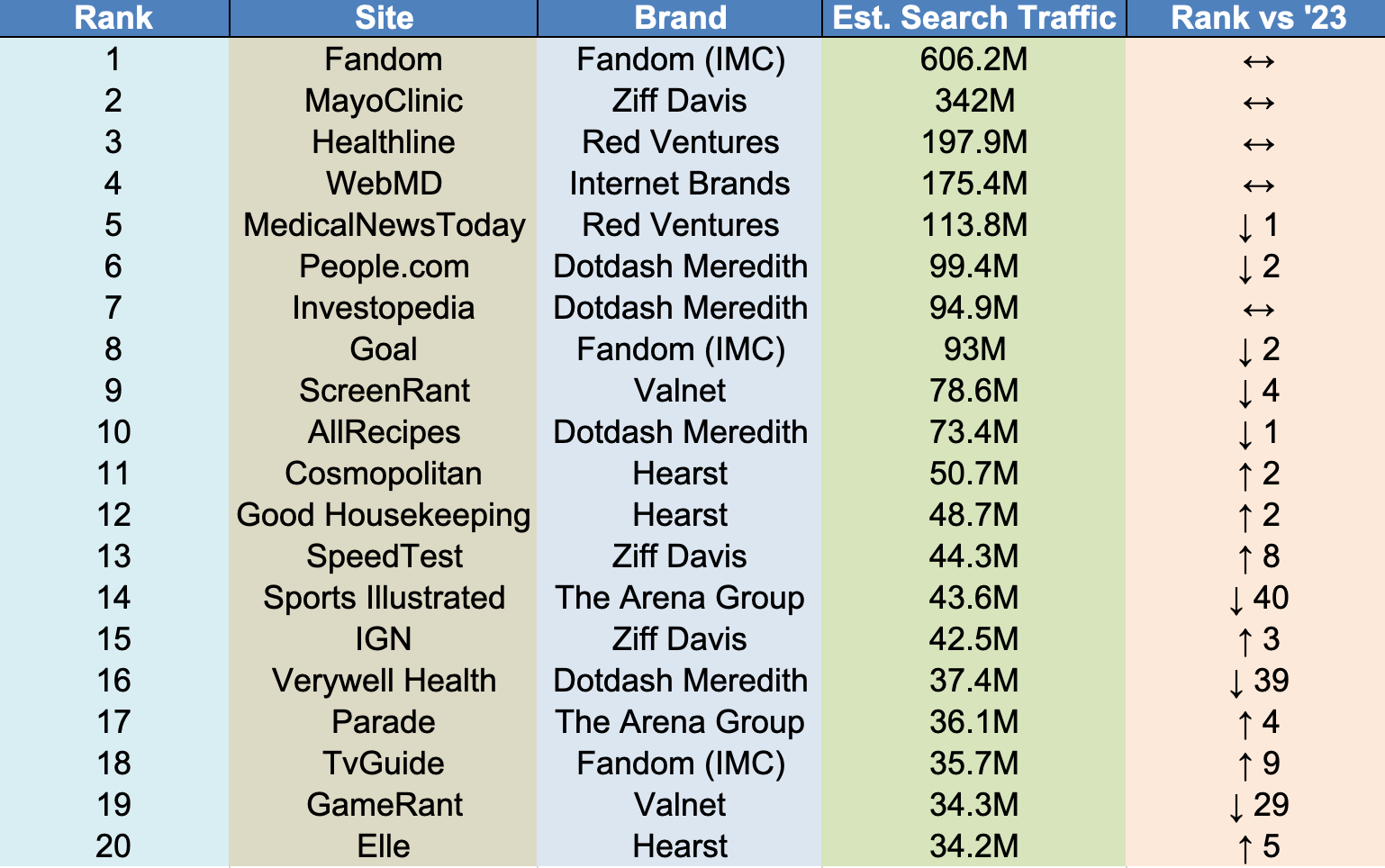
Source: Detailed
**Our take:**
- Allsopp's post is a set of observations/suggestions rather than SEO "rules." An interesting companion is Cyrus Shepard's "helpful" on-page elements [analysis](https://www.nearmedia.co/wither-the-serp-winning-on-page-elements-chips-and-carousels/).
- Fishkin's post and Allsopp's together show how concentrated the sources and recipients of traffic truly are. It's a kind of online oligarchy.
- Allsopp's post is yet another illustration how Google's algorithm effectively controls the internet, including content and site design.
### Report: 79% of Reviews on Google
Last month reputation management platform Birdeye released a [State of Online Reviews 2024](https://birdeye.com/blog/state-of-online-reviews/?ref=nearmedia.co) report, drawing upon data from 150,000 customers across industry verticals. It paints a generally upbeat picture of the overall state of reviews (it doesn't discuss review fraud). And in a finding that will surprise no one, "79% of all reviews are written on Google." (Numerous review sites, including vertical sites, are discussed.) However, in some verticals Google's share was much larger: Retail (97%), Healthcare (94%), Legal (92%), Home Services (90%). Overall, review volume growth was 5% year-over-year, but 15% on Google. The report found that the average (Birdeye customer) star rating was 4.6\. During the relevant period (2022 - 2023), "each business location, on average, received 66 new Google reviews." The dominant channel for review solicitation was email (60%) but SMS is growing (6%) and has higher response rates. Birdeye observed, "The average open rate for review request emails was 20%, with a 7% click-through rate. SMS review requests had a click-through rate of 37%." BrightLocal's recent [consumer reviews report](https://www.brightlocal.com/research/local-consumer-review-survey/??ref=nearmedia.co) confirmed email as the top review request channel, but also showed SMS gaining. Birdeye said that 63% of reviews received a response (up 10%) and more than 40% of those responses were automated, with the Home Services and Legal categories showing the highest percentage of automation.
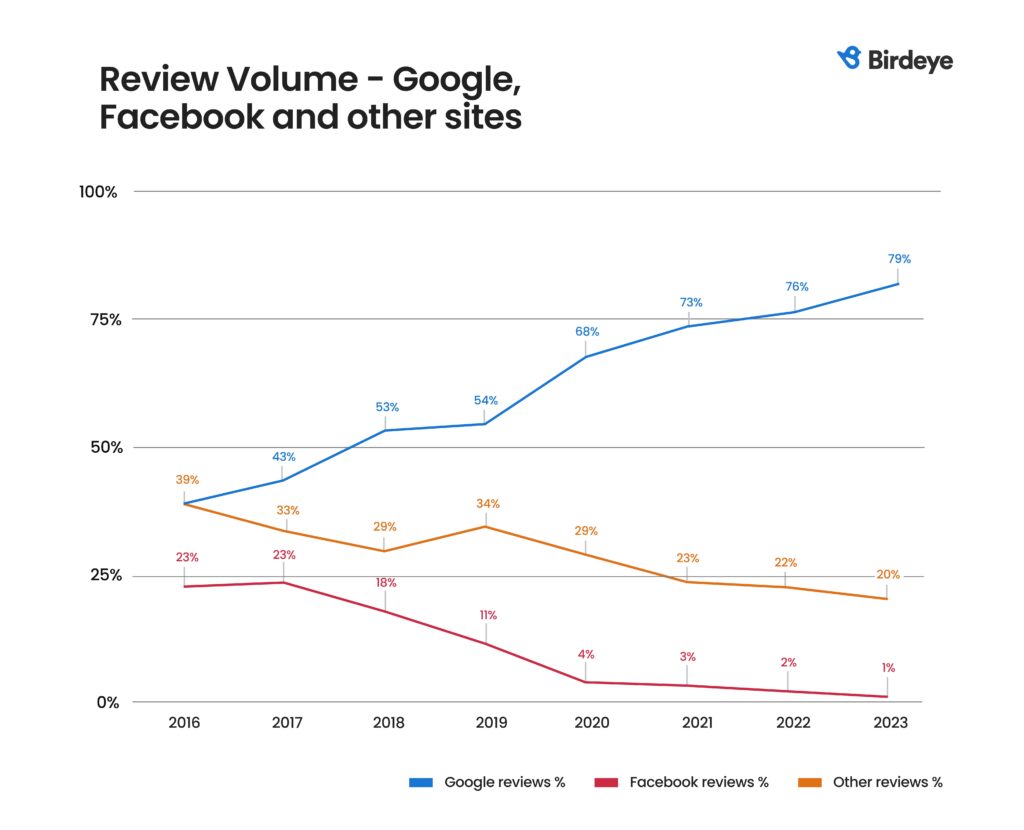
**Our take:**
- While a massive sample, these are also exclusively Birdeye customers. Review response rates and average ratings are not representative of all businesses.
- As with the other two items, this report (especially the chart above) shows Google's sustained and increasing dominance – this time in the reviews space.
- But even as Google dominates local reviews, consumers [are increasingly looking](https://www.nearmedia.co/review-diversification-google-spam-reduction-informational-vulnerability/) to multiple review sites (77%) as a kind of hedge against fraud.
## Recent Analysis
- **Near Media podcast 149**: [Google’s Core Update & FUD, BrightLocal Consumer Review Survey, Do Searchers Use the Local Finder?](https://www.nearmedia.co/ep-149/)
- **Google Doubles Down on the Local Pack in EU**, [by Mike Blumenthal](https://www.nearmedia.co/googles-2nd-local-pack-in-the-eu/)
## Short Takes
- **Google** [testing competitor LSAs](https://twitter.com/gyitsakalakis/status/1766052181763862769?s=20&ref=nearmedia.co) at bottom of Business Profiles.
- GBPs with **real photos** [outperform those with stock images](https://twitter.com/DarrenShaw%5F/status/1767210227311772060?ref=nearmedia.co).
- **Google manual actions** [targeted sites with AI content](https://originality.ai/blog/google-march-2024-manual-action-ai-update-list?ref=nearmedia.co).
- **Google**: [Don't scale content with AI](https://www.seroundtable.com/google-doubling-down-on-ai-content-bad-37035.html?ref=nearmedia.co) to compensate for traffic declines.
- **Google Core Web Vitals** ([FID--](https://www.seroundtable.com/google-core-web-vitals-replace-fid-with-inp-tomorrow-37032.html?ref=nearmedia.co)[\>INP](https://www.seroundtable.com/google-core-web-vitals-replace-fid-with-inp-tomorrow-37032.html?ref=nearmedia.co)) change won't impact rankings.
- **Walmart** using gen-AI [to improve search](https://www.cnbc.com/2024/03/10/why-walmarts-quick-success-in-gen-ai-search-should-worry-google.html?ref=nearmedia.co) and better compete with Google.
- Strategic decision: Musk is [open-sourcing](https://twitter.com/elonmusk/status/1767108624038449405?ref=nearmedia.co) X's AI **Grok**.
- **Apple** [testing](https://9to5mac.com/2024/03/11/report-apple-testing-ai-powered-ads-platform/?ref=nearmedia.co) Performance Max-like ads platform.
- Tech companies [pull back on ad spending](https://www.marketingbrew.com/stories/2024/02/27/tech-clients-are-breaking-up-with-ad-agencies?ref=nearmedia.co) with **big agencies**.
- Study: **social media engagement** [does not translate](https://searchengineland.com/no-link-social-media-engagement-content-readership-study-438232?ref=nearmedia.co) into website pageviews.
- **Google StreetView** [making a comeback](https://petapixel.com/2024/03/08/germany-vs-google-how-street-view-won-the-privacy-battle-in-europes-most-private-country/?ref=nearmedia.co) in privacy obsessed Germany.
- Car OEMs **spying on drivers**, selling data to insurance carriers ([NYT](https://www.nytimes.com/2024/03/11/technology/carmakers-driver-tracking-insurance.html??ref=nearmedia.co)).
- End of "location intelligence"? FTC [cracks down](https://www.ftc.gov/policy/advocacy-research/tech-at-ftc/2024/03/ftc-cracks-down-mass-data-collectors-closer-look-avast-x-mode-inmarket?ref=nearmedia.co) on **location data brokers**.
Listen to our [latest podcast](https://www.nearmedia.co/memo/).
[](https://nearmedia.co/memo?ref=nearmedia.co)
How can we make this better? Email [us](mailto:gsterling@nearmedia.co) with suggestions and recommendations.
### Google Doubles Down on the Local Pack in EU
URL: https://www.nearmedia.co/dma/googles-2nd-local-pack-in-the-eu/
Last updated: 2024-11-08T23:14:38.000Z
As a "Gatekeeper," Google has [modified local search results](https://www.nearmedia.co/google-serp-restaurants-eu-dma-analysis/) in the EU to comply with the Digital Market Acts (DMA). As part of that "compliance" effort, Google has [added new local search elements](https://www.nearmedia.co/eu-local-serp-visual-glossary/) including a "Places Sites" chip, a "Places Sites" carousel and [additional](https://developers.google.com/search/blog/2024/02/search-experiences-in-eea?ref=nearmedia.co) aggregator rich results. Our research has indicated that [searchers are unlikely to utilize these new elements](https://www.nearmedia.co/google-serp-restaurants-eu-dma-analysis/).
### Keeping Users on Google
What hasn't been discussed as much are the additional elements Google has added to search results in the EU that limit a user's ability to leave Google or additional search units that keep users within the Google universe.
0:00
/0:46
1×
This 50 second video shows the second Local Pack and the Pack persistence with a Profile click. Note the Map 'stickiness' as well. The search for 'restaurants open now' was performed with a Dublin IP address
The most prominent of these changes is a second Local Pack that can rank as high as position 3 in search results. In the US, there is one pack only and it typically appears at or near the top of the first page. Previously in the EU, and still in the UK, a second pack often showed up on page 2\. But when these new EU Local results are clicked, a large Business Profile appears to the right while the pack stays visible to the left (see video above). And if a user does scroll down, an additional second pack often is placed prominently in the results.
Restaurant searchers, as noted, rarely get past the main Local Pack or first Tripadvisor listing. We saw little indication that the second pack played a role in their decisions. We saw no ads in these additional Local Packs and, without a "more places" link at the bottom, no way to show additional ads. So this isn't about money. The financial story associated with showing two Local Packs might well change in service industries – as might user interactions.
### What's Pack-2's Purpose?
It all begs the question: why would Google add more self-preferencing elements that certainly capture eyeballs and might capture traffic while ostensibly in the process of complying with DMA's anti-self-preferencing requirement?
It calls into question Google's sincerity in attempting to comply with the new regulations.
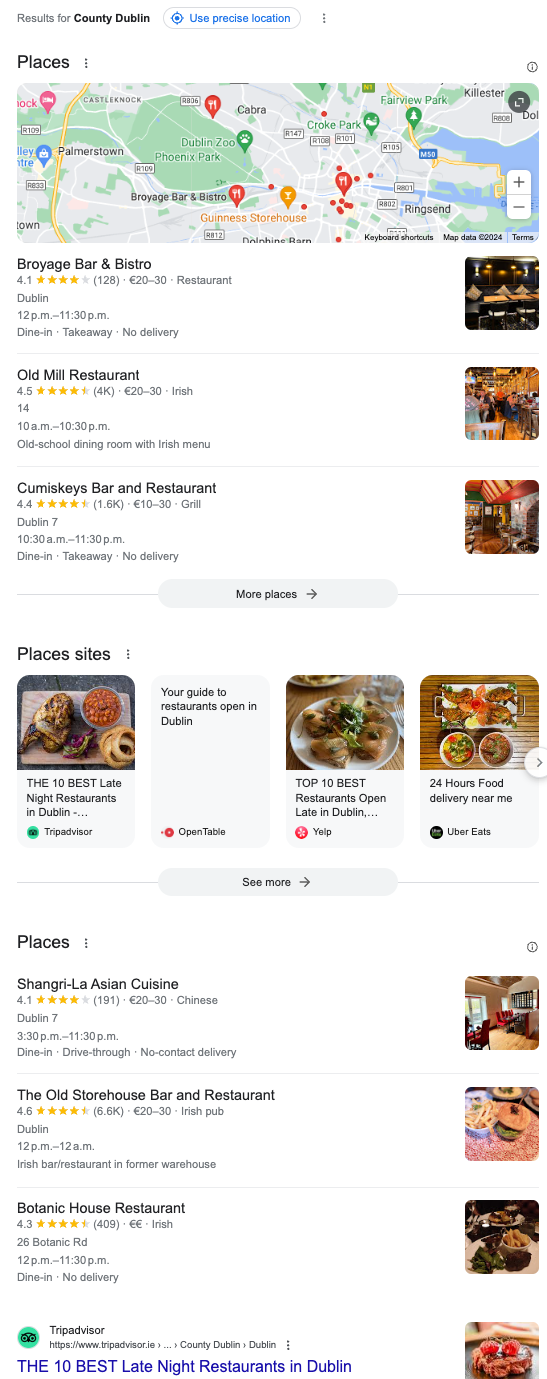
### Ep 149: Google’s Core Update & FUD, Brightlocal Consumer Review Survey, Do Searchers Use the Local Finder?
URL: https://www.nearmedia.co/ep-149/
Last updated: 2024-03-08T18:59:58.000Z
**Part 1 starts 00:13 -** [**Google’s March Core Update & FUD**](https://youtu.be/hZ1C07hfv2g?ref=nearmedia.co)
David Mihm sheds light on Google's March core update, marking it as an unusually impactful monthly adjustment from the tech giant. The update has sparked extensive conversation among SEO experts. He highlighted three key focus areas of the update: scaled content, largely driven by AI technologies; site reputation abuse; and what is known colloquially as "parasite SEO." How much of this is enforceable by Google and how much is Google's FUD getting SEOs to do their work is debatable.
Segment Reference Articles:
[Aleyda Solis’s Annotated Guide](https://x.com/aleyda/status/1765134847537029145?s=20&ref=nearmedia.co)
[Google March 2024 Spam Updates](https://www.seroundtable.com/google-march-2024-spam-updates-37002.html?ref=nearmedia.co)
[What on-page factors are associated with sites that see big gains or declines after Google updates? ](https://zyppy.com/seo/google-update-case-study/?ref=nearmedia.co)
[Google March 2024 Core Update Rolling Out - It's A Big Core Update](https://www.seroundtable.com/google-march-2024-core-update-37003.html?ref=nearmedia.co)
**Part 2 starts 17:25 -** [**Brightlocal Consumer Review Survey**](https://youtu.be/sdwRoG0FM08?ref=nearmedia.co)
We discuss the key findings from the recent BrightLocal review survey:
- Trust in Reviews: The survey confirms that online reviews continue to be a critical factor in consumer decision-making, with a strong preference for businesses rated at four stars or above.
- Importance of Recent Reviews: Consumers place high value on the freshness of reviews, indicating the necessity for businesses to continuously generate new, positive feedback.
- Expectation for Response: There is a clear expectation among consumers for businesses to engage with and respond to reviews, signaling this as a factor in building trust and loyalty.
- Concerns Over Review Fraud: The survey highlights consumer concerns regarding the authenticity of reviews, emphasizing the need for transparency and authenticity in review management.
Segment Reference Articles:
[Local Consumer Review Survey 2024: Trends, Behaviors, and Platforms Explored](https://www.brightlocal.com/research/local-consumer-review-survey/?ref=nearmedia.co)
**Part 3 starts 34:20 -** [**How Often Do Searchers Use the Local Finder?**](https://youtu.be/90O1ZM19gT4?ref=nearmedia.co)
We discuss data from our recent search behavior study that sheds light on how frequently users access the Local Finder. Search behaviors diverge significantly across devices and verticals, with a marked preference for using the Local Finder feature more on mobile devices and more on queries that are less price sensitive and more reputation driven.
Segment Reference Articles:
[Why Local Searchers Look to the Local Finder](https://www.nearmedia.co/why-local-searchers-look-to-the-local-finder/)
### Review Mix Grows, Google Spam Attack, Informational Vulnerability
URL: https://www.nearmedia.co/review-diversification-google-spam-reduction-informational-vulnerability/
Last updated: 2024-03-07T20:52:37.000Z
### Survey: 77% Look to Multiple Review Sites
BrightLocal's 2024 consumer reviews survey [report](https://www.brightlocal.com/research/local-consumer-review-survey/?ref=nearmedia.co) contains numerous interesting findings, though I can only discuss a few of them here. Overall, a high percentage of consumers continue to trust reviews; yet people are diversifying their review sources. Google remains the dominant site (81%) but usage has fallen slightly. Consumers appear to be consulting a broader range of sites in addition to the "usual suspects" (Yelp, Tripadvisor, etc.). Those include local news sites, Instagram, YouTube, TikTok and Reddit among others. These respondents also say they're looking at more sites per conversion: 77% went to at least two review sites and 41% looked at three or more. This could be partly a function of the rise of review fraud. And more businesses appear to have active review solicitation programs. Nearly 70% of consumers remember being asked to leave a review. That's up vs. a year ago and so is the prevalence of review incentives (e.g., discounts), which are way up from two years ago (but against terms). Solicitation prompts (in email, in-person, SMS) appear to generate more positive than negative reviews. The survey also found consumers overwhelmingly want to see review responses (88%) and are more inclined to use a business that does so. But given the choice (blind "taste test") between an AI-generated response and one written by a human, the majority (58%) preferred the AI response.
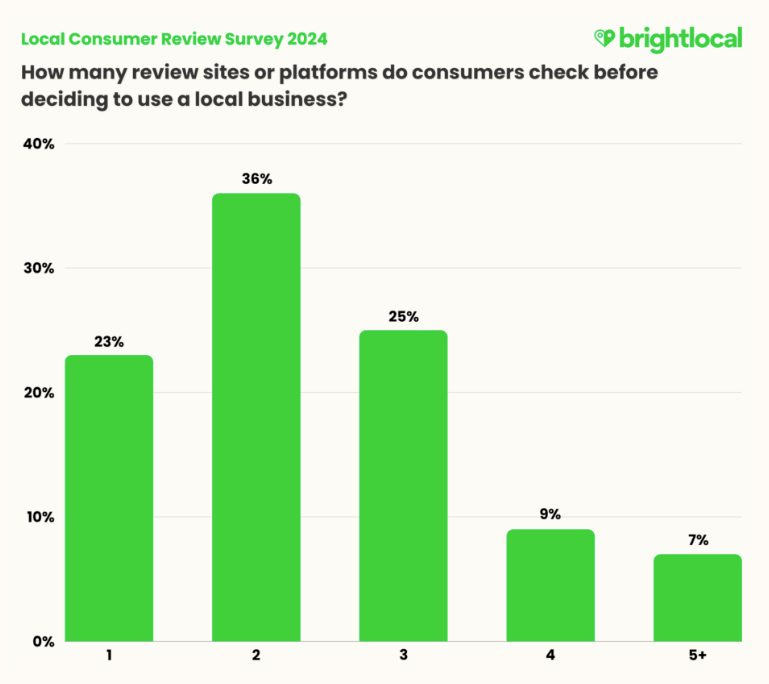
Source: BrightLocal consumer reviews survey 2024
**Our take:**
- Roughly 54% want to see a minimum of 4 stars. In selected verticals (per our research) it can be higher. This awareness has caused a jump in review solicitation and incentivized reviews, as well as fake reviews.
- One important finding for multi-location brands: "91% of consumers say local branch reviews impact their overall perceptions of big brands in some way."
- Caveat: there's a difference between attitudes and behavior. This shows up in the survey finding that 88% want to see review responses. Near Media behavioral research shows that 66% to 70%+ don't read review text at all.
### Google: We'll Cut Spam by 40%
This week Google [announced](https://developers.google.com/search/blog/2024/03/core-update-spam-policies?ref=nearmedia.co) a number of algorithm and policy updates designed to address search quality. Partly, this is simply the next in a series of regular algorithm updates, but it's also a response to negative coverage and widespread exposure of search-quality issues. In addition, the company updated Quality Rater [guidelines](https://www.seroundtable.com/google-search-quality-raters-guidelines-updated-37006.html?ref=nearmedia.co), which will probably have an indirect downstream impact on rankings. The updates appear to be more sweeping and significant than previous core updates. "Based on our evaluations, we expect that the combination of this update and our previous efforts will collectively reduce low-quality, unoriginal content in search results by 40%," Google [said in a blog post](https://blog.google/products/search/google-search-update-march-2024/?ref=nearmedia.co). Specifically, the company is targeting "scaled content abuse," "site reputation abuse" and "expired domain abuse." Scaled content abuse is defined as mass-produced content seeking to manipulate rankings (programmatic SEO). Site reputation abuse is low-quality content from third parties published on "reputable sites" ("parasite SEO"). And expired domain abuse is the use of old (once reputable) domains for low quality content designed to generate clicks (see, e.g., [Confessions of an AI Clickbait Kingpin](https://www.wired.com/story/confessions-of-an-ai-clickbait-kingpin/?ref=nearmedia.co)). The "[punitive](https://www.gsqi.com/marketing-blog/google-helpful-content-system-evolution/?ref=nearmedia.co)" Helpful Content system is [now part of the Core Update](https://www.seroundtable.com/google-march-2024-core-update-37003.html?ref=nearmedia.co).

Separating the wheat from the chaff. Source: DALL-E
**Our take:**
- The industry generally regards these updates as "major" or "massive." Their impact will be felt over time. See also, [Cyrus Shepard](https://twitter.com/CyrusShepard/status/1765158003890926008?ref=nearmedia.co), [Lilly Ray](https://twitter.com/lilyraynyc/status/1765467672853282951?s=20&ref=nearmedia.co), [Mike King](https://speakerdeck.com/ipullrank/everything-google-lied-to-use-about?ref=nearmedia.co).
- It may be challenging for Google to successfully execute some of these clean-up efforts. Google is also trying to get SEOs to comply with these changes so its algorithm doesn't have to do all the work.
- Google is going after content created primarily to rank in search results. Yet almost all commercial content is created at least in part for the purpose of ranking. Google has created the incentives and SEOs have responded.
### Google's Informational Vulnerability
Search professionals tend to divide queries into three major buckets: informational, navigational, transactional. Navigational queries are "name in mind" searches. Transactional queries may be broader but carry purchase intent. And informational search captures everything else: all the general search behavior, random questions and pre-purchase information gathering. Local Search behavior cuts across all three. There's lots of discussion about whether and where Google might be [vulnerable to AI disruption](https://www.nearmedia.co/wither-the-serp-winning-on-page-elements-chips-and-carousels/). So far not so much, although there are hints of it in the BrightLocal reviews [study](https://www.brightlocal.com/research/local-consumer-review-survey/?ref=nearmedia.co) and in the Gen Z colloquialism "[search it up](https://twitter.com/gsterling/status/1765610282389590363?ref=nearmedia.co)" in place of "Google it." Yet Google's true vulnerability over time may exist in the realm of informational queries, which comprise the vast majority (70% to 80%) of search volume (see [here](https://www.nearmedia.co/prop-22-goes-down-smb-social-disconnect-mid-funnel-queries-dominate/), [here](https://searchengineland.com/study-80-percent-of-searches-are-informational-20-are-navigational-or-transactional-13745?ref=nearmedia.co)). Right now AI results (including Gemini) are cleaner, simpler, more immediate (and sometimes more complete) than a traditional Google SERP. This is true in many categories of informational search: e.g., convert fresh garlic to dried, when is the best time to visit Hawaii, what are the top things to do in Seattle, who starred in XYZ movie, what is eustachian tube dysfunction, who won the Super Bowl in 1995? The advantage Google maintains is that AI results may be seen as less trustworthy.
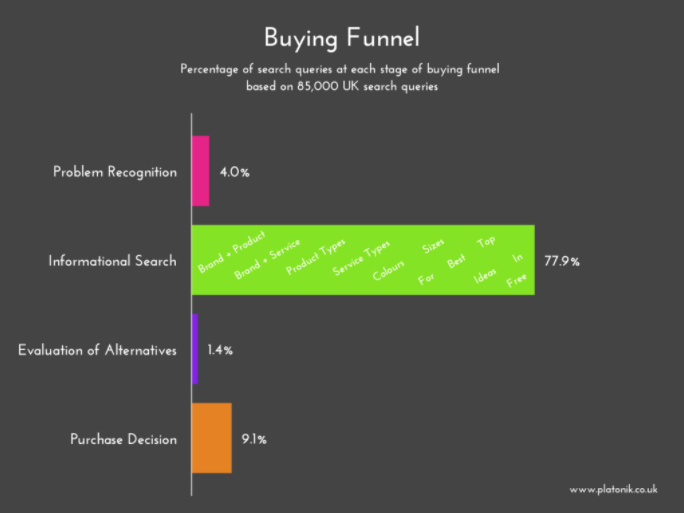
Source: Platonik (2021)
**Our take:**
- The BrightLocal study found that 9% of people were using gen-AI for local business reviews. And multiple non-Google sites were also used. However, local is probably relatively safe from AI disruption for some time.
- My Google usage has probably dropped by 40% - 50% in favor of AI. As people use these sites/tools for other purposes, search is something they can also do without clicking over to Google.
- Search it up: Google's aggressive attention to its search quality issues reflects a broader understanding that its hold on consumers may be slipping.
## Recent Analysis
- **Google May Show Social Posts on GBP Profiles**, [by Mike Blumenthal](https://www.nearmedia.co/google-to-show/).
- **Why Local Searchers Look to the Local Finder**, [by Mike Blumenthal](https://www.nearmedia.co/why-local-searchers-look-to-the-local-finder/).
- **Google Maps Blocked Reviews in Israel & Gaza**, [by Mike Blumenthal](https://www.nearmedia.co/google-maps-reviews-blocked-in-israel-gaza/).
## Short Takes
- Google [testing](https://twitter.com/mblumenthal/status/1765452082977370180?ref=nearmedia.co) **GBP profile changes** that bury reviews.
- Google [to show](https://twitter.com/StefanSomborac/status/1765698541572264096??ref=nearmedia.co) **social media content** [in Google Business Profile](https://support.google.com/business/answer/13580646?ref=nearmedia.co).
- **Waze** [adds new features](https://blog.google/waze/6-updates-to-waze-to-help-you-get-around-safely-and-conveniently/?ref=nearmedia.co), updates but for how much longer?
- Mike King [deck](https://speakerdeck.com/ipullrank/everything-google-lied-to-use-about?ref=nearmedia.co): **Everything Google Lied to Us About**.
- Using **Google's "information satisfaction**" as a [way to think about SEO](https://searchengineland.com/information-satisfaction-google-ranking-438097?ref=nearmedia.co).
- **Target** launches [its own version](https://corporate.target.com/news-features/article/2024/03/target-circle-loyalty-program?ref=nearmedia.co) of Amazon Prime.
- StockX [launches](https://www.prnewswire.com/news-releases/stockx-among-the-first-to-launch-immersive-shopping-experience-for-apple-vision-pro-302077846.html?ref=nearmedia.co) "immersive shopping experience" for the **Apple Vision Pro**.
- **Apple** rolls out [iOS 17.4 to comply with DMA](https://www.macstories.net/stories/apple-releases-ios-and-ipados-17-4-with-major-safari-and-app-store-changes-in-the-eu-transcripts-for-podcasts-new-emoji-and-more/?ref=nearmedia.co): browsers, new app stores, Siri.
- The **TikTok ban** is back on; new legislation would [try to force divestiture](https://www.nbcnews.com/politics/congress/bill-ban-tiktok-us-gains-momentum-congress-rcna142047?ref=nearmedia.co).
- State AGs: **Meta** letting fraudsters, scammers, hackers [run wild](https://www.wired.com/story/meta-hacked-users-draining-resources/?ref=nearmedia.co) on platforms.
- Google's **Gemini** [now lets you modify/edit prompts](https://gemini.google.com/updates?ref=nearmedia.co) to refine results.
Listen to our [latest podcast](https://www.nearmedia.co/memo/).
[](https://nearmedia.co/memo?ref=nearmedia.co)
How can we make this better? Email [us](mailto:gsterling@nearmedia.co) with suggestions and recommendations.
### Google Now Showing Facebook, Other Social Posts on Your GBP Profile
URL: https://www.nearmedia.co/google-to-show/
Last updated: 2024-11-25T20:09:21.000Z
**Updated: 3/12/24**
Today Google is now showing social media posts from Facebook, Instagram and other social media sites on the mobile Google Business Profile (h/t to [Krystal Tang of Uberall for spotting](https://www.linkedin.com/posts/krystaltaing%5Fheres-an-example-of-what-social-posts-look-activity-7171670955285499905-Hhu5?utm%5Fsource=share&utm%5Fmedium=member%5Fdesktop)). The presentation of the social posts occurs in the new mobile layout with drop downs, first seen last week. It appears to supplant any Google Updates (aka Posts) that are present. The roll-out is US only at this point.
0:00
/0:18
1×
On March 6th, we found evidence of this change in an updated Google support document titled [Manage social media links](https://support.google.com/business/answer/13580646?ref=nearmedia.co#zippy=%2Cwhy-does-my-social-media-post-show-on-my-business-profile%2Ccan-i-find-the-performance-of-user-interaction-with-each-social-media-link-like-clicks%2Cis-it-possible-to-update-social-media-links-in-bulk%2Ccan-i-manage-social-media-links-through-api) which indicated Google's is plan on showing social media posts from other sites on your GBP page. The change to the help file was first [spotted](https://x.com/StefanSomborac/status/1765698541572264096?s=20&ref=nearmedia.co) by [Local SEO Stefan Somborac](https://marketingmetrology.com/about/stefan-somborac/?ref=nearmedia.co), and while it showed that the feature coming the details were not very clear.

Recently added FAQ in the GBP help files
### Relevant Sites
The document indicates that a business can add any of the following social sites to its Google Business Profile:
- Facebook
- Instagram
- LinkedIn
- Pinterest
- TikTok
- X (formerly known as Twitter)
- YouTube
### Updated FAQ
Google has now fully updated the FAQ for the social media links [help page](https://support.google.com/business/answer/13580646?ref=nearmedia.co#zippy=%2Cwhy-does-my-social-media-post-show-on-my-business-profile%2Ccan-i-find-the-performance-of-user-interaction-with-each-social-media-link-like-clicks%2Cis-it-possible-to-update-social-media-links-in-bulk%2Ccan-i-manage-social-media-links-through-api%2Ccan-i-add-the-same-social-media-link-to-multiple-business-profiles%2Cin-my-business-profile-can-i-add-multiple-social-media-links-from-the-same-platform%2Cwhy-is-my-edit-rejected) and included specifics as to which links can be used and why they might not show:
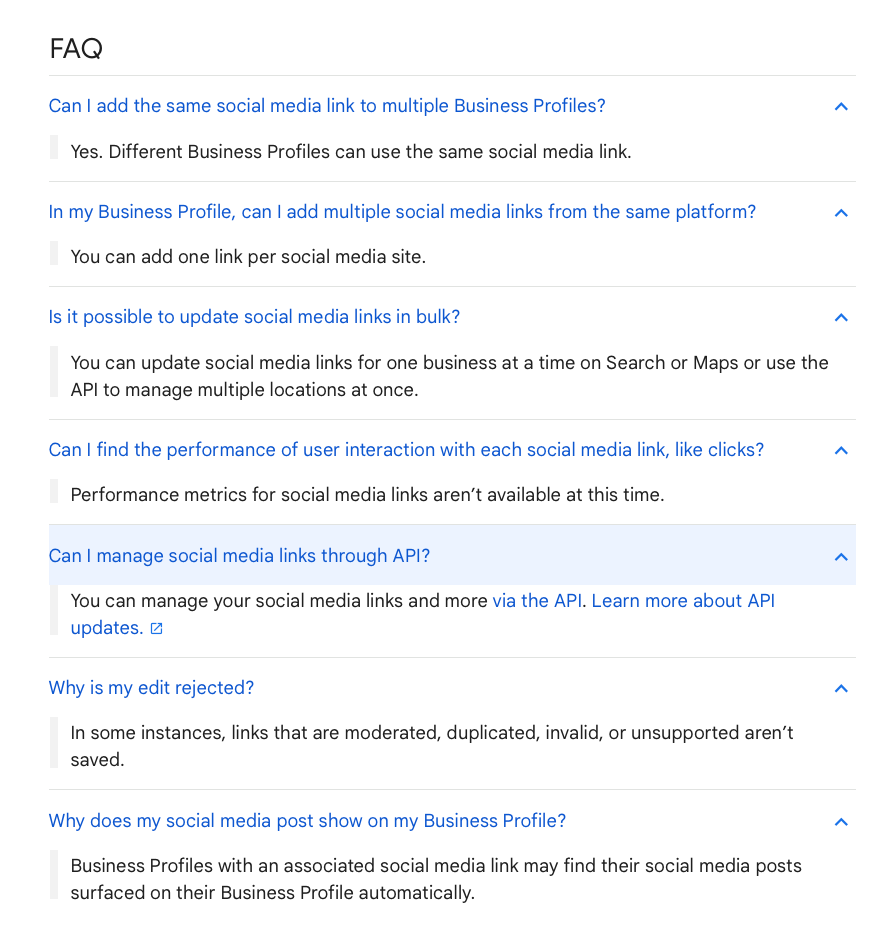
### What Does It Look Like?
It can be seen in the new layout of the Business Profile and is titled **Social media updates** and sometimes replaces the **Updates** drop down that displayed the Google Updates (Posts) and sometimes sits below it. The three most current social updates are present in a scrollable carousel.
We have also seen instances when the GBP drop downs are not present and the social profile shows up much closer to the main profile information.
It is not yet clear whether how Google will pick and choose which social site to show there if more than one site is listed in the Google Business Profile.
### Implications for Your Business
If your business is already active and stays current on some of the above social networks you shouldn't do anything differently. It makes sense to post regularly at the third party sites where you are already getting traction. If and when this change occurs it should give an additional visibility boost to those posts, and effectively leverage a single effort. It is possible that you need to maintain some level of posting frequency to get visibility but we don't really know at this point. In the example above the posts showing were two weeks old.
### History of Social Links
Google first started adding social links to GBP profiles in July, 2016\. However they were automatically scraped and often [assigned](https://www.sterlingsky.ca/report-wrong-social-media-profiles-googles-knowledge-panel-2/?ref=nearmedia.co) to the wrong business listing. There was no obvious way to get them on your profile but there were [some good suggestions](https://whitespark.ca/blog/how-to-get-social-media-links-on-your-google-business-profile/?ref=nearmedia.co). In summer of 2023 it seemed that Google [would add the ability](https://searchengineland.com/google-business-profiles-to-let-you-manage-your-social-links-430766?ref=nearmedia.co) for owners to add them themselves and they did roll out in the fall of last year.
### Whither Google Posts (aka Updates)?
GBP Updates (aka Posts) have been declining in visibility. Obviously if a business is active on a social media and that starts showing on your Google results, the motivation to continue posting on Google will decline significantly. Unless of course a GBP Update impacts your rank. 🤣
According to [Whitespark](https://whitespark.ca/?ref=nearmedia.co)'s Darren Shaw's research: "137,665 out of 1,101,573 business had at least one active post at the time of my data collection. ... 12.5% had posts | 87.5% had no active posts." That is a fairly low adoption rate and leads me to speculate that Google Updates may become Social Updates.
Google has been actively [cutting features of late](https://www.nearmedia.co/gbp-sites-gone-google-guarantee-scam-impact-ai-the-future-of-search/) as they move their focus to the AI future and Posts/Updates could be a casualty.
### Stay Tuned
There is a lot about this upcoming change we have absolutely no clue about. At this point what we do have is speculation and questions: When will it happen? What will it look like? How should we respond? Will Posts hit the graveyard?
This change, if implemented well (i.e., is visible and reliably attaches to the correct profile) could simplify the SMBs marketing job and increase reach – both obvious wins.
### Google Maps Blocked Reviews in Israel & Gaza
URL: https://www.nearmedia.co/google-maps-reviews-blocked-in-israel-gaza/
Last updated: 2024-11-19T21:11:40.000Z
Shortly after war broke out in Israel and Gaza in early October, Google apparently prevented any reviews from being posted for businesses in either place. When first [reported in Israel Hayom](https://www.israelhayom.co.il/tech/tech-news/article/14877610?ref=nearmedia.co) in late November, Google said (in Hebrew): "As we have done in the past in conflict situations, we are activating additional protections to monitor and prevent content that violates our policies in the maps application, including temporarily blocking new reviews, photos and videos in Israel and Gaza."
### Stopped Four Months Ago
If you look at profiles from the area, even extremely heavily reviewed ones, you will notice that no reviews have been published in the last four months.
[](https://www.google.com/search?q=popular+restaurants+near+me+in+Tel+Aviv&sca%5Fesv=9407a31d1b022749&biw=1945&bih=936&tbm=lcl&ei=t2TmZf7tGOi9i-gP8v-9mAo&ved=0ahUKEwi-pb6y7NuEAxXo3gIHHfJ%5FD6MQ4dUDCAk&uact=5&oq=popular+restaurants+near+me+in+Tel+Aviv&gs%5Flp=Eg1nd3Mtd2l6LWxvY2FsIidwb3B1bGFyIHJlc3RhdXJhbnRzIG5lYXIgbWUgaW4gVGVsIEF2aXYyBhAAGBYYHjILEAAYgAQYigUYhgMyCxAAGIAEGIoFGIYDSPVVUIMGWJdTcAJ4AJABAJgB0wKgAeUeqgEFMi03Lja4AQPIAQD4AQGYAg-gApEfwgIFEAAYgATCAgUQIRigAcICBRAhGJ8FmAMAiAYBkgcHMi4wLjcuNqAHplY&sclient=gws-wiz-local&ref=nearmedia.co#lkt=LocalPoiReviews&rlfi=hd:;si:12883201710720860359,l,Cidwb3B1bGFyIHJlc3RhdXJhbnRzIG5lYXIgbWUgaW4gVGVsIEF2aXYiKlIoL2dlby90eXBlL2VzdGFibGlzaG1lbnRfcG9pL2ZlZWxzX2xpdmVseUiGppGI5oCAgAhaORAAEAEQAhADGAEiJ3BvcHVsYXIgcmVzdGF1cmFudHMgbmVhciBtZSBpbiB0ZWwgYXZpdioECAMQAZIBCnJlc3RhdXJhbnSaASNDaFpEU1VoTk1HOW5TMFZKUTBGblNVTlNNamREUkVsUkVBRaoBcRABKh8iG3BvcHVsYXIgcmVzdGF1cmFudHMgbmVhciBtZSgAMh8QASIb2Xp-bFV5AO4pak7rNIl0Mstbs2L314ydLMJ7MisQAiIncG9wdWxhciByZXN0YXVyYW50cyBuZWFyIG1lIGluIHRlbCBhdml2,y,xR%5FFUNu815A;mv:[[32.09611523436982,34.87614627202149],[32.038581820675006,34.79100222905273]])
No reviews have been added for the past four months.
### No Official Answer
The question of why reviews are paused and how long the review ban will last has arisen a number of times in both the Google Business Profile [forum](https://support.google.com/business/thread/249312265?ref=nearmedia.co) and the Local Guides [forum](https://www.localguidesconnect.com/t5/General-Discussion/Google-not-showing-ratings-and-reviews-in-Israel-at-all/m-p/3712921?ref=nearmedia.co#M1426172), with no official Google confirmation of the ban or when it might end. Google is apparently [providing](https://support.google.com/business/thread/261861216?hl=en&ref=nearmedia.co) notification to (some?) business owners that a "pause" is in place, via the Business dashboard, but not the rationale – so owners continue to [come](https://support.google.com/business/thread/243691190/cant-see-new-reviews-since-war-starting-in-israel?hl=en&ref=nearmedia.co) into the forum.
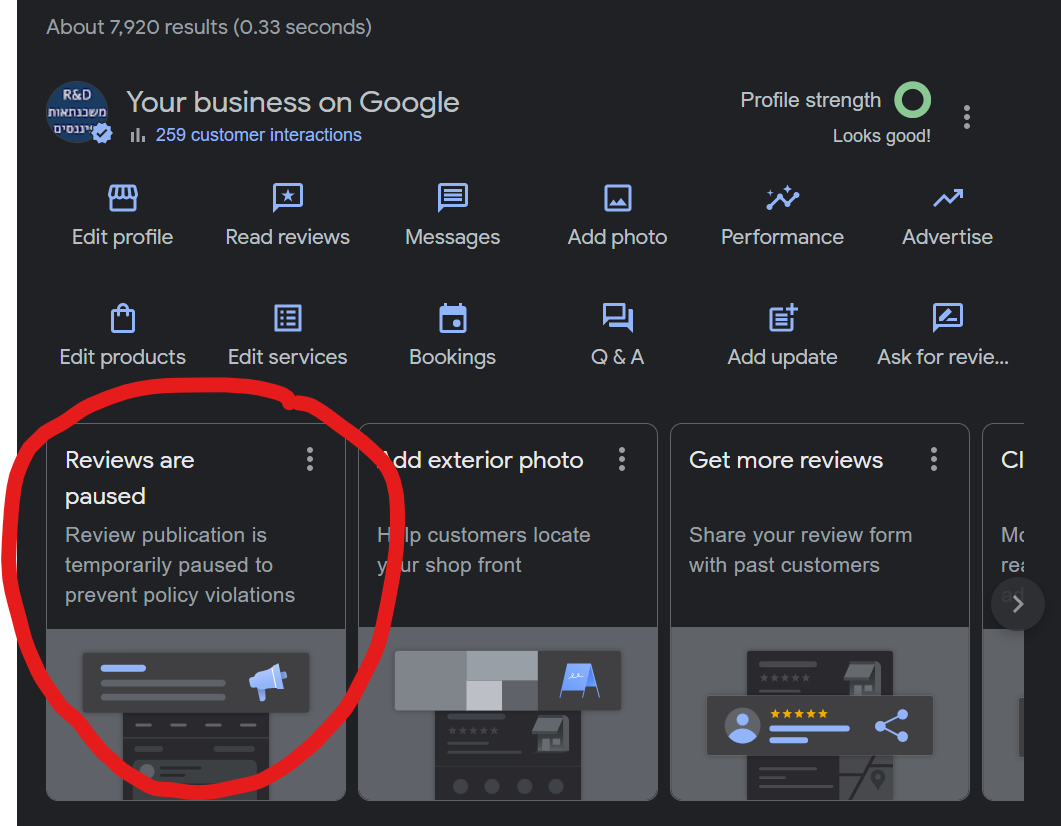
It makes sense that Google has imposed a ban during the current conflict. In February, 2022 Google touted their ability to "[moderate reviews with the help of machine learning](https://blog.google/products/maps/how-google-maps-reviews-work/?%5Fga=2.15712499.490650238.1654712525-492412280.1654712525&ref=nearmedia.co)" at scale. They stated at the time: "When there’s an upcoming event with a significant following — such as an election — we implement elevated protections to the places associated with the eventand other nearby businesses that people might look for on Maps."
### Blocked for Controversy
Shortly after making that statement, Google blocked reviews of all business in Ukraine and Russia during the early days of that conflict. It also [blocked reviews for pregnancy care facilities](https://www.nearmedia.co/google-shuts-off-reviews-for-reproductive-clinics/) immediately after Roe v. Wade was overturned by the US Supreme Court in July 2022\.
What isn't totally clear is why there has been no official confirmation of the ban in either the GBP or the Local Guide Forums. The Israeli-Hamas conflict is particularly charged and perhaps Google thinks that discretion is the best course in this context. They may want to be perceived as apolitical, despite all of the power they actually hold and often wield. Regardless, businesses and Local Guides deserve a straight answer.
### Google Search Quality, Email Appreciation, DMA Dilemma
URL: https://www.nearmedia.co/google-search-quality-email-appreciation-dma-dilemma/
Last updated: 2024-03-05T21:48:56.000Z
### Google Search Quality: Up or Down?
Microsoft almost sold Bing to Apple in 2018\. Reportedly, "search quality" at Bing [was the obstacle](https://www.cnbc.com/2024/02/24/google-says-microsoft-offered-to-sell-bing-to-apple-in-2018.html??ref=nearmedia.co). The consensus view is that Google's search quality is better than Bing's, partly because of scale and click data. But the real question is: has Google's search quality improved or declined over time? That was an issue debated in Google's recent antitrust trail. In its post-trial [brief](https://www.courtlistener.com/docket/18552824/833/united-states-of-america-v-google-llc/?ref=nearmedia.co) (unpacked [here](https://ethanlazuk.com/blog/google-debrief/?ref=nearmedia.co)) the company boldly argues that that its search quality has only gotten better: "Google's search quality has continuously improved ... as Google has continuously innovated. And Google unceasingly strives to better its search quality ... as measured by IS score." IS score is apparently a metric [generated from Quality Rater feedback](https://searchengineland.com/how-google-search-ranking-works-pandu-nayak-435395?ref=nearmedia.co). Google hasn't publicly disclosed these scores; they appear to be internal. Google also points to search feature innovation (e.g., Google Lens) as contributing to improved search quality, which must mean overall UX. On the other side there's considerable anecdotal discussion (e.g., [here](https://dkb.blog/p/google-search-is-dying??ref=nearmedia.co), [here](https://www.theatlantic.com/ideas/archive/2022/06/google-search-algorithm-internet/661325/??ref=nearmedia.co), [here](https://doctorow.medium.com/googles-enshittification-memos-2d6d57306072?ref=nearmedia.co)) and a few studies (e.g., [here](https://www.fastcompany.com/91012311/is-google-getting-worse-this-is-what-leading-computer-scientists-say?ref=nearmedia.co), [here](https://www.surgehq.ai/blog/is-google-search-deteriorating-measuring-search-quality-in-2022?ref=nearmedia.co)) that argue quality has in fact degraded. Google is trying with a [fusillade of algorithm updates](https://searchengineland.com/google-released-massive-search-quality-improvements-with-march-2024-core-update-and-multiple-spam-updates-438144?ref=nearmedia.co) to address spam and search quality complaints.

Source: DALL-E
**Our take:**
- There's evidence from The Transparency Company that the incidence of fake reviews on Google has grown since 2021 (report forthcoming).
- Potential explanations for those in the yes-to-decline camp include aggressive monetization and the [overall decline of internet content quality](https://www.nearmedia.co/google-worse-debate-eu-big-regs/). Perhaps the [change in Google culture](https://www.linkedin.com/posts/ben-morss-15bab15%5Flast-night-i-looked-at-my-phone-and-there-activity-7170144765890531328-CM8T/??ref=nearmedia.co) is another reason people might cite.
- In truth we don't really know because there are so many subjective factors. We need an objective, third party measure of search quality. This is also tangentially related: SEOs are [feeling more negative about Google](https://www.seroundtable.com/most-seos-dislike-google-36971.html?ref=nearmedia.co).
### Email Never Dies
Email isn't sexy. It's one of the oldest channels on the internet. It's also one of the most effective. Despite the fact that consumers often feel overwhelmed with email, and Gmail filters can sequester promotional messages, it remains a critical channel to reach customers and prospects. Rand Fishkin at SparkToro has [compiled historical data](https://sparktoro.com/blog/email-is-the-most-consistent-reliable-marketing-channel-on-the-web-and-i-can-prove-it/?ref=nearmedia.co) (below) on open and click rates. He argues that as Google CTRs and social media engagement have fallen, email has remained a marketing workhorse. He argues, accordingly, that "statistically it’s better to trade 1,000 new followers for a single email subscriber. That’s how lopsided the value-exchange is." There's a ton of data to support what he's saying. Constant Contact offers average open, click and bounce rate [benchmarks by industry vertical](https://knowledgebase.constantcontact.com/email-digital-marketing/articles/KnowledgeBase/5409-average-industry-rates?lang=en%5FUS&ref=nearmedia.co). Here's [similar data from Mailchimp](https://mailchimp.com/resources/email-marketing-benchmarks/?ref=nearmedia.co) and best practices advice.
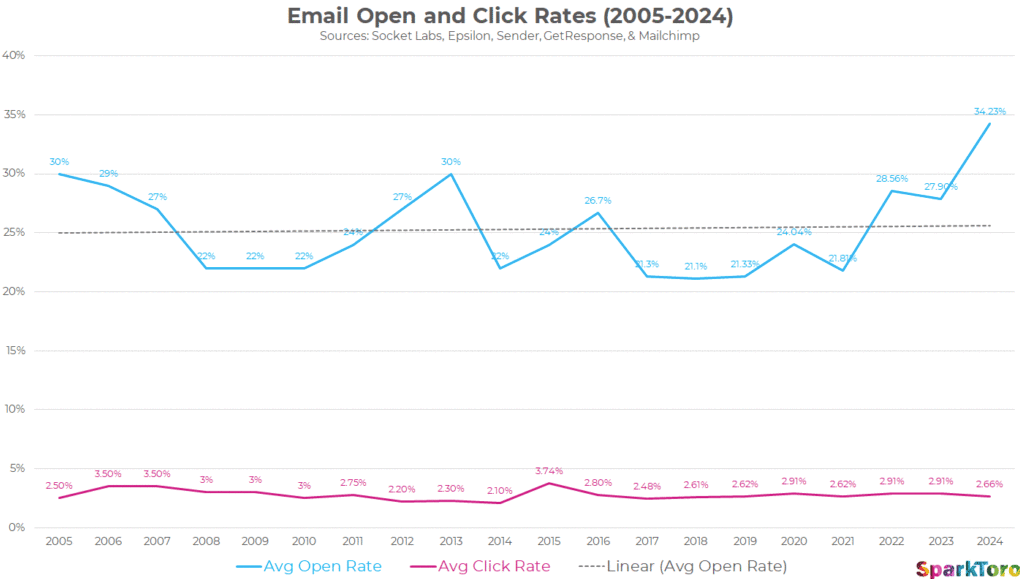
Source: SparkToro
**Our take:**
- Marketers consistently rank email as highly effective and it's typically one of the top three methods used by SMBs (social is always #1).
- Rand Fishkin's larger point is that email is a high-performing channel you can control, unlike search or social.
- We've talked a lot about "rent vs. own" in marketing. Google, Meta, etc. are unpredictable and will do what's best for themselves not necessarily their customers.
### Europe's Google DMA Dilemma
Europe's Digital Markets Act is intended to competitively "level the playing field" by keeping six major technology companies from favoring their own products and services. Google is one of the six and has made a [range of search](https://developers.google.com/search/blog/2024/02/search-experiences-in-eea?ref=nearmedia.co) and other changes in response to the DMA. The Local Pack is generally seen as one manifestation of Google's "self-preferencing" in Europe. Google's [local-related SERP changes](https://www.nearmedia.co/eu-local-serp-visual-glossary/) include Places Sites carousels, aggregator carousels, Places Sites refinement chips and a couple of others. In our recent Irish restaurant [searcher research](https://www.nearmedia.co/google-serp-restaurants-eu-dma-analysis/) we found that these charges have little or no impact on user behavior – if that's the objective. In a new [blog post](https://blog.google/around-the-globe/google-europe/complying-with-the-digital-markets-act/?ref=nearmedia.co) discussing its DMA compliance and SERP changes, Google makes the argument that these changes may degrade the user experience. Google adds, "A number of the new rules involve difficult trade-offs that will impact the people and businesses who use our products. For example, changes to our Search results may send more traffic to large intermediaries and aggregators, and less traffic to direct suppliers like hotels, airlines, merchants and restaurants." Google's arguments are self-serving but are also accurate in several respects. Herein lies the dilemma: prop up "aggregators" or deliver traffic directly to merchants?
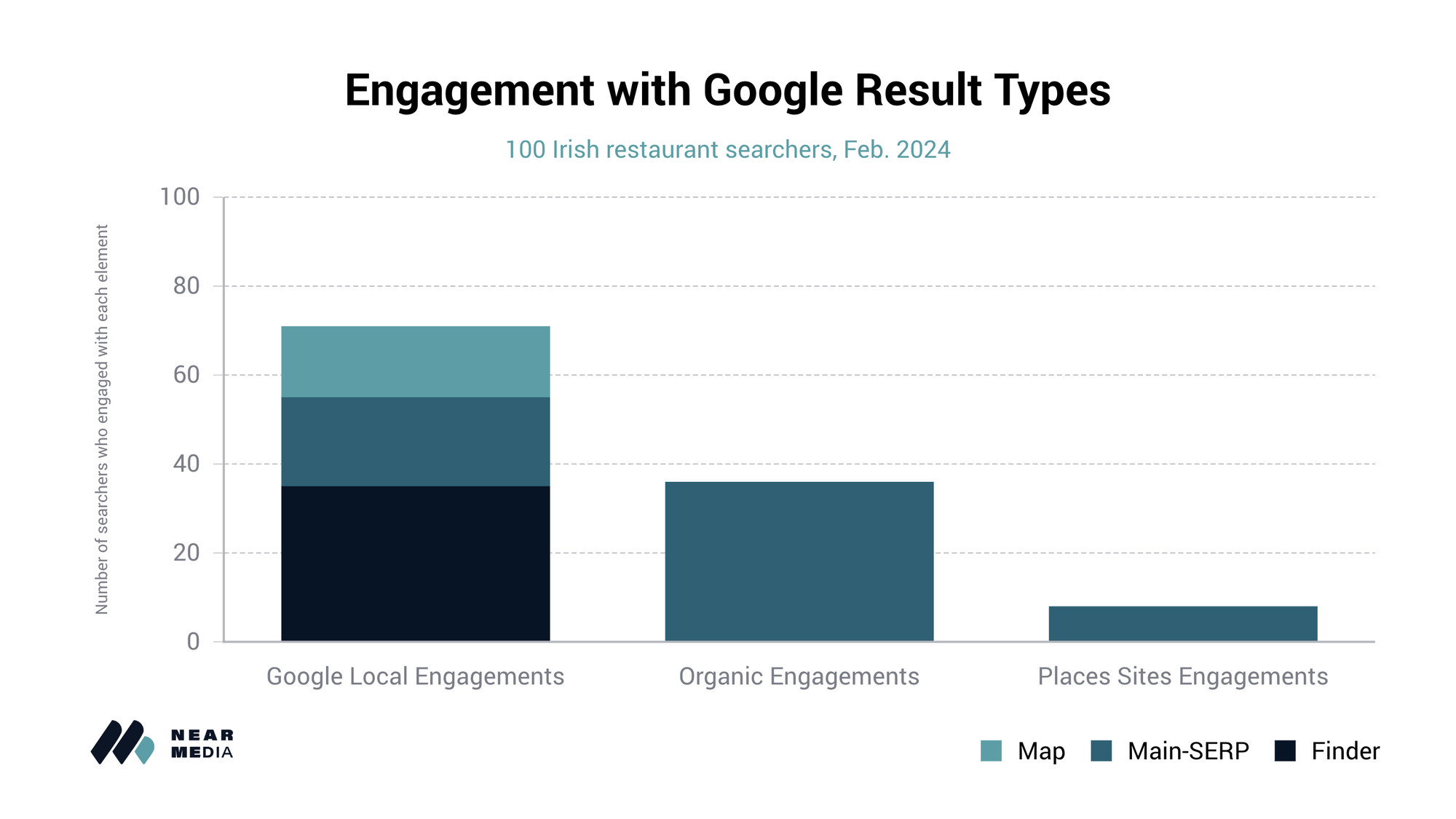
**Our take:**
- Years ago, so-called aggregators were doing a form of arbitrage: ranking in Google and then reselling traffic at higher prices to local merchants. Often the consumer experience on those sites was poor as well.
- The Local Pack was a way to direct traffic to local businesses without the "middleman." Hence the dilemma: if you boost aggregators, as Google argues, that may mean less direct traffic and a worse UX.
- Is the DMA promoting competition at the expense of the consumer experience and local businesses? Yes and no.
## Recent Analysis
- **Why Local Searchers Look to the Local Finder**, [by Mike Blumenthal](https://www.nearmedia.co/why-local-searchers-look-to-the-local-finder/).
- **Near Media podcast episode 148:** [Consumer Research Highlights Limited Impact of DMA Mandated Google's SERP Changes](https://www.nearmedia.co/ep-148/).
## Short Takes
- Google [testing](https://www.seroundtable.com/google-local-pack-people-like-36969.html?ref=nearmedia.co) "people like" **local justifications.**
- **Google Maps** [testing](https://www.androidpolice.com/google-maps-tests-building-entrances/?ref=nearmedia.co) building entrance/exit icons.
- Case study: [adding prices](https://localsearchforum.com/threads/a1-garage-door-in-phoenix-increases-clicks-by-listing-prices.61202/?ref=nearmedia.co) **increased ranking**, consumer clicks.
- **Google Business Profile websites** [finally starting to redirect](https://twitter.com/DarrenShaw%5F/status/1765069666601537878?ref=nearmedia.co).
- How to [make](https://moz.com/blog/create-videos-for-your-gbp?ref=nearmedia.co) simple **GBP videos** with Canva.
- Google seeking to address **LSA spam** [with updated verifications](https://searchengineland.com/google-local-services-ads-verification-update-438137?ref=nearmedia.co).
- More "**SEO best practices**" that [don't help your site rank](https://www.linkedin.com/posts/cyrusshepard%5Fdoes-having-active-comments-on-your-articles-activity-7167995448127840256-BR7K/??ref=nearmedia.co).
- How combinations of **on-page features** [affect traffic gains, losses](https://www.linkedin.com/posts/cyrusshepard%5Fwhen-your-website-traffic-gets-hit-by-a-google-activity-7170513515026345984-pur3/?ref=nearmedia.co).
- Another [roundup](https://uberall.com/en-us/resources/blog/the-continuous-log-of-google-search-changes?ref=nearmedia.co) of Google's (local) **algorithm changes**.
- Why the "**helpful content system**" is punitive; [where it might go](https://www.gsqi.com/marketing-blog/google-helpful-content-system-evolution/?ref=nearmedia.co).
- **Google** [paying news publishers](https://9to5google.com/2024/02/27/google-ai-generated-articles-news-publishers/?ref=nearmedia.co) to create content with AI tools.
- **Kodak** failed because [business model "too strong](https://www.linkedin.com/feed/update/urn:li:activity:7164651195645509632/?ref=nearmedia.co)"; is Google the same?
- **Klarna** [says](https://www.klarna.com/international/press/klarna-ai-assistant-handles-two-thirds-of-customer-service-chats-in-its-first-month/?ref=nearmedia.co) AI agents doing work of 700 full-time human reps.
- How to [build](https://www.growth-memo.com/p/universe?ref=nearmedia.co) an SEO "**keyword universe**."
- **Autonomous AI agents** [may bring even more change](https://www.axios.com/2024/02/26/generative-ai-next-act-autonomous-agents?ref=nearmedia.co) to "search."
Listen to our [latest podcast](https://www.nearmedia.co/memo/).
[](https://nearmedia.co/memo?ref=nearmedia.co)
How can we make this better? Email [us](mailto:gsterling@nearmedia.co) with suggestions and recommendations.
### Why Local Searchers Look to the Local Finder
URL: https://www.nearmedia.co/why-local-searchers-look-to-the-local-finder/
Last updated: 2024-11-25T20:10:26.000Z
The conventional SEO wisdom is that only the top positions in Google results matter and that users don't really scroll or click around very much below the fold. That thinking extends to the Local Pack. However, we've observed a more complex set of user behaviors in our consumer research for [multi-location brand audits](https://www.nearmedia.co/search-gameplan/).
We were somewhat surprised to find that users frequently and very consciously explored the depths of the Local Finder ("More Places"). Over the past six months or so, we've analyzed the behaviors of more than 700 searchers in multiple verticals to understand what motivated their choices and where they look for answers when performing local searches.
Behaviors vary quite a bit depending on the vertical and device being used.
Across verticals, on average, 26% of desktop searchers and 36% of mobile searchers clicked into the Local Finder at least once during their search journey and often made their final choice of whom to contact there.
**% of Searchers Engaging with Local Finder**
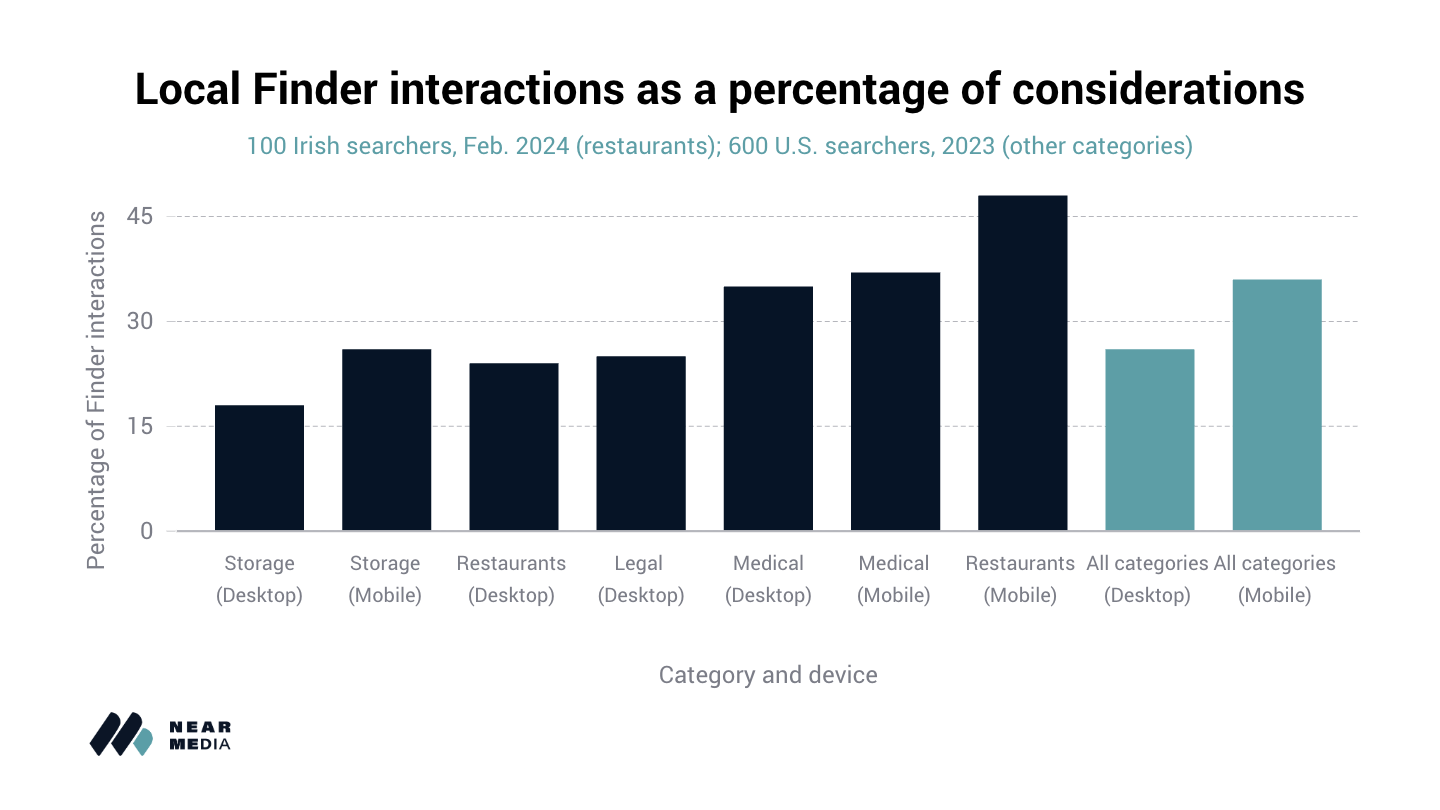
Source: Near Media user research (2023 - 2024).The Google mobile experience lends itself to great use of the More Places button and deeper journeys into the Local Finder.
### Why searchers enter the Local Finder
Below is a video from a healthcare searcher that demonstrates why users enter the Local Finder. In this case the searcher is looking to pick from a range of options that are both nearby and highly rated. While searchers infrequently read reviews – our data indicate that roughly two-thirds of users (or more) don't actually read review text – they will frequently scour the length of the Finder to find three or four listings with "good reviews" (star ratings, counts) from which to make a decision.
0:00
/2:03
1×
Source: Near Media user research. The video illustrates the thought process and decision-making rationale of a search user seeking a new doctor.
### Why does it matter?
Once a searcher enters the Local Finder, traditional ranking priorities become less important. Searchers will often go six, 10 or even 15 listings deep in the Finder if there are not enough reviewed locations, or if other criteria aren't satisfied. In situations like this, ranking in the top three becomes a great deal less important. The opportunity to stand out with great reviews, photos, complete menus and a good website can make all of the difference to being chosen.
### What about your vertical?
In some verticals, like self-storage, where price is a primary consideration and the search is not a YMYL decision (your money or your life), searchers will make their choice quickly and often within the top few results. As you can see in the chart above in cases where reviews are more critical and have a bigger perceived impact on the final choice, journeys into the Local Finder generally become more frequent.
Having said that, there doesn't seem to be a typical behavior you can count on. Understanding how often users head into the Local Finder and how deep they are likely to go is not something most SEO plans address. It can only be gleaned with [user focused behavioral research](https://www.nearmedia.co/search-gameplan/#what-your-search-gameplan-includes).
Behavior varies greatly by vertical and even sub-category within that vertical. Knowing exactly where your business falls on this consumer behavior spectrum can make your SEO more effective, less expensive and certainly less stressful.
### Ep 148: Consumer Research Highlights Limited Impact of DMA Mandated Google's SERP Changes
URL: https://www.nearmedia.co/ep-148/
Last updated: 2024-03-03T15:10:47.000Z
**Part 1 starts 00:13 -** [**Consumer Research Highlights Limited Impact of DMA Mandated Google's SERP Changes**](https://youtu.be/9B8Mds0Fqnc?ref=nearmedia.co)
Near Media unveiled findings from their latest research on the restaurant vertical in Ireland, investigating the effects of Google's Search Engine Results Page (SERP) changes in light of the Digital Markets Act. The study aimed to ascertain whether Google's adjustments to its Irish SERP features influence user click behavior or choices, particularly in selecting restaurants. The UI changes implemented by Google, such as the Places Sites module intended to feature local directories and content websites about restaurants, received minimal engagement from users. Despite its visibility in 60% of searches, it was often overshadowed by the prominence of Google Business Profile results and the traditional local pack, especially on mobile devices where user scrolling was limited. This outcome suggests that while Google's efforts to adapt to the DMA's requirements are visible, they have yet to significantly alter user interaction with SERP features.
**Part 2 starts 07:58 -** [**The Rise of Zero-Click Searches: A Challenge to Content Publishers and a Boon for Google Business Profiles**](https://youtu.be/VPLLTs-0VkU?ref=nearmedia.co)
Zero-click searches refer to queries resolved on the search engine's results page itself, without leading the user to an external website. This trend, particularly pronounced in the restaurant sector, signifies a shift towards Google Business Profiles (GBP) as the primary source of information for users, sidelining traditional content publishers and third-party platforms like TripAdvisor and OpenTable.
Research indicates that approximately 50% of mobile searches for restaurants end without a click to external sites, as users find sufficient information within Google's local finder or GBP listings. On desktops, this figure slightly decreases but remains significant. Interestingly, when users do opt for external sources, TripAdvisor emerges as the dominant choice, overshadowing competitors such as Yelp, despite its historical association with restaurant reviews.
**Part 3 starts 24:10 -**
The dynamics of zero-click searches and the role of self-preferencing by Google,has implications for competitors, consumer choice and regulators. The European Union faces significant regulatory challenges in addressing these issues, given the lack of clear success criteria and the general nature of current regulations. The visual dominance of Google's "pack" feature and its influence on consumer behavior, with a significant portion of users engaging with these results, denies any benefit theoretically invoked by Google’s SERP changes. Brands like TripAdvisor and ZocDoc manage to stand out through strong branding and SEO efforts, suggesting that a balanced approach is essential for visibility and engagement in the highly competitive digital landscape.
**Reference Articles:**
[Places Sites Fail](https://www.nearmedia.co/places-sites-fail-more-places-mia-google-maps-in-sge/)
[Is Google's DMA Compliance DOA for Local Searches in Europe?.](https://www.nearmedia.co/google-serp-restaurants-eu-dma-analysis/)
[New elements of Google local search results in Europe: A visual glossary](https://www.nearmedia.co/eu-local-serp-visual-glossary/)
[Are New Google EU Local Results DMA Compliant?](https://www.nearmedia.co/are-google-eu-local-results-dma-compliant/)
### Places Sites Fail, More Places MIA, Google Maps in SGE
URL: https://www.nearmedia.co/places-sites-fail-more-places-mia-google-maps-in-sge/
Last updated: 2024-02-29T20:52:29.000Z
### Google DMA Changes: No Impact
In anticipation of Digital Markets Act (DMA) enforcement in March, Google introduced [new search-results features](https://www.nearmedia.co/eu-local-serp-visual-glossary/?) to comply within Europe. Google is one of six "gatekeepers" designated under the DMA. The others are Microsoft, Apple, Meta, ByteDance (TikTok) and Amazon. The DMA mandates that these companies not give preferential treatment to their own products or services. In Local that effectively means Google not favoring the Local Pack and/or otherwise highlighting rivals. The "marquee" feature in these search-results changes is a [Places Sites module](https://www.nearmedia.co/eu-local-serp-visual-glossary/?), a horizontal scrolling carousel, that highlights directories and content sites containing local information. To test the impact on user behavior we conducted a study in the restaurant vertical in Ireland (an English speaking member of the EU). We recorded 100 users conducting Google restaurant searches. You can [explore the full results here](https://www.nearmedia.co/google-serp-restaurants-eu-dma-analysis/). The bottom line: most clicks were on the Local Pack, Local Finder or organic results. Places Sites saw little engagement, even when highly visible on the page (i.e., #1 or #2 SERP position). Yelp, a long-time Google antagonist, also conducted [research](https://www.wired.com/story/google-search-eu-yelp-unfair/?ref=nearmedia.co) with similar results.

Near Media user research (n=100 Irish restaurant searchers)
**Our take:**
- Zero-click results were significant: \~50% of mobile and a third of desktop users never left Google.ie while choosing a restaurant. This will vary from vertical to vertical.
- Tripadvisor was the only directory that saw meaningful click volume – because it ranked well organically and because of its strong brand.
- Most clicks to directories came from organic results, not the Places Sites module, which promotes them. There's a major question now about Google's compliance. What does "success" look like?
### 'More Places' Missing
For roughly 24 hours this week, the Local Pack's "More Places" link into the Local Finder [was gone](https://twitter.com/DarrenShaw%5F/status/1762288395768995902?ref=nearmedia.co). More Places takes users to a longer list of local businesses beside an expanded Google Map (see below). In informal discussion on social media, some marketers questioned whether or how often people click on More Places. Previous Near Media research shows that in fact people do click into and consider businesses in the Finder. In some categories, it can be a major source of clicks. Most recently, in the restaurant research discussed above, Finder clicks were \~30% of the total. Accordingly, people considered the top three listings in the Local Pack and then moved into the Finder to see other options. In other verticals we've seen similar results. In Legal, for example, Finder clicks were 19% of the total and in Medical 23%. That's the percentage of overall clicks going to More Places. Drilling down, over half of all GBP clicks in our Medical study came from the Finder and in Legal it was \~55%. We also observed that many users go deep into Finder results, often to locate better reviewed businesses. So the Finder is an important source of local leads; it's good the problem was a bug.
**Local Pack and Local Finder**
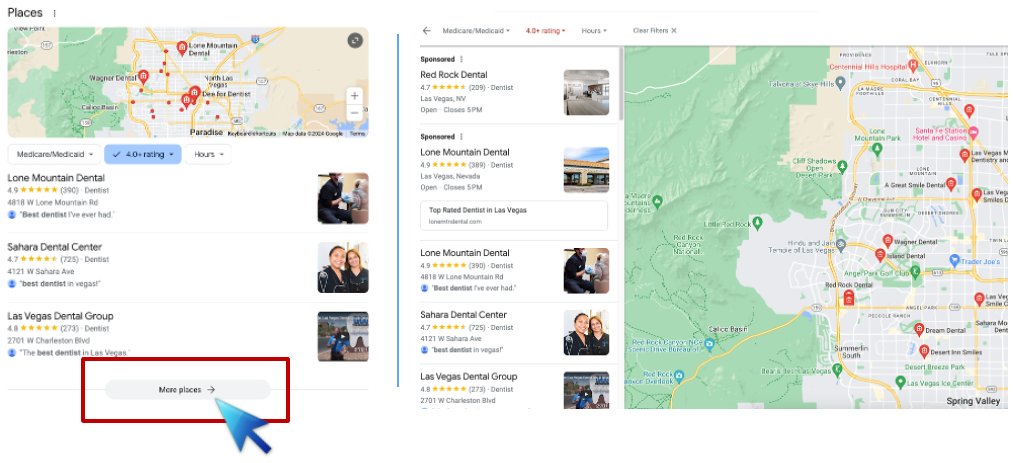
**Our take:**
- The data above come from specific studies for clients that capture usage from a finite group of users. This is not mass analytics data.
- Yet many consumers are looking to the Finder as a source of additional listings and very often scrolling deeply to engage with those listings.
- Removing More Places would greatly limit the number of GBP businesses users would see. Most GBP/Finder engagements are zero-click.
### Google Maps #2 in SGE
Google SGE continues to expand to new countries. And new research continues to appear tracking its evolution. BrightEdge is [one source](https://www.brightedge.com/google-sge?ref=nearmedia.co). Another is SE Ranking, which is out with new [research](https://seranking.com/blog/sge-research/?ref=nearmedia.co). The later analyzed more than 100,000 keywords, finding that 64% of them prompted an SGE default snippet (18.5%) or "generate" button (45.1%). For SGE snippets that show by default, Google often requires users to click "show more" to get the full answer. In addition, the study found the text-length range of SGE snippets was "between 3,044 and 4,646 characters" or roughly 609 to 929 words. That has implications for the visibility of other results, on desktop and especially mobile. And speaking of links, the "most common number of links in the SGE answer after expanding is 8," but only 2-3 before (show more) expansion. The vast majority (\~86%) of those links came from the top 10 organic results. (What's not clear is whether anybody clicks on them in SGE.) The most frequent websites appearing as SGE links/sources are those in the graphic below. The top three in order are Quora (spammy), Google Maps and Wikipedia. Similarly, [according to](https://www.brightedge.com/google-sge?ref=nearmedia.co) BrightEdge, "\[Google\] Places have become the most common module to appear in SGE results." However, the most-linked sites [vary by vertical](https://docs.google.com/spreadsheets/d/1h6S7lq3MbskXibzkLfqPwP2H2u1hlaG1ZXWNX1TM9tc/edit?ref=nearmedia.co#gid=0) according to SE Ranking. And certain verticals triggered SGE results more often than others, with food & beverage at the top, news & politics at the bottom.
**Sites most often linked to in SGE snippets**
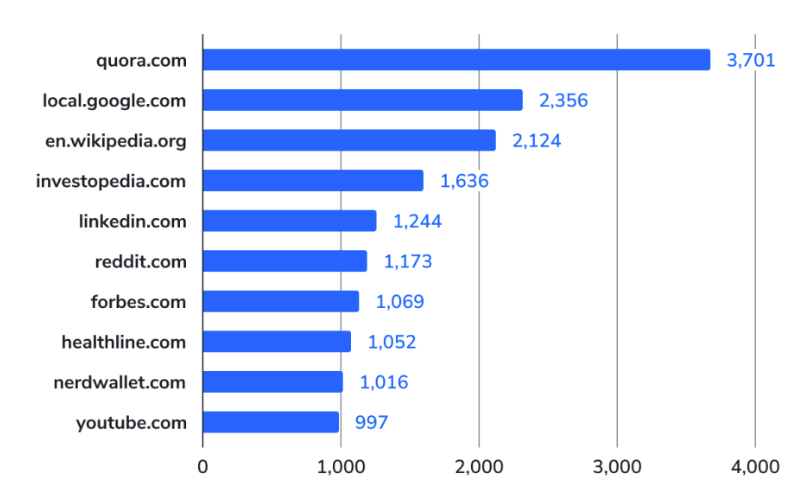
Source: SE Ranking study
**Our take:**
- Other findings: longer length/long-tail queries are more likely to trigger SGE results. Ads appeared with (not inside) SGE snippets 73% of the time.
- As pressure for Google to launch SGE has eased the company [decided](https://blog.google/products/search/google-search-ai-january-2024-update/??ref=nearmedia.co) to "continue to offer SGE in Labs as a testbed for bold new ideas." It will likely roll out new features into search incrementally, over time.
- If 90% of SGE links come "from the top 10 organic results," that's good news. Perhaps [the doomsday scenarios](https://www.nearmedia.co/sge-a-traffic-destroyer-ai-optimization-smb-badges/) won't come to pass.
## Recent Analysis
- **Is Google's DMA Compliance DOA for Local Search in Europe?**, [by Near Media](https://www.nearmedia.co/google-serp-restaurants-eu-dma-analysis/)
- **Near Memo episode 147**: [Long tail searcher behaviors, Gemini switch appears, content publishing being upended by search](https://www.nearmedia.co/ep-147/)
## Short Takes
- Poll: 68% of **SEOs like Google less** today ([n=1,769](https://www.seroundtable.com/most-seos-dislike-google-36971.html?ref=nearmedia.co)).
- **New GBP layout** [with numerous drop-downs](https://www.seroundtable.com/google-local-panels-with-expandable-menus-36966.html?ref=nearmedia.co) being tested.
- Google [showing third party reviews](https://www.linkedin.com/posts/mblumenthal%5Funder-the-dma-in-the-eu-google-is-now-showing-activity-7168697719417479169-3FG7/?ref=nearmedia.co) on EU **Google Business Profiles**.
- Google CEO Sundar Pichai [calls](https://www.semafor.com/article/02/27/2024/google-ceo-sundar-pichai-calls-ai-tools-responses-completely-unacceptable?ref=nearmedia.co) **Gemini images snafu** "unacceptable."
- **Reddit** [was overexposed](https://www.nearmedia.co/openai-search-reddit-overexposed-clarifying-ai-content-policy/) in SERPs; [Google now trying to correct](https://twitter.com/lilyraynyc/status/1762908133360308546?ref=nearmedia.co).
- **Google LSA bug** [showed competitors for direct searches](https://twitter.com/JoyanneHawkins/status/1760657441862172992?ref=nearmedia.co) despite promises.
- 80% of Bloomingdale's **e-commerce** [in cities with physical stores](https://www.digitalcommerce360.com/2024/02/27/macys-digital-sales-decrease-fiscal-q4-2023/?ref=nearmedia.co).
- **Stores** driving Warby Parker's sales growth; [many more coming](https://www.retaildive.com/news/warby-parker-eyes-40-new-stores-as-it-closes-2023-with-revenue-up-12/708772/?ref=nearmedia.co).
- AI is [already being widely used](https://www.politico.com/news/magazine/2024/02/27/artificial-intelligence-media-00143508?ref=nearmedia.co) in **newsrooms** but it won't save news.
- How **mobile location data** has been [used for surveillance](https://www.wired.com/story/how-pentagon-learned-targeted-ads-to-find-targets-and-vladimir-putin/?ref=nearmedia.co) for years.
- Despite big returns, **Apple** watcher [declares Vision Pro a success](https://9to5mac.com/2024/02/28/vision-pro-demand/?ref=nearmedia.co).
- **B2B buyers**: gated vendor content mostly [disappointing](https://www.marketingcharts.com/industries/business-to-business-232228?ref=nearmedia.co).
- **Apple** CEO Cook [promises](https://techcrunch.com/2024/02/28/tim-cook-says-apple-will-break-new-ground-in-genai-this-year/?ref=nearmedia.co) generative-AI "breakthrough" this year.
- Why the **Apple Car** was destined to fail ([NYT](https://www.nytimes.com/2024/02/28/technology/behind-the-apple-car-dead.html??ref=nearmedia.co)).
Listen to our [latest podcast](https://www.nearmedia.co/memo/).
[](https://nearmedia.co/memo?ref=nearmedia.co)
How can we make this better? Email [us](mailto:gsterling@nearmedia.co) with suggestions and recommendations.
### Is Google's DMA Compliance DOA for Local Searches in Europe?
URL: https://www.nearmedia.co/dma/google-serp-restaurants-eu-dma-analysis/
Last updated: 2024-11-08T23:17:07.000Z
### SUMMARY
## The new Places Sites module, introduced to comply with European Union regulations around self-preferencing, may as well be invisible.
- Near Media's proprietary research found that 40% of restaurant searchers in Ireland don't scroll down far enough in a typical search result to even encounter the Places Sites module.
- For the 60% of searchers who do see Places Sites, there's almost no engagement and even fewer clicks to the directories that are supposed to benefit from it.
- Google's own Local Pack results still capture the majority of engagements and clicks from all searchers – and the vast majority clicks from mobile searchers.
---
### HOW WE CONDUCTED THE STUDY
We presented 100\* Irish consumers with the following scenario:
> *It's a Friday evening and you'd like to go out for a nice dinner with a couple of friends to celebrate a long but successful workweek.*
>
> *You want to try a new place you haven't been to before, and you go to Google to help you find what you're looking for.*
We loaded the default Google.ie homepage in their browsers. We then recorded their screens and audio narration (with permission), and aggregated and analyzed their behavior and decision-making rationales.
**Among the questions we sought to answer:**
- What search result types received the most engagement, and by extension, did the new Places Sites module experience meaningful engagement?
- Which directories, if any, received the biggest boost from this new (ostensibly more favorable) post-DMA treatment?
- How widespread is the "zero-click search" phenomenon, whereby a searcher never leaves Google's own properties before making a decision?
In line with our [client-focused research](https://nearmedia.co/search-gameplan/?ref=nearmedia.co), we also sought to answer:
- What digital presence(s) should the typical Irish restaurant prioritize?
- What restaurant attributes are most compelling to consumers?
- How many restaurants does a typical consumer consider prior to making a choice resulting in a visit/or reservation?
*\*100 searchers is a small sample size, but still large enough to illustrate trends. We're eager to pursue a continuation of this study with a larger sample as our budget permits.*
---
See Mike Blumenthal's [visual glossary of the search result elements](https://nearmedia.co/eu-local-serp-visual-glossary?ref=nearmedia.co) for examples of each of the new SERP modules introduced by Google in the E.U.
---
### RESULTS
## Engagement with SERP Elements
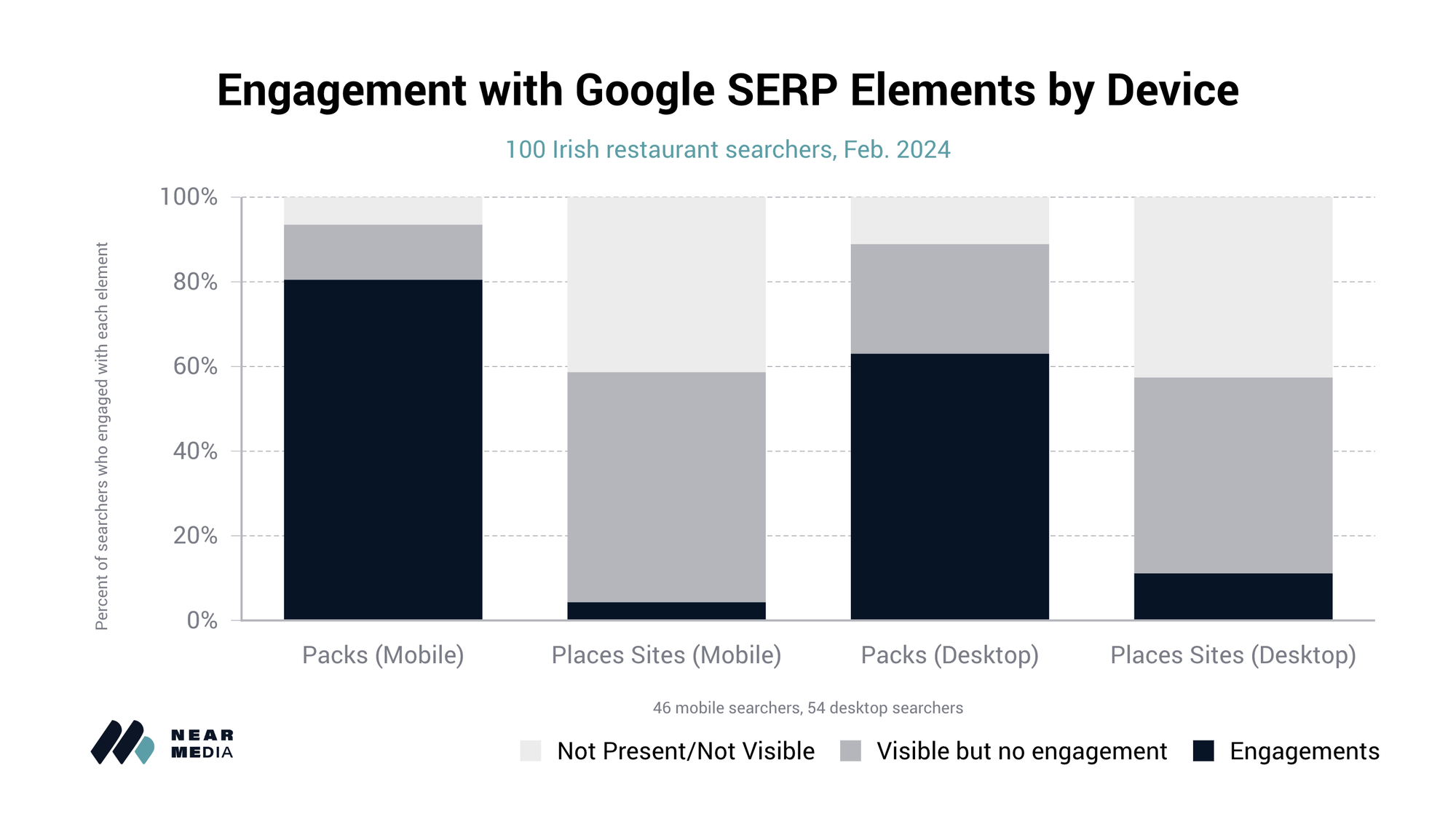
We found that 40% of Irish restaurant searchers don't scroll far enough to even encounter the Places Sites module, in a typical search result. For the 60% searchers who do see it on the page, there is almost no engagement, and even fewer clicks to the directories that are supposed to benefit from it.
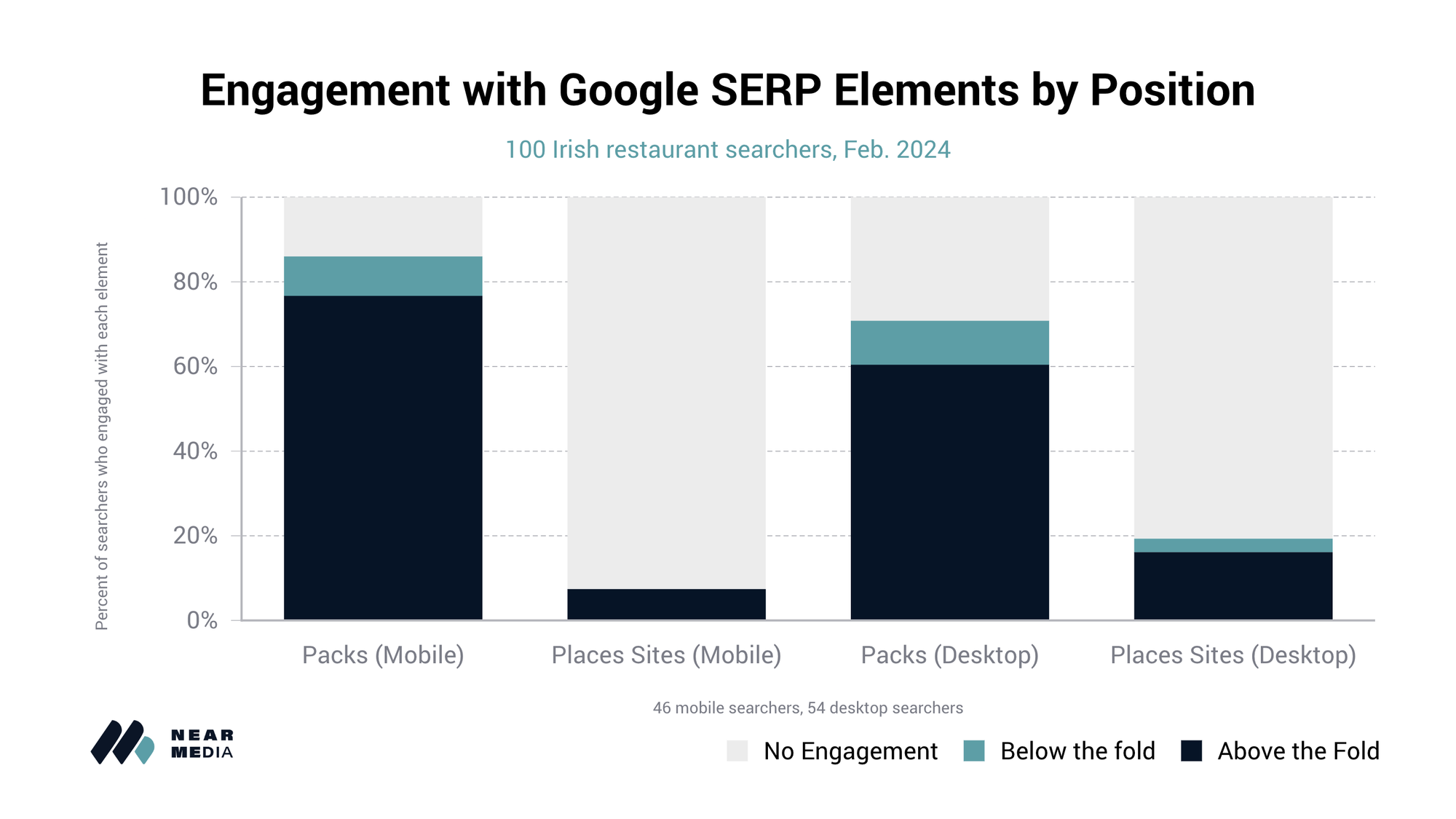
This is true regardless of where the Places Sites module appears, above the fold in the searcher's initial SERP view or below it, where they have to scroll to see it.

Google's own Local Pack results still drive the majority of engagements and clicks from all searchers. But they generate the overwhelming majority of clicks from mobile searchers.
---
## Directory Engagement
*N.B., the term "engagements" is charitable towards the Places Sites module – 3 out of 8 engagements were horizontal scrolls that did not result in a click to any Places Site.*
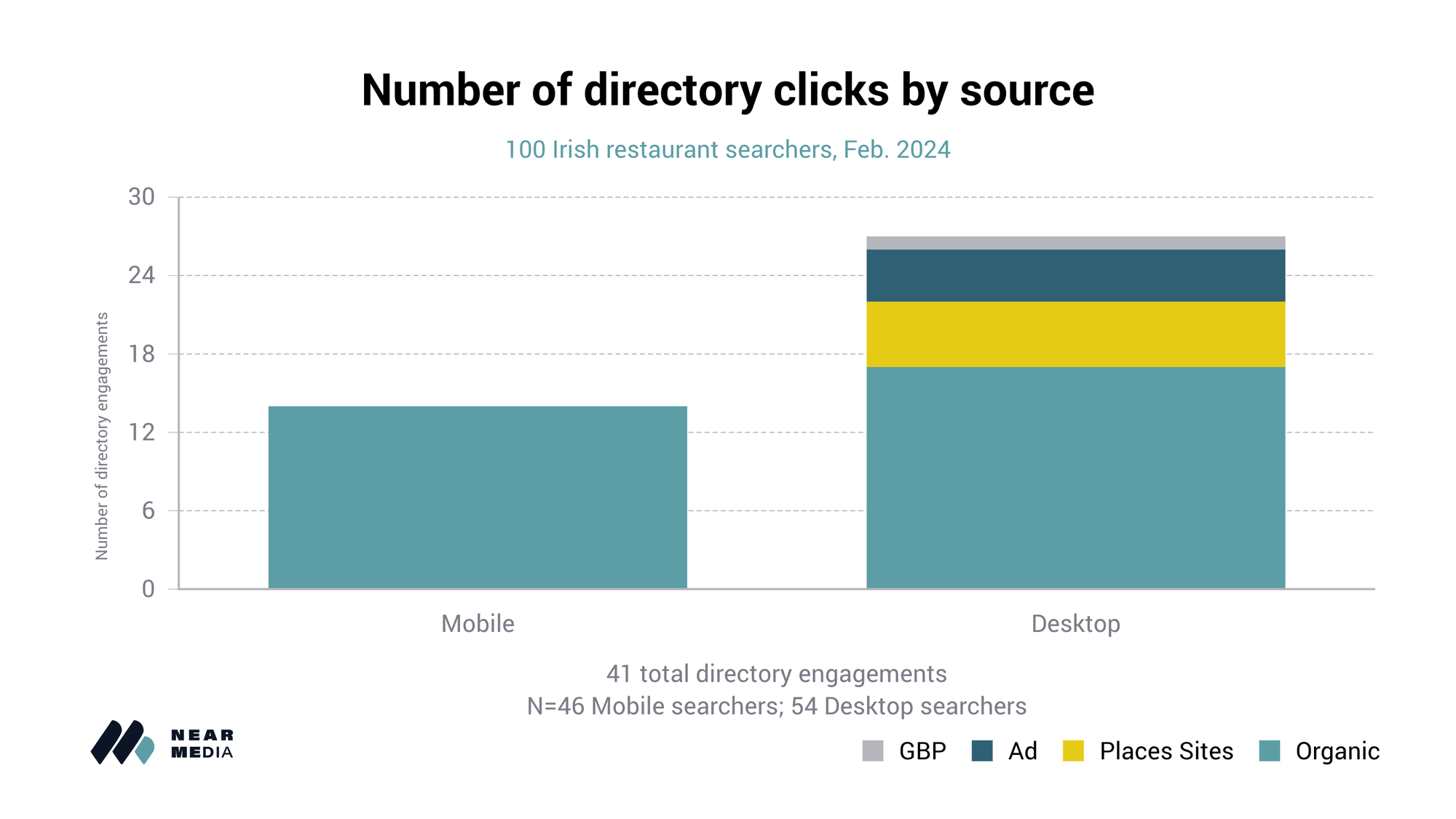
Organic results drove roughly 6x the number of clicks for directories as the Places Sites module. Yet even organic directory clicks paled in comparison to the volume of clicks on Google's own properties: the Local Pack and Local Finder.
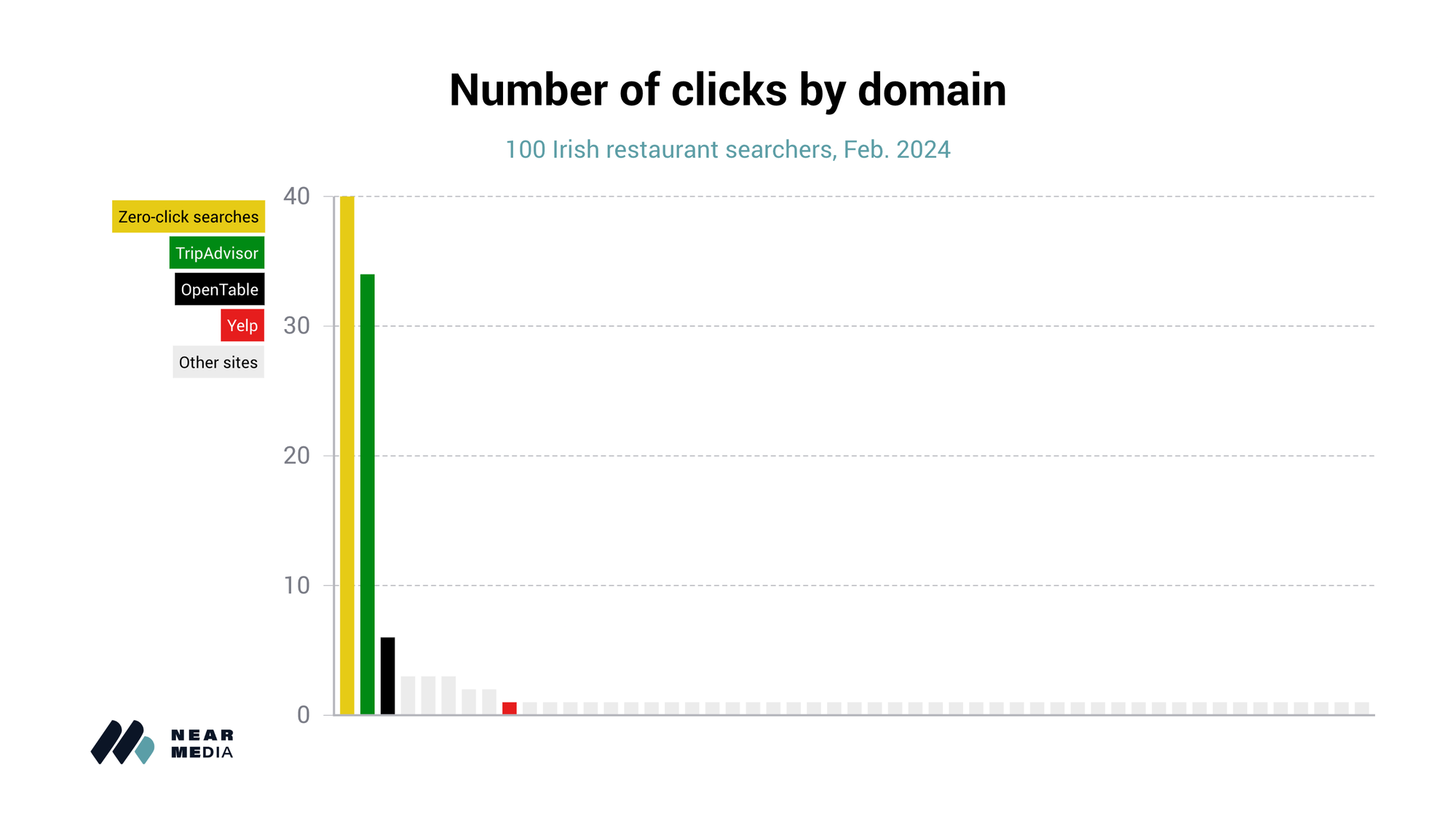
TripAdvisor has an incredibly strong brand among Irish consumers, earning nearly as many clicks as Google's own properties. As noted, these came overwhelmingly from organic search, where TripAdvisor frequently occupied the top result.
Despite being arguably the loudest and most persistent anti-Google gadfly, Yelp has almost no presence in Ireland.
---
## 'Zero-click Search'
We found that "[zero-click search](https://sparktoro.com/blog/in-2020-two-thirds-of-google-searches-ended-without-a-click/?ref=nearmedia.co)" is a very real phenomenon in the restaurant category. Half of all mobile searchers and about a third of desktop searchers never left Google.ie prior to choosing a restaurant.
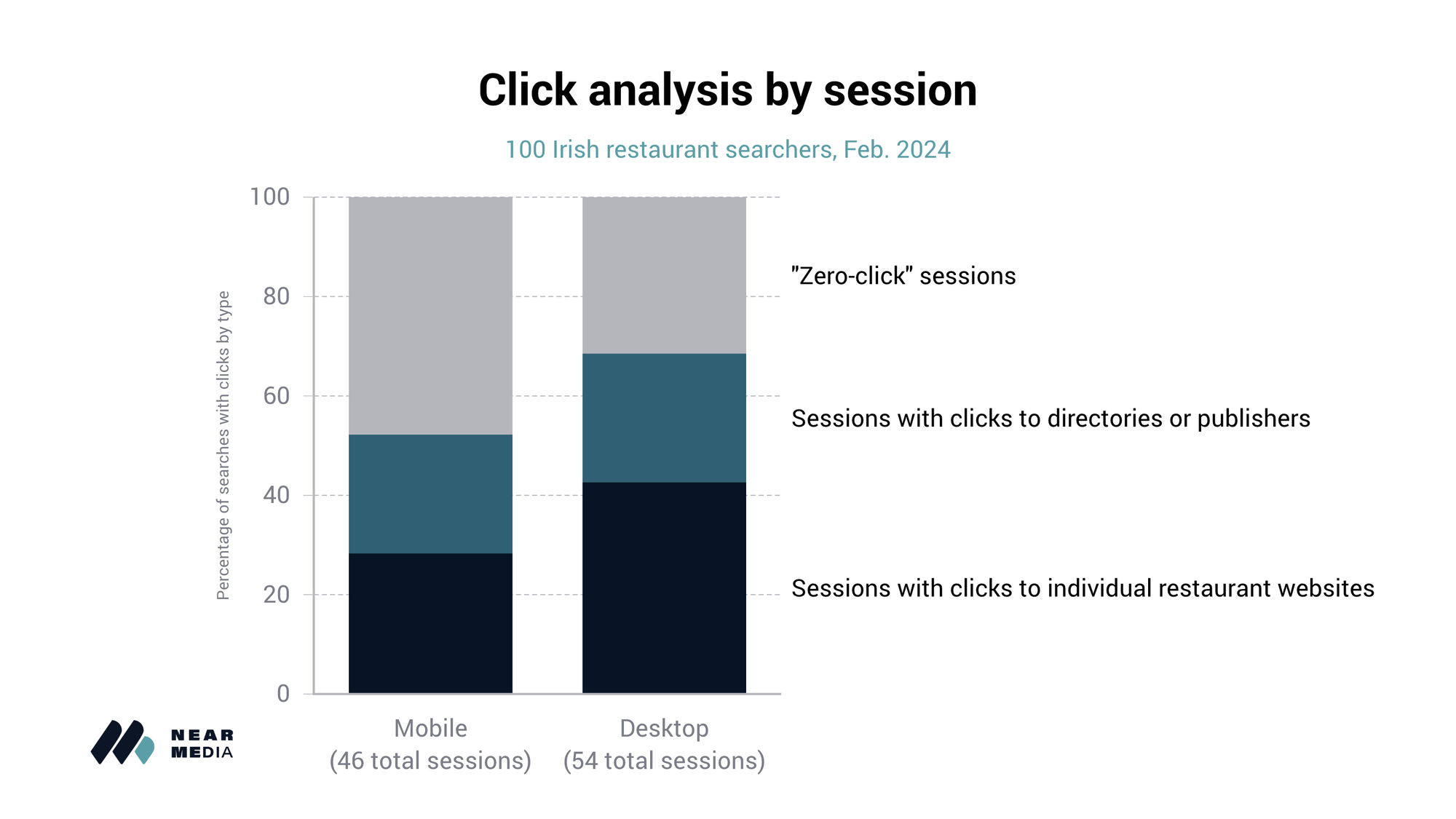
## Where Should Irish Restaurateurs Invest Digitally?
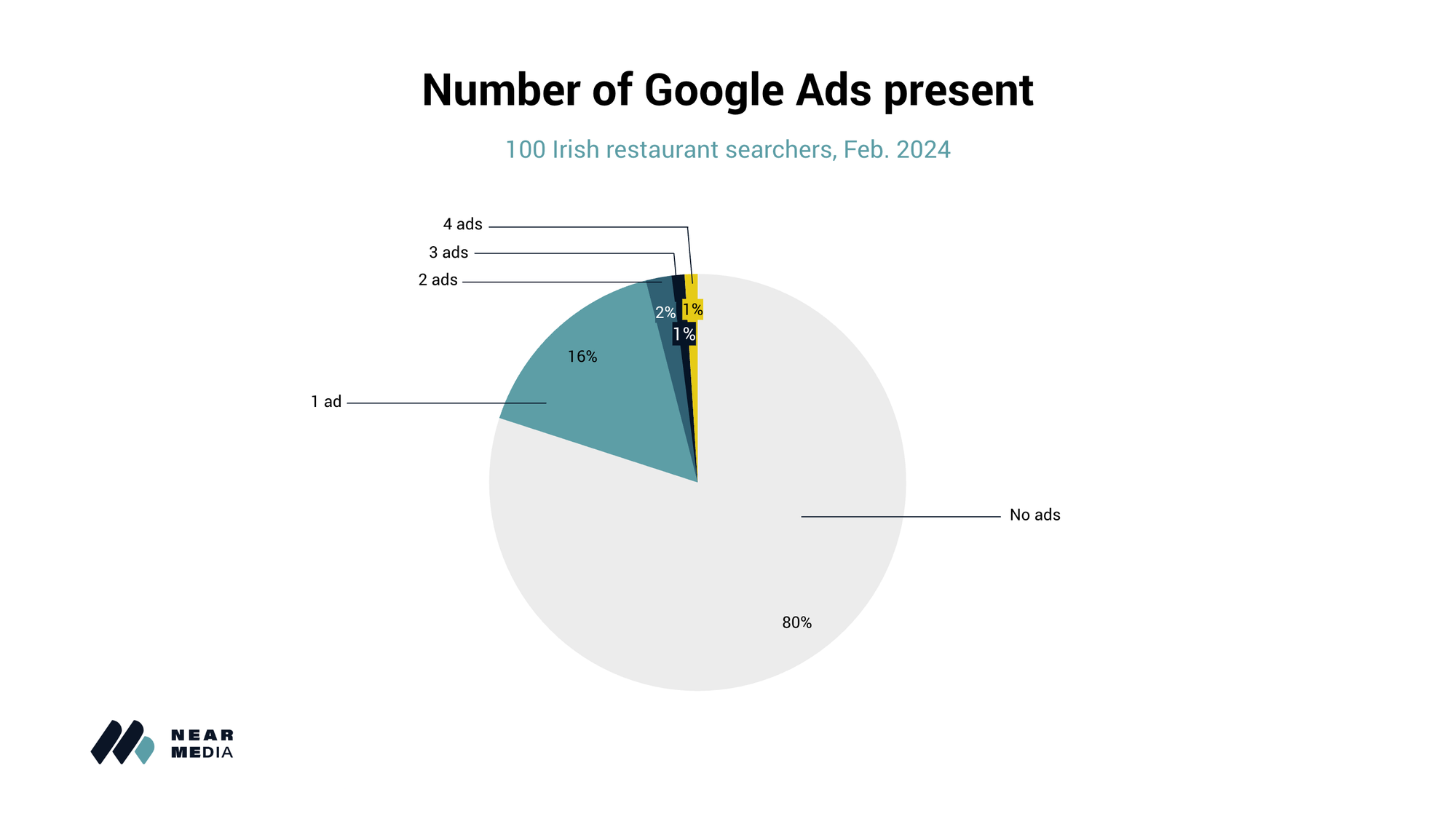
Not Ads.
Restaurants are a surprisingly under-monetized category for Google – perhaps cost-per-conversion simply does not pencil out for razor-thin restaurant margins. Not only were there comparatively few ads, we saw few clicks on Ads as well.
Irish restaurateurs and restaurant marketers would be better-served focusing on their TripAdvisor presence and write-ups from critics, than paying Google for sponsored visibility – a much different conclusion than we drew for our clients in the U.S. legal and self-storage verticals.
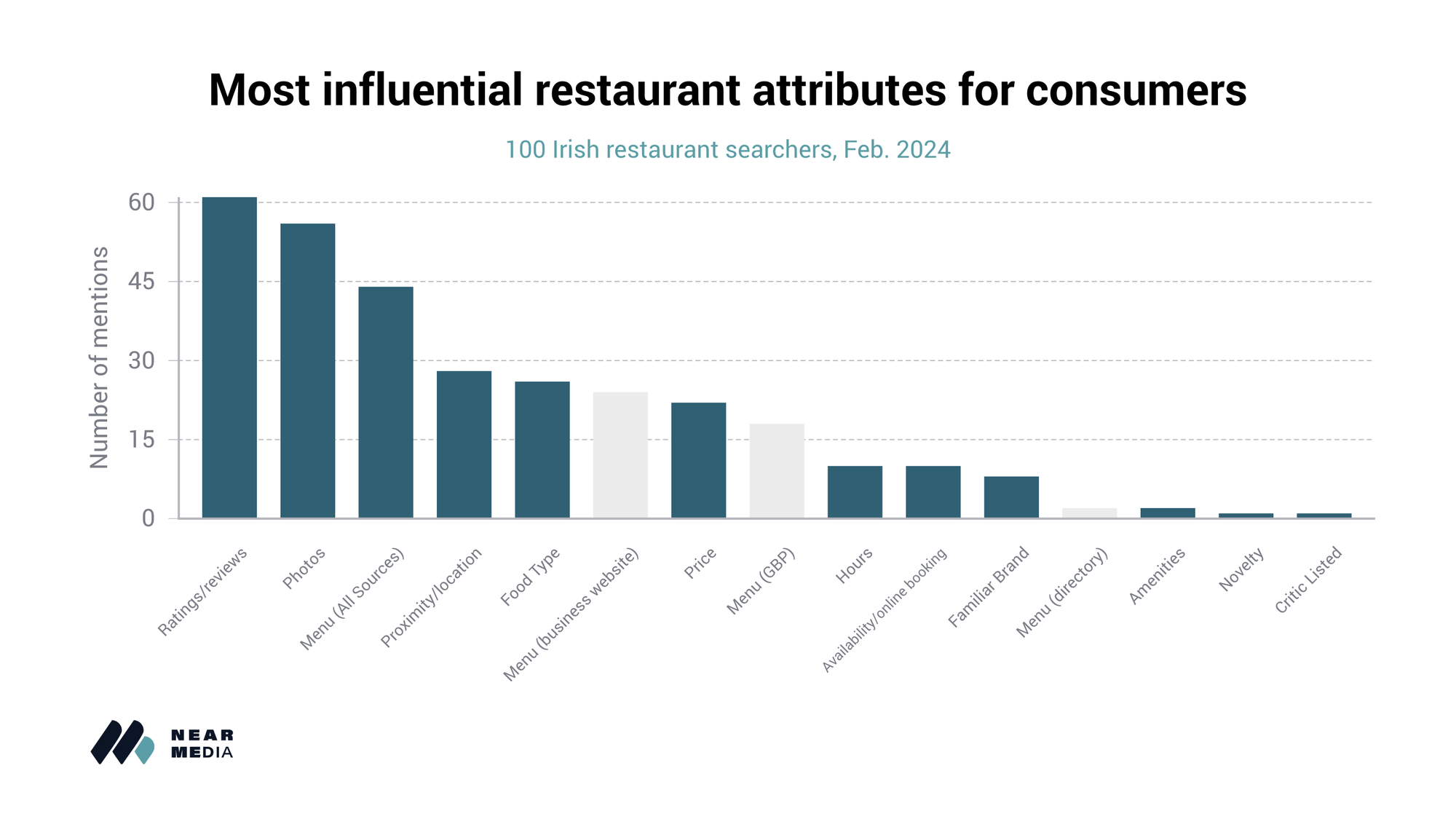
Ratings and reviews are, unsurprisingly, the most influential factor in consumers' evaluation of restaurants, explicitly mentioned by over 60% of searchers.
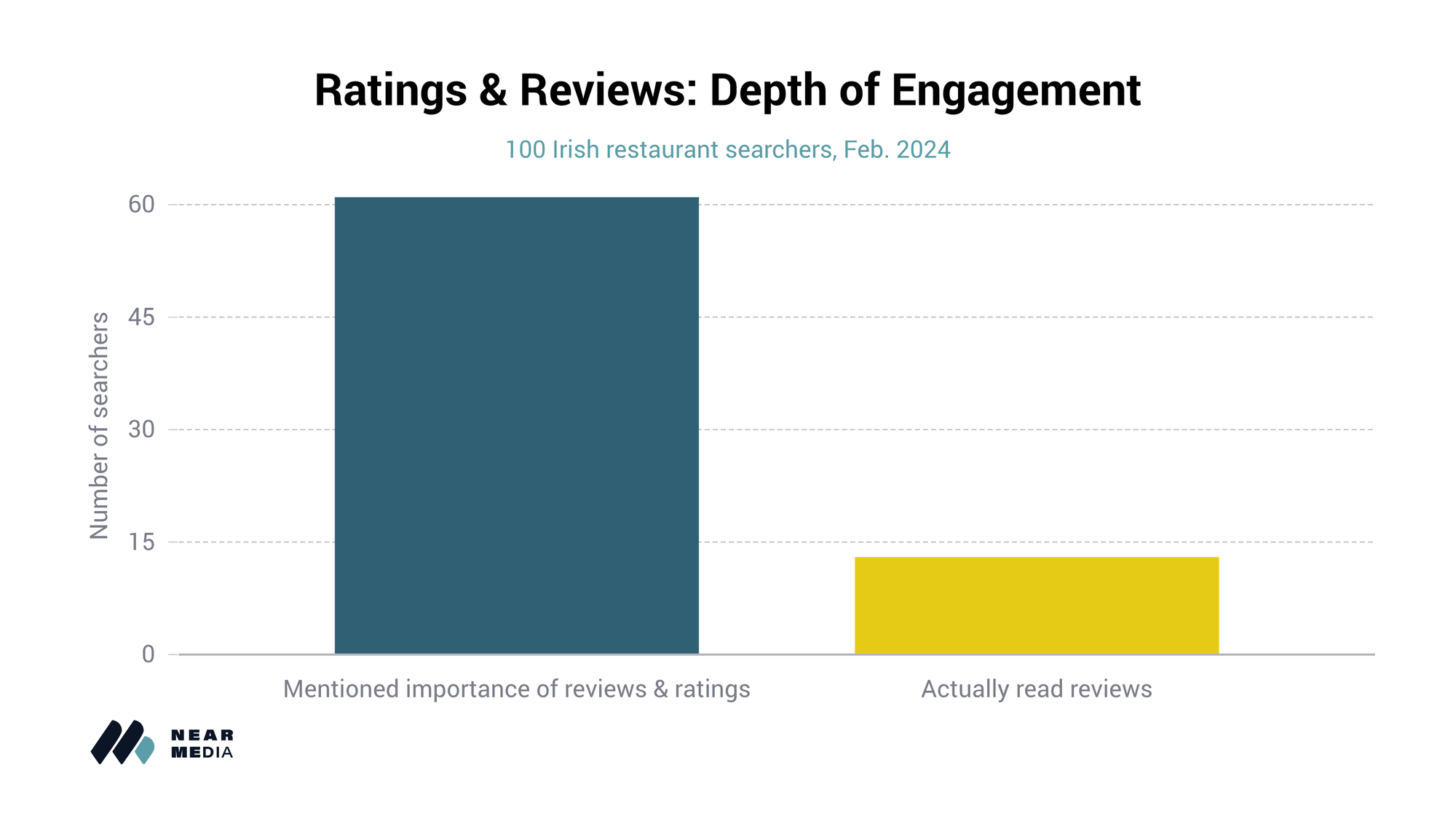
More surprisingly, only 21% of the searchers who mentioned reviews and ratings being important actually read the text of any reviews prior to making a restaurant selection.
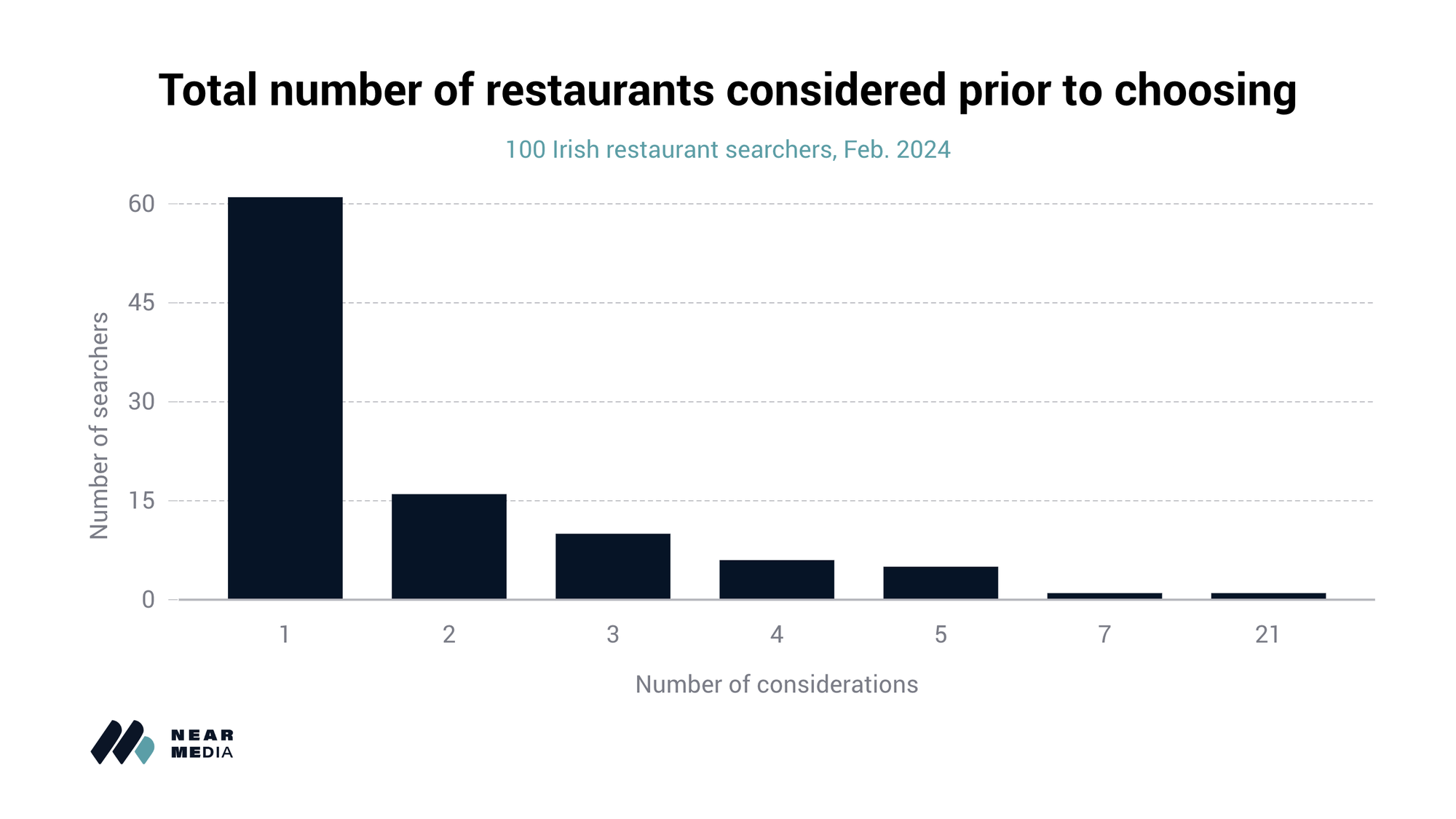
Searchers don't spend a long time evaluating restaurants. That means the first impression has to be a great one. That argues for great reviews, great photos, readily-available menus, and online booking to convert prospective diners.

This is particularly true on GBP, which drove the majority of all restaurant choices, though restaurant sites were seen as a reliable source for menus and reservation availability.
### Takeaways
Do EU regulators have a target percentage of sessions and clicks they want to see from Places Sites? Do they have a percentage of sessions in mind that lead to non-Google clicks? Without knowing whether such targets exist, let alone knowing what they are, we can't definitively say whether the Places Sites module and other changes put Google in full DMA compliance or not.
Based on its lack of impact on consumer behavior, Places Sites may as well not exist. It drives almost no engagement, even above the fold. GBP still drives the plurality of engagements for desktop searchers and the majority of engagements for mobile searchers.
**The median consumer will almost always default to an engagement with the Local Pack if it's visible as part of their search experience. From that standpoint it would appear Google is still "self-preferencing."**
### New elements of Google local search results in Europe: A visual glossary
URL: https://www.nearmedia.co/dma/eu-local-serp-visual-glossary/
Last updated: 2024-11-19T18:15:29.000Z
🇪🇺
**N.B. This post was originally published on February 27, 2024, and was updated on November 19, 2024 to include more detail around result types.*
We wanted to better understand Google's DMA compliance so we conducted [a search-user study in Ireland](https://nearmedia.co/google-serp-restaurants-eu-dma-analysis?ref=nearmedia.co) in February 2024\. We've subsequently conducted additional research in the [Hotel](https://www.nearmedia.co/european-hotel-search-study/) and [Home Services](https://www.nearmedia.co/eu-home-services-search-behavior/) verticals.
Google [began its efforts to comply](https://blog.google/around-the-globe/google-europe/an-update-on-our-preparations-for-the-dma/?ref=nearmedia.co) with the EU's Digital Markets Act ([DMA](https://en.wikipedia.org/wiki/Digital%5FMarkets%5FAct?ref=nearmedia.co)) earlier this year, along with five other original gatekeepers (Amazon, Apple, ByteDance, Meta, and Microsoft). Booking has since been designated as an additional gatekeeper.
Article 6(5) of the DMA mandates that gatekeepers not give preferential treatment to their own products or services vs. third party competitors. Google has thus created a modified search results page and new search features for the 27-country [European Economic Area](https://ec.europa.eu/eurostat/statistics-explained/index.php?title=Glossary:European%5FEconomic%5FArea%5F%28EEA%29&ref=nearmedia.co) across several verticals: Local, Travel, Products and Jobs.
To illustrate the changes, here's a side-by-side comparison for the same local query – "restaurants open now Dublin" – across the EU, UK, and the US. (Screenshot captured in February 2024.)
[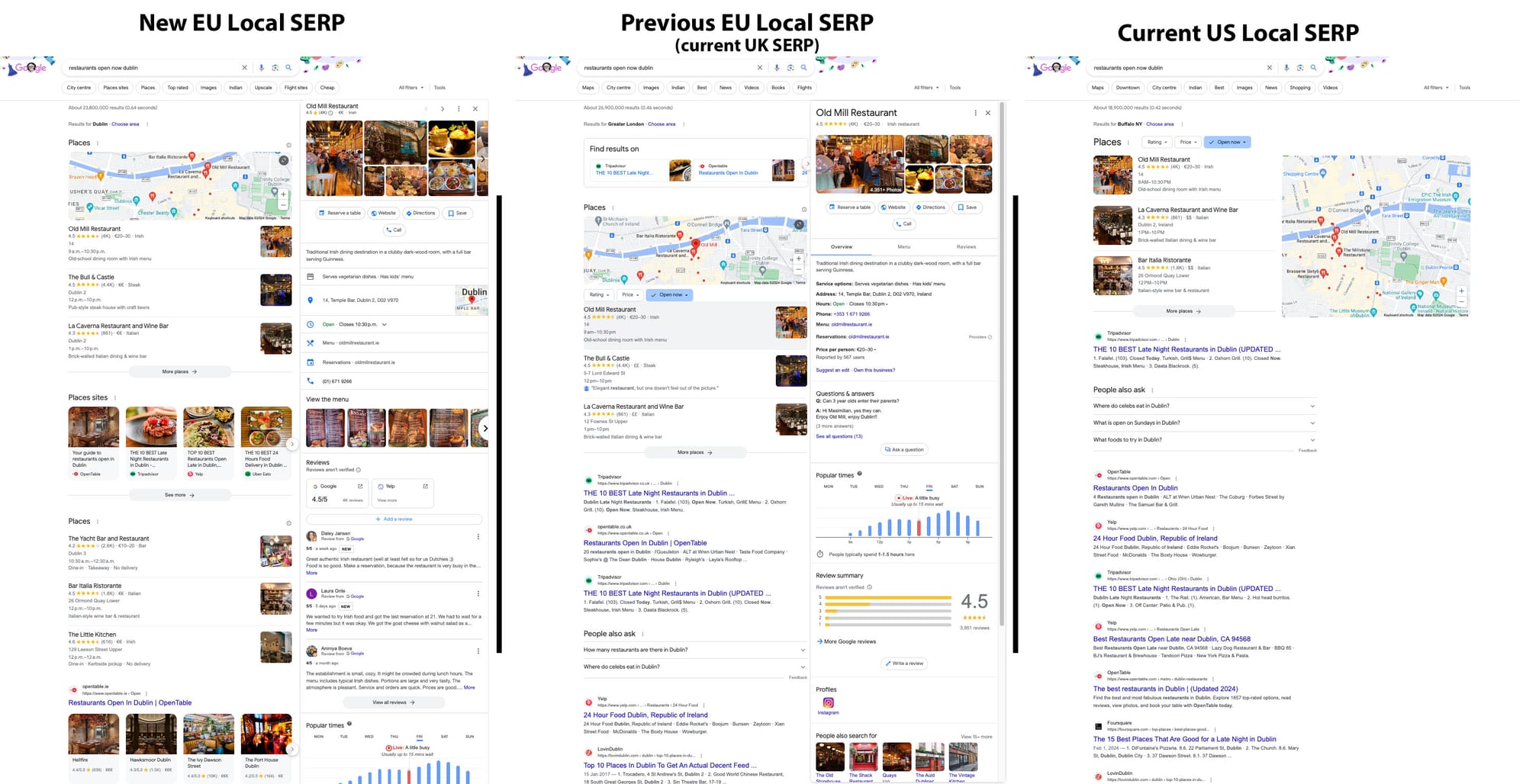](https://www.nearmedia.co/content/files/2024/02/compare-EU-UK-US-current-serp.jpg)
Click to view a larger comparison of new EU Local SERPS with current UK & US Local SERPS.
Google [defines](https://developers.google.com/search/blog/2024/02/search-experiences-in-eea?ref=nearmedia.co) the elements of the new search features and how to participate in a [developer document](https://developers.google.com/search/blog/2024/02/search-experiences-in-eea?ref=nearmedia.co): *New Search experiences in EEA: Rich results, aggregator units, and refinement chips.*
We also attempt to define additional elements and result types in present in a typical European local search engine results page (SERP) below.
## High level-overview of each result element
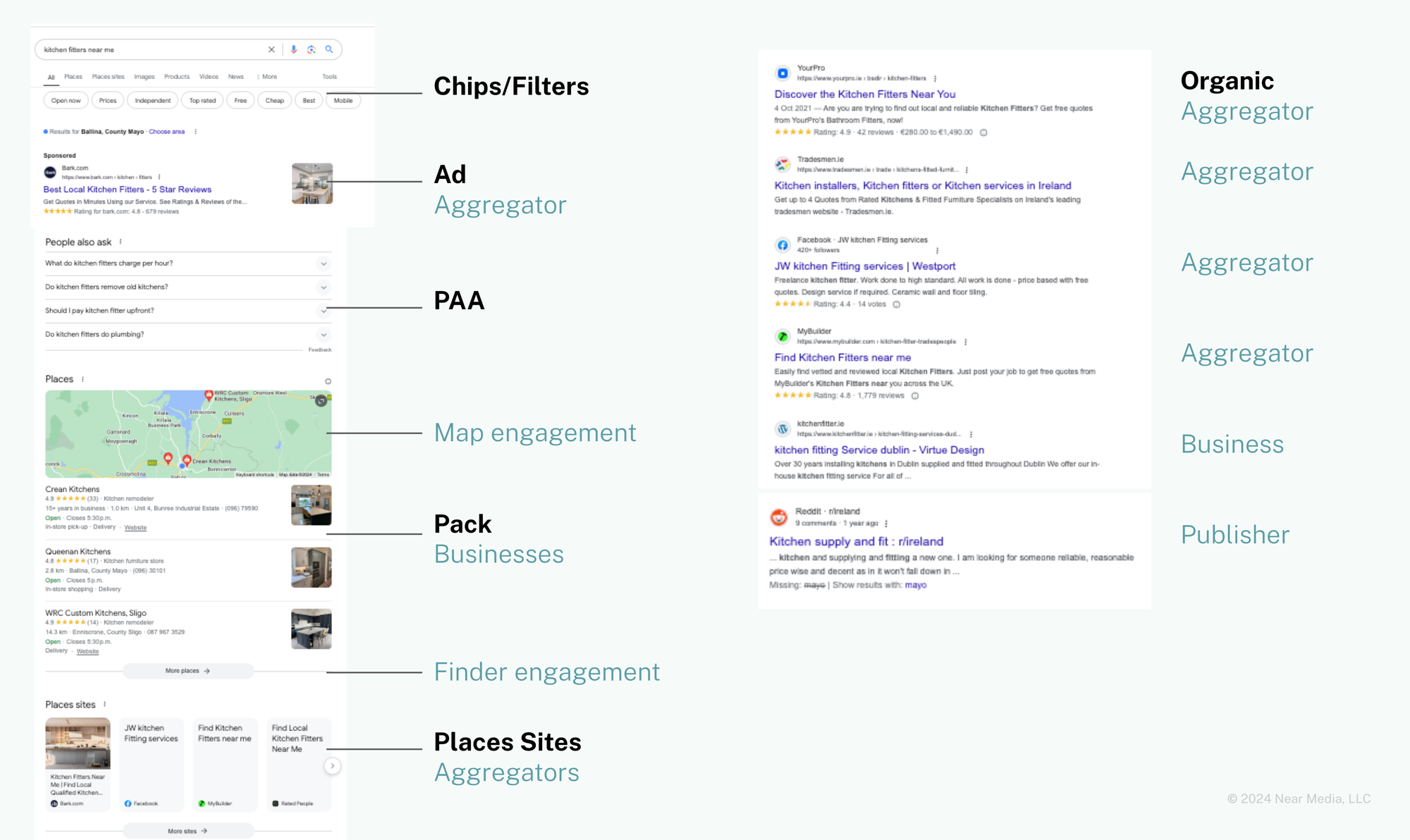
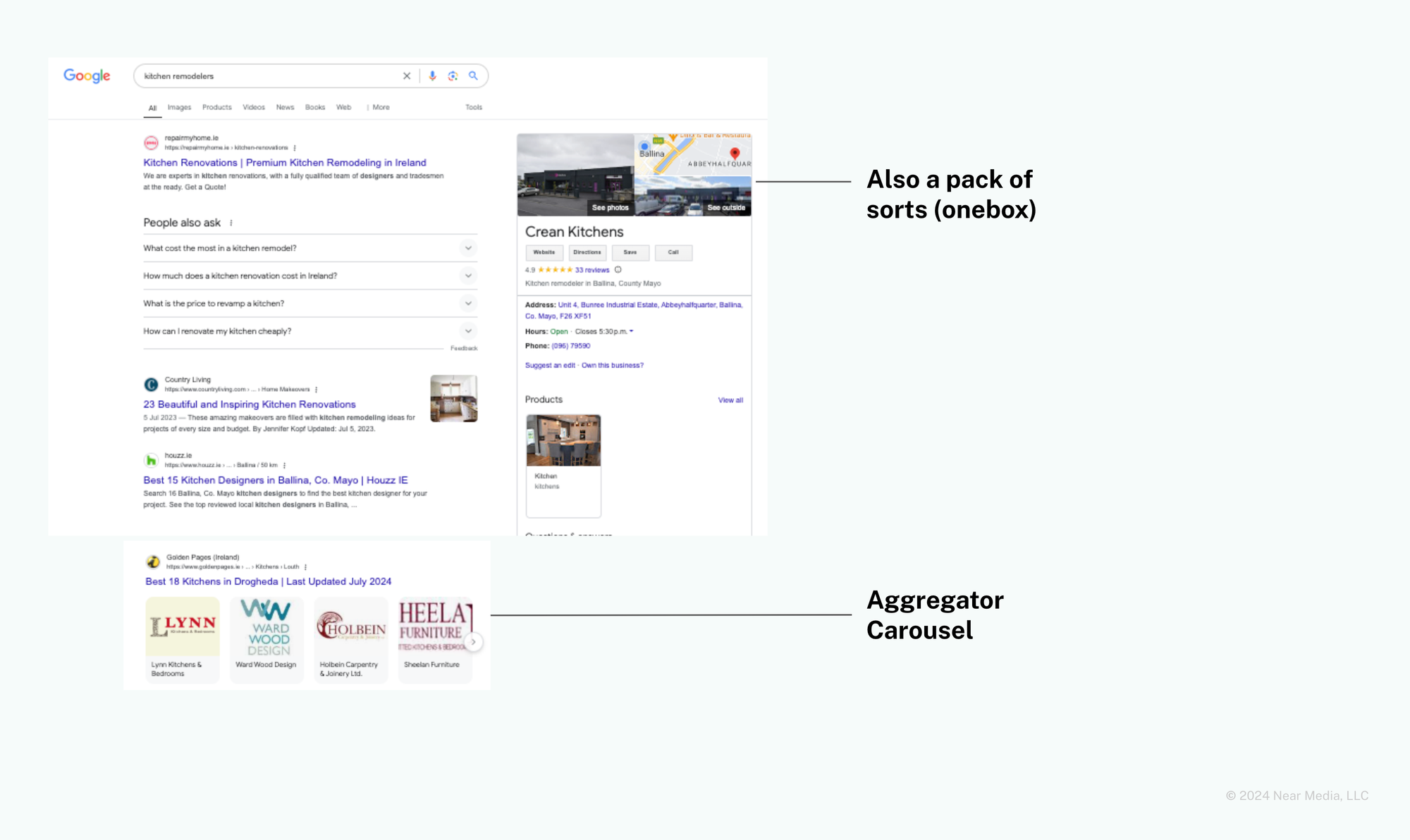
## Visual examples of each module

#### Refinement Chips/Filters
The Places Sites Refinement Chip, part of the auto-generated tabs at the top of the search results, takes you to an organic page of local aggregator results when selected.
---
#### Places Sites Aggregator Unit
A carousel of local aggregator sites that is placed in local search results. Placement varies, but is frequently either just above or just below the Local Pack.
---
#### Aggregator Carousel Rich Result
Usually appears within the organic results below the Local Pack and highlights multiple business profiles from one aggregator. It can, if the aggregator is ranked strongly enough, appear higher in the results.
---
#### Business Profile Multi-directory Review Summary
The multi-directory review summary appears in the default view of the Business Profile when selected from the pack. When you select the Google review stars in a Profile result it will perform a "brand name + reviews" search that shows in the main search results.
---
#### Typical European Local Search Result
Here is a screen shot that shows each of the above elements in context. One surprising element in these new results is a second Google Local Pack so high in the results.
## Elements common to Google SERPs across the globe
#### Local Pack / Local Finder / Hotel Finder
A module typically consisting of three Google Business Profiles (GBPs) below or alongside a Google Map. Clicking More Places or More Businesses at the bottom of the Pack takes a user into the Local Finder (Hotel Finder for hotel searches), featuring Google Business Profiles exclusively.
#### Local Onebox Result
A single Google Business Profile, usually appearing for a brand query specific to that business. Shows up in the righthand rail of desktop results and above organic results on mobile devices.
#### People Also Ask (PAA)
An accordion-style module within Google search results that presents an algorithmically-generated list of questions related to the user's original query. It's designed to anticipate potential questions that users might have and presents answers driven by single-website snippets directly within the search results.
#### Organic Results
Unpaid webpage listings ranked by Google’s traditional quality algorithm.
#### Traditional Ads
Google’s classic text-driven, auction-determined promotions shown most commonly at the top of a given search result.
## Additional glossary terms
Also part of this process the commission uses a number of terms that are not necessarily familiar to marketers in the US.
### Aggregator
A centralized web property built upon structured information about many hundreds or thousands of businesses in a given consumer category or categories. Aggregators typically monetize by charging businesses for placement or enhanced listings, or by facilitating bookings. Also commonly referred to as a “directory” in the United States.
### Supplier (Business)
A business which delivers a product or service directly to end-consumers.
### Publisher
A web property primarily consisting of unstructured content monetized by subscription revenue or advertising revenue based on the number of impressions driven.
## Digital Markets Act Implications
The DMA is seeking to restrain the self-promotional impulses of gatekeepers and improve competition. In Google's case, the there are two questions:
- Do any of the new search features actually impact user behavior? (The EU's compliance determination may hinge on whether they do.)
- Is Google's effort in good faith or merely performative? Or perhaps are they even intentionally attempting to subvert the intent of the DMA?
To get some real data, we've conducted [a user study of restaurant search behavior in Ireland](https://nearmedia.co/google-serp-restaurants-eu-dma-analysis?ref=nearmedia.co), another of [hotel search behavior in Germany, France, and Spain](https://www.nearmedia.co/european-hotel-search-study/), and a third of [home services search behavior in Ireland, France, and Germany](https://www.nearmedia.co/eu-home-services-search-behavior).
### Ep 147: Long tail searcher behaviors, Gemini switch appears, Content publishing being upended by search
URL: https://www.nearmedia.co/ep-147/
Last updated: 2024-02-23T17:34:04.000Z
**Part 1 starts 00:13 -** [**Long tail searcher behaviors: 10% of Discovery searches involve a brand search on Google**](https://youtu.be/syRllNefH9I?ref=nearmedia.co)
In our most recent multi-location consumer Google search behavior research analyzing restaurant searches we saw roughly 10% of all searchers use the scrolling map for location precision and we saw an equal number of searchers do a local brand search as part of their discovery process. These brand searches seem to be either to better understand a location or to confirm their choice. Oftentimes it was a shorthand way for searchers to increase their confidence in the overall rating of a location without having to read the reviews.
**Part 2 starts 11:14 -**[ **Gemini search now a front and center toggle in the Google App**](https://youtu.be/sztmNf8GsBc?ref=nearmedia.co)
he mobile Google App is now offering a toggle switch that allows users to easily compare traditional results with Gemini results. While search is the default, Gemini is readily available as an alternative choice. Gemini is more like the 10-blue links Google. The UI is cleaner and there's less "information clutter." It's not clear, however, that you can entirely trust Gemini. While interesting, it still seems to be more of a positioning ploy vis a vis ChatGPT and their recently announced search engine than a real alternative to search.
Segment Reference Articles:
[The Gemini Toggle ](https://www.nearmedia.co/brands-clicks-social-acquisition-gemini-toggle/#the-gemini-toggle)
[Gemini Toggle Screenshot](https://twitter.com/gsterling/status/1760177404054810783?ref=nearmedia.co)
**Part 3 starts 19:22 -** [**Content publishing being upended by search - Can it change?**](https://youtu.be/j62rFtXthl8?ref=nearmedia.co)
Recent tales of Reddit content outraninking original content seems to belie Google’s stated intent of the Helpful Content Update showing smaller sites that demonstrate EEAT with real world experience and a singular point of view. While some are optimistic that new developments in Google AI will fix the results, the way that the algo works might doom it to a loop of brand mediocrity.
Segment Reference Articles:
[How Google is killing independent sites like ours](https://housefresh.com/david-vs-digital-goliaths/?ref=nearmedia.co)
[Google: We Want To Reward The Best Content No Matter Site Size](https://www.seroundtable.com/google-big-site-small-site-content-36929.html?ref=nearmedia.co)
[Thoughts on why big brands dominate Google. And how this is soon likely to change](https://www.mariehaynes.com/why-big-brands-dominate-google-and-how-this-is-soon-likely-to-change/?ref=nearmedia.co)
[Brands, Links & Clicks](https://www.nearmedia.co/brands-clicks-social-acquisition-gemini-toggle/#brands-links-clicks)
### Google ❤️ Brands, Social Acquisition, Gemini Toggle
URL: https://www.nearmedia.co/brands-clicks-social-acquisition-gemini-toggle/
Last updated: 2024-02-22T23:17:58.000Z
### Brands, Links & Clicks
Many of you have heard about or read [an article](https://housefresh.com/david-vs-digital-goliaths/?ref=nearmedia.co) from [HouseFresh](https://housefresh.com/?ref=nearmedia.co), a small product review site that tests air purifiers and related products. The company complained that it and other independent sites were being "killed" by larger media players that "recommend products without firsthand testing and simply paraphrase marketing materials and Amazon listing information." HouseFresh went further, arguing that the private equity owners of some of these media brands are exploiting public trust to sell products in a cynical and even potentially fraudulent way. This is despite Google's Product Review Updates and the Helpful Content Update. As others [have observed](https://www.blindfiveyearold.com/its-goog-enough??ref=nearmedia.co), Google's algorithm appears to [favor well-known brands](https://www.wired.com/2008/10/google-ceo-call/?ref=nearmedia.co). Because of consumer familiarity and SERP position, people tend to click on these brands. And because Google also [uses behavioral signals](https://www.nearmedia.co/clicks-do-impact-rankings-tiktok-google-search-yelp-reviews-survey/) (e.g., clicks) in its algorithm, it creates a self-reinforcing pattern. Underscoring a version of the point, [Reddit started outranking HouseFresh](https://twitter.com/FeryKaszoni/status/1760042410891993502?ref=nearmedia.co) for its own article this week. Google acknowledged this and [said it would "do better](https://www.seroundtable.com/google-big-site-small-site-content-36929.html?ref=nearmedia.co)." The question is how? Google relies on indirect signals because, by its own admission, it can't directly evaluate content substance and credibility. While this is [oversimplified](https://www.nearmedia.co/wither-the-serp-winning-on-page-elements-chips-and-carousels/), "brands, links and clicks" appear to be core components of Google's algorithm. But they've become much less effective proxies for quality than they might once have been.

Source: ChatGPT
**Our take:**
- The irony of what HouseFresh has done: this screed has generated a large number of links, which will help it rank going forward.
- Marie Haynes [believes](https://www.mariehaynes.com/why-big-brands-dominate-google-and-how-this-is-soon-likely-to-change/?ref=nearmedia.co) that the brand bias will change as the benefits of Gemini 1.5 kick in. She argues AI-ranking systems will rectify the current problems. We'll wait and see.
- As we discuss in this week's [podcast](https://www.nearmedia.co/memo/), absent some AI magic, it's very challenging for Google to promote smaller, high quality sites (vs. brands) without a major algorithm change.
### Social vs. SEO for Acquisition
Another survey has seemingly elevated social media above SEO as a marketing channel. In this context it's for B2C customer acquisition. But the data are pretty consistent: many or most digital marketers tend to perceive social media as more effective than search/SEO (e.g., [here](https://www.nearmedia.co/internal-links-drive-clicks-google-support-decline-social-vs-search-growth/), [here](https://www.nearmedia.co/my-ad-center-social-vs-search-roi-amazon-m-a-sloppy/)). This is especially true among small businesses: social media is always number one, with SEO somewhere down the list of priorities. The State of B2C Customer Acquisition [report](https://www.stirista.com/lp/b2c-report/?ref=nearmedia.co) from Stirista – polling "186 marketing decision-makers" in companies with 500 employees or more – asked "Which channel/tactic contributes most to the SUCCESS of your customer acquisition efforts?" The top answer was social media (26%). Search/SEO came in sixth place (5%), tied with "traditional." Here search/SEO appears to mean organic and not paid, but it's not entirely clear. Regardless, this is once again a surprising result. Search typically carries a much higher purchase intent than social, despite social media's efforts to [emphasize search](https://www.nearmedia.co/dogpile-for-ai-amazon-inspire-anywhere-tiktok-search-widget/). Contentsquare's 2024 Digital Experience Benchmark [report](https://contentsquare.com/digital-experience-benchmark/?ref=nearmedia.co), for example (based on analysis of "200 billion page views"), found that "paid search traffic converts at 4x the rate of paid social." This is just one way SEO *actually* outperforms social media.
**Channels Contributing Most to Customer Acquisition**
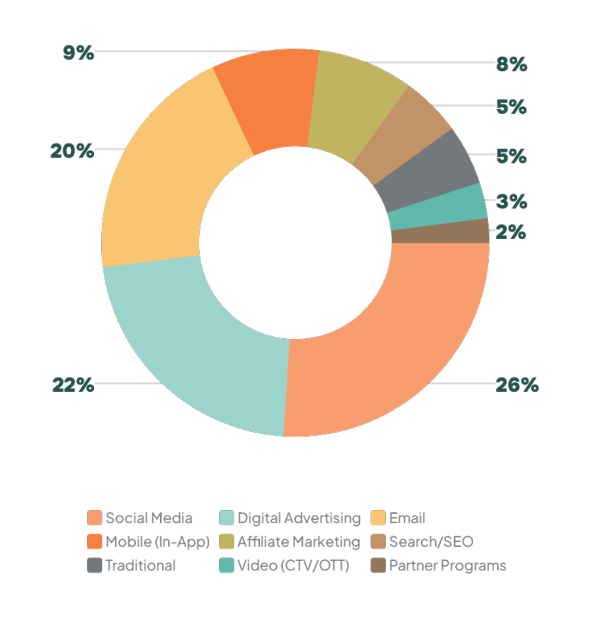
Source: Stirista-Ascend2
**Our take:**
- Social media offers awareness and branding opportunities that are arguably more difficult to achieve in search/SEO.
- This particular report was about acquisition, which doesn't always have to mean purchases. Perhaps there's a broader set of KPIs at play.
- Yet where actual "customer" acquisition is concerned, there's much more transactional intent on Google than on Instagram or TikTok. Mysterious.
### The Gemini Toggle
Google is [now rolling out a "toggle"](https://twitter.com/gsterling/status/1760177404054810783?ref=nearmedia.co) for the iOS Google app that allows users to switch between traditional search and Gemini. It appears to be available only to people who opted-in to Google Labs. (I have other "non-Labs" Google accounts; the toggle doesn't appear.) The default setting is to Search. Tap it and the screen switches to the Gemini UI, which is kind of cool. Unfortunately, you can't enter a single query and get results from both. You have to re-enter the query in Gemini. I did however compare a bunch of results. As a generalization, Google gives you much more information, including lots of images and "social" content. Gemini is more like the 10-blue links Google. The UI is cleaner and there's less "information clutter." It's not clear, however, that you can entirely trust Gemini – Google explicitly disclaims it – though, in many cases, Gemini was drawing from Google search (Maps, Travel). The toggle may be a bid to get more users to try Gemini in the hope of boosting later subscription revenue or stealing ChatGPT usage. Indeed, in our research, we've seen how Google can impact engagement by changing or inserting SERP features. But this move struck me not so much as a new "search feature" but as a kind of brand marketing push for Google's overall AI awareness.
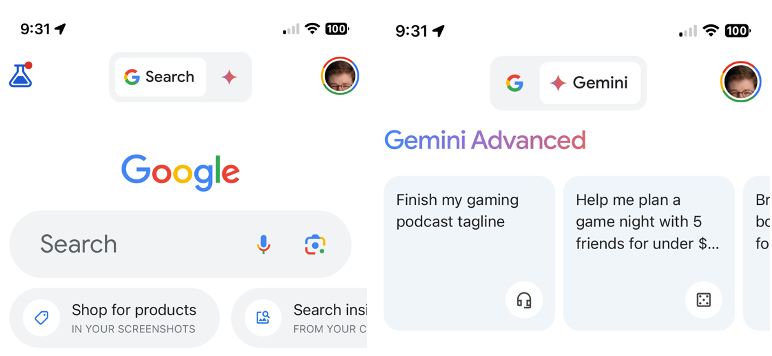
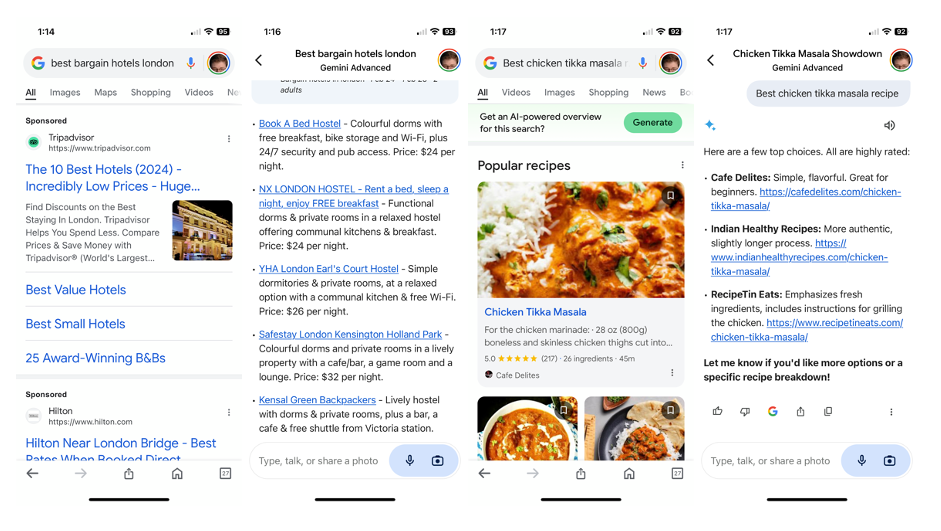
Source: Google
**Our take:**
- Google is in the midst of a huge PR push for AI. Bard's rebranding, Gemini 1.5, [Gemma](https://blog.google/technology/developers/gemma-open-models/?ref=nearmedia.co) (open source), [AI for Maps](https://www.nearmedia.co/google-maps-ai-iphone-early-impressions/), Gemini [for Workspace](https://arstechnica.com/gadgets/2024/02/google-plans-gemini-business-ai-for-workspace-users/?ref=nearmedia.co) and now this toggle.
- It's all part of an effort to "reclaim" AI from OpenAI, which has more mindshare. Multiple goals here: retaining users, protecting ads, generating new revenues, and mollifying investors.
- A physical toggle between search and AI is a kind of unintentional metaphor for the transition the company is currently navigating.
## Recent Analysis
- **Near Memo episode 146**: [G-SERPs product searches, Google PR around review removals is puffery, Google Maps SGE a hot mess](https://www.nearmedia.co/ep-146-g-serps-product-searches-google-pr-around-review-removals-is-puffery-google-maps-sge-a-hot-mess/).
- ICYMI: **Google Maps AI on iOS: Early Impressions**, [by Mike Blumenthal.](https://www.nearmedia.co/google-maps-ai-iphone-early-impressions/)
## Short Takes
- Google [rolls out](https://www.theverge.com/2024/2/22/24079906/google-chrome-help-me-write-gemini-ai-tool-finish-sentences?ref=nearmedia.co) "**Help Me Write**" in Chrome.
- Could **LLMs** ultimately [outperform Google](https://www.growth-memo.com/p/eroding-moats?ref=nearmedia.co) for relevance matching?
- **Offer Posts** seem to [have disappeared](https://localsearchforum.com/threads/google-offer-posts-gone-in-local-pack.61142/?ref=nearmedia.co) from the Local Pack.
- New SERP [feature](https://twitter.com/anthonyhigman/status/1760281365877060010?s=12&ref=nearmedia.co) "**here are some in the area**," expanding ads.
- AI models [turning](https://www.wired.com/story/remotasks-ai-expert-data-labor/?ref=nearmedia.co) from web scraping to licensing and **data-laborers**.
- **Reddit's** $60M (annual) content licensing deal [is with Google](https://blog.google/inside-google/company-announcements/expanded-reddit-partnership/?ref=nearmedia.co).
- A **ChatGPT update bug** made the system [spew nonsense](https://arstechnica.com/information-technology/2024/02/chatgpt-alarms-users-by-spitting-out-shakespearean-nonsense-and-rambling/?ref=nearmedia.co) for hours.
- **Apple** [owns the top 7 of 10](https://www.counterpointresearch.com/insights/apple-captures-top-7-spots-in-global-top-10-best-selling-smartphones/?ref=nearmedia.co) bestselling smartphones globally.
- **Google's DeepMind** [forms an AI safety unit](https://techcrunch.com/2024/02/21/google-deepmind-forms-a-new-org-focused-on-ai-safety/?ref=nearmedia.co), following OpenAI's lead.
- Will **Gen-AI hallucinations** [reflect badly on brands](https://streetfightmag.com/2024/02/21/when-gen-ai-erodes-trust-brands-take-the-fall/?ref=nearmedia.co)?
- **Mobile** drove [51% of online spending](https://business.adobe.com/resources/holiday-shopping-report.html??ref=nearmedia.co) this past holiday season.
Listen to our [latest podcast](https://www.nearmedia.co/memo/).
[](https://nearmedia.co/memo?ref=nearmedia.co)
How can we make this better? Email [us](mailto:gsterling@nearmedia.co) with suggestions and recommendations.
### Wither the SERP, Winning On-Page Elements, Chips and Carousels
URL: https://www.nearmedia.co/wither-the-serp-winning-on-page-elements-chips-and-carousels/
Last updated: 2024-02-20T18:47:57.000Z
### Wither the SERP: Enter AI Search
Research firm Gartner [published a prediction](https://www.gartner.com/en/newsroom/press-releases/2024-02-19-gartner-predicts-search-engine-volume-will-drop-25-percent-by-2026-due-to-ai-chatbots-and-other-virtual-agents?ref=nearmedia.co): "By 2026, traditional search engine volume will drop 25%, with search marketing losing market share to AI chatbots and other virtual agents." And by 2028 the company [says](https://www.gartner.com/en/newsroom/press-releases/2023-12-14-gartner-predicts-fifty-percent-of-consumers-will-significantly-limit-their-interactions-with-social-media-by-2025?ref=nearmedia.co), search traffic may be down by 50%. Designed primarily to get attention, these figures and dates are probably wrong. But the idea behind them is not. There will be traffic erosion, we just don't know how much or how soon. And some AI usage will probably go to Google's SGE and/or Gemini. Will Reynolds of Seer Interactive takes on this topic in [a provocative post](https://www.seerinteractive.com/insights/thought-exercise-what-if-people-stopped-using-search-engines-tomorrow?ref=nearmedia.co) that poses a thought experiment: "What if people stopped using search engines tomorrow?" Reynolds thinks the discovery experience is already better with "chat-based search." Rather than lament this "day after tomorrow" scenario, he extolls the benefits of AI-based search for marketers and offers tactical advice about what to do – today. He thinks SEO doesn't go away, it evolves (as always) and argues AI agents will be able to learn more about customers than search can, because people ask more complex questions and provide more context. Reynolds says this requires new thinking about content, keywords and headlines. And he encourages use of AI chat on websites to build user engagement and capture first-party data.

Source: ChatGPT
**Our take:**
- Contradicting the Gartner prediction is [data](https://www.thewrap.com/chatgpt-growth-2024/?ref=nearmedia.co) that shows ChatGPT's desktop growth is flat. And its app "hasn’t taken off."
- The future isn't a zero-sum game: search vs. AI. Google will survive and evolve; user behavior will change. Search will survive; the "SERP" may not.
- Marketers should plan on relying less on Google going forward anyway; they should diversify and build stronger brands to motivate direct traffic.
### What Page Elements Are Truly 'Helpful'?
There were a dizzying number of Google algorithm updates in 2023\. This was disruptive for many publishers, which saw traffic losses. Cyrus Shepard at Zyppy SEO sought to understand what and why. He conducted a [study](https://zyppy.com/seo/google-update-case-study/?ref=nearmedia.co), between August and December 2023 of 50 websites (examining 2,500 data points) to determine the impact of UX and on-page SEO factors in search visibility and traffic. He cautions that this is a correlation study and that other variables (user interactions/clicks) may also be at play. His summary graphic is below showing factors associated with winners and losers. He says no single factor appears responsible for gains or losses; "the effects seem to be additive when sites combine features together." The factors he looked at include use of stock images, content with first-person pronouns, privacy mentions, author info, cookie consent, number of ads, contact information and numerous others. On the negative impact side, scrolling ads were "very strongly" correlated with traffic losses. More ads on the page and use of stock images also had negative impacts. On the positive side, demonstrations of personal experience, including use of the first person, were correlated with traffic gains – get ready for lots of "I statements" content going forward. Cookie consent, contact information and social links were also positive variables. Interestingly, word count, among a range of others, had no impact. The [study](https://zyppy.com/seo/google-update-case-study/?ref=nearmedia.co) is worth a closer look.
**Features Correlated with Increase or Decrease in Visibility**
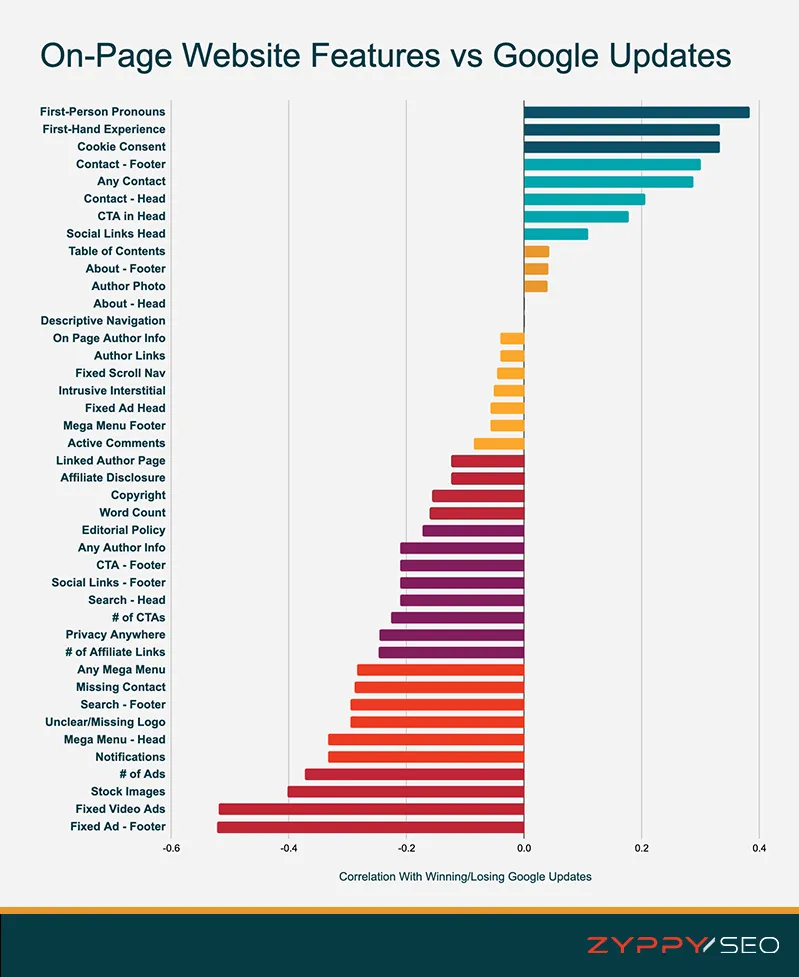
**Our take:**
- Google has repeatedly [advised](https://twitter.com/searchliaison/status/1752419887375380633?ref=nearmedia.co): stop trying to game the algorithm and create/structure content in a way that meets user expectations.
- Shepard's list can be seen as a kind of directional indicator of what Google thinks is useful and not useful.
- The TL;DR version is: write from experience, show real images, don't "over-SEO" or over-monetize pages with annoying ads.
### Chips and Carousels: Google's DMA SERP
We've already taken [a preliminary look](https://www.nearmedia.co/are-google-eu-local-results-dma-compliant/) at Google's new DMA-compliant (tbd) local SERPs in Europe. SEO Gus Pelogia now goes into detail, [unpacking the changes](https://www.guspelogia.com/google-dma-serp-changes?ref=nearmedia.co) Google has implemented in Travel, Products, Jobs and Local. There are several new features being added: Places Sites "refinement chips" (under the search bar), Places Sites carousels at or near the top of the page and additional horizontal carousels. Their purpose is to provide more visibility to directories and "aggregators" (broadly defined). The Digital Markets Act seeks to overcome the ability of large "gatekeepers" to direct traffic to their own services and, the thinking goes, away from competitors' sites – to "level the playing field." Pelogia gives the new features a mixed review. He doesn't expect people to use Place Sites chip refinements, but thinks the “Places Sites” carousels may drive some traffic. On the whole, Pelogia concludes, "It’s still positive that Google’s influence has decreased and there are more opportunities for diverse results." We're now taking a closer look at user behavior and engagement with these pages in the restaurants category. We'll have much more to say later, but early indications suggest the new chips and carousels won't have a meaningful impact on user behavior.
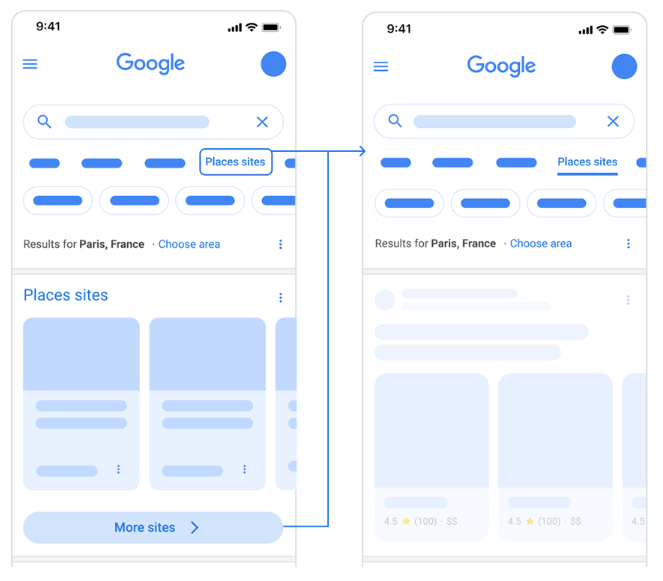
Source: Google
**Our take:**
- The Places Sites carousel could impact traffic if it ranks consistently high on the page. But if users don't engage Google may demote it. That's a dilemma.
- Google needs to show the EU that these changes will have an impact. It's not yet clear they're "compliant."
- Yet there are some difficult, practical questions about what compliance actually means. Does it amount to some sort of placement guarantee?
## Recent Analysis
- **Near Memo episode 146**: [G-SERPs product searches, Google PR around review removals is puffery, Google Maps SGE a hot mess](https://www.nearmedia.co/ep-146-g-serps-product-searches-google-pr-around-review-removals-is-puffery-google-maps-sge-a-hot-mess/).
- ICYMI: **Google LSA Brand Ads = Enshittification**, [by Mike Blumenthal.](https://www.nearmedia.co/google-lsa-brand-ads-enshitification/)
## Short Takes
- **Google** [finally lets SMBs to opt-out](https://searchengineland.com/google-third-party-ordering-booking-providers-gbp-listings-437571?ref=nearmedia.co) of 3rd party services (eg, ordering).
- **Moz**: [how to build a credible one-page site](https://moz.com/blog/create-a-one-page-site?ref=nearmedia.co) (+ other marketing to-dos).
- Claire Carlisle's [updated guide to UTM tagging](https://www.clairecarlilemarketing.com/resources/utm-tagging-guide?ref=nearmedia.co) for **GBP**.
- The recent **Google Maps directions** spike [was a bug](https://twitter.com/colannielsen/status/1758630489034793435?s=12&ref=nearmedia.co).
- **Google** [tests a 'forums' filter](https://www.seroundtable.com/google-search-forums-search-bar-menu-36912.html?ref=nearmedia.co) in its search bar.
- **Conversions**: [5 tips](https://leadferno.com/blog/5-tips-to-increase-website-conversion?ref=nearmedia.co) from Leadferno's Aaron Weiche.
- Big publishers [flood the web](https://housefresh.com/david-vs-digital-goliaths/?ref=nearmedia.co) with **bad product reviews**.
- **Yelp** had [record 2023 revenue](https://www.yelp-ir.com/news/press-releases/news-release-details/2024/Investments-in-Product-Led-Strategy-Drove-Yelps-Strong-2023-Results/default.aspx?ref=nearmedia.co), 8% review growth yet flat traffic.
- **Reddit** signs [$60M annual licensing deal](https://www.reuters.com/technology/reddit-signs-content-licensing-deal-with-ai-company-ahead-ipo-bloomberg-reports-2024-02-16/?ref=nearmedia.co) to train unnamed AI.
- EU: **Apple** [to face \~$540M fine](https://www.theverge.com/2024/2/18/24076526/apple-music-antitrust-fine-brussels-eu-spotify?ref=nearmedia.co) for music streaming behavior.
- USPTO [has denied](https://tsdr.uspto.gov/documentviewer?caseId=sn97733259&docId=FREF20240206125856&linkId=1&ref=nearmedia.co#docIndex=0&page=1) **OpenAI** a trademark for the term "GPT."
- Air Canada compelled to [honor refund policy](https://www.wired.com/story/air-canada-chatbot-refund-policy/?ref=nearmedia.co) its **AI bot** made up.
- **Google** [rolls out 'Shop with AI](https://www.seroundtable.com/google-search-shop-with-google-ai-36913.html?ref=nearmedia.co)' feature to some Labs users.
- **FTC** [to make it illegal](https://www.ftc.gov/news-events/news/press-releases/2024/02/ftc-proposes-new-protections-combat-ai-impersonation-individuals?utm%5Fsource=govdelivery) to impersonate individuals using AI.
- Why **Gemini** 1.5's "[longest context window](https://blog.google/technology/ai/long-context-window-ai-models/?ref=nearmedia.co)" is significant.
Listen to our [latest podcast](https://www.nearmedia.co/memo/).
[](https://nearmedia.co/memo?ref=nearmedia.co)
How can we make this better? Email [us](mailto:gsterling@nearmedia.co) with suggestions and recommendations.
### Ep 146: G-SERPs product searches, Google PR around review removals is puffery, Google Maps SGE a hot mess
URL: https://www.nearmedia.co/ep-146-g-serps-product-searches-google-pr-around-review-removals-is-puffery-google-maps-sge-a-hot-mess/
Last updated: 2024-02-19T14:52:06.000Z
**Part 1 starts 00:13 -** [**Google adds Reddit to product searches and spammers follow**](https://youtu.be/sEA8HXvH4v4?ref=nearmedia.co)
We discuss a new study by Glenn Alsop that examines the prevalence of discussion and forum search features This module is a tacit admission on Google's part that its algorithm can no longer actually surface good organic content. LikeThe study, which analyzed 10,000 product review search queries, revealed significant insights into user behavior and Google's response to search result satisfaction.
According to the findings, the discussions and forums Search Engine Results Page (SERP) feature appears in 77% of the analyzed queries, with Reddit emerging as the dominant platform in this category. Alsop's research indicated that Reddit was present 98% of the time when the discussions and forums feature appeared, often occupying two out of the three results showcased.
Segment Reference Article
[The Discussion Forums Dominating 10,000 Product Review Search Results](https://detailed.com/forum-serps/?ref=nearmedia.co)
**Part 2 starts 08:16 -** [**Google announces review removals with PR puffery**](https://youtu.be/-RDznr48a8Y?ref=nearmedia.co)
Google, according to their release, removed 170 million fake reviews last year. They blocked 14 million policy violating videos and 2 million attempts by bad actors to claim GBPs. And they blocked 12 million fake GBPs. These numbers sound like big numbers. But then if you actually think about the fact that there are over 230 million businesses in the world in Google’s index it comes out to less than 1 review per business. The same analysis can be applied to the takedowns as well. Despite the bluster the problem is getting no better and in some area like LSA’s its getting worse.
Segment Reference Articles:
[How machine learning keeps contributed content helpful](https://blog.google/products/maps/how-machine-learning-keeps-contributed-content-helpful/?ref=nearmedia.co)
**Part 3 starts 20:14 -** [**Google Maps AI (SGE) a hot mess**](https://youtu.be/ljUvWxqRLuQ?ref=nearmedia.co)
**Segment 3 Title (100 chars): Google Maps AI (SGE) a hot mess**
Google has rolled out a Google Maps AI experiment to a limited number of Local Guides. While holding the promise of delivering long tail results and providing meaningful improvements to Maps, the product is slow and unresponsive. While it might get better, it needs to do so soon as it is a significantly worse experience than Maps.
Segment Reference Articles:
[Google Maps AI on iOS: Early Impressions](https://www.nearmedia.co/google-maps-ai-iphone-early-impressions/)
### OpenAI Search, Reddit Overexposed, 'Clarifying' AI Content Policy
URL: https://www.nearmedia.co/openai-search-reddit-overexposed-clarifying-ai-content-policy/
Last updated: 2024-02-15T19:19:54.000Z
### OpenAI Search to Challenge Google
According to a [story](https://www.theinformation.com/articles/openai-develops-web-search-product-in-challenge-to-google?ref=nearmedia.co) appearing in The Information yesterday, OpenAI is reportedly working on a new search engine that would be more directly competitive with Google. The report also says that it would at least partly be powered by Bing. ChatGPT currently can use Bing to search the web – although the experience is mixed. It's unclear, assuming the story is accurate, what the new experience would look like and whether it would be integrated into ChatGPT or become a new product entirely. My bet would be on integration but a new product might more readily open the door to ad revenue, as OpenAI [tries to "double its yearly run rate](https://www.ft.com/content/6314d78d-81f3-43f5-9daf-b10f3ff9e24f?ref=nearmedia.co)" by next year. The report is being taken seriously enough by Wall Street that it sent Google's shares down about 2.5% earlier today. According to Microsoft, every point of search market share [is worth](https://www.cnbc.com/2023/05/23/microsoft-says-bing-can-be-default-search-engine-for-chatgpt-users.html?ref=nearmedia.co) roughly $2 billion in ad revenue.
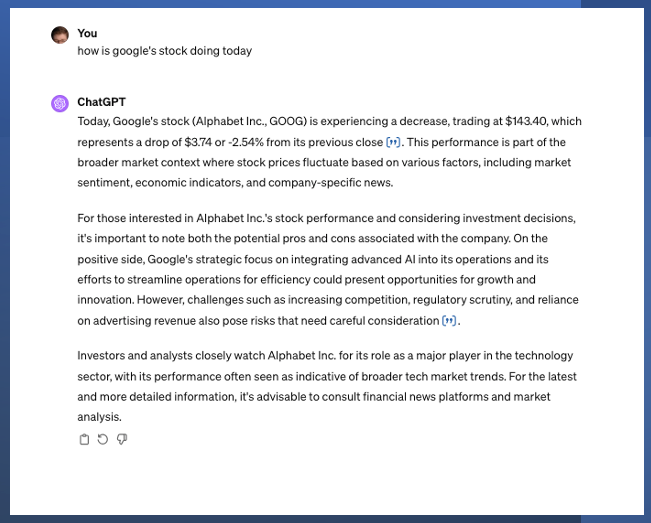
Source: ChatGPT
**Our take:**
- BingGPT [has not moved the needle](https://www.nearmedia.co/copilot-is-the-future-local-seo-gap-jihad-vs-mcworld-content/) for Microsoft in search. That raises the question of whether ChatGPT would suffer a similar fate, although ChatGPT has built a strong consumer brand, which Bing has not.
- SEOs appear split ([informal poll](https://twitter.com/gsterling/status/1599805111404224512??ref=nearmedia.co)) on whether Google is getting worse or it's the internet itself. This debate wasn't happening three years ago.
- There is a growing perception, fueled by media reports, that search quality is down and some [evidence](https://www.adobe.com/express/learn/blog/using-tiktok-as-a-search-engine??ref=nearmedia.co) of pent up demand for alternatives.
### Google Shows Reddit Too Often
As Google has increasingly promoted social and forum content as part of its "[Hidden Gems](https://www.nearmedia.co/automated-paid-search-hidden-gems-in-store-ai-assistants/)" strategy, Reddit has been a major beneficiary. Glen Allsopp [analyzed](https://detailed.com/forum-serps/?ref=nearmedia.co) Google results for "10,000 hand-picked product review terms" to see how well forums were ranking in Google SERPs and which ones dominated. He found that the "Discussions and Forums" module appeared in 77% of these product search results. Reddit was dominant, appearing almost 98% of the time in nearly two out of three positions, as shown in the image below. This "excessive promotion" of Reddit may also be contributing to spam. Allsopp says, "51% of Reddit’s top-ranking threads currently have spam as a top comment." Many of them are filled with affiliate links. (Other [studies](https://www.seroundtable.com/study-google-search-is-getting-worse-36736.html?ref=nearmedia.co) have similar findings.) Allsopp concludes that Reddit moderators are not keeping up, as Google sends more traffic to the site and marketers try to exploit its growing visibility in search. Smaller forums are showing up for specific verticals, but "Reddit and Quora had more than 3X the visibility of every other forum combined," according to the study. Allsopp laments, "Current search results are the worst I can recall seeing." He recommends that Google get rid of Discussions and Forums entirely or significantly diversify the links it shows.
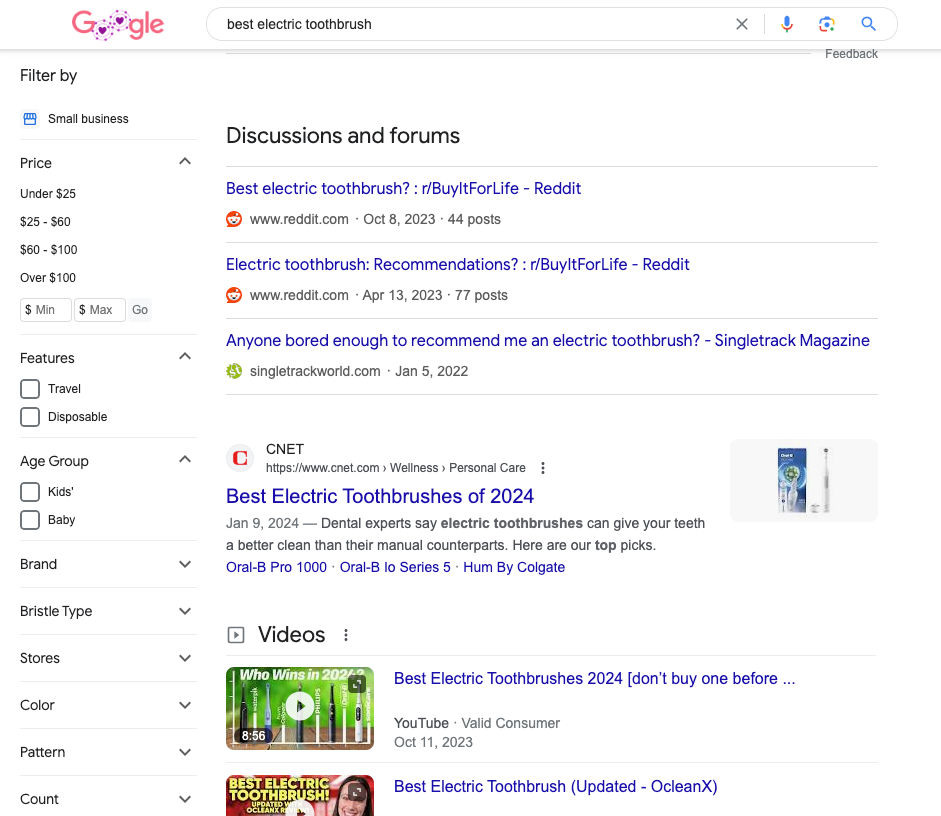
Source: Google
**Our take:**
- When the "[Google getting worse" debate](https://www.nearmedia.co/google-decline-local-inventory-search-open-metaverse/) heated up, there was lots of discussion of [use of operator "site:reddit.com](https://dkb.blog/p/google-search-is-dying??ref=nearmedia.co)" to get better results.
- Google's "Hidden Gems" is [supposed to](https://blog.google/products/search/google-search-november-2023-update/?ref=nearmedia.co) surface "firsthand knowledge" and "diverse perspectives" to address some of this search-quality criticism and appeal to users who might defect to TikTok.
- Whenever Google gives something a dedicated SERP position it attracts spam. Web [Stories](https://twitter.com/glenngabe/status/1755925144139071600?ref=nearmedia.co), [LSAs](https://www.nearmedia.co/lsa-spam-scam-its-deja-vu-all-over-again/) and [Popular Products](https://www.seroundtable.com/google-search-popular-product-spam-listings-36840.html?ref=nearmedia.co) are other examples.
### Google to 'Clarify' on AI Again
Google originally [took the position](https://searchengineland.com/google-ai-generated-content-spam-383454??ref=nearmedia.co) that "automated content" (read: AI) was spam. Then, recognizing that widespread use of AI was perhaps inevitable, the company changed its position last year. Google [said](https://developers.google.com/search/blog/2023/02/google-search-and-ai-content?ref=nearmedia.co) this in 2023: "Our focus on the quality of content, rather than how content is produced." That came with the caveat that using AI "to generate content with the primary purpose of manipulating ranking in search results" would be penalized. This qualifying language is how Google finessed the relaxation of its AI content prohibition while trying to maintain the appearance of consistency. This guidance, however, wasn't particularly helpful given the reality of the way the market operates; the primary job of SEOs is to rank in Google. Google's every algorithm change creates incentives for marketers in one form or another (see above). Saying "yes" to AI usage has encouraged widespread integration of AI into content and website development. And it's now being deployed by publishers, agencies and brands [at scale](https://www.linkedin.com/posts/localseoguide%5Fsome-interesting-ai-content-for-seo-data-activity-7163953914550177796-%5F%5FQL??ref=nearmedia.co). According to a recent [report](https://www.nearmedia.co/google-maps-ai-ai-content-working-gemini-vs-search/) from Semrush, AI content is ranking and, in some cases, more successful than purely human-generated writing. SERPs are now full of "automated content" in one from or another (see, e.g., [here](https://www.linkedin.com/feed/update/urn:li:activity:7138912626524184576/??ref=nearmedia.co), [here](https://www.linkedin.com/feed/update/urn:li:activity:7138912626524184576/??ref=nearmedia.co)). Seeing this, Google [is ready to offer another AI "clarification](https://www.seroundtable.com/google-ai-generate-content-for-seo-purposes-36869.html?ref=nearmedia.co)." It will likely be a reiteration of [HCU guidance](https://developers.google.com/search/docs/fundamentals/creating-helpful-content?ref=nearmedia.co).

Source: Gemini
**Our take:**
- Google's spam problem is partly a function of its success as a search monopoly. Ranking on Google is an incredibly high-stakes game.
- Marketers will do everything they can for advantage, including (very often) dubious, spammy, artificial or unethical things.
- Google must do what it claims to be doing already: ranking genuinely good content. But it [has trouble](https://searchengineland.com/google-search-ranking-documents-434141?ref=nearmedia.co) figuring that out. It also needs to put more resources against fighting spam, which would help in a major way.
## Recent Analysis
- **New Google EU Local Results DMA Compliant?** [by Mike Blumenthal](https://www.nearmedia.co/are-google-eu-local-results-dma-compliant/).
- **Google Maps AI on iOS: Early Impressions**, [by Mike Blumenthal](https://www.nearmedia.co/google-maps-ai-iphone-early-impressions/).
- **Near Memo, episode 145:** [Will AI Improve SMB Websites? G-Maps Getting Gemini, Bright Local Brand Survey Takeaways](https://www.nearmedia.co/ep-145/).
## Short Takes
- **Google Maps** [suffered 2 hour outage](https://www.seroundtable.com/google-search-local-pack-missing-36895.html?ref=nearmedia.co), causing Packs to disappear.
- Google [explains what it's doing to EU SERPs](https://developers.google.com/search/blog/2024/02/search-experiences-in-eea?ref=nearmedia.co) to comply with the **DMA**.
- Where does **E-E-A-T** stand after [Google ranking-signal "debunking](https://searchengineland.com/google-eeat-misconceptions-437445?ref=nearmedia.co)"?
- AI-driven search site **You.com** [unveils](https://you.com/?ref=nearmedia.co) a new, cleaner interface.
- **ChatGPT** [used by hackers](https://www.theverge.com/2024/2/14/24072706/microsoft-openai-cyberattack-tools-ai-chatgpt?ref=nearmedia.co) to "improve" cyberattacks.
- **Slack** [about to roll out AI features](https://www.theverge.com/2024/2/14/24070590/slack-ai-launch-thread-summaries-search-recap?ref=nearmedia.co) to enterprise users.
- **Mozilla**: "romantic" AI chatbots [are harvesting and selling user data](https://foundation.mozilla.org/en/privacynotincluded/articles/happy-valentines-day-romantic-ai-chatbots-dont-have-your-privacy-at-heart/?ref=nearmedia.co).
- Resurgence of **digital ad market** [mostly benefitting tech giants](https://finance.yahoo.com/news/big-tech-is-taking-the-spoils-of-the-ad-resurgence-110046589.html?ref=nearmedia.co).
- Ballmer 2.0: Zuckerberg [claims](https://www.cnbc.com/2024/02/14/mark-zuckerberg-comments-on-apples-vision-pro-.html??ref=nearmedia.co) Quest headset is better than **Vision Pro**.
- **Google** [partners with EDF](https://blog.google/outreach-initiatives/sustainability/how-satellites-algorithms-and-ai-can-help-map-and-trace-methane-sources/?ref=nearmedia.co) to map and track methane emissions.
- **Walmart** wants to buy TV maker Vizio for CTV advertising ([WSJ](https://www.wsj.com/business/retail/walmart-vizio-tv-company-deal-b90c77f6??ref=nearmedia.co)).
- **AI speech** sounds even more human, [with Amazon "breakthrough](https://techcrunch.com/2024/02/14/largest-text-to-speech-ai-model-yet-shows-emergent-abilities/?ref=nearmedia.co)."
- **Apple** Keyframer [uses AI to animate fixed images](https://venturebeat.com/ai/apple-researchers-unveil-keyframer-an-ai-tool-that-animates-still-images-using-llms/?ref=nearmedia.co) with prompts.
Listen to our [latest podcast](https://www.nearmedia.co/memo/).
[](https://nearmedia.co/memo?ref=nearmedia.co)
How can we make this better? Email [us](mailto:gsterling@nearmedia.co) with suggestions and recommendations.
### Google's Self-Disruption, How Many Fake Reviews, AI 'Abstraction Layer'
URL: https://www.nearmedia.co/googles-self-disruption-how-many-fake-reviews-ai-abstraction-layer/
Last updated: 2024-02-13T18:19:30.000Z
### Google's Self-Disruption
In 2009, 15 years ago, then Google employee Marissa Mayer [described](https://searchengineland.com/does-marissa-mayers-perfect-search-engine-already-exist-in-siri-29545?ref=nearmedia.co) "the perfect search engine." She said, "It would be one that could understand speech, questions, phrases, what entities you’re talking about, concepts. It would be able to search all of the world’s information, \[find\] different ideas and concepts, and bring them back to you in a presentation that was really informative and coherent." Though still imperfect, that sounds like today's AI chatbots. Virtual assistants like Siri were candidates but failed, although they're being remade by AI. Bowing to the inevitable, Google is now reportedly planning for a time when its search engine is no longer the front door to the internet. In a recent Wired [interview](https://www.wired.com/story/google-prepares-for-a-future-where-search-isnt-king/?ref=nearmedia.co), CEO Sundar Pichai suggested, "The company ... doesn’t anticipate a 'lightswitch moment' when \[SGE\] fully replaces Google Search ... But Google plans to push 'the boundaries of what’s possible.'" Propelled by competition, Google is pushing AI across the board: Ads, Assistant, Workspace, SGE, Bard/Gemini (+ Advanced), YouTube and [AI in Maps](https://www.nearmedia.co/google-maps-ai-iphone-early-impressions/). While Gemini is catching up to ChatGPT – and [works better in some areas](https://www.theverge.com/24066399/google-gemini-voice-assistant-app-android?ref=nearmedia.co) – it's still not ready for prime time, as they used to say. But the day is coming when large numbers of users will turn first to other tools before Google SERPs, which may become a secondary or fallback resource. That's already happening for me.

**Our take:**
- Marissa Mayer's vision of the "perfect search engine" was 15 years ago, indicating things often take considerably longer than expected.
- We've talked a lot on the [Near Memo](https://www.nearmedia.co/memo/) about whether Google is willing to "disrupt itself" (i.e., sacrifice ad revenue). The Wired article suggests they're consciously trying to manage the transition.
- Gemini Advanced, one vision of the future of search, is a paid product. However, it would take \~729M users paying $20 per month to equal Google's 2023 search ad revenues.
### Google: We Axed 170M Reviews
Google Business Profiles and LSAs are full of fake reviews. The question is how many? In 2021, The Transparency Company and Uberall [sought to answer that question](https://www.nearmedia.co/meh-ta-moment-fake-reviews-gmb-a-big-lead-driver/) (also for Yelp, Tripadvisor and Facebook). The study estimated that Google had the most suspicious reviews overall (10.7%). However, there were categories with more, for example: moving companies (22.3%), plumbers (21.4%) and locksmiths (20.3%). Google has sought to combat the perception that fraud is rampant in its local results. Each year it publishes a summary of actions taken to mitigate fake reviews and profiles. This year Google [said](https://blog.google/products/maps/how-machine-learning-keeps-contributed-content-helpful/?ref=nearmedia.co), "We blocked or removed over 170 million policy-violating reviews from \[2023\] — over 45% more than in 2022\. More than 12 million fake business profiles were removed or blocked too." Google also says that it "received around 20 million contributions" per day. That would be roughly 7.3 billion annually, including but not limited to reviews (e.g., hours changes, images). While Google doesn't specifically break out the number of reviews received, we can assume that 170 million axed is a fraction of the total. The company also points to some of the machine learning signals it uses to detect fake reviews: "if a reviewer leaves the same review on multiple businesses or if a business receives a sudden spike in 1 or 5-star reviews." Good progress but still not enough.

**Our take:**
- Google's fake review/profile enforcement in organic results appears to be entirely separate from LSAs, [where the problem is growing](https://www.nearmedia.co/lsa-spam-scam-its-deja-vu-all-over-again/).
- Based on recent but unpublished data I've seen, the percentage of fake reviews on Google has not meaningfully decreased and may have grown.
- While Google's efforts to fight review/profile fraud are positive, more needs to be done, given the [real-world harm](https://www.nearmedia.co/google-lsa-supercharges-the-duct-cleaning-scam/) caused by fake reviews.
### Coming AI 'Abstraction Layer'
As SERP features like Rich Snippets, Knowledge Panels and Local Packs evolved to provide more and more information, "zero-click" search grew. Many SEOs and other industry observers began to discuss the apparent irrelevance of websites. That turned out not to be true entirely, but SGE has renewed the debate [about traffic erosion](https://www.nearmedia.co/sge-a-traffic-destroyer-ai-optimization-smb-badges/). There's another wrinkle. A new iPhone app, [Arc Search](https://www.theverge.com/2024/1/28/24053882/arc-search-browser-web-app-ios?ref=nearmedia.co) uses AI to construct a customized page of results, which provides enough information so that many users won't need to visit underlying websites (I found it frustrating). In response, Engagdet [asks](https://www.engadget.com/who-makes-money-when-ai-reads-the-internet-for-us-200246690.html??ref=nearmedia.co), "Who makes money when AI reads the internet for us?" While Arc Search itself is unlikely to succeed at scale, what it points to is real: widespread use of AI content summaries – an "abstraction layer for the internet." I'm already doing this. When I encounter a lengthy article, click-bait listicle or a site full of ads, I now ask Microsoft Copilot to summarize the URL About 70% of the time I get what I need and don't read the article itself. I recognize this behavior is harmful to publishers but it avoids the things that have become so annoying about much of the web's content: bloated articles that bury information to force scrolling past ads, cynical and poorly written listicles, auto-play video units, and so on.

**Our take:**
- We don't know how widespread AI "summarizing" will become, but it will happen more often. Assuming so, how should publishers respond?
- Video is one response; another is creating unique content with a strong POV/voice. Building a strong brand is also important. Nothing new here.
- Top of funnel content and "generic" content are likely to suffer – also pages with too many ads. Lots of questions arise, as AI both produces content and increasingly summarizes it.
## Recent Analysis
- **Near Memo, episode 145:** [Will AI Improve SMB Websites? G-Maps Getting Gemini, Bright Local Brand Survey Takeaways](https://www.nearmedia.co/ep-145/).
- **Google Maps AI on iOS: Early Impressions**, [by Mike Blumenthal](https://www.nearmedia.co/google-maps-ai-iphone-early-impressions/).
- **Google LSA Brand Ads = Enshittification**, [by Mike Blumenthal.](https://www.nearmedia.co/google-lsa-brand-ads-enshitification/)
## Short Takes
- Google [may be getting rid of](https://www.seroundtable.com/google-sge-tests-no-side-carousels-36873.html?ref=nearmedia.co) the **SGE** side carousel.
- Google: **EEAT** [not a ranking factor](https://www.seroundtable.com/google-eeat-factors-36879.html?ref=nearmedia.co), doesn't influence them.
- **TikTok** [prompting users to add search shortcut](https://www.mediapost.com/publications/article/393385/tiktok-encouraging-more-searches-with-shortcut-and.html?ref=nearmedia.co) to homescreens.
- If your site was "hit" by **Google's HCU** it [will take months to recover](https://www.seroundtable.com/google-recovery-timing-helpful-content-update-36875.html?ref=nearmedia.co).
- The [role that NLP and "entities" play](https://searchengineland.com/nlp-seo-techniques-tools-strategies-437392??ref=nearmedia.co) in **Google** search results.
- **Gemini Advanced** [appears to be driving](https://twitter.com/sundarpichai/status/1755988540037730738?ref=nearmedia.co) Google One subscriptions.
- Google [clarifies](https://www.searchenginejournal.com/google-clarifies-the-google-extended-crawler-documentation/507645/?ref=nearmedia.co) that **Extended** (blocking) applies to Gemini, not search
- **Microsoft Azure** [starting to catch up](https://www.cnbc.com/2024/02/12/microsoft-ai-growth-helping-azure-cloud-chip-away-at-amazons-lead.html??ref=nearmedia.co) to AWS because of OpenAI.
- Would be Twitter replacement **Bluesky** [opens to all](https://www.platformer.news/bluesky-public-opening-jay-graber/?ref=nearmedia.co), with 4.5M users.
- Majority of new **Vision Pro apps** [paid downloads](https://techcrunch.com/2024/02/12/over-half-of-vision-pro-only-apps-are-paid-downloads-far-more-than-wider-app-store/?ref=nearmedia.co), not ad-supported.
- Performance reviews increasingly ([at least partly](https://www.axios.com/2024/02/12/chatgpt-human-resources-performance-reviews?ref=nearmedia.co)) **written by AI**.
- USPTO: Only humans, not AI, [can be awarded](https://techcrunch.com/2024/02/12/us-patent-office-ai-is-all-well-and-good-but-only-humans-can-patent-things/?ref=nearmedia.co) **patents**.
- [Interview](https://www.theverge.com/24067873/jonathan-kanter-doj-antitrust-google-policy-monopoly-big-tech?ref=nearmedia.co) with DOJ's Kanter on **Google antitrust** and EU's DMA.
Listen to our [latest podcast](https://www.nearmedia.co/memo/).
[](https://nearmedia.co/memo?ref=nearmedia.co)
How can we make this better? Email [us](mailto:gsterling@nearmedia.co) with suggestions and recommendations.
### Google Maps AI on iOS: Early Impressions
URL: https://www.nearmedia.co/google-maps-ai-iphone-early-impressions/
Last updated: 2024-11-19T21:12:18.000Z
In early February, Google [announced](https://blog.google/products/maps/google-maps-generative-ai-local-guides/?ref=nearmedia.co) a large Local Guide test of generative AI on mobile Google Maps. Initially only available on Android, it's now available for iOS and I have been able to get a sense of the capabilities. As we noted in our newsletter, it appears to be [SGE bolted into mobile Google Maps](https://www.nearmedia.co/google-maps-ai-ai-content-working-gemini-vs-search/#sge-comes-to-google-maps).
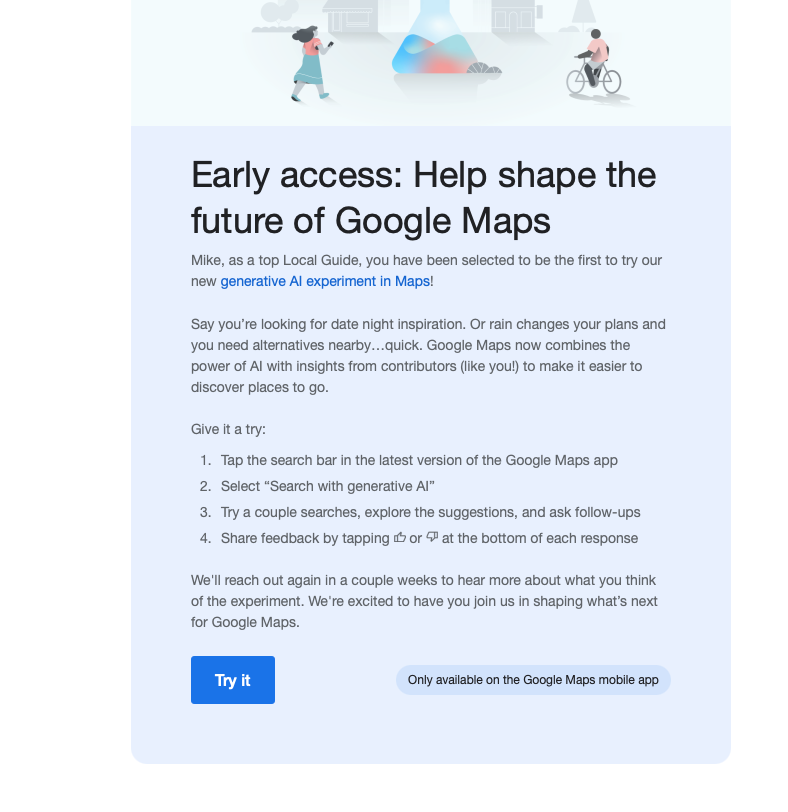
### Great Expectations
It is, like SGE, still a little slow and verbose.
Although neither is a death knell, as speed issues will be overcome and Google will better calibrate the verbosity. The battle will be won or lost on the hill of usefulness. As David Mihm has [pointed out in our conversations](https://www.nearmedia.co/ep-145/), with Google's large knowledge graph of businesses and their humongous corpus of reviews and Q &A, a product like this has the *potential* to take Maps to new heights and largely replace search as a primary user interface for many daily life tasks.
Like the "[ad](https://blog.google/products/maps/google-maps-generative-ai-local-guides/?ref=nearmedia.co)" said, this "experimental capability introduces a whole new way for people to more easily discover places and explore the world with Maps. This is just the beginning of how we’re supercharging Maps with generative AI." While interesting, it has a way to go.
I have friends visiting for our annual cross-country weekend and so far there is no snow. I thought I would ask for ideas of outdoor activities that would be interesting.
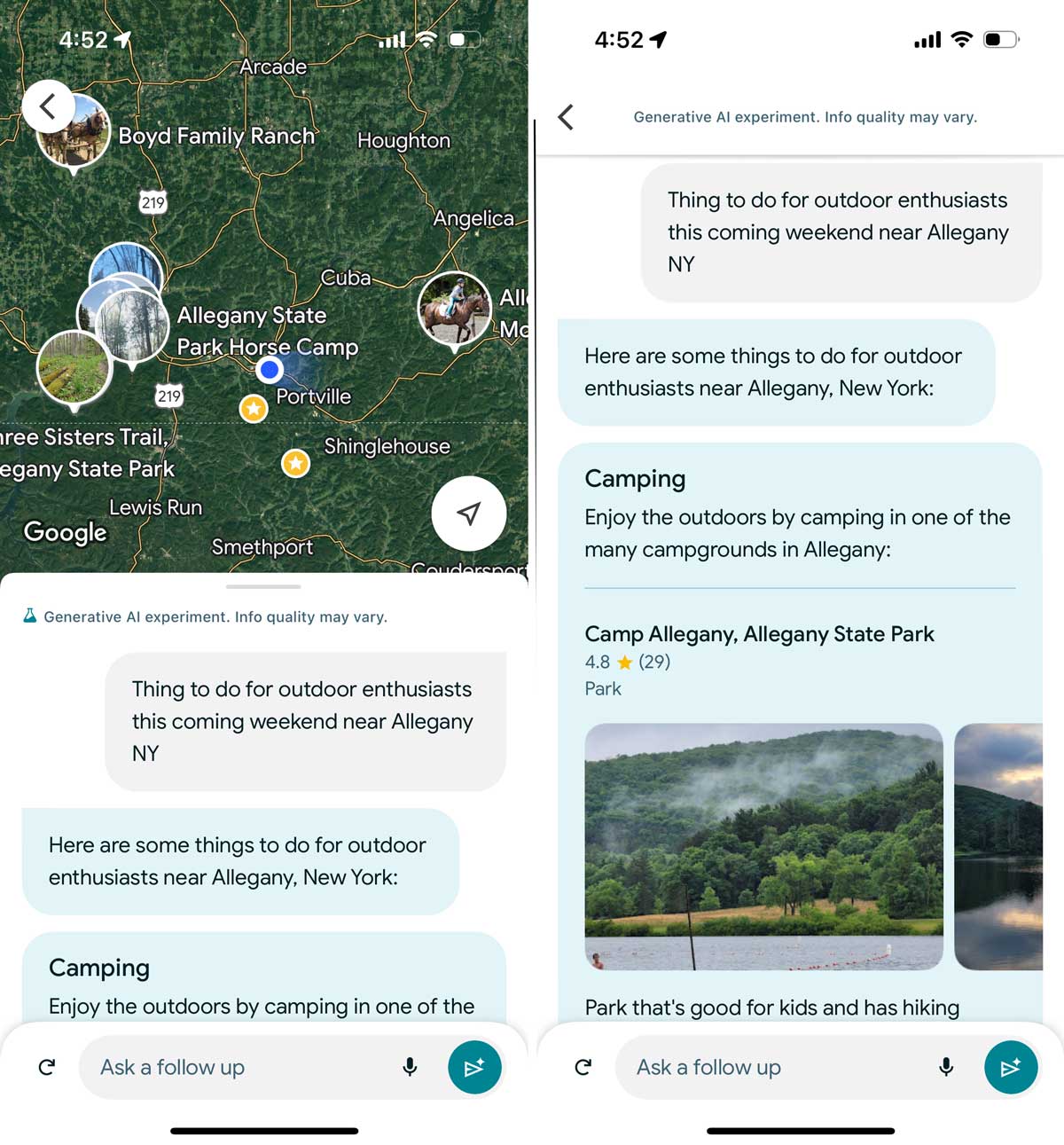
### Like Search but Slower
The suggestions were not bad but the answers didn't really provide outdoor activities and had no sense of upcoming weather or the lack of snow. Its suggestions were not of much use as it was missing critical context that it could know. I followed up with additional information and was explicit about the absence of snow, and that we usually cross-country ski, but still got a mediocre answer.
I then asked for "great Asian food in Buffalo NY." Its answer was informative but not much different than what Google search provided in a fraction of the time.
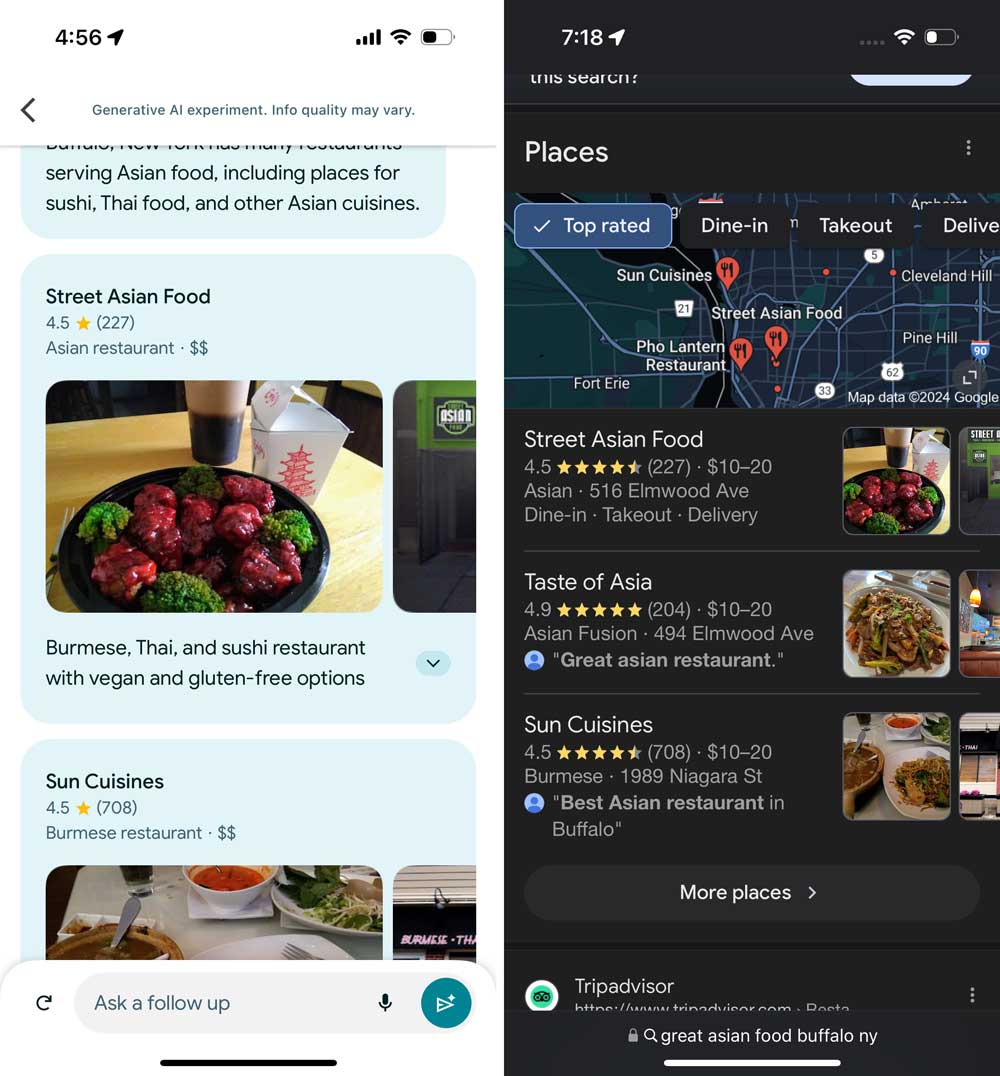
With Valentine's Day approaching (and me being on the cheap side) I next asked for help finding "upscale nouveau meal with a romantic environment that costs less than $50 per person." No go on that one. While I do think there is [such a place in Buffalo](https://www.google.com/search?client=safari&rls=en&q=Upscale+nouveau+meal+with+a+romantic+environment+that+costs+less+than+%2450+per+person+buffalo&ie=UTF-8&oe=UTF-8&ref=nearmedia.co), Maps AI wasn't able to even make a guess.
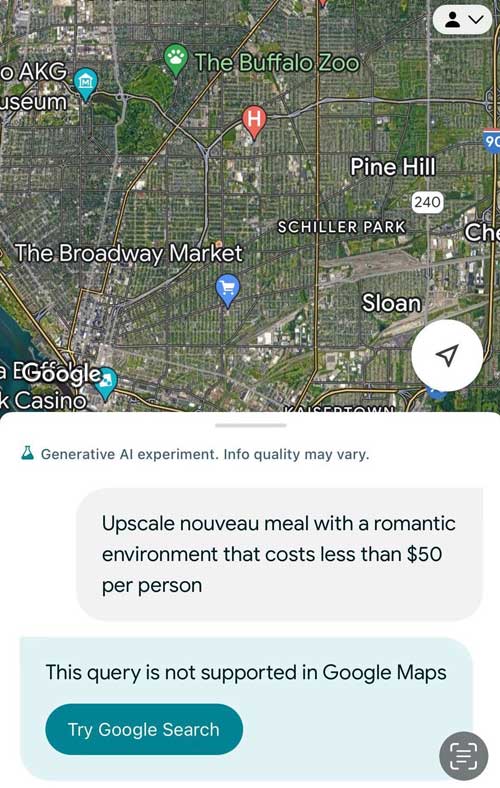
So I asked again for NYC. While I did get some upscale food places, none of them came in under $50 despite AI's promise that there was such a thing. The AI just hallucinated and provided a number of places where I could drop $300 or $400 per head. I would have hoped for a response that said: *You are too cheap but I can find you something for $100 a head, would that do?*
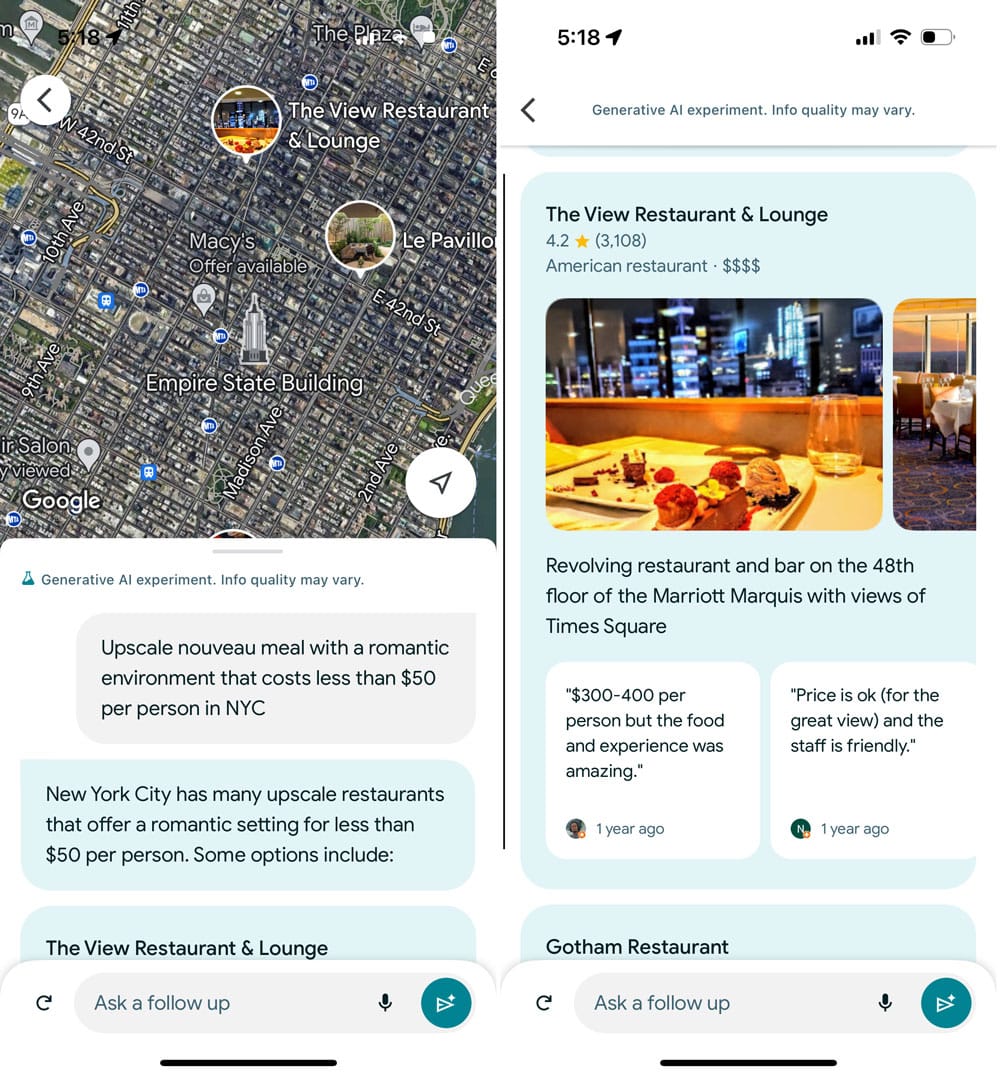
### More Fluff, Fewer Ads
The promise of AI within Maps is huge. This first roll-out, while interesting, provides little of value beyond what search and Maps currently provide – and does so at a slower pace with more fluff, though fewer ads. I didn't compare Maps + AI results to search results to see how much variation there was, but a cursory review indicates they're very similar.
Will Google Maps with AI provide a better, more fulfilling experience? Potentially yes, but not today.
### Google LSA Brand Ads = Enshittification
URL: https://www.nearmedia.co/google-lsa-brand-ads-enshitification/
Last updated: 2024-11-19T21:13:00.000Z
Over the past six months Google has increasingly [shown Local Service Ads (LSAs) on brand (business name) queries](https://www.nearmedia.co/lsa-duct-fraud-p-5-lsas-and-brand-queries-googles-scrollable-map-app-store-vault-cracks/#google-at-25-just-a-rent-seeker). More and more brand queries are [now showing LSAs](https://x.com/AnthonyHigman/status/1755977151638065629?s=20&ref=nearmedia.co).
> BREAKING NEWS.
>
> It Looks Like Google Just FULLY Rolled Out Branded Local Services Ads And It's NOT A Setting That You Can Control.
>
> WTF? I Thought That This Was Going To Be A Opt In Setting?
>
> Also A Ton Of Wild Inconsistencies With This. Still Digging Into This Will Report… [pic.twitter.com/kmdL4oHzQA](https://t.co/kmdL4oHzQA?ref=nearmedia.co)
>
> — Anthony Higman (@AnthonyHigman) [February 9, 2024](https://twitter.com/AnthonyHigman/status/1755977151638065629?ref%5Fsrc=twsrc%5Etfw&ref=nearmedia.co)
### Coming to a Business Near You - Maybe Yours
Currently there is [NO OPT-OUT](https://x.com/JoyanneHawkins/status/1755999083645300922?s=20&ref=nearmedia.co) generally available. Although some accounts are [seeing](https://x.com/mblumenthal/status/1756004579504705748?s=20&ref=nearmedia.co) an option to do so, [most are not](https://x.com/AnthonyHigman/status/1756016818576138422?s=20&ref=nearmedia.co). According to Google's Ad Liaison, the "feature" [will soon be live](https://x.com/adsliaison/status/1756020934274625840?s=20&ref=nearmedia.co).
What was once a test (that a business couldn't opt out of) appears will be a feature on every Local Service Ad. LSAs were designed to be easy to use, a "set it and forget it" ad product. According to the AdsLiaison, businesses will be forced to opt-out if they don't want to pay – somewhere between $25 and $200 per call – for a customer who was already coming their way.
It's not all bad. Some discovery searchers do in fact do brand searches as they explore reputation before they call. Accordingly, Google is saying it's only going to be charging for new customers, not existing ones.
> Advertisers are charged only for new leads, not existing customers. (On both call and message leads, users are asked whether they are a returning customer.)
>
> — AdsLiaison (@adsliaison) [February 9, 2024](https://twitter.com/adsliaison/status/1756025378232037542?ref%5Fsrc=twsrc%5Etfw&ref=nearmedia.co)
### Opt-out Unethical
Despite this assurance, Google has never demonstrated the ability to parse data at the level of granularity needed to accurately bill ads from non-customers only. It isn't clear how many calls from existing customers would, in fact, be billed. That puts the onus of disputing erroneously billed calls onto advertisers.
Also, testing this feature on unwitting business is unethical. And putting it behind an opt-out button is even worse. A large percentage of LSA advertisers will likely not realize what is happening or, if they do, not know where to look, leaving this "feature" turned on, leading to inaccurate billing.
While some businesses might want to run LSAs on their brand, this should be an opt-in only feature. But Google is fully aware that very few businesses would actually opt-in.
> This is an experiment that will be rolling out shortly. To be clear, the opt-out will be available for everyone. Customers will receive more information on this next week.
>
> — AdsLiaison (@adsliaison) [February 9, 2024](https://twitter.com/adsliaison/status/1756020934274625840?ref%5Fsrc=twsrc%5Etfw&ref=nearmedia.co)
### From Organizing the World's Information to Organizing the World's Money
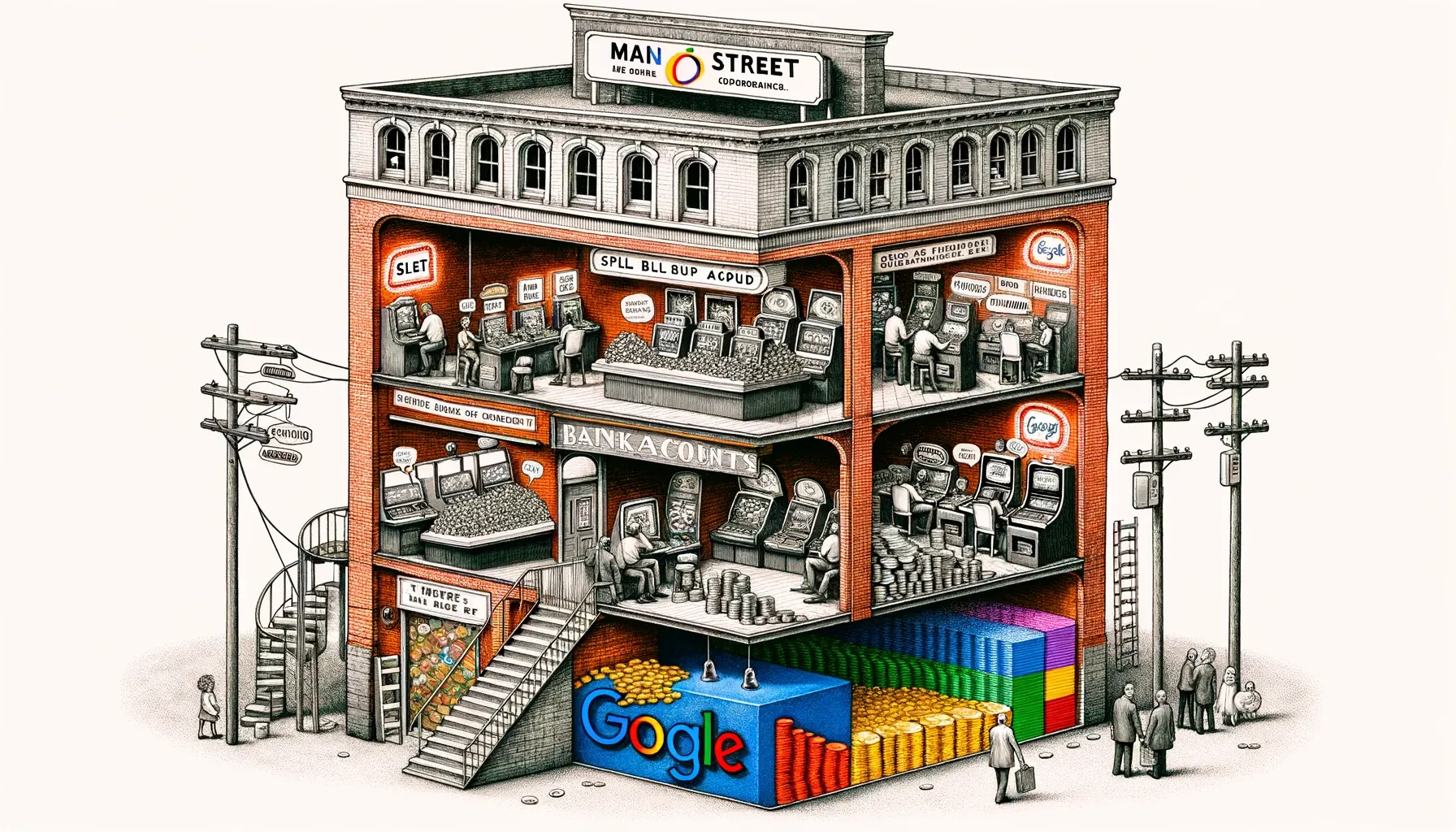
We long ago came to think of Google's informal tag-line of "do no evil" as a quaint artifact of the early founders. We presumed that their ["do the right thing"](https://www.nearmedia.co/dont-be-evil-contract-where-does-googles-starline-fit-covid-shoppers/) saying was more achievable. We have also always believed (hoped) that their motto "organizing the world's information" was both sincere and immutable. Yet, whom Google chooses to "do the right thing" for has always been a bit muddled.
It has become clear to those on the front lines that Google's singular focus is on increasing revenue at all costs. Partners, businesses and consumers be damned.
> “No surface untouched” (new corporate tagline)
>
> — Mike Blumenthal (@mblumenthal) [February 10, 2024](https://twitter.com/mblumenthal/status/1756306049273864316?ref%5Fsrc=twsrc%5Etfw&ref=nearmedia.co)
While the public still generally [perceives](https://pro-assets.morningconsult.com/wp-uploads/2023/05/Most-Trusted-Brands-2023.pdf?ref=nearmedia.co) Google in a positive light, small business people are starting to have much less favorable views of the company.
> With Google, trust should be spoken of in the past tense.
>
> — Mike Blumenthal (@mblumenthal) [February 9, 2024](https://twitter.com/mblumenthal/status/1756059505584935422?ref%5Fsrc=twsrc%5Etfw&ref=nearmedia.co)
### Where Is Google's Satya Nadella?
The many issues we see with LSAs are but a microcosm of what can rightfully be called the era of Google [enshitification](https://www.wired.com/story/tiktok-platforms-cory-doctorow/?ref=nearmedia.co).
> Not to mention the reviewjacking, lead gen abuses, consumers deception and business license thefts [https://t.co/D6XdRxbUpE](https://t.co/D6XdRxbUpE?ref=nearmedia.co)
>
> — Mike Blumenthal (@mblumenthal) [February 9, 2024](https://twitter.com/mblumenthal/status/1756063814410215569?ref%5Fsrc=twsrc%5Etfw&ref=nearmedia.co)
Employees are [dismayed](https://www.nytimes.com/2024/02/05/technology/google-layoffs-work-culture.html?ref=nearmedia.co) and think [management lacks vision](https://nypost.com/2024/01/19/business/google-employees-blast-profoundly-boring-management-which-lacks-visionary-leader-amid-layoffs/?ref=nearmedia.co), agencies have had their fill and small businesses are getting the picture. My wife, who suggested we buy Google stock when it came on the market years ago, thinks Google is now "evil incarnate." Assuming Google keeps walking the path they're on, the broader general public may soon follow. Wall Street loves a-holes whose profits are still rising, so who knows what they will do.
While Google has no direct corollary for a Steve Ballmer, institutionally they are much like Microsoft after the departure of Bill Gates, living off old good will, past glories and arrogance. Google needs its own [Satya Nadella](https://en.wikipedia.org/wiki/Satya%5FNadella?ref=nearmedia.co), who can put the company on the path of both profitability, useful software creation and public respectability.
It can't come too soon.
### Ep 145: Will AI Improve SMB Websites? GMaps Getting Gemini, Bright Local Brand Survey Takeaways
URL: https://www.nearmedia.co/ep-145/
Last updated: 2024-02-10T21:22:54.000Z
Will AI Improve SMB Websites? **Google Maps Getting Conversational AI,** BrightLocal Brand Beacon Report 2024 reveals insights into multi-location marketing strategies
**Part 1 starts 00:13 -** [**Will AI Improve SMB Websites?**](https://youtu.be/vgPtsvTRfdw?ref=nearmedia.co)
Consumers overwhelmingly prefer AI-generated content over human-created content across various formats, signaling a potential shift in online content creation. Businesses and agencies are adopting AI for content creation, citing effectiveness and cost reduction. However, concerns about the loss of human touch and authenticity persist, especially in personal brand building and influencer marketing. While AI can streamline information delivery, the rise of generic AI content may prompt a resurgence in demand for authentic, personalized content from individuals and brands.
Segment Reference Articles
[Think Big with AI: Small Business Content Marketing in 2024](https://www.semrush.com/goodcontent/ai-content-marketing-report/?ref=nearmedia.co)
[Confessions of an AI Clickbait Kingpin](https://www.wired.com/story/confessions-of-an-ai-clickbait-kingpin/?ref=nearmedia.co)
**Part 2 starts 11:35 -** [**Google Maps Getting Conversational AI**](https://youtu.be/m1ULM77nGmc?ref=nearmedia.co)
Google introduced AI into Google Maps, allowing conversational queries about businesses based on structured data and user reviews. This move suggests Maps as a more effective platform for AI integration compared to organic search. The potential for personalized and detailed queries is high, with implications for local inventory and user engagement. However, there's a risk of commercialization overshadowing informative search results, as seen in Google Lens. Despite potential revenue growth, there's concern about the impact on Google's core search business. The integration of Gemini's conversational faceted search aligns with Maps' data structure, offering a promising user experience.
Segment Reference Articles:
[SGE Comes to Google Maps](https://www.nearmedia.co/google-maps-ai-ai-content-working-gemini-vs-search/#sge-comes-to-google-maps)
[A new way to discover places with generative AI in Maps](https://blog.google/products/maps/google-maps-generative-ai-local-guides/?ref=nearmedia.co)
**Part 3 starts 22:40 -** [**Bright Local Brand Survey Takeaways**](https://youtu.be/-01qfemHlto?ref=nearmedia.co)
The BrightLocal Brand Beacon Report 2024 reveals insights into multi-location marketing strategies, with a focus on SEO, social media, and customer satisfaction. High-performing brands prioritize local SEO and understand the difference between traditional and local SEO, offering opportunities for improvement in average performers. Despite heavy investments in social media, email and SEO continue to drive significant results, highlighting potential areas for growth. Additionally, the rise of AI in email marketing suggests future trends in content creation. Overall, the discussion underscores the evolving landscape of digital marketing strategies for multi-location businesses and the importance of staying informed to adapt effectively.
Segment Reference Articles:
[BrightLocal Brand Beacon Report 2024](https://www.brightlocal.com/research/brand-beacon-report/?ref=nearmedia.co)
### Are New Google EU Local Results DMA Compliant?
URL: https://www.nearmedia.co/dma/are-google-eu-local-results-dma-compliant/
Last updated: 2024-11-08T23:13:22.000Z
It has been several weeks since Google [introduced new EU local search results](https://youtu.be/IYWs3P8HE%5Fs?ref=nearmedia.co) to [comply](https://www.nearmedia.co/new-eu-local-serp-forums-creeping-into-local-ranking-isnt-enough/) with the [Digital Markets Act’s Article 6(5](https://www.concurrences.com/en/dictionary/digital-markets-act?ref=nearmedia.co#:~:text=Self%2Dpreferencing%3A%20A%20gatekeeper%20cannot,%28Article%206%285%29%29.)). Article 6(5) requires that gatekeepers not treat their own products “more favourably, in ranking and related indexing and crawling, services and products offered by the gatekeeper itself than similar services or products of a third party” and that gatekeepers “apply transparent, fair and non-discriminatory conditions to such ranking.” Google tends to change search results in response to user inputs so I was curious if what we're seeing last week is still holding true.
There are numerous subtle and not so subtle changes that don't appear to benefit third parties (publishers, directories).
**Places Sites**
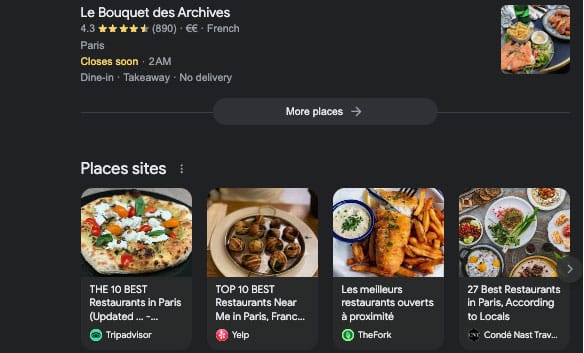
### More and More Mobile Packs
Using NordVPN we took a peak at results for Paris for "free tasting near me." Note several things about the results shared in the video below. Most obvious is that the Places 3-Pack (aka Local Pack) now ranks above "Places Sites."
Places Sites (who brands this stuff?) were the accommodation that Google made to be "non-discriminatory." Last week when we looked, [Places Sites were ranked in the top organic spot](https://youtu.be/IYWs3P8HE%5Fs?ref=nearmedia.co) but now have slipped below the Local Pack. Like all universal results, Google freely re-ranks them based on user interactions and demand. The DMA accommodation was not so big a change as to *always* position the third party carousel above the Local Pack. This dynamic re-positioning is also happening in restaurant and hotel searches. Note that some of the pages listed in the Places Sites carousel do not include images, putting those directories at a disadvantage amongst the 10 web pages in the carousel.
**Free Tasting Near Me**
0:00
/0:44
1×
As you scroll down in mobile results you will also see that a select number of the directories, in the organic results below the pack, have a similar scrolling image carousel. For example, the TripAdvisor result now shows a multi-image carousel.
Even more interesting though is that Google is now including **multiple local Places Packs** within the search results below the initial Pack result. Unlike the first Pack, these do not include links to the Local Finder but, when a listing is selected, will take you the Google Profile page.
### More Desktop Packs Plus Other Annoyances
As you watch the desktop results for "restaurants near me," using our Paris based search, note that the Places Sites highlighting third parties has again been moved below the pack. When a user attempts to scroll over the Map in the Local Pack at the top, instead of scrolling down the page, the Map zooms in a totally non-intuitive way. The user needs to move their cursor to the right of the map to scroll further down the page. This is clearly a test that appears for some queries but has not been fully implemented.
**Restaurants Near Me**
0:00
/1:02
1×
### Is It DMA Compliant?
It remains to be seen whether the EU regulatory bodies will find Places Sites an adequate response to the DMA's non-self-preferencing requirement. They are not particularly user friendly, as they are also not that prominent in the results.
If you select the "see more"option you are taken to another purely organic page with no obvious or visual calls to action. Putting additional Local Pack results on the scrolling pages also reduces the likelihood that one of the new displays will be selected. Not seen in the US, this seems to be a passive-aggressive "stick your tongue out" response to EU regulatory oversight – perhaps one that regulators can't do anything about.
Even more egregious passive-aggressive behavior is manifested in Map zooming, when any normal user is just attempting to scroll past the pack. It's like stepping in quicksand; the more you try to get out, the deeper you go. It's totally distracting and annoying.
While there has been a lot of press dismissive of Apple's DMA compliance efforts, it is ironic that little criticism has been directed at Google. Apple's decisions mostly affect third party developers. Google's also affect consumers and not in a good way, and the benefits to third party publishers seem to be totally missing. Any regulator looking on should see Google's "accommodations" as the theatrical dance that they are.
**Pack over Places Sites**
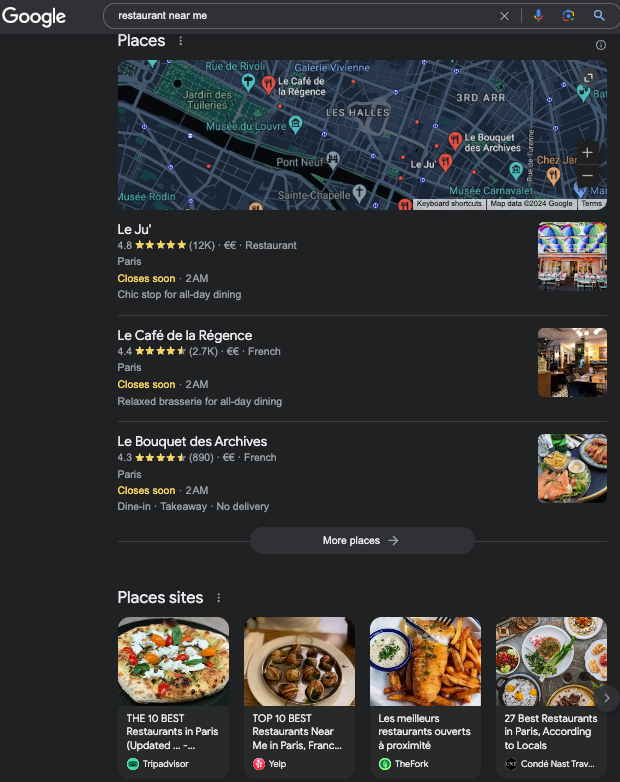
### Copilot Is the Future, Local SEO Gap, Jihad vs. McWorld Content
URL: https://www.nearmedia.co/copilot-is-the-future-local-seo-gap-jihad-vs-mcworld-content/
Last updated: 2024-02-08T20:10:57.000Z
### Bing Is the Past, Copilot Is the Future
After more than a year of BingGPT, it's clear that the new experience is not going to take meaningful share from Google. While Microsoft's revamped search engine [may have captured a point](https://searchengineland.com/one-year-later-little-change-to-microsoft-bing-search-market-share-437238??ref=nearmedia.co) or so, there's no real momentum. Google retains [87% search market share](https://gs.statcounter.com/search-engine-market-share/all/united-states-of-america/?ref=nearmedia.co#monthly-202301-202401) in the US and has over 91% globally. Bing has gained a little over a point in the past year. And while that may be worth [$2 billion in ad revenue](https://www.businessinsider.com/microsoft-chat-gpt-2-billion-revenue-search-steals-google-2023-2?ref=nearmedia.co), it's not particularly meaningful to the world's most valuable company, which brought in $212 billion in fiscal 2023\. However, Microsoft's [Copilot](https://copilot.microsoft.com/??ref=nearmedia.co) offers a new and interesting opportunity for the company. Presented not as a "search engine" but as your "everyday AI companion," Microsoft will be promoting Copilot during the Super Bowl. This is the perfect use of a $7 million Super Bowl commercial: to expose a massive audience to a new product or brand. The Microsoft ad below focuses on younger users and offers a broader value proposition than search: accomplish things you want/need to do in your life. Bing is now arguably a stale brand that has run its course. Copilot looks like the future of search for Microsoft.
**Our take:**
- Based on survey data and anecdotal information, many younger users appear to want something different than Google's search experience.
- Microsoft isn't positioning Copilot as a "search engine," but it includes search capability. Its broader utility and quasi-personalization are keys to its appeal to a younger generation of users.
- Microsoft should maintain Bing but focus its marketing and feature development on Copilot – and eventually retire the Bing brand.
### MLBs Neglect Local SEO
The majority (86%) of multi-location brands say they have dedicated local marketing strategies. Yet, compared with other tactics, local SEO is mostly neglected by these companies, including reputation management. That's according to a new [Brand Beacon Report](https://www.brightlocal.com/research/brand-beacon-report?ref=nearmedia.co) from BrightLocal, based on a survey of "200 marketing decision-makers for multi-location and franchise businesses" in the US (60%), UK and Canada. The survey measures what channels and tactics are being used and how they perform. BrightLocal also sought to understand respondents' local SEO sophistication. Companies were divided up by number of locations and also rated as "high performers" (HPs) and "average performers" (APs). Among the key findings, "94% of high-performing brands have a dedicated local marketing strategy" and "88% of multi-location marketers are already using generative AI." Social media, email and paid ads were the top local marketing channels. Among HPs, 54% said they had a good/very good understanding of local SEO vs. 49% for APs. Yet, when it comes to understanding differences between SEO and local SEO, 94% of HPs answered yes, but only 49% of APs. Local content, ranking optimization, reputation and citation management were not high priorities for most of these brands vs. other channels and tactics.
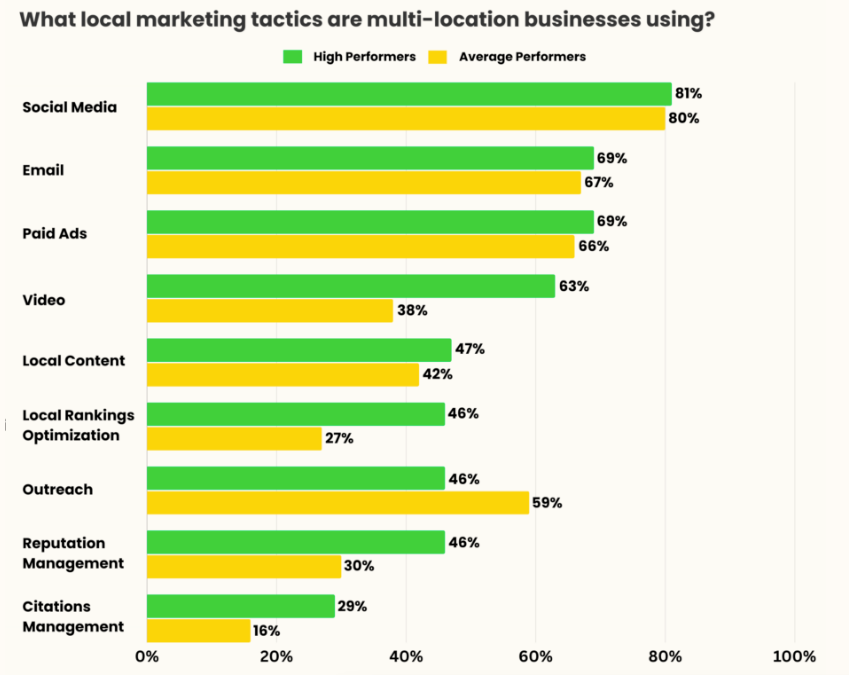
Source: BrightLocal survey
**Our take:**
- Revenue growth was a goal for everyone. After that c-sat, brand awareness and retention were priorities for HPs, APs focused on customer acquisition.
- Social, paid ads and email beat local SEO and related tactics (e.g., reputation management) to reach local audiences. Local SEO was used by only 30% to 40% of marketers across categories.
- The lack of emphasis on local SEO may be a function of not fully understanding the differences between traditional and local SEO.
### Jihad vs. McWorld
This is the title of a 1995 book that seeks to explain the post-Cold War world order and terrorism's threat to democracy. But it also suggests the next phase of the internet: chaos vs. blandness. But humans vs. machines is probably be more accurate. More and more online content will be AI-generated, with varying degrees of human input and oversight. As we saw from the [recent Semrush report](https://www.nearmedia.co/google-maps-ai-ai-content-working-gemini-vs-search/), people often prefer AI-written content to that created by actual humans. And that content appears to be succeeding and ranking for marketers according to the same report. Separately, there was a widely discussed profile in [Wired](https://www.wired.com/story/confessions-of-an-ai-clickbait-kingpin/?ref=nearmedia.co) of Nebojša Vujinović Vujo, who operates a network of sites that were once recognized (minor) brands with built-in audiences. He now populates those URLs with lower quality AI-generated content and programmatic ads – content farm 2.0\. Google has backed away from its early prohibition and is now agnostic toward AI-generated content. If it's "helpful" and meets other ranking criteria it can rank and apparently does. There's nothing wrong with using AI in support of content creation or marketing. However, it will be used to create a lot of marginal content and spam. Google is preparing for that partly by elevating short video, social media and forums where it's clear that humans are the sources of information.

Source: Gemini
**Our take:**
- AI content generation works better in some categories vs. others. Over the next two years we'll see how that plays out.
- The financial argument for AI content is powerful: create more content, faster and for less money. In some cases quality may improve.
- The proliferation of AI-generated content, much of which will be readable yet insipid, may drive people toward those corners of the internet that feature more personality, empathy and genuine human experiences.
## Recent Analysis
- **Near Memo episode 144:** [10 years of SERP changes, Hidden Gems update impacting Local Search, New EU DMA-driven Local Search Results](https://www.nearmedia.co/ep-144/)
## Short Takes
- Scam: rivals link second **LSA** to GBP [to kill the honest ad](https://www.seroundtable.com/google-business-profiles-hijacked-lsa-loophole-36852.html?ref=nearmedia.co).
- Google [rebrands](https://www.reuters.com/technology/google-rebrands-bard-chatbot-gemini-rolls-out-paid-subscription-2024-02-08/?ref=nearmedia.co) **Bard as Gemini**, Gemini+ is $20 per month.
- **Google** [showing "web results"](https://www.seroundtable.com/google-tests-web-results-in-search-menu-36846.html?ref=nearmedia.co) (blue links?) tab for some users.
- **Google Posts** (mobile) being highlighted in [Nearby Events and Deals](https://www.linkedin.com/posts/krystaltaing%5Fgoogle-continues-to-evolve-how-google-posts-ugcPost-7161033005736632322-0Hg2/??ref=nearmedia.co).
- **Yelp** [adds new AI features](https://blog.yelp.com/news/winter-product-release-2024/?ref=nearmedia.co), review incentives for consumers.
- How to use **ChatGPT Plus** to [visualize Ahref's data](https://ahrefs.com/blog/ahrefs-chatgpt-visualizations/?ref=nearmedia.co).
- **Google Maps** introducing [range of design changes](https://9to5google.com/2024/02/07/google-maps-directions-search-redesign/?ref=nearmedia.co) to boost UX.
- Report: **Apple** developing [foldable iPhones](https://www.theverge.com/2024/2/7/24064617/apple-foldable-iphone-ipad-rumor-z-flip-5?ref=nearmedia.co) and iPads.
- **Apple** shows open-source [natural language image editor](https://venturebeat.com/ai/apple-releases-mgie-a-revolutionary-ai-model-for-instruction-based-image-editing/?ref=nearmedia.co).
- **Amazon** [to buy "contextual" data](https://searchengineland.com/amazon-ad-data-deal-google-third-part-cookies-437218?ref=nearmedia.co) from UK publisher as cookies die.
- Multiple apps [trying to solve](https://techcrunch.com/2024/02/07/how-twitters-descent-into-chaos-is-paving-the-way-for-a-new-web/?ref=nearmedia.co) post-**Twitter** fragmentation problem.
- More retailers with **Vision Pro** apps: [Wayfair](https://www.digitalcommerce360.com/2024/02/06/wayfair-releases-generative-ai-app-for-apple-vision-pro/?ref=nearmedia.co) and [Alo Yoga](https://www.retaildive.com/news/alo-yoga-app-apple-vision-pro/706646/?ref=nearmedia.co).
Listen to our [latest podcast](https://www.nearmedia.co/memo/).
[](https://nearmedia.co/memo?ref=nearmedia.co)
How can we make this better? Email [us](mailto:gsterling@nearmedia.co) with suggestions and recommendations.
### Google Maps.ai, AI Content Working, Gemini vs. Search
URL: https://www.nearmedia.co/google-maps-ai-ai-content-working-gemini-vs-search/
Last updated: 2024-02-06T21:15:06.000Z
### SGE Comes to Google Maps
Just as Google is seemingly integrating AI into everything it does, last week the company said that AI is coming to Google Maps. "Simply say what you’re looking for and our large-language models (LLMs) will analyze Maps’ detailed information about more than 250 million places and trusted insights from our community of over 300 million contributors to quickly make suggestions for where to go," Google said in a [blog post](https://blog.google/products/maps/google-maps-generative-ai-local-guides/?ref=nearmedia.co). Characterized as an "early access experiment," Local Guides in the US will be the first to get the new capability. The screenshots make the experience look a little like "Maps SGE." The promise of this rollout is that users will be able to ask new kinds of questions and get more varied and precise answers than with simple category-location keyword searches. Google Maps + AI holds the promise of a better experience, though we won't know until we can use it ourselves. Google's structured local business data also represents a major competitive advantage over Apple Maps, which currently offers a comparable (or better) user experience in several respects.
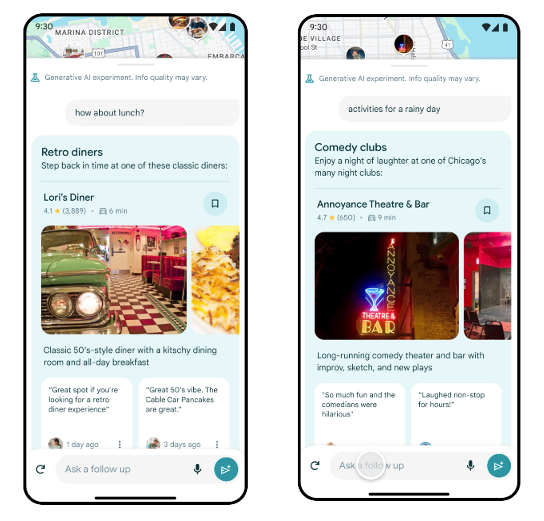
Source: Google
**Our take:**
- Google's entire review corpus will be included and used to answer questions and guide recommendations. (Fake reviews too?)
- Beyond these SGE-like screens, we're eager to see how the UX changes. Presumably the Maps ranking algorithm will evolve too.
- If it works well, users will start inputing more complex queries which could have local optimization implications. We're eager to see.
### Report: AI Content Is Working
The most bullish [report](https://www.semrush.com/goodcontent/ai-content-marketing-report/??ref=nearmedia.co) to date on the role of AI for SEO and content marketing is from Semrush. Entitled "Think Big with AI," it combines a range of survey findings from small businesses, agencies and consumers. Clocking in at nearly 150 pages, the study also includes content marketing prompt templates. But perhaps the most intriguing findings focus on head-to-head matchups between human-written and AI generated content across a range of topics (e.g., "Write a social media post with tips on how to choose a skydiving provider"). Consumers were shown side-by-side results and asked which option they preferred. AI content won; it was preferred every time, though the margin of victory ranged between 6 and 30 points. The report also polled businesses about current AI tool use (67%), SEO success with AI, and content production time/costs before and after AI. A large majority of respondents (79%) said they saw "an increase in content quality when using AI tools" and 65% saw "an improvement in their SEO results." In addition, 78% said they were "satisfied" or "very satisfied" with AI. Blog and social media posts were the most common use cases. Those not using AI (33%) cited lack training or concern about the quality of results.
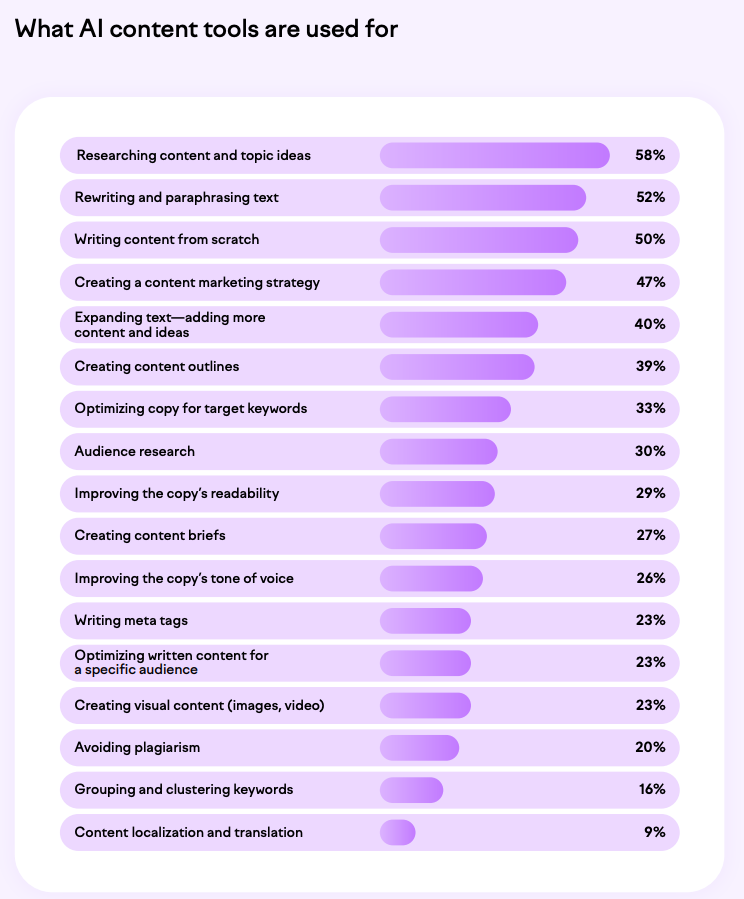
Source: Semrush survey of businesses and agencies
**Our take:**
- Business respondents (2,600) came from "from all over the world and across many different industries," 76% had fewer than 50 employees.
- These people were probably Semrush customers, which would make them more sophisticated marketers. But the data are "directionally" consistent with other studies: high AI enthusiasm, strong adoption.
- As with other surveys, this report argues most marketing copy and content will be at least partly AI-generated in a short time. Google is resigned to that, though it's hedging with forums and other "[hidden gems](https://www.nearmedia.co/automated-paid-search-hidden-gems-in-store-ai-assistants/)" in the SERPs.
### Bard vs. Assistant vs. Gemini vs. Search
Bard [will apparently be rebranded](https://9to5google.com/2024/02/03/google-bard-gemini-rebrand-android-app-date/?ref=nearmedia.co) "Gemini" this week. At the same time, "Gemini Advanced" will launch. Similar to ChatGPT 4, Advanced will be a subscription product built on "Gemini Ultra," which is the company's most advanced AI model. It's not entirely clear what the Google Assistant will now be called; it used to be "Google [Assistant with Bard](https://blog.google/products/assistant/google-assistant-bard-generative-ai/?ref=nearmedia.co)." Will it now be Google Assistant with Gemini, not to be confused with Gemini itself (formerly Bard)? It appears, at least for the time being, Google Assistant will retain its own distinct identity. Confused? You wouldn't be alone. Google has never been great at branding and this is no exception. Here, the branding confusion also likely reflects product strategy confusion. In the immediate future there will apparently be four different Google "search" experiences: Google.com (with SGE), Google Assistant (now with search), Gemini (formerly Bard) and Gemini Advanced. Things may be totally coherent on the back end but, from a branding and user perspective, they're getting muddy. Google's not alone, of course, Microsoft has its own AI-branding issues with Bing/Bing Chat, Microsoft Copilot and [Microsoft Deep Search](https://blogs.bing.com/search-quality-insights/december-2023/Introducing-Deep-Search?ref=nearmedia.co), which is [now available to more people](https://searchengineland.com/bing-deep-search-is-rolling-out-to-more-users-437190?ref=nearmedia.co).
Source: Google
**Our take:**
- Gemini is a better brand than Bard. Google is probably smart to swap them.
- It needs to also decide whether to keep "Google Assistant" (vs. Gemini), which is an intuitive name but also has relatively low uptake.
- The larger product strategy issue is more important. What's the relationship of each of these products to one another and to search?
## Recent Analysis
- **Near Memo episode 144:** [10 years of SERP changes, Hidden Gems update impacting Local Search, New EU DMA-driven Local Search Results](https://www.nearmedia.co/ep-144/)
## Short Takes
- Google [adds 9 new](https://twitter.com/joyannehawkins/status/1754630637833621600??ref=nearmedia.co) **LSA categories**, [not equally available](https://twitter.com/anthonyhigman/status/1750604448160780634?s=12&ref=nearmedia.co).
- Google: **E-E-A-T** [not a ranking factor](https://www.seroundtable.com/google-clarify-e-e-a-t-quality-rater-guidelines-documentation-36835.html?ref=nearmedia.co), but it sort of is.
- Google: **Core Web Vitals** [not a ranking signal](https://www.seroundtable.com/google-core-web-vitals-search-ranking-factor-36834.html?ref=nearmedia.co); [INP](https://web.dev/blog/inp-cwv-march-12?ref=nearmedia.co) coming.
- Google [appears to be deprecating](https://www.restaurantbusinessonline.com/technology/google-scale-back-its-restaurant-ordering-feature?ref=nearmedia.co) "**Order with Google**."
- **Microsoft** [announces AI collab](https://blogs.microsoft.com/on-the-issues/2024/02/05/journalism-news-generative-ai-democracy-forward/?ref=nearmedia.co) with news organizations.
- As **Google** pushes ads automation, [marketers balk](https://searchengineland.com/google-exec-advertisers-ai-concerns-437115??ref=nearmedia.co).
- UK regulator temporarily [puts brakes](https://www.mediapost.com/publications/article/393235/google-must-address-challenges-due-to-third-party.html?ref=nearmedia.co) on **cookie deprecation**.
- **Amazon Q4 ad revenue** [grows 27%](https://ir.aboutamazon.com/news-release/news-release-details/2024/Amazon.com-Announces-Fourth-Quarter-Results/?ref=nearmedia.co) to $14.7 billion.
- **Yandex** [selling Russian operations](https://apnews.com/article/yandex-russia-sale-search-engine-4de5a04fcf9b99ed5b5fc5fcdd24dd2a?ref=nearmedia.co) at discount for $5.2 billion.
- Opinion: EU's coming **third party app stores'** [security risks](https://www.fastcompany.com/91021439/apple-phil-schiller-iphone-app-store-alternative-eu-risk-security?ref=nearmedia.co).
- Lowe's, J. Crew and other retailers [launch](https://www.digitalcommerce360.com/2024/02/02/online-retailers-release-some-of-the-first-apple-vision-pro-apps/?ref=nearmedia.co) **Vision Pro apps**.
Listen to our [latest podcast](https://www.nearmedia.co/memo/).
[](https://nearmedia.co/memo?ref=nearmedia.co)
How can we make this better? Email [us](mailto:gsterling@nearmedia.co) with suggestions and recommendations.
### Ep 144: 10 years of SERP changes, Hidden Gems update is impacting Local Search, New EU Local Search Results
URL: https://www.nearmedia.co/ep-144/
Last updated: 2024-02-02T18:55:16.000Z
What 10 years of changes to the SERPS mean for marketers today, How the “Hidden Gems” update is impacting Local Search, New EU Local Search Results
**Part 1 starts 00:13 -** [**What 10 years of changes to the SERPS mean for marketers today**](https://youtu.be/iHjHCVjyzL4?ref=nearmedia.co)
We discuss Andy Crestodina’s most recent article where he looks at 10+ years of changes to google search results and what they mean. He highlights the evolving dynamics of search engine optimization (SEO) and the importance of diversifying marketing strategies beyond just SEO and Google. It underscores the observation that while rankings can be stable over time with continued investment in SEO, changes in Google's algorithms mean that simply achieving a high position in the search engine results pages (SERP) isn't guaranteed. The advice given is to not solely rely on SEO or Google for online visibility, reflecting a broader strategy that we have been advocating for some time. This diversification is crucial for businesses aiming to maintain and enhance their online presence amidst the ever-changing digital landscape.
There is the growing necessity for businesses to engage potential site visitors with compelling results, based on an understanding of user behavior and preferences. This involves analyzing where users are most likely to click, whether it be on Local Search Ads (LSAs), Pack (PAC) results, or organic listings, and identifying the attributes that make listings more attractive, such as reviews, years in business, or proximity. Mihm's observations validate the Near Media approach of focusing on where to invest in search results—be it paid, local, or organic—and which themes to highlight in content to resonate with customers.
Segment Reference Articles
[The Biggest SEO Trend Isn’t About Rankings: Tracking 10+ Years of Changes to Google Search Results](https://www.orbitmedia.com/blog/biggest-trend-in-seo/?ref=nearmedia.co)
[Ranking Is Not Enough](https://www.nearmedia.co/new-eu-local-serp-forums-creeping-into-local-ranking-isnt-enough/#ranking-is-not-enough)
**Part 2 starts 06:47 -** [**How the “Hidden Gems” update is impacting Local Search**](https://youtu.be/5B0pgxY%5Fp6Q?ref=nearmedia.co)
Google has rapidly been updating informational queries with content from forums and UGC. This has started to impact the local search results particularly around how to queries and points to the idea that marketers need to know which forums and platforms they can participate in that could drive this type of “barnacle seo”.
Segment Reference Articles: [**Forums Invade Local SERP**](https://www.nearmedia.co/new-eu-local-serp-forums-creeping-into-local-ranking-isnt-enough/#forums-invade-local-serp)
**Part 3 starts 12:41 -** [**New EU Local Search Results**](https://youtu.be/IYWs3P8HE%5Fs?ref=nearmedia.co)
Google has rolled out a number of updates and changes to the local search results to comply with EU requirements limiting the use of cookies and avoiding self-preferencing. The results seem to more of a passive aggressive attempt at compliance that will not generate much traffic for other sites and certainly won’t improve customer satisfaction.
Segment Reference Articles:[**Google's DMA-Compliant SERP**](https://www.nearmedia.co/new-eu-local-serp-forums-creeping-into-local-ranking-isnt-enough/#googles-dma-compliant-serp)
### New EU Local SERP, Localizing Forums, Ranking Isn't Enough
URL: https://www.nearmedia.co/new-eu-local-serp-forums-creeping-into-local-ranking-isnt-enough/
Last updated: 2024-02-01T20:30:26.000Z
### Google's DMA-Compliant SERP
As Europe's Digital Markets Act (DMA) kicks in, the mostly US-based tech "gatekeepers" it seeks to regulate are rushing to comply. The six companies designated as gatekeepers under the DMA are Alphabet/Google, Amazon, Apple, ByteDance, Meta, and Microsoft. As part of compliance, they're supposed to avoid "self-preferencing" – treating their services/products more favorably than those of third parties. And so, [Google is starting to show a new local SERP](https://twitter.com/Lluc%5FSEO/status/1752289421238448413?s=20&ref=nearmedia.co) in Europe that [demotes the Local Pack](https://blog.near.st/google-eu-dma?ref=nearmedia.co) and adds a new Places (Sites) Carousel at the top of the page. The carousel appears to mostly feature third party directories, such as TripAdvisor, Zamato and Hotels.com. The pages are algorithmically driven and so the various SERP features don't always appear in the same place. In the restaurant and hotel query examples we looked at (see [video](https://youtu.be/JFvbXbkusuY??ref=nearmedia.co)), and discuss on the most recent [Near Media podcast](https://www.nearmedia.co/memo/), the Places Carousel generally outranks the Local Pack. There's also a second local Pack that sometimes appears. And the whole experience begins with a never-before-seen Google cookie acceptance screen.
**'Places Sites' carousel outranks the Local Pack**
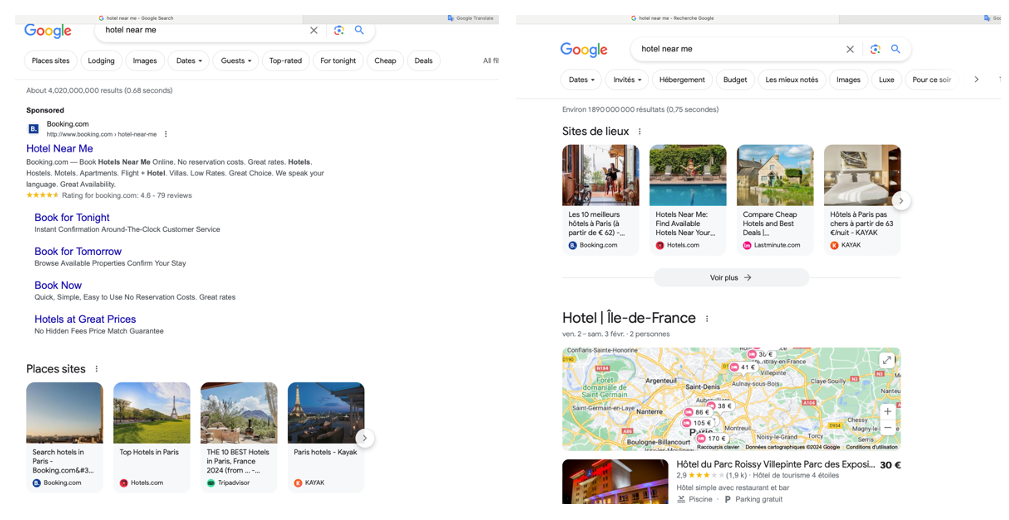
Source: Google.fr
**Our take:**
- Google [has been testing](https://www.nearmedia.co/googles-local-serp-test/) various implementations of directory carousels like this in Europe for a few years in anticipation of just such a moment.
- The pages don't look dramatically different than what we have in North America. It remains to be seen whether they drive traffic to publishers.
- The Local Pack sought to enable consumers to connect directly with businesses rather than have to go through directories. This restores directory visibility. How Google selects these directories isn't yet clear.
### Forums Invade Local SERP
Google has recently been elevating the [visibility](https://www.sistrix.com/blog/indexwatch-2023-us-winners/?ref=nearmedia.co) of forums, blogs, social content and video as part of its "[Hidden Gems" strategy](https://www.nearmedia.co/automated-paid-search-hidden-gems-in-store-ai-assistants/), itself part of the Helpful Content Update. Joy Hawkins [recently showed](https://twitter.com/JoyanneHawkins/status/1752686815822151959?s=20&ref=nearmedia.co) how this is now starting to make its way into local. Her example is a SERP responding to a garage door repair query ("how to replace garage door rollers yourself"). While this query is primarily informational, local companies with relevant content may have ranked in the past. She points out that in the past two weeks the SERP has shifted. The "discussions & forums block" was elevated, as was Reddit, while individual listings demoted. We'll have to see how far this goes; Google will probably be watching clicks by keyword and vertical to see how users respond. The boost Google is giving to forums and social content is intended to deliver more information from real people, with [personal expertise](https://blog.google/products/search/google-search-perspectives/?ref=nearmedia.co), insights or first-hand knowledge. This is also a way for Google to preemptively address the coming AI content crisis and other lower quality content (e.g., spam, lead-gen) that doesn't really serve users.
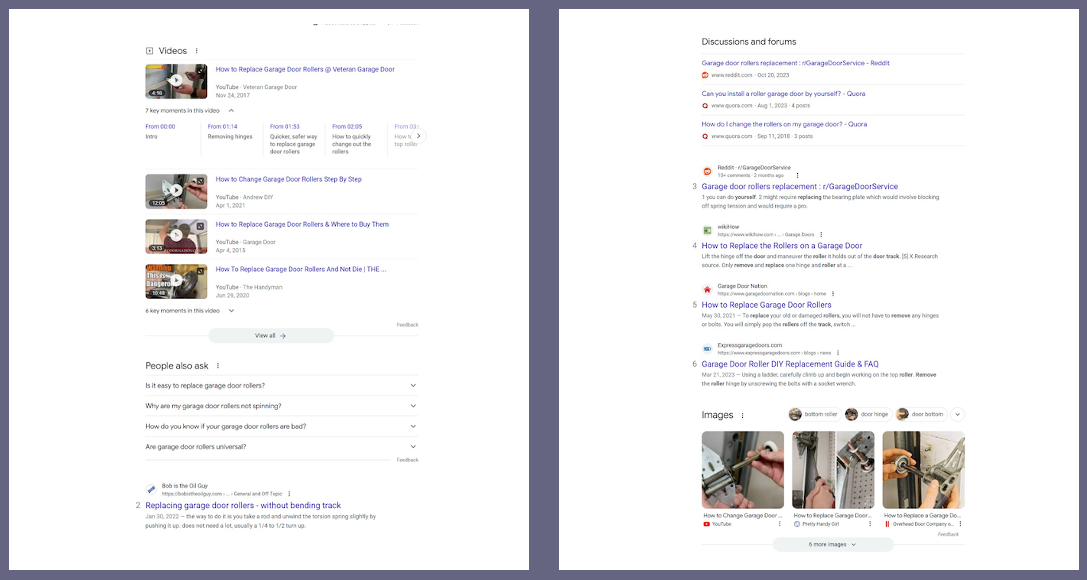
Source: Joy Hawkins-SterlingSky
**Our take:**
- Elevating online discussions and forums is something of a return to the pre-Google Local days when online groups were often best sources for local business referrals (e.g., [Berkeley Parents Network](https://www.berkeleyparentsnetwork.org/advice?ref=nearmedia.co)).
- In the past I've argued that somebody needs to create [Yahoo Directory 2.0](https://www.nearmedia.co/yahoo-directory-2-0-eu-gatekeepers-fees-boost-bopis/), a next-gen human-curated resource to combat the inefficiency of the SERP. In a way, this is an indirect attempt to do that.
- Google is trusting the moderators of these forums to prevent them from becoming spam-ridden as their profiles rise and marketers take notice.
### Ranking Is Not Enough
An excellent new discussion of the historical [evolution of the Google's SERP](https://www.orbitmedia.com/blog/biggest-trend-in-seo/?ref=nearmedia.co), and its tactical implications, comes from Andy Crestodina. He looks at changes over the years to organic results and ads, contrasting screens from a decade ago and today. He also takes on SGE and discusses its implications. Crestodina makes a fundamental distinction between rankings and placement in the SERP, two things that are often spoken about interchangeably. He argues "rankings are durable, placement is not." What he means is that you can continue to rank for keywords for a long time – depending on how much competing content exists – but changes in SERP features (e.g., video blocks, PAA, snippets, SGE) may [push those links further and further down](https://www.nearmedia.co/google-sge-pushdown-siri-ai-overhaul-brick-mortar-halo/) the page. SGE is a case-in-point. Depending on the query, it can push organic rankings well below the fold. As Crestodina explains, Google's SERP today is a much more visual experience, with lots of images and video. He also briefly talks about the AI challenge to Google and concludes with advice on how to respond to all these SERP changes, which will continue evolving. He says, in essence, improve your site, get smarter about SEO and diversify your marketing to other channels.
**A 2014 Google product SERP**
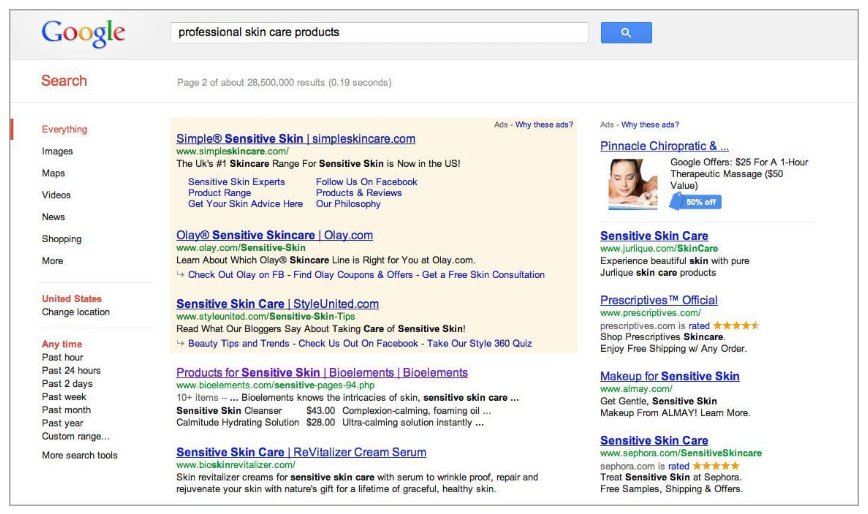
Source: Orbit Media Studios
**Our take:**
- His advice: create a more engaging website, write better headlines/title tags, publish more video, don't target informational queries, move into other channels and be less dependent on SEO.
- Informational queries are often zero-click and going to be answered increasingly by AI snippets. Focus on higher-intent content/keywords.
- It's also critical for marketers to understand how users engage with the SERP and its features. Through our user research we've discovered lots nuances and variations by searcher intent and vertical.
## Recent Analysis
- **Near Memo episode 143**: [Will fired Google Raters be replaced w/AI?; SEO tools often hide the truth; do content strategies need to be updated after 'Hidden Gems' and the decline of Big Social](https://www.nearmedia.co/ep-143/)?
## Short Takes
- ICYMI: the biggest **SEO visibility winners** [in 2023](https://www.sistrix.com/blog/indexwatch-2023-us-winners/?ref=nearmedia.co).
- **Bard** [wins](https://searchengineland.com/chatgpt-google-bard-bing-chat-claude-best-generative-ai-solution-436888??ref=nearmedia.co) head-to-head search test with ChatGPT an BingGPT.
- Closing a feature gap with ChatGPT, **Bard** [now has an image generator](https://twitter.com/marie%5Fhaynes/status/1753073551605977102?s=12&ref=nearmedia.co).
- **Perplexity** may be getting good enough to attract searchers ([NYT](https://www.nytimes.com/2024/02/01/technology/perplexity-search-ai-google.html?ref=nearmedia.co)).
- Saying "**SGE won't launch**" is "misinformation," [says](https://searchengineland.com/no-google-has-not-announced-sge-isnt-going-to-happen-436937??ref=nearmedia.co) SEL editor.
- [Arc Search](https://apps.apple.com/us/app/arc-search/id6472513080?ref=nearmedia.co) is a **browser, search engine and bot** combined.
- **Shopify** has new [AI-supported product image editor](https://techcrunch.com/2024/01/31/shopify-is-rolling-out-an-ai-powered-image-editor-for-products/?ref=nearmedia.co).
- Restaurant marketing, mgmt. platform **Owner.com** [raises](https://techcrunch.com/2024/01/31/owner-33m-series-b-online-restaurants/?ref=nearmedia.co) $33M.
- **Walmart** is [planning to build or convert 150 stores](https://corporate.walmart.com/news/2024/01/31/investing-in-america-walmart-announces-new-stores-more-jobs?ref=nearmedia.co) in next five years.
- **iOS 17.4** now offers a [browser choice screen](https://www.reddit.com/r/iOSBeta/comments/1aevuf8/ios%5F174%5Fdb1%5Fnew%5Fdefault%5Fbrowser%5Fpop%5Fup%5Favailable/??ref=nearmedia.co).
- Should **Amazon** be legally responsible for the products it sells ([WSJ](https://www.wsj.com/business/retail/amazon-could-soon-be-on-hook-for-safety-of-third-party-products-it-sells-and-ships-be58b697?ref=nearmedia.co))?
- The mostly positive reviews of **Vision Pro** are in ([here](https://www.nytimes.com/2024/01/31/technology/roose-apple-vision-pro.html??ref=nearmedia.co), [here](https://daringfireball.net/2024/01/the%5Fvision%5Fpro?ref=nearmedia.co), [here](https://om.co/2024/01/30/apples-vision-pro-the-meta-review/?ref=nearmedia.co), [here](https://www.theverge.com/24054862/apple-vision-pro-review-vr-ar-headset-features-price?ref=nearmedia.co)).
Listen to our [latest podcast](https://www.nearmedia.co/memo/).
[](https://nearmedia.co/memo?ref=nearmedia.co)
How can we make this better? Email [us](mailto:gsterling@nearmedia.co) with suggestions and recommendations.
### Confusing Tools, Reporting Fake Reviews, 'Highly Rated' LSAs
URL: https://www.nearmedia.co/confusing-tools-reporting-fake-reviews-highly-rated-lsas/
Last updated: 2024-01-30T19:39:43.000Z
### Marketing Tools Are Just Tools
When you see a ranking chart that looks like the one below, your first thought is that the SEO has gone south. Whether due to penalties, competition, algo changes or all three, when you see a consistent quarter's worth of steep visibility declines you start wondering just how far south it has gone. I have a consulting relationship with [criminal defense attorneys Moses & Rooth](https://www.mosesandrooth.com/?ref=nearmedia.co). I help them understand their metrics and trends, and I advise them and their marketing firm on directions and possibilities. Ranking charts are helpful to spot big trends and the one below was pointing to something big. The bulk of the problem was with their Google Local/Maps visibility. After spending a lot of time looking at all the big (and expensive to fix) things that might have gone wrong, I started wondering whether it was something small. Darren Shaw [noted](https://twitter.com/DarrenShaw%5F/status/1748758889515106714?s=20&ref=nearmedia.co) on Twitter that since Google started using [open hours as a ranking factor](https://www.sterlingsky.ca/google-added-a-new-ranking-factor/?ref=nearmedia.co) more aggressively, "everyone seems to be open 24 hours." Well, not everyone. Darren's example, like my client, was attorneys. My next step was to ask Whitespark when the reports were run. It turns out this ranking report was generated during the early AM hours (this will soon be a selectable feature). I then set up another ranking report at Whitespark and other rank tracking tools, running daily, to track rank during the day and night. All signs pointed to the business doing fine during open hours but suffering during the early morning when the ranking report was run. Once Moses and Rooth followed their many competitors to "24 hours" the problem resolved itself.
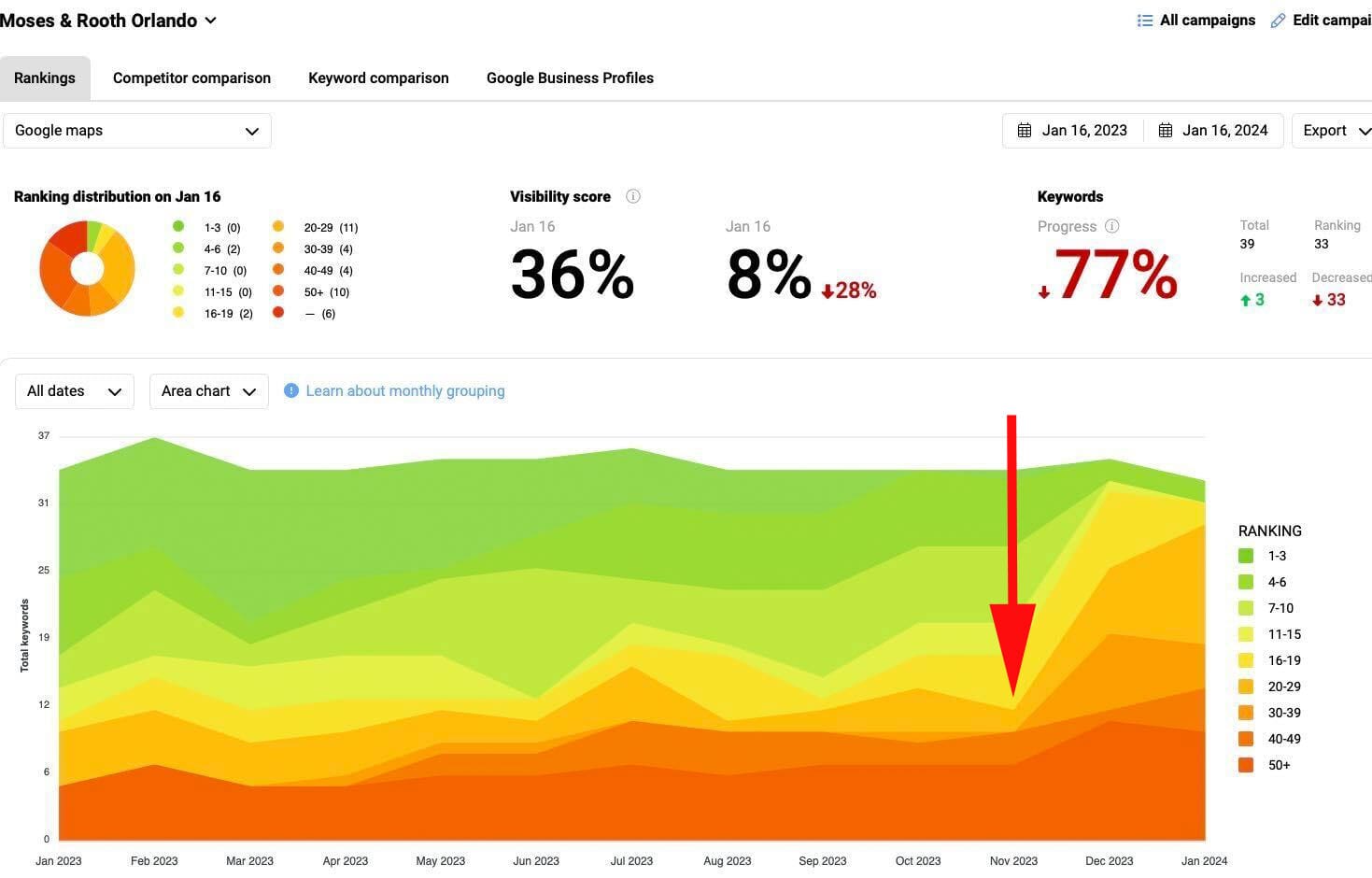
Source: Whitespark
**Our take:**
- Data tools like rank tractors are just point in time approximations of reality. They make assumptions and design decisions that are often not obvious.
- The story that the tools tell might not be the story you think it is. Practitioners need to step back, take a breath and ferret out what the data is really saying.
- Google's hours algo update is a bad update that could have been handled in more productive ways. Predictably, it's leading to a broad degradation hours accuracy in some (but not all) categories. We [discuss these issues](https://www.youtube.com/watch?v=P5dB67c0w3M&ref=nearmedia.co) in our most recent podcast.
### Does Reporting Reviews Work? Sometimes.
In September, Joy Hawkins [noted](https://www.sterlingsky.ca/when-google-catches-business-buying-fake-reviews/?ref=nearmedia.co) that Google frequently does nothing permanent when a business is caught buying reviews; they can keep buying reviews. My experience is slightly different. In a review reporting experiment, I've been working on for almost a year, two out of the three businesses I reported had their fake reviews removed and seem unable to get them back. Last April, while helping an HVAC company deal with a fake review attack, I uncovered a review network being used by many businesses to buy fake reviews. In late March, I reported three of the companies using that network via the [Business Redressal](https://support.google.com/business/contact/business%5Fredressal%5Fform?ref=nearmedia.co) form. A month later, I escalated the fake reviewer network in the Product Expert forum and within two weeks starting seeing the reviews decline. In July, I reported seven common review profiles via the GBP forum and escalated in a Product Expert specific form, and saw another significant drop in review counts within two weeks. When I saw a bump in reviews for one of the businesses, I repeated the process of filing a redressal form and escalating that case in the forum. The largest offender, a restaurant, seems to have once again been buying reviews and is getting close to replacing the removed reviews. But neither of the other two have added any reviews since October.
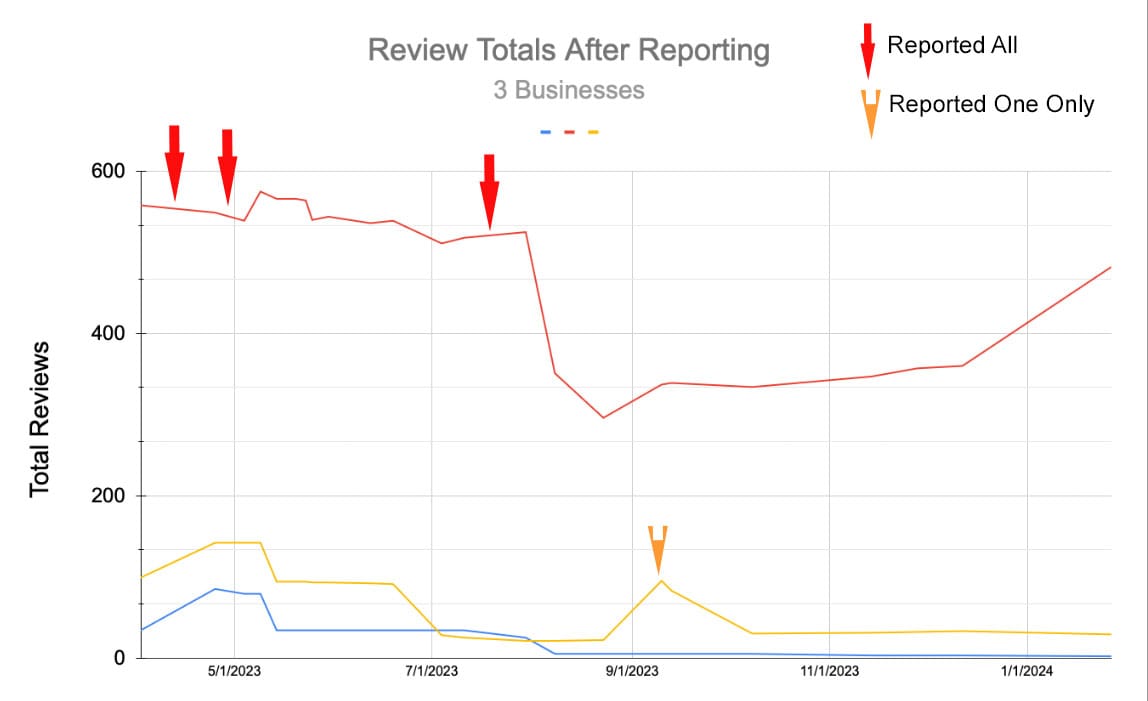
Source: Mike Blumenthal
**Our take:**
- A persistent, multi-pronged approach to leveraging every Google form/forum seems to offer some relief and (at least partially) keep reviews from returning.
- The process for getting fake reviews removed is arcane. It's based on internal ranking algos of users and businesses and thus only successful sometimes.
- Google might have tightened up review removal during the past year but it shouldn't be this hard.
### Why LSAs Are a Microcosm of Google Today
Google [confirmed](https://searchengineland.com/google-tests-highly-rated-local-services-ads-436915?ref=nearmedia.co) that it's testing a "highly rated" callout for Local Services Ads (LSAs). This test, along with LSAs in general, encapsulates everything that Google is about these days, everything they could be and everything they might become. LSA ads are highly appealing to users. In Near Media research we have found that, when LSAs are present, [use of the Local Pack drops](https://www.nearmedia.co/searcher-behaviors/#how-often-do-searchers-rely-on-local-pack-results) by almost half. They also impact organic traffic. Even ad skeptics find the elements of LSAs appealing ([see this short user video](https://www.youtube.com/watch?v=V45ibTU0c34&t=29s&ref=nearmedia.co)). Google knows this; they probably know user behavior better than anyone. They understand that additional "highlights" in the ad will increase LSA engagement and use. LSAs were meant to solve the many problems that free Google Local profiles [created](https://blumenthals.com/blog/2009/11/05/federal-bust-of-dependable-locksmith-in-florida-strikes-at-heart-of-locksmith-scams/?ref=nearmedia.co), including fake listings and reviews. To the extent that LSA guidelines were enforced they did. But as Google has scaled the product and replaced human curation with machine moderation, more cracks are turning into crevices. With the decline of human curation, [abuses](https://searchengineland.com/google-local-services-ads-arbitrage-387645?ref=nearmedia.co) and [illegal scams](https://www.nearmedia.co/google-lsa-supercharges-the-duct-cleaning-scam/) have escalated. Fake listings and [hijacked](https://www.nearmedia.co/searcher-behaviors/#lsa-listings-hijack-reviews) [reviews](https://www.nearmedia.co/rich-snippet-review-abuse-organic-ctr-lsa-reviewjacking/#google-lsa-reviewjacking-part-2) are rampant and with them we are seeing the [same bait and switch lead-gen](https://www.nearmedia.co/lsa-spam-scam-its-deja-vu-all-over-again/) we saw in Google Local. All the while Google has been [increasing the pricing](https://www.youtube.com/watch?v=ZojUP3Y9jiA&t=337s&ref=nearmedia.co) of these ads and NOT clearly marking them as ads. Coulda, woulda, shoulda is what every parent tells their child in an effort to help them find a moral compass. That is, unless the child is so far down the path of blind self-interest that they no longer waste their breath.

Source: Google
**Our take:**
- Of late, Google has been focusing on revenue at all turns and not user benefit.
- It would appear that we are in or near an inflection point, driven by AI, of massive change on the internet, including in search.
- LSAs can been seen a metaphor for how Google has been responding to these changes. It isn't a pretty picture.
## Recent Analysis
- **Near Memo episode 143**: [Will fired Google Raters be replaced w/AI?; SEO tools often hide the truth; do content strategies need to be updated after 'Hidden Gems' and the decline of Big Social](https://www.nearmedia.co/ep-143/)?
## Short Takes
- **GBPs** [providing more transparency](https://twitter.com/colannielsen/status/1751240317410406722?s=12&ref=nearmedia.co) around business suspensions.
- Should **realtors** [register their GBPs](https://twitter.com/DarrenShaw%5F/status/1752003660773769606?s=20&ref=nearmedia.co) at the brokerage or home address?
- Moz: [upgrade](https://moz.com/blog/local-about-page??ref=nearmedia.co) your local business **about us page**.
- **G-Maps spam fighting**: "[suggest an edit" loophole](https://www.localvisibilitysystem.com/2024/01/30/google-maps-suggest-an-edit-loophole-2nd-reports-approved-sometimes/?ref=nearmedia.co), second reports.
- **Menu Highlights** lets restaurants [easily update](https://www.seroundtable.com/google-business-profile-restaurants-menu-highlights-corrections-36797.html?ref=nearmedia.co) GBP menus.
- **Exact match domains** [gaining influence](https://www.linkedin.com/posts/rosshudgens%5Fseo-trend-to-watch-emdpmd-influence-is-activity-7156710090568273920-ZCRs/?utm%5Fsource=share&utm%5Fmedium=member%5Fios) in ranking once again?
- Some publishers/marketers [abusing](https://www.seroundtable.com/google-penalize-recipe-collection-pages-36782.html?ref=nearmedia.co) **recipe structured data**.
- **Google** [launched discount codes](https://twitter.com/brodieseo/status/1751849849899942352?ref=nearmedia.co) in rich results in the US.
- **SGE** is Google's [new commerce-search weapon](https://www.linkedin.com/posts/aleyda%5Fobservations-about-the-carousel-sge-snapshot-activity-7156396929734586368-W7d6/?ref=nearmedia.co) against Amazon.
- An [LLM/AI-powered](https://appleinsider.com/articles/24/01/26/ios-174-beta-has-signs-of-an-ai-improved-siri-ahead-of-wwdc-2024??ref=nearmedia.co) **Siri** is coming perhaps as early as June.
- The **DMA**, Apple and (potentially) [unintended consequences](https://hardcoresoftware.learningbyshipping.com/p/215-building-under-regulation?ref=nearmedia.co).
- **TikTok** wants to make all [videos "shoppable](https://www.bloomberg.com/news/articles/2024-01-29/tiktok-tests-feature-that-could-make-all-videos-shoppable?ref=nearmedia.co)."
- Europe [becoming](https://www.axios.com/2024/01/29/european-regulators-antitrust-competition-eu-uk-us-businesses?ref=nearmedia.co) the **de-facto regulator** of the US tech industry.
- Regulatory pressure [scuttles](https://www.cnbc.com/2024/01/29/amazon-terminates-irobot-deal-vacuum-maker-to-lay-off-31percent-of-staff.html??ref=nearmedia.co) **Amazon's** purchase of Roomba maker.
- **Walmart** expanding 30-minute [drone delivery pilot](https://chainstoreage.com/wing-walmart-tout-drone-delivery-efforts-nrf-2024?ref=nearmedia.co).
- Zoom [readies launch of app](https://techcrunch.com/2024/01/29/zoom-debuts-its-app-for-vision-pro-featuring-digital-personas-3d-files-and-more/?ref=nearmedia.co) for **Apple Vision Pro**.
Listen to our [latest podcast](https://www.nearmedia.co/memo/).
[](https://nearmedia.co/memo?ref=nearmedia.co)
How can we make this better? Email [us](mailto:gsterling@nearmedia.co) with suggestions and recommendations.
### Ep 143: Fired Google Raters replaced w/ AI? SEO Tools are just tools, Hidden Gems & decline of Big Social
URL: https://www.nearmedia.co/ep-143/
Last updated: 2024-01-28T05:16:57.000Z
**Part 1 starts 00:13 -** [**Will Fired Google Raters Be Replaced with AI?**](https://youtu.be/geUYmuuT1ak?ref=nearmedia.co)
Last week Google terminated their relationship with one of the companies responsible for rating the quality of websites. Certainly Google has been on a cost cutting rampage of late with layoffs and product cancellations and they indicate that they are giving the work to one of the other companies. But is the ending of a long standing relationships with one of the companies responsible for quality rating just a cost cutting measure or a foreshadowing of Google using AI to perform this important task?
Segment Reference Articles
[Google Terminates Contract With Appen For Search Quality Raters](https://www.searchenginejournal.com/google-terminates-contract-with-appen-for-search-quality-raters/506006/?ref=nearmedia.co)
**Part 2 starts 08:02 -** [**SEO Tools are just tools and should be used with care**](https://youtu.be/P5dB67c0w3M?ref=nearmedia.co)
In a recent consulting gig, in analyzing a client’s ranking history, it appeared that their on-line Google presence had gone south. The rankings on all of their keywords in Google Maps were were disappearing and it had been getting worse since the second week of November. But the reality was much more subtle. They and their rank tracking tool had been bitten by a local Google algo update.
Segment Reference Articles:
[The Openness Algorithm Update](https://www.sterlingsky.ca/google-confirmed-openness-update/?ref=nearmedia.co)
**Part 3 starts 22:00 -** [**Hidden Gems and the Decline of Big Social**](https://youtu.be/sahJeBhxePY?ref=nearmedia.co)
Google and the internet are going through big changes. the large social sites are becoming less attractive and the SERPS are becoming more …. annoying? Google in an effort to address this changing reality has elevated niche forum sites. Will the same things happen to these forums now that Google is focusing on them as happened to a lot of the Google search results? Is Google just shifting the responsibility for moderating content off to the sites? How does this change affect your content strategies. All good questions we grapple with in this segment
Segment Reference Articles:
[Hidden Gems: Authenticity and Fragmentation](https://www.nearmedia.co/automated-paid-search-hidden-gems-in-store-ai-assistants/#hidden-gems-authenticity-and-fragmentation)
[Why is this site getting 144% more traffic from Google in 2024?](https://www.sterlingsky.ca/site-getting-144-more-traffic-2024/?ref=nearmedia.co)
### Conversational PPC, Hidden Gems, In-Store AI Assistants
URL: https://www.nearmedia.co/automated-paid-search-hidden-gems-in-store-ai-assistants/
Last updated: 2024-01-25T20:29:29.000Z
### Gemini Comes to Search Campaigns
Google's path toward full automation of ad campaign creation and optimization took another step forward with the announcement that Google's [Gemini and "conversational experience](https://blog.google/products/ads-commerce/put-google-ai-to-work-with-search-ads/?ref=nearmedia.co)" was going live for paid-search campaigns in the US and UK. It will soon will be available to all English language advertisers and eventually go global. The idea is that [a chat-driven experience](https://blog.google/products/ads-commerce/ai-powered-ads-google-marketing-live/?ref=nearmedia.co) will help search marketers create better performing ads with reduced effort. You only need to provide a URL to start and AI will generate "relevant ad content, including creatives and keywords," Google [explained](https://blog.google/products/ads-commerce/put-google-ai-to-work-with-search-ads/?ref=nearmedia.co). Beta testers have reportedly been able to build better campaigns more quickly. Marketers may [still edit campaigns](https://twitter.com/adsliaison/status/1750196435805491334??ref=nearmedia.co) after they're built. One of the promises of AI is simplification. And the conversational experience is substantially directed at reducing friction for smaller advertisers. However, agencies will likely use this as well. We don't yet have any independent performance data.
**Chat-Based Search Campaign Creation**

Source: Google
**Our take:**
- If paid-search ads are easier to create and perform better that's a good thing – right?
- Google clearly believes reducing friction and helping marketers create better ads will generate more ad revenue. That's the real driver here.
- Google has been on this ads-automation path for at least a decade and recent advances in AI are helping accelerate the shift to full automation.
### Hidden Gems: Authenticity and Fragmentation
Part of Google's strategy to combat TikTok [flight](https://www.nearmedia.co/sge-failure-to-launch-quality-raters-axed-whats-wrong-at-google/), spam and criticism of search quality in general is to surface more forum and "hidden" social content (e.g., public forums). This is on top of short form video. Joy Hawkins of SterlingSky recently discussed this in the context of a [144% spike in traffic](https://www.sterlingsky.ca/site-getting-144-more-traffic-2024/?ref=nearmedia.co) to the Local Search Forum. Yet it's going on in multiple places, especially Reddit and, unfortunately, Quora. This is part of Google's "hidden gems" strategy, [which kicked in around Q3 last year](https://www.seroundtable.com/google-search-hidden-gems-ranking-algorithm-36388.html?ref=nearmedia.co), and is technically [part of the Helpful Content Update](https://twitter.com/searchliaison/status/1724830677428998405?ref=nearmedia.co). The idea is to surface content by actual humans with [personal expertise](https://blog.google/products/search/google-search-perspectives/?ref=nearmedia.co), insights or first-hand knowledge and experience – bloggers, creators, credible experts and relevant others. This is often what people are seeking when they go to TikTok instead of Google ("authenticity"), for recipes, fashion or beauty advice for example. At the same time, "big social" (e.g., Facebook, Twitter) has seen a decline in user engagement and organic reach. Google's ranking of alternatives to the usual social suspects may further fragment social media strategies. As we discuss in upcoming episode 143 of the [Near Memo](https://www.nearmedia.co/memo/), a content strategy rethink may be in order.

**Our take:**
- Absent strong moderation, spam may become a bigger problem for these hidden gems sites. What Google rewards [people always do](https://twitter.com/DarrenShaw%5F/status/1748758889515106714?ref=nearmedia.co).
- Participation in top industry forums is an important quasi-[barnacle SEO](https://www.searchinfluence.com/blog/barnacle-seo-original/?ref=nearmedia.co) tactic. But there's no one-size fits all social/community/content strategy.
- Responding to reviews is arguably part of a larger community or social strategy. Most businesses don't respond to reviews consistently, if at all.
### In-Store AI Assistants Coming
AI assistants could be a boon for both consumers and marketers in retail environments. To date, conversational assistants have been [tested](https://www.bloomberg.com/news/newsletters/2023-07-10/del-taco-and-carl-s-jr-fast-food-restaurants-test-drive-thru-ai?ref=nearmedia.co) at fast food kiosks. Now, [a new pilot program from Samsung](https://news.samsung.com/us/samsung-fuels-new-era-of-in-store-engagement/?ref=nearmedia.co) and partners could mark a new phase of AI integration into IRL hospitality and retail environments. Samsung is installing AI-powered digital screens in three Chevron gas station convenience stores in California and Washington. In one way they're not significantly different from previous digital displays in retail stores. They'll be located in high-traffic areas and provide brand and retailer advertising and merchandising opportunities. They'll also display other types of information, such as weather. More interesting is the inclusion of photo-realistic avatars ("digital humans") who can interact with customers: "Sam the Sommelier is a hyper-realistic generative AI-powered virtual being that can interact with customers via voice or live chat through an app and provide recommendations for wine pairings with their food purchases." The image below is an in-aisle screen featuring Sam. If well designed, these avatars could improve customer experiences and boost spending.

Source: Samsung-Chevron
**Our take:**
- Many people [leave retail stores](https://www.retailtouchpoints.com/topics/store-operations/study-reveals-why-96-of-shoppers-leave-stores-empty-handed?ref=nearmedia.co) because they either can't find what they're looking for or can't get someone to help them.
- Well designed conversational AI could help locate products and provide information and advice, which would lead to greater spending.
- Service is a reason to shop in store. However, in-store experiences are inconsistent. This could partly remedy that and address employee shortages – or justify reduced hiring as well.
## Recent Analysis
- **Near Memo episode 142:** [SGE *not* the future?, GBP end times? Google chooses sizzle over steak](https://www.nearmedia.co/ep-142-sge-not-the-future-gbp-end-days-google-chooses-sizzle-over-steak/).
## Short Takes
- **Google custom services** [impact rankings less](https://www.sterlingsky.ca/do-custom-google-business-profile-services-impact-ranking/?ref=nearmedia.co) vs. pre-defined services.
- **Google driving directions requests** [jump for some](https://twitter.com/joyannehawkins/status/1750491261453176931?s=43&t=NNLJEcbkhyOw0gOk6%5FrQUw&ref=nearmedia.co).
- **GBP driving directions report** [will show less data](https://www.seroundtable.com/google-business-profiles-performance-report-driving-directions-privacy-36776.html?ref=nearmedia.co) in the future.
- **TikTok** [promoting itself as search engine](https://www.linkedin.com/posts/phoebesophiarussell%5Fseos-saying-tiktok-isnt-a-search-engine-activity-7155921406721949696-mDT9/??ref=nearmedia.co) in London underground ad.
- Whitespark: High-level [roadmap to ranking #1](https://twitter.com/DarrenShaw%5F/status/1750197448361042352?ref=nearmedia.co) in the **Local Pack**.
- Why your **content** may not be ranking – [5 questions to ask](https://searchengineland.com/content-not-ranking-questions-to-ask-436715??ref=nearmedia.co).
- Poll (informal): **59% of SEOs** [anxious about potential SGE impact](https://www.seroundtable.com/seos-worried-impact-google-sge-36770.html?ref=nearmedia.co).
- **Google** [expanding](https://www.seroundtable.com/google-chat-with-a-live-agentsearch-result-snippets-36762.html?ref=nearmedia.co) "chat with live agent" into search snippets.
- **Yelp**: new business starts/openings [exceed pre-pandemic levels](https://data.yelp.com/business-openings-report-2023?ref=nearmedia.co).
- **iPhone** notifications a stealth app [data collection/tracking tool](https://gizmodo.com/iphone-apps-can-harvest-data-from-notifications-1851194537?ref=nearmedia.co).
- Why the **1984 Mac** – introduced 40 years ago – [was such a big deal](https://www.fastcompany.com/91013403/40-years-later-the-original-mac-is-more-amazing-than-ever?ref=nearmedia.co).
- **Albertsons and Amazon** are online-grocery [curbside pickup winners](https://www.digitalcommerce360.com/2024/01/24/best-curbside-pickup-albertsons/?ref=nearmedia.co).
- Report: tech platforms [should pay](https://cepr.org/voxeu/blogs-and-reviews/paying-news-what-google-and-meta-owe-publishers?ref=nearmedia.co) $12B to **news publishers** annually.
- MIT: **replacing workers with AI** [not cost effective](https://futurism.com/replacing-workers-ai-expensive-mit?ref=nearmedia.co) in many cases.
Listen to our [latest podcast](https://www.nearmedia.co/memo/).
[](https://nearmedia.co/memo?ref=nearmedia.co)
How can we make this better? Email [us](mailto:gsterling@nearmedia.co) with suggestions and recommendations.
### SGE Failure to Launch, Quality Raters Axed, What's Wrong at Google?
URL: https://www.nearmedia.co/sge-failure-to-launch-quality-raters-axed-whats-wrong-at-google/
Last updated: 2024-01-23T20:38:19.000Z
### SGE: Failure to Launch?
There have now been several studies of the impact of Google SGE on search results ([BrightEdge](https://www.brightedge.com/news/press-releases/research-shows-impact-of-SGE-on-businesses??ref=nearmedia.co), [Authoritas](https://www.nearmedia.co/google-sge-pushdown-siri-ai-overhaul-brick-mortar-halo/), [others](https://www.nearmedia.co/sge-a-traffic-destroyer-ai-optimization-smb-badges/)). All conclude, with varying degrees of confidence, that SGE could (or will) have a profound impact on the SERP and reduce organic traffic. But there's [increasing evidence](https://twitter.com/RossHudgens/status/1748194086069367166??ref=nearmedia.co) that SGE, as it exists today, may never escape labs into general availability – as we discussed on the most recent Near Media [podcast](https://www.nearmedia.co/ep-142-sge-not-the-future-gbp-end-days-google-chooses-sizzle-over-steak/). Google has seemingly beaten back the "AI assistant" threat. BingGPT [has failed to gain market share](https://www.seroundtable.com/bing-market-share-chatgpt-36751.html?ref=nearmedia.co); ChatGPT is widely used but seemingly not a direct challenge to search (at least at the moment). And while TikTok [is being used](https://www.adobe.com/express/learn/blog/using-tiktok-as-a-search-engine?ref=nearmedia.co) by GenZ and others as a search engine in selected cases (e.g., recipes, music), it doesn't appear to threaten Google's market share or revenues. There's also [evidence](https://techcrunch.com/2024/01/19/tiktok-usage-is-starting-to-slow-is-tiktok-shop-to-blame/??ref=nearmedia.co) that TikTok usage is starting to slow, amid aggressive attempts to monetize: TikTok Shop. There is growing dissatisfaction with Google search results, as the TikTok search data suggest – people like the "authenticity," personalization, storytelling and visual nature of short video – but that's not going to immediately translate into market share losses for Google. As a consequence, Google is under no pressure to fully roll out SGE. Instead it will likely serve, as Google [says](https://blog.google/products/search/google-search-ai-january-2024-update/?ref=nearmedia.co), simply "as a testbed for bold new ideas."
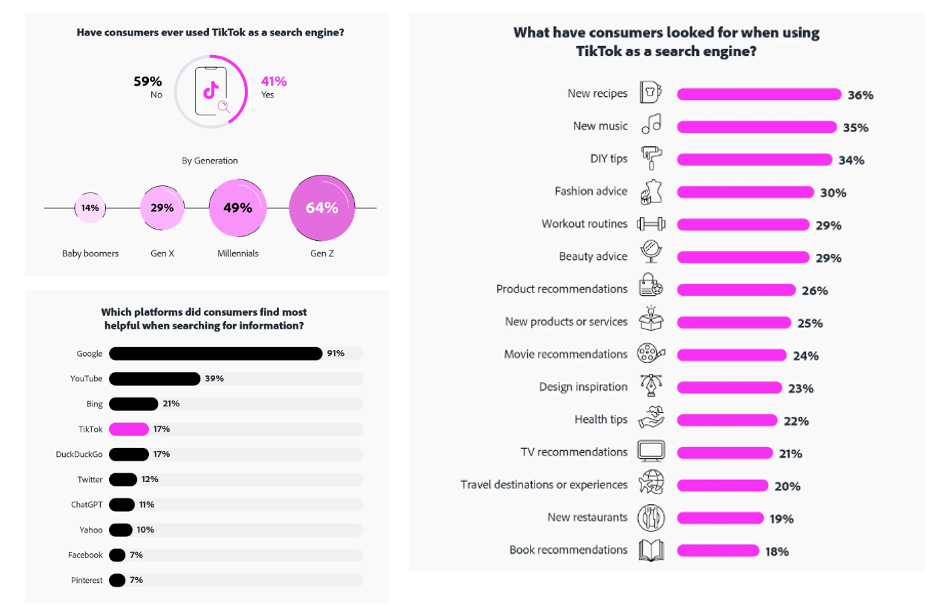
Source: Adobe survey 2024
**Our take:**
- Google will integrate AI features into search but we're unlikely to see SGE launch in its current form. The more interesting product to watch is Bard.
- SGE was a "defensive" response to ChatGPT and BingGPT, and an effort to beat back bad PR that was hurting its corporate valuation. It largely succeeded.
- Google's brand image has suffered and it will continue to see user erosion but, as with Twitter, there's no truly viable alternative – yet.
### Google Gives Quality (Raters) the Ax
Google abruptly [terminated its contract](https://twitter.com/CyrusShepard/status/1749242721871741429??ref=nearmedia.co) with a company called Appen, which is one of its quality rater contractors. In 2023 Google paid \~$82 million to Appen, which represents thousands of positions. There are at least [two other Google contractors](https://twitter.com/CaitlinTheSEO/status/1749363135406858513??ref=nearmedia.co) that perform the same functions; however, Appen was reportedly one of the larger ones. This may be part of a larger reallocation of resources going on within the company. Google is [laying off thousands of employees](https://blog.google/inside-google/message-ceo/january-update/?ref=nearmedia.co) across the organization as it builds AI into more products (and needs fewer people); also to make room for more AI investment, which may in turn prompt future workforce reductions. The Appen decision was opaque and it's not clear what this means for the human quality rater program, which has played an important role in Google's efforts to boost and maintain search quality. Some on Twitter have speculated that Google may partly fault quality raters for the [widely perceived degradation](https://mashable.com/article/google-search-low-quality-research?ref=nearmedia.co) of search results and so this may be the fallout. All we can do for the time being is speculate about Google's rationale and "wait-and-see" its impact.

**Our take:**
- Google may believe that AI can increasingly step in for quality raters and that it can rely on fewer contractors going forward.
- In tandem or alternatively, it may simply be "clawing back" the $82 million for other projects (read: AI development/salaries) elsewhere in the company.
- This could be the beginning of the end for the current quality raters program. Yet Google still needs humans in the mix to train AI and check SERPs.
- **Update: It** [**appears**](https://twitter.com/CyrusShepard/status/1749652760008839496?ref=nearmedia.co) **this may have been a response to wage increases for Appen raters. Google will the work shift to other contractors.**
### What's Wrong at Google?
On numerous podcasts we've lamented Google's tendency to develop incomplete products, launch them early and later neglect or abandon them. The [GBP roadmap](https://www.nearmedia.co/future-of-gbp-fake-reviews-rule-yahoo-local-thryving/) is a case-in-point. Despite Google's continued dominance, there's now a debate happening about what went wrong. Does Google need a leadership change or does it need to completely overhaul its culture – or both? Current Google software engineer Diane Hirsh Theriault unleashed a [stinging critique](https://www.linkedin.com/posts/dhtheriault%5Fmy-hot-take-google-does-not-have-one-single-activity-7153269568893775872-9xzp/?ref=nearmedia.co) of Google leadership on LinkedIn: "Google does not have one single visionary leader. Not a one. From the C-suite to the SVPs to the VPs, they are all profoundly boring and glassy-eyed." Her missive is in apparent response to layoffs. She adds that many Google employees are increasingly disengaged: "There is a pervasive sense of nihilism that has taken hold. 'Well, I guess I will just do the job until they fire me.'" Other insiders have [blamed](https://www.tbray.org/ongoing/When/202x/2024/01/15/Google-2024?ref=nearmedia.co) Google's "pattern of hiring and empowering psychotic pricks who were presumably 'good at business.'" Still others [argue](https://www.threads.net/@danielraffel/post/C2YIjDrSIyN?ref=nearmedia.co) it's really the culture – a lack of commitment to products (that don't get 100 million users in six months) rather than a lack of vision. And some blame Google's "decline" [on its Wall-Street orientation](https://www.theatlantic.com/ideas/archive/2019/11/how-boeing-lost-its-bearings/602188/?ref=nearmedia.co) or that it has become like a telco of old, conservative, married to revenue predictability and [fearful of making bold decisions](https://om.co/2024/01/22/bell-labs-google-same-sad-story/?ref=nearmedia.co).

**Our take:**
- All of the above is the right multiple choice answer to the question: what's wrong at Google?
- Leadership matters. Think about how Steve Ballmer –> Satya Nadella at Microsoft has radically transformed that company.
- As companies age/grow they necessarily change, but Google has now become the kind of entity it [said it never would be](https://abc.xyz/investor/founders-letters/ipo-letter/?ref=nearmedia.co): "a conventional company."
## Recent Analysis
- **Near Memo episode 142:** [SGE *not* the future?, GBP end times? Google chooses sizzle over steak](https://www.nearmedia.co/ep-142-sge-not-the-future-gbp-end-days-google-chooses-sizzle-over-steak/).
- **LSA Home Services Scam: A Marketer's Insight**, [by Mike Blumenthal](https://www.nearmedia.co/exposing-the-google-guarantee-lsa-ads-scam-in-home-services-a-marketers-insight/).
## Short Takes
- New GBP "**nearby events and deals**" tiles [showing](https://www.brightlocal.com/blog/new-nearby-events-and-deals-feature/??ref=nearmedia.co) for restaurant queries.
- More **GBPs changing hours** to "[open 24 hours](https://twitter.com/DarrenShaw%5F/status/1748758889515106714?s=20&ref=nearmedia.co)" to rank better.
- More [evidence](https://www.sterlingsky.ca/site-getting-144-more-traffic-2024/?ref=nearmedia.co) that Google is elevating **forums in SERPs**.
- UK case study: **online local inventory** [drives in-store sales](https://blog.near.st/boodles-casestudy?ref=nearmedia.co).
- **PPC advertisers** in EU about to see [campaign performance drop](https://searchengineland.com/google-urgent-steps-advertisers-eu-436687?ref=nearmedia.co).
- The unaddressed problem of **AI deepfakes** [is just getting started](https://nymag.com/intelligencer/2024/01/taylor-swift-and-other-celebrities-already-live-in-ai-hell.html?ref=nearmedia.co).
- **Apple Vision Pro** [pre-orders sold out](https://www.engadget.com/apple-might-have-sold-up-to-180000-vision-pro-headsets-over-pre-order-weekend-081727344.html?ref=nearmedia.co), but "demand intensity" may be soft.
- Amazon is out of its mind if it thinks people [will pay for](https://arstechnica.com/gadgets/2024/01/alexa-is-in-trouble-paid-for-alexa-gives-inaccurate-answers-in-early-demos/?ref=nearmedia.co) **Alexa**.
- How Google [plans](https://blog.research.google/2024/01/introducing-aspire-for-selective.html?ref=nearmedia.co) to make **AI/LLMs** more reliable and accurate.
- Why **LLMs and internet content** may face a [downward quality spiral](https://www.windowscentral.com/microsoft/3-reasons-why-ai-llms-like-microsoft-copilot-and-chatgpt-might-have-already-peaked-and-will-only-get-worse?ref=nearmedia.co).
- Product liability claims against social media [defeating](https://www.fastcompany.com/91008367/courts-quietly-chipping-away-tech-companies-section-230?ref=nearmedia.co) **Section 230** defenses.
- Study: brands [don't understand](https://www.mediapost.com/publications/article/392825/digital-gap-widens-between-what-brands-and-consume.html?ref=nearmedia.co) **what customers really want**.
Listen to our [latest podcast](https://www.nearmedia.co/memo/).
[](https://nearmedia.co/memo?ref=nearmedia.co)
How can we make this better? Email [us](mailto:gsterling@nearmedia.co) with suggestions and recommendations.
### Ep 142: SGE NOT the Future?, GBP End Days? Google Chooses Sizzle over Steak
URL: https://www.nearmedia.co/ep-142-sge-not-the-future-gbp-end-days-google-chooses-sizzle-over-steak/
Last updated: 2024-01-20T17:51:31.000Z
**Part 1 starts 00:13 -** [**SGE has huge impacts but is still just a testing ground for AI search features**](https://youtu.be/PcFUHLwyv0c?ref=nearmedia.co)
Some industries, like healthcare, are impacted by Google’s SGE (search generative experience) than others with 76% of queries analyzed being impacted by SGE. While other industries show lesser impact, it is still significant. But SGE is still just a test and one that impacts those likely to enroll in these sorts of experiments, like SEO pros. While many SEOs fear that SGE IS the future of search, it is more likely a testing ground as Google figures out exactly how AI will be integrated into search. Businesses need to be aware of what is going on with SGE but not change any behaviors or tactics.
Segment Reference Articles
[How Significantly Google’s New AI-Powered Search Engine Will Impact Their Business](https://www.brightedge.com/news/press-releases/research-shows-impact-of-SGE-on-businesses?ref=nearmedia.co)
[Ross Hudgens (Twitter) on the continuing role of SGE at Google](https://x.com/RossHudgens/status/1748194086069367166?s=20&ref=nearmedia.co)
**Part 2 starts 11:03 -** [**What is the future of the GBP as a hub of SMB activity?**](https://youtu.be/gEB4o9ptedE?ref=nearmedia.co)
Historically, the GBP (Google Business Profile) dashboard has been the center of active development of tools to benefit local businesses of all sizes. The plans were always ambitious and new products were frequent. However since the rollout the NMX interface integrating basic functionality into the search and maps interfaces, we have seen more features disappear or be demoted and very few features being newly developed. What does this say about the role of the GBP within Maps specifically and search more broadly?
Segment Reference Articles: [Where is the GBP Heading?](https://www.nearmedia.co/future-of-gbp-fake-reviews-rule-yahoo-local-thryving/)
**Part 3 starts 20:08 -** [**Google, distracted by numerous tangential projects, should be focusing on the basics to protect their franchise**](https://youtu.be/vXjZmhC9Ryc?ref=nearmedia.co)
Given the belt tightening going on in Mt View and with the generally perceived decline in overall search quality, Google seems to be working around the edges of search with products that are newsworthy but not core to the search experience. They should instead be initiating an all hands on deck effort focusing on making their meat and potato Search Engine the best that it can be.
Segment Reference Articles:
[New ways to search in 2024](https://blog.google/products/search/google-search-ai-january-2024-update/?ref=nearmedia.co)
[Google Search Really Has Gotten Worse, Researchers Find](https://www.404media.co/google-search-really-has-gotten-worse-researchers-find/?ref=nearmedia.co)
### Future of GBP, Fake Reviews Rule, Yahoo Local Thryving
URL: https://www.nearmedia.co/future-of-gbp-fake-reviews-rule-yahoo-local-thryving/
Last updated: 2024-01-18T21:44:40.000Z
### Where Is Google Business Profile Heading?
With the [recent demise](https://www.nearmedia.co/gbp-sites-gone-google-guarantee-scam-impact-ai-the-future-of-search/) of Google Business Profile (GBP) Websites and the sale of Google Domains, it raises once again the question of exactly what Google plans for the free, marketing suite of products offered under the GBP umbrella. Historically, GBP – previously Local Business Center, Places, Google+ Local & Google My Business/GMB – [promised](https://www.nearmedia.co/a-history-of-google-business-profiles-name-changes/) to be a center for small business activity. In 2012, the product map was ambitiously [referred](https://www.wsj.com/articles/SB10001424052702304821304577443371490403652?ref=nearmedia.co) to as "The Business Builder" and intended to offer the best of local and social as well as self-provisioned and easy to use [couponing](https://blumenthals.com/blog/2012/11/28/google-acquires-incentive-targeting-for-coupon-programs/?ref=nearmedia.co), Adwords, offers and other paid options. In 2013, it appeared GMB would build a [pathway](https://blumenthals.com/blog/2014/06/11/google-my-business-a-brand-a-portal-a-platform-places-makes-it-to-the-promised-land/?ref=nearmedia.co) to an integrated SMB product. That was waylaid by the failure of Google+ and the need for GMB to start over. By the end of 2016, however, Google Local had fully separated from G+ and was starting to roll out [a number of new features into the dashboard](https://blumenthals.com/blog/2016/09/12/is-google-doubling-down-on-local-yes-now-what/?ref=nearmedia.co). In 2017, [Posts](https://blumenthals.com/blog/2017/03/22/google-continues-testing-of-posts-as-worldwide-use-expands/?ref=nearmedia.co), [Websites](https://blumenthals.com/blog/2017/06/13/google-mybusiness-website-builder-released-worldwide/?ref=nearmedia.co) and Messaging arrived, and the dashboard continued to improve. As recently as 2020, Google [acquired Pointy](https://techcrunch.com/2020/01/14/google-is-buying-pointy-a-startup-that-helps-brick-and-mortar-retailers-list-products-online/?ref=nearmedia.co), an SMB inventory platform, and [The Ordering App](https://arstechnica.com/tech-policy/2022/03/google-hijacked-millions-of-customers-and-orders-from-restaurants-lawsuit-says/?ref=nearmedia.co#:~:text=Google%20acquisition&text=%E2%80%9CThe%20Ordering%20app%20is%20an,the%20product%27s%20Salesforce%20page%20says.) for small restaurants, and was making them available via GBP. But with the rebranding of Google My Business as Google Business Profile, in late 2021, and the rollout of web-based business listings editing (NMX), we have seen few new features within GBP. The multi-location dashboard [was left to decay](https://www.nearmedia.co/ep-90/), GBP forum support has declined and few new capabilities have been introduced.
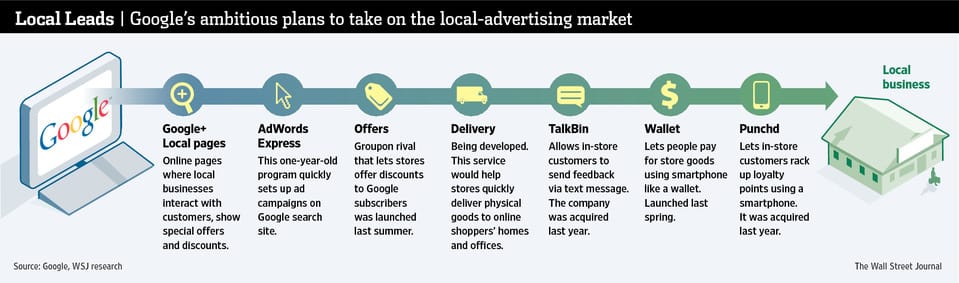
Ambitious G+Local roadmap from an WSJ article in 2013
**Our take:**
- Google has [de-emphasized Local](https://blumenthals.com/blog/2015/05/13/google-continues-debranding-local-google-maps-app-becoming-locals-forward-facing-brand/?ref=nearmedia.co) as a forward facing brand; now it seems they are de-emphasizing the local product suite as well.
- Once one of the most ambitious areas within the company, Google Local has become a shadow of itself.
- Google seems to be putting their local eggs more aggressively into the LSA and Merchant Center baskets even though LSAs [are](https://www.nearmedia.co/google-lsa-supercharges-the-duct-cleaning-scam/) [rife](https://www.nearmedia.co/lsa-spam-scam-its-deja-vu-all-over-again/) [with fraud](https://www.nearmedia.co/exposing-the-google-guarantee-lsa-ads-scam-in-home-services-a-marketers-insight/) and much of the Merchant Center rollout has [been lame](https://www.nearmedia.co/ep-90/).
### FTC Moves Slowly, Review Fraud Doesn't
On February 13th, the FTC is holding an [informal hearing](https://www.ftc.gov/news-events/news/press-releases/2024/01/ftc-hold-informal-hearing-proposed-rule-banning-fake-reviews-testimonials?ref=nearmedia.co) on the proposed [rule banning fake reviews](https://www.ftc.gov/news-events/news/press-releases/2023/06/federal-trade-commission-announces-proposed-rule-banning-fake-reviews-testimonials?ref=nearmedia.co) and testimonials. Once implemented, it will largely hold the creators of the fake reviews [responsible](https://www.nearmedia.co/fake-reviews-rules-google-news-blackout-beast-burger-flameout/) and largely give the platforms, including Google, a pass on any responsibility. It has [taken almost three years](https://www.nearmedia.co/the-ftc-improves-rule-making-to-deal-with/) for these rules to come into existence. Meanwhile, we are seeing [new forms of review fraud](https://www.nearmedia.co/lsa-spam-scam-its-deja-vu-all-over-again/): part and parcel of the ongoing [Local Service Ad (LSA) Google Guarantee scams](https://www.nearmedia.co/google-lsa-supercharges-the-duct-cleaning-scam/). The LSA review scam involves businesses attaching different GBP profiles, with thousands of reviews, to their LSA listings. Here's how a writer from the UK explained it: "\[Spammers\] use the same address of the business who the reviews belong to. Google's automated system then pulls in the reviews in and attaches them to the LSA listing. So for the parks, they have used the parks address as their location and took out an insurance under the parks address. So manual approval is bypassed." When [asked](https://www.linkedin.com/feed/update/urn:li:activity:7152995734064144384/?ref=nearmedia.co) on LinkedIn exactly what the solution was, I responded with the following:
1. Google needs to make sure that the program lives up to the standards promised. How are fake listings and reviews getting in? Google should figure it out and seal the cracks.
2. Google should respond with speed and responsiveness to reports of abuse. Reports should not go into a deep dark hole; and there should be a reporting process and visibility into status. (And fraud should be dealt with quickly.)
3. The FTC needs to provide and reinforce guidance and rules on this product – so someone is looking over Google's shoulder.
4. We also need to hold local and state authorities responsible when licensing abuses occur.
For those who want a concise summary of the scam and its impact, watch this new 8 minute video summarizing what is happening:
**Our take:**
- FTC oversight of reviews is critical. However the speed of rule-making is slow; changes in the ecosystem are not.
- The FTC, by exempting the platforms from liability, are giving the likes of Google a pass when new forms of review fraud materialize.
- Google has known about the LSA scam for the past 6 months and done nothing. They should not only be acting decisively – removing fake reviews and listings and fixing flaws in the LSA product – they should be creating transparent mechanisms to easily report and nuke this sort of fraud.
- Government oversight is the only way for that to happen.
### Yahoo Local Now Thryv Lead-Gen
Yahoo has long been a problem when managing local citations. Either you had to pay or you had to deal with Yext to get your listing changed. It was a crapshoot. I saw Yahoo Local mentioned on Twitter late last week as having changed so I thought I would give it a try. It turns out that Yahoo Local is now very easy to update your listing on. It's essentially being run by Thryv, the SMB SaaS-focused [successor](https://en.wikipedia.org/wiki/Thryv?ref=nearmedia.co) to directory publisher Dex Media, which basically consolidated the yellow pages industry's remaining players. The day after filling out the listing update form on Yahoo, I was called by a Thryv telemarketer to "help me with my listing" – and qualify me for additional upsells. It was a smooth and pleasant call, although it occurred at 8:15 am. As part of its "digital transformation," Thryv had the difficult task of converting one of the legendary local sales forces into an online entity during the years-long decline of the yellow pages market. Every year, on my blog, I would [recount](https://blumenthals.com/blog/2016/04/26/the-annual-print-yellow-pages-page-count-and-lemonade/?ref=nearmedia.co) the excruciating page count decline in my local yellow pages. This past June I did a [count](https://twitter.com/mblumenthal/status/1667218160645226497?ref=nearmedia.co) for old times' sake. The last time I seriously addressed YPs was in a 2018 [article](https://streetfightmag.com/2018/08/13/dexyp-and-other-publishers-transition-to-digital-but-limited-revenue-suggests-bleak-long-term-prospects/?ref=nearmedia.co) with David Mihm. We discussed the difficult transition from print to digital and that success prospects were bleak, despite a huge customer base and on-the-ground sales force.
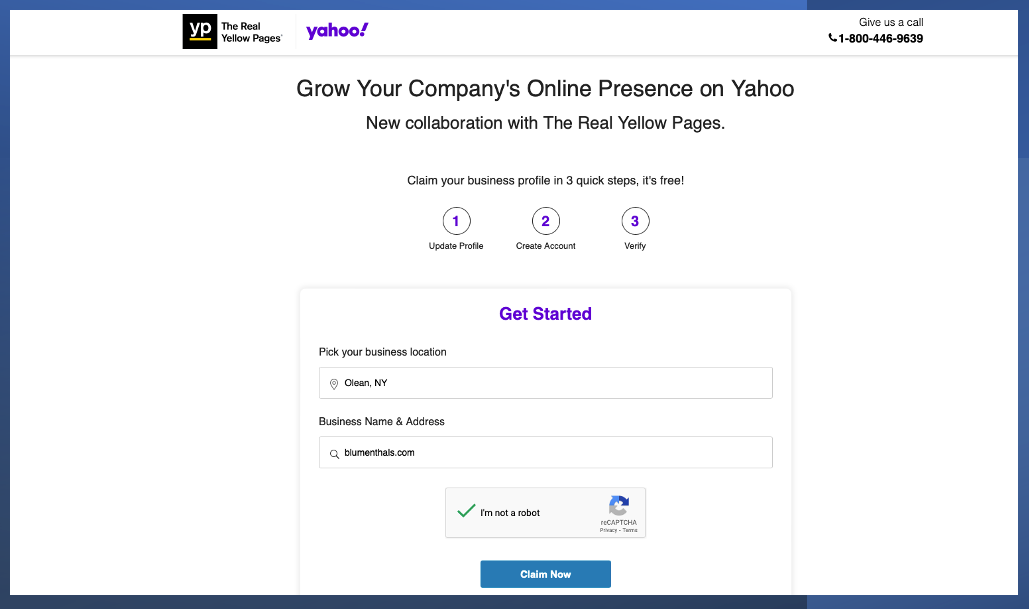
Source: Yahoo
**Our take:**
- Thryv is still here, as are [the yellow pages](https://marketing.yellowpages.com/en/print-directory-advertising?ref=nearmedia.co), but their [financials](https://www.google.com/finance/quote/THRY:NASDAQ?sa=X&ved=2ahUKEwiX%5Ff%5FQyueDAxWQhP0HHTNaD1IQ3ecFegQIHxAf&ref=nearmedia.co) aren't looking very healthy.
- Directory publishers were local powerhouses in the early 2000s. But like newspapers, they offer an object lesson in not dealing fast enough with the massive digital transition in advertising and sales.
- Years ago, Verizon saddled its yellow pages spinoff with huge debt. Dex (now Thryv) ultimately inherited that outstanding debt. The fact that Thryv is still here, albeit limping along, is impressive.
## Recent Analysis
- ICYMI: **Near Memo episode 140:** [Businesses & Google SGE, Google Goes All in On Interstitials, Where is Bard Going?](https://www.nearmedia.co/ep-140/)
- **Google LSAs Supercharge Duct Cleaning Scam**, [by Mike Blumenthal](https://www.nearmedia.co/google-lsa-supercharges-the-duct-cleaning-scam/).
## Short Takes
- Moz: [what to do with](https://moz.com/blog/aging-local-content?ref=nearmedia.co) **aging local business content**.
- An [advanced guide](https://www.brightlocal.com/learn/advanced-google-search-console-local/?ref=nearmedia.co) to **Google Search Console for local search.**
- Tipforeasily [adding](https://x.com/DarrenShaw%5F/status/1747293093756576238?s=20&ref=nearmedia.co) **video to your GBP listing.**
- The **GBP "Small Business" attribute** is being [shown more widely](https://x.com/mblumenthal/status/1747775026042900841?s=20&ref=nearmedia.co); no one has any idea whether it has any impact.
- Consumer reports [study](https://themarkup.org/privacy/2024/01/17/each-facebook-user-is-monitored-by-thousands-of-companies-study-indicates?ref=nearmedia.co): **who's sending your online activity to Facebook?** On average, 2,230 companies.
- The Census Bureau says **new business formations** [still exceed pre-Covid levels by a large margin](https://www.census.gov/econ/bfs/pdf/bfs%5Fcurrent.pdf?ref=nearmedia.co), good news for B2B businesses and marketers.
- Google [added](https://www.sterlingsky.ca/google-my-business-category-changes/?ref=nearmedia.co) **new GBP categories,** including for business, environmental and estate litigation attorneys.
- **Google** **is laying off more people**. CEO Pichai [noted](https://www.cnbc.com/2024/01/17/google-ceo-says-job-cuts-needed-in-2024-to-serve-ambitious-goals.html?ref=nearmedia.co), "The reality is that to create the capacity for this investment, we have to make tough choices."
- Is **Bard** going to [become the new brand](https://9to5google.com/2024/01/16/google-assistant-bard-rebrand/?ref=nearmedia.co) designation for the Google Assistant as it gains [image generation](https://9to5google.com/2024/01/17/google-bard-image-generator/?ref=nearmedia.co) capabilities?
- Kevin Indig [notes](https://www.growth-memo.com/p/the-cookie-crumbles?utm%5Fcampaign=post&utm%5Fmedium=web&ref=nearmedia.co), the **final death blow for 3rd-party cookies** might bring more value to SEO.
- Amazon's [launch](https://www.cnbc.com/2024/01/16/amazon-launches-generative-ai-tool-to-answer-shoppers-questions.html?ref=nearmedia.co) of a review-powered AI tool to answer shoppers’ questions is a **good example of generative AI in e-commerce.**
Listen to our [latest podcast](https://www.nearmedia.co/memo/).
[](https://nearmedia.co/memo?ref=nearmedia.co)
How can we make this better? Email [us](mailto:gsterling@nearmedia.co) with suggestions and recommendations.
### Internal Links Drive Clicks, Google Support Decline, Social vs. Search Growth
URL: https://www.nearmedia.co/internal-links-drive-clicks-google-support-decline-social-vs-search-growth/
Last updated: 2024-01-16T22:52:46.000Z
### Study: Internal Links Drive Clicks
Internal linking is a much-neglected ranking opportunity. A new [study](https://zyppy.com/seo/internal-links/seo-study/?ref=nearmedia.co) from Zyppy SEO shows us the data. Based an analysis of "23 million internal links across 1,800 websites, representing approximately 520,000 individual URLs," the study found that more internal links boost traffic and user clicks. Zyppy SEO determined that "URLs with 0-4 internal links only saw two clicks on average from Google Search, while URLs with 40-44 internal links saw four times that many." After 44, there appear to be diminishing or at least uncertain returns (see graphic below); more links didn't always equal increased clicks. The study also looked extensively at anchor text and found that anchor text variety strongly impacted traffic and clicks. For example, "exact match anchors are \[often\] associated with significantly higher traffic." Zyppy qualified its findings by saying the link sample was modest (relatively speaking) and that it's a correlation study, which implies causation but doesn't guarantee it.
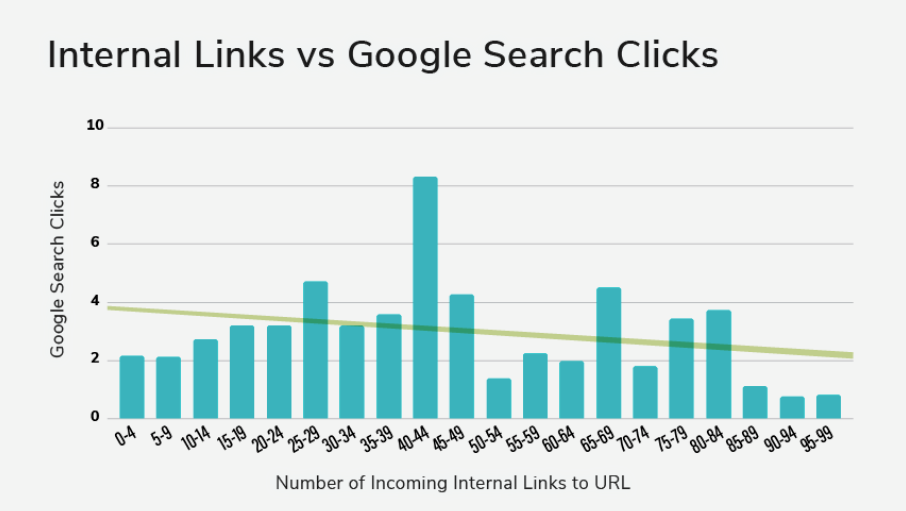
Source: Zyppy SEO
**Our take:**
- Most of Zyppy's [discussion](https://zyppy.com/seo/internal-links/seo-study/?ref=nearmedia.co) is dedicated to the nuances of anchor text. There's related analysis of sitewide/navigation links and their impact.
- In Near Media consulting we've seen that internal linking is often neglected. It can deliver "quick wins" for clients in many instances.
- Finding and implementing the "Goldilocks" number of internal links is going to be challenging. Generally more is better – to a point.
### Will AI Further Erode Google Support?
A new global [survey](https://www.pwc.com/gx/en/issues/c-suite-insights/ceo-survey.html?ref=nearmedia.co) from PwC, of more than 4,000 CEOs in over 100 countries, argues that forthcoming generative AI implementations will result in staffing reductions of "at least 5%" in 2024\. Google is a case in point. AI-driven [restructuring](https://www.semafor.com/article/01/10/2024/google-lays-off-hundreds-working-on-its-voice-activated-assistant?ref=nearmedia.co) in the company's Google Assistant unit and in [ad sales](https://www.theinformation.com/articles/google-plans-ad-sales-restructuring-as-automation-booms?ref=nearmedia.co) (30,000 headcount) has resulted or will result in thousands of job losses as more automation takes hold. While that may work reasonably well in some situations, in others it could be disaster. For example, Google ad support "[is at an all-time low](https://searchengineland.com/google-ads-reps-customer-service-advertisers-low-436434?ref=nearmedia.co)" according to some agencies and will likely only get worse as humans are replaced by AI. Google Business Profile support has long been weak or barely there (except for Product Experts). There have been isolated improvements (e.g., [Google reinstatement process](https://www.sterlingsky.ca/new-gbp-reinstatement-appeal-process/?ref=nearmedia.co)), mostly driven by new EU regulations. Indeed, EU rules may be something of a backstop against radical support cuts. Google [faces pressure](https://www.nearmedia.co/gbp-sites-gone-google-guarantee-scam-impact-ai-the-future-of-search/) to generate more revenue and profit to satisfy investors, as growth slows and competitive threats increase. Layoffs are a part of that equation to keep capital markets happy. Google is not alone, AI and reorgs will be part of every major company's strategy to reduce costs going forward.

Source: DALL-E
**Our take:**
- There's a lot of hope and hype surrounding AI-enhanced customer service. I'll believe it when I see it.
- Many companies believe that technology can largely replace people. But you need conscientious humans in the mix to deliver competent, reliable service.
- Expect continued erosion of Google support as financial considerations dictate further elimination of support and service-related roles.
### Search Lags Social in Spending
Practically every week there's a new survey about generative AI. According to the recently published 2024 Advertising Outlook [Report](https://www.mediaocean.com/the-2024-advertising-outlook-report?ref=nearmedia.co) from Mediaocean, the top generative AI use cases for marketers, brands and agencies are: 1) Data analysis, 2) Market research, 3) Copywriting, 4) Image generation, 5) Customer service, 6) SEO. By comparison, Copywriting was the number one use case a year ago. While most of the 1,000 survey respondents are optimistic about the outlook for 2024, they're also quite anxious about the end of cookies and reduced measurement capabilities. In terms of expected marketing and ad spending plans, the growth areas are: 1) Social, 2) Display/Video, 3) CTV and 4) Search (which presumably includes PPC and SEO). Traditional media channels are poised for further decline. While social media can certainly be a direct response channel, the spending increases appear to be highly brand/branding related. However, brand advertising came in third after "performance-drive \[sic\] paid media" and "measurement & attribution capabilities" on the list of critical marketing investments. "First-party data mastery" was a lower priority, which is strange given the anxiety around cookie deprecation.
**Spending expectations for 2024**
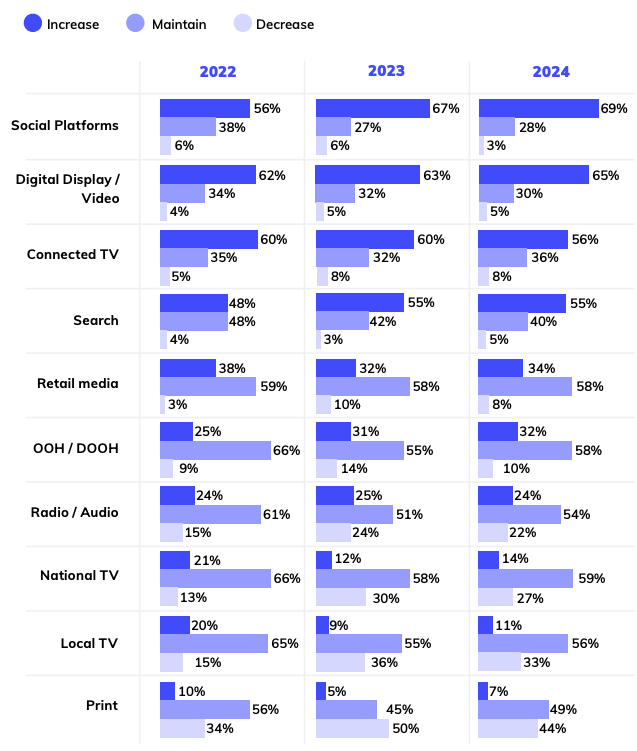
Source: Mediaocean
**Our take:**
- The report doesn't identify the roles of respondents. Thus we don't know if they're decision makers. Presumably yes.
- Search is poised for meaningful growth, though not as much as other digital channels. But intentions and behavior are different.
- The emphasis on brand advertising is largely correct because of the strategic importance of brand, especially now in search.
## Recent Analysis
- **Near Memo podcast episode 141**: [Google Guarantee LSA scam impact; did Google 'enshitify' the internet?; gen-AI and its potential impact on Google](https://www.nearmedia.co/ep-141/).
- **Google Guarantee-LSA Scam in Home Services: A Marketer's Insight** –[interview by Mike Blumenthal](https://www.nearmedia.co/exposing-the-google-guarantee-lsa-ads-scam-in-home-services-a-marketers-insight/).
## Short Takes
- About to be shut down, **GBP sites** [still rank](https://twitter.com/glenngabe/status/1746172733224804454?s=12&ref=nearmedia.co) for more than 8M queries.
- Explainer: [understanding](https://searchengineland.com/google-business-profile-performance-insights-what-you-need-to-know-436468?ref=nearmedia.co) **GBP performance insights**.
- **Google Maps** will soon be able to [navigate inside tunnels](https://www.theverge.com/2024/1/16/24039896/google-maps-android-tunnels-bluetooth-beacons?ref=nearmedia.co) (with caveats).
- **Author bylines/bios** [don't help with ranking](https://www.seroundtable.com/google-author-bylines-ranking-36684.html?ref=nearmedia.co) on Google.
- Why **Google's ad algorithms** [can be inefficient](https://www.mediapost.com/publications/article/392588/google-ml-needs-a-learning-phase-reboot.html?ref=nearmedia.co).
- AI [may help solve](https://www.marketingdive.com/news/death-cookie-deprecation-generative-ai-marketing-prediction/704240/?ref=nearmedia.co) **cookie deprecation**.
- Google [appears to reward](https://twitter.com/cyrusshepard/status/1746966225677369495??ref=nearmedia.co) **AI-generated articles**, despite low quality.
- EU forcing **Google** to let users ["unlink" its services](https://support.google.com/websearch/answer/14202510?hl=en&ref=nearmedia.co) (i.e., data sharing).
- Apple **iPhone** takes global [smartphone share lead](https://www.idc.com/getdoc.jsp?containerId=prUS51776424&ref=nearmedia.co) for the [first time](https://www.canalys.com/newsroom/global-smartphone-market-2023?ref=nearmedia.co).
- **Apple** [now required](https://www.theverge.com/2024/1/16/24039983/supreme-court-epic-apple-antitrust-case-rejected?ref=nearmedia.co) to let developers point users to web for payments.
- Google planning major **Android Auto** [expansion](https://blog.google/products/android/android-auto-new-features-ces24/?ref=nearmedia.co).
- **Microsoft** [introduces Copilot Pro](https://blogs.microsoft.com/blog/2024/01/15/bringing-the-full-power-of-copilot-to-more-people-and-businesses/?ref=nearmedia.co) for $20 per month per user.
Listen to our [latest podcast](https://www.nearmedia.co/memo/).
[](https://nearmedia.co/memo?ref=nearmedia.co)
How can we make this better? Email [us](mailto:gsterling@nearmedia.co) with suggestions and recommendations.
### The Google Guarantee-LSA Scam in Home Services: A Marketer's Insight
URL: https://www.nearmedia.co/exposing-the-google-guarantee-lsa-ads-scam-in-home-services-a-marketers-insight/
Last updated: 2024-11-19T21:13:22.000Z
In this 13 minute video we interview Zach Dotson, a marketer in the home services space who confronts Google Local Service Ads fraud every day. He describes the impact on not just the customers but on his business as well.
The following is a lightly edited transcript of the discussion.
**Mike B (00:00)**
This is Mike Blumenthal with Near Media, and I'm here today with Zachary Dotson, a marketer in the home services area who has been paying a lot of attention to the Local Services Ads-Google Guarantee scam. Introduce yourself and tell us a little bit about what you do and your experience with this problem.
**Zachary (00:27)**
My name is Zachary. I do marketing for air duct and AC stuff in Florida. We've been running Local Services Ads for about a year. I would say since August, September, so like five months or so. We've been seeing a lot of these fake companies pop up that have stolen profiles and stolen licenses. It's kind of made it a lot more competitive than it should be, but in a fake way. And they cost us a lot of business, cost a lot of people a lot of money that paid to have a service done and the service either wasn't done or it was partially done. There's a whole load of different stories we've heard from people that have called us that to have us clean up other messes.
**Mike B (01:20)**
And do you see it mostly in duct cleaning or in other HVAC areas?
**Zachary (01:25)**
Mostly the duct cleaning. We do duct and AC cleaning. Usually if we're coming there and the ducts are nasty, a lot of times that means your AC unit is also nasty. That's what's spreading it in the first place. We hear a similar story every time. We have someone call and they say, "we had someone come out for $99 they stayed for an hour left."
We had our AC service come out and they said, "man, your system's nasty." And the customer said, "I don't know how that could be a thing when we just had guys out here last month to, to fix that." So we see that a lot: a lot of redo work where they realize after the fact maybe it was too good to be true at that price. And a lot of times they get quoted $99 and then the instant this person walks in the door and opens something up, they say, "now this is $1,500."
It's very, very low prices and then it's either not done for that price and it's quoted magnitudes higher or they sit there on their phone and do nothing for the hour and then leave and call it done. And all they did is hook a Shop-Vac up for maybe an hour and left.
**Mike B (02:44)**
I'm seeing a number of things. In Florida, they frequently use somebody else's business. They use a fake name. Typically, it goes to a call center in Asia someplace. And they obviously participate in bait and switch where they quote $99 and actually charge some ungodly number. So you're seeing all of that in the cases you've been looking at?
**Zachary (03:09)**
You see that in reviews a little bit. And I've watched some of your stuff where you see it with live with people, but really we hear it a lot more. The folks that are scammed like that, surprisingly, they don't leave negative reviews most of the time. We hear it over the phone with people that call. That's how we hear most of it.
But there's a lot of either fake licenses – not fake – but real licenses that are being used fraudulently. A lot of times there's just no one to track it to. It's a ghost company. We've seen a lot of times where they're using unmarked vans. At one point someone was using our license and pretending to be us through Facebook. We had people booking and say "we had you guys come out" and it's like, no, we didn't, we've never been at that address. They sent us ring camera footage and it's two people and we have no idea who they are. They've shown up in a white van; we don't know who they are.
We contacted the police and tried to set up a fake service at a residential house and then they'd come at the same time and try to catch the people. But no one wants to do that because no one wants to be the people that live at that house and have these two strangers come up – just for fear of retribution.
**Mike B (04:37)**
Have the authorities responded at all positively in terms of you reporting them?
**Zachary (04:43)**
No, they don't. We've done the authorities, we've done lawyers. No one really seems to care because there's no one to really chase down. Other than the situation with those two people that we had footage of. In general, it's the Local Services Ads; even if they stole license, if they stole money no one seems to care. "Well, you hired them. They did the work. You owe them money." It's not a situation where, "Oh, their license is stolen" or "Oh, they're not even a registered of business," which in Florida you have to be to do air duct cleaning.
**Mike B (05:19)**
The scam is pretty consistent. In fact, I've found it across Europe, England, and other parts of the United States beyond Florida. I know you've been active in the Google forums. I've seen you there. Have you attempted to report these instances to Google?
**Zachary (05:37)**
Yes we have, we've had tickets. Last I checked, they were still open. But they've been open for months. Every once in a while we get a reply that somebody's looking at it, but then you don't ever hear back.
**Mike B (05:50)**
If Google doesn't fix this, you're sort of in a very awkward competitive position because these guys are low-balling the price. Obviously somebody can't even come out to a house these days, drive a van, send two technicians and do any work for $99\. So clearly the loss-leader pricing and then the scam puts you guys at a competitive disadvantage.
**Zachary (06:17)**
First off, for $99 you can't afford to spend the gas to even go over there and pay your technician, to pay for your vans, your equipment, your insurance.
It wouldn't even be worth an hour of work to do it for $99\. But then that's not even taking into account that the cost can be easily $70 for that lead in local services. So there's no way to make money off of that. So it's just a way to get their foot in the door and then scare you into paying more.
**Mike B (06:52)**
Has the \[LSA\] cost always been $70 on duct cleaning?
**Zachary (06:56)**
No, when we first started – I would say it was a year ago – it's hard to say because they don't show you the old pricing. But I want to say that it was around $35, maybe closer to $40\. It went up a lot. In the last few months, it's gone up considerably.
**Mike B (07:13)**
So obviously you have a high cost per lead, which drives the job cost up. That also means you can't accept these very low jobs. Have you seen other impacts on your business? Have you lost any customers because of the pricing structure?
**Zachary (07:27)**
Since Local Service Ads appear above regular Google results, even organic results or Maps, what'll happen is: if somebody looks up air duct cleaning even just as a curiosity, they have five or six numbers right at the top that they can call and ask for pricing. Even if we show at the very top and someone calls us and they like the profile – they read your reviews, they look good, your photos look good, your website looks good even if all that matters, and they looked us up and booked with us – there's a lot of other people they can shop with.
And if even we're seen, even if they look us up specifically, they look up our names specifically, before our organic results or before our website, a lot of times Local Services Ads still show. So then that might drive them to call somebody else. And then if they call someone else and they get quoted $99, which isn't realistic pricing, if they get quoted that, they cancel \[us\]. So we've had a lot of people that cancel just because they found pricing that's $89, $99\. It just doesn't make sense to book for more than that, in their eyes.
**Mike B (08:36)**
Have you had customers calling you after they've booked the $99 deal?
**Zachary (08:42)**
We get that a lot. Yeah. We get that a lot where, where someone says, "I paid $99 dollars for these guys and then my AC company came to service something or check something or change the filter and they said it's filthy and needs to be cleaned." Or we've had situations where somebody did the $99 and then less than a week later, they're noticing dust all over their furniture or more dust coming out of the vent.
So a lot of times all \[the scammers\] do is just, hook a machine up, maybe a Shop-Vac, stir some dust up in one of the two of the vents and then leave and say it's done. Then it just either makes things worse or, whenever somebody actually goes to check the work, if they do, then they see that, nothing was actually done.
**Mike B (09:30)**
So how do you compete in this world, in a world where Google, the police don't seem to care? The authorities can't nail this, it's nailing jello to a tree, and Google is not taking action. How do you perceive the competitive environment and its short and medium and long-term impact on your business?
**Zachary (09:52)**
The only thing we can do is we can tell people. Even when people cancel, a lot of times we tell them, do your homework, make sure that they're actually licensed, actually insured. Ask them about the process and make sure because there's a lot of scams. We have to let people know that all the time. We've even had people that booked with us that weren't going to cancel, but they said "I know a neighbor that got it done for this price." And it's, we have to explain to them.
A lot of times we're going back over people's work to fix it. A lot of times we'll have to book a free estimate and come out and see. What did they do? Did they mess anything up? Did they even do a job? What needs to be fixed? A lot of people come to their senses afterwards, unfortunately, where they realized like "$99, I don't think I would have done it. So I don't know why they would."
**Mike B (10:43)**
Obviously the LSA ads are compelling, particularly these people that are stealing licenses because they often steal reviews and they have thousands of reviews, often from public parks and attractions. Have you heard of many of these users going back to Google and taking advantage of the Guarantee?
**Zachary (11:03)**
No. I know you can. It's just it's one of those things, even with the tickets that we've submitted. I mean you're waiting weeks, you don't know, are you going to hear back from them? It's easier to just kind of do it yourself if you can to backcharge a credit card or cancel a check or whatever you can do. But the problem is that in Google's eyes they're legitimate. You know they put their seal of approval on them so if they came out and did the work ... Then the work's done in according to them.
I didn't trust that they would actually refund it. And if they would, it would require so much effort on your part to prove, what they did or didn't do and who's going to sit there and you record everything and write everything down. A lot of these guys don't want to give receipts. They don't want to show up in a marked van. There's nothing to really prove to Google that, this was them that showed up that you're talking about. This was their work. How do you prove that without documenting the entire thing A to Z, which no one's expecting to have to do that.
**Mike B (12:08)**
Any other thoughts for other businesses that are competing in this nationally? Texas, Maryland, where we're seeing it a lot.
**Zachary (12:16)**
Really the only thing I can think of is keep pressuring Google. Keep submitting everything. The problem is, it's so easy. With the parks, it's so easy to see it. You, you open the park next to the \[scam business\], you show them. It's one for one. You see the same reviews, the same names, the same photos; you see pictures of dogs and trees. What does it have to do with air duct cleaning? If one person spent two minutes to look at that, they would know that those aren't real reviews.
But the problem is I don't think anybody actually reviews them.
**Mike B (12:49)**
One of the things I found today, which I thought was interesting is I found one of these duct cleaning scams stealing reviews from Stanley Steamer. Stanley Steamer had 2,700 reviews that were stolen.
This is a duct cleaning company in Baltimore and DC area, stealing reviews from a company in Peoria. Because it wasn't a public attraction, there were no photos and the reviews sort of made sense: "They came to the house, they did a good job, they cleaned up after themselves." So the reviews weren't totally weird; they were very difficult to spot.
What I'm seeing is that these guys are getting more sophisticated in terms of whose reviews they steal, not just these attractions.
**Zachary (13:36)**
Yeah. That one I would think would be easier just because of Stanley Steamer has, Google, which I would hope they do. It should be easy to say "this is my content, take it down," but it's, it's harder.
**Mike B (13:49)**
But Stanley Steamer doesn't know that it's happening. Hopefully one of these days soon Google will take action.
Certainly seems this has been an ongoing problem and it seems not only are businesses at risk, but consumers are too. Thanks again, Zach. I really appreciate you taking the time.
**Zachary (13:54)**
Thank you for having me.
### Ep 141: Google Guarantee LSA Scam & Honest Businesses, Did Google Create a Shitty Internet? Generative AI & its Impact on Google
URL: https://www.nearmedia.co/ep-141/
Last updated: 2024-01-12T21:58:18.000Z
How the Google Guarantee Scam Impacts Honest Businesses? Did Google’s Dominance Result in a Shitty Internet? New Generative AI developments and the Future of Consumer Preferences and its Impact on Search
**Part 1 starts 00:13 -** [**How the Google Guarantee Scam Impacts Honest Businesses?**](https://youtu.be/jdj3ymb2V6M?ref=nearmedia.co)
The Google Guarantee Scam is frequently perpetrated by groups of foreign nationals working in relative anonymity and looking for a quick profit. While some blame goes to these actors, the ultimate fault and responsibility lies with Google. Honest businesses have been negatively impacted by the Google Guarantee LSA scam. Some businesses have reported losing up to 70% of their business due to the scam. This is because potential customers are being lured away by fake reviews, fake business listings, and bait-and-switch tactics. The scam can damage the reputation of honest businesses and make it difficult for them to attract new customers. Meanwhile the people responsible for the scam are invisible or undocumented making it difficult for authorities to track them down and prosecute them.
Segment Reference Article: [How the LSA Scam Affects Local Businesses](https://www.nearmedia.co/gbp-sites-gone-google-guarantee-scam-impact-ai-the-future-of-search/#how-the-lsa-scam-affects-local-businesses)
**Part 2 starts 13:30 -** [**Did Google’s Dominance Result in a Shitty Internet?**](https://youtu.be/DOzaJz5eJg8?ref=nearmedia.co)
A recent Verge article asserts that Google's dominance in the online information ecosystem has led to a homogenization of the web, with all websites looking and feeling the same and that Google's search engine algorithms reward websites that follow certain formatting and content guidelines, which discourages creativity and originality. The reality is more complex. New mediums of delivery require adopting to user needs and whether that is Google or Tik-Tok. Business content creators should focus on producing content that will perform well with their audience.
Segment Reference Article: [How the internet reshaped itself around Google’s search algorithms](https://www.theverge.com/c/23998379/google-search-seo-algorithm-webpage-optimization?ref=nearmedia.co)
**Part 3 starts 26:20 -** [**Generative AI, the Future of Consumer AI Preferences and its Impact on Search**](https://youtu.be/2RIrrMgFeuk?ref=nearmedia.co)
The recent emergence of new generative AI devices and interfaces, like the Rabbit virtual assistant and the GPT store raises the question of what AI interface consumers will ultimately prefer and raises the question of AIs impact on Google search. Will they choose software, hardware, app integration or a stand alone ChatGPT like interface? With Google search growth stalling even small losses of users to new ways to search might have an outsize impact on Google’s path forward.
Segment Reference Article: [New AI Developments & the Future of Search](https://www.nearmedia.co/gbp-sites-gone-google-guarantee-scam-impact-ai-the-future-of-search/#how-the-lsa-scam-affects-local-businesses)
### GBP Sites Going, Google Guarantee Scam Impact, AI & the Future of Search
URL: https://www.nearmedia.co/gbp-sites-gone-google-guarantee-scam-impact-ai-the-future-of-search/
Last updated: 2024-01-11T20:49:53.000Z
### Google Business Profile Websites Bite the Dust
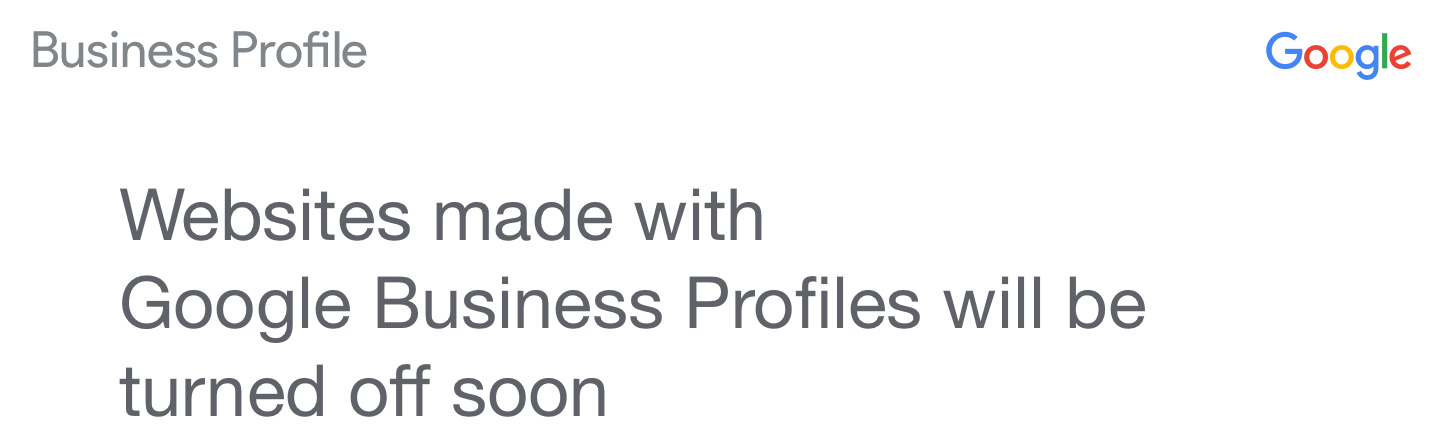
Earlier this week Google announced that as of March 1, Google Business Profile (GBP) Websites would be shut off and redirected to the Business Profile itself. As of June 10, they will "show as unavailable." GBP Websites, [first released publicly](https://blumenthals.com/blog/2017/06/13/google-mybusiness-website-builder-released-worldwide/?ref=nearmedia.co) in June of 2017, passed 36 million sites worldwide and [continued](https://blumenthals.com/blog/2020/05/02/google-my-business-websites-pass-36-million-created-why-should-you-care/?ref=nearmedia.co) on a strong upward trend into early 2020\. When released, the product was targeted to the "next billion users" with a heavy focus on India, Indonesia and Brazil. It was a solid "V1" when introduced. I [noted](https://blumenthals.com/blog/2017/06/13/google-mybusiness-website-builder-released-worldwide/?ref=nearmedia.co) in 2017 that it allowed "a small business operator to produce an attractive mobile ready site in 5 minutes. And it is well suited to a first time website for a business with no or very little web presence." It was well integrated into Google Domains and made domain acquisition very easy for the SMB. It was a natural upsell. Unlike many V1 Google products, this product worked well out of the chute and fit into a growing suite of SMB products that Google was developing at the time, including Posts and Messaging. By 2020 India, Indonesia and Brazil [comprised](https://blumenthals.com/blog/2020/05/02/google-my-business-websites-pass-36-million-created-why-should-you-care/?ref=nearmedia.co) 31 million of the 36 million (85%) websites created. With the [2022 rollout](https://searchengineland.com/google-nmx-tips-390006?ref=nearmedia.co) of GBP web-based (NMX) interface, the ability to edit or create these websites was [hidden](https://www.google.com/search?q=site%3Ahttps%3A%2F%2Fsupport.google.com%2Fbusiness%2Fthread%2F+business.site&client=safari&sca%5Fesv=597240485&rls=en&sxsrf=ACQVn094LnpV25ixCgpAxGeHFXDSJGGr2g%3A1704903066636&source=lnt&tbs=cdr%3A1%2Ccd%5Fmin%3A1%2F1%2F2021%2Ccd%5Fmax%3A&tbm=#ip=1) in the interface clearly foreshadowing the product's demise. The [sale of Google Domains](https://support.google.com/domains/answer/13689670?hl=en&ref=nearmedia.co#:~:text=On%20June%2015%2C%202023%2C%20Google,customer%20accounts%20from%20Google%20Domains.) to Squarespace in 2023 seemed to seal the deal. Today, GBP Websites in these countries have declined substantially. Like many other Google products, despite widespread uptake, it saw no development over the years. Initially, it saw promotion in the targeted markets but soon that waned as well – and another Google product [joins](https://killedby.tech/google/?ref=nearmedia.co) the overcrowded graveyard.
**GBP Website Totals for India, Indonesia & Brazil**
#
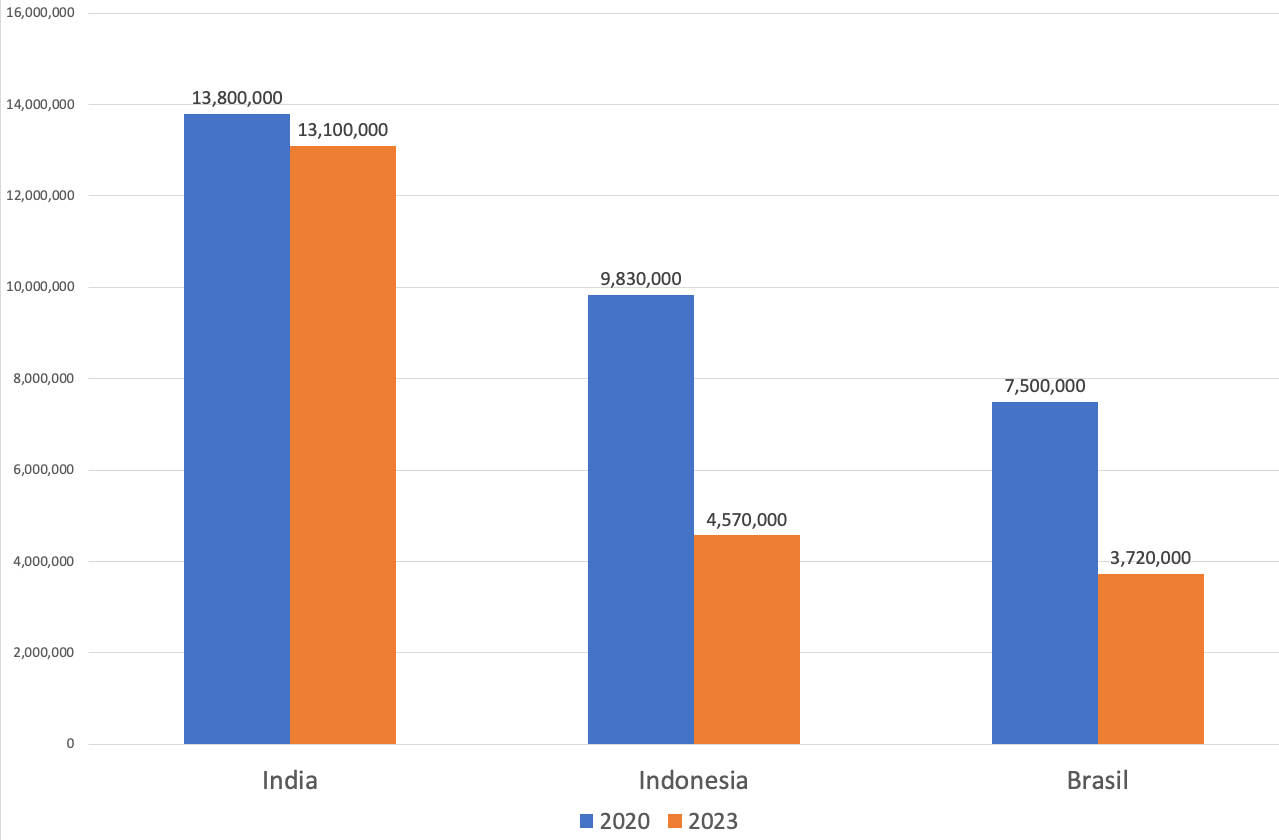
Declines in the leading markets in GBP Websites created
**Our take:**
- GBP Websites was an innovative, well targeted product that never left V1 in its seven years of existence.
- Like many Google products, it failed from what seems to be intentional neglect. The product's huge potential remained underdeveloped.
- In 2017, I [noted](https://blumenthals.com/blog/2017/06/13/google-mybusiness-website-builder-released-worldwide/?ref=nearmedia.co) that "for a business to build a strategic asset like a website takes faith in Google that I am not sure that they have earned." It has become crystal clear over the years that a business should "own" their digital assets and not rely on Google for business-critical tools and tasks.
### How the LSA Scam Affects Local Businesses
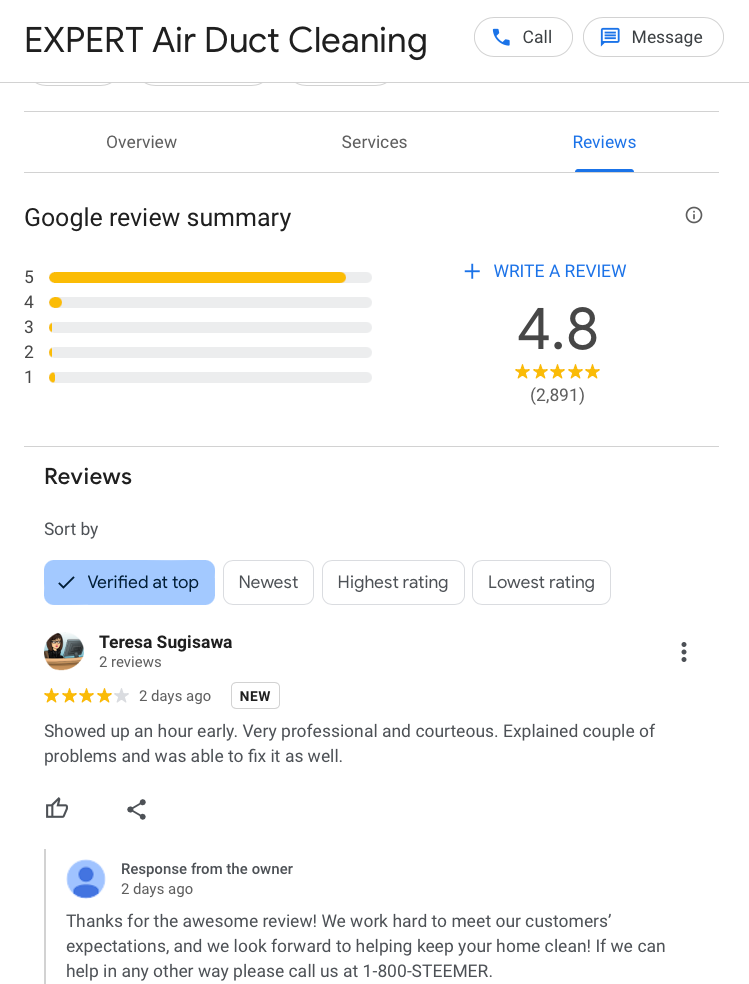
If you lived in the White House and were searching for duct cleaning, you'd likely see a [fake listing](https://www.nearmedia.co/lsa-spam-scam-its-deja-vu-all-over-again/) using [fake reviews](https://www.nearmedia.co/searcher-behaviors/#lsa-listings-hijack-reviews) (from public attractions) and a stolen business license that [looked "ideal"](https://www.nearmedia.co/google-lsa-supercharges-the-duct-cleaning-scam/) but was setting you up for bait-and-switch on the sales side. Recently, we started to see these scammers steal reviews from real businesses in related service industries so the listings appear even more convincing to consumers who do read reviews. In the example above [EXPERT Air Duct Cleaning](https://g.co/kgs/NPiQ5Gc?ref=nearmedia.co), working out of the Virginia and the Washington, DC area, stole reviews from a [Stanley Steemer location](https://maps.app.goo.gl/XXLpdciz4PwUbs4z7?ref=nearmedia.co) in Palatine, IL. Stanley Steemer is not the first honest [business impacted by this scam](https://www.nearmedia.co/lsa-duct-fraud-p-5-lsas-and-brand-queries-googles-scrollable-map-app-store-vault-cracks/) and probably won't be the last. But these fraudulent ads, enabled by the Google Guarantee, unjustly undercut honest businesses. To better understand their impact, I interviewed several home services business owners and marketers over the past week. An owner in the carpet cleaning industry in the UK noted an income decline of 60-70% and a new willingness to "fight fire with fire," i.e., buying fake reviews to compete. I also spoke with an Israeli owner of an HVAC business in South Central Florida who described a WhatsApp network of ex-pats living in the US who regularly buy LSA listings with thousands of reviews for $1,500\. They hire an answering service in Asia and set up a lead-gen business. When leads come in (often quoted at $99) they post them in the same WhatApp groups seeking workers to fulfill them. They then split the profits on the "upsell." These ex-pat workers often are without papers and have little or no community connection. They arrive in unmarked vans to "service" clients charging many multiples of the quoted price. Legit businesses lose customers to low-ball quotes, see their ad costs go up and lose a significant number of in-bound leads. If you are a business or agency working with Local Service Ads, this 13 minute interview with home services marketer Zachary Dotson details what businesses are up against and how the authorities and Google have been turning a blind eye.
**Our take:**
- Google has [clearly](https://localsearchforum.com/threads/new-lead-generation-lsa-accounts-with-hundreds-of-fake-reviews.60955/?ref=nearmedia.co) [known](https://www.youtube.com/watch?v=ZojUP3Y9jiA&t=315s&ref=nearmedia.co) about this full-on illegal Google Guarantee scam since summer of 2023 and has done nothing to stop it. They have [known](https://searchengineland.com/googles-local-services-ads-platform-has-a-problem-with-spam-386890?ref=nearmedia.co) about general LSA abuses for much longer than that.
- These scams create an unfair playing field where legitimate providers are [forced to compete](https://www.youtube.com/watch?v=ZojUP3Y9jiA&t=337s&ref=nearmedia.co) with bogus entities that don't follow the rules or bear the same costs, leading to a race to the very bottom for all LSA listings.
- Despite the clear violation of policies and laws, neither law enforcement nor Google seem interested in stopping these bad actors.
### AI & the Future of Search
ChatGPT [rolled out](https://openai.com/blog/introducing-the-gpt-store?ref=nearmedia.co) its GPT Store yesterday, essentially a [marketplace of custom versions of ChatGPT](https://chat.openai.com/gpts?ref=nearmedia.co) focused on specific domains. For example, the AllTrails GPT enables you to ask for "trails that are mountain bike friendly, 10 to 30 miles in length, with easy to moderate mountain biking difficulty." In a parallel development, [Rabbit introduced](https://www.youtube.com/watch?v=zYgpPCGV8aE&ref=nearmedia.co) and quickly [sold-out](https://www.theverge.com/2024/1/10/24033498/rabbit-r1-sold-out-ces-ai?ref=nearmedia.co) its 10,000 unit run for a $199 handheld AI device that uses an "LAM" (large action model) to get things done. With Microsoft and Google actively integrating generative AI across apps, Apple [doing the same](https://www.macrumors.com/guide/apple-gpt/?ref=nearmedia.co) with both Siri and other apps, and every SaaS vendor doing it too, a very interesting question arises. What does the future of generative AI look like? Will users prefer a single-field interface (e.g., ChatGPT) with specialty apps installed? Or will we collectively gravitate toward apps powered by generative AI? And what hardware form factor will win out: a dedicated device (or wearable) or the smartphone already in your pocket? Equally interesting is the impact that this could have on Google. We've hit [peak search](https://streetfightmag.com/2023/11/27/what-google-at-peak-search-means-for-marketers/?ref=nearmedia.co) and each of these AI developments raises the possibility of dinging, even if by a small amount, Google's search volume. The [possibility](https://searchengineland.com/google-search-antirust-trial-hearing-updates-431977?ref=nearmedia.co) of losing default search status on the iPhone could cost it another few points. To satisfy capital markets, Google's probable way forward is to wring more money out of its ad networks by [manipulating auctions](https://www.vox.com/technology/2023/11/16/23962967/google-search-antitrust-trial-what-we-learned?ref=nearmedia.co), creating new ad products like LSAs (even if [fraught with criminality](https://www.nearmedia.co/google-lsa-supercharges-the-duct-cleaning-scam/)), lowering operating costs by [laying off people](https://www.semafor.com/article/01/10/2024/google-lays-off-hundreds-working-on-its-voice-activated-assistant?ref=nearmedia.co) and grabbing every share of the search pie with things like [annoying interstitials](https://www.nearmedia.co/lsa-scams-in-uk-google-gets-interstitial-you-cant-delete-a-listing/#google-gets-all-interstitial).

Source: DALL-E
**Our take:**
- It will take several years for all of the players to show their AI cards and for users to show their AI usage and integration preferences.
- Because of the nature of AI and hardware development, we think this battle is likely to be won by incumbents. If nothing else, things will get interesting.
- Regardless of the antitrust outcomes or perhaps because of them, Google will have to work much harder just to stay in place.
## Recent Analysis
- **Near Memo episode 140:** [Businesses & Google SGE, Google Goes All in On Interstitials, Where is Bard Going?](https://www.nearmedia.co/ep-140/)
- ICYMI: **Interview with Joy Hawkins & Darren Shaw**: [AI & Your Local SEO Agency](https://www.nearmedia.co/ai-and-local-seo-one-year-later/), One Year Later.
## Short Takes
- In the [new](https://www.sterlingsky.ca/new-gbp-reinstatement-appeal-process/?ref=nearmedia.co) **Google Business Profile reinstatement**/appeal process [you have exactly 60 minutes](https://www.sterlingsky.ca/new-gbp-reinstatement-appeal-process/?ref=nearmedia.co) to make your case, or else.
- Google Business Profile **Agency Dashboard** [bug preventing adding new locations](https://twitter.com/TheSocialDude/status/1744450906702434640?s=20&ref=nearmedia.co) has been fixed.
- **Local Service Ads** [defaults](https://twitter.com/TheSocialDude/status/1744806726455693489?s=20&ref=nearmedia.co) to appearing for your brand queries, but should be disabled.
- The EU decision that **Google was using its dominant position** [to favor its own comparison shopping service](https://curia.europa.eu/jcms/upload/docs/application/pdf/2024-01/cp240004en.pdf?ref=nearmedia.co) will likely impact local search as well.
- When a **service area business moves** can they [regain their rankings](https://youtu.be/E4LZOs7pk6g?si=spSiTolMM6bLlN9g&ref=nearmedia.co) on Google Local at their new location?
Listen to our [latest podcast](https://www.nearmedia.co/memo/).
[](https://nearmedia.co/memo?ref=nearmedia.co)
How can we make this better? Email [us](mailto:gsterling@nearmedia.co) with suggestions and recommendations.
### Ep 140: Businesses & Google SGE, Google Goes All in On Interstitials, Where is Bard Going?
URL: https://www.nearmedia.co/ep-140/
Last updated: 2024-01-09T19:32:28.000Z
**Part 1 starts 00:13 -** [**What Should Businesses Do About Google SGE?**](https://youtu.be/uvOPidAiqsc?ref=nearmedia.co)
Google has not yet announced any concrete plans for the future of Search Generative Experience (SGE), and it is unclear how it will evolve in the coming years. SGE is still in its early, very crude stages and it is not yet known how it will impact search traffic. Many SEOS reacted with fear and loathing but in the end the impact of SGE may in fact be minimal. However, businesses can start to experiment with SGE by:
- Triggering SGE to appear by default.
- Optimizing the content on their websites to appear in SGE results.
- Monitoring the rankings of their websites in SGE results to see how they are affected.
Businesses should be cautious about heavily investing in or relying on SGE until it's more developed. The uncertainty surrounding its development and Google's missed deadline indicates a need for businesses to stay informed and adaptable.
Segment Reference Articles
[Google Search Generative Experience Ends In December 2023?](https://www.seroundtable.com/google-search-generative-experience-ends-december-2023-35463.html?ref=nearmedia.co)
[Google Search Generative Experience December End Date Removed](https://www.seroundtable.com/google-sge-december-end-date-removed-36600.html?ref=nearmedia.co)
**Part 2 starts 10:10 -** [**Google Goes All in On Interstitials on the iPhone**](https://youtu.be/ZKM76eA6En4?ref=nearmedia.co)
Google, has long penalized interstitials as bad for user experience particularly when used on the mobile web to get people to convert to an app. There is no little irony that Google has now started doing just that on the iPhone when a user has Google search set as the default - nagging the user to switch to the Google App or Chrome for the iPhone. The fact that Google has been reduced to doing what they have long criticized implies that they think they will lose the DOJ Default Search Engine case and are running scared about losing iPhone market share.
Segment Reference Articles: [Google Gets All Interstitial](https://www.nearmedia.co/lsa-scams-in-uk-google-gets-interstitial-you-cant-delete-a-listing/#google-gets-all-interstitial)
**Part 3 starts 17:00 -** [**Where is Bard Going?**](https://youtu.be/-GxhhLQiNY0?ref=nearmedia.co)
A Bard product manager asked Reddit users for feature suggestions for Bard, leading to numerous responses. Participants noted that some requested features, such as document upload and image generation, are already available in ChatGPT. They anticipate these features will be added to Bard in 2024\. The types of features requested by users—ranging from specific functionalities like coding assistance to more nuanced content moderation—sheds light on the diverse and evolving needs of users**.**
Segment Reference Articles:
[2024 Bard Wishlist- Chris Gorgolewski product manager on the Bard team.](https://www.reddit.com/r/Bard/comments/18w9izp/2024%5Fbard%5Fwishlist/?rdt=32998&ref=nearmedia.co)
### Google SGE Pushdown, Siri AI 'Overhaul,' Brick & Mortar Halo
URL: https://www.nearmedia.co/google-sge-pushdown-siri-ai-overhaul-brick-mortar-halo/
Last updated: 2024-01-09T21:38:28.000Z
### SGE Pushes Everything Else Down
In the first really compelling [study](https://www.authoritas.com/blog/research-study-the-impact-of-googles-search-generative-experience-on-rankings?ref=nearmedia.co) of the impact of SGE on the Google SERP, Authoritas examined results from 1,000 commercial keywords in the US. The main conclusion: traffic from top organic rankings will suffer meaningfully if Google more broadly rolls out the current incarnation of SGE. This is [widely expected](https://www.nearmedia.co/sge-a-traffic-destroyer-ai-optimization-smb-badges/) but Authoritas documents how SGE pushes down every other element of the SERP. The study found that SGE showed up for "86.8% of all search queries" but "65.9% of the time" users were asked to "generate" results and "34.1% of the time a pre-populated SGE element appears with a ‘Show More’ link." When users "generate" or "show more," the top organic listings shift dramatically down the page – more than 1,500 pixels. In addition, 94% of the links in the AI snippet come from "outside the top ranking domains." Less than 5% of the time do URLs in SGE "exactly match a URL in the organic results." The average number of SGE links is 10.2, but up to 37 for this data. The following charts show the top organic domains for the keyword set and the top domains appearing in SGE results. Yelp and Google Local appear to be big winners as well as a few other local-intent sites.
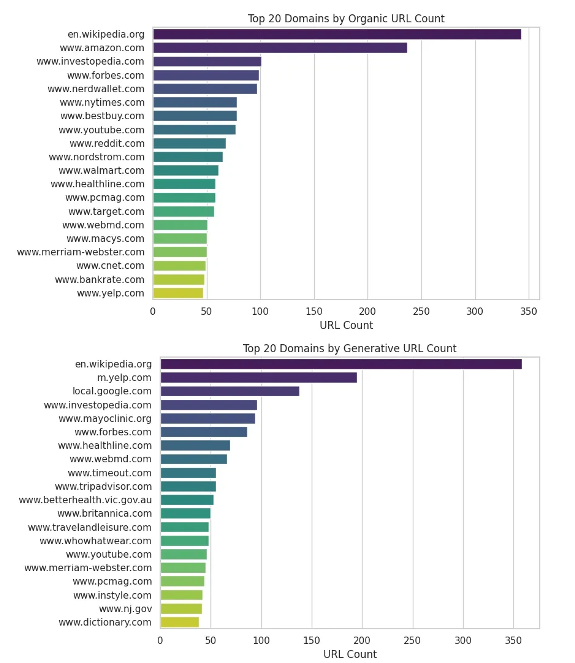
Source: Authoritas
**Our take:**
- One major wildcard is whether users will engage with SGE, especially the 66% of the time that users are required to "generate."
- SGE isn't "fully baked," nobody should panic but SEOs should definitely be paying attention and thinking through scenarios.
- These findings suggest GBP and its various content components (e.g., reviews, images) become even more important in a post-SGE world.
### Report: Siri to Get AI 'Overhaul'
Google is poised to lose some or all of its "default search" antitrust case when the US district court court rules on liability later this quarter. (There will be appeals either way.) If so, one potential remedy is the end of Google's default search deals, which would deprive Apple of many billions in revenue but could accelerate an Apple "search engine." Separately, Apple is trying to close its AI deficit and, [according to](https://www.bloomberg.com/news/newsletters/2024-01-07/apple-2024-plans-challenges-gen-ai-vision-pro-china-sales-app-store-changes-lr3k9p8p?ref=nearmedia.co) Bloomberg's resident Apple watcher Mark Gurman, the company will introduce "a big overhaul to its digital assistant, Siri" at its developer conference. However, the report adds, the AI-based improvements wouldn't be fully rolled out until 2025\. Beyond Siri, Apple plans to incorporate AI features into a broad range of its products. The simultaneous enhancement of Siri with AI and the end of the Google-Apple default search deal may prompt Apple to deliver a better iPhone "search" experience – although it's unlikely to be a search engine *per se*.

**Our take:**
- We know from antitrust trial documents and testimony that Google [actively tried to prevent](https://www.nytimes.com/2023/10/26/technology/google-apple-search-spotlight.html?ref=nearmedia.co) Apple from advancing its search capability.
- When Apple introduces substitute offerings (e.g., Apple Maps) it can have a [adverse impact](https://finance.yahoo.com/news/google-lost-map-traffic-apple-001602673.html??ref=nearmedia.co) on incumbents (i.e., Google).
- Google is not in any danger in the near term but longer term, alternatives may chip away at query volumes around the edges.
### Brick & Mortar Halo Effect
Physical stores reduce customer acquisition costs, improve brand trust and loyalty and, perhaps counterintuitively, boost online sales. I've been arguing that last point for almost 20 years in one form or another. And there have been periodic surveys and other [evidence](https://www.nearmedia.co/macys-stores-boost-digital-smb-saturday-pawns-in-antitrust-chess/) to support the idea of a symbiosis between stores and e-commerce. For example, a [survey](https://www.prweb.com/releases/study-67-of-consumers-trust-local-businesses-more-than-internet-only-brands-826754056.html?ref=nearmedia.co) we ran at Uberall found that \~69% of consumers (globally) are more likely to buy something online "sight unseen" if there's a local store for returns. And executives from retailers such as Macy's, Warby Parker and Casper have all spoken about the beneficial impact of stores on e-commerce. But [a new report](https://www.icsc.com/news-and-views/icsc-exchange/icsc-halo-effect-iii?ref=nearmedia.co) from ICSC shows definitively that "opening a store boosts online sales, while closing one decreases them." Based on an extensive analysis more than $850 billion in local and online spending in the US, across 69 retailers and 2,100 stores in various categories, the study found that opening a store bumped up online sales in that trade area by \~7% to \~14%, depending on the category. Online basket size increased as well. By contrast, after the closing of a physical store, retailers on average saw a nearly 12% decline in online sales. These findings fly in the face of much of the digital marketing world's casual assumptions about consumer shopping behavior.
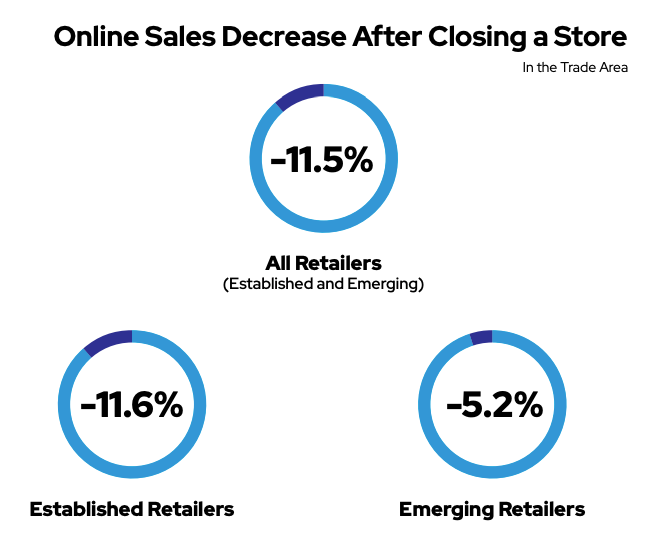
Source: ICSC Halo Effect III report (2023)
**Our take:**
- Closing a local store, in many categories, can dramatically impact overall spending (online and off) by consumers. For example, "Home stores suffered a 59.3% drop in total spending" after a local store closing.
- Yet where there's strong brand loyalty, in selected categories (e.g., cosmetics) online sales increases may occur and mitigate some of the damage.
- GenZ is the cohort that is most interested in shopping in stores, although "in-store is the preferred channel for all generations," according to the report.
## Recent Analysis
- **Near Memo episode 140:** [Businesses & Google SGE, Google Goes All in On Interstitials, Where is Bard Going?](https://www.nearmedia.co/ep-140/)
- **Google LSAs Supercharge Duct Cleaning Scam**, [by Mike Blumenthal](https://www.nearmedia.co/google-lsa-supercharges-the-duct-cleaning-scam/).
## Short Takes
- Websites made with **GBPs** [no longer supported](https://support.google.com/business/answer/14368911?ref=nearmedia.co) after March.
- Suspected (but unconfirmed) **local ranking update** [last week](https://www.seroundtable.com/google-local-ranking-algorithm-update-jan4-36671.html?ref=nearmedia.co).
- Most **SEOs** are "self-taught" [according to informal survey](https://www.linkedin.com/posts/schwartze%5Fmost-seo-operators-learned-on-the-fly-and-activity-7149834656052318208-yI9D/?ref=nearmedia.co).
- **Rich snippets** [come from on-page content](https://searchengineland.com/google-says-search-result-snippets-primarily-come-from-page-content-not-other-sources-436295?ref=nearmedia.co), says Google.
- Google's "**Bard Advanced**" to be [part of Google One subscription](https://www.theverge.com/2024/1/4/24025270/google-bard-advanced-paid-subscription?ref=nearmedia.co).
- Google [promises to deal](https://www.seroundtable.com/google-changes-coming-search-spam-36679.html?ref=nearmedia.co) with increasingly **spammy results**.
- **Perplexity.ai** [announces](https://blog.perplexity.ai/blog/perplexity-raises-series-b-funding-round?ref=nearmedia.co) \~$74M series B investment round.
- **VW** to [embed ChatGPT](https://www.volkswagen-newsroom.com/en/press-releases/world-premiere-at-ces-volkswagen-integrates-chatgpt-into-its-vehicles-18048?ref=nearmedia.co) behind its voice assistant in new models.
- **iStock photos** [betting on SMB market](https://www.theverge.com/2024/1/8/24027259/getty-images-nvidia-generative-ai-stock-photos?ref=nearmedia.co) with gen-AI images (shouldn't use).
- **Duolingo** [getting rid of contract translators](https://www.pymnts.com/news/artificial-intelligence/2024/duolingo-cuts-10percent-contractors-expanding-use-of-ai/?ref=nearmedia.co) for AI content creation.
- LinkedIn [a primary beneficiary](https://searchengineland.com/linkedin-ad-prices-climb-advertisers-boycott-x-436152?ref=nearmedia.co) of the **X advertiser exodus**.
- After its first ["takedown](https://www.theverge.com/features/23931789/seo-search-engine-optimization-experts-google-results?ref=nearmedia.co)," **The Verge** [goes after SEO again](https://www.theverge.com/c/23998379/google-search-seo-algorithm-webpage-optimization?ref=nearmedia.co).
- Here's the "[bull case](https://om.co/2024/01/08/vision-pro-is-coming/?ref=nearmedia.co)" for Apple's **Vision Pro headset**.
Listen to our [latest podcast](https://www.nearmedia.co/memo/).
[](https://nearmedia.co/memo?ref=nearmedia.co)
How can we make this better? Email [us](mailto:gsterling@nearmedia.co) with suggestions and recommendations.
### LSA Scams in UK, Google Gets Interstitial, You Can't Delete a Listing
URL: https://www.nearmedia.co/lsa-scams-in-uk-google-gets-interstitial-you-cant-delete-a-listing/
Last updated: 2024-01-05T18:34:22.000Z
### Google LSA Scammers Are Winning
Duct Cleaning [scams in Local Service Ads (LSAs)](https://www.nearmedia.co/lsa-spam-scam-its-deja-vu-all-over-again/) are apparently just the tip of the iceberg. Carpet cleaners and [plumbers](https://www.reddit.com/r/Scams/comments/18hjwqx/how%5Fis%5Fgoogle%5Fallowing%5Fthese%5Ffake%5Fads%5Fand%5Fis/?rdt=50157&ref=nearmedia.co), with large numbers of fake reviews, fake business names and fake licenses, are dominating local search results in much of the UK. As in the US, consumers are [fooled by the large number of positive reviews](https://www.reddit.com/r/Scams/comments/18hjwqx/how%5Fis%5Fgoogle%5Fallowing%5Fthese%5Ffake%5Fads%5Fand%5Fis/kd6yg43/?ref=nearmedia.co) and the Google Guarantee. And, [similar to the Duct Cleaning Scam](https://www.nearmedia.co/google-lsa-supercharges-the-duct-cleaning-scam/), consumers are subjected to lowball quotes, high bills and shoddy work by sub-contractors. The scams appear to be on the rise in the US as well, with reports of additional [sitings](https://g.co/kgs/X6mqWfN?ref=nearmedia.co) in Maryland, Virginia and the DC area. Meanwhile, traditional local businesses that ply these trades are seeing their LSA leads dry up or lead costs go up by 50%. One agency noted, "business owners from all around Maryland are complaining that their LSAs dropped dead about two months ago, after fake businesses appeared. You can see the fake LSA pages ranking in positions 1 and 2 in every single county." Another agency noted, "We've seen the LSA cost per lead skyrocket since they showed up; we were at $54 per lead in August (before we started seeing these fake listings) and it has continued to climb up to $82 per lead since they've shown up." All of this is against the backdrop of Google's [claim](https://support.google.com/localservices/answer/6230381?hl=en&ref%5Ftopic=6250184&sjid=3109353886818530389-EU&ref=nearmedia.co) that "Local Services businesses that advertise directly with Google undergo screening procedures that... may include license, insurance, and background checks," and where there is a "[strict policy against](https://support.google.com/adspolicy/answer/6245891?ref=nearmedia.co#prohibited)" fake reviews, misrepresentation, pricing abuses and lead gen. It's time to [redefine the meaning of strict](https://www.google.com/search?client=safari&rls=en&q=loosey+goosey&ie=UTF-8&oe=UTF-8&ref=nearmedia.co).
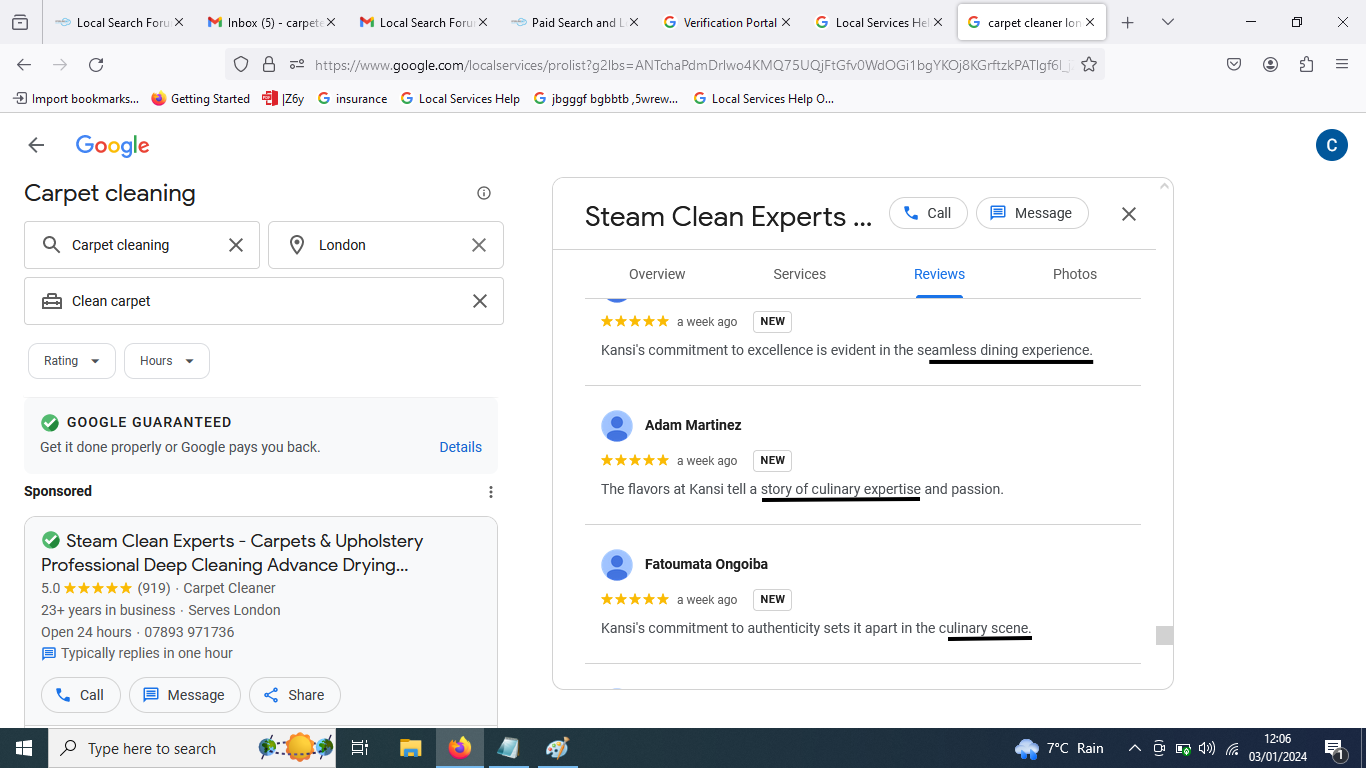
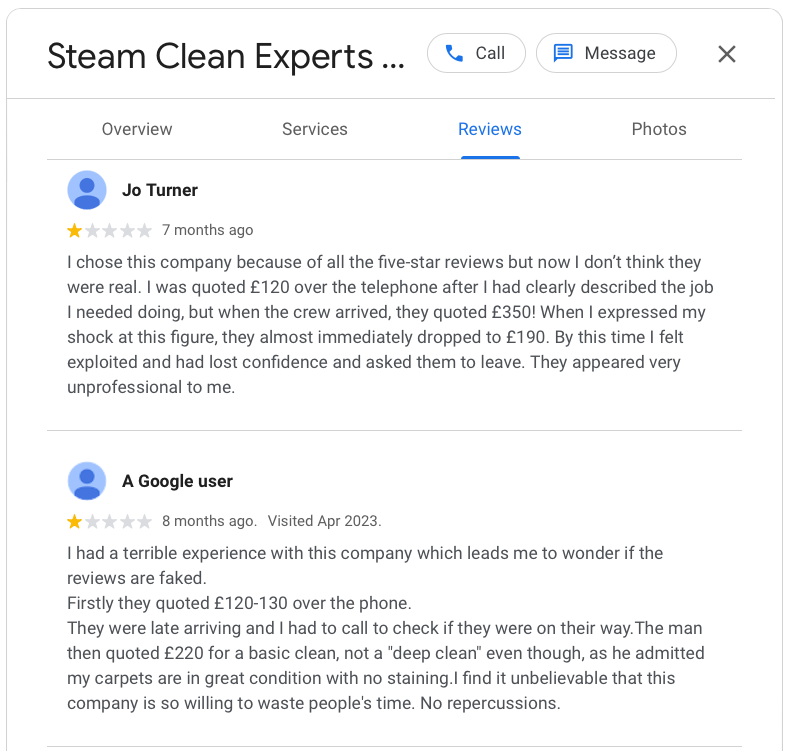
**Our take:**
- Google has seen all of these abuses (fake reviews, fake businesses, etc.) multiple times before with locksmiths, garage door repair and drug rehab.
- When the mainstream press finally catches up with the "Google Guarantee" grift, Google will probably nuke a few fake listings and claim that it is a "cat and mouse game" with bad actors, that they have taken appropriate action and will remain vigilant.
- The bigger farce is that once the noise has died down, Google will likely continue to allow these abuses, as they [have done](https://blumenthals.com/blog/2009/02/18/google-maps-proves-more-locksmiths-in-nyc-than-cabs/?ref=nearmedia.co) for the past 15 years.
### Google Gets All Interstitial
In one more potential [antitrust setback](https://searchengineland.com/google-search-antirust-trial-hearing-updates-431977?ref=nearmedia.co#:~:text=Google%20is%20on%20trial%20for,on%20products%20like%20the%20iPhone.), Google is in danger of losing the ability to buy preferred search engine status on the iPhone Safari browser. The last time Google lost its preferred status on the iPhone was during the rollout of Apple Maps. In that case [Google lost 60% of Maps traffic](https://finance.yahoo.com/news/google-lost-map-traffic-apple-001602673.html?guccounter=1&ref=nearmedia.co). That is apparently informing their current iPhone campaign where Google is aggressively presenting huge interstitial calls to action to abandon Safari and move to either the Google app or Chrome app. For those who don't remember, in 2015 Google [announced](https://www.searchenginejournal.com/google-to-penalize-sites-that-prompt-you-to-download-their-app/140216/?ref=nearmedia.co) the first of [many site penalties](https://www.searchenginejournal.com/counts-intrusive-interstitial/180023/?ref=nearmedia.co) for "mobile web pages that show an app install interstitial that hides a significant amount of content on the transition from the search result page." They would no longer consider those pages to be mobile-friendly and would reduce their rank. At the time Yelp CEO Jeremy Stoppleman correctly [accused](https://x.com/jeremys/status/768602757565521920?s=20&ref=nearmedia.co) Google of anti-competitive behavior. When I suggested that there might be [better ways of winning customers](https://x.com/mblumenthal/status/768598815704223744?s=20&ref=nearmedia.co) than imposing huge and annoying interstitials he famously suggested that I [delete](https://x.com/jeremys/status/768602757565521920?s=20&ref=nearmedia.co) my account. I am saying the same thing to Google: there are better ways to win customers than by imposing huge and annoying interstitials on your searchers.
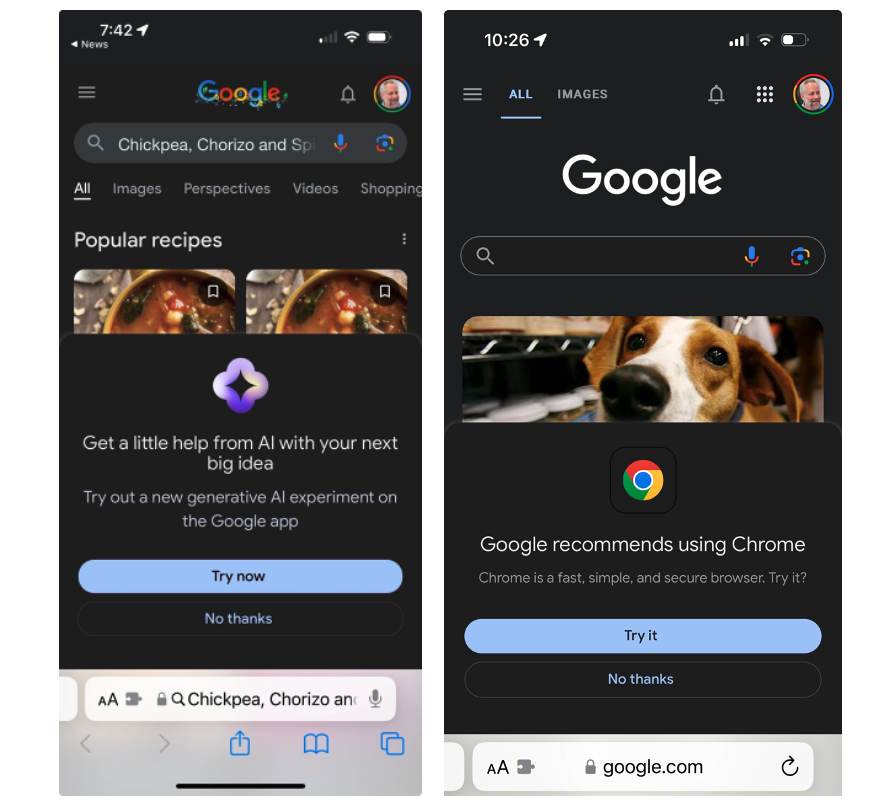
Source: Google
**Our take:**
- Engaging in behavior that they have long criticized and penalized, Google seems to be planning for a loss of default search status on the iPhone.
- There is more than a little irony in Google's bold use of interstitials. An implicit indictment of their previous penalties, it's a desperate way to gain users.
- A likely antitrust remedy would require Apple to offer search engine choice. If so, Bing could gain a few points (and the billions in income that means) but Google would retain significant market share regardless.
### You Can't Really Delete Your Listing
For whatever reason, Google let businesses think they could in fact remove their listings from Google Maps. Reading the menu choice in GBP, many businesses thought "remove this profile" meant remove this business from Maps. And every month businesses would [stream into the Google Support forum](https://www.google.com/search?client=safari&rls=en&q=site%3Ahttps%3A%2F%2Fsupport.google.com%2Fbusiness%2F+%22delete+business%22&ie=UTF-8&oe=UTF-8&ref=nearmedia.co) asking how to do just that, only to be told the options were: remove themselves from managing the profile or close the business itself. In both cases the listing remains in the index for all to see. There are numerous legitimate reasons a business might want to remove itself from Maps but Google keeps the business in Maps regardless. There are a few, limited situations where Google Support will in fact remove a business from the index. For example, if the business is an online only business and generated a GBP listing erroneously or if the business was a spam listing and didn't really exist. Phil Rozak detailed the oddball case where you might be able to get a real but [closed business removed from the index](https://www.localvisibilitysystem.com/2022/03/30/how-to-remove-a-permanently-closed-google-business-profile-page-from-google-maps-for-good/?ref=nearmedia.co) by removing all citations to a business. But it takes months of work and offers no guarantee. Finally, Google has added some language to the Remove Business Profile option that clearly indicates the business will still appear on Google Maps.

> There is no delete button for Google Business Profiles. You can remove all users, leaving a userless (i.e. unclaimed) profile that may or may not get removed from Maps.
>
> Now, the process tells you when the profile will remain visible.
>
> More transparency from Google!
>
> 1/3 [pic.twitter.com/jCwDzD5nxL](https://t.co/jCwDzD5nxL?ref=nearmedia.co)
>
> — Stefan Somborac (@StefanSomborac) [January 4, 2024](https://twitter.com/StefanSomborac/status/1742914907564016056?ref%5Fsrc=twsrc%5Etfw&ref=nearmedia.co)
**Our take:**
- Google has long kept certain pieces of information critical to managing a GBP listing "off the books." When asked, they often said it was to deter spammers.
- New [platform transparency laws](https://www.nearmedia.co/gbp-forum-issues-new-gbp-verification-support-form-google-mediation-now-available-to-eu-businesses/#gbp-offering-dispute-mediation-in-eu) in Europe have required Google to communicate the what and why of their decisions more clearly.
- This increased transparency is welcome. It shouldn't have taken new legal regimes to actually get it to happen.
## Recent Analysis
- **Google LSAs Supercharge Duct Cleaning Scam**, [by Mike Blumenthal](https://www.nearmedia.co/google-lsa-supercharges-the-duct-cleaning-scam/)
- ICYMI: **LSA Spam Scam - It's Deja Vu All Over Again**, [by Mike Blumenthal](https://www.nearmedia.co/lsa-spam-scam-its-deja-vu-all-over-again/)
## Short Takes
- **GBP Video Verification** shouldn't be this hard: [A Step-by-Step Guide](https://youtube.com/watch?v=NOUUV0cJ-6Y&si=4bzPgTLrQhu8Uglq&ref=nearmedia.co).
- For **travel searches** Google is [auto-creating 'Travel Stories'](https://twitter.com/lilyraynyc/status/1738591164792545662?s=20&ref=nearmedia.co) with GBP images, reviews and links to Google Travel.
- **Google Local test** provides a ["Websites for Places"](https://www.seroundtable.com/google-local-pack-with-websites-for-places-box-36608.html?ref=nearmedia.co) carousel beneath the Pack.
- For **local housing queries** Google search is [showing specific units](https://www.seroundtable.com/google-search-units-available-for-rent-local-panel-36664.html?ref=nearmedia.co) available in rental complexes.
- **Local Search** [Developments](https://moz.com/blog/local-search-developments-q4-2023??ref=nearmedia.co) You Need to Know About From Q4 2023
- How to **optimize** [your GBP landing page](https://searchlabdigital.com/blog/how-to-optimize-your-gbp-landing-page/?ref=nearmedia.co).
- **GBP How to**: [remove a reservation button](https://onlineownership.com/removing-reservation-button-in-restaurants-google-business-profile/?ref=nearmedia.co) from restaurants.
- Should you change your **GBP business hours**? [The Openness Algorithm Update: Your Top Asked Questions Answered](https://www.sterlingsky.ca/openness-update-top-asked-questions/?ref=nearmedia.co).
- Amazon sellers [give low marks](https://www.pymnts.com/news/artificial-intelligence/2023/amazon-merchants-give-low-marks-ai-powered-review-highlights/?ref=nearmedia.co) to **AI-Powered review highlights** for too much emphasis on the negative.
- **YouTube video growth**: [estimating](https://ethanzuckerman.com/2023/12/22/how-big-is-youtube/?ref=nearmedia.co) total video volume and how it has [changed](https://tubestats.org/?ref=nearmedia.co) over time.
- The generative ["Prompt Of The Year" awards](https://github.com/successfulstudy/promptoftheyear?ref=nearmedia.co) for 2023 with successful **AI prompts** for everything from job hunting to marketing and data analysis.
Listen to our [latest podcast](https://www.nearmedia.co/memo/).
[](https://nearmedia.co/memo?ref=nearmedia.co)
How can we make this better? Email [us](mailto:gsterling@nearmedia.co) with suggestions and recommendations.
### Bard Wish List, SEO Pricing Survey, NYT vs. OpenAI
URL: https://www.nearmedia.co/bard-wish-list-seo-pricing-survey-nyt-vs-openai/
Last updated: 2024-01-04T18:04:45.000Z
### Bard Feature 'Wish List'
While it's clear SGE will definitely continue, Google isn't quite ready to make it generally available either. Its original December, 2023 "expiration date" has been removed though the "experiment" label remains. While there's been [much speculation](https://www.nearmedia.co/sge-a-traffic-destroyer-ai-optimization-smb-badges/) about SGE's coming, and probably inevitable, impact on organic traffic, it's more interesting in many ways to consider the future of Bard, which is more of an "x variable" in the Google search equation. We know basically what SGE is already, though it will continue to evolve. Bard is more of a blank canvas. To that point, a couple of days ago Chris Gorgolewski, a Bard product manager, [posted a thread on Reddit](https://www.reddit.com/r/Bard/comments/18w9izp/2024%5Fbard%5Fwishlist/?ref=nearmedia.co) asking for feature requests ("2024 Bard Wish List"). There are almost 500 comments and suggestions. Some are serious and some are more light-hearted or even flippant. Below is a selection of them, in no particular order. Keep in mind this isn't a general user survey but a Reddit thread of early adopters, developers and general nerds (used descriptively not pejoratively).
**Selection of Reddit user Bard feature requests**
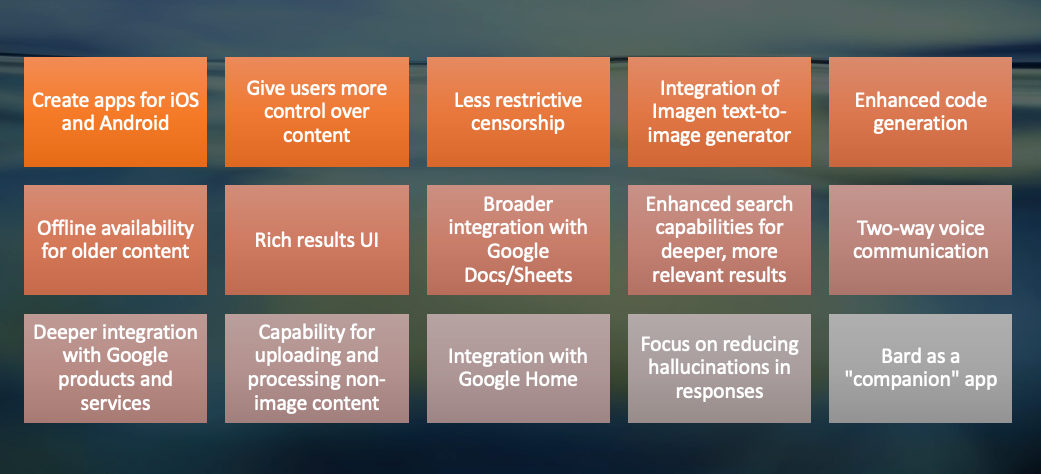
Source: Reddit
**Our take:**
- Many of the suggestions are effectively asking for feature parity with ChatGPT, which we can probably expect in 2024\.
- There are a few references to "search." You don't get the sense that most of these users want Bard to be an immediate Google replacement.
- People are either asking for specific features relevant to their work/lives or see Bard as a general "assistant" and want a broad array of capabilities, well beyond "search."
### Ahrefs SEO Pricing Survey
Ahrefs recently [published](https://ahrefs.com/blog/seo-pricing/?ref=nearmedia.co) a multi-country SEO pricing survey (n=400) that explores business models, fees and pricing across the industry. It's one of several such surveys in the market. Ahrefs found that most SEOs bill on a monthly retainer basis (78%), between $500 and $1,000\. But a significant minority charge more than $2,000 per month. SEOs also bill hourly and on a project basis (least popular model). Hourly rates are most commonly, between $75 and $100, across countries. Project rates typically range between $2,500 and $5,000\. More experienced SEOs are able to charge more, as one might expect. Agencies charge more than freelancers; and SEOs focused on individual, local markets make somewhat less than those selling their services across geographies. Rates and fees also vary by region.
**Monthly SEO retainer rates (global sample)**
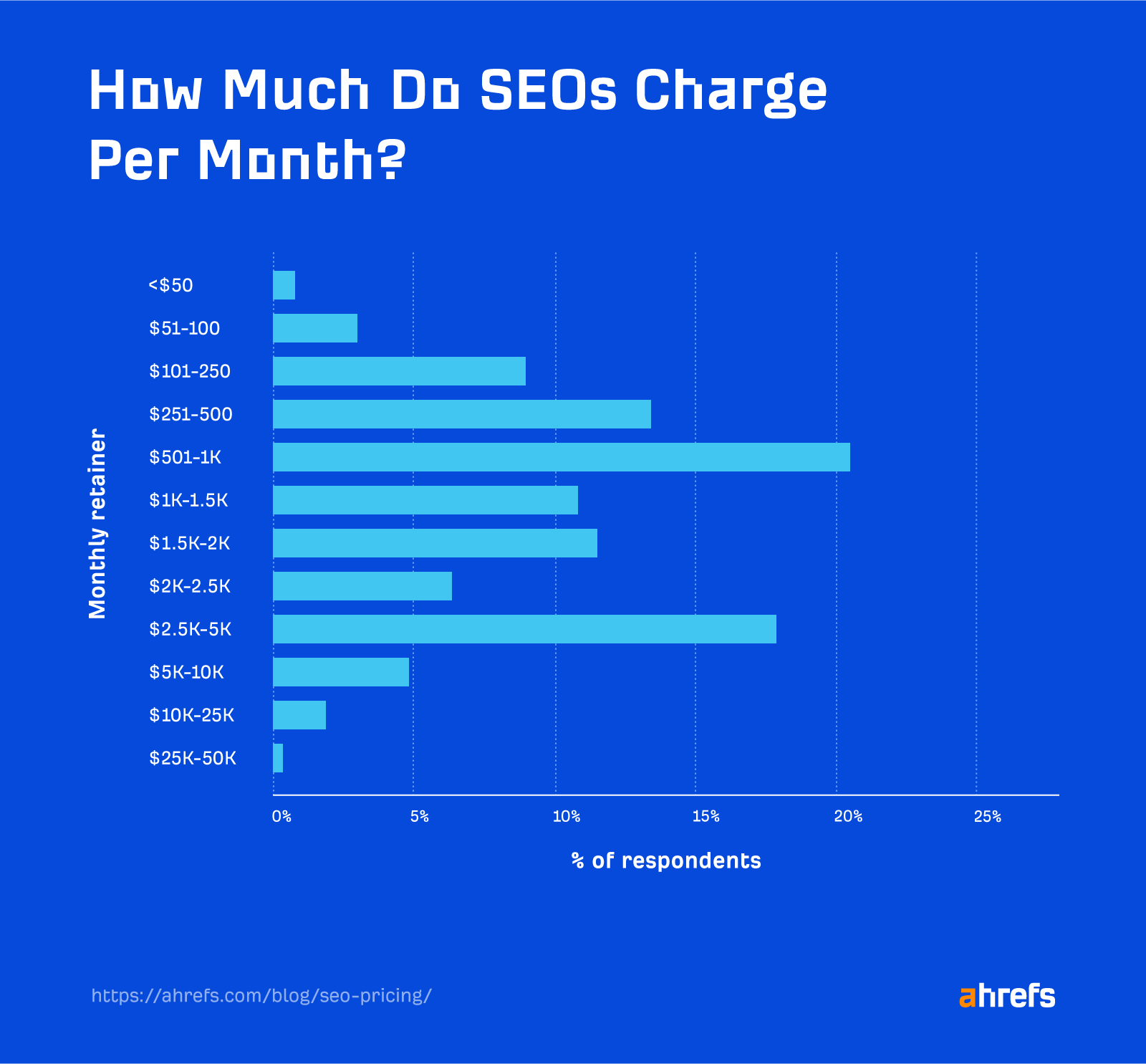
**Our take:**
- This data is very useful for SEO price benchmarking.
- The post's author says, "My hope is that this data will help SEOs to stop undercharging for their services." But pricing transparency tends to advantage buyers and moderate price increases.
- Here are two other recent pricing surveys with similar but somewhat different findings for comparison ([2021](https://backlinko.com/seo-pricing?ref=nearmedia.co), [2023](https://seranking.com/blog/seo-pricing/?ref=nearmedia.co)).
### Copyright: NYT vs. OpenAI
This year could be quite significant legally for the tech industry. Google will face an antitrust reckoning (or two) and [perhaps Apple as well](https://arstechnica.com/apple/2024/01/2024-may-be-a-year-of-reckoning-for-apples-85-billion-services-business/?ref=nearmedia.co). There will be more regulatory fines in Europe and privacy cases in the US. And the [New York Times vs. OpenAI](https://www.axios.com/2023/12/27/nyt-microsoft-openai-lawsuit-copyright-infringement?ref=nearmedia.co) (filed at the end of last year) could turn out to be a major copyright case – or not. Some [quickly dismiss the lawsuit](https://www.techdirt.com/2023/12/28/the-ny-times-lawsuit-against-openai-would-open-up-the-ny-times-to-all-sorts-of-lawsuits-should-it-win/?ref=nearmedia.co), saying it's destined to fail and that training LLMs on copyrighted work is no different than a person "reading" a copyrighted work. It's not quite that simple however. The [complaint](https://nytco-assets.nytimes.com/2023/12/NYT%5FComplaint%5FDec2023.pdf?ref=nearmedia.co) is lengthy and has [tons of exhibits](https://twitter.com/jason%5Fkint/status/1740141400443035785?ref=nearmedia.co). The essence of NYT's claim is: "Through Microsoft’s Bing Chat (recently rebranded as “Copilot”) and OpenAI’s ChatGPT, Defendants seek to free-ride on The Times’s massive investment in its journalism by using it to build substitutive products without permission or payment." However, earlier similar cases (e.g., [Sarah Silverman v. Meta](https://www.hollywoodreporter.com/business/business-news/sarah-silverman-lawsuit-ai-meta-1235669403/?ref=nearmedia.co)) have been dismissed or largely dismissed because AI outputs weren't "substantially similar" to the copied works. AI platforms also claim training LLMs on copyrighted materials is protected by "[fair use](https://fairuse.stanford.edu/overview/fair-use/four-factors/?ref=nearmedia.co)," a frequent defense in copyright cases.
[NYT Complaint Dec2023](https://www.scribd.com/document/696419317/NYT-Complaint-Dec2023?ref=nearmedia.co#from%5Fembed "View NYT Complaint Dec2023 on Scribd") by [gesterling](https://www.scribd.com/user/17854770/gesterling?ref=nearmedia.co#from%5Fembed "View gesterling's profile on Scribd") on Scribd
**Our take:**
- The NYT is currently involved in content licensing negotiations. A cynic would say the suit is to strengthen the company's negotiating position.
- Courts could dismiss the case under existing law, by saying the output isn't similar enough or that the AI output is new/"transformative" (part of fair use).
- This case will likely wind up before SCOTUS. And while the NYT's argument that OpenAI wants to compete with it is weak, there's something "wrong" in allowing wholesale copying of IP to build a massive, for-profit platform.
## Recent Analysis
- **Near Memo episode 139:** [The Google Review Fraud Landscape and How a Business Should Respond](https://www.nearmedia.co/ep-139/) (with Curtis Boyd)
- **Google LSAs Supercharge Duct Cleaning Scam**, [by Mike Blumenthal](https://www.nearmedia.co/google-lsa-supercharges-the-duct-cleaning-scam/)
- **ICYMI: Near Media's 2023 Top Stories & Trends to Watch**, [by Mike & Greg](https://www.nearmedia.co/top-stories-trends-of-2023/)
## Short Takes
- Ahrefs: 6 [critical elements](https://ahrefs.com/blog/location-pages/?ref=nearmedia.co) of **local landing pages**.
- BrightLocal [study](https://www.brightlocal.com/research/study-business-opening-hours-and-local-rankings/?ref=nearmedia.co) on **opening hours ranking boost**.
- John Mueller: don't use **AI images** [when photos (e.g., products) are required](https://www.searchenginejournal.com/beyond-seo-john-mueller-on-ai-generated-images-stock-photography/504793/?ref=nearmedia.co).
- How To [Build](https://www.searchenginejournal.com/how-to-build-a-future-proofed-seo-strategy-when-ai-is-changing-seo-festive-flashback/502122/?ref=nearmedia.co) A **Future-Proofed SEO Strategy** (in the AI era).
- Use [the right language](https://localsearchforum.com/threads/language-changed-on-the-gbp-services.60915/?ref=nearmedia.co) when creating **Google Business Profiles**.
- Bing [adds favicons](https://www.seroundtable.com/bing-chat-links-gain-favicons-36620.html?ref=nearmedia.co) to **Bing Chat/Copilot links**.
- Fidelity: **Twitter/X** [now worth $13B](https://www.axios.com/2023/12/31/elon-musks-x-fidelity-valuation-cut?ref=nearmedia.co) vs $44B at time of Musk buy.
- Why **Apple's** "catch-up" [approach to LLMs](https://joanwestenberg.com/blog/apples-llm-gap-is-real-it-might-not-last-much-longer?ref=nearmedia.co) may be more effective.
- **Holiday '23**: mobile up, online traffic down, [shopping starts earlier](https://queue-it.com/blog/2023-online-holiday-shopping-statistics/?ref=nearmedia.co).
- **SMBs** [very concerned](https://upcity.com/experts/smb-marketing-teams-cookieless-data-collection/?ref=nearmedia.co) about loss of third party data access.
- More **2024 SEO predictions** [from selected experts](https://www.newzdash.com/guide/top-trends-predictions-news-seo-2024-top-seo-experts?ref=nearmedia.co).
Listen to our [latest podcast](https://www.nearmedia.co/memo/).
[](https://nearmedia.co/memo?ref=nearmedia.co)
How can we make this better? Email [us](mailto:gsterling@nearmedia.co) with suggestions and recommendations.
### Near Media's 2023 Top Stories & Trends to Watch
URL: https://www.nearmedia.co/top-stories-trends-of-2023/
Last updated: 2023-12-29T18:22:58.000Z
Near Media produced a lot of content in 2023: more than 150 newsletters, 50+ podcasts, 22 in depth articles and a [whole bunch](https://youtube.com/@nearmedia2935?si=sQDsxBDcP-eSwGu3&ref=nearmedia.co) of videos.
Here are the articles, podcasts and videos that you read, listened to and watched the most. And scroll down for some trends to watch in 2024.
### Most read analysis of the year
1. [Missing Google Reviews: A Step-by-Step Recovery Guide](https://www.nearmedia.co/missing-reviews-at-google-a-step-by-step-guide-to-recovery/)
2. [Step-by-Step Guide to Fighting Fake Google Review Attacks](https://www.nearmedia.co/how-to-fight-a-fake-google-review-attack/)
3. [Google Business Profile: 'Your Business Is Not Visible To Customers'](https://www.nearmedia.co/google-business-profile-your-business-is-not-visible-to-customers/)
4. [Google's New Review Algo: What We Know](https://www.nearmedia.co/a-guide-to-googles-review-filter/)
5. [Bug or Feature: Google Business Profile 'Image Not Approved'](https://www.nearmedia.co/google-business-profile-solving-images-not-approved-problem/)
**Honorable mentions:**
- Apple [New Business Connect Features & Implications](https://www.nearmedia.co/why-is-the-new-apple-business-center-so-important/)
- Should You Invest in [Apple Business Connect?](https://www.nearmedia.co/should-a-business-put-energy-into-apple-maps/)
- When Is the [Right Time to Ask for Customer Reviews](https://www.nearmedia.co/when-is-the-right-time-to-ask-for-customer-reviews/)?
- Google [SGE: Meet the New Pack](https://www.nearmedia.co/google-sge-meet-the-new-pack/)
- Google [Shifting GBP Support to 'Brand Ambassadors' aka Gig Workers?](https://www.nearmedia.co/is-google-shifting-gbp-support-to-gig-workers/)
### Most listened to podcasts
*Podcasts are \~30 minutes in length.*
1. [How Local SEO Agencies are using Generative AI & ChatGPT: tips, tactics and strategies](https://www.buzzsprout.com/1672252/14026056-how-local-seo-agencies-are-using-generative-ai-chatgpt-tips-tactics-and-strategies?ref=nearmedia.co)
2. [Overture Map Foundation goes open source to solve 3D mapping for the rest of us](https://www.buzzsprout.com/1672252/13069238-overture-map-foundation-goes-open-source-to-solve-3d-mapping-for-the-rest-of-us?ref=nearmedia.co)
3. [Apple Maps KPIs, SEOs & Google quality guidelines, Google SGE usage decline](https://www.buzzsprout.com/1672252/13225157-apple-maps-kpis-seos-google-quality-guidelines-google-sge-usage-decline?ref=nearmedia.co)
4. [Do searchers goto the Local Finder?, How many links does a local website need? Google's BS around creating great content](https://www.buzzsprout.com/1672252/13512589-do-searchers-goto-the-local-finder-how-many-links-does-a-local-website-need-google-s-bs-around-creating-great-content?ref=nearmedia.co)
5. [Local Search Ranking Factors Survey with Darren Shaw](https://www.buzzsprout.com/1672252/12549679-local-search-ranking-factors-survey-with-darren-shaw?ref=nearmedia.co)
**Honorable mentions:**
- GA4 [enshittification, Twitter alternatives](https://www.buzzsprout.com/1672252/13180745-ga4-enshittification-twitter-alternatives-new-ftc-review-guidance?ref=nearmedia.co)
- High Impact [Content Marketing](https://www.buzzsprout.com/1672252/13641963-high-impact-content-marketing-in-the-age-of-ai?ref=nearmedia.co) in the age of AI
- Google [loses product search share, Phone numbers hijacked on Google](https://www.buzzsprout.com/1672252/13308795-google-loses-product-search-share-phone-s-hijacked-on-google-yelp-scolds-business-for-soliciting?ref=nearmedia.co)
- New [Local ad format, Updated GBP guideline](https://www.buzzsprout.com/1672252/13363195-new-local-ad-format-updated-gbp-guideline-clarifies-policies-google-sge-shows-reference-links?ref=nearmedia.co) clarifies policies
- SMBs [search for services, GBP support bends to European regs, no copyright for AI](https://www.buzzsprout.com/1672252/13469671-smbs-search-to-find-services-gbp-supports-bends-to-european-regs-no-copyright-for-ai?ref=nearmedia.co)
### Most watched videos
*Most YouTube videos run 8 minutes. Interviews run 30-40 minutes.*
1. [Why the new Apple Business Connect is so important](https://youtu.be/6Nx563dX4E0?si=D7mOwhhDlVmsAvLK&ref=nearmedia.co)
2. [Overture Map Foundation goes open source to solve 3D mapping for the “rest of us”](https://youtu.be/QSVDJvB6DnA?si=Ah5dWniDQtS3yN%5Fz&ref=nearmedia.co)
3. [Consumer Reports new app, Permission Slip eases privacy requests but is still a baby step](https://youtu.be/4B9lb6nWrfI?si=ySaquOtf-rOXqps-&ref=nearmedia.co)
4. [ChatGPT has added plug-ins & the web integration and it sucks](https://youtu.be/0qefaGoM23Y?ref=nearmedia.co)
5. [Failings in Apple Business Connect Agency Model](https://youtu.be/BbzLtZc8txk?ref=nearmedia.co)
**Honorable mentions:**
- How Local SEO Agencies are [using Generative AI & ChatGPT](https://youtu.be/KxdhJxgRKPU?si=EgKf0d8KWpquAv4X&ref=nearmedia.co): tips, tactics and strategies
- [How digital agencies can use AI](https://youtu.be/N5Avhh4MwWU?si=doOP3yQhKnqs3O6b&ref=nearmedia.co) with Joy Hawkins & Kevin Indig
- New Google GPB Bug: [Your Business is not visible to customers](https://youtu.be/3fAAy5DFtuM?si=BxMvWBC5Ogdxg%5FHC&ref=nearmedia.co)
- Barry Schwartz Talks [All Things Google](https://youtu.be/jlXCXjW1ozU?si=cthTHs88gWBagGDX&ref=nearmedia.co) \- UI, Algorithms and AI Spam
- The Future of Search & [Implications for Local](https://youtu.be/rcbS0hZ2JDE?ref=nearmedia.co)
### Trends to watch in 2024
- Apple Maps will continue to improve and take on increasing importance to marketers.
- Google Local Service Ads (and other highly visual ad formats) will be shown more, in more categories, cost more and be worth less.
- As the quality of search results continues to erode Google will be forced to offer more "answers" in the SERP, leading to more zero-click results.
- Google SGE and AI snippets will significantly reduce clicks and traffic to publishers for informational queries, especially on mobile devices.
- Frequent algorithm updates and more SERP volatility will continue in 2024, creating continued ranking instability.
- Courts will rule that Google is an illegal monopoly in its default search and ad-tech cases. Google's deal with Apple will end but little else will happen. In the ad-tech case, there will be a forced divestiture.
- Users will continue to seek out alternatives to Google, including AI assistants, but Google's market share will remain largely unchanged.
- Paid licensing content deals with major publishers will become the norm for AI platforms.

**Happy New Year,**
David, Mike & Greg
### Google LSAs Supercharge Duct Cleaning Scam
URL: https://www.nearmedia.co/google-lsa-supercharges-the-duct-cleaning-scam/
Last updated: 2025-10-29T15:33:43.000Z
Listen to Charles' condensed 5 minute telling of his dryer duct cleaning experience. You can listen to the unedited version [here](https://youtu.be/v9DrkoxJ87w?si=3jdrgzbqhajfpFbN&ref=nearmedia.co).
Charles Kayat's Monday started as a typical Monday. He was taking some time off work to get a few things done and was looking for someone to get his dryer working again. Like many people, he went to Google to search for dryer duct cleaning, chose the first listing at the top of search results and scheduled an appointment for later that afternoon. After all, it had over 2000+ reviews, a 4.8 rating *and* the Google Guarantee.
**Nothing suspicious about this ad, supported by the Google Guarantee**
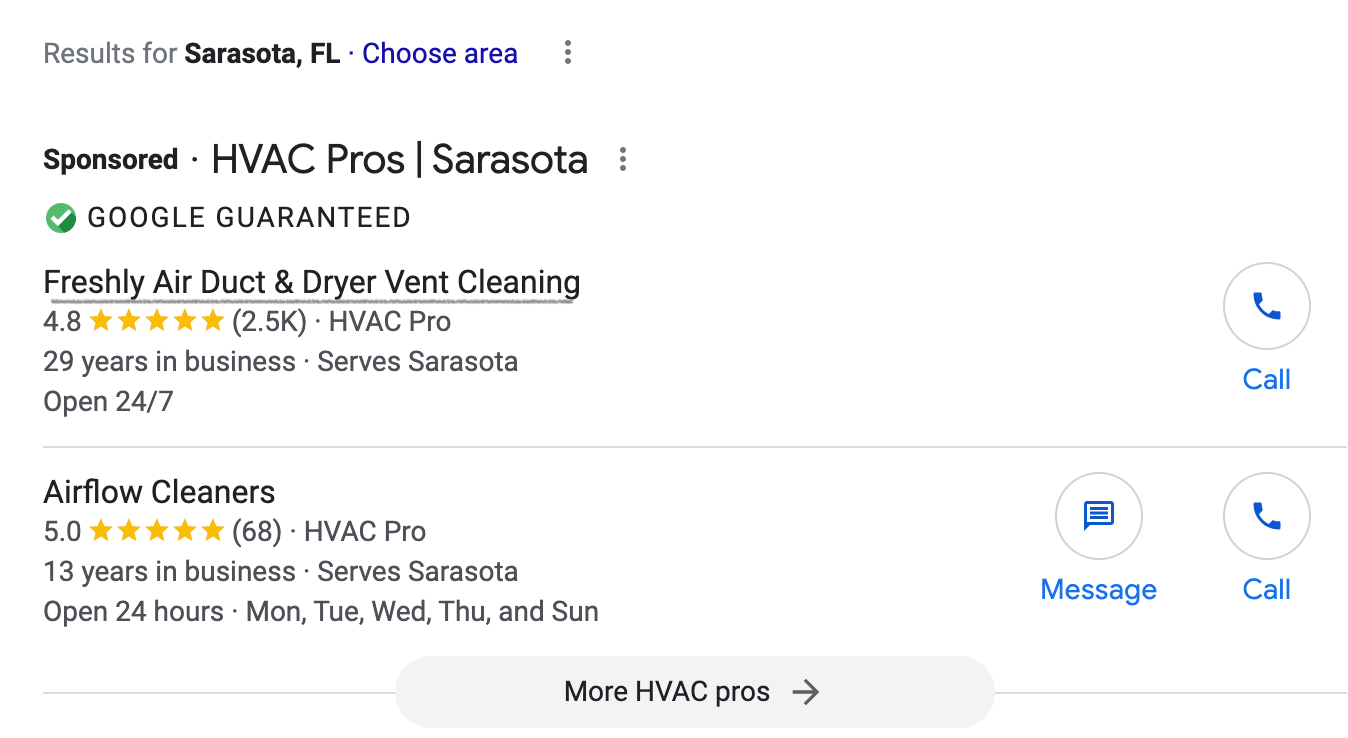
At 4:15 that afternoon, a dryer technician, with a heavy Middle Eastern\* accent, showed up at his house driving a plain van, carrying tools and a shop vac. Charles escorted him to the small laundry area but was soon called back by the technician who had removed the duct and exclaimed, "This isn't going to be a typical $99 cleaning!" He told Charles that it would cost $620 to get everything working. Charles agreed to the work, given all that was promised. If he was being taken advantage of on the price, at least the dryer would be like new once again.
### Loud noises and lint
The technician closed the door, produced some loud noises and soon brought Charles back to show him the lint removed both inside and out. The outside lint was puzzling to Charles as the duct was on the roof and the technician did not have a ladder. Charles offered a credit card but the technician insisted on cash, check or Zelle for payment. When Charles wrote out their full Local Service Ad Profile name on a check, the tech insisted that it be rewritten as "Freshly." The technician left Charles' house around 5:15 PM, spending an hour total on site. That evening, the dryer was still not working.
Concerned that the work was shoddy and the price extremely high, Charles decided to check more deeply into [Freshly Air Duct & Dryer Vent Cleaning](https://g.co/kgs/RMH2Ff?ref=nearmedia.co), call the business back and ask for a redo. In doing so he realized that the many reviews were not for the business itself but related to a state park.
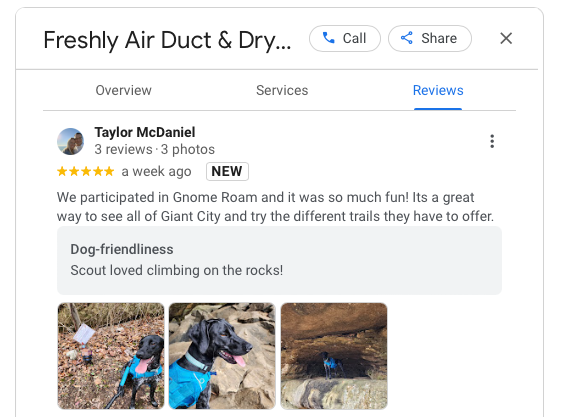
When Charles looked at the negative reviews he realized that he had been severely overcharged and perhaps scammed.
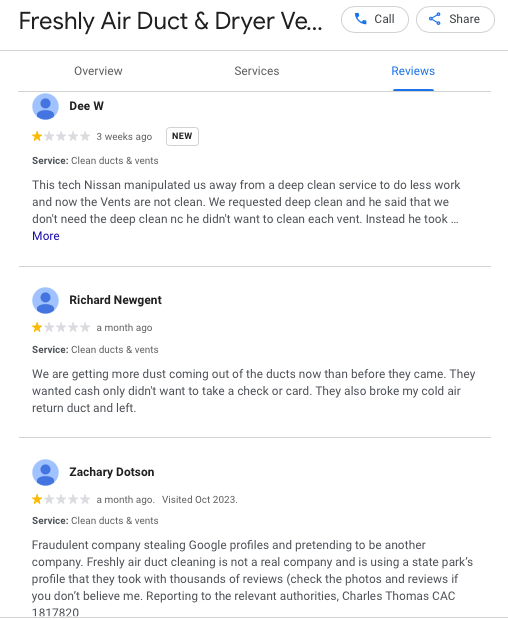
### Police: Google apologists
He found a business license number associated with the listing and decided to call the person he felt was directly responsible. When he did, however, he learned that the actual licensee was also dismayed by the unapproved misuse of its business license by Freshly.
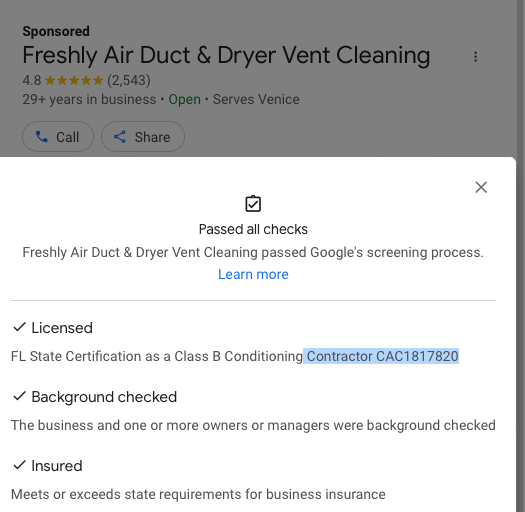
Realizing that it was indeed a scam, Charles called his bank and was able to cancel his check. He also called the police, who proceeded to tell him that not only was there nothing they could do but that it wasn't fraud and he might owe money to the contractor. According to the police, Google had likely just misaligned a license number and he should worry about the contractor coming back on him for his cancelling of the check. And after all he had the Google guarantee to fall back on.
### Totally on his own
Feeling totally on his own, he grew concerned that the scammer had his checking account details. So he canceled his bank account, moved his funds to a new account and changed over his direct payroll deposit and direct withdrawals. He was out his time and the cost to cancel the check. He also had lost faith in both the police and Google.
But he is still concerned. He's concerned that the scammers might come pounding on his door, concerned the police won’t help the next victims, concerned about elderly people, who could lose money, and concerned that Google is enabling all this with its brand and reputation.
When asked about what someone should do different in the future to avoid being scammed he noted that they should ask a friend or a trusted professional about who to use and to not rely on Google:
💡
"That was one of the driving factors that made me go with them. If they were two stars or something or one star and just a random listing, but no, they came up the first listing. Google verified, Google recommended, Google guaranteed. If they don't do their job right, Google gives you back the money..... But yeah, if it wasn't for the Google guarantee, I would have just really brushed right past it. I mean, the 2000 reviews, 4.8 stars and stuff, plus a Google guarantee. Those are the two reasons why I went to them. Never heard of that company before."
To hear Charles in his own voice, [watch](https://youtu.be/OIafh19UL-w?ref=nearmedia.co) the edited version or [full videos](https://youtu.be/v9DrkoxJ87w?si=3jdrgzbqhajfpFbN&ref=nearmedia.co) of his story. To learn more about the Google LSA Duct Cleaning scam read [LSA Spam Scam - It's Deja Vu All Over Again](https://www.nearmedia.co/lsa-spam-scam-its-deja-vu-all-over-again/).
---
\*Previously, our secret shopper [reported](https://www.nearmedia.co/lsa-spam-scam-its-deja-vu-all-over-again/#the-scam) that he engaged with an Israeli national while requesting duct cleaning. We think that is likely the case here as well.
### LSA Duct Fraud P. 5, LSAs and Brand Queries, Google's Scrollable Map, App Store Vault Cracks
URL: https://www.nearmedia.co/lsa-duct-fraud-p-5-lsas-and-brand-queries-googles-scrollable-map-app-store-vault-cracks/
Last updated: 2023-12-20T19:42:33.000Z
### LSA Duct Cleaning Fraud Gets Real - Part 5
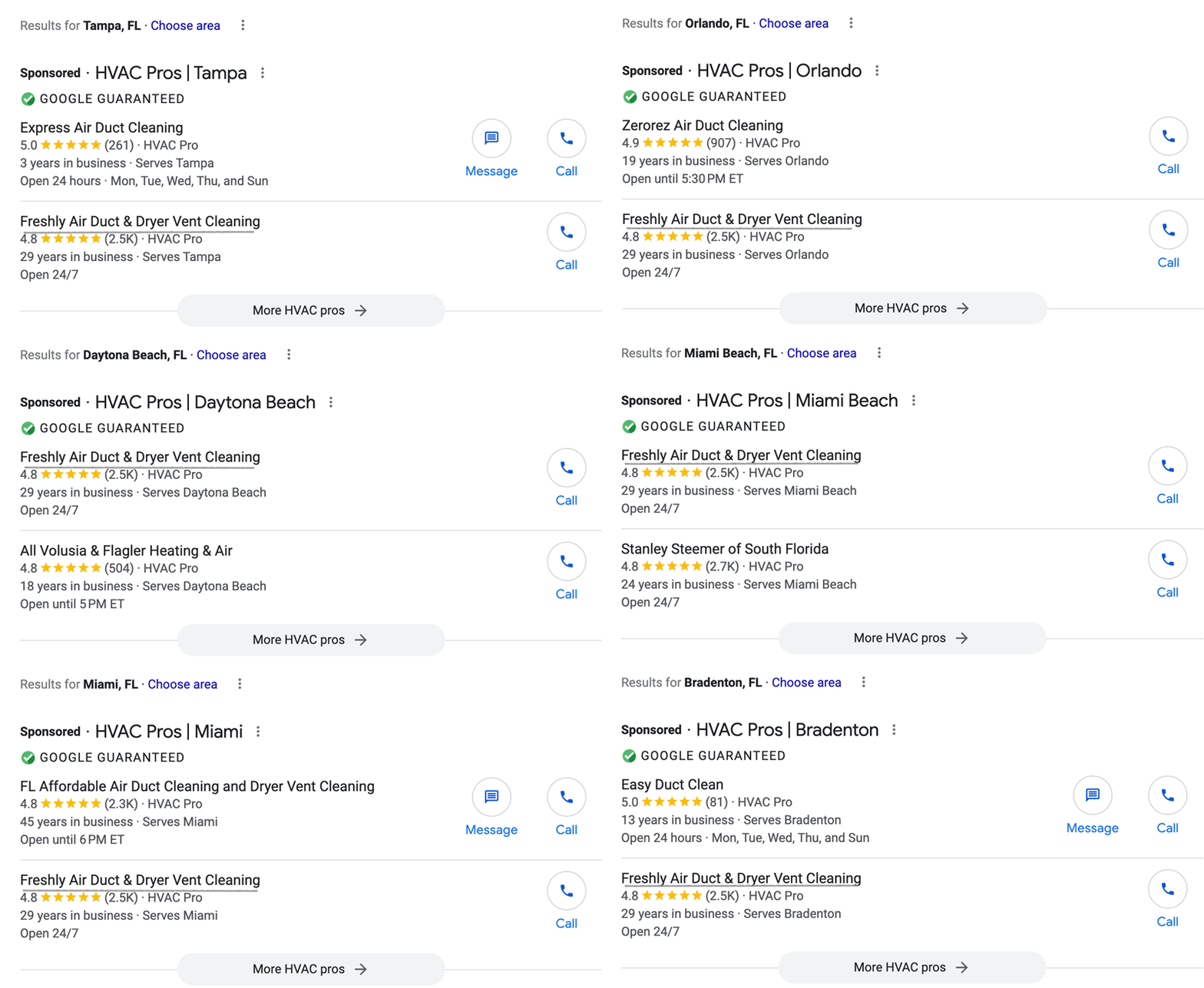
The consumer and business harms of the[ LSA Duct Cleaning scam](https://www.nearmedia.co/lsa-spam-scam-its-deja-vu-all-over-again/) are becoming more obvious. Google did [remove](https://www.google.com/localservices/prolist?cs=0&q=Ultra+Air+Duct+%26+Dryer+Vent+Cleaning&spp=EjsKEgjzvIzIBRDi-cruERj%5Fx6-gJRIleGNhdDpzZXJ2aWNlX2FyZWFfYnVzaW5lc3NfaHZhYzplbi1VUw&scp=CiV4Y2F0OnNlcnZpY2VfYXJlYV9idXNpbmVzc19odmFjOmVuLVVTEhgaEgkRwcgOorDZiBFlT63dcfKW%5FzjM-j0&src=1&hl=en-US&gl=us&slp=UlUIARIUChII87yMyAUQ4vnK7hEY%5F8evoCUqOwoSCPO8jMgFEOL5yu4RGP%5FHr6AlEiV4Y2F0OnNlcnZpY2VfYXJlYV9idXNpbmVzc19odmFjOmVuLVVT&ref=nearmedia.co) one of the LSA scam listings in Florida but another, [Freshly Air Duct & Dryer Vent Cleaning](https://g.co/kgs/FBSMdW?ref=nearmedia.co), has risen to the top of search results across [most](https://www.google.com/search?q=duct+cleaning+tampa&sca%5Fesv=592529771&ei=CfqCZdaDHrDDkPIPur6I2Ag&ved=0ahUKEwiWrI3enJ6DAxWwIUQIHTofAosQ4dUDCBA&uact=5&oq=duct+cleaning+tampa&gs%5Flp=Egxnd3Mtd2l6LXNlcnAaAhgCIhNkdWN0IGNsZWFuaW5nIHRhbXBhMgUQABiABDIGEAAYFhgeMgYQABgWGB4yBhAAGBYYHjIGEAAYFhgeMgYQABgWGB4yBhAAGBYYHjIIEAAYFhgeGA8yCBAAGBYYHhgPMgYQABgWGB5I8R9QrxJYyhpwA3gBkAEAmAF3oAGQBKoBAzEuNLgBA8gBAPgBAcICChAAGEcY1gQYsAPCAg0QABhHGNYEGMkDGLADwgIOEAAYgAQYigUYkgMYsAPCAhUQuQEYgAQYigUYkQIY7wQYiwMY7gTCAgsQABiABBiKBRiRAsICDxC5ARiABBjvBBiLAxjuBOIDBBgAIEGIBgGQBgk&sclient=gws-wiz-serp&ref=nearmedia.co) [urban](https://www.google.com/search?q=duct+cleaning+sarasota&sca%5Fesv=592529771&ei=tPqCZfHdAYfakPIP14OXkAE&ved=0ahUKEwjxh7avnZ6DAxUHLUQIHdfBBRIQ4dUDCBA&uact=5&oq=duct+cleaning+sarasota&gs%5Flp=Egxnd3Mtd2l6LXNlcnAaAhgCIhZkdWN0IGNsZWFuaW5nIHNhcmFzb3RhMgsQABiABBiKBRiRAjIFEAAYgAQyBhAAGBYYHjIIEAAYFhgeGA8yBhAAGBYYHjIGEAAYFhgeMgYQABgWGB4yBhAAGBYYHjILEAAYgAQYigUYhgMyCxAAGIAEGIoFGIYDSORFUL8NWIVDcAh4AZABAJgBf6ABuwqqAQM2Lje4AQPIAQD4AQHCAgoQABhHGNYEGLADwgIREC4YgAQYigUYkQIYxwEYrwHCAhUQuQEYgAQYigUYkQIY7wQYiwMY7gTCAgUQIRigAcICBxAAGIAEGA3CAgYQABgeGA3CAggQABgFGB4YDcICCBAAGAgYHhgN4gMEGAAgQYgGAZAGBA&sclient=gws-wiz-serp&ref=nearmedia.co) [markets](https://www.google.com/search?q=duct+cleaning+miami+beach&sca%5Fesv=592529771&ei=kvqCZbOjIcHbkPIP7I6x6AQ&ved=0ahUKEwiztLqfnZ6DAxXBLUQIHWxHDE0Q4dUDCBA&uact=5&oq=duct+cleaning+miami+beach&gs%5Flp=Egxnd3Mtd2l6LXNlcnAaAhgCIhlkdWN0IGNsZWFuaW5nIG1pYW1pIGJlYWNoMgYQABgWGB4yBhAAGBYYHjILEAAYgAQYigUYhgMyCxAAGIAEGIoFGIYDMgsQABiABBiKBRiGAzILEAAYgAQYigUYhgMyCxAAGIAEGIoFGIYDSK4jUIQPWLkecAJ4AJABAJgBbKABlAiqAQM2LjW4AQPIAQD4AQHCAgoQABiABBgNGLADwgILEAAYBRgeGA0YsAPCAg4QABiABBiKBRiGAxiwA8ICFRC5ARiABBiKBRiRAhjvBBiLAxjuBMICCxAAGIAEGIoFGJECwgIFEAAYgATCAgsQABiABBiKBRiSA8ICCBAAGBYYHhgP4gMEGAEgQeIDBRIBMSBAiAYBkAYI&sclient=gws-wiz-serp&ref=nearmedia.co) of [Central](https://www.google.com/search?q=duct+cleaning+orlando%27&sca%5Fesv=592529771&ei=pvqCZdbNBeDmkPIPnLO5oAo&ved=0ahUKEwjWuOOonZ6DAxVgM0QIHZxZDqQQ4dUDCBA&uact=5&oq=duct+cleaning+orlando%27&gs%5Flp=Egxnd3Mtd2l6LXNlcnAiFmR1Y3QgY2xlYW5pbmcgb3JsYW5kbycyBRAAGIAEMgYQABgWGB4yBhAAGBYYHjIGEAAYFhgeMgYQABgWGB4yBhAAGBYYHjIGEAAYFhgeMgYQABgWGB4yBhAAGBYYHjIGEAAYFhgeSOYgUKMRWI8gcAF4AJABAJgBnQGgAdoGqgEDNS4zuAEDyAEA-AEBwgIKEAAYRxjWBBiwA8ICDRAAGEcY1gQYyQMYsAPCAg4QABiABBiKBRiSAxiwA-IDBBgAIEGIBgGQBgk&sclient=gws-wiz-serp&ref=nearmedia.co), [South](https://www.google.com/search?q=duct+cleaning+miami&sca%5Fesv=592529771&ei=rvuCZbPdNavbkPIP-66DyAQ&ved=0ahUKEwiz7ISnnp6DAxWrLUQIHXvXAEkQ4dUDCBA&uact=5&oq=duct+cleaning+miami&gs%5Flp=Egxnd3Mtd2l6LXNlcnAaAhgCIhNkdWN0IGNsZWFuaW5nIG1pYW1pMgUQABiABDIGEAAYFhgeMgYQABgWGB4yBhAAGBYYHjIGEAAYFhgeMgYQABgWGB4yBhAAGBYYHjIGEAAYFhgeMggQABgWGB4YDzIIEAAYFhgeGA9I9fkDUOYQWMH2A3ACeAGQAQCYAXqgAbMEqgEDNC4yuAEDyAEA-AEBwgIKEAAYRxjWBBiwA8ICDRAAGEcY1gQYyQMYsAPCAg4QABiABBiKBRiSAxiwA8ICCBAAGIAEGJIDwgIIEAAYgAQYyQPCAgoQABiABBiKBRhDwgIPELkBGIAEGO8EGIsDGO4EwgIVELkBGIAEGIoFGJECGO8EGIsDGO4EwgILEAAYgAQYigUYkQLCAgsQABiABBiKBRiSA-IDBBgAIEGIBgGQBgk&sclient=gws-wiz-serp&ref=nearmedia.co) & [West](https://www.google.com/search?q=duct+cleaning+sarasota&sca%5Fesv=592529771&ei=9fuCZcnvEPLQkPIPxuqYgAk&ved=0ahUKEwiJvs3Inp6DAxVyKEQIHUY1BpAQ4dUDCBA&uact=5&oq=duct+cleaning+sarasota&gs%5Flp=Egxnd3Mtd2l6LXNlcnAaAhgCIhZkdWN0IGNsZWFuaW5nIHNhcmFzb3RhMgUQABiABDIFEAAYgAQyBhAAGBYYHjIIEAAYFhgeGA8yBhAAGBYYHjIGEAAYFhgeMgYQABgWGB4yCxAAGIAEGIoFGIYDMgsQABiABBiKBRiGAzILEAAYgAQYigUYhgNIv%5F1hUJzqYVjm9mFwB3gBkAEAmAF4oAGxBqoBAzIuNrgBA8gBAPgBAcICChAAGEcY1gQYsAPCAg0QABhHGNYEGMkDGLADwgIOEAAYgAQYigUYkgMYsAPCAgsQABiABBiKBRiRAsICERAuGIAEGIoFGJECGMcBGK8BwgIPELkBGIAEGO8EGIsDGO4EwgIVELkBGIAEGIoFGJECGO8EGIsDGO4E4gMEGAAgQYgGAZAGCQ&sclient=gws-wiz-serp&ref=nearmedia.co) Florida. To get approved for LSAs, these scammers have [stolen the business licenses](https://www.nearmedia.co/lsa-scam-update-weak-lsa-ad-disclosures-local-ctr/) of local contractors. When I call these contractors with details of the scam, they think I am a nutcase (point taken). But StyleCrest, an HVAC contractor across Florida whose [license](https://www.myfloridalicense.com/sto/unlicensedactivity/index.asp?SID=&ref=nearmedia.co) is being used by Freshly Air scammer, had weeks earlier received a review accusing them of just such fraud. Originally thinking it was a fired employee, they were shocked to learn of the scam. Another victim surfaced yesterday and StyleCrest encouraged them to report the scam to the police who didn't just ignore them, but lectured them to the point of defending the scammers. Google's failure to adequately address the scam, fueled by the Google Guarantee, has created a dangerous environment for consumers seeking reliable local services. The company's negligence and lack of effective safeguards have enabled fraudulent businesses to thrive, leading to consumer losses and putting real businesses at risk.
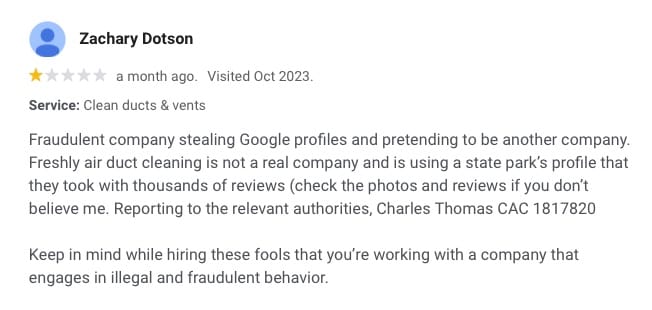
[Stealing reviews](https://www.nearmedia.co/searcher-behaviors/#lsa-listings-hijack-reviews) of public attractions is a common theme of this scam. Exactly how Google is fooled by this isn't clear.
**Our take:**
- The Duct Cleaning scam has been [circulating](https://nadca.com/blog/make-2022-year-cleaner-air-dont-be-victim-air-duct-cleaning-scams-facebook?ref=nearmedia.co) on Facebook for awhile. Recently the AG of Michigan [alerted](https://www.michigan.gov/ag/news/press-releases/2023/12/12/ag-nessel-warns-michigan-residents-about-air-duct-cleaning-scams?ref=nearmedia.co) their residents about it. But Google's LSA, with their "guarantee" and reach, allowed scammers to take this to a new level.
- Local authorities are not interested in this scam nor capable of doing anything, despite the fact that there is an in-person element to it.
- Google has known about this scam for awhile and apparently done nothing to stop it. It is past time for Google to pull the plug.
### Google at 25: Just a Rent Seeker?
💡
[Investopedia Definition](https://www.investopedia.com/terms/r/rentseeking.asp?ref=nearmedia.co#:~:text=The%20Bottom%20Line-,Rent%20seeking%20is%20an%20economic%20concept%20that%20occurs%20when%20an,%2C%20subsidies%2C%20or%20tariff%20protection.): Rent seeking is an economic concept that occurs when an entity seeks to gain wealth without any reciprocal contribution of productivity.
Google Local Service Ads were originally designed to increase consumer trust and provide an effective and simple pay-per-lead search product to small service businesses. Early on these ads provided great ROI and businesses loved them. Our research shows that [consumers love LSAs](https://www.nearmedia.co/lsa-scam-update-weak-lsa-ad-disclosures-local-ctr/#fast-and-loose-lsa-ad-disclosures) as well. These ads effectively redirect traffic away from both the Local Pack and organic at an aggressive clip. In our research, when LSAs appeared, Local Pack/Finder usage dropped from 33% of searches to 18%, turning local traffic into Google income. Last week we noted the [lack of legally required disclosures](https://www.nearmedia.co/lsa-scam-update-weak-lsa-ad-disclosures-local-ctr/#fast-and-loose-lsa-ad-disclosures) on the ads. Yet Google, in what seems the classic definition of rent seeking, seems intent squeezing LSAs even more by [showing them](https://x.com/AnthonyHigman/status/1735027457382572396?s=20&ref=nearmedia.co) on brand searchers. These [ads cost](https://x.com/BubblesUp/status/1736133774373441990?s=20&ref=nearmedia.co) \~$40-45\. [According to Tom Waddington](https://x.com/tomwaddington8/status/1736039204440682948?s=20&ref=nearmedia.co) LSAs are showing more frequently on brand queries and a business cannot turn this "feature" off. That is a lot to pay for a consumer who was going to call you anyway.
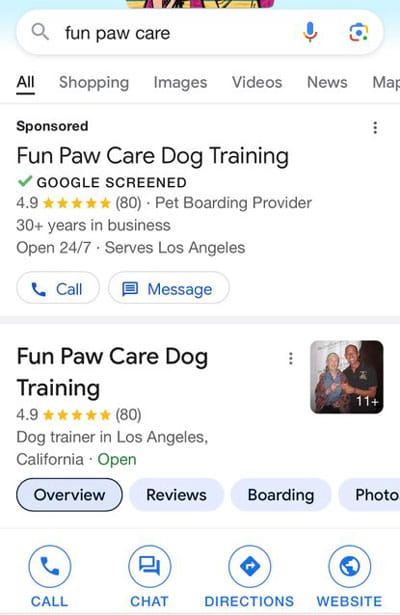
Example of LSA being shown for a branded query.
**Our take:**
- Google shouldn't show LSA ads for brand searches unless a business explicitly opts in.
- For the past number of years we have seen Google redirecting traffic internally. With LSA and SGE that trend is likely to accelerate in the future.
- When Google started out, 25 years ago, it totally disrupted the internet through innovation. Now Google has descended into rent seeking.
### Do Users Interact with Google's Scrollable Map?
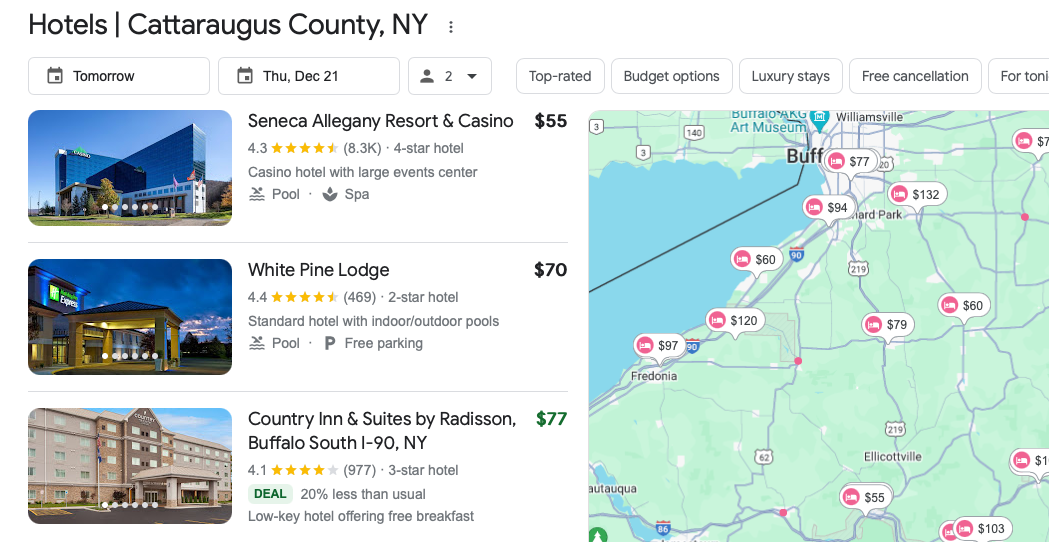
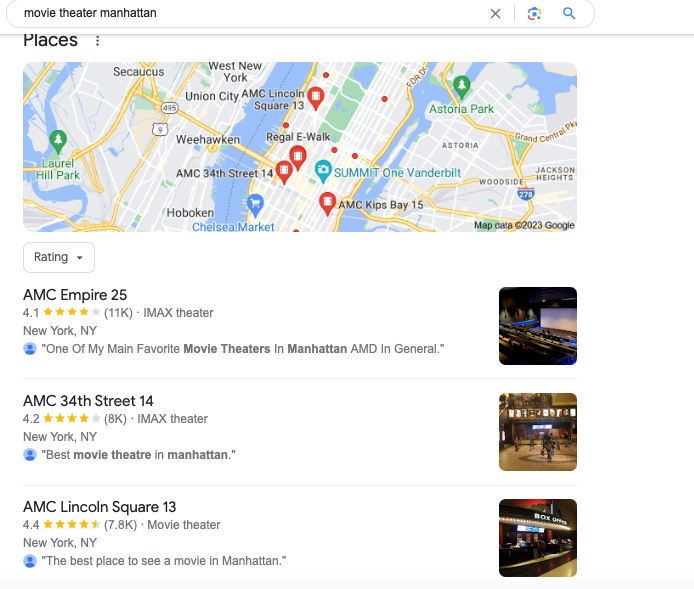
Google recently finalized the rollout of the new Local Pack interface showing listings to the left of the Map. In [testing](https://www.seroundtable.com/google-local-pack-with-map-on-right-side-31801.html?ref=nearmedia.co) since July, the new UI allows users to instantly scroll into the map to search a different location. The new Pack changes depend on the specific search and offer different details and calls to action. Hotels retained its unique Local Pack and some Local Packs (e.g., local product searches and theaters) retain the older Maps-at-the-top style. Google doesn't always geolocate users correctly by default. Where users are more likely to be location-sensitive Google shows the new interface. I found the change annoying but in a recent research project we saw a noticeable number of [users interact fluidly with the UI](https://www.youtube.com/watch?v=0TRbjcTMonA&ref=nearmedia.co) to find businesses located closer to them.
**Our take:**
- The new interface throws the concept of rank totally out the window. Users will scroll around the Map to locate alternative or additional choices.
- In some categories, like storage, proximity trumps almost any other consideration.
- As Google moves toward increasing personalization, it's critical marketers and businesses understand user behavior. The old adage "location, location, location," as the most important consideration, remains very much the case.
### App-Store Monopolies Break
App store monopoly days are over for Google, and soon Apple too. Last week a jury handed Google [a big defeat](https://www.nearmedia.co/branding-vs-paid-search-location-history-judge-vs-jury/), finding that Google Play was an illegal monopoly. Specific remedies are yet to be determined. However, that may be effectively unnecessary because of a [$700 million settlement](https://www.cnbc.com/2023/12/19/google-to-pay-700-million-to-us-consumers-states-in-play-store-settlement.html?ref=nearmedia.co) in a long-running case brought by US State Attorneys General over Google Play. The settlement was originally announced [in September](https://www.reuters.com/world/us/google-reaches-tentative-settlement-us-play-store-lawsuit-2023-09-06/?ref=nearmedia.co) but little was known about it at that time. Under its [terms](https://blog.google/outreach-initiatives/public-policy/reaffirming-choice-and-openness-on-android-and-google-play/?ref=nearmedia.co) Google must do two major things: allow user-choice billing and support “sideloading.” In other words, Android users will be able to pay for in-app purchases through third party channels and not just Google Play (where Google takes a 30% cut). The company will also have to make it easier for consumers to download apps from independent app stores. The $700 million will be divided between Android users and the states; $630 million will go to consumers and the remainder to the state litigants. As a practical matter, consumers will receive relatively little on an individual basis (<$10). This deconstruction of app store monopolies is also [happening in Europe](https://finance.yahoo.com/news/apple-admits-third-party-app-145742633.html?ref=nearmedia.co) and elsewhere around the world.

Source: DALL-E
**Our take:**
- These events together represent a win for developers and app publishers. However, it’s likely that Google Play will remain the dominant channel for Android app downloads.
- Apple [prevailed](https://www.nytimes.com/2023/04/24/business/apple-epic-games-appeal.html?ref=nearmedia.co) in a similar lawsuit with Epic, but the Google verdict and settlement mean Apple will eventually face a reckoning. Apple [makes billions](https://www.wsj.com/tech/the-app-store-economy-is-under-siege-b81cd8f6?ref=nearmedia.co) in app-store commissions today.
- Google’s upbeat blog post [spins the settlement](https://blog.google/outreach-initiatives/public-policy/reaffirming-choice-and-openness-on-android-and-google-play/?ref=nearmedia.co) as a win for consumer choice and innovation. But it’s clear they wouldn’t have done any of this voluntarily.
## Recent Analysis
- **Near Memo episode 139:**[ Google Review Fraud Landscape in Maps & LSA](https://www.nearmedia.co/ep-139/), and How a Business Should Respond - Interview with Curtis Boyd
- **ICYMI: Convo with Joy Hawkins & Darren Shaw:** [How Local SEO Agencies Are Using Generative AI & ChatGPT](https://www.nearmedia.co/ep-135-2/)
## Short Takes
- [Check your GBP](https://www.linkedin.com/feed/update/urn:li:activity:7141486795279482880/?ref=nearmedia.co) for who has access or **risk GBP account suspension.**
- **Missing GBP image stats**? You can [find them](https://twitter.com/DarrenShaw%5F/status/1735338392223879682?s=20&ref=nearmedia.co) in you know how.
- Integrating **GA4** [with Third-Party Booking Platforms](https://www.sterlingsky.ca/integrating-ga4-third-party-booking-platforms/?ref=nearmedia.co).
- Researchers **use AI to rank better in AI search** by [citing sources, adding quotations](https://www.searchenginejournal.com/researchers-show-how-to-rank-in-ai-search/504260/?ref=nearmedia.co) and [using statistics](https://searchengineland.com/generative-engine-optimization-framework-introduced-research-paper-435855?ref=nearmedia.co).
- Google’s **Search Generative Experience (SGE)** now [showing for 84% of search queries](https://searchengineland.com/new-google-sge-insights-content-formats-ymyl-product-views-435849?ref=nearmedia.co) in three main forms.
- **Local link building tips** from [](https://twitter.com/gyitsakalakis?ref=nearmedia.co)[Gyi Tsakalakis](https://x.com/gyitsakalakis/status/1734963349190828125?s=20&ref=nearmedia.co) (Twitter).
Listen to our [latest podcast](https://www.nearmedia.co/memo/).
[](https://nearmedia.co/memo?ref=nearmedia.co)
How can we make this better? Email [us](mailto:gsterling@nearmedia.co) with suggestions and recommendations.
### Ep 139: The Google Review Fraud Landscape in Maps & LSA and How a Business Should Respond
URL: https://www.nearmedia.co/ep-139/
Last updated: 2023-12-20T18:08:52.000Z
[**The Google Review Fraud Landscape in Maps & LSA and How a Business Should Respond**](https://youtu.be/1c9zf6MvPiU?ref=nearmedia.co)
**Google Review Fraud Landscape (10:17)**:
- Estimates that 18% of reviews across various platforms are fake.
- Home service industries, such as locksmiths, moving companies, and HVAC, are heavily affected.
- Legal sector is also impacted, with fake reviews prevalent among personal injury, criminal defense, and DUI lawyers.
**LSA Review Fraud (21:38)**:
- Lead generation scammers are stealing business from ethical businesses using fake LSA reviews.
- They overcharge consumers and use higher ad revenue to improve their bidding strategy within LSA dashboards.
- Google's LSA program is designed to give consumers confidence in businesses by elevating them above spam and fraud, but it has not been successful.
**Practical Advice for Business Owners to Cope With Fake Reviews (41:03)**:
- Gather evidence of fraudulent activity, such as fake reviews or stolen business licenses, to build a strong case.
- Report fake reviews to Google through the proper channels, but be aware that Google's response may be slow or ineffective.
- Consider legal action against fraudulent businesses, as it may be a violation of racketeering laws in certain jurisdictions.
Segment Reference Articles
[The Transparency Company](https://askfortransparency.com/?ref=nearmedia.co)
[LSA Spam Scam - It's Deja Vu All Over Again](https://www.nearmedia.co/lsa-spam-scam-its-deja-vu-all-over-again/)
[Uberall analyzes four million reviews on Google, Facebook, Yelp and Tripadvisor to determine comparative rates of review fraud](https://uberall.com/en-us/company/press-releases/study-67-of-us-consumers-say-fake-online-reviews-a-growing-problem?ref=nearmedia.co)
### Branding vs. Paid Search, Location History, Judge vs. Jury
URL: https://www.nearmedia.co/branding-vs-paid-search-location-history-judge-vs-jury/
Last updated: 2023-12-18T23:30:24.000Z
### AirBnB: Branding vs. Paid Search
It's probably unfair to say Google's almost continuous algorithm updates, UI changes and the advent of SGE are part of a larger "conspiracy" to drive ad revenue. But that may be their practical effect. For example, Local Services Ads are highly effective for Google, evidenced by [continued category expansion](https://twitter.com/JoyanneHawkins/status/1736567157335408859?ref=nearmedia.co). They "[capture" significant traffic](https://www.nearmedia.co/searcher-behaviors/) that would otherwise go to the Local Pack or organic listings. And, depending on the category, local businesses may feel compelled to use them. Brand building is one response to all this – as a hedge against SERP volatility and the pressure to buy search advertising. One case in point is AirBnB. Since 2019, the company [has increasingly shifted focus](https://www.thedrum.com/news/2023/08/24/airbnb-cmo-ditching-performance-marketing-big-bold-brand-campaigns?ref=nearmedia.co) from performance marketing to brand building. Company executives [said last year](https://www.fool.com/earnings/call-transcripts/2022/11/01/airbnb-inc-abnb-q3-2022-earnings-call-transcript/??ref=nearmedia.co) that more than 90% of its traffic is now direct or organic and that they use paid search in a more limited way post-pandemic. AirBnB is no longer "buying customers," says CEO Brian Chesky but doing "education" through brand advertising. The focus on brand was a major strategic shift that has apparently [paid off](https://www.marketingweek.com/airbnb-earnings-surge-effective-marketing-spend/?ref=nearmedia.co). Revenue [has continued to grow](https://www.thedrum.com/news/2023/08/24/airbnb-cmo-ditching-performance-marketing-big-bold-brand-campaigns?ref=nearmedia.co) since cutting its SEM budget without traffic losses.

Source: DALL-E
**Our take:**
- Companies shy away from brand campaigns because they often don't produce immediate results and they're challenging to execute.
- Paid search has a role to play for sure. But if you're dependent on it for traffic and customer acquisition, you're in a vulnerable position.
- It's challenging, though not impossible, for local businesses to build brands with great products/services, social media, video and PR.
### Google Does Right Thing on Location History
Google's tracking and storage of location history has become increasingly controversial [since 2018](https://apnews.com/article/828aefab64d4411bac257a07c1af0ecb?ref=nearmedia.co). The company has been repeatedly accused of deceiving users and sued. Most recently it [paid $155 million](https://www.reuters.com/legal/google-pay-155-million-settlements-over-location-tracking-2023-09-15/?ref=nearmedia.co) to settle claims – following an [earlier $392 million settlement](https://www.nearmedia.co/google-loc-privacy-facebook-kills-portal-apple-search-mia/) – that it misled consumers about about location tracking. Google needs/wants user location for multiple purposes, including ad targeting and attribution. Many of its services also work better with location turned on. However, the company didn't make managing location transparent or easy for most users. And the storage of massive amounts of user location data made Google attractive to law enforcement, which sought so-called "[geofence warrants](https://www.documentcloud.org/documents/21046081-google-geofence-warrants?ref=nearmedia.co)" that required surrender of information on all devices in a specific geographic area (just found [unconstitutional](https://www.eff.org/deeplinks/2023/04/first-us-appellate-court-decide-finds-geofence-warrant-unconstitutional?ref=nearmedia.co)). In the [post-Roe world](https://www.nearmedia.co/tech-privacy-headache/), location history was also [being seen as an enforcement tool](https://www.npr.org/2022/07/02/1109565803/data-privacy-abortion-roe-apps?ref=nearmedia.co) by abortion opponents. Given these headaches, Google [announced changes](https://blog.google/products/maps/updates-to-location-history-and-new-controls-coming-soon-to-maps/?ref=nearmedia.co) to how it manages location. Most significantly, location history will be stored on the device, not in the cloud, making it more private. This change is partly self-interested but also the right move.
Source: Google
**Our take:**
- Apple has been selling privacy as a competitive advantage. And location tracking was becoming toxic for Google among the privacy conscious.
- Google wants people to turn on location. It's seeking to assure users that location is not synonymous with "surveillance."
- It's not entirely clear that law enforcement won't still try to access/abuse location data but Google's move has made that less likely.
### Google Antitrust: Judge vs. Jury
There's been [speculation](https://www.theguardian.com/technology/2023/dec/16/epic-games-antitrust-google-apple?ref=nearmedia.co) about why Google recently [lost its trial to Epic](https://www.reuters.com/legal/google-epic-games-face-off-app-antitrust-trial-nears-end-2023-12-11/?ref=nearmedia.co) and Apple, facing the same antitrust claims, prevailed (though Epic is [appealing](https://www.reuters.com/legal/epic-games-asks-us-supreme-court-review-apple-antitrust-case-2023-09-27/?ref=nearmedia.co)). One of the key differences was the presence of a jury in Google's case. Apple's was decided by a judge. A jury unanimously found Google’s app store was an illegal monopoly. If that's the major difference, the fact that the current [DOJ case against Google](https://www.npr.org/2023/09/12/1198558372/doj-google-monopoly-antitrust-trial-search-engine?ref=nearmedia.co) is a "bench trial" (judge only) could be positive for the company. The DOJ case ruling won't come until late May or June and US District Judge Amit Mehta [said](https://www.reuters.com/legal/us-wraps-up-antitrust-case-against-google-historic-trial-2023-11-16/?ref=nearmedia.co) he has "no idea" what he'll decide at this point. Most reporting on the trial suggested that the government's case was effective. Even though Google remains one of the biggest global brands, its [reputation has suffered](https://en.wikipedia.org/wiki/Criticism%5Fof%5FGoogle?ref=nearmedia.co) generally, which may partly account for the jury's decision in Epic. So the judge-only trial in the DOJ case may benefit Google. But any outcome will likely be appealed and take years to be resolved. Breaking up Google is probably not in the cards and investors will probably [be unmoved](https://www.cnbc.com/2023/12/12/googles-loss-to-epic-will-likely-have-little-impact-in-the-near-term.html??ref=nearmedia.co) by any negative outcome for Google. As we've argued, consumer behavior is also unlikely to change either.
Source: DALL-E
**Our take:**
- If nothing changes will all this have been a colossal waste of time? Yes, unless there's a dramatic remedy, which we're unlikely to see.
- ChatGPT/AI stand a better chance of challenging Google's dominance than the DOJ's antitrust case. However, that's looking less likely now too.
- The next [antitrust case against Google](https://www.justice.gov/opa/pr/justice-department-sues-google-monopolizing-digital-advertising-technologies?ref=nearmedia.co) (alleged ad monopoly), [will start in 2024](https://www.competitionpolicyinternational.com/googles-us-ad-antitrust-suit-trial-date-set-for-march-2024/?ref=nearmedia.co). If liability is found, there are more clear-cut remedies (restructuring).
## Recent Analysis
- **Near Memo episode 138:** [Google's Reactive Behavior in 2023, LSA Ad Efficiency, Notebook LM: AI for the Rest of US](https://www.nearmedia.co/ep-138/).
## Short Takes
- Moz: 27 **SEO-related predictions** [for 2024](https://moz.com/blog/2024-seo-content-predictions?ref=nearmedia.co).
- Google: **business hours** was a ranking signal but [now turned up](https://twitter.com/searchliaison/status/1735759183688147066?s=12&ref=nearmedia.co).
- New Google **Local Services ad categories** [added](https://twitter.com/JoyanneHawkins/status/1736567157335408859?ref=nearmedia.co).
- New/old [share feature](https://twitter.com/clairecarlile/status/1735241272263110665?ref=nearmedia.co) for **Google Business Profiles**.
- **Review bombing** [not policed](https://www.npr.org/2023/12/17/1219599404/goodreads-review-bombing-cait-corrain?ref=nearmedia.co) on Amazon-owned Goodreads.
- As we predicted, the **Adobe-Figma** [deal is dead](https://www.cnbc.com/2023/12/18/adobe-and-figma-call-off-20-billion-merger.html??ref=nearmedia.co).
- If you've got a low-quality site, **AI content** [might help your SEO](https://www.linkedin.com/posts/localseoguide%5Fheres-some-slightly-meaningless-ai-seo-data-activity-7141121542414917634-Xwzr/?ref=nearmedia.co).
- Hallucinations: **AI chatbots** [not a reliable voter information resource](https://algorithmwatch.org/en/wp-content/uploads/2023/12/AlgorithmWatch%5FAIForensics%5FBing%5FChat%5FReport.pdf?ref=nearmedia.co).
- Google [launches first paid campaign](https://9to5google.com/2023/12/17/google-bard-advertising/?ref=nearmedia.co) to promote **Bard** to consumers.
- The **European AI Act** [won't come into effect until 2026](https://www.mayerbrown.com/en/perspectives-events/publications/2023/12/eu-ai-act-european-parliament-and-council-reach-agreement?ref=nearmedia.co).
- **Hedge fund newspaper ownership** [continues to destroy local news](https://www.washingtonpost.com/opinions/2023/12/14/alden-pennsylvania-scranton-family-newspaper/?ref=nearmedia.co).
- **TikTok** [wants to be more like YouTube](https://us.cnn.com/2023/12/16/tech/tiktok-pushing-longer-videos-creators-app-change/?ref=nearmedia.co) but that may backfire.
- December Xmas **shoppers** [more likely to go into stores](https://news.shopify.com/here-come-the-late-holiday-shoppers-our-survey-reveals-who-they-are?ref=nearmedia.co).
- **Pinterest** is [being revived by GenZ](https://www.wired.com/story/pinterest-gen-z-future/?ref=nearmedia.co).
Listen to our [latest podcast](https://www.nearmedia.co/memo/).
[](https://nearmedia.co/memo?ref=nearmedia.co)
How can we make this better? Email [us](mailto:gsterling@nearmedia.co) with suggestions and recommendations.
### Ep 138: Google's Reactive Behavior to Search Quality, LSA Ad Efficiency, Notebook LM: AI for the Rest of US
URL: https://www.nearmedia.co/ep-138/
Last updated: 2023-12-17T15:40:51.000Z
**Part 1 starts 00:13 -** [**Will Google's Reactive Behavior to Search Quality & AI Solve Their Problems?**](https://youtu.be/%5FE0g%5FSeetf4?ref=nearmedia.co)
- Google is struggling to adapt to the changing market dynamics, including the rise of AI, TikTok, and criticism of declining search result quality.
- Google's efforts to retain younger users by modifying its search results to include more engaging content like social media, short videos, and images.
- Google's algorithmic updates are aimed at improving search result relevance and combating the issue of low-quality AI-generated content.
Segment Reference Articles [Google SERP: Too Baroque](https://www.nearmedia.co/local-guide-reviews-baroque-serp-bot-vs-bot/#google-serp-too-baroque)
**Part 2 starts 08:30 - LSA Ad Efficiency and Google's Transition to a UX That is AI Driven**
- Local service ads (LSAs) are outperforming traditional search results and organic traffic due to their higher efficiency in attracting clicks.
- The success of LSAs is due to their visual & emotional appeal, trust badges, and display of relevant information like star ratings, years in business, and the Google guarantee.
- Google is transitioning towards a new approach where search results will be tailored to users' emotional responses, leading to increased click-through rates on ads.
Segment Reference Articles: [LSAs "steal" significant clicks from Local](https://www.nearmedia.co/searcher-behaviors/)
**Part 3 starts 15:00 -** [**Google’s Incredible Notebook LM IS the Future of AI For the Rest of Us**](https://youtu.be/wuVugkll%5FHw?ref=nearmedia.co)
Notebook LM is Google's most notable AI development this year, allowing users to create customized datasets and effectively build their own large language models.
- The accessibility of Notebook LM, makes this technology suitable even for non-technical users.
- Notebook LM has the potential to revolutionize various industries by empowering individuals to develop personalized AI tools and generate high-quality content with ease.
Segment Reference Articles: [Notebook LM](https://notebooklm.google/?ref=nearmedia.co)
**Note**: The above show notes were created by pasting the full transcript of the video into Google Notebook LM. I erroneously truncated the prompt to: "This transcript has 3 segements".
### SGE a 'Traffic Destroyer', AI Optimization, SMB Badges
URL: https://www.nearmedia.co/sge-a-traffic-destroyer-ai-optimization-smb-badges/
Last updated: 2023-12-15T19:06:35.000Z
### SGE in 87% of Local SERPs
We don't yet have much data on how users are responding to Google SGE: whether it drives clicks or creates more zero-click results. Both SEOs and publishers have been busy trying to assess its potential impact on the rest of the SERP and traffic to their websites. Google and Microsoft have said that driving traffic to publishers is a priority. However, a recent [analysis](https://www.pymnts.com/artificial-intelligence-2/2023/news-execs-googles-ai-integration-could-kill-journalism/?ref=nearmedia.co) by The Atlantic ("40% of the magazine’s web traffic comes from Google") concluded that "75% of the time, the AI-powered search would likely provide a full answer to a user’s query." And the Wall Street Journal [reports](https://www.wsj.com/tech/ai/news-publishers-see-googles-ai-search-tool-as-a-traffic-destroying-nightmare-52154074??ref=nearmedia.co) that publishers expect to lose "between 20% and 40% of their Google-generated traffic" post SGE. There are [larger estimates](https://searchengineland.com/how-google-sge-will-impact-your-traffic-and-3-sge-recovery-case-studies-431430?ref=nearmedia.co) too (60% plus), but it will probably be query and category dependent. Another recent [study](https://seranking.com/blog/inside-google-sge/?ref=nearmedia.co) looked at the impact of SGE on 2 million search results and found Google's AI snippets appeared in 90% of searches and 87% of local search results. SGE formats vary by query type. However, the study found an average of 28 links in SGE (some behind drop-downs); 45% of those *aren't* from the top 10 organic results. Accordingly, [some SEOs](https://moz.com/blog/sge-impact-on-organic-traffic?ref=nearmedia.co) are hopeful SGE creates new ranking opportunities.
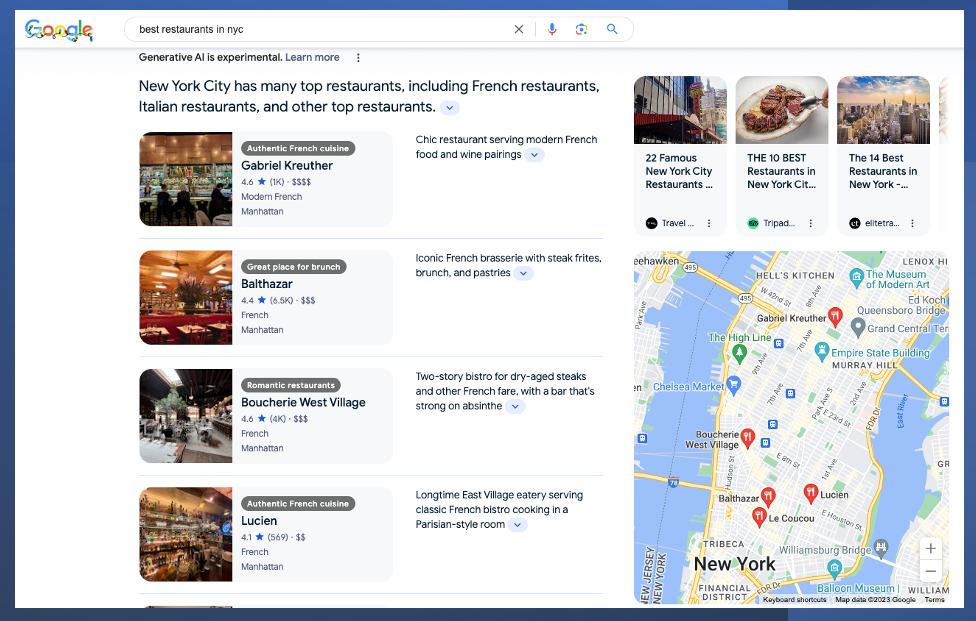
Google SGE Pack for "best restaurants in NYC"
**Our take:**
- Informational searches [are the majority](https://searchengineland.com/study-80-percent-of-searches-are-informational-20-are-navigational-or-transactional-13745?ref=nearmedia.co) on Google. This is where SGE could hurt traffic, as well as "commoditized" categories with few if any brands.
- SGE is a near duplication ([at least visually](https://www.nearmedia.co/google-sge-meet-the-new-pack/)) of the Local Pack. It could thus have a negative impact on Pack engagement. Brand awareness becomes more critical going forward; 80% - 90% of local searches [are unbranded](https://brands.yelp.com/inspiration/industry-insights/??ref=nearmedia.co).
- Google is [testing ads in SGE](https://searchengineland.com/google-testing-new-sge-ad-format-434722?ref=nearmedia.co). More zero-click results will put further pressure on marketers to buy ads for visibility, in SGE and otherwise including [LSAs](https://www.nearmedia.co/lsa-scam-update-weak-lsa-ad-disclosures-local-ctr/).
### AI 'Optimization' Dilemma
Authors and artists have filed multiple copyright suits against major AI platforms (Google, OpenAI, Microsoft, Meta, Midjourney). The common allegation is that their LLMs have been trained on copyrighted materials without permission. These cases are ongoing and unresolved, though plaintiffs have suffered some setbacks (e.g., [here](https://www.reuters.com/legal/litigation/us-judge-trims-ai-copyright-lawsuit-against-meta-2023-11-09/?ref=nearmedia.co), [here](https://www.hollywoodreporter.com/business/business-news/artists-copyright-infringement-case-ai-art-generators-1235632929/?ref=nearmedia.co)). The platforms have responded by offering to [indemnify their customers](https://blogs.microsoft.com/on-the-issues/2023/09/07/copilot-copyright-commitment-ai-legal-concerns/?ref=nearmedia.co) against future copyright litigation. Google also created a robots.txt equivalent (Google Extended), which [allows publishers to opt-out](https://blog.google/technology/ai/an-update-on-web-publisher-controls/?ref=nearmedia.co) of AI training data (many have). And a few publishers have done content licensing deals (e.g., [Axel Springer](https://openai.com/blog/axel-springer-partnership?ref=nearmedia.co), [AP](https://apnews.com/article/openai-chatgpt-associated-press-ap-f86f84c5bcc2f3b98074b38521f5f75a?ref=nearmedia.co)). As indicated above, publishers fear losing significant traffic as well as brand value and ad revenue as user behavior changes and more discovery happens via AI tools. This creates a dilemma over how to respond: 1) block AI training inclusion, 2) license your content, 3) create [plug-ins/extensions](https://www.nearmedia.co/bard-plug-ins-smb-marketing-impatience-just-walk-out-again/), 4) optimize for AI, 5) build your brand for direct traffic – or some mix of these. It's still very early and not clear which (or which mix) of tactics is right.

Source: DALL-E
**Our take:**
- Advice on optimizing for Google SGE, right now, is [very similar](https://searchengineland.com/preparing-google-sge-essential-guide-marketers-434802?ref=nearmedia.co) to optimizing for traditional search (review management, EEAT, schema, etc.).
- Although I'm an advocate of ChatGPT, Bard and others as Google alternatives, it's far from clear that's going to happen at scale.
- We'll know a lot more this time next year, but marketers/publishers need to utilize other channels for visibility and build their brands as a hedge.
### Are SMB Badges Working?
In consumer surveys, people invariably say they want to support small merchants in their area. However, their behavior has traditionally fallen short of these intentions – they buy on Amazon. In 2021, a Nextdoor [survey](https://www.nearmedia.co/yelp-review-prompt/) reflected the disparity (72% intention, 44% effort). Shopify also documented this "intention-action gap," finding that while 50% of US shoppers wanted to support local businesses only 36% actually did. But a new Q4 holiday shopping [survey](https://www.junglescout.com/consumer-trends/?ref=nearmedia.co) from Jungle Scout finds, "The percentage of consumers shopping for holiday gifts from local and/or small businesses ... jumped to 20% this year from 10% in 2022." These Jungle Scout numbers are lower than the earlier findings but it's the growth that's interesting. In November, Google introduced a new [small business attribute](https://blog.google/products/shopping/google-merchant-new-features-holiday/??ref=nearmedia.co) and then made it a shopping filter. Amazon similarly rolled out a small business badge in 2022, which became a [filter in October 2023](https://www.ecomengine.com/sell-on-amazon/how-to-get-amazon-small-business-badge?ref=nearmedia.co). While we don't have data, it may be that these badges are helping elevate the profile of SMBs and affecting consumer choices and conversions.
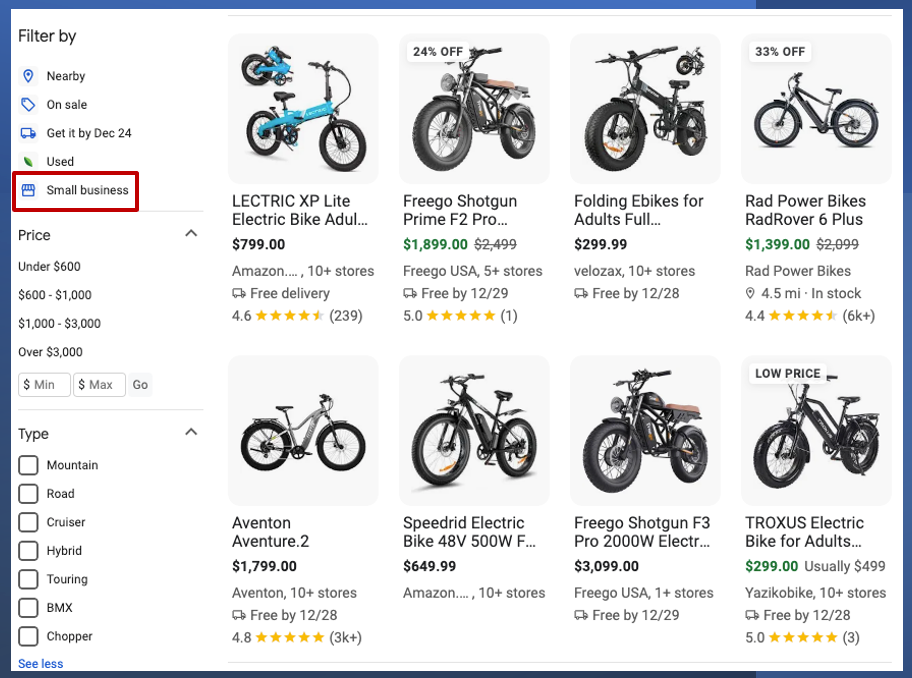
**Our take:**
- Small businesses on Google and Amazon should embrace these attributes/badges. They help (some) consumers act on their values.
- Local inventory is also important. It can prompt consumers to shop more locally. All local product sellers should have [product information](https://support.google.com/business/answer/3038177?hl=en&ref=nearmedia.co#zippy=%2Cproducts) on their Google Business Profiles.
- A 2021 [survey](https://www.prweb.com/releases/study-67-of-consumers-trust-local-businesses-more-than-internet-only-brands-826754056.html?ref=nearmedia.co) I wrote found "67% of consumers trust local businesses more than online-only companies." Badges and real-time inventory help make local pop for otherwise e-commerce focused shoppers.
## Recent Analysis
- **LSA Spam Scam - It's Deja Vu All Over Again**, [by Mike Blumenthal](https://www.nearmedia.co/lsa-spam-scam-its-deja-vu-all-over-again/).
- **Near Memo episode 137:** [Can Gemini Fix Search? The Impact of Google’s Rating Bias, LSA Reviewjacking](https://www.nearmedia.co/ep-137-can-gemini-fix-search-the-impact-of-googles-rating-bias-lsa-reviewjacking/).
## Short Takes
- Opinion: **brand building** [should replace traditional linkbuilding](https://searchengineland.com/brand-mentions-future-backlinks-435744?ref=nearmedia.co).
- Whitespark: **business hour rankings** [in action](https://www.linkedin.com/feed/update/urn:li:activity:7140802667253059585/??ref=nearmedia.co).
- More [discussion](https://www.brightlocal.com/blog/opening-hours-local-ranking-factor/??ref=nearmedia.co) of **business hours as a ranking factor**.
- **Google review** [posting restrictions](https://www.seroundtable.com/google-local-notice-review-posting-is-turned-off-36556.html?ref=nearmedia.co) in the wild.
- **Google** testing new [Google Business Profile layout](https://twitter.com/mblumenthal/status/1735293769296064654?ref=nearmedia.co) (mobile)?
- **Google** [enables seller ratings](https://brodieclark.com/notes/?ref=nearmedia.co) for e-commerce sites on the desktop.
- New **GBP suspension emails** [feature a blue "appeal" button](https://www.seroundtable.com/google-business-profile-suspension-emails-appeal-36557.html?ref=nearmedia.co).
- **Threads** [now widely available](https://www.theverge.com/2023/12/14/23953986/threads-european-union-launch-eu-meta-twitter-rival?ref=nearmedia.co) across Europe.
- **Zagat Survey** [being](https://survey.savanta.com/?&id=86ed06fcfb&id2=2cca2700&lng=en-GB&ref=nearmedia.co) revived by owner JPMorganChase.
- [Deets](https://www.deets.com/?ref=nearmedia.co) a new curated, **social travel site** from a Kayak co-founder.
- **TikTok** [heavily influencing GenZ purchases](https://www.digitalcommerce360.com/2023/12/13/tiktok-driving-force-behind-holiday-shopping-decisions/?ref=nearmedia.co) according to survey.
- **Meta's smart glasses** getting [AI driven visual/voice search](https://about.fb.com/news/2023/12/meta-ai-updates/?ref=nearmedia.co).
- SOCi [introduces](https://www.meetsoci.com/resources/insights/brands-franchises/socis-genius-social-revolutionizes-social-media-through-ai-powered-content-development-and-customer-engagement/??ref=nearmedia.co) **AI-social media content** tool for multi-location brands.
- Why **LLM-trained AIs** [may grow more unreliable](https://www.fastcompany.com/90998360/grok-openai-model-collapse?ref=nearmedia.co) over time.
- **Google Chrome** will test [cookie deprecation](https://9to5google.com/2023/12/14/chrome-tracking-protection/?ref=nearmedia.co) in January.
Listen to our [latest podcast](https://www.nearmedia.co/memo/).
[](https://nearmedia.co/memo?ref=nearmedia.co)
How can we make this better? Email [us](mailto:gsterling@nearmedia.co) with suggestions and recommendations.
### LSA Scam Update, Weak LSA Ad Disclosures, Local CTRs
URL: https://www.nearmedia.co/lsa-scam-update-weak-lsa-ad-disclosures-local-ctr/
Last updated: 2023-12-13T20:24:07.000Z
### LSA Scam Is Worse than We Thought - Part 4
We reported on the LSA scam of [stealing reviews](https://www.nearmedia.co/searcher-behaviors/#lsa-listings-hijack-reviews) on a [grand scale](https://www.nearmedia.co/rich-snippet-review-abuse-organic-ctr-lsa-reviewjacking/#google-lsa-reviewjacking-part-2) and ripping off customers with [inflated quotes ](https://www.nearmedia.co/lsa-spam-scam-its-deja-vu-all-over-again/)[for duct cleaning services](https://www.nearmedia.co/lsa-spam-scam-its-deja-vu-all-over-again/) that aren't actually performed. But it gets worse. These scammers are also stealing [FL business licensing numbers](https://support.google.com/business/thread/247976702?hl=en&msgid=248015669&sjid=18151426490601726185-NC&ref=nearmedia.co) required for Google LSA verification from other small, HVAC businesses. In Florida, the deceptive misuse of a license can apparently lead to strict enforcement and a fine from the [Florida DBPR](https://www.myfloridalicense.com/LicenseDetail.asp?SID=&id=1C754E4DC2277FFCB3711B38FDB605B1&ref=nearmedia.co), if there are consumer complaints. This puts innocent businesses whose licenses were misappropriated at significant risk. The further we dig into this situation the more it would appear the activities are criminal, not just some business trying to gain a short term advantage. I have been shown unconfirmed reports of similar scams in the UK, controlled by "Albanian, Italian and Israel marketing agencies. Which are in turn controlled by criminal elements in the background." Google and other platforms generally [cannot be held accountable](https://blog.ericgoldman.org/archives/2023/12/section-230-helps-amazon-defeats-false-advertising-lawsuit-over-printer-ink-cartridges-planet-green-v-amazon.htm?ref=nearmedia.co) for abuses of their online ads because of Sec 230 protections (in the US). Greg Sterling however [raises](https://www.linkedin.com/posts/gregsterling%5Fin-this-weeks-episode-of-googles-local-activity-7140465149026390018-mocm?utm%5Fsource=share&utm%5Fmedium=member%5Fdesktop) the interesting prospect that since LSA ads seem to entail content largely generated by Google's verification process, and not the advertiser, Sec 230 protection might not apply. Regardless it is hard to believe that Google is unaware of the activity or that the [efforts](https://twitter.com/adsliaison/status/1731730028746920184?s=20&ref=nearmedia.co) of their "teams ... investigating" have turned up nothing.
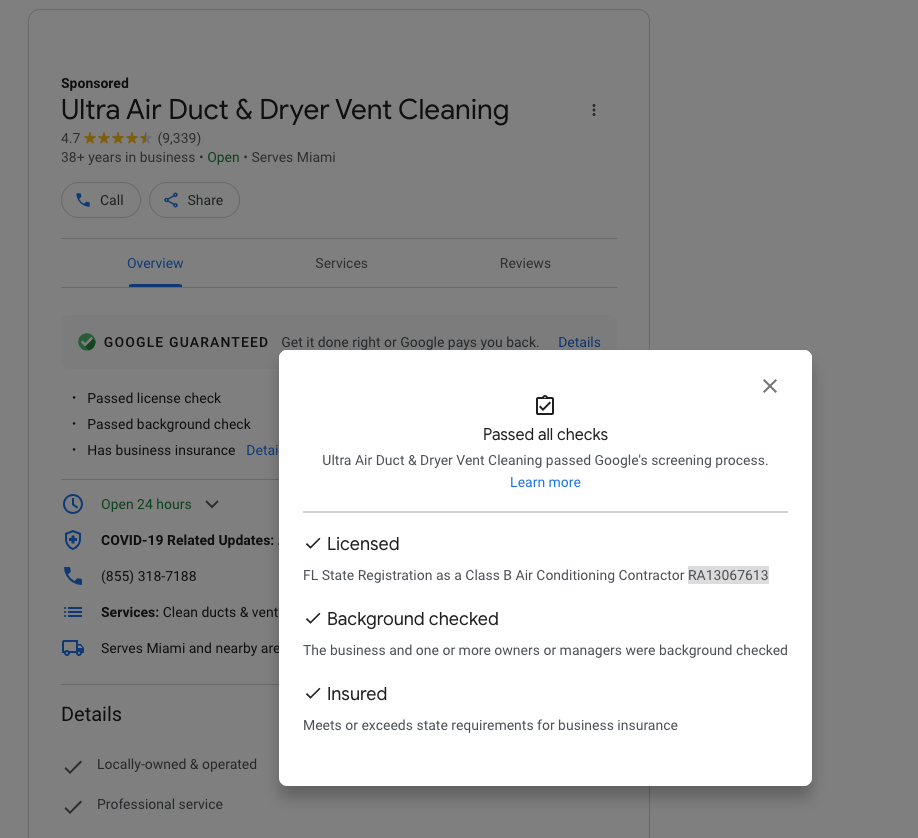
**Our take:**
- Similar to the [Locksmith scams of the 2010s](https://en.wikipedia.org/wiki/Locksmith%5Fscam?ref=nearmedia.co), Google is well aware of how its systems can be leveraged for these activities. With LSAs, they theoretically have [processes in place](https://support.google.com/localservices/answer/6226575?hl=en&ref%5Ftopic=10491040&sjid=7782937220943603091-NC&ref=nearmedia.co) to prevent this, which are obviously NOT working.
- The big difference today is that a very few bad actors can achieve [broad consumer reach](https://www.nearmedia.co/rich-snippet-review-abuse-organic-ctr-lsa-reviewjacking/#google-lsa-reviewjacking-part-2) and since theses businesses are "anointed" by Google as "Google Guaranteed" they have [high consumer credibility](https://www.nearmedia.co/searcher-behaviors/).
- The other difference from the Google locksmith scams: Google now gets \~$50 every time one of these highly ranked bad actors is contacted.
### Fast and Loose: LSA Ad Disclosures
This searcher, despite being an ad skeptic, finds LSA ads compelling because of the details present
Google Local Service Ads are compelling to searchers (and to scammers). As you can see in the [video](https://youtu.be/S3aQy7dbeFY?ref=nearmedia.co), from our consumer research, searchers are attracted to the many relevant visual details in the ad. When present, [LSAs "steal" significant clicks from Local](https://www.nearmedia.co/searcher-behaviors/) and organic results – use of the Local Pack drops from 33% of searches to 18% and organic drops from 57% to 53%. So why is it necessary for Google to scrimp on LSA ad disclosures? I showed a search result for "Lawyers NYC" to a number of search marketers and others familiar with Google ads. Most of them struggled to clearly identify whether results 2 - 4 in the [captured screenshot](https://storage.ghost.io/c/03/80/0380d96d-ef7e-450e-96b3-2963e18aaab5/content/images/2023/12/Screenshot-2023-12-12-at-2.28.42-PM.png?ref=nearmedia.co) were ads or not (they are). All search engines (e.g., Google) are obligated [under FTC guidance](https://www.ftc.gov/news-events/news/press-releases/2013/06/ftc-consumer-protection-staff-updates-agencys-guidance-search-engine-industry-need-distinguish?ref=nearmedia.co) to clearly distinguish between ads and natural search results. And yet Google sees fit to increasingly water down the distinction in an already highly clicked ad unit.
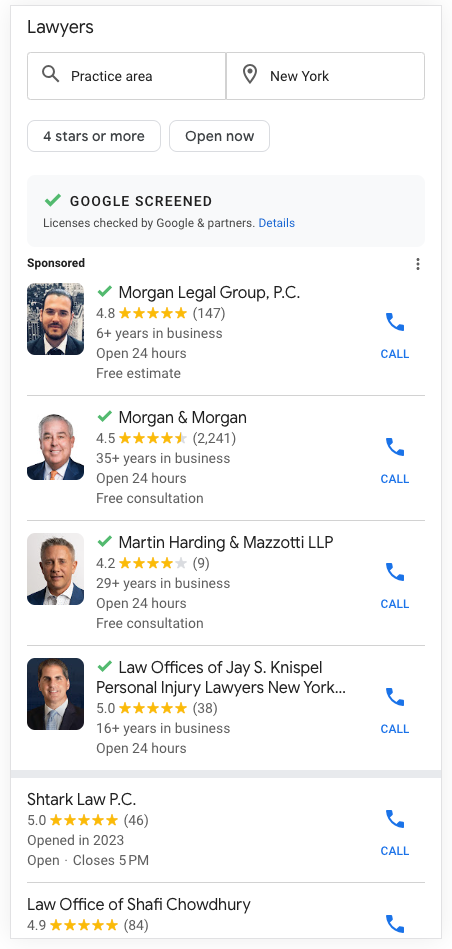
Ads or not? It is increasingly hard to tell with LSAs.
**Our take:**
- The FTC [last reviewed and updated ](https://searchengineland.com/ftc-search-engine-disclosure-164722?ref=nearmedia.co)search engine disclosure guidelines in 2013 based on input from Danny Sullivan (before he worked for Google).
- Google is fully aware of the guidelines and of how attractive LSA ads are to consumers – hence their continued expansion to new categories.
- It is once again time for the FTC to issue clear and unambiguous guidance to the "search engines."
### Local CTR Differences, Opportunities
As with [organic CTR](https://www.nearmedia.co/rich-snippet-review-abuse-organic-ctr-lsa-reviewjacking/#organic-ctr-differences), Local CTR by rank can vary a great deal by vertical. In storage, 81% of CTRs occurred in the top 3 positions. No one in our research study went beyond the top 8 links when exploring storage choices. With physicians the CTR tail is much longer and deeper. Many users engaged with the Local Finder and 40% of users went beyond the top 3 to make a choice. Why the big differences between these two categories? Storage is very much a proximity and price play. The marketplace is largely commodified, with many users seeing little difference between one company and another. Physicians, on the other hand, is a higher consideration search. While a choice of physician can be changed later, a new medical relationship is something that users take very seriously. We saw users scroll deep into the Local Finder looking for the "best" doctors (i.e., ratings score). They then clicked through to the website looking for photos of physicians who "looked friendly" or looked like them (race, gender). Many physician listings in the Local Finder had terrible photos and few reviews so users would traverse the depths of the scrollable page looking for 4 or 5 candidates to consider.
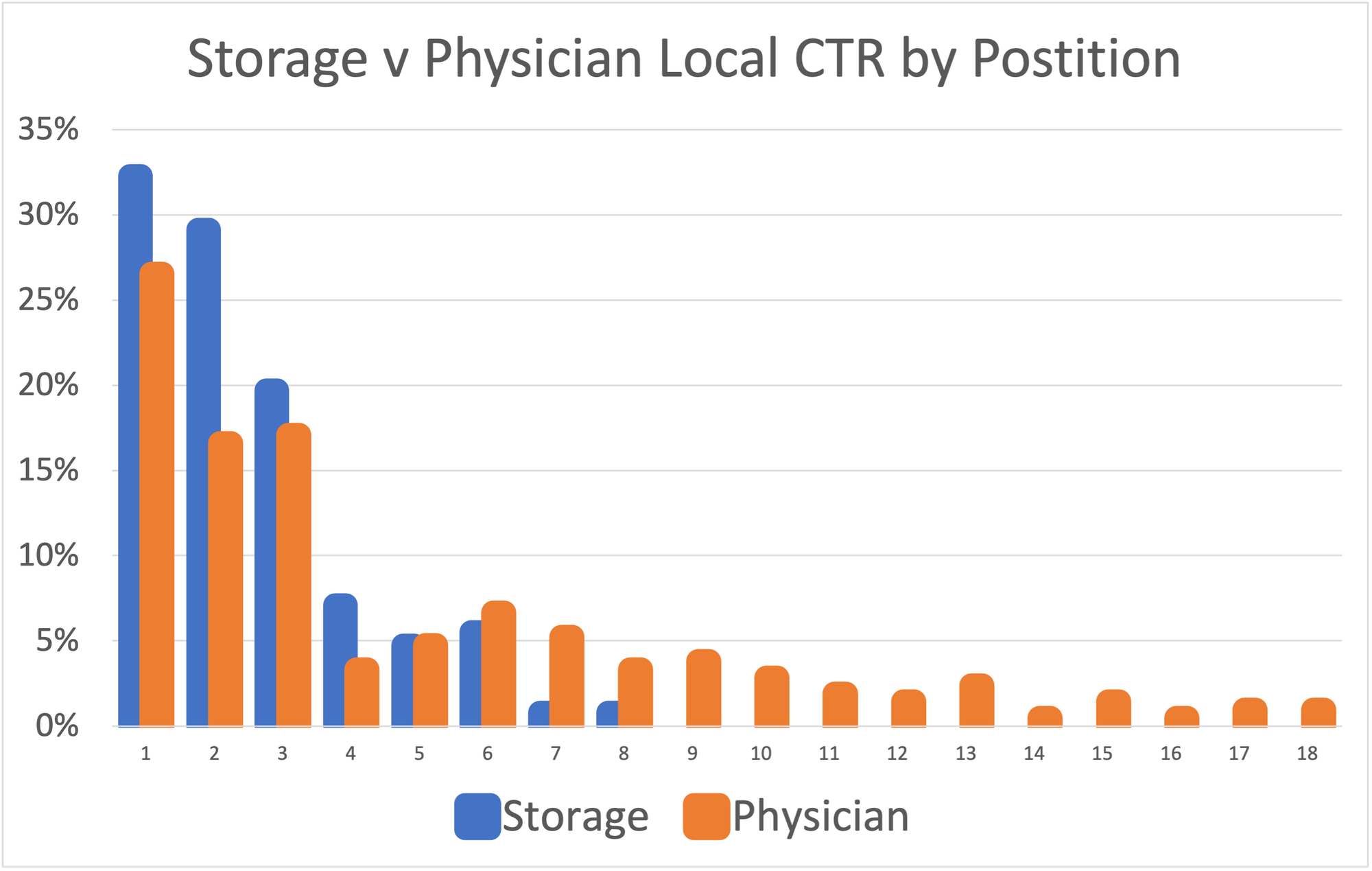
Source: Near Media consumer search behavior research (2023)
**Our take:**
- In price-sensitive searches we did see brand play a role in the outcome. Building a brand is hard but our research indicates that it would allow for higher pricing in the storage arena.
- In very "personal" categories, like physicians, it is incredibly important that photos be sensitive to gender and racial differences and preferences.
- In both categories, searchers wanted real photos not stock photography. Particularly with physician queries, users noted their distaste for stock photos. It should go without saying: GET RID OF STOCK PHOTOS, hire a pro.
## Recent Analysis
- **LSA Spam Scam - It's Deja Vu All Over Again**, [by Mike Blumenthal](https://www.nearmedia.co/lsa-spam-scam-its-deja-vu-all-over-again/).
- **Near Memo episode 137:** [Can Gemini Fix Search? The Impact of Google’s Rating Bias, LSA Reviewjacking](https://www.nearmedia.co/ep-137-can-gemini-fix-search-the-impact-of-googles-rating-bias-lsa-reviewjacking/).
- **AI and Your Local SEO Agency**, [by Greg Sterling](https://www.nearmedia.co/ai-and-local-seo-one-year-later/).
## Short Takes
- [Seller ratings](https://support.google.com/merchants/answer/190657?hl=en&ref=nearmedia.co) now [show](https://x.com/JoyanneHawkins/status/1734214507616968874?s=20&ref=nearmedia.co) **stars in the organic search results**. Every local business should be integrating with Merchant Center and the [Google customer review system](https://support.google.com/merchants/answer/7124018?ref=nearmedia.co).
- [Experiments](https://www.linkedin.com/posts/darrenshawwhitespark%5Ffor-clarity-opening-hours-are-not-a-binary-activity-7140356215154311169-QeXR?utm%5Fsource=share&utm%5Fmedium=member%5Fdesktop) from Darren Shaw show that **hours** is not a binary **ranking factor** for Local SEO. Being closed doesn't preclude ranking and vice versa.
- In the (near?) future Google will **store Location History**, Maps Timeline [on your mobile device](https://9to5google.com/2023/12/12/google-location-history-timeline-device/?ref=nearmedia.co) for privacy.
- The Federal Trade Commission has [finalized](https://www.ftc.gov/news-events/news/press-releases/2023/12/ftc-announces-cars-rule-fight-scams-vehicle-shopping?ref=nearmedia.co) a new rule to **combat bait-and-switch tactics and hidden junk fees** at car dealers.
- **MasterCard** [announced](https://www.mastercard.com/news/press/2023/november/dynamic-yield-by-mastercard-unveils-shopping-muse-the-next-generation-personal-retail-assistant/?ref=nearmedia.co) a natural language [AI product](https://www.dynamicyield.com/shopping-muse/?utm%5Fsource=pr&utm%5Fmedium=organic&utm%5Fcampaign=muse) for retailer websites that guides customers through product catalogs, from discovery to conversion.
Listen to our [latest podcast](https://www.nearmedia.co/memo/).
[](https://nearmedia.co/memo?ref=nearmedia.co)
How can we make this better? Email [us](mailto:gsterling@nearmedia.co) with suggestions and recommendations.
### LSA Spam Scam - It's Deja Vu All Over Again
URL: https://www.nearmedia.co/lsa-spam-scam-its-deja-vu-all-over-again/
Last updated: 2024-11-19T21:13:58.000Z
Karl Marx famously said, "History [repeats](https://en.wikipedia.org/wiki/The%5FEighteenth%5FBrumaire%5Fof%5FLouis%5FBonaparte?ref=nearmedia.co#First%5Fas%5Ftragedy,%5Fthen%5Fas%5Ffarce) itself, first as tragedy and then as farce." This is certainly the case with Local Services Ads ([LSAs](https://ads.google.com/local-services-ads/?ref=nearmedia.co#!/)), Google's "verified and vetted" ad product for local service professionals. It seems as if all of the same scams that were popular with Google Maps are now in play with LSAs: fake names, fake reviews, unlicensed operators and bait and switch consumer deception. Now however these listings receive the "Google Guarantee" stamp of approval.
Two weeks ago I shared how LSA listings were leveraging security holes in the Google vetting processes to display thousands or even tens of thousands of [reviews stolen from Google Maps local landmarks](https://www.nearmedia.co/searcher-behaviors/#lsa-listings-hijack-reviews) and to use keyword-laden fake names to capture leads in the the HVAC niche of duct cleaning.
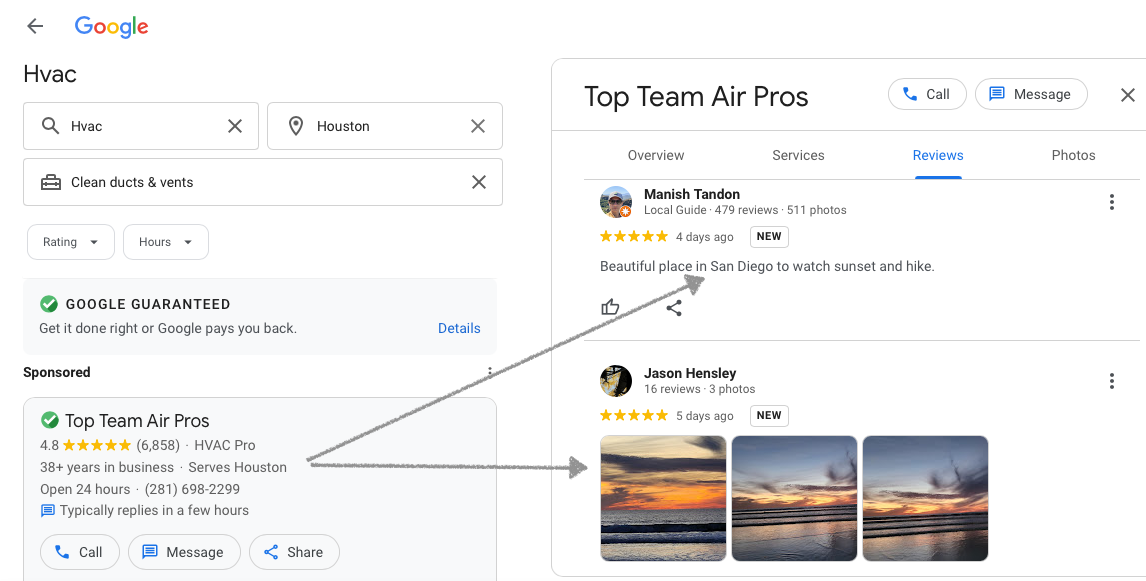
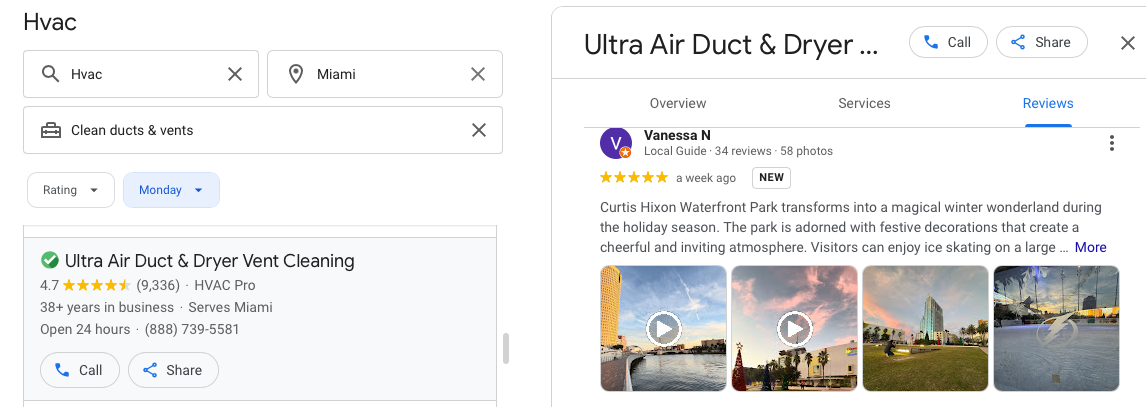
examples of reviews "borrowed" from parks etc used by HVAC and duct cleaners
Last week we looked at how these [bogus LSA listings had achieved front page visibility](https://www.nearmedia.co/rich-snippet-review-abuse-organic-ctr-lsa-reviewjacking/#google-lsa-reviewjacking-part-2) on Google search throughout the state of Texas and that the fingerprints from these listings pointed to a few marketing firms that have been previously seen in the garage door and locksmith spaces.
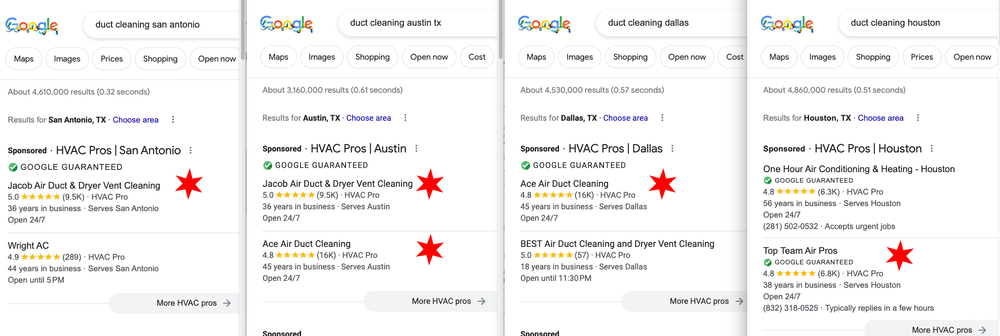
Search results from major Texan metros showed LSA ads (starred) that were "borrowing " reviews from prominent GMap landmarks and fake, keyword laden names.
**\[Update 12/12/23\]** It appears that these scammers are also stealing [the FL business licensing numbers](https://support.google.com/business/thread/247976702?hl=en&msgid=248015669&sjid=18151426490601726185-NC&ref=nearmedia.co) required for Google LSA verification process from other small, HVAC businesses in Florida. In Florida, the deceptive misuse of a license can apparently lead to strict enforcement and a fine from the [Florida DBPR](https://www.myfloridalicense.com/LicenseDetail.asp?SID=&id=1C754E4DC2277FFCB3711B38FDB605B1&ref=nearmedia.co) if there are consumer complaints. This puts the unaware businesses whose licenses were used at significant risk.
### The Scam
This past week, we used a "secret shopper" to engage with one of these ["local duct cleaning" companies](https://g.co/kgs/XH4hQS?ref=nearmedia.co) that "borrowed" 9,336 reviews from a [popular landmark](https://maps.app.goo.gl/5Hf47iBD5fgkF1ut6?ref=nearmedia.co). The LSA call went to an answering service in India. A technician was later dispatched onsite to provide a quote for duct cleaning. The technician, an Israeli national, was from a different company entirely, was unlicensed (a FL requirement) and proceeded to provide a quote that was four times what the actual job should have cost. What would have been a $300 job quickly became $1,300, including unnecessary work to remedy mold problems that didn't exist.
The Curtis Dixon Waterfront (source of the reviews) is very Christmassy indeed.
### Why Duct Cleaning?
The ins-and-outs of duct cleaning – mold issues, licensing requirements, the specific tasks and costs – are largely opaque to normal home owners. Whether there really is mold, for example, is hard to ascertain and whether the job is performed as required by law is equally hard to determine. This makes the add-ons of unnecessary services easy to sell and very hard to detect after the fact. The scam is both profitable and unlikely to generate official scrutiny – at least not yet.
### The Locksmith Scam
As a refresher, locksmith spam with fake locations, fake names and fake reviews was [rampant in Google Local](https://blumenthals.com/blog/2009/02/18/google-maps-proves-more-locksmiths-in-nyc-than-cabs/?ref=nearmedia.co) very early on. Missouri, Florida and the feds ended up [prosecuting a major player](https://blumenthals.com/blog/2009/11/05/federal-bust-of-dependable-locksmith-in-florida-strikes-at-heart-of-locksmith-scams/?ref=nearmedia.co) in 2009 but the scam has persisted for a number of years and made its way into [other geographies](https://youtu.be/bvlzZnhZhrc?si=AeSH%5FrvFIYTx8Pbx&ref=nearmedia.co) and into other [verticals](https://youtu.be/EieLIGoG7Do?si=o1sTmm3jZKbVOGOF&ref=nearmedia.co) in Maps. The Missouri and Florida cases, and many similar cases, [involved Israeli nationals](https://www.riverfronttimes.com/news/israeli-locksmith-ring-charged-with-fraud-group-operated-in-missouri-and-florida-2610672?ref=nearmedia.co).
💡
[Wikipedia](https://en.wikipedia.org/wiki/Locksmith%5Fscam?ref=nearmedia.co): The ****locksmith scam** is a scam involving fake business listings for cheap [locksmith](https://en.wikipedia.org/wiki/Locksmith?ref=nearmedia.co "Locksmith") services that, once called out, overcharge the customer. The scam targets people who call a locksmith out of desperation, usually because of being locked out of their car or premises.[\[1\]](https://en.wikipedia.org/wiki/Locksmith%5Fscam?ref=nearmedia.co#cite%5Fnote-tucson-2007-1)[\[2\]](https://en.wikipedia.org/wiki/Locksmith%5Fscam?ref=nearmedia.co#cite%5Fnote-ftc-2008-2)[\[3\]](https://en.wikipedia.org/wiki/Locksmith%5Fscam?ref=nearmedia.co#cite%5Fnote-aloa-2014-3)[\[4\]](https://en.wikipedia.org/wiki/Locksmith%5Fscam?ref=nearmedia.co#cite%5Fnote-nytimes-2016-4)[\[5\]](https://en.wikipedia.org/wiki/Locksmith%5Fscam?ref=nearmedia.co#cite%5Fnote-whnt-2016-5)[\[6\]](https://en.wikipedia.org/wiki/Locksmith%5Fscam?ref=nearmedia.co#cite%5Fnote-mnn-2016-6)[\[7\]](https://en.wikipedia.org/wiki/Locksmith%5Fscam?ref=nearmedia.co#cite%5Fnote-abc15-2017-7) Locksmith scams have been reported in the U.S.,[\[8\]](https://en.wikipedia.org/wiki/Locksmith%5Fscam?ref=nearmedia.co#cite%5Fnote-aarp-2012-8)[\[9\]](https://en.wikipedia.org/wiki/Locksmith%5Fscam?ref=nearmedia.co#cite%5Fnote-kdvr-2013-9)[\[3\]](https://en.wikipedia.org/wiki/Locksmith%5Fscam?ref=nearmedia.co#cite%5Fnote-aloa-2014-3)[\[10\]](https://en.wikipedia.org/wiki/Locksmith%5Fscam?ref=nearmedia.co#cite%5Fnote-msnbc-today-10)[\[11\]](https://en.wikipedia.org/wiki/Locksmith%5Fscam?ref=nearmedia.co#cite%5Fnote-abc-thelookout-11) the U.K.,[\[12\]](https://en.wikipedia.org/wiki/Locksmith%5Fscam?ref=nearmedia.co#cite%5Fnote-mla-2012-08-12)[\[13\]](https://en.wikipedia.org/wiki/Locksmith%5Fscam?ref=nearmedia.co#cite%5Fnote-mla-2014-01-13) and New Zealand.[\[14\]](https://en.wikipedia.org/wiki/Locksmith%5Fscam?ref=nearmedia.co#cite%5Fnote-newshub-2017-14)[\[15\]](https://en.wikipedia.org/wiki/Locksmith%5Fscam?ref=nearmedia.co#cite%5Fnote-tvnz-2017-15)[\[16\]](https://en.wikipedia.org/wiki/Locksmith%5Fscam?ref=nearmedia.co#cite%5Fnote-mlaa-2017-12-16).....[Google Maps](https://en.wikipedia.org/wiki/Google%5FMaps?ref=nearmedia.co "Google Maps") has been particularly vulnerable to this operation in the 2010s
### The Tragedy and Recurring Farce of LSA
Google has seen virtually every variation of these abuses in Google Maps. And to some extent, after 15 or so years, they have started to limit their reach by [making verification more difficult](https://www.nearmedia.co/monday-newsletter/#googles-listings-clean-up) and attempting to [increase moderation of reviews](https://www.nearmedia.co/a-guide-to-googles-review-filter/). However none of these obvious improvements have been incorporated by the very similar LSA listings.
When Local Services Ads was first conceived it was designed to avoid spam problems by virtue of a [rigorous screening and matching process](https://blumenthals.com/blog/2016/10/04/google-testing-advanced-verification-process-for-plumbers-locksmiths/?ref=nearmedia.co). Over time, every aspect of the more rigid LSA program, from who can create a listing and naming rules, have fallen by the wayside. Review abuses are rampant and review moderation is a mockery. Not only are there a million and one fake positive reviews, there is a growing number of fake negative reviews and the reporting process is extremely limited if not brain dead.
Despite the trust issues inherent in weak verification and terrible review moderation, the public is [told by Google](https://ads.google.com/local-services-ads/?ref=nearmedia.co#!/) that LSA listings are particularly trustworthy businesses that have been verified, double checked and guaranteed by Google. They are presented front and center in search results and [searchers are particularly attracted](https://www.nearmedia.co/searcher-behaviors/) to them. The review-loving public assumes erroneously that these reviews are to be trusted as well.
Consumers find the review stars and Google guarantee of LSAs compelling and will change conversion behaviors when they are present in the SERPs.
### The Saga Continues
These scams, effectively supported by Google's *Good Housekeeping Seal of Approval* continue unabated. This [tweet](https://twitter.com/BrianReagan/status/1733888758989176884?ref=nearmedia.co) showed in my timeline yesterday.
[](https://twitter.com/BrianReagan/status/1733888758989176884?ref=nearmedia.co)
Google has essentially stamped its authoritative seal of approval on a two-bit scam – one, that by now, they are very familiar with. Their knowledge and lack of oversight make them complicit in actively deceiving the public. Whether the harms to society and other businesses from these actions are just a function of profit seeking or the banality of complacency is hard to determine. But the harms are real and the scale significant.
### Hours Ranking Confirmed, Bard Getting Better, AI Content Dilution
URL: https://www.nearmedia.co/local-hours-ranking-bard-getting-better-ai-content-dilution/
Last updated: 2023-12-11T20:03:11.000Z
### Local Hours 'Definitely a Thing'
At the [end of last week](https://www.nearmedia.co/gemini-serp-hours-a-lrf-agencies-and-ai/), SterlingSky announced its testing had determined that business hours were a local new ranking signal in Google Search and Maps. But there wasn't any other confirmation and some SEOs were convinced it was a bug. Whitespark's Darren Shaw's [early testing found no ranking changes](https://twitter.com/DarrenShaw%5F/status/1733198985274540403??ref=nearmedia.co) based on business hours. But over the weekend that changed and Darren [reversed himself](https://twitter.com/darrenshaw%5F/status/1733901162192216485??ref=nearmedia.co). He now agrees that ranking based on business hours is "is definitely a thing." While business hours ranking had been going on in mobile prior to November 2023, it now appears more comprehensive. Outstanding questions remain. Does this apply equally to mobile and desktop? (It would appear so.) And, is it category dependent? There will likely be business-hour manipulation as this "sinks in": businesses going "24/7" and competitors (or disgruntled customers) messing with business hours.
> Somewhere in the world, it is 5:00 p.m. ... in this case almost 9 but you can always check if the business hours are a ranking factor. This is maps results, just refreshing the page, nothing else. [@mblumenthal](https://twitter.com/mblumenthal?ref%5Fsrc=twsrc%5Etfw&ref=nearmedia.co) [@JoyanneHawkins](https://twitter.com/JoyanneHawkins?ref%5Fsrc=twsrc%5Etfw&ref=nearmedia.co) [@ColanNielsen](https://twitter.com/ColanNielsen?ref%5Fsrc=twsrc%5Etfw&ref=nearmedia.co) [@rustybrick](https://twitter.com/rustybrick?ref%5Fsrc=twsrc%5Etfw&ref=nearmedia.co) [@Kevin\_\_Pauls](https://twitter.com/Kevin%5F%5FPauls?ref%5Fsrc=twsrc%5Etfw&ref=nearmedia.co) [pic.twitter.com/TCcwvZB9IK](https://t.co/TCcwvZB9IK?ref=nearmedia.co)
>
> — Stan Kolev (@stankolev) [December 10, 2023](https://twitter.com/stankolev/status/1733880955708821950?ref%5Fsrc=twsrc%5Etfw&ref=nearmedia.co)
**Our take:**
- Google's Danny Sullivan [implied](https://twitter.com/searchliaison/status/1733229361481097481?ref=nearmedia.co) that he'll confirm whether it's an actual local ranking change. He said it wasn't part of the recent core update.
- Local search is not always about "near me right now." It's also about future planning. Google should probably limit this to specific categories/keywords.
- While users and third party data might help police "hours inflation," it's less clear how Google will address "suggest an edit" hours manipulation.
### Bard Getting Better, SGE 'Expiring'
When Google [released](https://www.nearmedia.co/gemini-serp-hours-a-lrf-agencies-and-ai/) Gemini last week, the company [said](https://blog.google/technology/ai/google-gemini-ai/?ref=nearmedia.co) it outperformed ChatGPT according to various industry benchmarks. There was some [pushback](https://techcrunch.com/2023/12/07/early-impressions-of-googles-gemini-arent-great/?ref=nearmedia.co) against that claim. Now an informal test comparing the new Gemini-powered Bard and ChatGPT across several tasks finds the latter still beats Bard but that [the gap has narrowed](https://arstechnica.com/ai/2023/12/chatgpt-vs-google-bard-round-2-how-does-the-new-gemini-model-fare/?ref=nearmedia.co) considerably. As with Bard, Google plans to use Gemini to generate SGE results in search. But what happens to SGE at the end of this month when it's set to [expire](https://www.seroundtable.com/google-search-generative-experience-ends-december-2023-35463.html?ref=nearmedia.co) as a Google Labs experiment? It seems clear that SGE will continue. But Google probably isn't ready to stop calling SGE an "experiment" because it's still "unstable" and the company doesn't know quite what to do with it vs. the rest of the SERP. Google also faces a dilemma with Bard, as Gemini gets better. Bard could start to cannibalize traditional search for those seeking "answers" and avoiding ads. It's the second most used AI tool after ChatGPT. In fact, I'm using ChatGPT and Bard for numerous things I would have previously searched for – and using Google about 25% less. In 2024 will Bard become a good enough, ad-free version of search, such that people turn to it more and Google.com less? One thing is clear, ChatGPT's arrival has complicated Google's search strategy.
ChatGPT has complicated Google's longer-term search strategy
**Our take:**
- Google itself sees Bard and Search as complementary. But as Bard's capabilities grow that will become less true.
- When you ask Bard to compare itself to Google, it says: 1) search is faster and more accurate, 2) search offers broader results, 3) people are more familiar with search, 4) search is less biased. Sounds a bit insecure.
- Regardless, the near-term disruption of Google search that [some predicted](https://www.businessinsider.com/gmail-creator-google-search-faces-total-disruption-chatgpt-ai-chatbot-2023-2?ref=nearmedia.co) when ChatGPT launched is not happening. Longer term, it's still possible.
### AI Content Dilution
Many people worry that AI-generated content flooding the internet will lower the overall quality of the web, while others dismiss this concern. AI critics fear a new era of automated [content farms](https://en.wikipedia.org/wiki/Content%5Ffarm?ref=nearmedia.co) is at hand. Some publishers and SEOs are already using AI to "spin up" hundreds or [thousands of pages of content](https://www.linkedin.com/feed/update/urn:li:activity:7138912626524184576/??ref=nearmedia.co). But there's also another concern about subsequent large language models being trained on a web that has been "diluted" by AI generated content and [synthetic media](https://www.nbcnews.com/tech/tech-news/ai-generated-synthetic-media-future-content-rcna72958?ref=nearmedia.co). A potential example of that appeared late last week, as Elon Musk's new AI Grok [was caught "plagiarizing" ChatGPT](https://twitter.com/JaxWinterbourne/status/1733339886155968714?ref=nearmedia.co). Grok generated a response declining to fulfill a user's request because it went against "OpenAI's use case policy." A Grok engineer [responded](https://futurism.com/the-byte/elon-musk-grok-ai-openai-chatgpt?ref=nearmedia.co), "The issue here is that the web is full of ChatGPT outputs, so we accidentally picked up some of them when we trained Grok on a large amount of web data." Let's assume the Grok engineer is correct and that it simply picked up a "ChatGPT output," this would seem to validate the concern about "dilution." And there are other examples of AI [being used to plagiarize content](https://www.semafor.com/article/12/10/2023/a-financial-news-site-uses-ai-to-copy-competitors-wholesale?ref=nearmedia.co), which would then become training fodder for next-generation LLMs and so on ...

The ouroboros is symbol depicting a serpent or dragon eating its own tail, often associated with the concept of infinity or reincarnation. A more informal contemporary usage suggests dilution or exhaustion of a resource.
**Our take:**
- It may be that Grok indeed plagiarized ChatGPT and the engineer's explanation is simply a CYA excuse.
- There's no question that LLMs trained on earlier LLM outputs or AI-generated derivative content would be diluted or diminished.
- The zero-marginal cost of AI content will likely mean a lot more crap in the SERP.
## Recent Analysis
- **Near Memo episode 137:** [Can Gemini fix search?, the impact Google’s rating bias, LSA reviewjacking](https://www.nearmedia.co/ep-137-can-gemini-fix-search-the-impact-of-googles-rating-bias-lsa-reviewjacking/).
## Short Takes
- Moz: a [guide](https://moz.com/blog/local-business-gbp-profile-photos?ref=nearmedia.co) to **Google Business Profile photos**.
- Why **Google Maps** should quit "immersive" and [work on the basics](https://maphappenings.com/2023/12/07/santa-claus-list/?ref=nearmedia.co).
- Google reportedly [taking steps](https://www.seroundtable.com/google-parasite-seo-steps-36526.html?ref=nearmedia.co) to deal with "**parasite SEO**."
- Using **Google filters**, SGE follow-up Qs and related searches [for SEO](https://www.iloveseo.net/secrets-google-hides-in-plain-sight-and-how-to-use-them-to-assess-our-seo-strategy/?ref=nearmedia.co).
- **Brand Signals** [says](https://www.brandsignals.io/?ref=nearmedia.co) it has created truly automated Local SEO.
- **TikTok** [crosses $10 billion in revenue](https://www.data.ai/en/insights/top-trending-apps/tiktok-10-billion-revenue/?ref=nearmedia.co), one of only five apps to do so.
- The power of **user inertia** [keeps even disdainful platforms alive](https://thenextweb.com/news/why-dont-leave-internet-platforms-dislike?ref=nearmedia.co).
- 70% of EU **small businesses** [want/need help selling online](https://www.digitalcommerce360.com/2023/12/08/small-businesses-in-europe-want-more-help-selling-online/?ref=nearmedia.co).
- EU **local SEO** [report](https://www.iodigital.com/en/insights/whitepapers/local-seo-benchmark-report?ref=nearmedia.co): 50%+ of retail locations not optimized.
- **Year in search**: Google offers [global](https://about.google/stories/year-in-search/?ref=nearmedia.co) and [local lists](https://about.google/stories/local-year-in-search-2023/?ref=nearmedia.co).
- EU [now the de-facto](https://www.europarl.europa.eu/news/en/headlines/society/20230601STO93804/eu-ai-act-first-regulation-on-artificial-intelligence?ref=nearmedia.co) **global regulator of AI**, except in China.
Listen to our [latest podcast](https://www.nearmedia.co/memo/).
[](https://nearmedia.co/memo?ref=nearmedia.co)
How can we make this better? Email [us](mailto:gsterling@nearmedia.co) with suggestions and recommendations.
### Gemini SERP, Hours Now a LRF, Agencies Love AI
URL: https://www.nearmedia.co/gemini-serp-hours-a-lrf-agencies-and-ai/
Last updated: 2023-12-08T19:43:54.000Z
### The Gemini SERP
This week, Google shelved its splashy in-person Gemini launch event in favor of [blog posts](https://blog.google/technology/ai/google-gemini-ai/?ref=nearmedia.co) and multiple videos showcasing the AI's advanced capabilities. One of more popular [videos](https://www.youtube.com/watch?v=UIZAiXYceBI&ref=nearmedia.co) was, unfortunately, [a "faked" demo](https://www.theverge.com/2023/12/7/23992737/google-gemini-misrepresentation-ai-accusation?ref=nearmedia.co). Others were more authentic ([see, e.g.](https://www.youtube.com/watch?v=sPiOP%5FCB54A&ref=nearmedia.co)). The public has access to Gemini [through Bard](https://blog.google/products/bard/google-bard-try-gemini-ai/?ref=nearmedia.co), though not much has obviously changed yet – especially [for local](https://twitter.com/gsterling/status/1732874435408036064?ref=nearmedia.co). Mixed [anecdotal reactions](https://techcrunch.com/2023/12/07/early-impressions-of-googles-gemini-arent-great/?ref=nearmedia.co) suggest Gemini might have been rushed out the door, as part of Google's effort to change the PR narrative and prove it can retake the lead from OpenAI and Microsoft, which it claims to have done according to benchmark testing. More interesting to us, is the video (below) showing how Gemini might be integrated into the search UI. The video presents a scenario in which a parent is looking for ideas for a child's birthday party. Gemini uses "bespoke" interfaces to help disambiguate and help refine the query rather than simply presenting the traditional SERP with images and links. One can easily imagine this being the future direction for the search UI and a full-blown replacement for Google SGE, which has been less than impressive to date.
**Our take:**
- Gemini will be used "on the backend" to understand user intent without question. But the UI implications are interesting to contemplate.
- One can imagine different UIs by vertical, which is already sort of happening, or by query intent (informational vs. transactional).
- Google could use this to collapse the funnel. Ads could be more "elegantly" incorporated at "end," potentially creating a better overall UX.
### Report: Biz Hours a LRF
SterlingSky [reported](https://www.sterlingsky.ca/google-added-a-new-ranking-factor/?ref=nearmedia.co) that business hours are now a local ranking factor, which impacts local visibility in the Google SERP. "As of November 2023, Google appears to be looking at whether a business is currently open as a ranking factor for local pack rankings," SterlingSky owner Joy Hawkins writes. This makes sense and a version of this has probably been going on for some time in mobile; however it has [yet to be confirmed by others](https://twitter.com/DarrenShaw%5F/status/1733198985274540403?ref=nearmedia.co) or Google. If correct, these findings will undoubtedly prompt some businesses to try and represent 24/7 availability for ranking advantage. However, that may be difficult; local guides, third party data (NAP consistency) and Google Duplex are potential enforcement tools. According to earlier [research](https://think.storage.googleapis.com/docs/how-advertisers-can-extend-their-relevance-with-search%5Fresearch-studies.pdf?ref=nearmedia.co) by Google (2014), hours are one of the top three local information types mobile users search for. But there are some unanswered questions. For example, which categories and queries will be affected? Will it be equally applied on the desktop vs. mobile? How much "hours spam" will this prompt? And how will Google respond to fake hours?

Source: SterlingSky
**Our take:**
- While hours do appear, from SterlingSky's evidence, to be a local ranking factor more testing is probably warranted.
- In some categories there may be a difference between "business hours" and "access hours" (e.g., storage). This may create challenges. [Google's business hours guidelines](https://support.google.com/business/answer/3038177?hl=en&ref=nearmedia.co#zippy=%2Cbusiness-hours).
- Some service businesses and consultants (e.g., realtors) may try to expand hours because they can take calls any time of day.
### Agencies Love AI, but FOMO
The AI surveys are now coming fast and furiously. The latest is from Duda, which used a third party firm to [survey](https://blog.duda.co/report-2024-ai-outlook-for-digital-agency-leaders?ref=nearmedia.co) "200 digital agency leaders worldwide." Most (80%) of respondents are from agencies with <100 people and 50% are US-based. One of the headlines is: 100% agencies surveyed are already using AI in some form. Earlier surveys show lower adoption. Duda's respondents are totally bullish on AI tools to help them save time, boost profitability and scale. However, the majority (84%) express varying levels of concern about keeping up with rapid AI evolution (FOMO) and there are other concerns as well (e.g., security/privacy). The top three tools being used are: 1) ChatGPT, 2) DALL-E and 3) Bard. The top use cases are mostly content-related: updating websites, creating new pages, creating images for sites and optimizing content/sites for SEO. Amazingly, 62% of respondents said they were using AI prompts "to create entire sites." The major success metrics are: cost savings, operational efficiency, client satisfaction and engagement, revenue growth. Agencies expect to save an average of \~$7K in 2024 using AI, with larger ones expecting to save more than $25K. Overall, agencies expect that AI will "transform" their businesses in the coming years.
**Planned areas of AI investment for 2024**
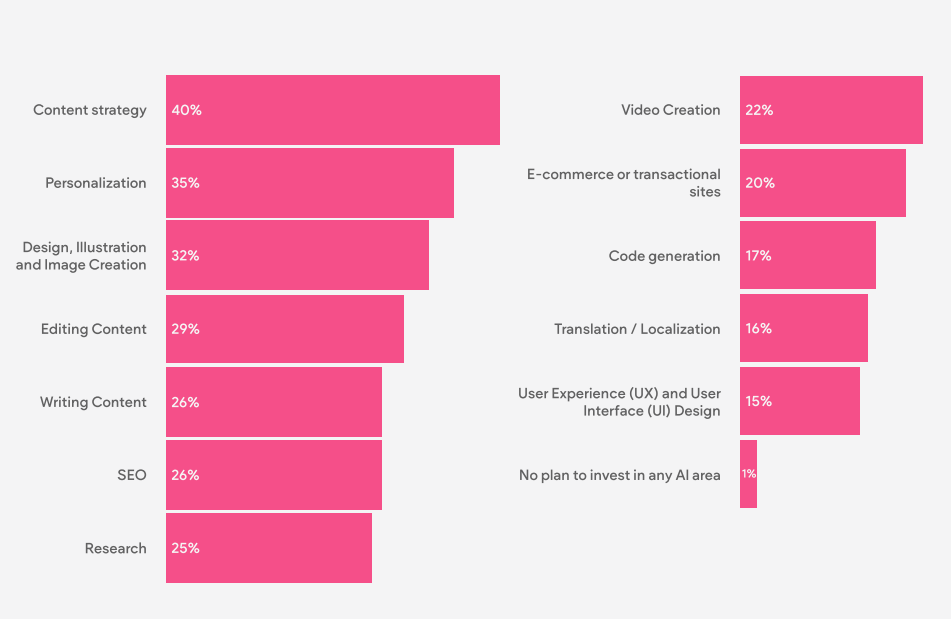
Source: Duda agency AI survey
**Our take:**
- There are risks to using AI to without enough human oversight. Nextdoor [created 300K pages](https://s28.q4cdn.com/517578190/files/doc%5Ffinancials/2023/q3/KIND%5Fedited%5FQ3transcript-1.pdf?ref=nearmedia.co) with AI for SEO but [may have been hit by HCU](https://www.linkedin.com/feed/update/urn:li:activity:7138912626524184576/?ref=nearmedia.co).
- Regardless, AI has now become a critical part of digital agency workflows. Best practices will evolve rapidly in the next 12 - 24 months as capabilities improve.
- For more, check out our [podcast interview ](https://www.nearmedia.co/ep-135-2/)with Whitespark's Darren Shaw and SterlingSky's Joy Hawkins about current local SEO AI use cases.
## Recent Analysis
- **Near Memo episode 137:** [Can Gemini fix search?, the impact Google’s rating bias, LSA reviewjacking](https://www.nearmedia.co/ep-137-can-gemini-fix-search-the-impact-of-googles-rating-bias-lsa-reviewjacking/).
- **AI & Your Local SEO Agency: One Year Later**, [by Greg Sterling](https://www.nearmedia.co/ai-and-local-seo-one-year-later/).
## Short Takes
- Google [formally rolls out](https://searchengineland.com/google-rolling-out-new-map-and-local-interface-in-search-377169?ref=nearmedia.co) new **Local Pack design**.
- Unattractive biz [category banners appearing](https://twitter.com/ndyjsimpson/status/1732822758814281951?ref=nearmedia.co) in **SGE Local Pack**.
- **Google SGE** [testing export feature](https://www.seroundtable.com/google-sge-export-to-gmail-google-docs-36512.html?ref=nearmedia.co) for Gmail and Google Docs.
- Google "**help me write**" feature [coming to Chrome](https://9to5google.com/2023/12/05/help-me-write-ai-chrome-desktop/?ref=nearmedia.co) for desktop.
- Some digital marketing spend [shifting to](https://chainstoreage.com/survey-consumers-show-increased-interest-mailed-promotions?ref=nearmedia.co) **direct mail**.
- **Google** [lets PMAX advertisers opt out](https://www.seroundtable.com/google-ads-pmax-opt-out-spn-36519.html?ref=nearmedia.co) of Search Partner Network.
- **Yahoo Blueprint**: an [AI media buying and performance tool](https://www.admonsters.com/yahoo-dsp-ai-powered-media-buying/?ref=nearmedia.co) for its DSP.
- **EU** reaches agreement on AI regs, [allowing for gov't surveillance](https://thenextweb.com/news/eu-ai-act-rules-generative-biometric-surveillance?ref=nearmedia.co).
- **Meta** [launches an AI image generator](https://imagine.meta.com/?ref=nearmedia.co) to compete with DALL-E, etc.
- **Read.ai** [expands summarization capabilities](https://www.geekwire.com/2023/read-ai-expands-beyond-single-meeting-analysis-with-scheduling-project-management-audio-recap/?ref=nearmedia.co) beyond single meetings.
- **Grim future** when AI [delivers content at zero-marginal cost](https://stratechery.com/2023/regretful-accelerationism/?ref=nearmedia.co).
Listen to our [latest podcast](https://www.nearmedia.co/memo/).
[](https://nearmedia.co/memo?ref=nearmedia.co)
How can we make this better? Email [us](mailto:gsterling@nearmedia.co) with suggestions and recommendations.
### Ep 137: Can Gemini Fix Search? The Impact of Google’s Rating Bias, LSA Reviewjacking
URL: https://www.nearmedia.co/ep-137-can-gemini-fix-search-the-impact-of-googles-rating-bias-lsa-reviewjacking/
Last updated: 2023-12-08T18:32:43.000Z
**Part 1 starts 00:13 -** [**Can Gemini Fix Search?**](https://youtu.be/Ckt0TZhFMQs?ref=nearmedia.co)
Google’s current interface and attempts at query refinement are largely broken. Google’s new Gemini upgrade to SGE appears to offer advanced search query refinement capabilities and individualized user interfaces that could resolve both of those issues. The potential or customized and visually diverse search results when integrated into search could provide a much improved user experience.
Segment Reference Articles:
[Gemini: Reasoning about user intent to generate bespoke experiences](https://youtu.be/v5tRc%5F5-8G4?si=wH7S4fYA36UqPXoS&ref=nearmedia.co)
[Were the Google videos fake?](https://www.linkedin.com/feed/update/urn:li:ugcPost:7138535547299397632?commentUrn=urn%3Ali%3Acomment%3A%28ugcPost%3A7138535547299397632%2C7138551201125601281%29&dashCommentUrn=urn%3Ali%3Afsd%5Fcomment%3A%287138551201125601281%2Curn%3Ali%3AugcPost%3A7138535547299397632%29&ref=nearmedia.co)
**Part 2 starts 13:25 -** [**The Impact of Google’s Rating Bias**](https://youtu.be/-Phbj90MYso?ref=nearmedia.co)
Google's more liberal grading scheme seems to inflate ratings compared to other platforms. This discrepancy leads to user confusion and skepticism about the reliability of these ratings. How do you reconcile these variances, considering how they can mislead consumers and impact decision-making processes. There is a need for more consistent and transparent rating systems across different platforms.
Segment Reference Article:
[Google Ratings Inflation](https://www.nearmedia.co/monday/#google-ratings-inflation)
**Part 3 starts 21:05 -** [**Reviewjacking Reflects Big Problems with Local Service Ads**](https://youtu.be/ll%5FCb96G6Fc?ref=nearmedia.co)
Google's due diligence regarding their Local Services Ads (LSA) program is severely lacking. The program, intended to guarantee consumers trustworthy services, has been exploited due to insufficient vetting processes. Some businesses, particularly in the HVAC sector, have manipulated Google's support system to attach unrelated but highly-rated Google Business Profiles (GBPs) to their LSAs, artificially inflating their reviews and misleading consumers. This exploitation points to a significant security flaw within Google's system, highlighting a disregard for safety and consumer trust. This oversight has allowed a few bad actors to significantly impact the market, especially in areas like Texas, where spam listings have become widespread.
Segment Reference Articles:
[LSA Listings Hijack Reviews](https://www.nearmedia.co/searcher-behaviors/#lsa-listings-hijack-reviews)
[Google LSA Reviewjacking Part 2](https://www.nearmedia.co/rich-snippet-review-abuse-organic-ctr-lsa-reviewjacking/#google-lsa-reviewjacking-part-2)
### Rich Snippet Review Abuse, Organic CTR, LSA Reviewjacking Part 2
URL: https://www.nearmedia.co/rich-snippet-review-abuse-organic-ctr-lsa-reviewjacking/
Last updated: 2023-12-08T17:48:29.000Z
### Local, Schema Review Abuses
[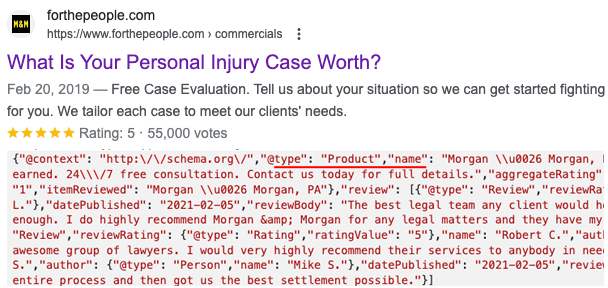](https://www.google.com/search?client=safari&rls=en&q=site%3Aforthepeople.com&ie=UTF-8&oe=UTF-8&ref=nearmedia.co)
Local business review schema will not show stars, counts in SERPs but product schema will.
In fall of 2019 Google [announced](https://gatherup.com/blog/google-and-review-snippets/?ref=nearmedia.co) it would be [ignoring](https://developers.google.com/search/blog/2019/09/making-review-rich-results-more-helpful?ref=nearmedia.co) "self-serving" review markup for local business schema and not show review stars in search results. Google noted there would be no penalties just that stars would not appear in SERPs. Review stars vanished overnight from search results for many businesses. However rich-snippet stars for locations that were part of large multi-location chains quickly [reappeared](https://www.google.com/search?client=safari&rls=en&q=site%3Ahttps%3A%2F%2Fagents.allstate.com+recent+reviews&ie=UTF-8&oe=UTF-8&ref=nearmedia.co) and continue [to show](https://www.google.com/search?q=site%3Apods.com+customer+reviews&client=safari&sca%5Fesv=588067978&rls=en&sxsrf=AM9HkKm2fY%5FLqTBihuLAouZkytE3lDQHNA%3A1701809735849&ei=R45vZfutM-2z5NoPqLa32Aw&ved=0ahUKEwi77Z6ml%5FmCAxXtGVkFHSjbDcsQ4dUDCA8&uact=5&oq=site%3Apods.com+customer+reviews&gs%5Flp=Egxnd3Mtd2l6LXNlcnAiHnNpdGU6cG9kcy5jb20gY3VzdG9tZXIgcmV2aWV3c0ifE1DiCFjyEHABeACQAQCYAY4BoAHjBqoBAzUuNLgBA8gBAPgBAeIDBBgBIEGIBgE&sclient=gws-wiz-serp&ref=nearmedia.co#ip=1) to this day. "Enterprising" SEOs wasted no time finding workarounds for smaller businesses, like using product review schema, to get review stars to show even if they did not show on the website (another violation). This tactic is common in the legal space and [Google actively ignores](https://x.com/gyitsakalakis/status/1730957518803787961?s=20&ref=nearmedia.co) violations. Given Google's lack of enforcement, any sane business would explore these workarounds. Why? Near Media research shows that consumers love review stars (more than they actually love reviews) and will go deeper into the SERPs when they see rich snippet review stars. This video from our research panel typifies the behavior of a significant minority of searchers.
In our consumer research, review stars often drive organic choice.
**Our take:**
- Google has enforced local review schema guidelines very unevenly, favoring large companies over small businesses.
- Businesses willing to circumvent Google's guidelines can get stars in search results and their significant benefits, leaving those who play by the rules at a disadvantage.
- Google is aware of the issue but why haven't they done anything? It's well past time to stop these abuses and enforce the guidelines equitably.
### Organic CTR Differences
In SEO 101 we all learned the best place to hide a dead body was on "the second page of Google" results. We also learned that if you weren't in the top 3 results the click through rate (CTR) declined dramatically. But in SEO 301 we learned that when looking at most SEO situations a universal answer is "it depends". That is certainly the case with CTR. Near Media research has found that CTR can vary widely on based category searched, what [elements Google adds to the page](https://www.nearmedia.co/searcher-behaviors/ocal%20Pack%20Results?) and user intent. In the case of Storage, a relatively low consideration category, once proximity is resolved price becomes the main consideration for most people. They perceive little difference between ads, local, directories and organic results. There we saw a "[classic](https://backlinko.com/google-ctr-stats?ref=nearmedia.co)" CTR distribution. However, in the case of Physicians we saw a dramatically different pattern. These searchers were looking for the "best" doctors and wanted more information, including what they looked like and how high their reviews were. Directories in this category were perceived as largely useless and often avoided. In Storage, 82% of searches were satisfied by one of the top 4 results, compared to only 57% in Physicians. A whopping 43% of Physician searches were satisfied by links below the top 4, and 4% of CTRs occurred below the 10th organic listing.
**Organic CTR Grouped**
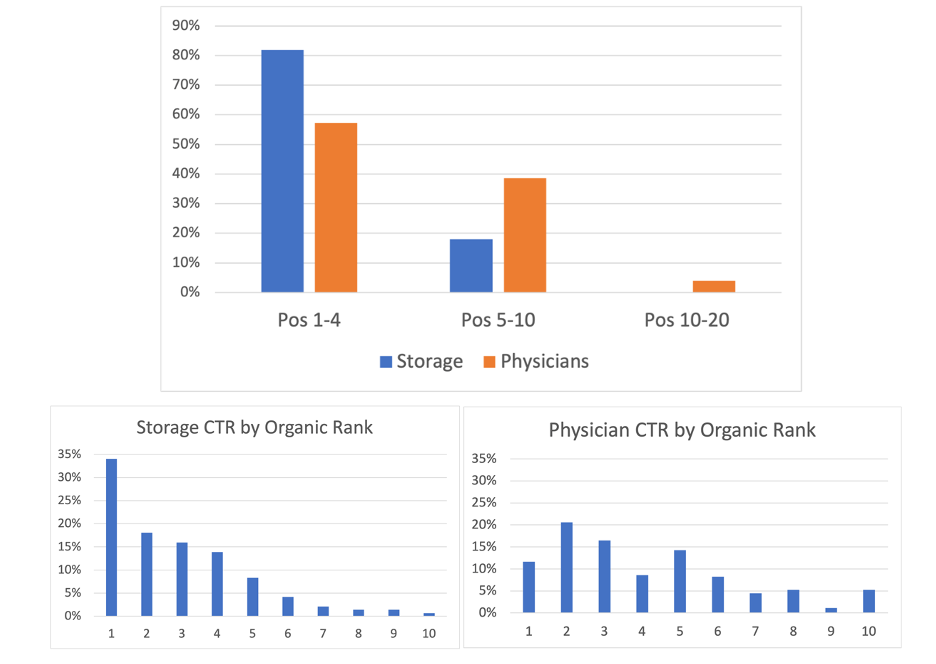
Source: Near Media user research (2023)
**Our take:**
- CTR varies significantly by query and outcome importance. High consideration categories will drive users deeper into the SERP for answers/providers.
- Common wisdom and large data analysis of CTR can only take a business so far in understanding where organic opportunity lies.
- Knowing your vertical and searcher behaviors in that vertical better prepares you for success.
### Google LSA Reviewjacking Part 2
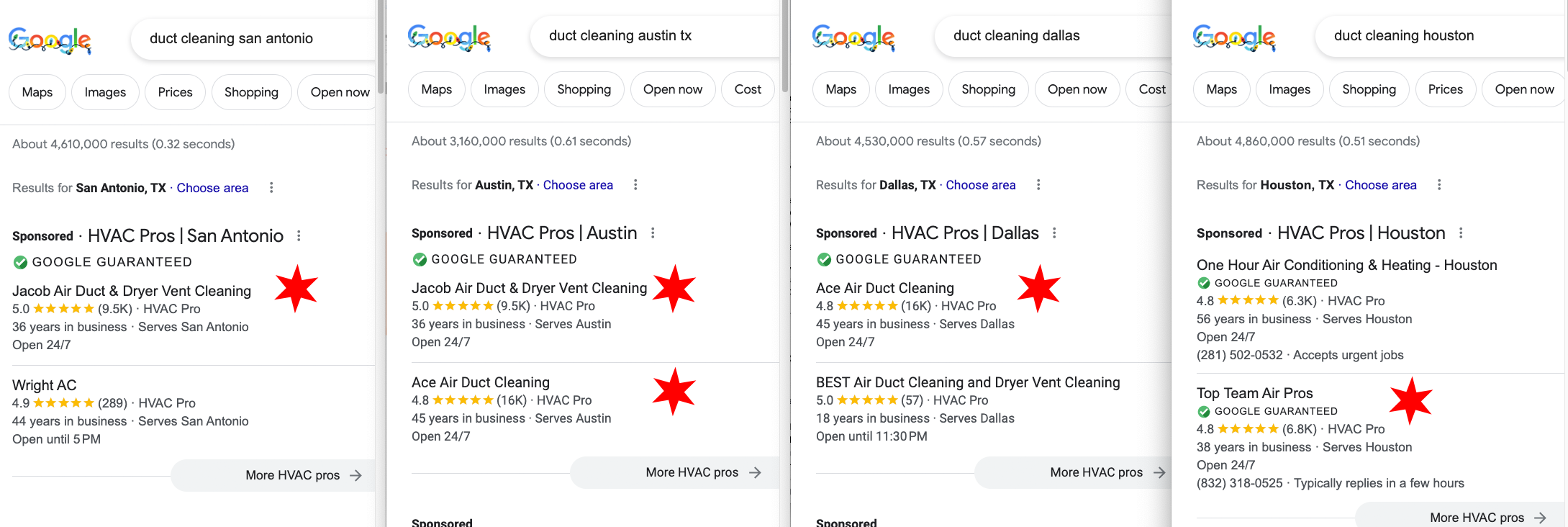
Starred results are LSA listings across major Texas metros, with hijacked reviews and keyword stuffed names.
Last week, after discovering LSA abuse that allows spam [LSA listings to hijack reviews from any Maps listing](https://www.nearmedia.co/searcher-behaviors/#lsa-listings-hijack-reviews), I dug in to see how widespread it was and understand its impact. On Monday, Google's Ad Liaison responded on X to these reports and [noted](https://x.com/adsliaison/status/1731730028746920184?s=20&ref=nearmedia.co) they were looking at the issue. Three of the 11 listings discovered are now gone. It appears Google has manually removed some of them but it does not appear that they have applied a systemic fix. This abuse, first [spotted](https://www.nearmedia.co/searcher-behaviors/#lsa-listings-hijack-reviews) in Miami, had been widely seen in Texas. However, with the help of[ LSA pro Tom Waddington](https://tomwaddington.com/?ref=nearmedia.co), we were also able to find examples in Southern California, Colorado, Minnesota and Washington State, so we can assume that the issue is national and will require more than a manual action on a few listings. In Texas it was particularly problematic because these deceptive results ranked on the first page of Google in every major market and many secondary markets (see screenshot above). For example, [Jacob Air Duct & Dryer Vent Cleaning](https://g.co/kgs/6PEXfb?ref=nearmedia.co), now removed, ranked first in San Antonio and Austin, was "borrowing" 9,503 reviews from [The Escape Game Austin](https://www.google.com/maps?cid=6250885015481600262&ref=nearmedia.co). They were using Phi Heat & Air's Texas license to get through Google's LSA verification process. [Top Team Air Pro](https://g.co/kgs/NdY1i1?ref=nearmedia.co) with 6,837 reviews from [Sunset Cliffs Natural Park](https://www.google.com/maps?cid=16882291673573396757&ref=nearmedia.co) in California, ranks second in Houston. A single LSA listing can service a large number of cities; Top Team Air Pro claims to service 17 metro areas in Texas. And "well optimized" listings from a few bad actors can achieve broad geographic exposure. Each of the listings in question has a heavily keyword stuffed name and thousands of reviews "borrowed" from another listing, usually a public park. Both are key ranking factors in LSAs. The ads appear to be mostly lead-gen driven and have used real business licenses (but fake names) to get through LSA vetting. The fingerprint at this stage points to one or two companies previously known for garage door and locksmith spam. Customers are obviously dismayed when the realize they have been duped.
[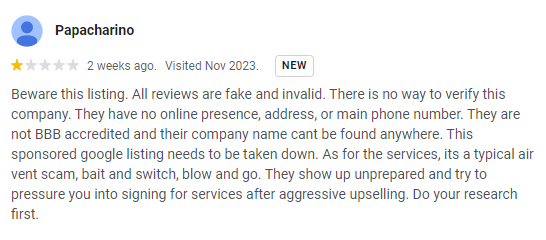](https://g.co/kgs/bvaANp?ref=nearmedia.co)
**Our take:**
- We've seen that [LSA positioning and presentation in the SERPS drives attention](https://www.nearmedia.co/searcher-behaviors/) and action. Ratings play a big role in this behavior.
- The "[Google Guarantee](https://ads.google.com/local-services-ads/?subid=us-en-ha-gls-bk-c-cbh!o3~Cj0KCQiA67CrBhC1ARIsACKAa8R6KoCas8%5F4yo-4KyCW%5FhkvmCmupnwBtjFOlGmMJIOzKRdAt0vBH4IaAnVNEALw%5FwcB~151257531529~kwd-1048573728934~20038894052~671015930800m--ahpm-0000000143-0000000000&gad%5Fsource=1&gclid=Cj0KCQiA67CrBhC1ARIsACKAa8R6KoCas8%5F4yo-4KyCW%5FhkvmCmupnwBtjFOlGmMJIOzKRdAt0vBH4IaAnVNEALw%5FwcB&gclsrc=aw.ds&ref=nearmedia.co#!/)" carries an implied promise of a good outcome. By allowing these abuses, Google misleads users and creates an uneven playing field. It reminds me of SEO firms that guarantee ranking first.
- Google loves scale more than security/safety. As they roll out profitable LSAs [to more categories](https://www.nearmedia.co/google-maps-businesses-hijacked-again-again-again/#new-google-lsa-categories), they have allowed Texas-sized scale of abuse, violating searcher trust with a program intended to secure it.
[](https://ads.google.com/local-services-ads/?subid=us-en-ha-gls-bk-c-cbh!o3~Cj0KCQiA67CrBhC1ARIsACKAa8R6KoCas8%5F4yo-4KyCW%5FhkvmCmupnwBtjFOlGmMJIOzKRdAt0vBH4IaAnVNEALw%5FwcB~151257531529~kwd-1048573728934~20038894052~671015930800m--ahpm-0000000143-0000000000&gad%5Fsource=1&gclid=Cj0KCQiA67CrBhC1ARIsACKAa8R6KoCas8%5F4yo-4KyCW%5FhkvmCmupnwBtjFOlGmMJIOzKRdAt0vBH4IaAnVNEALw%5FwcB&gclsrc=aw.ds&ref=nearmedia.co#!/)
## Recent Analysis
- **AI uses in Local Agencies:** [AI & Your Local SEO Agency: One Year Later](https://www.nearmedia.co/ai-and-local-seo-one-year-later/).
- **Near Memo episode 136**: [How Local SEO Agencies are using Generative AI & ChatGPT: w/ Joy Hawkins & Darren Shaw](https://www.nearmedia.co/ep-135-2/).
## Short Takes
- **Webinar Registration**: [How to Get Your Local SEO Ready for 2024 ](https://localu.org/local-seo-2024/?ref=nearmedia.co#register)
- **Google Search Console for Local**: [The Best Way to Measure, Track, and Troubleshoot](https://www.localvisibilitysystem.com/2023/11/30/why-google-search-console-is-the-best-way-to-measure-track-and-troubleshoot-your-local-seo/?ref=nearmedia.co) your Local SEO.
- [Whiteboard Friday](https://moz.com/blog/local-link-building-whiteboard-friday?ref=nearmedia.co): **Link Building for Local Businesses**.
- **Google expands SGE** and tests[ search by image feature](https://www.seroundtable.com/google-sge-search-by-image-36500.html?ref=nearmedia.co).
- With "store pickup" **Uber** [expands delivery](https://www.pymnts.com/news/delivery/2023/uber-delivery-expands-non-restaurant-business-with-launch-courier-pickup/?ref=nearmedia.co) for brick and mortar stores.
- Shouldn't be this hard to [remove](https://onlineownership.com/removing-reservation-button-in-restaurants-google-business-profile/?ref=nearmedia.co)the **Google restaurant reservation button.**
- **Website Ownership**: [The Key to Security, Control, & Freedom](https://www.sterlingsky.ca/website-ownership-the-key-to-freedom/?ref=nearmedia.co).
- Google will be rolling out **Local Service Ad** [impression share data](https://searchengineland.com/google-local-service-ads-impression-share-data-435380?ref=nearmedia.co).
- Google rolls out **major Bard upgrade** [powered by Gemini](https://www.theverge.com/2023/12/6/23989744/google-bard-gemini-model-chatbot-ai?ref=nearmedia.co).
Listen to our [latest podcast](https://www.nearmedia.co/memo/).
[](https://nearmedia.co/memo?ref=nearmedia.co)
How can we make this better? Email [us](mailto:gsterling@nearmedia.co) with suggestions and recommendations.
### X Wants SMB Ads, Google Ratings Inflation, Biz AI Adoption Low
URL: https://www.nearmedia.co/monday/
Last updated: 2023-12-04T19:52:01.000Z
### SMBs Won't Save X
When Elon Musk bought Twitter in 2022, there was initial hope that he could improve the service. But, unless you're a Musk acolyte, that quickly gave way to dismay as Musk systematically [destroyed](https://fortune.com/2023/07/24/elon-musk-twitter-x-brand-value/?ref=nearmedia.co) billions in brand equity (Twitter–>X) and turned it into a "cesspool of hate speech and disinformation," very [publicly alienating](https://www.theverge.com/2023/11/16/23964160/elon-musk-antisemitic-x-post-ibm-ads?ref=nearmedia.co) brand advertisers in the process. Telling advertisers to "[go F yourself](https://www.marketingdive.com/news/musk-advertisers-go-f-yourself-boycott-blackmail/701115/?ref=nearmedia.co)," most recently, is probably not a way to lure them back. Previously, the NY Times [reported](https://www.nytimes.com/2023/11/24/business/x-elon-musk-advertisers.html?ref=nearmedia.co) Twitter may lose as much as $75 million "by the end of the year," as [advertisers abandon it](https://www.nytimes.com/2023/11/30/technology/elon-musk-dealbook-advertisers.html?ref=nearmedia.co). Now Musk and nominal CEO Linda Yaccarino are placing hope in SMB advertisers to compensate for the loss of brand spending. Twitter [told](https://www.ft.com/content/cdf789a2-8872-41fe-94e7-ff30ebe631b7?ref=nearmedia.co) the FT that "Small and medium businesses are a very significant engine that we have definitely underplayed for a long time ... now we will go even further with it." Reportedly, the company plans to outsource some or all SMB ad sales to third parties (JumpCrew is mentioned). In late 2022, an SMB (broadly defined) [survey](https://www.nearmedia.co/meta-byes-giphy-last-mile-failure-smbs-favor-social/) found that 27% of respondents were currently buying Twitter ads. However that number is probably not representative of the SMB population overall. If it were, Twitter/X would have \~8 million SMB advertisers in the US alone.

Source: DALL-E
**Our take:**
- Anyone reading this knows how difficult SMB advertiser acquisition is. Relying on third party sellers isn't going to solve the problem in the near term.
- Twitter believes that SMBs are less concerned about the controversies that have troubled larger advertisers, more willing to overlook extreme [content](https://www.cnn.com/2023/08/16/tech/x-ads-pro-nazi-account-brand-safety/index.html?ref=nearmedia.co) and [disinformation](https://www.newsguardtech.com/misinformation-monitor/november-2023/?ref=nearmedia.co) surrounding their ads. Probably not true in most cases.
- Twitter advertising hasn't distinguished itself as particularly effective for SMBs amid a wide range of more popular social media alternatives.
### Google Ratings Inflation
Last week I was in Kauai, on a trip originally planned for 2020\. During our time there, I used Google extensively to research restaurants and things to do. What I discovered is that ratings on Google (at least restaurants) are consistently higher than on competitor sites (i.e., Yelp, TripAdvisor). Below is one random restaurant example but it was uniformly true that Google ratings were between 0.2 and 0.5 points higher than on the other sites. One could argue that ratings across sites were generally in alignment so it isn't a major problem. But it was misleading in terms of expectations. Most restaurants were not as good as Google ratings suggested (except in one case). The interesting question is: why are Google ratings higher? Here are a few possible explanations: Google has lots more reviews, making them more hypothetically representative; merchants solicit reviews for Google more often ([improving overall ratings](https://www.nearmedia.co/clicks-do-impact-rankings-tiktok-google-search-yelp-reviews-survey/)); there's more review fraud on Google [than rival sites](https://uberall.com/en-us/company/press-releases/study-67-of-us-consumers-say-fake-online-reviews-a-growing-problem?ref=nearmedia.co). There may be truth in all of these. And like search results generally, local Google reviews are less useful than they once were.
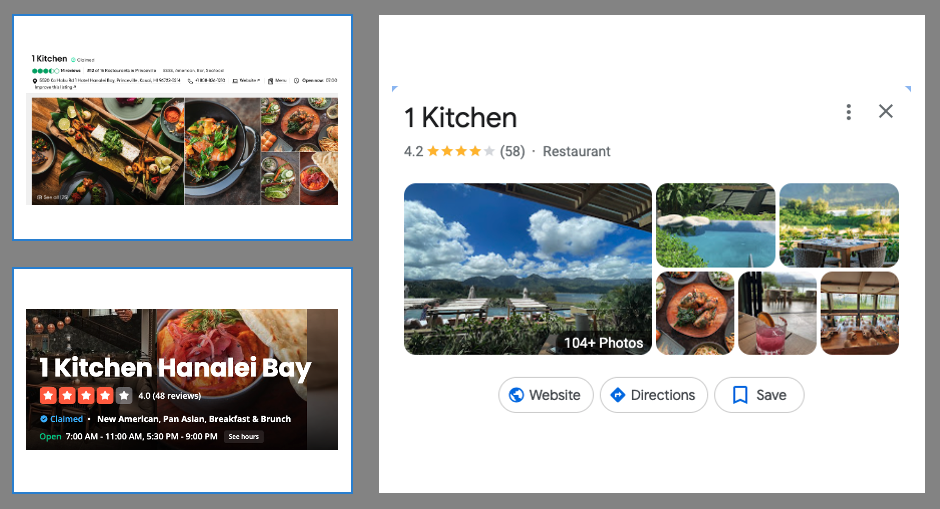
**Our take:**
- Mike [argues](https://twitter.com/mblumenthal/status/1730634970455044444?ref=nearmedia.co), Yelp "suppresses first time positive reviews" more often than negative reviews, resulting in lower overall scores.
- Yelp [survey](https://www.nearmedia.co/clicks-do-impact-rankings-tiktok-google-search-yelp-reviews-survey/): "65% ... \[said they\] would write a more positive review than originally intended if a business asked them to leave a review."
- There's a [trust crisis with reviews](https://www.nearmedia.co/review-fraud-crisis-stores-drive-online-sales-yelp-reserves-with-google/). People should be careful. But there are no real alternatives to reviews and our research has shown people rely on star ratings/volumes and 66%+ don't actually read reviews.
### Only 3.9% of US Biz Using AI
Large [enterprises](https://menlovc.com/2023-the-state-of-generative-ai-in-the-enterprise-report/?ref=nearmedia.co) and digital [agencies](https://www.nearmedia.co/agencies-chatgpt-dsa-vs-section-230-google-teen-retention/) are rapidly adopting generative AI. Last week on the Near Media [podcast](https://www.nearmedia.co/ep-135-2/) [we discussed](https://www.nearmedia.co/ai-and-local-seo-one-year-later/) ChatGPT and AI tool adoption with Joy Hawkins of SterlingSky and Darren Shaw of Whitespark. They provided some very concrete and useful examples of how ChatGPT was improving productivity and, in some cases, where it fell short. Most of their clients are SMBs and many of them were well informed and excited about AI. However, a recent US Census Bureau [survey](https://www.census.gov/library/stories/2023/11/businesses-use-ai.html??ref=nearmedia.co) (more than 200K businesses) found that just under 4% of US businesses are currently using artificial intelligence. (This means the percentage of SMBs using AI is either comparable or lower.) Almost twice that number were planning to adopt AI in the next six months. Current adoption varied considerably by industry, with IT/tech and scientific fields well ahead of others (see chart below). AI was defined as "computer systems and software able to perform tasks normally requiring human intelligence, such as decision-making, visual perception, speech recognition and language processing." Smaller sample surveys from [ConstantContact](https://drive.google.com/file/d/17tID61RqIGJVRCMr2SHaSeYZSW5NSg8l/view?ref=nearmedia.co) and [Bredin](https://www.nearmedia.co/chatgpt-lawyer-smbs-and-ai/), focused specifically on SMB adoption, showed 26% and 17%, respectively, currently using AI tools.
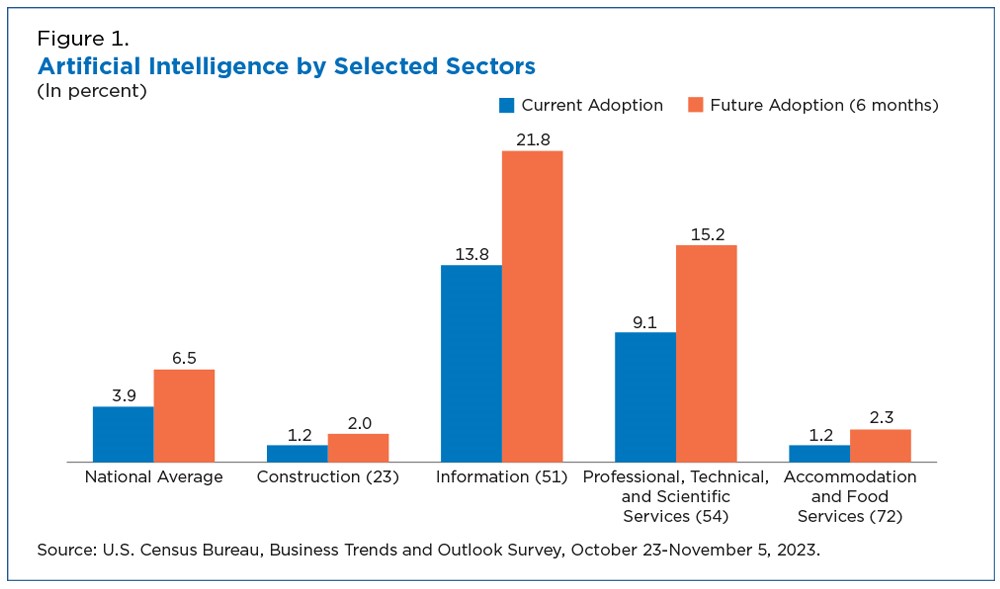
Source: US Census Bureau survey
**Our take:**
- Many of the software tools directed at SMBs have incorporated AI elements. Business owners may not be fully aware of this.
- Generally speaking, ChatGPT is synonymous with AI in the public's mind. So when SMBs hear "AI" they probably are reporting on ChatGPT adoption, which again may not reflect actual reality (e.g., [Wix](https://www.wix.com/studio/ai?ref=nearmedia.co))
- Most SMB AI adoption will come through SaaS vendors incorporating AI (e.g., [Web.com](https://www.localogy.com/2023/11/web-com-doubles-down-on-ai/?ref=nearmedia.co)) and not from proactive adoption outside of those relationships.
## Recent Analysis
- **Near Memo episode 136**: [How Local SEO Agencies are using Generative AI and ChatGPT: tips, tactics and strategies](https://www.nearmedia.co/ep-135-2/).
## Short Takes
- **Local E-E-A-T** in the real world: [examples](https://moz.com/blog/local-business-eeat?ref=nearmedia.co).
- **Google Maps** routing error sends people into the desert ([WaPo](https://www.washingtonpost.com/nation/2023/11/28/google-maps-desert-detour-california-vegas-formula-one/?ref=nearmedia.co)).
- Poll: majority [don't like](https://9to5google.com/2023/11/30/google-maps-colors-poll/?ref=nearmedia.co) **Google Maps**' new colors.
- Spammy **Google Groups** [content](https://www.seroundtable.com/google-groups-ranking-boost-search-36488.html?ref=nearmedia.co) now ranking (likely mistake).
- **Google** now supports structured data [for vacation rentals](https://www.seroundtable.com/google-search-vacation-rental-structured-data-rich-results-reporting-36492.html?ref=nearmedia.co).
- **Google** to [pay Canadian publishers](https://www.theguardian.com/technology/2023/nov/29/google-canada-online-news-act-agreement-publishers?ref=nearmedia.co) $73M a year to keep news in SERPs.
- News publishers [abandoning Twitter](https://www.washingtonpost.com/technology/2023/12/01/reddit-twitter-snark-ethics/?ref=nearmedia.co) for **Reddit**.
- **Epic v. Google** judge: Google "systematically [suppress\[ed\] evidence](https://www.theverge.com/2023/12/1/23984902/judge-james-donato-investigate-google?ref=nearmedia.co)."
- OpenAI [delays launch](https://www.axios.com/2023/12/01/openai-delays-launch-custom-gpt-store-2024?ref=nearmedia.co) of **GPT** store, **Google Gemini** release [delayed](https://9to5google.com/2023/12/02/google-gemini-launch-delay/?ref=nearmedia.co).
- **Google's SGE** [patent](https://patents.google.com/patent/US11769017B1/en?ref=nearmedia.co), [explained](https://searchengineland.com/google-patent-describes-how-the-search-generative-experience-works-435230?ref=nearmedia.co).
- **Amazon Q** [aims to be](https://aws.amazon.com/q/?ref=nearmedia.co) a more personalized business assistant.
- Location intelligence companies, **Gravy and Unacast** [merging](https://gravyanalytics.com/blog/timerazor-gravy-gravy-analytics-unacast/??ref=nearmedia.co).
- Small **SMBs** [bearish on 2024 growth](https://bredin.com/blog/2023/11/bredin-report-smb-priorities-customers-employees-cash-and-security/?ref=nearmedia.co) outlook; larger SMBs bullish.
Listen to our [latest podcast](https://www.nearmedia.co/memo/).
[](https://nearmedia.co/memo?ref=nearmedia.co)
How can we make this better? Email [us](mailto:gsterling@nearmedia.co) with suggestions and recommendations.
### AI & Your Local SEO Agency: One Year Later
URL: https://www.nearmedia.co/ai-and-local-seo-one-year-later/
Last updated: 2024-11-19T21:14:12.000Z
We are departing from our regular format to provide you with a summary of a recent interview with Joy Hawkins and Darren Shaw on how they are [using generative AI in their agencies](https://www.nearmedia.co/ep-135-2/). Our regular format will be returning Monday. You will find links to specific tips and techniques highlighted below.
---
ChatGPT launched almost exactly one year ago, on November 30, 2022\. Since that time it's safe to say AI has changed everyone's expectations about technology and the future of search. This week we invited Joy Hawkins, owner of [SterlingSky](https://www.sterlingsky.ca/?ref=nearmedia.co), and Darren Shaw, founder of [Whitespark](https://whitespark.ca/?ref=nearmedia.co), to help us assess the impact of AI on SEO and Local SEO so far. How are their agencies using it today, where has it been effective and where is it over-hyped?
### Repurposing Human Content
Asked about AI integration into daily workflows, Joy Hawkins said, "It varies depending on the department or job. On the creative side, my husband, who does all our video editing, uses AI features extensively. They save him an insane amount of time." She didn't think, however, that AI was living up to the hype when it came to content creation. "When AI first came out, many thought it would replace content writers. We've found that AI is not near where it would need to be for that. We use it more for repurposing content input by humans."
Joy went on to say that AI can be effective as a kind of content assistant. "If you have content that has already been input by humans and you need to repurpose that, like take a list and make it a blog, take a blog and make it a script, it does a good job of that and requires minimal editing. But from scratch, you know, 'I want a 500 word article on this criminal law in Texas, it's really inaccurate.'"
Fact checking and editorial review takes as much time as creating the content, she argued.
💡
****Content Creation Tips**: AI can speed up content creation but is most effective in repurposing human input (e.g., transcript to blog article) but not in creating articles from scratch. [Video 03:15](https://www.youtube.com/watch?v=KxdhJxgRKPU&t=195s&ref=nearmedia.co)
### More Client Content
"At Whitespark we use it to seed questions," Darren Shaw said. "For our clients, one of the great use cases is you ask a series of questions like, what are the common concerns that people have with a drain cleaning service? You ask ChatGPT to come up with that list of concerns and then you say, okay, now phrase them into questions. Then you give those questions to your clients and ask them to answer all these questions. You can either send them a form where they fill out their answers or you get on a Zoom call with them and record it. And then you just take their words, turn it into the transcript."
"We also use it for a number of other things, like coming up with Q&A questions because we like to pre-populate the Google Q&A section. We use it to come up with Google Post ideas. Let's say dentist has pages on all of these different types of services, we feed that to ChatGPT and say, 'create a Google Post based on this content,' or 'create five Google Posts.' And so it creates the content, and then our team still has to edit it. But it does take some mental load off of the job," he added.
💡
****Client Content Development:** You can use ChatGPT to generate questions for client interviews to aid content creation. [Video 06:32](https://www.youtube.com/watch?v=KxdhJxgRKPU&t=392s&ref=nearmedia.co)
### Saving 30% of the Time to Create Posts
Darren discussed a podcast featuring Aaron Weiche and Andy Crestodina. "Andy talked about his process for using ChatGPT for content generation. I think he said that you're saving about 30% of the time, and that feels about right."
Joy Hawkins agreed. "We use it for Post as well. It cut down the time it takes to create a Post by about half. But that was because we had a really good prompt that included all the things that we wanted, based on a study that we did: make sure it has an emoji, make sure it has a sense of urgency. I love that it just places the emojis for you. That's a huge time saver."
She added that the prompt has to be specific. "I found if you're really generic, like 'optimize this title for YouTube,' it's bad. So you have to specifically tell it what to do and what things to include."
💡
****Google Posts and Q&A**: Drafting Google Q&A and Post ideas (according to a best practices checklist), with human editorial clean-up. [Video 07:55](https://www.youtube.com/watch?v=KxdhJxgRKPU&t=475s&ref=nearmedia.co)
### Tools Beyond ChatGPT
Asked about other tools they were using, Joy said, "For images, we are using MidJourney and Adobe's." But she expressed concern about copyright issues. "My husband was telling me Adobe's AI was trained on their own stock images. So that feels more comfortable to me as an agency using something, where you know you're not going to run into issues down the road."
Darren said that people in his agency are also using Bard. "We were using ChatGPT to help with review responses for all of our clients. But apparently, \[his employees\] are preferring Bard for review responses over ChatGPT." His team also uses MidJourney for images, which he likes better than OpenAI's DALL-E.
Mike Blumenthal observed that DALL-E is a bit more user friendly than MidJourney in the sense that it will interpret more general prompts and turn them into specific instructions. "I find the interesting thing about ChatGPT, with DALL-E, it does the command line work for you, which is fascinating."
### What Do Clients Think?
"Clients are asking us about it all the time," Darren explained. "They're interested to know, 'Are you guys using AI? How are you using AI?' I think one of the big concerns they have is whether or not it might have a negative impact. So they want to know, is this going to cause us problems down the road."
He said that they're transparent with clients about using AI. "We do tell them and most of our clients are kind of thrilled about it. They're excited about it. They want to talk to us about it and find out what we're doing and how we're using it. And we haven't had any complaints, just that surface level concern \[about rankings\]."
Joy added, "I think the biggest concern people have is it being overused in content and then that content not performing well in Google." She said that her agency characterizes AI as an assistant to clients. "Our writers use it, but it's to get ideas, not to do the writing. And everything that we post is human edited."
### Review Analytics & Other Uses
Mike explained a novel but very useful [application of AI to reviews](https://www.nearmedia.co/google-ai-goes-vegan-apple-maps-ranking-tool-chatgpt-review-insights/). "I was working with a large multi-location client who had 10 years worth of reviews. I took this client's 2000 reviews, put them in a spreadsheet, dropped them into ChatGPT-4 and asked it to calculate the average review score and totals for each of the locations. And for locations that have lower ratings in the past 12 months than the previous years, show the count of the reviews for previous years and the rating averages for the past 12 months. And then I asked, 'if the rating is less than 4.5, how many reviews would that location need to get to 4.5?'" He also asked for "other insights that might help these locations perform and which ones are doing well, which ones are doing poorly."
Mike said the output was "incredibly insightful," adding, "ChatGPT becomes a reporting extension for SaaS tools ... the output was just astounding to both the client and to me."
💡
****Review Analysis for Multi-Location Clients**: Review responses, complex review analysis and insights that exceed the capacity of current reputation management products. [Video 20:22](https://www.youtube.com/watch?v=KxdhJxgRKPU&t=1222s&ref=nearmedia.co)
Darren jumped in, "I actually think that Mike's example is the most powerful thing you can use ChatGPT for – so much better than content." But he added other use cases: "writing Excel formulas, writing Python scripts, writing SQL; analyzing data is where I really think that that's a revolution."
He likened it to the calculator. "You could move forward in your life, doing long division for the rest of your life, or you could be like, oh, we have this thing called a calculator now, so I'm gonna use it, I'm gonna make my work much more efficient. I really feel like Chad GPT gives us that power now."
💡
****Data Analysis and Technical Tasks**: Writing Excel formulas, Python scripts, SQL queries – similar to using a calculator for efficiency. [Video 24:18](https://www.youtube.com/watch?v=KxdhJxgRKPU&t=1458s&ref=nearmedia.co)
"One of our biggest use cases is dealing with service area pages or optimizing for near me," said Joy. "These are really annoying things where I feel like the bot can do it better than a human because it's just like, oh, you know, put near me in the sentence and make it sound natural. So we use it a lot for stuff like that and service area pages because the content is so similar."
💡
****Optimizing for 'Near Me' and Service Area Pages**: AI can partly automate creating service area pages and optimizing for ‘near me’ searches. [Video 26:38](https://www.youtube.com/watch?v=KxdhJxgRKPU&t=1598s&ref=nearmedia.co)
### AI's Impact on Hiring
"At the moment I have a stupid, not very good developer for 20 bucks a month," joked Darren Shaw. "If you tell it exactly what you want and how you want it, you can get it, but usually it gets it wrong. You got to do a lot of hand holding, so there is no risk of my development team being replaced by ChatGPT. The developers that I have building software at Whitespark, ChatGPT can't touch them. Maybe in five years, that'll change. I don't know."
Joy Hawkins agreed. "Definitely no one is at risk of getting laid off at my agency at all. I would say though, in all honesty, it probably is going to decrease slightly the amount that we hire in the next few years."
### Does ChatGPT Make Us Dumber?
Greg injected the idea that maybe relying on ChatGPT makes us dependent and less capable. Nobody has to remember telephone numbers with smartphones. "You just tap the button. You can't remember the number except maybe your closest friends and family."
"It's a concern that I've had," admitted Joy. "I'm not sure if it's true or not. I haven't really found a way to tell if it's making people dumber or more dependent. You have to have checks and balances in place. I don't really see this as any different than that."
"I look at it similar to the calculator analogy," said Darren. "I love that I don't have to store those phone numbers in my brain anymore. And so that allows me to have other things in my brain. But \[AI\] is like superpower allows us to focus on things that are more valuable. I don't want to have to do long division on paper anymore. I've got a calculator for that and that frees up my time and my mental capacity to do more impactful work."
### Content Differentiation
"There's a podcast in the affiliate marketing world I listen to called Authority Hacker," explained Joy. "I love it because the affiliate marketing world is super spammy compared to local. And even they're telling people 'don't just publish 5,000 pages with click of a button.' There's lots of people out there that'll tell you to do it. I think that Google had to change their stance on it though, to not be against AI when they are also using and producing AI."
She added, "The business description is now being generated by AI. So they can't contradict themselves. But I think it's more like, 'when is it appropriate and when is it not?' And I would say for the majority of content, it's not appropriate to use AI to generate it. And we're seeing more that Google is favoring real life data and real life stats. Like case studies; they work phenomenally because you're putting in your own data, you're publishing something that doesn't match 500 other pages online. So we're seeing that kind of stuff win really well in local."
### ChatGPT and E-E-A-T
"I think that Google recognized there's no way to perfectly identify what's AI-generated and what's not," observed Darren. "This whole move towards E-E-A-T, you're speaking from a place of expertise, authority and trust when you are doing that with your content and experience. And that's what I'm actually trying to squeeze out of our clients. That's why we do the interview style. We don't just want to have ChatGPT write the service page on Invisalign or drain cleaning or whatever; we want the client to write that page. But we know they don't have time."
He added, "So you get ChatGPT to write the questions. But you get it from \[the client's\] voice. Why are you special? What do you do that's different? And that's a new piece of content that Google hasn't seen before. And I think that is the type of content that's going to work now and into the future."
Google increasingly wants E-E-A-T. But Joy Hawkins thinks that Google doesn't always favor that in search results. "I think traditional SEO plays are still super valid. We have a lawyer client who I got to outrank the government of Texas. Is he more authoritative than the government of Texas? Hell no. But he outranks them because we do a lot better SEO than .gov sites generally do. In an ideal world, yes, Google wants to reward E-E-A-T but I do not think they are there all the time."
Asked about whether AI, ironically, will push the SEO industry to create better content, Darren Shaw said, "I think maybe, yeah. It's happening in our agency. We're trying to like level up our content, add more expertise, not just droning out service pages that are the same as everyone else's. When you can extract the unique voice of your specific client, that feels like better content."
### Local SEO Will Thrive
"I don't think my job's in danger or Darren's job's in danger. I think we're fine," observed Joy Hawkins. "I think local is one of the most genuine things out there, when it comes to reviews and photos and so many things that you just can't fake. So I'm not really worried. I think the changes will probably divide what type of local SEO agency you are. The division between the people that are relying heavily on AI versus the people that are more like what Darren and I are talking about."
Speaking about broader changes in search, Darren Shaw said, "I always think that for one word answers, like what is the square root of X? How old is this person?, our AI assistants will answer those questions. If that's the SEO world you live in, then your SEO is in danger. But with local, you need to explore the businesses, you want to do the research, you want to look at the reviews, you want to look at the photos. You want to get a sense of whether or not this is a real business. I think that local is one area of SEO that will continue to thrive."
### Optimizing for AI
Darren was quick to add, "I do think that the way that people are getting data will change and I think that Google's at risk if they don't If they don't pick up the pace. If you look at the new ChatGPT voice thing it's really good. So right now we think about the Map Pack and ranking in these three results or Google Maps. Will the interface be different in the future? And will our jobs as local SEOs be to optimize our clients to be returned by ChatGPT voice or however Siri is pulling results? I could see a shift like that happening in the next three years."
If the interface is different, Mike thinks Google and Apple are in the strongest position to take advantage of that shift. "The incumbents in your pocket, Android and Apple, have a huge advantage. Because if it takes a year or two to roll out \[broadly\], they have the resources and money \[to improve their voice assistants\] versus ChatGPT building a piece of hardware."
He added, "Entities are going to provide the foundation for any future search. So I think that we'll stay largely the same in broad parameters of making sure that the entities are accurate, detailed, down to the product level, up to the corporate level and everything in between, including reviews and all that stuff. So to some extent, it's going to be the same because it's going to be knowledge graphs driving all that."
Overall, Mike said, "That gives Google a huge advantage because their local knowledge graph is still, despite its many flaws, still the best."
---
You may watch or listen to the complete interview on [using ChatGPT in local agencies](https://www.nearmedia.co/ep-135-2/) on Nearmedia.co
### Ep 136: How Local SEO Agencies Are Using Generative AI & ChatGPT: Tips, Tactics and Strategies
URL: https://www.nearmedia.co/ep-135-2/
Last updated: 2023-12-06T16:36:59.000Z
Join us for this great conversation with Joy Hawkins and Darren Shaw. We explore:
- Experiences and opinions on the use of AI tools like ChatGPT in SEO and content creation.
- The effectiveness of AI in different aspects of agency work, including creative tasks and data analysis.
- The influence of AI on the quality of content and the evolving nature of SEO strategies.
- Perspectives on the future impact of AI on the SEO industry and the role of agencies.
**Part 1 starts 00:13 -** [**How Local SEO agencies use AI to improve client content**](https://youtu.be/Yps9Tjv0-OI?ref=nearmedia.co)
- **Content Creation Challenges with AI**: Contrary to initial expectations, AI has not replaced content writers. While it is used for drafting and repurposing content, AI-generated articles often require extensive human editing, especially for factual accuracy and coherence.
- **Content Refinement and Repurposing**: AI excels in transforming existing content into different formats, like converting a list into a blog post or a blog into a script. This minimizes the editing work required.
- **Efficiency in Post Creation**: AI has been particularly effective in generating social media or Google posts, reducing the time and mental effort involved in content creation. This includes automating tasks like emoji placement in posts.
Segment Reference Articles:
[Think Twice Before Using Chat GPT for Local Content](https://www.sterlingsky.ca/using-chat-gpt-for-local-content/?ref=nearmedia.co)
[How to Rank Your Website for More Keywords with Service Pages](https://whitespark.ca/blog/how-to-rank-for-more-keywords-with-service-pages/?ref=nearmedia.co)
[Save Time by Using ChatGPT to Write Your Google Posts \[Prompt Included\]](https://www.sterlingsky.ca/chatgpt-powered-google-posts/?ref=nearmedia.co)
[How To Use Chat GPT to Optimize Your Content for Local Search ](https://www.sterlingsky.ca/how-to-use-chat-gpt-to-optimize-your-content-for-local-search/?ref=nearmedia.co)
**Part 2 starts 14:47 -** [**How Local SEO agencies explain AI to their clients**](https://youtu.be/Fa%5FY2C9BRFw?ref=nearmedia.co)
**AI in Client Communication:** Both Sterling Sky and Whitespark are transparent with clients about their AI usage, addressing concerns about potential negative impacts on SEO performance. AI is presented as a tool for idea generation and preliminary drafting, not as a primary content creator.
- **Client Engagement with AI:** Clients are generally receptive and interested in AI's role in content creation. The emphasis is on AI as an assistant that complements human skills, ensuring quality and originality in content.
- **Cost Implications:** There have been no significant shifts in pricing structures due to AI efficiencies. The focus is on using AI to maintain or reduce costs rather than altering client fees.
Segment Reference Articles
[Survey Reveals: The Real Impact of Generative AI on SEO](https://www.seoclarity.net/research/impact-generative-ai?ref=nearmedia.co)
[Census.gov](http://census.gov/?ref=nearmedia.co) [report](https://www.nearmedia.co/r/7725645d?m=bfc50bd6-31c0-48b7-964c-eaac941c5279): Only 3.8% of Businesses Use AI to Produce Goods and Services
**Part 3 starts 29:48 -** [**Local SEO Agencies & their AI future**](https://youtu.be/fcTVr9E1LnQ?ref=nearmedia.co)
- **AI as a reporting super power:** extracting meaningful insights from large data sets for clients.
- **Using ChatGPT to understand reviews:** Discussion of a specific reporting around reviews that provides a template for creating better client reporting and expanding reporting tools.
- **Long-Term Impact on Staffing and Skills:** Agencies do not foresee AI re placing human staff. Instead, AI is viewed as a tool that enhances staff capabilities. Concerns about AI causing dependency or de-skilling are noted, but the overall sentiment is optimistic.
- **Future of AI in Local SEO:** AI is expected to lead to more efficient workflows and better quality content. Agencies anticipate a growing divide between those heavily reliant on AI and those favoring a balanced, human-centric approach. AI's role in data analysis and automating repetitive tasks is highlighted, enhancing both client service and internal processes.
Segment Reference Articles
[ChatGPT's Review Insights](https://www.nearmedia.co/google-ai-goes-vegan-apple-maps-ranking-tool-chatgpt-review-insights/)
### Do Searchers Use Pack Results?, LSA Review Abuses, Google's Failed Review Moderation
URL: https://www.nearmedia.co/searcher-behaviors/
Last updated: 2023-12-01T20:51:58.000Z
### How Often Do Searchers Rely on Local Pack Results?
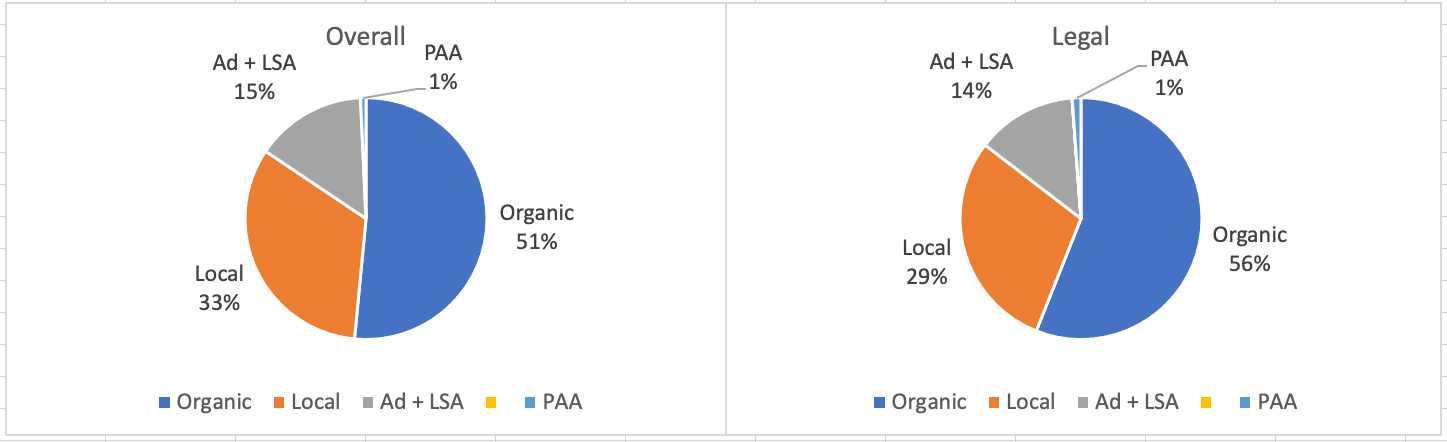
On average roughly 1/3 of user considerations entail a Local Pack result
As part of our ongoing local, multi-location research into search behaviors, we experience first hand how much user behavior depends on both the vertical under consideration AND what results Google actually provides on any given query. In analyzing over 3000 searcher considerations across three verticals we have seen users look for their answer in the Local Pack/Finder results 33% of the time. It is only slightly less in the legal vertical at 29%. While in the storage and medical verticals between 37% and 38% consider Local Pack/Finder results when looking for their answer. Averages can, however, be deceptive. Driven by user preferences and Google's choice of layouts, Local Pack utilization can vary dramatically. At least 20% of our searcher panels are self-confirmed ad skeptics often noting that they have little trust in the sponsored results. This even extends to the point of some searchers thinking that Local Pack results are sponsored because Google labels the first listing as sponsored. The actual percentage of ad skeptics is likely even higher since we provide no prompting asking them this question during their searches. Yet when LSAs are present, despite a high degree of stated ad skepticism, users often turn to an LSA Ad for their solution. The reasons for this behavior are not totally clear, perhaps they are drawn by the Google Screened designation, the review stars or the images. Regardless, when LSAs are visible Local Pack use dropped significantly to 18% of considerations while 24% frequented the LSA and another 4% patronized regular ads; a dramatic shift in user behavior.
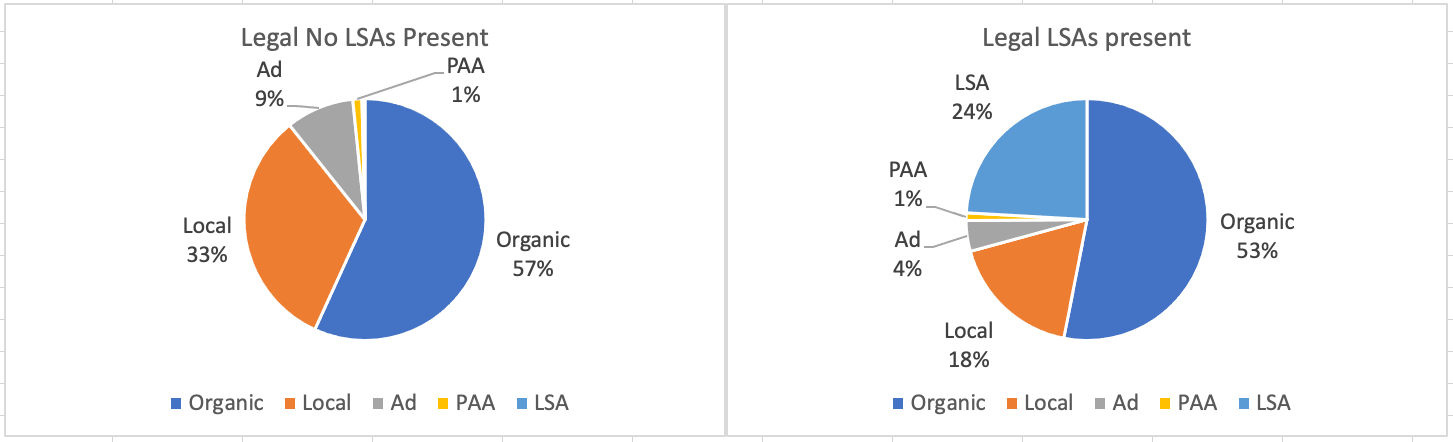
Despite ad skepticism, users abandon local results when LSAs are present and utilize LSA results to answer their question.
**Our take:**
- Overall average utilization of local search results is lower than we would have predicted. LSAs are only one factor lowering Pack utilization in the legal vertical as many localized results for legal queries do not even show Pack results.
- It is important for businesses and their agencies to understand how Google changes search results based on the vertical and user behaviors.
- You should test each likely search phrase on both mobile and the desktop to understand which result types Google is likely to show. Only then can you properly allocate SEO and SEM resources.
### LSA Listings Hijack Reviews
Local Service Ads (LSA) certainly attract user attention. Given the Google Guaranteed/Screened designation, the businesses advertising appear to the consumer to be upstanding netizens that have been vetted and approved by Google as reliable local businesses. Just read the reviews (which few people do)! As with much of Google's world, all is not as it seems. [Fl Affordable Air Duct Cleaning and Dryer Vent Cleaning](https://g.co/kgs/A6TSFw?ref=nearmedia.co) (wow that's a mouthful) of Miami appears to have over 2300 reviews. It is however deception. They have managed to hijack the review corpus of a totally different local profile, the [Percy Warner Park](https://maps.app.goo.gl/hvgYJ69AQAbS525F6?ref=nearmedia.co) in Nashville, TN. When you call the number in the ad, and ask you are told that you are speaking with Marketing 770\. Obviously not sure where the call is originating. Originally Local Service Ads offered up the promise of avoiding spam via Google's [screening and verification process.](https://support.google.com/localservices/answer/6226575?hl=en&ref%5Ftopic=10491040&sjid=18444927224189518586-NC&ref=nearmedia.co) Google claims that they perform checks of a business' insurance, business registration and background details and note that "one important check in the verification process is making sure that Business Profiles on Google are properly connected to matching Local Services ads". According to [LSA expert Crystal Horton](https://crystalhorton.com/?ref=nearmedia.co) Google does not bother to ask for any proof of ownership of the Google Business Profile during LSA setup. Thus you can easily attach any listing to an LSA account. Apparently they only request the "Google Maps link". So much for the "important checks".
**Our take:**
- With the [original promise of Local Service Ads](https://blumenthals.com/blog/2016/10/04/google-testing-advanced-verification-process-for-plumbers-locksmiths/?ref=nearmedia.co) and Google's experience with local abuses, Google had an opportunity to provide consumers with high integrity local listings in high risk categories. Whether due to income pressures, lack of concern or naïveté, Google appears to be failing.
- It seems that LSA spam is fairly widespread. Here is [another listing](https://www.google.com/localservices/prolist?cs=0&q=Freshly%20Air%20Duct%20%26%20Dryer%20Vent%20Cleaning&spp=ElQKEgiW%5F7qKBRCXv4zFDxj%5Fx6-gJRIleGNhdDpzZXJ2aWNlX2FyZWFfYnVzaW5lc3NfaHZhYzplbi1VU0ITCKjCn8rN54IDFZ811AEdRrUKKUgEUAE&scp=CiV4Y2F0OnNlcnZpY2VfYXJlYV9idXNpbmVzc19odmFjOmVuLVVTEhgaEgkRwcgOorDZiBFlT63dcfKW%5FzjM-j0&src=1&hl=en-US&gl=us&slp=UlUIARIUChIIlv-6igUQl7-MxQ8Y%5F8evoCUqOwoSCJb%5FuooFEJe%5FjMUPGP%5FHr6AlEiV4Y2F0OnNlcnZpY2VfYXJlYV9idXNpbmVzc19odmFjOmVuLVVT&ref=nearmedia.co) with [hijacked reviews](https://www.google.com/maps/contrib/109322857627882023279/place/ChIJ%5FZBBUpFsd4gRAIeiDx8ieuc/@38.6622685,-89.9892065,8.04z/data=!4m6!1m5!8m4!1e1!2s109322857627882023279!3m1!1e1?entry=ttu&ref=nearmedia.co) in the same vertical and in the same market. Clearly these are not isolated incidences (other examples [here](https://g.co/kgs/RZCXra?ref=nearmedia.co), [here](https://g.co/kgs/RZCXra?ref=nearmedia.co), [here](https://g.co/kgs/Gmt4fg?ref=nearmedia.co) & [here](https://g.co/kgs/QukS7Y?ref=nearmedia.co)).
- Google Ads has [announced](https://support.google.com/adspolicy/answer/13779021?hl=en&ref%5Ftopic=29265&ref=nearmedia.co#:~:text=On%20December%202023%2C%20Google%20will,be%20allowed%20as%20Location%20assets.) that it is going to update the Location Ad asset requirements this coming month, requiring that the business running the ads and business profiles match. Not a very high bar yet it remains to be seen whether this will apply to LSAs.
- Given the degree to which Google claims to vet and guarantee these listings one has to wonder whether Section 230 protections apply or whether Google has a legal obligation to make sure that these listings and ads are truthful.
### Why Does Google Get Review Moderation Wrong?
Google touts both that it is an AI first company AND how well they [protect](https://blog.google/products/maps/how-google-maps-protects-against-fake-content/?ref=nearmedia.co) against fake and malicious review content. And yet they seem to often get review moderation wrong. In the high profile case of an orthopedic [surgeon accused of review cheating](https://www.nearmedia.co/fake-review-doctor-clever-scam-got-reviews-removed-solution-to-gbp-bug/), first [reported](https://youtu.be/6072POMkpk4?si=ZVmTBadgAINn96iH&ref=nearmedia.co) in 2020 by renowned review fighter Kay Dean and despite a [NYS AG investigation](https://ag.ny.gov/press-release/2023/attorney-general-james-secures-100000-manhattan-doctor-who-manipulated-online?ref=nearmedia.co) of the Doctor and the practice, reviews were missed by their [vaunted AI review algo](https://blog.google/products/maps/google-maps-fake-contributions-ai-machine-learning/?ref=nearmedia.co) and were not removed until [highlighted](https://www.nytimes.com/2023/11/13/technology/fake-reviews-crackdown.html?ref=nearmedia.co) by the NY Times a few weeks ago. Perhaps it is too much to expect an AI based filter to always get it right with over "20 million reviews, photos, business hour updates and other contributions" [added](https://blog.google/products/maps/how-google-maps-protects-against-fake-content/?ref=nearmedia.co) to Maps each day. After the fact moderation is the key and Google makes claims that their staff are extensively [trained](https://blog.google/products/maps/how-google-maps-reviews-work/?ref=nearmedia.co) to "catch policy-violating content and ultimately keep Google reviews helpful and authentic". The [fake review moderation process](https://www.nearmedia.co/how-to-fight-a-fake-google-review-attack/) is still too opaque and even with the knowledge of the process and the escalation privileges I enjoy as a GBP Product Expert it still all too frequently fails in inexplicable ways. For example getting rid of fake LSA reviews is a total crapshoot. Most difficult for me to understand though is the [obvious cases laid out in great detail](https://support.google.com/business/thread/222308944?ref=nearmedia.co) and reported multiple times that they refuse to do anything about. Like this business that gets exactly the same reviews by the same person across multiple locations:
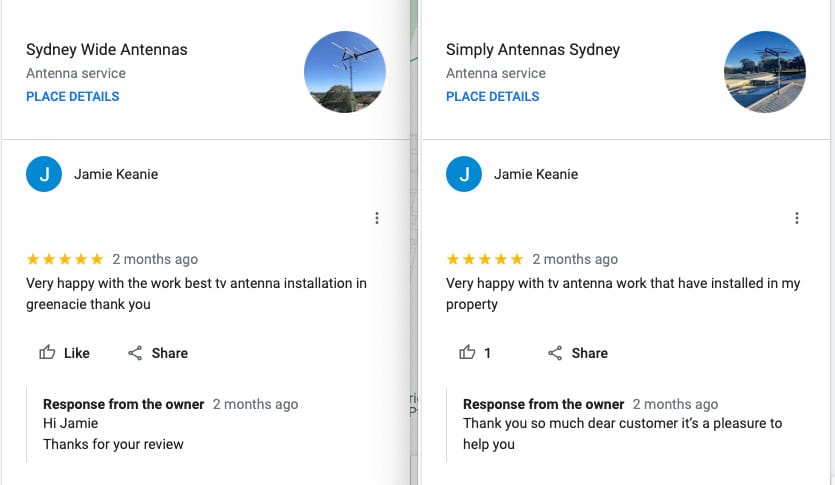
**Our take:**
- Over the past two years Google has finally started investing in improving their review filters. Their faith in AI, some amount of hubris and poor staff training still means that all too many fake reviews still get through.
- Google [contends](https://www.federalregister.gov/documents/2023/07/31/2023-15581/trade-regulation-rule-on-the-use-of-consumer-reviews-and-testimonials?ref=nearmedia.co) that the FTC should focus on the buyers and sellers of fake reviews and not the platforms on which the abuses occur. The FTC, in their [new rules](https://www.ftc.gov/news-events/news/press-releases/2023/06/federal-trade-commission-announces-proposed-rule-banning-fake-reviews-testimonials?ref=nearmedia.co) about reviews, largely agreed with them,
- Until Google and the other major review platforms are held accountable by regulation and law, the problem of fake reviews will persist.
## Recent Analysis
- ICYM: [Why Citations Ain’t What They Used to Be](https://www.nearmedia.co/why-citations-aint-what-they-used-to-be/) by David Mihm
- Stay tuned for our upcoming podcast and interview with Joy Hawkins & Darren Shaw on how local agencies are using ChatGPT for Local SEO and agency management.
## Short Takes
- The Google Maps app **now** [**displays**](https://x.com/DarrenShaw%5F/status/1726630457608192163?s=20&ref=nearmedia.co) **photos with review text** and a Place Topic in a prominent carousel at the top of the Profile.
- A good [summary](https://www.analistaseo.es/posicionamiento-buscadores/how-google-works-working-algorithms/?ref=nearmedia.co) of the changing understanding of how the **Google ranking algo** works based on information released in the Google anti-trust trial.
- This [owner](https://www.google.com/maps/place/illegal+burgers/@37.557211,-122.0053807,15z/data=!4m8!3m7!1s0x808fbff6324443cb:0x9a538ca02a9c3442!8m2!3d37.557211!4d-122.0053807!9m1!1b1!16s%2Fg%2F11jnskmclj?entry=ttu&ref=nearmedia.co) thinks that **review responses** are a great place to get things off their chest and "[say it like it is](https://x.com/AaronWeiche/status/1726753283249713490?s=20&ref=nearmedia.co)".
- Google is [testing an image search](https://x.com/JoyanneHawkins/status/1726943470823391707?s=20&ref=nearmedia.co) result that includes **local brand information with the image**, making it more valuable for local businesses.
- Use ChatGPT to [optimize your content](https://www.sterlingsky.ca/how-to-use-chat-gpt-to-optimize-your-content-for-local-search/?ref=nearmedia.co) for local search.
- Google [enabled](https://leadferno.com/blog/manage-leads-from-google-local-services-ads-lsas-with-text?ref=nearmedia.co) LSAs to **send leads & receive replies via SMS**.
- Missouri attorney general [files suit](https://progressivegrocer.com/dollar-general-accused-deceptive-pricing?ref=nearmedia.co) against **Dollar General for charging prices that are higher** than the advertised prices on shelves.
- People are ditching dating apps to **find love on Yelp**? ([WSJ](https://www.wsj.com/tech/personal-tech/unexpected-dating-apps-strava-duolingo-0f64ec04?ref=nearmedia.co))
- Google Business Profile (GBP) [suspension email](https://x.com/StefanSomborac/status/1727727215519871115?s=20&ref=nearmedia.co) now actually **provides suspension details**.
- The NY Times [reported](https://www.nytimes.com/2023/11/27/technology/google-youtube-abuse-mistake.html??ref=nearmedia.co) the story of another parent whose **accounts and 10 years worth of data were removed from Google** because of a "pornographic" video that her 7 year old sons had uploaded, only to be restored after the NY Times investigated.
- Census.gov [report](https://www.census.gov/library/stories/2023/11/businesses-use-ai.html?ref=nearmedia.co): Only 3.8% of Businesses **Use AI to Produce Goods and Services**.
- If you are a multi-location local business, Google [recommends](https://developers.google.com/search/blog/2023/11/introducing-organization-markup?ref=nearmedia.co) that you follow the existing local business markup guidelines **in addition to the** **new organization markup** so that the organization can be shown on Google knowledge panels.
- What **Google at peak search** [means](https://streetfightmag.com/2023/11/27/what-google-at-peak-search-means-for-marketers/?ref=nearmedia.co) for marketers.
Listen to our [latest podcast](https://www.nearmedia.co/memo/).
[](https://nearmedia.co/memo?ref=nearmedia.co)
How can we make this better? Email [us](mailto:gsterling@nearmedia.co) with suggestions and recommendations.
### Shoppers Go Wild, Google Map Colors, Fake Reviews News
URL: https://www.nearmedia.co/shoppers-go-wild-google-map-colors-fake-reviews-news/
Last updated: 2023-11-27T14:00:51.000Z
### Black Friday: Consumers Go Wild
Fears about soft consumer spending on Black Friday proved unfounded. Driven by discounts, US shoppers opened their wallets and generated a record $9.8 billion in online sales on Friday. (Thanksgiving saw $5.6 billion.) E-commerce growth on Black Friday was 7.5% year over year, according to [Adobe Analytics](https://business.adobe.com/resources/holiday-shopping-report.html?ref=nearmedia.co). Mobile drove $5.3 billion or 54% of the total. Mobile conversions, however, were roughly 50% of those on the desktop. Salesforce, with [different and larger numbers](https://www.salesforce.com/resources/research-reports/retail-holiday-insights/??ref=nearmedia.co), said Black Friday sales were $16.4 billion in the US (up 9%) and almost $71 billion globally (up 8%). It estimated that 78% of all traffic was mobile, which seems a bit high but plausible. And Mastercard [reported](https://www.mastercard.com/news/press/2023/november/mastercard-spendingpulse-u-s-black-friday-retail-sales-up-year-over-year/?ref=nearmedia.co) e-commerce sales were up 8.5%. The card issuer added that in-store sales were up 1.1% over 2022\. Roughly 22% of online orders were picked up in-store, according to Salesforce. Last year, so-called Cyber Monday saw record sales of $11.3 billion in the US ([Adobe](https://news.adobe.com/news/news-details/2022/Adobe-Cyber-Monday-Drove-11.3-Billion-in-Online-Spending-Breaking-E-Commerce-Record--/default.aspx?ref=nearmedia.co)). It was the biggest online shopping day "of all time." We'll see if 2023 can beat it.

Source: DALL-E
**Our take:**
- I was in Best Buy on Friday picking up (BOPIS) a Mac Mini. I don't know how representative it was of stores generally across the US. But it was full.
- Q4 2022 online sales were just under 15% of total retail sales [according to](https://www.census.gov/retail/mrts/www/data/pdf/ec%5Fcurrent.pdf?ref=nearmedia.co) the US Census Bureau. They're likely to top 16% and get close to 17% this year.
- It's not clear yet whether this shopping burst will translate into sustained spending and drive strong Q4 numbers. It's likely to vary by retailer.
### Google Maps Colors
A month ago, Google [announced](https://blog.google/products/maps/google-maps-october-2023-update/?ref=nearmedia.co) a bunch of updates to Google Maps. Among them, Immersive View for Routes, more EV charging data, more images, Lens in Maps (AR), more detailed navigation – and new colors. The new Map colors have proven to be surprisingly controversial with some people. Former Google Maps designer Elizabeth Laraki, for example, has [weighed in](https://twitter.com/elizlaraki/status/1727351922254852182?ref=nearmedia.co) with her take on the colors and design features (see also, [Steve Coast](https://www.linkedin.com/posts/stevecoast%5Fa-story-about-google-maps-changing-their-activity-7132773605989396480-PjL3/??ref=nearmedia.co)). Laraki's overall assessment: "It feels colder, less accurate and less human." She adds, "If the goal was better usability, the team missed a big opportunity:Google Maps should have cleaned up the crud overlaying the map." She then makes a number of very specific recommendations about how to simplify the map and remove features she considers to be extraneous. "The map should be sacred real estate," she adds. "Only things that are highly useful to many people should obscure it." Mike also questioned the value of some of the new features in a previous newsletter ([Google Maps bloat](https://www.nearmedia.co/google-map-bloat-citations-in-decline-gbp-support-issues/)).
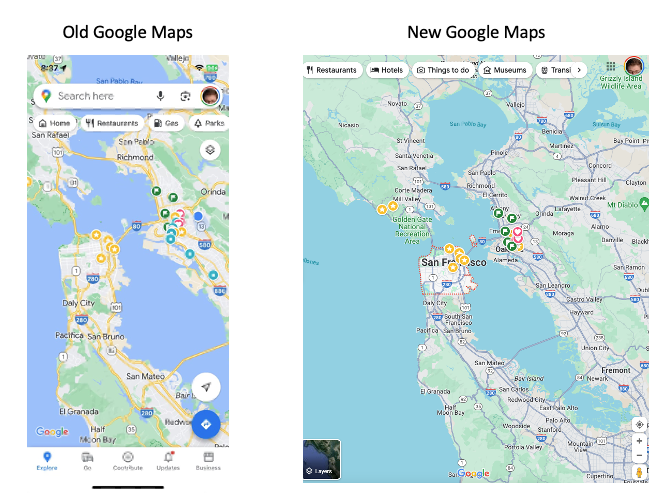
**Our take:**
- One could make conceptually similar criticisms about the Google SERP – there are now too many elements, too much clutter.
- Google Maps and Apple Maps are now less visually distinct after this redesign, although Google has more features.
- Google's local data and Knowledge Graph are what make Google Maps a superior product. Otherwise, Apple Maps could supplant it for iPhone users.
### Fake Reviews In the News
'Tis the season for fake review reporting. Two weeks ago the NY Times [ran a story](https://www.nytimes.com/2023/11/13/technology/fake-reviews-crackdown.html?ref=nearmedia.co), with a major Google focus, "Fake Reviews Are Rampant Online. Can a Crackdown End Them?" And just a few days ago, the WSJ [ran a similar story](https://www.wsj.com/us-news/youre-probably-falling-for-fake-product-reviews-b4d07f23?ref=nearmedia.co). but focused on Amazon and the surrounding ecosystem of review fraud (i.e., Facebook groups). The WSJ piece cites multiple studies that show: 1) fake reviews boost search rankings on Amazon, 2) fake reviews impact buying and, surprisingly, 3) frequent online shoppers are more vulnerable to review fraud. "Even a 0.2-percentage-point increase can dramatically improve how high a product ranks in an Amazon search," the article states. It further cites a study that found UK consumers shown fake reviews "were 5.8 percentage points more likely to pick products \[a UK consumer group\] had recommended against buying. Overall, one additional star increased demand by 38%." This suggests fake reviews have a material impact on purchase behavior. The idea that frequent online shoppers are more susceptible to review fraud is explained by their tendency to look quickly at star ratings and review counts but not actually read many reviews.

Source: DALL-E
**Our take:**
- As we've previously [said](https://www.nearmedia.co/chatgpt-search-reviews-unread-gen-z-search/), depending on the category, 66% - 75% of consumers aren't reading reviews, even as they use them to decide purchases.
- These articles amount to public shaming of Google and Amazon, who provide "zero-tolerance" PR statements but continue with uneven enforcement.
- The incentives to cheat – better rankings, increased conversions – mean that, despite "zero-tolerance." fake reviews will continue on the major platforms.
## Recent Analysis
- **Local Review Landscape:** [Insights from Whitespark's GBP Analysis](https://www.nearmedia.co/the-local-review-landscape-insights-from-whitesparks-analysis/).
## Short Takes
- How to [move your](https://www.sterlingsky.ca/move-your-sab-without-destroying-rankings/?ref=nearmedia.co) **SAB** without destroying your ranking.
- **Reddit** [starting to rank](https://twitter.com/JoyanneHawkins/status/1728136903143366776?ref=nearmedia.co) for SMB searches (can spam be far behind?).
- What went wrong at **Google** and the [deterioration of its early culture](https://ln.hixie.ch/?start=1700627373&ref=nearmedia.co).
- **Mozilla** launches [Fakespot Chat](https://www.fakespot.com/activate-fakespot-chat?ref=nearmedia.co) assistant with fake review analysis.
- As more advertisers pause ads, **X** may lose $75M by end of year ([NYT](https://www.nytimes.com/2023/11/24/business/x-elon-musk-advertisers.html?ref=nearmedia.co)).
- New [breakthrough](https://www.theguardian.com/business/2023/nov/23/openai-was-working-on-advanced-model-so-powerful-it-alarmed-staff?ref=nearmedia.co) may have triggered **OpenAI** firing drama.
- Your next computer/smartphone will have **on-device AI** ([WSJ](https://www.wsj.com/business/telecom/next-years-holiday-gift-may-be-ai-in-your-pocket-9dd501ba?ref=nearmedia.co)).
- How today's "**billionaire bros**" [compare](https://www.theguardian.com/books/2023/nov/25/we-will-coup-whoever-we-want-the-unbearable-hubris-of-musk-and-the-billionaire-tech-bros?ref=nearmedia.co) to the robber barons of old.
- Google [testing](https://twitter.com/glenngabe/status/1726684834087530496??ref=nearmedia.co) bolder, more prominent **favicons**.
- The rise of "**ghost newsrooms**," local pubs without full-time staff ([WSJ](https://www.wsj.com/business/media/your-local-newspaper-might-not-have-a-single-reporter-f62b803d??ref=nearmedia.co)).
- Americans [are torn](https://chainstoreage.com/consumers-divided-when-it-comes-hearing-store-holiday-music?ref=nearmedia.co) over **holiday music** in retail stores.
- **Holiday shoppers** [deny influence of ads](https://news.gallup.com/poll/513788/shoppers-plan-buy-themselves-holiday-season.aspx?ref=nearmedia.co), email marketing, endorsements.
- **Gen Z** [expected to overtake Baby Boomers](https://www.glassdoor.com/research/workplace-trends-2024?ref=nearmedia.co) in the workforce next year.
Listen to our [latest podcast](https://www.nearmedia.co/memo/).
[](https://nearmedia.co/memo?ref=nearmedia.co)
How can we make this better? Email [us](mailto:gsterling@nearmedia.co) with suggestions and recommendations.
### OpenAI WTF, Green Black Friday, AI for SEO
URL: https://www.nearmedia.co/openai-wtf-green-black-friday-ai-for-seo/
Last updated: 2023-11-22T22:41:50.000Z
### OpenAI: WTF Just Happened?
No doubt many of you have followed the chaotic soap opera surrounding OpenAI's ouster of CEO Sam Altman and his reinstatement only days later. To recap, in a [stunning, self-destructive move](https://www.theverge.com/2023/11/17/23965982/openai-ceo-sam-altman-fired?ref=nearmedia.co), the OpenAI board fired Altman last Friday. What followed over the weekend was a bizarre negotiation about immediately bringing him back. That negotiation collapsed on Sunday. Then, this past Monday, Microsoft CEO Satya Nadella announced Altman was [joining Microsoft](https://www.cnbc.com/2023/11/20/ousted-openai-head-sam-altman-to-lead-microsofts-new-ai-team-ceo-nadella-says.html?ref=nearmedia.co) to lead a new AI research unit, as OpenAI customers were [considering jumping ship](https://www.theinformation.com/articles/openais-customers-consider-defecting-to-anthropic-google-cohere?ref=nearmedia.co) and investors were preparing to [sue the board](https://www.reuters.com/technology/openai-investors-considering-suing-board-after-ceos-abrupt-firing-sources-2023-11-20/?ref=nearmedia.co). At the same time, 95% of OpenAI employees signed [a letter](https://twitter.com/karaswisher/status/1726599700961521762?ref=nearmedia.co) demanding board member resignations and threatening to quit en masse. Microsoft said it was prepared to [hire any and all OpenAI defectors](https://www.cnbc.com/2023/11/21/microsoft-preparing-san-francisco-offices-for-openai-employees-even-as-chaos-lingers.html?ref=nearmedia.co) (Salesforce [too](https://www.bloomberg.com/news/articles/2023-11-20/benioff-invites-openai-researchers-to-join-saleforce-s-ai-team?ref=nearmedia.co)). It appeared Microsoft would acquire OpenAI's brain trust at cost. But in another crazy twist last night, [OpenAI announced Altman's return as CEO](https://twitter.com/OpenAI/status/1727206187077370115?ref=nearmedia.co) with a new, larger board lead by former Facebook CTO and Salesforce co-CEO Bret Taylor. The old board is gone. WTF just happened?

Source: DALL-E 3
**Our take:**
- Altman was in [conflict with several board members](https://www.nytimes.com/2023/11/21/technology/openai-altman-board-fight.htm?ref=nearmedia.co) for months. A faction that included OpenAI co-founder Ilya Sutskever ousted him for an alleged lack of candor, but "no malfeasance."
- The real issue appears to have been philosophical disagreement about how fast to develop AI/AGI and how aggressively to monetize.
- The (old) board badly miscalculated, failing to anticipate employee and investor loyalty to Altman. Before his announced return, there was a very real possibility the $86 billion company would simply collapse.
- There are lots of leadership lessons to be drawn from this crazy week.
### How Green Will Be Black Friday?
Black Friday is still a couple of days away yet Black Friday sales are in full swing. The outlook this year is uncertain because retailers [simply don't know](https://www.cnbc.com/2023/11/22/retailers-outlook-black-friday-holiday-2023-spending.html??ref=nearmedia.co) how much consumers will spend, given inflation. Still, retailers are [being less generous with sales](https://www.axios.com/2023/11/01/black-friday-deals-2023-early-sales?ref=nearmedia.co) this year – so far. Numerator predicts somewhat fewer "Cyber Weekend" shoppers than in previous years (\~80%). National Retail Federation (NRF) [survey data](https://nrf.com/media-center/press-releases/latest-nrf-survey-shows-top-picks-toys-and-gifts-winter-holidays?ref=nearmedia.co) (n=8K+) suggest closer to 75% of US households. And there are [other indications](https://www.mediapost.com/publications/article/391286/data-shows-consumers-plan-to-cut-holiday-spending.html?ref=nearmedia.co) that overall numbers may be down because of consumer caution. Yet Salesforce [argues](https://www.salesforce.com/news/stories/online-shopping-discounts-predictions/?ref=nearmedia.co) consumers are simply waiting for more and better discounts, which will come. The NRF says search is top "source for gift inspiration" (44%), followed by family/friends (35%) and in-store (32%). After that come "wish lists" and social media. Amazon isn't mentioned, which makes us skeptical. Speaking of Amazon, the company will be [experimenting](https://www.wsj.com/business/retail/amazons-black-friday-deal-football-with-a-side-of-online-shopping-084bf846??ref=nearmedia.co) with "shoppable ads" during its Black Friday US football broadcast, which will feature "QR codes \[on screen\] that viewers can scan to make instant purchases." After triple digit pandemic performance, it's unclear how much e-commerce will grow this year. Department store Kohl’s, for example, is [shifting focus ](https://www.retaildive.com/news/kohls-focus-brick-and-mortar-Q3-declines/700434/?ref=nearmedia.co)back to its stores, saying the digital side has underperformed.
Source: DALL-E 3
**Our take:**
- As we've said many times, this distinction between stores and e-commerce is a false one. Consumers shop both places. And stores [drive online sales](https://www.nearmedia.co/review-fraud-crisis-stores-drive-online-sales-yelp-reserves-with-google/).
- What consumers want, beyond discounts, is a mix of e-commerce and local inventory information. Google has been making strides in the latter category but still has a long way to go.
- Google has turned the SMB attribute [into a shopping filter](https://blog.google/products/shopping/google-shopping-black-friday-tips/?ref=nearmedia.co), which may also be a proxy for local inventory in many cases.
### AI a Net Positive for SEOs
Next week's Near Media podcast features SterlingSky owner Joy Hawkins and Whitespark founder Darren Shaw discussing the impact of AI on Local SEO. It's an interesting and revealing discussion. For now, however, we'll revisit the results of an earlier [survey](https://www.seoclarity.net/research/impact-generative-ai??ref=nearmedia.co) (n=700 "SEO experts") by SEO Clarity on how generative AI is impacting the SEO industry. The survey found 86% of respondents had integrated AI into their workflows. Content generation and optimization, analytics and keyword research were the top use cases. The majority (at larger SEO firms) reported improved SEO performance. Interestingly, local SEO was not improved as much as other areas, such as content optimization, keyword research, on-page SEO and linkbuilding. SEOs reported efficiency gains and time savings with generative AI and plan to "invest more" in the future. ChatGPT is the most commonly used tool, with Bard in the hunt for second place, after Claude and Bing Chat/Copilot. Content accuracy and authenticity were top concerns, as was job security. Joy and Darren said AI didn't threaten job security of any of their teams, although hiring could slow in the future because of increased productivity.
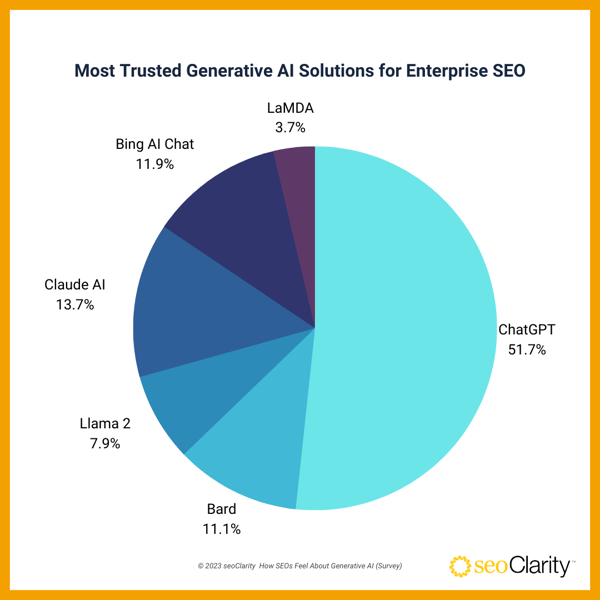
**Our take:**
- These surveys, including a [similar one from iPullRank](https://www.nearmedia.co/personalized-google-rankings-fake-reviews-thriving-ai-trust-growing/), are directionally interesting but fairly high level. They don't get into many specifics.
- The podcast discussion I referenced offers some very specific local SEO use cases (content development, review analysis, SAB pages, etc.)
- There are numerous local applications for AI. But this survey found "local SEO optimization" to have the the lowest performance gains, interestingly.
## Recent Analysis
- **Local Review Landscape:** [Insights from Whitespark's GBP Analysis](https://www.nearmedia.co/the-local-review-landscape-insights-from-whitesparks-analysis/)
- **Near Memo episode 135**: [Google’s new search features, Whitespark: reviews counts by category, fake review enforcement failures](https://www.nearmedia.co/ep-135/).
## Short Takes
- Deep dive into **Google's algorithm** [based on antitrust docs](https://www.analistaseo.es/posicionamiento-buscadores/how-google-works-working-algorithms/?ref=nearmedia.co).
- [Localizing website content](https://www.sterlingsky.ca/how-to-use-chat-gpt-to-optimize-your-content-for-local-search/?ref=nearmedia.co) with **ChatGPT**.
- Google [testing](https://www.seroundtable.com/google-longer-local-justifications-36418.html?ref=nearmedia.co) longer **local justifications** from third parties.
- How **Google** **Maps** turns 2D into 3D images in [Immersive View](https://blog.google/products/maps/google-maps-immersive-view-routes/?ref=nearmedia.co).
- What has [changed](https://www.seroundtable.com/google-search-quality-raters-guidelines-updated-36410.html?ref=nearmedia.co) in **Quality Raters Guidelines**.
- Will **human Quality Raters** [soon be replaced](https://searchengineland.com/quality-rater-algorithmic-evaluation-systems-changes-434895?ref=nearmedia.co) by AI?
- **ChatGPT's voice feature** [now available to all users](https://twitter.com/OpenAI/status/1727065166188274145?ref=nearmedia.co).
- Stable Diffusion [announces](https://stability.ai/news/stable-video-diffusion-open-ai-video-model?ref=nearmedia.co) **generative AI video**.
- **FTC** creates expedited process to address [AI uses for fraud or deception](https://www.ftc.gov/news-events/news/press-releases/2023/11/ftc-authorizes-compulsory-process-ai-related-products-services?ref=nearmedia.co).
- Google Maps now looks more like **Apple Maps**, [may frustrate drivers](https://www.sfgate.com/tech/article/google-maps-update-new-look-18506811.php?ref=nearmedia.co).
- **Google** promotes "[black owned" attribute](https://blog.google/outreach-initiatives/small-business/black-owned-friday-2023/?ref=nearmedia.co) with "black-owned Friday."
- Amex [using QR codes](https://www.localogy.com/2023/11/small-business-saturday-goes-3d/?ref=nearmedia.co) to promote **SMB Saturday**.
Listen to our [latest podcast](https://www.nearmedia.co/memo/).
[](https://nearmedia.co/memo?ref=nearmedia.co)
How can we make this better? Email [us](mailto:gsterling@nearmedia.co) with suggestions and recommendations.
### Google AI Goes Veg, Apple Maps Ranking Tool, ChatGPT Review Insights
URL: https://www.nearmedia.co/google-ai-goes-vegan-apple-maps-ranking-tool-chatgpt-review-insights/
Last updated: 2023-11-20T16:13:18.000Z
### Google Local Goes Vegetarian
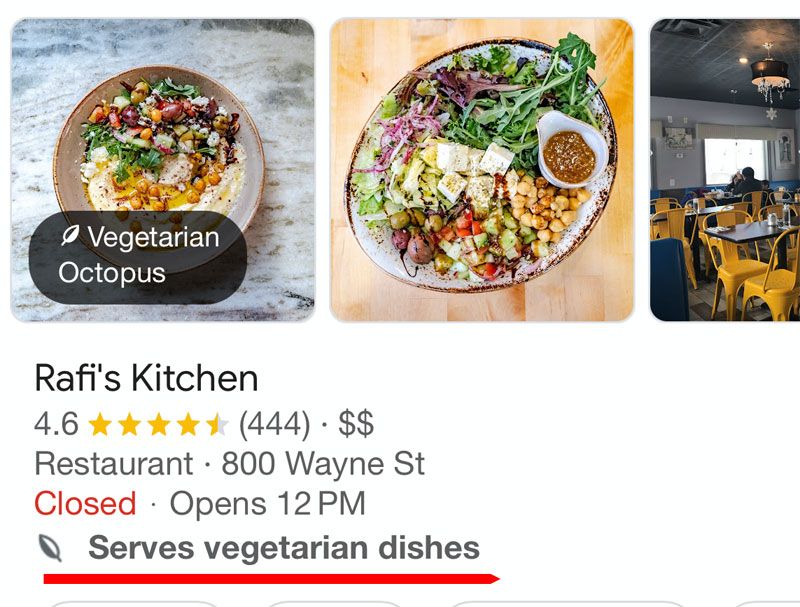
Google is now highlighting vegetarian dishes at restaurants that don't necessarily identify as vegan or vegetarian. Obviously Google is attempting to help non-meat eaters understand the lay of the vegetarian landscape in restaurants they're not familiar with. This would be particularly helpful in rural environments where vegetarian restaurants are less common. In this new treatment, Google provides a Local Pack justification when users are searching for vegetarian offerings and there are no such restaurants nearby. Images of vegetarian dishes (or dishes that Google thinks are vegetarian) are highlighted with a vegetarian symbol in both the Pack carousel and the business profile. When the vegetarian dish image is clicked there is a call to action that give the user the options of ordering, calling or visiting the website. This set of features is currently only available in the mobile browser and not available in Maps or via desktop search.
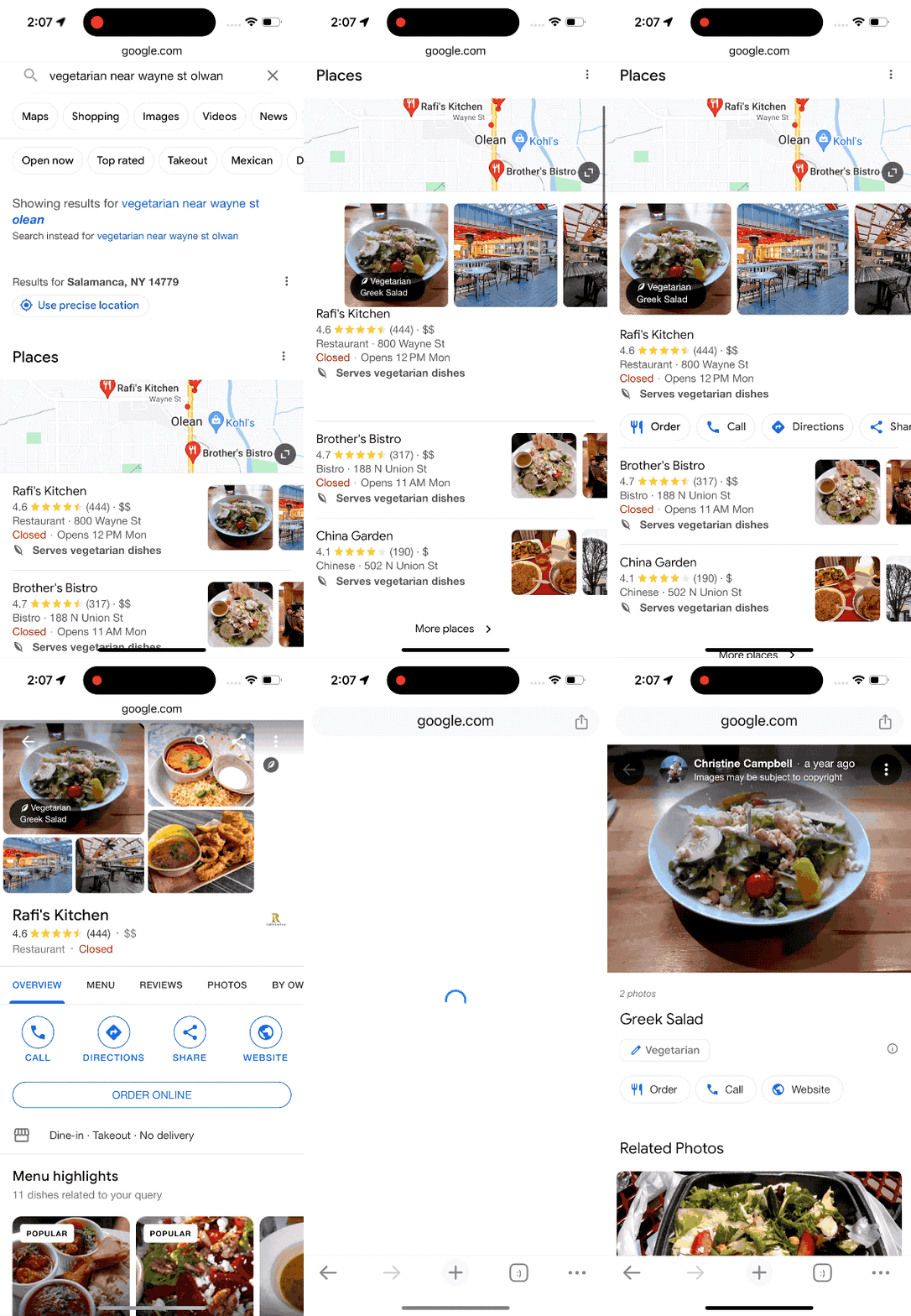
**Our take:**
- Google has long been on the hunt for ever more granular data about local businesses, examples being local products and detailed SAB services. It has been one of their local competitive advantages.
- Restaurant menus have been a prime example of this granularity, combining many images into menus via user inputs. AI now adds additional nuance.
- Clearly these images are being tagged by AI, as one dish which tagged as "vegetarian octopus" was actually identified on the menu as loaded hummus.
### New Focus on Apple Maps
This week Local Falcon, known for its local grid ranking of Google Maps, [rolled out a comparable tool for Apple Maps](https://www.localfalcon.com/blog/track-your-local-ranking-for-apple-maps?ref=nearmedia.co). It works like the company's Google Maps version, and can be set to run a scan automatically at the same time. The [set up](https://www.localfalcon.com/knowledge-base/kb62-how-to-scan-and-track-local-rankings-on-apple-maps?ref=nearmedia.co) for the new Apple Maps scan is the same Google Maps; and the reports including share of local voice (average total rank position and average rank position) are the same. While it's unlikely that Apple fiddles with business ranking as often as Google, it's useful to know the visibility and discoverability of your business as the distance from your location increases. Also this week, a large multi-location client reached out to me to complain Apple Maps had nuked their UTM tracking urls, preventing an understanding Apple's impact on web visits. This is not a surprise as Apple has stated tracking URLs are not allowed. Although, when a business does add them, Apple seems to let them stick for a bit before inevitably nuking them. Most businesses want a single reporting tool like Google Analytics and don't really want to go into Apple's local dashboard, but seem willing to put up with it to better understand Apple's traffic impact. It became clear to me in 2014 that Apple Maps was getting consumer uptake when a desperate theme park called because folks were queuing up at their service gate due to an Apple Maps error. Around 2016, I started using Apple Maps regularly, thinking more consumers would follow. Now it appears businesses are beginning to catch on. And products such as Local Falcon are starting to build tools to help them.
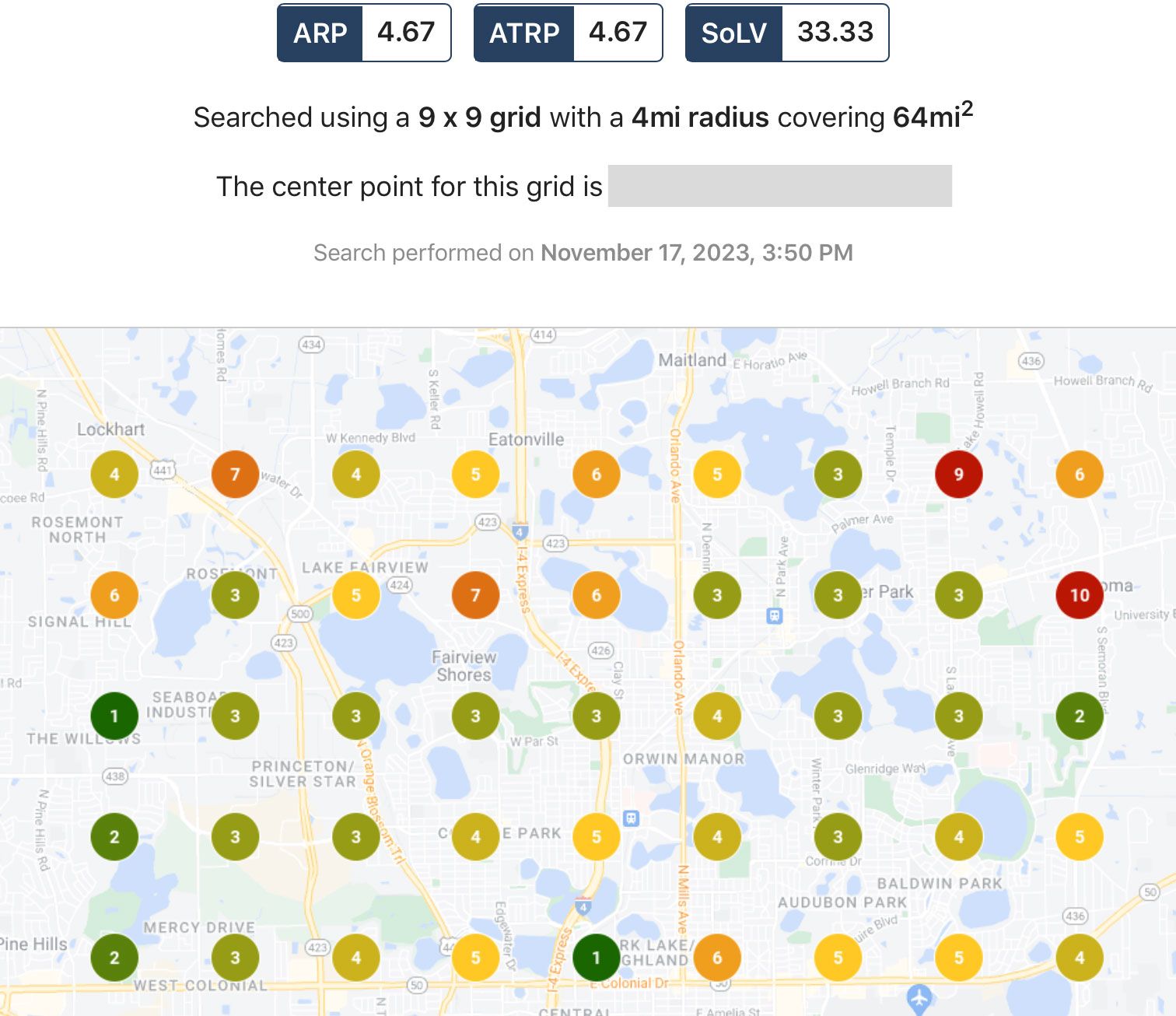
Source: Local Falcon

**Our take:**
- Our research indicates Apple Maps is providing somewhere between 5% to 10% of new digital leads for many businesses, often more than Facebook or Yelp.
- While businesses that do want track web traffic from Apple Maps in Google Analytics have [figured out work arounds](https://localsearchforum.com/threads/apple-maps-traffic-in-google-analytics.55064/?ref=nearmedia.co), Apple should make it easier.
- Most location management platforms (e.g., Uberall) have already integrated Apple Maps reporting. But Local Falcon is the first tool I've seen focused on the tactical SEO side of Apple Maps.
- Clearly Apple Maps is starting to achieve mindshare with businesses as a second source for local marketing leads. Tools are starting to follow.
### ChatGPT's Review Insights
Most review reporting tools fall short of providing multi-location businesses with the specificity and detail needed to provide both strategic and tactical review advice to each location. I decided to put ChatGPT 4 to the test to see if it could provide these additional insights. I uploaded several thousand reviews (data courtesy of [Gatherup](https://gatherup.com/?ref=nearmedia.co)) spanning multiple years for \~25 locations and asked it to analyze the file and put all results in a table in accordance with the following prompts:
- Calculate average review score and total reviews for each location.
- For locations that have lower ratings in the past 12 months than in previous years show the count of reviews for previous years and rating averages for previous years and the past 12 months.
- For any location with an overall average review score less than 4.5, calculate how many 5 star reviews each of these locations would need to move their averages to at least 4.5.
- Provide any additional insights as to which locations have consistently performed well, which have not and any themes in the low performance group.
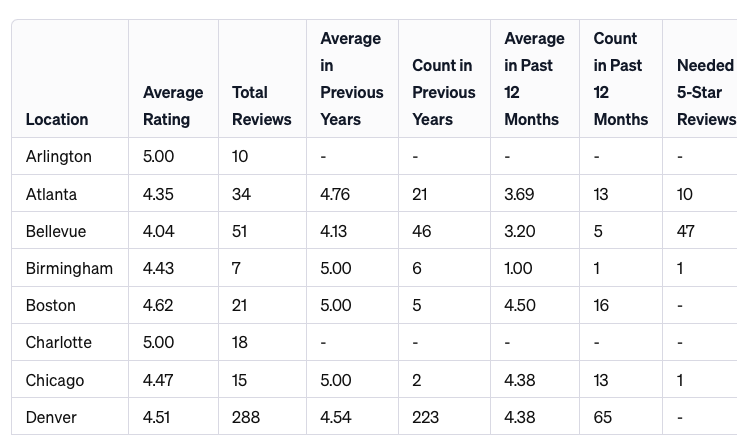
Here are additional insights it offered:
- **Consistently High Performers**: Arlington, Charlotte, Indianapolis, Minneapolis and Pittsburgh maintained high average ratings without significant fluctuations.
- **Decline in Recent Performance**: Locations like Atlanta, Bellevue, Birmingham, Chicago, Denver, Las Vegas, Los Angeles and Seattle have seen a decline in average ratings in the past 12 months compared to previous years.
- **Significant Improvement Needed**: Las Vegas needs a substantial number of additional 5-star reviews (189) to raise its average rating to at least 4.5.
- **Stable Performance**: Boston, San Diego and St. Louis have shown relatively stable performance over the years.
- **Emerging Concerns**: Locations like New York and Phoenix, despite not having a large number of reviews, require attention due to their lower average ratings and the need for improvement.
**Our take:**
- Most SaaS reporting tools, even the best of them, often need additional massaging and this is true with most of the review tools I have looked at.
- ChatGPT can fill the gap often present in those tools to provide additional insights. This can replace laborious or complicated Excel efforts.
- These capabilities will soon be integrated into most tools and platforms, making this type of custom report much easier. Even then it's likely to remain a value-add opportunity for agencies.
## Recent Analysis
- **Local Review Landscape:** [Insights from Whitespark's GBP Analysis](https://www.nearmedia.co/the-local-review-landscape-insights-from-whitesparks-analysis/)
- **Near Memo episode 135**: [Google’s new search features, Whitespark: reviews counts by category, fake review enforcement failures](https://www.nearmedia.co/ep-135/).
## Short Takes
- Survey: Nearly three-quarters of [](https://www.retaildive.com/news/holiday-shopping-small-business-saturday-retail/699548/?ref=nearmedia.co)[holiday shoppers plan to buy](https://www.retaildive.com/news/holiday-shopping-small-business-saturday-retail/699548/?ref=nearmedia.co) from **SMBs**.
- ‘**Things to do**’: [Managing Google Business Profile’s Activities and Tickets](https://www.brightlocal.com/learn/gbp-things-to-do/?ref=nearmedia.co).
- Darcy Burk shows how to [successfully dispute](https://x.com/darcyburk/status/1724831320138715534?s=20&ref=nearmedia.co) an **LSA** lead over 30 days old.
- Reminder: Google's new **Search Notes** are public and [show in search results](https://www.seroundtable.com/google-search-notes-public-crawlable-indexable-36415.html?ref=nearmedia.co).
- Why your **neighborhood pharmacy** isn't so friendly anymore ([WSJ](https://www.wsj.com/health/healthcare/cvs-walgreens-pharmacy-employees-work-2bae98d2?ref=nearmedia.co)).
- FTC: **influencers** peddling sugar/aspartame [failed to adequately disclose](https://www.ftc.gov/news-events/news/press-releases/2023/11/ftc-warns-two-trade-associations-dozen-influencers-about-social-media-posts-promoting-consumption?ref=nearmedia.co) payments from the industry.
- **Volvo** CEO Jim Rowan thinks [dropping Apple CarPlay is a mistake](https://www.theverge.com/23958821/volvo-ceo-interview-electric-cars-apple-carplay-google-android-auto-decoder?ref=nearmedia.co).
Listen to our [latest podcast](https://www.nearmedia.co/memo/).
[](https://nearmedia.co/memo?ref=nearmedia.co)
How can we make this better? Email [us](mailto:gsterling@nearmedia.co) with suggestions and recommendations.
### Ep 135: Google’s newest search features, Whitespark: Reviews by category, Fake review enforcement failures
URL: https://www.nearmedia.co/ep-135/
Last updated: 2023-11-17T21:45:25.000Z
**Part 1 starts 00:13 -** [**Google’s Newest Search Features: “Whipped cream on S.H. I. .T”.?**](https://youtu.be/uXCQ7TXG4mA?ref=nearmedia.co)
While Google's new features aim to enhance user interaction and personalize the search experience, they may not address broader user concerns about search result quality and privacy. And in fact may, as David points out, might just be whipped cream on a not very tasty substrate. The success of these features will depend on their implementation, user acceptance, and compliance with global privacy standards.
Segment Reference Articles
[Personalized Google Rankings](https://www.nearmedia.co/personalized-google-rankings-fake-reviews-thriving-ai-trust-growing/)
[New ways to find just what you need on Search](https://blog.google/products/search/google-search-november-2023-update/?ref=nearmedia.co)
**Part 2 starts 12:38 -** [**Whitespark Research: Exploring the Landscape of Local Business Reviews across 1 Million Listings**](https://youtu.be/1zyFk9VKVSg?ref=nearmedia.co)
In the world of local businesses, customer reviews play a pivotal role in shaping public perception and influencing consumer decisions. Darren Shaw and Whitespark's comprehensive analysis of a million local businesses offers valuable insights into the distribution of reviews across various categories.
Segment Reference Articles
[Average number of reviews across 2,671 different primary categories](https://x.com/DarrenShaw%5F/status/1719777252425252865?s=20&ref=nearmedia.co) [across 1.1 million Google Business Profiles.](https://x.com/DarrenShaw%5F/status/1719777252425252865?s=20&ref=nearmedia.co)
**Part 3 starts 19:03 -** [**There is a lot of work to be done on the fake review front**](https://youtu.be/AWzmLH3eDl8?ref=nearmedia.co)
Google’s new review algo didn’t do a very good job spotting the many fake reviews on the physician’s practice recently fined by the NYS AG. The fine, $100,000, was hardly enough to pay for the time they spent analyizing the situation and certainly was not enough to deter someone that is making millions as an orthopedic surgeon. While the FTC and state’s AG are getting more aggressive bringing high profile cases, it is unlikely that is enough to stem the tide of fake reviews.
Segment Reference Articles
[Doctors faking reviews (June 2020)](https://youtu.be/6072POMkpk4?si=ExwsaiXS2cl8yE55&ref=nearmedia.co)
### Local Review Landscape: Insights from Whitespark's GBP Analysis
URL: https://www.nearmedia.co/the-local-review-landscape-insights-from-whitesparks-analysis/
Last updated: 2024-11-19T21:14:30.000Z
In the world of local businesses, customer reviews play a pivotal role in search visibility, shaping public perceptions and influencing consumer decisions.
Darren Shaw and [Whitespark's](https://whitespark.ca/?ref=nearmedia.co) [analysis](https://www.dropbox.com/scl/fi/noa1qbhx3ukht0hgrdv22/Average-Reviews-by-Primary-Category.xls?rlkey=dmdd2n3pynxjrzolt7zc2k8wh&dl=0&ref=nearmedia.co) of a million local Google Business Profiles offers valuable insights into the [distribution of reviews](https://www.nearmedia.co/ai-pin-wants-to-replace-your-iphone-google-mediocrity-whos-got-more-reviews/) across local business categories. This article delves into the findings and their implications for local marketers.
Here are some key insights from the [data](https://www.dropbox.com/scl/fi/noa1qbhx3ukht0hgrdv22/Average-Reviews-by-Primary-Category.xls?rlkey=dmdd2n3pynxjrzolt7zc2k8wh&dl=0&ref=nearmedia.co):
1. **Category-Wise Distribution of Reviews.** The research highlights a predictable trend in the average number of reviews across different categories. Historical landmarks, restaurants, hotels, and car dealerships lead with the highest average number of reviews. This is unsurprising, considering the high customer engagement these sectors typically receive.
2. **Surprising Findings in Long Tail Categories.** Interestingly, some less obvious categories also boasted a high number of average reviews. For instance, orthotics and prosthetic services averaged 212 reviews, while ophthalmology clinics had 211, and welding supply stores had 155\. This indicates a broader engagement in review activity across a range of niches, not just mainstream, high customer volume verticals.
3. **Explosion of Google's Review Corpus.** A significant takeaway from the research is the expansion of Google's review corpus, even in long-tail categories that might not have a strong presence on platforms like Yelp. This growing base of reviews yields a lot of possible algorithmic fodder for Google.
4. **'Your Money or Your Life' Categories.** Categories related to finance and healthcare, such as financial planning or specialty medical clinics, showed a relatively lower average number of reviews. Given the high lifetime value of customers in these sectors, the data suggests that even a few reviews could significantly, positively impact such businesses.
5. **Geography and Category-Based Research.** The disparity in review numbers across different categories and locations emphasizes the need for businesses to conduct category and geography-specific research. Understanding the competitive landscape in terms of average star ratings and review volumes is crucial for local businesses aiming to enhance their online presence and successfully compete.
Whitespark's data presents a nuanced picture of the local business review landscape. The findings highlight the importance of reviews in a wider range of business categories than we previously suspected and the need for tailored strategies based on category and location.
Reviews are central to success in virtually every category. Near Media [research](https://www.nearmedia.co/chatgpt-search-reviews-unread-gen-z-search/) has found that most consumers tend to look at review counts and star ratings rather than delve deeply into the content of the reviews. Additionally, recent reviews are valued more; they're considered more relevant to the current state of the business.
For local businesses, understanding and leveraging these insights can be a key driver in enhancing their online presence and attracting more customers.
**David Mihm* and *Mike Blumenthal* are* [*co-founders of Near Media*](https://www.nearmedia.co/about/)*.*
### New Yahoo Search, Google SGE Shopping, BOPIS Car Sales
URL: https://www.nearmedia.co/new-yahoo-search-google-sge-shopping-bopis-car-sales/
Last updated: 2023-11-17T19:09:45.000Z
### Awaiting the New Yahoo Search
At the recent SMX Next event Senior VP and General Manager of Yahoo Search Brian Provost [said](https://searchengineland.com/yahoo-search-to-start-rolling-out-in-the-first-weeks-of-2024-434729?ref=nearmedia.co) that the site's new [search experience](https://search.yahoo.com/?ref=nearmedia.co) will launch early next year. Yahoo currently has a 2.6% [share](https://gs.statcounter.com/search-engine-market-share?ref=nearmedia.co) of the search market in the US and 1.2% globally. It will be interesting to see what Yahoo does and how the company attempts to differentiate. By analogy, Bing has not gained any meaningful share with its Bing Chat ([now Copilot](https://www.theverge.com/2023/11/15/23960517/microsoft-copilot-bing-chat-rebranding-chatgpt-ai?ref=nearmedia.co)) integration of ChatGPT, despite all the coverage and buzz this year. Like Bing, Yahoo has basically adopted Google's SERP features. It's difficult to imagine what Yahoo might do to create something different but still useful to attract and retain users. One partial approach might be to eliminate or at least reduce the number of ads in the SERP. But Yahoo is owned by private equity so that's unlikely. One of the reasons Yahoo is revamping search is probably to boost search ad revenue. Yahoo CEO Jim Lanzone ran Ask "back in the day." He has a better perspective than most CEOs would on what it takes to compete with Google.
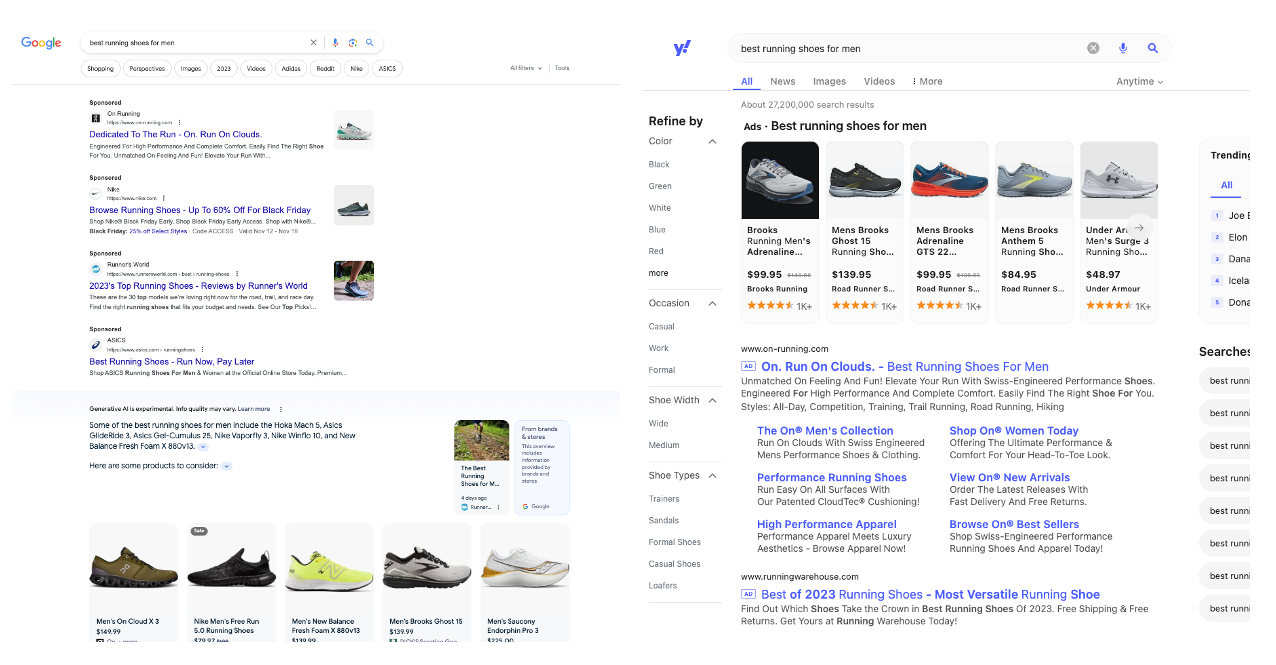
Comparing Google and Yahoo SERPs for "best running shoes for men"
**Our take:**
- Will we see generative AI in the new Yahoo SERP? There's been no indication one way or another. I would guess we will.
- Will we see a new design that breaks from the Google-style SERP? I suspect any design differences will be incremental.
- Yahoo is probably hoping for a modest usage bump that it can monetize. But there's pent up demand for Google alternatives and an opportunity to reinvent search.
### Google's SGE Shopping Push
Product search is an area where Google sees SGE shining and boosting ad revenue. And because of Google's [shopping graph](https://blog.google/products/shopping/shopping-graph-explained/?ref=nearmedia.co), SGE product results are more complete and reliable than other SGE AI snapshots. This week the company [announced](https://blog.google/products/shopping/google-search-generative-ai-holiday-gifts/?ref=nearmedia.co) some new and new(ish) features to help shoppers find gift ideas and move them down the funnel. First there's an expanded SGE that will show top-of-funnel users product ideas. "Search 'great gifts for home cooks,' and you’ll now see a wide variety of subcategories to explore ... with options from brands large and small." Google is also adding image creation to shopping search, which will allow people to generate product images based on their queries and then search for actual products that match those images. And finally, Google is expanding its virtual try on feature, where you can see how a clothing item looks on a model you think looks like you. All of these features hope to collapse the funnel and accelerate sales.
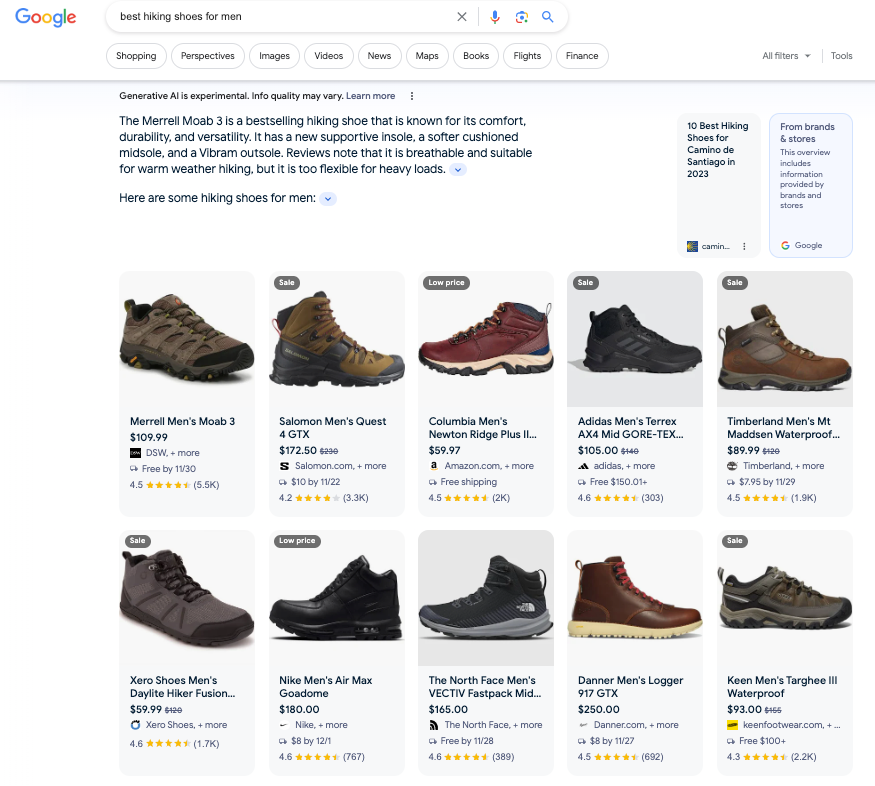
**Our take:**
- From what I can tell Google has yet to add in-stock local inventory badges to products presented in the AI/SGE snapshot. It should.
- Once expanded, SGE product results dominate: you get four ads, a huge SGE box, followed by Google shopping results.
- Given the above, organic results are pushed way down the SERP. Retailers and product sellers will need to advertise or make it into SGE results.
### Amazon Brings BOPIS to Cars
Amazon and Hyundai have [announced](https://www.aboutamazon.com/news/company-news/amazon-hyundai-partnership?ref=nearmedia.co) a new partnership that has three components. Hyundai will use Amazon Web Services as its cloud provider; the company will integrate Alexa (and presumably Alexa-connected services) into its vehicles in 2025 and, most significantly, Hyundai will actually sell cars on Amazon. Amazon wants to sell a wide range of vehicles; Hyundai is simply the first brand available. Local auto dealers will fulfill the purchases; buyers will either have cars delivered or pick them up from a local lot. But the transaction will happen entirely online, including financing. Amazon sees this as a way for local car dealers "to build awareness of their selection and offer convenience to their customers." It's not clear that this will succeed but if it does it may sideline the local dealer rather than "build awareness." Gone will be the upselling opportunities (e.g., extended warranties) and the in-person connection that supports later maintenance, where dealers make [substantial revenue](https://www.autoserviceworld.com/jobbernews/maintenance-repair-study-reveals-multibillion-dollar-opportunity-dealers/?ref=nearmedia.co). It could reduce local dealers to commodity providers of vehicles, marginalizing the role of dealer and its personnel.
**Our take:**
- Consumers today don't buy cars without online research; the role of the dealer/salesperson has thus already changed. This would be next level.
- Many people can't imagine buying a car without driving it first. And that may still happen but people are [increasingly comfortable](https://www.am-online.com/news/digital-marketing/2022/11/07/younger-buyers-fuel-transition-to-online-car-buying?ref=nearmedia.co) buying cars online.
- If this initiative does succeed it could radically transform the way cars are sold and the economics of local dealerships.
## Short Takes
- **New SAB verification**: [picture of your car at customer location](https://www.seroundtable.com/google-business-profiles-verification-customer-location-36405.html?ref=nearmedia.co).
- Just 20% of **Google's "nearby" filtered results** [are truly local](https://moz.com/blog/nearby-filter-local-google-serp?ref=nearmedia.co).
- Some [ideas about why](https://www.linkedin.com/pulse/why-so-many-google-updates-tory-gray-nctkf/?ref=nearmedia.co) all the **Google algorithm updates**.
- Excerpts from Danny Sullivan's **BrightonSEO** [talk about content](https://www.seroundtable.com/danny-sullivan-google-search-presentation-36411.html?ref=nearmedia.co).
- How using **Bard** can help you [stay ahead of algorithm updates](https://searchengineland.com/how-to-use-bard-to-get-ahead-of-google-algorithm-updates-434684?ref=nearmedia.co).
- Musk promotes hate, **Twitter loses IBM**, [Yaccarino scrambles](https://www.rollingstone.com/culture/culture-news/twitter-linda-yaccarino-elon-musk-antisemitism-loses-ibm-1234883598/?ref=nearmedia.co).
- Slow and steady: Jack Dorsey's **Bluesky** [claims 2 million users](https://techcrunch.com/2023/11/16/x-rival-bluesky-hits-2m-users-saying-federation-coming-early-next-year/?ref=nearmedia.co).
- More [people now](https://www.smallbizlabs.com/2023/11/the-surge-in-full-time-independent-workers.html?ref=nearmedia.co) **freelancers** while [AI eliminating](https://www.cbsnews.com/news/ai-job-losses-artificial-intelligence-challenger-report/?ref=nearmedia.co) freelance jobs.
- **Apple** [to add support for RCS](https://9to5mac.com/2023/11/16/apple-rcs-coming-to-iphone/?ref=nearmedia.co) messaging, but keep its blue bubbles.
- **YouTube** [experimenting](https://blog.youtube/inside-youtube/ai-and-music-experiment/?ref=nearmedia.co) with AI-music creation via DeepMind.
- Meta [introduces](https://siliconangle.com/2023/11/16/meta-announces-new-breakthroughs-ai-image-editing-video-generation-emu/?ref=nearmedia.co) **AI image and video editing** tools.
- Decline and **failure of local newspapers** [is a crisis for democracy](https://apnews.com/article/local-newspapers-closing-jobs-3ad83659a6ee070ae3f39144dd840c1b?ref=nearmedia.co).
- Teens using **ChatGPT** for school; [have nuanced views](https://www.pewresearch.org/short-reads/2023/11/16/about-1-in-5-us-teens-whove-heard-of-chatgpt-have-used-it-for-schoolwork/?ref=nearmedia.co) of AI ethics.
Listen to our [latest podcast](https://www.nearmedia.co/memo/).
[](https://nearmedia.co/memo?ref=nearmedia.co)
How can we make this better? Email [us](mailto:gsterling@nearmedia.co) with suggestions and recommendations.
### Personalized Google Rankings, Fake Reviews Thriving, AI Trust Growing
URL: https://www.nearmedia.co/personalized-google-rankings-fake-reviews-thriving-ai-trust-growing/
Last updated: 2023-11-15T19:43:29.000Z
### Google to Personalize Rankings
At the recent BrightonSEO conference in San Diego, Google spokesperson Danny Sullivan [said](https://searchengineland.com/google-says-major-changes-coming-to-search-rankings-434548?ref=nearmedia.co) there were major changes coming to search – beyond the volatility of the past year or so. This morning Google at least partly delivered on that promise. First reported by Barry Schwartz, Google [announced](https://blog.google/products/search/google-search-november-2023-update/??ref=nearmedia.co) three new features: [personalization](https://searchengineland.com/google-launches-new-personal-search-experience-with-follow-button-and-personalized-ranking-434627?ref=nearmedia.co), [Notes](https://blog.google/products/search/notes-google-search-labs-experiment/?ref=nearmedia.co) and [Hidden Gems](https://searchengineland.com/google-search-ranking-improvement-aims-to-surface-hidden-gems-434623??ref=nearmedia.co). Hidden Gems will surface more "authentic" first person content from social media, blogs and online forums. Notes are annotations or comments on articles and will appear in the SERP in the Google app and on Google Discover. They're an opt-in Google Labs "experiment. There's a very good chance Notes will be a spam magnet, although Google is probably anticipating that. Finally, and most interestingly, is search personalization. There's a newish "follow" button in the SERP that influences what topics you see in Google Discover and can operate as a kind of filter for search results as well. Google will also implement personalized ranking: "if you’ve searched for something a few times ... and keep returning to the same web page, our systems will recognize that and bring the site to the top of the search results." For years Google said it [doesn't (really) personalize results](https://www.cnbc.com/2018/09/17/google-tests-changes-to-its-search-algorithm-how-search-works.html?ref=nearmedia.co); now it will.

Source: Google
**Our take:**
- Notes, follow and personalization require being signed in. It's a binary choice; they're on or they're not, although you don't have to engage with them.
- Personalized ranking could be a radical change, although we'll have to see how it plays out in practice. There would likely be no way to optimize for it.
- These changes, in addition to others in the SERP, should be seen in the larger context of Google defending its monopoly against social media and ChatGPT.
### Fake Reviews Are Thriving
On Monday Mike Blumenthal [wrote about](https://www.nearmedia.co/fake-review-doctor-clever-scam-got-reviews-removed-solution-to-gbp-bug/) a NY state action against an Orthopedist caught trafficking in fake reviews. On the same day a lengthy article in the [NY Times](https://www.nytimes.com/2023/11/13/technology/fake-reviews-crackdown.html?ref=nearmedia.co) discussed the same doctor and the broader problem of review fraud, asking: can a regulatory crackdown eliminate the problem? In a word: no. The states and the FTC have limited resources to go after review fraud and have to focus on "high profile" cases they hope will deter others. But generally, the penalties are not sufficiently severe to actually discourage others. The Times article asserts that review fraud is a billion-dollar industry. If true, that would probably exceed the revenues of all the top reputation management companies combined. Although Google is making more of an effort to remove suspicious reviews these days, its automated systems can be both overbroad (false positives) and miss fake reviews. Amazon has also seemingly stepped up its fake review enforcement, announcing the [Coalition for Trusted Reviews](https://press.aboutamazon.com/retail/2023/10/amazon-booking-com-expedia-group-glassdoor-tripadvisor-and-trustpilot-launch-first-global-coalition-for-trusted-reviews?ref=nearmedia.co) with Tripadvisor and several others. To some degree these moves help but there's also a way in which they're performative and designed to appease EU regulators whose DSA [can impose significant financial penalties](https://www.eu-digital-services-act.com/Digital%5FServices%5FAct%5FArticle%5F52.html?ref=nearmedia.co), unencumbered by a Section 230 liability shield.

Source: DALL-E 3
**Our take:**
- Given the consumer reliance on reviews – stars and counts – together with Google's use of reviews as a ranking signal, the incentives to cheat are great.
- The DSA appears to be the main motivator behind the platforms' recent efforts to address review fraud. So there's hope; especially if somebody gets a big fine.
- It's unlikely however that fake reviews can be entirely eliminated, given their massive volume, and the platform reliance on automation to police them.
### Survey: AI Trust Growing
Marketers are bullish on AI to the point where a growing number aren't editing or fact checking AI-generated content. A Q3 [survey](https://ipullrank.com/q3-2023-generative-ai-report?ref=nearmedia.co) on AI tool adoption by MarketMuse and agency iPullRank had "489 participants across various industries and company sizes." The two most represented groups were marketers and software company employees. The largest segment of companies (60%) had 5 and fewer employees; 15% had more than 100 employees. While there's a positive corporate consensus about the value of AI tools and their potential (64%), more adoption has been by individuals (57%) not officially at the organization or team levels (combined 35%). The most common AI use cases were text and image generation, with some video creation. The most popular tools were OpenAI/ChatGPT (77%), Midjourney (15%), Bard (10%), Bing Chat (7%), Jasper (3%) and Writer (2%). Generating ideas, short and long-form content and "summaries" were the most common use cases, though marketers are also creating product pages and ad copy with AI. Almost 70% of respondents positively rated the quality of AI output as a 4 or 5 (on a scale of 5). And nearly three-fourths of respondents (72.5%) expressed trust in AI tools and content. Indeed, "about 10% of users \[are not\] editing AI-generated material" or checking it for errors – a 75% increase over the previous survey.
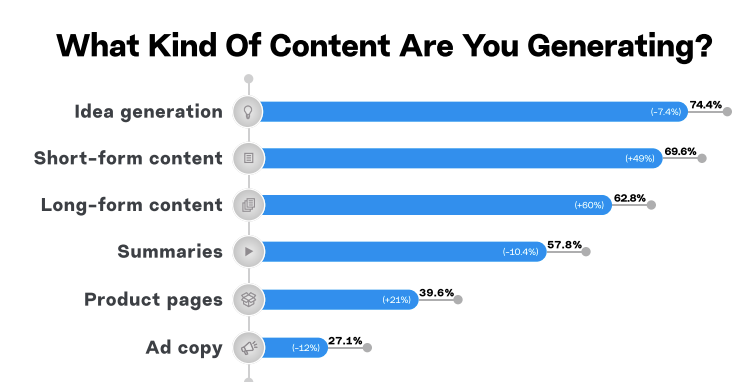
Source: Market Muse-iPullRank (Q3 survey)
**Our take:**
- ChatGPT obviously has the greatest awareness among AI tools and perhaps the greatest utility, given the gap between its adoption and everything else.
- There are many more SaaS tools now with AI enhancements (e.g., Microsoft Copilot). I suspect the choices were aided response and thus incomplete.
- While hallucination is declining, the nearly 10% who didn't edit or fact check their AI output is sort of alarming. But that will grow as AI trust grows.
## Recent Analysis
- **Why Citations Ain't What They Used to Be**, [by David Mihm](https://www.nearmedia.co/why-citations-aint-what-they-used-to-be/).
- **Near Memo episode 134:** [Google Maps bloat?, citations and their declining value, Google’s new SMB attribute: helpful or performative](https://www.nearmedia.co/ep-134/)?
## Short Takes
- After antitrust trial, **Google** [acknowledges use of behavioral signals](https://www.seroundtable.com/google-search-user-interaction-signals-36377.html?ref=nearmedia.co).
- **Google's AI weather prediction** tool: highly [accurate 10-day model](https://deepmind.google/discover/blog/graphcast-ai-model-for-faster-and-more-accurate-global-weather-forecasting/?ref=nearmedia.co).
- Some of **ChatGPT's** appeal about its [ad-free UI](https://twitter.com/maiab/status/1723784023619895489??ref=nearmedia.co).
- **Yandex** [getting out of Russia](https://www.bloomberg.com/news/articles/2023-11-14/yandex-to-fully-divest-russian-assets-and-distribute-proceeds?ref=nearmedia.co) by entirely selling Russian assets.
- **Fake Bard** downloads on social media [spread malware](https://www.mediapost.com/publications/article/391021/facebook-ads-spread-malware-in-fake-google-bard-do.html?ref=nearmedia.co).
- **Google News** [seeing more "AI copies](https://9to5google.com/2023/11/14/google-news-ai-scraper/?ref=nearmedia.co)" of actual articles.
- **Apple** gets [36% of Google search revenue](https://arstechnica.com/tech-policy/2023/11/google-witness-accidentally-blurts-out-that-apple-gets-36-cut-of-safari-deal/?ref=nearmedia.co) generated via Safari.
- Like Meta, **Snap** users can now [buy from Amazon](https://www.pymnts.com/amazon/2023/amazon-extends-social-shopping-efforts-with-snapchat-deal/?ref=nearmedia.co) without leaving the app.
- **Amazon** about to flood Fire TVs [with ads](https://arstechnica.com/gadgets/2023/11/after-luring-customers-with-low-prices-amazon-stuffs-fire-tvs-with-ads/?ref=nearmedia.co).
- **Apple's** deal with **Amazon** [blocks competitor ads](https://www.theverge.com/2023/11/10/23955934/apple-amazon-deal-search-product-pages-ads?ref=nearmedia.co) from Apple product pages.
- EU regulators [seeking to block](https://twitter.com/FT/status/1724410346230730757?ref=nearmedia.co) Adobe's **$20B acquisition of Figma**.
- US judge [rules](https://www.reuters.com/legal/judge-says-social-media-companies-must-face-lawsuits-over-harm-children-2023-11-14/?ref=nearmedia.co) **social media companies** must face "addiction" lawsuits.
- **Self-checkout** may be [on the way out](https://www.cnn.com/2023/11/13/business/self-checkout-stores-shopping/index.html?ref=nearmedia.co).
- **Telsa** [building a diner](https://www.axios.com/2023/11/13/tesla-restaurant-supercharger-diner-hollywood?ref=nearmedia.co) with chargers in LA – a model for national chain?
Listen to our [latest podcast](https://www.nearmedia.co/memo/).
[](https://nearmedia.co/memo?ref=nearmedia.co)
How can we make this better? Email [us](mailto:gsterling@nearmedia.co) with suggestions and recommendations.
### Why Citations Ain’t What They Used to Be
URL: https://www.nearmedia.co/why-citations-aint-what-they-used-to-be/
Last updated: 2024-11-19T22:49:56.000Z
In the past, citations from directories were crucial for local businesses, especially those without a significant inbound link footprint or a website. So much so, that in 2014 [citations/NAP consistency](https://searchengineland.com/citation-inconsistency-no1-issue-affecting-local-ranking-210643?ref=nearmedia.co) was considered to be the number one local ranking factor by some local SEOs.
In fact, citations were one of the few ways that Google knew businesses without websites even existed at all. And even for businesses that did have a website, these third-party profiles often served as source of validation of phone and address information, and categorization which informed Google’s assessment of which local businesses to return for any given query.
### Fewer Signals Early On
In the early days of local search (mid-late 2000’s), Google had fewer signals to rely on for local businesses. Their own native review feature was just getting developed, and there was a much smaller corpus of reviews, both at Google and around the web, upon which Google’s local algorithm could rely.
This context made citations in directories like Yellowpages.com, Citysearch.com, and Yelp highly valuable, as they were well-ranked in Google's organic algorithm and helped propel the mentioned businesses in search rankings.
### Landscape Has Shifted
Today, the landscape has shifted considerably.
Most businesses have claimed their Google Business Profile and provide basic contact information directly to Google – information which is validated and corrected by myriad Local Guides and everyday Google Maps users.
A larger percentage of these businesses have their own websites (and often those websites have earned at least a few inbound links).
Both of these developments have diminished Google's reliance on third-party directories for data validation, a significant role these directories played a decade ago.
Furthermore, the authority, trust and usage of many of these non-Yelp directories have declined, making the citations in them less impactful for local SEO. Indeed, the most recent [Local Search Ranking Factors survey](https://www.nearmedia.co/local-search-ranking-factors-23/) continues to document the relative decline of citation signals.
### Smart Citation Strategy
A [smart citation strategy in the current era of local search](https://www.davidmihm.com/local-seo?ref=nearmedia.co) emphasizes identifying and targeting sites that already rank for your desired keywords, as these are more likely to draw clicks and direct customers – and convey algorithmic authority for the terms you’d like to be seen on.
Businesses should focus more on building a robust online presence on the local and vertical sites prominent in today’s search results, and less on broad directory listings of yore.
**David Mihm* is a co-founder of Near Media and* [*veteran local SEO*](https://www.davidmihm.com/local-seo?ref=nearmedia.co)*. He was the founder of the Local Search Ranking Factors survey, co-founder of GetListed.org, acquired by Moz, and founder of Tidings, acquired by DemandScience.*
### Fake Review Doctor, Clever Scam Got Reviews Removed, SAB Bug Solution?
URL: https://www.nearmedia.co/fake-review-doctor-clever-scam-got-reviews-removed-solution-to-gbp-bug/
Last updated: 2023-11-13T19:22:30.000Z
### NYC Ortho Fined $100K for Fake Reviews
The NY State Attorney General [fined](https://ag.ny.gov/press-release/2023/attorney-general-james-secures-100000-manhattan-doctor-who-manipulated-online?ref=nearmedia.co) physician [Dr. Mark J. Mohrmann](https://www.google.com/search?q=Dr.+Mohrmann%C2%A016+Park+Pl%2C+New+York%2C+NY+10007&client=safari&sca%5Fesv=581526710&rls=en&ei=45FPZbm-LpHoptQPxYmFsAU&ved=0ahUKEwj5u-aelryCAxURtIkEHcVEAVYQ4dUDCBA&uact=5&oq=Dr.+Mohrmann%C2%A016+Park+Pl%2C+New+York%2C+NY+10007&gs%5Flp=Egxnd3Mtd2l6LXNlcnAiLERyLiBNb2hybWFubsKgMTYgUGFyayBQbCwgTmV3IFlvcmssIE5ZIDEwMDA3MgUQIRirAkj-DVC7BliACXABeAGQAQCYAZoBoAGWAqoBAzAuMrgBA8gBAPgBAfgBAsICChAAGEcY1gQYsAPCAgYQABgWGB7CAggQABgWGB4YCuIDBBgAIEGIBgGQBgI&sclient=gws-wiz-serp&ref=nearmedia.co#ip=1) and his wife $100,000 for buying fake reviews and suppressing negative ones at multiple sites including ZocDoc, Google, Yelp, Healthgrades and others. AG Letitia James [noted](https://ag.ny.gov/sites/default/files/settlements-agreements/mohrmann-merged-aods.pdf?ref=nearmedia.co), the business "would falsely flag negative \[Google\] reviews as violating the platform’s policies prohibiting inappropriate content. This tactic was often effective ... as Google’s automated system will remove a review that has been flagged without analyzing the content of the review." At ZocDoc, Mohrmann "repeatedly [prevented patients](https://ag.ny.gov/sites/default/files/settlements-agreements/mohrmann-aods.pdf?ref=nearmedia.co) from leaving a potentially bad review by falsely indicating on the platform that they had failed to appear at a scheduled appointment" or by offering to refund a $50 copay to remove negative reviews. On Yelp, Mohrnmann used an old address to prevent patients from finding his practice. His wife hired contractors through Fiverr and Upwork to post reviews "she either wrote herself or copied from positive reviews of other orthopedic physicians." They partnered with a particular contractor "who discovered how to evade the \[review platform\] filters." The couple, now divorced (big surprise), have been ordered to ask for the fake reviews to come down. Interestingly, while [most](https://maps.app.goo.gl/ztbUvBtRaS2jBoXn9?ref=nearmedia.co) [reviews](https://www.yelp.com/biz/mark-j-mohrmann-md-faaos-new-york-2?ref=nearmedia.co) [around](https://www.yelp.com/biz/highline-orthopaedics-new-york-9?ref=nearmedia.co) the web now reflect reality, Mohrmann's [personal listing](https://maps.app.goo.gl/V6qxWYErdY8bDrex7?ref=nearmedia.co) on Google still shows a 4.5 rating with reviews from the period in question. More embarrassing is the fact that [ZocDoc allowed Mohrmann](https://www.zocdoc.com/doctor/mark-mohrmann-md-155759?ref=nearmedia.co) to have no reviews at all: "This doctor has chosen not to have their reviews shown on Zocdoc."
**Our take:**
- New York has been one of the more active states going after fake reviews with high profile cases in [2009](https://blumenthals.com/blog/2009/07/15/plastic-surgery-co-settles-with-nys-over-false-reviews/?ref=nearmedia.co), [2013](https://blumenthals.com/blog/2013/09/23/ny-state-ag-brings-down-the-hammer-on-fake-reviews-again/?ref=nearmedia.co) and [2016](https://blumenthals.com/blog/2016/02/11/ny-attorney-general-comes-down-on-review-abuses-again/?ref=nearmedia.co) but these cases have proven to be not enough to slow review fraud.
- Perhaps along with the recent[ FTC's more aggressive stance on fake reviews](https://www.nearmedia.co/ftc/), more states will go after these business practices.
- The NY AG [noted](https://ag.ny.gov/press-release/2023/attorney-general-james-secures-100000-manhattan-doctor-who-manipulated-online?ref=nearmedia.co) in the press release that so “many patients rely on online reviews when choosing which doctor to trust with their health." The medical profession is particularly vulnerable to FTC and state enforcement.
### Social Engineering in GBP Forums to Remove Reviews
[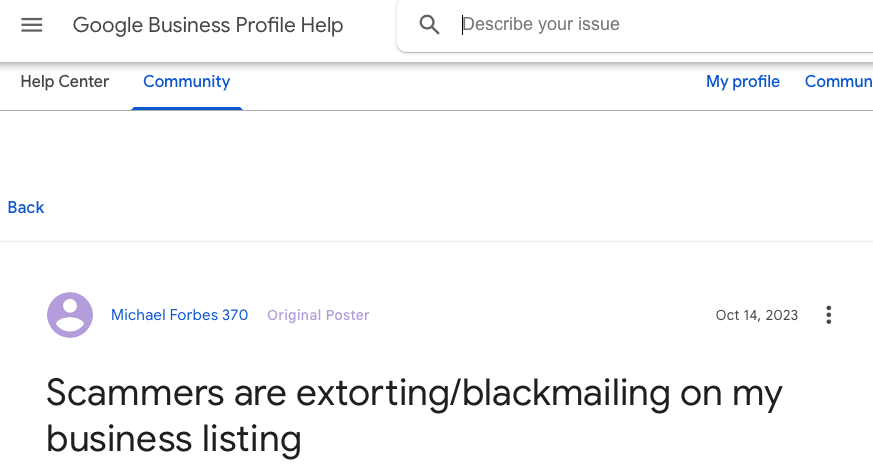](https://storage.googleapis.com/support-forums-api/attachment/thread-239157610-4550106488296506916.png?ref=nearmedia.co)
Recently in the GBP forum I uncovered a reputation management company manipulating Product Experts to get "fake review" cases escalated to Google. In the past, there was a scam where a foreign company would leave fake reviews on a business and then threaten to leave many more negative reviews if they were not paid a ransom. Like me, many Google GBP Product Experts have deep sympathies for how disruptive fake reviews can be to a small business and this group of perhaps 20 PEs are some of the few people in the world anointed by Google to have access to the inner workings of review removals. We are "allowed" to report, escalate and advocate for businesses suffering this fate and we do so with a strong focus on the well being of the business. The reputation management company, pretending to be an SMB being extorted by a fake review attack, would repeatedly get PEs to engage on their behalf to get negative reviews – fake or not – taken down. I got suspicious when they [indicated](https://support.google.com/business/thread/241068720?ref=nearmedia.co) four year old reviews of a widely [criticized residential treatment center](https://www.google.com/search?client=safari&rls=en&q=Uinta+Academy&ie=UTF-8&oe=UTF-8&ref=nearmedia.co) were part of the attack. I shared my suspicions in a Product Expert Slack group and together we[ uncovered](https://support.google.com/business/thread/242467726?ref=nearmedia.co) a [large](https://support.google.com/business/thread/239157610?ref=nearmedia.co) [number](https://support.google.com/business/thread/239164556?hl=en&ref=nearmedia.co) of [cases](https://support.google.com/business/thread/239164556?hl=en&ref=nearmedia.co) [with](https://www.netreputation.com/?ref=nearmedia.co) the [same](https://www.netreputation.com/?ref=nearmedia.co) [m](https://www.netreputation.com/?ref=nearmedia.co).[o](https://support.google.com/business/thread/239090590?hl=en&ref=nearmedia.co). These had been missed because each of us had only dealt with a few of them. I called one of the businesses [mentioned](https://support.google.com/business/thread/239157610?hl=en&ref=nearmedia.co) in the posts and they willingly shared the name of the reputation management [company](https://www.netreputation.com/?ref=nearmedia.co). The owner hadn't actually been threatened, although he did have a legitimate complaint about some of his reviews and fired this vendor. He was clueless about how to have reviews disputed or that this "reputation management" company had lied on his behalf.
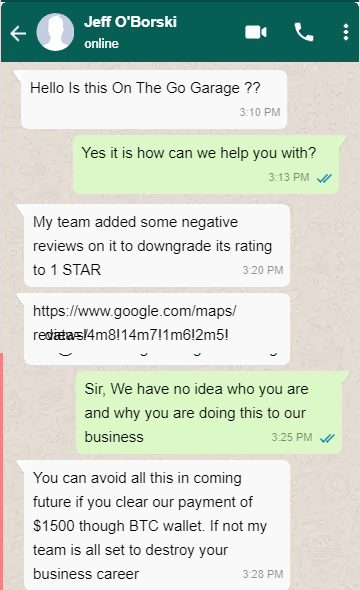
Source: WhatsApp, review ransom attack
**Our take:**
- Time and again, Google says it created a simplified GBP interface to help SMBs; yet disputing fake reviews and [fighting review attacks](https://www.nearmedia.co/how-to-fight-a-fake-google-review-attack/) is unusually difficult.
- Small businesses should be wary of any "reputation management" company that "guarantees" it can remove negative reviews.
- The wacky world of SMB reviews, combined with vagaries of Google support, lead "reputation management" companies to use unethical tactics for profit.
### Solution for Ongoing SAB Location Bug?
When an SAB moves, updates its listing to a new address and reverifies, all too often, Google [still](https://support.google.com/business/thread/234464564?ref=nearmedia.co) [shows](https://localsearchforum.com/threads/changing-to-sab-reverts-address-back-to-original-even-though-verified.60753/?ref=nearmedia.co) the profile at the old location. This bug (or is it a feature to prevent hijacks?) has been around for a very long time. When the business reaches out to support, it's told that [everything is just fine](https://support.google.com/business/thread/234464564?hl=en&msgid=239300331&ref=nearmedia.co) – except it isn't. Escalations through the forum go into the deep dark recesses of Google never to be seen again. Through collaborative discussions in one of our GBP PE Slack channels we may have come upon a solution. Toggle the hidden address to be seen, save, toggle it off and then save again. This might result in a re-verification process but it is an improvement over having your listing showing on the wrong side of the state or even the [wrong side of the country](https://support.google.com/business/thread/234464564?msgid=235481172&ref=nearmedia.co). Early reports [indicate](https://localsearchforum.com/threads/changing-to-sab-reverts-address-back-to-original-even-though-verified.60753/post-189970?ref=nearmedia.co) that your listing might just show at the new location.
**Our take:**
- This solution has *not* been thoroughly tested. If you try it and it works please [let us know](mailto://mblumenthal@nearmedia.co) but approach with caution or await more testing.
- This GBP bug, [along with many others](https://www.nearmedia.co/google-map-bloat-citations-in-decline-gbp-support-issues/), seem to last forever and are very slow to be addressed and fixed, making working the product very frustrating for many.
- Equally problematic is the disconnect between Google support and the knowledge of the bug's existence. It's to the point that support is effectively, though perhaps unwittingly, [gaslighting](https://support.google.com/business/thread/238232199?msgid=238323455&ref=nearmedia.co) the business owner.
## Recent Analysis
- **Near Memo episode 134:** [Google Maps bloat?, citations and their declining value, Google’s new SMB attribute: helpful or performative](https://www.nearmedia.co/ep-134/)?
- **Why Citations Ain't What They Used to Be**, [by David Mihm](https://www.nearmedia.co/why-citations-aint-what-they-used-to-be/).
## Short Takes
- **GBP verification** of a listing [isn't necessary](https://x.com/DarrenShaw%5F/status/1717917670715302339?s=20&ref=nearmedia.co) for it to rank well.
- **Airbnb** [leans on reviews](https://techcrunch.com/2023/11/08/airbnb-is-leaning-on-reviews-to-make-properties-more-reliable/?ref=nearmedia.co) to make listings more accurate, as it tests review summaries using generative AI – but will that actually help?
- After a decade of drone delivery dreams, **Amazon's** [autonomous delivery service](https://futurism.com/the-byte/amazon-drone-delivery-fail?ref=nearmedia.co) is barely functional.
- How did this **car dealer** [get 35 categories](https://x.com/DarrenShaw%5F/status/1723016017100619799?s=20&ref=nearmedia.co) on their GBP listing? Inquiring minds want to know.
- It bears repeating that **Google** has a [new reinstatement/suspension appeal process](https://searchengineland.com/google-business-profile-new-suspension-appeal-process-434177?ref=nearmedia.co), partially rolled out, but it will be global in the next few months.
- New research shows that freelancers [got fewer jobs](https://x.com/jburnmurdoch/status/1722938749519077688?s=12&ref=nearmedia.co) and earned much less due to the broad adoption of **generative AI**.
- The US [lags most of the world](https://www.axios.com/2023/11/11/us-digital-wallet-news-paypal-cash-app?ref=nearmedia.co) in **digital wallet adoption**.
Listen to our [latest podcast](https://www.nearmedia.co/memo/).
[](https://nearmedia.co/memo?ref=nearmedia.co)
How can we make this better? Email [us](mailto:gsterling@nearmedia.co) with suggestions and recommendations.
### Ep 134: Google Maps bloat?, citations and their declining value, Google’s new SMB attribute: helpful or performative?
URL: https://www.nearmedia.co/ep-134/
Last updated: 2023-11-13T15:47:52.000Z
**Part 1 starts 00:13 - [Google Maps from useful to bloat?](https://youtu.be/1H2UOgQ2hQY?ref=nearmedia.co)**
Google Maps continues to add new features and functionality and as it has become a primary search engine for Google and its forward facing brand it has included so much functionality that it suffers from extreme bloat. The new immersive directions exemplifies the problem. but Maps is a deep moat and it is very difficult for others to challenge.
**Segment Reference Article: [Google Maps Updates - Bloat or Value?](https://www.nearmedia.co/google-map-bloat-citations-in-decline-gbp-support-issues/)**
**Part 2 starts 10:20 - [Citations and their value to Local Search](https://youtu.be/STSOY3Mp3is?ref=nearmedia.co)**
In the past, citations from directories were crucial for local businesses, especially those without a significant inbound link footprint or a website. These third-party profiles often served as the only source of validation for Google to categorize and recognize the existence of these businesses. At that time, Google had fewer signals to rely on for local businesses, such as a less developed native review feature and a smaller corpus of reviews. This context made citations in directories like Yellow Pages, City Search, and Yelp significantly valuable, as they were well-ranked in Google's organic algorithm and helped propel the mentioned businesses in search rankings.
However, the landscape has shifted considerably. Nowadays, most businesses have claimed their Google Business Profiles and provide information directly to Google. A larger percentage of these businesses have their own websites with inbound links. This development diminishes Google's reliance on third-party directories for data validation, which was a significant role these directories played a decade ago. Furthermore, the authority and trust in many of these non-Yelp directories have declined, making citations in them less impactful for local SEO. The current strategy emphasizes identifying and targeting sites that rank for desired keywords, as these are more likely to draw clicks and direct customers. This shift highlights the need for local businesses and agencies to adapt their SEO strategies, focusing more on building a robust online presence and less on broad directory listings.
**Segment Reference Articles:**
- [Joy Hawkins tweet on directory pages in the first 100 results on Googl](https://x.com/JoyanneHawkins/status/1720492589965545717?s=20&ref=nearmedia.co)
- [Citations Ain't What They Used to Be](https://www.nearmedia.co/google-map-bloat-citations-in-decline-gbp-support-issues/)
**Part 3 starts 17:13 - [Google’s New Small Business Attribute: Helpful or Performative ?](https://youtu.be/-MHpVVuxMiM?ref=nearmedia.co)**
This attribute aims to make it easier for consumers to discover small businesses online when shopping for products. Google defines a small business as an entity not part of a franchise, with fewer than $10 million in revenue and less than ten locations. However, there's a debate over this definition, as it excludes franchisees, who constitute a significant portion of small businesses in the U.S. Google plans to infer small business status from various signals and also allows businesses to affirmatively apply for the attribute.
From a marketing perspective, this development is significant yet somewhat limited in its potential impact. The attribute is expected to help small businesses be discovered more easily, serving as a modifier or a long-tail tool in certain search contexts. However, there are concerns about the actual effectiveness of this feature in driving substantial exposure for small businesses. Critics argue that if Google were genuinely committed to enhancing small business discovery, this attribute would be more prominently integrated, such as in Google Shopping or as a filter in search ads. As it stands, the attribute may have a limited impact, appearing sporadically and possibly unnoticed by users. This suggests that, while beneficial, the attribute's impact on small business visibility and marketing might be more symbolic than substantial.
**Segment Reference Article: [Will Google's SMB Attribute Actually Help?](https://www.nearmedia.co/gpt-vs-search-google-antitrust-docs-will-the-smb-attribute-help/)**
### AI Pin Wants to Kill Your iPhone, Google Mediocrity, Who's Got More Reviews?
URL: https://www.nearmedia.co/ai-pin-wants-to-replace-your-iphone-google-mediocrity-whos-got-more-reviews/
Last updated: 2023-11-10T19:26:56.000Z
### Can the 'AI Pin' Replace the iPhone?
The short answer is "no." But Humane's new [AI-powered wearable "pin"](https://hu.ma.ne/?ref=nearmedia.co) is an impressive hardware device that points to a next generation of wearables and ambient computing. It's a powerful virtual assistant in a $699 container that has picture and video-taking abilities. It can also retrieve, summarize and respond to emails and messages. It can perform real-time language translation and answer general knowledge questions. It even has e-commerce capabilities. Based on the demo (below), the AI Pin assistant appears considerably more sophisticated than Alexa, Siri or Google Assistant. The company, which has raised more than $200 million, was started by two former Apple employees, which shows in its design and marketing. The Pin has ChatGPT built in and draws upon multiple sources for content and information, including music. There are no apps and no screen. It's entirely voice and touch activated. It can emulate a screen by using a laser to project images or controls onto your hand, though it also uses gestures. Humane says it plans to enable developers to work with the device as well.
Source: Humane
**Our take:**
- There will be many early adopters who buy the AI Pin but it's not something likely to see mainstream adoption.
- Most people will probably regard it as less capable than their smartphones, and so unnecessary accordingly.
- The AI Pin may not succeed, but it opens the door to a new category of wearables, with embedded AI, that can replace many smartphone functions.
### Explaining Google's Decline
AJ Kohn's tome on the state of Google and SEO, "[It's Goog Enough](https://www.blindfiveyearold.com/its-goog-enough?ref=nearmedia.co)," is making the rounds. Darren Shaw called it the "[most important SEO read of 2023](https://twitter.com/darrenshaw%5F/status/1722656781464437136??ref=nearmedia.co)." Using a mix of experience, logic and Google antitrust trial documents, Kohn seeks to explain the state of the Google SERP. He goes through the [user engagement material](https://www.nearmedia.co/gpt-vs-search-google-antitrust-docs-will-the-smb-attribute-help/) revealed at the antitrust trial, which exposed Google's reliance on click data and other behavioral signals for ranking purposes. He also discusses how Google's bias toward familiar brands plays into this: people click on sites they know, regardless of quality, which reinforces their ranking ability. Forbes is the poster child for this in the article; its content is completely mediocre yet it continues to rank. He points to other, comparable sites that are ranking for things they arguably shouldn't be ranking for. User engagement data now just reinforces this cycle of mediocrity according to Kohn. He adds that smart people are retreating to various corners of the internet (forums, Reddit, Slack) for information they once might have sought on Google, leaving morons and rubes (my language) to deliver Google's behavioral signals. Add to that "ad creep" and "enshitification" (sacrificing product quality for revenue) and viola: today's SERP. Kohn makes some hopeful recommendations at the end about how to fix the SERP and UX.

Source: DALL-E 3
**Our take:**
- My summary is a significant oversimplification. Read [the article](https://www.blindfiveyearold.com/its-goog-enough?ref=nearmedia.co) yourself and see what you think. It's pretty compelling.
- The quality rater system may be partly a recognition from Google that click data has lost value over time as a way to understand content quality.
- Back end AI capabilities and things like SGE are wildcards that may help improve search quality. But AI-generated content could also make everything worse.
### Which Categories Have the Most Reviews?
Darren Shaw at Whitespark [analyzed Google Business Profile data (specifically reviews) for the top 100 businesse](https://www.linkedin.com/posts/darrenshawwhitespark%5Fseo-localseo-activity-7125543434957844480-yaO7/?utm%5Fsource=share&utm%5Fmedium=member%5Fdesktop)s, across 168 categories, in the 100 largest cities across the US. The total dataset includes more than 1 million business locations and hundreds of thousands of reviews in total. There's a remarkably wide distribution of reviews across categories. The category with the most reviews per location is "historical landmark," with more than 15K reviews on average. But the bottom of the list has over 150 categories with fewer than 10 reviews per location. Among them are: architects, financial planners, accountants, psychologists, engineers, ad/marketing agencies and numerous others. Many business categories had an average of just one review per location. Those business categories where there are very few reviews are either not trying or perhaps ignoring their GBPs. And in some cases these are regulated industries not permitted to market themselves aggressively or solicit reviews. Beyond general interest, Darren suggests this data could be used for client benchmarking.
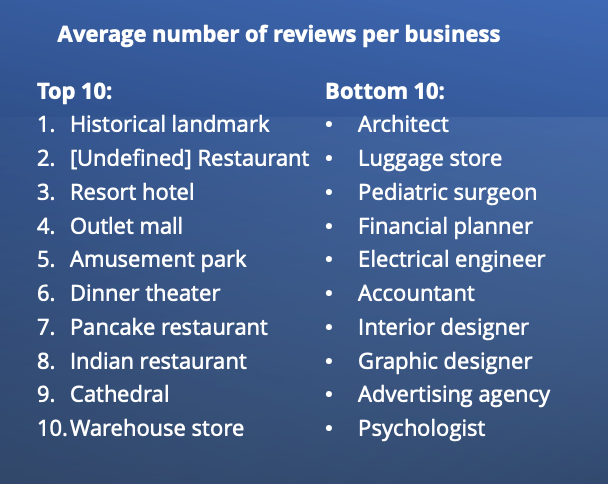
Source: Whitespark (bottom 10 list is a selection of business categories with a very small number of reviews)
**Our take:**
- It would be interesting to compare review distributions and review fraud. Do more reviews correlate with more fraud, for example? I would assume so.
- Consumers have incredibly high expectations when it comes to star ratings and review volumes. Most want more than 4.5 stars and lots and lots of reviews.
- Near Media's research revealed a paradox: heavy consumer reliance on reviews but the majority are [not actually reading](https://www.nearmedia.co/chatgpt-search-reviews-unread-gen-z-search/) review text.
## Short Takes
- **Google SGE** [now in 120 countries](https://blog.google/products/search/google-search-generative-ai-international-expansion/?ref=nearmedia.co), with new features.
- Moz [guide to](https://moz.com/blog/make-smart-local-business-content-choices?ref=nearmedia.co) **local landing pages.**
- **Google** [tests new GBP panel](https://www.seroundtable.com/google-search-reviews-layout-for-local-panel-36337.html?ref=nearmedia.co) that highlights reviews.
- Google [testing](https://www.seroundtable.com/google-testing-multiple-local-packs-in-search-results-36358.html?ref=nearmedia.co) **multiple Local Packs** in SERPs.
- Despite ok Q3, **Nextdoor** [lays off 25% of its employees](https://about.nextdoor.com/press-releases/nextdoor-reports-third-quarter-2023-results/?ref=nearmedia.co).
- **YouTube**'s crackdown on ad blockers [probably illegal in Europe](https://www.theverge.com/2023/11/7/23950513/youtube-ad-blocker-crackdown-privacy-advocates-eu?ref=nearmedia.co).
- **Meta** enables users [to check out via Amazon](https://www.cnbc.com/2023/11/09/meta-lets-amazon-users-buy-on-facebook-instagram-without-leaving-apps.html?ref=nearmedia.co) w/o leaving FB, Instagram.
- **Car makers** [secretly capturing your texts, calls](https://www.theverge.com/2023/11/9/23953798/automakers-collect-record-text-messages-federal-judge-ruling?ref=nearmedia.co); that's ok says judge.
- **Amazon** ditching Android for devices, building new OS [called Vega](https://www.lowpass.cc/p/amazon-vega-os-fire-tv-android?ref=nearmedia.co).
- **Amazon Fresh** [delivery now available without Prime](https://press.aboutamazon.com/2023/11/customers-can-now-get-amazons-fast-affordable-grocery-delivery-without-a-prime-membership?ref=nearmedia.co) membership.
- Google [asks EU regulators](https://gizmodo.com/google-regulators-liberate-apple-blue-text-bubbles-1851002440?ref=nearmedia.co) to force Apple to make **iMessage** interoperable.
- **Warby Parker**'s first store opened in 2013; [now it has 227](https://www.mediapost.com/publications/article/390912/warby-parker-finds-a-brick-and-mortar-groove.html??ref=nearmedia.co) \+ more coming.
- **Apple** [settles hiring discrimination case](https://www.justice.gov/opa/pr/justice-department-secures-25-million-landmark-agreement-apple-resolve-employment?ref=nearmedia.co) with DOJ for $25 million.
- Apple TV [adding 3D movies](https://appleinsider.com/articles/23/11/09/apple-tv-app-adds-3d-movies-ahead-of-vision-pro-release?ref=nearmedia.co) for the **Apple Vision Pro** headset.
Listen to our [latest podcast](https://www.nearmedia.co/memo/).
[](https://nearmedia.co/memo?ref=nearmedia.co)
How can we make this better? Email [us](mailto:gsterling@nearmedia.co) with suggestions and recommendations.
### GPT vs. Search, Google (Antitrust) Docs, Will the SMB Attribute Help?
URL: https://www.nearmedia.co/gpt-vs-search-google-antitrust-docs-will-the-smb-attribute-help/
Last updated: 2024-05-28T17:01:10.000Z
### GPT vs. Search: Battle of UIs
Google has been "the front door to the internet" since the early 2000s. But a decade from now, perhaps sooner, search (as we currently know it) will likely have been supplanted by AI-based conversational interfaces. You can't watch the OpenAI DevDay keynote (below) and not think we're in the midst of a true paradigm shift. Conversational UIs/GPTs are the future of how people will interact with apps, devices, software and information generally. Search won't go away in the immediate future but virtual assistant-style user experiences will eventually take over. Much remains to be seen and Google is pouring massive resources into AI to remain the dominant "gateway" to information online. But the company is facing an "[innovator's dilemma](https://en.wikipedia.org/wiki/The%5FInnovator%27s%5FDilemma?ref=nearmedia.co)" moment. It must evolve but equally protect (and grow) ad revenues, creating a kind of "structural" challenge. One can easily imagine younger audiences strongly preferring conversational UIs and virtual assistants. If all goes according to OpenAI's plan, [GPT-powered experiences](https://openai.com/blog/introducing-gpts?ref=nearmedia.co) will be simpler, more responsive and more personal than the current, overstuffed SERP.
**Our take:**
- This "conversational UI" future isn't necessarily good news for publishers, but that remains to be seen.
- OpenAI and MSFT have momentum and Google is playing defense. Google's massive resources and market dominance will allow it to remain viable, perhaps well into the future, but you can feel a shift happening.
- Google is now in the position Microsoft occupied in the early 2000s, when the latter was the monopolist and Google was a scrappy, more idealistic company.
### What We're Learning from Google (Antitrust) Docs
The Google antitrust trial has been [a goldmine of insights](https://www.justice.gov/atr/us-and-plaintiff-states-v-google-llc-2020-trial-exhibits?ref=nearmedia.co) into the company's behind the scenes thinking, tactics and business priorities. Discussing a recent tranche of trial exhibits, Search Engine Land points to [and summarizes](https://searchengineland.com/google-search-ranking-documents-434141??ref=nearmedia.co) seven interesting ones. [Life of a Click](https://www.justice.gov/d9/2023-11/417508.pdf?ref=nearmedia.co) (2017, almost totally redacted) and [Google Is Magical](https://www.justice.gov/d9/2023-09/416665.pdf?ref=nearmedia.co) (2017) once again show that Google [used behavioral signals](https://www.nearmedia.co/clicks-do-impact-rankings-tiktok-google-search-yelp-reviews-survey/) (clicks, swipes, scrolls, etc.) extensively to train itself to understand documents and web content. This has been going on for years, despite Google's public denials. Behavioral signals may not be explicit ranking factors but they're once removed, like quality ratings, and clearly inform rankings. The role of behavioral signals, however, has apparently declined over over time as more sophisticated systems rolled out (e.g., RankBrain, BERT). Interestingly, Google says in one deck, the "bland UI" of 10 blue links made it easier for the company to interpret user behavior than interactions with today's much more complex UI. From [Logging & Ranking](https://www.justice.gov/d9/2023-11/417518.pdf?ref=nearmedia.co) (2020): "Growing UX complexity makes feedback progressively harder to convert into accurate value judgments." The deck adds, "value judgments are the foundation of Google search." Google's "dialogue" with users (behavioral signals) has arguably been the core of how Google has improved search relevance and quality until comparatively recently.
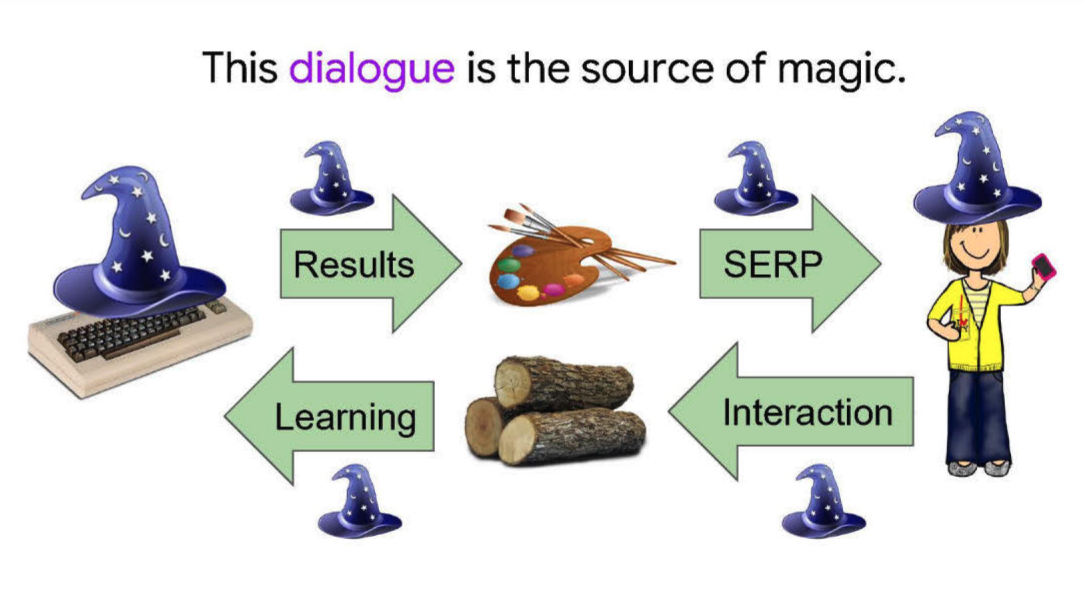
Source: DOJ trial exhibit UPX0228 "Google Is Magical"
**Our take:**
- The trial also revealed Google was threatened by Apple's Spotlight and [sought to weaken it](https://www.nytimes.com/2023/10/26/technology/google-apple-search-spotlight.html?ref=nearmedia.co); and Google [manipulates ad prices](https://www.theverge.com/2023/9/19/23880275/google-search-ads-competition-auction-prices-doj-trial-antitrust?ref=nearmedia.co) and [SERPs](https://gizmodo.com/new-google-trial-docs-explain-why-search-is-worse-1850982736?ref=nearmedia.co) for more revenue.
- Google's massive "default search" payments strategy ($26B in 2021) appears to have had multiple objectives. Protect and grow revenue is the obvious one.
- Ensure access to user data for behavioral signals is another. A third is: reinforce Google usage vs. competitors. A fourth: deny competitors access to data at scale so they can't become stronger competitors.
### Will Google's SMB Attribute Actually Help?
In time for the holidays, along with other shopping tools (e.g., a[deal](https://blog.google/products/shopping/google-shopping-best-holiday-deals-2023/?ref=nearmedia.co) finder), Google has introduced a new "small business" attribute. "Products in Search sold by businesses with that attribute will have a 'small business' label on them, as will businesses on Maps," Google [announced](https://blog.google/products/shopping/google-merchant-new-features-holiday/?ref=nearmedia.co). The company says consumers will be able to use it to "narrow down their searches." It's not clear whether it will be a filter or just a badge. Google says it may infer small business status and include the label by default in some cases. The company's [definition](https://support.google.com/merchants/answer/10342414?hl=en&ref=nearmedia.co) of "small business" is fairly expansive: not a franchise and <$10 million in revenue. According to [survey data](https://www.constantcontact.com/blog/small-business-now-report-2/?ref=nearmedia.co) from Ascend2 and ConstantContact, "75 percent of retail/e-commerce SMBs rely heavily on holiday sales to meet their annual revenue goals." In addition, "Supporting small businesses and their communities is the number one reason why consumers choose to visit or buy from an SMB." Given that almost all shopping now starts online, consumers need to find SMBs online before they can buy from them (online or off). So this is potentially helpful for everyone. But our question is: will this *actually* benefit SMBs or is it more of a symbolic move?
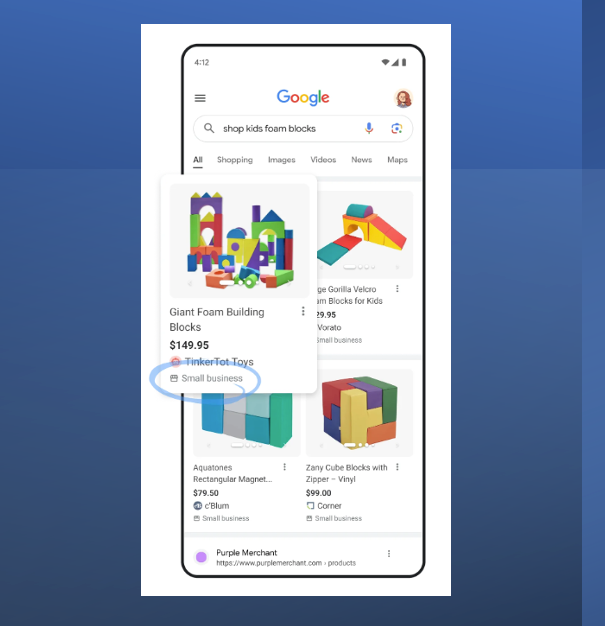
Source: Google
**Our take:**
- Google presents itself as a champion of small business [when it's being threatened](https://www.nearmedia.co/google-astroturfing-amazon-threatens-smbs-privacy-not-personalization/) or attacked in some way. That's part of its playbook.
- To really make this attribute work, it should be a prominent filter in Google Shopping and in the newly appearing [local shopping filter](https://twitter.com/gsterling/status/1722262348441014404/photo/1?ref=nearmedia.co). Small business should also be a badge in Shopping Ads.
- Google needs to go all-in on helping SMBs increase visibility in Search, Maps, Shopping. The badge is a start but probably more symbolic than substantive.
## Short Takes
- **Google** [blocking new reviews on GBPs](https://localsearchforum.com/threads/reviews-completely-removed-including-stars-from-gbp-rankings-gone.60762/?ref=nearmedia.co) where it finds fakes.
- **GBP**: the new [suspension appeal process explained](https://searchengineland.com/google-business-profile-new-suspension-appeal-process-434177?ref=nearmedia.co).
- **Google** adds [new "activities" button](https://www.seroundtable.com/google-business-profiles-activities-36339.html?ref=nearmedia.co) to hotel profiles on GBP.
- **Reddit** now the [most popular product review domain](https://www.linkedin.com/posts/glen-allsopp-63084025%5Flast-week-for-the-fourth-time-this-year-activity-7125116741512265729-FpEl/?ref=nearmedia.co) online.
- Why some restaurants [are ignoring/pushing back](https://www.theatlantic.com/technology/archive/2023/11/google-restaurant-reviews-owner-responses/675918/?ref=nearmedia.co) on **reviews**.
- **AI content detectors** [getting more specialized](https://www.nature.com/articles/d41586-023-03479-4?ref=nearmedia.co) and accurate.
- U.S. **military personnel data** [cheaply bought/sold online](https://techpolicy.sanford.duke.edu/data-brokers-and-the-sale-of-data-on-us-military-personnel/?ref=nearmedia.co).
- **Meta** behavioral targeting [banned throughout Europe](https://iapp.org/news/a/edpb-issues-binding-decisions-banning-metas-targeted-advertising-practices/?ref=nearmedia.co).
- FTC: **Amazon** [degraded search, showed junk ads](https://www.marketingdive.com/news/amazon-ftc-antitrust-lawsuit-defect-ads-Jeff-Bezos/698737/?ref=nearmedia.co) to juice revenue.
- **Amazon Style** [is officially dead](https://gizmodo.com/amazon-ditch-clothing-stores-1850987461?ref=nearmedia.co); it's all about groceries now.
- [43% use](https://www.pymnts.com/news/social-commerce/2023/more-than-40-percent-of-consumers-use-their-social-media-feeds-to-find-products/?ref=nearmedia.co) **social to discover products**/services; just 14% buy.
- Once worth $47B, **WeWork** has filed for bankruptcy ([NYT](https://www.nytimes.com/2023/11/06/business/wework-bankruptcy.html??ref=nearmedia.co)).
- How "**networked GPS**" can achieve [pinpoint location accuracy](https://www.linkedin.com/pulse/gps-technology-we-all-use-never-goodenough-sean-gorman-99goc/?ref=nearmedia.co).
- **Nextdoor** reports [small user and ad revenue gains](https://investors.nextdoor.com/news/news-details/2023/Nextdoor-Reports-Third-Quarter-2023-Results/default.aspx?ref=nearmedia.co) for Q3\.
- Human minders [have to help](https://www.cnbc.com/2023/11/06/cruise-confirms-robotaxis-rely-on-human-assistance-every-4-to-5-miles.html?ref=nearmedia.co) **robotaxis** every five miles.
Listen to our [latest podcast](https://www.nearmedia.co/memo/).
[](https://nearmedia.co/memo?ref=nearmedia.co)
How can we make this better? Email [us](mailto:gsterling@nearmedia.co) with suggestions and recommendations.
### Google Map Bloat, Citations in Decline, GBP Support Issues Update
URL: https://www.nearmedia.co/google-map-bloat-citations-in-decline-gbp-support-issues/
Last updated: 2023-11-08T21:45:21.000Z
### Google Maps Updates - Bloat or Value?
Last week Google [announced](https://blog.google/products/maps/google-maps-october-2023-update/?ref=nearmedia.co) several new features were now available in Google Maps including Immersive View, more EV charging station information, an updated Search with Live View product (now called Lens) and improved searching that offers AI image retrieval. I am not exactly sure who would search for "animal latte art" or "pumpkin patch with my dog" in Google Maps. But if you do "you’ll get photo-first results of what you’re looking for." The most salient of these new features was the release of [Immersive View](https://blog.google/products/maps/google-maps-immersive-view-routes/?ref=nearmedia.co), a 3D navigational view first announced at I/O, that provides a way to visually preview your upcoming route, including weather details and projected traffic patterns along the route. Technically the product looks amazingly detailed. Does it have real world value, or is it technical magic for magic's sake? As [James Killick](https://maphappenings.com/about/?ref=nearmedia.co) (a long time digital cartographer that I respect) noted, these sorts of renderings are not useful when "you need to make on the fly decisions" and what you really need is to "filter out superfluous information" and "distill down the pertinent information."
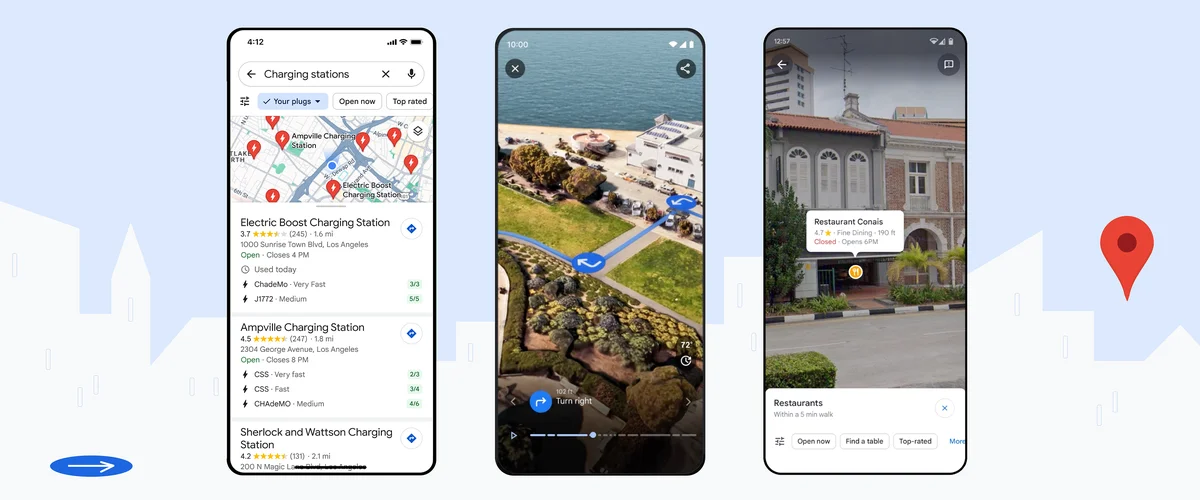
Source: Google
**Our take:**
- Google has long taken an "everything but the kitchen sink" approach to building out products. Clearly Google is taking this approach to competing with Apple Maps on the one side and AI on the other.
- While this worked well in the early days of Maps, when it was competing with both mapping and YP companies, it failed miserably with Google+.
- Maps should provide detailed real world accuracy and truth. Immersion in 3D mapping or other features isn't a better solution if the thing you need is buried in features or otherwise inaccurate.
- Google Maps seems to be heading down the path of increasing complexity without an increase in detail or accuracy. This is setting up an interesting contrast with Apple Maps and its less is more approach.
### Citations Ain't What They Used to Be
SterlingSky's Joy Hawkins [published](https://x.com/JoyanneHawkins/status/1720492589965545717?s=20&ref=nearmedia.co) several provocative screenshots on Twitter showing the dramatic decline in Google pages in the top 100 spots for assorted local directories. These lowly ranked citation pages will provide absolutely very little ranking value to a business that creates a listing there.
> If you are noticing a lot less improvement from your local citation campaigns/efforts lately, this might help visually explain why. [pic.twitter.com/PilWRyznT8](https://t.co/PilWRyznT8?ref=nearmedia.co)
>
> — Joy Hawkins (@JoyanneHawkins) [November 3, 2023](https://twitter.com/JoyanneHawkins/status/1720492589965545717?ref%5Fsrc=twsrc%5Etfw&ref=nearmedia.co)
Over the past 10 years or so, broad citation campaigns have continually declined in value as a tactic for Local SEO for a number of reasons. In the early era of local search and Google Maps (circa 2008) "citations" (or as Google called them "web references") to a business gave Google additional content, context and ranking information for the many small business locations around the world. Many of these businesses didn't have websites, in-bound links or any reviews so Google essentially "stole" this information from directories and yellow pages sites to rank these very small businesses. As these businesses built out websites, gathered inbound links, learned the value of digital PR mentions and received reviews, Google's had much richer data to determine relevancy and prominence. As Google became the local hegemon, these directories entered a death spiral with ever declining consumer usage and decreasing reliance by Google.
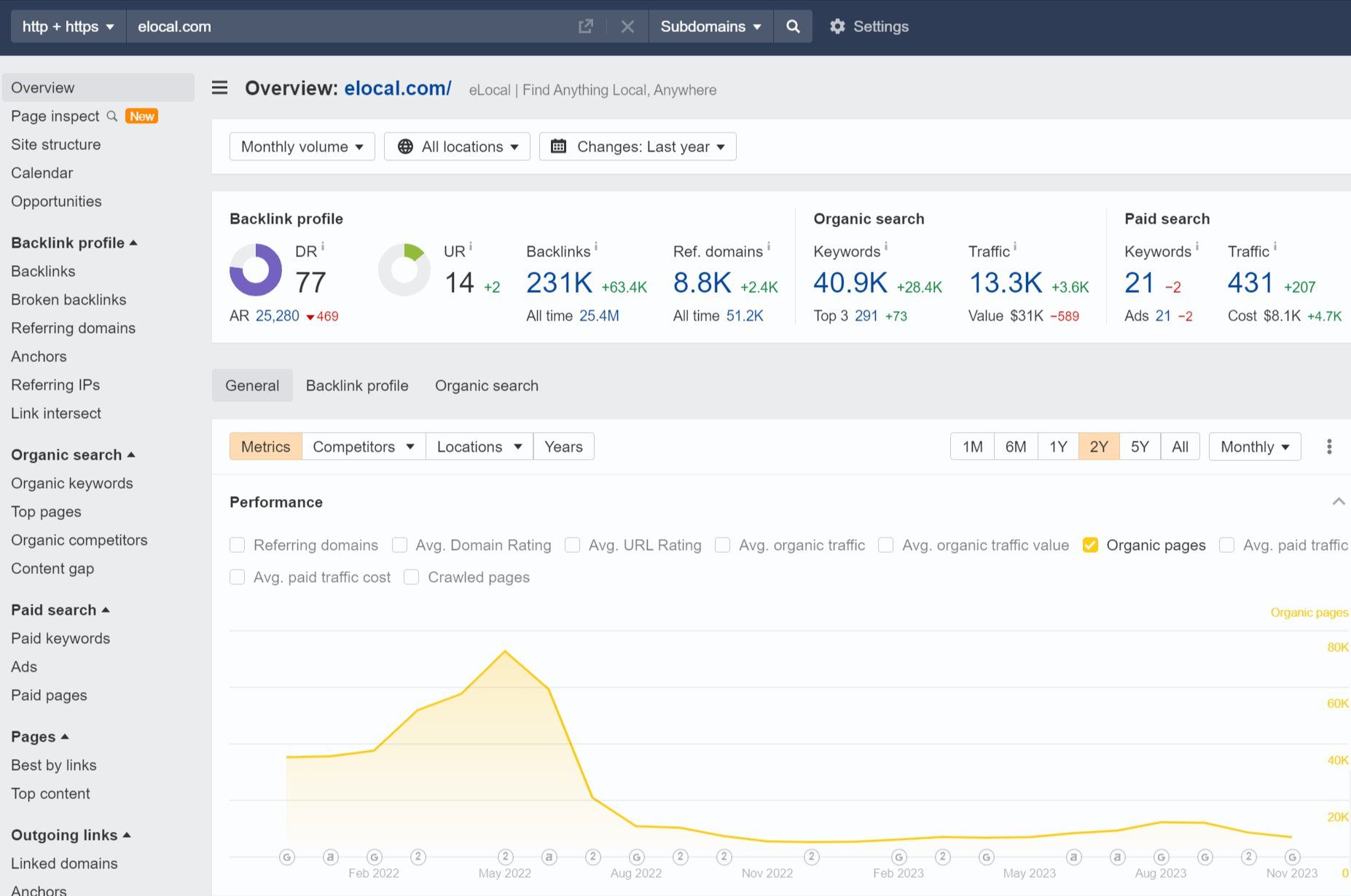
Source: Ahrefs
**Our take:**
- "Good" citations from sites that have traffic and unique content and web references about a business in the local press (with or without links) still have value for improving Google visibility.
- All local businesses should be thinking about digital marketing as they think about their real world presence: focus on substantial local relationships (like non-profits) and newsworthy coverage providing both visibility to clients, as well as link and reference signals to Google.
- If a business is going to pay every month for "citations" they should make sure that they are getting something with concrete value not just an entry on a third-rate directory that nobody's using anymore.
### Where SMBs Go When All Else Fails – GBP Forums
Every week I spend hours helping hapless small businesses who have found their way to Google Business Profile support forum. It is a strange outcome of modern capitalism that Google support is a volunteer activity – but these businesses need help *and* advocacy. As part of this practice I periodically track and summarize issues that I find in the forum.
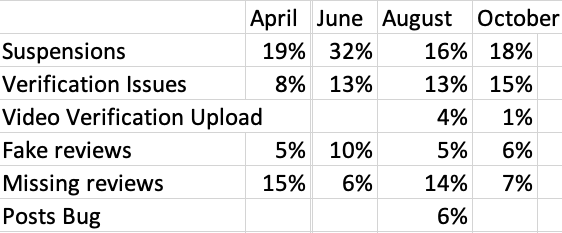
Source: Near Media
The good news:
- AI based image upload moderation rejections are way down
- There are even fewer reports of the terribly frustrating "verification video failed to upload," although there are still a few
- The GBP Update (aka Posts) bug seems to have been put to bed
The bad news:
- Verification issues remain very high largely because of totally inadequate communication about causes from Google
- Suspensions and reinstatement issues continue apace
- Fake and missing review moderation continue to be issues
But what's the *really* bad news? Hidden in these summaries are bugs that never get dealt with because the number of users complaining is small. And when they are escalated, repair times for the affected businesses range from very long to never. For example [when an SAB moves](https://support.google.com/business/thread/238232199?ref=nearmedia.co) and enters their new address and gets reverified their listing continues to show in the old location miles away. Business profiles in Europe [have random mobile profile photos](https://support.google.com/s/community/forum/1081366/thread/234890054?ref=nearmedia.co) showing (their most important image) grabbed from around the internet. And bulk users continue to not be able to do bulk things like successfully upload a list of edits or make bulk rejections of Google updates.
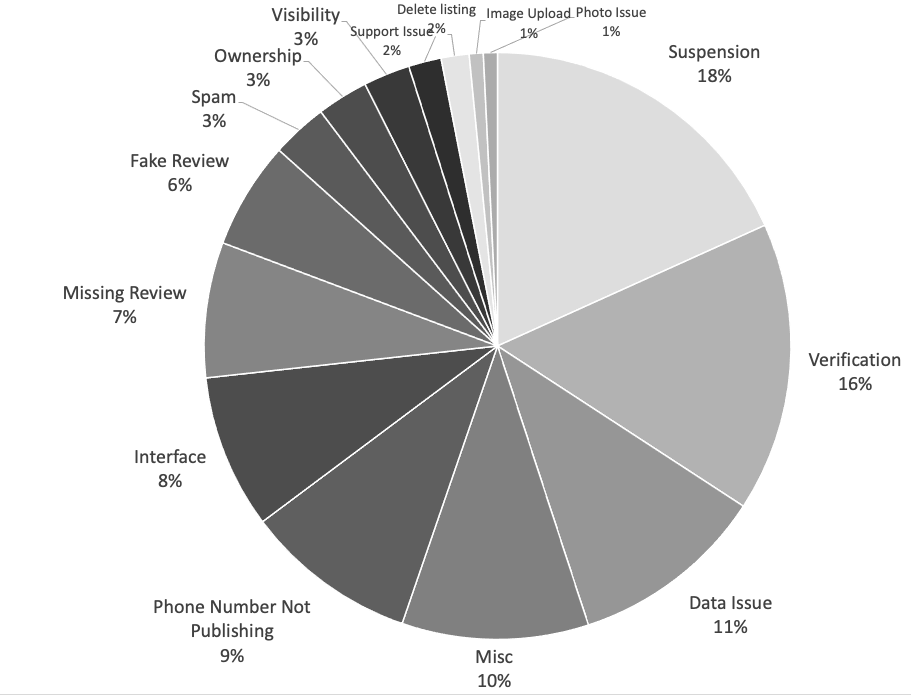
Source: Near Media
**Our take:**
- Google's "release early and fix later" ethos often results in code that *never* gets fixed.
- Their outsourced support leads to [wrong answers](https://support.google.com/business/thread/238232199?msgid=238605962&ref=nearmedia.co) or ineffective solutions to the very real problems Google itself created.
- Google only fixes problems that affect large numbers of users and then, as with video uploads, it still doesn't solve 100% of the problems.
## Recent Analysis
- **Near Memo episode 133**: [BeanBox – Lessons in Building and Marketing a Consumer Brand.](https://www.nearmedia.co/ep-133-beanbox-lessons-in-building-and-marketing-a-consumer-brand/)
## Short Takes
- **Yelp** [saw](https://d18rn0p25nwr6d.cloudfront.net/CIK-0001345016/a4a474a9-88d2-4127-9ca2-5be746f06b2c.pdf?ref=nearmedia.co) a 12% net revenue increase in Q3, due to increased ad clicks and higher ad prices despite decline in paying advertisers.
- Amazon, Booking.com, Expedia Group, Tripadvisor, and Trustpilot [launched](https://www.prnewswire.com/news-releases/amazon-bookingcom-expedia-group-glassdoor-tripadvisor-and-trustpilot-launch-first-global-coalition-for-trusted-reviews-301958304.html?ref=nearmedia.co) a **Global Coalition for Trusted Reviews** (read: review trust theater).
- **Google** [added](https://blog.google/products/shopping/google-merchant-new-features-holiday/?ref=nearmedia.co) an SMB attribute to GBP. Also: current deals, shipping policies and customer service information to the Knowledge Panels of brands.
- Brodie Clark's **10 best SEO Chrome extensions** [for 2023](https://twitter.com/brodieseo/status/1718594648028131393?s=12&ref=nearmedia.co) (tried and tested).
- Detailed [analysis ](https://lunio.ai/blog/strategy/ios-17-link-tracking/?ref=nearmedia.co)of which link tracking parameters will be removed by iOS 17's **Link Tracking Protection** feature.
- How to **optimize images** for [improved search performance](https://searchengineland.com/visual-optimization-must-haves-ai-powered-search-433908?ref=nearmedia.co).
- Sharing economy: **Uber and Lyft** [to pay a total of $328 million](https://www.cnbc.com/2023/11/02/uber-lyft-pay-328-million-to-settle-new-york-wage-theft-allegations.html?ref=nearmedia.co) to settle driver claims of wage theft (forgot to share?).
- Telling **GPT-4** you're [scared/under pressure improves performance](https://aimodels.substack.com/p/telling-gpt-4-youre-scared-or-under). Who knows what you will need to tell to Elon Musk's "truth seeking"[AI](https://futurism.com/the-byte/elon-musk-release-first-ai?ref=nearmedia.co)?
- **Shopify** [reported](https://www.digitalcommerce360.com/2023/11/03/shopify-earnings-increase-in-q3-checkout-page-gets-faster/amp/?ref=nearmedia.co) revenue growth of 25%. In September it launched a one-page checkout which sped up transactions by 4 seconds.
Listen to our [latest podcast](https://www.nearmedia.co/memo/).
[](https://nearmedia.co/memo?ref=nearmedia.co)
How can we make this better? Email [us](mailto:gsterling@nearmedia.co) with suggestions and recommendations.
### Ep 133: BeanBox – Lessons in Building and Marketing a Consumer Brand
URL: https://www.nearmedia.co/ep-133-beanbox-lessons-in-building-and-marketing-a-consumer-brand/
Last updated: 2023-10-24T00:26:26.000Z
**Part 1 starts 02:39 - From Local Search to the Speciality Coffee Business**
Matthew Berk’s personal and professional path took him from a humanities degree to co-found a local-search startup (OpenList) and eventually to a more traditional real-world manufacturing and logistics business (Bean Box), where he’s the CEO today.
OpenList was ahead of its time as a local search engine and some of the things they did experimentally are now being deployed years later (e.g., AI review summaries). OpenList was acquired by Marchex in 2006, to provide content for the latter’s extensive portfolio of local domains at the time.
Following Marchex, Berk discusses the genesis of BeanBox, which was a hard pivot from a failed social recommendations site. He describes the steep learning curve in getting BeanBox off the ground, the many challenges of the early days and how they’ve stayed true to their customers as the company has scaled.
**Segment References:**
- [Marchex Acquires OpenList](https://www.clickz.com/marchex-acquires-open-lists-local-search-platform/66513/?ref=nearmedia.co) (2006)
- [Local Search: A Solved Consumer Problem](https://searchengineland.com/local-search-a-solved-consumer-problem-28341?ref=nearmedia.co) (2009)
**Part 2 starts 23:51 - Search, Social and Ads: BeanBox’s Marketing Surprises**
We discuss the similarities and differences between running a software startup and a more traditional business with a physical product. Berk also explains the trials and satisfactions of building a consumer brand that touches people’s lives on a daily basis.
Berk unpacks BeanBox’s marketing strategies and lessons learned. What worked in the past and what’s working today. Berk covers Amazon, affiliates, Google Shopping Ads, SEO, content and social/influencer marketing. He explains why BeanBox focused obsessively on SEO in the early days, but now not so much.
As the company crowdsources its latest funding round, Berk explains the challenges of investing in growth while building a sustainable business and maintaining product quality (aka “don’t screw it up”). The interview concludes with Berk's advice to a hypothetical younger version of himself, just embarking on his BeanBox journey.
**Related Links:**
- [BeanBox](https://beanbox.com/?ref=nearmedia.co) code MARKETINGIQ23 (15% off all products)
- [You can invest in BeanBox](https://beanbox.com/invest?ref=nearmedia.co)
***Note: We get no revenue from these links.***
### SEO Is Dead Again, 20% Fake Reviews, Synthetic Media Boom
URL: https://www.nearmedia.co/seo-is-dead-again-20-fake-reviews-synthetic-media-boom/
Last updated: 2023-10-24T07:40:52.000Z
***After nearly 3 years of uninterrupted output and 133 podcasts, Near Media will be taking a short hiatus through November 1\. We'll resume publishing on November 3\.***
### Will Generative AI Kill SEO?
Search and SEO have been in a state of constant change since the 1990s. However, this moment feels bigger and more seismic, with the advent of OpenAI and "conversational" search. The phrases "answers not links" and "zero-click search" take on new meaning in a world where AI may push traditional website results further to the margins – or down the page. Nobody knows yet exactly how disruptive AI will be to classic search. But Mike King elegantly and scientifically speculates in [a lengthy article](https://searchengineland.com/how-search-generative-experience-works-and-why-retrieval-augmented-generation-is-our-future-433393?ref=nearmedia.co), taking on the technical side of Google SGE while trying to assess its "threat level" to site traffic by way of anticipated search behavior changes. (The article is well worth reading.) A less technical and roughly parallel [article in The Conversation](https://theconversation.com/why-google-bing-and-other-search-engines-embrace-of-generative-ai-threatens-68-billion-seo-industry-210243?ref=nearmedia.co) argues that generative AI will significantly damage the SEO industry: "As the quality of AI-generated answers improve, users will have less incentive to browse through search result listings." It predicts an unavoidable impact on SEO and search ad revenues. This is yet another version of the "SEO is dead" argument that appears every few years. Yet it's hard to shake the idea that, while SEO surely isn't dead, it could be dramatically affected by AI capabilities and changing search behaviors.

Source: DALL-E 3
**Our take:**
- A big question right now is: will Google's moves with SGE and Bard pre-empt defections to challengers: BingGPT, ChatGPT, etc.?
- We at Near Media don't all agree on this point; however, I do think that AI will disrupt Google in some meaningful way eventually.
- I see it in my own behavior. Roughly 20% to 30% of my own "search activity," that would have gone to Google, is now over at ChatGPT.
### Report: 20% Have Faked Reviews
A new consumer benchmarking [report](https://1worldsync.com/2023-consumer-product-content-benchmark/??ref=nearmedia.co) looks at how people use search, product reviews and other online resources while shopping – online and off. Reviews feature prominently in the report as a source of trust. Most interesting among the review-specific findings is the stat: 20% of shoppers have written a fake review of a "product they have never purchased or owned." The most common reason is "to support a friend's business." Other reasons include expressing opposition to a company, a previous bad experience (unrelated to the product), desire to help a competitor and satire/comedy. This behavior is more common among younger users (34%) but it extends across age groups. The survey of 1,500 "online shoppers" in North America claims to be representative of the general population. I'm skeptical that the numbers can be extrapolated. But if so, it's pretty staggering. The most common source of review fraud is business owners trying to improve their own visibility and conversions with fake reviews (in various forms). Friends and family writing false positive reviews is in that bucket.
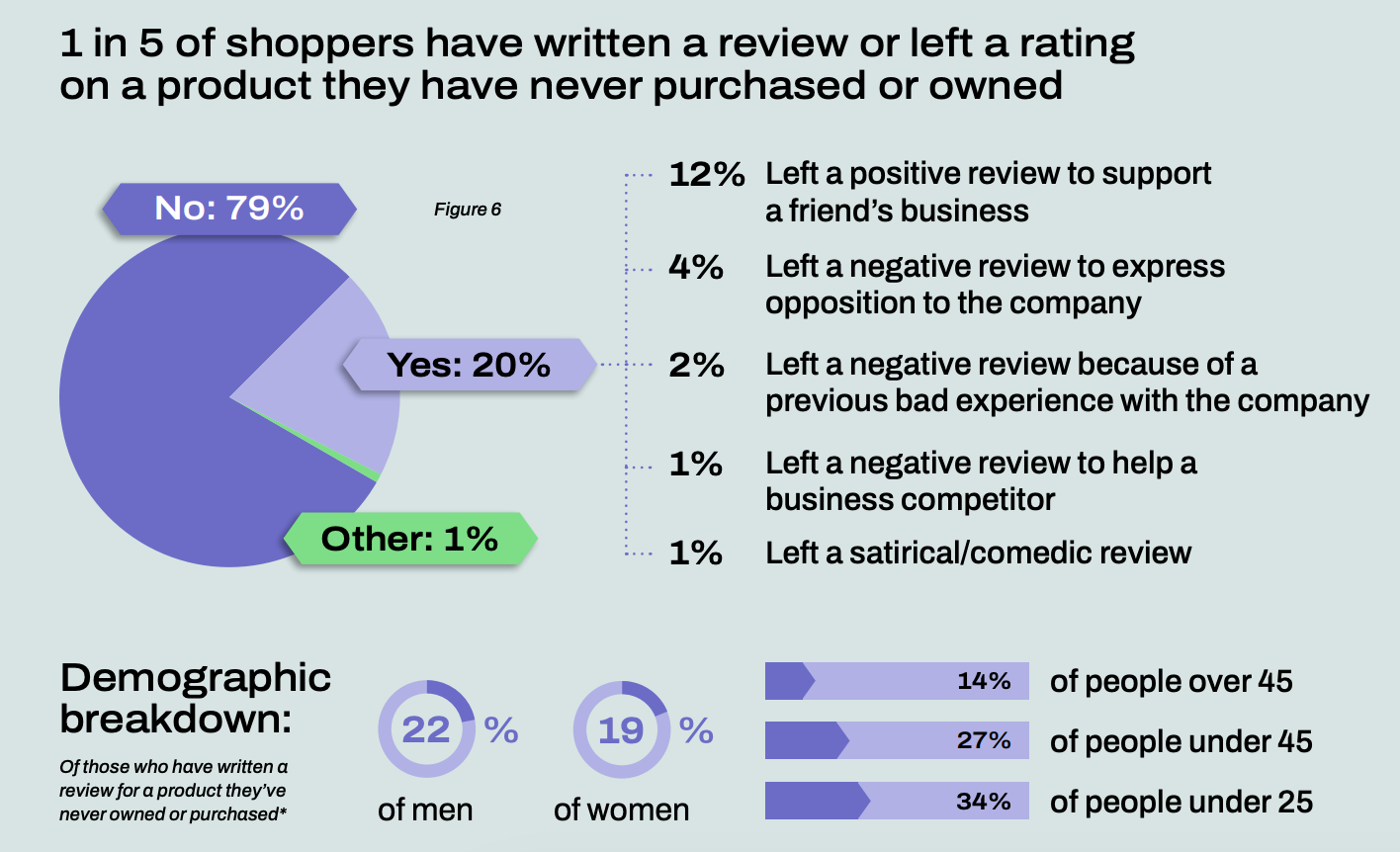
Source: 1WorldSync benchmarking report (2023)
**Our take:**
- BrighLocal's most recent [consumer survey](https://www.brightlocal.com/research/local-consumer-review-survey/?ref=nearmedia.co) says: "95% of consumers left an online review in 2022, or would at least consider leaving one."
- What that practically means is the vast majority of online users participate in the reviews ecosystem with varying degrees of frequency.
- There are \~300M US internet users. If we *can* extrapolate, the 20% number would mean \~60 million people have written at least one fake review.
### Midjourney Reigns Supreme
AI is the fastest growing software category, by new product growth. That's according to a new "state of software" [report](https://sell.g2.com/state-of-software?ref=nearmedia.co) from B2B software reviews marketplace G2\. The company says it has cataloged 1,078 total AI vendors and more than 1,200 AI powered software tools and products in roughly the past 12 months. The fastest growing sub-category of AI is "synthetic media," which includes AI-generated video, images, text or voice. AI-writing tools are second, followed by text-to-speech (which pre-dates "AI") and chatbots. Among specific AI tool providers, Midjourney is ranked number one (most visited), followed by OpenAI's ChatGPT and DALL-E. Google and Microsoft offerings aren't on the list, presumably because they're not independent software products. The G2 report breaks out other software categories in similar fashion. Yet AI will soon be a feature of all of them; there won't be a separate "AI software" category because it will be infused in nearly all software applications in one form or another.
**Fastest Growing AI Software**
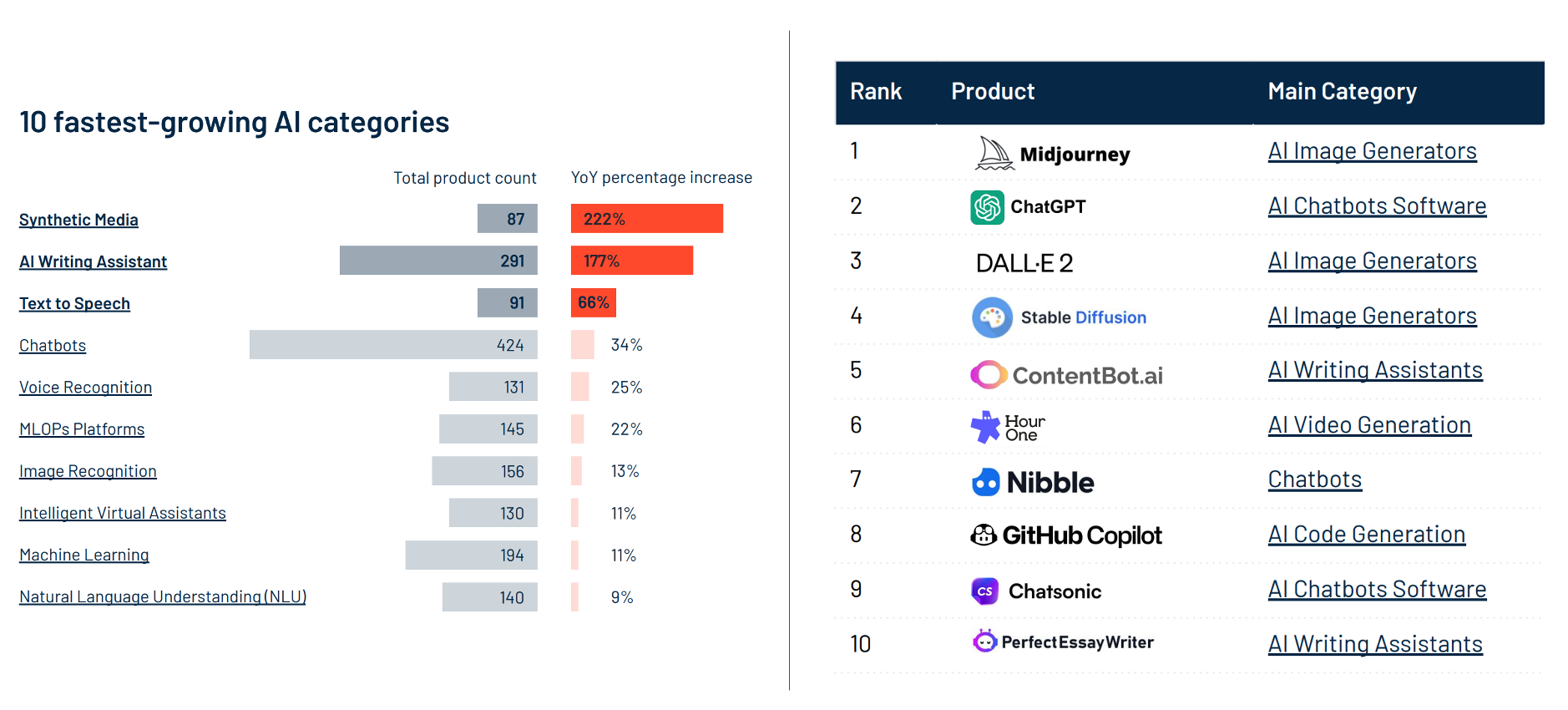
Source: G2 State of Software (2023)
**Our take:**
- There's no question AI tools are being adopted like crazy, up and down the the B2B food chain. Despite the feeding frenzy, we can't yet asses their full impact.
- Will AI primarily affect the B2B software landscape or will consumers equally be using AI in their search, retail and vertical activities and inquiries?
- The two biggest B2B opportunities are time/productivity gains and simplification – making challenging software easier to use.
## Recent Analysis
- **Near Memo episode 133**: [BeanBox – Lessons in Building and Marketing a Consumer Brand. ](https://www.nearmedia.co/ep-133-beanbox-lessons-in-building-and-marketing-a-consumer-brand/)
## Short Takes
- **Google [testing new](https://www.seroundtable.com/google-card-design-for-local-pack-reviews-menu-36243.html?ref=nearmedia.co)** "card" elements in Google Biz Profiles.
- **Google** brings gen-AI enhanced local search [to India](https://blog.google/intl/en-in/products/google-for-india-2023-product-announcements/?ref=nearmedia.co).
- **Reddit** [may block Google and Bing’s crawlers](https://www.theverge.com/2023/10/20/23925504/reddit-deny-force-log-in-see-posts-ai-companies-deals?ref=nearmedia.co) entirely (no indexing).
- **Apple** blindsided by gen-AI, [now spending massively](https://www.bloomberg.com/news/newsletters/2023-10-22/what-is-apple-doing-in-ai-revamping-siri-search-apple-music-and-other-apps-lo1ffr7p?ref=nearmedia.co) to catch-up.
- An LLM powered **Siri** [could arrive](https://appleinsider.com/articles/23/10/22/apple-plans-more-ai-in-ios-improved-siri-in-1b-technology-push?ref=nearmedia.co) next year.
- **MSFT CEO Nadella**'s biggest regret: [exiting the mobile category](https://www.businessinsider.com/microsoft-ceo-satya-nadella-interview-ai-activision-blizzard-axel-springer-2023-10?op=1&ref=nearmedia.co).
- **Twitter/X**: Musk [teases](https://x.com/elonmusk/status/1715249746753794305?s=20&ref=nearmedia.co) two new paid tiers coming soon.
- **Amazon** [tries to dismiss](https://www.retaildive.com/news/amazon-motion-dismiss-ftc-dark-patterns-claims/697339/?ref=nearmedia.co) the FTC's "dark patterns" Prime lawsuit.
- Jury [awards $1+ million in damages](https://news.bloomberglaw.com/us-law-week/google-must-pay-female-executive-1-million-for-gender-bias?ref=nearmedia.co) against **Google** for gender bias.
- SCOTUS [takes case](https://www.vox.com/scotus/2023/9/22/23883888/supreme-court-social-media-first-amendment-netchoice-paxton-murthy-missouri-twitter-facebook?ref=nearmedia.co) on social media "censorship"/**content moderation**.
- **LinkedIn [collaborative articles](https://www.linkedin.com/pulse/over-1-million-expert-answers-whats-new-collaborative-somasundaram-akyue/?ref=nearmedia.co)**: innovative orcynical visibility ploy?
- Washington, DC to fund **local news** [through public vouchers](https://www.axios.com/2023/10/20/local-news-vouchers-bill-dc?ref=nearmedia.co).
Listen to our [latest podcast](https://www.nearmedia.co/memo/).
[](https://nearmedia.co/memo?ref=nearmedia.co)
How can we make this better? Email [us](mailto:gsterling@nearmedia.co) with suggestions and recommendations.
### Plug-in Search, Local Merch Returns, Privacy Paradox
URL: https://www.nearmedia.co/plug-in-search-local-merch-returns-privacy-paradox/
Last updated: 2023-10-20T11:29:09.000Z
### Plug-ins and Personalized Search
Before Apple bought Siri in 2010, its CEO Dag Kittlaus envisioned his digital assistant eliminating the need for a "middle man" (Google) by linking user requests directly to a data source that could deliver an answer or transaction (e.g., dining reservation via OpenTable). That vision never came to pass because Apple gobbled up the company just two months after launch. But that opportunity is back, in a way, with AI plug-ins (ChatGPT) and extensions (Bard). These are mostly structured data sources that can be selected and turned on or off by the user. Instead of sifting through material chosen by a mostly opaque algorithm, I can personalize my SERP by selecting specific (and potentially more trusted) data sources. In the case of travel, it might be Kayak, Expedia and Tripadvisor. In practice, however, the ChatGPT plug-in experience still has a long way to go. But the potential is there. And if I don't have relevant plug-ins in a given category, web search could always fill in the gaps or backfill.
Source: ChatGPT
**Our take:**
- The opportunity to query a group trusted sources in the same category is appealing. This is superior in principle to a single app experience.
- As I've indicated, there would be a role for OG search in my fantasy of the future, but it would be a very different use case.
- If this came to pass, would it recreate the Google problem in a different form? Would it reduce publishers to data providers? Maybe, yes.
### Local Returns Drive Online Buying
E-commerce success increasingly depends on offline returns. Don't believe it? A [survey](https://chainstoreage.com/future-retail-stores?ref=nearmedia.co) we ran at Uberall (2021) found, "71% of US adults said they were more likely to buy a product online, that they hadn’t seen in person, if they could return it to a local store." That argument is reinforced in a new [report](https://happyreturns.com/returns-happen-2023?ref=nearmedia.co), "Returns Happen 2023" (PayPal). Based on a survey of 2,000 US consumers and 200 merchants, it examines the symbiotic relationship between online shopping and local returns. The survey cites skyrocketing e-commerce return rates (often above 20%), which are the likely result of "bracketing": buying with the intention of returning items. In response, merchants have started to push back on high return rates with fees. But that can cost them customers and affects conversion rates. The report also points out that 90% of shoppers want to avoid return shipping and make returns locally. Consumers want those returns to be incredibly convenient – no labels or packing and close to home. The bottom line: return policies (and the availability of local returns) increasingly shape merchant perceptions and the willingness to buy online.
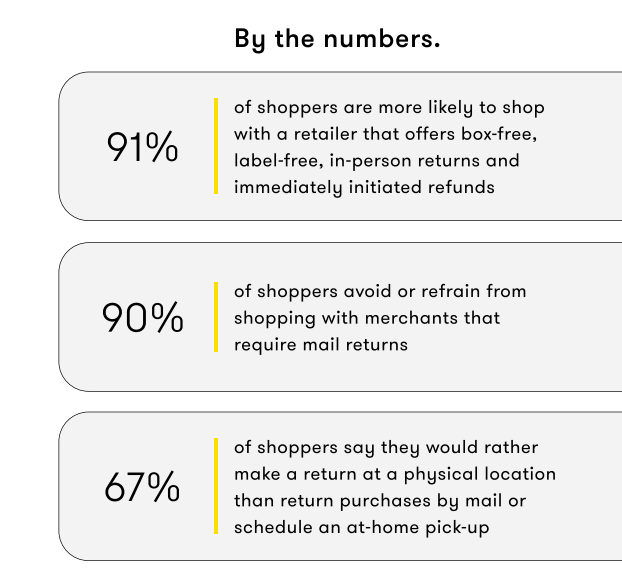
Source: Happy Returns-PayPal (2023)
**Our take:**
- Local returns doesn't always mean same-merchant stores. Amazon offers a range of return locations (Whole Foods, Kohl's, UPS stores).
- Indeed, Amazon spent years developing a local returns network to de-risk online shopping. This removed a big argument against the company.
- The recognition that a merchant with both online and offline assets is more attractive is partly what's driving D2C brands into physical stores.
### Privacy: People Concerned, Overwhelmed
In contrast to Mark Zuckerberg's now infamous 2010 quip about privacy as a social norm becoming less important, privacy has only grown in importance and urgency (think: [location data and abortion](https://www.nearmedia.co/post-roe-privacy-page-speed-revenue-ar-revolution/)). In response, the big platforms are now talking more about privacy and offering some user controls. But often these are tough to find and use. And the "we care about your privacy" rhetoric is generally more PR than practice. A new Pew Research study, "[How Americans View Data Privacy](https://www.pewresearch.org/internet/2023/10/18/how-americans-view-data-privacy/?ref=nearmedia.co)" explores attitudes toward privacy and adjacent issues (AI). According to the study, 75% of adults trust themselves to manage online privacy. But nearly 60% don't read privacy policies (probably more). Beyond this, people are frequently overwhelmed trying to manage their own privacy and data security. Pew found they're worried almost equally about government surveillance and "surveillance capitalism." They're anxious about their data being sold or stolen, but feel they have little actual control (73%) over how it's used. A majority (72%) support more regulation and don't trust tech company CEOs to be responsible with data. And while people are using a range of tactics – cookie blocking, alternative browsers and search engines, encrypted messaging, etc. – the overall sense is one of fatigue and fatalism, with some differences by age, ethnicity and education.
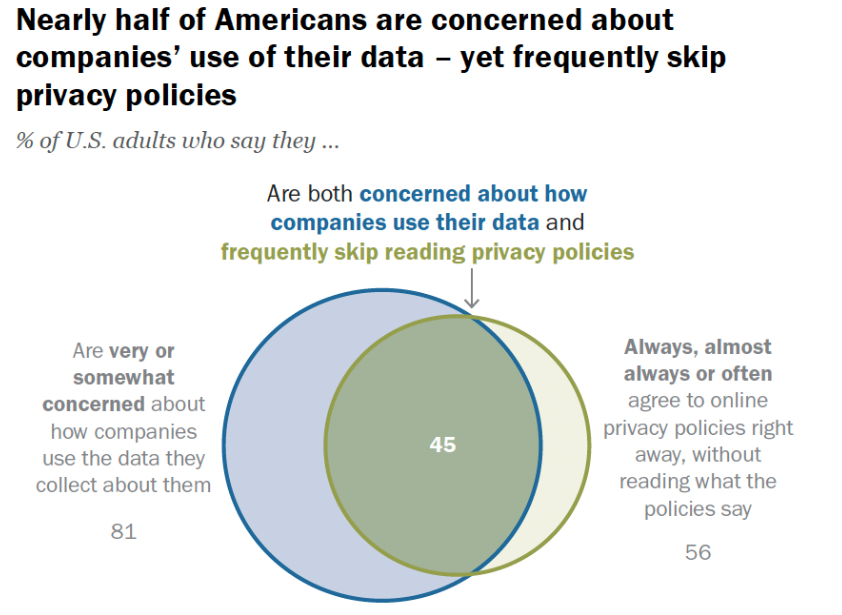
Source: Pew Research Center
**Our take:**
- The graphic captures "The Privacy Paradox": increasing concern but little behavioral change. The enormity of the project creates resignation.
- There's a growing chasm between the tech-industry pseudo-embrace and discussion of privacy and the skepticism of the public.
- There's a lot of "privacy theater" happening, revealed by all the behind-the-scenes industry resistance to concrete regulation and legislation.
## Short Takes
- Encore: the **Local Business Content Marketing Guide** [from Moz](https://moz.com/local-business-content-guide?ref=nearmedia.co).
- With other AI tools, **Square** intros [AI-menu generator](https://squareup.com/us/en/ai-for-businesses?ref=nearmedia.co) for restaurants.
- News aggregator **Artifact** letting people [share favorite local places](https://www.threads.net/@mikeyk?ref=nearmedia.co).
- **Amazon** [introduces](https://www.aboutamazon.com/news/retail/amazon-introduces-consult-a-friend-mobile-shopping-experience?ref=nearmedia.co) "**Consult-a-Friend**" social shopping tool.
- VC: Within 10 years **AI** will do "80% of all jobs that we know" ([WSJ](https://www.wsj.com/tech/ai/tech-leaders-say-ai-will-change-what-it-means-to-have-a-job-2dd556fb??ref=nearmedia.co)).
- **Net neutrality**, dismantled under Trump, [is back](https://www.cnbc.com/2023/10/19/fcc-votes-to-begin-process-of-reestablishing-net-neutrality-rules.html?ref=nearmedia.co).
- Musk [thinking of pulling Twitter out of EU](https://thenextweb.com/news/musk-might-remove-x-twitter-from-eu-disinformation-law?ref=nearmedia.co) to avoid **DSA content rules**.
- **Google** at trial:our search quality not dependent on default deals ([NYT](https://www.nytimes.com/2023/10/18/business/google-antitrust-pandu-nayak.html?ref=nearmedia.co)).
- All the big **AI platforms** trained on "stolen" content ([WaPo](https://www.washingtonpost.com/opinions/2023/10/19/ai-large-language-writers-stealing/?ref=nearmedia.co)).
- 70% of marketers [feel "overwhelmed"](https://searchengineland.com/survey-70-of-marketers-feel-overwhelmed-by-ai-changes-433440?ref=nearmedia.co) by **AI development speed**.
- Stanford [ranking the transparency](https://crfm.stanford.edu/fmti/?ref=nearmedia.co) of **AI platforms --** all score poorly.
- 42% of Mac owners use **AI-driven apps** on a daily basis, [says poll](https://www.craft.me/s/ghNeZmjC6tXpYf?ref=nearmedia.co).
- **Apple** [patent envisions windowless car](https://9to5mac.com/2023/10/18/apple-car-with-no-windows/?ref=nearmedia.co) using **Vision Pro** to see outside.
- **Amazon** [to bring](https://www.aboutamazon.com/news/operations/amazon-prime-air-drone-delivery-updates?ref=nearmedia.co) **drone delivery** to 3rd US city, UK and Italy in 2024.
Listen to our [latest podcast](https://www.nearmedia.co/memo/).
[](https://nearmedia.co/memo?ref=nearmedia.co)
How can we make this better? Email [us](mailto:gsterling@nearmedia.co) with suggestions and recommendations.
### Local Falcon's AI, 15 New LSA Categories, It's All Good
URL: https://www.nearmedia.co/local-falcons-ai-15-new-lsa-categories-its-all-good/
Last updated: 2023-10-18T17:59:53.000Z
### Local Falcon's New AI Recommendations
Local rank tracker [Local Falcon](https://www.localfalcon.com/?ref=nearmedia.co) just rolled out a new AI-based feature, which CEO David Hunter believes is unique among Local SEO tools. The company used its millions of records and understanding of best practices to train ChatGPT. The result is ranking reports for business locations that now include more context and actionable Google Business Profile recommendations. Here's an [example report](https://localrankingtracker.com/scan-report/0f7993149ee60d2/683f772c2384801/?show%5Fanalysis=true&ref=nearmedia.co) for a restaurant-bar in Erie PA. The report shows the traditional Local Falcon ranking grid with an AI-generated narrative assessing overall GBP fitness. There's an extensive competitive analysis. But more importantly, there are "major" and "minor" recommendations for ranking improvements. Major recommendations often include review deficiencies or specific GBP category additions, drawn from competitor analysis. Minor recomendations might include NAP inconsistency, adding Google Posts or social media profiles. Photos are coming, so is deeper review analysis.
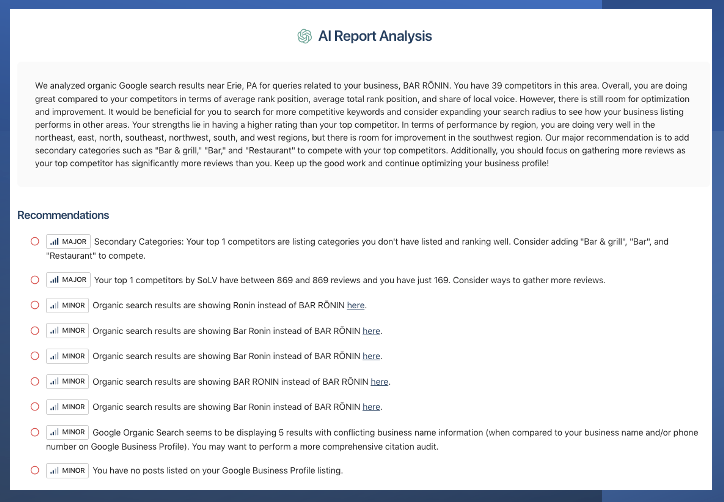
Source: Local Falcon AI analysis
**Our take:**
- This is an impressively simple and accessible checklist for agencies and business owners about how to make concrete ranking improvements.
- It will help demystify ranking for many business owners, confused by the seeming complexity of Local SEO and what to focus on.
- Over time, Local Falcon will be able to carefully track specific variables and their actual impact on local rankings, to further refine best practices.
### Google Adds 15 New LSA Categories
Google has just added 15 new categories of [Local Services Ads](https://blog.google/outreach-initiatives/small-business/local-services-ads-expands/?ref=nearmedia.co) (LSAs) ([via](https://twitter.com/joyannehawkins/status/1714528628766069210?s=12&ref=nearmedia.co) Joy Hawkins). That would bring the total number of LSA business categories to roughly 85\. However, these new 15 categories are apparently only available in Florida and California for now. Near Media user testing [has found](https://www.nearmedia.co/amazon-upgrades-visual-search-lsa-ad-confusion-data-delete-act/) that when LSAs are present (legal vertical), they significantly outperform traditional Google Ads in terms of clicks and ultimate user choices. Indeed, they perform almost as well as Pack listings. One third party [study](https://www.nearmedia.co/lsa-divorce-amazon-boots-3k-sellers-for-review-fraud/) in the legal category found, "LSAs gobble up 33% of all clicks for lawyer-related keyword searches." We saw something closer to 25% in our research, but there's no denying their power. We believe LSAs work so well for advertisers (and Google) because they don't look like traditional ads. They carry photos, reviews and the Google Guaranteed/Screened badge. And many people don't see them as ads at all.
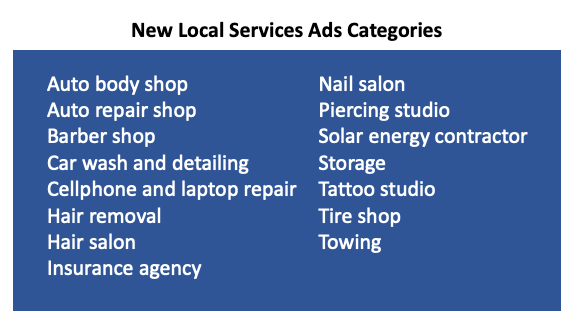
Source: Joy Hawkins
**Our take:**
- LSAs have a spam/[fake reviews problem](https://www.seroundtable.com/google-local-service-ads-with-fake-reviews-33810.html?ref=nearmedia.co). Historically, Google has not policed LSA reviews as they have organic reviews.
- There's [evidence](https://www.nearmedia.co/lsa-reviews-mia-inventory-eye-candy-apple-nukes-utms/) that Google is trying to crack down on LSA review fraud, however.
- Regardless, it makes sense for local marketers to test (and use) LSAs because they appear to perform so well.
### It's Good to Take on Yelp
A new local recommendations app from musician John Legend is set to take on Yelp, Google and other hospitality review sites. Called "It's Good," the app will not offer reviews *per se*, only positive recommendations from users' "social circles, as well as from critics, celebrities, influencers and other public figures," [according to](https://www.wsj.com/business/entrepreneurship/john-legend-hopes-for-a-hit-with-first-tech-startup-8901d299?ref=nearmedia.co) the Wall Street Journal. Legend's co-founder is entrepreneur Mike Rosenthal. The app, now in private beta, is also backed by several celebrities and VC firm Lightspeed Venture Partners. It will reportedly operate in the food and travel verticals. Rosenthal commented to the WSJ, "We are really looking at a real-world problem that has not been solved really since Yelp first started, which was 20-something years ago." (Yelp was founded in 2004.) The twin problems the app will address are untrustworthy reviews (randos + spam) and the now overwhelming volume of reviews, which makes them difficult to consume. Indeed, Near Media research found that while reviews are often the most important consumer-decision factor, roughly two-third of users don't actually read them. They look at review counts and overall star ratings.

Source: DALL-E
**Our take:**
- There's no way to assess the outlook for this in the abstract without trying it. But celebrity backers give it a PR headstart.
- This app is not a 1:1 replacement for Yelp. But Yelp is vulnerable to substitution by other apps. Google much less so.
- AI-generated [review summaries](https://www.nearmedia.co/ai-review-summaries-e-commerce-1t-ai-adoption/) are another approach to the review volume problem, although they also obscure fake reviews.
## Recent Analysis
- **Near Memo episode 132**: [Google Business Profile Call History returns, BrightLocal's 'Local Trust Report,' and SGE: where to now](https://www.nearmedia.co/ep-132-gbp-call-history-returns-local-trust-report-sge-where-now/)?
## Short Takes
- Some [new](https://twitter.com/DarrenShaw%5F/status/1714289391970263526?ref=nearmedia.co) **Google Business Profile** attributes**.**
- New **Moz** [Local Business Content Marketing Guide](https://moz.com/local-business-content-guide?ref=nearmedia.co).
- New [structured markup for car listings](https://developers.google.com/search/blog/2023/10/vehicle-listings-structured-data?ref=nearmedia.co) on **Google.**
- **Nextdoor** [launches new ad tools](https://about.nextdoor.com/press-releases/nextdoor-launches-new-solutions-to-maximize-ad-performance-both-online-and-offline/?ref=nearmedia.co), offline conversion tracking.
- Amazon, others [form](https://press.aboutamazon.com/retail/2023/10/amazon-booking-com-expedia-group-glassdoor-tripadvisor-and-trustpilot-launch-first-global-coalition-for-trusted-reviews?ref=nearmedia.co) "**Global Coalition for Trusted Reviews**."
- Use of **AI** for lawyer's closing argument [prompts request for new trial](https://www.politico.com/news/2023/10/16/pras-michel-fugees-trial-ai-closing-argument-00121900?ref=nearmedia.co).
- **Google Bard** will now show [side-by-side drafts](https://www.seroundtable.com/google-bard-side-by-side-drafts-36215.html?ref=nearmedia.co).
- **Google** now [complying with EU content liscensing](https://blog.google/around-the-globe/google-europe/an-update-on-googles-compliance-with-the-eu-copyright-directive/?ref=nearmedia.co) rules.
- Here come the **Meta** [mixed-reality headset glassholes](https://www.theverge.com/23920102/meta-quest-3-in-public-privacy-recording-glassholes?ref=nearmedia.co).
- Meta-**Ray Ban smart glasses** getting [positive reviews](https://www.engadget.com/ray-ban-meta-smart-glasses-review-instagram-worthy-shades-070010365.html?ref=nearmedia.co).
- **Google** uses computer vision, AI imagery to [for speed limits on Maps](https://blog.google/products/maps/how-ai-and-imagery-keep-speed-limits-on-google-maps-updated/?ref=nearmedia.co).
- **TikTok** [distributing ads](https://www.marketingdive.com/news/tiktok-OOH-out-of-phone-ad-solution-billboard-marketing/696803/?ref=nearmedia.co) to billboards, cinema and other offline media.
- Nearly 75% of **Amazon shoppers** [now Prime members](https://cirpamazon.substack.com/p/prime-members-almost-three-quarters).
Listen to our [latest podcast](https://www.nearmedia.co/memo/).
[](https://nearmedia.co/memo?ref=nearmedia.co)
How can we make this better? Email [us](mailto:gsterling@nearmedia.co) with suggestions and recommendations.
### Agencies ❤️ ChatGPT, DSA vs. Section 230, Google Teen Retention
URL: https://www.nearmedia.co/agencies-chatgpt-dsa-vs-section-230-google-teen-retention/
Last updated: 2023-10-16T19:47:58.000Z
### Agencies: ChatGPT Now #2 Most Used Tool
There are multiple "state of digital agencies" survey reports (e.g., Vendasta, CallRail), including one we did but haven't published. The [latest](https://www.wordstream.com/blog/ws/2023/10/05/state-of-the-digital-marketing-agency-2023?ref=nearmedia.co) comes from WordStream. Based on a survey of 311 North American agencies, the finding that pops is one showing adoption of ChatGPT (50%) is second only to excel (56%) on a list of more than 20 tools being used. The report doesn't explore ChatGPT use cases, however. It does examine agency pricing/fees, services, account management, fulfillment and client reporting. Generally, more client services equals lower churn. Here, 66% of agencies are delivering 1 - 3 services with the rest providing 4 or more. Retention is "3 years or more" for 50% of respondents, which is good. The majority (53%) of these agencies have 4 or fewer employees, but 24% have more than 25\. The top services are 1) social ads, 2) content, 3) SEO, 4) paid search and 5) email marketing. Most new business comes from word-of-mouth (WoM), consistent with other studies.
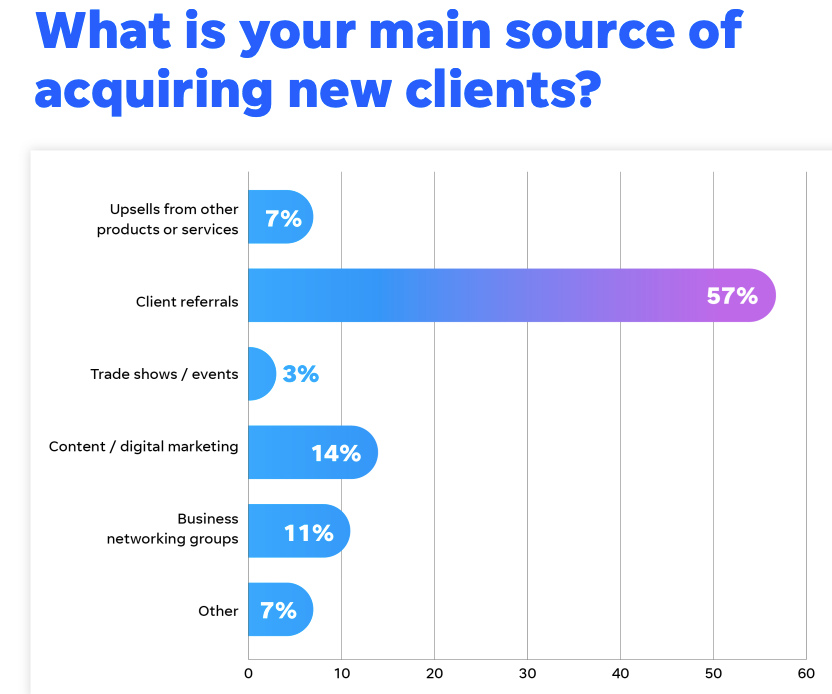
Source: WordStream
**Our take:**
- 71% of agencies offer paid search, but it's a time sink: 41% spend "more than 25% of their time" managing it.
- Chart above: it's not clear whether these agencies aren't good at marketing themselves or whether WoM is just much more reliable.
- Our earlier survey found SEO was second only to WoM in terms of new business. It was also seen by agencies as having the best ROI for clients.
### DSA vs. Section 230
Section 230 [of the Communications Decency Act](https://en.wikipedia.org/wiki/Section%5F230?ref=nearmedia.co) became law in 1996\. It was intended to protect startups and ISPs from being sued for third party content they didn't create, which was reasonable at the time. It treated tech companies and ISPs as "distributors" rather than "publishers." Over the last 27 years, however, it has been abused and become a kind of "get out of jail free" card allowing uneven, irresponsible and capricious (see X) content moderation. Congress has attempted, without success, to modify its scope to bring more accountability to big platforms and social media. But there is no Section 230 in Europe and the [Digital Services Act](https://commission.europa.eu/strategy-and-policy/priorities-2019-2024/europe-fit-digital-age/digital-services-act-ensuring-safe-and-accountable-online-environment%5Fen?ref=nearmedia.co) (DSA) is now effectively overriding Section 230 for [a small but important group](https://www.pymnts.com/news/regulation/2023/eu-identifies-19-companies-subject-to-digital-services-act/?ref=nearmedia.co) of "very large" tech platforms, including Google, Meta, MSFT, Amazon, Twitter/X and Apple. In its first enforcement actions, the EU has warned X, YouTube, TikTok and Meta about disinformation around the Israel-Gaza conflict. A formal [investigation](https://ec.europa.eu/commission/presscorner/detail/en/ip%5F23%5F4953?ref=nearmedia.co) of X has been initiated; financial penalities could follow.

Source: DALL-E 3
**Our take:**
- As we've discussed, in extreme cases, fines could be 6% of revenues. That's unlikely but enforcement will change behavior.
- Europe is now the de-facto regulator of content on these "very large" platforms. This is a "conflict of laws," created by a borderless internet.
- Caveat: the EU is probably not concerned with US-only issues, such as 2024 election disinformation, and so will only selectively police content.
### Google Teen Retention: AI + YouTube
There's been lots of discussion over the past year about younger users [defecting from Google to TikTok](https://www.nearmedia.co/zoomers-no-maps-dash-cart-location-data-abuse/). That's probably overstated, but Google has been working overtime to evolve the SERP to include [more visual](https://www.nearmedia.co/new-google-ads-ar-rising-what-tech-will-stick/), video and [social content](https://www.nearmedia.co/google-perspectives-amazon-last-mile-moderation-collision-course/). These changes are at least in part an effort to keep younger users engaged. And late last month the comapny [started](https://blog.google/products/search/google-generative-ai-search-expansion/?ref=nearmedia.co) letting teens into Search Labs and Google SGE. In a [post](https://blog.google/products/search/google-generative-ai-search-expansion/?ref=nearmedia.co) announcing the move Google said, "Generative AI can help younger people ask questions they couldn’t typically get answered by a search engine and pose follow-up questions to help them dig deeper." Chat-based search offers some of the "conversational" dimensions of the social media experience and suggests Google sees AI, either in the form of SGE or Bard, as a way to retain younger users. Reportedly, 40% of teens [have used](https://www.yahoo.com/lifestyle/only-2-5-teens-using-123115416.html?ref=nearmedia.co) ChatGPT in the past six months. Social media, including [Snapchat](https://help.snapchat.com/hc/en-us/articles/13266788358932-What-is-My-AI-on-Snapchat-and-how-do-I-use-it-?ref=nearmedia.co) [and Meta](https://www.wsj.com/tech/ai/meta-ai-chatbot-younger-users-dab6cb32?ref=nearmedia.co), also see AI-powered chatbots as a key to engaging younger audiences. Often overlooked, however, is YouTube. It's [now more popular](https://www.businesswire.com/news/home/20231010273091/en/?ref=nearmedia.co) than Netflix among teens. YouTube is also the [second most popular "social" site](https://www.nearmedia.co/local-trust-survey-fake-review-checker-x-dares-eu-to-fine-it/) for local discovery after Facebook.
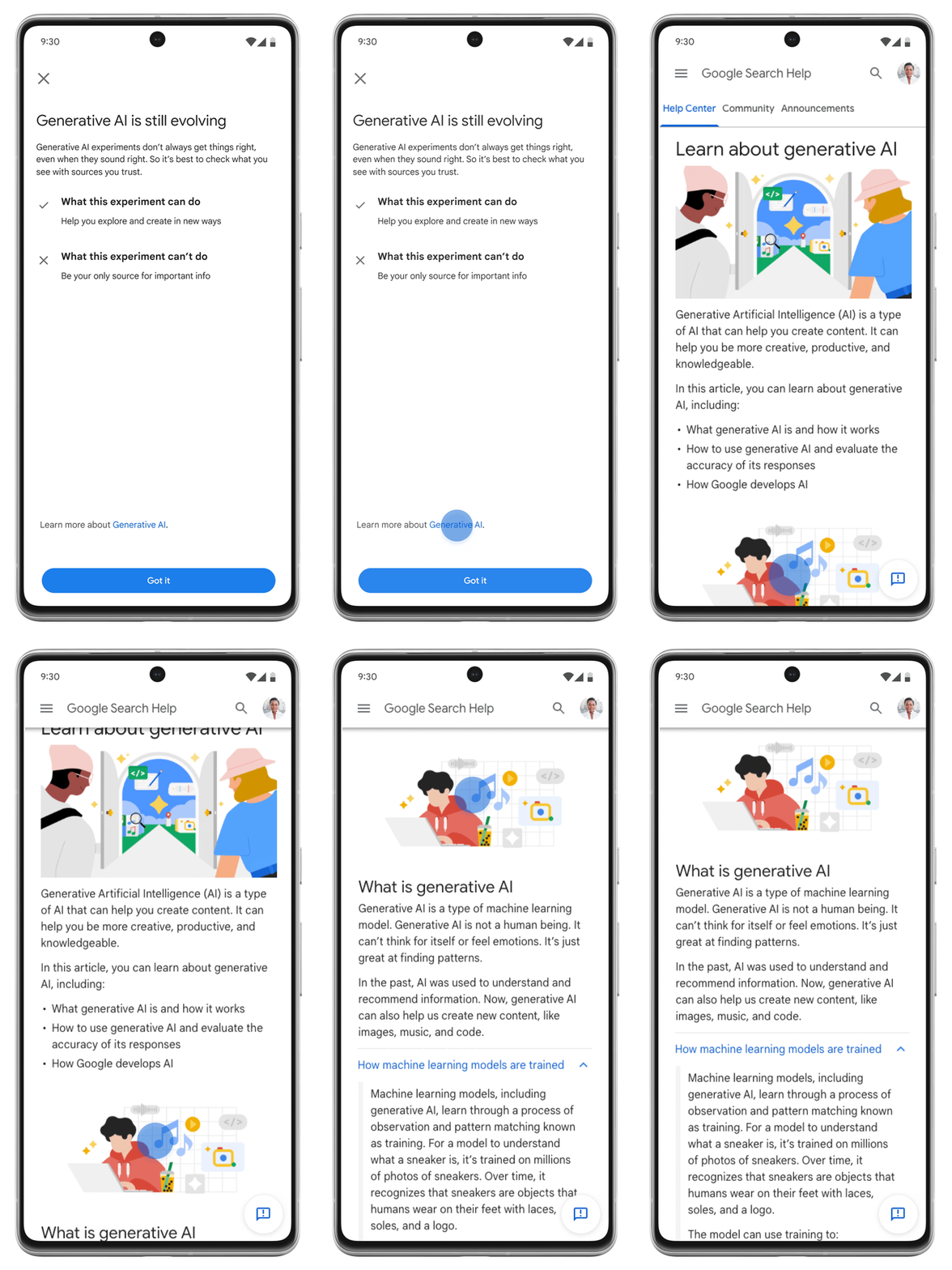
**Our take:**
- Google is still deciding what to do with SGE, but if it thinks AI will attract teens, we'll see it remain in the SERP.
- Bard may wind up being a more compelling "conversational search" experience than SGE.
- YouTube deserves more examination as a local discovery tool. We don't really know who's using it and for what exactly.
## Recent Analysis
- **Near Memo episode 132**: [Google Business Profile Call History returns, BrightLocal's 'Local Trust Report,' and SGE: where to now](https://www.nearmedia.co/ep-132-gbp-call-history-returns-local-trust-report-sge-where-now/)?
## Short Takes
- EU **Google local listing** [removal process](https://support.google.com/local-listings/answer/9851100?hl=en&ref=nearmedia.co) FAQs.
- Case study: **local linkbuilding** [boosts organic, not Pack rankings](https://twitter.com/darrenshaw%5F/status/1712915305310171579??ref=nearmedia.co).
- Google [testing](https://www.seroundtable.com/google-search-people-also-buy-from-36187.html?ref=nearmedia.co) "**People also buy from**" section for online stores.
- **Google** [Discover Feed](https://mspoweruser.com/google-new-desktop-homepage-with-discover-feed/?ref=nearmedia.co) on desktop is return of [iGoogle](https://searchengineland.com/igoogle-personalized-search-and-you-11109?ref=nearmedia.co).
- Why [internal communication issues](https://searchengineland.com/communication-issues-prevent-buy-in-seo-433178?ref=nearmedia.co) impact **SEO success**.
- **NPR** left Twitter 6 months ago, [only saw a 1% traffic decline](https://niemanreports.org/articles/npr-twitter-musk/?ref=nearmedia.co).
- **Google Ads Data Manager** [simplifies access to first party dat](https://searchengineland.com/google-ads-data-manager-first-party-data-433194?ref=nearmedia.co)a.
- **AI dectection tools** [incorrectly labeling](https://www.404media.co/ai-images-detectors-are-being-used-to-discredit-the-real-horrors-of-war/?ref=nearmedia.co) real war images as fake.
- Billionaires shaping **AI policy** [by funding Congressional aides](https://www.politico.com/news/2023/10/13/open-philanthropy-funding-ai-policy-00121362?ref=nearmedia.co).
- Apple's "affordable" **Vision Pro** headset [will still cost a lot](https://www.theverge.com/2023/10/15/23917710/apple-vision-pro-cheaper-no-eyesight-external-display?ref=nearmedia.co).
- Research firm: **ChatGPT-4** [beats all other LLMs](https://www.stateof.ai/2023-report-launch?utm%5Fsource=tldrai) – for now.
- **New Yorker**: the [decline of the social web](https://www.newyorker.com/culture/infinite-scroll/why-the-internet-isnt-fun-anymore?ref=nearmedia.co) began a decade ago.
- Online **D2C brands** [moving in](https://www.pymnts.com/news/retail/2023/d2c-brands-increasingly-take-over-nyc-brick-and-mortar-shops/?ref=nearmedia.co) to empty NYC storefronts.
- Why **Amazon Ads** [better than Google Ads](https://searchengineland.com/amazon-ads-vs-google-ads-ecommerce-433186?ref=nearmedia.co) for e-commerce brands.
Listen to our [latest podcast](https://www.nearmedia.co/memo/).
[](https://nearmedia.co/memo?ref=nearmedia.co)
How can we make this better? Email [us](mailto:gsterling@nearmedia.co) with suggestions and recommendations.
### Ep 132: GBP Call History returns, Local Trust Report, SGE Where now?
URL: https://www.nearmedia.co/ep-132-gbp-call-history-returns-local-trust-report-sge-where-now/
Last updated: 2023-10-13T20:07:16.000Z
**Part 1 starts 00:13 - [GBP Call History’s History - What does it say about Google?](https://youtu.be/u1JwB5Z3YcI?ref=nearmedia.co)**
Google Business Profile Call History has been problematic from the start because it made the business of calling a business more like roulette. When it disappeared after months of barely functioning every thought it had been nuked. But its back. Its chaotic development, its checkered history, the lack of communication around it speaks to all of the things that Google does poorly and why any smart business would not put such a critical piece of infrastructure in Google’s hands.
Segment Reference Articles
[Google Call History Returns](https://www.nearmedia.co/google-call-history-returns-fake-review-incentives-apple-biz-connect-insights/)
[Google Business Profiles Drops Call Tracking Features](https://www.seroundtable.com/google-business-profiles-removes-call-tracking-features-35674.html?ref=nearmedia.co)
**Part 2 starts 8:38 - [Bright Local Local Business Discovery and Trust Report](https://youtu.be/bPQRVLDsGvA?ref=nearmedia.co)**
Brightlocal’s second discovery and trust report surveyed 1100 users in the US and looks at everything from the impact of inaccurate listings to which social sites searchers trust. People still trust Google and Google Maps while trust in Facebook, Yelp and the others is much much less.
Segment Reference Articles
[Apple Users Prefer Google Maps 2:1](https://www.nearmedia.co/local-trust-survey-fake-review-checker-x-dares-eu-to-fine-it)
[Local Business Discovery and Trust Report](https://www.brightlocal.com/research/local-business-discovery-trust-report/?ref=nearmedia.co)
**Part 3 starts 19:57 - [How will Google’s SGE impact local search and what will it deliver?](https://youtu.be/PviYZVc-LgA?ref=nearmedia.co)**
Google’s Bard strategy of taking generative AI as a search tool into their productivity and assistant tool makes sense. But what of the Search Generative Experience in search? The test is coming to end in December and we ask exactly what can we expect and what should we think about as it relates to local search?
Segment Reference Articles
[SGE Lite](https://x.com/glenngabe/status/1710633131567448540?s=20&ref=nearmedia.co)
[Bard can now connect to your Google apps and services](https://blog.google/products/bard/google-bard-new-features-update-sept-2023/?ref=nearmedia.co)
### Google Shuns Spotlight, CA Delete Act, Netflix House
URL: https://www.nearmedia.co/google-shuns-spotlight-ca-delete-act-netflix-house/
Last updated: 2023-10-13T18:39:12.000Z
### Google Tried to 'Kneecap' Spotlight
The Google antitrust trial started a month ago. And while the war in Israel has now "pushed it off the front page," plenty of news is still coming out. As a refresher, there are two broad aspects to the case. One is about Google's ad practices. The other is focused on Google's "default search" relationships with Apple and others. Evidence has suggested Google quietly [manipulates ad pricing](https://searchengineland.com/google-quietly-increases-ad-prices-targets-432155?ref=nearmedia.co) to hit revenue targets, among other questionnable behaviors. Testimony also suggested that Google was very threatened by Apple’s Spotlight search. According to Yelp's TWIGA newsletter, emails introduced at trial argue "Google actively schemed to prevent Apple from diverting queries away from Google ... \[and\] later added language to the 2016 ISA amendment which prevents Apple from further expanding the suggestion search feature." According to financial analysts, the Google default payments to Apple [are almost $20B per year](https://www.theregister.com/2023/10/10/google%5Fpays%5Fapple%5F18%5F20%5Fclaims%5Fbernstein/?ref=nearmedia.co) – or roughly "14-16 percent of Apple's annual operating profits." That's not money Apple could quickly replace with its own search offering.
**Our take:**
- The trial is broken into liability and remedies phases. Google won't be broken up but it will probably be found liable on some of the claims.
- The ad side is more complex, but if default search is judged to be anti-competitive, it means the end of the Apple-Google deal at a minimum.
- People would then need to choose a search engine. As we've argued, most would simply choose Google; Apple would be out the $20B.
### Delete Act Impact
Little attention is being paid to California's [just-passed "Delete Act](https://iapp.org/news/a/california-governor-signs-ca-delete-act-into-law/?ref=nearmedia.co)." Governor Gavin Newsom signed it into law this week, with national implications. Most marketers no nothing about it but it will affect digital marketing in a potentially major way. The [Delete Act](https://leginfo.legislature.ca.gov/faces/billTextClient.xhtml?bill%5Fid=202320240SB362&ref=nearmedia.co) is connected to the California Consumer Privacy Act (2018) and California Privacy Rights Act (2020). In short it will create a way for California residents – in a single place online and a few clicks – to intiate deletion of their personal data from the hundreds of data brokers operating in the state. Those data brokers, third parties that capture and sell consumer data, will have to process data deletion requests within 45 days. The game changer is that this can be done in one place, at one time and it's free to consumers. Critics and opponents warn of uninteded consequences. Data brokers must affirmatively check for updates every 45 days. There will be regular audits and compliance reporting requirements. This is a big win for consumer privacy. But much remains to be clarified from an operational standpoint.

Source: DALL-E 3
**Our take:**
- Barring lawsuits, data brokers won't avoid/escape this law. Smaller data brokers will likely go out of business.
- This is unlikely to affect Google or Meta or large networks that use their own user data for ad-targeting purposes. It won't affect first party data.
- The cookiepocalypse and stricter privacy laws are putting the squeeze on digital marketers and ad networks that rely on third party data.
### Netflix House, Google Stores
Netflix is planning to open physical stores. They'll be called "Netflix House" and feature show merch, food and other "experiences." Expected to launch in 2025 in multiple US locations, they'll expand to international markets thereafter. This is an extension of the [Netflix online shop](https://www.netflix.shop/?ref=nearmedia.co), which launched [in 2021](https://about.netflix.com/en/news/introducing-netflix-shop?ref=nearmedia.co). The company – notice I didn't use the obnoxious term "streaming giant" – has already experimented with pop-up shops. The stores could flop but it's a smart strategy that could help further build the Netflix brand and keep it ahead of online-only competitors. Apple's 500+ physical stores have been a critical part of its success since 2001\. By comparison, Microsoft's retail experiment failed. However, Google just opened a new "[Google Visitor Experience](https://blog.google/inside-google/company-announcements/google-office-tour/?ref=nearmedia.co)" at its CA headquarters. It has retail space, a cafe and places for meetings and events. Separately, Google has [three retail locations](https://support.google.com/store/answer/10840716?hl=en&ref=nearmedia.co), the first of which [opened in New York in 2021](https://blog.google/products/devices-services/google-store-nyc-opening/?ref=nearmedia.co). The fact that Google has only opened three stores in two years suggests ambivalence about the strategy.
Source: Google
**Our take:**
- Physical retail for online brands carries cost and risk, but if done well it pays big dividends – as Warby Parker, among others, shows.
- Years ago (mid-2000s) I pitched Google on the idea of a Google Store (before Android), to provide marketing education/support to SMBs.
- This remains a missed opportunity for Google for multiple reasons. Google appears to believe it doesn't need stores, however.
## Short Takes
- **Microsoft** $69 billion acquisition of Activision [to close](https://news-xbox-com.cdn.ampproject.org/c/s/news.xbox.com/en-us/2023/10/13/xbox-activision-blizzard/amp/?ref=nearmedia.co).
- **Google SGE** now has [AI image-generator](https://blog.google/products/search/google-search-generative-ai-october-update/?ref=nearmedia.co).
- No more [indented search results](https://twitter.com/searchliaison/status/1712543851225952437?ref=nearmedia.co), says **Google**.
- **Google** tests [enhanced recipe search results](https://www.seroundtable.com/google-new-recipe-search-interface-36038.html?ref=nearmedia.co).
- Google insiders reportedly [question value/utility](https://www.bloomberg.com/news/articles/2023-10-11/google-insiders-question-usefulness-of-bard-ai-chatbot?ref=nearmedia.co#xj4y7vzkg) of **Bard**.
- Ad buyers [question inventory quality](https://www.adweek.com/media/buyers-question-inventory-quality-transparency-on-googles-ai-powered-performance-max/?ref=nearmedia.co) of **Google's PMax**.
- Basic "**Artificial General Intelligence**" [has arrived](https://www.noemamag.com/artificial-general-intelligence-is-already-here/?ref=nearmedia.co).
- Humane's "**AI [pin](https://hu.ma.ne/?ref=nearmedia.co)**" [won't need a phone](https://www.lowpass.cc/p/humane-ai-pin-cellular-mvno-sam-altman?ref=nearmedia.co) to operate.
- **Vendasta** [raises](https://www.vendasta.com/newsroom/vendasta-raises-20m-to-fuel-strategic-acquisitions/?ref=nearmedia.co) $20 million for more SMB SaaS acquisitions.
- People [bought lower-cost items](https://www.numerator.com/prime-big-deal-days?ref=nearmedia.co) during **Prime Big Deal Days**.
- **Threads** now has [free edit button](https://9to5google.com/2023/10/12/threads-edit-button/?ref=nearmedia.co), [shies away](https://techcrunch.com/2023/10/11/instagram-head-says-threads-is-not-going-to-amplify-news-on-the-platform/?ref=nearmedia.co) from X replacement.
- EU [opens probe](https://ec.europa.eu/commission/presscorner/detail/en/IP%5F23%5F4953?ref=nearmedia.co) into **Twitter/X** content moderation, warns Meta.
Listen to our [latest podcast](https://www.nearmedia.co/memo/).
[](https://nearmedia.co/memo?ref=nearmedia.co)
How can we make this better? Email [us](mailto:gsterling@nearmedia.co) with suggestions and recommendations.
### Local Trust Survey, Fake Review Checker, X Dares EU
URL: https://www.nearmedia.co/local-trust-survey-fake-review-checker-x-dares-eu-to-fine-it/
Last updated: 2023-10-11T19:30:21.000Z
### Apple Users Prefer Google Maps 2:1
BrightLocal [released](https://www.brightlocal.com/research/local-business-discovery-trust-report/?ref=nearmedia.co) its second "Local Business Discovery and Trust Report," polling 1,100 on a range of questions, including how many use social media for local lookups. Among the many findings, Hotels is the vertical where people care most about (customer) photos. Top social sites for local discovery are: 1) Facebook, 2) YouTube, 3) Instagram and 4) TikTok. YouTube is the most trusted, then Instagram. A majority (56%) are seeing bad listings several times a year, and 30% to 40% (depending on the error) monthly. Nearly half of users (48%) suggest edits in those cases. As expected, users want accuracy: hours, contact and address info – and positive reviews. Too many bad reviews (or listings errors) will kill trust. If users discover bad address info, they 1) call the business, 2) look up the address elsewhere, 3) turn to a competitor. Almost two-thirds (62%) say they'd avoid a business with flawed listings. And 51% report seeing fake listings "once or twice a year," 23% monthly. Among local search sites, Google is the most trusted, then Google Maps and websites. Finally, Apple/iPhone users prefer Google Maps 2:1 over Apple Maps; a sizeable 15% use "others."
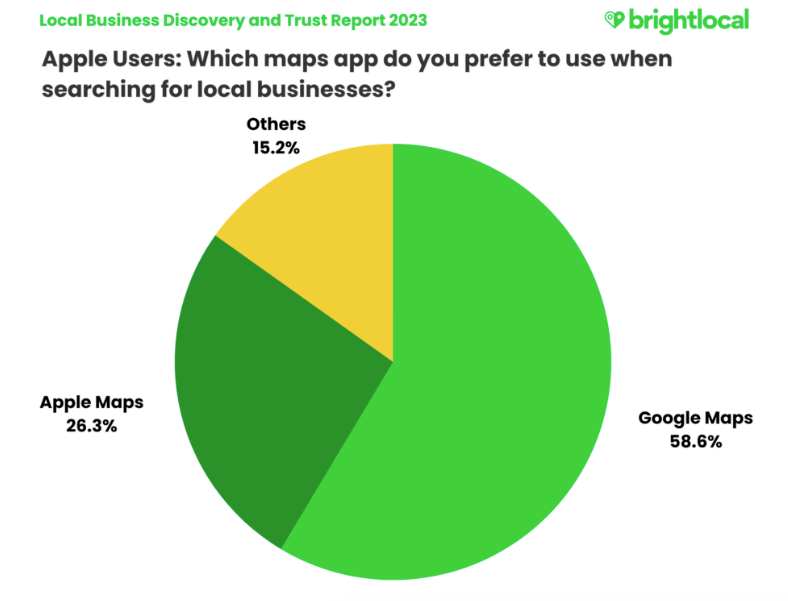
Source: BrightLocal
**Our take:**
- There are few big surprises here; consumers fundamentally want correct information and positive reviews to trust a business.
- Websites matter: 36% are CTR to local sites with high frequency (several times a month). Another 37% are doing it regularly, though less often.
- No surprise that Google is the most trusted local discovery tool (by 66%), but there are hints that others are encroaching, including social.
### Firefox Fake Review Checker
Fakespot was an early, innovate tool/plug-in to identify fake reviews [focused mostly on Amazon](https://martech.org/study-finds-61-percent-of-electronics-reviews-on-amazon-are-fake/?ref=nearmedia.co). (Amazon always disputed its findings.) It offers a letter grade to indicate review authenticity (see below). It was most often used as a chrome plug-in but couldn't quite generate the revenue (or funding) to survive independently. So it [sold itself to Mozilla](https://blog.mozilla.org/en/mozilla/fakespot-joins-mozilla-firefox-shopping-announcement/?ref=nearmedia.co) earlier this year, which is now [integrating it into the Firefox browser](https://mspoweruser.com/firefox-review-checker-fake-reviews/?ref=nearmedia.co). Fakespot is being rebranded as Firefox Review Checker and will reportedly be released next month. When it announced the acquisition Mozilla said, "The addition of Fakespot’s capabilities will make Firefox customers the best equipped to cut through deceptive reviews and shop with the confidence of knowing what they’re buying is high-quality and authentic." In addition to Amazon, it can also detect review fraud on several other retailer websites. There's no word on whether Mozilla will monetize the tool in any way through data, ads or fees. But it should give the company a stronger argument for Firefox, which is also committed to data privacy.
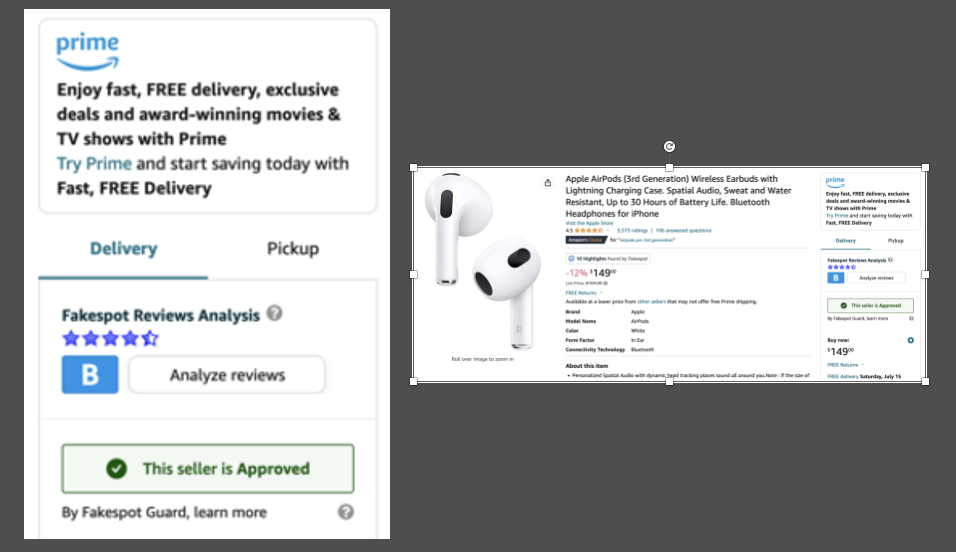
Source: Fakespot-Mozilla
**Our take:**
- The Fakespot UX was always clunky. And its coverage is limited, although Amazon is there. Firefox should expand/improve it.
- Awareness of review fraud [is growing](https://www.nearmedia.co/review-fraud-crisis-stores-drive-online-sales-yelp-reserves-with-google/), which could prompt some people to switch, although the Chrome plug-in still exits.
- 60% are [concerned about data privacy on Google](https://www.nearmedia.co/apple-search-redux-assistant-bard-google-ads-useful-50/). Firefox doesn't have the resources for a full-blown anti-Chrome campaign, but it needs one.
### X First Test of EU's Resolve
Elon Musk [gutted](https://apnews.com/article/voting-rights-elon-musk-twitter-inc-technology-dd4273dbda5b15343753f56c1f43a659?ref=nearmedia.co) the teams at Twitter responsible for policing content and disinformation. Accordingly, there's been a dramatic [rise in hate speech](https://apnews.com/article/elon-musk-lawsuit-cchd-twitter-x-hate-speech-extremism-434a80631f9e76833ee30387c04dd290?ref=nearmedia.co) and misinformation on the platform – often [amplified by Musk](https://thehill.com/policy/technology/4248175-how-musks-x-is-amplifying-misinformation-about-israel-and-gaza/?ref=nearmedia.co) himself. In the wake of the tragic events unfolding in Israel and Gaza, disinformation is [flooding the platform](https://www.wired.com/story/x-israel-hamas-war-disinformation/?ref=nearmedia.co). Now the EU [is warning Musk to address it](https://twitter.com/ThierryBreton/status/1711808891757944866??ref=nearmedia.co) quickly or face potential financial penalties. The recently adopted EU [Digital Services Act](https://www.nearmedia.co/dsa-kicks-in-social-media-hive-mind-bopis-32/) is intended, among other things, to police counterfeiting, fraud and disinformation. In the past Musk has pledged to abide by its requirements, but his behavior has defied them in practice. X now appears in violation of the DSA (though some of this content might be tolerated under the US First Amendment). This becomes the first big test of the EU's resolve and how aggressive it wants to be with DSA enforcement vs US tech companies. It has not been especially agressive with GDPR privacy penalities to date. But this case will send a message to other large tech companies about how serious the EU is about content moderation.
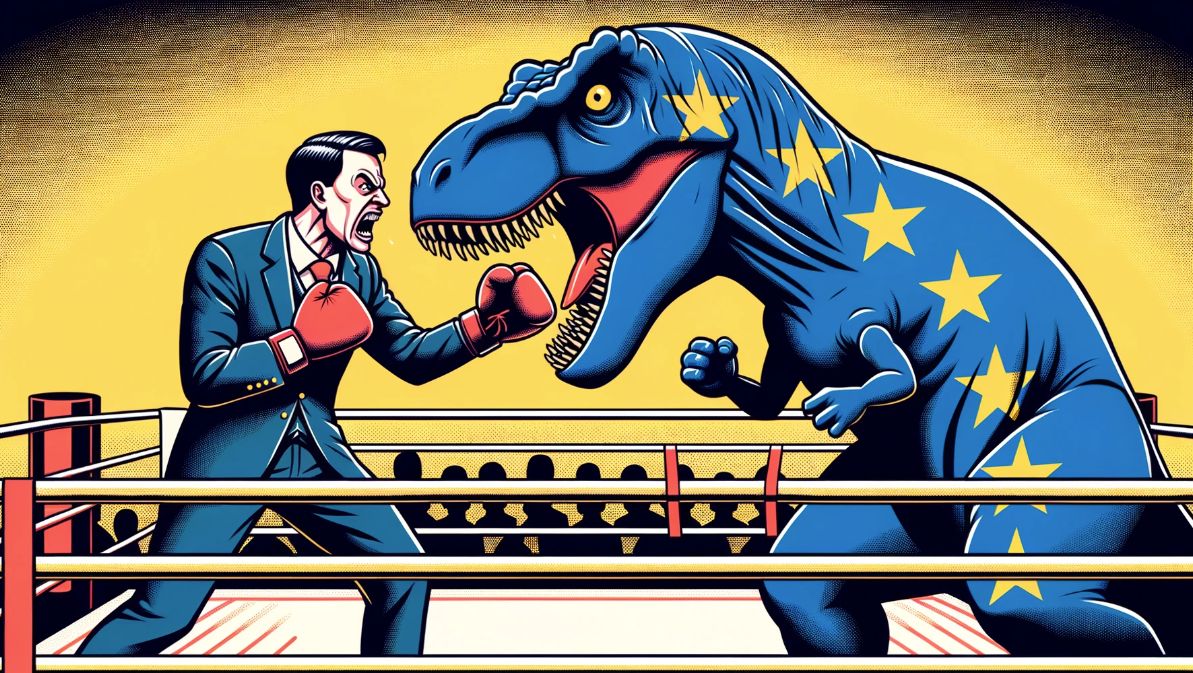
Source: DALL-E 3
**Our take:**
- Fines could be "up to 6%" of global revenues in serious cases. In 2022, Twitter/X's estimated revenue was $4.4B.
- That would mean a maximum fine of $264M, which would be a major blow. Any initial fine is probably going to be less.
- Given his defiant attitude, it's unlikely Musk will fully comply with the DSA rules, setting up repeated confrontations with Europe.
## Recent Analysis
- **Near Memo episode 131**: [Bulk Dashboard comeback?, GBP listings cleanup, appetite for Google search alternatives](https://www.nearmedia.co/ep-131/)
## Short Takes
- **Google [now testing](https://twitter.com/glenngabe/status/1710633131567448540??ref=nearmedia.co)** "SGE Lite."
- **Google Lens** can trigger an [SGE AI snapshot](https://www.seroundtable.com/google-search-generative-experience-google-lens-36181.html?ref=nearmedia.co).
- **Google [Extended](https://blog.google/technology/ai/an-update-on-web-publisher-controls/?ref=nearmedia.co)** controls [won't block SGE](https://searchengineland.com/google-extended-does-not-stop-google-search-generative-experience-from-using-your-sites-content-433058?ref=nearmedia.co) use of your content.
- **Google** localized results [get expandable GBP refinements](https://www.seroundtable.com/google-local-results-expandable-refinements-36177.html?ref=nearmedia.co).
- **Google** hopes [Demand Gen campaigns](https://blog.google/products/ads-commerce/demand-more-from-social-with-ai-powered-ads/?ref=nearmedia.co) can beat social ads.
- **Bing**: [how LLMs could improve search relevance](https://arxiv.org/abs/2309.10621?ref=nearmedia.co) with labeling.
- $32.5M **Sonos patent victory** over Google [reversed](https://www.reuters.com/legal/litigation/google-wins-reprieve-325-mln-verdict-sonos-patent-fight-2023-10-09/?ref=nearmedia.co).
- **Walmart** [integrating](https://corporate.walmart.com/news/2023/10/06/walmarts-latest-tech-powered-experiments-aim-to-make-shopping-easier-and-more-convenient?ref=nearmedia.co) gen-AI into search, shopping experiences.
- Overstock-**Bed Bath & Beyond**'s website merger [SEO analysis](https://searchengineland.com/seo-impact-overstock-bed-bath-beyond-website-merger-432995?ref=nearmedia.co).
- **ChatGPT subscriptions** now have [$55M run rate](https://techcrunch.com/2023/10/09/chatgpts-mobile-app-hit-record-4-58m-in-revenue-last-month-but-growth-is-slowing/?ref=nearmedia.co) but growth slowing.
- The [debate](https://www.seroundtable.com/google-deletes-queries-replace-36165.html?ref=nearmedia.co) over alleged **Google query manipulation**.
- **Do Not Call for Data**: CA Gov. Newsom [signs "Delete Act](https://www.latimes.com/california/story/2023-10-10/newsom-bill-delete-online-personal-data?ref=nearmedia.co)."
- **Google** [testing AI to optimize traffic lights](https://blog.google/outreach-initiatives/sustainability/google-ai-reduce-greenhouse-emissions-project-greenlight/?ref=nearmedia.co).
Listen to our [latest podcast](https://www.nearmedia.co/memo/).
[](https://nearmedia.co/memo?ref=nearmedia.co)
How can we make this better? Email [us](mailto:gsterling@nearmedia.co) with suggestions and recommendations.
### Google Call History Returns, Fake Review Incentives, Apple Biz Connect Insights
URL: https://www.nearmedia.co/google-call-history-returns-fake-review-incentives-apple-biz-connect-insights/
Last updated: 2023-10-11T16:18:39.000Z
### GBP Call Tracking Back from the Wilderness
Daniel Boone allegedly once said: "I have never been lost, but I will admit to being confused for several weeks." That also seems to be the case with the Google Business Profile (GBP) [call history/tracking feature](https://support.google.com/business/answer/9688285?sjid=5801522620548105591-NA&ref=nearmedia.co#About%5FGoogle%5Fforwarding%5Fnumber). Apparently [discontinued](https://www.nearmedia.co/apple-maps-discovery-gbp-call-history-is-history-gbp-forum-insights/) in July, it now appears [available again](https://support.google.com/business/answer/9688285?visit%5Fid=638322848006170085-728085982&p=call%5Fhistory&rd=1&ref=nearmedia.co) in all its "experimental" glory. If not currently active, you select the "Call" button in the GBP search interface and then turn it on. If it's already on, you can see the history and phone numbers of the callers. Exactly why it was "discontinued" for two months is not clear. During that time users didn't see the button in the search interface and were [unable to turn it off](https://support.google.com/s/community/forum/1081366/search/query%3Dreplier%253Ame%2B%2522call%2Bhistory%2522/thread/228346438?ref=nearmedia.co). Because it relied on a limited pool of tracking numbers, assigned and reassigned, calls often went to [the wrong businesses](https://support.google.com/s/community/forum/1081366/search/query%3Dreplier%253Ame%2B%2522call%2Bhistory%2522/thread/175518053?ref=nearmedia.co). The idea of providing call tracking and better metrics is a good one; however, the implementation has left a lot to be desired. Perhaps during its two month "vacation," GBP call tracking has gotten its act together. You have to wonder, though, what business in their right mind would trust Google with a business critical feature like this ever again.
****Our take:**
- During the two month hiatus, Google left users half in and half out of the product with no way to turn if off or get metrics.
- In characteristic Google fashion, there were no end user communications about what was going on or why.
- If the product is finally fixed, good. But Google owes GBP users more than turning it off and on randomly – a major breach of trust.
### Does Google Have 'Incentives' to Ignore Fake Reviews?
💡
“Some platforms may have mixed incentives to deal effectively with the problematic reviews and, despite some platforms purporting to take enforcement of problematic reviews seriously, fake and deceptive reviews continue to flourish on those very platforms” - FTC Proposed Rule
The FTC's statement above came in their . Google clearly took offense and [addressed the issue at length](https://www.nearmedia.co/content/files/2023/10/FTC-2022-0070-0034%5Fattachment%5F1.pdf) in their official comments, encouraging the FTC to go after review buyers and sellers instead. Google said it understands "fake reviews undermine users' confidence in the information available on our platform." It went on to [assert](https://www.nearmedia.co/content/files/2023/10/FTC-2022-0070-0034%5Fattachment%5F1.pdf), "The FTC should be focused on the bad actors perpetuating fake reviews, not the platforms working hard to stop them." If Google truly believed fake reviews (and listings) hurt trust, why did they ignore the issue for 15 years? Clearly, Google made the choice to not focus on these issues in any substantial way [until recently](https://www.nearmedia.co/monday-newsletter/). Disclosures in the Google antitrust trial clearly show its motivations go beyond "what's best for the user." I [used to think](https://streetfightmag.com/2017/05/15/the-current-state-of-google-maps-fake-news-fake-reviews/?ref=nearmedia.co) Google was unwilling to apply necessary resources to an unsexy problem. And while I don't think there were direct economic incentives for Google to look the other way, there were probably anti-competitive reasons for doing so.

Source: Hormel
****Our take:**
- Google's playbook has been to throw everything at competitors: for example, adding listings to Maps to compete with Mapquest and maps to listings to compete with YPs.
- The same applies to reviews. Review volume is everything and fake reviews help in that battle. Given that [reviews are infrequently read](https://www.nearmedia.co/ep-123/), they add to the patina of dominence without risking Google's reputation.
- Even allowing listing spam could be viewed as a technique to gain business' attention to the benefits of local marketing on Google.
### Apple Maps' Peer Group Benchmarks
Apple Maps is now providing several new Insight metrics for some but not all locations. Called Peer Group Benchmarks, this new metric allows businesses, in theory, to compare themselves to similar businesses by search volume, photo views, photo interactions and location views. Unfortunately, Apple makes no effort to define or describe a "peer." Is it a business of the same size, the same category, in the same geography? Nor do they reveal whether these are the results of brand or category searches. It does somewhat more with photos. Apple suggests, based on the number of photos you have, how much increased engagement you'd see with more. Apple says that Place Cards with photos get over 10 times more engagement, and having 15+ photos results on average in 70% more engagement. Clearly Apple is attempting to get businesses more engaged with their listings and, as part of that, to add more photographs.
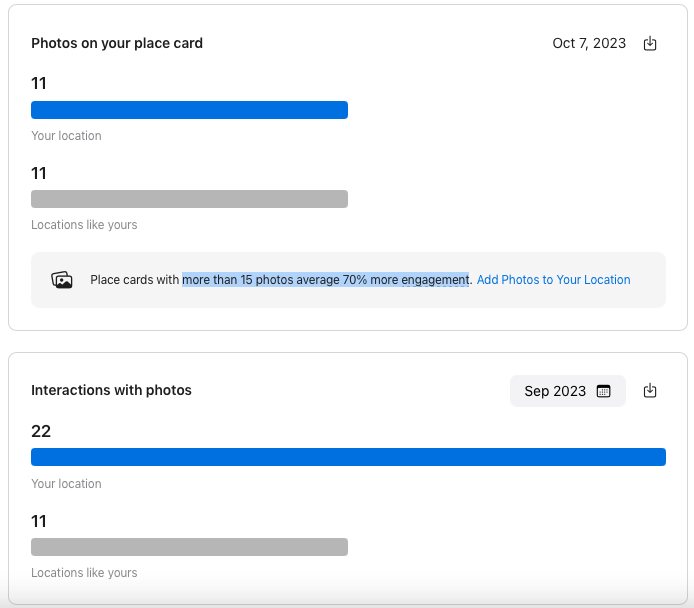
Source: Apple Business Connect
****Our take:**
- Apple is committed to bringing location-based businesses into the world of Apple Maps and attempting to offer some (albeit limited) benefits.
- This is a minor, incremental change, like many of Apple's changes. But it does reflect they're working towards a longer term goal.
- While Apple is distant [second in driving local traffic](https://www.nearmedia.co/bing-is-4-state-of-digital-agencies-ai-and-copyright/), Maps could play an important role in spatial computing, on a future wearable or in-car.
## Recent Analysis
- **Near Memo episode 131**: [Bulk Dashboard comeback?, GBP listings cleanup, appetite for Google search alternatives](https://www.nearmedia.co/ep-131/)
## Short Takes
- GBP finally [rolling](https://twitter.com/darrenshaw%5F/status/1709959852188168611?s=12&t=o-uoEcZmsD3rULHUqaXUFA&ref=nearmedia.co) out ability to edit **social profiles** broadly, although [not](https://support.google.com/s/community/forum/1081366/thread/232780005?ref=nearmedia.co) to all profiles. It has [come](https://localsearchforum.com/threads/new-adding-social-media-links-to-gbp-new-info-added-to-google-support-page.60549/?ref=nearmedia.co), [gone](https://x.com/TheSocialDude/status/1699490894486069587?s=20&ref=nearmedia.co) and [come](https://twitter.com/darrenshaw%5F/status/1709959852188168611?s=12&t=o-uoEcZmsD3rULHUqaXUFA&ref=nearmedia.co) again over the past 60 days.
- Here's how [to close or remove](https://www.sterlingsky.ca/close-or-remove-google-business-profile/?ref=nearmedia.co) a **Google Business Profile**.
- **Yelp** [asks federal court](https://www.techdirt.com/2023/10/03/yelp-asks-court-to-stop-texas-ag-ken-paxton-from-suing-them-for-warning-users-that-crisis-pregnancy-centers-are-scams/?ref=nearmedia.co) to stop Texas suit to block "crisis pregnancy center" consumer warnings.
- Google [testing](https://www.seroundtable.com/google-search-popular-stores-category-36125.html?ref=nearmedia.co) a section titled "**popular stores**" for products available locally.
- While GM [is abandoning](https://www.techradar.com/vehicle-tech/hybrid-electric-vehicles/what-gm-abandoning-apple-carplay-and-android-auto-means-for-you?ref=nearmedia.co#:~:text=General%20Motors%20recently%20caused%20quite,received%20would%20be%20an%20understatement.) **Apple** **CarPlay**, Porsche is [embracing](https://arstechnica.com/cars/2023/10/as-some-carmakers-run-from-apple-carplay-porsche-embraces-it/?ref=nearmedia.co) it.
- **Local SEO**: [17 Ways to Use Your Hours](https://www.localvisibilitysystem.com/2023/09/28/business-hours-and-local-seo-17-ways-to-use-your-hours-for-maximum-boom/?ref=nearmedia.co) for Maximum Boom.
- **Google SGE** [continues to evolve](https://x.com/glenngabe/status/1710633131567448540?s=20&ref=nearmedia.co), company testing "SGE lite."
Listen to our [latest podcast](https://www.nearmedia.co/memo/).
[](https://nearmedia.co/memo?ref=nearmedia.co)
How can we make this better? Email [us](mailto:gsterling@nearmedia.co) with suggestions and recommendations.
### Ep 131: Bulk Dashboard comeback?, GBP listings cleanup, appetite for Google alternatives
URL: https://www.nearmedia.co/ep-131/
Last updated: 2023-10-09T04:45:08.000Z
**Part 1 starts 00:13 - [Will GBP rescue the multi-location Business Profile Manager dashboard from the trash bin?](https://youtu.be/t%5FxHlRmne-c?ref=nearmedia.co)**
Google recently added a new functionality to the Business Profile Manager dashboard: they upgraded the bulk Insights download to match the data points available in the API and the Google Maps editing interface. Is this an indication that Google is finally dusting off the dashboard and is going to make it fit for service?
Segment Reference Articles:[ Bulk Dashboard Comeback?](https://www.nearmedia.co/monday-newsletter/)
**Part 2 starts 7:14 - [GBP listing cleanup & more rigorous verification → less fraud but more work for honest businesses](https://youtu.be/nzLI1BpGD5k?ref=nearmedia.co)**
Over the past 15 years Google largely allowed fake businesses and fake reviews to persist in the Google Maps index. Starting 2 years ago Google started, finally, cleaning up listings and reviews. They have subsequently implemented more rigorous verification standards
Segment Reference Articles [Google's Listings Clean-up](https://www.nearmedia.co/monday-newsletter/)
**Part 3 starts 14:30 -**[ **If Apple builds it (a search engine) will they come (from Google)?**](https://youtu.be/aWA0F1dmmD0?ref=nearmedia.co)
Roughly half of consumers are not satisfied with Google search. Apple, in recent testimony, claims to not be interested in building a search engine because Google is so good. And yet rumors persist that Apple has been doing the do to actually build a search engine. Google meanwhile with Bard and Google Assistant and hardware upgrades is trying to capitalize on the 45% that are Google devotees.
Segment Reference Articles [Apple Search Redux, Assistant + Bard, Google Ads Useful (for 50%)](https://www.nearmedia.co/apple-search-redux-assistant-bard-google-ads-useful-50/)
### Nadella Slams Google, Ads vs. Fees, Trust Sells
URL: https://www.nearmedia.co/nadella-slams-google-trust-sells-punitive-ads/
Last updated: 2023-10-06T20:45:09.000Z
### MSFT: 'Google Blocked Bing'
Earlier this week Microsoft CEO Satya Nadella [testifed](https://www.nytimes.com/2023/10/02/technology/microsoft-ceo-testifies-google-search.html?ref=nearmedia.co) at the Google antitrust trial. The irony of the companies' role reversal should be lost on no one. Years ago, Google was the sympathetic upstart to Microsoft's "evil empire," which in 1999 [was nearly broken up](https://en.wikipedia.org/wiki/United%5FStates%5Fv.%5FMicrosoft%5FCorp.?ref=nearmedia.co). That of course never happened after the company was partly vindicated on appeal, while agreeing to change some of its business practices. Following Steve Ballmer's disastrous tenure as CEO, Nadella has completely transformed Microsoft's image. And despite being one of the most valuable companies in the world, it's now the underdog – at least in search and mobile. Another irony: it was competition from Google that helped humble Microsoft, not antitrust. Highlights of Nadella's testimony, supporting the government's case against Google, [include](https://www.theverge.com/2023/10/2/23900233/microsoft-ceo-satya-nadella-us-google-antitrust-trial-testimony?ref=nearmedia.co): "nobody changes their default search engine"; default agreements kept Bing from gaining access to enough user data to make it more competitive; and Nadella fears the same pattern will repeat with AI training data (exclusive deals that lock competitors out).

Source: DALL-E 3
****Our take:**
- Google's persistent comeback in this trial so far has been: our products are just better, others' are weaker.
- When questioned, Google has hidden behind the cliché, "the competition is just a click away" – for at least a decade.
- Reality is in-between: Google does anti-competitive things but its product is better (or has been), partly because of its agressive behavior.
### Ads vs. Subscription Fees
Netflix is [planning to raise prices](https://www.wsj.com/business/media/netflix-price-increase-actors-strike-792de9be??ref=nearmedia.co) again. And soon it will be even more expensive to watch ad free. Other streaming channels, [Prime](https://www.aboutamazon.com/news/entertainment/prime-video-update-announces-limited-ads?ref=nearmedia.co), [Discovery+](https://www.hollywoodreporter.com/business/digital/discovery-plus-price-hike-ad-free-tier-1235607360/?ref=nearmedia.co), [Disney+ and Hulu](https://www.cnet.com/tech/services-and-software/disney-plus-to-get-price-hike-but-you-can-save-on-ad-based-tier/?ref=nearmedia.co), are also boosting ad-free tier prices. While the companies speak of production costs, they also hope to push people into ad-supported tiers, partly to reduce "subscription fatigue" churn ([high](https://www2.deloitte.com/us/en/insights/industry/technology/digital-media-trends-consumption-habits-survey/summary.html?ref=nearmedia.co)), while capturing more revenue from anti-ad "holdouts." The streamers also see a significant revenue opportunity in ads as they try to satisfy Wall Street's insatiable appetite for quarterly growth. What's emerging is not unlike an airline seat-class system; it will be increasingly expensive to enjoy the best (ad-free) experience. Enshittification [in process](https://www.communication-generation.com/enshitification/?ref=nearmedia.co). Meanwhile, social media companies are increasingly teeing up subscription fees, in some cases to address stricter consent-based, data-privacy rules in Europe. For example, Meta [is proposing](https://www.wsj.com/tech/meta-floats-charging-14-a-month-for-ad-free-instagram-or-facebook-5dbaf4d5?ref=nearmedia.co) the equivalent of $14 per month for ad-free Facebook and $17 for both Facebook and Instagram. They're doing this, manipulatively, so they don't need to alter their systems: pay or consent to targeting. Separately, as Twitter's revenues have [fallen off a cliff](https://www.reuters.com/technology/us-ad-revenue-musks-x-declined-each-month-since-takeover-data-2023-10-04/?ref=nearmedia.co), Musk has tried to impose fees on users – no reach without Twitter Blue – and [floated](https://www.axios.com/2023/09/19/musk-x-twitter-charge-all-users-monthly-subscription-fees?ref=nearmedia.co) charging *[everyone](https://www.bloomberg.com/news/articles/2023-10-05/x-tells-bankers-that-advertisers-are-back-but-spending-less?ref=nearmedia.co)* on the platform.

Source: Bing Image Creator
****Our take:**
- Choice is great. But there's a lot of manipulation going on, as in the Facebook and streaming examples – punitive pricing, forced consent.
- Many marketers argue "ads are valuable content." That's true in a minority of cases. The public generally [doesn't trust advertising](https://news.gallup.com/poll/510641/retail-pharmaceutical-industries-slip-public-esteem.aspx?ref=nearmedia.co).
- The problem with digital advertising is not that it exists – people want free content – but that the platforms are targeting without consent.
### Trust Improves Revenue
There's often a conflict in marketing departments between investing in brand or performance marketing. The two are not mutually exclusive, in theory, but often are in practice, as quarterly targets take budgetary priority over longer-term reputation building. Of course these are abstract generalizations. But it's a fact that trusted brands have [stronger long-term revenues](https://www.pwc.com/us/en/library/trust-in-business-survey-2023.html?ref=nearmedia.co), higher loyalty, lower customer acquisition costs and, generally, an easier time recruiting employees. One reason is better word of mouth, which also translates into brand search queries. Consumers are often willing to pay more – [46% more in a retail context](https://explore.forter.com/2023trustpremiumreport/p/1?ref=nearmedia.co) – when they trust a brand. Apple and Amazon are top-of-mind [examples](https://brandkeys.com/wp-content/uploads/2020/11/Press-Release-2023-Loyalty-Leaders.pdf?ref=nearmedia.co) of trusted brands with incredible loyalty. Telsa is another (although [that's changing](https://www.axios.com/2023/05/24/tesla-reputation?ref=nearmedia.co)). Caveat: Amazon has done shady things ([here](https://www.ftc.gov/news-events/news/press-releases/2023/06/ftc-takes-action-against-amazon-enrolling-consumers-amazon-prime-without-consent-sabotaging-their?ref=nearmedia.co), [here](https://www.theverge.com/2023/10/3/23901840/amazon-project-nessie-algorithm-antitrust-ftc-complaint?ref=nearmedia.co)), which so far haven't significantly hurt its brand (but see [review fraud](https://www.nearmedia.co/review-fraud-crisis-stores-drive-online-sales-yelp-reserves-with-google/)). Trust is the core of a healthy and successful brand and a function of multiple variables: UX, quality, service, privacy, values. Trust is very challenging to build but quickly and easily lost.
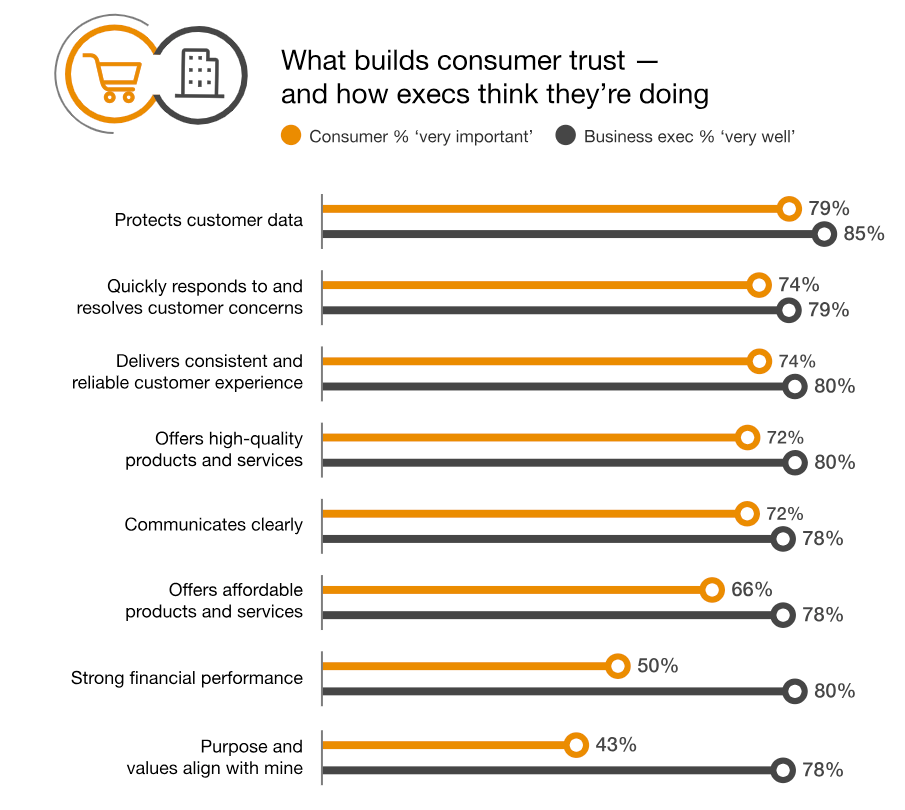
Source: PWC 2023 Trust in Business Survey
****Our take:**
- Look at the chart above: data protection is the top trust factor for consumers.
- Online reviews are a key way for brands to build trust – and the [largest driver of conversions](https://www.nearmedia.co/local-search-ranking-factors-23/) – however, the system is now polluted with fraud.
- Trust will only become more important as scams and fraud persist online. Brand trust is a key to organic growth and conversions.
## Short Takes
- **Google**: HCU, spam update and now another "[core update](https://searchengineland.com/google-releases-october-2023-broad-core-update-432935??ref=nearmedia.co)."
- **GBP** [social profile rollout](https://www.linkedin.com/posts/darrenshawwhitespark%5Fseo-localseo-activity-7115725795305684992-K8OC/??ref=nearmedia.co) seems to be nearly complete.
- Optimizing [product listings/results](https://searchengineland.com/optimize-product-first-results-retail-google-serps-432878?ref=nearmedia.co) on **Google retail SERPs**.
- **Google trial**: restrictive carrier contracts [blocked potential competition](https://www.bnnbloomberg.ca/google-posed-worries-for-wireless-carriers-mulling-search-app-1.1980877?ref=nearmedia.co).
- **Google** [sought to rebut](https://twitter.com/searchliaison/status/1709726778170786297?ref=nearmedia.co) Wired [claim](https://www.wired.com/story/google-antitrust-lawsuit-search-results/??ref=nearmedia.co) it changes queries for clicks.
- **Apple** quietly [buying more AI startups](https://qz.com/apple-may-be-quiet-on-ai-but-it-s-also-the-biggest-buy-1850872570??ref=nearmedia.co) than Google, Microsoft.
- **Twitter**/X's crowdsourced fact checking scaring brands away ([WSJ](https://www.wsj.com/articles/this-is-a-false-advertisement-x-ads-are-being-challenged-by-reader-context-239ef2e6??ref=nearmedia.co)).
- News aggregator **Artifact** [becomes a Twitter competitor](https://medium.com/artifact-news/create-your-own-posts-on-artifact-a702a2c12a4b?ref=nearmedia.co) with posting.
- **Social media traffic** to news sites [nosedives](https://www.axios.com/2023/10/03/social-media-traffic-news-sites-decrease?ref=nearmedia.co).
- **Adobe** to release easy-to-use [AI photo editing tool](https://youtu.be/DtKeu9tSZYA?si=oRN%5FJKbIhyv1Buk7&ref=nearmedia.co) – Stardust.
- **Mailchimp** and **Wix** [in new partnership](https://www.prnewswire.com/news-releases/intuit-mailchimp-and-wix-enter-a-strategic-multi-year-partnership-301945691.html?ref=nearmedia.co).
- Adobe says **holiday e-commerce** [to reach \~$222B](https://www.digitalcommerce360.com/2023/10/05/adobe-holiday-spending-ecommerce-forecast/?ref=nearmedia.co) this year, up 4.8%.
- MSFT getting ready [to close $69 billion](https://www.theverge.com/2023/10/6/23905946/microsoft-activision-blizzard-deal-finalization-timing-cma?ref=nearmedia.co) **Activision Blizzard** deal.
Listen to our [latest podcast](https://www.nearmedia.co/memo/).
[](https://nearmedia.co/memo?ref=nearmedia.co)
How can we make this better? Email [us](mailto:gsterling@nearmedia.co) with suggestions and recommendations.
### Apple Search Redux, Assistant + Bard, Google Ads Useful (for 50%)
URL: https://www.nearmedia.co/apple-search-redux-assistant-bard-google-ads-useful-50/
Last updated: 2023-10-04T18:54:51.000Z
### Apple Search Redux
Google's antitrust trial [seemed to clearly establish](https://www.nearmedia.co/google-25-apple-not-serious-metas-ai-bet/) that Apple isn't going to build its own search engine (and [never took it seriously](https://www.mediapost.com/publications/article/389607/apple-founders-never-wanted-to-build-a-search-engi.html?ref=nearmedia.co)). But barely a week later, Bloomberg's resident Apple watcher Mark Gurman is [out with speculation](https://www.bloomberg.com/news/newsletters/2023-10-01/could-apple-replace-google-with-own-search-engine-it-s-possible-but-unlikely-ln7gywed?ref=nearmedia.co) about ... an Apple search engine. He argues Apple has all the pieces to launch one and *might* do so in the future. He points to a "giant search team" under former Google executive John Giannandrea, which developed "a next-generation search engine" for apps "codenamed Pegasus." Then there's Apple's Spotlight, which the company has slowly been improving. He also cites Apple's web crawler, Applebot, and its ads team, which manages search ads in the App Store. And, of course, there's Siri, which has search capabilities. By combining all these elements, Gurman argues that Apple could launch a general search engine and make more money than Google's $8 billion annual payment. Others have etimated that closer to $15 billion. He submits Apple's search-ads could eventually generate "a revenue stream about the size of the Apple Watch."
****Our take:**
- Contradicting Apple testimony, Gurman says, "For years, Apple Inc. pondered building a search engine that could replace Google."
- AI/LLMs offer new "conversational" search models that [Apple could develop](https://www.theverge.com/2023/9/6/23861763/apple-ai-language-models-ajax-gpt-training-spending?ref=nearmedia.co), which could supersede Google on the iPhone.
- If the antritrust trial results in the end of the Google-Apple deal, might Apple be motivated to take another look at search?
### Google Assistant with Bard
Increasingly Bard is becoming the [back end of Google Assistant](https://www.cnbc.com/2023/03/29/google-reorganization-in-assistant-follows-bard-launch-memo-says.html?ref=nearmedia.co). Google sees the "[Assistant with Bard](https://blog.google/products/assistant/google-assistant-bard-generative-ai/?ref=nearmedia.co)" as more personalized and powerful than traditional search. That's one of the takeaways from the recent Google hardware event Made by Google '23\. The event mostly [focused on new phones](https://techcrunch.com/2023/10/04/google-pixel-event-2023-everything-you-need-to-know/?ref=nearmedia.co), Android 14, new ear buds and a new watch. But Google Assistant VP Sissie Hao was also on hand to showcase ([1:01:59](https://www.youtube.com/live/pxlaUCJZ27E?si=%5FpEoIA3gbJjlEOhO&ref=nearmedia.co)) the increasing integration of Bard into Google Assistant (on mobile devices) and how it will be different from Google Search. She touted its interactive and gen-AI cabilities, stressing personalization. Bard with extensions (now limited to Google apps) [can interact with your email, docs and Google applications](https://www.nearmedia.co/bard-plug-ins-smb-marketing-impatience-just-walk-out-again/). Soon third party apps will be added. Google also showcased the Assistant as an overall controller for your phone and productivity engine. Indeed, the addition of Bard and AI is the fulfillment of Google's early vision for the Assistant as a personalized tool beyond search.
Source: Made by Google event video
****Our take:**
- Bard/Assistant vs. Search + SGE: Search is more formal, general and not personalized. Bard is a broader productivity tool that can also search.
- If Assistant/Bard becomes too useful it may cannibalize search, which is where the revenue is. Google has said, however, it will put ads in Bard.
- A much improved Google Assistant will pressure Apple and Siri to match at least some of its capabilities, which gets us back to the above.
### Survey: 50% Say Google Ads 'Useful'
A survey conducted by [Data for Progress](https://www.dataforprogress.org/?ref=nearmedia.co), an advocacy organization, asked multiple questions about Google usage and perceptions (.[pdf](https://www.filesforprogress.org/datasets/2023/9/dfp%5Faelp%5Ffcm%5Fbig%5Ftech%5Fregulation%5Fcrosstabs.pdf?ref=nearmedia.co)). The questions, fieled in September among 1,227 US voters, were focused on search frequency, Google ads, privacy, tech regulation and openness to an Apple search engine. The survey found that 87% were heavy or moderate Google users and 80% had used Google for at least five years. Asked whether the SERPs had too many ads, 51% said "the right amount," while 38% thought there were too many (4% said "not enough"). Respondents were asked if ads were mostly useful or useless; 50% said "mostly useful" and 43% said "mostly useless" – others didn't know. But the majority (60%) were concerned about data privacy using Google. And that same number thought "big tech companies" had too much power, hurting businesses and consumers. Perhaps most interestingly, 58% said they would be likely to try an Apple search engine if one were introduced.
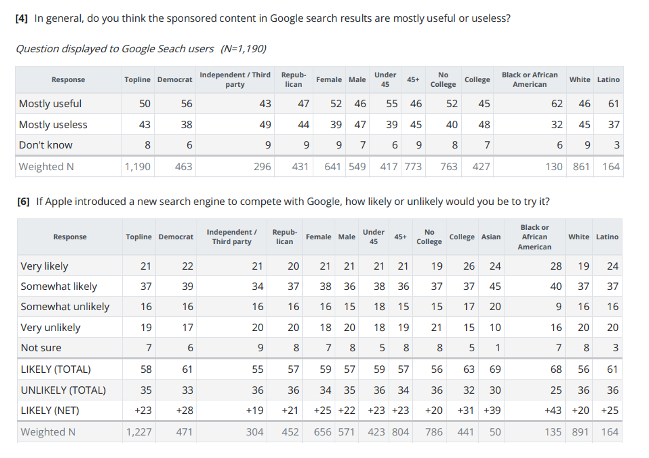
Source: Data for Progress survey
****Our take:**
- Only half of Google's users like ads. A nearly equivalent-sized group finds them "useless." And who are the people wanting more?
- Though from an org. that advocates Google regulation, the survey shows strong ambivalence about Google despite heavy usage.
- That seems also to be reflected in the 58% open to trying an Apple search engine; 35% were strong Google loyalists.
## Recent Analysis
- ****Near Memo episode 130**: [So Clicks are a ranking signal? Google comments to FTC on review fraud, Bard gets enhanced with extensions](https://www.nearmedia.co/ep-130/).
## Short Takes
- **Moz:** [12 local search developments](https://moz.com/blog/local-search-developments-q3-2023?ref=nearmedia.co) in Q3 '23\.
- **Apple Business Connect** [adds](https://www.seroundtable.com/apple-business-connect-peer-group-benchmarks-36155.html?ref=nearmedia.co) "peer group benchmarks" data.
- Google [adding more](https://twitter.com/lenraleigh/status/1709501112514961704?ref=nearmedia.co) '**Google Screened**' LSA advertisers to SERPs.
- Switch from **SAB** to physical location [triggered 3-Pack appearance](https://localsearchforum.com/threads/new-local-3-pack-ad-doesnt-look-like-other-3-pack-ads-replication-timing-issue.60696/?ref=nearmedia.co).
- Wired: **Google** [manipulates search queries](https://www.wired.com/story/google-antitrust-lawsuit-search-results/?ref=nearmedia.co) to generate more ad clicks.
- This **Helpful Content Update** more impactful than others ([charts](https://searchengineland.com/impact-of-the-google-september-2023-helpful-content-was-big-for-the-seo-industry-432751??ref=nearmedia.co)).
- A **bad UX** (including too many ads) apparently [part of HCU demotion](https://www.gsqi.com/marketing-blog/september-2023-google-helpful-content-update-hcux/?ref=nearmedia.co).
- **Amazon** apparently [took a rankings hit](https://twitter.com/marie%5Fhaynes/status/1709258703847751982??ref=nearmedia.co) with latest HCU.
- New PAA "ask your own" [can trigger](https://twitter.com/glenngabe/status/1709221983471231435?s=20&ref=nearmedia.co) **SGE** responses using that question.
- Backgrounds, images, text: **Meta** rolls out [generative-AI features for ads](https://www.facebook.com/business/news/generative-ai-features-for-ads-coming-to-all-advertisers).
- **OpenAI's DALL-E 3** [now available in Bing Chat](https://blogs.bing.com/search/october-2023/DALL-E-3-now-available-in-Bing-Chat-and-Bing-com-create-for-free?ref=nearmedia.co) for free.
- FTC lawsuit: **Amazon** [sought to manipulate prices](https://www.mediapost.com/publications/article/389854/amazon-project-nessie-tested-how-much-it-could-r.html?ref=nearmedia.co) with algorithm.
- **Uber** [introduces](https://www.cnbc.com/2023/10/04/uber-will-now-pick-up-your-ups-fedex-and-usps-packages.html?ref=nearmedia.co) "return a package" service for $5 flat fee.
- Meta to charge $17 for ad-free **Facebook and Instagram** [in EU](https://thenextweb.com/news/meta-ad-free-service-eu-users-data-privacy?ref=nearmedia.co).
- **TikTok** also [testing an ad-free experience](https://www.androidauthority.com/tiktok-testing-ad-free-monthly-subscription-plan-3370353/?ref=nearmedia.co), for $5 per month.
- Consumers downloading **fewer mobile apps**, [as they focus on favorites](https://www.insiderintelligence.com/content/consumers-using-installing-fewer-mobile-apps-they-settle-on-favorites??ref=nearmedia.co).
Listen to our [latest podcast](https://www.nearmedia.co/memo/).
[](https://nearmedia.co/memo?ref=nearmedia.co)
How can we make this better? Email [us](mailto:gsterling@nearmedia.co) with suggestions and recommendations.
### Google Listings Clean-up, Dashboard Comeback?, Review Fraud Victim
URL: https://www.nearmedia.co/monday-newsletter/
Last updated: 2023-10-02T19:02:46.000Z
### Google's Listings Clean-up
Over the past two years, suspensions have been a big percentage of GBP Forum requests, especially for service area businesses (SAB). Google required re-verification, including live video verification. Reinstated listings were often re-suspended. Google also rolled out near real-time video verification for others, which is harder to fake than voice/postcard verification. Even minor listings updates, if not fully trusted, now trigger the new verification process. And newly created listings often require two-factor verification, which may succeed with the postcard, but then require video verification. Businesses that claim to move often are not approved via re-verification. Bulk listings, which previously got a pass, often must use video verification – difficult for multi-location businesses. As part of this "clean up," Google created better forms and implemented a more streamlined "one and done" re-incluson process for suspended business. But once you get your listing approved, Google has a 7 - 14 day "sandbox" that prevents newly listed businesses from uploading images, adding posts or making other significant changes. Back in 2008, Google's Carter Maslan told David Mihm and me that they knew about these abuses and allowed them. This was so, in the future, Google could "innoculate" the index. Now that Google effectively has a local monopoly, and is under intense government scrutiny, that "inoculation" is apparently finally happening.
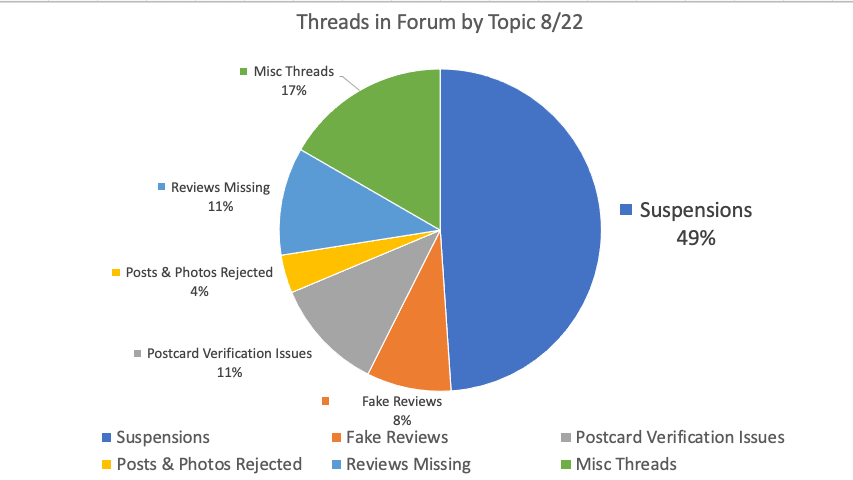
Source: Mike Blumenthal-GBP Forum data
****Our take:**
- New businesses, SABs, home services, business moving or with less than a perfect trust score should be prepared to deal with this process.
- It's a double edged sword, which will reduce (not eliminate) spam but make it harder for new, legit businesses to become verified.
- Google's definition of "trust" is somewhat opaque. Minimally, have a fully indexed website, official documents (DBAs, taxes), trusted data supplier citations (e.g., DataAxle). Be prepared to prove you're a real business.
### Bulk Dashboard Comeback?
The GBP Bulk Dashboard, aka Business Profile Manager, has been the red-headed stepchild of the GBP editing experience. It was (and remains) full of bugs and UX oddities, making it a struggle to use. With the [rollout of the new Google Business Profile rebrand](https://www.nearmedia.co/a-history-of-google-business-profiles-name-changes/) in 2021, the GBP search editing UI (aka NMX) also [started rolling out](https://searchengineland.com/google-rolling-out-new-map-and-local-interface-in-search-377169?ref=nearmedia.co). Because of the Dashboard's lack of development, David Mihm felt it was "toast." I was naively confident Google would bring it up to basic levels of functionality. In November 2021, David and I bet on the Dashboards' future. Despite my naive confidence, I lost the bet. In fact, the Dashboard [experience has gotten](https://www.nearmedia.co/ep-90/) worse for multi-location businesses that were [forced from the Dashboard](https://localsearchforum.com/threads/manage-google-business-account-google-forcing-businesses-with-multiple-locations-to-manage-on-search.59554/?ref=nearmedia.co) into the NMX. This past week Google actually rolled out an update. The new [Bulk Insights download](https://support.google.com/business/answer/9918094?visit%5Fid=638315915106311794-412030769&p=sample%5Finsights%5Freport&rd=1&ref=nearmedia.co#bulk%5Faccess) has all the [new GBP Insights data points](https://x.com/mblumenthal/status/1707754187574886903?s=20&ref=nearmedia.co) introduced over the past two years. As Orson Wells once [said](https://www.goodreads.com/quotes/428105-if-you-want-a-happy-ending-it-depends-on-where?ref=nearmedia.co) "If you want a happy ending, that depends, of course, on where you stop your story." I actually once again believe, perhaps still naively, that the story of the Google Business Profile Manager isn't over and that it will finally get some love. Maybe I can win that beer back if David is up for another bet?
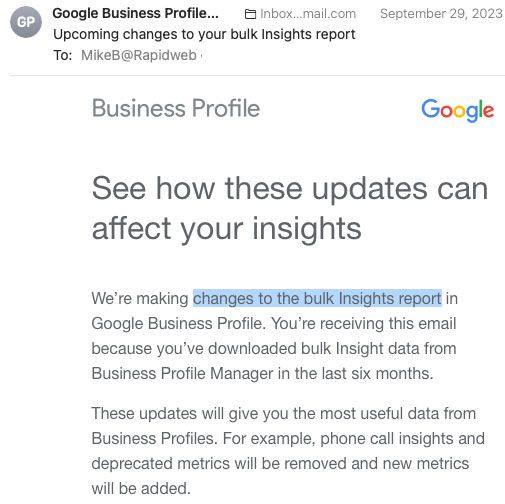
****Our take:**
- It is curious that after two years, Google is once again adding features to the Business Profile Manager.
- The sad state of bugs and UX issues has driven most multi-location users toward more functional third-party apps that use the GBP API.
- Simple features like bulk updating never really worked and should be the first order of business for Google to address.
### Google on Review Fraud: 'We Are the Victims'
Google can often [say something](https://www.nearmedia.co/clicks-do-impact-rankings-tiktok-google-search-yelp-reviews-survey/) and [mean something](https://youtu.be/o4UYcHMZUgI?ref=nearmedia.co) totally [different](https://searchengineland.com/google-ads-credibility-greg-finn-advertiser-432503?ref=nearmedia.co). In a [comment](https://www.regulations.gov/comment/FTC-2022-0070-0034?ref=nearmedia.co) for the FTC [rulemaking process about review fraud](https://www.federalregister.gov/documents/2022/11/08/2022-24139/trade-regulation-rule-on-the-use-of-reviews-and-endorsements?ref=nearmedia.co), Google noted, "the amount of \[review fraud\] ... is less than 1% of all of the content viewed on Maps." Let's restate that more accurately: Google Maps "content" types are viewed billions and billions of times monthly. As likely defined by Google, content includes driving directions, StreetView, images, GBP impressions, phone look ups, Q&As, star ratings, etc. In the aggregate, all that is seen 100x more than fake reviews. Did Google lie? Not really. But it does [beggar belief](https://www.google.com/search?client=safari&rls=en&q=beggar+belief&ie=UTF-8&oe=UTF-8&ref=nearmedia.co) when Google positions itself as the real [victim of review fraud](https://youtu.be/JHp%5Fzj6xnoQ?si=uZ1iAtcfKEVbgDLb&ref=nearmedia.co). "Businesses may also have strong incentives to buy positive reviews, which exacerbates the problem," it says. "In addition, Google does not always have full visibility into or control over certain types of \[3rd party\] reviews \[that we include in the results\]." If Google doesn't trust third party reviews, why include them? Indeed, Google created review-fraud incentives: more reviews and higher ratings increase visibility and drive clicks and conversions. Google had [minimal review moderation](https://www.nearmedia.co/a-guide-to-googles-review-filter/) until last year, which allowed fake reviews to flourish. For Google to say, "The FTC should be focused on the bad actors perpetuating fake reviews, not the platforms working hard to stop them" is like saying the best way to fight systemic prejudice is for people to just play nice.

Source: Unsplash
****Our take:**
- We still have no concrete idea of how many times fake reviews/ratings impact consumer purchases but it's significantly more than 1%.
- Did Google allow suspicious reviews, to boost volume, to dominate local? Google has now [upgraded moderation](https://www.nearmedia.co/a-guide-why-are-my-google-reviews-missing/), removing many fakes. Whether that's [enough](https://www.nearmedia.co/fake-review-attacks-on-the-rise-at-google/) to salvage its reviews' credibility remains to be seen.
- Though it legally cannot the FTC should regulate, not just the buyers and sellers of fake reviews, but Google itself as the true cause of this fiasco.
## Recent Analysis
- **Near Memo episode 130**: [So Clicks are a ranking signal? Google comments to FTC on review fraud, Bard gets enhanced with extensions](https://www.nearmedia.co/ep-130/).
## Short Takes
- All About **Google Local Services Ads**, highlights Crystal Horton [and all you need to know](https://conversioncast.transistor.fm/episodes/all-about-googles-local-service-ads-lsas?ref=nearmedia.co) about and recent changes.
- Darren Shaw on [outranking competitiors](https://www.youtube.com/watch?v=opnLnxJpK1M&ref=nearmedia.co) with **local SEO tools**.
- Understanding [the role of](https://searchengineland.com/explicit-vs-implicit-searches-local-seo-432516?ref=nearmedia.co) **explicit vs. implicit searches** in local SEO.
- Good [summary](https://www.searchenginejournal.com/entity-seo/492947/?ref=nearmedia.co#close) of the increasing role **entities** play in search and SEO.
- Who's cheating on **Yelp**? A [new index](https://trust.yelp.com/consumer-alerts/quarterly-alerts/?ref=nearmedia.co) lists all of them.
- **Indoor maps** are underutilized; [a new program](https://maphappenings.com/2023/09/28/mappedin/?ref=nearmedia.co) simplifies their creation.
- Can **Google** (Maps) [be liable for a traffic death](https://www.techdirt.com/2023/09/25/can-google-be-held-liable-for-man-who-died-following-google-maps-over-a-collapsed-bridge/?ref=nearmedia.co) caused by bad information if Google [was repeatedly told](https://hickoryrecord.com/news/local/crime-courts/google-hickory-businessman-sued-over-collapsed-bridge-death/article%5Ffdbdbf18-57cf-11ee-899b-67e5bd62df73.html?ref=nearmedia.co) it was wrong?
- Cops increasingly turn to **Google data** (search, maps/location) even for non-violent offenses ([Apple News+](https://apple.news/AHlQbaJTGRquSpCAhgbU11Q?ref=nearmedia.co) or [Bloomberg](https://www.bloomberg.com/news/features/2023-09-28/google-user-data-is-police-s-top-shortcut-for-solving-crimes?ref=nearmedia.co#:~:text=Google%20User%20Data%20Has%20Become,to%20do%20with%20the%20crime.)).
- What [you need to know](https://onlineownership.com/google-business-profiles-and-nyc-short-term-rental-restrictions/?ref=nearmedia.co) about NYC short-term rental restrictions and **GBP**.
Listen to our [latest podcast](https://www.nearmedia.co/memo/).
[](https://nearmedia.co/memo?ref=nearmedia.co)
How can we make this better? Email [us](mailto:gsterling@nearmedia.co) with suggestions and recommendations.
### Google @25, Apple Not Serious, Meta's AI Bet
URL: https://www.nearmedia.co/google-25-apple-not-serious-metas-ai-bet/
Last updated: 2023-09-29T23:38:35.000Z
### Google @25: Iconoclast to Idolater
Google [began in 1998](https://about.google/intl/ALL%5Fus/our-story/?ref=nearmedia.co) as an idealistic company with huge ambition: "to organize the world's information and make it universally accessible and useful." It also wanted to be a "good" company, to operate differently. This is reflected in the [Founder's IPO letter](https://abc.xyz/investor/founders-letters/ipo-letter/?ref=nearmedia.co), the first line of which reads: "Google is not a conventional company. We do not intend to become one." Sergey Brin and Larry Page went on to say, "Our goal is to develop services that significantly improve the lives of as many people as possible. In pursuing this goal, we may do things that we believe have a positive impact on the world, even if the near term financial returns are not obvious." There's no question that in the early days of Google, and until comparatively recently, the company's brand and usage were fueled by the idea that Google was a "good" company and not simply about making money. But that's all changed. Google has become a company dedicated to maintaining market share and beating Wall Street expectations. Everyting else is secondary.
****Our take:**
- Revenue, still \~80% ads, takes precedence over all other considerations, as this Google [antitrust trial exhibit](https://www.justice.gov/d9/2023-09/416646.pdf?ref=nearmedia.co) suggests.
- Betrayal of Google's early core values was inevitable after the IPO. The quarterly revenue reporting cycle is more powerful than good intentions.
- Cynics and skeptics can dismiss all this, but Google's transformation into a "conventional company" is part of why Gen Z is abandoning it.
### Apple Not Serious about Search
The Google antitrust trial continues to produce "revelations." Among them, Microsoft [wanted to sell Bing to Apple](https://www.bloomberg.com/news/articles/2023-09-28/microsoft-discussed-selling-bing-to-apple-as-google-replacement??ref=nearmedia.co) in 2020 but the talks never went beyond a very early stage. According to Bloomberg, Apple was happy instead to take Google's default search money – now worth between $15 and $20 billion annually according to estimates – rather than compete with Google. And Apple, reportedly, "had concerns about Bing’s ability to compete with Google in quality and capabilities," which kept them in Google's corner. Bing remains an option on the iPhone. But because Google is the default its mobile search share exceeds 95% in the [US](https://gs.statcounter.com/search-engine-market-share/mobile/united-states-of-america?ref=nearmedia.co#monthly-202208-202308) and [globally](https://gs.statcounter.com/search-engine-market-share/mobile/worldwide/?ref=nearmedia.co#monthly-202208-202308). Apple’s Eddy Cue, who owns the Google search relationship, testified "that Apple sees no need to develop its own search tool because Google clearly is the best option." For its part, Apple flirted with Bing [as a way to extract higher payments](https://apnews.com/article/google-antitrust-microsoft-bing-search-engine-eee462713c9ab59f6f3e886940c11a88?ref=nearmedia.co) from Google.

****Our take:**
- We had been hoping for Apple to develop its own full-blown web search capability, although it does have various search tools (e.g., Spotlight).
- It seems clear now that Google kept rivals at bay with the default iPhone deal. That same deal also paid Apple not to compete.
- Apple does compete with Google in other areas (e.g., Maps). Why is Maps strategic but not search? Is it just too costly to compete in search?
### Meta Looks to AI for Revival
Meta held its annual Meta Connect VR event this week. Although it's primarily a hardware event, AI was a major theme throughout. The company [unveiled](https://about.fb.com/news/2023/09/meet-meta-quest-3-mixed-reality-headset/?ref=nearmedia.co) Meta Quest 3, a $500 new mixed-reality headset designed to compete with [Apple's Vision Pro](https://www.nearmedia.co/vision-pro-smart-and-stupid-things-apple-just-did/), which costs 7x more. More noteworthy, Meta also announced [a new and improved edition](https://www.meta.com/blog/quest/ray-ban-meta-smart-glasses-collection-pre-orders/?ref=nearmedia.co) of its smart glasses, produced with Ray-Ban parent EssilorLuxottica. Previously, Meta branding was absent from the product entirely ("Ray-Ban Stories"). But now that Elon Musk and X have made Meta and Mark Zuckerberg look better by comparison, Meta has put its name on the glasses ("Ray-Ban | Meta"). They're affordable, look good, have a 12MP camera, improved sound, [livestreaming](https://techcrunch.com/2023/09/27/ray-ban-meta-smart-glasses-livestream-to-instagram-and-facebook/?ref=nearmedia.co) capability and a built in AI assistant. While the previous model didn't sell well, this one will do much better. The numerous [AI announcements](https://about.fb.com/news/2023/09/introducing-ai-powered-assistants-characters-and-creative-tools/?ref=nearmedia.co) included the Meta AI assistant (mentioned above), [celebrity AI avatars](https://techcrunch.com/2023/09/27/meta-mr-beast-paris-hilton-celebrity-ais-llama-2/?ref=nearmedia.co), AI creative tools and developer platform.
****Our take:**
- Ray-Ban | Meta is what Google Glass wanted to be but was too early. It's got privacy/surveillance issues but those may be overlooked.
- Meta has struggled to sell hardware (e.g., Portal), because it was seen as creepy; that has changed somewhat. Musk is to thank for that.
- With its AI efforts and [expanding partnership with Microsoft](https://about.fb.com/news/2023/07/llama-2/?ref=nearmedia.co), the company is no longer "betting the farm" on the metaverse – smartly.
## Recent Analysis
- **Near Memo ep. 130:** [Clicks are a ranking signal – so? Google's review fraud commentary, Bard gets interesting with extensions](https://www.nearmedia.co/ep-130/).
- ****Near Memo ep. 129**: Purna Virji interview about her book, [High Impact Content Marketing](https://www.nearmedia.co/ep-129-high-impact-content-marketing-in-the-age-of-ai/).
## Short Takes
- **SEOs:** [memorable Google algo updates](https://searchengineland.com/google-search-at-25-seo-experts-share-memorable-moments-432455?ref=nearmedia.co) from 25 years.
- **Google** [opens up SGE to teens](https://blog.google/products/search/google-generative-ai-search-expansion/?ref=nearmedia.co), makes incremental improvements.
- Antitrust crusader and [Google critic Luther Lowe](https://twitter.com/lutherlowe/status/1707809596402717055?ref=nearmedia.co) leaving **Yelp**.
- **Yelp** and Texas [sue each other](https://www.reuters.com/world/us/yelp-asks-court-block-texas-lawsuit-over-crisis-pregnancy-center-notices-2023-09-28?ref=nearmedia.co) over "crisis pregancy centers."
- **Bing** available in [Meta chat experiences](https://blogs.bing.com/search/september-2023/Expanding-Our-AI-Partnership-with-Meta-%281%29?ref=nearmedia.co): WhatsApp, Messenger, IG.
- [Google-Extended](https://developers.google.com/search/docs/crawling-indexing/overview-google-crawlers?ref=nearmedia.co) allows publishers [to block](https://blog.google/technology/ai/an-update-on-web-publisher-controls/?ref=nearmedia.co) **Google's AI crawlers**.
- **Medium**: our [default answer](https://blog.medium.com/default-no-to-ai-training-on-your-stories-abb5b4589c8?ref=nearmedia.co) to AI training is "no."
- New Hollywood [writers' contract](https://www.wgacontract2023.org/the-campaign/summary-of-the-2023-wga-mba?ref=nearmedia.co) puts "guardrails" around **AI usage**.
- **ChatGPT** [rolls out web browsing](https://twitter.com/OpenAI/status/1707077710047216095?ref=nearmedia.co) to Plus and Enterprise users.
- The **Google** [antitrust trial exhibits](https://www.justice.gov/atr/us-and-plaintiff-states-v-google-llc-2020-trial-exhibits?ref=nearmedia.co) – so far.
- See [contentious interview](https://www.youtube.com/watch?v=hYymRU-bfpQ&ref=nearmedia.co) with **Twitter/X** CEO Yaccarino.
- **SCOTUS** to [look at TX, FL laws](https://www.reuters.com/technology/us-supreme-court-weigh-state-laws-constraining-social-media-companies-2023-09-29/?ref=nearmedia.co) constraining social media moderation.
- Time ranks **Microsoft** as the "[world's best company](https://time.com/collection/worlds-best-companies-2023/?ref=nearmedia.co)."
- **Demographic trends** will create labor shortages for years ([WSJ](https://www.wsj.com/economy/jobs/labor-supply-economy-jobs-charts-3285a5b7?ref=nearmedia.co)).
Listen to our [latest podcast](https://www.nearmedia.co/memo/).
[](https://nearmedia.co/memo?ref=nearmedia.co)
How can we make this better? Email [us](mailto:gsterling@nearmedia.co) with suggestions and recommendations.
### Ep 130: So Clicks are a ranking signal? Google Comments on Review Fraud, Bard enhanced with extensions
URL: https://www.nearmedia.co/ep-130/
Last updated: 2023-09-29T19:10:23.000Z
**Part 1 starts 00:13 - [“Clicks Are Not a ranking signal” except that they are](https://youtu.be/o4UYcHMZUgI?ref=nearmedia.co)**
If we have learned anything over the years with Google it is that you need to take with a huge grain of salt. While they might not lie, they have such narrow definitions and unstated assumptions that you really don’t know what they mean. Recent evidence in the antitrust case reveals that to be more true than ever.
Segment Reference Articles
[Ex-Googler: Clicks Affect Rankings](https://www.nearmedia.co/clicks-do-impact-rankings-tiktok-google-search-yelp-reviews-survey/)
**Part 2 starts 7:30 - [Google Comments on Review Fraud: “We are the victim here”](https://youtu.be/JHp%5Fzj6xnoQ?ref=nearmedia.co)**
In a shameless example of self interested BS Google suggested that the FTC should focus on the buyers and sellers of fake reviews in their new rule and NOT the platforms that caused the very problem. Given that Google did very little about fake reviews for over a decade and created the very incentives that they now blame merchants for taking advantage of, the FTC should look to both the buyer and sellers of fake reviews AND to the platforms that have caused the problems in the rule making.
Segment Reference Articles
[Google: Our Fake Reviews <1% of Something](https://www.nearmedia.co/chatgpgs-voice-google-fake-reviews-amazons-antitrust-moment/)
[Google Comments on the FTC’s Reviews and Endorsements ANPR](https://www.regulations.gov/comment/FTC-2022-0070-0034?ref=nearmedia.co)
**Part 3 starts 16:46 - [Bard extensions - Google’s local and travel data creates better AI experience](https://youtu.be/vFiYlK0R2bw?ref=nearmedia.co)**
Google has indicated that there will be a number of extensions from both themselves and 3rd parties to enhance Bard. This past week we saw the introduction of Google’s Maps, airline & hotel information into Bard. It seems that this is both a good way to limit the “hallucinations” of generative AI AND to extend their search prominence directly into their productivity tools.
Segment Reference Articles
[Bard+ Arrives with Extensions](https://www.nearmedia.co/bard-plug-ins-smb-marketing-impatience-just-walk-out-again/)
[Bard can now connect to your Google apps and services](https://blog.google/products/bard/google-bard-new-features-update-sept-2023/?ref=nearmedia.co)
### ChatGPT's Voice, Google Fake Reviews, Amazon's Antitrust Moment
URL: https://www.nearmedia.co/chatgpgs-voice-google-fake-reviews-amazons-antitrust-moment/
Last updated: 2023-09-27T19:11:10.000Z
### ChatGPT Finds Its Voice
ChatGPT is now a true virtual assistant. It can [understand images and speak to you](https://openai.com/blog/chatgpt-can-now-see-hear-and-speak?ref=nearmedia.co) using one of several very human sounding synthetic voices. The image search capability is similar to Google Lens: take a picture or upload an image. The drawing tool can be used to focus on a portion of an image. (I didn't test this.) The speech component is available on ChatGPT's mobile apps, which you need to update, while image search will be on the desktop as well. Whereas Alexa, Google Assistant and Siri are effectively voice front ends for search, ChatGPT's voice interaction feels much more "conversational" and natural. You engage with it very differently than the others. That's almost immediately apparent. It doesn't have Google's up-to-date index of content – you can't ask it about the weather or sports scores – but I was able to carry on extensive conversations about travel and get good information. And it understands context. You can just ask follow-up questions, you don't need to refine queries. It's not perfect but very promising.
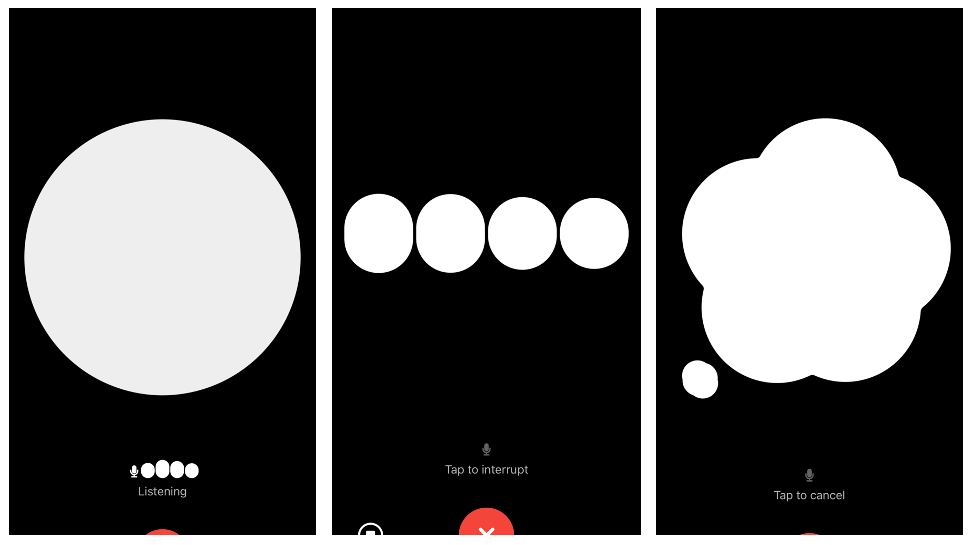
Source: ChatGPT
****Our take:**
- Younger users are going to gravitate toward these kinds of "search" experiences, as they evolve. This is what Google Assistant aspires to be.
- This user experience + Bing would make it compelling. There's also a text record of your conversation in the app.
- This will force Google to make Bard more conversational or truly merge Bard and Google Assistant. It's one evolutionary path for search.
### Google: Our Fake Reviews <1%
A year ago the FTC [announced](https://www.ftc.gov/news-events/news/press-releases/2022/10/ftc-explore-rulemaking-combat-fake-reviews-other-deceptive-endorsements?ref=nearmedia.co) it was making a new rule to address the proliferation of fake reviews online. Its aim is to give the agency more power to assess civil penalties. As part of that process, the FTC has sought comment from the public. [Google](https://www.regulations.gov/comment/FTC-2022-0070-0034?ref=nearmedia.co), [Yelp](https://www.regulations.gov/comment/FTC-2022-0070-0028?ref=nearmedia.co), [Tripadvisor](https://www.regulations.gov/comment/FTC-2022-0070-0036?ref=nearmedia.co) and [others](https://www.regulations.gov/document/FTC-2022-0070-0001/comment?ref=nearmedia.co) responded. It's interesting to read [Google's](https://www.regulations.gov/comment/FTC-2022-0070-0034?ref=nearmedia.co) comments, which detail its approach to review-fraud detection. Before reviews are posted, Google says, its machine learning looks at the user account and review content. Google uses text matching to detect repeated word patterns. It looks for duplicate content and bot-generated content. After posting, Google's systems "go back and check \[reviews\] at regular intervals to ensure they abide by our policies and to watch for questionable patterns." In 2021, Google says it took down almost 10% (95 million) of the 1 billion local reviews submitted. It also disabled a million user accounts. Google primarily uses machine learning but also relies on human input (internal teams, users, businesses). In its remarks, Google claims "the amount of \[review fraud\] ... is less than 1% of all of the content viewed on Maps."

****Our take:**
- Google concludes, "\[T\]the FTC should be focused on the bad actors perpetuating fake reviews, not the platforms working hard to stop them."
- This was in response to FTC Chair Lina Khan's [earlier remark](https://www.ftc.gov/system/files/ftc%5Fgov/pdf/P214504ChairStatementFakeReviewsANPR.pdf?ref=nearmedia.co): "The platforms that host reviews may also ... benefit indirectly from fake ratings and ... turn a blind eye to misconduct that brings in revenue."
- Google has [Section 230 immunity](https://en.wikipedia.org/wiki/Section%5F230?ref=nearmedia.co) from fake review liability. Not true in Europe. Review fraud is growing not slowing. It's certainly [greater than 1%](https://uberall.com/en-us/company/press-releases/study-67-of-us-consumers-say-fake-online-reviews-a-growing-problem?ref=nearmedia.co), which equals roughly 10 million fake reviews – by the way.
### Amazon Gets the Antitrust Treatment
FTC Chair Lina Khan first called out Amazon in a now-famous 2017 Yale law school article, [Amazon's Antitrust Paradox](https://www.yalelawjournal.org/pdf/e.710.Khan.805%5Fzuvfyyeh.pdf?ref=nearmedia.co). The piece argued that US antitrust law, focused on consumer harms (largely measured by price outcomes), couldn't address new types of "predatory and anticompetitive conduct" by internet platforms. Yesterday, the FTC and 17 states [sued Amazon](https://www.ftc.gov/news-events/news/press-releases/2023/09/ftc-sues-amazon-illegally-maintaining-monopoly-power??ref=nearmedia.co). The [complaint](https://www.ftc.gov/system/files/ftc%5Fgov/pdf/1910129AmazoneCommerceComplaintPublic.pdf?ref=nearmedia.co) outlines conduct the agency says perpetuates the company's monopoly position. Among a litany of misdeeds, the complaint alleges Amazon punishes third party sellers trying to offer lower prices elsewhere, reducing their visibility on the site. It claims Amazon charges sellers coercive fees and forces them to use "Amazon’s costly fulfillment service." It details use of dark patterns to manipulate shopper behavior (including with Prime). It asserts Amazon has degraded the shopping experience with "junk ads" and by favoring its own often inferior products. In a statement yesterday Khan said, "Amazon is now exploiting its monopoly power to enrich itself while raising prices and degrading service for the tens of millions of American families who shop on its platform and the hundreds of thousands of businesses that rely on Amazon to reach them."
Source: Amazon
****Our take:**
- The requested remedies are vague but include "structural relief*,"* which implies breaking up the company.
- The FTC's B2B seller allegations are legally stronger than the B2C ones. But Amazon [has meaningful competition](https://stratechery.com/2023/ftc-sues-amazon-fba-and-prime-pricing-punishment/?ref=nearmedia.co) in both categories.
- On the topic of review fraud, Amazon claims (like Google) that less than 1% of its reviews are inauthentic. Multiple third parties [dispute this](https://searchengineland.com/consumers-largely-unaware-of-fake-reviews-problem-on-amazon-315083?ref=nearmedia.co).
## Recent Analysis
- **Near Memo ep. 129**: [High Impact Content Marketing in the Age of AI](https://www.nearmedia.co/ep-129-high-impact-content-marketing-in-the-age-of-ai/).
## Short Takes
- **Google: links** [no longer](https://www.seroundtable.com/google-links-no-longer-a-top-three-ranking-factor-36094.html?ref=nearmedia.co) a top 3 ranking factor.
- Google added 11 [new categories](https://www.sterlingsky.ca/google-my-business-category-changes/?ref=nearmedia.co) to **GBP** (and removed some).
- **Google SGE** [may crowd out](https://www.insightpartners.com/ideas/generative-ai-seo-zero-click-searches/?ref=nearmedia.co) organic results and change SEO.
- Moz: [takeaways](https://moz.com/blog/local-listing-spam?ref=nearmedia.co) from an Irish **locksmith listing spam** scandal.
- Recipe blogs, affiliate, "thin content" sites [hit by latest](https://www.mariehaynes.com/the-september-helpful-content-update-why-you-were-affected-and-what-you-can-do/?ref=nearmedia.co) **Google** **[HCU](https://www.seroundtable.com/google-helpful-content-updates-last-surge-36105.html?ref=nearmedia.co)**.
- **Apple** [defends default search deal](https://www.cnbc.com/2023/09/26/apples-eddy-cue-defends-default-search-contract-with-google-in-trial.html?ref=nearmedia.co) with Google.
- Clicks on ads in **BingGPT** (chat results) [higher](https://www.seroundtable.com/bing-chat-clicks-on-ads-1-8x-higher-36099.html?ref=nearmedia.co) than regular Bing.
- By EOY 23, **Threads** [expected to have 50% of X's users](https://www.theverge.com/2023/9/26/23890592/threads-meta-monthly-users-data-x-twitter?ref=nearmedia.co).
- EU report: **Twitter, Facebook** have [most disinformation](https://www.theguardian.com/technology/2023/sep/26/eu-warns-elon-musk-that-twitter-x-must-comply-with-fake-news-laws?ref=nearmedia.co).
- FCC [seeks to reinstate](https://www.reuters.com/world/us/us-telecom-chair-seek-reinstating-net-neutrality-rules-rescinded-under-trump-2023-09-26/?ref=nearmedia.co) "**net neutrality**" rules previously rescinded.
- Amazon [will invest up to $4 billion](https://www.cnbc.com/2023/09/25/amazon-to-invest-up-to-4-billion-in-anthropic-a-rival-to-chatgpt-developer-openai.html??ref=nearmedia.co) in ChatGPT rival **Anthropic**.
- **ChatGPT** [wants to make](https://www.pymnts.com/artificial-intelligence-2/2023/openais-sam-altman-wants-to-create-a-physical-ai-device/?ref=nearmedia.co) a physical AI device.
- New [WGA contract](https://www.wgacontract2023.org/the-campaign/summary-of-the-2023-wga-mba?ref=nearmedia.co) re **AI use** a potential model for others.
Listen to our [latest podcast](https://www.nearmedia.co/memo/).
[](https://nearmedia.co/memo?ref=nearmedia.co)
How can we make this better? Email [us](mailto:gsterling@nearmedia.co) with suggestions and recommendations.
### Ep 129: High Impact Content Marketing in the Age of AI
URL: https://www.nearmedia.co/ep-129-high-impact-content-marketing-in-the-age-of-ai/
Last updated: 2023-09-25T15:02:54.000Z
**Part 1 starts 00:13 - [What Is Content?](https://youtu.be/8rJU1sQ-J8Y?ref=nearmedia.co)**
Purna Virji and I discuss what motivated her to write the book, how she defines “content” and why she took a very expansive approach to content strategy and marketing. She also discusses the foundation of great content and what digital marketers can learn from traditional marketing.
**Part 2 starts 14:40 - [Creating ‘High Impact’ Content](https://youtu.be/JimsfCw1q3g?ref=nearmedia.co)**
What exactly makes a “high impact” content? How do you differentiate your content, especially in a B2B context? Virji explains how to find the overlap between internal company needs and customer needs as the sweet spot and starting point for content marketing. We also discuss why you need to "start with measurement" and why you should always choose quality over quantity. Finally, how do you decide which channels and formats to pursue in a world of expanding content demands?
**Part 3 starts 39:40 - [AI and the Future of Content](https://youtu.be/XaBZcbDq1T8?ref=nearmedia.co)**
AI will have a major impact on content creation and marketing – it already is. Will it usher in a golden age or a tsunami of mediocrity? Will organizations downsize content departments but maintain the same output expectations? Can AI-generated content be differentiated? We also discuss SEO and why there’s a gap between “create content for people” rhetoric and the “facts on the ground.” Virji is ultimately upbeat and optimistic about the future and ends with advice on a three-pronged framework for creating better content.
**If you'd like to go deeper, you can obtain a copy of *High Impact Content Marketing*:**
- [Amazon](https://www.amazon.com/High-Impact-Content-Marketing-Strategies-Intentional/dp/1398608432?ref=nearmedia.co)
- KoganPage (publisher) [website](https://www.koganpage.com/marketing-communications/high-impact-content-marketing-9781398608436?ref=nearmedia.co) – 20% of with code “HICM” (all caps)
### Clicks Do Impact Rankings, TikTok-Google Search, Yelp Reviews Survey
URL: https://www.nearmedia.co/clicks-do-impact-rankings-tiktok-google-search-yelp-reviews-survey/
Last updated: 2023-09-22T16:46:38.000Z
### Ex-Googler: Clicks Affect Rankings
Google has always maintained it doesn't use behavioral signals such as clicks or dwell time in search rankings. And it has called such claims "[myths](https://www.seroundtable.com/google-ctr-dwell-time-signals-myths-27083.html??ref=nearmedia.co)." But antitrust trial testimony from former Google search quality software engineer Eric Lehman, who left the company a year ago, confirms that Google has historically used CTR as a ranking signal. According to trial [reporting](https://www.law360.com/articles/1724110/judge-told-new-google-search-systems-don-t-need-user-data?ref=nearmedia.co) by Law360, "Lehman said \[ \] that Google's position is to not provide a clear message about whether it's using the click data — even though it is — out of fear that search engine optimizers or others could try to influence the rankings." He was apparently presented with multiple internal documents showing that behavioral signals (e.g., clicks) were important to search quality and rankings. Accordingly, Google sought default search deals partly to get more user-SERP interaction data. Lehman also testified that Google is now less reliant upon and moving away from click data.

****Our take:**
- Trial exhibits "suggested the logging of user interactions is 'central' to search and to Google as a whole."
- Reportedly, newer machine learning models don't equally rely on user interaction data or other behavioral signals.
- Yet Lehman's testimony and documents appear to show clearly that Google wasn't being truthful when it said clicks didn't affect rankings.
### TikTok Testing Google Search
TikTok is considering incorporating a Google option into its own search results. This comes on the heels of TikTok testing Wikipedia entries its search results. The Google placement is not a "default search" deal, like Firefox or Safari, but it's still noteworthy because TikTok is seen as [an increasingly viable search competitor](https://searchengineland.com/gen-z-tiktok-google-search-survey-431345?ref=nearmedia.co) to Google. The test was discovered by [Radu Oncescu](https://twitter.com/oncescuradu/status/1704060015571611794??ref=nearmedia.co) ([via](https://techcrunch.com/2023/09/21/tiktok-may-start-serving-you-google-search-results/?ref=nearmedia.co) TechCrunch). The screenshot below shows a Google search module sandwiched in the middle of TikTok's own results. It's populated with the same search query. TikTok reportedly confirmed the experiment, as one of several third-party integrations being selectively tested. That doesn't mean it's going to happen but it's eyebrow-raising at a time when Google is on trial and the company is pointing to TikTok, among others, to show it has healthy search competitors.
Source: [Radu Oncescu](https://twitter.com/oncescuradu/status/1704060015571611794??ref=nearmedia.co)
****Our take:**
- One question: why would TikTok contemplate this deal when it previously positioned itself as a better alternative to Google?
- Ad revenue sharing may be on the table. Perhaps TikTok believes it will drive more TikTok search usage and impressions for its own search ads.
- Google is motivated to do this because it fears [losing younger audiences](https://www.nbcnews.com/tech/social-media/many-gen-zers-dont-use-google-s-prefer-search-tiktok-instagram-rcna38221?ref=nearmedia.co) who've been critical of its results as "inauthentic" and spammy.
### Survey: Soliciting Reviews Boosts Ratings
Yelp has created a new "[hall of shame](https://trust.yelp.com/consumer-alerts/quarterly-alerts/?ref=nearmedia.co)" for local businesses tagged with the company's "Compensated Activity Alerts" and "Suspicious Review Activity Alerts." Essentially, Yelp is saying these businesses engaged in review manipulation or fraud. In tandem with the introduction of this new "index," Yelp conducted a [survey](https://blog.yelp.com/news/yelp-publishes-index-of-consumer-alerts-recipients-releases-survey-findings/?ref=nearmedia.co) with a third party about consumer review attitudes and behavior. It says a lot of the things you'd expect: "(93%) \[of consumers\] say they read online reviews to inform their purchasing decisions." But the survey findings also argue people don't want to be asked to write reviews and a majority (54%) wouldn't trust a business that did so. More than two-thirds (68%) of respondents said they've been solicited to leave reviews in the past. The most interesting finding released by Yelp is: "65% of survey respondents who read reviews admitted they would write a more positive review than originally intended if a business asked them to leave a review, and 61% admitted they would provide a better star rating."
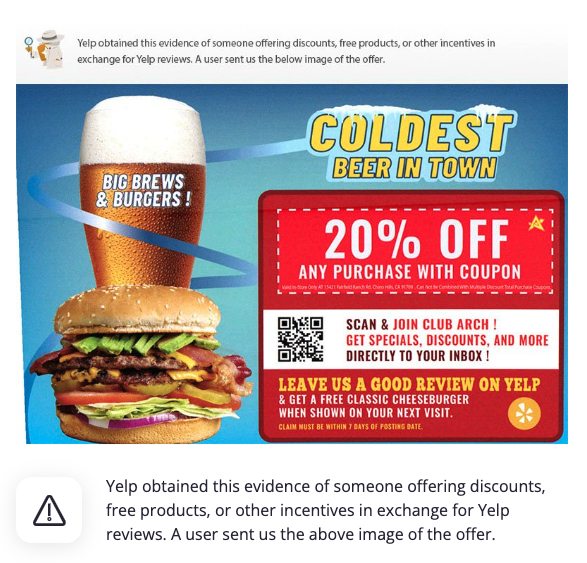
Source: Yelp
****Our take:**
- One conclusion: review solicitation "works" and delivers a better outcome for the business (though not on Yelp) than otherwise.
- There are ethical ways to do this that don't constitute review manipulation or fraud. But incentivizing reviews is not one of them.
- Some local businesses may genuinely be unaware of where the ethical lines are for Yelp and Google. This is an education problem.
## Recent Analysis
- ****Near Memo episode 128:** [Transparency Company interview about the state of review fraud on Google and how to deal with it](https://www.nearmedia.co/ep-128/).
- ICYMI: **When Is the Right Time to Ask for Customer Reviews?**, [by Mike and Greg](https://www.nearmedia.co/when-is-the-right-time-to-ask-for-customer-reviews/).
## Short Takes
- **Google Maps** [updates](https://www.seroundtable.com/google-updates-maps-user-contributed-policy-fake-engagement-personal-information-36087.html?ref=nearmedia.co) UGC guidelines re "[fake engagement](https://support.google.com/contributionpolicy/answer/7400114?ref=nearmedia.co#zippy=%2Cfake-engagement%2Cpersonal-information)."
- Data: appearance of **Local Pack** in SERPs [trending downward](https://www.linkedin.com/posts/localseoguide%5Fthe-trend-is-not-100-accurate-but-if-you-activity-7109971865250512896-V7J8/??ref=nearmedia.co).
- Window closing to disrupt **Google** with AI, [says former Neeva CEO](https://venturebeat.com/ai/after-snowflake-acquisition-former-neeva-ceo-says-window-is-shutting-for-ai-search-disruption/?ref=nearmedia.co).
- **SGE** launch [could mean death](https://productledseo.substack.com/p/googles-sge-will-be-fatal-for-thin) for affiliate and "thin content" sites.
- **Wix** [adopts Microsoft's IndexNow](https://blogs.bing.com/webmaster/september-2023/Wix-now-supports-IndexNow-for-Faster-Content-Indexing?ref=nearmedia.co) protocol for faster indexing.
- **YouTube** [announces](https://blog.google/products/youtube/youtube-new-creator-tools-2023/?ref=nearmedia.co) new editing and AI tools for creators.
- MSFT [introduces](https://blogs.microsoft.com/blog/2023/09/21/announcing-microsoft-copilot-your-everyday-ai-companion/?ref=nearmedia.co) "unified" **Copilot AI assistant** across products.
- Google rolling out new [AI capabilities for](https://support.google.com/google-ads/answer/14079753?ref=nearmedia.co) **Search Ads**.
- **Mastodon** [becomes more user-friendly](https://blog.joinmastodon.org/2023/09/mastodon-4.2/?ref=nearmedia.co), including upgraded search.
- US voters [heavily favor](https://theaipi.org/poll-shows-voters-oppose-open-sourcing-ai-models-support-regulatory-representation-on-boards-and-say-ai-risks-outweigh-benefits-2/?ref=nearmedia.co) **AI regulation**, worried about potential harms.
- Following [CA's lead](https://iapp.org/news/a/california-legislature-passes-delete-act-for-pi-aggregated-by-data-brokers/?ref=nearmedia.co), FTC may go after **data brokers** next ([WaPo](https://www.washingtonpost.com/politics/2023/09/21/ftc-consumer-protection-chief-puts-data-brokers-notice/?ref=nearmedia.co)).
- **Snapchat+** now has [5 million paying subscribers](https://www.socialmediatoday.com/news/snapchat-reaches-5-million-paying-members/694431/?ref=nearmedia.co) generating \~$20M.
- Forecast predicts TikTok will [pass Facebook in time spent](https://www.insiderintelligence.com/content/tiktok-will-pass-facebook-use?ref=nearmedia.co) by 2025\.
- **Threads** to get [an edit button](https://www.theverge.com/2023/9/21/23884466/threads-edit-button-development-instagram-meta?ref=nearmedia.co), without $8 monthly fee.
Listen to our [latest podcast](https://www.nearmedia.co/memo/).
[](https://nearmedia.co/memo?ref=nearmedia.co)
How can we make this better? Email [us](mailto:gsterling@nearmedia.co) with suggestions and recommendations.
### Bard Plug-ins, SMB Marketing Impatience, Just Walk Out Again
URL: https://www.nearmedia.co/bard-plug-ins-smb-marketing-impatience-just-walk-out-again/
Last updated: 2023-09-20T20:17:04.000Z
### Bard+ Arrives with Extensions
After a [couple of months with no updates](https://bard.google.com/updates?ref=nearmedia.co), yesterday Google [rolled out Bard Extensions](https://blog.google/products/bard/google-bard-new-features-update-sept-2023/?ref=nearmedia.co) (similar to ChatGPT plug-ins). Bard extensions were [first announced](https://www.nearmedia.co/google-shows-us-two-search-paths-at-i-o/) at Google I/O this year with the promise of third party integrations, including Adobe, Kayak, OpenTable, TripAdvisor, Spotify and others. "Bard will be able to tap into all kinds of services from across the web," said Google's Sissie Hsiao, at the time. However, what showed up yesterday was a Google-only selection of apps (below), including Google Workspace. The latter enables useful personalization of Bard results (Neeva was trying a version of this), but raises concerns about data leakage. Using the "@" symbol before a query brings up a menu of extensions, enabling you to choose individual services. For example, you can search Google hotels only or Google Maps for "best hotels NYC" and get different results. The most discussed feature is the ability to "fact check" a Bard result with Google Search by using the "G" logo ("Google It") button at the bottom of the page. In my quick tests this worked most of the time.
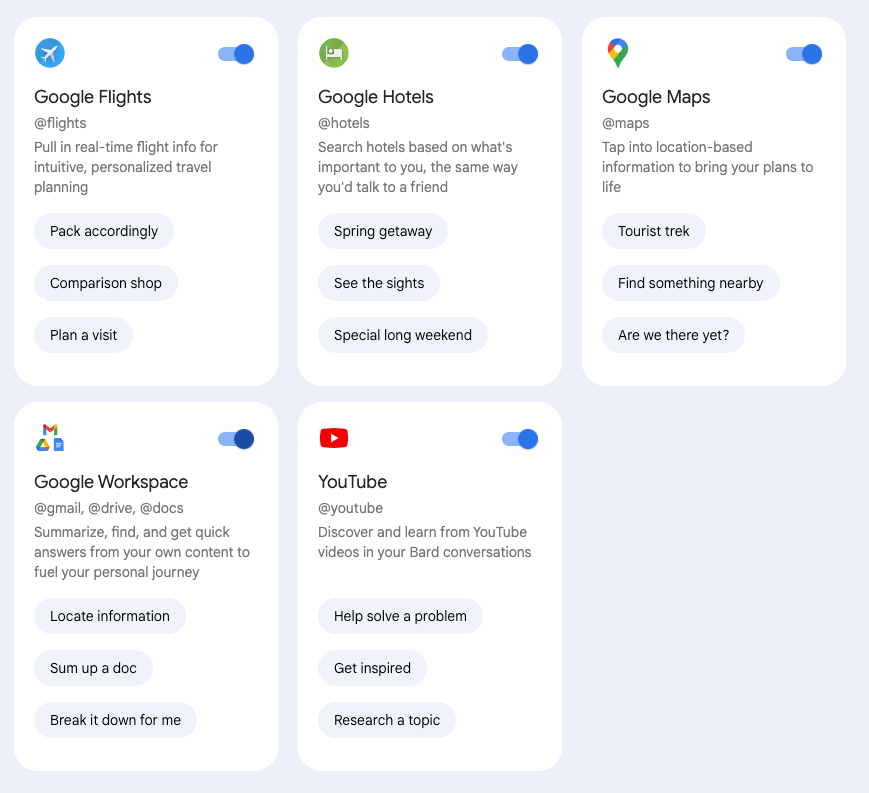
Source: Google
****Our take:**
- There's much more to say about this AI + extensions search model. It's one version of the future of search.
- Hypothetically you'll be able to create a custom search engine on demand, as with [ChatGPT's plug-ins](https://openai.com/blog/chatgpt-plugins?ref=nearmedia.co).
- If the results are roughly equivalent to Google.com's, Bard+ will be a viable (ad-free) alternative. Narrower results using more trusted sources.
### Agencies, You've Got 6 Months with SMBs
If you run an agency that works with small businesses, you've got about six months to prove yourself before they drop you. That's according to a vCita survey ([form](https://intandem.vcita.com/2023-smb-marketing-report?ref=nearmedia.co)) of roughly 500 US small business owners. Eighty four percent of respondents were from businesses with <10 employees; nearly half (48%) were one-person shops. Accordingly, there are a few eyebrow-raising findings: 70% were reportedly using agencies/consultants for digital marketing and 80% of that group were spending "up to $3,000 each month." Both of these numbers are higher than the norm. Nonetheless, 67% of respondents stopped working with an agency or switched after only six months. That churn was driven by multiple causes: didn't see results, budget issues, inability "to make the most of the services provided by the agency," and the agency wasn't a "true partner." Churn was greatest with paid search, social and paid social, in that order.
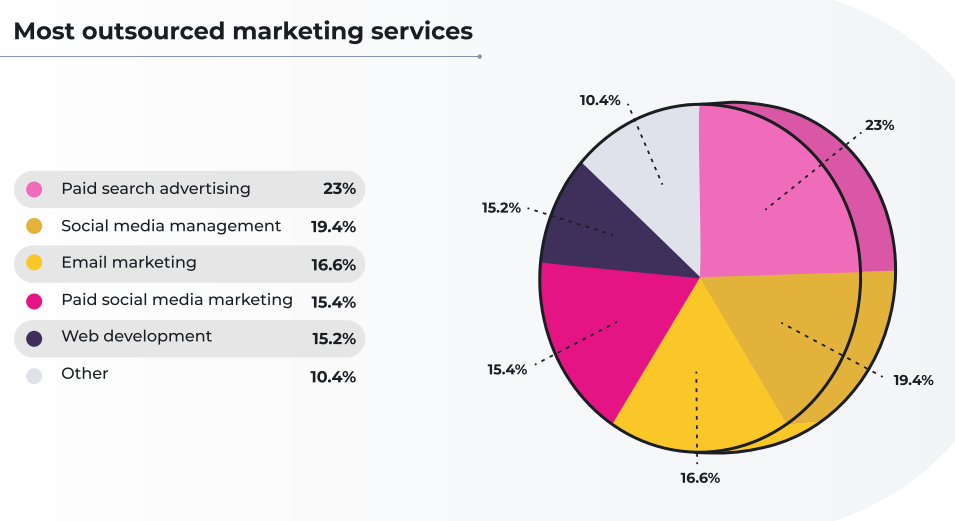
Source: vCita SMB survey
****Our take:**
- A 2021 CallRail [survey](https://www.callrail.com/blog/callrail-data-reveals-impact-of-pandemic-on-small-businesses?ref=nearmedia.co) found only 11% of SMBs working with agencies; vCita's 2022 SMB study found 32%; 70% is a massive leap.
- The average SMB digital marketing spend is <$10K annually. So the vCita SMBs are overstating budgets or spending more than the norm.
- The survey has anti-churn advice, including demonstrate value quickly, deliver additional services and become a true strategic partner.
### Just Walk Out's Second Chance
When Apple introduced [iBeacon](https://en.wikipedia.org/wiki/IBeacon?ref=nearmedia.co) in late 2013 it seemed the beginning of an inevitable indoor-location era. With Opus Research, I created the [Place Conference in 2014](https://opusresearch.net/pdfs/I2GEditCalendar%5FJan2014.pdf?ref=nearmedia.co) under that assumption. But it never really materialized (location analytics did instead). Autonomous checkout (i.e., Amazon's [Just Walk Out](https://justwalkout.com/?ref=nearmedia.co)) is similar; it had the appearance of inevitability when introduced (2018) but since then [not so much](https://www.paymentsjournal.com/amazons-just-walk-out-tech-fails-to-hit-the-ground-running/?ref=nearmedia.co). Amazon has shut down some Amazon Go stores and it hasn't caught on with retailers. Cost and integration challenges created barriers to adoption. This was also the story of iBeacon and related indoor-location technologies. Just Walk Out has had some success in airports, college campuses, stadiums and convenience stores. Competitors have also had modest successes in those categories. Now Amazon [is trying to radically bring down the cost](https://www.aboutamazon.com/news/retail/amazon-just-walk-out-rfid-technology?ref=nearmedia.co) and simplify deployment using [RFID tags](https://www.riotinsight.com/article-rfid-in-retail?ref=nearmedia.co), which most retailers already use for inventory tracking. Amazon hopes simpler technology and lower cost will spur adoption.
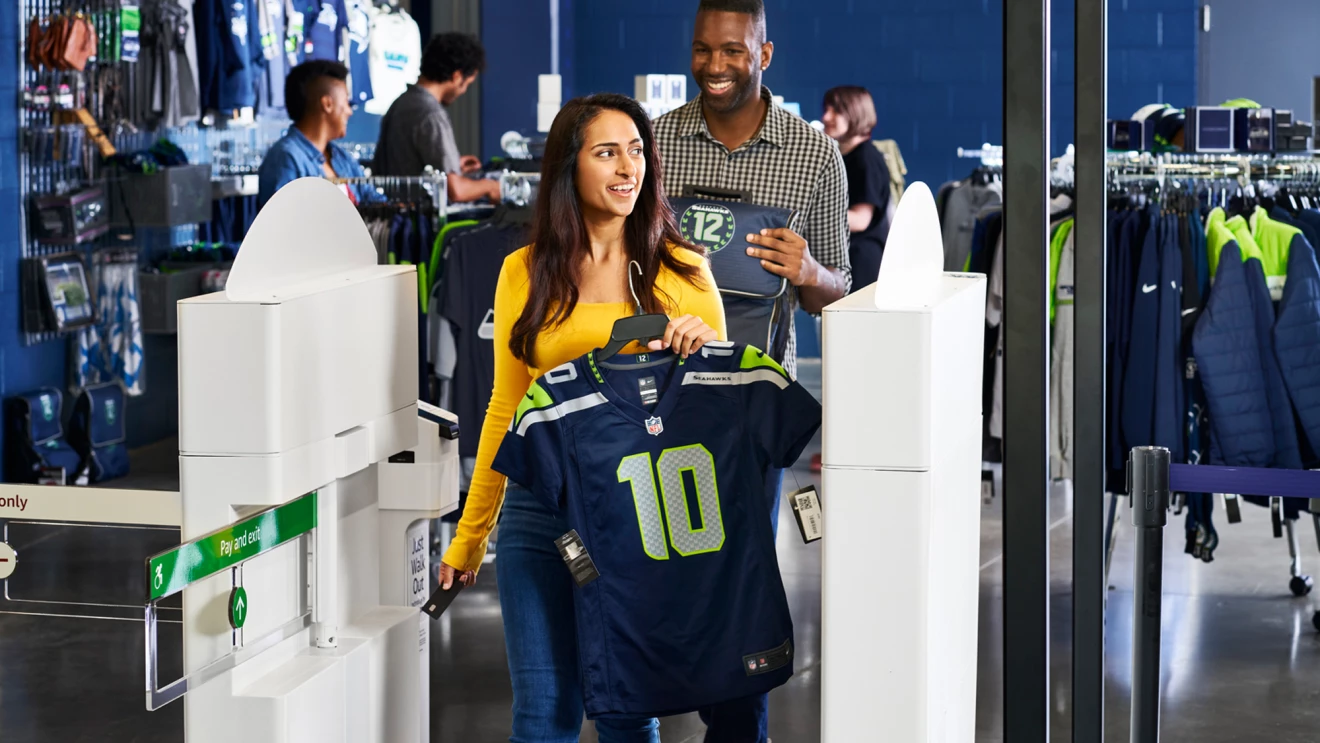
Source: Amazon
****Our take:**
- Amazon competes with many of the retailers it wants to sell to, which is another barrier for Just Walk Out – though not its competitors.
- Assuming the new system is cheaper and faster to deploy, ongoing retail labor shortages should boost adoption.
- Certain types of retail environments appear better suited to cashierless tech than others: airports, arenas, c-stores and discount stores.
## Recent Analysis
- ****Near Memo episode 128:** [Transparency Company interview about the state of review fraud on Google and how to deal with it](https://www.nearmedia.co/ep-128/).
## Short Takes
- **Alexa** [gets an AI boost](https://www.theverge.com/2023/9/20/23880764/amazon-ai-alexa-generative-llm-smart-home?ref=nearmedia.co), plus other **Amazon** [hardware announcements](https://www.theverge.com/2023/9/20/23881164/amazon-event-hardware-devices-alexa-echo-ring?ref=nearmedia.co).
- Using the **SEO Skyscraper Method** \+ [ChatGPT data mining](https://www.searchinfluence.com/blog/skyscraper-method-chatgpt-data-mining/?ref=nearmedia.co).
- **Google and OpenAI** in [race to launch](https://www.androidpolice.com/google-gemini-ai-around-the-corner/?ref=nearmedia.co) multi-modal AI first.
- **Google trial**: company [manipulates ad prices](https://searchengineland.com/google-quietly-increases-ad-prices-targets-432155?ref=nearmedia.co) to juice revenues.
- New UK **social media safety law** [allows jail time](https://abcnews.go.com/Business/wireStory/uks-new-online-safety-law-adds-crackdown-big-103340310?ref=nearmedia.co) for executives.
- **Instacart** has [modestly successful IPO](https://www.cnbc.com/2023/09/19/instacart-shares-start-trading-on-nasdaq-at-42.html?ref=nearmedia.co) debut this week.
- Millennial vs. Gen Z: [differences](https://thetakeout.com/online-grocery-shopping-vs-in-store-millennials-gen-z-1850849825?ref=nearmedia.co) in **grocery shopping habits**.
- **AI generated speech** [turns books into audiobooks](https://techcrunch.com/2023/09/19/project-gutenberg-puts-5000-audiobooks-online-for-free-using-synthetic-speech/?ref=nearmedia.co) overnight.
- **Major SSPs** [help fund low-quality sites](https://www.adweek.com/media/why-major-ssps-monetize-the-majority-of-the-webs-low-quality-websites/?ref=nearmedia.co) across the web.
- **TikTok** [launches new analytics/measurement tools](https://www.tiktok.com/business/en/blog/attribution-analytics-performance-comparison?ref=nearmedia.co) for advertisers.
- 18 US state Attorneys General [back](https://www.reuters.com/legal/virginia-other-us-states-back-montana-tiktok-ban-court-filing-2023-09-18/?ref=nearmedia.co) Montana **TikTok ban** in court filing.
- As Twitter/X [moves to charge everyone](https://techcrunch.com/2023/09/18/elon-musk-says-x-will-charge-users-a-small-monthly-payment-to-use-its-service/?ref=nearmedia.co), **Bluesky** [sees record signups](https://mashable.com/article/bluesky-record-new-signups-after-musk-says-charge-x-twitter-users-fee?ref=nearmedia.co).
- EU citizens [want stronger action](https://thenextweb.com/news/eu-wants-government-action-against-disinformation?ref=nearmedia.co) against **online disinformation**.
- Deloitte [estimates](https://www.digitalcommerce360.com/2023/09/13/deloitte-holiday-ecommerce-sales/?ref=nearmedia.co) **holiday e-commerce** to grow \~11% to $284 billion.
Listen to our [latest podcast](https://www.nearmedia.co/memo/).
[](https://nearmedia.co/memo?ref=nearmedia.co)
How can we make this better? Email [us](mailto:gsterling@nearmedia.co) with suggestions and recommendations.
### Local SGE Manic Episode, Inflated Ratings, Apple's Mother Nature Haters
URL: https://www.nearmedia.co/local-sges-manic-episode-inflated-ratings-mother-nature/
Last updated: 2023-09-18T18:46:13.000Z
### Local SGE's Manic Episode
Last week SEO Andy Simpson [discovered](https://twitter.com/ndyjsimpson/status/1702759778420654398??ref=nearmedia.co) a Local SGE snapshot with two carousel results and a whole lot of thumbnails. The query was "[new orleans personal injury lawyer](https://www.google.com/search?q=new+orleans+personal+injury+lawyer&rlz=1C1CHBF%5FenUS868US868&oq=new+orleans+personal+injury+lawyer&aqs=chrome..69i57j0i512j69i64j0i22i30l3j0i390i650l2.7447j0j7&sourceid=chrome&ie=UTF-8&ref=nearmedia.co#ip=1)." One carousel was hidden under a link "caret" at the top and the other appeared in the normal (upper right) position. Google seems to be experimenting with the position of the carousel – we've seen carousels at the bottom of the snapshot – and the number of thumbnails. In this search result, there was substantial overlap between the two carousels. The upper right carousel, with a whopping 24 thumbnails, reproduced all of the listings in the body of the snapshot. The second carousel (with 20 thumbnails), under the caret, generally duplicated the top organic search results, although not 1:1 in sequence. All the Local Pack results were present in the Local SGE snapshot. Lots of redundancy here. Google is clearly trying to determine how the design of the snapshot affects clicks.
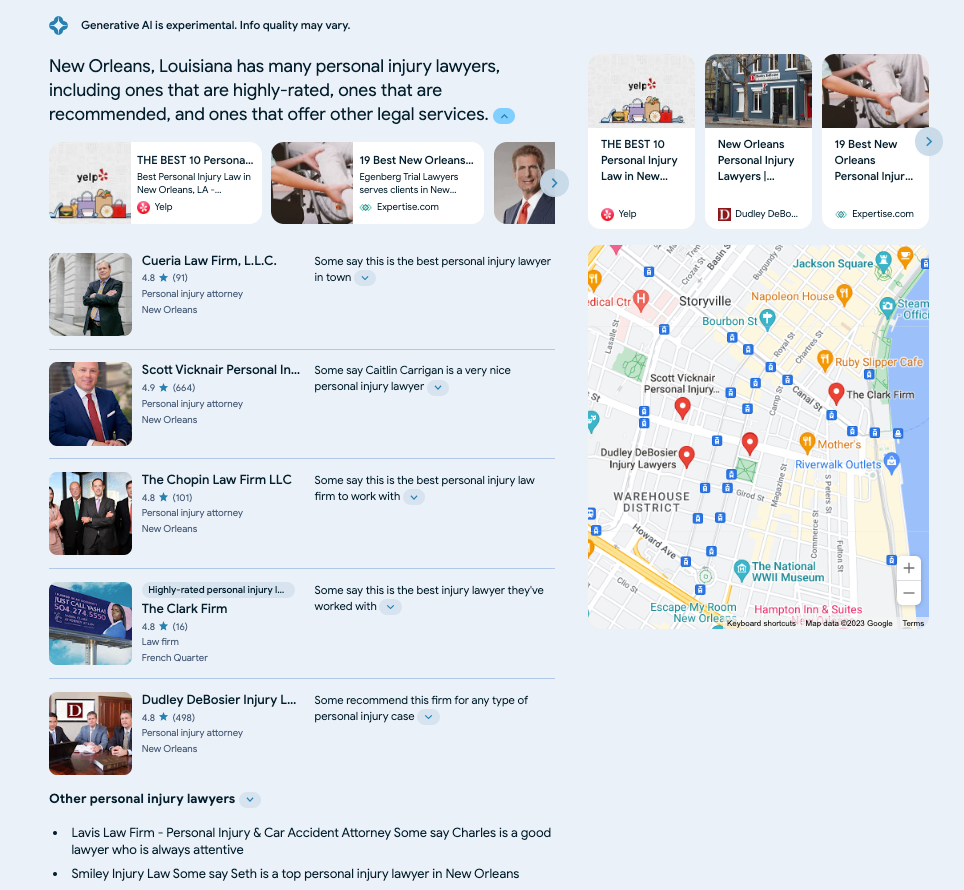
Source: Google
****Our take:**
- Google has [started to roll out](https://www.linkedin.com/posts/localseoguide%5Flooks-like-google-sge-is-rolling-out-to-a-activity-7107840538518716416-62LR/??ref=nearmedia.co) AI results to people other than those opted-in to labs. SGE will cannibalize some organic traffic (TBD).
- The final format and features of the Local SGE Pack appear to be in flux. The degree of redundancy in the local SGE result is strange.
- Google CEO Sundar Pichai [told Wired](https://www.wired.com/story/sundar-pichai-google-ai-microsoft-openai/?ref=nearmedia.co) he was confident Google would get SGE right – ultimately. He also reiterated there will be ads.
### Study: Ratings Inflated on Google vs. Yelp
Yelp has long argued that its reviews are of higher quality than what appears on Google. As support for that position, the company [points to](https://blog.yelp.com/news/ftc-economist-finds-google-and-facebook-have-inflated-reviews-for-low-quality-businesses/?ref=nearmedia.co) an FTC [report](https://deveshraval.github.io/reviews.pdf?ref=nearmedia.co) arguing that Google's "gatekeeper" (monopoly) status is resulting in an inflated ratings distribution, which misrepresents business quality. Suspicious, "low-quality businesses," according to the report, had better ratings on Google vs. Yelp. In the study, a "low quality" or "suspicious" business is one with multiple complaints to consumer protection organizations, mostly the Better Business Bureau (BBB) in this case. The BBB [has multiple problems](https://twitter.com/gsterling/status/1701687222301511822?ref=nearmedia.co) and is not strictly speaking a consumer protection organization. (Its ratings are not truly reflective of actual consumer experiences.) Nonetheless, the report's central claim is that low-quality businesses have inflated or unrepresentative ratings on Google (vs. Yelp) and that Google's reviews themselves are of lower quality than Yelp, primarily because they're shorter and have less text.
**Online Ratings Distribution by Platform**
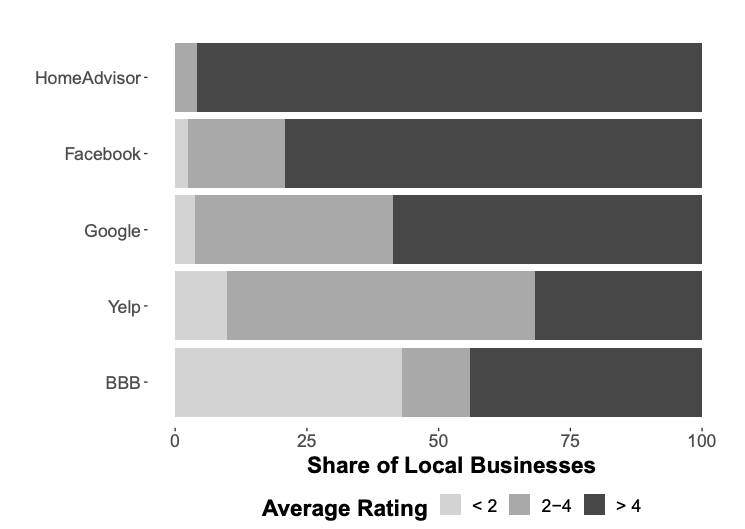
Source: FTC report "Do Gatekeepers Develop Worse Products? Evidence from Online Review Platforms"
****Our take:**
- Because Google is the dominant local reviews platform, more marketers and fraudsters are trying to game Google reviews.
- Yelp is aggressive in policing review fraud but it [still exists](https://uberall.com/en-us/company/press-releases/study-67-of-us-consumers-say-fake-online-reviews-a-growing-problem?ref=nearmedia.co). However, the percentage of suspicious reviews is lower on Yelp than Google.
- Yelp tends to filter positive (not negative) reviews from users without a meaningful review history. This may skew Yelp reviews more negative.
### Mother Nature Haters
You probably either saw or read about the Apple "sketch" starring Octavia Spencer as mother nature (below). It was panned by many tech writers as a "[dud](https://appleinsider.com/articles/23/09/13/apples-mother-nature-sketch-was-a-complete-dud-and-didnt-belong-in-the-iphone-15-event?ref=nearmedia.co)" and inspired a lot of online ire. Many critics also said it simply "didn't belong" at the iPhone event and was "cringeworthy." Indeed, it was a bit cringeworthy. The segment was intended to highlight Apple's progress toward carbon neutrality. In response, some critics [called it greenwashing](https://hardcoresoftware.learningbyshipping.com/p/210-its-not-necessarily-fair-to-mock?ref=nearmedia.co). Yet the segment accomplished its mission. First, it generated a ton of coverage about Apple's sustainability efforts (some of it negative). But more importantly, it conveyed the impression that Apple was way ahead of its hardware competitors in this area. And that's probably an accurate claim. On social media I also saw [positive reactions](https://www.linkedin.com/posts/bethtrier%5Fjust-brilliant-well-done-apple-standing-activity-7108498700540248066-ThLS/??ref=nearmedia.co) from Spencer fans and "ordinary people" – women in particular. (Almost all the critical or snarky tech writers were men.)
****Our take:**
- It wasn't Apple's [1984 Super Bowl ad](https://www.youtube.com/watch?v=VtvjbmoDx-I&ref=nearmedia.co) – called the greatest TV ad ever – but was effective, making people aware of Apple's carbon-neutral drive.
- We haven't seen any surveys, but this segment likely resonated with younger audiences, reinforcing [their preference for the iPhone](https://www.bloomberg.com/company/press/79-of-gen-z-us-consumers-prefer-iphones-to-rivals-finds-bloomberg-intelligence?ref=nearmedia.co).
- Notwithstanding the backlash to corporate sustainability efforts, they've become an essential part of marketing to younger consumers.
## Recent Analysis
- **Near Memo episode 128:** [Transparency Company interview about the state of review fraud on Google and how to deal with it](https://www.nearmedia.co/ep-128/).
## Short Takes
- **Multi-location local SEO**: [A framework for success](https://www.wix.com/seo/learn/resource/multi-location-local-seo-framework?ref=nearmedia.co).
- What [changed](https://searchengineland.com/whats-new-with-the-google-helpful-content-update-431994?ref=nearmedia.co) in the new Google **Helpful Content Update**?
- **Google** "Food for Thought" event [takeaways](https://uberall.com/en-us/resources/blog/googles-food-for-thought-takeaways-the-digital-marketing-tools-that-matter?ref=nearmedia.co).
- Aleyda Solis "Embracing **AI in SEO**" BrightonSEO [slides](https://speakerdeck.com/aleyda/embracing-ai-in-seo-how-to-10x-your-seo-leveraging-ai-bots-number-brightonseo?ref=nearmedia.co).
- All the **BrightonSEO** [slides](https://docs.google.com/spreadsheets/d/1513Cc8I6R07VnXrY9atgVZ53VPbaHZxmRmMbJtPQ5IU/edit?ref=nearmedia.co#gid=0), via Aleyda Solis.
- **Google trial** [shows company's intense focus](https://www.politico.com/news/2023/09/15/inside-the-start-of-the-landmark-google-antitrust-trial-00116263?ref=nearmedia.co) on default search.
- **Google trial**: "competition is a click away" [argument might not work](https://prospect.org/justice/2023-09-18-tim-wu-us-google-trial/?ref=nearmedia.co).
- **Android Auto** will [turn the car into a rolling smartphone](https://blog.google/products/android/new-apps-for-android-auto-and-cars-with-google-built-in/?ref=nearmedia.co).
- **ChatGPT** health information [outperforms](https://www.npr.org/sections/health-shots/2023/09/16/1199924303/chatgpt-ai-medical-advice?ref=nearmedia.co) WebMD, "Dr. Google."
- **Twitter/X** continues to [throttle links](https://themarkup.org/investigations/2023/09/15/twitter-is-still-throttling-competitors-links-check-for-yourself?ref=nearmedia.co) to perceived competitors.
- In blow to hardware biz, **Microsoft's CPO** Panos Panay [is leaving](https://www.bloomberg.com/news/articles/2023-09-18/microsoft-s-product-chief-is-exiting-in-blow-to-hardware-unit??ref=nearmedia.co).
- **Meta's Ray Ban Stories** 2.0 smart glasses [appear](https://www.theverge.com/2023/9/15/23875925/meta-next-smart-glasses-fcc-ray-ban-stories?ref=nearmedia.co) in FCC filings.
- **Generative AI** is just a phase, [interactive AI is what's next](https://www.technologyreview.com/2023/09/15/1079624/deepmind-inflection-generative-ai-whats-next-mustafa-suleyman/?ref=nearmedia.co).
- The promise of **AI for SMBs**: [getting back to their actual work](https://streetfightmag.com/2023/09/14/generative-ai-is-revolutionizing-smb-marketing-but-creating-new-data-privacy-challenges/?ref=nearmedia.co).
Listen to our [latest podcast](https://www.nearmedia.co/memo/).
[](https://nearmedia.co/memo?ref=nearmedia.co)
How can we make this better? Email [us](mailto:gsterling@nearmedia.co) with suggestions and recommendations.
### Ep 128: What and why of review fraud on Google & how to deal with it
URL: https://www.nearmedia.co/ep-128/
Last updated: 2024-07-04T15:02:56.000Z
**Part 1 starts 00:13 - [The big picture of review fraud - who does it and why](https://youtu.be/gXs7bfh8Crk?ref=nearmedia.co)**
We explore the full range of review fraud from fake positive reviews, black hat negative reviews and review extortion with Curtis Boyd of the Transparency Company. How widespread is it, is it growing, which categories are most likely to participate in it and why.
Segment Reference Articles: [Askfortransparency.com](https://askfortransparency.com/about/?ref=nearmedia.co)
**Part 2 starts 15:36 - [How to deal with fake review attacks and competitors who use fake reviews](https://youtu.be/WxK6BTQ6O%5FI?ref=nearmedia.co)**
If you are an honest business can you compete in a world rife with review fraud. We discuss how to deal with fake review attacks and how to get fake reviews that your competitors have gotten taken down.
Segment Reference Articles
[Google Business redressal form](https://support.google.com/business/contact/business%5Fredressal%5Fform?ref=nearmedia.co)
[Step-by-Step Guide to Fighting Fake Google Review Attacks](https://www.nearmedia.co/how-to-fight-a-fake-google-review-attack/)
[Missing Google Reviews: A Step-by-Step Recovery Guide](https://www.nearmedia.co/missing-reviews-at-google-a-step-by-step-guide-to-recovery/)
**Part 3 starts 22:29 - [The FTC and fake review guidelines and rules](https://youtu.be/NQZzJqBnDJs?ref=nearmedia.co)**
The FTC has been upping their enforcement game with new Guidelines which set a standard and upcoming Rules which will facilitate their ability to impose fines on buyers and sellers of reviews. The major platforms are largely exempt from any enforcement but their is language in the upcoming FTC rules that makes a business fully responsible for compliance.
Segment Reference Articles
[Trade Regulation Rule on the Use of Consumer Reviews and Testimonials](https://www.ftc.gov/system/files/ftc%5Fgov/pdf/r311003consumerreviewsandtestimonials%5Fnprm.pdf?ref=nearmedia.co)
[The FTC Guidelines: Everything you need to know](https://www.nearmedia.co/content/files/2022/03/FTC-Guidance-Presentation-w-Links.pdf) (presentation)
**Part 4 starts 30:13 -[ The Future of Reviews: What will see over the next 24 months in review spam & possible enforcement](https://youtu.be/DsyboBCj-L4?ref=nearmedia.co)**
New rules from the FTC and better filters from Google might turn the corner on fake reviews but the lack of FTC resources and the lack of Google’s focus may prevent that from happening
### Amazon Upgrades Visual Search, LSA Ad Confusion, Data 'Delete Act'
URL: https://www.nearmedia.co/amazon-upgrades-visual-search-lsa-ad-confusion-data-delete-act/
Last updated: 2023-09-15T18:30:36.000Z
### Amazon Search Upgrades Answer Google
Amazon [dominates](https://www.nearmedia.co/why-google-lost-product-search-shopify-vs-amazon/) product search. And Google has been battling back for several years with a range of strategies and [tactics](https://www.nearmedia.co/google-plays-catchup-to-amazon-in-product-search/): more product results, visual search innovations and local product inventory. While Amazon was an early pioneer in visual search (so was Pinterest), it hasn't done much in the past few years. However, the company just announced [new features](https://www.aboutamazon.com/news/retail/amazon-makes-it-easier-to-search-and-shop?ref=nearmedia.co) that partly respond to Google's ongoing improvements in product and visual search. Among them, Amazon introduced the ability to add text to image-based search, like Google [multisearch](https://blog.google/products/search/multisearch/?ref=nearmedia.co). It also expanded its AR "[view in your room](https://www.amazon.com/products?ref=nearmedia.co)" capability from large furniture to "table-top" items, such as lamps and small appliances. And there's a new Find-on-Amazon tool that allows users to take an image and share it with the Amazon app, which will find it on the site. Google Lens offers similar functionality. These innovations will probably generate more searches and more ad impressions accordingly.

Source: Amazon
****Our take:**
- Amazon's share of US e-commerce is probably between 50% [and 60%](https://www.nearmedia.co/amazons-60-apples-pandoras-box-destroy-the-algorithm/). That's due to multiple factors: selection, Prime, consumer trust.
- Amazon probably doesn't need to match every Google visual search feature to maintain its product-search dominance.
- However, these tools are likely increase search volumes and boost purchases incrementally and, perhaps more importantly, ad revenues.
### LSAs Don't Look Like Ads
Local Services [Ads](https://support.google.com/localservices/answer/6224841??ref=nearmedia.co) (LSAs) launched in 2015 and have steadily expanded to more categories and geographies. As of Q1 this year, LSAs [were available in 70 local categories](https://www.nearmedia.co/her-is-here-lsa-70-nextdoor-ux-is-the-problem/), including home services, professional services, education, dentistry, pet care and others. Google has never publicly released LSA performance data. But the program wouldn't have continued if it weren't doing well. Near Media's research in the legal vertical recently uncovered just how well LSAs "work," when they appear. In our research, LSAs appeared in localized search results – SERPs with Local Packs/localized organic – 22.7% of the time. By comparison, Google Ads (any type) appeared in roughly 72% of SERPs. When LSAs were present they not only drove clicks but conversions. (We asked searchers to indicate which lawyers they would ultimately choose.) Indeed, LSAs were as effective as GBP and organic results. (As an aside, I have not been able to find any LSAs in the wild today, in any category.)
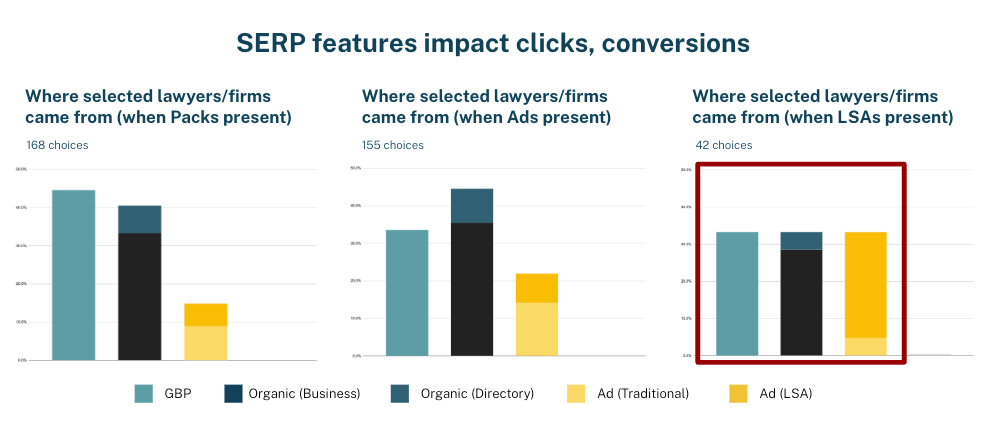
Source: Near Media Research
****Our take:**
- Watching and listening to users search made clear that part of LSA's success is frequent user ignorance of the fact that these are ads.
- LSAs contain images, Google badges and reviews. They're formatted differently and don't look like conventional Google Ads.
- LSAs have a growing review [spam problem](https://www.nearmedia.co/fake-google-lsas-delivery-apps-paper-catalog-comeback/). And Google apparently doesn't police LSA reviews as they do organic reviews – strangely.
### 'Delete Act' Could Kill Third Party Data
California legislators have passed [Senate Bill 362](https://leginfo.legislature.ca.gov/faces/billTextClient.xhtml?bill%5Fid=202320240SB362&ref=nearmedia.co), the so-called Delete Act. It now awaits Governor Gavin Newsom's signature but he has not indicated whether he'll sign it. The law creates a kind of "one stop shop" for personal data privacy in the state. It would mandate the creation of a website where consumers could ask all data brokers – there are more than 500 operating in CA – to delete their personal information. Currently California consumers can ask individual sites and ad networks to "do not sell" their personal information but that's a fragmented and cumbersome process. And by all accounts it [hasn't worked for consumers](https://martech.org/as-ccpa-takes-effect-some-publishers-are-complying-at-a-minimum/?ref=nearmedia.co). The term "data broker" applies to any business that "knowingly collects and sells to third parties the personal information of a consumer with whom the business does not have a direct relationship." This rule would apply to any business that sells third party data – online or off.
Source: State of California
****Our take:**
- Business groups have lobbied aggressively against the act and warned of unintended consequences such as undermining fraud prevention.
- The law would not affect first party data collection. It would impact ad networks and smaller publishers. Contextual ads would rise.
- We can assume, by analogy [to Apple's ATT](https://www.nearmedia.co/idfa-opt-ins-mobile-payments-killing-cash-cpsc-sues-amazon/), that a majority of CA consumers would ultimately ask for data deletion.
## Recent Analysis
- ****Near Memo, episode 127:** [Google Antitrust case unlikely to change anything, GBP deduping form, searchers go deep in the SERPs](https://www.nearmedia.co/ep-127/).
## Short Takes
- **Yelp** has [more even review distribution](https://blog.yelp.com/news/ftc-economist-finds-google-and-facebook-have-inflated-reviews-for-low-quality-businesses/?ref=nearmedia.co) than Google.
- **Google Maps** showing [a shaded nearby walk zone](https://twitter.com/ndyjsimpson/status/1702030400774660149?ref=nearmedia.co) from location.
- Google [expands use of third party reviews](https://twitter.com/mblumenthal/status/1701974014825037896?ref=nearmedia.co) on **GBP**.
- Google starting to [roll out](https://www.linkedin.com/posts/localseoguide%5Flooks-like-google-sge-is-rolling-out-to-a-activity-7107840538518716416-62LR/?ref=nearmedia.co) **SGE** to broader audience with pop-up.
- Google [to pay CA $93 million](https://oag.ca.gov/news/press-releases/attorney-general-bonta-announces-93-million-settlement-regarding-google%E2%80%99s?ref=nearmedia.co) for **location tracking** without consent.
- New Google **Helpful Content Update** [now rolling out](https://searchengineland.com/google-september-2023-helpful-content-system-update-rolling-out-431978?ref=nearmedia.co).
- **TikTok** "quietly" showing [Wikipedia links](https://www.theverge.com/2023/9/13/23871880/tiktok-search-engine-wikipedia-snippets-google?ref=nearmedia.co) in search results.
- **TikTok** hit with [nearly $370M fine](https://apnews.com/article/tiktok-data-privacy-europe-regulation-fine-8ebacba7646ef872fb8e85a1bcb93876?ref=nearmedia.co) in EU for privacy violations.
- **Twitter/X** CEO Linda Yaccarino[builds her team](https://www.theverge.com/2023/9/14/23874008/x-ceo-linda-yaccarino-executive-team-memo?ref=nearmedia.co) – it won't matter.
- Can **AI** help [bring back ad spending to news sites](https://www.bigtechnology.com/p/the-ad-industry-bailed-on-news-can??ref=nearmedia.co)?
- AI [prominent](https://www.fastcompany.com/90952483/we-just-got-another-glimpse-at-apples-ai-ambitions?ref=nearmedia.co) in **Apple's** new offerings; they just don't call it that.
- **Instacart** no longer a delivery service, it's an ad platform ([NYT](https://www.nytimes.com/2023/09/14/technology/instacart-public-ads.html?ref=nearmedia.co)).
- As US dithers, [EU takes global leadership](https://thenextweb.com/news/von-der-leyen-eu-digital-rights-ai-act?ref=nearmedia.co) on **regulating tech** and AI.
- Beyond VR: **Meta** brining "metaverse" [to mobile, web](https://www.meta.com/blog/quest/horizon-worlds-web-mobile-social-vr-free/?ref=nearmedia.co).
Listen to our [latest podcast](https://www.nearmedia.co/memo/).
[](https://nearmedia.co/memo?ref=nearmedia.co)
How can we make this better? Email [us](mailto:gsterling@nearmedia.co) with suggestions and recommendations.
### Google Trial, Apple Maps EU Gains, Hey Dude Reviews
URL: https://www.nearmedia.co/google-trial-apple-maps-gains-hey-dude-reviews/
Last updated: 2023-09-14T17:12:55.000Z
### US: Google 'Weaponized' Search Defaults
The US v. Google has kicked off, with the US Department of Justice (DOJ) arguing Google used default search deals as an anti-competitive "weapon" against rivals. Google responded with its familiar "switching is easy" argument and teed up the argument that competition has never been stronger. It will likely point to Amazon, Tiktok, verticals and probably ChatGPT. Hal [Varian](https://www.linkedin.com/in/hal-varian-7695971a/?ref=nearmedia.co), Google's Chief Economist, testified yesterday. The DOJ presented Varian with his own internal documents and emails that stressed, [according to](https://www.nytimes.com/live/2023/09/12/business/google-antitrust-trial?ref=nearmedia.co) the NY Times, "the importance of Google being the home page search default on browsers, as a way to target rivals like Yahoo and Microsoft." Other Varian documents discuss "the value of making it harder to switch from Google to Microsoft’s search product" and "the power of defaults." He was apparently also conscious of the antitrust implications of these deals. The US estimated the value of the Google - Apple iPhone default search agreement to be worth $10 billion annually – although it's [probably worth as much as 2x that](https://twitter.com/lutherlowe/status/1701978764794540267?ref=nearmedia.co). More interesting detail [here](https://threadreaderapp.com/thread/1701823694866170262.html?ref=nearmedia.co).
****Our take:**
- The DOJ will have four weeks to present its case, followed by state Attorneys General and then Google will defend itself.
- Among the witness to be called is ex-Google ads boss Sridhar Ramaswamy, who co-founded Neeva [and shut it down](https://www.nearmedia.co/neeva-search-done-ai-content-discovery-heres-twittergram/) recently.
- It seems clear, from early evidence, that Google intended its search deals to freeze out competitors and establish habitual user behavior.
### Analysis: Apple Maps Momentum in EU
A new look at Apple Maps vs. Google Maps (Apple Business Connect vs. GBP) market share in Europe affirms that Google is dominant, because of its massive search reach. But Apple Maps is gaining in a pure "apples to apples" comparison. The research, which looked at 1K business locations across eight EU countries, [was conducted by GMBapi.com](https://gmbapi.com/news/apple-business-connect-vs-google-business-profile/?ref=nearmedia.co) between August 2022 and July 2023\. Google has a 99% maps impression share because of search, which Apple doesn't offer (at this point). But upon looking purely at maps impressions – apples to apples – GMBapi.com found that Apple Maps is growing faster than Google Maps. BrightLocal [published](https://www.brightlocal.com/research/are-businesses-using-apple-business-connect/??ref=nearmedia.co) a (multi-country) survey in June that showed 88% of consumer-respondents favored Google Maps. A parallel SMB survey showed that the majority had not claimed their Apple Maps listings. Our own US traffic analysis [also showed growth](https://www.nearmedia.co/apple-maps-discovery-gbp-call-history-is-history-gbp-forum-insights/) for Apple Maps. We determined that Apple is delivering about 5% of the website visits and roughly 10% of the calls driven by the Google Local Pack.
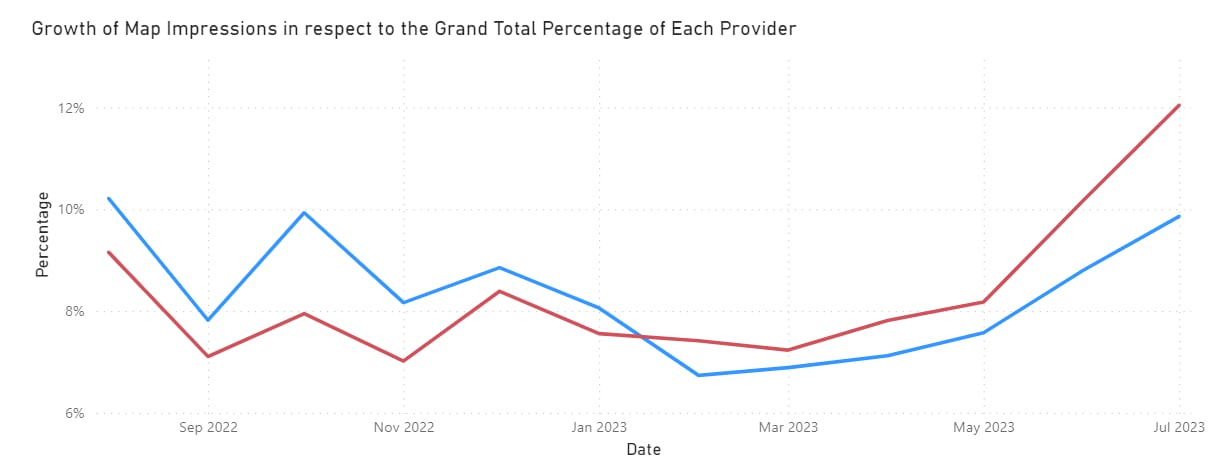
Source: GMBapi.com. Apple Maps red, Google Maps blue
****Our take:**
- A Maps Labs [analysis](https://maplabs.com/google-vs-bing-apple-and-yelp-part-1/??ref=nearmedia.co) compared local referrals/actions from Google, Apple, Yelp and Bing. Apple was in second place, Bing in fourth.
- The WSJ published an [article](https://www.wsj.com/articles/apple-maps-app-popularity-iphone-8e52aec1?ref=nearmedia.co) in July (mostly anecdotal), which indicated iPhone users are increasingly embracing Apple Maps vs. Google Maps.
- The EU's [DMA](https://commission.europa.eu/strategy-and-policy/priorities-2019-2024/europe-fit-digital-age/digital-markets-act-ensuring-fair-and-open-digital-markets%5Fen?ref=nearmedia.co) may impact Google Maps. Gatekeepers can't "treat services and products offered by the gatekeeper itself more favourably in ranking than similar services or products offered by third parties."
### Hey Dude, Don't Filter Reviews
Men's shoe retailer Hey Dude, a division of Crocs, [has agreed to pay](https://www.ftc.gov/news-events/news/press-releases/2023/09/online-shoe-seller-hey-dude-inc-pay-195-million-violating-ftcs-mail-internet-telephone-order-rule?ref=nearmedia.co) the US Federal Trade Commission (FTC) $1.95 million for engaging in deceptive review practices and a range of other customer misdeeds. Hey Dude published reviews on its site, which it claimed were "real, unedited reviews." The company solicited and managed those reviews using an unidentified third party platform. According to the FTC, "Hey Dude suppressed negative reviews, including more than 80 percent of reviews that failed to provide four or more stars out of a possible five." When the company discovered it was under FTC investigation, it began publishing all reviews. According to the [complaint](https://www.ftc.gov/system/files/ftc%5Fgov/pdf/heydude%5Fcomplaint.pdf?ref=nearmedia.co), before June of 2022 there was a written company policy instructing employees to publish only 4+ star reviews and suppress everything else. The settlement agreement and court order require Hey Dude "to publish all reviews it receives, including reviews previously withheld from publication." It now appears to be in compliance.
Source: Hey Dude website
****Our take:**
- While reviews are [a top consumer conversion factor](https://www.nearmedia.co/chatgpt-search-reviews-unread-gen-z-search/), it's unclear whether review suppression impacted Hey Dude's [triple digit growth YoY](https://www.retaildive.com/news/crocs-earnings-raises-guidance-heydude-doubles-revenue/648806/?ref=nearmedia.co).
- Brands, service providers and retailers can no longer ["review gate"](https://www.nearmedia.co/ftcs-business-marketer-guidelines/) or treat negative and positive reviews differently.
- Testimonials also can't be used unless they're genuinely representative or have [a strong disclaimer](https://www.ftc.gov/business-guidance/resources/ftcs-endorsement-guides-what-people-are-asking?ref=nearmedia.co) that the results/experiences aren't typical.
## Recent Analysis
- ****Near Memo, episode 127:** [Google Antitrust case unlikely to change anything, GBP deduping form, searchers go deep in the SERPs](https://www.nearmedia.co/ep-127/).
## Short Takes
- Winners, losers of **Google August Core Update** ([Amsive](https://www.amsive.com/insights/seo/google-august-2023-core-update-winners-losers-analysis/?ref=nearmedia.co)).
- **Google Maps** to allow "[adult-themed businesses](https://www.seroundtable.com/google-maps-adult-theme-36016.html?ref=nearmedia.co)."
- **Location sharing** apps [on the rise](https://www.fastcompany.com/90947421/the-hottest-back-to-school-accessory-a-location-sharing-app?ref=nearmedia.co) among families.
- Cars [have become](https://foundation.mozilla.org/en/privacynotincluded/articles/its-official-cars-are-the-worst-product-category-we-have-ever-reviewed-for-privacy/?ref=nearmedia.co) a **data-privacy nightmare** for consumers.
- TikTok e-commerce marketplace **TikTok Shop** [live in US](https://newsroom.tiktok.com/en-us/introducing-tiktok-shop?ref=nearmedia.co).
- Twitter alternative **Bluesky** reaches [1M users](https://twitter.com/iamrosewang/status/1701735196679356887??ref=nearmedia.co).
- Should you [be polite](https://www.microsoft.com/en-us/worklab/why-using-a-polite-tone-with-ai-matters?ref=nearmedia.co) to your AI **chat bot**?
- Dubious [Chat2024](https://www.chat2024.com/?ref=nearmedia.co) site offers **AI versions of candidates**.
- Award-winning **MidJouney AI art** [denied copyright](https://arstechnica.com/information-technology/2023/09/us-rejects-ai-copyright-for-famous-state-fair-winning-midjourney-art/?ref=nearmedia.co) by US govt.
- **Mailchimp** adds [new generative-AI marketing assistant](https://mailchimp.com/newsroom/introducing-intuit-assist/?ref=nearmedia.co).
- **Salesforce** [launches](https://www.reuters.com/technology/salesforce-launches-ai-assistant-across-its-apps-including-slack-tableau-2023-09-12/?ref=nearmedia.co) new AI assistant across apps, including Slack.
- **Amazon** to deliver merchant inventory [directly to physical stores](https://www.bloomberg.com/news/articles/2023-09-12/amazon-s-next-big-bet-restocking-shelves-at-physical-stores?ref=nearmedia.co#xj4y7vzkg).
- An **iPhone** customer [is 7.4x more valuable](http://www.asymco.com/2023/09/05/the-value-of-a-customer/?ref=nearmedia.co) than an Android customer.
- Apple **iPhone, Apple Watch** announcements in brief ([NYT](https://www.nytimes.com/wirecutter/blog/apple-event-september-2023-recap/??ref=nearmedia.co)).
- **Apple** was [forced by Europe](https://www.androidpolice.com/apple-may-never-admit-eu-role-usb-c-iphone-15/?ref=nearmedia.co) to introduce USB-C for iPhone 15.
Listen to our [latest podcast](https://www.nearmedia.co/memo/).
[](https://nearmedia.co/memo?ref=nearmedia.co)
How can we make this better? Email [us](mailto:gsterling@nearmedia.co) with suggestions and recommendations.
### New Google Reinstatement Policy, Repeat Spammers, Review 'Punishments'
URL: https://www.nearmedia.co/newsletter-9-11/
Last updated: 2023-09-11T18:59:24.000Z
### 'One and Done' Policy Will Be Global
Google has rolled out a [new policy and process for reinstatement](https://www.steadydemand.com/the-new-reinstatement-process-for-suspended-google-business-profiles-improvements-and-dangers/?ref=nearmedia.co) of suspended listings in Europe. When a business is suspended for violating [Google Guidelines](https://support.google.com/business/answer/3038177?ref=nearmedia.co), it now has one reinstatement opportunity via support. If rejected, as [required](https://eur-lex.europa.eu/legal-content/EN/TXT/HTML/?uri=CELEX%3A32019R1150&from=EN&ref=nearmedia.co) by [P2B regs in Europe](https://youtu.be/-pZiAn4ylSE?si=cXzZix1lwvY8Tbc-&ref=nearmedia.co), a business can [only appeal via third party mediation](https://www.nearmedia.co/gbp-forum-issues-new-gbp-verification-support-form-google-mediation-now-available-to-eu-businesses/) service. It's Google's intention to roll out this "one and done" process globally. Previously, if critical documentation were missing or if the listing remained in violation, the business would have several chances to get it right. That process has been so convoluted, some local SEOs have made a [business](https://www.steadydemand.com/gmb-reinstatement.html?ref=nearmedia.co) out of getting reinstated. No more. If the business doesn't provide the correct information, or their listing continues in violation, communication with support ceases. The business would then either need to go to [the forum](https://support.google.com/business/community?ref=nearmedia.co), pleading for an escalation, and/or [file](https://storage.ghost.io/c/03/80/0380d96d-ef7e-450e-96b3-2963e18aaab5/content/images/size/w1000/2023/08/forn.png?ref=nearmedia.co) (and [pay](https://www.cedr.com/commercial/fixedfee/?ref=nearmedia.co)) for mediation. As with many support processes of late there's a "[form for that](https://www.steadydemand.com/wp-content/uploads/2023/09/appeals-step-6.png?ref=nearmedia.co)" and more (theoretical) guidance about the specific violation. If the new process is in fact more transparent and GBP support communicates effectively, this change might be positive. Given Google's "kink" ridden development processes, their propensity for secrecy and limited communication, that's a lot to hope for.

Source: DALL-E 2
****Our take:**
- More transparency is good, but it's too early to tell exactly how transparent Google will be and whether SMBs will benefit.
- Unlike Europe, the US doesn't require third party review. This means one less option for resolution and speaks to the value of regulation.
- While mediation is a positive step, SMBs will have to pay. And it's not clear whether Google has to participate or is bound by the outcome.
### How Well Does Google Fight Repeat Review Spam?
Joy Hawkins recently published a case study reflecting her multiple attempts to [remove fake reviews](https://www.sterlingsky.ca/when-google-catches-business-buying-fake-reviews/?ref=nearmedia.co) from appliance listings in the Toronto area. She saw some success; however, in the end the businesses kept on buying more, suffering no obvious consequences. I engaged in a similar exercise with somewhat better results. I tracked and reported three unrelated businesses that purchased reviews from the same company used to attack a client with fake reviews. While all three of the businesses I reported now have fewer reviews and lower ratings, two of the three started buying reviews again. And unless someone reports them, they're likely to stick around.
## Review Counts
Businesses reported buying reviews
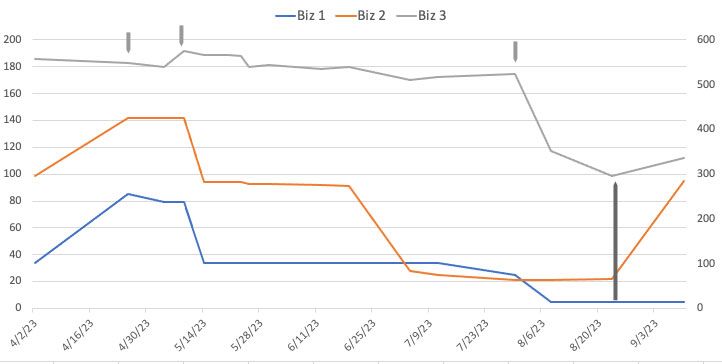
Small grey arrows indicate review losses from my reporting. Large arrow shows where two of the businesses started buying reviews again with no obvious Google response. Biz 3 counts are indicated by the ride side axis.
Joy [opined](https://twitter.com/JoyanneHawkins/status/1700257299338760268?s=20&ref=nearmedia.co) on Twitter that businesses buying reviews repeatedly should be held accountable. But Joel Headley, an ex-Google GBP employee, [commented](https://twitter.com/headley/status/1700255569914048557?s=20&ref=nearmedia.co) that could lead to punishment of legitimate businesses attacked with fake reviews. He also noted that Google [knows a lot about users](https://twitter.com/headley/status/1700558053308072319?s=20&ref=nearmedia.co) (i.e., location, credit card data, search history, phone calls) and could verify a review accordingly. But for privacy reasons, it chooses not to. Google actually does ["punish" listings](https://support.google.com/business/thread/232955214?ref=nearmedia.co) with fake reviews that are repeatedly reported. The [ability to leave reviews for that business](https://www.nearmedia.co/google-shuts-off-reviews-for-reproductive-clinics/) (or category) is removed, at least temporarily. Many consumers and honest businesses are being hurt by fake content and the [costs are huge](https://www.nearmedia.co/cost-of-fake-reviews-ppc-costs-up-internet-remorse/). Google has what amounts to a monopoly in local. It should apply greater engineering and human effort to clean up the review cesspool.
****Our take:**
- While review moderation is hard, Google has relied in the past on the "but it might hurt legit businesses" argument for not doing more.
- Google isn't using personal information to verify reviews, but it does to remove them. Rumor has it that Google takes down more Android than iPhone reviews for that very reason.
- However they aren't nuking as many fake reviews as they should and still [removing too many legit reviews](https://www.nearmedia.co/google-is-on-a-review-take-down-tear/).
### What Does GBP Review 'Punishment' Look Like?
Google has said, "When we see unusual activity or risk for potential abuse, [we routinely put protections on business profiles](https://www.nearmedia.co/google-shuts-off-reviews-for-reproductive-clinics/) to monitor and prevent [policy-violating](https://support.google.com/contributionpolicy/answer/7422880?hl=en&ref=nearmedia.co) content, which can include temporarily blocking all new reviews ... *"* Google is in fact ["punishing" individual business profiles](https://support.google.com/business/thread/232955214?ref=nearmedia.co) by blocking reviews. New EU moderation transparency rules allow us to actually learn more about what this looks like. The business [in this case](https://support.google.com/business/thread/232955214?ref=nearmedia.co) was not informed reviews weren't being published (but reviewers are). Not only can a reviewer see a review hasn't been posted in their [contributions area of Google Maps](https://support.google.com/maps/answer/6304221?hl=en&co=GENIE.Platform%3DDesktop&ref=nearmedia.co), they also receive an email explaining both the what and why of it (see below). What Google's statement – "This place is currently more likely to receive content that violates Google’s policies. To prevent this, Google has turned off posting" – actually means is unclear. Did the business buy reviews? Were they attacked by a competitor? Did they get too many reviews from abroad? The business doesn't know and has had difficulty finding out from Google.
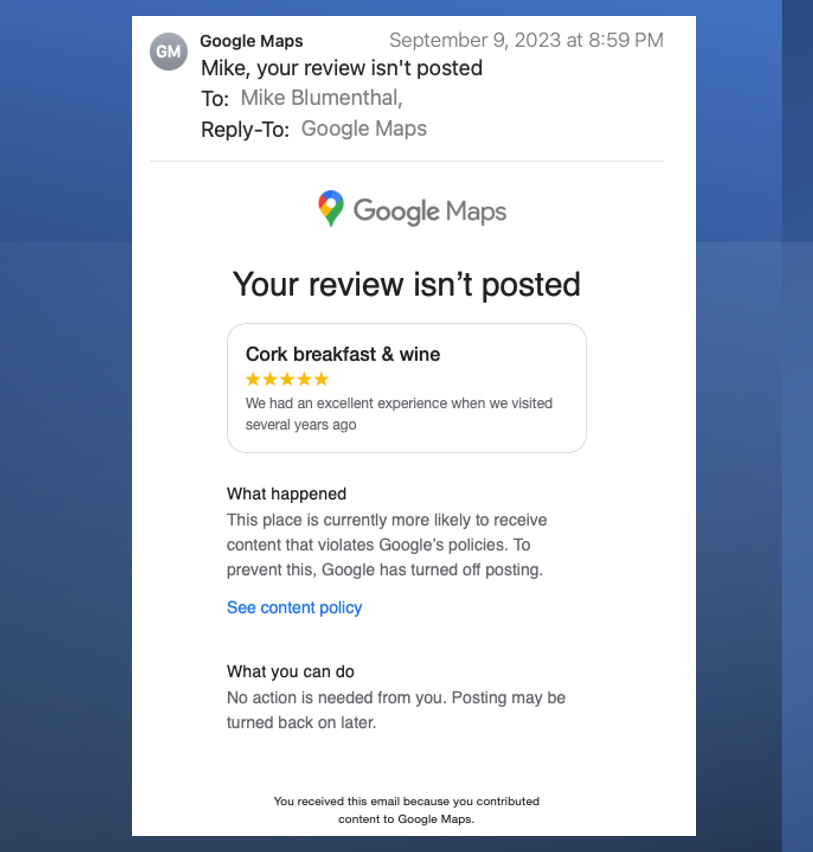
Source: Google-Mike Blumenthal
****Our take:**
- While Google moderation policies for consumers are improving, under EU regs, SMBs are not well informed when they're being "punished" or why.
- Google appears to be applying a "no reviews for you" policy to businesses buying fake reviews and those on the receiving end of a fake review attack.
- This approach slows down fake review attacks. But, as we have seen, doesn't seem to really stop the buying of fake reviews.
## Recent Analysis
- **Near Memo, episode 127:** [Google Antitrust case unlikely to change anything, GBP deduping form, searchers go deep in the SERPs](https://www.nearmedia.co/ep-127/).
- ICYMI: **Google Shifting GBP Support to 'Brand Ambassadors' aka Gig Workers?** [by Mike Blumenthal](https://www.nearmedia.co/is-google-shifting-gbp-support-to-gig-workers/)
## Short Takes
- In **local medical searches** [consumers go deep and wide into the Local Finder ](https://www.youtube.com/watch?v=wL08Rag0WRM&ref=nearmedia.co)to identify potential providers.
- **Google** has an updated [review disclaimer](https://twitter.com/mblumenthal/status/1696879876173627880?s=20&ref=nearmedia.co).
- **Weird GBP bug** where random photos from around the web are shown as a GBP profile photo ([UK & EU only](https://support.google.com/business/thread/231757851?ref=nearmedia.co)).
- **Pro complainer tip**: [keep editing your review](https://localsearchforum.com/threads/negative-review-keeps-getting-renewed-bumped-and-tagged-as-new.60594/?ref=nearmedia.co) to remain atop the Google review pile.
- **Google**, as moral arbiter, now [blurring explicit images](https://9to5google.com/2023/08/31/google-search-blur-images/?ref=nearmedia.co) in SERP by default.
- **Apple** doing something right: PopSci [argues](https://www.popsci.com/diy/apple-maps-offline/?ref=nearmedia.co) iOS17 Apple Maps a game changer and **Google Maps** [is trying to look more like Apple Maps](https://9to5google.com/2023/08/31/google-maps-new-colors/?ref=nearmedia.co).
- Horace Deidu argues that [live event subscriptions](http://www.asymco.com/2023/08/29/how-vision-services-subscriptions-reach-3000-yr/?ref=nearmedia.co) could push an individual an **Apple Vision Pro** user to spend $3,000/yr.
- Here is a **Google Call History** bug [workaround](https://localsearchforum.com/threads/google-removing-call-history-feature-on-gbp.60403/page-2?ref=nearmedia.co#post-189021).
- US CFPB is [going after](https://www.pymnts.com/news/mobile-payments/2023/apple-google-come-under-fire-for-their-tap-to-pay-walled-gardens/?ref=nearmedia.co) **Apple** to [open up Apple Pay](https://www.consumerfinance.gov/data-research/research-reports/big-techs-role-in-contactless-payments-analysis-of-mobile-device-operating-systems-and-tap-to-pay-practices/full-report/?ref=nearmedia.co).
- Potential **Walmart** [acquisition](https://www.bloomberg.com/news/articles/2023-09-09/walmart-is-said-to-explore-buying-majority-stake-in-chenmed?ref=nearmedia.co) could make it your primary care provider.
Listen to our [latest podcast](https://www.nearmedia.co/memo/).
[](https://nearmedia.co/memo?ref=nearmedia.co)
How can we make this better? Email [us](mailto:gsterling@nearmedia.co) with suggestions and recommendations.
### Ep 127: Google Antitrust case unlikely to change anything, GBP deduping form, Searchers go deep & wide in the SERPS
URL: https://www.nearmedia.co/ep-127/
Last updated: 2023-09-08T20:31:23.000Z
**Part 1 starts 00:13 - [Upcoming Google Antitrust case unlikely to change much of anything](https://youtu.be/iGNrUHlRjsQ?ref=nearmedia.co)**
Google’s antitrust case is starting next week. Google filed for a summary judgment and some of the issues were decided in their favor. Only two remain; The payment to Apple as the default iPhone search engine and whether Google uses Search Ads 360 to thwart competitors. Even if the case is decided against Google, it is unlikely to change much in the world of search.
Segment Reference Article:
[Judge: No evidence Google harmed competitors by limiting search visibility](https://searchengineland.com/judge-no-evidence-google-harmed-competitors-by-limiting-search-visibility-430451?ref=nearmedia.co#:~:text=While%20Google%20was%20cleared%20in,on%20mobile%20devices%20and%20browsers.)
**Part 2 starts 7:05 - [GBP support finally introduces a form to dedupe listings in Google Maps](https://youtu.be/KB2VFsP%5F4wk?ref=nearmedia.co)**
One of the long standing issues in managing large multi-location businesses in Google is the frequent occurrence of duplicate listings and historically, no easy way to get them merged. Now, likely in response to increased European regulations, Google has introduced a simple form to report and hopefully nuke listing duplicates. When combined with a product like Whitespark GPB duplicate notifications there is a real chance that large multi-location businesses, particularly hospitals and clinics, can actually get their duplicates under control.
Segment Reference Articles:
[Deduping GBP Profiles: There's a Form for That!](https://www.nearmedia.co/gbp-deduping-form-video-verification-clarification-gbp-scams-galore/)
[Whitespark GPB Management](https://whitespark.ca/gbp-management-beta/?ref=nearmedia.co)
**Part 3 starts 13:56 -[When searching, consumers consider many results ](https://youtu.be/wL08Rag0WRM?ref=nearmedia.co)**
It has long been thought that the click through curve on the front page of Google was very, very steep with users primarily clicking the #1 result, fewer clicking on 2 and 3 with virtually none going beyond that. Our behavior research suggests that user behavior is much more complicated than that and that they will often examine 3, 4 or even 10 results if the local decision is important enough.
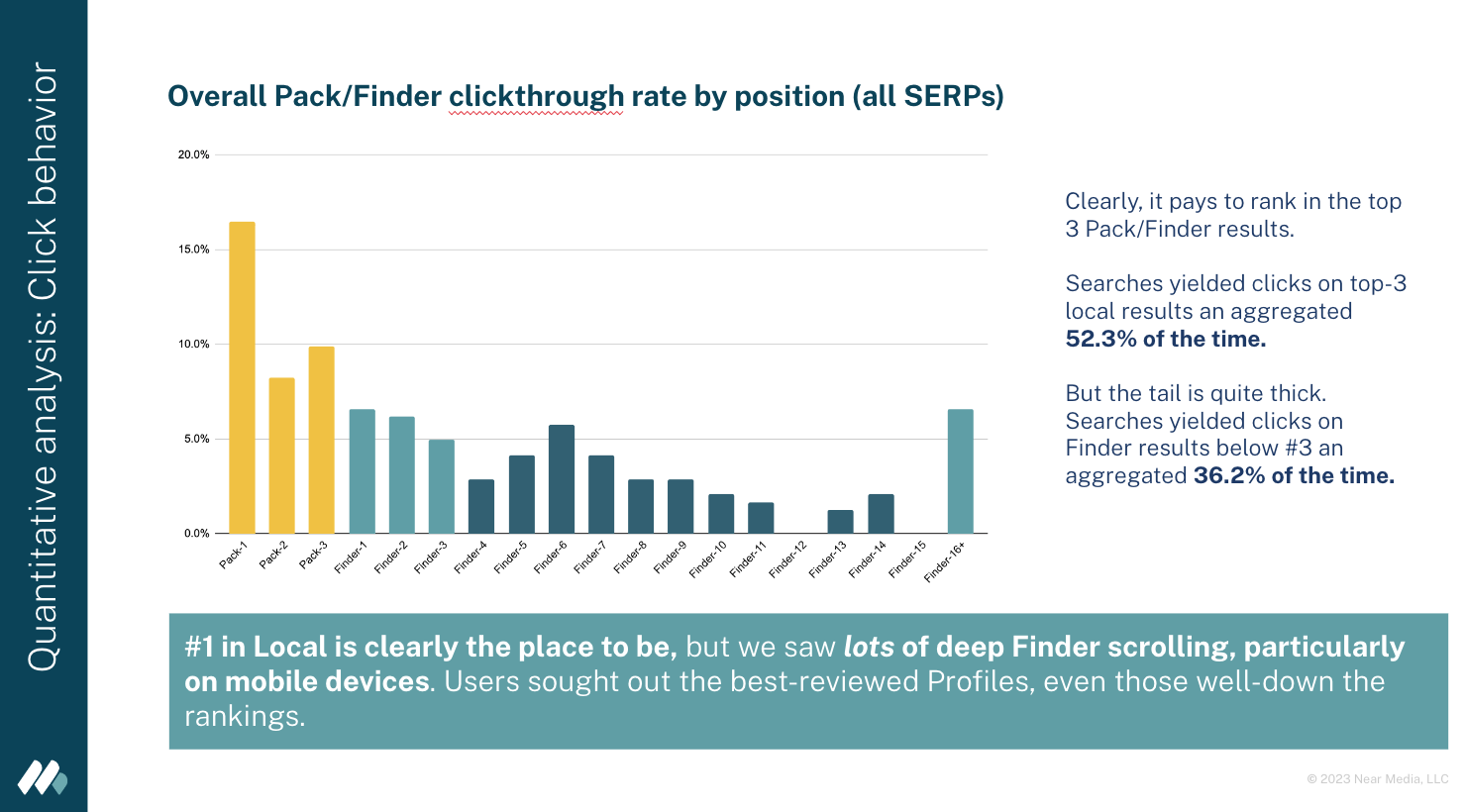
### Google on Trial, ROI: FB Beats SEO, Zero-Click Packs
URL: https://www.nearmedia.co/google-goes-to-court-fb-beats-seo-roi-zero-click-gbp/
Last updated: 2023-09-08T18:39:03.000Z
### Google's Day in Court
There have been a dizzying array of antitrust claims against Google in Europe and the US. In the US, Google currently faces two active cases – one about to go to trial on Monday and one, [seeking a breakup of its ad business](https://www.npr.org/2023/01/24/1151055903/doj-files-second-antitrust-suit-against-google-seeks-to-break-up-its-ad-business?ref=nearmedia.co), that will probably go next year. (The European Commission [wants ad-tech divestiture too](https://www.theverge.com/2023/6/14/23759094/european-commission-google-antitrust-advertising-market-antitrust?ref=nearmedia.co).) Regarding next Monday's trial, the NY Times [observed](https://www.nytimes.com/2023/09/06/technology/modern-internet-first-monopoly-trial-us-google-dominance.html?ref=nearmedia.co), "Such a consequential case over tech power has not unfolded since the Justice Department took Microsoft to court in 1998 for antitrust violations." One of the two main issues in the case is whether Google's default search deals with Apple (Safari) and Mozilla were illegal under current antitrust law. The Safari deal is worth at least $15 billion per year to Apple, according to [estimates](https://www.nearmedia.co/apples-15b-search-deal-sharks-and-lampreys/). Google is a de-facto monopoly and its size and market power do stifle competition, ultimately to the detriment of consumers. But these sorts of search distribution agreements are not illegal *per se* and it's unlikely the government will prevail on this claim. However, if the US were to win, terminating the deal likely wouldn't have any impact on Google's market share.
****Our take:**
- If the government successfully ended the Google-Apple default search deal, users would be asked to pick a search engine during phone setup.
- The overwhelming majority of users (90%+) would freely choose Google. It's the brand and UX they're most familiar with.
- Yet a government win could be the nudge that Apple needs to finally introduce a full-fledged Google replacement.
### SMBs: Facebook ROI Better than Search
Past surveys have [shown](https://www.nearmedia.co/amazon-passes-walmart/) that small business (SMB) owners (and some [B2B marketers](https://www.nearmedia.co/chatgpt-lawyer-smbs-and-ai/)) see social media as more effective than SEO or paid search – although perception [may not match reality](https://www.nearmedia.co/prop-22-goes-down-smb-social-disconnect-mid-funnel-queries-dominate/). Now another [survey](https://www.taradel.com/blog/free-report-2023-small-business-marketing-survey-results?ref=nearmedia.co), of 218 SMB owners and decision-makers from direct-mail provider Taradel, finds Facebook has the highest ROI of all channels, according to SMBs (direct mail is number 2). They also think paid search has a higher ROI than organic/SEO. Roughly 83% of SMBs surveyed said they used Facebook for marketing, Instagram was second with 48%; only 10.7% used TikTok. Yet only 11% saw their marketing as "highly effective." The largest group (37%) said it was "somewhat effective" and 22% said it was ineffective. Asked about next year's marketing allocation, Facebook Ads was the top choice, email was number 2\. Paid search was 5 and SEO was 7\. Just over 68% said they'd use Facebook ads "next year," an apparent decline vs. today (83%), although the latter may include organic Facebook usage.
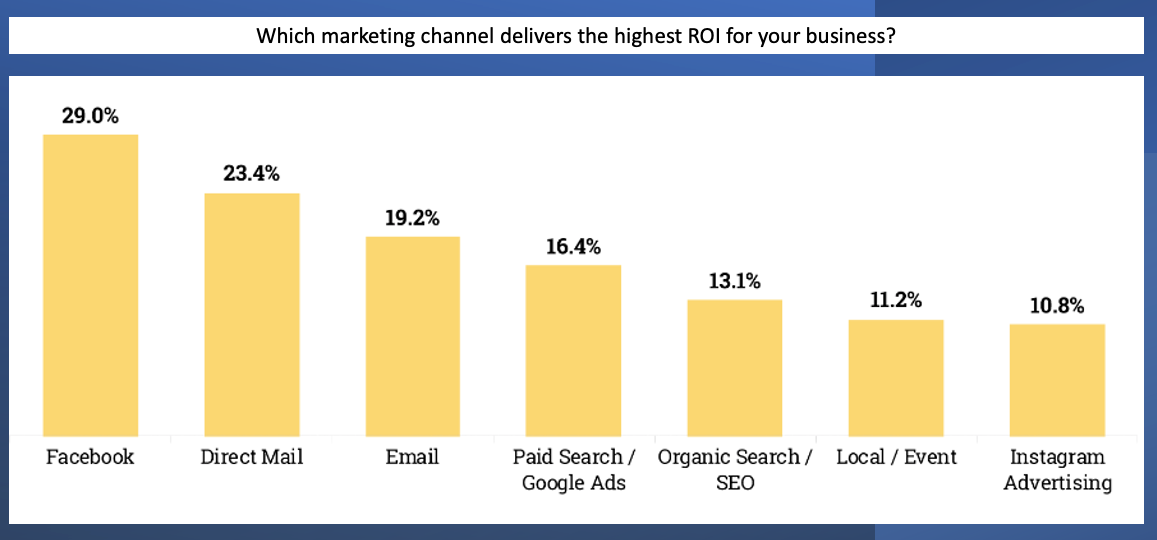
Source: Marketing Charts-Taradel, n=218 US SMB owners
****Our take:**
- Striking finding: 66.2% prefer self-service platforms for marketing. This may explain some of the results: FB is simpler than SEO.
- It's not clear how representative this sample was; 218 is a fairly small sample. And there was no segmentation data offered.
- There's a major perception-reality gap in this and other SMB data. But social media has definitely won the battle of hearts and minds.
### 71% of GBP Engagements Zero-Click
The zero-click [controversy](https://www.nearmedia.co/local-dominates-zero-click/) has died down somewhat lately but we directly observed it in user research Near Media recently completed. According to [Rand Fishkin](https://sparktoro.com/blog/in-2020-two-thirds-of-google-searches-ended-without-a-click/?ref=nearmedia.co), \~65% of Google searches on average result in no click to a website (mobile is higher than desktop). In the healthcare vertical, our research found that 71% of mobile GBP engagements and 54% on the desktop were zero-click. In other words, people were getting sufficient information from Google Local Pack/Finder results without a site visit. As users explored local results, we saw that reviews were a dominant focus; proximity was another and images as well. As previously indicated, however, most users focused entirely on star ratings and review volumes and [didn't read reviews](https://www.nearmedia.co/chatgpt-search-reviews-unread-gen-z-search/). Although a minority of users carefully read them.
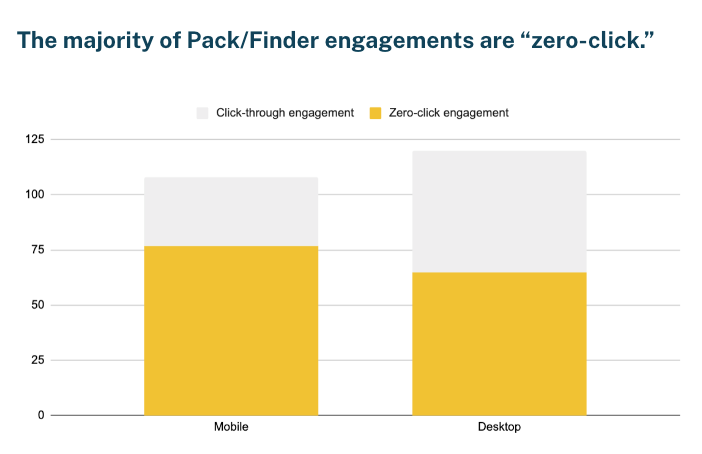
Source: Near Media research
****Our take:**
- Local Pack/Finder results drive zero-click conversions, 75% in some categories, per Mike Blumenthal and [Joy Hawkins](https://www.dropbox.com/s/0v1g0qy992i1588/MozCon%202019%20Slide%20Deck%20-%20Joy%20Hawkins.pdf?dl=0&ref=nearmedia.co).
- It makes sense that mobile has a higher % of zero-click results than desktop for several reasons, including purchase intent and UX.
- These figures are consistent with Rand Fiskin's data, but it's premature for us to generalize. We'll report back as we do more testing.
## Recent Analysis
- **Near Memo episode 126:** [Do searchers use the Local Finder?; how many links does a local site need?; Google's BS around content](https://www.nearmedia.co/ep-126/).
## Short Takes
- The [new reinstatement process](https://www.steadydemand.com/the-new-reinstatement-process-for-suspended-google-business-profiles-improvements-and-dangers/?ref=nearmedia.co) for **Google Business Profiles**.
- **Google** [tests](https://www.seroundtable.com/google-news-author-names-36006.html?ref=nearmedia.co) author names in news article snippets.
- 51% of college students chose **TikTok** over Google [for search](https://searchengineland.com/gen-z-tiktok-google-search-survey-431345??ref=nearmedia.co).
- Books-a-Million using **Walmart's GoLocal** [for same day delivery](https://www.prnewswire.com/news-releases/books-a-million-begins-a-new-chapter-with-same--and-next-day-delivery-for-thousands-of-items-301919446.html?ref=nearmedia.co).
- **Google Privacy Sandbox** [reaches "GA](https://privacysandbox.com/intl/en%5Fus/news/privacy-sandbox-for-the-web-reaches-general-availability?ref=nearmedia.co)" on Chrome.
- **AI-political ads** on Google's network [now require disclosures](https://support.google.com/adspolicy/answer/13755910?hl=en&ref%5Ftopic=29265&sjid=9558797907376646058-NA&ref=nearmedia.co).
- California [starts down path](https://www.bloomberg.com/news/articles/2023-09-06/california-governor-gavin-newsom-signs-executive-order-on-ai-risks??ref=nearmedia.co) toward **AI regulation.**
- **Threads** [rolls out search](https://www.threads.net/@zuck/post/Cw5YM82BzBF?hl=en&ref=nearmedia.co) for English and Spanish-language markets.
- Former **Twitter** exec.: Musk behavior, not watchdogs, [caused ad exodus](https://arstechnica.com/tech-policy/2023/09/musks-content-policy-to-blame-for-brands-abandoning-x-former-ad-exec-says/?ref=nearmedia.co).
- Beyond location tracking, carmakers [increasingly violating](https://www.politico.eu/article/car-manufacturer-data-privacy-driver-passenger-sexual-activity-report/?ref=nearmedia.co) **privacy**.
- **Employee happiness** [declining 10X faster](https://www.bamboohr.com/resources/guides/employee-happiness-h1-2023?ref=nearmedia.co) than past three years.
- **eBay** now [generating product listings from images](https://techcrunch.com/2023/09/07/ebay-rolls-out-a-tool-that-generates-product-listings-from-photos/?ref=nearmedia.co) using AI.
- **Intuit** [launches AI assistant](https://techcrunch.com/2023/09/06/intuit-assist-generative-ai-assistant/?ref=nearmedia.co) across products (e.g., TurboTax, Mailchimp).
- **Apple** [spending millions daily](https://www.theverge.com/2023/9/6/23861763/apple-ai-language-models-ajax-gpt-training-spending?ref=nearmedia.co) to develop AI models across company.
- SBA **minority SMB** programs undermined by SCOTUS ruling ([WaPo](https://www.washingtonpost.com/business/2023/09/07/sba-8a-program-ruling-affirmative-action/?ref=nearmedia.co)).
Listen to our [latest podcast](https://www.nearmedia.co/memo/).
[](https://nearmedia.co/memo?ref=nearmedia.co)
How can we make this better? Email [us](mailto:gsterling@nearmedia.co) with suggestions and recommendations.
### Ep 126: Do searchers use Local Finder?, How many links does a local website need? Google's BS around content
URL: https://www.nearmedia.co/ep-126/
Last updated: 2024-05-02T16:31:54.000Z
**Part 1 starts 00:13 - [Do Google searchers enter the Local Finder?](https://youtu.be/dRZEvX255Fc?ref=nearmedia.co)**
Local SEOs wonder whether searchers actually enter the Local Finder from the Pack results. We often think no but our research indicates that not only do searchers enter the Local Finder on a regular basis, they also scroll deep and often pick a business not in the top three.

**Part 2 starts 07:10 - [How many links does a local website need to compete in Local Search?](https://youtu.be/NDBMPRpW0es?ref=nearmedia.co)**
Local link building is hard but NearMedia research indicates that even in competitive markets in competitive categories it only takes several great local links to compete.
**Part 3 starts 17:00 - [Google's BS around creating great content](https://youtu.be/4FLWS0eKxZ0?ref=nearmedia.co)**
Google has created a world where focusing on search optimizations has rewarded businesses who have invested in SEO. Yet they consistently lecture users about the need for user centric content. The reality is that there is a great deal of hypocrisy on the part of Google in these matters. How should they deal with this reality?
[Google's 'Naïve' SEO Advice](https://www.nearmedia.co/naive-seo-advice-meh-or-malevolent-ai-ai-for-b2b/)
### Yahoo Directory 2.0, Europe's Gatekeepers, Fees Boost BOPIS
URL: https://www.nearmedia.co/yahoo-directory-2-0-eu-gatekeepers-fees-boost-bopis/
Last updated: 2023-09-06T17:25:25.000Z
### Does Yahoo Directory 2.0 Make Sense?
The venerable Yahoo Directory [shut down](https://searchengineland.com/yahoo-directory-close-204370?ref=nearmedia.co), after nearly 20 years, in 2014\. It was a victim of exploding online content and an ascendant Google. By 2000, there was too much information for the human-edited directory model to work. And Google's page-rank algorithm was superior in surfacing new, authoritative content. But two decades of content created increasingly for ranking has resulted in an undifferentiated and (mostly) untrustworthy online mess. For a time, Google did deliver the best content at the top of results. But today we mostly get four ads and whoever is doing the best job optimizing content, title tags and linkbuilding. A case in point: I was searching this weekend for a faster modem. The SERPs, whether informational or [transactional](https://www.google.com/search?q=best+modem+for+xfinity+1+gig&oq=best+modem+1+gig+xfinity&aqs=chrome.1.69i57j0i22i30l2j0i390i650j69i60l3.14596j0j4&sourceid=chrome&ie=UTF-8&ref=nearmedia.co#ip=1), were full of dreck and exhausting to wade through. Most of the top results were no-name sites or full of garbage reviews. The entire process was incredibly inefficient. There's now an opportunity to bring back a human edited/crowdsourced directory (with AI help) and present only credible and useful content in major categories. Think quality raters without the algorithm.
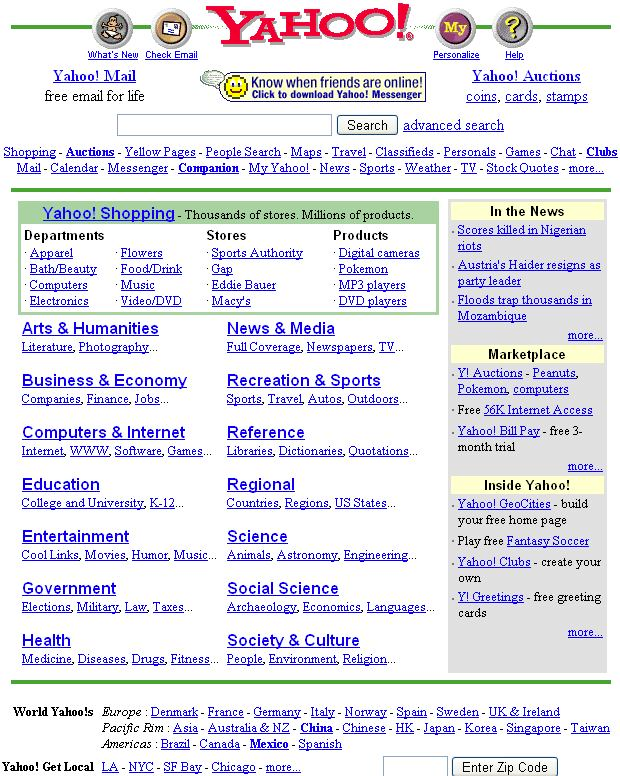
****Our take:**
- Yahoo [said earlier this year](https://www.nearmedia.co/doj-v-google-get-down-with-opc-yahoo-search-comeback/) it was going to revive search. Absent something radical, it won't matter or make a dent.
- Yahoo should instead use crowdsourcing, AI and human editorial oversight to create a new Yahoo Directory for the AI era.
- People no longer care about millions of results; they want a curated set of high-quality answers to their queries.
### Europe's 'Gatekeepers'
Europe's [Digital Markets Act](https://commission.europa.eu/strategy-and-policy/priorities-2019-2024/europe-fit-digital-age/digital-markets-act-ensuring-fair-and-open-digital-markets%5Fen?ref=nearmedia.co) (DMA) is designed to boost competition, make platforms interoperable and give consumers more choice. While there are [concerns and complaints](https://www.reuters.com/technology/apple-says-it-remains-worried-about-risks-eu-digital-markets-act-2023-09-06/?ref=nearmedia.co), it represents a legislative accomplishment US lawmakers couldn't and won't be able to duplicate. The DMA is primarily designed to restrain so-called "gatekeepers": large platforms that often behave in self-interested ways and can choke off competitors by limiting exposure and distribution. The DMA designates only six "gatekeepers": Google, Amazon, Apple, TikTok's owner, Meta and Microsoft. Among other things, gatekeepers are not allowed to treat their own products more favorably, prevent consumers from uninstalling pre-installed software, or track people outside their platforms without consent. March 2024 is the compliance deadline. Prior to that the six will scramble to avoid compliance; Apple and Microsoft are [pushing back](https://www.ft.com/content/137d655b-c264-460f-bbe8-a269f0a3d8ac?ref=nearmedia.co), arguing that iMessage and Bing, Edge and Microsoft Advertising don't meet required scale thresholds. Penalties for non-compliance can be up to 10% of total revenue or 20% in cases of repeat offenses.
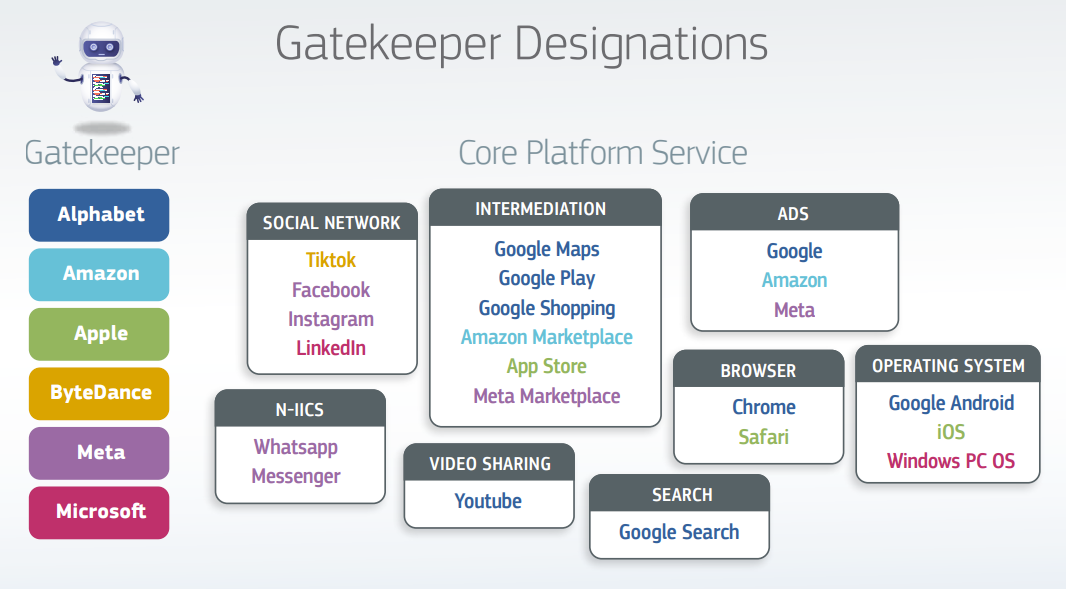
Source: European Commission
****Our take:**
- As always there's a distinction between the rules in the abstract and their enforcement. We'll see how this plays out.
- The DMA will impact Google's SERP in Europe. Google has been experimenting with different SERPs in anticipation.
- In local, the placement of Google Maps and the Local Pack will be impacted. So might SGE, assuming it goes live.
### Delivery Fees Driving BOPIS
During COVID, many pundits predicted unending e-commerce expansion at the expense of brick and mortar. Instead, e-commerce has returned to single digit growth. It's also happened in food delivery, which was booming during COVID. Many restaurants adapted to delivery aggregators (e.g., DoorDash) cutting into margins by inflating prices for online ordering (by as much as 40%) but not for dine-in and pickup business. These higher online food prices have negatively impacted consumer demand, beyond just delivery surcharges. Accordingly, [more people are turning to pickup](https://www.pymnts.com/news/delivery/2023/aggregators-restaurants-wrestle-over-delivery-economics-consumers-bail/?ref=nearmedia.co) to avoid "aggregator fees." Food delivery costs "are nearly twice \[as much as\] customers spend on their average pickup order." Consumers are also increasingly turning to pickup [in the grocery sector](https://www.grocerydive.com/news/walmarts-e-grocery-sales-share-hits-record-high/692236/?ref=nearmedia.co). DoorDash is responding by [pressuring restaurants](https://www.wsj.com/business/hospitality/who-should-eat-the-cost-of-pricier-delivery-menus-restaurants-or-consumers-f918de28?ref=nearmedia.co) to reduce online prices with various strong-arm tactics (e.g., reduced online visibility), which may be illegal. Assuming consumer price sensitivity continues, pickup/BOPIS will continue to gain share and delivery growth and margins will flatten.

Source: [Brett Jordan](https://unsplash.com/@brettjordan?utm%5Fsource=unsplash&utm%5Fmedium=referral&utm%5Fcontent=creditCopyText)/[Unsplash](https://unsplash.com/photos/phUtWl8RyFE?utm%5Fsource=unsplash&utm%5Fmedium=referral&utm%5Fcontent=creditCopyText)
****Our take:**
- DoorDash [has nearly two-thirds](https://secondmeasure.com/datapoints/food-delivery-services-grubhub-uber-eats-doordash-postmates/?ref=nearmedia.co) of the US market. As it consolidates its dominance, growth may continue but will eventually peak.
- Another example: Instacart delivery growth is flat. It's [increasingly an ad platform](https://www.insiderintelligence.com/content/instacart-s-ad-business-reportedly-soared-30-last-year?ref=nearmedia.co) and technology vendor for grocery partners.
- Delivery services will be forced into more Prime-like subscriptions to get rid of individual order fees and derive more revenue from heavy users.
## Recent Analysis
- ICYMI: **A look at Google results without "self-preferencing**," [by Mike Blumenthal](https://www.nearmedia.co/what-might-google-local-pack-look-like-if-there-were-no-self-preferencing/).
## Short Takes
- **Google's SGE 5-Pack** [goes missing](https://www.seroundtable.com/google-sge-removes-local-results-5-local-pack-35976.html?ref=nearmedia.co) for some, [not others](https://twitter.com/gsterling/status/1699151826690736540?ref=nearmedia.co).
- **Google** lets SMB trolls [update negative reviews](https://twitter.com/JoyanneHawkins/status/1697686382846648628?ref=nearmedia.co) to stay on top.
- **Google CEO** [waxes nostalgic](https://blog.google/inside-google/message-ceo/google-25th-birthday-sundar-pichai/?ref=nearmedia.co) about 25 years of search, touts AI future.
- **Bing** [tests hiding URLs](https://www.seroundtable.com/bing-hiding-urls-in-search-result-snippets-35926.html?ref=nearmedia.co) in SERPs.
- Apple **Vision Pro** app store [will launch with existing iPhone apps](https://developer.apple.com/news/?id=ssmnoze2&ref=nearmedia.co).
- **Apple** [buys](https://www.cnbc.com/2023/09/05/apple-buys-swedish-classical-record-label.html??ref=nearmedia.co) Swedish classical music label BIS Records.
- **OpenAI**'s [ultimate ambition](https://www.wired.com/story/what-openai-really-wants/?ref=nearmedia.co): Artificial General Intelligence.
- **Zoom's** [new AI features](https://www.axios.com/2023/09/05/zoom-ai-meetings-assistant?ref=nearmedia.co) will be free to paid users.
- **Meta** readies paid (ad-free) versions of FB, Insta for EU ([NYT](https://www.nytimes.com/2023/09/01/technology/meta-instagram-facebook-ads-europe.html?ref=nearmedia.co)).
- **Facebook** [kills the news tab](https://about.fb.com/news/2023/09/an-update-on-facebook-news-in-europe/?ref=nearmedia.co) in Europe.
- NYC [crackdown on short-term rentals](https://apnews.com/article/airbnb-new-york-city-new-rules-7d7fae6a900d0257d1f225f26fa82f76?ref=nearmedia.co) a major threat to **AirBnB**.
- **TikTok** about to [get into messaging](https://www.theverge.com/2023/9/5/23860247/tiktok-social-messaging-job-listings?ref=nearmedia.co).
- **Zoho** [says](https://www.businesswire.com/news/home/20230905105130/en/Zoho-Celebrates-100-Million-Users?ref=nearmedia.co) it has 100 million users across 55 applications.
- Yelp: 2023 **business openings** [outpacing 2022](https://www.yelpeconomicaverage.com/business-openings-report-h1-2023.html?ref=nearmedia.co).
Listen to our [latest podcast](https://www.nearmedia.co/memo/).
[](https://nearmedia.co/memo?ref=nearmedia.co)
How can we make this better? Email [us](mailto:gsterling@nearmedia.co) with suggestions and recommendations.
### ChatGPT ≠ Search, Unread Reviews, Gen Z SearchTok
URL: https://www.nearmedia.co/chatgpt-search-reviews-unread-gen-z-search/
Last updated: 2023-09-01T18:40:30.000Z
### People Not Using ChatGPT to 'Search'
When ChatGPT launched it was immediately seen as a "Google killer." However, that has not come to pass. In fact, ChatGPT's traffic, while [substantial, is declining](https://sparktoro.com/blog/we-analyzed-millions-of-chatgpt-user-sessions-visits-are-down-29-since-may-programming-assistance-is-30-of-use/?ref=nearmedia.co), down from its May 2023 peak. That's according to a Datos-SparkToro analysis of ChatGPT visits and prompts. ChatGPT is emerging as mostly a B2B tool for professionals, programmers and marketers, with education a very strong use case as well. SparkToro's analysis of user prompts shows that "programming assistance" is the dominant single usage category of ChatGPT (29%), with sales & marketing and content creation combining for 34% (though not all content is for marketing). The graphic below reflects the most common "user tasks" according to the analysis. Nearly 70% appear to be B2B/work-related. There may be a few categories where people are using ChatGPT for queries and research they might otherwise do on Google but the majority aren't using it as a Google substitute.
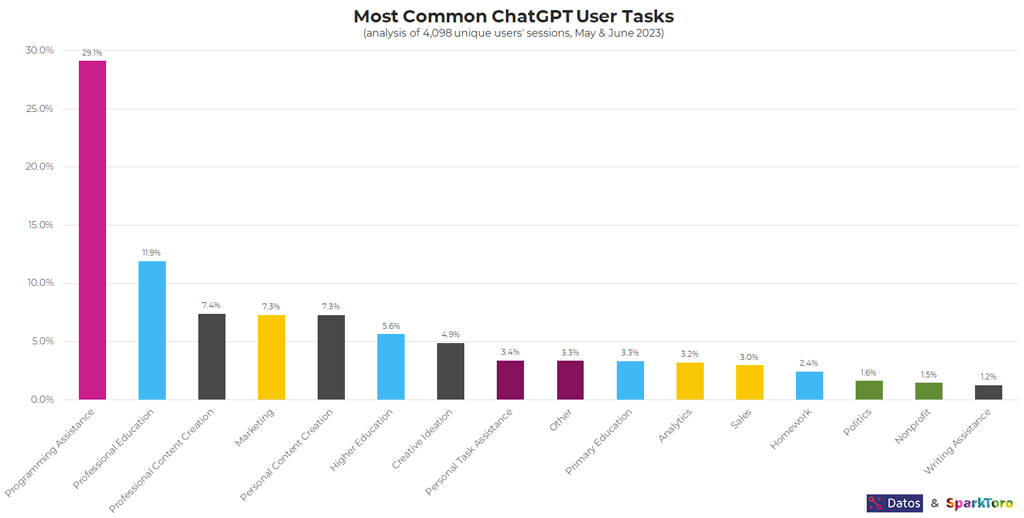
****Our take:**
- ChatGPT and AI more generally are being widely adopted as productivity tools in the workplace. But consumers aren't using them to search.
- So far, vertical sites that integrated ChatGPT as "an assistant" (e.g., [Expedia](https://www.expediagroup.com/investors/news-and-events/financial-releases/news/news-details/2023/Chatgpt-Wrote-This-Press-Release--No-It-Didnt-But-It-Can-Now-Assist-With-Travel-Planning-In-The-Expedia-App/default.aspx?ref=nearmedia.co)) haven't seen meaningful usage gains – or we'd be hearing about them.
- I still believe there's a powerful AI search-Google alternative use case but it may not materialize because of inertia/habitual Google usage.
### Users Love Reviews, Don't Read Them
User reviews [are more trusted](https://www.ipsos.com/sites/default/files/What-The-Future-Intelligence.pdf?ref=nearmedia.co) than other sources of online information, including search results, social media, influencers and ads. It's no surprise then that reviews are the top influence on conversions, according to the [Local Search Ranking Factors](https://www.nearmedia.co/local-search-ranking-factors-23/). We've also seen this first hand at Near Media in our direct user research in the legal and medical categories. Consistently, reviews exercise an outsized influence on consumer decision-making. But the majority of people are looking almost exclusively at star ratings; they're not reading review text. In the medical vertical we saw that roughly two-thirds of users, who mentioned that reviews were important, did not read them. The flip side, of course, is that about a third were reading reviews (often negative reviews) with varying degrees of attention. Few businesses respond to reviews (our findings: <10%) but for review readers it's important. However, the majority are only looking at ratings and review volumes.
**Medical vertical: value reviews vs. read them**
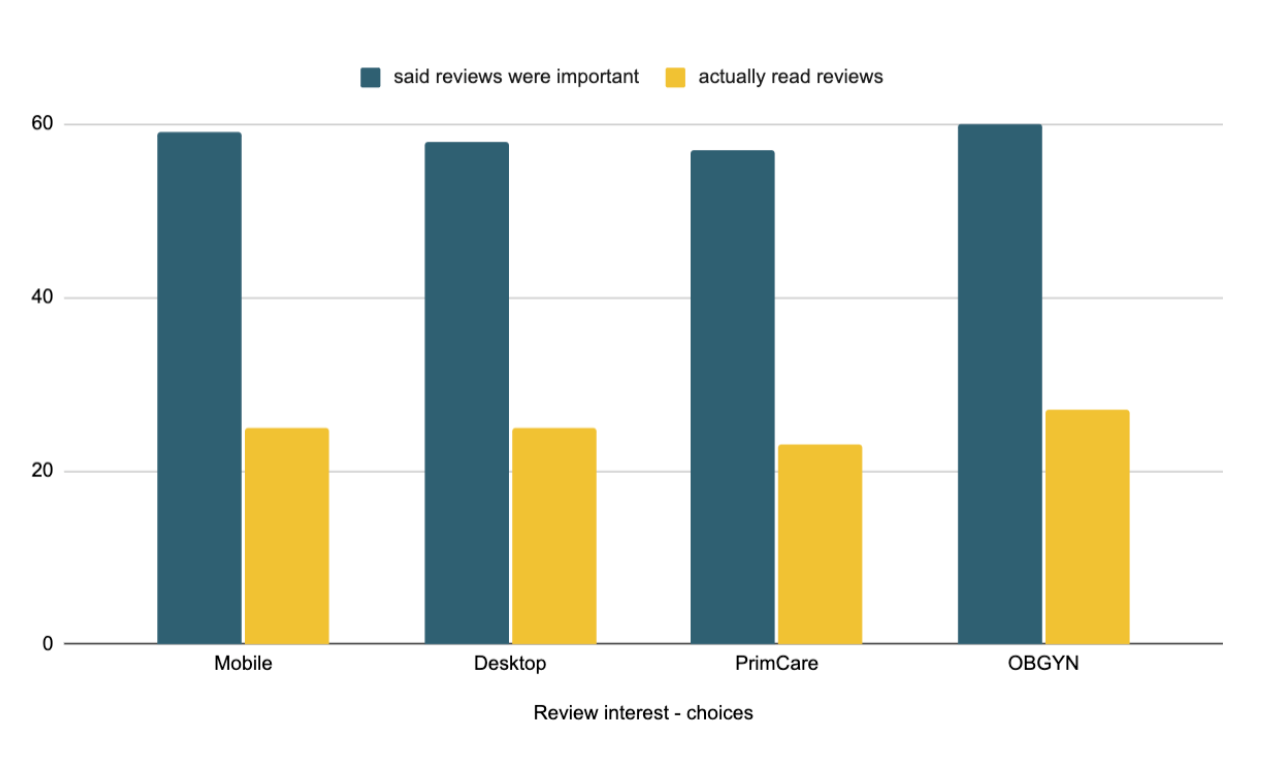
****Our take:**
- Despite the above, it's important to respond to negative reviews in a timely way. AI can help for multi-location brands.
- The platforms know most people aren't reading reviews, hence the emergence of [AI-review summarization](https://www.nearmedia.co/ai-review-summaries-e-commerce-1t-ai-adoption/).
- We presented this and other data at this week's [Local SEO for Good event](https://www.brightlocal.com/local-seo-for-good/?ref=nearmedia.co) (BrightLocal). You can access the whole presentation there.
### Gen Z: We Search TikTok, Like Ads
The first item above talks about how the AI search threat to Google appears to be dissipating. But what about TikTok? It surprisingly [emerged last year](https://www.nearmedia.co/zoomers-no-maps-dash-cart-location-data-abuse/), as a Gen Z Google alternative. Subsequently, TikTok itself has tried to capitalize on the idea [that it's a search engine](https://www.youtube.com/watch?v=SaE1z4dZ4As&ref=nearmedia.co), most recently [rolling out search ads](https://www.nearmedia.co/tiktok-search-toggle-chatgpt-wins-ai-no-copyright/). Research from [Tinuiti](https://tinuiti.com/content/research/from-a-to-gen-z/?ref=nearmedia.co) (n=5,000 adults) confirms that younger users are indeed searching on TikTok, in some categories, almost as much as Google. The chart below reflects self-reported behavior (in-store search about products): 43% searched Google, while 32% searched TikTok and 25% scanned QR codes. While these behaviors are not mutually exclusive, in this question they were. The survey also found that Gen Z users are less ad-sensitive and more likely to allow tracking and targeting than older users. Thirty-six percent of Gen Z respondents would "allow tracking \[to\] receive more relevant ads."
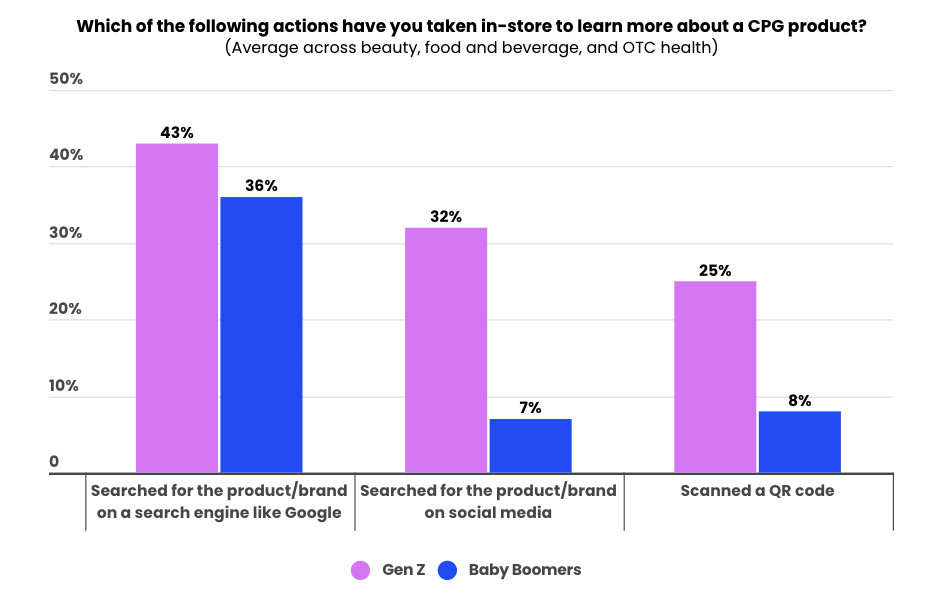
****Our take:**
- The "migration" of younger users to TikTok as a search engine reflects dissatisfaction with Google to varying degrees.
- Google's emphasis on images/video, its creation of a [Perspectives filter](https://www.nearmedia.co/google-perspectives-amazon-last-mile-moderation-collision-course/) (social content) and other actions are an attempt to retain younger users.
- TikTok has valuable content but also lots of dreck. It may be more "authentic" but not necessarily more efficient than Google.
## Recent Analysis
- ICYMI: **Google Shifting GBP Support to 'Brand Ambassadors' aka Gig Workers?**, [by Mike Blumenthal](https://www.nearmedia.co/is-google-shifting-gbp-support-to-gig-workers/).
## Short Takes
- The [top 15 most common](https://ahrefs.com/blog/site-audit-study/?ref=nearmedia.co) **technical SEO issues.**
- **Google SGE** expands to India, Japan [formalizes links](https://blog.google/products/search/google-search-generative-ai-india-japan/?ref=nearmedia.co).
- **Google Maps** [testing new colors](https://9to5google.com/2023/08/31/google-maps-new-colors/?ref=nearmedia.co) that look like Apple Maps.
- **Google Flights** now tells you the [cheapest time to book](https://blog.google/products/travel/google-flights-find-deals/?ref=nearmedia.co).
- **Twitter** to [collect biometric and employment data](https://www.cnbc.com/2023/09/01/musks-x-to-collect-biometric-information-and-employment-data.html?ref=nearmedia.co) on users.
- **Shopify** to offer merchants [Amazon Buy with Prime + fulfillment](https://buywithprime.amazon.com/shopify?ref=nearmedia.co).
- **Free shipping** [remains paramount](https://www.digitalcommerce360.com/2023/08/30/shipping-delivery-satisfaction/?ref=nearmedia.co) for consumers.
- **Reddit's** got a new [ML-powered keyword suggestion tool](https://www.redditinc.com/blog/unlocking-advertiser-success-through-enhanced-targeting-capabilities-an-update-on-our-contextual-tools-and-ml-powered-keyword-suggestions?ref=nearmedia.co) for ads.
- **Google's Fitbit** [sued in Europe](https://thenextweb.com/news/fitbit-google-illegal-data-sharing?ref=nearmedia.co) for data-privacy violations.
- Growing percentage of [top 1000 sites](https://originality.ai/blog/study-websites-blocking-gptbot?ref=nearmedia.co) **blocking AI crawlers**.
- **Instacart** is increasingly an ad play: [insights](https://www.pymnts.com/news/ecommerce/2023/why-instacart-isnt-amazon-but-is-more-than-an-online-grocery-app/?ref=nearmedia.co) from its [S-1](https://www.sec.gov/Archives/edgar/data/1579091/000119312523221345/d55348ds1.htm?ref=nearmedia.co).
- **SMBs** [want sales and marketing help](https://bredin.com/blog/2023/08/bredin-report-what-smbs-want-in-a-resource-center/?ref=nearmedia.co) most from vendors.
- **AI-generated sports stories** draw ridicule ([WaPo](https://www.washingtonpost.com/nation/2023/08/31/gannett-ai-written-stories-high-school-sports/?ref=nearmedia.co)).
Listen to our [latest podcast](https://www.nearmedia.co/memo/).
[](https://nearmedia.co/memo?ref=nearmedia.co)
How can we make this better? Email [us](mailto:gsterling@nearmedia.co) with suggestions and recommendations.
### Naïve SEO Advice, Meh or Malevolent AI, AI for B2B
URL: https://www.nearmedia.co/naive-seo-advice-meh-or-malevolent-ai-ai-for-b2b/
Last updated: 2023-08-30T17:42:24.000Z
### Google's 'Naïve' SEO Advice
Google [has long promoted](https://search-off-the-record.libsyn.com/help-the-algorithm-has-been-updated?ref=nearmedia.co) the idea that you should create content for people (e.g., [Helpful Content Update](https://www.nearmedia.co/google-people-first-content-apple-pays-75-e-commerce-enjoyment-declines/)) and not for its algorithm. The company says it wants publishers and marketers to solve real problems and answer questions with high quality information (see, [E-E-A-T](https://developers.google.com/search/blog/2022/12/google-raters-guidelines-e-e-a-t?ref=nearmedia.co)). In actuality, content is a means to an end for Google: ad clicks. But we can probably all agree that in a perfect world, people would create great content and it would rank. Yet the incentives Google has intentionally and unwittingly created mostly fly in the face of this idealistic view of content creation. Google says it [doesn't want people](https://searchengineland.com/google-ranking-updates-big-picture-431035?ref=nearmedia.co) to focus on "ranking signals" but on content quality. Yet, second guessing ranking signals (see, [LSRF](https://www.nearmedia.co/local-search-ranking-factors-23/)) is the bread and butter of SEO. What [title tags and meta descriptions](https://searchengineland.com/titles-meta-descriptions-ranking-research-431310?ref=nearmedia.co) does Google reward? What types of images does Google want? How much keyword volume justifies new content? Can we scale landing pages with ChatGPT? What rating do you need to rank for "best"? SEOs are thinking about "helpful content" but they can't help thinking more about ranking. I actually agree with Google's advice – the company is [battling declining search quality](https://www.nearmedia.co/google-decline-local-inventory-search-open-metaverse/) – but from a digital-marketing perspective, it seems naïve.

Source: bing Image Creator
### AI: Meh or Malevolent?
ChatGPT has [released an enterprise version](https://openai.com/enterprise?ref=nearmedia.co), together with the claim that "80% of Fortune 500 companies already have employees using ChatGPT for work," which is probably inaccurate. The enterprise version is designed to answer corporate fears around data security, amid [potential ChatGPT bans](https://blogs.blackberry.com/en/2023/08/why-companies-ban-chatgpt-ai??ref=nearmedia.co). Companies are excited and wary about AI. That generally parallels consumer attitudes. Two new surveys from Pew Research reflect Americans' seemingly contradictory views of the technology. Only 24% of Pew respondents [have ever used ChatGPT](https://www.pewresearch.org/short-reads/2023/08/28/most-americans-havent-used-chatgpt-few-think-it-will-have-a-major-impact-on-their-job/??ref=nearmedia.co), which would seem to contradict ChatGPT's early 100 million user [claim](https://www.reuters.com/technology/chatgpt-sets-record-fastest-growing-user-base-analyst-note-2023-02-01/?ref=nearmedia.co). Younger people, males and educated consumers have had more experience with it. And while people who've heard of ChatGPT think it will impact jobs in some industries (e.g., software engineering), only 19% think it will affect their jobs. Contrast this with the [other survey](https://www.pewresearch.org/short-reads/2023/08/28/growing-public-concern-about-the-role-of-artificial-intelligence-in-daily-life/?ref=nearmedia.co), which is more ominous: "52% of Americans \[ \] feel more concerned than excited about ... artificial intelligence." That concern has grown among those with more exposure to AI. There are nuances, with positive views in some areas (e.g., shopping, healthcare, automotive) and demographic differences.
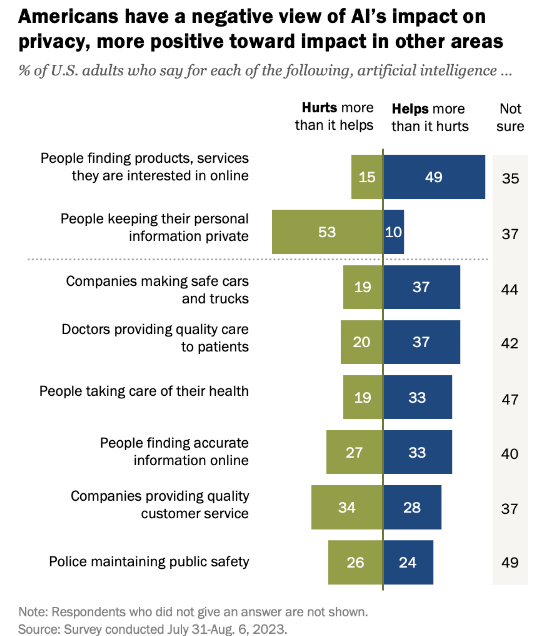
Source: Pew Research Center
****Our take:**
- Strictly speaking these surveys don't contradict one another but they reflect competing sentiments. One is "meh" the other is anxiety. The different results also reflect the different survey questions.
- Search use cases – finding accurate info, online shopping – are among the mostly positively viewed. Shopping is the most embraced, in fact.
- The genie is out of the bottle. Now we as a society must do our best to incentivize positive outcomes and maintain human oversight.
### Google's AI B2B Focus
We've argued that Google is only doing SGE in search (and Bard) because it was forced to by BingGPT and OpenAI. Its real focus for AI development is on Ads, B2B and enterprise applications. These will generate direct revenue for the company, whereas SGE is indirect revenue. This week at [Google Cloud Next](https://cloud.google.com/blog/topics/google-cloud-next/welcome-to-google-cloud-next-23/?ref=nearmedia.co) the company made a number of potentially significant B2B AI announcements in its enterprise race against OpenAI, Microsoft and Facebook. Among them was an expansion of [Duet AI](https://cloud.google.com/blog/products/ai-machine-learning/duet-ai-in-google-cloud-preview/?ref=nearmedia.co), which it's positioning as an AI "collaborator" across Google Cloud applications. That includes [Google Workspace](https://workspace.google.com/blog/product-announcements/duet-ai-in-workspace-now-available?ref=nearmedia.co) and Meet in particular, where AI will now take notes and offer meeting summaries. Duet AI can also attend meetings on your behalf (in theory). Google also hopes to [reinvigorate Chat](https://workspace.google.com/blog/product-announcements/welcome-new-google-chat?ref=nearmedia.co) with AI features, presumably to compete with Slack. Google also revealed that Workspace now has 10 million paying customers. In addition, there are numerous tools for developers, including Google’s [Vertex AI](https://cloud.google.com/vertex-ai?ref=nearmedia.co) which allows them to build their own generative AI applications using internal data.
Source: Google
****Our take:**
- Google will see immediate revenue from many of these B2B AI efforts. Duet for Workspace will cost $30 per month, a new premium tier.
- Google Cloud is growing faster than ads. Last quarter revenue was $8 billion, up 28%, with nearly $400M profit. Cloud is now \~10% of revenue.
- Any AI-related search benefits will be a by-product of Google's B2B initiatives. Though unlikely, AI still cound reinvent the search UX.
## Recent Analysis
- ****Near Memo episode 125:** [SMBs search to find services, GBP support bends to European regs, No copyright for AI](https://www.nearmedia.co/ep-125/)
## Short Takes
- **Google** seeks to [sell Maps data](https://www.cnbc.com/2023/08/28/google-to-sell-maps-data-to-companies-building-solar-products.html?ref=nearmedia.co) (via API) on 350 million buildings.
- **Google Ads** [new SMB customer support](https://searchengineland.com/first-look-google-ads-enhancec-customer-service-small-business-431197?ref=nearmedia.co) costs $50 per call.
- **BingGPT** [third party plug-ins being tested](https://www.seroundtable.com/bing-chat-third-party-plugins-35950.html?ref=nearmedia.co) in the wild.
- **Yahoo** [upgrades Mail](https://www.businesswire.com/news/home/20230828869333/en/Yahoo-Mail-Debuts-AI-Enhancements-for-a-Smarter-Inbox?ref=nearmedia.co) with new AI features – from Google.
- Apple [set to reveal](https://www.apple.com/apple-events/??ref=nearmedia.co) the **iPhone 15** on September 12\.
- **Robotaxis** in SF, Phoenix and Austin, [but testing many other places](https://www.axios.com/2023/08/29/cities-testing-self-driving-driverless-taxis-robotaxi-waymo?ref=nearmedia.co).
- GM **OnStar** [now using Google AI](https://www.theverge.com/2023/8/29/23849390/gm-google-cloud-ai-chat-bot-onstar?ref=nearmedia.co) to handle basic customer inquiries.
- Survey: **remote workers** [engaged but less loyal](https://www.gallup.com/workplace/509759/remote-workers-organizations-drifting-apart.aspx??ref=nearmedia.co) to employers.
- BestBuy: **BOPIS** sales account for [more than 40% of e-commerce](https://www.digitalcommerce360.com/2023/08/29/best-buy-online-sales-decline-q2/?ref=nearmedia.co).
- SynthID: **Google** [introduces imperceptible watermark for AI](https://www.deepmind.com/blog/identifying-ai-generated-images-with-synthid?ref=nearmedia.co) images.
- **OpenAI** approaches [$1 billion annual run rate](https://www.reuters.com/technology/openai-track-generate-more-than-1-bln-revenue-over-12-months-information-2023-08-29/?ref=nearmedia.co).
- **Walmart** [giving its employees](https://www.linkedin.com/pulse/empowering-associates-creating-better-work-through-new-donna-morris/?ref=nearmedia.co) a new My Assistant gen-AI app.
- Schools sour on **Chromebooks** as they turn into bricks ([WSJ](https://www.wsj.com/tech/personal-tech/chromebooks-were-once-a-good-deal-for-schools-now-theyre-becoming-e-waste-dc93833b?ref=nearmedia.co)).
- **Technology** is [failing the elderly](https://www.theguardian.com/technology/2023/aug/20/no-app-no-entry-how-the-digital-world-is-failing-the-non-tech-savvy?ref=nearmedia.co) and non-tech savvy.
Listen to our [latest podcast](https://www.nearmedia.co/memo/).
[](https://nearmedia.co/memo?ref=nearmedia.co)
How can we make this better? Email [us](mailto:gsterling@nearmedia.co) with suggestions and recommendations.
### GBP Deduping Form, Video Verification Clarification, GBP Scams Galore
URL: https://www.nearmedia.co/gbp-deduping-form-video-verification-clarification-gbp-scams-galore/
Last updated: 2023-08-28T18:14:07.000Z
### Deduping GBP Profiles: There's a Form for That!
Google Maps' knowledge graph includes[ 200 million business listings](https://www.nearmedia.co/deconstructing-google-local-guides/) and captures them from [multiple trusted data suppliers](https://www.nearmedia.co/google-verification-fail-reviews-and-society/) and other sources. Inevitably, there will be two listings for the same business on occasion. Google now does a surprisingly good job of deduping the index. That wasn't always the case. In the pre Knowledge Graph days [weird](https://blumenthals.com/blog/2012/01/19/the-long-and-winding-tale-of-trying-to-fix-a-merged-listing/?ref=nearmedia.co) [listing](https://blumenthals.com/blog/2012/01/19/google-places-troubleshooting-best-practice-for-dealing-with-a-merged-listing/?ref=nearmedia.co) [mergers](https://blumenthals.com/blog/2009/04/29/google-maps-merging-mania-due-to-algo-change/?ref=nearmedia.co) were the order of the day. Today, you rarely see wrong merges but you occasionally [see](https://support.google.com/business/thread/231430895?ref=nearmedia.co) [duplicates](https://support.google.com/business/thread/231747781?ref=nearmedia.co) reported. They happen when the Google algos are not able to match two records because key fields are too far apart. This can happen when a service area business (SAB), for example, with a hidden address might also have a listing sourced from a third party with the address shown; or when two listings are verified by different users and Google won't merge them. Regardless, getting rid of these duplicate listings has historically been hard. Now there's a form for that, something I have been saying a lot lately. Go to the [support form](https://support.google.com/business/contact/business%5Fother%5Fproblem?ref=nearmedia.co), choose your business, tell Google you have a "duplicate." Select the “Duplicated Business” button, skip by the resources by clicking next a few times and, voila, you arrive at a form specifically for this issue.
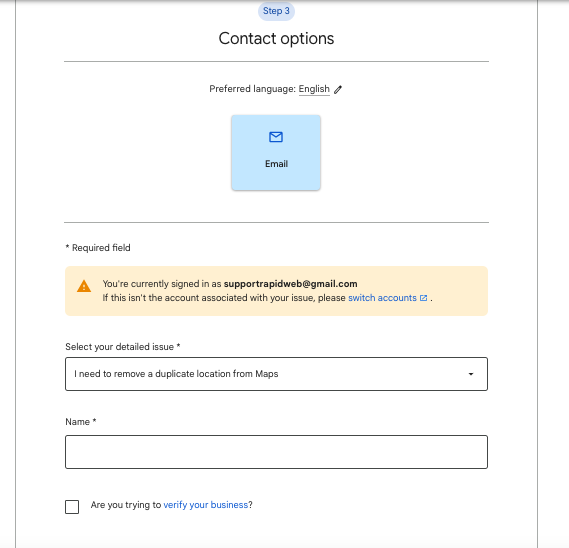
Source: Google
****Our take:**
- The rapid rollout of new, detailed forms indicates Google has long known the specific issues that plague GBP users.
- It's likely that these many new forms are a response to the [DSA and P2B regulations](https://www.nearmedia.co/ep-125/) now in force in Europe. Businesses worldwide are benefiting.
- It's not clear whether this is merely "customer support theater" or whether these new forms will lead to better GBP support outcomes.
### Google Comes Clean(ish) About Video Verification
Last week in the forum, the Google Business Profile (GBP) Community Manager [published](https://support.google.com/business/thread/231481287?ref=nearmedia.co) a *Video Verification Troubleshooting & FAQs* post. It was as close as Google ever comes to admitting that their technology is problematic. Video verification has failed routinely and been the subject of [increasing complaints](https://www.nearmedia.co/gbp-forum-issues-new-gbp-verification-support-form-google-mediation-now-available-to-eu-businesses/) in the forum. The process [often doesn't work](https://support.google.com/business/thread/231975613?ref=nearmedia.co) at all or fails when [99% complete](https://www.nearmedia.co/google-verification-fail-reviews-and-society/). Users might make [10 or more attempts](https://support.google.com/business/thread/226879764/i-have-tried-over-10-times-with-two-different-phones-i-keep-the-video-under-1-min-fails-at-99?hl=en&ref=nearmedia.co), and if the video does make it through the upload, it will remain in a veritable verification [purgatory](https://www.google.com/search?q=define+purgatory&client=safari&sca%5Fesv=560494483&rls=en&sxsrf=AB5stBgVkYnyX9C9uw1ikfdDIScPGwJc4A%3A1693144325250&ei=BVXrZOPyDrze0PEPiqqX2AM&ved=0ahUKEwijib2Q%5FvyAAxU8LzQIHQrVBTsQ4dUDCA4&uact=5&oq=define+purgatory&gs%5Flp=Egxnd3Mtd2l6LXNlcnAiEGRlZmluZSBwdXJnYXRvcnkyDRAAGIoFGJECGEYY-QEyBRAAGIAEMgUQABiABDIFEAAYgAQyBRAAGIAEMgYQABgWGB4yCBAAGBYYHhgPMggQABgWGB4YDzIIEAAYFhgeGA8yCBAAGBYYHhgPMiQQABiKBRiRAhhGGPkBGJcFGIwFGN0EGEYY9AMY9QMY9gPYAQFI1hlQAFijFnAAeAGQAQCYAccBoAHSEaoBBDAuMTa4AQPIAQD4AQHCAggQABiKBRiRAsICCxAuGIoFGLEDGIMBwgIREC4YgAQYsQMYgwEYxwEY0QPCAgsQLhiABBixAxiDAcICBRAuGIAEwgIHEAAYigUYQ8ICDhAuGMcBGLEDGNEDGIAEwgILEC4YgAQYxwEY0QPCAgsQABiKBRixAxiDAcICChAAGIoFGLEDGEPCAgoQLhiKBRjlBBhDwgILEAAYgAQYsQMYgwHCAgsQABiKBRixAxiRAsICCBAAGIAEGLEDwgINEAAYgAQYsQMYsQMYCsICJBAAGIoFGJECGEYY-QEYlwUYjAUY3QQYRhj0Axj1Axj2A9gBAcICBxAAGIAEGAriAwQYACBBiAYBugYGCAEQARgT&sclient=gws-wiz-serp&ref=nearmedia.co). Reading tea leaves is a necessary skill when trying to understand Google's statements. I interpret this one (below) to mean: "We are using AI to analyze the video you uploaded" and "the AI pipeline fails regularly, part way through, without any messaging. So give it the old college try, over and over again." Although, there is now a [support form for that](https://support.google.com/business/thread/231645540?msgid=231646290&ref=nearmedia.co).
[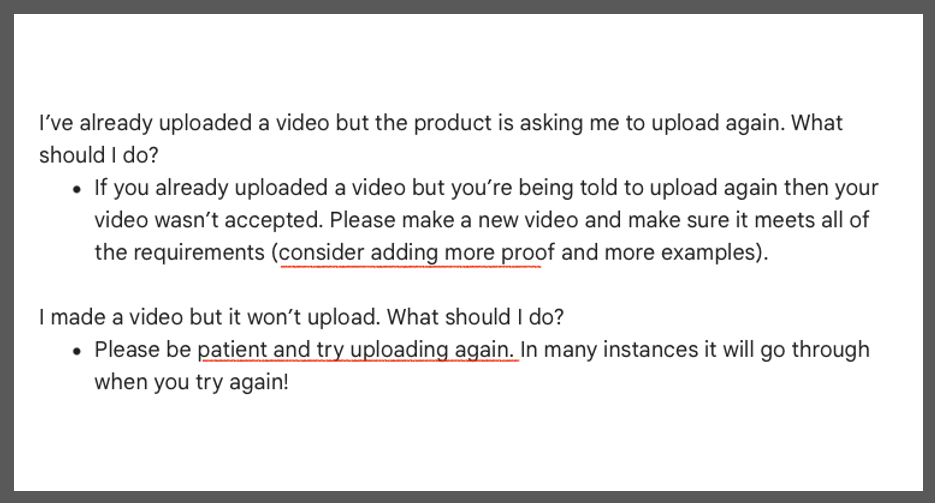](https://support.google.com/business/thread/231481287?ref=nearmedia.co)
Excerpt from the recent GBP FAQ on video verification
****Our take:**
- GBP AI-first moderation of images caused similar issues with the [images not approved bug](https://www.nearmedia.co/google-business-profile-solving-images-not-approved-problem/).
- Google's "build it, test it on real businesses and maybe fix it sooner or later" approach shifts the burden to overextended SMBs.
- Likely [because](https://www.nearmedia.co/ep-125/) of EU regulation, there is now a [specific support flow and form](https://www.nearmedia.co/gbp-forum-issues-new-gbp-verification-support-form-google-mediation-now-available-to-eu-businesses/) to raise the issue of video upload failures. How well Google handles these support issues remains to be determined.
### Robocalling Not Only B2B Scam in Maps
Last week Hiya, a company that tracks phone fraud and spam, [reported](https://searchengineland.com/google-business-profile-robocall-scams-increasing-431166?ref=nearmedia.co) there were more than 2,000 scam calls per month pitching small businesses on verifying their free Google Business Profile (GBP) listings. At the current rate, there will be close to 27,000 of these calls this year alone. They're a visible example of the abuses around Google Maps. Indeed, Maps has become a magnet for both B2B and B2C scams. On the B2B front, there are [review extortion](https://support.google.com/business/thread/174338903?ref=nearmedia.co) [scams](https://support.google.com/business/thread/180369844?ref=nearmedia.co), [fake review attacks](https://www.nearmedia.co/fake-review-attacks-on-the-rise-at-google/), companies [selling calls](https://blumenthals.com/blog/2019/04/06/google-local-spammy-lead-gen-listings-how-they-work-on-the-ground/?ref=nearmedia.co) from [fake listings](https://blumenthals.com/blog/2018/12/24/google-spam-hall-of-fame-cheap-auto-insurance-shameongoogle/?ref=nearmedia.co) to lead-gen clients and random and frequent [spammer requests for listings ownership](https://support.google.com/business/thread/231612289?ref=nearmedia.co). The fact that we felt compelled to write a [guide to fighting fake review attacks](https://www.nearmedia.co/how-to-fight-a-fake-google-review-attack/) on Maps speaks volumes. And this doesn't account for the Google sanctioned efforts by the Grubhubs of the world to take a [cut of every restaurant order](https://onlineownership.com/restaurants-scramble-to-remove-3rd-party-menu-sites-from-gmb-listings/?ref=nearmedia.co), without consent. The biggest scam of all is Google knowing of the many abuses committed with its products and doing almost nothing. Time after time Google makes the same excuses, while SMBs pay the price.
[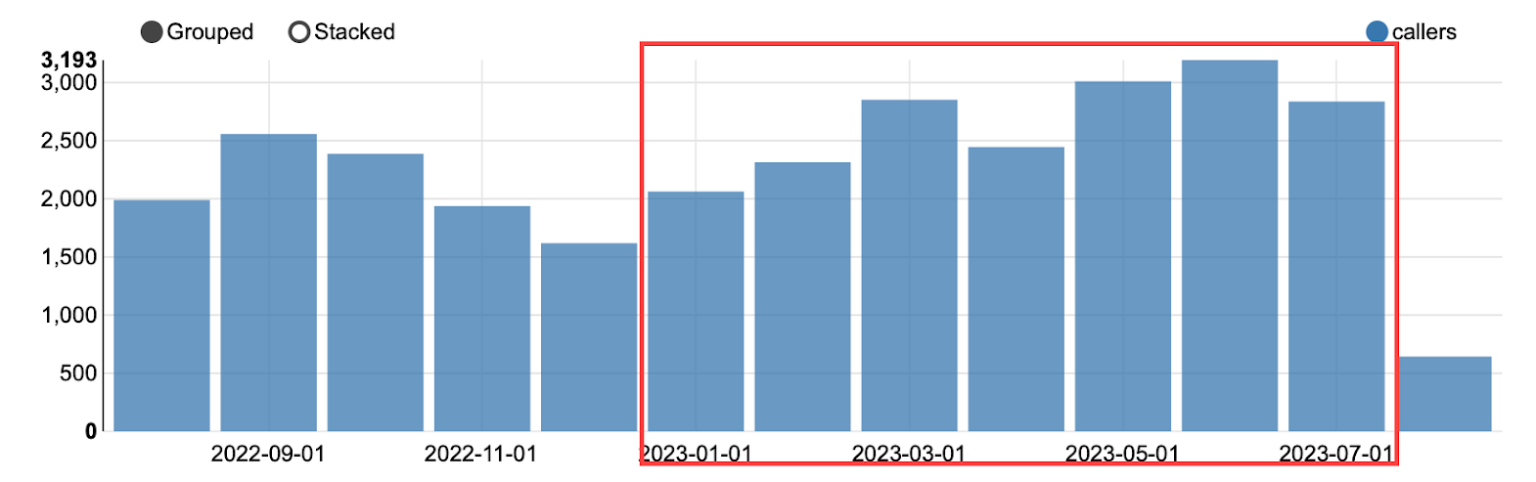](https://searchengineland.com/google-business-profile-robocall-scams-increasing-431166?ref=nearmedia.co)
Source: Hiya chart tracking GBP robocalls for the past 12 months via [Searchengineland.com](https://searchengineland.com/google-business-profile-robocall-scams-increasing-431166?ref=nearmedia.co)
****Our take:**
- Google handles each of these systemic abuses as one-offs and the press seems to blithely accept that thread-bare story.
- The costs of these scams to both small businesses and consumers are immense, but often hidden or unaccounted for.
- EU's Digital Services Act, targeting some of these abuses[,](https://www.pymnts.com/news/regulation/2023/tiktok-amazon-google-and-more-scramble-before-launch-of-eus-tech-laws/?ref=nearmedia.co) [went into effect last week](https://www.nearmedia.co/dsa-kicks-in-social-media-hive-mind-bopis-32/). Google is complying; we'll have to see how it goes.
## Recent Analysis
- ****Near Memo episode 125:** [SMBs search to find services, GBP support bends to European regs, No copyright for AI](https://www.nearmedia.co/ep-125/)
- ICYMI: **Overture Drops Free Global Dataset with 60M Places**, [by Greg Sterling](https://www.nearmedia.co/overture-drops-free-dataset-with-60m-places/)
## Short Takes
- **Google's SGE local 5 pack** [gets](https://twitter.com/ndyjsimpson/status/1695058691853062207?ref=nearmedia.co) additional brand links.
- The **GBP** rollout of social links/profiles is reportedly [50% complete](https://twitter.com/thesocialdude/status/1694861083344072732?s=12&t=o-uoEcZmsD3rULHUqaXUFA&ref=nearmedia.co).
- [GBP "feature/bug](https://support.google.com/business/thread/231978133?ref=nearmedia.co)": **Google** [auto inserts](https://support.google.com/business/thread/231757851?ref=nearmedia.co) random images as profile image.
- Whitespark's [guide](https://whitespark.ca/blog/review-spam-wipe-your-cheating-competitors-off-the-map-with-this-strategy/?ref=nearmedia.co) to how **fake review fighting** can boost rankings.
- Toilet paper will be dropping from the sky, as [Walmart partners with Google](https://dronedj.com/2023/08/24/walmart-wing-drone-delivery/?ref=nearmedia.co) to expand **drone delivery** near Dallas.
- **Google Ads** to charge SMBs twice as [they roll out 'enhanced' customer service](https://searchengineland.com/first-look-google-ads-enhancec-customer-service-small-business-431197?ref=nearmedia.co). Will they also be upselling?
- Grocers seek to expand into **restaurant spending**, as 20% of consumers [bought restaurant meals online](https://www.pymnts.com/news/ecommerce/2023/grocers-have-opportunity-cross-sell-ecommerce-customers-restaurant-meals/?ref=nearmedia.co) while shopping.
- Google [no longer displaying](https://www.seroundtable.com/google-local-service-ads-anonymous-reviews-35913.html?ref=nearmedia.co) **anonymous reviews**. (LSA reviews also optional.) They have a long way to go to clean up fake LSA reviews.
- Google's **Review Place Topics** [offers insights into common diner themes](https://moz.com/blog/what-diners-write-about?ref=nearmedia.co) in restaurant reviews.
- **Brightlocal** [guide to escalating GBP issues](https://www.brightlocal.com/learn/google-business-profile-forum-help/?utm%5Fsource=twitter&utm%5Fmedium=social&utm%5Fcampaign=learn) to the Google forums.
Listen to our [latest podcast](https://www.nearmedia.co/memo/).
[](https://nearmedia.co/memo?ref=nearmedia.co)
How can we make this better? Email [us](mailto:gsterling@nearmedia.co) with suggestions and recommendations.
### Ep 125: SMBs search to find services, GBP support bends to European regs, No copyright for AI
URL: https://www.nearmedia.co/ep-125/
Last updated: 2023-08-26T15:09:16.000Z
**Part 1 starts 00:13 - [How SMBs buy services](https://youtu.be/pWq1NdAGFvM?ref=nearmedia.co)**
Despite what we may think, neither word of mouth nor social are how small and very small businesses buy payment solutions. Search was where it was at. This survey likely can be extrapolated to any SAAS product or service. While it takes longer and is harder to gain search traffic, search and SEO ultimately pays off if you are trying to reach the SMB audience.
Segment Reference Articles
[Bredin Report: How SMBs Learn About Payment Solutions](https://bredin.com/blog/2023/08/bredin-report-how-smbs-learn-about-payment-solutions/?ref=nearmedia.co)
**Part 2 starts 10:10 - [EU's DSA is kicking in and we are seeing its impact globally](https://youtu.be/-pZiAn4ylSE?ref=nearmedia.co)**
DSA and the related P2B regulations become effective at the end of this month. Both sets of regulations require more transparency and accountability for business to business services like GBP. We have seen a number of support form upgrades and processes that enhance the flow of Google support. In Europe businesses are additionally offered the benefit of mediation services. Whether support will actually improve or is this just transparency theater is yet to be determined.
Segment Reference Articles
[GBP Offering Dispute Mediation in EU](https://www.nearmedia.co/gbp-forum-issues-new-gbp-verification-support-form-google-mediation-now-available-to-eu-businesses/)
[Complying with the Digital Services Act](https://blog.google/around-the-globe/google-europe/complying-with-the-digital-services-act/?ref=nearmedia.co)
[Appeal Maps user-generated content policy enforcement actions](https://support.google.com/contributionpolicy/answer/12648169?hl=en&ref=nearmedia.co#zippy=%2Cappeal-a-feature-access-restriction%2Cappeal-a-content-removal)
[European Union Digital Services Act Resolution Options](https://support.google.com/european-union-digital-services-act-redress-options/answer/13535501?visit%5Fid=638284862958962169-3603732632&rd=1&ref=nearmedia.co)
**Part 3 starts 18:45 - [AI generated artwork is NOT covered by copyright](https://youtu.be/rLYcBmMVWvs?ref=nearmedia.co)**
We are at the beginning ogg generative AI for creative uses AND at the beginning of the process of establishing copyright around the creations generated. The Copyright Office first granted a copyright to a comic books whose images were created by Midjourney and then later reversed itself with respect to the images. They said that since these were created by AI, they're not copyrightable and that you cannot copyright something if there isn't sufficient human involvement. Ultimately these questions will be resolved in the Supreme Court.
Segment Reference Articles
[Court Says No Copyright for AI](https://www.nearmedia.co/tiktok-search-toggle-chatgpt-wins-ai-no-copyright/?ref=near-media-newsletter)
### DSA Kicks In, Social Media Hive Mind, BOPIS 32%
URL: https://www.nearmedia.co/dsa-kicks-in-social-media-hive-mind-bopis-32/
Last updated: 2023-08-25T18:57:08.000Z
### Europe's DSA Forcing Change
Europe's [Digital Services Act (DSA)](https://ec.europa.eu/commission/presscorner/detail/en/ip%5F22%5F2545?ref=nearmedia.co) passed in early 2022; now it's taking effect. A companion to the [Digital Markets Act](https://www.nearmedia.co/google-dr-booking-eu-gatekeeper-smackdown-1-fraud-claim/), the DSA is primarily directed toward advertising and content moderation. It seeks to make large tech companies more "responsible" and transparent. The DSA limits certain types of ad targeting (kids, politics, ethnicity, sexual orientation). It requires removal of "illegal content," counterfeit products and disinformation, among other things. Those impacted include Apple, Amazon, Google, MSFT (Bing, LinkedIn) Meta/Facebook, TikTok and Twitter/X. Penalties for non-compliance could be worth up to 6% of global revenue (billions). Both [Meta](https://about.fb.com/news/2023/08/new-features-and-additional-transparency-measures-as-the-digital-services-act-comes-into-effect/?ref=nearmedia.co) and [Google](https://blog.google/around-the-globe/google-europe/complying-with-the-digital-services-act/?ref=nearmedia.co) have announced new "transparency" tools and policies to comply. Google, for example, is [expanding](https://blog.google/around-the-globe/google-europe/complying-with-the-digital-services-act/?ref=nearmedia.co) "ad transparency." These rules will primarily affect Europeans but will have a global impact by default. Mike [has been writing](https://www.nearmedia.co/gbp-forum-issues-new-gbp-verification-support-form-google-mediation-now-available-to-eu-businesses/), for example, about how DSA compliance is starting to show up in new GBP-related forms and policies in North America.
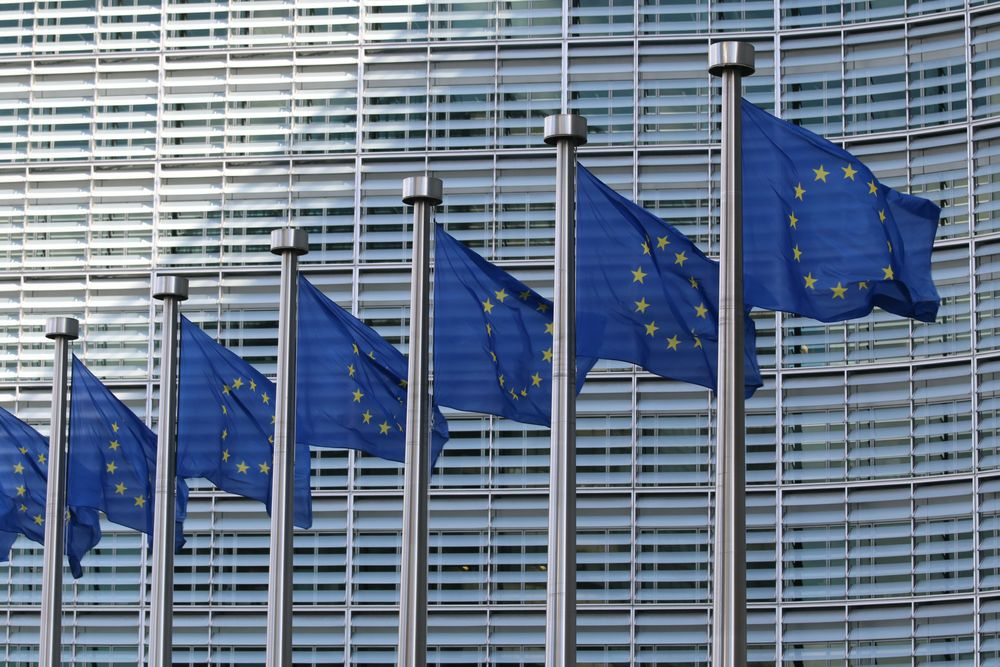
Source:[Guillaume Périgois](https://unsplash.com/@guillaumeperigois?utm%5Fsource=unsplash&utm%5Fmedium=referral&utm%5Fcontent=creditCopyText)/[Unsplash](https://unsplash.com/s/photos/eu?utm%5Fsource=unsplash&utm%5Fmedium=referral&utm%5Fcontent=creditCopyText)
****Our take:**
- The degree of compliance will be determined by how much it's actually enforced. GDPR [enforcement has been uneven](https://noyb.eu/en/5-years-gdpr-national-authorities-let-down-european-legislator?ref=nearmedia.co) and generally weak.
- Overzealous enforcement, however, could lead to censorship or further fragmentation of the internet, beyond authoritarian countries.
- Much of the disinformation and propaganda tolerated under the US First Amendment won't be allowed under DSA. X is especially vulnerable.
### Social Media Herd Mentality
A new social media marketer [survey](https://www.capterra.com/resources/marketing-fragmented-social-media/?ref=nearmedia.co) by Capterra (n=281 US adults) reveals that Twitter/X continues to hang on with many marketers because of inertia. The small survey implies pent-up demand for an alternative – but also reflects one hasn't yet emerged, including Meta's Threads. Threads saw huge initial momentum (100M users in five days), which has since [dropped by 50%](https://bgr.com/tech/threads-has-lost-half-of-its-daily-active-users-a-week-after-launch/?ref=nearmedia.co). Roughly 80% of Capterra's respondents (in July) said they have tried or will try Threads. Audience reach was a top consideration behind social media marketing investment decisions. Another equally significant factor was competitor adoption: "Our research finds that 40% of marketers only like to try a promising new or emerging social media platform when they see competitors use it successfully for marketing." (In other words: follow the herd + herd mentality.) Since the Musk takeover of Twitter, 69% had created accounts on other platforms. But among those trying Bluesky and Mastadon, 38% and 61% had abandoned, respectively.

****Our take:**
- This was a very small survey that didn't disclose company size, revenues or other information to enable us to evaluate it.
- Yet the findings also ring true. Inertia is a powerful force and people generally don't change their behavior unless compelled to.
- X, which lost [half its ad revenue](https://www.bbc.com/news/business-66217641?ref=nearmedia.co), is trying both carrot ([here](https://techcrunch.com/2023/08/24/x-tries-to-lure-back-advertisers-with-new-250-ad-credit/?ref=nearmedia.co), [here](https://www.wsj.com/articles/elon-musks-rebranded-twitter-cuts-ad-prices-d2615d8f?ref=nearmedia.co)) and [stick](https://www.engadget.com/x-tells-advertisers-to-spend-1000-per-month-or-risk-losing-verification-status-201528621.html?ref=nearmedia.co) for advertisers. Until Threads emerges as a viable alternative, X will continue to limp along via inertia.
### Survey: 32% BOPIS Commerce
BOPIS (buy-online-pick up-in-store) is a horrible acronym; click and collect is much better. But BOPIS is the term most commonly used in North America. A new [survey](https://www.pymnts.com/news/retail/2023/consumers-continue-to-embrace-buy-online-pickup-in-store/?ref=nearmedia.co) from Cybersource has found that BOPIS describes \~32% of US users' most recent e-commerce purchases. Of the six countries featured in the survey (Brazil, Mexico, India, UAE, UK, US), the US had the largest share of BOPIS commerce: "nearly one-third of U.S. consumers, or 16 million individuals, who made their most recent purchase online, picked it up in-store or curbside — a 37% year-over year increase." This is especially true in a [grocery context](https://www.pymnts.com/news/ecommerce/2023/giant-food-closes-three-ecommerce-facilities-as-grocers-rethink-fulfillment/?ref=nearmedia.co). The report cites rising shipping costs as well as delivery uncertainty as factors driving consumer BOPIS adoption. Let's be clear, the survey isn't saying that one-third of all e-commerce is now click and collect. Rather, this was the *most recent order*. It's important to keep in mind that consumers sometimes misrepresent their behavior in surveys. Still, it's a striking finding.
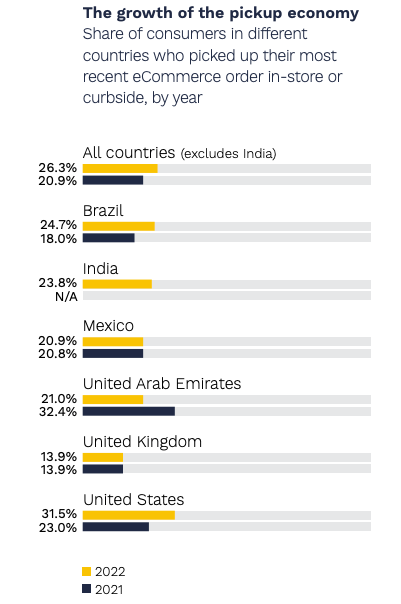
Source: PYMNTS-Cybersource
****Our take:**
- We need to start treating BOPIS as a separate category, beside in-store and pure e-commerce. It could become 30% - 40% of all online orders.
- Retailers and marketers need to recognize that local inventory online has the potential to drive hundreds of millions of dollars in additional volume.
- A separate [survey](https://www.nearmedia.co/chatgpt-beats-google-maps-trust-local-inventory-data/) found that 68% of users want to see local inventory online so that they have the option to BOPIS.
## Recent Analysis
- ICYMI: **When is the right time to ask for customer reviews**, [by Mike Blumenthal and Greg Sterling](https://www.nearmedia.co/when-is-the-right-time-to-ask-for-customer-reviews/).
## Short Takes
- GBP [identity attributes](https://twitter.com/ndyjsimpson/status/1694754140155416648?ref=nearmedia.co) (e.g., women owned) coming to **Google Pay**.
- **Google Maps** [Local Pack takeover](https://twitter.com/mblumenthal/status/1694428596285186056?ref=nearmedia.co) now live for some.
- **GBP social profiles** [now rolling out](https://twitter.com/thesocialdude/status/1694861083344072732??ref=nearmedia.co), but will anybody click?
- **GBP robocall scams** directed at SMBs [are increasing](https://searchengineland.com/google-business-profile-robocall-scams-increasing-431166?ref=nearmedia.co).
- Whitespark: [how to take down](https://whitespark.ca/blog/review-spam-wipe-your-cheating-competitors-off-the-map-with-this-strategy/?ref=nearmedia.co) **review spam**.
- Meta's **Threads** [now available on desktop](https://www.threads.net/login?ref=nearmedia.co).
- Meta [releases](https://about.fb.com/news/2023/08/code-llama-ai-for-coding/?ref=nearmedia.co) **Code Llama**, an LLM for coding.
- **Meta** [introduces branded content search tool](https://www.facebook.com/ads/library/branded%5Fcontent/?) for ads.
- Black & Decker: **AI** "[too immature" for product descriptions](https://www.digitalcommerce360.com/2023/08/24/generative-ai-retail-immature-stanley-black-decker/?ref=nearmedia.co).
- Next up: **AI** for [employee salary negotiations](https://www.axios.com/2023/08/25/ais-next-target-often-stressful-salary-negotiations?ref=nearmedia.co).
- Canada [vows](https://www.reuters.com/technology/canada-start-planning-how-it-will-make-internet-giants-pay-news-2023-08-24/?ref=nearmedia.co) to make **Google, Meta** pay for news.
- How the **iMac** [saved Apple from bankruptcy](https://www.theverge.com/23830432/imac-twenty-five-years-ago-saved-apple?ref=nearmedia.co) 25 years ago.
- **Apple Pay** [5th most popular](https://appleinsider.com/articles/23/08/24/apple-pay-keeps-growing-but-cant-catch-visa-or-paypal?ref=nearmedia.co) payment platform, behind AMEX.
Listen to our [latest podcast](https://www.nearmedia.co/memo/).
[](https://nearmedia.co/memo?ref=nearmedia.co)
How can we make this better? Email [us](mailto:gsterling@nearmedia.co) with suggestions and recommendations.
### TikTok Search Ads, ChatGPT Most Accurate, No Copyright for AI
URL: https://www.nearmedia.co/tiktok-search-toggle-chatgpt-wins-ai-no-copyright/
Last updated: 2023-08-23T17:04:44.000Z
### TikTok 'Search Ads Toggle'
After [months](https://www.nearmedia.co/bings-100m-users-tiktok-search-ads-wheres-local-tiktok/) of testing with an expanding group of advertisers, TikTik has [officially rolled out](https://www.tiktok.com/business/en/blog/introducing-tiktok-search-ads-toggle?ref=nearmedia.co) search ads, called "Search Ads Toggle." The "toggle" part refers to a setting in the advertiser dashboard that allows TikTok to use existing creative and targeting criteria for search ads. The toggle is set to "on" by default unless the advertiser opts-out. Here's TikTok's explanation: "By keeping the toggle set to 'on,' search results ads will be automatically created using the advertiser's existing In-Feed Ad content and targeting, and served against relevant user queries adjacent to organic video results." Ads carry a "Sponsored" label (live examples below) and typically a "Shop Now" button. TikTok's algorithm takes care of targeting based on "relevancy, user intent ... and broader learnings from other user behavior." The company claims that 70% of campaigns with Search ads "on" outperform those that don't use it. Currently there's no independent data about performance.
**TikTok Search Results for "Best Air Filter"**
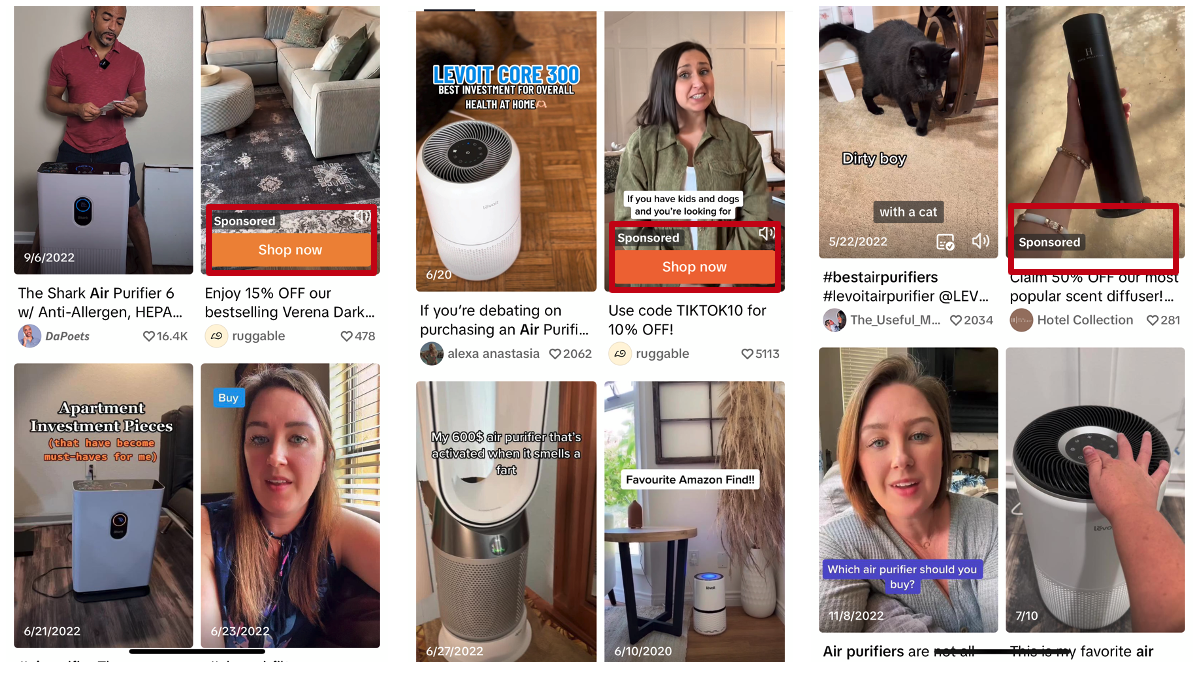
Source: TikTok
****Our take:**
- The way that TikTok search is currently set up there are 4 ads per SERP. They're more separated from one another than in a Google SERP.
- TikTok should see meaningful adoption because there's no additional effort (i.e., creative, targeting) required of existing advertisers.
- While older users often can't imagine TikTok as a Google replacement, many Gen Z and younger users are doing just that.
### Test: ChatGPT 4 Most Accurate
Recently, Google SGE, Bard [went off the rails](https://www.tomshardware.com/news/google-bots-tout-slavery-genocide?ref=nearmedia.co) espousing the "benefits" of slavery, fascism, even genocide. This isn't "hallucination" per se, but it's an example of AI getting it terribly wrong. A [recent study](https://www.arthur.ai/gap-articles/hallucination-experiment?ref=nearmedia.co) run by AI vendor Arthur sought to probe the accuracy and hallucination frequency of competing AIs. Among the five tested, OpenAI's ChatGPT 4 and Anthropic's Claude 2 performed best. The test also included ChatGPT 3.5, Meta's llama-2 and Command from Cohere. Strangely, Google's Bard was not part of the study. The company asked 26 questions in three broad categories: "Combinatorial Mathematics, U.S. Presidents, and Moroccan Political Leaders." There were three possible "scores": correct, hallucination and avoid (no answer). Different questions produced results for each AI. But ChatGPT 4 and Claude 2 were more often correct and had the lowest hallucination levels. Here's the [raw data](https://docs.google.com/spreadsheets/d/18lmKuOOpF1S6snpKXhVSYjEqIi-WzZ0uzQZIs-uHiDc/edit?ref=nearmedia.co#gid=797379170).
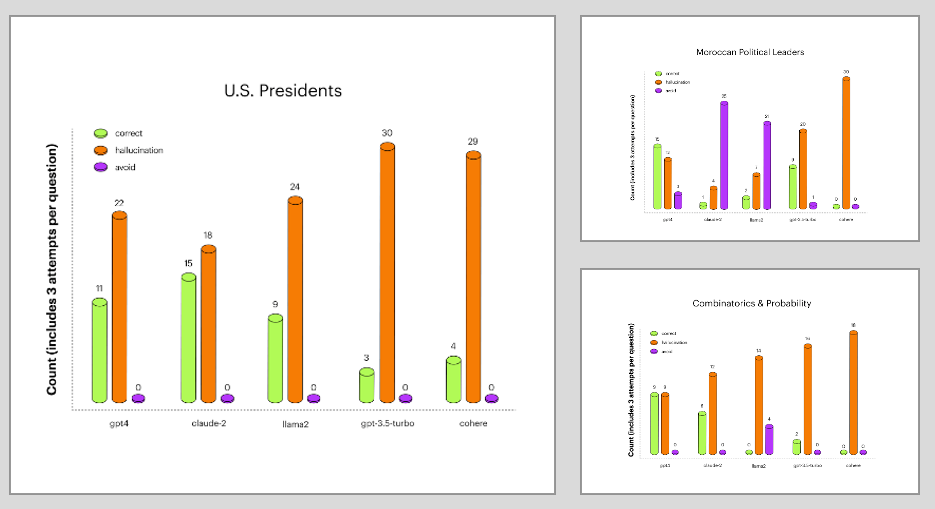
Source: Arthur
****Our take:**
- This was a very small and incomplete test, so take it with some caution. Also, why wasn't Bard involved?
- We need to see a much larger study with thousands of questions to truly understand which AI is more accurate/trustworthy.
- Separate [research](https://www.technologyreview.com/2023/08/07/1077324/ai-language-models-are-rife-with-political-biases/?ref=nearmedia.co) has found AIs have political biases: GPT-4 was "left-wing libertarian," while Meta’s LLaMA was "right-wing authoritarian."
### Court Says No Copyright for AI
If a piece of writing, a song or an image is entirely generated by AI, there can be no copyright protection. That's become the [position of the US Copyright Office](https://www.nearmedia.co/moving-beyond-search-ai-copyright-4-day-week/). In February it determined that AI-generated [images in a comic book](https://www.nearmedia.co/moving-beyond-search-ai-copyright-4-day-week/) "are not original works of authorship." Now a federal judge has [affirmed](https://www.scribd.com/document/665871482/Thaler-v-Perlmutter?ref=nearmedia.co) that position. Accordingly, there must be sufficient "human involvement" in order for a work to qualify for copyright protection. Yet the fact of AI being used doesn't automatically disqualify the output from protection. The Copyright Office previously said, a work that utilizes AI could gain protection if a human author "selected or arranged" the content in a "sufficiently creative way." The unanswered question is: how much human involvement is required? Would prompts qualify? Probably not, but it's far from clear.

Source: Bing Image Creator
****Our take:**
- I created an original prompt to generate the image above. That's probably not enough, although the question still needs clarification.
- The [case](https://www.nearmedia.co/moving-beyond-search-ai-copyright-4-day-week/) that triggered the February 2023 Copyright Office opinion, involved use of prompts in Midjourney. That wasn't enough.
- It's possible that all the content now being generated (largely) by AI won't be protected and could simply be lifted by competitors.
## Recent Analysis
- ****Near Memo episode 124:** [GBP support gig workers, SGE while browsing rolls out, AI Generated review summaries](https://www.nearmedia.co/ep-124/).
- ****Google Shifting GBP Support to 'Brand Ambassadors' aka Gig Workers?** [by Mike Blumenthal](https://www.nearmedia.co/is-google-shifting-gbp-support-to-gig-workers/).
## Short Takes
- How to [get the most](https://www.brightlocal.com/learn/google-business-profile-forum-help/??ref=nearmedia.co) from the **GBP forum**.
- **GBP** profile support responds ... [three years later](https://twitter.com/darrenshaw%5F/status/1694083306495844740??ref=nearmedia.co).
- Prune vs. update: [what to do](https://searchengineland.com/improving-removing-content-seo-guide-430571??ref=nearmedia.co) about **old content**.
- **Moz**: What [restaurant reviewers](https://moz.com/blog/what-diners-write-about?ref=nearmedia.co) write most about.
- Microsoft [claims](https://twitter.com/MParakhin/status/1692464348474568998??ref=nearmedia.co) big increase in **BingGPT** usage recently.
- **Bing** [testing](https://www.seroundtable.com/bing-testing-verification-label-35907.html?ref=nearmedia.co) a "verified" site badge in search snippets.
- **Twitter-->X rebrand** [killed its app store downloads](https://daringfireball.net/linked/2023/08/19/seufert-x-downloads?ref=nearmedia.co).
- With [declining traffic](https://www.washingtonpost.com/technology/2023/08/22/meta-threads-desktop/?ref=nearmedia.co), **Threads** prepares to [launch on the web](https://www.threads.net/@zuck/post/CwP2yyiL15R?hl=en&ref=nearmedia.co).
- PE [firm](https://www.franciscopartners.com/investments?ref=nearmedia.co) behind LegalZoom, ZocDoc [buys](https://www.bloomberg.com/news/articles/2023-08-22/ibm-to-sell-the-weather-company-assets-to-francisco-partners?ref=nearmedia.co#xj4y7vzkg) **Weather.com** from IBM.
- Cookie deprecation [driving major interest](https://www.mediapost.com/publications/article/388403/why-retail-media-could-overtake-search.html?ref=nearmedia.co) in **retail media**.
- **Retail media:** Walmart Connect [ad sales grew](https://corporate.walmart.com/newsroom/2023/08/17/walmart-releases-q2-and-fy24-earnings?ref=nearmedia.co) 36% in Q2\.
- Nearly [32% of US consumers](https://www.pymnts.com/news/retail/2023/consumers-continue-to-embrace-buy-online-pickup-in-store/?ref=nearmedia.co) **BOPIS'd** their last online order.
- **Meta** [launches AI translation](https://ai.meta.com/blog/seamless-m4t/?ref=nearmedia.co) for 100 languages.
- Journos give mostly plaudits to **robotaxis in SF** ([NYT](https://www.nytimes.com/2023/08/21/technology/waymo-driverless-cars-san-francisco.html?ref=nearmedia.co)).
- **YouTube** is Google's [Gen Z secret weapon](https://www.nexttv.com/news/teenagers-turn-to-youtube-before-tv-precise-tv-finds?ref=nearmedia.co).
Listen to our [latest podcast](https://www.nearmedia.co/memo/).
[](https://nearmedia.co/memo?ref=nearmedia.co)
How can we make this better? Email [us](mailto:gsterling@nearmedia.co) with suggestions and recommendations.
### GBP Forum Issues, New GBP Verification Form, Mediation Now Available in EU
URL: https://www.nearmedia.co/gbp-forum-issues-new-gbp-verification-support-form-google-mediation-now-available-to-eu-businesses/
Last updated: 2023-08-23T15:38:00.000Z
### Top Issues in the Forum
The Google Business Profile [forum](https://support.google.com/business/community?hl=en&ref=nearmedia.co) provides insight to what is otherwise an opaque aspect of Google: the bugs and issues that SMBs face when dealing with their GPB listings. Periodically we analyze a sample of all posts as well as missing and fake reviews in detail. There has been anecdotal chatter about an [increase in review removal](https://www.seroundtable.com/google-removing-reviews-local-business-listings-35901.html?ref=nearmedia.co), which in fact seems to be the case. With August only 60% complete we are seeing as many complaints about missing reviews as in the whole previous month.
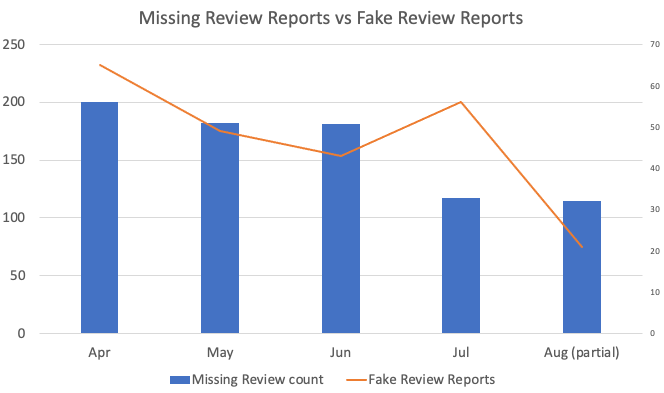
Source: Near Media analysis
In our sampling, we are also seeing some other significant issues. When there is an algo update for review filtering, fake review reports and missing review reports tend to move in opposite directions. This month, fake reviews dropped by half, indicating that the change was likely a filter update. But two new issues became prominent: video verification issues and a Posts Update bug. Video verification is rapidly becoming more widespread as a way to verify newly created listings and it fails on a regular basis. The [Posts Update bug](https://twitter.com/mblumenthal/status/1691792777644831076?s=20&ref=nearmedia.co) prevents Posts from being created via the search interface but they still work in the Google Maps app. The bug, around for several months, seems to have recently affected many more businesses.
###
Top Forum Complaints - June vs August
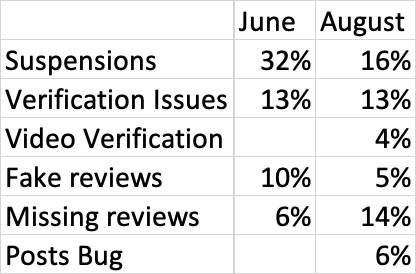
Reported issues as a percentage of a mid-month two day sample of all postings in the GBP forums
****Our take:**
- It appears that Google's year-long campaign to suspend and reverify SABs is finally slowing down. Unfortunately, the reverification process (video verification) is both opaque and buggy.
- Google keeps tweaking the review filter. The false positive rate is still too high, nuking good reviews and letting too many fakes get through.
- The Posts bug is a typical example of Google breaking stuff and neither alerting folks nor explaining why, [making](https://support.google.com/business/thread/230541117?ref=nearmedia.co) [the](https://support.google.com/business/thread/230549894?ref=nearmedia.co) [job](https://support.google.com/business/thread/230549894?ref=nearmedia.co) [of](https://support.google.com/business/thread/230408076?ref=nearmedia.co) [the](https://support.google.com/business/thread/230369085?ref=nearmedia.co) SMB very [frustrating](https://support.google.com/business/thread/231032433?ref=nearmedia.co).
### GBP Form: 'Verification Pending Review' Appeal
There are multiple ways a verification can go sideways. Despite the fact that Google often notes that newly verified listings will be visible within a few minutes, many listings are ["sandboxed" for 7-10 days](https://support.google.com/business/thread/230451644?ref=nearmedia.co). Everything from [problems with video verification](https://support.google.com/business/thread/230693568?ref=nearmedia.co) to the cryptic "[verification pending review](https://support.google.com/business/thread/222701709?ref=nearmedia.co)" or "[processing verification](https://support.google.com/business/thread/230693568?ref=nearmedia.co)" notifications [often](https://support.google.com/business/thread/229953273?ref=nearmedia.co) [persist](https://support.google.com/s/community/forum/1081366/search/query=creator%3Ame+%7C+replier%3Ame+%22under+review%22&order=created/thread/222701709?ref=nearmedia.co) for weeks. If you reach out to support or the forums, answers are often few and far between. Not wanting to give anything away to spammers, Google is tight lipped about the multitude of reasons (bugs?). However, with new EU requirements for [content moderation transparency](https://www.nearmedia.co/google-maps-businesses-hijacked-again-again-again/) Google is seemingly becoming more communicative. This includes making [forms available](https://www.nearmedia.co/gbp-adds-form-to-appeal-image-or-video-rejection/) to deal with common problems like [image approvals](https://www.nearmedia.co/gbp-adds-form-to-appeal-image-or-video-rejection/), [missing reviews](https://www.nearmedia.co/missing-reviews-at-google-a-step-by-step-guide-to-recovery/) and now verifications. A business can go to the [Support contact](https://support.google.com/business/contact/business%5Fother%5Fproblem?ref=nearmedia.co) page, answer a few questions about verification issues and actually be brought to a form that specifically deals with common verification problems.
Here are the steps:
1. Login to Google as the manager/owner of the listing
2. Navigate to the [Support Page](https://support.google.com/business/contact/business%5Fother%5Fproblem?ref=nearmedia.co)
3. Select your business
4. Tell us what we can help with: "verification issues"
5. Select relevant verification issue button
6. Select "Next step"
7. (you could check verification status)
8. Select "Next step"again
9. Select Contact Option: Email
10. Select "This Tool did not fix my issue. I need to contact support"
11. Fill in the presented form
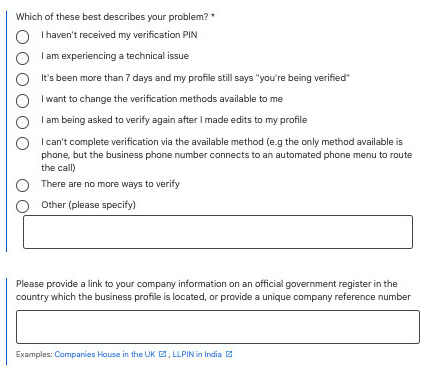
The addresses the many common issues with verification
****Our take:**
- Google [opposed Europe's DSA](https://www.reuters.com/article/us-eu-alphabet-tech-idUSKBN27D2XI?ref=nearmedia.co), but it's now complying and providing more clear pathways to solve GBP issues for everyone.
- The jury is still out on whether Google will actually be more transparent and less arbitrary with GBP support outcomes or whether all the new processes are merely performative.
- If Google actually creates effective support mechanisms, it might encourage other countries to pursue similar regulations.
### GBP Offering Dispute Mediation in EU
Google has made a number of previously mentioned updates to GBP support, from [guidelines](https://transparency.google/our-policies/product-terms/google-business-profile/?ref=nearmedia.co) & [TOS](https://support.google.com/business/answer/9292476?hl=en&ref=nearmedia.co#zippy=%2Cmoderation-of-your-content-and-other-content-on-the-business-profile%2Cyour-access-to-your-content%2Cgoogles-access-to-your-account%2Cdata-protection-terms%2Clicense%2Cother-products-and-services%2Csettle-disputes%2Cchanges-to-the-terms%2Ctermination%2Cquestions-or-complaints), to comply with new EU content moderation transparency rules. Google has also introduced a new mediation process for businesses, to bring the company in compliance with another EU regulation: [P2B](https://eur-lex.europa.eu/legal-content/EN/TXT/HTML/?uri=CELEX:32019R1150&from=EN&ref=nearmedia.co). "The P2B Regulation [protects](https://www.orrick.com/en/Insights/2022/11/P2B-and-DSA-Regulations?ref=nearmedia.co#:~:text=The%20P2B%20Regulation%20protects%20the,any%20natural%20or%20legal%20person.) the interests of 'business users' whereas the DSA protects the recipient of the \[intermediary\] service which includes any natural or legal person." The mediation request form can be found [here](http://g.co/help/mediation?ref=nearmedia.co); however it is only visible in Europe. Mediation is open to any business with a complaint that can't be resolved through customer support. But there are caveats: neither the business nor Google is obligated to enter mediation, you must fill out a request form, you must work with their chosen mediator and pay for your share of the cost. Here are screenshots of the [requirements](https://storage.ghost.io/c/03/80/0380d96d-ef7e-450e-96b3-2963e18aaab5/content/images/size/w1000/2023/08/requirements.png?ref=nearmedia.co) and the [mediation request form](https://storage.ghost.io/c/03/80/0380d96d-ef7e-450e-96b3-2963e18aaab5/content/images/size/w1000/2023/08/forn.png?ref=nearmedia.co) (thanks to Xavier Colomes of [LocalBoss review app](https://localboss.app/?ref=nearmedia.co)). The [mediation process](https://www.cedr.com/mediation/google/?ref=nearmedia.co) is provided by [CEDR](https://www.cedr.com/mediation/google/?ref=nearmedia.co) and while the [cost](https://www.cedr.com/commercial/fixedfee/?ref=nearmedia.co) depends on the value of the dispute, it starts at \~$700 per party. It's not clear how often Google will agree to mediation or how aggressively they will "litigate" any given case, making outcomes uncertain.
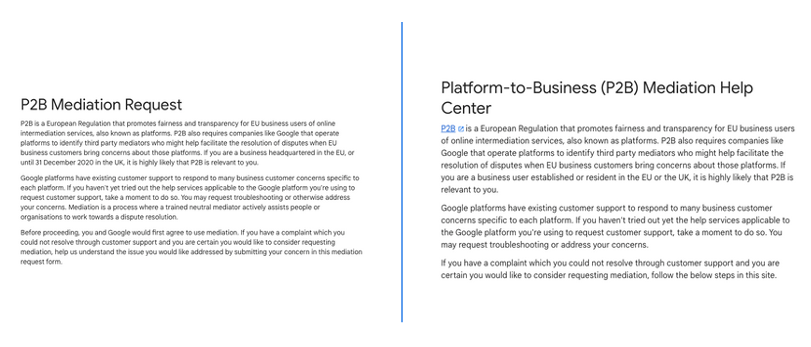
Source: Google/LocalBoss
****Our take:**
- The mediation option could motivate Google to provide clearer and more helpful resolutions to GBP disputes.
- The pricing incentivizes businesses to exhaust Google support options and have a strong financial case to pursue mediation.
- The obvious case is a business suspension. But it's unclear, given the rules, whether a business would be successful in that scenario.
## Recent Analysis
- **Near Memo episode 124:** [GBP support gig workers, SGE while browsing rolls out, AI Generated review summaries](https://www.nearmedia.co/ep-124/).
- **Google Shifting GBP Support to 'Brand Ambassadors' aka Gig Workers?** [by Mike Blumenthal](https://www.nearmedia.co/is-google-shifting-gbp-support-to-gig-workers/).
## Short Takes
- **Moz** [Top Local SEO Takeaways](https://moz.com/blog/mozcon-2023-local-seo-takeaways?ref=nearmedia.co) from MozCon 2023
- Radiolab podcast [covers](https://podcasts.apple.com/us/podcast/radiolab/id152249110?i=1000624153149&ref=nearmedia.co) the history, benefits and contradictions surrounding **Sec 230** but takes the "tech line" and offers no solutions.
- Google support [announces ability to add social links](https://support.google.com/business/answer/13580646?sjid=13360751483318978266-NA&ref=nearmedia.co#zippy=%2Cin-my-business-profile-can-i-add-multiple-social-media-links-from-the-same-platform%2Ccan-i-add-the-same-social-media-link-to-multiple-business-profiles%2Ccan-i-find-the-performance-of-user-interaction-with-each-social-media-link-like-clicks%2Cis-it-possible-to-update-social-media-links-in-bulk) to **GBP profiles** via dashboard and API but the feature is still M.I.A.
- OMG: Google creates a single page with links to [every policy and guideline ](https://transparency.google/our-policies/product-terms/google-business-profile/?ref=nearmedia.co)affecting **GMB eligibility and content**.
- **Amazon** [testing](https://www.androidpolice.com/amazon-tests-new-star-ratings/?ref=nearmedia.co) a confusing star rating system with a single yellow star next to the product image and the percentage of 5-star ratings received.
- **Phil Rozek:** [Starting Local SEO with Nothing](https://www.localvisibilitysystem.com/2023/08/21/starting-local-seo-with-nothing-30-ways-to-start-cold-and-succeed/?ref=nearmedia.co) on the steps to seo success for new businesses just getting going.
Listen to our [latest podcast](https://www.nearmedia.co/memo/).
[](https://nearmedia.co/memo?ref=nearmedia.co)
How can we make this better? Email [us](mailto:gsterling@nearmedia.co) with suggestions and recommendations.
### Ep 124: GBP support using gig workers, SGE while browsing rolls out, AI Generated review summaries roll out
URL: https://www.nearmedia.co/ep-124/
Last updated: 2023-08-18T21:12:21.000Z
**Part 1 starts 00:13 - [Google Ambassadors (ie Gig Workers) now staffing GBP support poorly](https://youtu.be/eyZmPPt%5FnLQ?ref=nearmedia.co)**
Google Business Profile support has added a new layer of first level support using what they call Google Ambassadors. These are “passionate brand advocates” working as gig workers. While it provides a comforting, warm body to the chat support experience, it is likely to just waste your time. So be prepared to take a winding path to your answer and expect to be passed along without a conclusive solution.
Segment Reference Articles
[Google Shifting GBP Support to 'Brand Ambassadors' aka Gig Workers?](https://www.nearmedia.co/is-google-shifting-gbp-support-to-gig-workers/)
[GBP Support Using Gig Workers](https://www.nearmedia.co/google-gbp-gig-workers-cxfail-apple-maps-is-better-now-what/)
**Part 2 starts 12:05 - [New Google feature: Search Generative Experience while browsing](https://youtu.be/B7uhH883YhM?ref=nearmedia.co)**
This new generative AI search feature, adds automatic article summaries to a web page to quickly find the web page’s key points and jump directly to the relevant section to learn more. It works reasonably well on the desktop but is problematic on mobile devices. Google is attempting to insert themselves into your website and to direct users to other searches.
Segment Reference Articles:
[SGE While Browsing in Chrome: Testing Google's New AI Product with Lily Ray](https://youtu.be/18-wXvzeC4M?ref=nearmedia.co)
SGE while browsing [Search Generative Experience while browsing ](https://support.google.com/websearch/answer/13743034?hl=en&ref%5Ftopic=13544225&sjid=9990416063760193392-NA&ref=nearmedia.co)
**Part 3 starts 19:00 - [Are AI Generated review summaries the future of platform reviews?](https://youtu.be/uqmRZK-Ly%5F4?ref=nearmedia.co)**
Newegg, Amazon and others have started to use AI to create summaries of the typical user review. It will expedite purchases because people will get the information they need from the review summary without having to read the underlying reviews. It is an idea that possibly will make shopping more efficient and sets a trend that Google will surely follow.
Segment Reference Article:
[Amazon Review Highlights Roll Out](https://www.nearmedia.co/sge-while-browsing-review-cliffs-notes-tv-dethroned/)
### BingGPT Stalls, TOS (AI) Wars, Robotaxis Not Ready
URL: https://www.nearmedia.co/binggpt-stalls-tos-wars-robotaxis-not-ready/
Last updated: 2023-08-18T17:24:29.000Z
### Has BingGPT Failed?
When Microsoft [announced](https://blogs.microsoft.com/blog/2023/02/07/reinventing-search-with-a-new-ai-powered-microsoft-bing-and-edge-your-copilot-for-the-web/?ref=nearmedia.co) integration of ChatGPT into Bing this February, the company proclaimed it was "reinventing search." The positive coverage and buzz was a PR coup; it even boosted the company's stock. BingGPT's positive reception stood in contrast to the largely critical reaction to [Google's underwhelming AI announcements](https://www.nearmedia.co/google-in-paris-binggpt-smb-recession-angst/) later that week. In July, Microsoft [reported](https://view.officeapps.live.com/op/view.aspx?src=https://c.s-microsoft.com/en-us/CMSFiles/TranscriptFY23Q4.docx?version=f64b33fa-1c41-799b-70cf-cc2cd098555b&ref=nearmedia.co), "Bing users have engaged in more than one billion chats and created more than 750 million images with Bing Image Creator." Yet a new [article](https://www.wsj.com/tech/ai/microsoft-bing-search-artificial-intelligence-google-competition-6e51ec04??ref=nearmedia.co) from the Wall Street Journal essentially pronounces BingGPT a failure because BingGPT hasn't really moved the needle for Microsoft in search. According to [Statcounter](https://gs.statcounter.com/search-engine-market-share?ref=nearmedia.co#monthly-202302-202308), Bing has gained 0.26 points since BingGPT was introduced. Microsoft previously [argued](https://www.marketwatch.com/story/microsoft-gave-some-numbers-on-ai-powered-search-heres-what-the-company-says-11675846668?ref=nearmedia.co) that every point of share gain is worth $2 billion. But that still seems a long way away.
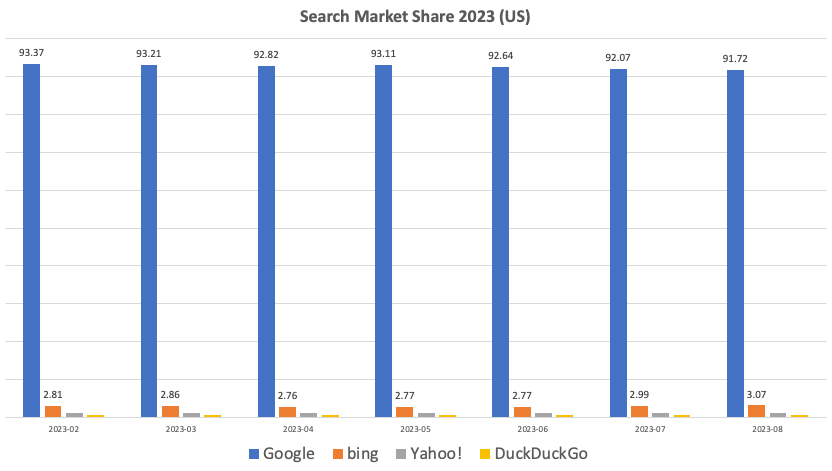
Source: Statcounter
****Our take:**
- BingGPT adoption was held back by Microsoft's "download Edge" strategy. That will change soon as BingGPT comes to other browsers.
- Microsoft doesn't rely on Bing for revenue growth. AI integration in other areas will drive more revenue. Still BingGPT growth would be nice.
- Google's introduction of Bard and SGE have been enough to steal attention back and retain early adopters who might've defected.
### Here Come the TOS Wars
OpenAI, Meta and Google are [all being sued](https://www.nearmedia.co/bing-is-4-state-of-digital-agencies-ai-and-copyright/) for scraping content for AI training, without permission. That copyright litigation has prompted a frenzy of content licensing negotiations among the principals and major publishers. In some cases deals have been struck (e.g., [OpenAI - AP](https://apnews.com/article/openai-chatgpt-associated-press-ap-f86f84c5bcc2f3b98074b38521f5f75a?ref=nearmedia.co)). Meanwhile, most large tech companies are quietly changing their terms to allow any data in their systems or on their platforms to be used for AI training. The highest profile example was Zoom, which gave itself a royalty free license to all customer data. There was a [furious backlash](https://variety.com/2023/digital/news/zoom-ai-training-backlash-customer-content-terms-of-service-1235694207/?ref=nearmedia.co) and Zoom was forced to modify its policy. Google and Microsoft, among others, have also changed terms to enable broad use of data for AI. On the other side, the NY Times [is prohibiting use](https://help.nytimes.com/hc/en-us/articles/115014893428-Terms-of-Service?ref=nearmedia.co#4) of its data for LLM training: "\[you shall not\] use the Content for the development of any software program, including, but not limited to, training a machine learning or artificial intelligence (AI) system." This sets up a battle that will play out in both courts and legislatures. Web scraping is legal but it can create liability if companies block it with their TOS (see, [hiQ vs. LinkedIn](https://www.natlawreview.com/article/hiq-and-linkedin-reach-proposed-settlement-landmark-scraping-case?ref=nearmedia.co)).
Source: NY Times
****Our take:**
- Google is [advocating](https://blog.google/technology/ai/ai-web-publisher-controls-sign-up/?ref=nearmedia.co) a robots.txt-like protocol for AI-related scraping. But what the NYT did is probably legally sufficient to block AI training.
- AI platforms probably can't hide behind "fair use" because these are explicitly commercial applications to make money.
- The future of AI training is permission-based (for publishers) and involves content licensing. Individuals will need government intervention.
### Not Ready for Rush Hour
Driving home from San Francisco this week, evening rush hour traffic was unusually bad. During the painful crawl to the freeway I saw easily more than a dozen self-driving taxis from GM's Cruise and Google's Waymo (three in the picture below alone). Both companies were granted authority last week by California regulators to begin full commercial operation in San Francisco. That would mean hundreds more robotaxis on the streets. The approval came after a contentious six-hour hearing in which many people testified against it. There have been numerous incidents in which robotaxis have stalled or blocked traffic, caused gridlock, been in multiple accidents and interfered with first responders. The City of San Francisco is now appealing to the California Public Utilities Commission [to reconsider their decision](https://www.sfchronicle.com/sf/article/driverless-taxi-cruise-waymo-18300237.php?ref=nearmedia.co) and may take the agency to court, citing public safety concerns. While impressive the technology is not yet ready for rush hour.
Source: Greg Sterling
****Our take:**
- Given the density of San Francisco and its traffic, just one stalled robotaxi in the right place can snarl traffic for hours.
- The CPUC vote was 3-1 in favor. One of those votes was [John Reynolds](https://www.gov.ca.gov/2021/12/23/governor-newsom-announces-appointments-12-23-21/?ref=nearmedia.co), former general counsel at Cruise. Can you say conflict-of-interest?
- Robotaxis, if successfully launched in major markets (depending on pricing), could threaten Uber and Lyft, as well as traditional taxis.
## Short Takes
- Great speakers: [Don't miss](https://www.brightlocal.com/local-seo-for-good/?ref=nearmedia.co) **Local SEO for Good**.
- New [spike](https://www.seroundtable.com/google-removing-reviews-local-business-listings-35901.html?ref=nearmedia.co) in **missing GBP reviews**, apparently.
- Remarkably, **Groupon** is [still alive](https://www.pymnts.com/news/ecommerce/2023/groupon-reports-progress-in-transformation-plan/?ref=nearmedia.co), working on a turnaround.
- Search the main way **SMBs** [learn](https://bredin.com/blog/2023/08/bredin-report-how-smbs-learn-about-payment-solutions/?ref=nearmedia.co) about SaaS offerings.
- Only 23% of digital marketers [interested in](https://searchengineland.com/digital-marketers-invest-next-12-months-430826?ref=nearmedia.co) **Twitter**.
- **Meta** [set to release](https://gizmodo.com/metas-set-to-drop-a-code-generating-ai-bot-1850751208?ref=nearmedia.co) open-source coding AI next week.
- Google seeks to [bury AI competitors](https://www.androidpolice.com/google-ai-gemini-chatbot/?ref=nearmedia.co) with **Gemini** launch.
- 75% of orgs [currently considering](https://blogs.blackberry.com/en/2023/08/why-companies-ban-chatgpt-ai?ref=nearmedia.co) **ChatGPT bans** in workplace.
- **Amazon** [syndicating ads](https://www.aboutamazon.com/news/company-news/pinterest-buzzfeed-and-more-apps-will-show-amazon-sponsored-product-ads-to-discover-relevant-products?ref=nearmedia.co) to Pinterest, BuzzFeed, others.
- **Amazon** [charging fee to sellers](https://www.digitalcommerce360.com/2023/08/17/new-amazon-fee-on-sellers-who-ship-products-themselves/?ref=nearmedia.co) who don't use its shipping services.
- **Travel** [digital ad growth](https://www.mediapost.com/publications/article/388280/digital-travel-sales-forecast-to-surpass-300b-in.html?ref=nearmedia.co) beating industry average, search a big part of it.
- **Data brokers** [lobby against](https://www.mediapost.com/publications/article/388334/ad-industry-urges-california-lawmakers-to-reject-n.html?ref=nearmedia.co) CA's "global opt-out" privacy bill.
- **Uber, Lyft** [threaten to leave Minneapolis](https://www.cnn.com/2023/08/17/tech/minneapolis-rideshare-minimum-wage/index.html?ref=nearmedia.co) if minimum wage law adopted.
- **Google's** [newtransparency center](https://blog.google/inside-google/company-announcements/google-transparency-center/?ref=nearmedia.co) likely prompted by EU's DSA.
Listen to our [latest podcast](https://www.nearmedia.co/memo/).
[](https://nearmedia.co/memo?ref=nearmedia.co)
How can we make this better? Email [us](mailto:gsterling@nearmedia.co) with suggestions and recommendations.
### SGE While Browsing, Review Cliffs Notes, TV Dethroned
URL: https://www.nearmedia.co/sge-while-browsing-review-cliffs-notes-tv-dethroned/
Last updated: 2023-08-16T17:54:49.000Z
### SGE While Browsing
Earlier this week, Google [announced](https://blog.google/products/search/google-search-generative-ai-learning-features/?ref=nearmedia.co) a number of SGE upgrades, including a new feature called "[SGE While Browsing](https://labs.google.com/search/experiments?source=smp.23q2USLabs.31&is=ag)." (Bing has [something similar](https://blogs.bing.com/search/2021-11/Save-time-online-with-Page-insights-from-Microsoft-Bing?ref=nearmedia.co).) To access SGE While Browsing users must have the latest version of Chrome or the Google app and they must specifically opt in to the test. After that, users will sometimes, though not always, see an option to view an SGE summary of the article in question. (I haven't been able to discern a pattern yet.) It must be manually initiated. On the [desktop](https://www.youtube.com/watch?v=18-wXvzeC4M&t=164s&ref=nearmedia.co) version, the article summary and other related content appear in a sidebar. On mobile it pops up over the article. The desktop version doesn't obscure the article, but the mobile version entirely covers it as well as any ad units. Google says it's trying to help people "more deeply engage with long-form content from publishers and creators, and make it easier to find what you’re looking for while browsing the web." Clicking on the icon beside each "key point" takes you to the highlighted source of the bullet within the article text.
Source: Google
****Our take:**
- One question is the credibility of the summaries. Do they reflect all salient points and facts? Let's assume they'll be good enough.
- SGE While Browsing could be a very useful feature, less so for publishers. On mobile it could be a new kind of zero-click experience.
- We don't know how users will engage with this yet. But it may cause people to read summaries instead of the articles themselves.
### Amazon Review Highlights Roll Out
Last week Newegg [introduced](https://www.nearmedia.co/ai-review-summaries-e-commerce-1t-ai-adoption/) AI-generated review summaries on its site for selected products. This past Monday Amazon [officially rolled out](https://www.aboutamazon.com/news/amazon-ai/amazon-improves-customer-reviews-with-generative-ai?ref=nearmedia.co) its own version of review summaries, which it had been [testing](https://www.nearmedia.co/amazon-review-summaries-ai-not-a-threat-to-google/). The company said in a blog post, "The new AI-powered feature provides a short paragraph right on the product detail page that highlights the product features and customer sentiment frequently mentioned across written reviews to help customers determine at a glance whether a product is right for them." Amazon added that review summaries are "available to a subset of mobile shoppers in the U.S. across a broad selection of products." We haven't yet seen them in the wild. The summaries also offer filters that take users to specific reviews mentioning a product feature or attribute (e.g., ease of use). These AI-generated summaries could become the primary way that users interact with reviews on Amazon.
Source: Amazon
****Our take:**
- Assuming a broad rollout, most people will probably engage with the summaries and star ratings rather than individual reviews.
- As we previously argued, this is probably the future of reviews across the web, including (eventually) on Google.
- SGE While Browsing and review highlights point to an era of "derivative content," where users interact with summaries rather than sources.
### TV Viewing Below 50%
TV has long seemed to defy the fate of other traditional media, which have ceded marketshare and mindshare to digital over the past two decades. Broadcast and cable TV have remained an exception; out-of-home is also an exception. However, a new [report](https://www.nielsen.com/insights/2023/streaming-grabs-a-record-38-7-of-total-tv-usage-in-july-with-acquired-titles-outpacing-new-originals/?ref=nearmedia.co) from Nielsen shows that a symbolic milestone has passed: TV viewing time has fallen below 50%. In July, broadcast and cable together comprised 49% of viewing minutes, while streaming reached nearly 40%; other is 11.6%. YouTube is the leader of all the digital video sources, while Netflix comes in second. We'll have to see when it eventually stabilizes, but the consumer migration away from cable and broadcast TV isn't over. Cable is like the landline of video, with more people looking to ditch it. Accordingly, more TV advertising will migrate to digital and become "[addressable](https://www.gartner.com/en/information-technology/glossary/addressable-tv-advertising?ref=nearmedia.co)." Almost all streaming platforms have introduced cheaper ad supported tiers and are raising prices on ad-free subscriptions in order to generate more ad revenue.
**July Viewing Time in US**
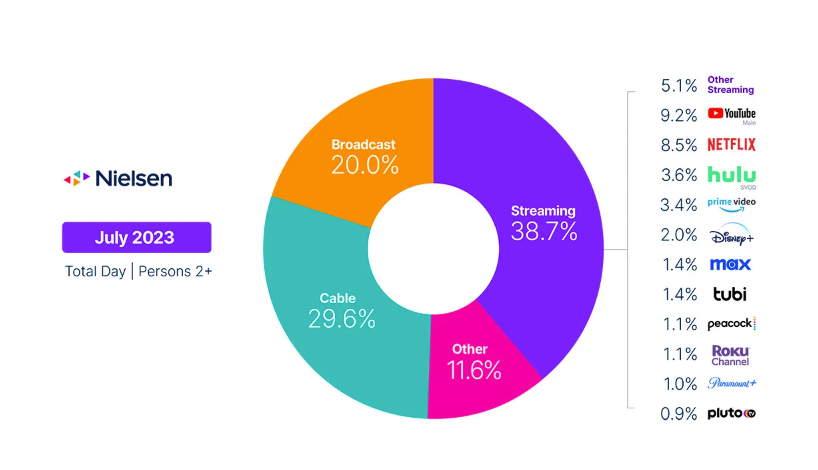
Source: Nielsen
****Our take:**
- According to surveys [many advertisers believe](https://www.strategus.com/blog/between-ctv-and-linear-tv-which-one-is-better?ref=nearmedia.co) that CTV/digital video are as effective as traditional TV and certainly more measurable.
- TV is increasingly for older audiences, while CTV/digital video is the only way for brands to reach younger viewers.
- Yet streaming greed may slow or halt cord cutting, as rising subscription costs (of multiple services) start to catch up to cable pricing.
## Recent Analysis
- ****Near Memo podcast 123**: [Google v. ChatGPT results, Google's bad advice to CNET, do consumers actually read reviews?](https://www.nearmedia.co/ep-123/)
## Short Takes
- **Google** rolling out [social media links for GBP](https://localsearchforum.com/threads/new-adding-social-media-links-to-gbp-new-info-added-to-google-support-page.60549/?ref=nearmedia.co).
- **Google** trials ads-support AI assistant – [which could be wrong](https://searchengineland.com/google-ads-ai-assistant-content-inccurate-430703?ref=nearmedia.co).
- **Google** [testing paid customer service](https://searchengineland.com/google-ads-enhanced-customer-service-small-business-430773??ref=nearmedia.co) for SMB advertisers.
- How to [get your business on](https://www.wix.com/seo/learn/resource/get-your-business-on-apple-maps?ref=nearmedia.co) **Apple Maps**.
- **Apple Maps** (finally) [getting offline navigation](https://www.theverge.com/2023/6/7/23752555/apple-maps-offline-navigation-ios17?ref=nearmedia.co) with iOS 17\.
- **Musk-X** throttling traffic to competitors and critics ([WaPo](https://www.washingtonpost.com/technology/2023/08/15/twitter-x-links-delayed/?ref=nearmedia.co)).
- **Promoted accounts** are [done at Twitter](https://www.axios.com/2023/08/15/x-twitter-shuts-100m-promoted-accounts-ad-biz?ref=nearmedia.co).
- **Google Discovery Ads** [becoming](https://support.google.com/google-ads/answer/13859703?ref=nearmedia.co) AI-powered Demand Gen.
- SEO: **Overstock-->BBB migration** [not "botched"](https://www.kevin-indig.com/overstock-botched-migration-or-clever-business-move/?ref=nearmedia.co) after all.
- Red state school boards using **ChatGPT** [to ban books](https://www.popsci.com/technology/iowa-chatgpt-book-ban/?ref=nearmedia.co).
- Could **ChatGPT** [be used to moderate content](https://www.semafor.com/article/08/15/2023/can-chatgpt-become-a-content-moderator?ref=nearmedia.co) on third party sites?
- **Google** developing an AI to offer complex life advice ([NYT](https://www.nytimes.com/2023/08/16/technology/google-ai-life-advice.html??ref=nearmedia.co)).
- Amazon's **Alexa** boss [is leaving](https://www.aboutamazon.com/news/company-news/svp-dave-limp-to-retire-from-amazon?ref=nearmedia.co) amid future product uncertainty.
- Retailers [eyeing](https://www.pymnts.com/news/retail/2023/american-eagles-aerie-looks-to-localization-to-drive-conversions/?ref=nearmedia.co) **localization** (IRL) to boost sales.
Listen to our [latest podcast](https://www.nearmedia.co/memo/).
[](https://nearmedia.co/memo?ref=nearmedia.co)
How can we make this better? Email [us](mailto:gsterling@nearmedia.co) with suggestions and recommendations.
### Google GBP Gig Workers, Timmie Ho's CX #Fail, Apple Maps' Long Game
URL: https://www.nearmedia.co/google-gbp-gig-workers-cxfail-apple-maps-is-better-now-what/
Last updated: 2023-08-14T16:44:11.000Z
### GBP Support Using Gig Workers
Google has long attempted to reduce or eliminate costs from Google Business Profile Support. We have written up Google's newest effort to try [using gig workers](www.nearmedia.co/is-google-shifting-gbp-support-to-gig-workers) to provide the first level contact for GBP support. Known as the [Google Ambassador](https://portal.belimitless-app.io/googlebusinessprofile/index.html?ref=nearmedia.co) program, it is run by [Limitless GigCX](https://www.limitlesstech.com/experts?ref=nearmedia.co) and promises to "turn passionate brand advocates into extraordinary customer experiences." While the program is couched in Silicon Valley speak (empathy and transformation), the reality is that "passionate brand ambassadors" are often offshore gig workers. One of the program's many promises is to cut costs: "Outcome-based payments and no overhead mean much lower costs and a better bottom line." But does [using gig employees for GBP support work?](https://nearmedia.ghost.io/ghost/www.nearmedia.co/is-google-shifting-gbp-support-to-gig-workers?ref=nearmedia.co) Not really. It may appear that the line is moving; however, in the end, it takes a long time to get anywhere.
****Our take:**
- Google has long utilized "brand ambassadors" in the forums. It's aware of the limitations (and cost benefits) of this approach. It is hard to imagine support getting any worse.
- This new solution could provide better reporting for [compliance with European DSA transparency requirements](https://www.nearmedia.co/google-maps-businesses-hijacked-again-again-again/) vis-a-vis content moderation.
- Google isn't alone. Microsoft, Dell, HP, Playstation and many other brands are [referenced](https://www.limitlesstech.com/?ref=nearmedia.co) on the Limitless website.
### Tim Hortons Review Response #Fail
Customer service is hard but it is even harder when corporate and franchisees can't get their stories straight. On my way to a meeting I decided to grab a "quick" coffee to go at the local Tim Hortons. Twenty minutes later I finally got through the drive-through and was late to every appointment for the rest of the afternoon. I [wrote a review](https://goo.gl/maps/JBptDokTZAYXWiRi9?ref=nearmedia.co). In response Tim Hortons corporate encouraged me to reach out so that they could "make things right." What did I have to lose? The only thing more painful than waiting for 20 minutes for a to-go coffee was wading through the Tim Hortons post-review support interaction. After filling in two forms and interacting with two support staff and providing ad nauseum details about a single order for a single cup of coffee, I was provided with CX happy talk and told they would let the local franchisee know. Then I got a survey asking how the support rep did.
****Our take:**
- Dealing with review responses in a franchisor/franchisee world is hard to get right. But this experience was atrocious.
- If a business is doing follow-up, it should be streamlined and not ask for the same information multiple times, and then more feedback.
- They promised to make things right. Instead they took a simple problem and turned it into something tedious and unbearable – a major CX #fail.
### Apple Maps: Playing the Long Game
Is Apple Maps finally good? That question is asked, and largely answered, in a [recent Guardian article](https://www.theguardian.com/travel/2023/aug/09/apple-maps-cycling-transport-google?ref=nearmedia.co). This is the latest [high profile article](https://www.wsj.com/articles/apple-maps-app-popularity-iphone-8e52aec1?ref=nearmedia.co#:~:text=Some%20users%20are%20finding%20reasons,maps%20people%20actually%20like%20using.) this summer that reflects the fact that Apple executives think the disaster of the 2012 Maps launch is behind them. More importantly, it indicates that Apple Maps is better than Google Maps in enough areas that Apple's Eddy Cue can actually highlight, "Maps play a big role in dining, in cycling, in air travel…where we now have detailed maps of restaurants and bathrooms inside terminals. It’s a huge part of what an iPhone is." Surprisingly, Cue also noted that "there are really only two mapmakers left in the world, in ourselves and Google." Former Apple Maps engineer, James Killick, [highlighted](https://maphappenings.com/2023/08/10/google%5Fplaces/?ref=nearmedia.co) the difference between Apple's curated mapping experience and the [crowd-sourced shit shows](https://www.nearmedia.co/google-maps-businesses-hijacked-again-again-again/) that can happen on Google. Most companies would not have been able to wait a decade for recovery from a failed product launch. Apple, playing the very long game, was willing to invest in the product and the process. The company appears to have beaten the odds and is now out "selling the product" 11 years on.

Source: [delfi de la Rua](https://unsplash.com/@delfidelarua7?utm%5Fsource=unsplash&utm%5Fmedium=referral&utm%5Fcontent=creditCopyText)/[Unsplash](https://unsplash.com/photos/J1OV-aqPXfw?utm%5Fsource=unsplash&utm%5Fmedium=referral&utm%5Fcontent=creditCopyText)
****Our take:**
- We too have [noted](https://www.nearmedia.co/apple-maps-momentum-google-threads-ai-needle-location-sharing/?ref=near-media-newsletter&attribution%5Fid=64b70e3343eff30001f3b710&attribution%5Ftype=post) Apple Map's progress and believe that it will become only [more valuable](https://www.nearmedia.co/apple-maps-discovery-gbp-call-history-is-history-gbp-forum-insights/?ref=near-media-newsletter) as a business marketing environment.
- It will be interesting to see if Apple Maps, as it gets more widely used, avoids the spam and hijacking issues that have plagued Google Maps. If so, it will provide a strong competitive advantage going forward.
- Apple seems to have a long-term vision that rolls Maps up into the spatial computing environment of Apple Vision Pro, as well as other future products and possibly the automotive world.
## Recent Analysis
- **Near Memo podcast 123**: [Google v. ChatGPT results, Google's bad advice to CNET, do consumers actually read reviews?](https://www.nearmedia.co/ep-123/)
- ICYMI: **GBP – New 'Image Not Approved' Appeal Form**, by [Mike Blumenthal](https://www.nearmedia.co/gbp-adds-form-to-appeal-image-or-video-rejection/)
## Short Takes
- **Google** is [adding a new "pets allowed" ](https://twitter.com/claudiatomina/status/1688282534700826624?s=12&t=o-uoEcZmsD3rULHUqaXUFA&ref=nearmedia.co)attribute to GBP listings that businesses should consider adding to their profile. H/T [@ClaudiaTomina](https://twitter.com/ClaudiaTomina?ref=nearmedia.co).
- Krystal Tang of Uberall does a [great job explaining and breaking down](https://uberall.com/en-us/resources/blog/google-creates-clearer-guidelines-to-support-businesses?ref=nearmedia.co#:~:text=This%20change%20is%20intended%20to,control%20and%20manage%20their%20profiles) the nuance of the **new Google Business Profile Guidelines**.
- Getting a suspended listing at Google reinstated is impossible without the right docs: [essential business documents](https://reputationarm.com/essential-business-documents-google-requires-to-restore-your-business-profile/?ref=nearmedia.co) to **restore your GBP**.
- In Europe, **Google review writers** can now see [language indicating their reviews were filtered](https://twitter.com/mblumenthal/status/1689615473661407232?s=12&t=o-uoEcZmsD3rULHUqaXUFA&ref=nearmedia.co) and are not showing.
- **Suing patients for negative reviews** is a losing tactic, but Doctors [keep trying – and losing](https://blog.ericgoldman.org/archives/2023/08/another-doctor-learns-why-its-unwise-to-sue-patients.htm?ref=nearmedia.co).
- **Google's RCS messaging** finally has E2E encryption. But it's still a fragmented [mess, unlikely to be integrated into iMessage](https://appleinsider.com/articles/23/08/09/apple-still-doesnt-need-rcs-but-the-latest-update-brings-it-closer-to-being-suitable-for-iphone?ref=nearmedia.co) anytime soon.
Listen to our [latest podcast](https://www.nearmedia.co/memo/).
[](https://nearmedia.co/memo?ref=nearmedia.co)
How can we make this better? Email [us](mailto:gsterling@nearmedia.co) with suggestions and recommendations.
### Google Shifting GBP Support to 'Brand Ambassadors' aka Gig Workers?
URL: https://www.nearmedia.co/is-google-shifting-gbp-support-to-gig-workers/
Last updated: 2024-11-19T22:49:47.000Z
Except for a brief period from 2013 to 2015, Google GBP support has been either non-existent or inadequate\*. The process makes it very difficult to actually get to a human contact; and when you do, the lowest levels of support are frequently unhelpful. Could hiring "passionate brand ambassadors" (gig workers) for customer support solve the problem? Google appears to be trying just that.
### Google Ambassadors
Google has relied on knowledgeable "brand ambassador" volunteers to [staff local forums](https://support.google.com/business/community/about?hl=en&ref=nearmedia.co)\*\* for the past 17 years. The company is now apparently outsourcing at least some of the first level direct support to a [Google Ambassador](https://portal.belimitless-app.io/googlebusinessprofile/index.html?ref=nearmedia.co) program run by [Limitless GigCX](https://www.limitlesstech.com/experts?ref=nearmedia.co). (Limitless recruits CX experts \[ambassadors\] from a brand's customer base – in this case GBP users.)
[](https://support.google.com/business/gethelp?visit%5Fid=638274418185328167-3619338467&rd=1&ref=nearmedia.co)
Contacting support is a 3-step process where you enter the problem, select one of several choices and are then given a list of possible resources before you are actually presented with a contact option that might might take you in one of several directions.
Previously, to initiate a support request, a GBP owner entered the [Google Business profile support flow](https://support.google.com/business/gethelp?visit%5Fid=638274418185328167-3619338467&rd=1&ref=nearmedia.co) and submitted a problem statement. Depending on the problem, a user could be asked to gather more background and, from there, either [enter more information](https://www.nearmedia.co/gbp-adds-form-to-appeal-image-or-video-rejection/) in a detailed form or possibly to initiate an email contact with support\*\*\*. Now there's a new support path for certain issues.
### Will Ambassadors Improve Support?
That all depends on whether you are Google or the consumer. From Google's point of view, the Ambassador program creates the impression of near instantaneous support from a warm body. And like all gig activities it probably delivers at a lower cost than hiring full time contract workers in India.
[](https://portal.belimitless-app.io/googlebusinessprofile/index.html?ref=nearmedia.co)
When you select "Chat with a Google Ambassador" you are directed to an [offsite page](https://portal.belimitless-app.io/googlebusinessprofile/index.html?ref=nearmedia.co) at portal.belimitless-app.io with explanation and a chat window.
### Support Theater
From the consumer point of view it also creates the perception of near instantaneous support from a warm body. But that's largely an illusion because most GBP problems cannot be solved unless the support person is directly given access to the business record and its history. As with the Product Expert program, Google Ambassadors can only resolve the most superficial issues; everything else needs to be escalated through channels for a real solution. This first level of support is mostly performative.
To test the system, I ran a [real problem](https://support.google.com/business/thread/229936115?ref=nearmedia.co) from the forum through the process. After one hour of back and forth, I was finally asked if I would like my issue to be transferred to a Google Expert to which I said "yes," only to get the following message:
As they say "no shit, sherlock"
In the GBP forum, it took about a day to get a [response](https://support.google.com/business/thread/229936115?msgid=230021424&ref=nearmedia.co) from a Product Expert but the answer took 30 seconds and wasted no one's time.

### Bottom Line: Unhelpful Layer
Google seems to have limited interest in genuinely solving GBP customer support issues. The company will likely continue to explore ever cheaper ways of tapping human labor. Their focus is on cost; they ignore the needs of the business asking the question and the livelihood of the person answering.
You might conclude that support quality will degrade because of this change. I think it will add another layer to the process, which you should be prepared for. And it may make an already painful support journey that much more painful.
---
\* In roughly 2009, Google flew me to Mountain View so that their support staff could interact with a real Google "Places" user. In the support team group meeting a Google exec. stood up and spoke proudly of the fact that not only had they successfully answered 60% of the incoming support queries (not necessarily correctly) but that they had done so at a significantly reduced cost over the previous year's already low cost. Their goal was to further reduce per query costs. The crowd cheered. Where I come from, 60% is a failing grade but they were obviously grading a curve.
\*\* This group of "[Google Product Experts](https://support.google.com/business/community/about?hl=en&ref=nearmedia.co)" encompasses some of the world's most knowledgeable GBP folks who truly are empathetic and already work for free.
\*\*\* Pre-pandemic there was a live chat option as well and it might still exist someplace in the world but I haven't seen it lately. Now we know why.
\*\*\*\* If you're a real glutton and have gotten this far and would like to [read the whole conversation](https://storage.ghost.io/c/03/80/0380d96d-ef7e-450e-96b3-2963e18aaab5/content/images/size/w1000/2023/08/Google-Ambassadors-9.png?ref=nearmedia.co) that I had with the Google Ambassador, I have saved it [here](https://storage.ghost.io/c/03/80/0380d96d-ef7e-450e-96b3-2963e18aaab5/content/images/size/w1000/2023/08/Google-Ambassadors-9.png?ref=nearmedia.co).
### AI Review Summaries, E-commerce $1T, AI Adoption
URL: https://www.nearmedia.co/ai-review-summaries-e-commerce-1t-ai-adoption/
Last updated: 2023-08-11T19:08:49.000Z
### AI Summaries the Future of Reviews?
E-commerce site Newegg [introduced](https://www.businesswire.com/news/home/20230809995742/en/Newegg-Revolutionizes-Online-Shopping-with-AI-Generated-Customer-Review-Summaries?ref=nearmedia.co) AI-generated review summaries ([h/t](https://searchengineland.com/newegg-chatgpt-review-bytes-430501?ref=nearmedia.co) SEL). And Amazon is doing something [similar](https://www.nearmedia.co/amazon-review-summaries-ai-not-a-threat-to-google/). Newegg is using ChatGPT to extract highlights from reviews and create a list of "pros" and "cons" and a synopsis. The content is branded "Review Bytes." It's designed to help users "understand key aspects without having to read reviews." AI content is labeled and linked internally to the source reviews. Below is an [example](https://www.newegg.com/soundcore-life-q30-over-the-ear/p/0TH-033Y-000F4?ref=nearmedia.co) for headphones (not many products on the site appear to have these yet). Newegg won't create these without some undisclosed minimum number of reviews. The site also still displays a graphic showing the distribution of reviews. And verbatim consumer reviews are still accessible. On the latest Near Memo [podcast](https://www.nearmedia.co/ep-123/) we discuss how our user research is revealing that the majority of people don't read reviews – even though they drive clicks and conversions. People focus instead on star ratings. AI generated summaries probably represent the future of online reviews.
**Newegg AI-generated Review Summary**
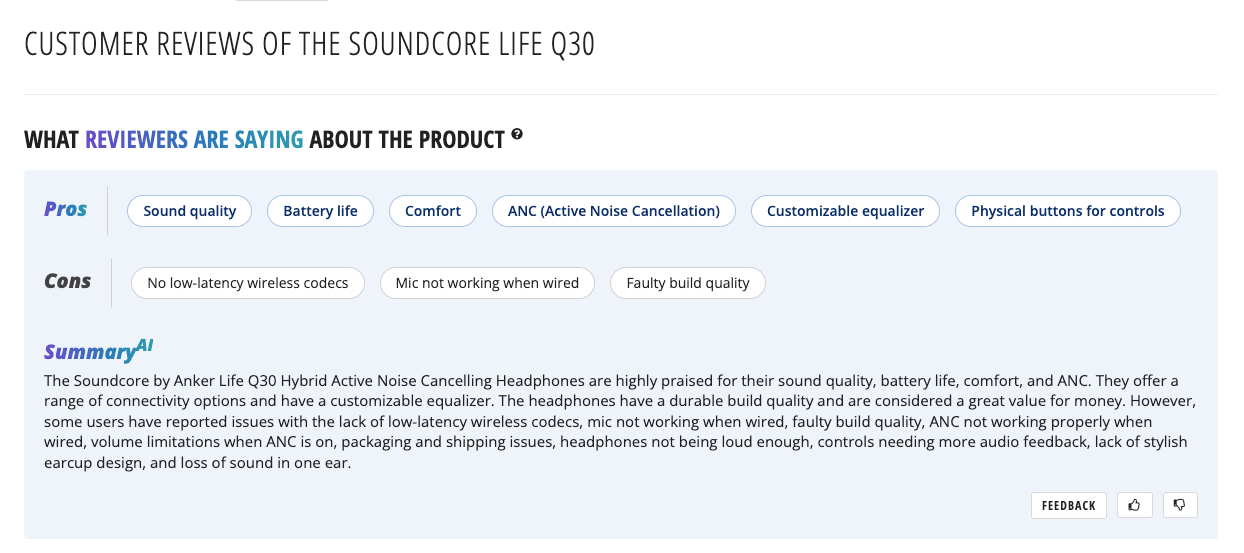
Source: Newegg.com
****Our take:**
- Many years ago startup OpenList (acquired by Marchex [in 2006](https://gesterling.wordpress.com/2006/05/30/marchex-buys-openlist/?ref=nearmedia.co)) had the capacity to generate local review summaries. But it died post acquisition.
- Potential issues with AI summaries are trust and accuracy. Also, will publishers skew them to generate more sales? A new kind of gating.
- Reading a bunch of reviews is a burden. So, if trustworthy, consumers would likely welcome AI summaries as a shortcut.
### E-commerce Crosses $1T in 2022\.
E-commerce has achieved a new milestone. It finally crossed the $1 trillion threshold in the US last year. According to [data](https://www2.census.gov/retail/releases/historical/ecomm/23q1.pdf?ref=nearmedia.co) from the US Census Bureau e-commerce spending came in around $1.04 trillion in 2022\. Total US retail spending was $7.1 trillion, making e-commerce \~15% of the total. (E-commerce partisans [adjust the number up](https://www.digitalcommerce360.com/article/us-ecommerce-sales/?ref=nearmedia.co) to 20% by removing categories from the calculation.) Yet online sales growth has slowed considerably from its pandemic high, though it still outpaces traditional retail. According to [eMarketer](https://www.insiderintelligence.com/charts/click-and-collect-sales-in-us/?ref=nearmedia.co), click and collect/BOPIS was about 9% of all online orders in 2022, or about $90 billion. Google [says](https://www.thinkwithgoogle.com/consumer-insights/consumer-trends/holiday-insights/?ref=nearmedia.co) that nearly 90% of consumers do online research before making offline purchases. Indeed, consumer behavior is messy and complex, and the binary online vs. offline discussion is outdated.
**US Retail Spending 2022**
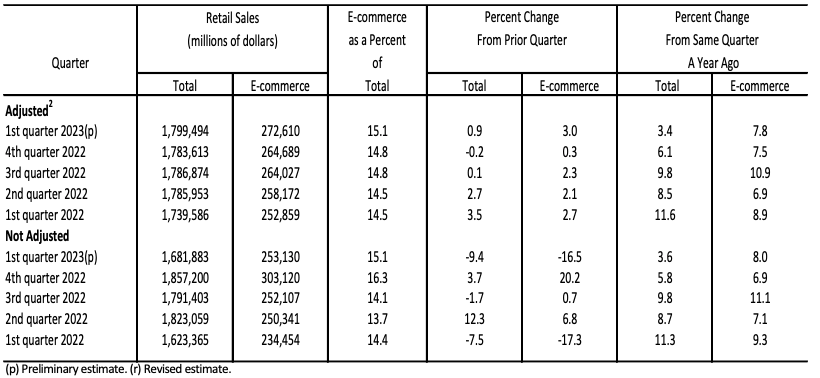
Source: US Census Bureau
****Our take:**
- Jeff Bezos [predicted in 1998](https://www.washingtonpost.com/wp-srv/washtech/daily/nov98/amazon110898.htm?ref=nearmedia.co) that e-commerce would get to about 15% in the US by 2008, although he was then discussing book sales primarily.
- More [two-thirds](https://www.nearmedia.co/chatgpt-beats-google-maps-trust-local-inventory-data/) of consumers want to see local inventory online and traditional stores [drive online sales](https://www.nearmedia.co/review-fraud-crisis-stores-drive-online-sales-yelp-reserves-with-google/). This embodies the complexity of the customer journey.
- DTC brand Warby Parker [continues to open stores](https://www.retaildive.com/news/warby-parker-on-track-open-40-stores-2023/690476/?ref=nearmedia.co). They boost brand awareness, loyalty and make customer acquisition less expensive.
### Nearly 90% Using AI Tools
There are a number of emerging AI-SEO use cases including keyword research, content creation, landing/product page creation and others. Now, a new Conference Board [survey](https://www.conference-board.org/publications/AI-Marketing-Communications-survey?ref=nearmedia.co) finds that almost 90% of marketing and communications professionals are using AI tools already. The sample was 287 junior and senior-level employees. The two groups are using AI differently, with senior executives using it for research/inspiration and junior employees using it more as a productivity tool. Majorities 60% -70% are using it "sometimes" or more frequently. The top AI uses are "summarize content," "do the legwork/inspire thinking," "conduct research," "produce content faster" and "personalize content." The biggest perceived benefit is "productivity." The biggest concerns are misinformation/accuracy, legal uncertainty and data security/privacy, with some concern about jobs and impact on culture.
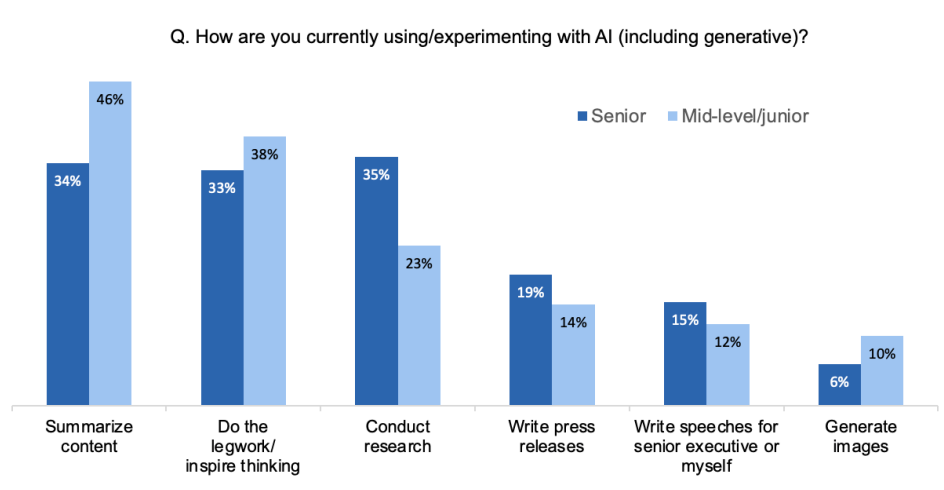
Source: The Conference Board
****Our take:**
- Mid-level and junior employees are using AI more often and widely than senior management. They are the ones driving adoption.
- Regardless of concerns, AI is already established and will be ubiquitous in most organizations relatively soon.
- In a B2B SEO context, most content will be partly or largely AI generated. Google no longer says it's spam but will continue to struggle with it.
## Recent Analysis
- **Near Memo episode 123:** [Google vs. ChatGPT 'Pepsi Challenge,' Google's bad advice on content pruning, and do consumers actually read reviews](https://www.nearmedia.co/ep-123/)?
- ****How to Use Google's New 'Image Not Approved' Appeal Form**, [by Mike Blumenthal](https://www.nearmedia.co/gbp-adds-form-to-appeal-image-or-video-rejection/).
## Short Takes
- **SGE** is showing [more links for "Places](https://twitter.com/lilyraynyc/status/1689051737938857985?ref=nearmedia.co)" from Google Maps.
- Informal poll: 50% of SEOs and digital marketers "[hate](https://www.seroundtable.com/75-are-not-happy-with-google-analytics-4-ga4-35843.html?ref=nearmedia.co)" **GA4**.
- What [GA says](https://searchengineland.com/tracking-20-years-search-430573?ref=nearmedia.co) about 20 years of **Barry Schwartz's SEO coverag**e.
- Google [testing QR codes](https://www.seroundtable.com/google-ads-scan-to-call-qr-code-35847.html?ref=nearmedia.co) in ads (phone extensions): "**scan to call**."
- **SEO for AI snapshots** may be [very different](https://sparktoro.com/blog/5-minute-whiteboard-is-generative-ai-in-search-results-the-seo-apocalypse/?ref=nearmedia.co) than featured snippets.
- Ahead of Q4, Google rolls out [ad improvements](https://support.google.com/google-ads/answer/13844604?ref=nearmedia.co), including for **LIAs**.
- Controversy [over](https://gizmodo.com/cnet-deletes-thousands-old-articles-google-search-seo-1850721475?ref=nearmedia.co) "**content pruning**": is Google [giving bad advice](https://www.nearmedia.co/ep-123/)?
- How to use **ChatGPT code interpreter** for [SEO](https://searchengineland.com/chatgpt-code-interpreter-plugin-seo-use-cases-430394??ref=nearmedia.co).
- **Lyft** [introduces](https://www.lyft.com/blog/posts/lyft-media-launches-in-app-advertising-across-the-lyft-app-expands-tablets?ref=nearmedia.co) in-app ads, will be geo-relevant and contextual.
- **Twitter** hopes [brand-safety partnership](https://business.twitter.com/en/blog/a-new-level-of-control-for-x-advertisers.html?ref=nearmedia.co) with IAS will bring ads back.
- Right vs. left: different **LLMs** have different [political biases](https://www.technologyreview.com/2023/08/07/1077324/ai-language-models-are-rife-with-political-biases/?ref=nearmedia.co).
- Bain [argues](https://www.bain.com/insights/taking-the-hyperbole-out-of-the-metaverse-tech-report-2023/?ref=nearmedia.co) **metaverse** could still be worth $900B by 2030.
- Growing new Slack **SEO community**; sign up [here](https://join.slack.com/t/theseocommunity/shared%5Finvite/zt-2002wytjp-wHOQRSntq%5F5NclFmQi28kA?ref=nearmedia.co).
Listen to our [latest podcast](https://www.nearmedia.co/memo/).
[](https://nearmedia.co/memo?ref=nearmedia.co)
How can we make this better? Email [us](mailto:gsterling@nearmedia.co) with suggestions and recommendations.
### Ep 123: Google v. ChatGPT results, Google's bad advice to CNET, do consumers actually read reviews?
URL: https://www.nearmedia.co/ep-123/
Last updated: 2023-08-14T06:08:20.000Z
Google VS Chat GPT Taste Test, Google Ad Liaison provided bad pruning advice to CNET, Consumers indicate that reviews are important but do they read them?
**Part 1 starts 00:13 - [Google VS Chat GPT Taste Test](https://youtu.be/aPm1cVTi2fE?ref=nearmedia.co)**
In blind testing, users appear to prefer ChatGPT search results over Google by almost 2:1\. Those are the findings of the test's creator, ClickPop, which requires some caveats. Nonetheless, the outcome suggests the Google brand and familiar UI may be a bigger factor in Google's dominant search position than search quality.
Segment Reference Articles
[ChatGPT Beats Google in Blind Test](https://www.nearmedia.co/chatgpt-beats-google-maps-trust-local-inventory-data/)
[Google vs ChatGPT: Which one do people prefer for search?](https://clickpop.co.uk/google-vs-chatgpt-test-results/?ref=nearmedia.co)
**Part 2 starts 7:02 - [Google Ad Liaison provided bad pruning advice to CNET](https://youtu.be/Je2PhhEGr%5F8?ref=nearmedia.co)**
CNET was "busted" by Gizmodo this week for pruning a bunch of old content. The search liaison for Google came out and said: "Hey, you shouldn't do this. You shouldn't prune your content. The notion that Google doesn't like old content is just wrong".
The takeaway from the comment is intended to be "don't prune content", which is a piece of very bad SEO advice. It sounds like CNET is, has a really good SEO team that clearly understands what they are doing. They noted: "Removing content from our site is not a decision we take lightly. Our teams analyze many data points to determine whether there are pages on CNET that are not currently serving a meaningful audience. This is an industry wide best practice for large sites like ours", whatever Google might say.
Segment Reference Articles
[CNET Deletes Thousands of Old Articles to Game Google Search](https://gizmodo.com/cnet-deletes-thousands-old-articles-google-search-seo-1850721475?ref=nearmedia.co)
[Cyrus Shepard Analysis on Twitter](https://twitter.com/CyrusShepard/status/1689695303593771009?s=20&ref=nearmedia.co)
**Part 3 starts 12:23 -[ Consumers indicate that reviews are important but do they read them?](https://youtu.be/Ee81UtXa2ZI?ref=nearmedia.co)**
Our user research in YMYL local categories continues to show that reviews are incredibly important to reviewers; it is the single most mentioned criteria and probably influences even those searchers that don’t mention it. Yet very few people actually seem to read the reviews and primarily look at the rating stars and secondarily at the quantity. This should be a clarion call for the FTC to ban any review incentives rather than require that they be labeled.

Original Near Media consumer behavior research
### Google Trial, SMB AI Hopes, Yelp's Ad Revs Up
URL: https://www.nearmedia.co/google-trial-smb-ai-hopes-yelps-cpcs-up/
Last updated: 2023-08-09T18:56:51.000Z
### Google's Antitrust Trial Set
Earlier this week, a California judge [denied Google's summary judgment motion](https://www.theverge.com/2023/8/7/23823878/google-privacy-tracking-incognito-mode-lawsuit-summary-judgment-denied?ref=nearmedia.co) in the $5 billion Chrome "incognito" browser tracking lawsuit. This doesn't mean Google will be held liable at trial but it's a significant setback for the company. In a separate antitrust case, Google had both a setback and major victory. The DOJ and state attorneys general separately sued Google in 2020 (the cases were combined). Collectively they argue Google has a monopoly in consumer search and [digital advertising](https://www.justice.gov/opa/pr/justice-department-sues-google-monopolizing-digital-advertising-technologies?ref=nearmedia.co). There were also other claims, among them that Google favored its own content in SERPs (e.g., Local/Maps). Ruling on Google's summary judgment motion, federal judge Amit Mehta [eliminated a number of claims](https://www.wsj.com/articles/google-search-monopoly-antitrust-case-676d197b??ref=nearmedia.co) related to digital advertising and self-preferencing in a significant victory for the company. However those claims arguing that Google default search deals (worth billions) and pre-loaded Google apps on Android are anticompetitive will go to trial on September 12\.

Source: [Sebastian Pichler](https://unsplash.com/@pichler%5Fsebastian?utm%5Fsource=unsplash&utm%5Fmedium=referral&utm%5Fcontent=creditCopyText)/[Unsplash](https://unsplash.com/photos/bAQH53VquTc?utm%5Fsource=unsplash&utm%5Fmedium=referral&utm%5Fcontent=creditCopyText)
****Our take:**
- Consumers click (or zero-click) at least as much on Local Pack results as organic. Thus it does disadvantage competitors as a practical matter.
- Google will argue at trial that nobody is obliged to use its search engine and "competition is just a click away." In reality, the default search deals helped build and maintain Google's dominance and ad revenues.
- This is the biggest antitrust trial [since Microsoft in the late 1990s](https://en.wikipedia.org/wiki/United%5FStates%5Fv.%5FMicrosoft%5FCorp.?ref=nearmedia.co), which Microsoft settled to avoid a divestiture. Google's odds are 50-50\.
### SMBs Have High Hopes for AI
While most consumers in the US are [quite anxious](https://www.axios.com/2023/08/09/ai-voters-trust-government-regulation?ref=nearmedia.co) about AI, small businesses (SMBs) appear to be bullish about the technology. A new [survey](https://www.constantcontact.com/blog/small-business-now-report/??ref=nearmedia.co) from Constant Contact, conducted by Ascend2, trumpets the value of AI for SMBs. The headline is "91% of small businesses who are currently using AI say it has made their business more successful." However, "success" isn't defined and a closer look reveals that only 26% of respondents are actually using AI tools – that's 126 SMBs out of the 486 surveyed. Most of the survey is focused on time and cost savings from AI usage. About 90% of SMBs (113) using AI are saving an hour a week or less. Those same business expect to save $1K in the next year using AI/automation. Among those currently employing these tools, top use cases are social media (52%), content creation (44%) and email marketing (41%). Data security, cost and the learning curve are the biggest barriers to adoption according to the survey.
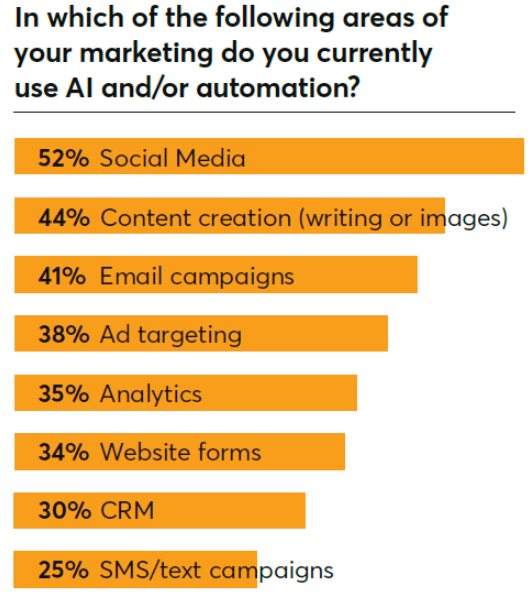
Source: Constant Contact-Ascend2
****Our take:**
- Tools that are time and/or labor saving are especially useful to time-starved SMBs at the lower end of the headcount spectrum.
- Most AI exposure SMBs have is to ChatGPT/Bard or through their software vendors, which are integrating it (e.g., Constant Contact).
- AI/automation will be present in all SMB-SaaS tools. And while they can deliver efficiency and insights, they can't substitute for strategy.
### Yelp Success: More Clicks, Higher CPCs
Yelp has quietly been beating Wall Street Expectations for the past several quarters. Last week it [posted](https://www.yelp-ir.com/news/press-releases/news-release-details/2023/Yelps-Strong-Execution-Drove-Record-Net-Revenue-in-the-Second-Quarter-2023/default.aspx?ref=nearmedia.co) 13% YoY revenue growth, the same as in Q1 – also [beating expectations](https://finance.yahoo.com/news/yelp-yelp-beats-q1-earnings-224510538.html?ref=nearmedia.co). Revenue was $377 million, while income grew 84%. This was "the ninth consecutive quarter of double-digit growth." Yelp said that "self-serve and multi-location accounted for more than half" (51%) of ad revenue for the first time. Most of the growth is coming from higher revenue per location (increased prices/share of wallet) rather than advertiser numbers: "paying advertising locations were relatively flat, down 1%." CPCs grew 14% YoY and there were more more ad clicks. Growth came in the Services/Home Services, Restaurants and Retail categories. However Yelp said its request-a-quote submissions were down 10%, which it attributed to the economy. Yelp highlighted store visits attribution as a key to its multi-location ad growth. The company claims 6.3M "active local business" locations and 73M monthly users. Consumer traffic appears flat.
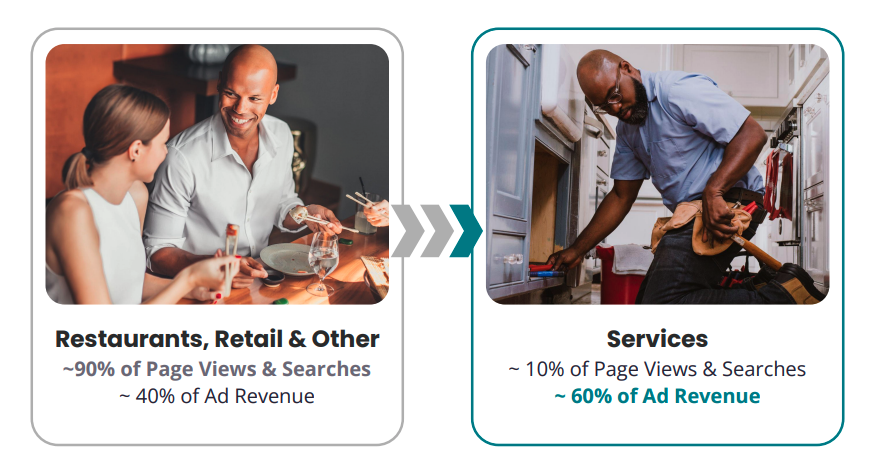
Source: Yelp investor presentation
****Our take:**
- 60% of revenue is coming from 10% of searches/views (services). Seeing Yelp as a home services platform, one investor is [advocating a merger with ANGI](https://www.nearmedia.co/google-ads-ai-everywhere-local-invisibility-yelp-angi/).
- Yelp's brand is strong in some categories (i.e., services, restaurants) but not in others (e.g., healthcare) and it heavily depends on Google SEO.
- The story is one of efficiency as Yelp extracts more money from existing customers; it's not really growing users or unique advertisers.
## Recent Analysis
- **How to Use Google's New 'Image Not Approved' Appeal Form**, [by Mike Blumenthal](https://www.nearmedia.co/gbp-adds-form-to-appeal-image-or-video-rejection/).
- ****Near Memo episode 122:** [New local ad format, updated GBP Guideline clarifies policies, Google SGE shows reference links](https://www.nearmedia.co/ep-122/).
## Short Takes
- Google [now showing more links](https://twitter.com/lilyraynyc/status/1689051737938857985?ref=nearmedia.co) in **SGE local results.**
- Google adds "[from Google" card](https://www.seroundtable.com/google-search-generative-experience-from-google-source-35823.html?ref=nearmedia.co) to **SGE AI carousels**.
- **Google:** [FAQ](https://developers.google.com/search/docs/appearance/structured-data/faqpage?ref=nearmedia.co) and How-To rich results [mostly going away](https://developers.google.com/search/blog/2023/08/howto-faq-changes?ref=nearmedia.co).
- **Moz** introduces new brand (not domain) authority [score](https://moz.com/blog/introducing-brand-authority?ref=nearmedia.co).
- Google publishes new **Responsive Search Ads** guide (.[pdf](https://services.google.com/fh/files/misc/responsive%5Fsearch%5Fads%5Fa%5Fguide%5Fto%5Fwriting%5Fads%5Fthat%5Fperform%5F2023.pdf?ref=nearmedia.co)).
- **Google** [wants robots.txt type approach](https://www.theguardian.com/technology/2023/aug/09/google-says-ai-systems-should-be-able-to-mine-publishers-work-unless-companies-opt-out?ref=nearmedia.co) to AI data mining.
- **Nextdoor** [announces](https://investors.nextdoor.com/news/news-details/2023/Nextdoor-Announces-Second-Quarter-2023-Results/default.aspx?ref=nearmedia.co) small gains in Q2: 42M weekly users (up 13%).
- Colgate [using gen-AI to optimize](https://www.digitalcommerce360.com/2023/08/04/colgate-pilots-generative-ai-tool-to-improve-product-detail-pages/?ref=nearmedia.co) 1K **product detail pages**.
- After [backlash](https://www.fastcompany.com/90934584/zoom-ai-training-terms-of-service-consent?ref=nearmedia.co), **Zoom** says it won't train AI without user consent.
- **DoorDash** [is winning](https://www.reuters.com/technology/doordash-lifts-core-profit-target-second-time-rising-orders-2023-08-02/?ref=nearmedia.co) the food delivery race in North America.
- In Europe, [personalized ads will mostly go away](https://newsroom.tiktok.com/en-eu/fulfilling-commitments-dsa-update?ref=nearmedia.co) on **TikTok**.
- **WeWork** [may not survive](https://techcrunch.com/2023/08/08/wework-goes-from-a-47b-valuation-to-subtantial-doubts-about-its-ability-to-continue-as-a-going-concern/??ref=nearmedia.co) another year.
- **SMBs** were responsible for [73% of July job gains](https://www.reuters.com/markets/us/us-private-payrolls-beat-expectations-july-adp-says-2023-08-02/?ref=nearmedia.co).
- **SMB outlook** improves ([except VSBs](https://bredin.com/blog/2023/08/bredin-report-smb-outlook/?ref=nearmedia.co)), but [hiring still tough](https://www.cnn.com/2023/08/08/economy/nfib-july-optimism-index/index.html?ref=nearmedia.co).
Listen to our [latest podcast](https://www.nearmedia.co/memo/).
[](https://nearmedia.co/memo?ref=nearmedia.co)
How can we make this better? Email [us](mailto:gsterling@nearmedia.co) with suggestions and recommendations.
### GBP: New 'Image Not Approved' Appeal Form
URL: https://www.nearmedia.co/gbp-adds-form-to-appeal-image-or-video-rejection/
Last updated: 2024-11-25T20:10:49.000Z
It has often been totally unclear [why images and videos were rejected](https://www.nearmedia.co/google-business-profile-solving-images-not-approved-problem/) in your Google Business Profile. Google has a history of rejecting images for what seem like totally arbitrary reasons. It actually might have been for one of several [technical reasons](https://www.nearmedia.co/google-business-profile-solving-images-not-approved-problem/): safe search, a janky user account or account verification reasons. It might have been [a bug](https://www.nearmedia.co/google-business-profile-solving-images-not-approved-problem/). Regardless, you were never told why.
### Rejection Reasons + New Form
Last week, in an [update to the GBP guidelines](https://www.nearmedia.co/google-verification-fail-reviews-and-society/), Google made explicit that, in addition to [technical reasons](https://www.nearmedia.co/google-business-profile-solving-images-not-approved-problem/), content might be rejected if your listing is not fully verified, your personal account is disabled, your profile is disabled/suspended or if the content is duplicative. Now Google has added a process, via a [support form](https://support.google.com/business/gethelp?visit%5Fid=638268593263473991-1030064616&rd=1&ref=nearmedia.co) to appeal a decision not to show a particular piece of content.
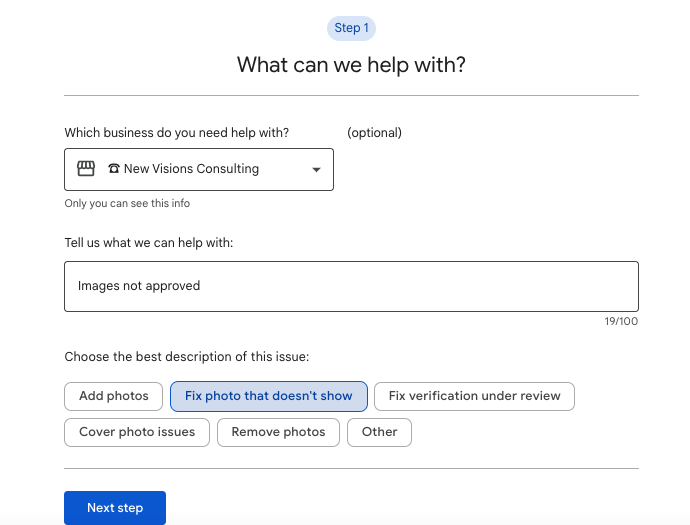
### How to: Step-by-Step
Here are the steps to complete the image-rejection appeal form:
1. Login into Google using an GBP manager or owner email
2. Go to the [support contact form](https://support.google.com/business/gethelp?visit%5Fid=638270065745006381-3184060657&rd=1&ref=nearmedia.co), select a business profile
3. Note that an image was "not approved"
4. Select "Fix photo that doesn't show" and hit "Next Step" button
5. Google will present resources detailing image rejection reasons, select "Next Step"
6. Select Email under "Contact options"
7. Fill in the form presented
8. If you receive an unsatisfactory response, you can reply to the rejection email with additional examples and justifications
9. After all of that, if they still rejected content inappropriately, create a post in the forum with the case number and examples of the photos and a Product Expert there can escalate
### Getting the Images Up
Some industries like massage, gyms and exercise studios have been particularly frustrated by Google rejecting images as too racy. Hopefully this will provide an option for businesses to appeal these rejections and, fingers crossed, have the images posted. In the ideal world, the business would be instructed on how to fix it or why it failed. Here's hoping.
### Google Maps Transparency, New LSA Categories, Listings Hijacked Again
URL: https://www.nearmedia.co/google-maps-businesses-hijacked-again-again-again/
Last updated: 2023-08-07T23:29:00.000Z
### Google Maps and the DSA
The EU's Digital Services Act (DSA) is a far reaching [piece of legislation](https://ec.europa.eu/commission/presscorner/detail/en/QANDA%5F20%5F2348?ref=nearmedia.co) that seeks to regulate illegal online content, protect minors, mitigate disinformation, prohibit dark patterns, limit certain types of ad targeting and promote transparency in content moderation. The rules apply to online platforms with more than 45 million users and require independent auditing. Where this becomes interesting is in the context of moderation on Google Search and Maps, which were [identified respectively as having](https://www.reuters.com/technology/google-twitter-meta-face-tougher-eu-online-content-rules-2023-02-17/?ref=nearmedia.co) 332 million and 278.6 million users in the EU. We've written extensively about the many obtuse moderation decisions Google has taken vis-a-vis [real](https://www.nearmedia.co/google-is-on-a-review-take-down-tear/) [reviews](https://www.nearmedia.co/a-guide-to-googles-review-filter/), [fake reviews](https://www.nearmedia.co/how-to-fight-a-fake-google-review-attack/), [images](https://www.nearmedia.co/google-business-profile-solving-images-not-approved-problem/) [not](https://twitter.com/mblumenthal/status/1566037337485840384?s=20&ref=nearmedia.co) [being](https://twitter.com/mblumenthal/status/1567949768357199872?s=20&ref=nearmedia.co) [approved](https://twitter.com/mblumenthal/status/1567953501371654145?s=20&ref=nearmedia.co), [suspensions](https://www.google.com/search?client=safari&rls=en&q=site%3Ahttps%3A%2F%2Fsupport.google.com%2Fbusiness%2F+suspension&ie=UTF-8&oe=UTF-8&ref=nearmedia.co) and more. But Google will have to comply with the DSA (at least in Europe) and provide not only increased transparency but submit to audits – and soon. While the DSA doesn't apply in the US, Google prefers to create and implement global systems. US businesses will not get the full benefit of the act but might see new workflows to recover missing assets or report fake content.
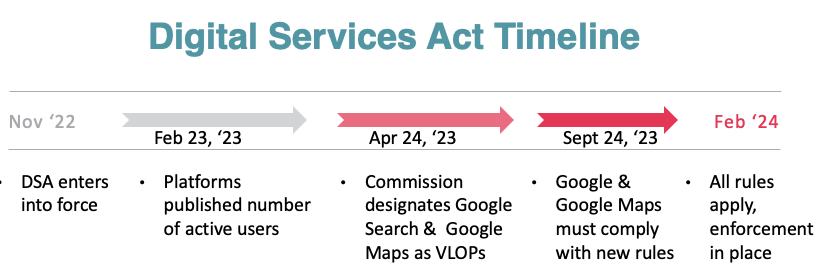
****Our take:**
- Google has said, "We can't tell you why 'X' action was taken against you because it would divulge too much to spammers," leaving businesses in the dark.
- Google has never been transparent about Maps abuses, where some verticals have seen as many as 80% fake listings, even when [they pretended to be](https://blumenthals.com/blog/2017/04/09/spam-in-garbage-out-why-googles-recent-paper-on-map-spam-is-flawed/?ref=nearmedia.co).
- Europe is setting regulatory standards for tech companies. While the US won't soon follow, we might see improved processes/content moderation.
### New Google LSA Categories
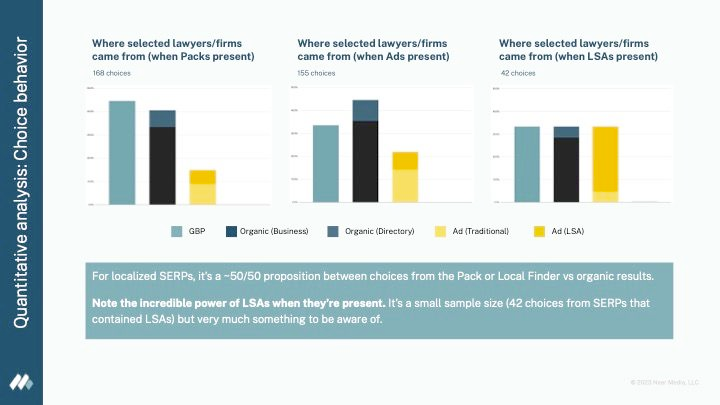
Most consumers, in Near Media's search behavior research, indicate they "scroll right by" sponsored listings and don't consider them when navigating Google results. Local Services Ads (LSAs) appear to be an exception and behaviors change significantly when they appear. LSAs are visually distinctive, include ratings, images and a "Google guaranteed/screened" badge. When present they seem to capture as many as a third of all search clicks/conversions in high-consideration categories. Google [announced](https://blog.google/around-the-globe/google-europe/the-digital-services-act-must-not-harm-europes-economic-recovery/?ref=nearmedia.co) in March that LSAs were "available for more than 70 types of businesses, including those in categories like education, people care, pet care, wellness and health care." It now appears that another expansion is taking place. [Chris Barnard](https://www.sterlingsky.ca/?s=chris+barnard&ref=nearmedia.co) of Sterling Sky [noted](https://twitter.com/CPBarnard/status/1686132382733328384?s=20&ref=nearmedia.co) on X/Twitter an LSA expansion in Florida and California, into 14 new high-value local categories including:
**New Google LSA Categories**
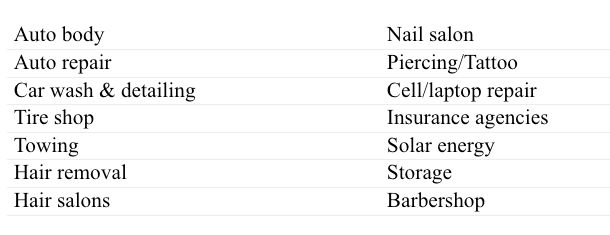
****Our take:**
- Local Services Ads are easy to implement and generally provide a good return for the cost.
- Every small business in the available categories and markets should try these ads. They are easy to turn on and off, so testing is easy.
- It is clear that Google can control user CTR behaviors by including certain creative/ad elements and through their SERP position.
### Listings Hijacked Again – and Again
Several weeks ago, during the peak of the flying season, airline service phone numbers on Google Business Profiles were [hijacked](https://twitter.com/Shmuli/status/1680669938468499458?ref=nearmedia.co) by scammers. [According to CNN](https://www.cnn.com/2023/07/18/tech/scam-numbers-google-maps-airlines/index.html?ref=nearmedia.co) and many [other major publications](https://www.nbcnews.com/tech/tech-news/phone-numbers-airlines-listed-google-directed-scammers-rcna94766?ref=nearmedia.co), Google was diligently working on the problem and did "not tolerate this misleading activity." Few if any of the news outlets asked why these hijacked listings have [occurred](https://blumenthals.com/blog/2008/09/18/google-maps-widespread-hijacking-of-business-listings-confirmed/?ref=nearmedia.co) regularly [over](https://searchengineland.com/thousands-of-hotels-listings-were-hijacked-in-google-local-181670?ref=nearmedia.co) the [past 15 years](https://searchengineland.com/hijacked-google-my-business-listings-appear-to-be-a-growing-problem-343737?ref=nearmedia.co) and why they [continue](https://twitter.com/kindracotton/status/1683583449758679040?s=12&t=o-uoEcZmsD3rULHUqaXUFA&ref=nearmedia.co) to occur – or why Google's [standard response is largely unchanged](https://streetfightmag.com/2019/07/08/how-long-will-googles-calculative-pr-playbook-work-in-local-search/?ref=nearmedia.co) over that time period:
💡
*“We do not tolerate this misleading activity, and are constantly monitoring and evolving our platforms to combat fraud …our teams have already begun reverting the inaccuracies, suspending the malicious accounts involved, and applying additional protections to prevent further abuse.”*
Google has chosen not to fix this problem because they love the free user-contributed data. It helps keep business records but makes the system vulnerable. Truly solving the problem would require costly human intervention. The ML/AI techniques that Google uses for this sort of moderation work well and cheaply at scale but produce false positives. In other words, they get it wrong pretty frequently. Given that Google has no legal exposure, due to Section 230 protections, it has no obligation to stop these hijackings. Malicious UGC and non-human moderation will allow additional hijackings in the future. Google has more engineering capability than almost any other company and yet isn't doing more. The company seems perfectly happy pushing the costs associated with these scams onto the public and local businesses. They are also happy gaslighting the media and public with the same old PR responses. The current hijacking, and history of hijacks, will be forgotten by the time the next abuse is reported and the same PR spiel is rolled out – once again.
The above video is a conversation between Greg Sterling and Mike Blumenthal on this issue.
****Our take:**
- Businesses should take a proactive GBP approach and [actively monitor](https://whitespark.ca/gbp-management-beta/?ref=nearmedia.co) it for changes to prevent these scenarios and any reputation hit.
- We used to think that negative coverage of Google Maps' persistent failings would motivate Google to fix things. That has not been the case.
- Given the unchanging nature of the issue, it would appear that only government pressure or regulation will motivate Google to act.
## Recent Analysis
- **Near Memo episode 122:** [New local ad format, updated GBP Guideline clarifies policies, Google SGE shows reference links](https://www.nearmedia.co/ep-122/).
- **Q&A Interview with Marc Prioleau:** [Overture Drops Free Global Dataset with 60M Places](https://www.nearmedia.co/overture-drops-free-dataset-with-60m-places/)
## Short Takes
- **Google Ads** [rolling out](https://www.seroundtable.com/google-testing-new-local-search-ad-format-35802.html?ref=nearmedia.co) another dynamic format that uses GBP images.
- **Google** testing a [new GBP Q&A FAQ](https://www.seroundtable.com/google-business-profiles-automated-faqs-35751.html?ref=nearmedia.co), different from the [automated FAQs for the messaging platform](https://www.seroundtable.com/google-business-profiles-messaging-with-faqs-for-automated-responses-33789.html?ref=nearmedia.co) launched a year ago.
- GBP now [recommending](https://twitter.com/w2scott/status/1686799259553722377?s=20&ref=nearmedia.co) **AI-generated GBP business descriptions**.
- Google has [updated guidance](https://localu.org/googles-new-guidelines-for-managing-business-hours-on-search-and-maps/?ref=nearmedia.co) for publishing **business hours**.
- **Apple Business Connect** dashboard, Insights [now working](https://twitter.com/mblumenthal/status/1686726027223908353?s=12&t=o-uoEcZmsD3rULHUqaXUFA&ref=nearmedia.co) on mobile.
- Google [added a "view as customer"](https://www.seroundtable.com/google-business-profile-view-as-customer-link-35764.html?ref=nearmedia.co) link to your **GBP web search dashboard** making the interface slightly more tolerable.
Listen to our [latest podcast](https://www.nearmedia.co/memo/).
[](https://nearmedia.co/memo?ref=nearmedia.co)
How can we make this better? Email [us](mailto:gsterling@nearmedia.co) with suggestions and recommendations.
### Ep 122: New Local ad format, Updated GBP Guideline clarifies policies, Google SGE shows reference links
URL: https://www.nearmedia.co/ep-122/
Last updated: 2023-08-07T19:45:34.000Z
**Part 1 starts 00:13 - [New Local Ad format is a local ad as local ads should be](https://youtu.be/uVKv7EBS2Nw?ref=nearmedia.co)**
New Local Ad format is a local ad as local ads should be. Google seems to have rolled out a new ad unit that relies on local assets like GBP photos for the the creatives. The ads include a map, review ratings and an image are very eye-catching and appear to be extremely easy to create and use. This is the ad that Google should have made available to local advertisers from day one.
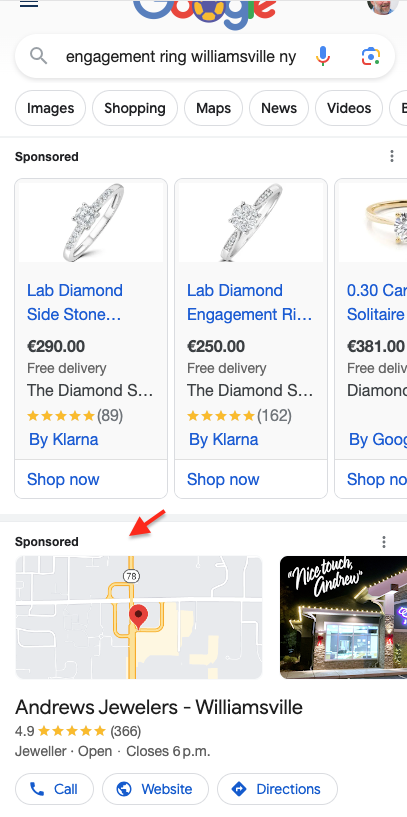
Segment Reference Article: [New ad format (Twitter)](https://twitter.com/mblumenthal/status/1686095039649243136?s=20&ref=nearmedia.co)
**Part 2 starts 07:40 - [New GBP Guidelines clarify long “secret” policies](https://youtu.be/1KAaZplkPhk?ref=nearmedia.co)**
Google rolled out a number of new policy statements regarding the rules guiding suspensions and content take downs affecting Google Business Profiles (GBP). These guidelines, long the working rules that affected listings and listing content, now make explicit how a user accounts and abuses affect whether a business continues to have access to any given listing or whether that listing will be removed from Google. While this increased clarity is welcome the devil is in the details.
Segment Reference Articles:
[GBP's New Policies & Guidelines](https://www.nearmedia.co/google-verification-fail-reviews-and-society/)
[Overview of Google Business Profile policies](https://support.google.com/business/answer/13762416?visit%5Fid=638264049623597919-3855592112&p=policy%5Fupdate&rd=1&ref=nearmedia.co#)
**Part 3 starts 14:25 - [Google SGE finally includes reference links](https://youtu.be/9TDxv6VWdQQ?ref=nearmedia.co)**
Rather than just straight up plagiarism of the recent past, Google’s new AI based search test is now testing three different ways of including links in the “search generative experience (SGE). Some of these link tests make the links more obvious than others. However none of this pertains to local as there Google solely references their Local Knowledge Graph and GBP listings. In most of these cases, to get to the business website requires 2 clicks (go figure). While the SGE experience is improving it still has a ways to go to be better than the current search experience.
Segment Reference Articles:
[Finally, Links in Google SGE](https://www.nearmedia.co/google-sge-links-shrinking-ad-labels-meta-consent/?ref=near-media-newsletter)
[Google testing links directly in Search Generative Experience snapshot answers](https://searchengineland.com/google-testing-links-directly-in-search-generative-experience-snapshot-answers-430075?ref=nearmedia.co)
### ChatGPT Beats Google, Maps Distrust, Local Inventory Demand
URL: https://www.nearmedia.co/chatgpt-beats-google-maps-trust-local-inventory-data/
Last updated: 2023-08-04T16:50:27.000Z
### ChatGPT Beats Google in Blind Test
In blind testing, users [appear to prefer](https://clickpop.co.uk/google-vs-chatgpt-test-results/?ref=nearmedia.co) ChatGPT search results over Google by almost 2:1\. Those are the findings of the test's creator, ClickPop, which requires some caveats. Nonetheless, the outcome suggests the Google brand and familiar UI may be a bigger factor in Google's dominant search position than search quality. The test was conducted May - July this year. ClickPop [built a tool](https://clickpop.co.uk/google-vs-chatgpt/?ref=nearmedia.co) that extracts the top 10 websites from ChatGPT and Google results for any query and presents them side-by-side as "Set A" and "Set B." Users then choose the results they prefer (see below). The tool randomizes which results appear as Set A or Set B. Now for the caveats. The test is global and the sample size and number of searches is very small. Users wind up picking a collection of URLs, which is impacted by the brands and publishers displayed. But the findings are the findings – and they're interesting. [Try it yourself](https://clickpop.co.uk/google-vs-chatgpt/?ref=nearmedia.co).
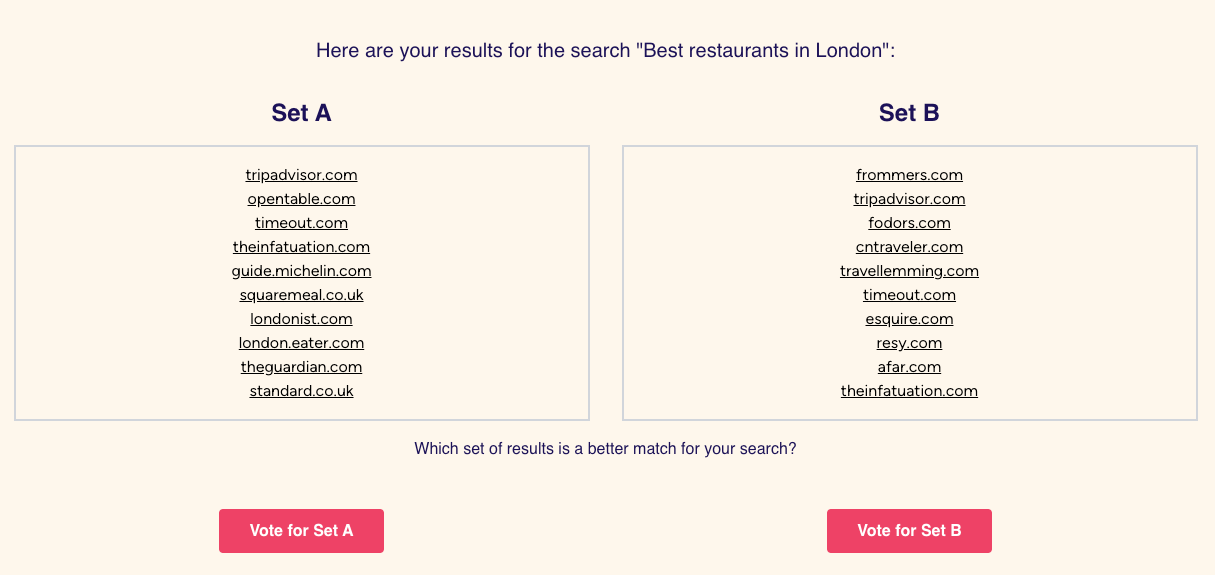
****Our take:**
- My own experience with the tool generally mirrored the overall results. But would this hold up at 100K or 1M queries? We need a larger test.
- There's more to search UX than just URLs; the UI matters of course. But we can infer that Google loyalty has a lot to do with the UI and brand.
- Bing [did a similar test back in 2012](https://searchengineland.com/bing-offers-own-version-of-pepsi-challenge-against-google-bing-it-on-132275?ref=nearmedia.co). It presented two unbranded SERPs side by side and claimed that people preferred Bing 2:1.
### Survey: 30% Don't Trust Google Maps
Google Maps competitor Atly published a [survey](https://static.atly.com/consumersurvey.pdf?ref=nearmedia.co) (\~1K US adults) that explores where people look for local restaurants and travel recommendations. The headline is: 30% don't trust Google Maps. Respondents said they had little trust (25%) or no trust at all (5%) in Google. Conversely, 69% trusted Google Maps somewhat (58%) or firmly (11%). Since this is a point in time survey we can't compare results YoY and we don't know the verbatim questions. But the survey implies people are questioning the value of local rankings on Google. More interesting perhaps is the hierarchy of sources for "restaurant and trip recommendations." It's no surprise that "friends and family" dominated (72%). Google was second (40%), followed by Facebook (30%), Yelp (22%), Instagram (19%), TikTok (13%) and others. Apple Maps is not present at all. It's not clear whether that was a choice. TikTok and Instagram score higher when the data are segmented by age cohort. Younger people also placed more emphasis on video in their decision-making.
**Sources for restaurant and trip recommendations**
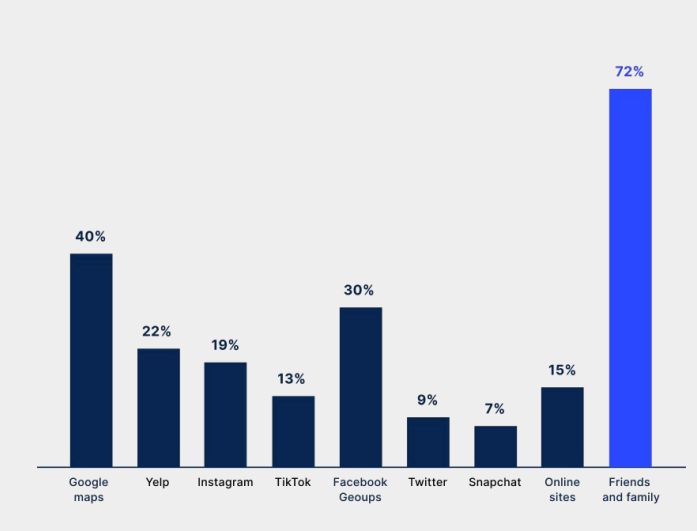
Source: Atly consumer survey (2023)
****Our take:**
- We have to be cautious about extrapolating too much. This was a survey by a competitor seeking PR attention.
- The chart above shows a variety of sources people are using for local recommendations. Google's comparatively modest usage and Facebook's relatively strong showing are surprises.
- Would like to know whether Google Maps trust is declining or flat. I suspect it's declining for multiple reasons, including fake reviews.
## Shoppers Want Local Inventory
According to consumer [survey data](https://www.numerator.com/prime-day?ref=nearmedia.co) from Numerator, "36% US households shopped on Prime Day 2023" (+2% YoY). Roughly 77 million households had Prime memberships [in 2022](https://www.statista.com/statistics/861060/total-number-of-households-amazon-prime-subscription-usa/?ref=nearmedia.co). That means just under half of all Prime members in the US shopped Prime day. One element of Google's product search strategy vs. Amazon is local inventory. This is consistent with what people want. According to a [survey](https://www.digitalcommerce360.com/2023/03/10/the-shopper-speaks-omnichannel-shopper-activity-flourishes/?ref=nearmedia.co) from Digital Commerce 360 and Bizrate Insights, 68% of online shoppers "want the ability to check online for product availability at a nearby store and for buy online, pickup in store (BOPIS)," which was up 10 points YoY. But that's not exactly what the survey says; it says 68% of people *actually sought* local product availability online in 2023\. Consumer demand for local inventory data is growing and merchants aren't keeping pace, despite the efforts of Google and third parties such as [Near.st](https://www.near.st/?ref=nearmedia.co). Consumers have long been interested in local product inventory information online. But it has taken 15 years to get to where we are today.
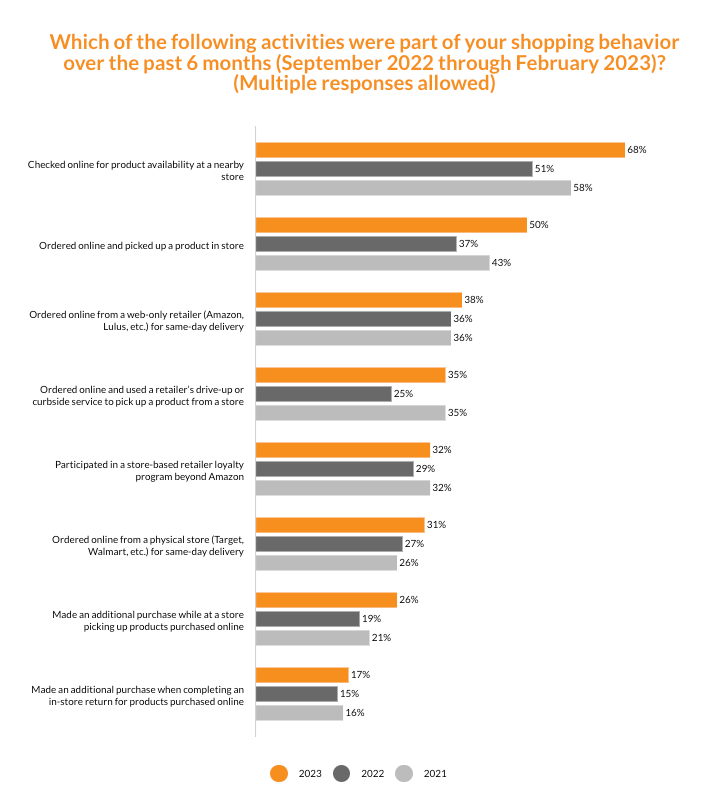
Source: Digital Commerce 360
****Our take:**
- Amazon knows that local inventory data is a threat, which is why the company is trying to emphasize and speed up same-day delivery.
- Google has a [network of partners](https://support.google.com/merchants/answer/7676652?hl=en&ref=nearmedia.co), including Shopify and Near.st that help deliver local inventory feeds. Google also takes direct feeds.
- Small retailers remain a challenge, one reason Google bought [Pointy](https://pointy.withgoogle.com/?ref=nearmedia.co). However, it's unclear how many SMBs are aware of it, let alone using it.
## Recent Analysis
- **Overture Drops Free Maps Dataset with 60M Places**, [by Greg Sterling](https://www.nearmedia.co/overture-drops-free-dataset-with-60m-places/)
- ****Google's New GBP Policies & Guidelines**, [by Mike Blumenthal](https://www.nearmedia.co/google-verification-fail-reviews-and-society/).
## Short Takes
- **Amazon** ad revenue [up 22% in Q2](https://ir.aboutamazon.com/news-release/news-release-details/2023/Amazon.com-Announces-Second-Quarter-Results/?ref=nearmedia.co) to $10.7 billion.
- **GBP** photos, other "[location assets](https://support.google.com/google-ads/answer/2404182??ref=nearmedia.co)" now fodder for ads.
- Using [trending keywords for content](https://www.seroundtable.com/google-popular-searches-content-35799.html?ref=nearmedia.co) is disfavored by **Google**.
- **Google SGE**'s coming[video slot](https://blog.google/products/search/google-search-generative-ai-august-update/?ref=nearmedia.co) will be a big deal.
- Google Search Console [not reporting](https://www.seroundtable.com/google-search-console-not-tracking-search-generative-experience-35811.html?ref=nearmedia.co) on **SGE traffic**.
- Major **AI legislation** now [appears unlikely](https://www.politico.com/news/2023/08/03/congress-ai-laws-todd-young-00109553?ref=nearmedia.co) in US.
- The [challenges](https://www.marketingcharts.com/customer-centric/analytics-automated-and-martech-230184?ref=nearmedia.co) to making good **martech investments**.
- Google introduces [new safety and privacy](https://blog.google/products/search/new-privacy-tools/?ref=nearmedia.co) **search tools**.
- **Threads** [DAUs down 82%](https://www.cnn.com/2023/08/03/tech/threads-user-count-falls/?ref=nearmedia.co) from launch.
- Microsoft is [deprecating](https://9to5google.com/2023/08/03/microsoft-cortana-windows-ai/?ref=nearmedia.co) voice assistant **Cortana**.
- White Castle burgers [to expand](https://www.theverge.com/2023/8/2/23817406/white-castle-soundhound-ai-sliders?ref=nearmedia.co) **voice AI drive-throughs**.
- **Apple** [services revenue](https://www.apple.com/newsroom/pdfs/fy2023-q3/FY23%5FQ3%5FConsolidated%5FFinancial%5FStatements.pdf?ref=nearmedia.co) compensates for device sales decline.
- **Shopify** Q2 sales revenues [beat](https://news.shopify.com/shopify-announces-second-quarter-2023-financial-results?ref=nearmedia.co) Wall Street estimates.
- Giving up **Twitter's** [brand equity from an SEO](https://moz.com/blog/twitters-brand-equity?ref=nearmedia.co) POV.
Listen to our [latest podcast](https://www.nearmedia.co/memo/).
[](https://nearmedia.co/memo?ref=nearmedia.co)
How can we make this better? Email [us](mailto:gsterling@nearmedia.co) with suggestions and recommendations.
### Overture Drops Free Global Dataset with 60M Places
URL: https://www.nearmedia.co/overture-drops-free-dataset-with-60m-places/
Last updated: 2024-11-19T22:49:35.000Z
The [**Overture Maps Foundation**](https://overturemaps.org/?ref=nearmedia.co) released its first global open map [dataset](https://overturemaps.org/download/?ref=nearmedia.co). The data covers nearly 60 million places worldwide. It also includes transportation data, 780 million buildings and administrative boundaries in 40 different languages.
To learn more, we briefly caught up with **Marc Prioleau**, Overture Maps Foundation's executive director.
**NM: What has been the developer community's response to this release?**
**Prioleau:** The response from developers has been very positive. Places data is a very hard dataset to get right and generally this new open data is welcome. That said, like any dataset, it needs to be improved and updated. We don't expect developers to begin using the data until we can provide a plan for updates and a regular release cadence.
**NM: How easy is it to work with? In other words, how long would it take to bring an application built on this data to market?**
**Prioleau:** Overture is only providing the data, we are not providing mapping API’s that would more directly be used in an application. The developer still needs to build an application that ingests the data and provides a service like local search, navigation, etc. That time frame depends on the complexity of the application. Basic map displays can be pretty quick. More complex applications like navigation of logistics are more difficult to build.
**NM: The dataset is free but are there any associated costs?**
**Prioleau:** The data itself is free of change. Overture does not charge for downloads. Third party companies may use the data in applications with different business models.
**NM: It appears to be a very robust dataset. How does it stack up against leading mapping providers in the market today?**
**Prioleau:** It is the first version of the data and we expect it to need improvement. That’s typical of map data; it gets better with use. We expect that it will be improved as we build usage and then develop feedback loops to improve the data.
**NM: Are there particular areas of strength in the data?**
**Prioleau:** Some of the layers are built on OpenStreetmap data, but that data has been restructured into a defined schema to make it easier to use.
Overture has strong interest from the automotive market as well. Our Transportation data includes a linear reference system that will evolve into an open stable ID system. That allows any sort of relevant data to be precisely attached to the basemap, supporting real time traffic models, lane-based information and other road data to be attached.
Much of Overture’s versatility will come from the Global Entity References System (GERS) that allows third parties to attach their data to the basemap. That means that Overture can help create a mapping ecosystem where datasets can be combined and added to the map in a systematic, consistent way. That versatility means that the basemap can be adapted to support many different applications.
**NM: What do you hope to add to the data for the next release?**
**Prioleau:** We will improve the quality of all the data layers, develop a regular release cadence. We will also develop a stable identification for all features in the map, which will allow other data to be added to the map.
**NM: Are Microsoft, Meta or the other Overture member-contributors planning to use the data (e.g., Bing Maps)?**
**Prioleau:** All the steering members of Overture plan to use the data when it meets market standards.
**Related:* Mike Blumenthal and I* [*interviewed Prioleau*](https://www.nearmedia.co/near-memo-special-edition/) *a month ago, to get his take on the market need for this open-data initiative the future of digital mapping.*
### Google SGE Links, Shrinking Ad Labels, Meta Consent
URL: https://www.nearmedia.co/google-sge-links-shrinking-ad-labels-meta-consent/
Last updated: 2023-08-02T18:45:37.000Z
### Finally, Links in Google SGE
Perhaps the loudest criticism of Google SGE has been its failure to cite sources for content that appears in the "AI Snapshot." (Links exist for the carousel in the upper right.) This has prompted one critic to call it a "[plagiarism engine](https://www.tomshardware.com/news/google-sge-break-internet?ref=nearmedia.co)." Now Google is starting to make good on its original promise to show links, testing [three different presentations](https://searchengineland.com/google-testing-links-directly-in-search-generative-experience-snapshot-answers-430075?ref=nearmedia.co). One involves links within the AI text (i.e., within a paragraph of text), another is at the end of a content bullet and the third (so far) shows a quotation symbol. When clicked, it reveals relevant sources but the user must click again to get to the website. Google is testing these side-by-side to see how users react. We can thus expect links in SGE to roll out soon. Nothing changes for local however. Clicking any listing in an SGE Pack opens the GBP knowledge panel within SGE. Users must then click the "website" button to get to the underlying website, which is essentially the same UX as the Local Pack.
Source: Google SGE
****Our take:**
- This is an important development. It will accelerate the discussion of optimizing content to appear in the AI snapshot.
- We don't yet have user data for SGE engagement, but this will likely increase confidence in results. Will these links drive traffic to websites or they simply increase zero-click search?
- Google [announced](https://blog.google/products/search/google-search-generative-ai-august-update/?ref=nearmedia.co) it will soon add video content to SGE results as well.
### Incredible Shrinking Ad Labels
The FTC [requires](https://www.ftc.gov/news-events/news/press-releases/2013/06/ftc-consumer-protection-staff-updates-agencys-guidance-search-engine-industry-need-distinguish?ref=nearmedia.co) that ads be distinguished from organic (search) results. This has essentially been true since 2022 to avoid the "consumer deception" that was inherent in some of the early paid inclusion programs. But companies, [including Google](https://www.cnbc.com/2020/01/24/google-will-iterate-the-design-that-made-it-harder-to-tell-ads-from-search-results.html?ref=nearmedia.co) in the past, have sought to minimize ad labeling – presumably to drive more clicks. Now it's happening again at Twitter and Bing. On Bing the ad label [has been moved](https://www.seroundtable.com/microsoft-bing-search-ads-hidden-35789.html?ref=nearmedia.co) and "grayed out" so as to be almost unnoticeable. This appears to be a test (and presumably won't go through). Something similar is also being tested on Twitter. The company is showing a gray "ad" label in the upper right where users are less likely to notice it. Previously a more prominent "promoted" label appeared at the bottom of ads on the lower left, which was more obvious as users scrolled. While perhaps technically compliant with labeling rules, it's designed to be less noticeable.
Source: Twitter
****Our take:**
- Some often repeat the mantra that "ads are useful content." While there's some truth to that, mostly ads aren't all that useful.
- We've seen from considerable user testing that people are wary of ads and less likely to engage with them vs. organic content.
- If the ad label can be obscured it will potentially drive more engagement and clicks, leading to more platform revenue. Kind of sleazy.
### Meta to Ask for Consent in EU
To settle a long-running privacy dispute with EU regulators, Meta has agreed to obtain opt-in consent from users for personalized ad targeting. That could happen by October, according to the company. The Wall Street Journal [reported](https://www.wsj.com/articles/meta-offers-to-seek-consent-for-highly-personalized-ads-in-europe-b520cbeb??ref=nearmedia.co), "the offer to limit so-called behavioral ads to users who opt in goes far beyond what Meta has done so far in response to privacy regulators." Meta has allowed EU users to opt-out of targeting in a process that isn't simple – similar to opt-out and "[do not sell](https://martech.org/as-ccpa-takes-effect-some-publishers-are-complying-at-a-minimum/?ref=nearmedia.co)" flows in the US that erect barriers to completion. The new process would likely be similar to Apple's "ask app not to track," where users are presented with a binary choice: yes or no. It would also likely reduce the number of people allowing personalized targeting and limiting the data Meta has to work with in Europe. The process wouldn't preclude contextual or other kinds of targeting not based on personalization. The company generated $7.2 billion in ad revenue in Europe in Q2\. Meta won't be doing this in North America.
Source: Apple-Facebook
****Our take:**
- This is the only ethical approach to personalized ad targeting. The deal in Europe opens the door for legislators/regulators to pursue it here.
- Using iPhone [opt-in rates for app tracking](https://www.nearmedia.co/idfa-opt-ins-mobile-payments-killing-cash-cpsc-sues-amazon/) by analogy, we might see 20% to 30% opt-in rates for Meta in Europe.
- However, there's ample reason to believe that [contextual](https://www.nearmedia.co/sanfranciscogpt-iba-vs-contextual-twitter-survival/) and other forms of targeting can be equally effective, less expensive and less invasive.
## Recent Analysis
- ****Near Memo episode 121**: [Google loses product search start share, GBP numbers hijacked, Yelp scolds businesses for soliciting reviews](https://www.nearmedia.co/ep-121/).
- **Google's New GBP Policies & Guidelines**, [by Mike Blumenthal](https://www.nearmedia.co/google-verification-fail-reviews-and-society/).
## Short Takes
- 30% of users [have little/no trust](https://static.atly.com/consumersurvey.pdf?ref=nearmedia.co) in **Google Maps.**
- **Google** [testing](https://twitter.com/mblumenthal/status/1686095039649243136?ref=nearmedia.co) new local ad format?
- **Google**: [AI-generated reviews](https://www.seroundtable.com/google-merchant-center-policy-ai-generated-reviews-are-spam-35785.html?ref=nearmedia.co) are spam (distinct from content).
- Importance of **schema** [for local SEO](https://www.brightlocal.com/learn/local-seo-schema-templates/??ref=nearmedia.co) success.
- **Google Assistant** [getting "AI makeover](https://www.axios.com/2023/07/31/google-assistant-artificial-intelligence-news??ref=nearmedia.co)," plus reorg.
- **Andi** [upgrades](https://searchengineland.com/andi-search-semantic-content-engine-430029?ref=nearmedia.co) to remain viable amid intensifying AI search.
- **Meta** planning [chatbots with "personas](https://www.theverge.com/2023/8/1/23815287/meta-ai-persona-generative-llama-instagram-facebook?ref=nearmedia.co)" to boost engagement.
- Meta's **Reels** [revenue](https://www.insiderintelligence.com/content/3-big-ad-stories-meta-earnings-report-reels-tiktok??ref=nearmedia.co) catching up to TikTok's.
- **Google's DeepMind** [enabling robots to learn](https://www.deepmind.com/blog/rt-2-new-model-translates-vision-and-language-into-action??ref=nearmedia.co) on their own.
- AI bots [being trained](https://www.bleepingcomputer.com/news/security/cybercriminals-train-ai-chatbots-for-phishing-malware-attacks/?ref=nearmedia.co) for **cybercrime**.
- **Amazon** same day fulfillment (not delivery) [takes 11 minutes](https://www.axios.com/2023/07/31/amazon-same-day-prime-fulfillment?ref=nearmedia.co)
- 36% of US households [shopped](https://www.numerator.com/prime-day?ref=nearmedia.co) on **Prime Day** 2023, +2% YoY.
- Combining transaction data and [geotargeting](https://streetfightmag.com/2023/08/02/case-study-qsr-achieves-20-sales-increase-with-location-based-targeting/?ref=nearmedia.co) \= 20% **QSR sales lift**.
- Overstock [now officially](https://www.retaildive.com/news/overstock-officially-rebrands-bed-bath-beyond/689560/?ref=nearmedia.co) **Bed Bath & Beyond** (without stores).
- [Employee, customer retention](https://bredin.com/blog/2023/07/bredin-report-what-keeps-smbs-up-at-night-2/?ref=nearmedia.co): top business **challenges for SMBs**.
Listen to our [latest podcast](https://www.nearmedia.co/memo/).
[](https://nearmedia.co/memo?ref=nearmedia.co)
How can we make this better? Email [us](mailto:gsterling@nearmedia.co) with suggestions and recommendations.
### GBP's New Guidelines, Video Verification Fail, Solicitation Not Deception
URL: https://www.nearmedia.co/google-verification-fail-reviews-and-society/
Last updated: 2023-08-01T13:14:15.000Z
### GBP's New Policies & Guidelines
Google sent out an email today announcing simplified policies and guidelines. Translated from Google speak: *We are now actually telling you what the guidelines are*. There are three new pages associated with this update:
- [Overview of Google Business Profile policies](https://support.google.com/business/answer/13762416?visit%5Fid=638264049623597919-3855592112&p=policy%5Fupdate&rd=1&ref=nearmedia.co)
- [All Business Profile policies & guidelines](https://support.google.com/business/answer/7667250?sjid=15542645016610189869-NA&ref=nearmedia.co)
- [Business eligibility and ownership guidelines](https://support.google.com/business/answer/13763036?hl=en&ref%5Ftopic=4540086&ref=nearmedia.co)
For the first time Google is providing clarity about why a merchant will lose access to GBP listings. Google is now admitting that if a Google Account is not in good standing, for repeated abuses in GBP or other Google products, "a merchant must take steps to fix the issue before they can access their Google Business Profile." Google continues, "If a merchant’s account is restricted, all Business Profiles associated with that account will be suspended." Google goes on to note, under eligibility, that "\[t\]o keep data on Google as accurate as possible, Google uses information from different sources such as user reports and **licensed content**." This is the first time Google has essentially confirmed that they use trusted data sources such as DataAxle (varies by country) to judge whether a business is eligible.
In addition to reasons for suspension, Google is also being explicit about why specific content was removed or won't be published. If your profile is anything other than fully verified, content won't publish. Two other reasons given are: the content is duplicative or there was a "submission error."
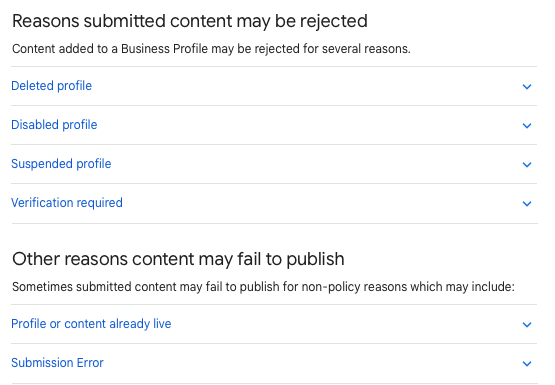
****Our take:**
- It's not clear why Google is becoming more transparent but, if so, it can only help better navigate the vagaries of often confusing, unstated rules.
- There is a lot of subtle detail in these documents and you should read them carefully.
- Indeed, the devil is in the details. If "submission errors" are not distinguished from other reasons it will [remain a shit show](https://www.nearmedia.co/google-business-profile-solving-images-not-approved-problem/).
### Video Verification Fails – at 99%
Google is now using a process for GBP verification it refers to as [video verification](https://support.google.com/business/answer/7107242?sjid=15474681207324892647-NA&ref=nearmedia.co#standardmethods&zippy=%2Cvideo-recording). This new([ish](https://localsearchforum.com/threads/gmb-testing-new-verification-process.51460/?ref=nearmedia.co)) method is often used instead of, or in addition to, the traditional phone call/postcard pin verification. Yet this [process fails frequently](https://www.google.com/search?q=site:https://support.google.com/business/thread/+99%25&source=lnt&tbs=qdr:m&sa=X&ved=2ahUKEwiHzLattrSAAxWZAjQIHV0iDW0QpwV6BAgBEAo&biw=1312&bih=621#ip=1) when it's 99% complete. Many businesses [try over and over again](https://support.google.com/business/thread/226879764/i-have-tried-over-10-times-with-two-different-phones-i-keep-the-video-under-1-min-fails-at-99?hl=en&ref=nearmedia.co) but never get to 100%. In typical Google fashion users are left to wonder exactly why it failed. These frustrated people [end up](https://www.google.com/search?q=site:https://support.google.com/business/thread/+99%25&source=lnt&tbs=qdr:m&sa=X&ved=2ahUKEwiHzLattrSAAxWZAjQIHV0iDW0QpwV6BAgBEAo&biw=1312&bih=621#ip=1) in the forums, where Product Experts are of little help because of Google's silence. Originally thought to be a bug or file size issue, it now seems to be a "feature." These verification failures are likely listings not already well known to Google via a trusted data supplier and the business has not provided enough proof to convince the automated system of its legitimacy. Alternatively, it might be an AI pipeline failure.
Prior to attempting the verification a business should be sure they have previously created a presence on the internet by getting listed at [DataAxle (InfoUSA)](https://leads.dataaxleusa.com/Landing/UpdateListing.aspx?ref=nearmedia.co) and the [BBB](https://www.bbb.org/get-listed/submit-a-business?ref=nearmedia.co), and having an indexed website. These [are signals](https://support.google.com/business/answer/13762416?hl=en&ref%5Ftopic=4540086&sjid=17807563817884347841-NA&ref=nearmedia.co#zippy=%2Cbusiness-does-not-exist) that the business exists. Regarding the video, keep it under 2 minutes; those longer than 5 minutes won’t be processed. Make sure to provide visual proofs in a continuous recording of the location, business name and category and that you manage the business. Colan Nielsen does a great job [detailing the basic steps](https://www.sterlingsky.ca/unlocking-success-mastering-video-verification-for-your-google-business-profile/?ref=nearmedia.co). And if you need to "think outside of the Google box" read Phil Rozek's how you might ["fudge" the process](https://www.localvisibilitysystem.com/2023/07/31/fudging-video-verification-of-a-google-business-profile/?awt%5Fa=653a&awt%5Fl=JhpLL&awt%5Fm=3mIiIKyneGaV63a&ref=nearmedia.co).
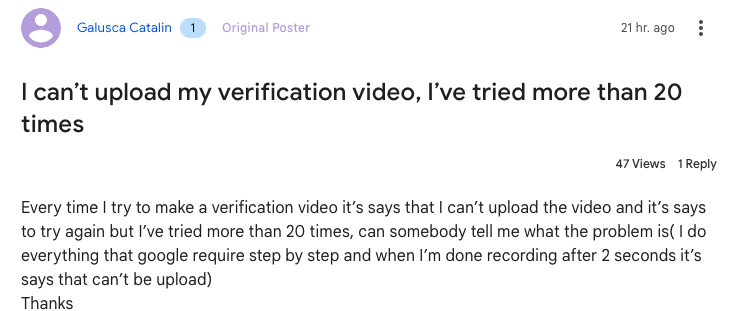
****Our take:**
- Google is once again making it hard for new businesses to figure out their arcane and often unstated requirements.
- More egregious is Google's lack of communication and a process for legitimate newbies to understand what is needed.
- As a last resort, businesses can reach out to GBP support and request a [live video call](https://support.google.com/business/answer/7107242?hl=en&ref%5Ftopic=4854193&sjid=15474681207324892647-NA&ref=nearmedia.co#zippy=%2Clive-video-call) for verification. This option is not well publicized and may not always be available.
### Review Solicitation Not 'Deception'
Yelp continues to fight a losing battle against review solicitation. This past week on Twitter Alex Friedman's post encouraging positive reviews for a server (Kristina) at the De Nada Cantina in Austin went viral. Friedman [said](https://twitter.com/heyalexfriedman/status/1683314004343570432??ref=nearmedia.co) the waitress would receive a $15 gift card for each positive review that mentioned her (the server). The tweet helped bring in new reviews – from around the world. Friedman [noted](https://twitter.com/heyalexfriedman/status/1683343036984459265?s=20&ref=nearmedia.co) that she "cried with joy" at helping the waitress buy diapers. However, Yelp's Luther Lowe responded that a red badge of shame had been assigned to the business and reviews were now being filtered. Armchair activists [accused](https://twitter.com/Ashkhen/status/1684012408816148483?s=20&ref=nearmedia.co) Yelp of being anti-worker. Local SEOs wondered about the "legality" of the process involved, while Yelp boldly and wrongly proclaimed that "soliciting reviews ... is ultimately an attempt to deceive consumers."
> I don’t care how well-meaning the end goal is. Soliciting reviews – especially from people who haven’t even experienced the business – is ultimately an attempt to deceive consumers.
>
> The business now has an alert on its Yelp listing giving some context. [https://t.co/JoKzdfuzKj](https://t.co/JoKzdfuzKj?ref=nearmedia.co) [pic.twitter.com/siKsDSHoAc](https://t.co/siKsDSHoAc?ref=nearmedia.co)
>
> — Luther Lowe (@lutherlowe) [July 26, 2023](https://twitter.com/lutherlowe/status/1684002001300885504?ref%5Fsrc=twsrc%5Etfw&ref=nearmedia.co)
****Our take:**
- It is legit (and smart) for a business to encourage employees to remind customers about reviews. It's fine to compensate Kristina for her efforts.
- Yelp is right in filtering reviews of those who haven't been to the business. But rather than debating on Twitter and posting a review, there are real issues of living wages that people should be addressing.
- Research has [shown](https://arxiv.org/pdf/1604.00417.pdf?ref=nearmedia.co) that soliciting reviews generates a more accurate picture of a business. Legit review solicitation is not "consumer deception."
## Recent Analysis
**Near Memo episode 121**: [Google loses product search start share, GBP numbers hijacked, Yelp scolds businesses for soliciting reviews](https://www.nearmedia.co/ep-121/).
## Short Takes
- **Google Q&A** [went MIA](https://twitter.com/mblumenthal/status/1685292338556329985?s=12&t=o-uoEcZmsD3rULHUqaXUFA&ref=nearmedia.co) from every local profile: feature/bug TBD.
- **GBP**: Services [can no longer be listed](https://twitter.com/clairecarlile/status/1684900185812463617?s=12&t=o-uoEcZmsD3rULHUqaXUFA&ref=nearmedia.co) as Products.
- Unlike predefined services, **GBP service areas** [don't boost rankings](https://twitter.com/ColanNielsen/status/1684980808157671429?s=20&ref=nearmedia.co).
- Google [updated](https://www.seroundtable.com/google-business-profiles-food-ordering-35781.html?ref=nearmedia.co) **GBP food ordering** with more options and settings.
- 63% of urbanites use **grocery e-commerce**, rural users [mostly don't](https://www.pymnts.com/news/ecommerce/2023/egrocery-takes-over-cities-but-cant-hack-it-in-the-country/?ref=nearmedia.co).
- **FTC** [warns Congress](https://www.ftc.gov/system/files/ftc%5Fgov/pdf/letter-to-chairman-jordan-career-staff.pdf?ref=nearmedia.co) about trying to chill the body's antitrust efforts.
- Pay attention to when **Google** adds [new GBP categories](https://www.sterlingsky.ca/google-my-business-category-changes/?ref=nearmedia.co) for rankings lift.
- Use Claire Carlisle's organizing [system](https://www.clairecarlilemarketing.com/resources/gbp-support?ref=nearmedia.co) for **GBP support emails**.
- **Overture Maps** dropped its [first dataset](https://overturemaps.org/download/?ref=nearmedia.co) of59 million places worldwide.
Listen to our [latest podcast](https://www.nearmedia.co/memo/).
[](https://nearmedia.co/memo?ref=nearmedia.co)
How can we make this better? Email [us](mailto:gsterling@nearmedia.co) with suggestions and recommendations.
### Ep 121: Google loses product search share, Phone #s hijacked on Google, Yelp scolds business for soliciting
URL: https://www.nearmedia.co/ep-121/
Last updated: 2023-07-29T17:10:27.000Z
**Google continues to lose product search market share to social, Scammers hijack Airline phone numbers on Google…. again, Yelp scolds businesses for soliciting reviews**
**Part 1 starts 00:13 - [Google continues to lose product search market share](https://youtu.be/5ViJamaCWVg?ref=nearmedia.co)**
A recent quarterly survey from Jungle Scout indicates that Google and to a lesser extent Amazon are both losing product search market share. Google has lost almost a 7% share on a year over year basis despite massive investments in Product search related tech. Social media, particularly TikTok seems to be the big winner with an almost 6% gain. Does this reflect a growing consumer dissatisfaction with Google (and Amazon) or does it just reflect users default way that they are spending their time?
Segment Reference Articles: [Product Search Shifting](https://www.nearmedia.co/social-product-search-chatgpt-4-winning-brand-new-world/?ref=near-media-newsletter)
[Quarterly Changes in Consumer Trends](https://www.junglescout.com/consumer-trends/?ref=nearmedia.co)
**Part 2 starts 11:47 - [Scammers hijack Airline phone numbers on Google](https://youtu.be/9XMJjsecrsY?ref=nearmedia.co)**
Last week, amidst massive flight delays, scammers hijacked the service phone numbers for a number of airlines listed in the Google search results. The Google friendly press reacted as if this was a one off occurrence and Google provided their standard: “We do not tolerate this misleading activity, and are constantly monitoring and evolving our platforms to combat fraud …
our teams have already begun reverting the inaccuracies, suspending the malicious accounts involved, and applying additional protections to prevent further abuse.”
However given that this has [occurred](https://blumenthals.com/blog/2008/09/18/google-maps-widespread-hijacking-of-business-listings-confirmed/?ref=nearmedia.co) on an [almost](https://searchengineland.com/thousands-of-hotels-listings-were-hijacked-in-google-local-181670?ref=nearmedia.co#:~:text=Thousands%20of%20hotels%20listed%20within,people%20look%20for%20local%20businesses.) annual [basis](https://hospitality.economictimes.indiatimes.com/news/hotels/scammer-target-hotel-listings-on-google-across-india-pilgrimage-cities-most-hit/98973530?ref=nearmedia.co) since 2008 and [continues](https://zeenews.india.com/india/google-pages-of-several-hotels-in-darjeeling-compromised-by-scammers-2587298.html?ref=nearmedia.co#:~:text=New%20Delhi%3A%20Google%20pages%20of,of%20the%20hotels'%20Google%20pages.) to [this day,](https://twitter.com/kindracotton/status/1683583449758679040?s=12&t=o-uoEcZmsD3rULHUqaXUFA&ref=nearmedia.co) one has to ask if Google really cares or if this is just how they do business; collect data on the cheap and externalize the cost of their ML moderation to consumers and businesses?
Segment Reference Articles
[CNN’s Google friendly puff piece](https://www.cnn.com/2023/07/18/tech/scam-numbers-google-maps-airlines/index.html?ref=nearmedia.co)
**Part 3 starts 20:40 - [Yelp scolds businesses for soliciting reviews](https://youtu.be/h0EtrJcm-14?ref=nearmedia.co)**
Recently a do-gooder Twitter user did some armchair activism and encouraged users worldwide to leave a review for her waitress at a local restaurant because the waitress would be “spiffed” $15 for each review. Yelp in typical fashion, slapped an Unusual Activity Warning Alert on the business and proceeded to lecture business owners about the evil of soliciting reviews.
The case is interesting because both reviewers AND Yelp seem to be out of touch with what makes sense in this somewhat nuanced situation.
Segment Reference Articles
[Soliciting reviews – especially from people who haven’t even experienced the business – is ultimately an attempt to deceive consumers](https://twitter.com/lutherlowe/status/1684002001300885504?ref=nearmedia.co)
[My server today told me that she gets a $15 gift card for groceries and diapers for every positive review she receives on Yelp or Google](https://twitter.com/heyalexfriedman/status/1683314004343570432?ref=nearmedia.co)
### Meta Makeover, AI Takeout, Algorithms at Risk
URL: https://www.nearmedia.co/meta-makeover-ai-takeout-algorithms-at-risk/
Last updated: 2023-07-28T18:40:29.000Z
### Meta's Image Makeover
Meta is back. Not long ago, the company was reeling from Apple's privacy changes, a bad bet on the metaverse, the rise of TikTok and constant, negative press. Then came "the year of efficiency" (read: layoffs), a pivot to AI, Twitter's decline (+ [Threads](https://www.nearmedia.co/twitter-vs-threads-peakgpt-500m-for-local-news/)) and a return to ad revenue growth. Earlier this week Meta [posted](https://www.cnbc.com/2023/07/26/meta-to-report-second-quarter-earnings-after-the-bell.html?ref=nearmedia.co) better than expected [revenues](https://s21.q4cdn.com/399680738/files/doc%5Fnews/Meta-Reports-Second-Quarter-2023-Results-2023.pdf?ref=nearmedia.co) (up \~12% to $32 billion) and upbeat Q3 guidance, though usage was flat. AI and the return of ad-revenue growth takes some of the pressure off when it comes to continued metaverse spending, which CEO Mark Zuckerberg has vowed to do. (Meta's reality labs [has lost more than $21 billion](https://www.cnbc.com/2023/07/26/metas-reality-labs-has-now-lost-more-than-21-billion.html?ref=nearmedia.co) since early 2022.) Zuckerberg reaffirmed the company's commitment to the metaverse on the [earnings call](https://seekingalpha.com/article/4620268-meta-platforms-inc-meta-q2-2023-earnings-call-transcript?ref=nearmedia.co). He also sounded confident notes about Threads, [suggesting](https://www.theverge.com/2023/7/26/23809080/mark-zuckerberg-meta-q2-earnings-threads-one-billion-users?ref=nearmedia.co) it could eventually get to a billion users. And, finally, the company got [a kind exoneration from academics](https://about.fb.com/news/2023/07/research-social-media-impact-elections/?ref=nearmedia.co) who published studies that showed political polarization was not directly driven by social media – although the [reality is more complex](https://www.nytimes.com/2023/07/27/technology/facebook-instagram-algorithms.html?ref=nearmedia.co).
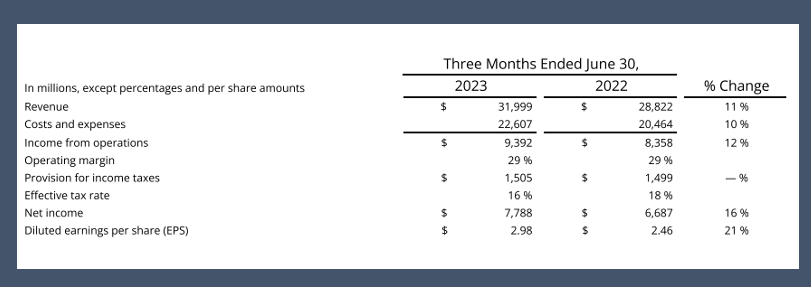
Source: Meta
****Our take:**
- Meta has more competition than Google for its ad products, but it's also in a dominant position. So as ad spending returns, so do its revenues.
- While AR and VR will ultimately find their markets, it's not clear that "the metaverse" as imagined by Meta will ever materialize.
- Meta's open-source Llama 2 AI tool could displace others that seek to monetize AI with subscriptions (OpenAI) and with developers.
### AI Handles 1M Take-Out Orders
Google announced Duplex in May 2018 at Google I/O. An [impressive, human-sounding AI](https://searchengineland.com/machine-reservations-googles-duplex-expanding-to-more-android-iphone-users-314948?ref=nearmedia.co) (part of Google Assistant), it was intended to help consumers make restaurant (and other) reservations. It still exists but it's unclear anybody's using it. Not long after that Google beta-tested CallJoy, a $39 per month virtual agent that answered calls, filtered spam and provided basic business information to callers. It [shut down](https://searchengineland.com/google-to-shutter-calljoy-virtual-agent-for-smbs-on-july-22-336518?ref=nearmedia.co) a year later. But where Google has largely failed, smaller companies are succeeding. One is [HungerRush](https://www.hungerrush.com/products/orderai/?ref=nearmedia.co), a restaurant SaaS company that offers multiple tools including AI-automated phone orders. (SoundHound [does this too](https://www.soundhound.com/?ref=nearmedia.co).) One of HugerRush's customers, pizza chain Jet's Pizza, has seen big success with its AI phone assistant. Jet's Pizza [reportedly](https://www.pymnts.com/news/artificial-intelligence/2023/hungerrush-chief-revenue-officer-voice-ai-solves-pizzerias-phone-problem/?ref=nearmedia.co) has taken more than 1 million AI phone orders successfully. Its CRO said that "the technology is more accurate, efficient and consistent than many human employees."
****Our take:**
- We know AI will be taking over customer service for many companies. But vertical implementations will be perhaps the most successful.
- This technology appears to be a big win for take-out restaurants and consumers as well. It's also being [used at QSR drive-throughs](https://www.wsj.com/articles/can-ai-replace-humans-we-went-to-the-fast-food-drive-through-to-find-out-193c03e9??ref=nearmedia.co).
- Other than its industry focus, there's nothing unique about HungerRush that other companies and industries couldn't duplicate.
### CA Privacy Rule Imperils Algorithms
California residents may, in the relatively near future, be able to opt-out of "automated decision-making" across a range of industries and use cases: employment, education, housing, insurance, banking, healthcare and others. Automated decision-making is broadly defined as "any system, software, or process—including one derived from machine-learning, statistics, or other data processing or artificial intelligence \[that\] uses computation ... to make or execute a decision or facilitate human decision making." The language in this [proposed rule](https://cppa.ca.gov/meetings/materials/20230714%5Fitem6.pdf?ref=nearmedia.co) is being developed by the [California Privacy Protection Agency](https://cppa.ca.gov/?ref=nearmedia.co) (CPPA), a regulatory body established under the California Privacy Rights Act of 2020 (CPRA). Potentially, for consumers who opt-out, automation would need to be replaced by a human decision-maker. The rulemaking process is ongoing but CPPA has final authority; it doesn't go to voters. Many practical elements of the rule remain to be worked out. But it's terrifying to tech companies, which are ramping up lobbying efforts against it.

Source: Bing Image Creator
****Our take:**
- Tech lobbyists argue opt-out rights shouldn't exist if humans have the final say – but that might be perfunctory.
- If it remains fairly broad, this rule could imperial use of any software-aided decision-making tools in numerous industries.
- The CPPA will need to find a balance between protecting against impersonal (and potentially biased) algorithms and recognizing how deeply integrated they already are into practically everything.
## Short Takes
- Coming soon: **Apple's Link Tracking Protection**, [rolls out with iOS 17](https://www.marketingdive.com/news/what-ios-17-means-for-marketers-link-tracking/689126/?ref=nearmedia.co).
- Google: **LSA review form** [not to be used](https://www.seroundtable.com/google-local-service-ads-review-dispute-form-update-35727.html?ref=nearmedia.co) for GBP review disputes.
- Core-ish update: **Yelp** [saw big SERP declines](https://twitter.com/lilyraynyc/status/1684265455479816203?ref=nearmedia.co) but has recovered.
- **Snap Map** has [7X the users of Mapquest](https://www.linkedin.com/posts/randymeech%5Fthe-snap-map-lets-snapchatters-explore-their-ugcPost-7089955173422227456-HZ-x/?ref=nearmedia.co) at its peak.
- Foot Locker: getting more **thumbnails in SERP** \= [ranking/CTR boost](https://brodieclark.com/foot-locker-image-seo/?ref=nearmedia.co).
- Only **4-star rating** businesses [can rank](https://searchengineland.com/google-reviews-local-seo-unleash-potential-429883??ref=nearmedia.co) for "best ..." searches.
- **GBP descriptions** [get "footnotes](https://twitter.com/Miriam%5FEllis%5F/status/1684284113879195654?ref=nearmedia.co)" that link to nothing.
- **TikTok** is [affecting fast-food restaurants](https://www.mashed.com/1337295/how-tiktok-influences-fast-food-sales-prices/?ref=nearmedia.co)' bottom lines.
- **Anthropic, Google, Microsoft, OpenAI** [form](https://blog.google/outreach-initiatives/public-policy/google-microsoft-openai-anthropic-frontier-model-forum/??ref=nearmedia.co) "responsible AI" body.
- Major carmakers [to collaborate](https://www.theverge.com/2023/7/26/23808270/bmw-honda-gm-joint-venture-north-american-ev-charging-network?ref=nearmedia.co) on **EV charging network**.
- **Google Nest** hacked to showcase [virtual assistant 2.0](https://www.linkedin.com/posts/vblackwell%5Fthis-is-the-future-an-indie-hacker-just-ugcPost-7090079606757539840-J1Hb/?ref=nearmedia.co).
- **Amazon** [lays off hundreds](https://www.cnbc.com/2023/07/26/amazon-cuts-jobs-at-fresh-grocery-stores.html?ref=nearmedia.co) of **Fresh** grocery workers.
- How long does **SEO** take "to work" – [3 to 9 months on average](https://searchengineland.com/how-long-seo-takes-429804??ref=nearmedia.co).
- A fascinating [inside view](https://twitter.com/esthercrawford/status/1684291048682684416??ref=nearmedia.co) of Musk and **Twitter's decline**.
Listen to our [latest podcast](https://www.nearmedia.co/memo/).
[](https://nearmedia.co/memo?ref=nearmedia.co)
How can we make this better? Email [us](mailto:gsterling@nearmedia.co) with suggestions and recommendations.
### GOOGL, MSFT Beat Xpectations, Twitter –>X, SMB Astroturfing
URL: https://www.nearmedia.co/google-beats-xpectations-twitter-x-smb-astroturfing/
Last updated: 2023-07-26T16:39:01.000Z
### Google Search Ads Up, Bing's Billion Chats
Google and Microsoft announced quarterly earnings yesterday and both beat Wall Street expectations. With $74.6 billion in total revenue, [Google](https://abc.xyz/assets/20/ef/844a05b84b6f9dbf2c3592e7d9c7/2023q2-alphabet-earnings-release.pdf?ref=nearmedia.co) stock rose, while [Microsoft](https://www.microsoft.com/en-us/Investor/earnings/FY-2023-Q4/press-release-webcast?ref=nearmedia.co) ($56.2 billion) slipped because of the latter's "soft guidance" for next quarter. Cloud revenue was a bright spot for both companies. Microsoft also said during its earnings call that "Bing users have engaged in more than one billion chats and created more than 750 million images with Bing Image Creator." Microsoft's "search and news" ad revenue increased 8%, but less than expected. Google overall revenue grew 7%, but "search & other" posted a roughly 5% gain YoY. YouTube revenues grew just under 4.5% but more than expected. Overall, Google ad revenue was up 3.3% (network revenue was down). During the earnings call Google said that Bard and SGE were being "super well received" and that "YouTube Shorts are now watched by over 2 billion logged in users every month."
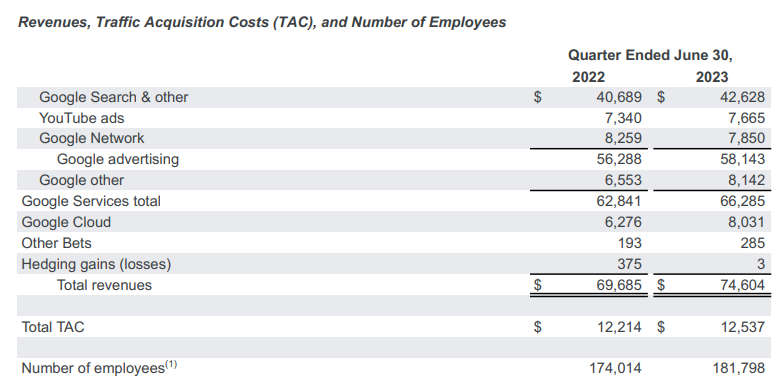
Source: Google
****Our take:**
- Google has a de-facto monopoly in search advertising and so as [ad spending returns](https://www.insiderintelligence.com/content/us-ad-market-spending-grew-may-first-time-11-months?ref=nearmedia.co), Google inevitably benefits.
- Google was asked about "Bard vs. search" and SGE. CEO Sundar Pichai was vague but upbeat. It's hard to believe AI feedback is entirely positive.
- Google CFO Ruth Porat is moving to a new role. She will now oversee Google's "Other Bets." She will also "engage" with policymakers.
### X: Bad Branding
What exactly did Elon Musk pay $44 billion for? It's a serious question. It certainly wasn't the Twitter brand, which has now been replaced with "X." The move, which happened this week, will likely further [reduce the value of the company](https://time.com/6297303/twitter-x-rebrand-cost/?ref=nearmedia.co). Musk doesn't care because he's fixated on the letter X (e.g., SpaceX and xAI) and the fantasy that he can turn Twitter into a "[super app](https://www.axios.com/2023/07/25/elon-musk-everything-app-twitter-x?ref=nearmedia.co)" like China's WeChat. X.com was the name of Musk's pre-PayPal payments site, which merged with Confinity. The combined entity was originally called X.com, but consumers [didn't like](https://en.wikipedia.org/wiki/Confinity?ref=nearmedia.co) its vagueness and porn connotations. PayPal won out and Musk was ousted. But he's reportedly [been thinking](https://www.axios.com/2023/07/25/elon-musk-everything-app-twitter-x?ref=nearmedia.co) about building a super app for years and planning to rebrand Twitter since he bought it. Most user [responses](https://www.dailydot.com/debug/twitter-x-rebrand-elon-musk/?ref=nearmedia.co) to the rebrand have been sarcastic or otherwise negative. The edgier "X" brand won't help restore advertiser confidence; hence new advertiser [carrots and sticks](https://www.wsj.com/articles/elon-musks-rebranded-twitter-cuts-ad-prices-d2615d8f??ref=nearmedia.co) (discounts and penalties). On top of all this, other companies own a wide range of X-related [trademarks](https://www.reuters.com/technology/problem-with-x-meta-microsoft-hundreds-more-own-trademarks-new-twitter-name-2023-07-25/?ref=nearmedia.co) that could cause legal trouble.

****Our take:**
- We're [now supposed to call](https://thehill.com/policy/technology/4117517-elon-musk-says-tweets-are-to-be-called-xs-now/?ref=nearmedia.co) tweets "Xs." It ain't gonna happen.
- It would've been simpler to just launch X.com and invest billions there rather than buying and deconstructing Twitter.
- What Musk seems to have bought for $44 billion is the public's sustained attention and coverage. It's hard to imagine Twitter–>X.com doesn't go down as one of the worst rebrands of all time.
### Google's SMB Astroturfing
The [Connected Commerce Council](https://connectedcouncil.org/advocacy-toolkit/issues-affecting-your-business/?ref=nearmedia.co) (CCC) is a front group for Google and Amazon lobbying on multiple issues, but mainly antitrust and privacy. It [misrepresents itself](https://www.politico.com/news/2022/03/30/connected-commerce-council-amazon-google-lobbying-00021801?ref=nearmedia.co) as a grassroots advocacy organization. The purpose of the group is to lend credibility and rally support for Google and Amazon's policy positions, which seek to defeat any regulation or legislation that harm their business interests. It's incredibly cynical and seeks to convince SMBs that Google's interests are their interests. Google continues to push emails to GBP managers pointing to the CCC with [talking points](https://connectedcouncil.org/advocacy-toolkit/issues-affecting-your-business/?ref=nearmedia.co) for elected representatives. Among them: "Forcing large companies to stop integrating products and services would benefit companies like Yelp (Yelp reviews vs. Google reviews) but will hurt my business" and "Fulfillment by Amazon (FBA) is incredibly valuable to small sellers ... If Amazon cannot offer FBA to small businesses like mine, who will be left selling on Prime? Just Amazon and other big businesses."

Source: Bing Image Creator
****Our take:**
- CCC says it's "a non-profit organization with a single goal: to promote small businesses’ access to essential digital technologies and tools."
- Google and Amazon are the group's [only funders](https://www.cnbc.com/2022/03/30/how-google-and-amazon-bankrolled-a-grassroots-activist-group-of-small-business-owners-to-lobby-against-big-tech-oversight.html?ref=nearmedia.co), yet that's either not disclosed or so buried that it's effectively undisclosed.
- It's fine for Google and Amazon to lobby for their interests. What's not fine is the deception and disinformation effort involved here.
## Recent Analysis
- ICYMI: **Overture Maps Foundation is building the future of digital mapping**, [Near Memo special edition](https://www.nearmedia.co/near-memo-special-edition/).
## Short Takes
- **Overture Maps Foundation** [releases first mapping dataset](https://overturemaps.org/overture-maps-foundation-releases-first-world-wide-open-map-dataset/?ref=nearmedia.co).
- **Yelp** [shuts down](https://twitter.com/lutherlowe/status/1684002001300885504?ref=nearmedia.co) well-intentioned review solicitation scheme.
- **GBP** offers profile managers new "[view as customer" option](https://twitter.com/thesocialdude/status/1683527572435636225?s=43&t=NNLJEcbkhyOw0gOk6%5FrQUw&ref=nearmedia.co).
- **GBP appointment link** [now moved](https://twitter.com/DarrenShaw%5F/status/1683864132791984129?ref=nearmedia.co) to the Bookings section.
- **Bing Chat** [coming soon](https://www.seroundtable.com/bing-chat-to-work-on-any-browser-week-35743.html?ref=nearmedia.co) to Chrome, Safari and other browsers.
- Podcast [interview](https://www.adexchanger.com/adexchanger-talks/life-after-third-party-cookies-with-the-director-of-product-for-privacy-sandbox/?ref=nearmedia.co) with **Google's Victor Wong** on post-cookie [Topics](https://blog.google/products/chrome/get-know-new-topics-api-privacy-sandbox/?ref=nearmedia.co).
- FTC [readies antitrust suit](https://www.politico.com/news/2023/07/25/ftc-lawsuit-break-up-amazon-00108130?ref=nearmedia.co) seeking to break up **Amazon**.
- **Snap** [revenue down](https://investor.snap.com/news/news-details/2023/Snap-Inc.-Announces-Second-Quarter-2023-Financial-Results/default.aspx?ref=nearmedia.co) but has nearly 400 million users.
- **Social media** has a big [copycat feature problem](https://www.axios.com/2023/07/25/social-medias-copycat-conundrum?ref=nearmedia.co).
- **Mastodon's** user numbers [growing again](https://techcrunch.com/2023/07/24/as-twitter-destroys-its-brand-by-renaming-itself-x-mastodon-usage-numbers-are-again-soaring/?ref=nearmedia.co).
- **Intuit** [selling advertisers access](https://medialabs.intuit.com/?ref=nearmedia.co) to its 10M SMB user base.
- **Apple** [accused](https://www.mediapost.com/publications/article/387531/apple-accused-of-abusing-ad-tracking-position-in-f.html?ref=nearmedia.co) of ad tracking abuse in France.
- Contrary to perceptions, **remote employees** [work harder and longer](https://thehill.com/business/4110598-remote-employees-work-longer-and-harder-studies-show/?ref=nearmedia.co).
- **Customer service automation** could make CX [a lot worse](https://onemileatatime.com/insights/american-airlines-automated-customer-relations/?ref=nearmedia.co).
Listen to our [latest podcast](https://www.nearmedia.co/memo/).
[](https://nearmedia.co/memo?ref=nearmedia.co)
How can we make this better? Email [us](mailto:gsterling@nearmedia.co) with suggestions and recommendations.
### Social Product Search, ChatGPT 4 Winning, Brand New World
URL: https://www.nearmedia.co/social-product-search-chatgpt-4-winning-brand-new-world/
Last updated: 2023-07-24T20:06:58.000Z
### Product Search Shifting
Driven by [Prime loyalty](https://www.nearmedia.co/fast-cheap-content-threads-down-prime-day-record/), Amazon has been the dominant product search site for most consumers, followed by Google. While that remains true, there's some interesting movement according to a new [survey](https://www.junglescout.com/consumer-trends/?ref=nearmedia.co) of 1,000 US adults from Jungle Scout. The survey found that Amazon and Google were down 4% and 7% respectively as product search starting points, compared with a year ago. At the same time, social media sites – YouTube, Facebook, Instagram, TikTok – grew a collective 14%, with TikTok showing the single largest gain (6%). Pinterest was flat. What's also interesting (and counterintuitive) is that men use social media for product search more often than women. Men were more likely to use social sites by at least 10 points in every case, with the exception of Pinterest where usage was nearly even by gender. The social sites where people were most likely to buy products directly are Facebook and YouTube.
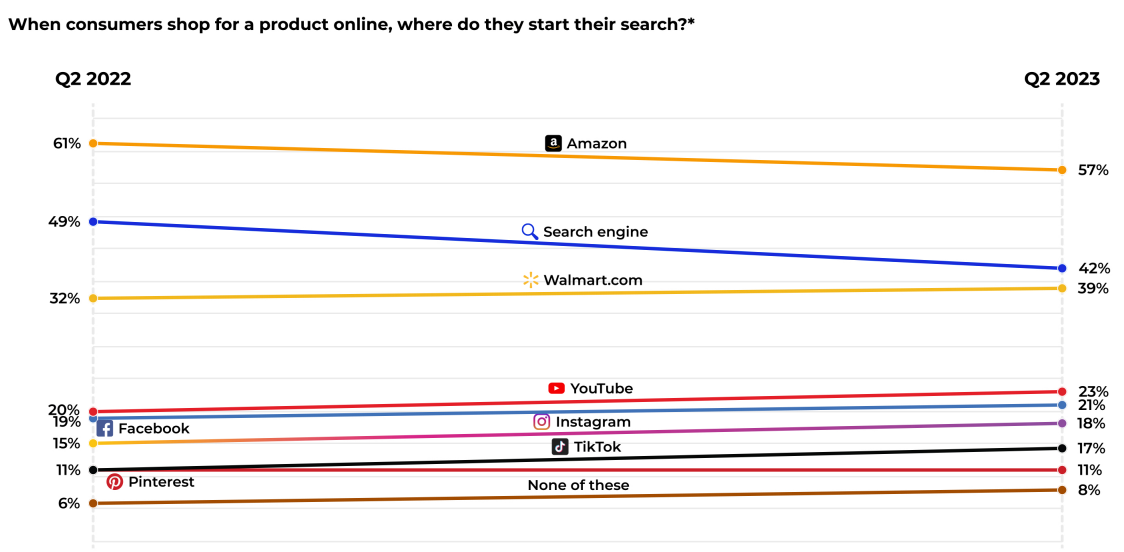
****Our take:**
- There's no report hypothesis for why Amazon and Google slipped. TikTok's increasing popularity and visibility is a partial explanation.
- Another survey found [only 29%](https://www.digitalcommerce360.com/2023/07/21/the-shopper-speaks-amazon-prime-day-2023-insights/?ref=nearmedia.co) said Prime Day met their expectations. And 29% might not renew Prime memberships. This may reflect increasing dissatisfaction. Also [trust is declining](https://www.nearmedia.co/review-fraud-crisis-stores-drive-online-sales-yelp-reserves-with-google/) for Amazon reviews.
- Google has invested enormously in product search and Shopping Ads as a way to claw back share from Amazon. It may not be working.
### AI Leaderboard: ChatGPT 4 Ahead
ChatGPT is the most well-known consumer-facing AI platform. Coming in at number two and three (nearly a tie) are Google's Bard and BingGPT, according to recent [research](https://newconsumer.com/wp-content/uploads/2023/07/Consumer-Trends-2023-Midyear.pdf?ref=nearmedia.co). But there are now 10 or more AI search tools. Soon there may be more as developers build on top of Meta's new free platform Llama 2\. That's a problem for lesser known entrants; too much choice will reinforce existing behaviors (read: Google). But which of these platforms/tools performs best? In lieu of a rigorous side-by-side test on hundreds of queries, browser extension Chat Hub ([Chrome](https://chathub.gg/?ref=nearmedia.co), [Edge](https://microsoftedge.microsoft.com/addons/detail/chathub-allinone-chat/kdlmggoacmfoombiokflpeompajfljga?ref=nearmedia.co)) offers a direct comparison of up to four bots. Poe also allows access to multiple bots [in one place](https://poe.com/?ref=nearmedia.co) but no side-by-side capability. Now comes [this comparison](https://huggingface.co/spaces/lmsys/chatbot-arena-leaderboard?ref=nearmedia.co) of the top AI tools using [Elo ratings](https://en.wikipedia.org/wiki/Elo%5Frating%5Fsystem?ref=nearmedia.co), a competitive chess player ranking system. Google's PaLM 2 is represented in the chart below but Bard is not. ChatGPT4 is the leader, followed by Claude. PaLM 2 is in the middle of the pack.
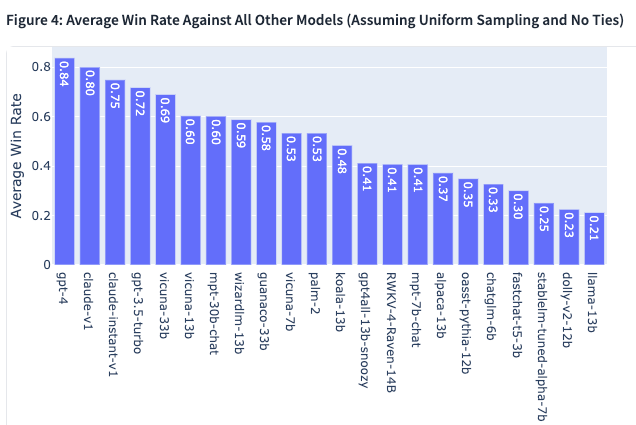
Source: lmsys.org
****Our take:**
- It's not clear how reliable the underlying methodology is, but it appears to be the first such head-to-head comparison of this many sites.
- B2B integration and adoption of AI tools is accelerating. However, the B2C outlook for "horizontal AI" as a Google alternative is now less clear.
- Most people so far are not substituting ChatGPT, BingGPT or Bard for Google – and they may not.
### Collapse of the Funnel
Most brand marketers focus on customer acquisition as a primary objective, which seems rational and obvious. But they typically see acquisition as the end of a process rather than the beginning. The dominant notion of "the funnel" is some version of: awareness, consideration, action/transaction. And while many marketers discuss post-transaction engagement (reviews, service, loyalty), there's less attention generally paid to those experiences. Service is still often seen as a "cost center" and not about brand building. However, a new report from Edelman, based on a multi-country [survey](https://www.edelman.com/sites/g/files/aatuss191/files/2023-06/2023%20Edelman%20Trust%20Barometer%20Special%20Report%20The%20Collapse%20of%20the%20Purchase%20Funnel%20FINAL.pdf?ref=nearmedia.co), upends much of that traditional thinking. The report provides a more expansive and nuanced view of how consumers, especially Gen Z, think about brands. How the brand conducts itself in the world and what happens post-purchase are critical factors in engagement, loyalty and advocacy. The brand relationship is more than just the product experience; it's more holistic. Edelman found major consumer research often happens after the transaction, rather than before. And brand trust is a critical factor in loyalty, advocacy and growth – very different than the performance marketing mindset.
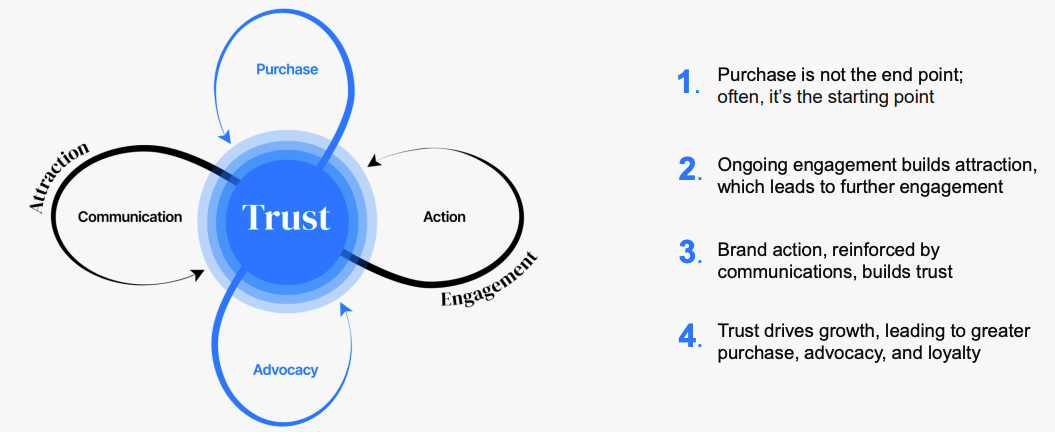
Source: Edelman "Collapse of the Funnel" report
****Our take:**
- Most (78%) survey respondents agreed with: "I uncover things that attract me and make me loyal to a brand after my first purchase" and 50% did most of their brand research after their purchase.
- Brand trust is a largely a post-purchase development with multiple facets. Once trusted, loyalty and advocacy follow.
- Marketers think about brand marketing as "top of the funnel." They need to think much more expansively about it – even beyond direct CX.
## Recent Analysis
- ICYMI: **Missing Google Reviews: A Step-by-Step Recovery Guide** by [Mike Blumenthal](https://www.nearmedia.co/missing-reviews-at-google-a-step-by-step-guide-to-recovery/).
## Short Takes
- Mastering [video verification](https://www.sterlingsky.ca/unlocking-success-mastering-video-verification-for-your-google-business-profile/?ref=nearmedia.co) for **Google Business Profile**.
- How to use **ChatGPT** to [uncover keyword variations](https://searchengineland.com/chatgpt-keyword-variations-tools-miss-prompts-429665?ref=nearmedia.co) for SEO.
- Congressperson with repair shop **review bombed** for unpopular vote ([NYT](https://www.nytimes.com/2023/07/22/us/politics/marie-gluesenkamp-perez-democrats-student-loans.html?ref=nearmedia.co)).
- **Bing search revenue** [expected to outpace](https://www.mediapost.com/publications/article/387450/analyst-sees-microsoft-bing-search-outpacing-googl.html?ref=nearmedia.co) Google search growth.
- **Twitter** (err, X) [going forward](https://twitter.com/lindayacc/status/1683213895463215104?ref=nearmedia.co) with its "super app" vision.
- Meta offers guidance on [how brands can make a splash](https://searchengineland.com/meta-integrate-brands-threads-429633?ref=nearmedia.co) on **Threads**.
- 200 school districts sue **social media** for harms to students ([WSJ](https://www.wsj.com/articles/schools-sue-social-media-platforms-over-alleged-harms-to-students-ebca91a5??ref=nearmedia.co)).
- **Yahoo** names former Chipotle marketing exec. Lieberman as [new CMO](https://www.mediapost.com/publications/article/387407/yahoo-names-chipotles-tressie-lieberman-cmo.html?ref=nearmedia.co).
- Amazon to pay $25 million for **Alexa** [violations of children’s privacy](https://www.justice.gov/opa/pr/amazon-agrees-injunctive-relief-and-25-million-civil-penalty-alleged-violations-childrens?ref=nearmedia.co) law.
- **Publishers want billions**, not millions [from AI companies](https://www.semafor.com/article/07/23/2023/publishers-want-billions-not-millions-from-ai?ref=nearmedia.co).
- Higher quality data is the cure for what ails **AI** ([NYT](https://www.nytimes.com/2023/07/20/technology/personaltech/ai-chatgpt-bing-directions.html??ref=nearmedia.co)).
- UK [law update](https://thenextweb.com/news/uk-investigatory-powers-act-default-surveillance-devices-privacy?ref=nearmedia.co) could make **digital surveillance** much worse.
- **Barbenheimer** debut weekend [proved](https://www.cnbc.com/2023/07/23/barbie-and-oppenheimer-opening-weekend-box-office-results.html??ref=nearmedia.co) people will still go to movies.
Listen to our [latest podcast](https://www.nearmedia.co/memo/).
[](https://nearmedia.co/memo?ref=nearmedia.co)
How can we make this better? Email [us](mailto:gsterling@nearmedia.co) with suggestions and recommendations.
### Now AppleGPT, Pay by Palm, Soft Landing Ahead?
URL: https://www.nearmedia.co/applegpt-pay-by-palm-soft-landing/
Last updated: 2023-07-21T22:29:52.000Z
### Can AI Save Siri?
According to a Bloomberg [report](https://www.bloomberg.com/news/articles/2023-07-19/apple-preps-ajax-generative-ai-apple-gpt-to-rival-openai-and-google??ref=nearmedia.co), Apple has been working on its own generative AI to catch up ro everybody else. Known internally as "Ajax," the article says, "The iPhone maker has built its own framework to create large language models — the AI-based systems at the heart of new offerings like ChatGPT and Google’s Bard." There's also an internal chatbot for employees known informally as AppleGPT. While Apple has long used machine learning in multiple products, it's running well behind Google, OpenAI in AI development. (Conspicuously, Apple didn't once say "AI" during its WWDC keynote last month.) The company is now afraid it might miss "a potentially paramount shift in how devices operate." Apparently, Apple doesn't yet currently have a "clear strategy" on how to deploy AI for consumers. Siri is an obvious choice. In the past several years Siri upgrades have been incremental and nearly imperceptible to the public. The reason Siri (seemingly) lags Alexa and Google Assistant has to do with Siri's [design and back end](https://www.nytimes.com/2023/03/15/technology/siri-alexa-google-assistant-artificial-intelligence.html?ref=nearmedia.co). LLMs may enable it to live up to its promise.
****Our take:**
- Fully realized, Siri is an alternative to Google for many use cases, and potentially more valuable because of personalization features.
- Apple's "default" search deal with Google, [now worth](https://www.nearmedia.co/apple-search-engine-cookie-relief-email-wins-again/) more than $15 billion, makes Apple hesitant to compete directly with Google.
- Regardless of how, Apple needs to make Siri meaningfully better. It might consider buying a smaller AI company to do so.
### Would You 'Pay by Palm'?
Amazon's biometric payments system [Amazon One](https://one.amazon.com/?ref=nearmedia.co) is coming to all 500 Whole Foods by the end of the year. The company [says](https://www.cnbc.com/2023/07/20/amazon-to-add-pay-by-palm-tech-to-all-whole-foods-stores-by-year-end.html??ref=nearmedia.co) it's seeing "growing demand" and recorded "3 million uses" of the checkout technology, which it has been testing. Though I shop at Whole Foods, I've never used it because I [don't trust Amazon](https://www.bleepingcomputer.com/news/technology/amazon-agrees-to-25-million-fine-for-alexa-children-privacy-violations/?ref=nearmedia.co), yet I use FaceID. Indeed, iPhone owners have considerable biometric experience through TouchID and FaceID. Many companies use voice authentication in customer service and facial recognition is increasingly used at airports. While they offer convenience and fraud protection, biometric systems also come with substantial privacy issues. Biometric databases can be hacked or potentially [abused by law enforcement](https://www.wsj.com/articles/fbi-once-bought-mobile-phone-data-for-warrantless-tracking-other-agencies-still-do-ad65ebe9?ref=nearmedia.co). They also enable surveillance in new ways ([think China](https://www.nytimes.com/2022/06/21/world/asia/china-surveillance-investigation.html?ref=nearmedia.co)). There are currently few regulations around biometric data collection in the US. Few states [have dedicated biometric privacy laws](https://www.bclplaw.com/en-US/events-insights-news/us-biometric-laws-and-pending-legislation-tracker.html?ref=nearmedia.co), although there's pending legislation. (EU's GDPR covers biometrics.) Unfortunately, federal privacy legislation doesn't have a chance in the current Congress.
****Our take:**
- Fingerprint scanning is the experience consumers [are most comfortable with](https://www.getapp.com/resources/biometric-technology/?ref=nearmedia.co). COVID boosted contactless payments and biometric adoption.
- While tech companies are mostly trusted with biometric data, 62% of US adults [are worried](https://www.getapp.com/resources/biometric-technology/?ref=nearmedia.co) about invasions of privacy.
- Biometric authentication offers clear consumer benefits. But we need strict privacy protections and penalties, which don't really exist.
### Economy: Soft Landing Ahead
All the hand-wringing and [sky is falling alarm](https://www.cnbc.com/2022/12/23/why-everyone-thinks-a-recession-is-coming-in-2023.html?ref=nearmedia.co) about a recession appears to be unfounded – though there are some [competing signals](https://www.reuters.com/markets/us/us-leading-indicators-point-recession-starting-soon-2023-07-20/?ref=nearmedia.co). It thus looks like the US economy is headed for a "[soft landing](https://www.nytimes.com/interactive/2023/05/18/opinion/jobs-inflation-economy.html?ref=nearmedia.co)." While food prices remain high, [inflation has generally cooled](https://www.axios.com/2023/06/13/inflation-consumer-price-index-may?ref=nearmedia.co). Consumer sentiment is the highest it has been since September 2021\. Even normally pessimistic SMBs are [somewhat more upbeat](https://www.nfib.com/surveys/small-business-economic-trends/?ref=nearmedia.co) about their outlook, though hiring remains a challenge. Goldman Sachs recently cut its probability that a US recession would occur [down to 20%](https://www.bloomberg.com/news/articles/2023-07-17/goldman-s-hatzius-cuts-odds-of-us-recession-in-next-year-to-20?ref=nearmedia.co#xj4y7vzkg). June retail sales [were up 3.3%](https://nrf.com/media-center/press-releases/retail-sales-grew-again-june-despite-slower-job-gains?ref=nearmedia.co) YoY (though uneven). And ad spending has [also picked up](https://www.insiderintelligence.com/content/us-ad-market-spending-grew-may-first-time-11-months??ref=nearmedia.co). Yet, interest rates will continue to [go up modestly](https://www.cnbc.com/2023/07/21/will-another-fed-rate-hike-help-or-hurt-how-you-may-be-affected.html?ref=nearmedia.co), which impacts demand and consumer spending. However, consumer spending has kept the US economy going. New [business formations](https://www.census.gov/econ/bfs/current/index.html?ref=nearmedia.co) are also healthy, up 6.2% in June vs. May.
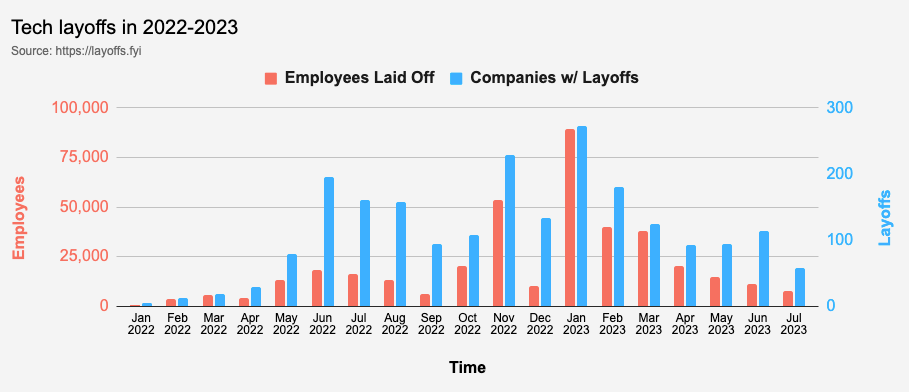
Source: Layoffs.fyi
****Our take:**
- VC funding has [dropped off a cliff](https://betakit.com/pitchbook-analysts-say-2023-vc-funding-is-pretty-much-shot-long-term-recovery-appears-likely/?ref=nearmedia.co) and some tech companies are continuing to do layoffs, though their pace has [](https://www.cnbc.com/2023/07/10/microsoft-confirms-more-job-cuts-on-top-of-10000-layoffs-in-january.html?ref=nearmedia.co)[dramatically declined](https://layoffs.fyi/?ref=nearmedia.co).
- Many tech layoffs were justified by over-hiring but most were part of performance for investors rather than required by economics.
- AI has created a partial recovery for the tech industry and a positive (if complex) [narrative about future growth](https://www.brookings.edu/articles/machines-of-mind-the-case-for-an-ai-powered-productivity-boom/?ref=nearmedia.co).
## Short Takes
- Coming [plug-ins will](https://9to5google.com/2023/07/17/bard-ai-extensions-first-look/?ref=nearmedia.co) make **Bard** more useful for local search.
- **BingGPT** [now with visual search,](https://www.seroundtable.com/bing-chat-gets-visual-search-35728.html?ref=nearmedia.co) images and objects.
- **ChatGPT** gains "custom instructions" for [greater personalization](https://openai.com/blog/custom-instructions-for-chatgpt?ref=nearmedia.co).
- **AI and Chrome Extensions** to [boost SEO effectiveness](https://searchengineland.com/ai-chrome-extensions-quick-seo-wins-429599??ref=nearmedia.co).
- Google's **Sergey Brin** now back, deeply involved in AI projects ([WSJ](https://www.wsj.com/articles/sergey-brin-google-ai-gemini-1b5aa41e??ref=nearmedia.co)).
- Streaming companies [fighting](https://finance.yahoo.com/news/disney-netflix-more-streaming-companies-173538633.html??ref=nearmedia.co) FTC's proposed "**click to cancel**" rule.
- Survey: **Apple Pay Later** [gaining quickly](https://www.jdpower.com/business/resources/why-apple-pay-later-gaining-market-share-so-quickly-and-who-should-be-concerned?ref=nearmedia.co) on BNPL rivals.
- How **Apple's VisionPro** [could affect digital mapping](https://maphappenings.com/2023/06/29/vision-pro-geospatial/?ref=nearmedia.co).
- Meta's **Threads** adds a [bunch of requested features](https://www.threads.net/@camroth/post/Cu2Pa4rBBlA?ref=nearmedia.co).
- **Car infotainment** systems [increasingly shunned](https://www.theverge.com/23801545/car-infotainment-customer-satisifaction-survey-jd-power?ref=nearmedia.co) by consumers.
- **Google Assistant** will soon [summarize web pages](https://9to5google.com/2023/07/20/google-assistant-summarize-webpages-insight/?ref=nearmedia.co).
- More than 8K authors [seeking compensation](https://www.cbc.ca/news/entertainment/authors-open-letter-ai-companies-1.6910352?ref=nearmedia.co) from **AI companies**.
- **AI "showrunner**" tool [can generate finished animated shows](https://venturebeat.com/games/the-simulation-unveils-showrunner-ai-to-create-south-park-like-tv-shows-with-you-as-the-star/?ref=nearmedia.co).
- Google [still on track](https://techcrunch.com/2023/07/20/google-starts-the-ga-rollout-of-its-privacy-sandbox-apis-to-all-chrome-users/??ref=nearmedia.co) for **cookie deprecation** by mid-to-late 2024\.
- **Self-employed** [more satisfied](https://www.pewresearch.org/short-reads/2023/06/30/self-employed-people-in-the-us-are-more-likely-than-other-workers-to-be-highly-satisfied-with-their-jobs/?ref=nearmedia.co) than those "working for the man."
Listen to our [latest podcast](https://www.nearmedia.co/memo/).
[](https://nearmedia.co/memo?ref=nearmedia.co)
How can we make this better? Email [us](mailto:gsterling@nearmedia.co) with suggestions and recommendations.
### Apple Maps Momentum, Google Threads AI Needle, Location Sharing
URL: https://www.nearmedia.co/apple-maps-momentum-google-threads-ai-needle-location-sharing/
Last updated: 2023-07-19T19:35:53.000Z
### Apple Maps Momentum
Last week we discussed the growth of Apple Maps and [estimated](https://www.nearmedia.co/apple-maps-discovery-gbp-call-history-is-history-gbp-forum-insights/) its iPhone user market share at 37% (others [have larger estimates](https://www.localseoguide.com/how-many-people-actually-use-apple-maps/?ref=nearmedia.co)). This week a number of articles lauded Apple Maps, prompted by a Wall Street Journal [story](https://www.wsj.com/articles/apple-maps-app-popularity-iphone-8e52aec1?ref=nearmedia.co) based on mostly anecdotal information. It discussed improvements in the Apple Maps UI and interviewed a handful of people who now prefer Apple Maps. As you remember, Apple Maps disastrously launched in 2012 to widespread ridicule, forcing CEO Tim Cook [to apologize](https://techcrunch.com/2012/09/28/tim-cook-apologizes-for-apple-maps-points-to-competitive-alternatives/?guccounter=1&ref=nearmedia.co) and recommend alternative navigation apps. Scott Forstall, who was then in charge of iOS, was also fired. As an aside, Waze [owes its success](https://www.nearmedia.co/facebook-blew-waze-deal-prime-dark-patterns-gbp-category-boost/) and later $1+ billion acquisition to Apple Maps' early failure. Google Maps has more than a billion users globally (estimates vary). Apple Maps comes preinstalled on the iPhone, of which there are roughly 1.5 billion globally. As Mike likes to say, "Apple plays the long game" and has steadily been making improvements in Maps that are now paying off. A 9to5mac [poll](https://9to5mac.com/2023/07/18/apple-maps-versus-google-maps/?ref=nearmedia.co) of nearly 6K (unverified) iPhone users finds a slight preference (46.6% vs. 44.1%) for Apple Maps vs. Google.
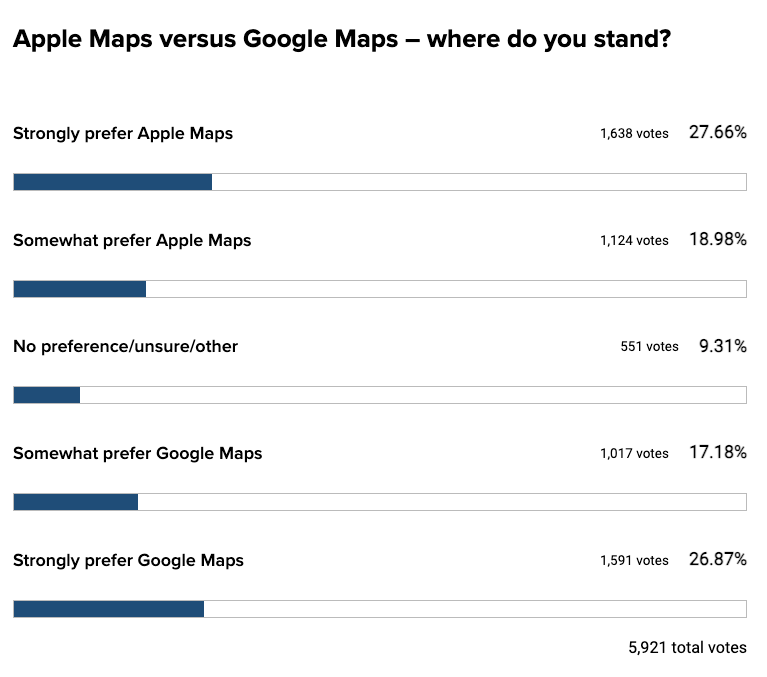
Source: 9to5mac
****Our take:**
- Google has better international coverage and better local listings than Apple. That could change over time with [Apple Business Connect](https://www.nearmedia.co/should-a-business-put-energy-into-apple-maps/).
- From our data sample, roughly 28% of Apple Maps clicks came from category searches, 54% were brand searches (others opaque).
- Google is the dominant driver of local search traffic, but Apple is [now a distant number two](https://www.nearmedia.co/bing-is-4-state-of-digital-agencies-ai-and-copyright/) ahead of Yelp and, especially, Bing.
### Google Threads Needle on AI Content
Generative AI's promise of [fast-cheap content](https://www.nearmedia.co/fast-cheap-content-threads-down-prime-day-record/) is incredibly enticing. Indeed, most [publishers](https://www.vox.com/technology/2023/7/18/23798164/gizmodo-ai-g-o-bot-stories-jalopnik-av-club-peter-kafka-media-column?ref=nearmedia.co) and marketers are planning for a future in which a large percentage of their content is at least partly AI-generated. Accordingly, Google faces existential choices around how it handles the issue. It has [recently said](https://developers.google.com/search/blog/2023/02/google-search-and-ai-content?ref=nearmedia.co) that it only cares about quality "rather than how content is produced." But Google had also previously [frowned](https://www.searchenginejournal.com/google-says-ai-generated-content-is-against-guidelines/444916/?ref=nearmedia.co) on AI content as "auto-generated" and therefore against webmaster guidelines. In a recent Twitter debate about the ranking ability of AI content Google's Search Liaison, Danny Sullivan, [said](https://twitter.com/searchliaison/status/1681395055775592454?ref=nearmedia.co) that AI content won't automatically be "received well" by its algorithms. That comes in response to a Vox [story](https://www.vox.com/technology/2023/7/18/23798164/gizmodo-ai-g-o-bot-stories-jalopnik-av-club-peter-kafka-media-column?ref=nearmedia.co) about error-filled AI content from G/O Media that ranked on page one. Google's seemingly contradictory guidance reflects basic ambivalence about AI; it doesn't want to be flooded with garbage content but it's also being realistic. Google tries to thread the needle by emphasizing quality and "[helpfulness](https://developers.google.com/search/blog/2023/02/google-search-and-ai-content?ref=nearmedia.co)." However, most AI-generated content (at least near term) will not be particularly good or helpful.
> It's still not correct that AI content will be "well-received by search engines," at least for us. There's lots of AI content on the web that doesn't rank well and hence isn't well received. AI content has no magic ranking powers. If \*content\* is helpful, then it might succeed.
>
> — Google SearchLiaison (@searchliaison) [July 18, 2023](https://twitter.com/searchliaison/status/1681395055775592454?ref%5Fsrc=twsrc%5Etfw&ref=nearmedia.co)
****Our take:**
- Google can't stop marketers from creating content with AI. The economic incentives are too great.
- Google's emphasis on E-E-A-T and "helpful content" is probably not enough to prevent the impending flood of generic AI content.
- Marketers will be carefully watching how well AI-generated content ranks. That will determine of how widely utilized it becomes.
### Location Sharing: Fraught Yet Popular
Sharing location used to be a primary way to personalize apps and make them more useful. And location data was routinely collected by developers -- and sold to data brokers. That data is incredibly valuable to marketers for numerous purposes. Then came the [rise of privacy](https://iapp.org/news/a/most-consumers-want-data-privacy-and-will-act-to-defend-it/?ref=nearmedia.co), [regulatory scrutiny](https://www.ftc.gov/news-events/news/press-releases/2022/08/ftc-sues-kochava-selling-data-tracks-people-reproductive-health-clinics-places-worship-other?ref=nearmedia.co), Apple's [ATT](https://www.nearmedia.co/idfa-opt-ins-mobile-payments-killing-cash-cpsc-sues-amazon/) and the [weaponization of location](https://www.schneier.com/blog/archives/2021/07/de-anonymization-story.html??ref=nearmedia.co). In particular, women seeking abortions in states that have outlawed it [risk prosecution](https://www.stopspying.org/roadblock-to-care?ref=nearmedia.co) if they're not careful about location sharing. Yet despite privacy concerns, people are still widely sharing location. A Q3 2022 Harris Poll [found](https://theharrispoll.com/briefs/location-sharing-features/?ref=nearmedia.co) nearly 80% of adults share their locations "at least some of the time" and 16% always do. A small minority never do. The stated reasons to share location are to accomplish specific objectives," like having an item delivered to them or to get directions." But location sharing has also evolved into a kind of social networking. According to the poll, 48% who share their locations are doing so because they want others they know where they are (e.g., Snap Map, [Apple's Find My](https://www.nytimes.com/2022/08/20/technology/find-my-app-friends.html?ref=nearmedia.co)).
Source: [Bernard Hermant](https://unsplash.com/@bernardhermant?utm%5Fsource=unsplash&utm%5Fmedium=referral&utm%5Fcontent=creditCopyText)\-[Unsplash](https://unsplash.com/s/photos/surveillance?utm%5Fsource=unsplash&utm%5Fmedium=referral&utm%5Fcontent=creditCopyText)
****Our take:**
- On mobile devices location is a fundamental part of the UX. But people [worry](https://www.wired.com/story/the-terrible-anxiety-of-location-sharing-apps/?ref=nearmedia.co) about surveillance and data exploitation.
- The burden shouldn't be on individuals to become privacy experts to protect themselves against non-consensual location data tracking.
- Despite the iPhone's protections, consumers don't have simple ways to keep their location histories and data "out of the wrong hands."
## Recent Analysis
- ****Near Memo episode 120:** [Apple Maps KPIs; what Google quality rater guidelines can teach SEOs; Google SGE usage decline](https://www.nearmedia.co/ep-120/).
- ICYMI: ****When Is the Right Time to Ask for Reviews**? [by Mike and Greg](https://www.nearmedia.co/when-is-the-right-time-to-ask-for-customer-reviews/).
## Short Takes
- **Moz**: how to [get more local business reviews](https://moz.com/blog/get-more-local-business-reviews?ref=nearmedia.co) from travelers.
- **Power Reviews** [terms](https://www.powerreviews.com/terms-of-submission-ugc/?ref=nearmedia.co) allow for client brands to do review gating.
- **Google**: good page experience [doesn't fix](https://www.seroundtable.com/google-good-page-experience-seo-problems-35719.html?ref=nearmedia.co) other SEO problems.
- **Social media is dead**, [long live the algorithm](https://www.adweek.com/social-marketing/social-media-is-dead/?ref=nearmedia.co).
- **Local TV** [tries to gain access](https://www.axios.com/2023/07/18/local-tv-stations-coalition-streaming-reform?ref=nearmedia.co) to the streaming boom.
- **OpenAI** [in deal](https://www.axios.com/2023/07/18/openai-local-news-deal?ref=nearmedia.co) to promote ChatGPT for local news creation.
- Microsoft [hedging dependence on OpenAI](https://blogs.microsoft.com/blog/2023/07/18/microsoft-and-meta-expand-their-ai-partnership-with-llama-2-on-azure-and-windows/?ref=nearmedia.co) with **Meta LLM** relationship.
- **Stability AI** CEO: [AI will be the biggest bubble](https://www.cnbc.com/2023/07/17/ai-will-be-the-biggest-bubble-of-all-time-stability-ai-ceo.html??ref=nearmedia.co) of all time.
- **Twitter's top advertiser spending** [down](https://www.mediapost.com/publications/article/387325/twitters-biggest-advertisers-cut-spending-an-aver.html??ref=nearmedia.co) by 71% YoY.
- Norway [bans behavioral targeting](https://thenextweb.com/news/norway-bans-behavioural-ads-facebook-instagram?ref=nearmedia.co) on **Facebook and Instagram**.
- **Bookshop.org's** anti-Prime Day promotion [generated 600% more sales](https://www.modernretail.co/marketing/how-bookshop-org-used-prime-day-to-court-anti-amazon-shoppers/?ref=nearmedia.co).
- Downloads [down](https://www.retaildive.com/news/bnpl-app-downloads-decline-buy-now-pay-later/688187/?ref=nearmedia.co): has **buy-now-pay-later** peaked?
- **Wikipedia** is training LLMs but will AI ruin it? ([NYT](https://www.nytimes.com/2023/07/18/magazine/wikipedia-ai-chatgpt.html??ref=nearmedia.co)).
Listen to our [latest podcast](https://www.nearmedia.co/memo/).
[](https://nearmedia.co/memo?ref=nearmedia.co)
How can we make this better? Email [us](mailto:gsterling@nearmedia.co) with suggestions and recommendations.
### Fast Cheap Content, Threads Cools Down, Prime Day Record
URL: https://www.nearmedia.co/fast-cheap-content-threads-down-prime-day-record/
Last updated: 2023-07-17T20:58:20.000Z
### Fast, Cheap Content
For months we've been debating the impact of generative AI on search. Some marketers argue AI will "[revolutionize the SERPs](https://searchengineland.com/generative-ai-search-marketing-prepare-429411?ref=nearmedia.co)." That's true – it's already in process on the back end – but maybe not in the way people assume. The press has focused largely on the "[disruption of Google](https://www.businessinsider.com/gmail-creator-google-search-faces-total-disruption-chatgpt-ai-chatbot-2023-2?ref=nearmedia.co)" narrative. But there's evidence that ChatGPT's usage is mostly [for B2B purposes](https://www.mediapost.com/publications/article/387233/chatgpt-analysis-sheds-new-light-into-peoples-beh.html?ref=nearmedia.co) and the novelty of BingGPT is [wearing off](https://www.nearmedia.co/twitter-vs-threads-peakgpt-500m-for-local-news/). So Google's market share appears safe for now. Yet marketers' adoption of AI continues to accelerate. One SEO on LinkedIn [says he's created](https://www.linkedin.com/posts/stockebrand%5Fpickyourself-dontsettleforno-activity-7085739827760881665-i5PO/??ref=nearmedia.co) "a fully automated (end-to-end) content generator engine that can publish up to 200 articles per day, fully autonomously ..." This is the future: more and more content generated by machine with limited human intervention. And whether you believe AI tools will [strengthen](https://www.technologyreview.com/2023/07/13/1076199/chatgpt-can-turn-bad-writers-into-better-ones/?ref=nearmedia.co) or [weaken content](https://www.businessinsider.com/ais-trained-on-each-other-start-produce-junk-content-study-2023-6?ref=nearmedia.co), it's clear AI content will be everywhere. Most marketers will want fast, cheap content unless Google's HCU successfully [detects it](https://arstechnica.com/information-technology/2023/07/why-ai-detectors-think-the-us-constitution-was-written-by-ai/?ref=nearmedia.co) and demotes it. I fear the best case isn't good and the worst case is much worse.

Source: Bing Image Creator
****Our take:**
- Google is [agnostic about AI content](https://www.seroundtable.com/google-on-using-ai-to-write-content-35169.html?ref=nearmedia.co), as long "as it's written for people" and not to rank. But that ignores the reality and incentives of SEO.
- As marketers embrace "efficient" [but likely mediocre](https://medium.com/freely-sharing-the-sum-of-all-knowledge/wikipedias-value-in-the-age-of-generative-ai-b19fec06bbee?ref=nearmedia.co) AI content, many consumers may flee the SERP for more "authentic content" (e.g., TikTok).
- Google [killed content farms](https://searchengineland.com/the-rise-and-fall-of-content-farms-62323?ref=nearmedia.co) more than a decade ago, as a threat to the long-term health of the SERP. This is a much bigger challenge.
### Threads Slips, Twitter Bleeds
Last week we [discussed](https://www.nearmedia.co/google-ai-theater-twitters-karma-blase-prime-day/) how Twitter's missteps opened the door for Threads, which capitalized on demand for a Twitter clone with scale. Threads became the fastest app to 100 million users (in 5 days), beating ChatGPT's two month record. Twitter seemed to suffer a parallel [usage decline](https://twitter.com/eastdakota/status/1678065025750294532??ref=nearmedia.co). However, data late last week from Similarweb and [Sensor Tower](https://twitter.com/SensorTower/status/1679105832036835329?ref=nearmedia.co) show Threads' [growth has apparently slowed](https://gizmodo.com/engagement-instagram-threads-falls-meta-blocks-vpn-eu-1850640519?ref=nearmedia.co) and engagement has declined (although there are [positive signs for brands](https://www.marketingdive.com/news/early-data-shows-brands-seeing-good-engagement-on-threads/687489/?ref=nearmedia.co)). There was a drop in time spent of more than 50% (20 minutes to \~8 minutes) and a roughly 25% decline in daily active users. The novelty of Threads may be wearing off. Meanwhile, a diminished Twitter appears to be bleeding cash because of [a 50% drop](https://www.cnbc.com/2023/07/15/elon-musk-says-twitter-cash-flow-remains-negative-with-heavy-debt-.html?ref=nearmedia.co) in ad revenue that paid verification hasn't been able to compensate for. It's tempting to write [Twitter's epitaph](https://www.wsj.com/articles/heres-how-twitter-could-become-irrelevant-b2b027af?ref=nearmedia.co) but way too soon. Threads and Twitter will now go head-to-head. The other clones will mostly be on the sidelines.
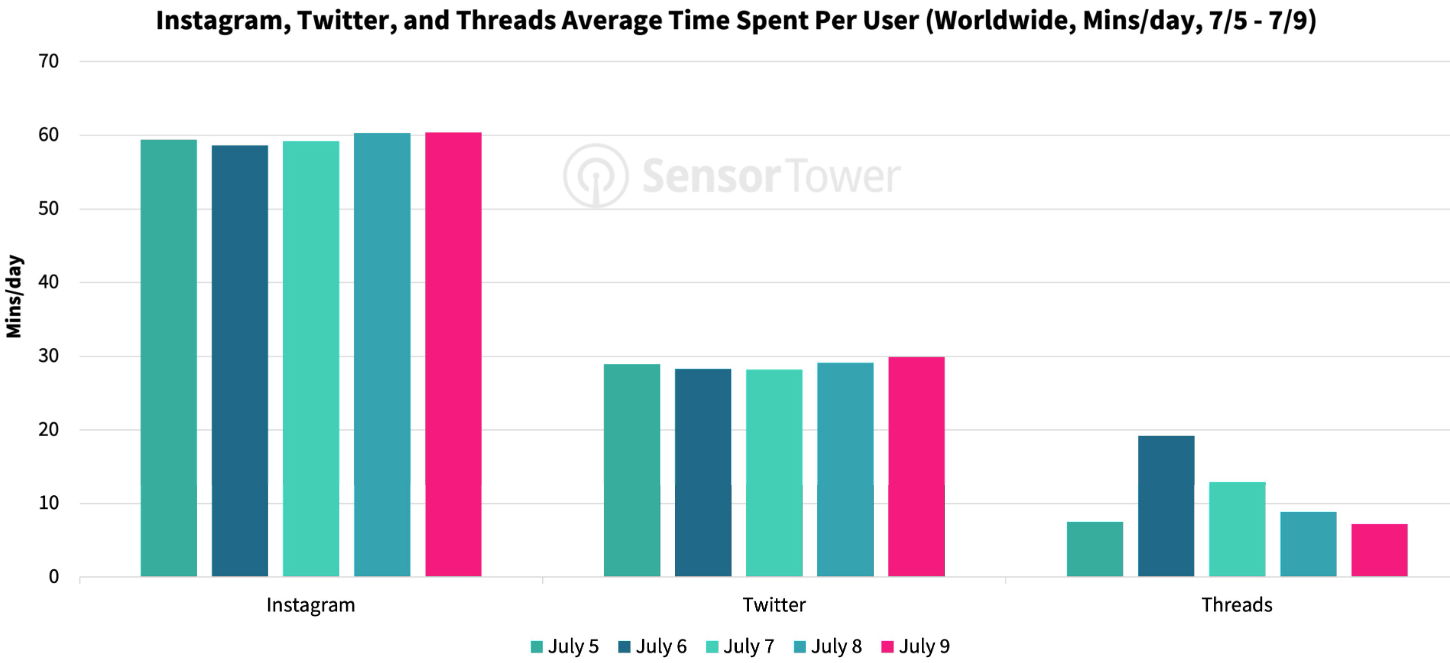
Source: Sensor Tower
****Our take:**
- Twitter will need to take some dramatic steps to lure advertisers back. Twitter Blue has probably already maxed out its potential base.
- Twitter Blue subscribers are [estimated to be](https://www.socialmediatoday.com/news/Twitter-Blue-Verified-Fails-to-Catch-On-with-Users/642136/?ref=nearmedia.co) \~290K to \~400K. Assuming 300K, Twitter is generating about $28 million annually.
- Threads needs to add [features](https://gizmodo.com/five-features-threads-is-still-missing-to-be-a-twitter-1850646930?ref=nearmedia.co) and a desktop version. Right now, the app is like being at a loud party with a lot of people you don't know.
### Prime Day by the Numbers
By all accounts, Prime Day was a major success. July 11 was the largest sales day in company history [according to Amazon](https://www.aboutamazon.com/news/retail/amazon-prime-day-2023-stats?ref=nearmedia.co). Total spending over the two day sale was just shy of $13 billion ($12.7 billion) in the US, [said](https://blog.adobe.com/en/publish/2023/07/13/adobe-analytics-prime-day-drove-record-online-spending-bolstered-deep-discounts?ref=nearmedia.co) Adobe, representing 6.1% growth YoY. That was up from $11.9 billion last year. Still, Adobe had predicted 9.5% growth. Success was attributed to "steep discounting" and many consumers delaying purchases until Prime Day. Adobe reported that buy-now-pay-later (BNPL) was used by 6.5% of shoppers, generating $927 million in sales. But the striking thing is that BNPL was up 20% YoY. Adobe also said that curbside pickup was used for 20% of online orders (when offered). That basically held steady vs. last year. Smartphones were responsible for roughly 47% of orders, up from 44% last year. According to [Numerator](https://www.numerator.com/prime-day?ref=nearmedia.co), the average household spend was $156\. The typical Prime Day shopper "was a high income, suburban female age 35 to 44," and a Prime subscriber since at least 2019\.
**Prime Day Demographics**
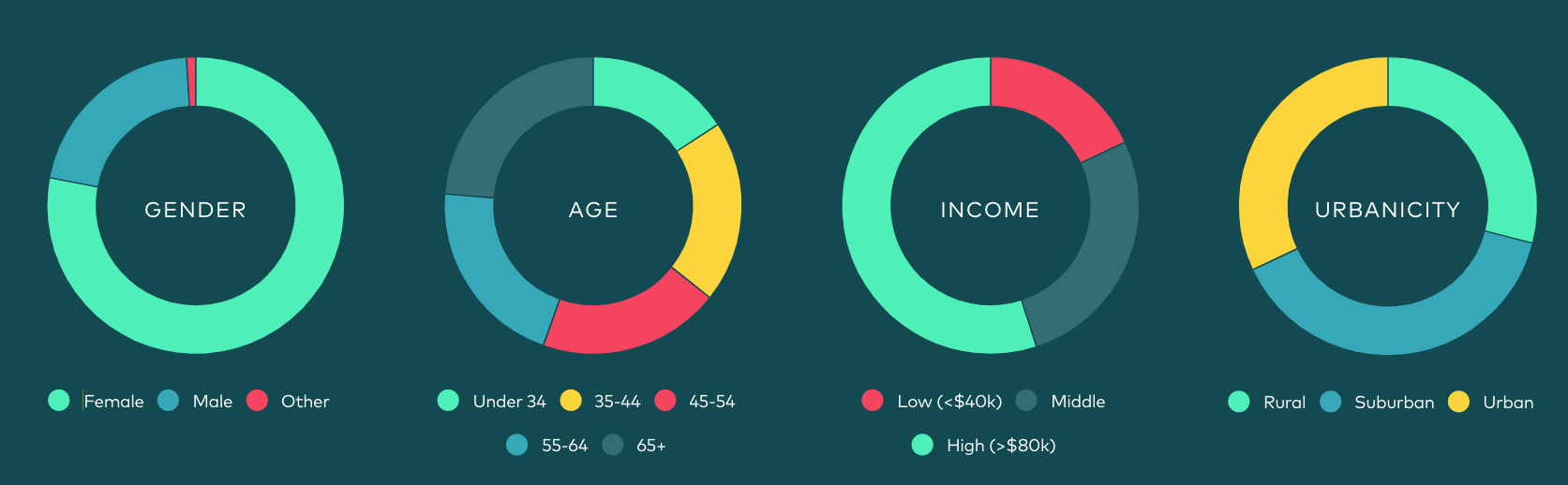
Source: Numerator
****Our take:**
- There's good news here for the economy. While there was significant discounting, robust spending reflects [positive consumer sentiment](http://www.sca.isr.umich.edu/?ref=nearmedia.co).
- I was apparently wrong that consumers were blase about Prime Day. But while strong, it still underperformed expectations.
- Roughly 75% of Prime subscribers are in the US, where growth [has stalled](https://www.businessinsider.com/amazon-shopping-prime-membership-us-stopped-growing-first-time-ever-2023-1?ref=nearmedia.co). So[ international expansion](https://www.axios.com/2023/07/10/amazon-prime-day-international-us?ref=nearmedia.co) is the way forward for Amazon.
## Recent Analysis
- **Near Memo episode 120:** [Apple Maps KPIs; what Google quality rater guidelines can teach SEOs; Google SGE usage decline](https://www.nearmedia.co/ep-120/).
## Short Takes
- **Wix** about to launch a full-on [AI site generator](https://www.wix.com/blog/avishai-abrahami-thoughts-about-ai?ref=nearmedia.co).
- Scammer [replaces](https://twitter.com/shmuli/status/1680669938468499458??ref=nearmedia.co) **Delta** customer service number on Google.
- **Bard** [gets new features](https://bard.google.com/updates?ref=nearmedia.co), languages, expands to more countries.
- **Google's NotebookLM** is a first [attempt at a personal AI](https://blog.google/technology/ai/notebooklm-google-ai/?ref=nearmedia.co).
- Everything [you wanted to know](https://www.mariehaynes.com/what-we-know-about-googles-quality-raters/?ref=nearmedia.co) about **Google quality raters**.
- **Albertsons** partners with Meta on [dynamic local circulars](https://www.linkedin.com/feed/update/urn:li:activity:7084182513849405441/?ref=nearmedia.co).
- **DoorDash, rivals** [sue to block wage increase](https://www.theguardian.com/technology/2023/jul/12/food-app-delivery-workers-minimum-wage-blocked-grubhub-uber-doordash-new-york-city??ref=nearmedia.co) for drivers in NYC.
- Furniture retailer uses **shopping cart bot** [to negotiate](https://www.digitalcommerce360.com/2023/07/14/furniture-brand-launches-negotiation-ai-chatbot/?ref=nearmedia.co) with buyers.
- Brand visibility on **TikTok** [at lower cost vs. search](https://searchengineland.com/started-company-tiktok-now-what-429353?ref=nearmedia.co) engines.
- **Salesforce and MSFT** Dynamics [the top CRMs](https://www.business.com/categories/crm-software/crm-market-usage-study/?ref=nearmedia.co) for SMBs.
- Evidence of a **digital ad spending** [rebound in May](https://www.insiderintelligence.com/content/us-ad-market-spending-grew-may-first-time-11-months??ref=nearmedia.co)**.**
- Actors' strike [partly about usage](https://www.theverge.com/2023/7/13/23794224/sag-aftra-actors-strike-ai-image-rights?ref=nearmedia.co) of their **AI likenesses**.
- EU workers [fear being replaced](https://thenextweb.com/news/oecd-finance-and-manufacturing-workers-fear-ai-replacement?ref=nearmedia.co) or having wages reduced by **AI**.
- **Oppenheimer** film's not-so-subtext [is about AI](https://www.theverge.com/2023/7/16/23796659/christopher-nolan-oppenheimer-ai-warning-silicon-valley?ref=nearmedia.co).
Listen to our [latest podcast](https://www.nearmedia.co/memo/).
[](https://nearmedia.co/memo?ref=nearmedia.co)
How can we make this better? Email [us](mailto:gsterling@nearmedia.co) with suggestions and recommendations.
### Ep 120: Apple Maps KPIs, SEOs & Google quality guidelines, Google SGE usage decline
URL: https://www.nearmedia.co/ep-120/
Last updated: 2023-07-15T15:25:28.000Z
**Apple Maps & Local Opportunities, Learnings from going undercover as a quality rater for Google, Is Google’s AI based SGE a dead end or the future of search?**
**Part 1 starts 00:13 - [Apple Maps & Local Opportunities](https://youtu.be/pTIQdCazfdk?ref=nearmedia.co)**
Apple Maps is ACTUALLY used for local discovery and it appears to be sending more traffic than either Yelp or Bing. According to Apple insights at least 28% of clicks came from category searches. While Apple Maps generates \~5% of the web visits and perhaps 10% of the phone calls of GBP, that is enough to put Apple Maps in second place as a source of local leads.
Interestingly having access to both Apple and Google Maps driving direction clicks we can estimate Apple Maps market share at about 40% of all iPhone users
Segment Reference Articles:
[Is Apple Maps Driving Traffic](https://www.nearmedia.co/apple-maps-discovery-gbp-call-history-is-history-gbp-forum-insights/)
[MapLabs: Google vs. Apple, Bing, and Yelp!](https://maplabs.com/google-vs-apple-bing-and-yelp-part-2/?ref=nearmedia.co)
**Part 2 starts 11:12 - [Learnings from going undercover as a quality rater for Google](https://youtu.be/OW%5FFVFvF3J8?ref=nearmedia.co)**
Cyrus Shepard signed up to be a Google Quality Rater and doing so allowed him to provide additional insights into what Google thinks is important. The details of content, user intent, and web page quality understanding clearly inform the algo and provide a basis for Google’s results particularly in “your money and your life” categories.
Segment Reference Article:
[I Secretly Worked As A Google Search Quality Rater (You Can Too)](https://zyppy.com/seo/google-search-quality-rater/?ref=nearmedia.co)
**Part 3 starts 19:11 - [Is Google’s AI based SGE a dead end or the future of search?](https://youtu.be/gpnpRkZFBZ0?ref=nearmedia.co)**
Initial excitement around Google’s AI response to bing chat raised hopes of a better user experience with search. The product, being slow and often not informative, has not really done that. And, at least according to this limited Twitter poll, users are using it less. Is it all just theater?
Segment Reference Articles:
[Google SGE Usage Decline?](https://www.nearmedia.co/google-ai-theater-twitters-karma-blase-prime-day/)
[Google SGE Usage Poll](https://twitter.com/gsterling/status/1677398252575158272?ref=nearmedia.co)
### Bing Is #4, State of Digital Agencies, AI and Copyright
URL: https://www.nearmedia.co/bing-is-4-state-of-digital-agencies-ai-and-copyright/
Last updated: 2023-07-14T17:57:07.000Z
### Local: Bing in Fourth Place
Monday [we published a preliminary analysis](https://www.nearmedia.co/apple-maps-discovery-gbp-call-history-is-history-gbp-forum-insights/) of Apple Maps traffic vs. Google for local search/discovery. Mike's conclusion was that roughly 37% of iPhone owners are using Apple Maps for directions and that Apple is generating about 5% of the local site visits and 10% of the calls driven by Google. Map Labs did a similar but broader analysis [comparing traffic](https://maplabs.com/google-vs-bing-apple-and-yelp-part-1/?ref=nearmedia.co) from Google, Bing, Apple and Yelp to 100 business locations in the hospitality industry. We found that 28% of Apple Maps lookups are category searches; Map Labs had a similar number: 30%. But Map Labs determined that Apple was responsible for 50% of the directions requests of Google Maps (on the iPhone). Still, Google drives 9x the calls and 10x the web visits of Apple Maps. Most surprising perhaps is Bing's comparative [weakness in local](https://maplabs.com/google-vs-bing-apple-and-yelp-part-1/?ref=nearmedia.co). Map Labs found Bing was in fourth place, after Apple and Yelp, way behind Google. The full analysis with much more discussion and detail is available [here](https://maplabs.com/google-vs-bing-apple-and-yelp-part-1/?ref=nearmedia.co).
**Apple vs. Yelp and Bing**
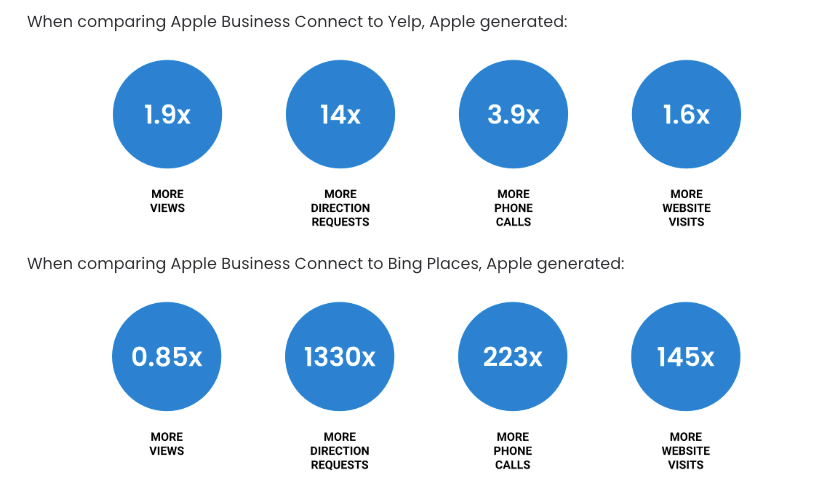
Source: Map Labs
**Our take:**
- Most local SEOs are focused on Google, of course, and then Bing. Some also focus on Yelp. However that should be revised in light of these findings.
- While Bing is driving local traffic and actions, its relative importance is much lower than the common perception.
- By comparison, Apple is often neglected. It's the clear number two in local search now.
### Websites Most Profitable for Agencies
Near Media and UpCity recently conducted a digital agency survey. It's unpublished, but we hope to present some of that data soon. In the meantime, Vendasta has produced a similar study ([lead form](https://www.vendasta.com/content-library/insights/agency-benchmarks-report/?ref=nearmedia.co)), based on a survey of 400 North American digital agencies. The largest cohort had fewer than 10 employees. Roughly 50% have been in business 6+ years; 56% are making under $1 million annually. In fact, 36% are pulling in <$150K, though another 36% are making $1 - $3 million. Average revenue per client for most of the $1 million+ club is $50K or more. But agencies with higher revenue also had higher churn. Agencies making over $1 million are more heavily committed to AI, though 69% say they're new to it. Websites are the most profitable offering, while ads is the least profitable. SEO is in the middle. Nearly two-thirds (62%) of agencies said they were seeking to reduce or consolidate their tech stacks. Most have few sales reps (<5) and say their most effective channel is WoM.
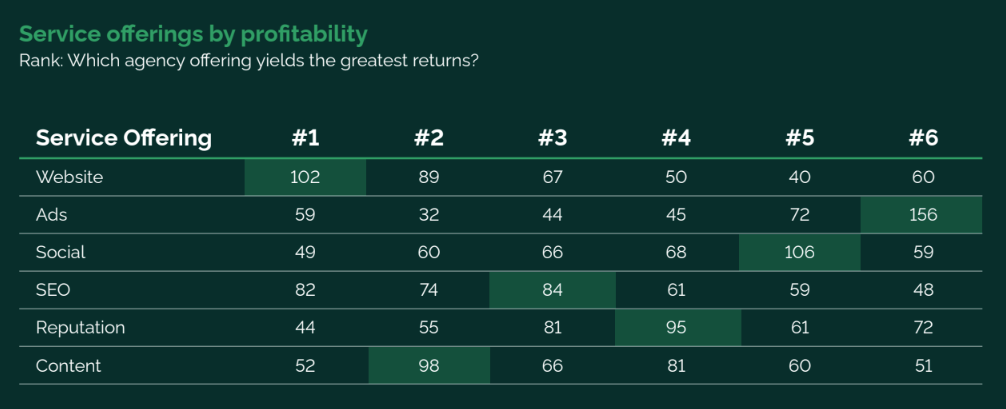
Source: Vendasta
**Our take:**
- The top two challenges faced by agencies are "scaling services and operations" and "balancing new business development with existing client work."
- Number of clients in most cases is correlated with staffing, although 22% of agencies under 10 employees managed 100+ accounts.
- In the NM-UpCity survey, SEO was most profitable and was perceived by roughly equal sized groups as easy and difficult to implement/fulfill.
### AI, Scraping and Copyright
OpenAI, Meta and Google are all being sued (e.g., [here](https://www.reuters.com/legal/litigation/google-hit-with-class-action-lawsuit-over-ai-data-scraping-2023-07-11/?ref=nearmedia.co), [here](https://www.theverge.com/2023/7/9/23788741/sarah-silverman-openai-meta-chatgpt-llama-copyright-infringement-chatbots-artificial-intelligence-ai?ref=nearmedia.co)) for scraping content for AI training data sets. There are multiple other lawsuits pending as well. For example, Getty Images can show examples of its [mangled Getty logo](https://www.theverge.com/2023/2/6/23587393/ai-art-copyright-lawsuit-getty-images-stable-diffusion?ref=nearmedia.co) in AI-generated images. That's a smoking gun, but in other cases it may be much harder to prove specific works were ingested by LLMs. Yet, effectively, the entire web corpus is being used to train AIs. On the one hand, massive copyright infringement is implied by the sheer breadth of scraping. But a federal appeals court ruled that web scraping of public data is legal ([hiQ Labs, Inc. v. LinkedIn Corp.](https://www.eff.org/deeplinks/2019/09/victory-ruling-hiq-v-linkedin-protects-scraping-public-data?ref=nearmedia.co)). The same case also said, however, that scraping in violation of a site's terms is not protected. In response, some sites (e.g., Twitter, Reddit, Stack Overflow) are starting to charge for their data. And OpenAI has entered into agreements with [AP](https://apnews.com/article/openai-chatgpt-associated-press-ap-f86f84c5bcc2f3b98074b38521f5f75a?ref=nearmedia.co) and [Shutterstock](https://techcrunch.com/2023/07/11/shutterstock-expands-deal-with-openai-to-build-generative-ai-tools/?ref=nearmedia.co) to license data for future AI training. But there's a [big difference](https://searchengineland.com/crawlers-search-engines-generative-ai-companies-429389?ref=nearmedia.co) between scraping for search indexes and AI training; LLMs aren't delivering traffic back to publishers.

Source: [Unsplash](https://unsplash.com/s/photos/legal?utm%5Fsource=unsplash&utm%5Fmedium=referral&utm%5Fcontent=creditCopyText)
**Our take:**
- All publishers must assume that their content is being scraped for LLMs. OpenAI [will allow robots.txt](https://platform.openai.com/docs/plugins/bot?ref=nearmedia.co) for those that want to block scraping. Per hiQ Labs, publishers can also block scraping in their terms.
- There will be more lawsuits. But the emerging model is data licensing. Smaller publishers and individuals, however, will probably not benefit.
- Courts will face a dilemma in terms of infringement proof thresholds and determining compensation. Managing permissions/payments will be challenging and expensive for AI platforms unless they limit training data.
## Short Takes
- Using **local SEO** [to do site selection](https://www.brightlocal.com/learn/how-to-choose-the-next-location-for-your-business-using-local-seo/?ref=nearmedia.co) for brick and mortar locations.
- Old, but: duplicate **reviews on LSAs** [and GBP](https://twitter.com/TheSocialDude/status/1679620012057985024?ref=nearmedia.co) could lead to suspension.
- **Google, Microsoft** compete to bring AI to $4T healthcare market ([WSJ](https://www.wsj.com/articles/in-battle-with-microsoft-google-bets-on-medical-ai-program-to-crack-healthcare-industry-bb7c2db8?ref=nearmedia.co)).
- Workers doing mid-level writing [boosted productivity](https://www.science.org/doi/10.1126/science.adh2586?ref=nearmedia.co) with **ChatGPT**.
- FTC [investigating](https://www.cnbc.com/2023/07/13/chatgpt-owner-openai-is-being-investigated-by-ftc.html??ref=nearmedia.co) whether **ChatGPT** caused any "consumer harm."
- Why the recent "**social media** communication" ruling is flawed ([NYT](https://www.nytimes.com/2023/07/13/opinion/federal-judge-biden-social-media.html?ref=nearmedia.co)).
- **Twitter** [claims](https://www.socialmediatoday.com/news/twitter-claims-incredibly-high-performance-content-moderation/686890/?ref=nearmedia.co) "99.99%" of tweets are "healthy content," others say no.
- **Uber, DoorDash, Grubhub** [fight to block](https://www.theguardian.com/global-development/2023/jul/13/suit-up-for-the-backlash-the-battle-to-regulate-new-yorks-gig-economy??ref=nearmedia.co) driver wage increases in NYC.
- Tax firms [sent sensitive customer data](https://apnews.com/article/irs-taxpayer-tax-preparation-meta-congress-9315cfca7a0942ab89f765d183fbf822?ref=nearmedia.co) to **Meta** without permission.
- Delaware becomes 12th state [to introduce](https://www.hipaajournal.com/delaware-personal-data-privacy-act/?ref=nearmedia.co) big **data privacy** law.
- **Prime Day** sales up 6.1%, [fall short](https://www.bloomberg.com/news/articles/2023-07-13/amazon-prime-day-drives-online-sales-up-6-1-missing-estimate?ref=nearmedia.co) of analysts' estimates of 10%.
Listen to our [latest podcast](https://www.nearmedia.co/memo/).
[](https://nearmedia.co/memo?ref=nearmedia.co)
How can we make this better? Email [us](mailto:gsterling@nearmedia.co) with suggestions and recommendations.
_Includes the latest 500 public posts. Use `/sitemap.xml` for the complete archive of public content._